In A Vase on Monday – Long Stemmed Salvia

20190113_103810

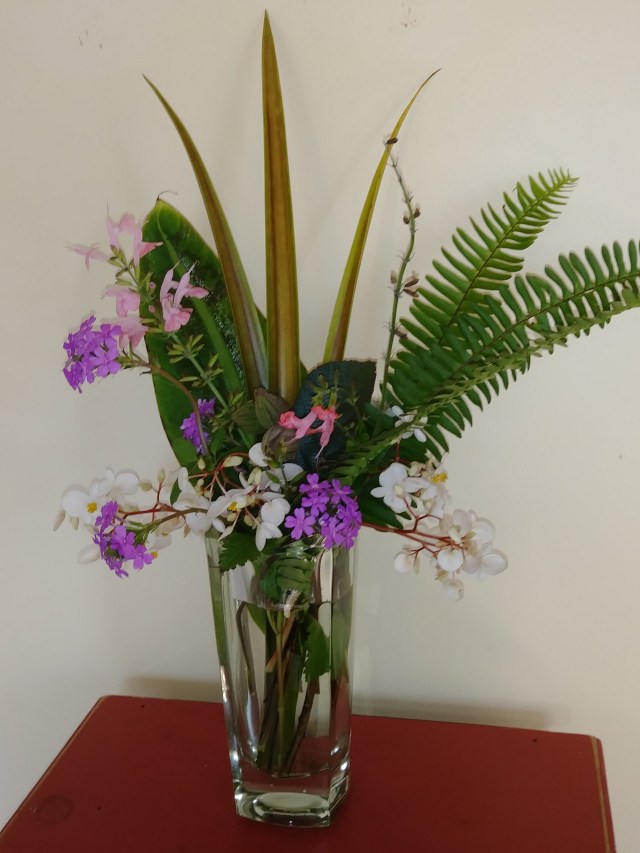
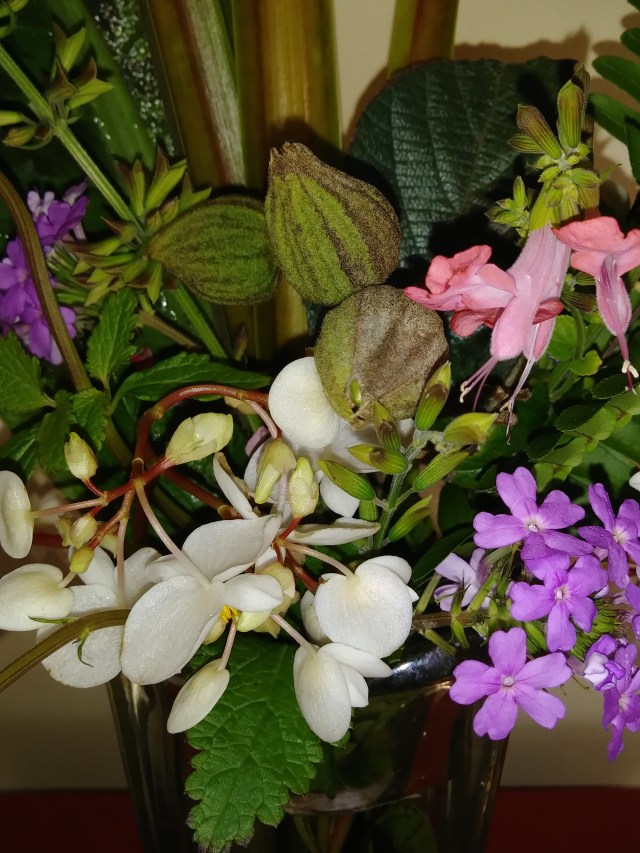
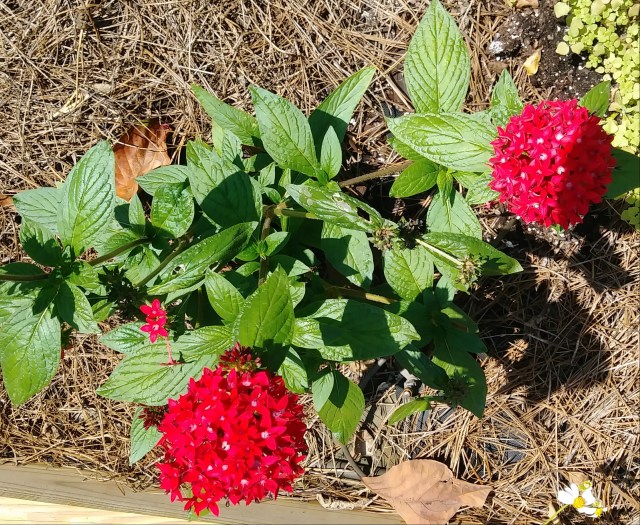
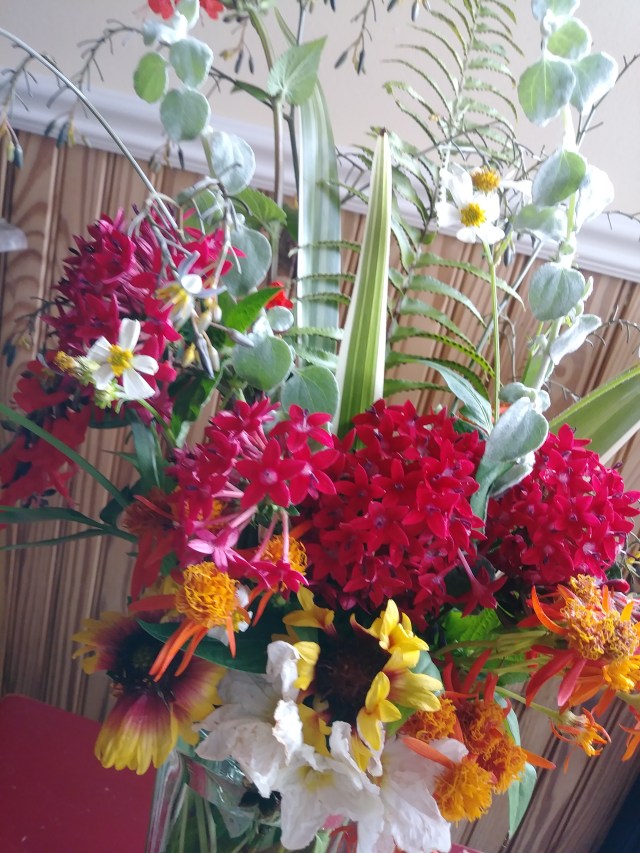
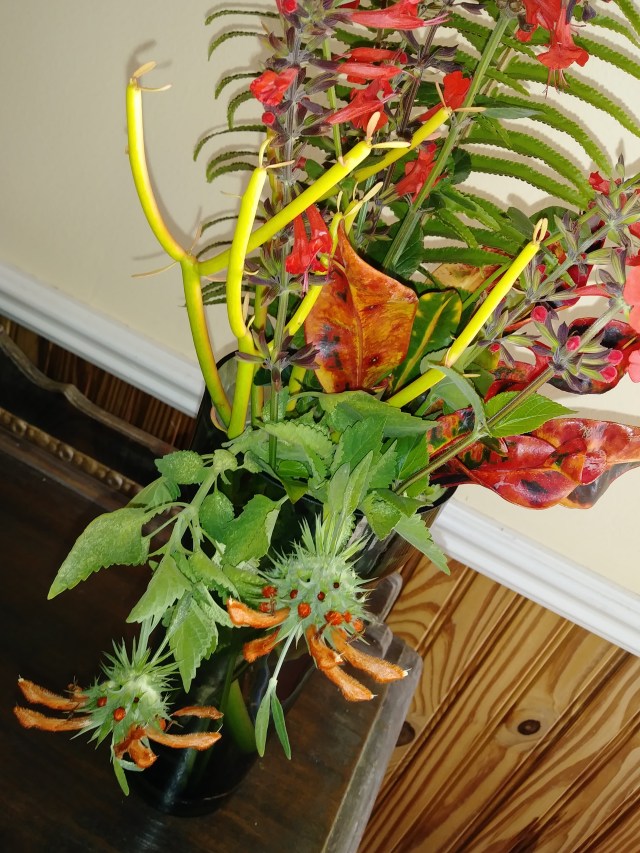
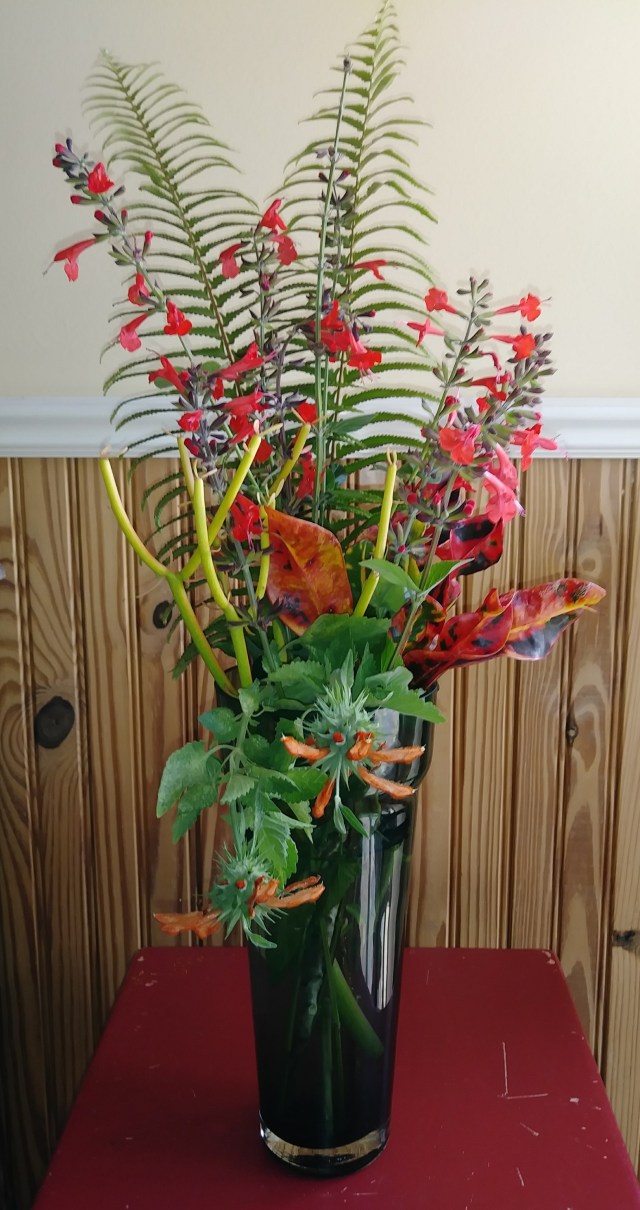
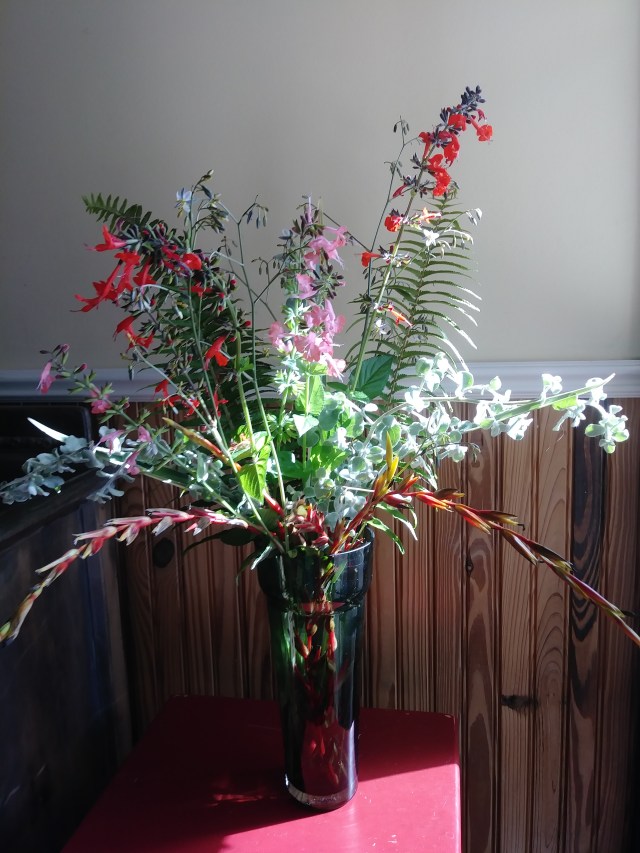
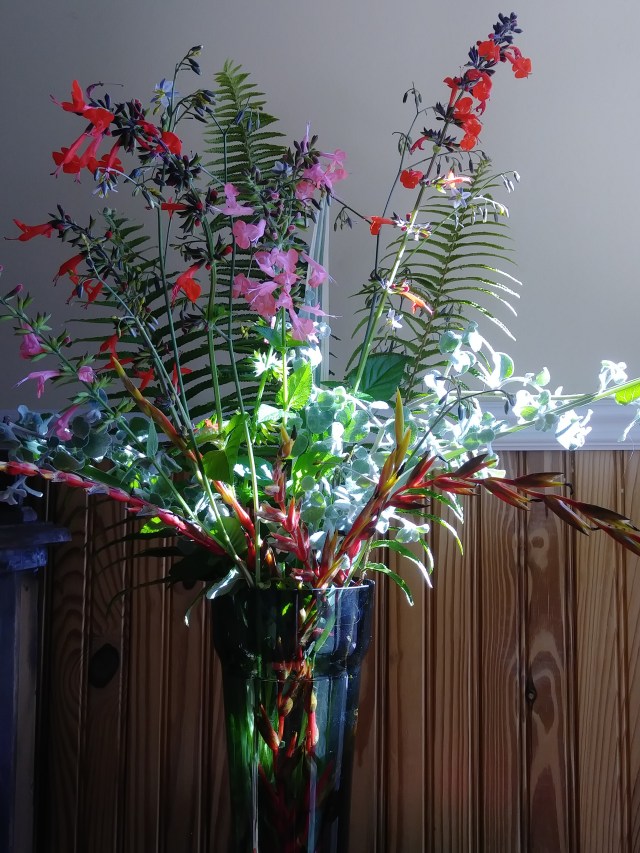
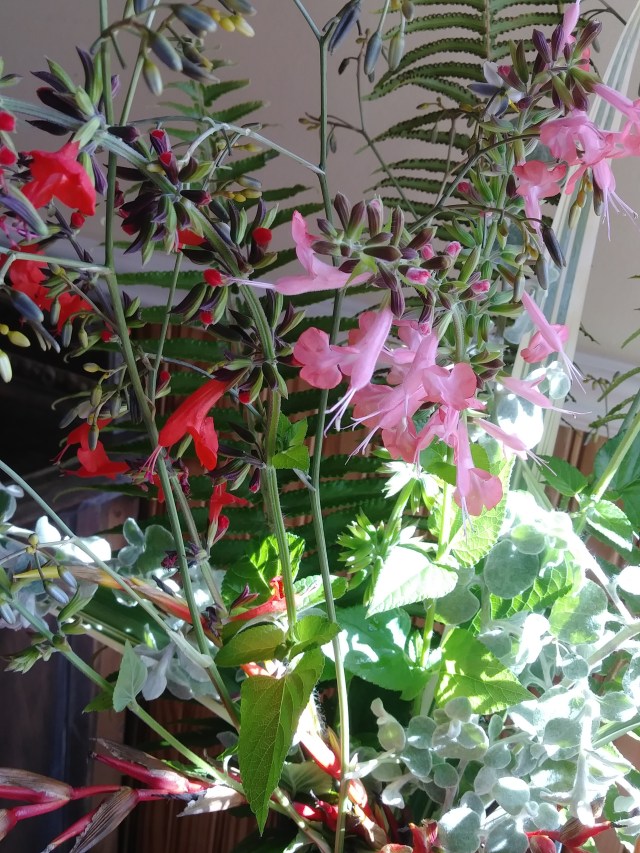
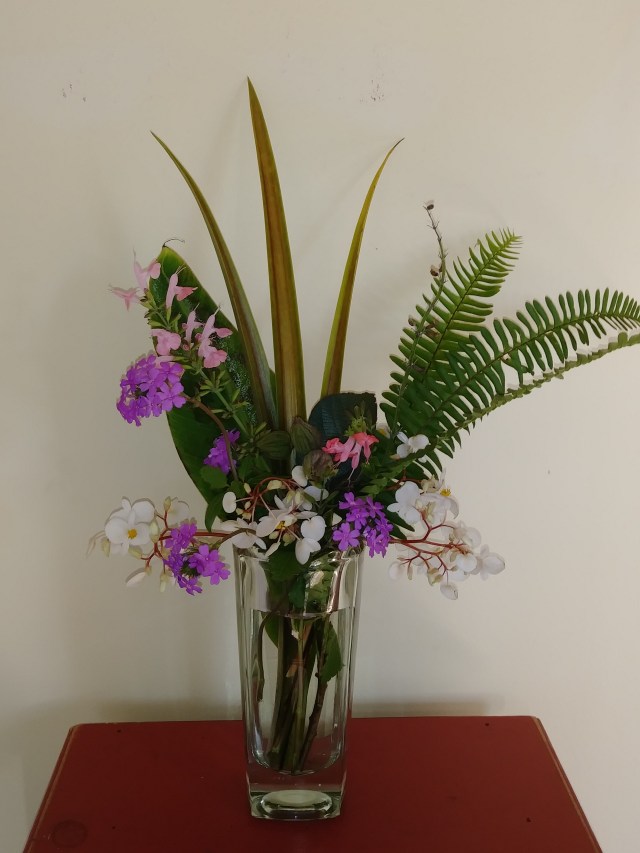
For reasons unknown to me, I have a bumper crop of Tropical Red Salvia. Usually a short and somewhat scruffy looking perennial (or reseeding annual, it seems perennial due to the constant supply of seedlings). The Tropical Red Salvia this winter is bearing long, lushly foliated stems with fat blossoms. The bees were not happy with me and my clippers again.

The Tropical Red Salvia also comes in peach, pink and neon orange. I rarely get a neon orange, but I do enjoy the softer colors and seedling variation. You have to wonder why it can’t be called simply Tropical Salvia as it is native to Florida, or, Florida Salvia?

20190113_104046

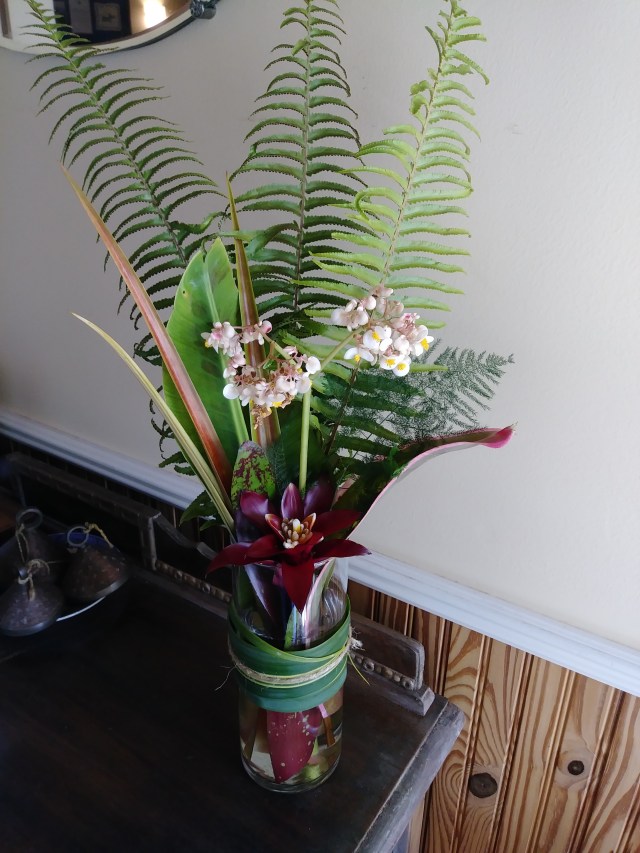
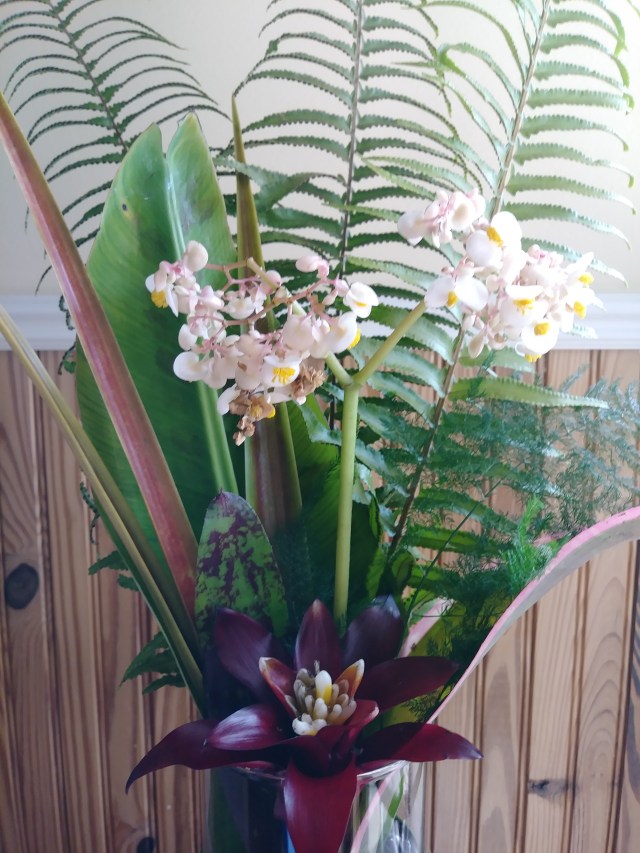
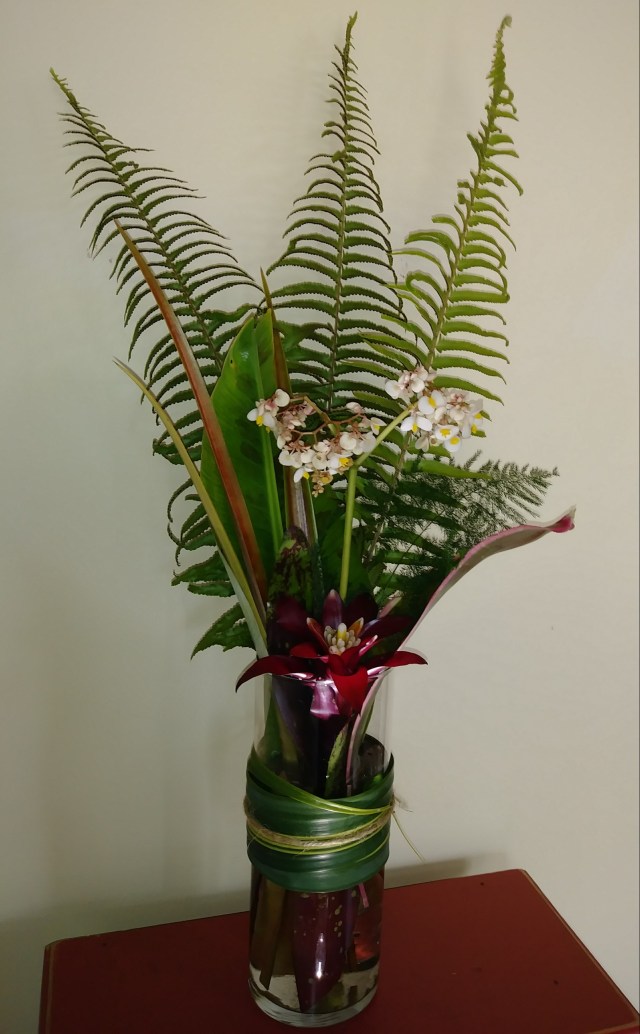
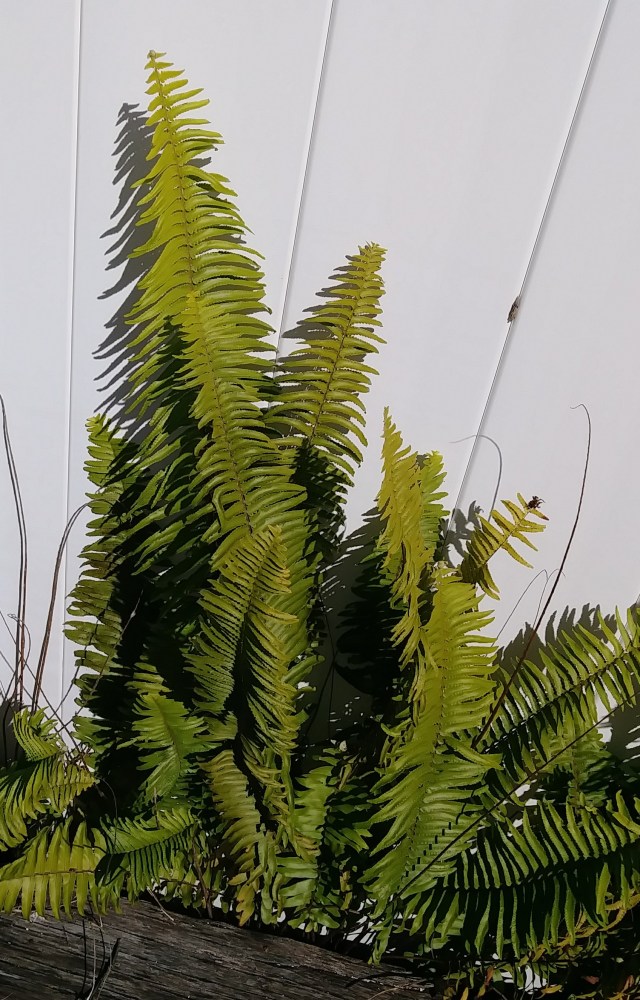
Another native added to the vase, Boston Fern (Nephrolepis exaltata) – These ferns graciously popped up in the nether regions between my driveway and my neighbors fence. I have been enjoying ferns in vases since it’s arrival. The red and orange zig zag shaped bits are flowers from a Blanchetiana Bromeliad; the sprays of blue/white flowers are from Dianella (some call it Blueberry Flax), the variegated leaves are also from Dianella. Grey fuzzy foliage is from Licorice Plant (Helichryseum petiolare) – a plant in a winter container that I just cut back. I was happy to learn the Licorice Plant will grow here. More plants to propagate. Or try.

20190113_104103

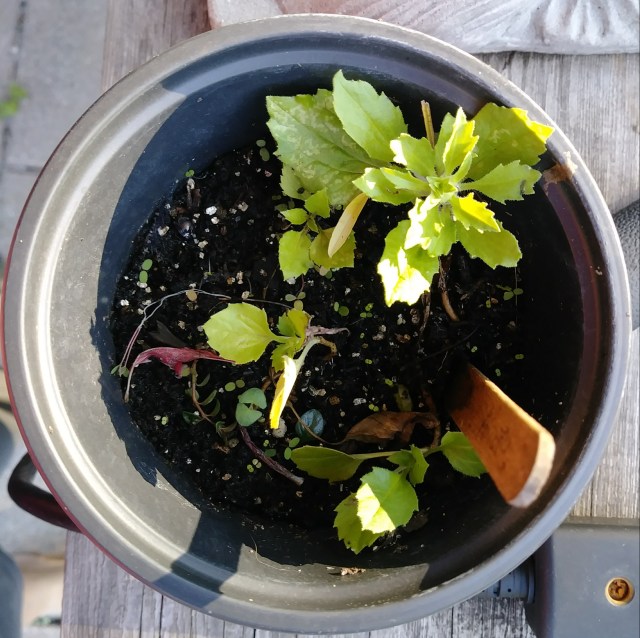
I am having the exact opposite experience with China Asters and will not ask them into the garden again. I love the flowers and am not sure if this is the second or third attempt. Here is a seedling- sowed in September! Had one flower about the size of a fingernail.

20190113_154834-1

Ironically, the seedlings coming up in the pot are Tropical Red Salvia.

Life in the Garden. Happy Monday.

In A Vase on Monday -Cheers to 2019

20190106_131602

My vases this first Monday of 2019 reflect my mood and the New Year. Celebratory. The Silver Goblet could be used to quaff the contents of the Champagne bottles. My girlfriends from college were here last week for a toast to 2019 – Champagne always seems to materialize with them. The bottles were saved for a toast from my garden.

20190106_135506

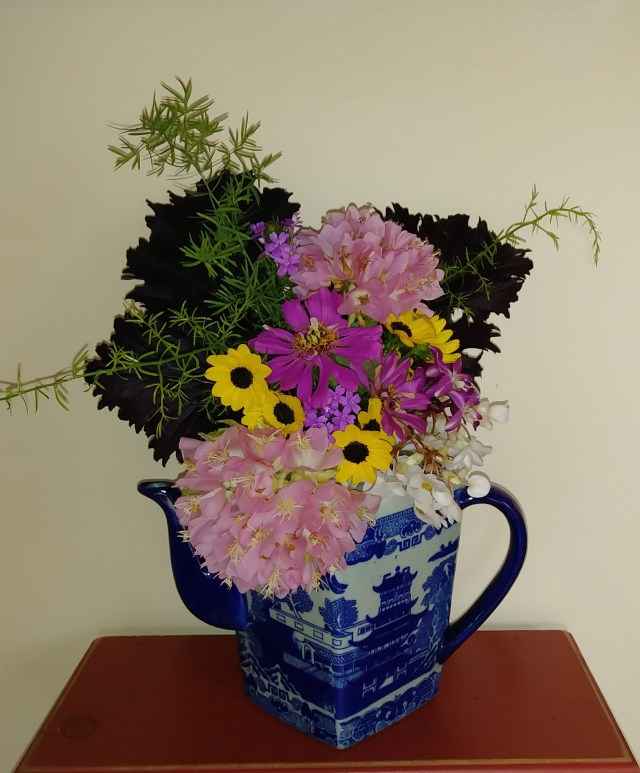
The Pinkballs (common name) are Dombeya wallichii, purple flowers are Zinnia “Lilac Emperor” and Tampa Verbena (Glandularia tampensis); pink foliage is Alabama Sunset Coleus; off white spikes are Juba Bush (Iresine diffusa); green foliage is Asparagus Fern.

Another view:

20190106_131044

Here’s a gardening toast to 2019, I found a lovely new seed source in the US (ordered seeds, of course! I was excited to find Lime Zinnia seed) Here is a link:

Floret Flowers

Cheers to 2019!


In A Vase on Monday – Dombeya Jambalaya

20181230_111013-1

This could be a year end vocabulary lesson. Dombeyas are tropical flowering trees and shrubs native to India. Jambalaya is a rice dish, consisting of rice, meat, vegetables and spicy seasoning cooked in a big pot – originating in Louisiana, the American Deep South. It is a mixture of many ingredients, like my vase.

20181230_111449

Here is the Dombeya flower, borne on a long stem hanging below big, fuzzy leaves. The bees and pollinators love them, and were objecting to my taking a few. A friend came by yesterday and said ‘this would be cool if it was a small tree and you could stand below and look up at the flowers’. The good news, it will be a small tree. The bad news, I was told maybe 6 feet tall and placed it accordingly. There is likely some judicious pruning in my future, but I love tree form shrubs.20181230_110831

The view from above, in light pink, the Dombeya (Dombeya wallichii); purple flowers are Spathoglottis ‘Cabernet’ (sounds like a dreadful disease, really a small orchid); purple foliage is from a Hallelujah Bromeliad ( a Billbergia variety with a, yes, red, white and blue flower-note to breeder, just because you can doesn’t mean you should). The green foliage is from Asparagus Fern that pops up here and there in my garden. The vase is a thrift store find.

20181230_110718

Another view.

Thanks to Cathy, at https://ramblinginthegarden.wordpress.com/, for another great year of hosting In A Vase on Monday. Follow the link to see what gardeners from the world over have filled their vases with this week.

And thank you to all who take time to view and comment on my blog and weekly vase post.

Happy New Year and here’s to 52 vases in 2019. I didn’t quite make it this year and also made a resolution to blog more in 2018, didn’t quite make that happen either!

There’s always next year, and it starts tomorrow!

Happy New Year!!

In A Vase on Monday – Yuletide Greetings

20181223_114154-1

After typing in my title, I began to wonder what is the meaning of the word, Yuletide. Seems it goes back to Norse Gods and Germanic folklore, referring to the time around the Winter Solstice, predating the celebration of Christmas by a long shot.  I will have to ponder that as I sit by a roaring fire (on the television) listening to Christmas carols, cat by my side and a greyhound at my feet. The task at hand, waiting for my holiday baking to cool, so I can pack it into tins.

20181223_114845

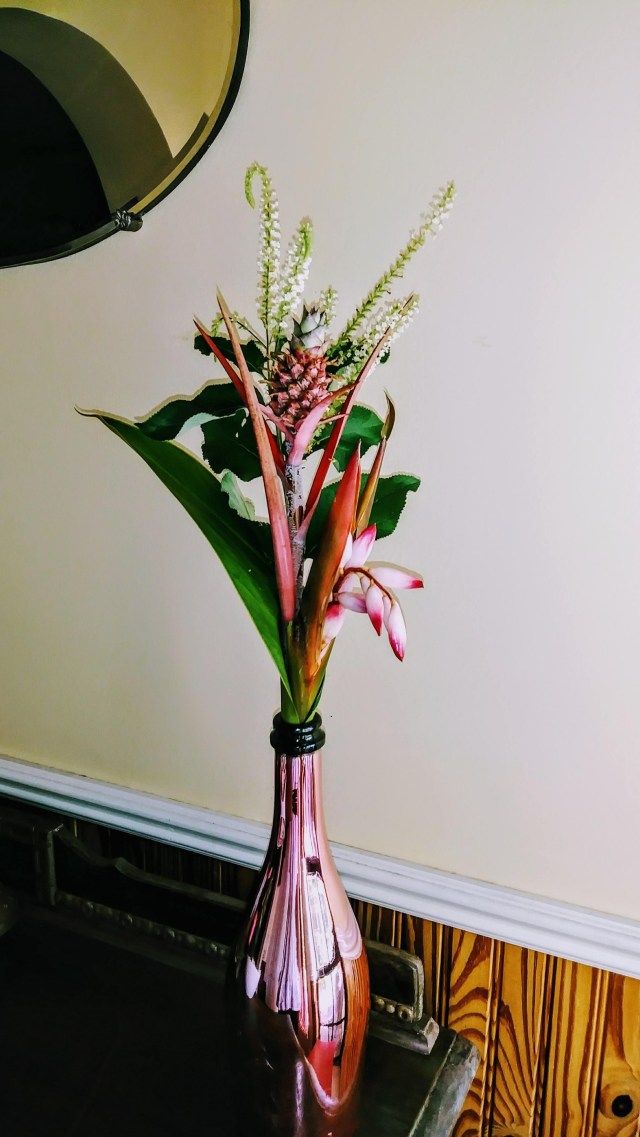
Gardening in South Florida changes your perspective on holiday flower arrangements. Red and white flowers can be cut from the garden, greenery and berries as well. Our wreath this year was made with Blanchetiana Bromeliad flowers and foliage from Pandanus (Screw Pine). Here is the Florida version of Yuletide Greetings.

20181220_164754-1

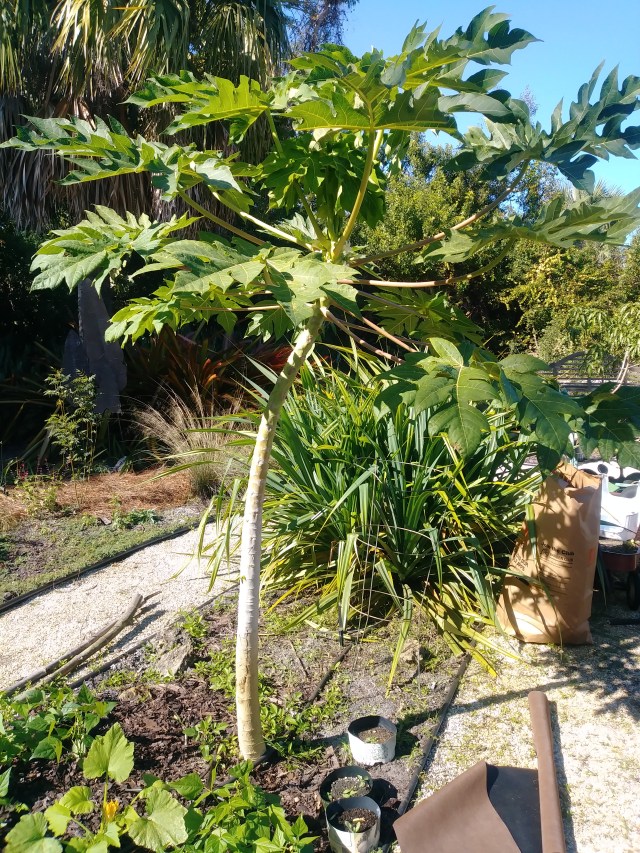
The flowers in my holiday arrangement are: in off white spikes, Juba Bush (Iresine diffusa), the red spikes are from Tropical Red Salvia (Salvia coccinea), darker red flowers are from Red Shrimp Plants (Justicia brandegeana), red berries are from Brazilian Pepper (Schinus terenbinthifolia), white flowers on the lower side are Sweet Begonia (Begonia odorata ‘alba’), gold sticks are twigs from native grapes, Vitis roundifolia. The finishing touch a leaf from my Papaya tree.

20181223_114207-1

Happy Holidays to all, Yuletide or not.

Amy

In A Vase on Monday -Wintry Mix

20181216_121131-1

I used to dread the words ‘Wintry Mix’ on the weather reports. It meant freezing rain mixed with other frozen precipitation. A cold and damp experience usually followed by slippery, frozen walkways. I am liking the Florida version of Wintry Mix from my garden much better than the weather kind.

20181216_121041-2

The colors seem like a mad mix, purple, coral, charteuse, pink, white and blue with a bit of vegetably burgundy and gold metallic berries for good measure. The vase is a Dansk candle holder from the 1970’s that long ago lost its partner.

20181216_121547

The centerpiece in the arrangement is a Lilac Emperor Zinnia, the other purple flowers are Tampa Verbena (Glandularia tampensis); peach flowers are from Tropical Red Salvia (Salvia coccinea); small white flowers are from White Plumbago (Plumbago scandens); white daisy flowers are Spanish Needles (Bidens alba) a cheerful, rampant, annoying wildflower.

Flowers in the background are Blueberry Flax (Dianella), the foliage is from Alabama Sunset Coleus (pink and chartruese) and some sort of Red Mustard (the burgundy leaf). Gold berries are painted fruit from the Gumbo Limbo (Bursera simaruba) tree. There was a bigger surprise than gold fruit under the tree earlier in the week.

20181214_111301-2

Glancing out my window I spied – to my surprise, a White Heron stalking something under the Gumbo Limbo tree. I watched as he or she marched over and plucked a small snake off a branch and flew away!


In A Vase On Monday – Bad Berries

20181209_151104-1

Overcast could describe the usually clear sunny skies in South Florida on Sunday, I waited for some sunlight and finally took my vase outside to snap some pictures. I barely finished the photos and planting my winter containers before the proverbial bottom dropped out and was inundated with rain.

20181209_151117-1

The berries in the vase are beautiful, but, unfortunately, very bad. They are from the Brazilian Pepper (Schinus terebinthifolia) an invasive plant brought into Florida in the mid 1800s – marketed as Florida Holly. Spread by birds eating the lovely berries, Brazilian Pepper now is illegal to plant and infests more that half a million acres of land in South Florida, choking everything in its wake. Someone planted five across my backyard, undoubtedly to screen the neighbors-by the time we arrived the plants were 35 feet wide and it took us at least five years to begin winning the pepper battle. A few still survive and I saved the state of Florida hundreds of trees by cutting the berries to create this vase!

The white flowers are from Bridal Bouquet Frangipani (Plumeria pudica); grey stem is a flower from the Flapjack Kalanchoe (Kalanchoe thyrsiflora); ferns are Asian Sword Ferns. It occurred to me as I was arranging this vase, a good vase is like a good pasta sauce, it takes a few more ingredients than you would think to make it tasty!

Happy Monday.img_9976.jpg

In A Vase on Monday – Winter White

20181202_112235

Winter lasted for about two days here. The temperature was 87 degrees Fahrenheit this morning. I gave up gardening in hopes of cooler weather later in the week. My vegetable seeds were planted this week along with lettuce plants (the lettuce probably has wilted and needs water by now).

My task this morning, moving Orchids to strategic areas, so I can see the flowers from inside the house. As I was wheeling pots around, I noticed most of the flowers in the garden are white currently, no idea why. I have been watching this native wildflower called Octoberflower bloom for about a month, it started right on time, October 31st.

20181128_110712Octoberflower is native to an area called Scrub in Florida – my garden is in Scrub, so you would think these plants would enjoy my garden. Not so much.  I find them very difficult to place and grow, moving them into the native pollinator garden, one out of five made it. Although, they are great cut flowers.

20181202_111804

Here is a close up of the vase, the blue glass bowl, a Christmas gift from long ago. The Octoberflower is on the right side of the photo, tinged with pink. Next to those, probably the last flower of the Tropical Gardenia (Tabernaemontana divericata); draping the vase are Sweet Begonias (Begonia odorata ‘Alba’); some clusters of White Lantana (Lantana montevidensis ‘Alba’); the bigger spikey flowers are from Snake Plant AKA Mother In Law’s Tongues (Sansiveria cultivar ‘It Took Over My Yard’); smaller white spikes from Juba Bush (Iresine diffusa); a few sprigs of pale pink Tropical Red Salvia (Salvia coccinea). The foliage in the vase is Asparagus Fern (Asparagus densiflorus ‘sprengeri’) and another native, Wild Coffee (Psychotria nervosa) – the berries look like coffee, but you can tell by the botanical name, not something you want to drink.

I am from the American South. Wondering how many gardeners relate to the term ‘Winter White’?

My mother, a well raised lady of proper breeding:?! – would have said Winter White is an off white color appropriate to be worn in winter; whereas wearing pure white after Labor Day (early September) is an abomination.

Comments?


The photos, Snake Plant and Wild Coffee.

In A Vase on Monday – Two Challenges

20181111_095353-1 Last week, in honor of the fifth anniversary of the meme ‘In A Vase on Monday’, Cathy, our hostess at Rambling in the Garden on WordPress challenged us to not use a vase on Monday. Hence, the watering can. My second challenge, issued by a gardening friend, to use all native wildflowers in my non vase.

The brass watering can had been around my mother’s house for so long I am not sure if I am the second or third generation to use it. I decided to leave the patina and fill it with delicate wildflowers from my garden and a few fall fruits, all from plants native to Florida – a surprisingly long plant list.

20181111_095353-1-1

As I was arranging this, I was surprised by how pretty these flowers are when closely observed. And how many flowers it took to fill the small watering can.

The purple flowers are Tampa Verbena (Glandularia tampensis); pink tubular flowers are Tropical Red Salvia (Salvia coccinea) – it seeds in red, pink, salmon and orange. The deep blue flowers are Blue Porterweed (Stachytarpheta jamaicensis); I have learned to love this plant along with the butterflies, it continues to open flowers after cutting and the stems are such a wonderful accent. The purple grasses are Muhly Grass (Muhlenbergia capillaris). I am not sure this grass does as well anywhere else but in Florida. Sharp drainage is vital, mine grows in sugar sand with no irrigation.

20181111_095559

I have finally found out what the off white spikes are – Juba Bush (Iresine diffusa), identified by a wildflower expert who said “Juba Bush is named after a Afro-Caribbean step dance, because of the way it waves in the wind” It actually does have a lovely sway in the wind – and I like the story. The ferns are Boston Fern (Nephrolepis exaltata),  porch plants the world over, these originated in the swamps of Florida and popped up in my garden. The white flowers are  Jointweed or Wireweed or Octoberflower (Polygonella robusta), started blooming on October 31!

Fruits are from the Senna ligustrina, the long brown pods. I recently added these to the garden to attract Sulphur Butterflies. They are doing their job, though I haven’t seen any caterpillars. The plants remind me of Soft Caress Mahonia, which l love but can’t grow this far south. The round fruits are from the Gumbo Limbo tree (Bursea simarouba) I love these for their names, the other one being Tourist Tree, for the red peeling bark resembling sunburned skin…

Happy IAVOM Anniversary, to see vases from around the world follow this link.More Vases

In A Vase on Monday – Mostly Wildflowers

20181014_122435-1_2

This vase is a result of my plant shopping trip last week. I posted some pictures last week on my blog from the tropicals nursery I visited with a friend (made through gardening on social media, not blogging, though). The idea for the vase was started by another nursery we visited, Indian Trails Natives Nursery located in Lake Worth, Florida. Here is a link to their website Indian Trails


The nursery has an extensive stock of native plants, a demonstration garden and they will give a price list. Meaningful. I bought several plants and decided to deadhead my new Black Eyed Susans in hopes of more flowers -the genesis of this vase.

20181014_115041

I have been working on my native pollinators garden for a little over a year. The results are amazing, so I keep adding butterfly and bee plants concentrating on natives. My big however is … I don’t feel that it’s mandatory that every plant is native. I would go as far as to say non natives enhance the appeal of the garden to pollinators. No elitism in my garden!

20181014_114937-1

Plants in this vase include: the Black Eyed Susan (Rudbeckia hirta) – these are Florida’s native Black Eyed Susan, I grew Rudbeckia fulgida ‘Goldstrum’ further north and tried to grow these Rudbeckia from seed to no avail. Hopefully, the plants fare better and I end up with too many. Red flowers are Tropical Red Sage (Salvia coccinea); blue flowers are from Porterweed (Stachytarpeta); off white spikes are Wireweed (Don’t know whatis); white flowers are from the one non native, Sweet Almond (Aloysia virgata) hailing from Argentina, our native (endangered) Atala Butterflies love this one. Pink plumes are from Muhly Grass (Muhlebergia) just starting their fall show; the sticks are from the native grape Muscandines (Vitis rotundifolia) – I stripped the leaves, the raccoons ate all the grapes.

20180714_074527-1

Here’s our native Atala butterfly emerging from their chrysalis on native Coontie Palms. Their mom enjoyed nectar from Beautyberry and Sweet Almond before settling down to lay eggs.

In A Vase on Monday – Fall, Actually.

20181007_115312

I am aware I have been, well, complaining about the extreme subtlety of seasonal change in South Florida. As I was putting this arrangement together today, I realized this really reflects the seasonal change in my garden. As the weather cools, a few more plants produce berries – other plants flower. With the exception of the varigated foliage (which is year round and (I know, weird) a foundation plant. The balance of the arrangement is what comprises fall color in South Florida.

20181007_115419_Burst01

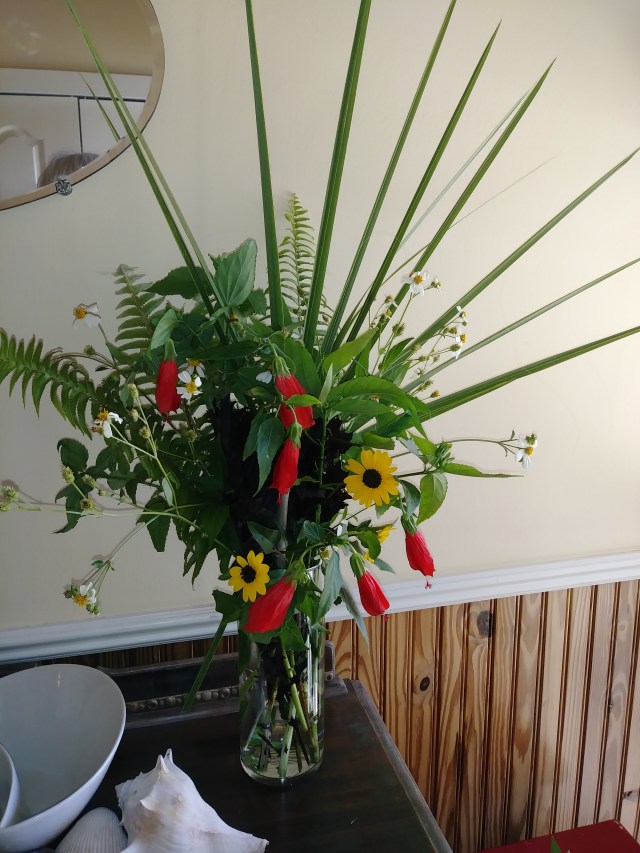
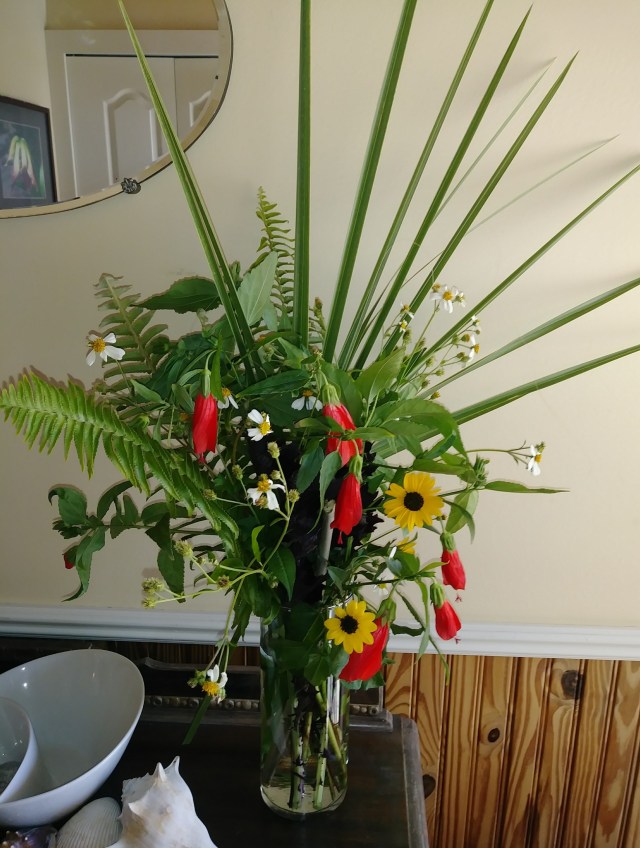
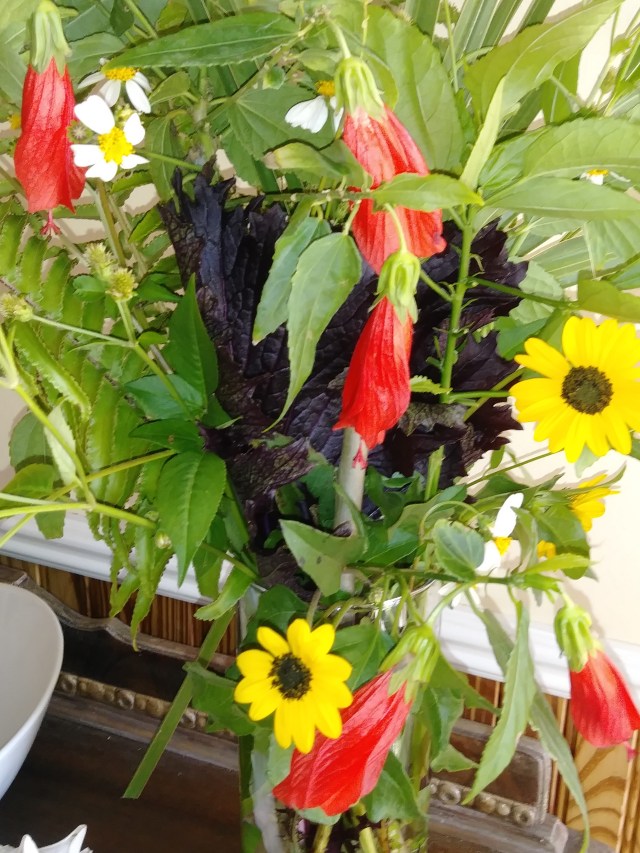
The red flowers anchoring the arrangement are Turks Cap (Malvaviscus penduliflorus); the berries are from the Firebush (Hamelia patens); the off white flowers are Wireweed (Neverlearnedthe latin); yellow and red lobsterclaws, Bromeliad Aechmea blanchetiana flowers; dark foliage is from Copper Fennel (Foeniculum vulgare ‘Purpurea); amazingly still living after supporting several generations of Swallowtail Butterflies and my flower arrangements; varigated foliage is from Mammey Croton (Codieum ‘Mammey’)

Last weeks vase is still holding up and displays more of Florida’s actual fall colors.

20181007_115539

Not bad for Desperately Seeking Seasons.