Six on Saturday – In the Bag

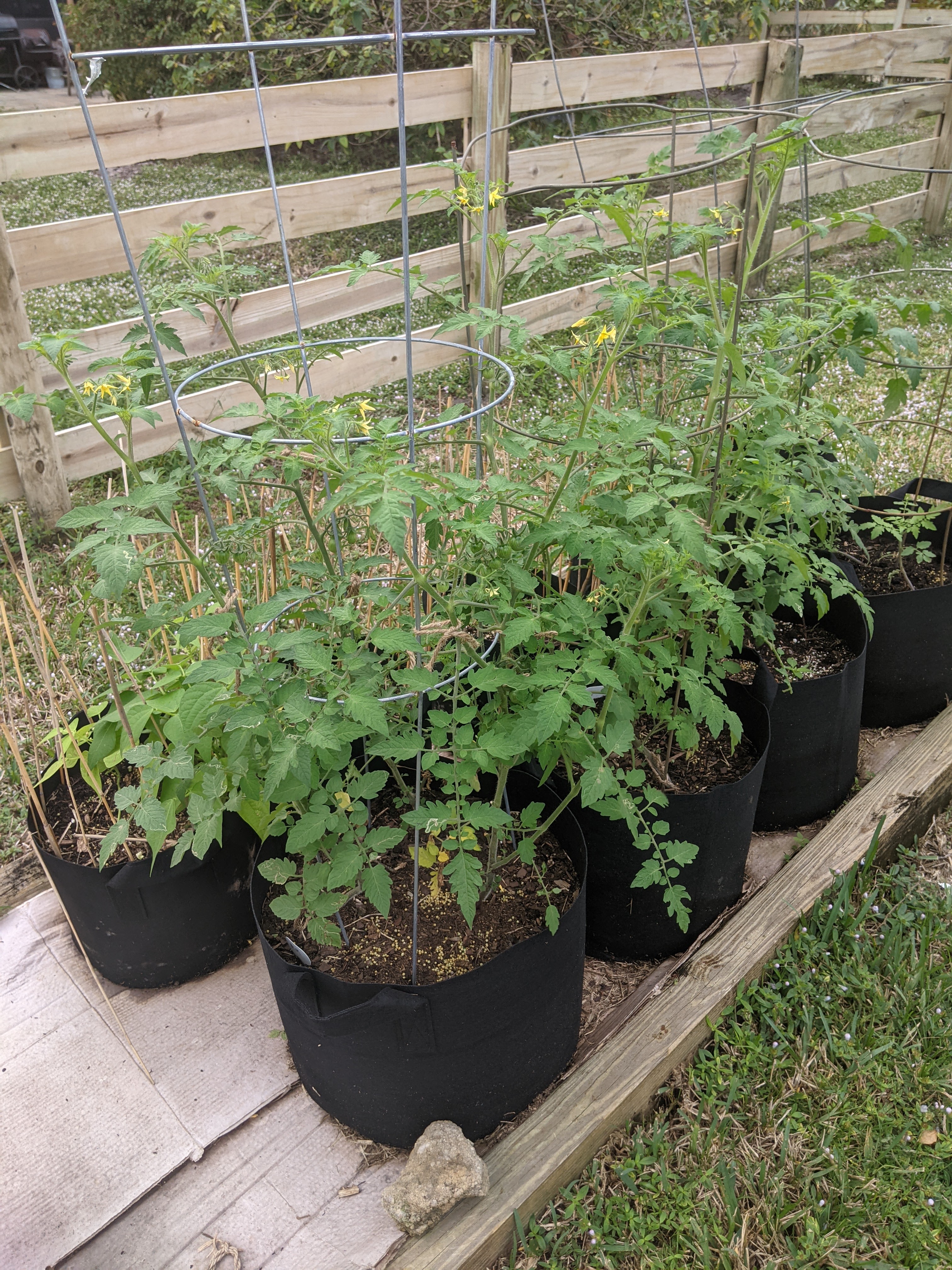
My Bag Garden is coming along. I have two kinds of tomatoes ripening and small green beans on the bush beans. This group has tomatoes, green beans, radishes, dill and zinnias. The seeds were planted in September and I used some different soil mixes to see what works best. Of course, the most expensive mix was doing best at first. So, I amended the cheaper, heavier soil mix with compost and Osmocote. Now the cheaper mix is catching up. The first radish planting was a bust as the cheap soil was too heavy for radishes.

When I tied the tomatoes to the cages I pruned the suckers off the plants and put them in a vase to root for a later season set of tomatoes. The suckers are flowering in their vase on the counter behind my kitchen sink.
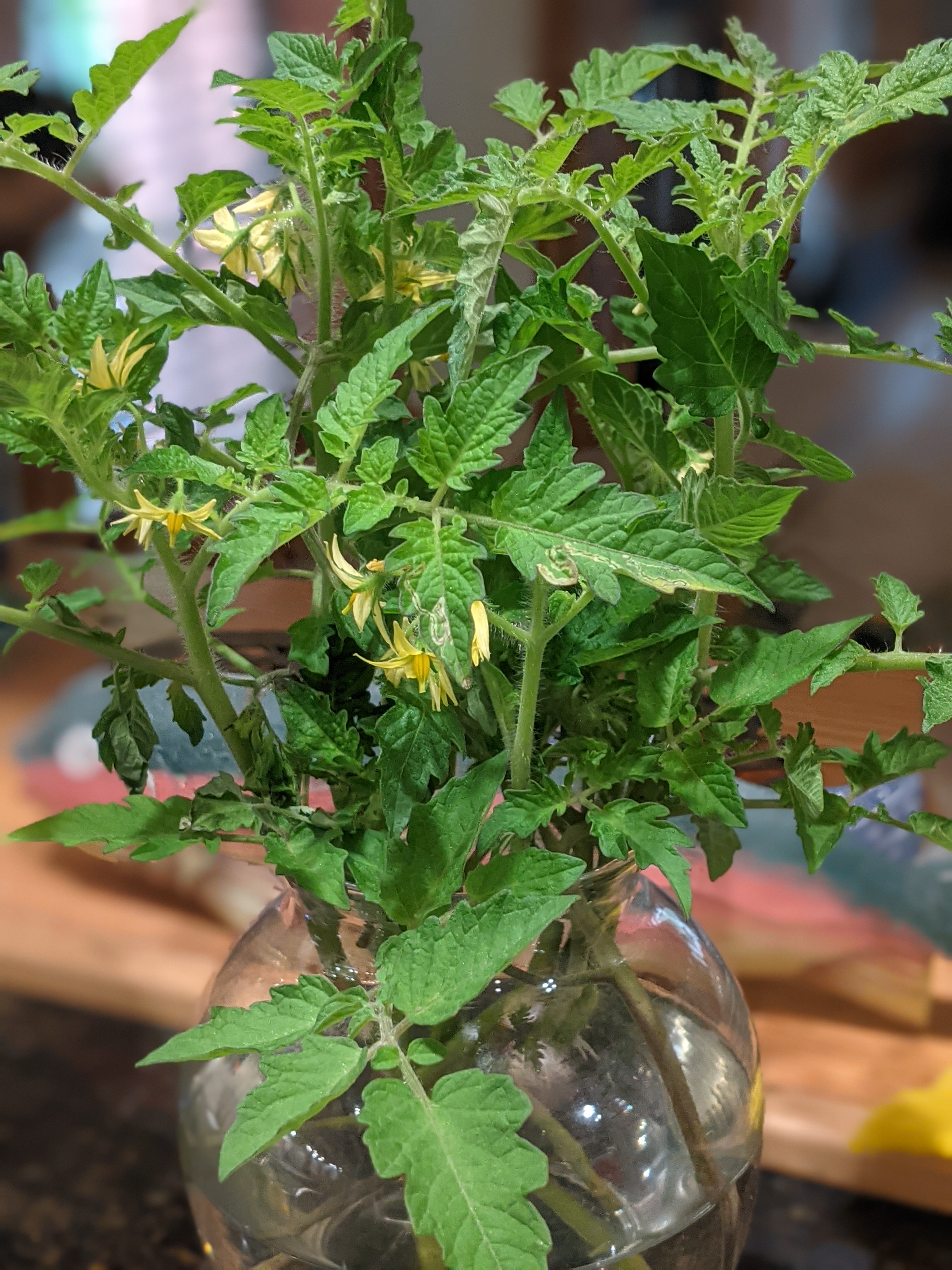
I am not sure what to think or do about the flowers – cut them off? There is very little natural light in this area, although there is LED lighting above the sink.

The other bags are in a more protected location where I potted everything up. They seemed to be doing well so I left them in their spot.

I have a couple of different kinds of zinnias, sunflowers and mystery seedlings from a cutting flower mix. Nigella surprised me by germinating, not supposed to grow here, so hopefully I get some flowers. This week, with cooler weather, I planted another big pot with snow peas, spinach and cilantro. The sticks in the pot are rabbit and squirrel abatement. I had a great deal of trouble with squirrels when I planted the sunflower seeds. My snowbird neighbors amuse themselves by growing a highly toxic, poison green lawn and feeding the squirrels peanuts – the squirrels in turn tear up my potted plants. The sticks are 24″ reeds from reed fencing and are working well.

This is not quite in the bag. It is in the bromeliad, specifically a frog I spied while looking for a flower. The bromeliad is a Aechmea ‘fasciata’, sometimes called Silver Vase. I think these bloom in winter, but only frogs so far.

There! my six for this Saturday. To see more SOS posts, follow the link: http://www.thepropagatorblog.wordpress.com.

Happy Gardening!

In a Vase on Monday – Wild Thing

Wild Thing .. you make my heart sing! Remember that? The Troggs are the original artists, here is the youtube version https://www.youtube.com/watch?v=4qHX493bB3U

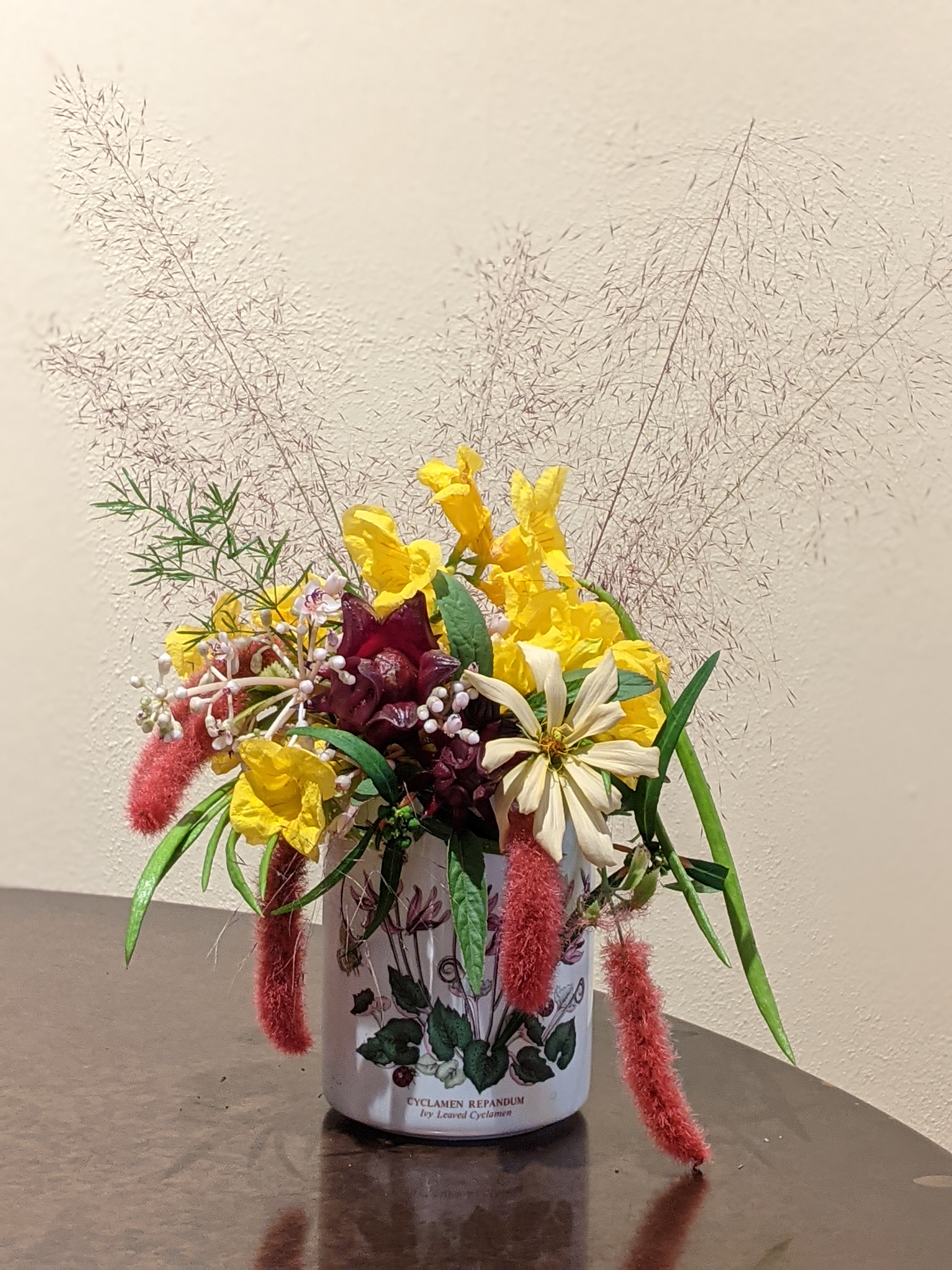
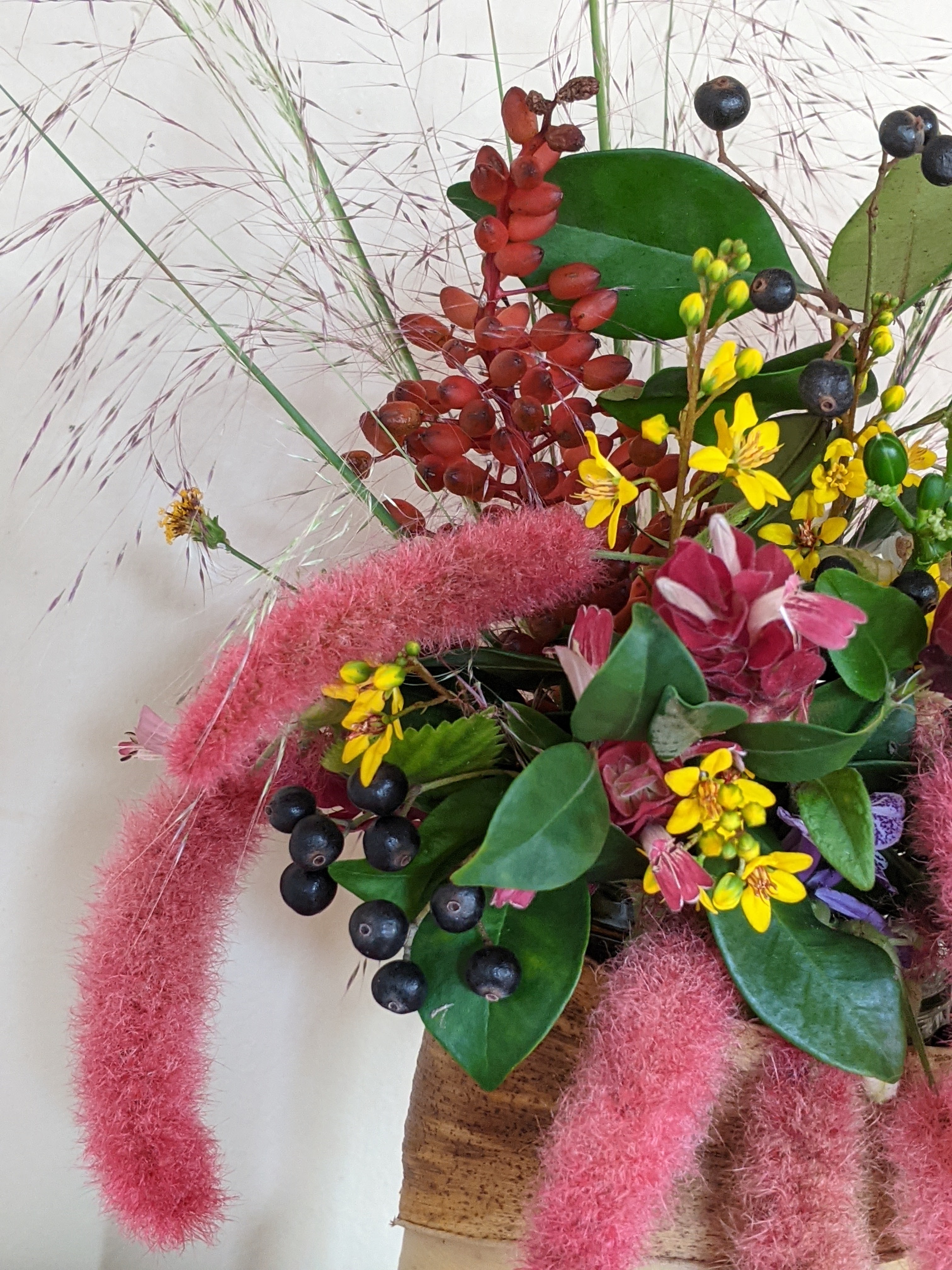
I truly enjoy the wild things (they make my heart sing) I grow in my South Florida garden and have filled, well, not a vase – but a Portmerion canister with fall wild things. Maybe I should call them weird things, though there is not a song for that!

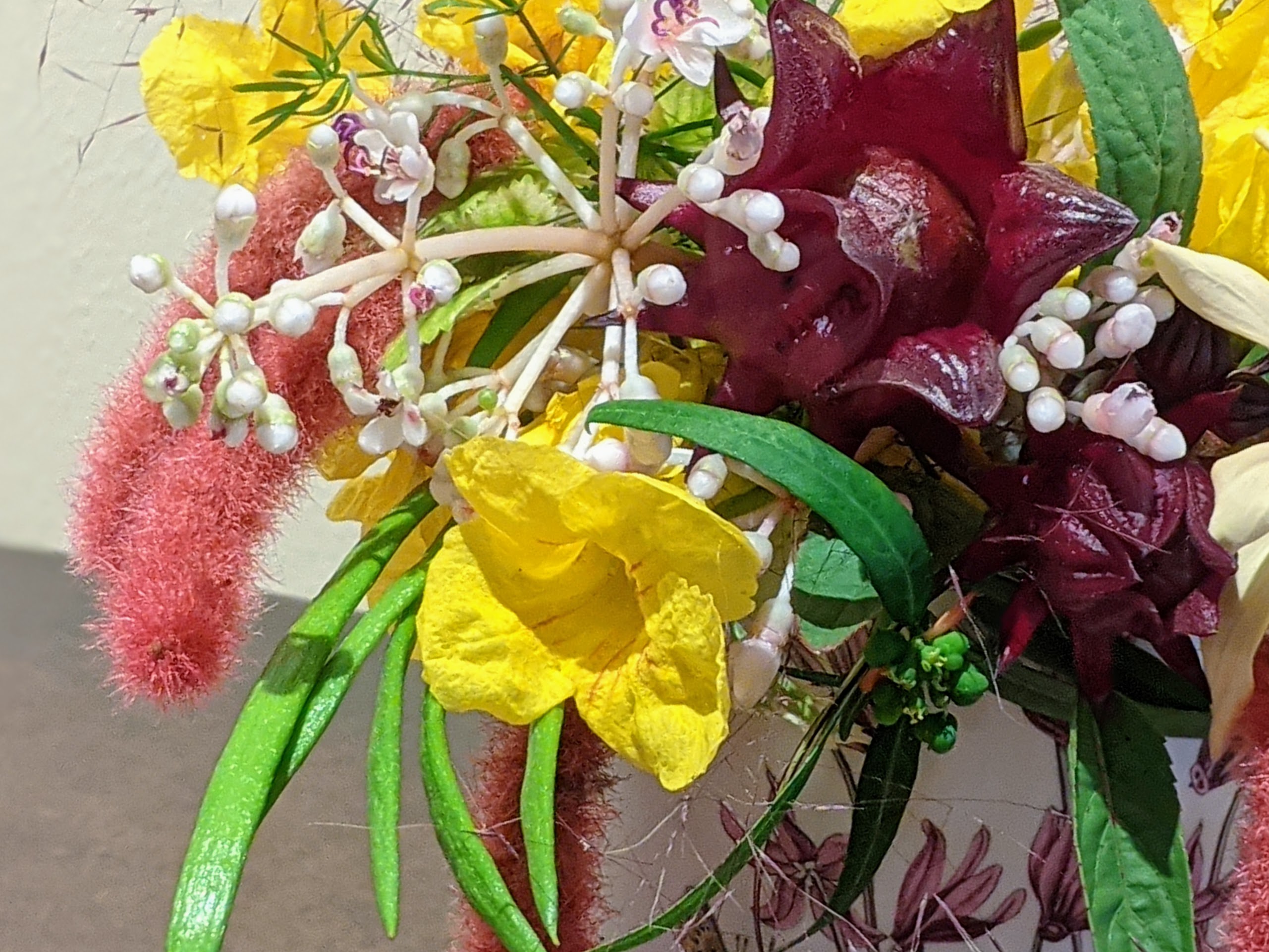
A closer view:

The pink fuzzzies (hubs refers to them as wooly worms) are from Dwarf Chenille Plant (Acalypha pendula); pale pink chandeliers are from the Chandelier Plant (Medinillia cummingii); burgundy edible flowers are Roselles (Hibiscus sabdariffa); yellow flowers and green beans are Esperanza (Tecoma stans). There is a bit of Asparagus Fern in there for green texture.

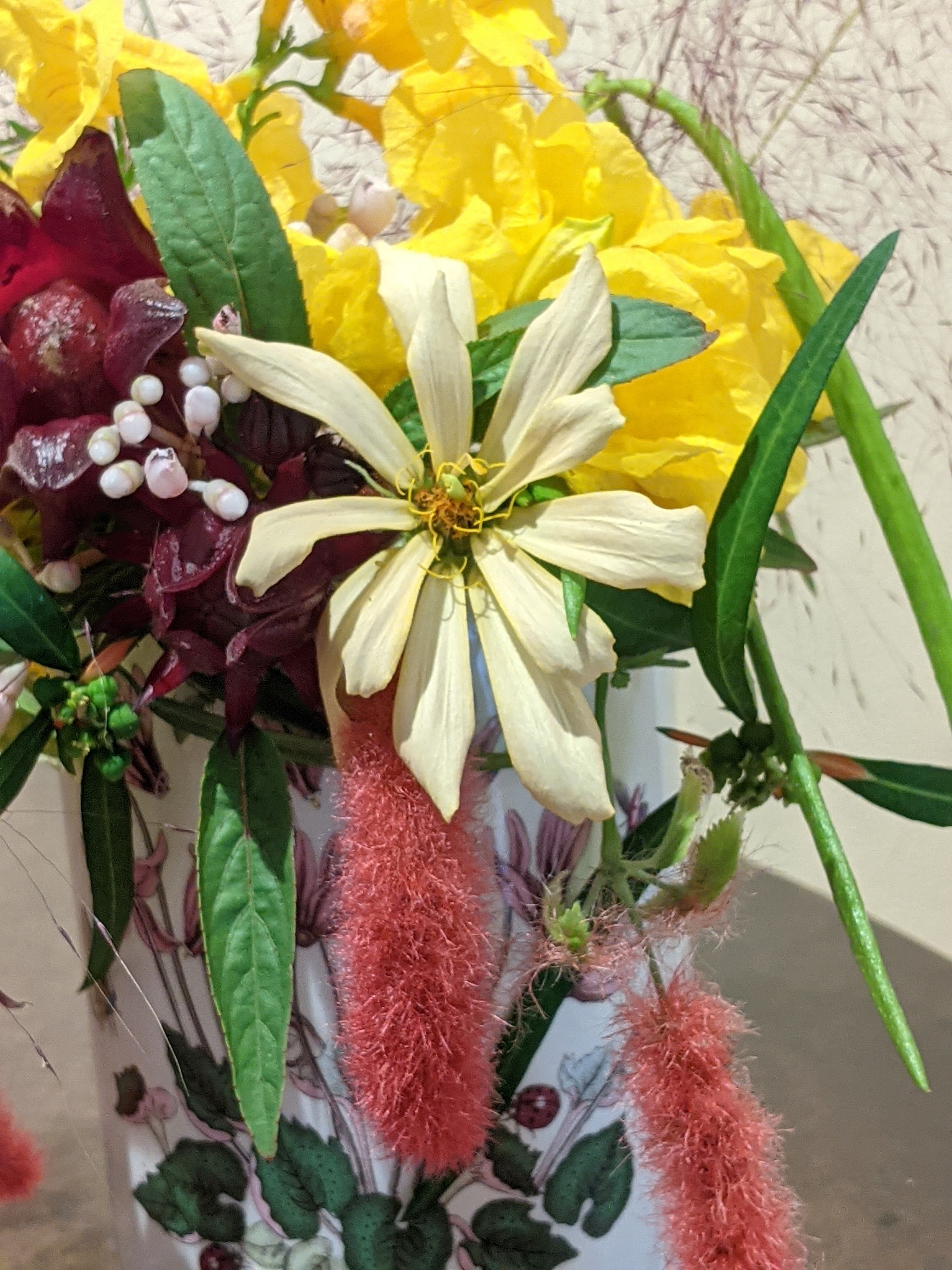
Ivory Zinnia is my first flower from Cactus Zinnia seeds I started in September. I have Green Envy Zinnias (started at the same time) budding and am hoping I have figured out when to plant Zinnias here. I noted some mature Zinnias around when I planted seed so it may be a two Zinnia season here?? Fluffy pink grass in the background is Muhly Grass (Muhlbergia capillaris)

My vase from last week (Palm berries, etc.) is holding up nicely. The bits and bobs have settled a bit and are drying in place, colors are deepening. This may end up being a dried holiday arrangement with the addition of some sparklies, time will tell.

Thanks to Cathy at http://www.ramblinginthegarden.wordpress.com for hosting IAVOM. Follow the link to find more vases from around the world.

Happy Gardening!

In a Vase on Monday – Muhly Belles

My garden is in seasonal transition, there are a few flowers, some fruit and buds for the winter flowers – all in all, not a lot of flowers. I enjoy these respites and have cut a lot of the summer performers back as they tend to get buggy as they age. The dragonflies showed up in droves this week and hopefully ate all the mealybugs on the Salvias, portending a new batch of salvia flowers for the winter. Most of the flowers I cut seemed to be bell shaped – and I added some Muhly because, well, everyone loves the Muhly Grass.

Some closer views:

The red belles are Firecracker Plant (Russelia equiseteum); yellow belles are from Esperanza (Tecoma stans); and the orange, admittedly less bell like are from Firebush (Hamelia patens); my perennial favorite for its flowers, ease of culture and butterfly nectar.

The yellow belles are from Tecoma stans, this is also another common name for them. They have several. The background ephemeral wispies are from Muhly Grass (Muhlebergia capallaris). This seems to be everyone’s favorite this time of year. I am guilty of this, currently loving them in the garden and waiting for their full pink floaty goodness. I may need to stop cutting the wispies.

That is the vase for this Monday from South Florida. Happy Gardening and Happy Fall Y’all. I will be in the garden admiring the Muhly Grass. For more vases from worldwide gardens, visit our intrepid hostess, Cathy at http://www.ramblinginthegarden.wordpress.com.

Six on Saturday – Harvest. Present and Future

Time for SOS again. Follow the link to see more fun from gardens around the world http://www,thepropagatorblog.wordpress.com

My garden is enjoying the weather cool down and making flowers and fruit for fall. I have begun harvesting the Roselles (Hibicus sabdariffa) and here is the first batch:

I pluck these by hand as the green seeds start to appear in the middle of the flower. Rinse them throughly and remove the calyces.

These are the remnants of the flower. The calyces have been removed. I had to look up calyx, in botany speak it is the whole of the sepals that surround the bud of the flower. Calyces is plural of calyx. If the green seeds are allowed to ripen they turn brown and may be ground for a coffee substitute.

Calyx harvested by pulling sepals off or cutting whole. Jam makers like the use the whole ones for aesthetics. I think. I am freezing these bit by bit and looking for recipes.

Fruits of the Christmas Palm (Adonidia veitchii). These are reportedly edible but unpalatable. I leave them for the wildlife. Most people cut them off, though I like to use them for arrangements and enjoy the color.

Tomatoes started from seed in September are setting fruit. I planted Yellow Pear and Sweet 100 Cherry Tomatoes, not sure which one this is, but am looking forward to eating it.

One of my favorite butterfly nectar plants, the Firebush (Hamelia patens) flowers and produces fruit in the fall. More food for wildlife (and maybe thought, while contemplating the butterflies.)

That is six from my garden this Saturday.

Happy Gardening!!

In a Vase on Monday – Fall Tapestry

While searching for seasonality in my garden on Sunday, I came up with several autumnal examples. It brought to mind my mother’s favorite fall annual planting schemes. She called them ‘tapestry colors’ usually done with pansies and kales in shades of purple, gold and pink. “Antique Shades” was the favored color mix of pansies.

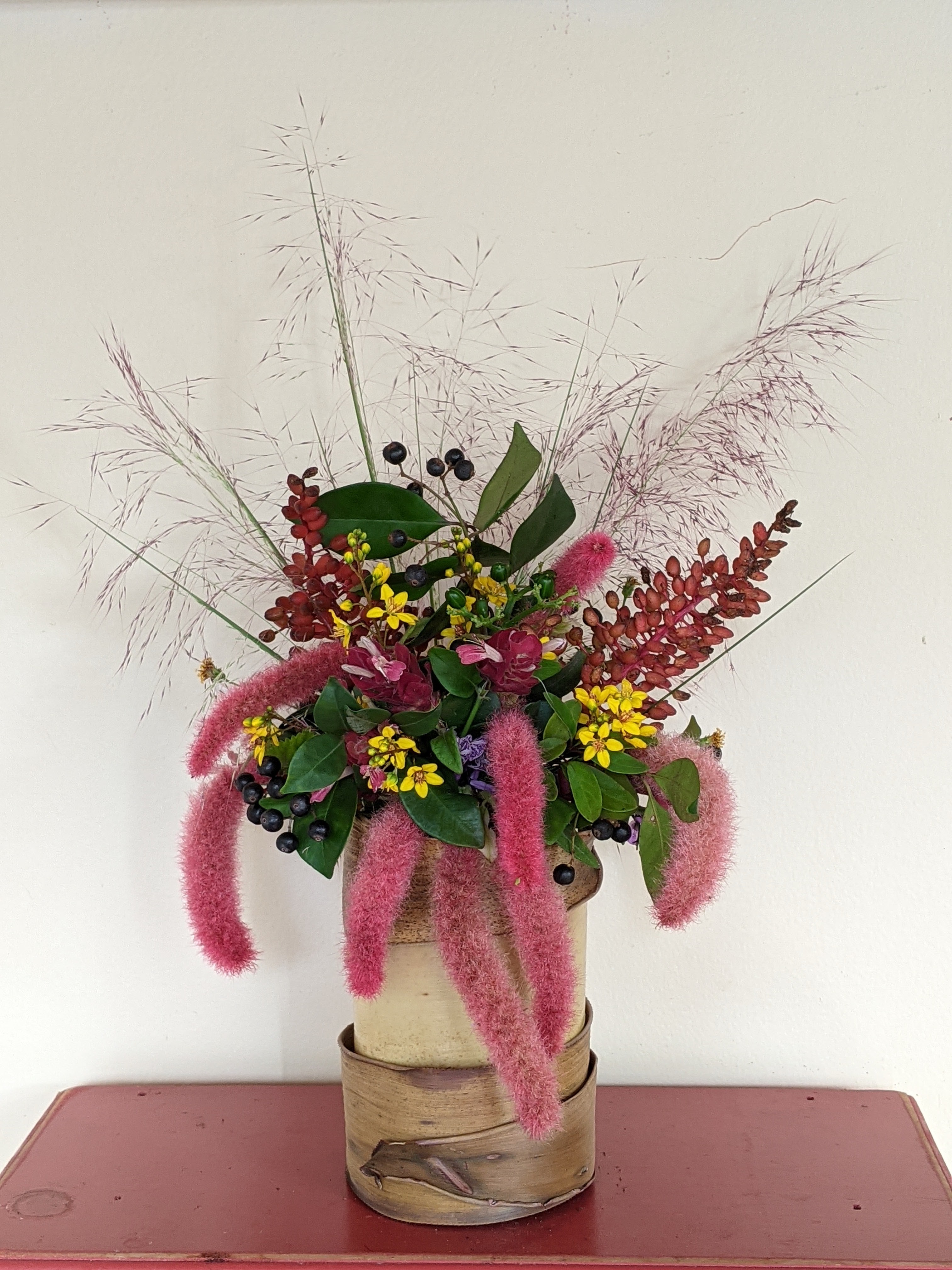
Serving as a vase this Monday is a Bromeliad leaf wrapped pickle jar from a couple of weeks ago that was left to dry and repurposed for a different look. This looks a bit like wood to me.

Closer views:

Floaty seed heads of Muhly Grass (Muhlbergia capillaris) provide background and are a true indicator of fall in South Florida. The deep purple berries are from Spicewood (Calyptranthes pallens), a native shrub I am not impressed with thus far. Reportedly has a wonderful spicy scent – I haven’t caught a whiff of this yet and it was a real pain to get established, growing to maybe 3 feet in seven years. I won’t ask it to leave the garden, but wouldn’t buy another. Salmon panicles in the back are dried Miniata Bromeliad flowers (Aechmea miniata) these are bright red and cobalt blue when fresh. Yellow flowers are from Thyrallis (Galphimia glauca) I use this as a shrub in my butterfly garden. Pink fuzzies are from Dwarf Chenille Plant (Acalphya pendula), I have this spilling out of a container – though it can be used as a groundcover here.

Red and white flowers are from Red Shrimp Plant (Justicia brandegeana). Tiny bits of purple peeking out are Mona Lavendar Plectranthus. The green berries are from a Tree Spinach (Cnidoscolus aconitifolius). A few Bidens alba are lurking in the mass of flowers – I may have gotten carried away with the Chenille Plant, so fuzzy and fun to arrange.

Happy Monday and Happy Gardening to all. Thanks to Cathy at http://www.ramblinginthegarden.wordpress.com for hosting this Monday outpouring of floral bliss. Follow the link to see more vases.

Six on Saturday – Patience Rewarded

I am joining the International SOS crowd this Saturday featuring a selection of of six plants, flowers and buds I have been looking forward to. Follow the link http://www.thepropagatorblog.wordpress.com to see more Six on Saturday posts from other gardens.

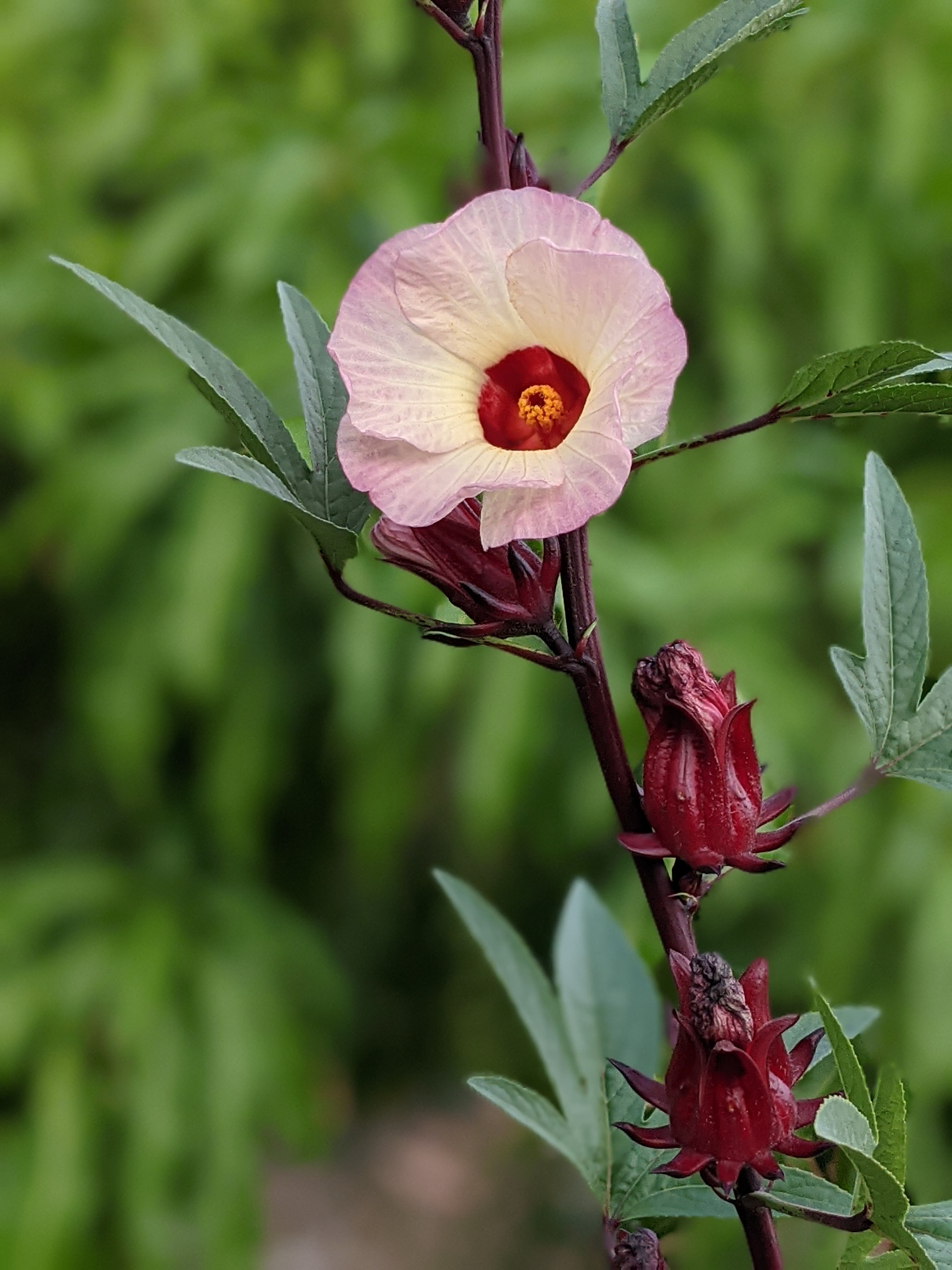
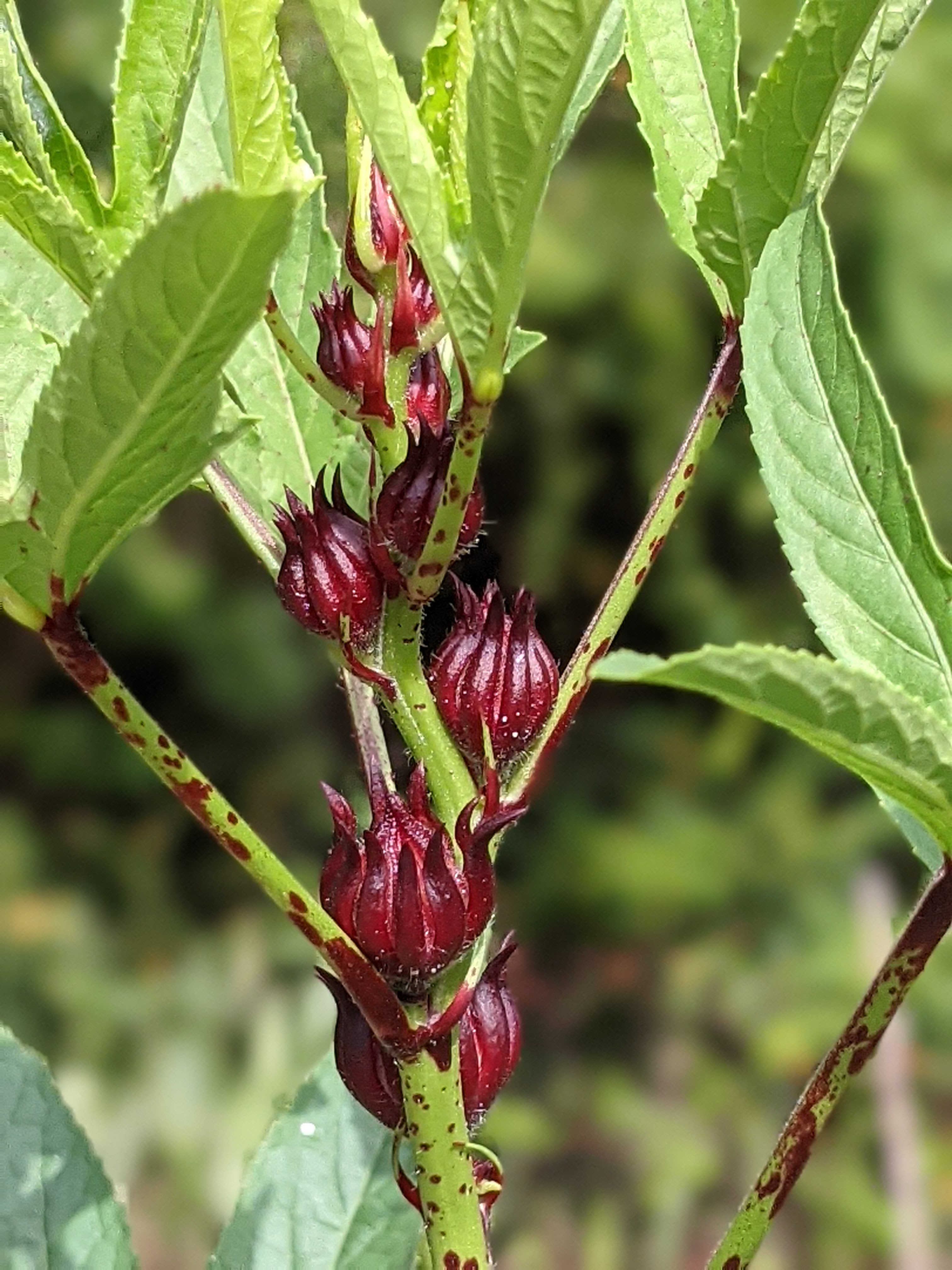
The Roselles (Hibiscus sabdariffa) are finally flowering! The flowers don’t last very long, the duration is morning. And that is it. I was trying to get pictures and it has to be done before lunch or they’ve closed. When the flowers began to make seed it will be time to harvest the calyxes. I planted the seed in April, the plants are now six feet and over and getting floppy.

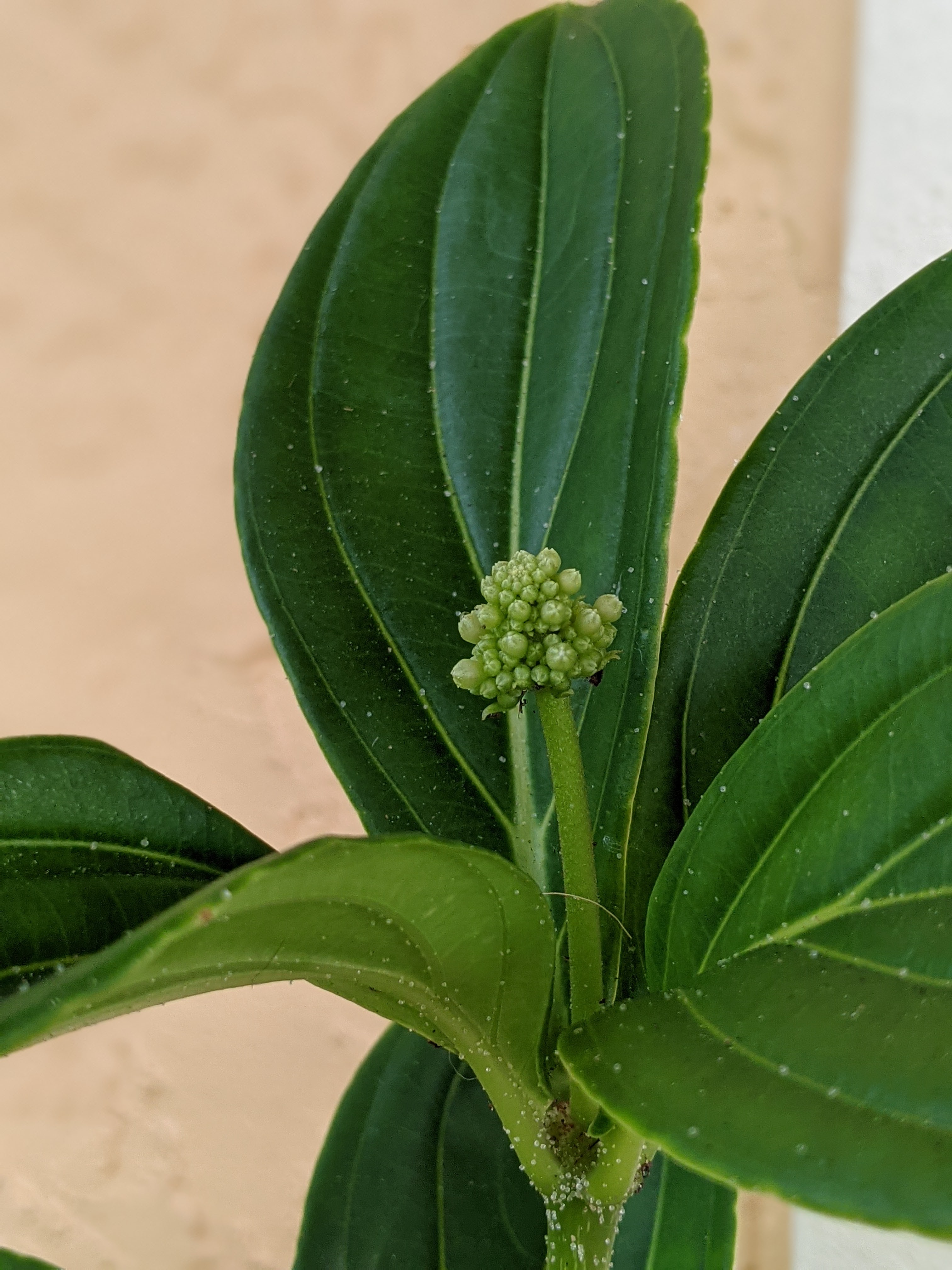
Buds on the Medinillia cummingi. This is an orchid like plant that grows in trees in Tropical Asia. A friend gave me a rooted cutting this spring and said it would take two years to flower, so I am excited to see the buds. I think the flowers will look like pink grapes.

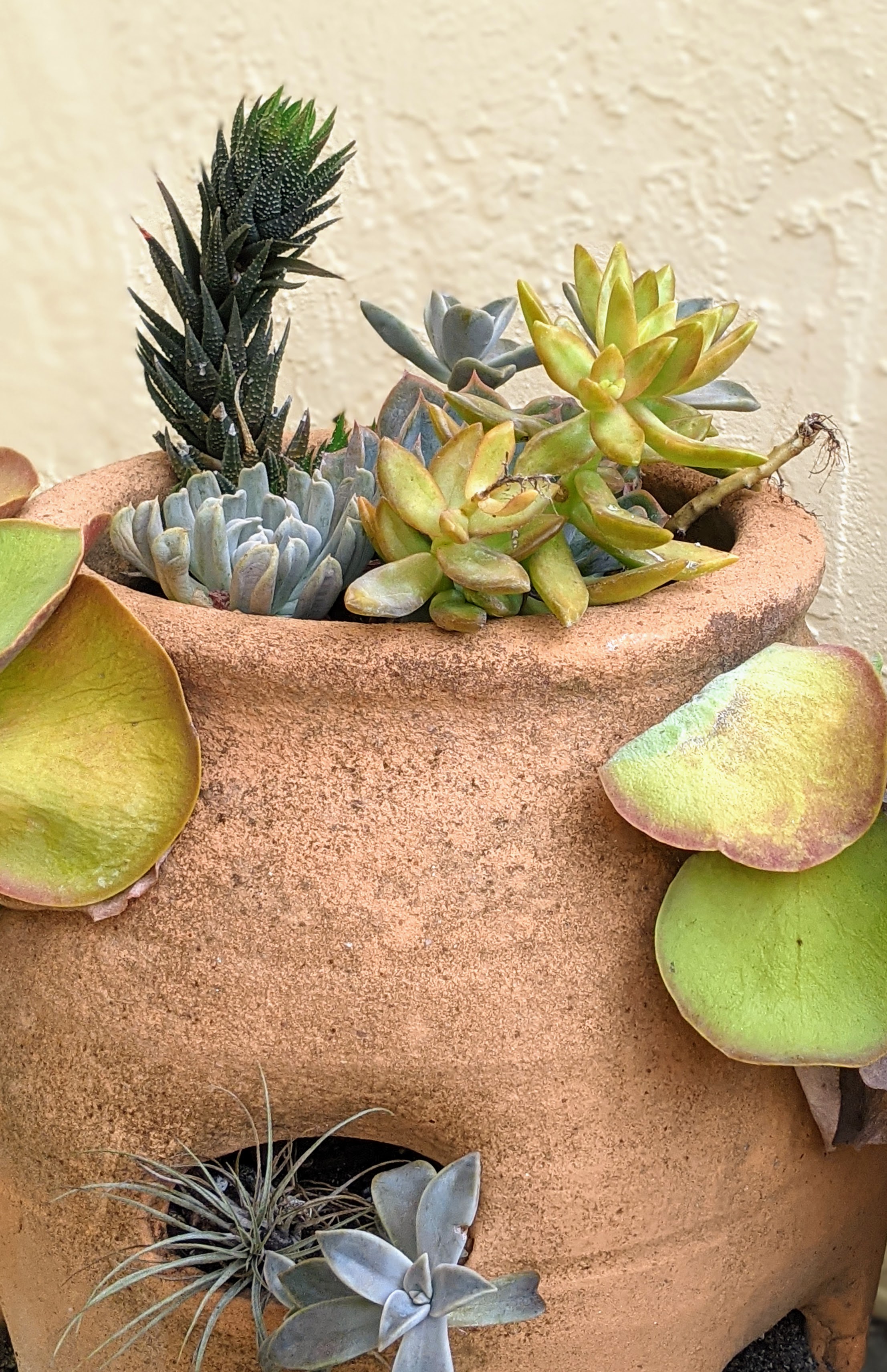
The succulents are finally filling the strawberry pot. A view in elevation:

The dark green plant in the top is Haworthia, the greys are an Echeveria, the charteuse one I can’t recall, though it has white flowers. The big leafed plant on the side is Flapjack Kalanchoe. The grey fine leaved plant is a native Tillandsia Bromeliad and the bigger leafed one is a Graptosedum. I keep this pot out of the rain.

First flower on a Desert Rose (Adenium obesum) I grew from a cutting.

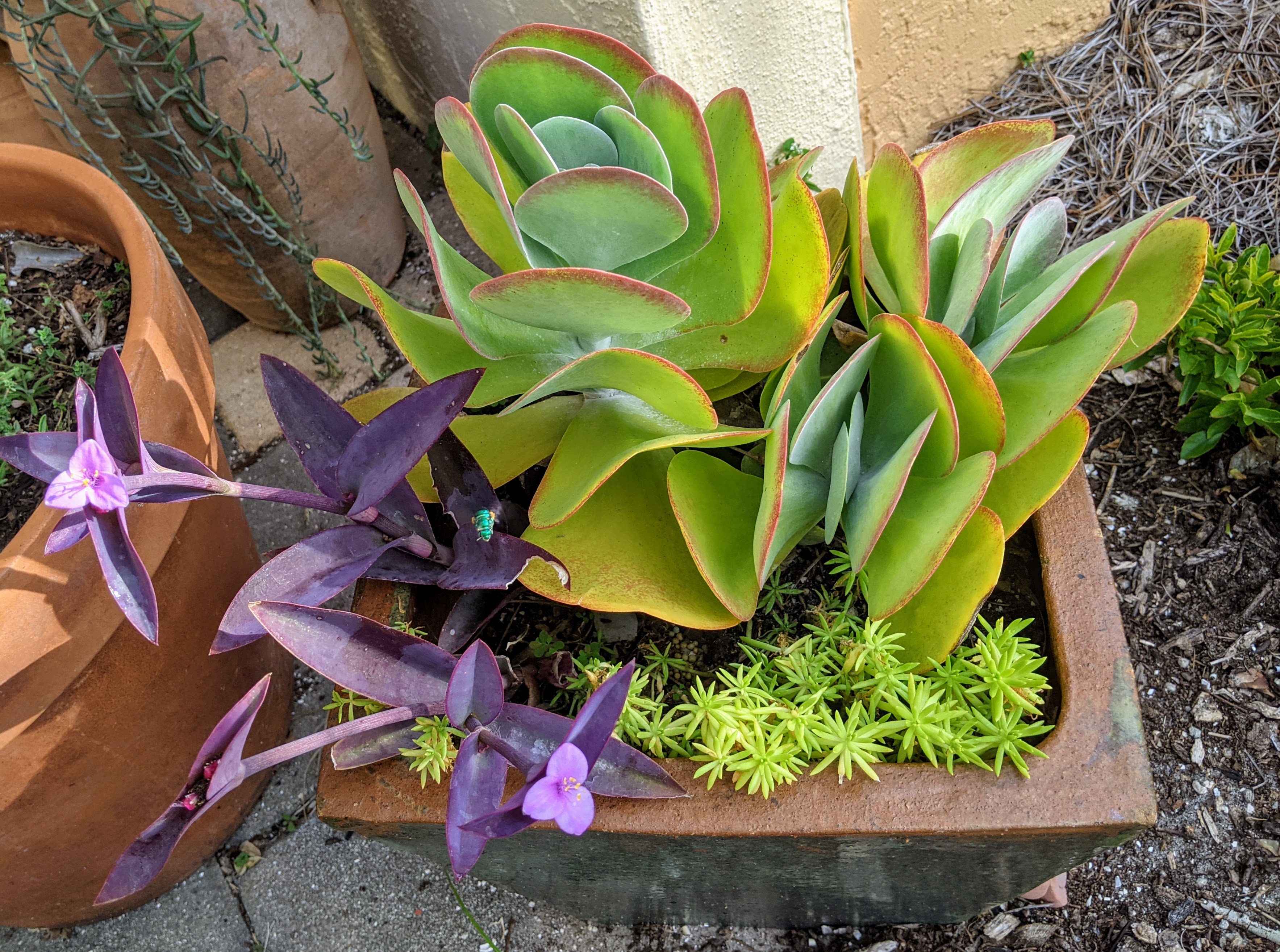
Another pot of succulents on the porch. Purple Queen (Transcandentia pallida) in purple. Gold Moss (Sedum ‘some Florida Friendly BS’) – I find it virtually impossible to grow this Florida Friendly Sedum in the ground. Which annoys me. The big leafed plant is Flapjack Kalanchoe – it grows anywhere with well drained, sunny spot. It took ages for the Sedum to fill that little corner.

That is my Six for this Saturday.

Happy Gardening!!
Six on Saturday – Tea for Two

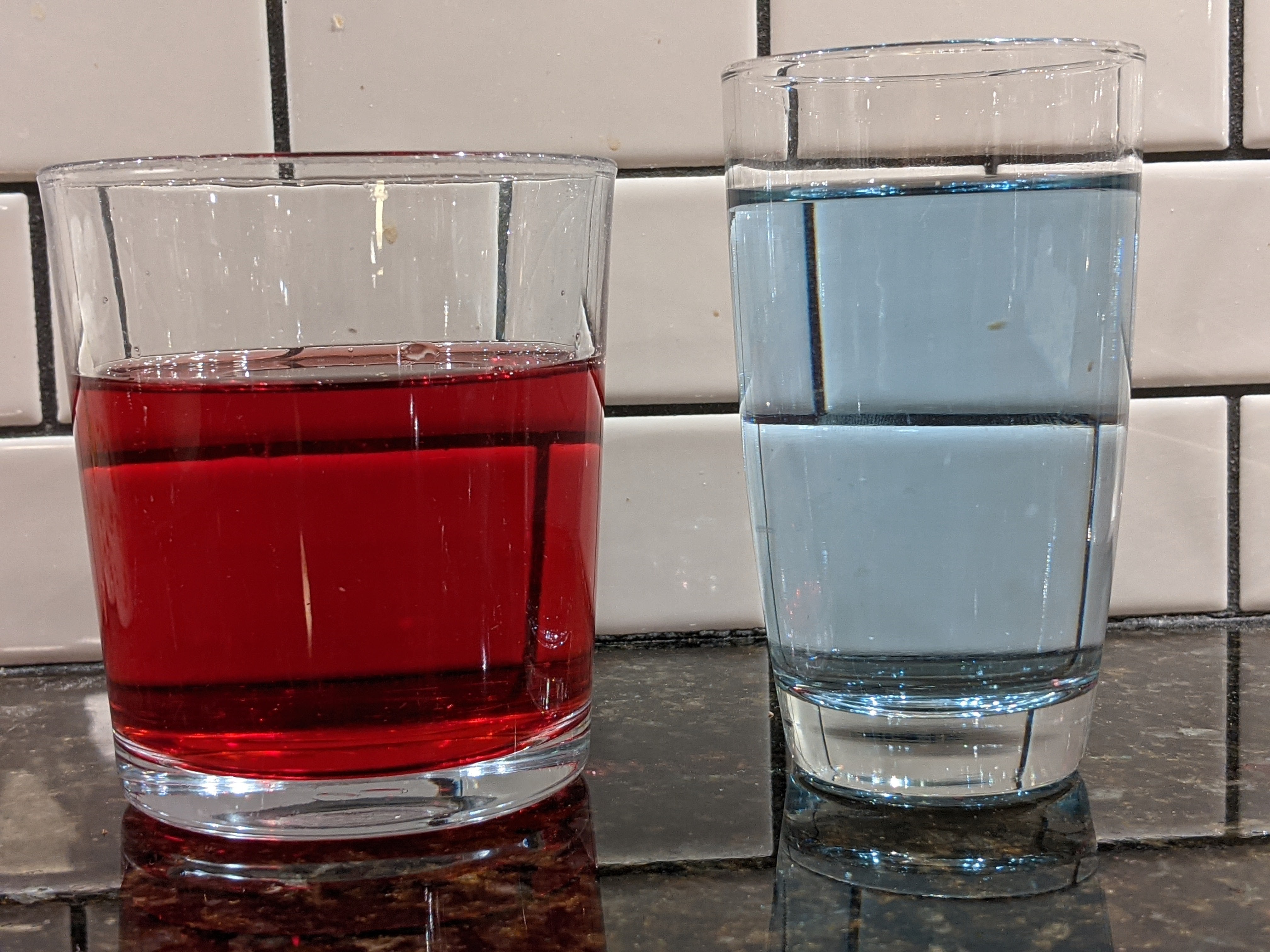
A couple of weeks ago I posted an image of the first flower on my Blue Pea Vine and mentioned making tea from it. I have also posted my Roselles, the flowers may also be used for tea. I tried both yesterday. I should preface this review by saying I am not a huge fan of herbal teas and prefer Earl Grey or black tea.

Roselle tea tastes like Hibiscus flower tea, which is no surprise considering it is a Hibiscus. The Blue Pea Vine tea tastes like dirt to me. I asked my husband to try and he agreed. I have seen the tea served that is cobalt blue in color, perhaps more steeping is needed or more flowers, the question becomes does it taste like more dirt?

The Roselles were in my freezer from last year. I froze them and promptly forgot all about them. When I harvest the flowers this year I will try making some jam to serve with champagne, which seems like a good holiday project.

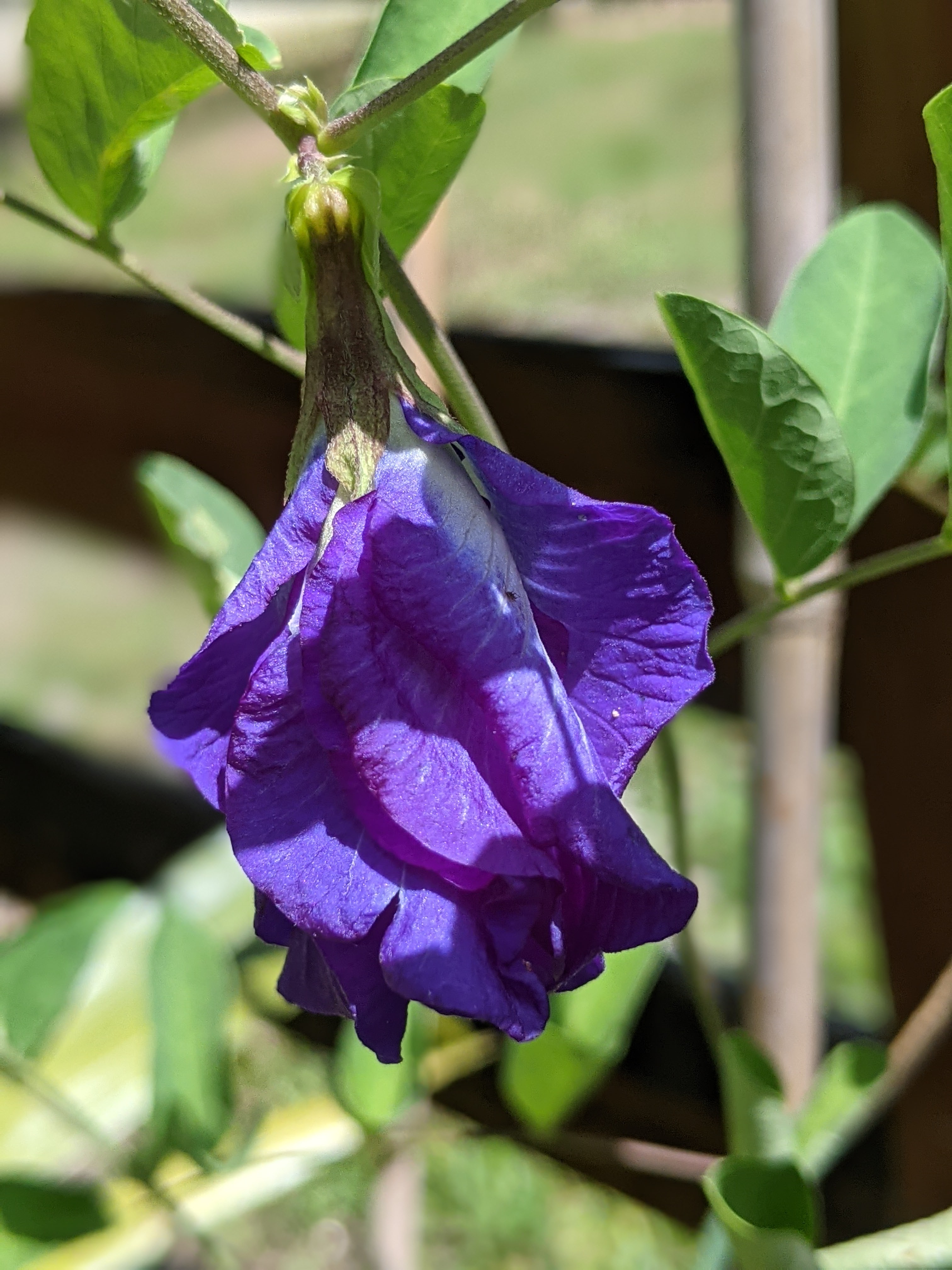
The Blue Pea Vine (Clitoria ternata).

Roselles in their current state. These are about a month out from harvest and are buds. They will flower and form seed heads; the calyx from the seed heads are what is used for tea.

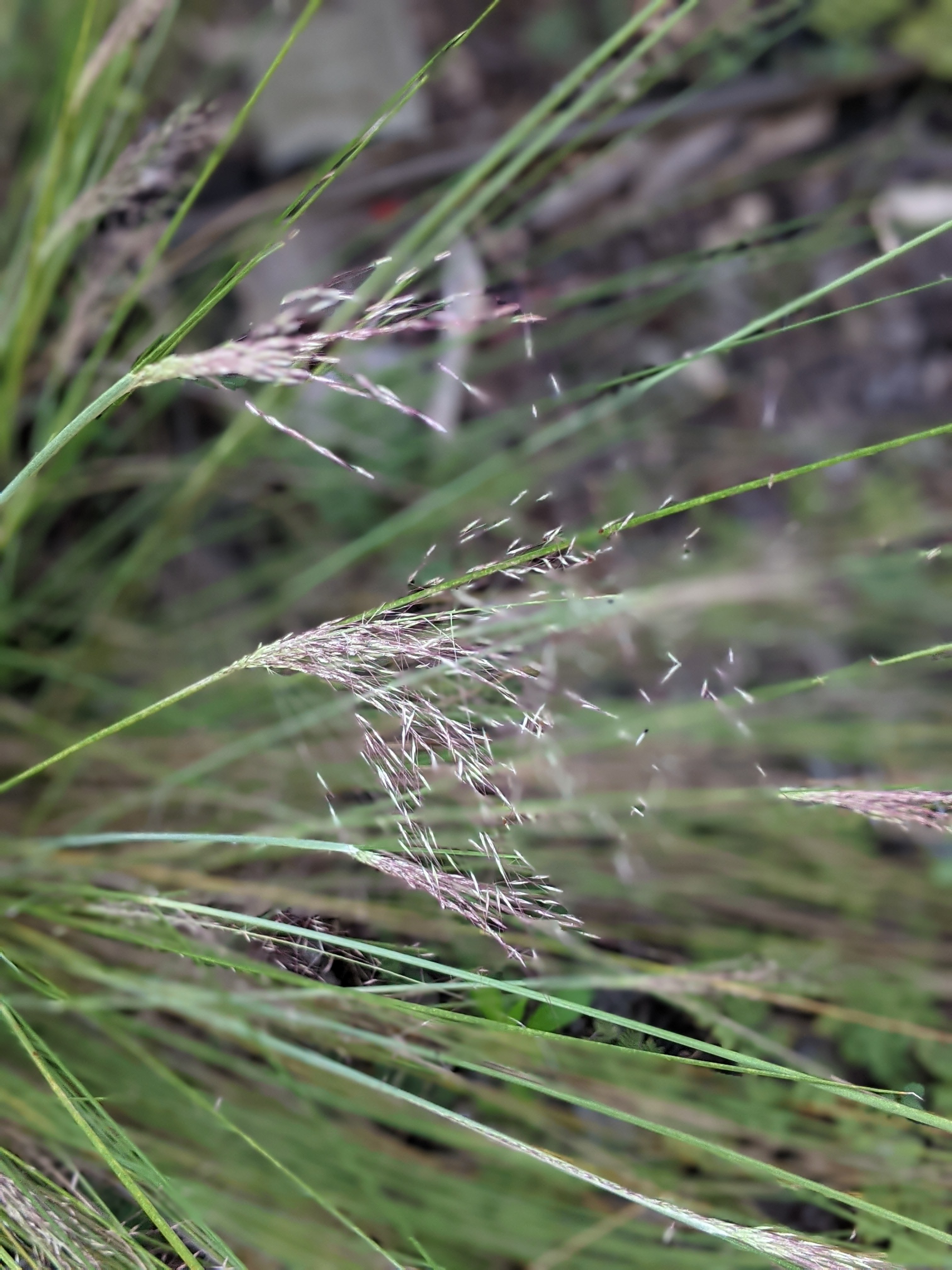
Fall has arrived when the Muhly Grass (Muhlbergia capillaris) starts to flower. The temperatures were in the low 70s this morning. My greyhounds had a long run in the dog yard and I enjoyed a walk around the garden.

Native Senna (Senna ligustrina), another fall flower in bloom. This is a host plant for Sulphur butterflies. If the caterpillars eat the foliage they are green; if they eat the flowers they are yellow. The butterflies are all yellow.

The bag garden is coming along. Currently bagged: bush beans, tomatoes, radishes, criollo peppers, dill, and flowers for cutting – zinnias, sunflowers, nigella and some mixed seeds that will be a surprise. The sticks are to keep rabbits out, the squirrels are only slightly deterred by them. I had a first time experience with a Gopher tortise eating a globe amaranth.

That is my Six for this Saturday. Jon the Propagator hosts this meme at http://www.thepropagatorblog.wordpress.com. Follow the link to visit other gardens.

Happy Gardening!!

In a Vase on Monday – Esperanza Springs Eternal

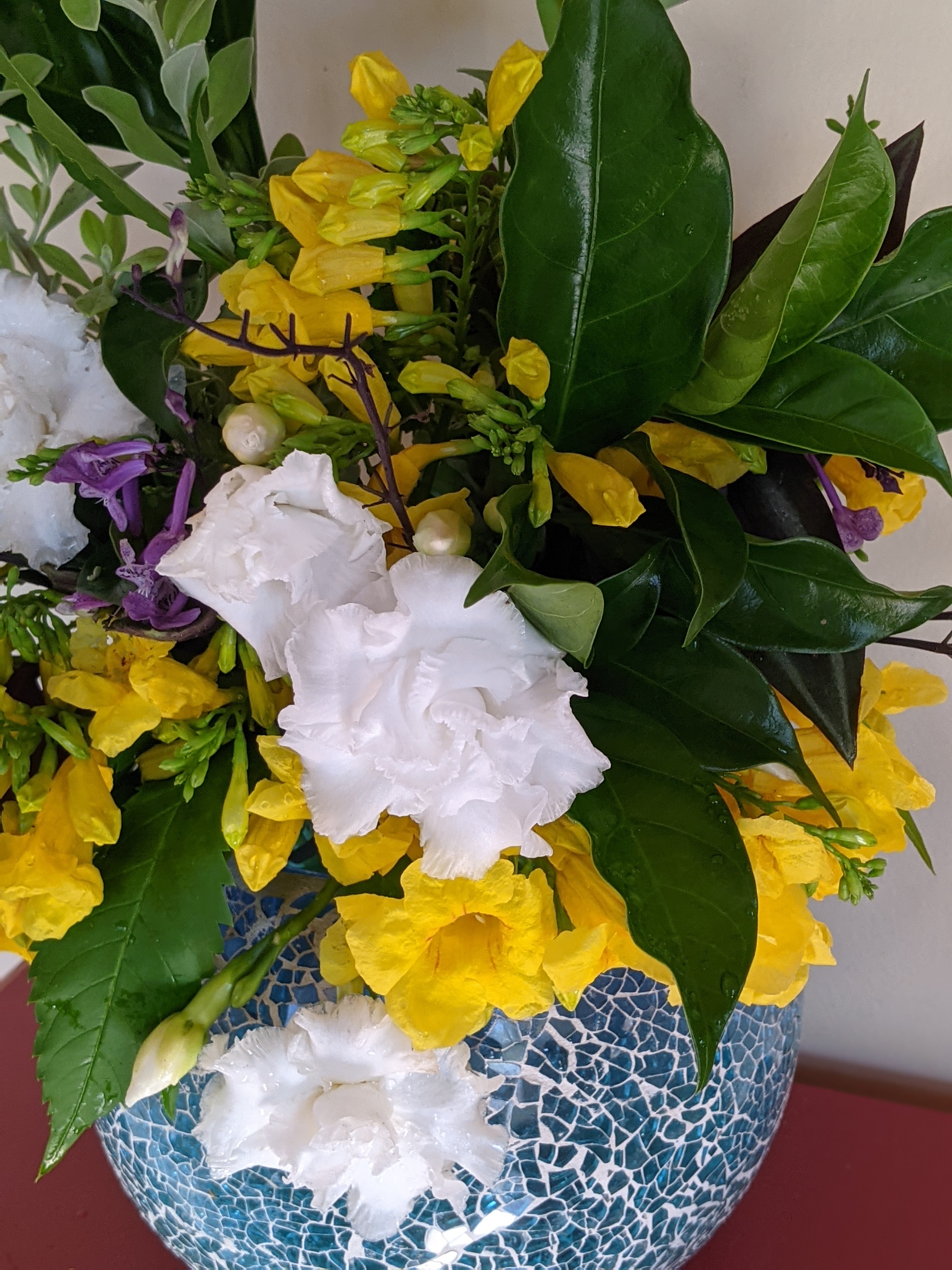
Esperanza means hope in Spanish. The yellow flowers in this vase are Tecoma stans, one of its common names is Esperanza. It is springing forth with great vigor in my garden and I am very pleased about that. Finding that common name also made me stop and think about what I am hopeful about as 2021 winds down.

I am hopeful the pandemic will abate and the politicizing of public health issues will cease. I am hopeful for my husband’s increasingly good health. I am also hopeful for a bounteous winter garden. So many things to be hopeful for based on the common name of a smiling yellow flowering shrub in my garden.

The vase is a gift from a dear old friend and my college roommate. It is actually a candleholder, so there is a beer glass with water holding the flowers as I was not sure how long a crackled glass candleholder would remain watertight.

Smiling for its close up.

Yellow flowers are Esperanza, also called Yellow Elder, Yellow Bells and a couple of other things. Tecoma stans is the latin and the jury is out on if the plant is native to Florida. It was noted growing in Key West in the 1800s and that is good enough for me. The Florida Native Plant Society does not recognize the plant and I think they are missing out on a good one. Purple flowers are Mona Lavendar Plectranthus. I am guessing the latin is that backwards. Purple and silver foliage is Wandering Jew or Inch Plant (Transcandentia zebrina) I call it Zebrina as I like that name better. White flowers and deep green foliage are from Tropical Gardenias (Tabernaemontana diviracata). The Esperanza has a light, fresh floral fragrance that mixes well with the heavier, sweeter Gardenia scent.

The other side, the last plant on the list, in grey, Barometer Bush (Luecophyllum frutescens). My husband said this looked like a bridal bouquet. I am not so sure..though, I would love the scent carrying this down the aisle and suppose I could wrap the beer glass in white lace.

Thanks to Cathy at http://www.ramblinginthegarden.wordpress.com for hosting this week. To see more vases, follow the link.

Happy Gardening!!!

Six on Saturday – Reds and Purples

Another Saturday morning tour of my garden featuring six items of interest to join the SOS crowd at http://www.thepropagatorblog.wordpress.com. Follow the link to see more posts.

I have a lot of hot colors in my garden and fall is no exception. The red and purple flowers and foliage are out in force.

The Aechmea blanchetiana Bromeliads are in full bloom. These are almost five feet tall and last for months. A neighbor gave me a start of these and said “the flowers last so long you get tired of them.” I enjoy them!

The Red Shrimp Plant (Justicia brandegeana). This is a very happy plant and flowers a lot. One of my favorite old reliables and a gift from a neighbor.

The Roselles (Hibiscus sabdaiffa) have reached five and a half feet in height and are setting flower buds. Eventually I will pick the red calyx of the flower to make tea or holiday cocktails. I planted the seed in April. Most of the plant is edible.

Purple Queen or Setcresea appears randomly in the garden. I prefer to call it Purple Queen, Setcresea sounds like a skin disease.

A new container I put together this week. The Bromeliads are cuttings from existing plants in my garden. In red, Fireball Neoregelia, varigated, Bossa Nova Neoregelia. Draped over the side is a Fish Hook Senecio and the plant in back is a Cardboard Palm (Zamia furfuracea). The Bromeliads should spill over the sides eventually.

The Milkweed devoured by Monarch butterfly caterpillars is making a remarkable comeback. I was amazed at the amount of foliage they ate – all of it and about one third of the stem.

That is my Six for this Saturday.

Happy Gardening!!

The Bag Garden

October brings the vegetable gardening season to South Florida. I started tomatoes from seed about a month ago and started work on a new concept for growing vegetables. Last year, my most successful vegetables were grown in containers and I decided to build on that. The soil in my garden is beach sand and while it can be amended, it is virtually impossible to get it to retain enough water for good vegetables. And then, there are root knot nematodes (bad nematodes) that love vegetables. They infested my tomato, snow pea and pole beans last year, slowly starving the roots by consuming the nutrients conducted by the roots, eventually destroying the plants.

On to containers!

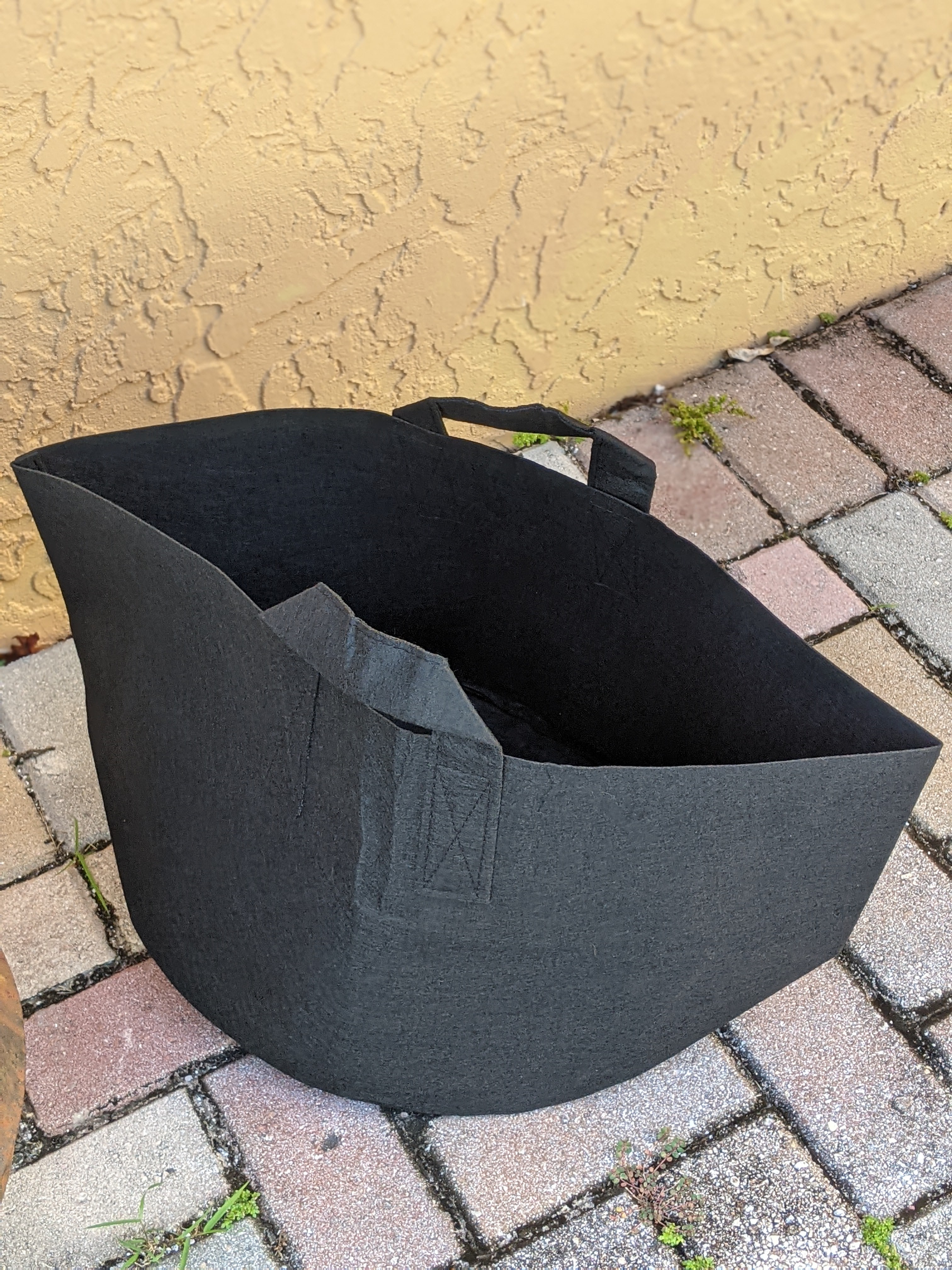
I used 7 gallon containers to grow tomatoes last year and decided I wanted something a little bigger. I searched and found plastic pots weren’t that cheap and then I had to store them somewhere. While searching on Amazon, I found fabric grow bags, lots of grow bags. I have seen these around – but never tried using them. These are available in pretty colors, I almost succumbed to bright purple, green and orange grow bags then realized filling them with black soil mix would render the colors ugly. Basic black prevailed. I bought 8/10 gallon and 8/5 gallon bags for $25 delivered.

Here they are. Shipped folded – they open into something that looks like a handbag.

The 10 gallon bags hold 1.5 cubic feet of soil. I used the 10 gallon bags for tomatoes and bigger vegetables, the 5 gallon bags for cut flowers, herbs and smaller vegetables. I decided to try this organic soil mix, which is not recommended for use in containers. Since this is a spun fabric bag that breathes; I opted for the heavier soil mix and added a bit of compost from my pile.

During the course of filling the bags (they are a bit wiggly) it occured to me I was creating a rabbit height smorgasboard. I had leftover sections of rabbit abatement fence from last year and used the reeds like tiger (bunny?) sticks, this has worked on other delectables in my garden.

This week, I planted tomato and zinnia seedlings and seeds for bush beans, criollo peppers, radishes, dill, zinnias, sunflowers and nigella. When the weather cools, I will plant spinach, lettuces and snow peas.

The bags are currently in a half day of sun location, out of the wind, while the seeds sprout and the seedlings acclimatize. I will move these to a full sun location with a hand cart. Tried it and it works! Saves my back and the soil is stable enough to move.

The experiment continues… Hoping for bouquets of zinnias and lovely salads.