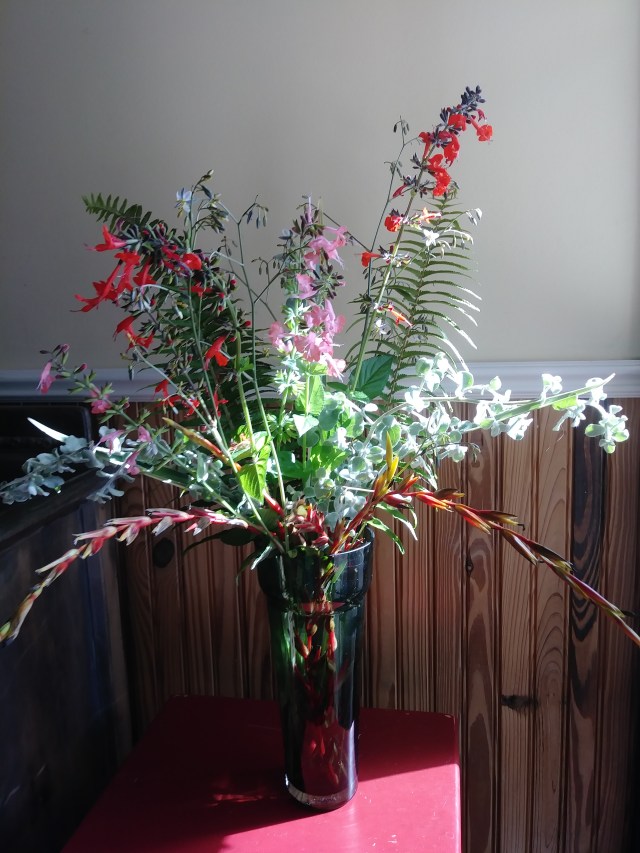
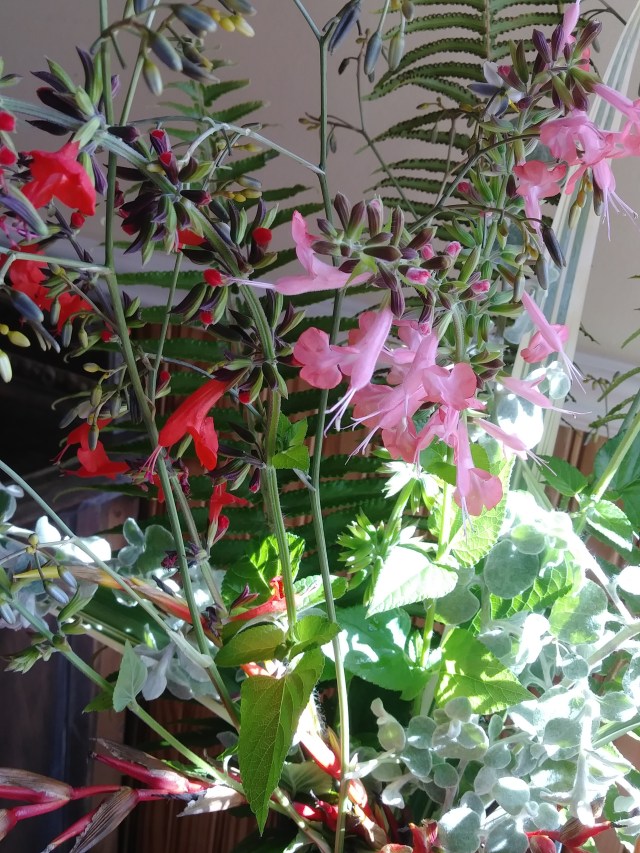
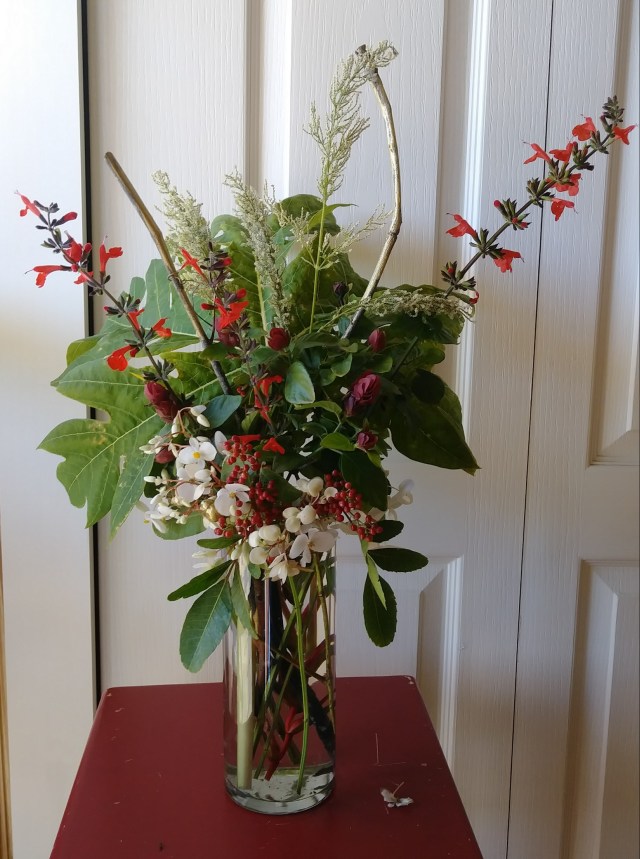
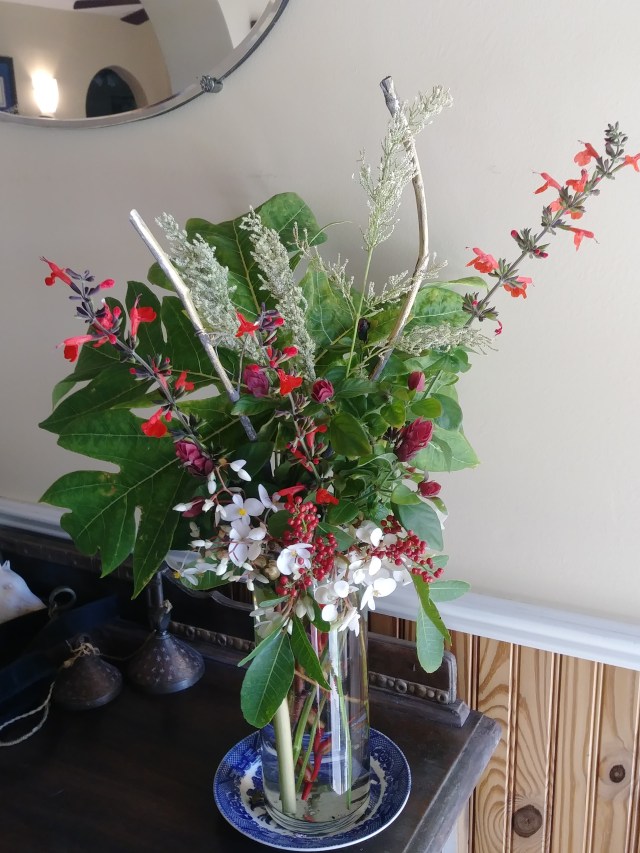
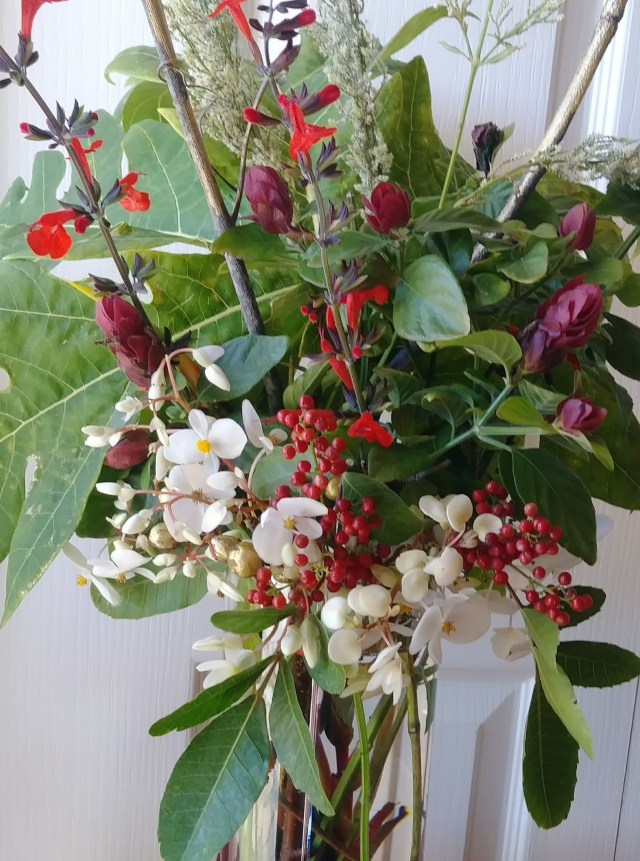
For reasons unknown to me, I have a bumper crop of Tropical Red Salvia. Usually a short and somewhat scruffy looking perennial (or reseeding annual, it seems perennial due to the constant supply of seedlings). The Tropical Red Salvia this winter is bearing long, lushly foliated stems with fat blossoms. The bees were not happy with me and my clippers again.
The Tropical Red Salvia also comes in peach, pink and neon orange. I rarely get a neon orange, but I do enjoy the softer colors and seedling variation. You have to wonder why it can’t be called simply Tropical Salvia as it is native to Florida, or, Florida Salvia?
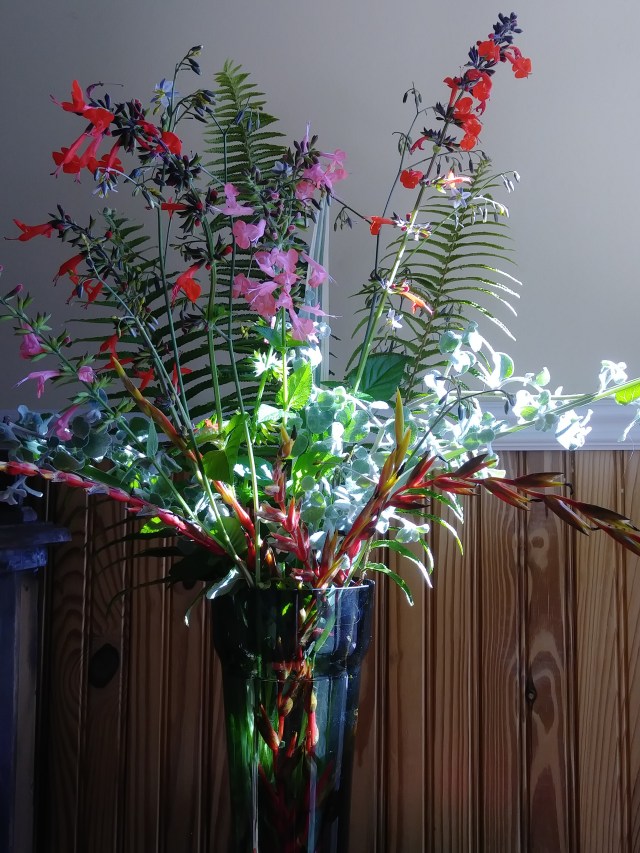
Another native added to the vase, Boston Fern (Nephrolepis exaltata) – These ferns graciously popped up in the nether regions between my driveway and my neighbors fence. I have been enjoying ferns in vases since it’s arrival. The red and orange zig zag shaped bits are flowers from a Blanchetiana Bromeliad; the sprays of blue/white flowers are from Dianella (some call it Blueberry Flax), the variegated leaves are also from Dianella. Grey fuzzy foliage is from Licorice Plant (Helichryseum petiolare) – a plant in a winter container that I just cut back. I was happy to learn the Licorice Plant will grow here. More plants to propagate. Or try.
I am having the exact opposite experience with China Asters and will not ask them into the garden again. I love the flowers and am not sure if this is the second or third attempt. Here is a seedling- sowed in September! Had one flower about the size of a fingernail.
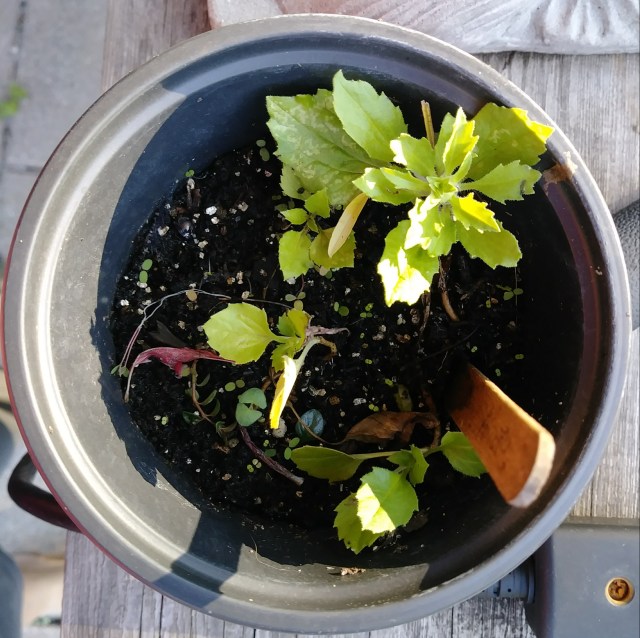
Ironically, the seedlings coming up in the pot are Tropical Red Salvia.
Life in the Garden. Happy Monday.

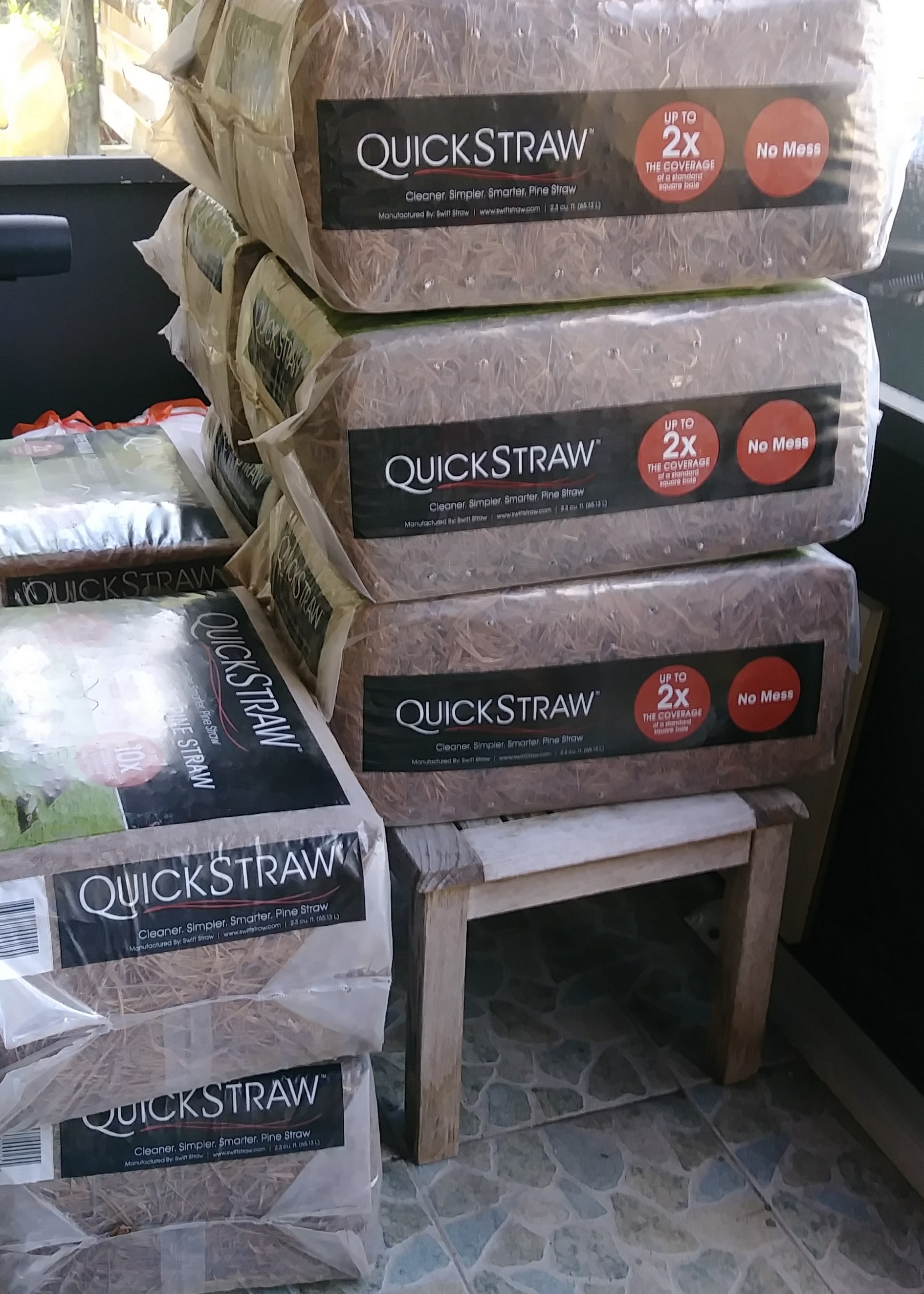
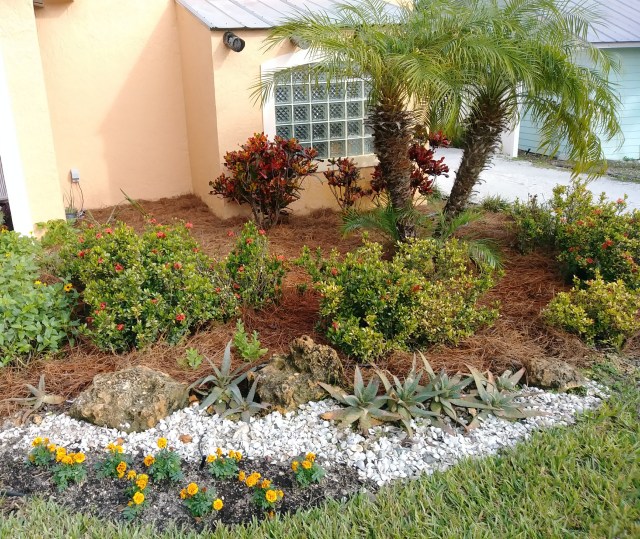
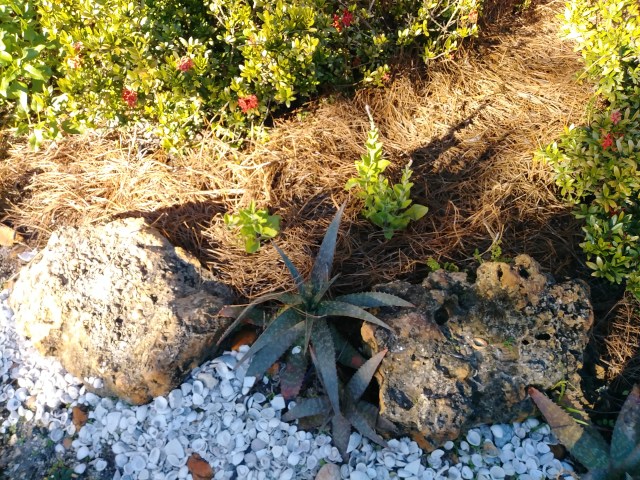 I could be the Mulchmeister, given the love/ hate relationship with mulch that I have nurtured for years. I love the appearance mulch gives the garden – a soothing blanket of hopefully brownish material, tucking all the plants in for good growth, saving water and helping keep weeds at bay.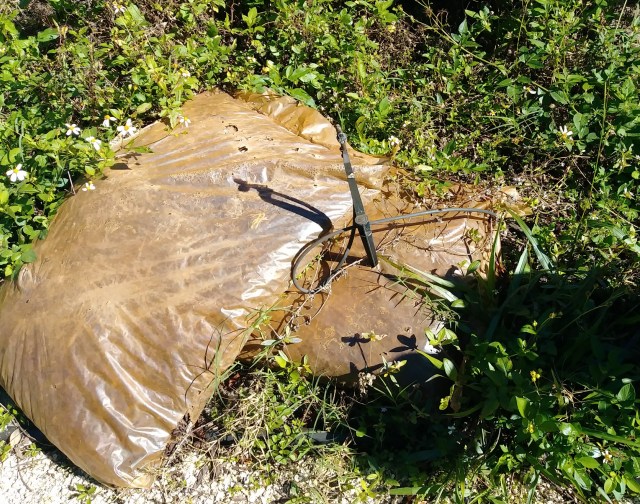

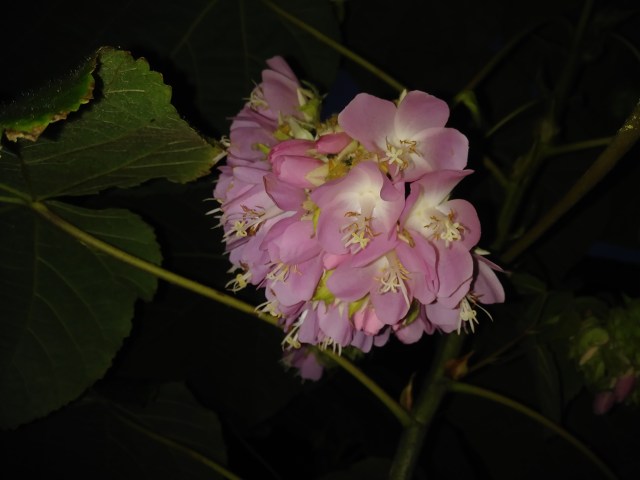




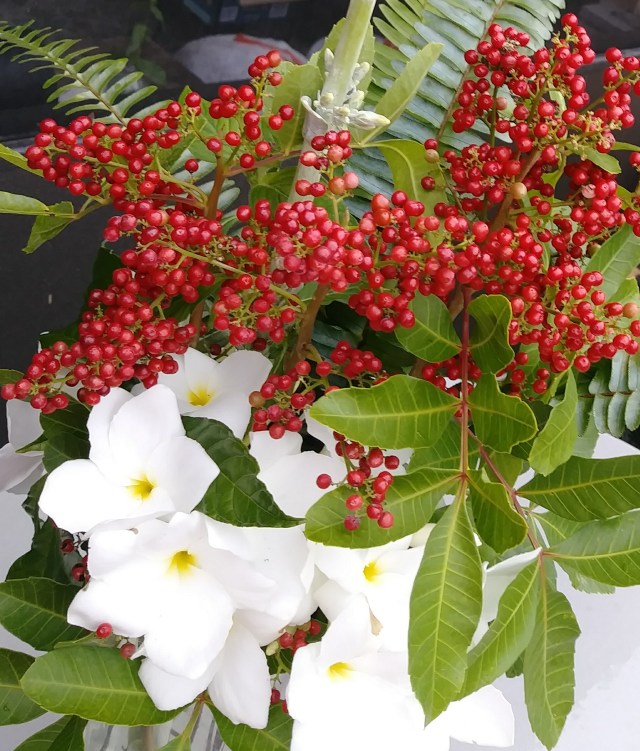


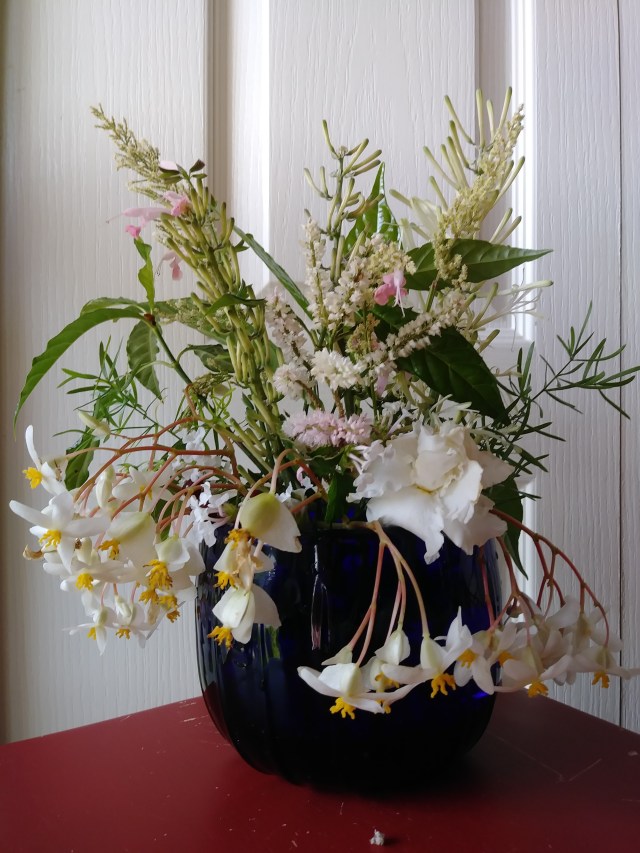
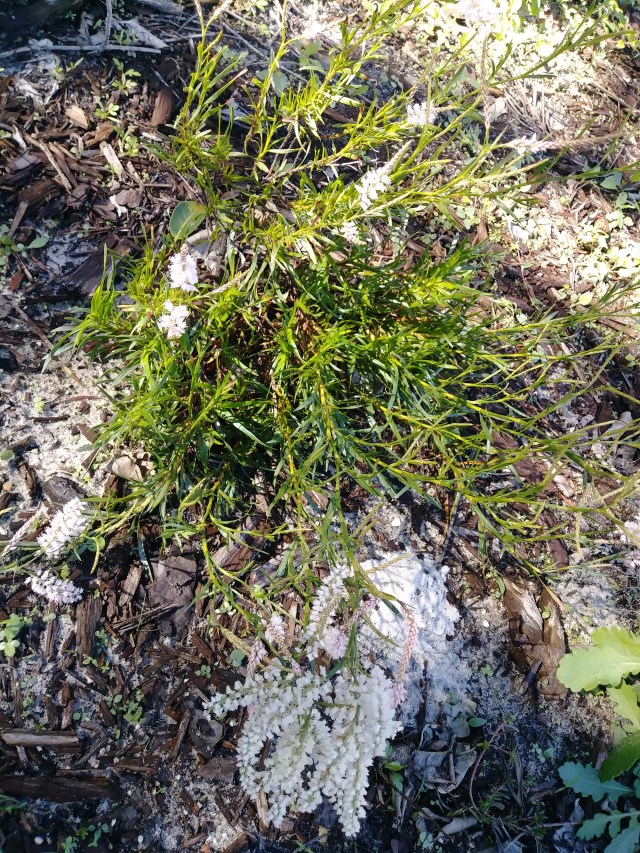 Octoberflower is native to an area called Scrub in Florida – my garden is in Scrub, so you would think these plants would enjoy my garden. Not so much. I find them very difficult to place and grow, moving them into the native pollinator garden, one out of five made it. Although, they are great cut flowers.


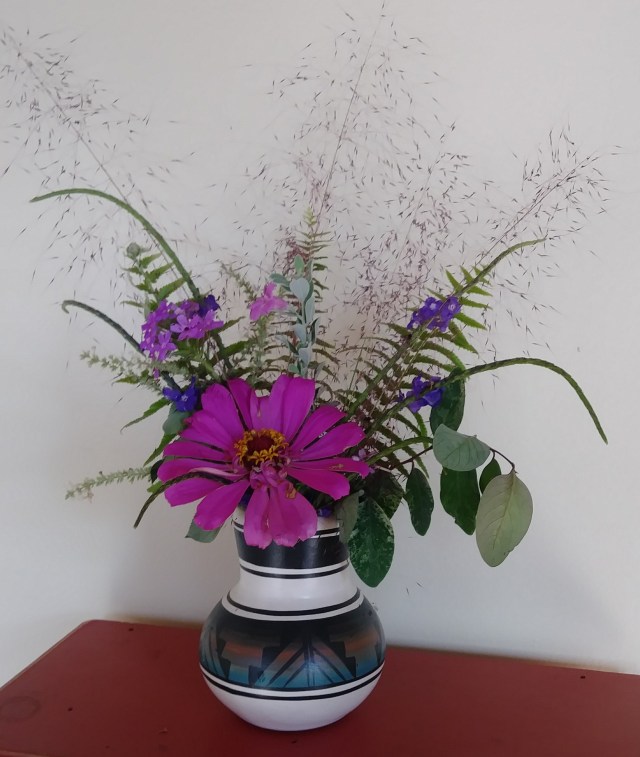
 This is a Zinna Super Cactus Lilac Emperor, an heirloom variety. It doesn’t quite resemble the picture on the packet – not nearly as stringy or cactusy (new word?) However, it may be the biggest Zinnia I have run across (4 inches wide).
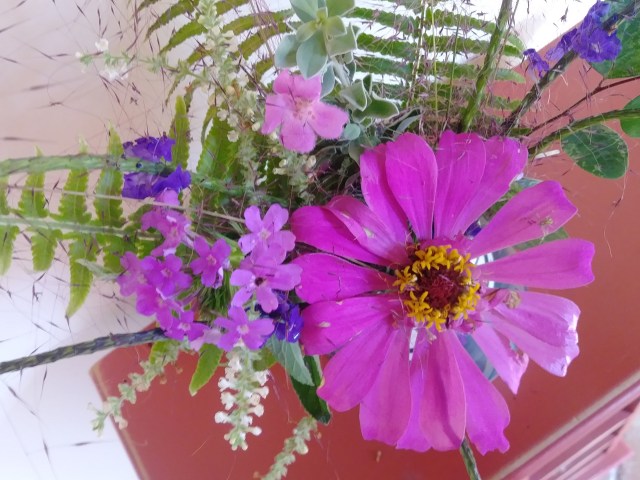 The vase I inherited from my mother, who bought it from the Ute Indian tribe in the Southwestern US. Accenting the Zinnia in the arrangement are in white and fragrant spikes, Sweet Almond Bush (Aloysia virgata); Purple Verbena is next, a native (Glandularia tampaensis); the deep blue flowers are from Porterweed (Stachytarpeta jamaicaensis); purple flowers with grey foliage are Barometer Bush (Luecophyllum frutescens); the background plants are Muhly Grass (Muhlbergia capillaris), Boston Fern (Nephrolepis exaltata) and a sprig of Hawaiian Snowbush (Breynia nivosa).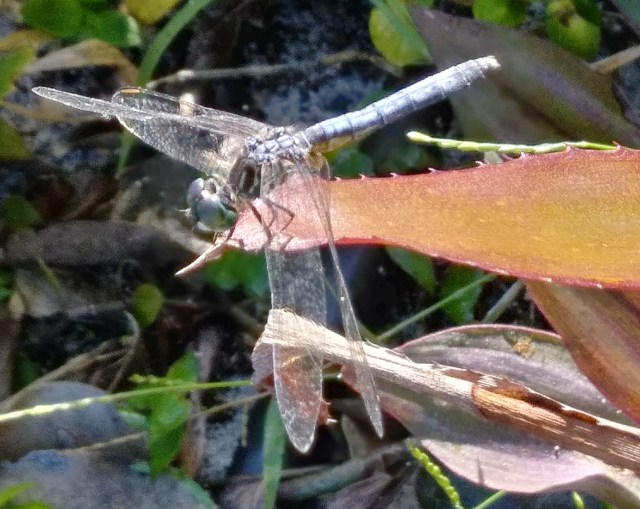


 The pumpkin is probably an ornamental gourd that I bought at Aldi during the Halloween season. It is holding up much better than the orange pumpkins and may last until Thanksgiving. I am not too sure about using the semi topiary on the table, there were some really odd white spiders running away from me as I was taking pictures.
 The Shrub Queen