In A Vase on Monday- Soothing Relief

20170924_132227

This morning our temperatures were in the low 70’s with a nice breeze from Hurricane Maria passing by (a long way off). The humidity was down a bit as well, so I worked in the garden getting my vegetable garden going. South Florida’s gardening season is opposite most of the Northern Hemisphere. Summer vegetables are planted in September and October, so I will have tomatoes in the winter. Hopefully. Corn is not even grown in the summer here as it is too hot for the plant to pollinate.20170924_132320
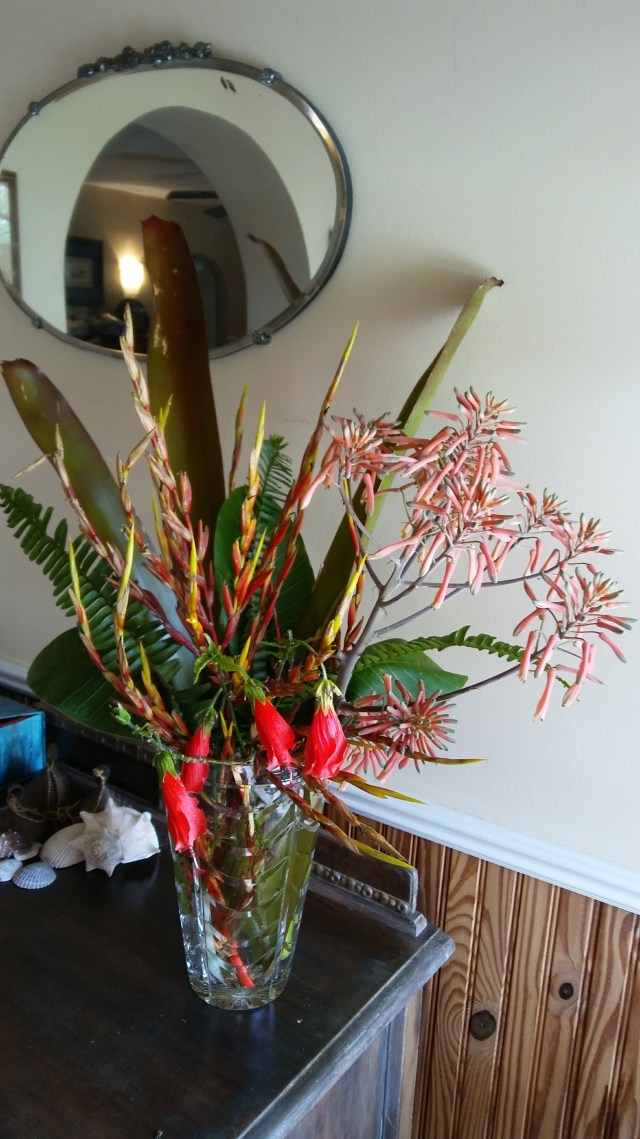
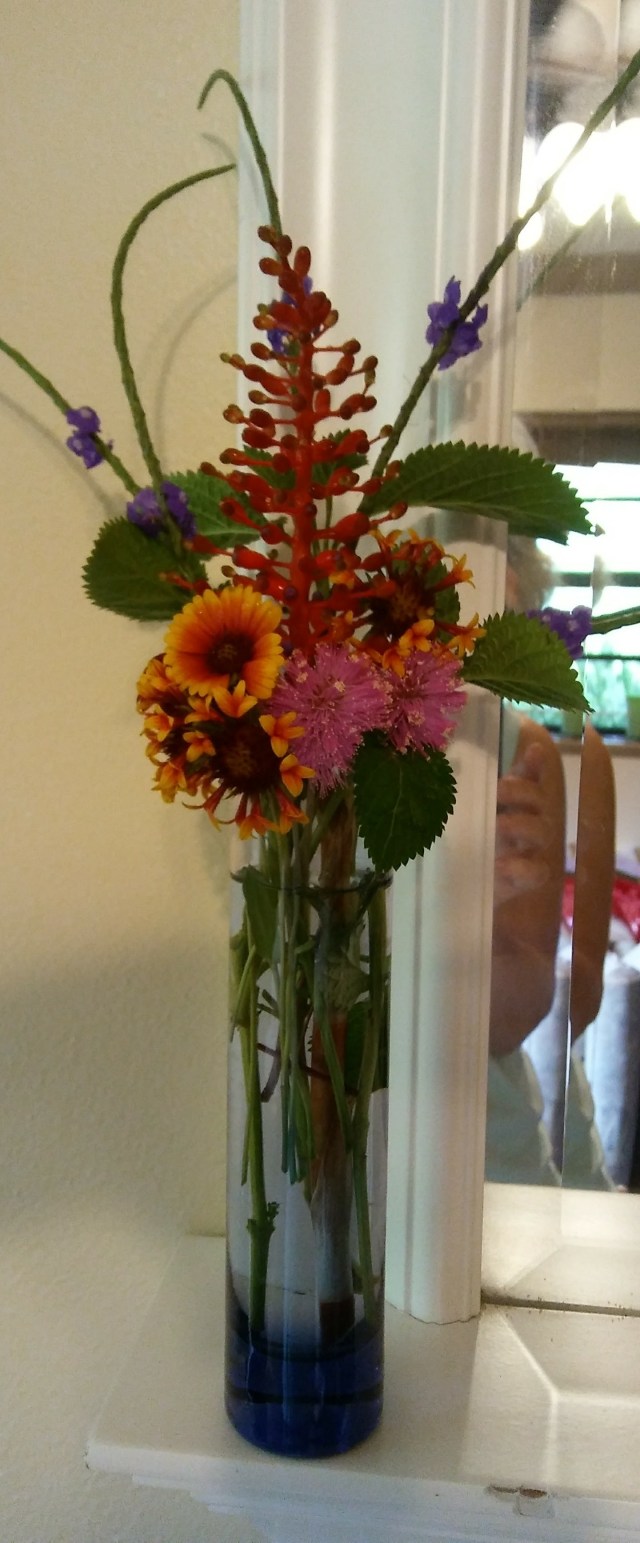
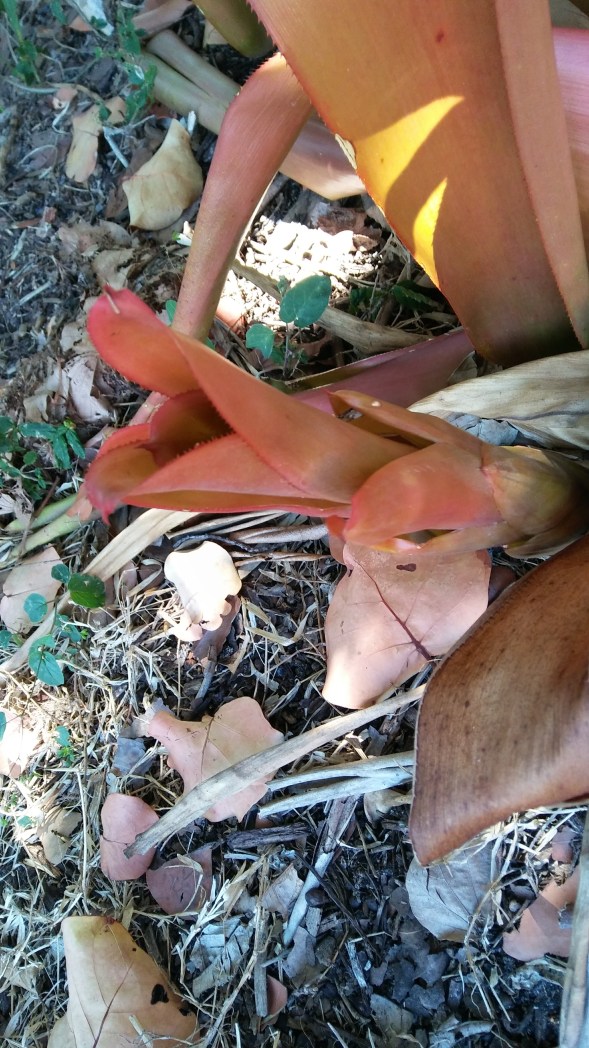
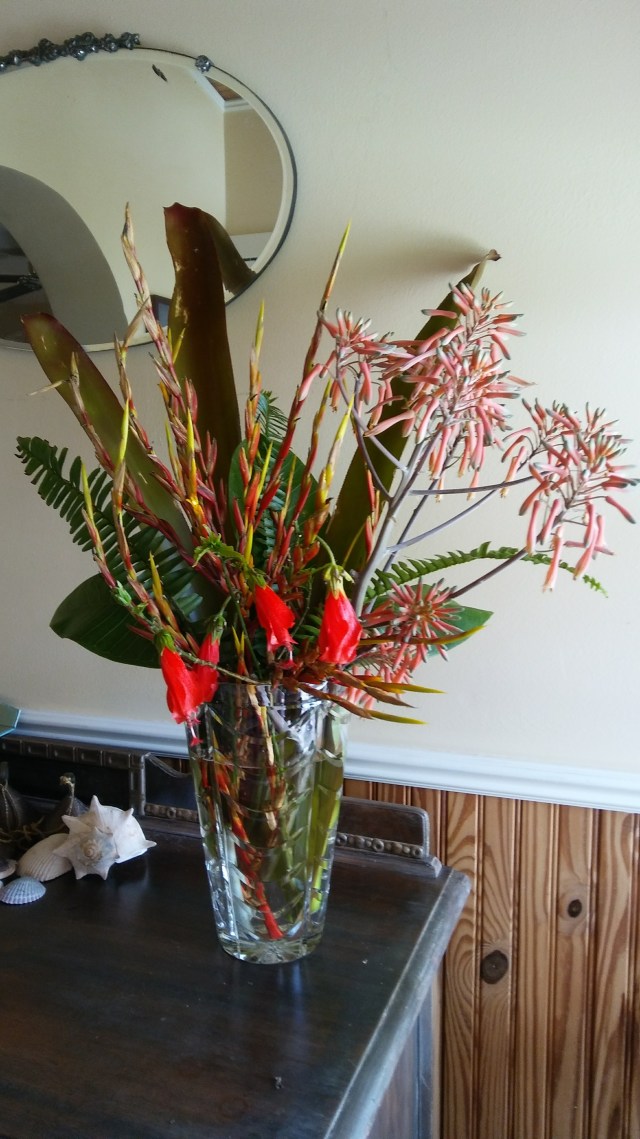
The anchor flower in this vase is a Soap Aloe (Aloe saponaria) which is supposed to be a soothing shampoo ingredient until you read up on it, seems more people are irritated by it than soothed. Stick to the Aloe Vera for relief. The Soap Aloe is the apricot and green candelabra shaped flower. The red flowers are our native Hibiscus, Turk’s Cap Mallow (Hibiscus malvaviscus). The mad funky flowers that look like Lobster Claws are Blanchetiana Bromeliad flowers – Hurricane Irma was not kind to these and I have trimmed the prettier parts for use in this vase. I have been channeling my Southern mother lately and am thinking of drying the rest and spray painting them gold for a holiday wreath. Although, that might be too funky.

20170924_132341

The vase is a big crystal affair that was a wedding gift – oh, many years ago from a dear friend who called the day before Hurricane Irma hit “just to hear my voice”, a truly lovely man. The components of the vase are of such a large scale (2 to 3 feet tall) I thought it called for the addition of some big tropical foliage. The smaller leaves in the arrangement are from Frangipani (Plumeria), the long reddish leaves from the Blanchetiana Bromeliad and the ferns are the ever present Asian Sword Ferns.
20170924_091445

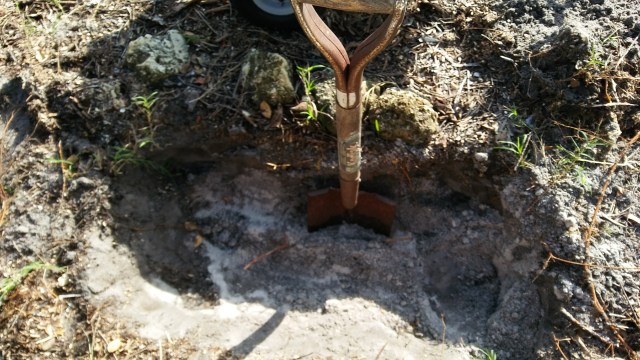
The vegetable garden under construction. Hard to believe anything will grow in this ‘soil’.

A Vase for Juracan

20170908_115510-1

We have been madly preparing for the arrival of Hurricane Irma this week and I have been collecting all the odd bits left outside that might go airborne. While doing this,  I noticed a number of nice blooms that are probably going to be in the Gulf of Mexico by the time In A Vase on Monday rolls around.

I am beginning to think watching the news coverage only provokes my anxiety, so I did a little research. The Caribe Indians (native to the islands of the Caribbean) had a God of Hurricanes called Juracan which is the origin of the word Hurricane. Depending on what you read, Juracan is the God of Chaos and another Goddess, Guabancex, throws the winds around to destroy everything.

This reminded me of Pele, the Hawaiian Goddess of Volcanoes, known for taking offerings thrown into the cauldron of Kilauea volcano on the Big Island of Hawaii. Hawaiians throw bottles of Vodka and flowers in the volcano to get into Pele’s good graces. I figured a few flowers thrown into a vase might help with Juracan or his lady friend, the hurricane thrower. At this point, it certainly couldn’t hurt.

So, this vase is on a Hawaiian Tiki with some muddy gloves at its feet. Maybe Pele will look out for us, too. A closer view, with storm shutters:

In the vase, in red, Parrotflowers, in orange and yellow, Blanchetiana Bromeliads, in purple, Spathoglottis Orchids, in blue, Porterweed. There are a few Red Shrimp Plants in the vase as well.

Stay safe, everyone.

GBFD – August 2017- Foliage of the Hellstrip

So, maybe I should ask who among us admits to having a Hellstrip? I do, mine is in the front garden along the edge of the road. About 10 feet deep, catching all the heat from the sun and pavement and not having the benefit of irrigation, I decided to plant this area with hardy, nearly indestructible plants, focusing on native plants.


The anchor plant in the Hellstrip is a Gumbo Limbo tree (Bursea simarouba) this usually gets some giggles. I like this tree and it has grown from a 2″ caliper twig to a respectable 6″ trunk in about four years. Mind you, without the benefit of regular water, I watered it, to establish it but that it. This tree is also called the Tourist Tree, if you look at the bark photo, the bark is red and peeling, like a sunburned tourist.

Below the Gumbo LImbo, Bromeliads and Native Perennials are planted. The natives were selected for their very fine texture which is fairly unusual among semi tropical plants. The Bromeliads are used for their extreme hardiness and textural contrast to the natives.

The Natives:


On the left, Muhly Grass, (Muhlbergia capillaris), the right is a Sunshine Mimosa (Mimosa strigillosa). The Muhly Grass seemingly grows almost everywhere, but many gardeners have difficulty growing it. I think the key may be locating it in a Hellstrip. Both of the plants will produce lovely pink flowers in addition to their fine texture. The other native in the garden is Beach Sunflower (Helianthus debilis)

20170720_185225The coarse green foliage of this plant is beautiful in its own right,  but really shines when contrasted with the finer textured natives.

The final members of my Hellstrip composition include Bromeliads, for their evergreen  color and contrasting texture to the native plants.


On the left, a Martin Bromeliad, medium sized and red, green and yellow striped. The center plant is a Painted Fingernail Bromeliad and the plant on the tight is a smaller red and chartreuse groundcover Bromeliad, meant to spread like groundcover. These are all passalong Bromeliads, two out of three gifted to me by friends. I am not certain of any botanical names, but I am certain they will thrive with little care making my Hellstrip seem a bit heavenly.

In A Vase on Monday – Stormy Weather

20170820_141646

No one is singing the blues at my house today. It is a blessedly cool, overcast day in South Florida, the temperatures hovering around 80 degrees (F). Thunder can be heard from about 25 miles away in the Atlantic and the colors in the sky inspired my arrangement. In this climate these flowers and berries announce the coming of Fall. In purple. Seems a bit weird to think of Orchids as a fall flower. I do have some native Goldenrod in bud right now and that seems more normal to me as does the Beautyberry in the vase.

The weather today is not a tropical storm, just leftover moisture from one or some weather thing I failed to fully grasp. I have learned the Hurricane season is difficult to predict as are the storms. Named storm Harvey is meandering around in the Caribbean and there are two disturbances hanging around the tropical Atlantic that probably won’t do anything. Or not. Last year Hurricane Matthew brushed the coast near me (first week of October) and that was quite enough. Forever.

20170820_094127

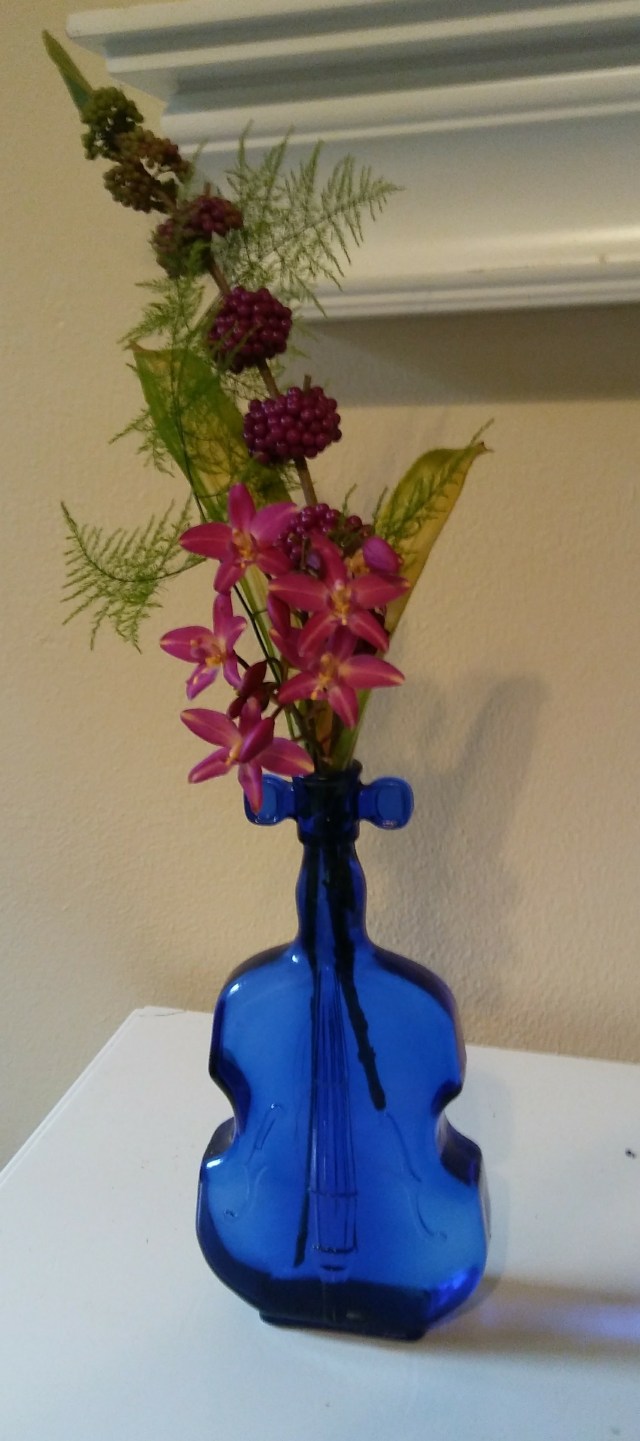
The Blue Violin holding the flowers belonged to my grandmother. She kept colored bottles in her windows as long as I can remember.

20170820_141646-1

The flowers in the vase are: in purple Spathoglottis ‘Cabernet’ Orchids, the berries are Beautyberries (Calliocarpa americana) For foliage we have a bit of Asparagus Fern and the leaves from a Martin Bromeliad. The Bromeliad is such a weird cross I don’t have a clue what the latin name is. Bromeliad ‘Martin’ that works.

No gardening for me today. Happy Monday.

In A Vase on Monday – Gardening with Armadillos

20170806_100303-1

Sunday got off to a bit of a rough start, about 3 a.m. one of my greyhounds started to run around and whine. I got up, thinking he needed to go out and opened the door – only to hear a strange sound crashing around in the garden. Decided to turn on the security lights and low and behold, I spied an Armadillo. The shelled rodent (IMO) digging beside the metal screen enclosure on our porch, bashing his shell against the metal. Driving my poor dog mad and depriving both of us our beauty sleep.

As the dog ran out the door the foolish Armadillo ran into the fenced part of our yard – who knew an Armadillo could out run a greyhound?https://en.wikipedia.org/wiki/Armadillo

Cartoon time 3 a.m. My backyard. Starring Alan the Greyhound. Shown below in his usual state. Alan is the brown dog, the other one has no interest in getting up at 3 a.m.

CAM00710

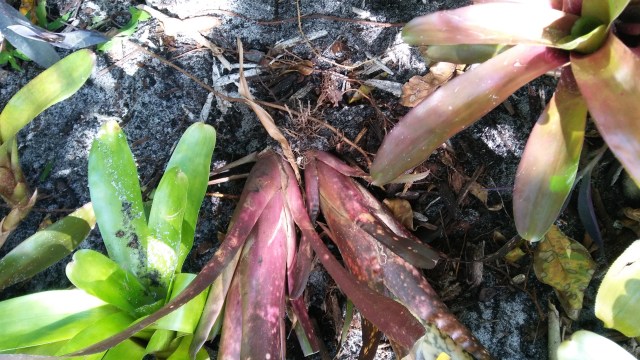
A few hours and cups of coffee later, I went to look for vase components in the garden the Armadillo had been digging in. Sure enough, he or she had been overturning Bromeliads, a favorite pastime for some reason made better by overturning burgundy or spotted Bromeliads. By trial and error, I eventually found out cardboard and mulch will keep the armadillos away, needs another application. Sigh.

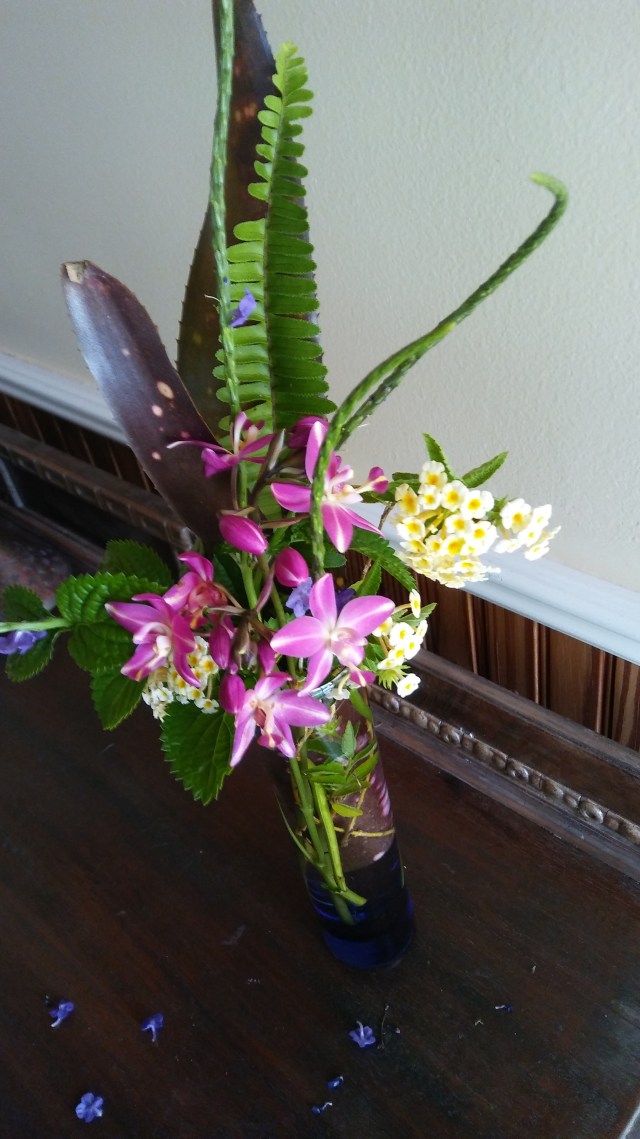
20170806_100322 Seeking the components of a vase, I noted the Spathoglottis is flowering again. I know this really sounds like a disease, but is actually a lovely little Ground Orchid called Caberet. This is the second round of flowering since I planted it in January. It is the purple flower in the vase. The blue flowers are Porterweed, the jury is still out on which one and today it is really shedding for some reason. The yellow flowers are Lantana, Silvermound would be my guess for variety. The purple spotted foliage is from a Bromeliad the Armadillo overturned ‘Hallelujah’ Billbergia. A sprig of fern finishes the vase.
The Armadillo’s work last night:

20170806_101307

In A Vase on Monday – Dinner Party Vase

20170723_095434-1

I am not actually having a dinner party, although a Garlic Rosemary Pork Roast is going in the oven shortly. This blue bud vase contains a few flowers I have not cut before and I have a feeling it will not last through dinner. I call these dinner party arrangements, great for a party but not much longer. This is a better shot of the blue vase:

20170723_094812-1

I picked up the vase at a church thrift store near my house this week. There were several and after arriving home, I wished I had bought three for you know, dinner parties! Imagine three flower filled blue vases with candles in between down the center of the table. I may need a return trip to the thrift store. Here is a closer view of the flowers:

20170723_094852

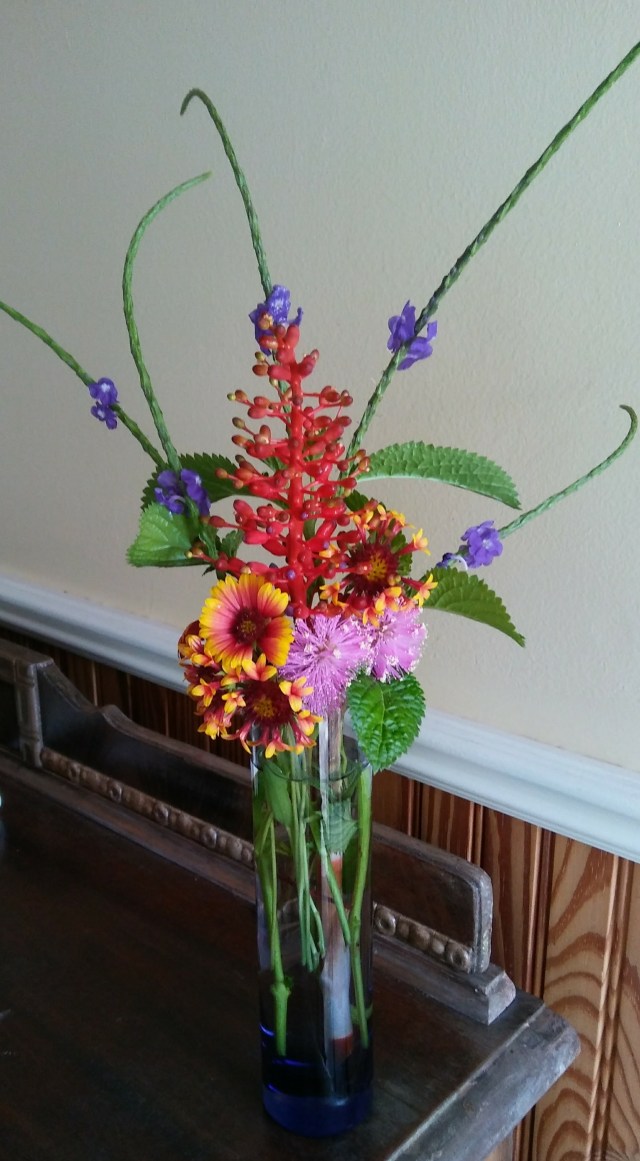
The pink flowers are a new native addition to the perennial border, Sunshine Mimosa (Mimosa  strigillosa). Yes, a groundcover Mimosa and Floridians consider this a replacement for lawn. I consider it a front of the border perennial that looks a lot like a weed. Possibly it’s first appearance IAVOM. I am waiting until after dinner to see if the petals fall off. The yellow and orange flowers are the faithful Gallardias that last in a vase and the garden. The blue flowers are from (I think) the native Porterweed, there is another potentially evil Porterweed lurking about, but I can’t tell the difference and it came with a plant I bought. The pretty blue flowers make a striking vertical accent. I have used this before and I think the pretty blue part falls off and you are left with the vertical accent.

Dessert with vertical accent only.

The Bromeliad in the middle is great vase material that sometimes dries in the vase only to be spray painted gold for the holidays, Aechmea miniata, the Miniata Bromeliad.

Speaking of Bromeliads, here is the mad tropical plant of the week:

This is a Blanchetiana Bromeliad in bud, I am 5’7″ and the buds are a bit taller than me.

20170723_102030-1

I would like to share some thoughts with you all.

First, thanks to Cathy for hosting IAVOM.

I just want to say I am amazed and humbled by the knowledge and creativity I see every week.

And I love sharing these mad tropical plants with like minded people.

Happy Monday.

In A Vase on Monday-Ironic Architecture

20170625_125639

The occasional Architectural floral arrangement appears in my house. I would consider this one is in that style. Generally speaking, I am ambivalent about Architectural furnishings and such. After working for an Architectural firm for a few years, I determined I really did not want to see or deal with another Architect for a really long time. Then, I married one. Twenty five years ago. Ironic.

This morning, finding the Soap Aloe in bloom, I decided to feature it’s large candelabra shaped flower stalk in a tall crystal vase. This idea sent me looking for a wedding gift, said tall crystal vase, from a dear friend, yes an Architect. Not remembering where I put it, I decided it must have been broken when we moved as I haven’t seen it in ages. Went on about my arranging using another vase, finished it, decided to look in the (gasp) crystal and china cabinet and there is was, safe and sound, stowed in the back. Ironic.

20170625_154009

This is a relatively simple plant palette. In orange and candelabra, the Soap Aloe (Aloe saponaria). A frond from our native Cabbage Palm (Palmetto sabal), the long green leaf is from a Sansiveria( Mother In Law tongues or Snake Plants), the long orange leaves are from Blanchetiana Bromeliads (Aechmea blanchetiana). It seems weird to me, I can think – I need a 4 foot long bit of orange foliage for this arrangement and then find it in the garden. Not particularly ironic, just an observation.

Here is the progress on the Night Blooming Cereus, bud has doubled in size.

20170625_173605

Happy Monday.


Garden Bloggers Foliage Day -Bromeliads

I fell in love with Bromeliads years ago when I lived much further north. As a part of my Landscape Architecture practice, I produced Interiorscape Designs for Regional Shopping Malls. Everyone liked to use Guzmania Bromeliads in the Mall plantings because the flowers lasted for 3 months. I became intrigued by these plants at the time, but it was hopeless for me to grow them as houseplants. Little did I know 30 years later I would have a mad Rainforest Garden full of all kinds of Bromeliads.

When shopping for Bromeliads, the first thing that you find is the named varieties are outrageously expensive. Given my complete lack of knowledge about growing Bromeliads outside I wasn’t about to spend $50 on a plant that I might kill in short order. Then, I found an unusual local custom – at South Florida garage sales, people commonly sell passalong Bromeliads, the problem is, for the most part no one has a clue what the plant is. So, I am learning the hard way. Even without knowing the Bromeliads name, the foliage is always really interesting, as are the people you meet along the way.

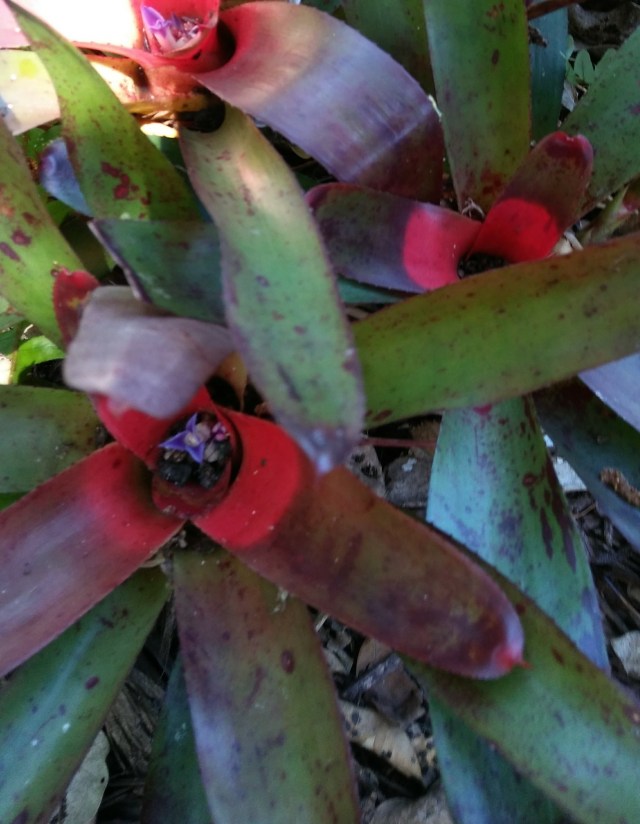
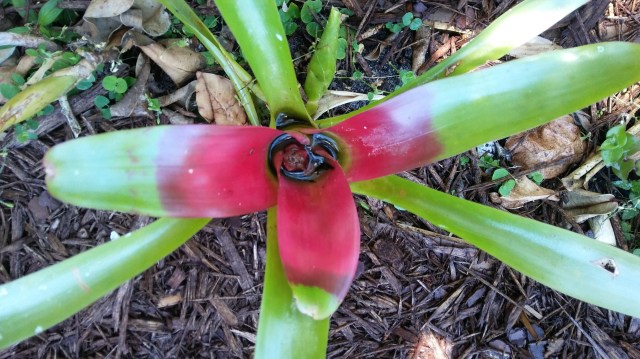
I have a number of Blushing Bromeliads in my garden. These can be Aechmea or Neoregelia types and I don’t really know which is who. However, in the spring they blush by turning red in the center and start to produce pups. I would hazard a guess this is because the rainy season will begin shortly and the smaller plants survival rate goes up with ample water. The rest of the year the foliage is nearly all green.20170421_130341-120170421_12594220170421_125909

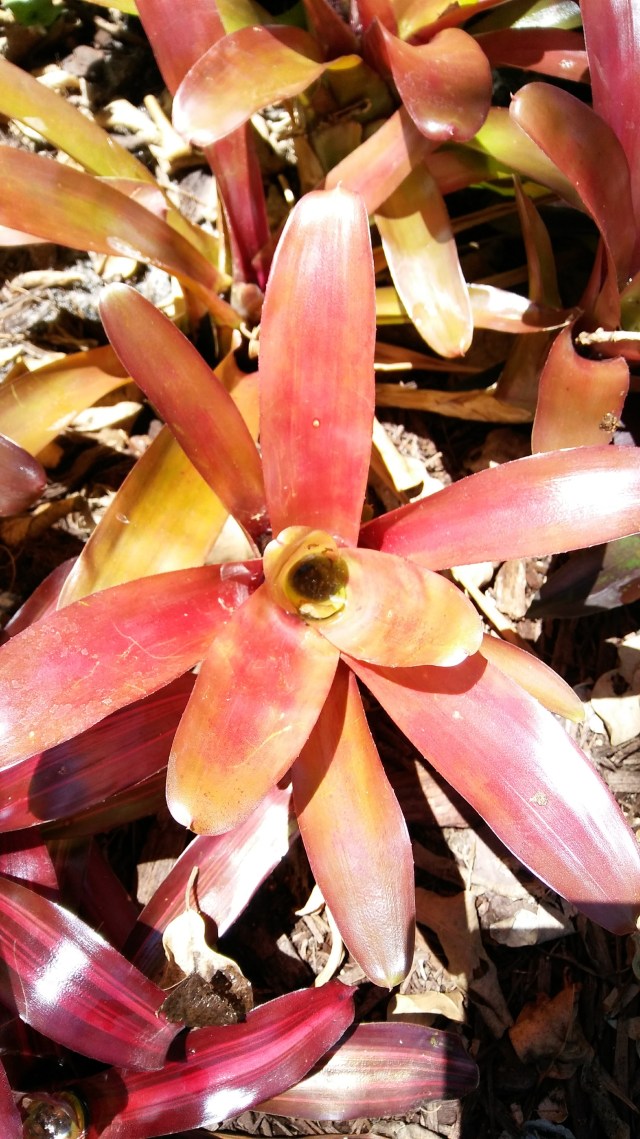
Below is a pup on a Blanchetiana Bromeliad. I think this is a Lemon. They are available in Lemon, Raspberry and Orange. After flowering the mother plant begins to die and produces pups. Some do this without flowering. I will cut the pup off with a bit of root and replant it. The Blanchetiana is an Aechmea type that is fairly common in South Florida, they are usually about 4 feet tall and will spread much further than 4 feet. The Bromeliads at the top of the post are Blanchetianas.

20170421_153245

Stripes and spots:

Most of these are Neoregelia, some type of Fireball variety. The spotted ones hold their color for most of the year. The striped ones turn red in the winter. The darker purple ones are Hallelujah Billbergia with white spots and Luca with green spots. Hallelujah has probably the strangest flower of all – red, white and blue; it is a bit much with the foliage.


This last one is one of my favorites. Locally called Painted Fingernail, I think it is an Aechmea variety, literally tough as nails. It is growing in the full sun Hellstrip in my front yard, no irrigation. The foliage is olive in full sun, but the green deepens and the fingernail is darker fuchsia in the shade. And it thrives in both places, there are always good reasons for a passalong.


In A Vase on Monday – Striking

20170326_144818

My arrangement for this week began to form in my mind when I noticed my Apocalyptica Bromeliad was flowering. These are sometimes called Matchstick Bromeliads, so I decided to use my husbands vintage French cafe match striker as a vase. This ‘vase’ was originally used in French cafes to hold matches for smokers.

20170326_181427-1

Images that come to my mind when thinking of a vintage French match striker involve Ernest Hemingway – sitting in an uncomfortable metal chair at a tiny table contemplating the nearby Seine River while trying to work out some angst. He looks down and realizes the match container has been hijacked to hold flowers, finds a box of matches and proceeds to strike a match on the side of a the vase. Then he lights an unfiltered cigarette, takes a big drag, exhales blowing some rings with the smoke, sighs deeply and takes a big gulp of red wine. And thinks some more.

Maybe not. Okay, I drank the red wine and Ernest was not here. But there is a river nearby. My angst concerns the sun also rising, but the garden dilemma involves where to move poorly performing Agapanthus to get more sun. On to what is in the vase.

The Apocalyptica Bromeliad (Aechmea apocalyptica) is the nearly fluorescent orange spiky flower. Rounding out the vase in orange again, Mexican Bush Honeysuckle (Justicia spicgera); in purple, Ground Orchids (Bletilla something); Blue Ageratum (Ageratum houstonianum) and another volunteer Asparagus Fern for fluffy greenery. The red striped foliage is from another Bromeliad (Neoregelia ‘Fireball’).  There are a zillion varieties of Fireballs and I gave up figuring out which one is who because they are all pretty and mostly indestructible.

Happy Monday, may your week be angst free.

In A Vase on Monday -Time In A Bottle

20170219_103124

As I was thinking about a subject for a vase, it occurred to me putting a vase together every week is a bit like saving time in a bottle. The dates are right on the blog post for reference and I  find (not being a keeper of garden journals) myself referring back to my blog to see when plants have been in bloom. The watch ( a la Salvador Dali) a gift from my father many years ago. The persistence of memory can be troubling.

20170219_133314

The largest plant in a preowned pink champagne bottle is Shell Ginger (Alpinia zerumbet). Shell Gingers were a bit of a mystery to me upon my arrival in Florida. The variegated type is commonly used as an annual further north for its foliage, but the green ones I had not encountered until I ran across one at a garage sale for (my favorite price) five bucks. Warnings are commonly issued about the size of these plants, a few years after planting it is six feet by six feet – but it also also planted in front of an ugly six foot fence. Gotta love it when a plan works out. It also appears to be on the verge of bursting into full bloom all over, however, this is difficult to discern as buds. leaves, etc look remarkably similar. If the whole thing does flower I will definitely post some pictures.

20170219_133256-1

The heirloom blue bottle (another gift from my mother) holds a new arrival to my garden, in purple, Ground Orchids, I think this is a Bletilla of some sort, but as usual no one selling these plants really knows. Ground Orchids are fairly common in South Florida and used as 18″ height perennials – mine have been placed under a Pink Frangipani, next to a plum foliaged and flowered Bromeliad of unknown origin and beside a group of the Pink Bromeliads-the flower currently displayed in the gold bottle. Alongside the mysterious Orchid we have culinary Dill flowers, pink Tropical Salvia (Salvia coccinea) and Dwarf Pineapple foliage.

20170219_133335-1

This vase contains a Billbergia Bromelaid of uncertain origins ( found thrown out with trash whilst walking my greyhounds) What I can say is I find it unreasonably sharp and beautiful. I may someday learn its botanical name, though I doubt it. In the vase there is some foliage from another, unrelated Bromeliad, a Neoregelia of the Fireball continuum I think.. And a bit of Asparagus Fern that appeared one day and I suspect my floral ambitions are keeping it at bay. The gold bottle has a cork and has served as an olive oil container.

Time in these bottles preserves mid February flowers in my garden or maybe the photos really provide the preservation. Next year will bring the answer all gardeners want to know – will it flower again?

Will our memory persist? One can hope or ask Dali.