South Florida is experiencing another cold spell. I have been covering summer (ha!) vegetables and flowers at night due to temperatures hovering in the high 30s (F). One more night of cold seems to be on tap, followed by a warm up. The more tropical plants are sulking and browning, leafy plants like Heliconias look particularly unhappy.
Some of the native plants are looking, well, fresh as a daisy. I don’t recall the Beach Daisies (in yellow) ever looking so good in January. They usually flower madly during the summer, get moldy, and are asked to leave the garden (by the wheelbarrow load) due to their scraggly appearance. The new year seems to be presenting new gardening challenges. I will cover my plants one more night and hope for some zinnias in the coming weeks. There are buds!
The cast of characters:
Daisies first! In yellow, Beach Daisies (Helianthus debilis); in white, Bidens alba, sometimes called Spanish Needles; blue spikes, Mystic Spires Salvia; white and coral spikes, another happy native, Tropical Red Salvia (Salvia coccinea); finer textured white spikes, Sweet Almond Bush (Aloysia virgata).
Fluffy flowers and needle like foliage are from Muhly Grass (Muhlenbergia capillaris). The vase was left to me by my mother, made by the Ute Indians in the Southwestern US.
The happy Beach Daisies and Tropical Red Salvia in the garden:
I am hoping for warmer days here, but am grateful for the happy flowers in the garden. Thanks to Cathy for hosting this week and every week! To see more vases, visit http://www.ramblinginthgarden.wordpress.com.
It’s another cool Saturday morning in South Florida. A bit windy and the temperature is hovering around 40 degrees F (4 C). I finally got the nerve to go out and check on my tomatoes and pepper plants, left uncovered overnight. They look shivery. A few of the less cold tolerant plants were invited indoors last night. I have found basil and zinnia seedlings do not enjoy being too cool. I am joining Jim and the SOS gang to share what cool exotics are currently in color in my garden. To see more SOS posts, visit http://www.gardenruminations.uk.co.
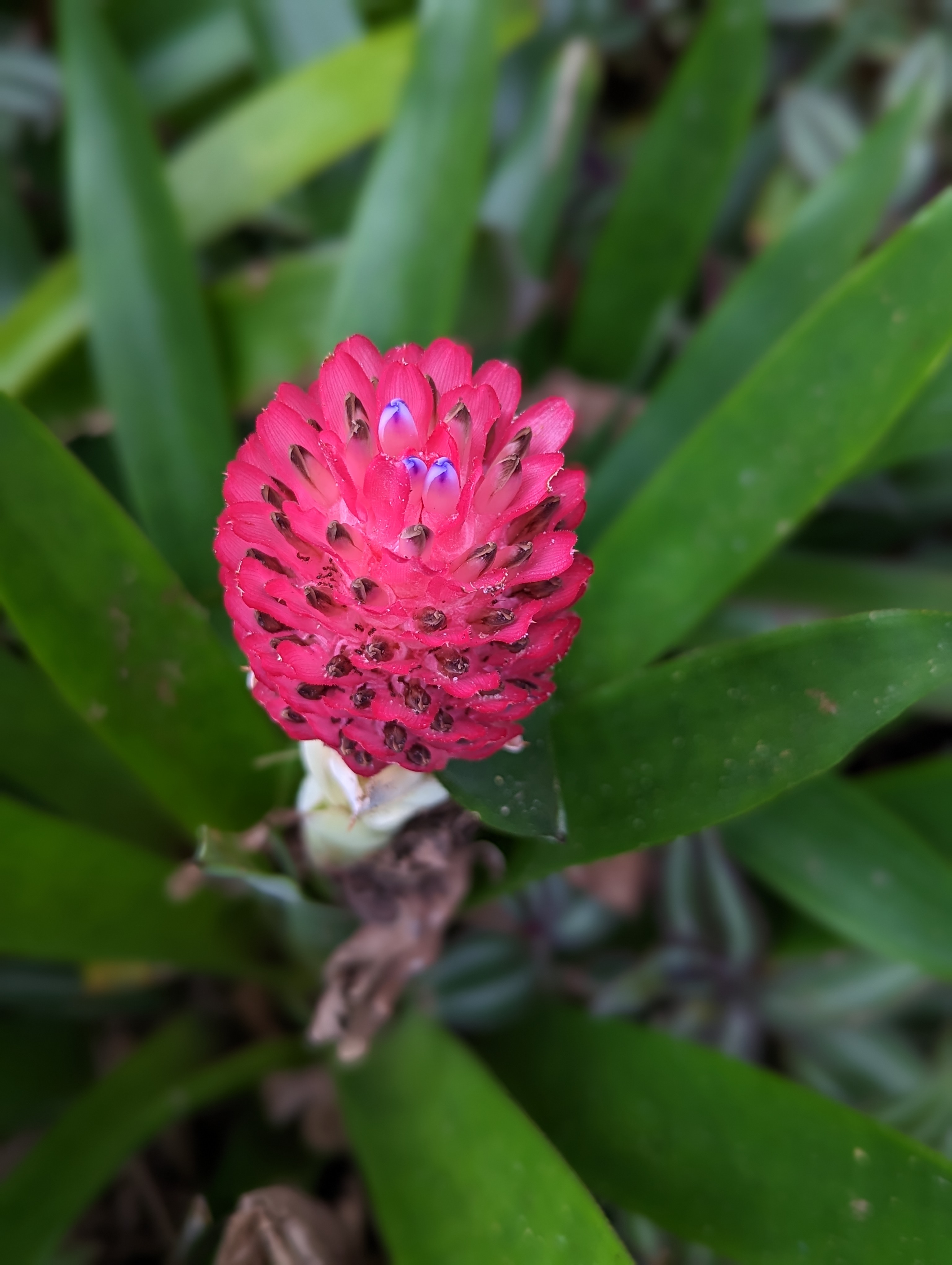
The flower of the Candy Portea Bromeliad. This is a medium sized Bromeliad with very sharp foliage that reliably flowers every winter in nearly full shade. I think it started showing color in late November.
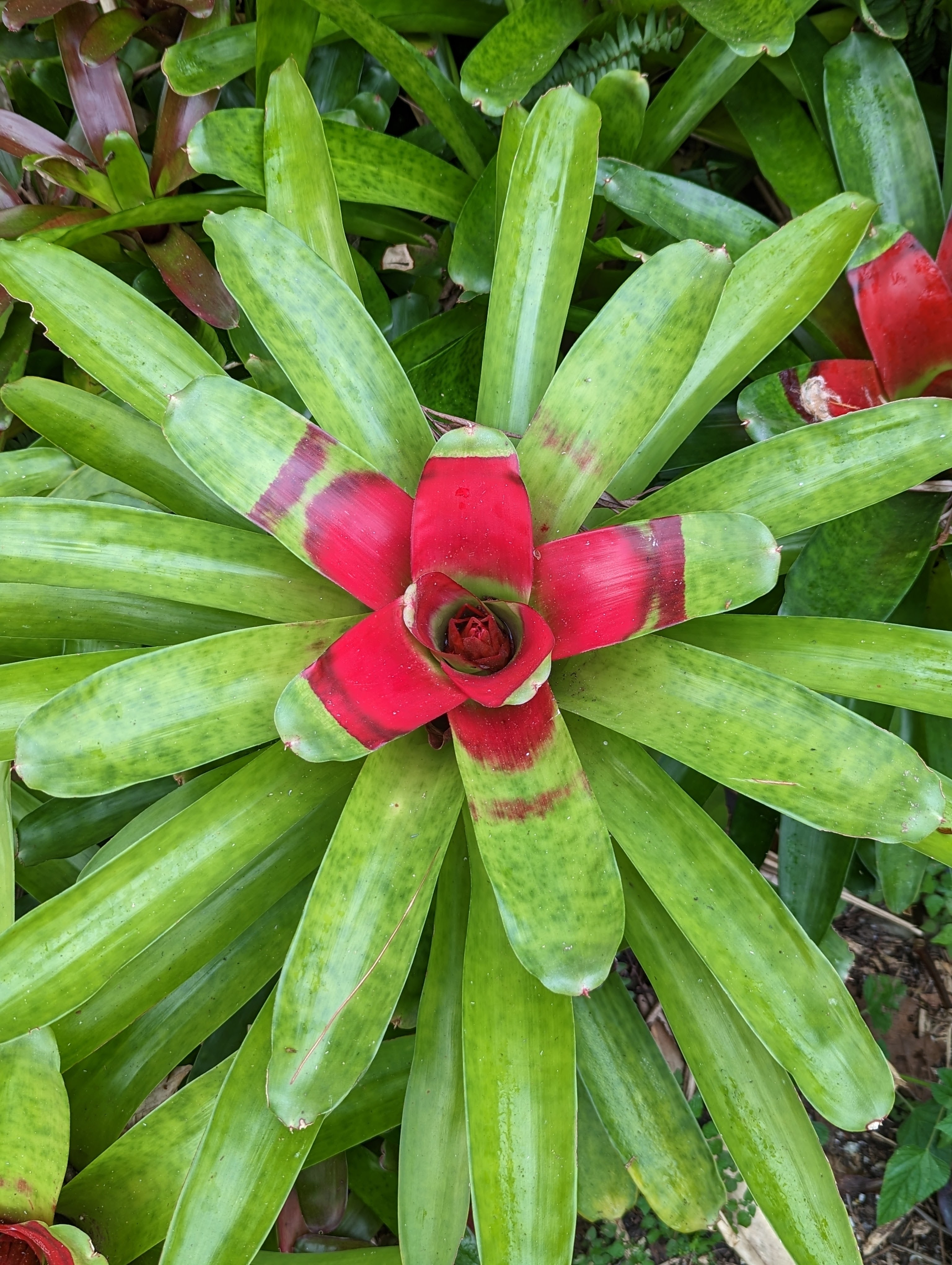
Another Bromeliad – McWilliamsii Neoregelia, also called Blushing Bromeliad. These show red coloration during the winter and have green mottled foliage during warm weather. They are 2 – 3 feet wide and are quite showy. Below is the flower, reminiscent of a rosebud.
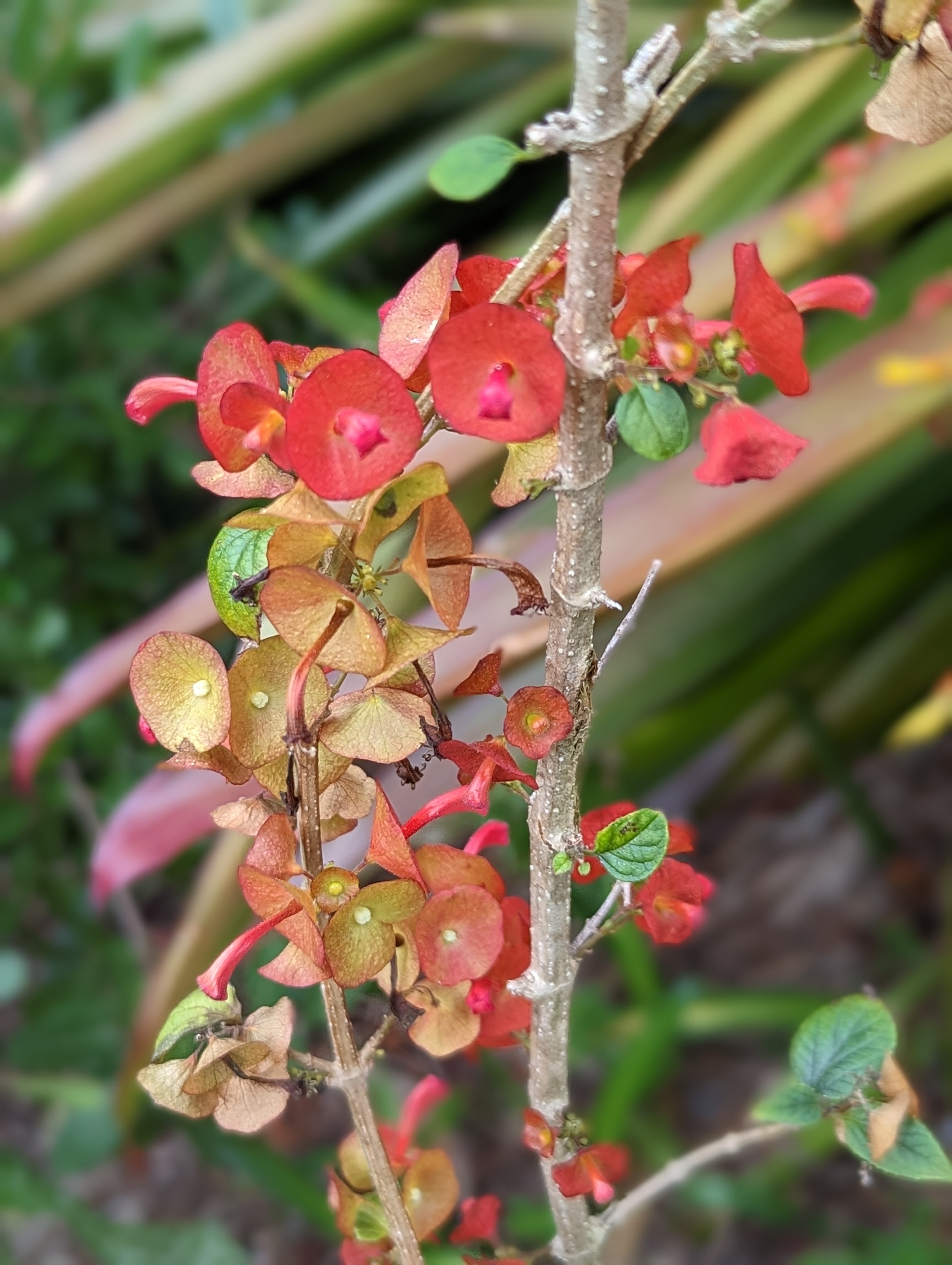
The China Hat (Holmskioldia sanguinea) continues to flower. I like the coloration going towards chartreuse as the flower ages.
Another winter stalwart, the Quesnelia testudo Bromeliad. I have heard native Floridians call these the tulips of South Florida. I think these are a bit burned from the holiday cold weather. They are usually more purple at the tips.
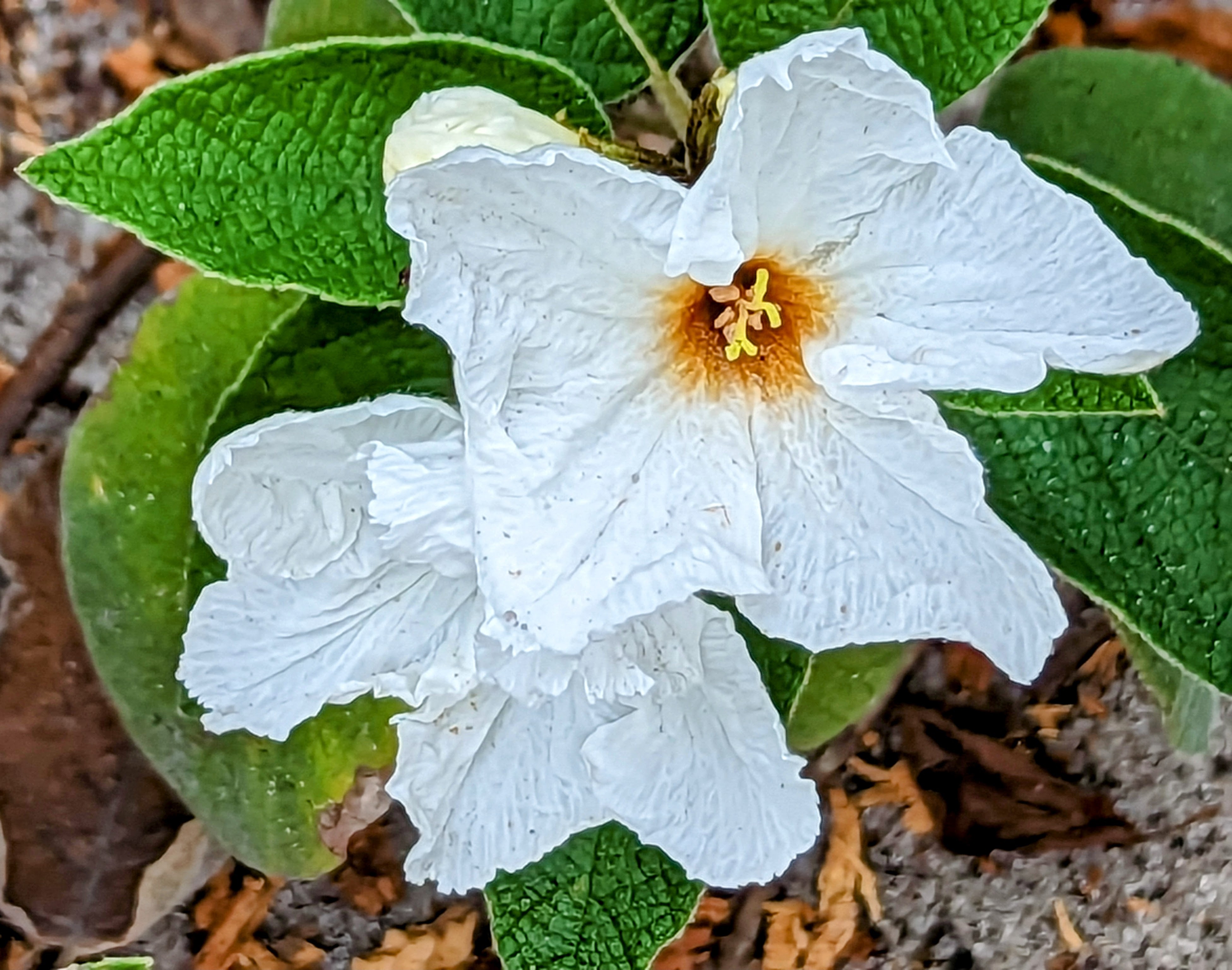
Number Six today is a flowering tree. This is a White Geiger flower. Cordia boissieri is a medium sized evergreen tree with an odd branching habit that I have been puzzling over how to prune for quite a while. Tropical trees have weird twisting habits and need to be sorted. This one remains an unsorted blob. Sigh.
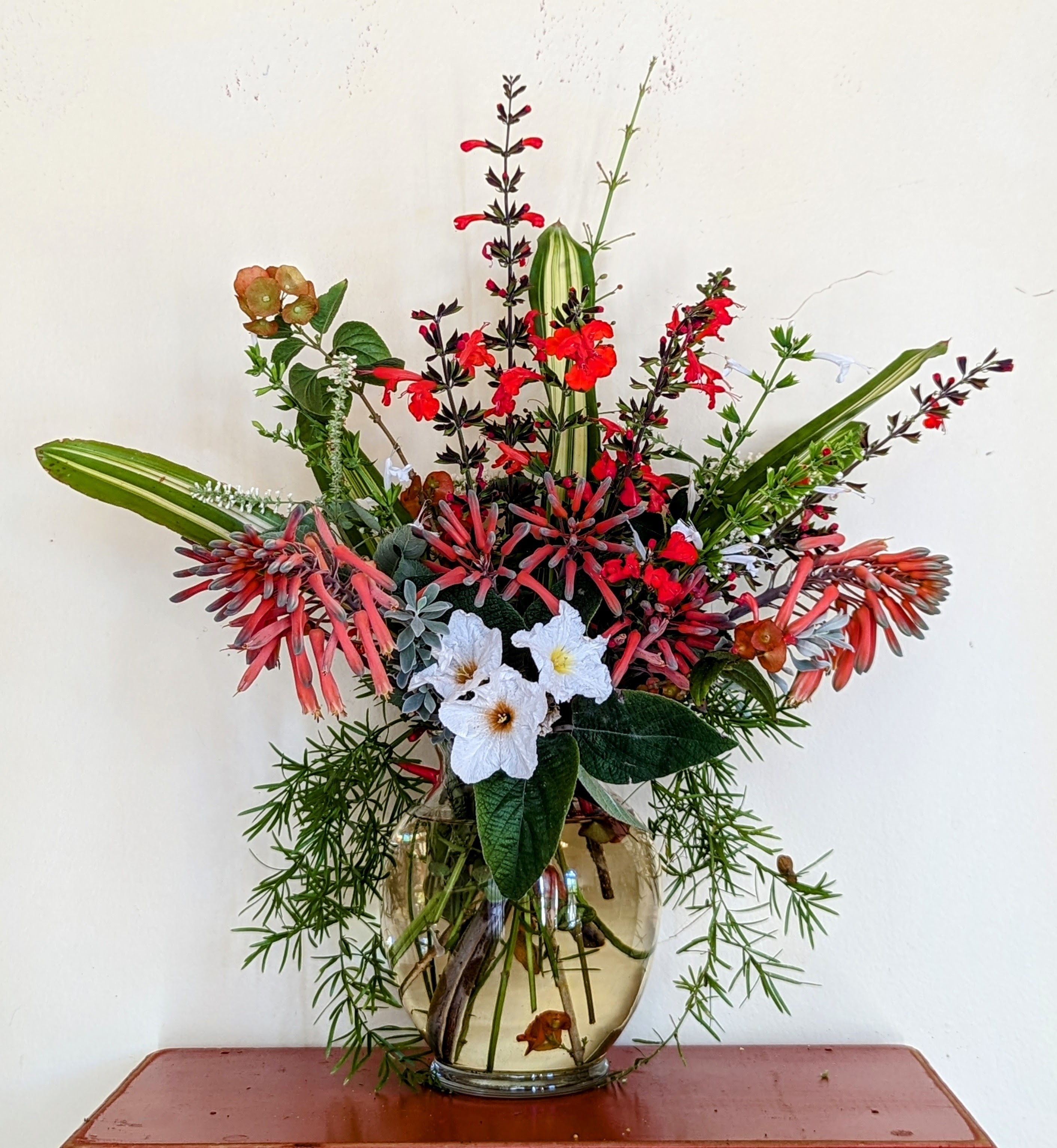
It may seem odd, but I think some plants are smarter than others. Is botanical wisdom gained because they are native and used to the vagaries of weather, or something more Darwinian? Currently, the most sage plants in my garden are really a Sage. The Tropical Red Salvia (Salvia coccinea). Less than two weeks after the coldest weather in a decade, they were fully greened up and flowering madly. I had to cut some.
Tropical Red Salvia or Sage flowers in four colors in my garden. The brilliant red ones are the most prolific currently and the tallest plant of the bunch. I cut a handful and looked for some companionable colors to cool down the palette. Whites, corals and even a little sage seemed to fit the bill for a warming January vase.
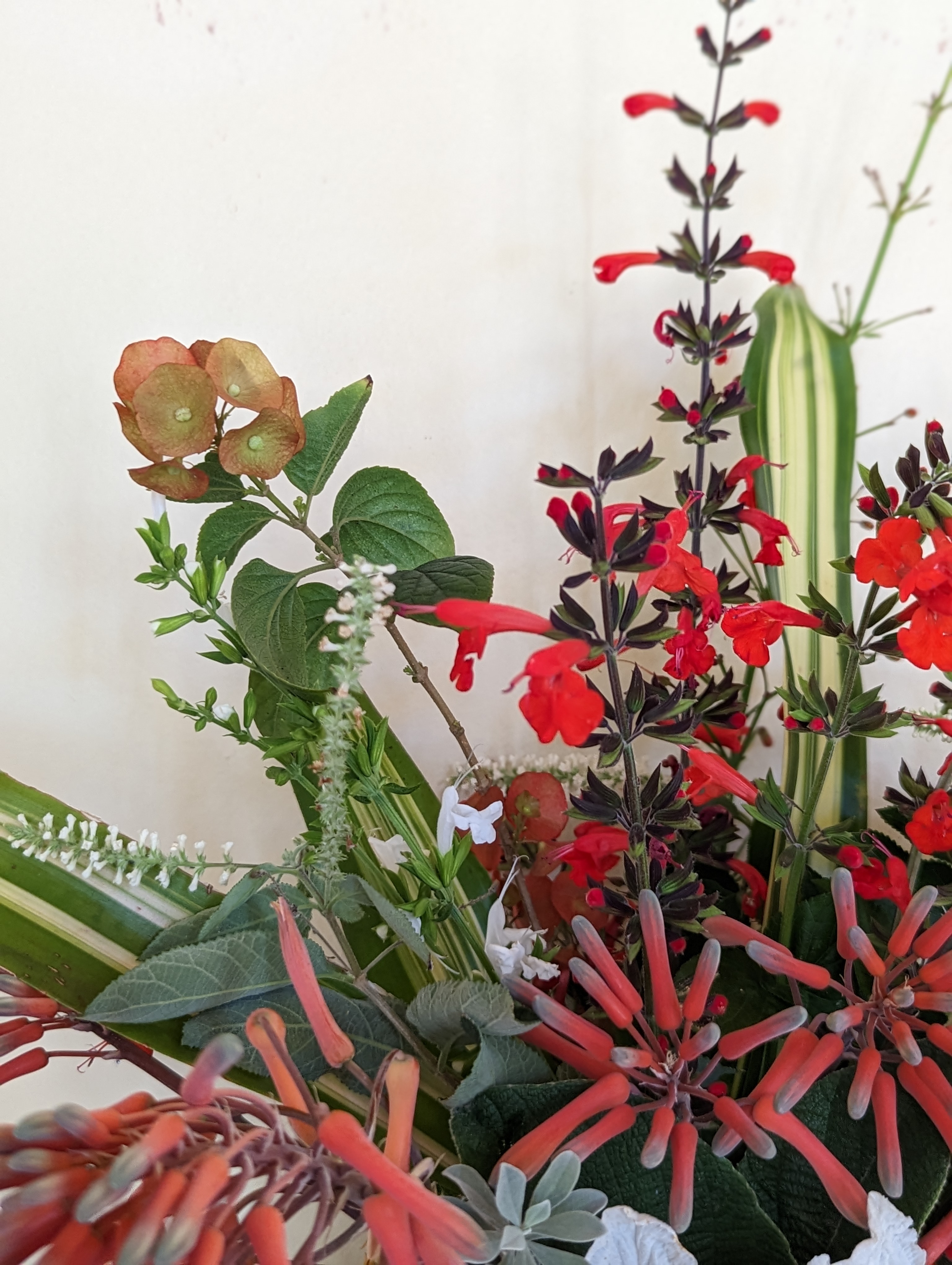
A closer look:
Tropical Red Salvia (Salvia coccinea) in red and white spikes; Sweet Almond Bush (Aloysia virgata) is the other white spike; Soap Aloe (Aloe saponaria) in sage tipped coral flowers; chartreuse and reddish flowers are from China Hat shrub (Holmskioldia sanguinea); yellow striped foliage is Martin Bromeliad (Neoregelia martin); grey foliage is from Barometer Bush (Leucophyllum frutescens)
Another view:
The white flowers in the center are from the White Geiger tree (Cordia boissieri). I thought this tree wouldn’t like the cold weather, but it seems fine; it has a few yellow leaves and started flowering. The fern trailing over the side is an Asparagus Fern, an invasive weed that tends to pop up under shrubs. I cut these and use them in vases occasionally. They are surprisingly sharp, woe is the gardener who tries to strip the leaves off the stem for a vase.
The garden is bouncing back from the extreme cold. (I know y’all are laughing, not even freezing here, except me, I was freezing) I am finding blackened edges on a lot of shrub foliage and the trees I have that are at their northern limits are showing signs of unhappiness. I have to tap into my gardening wisdom and wait and see what happens. Not feeling particularly sage here yet.
A brilliant blue sky awaited this morning as I trundled out to view my seedlings. Despite a cold setback in December, things are coming along nicely at long last. A few successes and a few losses greeted the gardener. Situation – back to whatever passes for normal in South Florida.
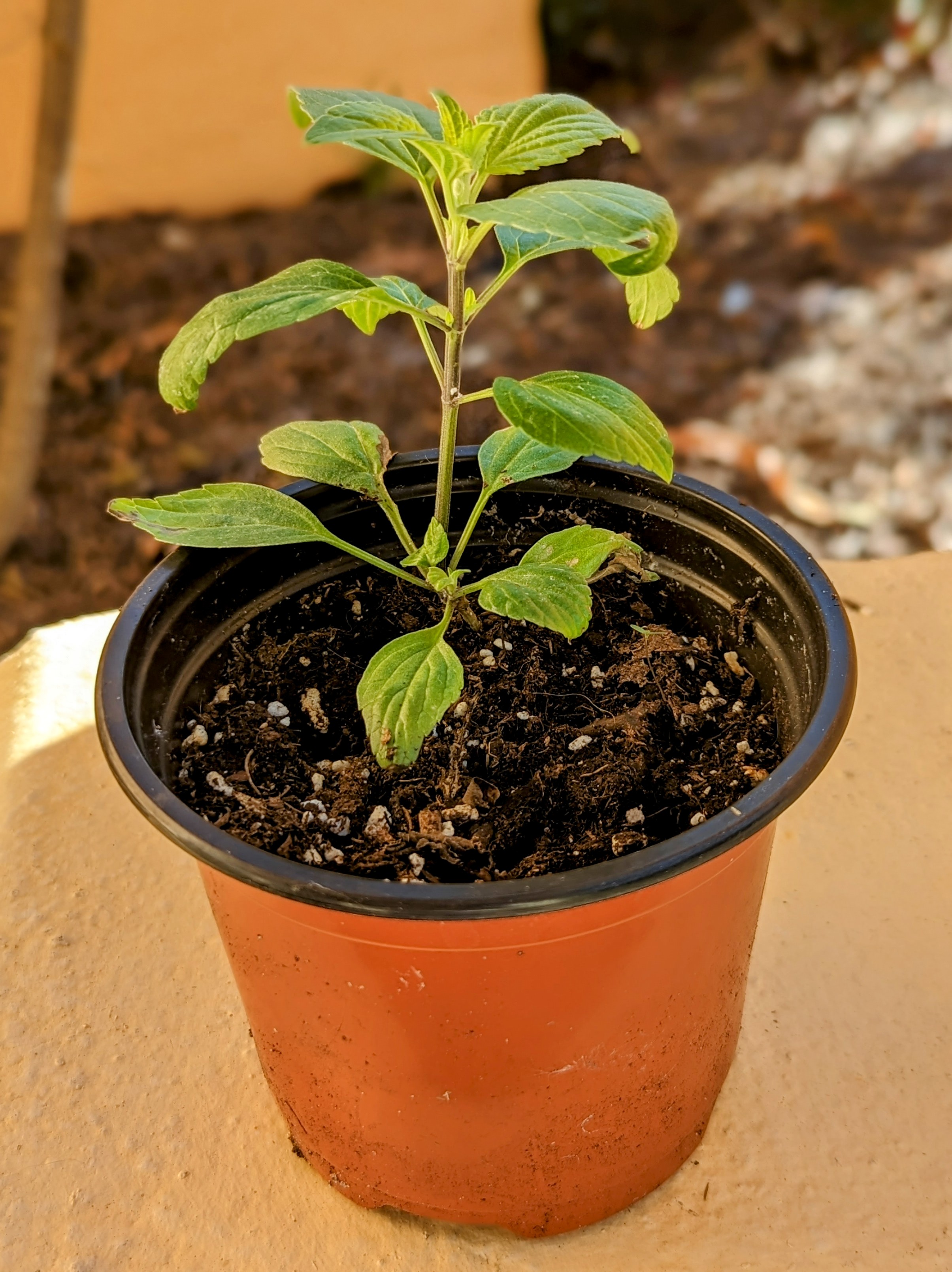
Meet my only surviving rooted cutting of Mystic Blue Salvia. I am very proud and happy to have one more. I started with two plants, one passed on last year and the other has been flowering nearly non-stop since March 2021. I took six cuttings and only one took. I would love to know why?
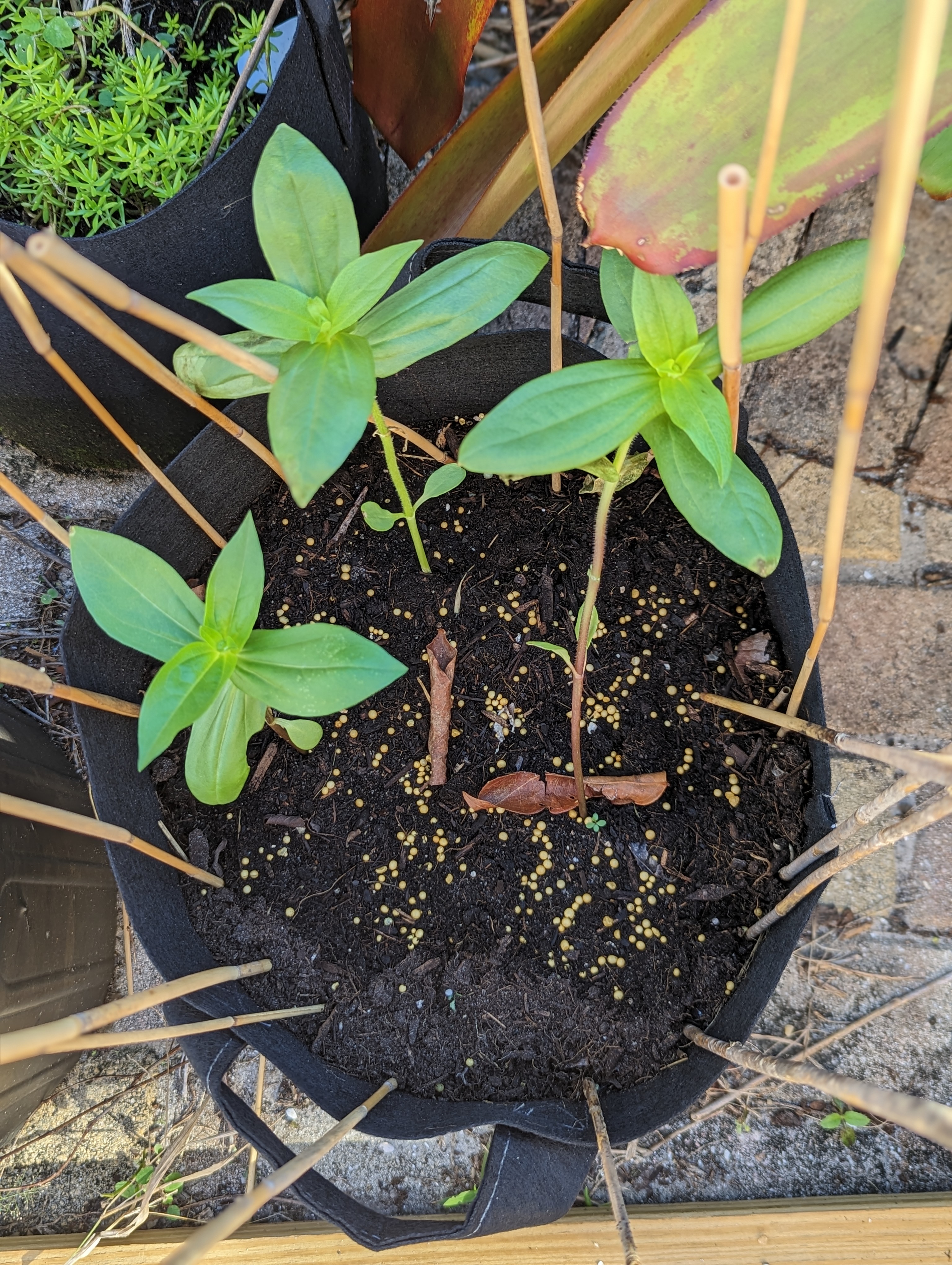
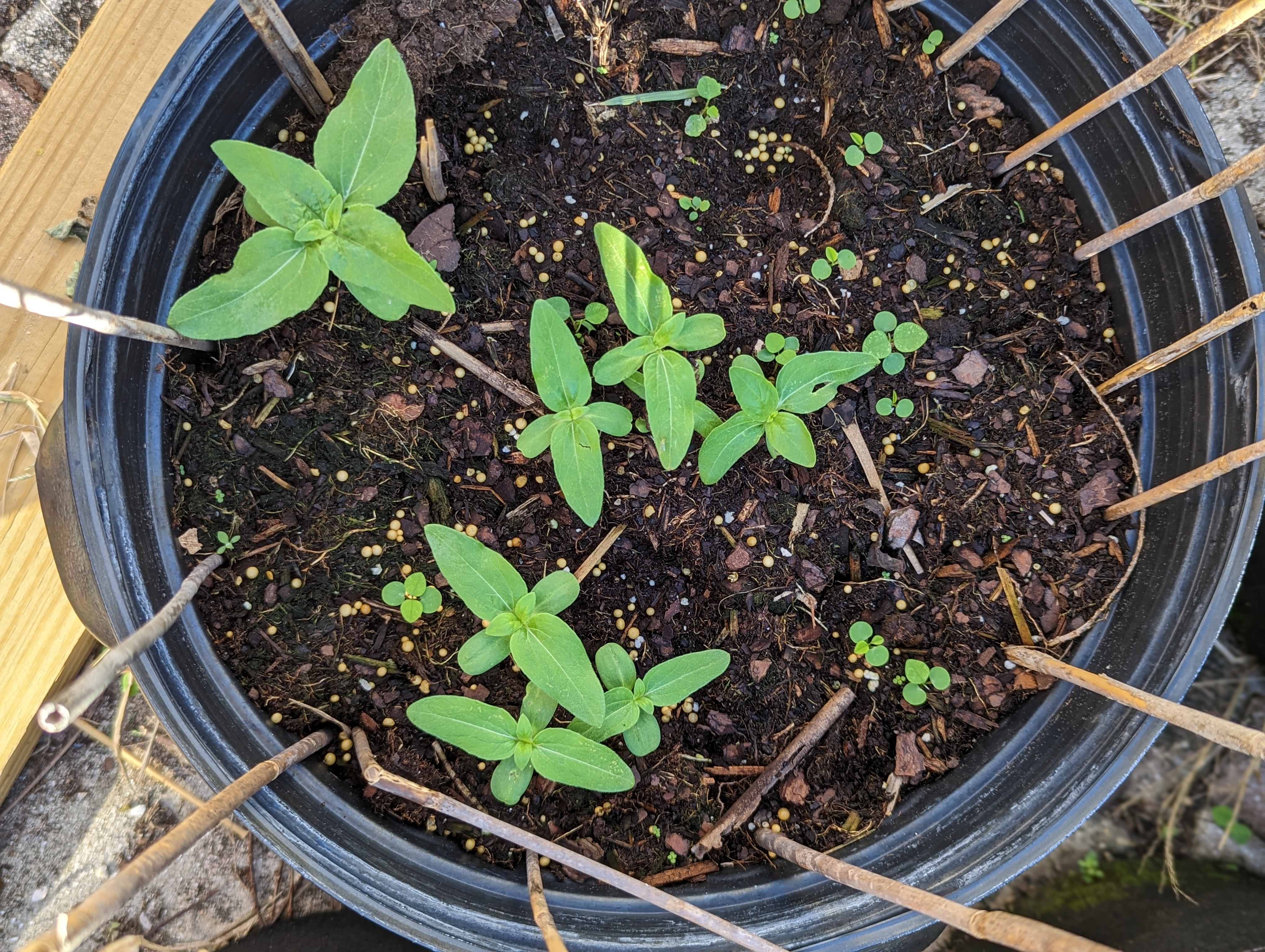
I moved the Zinnia seedlings to a bigger pot to allow them to grow cut flowers. During all the jostling around plants with the freeze all the tags were lost, so I have to wait for the flowers to see what colors are left. About half of the Zinnias succumbed to the cold, dying at the base of the stem.
All the Dwarf “Sunspot” Sunflower seedlings made it through the cold. I covered them with a pillow case for two days. I am not sure what the other seedlings are though I am suspecting weeds.
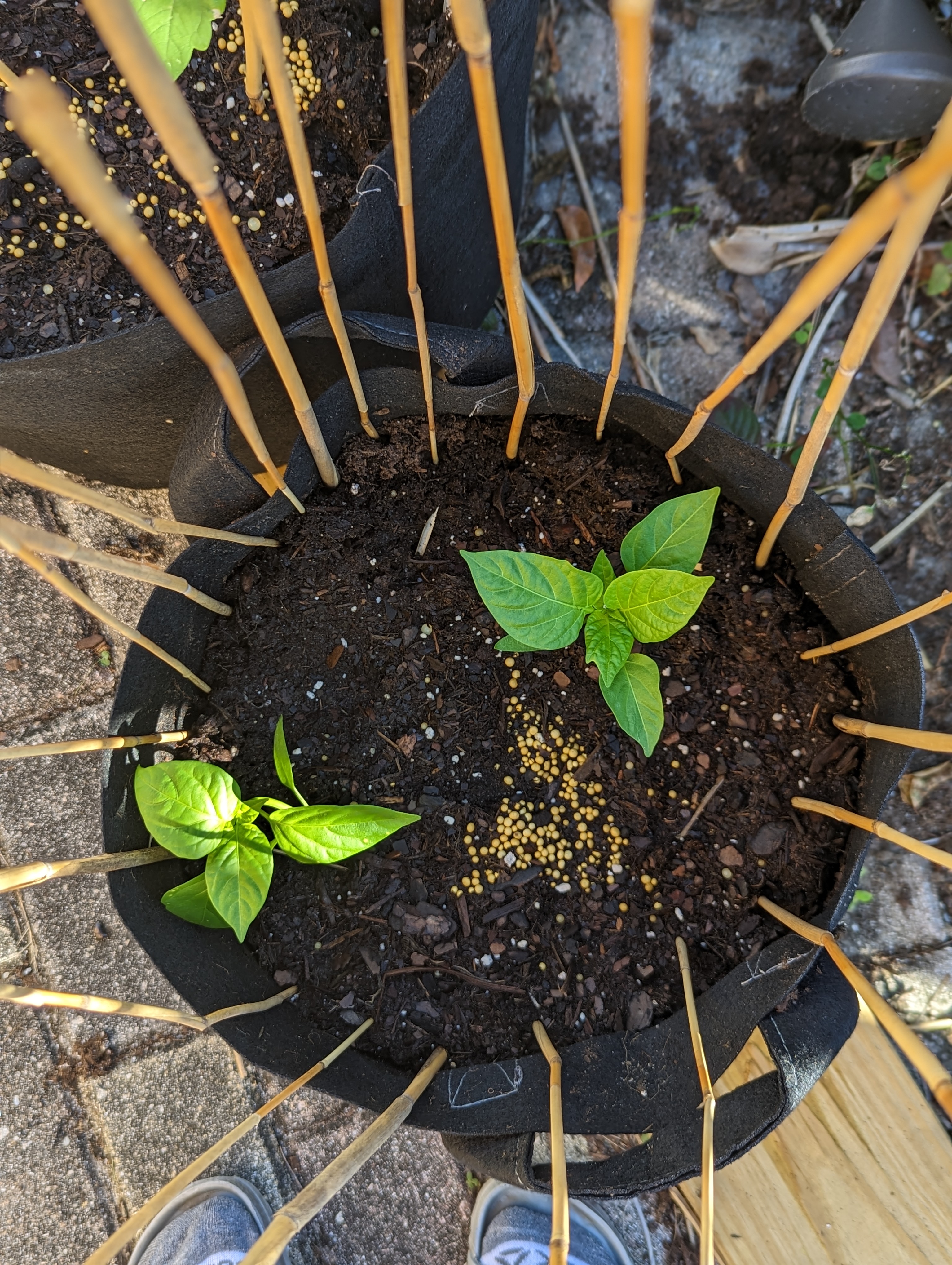
This is a new variety of big red bell pepper, I have a couple of plants that are doing well. Last year I had heirloom South American peppers, designed for the heat. They were a bit weird, so this year I am trying the classic bell pepper. Hopefully, getting enough water on them.
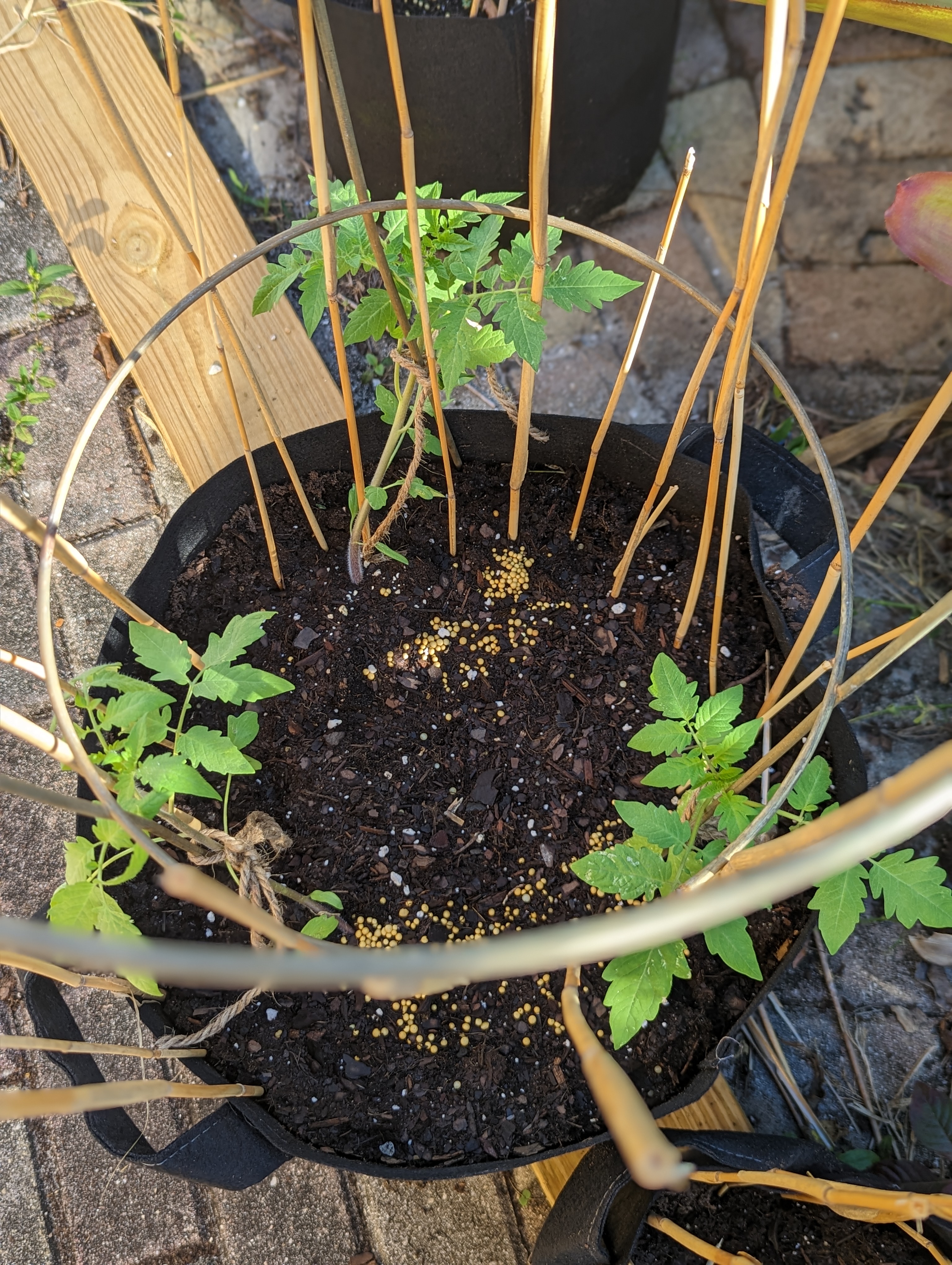
Tomatoes, finally back in the garden. These are all cherry tomatoes. Lost Marbles, Sweet 100 and Yellow Pear, I think. Started from seed about a month ago. I have downsized to six plants this year. Last year I had nine and was overrun with tomatoes for a long time. The containers are all grow bags, reused from last year. The bamboo sticks are squirrel abatement. I have an idiot neighbor who feeds the squirrels peanuts – this gives them a maniacal urge to dig up any nearby container with nice soil and plants. This guy is obviously not a gardener and set to poison the universe in the name of lawn. Sigh.
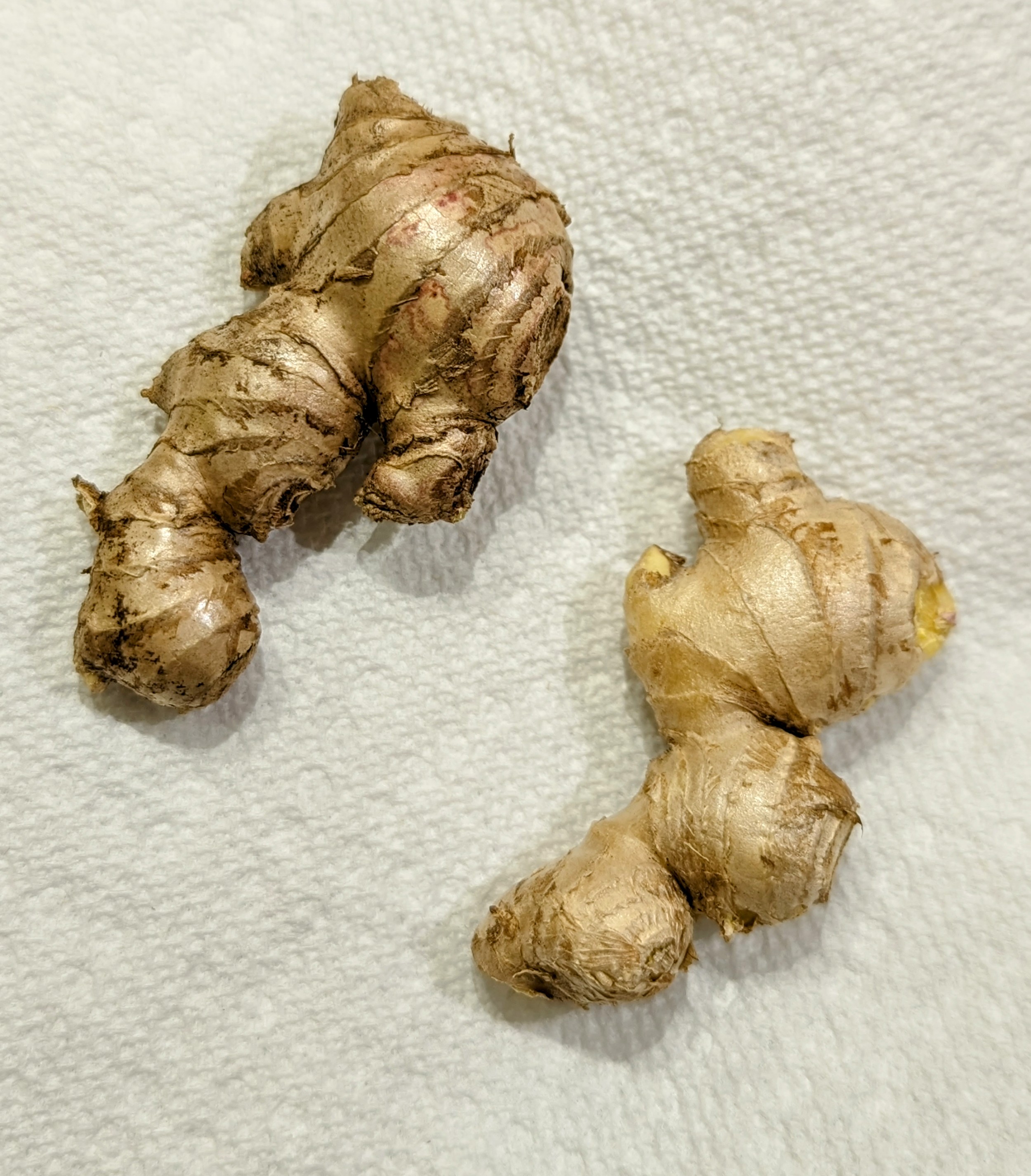
The massive (bahahaha) culinary Ginger harvest. I watered this plant all summer and got two roots. The cost of the water probably exceeded the value of the Ginger at the supermarket. Unless these are phenomenally delicious, I won’t bother again.
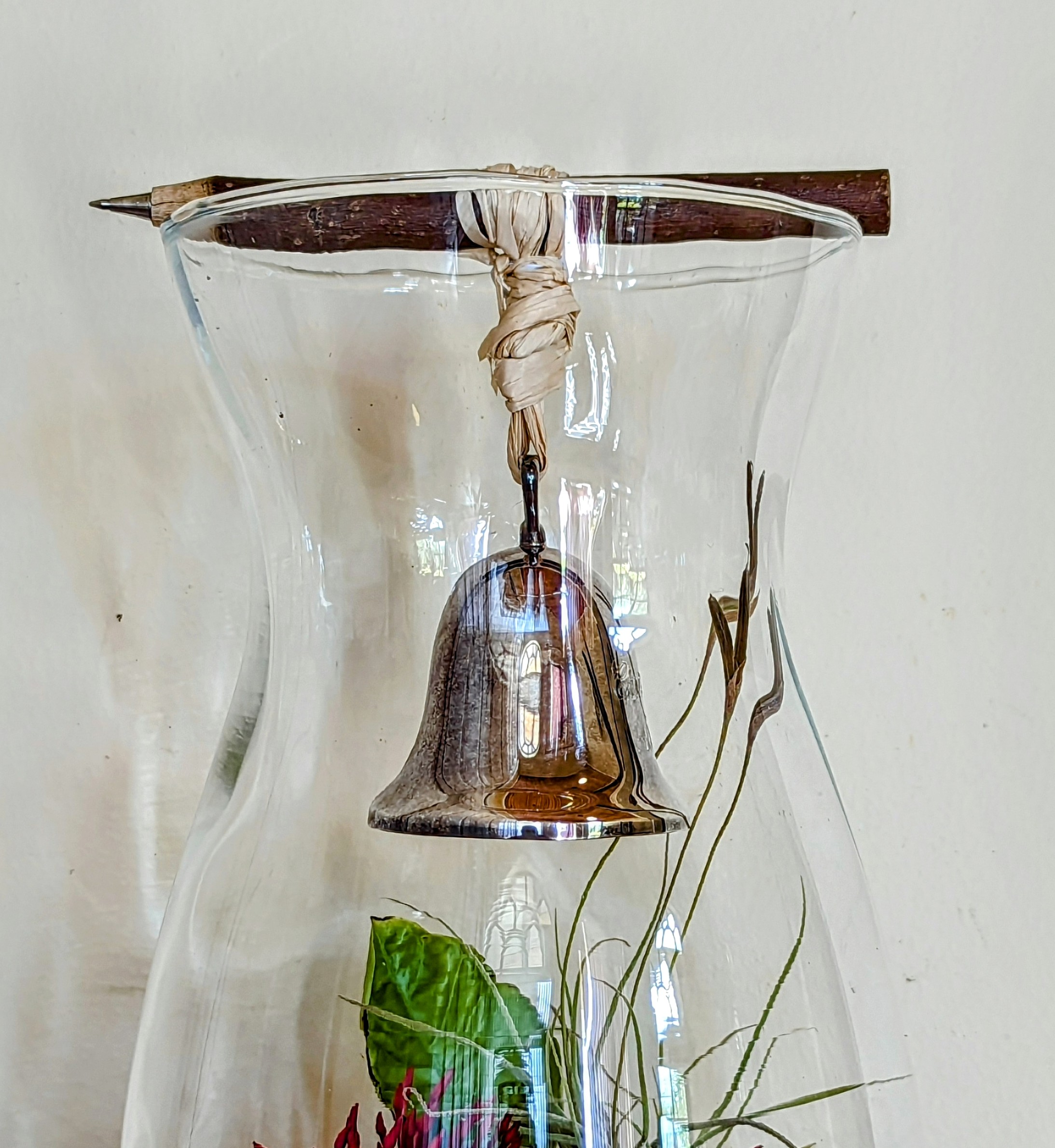
I am issuing a hearty welcome to 2023 by ringing in the New Year with a vase on Monday. A bit of a poem by Tennyson, written in 1850, celebrating the church bells ringing at midnight.
Ring out the old, ring in the new, Ring, happy bells, across the snow; The year is going, let him go; Ring out the false, ring in the true.
This is a high concept floral creation. The pen holding up the bell is for writing New Year’s resolutions. It has not been used – yet! The silver bell is for ringing in (and out). The flowers are fireworks and the shells are grounding it all. Design school rearing its ugly head again.
A closer view:
The pen is a freebie I picked up at a lecture about controlled burns in the nearby state park. It is from the Florida Forestry Service and looks like a stick. The bell is one of many collected by my husband. It is an annual silver bell engraved with the year. After about 30 years you really don’t need any more bells. The grey plant in the background is an Air Plant; known around here as Ball Moss (Tillandsia recurvata). These can grow almost anywhere and are sometimes seen on power lines. This one is flowering and I think it looks like fireworks.
The red fireworks are actually buds from ‘Maui Red’ Ixora. The Ixora is a shrub that is very intolerant of cold – being a perverse plant it has started flowering after being exposed to the coldest temperatures it has ever experienced last week. Shells are from our local beach and the moss and the vase are from recent floral gifts from friends.
Happy New Year to all and a big Thank YOU to Cathy at http://www.ramblinginthegarden.wordpress.com for her years of hosting In a Vase on Monday. Follow the link to see more vases.
I am sending warm holiday wishes from South Florida along with some warm colors from my garden. Fiona the greyhound is not fond of my annual attempt at getting her in the holiday spirit. Hopefully all this verbal and photographic warmth will counteract the temperatures outside…it was 35 F (1.6 C) this morning, making this the coldest morning in recent memory.
I am looking forward to sharing more blogging adventures in the New Year!
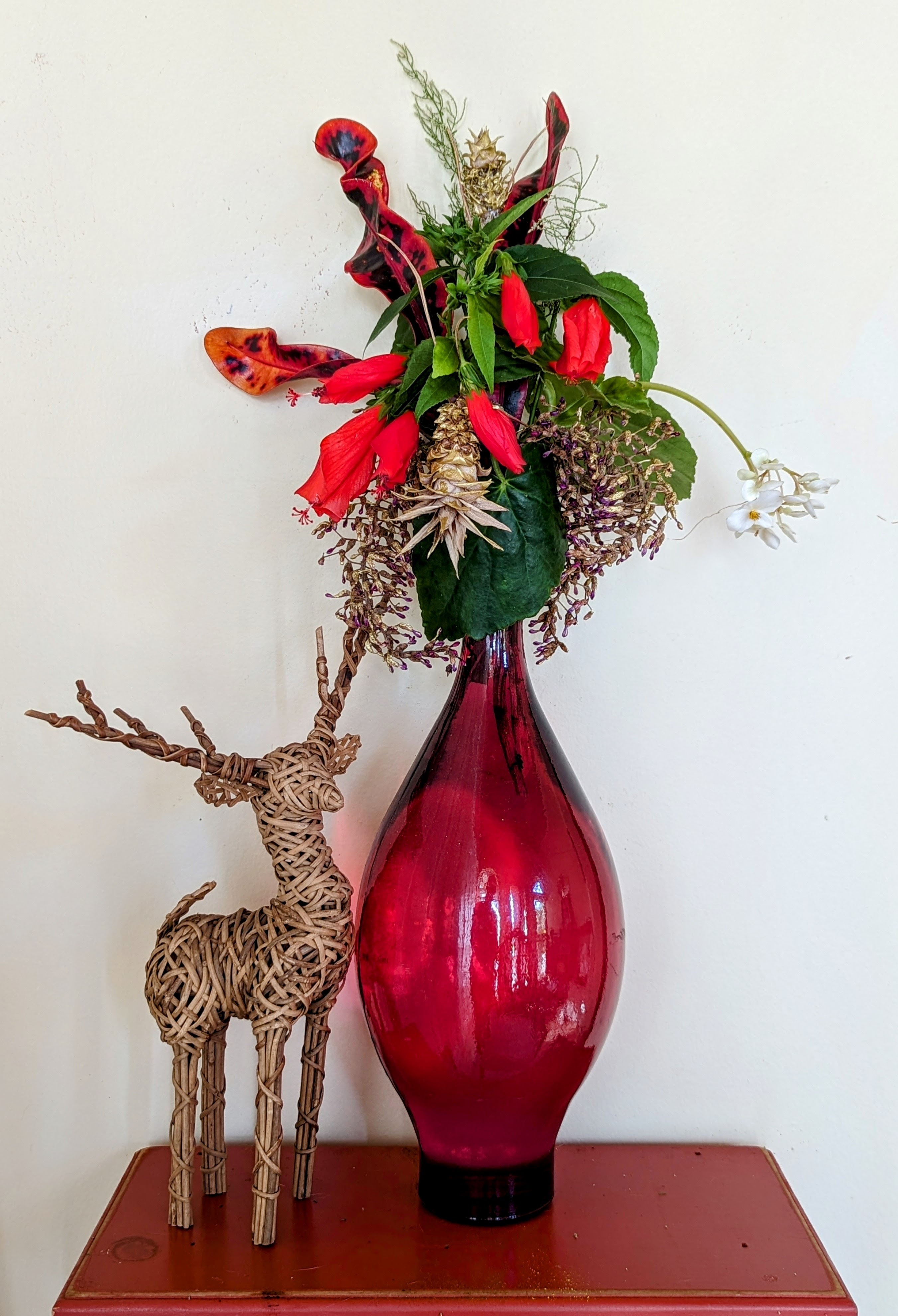
We are gathered here today to celebrate the holidays with a bling filled vase and a wicker deer. Cheers to IAVOM and our weekly hostess, Cathy at http://www.ramblinginthegarden.wordpress.com. Follow the link to see more vases.
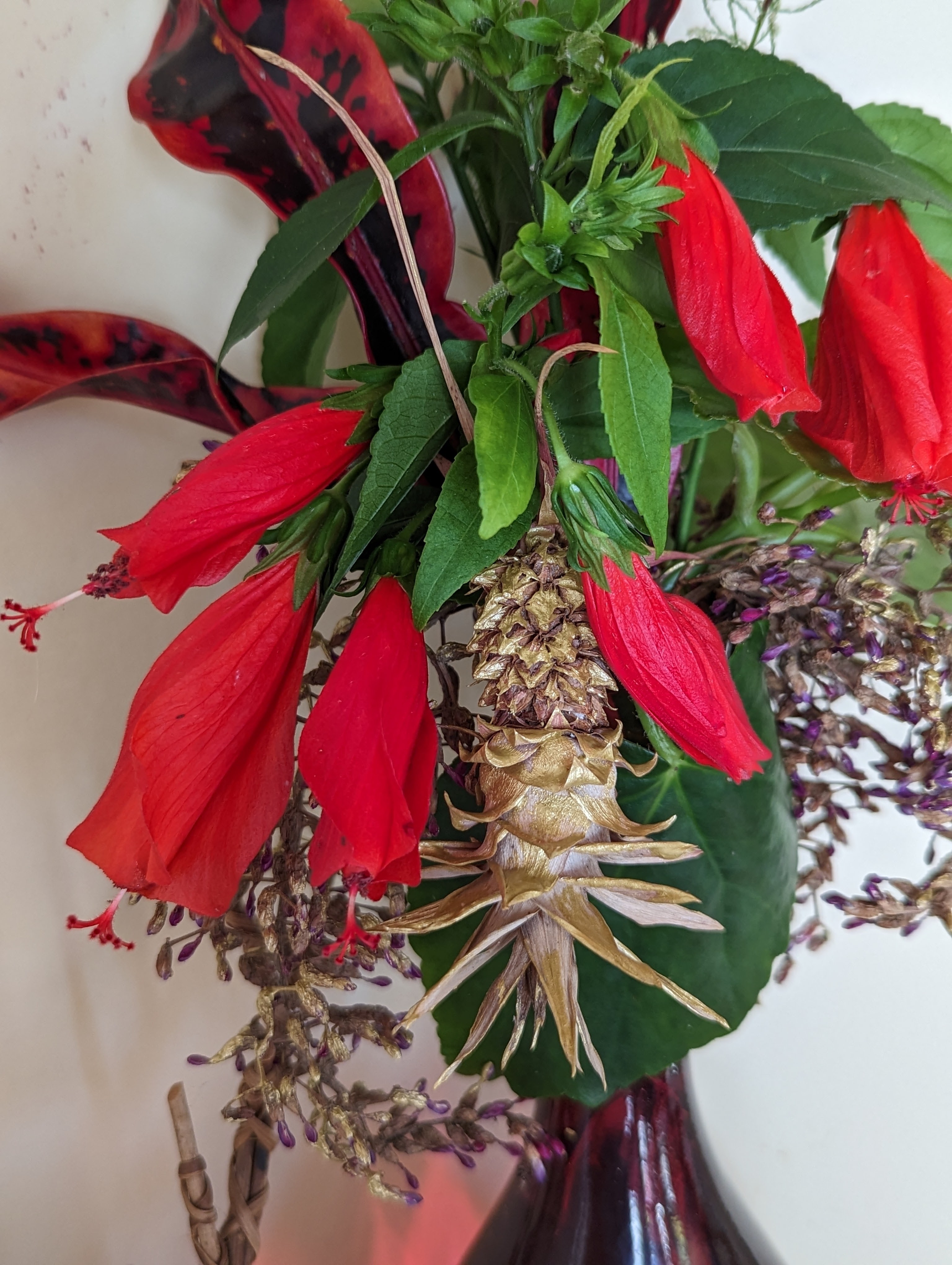
I seem to recall the deer is actually an antelope and a historical artifact from the Crate & Barrel; though I do enjoy him or her for the holidays. The vase is a roadside find. The bling, gold painted dried Bromeliads and Miniature Pineapples from my garden. I am definitely getting in touch with my Southerness painting dried flowers gold for the holidays. I am certain my mother is smiling in the great beyond.
The merrymakers in the vase:
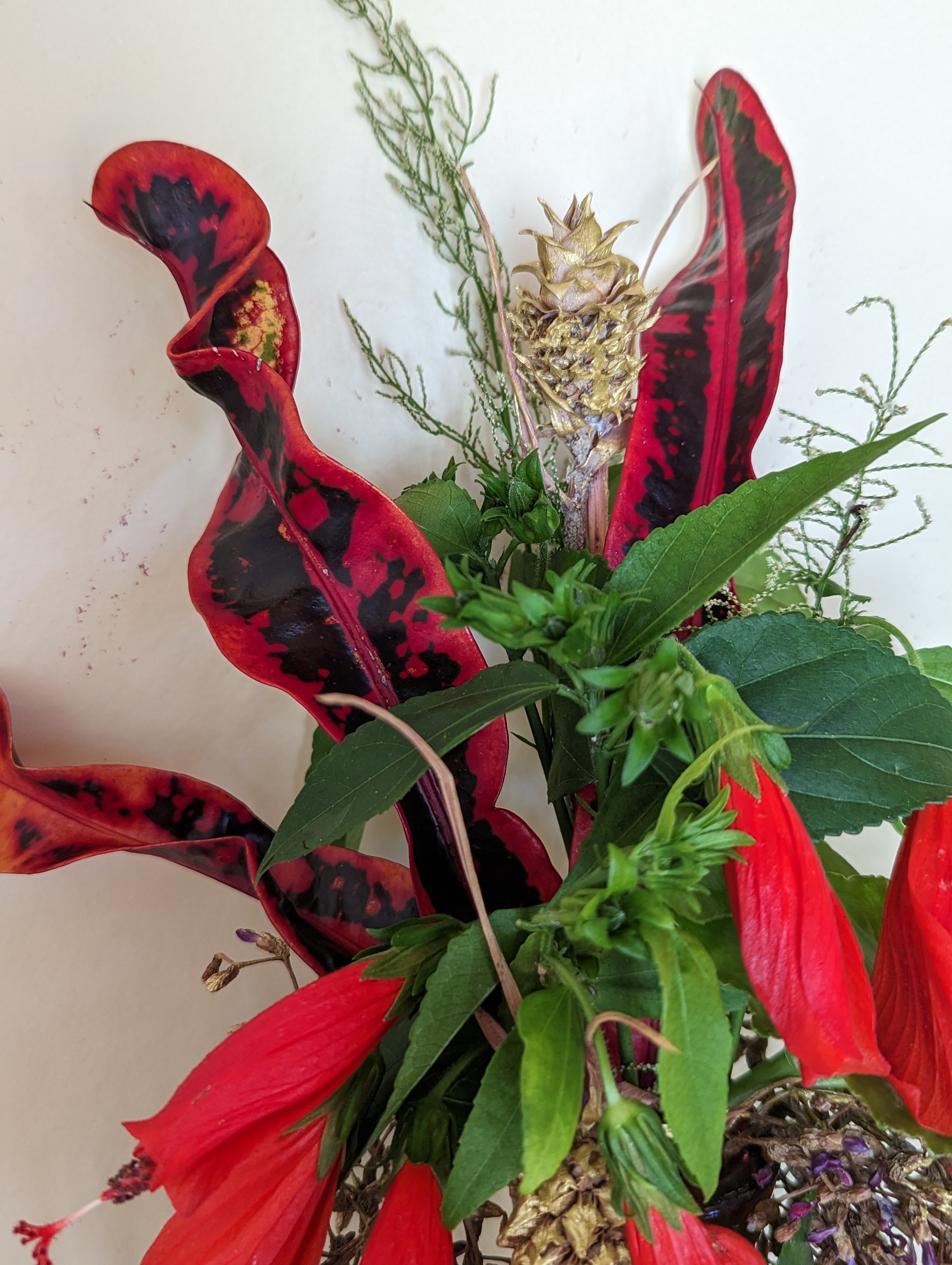
Red variegated foliage in background is from the shrub, Mammey Croton (Codieum variegatum); wispy green flowers are Juba Bush (Iresine diffusa); red flowers are Nodding Hibiscus (Malvaviscus arboreus); a gold glazed Miniature Pineapple completes the background.
Upside down gold glazed Miniature Pineapple nods along with the Hibiscus.
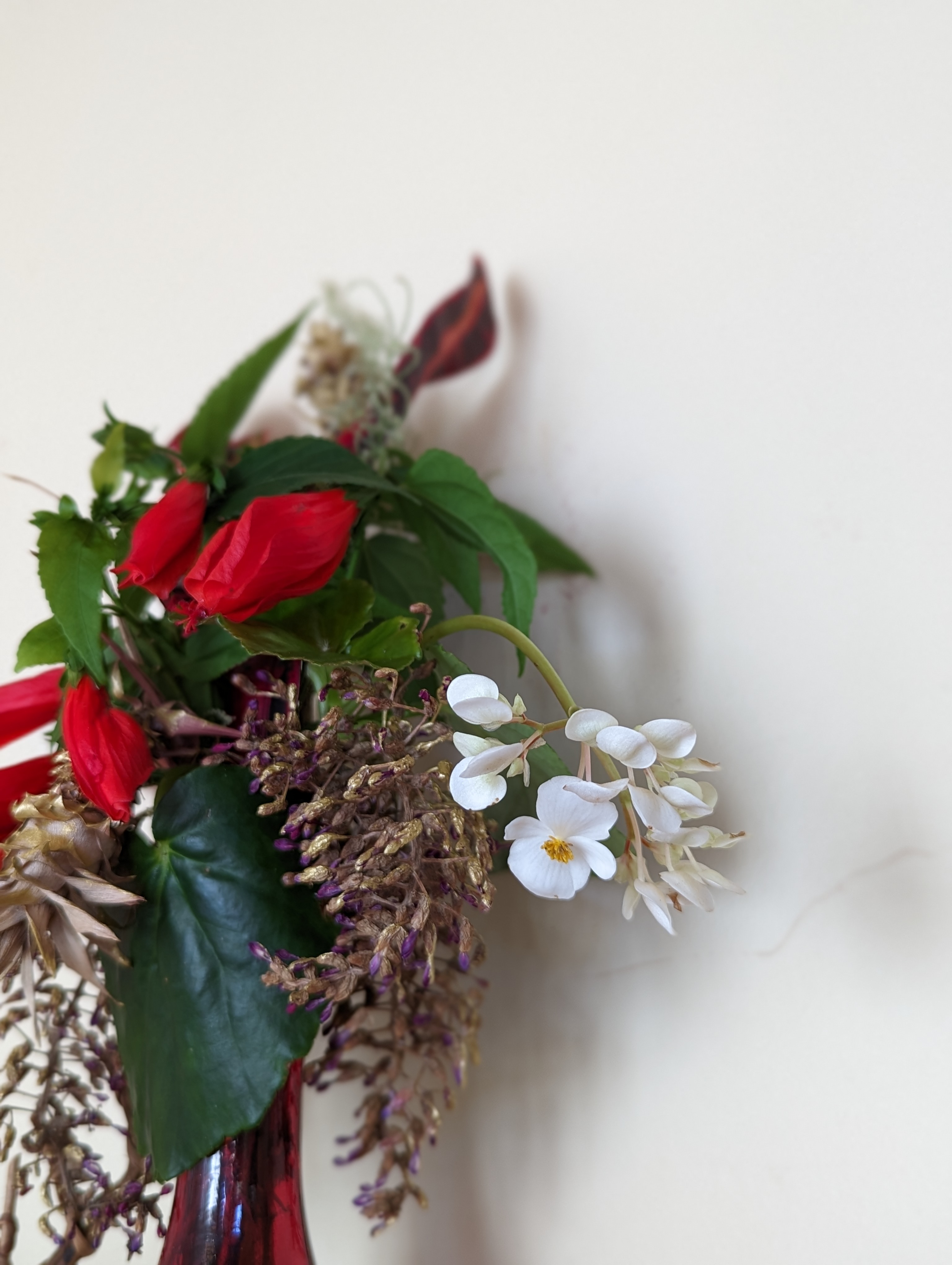
A single stem of Sweet Begonia (Begonia odorata) provides white flowers, foliage and fragrance. The gold glazed dried flowers gracing the edge of the vase are from Aechmea miniata Bromeliads.
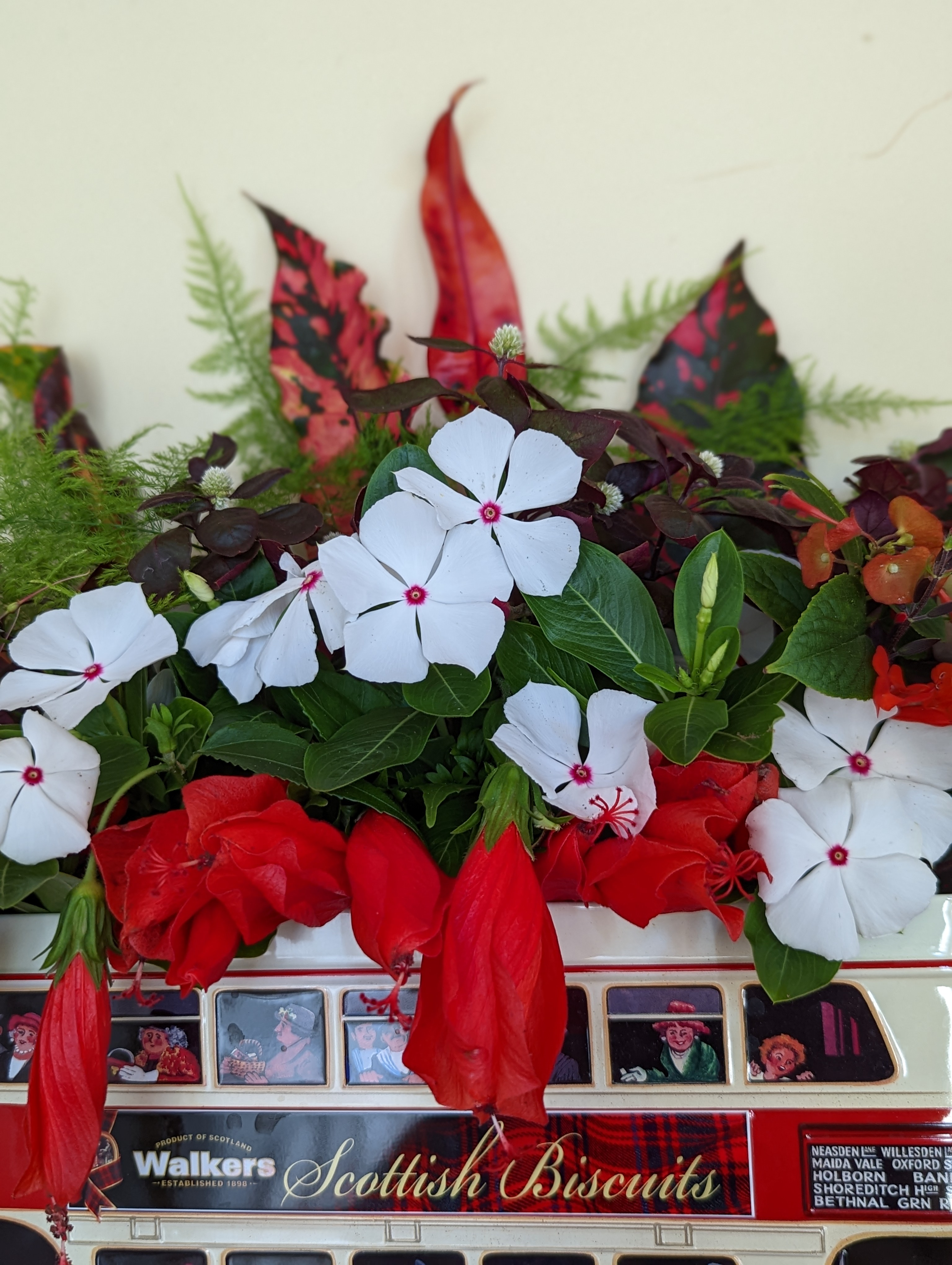
It’s that time of year. Time for greens with red accents and a little, um, tropical color from the garden tucked into a festive biscuit (or cookie in US speak) tin. A friend from the UK gifted us with this tin of biscuits several years ago. I love tins and pull this out every December to make a holiday arrangement for my foyer. My husband and I devoured the shortbread in the tin, leaving me wondering if packaged cookies (biscuits) from the UK are better than US cookies? I think they might be, Hobnobs are my favorite cookie to buy, chocolate and made in the UK. As a native of the Southeastern US I think biscuits are for dogs or a simple quick bread/roll served as a side dish. Biscuits are a very important vehicle for gravy in the South.
Back to the vase, now that I am hungry… An overhead view, the ferny foliage is from the Asparagus Fern that pops up in the garden; purple foliage with white flowers is ‘Purple Prince’ Alternanthera; white flowers are from a volunteer Vinca rosea, another garden pop up; bigger red flowers spilling over the tin are Nodding Hibiscus (Malvaviscus arboreus).
Another view: on each side I have ‘Miss Alice’ Bougainvillea in white; a few sprigs of Tropical Red Salvia (Salvia coccinea); and a dash of China Hat (Holmskioldia sanguinea)
The colored foliage at the back of the arrangement looking a bit like flames is from two Crotons in my garden. Crotons are medium sized, extremely colorful shrubs from the South Pacific. They are very common in South Florida. There are a few leaves from ‘Pie Crust’ Croton at the edges and some leaves from ‘Mammey’ Croton mixed in the background. Pie Crust has the rolling leaf margins, you guessed it, like a pie crust. There are a lot of food references in this post; I need to think about what to have for dinner…
Winter is the prime gardening season in South Florida. It is time to start vegetables, herbs and flowers and move back outside. The temps have been in the high 70s (F, 25C), the humidity has dissipated for the most part and there is a nice, refreshing breeze coming off the Atlantic. I replaced all my porch cushions, easier said than done, and have been adding pots to complete the space.
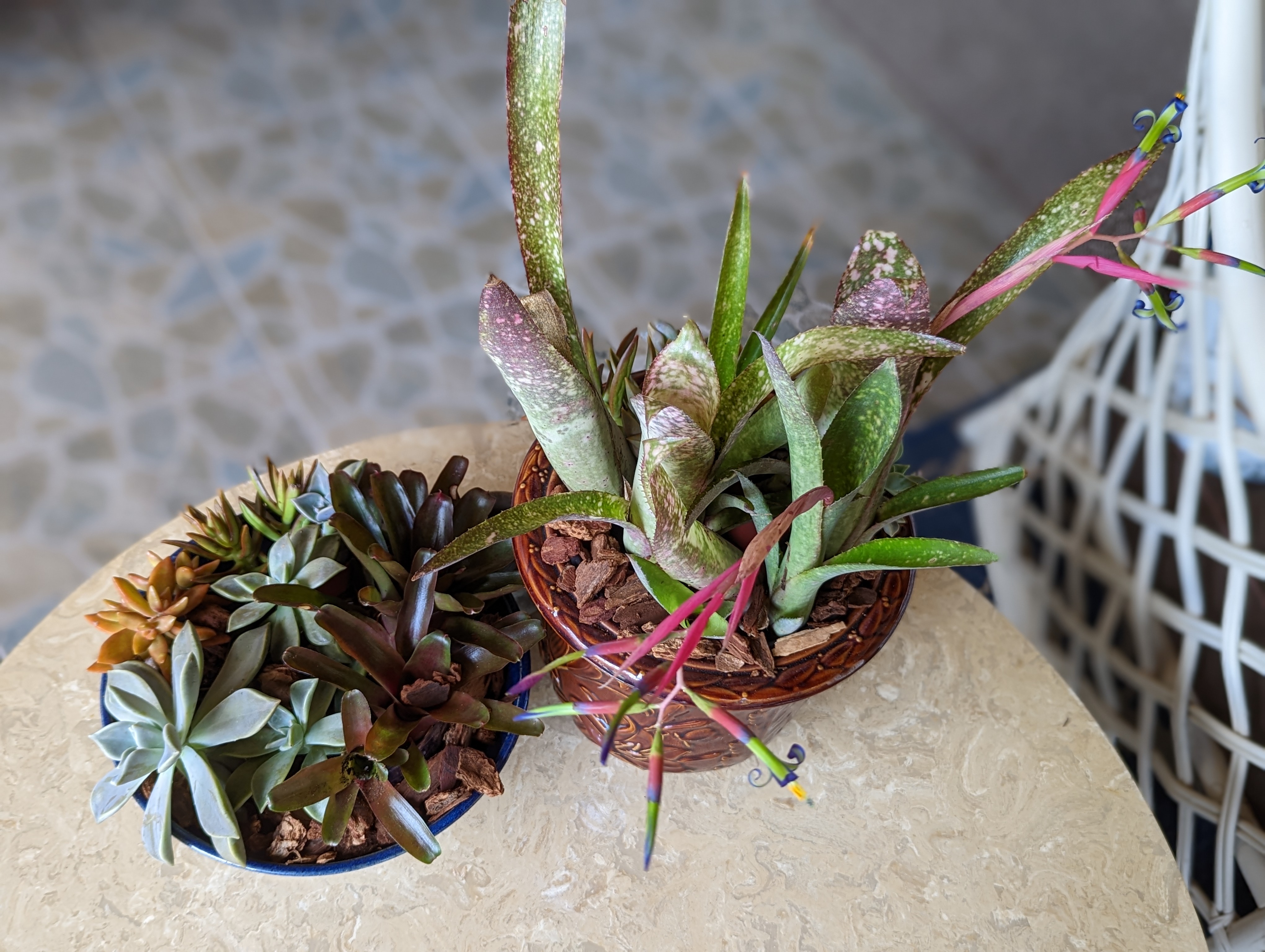
The group from above.
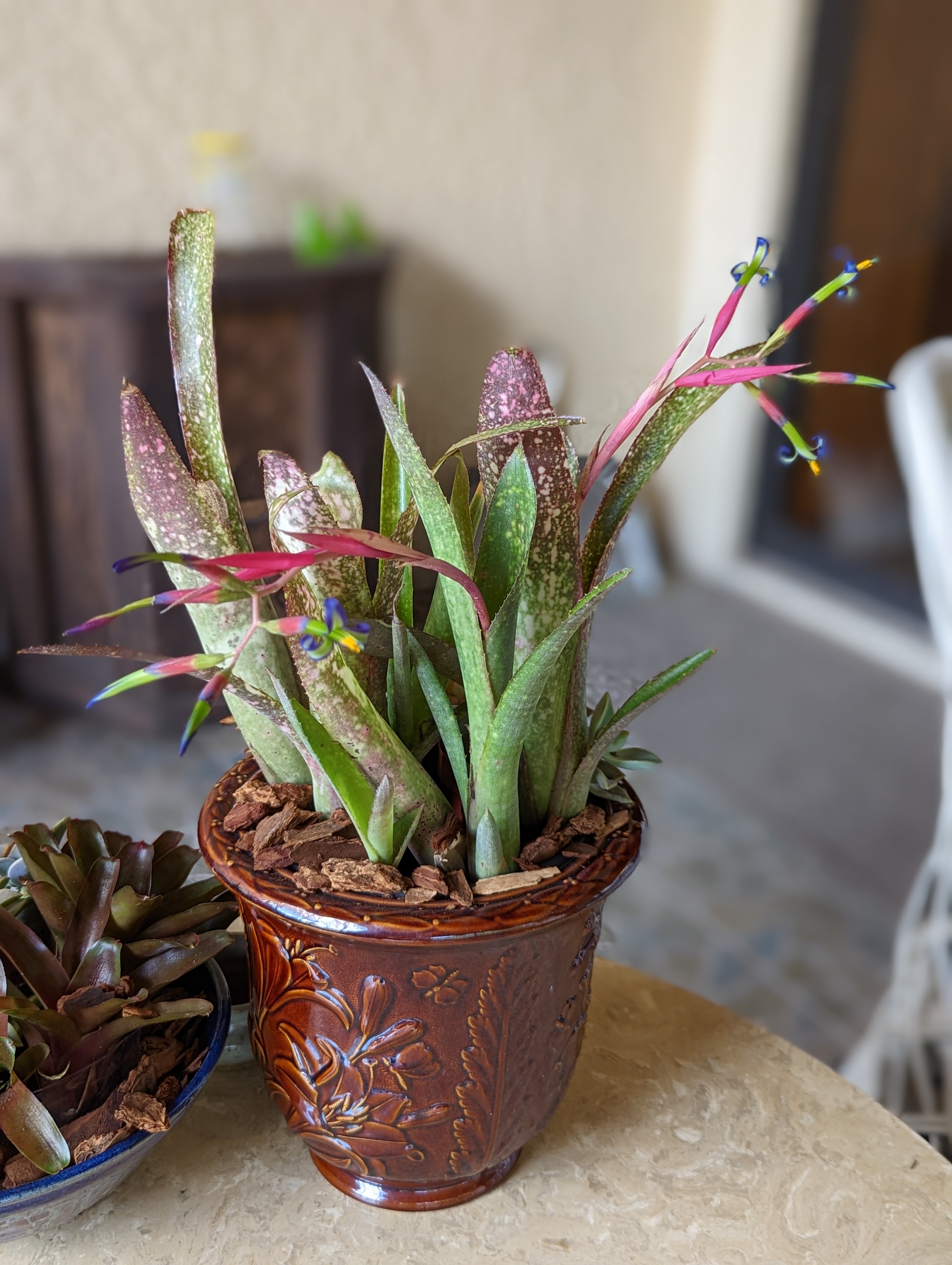
This is a Billbergia Bromeliad. I am not sure which one. I bought it at our local farmer’s market, so it is likely from nearby. The container is antique Portmerion, one of my favorites.
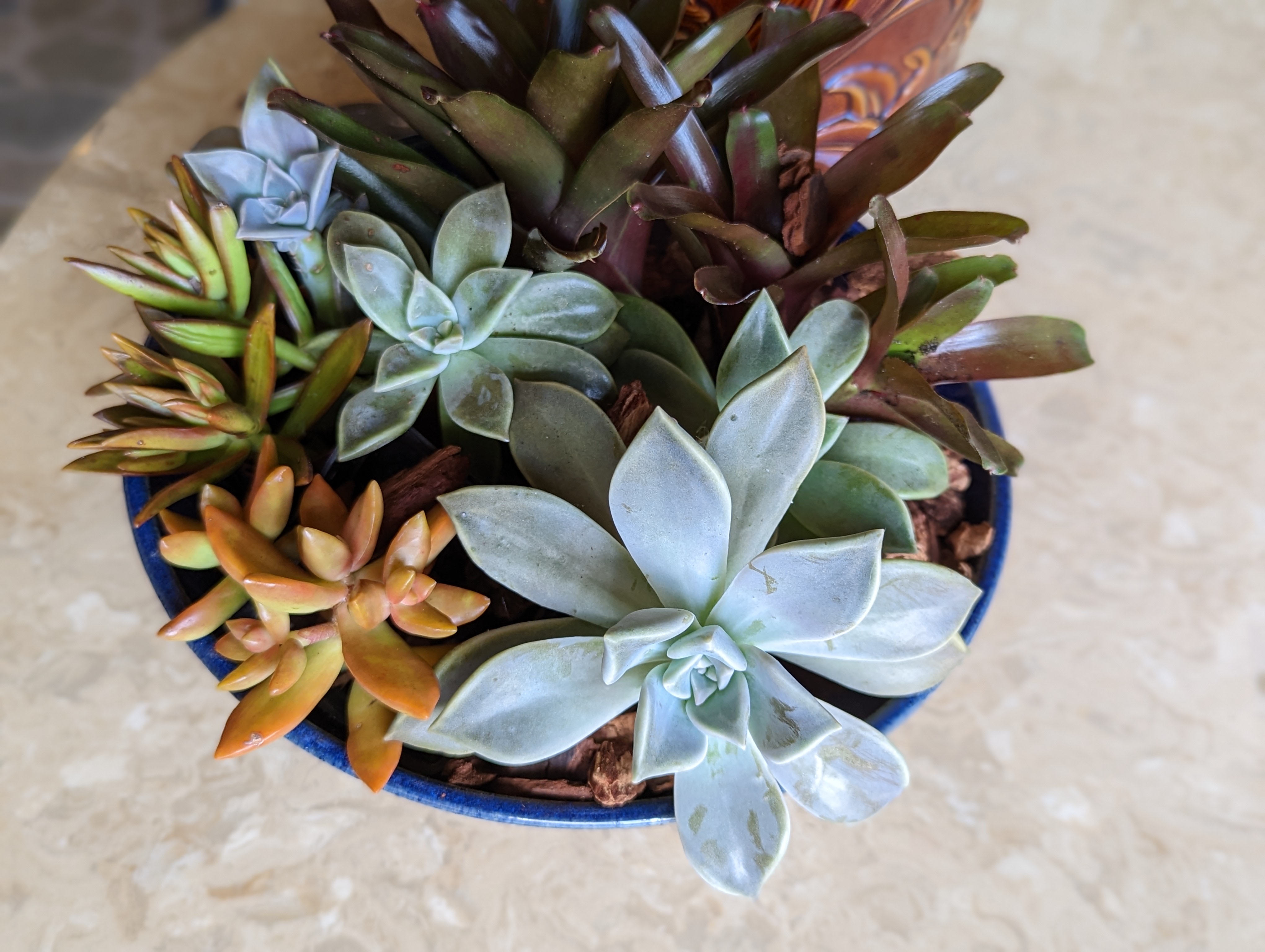
A bowl of Bromeliads and Succulents. The Bromeliads are Fireball Neoregelias. The succulents in grey, Graptosedum; the others are types of Sedum, I think.
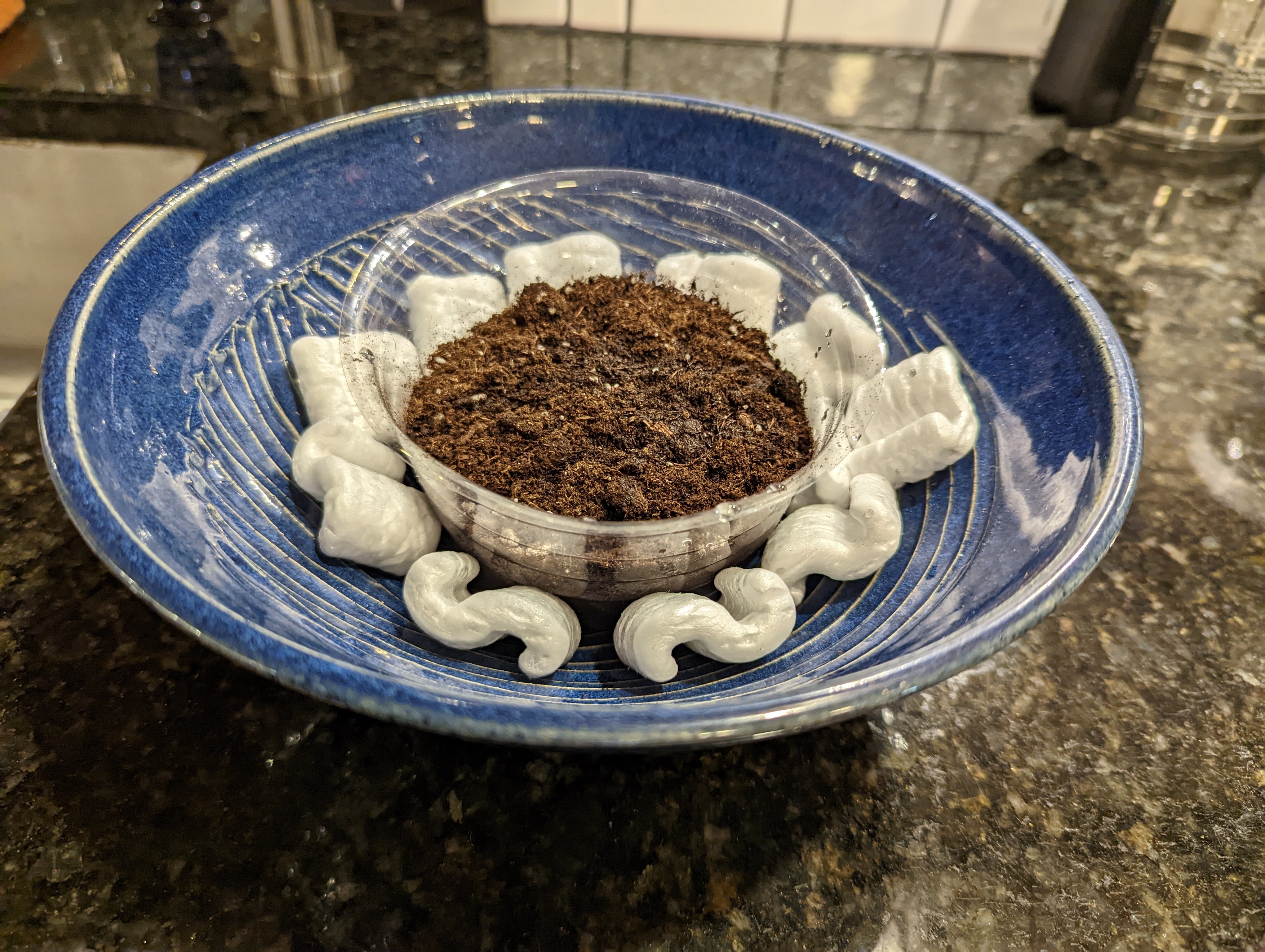
What I started with for the bowl. The cuttings are placed in the soil and resting on the edges of the bowl. I topped everything with orchid bark to hide the pots.
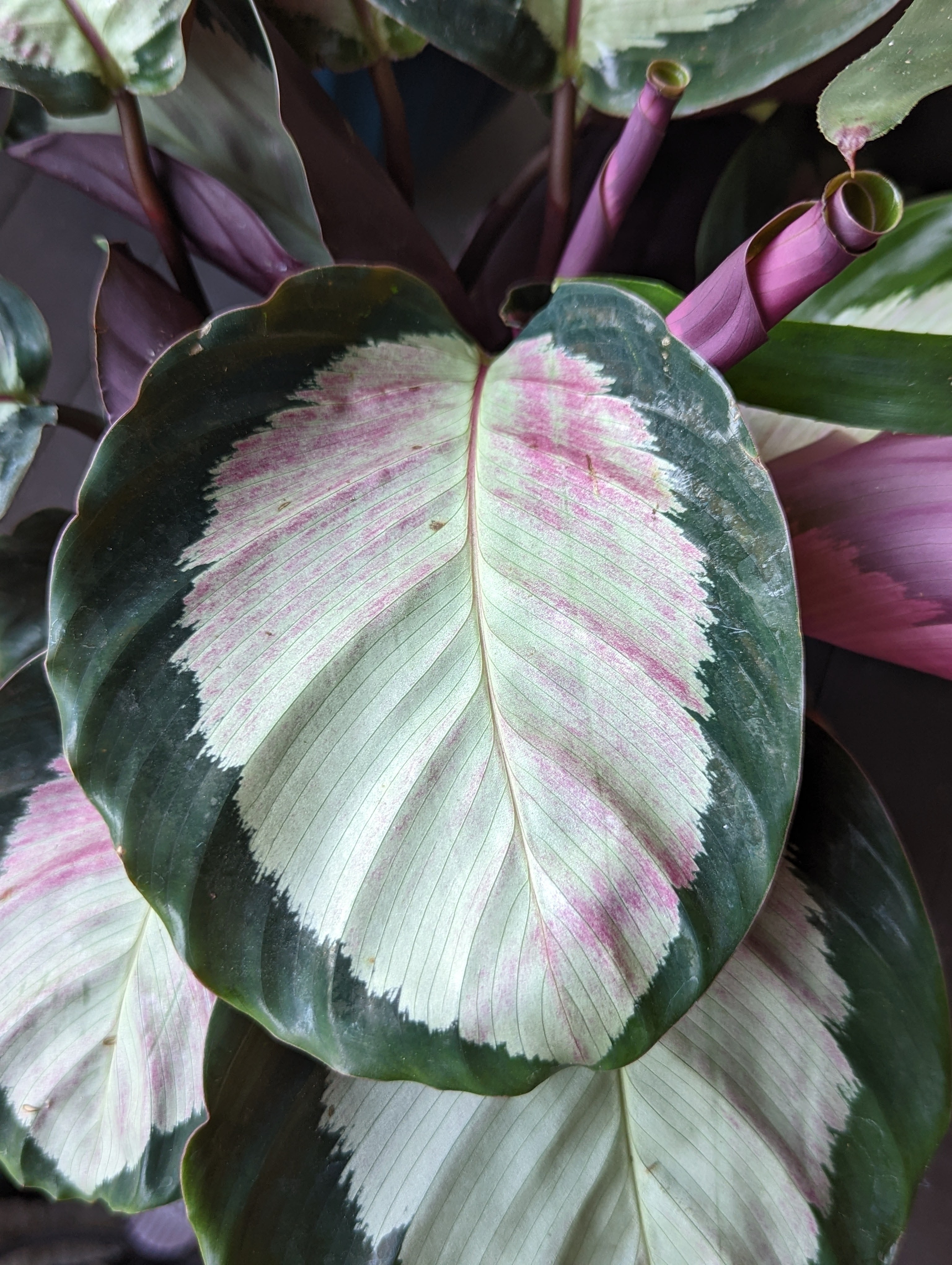
A gift from a neighbor, the Pink Star Calathea. These will grow in the garden here, but need more water that I can reasonably provide, so they stay on the porch.
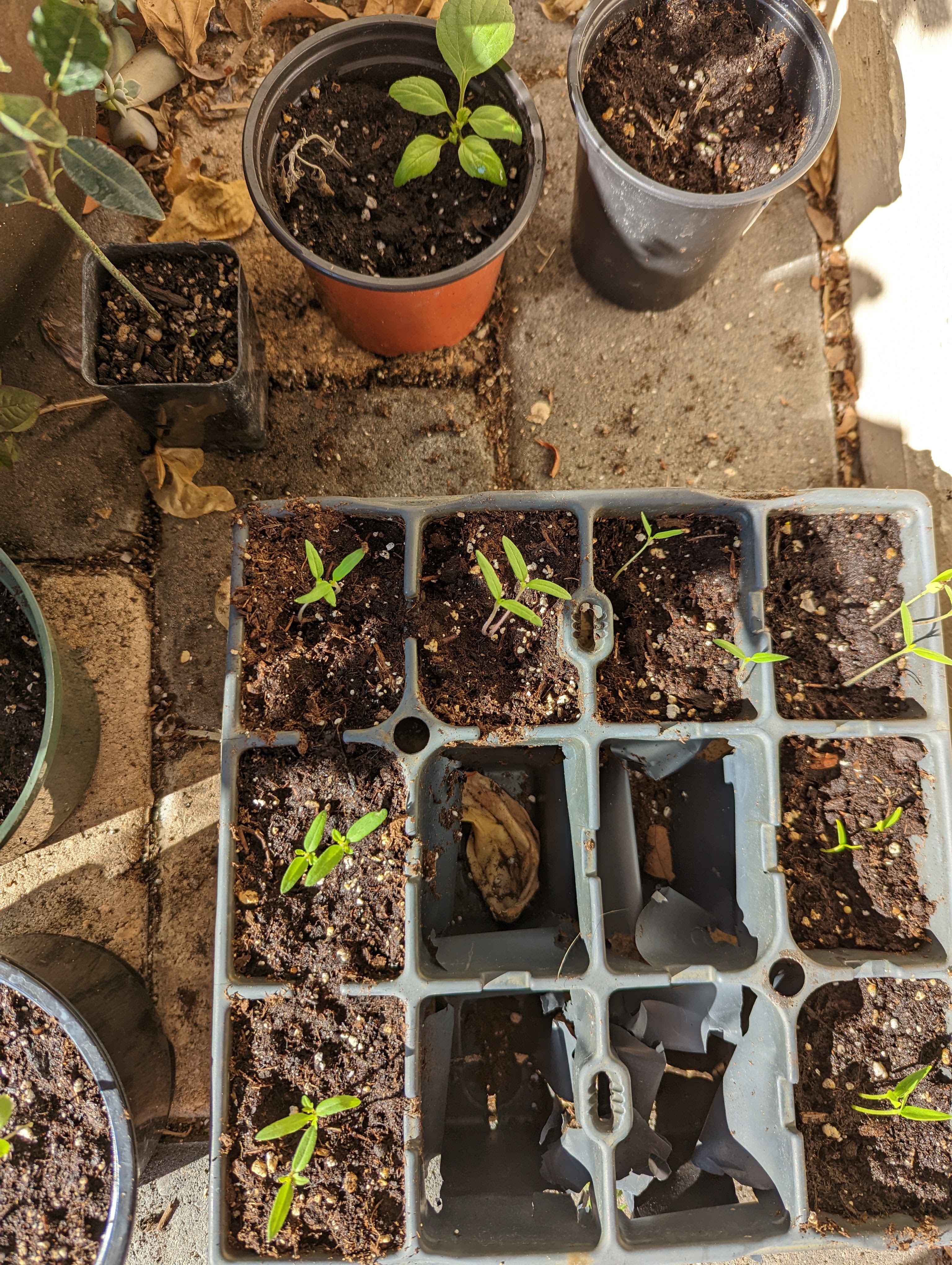
Tomato, pepper and zinnia seedlings on the sunnier porch. My attempt at rooting Mystic Blue Salvia resulted in a 1 out 6 success, I think. I have Papaya, Parsley, Dill and Chinese Forget Me Nots nearby. A mysterious animal took my ID stickers and ate a few seeds.
I am joining Cathy at Words and Herbs for this year’s Week of Flowers sharing images from our gardens. Today I decided to feature seven images in celebration of the final flowery day. These images are purposefully warm to chase away the winter chill. Hot colors from hot South Florida.
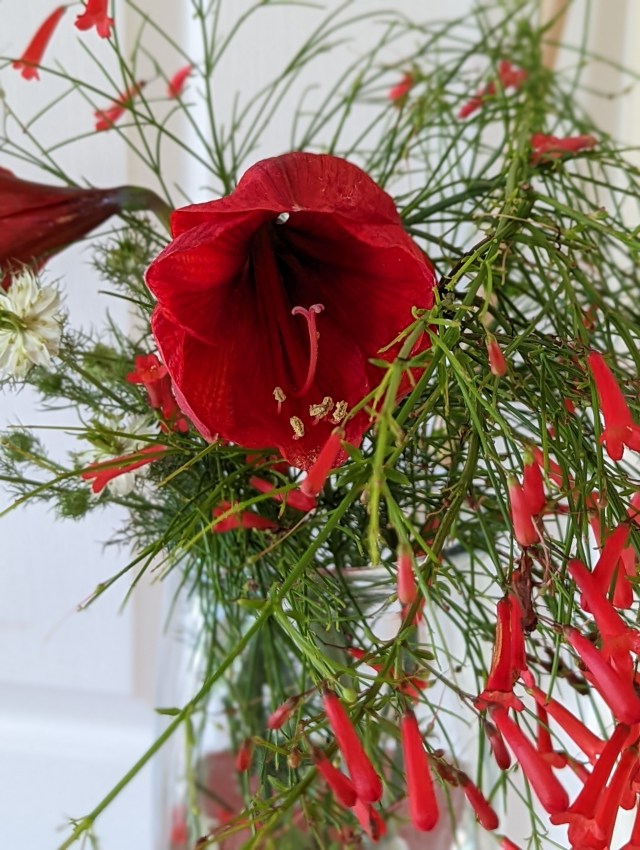
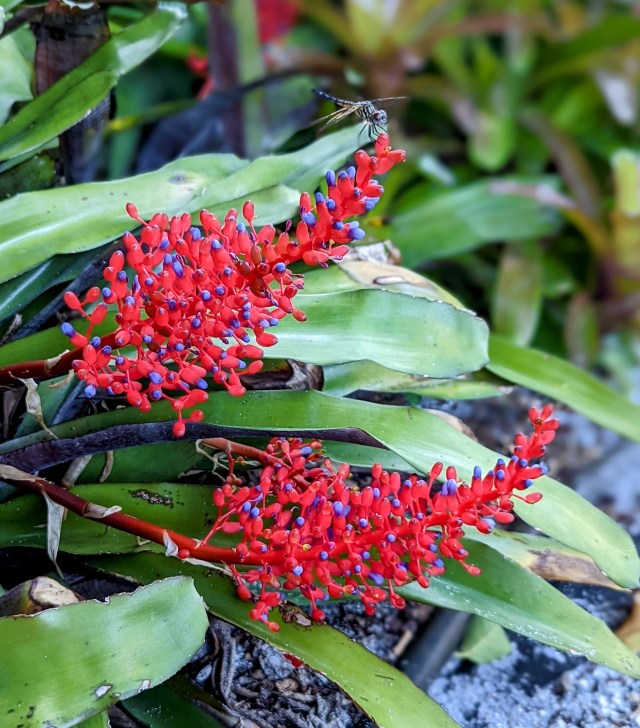
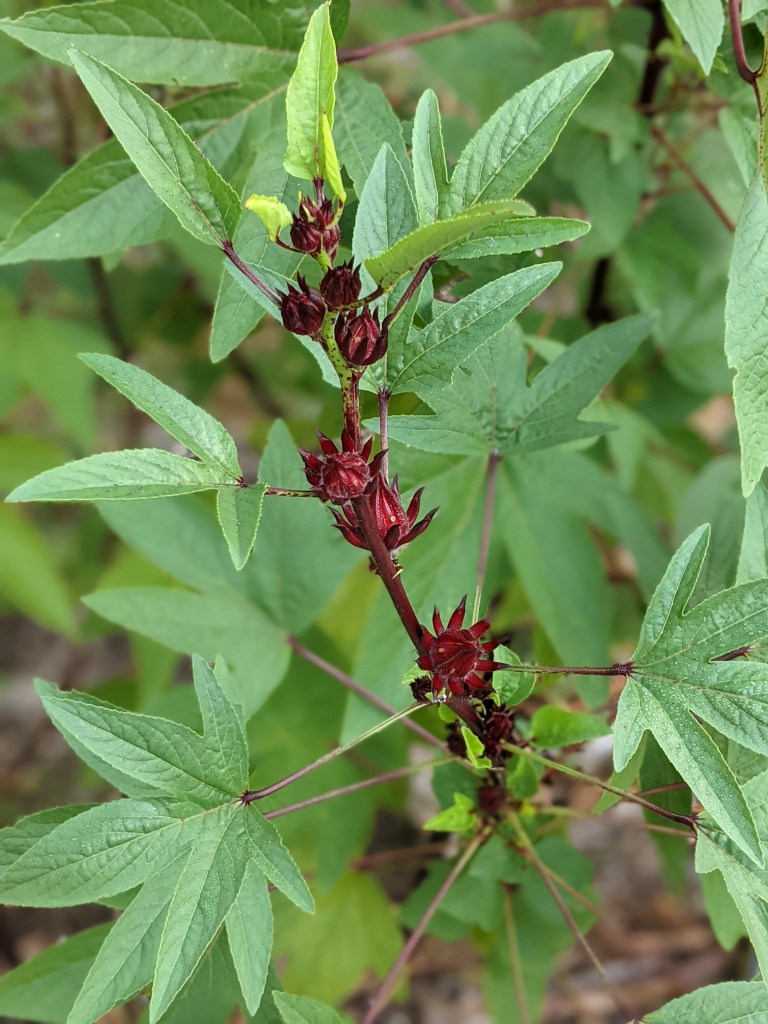
From left to right starting at the top. Aechmea rubens Bromeliad, Tropical Red Salvia, Aechmea miniata Bromeliad buds, Firebush flowers, Balsam Impatiens, The Admiral Red Hibiscus and Lobsterclaw Heliconia in a vase, and finally Aechmea blanchetiana flowers.
Hopefully these images warm up gardeners living in more northern climes. To see more flowery images from around the world visit Cathy at wordsandherbs.wordpress.com.
















 The Shrub Queen