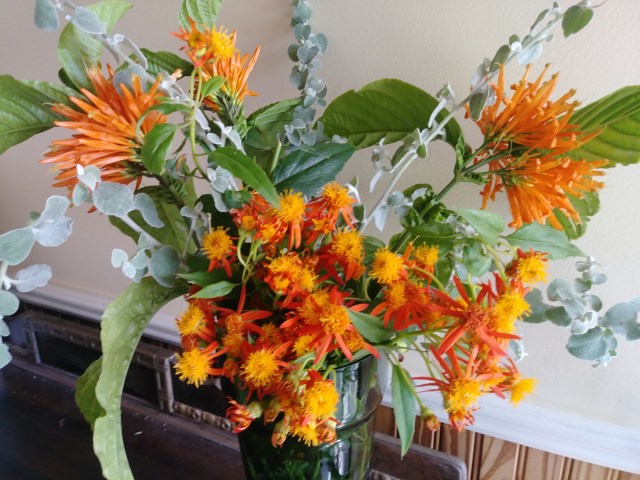
Summer began on Thursday here, complete with thunderstorms and wet blanket of humidity slapping me in the face when traveling from air conditioned space to the great, sweaty outdoors. Summer flowers are a consolation for the weather.
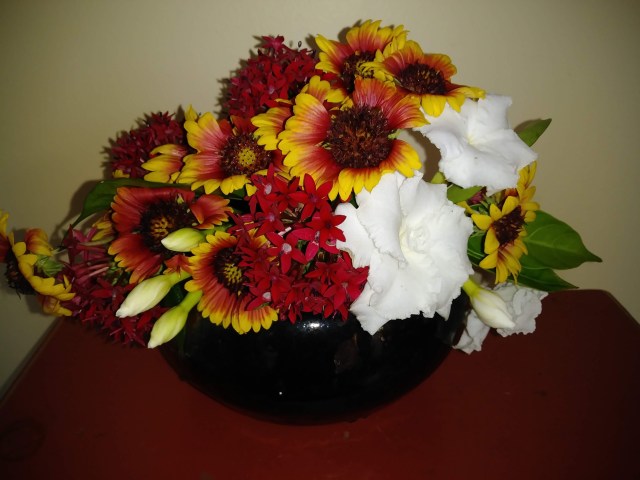
The G’s are Gardenias and Gallardias, the Tropical Gardenias are stalwarts in my garden. They thrive under dreadful conditions and supply flowers off and on all summer long. The plant is probably ten feet tall and I struggle to reach the flowers, having jettisoned more than one across the vegetable garden by letting go of a long branch too quickly. Oddly enough, the buds last a really long time in the vase, but the flowers don’t. I love the graceful lines of the buds, when hanging over (and around) the side of a contrasting vase, the summer garden is looking fine indoors.
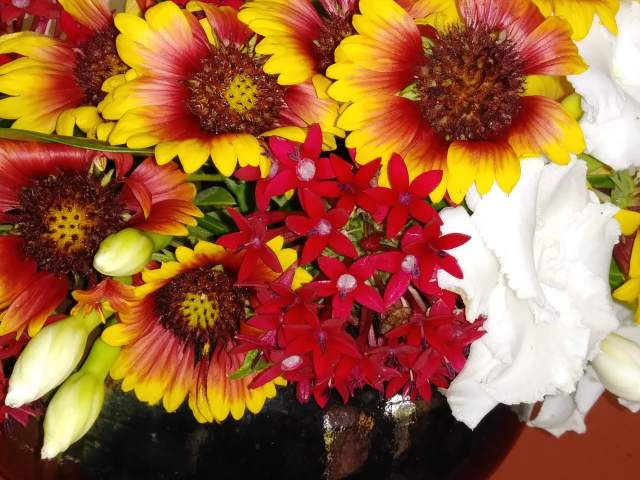
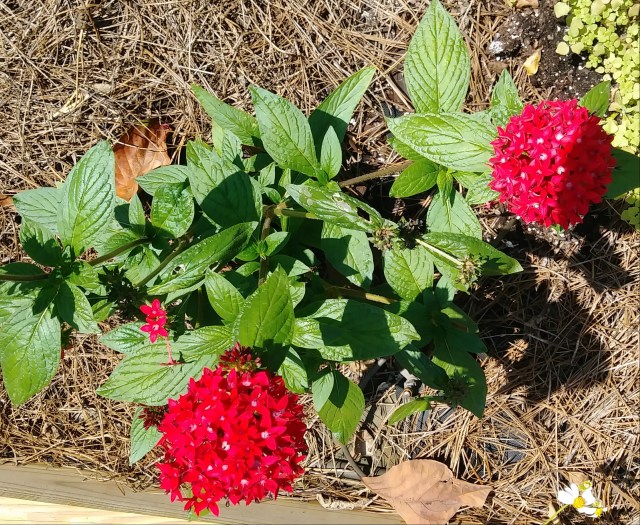
The first G is Florida (or Tropical) Gardenias (Tabernaemontana divaricata), semi deciduous, in my experience and not particularly hardy to frost. The other G is Gallardia (Gallardia pulchella), a native wildflower I have been trying to establish in the Pollinator Garden. The third plant in the vase is a Penta lanceolata, a plant known to serve as a nectar plant for butterflies. I have noticed the butterflies sipping on the flowers, hoping for offspring.
Speaking of pollinators, they are back for summer – these are caterpillars of Gulf fritillary butterflies chowing down on my ‘Lady Margaret’ Passionflower vine. Lady Margaret has been perverse in her unwillingness to flower in my garden, so I don’t mind if the Gulf fritallaries eat her up.
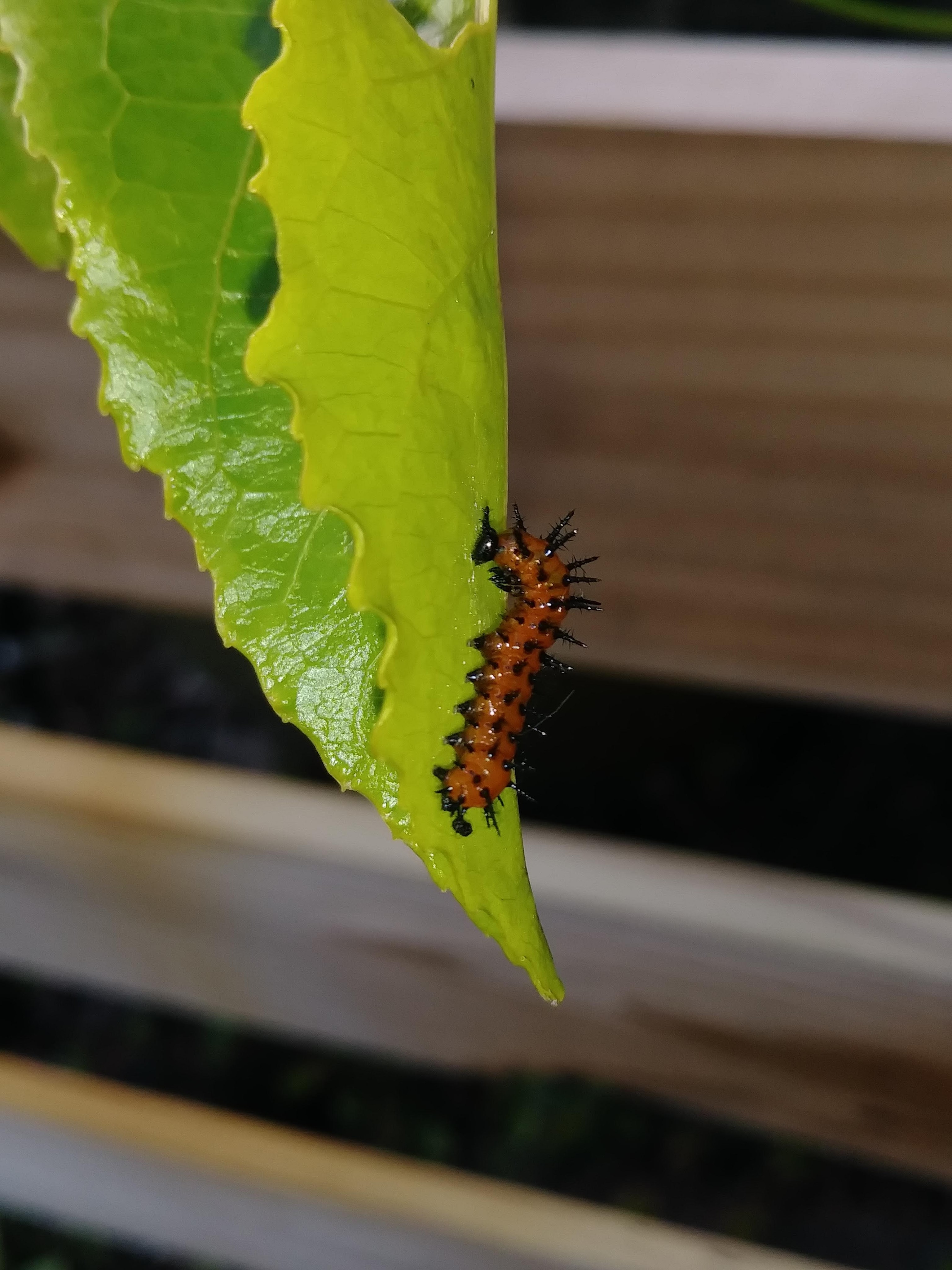
Here are the Gulf Frittilaries from last year. I hope to get better pictures this year,


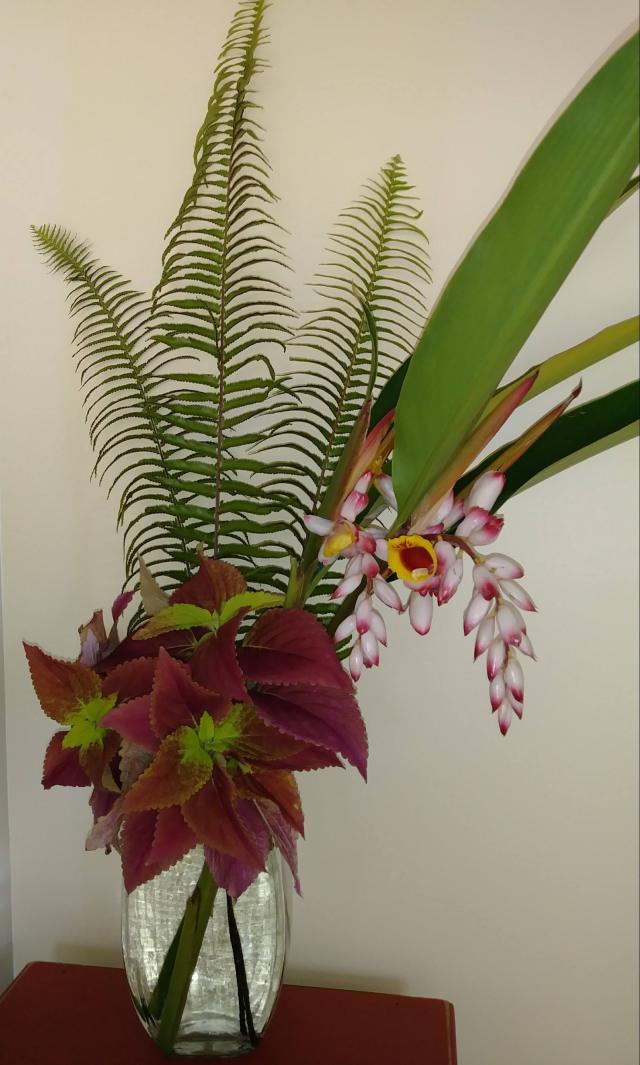

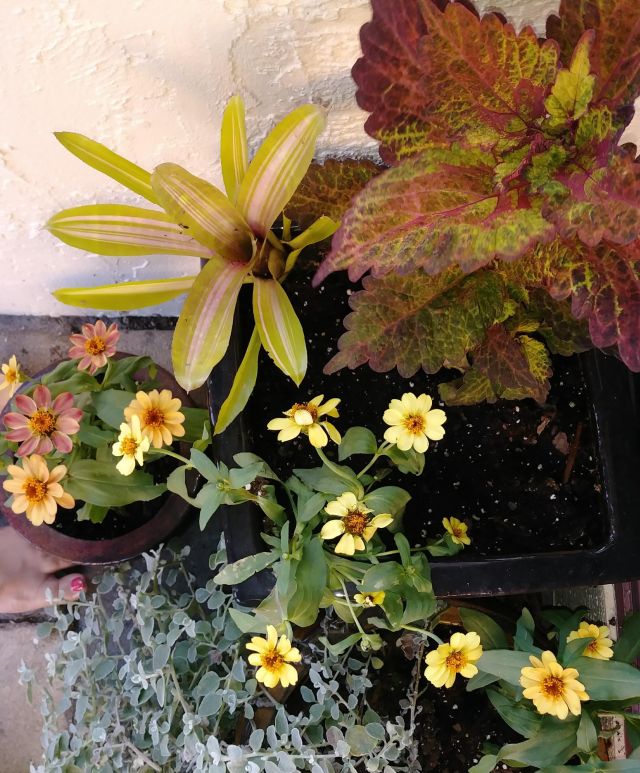


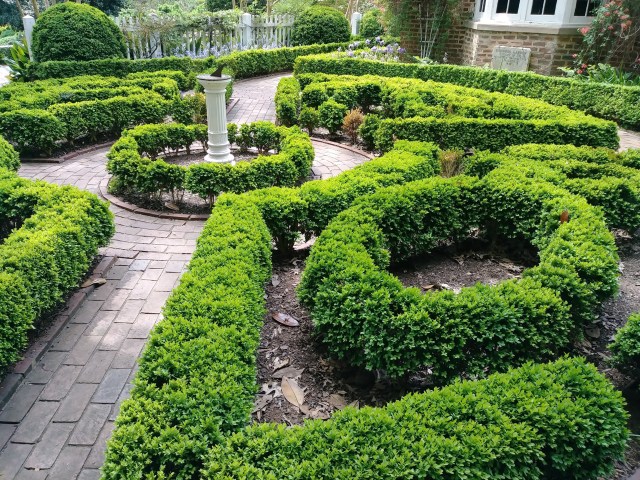


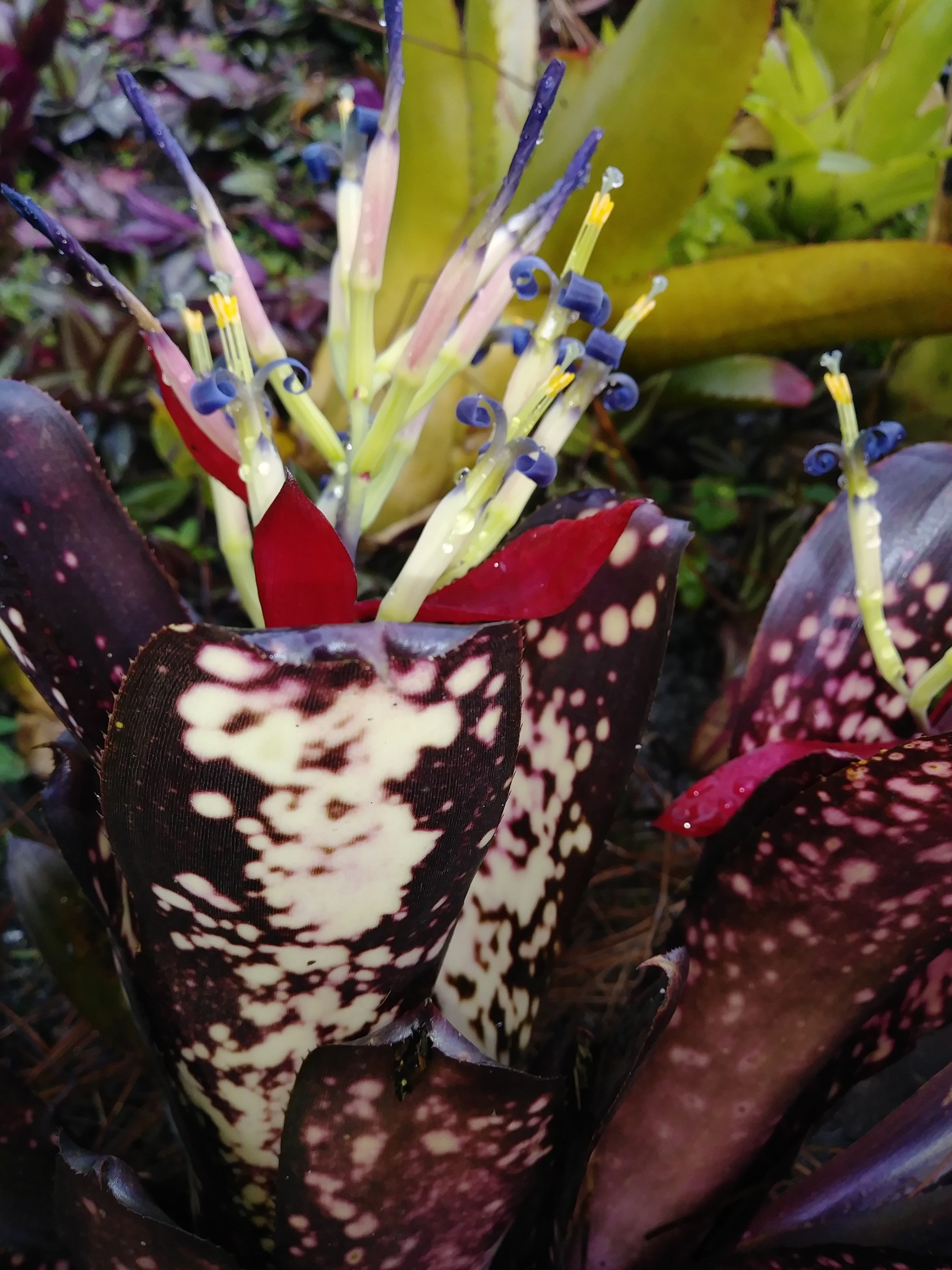

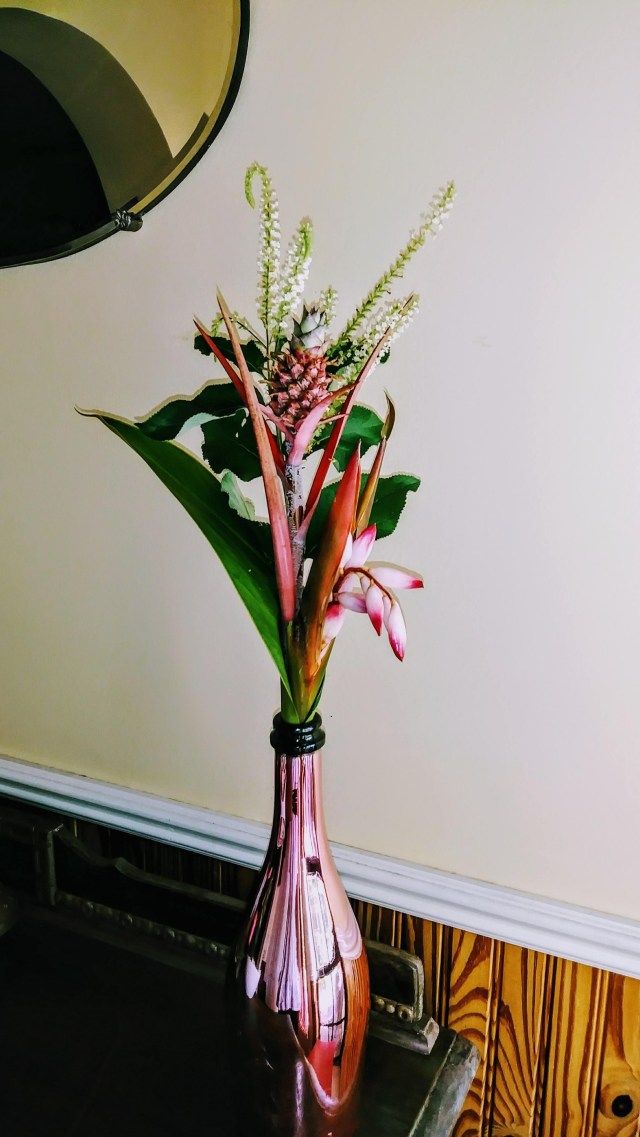
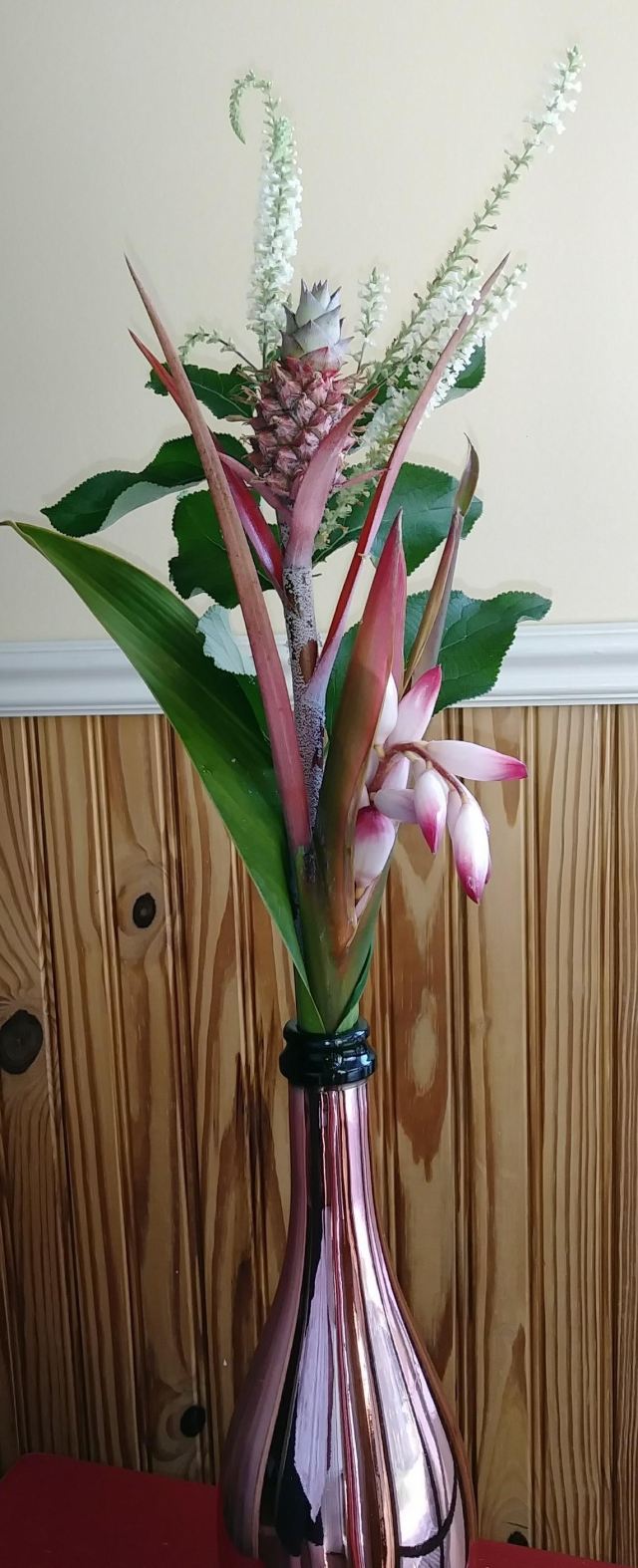
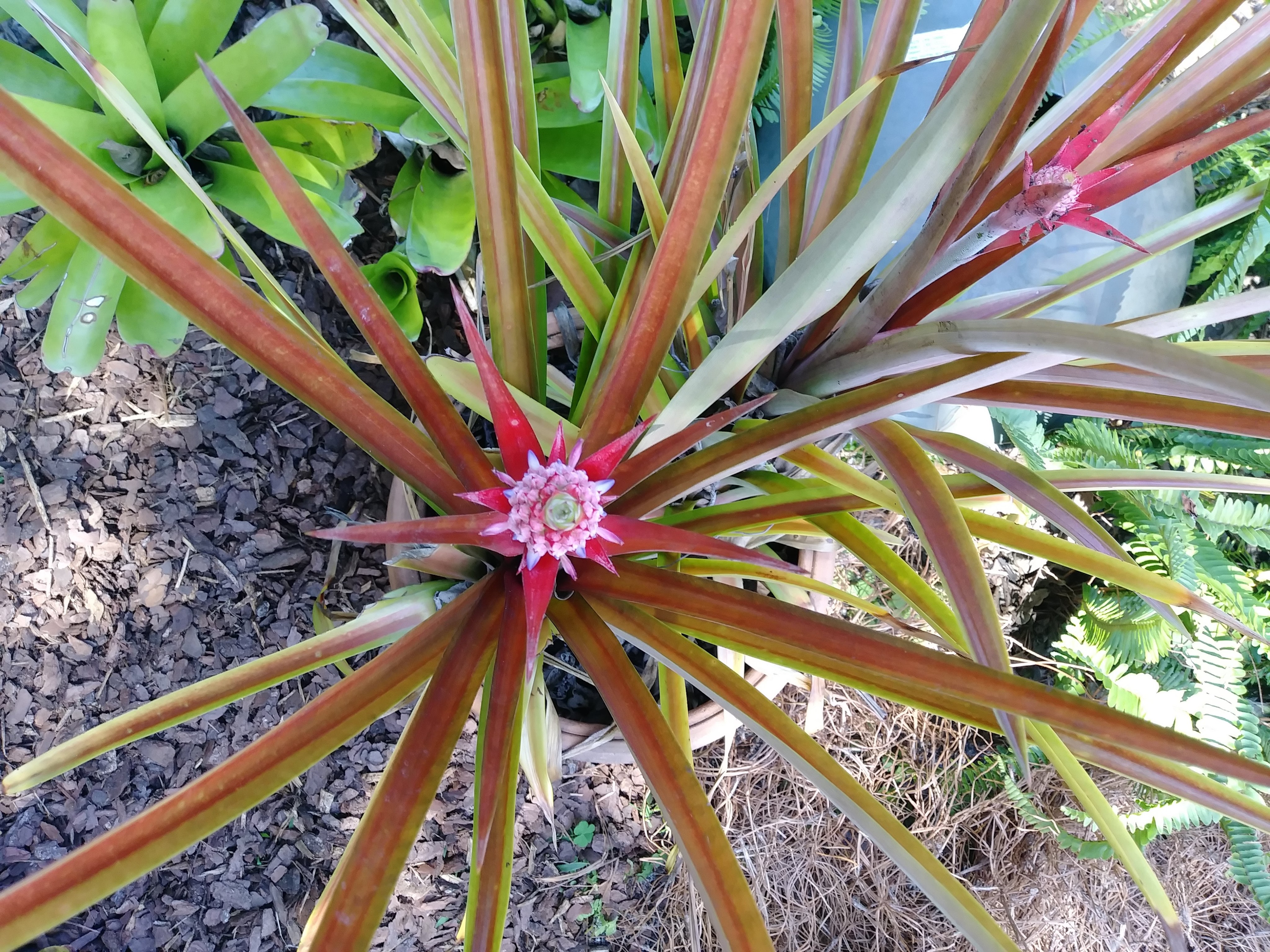

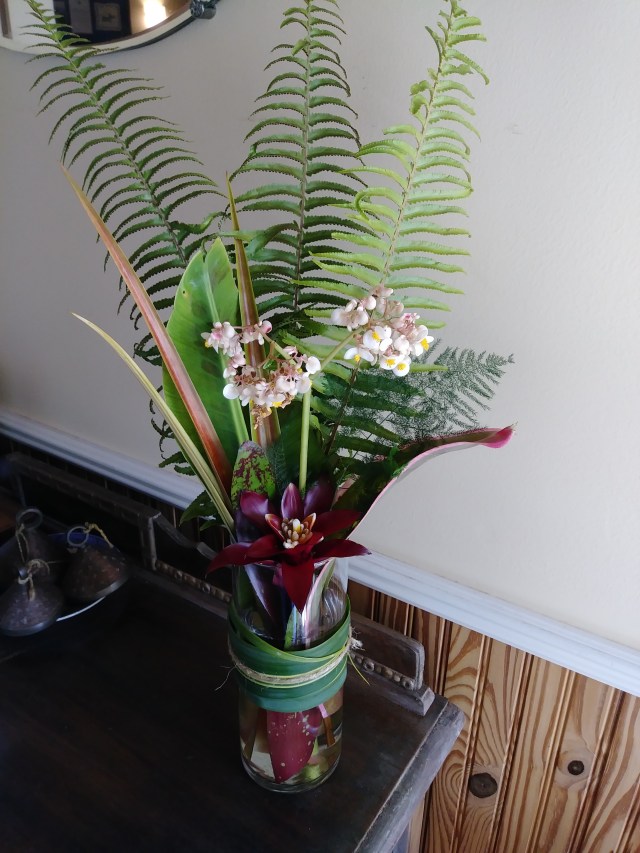 From time to time I make an arrangement that generates comments like ‘it belongs in the lobby of a spa’. I think there is a relaxation vibe from some of the more tropical plants in my garden. I have been gardening madly to get my pollinator/fruit garden finished before the rainy season starts, so I could use a Spa Day myself.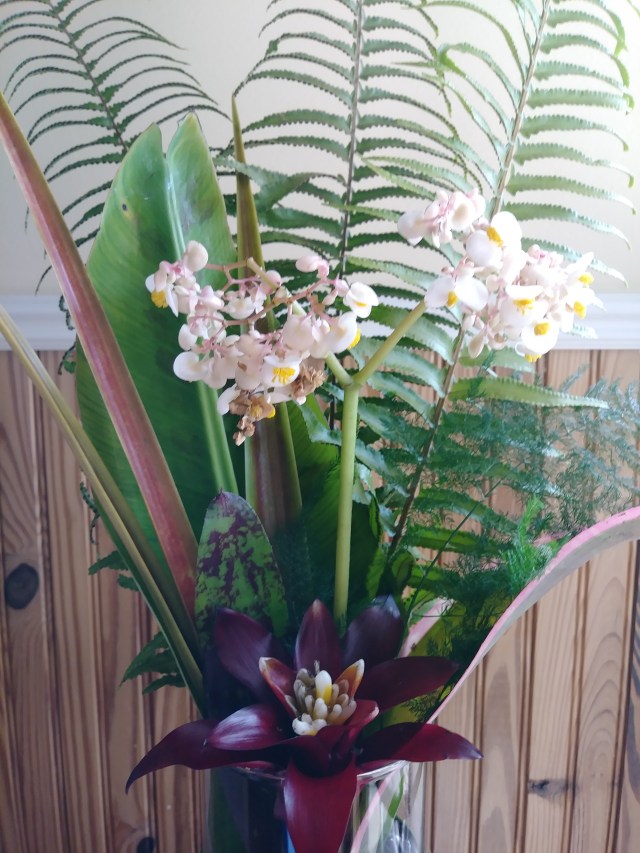
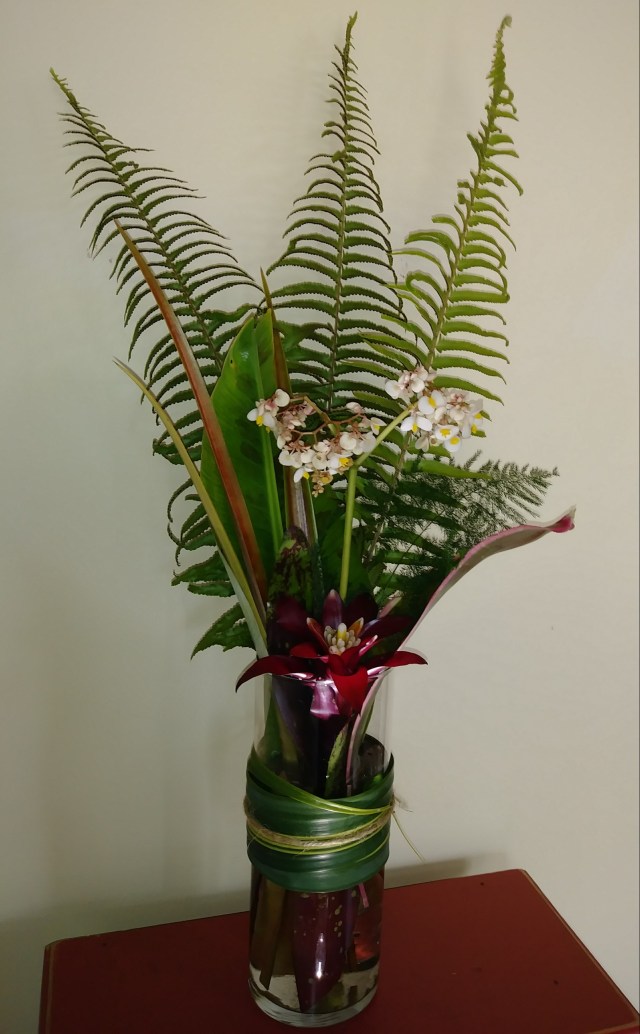
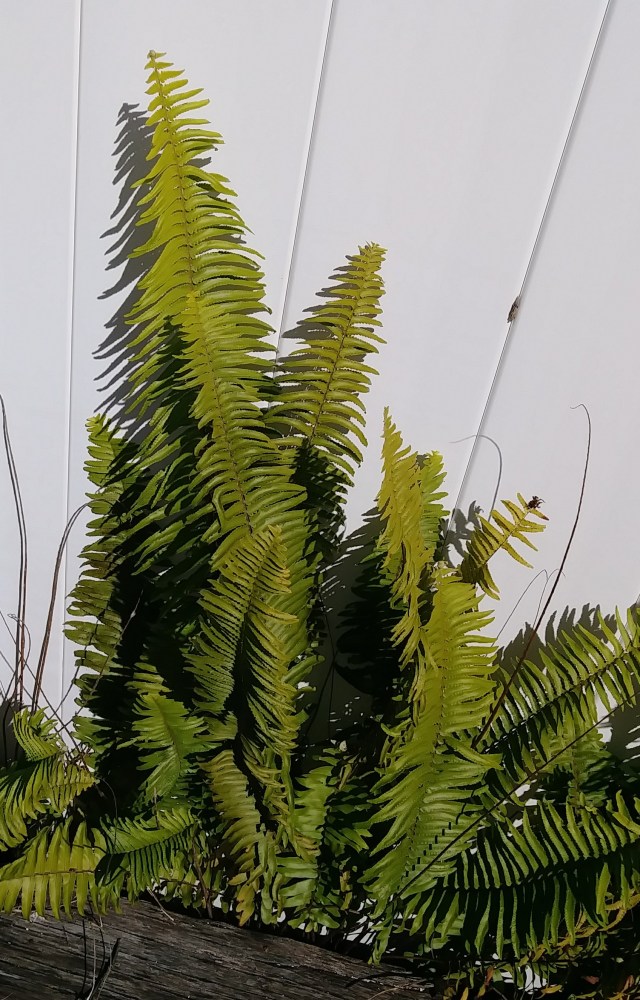


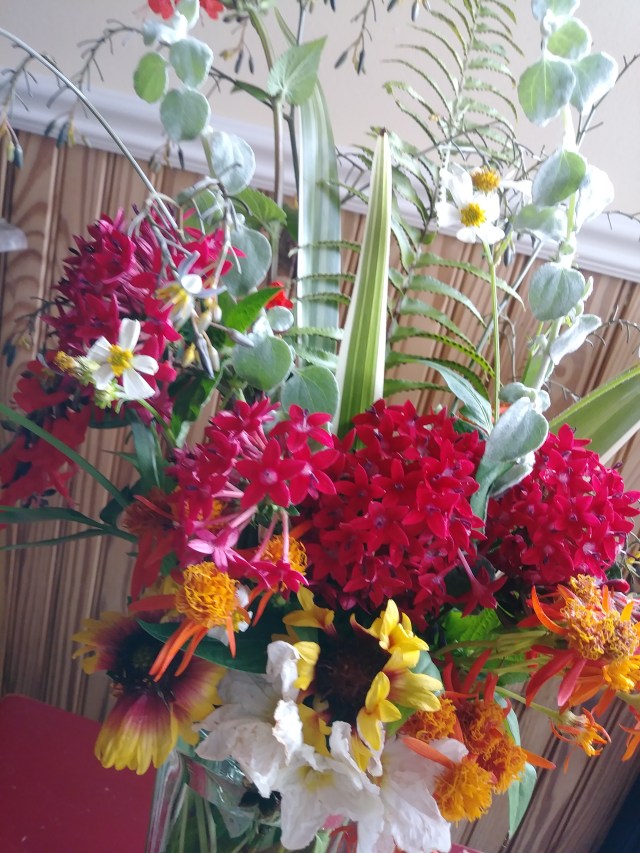 The white flowers at the bottom of the arrangement are from the White Geiger Tree (Cordia boissieri); yellow and red are native Gallardia (Gallardia pulchella); orange flowers are from the Mexican Flame Vine (Psuedogynoxys chenopodiodes); white daisies are Spanish Needles (Bidens alba); grey, fuzzy leaves are from the Licorice plant (Helichryseum petiiolaris); backdrop foliage is Boston Fern (Nephrolepis exaltata); striped leaves and blue flowers are from Blue Flax Lilies (Dianella caerulea) and a few Tropical Red Salvia (Salvia coccinea).