I like plants that are a bit off the beaten path. Something that make you wonder “what on earth is that?” It occurred to me as I was arranging this vase I had most likely never seen any of these plants prior to moving to Florida almost 10 years ago. I would have said “Whatizzit?” about this one.
The vase is a thrift store find I have enjoyed for years, simple enough to set off a group of mad tropical flowers and foliage. Here are some closer views of the flowers:
The white flowers are ‘Miss Alice’ Bougainvillea; red flowers are Nodding or Sleeping or Turks Cap Hibiscus (Malvaviscus arboreus) – so many names, I am not sure which one is right. Red and black foliage is from Piecrust Croton (Codiuem varigatum)
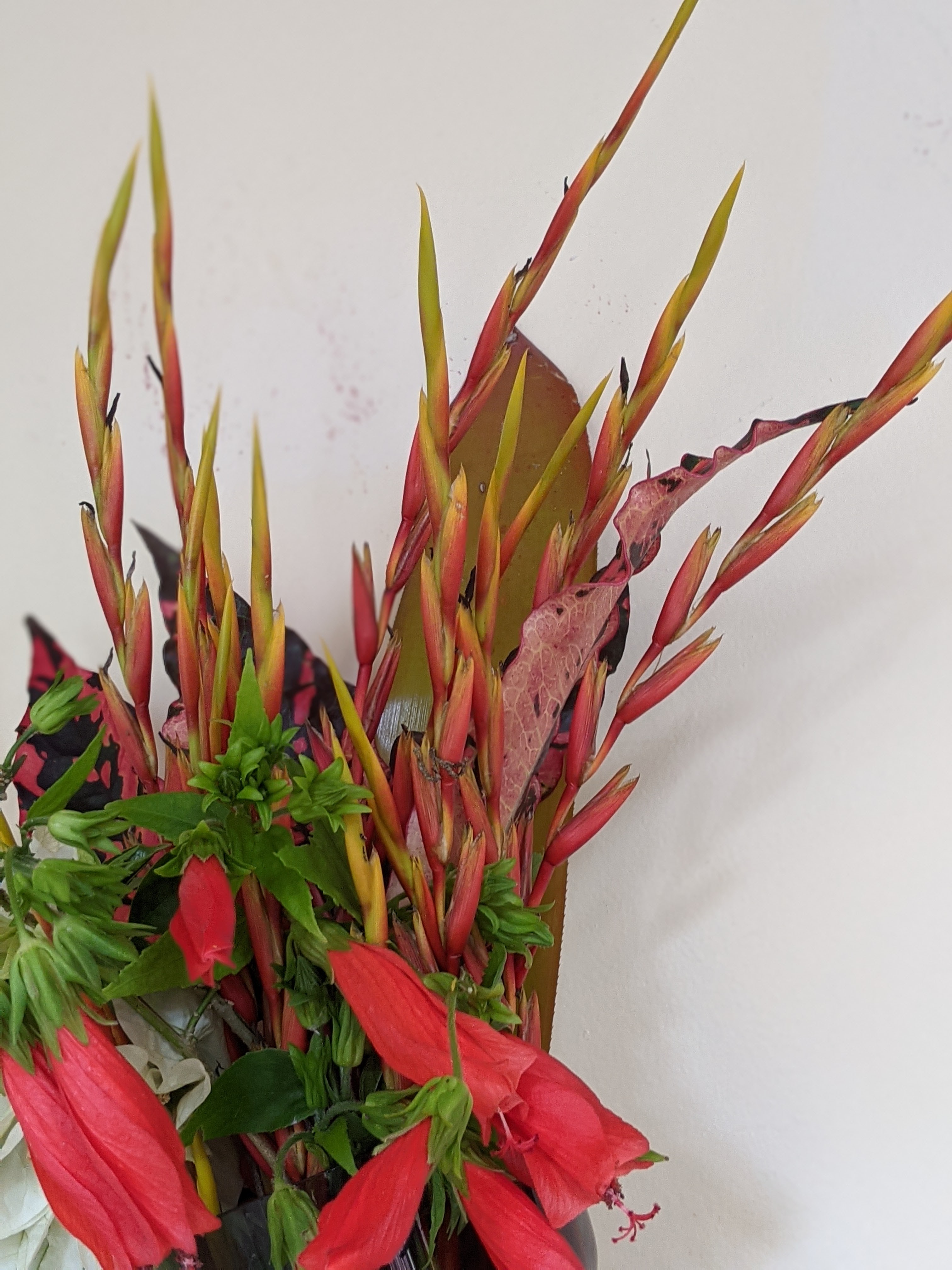
Here is the other side. The Lobsterclaws and the big gold leat are from, yes, the Lobsterclaw Bromeliad (Aechmea blanchetiana). These are a very common landscape Bromeliad around here. I cut some stems of the lower part of the flower. The flowers are a bit difficult to imagine and about four feet tall.
Another Saturday morning tour of my garden featuring six items of interest to join the SOS crowd at http://www.thepropagatorblog.wordpress.com. Follow the link to see more posts.
I have a lot of hot colors in my garden and fall is no exception. The red and purple flowers and foliage are out in force.
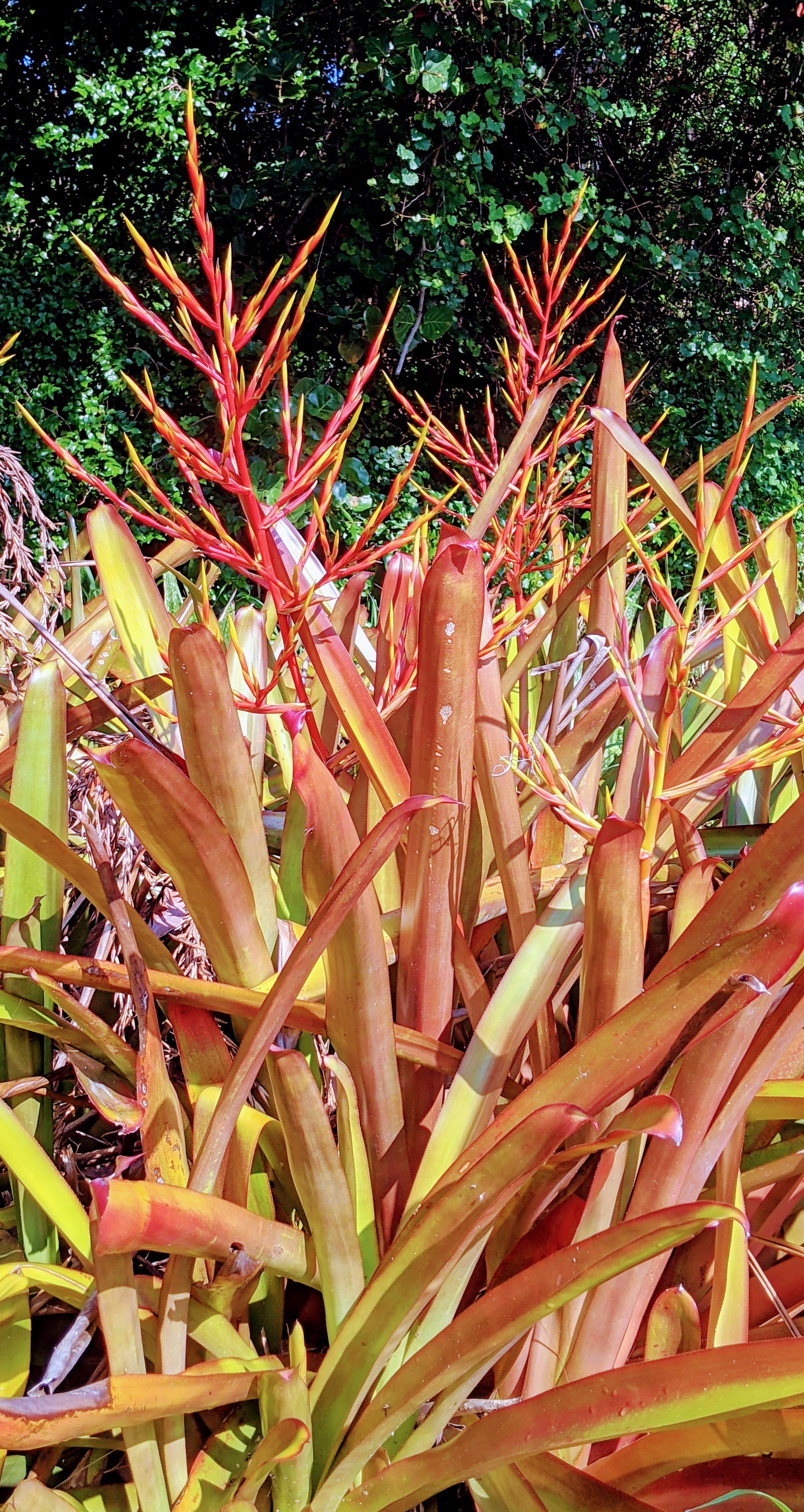
The Aechmea blanchetiana Bromeliads are in full bloom. These are almost five feet tall and last for months. A neighbor gave me a start of these and said “the flowers last so long you get tired of them.” I enjoy them!
The Red Shrimp Plant (Justicia brandegeana). This is a very happy plant and flowers a lot. One of my favorite old reliables and a gift from a neighbor.
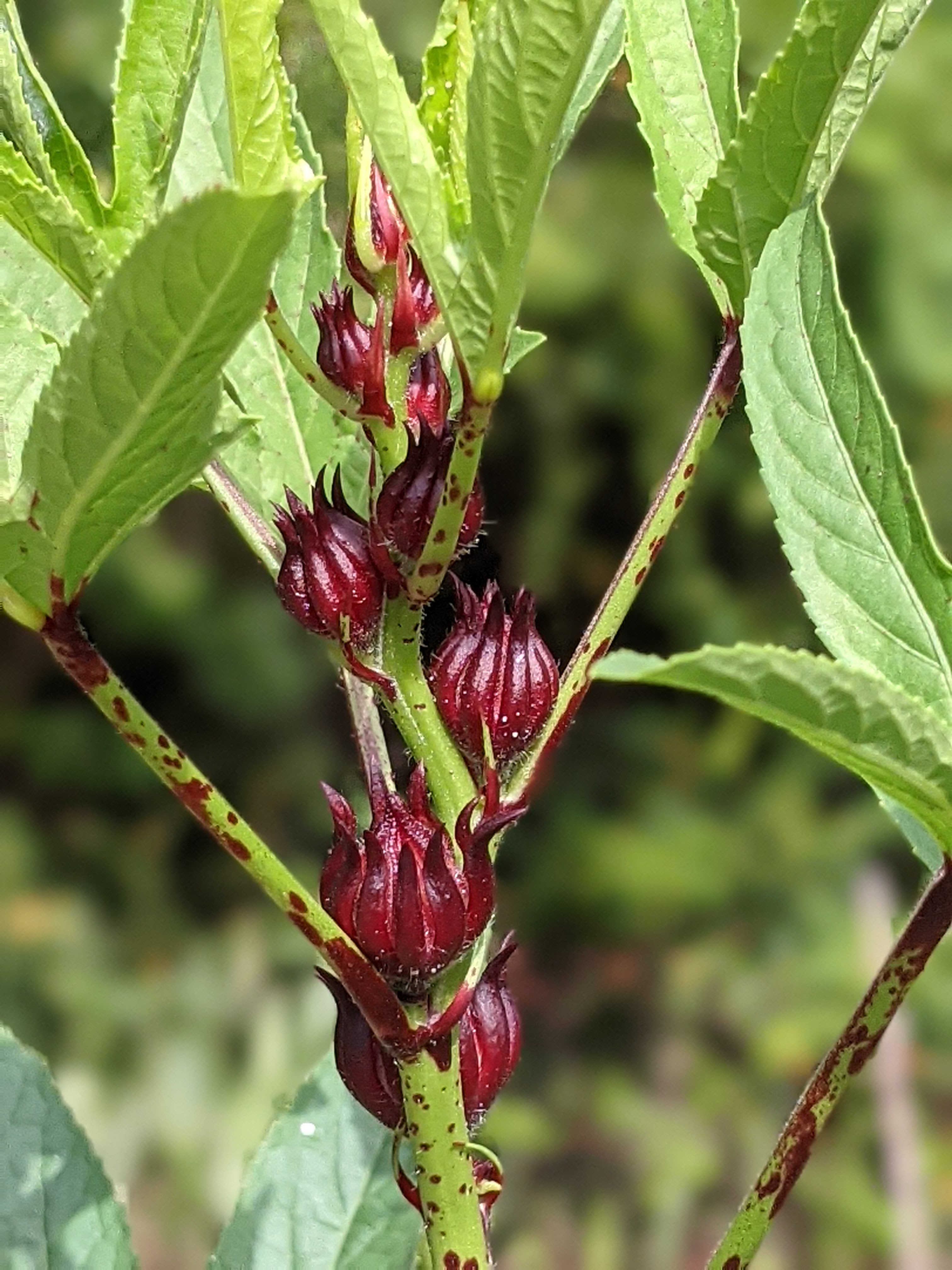
The Roselles (Hibiscus sabdaiffa) have reached five and a half feet in height and are setting flower buds. Eventually I will pick the red calyx of the flower to make tea or holiday cocktails. I planted the seed in April. Most of the plant is edible.
Purple Queen or Setcresea appears randomly in the garden. I prefer to call it Purple Queen, Setcresea sounds like a skin disease.
A new container I put together this week. The Bromeliads are cuttings from existing plants in my garden. In red, Fireball Neoregelia, varigated, Bossa Nova Neoregelia. Draped over the side is a Fish Hook Senecio and the plant in back is a Cardboard Palm (Zamia furfuracea). The Bromeliads should spill over the sides eventually.
The Milkweed devoured by Monarch butterfly caterpillars is making a remarkable comeback. I was amazed at the amount of foliage they ate – all of it and about one third of the stem.
It was a chilling 85 degrees Fahrenheit in my garden this morning, so I worked outside gearing up for the fall gardening season. Taking note of some of the fun stuff that survived summer in South Florida.
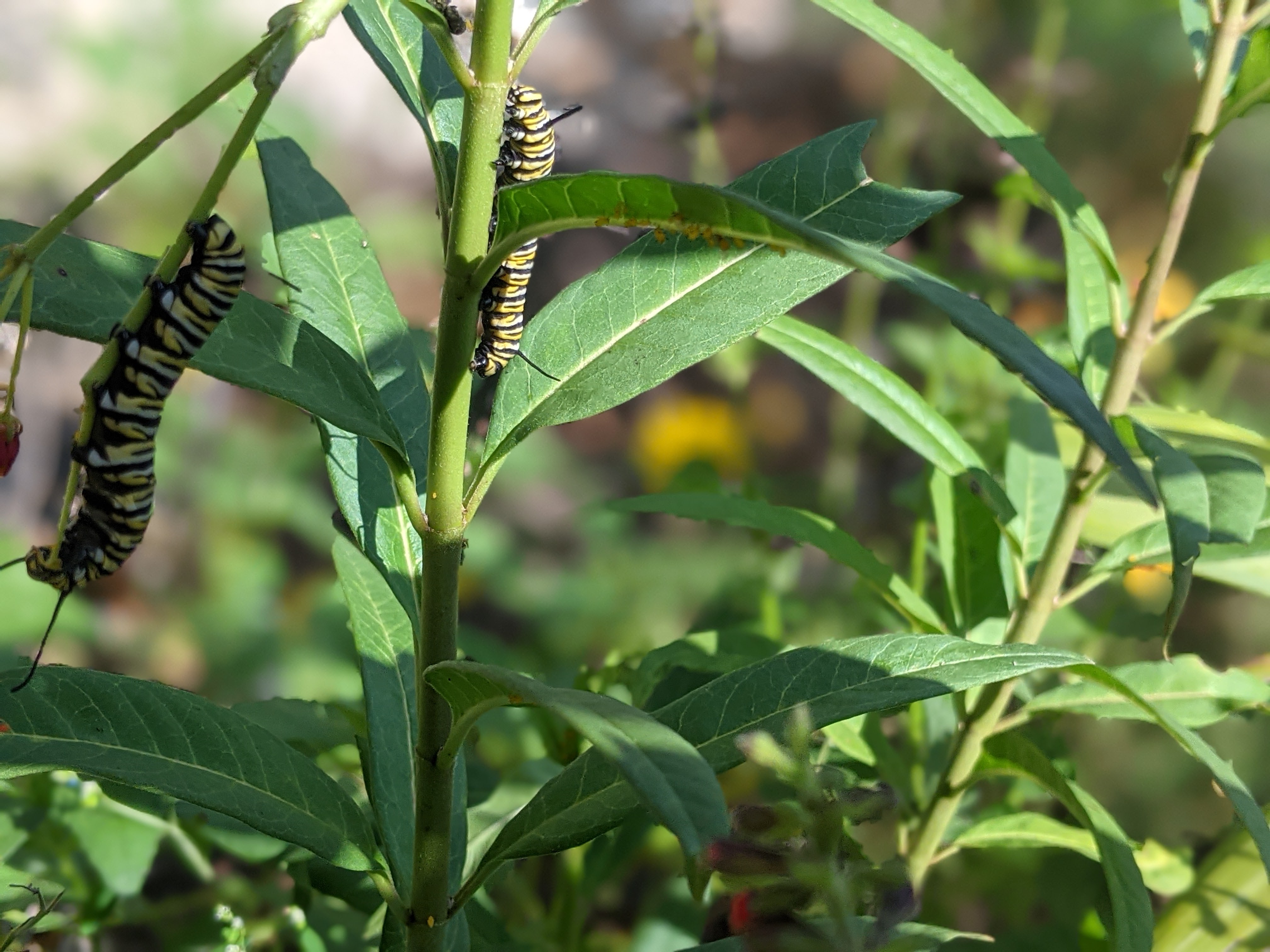
The Monarch butterflies finally found the Milkweed in my garden. Here are two caterpillars munching away. Aphids are eating the other plant.
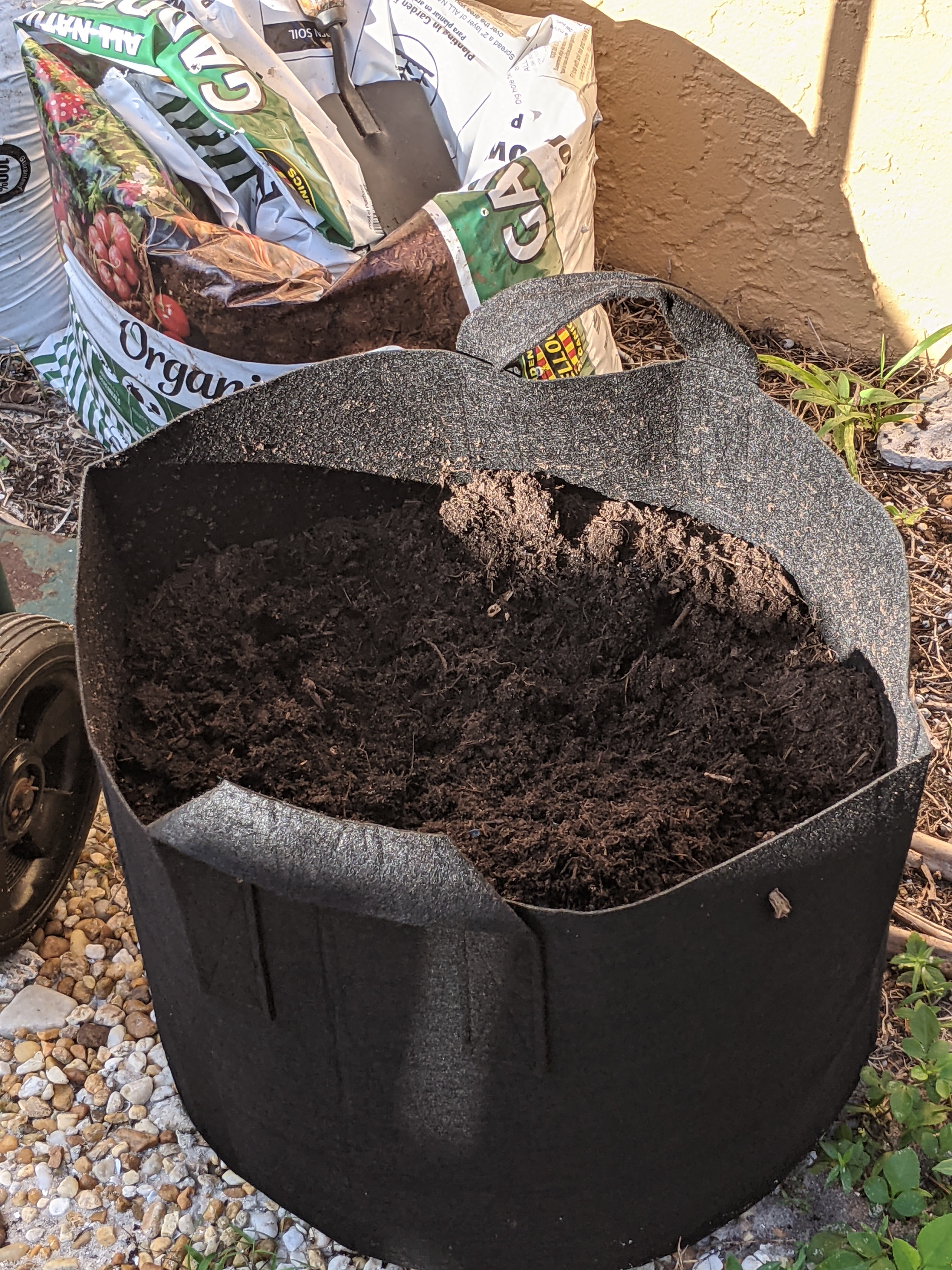
Another vegetable and flower garden experiment is at hand. These are cheap grow bags that breathe. I am certain these would be a disaster in summer so I am trying them in winter – using heavy garden soil (not made from peat!) lightened with 30 % of my oak compost. Planted tomatoes and radishes this morning. Herbs and bush beans are on the agenda next followed by cooler season peas and broccoli in a couple of weeks. I was surprised to read Nigella can be grown here in winter as well as Zinnias. Those seeds are also being planted shortly.
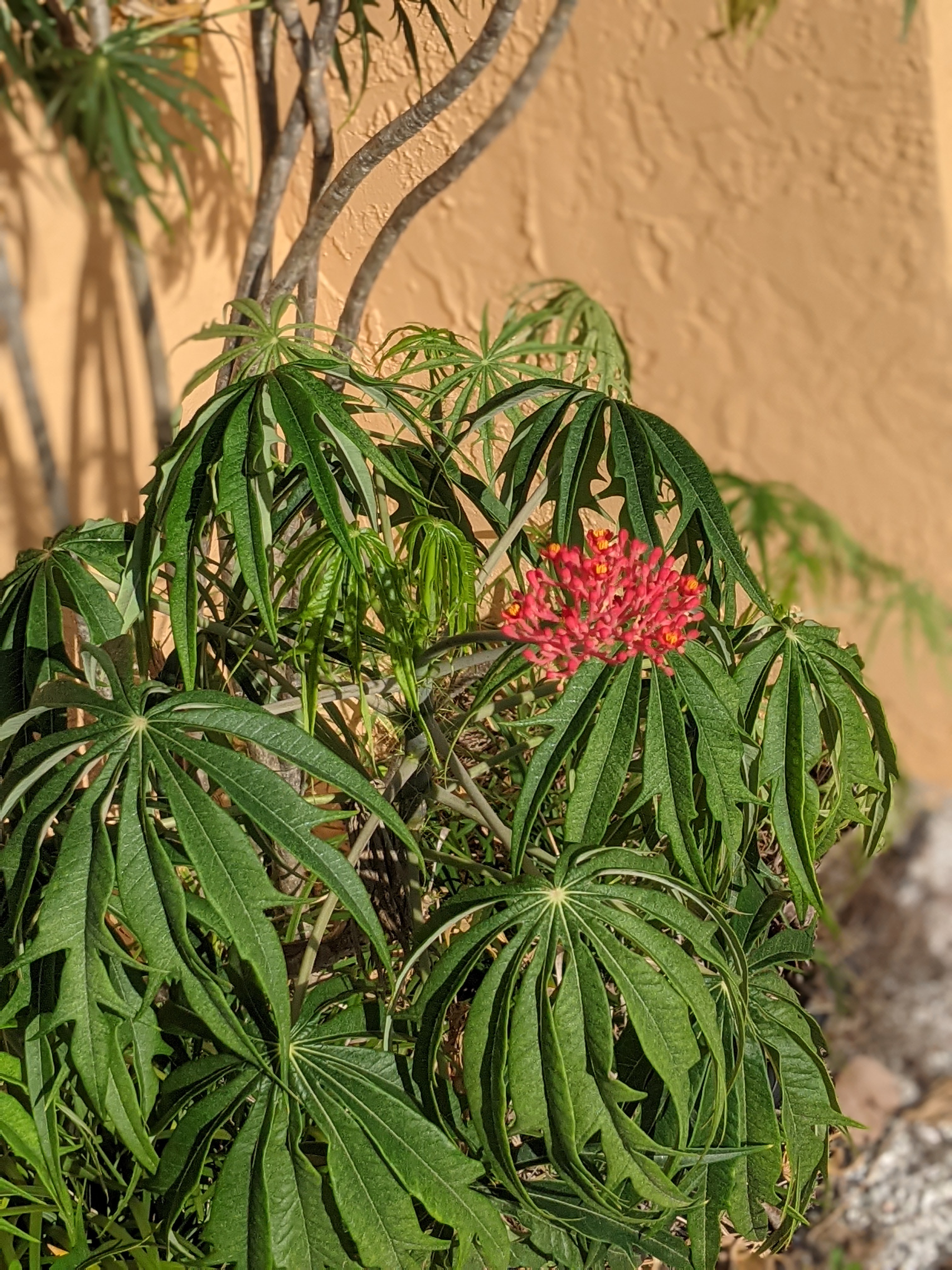
Coral Plant (Jatropha multifida) flowering. This is considered a novelty plant in Florida, it is pretty funky.
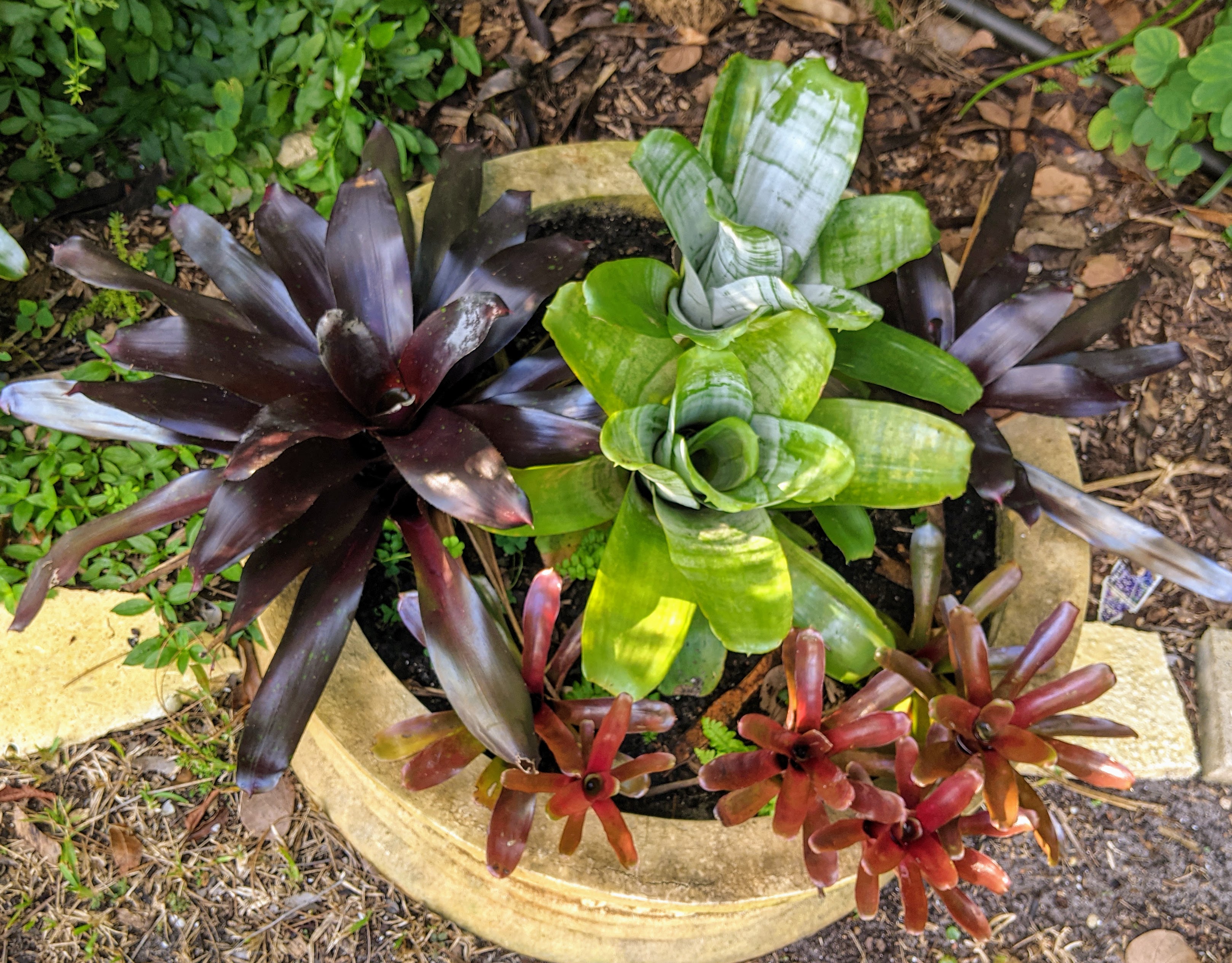
Pot o’ Bromeliads in the front garden. Grey varigated foliage is Aechmea fasciata, these have pink flowers like Dahlias. The burgundy with chartreuse spots are Luca Neoregelia, red foliage is Fireball Neoregelia.
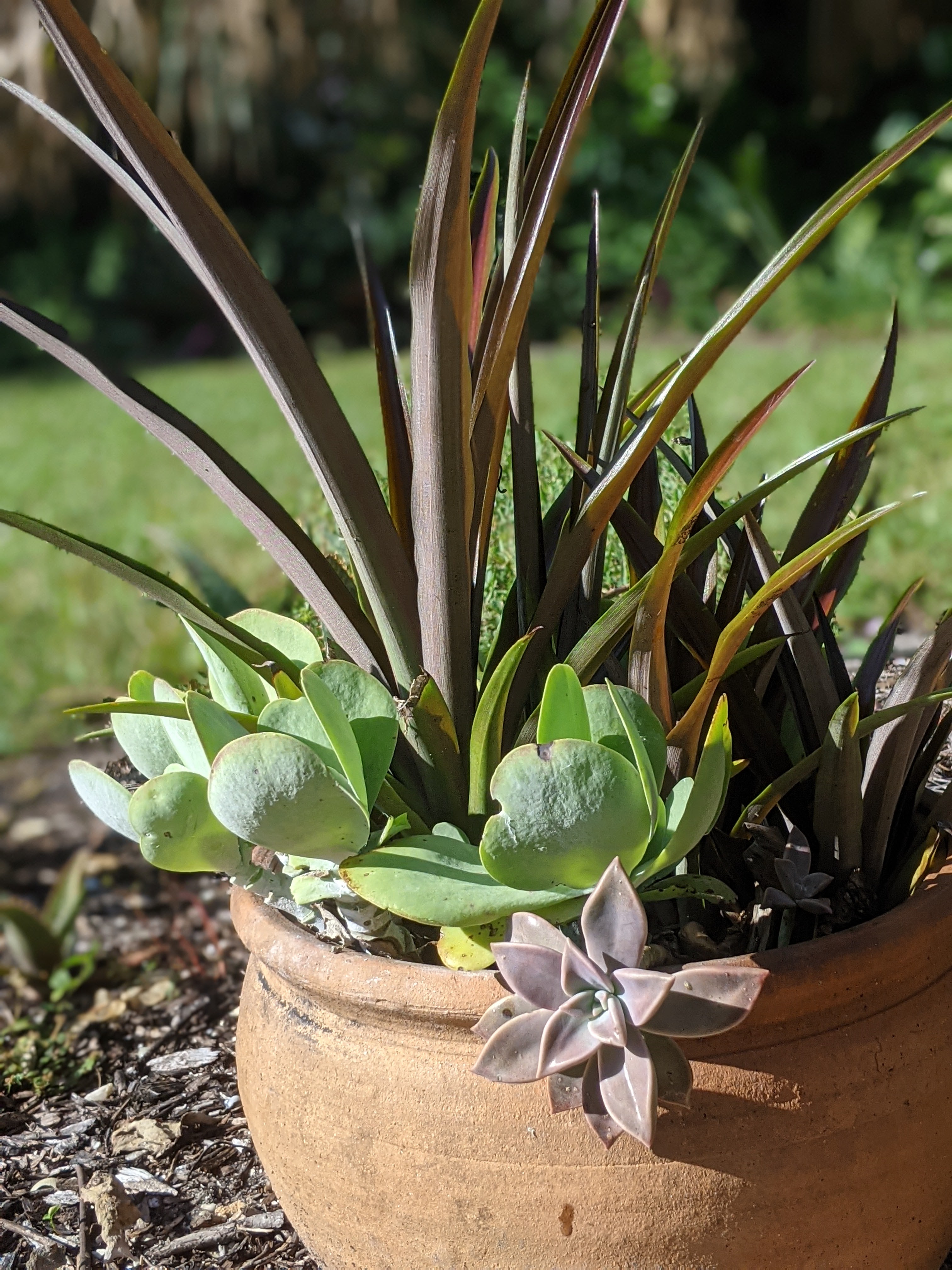
Another pot in the front garden with Miniature Pineapples, Flapjack Kalanchoe and a Graptosedum hanging over the side. The pineapple plants flower and bear tiny pineapples. I use them in flower arrangements, I have heard they can be juiced but a field would be necessary to get a full glass.
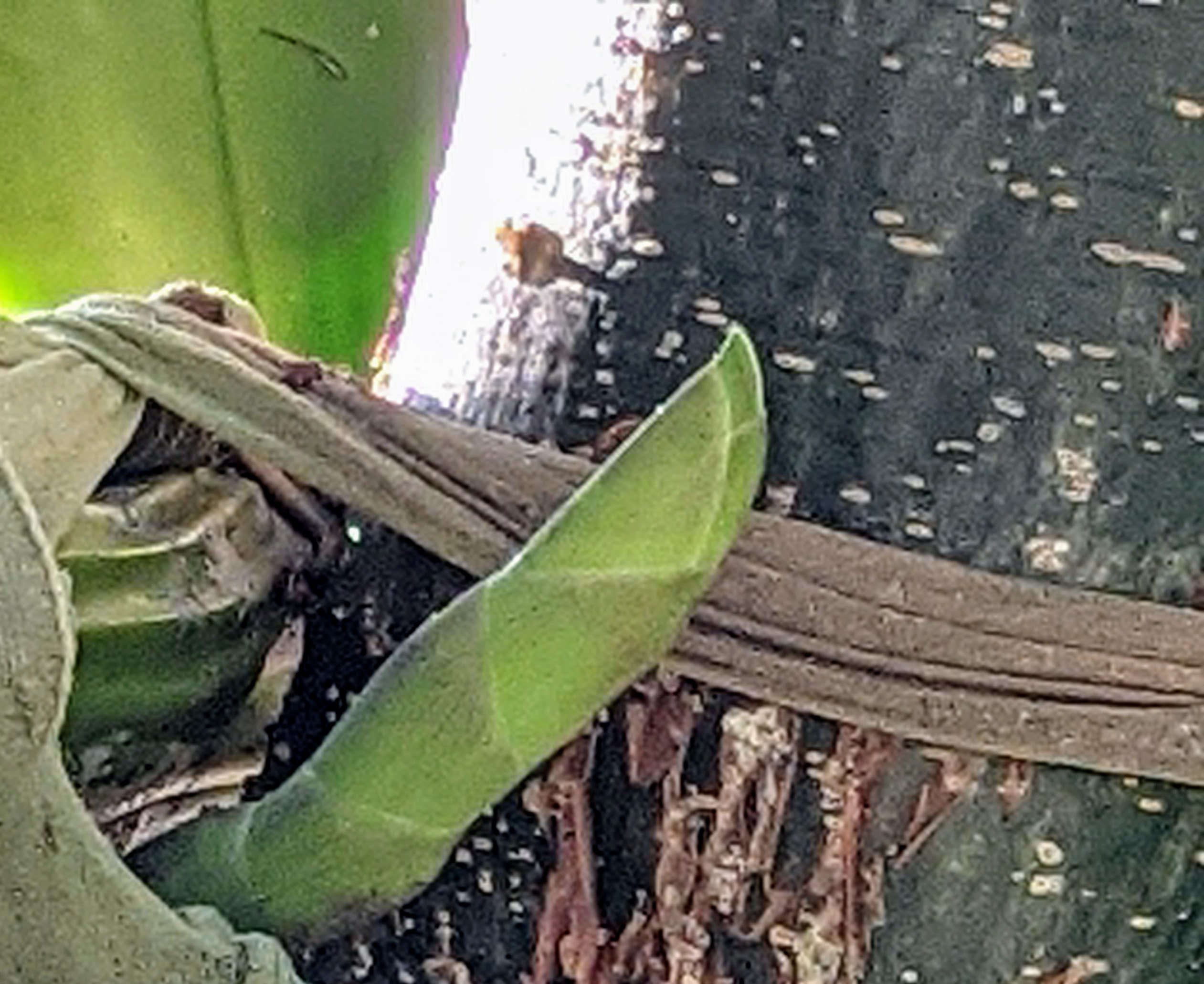
Another flower to anticipate this winter. The hard cane orchid I mounted in the Gumbo Limbo tree has produced a bud. This should be very interesting.
When September starts winding down and the Fall Equinox approaches there is an ever so subtle change in the weather and South Floridians feel less torched. Or maybe less scorched. The daily high temperatures are less than 90 degrees F/32 C. Eighty eight degrees with less humidity is refreshingly cooler. Sort of.
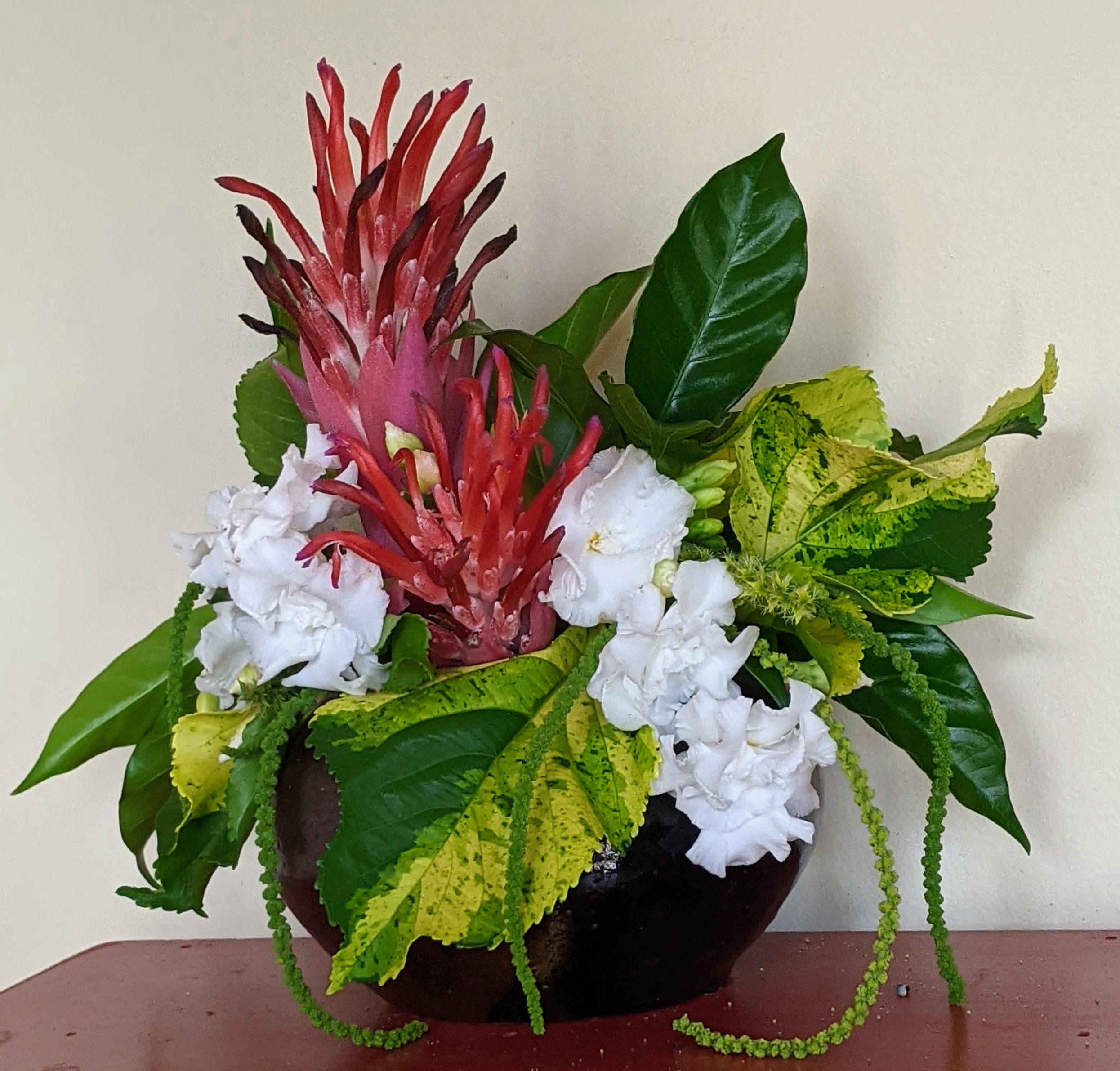
While searching for vase contents, I was happy to see a new bough of flowers on the Tropical Gardenias, then decided to cut the Flaming Torch Bromeliads as the centerpiece of the arrangement. The flowers are most likely courtesy of many late afternoon thundershowers in the past weeks.
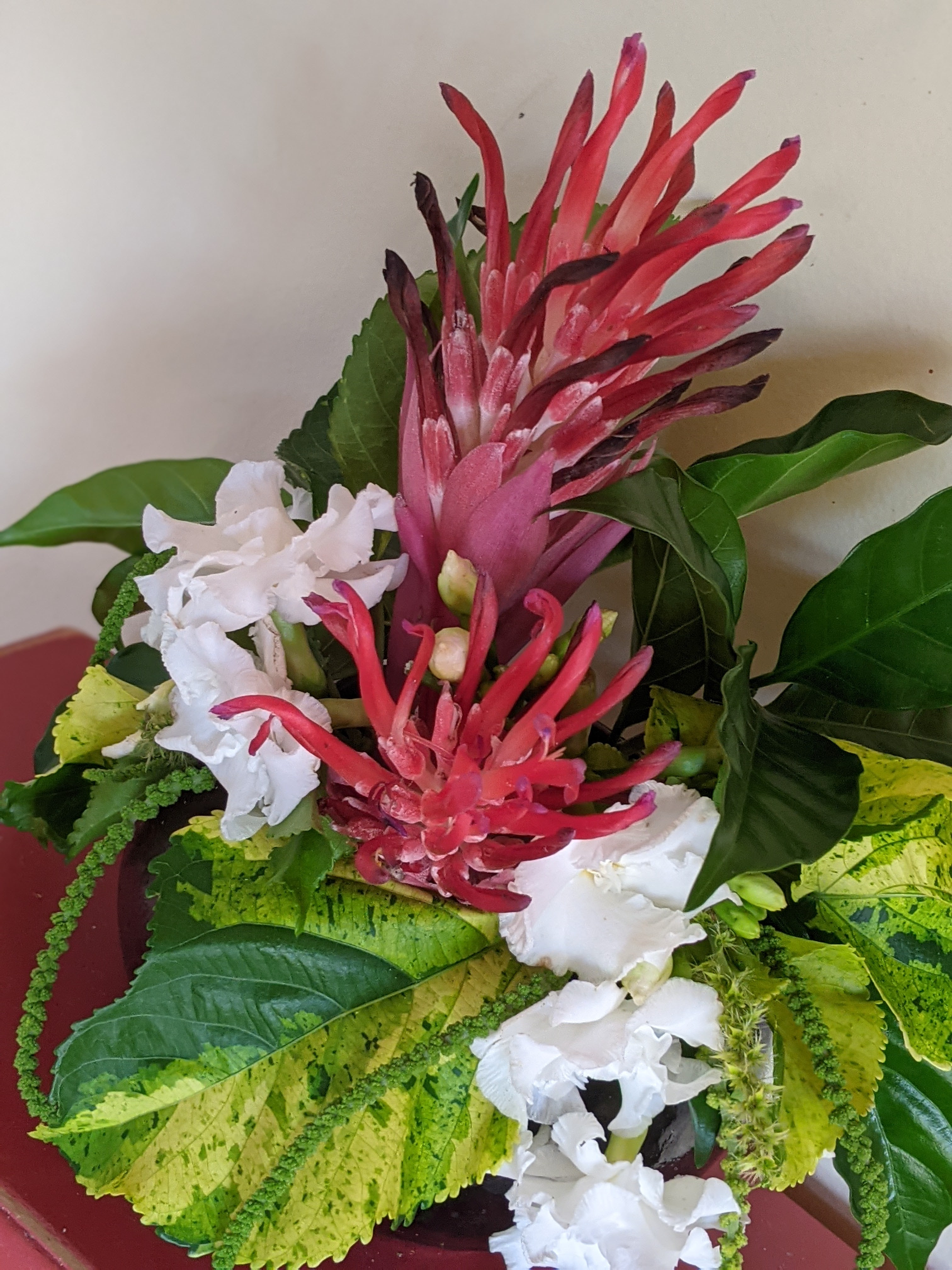
A closer view:
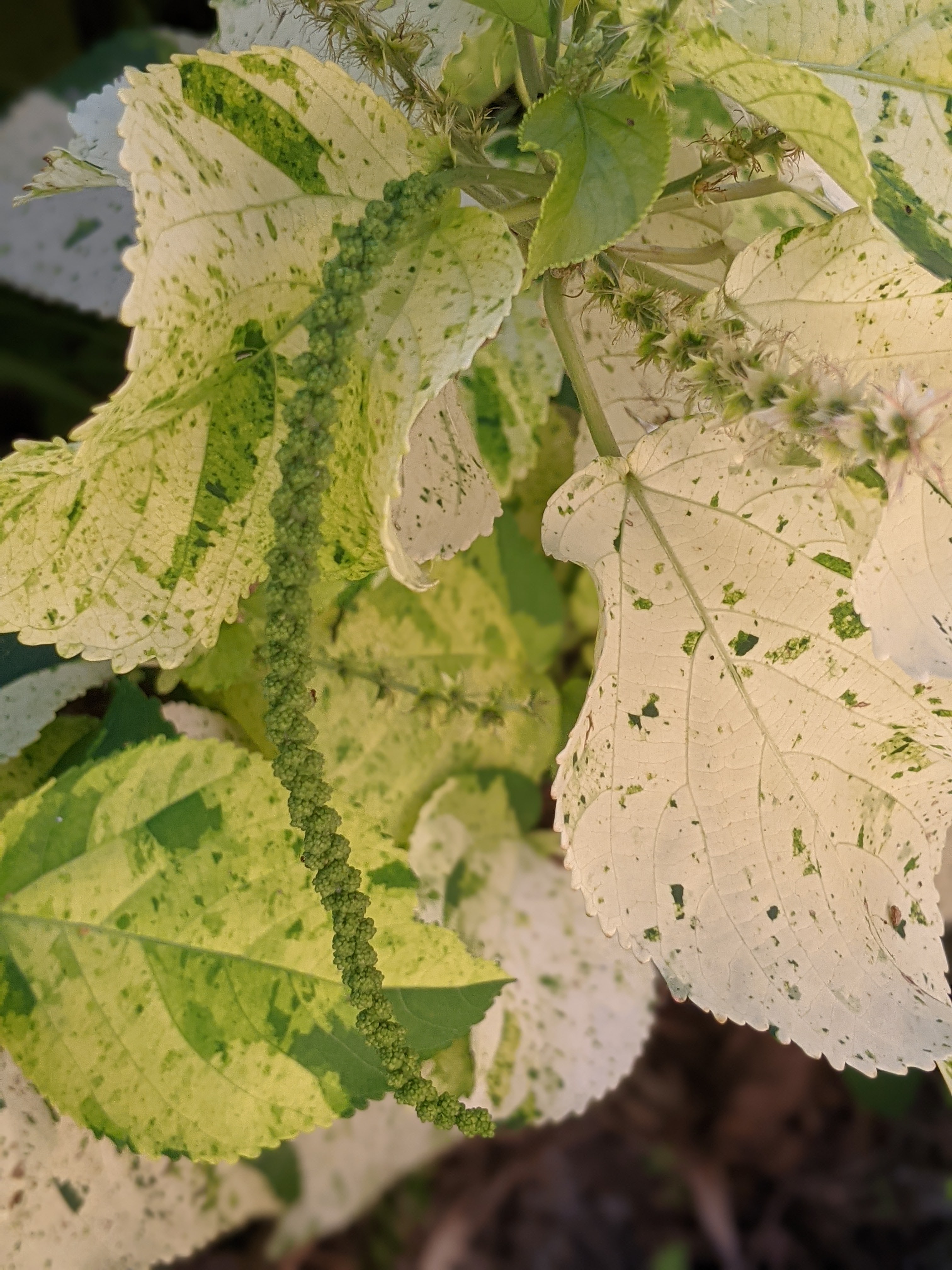
The pink flowers are Flaming Torch Bromeliads (Billbergia pyramidalis), AKA Hurricane Bromeliads as they typically flower during peak Atlantic hurricane season. These are sort of a passalong plant in South Florida. I cannot recall ever seeing one for sale, these were shared with me.The white flowers are Tropical Gardenias (Tabernaemontana diviricata) – I am wondering how long these will flower, it seems I have had them most of the summer off and on. Green dreadlocks and varigated foliage belong to the ‘Java White’ Copperleaf (Acalypha wilkesiana). I am not sure it the dreadlocks are buds or seeds or flowers, so I took a close up.
Any thoughts? I have three groups of Java White in the garden and this is the only one with dreadlocks. The mystery continues.
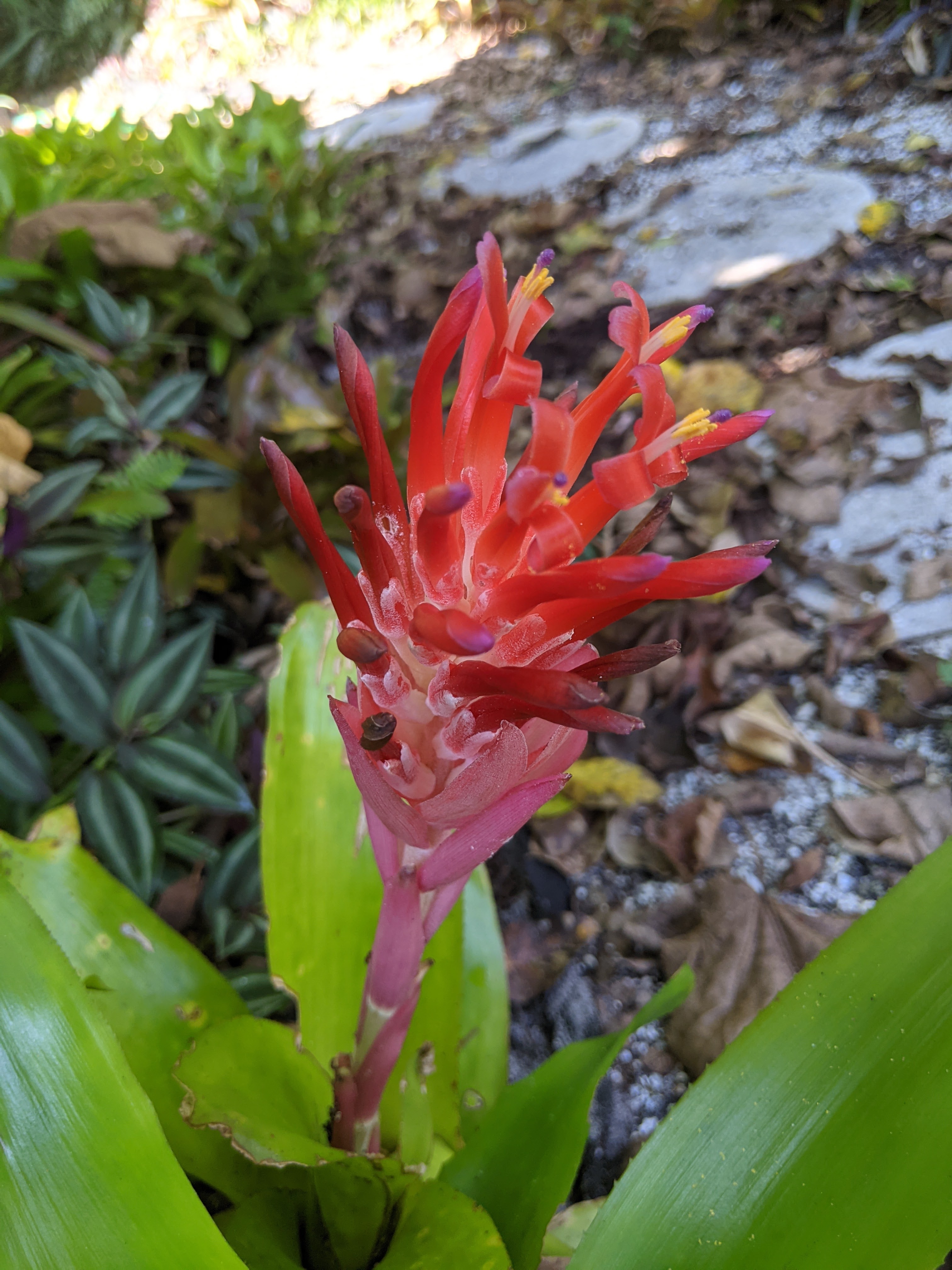
The Hurricane or Torch Bromeliad opened this week. This is a Billbergia pyramidalis and very easy to grow, they form colonies in shade. I think there are three in my garden and I gave a friend a pup. A colony may form if I quit sharing them.
.
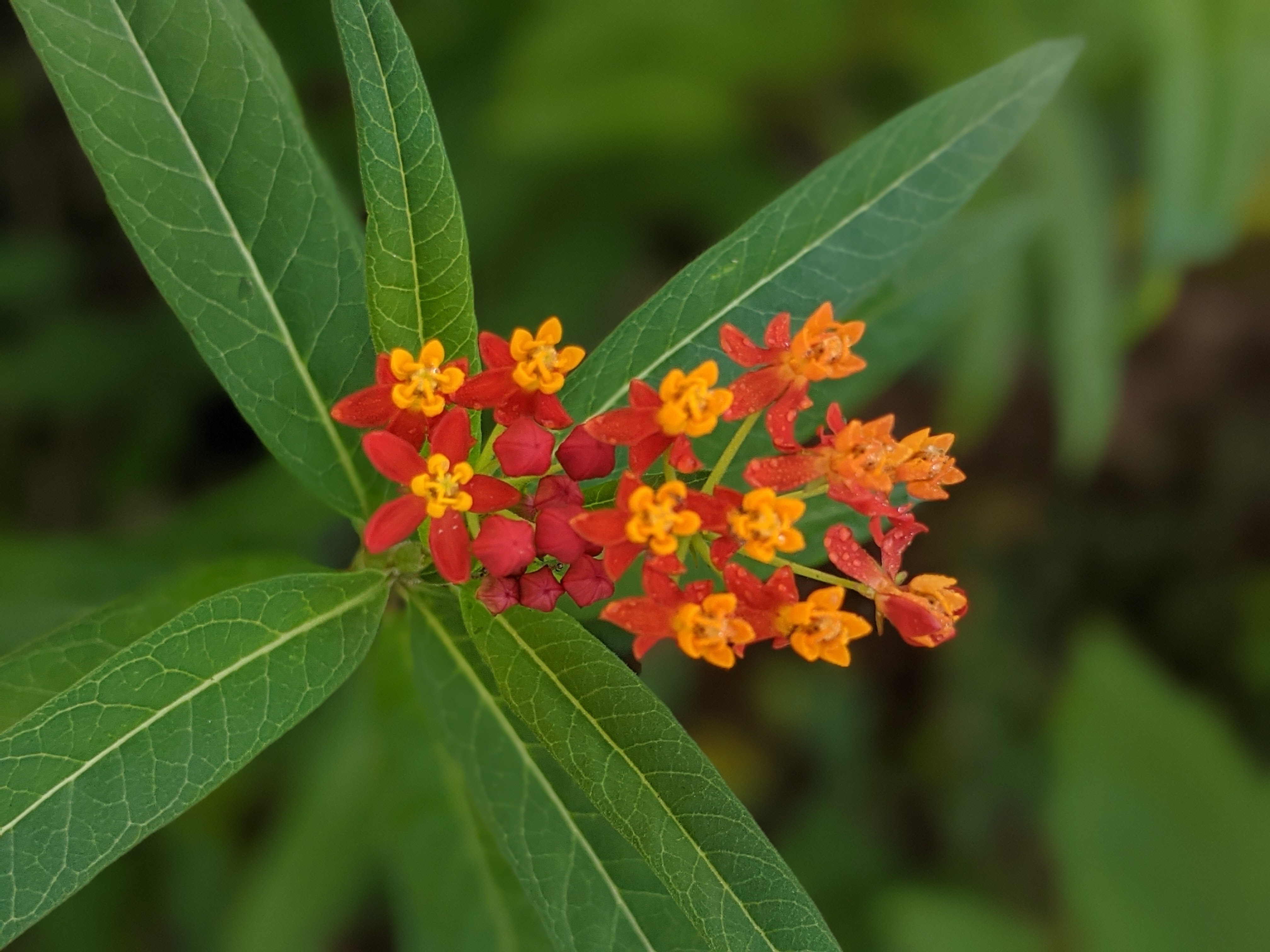
The Milkweed finally opened. I believe this is Tropical Milkweed (Asclepias curassavica) – can’t find the seed packet, This one is controversial among the Monarch butterfly faithful. Some believe it spreads OE, a parasite by never dying back in the winter in frost free areas. Other believe it is fine to plant. Others recommend cutting it back to the ground in late fall. I am on the fence about this as I haven’t seen any Monarchs on it.
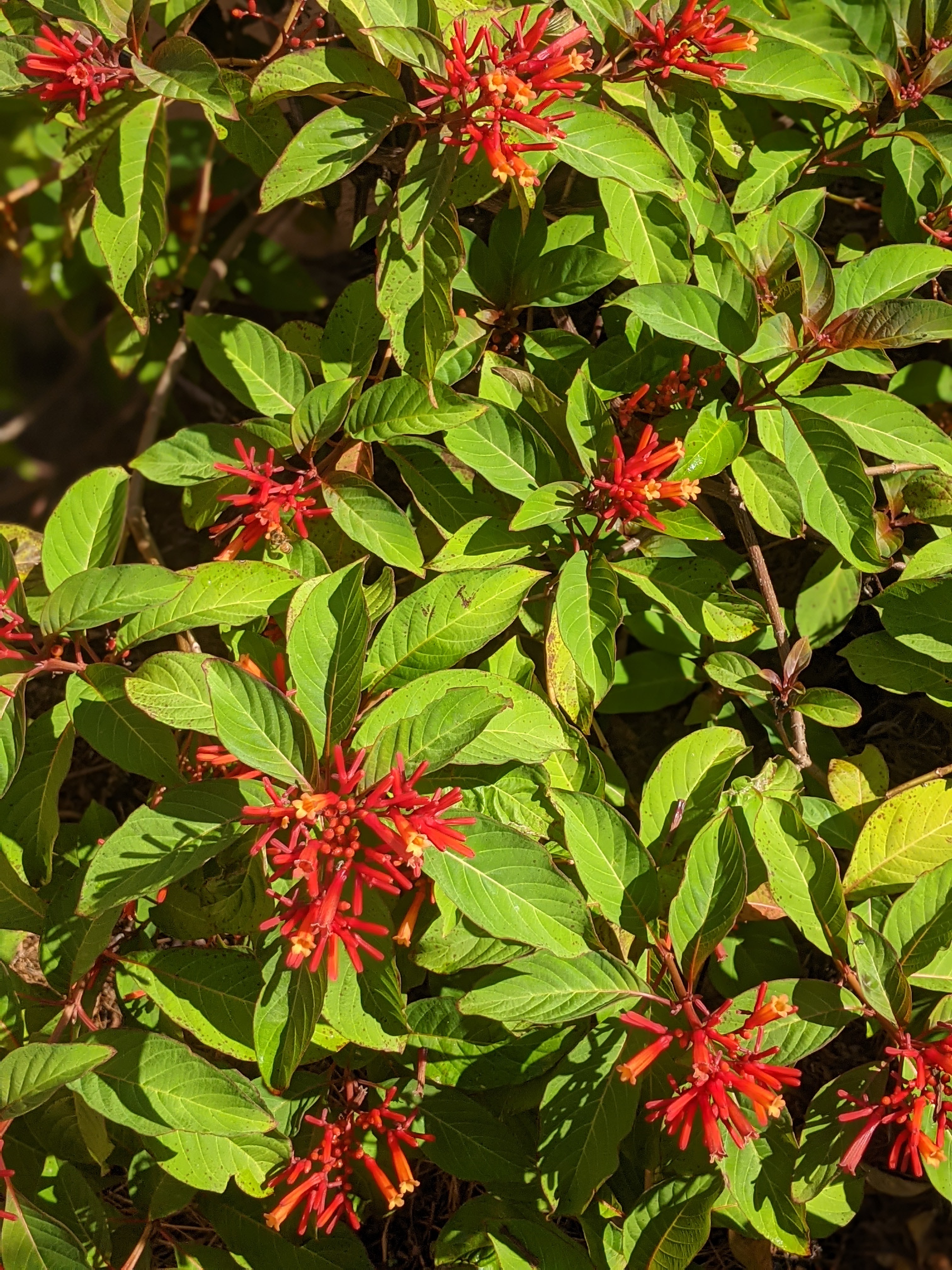
The Firebush (Hamelia patens) in full flower. Butterflies of all sorts love this plant for nectar. It is one of my favorites and so easy to grow it gets out of hand quickly.
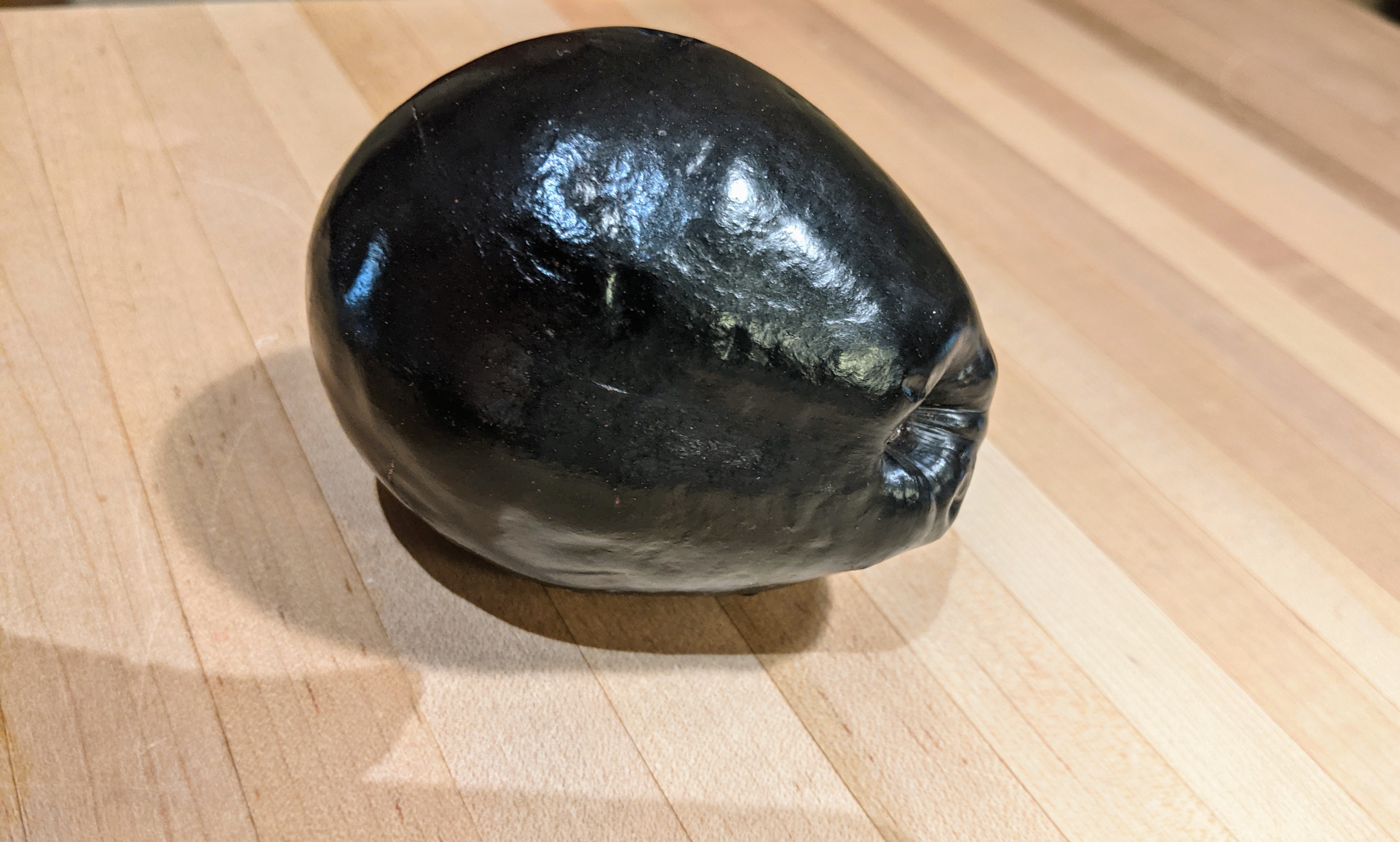
Guess what this is?? I thought it was a weird eggplant when my neighbor handed it to me. It is a Avocado – probably a Brogden or Oro Negro variety. We were excited to try it for lunch, they have a reportedly lush and buttery flavor. It was very creamy but mainly tasteless. My husband said “either we both have Covid or this tastes like nothing”. Since we could taste the rest of our lunch we concluded it was a Blahvacado.
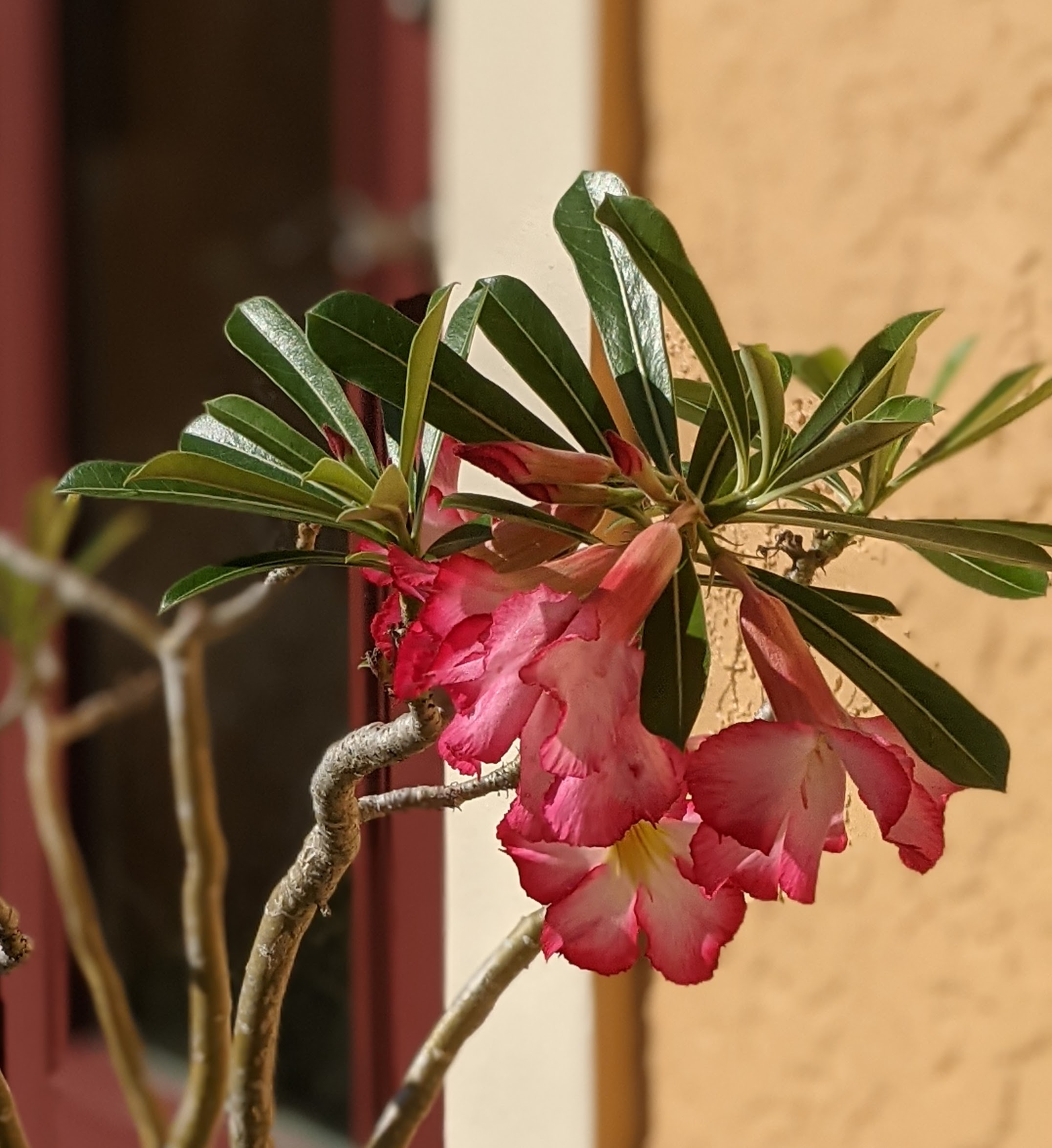
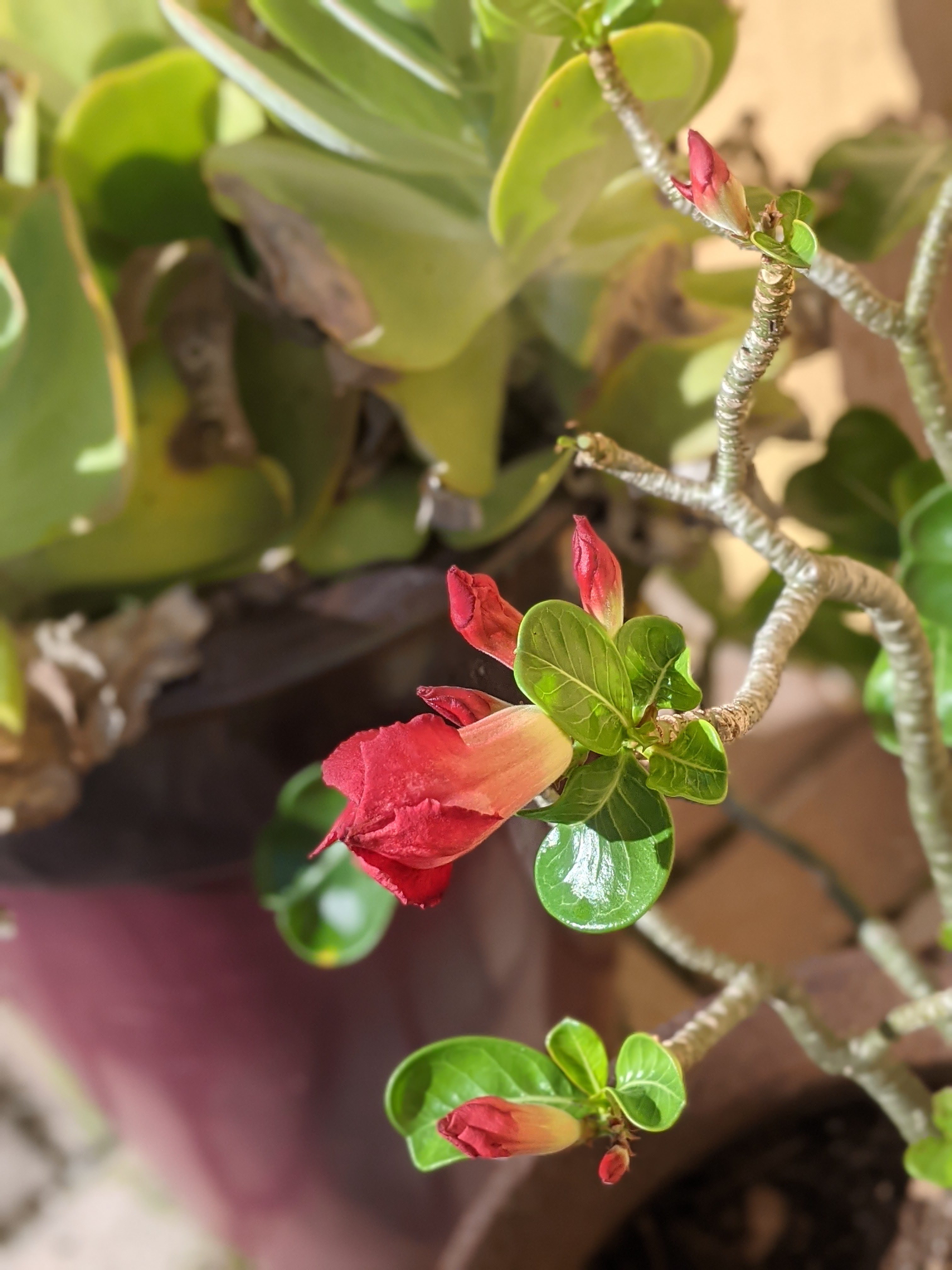
The Desert Roses (Adenium obesum) are starting to flower. Such a weird succulent, native to deserts in Africa and the Arabian Penisula. This is the rare plant that thrives in the summer heat in South Florida. Here are the buds on a red one.
The Desert Rose has had a lot of work done on it by breeders and now is available in an amazing array of colors, the latest, a deep purple.
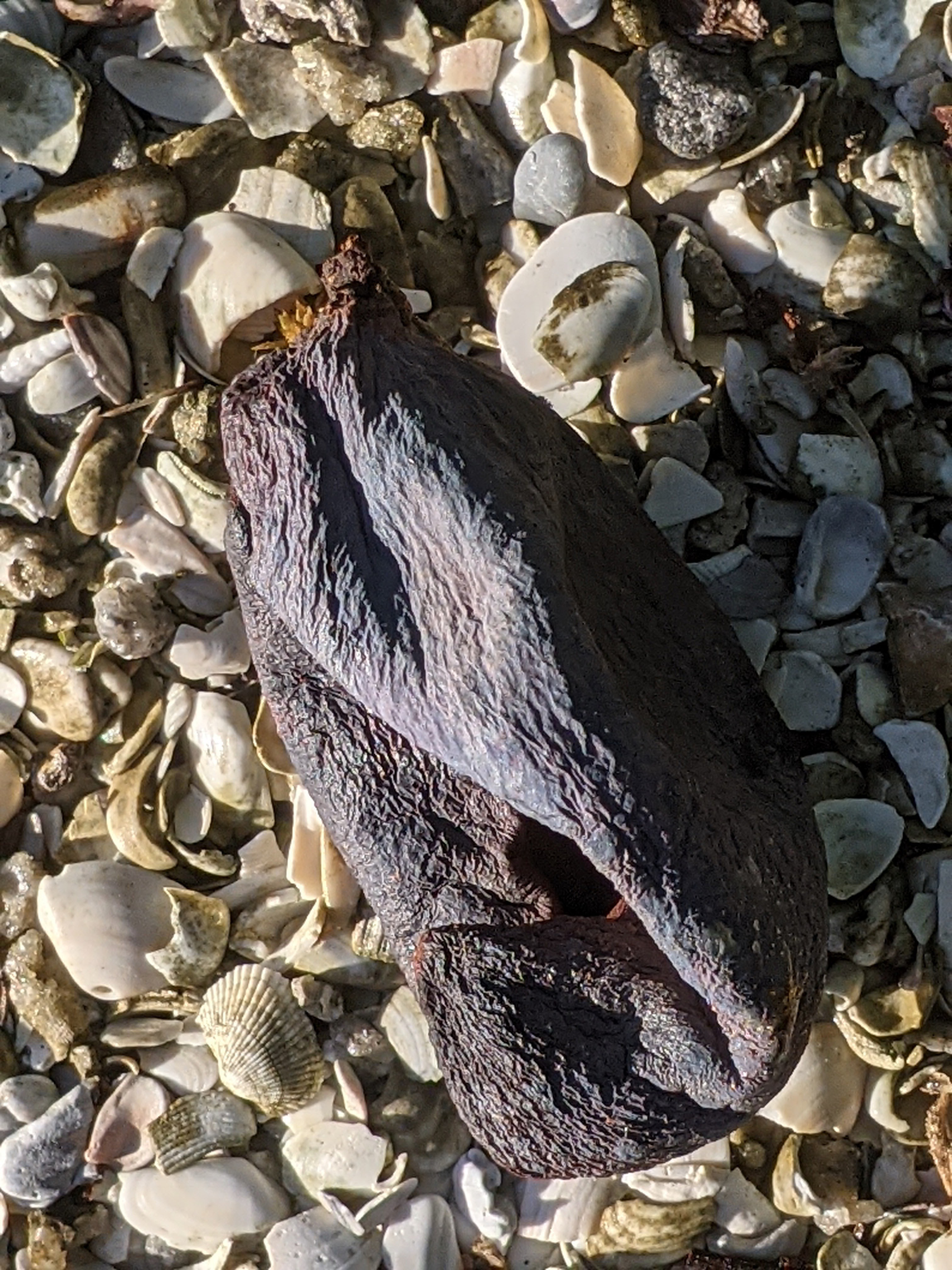
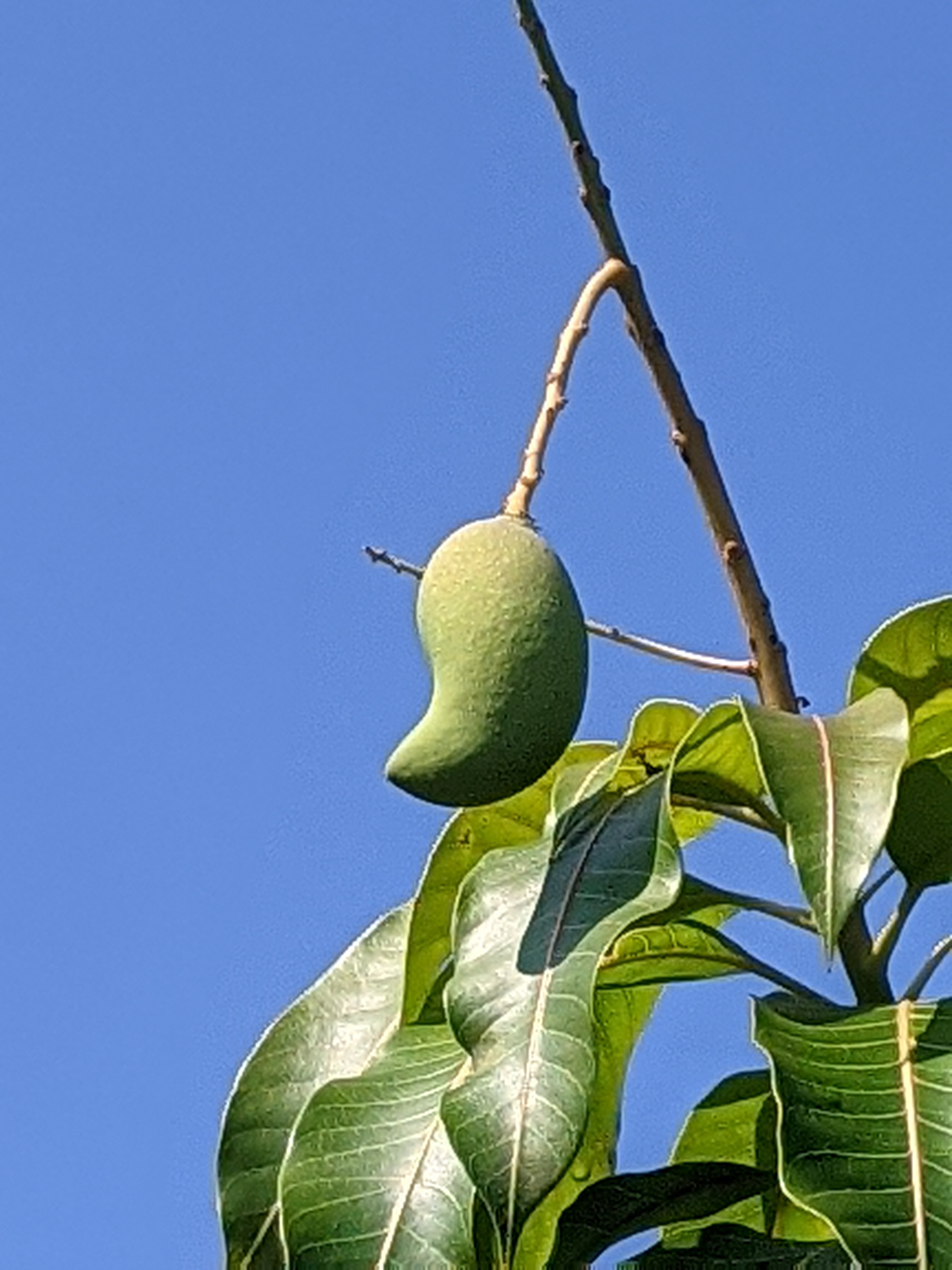
Above is my last mango, perhaps a prune mango. Seasons are changing and South Floridians are gearing up for gardening. I picked my last two Nam Doc Mai mangoes this week – they looked a lot better than this one. It seems the squirrels managed to split the fruit open to eat the seed and ruined my mango.
Tomato seedlings just popping up. These are my favorite cherry tomatoes, Yellow Pear and Sweet 100.
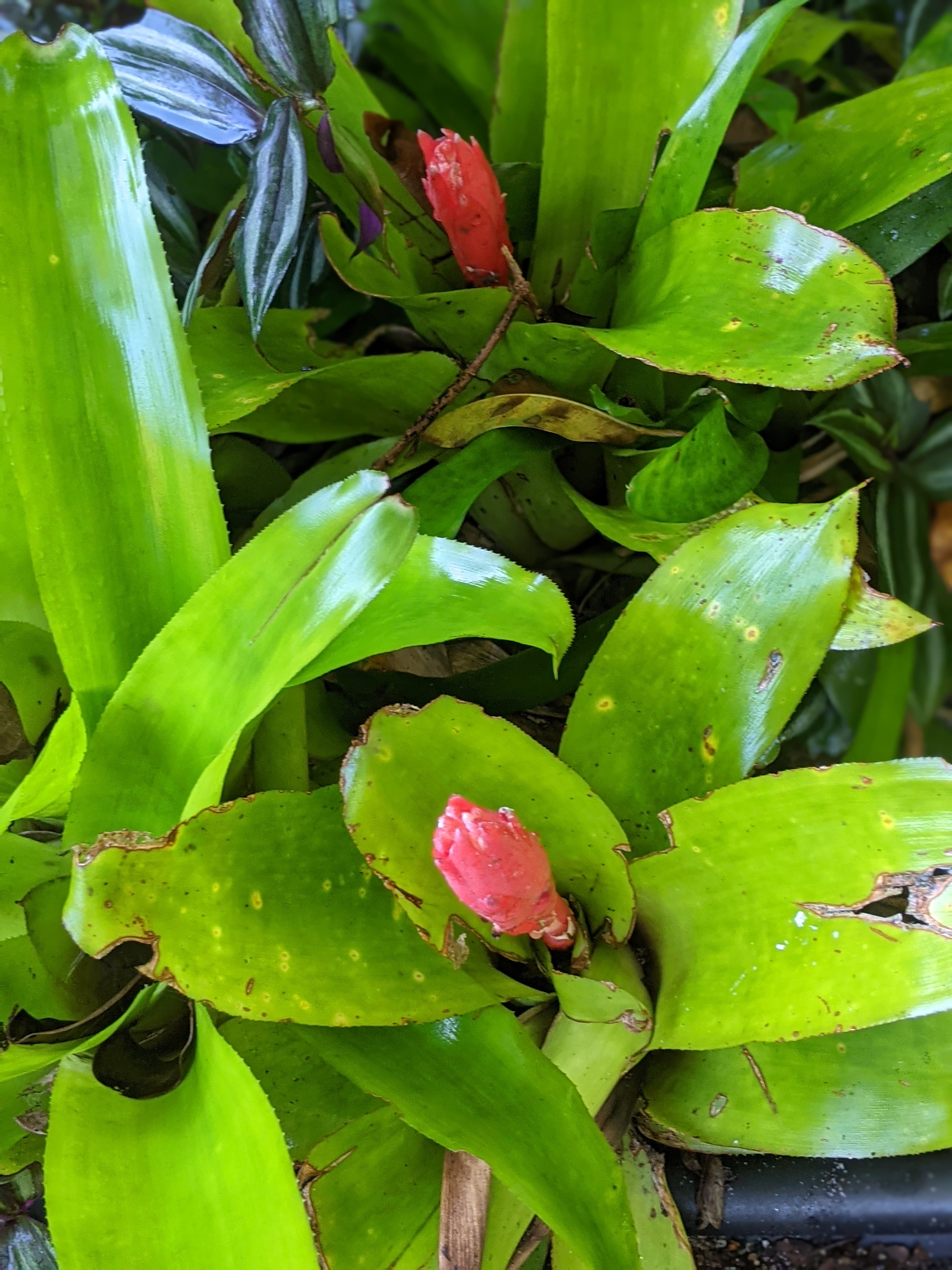
Yesterday was the peak of Atlantic hurricane season, so it is downhill from here. Right on time are the Hurricane Bromeliads budding – Billbergia pyramidalis.
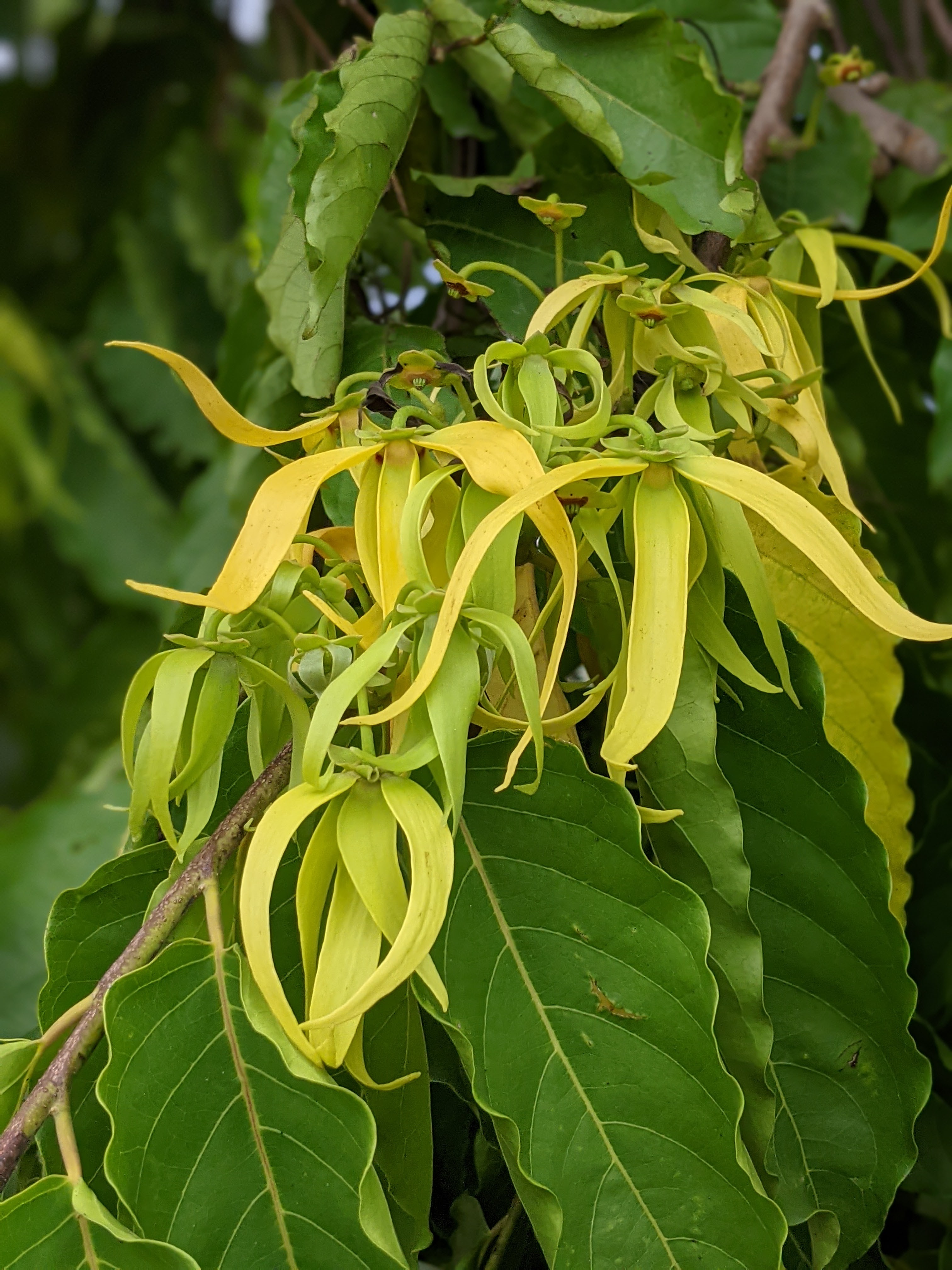
The Ylang Ylang (Canaga odorata) tree is finally getting established. We had a dry spell midsummer and I was not certain it was going to make it, all the foliage turned brown and the branches dried up, so I cut them back to the trunk and it is coming back. Fingers crossed for wafts of Chanel No. 5 scented flowers in the future.
The Blue Pea Vine (Clitoria ternatea) finally made it back after being consumed by rabbits twice. I resorted to bamboo tiger sticks around the vine as rabbit abatement. It has buds and I am awaiting my first flower.
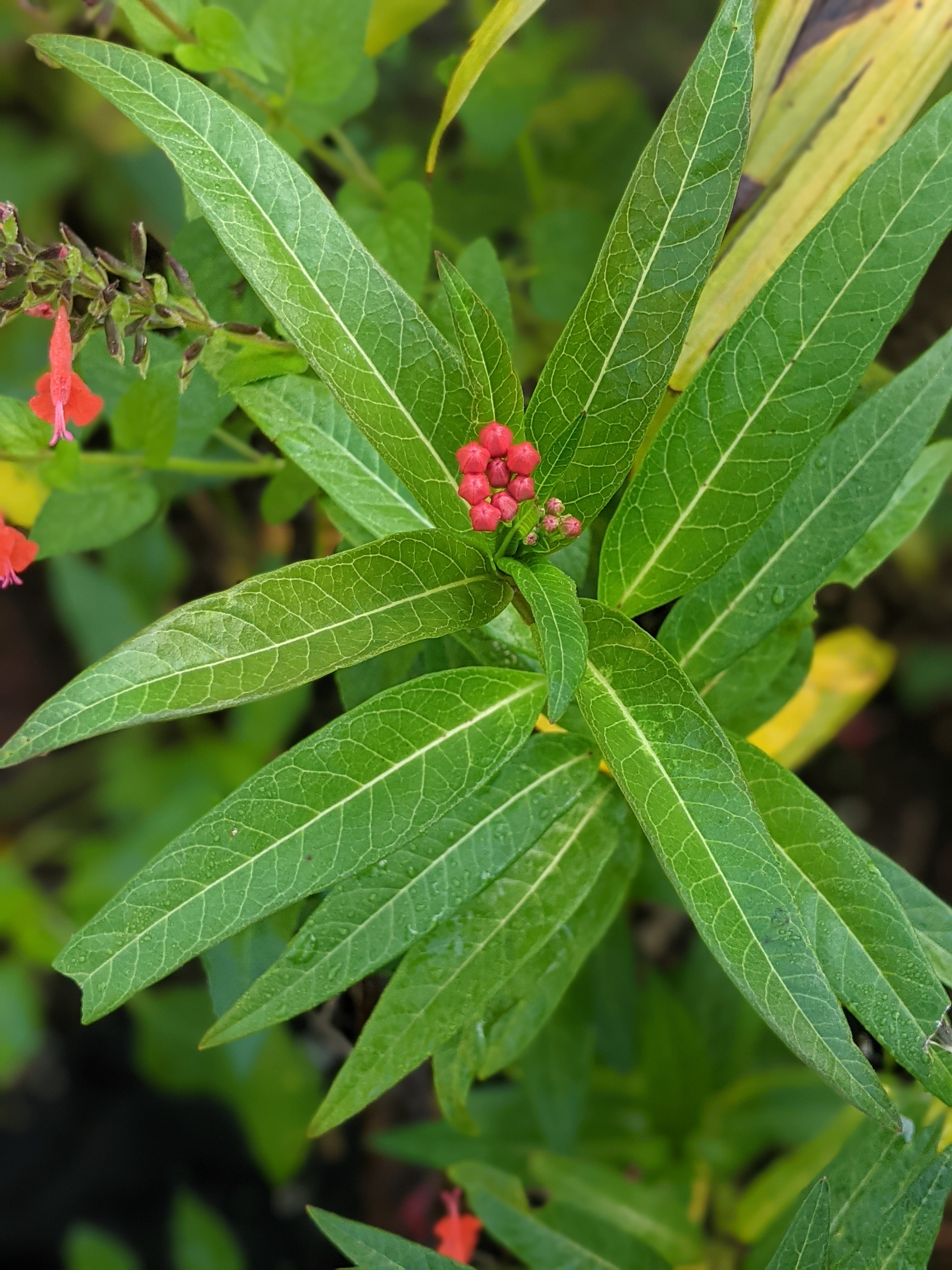
Another summer survivor. I have been trying for years to grow Butterfly Weed for Monarch butterfly larval hosting. Finally, I have buds. I think these buds have been taunting me for two weeks. Bloom already! I saw a few Monarchs hovering around yesterday, so these may be gone soon. It is funny how things called weeds can be so difficult to grow.
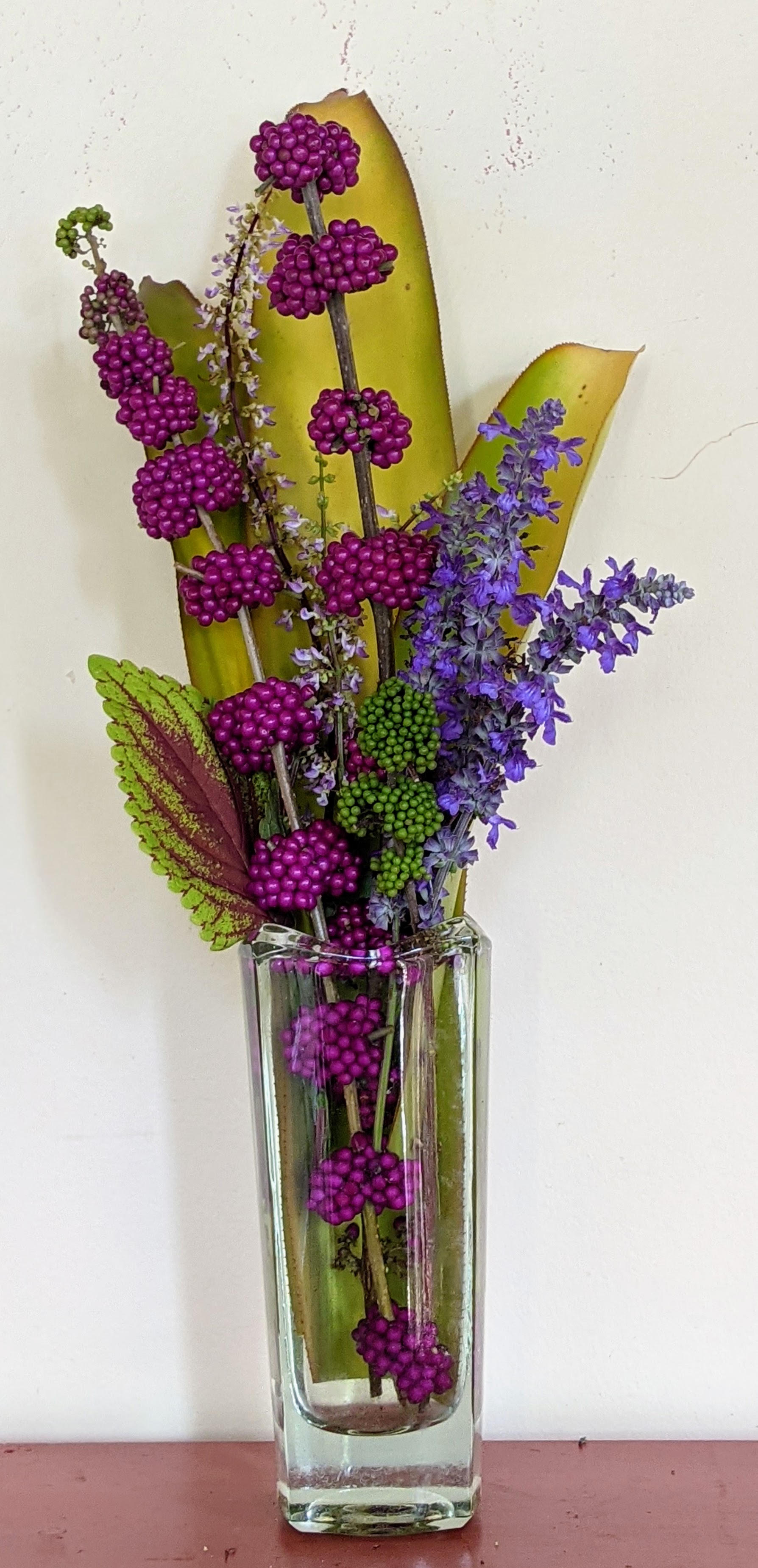
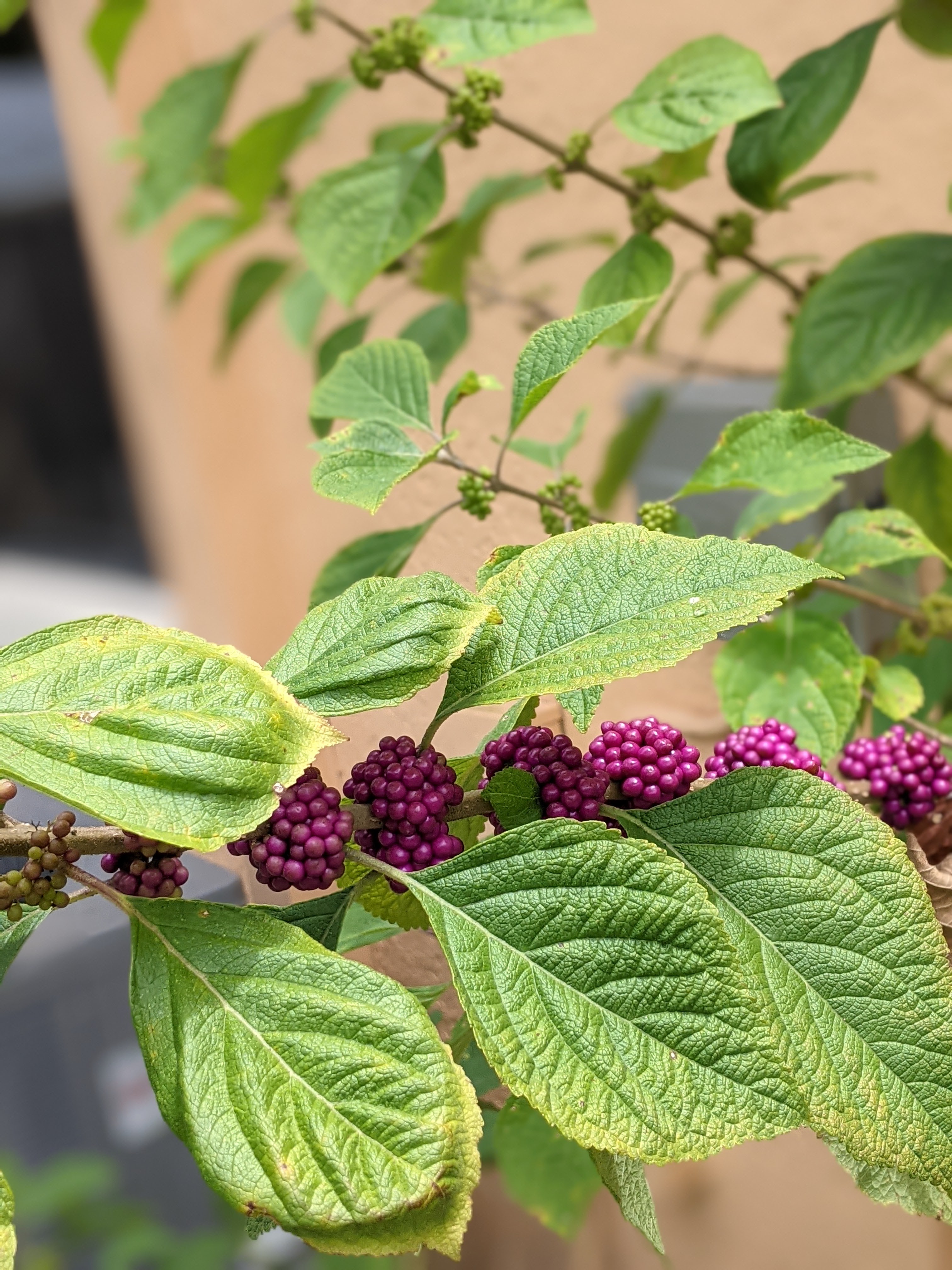
My husband jokes me about my lack of linear thinking. I am completely lateral. This week I decided to seek some linearity to complement the line of purple berries from the Beautyberry. I am convinced Florida Beautyberries are different than Beautyberries in other places. Every August I am amazed at the quantity and beauty (yes!) of the berries produced by this shrub.
The Beautyberry story:
I went to a local native plants nursery ‘going out of business’ sale shortly after moving to Florida. The Beautyberries were 3 for 10 dollars. Of course, I bought three. Thinking about putting them in a couple of different locations, not really knowing where to site them in the atrocious sand in my garden. Also not realizing the dramatic seasonal shift of the sun in my new home; I planted one on the due north side of my garage near the exit from our screen porch. Reasoning (lateral as usual) for this location: I thought it would stay shady enough for what was an understory shrub to me and this shrub is supposed to deter mosquitoes.
Much to my surprise, the sun got higher and higher in the sky as the year progressed. Full shade in January is full sun by May! Frying full sun. Not fun to dig things up in frying full sun, so it was left behind the garage. And then, the berries showed up. Impressive berries. I planted the other two in a much shadier, understory location – one passed on and the other bears about a tenth of the fruit of the one I seemingly planted in the wrong place. Another gardening riddle.
Oddly, mosquitoes were much worse in my garden in Atlanta – though we do have astonishing dragonfly (they eat mosquitoes) swarms periodically here and I do stuff Beautyberry leaves in my shoes if there are mosquitoes about (it works). I rarely see mosquitoes on the screen porch. Floridians make jam from the berries. I have not tried this as everyone who has ever mentioned it says it is pretty but tasteless.
The Shrub:
Perhaps the purple berries are a bit clashy with my peachy garage wall..still not digging it up.
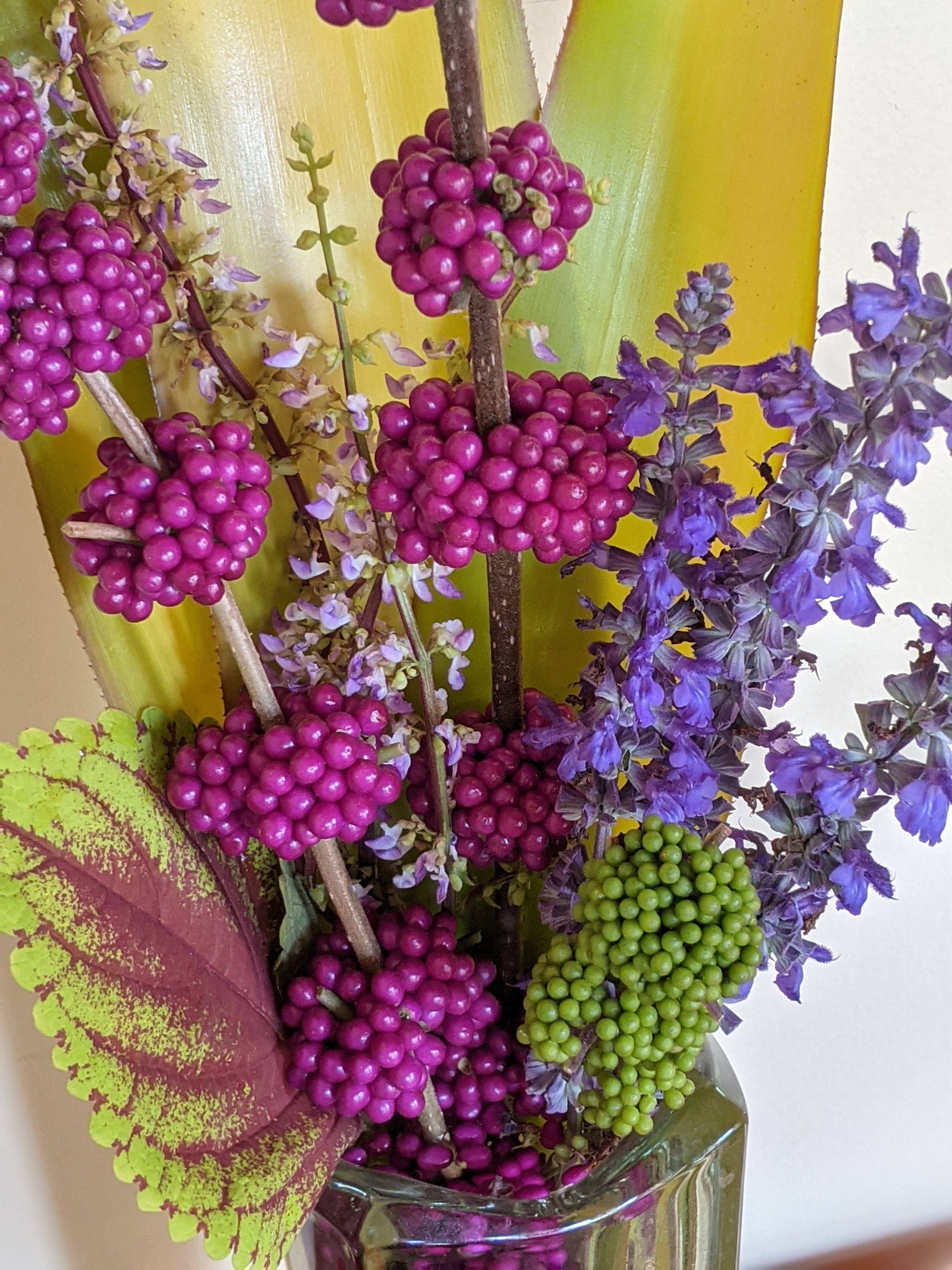
A closer view:
The purple and green berries are Beautyberries (Calliocarpa americana); blue spike flowers are Mystic Spires Salvia; purple spike flowers and varigated leaf are from a Coleus ‘Homedepotensis’; the long chartreuse leaves are from Lemon Aechmea blanchetiana Bromeliad. The vase was a gift from my late older brother; it always makes me smile when I use it – and its linear.
Summertime brings the rain and humidity – the more tropical plants love it and respond with fantastic flowers. Above is a Ylang Ylang (Canaga odorata) This is the primary floral scent in Chanel No. 5. I have a newly planted tree in my garden, this one is at a local nursery (Pinder’s Nursery, Palm City, Florida) I could not resist taking a picture to share.
A Strangler Fig (Ficus aurea) growing out of the top of my coconut palm tiki. There is a large Strangler Fig in the garden. These trees are a bit like something from a Harry Potter movie. They start in the top of something, grow over and down to put their roots in the ground and slowly surpass the host plant. They are commonly seen growing in the boots of palm trees.
A Coconut Palm (Cocos nucifera) seedling sprouted by a friend. I need to plant it about halfway down the coconut. Should have a tree in several years. Palms are surprisingly slow growing.
Blanchetiana Bromeliads are shooting up bloom spikes. These are about five feet tall and will get taller before opening. The flowers usually last until November or December; then I make Christmas wreaths with them. Above is the red variety. Below is the yellow, some call them Lemon – this is the first yellow one to flower, I am interested to see the difference.
The sixth:
Nam Doc Mai Mangoes getting bigger. A couple blew away in a thunderstorm, so I am hoping to eat this one someday.
Once again, I am joining the SOS crowd posting six interesting things from my garden. This Saturday, just past the Solstice and with the first hurricane forming in the Atlantic I am saluting my favorite Summer combos.
Mystic Spires Salvia and Dwarf Red Ixora, I love the contrast of colors. This bed also has white Pentas, yellow Callibrachoa, Blue Daze and chartruese Duranta.
Soap Aloe is flowering nearby.
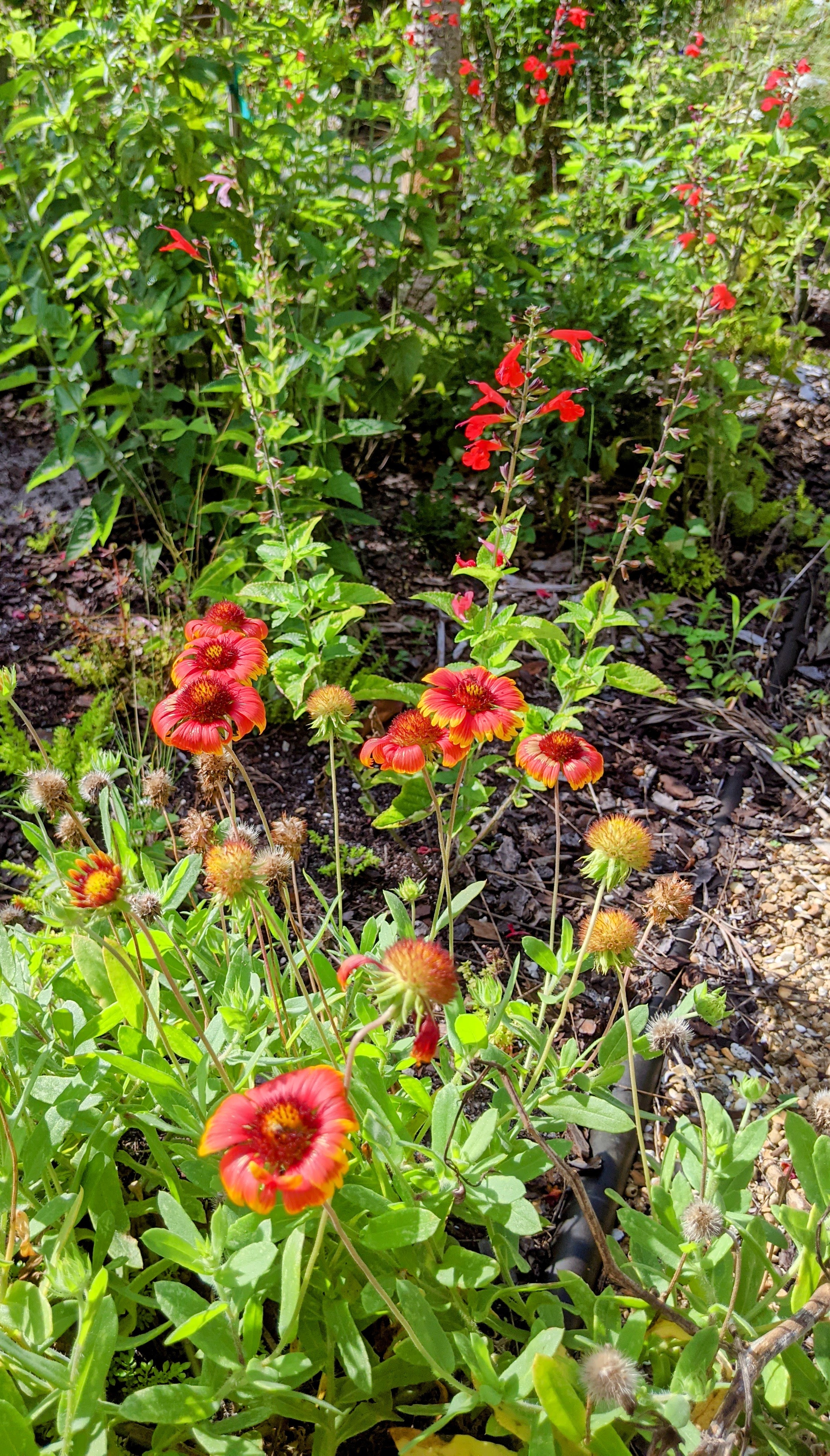
In the butterfly garden, Gallardia and Tropical Red Salvia are flowering.
White Heirloom Pentas and Tropical Red Salvia in the butterfly garden.
In the rainforest garden, shades of red, burgundy and green shimmer in sunny spots.
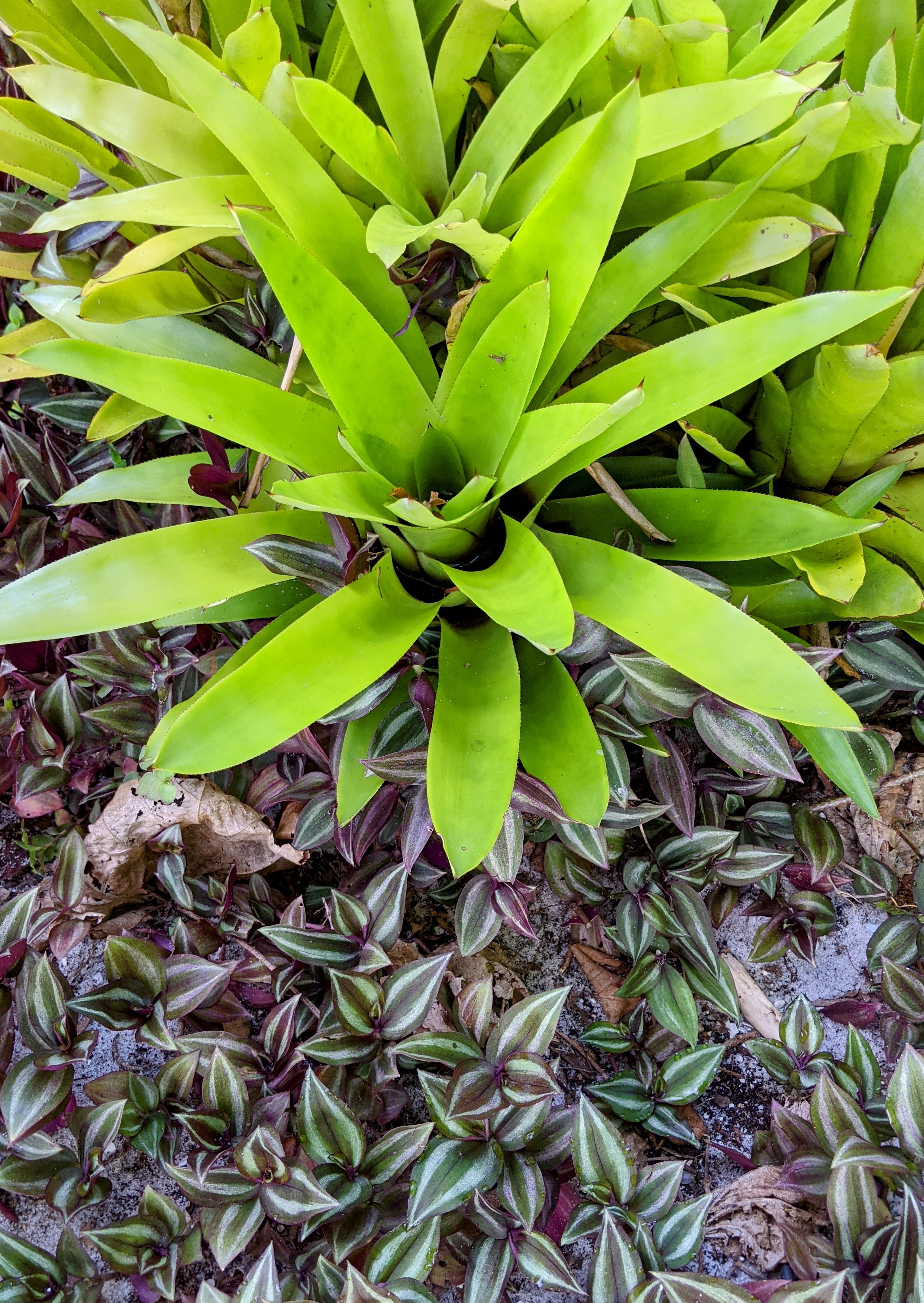
Foliage contrasts in the rainforest garden, chartruese Quesnelia Bromeliad and Zebrina Wandering Jew groundcover, still pretty without flowers. The Quesnelias have pink flowers in winter.
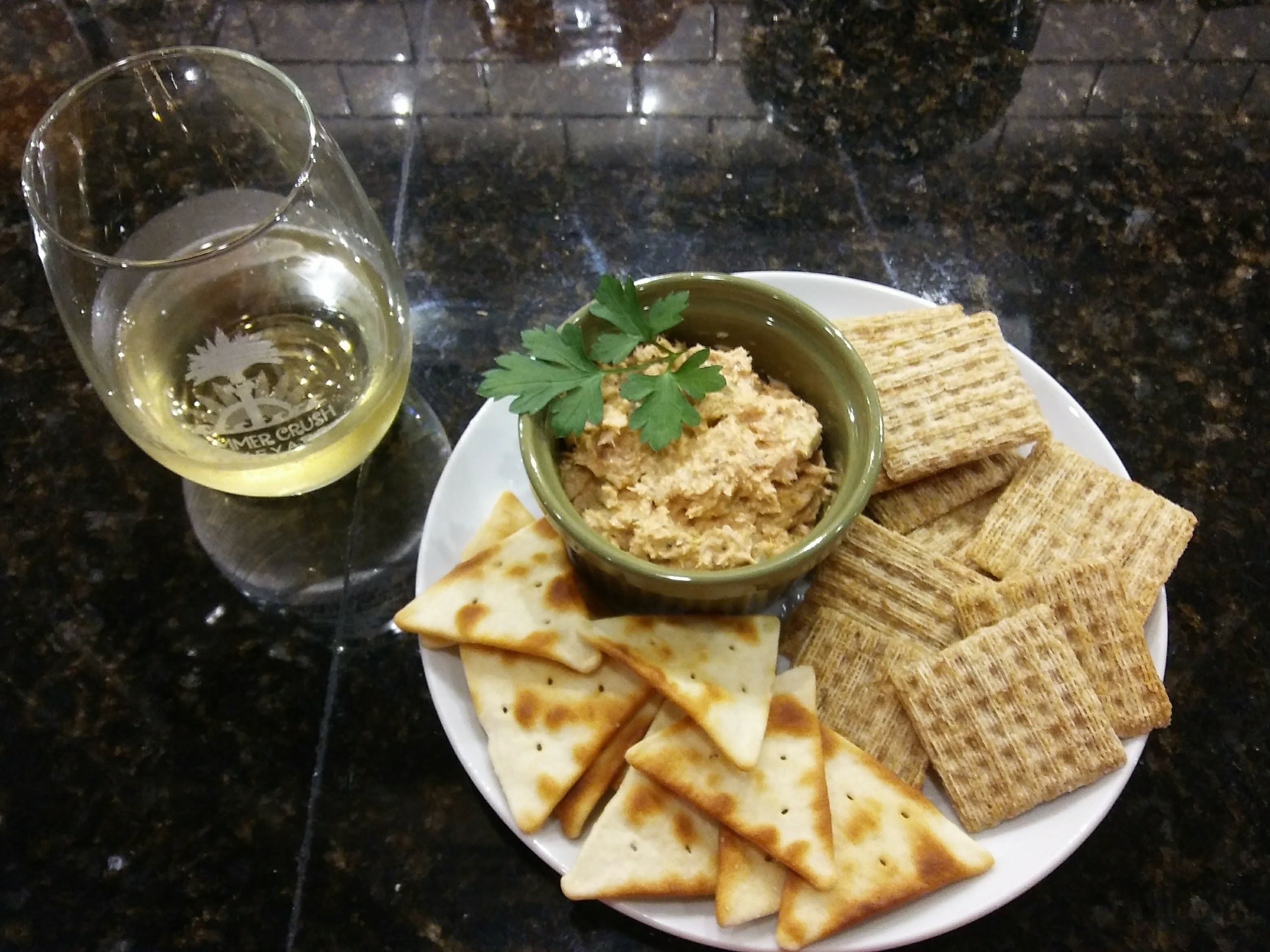
Last, but not least, my favorite snack. Smoked Fish Dip – I am in the midst of making a batch as I blog..wine and fish dip later.
It is Saturday again and I am joining the SOS crowd sharing six items of interest from my garden. To see more posts from fellow SOS gardening bloggers, visit http://www.thepropagatorblog.wordpress.com
The weather in South Florida has turned tropical and the more tropical plants in my garden are responding. Fruits and flowers doing their thing enjoying the humidity and rain.
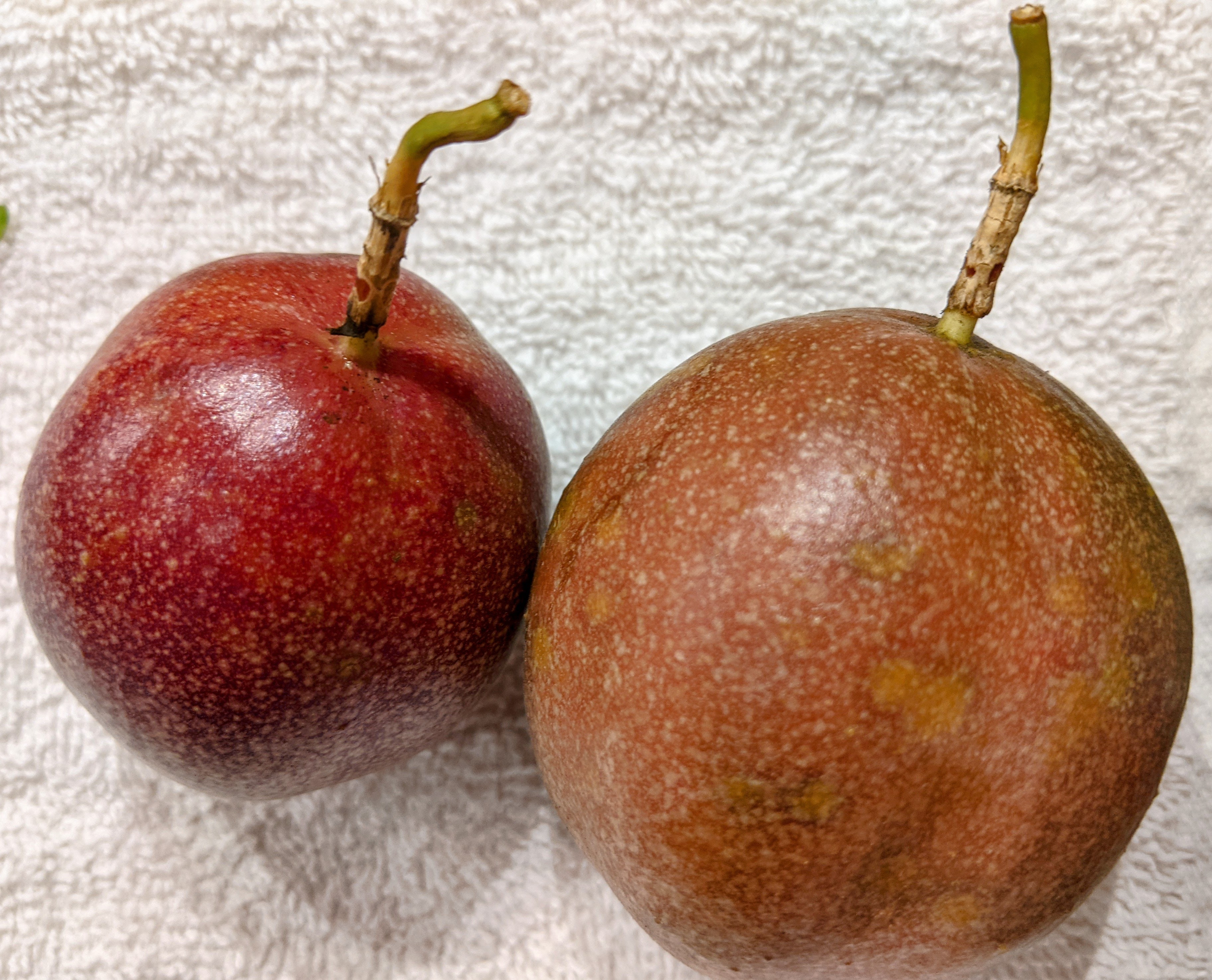
My Passiflora vine dropped the first fruit of the season this week. I am surprised I got the fruit before my fruit loving greyhound or the raccoons. The dog chased me into the kitchen once he got a whiff of ripe passionfruit.
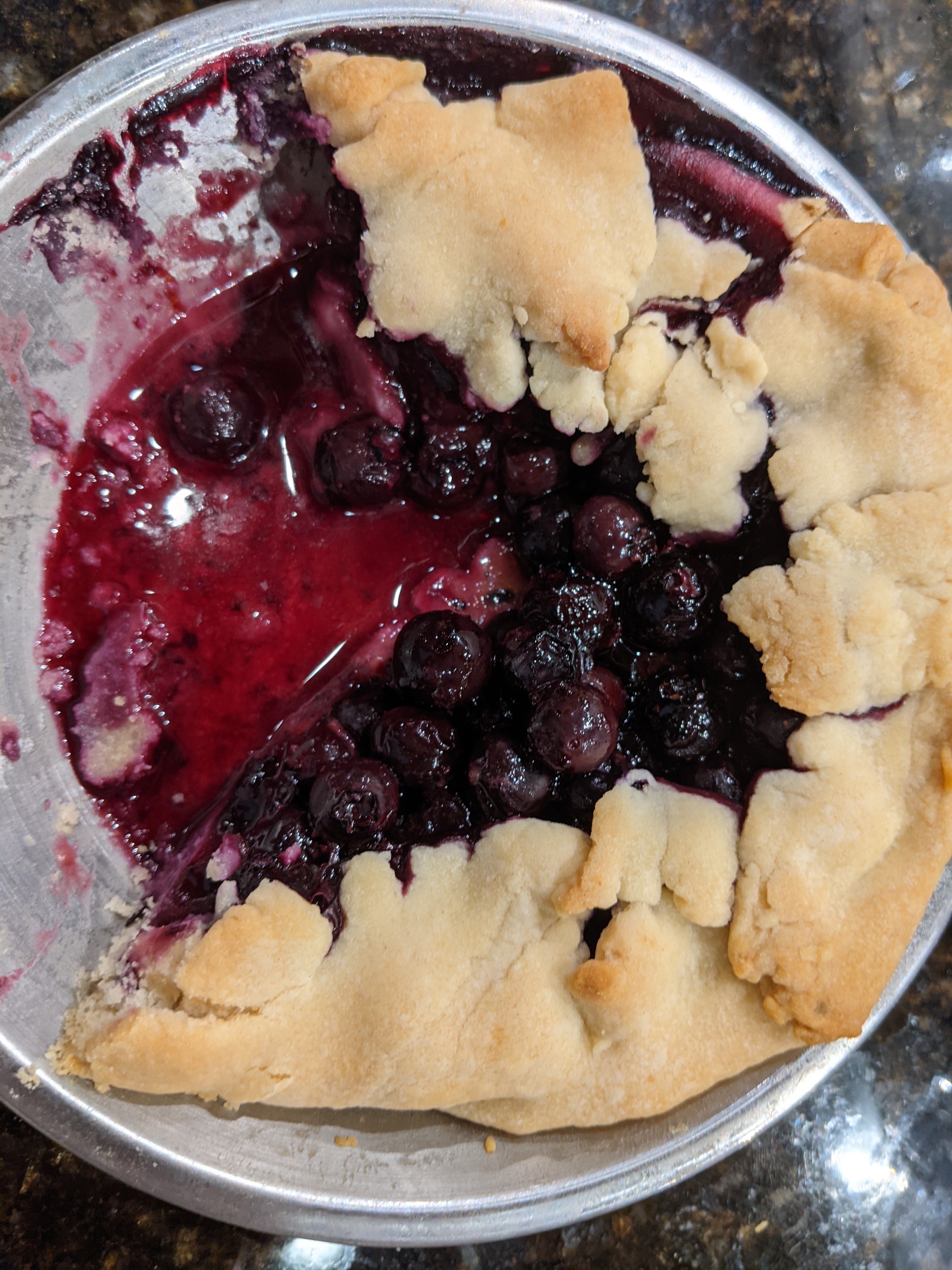
I baked a blueberry passionfruit pie – a new flavor for us and we enjoyed it. I will bake with passionfruit again, though I could use some ideas?!
I couldn’t resist trying it before I took the pictures. Please note I am a rustic style baker and use vegan butter…
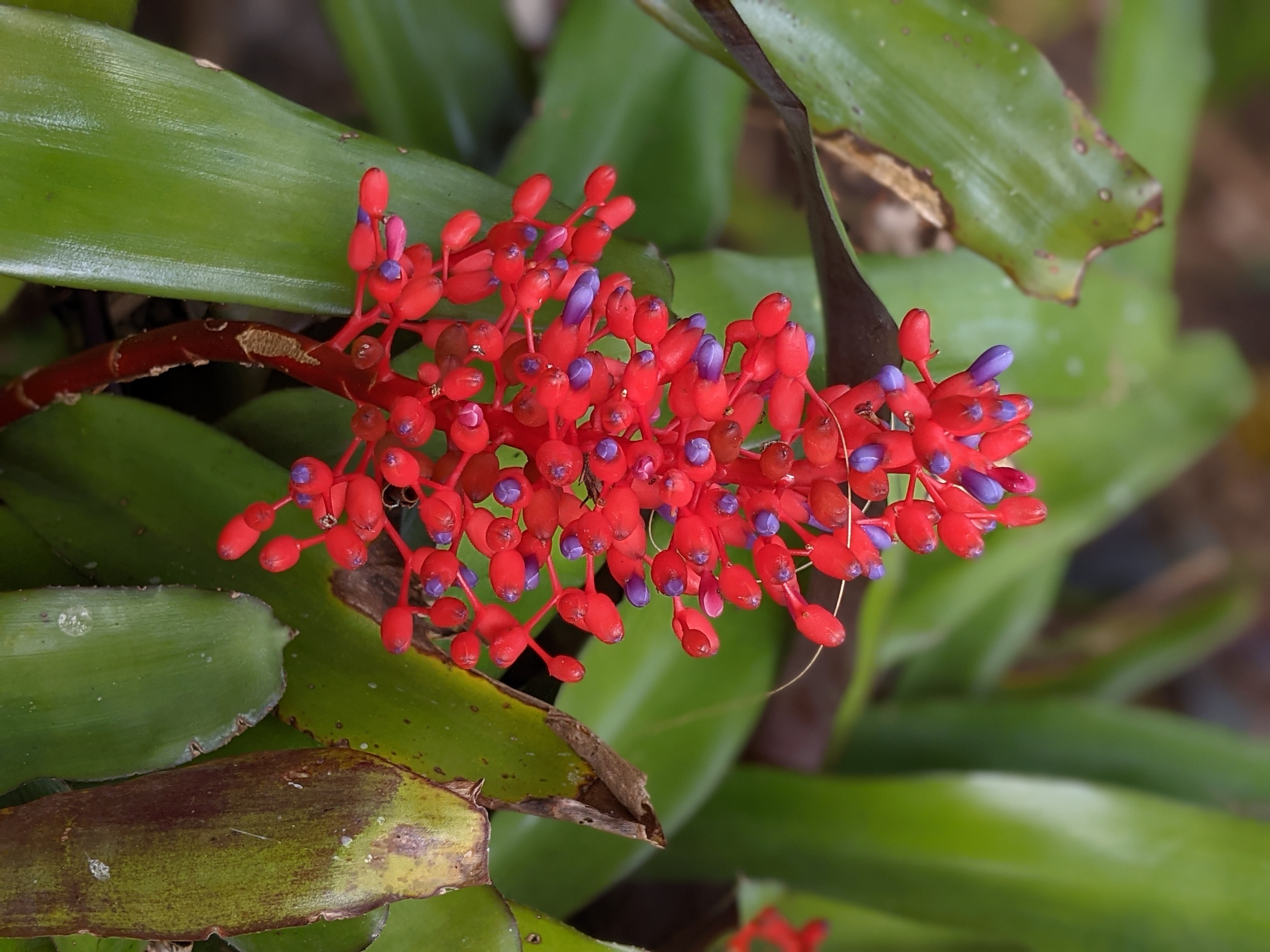
This is a Miniata Aechmea Bromeliad flower, they gain blue coloration as they age. Here is the bud:
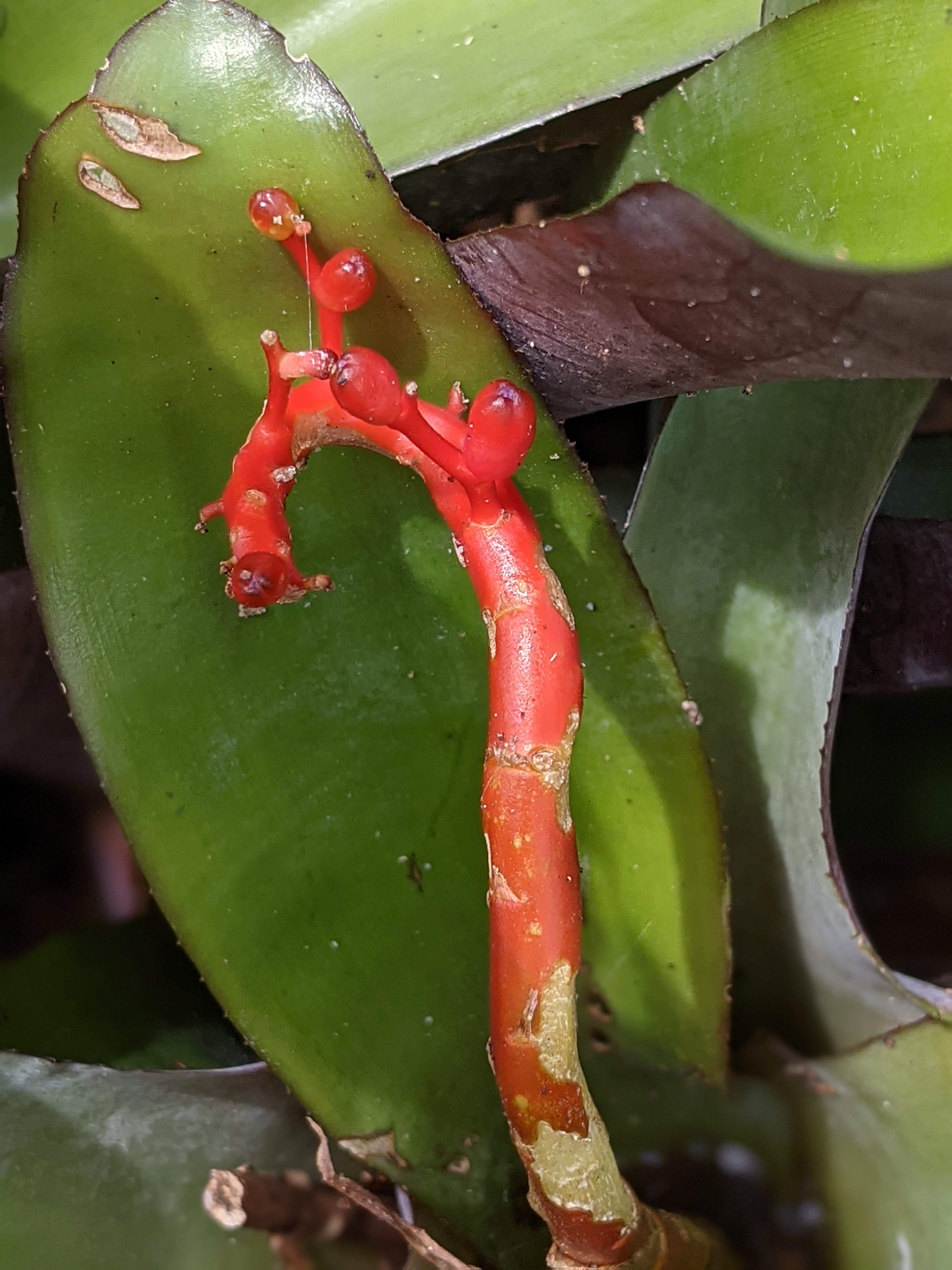
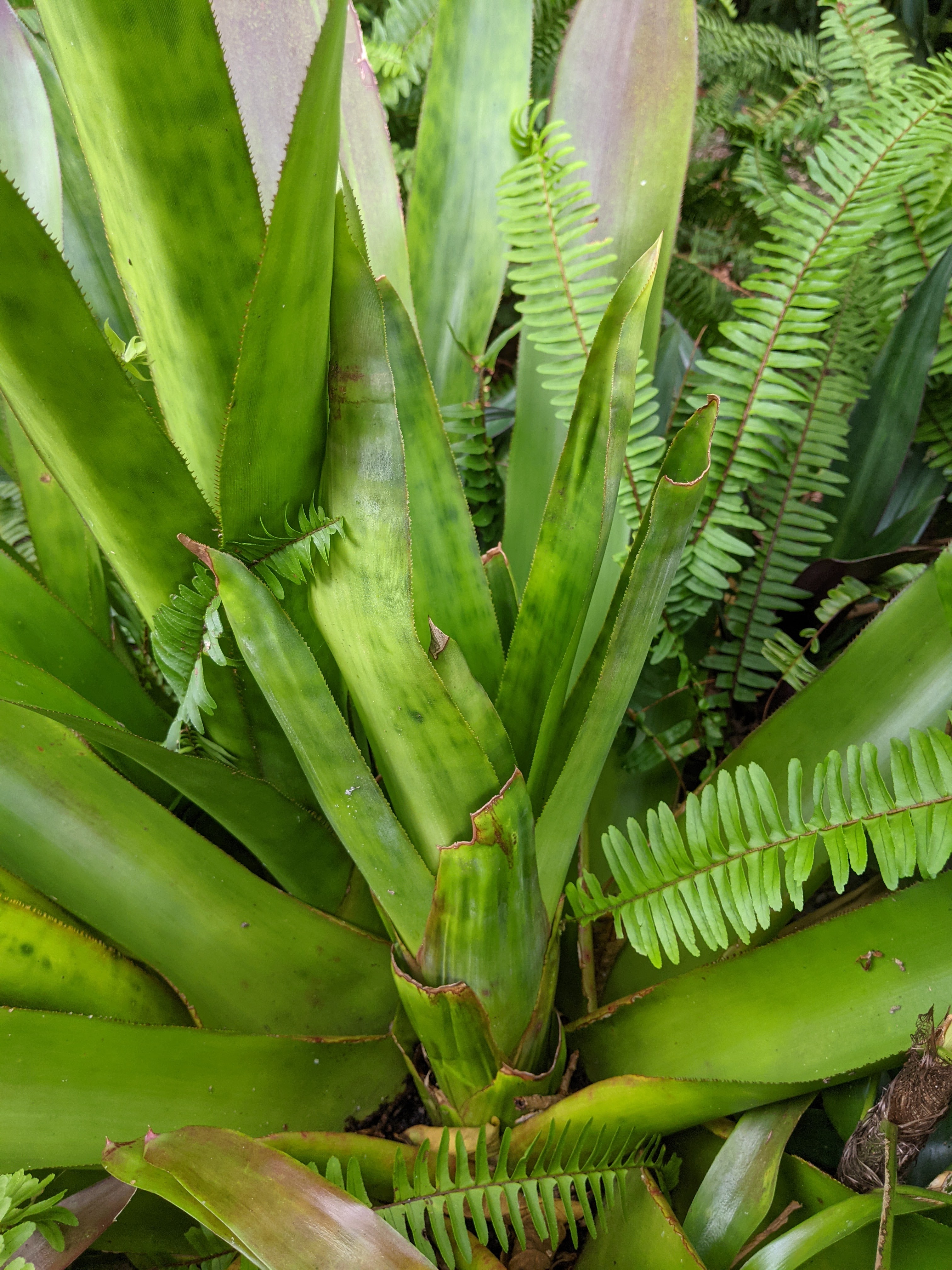
Here is the bud of a Dean’s Pink Aechmea Bromeliad. The flower stalk seems to be growing and is about 2 feet tall. I have not seen this one flower. Peeking into the center the flower looks like a corn cob. The flower should be interesting. The bud is inside the middle where the foliage looks cut.
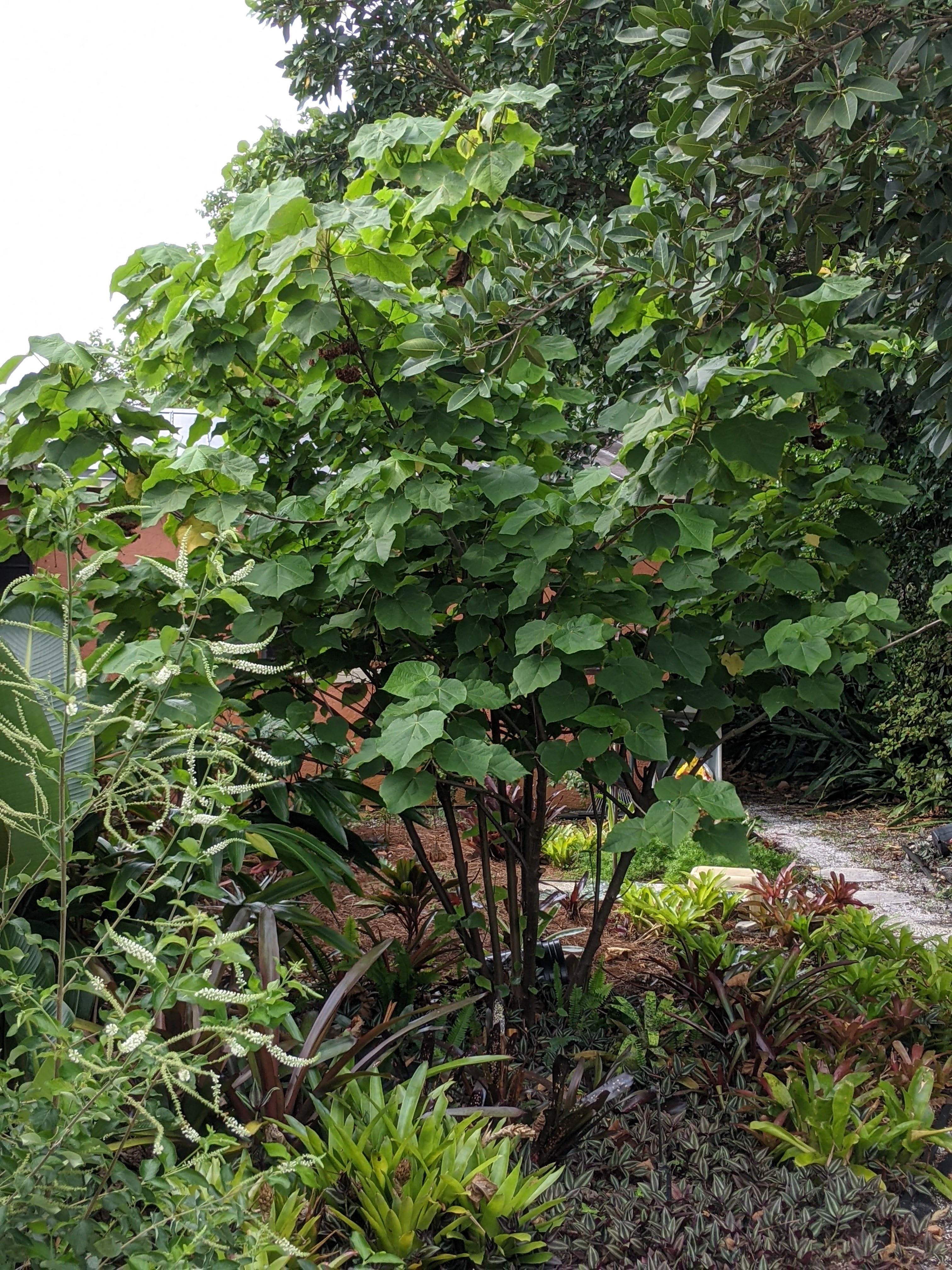
Finally, the Tropical Hydrangea (Dombeya wallachii). I am working to prune this into a tree form and contemplating how far to cut it back. I have another month to prune – after that pruning will cut the flowers off. This grew seven feet last year after I pruned it. It flowers in December and January with pink ball shaped flowers.























 The Shrub Queen