Summer Color in Tropic Florida

The snowbirds are home cool and safe in their beds while visions of winter gardening in Florida dance in their heads. (not quite an original poem)

The rest of us are basking in the steamy weather post Summer Solstice in South Florida. Summer can be wonderful here, traffic slows as does time. Days are long and comfortable time spent outdoors occurs early in the morning or early in the evening.

Our plant life puts on a spectacular show during the summer. The show is a must see for any gardener.

Poincianas are in full flower and the Mango trees are filled with cascading boughs of fruit.

Many shrubs here flower year round, but once the rainy season kicks in the flowers go into overdrive. Especially on the Hibiscus, Ixora and Allamanda.

Our native Firebush (Hamelia patens var patens) and Beautyberry (Calliocarpa americana) are flourishing:

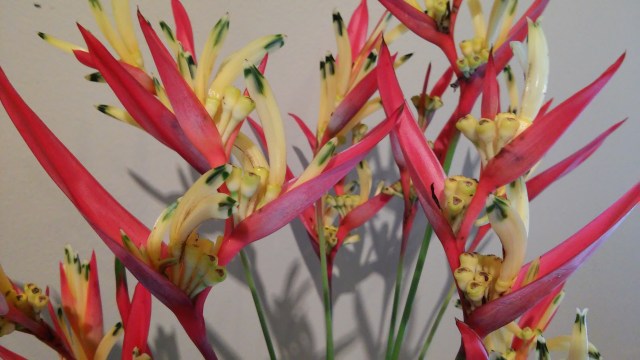
On the tropical side, Heliconias and Bromeliads are budding and blooming, I associate these with later in the season but some are going already. Yes, I cut most of my Parrot’ Flower (Heliconia psittacorum).
20160612_101512

Orchids are starting their summer season. My neighbors Ground Orchids (Epidendrum radicans) yes, groundcover Orchids! have been spectacular thus far, these are called Fire Orchids and there is a pink version

20160518_095121.

20160409_135218-1

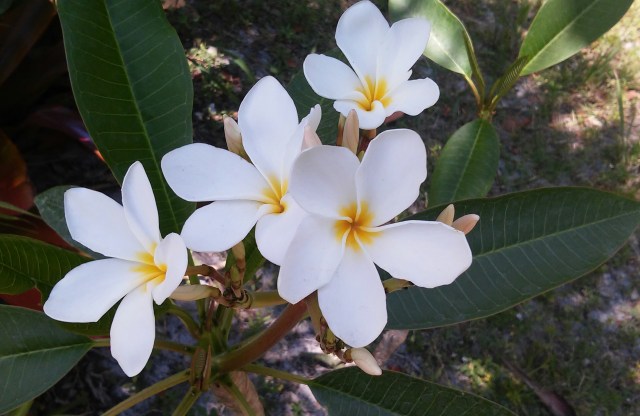
Of course,  one of the real pleasures of the tropics in Summer is the scent of Frangipani in the garden. This white one has started flowering with the onset of Summer and I have a new one from a gardening friend on the verge of flowering- rose pink on the outside opening to pale yellow. I sited it near my screened porch for maximum smellability.
20160511_125255-1.jpg

I love the term ‘Tropic Florida’. To the best of my knowledge, it was coined by Frederick Stresau, in his book Florida, My Eden. This book, while titled like a romance novel is actually a really good manual of landscape plants for Florida. The tropic part supersedes the ubiquitous and perhaps American zone phobia. I think I live in Zone 10A, I am not sure anyone else would agree, but we can agree it is tropic. We have seen freezing temperatures here 4 times since 1980. That is pretty tropic.

In A Vase on Monday – Fire and Ice in a Purple High Heel


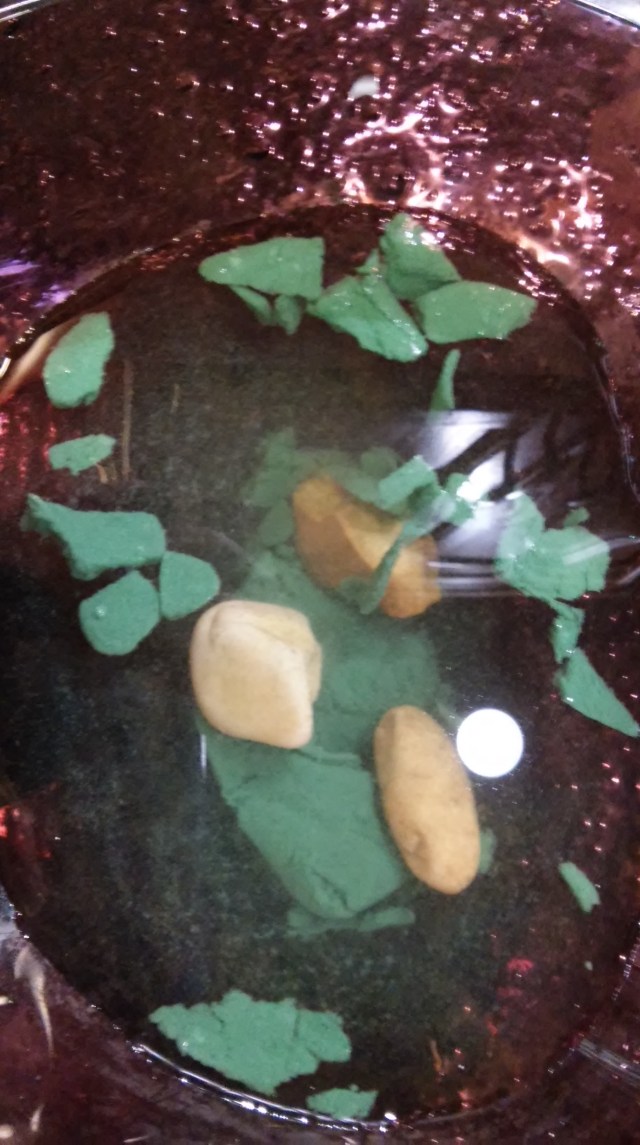
20160619_110417I have been looking at this vase for quite some time. The purple high heeI I believe is a Blenko Art Glass piece from the early 1950’s; likely a wedding gift to my parents and another vase from my mother. My issue with this vase is how to make an arrangement in it, the base is basically a trench, so no hopes of using a frog – I had some scraps of green floral foam and thought I could stuff the trench full of foam and stick the flowers in that, no such luck. The green foam floated up, so I added some pebbles to hold the foam down and proceeded.
20160619_100804

Eventually I added enough pebbles to keep the foam in the trench. Onto the Fire.

The Fire is Florida’s native Firebush (Hamelia patens var patens) which cooperatively pops up in my garden, the foliage has a lovely red tinge so I have included that in the arrangement. The other reds are Red Shrimp Plant (Justicia brandegeana) and some buds from the Parrot’s Flower (Heliconia psittacorum). The Ice elements are Bridal Bouquet Frangipani (Plumeria pudica) nearly bashed off by thunderstorms and saved by my vase. The Sweet Begonias (Begonia odorata ‘alba’) offer a different texture in white and add some coarse green foliage to the mix. A few culinary Fennel flowers and Boston Fern sprigs complete the arrangement.

20160619_110831

In A Vase on Monday – Heliconias, neat.


20160612_101732-1

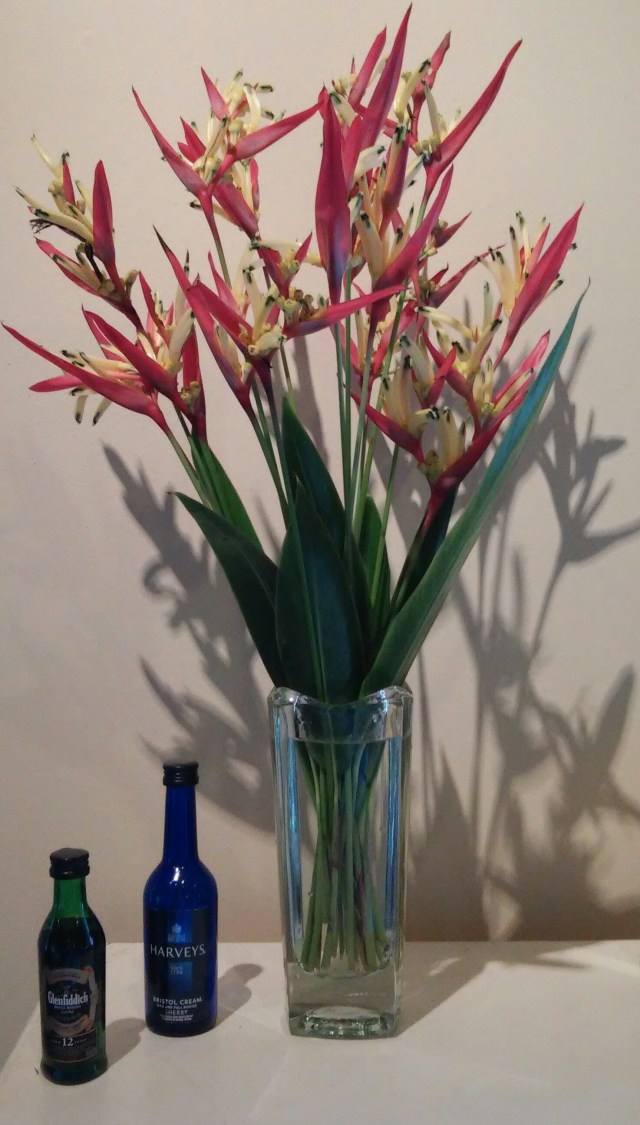
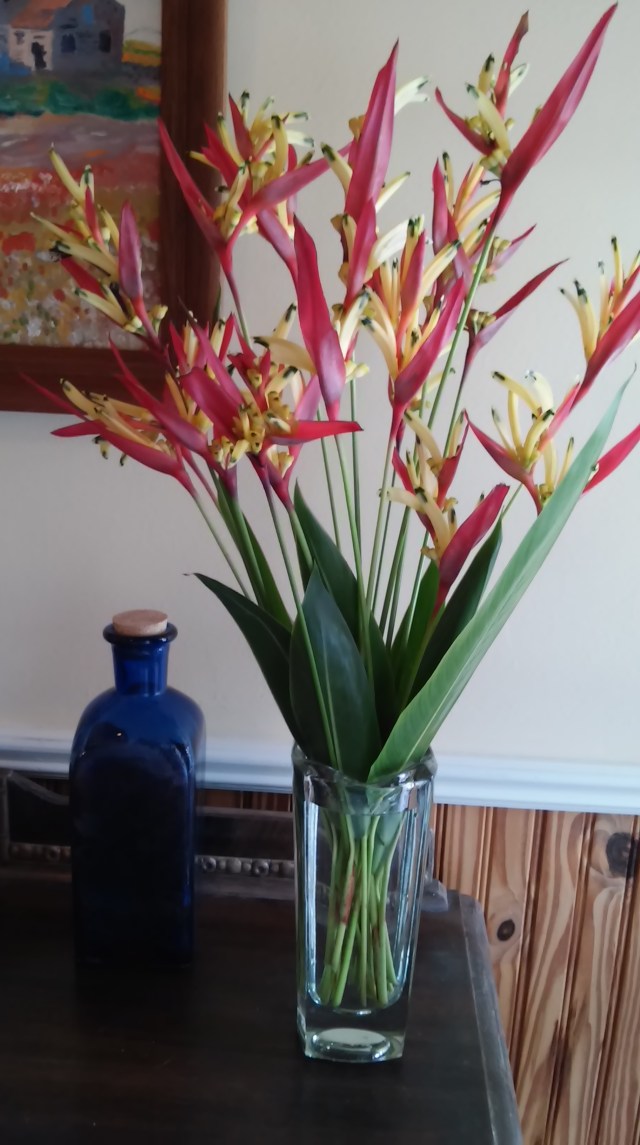
I think Heliconias are pretty neat. My collection has grown to four varieties. The super special ‘Splash’ Heliconia refuses to flower (purported to have a 3 foot long lobster claw type flower – orange splashed with red). Fortunately the humble Dwarf Jamacian (Heliconia stricta Dwarf) and Parrot’s Flower (Heliconia psittacorum) have been cheerfully flowering since I bought them. This vase is filled with Parrot’s Flower, neat.

20160612_102015

Neat in cocktail terminology means a serving of whiskey with nothing added then served at room temperature. I felt compelled to add the water. I found the seemingly simple arrangement to be a bit daunting to produce as many stems had to be trimmed a touch to make the arrangement even. Then my husband came in and said ‘I guess you are not finished?’ followed by ‘where’s the rest of it’! Then ‘Oh, that’s really simple’ Yes, neat.

20160612_101512


I can imagine why these are called Parrot’s Flower – however, if the three foot long Lobster Claw Splash Heliconia ever actually flowers it is going to be front and center on the next In A Vase on Monday post. Neat.

In A Vase on Monday – I’ll Swanee

20160605_103101-1

I’ll swanee is slang from the American South. I think of it as a polite old lady’s way of exclaiming I swear. I have never swaneed myself, either I am not old enough or not Southern enough. Stay tuned. My mother would come up with things like “I’ll Swanee! I have never seen anyone with hair the color of a cocker spaniel before” translation, “I swear that is the worst dye job I have ever seen, meow” The term Swanee is frequently used as a means to soften a catty comment.

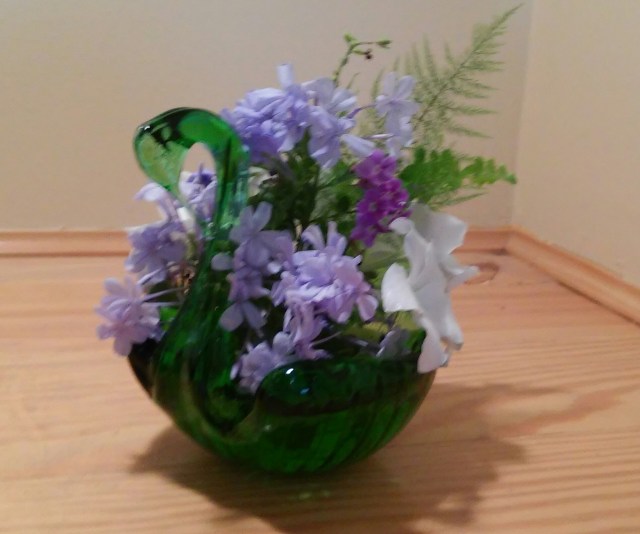
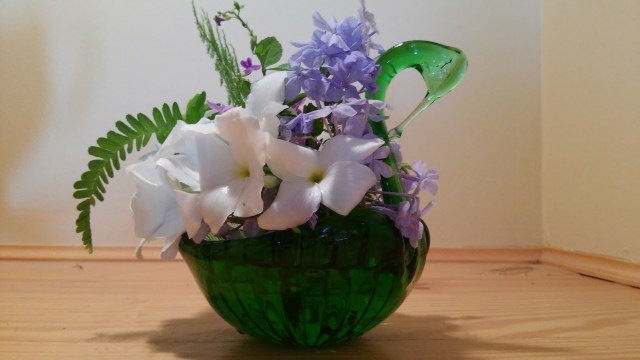
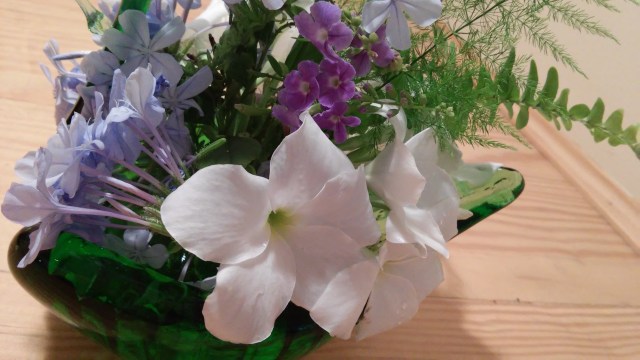
The green glass swan is another  heirloom from my mother, the avid swan collector. It might be an ashtray from the 5o’s, I am not quite sure what it is, today it is a vase. The swan collection was so overwhelming as I was clearing out her house everyone got a swan, I ended up with this one and some other green glass pieces. Another view:

20160605_102718

As for the plants used in the arrangement, this is a good vase for butterflies. All attract butterflies, the blue flowers are from Tropical Blue Plumbago (Plumbago auriculata) I think of these as the hydrangeas of the tropics, summer flowering and they are showy as the weather heats up in June and July. The smaller purple flowers are from the Golden Dewdrop (Duranta) and the white flowers are Plumeria or Frangipani. I added a few green ferns for contrast.

20160605_103253

Tread Softly – or else


20160601_095230-1.jpg

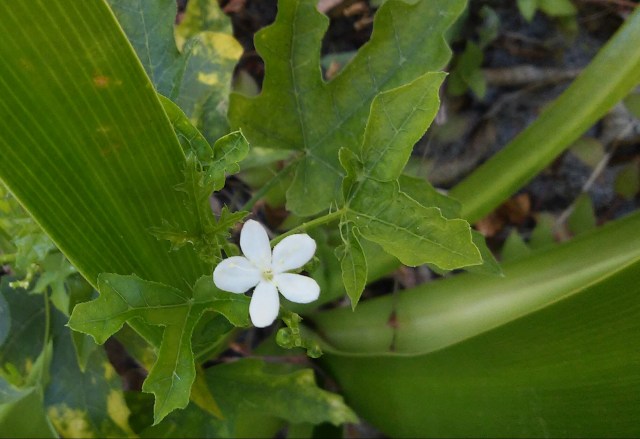
I found out, per usual, the hard way, about another plant I am allergic to. The Stinging Nettle of South Florida, a devilish little plant with a big punch. Here it is – looking so innocent with its cute little white flower; masking the stinging nettles running up and down the stem. Just waiting for the nonchalant passerby. The straplike foliage in the picture is from a native Hymenocallis. I will have to untangle these later.

The Stinging Nettles here are commonly referred to as Tread Softly (Cnidoscolus stimulosus, if latin makes you feel happy). I hadn’t realized how many were in the so called lawn in the back until it got a little too long and they were slapping me around the ankle with their little nettles. I finally ran over one that was tall enough to see and stop just in time for it to wrap around my ankle. Here is the result:

20160601_185241

I went to rinse it off. That didn’t help. I got the duct tape to pull out the stingers, that did help. Then couldn’t remember if this is a baking soda paste cure or a vinegar cure. Looked that up on the internet after finding my reading glasses. Aha, it is baking soda paste and it did help. The picture is actually from several days later.

Moral of the story: take heart in the common name and Tread Softly.

google-site-verification: google5698a0c2451d4c56.html

In A Vase on Monday-Memorial Day Fireworks


20160529_144300

Today is Memorial Day in the United States. The first holiday weekend that kicks off the summer season and honors those who serve and served our country.

Fireworks are a relatively common occurrence on holiday weekends during the summer; the Fourth of July being the primary holiday associated with fireworks. One can generally find some fireworks on Memorial Day and Labor Day weekends as well. My gardens have been providing some fireworks of a different sort as the heat of summer starts ramping up.

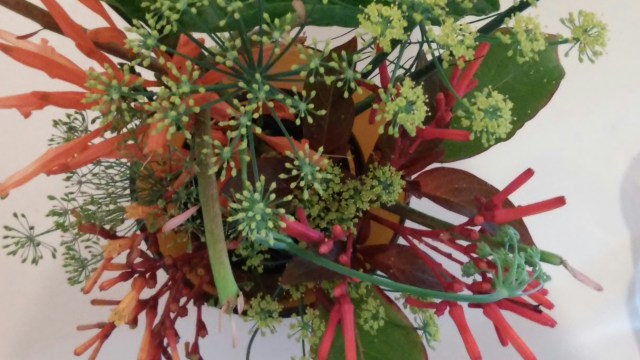
In keeping with my fireworks theme, I began looking around my garden. I have several Firebush, some volunteers and some I paid for. The Firebush flowers look like firecrackers and further searching located some seed heads of culinary Fennel and Dill, the umbels exploding with seed really look like fireworks to me. Here is the Firebush, the native one. I have learned it is called Hamelia patens var patens as plain H. patens is different. Sometimes I think botanists really need to get over it and just call it something else. Of course, I was not consulted on this matter.

20160503_182813

Here is an overhead view, I have to say I like this as it really looks like fireworks:

20160529_143901-1

Included in the vase are the two types of Firebush, the red on the right Hamelia patens var patens, the middle orange one is H. patens and on the left side is Mexican Honeysuckle, the Justicia from last week. The fennel and dill seed heads are in yellow green.

The vase is not a vase at all. It is one half of a set of Dansk candlesticks my husband has carried around since the seventies. Looks pretty good holding all that firepower. It has never held a candle during my tenure, but I may use it as a vase again.

Bird of Paradise Progression


20160514_174246 (1)


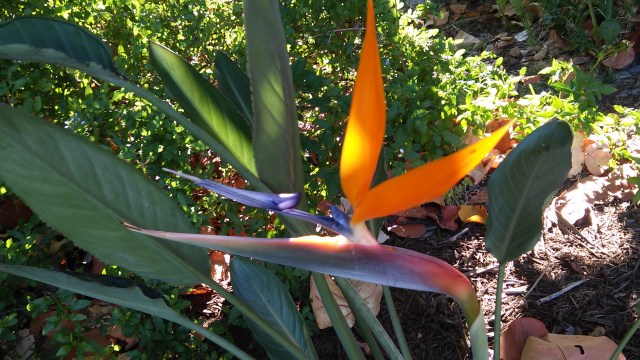
This winter I finally indulged my desire for a Bird of Paradise (Strelizia reginae), debated with myself about placement of the plant, read all sorts of conflicting recommendations, ignored most of them and planted it in a morning sun location that I pass on the daily dog walk. The greyhounds remain unimpressed.

The above picture is full bloom on the first flower. The bud teased me for about two weeks sending a straight stem up that I wasn’t sure if it was a leaf or flower bud, until it started to bend and turn orange and blue.

Thinking these were long lasting flowers I was disappointed when the flower only lasted four or five days. Much to my surprise it bloomed again on the same stem

A curious plant to begin with- I am wondering what it will do next. It seems to be shooting up another something. Stay tuned. Here is the show thus far:


This slideshow requires JavaScript.


In A Vase on Monday – Butterscotch Pudding beats the Rose Bowl

20160521_135255-1

20160521_175109

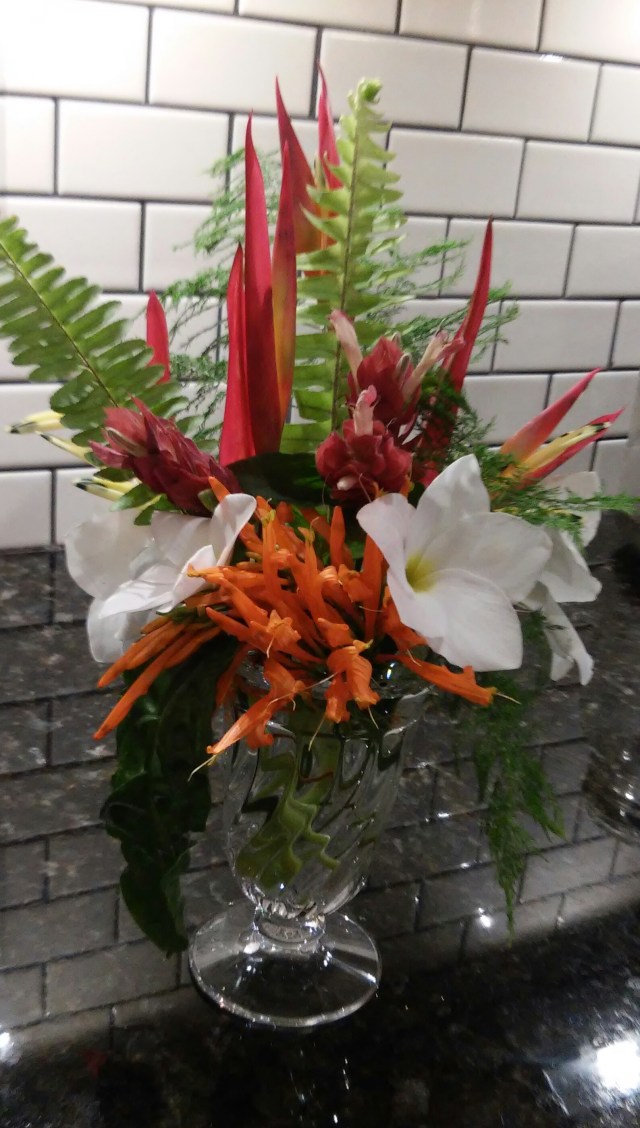
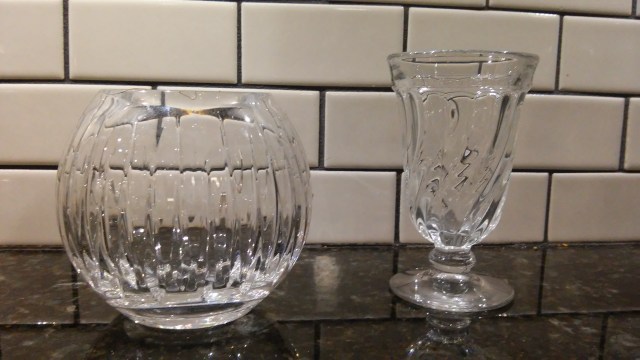
I started to use a Rose Bowl for this arrangement, but the bowl must have sensed my true feelings about Roses (too much trouble and ugly shrubs when not flowering) the flowers were just not sitting right so I had to go to a more straight sided container. See picture above, Rose bowl on the left and Fostoria on the right. The picture is to clarify which Rose Bowl  I was writing about, my husband asked if I was blogging about football this week. The other Rose Bowl is a college football game.

I have a set of these Fostoria glasses, inherited from my mother in law. My husband refers to these as the Butterscotch pudding bowls because that is what she served in them. I really don’t know what they are, it is an oddly sized container for food or drink but works well as a vase. Here is a better picture of the Fostoria.

20160521_135457

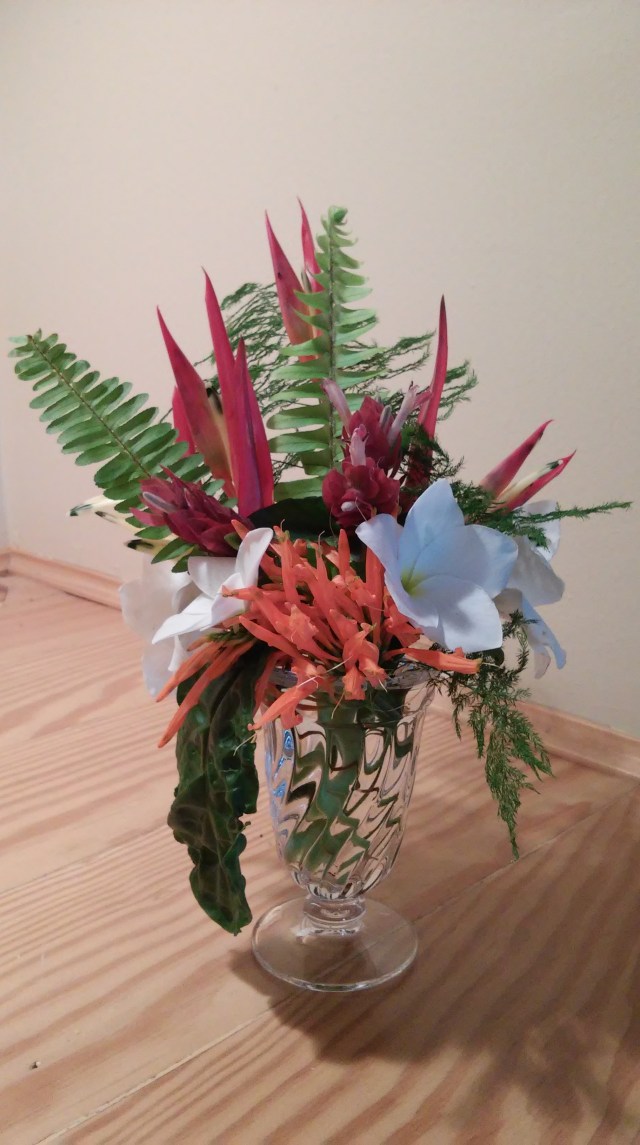
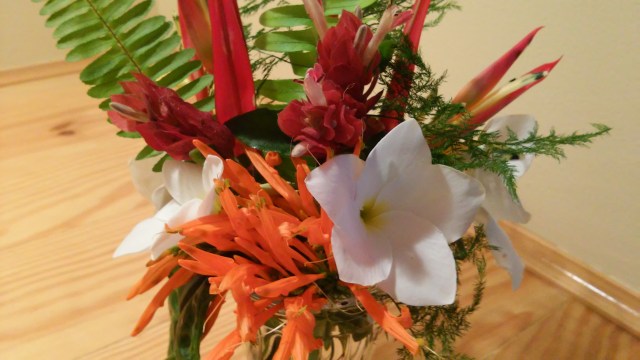
To me the star of the arrangement is a new arrival in my garden, the orange Mexican Honeysuckle (Justicia spicigera), research tells me this plant blooms nearly year round and is a desert tropical that likes regular water. I wonder what these people are smoking who come up with these descriptions sometimes, no doubt something horticultural. Regular water on your desert tropical. Apparently it comes from a weird desert.

The balance of the arrangement contains more Justicia – J. brandegeana, the Red Shrimp Plant in darker red. The lighter red is buds of the Heliconia psittacorum, the white flowers are Bridal Bouquet Plumeria (P. pudica). Greenery is Asparagus and Boston Ferns.

20160521_135509

All this talk about Butterscotch Pudding has inspired me to make some. I think from scratch……Just have to find a recipe with actual Scotch as an ingredient.


Pineapples and their Cousins


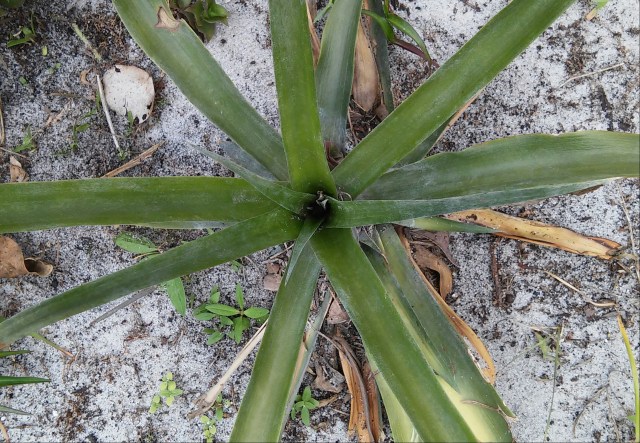
A common element in South Florida gardens is the pineapple patch. Almost everybody has one, from a northern perspective, it seems kind of weird. Grow your own pineapples? Why not? Even one of our neighbors, his yard could be described as nouveau retch, is seen regularly hand watering his pineapples.

20160422_135000-1

Pineapples are in fact a Bromeliad, which are currently my favorite tropical perennial. Among the many Bromeliads I have planted that are purely ornamental I am afraid I have fallen prey to the trend and now have a pineapple patch between my citrus trees. I eat pineapple just about year round and the tops kept rooting in the compost heap. Unfortunately, the above is my patch, not too pretty.

Pineapples have an interesting history. Originally from the area where modern day Brazil is located, they moved via canoes paddled by traveling natives north to the Caribbean Islands where sea captains picked up on them and carried them home. One early accounting of the discovery of pineapple recounts a meal served by the Caribe tribe where a plate of pineapple rested next to a cauldron of boiling cannibalized humans. I think I would have asked for the fruit plate.

A status symbol on the dining tables of colonial America, pineapples were often rented for centerpieces and then sold after a few uses for eating. Thus the pineapple as a symbol of lush hospitality was born. The prevalence of pineapples as a decorative element may be explained by its being cheaper to carve decorative pineapples into bed posts or garden ornaments instead of renting them by the hour.

The Treasure Coast of Florida, the area I currently call home was once home to a large pineapple plantation. In 1895, Jensen Beach, Florida was named the Pineapple Capital of the World, shipping a million boxes of pineapples a year during the summer season. Later that year a devastating freeze decimated the crop, followed by a few tragic fires and fungal diseases that finished off the pineapple industry by 1920. Agricultural pursuits were redirected towards citrus. Wild Pineapple plants can still be seen on Hutchinson Island and are attributed to the original owner of the plantation, John Jensen.

Like many other popular plants, pineapples have also been bred for Ornamental use. Here are two prettier pineapple plants.


In A Vase on Monday – Frangipani and Fennel Failure


20160515_113820-1

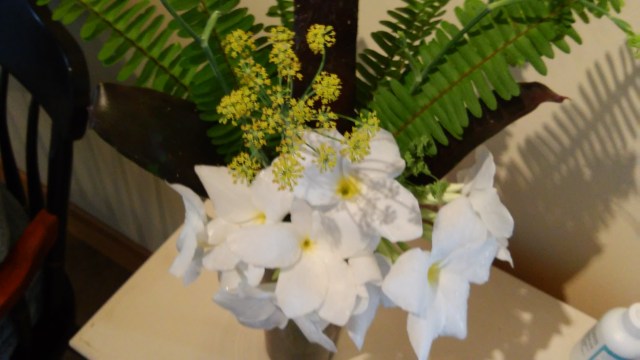
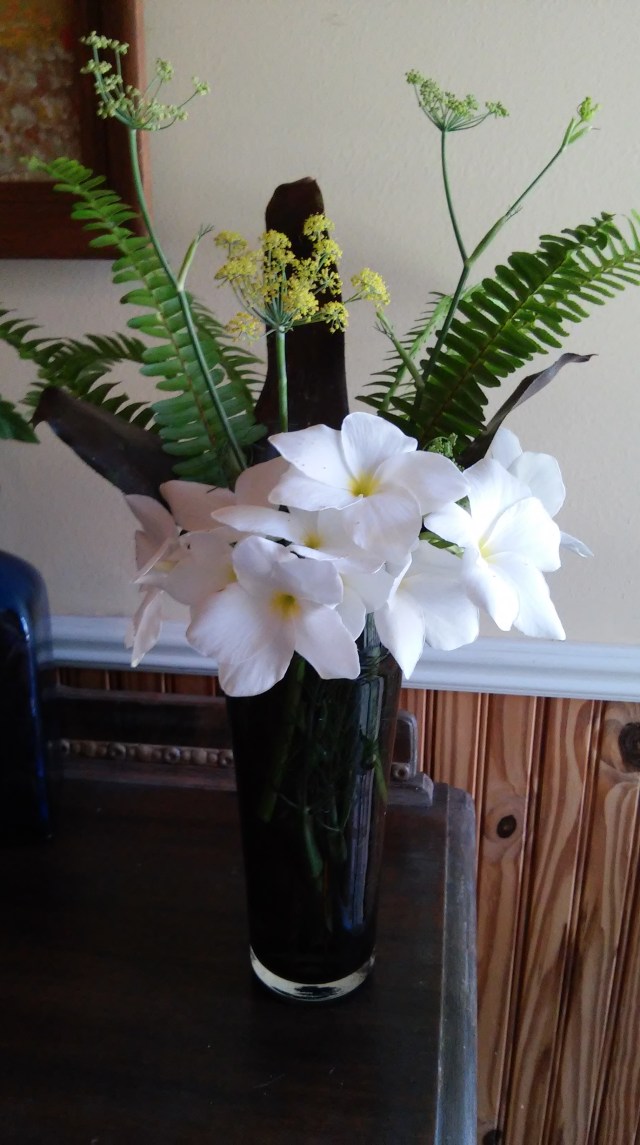
The promise of the eventuality of summer is evidenced by the Frangipani starting to flower in South Florida. The Frangipani in this vase is Bridal Bouquet, a columnar, semi evergreen variety I have come to love in my garden. It is not as fragrant as other Frangipani but the evergreen foliage and form of the plant make up for any shortcomings in fragrance. I have been waiting to see what color the larger Frangipani in my garden are and blast it they are white as well. So, I am in the market for some more colorful friends for the white flowers.

20160515_113615

The failure in this vase is the Fennel, the chartreuse starbursts looking like Dill or Queen Annes Lace. I have been trying to grow culinary Fennel for years from seed. It gets about half the size of a grocery store Fennel and then bolts. I think the climate here is just wrong for Fennel, but have enjoyed eating the foliage and using it in flower arrangements.20160515_135536

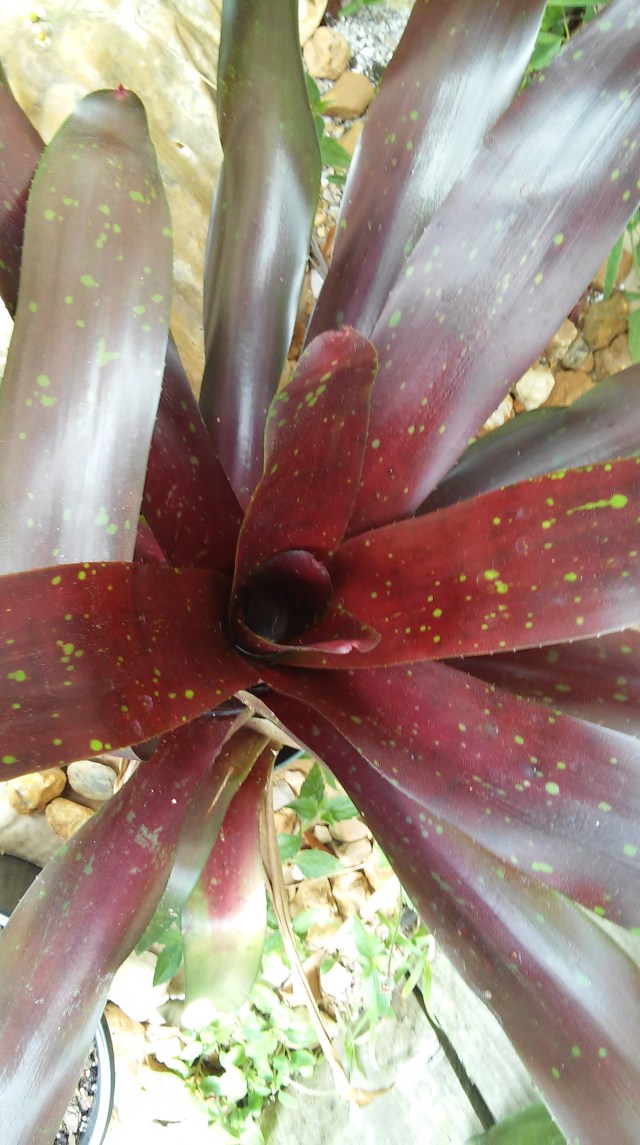
The Burgundy foliage is from my latest Bromeliad bargain. Not a clue what it is. Bargain Bromeliad $5, named specimen, $40. I can live without knowing the name and to me, part of the fun of gardening is seeing what happens next. The other foliage is my everpresent Boston Fern or more likely its evil lookalike tuberous Asian Ferns.

Here is the Bromeliad, burgundy with chartreuse spots, a perfect foil for the yellow green Fennel flowers. If anybody knows its name, please let me know.

20160420_111958

The smoke grey glass vase was from a bargain store near my house bought years ago when I was overrun by a beautiful but much too enthusiastic Red Alstroemeria. The red and gold flecked flowers looked wonderful in the vase, I had a smoke grey glass vase full of Alstroemeria all summer for years.