The Heat is On

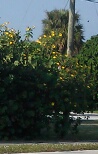
The rainy season officially started about a month ago here on the Treasure Coast in South Florida. It just didn’t start raining until the past week. Plants were getting crispy and I was having to provide supplemental water, even in the irrigated areas. My appreciation for the native plants has gone up. Here is the native shrub, Firebush, Hamelia patens, not missing a beat and attracting butterflies and a large selection of bees.

Firebush and Friend

Firebush and Friend

I have been waiting for precipitation to move plants around in the garden. Now the dilemma is the humidity – it has hit 100 percent several times already., not pleasant gardening weather. Some of the plants are enjoying the heat and humidity more than me. The Ixora burst forth as soon as the rain started, I take back all my grumbling about the special Ixora fertilizer I had been faithfully applying – it clearly works. I can’t recall having a shrub with more flowers, ever.

Dwarf Red Ixora

Dwarf Red Ixora

The Yellow Allamanda I trained to the fence liked the rain as well. Interestingly enough, the native version of this Allamanda was completely eaten by caterpillars! I think it hosts a good butterfly, so caterpillars were probably good.

Yellow Allamanda

Yellow Allamanda

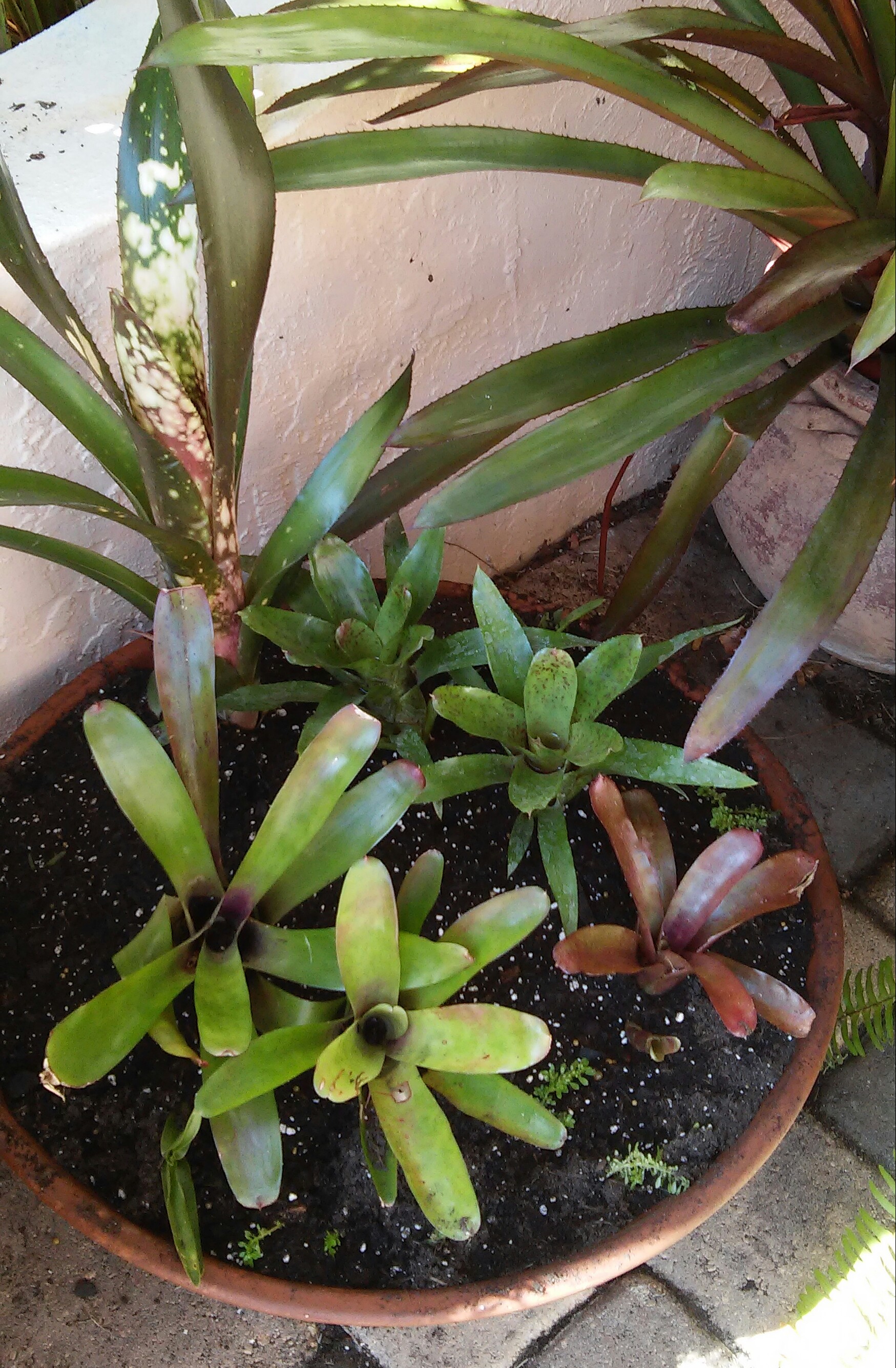
The rainforest Bromeliads also enjoy the summer. This is a Miniata Aechmea, it reminds me of red hots and is painfully easy to grow.

Miniata Bromeliad

Miniata Bromeliad

My final happy plant is a container garden actually. I have had this Dragonwing Begonia around for a couple of years, it was getting puny so I cut it back, found some Boston Fern in the yard (another wonderful native plant, it just comes up!) and put it on my front porch in part shade.

Dragon Wing Begonia and  Boston Fern.

Dragon Wing Begonia and Boston Fern.

Dragon Wings are a long time favorite of mine and I am happy I can grow them here, where they are apparently a perennial. I rooted some cuttings and they are quite happy as well. Heat and humidity are good for something!

I just looked at the weather app on my phone, it said 88 degrees but it feels like 108! I am going to stay inside and perhaps join my dogs on the cool tile floor. Although there is a promising looking group of clouds forming to the south.

Royal Ponciana – Delonix regia

The Flamboyant Tree

The Flamboyant Tree

If Tabebuia is the harbinger of spring in South Florida, then The Royal Ponciana (or Flamboyant Tree) is the harbinger of summer and the rainy season. I prefer not to use the H word in regards to seasons.

I have heard people refer to these trees as Flamboyants, and I always have to stop and think about what that is for a minute. They are pretty flamboyant. I think the trees look as if they are covered in sprays of red orchids. Ponciana starts blooming in May and then continue  into Summer the leaves seem to follow the flowers and are ferny, deep green and eventually cover the tree with a fine textured foliage providing shade for the sun weary Floridian. The floral display is followed by large pods like beans (this is a member of the bean family) In some Caribbean countries, Poncianas are called “Woman’s Tongue” because the pods rattle in the wind.

A native of Madagascar and India these trees are planted the world  over in the tropics for their fine floral display. Named for  M. DePoinci, a governor of the French West Indies in the 1700’s, the Ponciana is celebrated with a Fiesta and a Festival in Miami around the first week of June.

These trees lend a tropical flair to any landscape and eventually take on an umbrella form reminiscent of trees in the African savanna. There are numerous Poncianas in my area. Of course, most of the horticultural literature I have seen says they shouldn’t grow here. Generally, I see 10B as the hardiness zone limit, I am pretty sure this is 10A – the coastal area of Martin County. Gardening friends in Vero Beach report Ponciana do not do as well there and I have heard that Ft. Pierce is their northern limit.  The lady down the street who is a great gardener advised throwing all the books away and just giving things a try. A reasonable suggestion.

These trees should be placed in the sun and are not for the faint of heart. Fast growing and with the potential of attaining a size of 40 by 40 feet, they need some room to spread and also produce a deep shade that it is difficult to grow anything under. They are semi-deciduous; so if you are a Snowbird tired of raking leaves this tree is not for you. The pods also are pretty messy. I got in touch with my inner Southern Belle at Christmas by spray painting some Ponciana pods silver and using them as a front door decoration along with preserved Cabbage Palm fronds..

Throw the books away

The sunsets and the dogs on the beach are great reasons to live in South Florida. Trying to figure out how to garden here might be another story. Having spent most of my life 600 miles north of here, I thought I would be able to buy some books about what grows here and figure it out. Come to find out there really aren’t any good books.

The title sounds like something Hitler might have done. Actually, it was a bit of advice given to me by a longtime Treasure Coast gardener a few years ago. I had been lamenting the lack of good gardening information for our area and frustrated by what I had been reading in the Florida Gardening books. She said ‘throw the books away, they have no meaning here’.

Mondo that has seen better days

Mondo that has seen better days

This kernel of knowledge proved correct and popped into my brain this morning as I was looking at the charred remains of my Mondo Grass (that supposedly grows in Zone 10 – where I live) My suspicion is Mondo Grass will grow in Zone 10 if you import soil and water for it and keep an umbrella over it at all times, otherwise, forget about it. I had Mondo Grass further north and it was a reliable nearly indestructible groundcover. It was used as lawn in places too shady for turfgrass.

The Mondo Grass was my last rely on the books installation. My other major char broil was Bronzeleaf Begonias, which I did not even know could be burned up. I planted them in front of my Soap Aloe in my South facing front yard. Once the summer started they curled, browned, withered and unceremoniously died. The Aloe looked and still looks great. I feel bad about throwing away the offshoots sometimes, but not everybody wants a Soap Aloe. Instead of gaining sea legs on a ship, I am gaining sand legs in gardening. And usually end up covered in it.

Our Soapy Friend

Our Soapy Friend

This had left me wondering if it is really possible to write a useful gardening book with plant selection advice for a wide geographical area. I think not.

Weirdness Wednesday – Tree Cattle

Tree Cattle

Tree Cattle

Here is another example of weird coastal animal life. The webby things on the trunks and branches of my Gumbo Limbo tree seem startling and might make you run for a can of bug spray. I try to avoid using pesticides in the garden.  I happened upon an article about tree cattle at some point, so I knew what these were and I actually showed them to our bugman (bugs in the house are fair game) We were both fascinated.

These are actually beneficial insects. Archipsocus nomas to be exact. Barklice is the common name. The beneficial aspect of these bugs is they clean fungi, dirt, algae and dead bark from the trunk of the tree. Bark maids cleaning up tree trunks for you. The lice are called tree cattle because once they are disturbed they move en masse. Like a herd of cattle.

I wish they would come and do the floors in my house.

Slideshow from Treasure Coast Wetlands

This slideshow requires JavaScript.

I recently completed a class in Native Plants associated with Palm Beach State College. Here are some of the plants from our nearby wetlands. Most of the pictures are from Hawks Bluff in Jensen Beach.

Hopefully we will be able to save all these plants for our future generations to enjoy. For now I will take a hike in my neighborhood to visit.

Golden Shower – Cassia fistula

Some of Florida’s best summer flowering trees are starting to bloom. These Golden Shower trees are about halfway to full bloom. Everytime my husband hears the tree name he snickers, but who wouldn’t? The sausage like fruits are enough to make me laugh without hearing the name. Some of these tropical trees have peculiar fruit that tends to hang around and be fairly unattractive. The leaves on the tree fell off for the most part and the fruit turned brown. Here is the fruit last fall.

Golden Shower Fruit

Golden Shower Fruit

Here is the tree halfway into full bloom:

Golden Shower Tree

Golden Shower Tree

The leaves are filling back in on the tree and it will be fully green through the summer and then produce another set of fruit. I am thinking at some point someone has to pick up a lot of this fruit. But I really haven’t noticed it as they have a good maintenance crew and it is not in my yard.

The first one of these trees I encountered was planted alternating with Rainbow Shower trees as a streetscape planting in Maui, quite festive and tropical. The Rainbow Shower trees flower has a literal rainbow of color on it. Quite something to see and a bit overwhelming. It took me awhile to figure out what the trees were. My first thought was “it’s a Laburnum”, nooo, not in Hawaii. One of its common names is Indian Laburnum and Pudding Pipe Tree is another. Apparently this tree has a few medicinal uses, treating constipation, skin infections, and people in India smoke it – for what reason I am not sure.

Native to Southeast Asia, the Golden Shower is planted as a street tree in tropical climates the world over. I am glad we have a few in front of our library.

Collecting Treasure Coast Passalongs

It is entirely possible the term “Passalongs” is Southern American slang. In the Deep South gardeners typically pass along their favorite plants to friends and neighbors by seed, cutting or division. Once I was the happy recipient of an air layered old fashioned Gardenia. Hence the term Passalong Plants.

There are varying superstitions about proper receipt of these plants. One is you never say ‘Thank you’ because this will result in the plant’s immediate demise – this seems so strange to me as Southerns are, if anything, polite.

Many of these plants might be considered ‘Roadsidea’ as they are superhardy and likely to have been collected by an intrepid gardener for their outstanding flower or other characteristics.

Everglades Tomatoes

Everglades Tomatoes

Here in South Florida, contrary to most of the Northern Hemisphere, the gardening season is winding down and gardeners are sharing plants for installation before the rainy season begins. In the case of the Everglades tomatoes, the seeds will be saved for planting next fall.

I am not so sure about the Everglades Tomato. They are the small tomato at the top of the picture, the bigger ones are Grape Tomatoes. These are native to the Everglades, hence the name, some people grow them year round. To me, they have a beefy taste and are too small to get the full tomato experience. I want a burst of sunshine when I bite into a tomato. I may have to stick with my favorite Sweet 100s.

I call these Groundcover Bromeliads, they are some type of Fireball Neoregelia, maybe Atomic. Commonly sold at Garage Sales and passed along by division. I have striped, spotted and red. They spread and form a groundcover. I find that I am not worried as many gardeners about botanical nomenclature when I find a great deal at a garage sale. Please forgive me for spreading ambiguity.

Groundcover Bromeliad

Groundcover Bromeliad

Groundcover Bromeliad

Groundcover Bromeliad

Painted Fingernail Bromeliad

Painted Fingernail Bromeliad

This is the aptly named Painted Fingernail Bromeliad, an Aechmea variety. My neighbor gave me a few pups from her plants. I saw these growing by the side of the road for a long time before I managed to find out what they were. Like many passalong plants, these prove to be pretty indestructible and will grow in sun or shade.

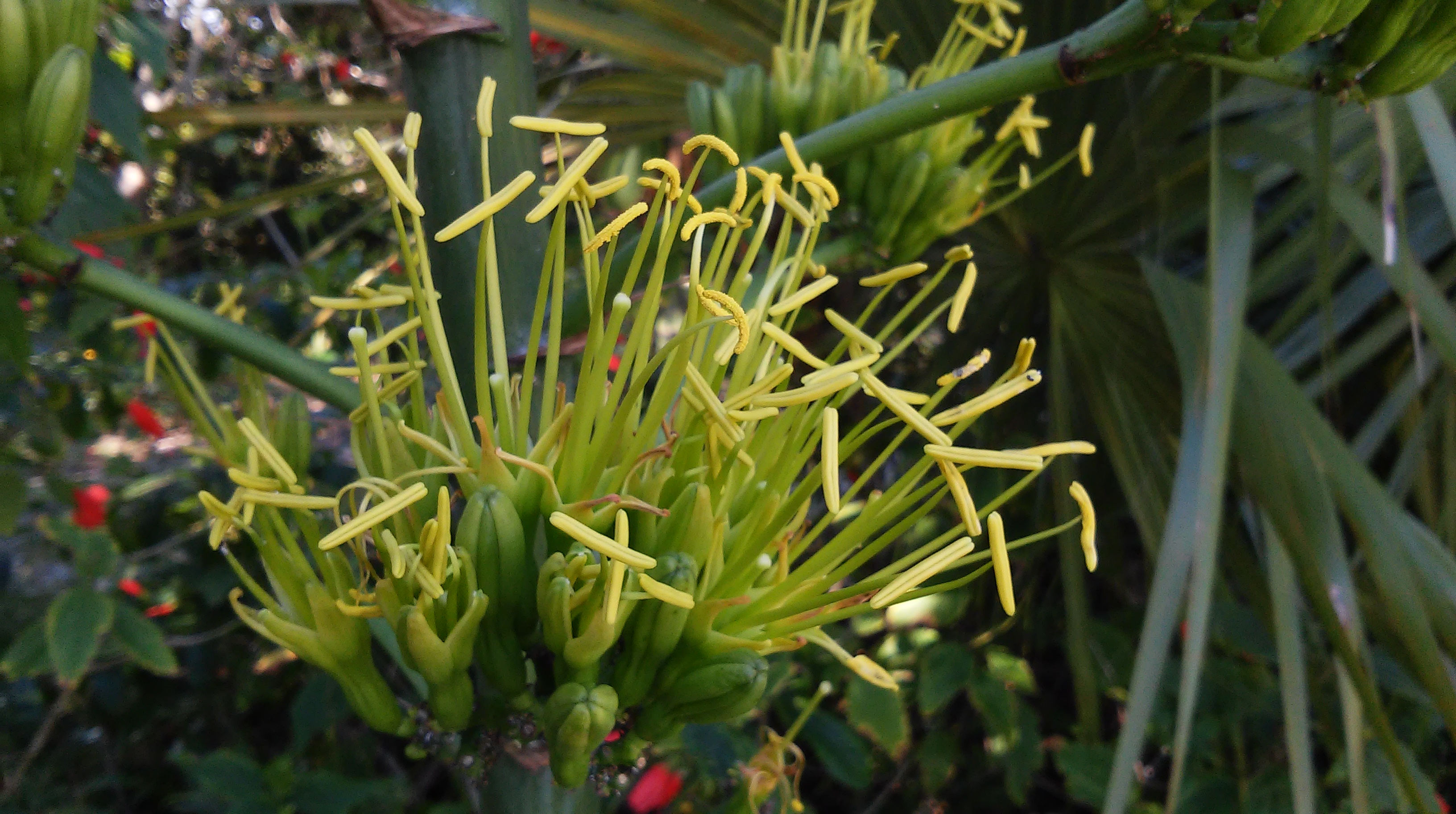
Succulents are another excellent passalong as they reproduce quickly with side shoots. Just break one off and replant in hot sun and infertile soil. They may need water once or twice. The Agave and Soap Aloe are from my friend, Eddie.

To a certain extent all of these plants are a double edged sword. Yes, they thrive in our difficult environment. Maybe a little too well. If not maintained through careful sharing, the garden could be at risk of being overrun. I wouldn’t mind with the Bromeliads, except they are pretty sharp as are the succulents. So, mine are kept at bay and cleared from the edges of walkways.

Now that I have collected all these plants, I have some ready to pass along, should anyone need a new plant or two t try. I do hate to throw plants away.

Avoiding the Technicolor Yawn

Red Hibiscus

Red Hibiscus Flower

One of my horticulturally oriented friends used to say “those annual beds look like Mickey Mouse threw up”. You know the ones; the aptly named “Cocktail Mix” Begonias backed up by Multi colored Caladiums. A kaleidoscope of red, pink, white and green so variegated you can’t focus and then start feeling queasy.

I realized the bed I was trying to use my entire assorted collection of plants waiting to be planted (that I bought because they were interesting or a great bargain or I had never seen one before or..) in was headed in that direction and decided to settle the colors down before I planted something ghastly. Colors were edited to this:

Then I added two green textures:

Sedum

Sedum

Pringles Dwarf Podocarpus

Pringles Dwarf Podocarpus

There is an ancient Red Hibiscus at the end of the bed (the top photo) it doesn’t bloom often, so I am hopeful no one ends up nauseated. My problem is I still have 10 or 15 assorted plants around and I just bought two more.

Weirdness Wednesday

Pygmy Date Palm Flowers

I was walking through my house this morning and glanced out the side door for a moment and spied a large bird walking down the driveway. Like four feet long. Upon further study, I realized it was a Peacock! Very strange. I grabbed my camera and went out the front door to sneak up on the bird and get a picture.

And the bird was gone. Vanished. Had I dropped some acid last night and forgotten?

I did see the Pygmy Date Palm flowering and took a picture of that (above) Because, well, that is pretty weird as well.

Later I realized that Peacock must have been one of the ancestors of Frances Langford’s famous flock. Frances Langford was a movie star who lived nearby in the 1950’s and had a Polynesian style resort with a flock of Peacocks.

No acid was taken here. I did have another cup of coffee.

Chopped Gardening

One of my guilty pleasures is watching Foodtv. I have a few favorite shows that are religiously recorded for later viewing, Chopped is one. For those of you not familiar with Chopped, a group of four chefs is given a basket of sometimes bizarre food items – say, venison, gumdrops, cinnamon liqueur, broccoli rabe and rice cereal, then the goal is to make a gourmet three course meal  (using the basket ingredients) within a certain timeframe. Other ingredients may be added, but all the basket items must be used. The chef’s food is reviewed on a course by course basis until all but one is left. That chef wins and the rest are chopped.

I was standing outside contemplating where to plant the odd assemblage of plants I had acquired when I realized that my garden is a continuous episode of Chopped. My ingredients are plants. Gardening in Florida adds a few wrinkles to the design process – interesting things just tend to pop up in the garden and there are numerous irresistible plant sales. Then a friend or neighbor leaves an interesting plant on the doorstep. It’s a dilemma.

After two years of dreadful well water, we joyfully hooked up to our public water system last year. I had left a blank spot down our side property line for the purpose of running the line to our house. After the water line installation was complete the plan was to finish the side landscaping.

Life intervened and I had to have hernia surgery. Doctor said in four weeks it should heal. Sounds great, by the way it could take up to six months. It took 5 months, two weeks and then I could move things around in the garden that weighed more than 2 pounds.

The side garden is now weed o rama and I have more than the usual stockpile of odd plants to use in the landscaping:

From friends:

American Agave

American Agave

Large  Orange Blanchetiana Bromeliad

Large Orange Blanchetiana Bromeliad

Things that have just popped up in the yard: Orange Clerodendrum, Pink Pentas, Boston Fern, White Spider Lilies, Pink Rain Lilies and Purple Oyster Plants. A Plant Palette I could not have dreamed up.

How to combine all of these plants in addition to my usual collection of 5 or so Bromeliads is taxing my brain. It’s a real episode of Gardening Chopped. I hope I make it through the first round.