Container Gardening for the Treasure Coast

20171027_155209-1

Sometimes I give presentations about container gardening. I am sharing the information from one of my talks in my blog this week. Flowers, vegetables and herbs can be grown year round in containers on the Treasure Coast of Florida. We operate basically opposite of the rest of the US in terms of gardening. Our gardening season is moving into full swing now. I have just planted tomatoes and vegetables and will be renovating my seasonal color containers as we move outside for the winter. Below is the omnipresent theory for Container Design.
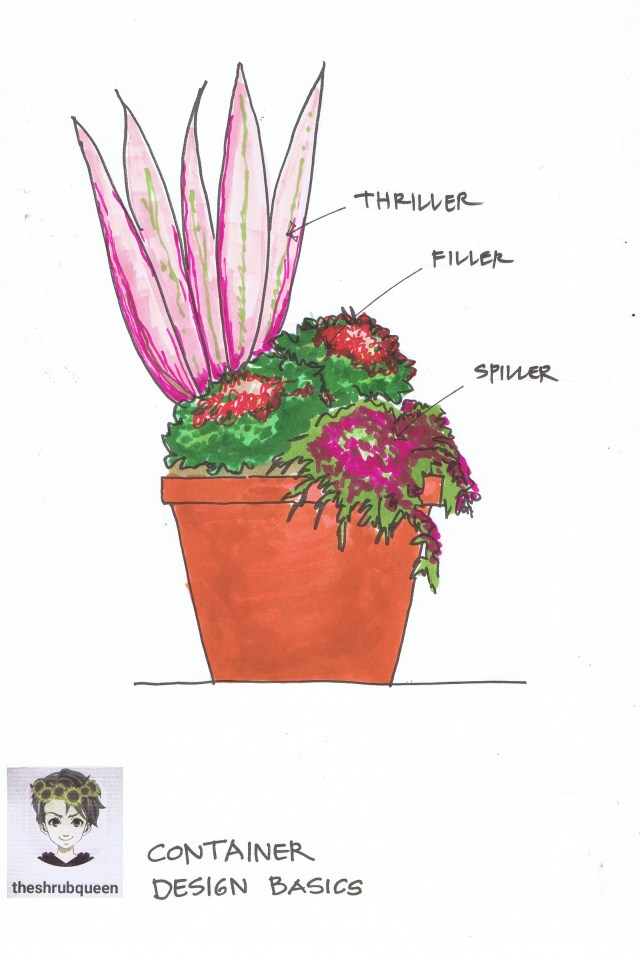
Scan

I find this concept to be sound advice. Planted in an 18″ container, a 6″ nursery pot with a thriller and two 4 or 5″ nursery pots with a filler and a spiller make a wonderful addition to your front door step, porch or outside seating area. Plant selection is another story. More about specific plants later. As far as planting the container goes, see below for the idea:

Scan 1

Tips and tricks for planting containers include:

  • Always use potting soil.
  • If the container is going outside, be sure there is a drainage hole and cover the hole with coffee filters and pebbles to keep the potting soil in the pot.
  • When planting an oversize container, the bottom can be filled with Styrofoam noodles separated with coffee filters or weed check fabric to keep the soil around the plants in the upper part of the pot. Always maintain a 12″ depth of soil in pots to keep watering chores to a minimum. The exception to this rule, Bromeliads, Orchids and succulents can be grown in less soil.
  • Allow an inch of soil from the rim and keep soil level an inch below the rim of the container.
  • Add time release fertilizer after planting, 13-13-13 is best for our area and lasts longer in the heat.
  • Check container daily and water accordingly, many containers need daily watering.

RECOMMENDED PLANTS FOR CONTAINER GARDENING:

Tropical Plants: Many tropical plants thrive in containers on the Treasure Coast. There are many kinds of Bromeliads and Aglaonema, all of the plants pictured require a shaded area.

This slideshow requires JavaScript.

Many annual flowers are good for use in containers, they generally don’t last the summer here so be prepared to renovate your containers every 4 to 6 months. Here are a few plants to consider:

This slideshow requires JavaScript.

Vegetables and herbs are great plants for containers. Many vegetable gardeners use containers exclusively to avoid weeding and backbreaking labor in soil preparation. Notes on seed packets and vegetable plants will sometimes include recommendations for container sizes.

Herbs for Treasure Coast Gardens:

This slideshow requires JavaScript.

There are many other herbs that can be grown here. Fresh herb plants appear in the big box stores and garden centers this time of year. I grow what I like to eat. My favorites are:

Basil: I always have a pot of Basil around, my preference is basic Sweet Basil with the large green leaf. It can be called Genovese or Napletano. I also like Greek Columnar Basil but it can be difficult to find. Basil lasts about 3-4 months in a container so I replace mine quarterly.

Bay Leaf: My first attempt with Bay Leaf failed, I planted it in the ground and it did not flourish. I bought two more and they have happily provided Bay Leaf from their perch in a terracotta pot. Bay Leaf plants can be difficult to find in our area, so buy them online. Be careful to buy the culinary Bay Leaf (Laurus nobilis) – there are other types used for decorative purposes and not to eat.

Dill: Dill is a favorite for use in soups or with sauteed vegetables or fish. A tall, ferny plant this is a cool season plant and will go to seed in the late spring. The seeds are a bonus and can be used in breads or saved to grow more Dill next fall.

Parsley: I prefer Italian Parsley (flat leaf) for flavor, Curly Parsley can be easily grown here as well. This is a cool season plant and will grow here from October until late spring. They may last through the summer if kept out of full sun and watered

Rosemary: Rosemary lasts year round in a pot. Eventually, it needs replacement – I consider this maintenance as we eat a lot of Rosemary. I like the flavor of the upright plants rather than the creepers.

Thyme: Thyme is another cool season herb. I may have managed to get it to live through a whole year once, but this requires a lot of attention in the summer. My attention tends to wane as the humidity rises. I prefer the Lemon Thyme to German for the flavor.

In A Vase on Monday – Maximum Minimalism

20171022_140314

Maximum minimalism seems a contradiction in terms. I was planning to call this Deconstructed Corsage, due to the Gardenia and Orchids. Shortly before I started writing the post, my husband came in and said ‘minimalism’. I countered ‘”it can’t be, too many different things in the vase”. Upon further reflection, there is something minimal about this arrangement, despite the use of six different plants. I think it is the long lines of the vase and Muhly Grass blending all the elements making it appear to be one plant. One spectacularly unusual plant.

20171022_140314-1

Fall has been slow to arrive here, there are some 50 degree low temperatures forecast this week. The temperature this afternoon was less than Autumnal, 86 degrees (feels like 95), 97% humidity. I will believe Fall is here when I see or feel it! The flowers on the Muhly Grass are a better indicator of the season than the weather.

20171022_140837

Plants in the arrangement from the top, Muhly Grass (Muhlbergia capillaris), ‘Cabernet’ Spathoglottis Orchids, ‘Hallelujah’ Bromeliad foliage behind the orchid, striped purple leaves are from Transcandentia zebrina, white flowers are Tropical Gardenia (Tabernaemontana divericata) and Sweet Begonias (Begonia odorata). The vase is a thrift shop find.

I still think this would make a good corsage.

In A Vase on Monday- Dark Glasses

20171015_101710-1

Dark Glasses, my theme this week involves two types of dark glass. First, the vases made of smoky grey (like Ray Bans) and dark blue glass. Next, the contents of the vases, bright enough to require sunglasses.

20171015_101924-1The bigger vase, in Ray Ban grey, is filled with Parrotflowers (Heliconia psittacorum) and Asian Sword Fern, the devil in fern clothing (invasive fern) – the Parrotflowers have rebounded magnificently from Hurricane Irma, causing me to realize cutting them for vases really improves their existence and mine. Probably my favorite cut flower.

20171015_101829

The smaller cobalt blue vase is filled with a larger variety of flowers. My husband’s comment ‘it looks like a meadow’ – a sort of tropical meadow, I think.

The foliage is from Pie Crust Croton, a mad tropical plant by all counts. This shrub sports black foliage with orange, green, yellow and red spots, new growth green and the leaf edges crimped like pie crust. Planted in honor of my husband, the pie maker.


The crusts are reminiscent of the Croton, no? Blueberry and Apple pies.

The ferny foliage is from Asparagus Fern, this finely textured foliage tends to just pop up in the garden and I usually cut it for arrangements.

20171015_101855-1

The flowers are mostly natives, the yellow, Beach Sunflower (Helianthus debilis), orangey rust Gallardia, orange tubular, Firebush (Hamelia patens), the red spikes Tropical Red Salvia (Salvia coccinea) the bright red flower in the middle is from the Coral Plant – an oddity that is a variety of Jatropha, not native.

Happy Monday and I hope Ophelia misses everyone!

In A Vase on Monday -Funky Fall Flowers

20171008_120617

I get some interesting comments from readers about my plant selections. Exotic is the most common description, though weird, unusual and alien have been bandied about. I tend towards the unusual, possibly due to spending over 30 years designing landscapes for corporations. Corporations like a clean, green hedge around their buildings, parsley around the pig is how I refer to the clean green, preferably not interesting in any way. Think Viburnum of any kind clipped into submission. Gardeners tend to be a lot more fun to work with and also avoid workhorse Viburnums.

My garden sports no workhorse shrubs, all selections are off the wall and flowering and fruiting to their hearts content. Corporations would hate it. Not a clipped Viburnum in sight.

20171008_125222

Even I think this vase is funky, put together for texture and color. It speaks of South Florida in the Fall.

20171008_120604

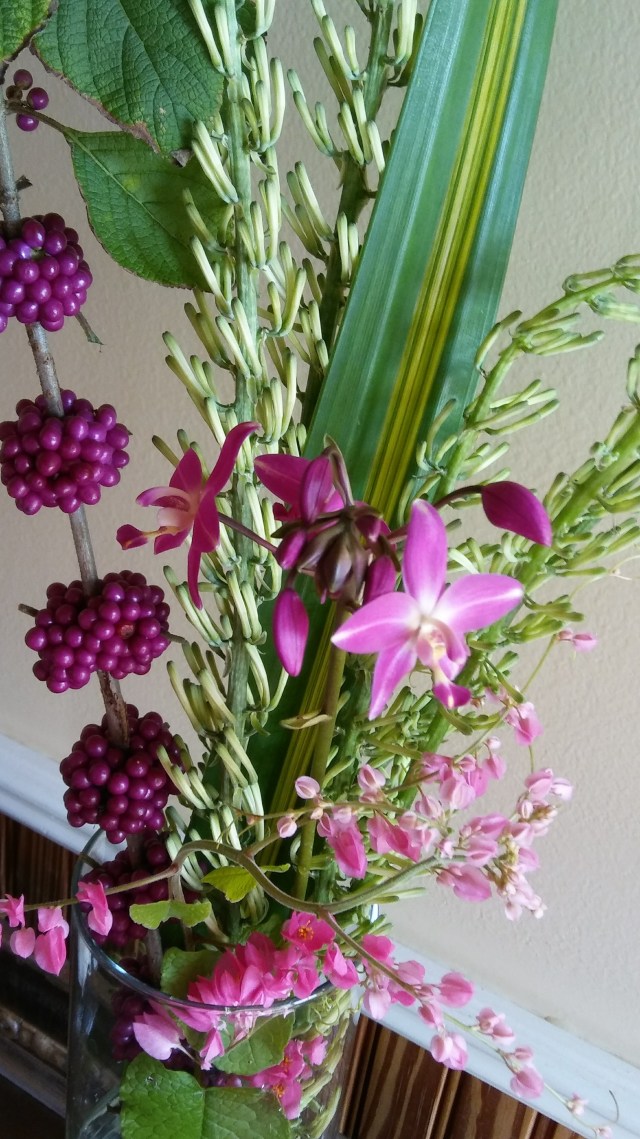
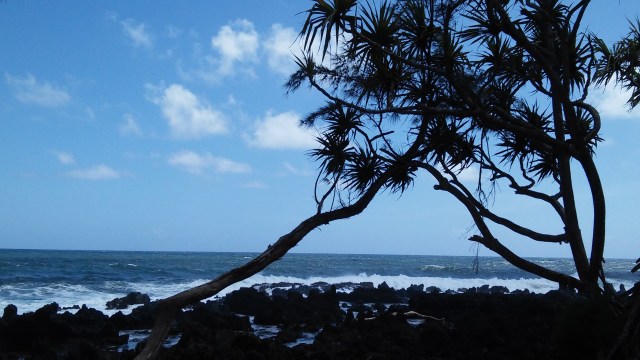
The purple flower is an Orchid, Spathoglottis ‘Cabernet’. The pink vine is a Coral Vine (Antigonon leptopus), some call this Queen’s Wreath. The white spikes are from Snake Plant or Mother In Law’s Tongue (Sanseveira) – they flower here and are considered invasive – it would take a bulldozer to rid my garden of these. Purple berries are from the Beautyberry (Calliocarpa americana) I think the berry production in Florida is triple what my northern plants produced. The striped leaf is from a Screw Pine (Pandanus sp.) I love these and bought a small plant that is surprising me with variegated foliage. Screw Pines are common in the South Pacific and remind me of Hawaii.

20160902_105510

A Screw Pine (Pandanus) on the Pacific Ocean near Hana, Maui. Kinda funky, had to have one in my garden.

Cheers to Resurgens

20171001_114743-1

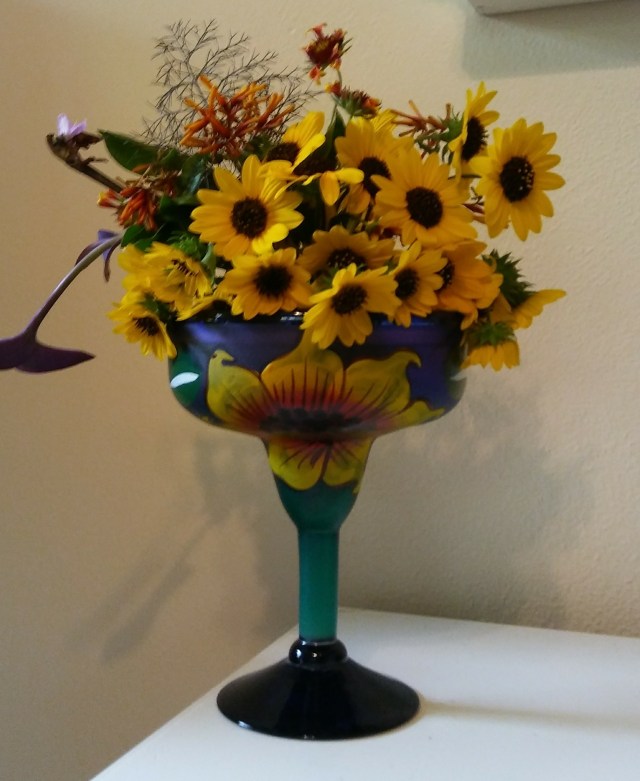
Resurgens is Latin for Resurgence, and the motto of my hometown – Atlanta, Georgia. Atlanta’s resurgence was from the ashes of the Civil War, my garden is rebounding from the encounter with Hurricane Irma. Every good resurgence deserves a toast and this one is filled with Beach Sunflowers in an oversized Margarita glass given to me by a friend.

20171001_114720

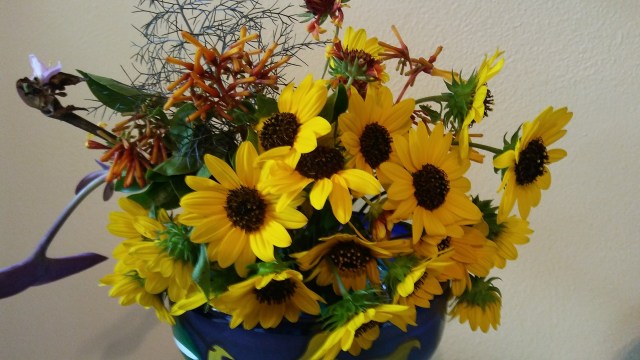
Joining the Beach Sunflowers (Helianthus debilis)  in orange, Firebush (Hamelia patens) and the foliage is a sprig of Setcresea (Setcresea pallida)  some call this Purple Hearts, I think that sounds better. The dark ferny foliage is from Copper Fennel, making a surprise reappearance in the herb garden.

The Beach Sunflowers are a profusion of yellow flowers and the Firebush is just starting to show color again. Other signs of resurgence, the Torch Bromeliads (Billbergia pyramidalis) are making their Autumnal appearance.

20171001_112028

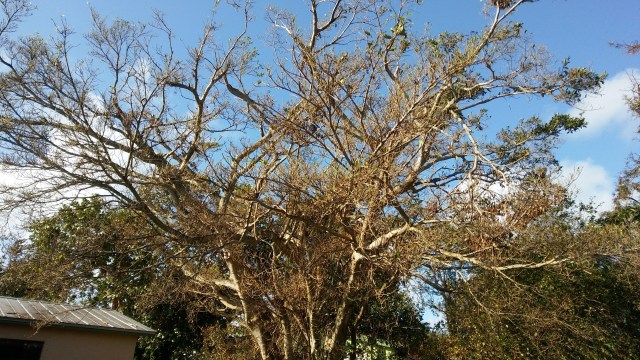
The foliage is a bit worse for wear,  but the flowers are beautiful. The most dramatic transition in the garden is from the Strangler Fig (Ficus aurea). Here is a picture of the Fig two weeks ago:

20170916_091137

Today:

20171001_104154

I will raise my glass for the Fig, now I need to find some limes and tequila.

Cheers!

In A Vase on Monday- Soothing Relief

20170924_132227

This morning our temperatures were in the low 70’s with a nice breeze from Hurricane Maria passing by (a long way off). The humidity was down a bit as well, so I worked in the garden getting my vegetable garden going. South Florida’s gardening season is opposite most of the Northern Hemisphere. Summer vegetables are planted in September and October, so I will have tomatoes in the winter. Hopefully. Corn is not even grown in the summer here as it is too hot for the plant to pollinate.20170924_132320

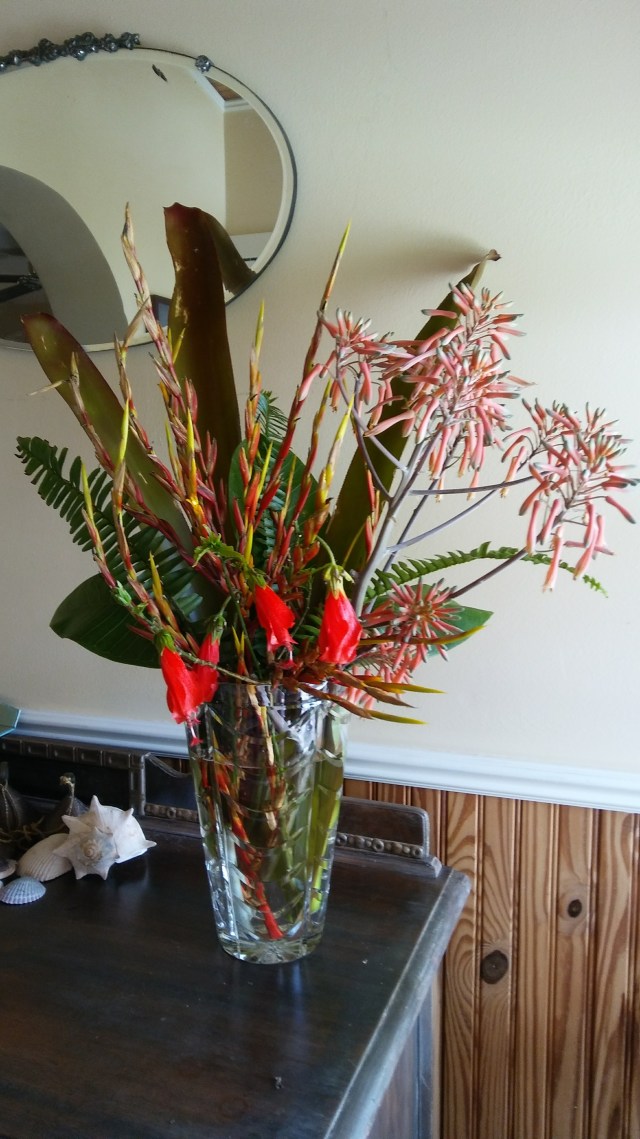
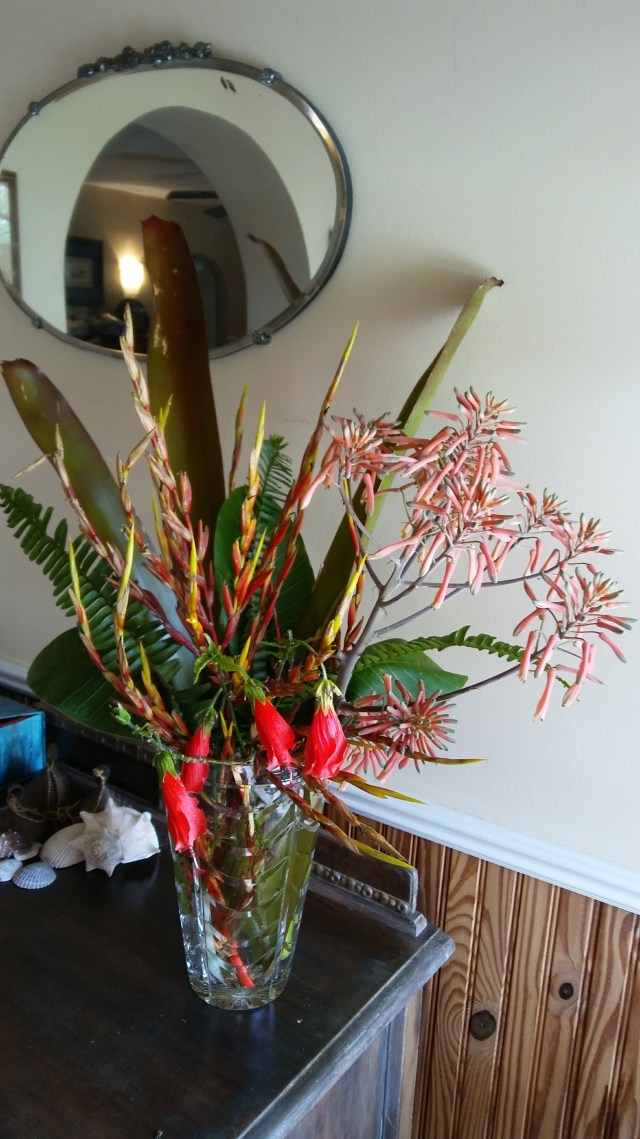
The anchor flower in this vase is a Soap Aloe (Aloe saponaria) which is supposed to be a soothing shampoo ingredient until you read up on it, seems more people are irritated by it than soothed. Stick to the Aloe Vera for relief. The Soap Aloe is the apricot and green candelabra shaped flower. The red flowers are our native Hibiscus, Turk’s Cap Mallow (Hibiscus malvaviscus). The mad funky flowers that look like Lobster Claws are Blanchetiana Bromeliad flowers – Hurricane Irma was not kind to these and I have trimmed the prettier parts for use in this vase. I have been channeling my Southern mother lately and am thinking of drying the rest and spray painting them gold for a holiday wreath. Although, that might be too funky.

20170924_132341

The vase is a big crystal affair that was a wedding gift – oh, many years ago from a dear friend who called the day before Hurricane Irma hit “just to hear my voice”, a truly lovely man. The components of the vase are of such a large scale (2 to 3 feet tall) I thought it called for the addition of some big tropical foliage. The smaller leaves in the arrangement are from Frangipani (Plumeria), the long reddish leaves from the Blanchetiana Bromeliad and the ferns are the ever present Asian Sword Ferns.

20170924_091445

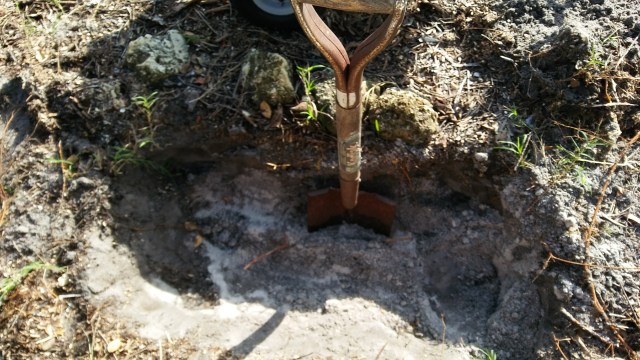
The vegetable garden under construction. Hard to believe anything will grow in this ‘soil’.

In A Vase on Monday – Resilience

20170917_114703

Last Sunday we were already feeling the hot breath of Hurricane Irma. It seemed the earth was sweating, so much tropical moisture swirling in the air. Sunday and Monday were spent hunkered down indoors with two greyhounds and our cat. One of the dogs nervous, the other and the cat not so much. More about the hurricane later.

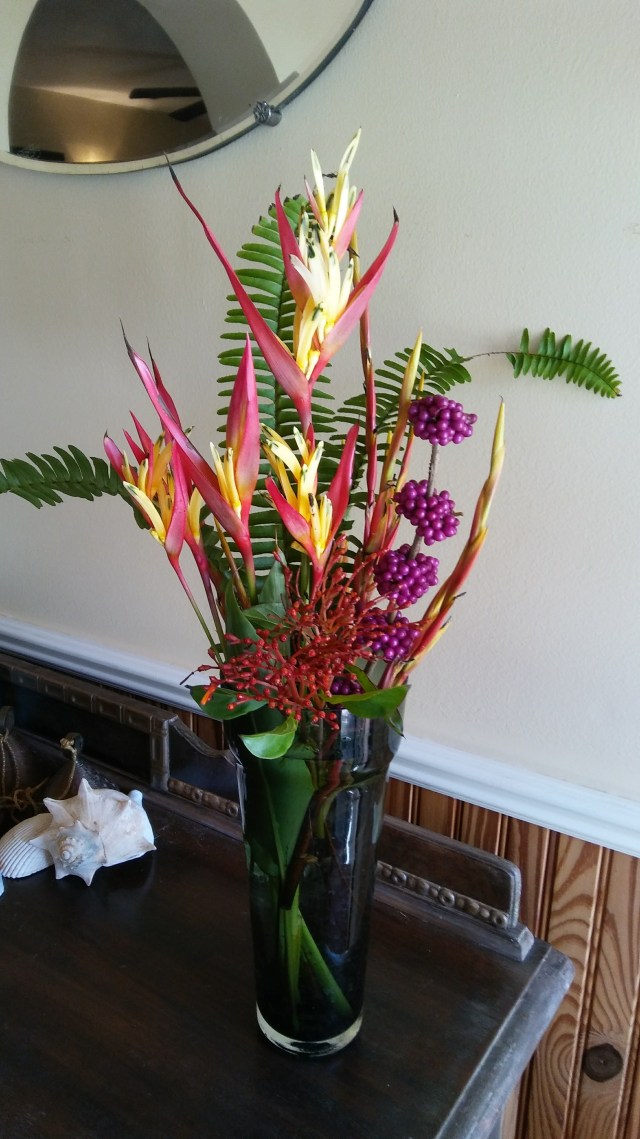
My vase, this Monday is filled with resilient plants from my garden. I had to search a bit to find likely candidates, winds burned or knocked many plants down. Amazingly the berries did not blow off the Beautyberry or the Firebush and I don’t believe the Parrotflowers even paused for Irma. Look closely at the Parrotflowers and note the tips of the flowers are burned black.

20170917_114716

The red berries in front are from the Firebush (Hamelia patens), the purple berries from the Beautyberry (Calliocarpa americana), Parrotflowers (Heliconia psittacorum) in red and yellow. Blanchetiana Bromeliad flowers are beside the Beautyberry and Asian Sword Ferns in the back for some greenery. The ferns are missing a chunk (most of them are) but are amazingly alive and green.

Hurricane Irma:

Hurricanes are generally terrifying. I experienced my first last year, Matthew. A local told me Matthew was a good starter hurricane! One of the most agonizing parts of the experience is the endless news cycle of weather forecasts. At one point 130 mph winds were forecasted for my Living Room. Eventually Irma ended up on the other side of the state. We had sustained winds of 70 mph and gusts to 100 mph off and on for a day or so. And 10 inches of rain. Adding to the fun, Alan (the nervous greyhound) dislocated his toe before the storm. His leg was ensconced in a splint that was NOT TO GET WET.

Needless to say, even though I wrapped the splint in plastic to take him outside, he took off and punctured the splints raincoat with his toenails. During the hurricane. No help available. Fortunately, I have a Facebook friend who is a vet – who advised me to take off the splint. Alan was much happier and chilled out to rest. Toe is much improved.

20170910_102604

The Garden:

The garden is surprisingly resilient. I don’t believe anything was lost to the wind – except all the leaves and foliage that was burned off. We are going to ask the Rainbow Eucalyptus to leave the garden. The top has blown out twice now and the tree just keeps getting taller and heavier.

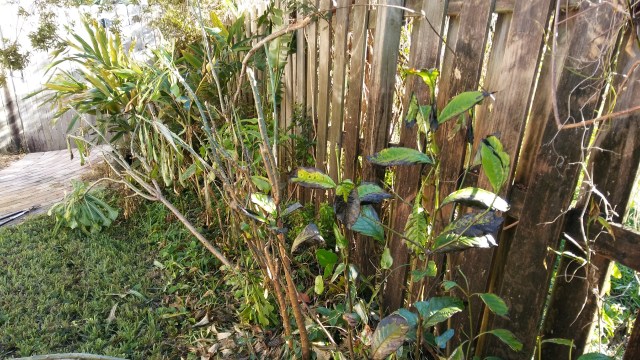
Here is the side garden:20170915_091557

The back side of my neighbors ugly fence was completely covered with Shell Ginger, Lobsterclaw Heliconia, Bridal Bouquet Plumeria and a Mexican Bush Honeysuckle. By Friday, when I got around to pruning- all were coming back from the ground with new growth. I just cut off the dead and righted some of the Plumeria.

The hedge in back:

20170917_113104

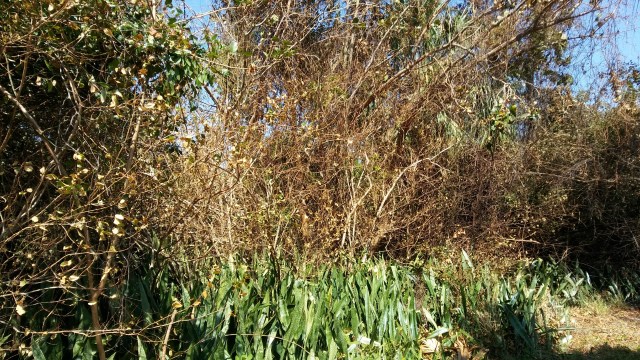
This is a Surinam Cherry hedge, it was fully covered in foliage. The wind blew the leaves off and there is not one in sight. I have been planning to do this exact thing to the hedge and Irma saved me having to haul all the clippings to the curb. I am still contemplating what to do with this and will probably do some additional pruning.

This is a Strangler Fig, the canopy was not quite fully foliaged, but pretty close:

20170916_091137

Again, the wind blew nearly every leaf off and took them along. Saving me hours of raking and bagging! New growth is already on the tips of the branches.

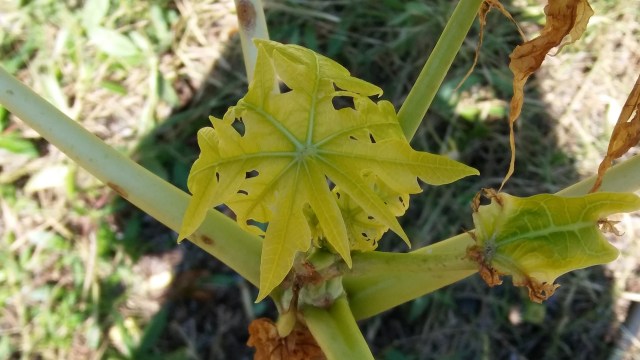
Finally, the Papaya:20170917_113014

This is a Papaya tree I started from seed last year. It is about 3 feet tall and looked dreadful until this morning. It is beginning to shed its burned foliage and producing new leaves.

Resilience. The garden seems to be doing better than we are. Still exhausted. I am told the Hurricane Hangover lasts about a week. Next week should be better. But wait, Hurricane Maria is lurking in the Atlantic. I need a chant for human resilience.

A Vase for Juracan

20170908_115510-1

We have been madly preparing for the arrival of Hurricane Irma this week and I have been collecting all the odd bits left outside that might go airborne. While doing this,  I noticed a number of nice blooms that are probably going to be in the Gulf of Mexico by the time In A Vase on Monday rolls around.

I am beginning to think watching the news coverage only provokes my anxiety, so I did a little research. The Caribe Indians (native to the islands of the Caribbean) had a God of Hurricanes called Juracan which is the origin of the word Hurricane. Depending on what you read, Juracan is the God of Chaos and another Goddess, Guabancex, throws the winds around to destroy everything.

This reminded me of Pele, the Hawaiian Goddess of Volcanoes, known for taking offerings thrown into the cauldron of Kilauea volcano on the Big Island of Hawaii. Hawaiians throw bottles of Vodka and flowers in the volcano to get into Pele’s good graces. I figured a few flowers thrown into a vase might help with Juracan or his lady friend, the hurricane thrower. At this point, it certainly couldn’t hurt.
So, this vase is on a Hawaiian Tiki with some muddy gloves at its feet. Maybe Pele will look out for us, too. A closer view, with storm shutters:

In the vase, in red, Parrotflowers, in orange and yellow, Blanchetiana Bromeliads, in purple, Spathoglottis Orchids, in blue, Porterweed. There are a few Red Shrimp Plants in the vase as well.

Stay safe, everyone.

In A Vase on Monday- Trimmings

20170903_114606

I have been renovating the Greyhound Beach in my back yard this holiday weekend. It is Labor Day in the US and Monday is a national holiday. My Greyhounds, Alan and Charles, have been gleefully destroying the turf behind the patio for the past few years. The mini racetrack in the backyard – visible from space.

20160307_164454(5)-1

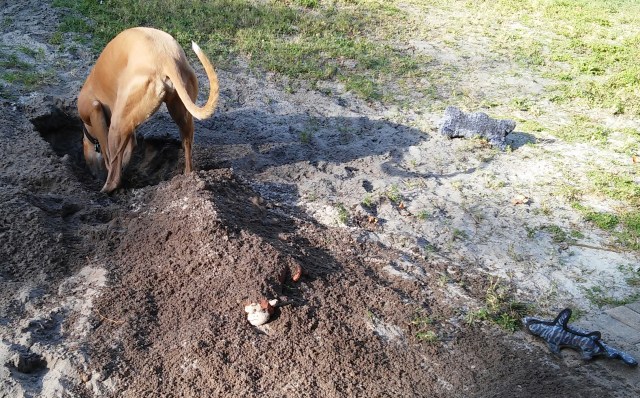
Here is Alan, with his favorite toy, Sharky, digging for reasons only dogs know. I flattened out the holes yesterday and installed edging for sod. Alan has been melancholy all day and refused to eat this morning. Later in the afternoon he relented and woofed down his dinner.
20170903_114722


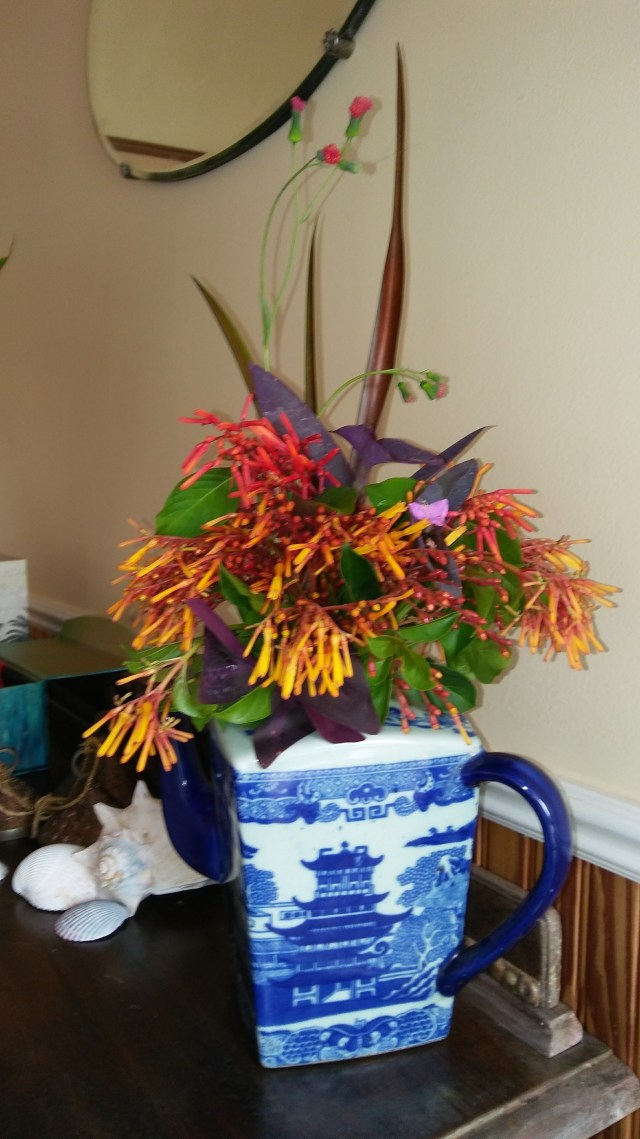
Back to the title, Trimmings. As a part of my reclamation of Greyhound Beach, I decided to trim and tree form a Firebush that has overgrown its space. Trimming off armfuls of flowers. I stopped trimming to contemplate if I could shear the back of the shrub for screening and tree form the front – an Arboricultural dilemma.

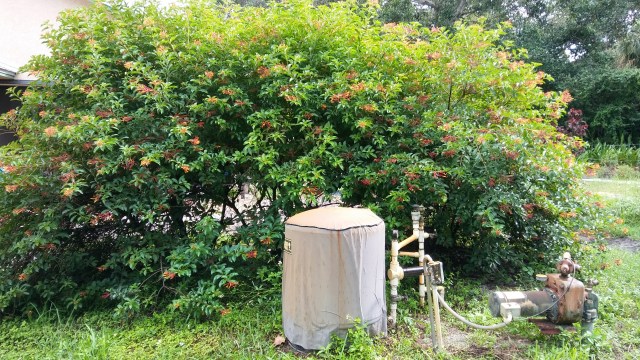
This shrub was sold as a Dwarf Firebush, which actually means it gets 10 or 15 feet tall. Only in the Land of the Giants would this plant be considered dwarf. This sort of horticultural nonsense annoys me. One of the first plants installed in my garden to screen the well equipment:

CAM00121 (1)

Firebush Hamelia patens

Here it is, four years later:

20170903_164649

And I have cut four feet off the top for the past couple of years, the Greyhound Beach is visible through the shrubs.

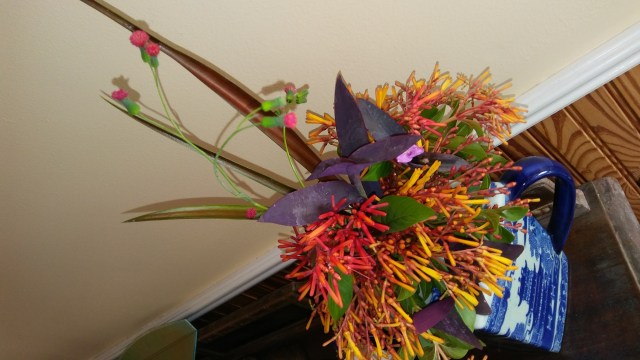
Now, this is where the Firebush trimmings ended up- in my vase. 20170903_114540

The vase itself is an English teapot in the Blue Willow style, one of my favorite flea market finds. There are two kinds of Firebush in the vase. The dark red is the native Hamelia patens var patens. The ones from the gigantic orange Firebush are Hamelia patens, I think, botanists argue about these plants. I thought some purple was in order and added Setcresea, some variegated Dwarf Pineapple foliage and some red weeds, um, native wildflowers. The name escapes me – one of those things you think is pretty until you realize the seedheads are like dandelions and there are 10 million in your yard.

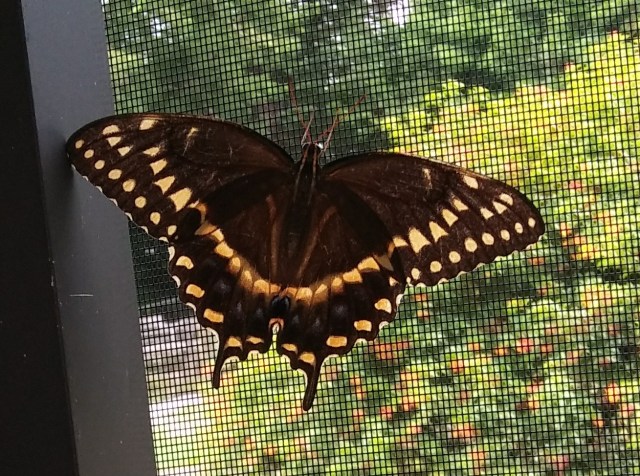
Another wonderful attribute of the Firebush. Butterflies love them. Here is a Black Swallowtail that was passing by:

20170823_155849-1

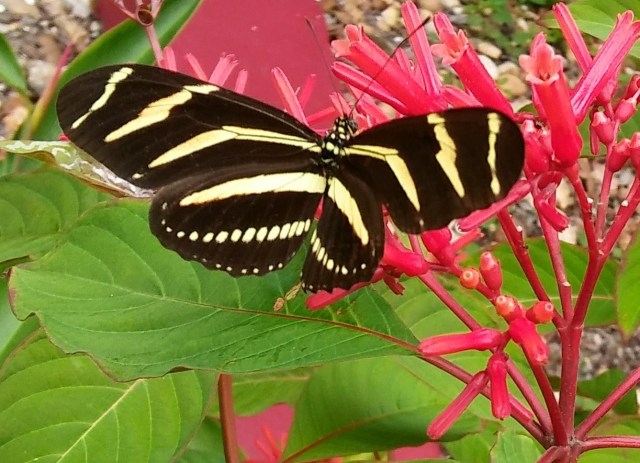
And a Zebra Longwing:

20170608_152406-1

A gigantic Firebush in the garden has some advantages.

Happy Monday.

In A Vase on Monday – Floridian Fall

20170827_103206

It’s another stormy Sunday in South Florida. Hurricane Harvey hit the Gulf Coast of Texas on Friday and is still pummeling the Greater Houston area. Our blog friend, the Automatic Gardner, is there.  According to her latest post, so far, so good. Best wishes and luck to her.
The Atlantic Hurricane Season is in full swing, peaking on September 10. So far, our area has avoided any truly stormy weather. The flowers in my vase today are all native to the area and at their best during the height of Hurricane season.
20170827_103233

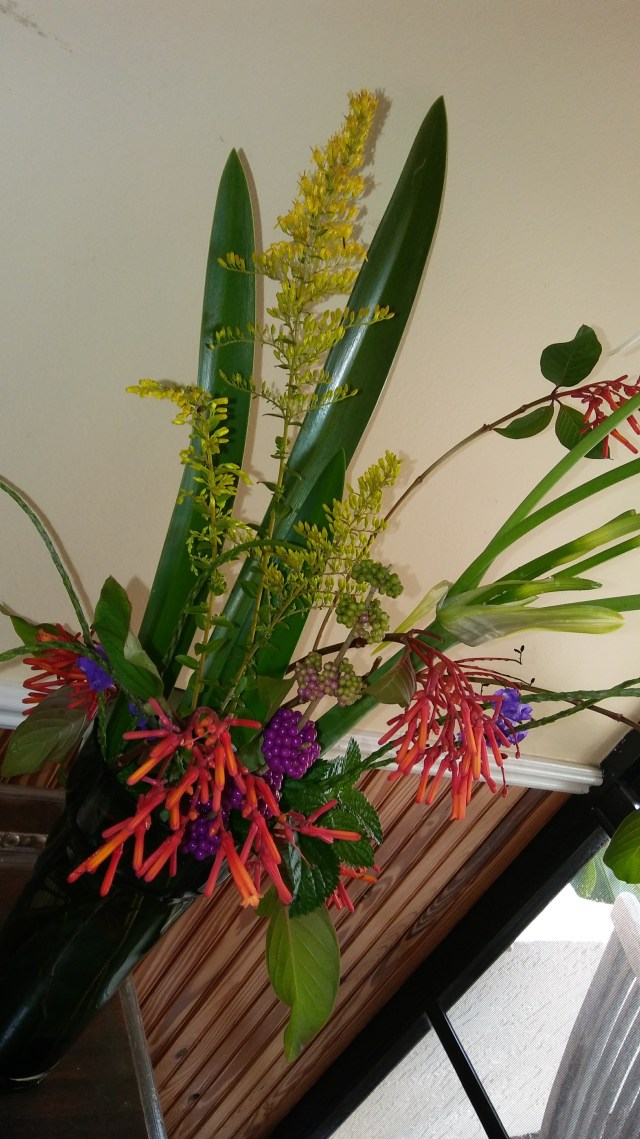
All of the materials in this vase just appeared in my garden with the exception of one. Beautyberry . The purple berries come from the Beautyberry (Calliocarpa americana) I bought a few of these shrubs from a local nursery going out of business. The rest of the flowers just came up and me being me, I left these unknown plants to see what interest they brought to the garden. The orange tubular flowers are Firebush (Hamelia patens var patens), the yellow flowers are Chapman’s Goldenrod (Solidago odora), the blue flowers are Porterweed (still not sure exactly which one).

20170827_103240

The white flowers and foliage in back of the arrangement are from our native Hymenocallis latifolia (or a friend) These are sometimes called Alligator Lilies and have a lovely scent at night. I found a huge clump of these in the front garden years ago, mistook them for Amaryllis, divided them and have an enormous border of Alligator Lilies in my back garden. Soon to be spectacular, October last year we had Hurricane Matthew here and then the Alligator Lilies flowered. I was surprised, humbled and happy I had divided all of them.

I think of the components of this arrangement as a gift from Mother Nature to remind us of the good things she provides.

Hurricane season notwithstanding.

Happy Gardening.