In a Vase on Monday – Holiday Infusion

img_20191201_133207

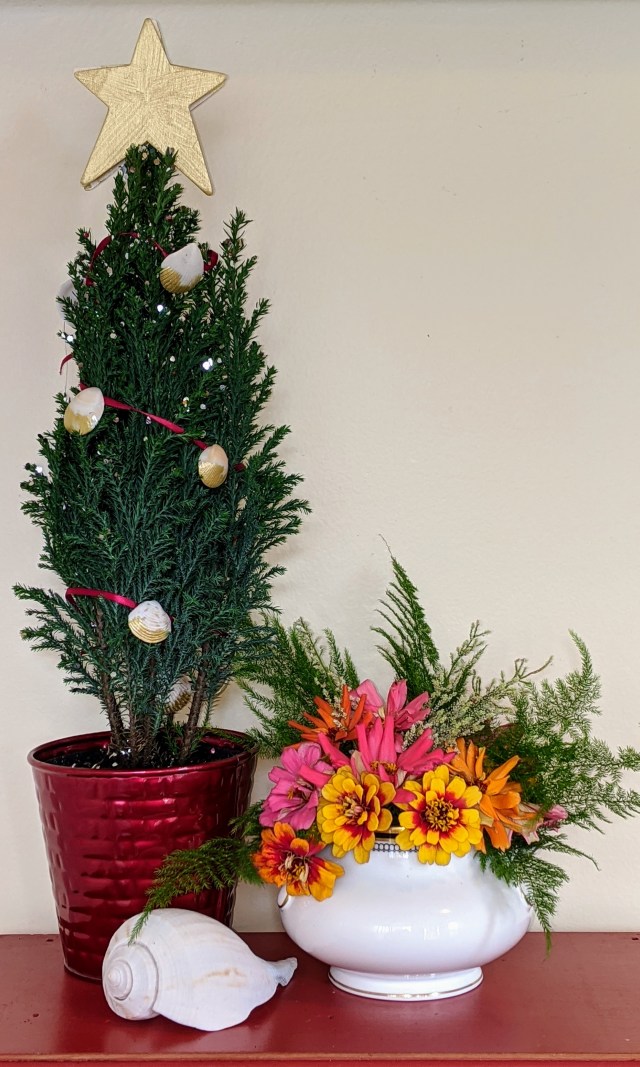
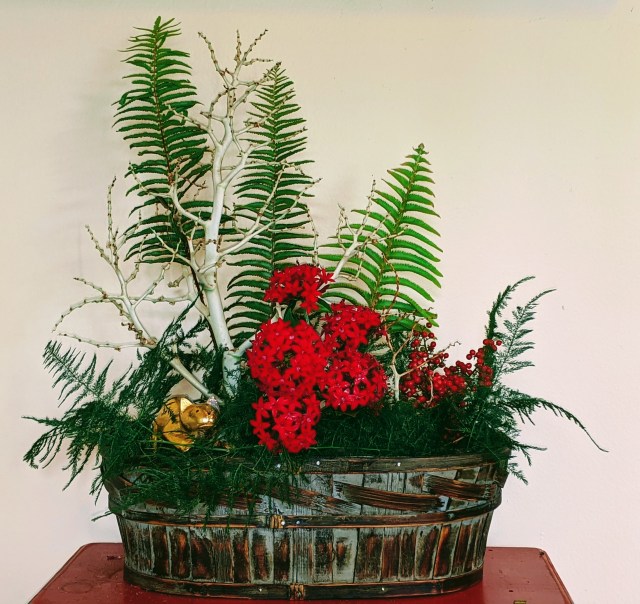
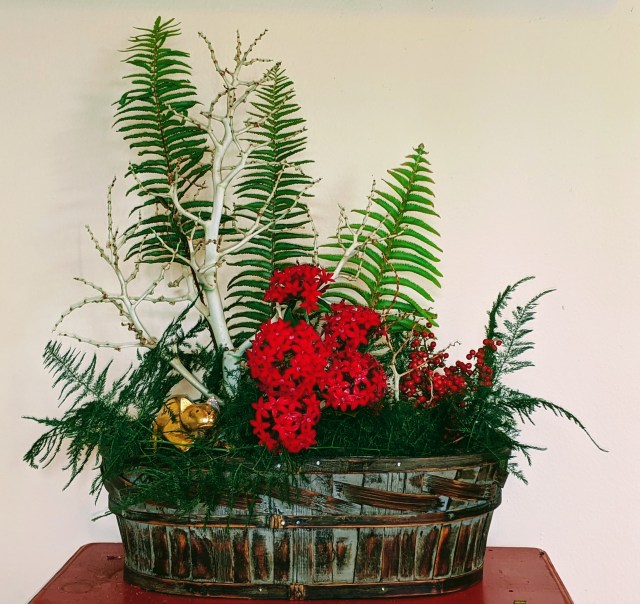
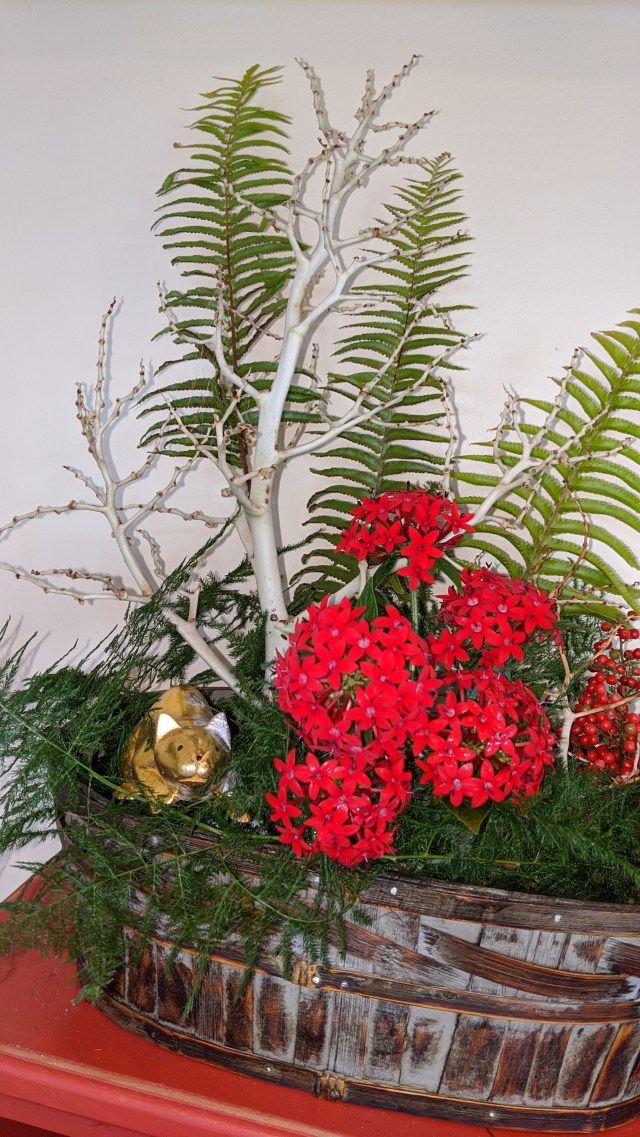
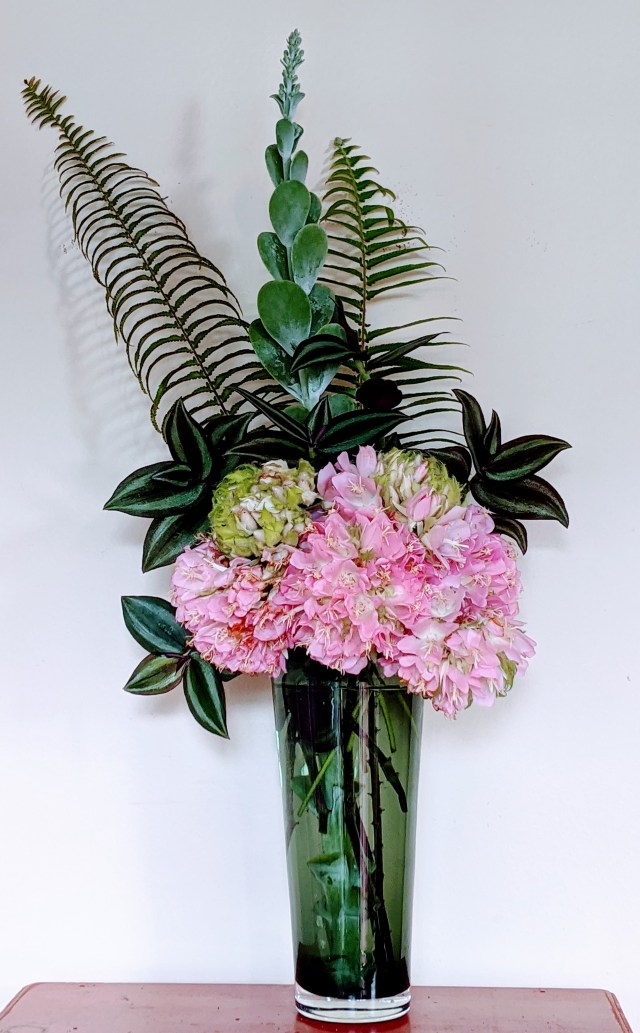
For me, it is always a bit strange being in South Florida during the holidays. I spent most of my life in a place that experiences winter. Yesterday I found myself in the grocery store dressed in shorts and a tank top, surrounded by gaping tourists and listening  to  Christmas carols play in the background. While driving home I noted my neighbors planting Poinsettias in their yard for holiday color. Odd. Clearly a holiday vase was in order.

00100lrportrait_00100_burst20191201133736084_cover

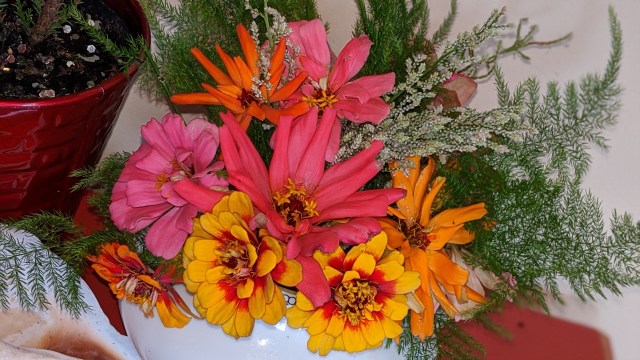
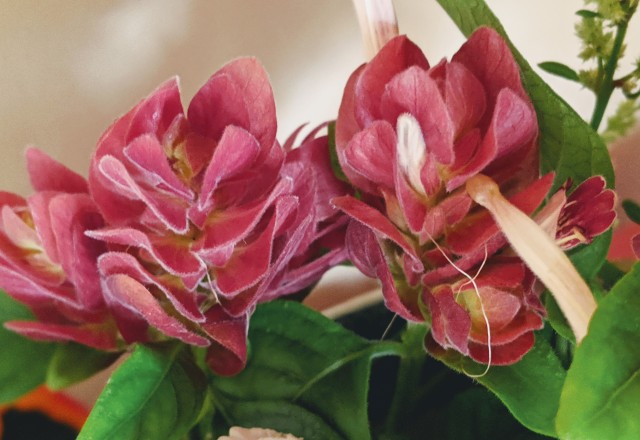
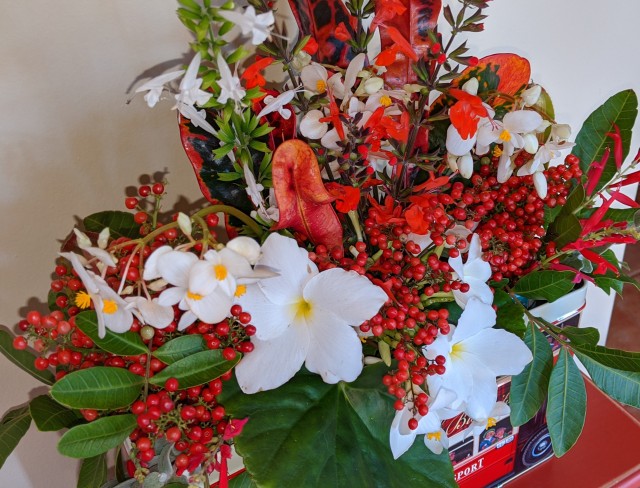
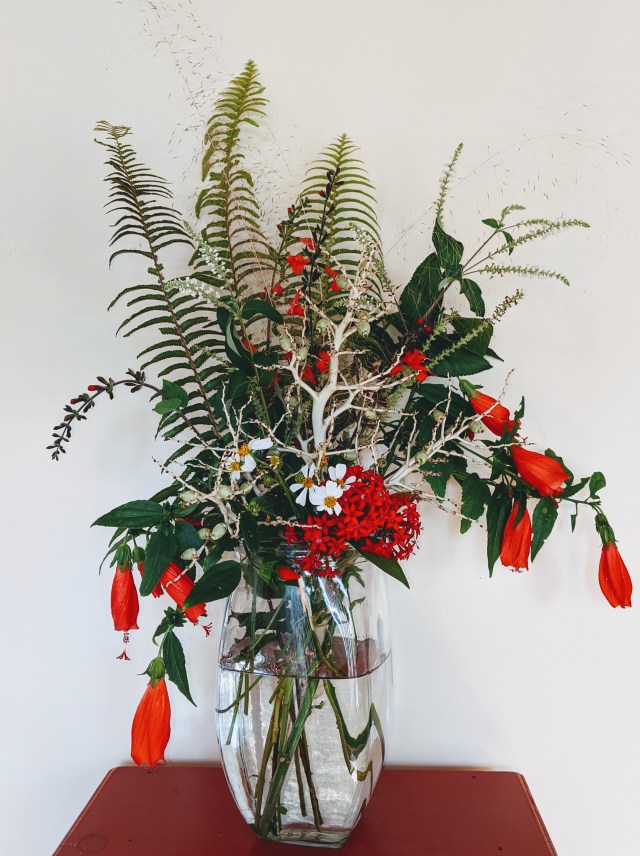
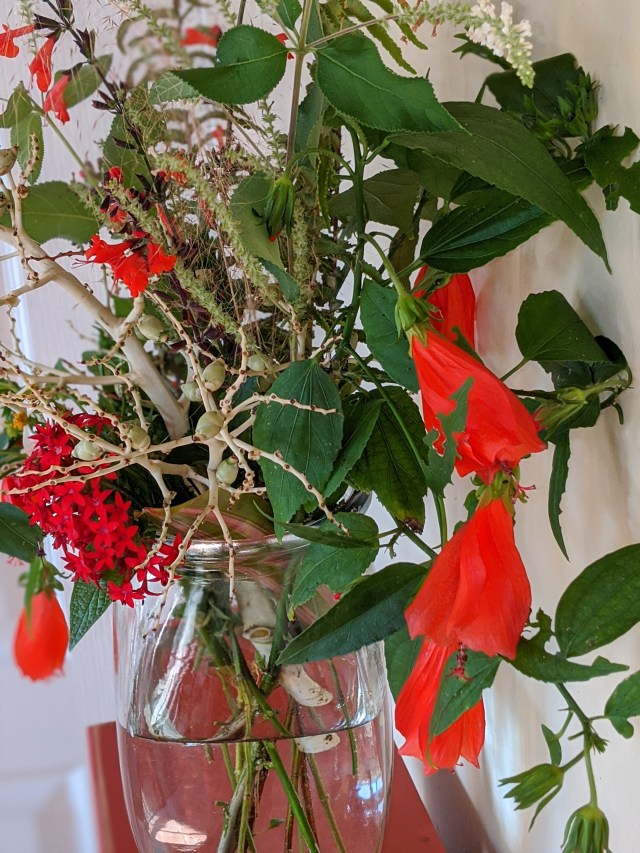
The big red flowers are Nodding Hibiscus (Hibiscus moscheutos); red spikes are Tropical Red Salvia (Salvia coccinea); red star shaped flowers are Heirloom Pentas (Penta lanceolata); white spikes are from the sweetly scented Sweet Almond Bush (Aloysia virgata); white stems are from Adonidia Palm (Veitchii merrilli); white daisies are from Spanish Needles (Bidens alba) ferns are from the native Boston Fern (Nephrolepis exaltata).

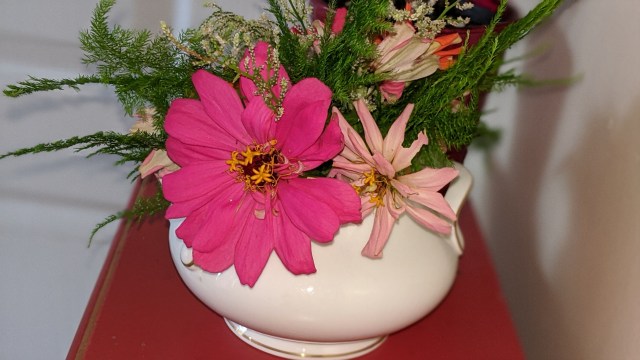
The vase is another oddity found by the side of the road in my neighborhood, likely a historic florist vase from the 1980s. With all the red and green in my vase…my Christmas spirit is cranking up a bit. Maybe my holiday mood will improve once my neighbor puts the flamingoes out. Yes, there is a sled and Santa that goes with it.

20171205_135917-1

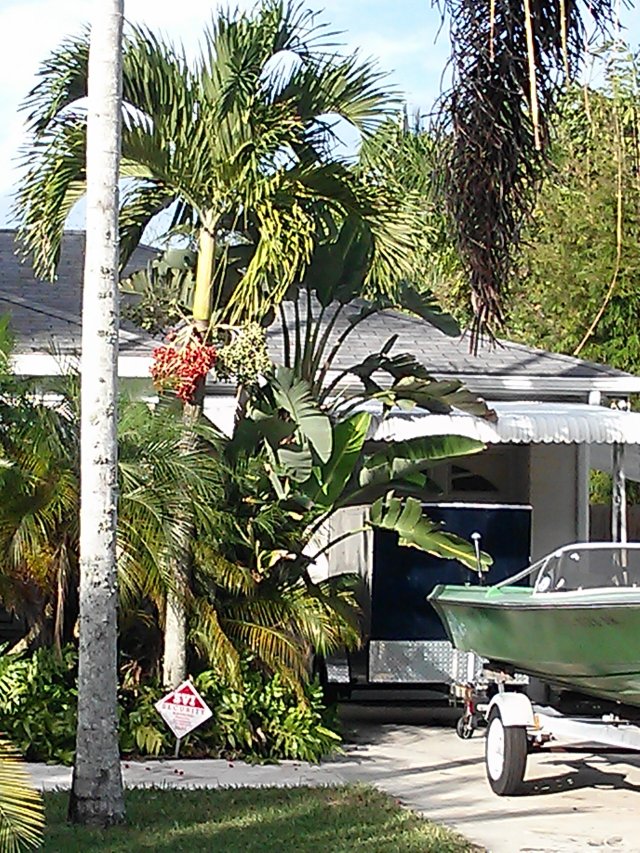
Didn’t I say it was a bit strange in South Florida during the holidays?

00100lrportrait_00100_burst20191201153744562_cover

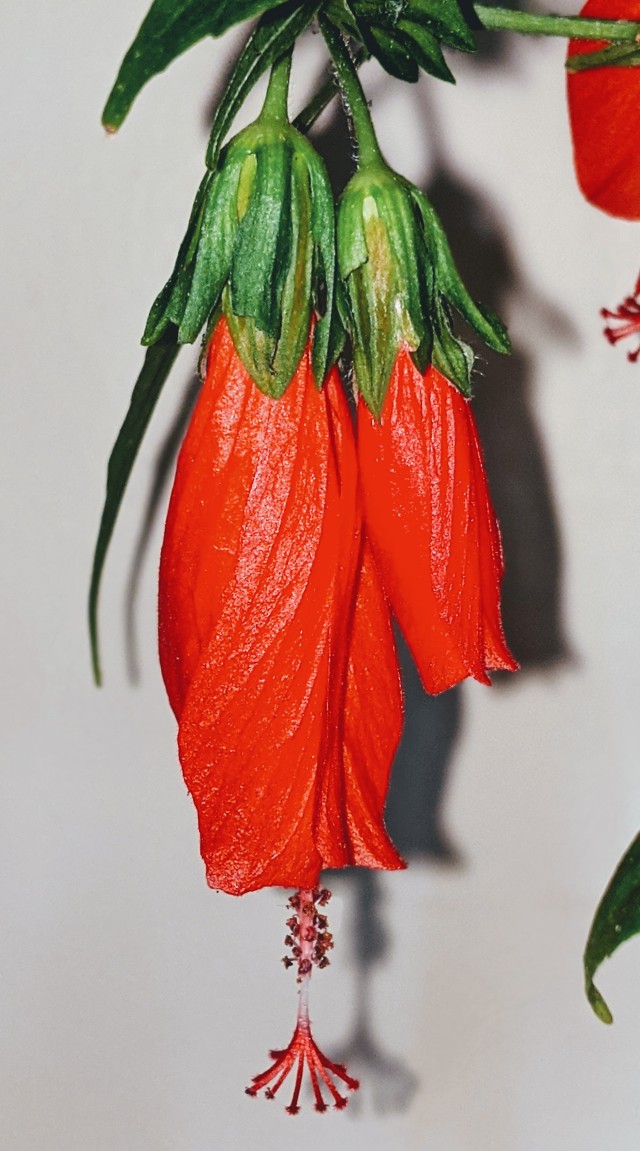
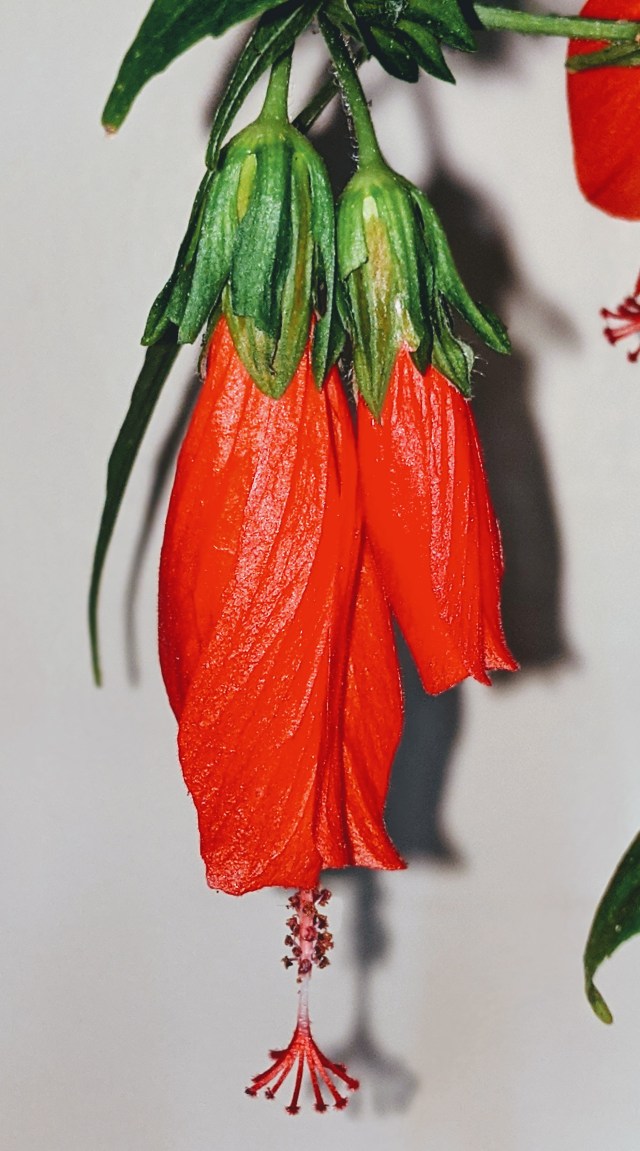
At least the Nodding Hibiscus looks a bit like a Christmas ornament.

Happy Holidays!  To see more vases from around the world go to http://www.ramblinginthegarden.wordpress.com.

Six on Saturday – Walking the Dogs

img_20191130_090747

I walk my greyhounds frequently, they like to walk around the neighborhood and my garden. Here are some of  the plants we have encountered recently. Some are not to be sniffed by dogs or people. Above  is one of those plants, a Blue Agave (Agave tequilana) grown by a friend and gifted to me, this is the plant that tequila is made from and is very spiny with spines  on the leaf  tips.

Here’s another sharp plant,  my neighbor’s Natal Plum (Carissa macrocarpa). A poisonous plant with thorns, paradoxically having edible fruit and gardenia scented  flowers.

img_20191130_090715

Another Agave, not quite as sharp as the Blue one. This one is a Sisal Agave (Agave sisalana) – yes, where Sisal for rugs, ropes, etc. comes from. This is on a vacant lot on our walk and is shooting up a  bloom stalk that is at least 10 feet tall and not showing a bud yet. Somewhere south of here an enterprising soul started a Sisal plantation, the Sisal reseeded and took over an island in the Florida Keys and has blown seeds all the way to my neighborhood.

img_20191130_090657

Another sharp  plant, the Soap Aloe (Aloe saponaria). These can be used  to make  shampoo and are foamy if the leaves are snapped. After reading about these, I decided against the shampoo as it seems most people are allergic to it.

20170621_110336

The Autograph Tree (Clusia rosea), waiting to be planted – one of  the potted orphans that lurk in everyones garden, not sharp at all.

img_20191130_091059

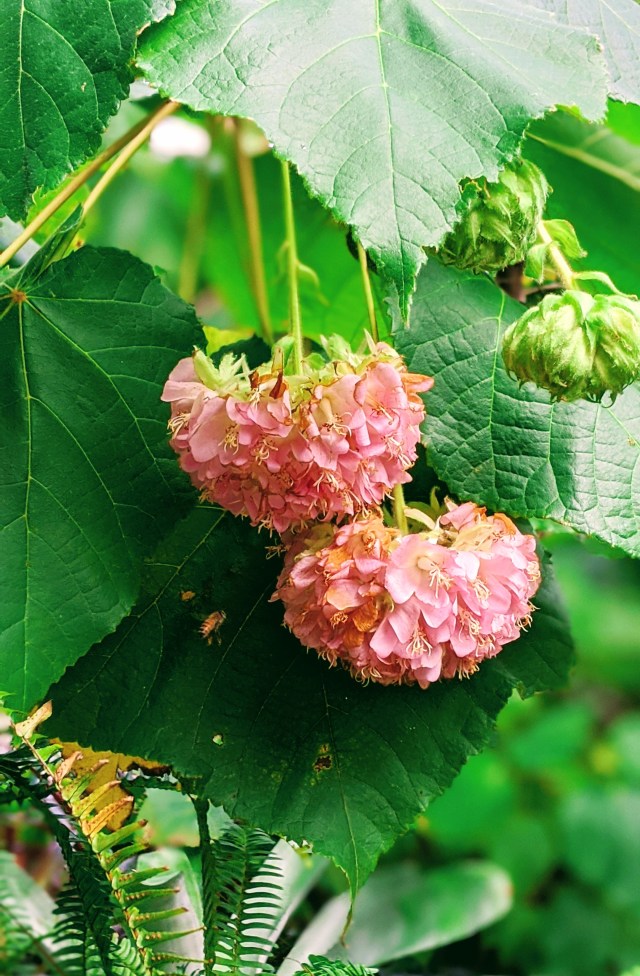
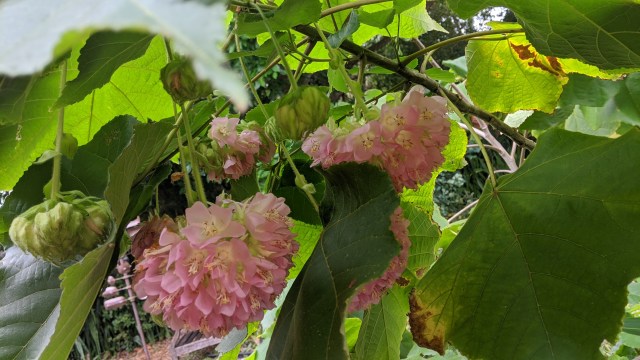
Buds on the Dombeya (Dombeya wallachi). This is a pink tropical Hydrangea tree, if you can imagine that – and  they bloom in December! I walk by everyday looking for flowers.

img_20191130_091122

Happy gardening!

To see more Six on Saturday posts featuring six items of interest from gardens around the  world go to: https://thepropagatorblog.wordpress.com/

In a Vase on Monday – della Robbia Memories

img_20191124_144806

It is a holiday week in the US, we celebrate Thanksgiving on the last Thursday of November. I  live in South Florida, but in my mind, there should be a celebration with a vase of red and orange leaves and nuts and cones. These things are scarce in South Florida. I always think of my mother, a great gardener and Southern Lady this time of year.  She always had the perfect seasonal centerpiece on the dining room table. So I  went in search of a little bit of not so tropical flowers for this vase.

The vase in the picture is a sugar bowl from my formal wedding china, nestled in a della  Robbia candle ring I made from nuts and cones collected near the townhouse my husband and I lived in when we first married, almost thirty years ago. My mother had a similar ring made by my father’s mother, though I can’t recall what became of it, the ring is one of the holiday touchstones of my youth, usually sporting a  red or green pillar candle during the holidays.

I wonder if others call these della Robbia’s? I  think that term applies to garland decorated terracotta pots. I was working towards a fall arrangement with tropical plants that did not look tropical!  Hope it worked.

00100lrportrait_00100_burst20191124144743762_cover

The leaves are from Copperleaf (Acalphya wilkesiana); red flower spikes, Tropical Red Salvia (Salvia coccinea); the linen towel from a very dear friend lost to cancer seven years ago this October.

00000img_00000_burst20191124144737294_cover

Orange spikes are from Blanchetiana Bromeliad flowers; off white spikes from Juba Bush (Iresine diffusa); and grass flowers from Muhly Grass  ( Muhlbergia capillaris). There is a stem of foliage with new red growth from Surinam Cherry (Eugenia uviflora)

00100lrportrait_00100_burst20191124144659659_cover

Tropically, not tropical ?

Happy  Thanksgiving, whenever celebrated and I am thankful for my garden blog friends.

Six on Saturday – Florida Style Fall

I am enjoying the cool, sunny weather in the garden. This time of year in South Florida is perfect gardening weather, temperatures in the 70s and low humidity. I have redone my front porch containers with Bromeliads, succulents, annuals, and herbs.

Below is a new plant to me, Dwarf Chenille Plant, it is draped over a tall pot with a striped Bromeliad behind it.


00100lrportrait_00100_burst20191122144030357_cover

This container has herbs, Dill,  Columnar Greek Basil, and Genovese Basil. I grew the Basils from seed and have Blue Spice Basil for butterflies.

img_20191122_144013

The succulents in the Strawberry pot are just getting going. They are Flapjack Kalanchoes, a Graptosedum and Gold Sedum. A real pain to water, I found this pot by the side of the road and the plants are cuttings from my garden.

img_20191122_143945

A Guzmania Bromeliad produced a seed head in another container, I  have not had this happen before and can’t quite tell where the seeds are.

00100lrportrait_00100_burst20191122171025856_cover

My neighbor’s Rangpur Lime tree is loaded with fruit, the basket of limes is from her garden. A  pie may be in my future.

img_20191122_144340

This is a Mangrove tree growing on a riverbank down the street from my house. The roots help hold the soil on the banks of the Indian River and prevent erosion.

img_20191118_122303

To see more Six on Saturday posts- go to www. thepropagatorblog.wordpress.com.


Happy Gardening


In a Vase on Monday – Fringe Benefits

IMG_20191117_130852

While searching for vase materials this morning it dawned on me, I would not have most of these flowers without making a vase every Monday. I cut flowers from everything except the palm frond and Beautyberries in the past month or for other vases. Hand pruning for a vase inspires the plants to produce more flowers. Fringe benefits from In a Vase on Monday.

Here’s a  close up:

00100lrPORTRAIT_00100_BURST20191117130923032_COVERThe red and white shrimp-like flowers are  Red Shrimp Plants (Justicia brandegeana), a nearly indestructible perennial. White flowers with yellow centers are  Sweet Begonia (Begonia odorata), another great indestructible. Yellow and red daisies are native Gallardias (Gallardia pulchella) they change their colors with the pollinator – or maybe via the pollinator.

00100lrPORTRAIT_00100_BURST20191117130942887_COVER

The palm frond in the back of the arrangement is a seedling from a Sabal or Cabbage Palm (Palmetto sabal) that popped up in the garden. The purple berries are still going strong on the Beautyberry (Calliocarpa americana) – I have had berries on one since August, the birds have eaten most of the fruit from the one further out in the garden. The green pods are from a native Senna (Senna ligustrina) I planted for hosting Sulphur Butterflies. Off white spikes are from the native Juba Bush (Iresine diffusa)

Here is the caterpillar from the Senna, one of my favorites:

00100lPORTRAIT_00100_BURST20190928100058153_COVER

Happy Gardening and Thanks to Cathy for hosting IAVOM and the fringe benefits, more flowers! Here is a link to more vases: IAVOM more

Six on Saturday – Day off

I  had a gigantic load of oak mulch delivered this week. After spending a couple of days ferrying mulch around in the wheelbarrow my back is complaining this morning so I am taking Saturday off from gardening.

img_20191116_083249

There is still a lot to do in the garden. These Heirloom Celosia seedlings are nearly ready for planting. They are called Texas Plume Vintage Rose Mix and reportedly make excellent cut flowers.

00000portrait_00000_burst20191116083056458

A new Bromeliad flower appeared this is a Portea ‘Candy’.

00100lrportrait_00100_burst20191110101509113_cover

This is one of our native Air Plants, a Tillandsia that is going to seed. It fell out of a nearby Oak – I am going to add it to my Air Plant collection that lives in the Sabal Palm.

00000img_00000_burst20191114092312493_cover.jpg

A new butterfly caterpillar on a larval host plant I installed last year. The plant is Corkystem Passionflower, the tiny flower is hidden behind a leaf. The caterpillar will soon form a Chrysalis and become a Zebra Longwing butterfly. I hope.

00100lrportrait_00100_burst20191114093110858_cover

The Zebra Longwing Butterfly:

20170608_152406-1

This is the state butterfly of Florida, I have a large population in my garden and see these on a daily basis.

To see more Six on Saturday posts follow this link  http://www.thepropagatorblog.wordpress.com

Happy  Gardening.


In a Vase on Monday – Happy Anniversary

IMG_20191110_104203

In a Vase on Monday is celebrating its sixth anniversary this Monday. Cathy, of Rambling in the Garden blog, created and hosts this meme weekly and challenged us to create a miniature vase (6″x6″) in honor of the anniversary. This  ‘vase’ is just under that and I added a crystal for Cathy as I know she likes crystals.

I decided to use shells and a tiny glass pot as my containers and then determined that they wouldn’t hold water. An additional challenge, waterless vase. The shells are a Tortoiseshell Cowrie in the glass pot and a Lightning Whelk. These shells are common to the east coast of Florida and were found on this beach near the Fort Pierce Inlet about 20 miles north of my house.

20180915_071829

The  Lightning Whelk holds one of our native Bromeliads (Tillandsia utriculata). These are commonly known as Air Plants and it is actually illegal to collect them in Florida.  Most are grown in South America and shipped to Florida, this one came up on its own in a nearby Oak and I moved it to a booted Sabal Palm.

The brown pods are from a Senna ligustrina, another native I planted as a larval host for  Sulphur Butterflies.

00000IMG_00000_BURST20191110104721702_COVER

Here are the Tillandsias in the booted Sabal Palm,  I am planning to add Burgundy Bromeliads and some Cattleya Orchids to the Palm. The boots are the bases of old fronds, many palms are cleaned up with a chain saw for a smooth trunk.

IMG_20191110_115052

The  Tortoiseshell Cowrie holds the dried stems of a seedhead from an Adonidia Palm (Veitchii merrilli). The stems are white until the berries ripen and then turn brown. The white stems are from a younger seedhead.

00100lrPORTRAIT_00100_BURST20191110104730390_COVER

A heartfelt thank you to Cathy for hosting IAVOM, it is an addictive pleasure to share a weekly vase with gardeners from all over the world – and to see theirs! To see more miniature sixth-anniversary celebrations follow this link More Vases.

Happy Anniversary and Happy Gardening!

Six on Saturday – Bountiful Butterflies

It’s a dreadful Saturday morning in Florida, our first cold front of the season is moving through spawning 35 mph winds and pouring rain. I spotted some new butterflies in my garden this week and decided that would be a better post than blurry, windblown flowers photos. I started a pollinator garden about two years ago and was astonished at how many butterflies appeared in my garden to devour my botanical treats. Here are a few:

The Giant Swallowtail on Firebush.

00100lPORTRAIT_00100_BURST20191004110102072_COVER


Cloudless  Sulphur Caterpillar on Senna ligustrina.

00100lPORTRAIT_00100_BURST20190928100058153_COVER

Zebra Longwing Butterfly:

20170608_152406-1


Gulf Fritillary Butterfly on Zinnias:

00100lportrait_00100_burst20190831113418283_cover

Pipevine  Swallowtail Butterfly on Firebush:

20180701_112529-1

Black Swallowtail on screen porch:

20170823_155849-1

For more Six on Saturday posts,  hopefully from drier gardens – follow this link to The  Propagators blog  More SOS.

Happy Gardening!

In a Vase on Monday – Harvest Mood


img_20191103_135728It has been a rainy, overcast, blustery weekend in my garden. Feeling like a somewhat warmer and more humid version of fall further north. I went searching for some vegetation to fit the moody weather. The plants in the arrangement speak of fall in Florida – fruits from flowering and shade trees and “fall” leaves.

img_20191103_135720

The green fruit is from a White Geiger tree (Cordia boissieri) a smallish white flowering evergreen tree. The berries are from the Gumbo Limbo (Bursera simaruba) a native shade tree affectionately called the Tourist Tree because of its red, peeling bark is similar to sunburned skin. The fruit is not edible from either tree. The “fall” leaves are from “Louisiana Red” Copperleaf (Acalypha wilkesiana) they are this color year-round. This is a recent addition to the garden and has just started showing color.

Here is a more edible fall fruit, my first Corkystem Passionfruit, something other than me ate it. I planted it as a larval butterfly plant, the butterfly caterpillars have been eating the leaves, not sure who ate the fruit.

00100lportrait_00100_burst20191102153241243_cover

Happy Gardening!!

Six on Saturday – Screen Planting

My husband and I moved to Florida almost eight years ago, it took seven years and a lot of dedication to clear our back property line of what could be politely called ‘unwelcome vegetation’. A mass of invasive Brazilian Pepper and as weird as it seems Snake Plant/Sansiveria/Mother In Law’s Tongue. It takes heavy equipment to get rid of the Sansevieria. It was so dense we couldn’t tell what was behind us.

20190207_100010-1

While this may not look that bad, the guy that lives behind us keeps a semi-abandoned boat on the property line. It is past time for a screen planting. I dithered, uh debated a lot of different plant material, and combinations but finally settled on these:

img_20191102_101622

Clusia (Clusia rosea), a fast growing Florida native sometimes called the Autograph Tree as you can scratch your initials into the leaves and they last for years. These usually get about 20 feet tall.

img_20191102_101911

Java White Copperleaf (Acalphya wilkesiana ‘Java White’) a variegated yellow, white and green shrub for a 6 – 8-foot hedge at the end of my vegetable garden. The hedge will tie into the taller screen plantings.

img_20191102_101531

Silver Buttonwood (Conocarpus erectus ‘sericues’). Another Florida native, these silvery trees reach about 20 feet and the wood is good for smoking fish.

img_20191102_101523

The anchor plants screening the worst view – Traveller’s Palm (Ravenala madagascariensis). These are not palms at all but related to Bird of Paradise (Strelitzia) These should reach 30 feet tall and grow very upright and retain their fan shape at the base. Called Traveller’s  Palm as a thirsty traveler in the tropics can cut into the base and find a drink of fresh water – I have not tried this.


img_20191102_101511

Yet another Florida native, Thyrallis (Galphimia glauca) these flower off and on year round and reach about six feet.

img_20191102_101614

Now, all I need to do is plant this.

For more Six on Saturday follow this link to the Propagator’s blog MORE Six on Saturday.

Happy Gardening!