Funky Florida Flora – Sea Grapes

IMG_20190619_090654Sea Grapes seemingly grow everywhere in South Florida. Native to South Florida and the Caribbean, this tree will grow in sun to semi-shade, is very drought once established, grows on the Oceanfront, shrugging off salty winds and hurricane,  and provides food for wildlife. They can be pruned into privacy screens or trained into multi-stem trees. The maintenance is a Sisyphean task if you dream of a rectangular privacy screen. Sea Grape is evergreen and it’s big, shiny green leaves with pinky red veins provide year-round tropical ambiance.

20171122_074941-1

Sea Grape’s botanical name is Coccoloba uvifera. The fruit, borne like grapes will eventually turn brown and drop to the ground. Grateful creatures devour the fruit, including my greyhounds – just one of the greyhounds, it took me a long time to figure out what he was crunching on while rooting around in the grass. A true Floridian hound, I suppose.

Florida natives (the human kind) eat the grapes when ripe, and make jelly and wine from them. My opinion, like many things, you have to grow up eating them to enjoy them. Kind of like being a Southerner and eating grits. They taste a bit like a fig, with a huge pit and are too labor intensive to make me want to eat them – and the birds usually beat me to them anyway.


In A Vase on Monday – Rainbows

00100lPORTRAIT_00100_BURST20190616133732061_COVER

June is Gay Pride month in the US.  A friend who owns a local business is flying a Rainbow flag in support of Gay Pride and tolerance. She is experiencing push back from employees and customers. Meanwhile, nearby flags supporting our current President have been burned.

She said,  “We need more flowers”.

This made me wonder if I could find all the colors of the Rainbow in my garden. I found all the colors, easily and in the rain. Champagne flutes were used to celebrate what tolerance we have and the blue bottle represents sadness for many who don’t.

00100lportrait_00100_burst20190616132139400_cover-e1560709271471.jpg

The Violet vase is Purple Queen (Setcresea “Purple Queen”), the Indigo vase is Blue Porterweed (Stachytarpeta jamaicensis), the Blue vase is Plumbago (Plumbago auriculata).

00100lPORTRAIT_00100_BURST20190616132121134_COVER

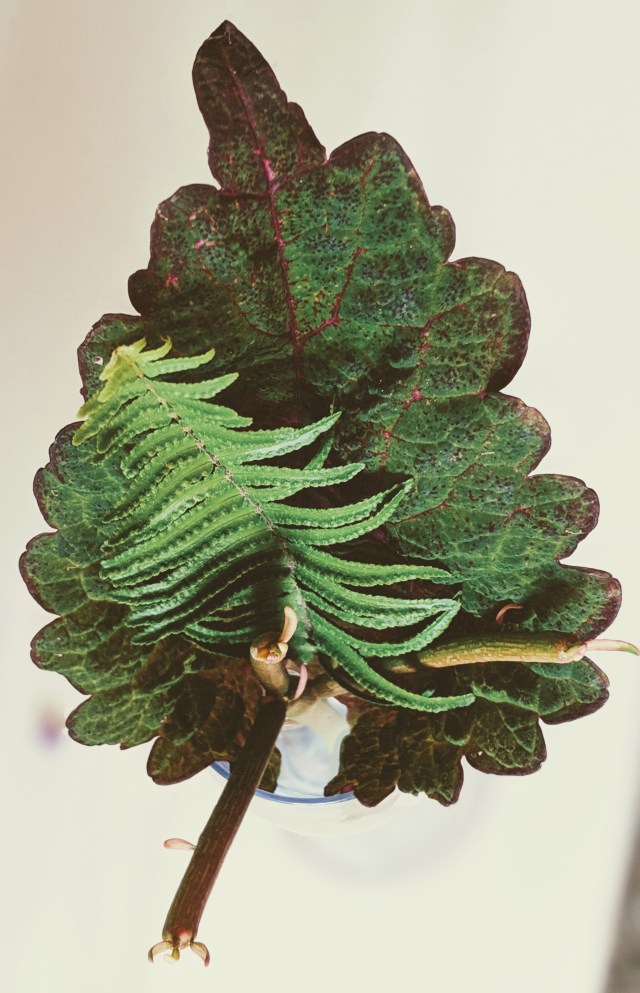
The myriad shades of green never fail to amaze me. The Green vase has (I think) a leaf from ‘Solar Sunrise’ Coleus (grown in shade), Boston Fern (Nephrolepis exaltata), and Pencil Cactus (Euphorbia tirucalli “Firesticks”).

00100lPORTRAIT_00100_BURST20190616132046518_COVER

The Yellow vase is Black Eyed Susan (Rudbeckia hirta), the Orange vase is Mexican Honeysuckle (Justicia spicigera), and the Red vase is The President Hibiscus (Hibiscus rosa-sinensis).

While putting the vases together, I was looking at all the flowers. So different, yet so alike.

Lesson learned.

Funky Florida Flora – Turk’s Cap Hibiscus

20181028_133148-1 (1)

This is another volunteer in my garden, drafted into service to provide summer color in the unirrigated wilds of the garden. These tough shrubs just pop up here and there and once established are very difficult to get rid of. My neighbor’s Hibiscus keeps growing through the fence and after about 5 removal attempts, I gave up and began espaliering it to the fence instead of trying to get rid of it. Time will tell how that works out.

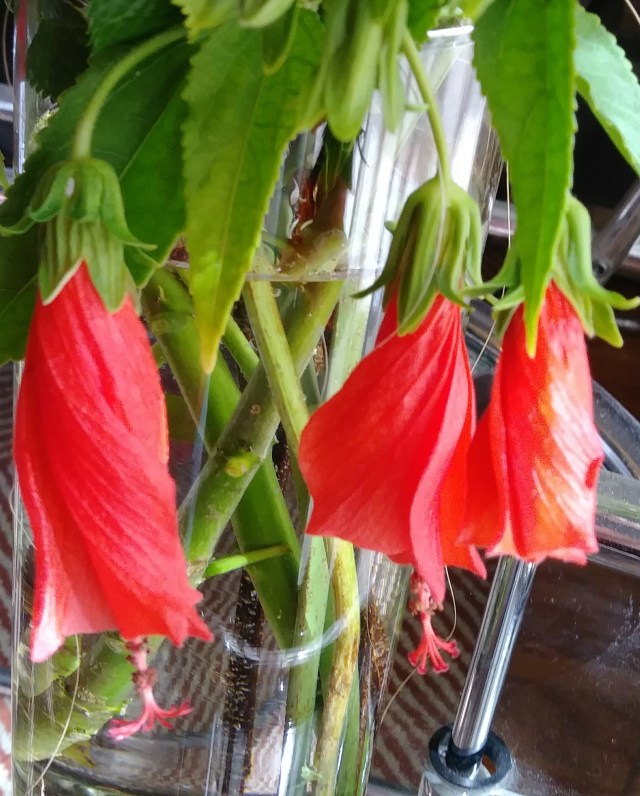
Most people call this Turk’s Cap Hibiscus (Malvaviscus penduliflorus), however, my favorite common name for this plant is Nodding Hibiscus. The shrub itself is a bit rangy looking, shapeless and branchy with light green foliage. The flowers make up for the green part, being prolific and attractive to pollinators and hummingbirds. Originally from Mexico, it has naturalized on the peninsula and is tolerant of South Florida’s extreme variation in precipitation. My Hibiscus thrive in partial shade with benign neglect, no fertilizer and roots in sugar sand (dare I call it soil, I think not)

I like to cut these for arrangements, they add a bit of draping over the side drama and last well in a vase, but you have to be careful not to knock the flowers off, the stems are somewhat delicate.

20181007_115312

Funky Florida Flora – Snake Plants

This is my side yard. When I moved to South Florida and rounded the corner of my new (old) house I could hardly believe my eyes.

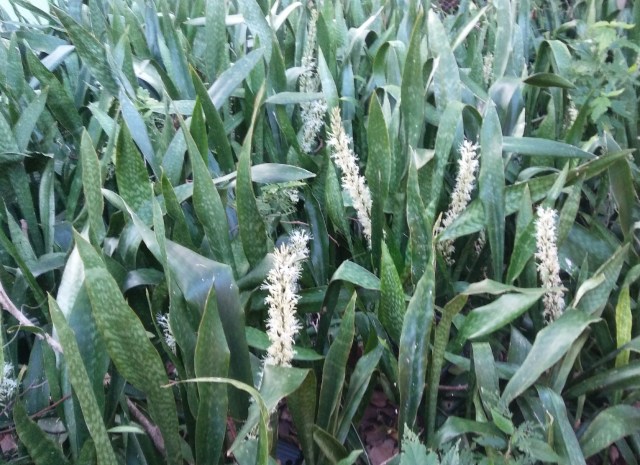
Brain says “Snake Plant”, a person from much further north says “Not possible”. Oh, but it is. I would guess there is a ten-foot wide band of Snake Plant alongside my house- yes, Sansiveria and/or Mother in Law’s Tongue and the band is at least a hundred feet long. And they flower. I have cut them for arrangements, not a particularly long-lasting flower, but kind of interesting.

House plants run amok. One has to wonder, did someone throw out Snake Plant a hundred years ago and this is the result.

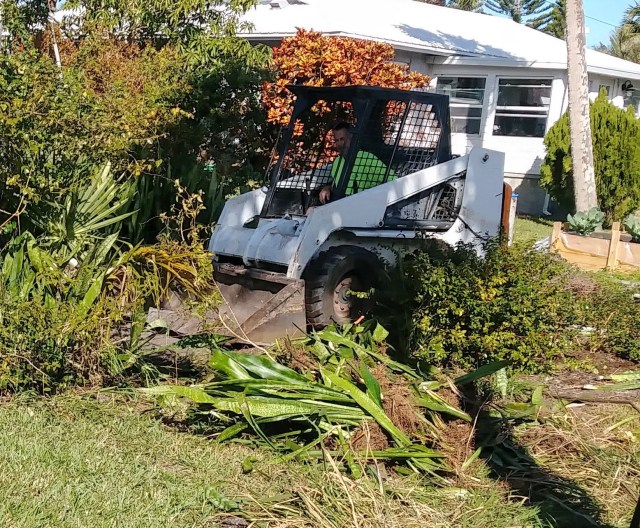
Snake Plants are considered invasive in South Florida. I have managed to make a dent in some of them:

20190207_100010-1

Yes, that is a pile of Snake Plants in front of a Bobcat (not the feline version) It is strange to me that we (my husband and I) would rather look at a telephone pole than all the Snake Plants and assorted garbage (Brazilian Peppers, another story for another day)

The Snake Plants grow running tubers (if that is a word) similar to Ginger. It is nearly impossible to pull up without breaking it and when it is broken it just reproduces – hence, the Bobcat.

Our landscapers are now mowing over the tubers weekly; we will see if the mowing actually helps.

I read somewhere a Snake Plant as a houseplant will clean the air. This means having one of these things in my house – and watering it. Um, no.

I am going to pass on that and use them in a vase. One less for the Bobcat. Here is a Vase with Snake Plant.

20180107_164420-1

In A Vase on Monday – Rabbit Food

00100lportrait_00100_burst20190602093912970_cover

Early on Sunday morning I grabbed my shears and went into the garden to collect materials for my vase. My intention, to gather some Black Eyed Susans and other wildflowers for a casual vase.

After I closed the gate, keeping my greyhounds in their space – I spied the fattest rabbit I have ever seen lurking near my miniature pineapple plants. The tiny pineapple approaching its juicy peak.. I changed my mind and decided a slightly more tropical vase might be more appropriate. The lovely pineapple was quickly freed from its sharp crown.

00100lportrait_00100_burst20190602094114051_cover

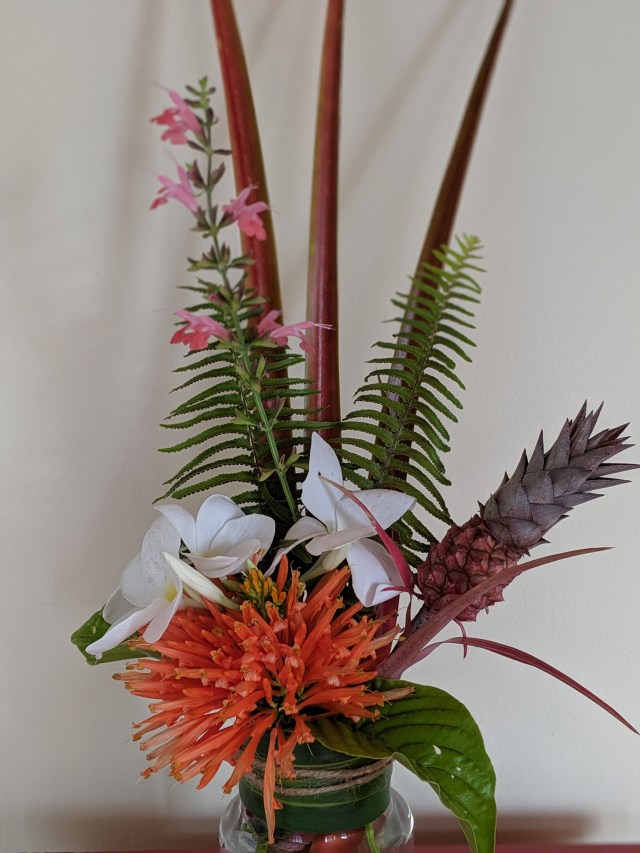
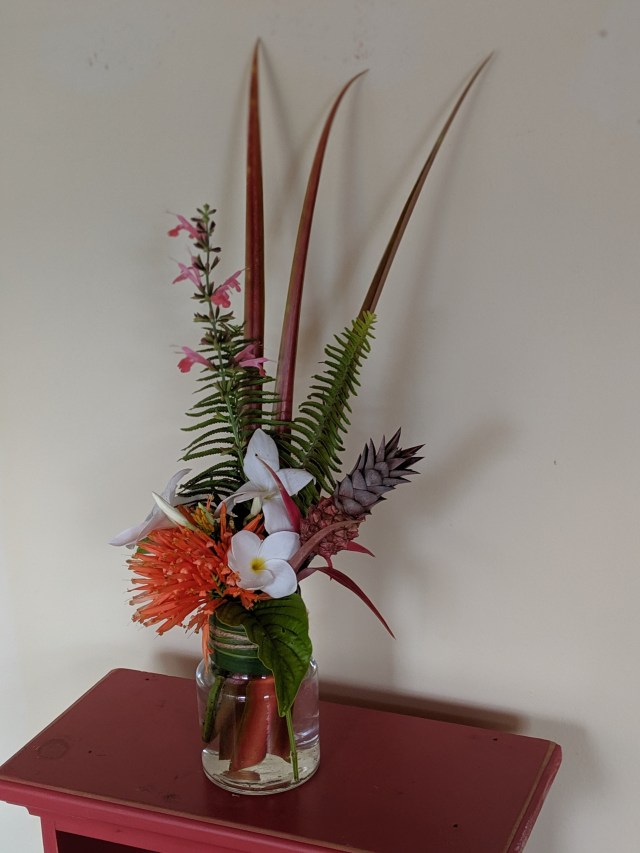
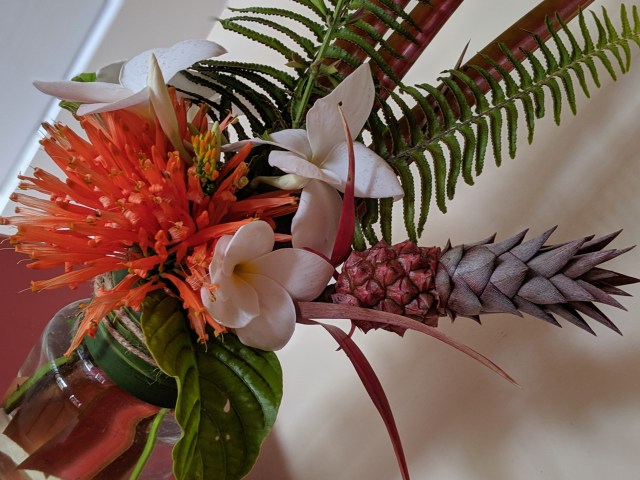
My wildflower theme completely blown by the plus size Rabbit, I searched for more tropical plants. I added some foliage from the miniature pineapple plant, a few sprigs of Boston Fern (Nephrolepis exaltata); the orange flower is Mexican Honeysuckle (Justicia spicigera); the peach flower – the wildflower in the vase, a Tropical Red Salvia (Salvia coccinea); the white flowers are from Bridal Bouquet Frangipani (Plumeria pudica) for a light tropical fragrance. A Pandanus leaf is tied around the vase.

00100lPORTRAIT_00100_BURST20190602094804635_COVER

I am glad I beat the rabbit to the pineapple.

Happy Monday.

Funky Florida Flora – Bismarck Palm

00100lportrait_00100_burst20190529095847155_cover

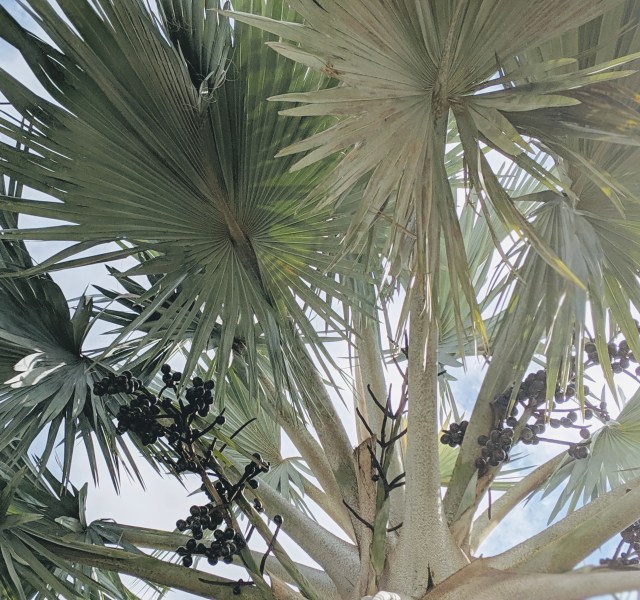
This is the canopy and fruit stalks of a Bismarck Palm (Bismarckia nobilis) – named for Otto Von Bismarck, a very big and very blue gray palm. So big, the fronds are 4 feet across and they can reach 60 feet in height. I frequently see these towering palms dwarfing the houses they are planted near.

A native of Madagascar – a place that must have spectacular Dr. Seuss-like forests. Bismarcks are hardy to freezing and adaptable to a wide variety of soils.

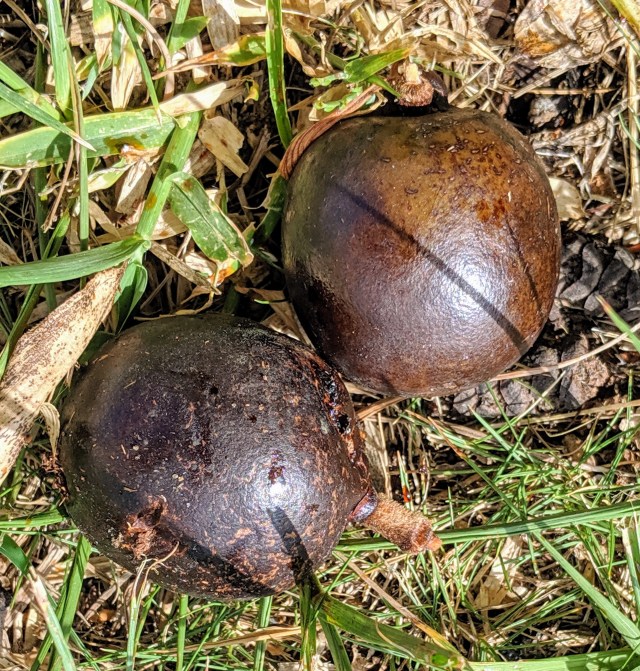
Here are the fruits, they are about 2 inches in diameter and fall indiscriminately to the ground. A bit like a chestnut, one of my greyhounds had a bite of one and immediately spit it out, so I am guessing not so tasty.

00000img_00000_burst20190529095924247_cover


In a Vase on Monday – Scentsational Moonlight

20190519_1259542-effects

Once in a blue moon my greyhounds wake me in the middle of the night to be let out. Ironically, last night was the full blue moon and the only reason I saw it was my dogs wanted to go out.

Moonlight is rather spectacular in South Florida, I am not sure if it reflects off the Atlantic Ocean or the general light level here is lower at night and that makes the moonlight brighter.

I usually walk out in the yard with the dogs as there are some rather large predators about in the middle of the night; coyotes, bobcats and the occasional panther. My dogs are usually too big for such things, but a snarfy lady in her bathrobe at 3 a.m. tends to give even a panther pause. Unfortunately, there is some unbridled greyhound joy in chasing Armadillos at three a.m. Oddly, the Armadillos can outrun them.

While all this was going on, I noted a lovely scent in the air. I decided my neighbor’s magnificent Arabian Jasmine was blooming again, took one more look at the moon, collected my greyhounds and went back to bed.

Sunday morning I realized the scent was from my garden. I have Bridal Bouquet Plumeria, Tropical Gardenias and Sweet Almond in flower and all are in my vase. The Tropical Gardenias (Tabernaemontana divericata) are draped over the right side. The Sweet Almond, draped over the left side (Aloysia virgata). The flowers in the middle are Bridal Bouquet Frangipani (Plumeria pudica) a favorite of mine just starting for a long summer run.

20190519_115152-1Here is a closer view, mostly the Bridal Bouquet Plumeria.

20190519_115918

The vase has been in the foyer for several hours. I think the lovely scent I enjoyed in the moonlight was the Sweet Almond.

Funky Florida Flora – Little Harv

20190507_080217

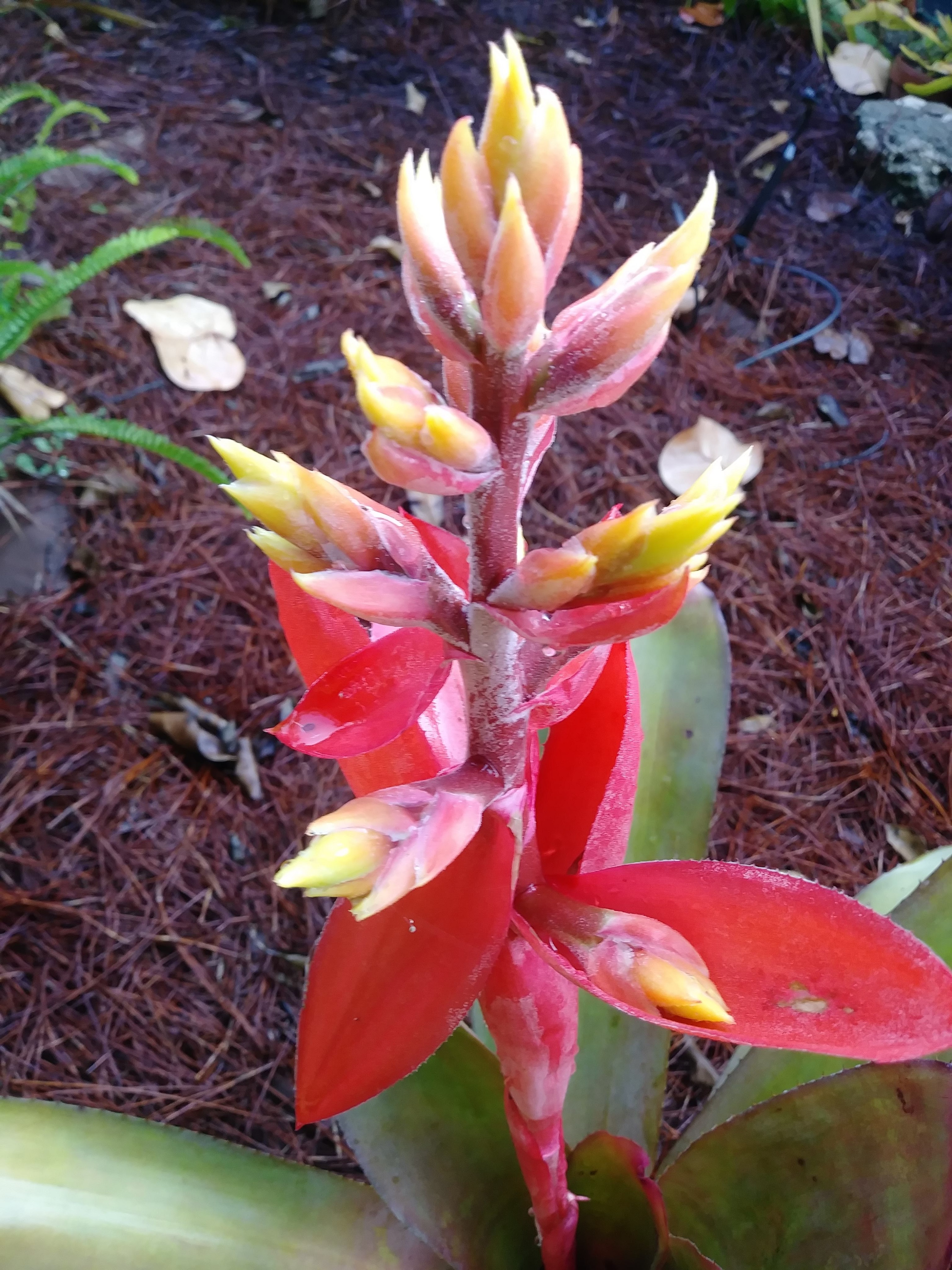
Another of my garage sale finds, ‘Little Harv’ has been graciously flowering and producing pups for the past five years or so. An Aechmea Bromeliad created in South Florida in 1978, ‘Little Harv’ is fairly common in landscapes in this area. I would hate to see Big Harv as the little one can reach almost 4 feet of height.

Here is a close up of the bud, you can see the prickly edges of the silvery foliage and its coloration. The bud started up about a month ago and the flower opened two weeks ago and will usually last a few more weeks.

20190424_173256

Funky Florida Flora – Coral Plant

20190510_124236-1

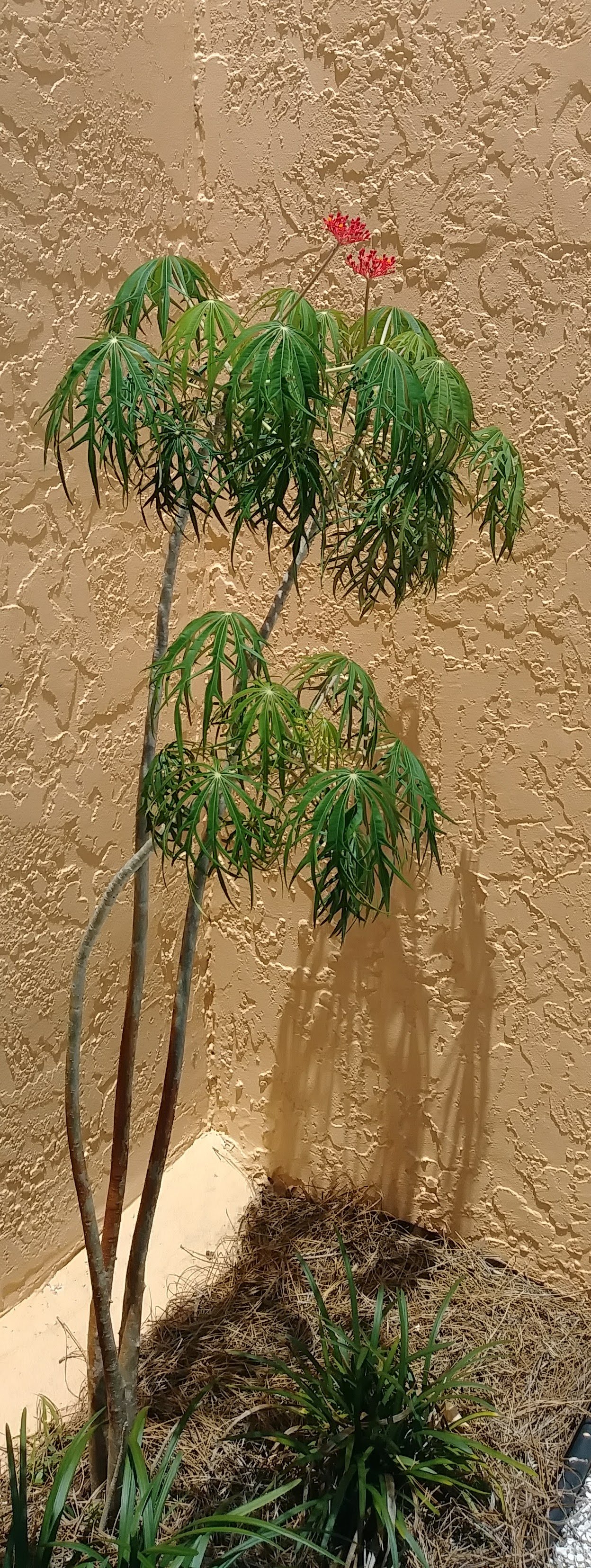
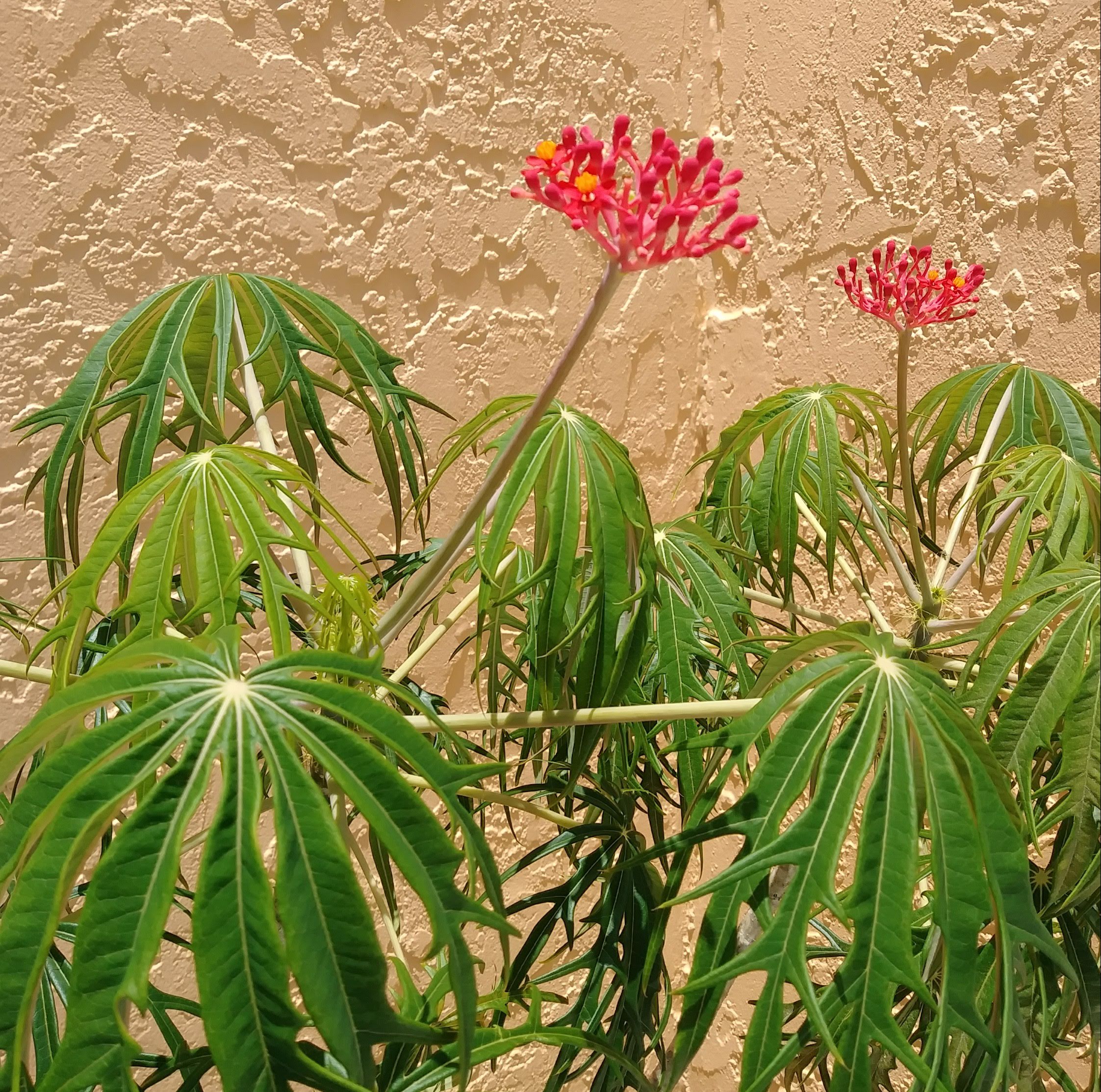
It occurred to me this morning there are not too many plants that would work in this narrow space in my garden (about 18″ wide). This is a very funky plant, a Jatropha  multifida, called the Coral Plant. I thought initially the name was based on the color of the flower, but then realized the flower does resemble an actual coral.

20190510_124242-1

The foliage on this plant resembles something else. Cannabis, however, all Jatropha is poisonous, so I would resist the urge to smoke it and keep it away from children and pets.

The Jatrophas are interesting plants, tropical – this one is native to Mexico. They do best in South Florida or where temperatures stay above 40 degrees Fahrenheit. Common to members of the Euphorbia family, they exude toxic, milky sap and can become a nuisance by its tendency to produce a lot of seeds. However, the seeds contain oils that have been proposed for use to make sustainable biodiesel fuel. They just haven’t quite figured out how yet.  Click for the Biodiesel story.

Despite the fact this plant is widely reported to love sharp drainage, full sun and noted for its extreme drought tolerance – it suffered in such a place in my pollinator garden and is much happier in its new skinnier digs with protection from the western sun. Butterflies continue to enjoy the flowers and I will as well now that the Coral Plant is in a happier place.

In A Vase on Monday – Summer G’s


20190505_095948-1


Summer began on Thursday here, complete with thunderstorms and wet blanket of humidity slapping me in the face when traveling from air conditioned space to the great, sweaty outdoors. Summer flowers are a consolation for the weather.

20190505_100057-1

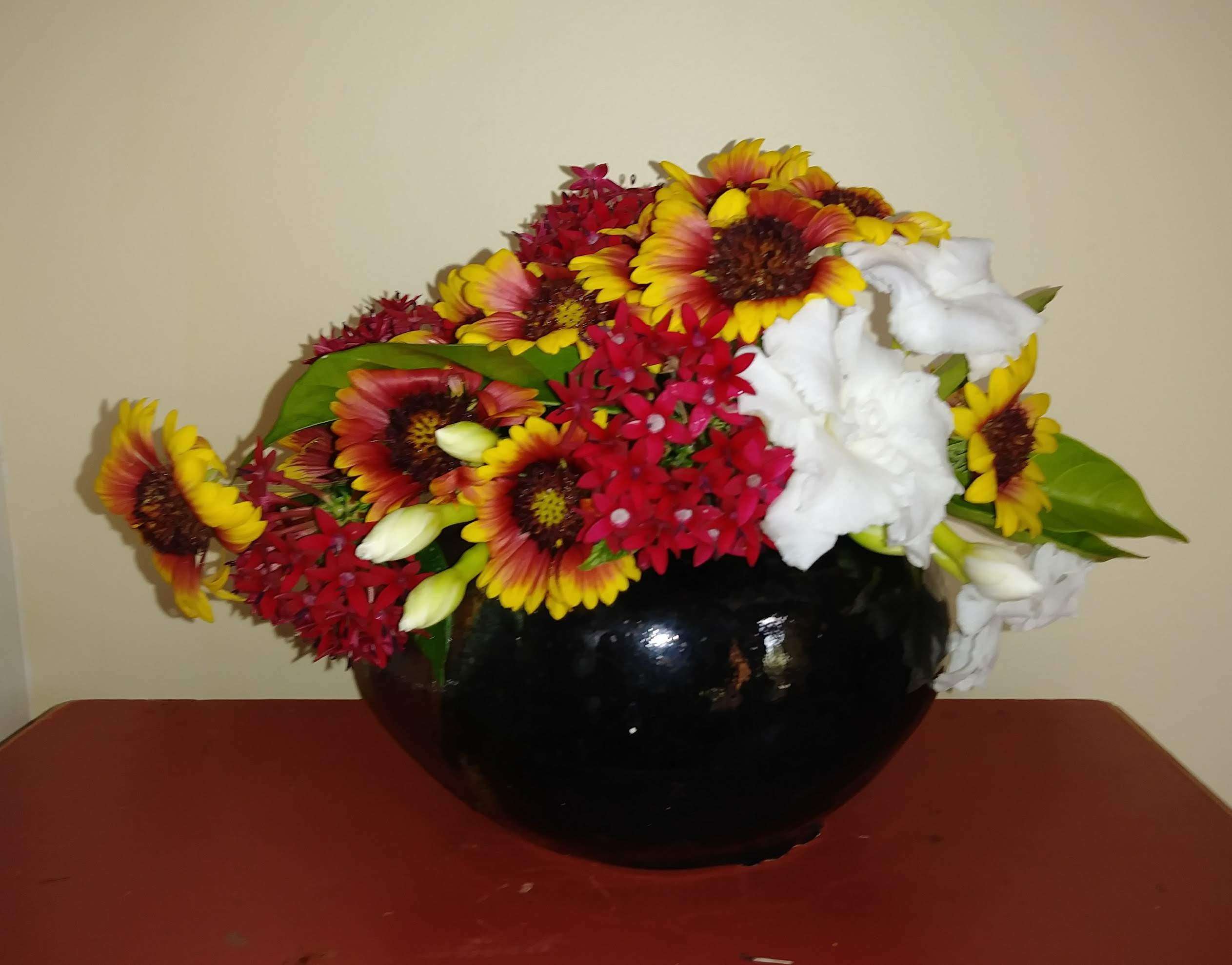
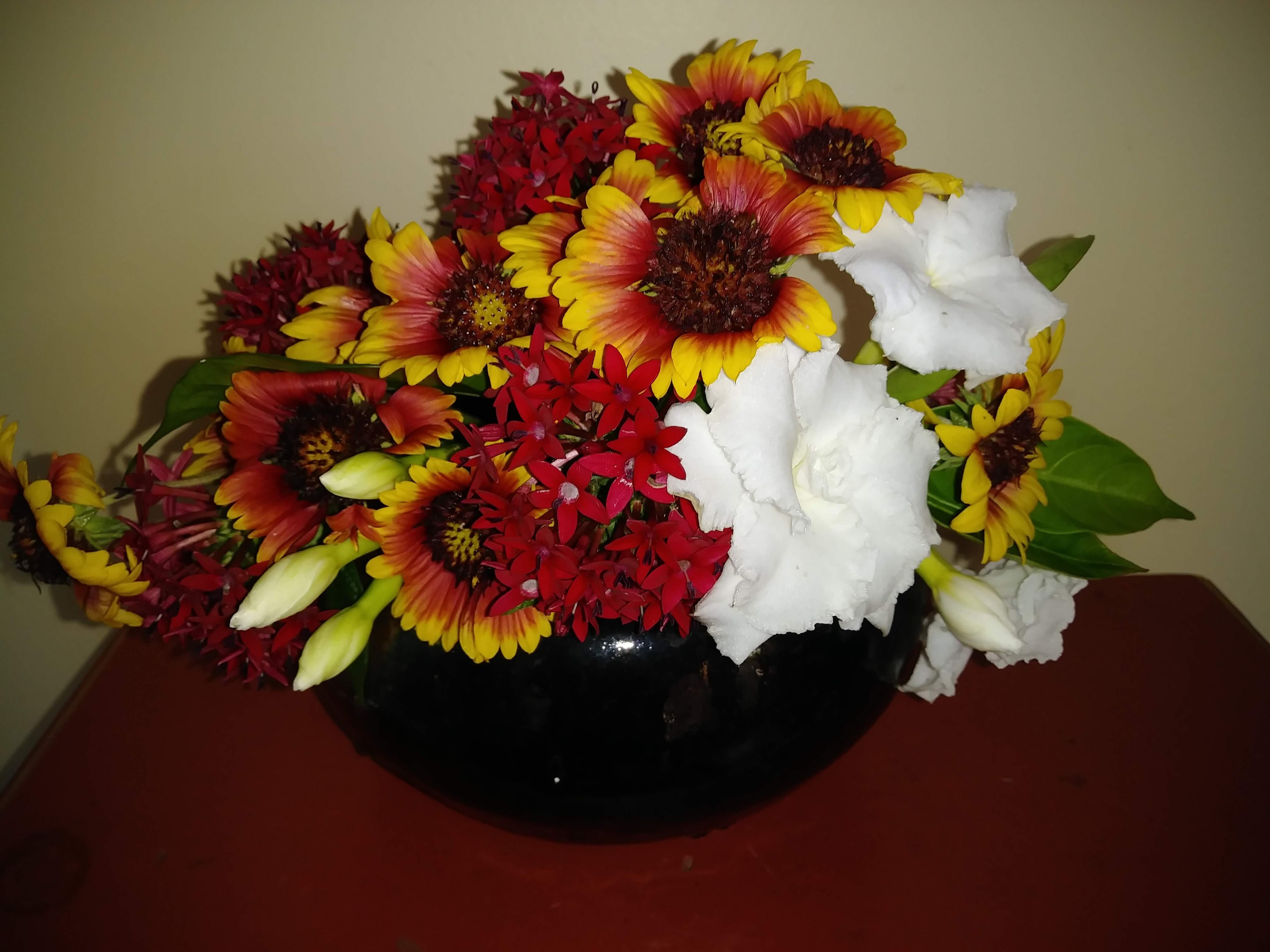
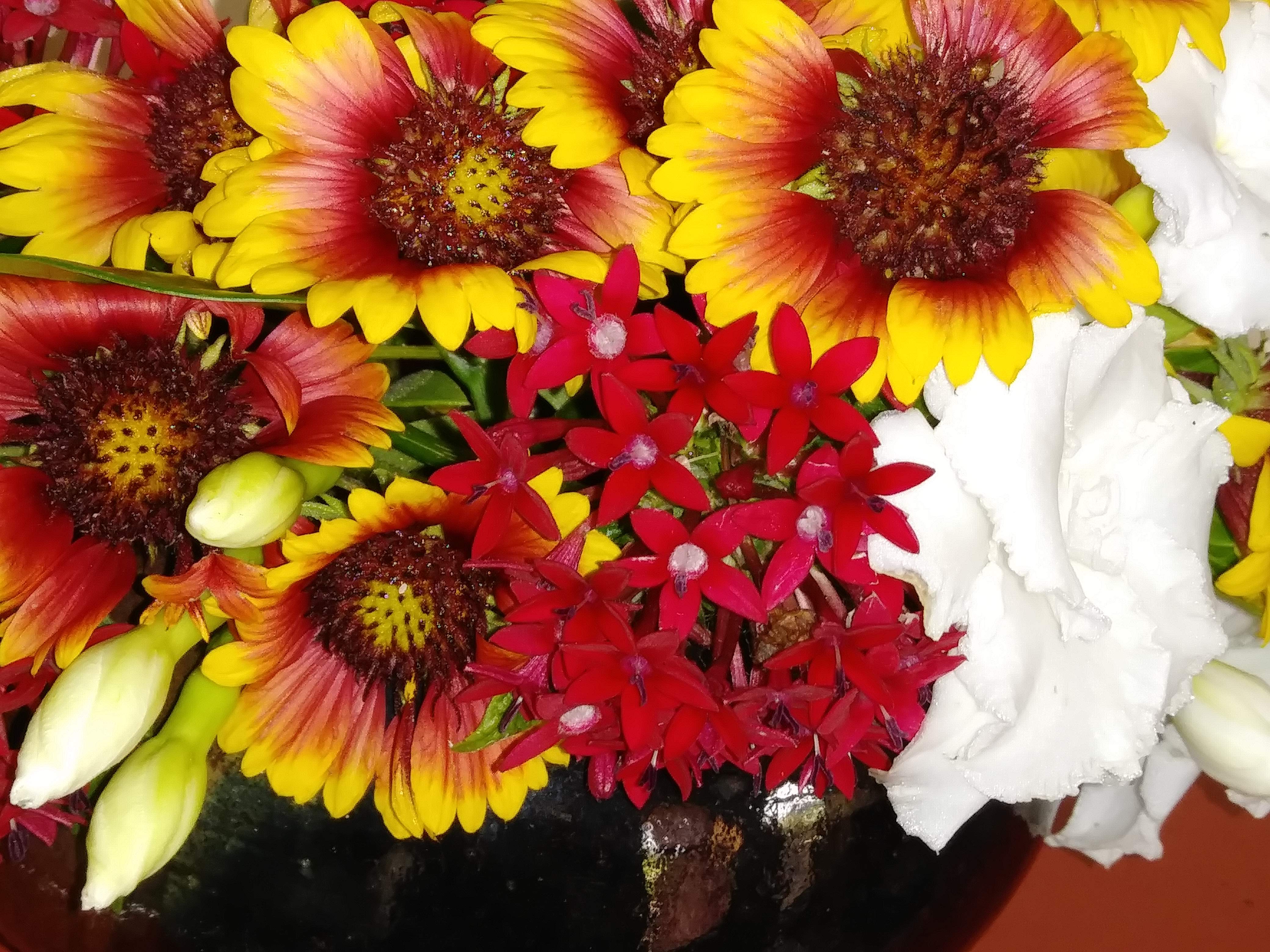
The G’s are Gardenias and Gallardias, the Tropical Gardenias are stalwarts in my garden. They thrive under dreadful conditions and supply flowers off and on all summer long. The plant is probably ten feet tall and I struggle to reach the flowers, having jettisoned more than one across the vegetable garden by letting go of a long branch too quickly. Oddly enough, the buds last a really long time in the vase, but the flowers don’t. I love the graceful lines of the buds, when hanging over (and around) the side of a contrasting vase, the summer garden is looking fine indoors.

20190505_100119


The first G is Florida (or Tropical) Gardenias (Tabernaemontana divaricata), semi deciduous, in my experience and not particularly hardy to frost. The other G is Gallardia (Gallardia pulchella), a native wildflower I have been trying to establish in the Pollinator Garden. The third plant in the vase is a Penta lanceolata, a plant known to serve as a nectar plant for butterflies. I have noticed the butterflies sipping on the flowers, hoping for offspring.

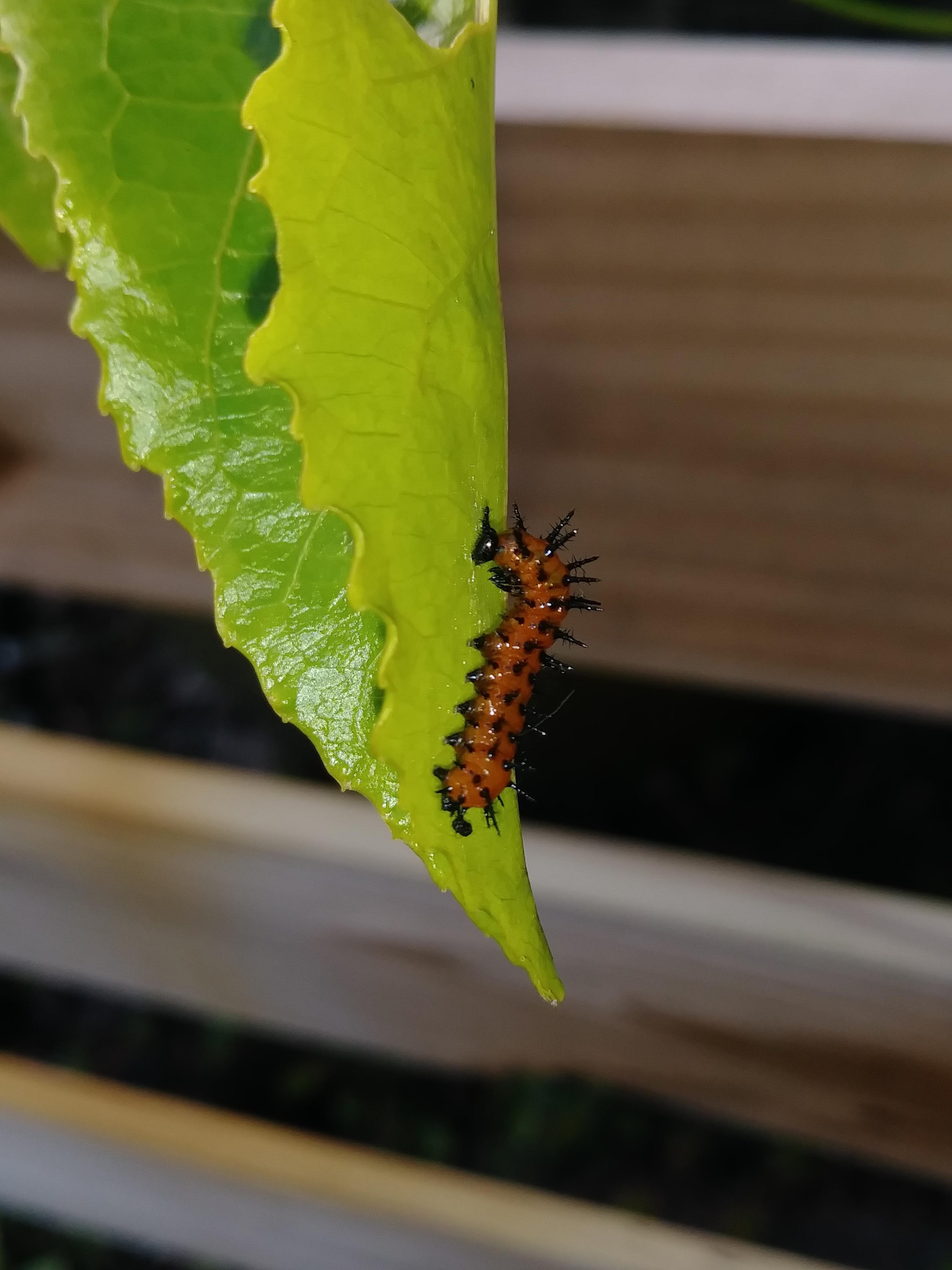
Speaking of pollinators, they are back for summer – these are caterpillars of Gulf fritillary butterflies chowing down on my ‘Lady Margaret’ Passionflower vine. Lady Margaret has been perverse in her unwillingness to flower in my garden, so I don’t mind if the Gulf fritallaries eat her up.

20190502_085055-1

Here are the Gulf Frittilaries from last year. I hope to get better pictures this year,