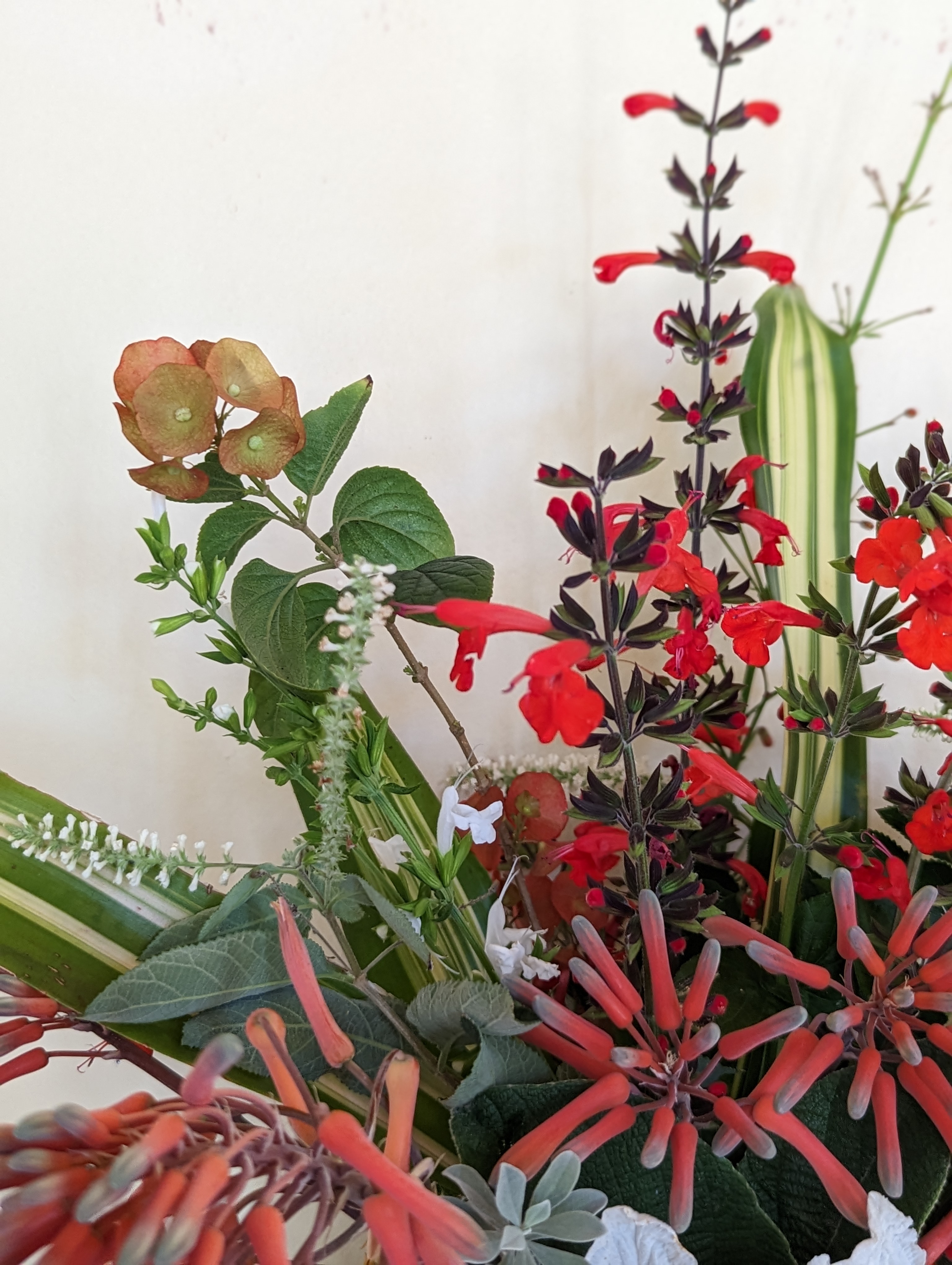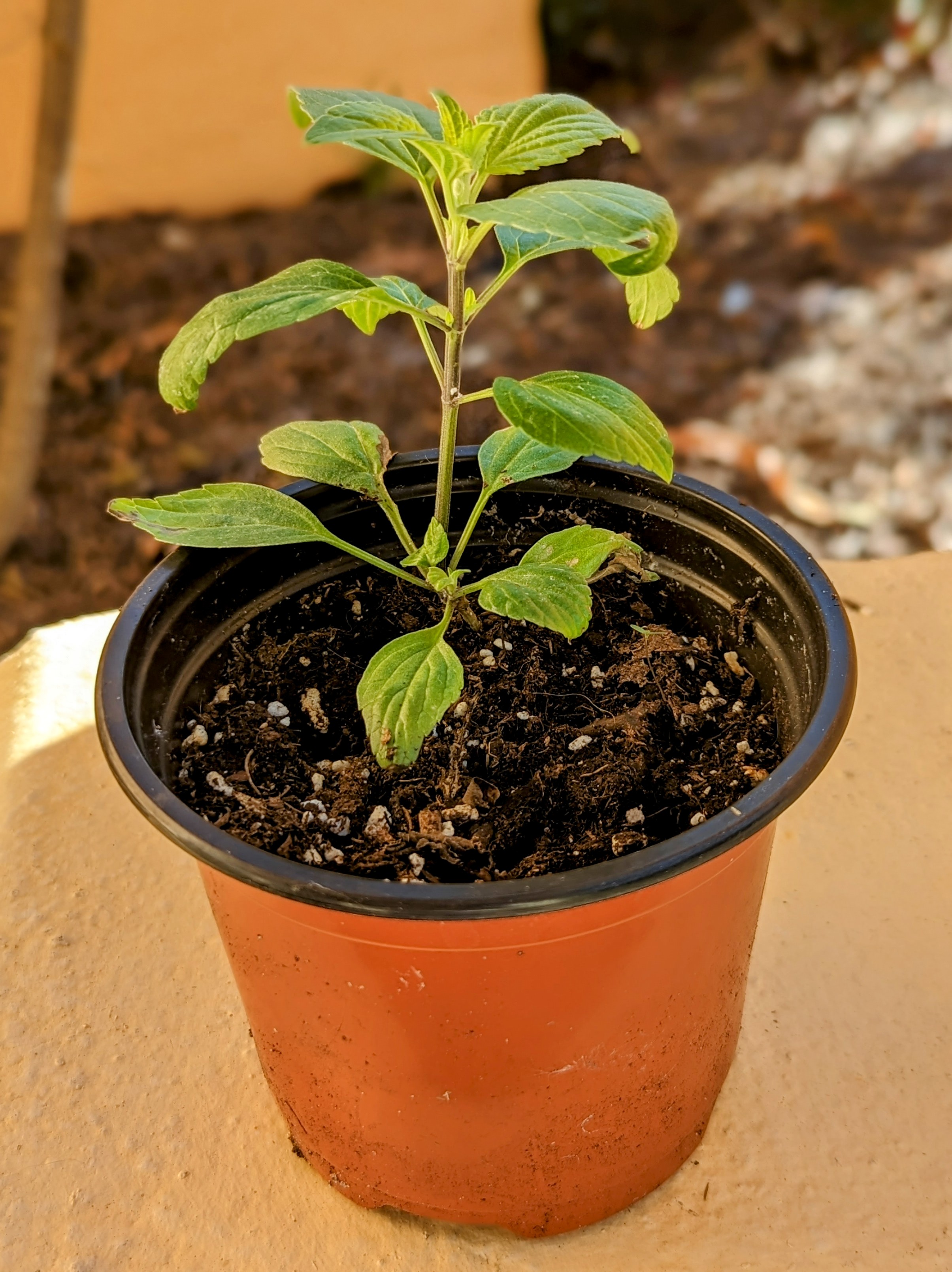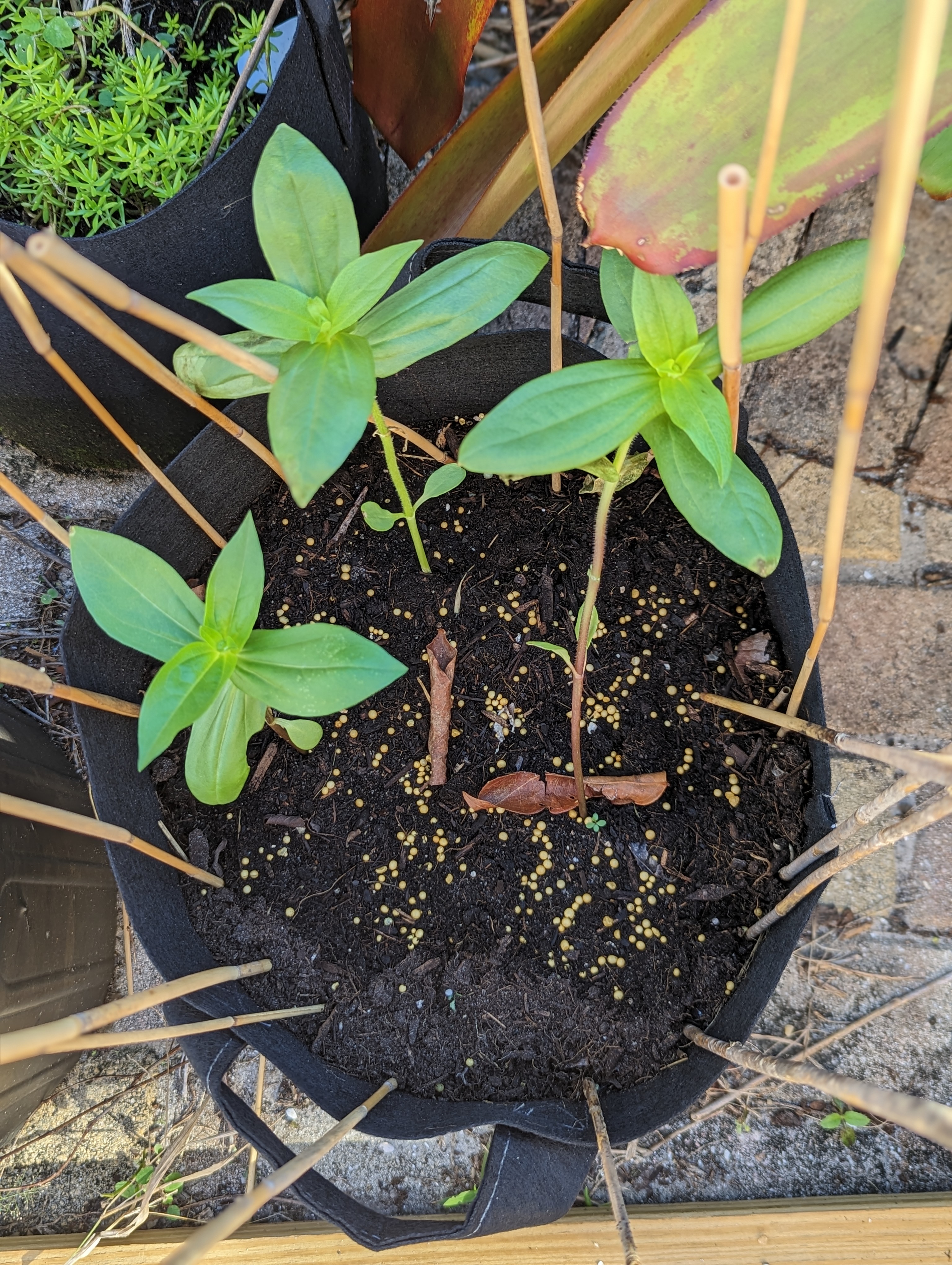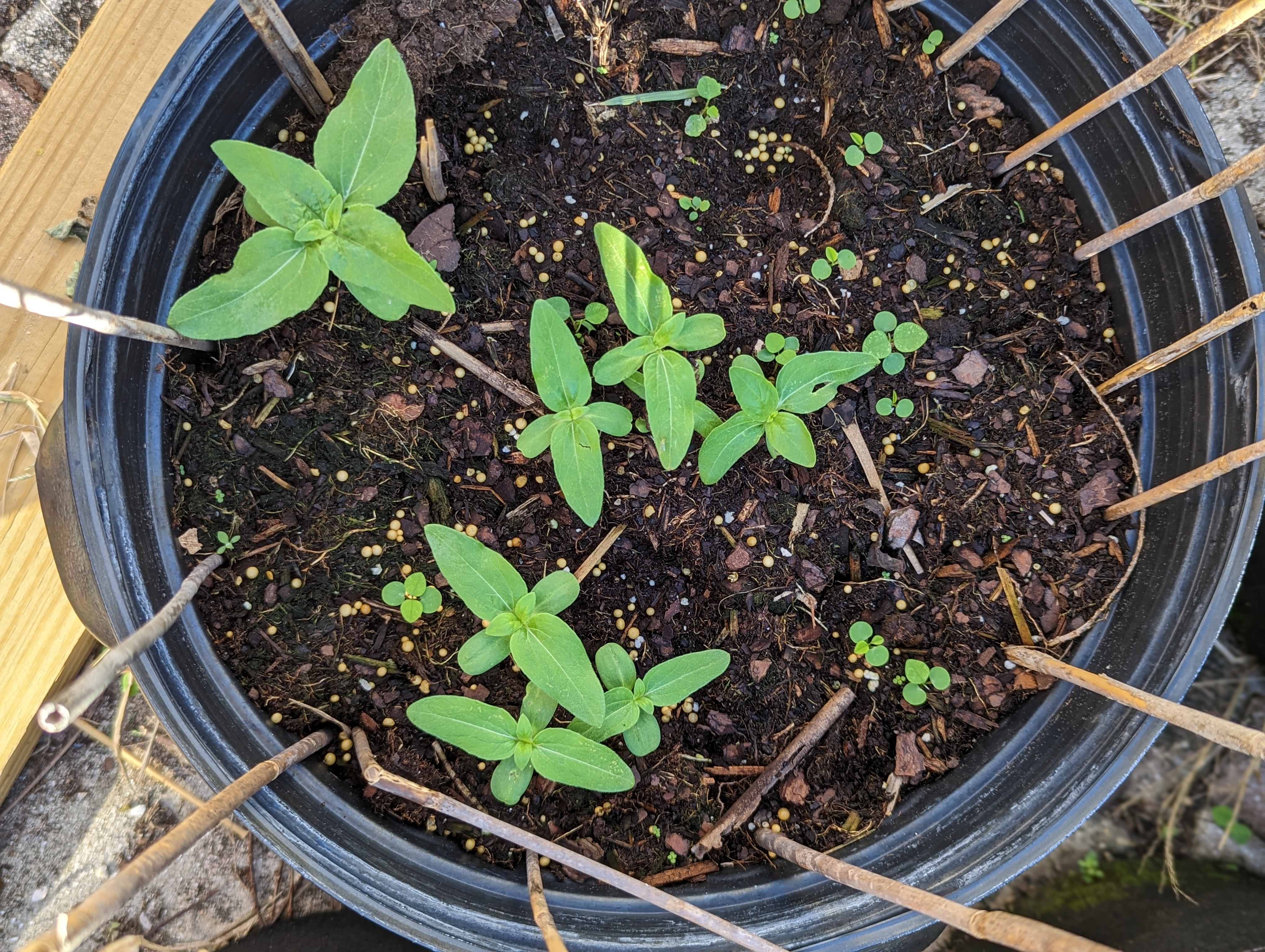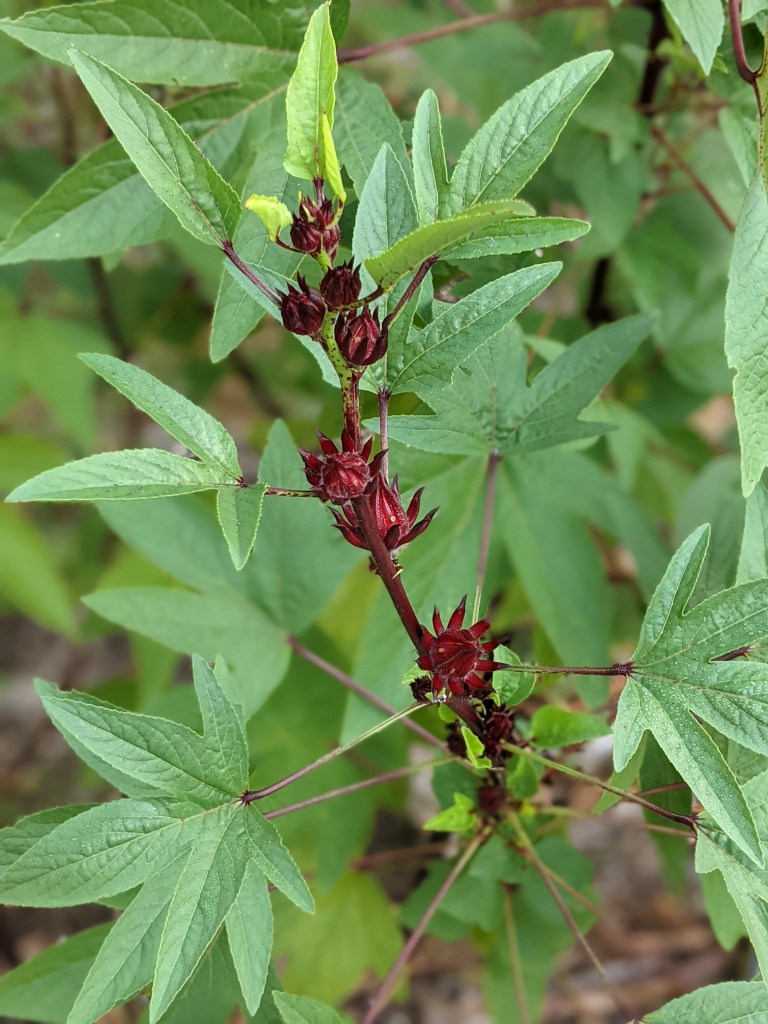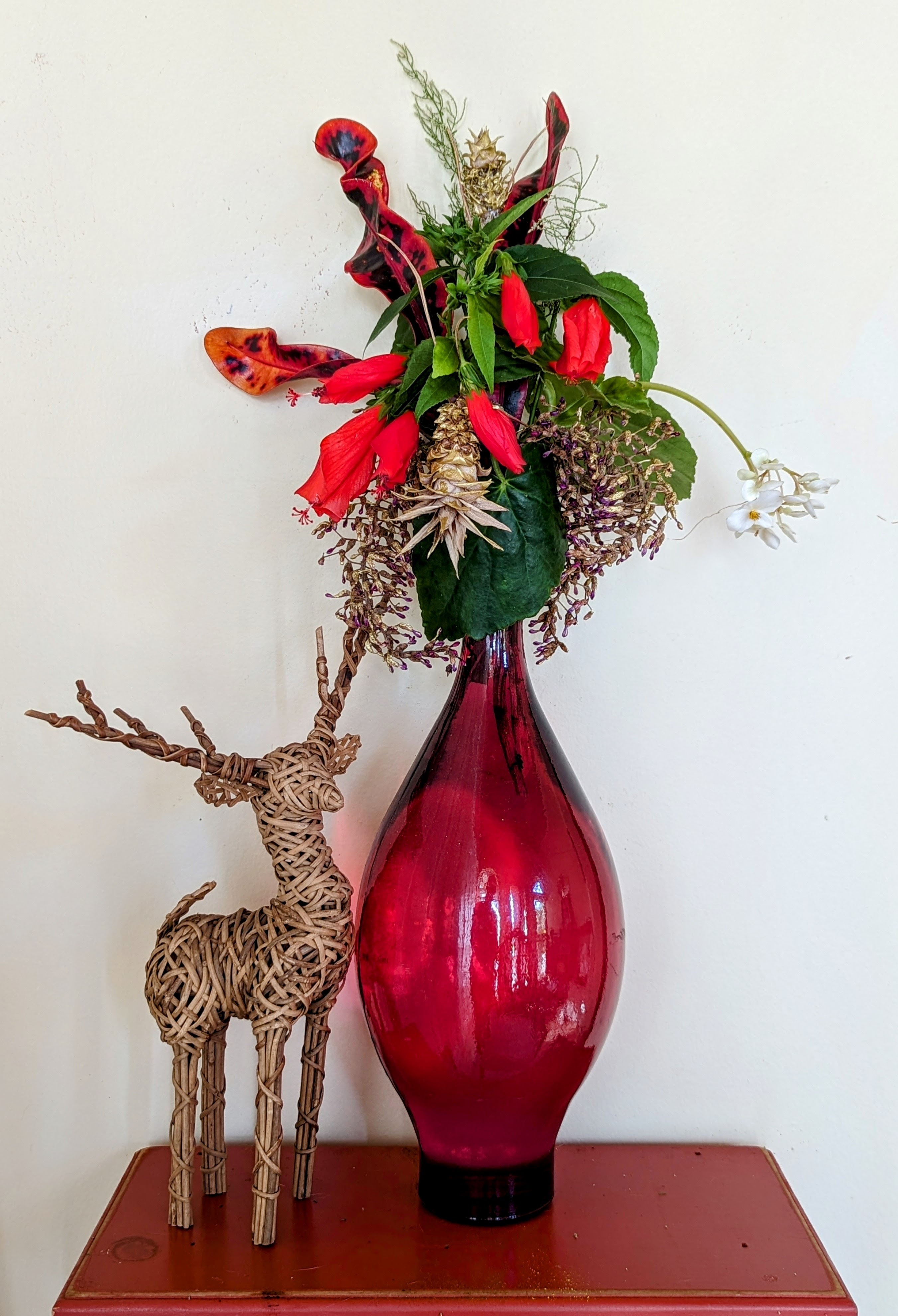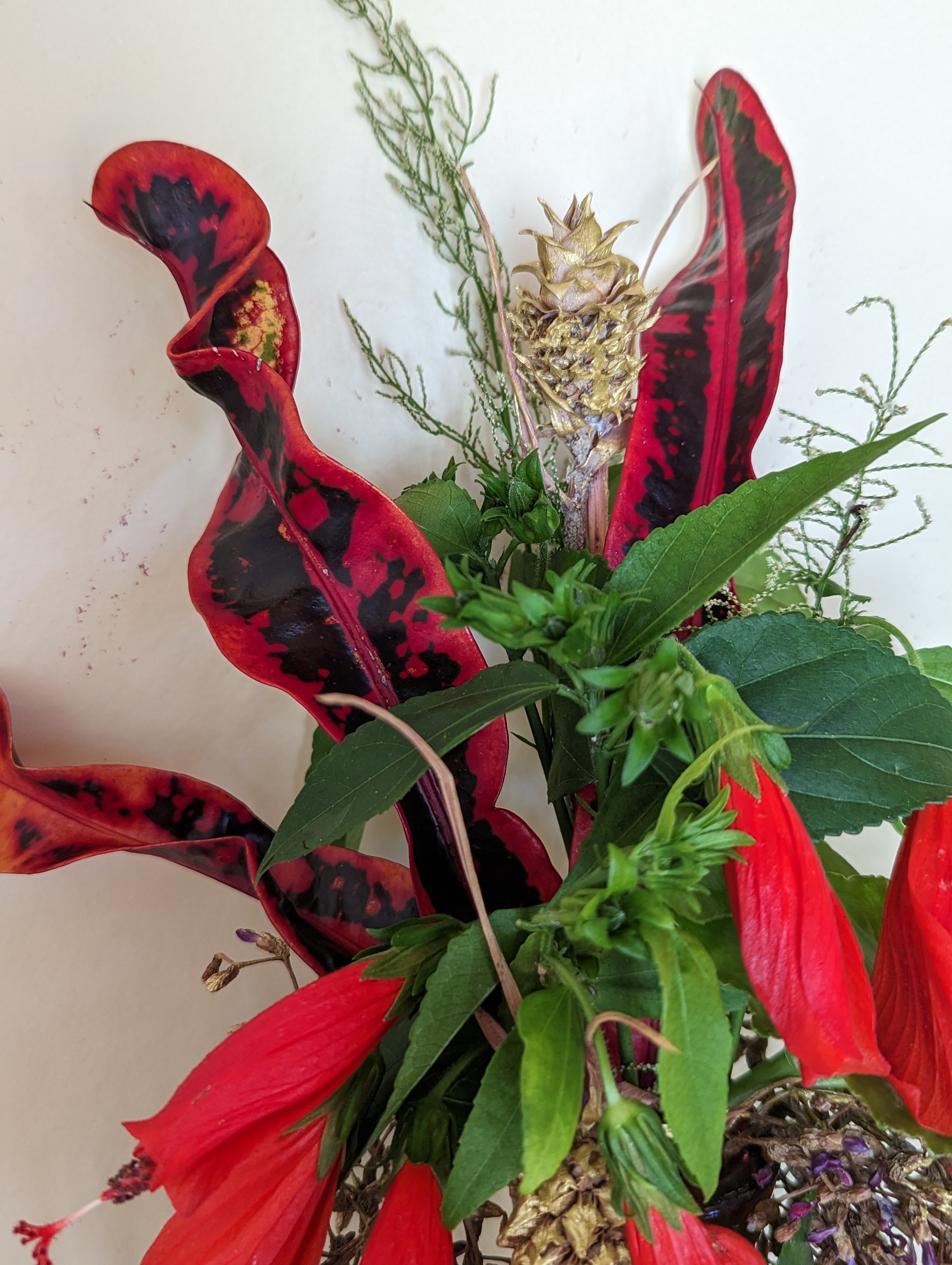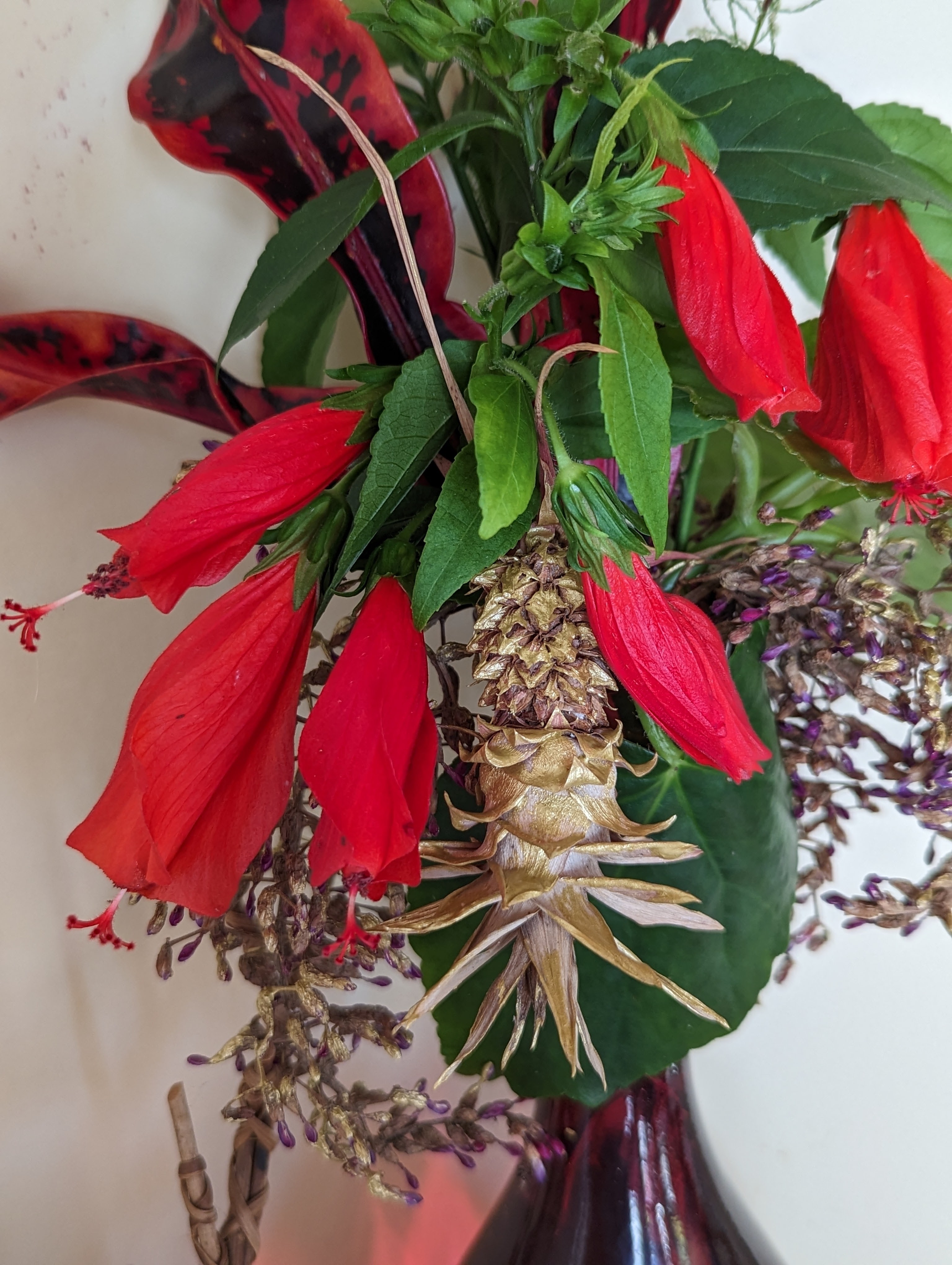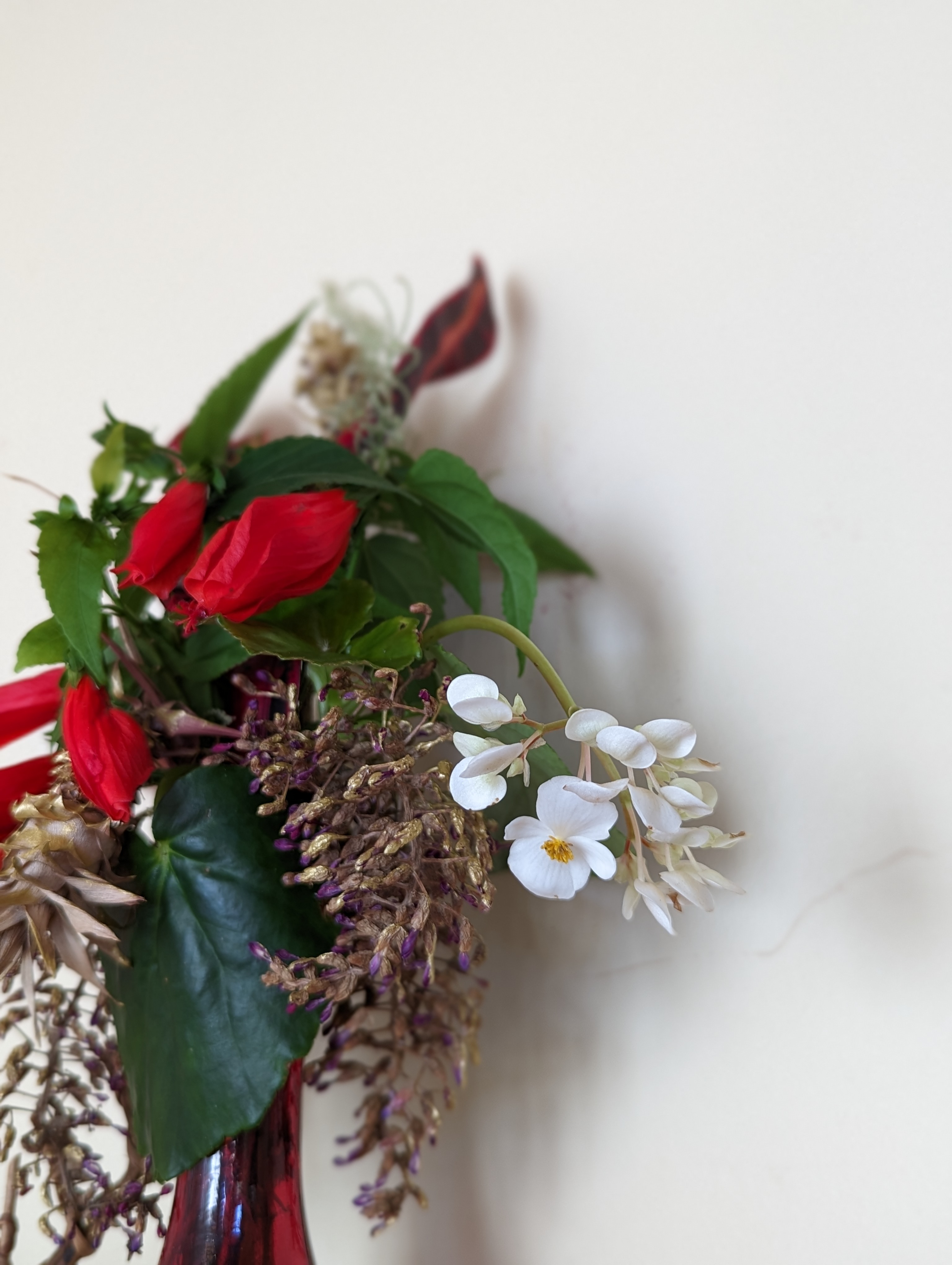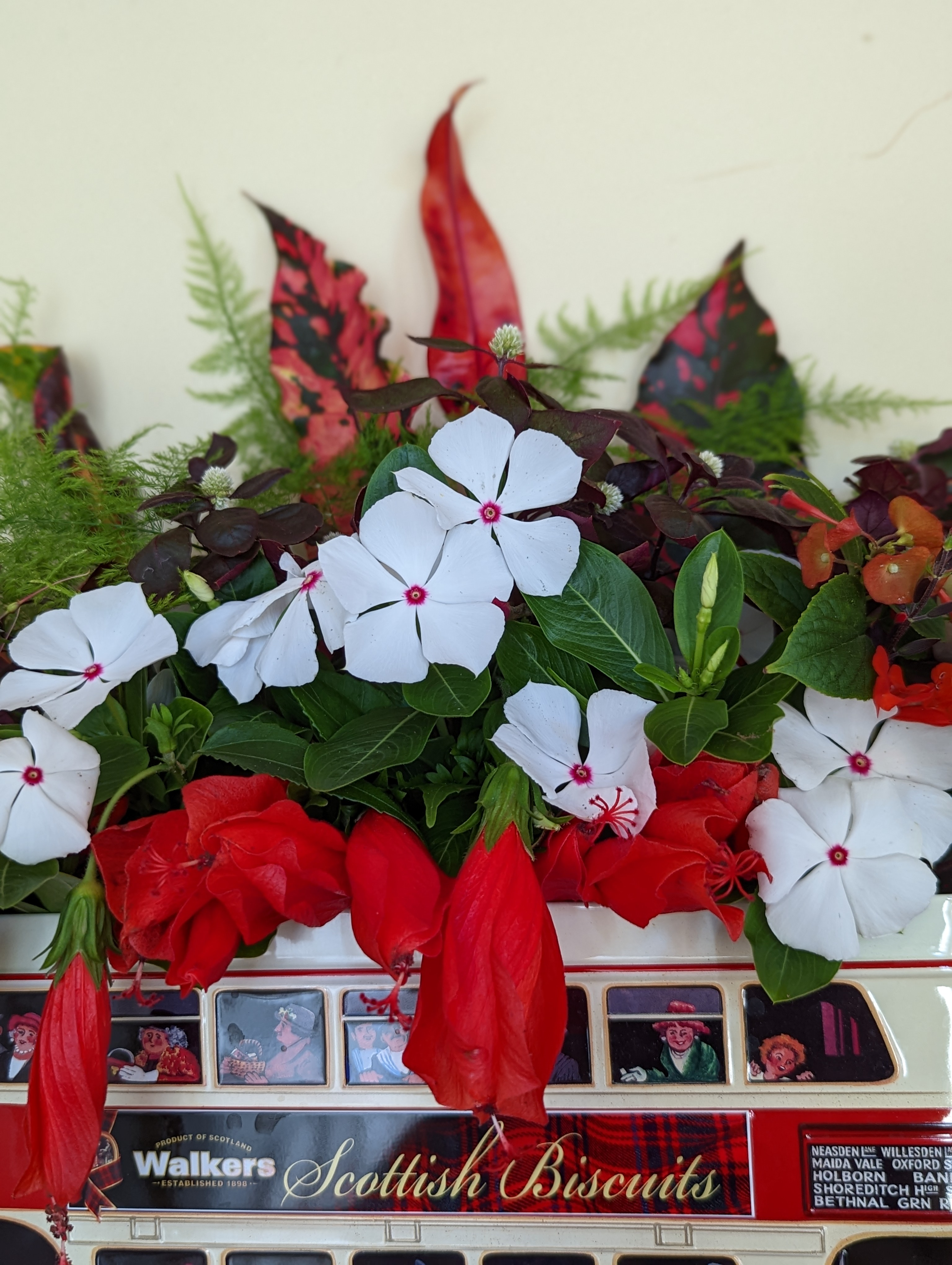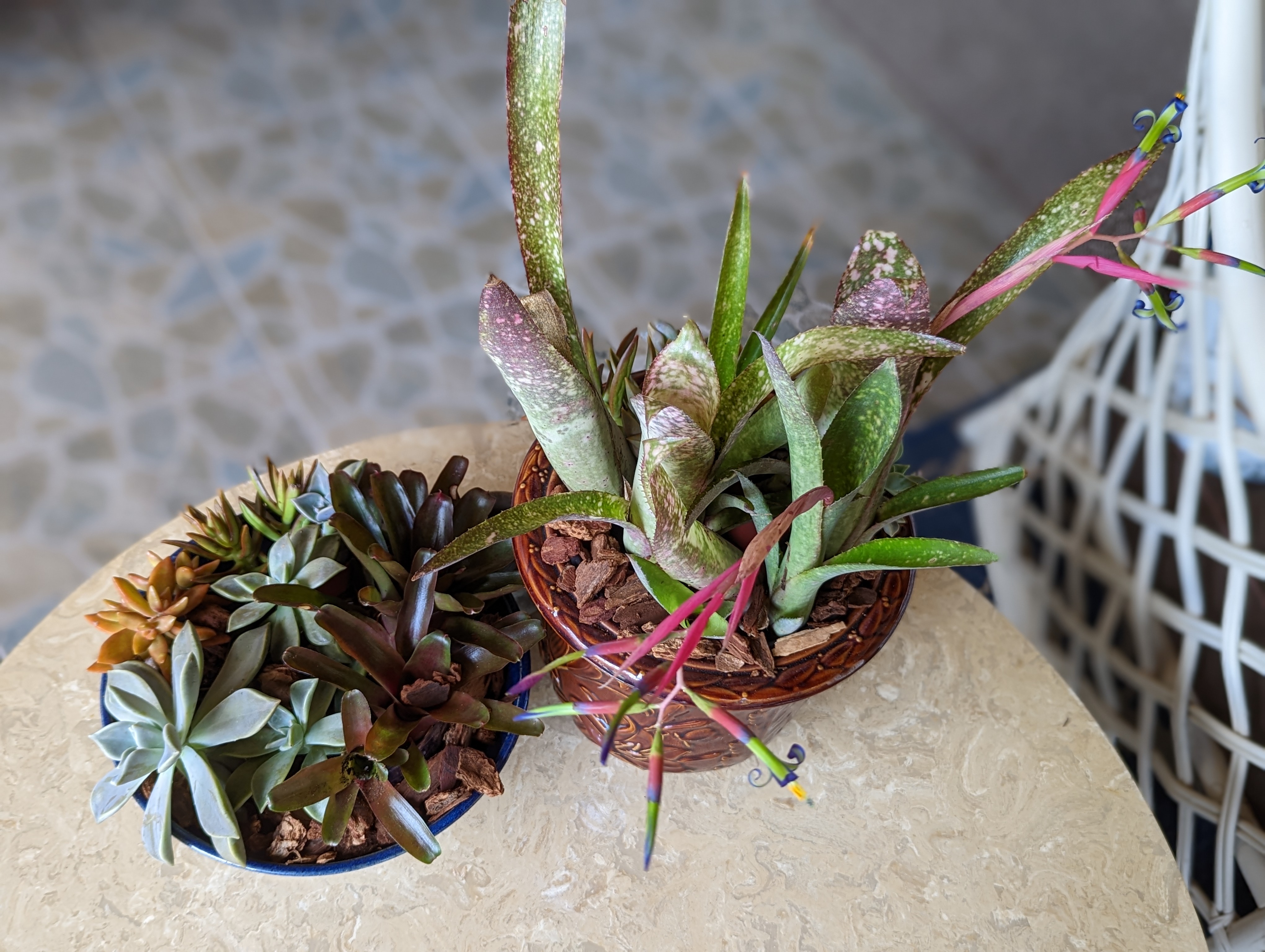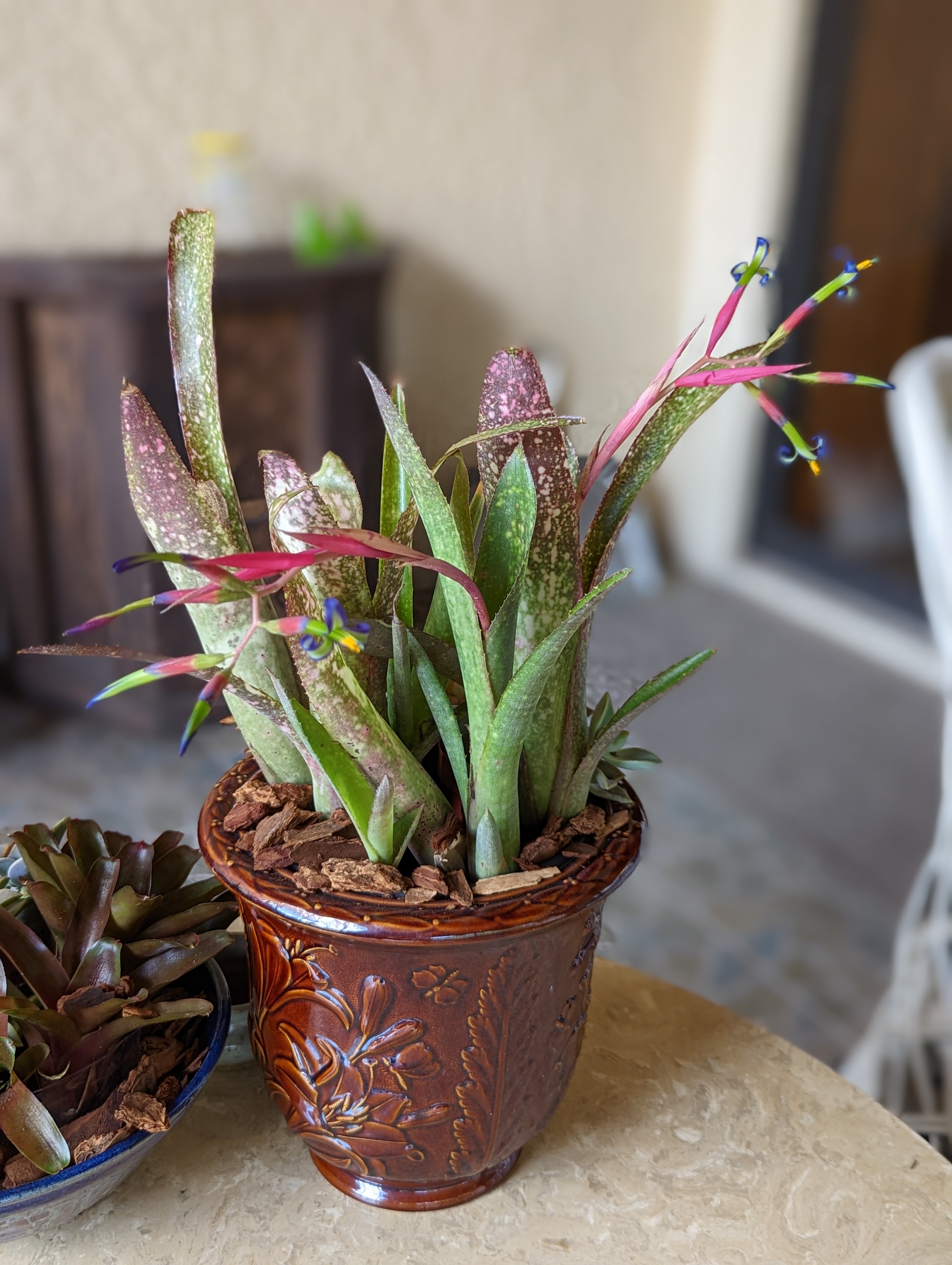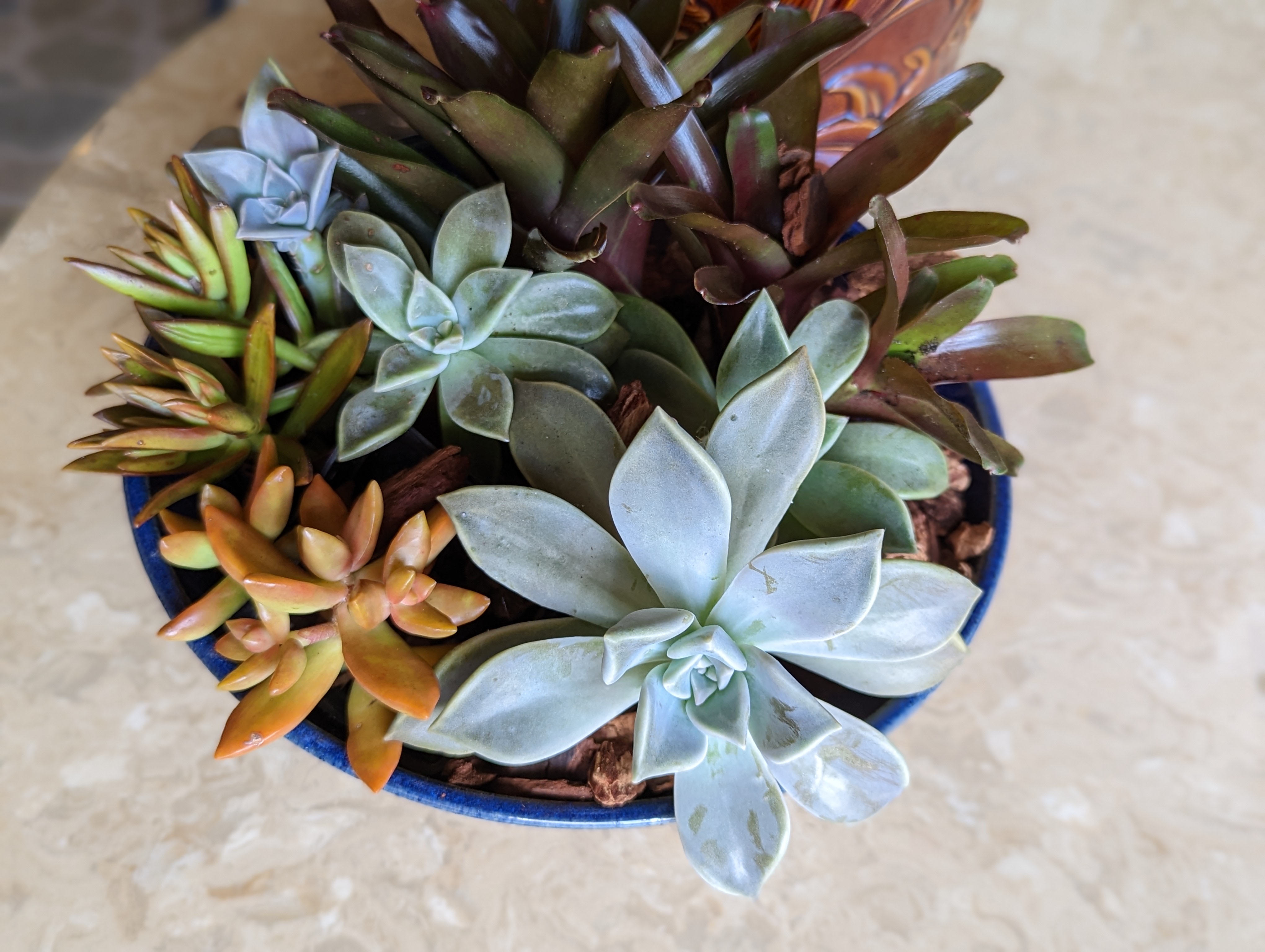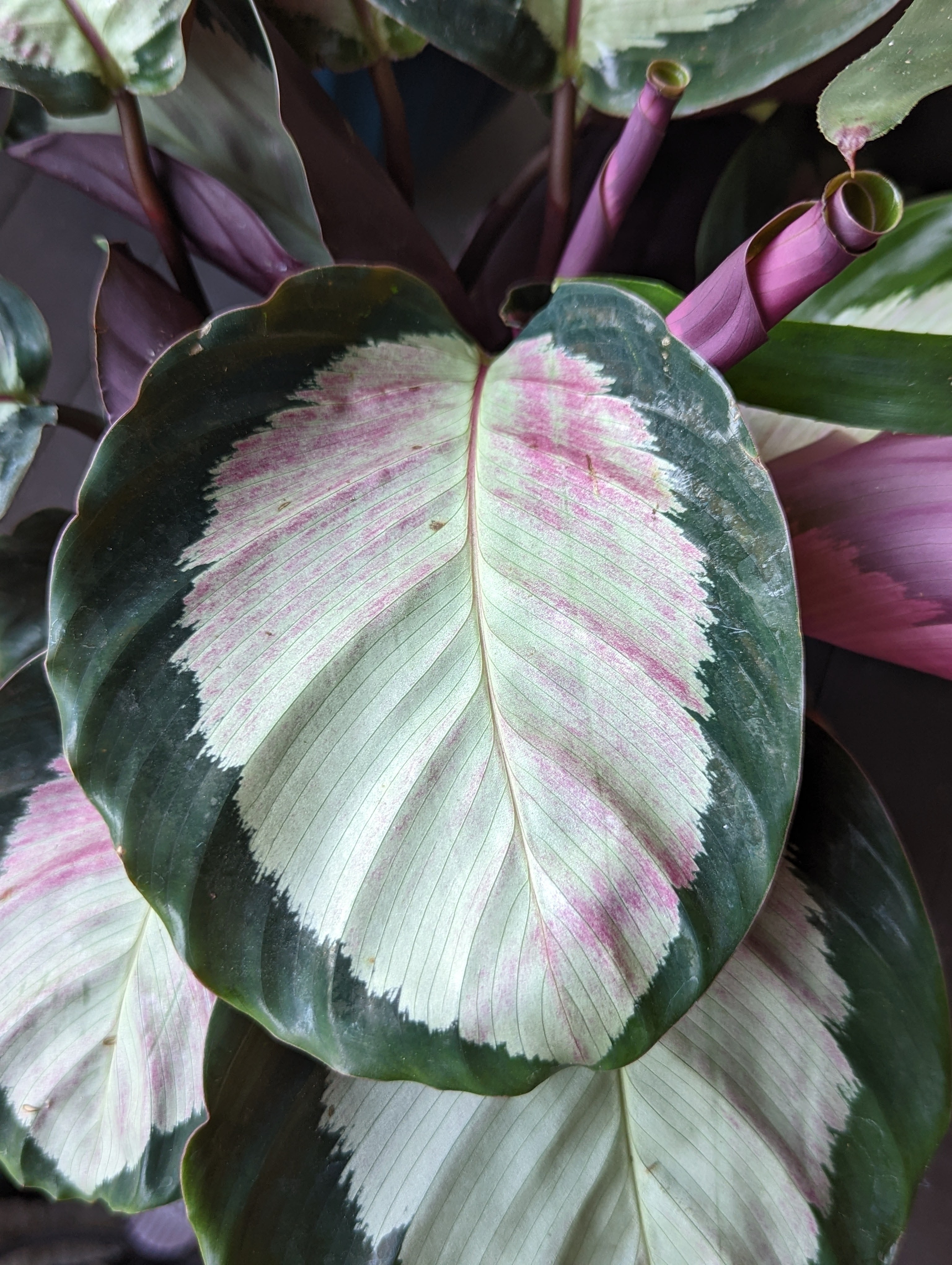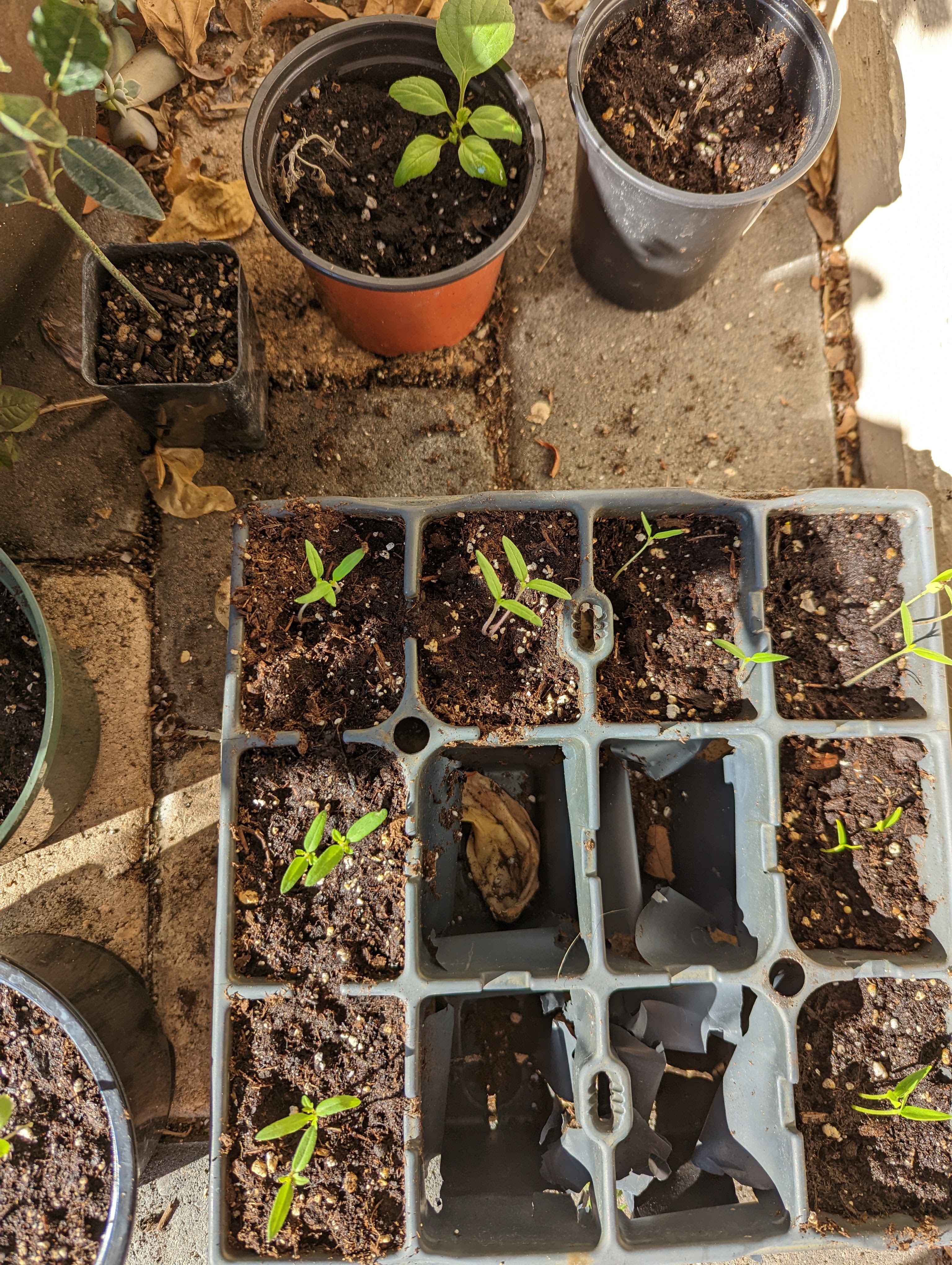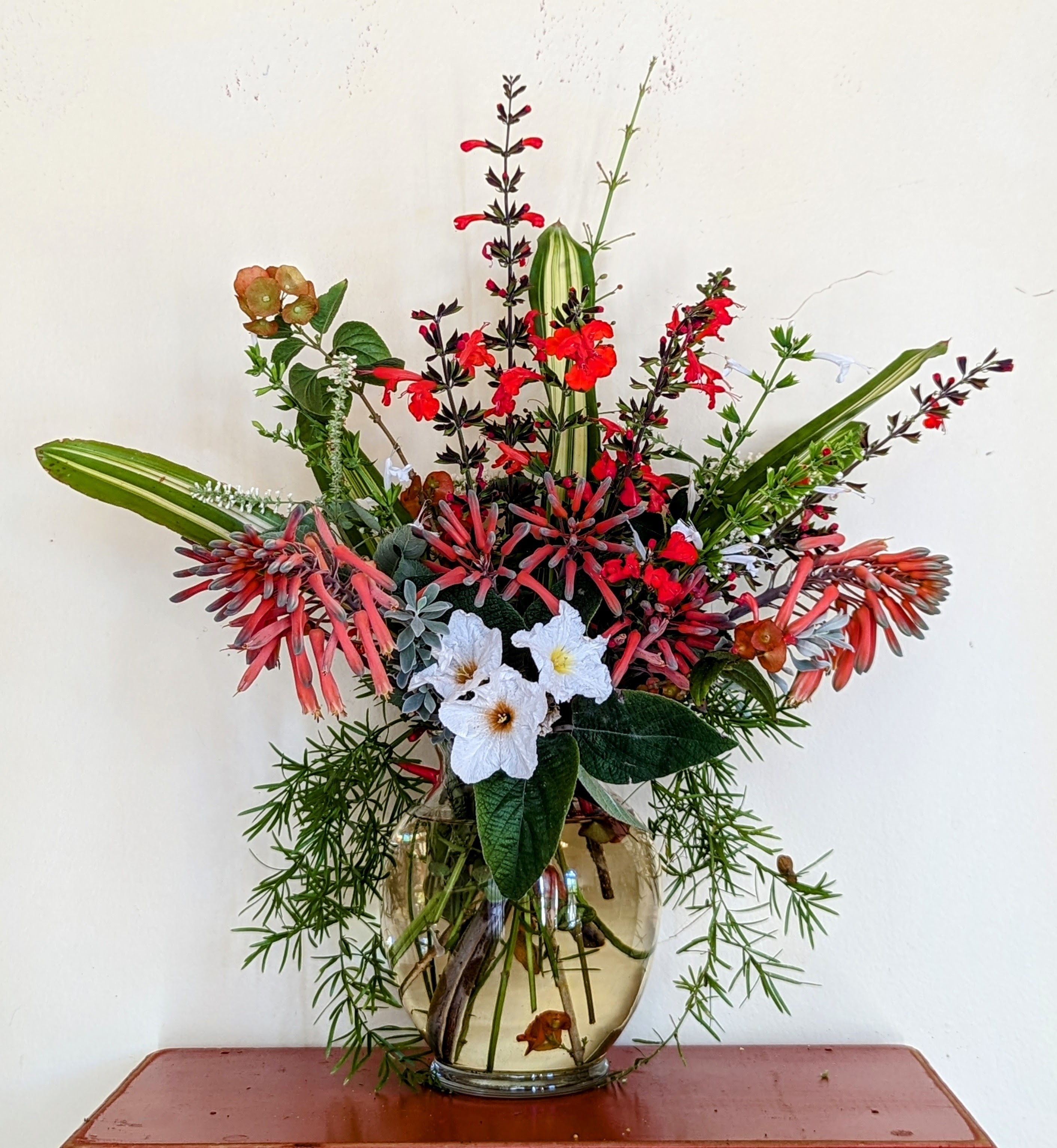
I am joining Cathy at Words and Herbs for this year’s Week of Flowers sharing images from our gardens. I am adding some tropical warmth from my South Florida garden. Below are Cattleya orchids that live outside year round. These are deliciously fragrant and faithfully flower every September; they are mounted on a piece of wood and perch on a terracotta container.
Below, in my opinion, are the ultimate tropical flower, the Lobsterclaw Heliconia. These have lush, large, coarse textured tropical foliage and require a great deal of water. They live under the edge of my gutterless roof. There are many varieties of this plant, some with chains of flowers two feet long.
Hopefully these images warm up gardeners living in more northern climes. To see more flowery images from around the world visit Cathy at wordsandherbs.wordpress.com.
I love planting in groups of three and decided try the same in this Monday’s vase. I think the result is a balanced arrangement. Maybe I am getting in touch with my inner accountant (there is not one); or maybe it is the late November heat baking my delicate brain. High temperatures have been in the mid 80’s (F) complete with humidity and the stray thunderstorm. Florida is known for the Endless Summer, this year they are not kidding. The 10 day forecast keeps insinuating cooler weather that never materializes. I shall persevere and plant some vegetables, summer, of course – it is time to plant tomatoes and green beans here and the first sweet corn of the season has just appeared at our local farmer’s market. The citrus harvest is in full swing so I am looking forward to local Orri tangerines.
The vase contents:
The flowers, three of each, of course. In red and yellow, ‘Lady Di’ Heliconia (Heliconia psittacorum); in orange, ‘Chocociana’ Heliconia (H. psittacorum ‘Chocociana’); white spikes lending fragrance to the vase, Sweet Almond Bush (Aloysia virgata); grey flower stalks are Flapjack Kalanchoe (Kalanchoe luciae); Boston Ferns (Nephrolepis exaltata) are in the background again; green leafy foliage is from the Heliconias.
The Flapjack Kalanchoe flowers are the most unusual of the lot this week. Here they are in the garden. Actually they are in a container, growing under a Desert Rose.
Thanks to Cathy at http://www.ramblinginthegarden.wordpress.com for hosting this weekly meme. Follow the link to see more vases. I found the Classic Editor on WordPress again, thanks to Cathy and Cathy from Words and Herbs, thank you both. Classic Editor is much less annoying than the Block Editor. We’ll see how everything works out!
Today is the ninth anniversary of the IAVOM meme. I don’t recall when I started creating and posting vases every Monday, but it has been several years and has become a weekly habit and a joy to share the fruits (or flowers) of my labor with fellow gardeners.
Yesterday I had the pleasure of participating in a Zoom meeting with several members of the IAVOM community. I have been exchanging comments with these blog friends for years and finally met them, virtually.
Cathy, at http://www.ramblinginthgarden.wordpress.com is the creator and hostess of IAVOM. Follow the link to see more vases. Thanks to Cathy for arranging and hosting the Zoom meeting.
The Vase – Contents:
The red flowers are Nodding Hibiscus (Malvaviscus pendululiflorus) – a sort of ratty looking shrub I keep in the garden for its winter flowers. The grey ‘flowers’ are cuttings of Echeveria, a succulent given to me by a friend. These cuttings are destined for a winter tabletop container on my screen porch. The vase is the last vestige of a historic floral arrangement.
The upper level – this image looks suitable for a snack of vegetarian dinosaurs and may well have been one. Both plants are native to Florida and have been here for millenia. The ferns are Boston Ferns (Nephrolepis exaltata) and the flowers are Juba Bush (Iresine diffusa)
Happy Monday, Happy Gardening and Happy Anniversary, IAVOM.
I am joining the SOS crowd after a rare event, a November hurricane – the third one to occur since the mid 1800s. If you look at the map above – where the red line hits the east coast of Florida, that’s my house. The hurricane, named Nicole, made landfall as a Category 1 (min 70 mph winds) at 3 am Thursday morning about 30 miles north. We all slept through it, the dog included. The hurricane was immediately downgraded to a tropical storm after landfall. I would guess we might have had 50 mph wind gusts, the damage minimal.
Floridians generally scoff at Category One hurricanes. The problem is you never really know where the thing is going to end up and the wind field on this one was so huge it was difficult to drive away from it. The wind kicked up Monday afternoon and continued until Thursday. We put up our storm shutters just in case, my husband is currently outside, grumbling and taking down the shutters.
A scattering of debris from Sabal Palms.
My Rangpur Lime tree is bent over. I guess I should tie it up to the fence to straighten it up? Lime trees are quite thorny and this is almost leaning into the pathway.
Miss Alice Bougainvillea was knocked off her column.
Further north, close to the ocean and rivers, people weren’t so lucky. This hurricane hit during a full moon and at fall king tide time, so the water was already high and the storm surge was 3 to 5 feet. The Daytona Beach area was also hit hard by Hurricane Ian, 43 days before. Some of the houses damaged by Ian fell into the ocean with this additional insult. These images are what you are seeing on the news.
The barrier island protecting us had quite a bit of flooding and an native American burial ground on the beach was unearthed; it will be interesting to learn how old the skulls are found on the beach.
I am joining the SOS crowd today with our new host, Jim at https://gardenruminations.co.uk/. Follow the link to see more SOS posts! Thank you to Jim for taking on this task.
I have been ruminating about the odd nature of some of the plants in my garden. There are aspects of my garden that remind me of The Far Side cartoons. Below is a Pencil Cactus (Euphorbia tirucalli) standing sentinel by my side door. I kept thinking this thing would snap in a high wind, but it hasn’t.
Another novelty plant in the garden, Coral Plant (Jatropha multifida). These look oddly like a multi stem marijuana plant, but in reality are deadly poisonous and the flowers are a great butterfly attractor. These are planted in a narrow spot between the house and driveway.
The Coral Plant flower. It looks like a coral from the ocean..
The caudex of a Desert Rose (Adenium obesum). I have several around the garden. This one has the most interesting trunk. These are native to the Arabian Peninsula and grow quite large.
Buds on the Nodding Hibiscus (Malvaviscue arboreum). I was poised above this with the pruning shears when I realized how many buds were there!
The super tropical Palm accent is a gift from a passing bird. It’s the seedling of a Chinese Fan Palm (Livinstonia chinensis) This is about 8 or 10 feet tall and has been in the garden for the past 10 years. The trees get much bigger. It has been surprising to me how slowly palm trees grow.
That’s my Six for this Saturday. Maybe I should take up garden cartooning??
My favorite cool season flowers are starting to show their colors. One is the Juba Bush (Iresine diffusa). I am jubilant that the Juba Bush has reappeared. I thought it was gone. This is a native wildflower that I mistook for Amaranthus and left it in the garden only to discover its wonderful chartreuse to creamy white flowers. Juba is the name of an African dance that was imported into the Caribbean where these wildflowers are also native. The dance involves a lot of hip movement and swaying – the plant’s movement in the wind reportedly mimics this?! I wish this grew under my Gumbo Limbo tree, that would be perfect.
The Juba Bush. It is the creamy white flower; ‘Lady Di’ Heliconia is in the background.
The other fall indicator is the red Nodding Hibiscus (Malvaviscus penduliflorus) at the base of the vase. This is another volunteer that I have embraced as I love the flowers. Like many Hibiscus (it is a relative and Mallow family member) the shrub is rangy and not particularly attractive. For me, the flowers make it worthwhile and I enjoy them all winter. It also needs no supplemental water and the leaf cutting bees love it.
The Nodding Hibiscus:
The rest of the vase:
The orange flower is a ‘Choconiana’ Heliconia (Heliconia psittacorum); white daisies are the native Spanish Needles (Bidens alba); ferns are the evil invasive, Asian Sword Ferns. I keep the Sword Ferns at bay by using them in vases.
Last week I commented that one of the flowers in the arrangement was three feet long. This was a Blanchetiana Bromeliad. I decided to cut a whole flower to use in a vase. The flower turned out to be closer to six feet long. Two yards or nearly two meters. I cut about four feet including the stem and realized the flower was too heavy to put in a vase, so I used some ‘florets’ – kind of like broccoli. The florets are the orange and yellow arching accents in the vase. Here is the entire flower:
Blanchetiana Bromeliads (Aechmea blanchetiana) are a common sight in South Florida. It is a big plant, six feet tall with orange foliage and they spread very well, probably too well. I was astonished the first time I saw one, thinking of bromeliads as small houseplants. There are some with flowers up to 10 feet!
The rest of the vase:
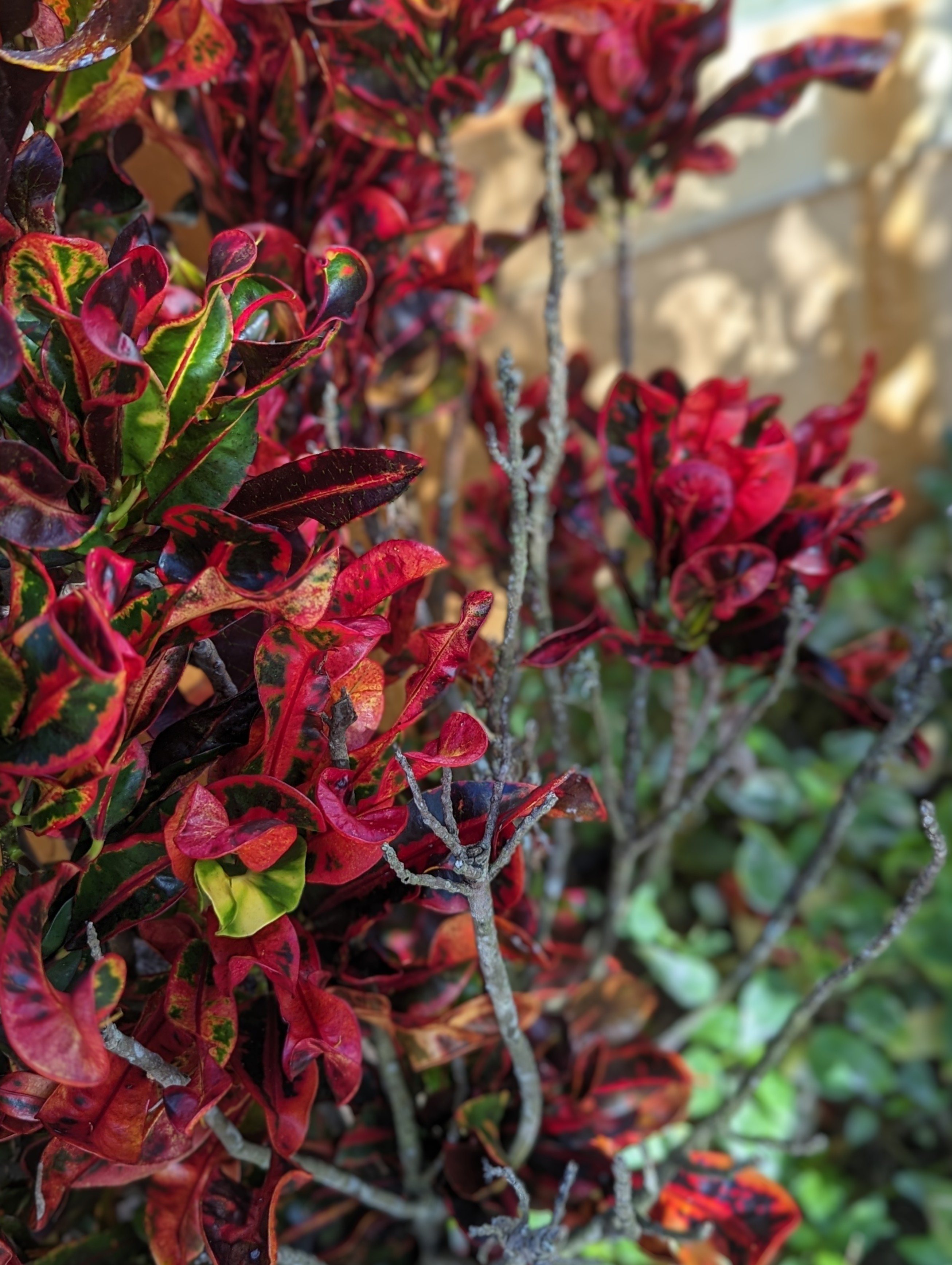
Florets of Blanchetiana Bromeliads; varigated foliage is Piecrust Croton (Codiaeum varigatum).
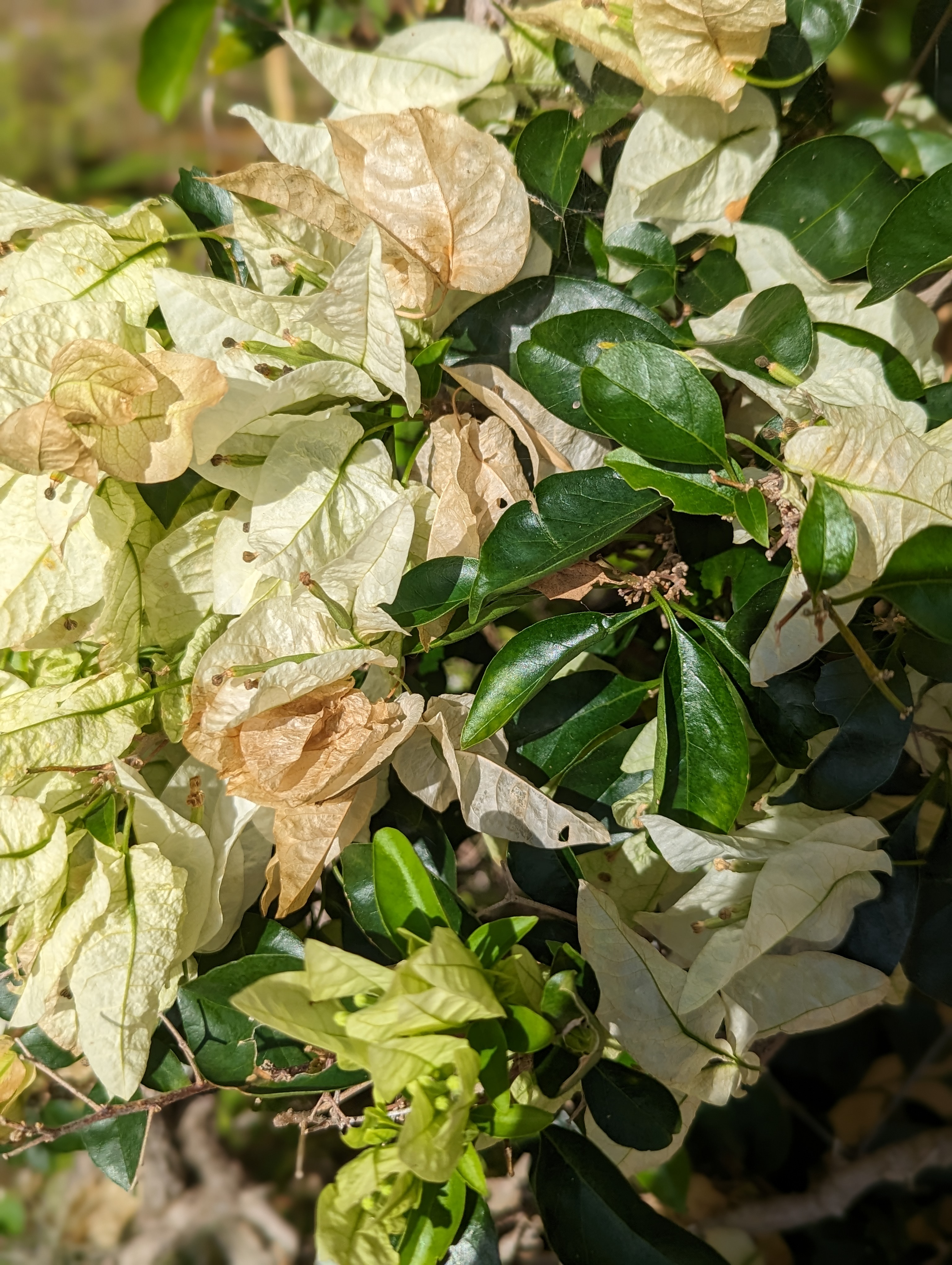
White flowers are ‘Miss Alice’ Bougainvillea; tropical green foliage is Split Leaf Philodendron (Philodendron selloum). The big crystal vase is a wedding gift from a dear friend. I rarely use this vase as it requires a lot of flowers – maybe two yards.
I am joining the SOS crowd today seeking signs of fall in my garden. South Florida is not noted for obvious seasonal changes – however, there are autumnal signs if you look hard enough. To see more posts about fall, visit http://www.thepropagatorblog.wordpress.com.
There are trees and shrubs that produce fruit in the fall. The hungry migrating birds are just starting to show up as the fruit matures. This is the fruit of the Gumbo Limbo tree (Bursera simaruba). It ripens to red and then bronze. Then there are a zillion seedlings.
I was surprised the first time it happened. The Pleomele (Dracaena reflexa) flowered, and then it produced fruit. There is a bird that bangs on the window after it eats the fruit for some reason. I have never seen Dracaena seedlings although it is easy to grow from cuttings.
Wild Coffee (Psychotria nervosa) occurs naturally in my garden. I have read that you can roast and use the seeds for a coffee like beverage, but it is not recommended or caffeinated and related to medicinal plants that can make you sick. Best left to the birds.
I spied a Mockingbird enjoying the Beautyberries (Calliocarpa americana) at long last. He or she did not hang around for a photo session. Mockingbirds are winter visitors here.
Martin Bromeliads (Neoregelia ‘Martin’) starting to show their fall colors. They are yellow and green in summer and change to deep red by winter.
For a final tropical touch, my ‘Miss Alice’ Bougainvillea is showing off for fall. Who knows why?
Fall rode into South Florida on the coattails of Hurricane Ian last week. While Ian left an unprecedented swath of destruction through the peninsula, my garden was unaffected by the storm for the most part. Leaves, branches and palm fronds were strewn around by the winds and a few plants are taking a more southerly direction bent by the higher wind gusts. Otherwise, all is well. The temperature change is a welcome relief from summer as is the lower humidity. Clear blue skies and daytime highs in the low 80s are the reason hordes flock to South Florida in winter.
I went in search of fall colors in the garden. Real fall color is difficult to find here, fruit bearing shrubs and trees are about it. Beautyberry and Goldenrain tree are my fall color change plants. The flowers in my vase are a different perspective on fall color than most gardens north of here.
The flowers:
The orange flowers are from Aechmea rubens, a long lasting bromeliad; variegated foliage is from ‘Java White’ Copperleaf (Acalypha wilkesiana). The vase is a thrift store find.
The orange tubular flowers are Firebush (Hamelia patens var patens); yellow lobster claws are pieces of Blanchetiana Bromeliad (Aechmea blanchetiana) flowers – the actual flowers are 3 or 4 feet long.
I have heard from a lot of people this week inquiring about our status after Hurricane Ian blasted through Florida. Here is what happened.
On Monday this week I posted the latest spaghetti models for the path of the hurricane. Meteorologists use these models to show possible storm paths. I have turned into a bit of a hurricane nerd and follow the weather modeling when storms are active. I marked this map up to show how the forecasting moved during the week.
I am located east of the big hole in Florida, Lake Okeechobee. The LW labels are where Ian was forecast to hit last week. Last week the hurricane was hitting South Florida or the Panhandle. The line in black was the Monday forecast. Tuesday it moved south with a prediction of a direct hit on Tampa Bay. Wednesday morning Category 4 Hurricane Ian spinning 155 mph winds made landfall at Cayo Costa, Florida, a barrier island off the west coast near Ft. Myers. It is over 100 miles between Tampa and Ft. Myers. The hurricane never really looked like it was going to hit us. Ironically, when the first rain bands hit my house the hurricane warning area was upgraded to 30 miles north of my house.
Ians’s path through Florida:
The storm passed about 110 miles west of us overnight on Wednesday. There was a constant 30 mph wind that escalated to 50 or 60 mph gusts off and on. We had very little rain.
The dreadful images of storm damage seen all over the internet and news stories are mostly from the two counties near the landfall, Lee and Collier. There is wind damage and ongoing flooding elsewhere in the path. Hurricane Ian reformed after leaving Florida as a tropical storm and hit South Carolina on Friday.
Our nephew lives in Ft. Myers and stayed in his house. After 5 hours of 100 mph winds, he had a hole in his roof and trees down. He was very lucky. The storm surge stopped 1/2 mile away. Another friend, with land development experience, recently sold his golf course view home in Naples after worrying for years about the 6-8 foot topographical difference between his house and the Gulf of Mexico. I imagine his neighborhood was inundated by the storm surge.
Here is what happened in my garden:
Winds blew this pot counterclockwise. I am glad it did not blow off the wall.
Piles of palm fronds to pick up. I hate hurricane cut palms. It is bad for the health of the tree to cut all the yellow and brown fronds and seed heads off as they provide homes and food for birds and bats – but, you don’t have to pick them up after high winds.
The hurricane cut palm is on the right. They are left with 3 to 5 green fronds many times.
The Strangler Fig was mostly covered in new leaves before the winds blew through. The new leaves and many others are now covering the ground.
That is it from my garden. Just piles of debris to pick up. Some of the plants are pointed in a decidedly more southern direction as that is where the strongest winds came from.