Epiphany at the Grocery Store

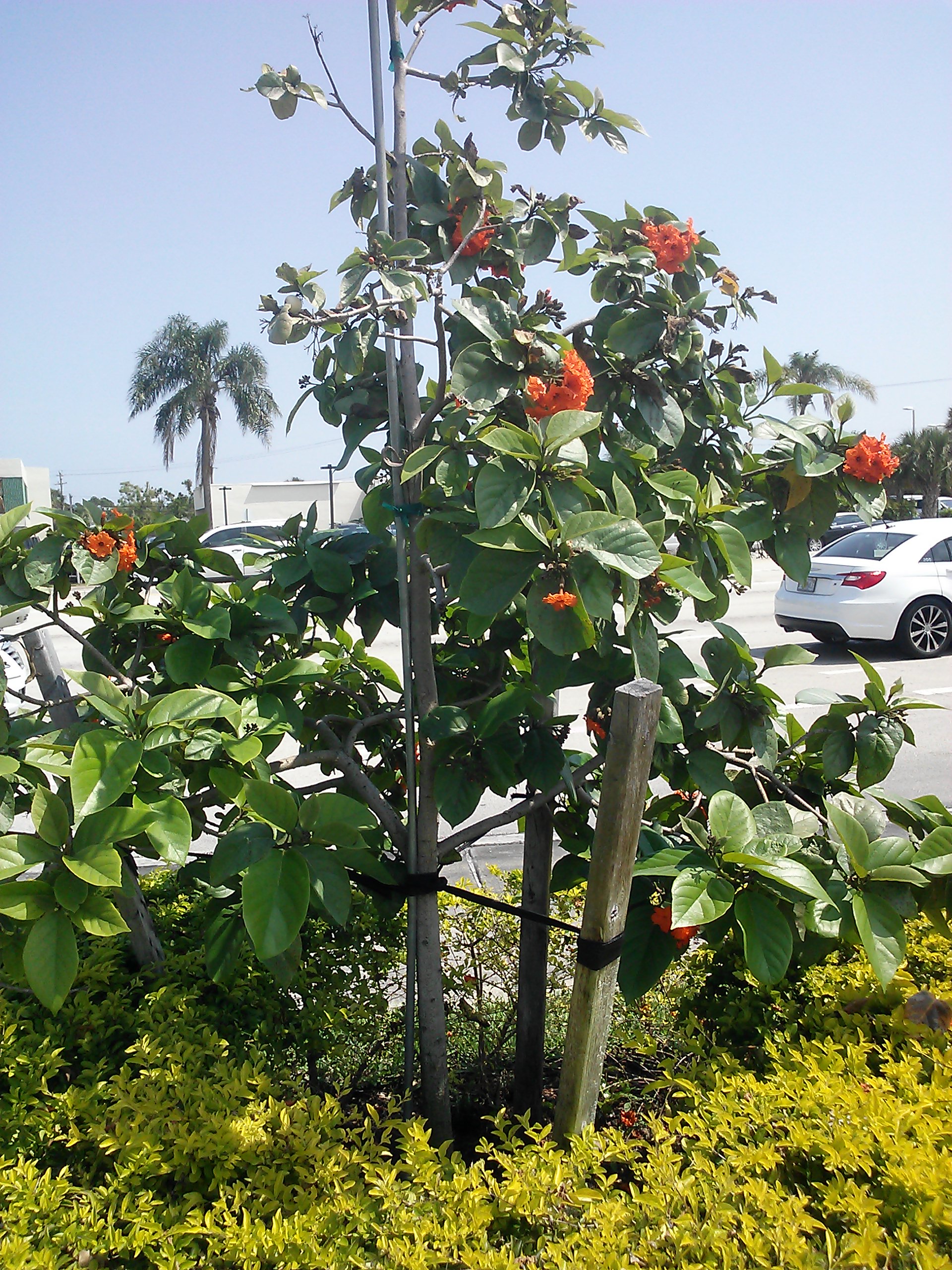
I stopped by the grocery store this afternoon to pick up some things for dinner. After shopping I went back to my car and was stopped by the beautiful flowering trees in the parking lot.

Having experienced Tropic Florida’s winter for the past several years, it is difficult to conceive of the season of spring. Winter is a whisper in your ear one night in February. In my mind, the season following winter is a literal release from the prison of your house. Standing in the parking lot was evidence of spring occurring further south than my mind had grasped.

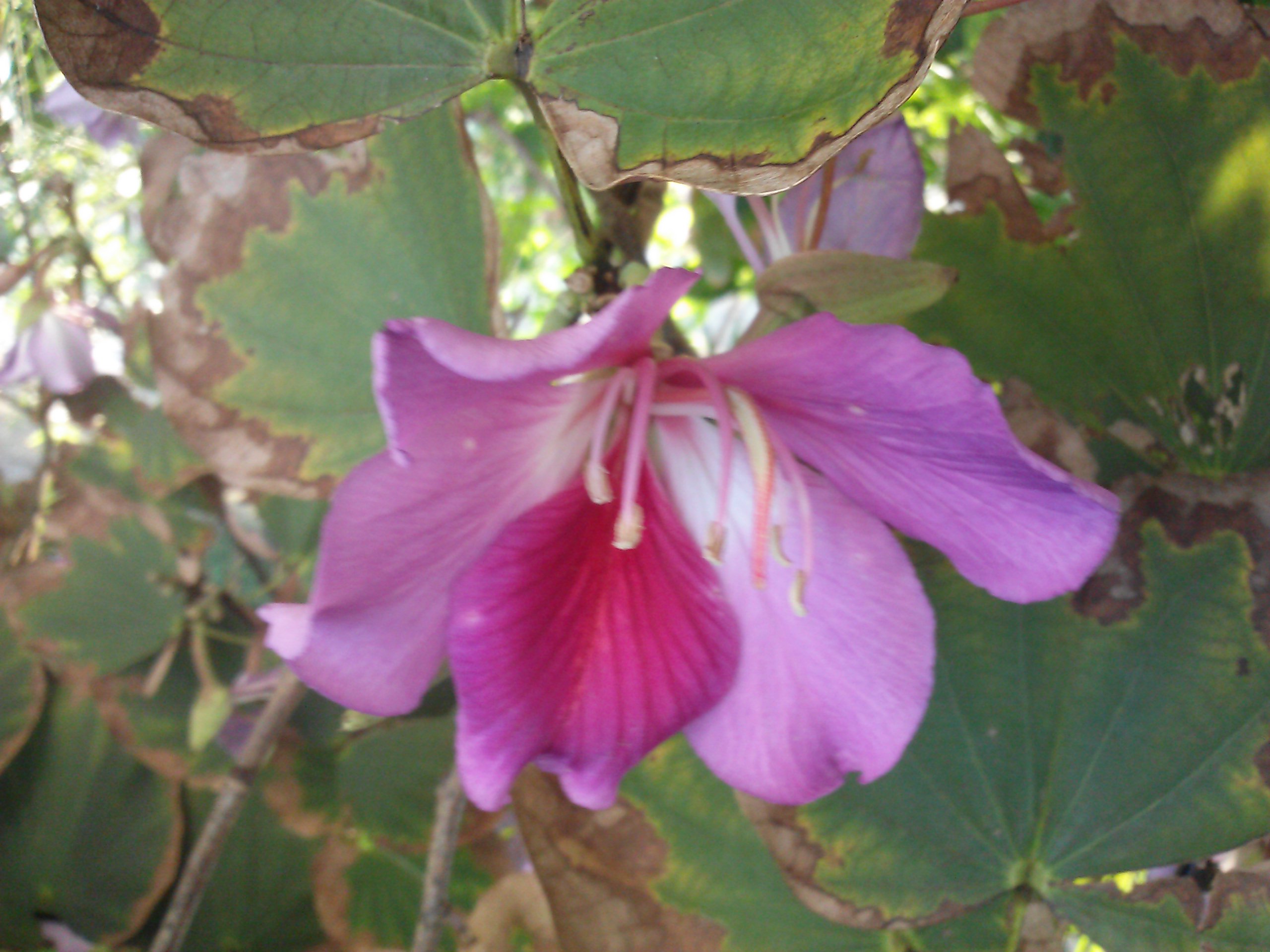
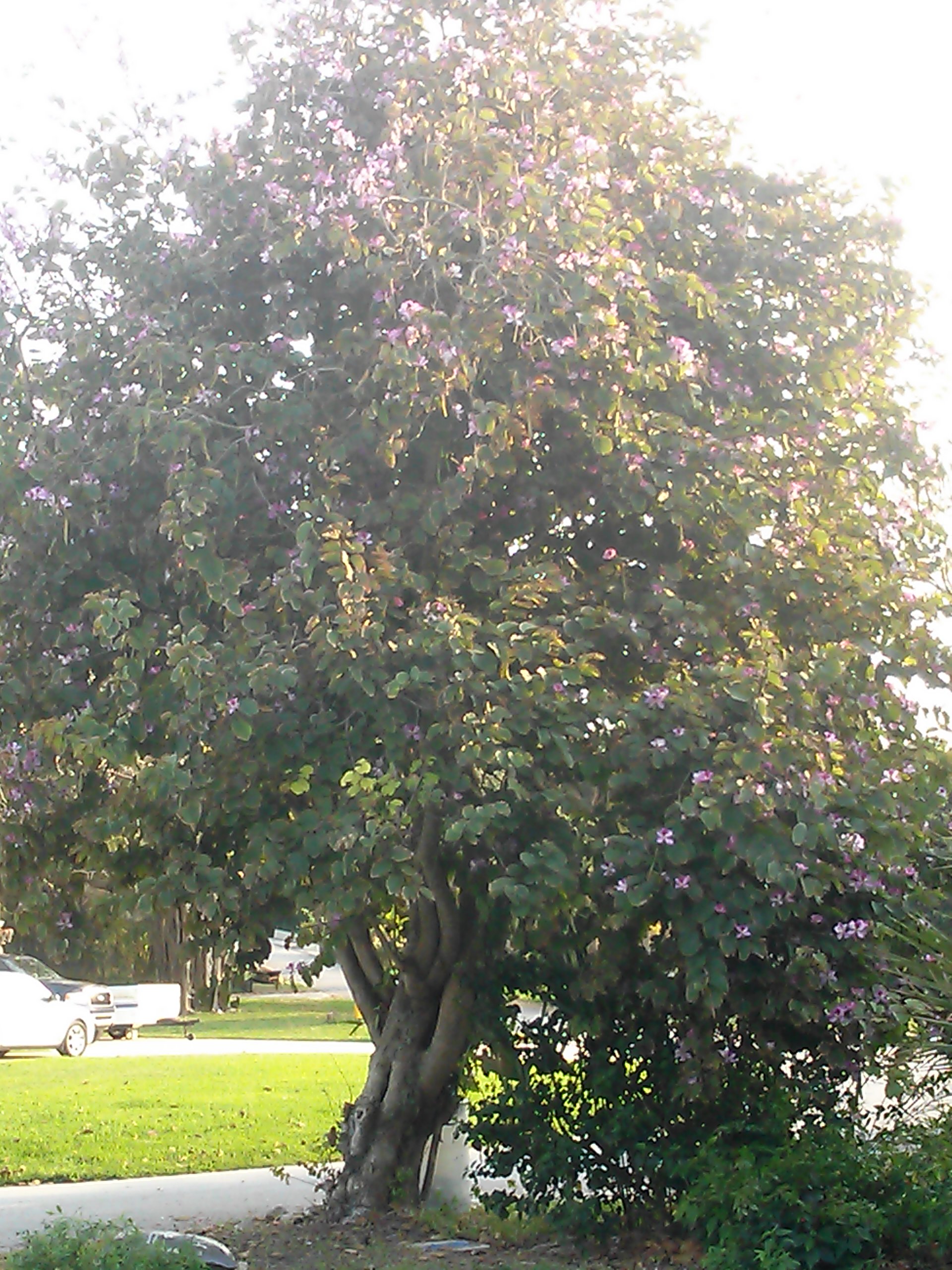
The first clue was a Purple Hong Kong Orchid Tree, here is the flower. Botanically speaking this is the Bauhinia purpurea, although there are many varieties. Capturing this tree with photography has been eluding me.

Hong Kong Orchid Flower

Hong Kong Orchid Flower

Hong Kong Orchid Tree

Hong Kong Orchid Tree

The failure of the photo to do the tree justice may be a difficulty with purple, but this tree is spectacular. Draped with the purple orchid like flowers, it appears large purple and pink butterflies have landed in graceful groups along the tops of the branches.

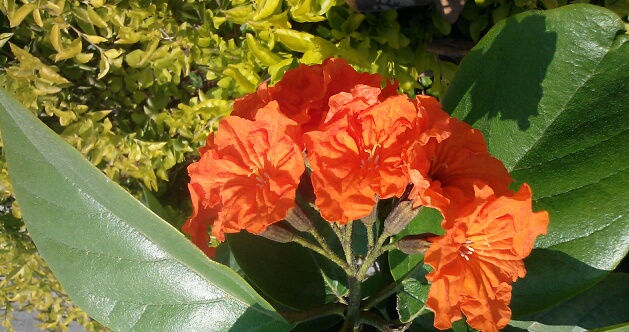
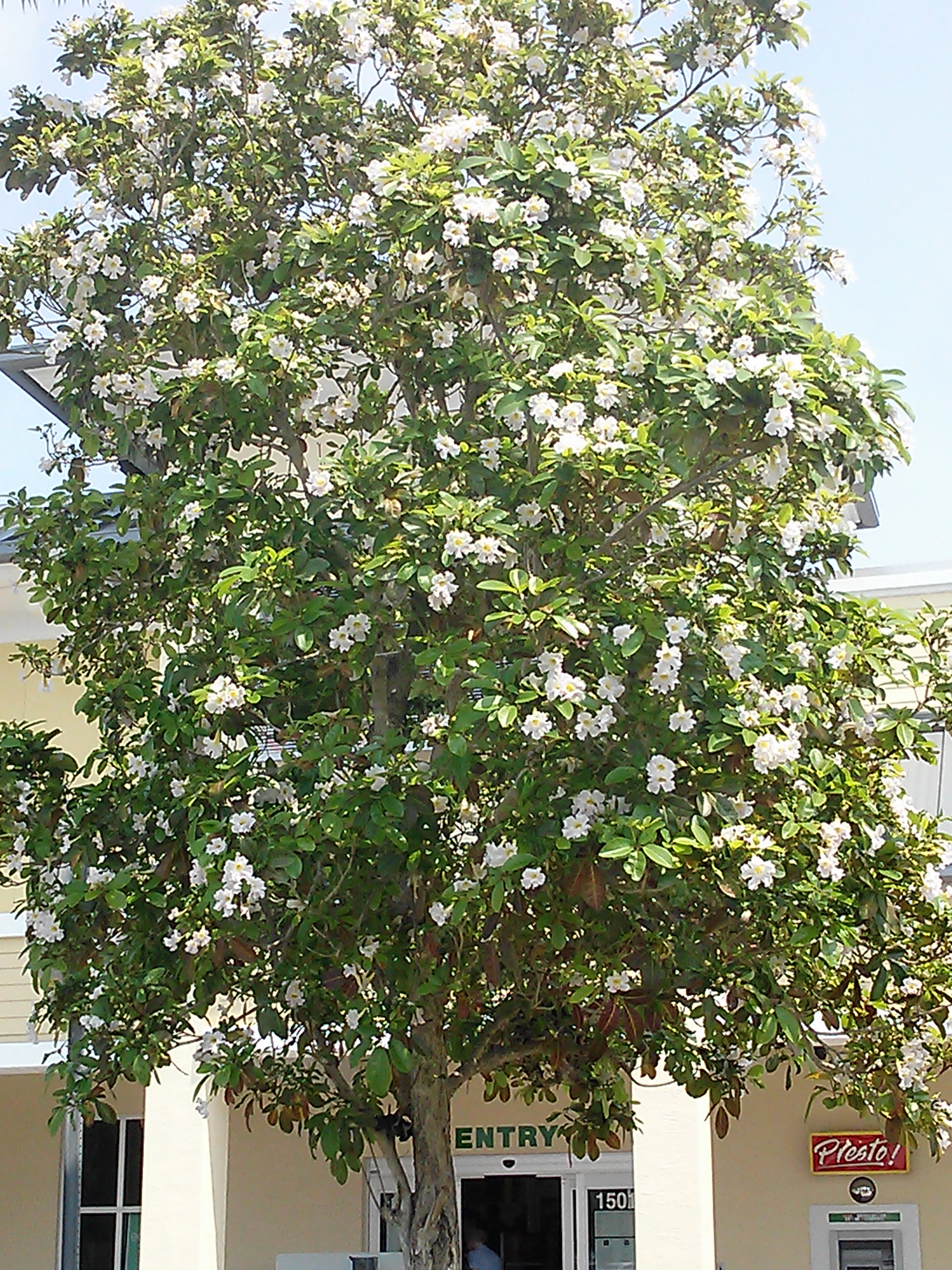
The next tree in the lot was a White Geiger Tree. I would characterize these trees as semi evergreen. The genus is Cordia, I am not sure exactly which one this is as one is from Brazil and another from Texas. Nevertheless, a good addition to the landscape.

White Geiger Tree

White Geiger Tree

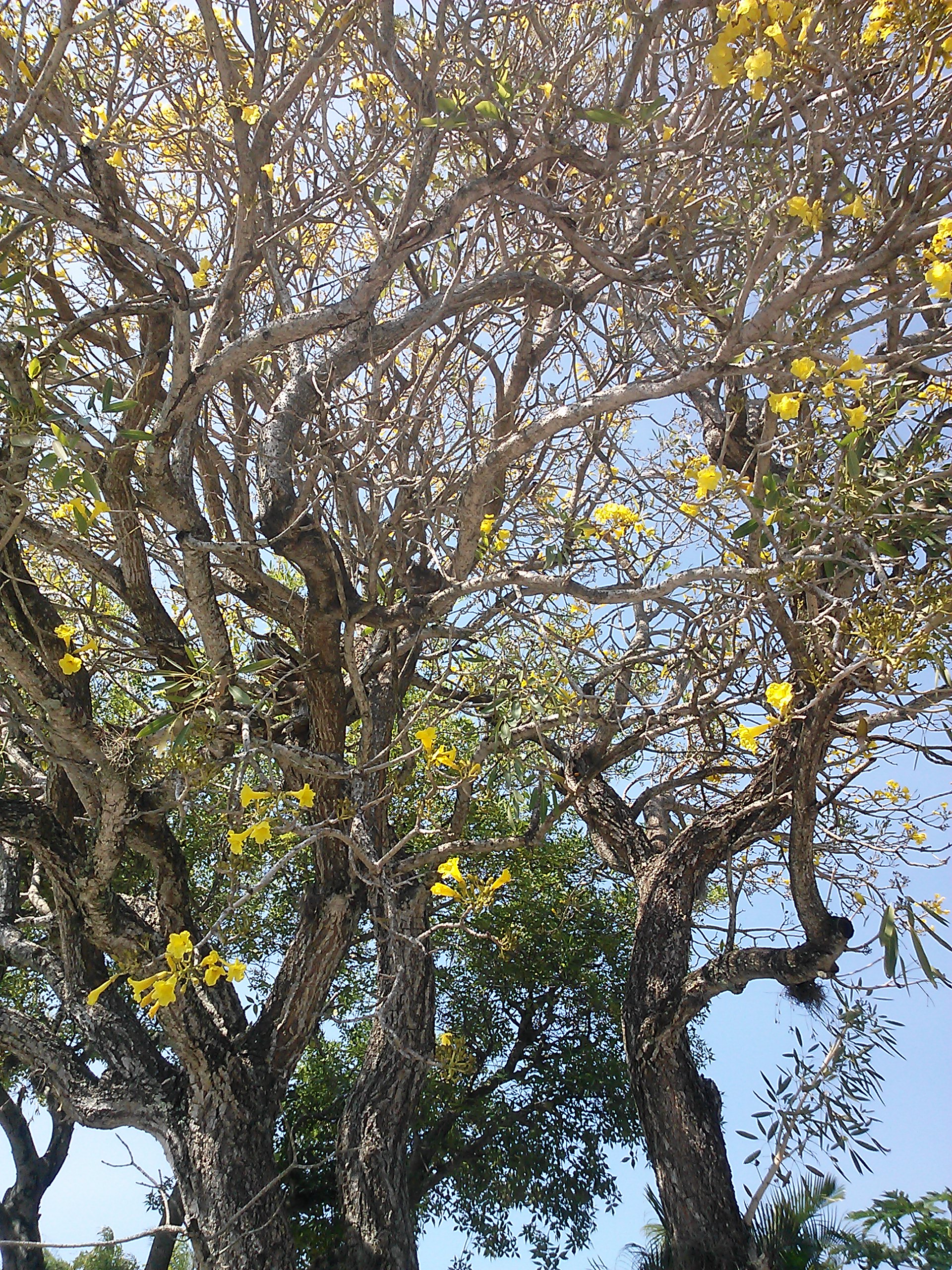
The next tree I spied was a Tabebuia, nothing shouts spring like the golden trumpets of the Tabebuia.

Tabebuia

Tabebuia

My Epiphany was that spring does come to the Tropics of Florida. I suppose it is my North American predisposition to think of Spring flowering trees as Redbuds, Dogwoods and Cherries, but before my eyes the trees were evidence of spring blossoming everywhere.

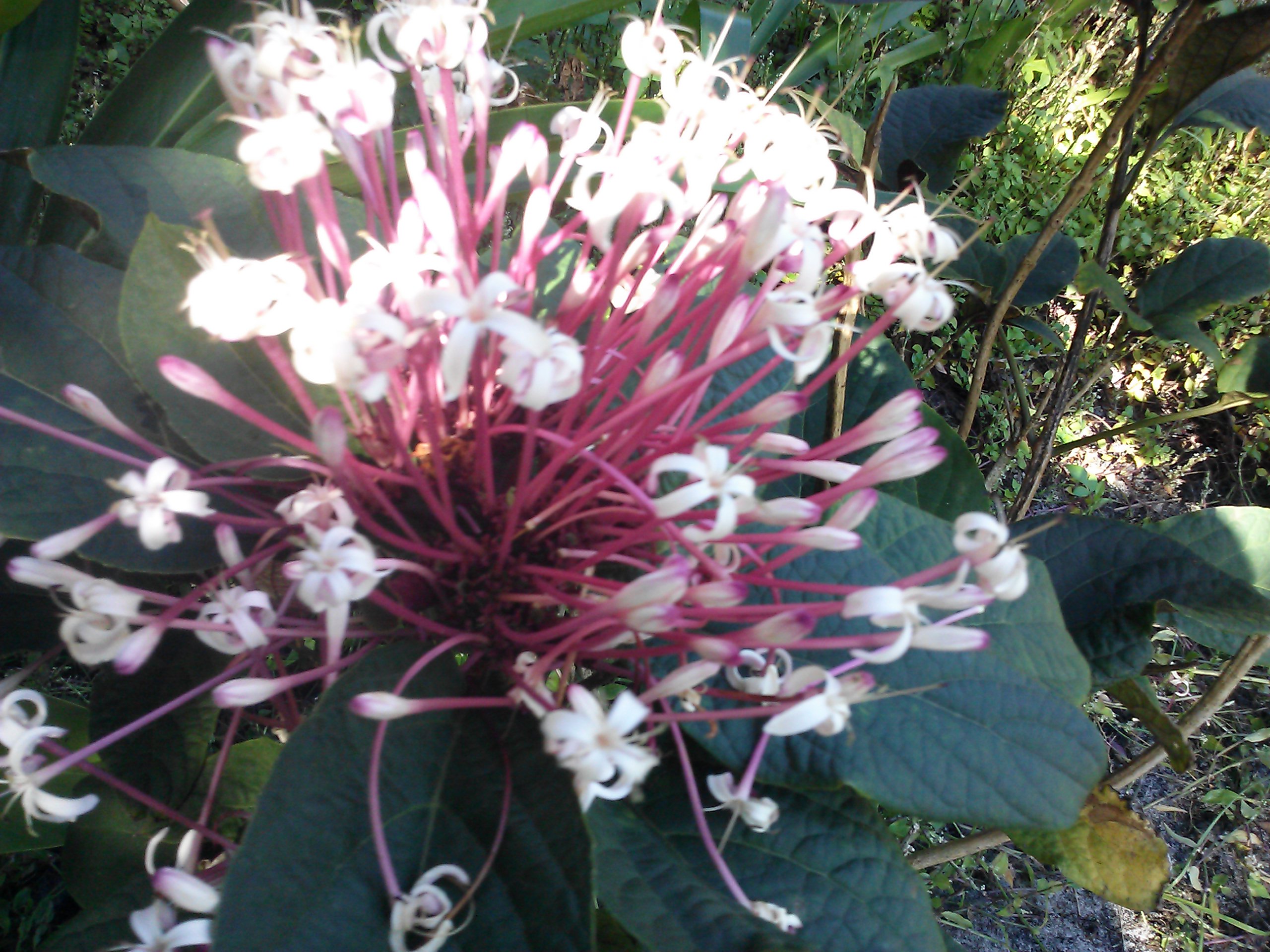
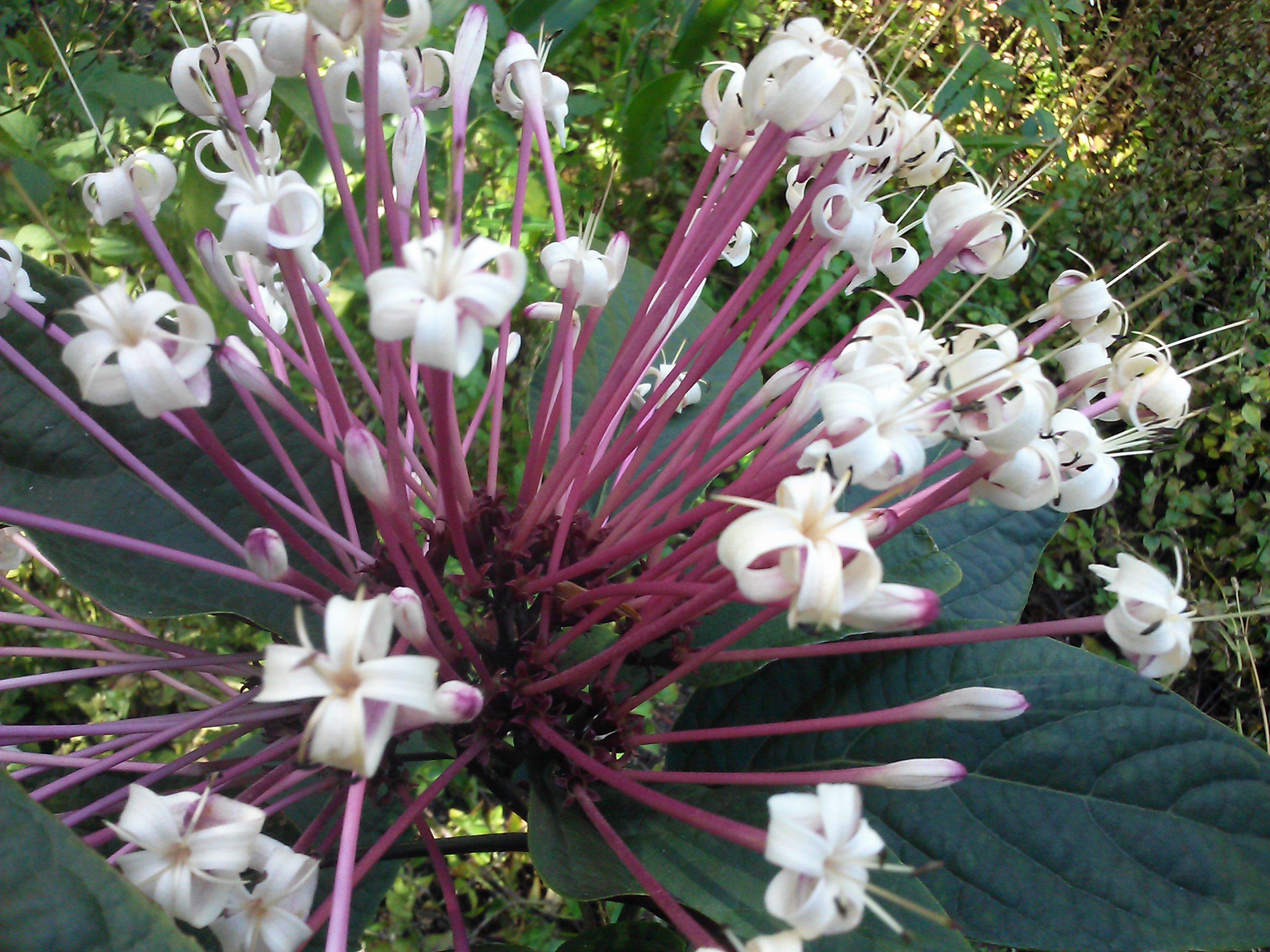
Winter Starburst Clerodendrum – garden fruition

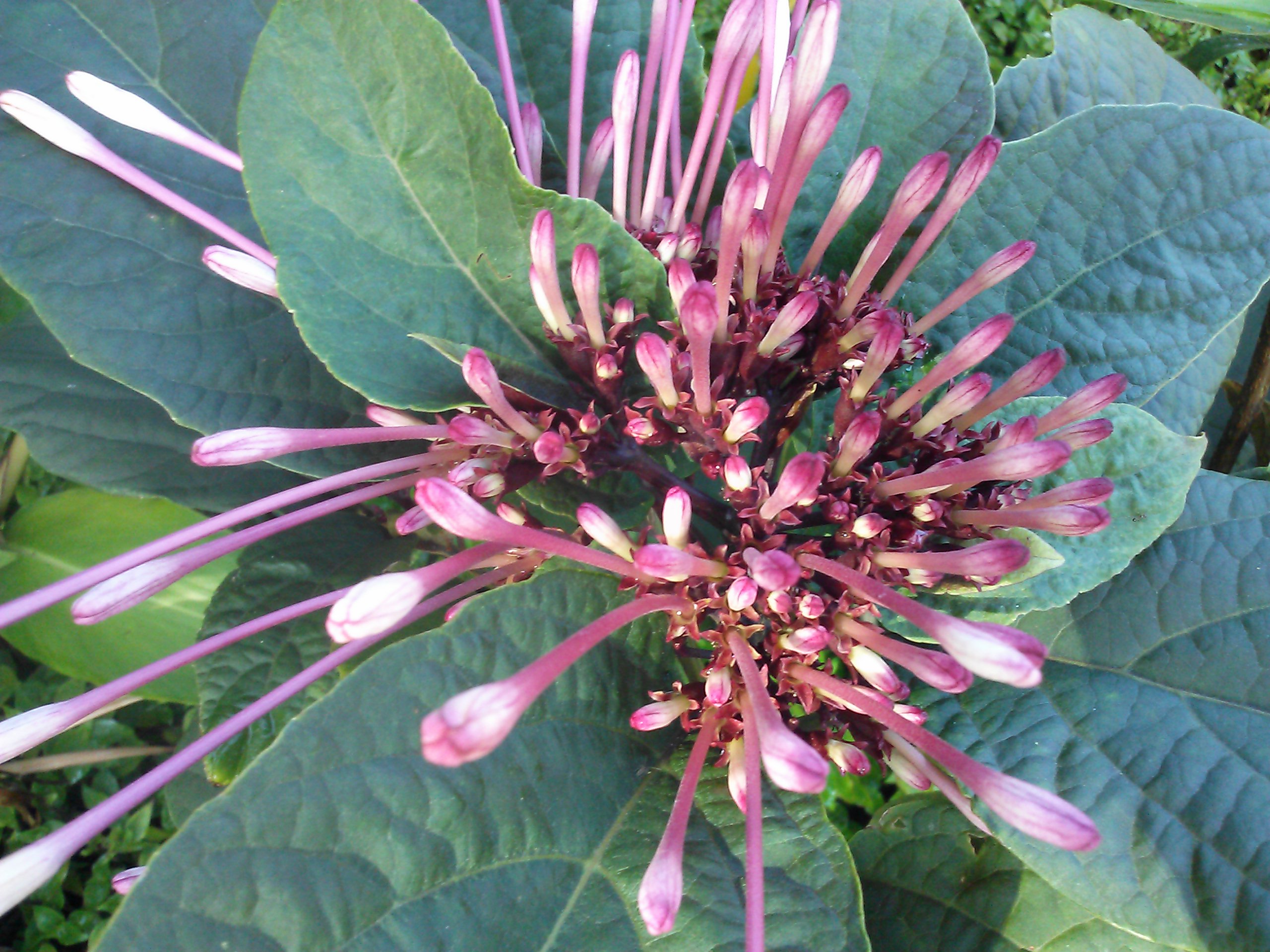
Winter Starburst Clerodendrum

Winter Starburst Clerodendrum in bud

This is my favorite burst of winter color and it has finally bloomed, the cold snap slowed it down, then the rain slowed it down. I have been waiting (somewhat patiently) for the full flower.  Here is the next phase:

Half Bloom

Half Bloom

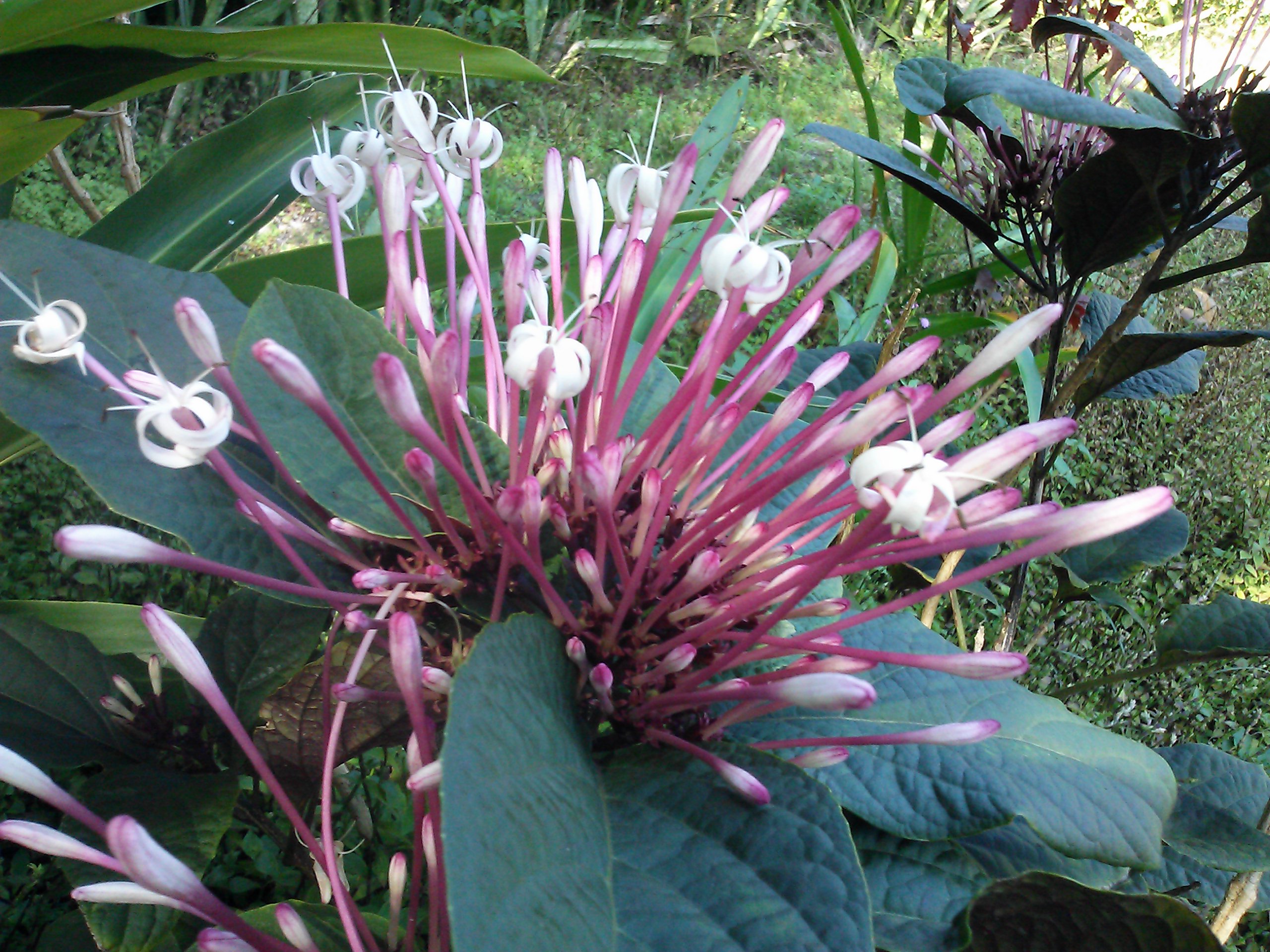
And finally the full Starburst effect:

Starburst

Starburst

Bursted

Bursted

The Latin name for this plant is Clerodendrum quadriloculare. This is an interesting group of plants, ranging in size from vines to perennials then shrubs up to small trees. Mostly native to tropical South Asia and with a tendency towards creepy habits you must be careful who among them is invited into your garden. I have seen some gardens overrun by a perennial orange version of Clerodendrum which is beautiful but really creepy.

I am glad to have this shrub in my garden, I think of it as a Tropical Rhododendron, and it is so much easier to grow than the cursed Rhododendrons (my former garden had heavy clay that was impossible to grow Rhodos in) The coarse textured leaves have an added bonus of deep plum colored backsides which make the foliage attractive year round.
So far the Winter Starburst has not exhibited any bad behavior, I have sited it in the prescribed partial shade, but the soil like substance in my garden isn’t given to over production of anything except Heliconias as of yet.

The reason we Garden

This evening, my husband went to join his motorcycling friends for dinner. The purpose of their outing is more about riding the motorcycles than it is about dinner. I am all about dinner. I decided to keep our dog company as he had recently lost his companion. There was not much in the fridge for dinner and I wasn’t up for cooking. Chopping and assembling works for me.

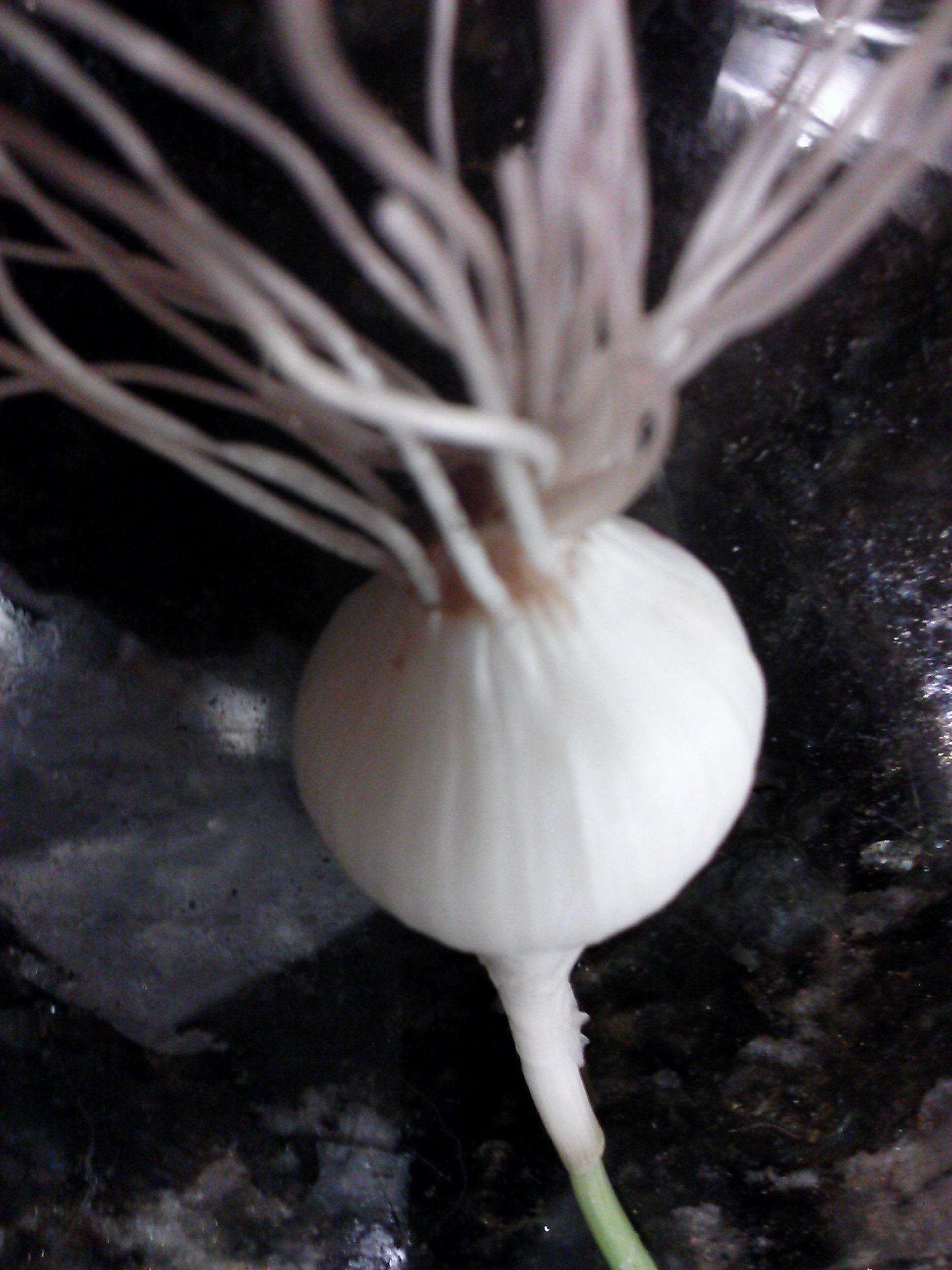
After looking in the refrigerator, I went to look at the garden, where I had Romaine lettuce, radishes, Basil and Dill. I pulled up what appeared to be ripe garlic while digging around in the garden. I think I should paint a picture of this, a pure white bulb with a bit of cerise around the edges…

My Beautiful Garlic Clove

My Beautiful Garlic Clove

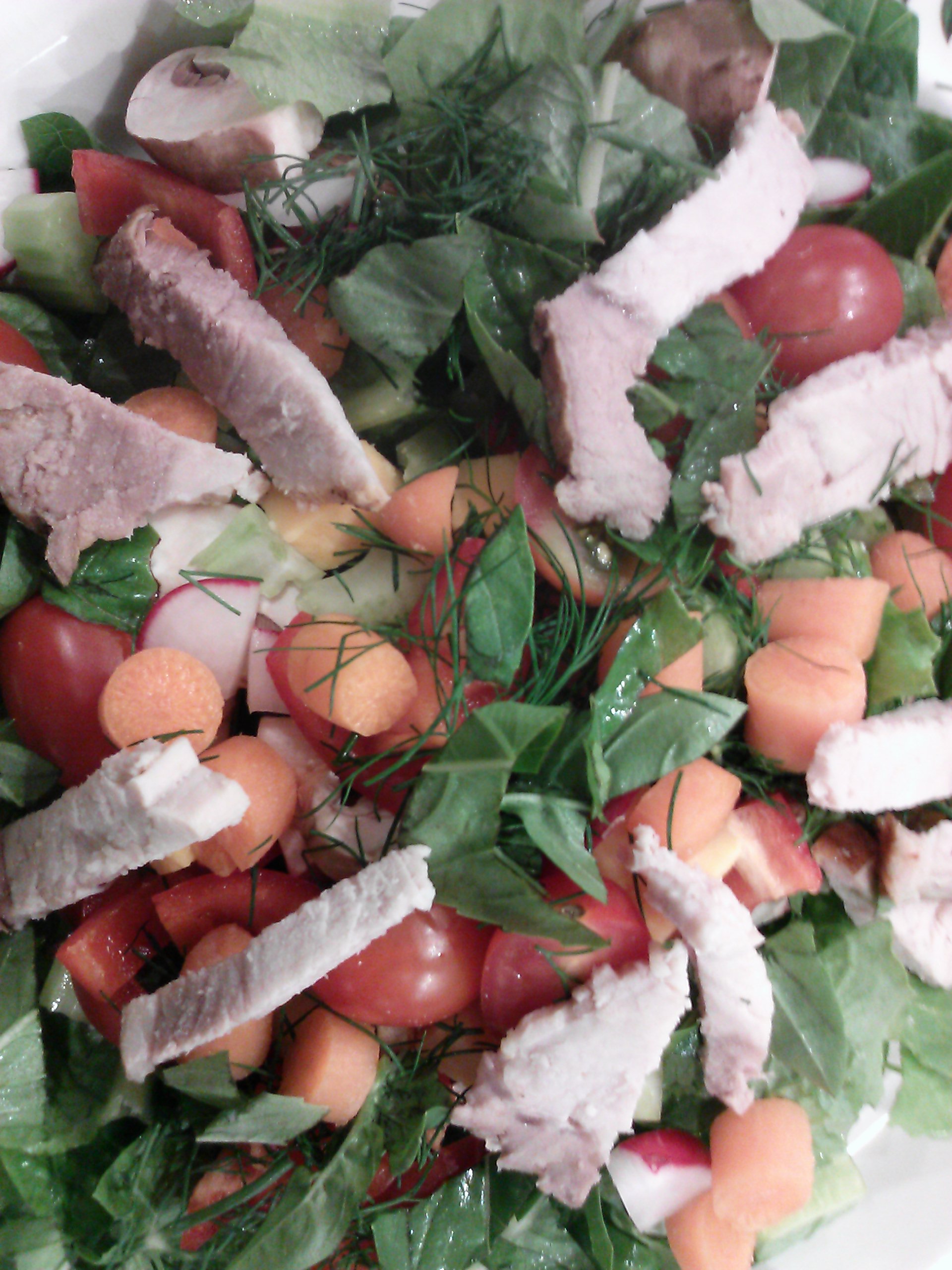
In my refrigerator I found leftover Rosemary Garlic Pork Roast, Grape Tomatoes, Baby Peppers, Carrots, Celery and Cremini Mushrooms. There was some Asiago Peppercorn salad dressing as well.

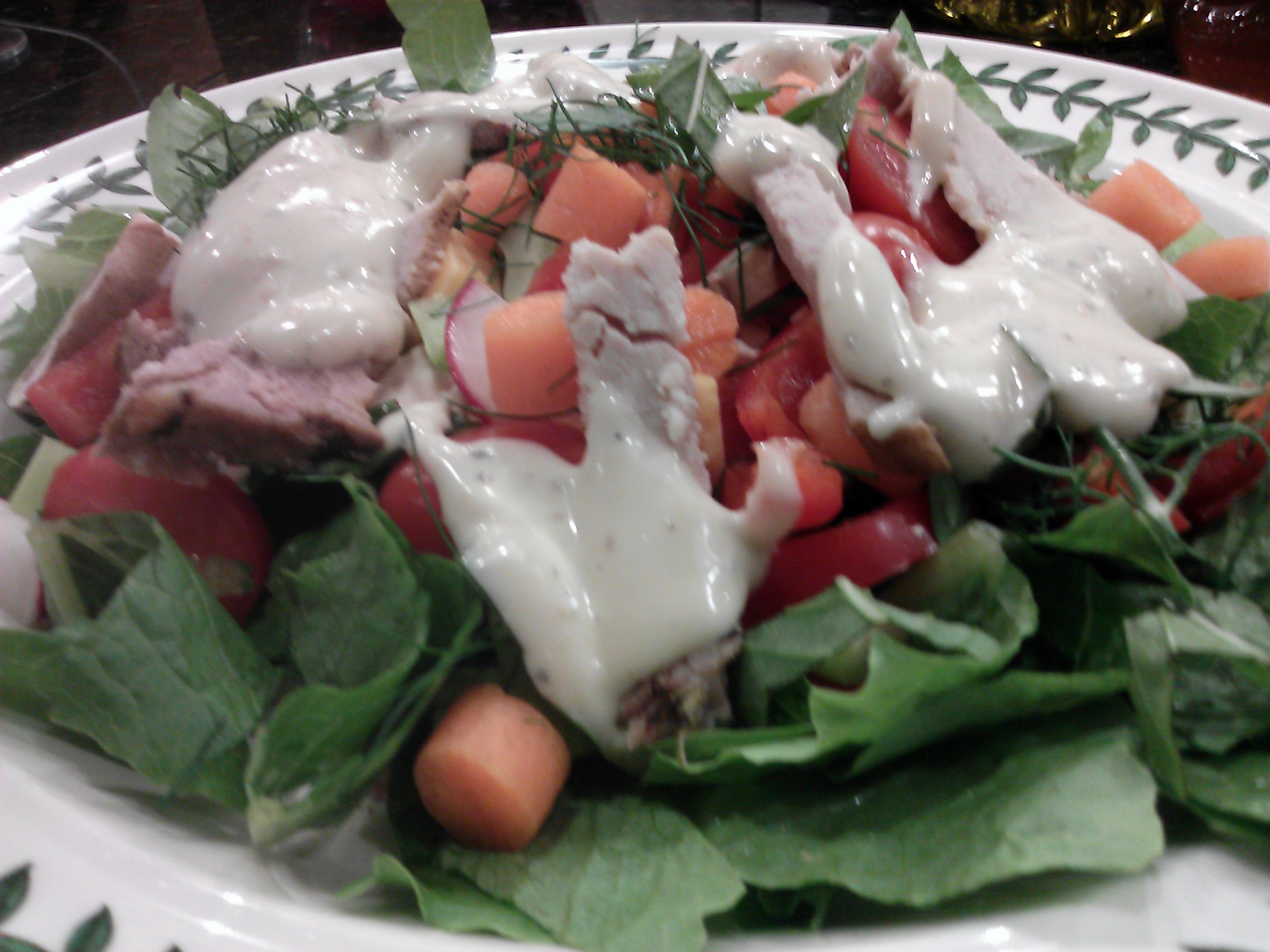
All Southern ladies should gasp and turn their heads now…I chopped the Romaine and everything else. (Southern ladies tear their lettuce, so sorry) added the leftover pork roast and some Helluva Good Cheese (sharp). The salad was dressed with Asiago Peppercorn and admired:

The Salad

The Salad

Dinner

Dinner

The Garlic will be saved for another day.

Memoirs of garden gloves

CAM00568-1

After nearly two years of service I am retiring my leather gloves. I began life in my Florida garden with fabric gloves that were almost immediately destroyed by my enthusiastic removal of undesirable plants. The chain saw and I became well acquainted with the load of Brazilian Pepper in the backyard, 15-20 feet deep in some spots.

The next pair was cotton knit with plastic coated fingers and palms. Apparently whoever buys and stocks the gloves in this area has never actually tried to use these. These gloves, while waterproof, turn into a sweaty mess in about fifteen minutes. Gardening with garbage bags over your hands is a more pleasant experience. These were sent to the street with the garbage.

I have always liked split cowhide gloves and have been unable to find them in ladies sizes here. I finally found some small men’s leather gloves and they have stood strong for two years. It is evident that I am right handed by the darker shade of filth on that glove. The tip of the index finger finally gave way and was funneling sand into the glove instead of keeping it out. The color of these gloves is interesting as there is no actual dirt in my yard. It is all sand.
These gloves have seen and been responsible for a lot of change in my new garden. Primarily demolition and weeding. The Brazilian Pepper is mostly gone. I don’t think South Florida will ever be rid of this scourge, but I feel I have done my part. I have also gotten rid of some uglies, Schefflera arboricolas, yes the house plant. The previous owners had dotted these around the yard for no apparent reason. I kept cutting it back thinking that would help. It didn’t. Sometimes removal is the only answer.

These gloves have planted some good things. My Mango tree now has some tiny Mangoes and the Lime tree is bearing fruit. Herbs and vegetables are flourishing in raised beds.

Baby Mangoes

Baby Mangoes

Romaine Lettuce

Romaine Lettuce


With the help of my gloves I was able to grow the Romaine. (That is where the dirt came from – it had to be imported to grow the vegetables) And finally,

My First Homegrown Salad.
My First Homegrown Salad.

Freezing in South Florida?

Cabbage Palm

It is a beautiful day here, cerulean blue sky with a few hawks flying in lazy circles. Take a stroll outside and feel the cold air blowing in from the frozen north- it feels like Chicago in the springtime (or maybe summer). Chicago, Illinois is known as the Windy City and is about 1300 miles north of here.

The concept of freezing weather in SoFla seems weird to me. A low of 35 degrees F is  predicted tonight. Nearly freezing. According to the National Climatic Data Center in 29 years there have been no freezing temperatures in Vero Beach, a bit north of me. In 48 years there have been no freezing temperatures in West Palm Beach, a bit south.

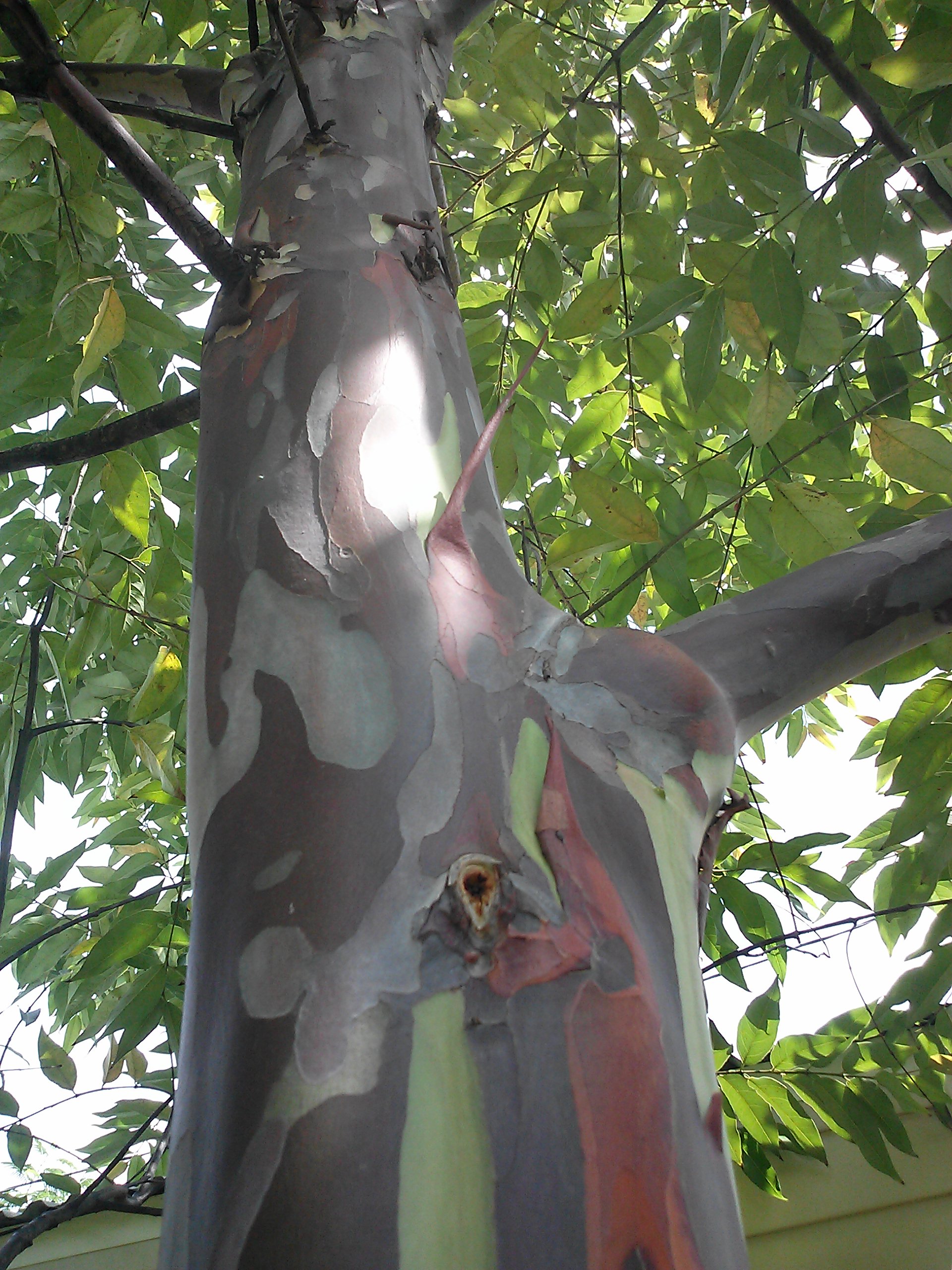
I felt a lot better about the weather forecast having looked up the climatic data, but I am concerned about a few plants that are really susceptible to frost. The primary one being the Rainbow Eucalyptus, notoriously intolerant of freezing temperatures, it has just grown tall enough to be seen over the roof of our garage and it is blooming. I am getting a mental image of a 30 foot tall tree limp, insides frozen to mush and bent in two. Hopefully not.

Rainbow Eucalyptus

Rainbow Eucalyptus

I am in the process of madly moving all the potted plants into the garage. Gotta go put a sheet over my new palms. Then all I can do it wait until tomorrow.


Gardening Outside Your Zone

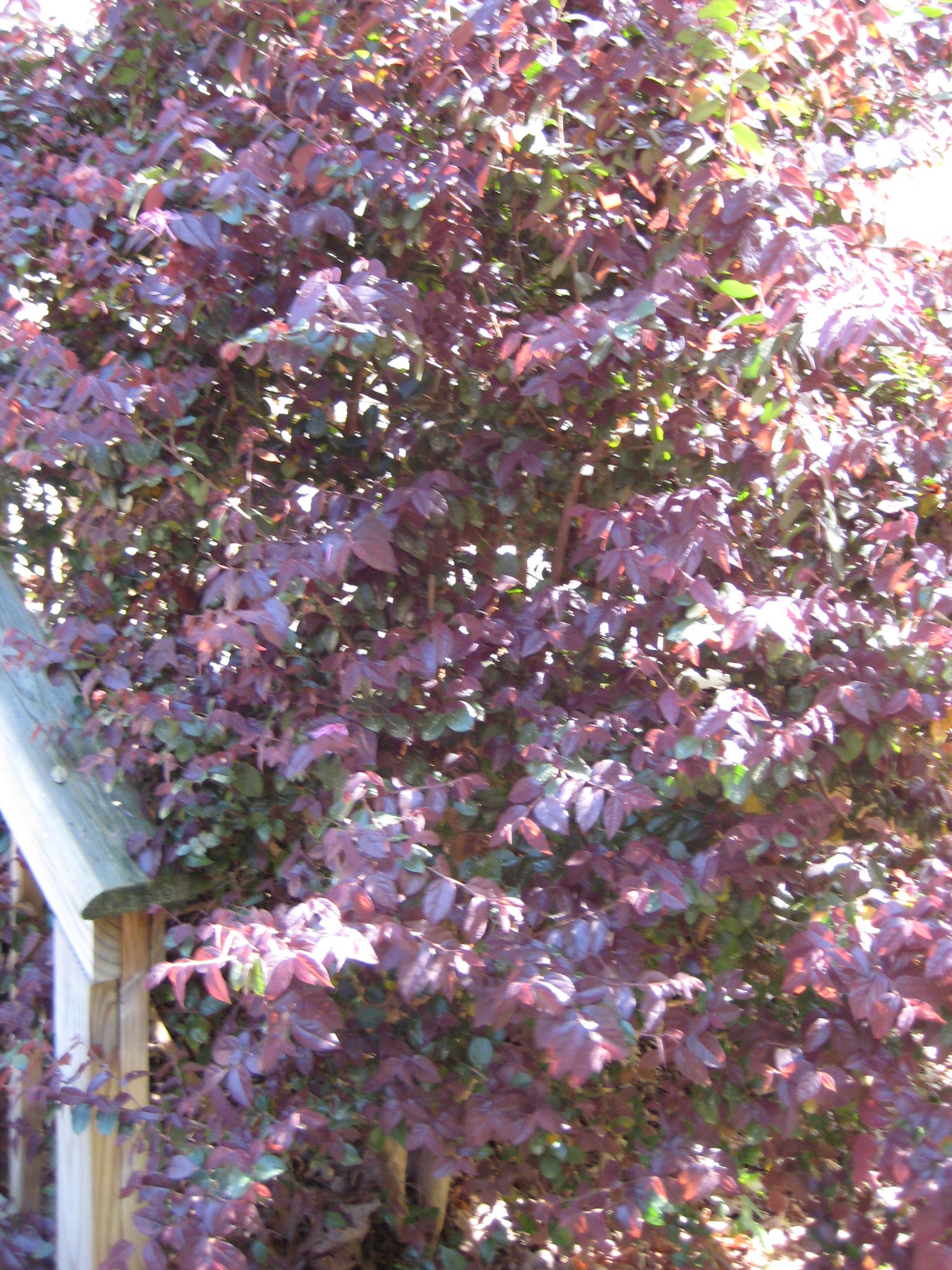
Burgundy Loropetalum in Atlanta

Burgundy Loropetalum in Atlanta

The song by the Rolling Stones goes, and I am paraphrasing  “You can’t always get what you want, but if you try sometimes you get what you need.” Sage words. That made me remember I want to plant some sage..

There are many transplants here in Florida – people and plants as well. The people are trying to grow the plants they know from home, maybe 4 hardiness zones north. The plants are unhappy. I was surprised by the number of folks trying to grow Lilacs in South Florida. Lilacs grow in the Northern US, not South Florida. South Florida may be the mold and mildew capital of the world and Lilacs are extremely susceptible. Of course, there are some delightfully fragrant plants that people in the North are trying to grow that thrive here and are really well suited for this climate- on it goes. Ylang ylang, anyone? If for no other reason it would be fun to try this because of the name. I actually had a vanilla orchid for a while, but I think one of my dogs stepped on it.

Tabebuia

Tabebuia

I am as guilty as the next gardener, to a certain extent. I like the new and unusual and there is a lot to see when you move to the tropics. My favorite tree ever, the Autumnalis Cherry, cannot be grown here. I readily accept that because of the other trees that can be grown here. My new favorite is Tabebuia which I have just found with orchid colored flowers – the Ipe Tabebuia. I also like the yellow one because of the nice corky bark. It is a dilemma to choose between the two, fortunately the back garden of my house is, well, um, non-existent. So, I can have either.

Burgundy Loropetalum in South Florida

Burgundy Loropetalum in South Florida

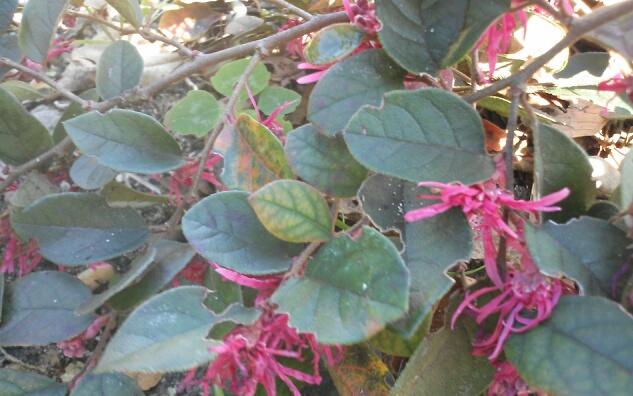
I have succumbed to Zone pushing by planting some Burgundy Loropetalum. One of my favorite shrubs from the frozen north. This is not supposed to grow in Zone 10, my research says Zone 9 is it for the Loropetalum. But I found one for 5 bucks and decided to try it. It is cheerfully blooming in my front yard in January. You may notice the Atlanta Loropetalum is robust and more than 6 feet tall. The one here in Florida tops out at 8 inches and looks a bit chlorotic. I guess it is time to wait and see.

Fruits of the Labors of Friends and Neighbors

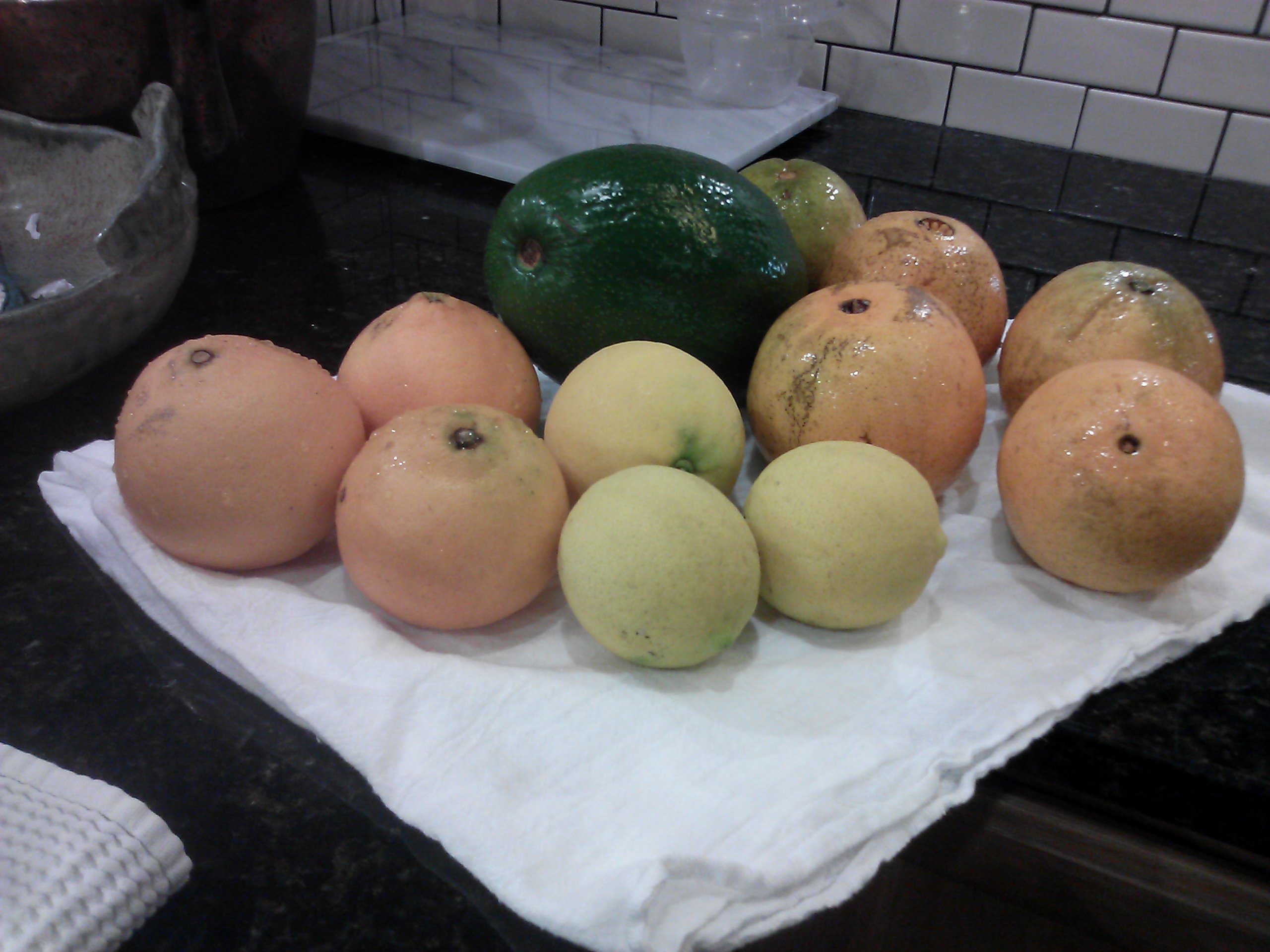
Local Bounty

Local Bounty

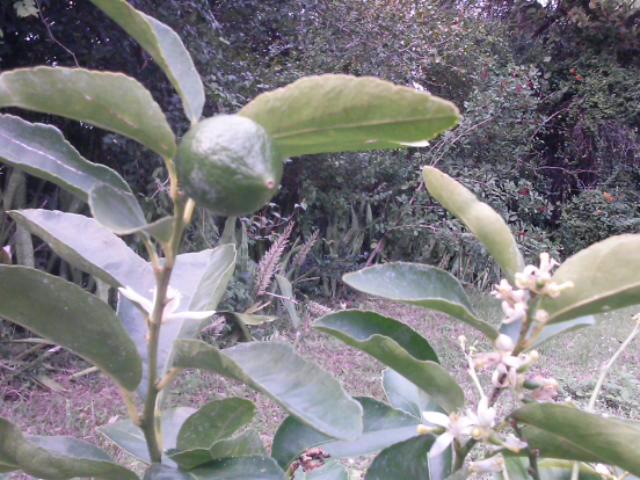
It’s Citrus season here in South Florida and everybody has some. Here is some homegrown produce I have collected recently. From the left, Honeybells grown by a friend of my neighbor, Meyers Lemons and Everbearing Persian Limes grown by my college roomate’s husband, a Cuban or Catalina Avocado grown by him as well and Blood Oranges from my neighbor the Chef.

Homegrown citrus is radically different from what might be procured further north. I was taken aback by this with the first taste of a Lime from my back garden (Persian of course) Juicy, fragrant and magnificently Limey (not like the British) I wonder if the term limey comes from a British tendency towards Gin and Tonic. I digress, here is my newest Persian Lime. I am told these bear fruit 4 times a year – I planted this about 6 months ago and have had two crops even though my husband ran the weedeater too close and stripped the bark off. The tree had to be pruned andmoved in mid August for its own safety.

Persian Lime in fruit and flower

Persian Lime in fruit and flower

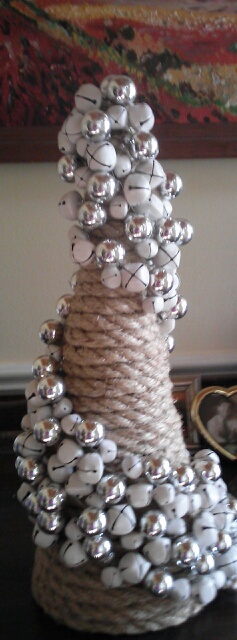
Here’s another thing peculiar to Florida, in honor of the end of the holidays I am posting a Christmas gift photo, yes, I had to ask what is was:

The Nautical Christmas Tree

The Nautical Christmas Tree

Of course, the Nautical Christmas Tree was made in China.

Happy Gardening, I’ll be snacking on a Blood Orange.

True Gardeners

Fruit of the Mahonia bealei

Fruit of the Mahonia bealei

For many years I thought the plant that separated True Gardeners from posers was the Mahonia bealei. I provided six Landscape Design Consultations weekly for years, talking with many, many people and over the years the appreciation of that particular plant rang true for me and separated the True Gardeners in my mind.

True Gardeners are people who have the ability to separate the beauty of the plant from its less attractive attributes. Sometimes this is a seasonal thing sometimes it is purely the ability to appreciate nature.

Mahonia bealei is commonly known in the US as Leatherleaf Mahonia. It is one of those plants that is difficult to kill except in full sun. It doesn’t really die in full sun it just suffers and turns red. Probably sunburn. Otherwise, it is thorny, reproduces copiously via birds and generally stabs the passerby. Many people detest this plant and for good reason.

The reasons we appreciate this plant are many. Reliable under most circumstances, it remains cheerfully Evergreen through the iciest of weather. The holly like foliage can be used in holiday arrangements. I have spray painted the leaves metallic colors for wreaths (leather gloves required). The yellow flowers are borne in winter and are followed by grape like fruits that are enjoyed by numerous species of birds. Hence, another common name, the Oregon Grape Holly.

My mother had an enormous specimen she tree-formed to screen her garbage cans. We usually admired the flowers at Christmas, New Years or even Valentine’s Day depending on the weather. The only other flowers in the garden were pansies planted as annuals or Hellebores.

Oddly enough, almost everyone who enjoyed these referred to them as Mahonias. That was it. This may be ascribed to Americans not being particularly concerned with botanical nomenclature or just simply that was the most prolific Mahonia in the area. That said, plant taxonomy hasn’t worried me too much unless it defines a plant that I need to specify. Botanical nomenclature I love, plant tax not so much.

I think there is a plant like the Leatherleaf Mahonia the world over..not sure what it is in the UK or Australia; I was emailing with Karen (smallhouse/BIGGARDEN), a fellow Florida blogger about a weed we both like yesterday – Florida Snow. Karen identified this as Richardia grandiflora, which works for me. It is a horrible creeping weed if you are a turf purist, as gardeners we love the white flowers that look like snow in our backyard meadows..and we need no chemicals! My greyhounds run amuck in this and I have no worries.

Florida Snow

Florida Snow

And really if you have moved this far south, I think this is sufficient snow. My husband, the turf purist, is not really enjoying the flowers.

Pygmy Date Palm – Friend or Foe

Pygmy Date Palm Phoenix roebellini

Pygmy Date Palm
Phoenix roebellini

I had a Pygmy Date Palm installed last year in front of my house. This is a dwarf palm rarely exceeding 10 feet in height and it looks great in front of my bathroom window. I selected a triple trunk palm to accent the house and landscape because as the largest element in the foundation planting  it needed some mass.

These palms are native to Southeast Asia and are common in South Florida. They actually do bear dates, but a male and female plant is required. I am perfectly happy without dates. Dates have always reminded me of roaches and I just don’t like to eat them.

I let the palm grow for about a year before attempting to prune it. Pruning done right reveals a trunk that resembles neatly stacked rows of whole wheat crackers- I have heard these called Triscuit Trees. What is not mentioned is the enormous spines at the base of the palm fronds. The spines are up to two inches long. Somewhere in a jungle I think Pygmies used these for poison darts. Later in the week I was talking to a physician, these palms are well known to the medical community due to the thorns. Wounds from the thorns tend to fester and cause infection.

While getting into the holiday spirit I decided to wrap the trunks with miniature white lights. It would have been wise to drink some spirits and don opera length leather gloves before attempting this. As I was decorating I was skewered through the hand and the thorn hit a vein; I now have a 3 inch bruise on my hand that looks terrible. Then I got stabbed in the head and decided to stop for a moment and go in the house. It took a while to get the thorn out of my hand and the bleeding from my head wound staunched. Duly anointed with antibiotic ointment, I persevered and completed my light display, then waited for darkness.

Ahh, holiday magic.

CAM00410

Vive La Difference

Purple Oxalis in Floridian mode with Oyster Plants

Purple Oxalis in Floridian mode with Oyster Plants

I am from Tucker, Georgia USA. While I have titled the post in French, I do not and will not speak French and have a Southern accent that creeps up on me sometimes, mostly in colloquialisms that cause folks around here to scratch their heads. I said to the podiatrist I couldn’t “sit on my haunches” he was completely puzzled. That means squat down in Southern. Genetically bad ankles, I think. Or too much gardening.

“That dog don’t hunt” is another confusing Southernism. It just means it doesn’t work. More head scratching. I don’t really sound like Scarlett O’Hara from Gone with the Wind but Vivien Leigh was English anyway.

This past year I have been enjoying numerous gardening blogs; I have read about everything from Lupines in Australia to Roses in England to Daisies and Aloes in the US and Fall color just about everywhere but where I live. South Florida is a bit lacking in that regard.

What I have taken from all my reading is there is a lot of difference in the things people grow, but there are also a lot of similarities in favorites. Here is my take on some universal favorites:

Maples for Fall Color, Japanese Maples especially. Cherries and Deciduous Magnolias for Spring color. Everybody loves Cosmos and Hydrangeas and some type of Asters, Daisies, Mums, Lilies of all shapes and sizes, Roses. The UK writers like Sweetgums, which still boggles my mind. Southerners go searching for the chainsaw when a suspect Sweetgum seedling arises. Azaleas and Rhododendrons are very popular and the everpresent Viburnums.

Another interesting aside, gardening magazines will have you thinking succulents and tropical plants are all the rage in temperate gardens. I don’t read about as much of those types of plants as good, well suited garden plants. Of course, there is always something you must have that is a few plant hardiness zones away from reality. I had palms in my temperate garden, I am guessing after last winter they have expired.

While I couldn’t hope to grow many of the favorites in my garden, what was interesting to me to find out is there are some things that will grow just about anywhere. For example,  Oxalis and Viburnums will grow just about everywhere, even at my house. I have some fantastic Purple Oxalis my neighbor gave me. Who knows where it came from – maybe England.