In A Vase on Monday-Chrismukkah

20161218_103508-1

This year Christmas Eve and the first day of Hanukkah fall on December 24, the media have christened the date Chrismukkah, which I suppose sounds better than Hanukmas.

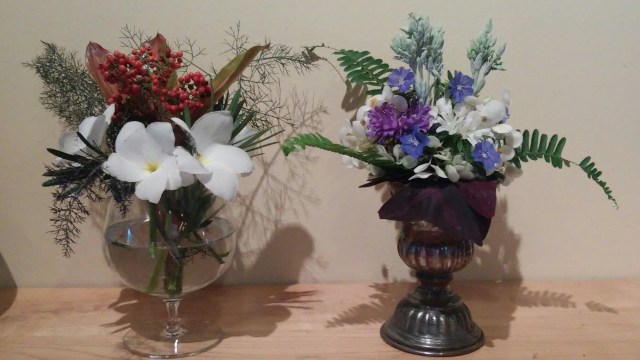
In honor of the season and Chrismukkah, I have done two arrangements, one in Christmas colors, red and green and another in traditional Hanukkah colors, blue, white and silver. Being perpetually and cursedly curious, I wondered about the origin of the color schemes.

According to Cambridge University the Christmas color scheme could go back to the Celts who used a red and green tree to mark boundaries. Here is the link, Who color coded Christmas. More research tells me the Hanukkah colors are based on the Israeli flag, why blue.

Now that we know the origins of the colors, here is the Hanukkah arrangement. The silver goblet is an heirloom from my mother’s collection and the flowers are in blue and white – Pom-Pom Asters (inspired by Cathy, our hostess) I started some seed in September and now have blue, white and perhaps pink Pom-Pom Asters, who knew they would grow in Florida in the winter.? The Asters are thriving, but alas, so far my other IOVOM flowers, the Cactus Zinnias are a disappointment. Another inspiration, White Italian Sunflowers are going, but they are showing signs of mildew, time will tell. The other blue members of this arrangement are Evolvulous, Blue Daze the annual peeking out here and there. The White Begonias are Sweet Begonias, a perennial here, the silver flowers are from Flapjack Kalanchoes. Deep plum foliage along the edges is from Purple Oxalis, from my neighbor. I think this plant may be the common thread between all of us. Asian Sword Ferns provide a bit of green.


Here is the Christmas arrangement, the original thought that it looked sort of non tropical. Then, the white Bridal Veil Plumeria is a bit difficult to explain. The dark green Yew is Japanese Yew, Podocarpus macrophyllus. Unabashedly tropical as are the red berries of the Brazilian Pepper, outlawed years ago as invasive, but determined to stay around, it is sold as Pink Peppercorn the world over and I have not eaten one of the berries near my house, but many birds have – and on the Brazilian Peppers go, The red striped foliage is from Martin Bromeliads and the ferny foliage is Copper Fennel. I think I have cut more of this than we have eaten, though it is tasty. The vase is an old Brandy snifter from my husbands ‘flaming things in a glass phase’. Go figure. Drinking flaming liquids is not my area of interest.

So, there we go. Happy Holidays to all.

In A Vase on Monday. Thrift Store Finds

20161120_150944-1

Another one of those things I never knew about living in South Florida-the thrift store shopping is excellent. I suppose many estates are settled here and the population is somewhat transient as people buy and sell vacation condos don’t use them very much and then don’t want to move the furniture. A result of all this makes for some unusual and great thrift store finds. Especially if you are in the market for pseudo tropical furniture.

I was actually looking for a table lamp when I happened upon these pottery vases. I love things that are handmade and these are a bit thick and obviously hand thrown for the fun or love or it. I bought them immediately, I spent eight dollars. Well worth it. I also found a table lamp.

While winter is approaching, actual winter in South Florida is more like a really long spring. Freezes are rare and this is gardening season. Vegetable and annual seeds are started in late summer for planting now.

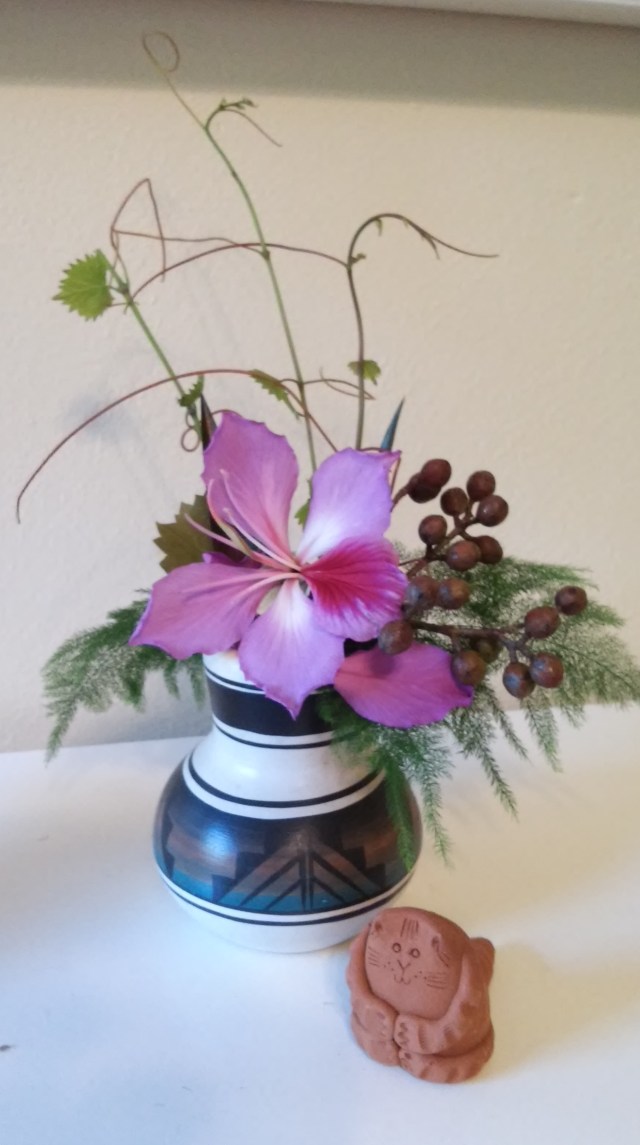
One of my new vases has my first ever Cactus Zinnias, started from seed in September, these do not look nearly as good as the ones I saw in other vases this summer, I am hoping they get bigger. Also new to the garden is the Copper Fennel, which I bought by accident thinking it was Dill for my herb pots. The Tropical Red Salvia (Salvia coccinea) and Bridal Bouquet Frangipani (Plumeria pudica) are old standbys.

Between the Zinnias, Salvias, Fennel and Frangipani the fragrance of this vase is a bit weird. Kind of medicinal.


20161120_110856-1.jpg

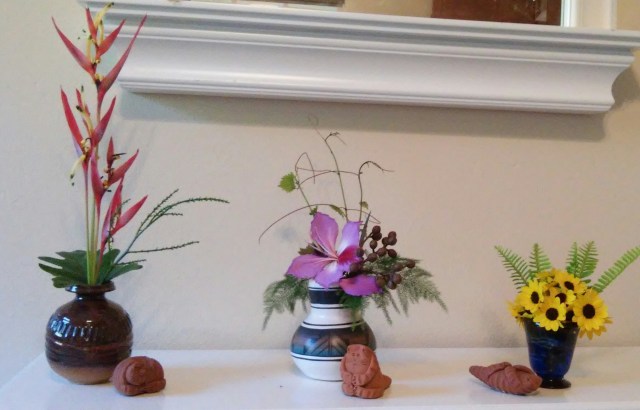
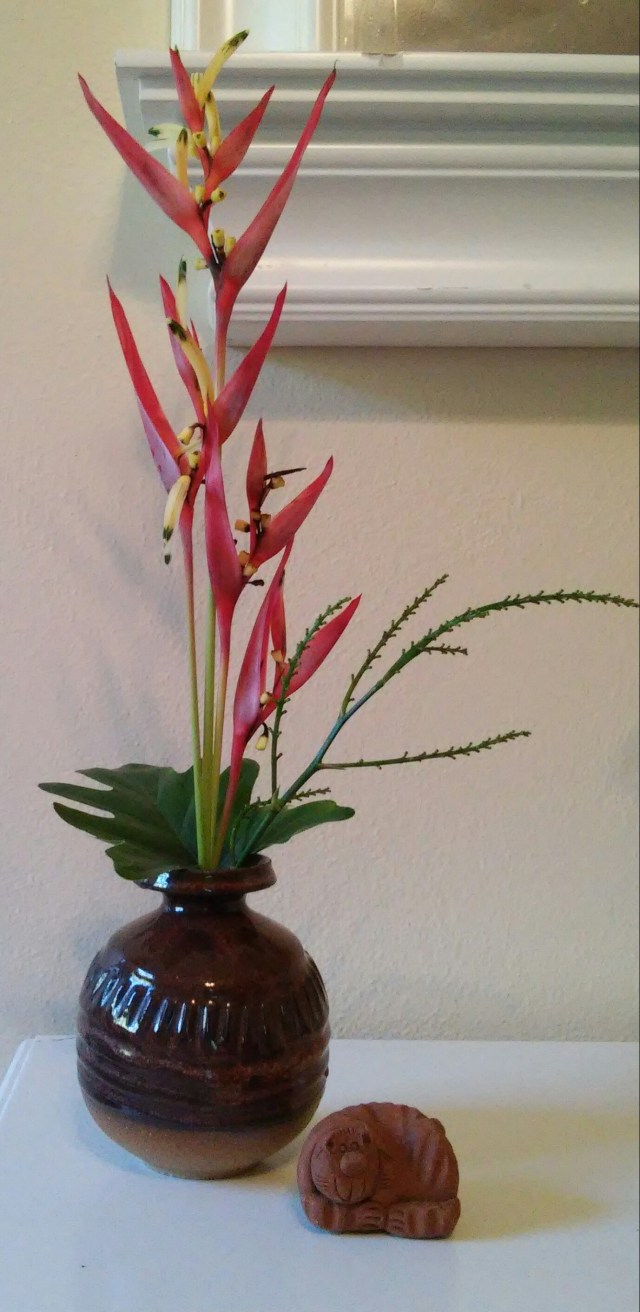
My other new vase has a more tropical feeling, I decided to try to avoid ferns for foliage today just for a change. This vase has Parrot Flower ( Heliconia psittacorum) and the foliage and flowers of Sweet Begonia (Begonia odorata ‘Alba’)

20161120_150844-1


In A Vase on Monday – A Cross Cultural Experience

20161113_151451

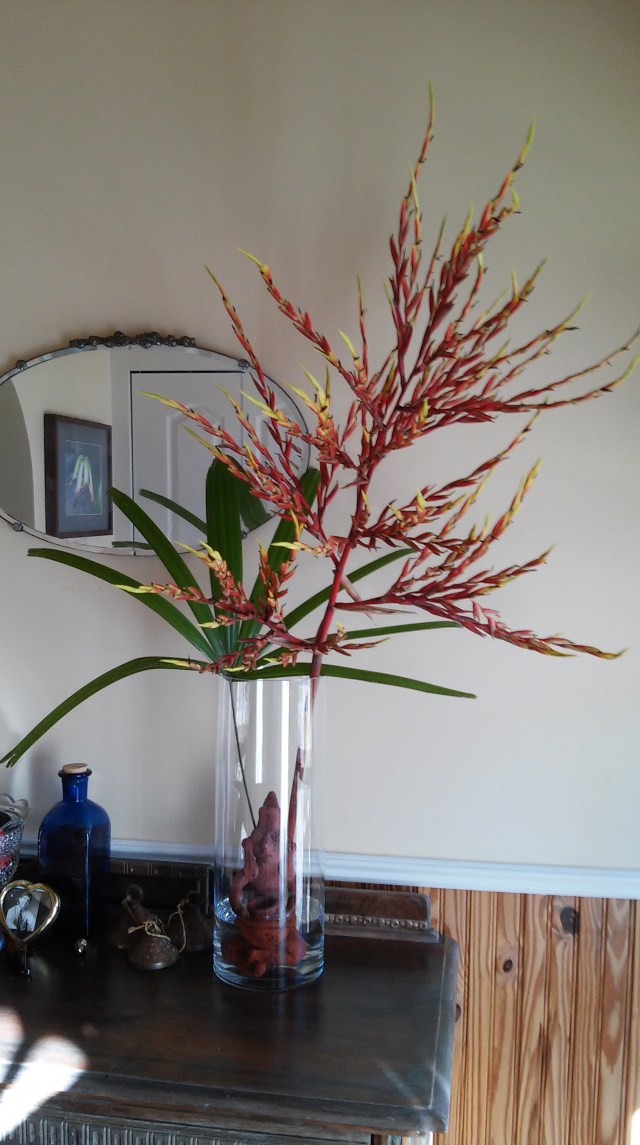
This is truly a cross cultural experience. The plants, while grown in South Florida, hail from both sides of our planet, Southeast Asia and Brazil. The terracotta man in the vase is an incense burner from Pier One that belonged to my brother in the late 1970’s. I am not sure exactly where he came from but the concept was Pre Columbian. I think.

20161113_121000

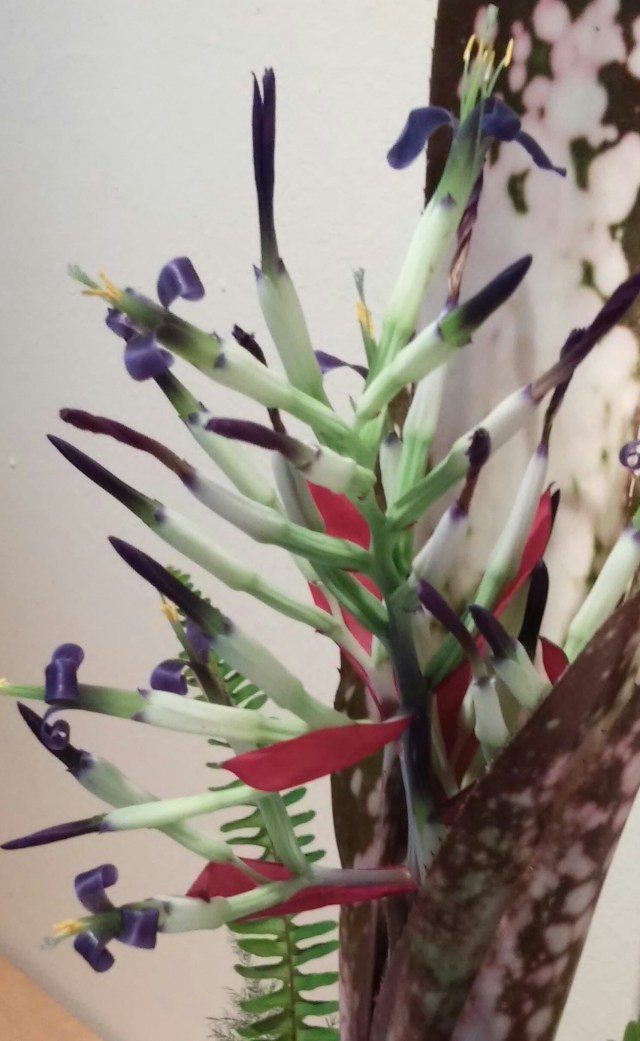
The red and yellow swirling crab claws are the flower of a Blanchetiana Bromeliad, a native of the eastern side of Brazil. The plant itself is about four feet tall by six feet wide. It has been flowering for about six weeks, of course the flower is on the side I can’t really see unless I am turning the compost heap. So, I decided to cut it and enjoy it in the house as long as it lasted.

20161113_121049

These Bromeliads are relatively common in South Florida and I nearly wrecked my car the first time I saw one. Talk about wild and crazy plants, the foliage can be orange, red, green or yellow and it is big. Even though I had experience with Bromeliads I didn’t realize how big they grew. Another houseplant myth busted by Tropic Florida.

The foliage is a frond of a Lady Palm (Rhaphis excelsa). This palm is native to the Rainforest in Southeast Asia, an understory plant that enjoys shade and water. Relatively hardy, it will grown north to Orlando, and is a favorite of mine for interior use as a potted plant. I bought one a couple of years ago and it sat in the pot a little too long, so it is a bit lopsided and has finally recovered its healthy deep green color and need a little trim.

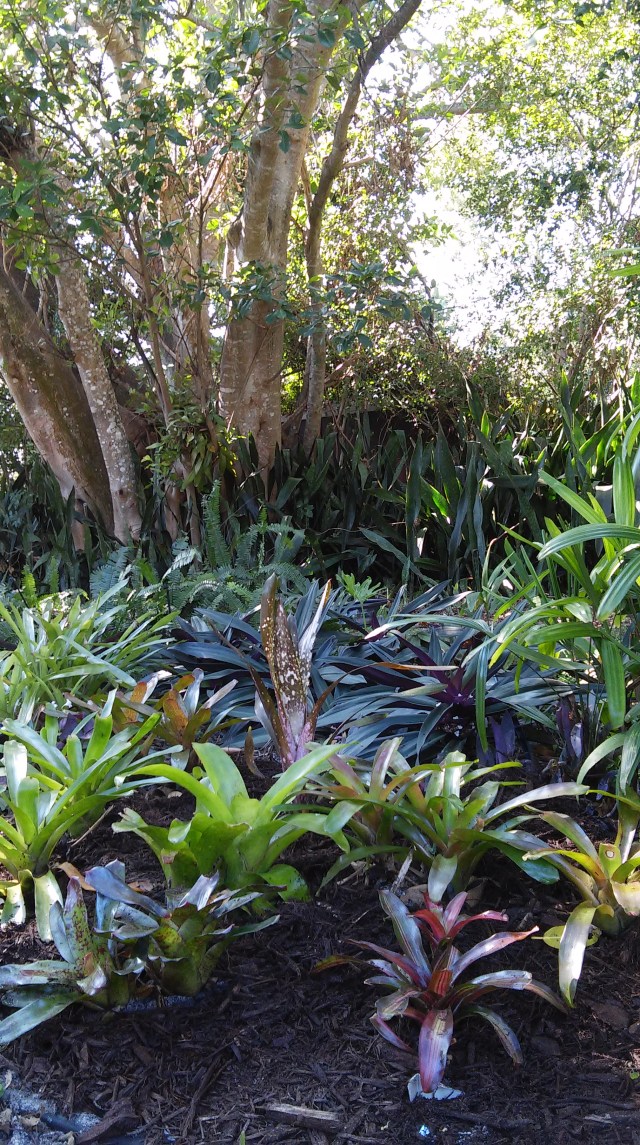
Here is a shot of my Rainforest Garden, where the Lady Palm lives.

20161113_111728

In A Vase on Monday-The Pumpkin Chronicles

20161030_125437-1

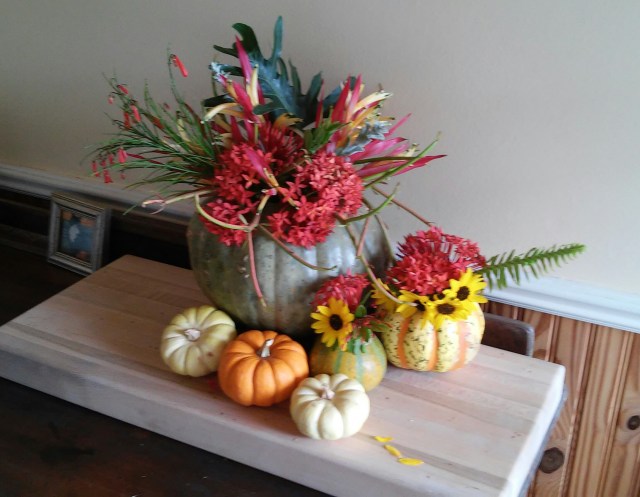
In a Vegetable on Monday, Part Two. My gourd collection from last week was looking pretty good so I decided to add to the arrangement with an heirloom pumpkin for Halloween. Today is Halloween in the US, traditionally the time to carve a pumpkin into a Jack O Lantern then go door to door seeking chocolate (or that is how I think of it).20161028_185146

This is a Jarrahdale Pumpkin, totally non traditional and it hails from Australia. My father was an enormous fan of pumpkin carving so in his honor, I carve a pumpkin every Halloween. I decided to research this one a bit to see if it was edible – it is, and reportedly has sweet, melon like flesh perfect for pies. My husband is regionally famous for his pumpkin pies – so I read on to find that I should roast the pumpkin for 20-30 minutes if I wanted to save the flesh and then scoop out the flesh and continue with my ‘decorative use’.

Upon the completion of the short roasting time, the shell had changed color a bit and the flesh was slightly softer, but not cooked, so I chiseled it out with a serrate knife, being careful to use my not so nice knife in case it snapped. The pumpkin looked a bit like a crocodile so I carved a mean face into it. The flowers may offset the meaness.

20161030_120142-1

Not so sure about the flesh, I just collected it and put in back in the oven to roast and set about arranging the flowers.

20161030_125613

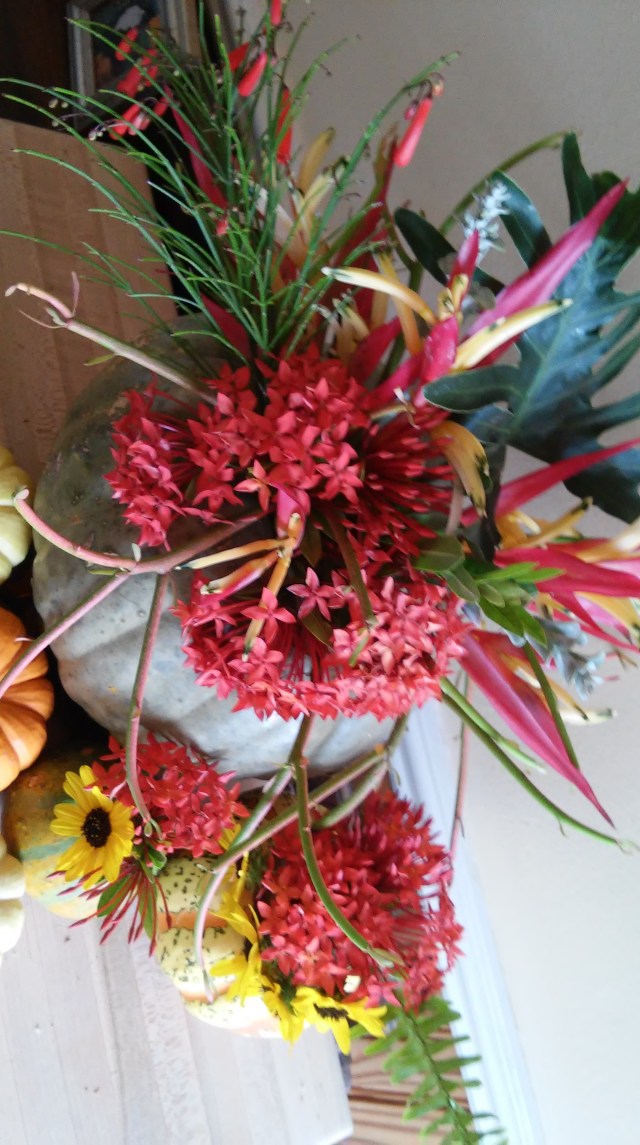
Starting in the front, the yellow flowers are Beach Sunflowers (Helianthus debilis) the coral star shaped flowers are Dwarf Red Ixora, with a bit of Asian Sword Fern. The red and green leafless stems are from a Firesticks Pencil Cactus (Euphorbia tirucalli), red and yellow flowers are Parrot Flower (Heliconia psittacorum), red bell shaped flowers are from Firecracker Plant (Russelia), the grey foliage is from Flapjack Kalanchoes and a leaf from Split Leaf Philodendron (Philodendron selloum) completes the arrangement. The flowers are in a glass I put into the pumpkin, there is also a tealight candle in there, but I have mixed feelings about lighting it.

About this time, I took the pumpkin out of the oven, let it cool, had a taste and discovered it it really good and does taste of sweet melon – unfortunately, after all that I ended up with 1/2 cup of pumpkin puree. Pumpkin bread, anyone?

20151030_200543-1

Here is a much more traditional Jack O Lantern from years past, Happy Halloween!

Art in the Garden

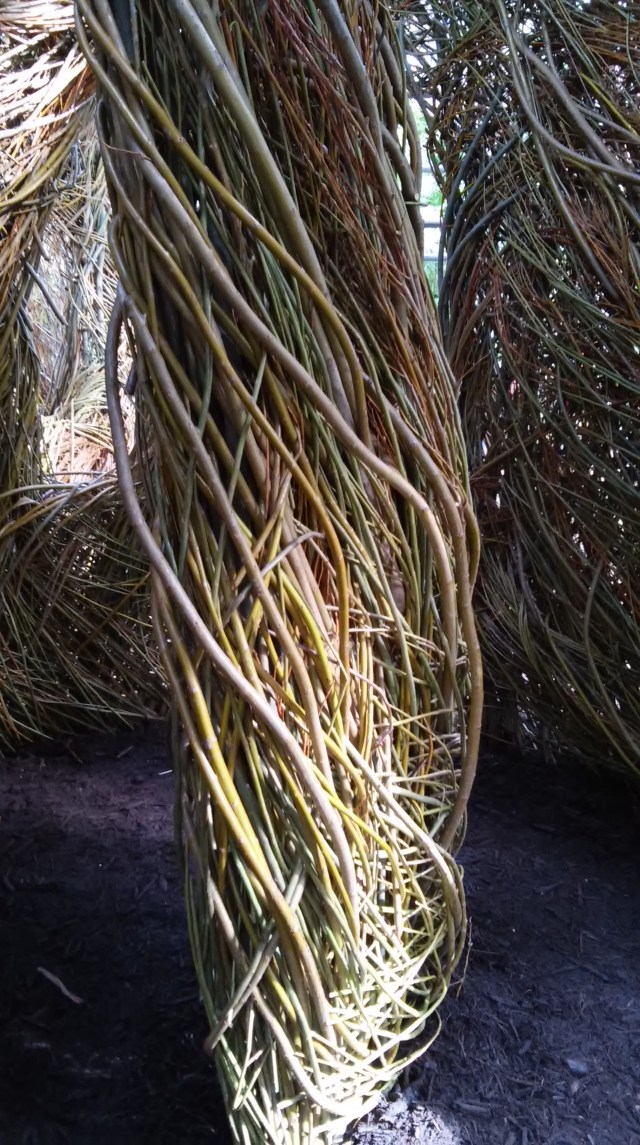
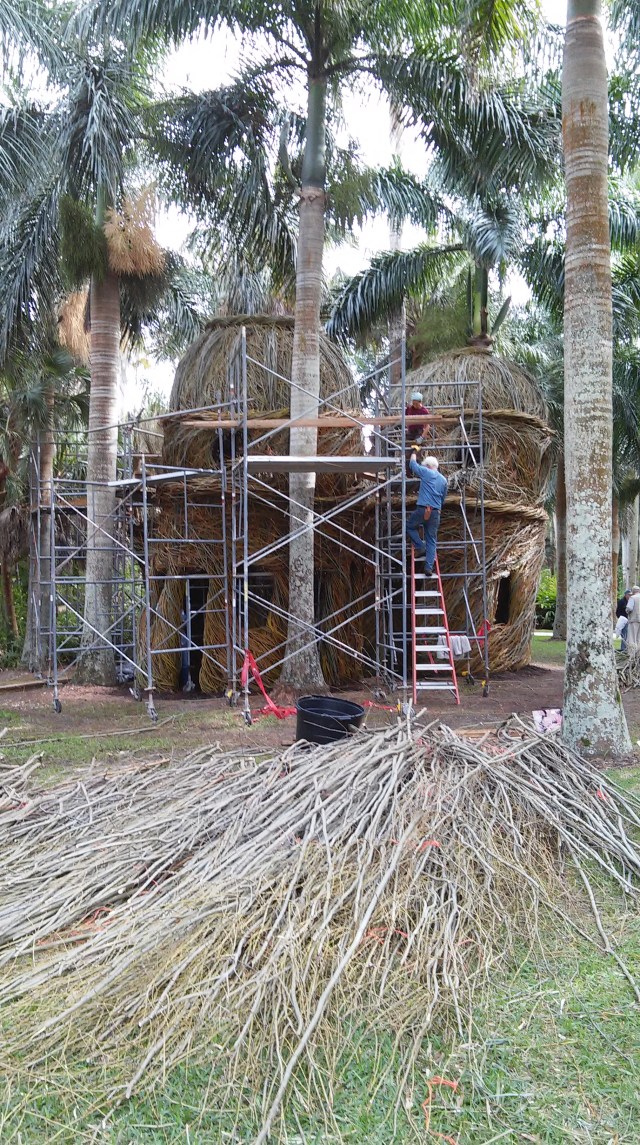
I usually write about the art of the garden, but here is a bit of art in the garden. The above photos are of a woven willow structure currently under construction at the McKee Botanical Garden in Vero Beach, Florida. This piece of environmental art is nestled in a grove of palms and constructed of willow saplings and bendable twigs woven together to form a temporary structure. The structure will eventually have three willow towers. Here is a close up of the twig structure:

20160121_142043

And here is an overall view:

20160121_141502


The artist is Patrick Dougherty and the concept is STICKWORK, here is a link to more information on the artist and installation,  http://www.mckeegarden.org/current-exhibition.php

I am usually not very enthralled with environmental art, but I love this. The organic willow towers complement the formality of the palms and I like the facts that the structure is built from willows grown in a sustainable tree farm and after a few years the structure will be evaluated to decide to keep it or compost it. I have visions of the entire thing rooting into the ground and growing a twisted fairy tale castle in the palm grove.

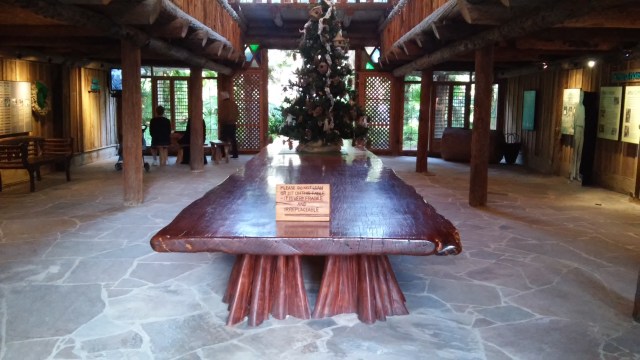
The rest of the garden has a bit of a fairy tale feel as well. Conceived by pioneer developers in South Florida during the first half of the twentieth century – the first buildings were based on Polynesian structures in keeping with the “Jungle” theme. The garden fell into disrepair and was reborn in the early 2000’s shepherded by a dedicated group of garden enthusiasts. Below is one of the original buildings, a great hall centered around a table constructed from a 38 foot long single piece of Mahogany:

20160121_145652


The rest of McKee is well worth touring and has a wealth of tropical plants. I saw many types of Bromeliads I had never seen before and an array of Palms, Orchids and tropical trees. The garden began in a mature forest hammock and boasts some incredible native trees and a pathway meandering through the garden inviting you to stop and study the flora. Here are some of my favorite photos from my trek through the garden.


In a Vase on Monday – The Wildflower Blues


20160117_154405-1

I have been watching a group of Yellow Lupines on the edges of a vacant lot nearby – thinking I could collect some seed and grow Lupines in my back garden. What I did not realize is when the seed pods are ready they explode and hurl seed far and wide. The pods exploded in my car and didn’t seem to think there was enough dirt to grow in the carpets, though there probably is as I haul dogs and plants around with equal enthusiasm. I am not sure if these plants are native to the area, but I am aware of other native Lupines in Florida; it seems peculiar as I associate these plants with Alpine meadows, the Rocky Mountains and cold, arid places. Here is another view of my three blue vases filled with native and/or wildflowers from the vacant lot.

20160117_113625

20160117_111900-1

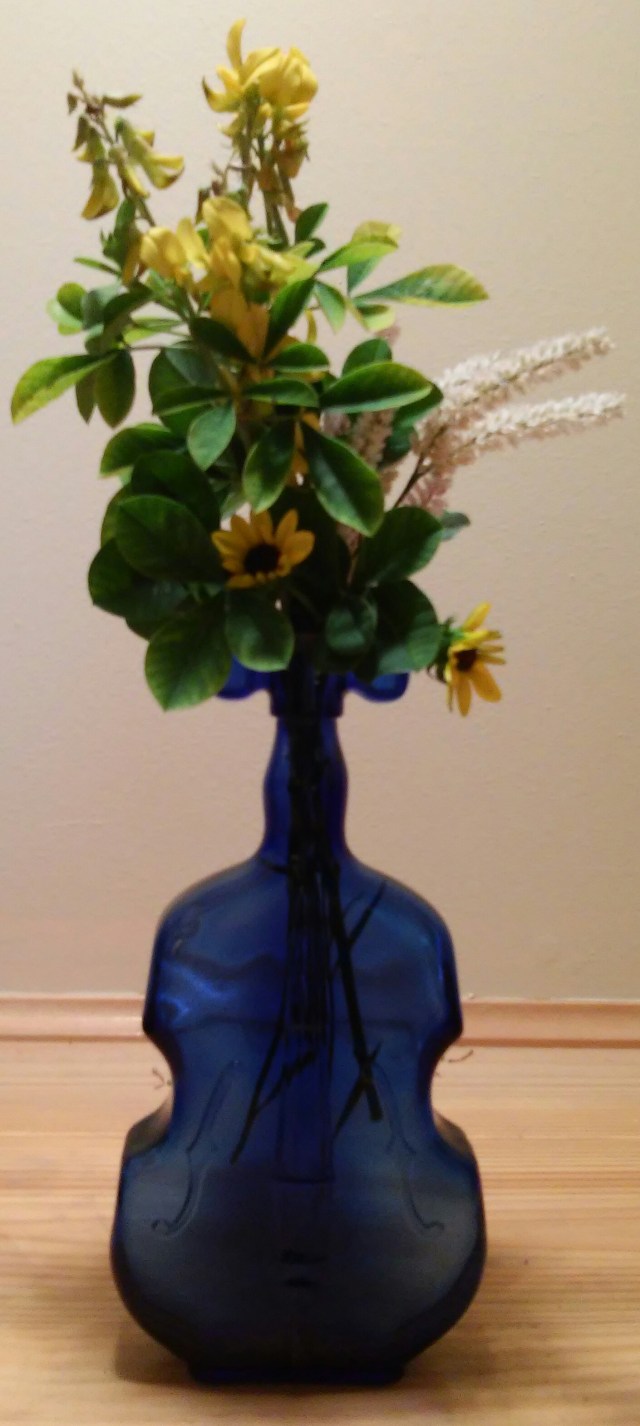
My blue vases represent three generations of women in my family, the violin belonged to my grandmother and has Yellow Lupines, the white spikes are Jointweed, the yellow daisy shaped flower is a Beach Sunflower.

20160117_114007

The tall bottle belonged to my mother and has Beach Sunflower, Yellow Lupines and seeds, background plants are Shrubby Buttonweed and Muhly Grass.

The corked bottle in the background belongs to me and holds the dried petals of all the roses my husband sent me during our courtship. The bells belonged to my other grandmother and are one of those touchstones that have been around the house as long as I can remember; my father brought them home from World War II.

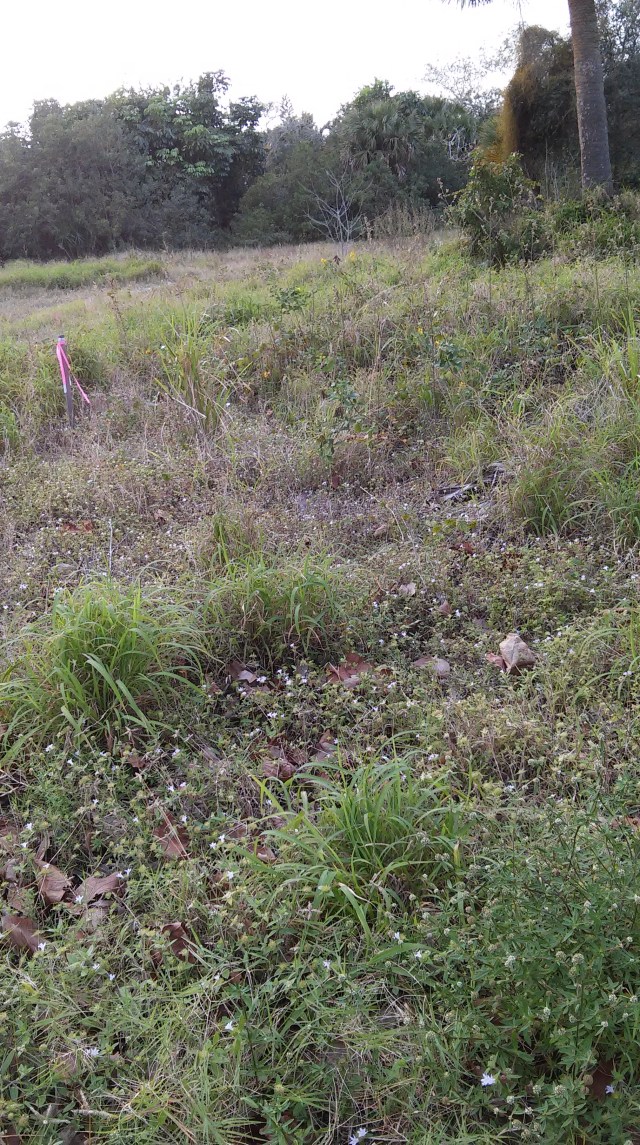
As I was writing this post, it occurred to me how much more interesting and attractive these flowers appear in their Monday vase. So, I wandered over to the vacant lot and took a before picture:

20160117_163141


All the components of the vase are in the foreground. I think I like the flowers in their blue bottles better. This leads me to ponder if more people saw native plants in a vase instead of a vacant lot – native plants might be more popular.

If you would like to see vases from the world over, stop by the comments section of  https://ramblinginthegarden.wordpress.com where Cathy hosts In A Vase on Monday – every Monday!


Hurricanes and Tequila

It just dawned on me that Hurricanes are a cocktail, but they don’t contain Tequila. The Hurricane cocktail contains enough rum that if you drink one you won’t care about the Hurricane and the next morning you will feel like you were hit by one.

The first Atlantic Hurricane of the season may or may not be forming in the Tropical Atlantic. There must be a special language school for the weather forecasters that work on these storms. It’s making statements without really stating any facts. Danny is the name of the storm brewing – he has already been designated a Tropical Storm and might possibly turn into a Hurricane. However, the key however is there is a lot of dry Saharan sand and air floating around out there and we are in an El Nino weather pattern. I could ask my Greyhounds for their storm predictions, but they are clearly too busy. So, we wait. To spare myself drama, I only read the Weather Underground.

Canines occupied

Canines occupied, they’ve put their car magazines on the Ottoman so they can nap

Agave americana

Agave americana

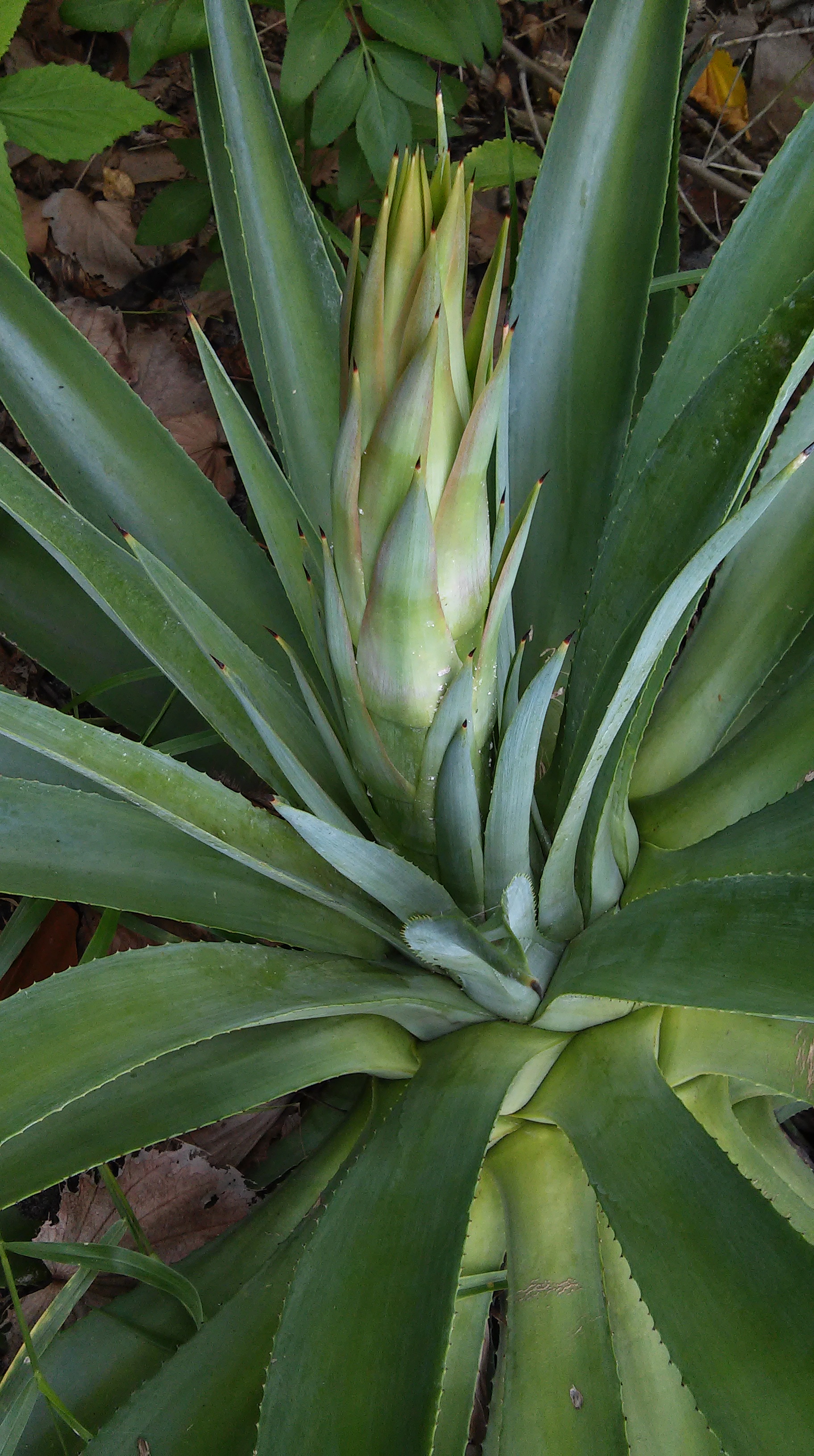
On to the tequila, I have discovered I have an Agave americana shooting up a bloom spike. I thought this was interesting as some of these are called Century Plants because they bloom every hundred years and this one has been around my garden for three years or so. Research has informed me that the bloom spike could be 15 feet tall (!) and indeed tequila is made from this plant. I love the color and texture of the Agave, a glaucous blue green with chocolate brown spines. A friend of mine grew this Agave and gave it to me with a warning ‘some people are allergic to the spines so be sure and cut them off the tips of the leaves’. Well, I decided to move the thing having put it in the wrong place and thought I had cut off all the spines. Later I found myself in the doctor’s office drawing a picture of the plant for her (she couldn’t figure out what could cause such a horrible bruise and reaction) and getting a prescription for Steroids. Yes, I am one of the allergic.

Given my lack of fondness for steroids and the fact that after the Agave americana flowers it dies – I believe it will be asked to leave the garden and I will replace it with a similar sized Bromeliad or Crinum or something lacking chocolate brown spines.

Interesting native plants currently doing their thing in my garden:

Sea Grapes - Coccoloba uvifera

Sea Grapes – Coccoloba uvifera

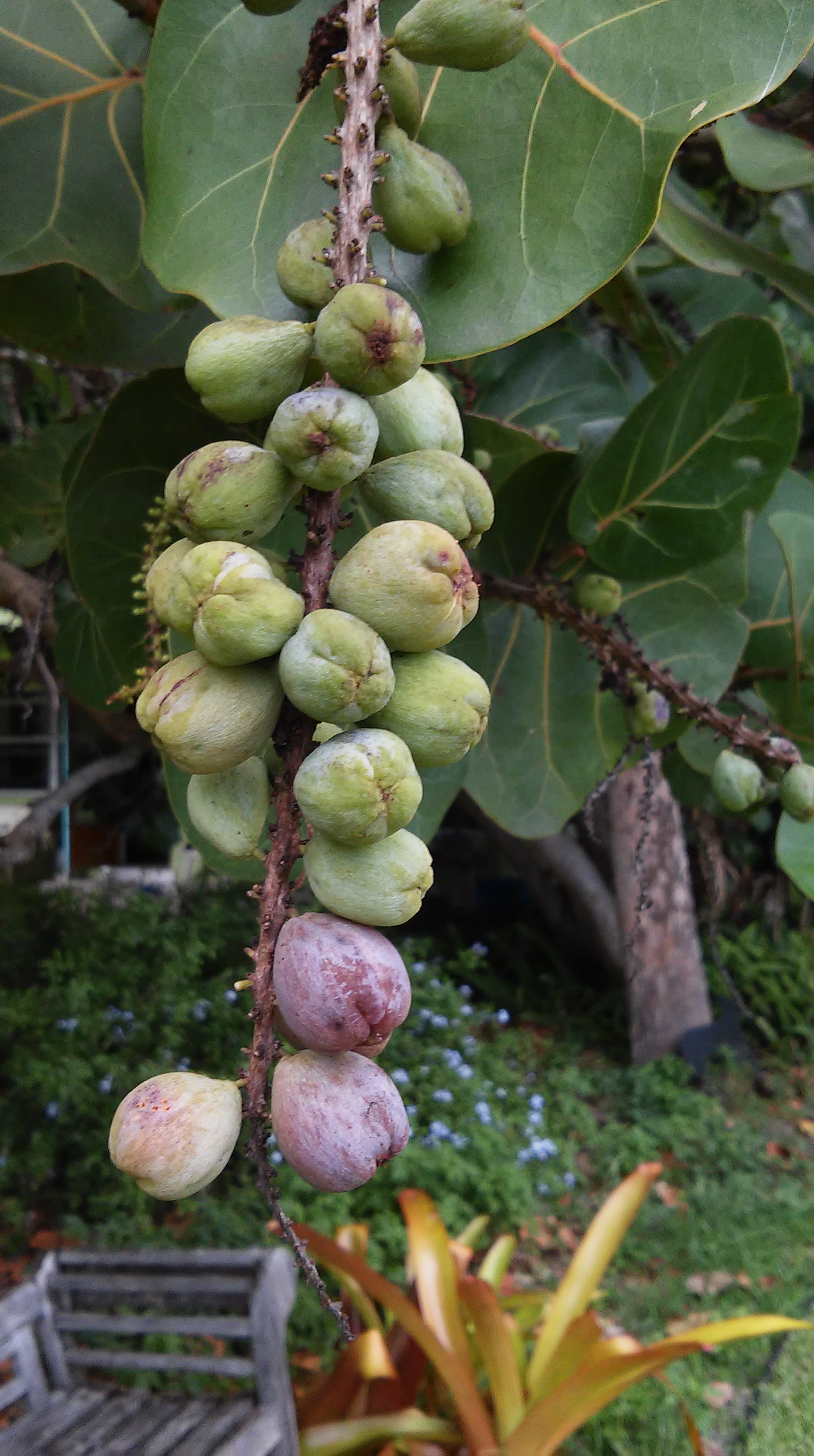
These are Sea Grapes, native to the beach and a bit beyond. The natives like to eat them, the bottom two are nearly ripe but, I haven’t really developed a taste for them and the seed is big. Mine go to the raccoons and birds.

Hymenocallis latifolia

Hymenocallis latifolia

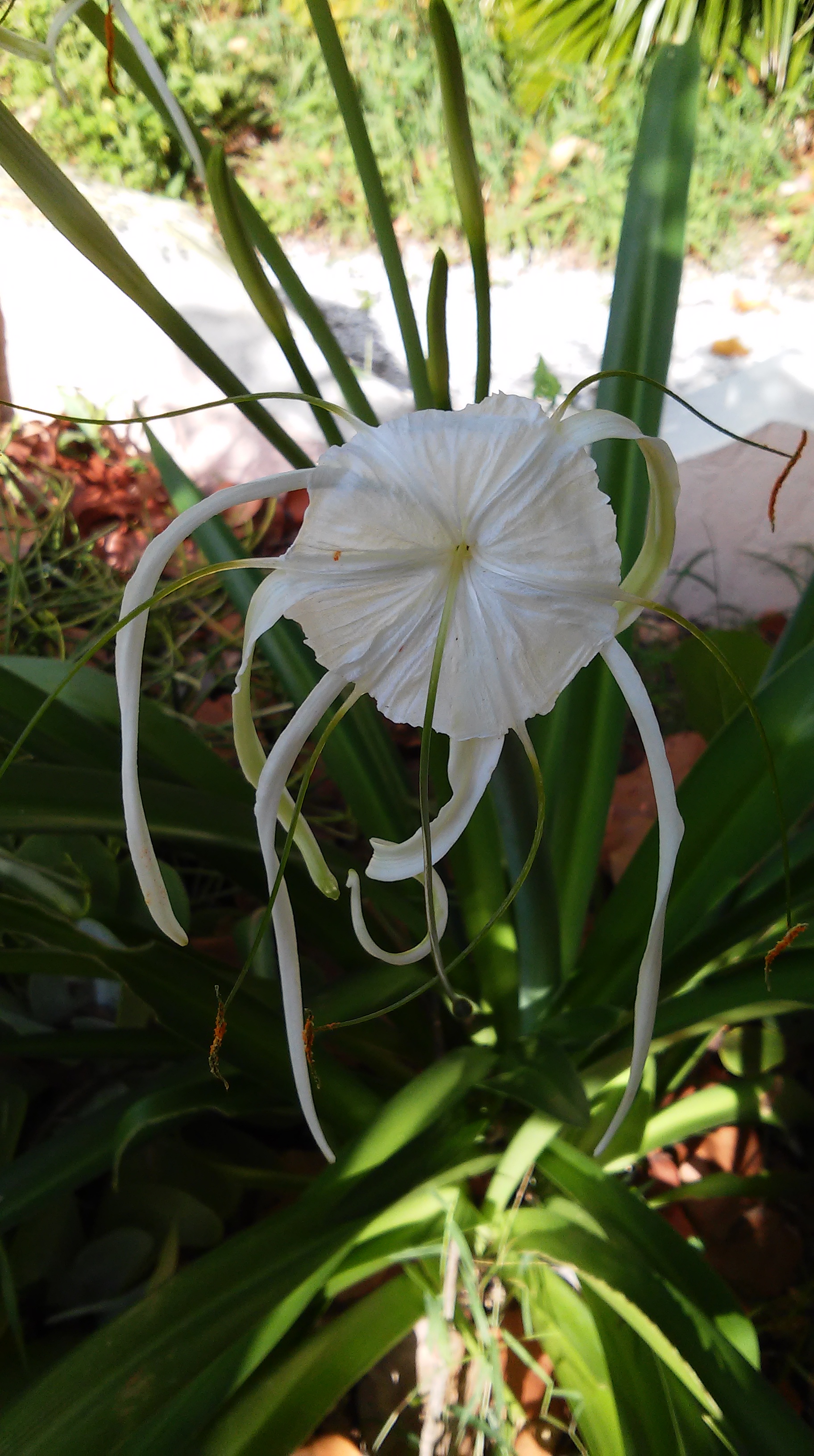
Natives of Florida call these Spider Lilies, I have seen other Hymenocallis called Peruvian Daffodils, clearly I am not in Peru. This is another Florida beachside native- these are easy to grow, but difficult to photograph. The anthers are very like Oriental Lilies, but hard to see. White flowers bloom in clusters, timing is staggered. These are interesting flowers and nearly indestructible.

My plan is to relax with the Greyhounds and await storm news, not eat any Sea Grapes or get stabbed by an Agave. A glass of Chardonnay, no Hurricanes or Tequila in my future, hopefully.

Installing Orchids in the Strangler Fig

This is a story I started last year, when I was gifted some Orchids.

One of the joys of living in South Florida is growing things outside that are houseplants almost anywhere else in North America. My neighbor showed up with a box of Cattleya Orchids yesterday. She grows these in her trees mounted on the branches; it is a beautiful sight when the clouds of purple orchids are blooming in the summer. Some are fragrant and cast sweet scents through the garden.

Orchids Ready for Banyan Tree

Orchids Ready for  Tree

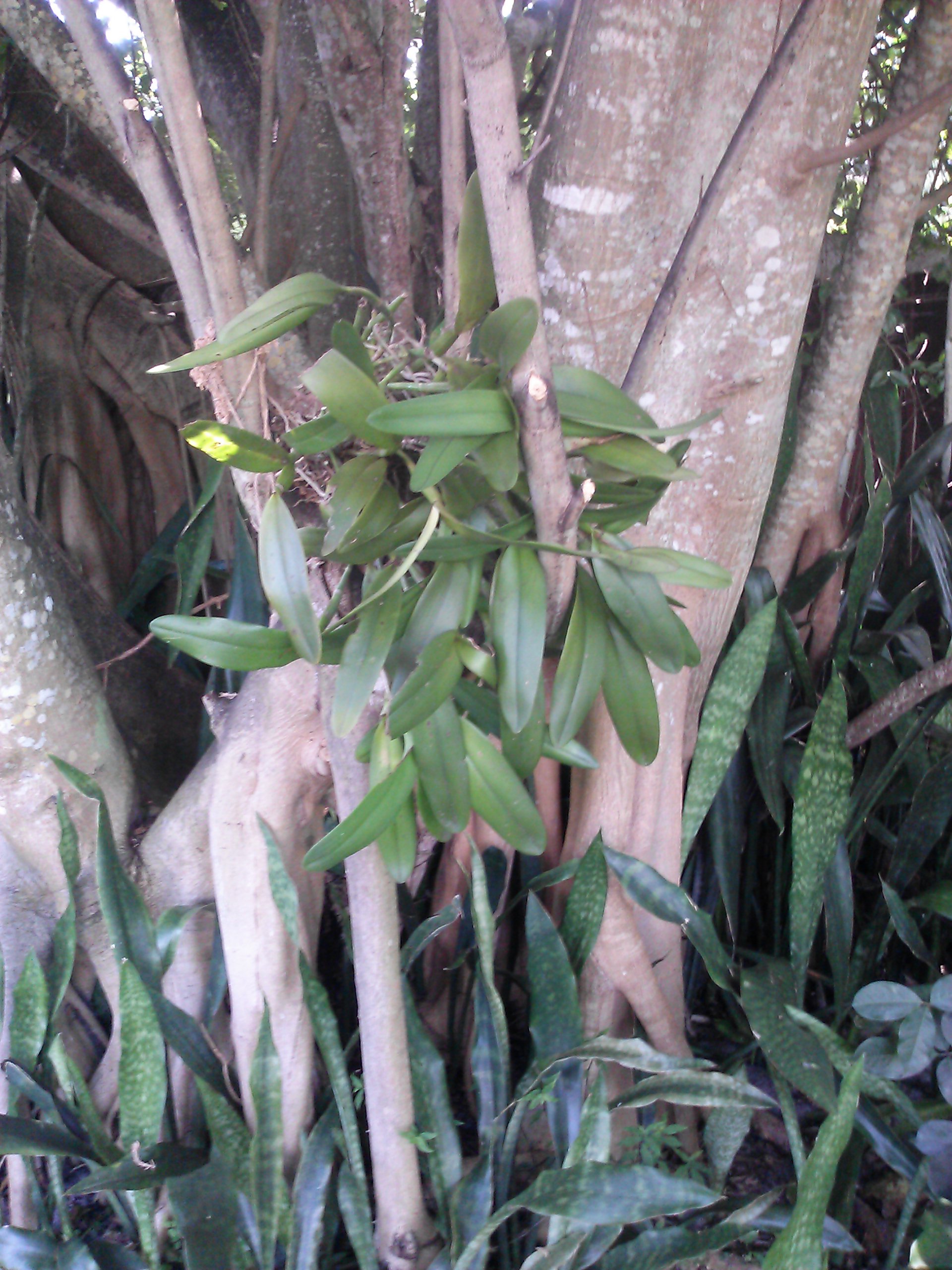
These Orchids were declared unkillable. If this is true these will be the first Orchids I have ever not killed. I think of Orchids more as a floral arrangement; not something that actually is perennialSo, I followed directions:

Cleared a slightly sunny spot in the base of a big Strangler Fig tree in my side yard. There are unfortunately some very poorly trained arborists (?!) around here who left this bad pruning job on my tree. A few orchids will spice things up here and cover the bald spot..

Banyan Tree Trunk

Fig Tree Trunk

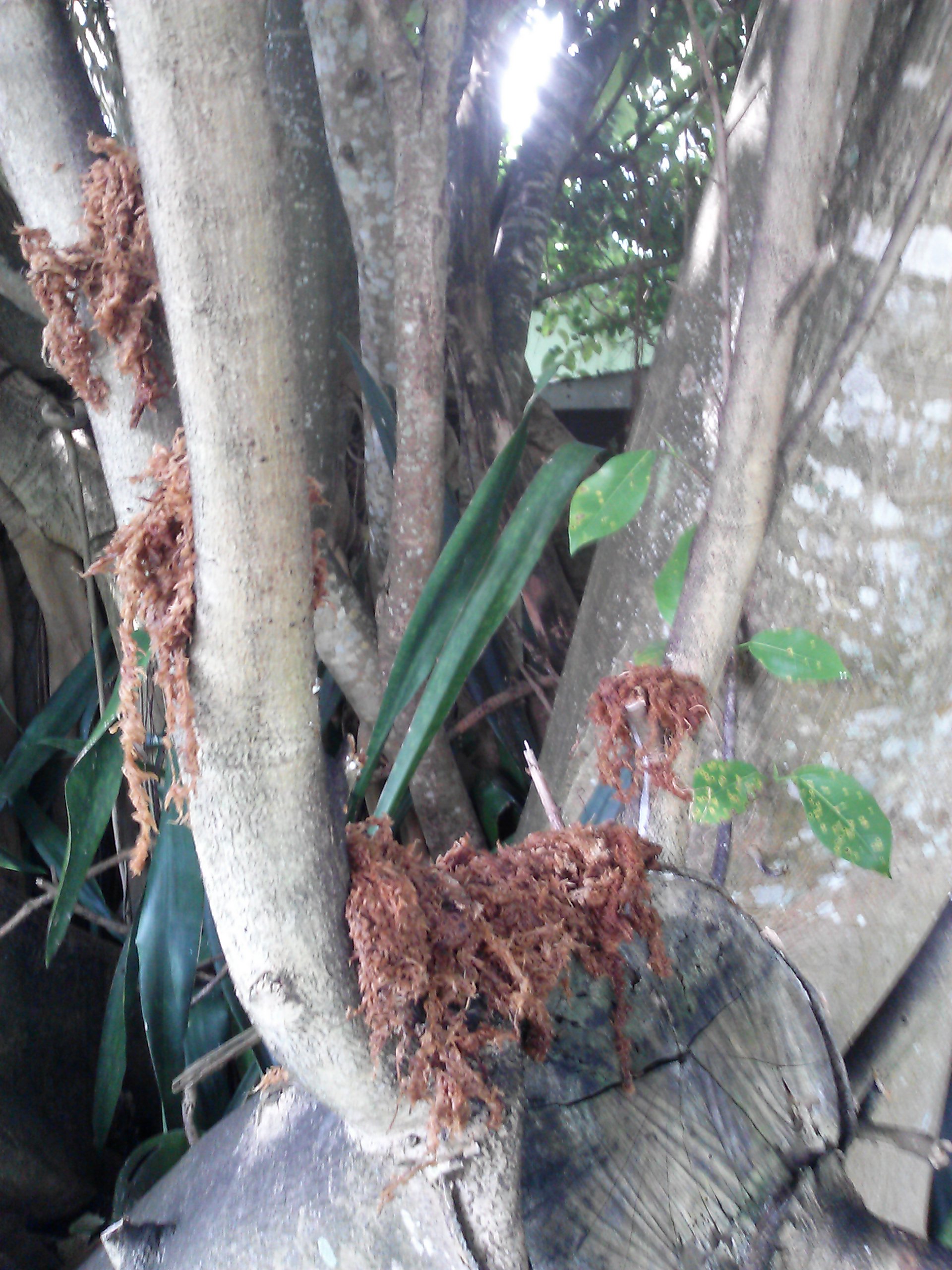
I added some dampened Sphagnum Moss; trying to place the moss so it would drain and not cause any rot on the bark of the tree.

Spaghnum Moss

Spaghnum Moss

Then I hoisted the Orchids into the trunk and tied them to the tree with sisal twine. This takes a bit of jiggling and looping to make things secure, but I think they will stay in place.

The Finished Product

The Finished Product

Here are the Orchids in place. The idea is you water them (not too much) until establishment in the tree. Then maybe water every week during the dry season. Voila! Hopefully, I will get some of these next year; if these are truly unkillable!

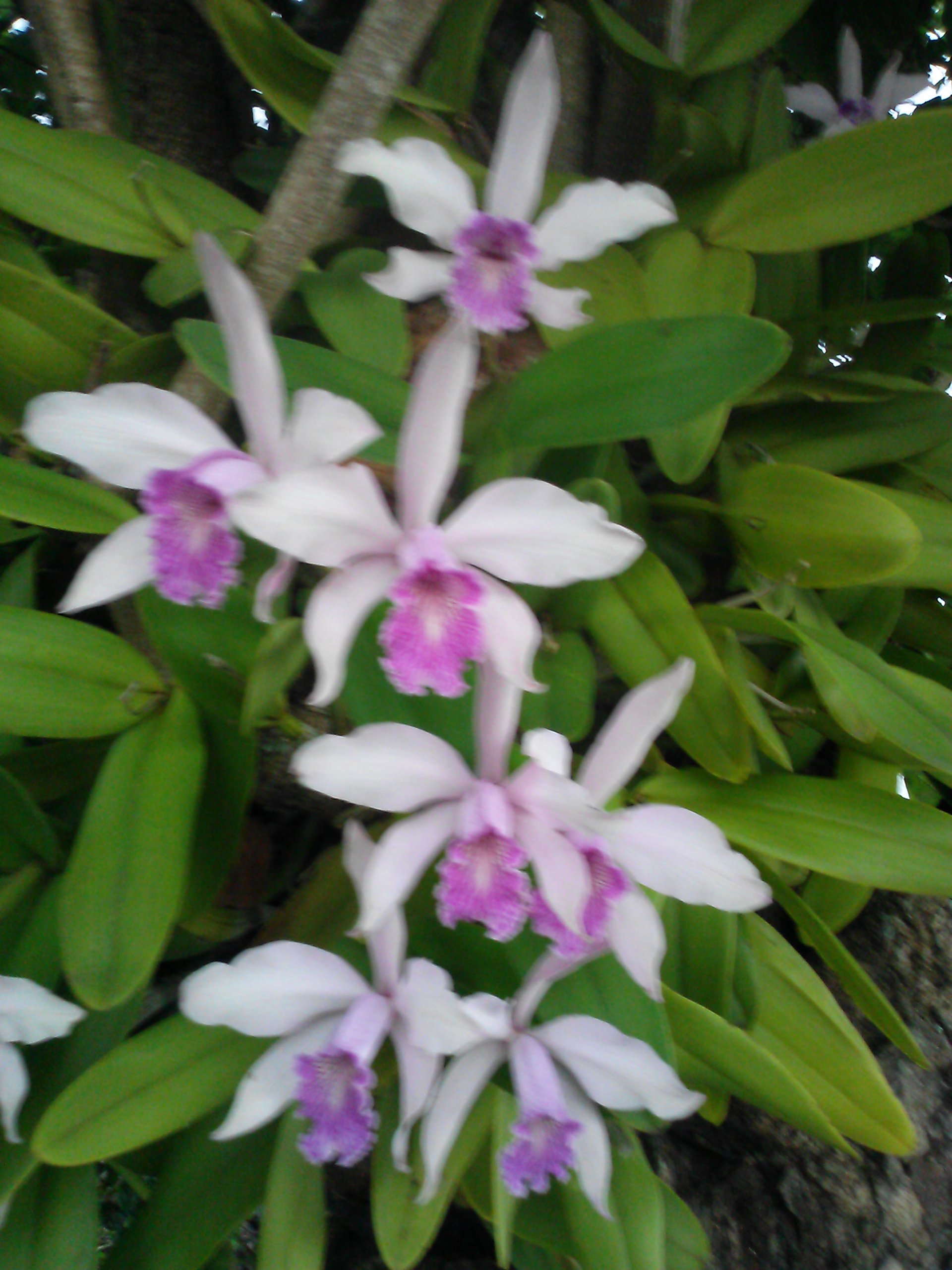
The update here is the Orchids are alive and well and are teasing me with new shoots – hopefully I get some flowers like the ones below. The good news is they do appear to be unkillable!

Cattleyas

Cattleyas

Mango, Tango – no Rain, Though

It is Mango season here in South Florida and eventually someone with a tree finds me, to my giddy delight. One of my neighbors is a Chef and has a tree. We have discussed what kind it is – he thinks a Haden – I think it might be a type locals call Peach Mango, it has the slightest aftertaste of peach. Whatever it is, it’s peachy  Maybe that is a Haden anyway. The locals call one of these a Strawberry Mango..

Here is a bowl of Mangoes from a guy down the street:

Assorted Mangoes

Assorted Mangoes

This included the Strawberry and Peach Mangoes – Peach I could tell, Strawberry not so much, although one had a redder colored interior. All were good and I devoured them, my husband had a bite, maybe two.

Chef Mangoes

Chef Mangoes              

These are the Mangoes from the Chef, Peach, maybe..Haden variety. Divine, yes, after all the other Mangoes were devoured, I made Granita from two and a half of these. Granita is made by taking 3 and 1/2  cups chopped Mango, simple syrup made from raw Hawaiian Cane Sugar and the juice of one lime – put this in a blender, blend until smooth, then put it in the freezer in a shallow container and stir every half hour or so until the mixture is slushy. I keep mine in a Ziploc bag in the freezer and mush it up as I eat it.

Even the scraps for the compost heap were pretty:

Compost

Compost

It hasn’t rained here since June 30. Things were getting pretty dry and then our well (Irrigation water comes from a well) motor just died, on Saturday morning, of course. Murphy’s Law for gardeners at work here in South Florida. The well repair people aren’t bothered much if you have city water. So, they showed up Tuesday and took the motor away – we found not having water at all doesn’t bother these people much either. So, I have been running around with a pitcher, watering things. Ugh, I am however hearing thunder in the distance..

Think I will just have a little of that Mango Granita, the Chef says it is good with Rum..

Throw the books away

The sunsets and the dogs on the beach are great reasons to live in South Florida. Trying to figure out how to garden here might be another story. Having spent most of my life 600 miles north of here, I thought I would be able to buy some books about what grows here and figure it out. Come to find out there really aren’t any good books.

The title sounds like something Hitler might have done. Actually, it was a bit of advice given to me by a longtime Treasure Coast gardener a few years ago. I had been lamenting the lack of good gardening information for our area and frustrated by what I had been reading in the Florida Gardening books. She said ‘throw the books away, they have no meaning here’.

Mondo that has seen better days

Mondo that has seen better days

This kernel of knowledge proved correct and popped into my brain this morning as I was looking at the charred remains of my Mondo Grass (that supposedly grows in Zone 10 – where I live) My suspicion is Mondo Grass will grow in Zone 10 if you import soil and water for it and keep an umbrella over it at all times, otherwise, forget about it. I had Mondo Grass further north and it was a reliable nearly indestructible groundcover. It was used as lawn in places too shady for turfgrass.

The Mondo Grass was my last rely on the books installation. My other major char broil was Bronzeleaf Begonias, which I did not even know could be burned up. I planted them in front of my Soap Aloe in my South facing front yard. Once the summer started they curled, browned, withered and unceremoniously died. The Aloe looked and still looks great. I feel bad about throwing away the offshoots sometimes, but not everybody wants a Soap Aloe. Instead of gaining sea legs on a ship, I am gaining sand legs in gardening. And usually end up covered in it.

Our Soapy Friend

Our Soapy Friend

This had left me wondering if it is really possible to write a useful gardening book with plant selection advice for a wide geographical area. I think not.