Freezing in South Florida?

Cabbage Palm

It is a beautiful day here, cerulean blue sky with a few hawks flying in lazy circles. Take a stroll outside and feel the cold air blowing in from the frozen north- it feels like Chicago in the springtime (or maybe summer). Chicago, Illinois is known as the Windy City and is about 1300 miles north of here.

The concept of freezing weather in SoFla seems weird to me. A low of 35 degrees F is  predicted tonight. Nearly freezing. According to the National Climatic Data Center in 29 years there have been no freezing temperatures in Vero Beach, a bit north of me. In 48 years there have been no freezing temperatures in West Palm Beach, a bit south.

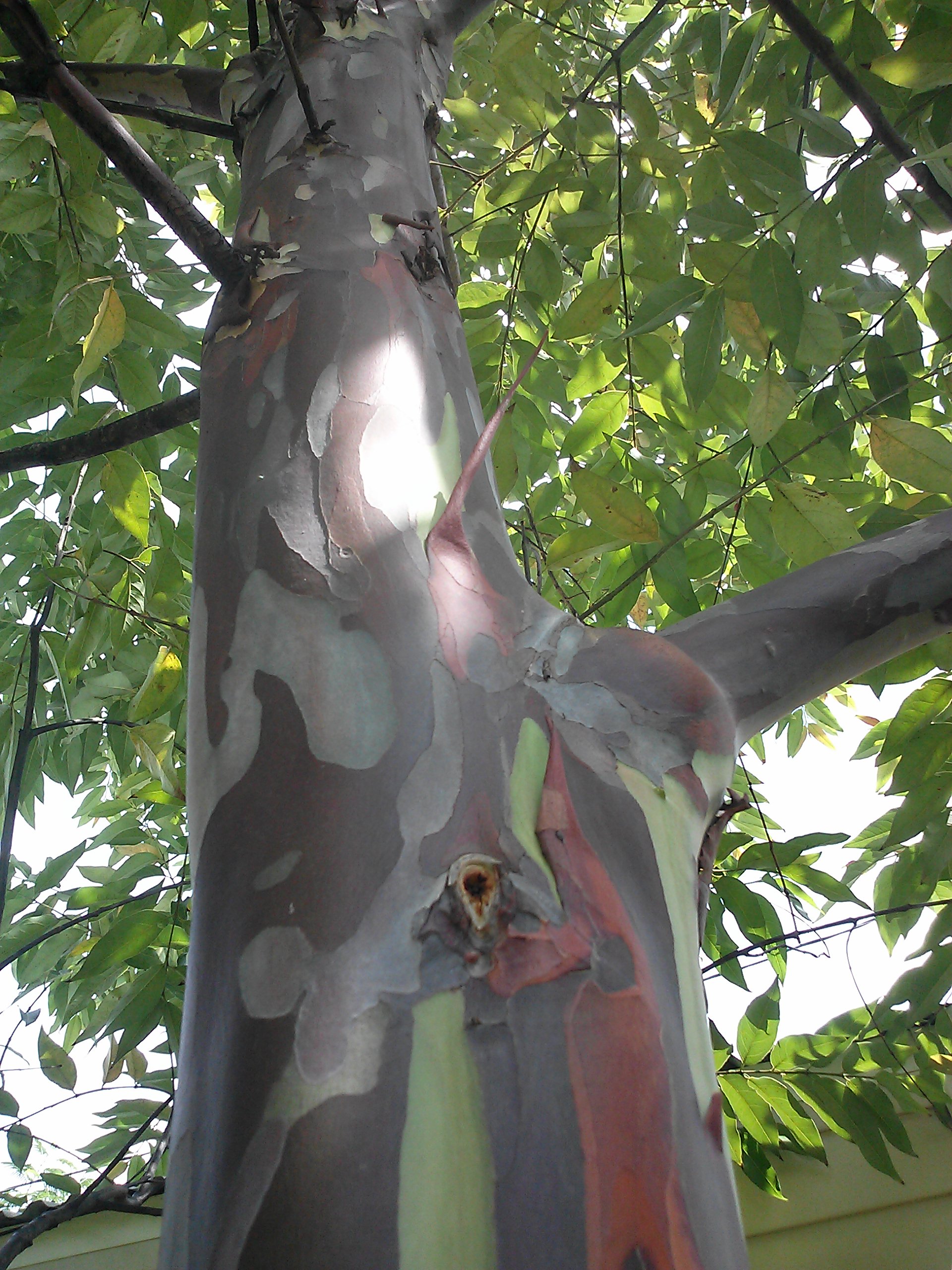
I felt a lot better about the weather forecast having looked up the climatic data, but I am concerned about a few plants that are really susceptible to frost. The primary one being the Rainbow Eucalyptus, notoriously intolerant of freezing temperatures, it has just grown tall enough to be seen over the roof of our garage and it is blooming. I am getting a mental image of a 30 foot tall tree limp, insides frozen to mush and bent in two. Hopefully not.

Rainbow Eucalyptus

Rainbow Eucalyptus

I am in the process of madly moving all the potted plants into the garage. Gotta go put a sheet over my new palms. Then all I can do it wait until tomorrow.


Gardening Outside Your Zone

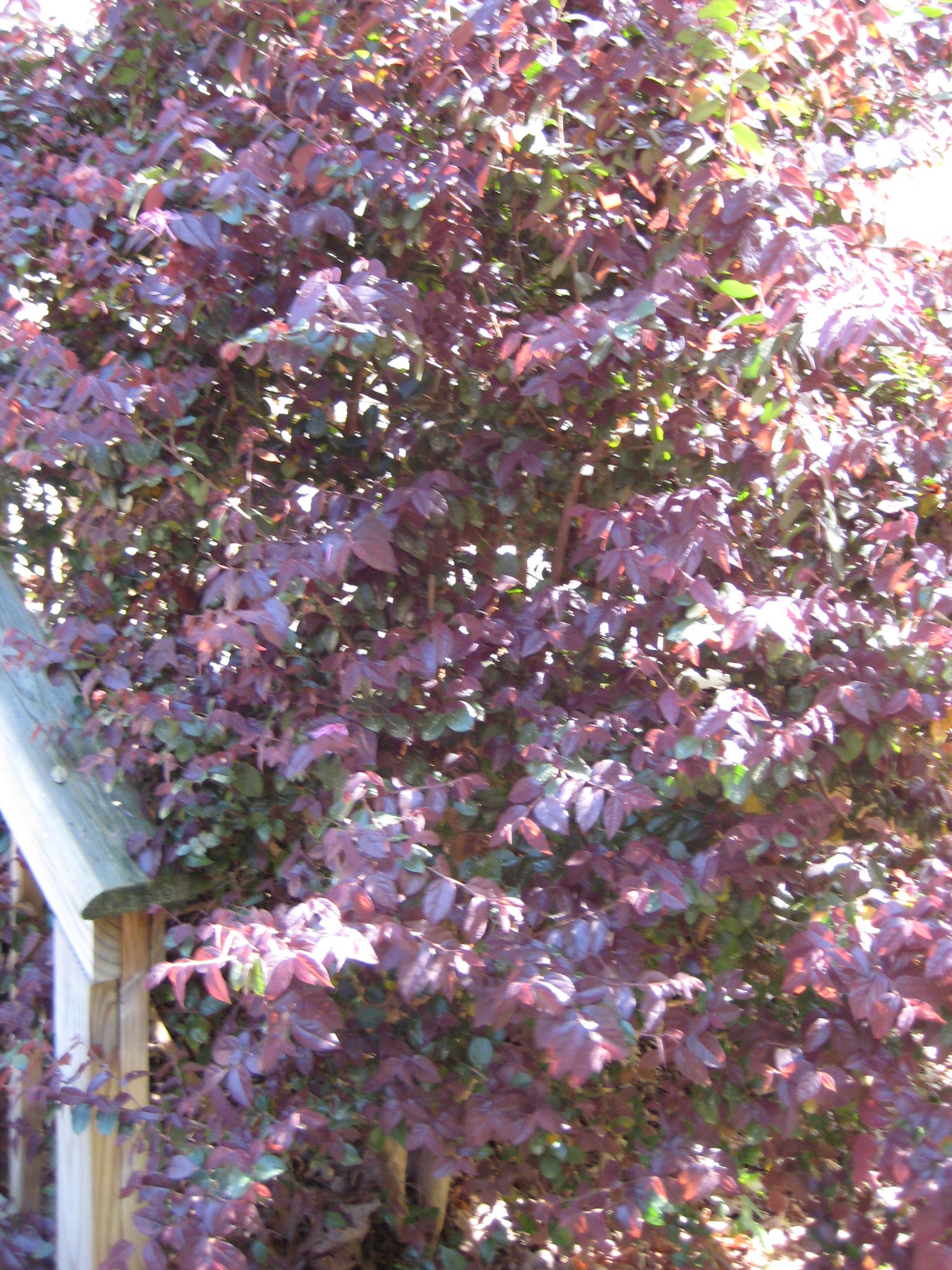
Burgundy Loropetalum in Atlanta

Burgundy Loropetalum in Atlanta

The song by the Rolling Stones goes, and I am paraphrasing  “You can’t always get what you want, but if you try sometimes you get what you need.” Sage words. That made me remember I want to plant some sage..

There are many transplants here in Florida – people and plants as well. The people are trying to grow the plants they know from home, maybe 4 hardiness zones north. The plants are unhappy. I was surprised by the number of folks trying to grow Lilacs in South Florida. Lilacs grow in the Northern US, not South Florida. South Florida may be the mold and mildew capital of the world and Lilacs are extremely susceptible. Of course, there are some delightfully fragrant plants that people in the North are trying to grow that thrive here and are really well suited for this climate- on it goes. Ylang ylang, anyone? If for no other reason it would be fun to try this because of the name. I actually had a vanilla orchid for a while, but I think one of my dogs stepped on it.

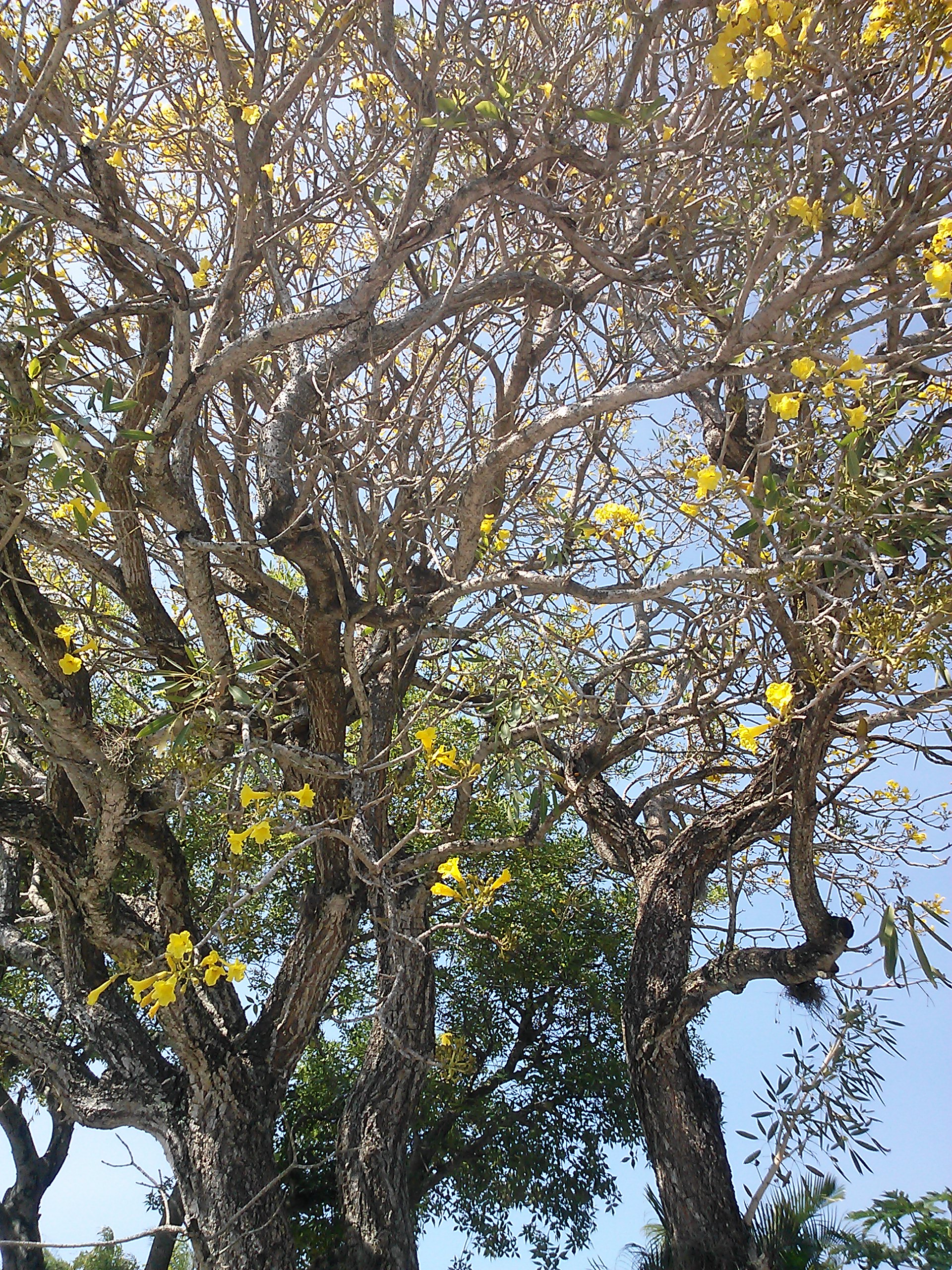
Tabebuia

Tabebuia

I am as guilty as the next gardener, to a certain extent. I like the new and unusual and there is a lot to see when you move to the tropics. My favorite tree ever, the Autumnalis Cherry, cannot be grown here. I readily accept that because of the other trees that can be grown here. My new favorite is Tabebuia which I have just found with orchid colored flowers – the Ipe Tabebuia. I also like the yellow one because of the nice corky bark. It is a dilemma to choose between the two, fortunately the back garden of my house is, well, um, non-existent. So, I can have either.

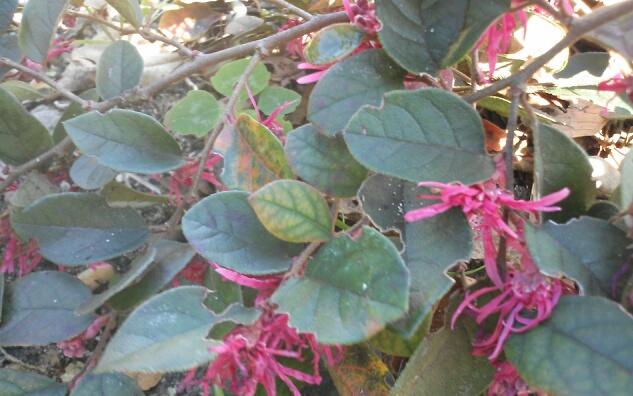
Burgundy Loropetalum in South Florida

Burgundy Loropetalum in South Florida

I have succumbed to Zone pushing by planting some Burgundy Loropetalum. One of my favorite shrubs from the frozen north. This is not supposed to grow in Zone 10, my research says Zone 9 is it for the Loropetalum. But I found one for 5 bucks and decided to try it. It is cheerfully blooming in my front yard in January. You may notice the Atlanta Loropetalum is robust and more than 6 feet tall. The one here in Florida tops out at 8 inches and looks a bit chlorotic. I guess it is time to wait and see.

Fruits of the Labors of Friends and Neighbors

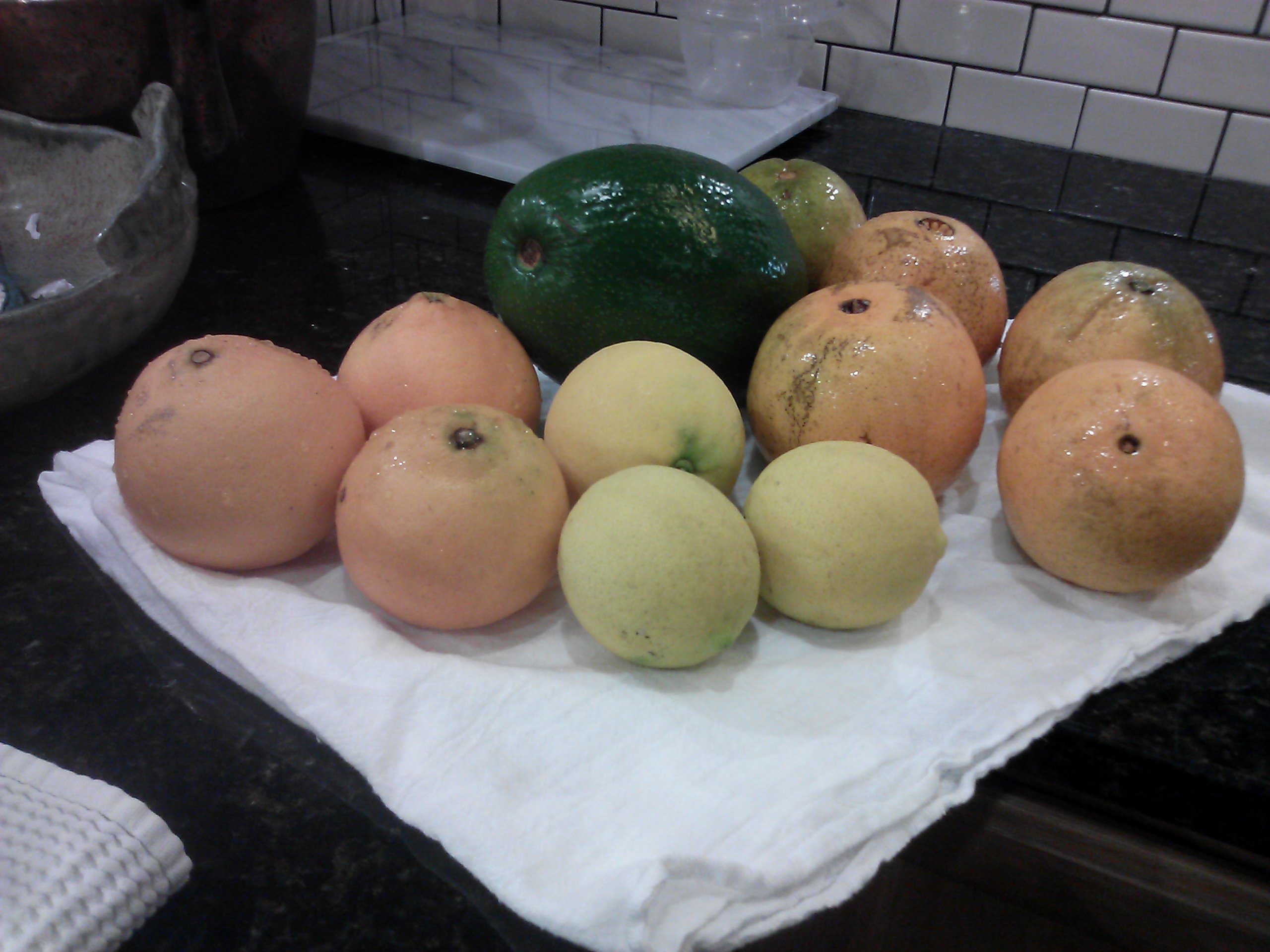
Local Bounty

Local Bounty

It’s Citrus season here in South Florida and everybody has some. Here is some homegrown produce I have collected recently. From the left, Honeybells grown by a friend of my neighbor, Meyers Lemons and Everbearing Persian Limes grown by my college roomate’s husband, a Cuban or Catalina Avocado grown by him as well and Blood Oranges from my neighbor the Chef.

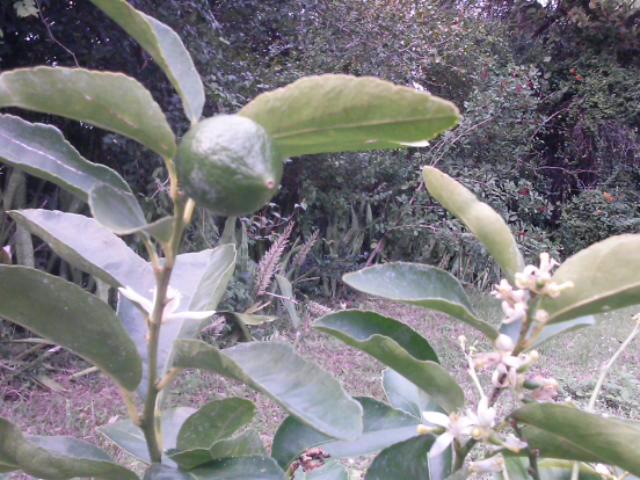
Homegrown citrus is radically different from what might be procured further north. I was taken aback by this with the first taste of a Lime from my back garden (Persian of course) Juicy, fragrant and magnificently Limey (not like the British) I wonder if the term limey comes from a British tendency towards Gin and Tonic. I digress, here is my newest Persian Lime. I am told these bear fruit 4 times a year – I planted this about 6 months ago and have had two crops even though my husband ran the weedeater too close and stripped the bark off. The tree had to be pruned andmoved in mid August for its own safety.

Persian Lime in fruit and flower

Persian Lime in fruit and flower

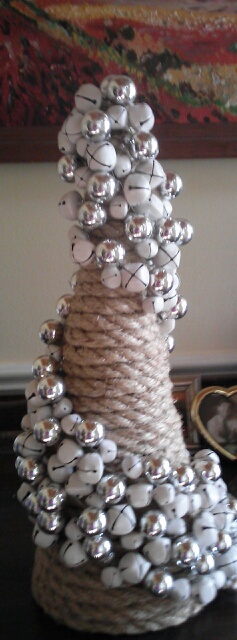
Here’s another thing peculiar to Florida, in honor of the end of the holidays I am posting a Christmas gift photo, yes, I had to ask what is was:

The Nautical Christmas Tree

The Nautical Christmas Tree

Of course, the Nautical Christmas Tree was made in China.

Happy Gardening, I’ll be snacking on a Blood Orange.

True Gardeners

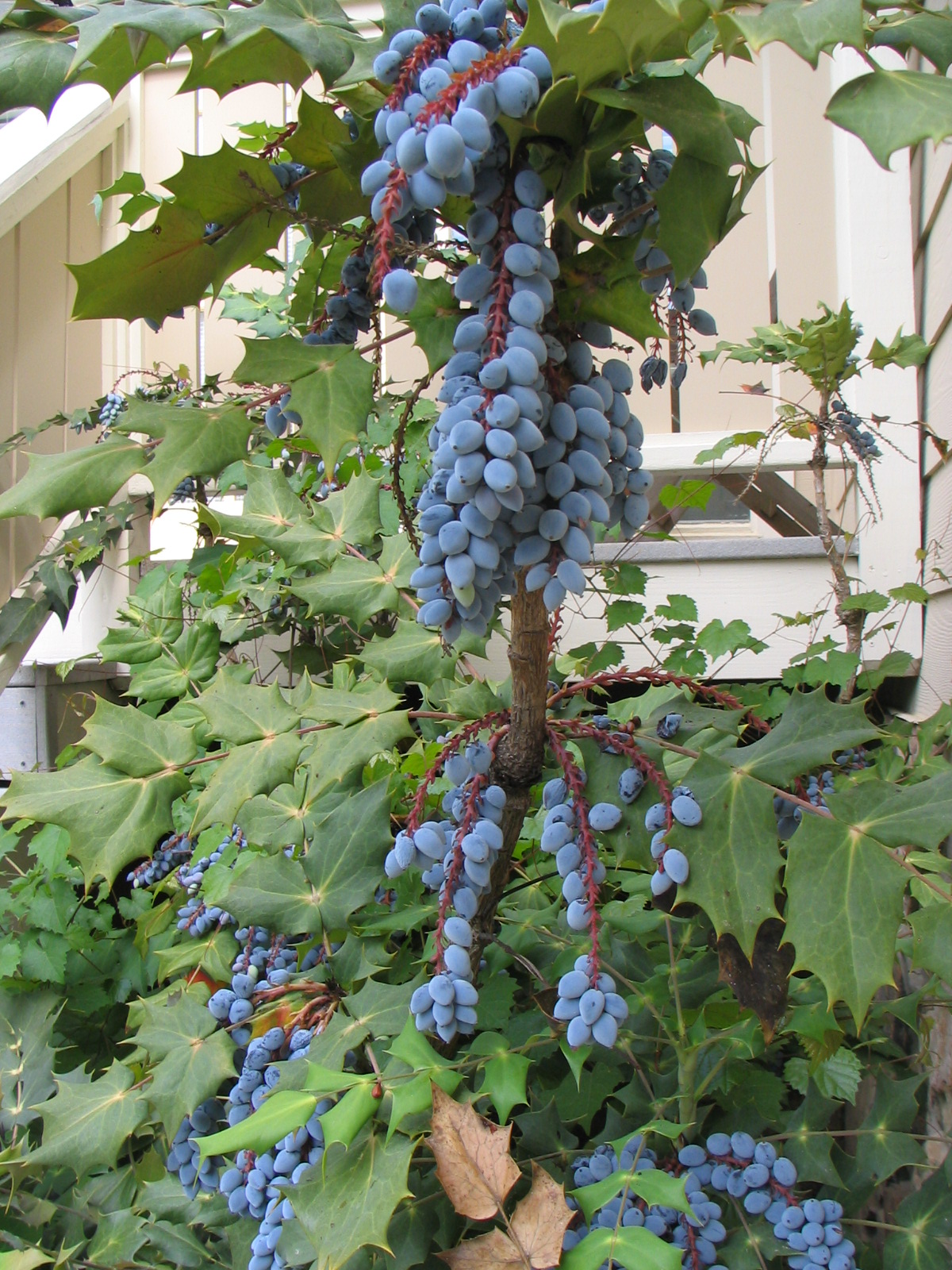
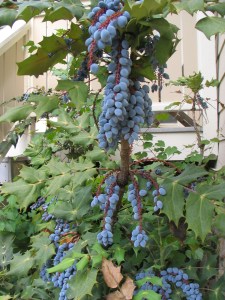
Fruit of the Mahonia bealei

Fruit of the Mahonia bealei

For many years I thought the plant that separated True Gardeners from posers was the Mahonia bealei. I provided six Landscape Design Consultations weekly for years, talking with many, many people and over the years the appreciation of that particular plant rang true for me and separated the True Gardeners in my mind.

True Gardeners are people who have the ability to separate the beauty of the plant from its less attractive attributes. Sometimes this is a seasonal thing sometimes it is purely the ability to appreciate nature.

Mahonia bealei is commonly known in the US as Leatherleaf Mahonia. It is one of those plants that is difficult to kill except in full sun. It doesn’t really die in full sun it just suffers and turns red. Probably sunburn. Otherwise, it is thorny, reproduces copiously via birds and generally stabs the passerby. Many people detest this plant and for good reason.

The reasons we appreciate this plant are many. Reliable under most circumstances, it remains cheerfully Evergreen through the iciest of weather. The holly like foliage can be used in holiday arrangements. I have spray painted the leaves metallic colors for wreaths (leather gloves required). The yellow flowers are borne in winter and are followed by grape like fruits that are enjoyed by numerous species of birds. Hence, another common name, the Oregon Grape Holly.

My mother had an enormous specimen she tree-formed to screen her garbage cans. We usually admired the flowers at Christmas, New Years or even Valentine’s Day depending on the weather. The only other flowers in the garden were pansies planted as annuals or Hellebores.

Oddly enough, almost everyone who enjoyed these referred to them as Mahonias. That was it. This may be ascribed to Americans not being particularly concerned with botanical nomenclature or just simply that was the most prolific Mahonia in the area. That said, plant taxonomy hasn’t worried me too much unless it defines a plant that I need to specify. Botanical nomenclature I love, plant tax not so much.

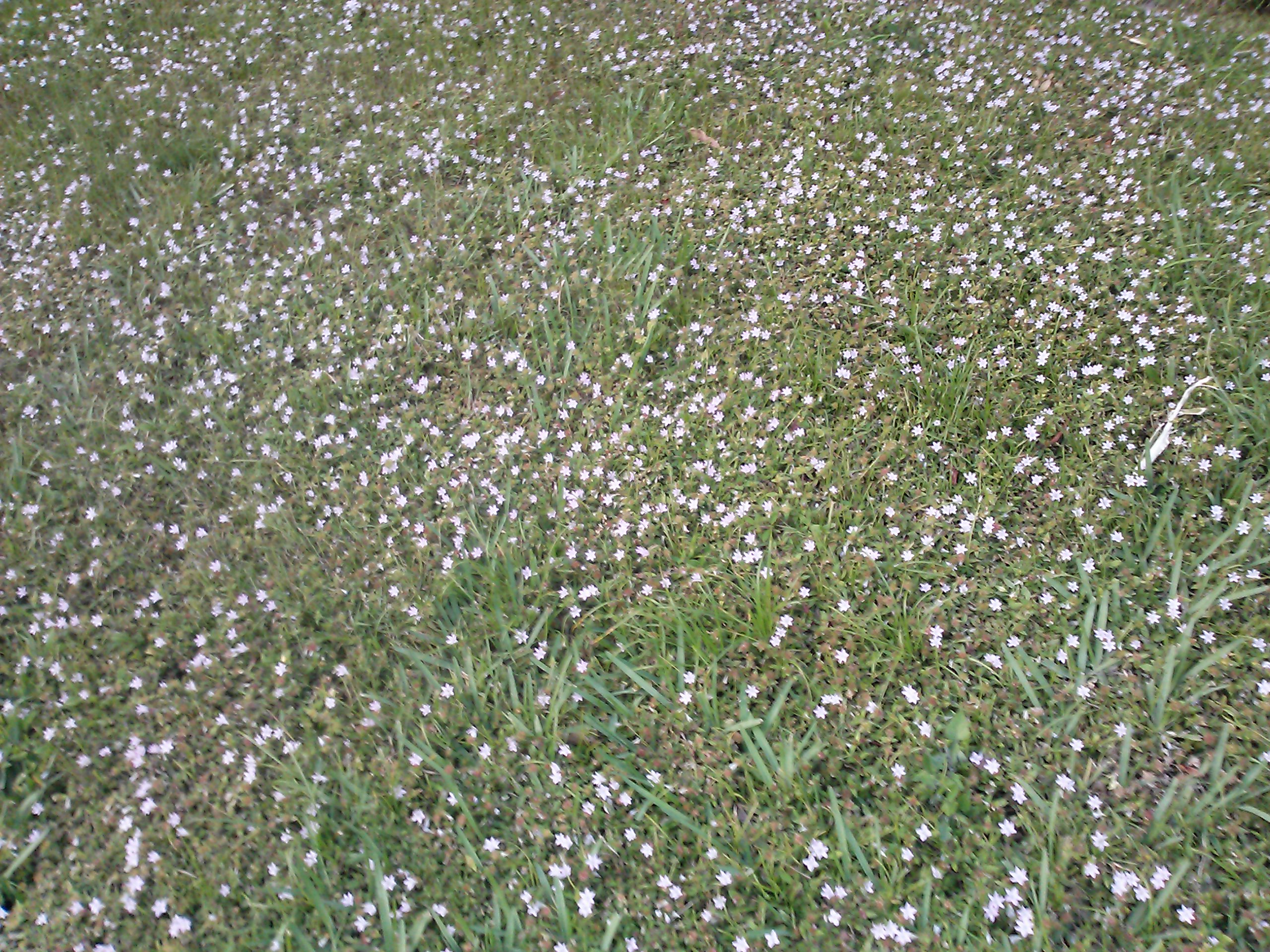
I think there is a plant like the Leatherleaf Mahonia the world over..not sure what it is in the UK or Australia; I was emailing with Karen (smallhouse/BIGGARDEN), a fellow Florida blogger about a weed we both like yesterday – Florida Snow. Karen identified this as Richardia grandiflora, which works for me. It is a horrible creeping weed if you are a turf purist, as gardeners we love the white flowers that look like snow in our backyard meadows..and we need no chemicals! My greyhounds run amuck in this and I have no worries.
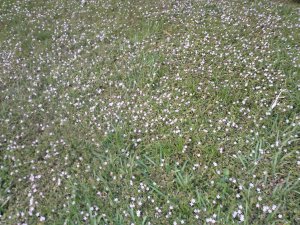
Florida Snow

Florida Snow

And really if you have moved this far south, I think this is sufficient snow. My husband, the turf purist, is not really enjoying the flowers.

Pygmy Date Palm – Friend or Foe

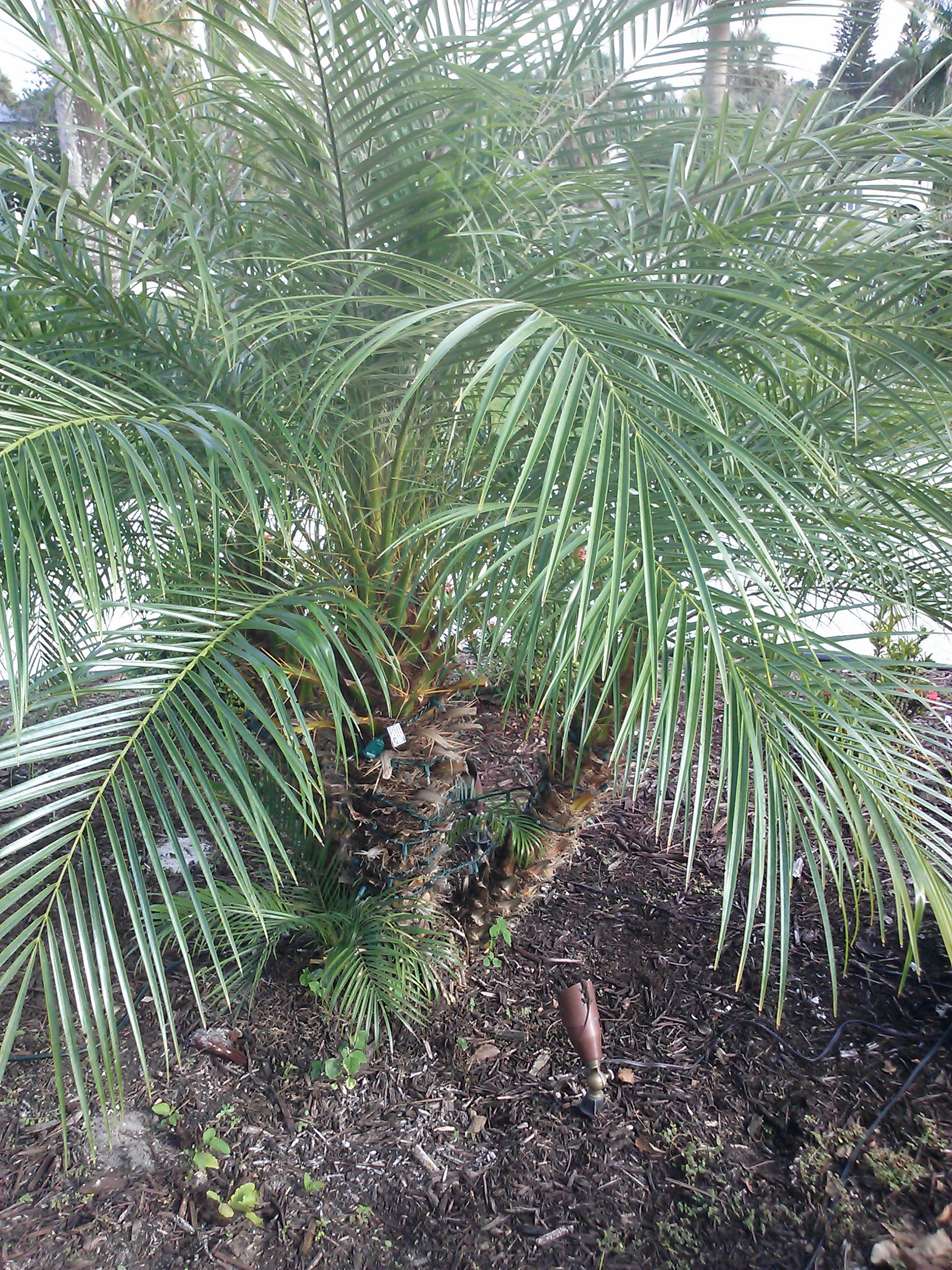
Pygmy Date Palm Phoenix roebellini

Pygmy Date Palm
Phoenix roebellini

I had a Pygmy Date Palm installed last year in front of my house. This is a dwarf palm rarely exceeding 10 feet in height and it looks great in front of my bathroom window. I selected a triple trunk palm to accent the house and landscape because as the largest element in the foundation planting  it needed some mass.

These palms are native to Southeast Asia and are common in South Florida. They actually do bear dates, but a male and female plant is required. I am perfectly happy without dates. Dates have always reminded me of roaches and I just don’t like to eat them.

I let the palm grow for about a year before attempting to prune it. Pruning done right reveals a trunk that resembles neatly stacked rows of whole wheat crackers- I have heard these called Triscuit Trees. What is not mentioned is the enormous spines at the base of the palm fronds. The spines are up to two inches long. Somewhere in a jungle I think Pygmies used these for poison darts. Later in the week I was talking to a physician, these palms are well known to the medical community due to the thorns. Wounds from the thorns tend to fester and cause infection.

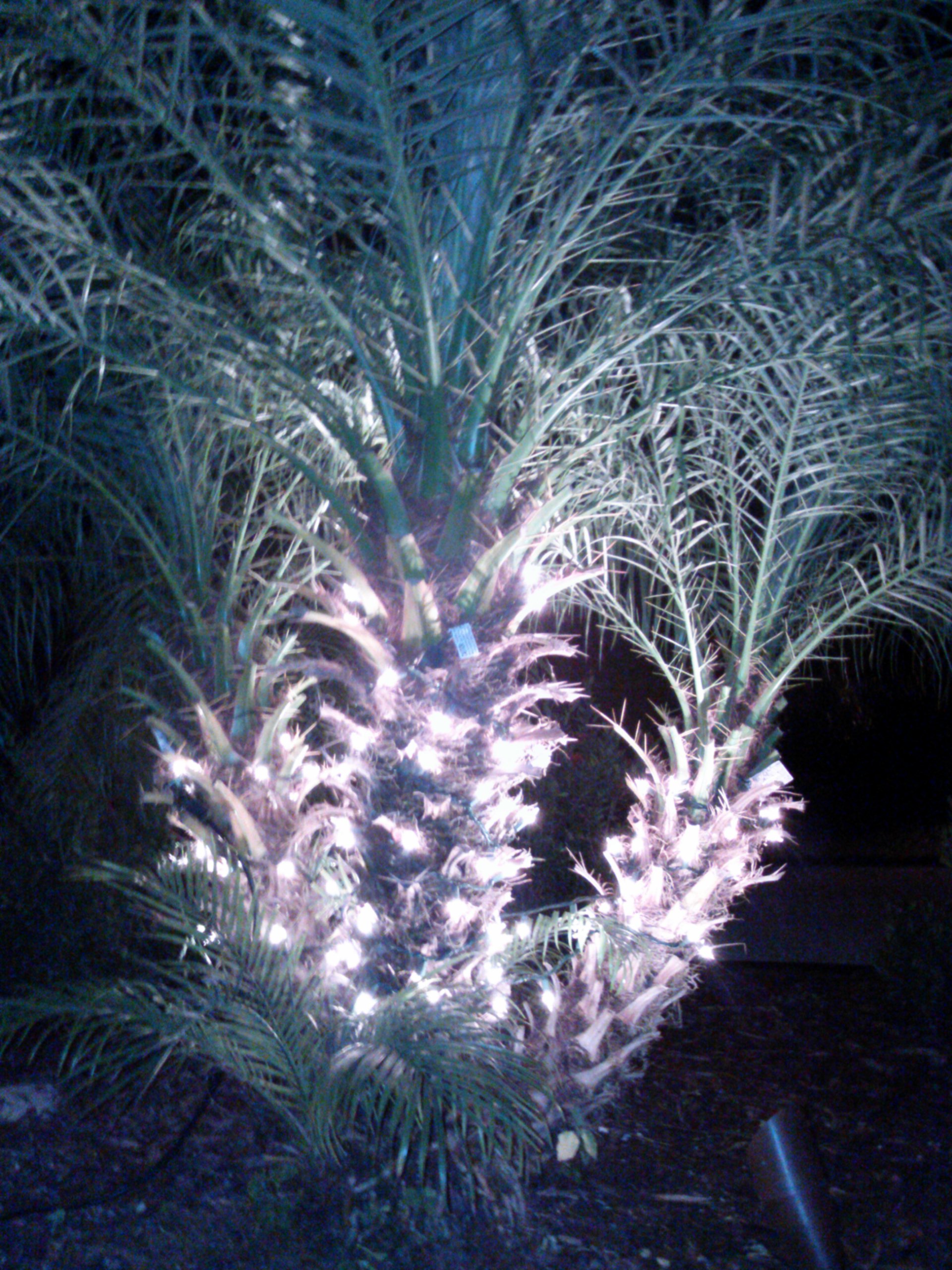
While getting into the holiday spirit I decided to wrap the trunks with miniature white lights. It would have been wise to drink some spirits and don opera length leather gloves before attempting this. As I was decorating I was skewered through the hand and the thorn hit a vein; I now have a 3 inch bruise on my hand that looks terrible. Then I got stabbed in the head and decided to stop for a moment and go in the house. It took a while to get the thorn out of my hand and the bleeding from my head wound staunched. Duly anointed with antibiotic ointment, I persevered and completed my light display, then waited for darkness.

Ahh, holiday magic.

CAM00410

Vive La Difference

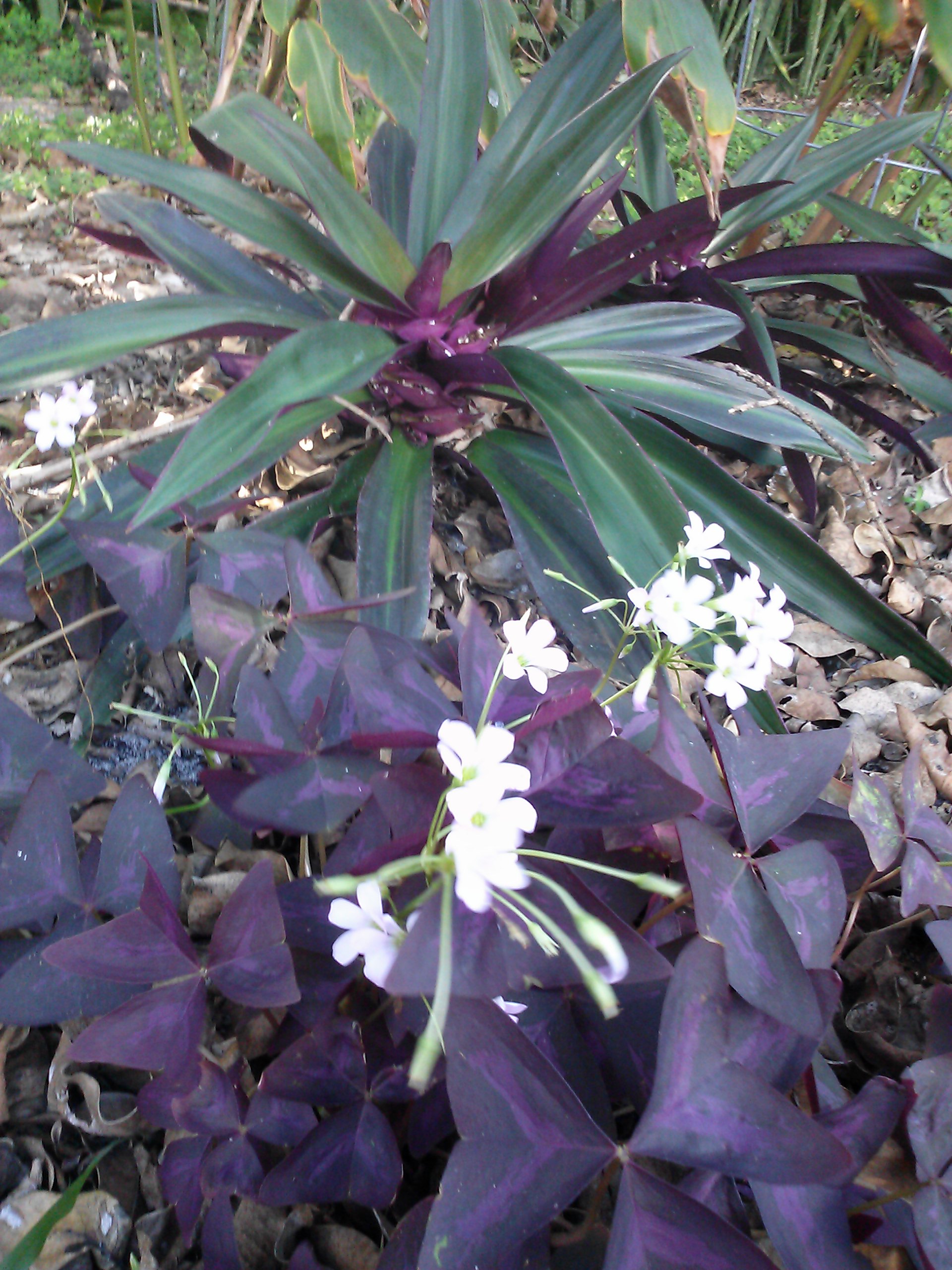
Purple Oxalis in Floridian mode with Oyster Plants

Purple Oxalis in Floridian mode with Oyster Plants

I am from Tucker, Georgia USA. While I have titled the post in French, I do not and will not speak French and have a Southern accent that creeps up on me sometimes, mostly in colloquialisms that cause folks around here to scratch their heads. I said to the podiatrist I couldn’t “sit on my haunches” he was completely puzzled. That means squat down in Southern. Genetically bad ankles, I think. Or too much gardening.

“That dog don’t hunt” is another confusing Southernism. It just means it doesn’t work. More head scratching. I don’t really sound like Scarlett O’Hara from Gone with the Wind but Vivien Leigh was English anyway.

This past year I have been enjoying numerous gardening blogs; I have read about everything from Lupines in Australia to Roses in England to Daisies and Aloes in the US and Fall color just about everywhere but where I live. South Florida is a bit lacking in that regard.

What I have taken from all my reading is there is a lot of difference in the things people grow, but there are also a lot of similarities in favorites. Here is my take on some universal favorites:

Maples for Fall Color, Japanese Maples especially. Cherries and Deciduous Magnolias for Spring color. Everybody loves Cosmos and Hydrangeas and some type of Asters, Daisies, Mums, Lilies of all shapes and sizes, Roses. The UK writers like Sweetgums, which still boggles my mind. Southerners go searching for the chainsaw when a suspect Sweetgum seedling arises. Azaleas and Rhododendrons are very popular and the everpresent Viburnums.

Another interesting aside, gardening magazines will have you thinking succulents and tropical plants are all the rage in temperate gardens. I don’t read about as much of those types of plants as good, well suited garden plants. Of course, there is always something you must have that is a few plant hardiness zones away from reality. I had palms in my temperate garden, I am guessing after last winter they have expired.

While I couldn’t hope to grow many of the favorites in my garden, what was interesting to me to find out is there are some things that will grow just about anywhere. For example,  Oxalis and Viburnums will grow just about everywhere, even at my house. I have some fantastic Purple Oxalis my neighbor gave me. Who knows where it came from – maybe England.

Strange Fruits

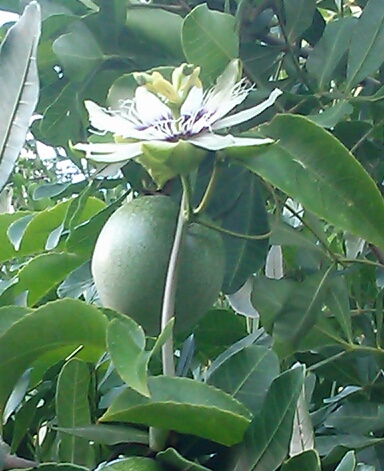
Passionflower

Passionflower

Here it is almost December and I walked out into my backyard to find a Passionflower in full bloom and fruiting. Very nice and so typical of the landscape in South Florida. Just when you are wrapping your brain around the fact that the holidays are here and the temperature outside is around 80 degrees – there is a Passionflower.

I was wondering if this was a culinary Passionfruit and apparently it is not. This is called a May Pop in northern climes. My father in law was from Northern Ohio and one of his favorite childhood memories was stomping May Pops on the way home from school. Probably in May and not December.

Passionfruit comes from Passiflora edulis, which is native to South America. The North American version is Passiflora incarnata, the May Pop. There are an additional eight varieties native to North America, the culinary variety is tropical and may be grown in South Florida.

Ponciana Pods

Poinciana Pods

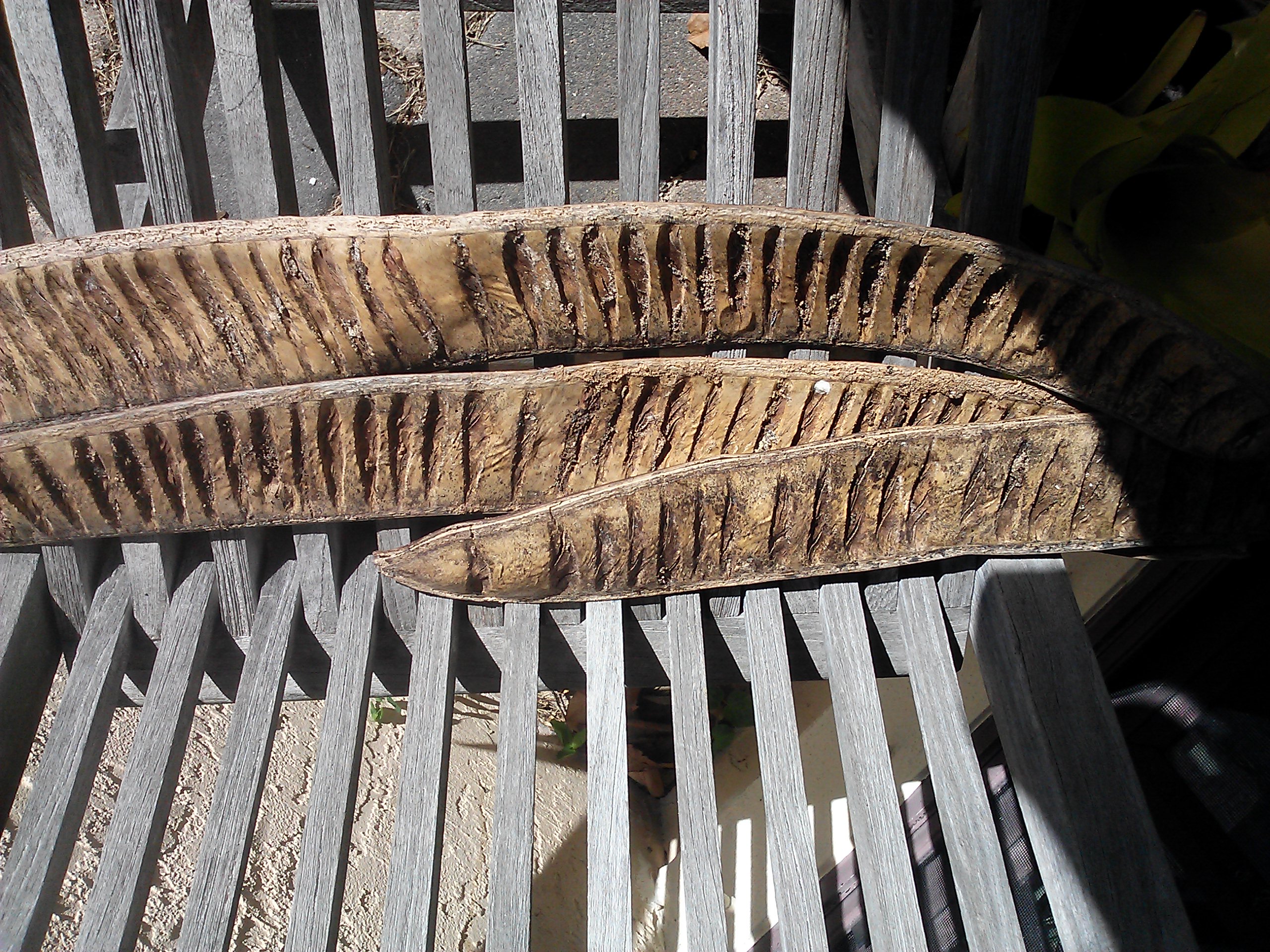
Here is some more interesting fruit. These are the dried pods of the Royal Poinciana tree, a member of the bean family. The pods are about two feet long and I enjoy spray painting them a metallic color and using them in Holiday decorations. I am truly getting in touch with my inner Martha Stewart.

The last bit of strange fruit I spotted at my local library. I have watched these trees bloom for the past couple of years, but had not noticed the fruit (it is strange that I did not notice this fruit)

Golden Shower Fruit

Golden Shower Fruit

My husband was snickering when I showed him this photo. It is pretty strange fruit, the whole thing is around 3 feet long and looks like someone has been making green sausages and hanging them on the tree. The tree is a Golden Shower (Cassia fistula) – in the spring and summer it has chains of yellow flowers that resemble Hawaiian leis hanging down from the branches. Beautiful and kind of peculiar. Like many things in South Florida.

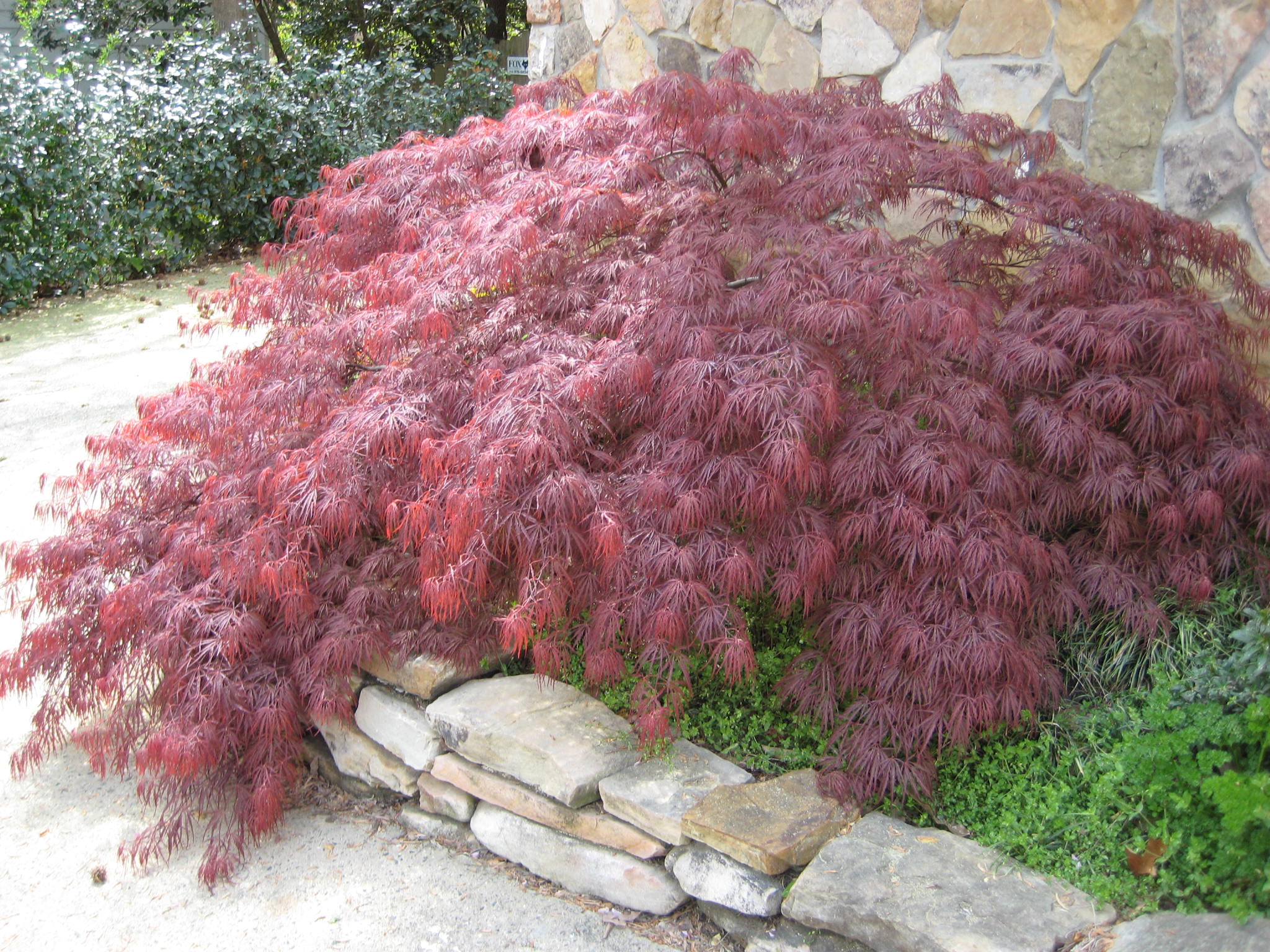
My Former Japanese Maple (s)

Best Red Dissectum Maple

Having moved to South Florida a few years back there are some things I miss about living in a more temperate climate. Spring flowers, for example. The thing, I think that is so enticing about spring flowers is the living proof winter is ending. Now, truthfully, I don’t miss winter at all and there are really a lot of flowers year round here that are so interesting it makes up for the lack of Yoshino Cherries (my all time favorite)

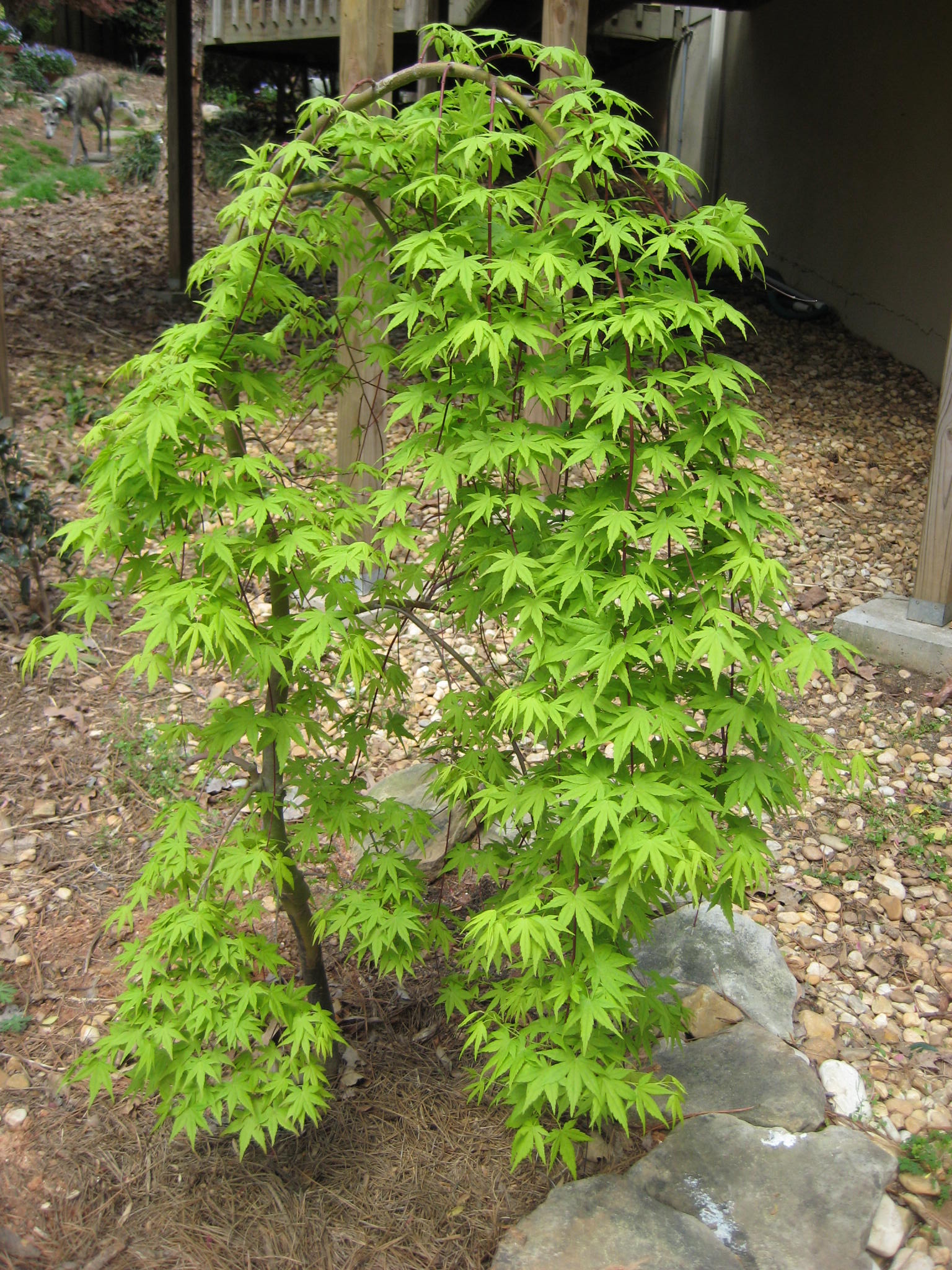
Ryusen Japanese Maple


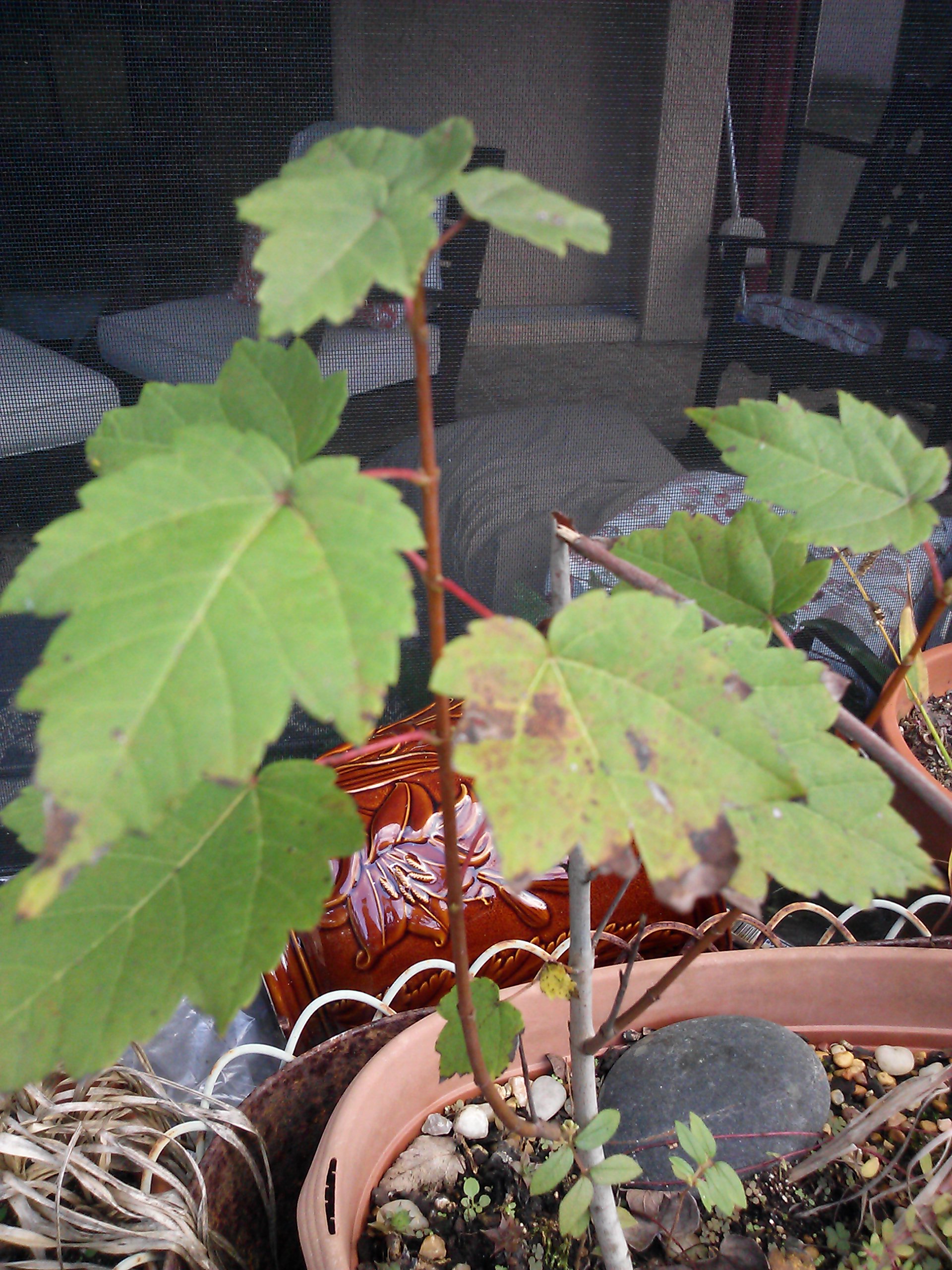
The thing I can’t come to terms with is the lack of Japanese Maples. When I first married, we lived in urban townhouse, there was a seedling Japanese Maple in a weasley back garden. Weasley is the operative word. This Maple had a spectacular fall color and when we moved to a bigger house I took a seedling with me. This Maple grew to 10 or 12 feet tall over a period of 17 years and is one of my all time favorite trees. The above Japanese Maples are from my former garden, a ‘Best Red’ and the Green is ‘Ryusen’. When we moved to South Florida I decided to chance it and dug up a seedling and carted it down here only to find out it was a Red Maple!

The Red Maple

The Red Maple

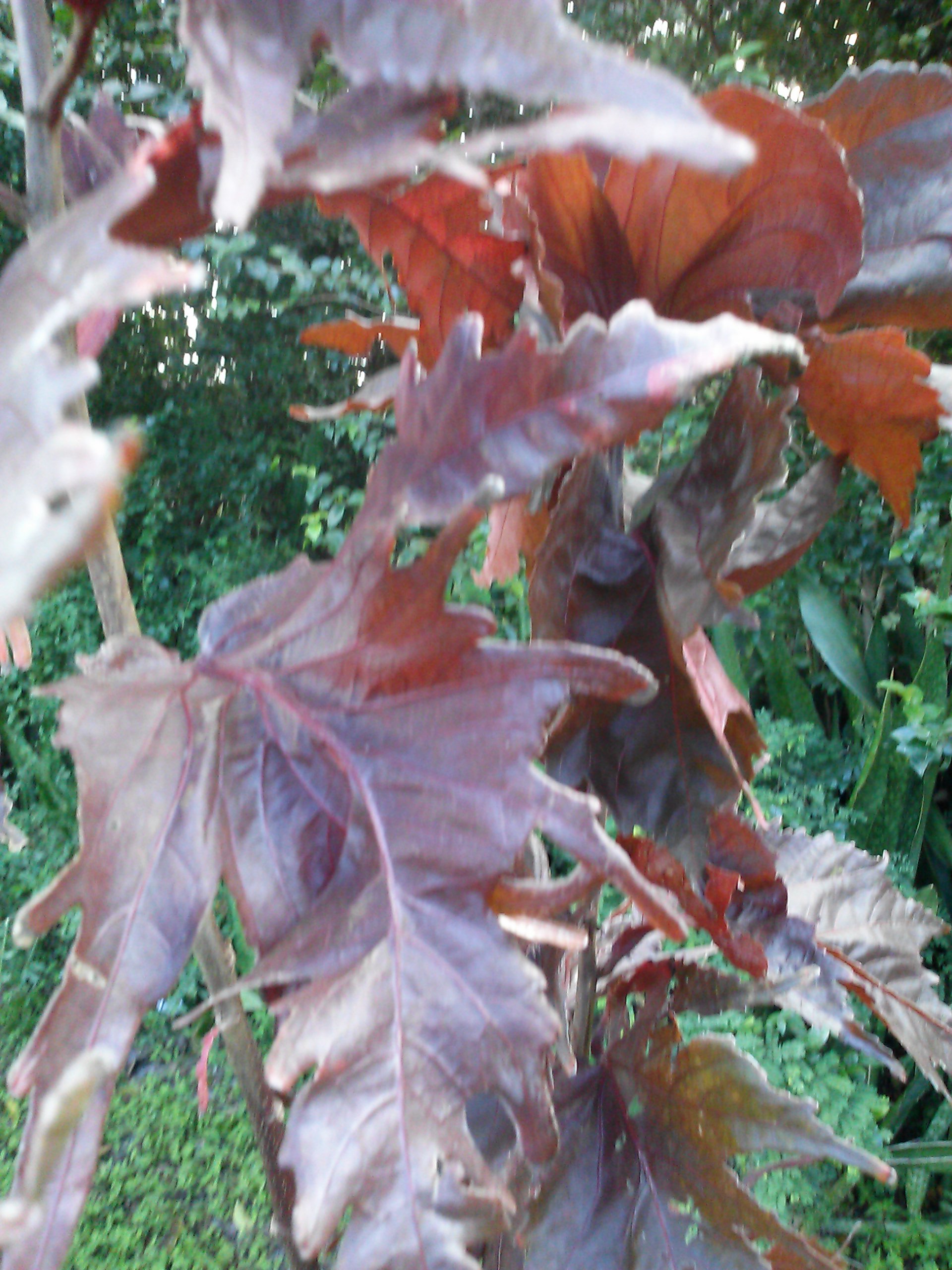
Bah! Undeterred by my lack of Japanese Maple I decided to buy and prune into tree form a ‘Raggedy Ann’ Copperleaf. This is a burgundy and red tropical shrub with raggedy edged foliage kind of like a Dissectum Maple.

Raggedy Ann

Raggedy Ann

Raggedy Ann turns out to be uncooperative and less than graceful. The tree form pruning attempt produced an ungainly shrub 5 feet tall with 5 stems,  with perhaps a width of 10 inches. However, the color is pretty good.

Some things just cannot be replaced.


Fall Color in South Florida – Bolivian Sunflowers

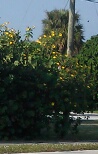
The Sunflower Hedge

The Sunflower Hedge

I have been noticing these plants for the past few years and it always seems weird to me to associate Sunflowers with November. Gigantic Sunflower Shrubs, at that. I also assumed incorrectly they were some sort of Helianthus. Not the case, this is a Tithonia, Tithonia diversifolia – the Bolivian Sunflower. In another perversity of plant naming, the Bolivian Sunflower is native to Mexico and Central America. I am fairly certain Bolivia is in South America.The name Mexican Sunflower is already taken for a smaller perennial.

One of my neighbors has a hedge of Bolivian Sunflowers screening the yard. This Sunflower hedge is at least 12 tall and in full bloom right now. This plant grows Spring and Summer and blooms all Fall and Winter. It has just really started blooming in earnest and should continue for a couple of months. Another one of those kooky benefits of living in South Florida, Sunflowers all winter.

Since the possible 16′ tall shrub bears 6″ flowers profusely, I am imagining it can put out quite a few seeds and become a problem. I am not sure I would try a hedge, but maybe one or two to screen a view where the lawnmower will run over any nearby seedlings. One has to practice selective lawn mower placement of plants here if there is any question of overabundance. No frost means nothing ever dies. Or anything you want gone refuses to die.

Mother in Laws Tongue – Sansevieria

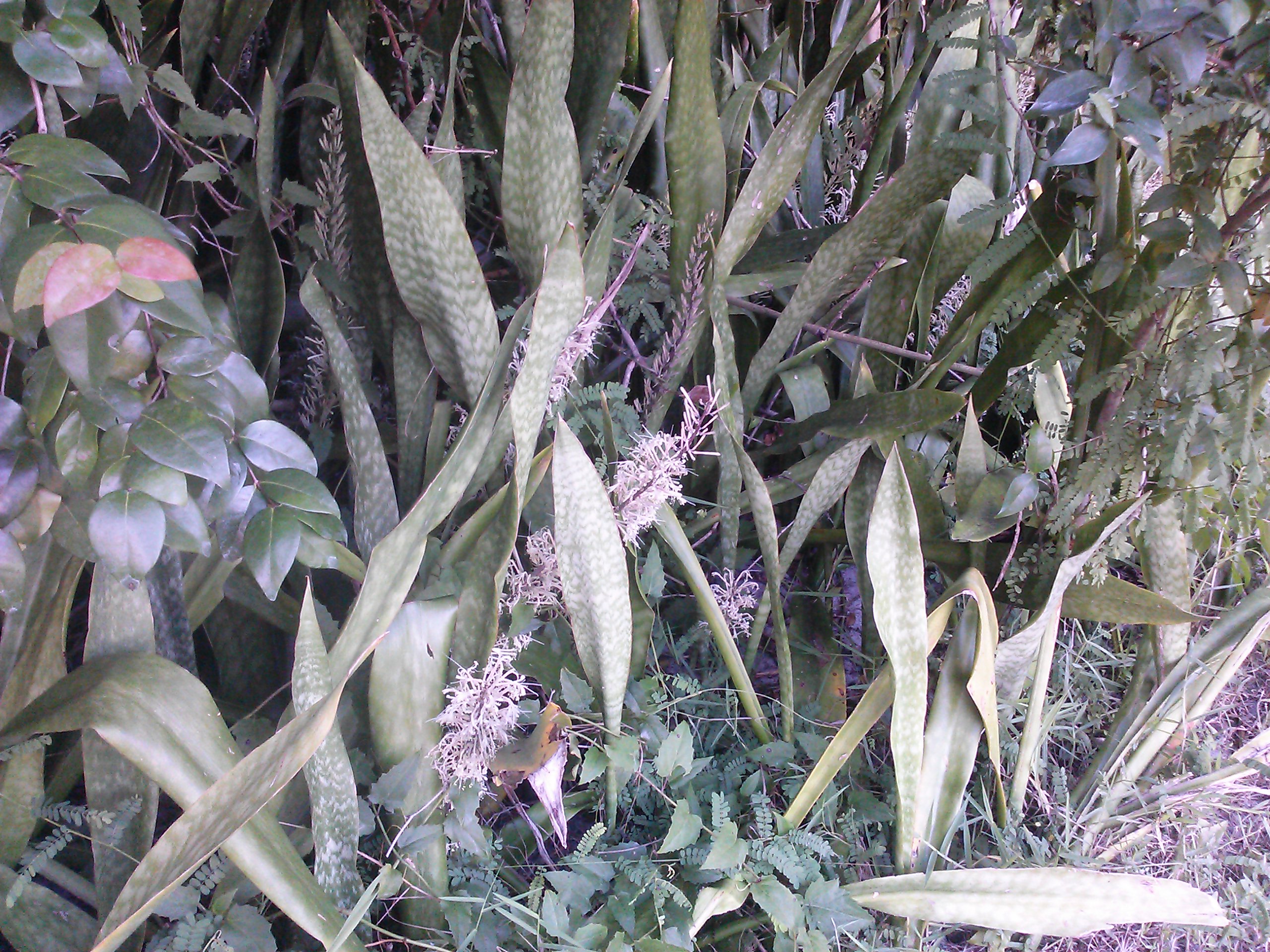
Mother In Laws Tongue Flower

Mother In Laws Tongue Flower

My mother in law didn’t have a a particularly sharp tongue. Well, maybe a little sharp. My Florida yard is blessed with an abundance of these plants. It still seems unreal to me to be nearly overrun by- well, houseplants.

The only way to describe the Mother In Law’s Tongue in my yard is a plethora. Or a Boatload. I am suspicious someone brought a houseplant from Michigan in 1964 and unleashed this unholy plant on my garden. The Florida gardening books consider this plant escaped and invasive.

I am certain I cannot rid my yard of this without total annihilation of everything so I have decided to live with it. I was surprised over the weekend to see that these plants flower. And are kind of pretty. On the flip side, this flower probably produces a quarter of a million seeds per stalk. I have ended up with at least 100 linear feet of edging of MILT about 5 feet deep. The only thing that keeps it in bounds is frequent mowing with the lawn mower.

The Mass of Mother In Law Tongues

The Mass of Mother In Law Tongues

If I step back and squint the plants have an interesting texture and a nice green color. An added bonus-extreme drought resistance. I just have to keep reminding myself of these good features.

More fun from the tropics…