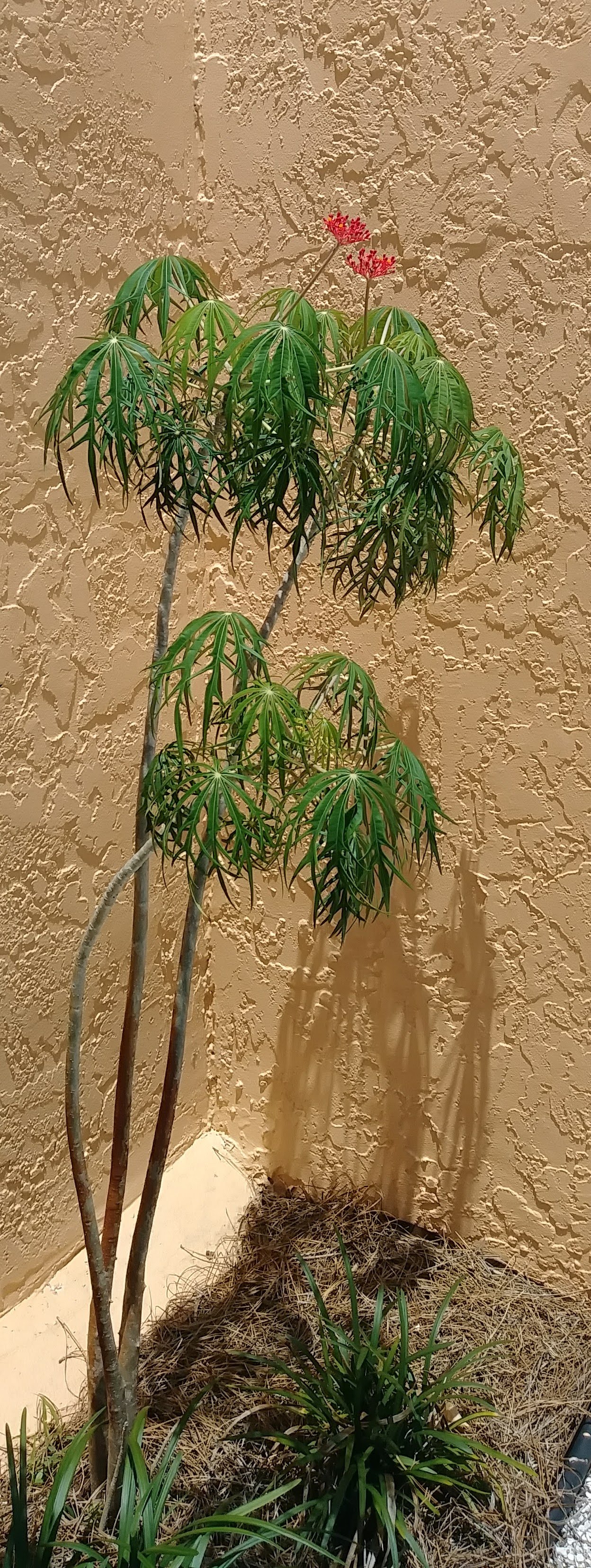
It occurred to me this morning there are not too many plants that would work in this narrow space in my garden (about 18″ wide). This is a very funky plant, a Jatropha multifida, called the Coral Plant. I thought initially the name was based on the color of the flower, but then realized the flower does resemble an actual coral.
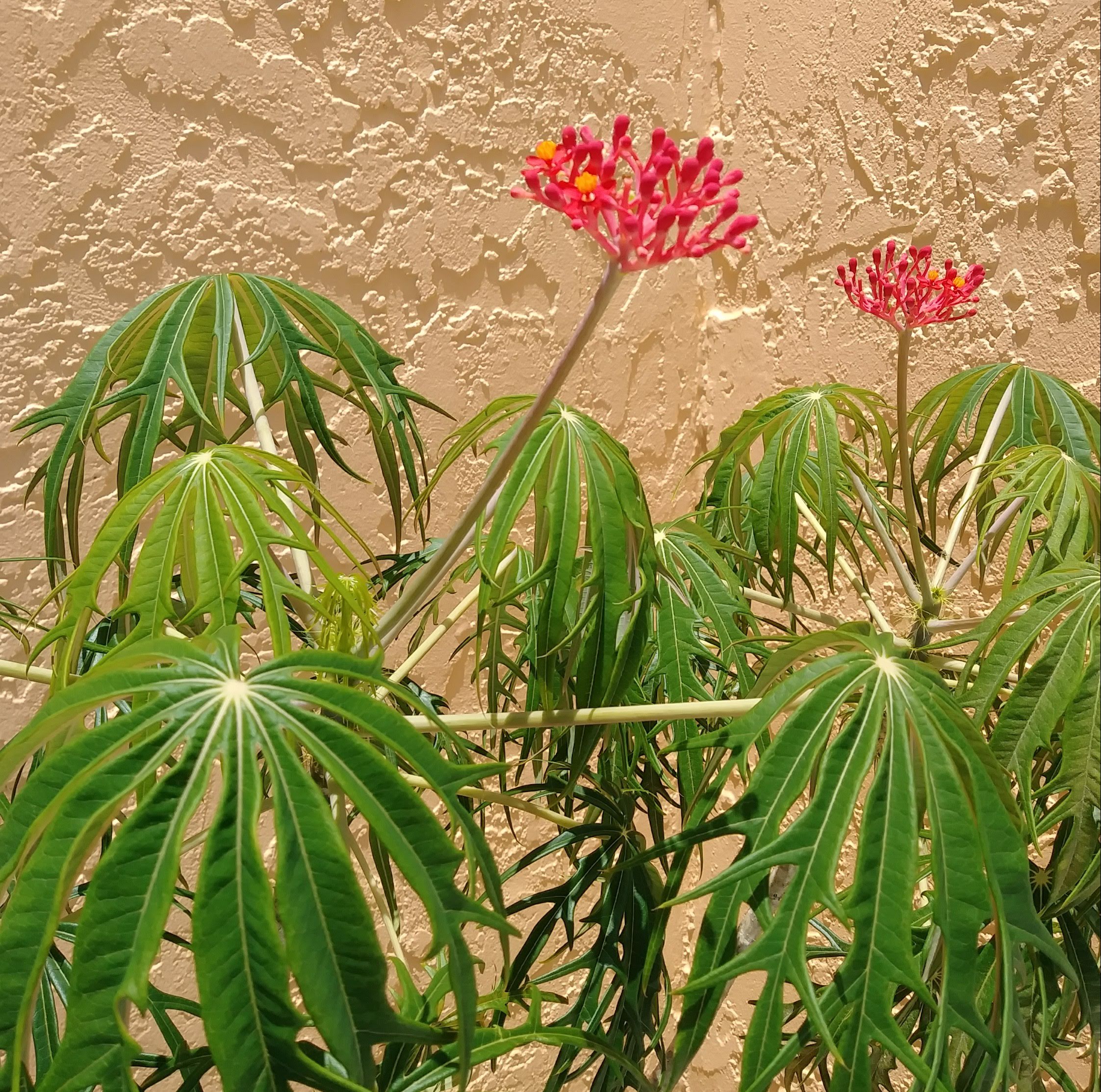
The foliage on this plant resembles something else. Cannabis, however, all Jatropha is poisonous, so I would resist the urge to smoke it and keep it away from children and pets.
The Jatrophas are interesting plants, tropical – this one is native to Mexico. They do best in South Florida or where temperatures stay above 40 degrees Fahrenheit. Common to members of the Euphorbia family, they exude toxic, milky sap and can become a nuisance by its tendency to produce a lot of seeds. However, the seeds contain oils that have been proposed for use to make sustainable biodiesel fuel. They just haven’t quite figured out how yet. Click for the Biodiesel story.
Despite the fact this plant is widely reported to love sharp drainage, full sun and noted for its extreme drought tolerance – it suffered in such a place in my pollinator garden and is much happier in its new skinnier digs with protection from the western sun. Butterflies continue to enjoy the flowers and I will as well now that the Coral Plant is in a happier place.

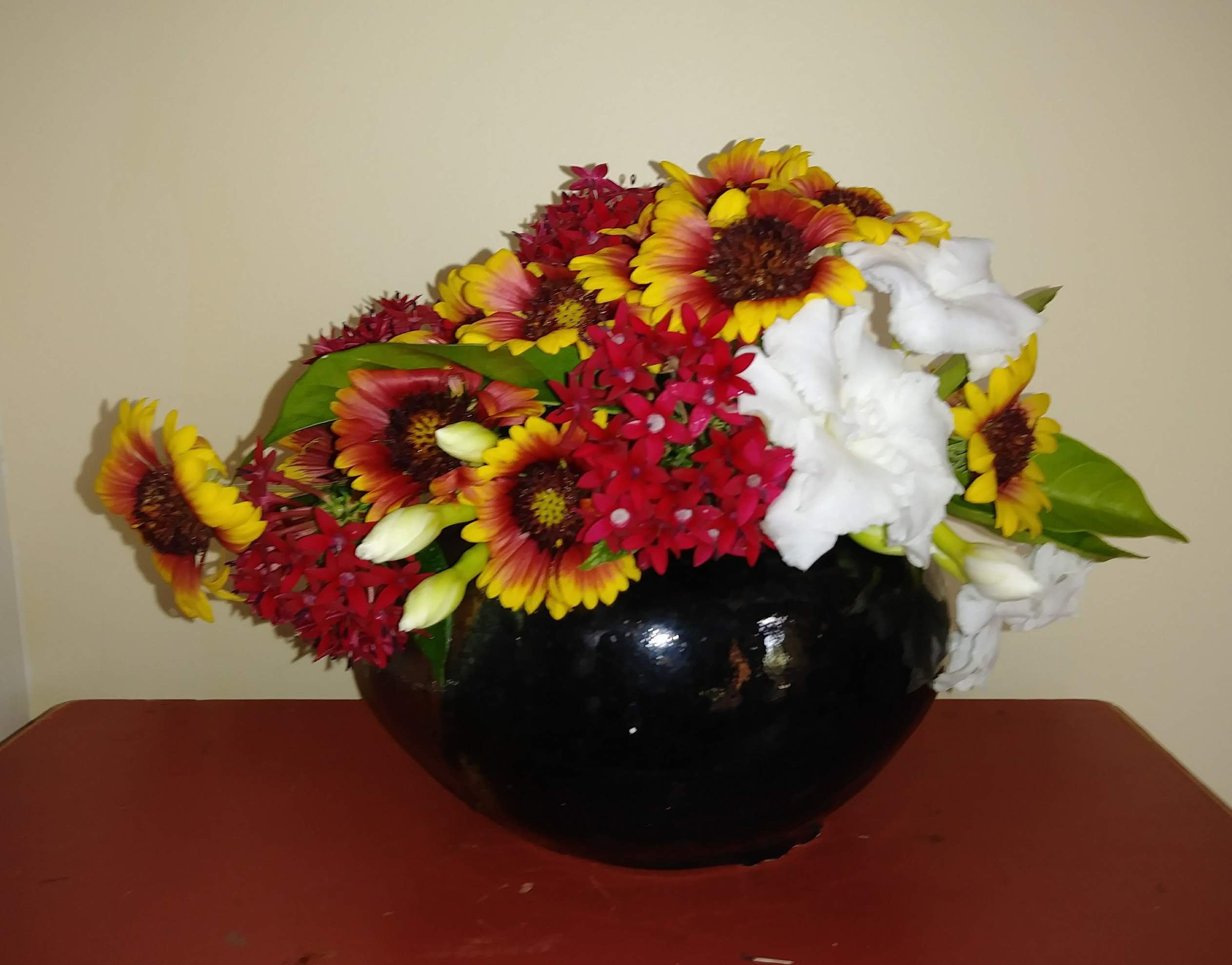
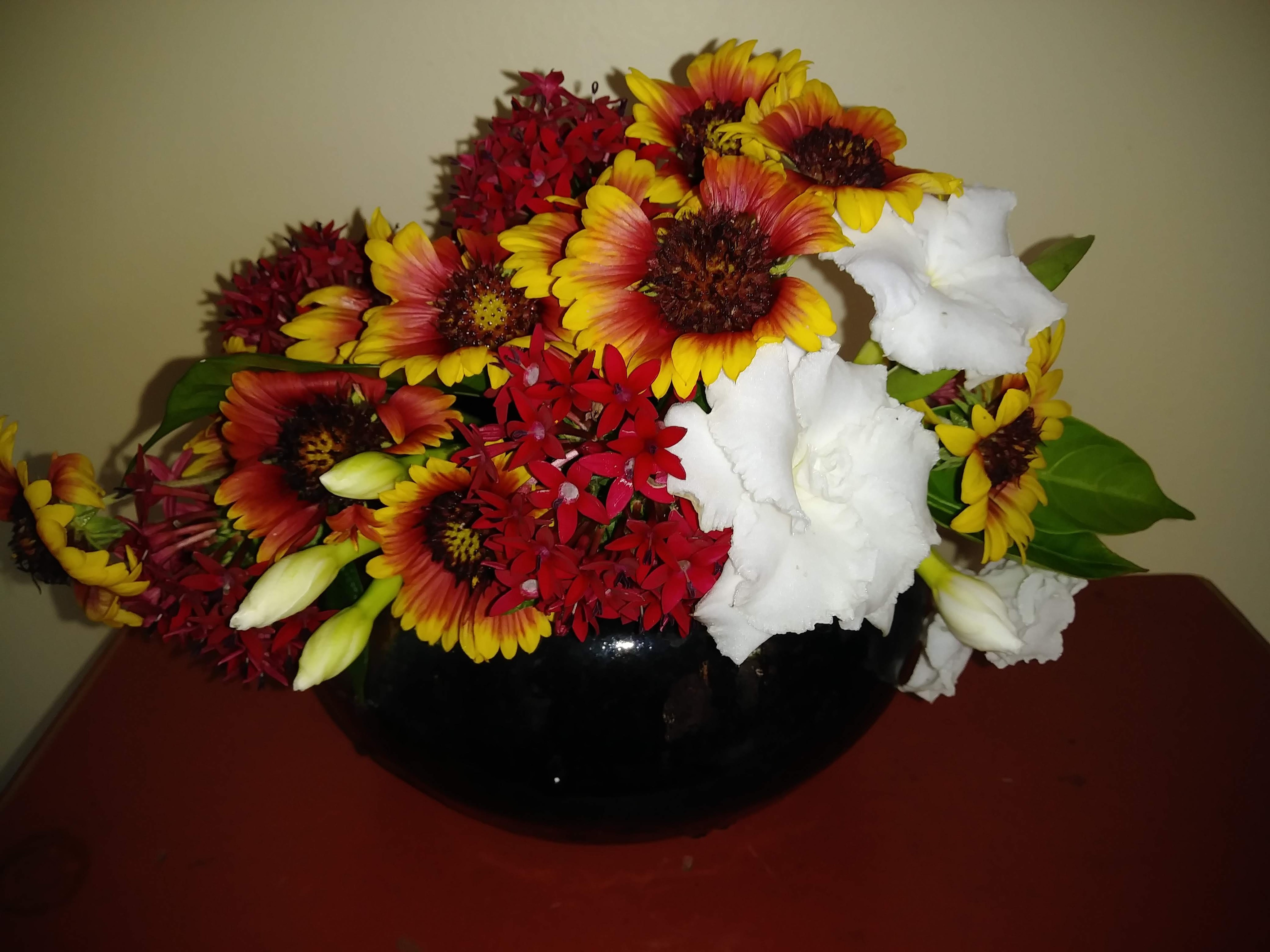
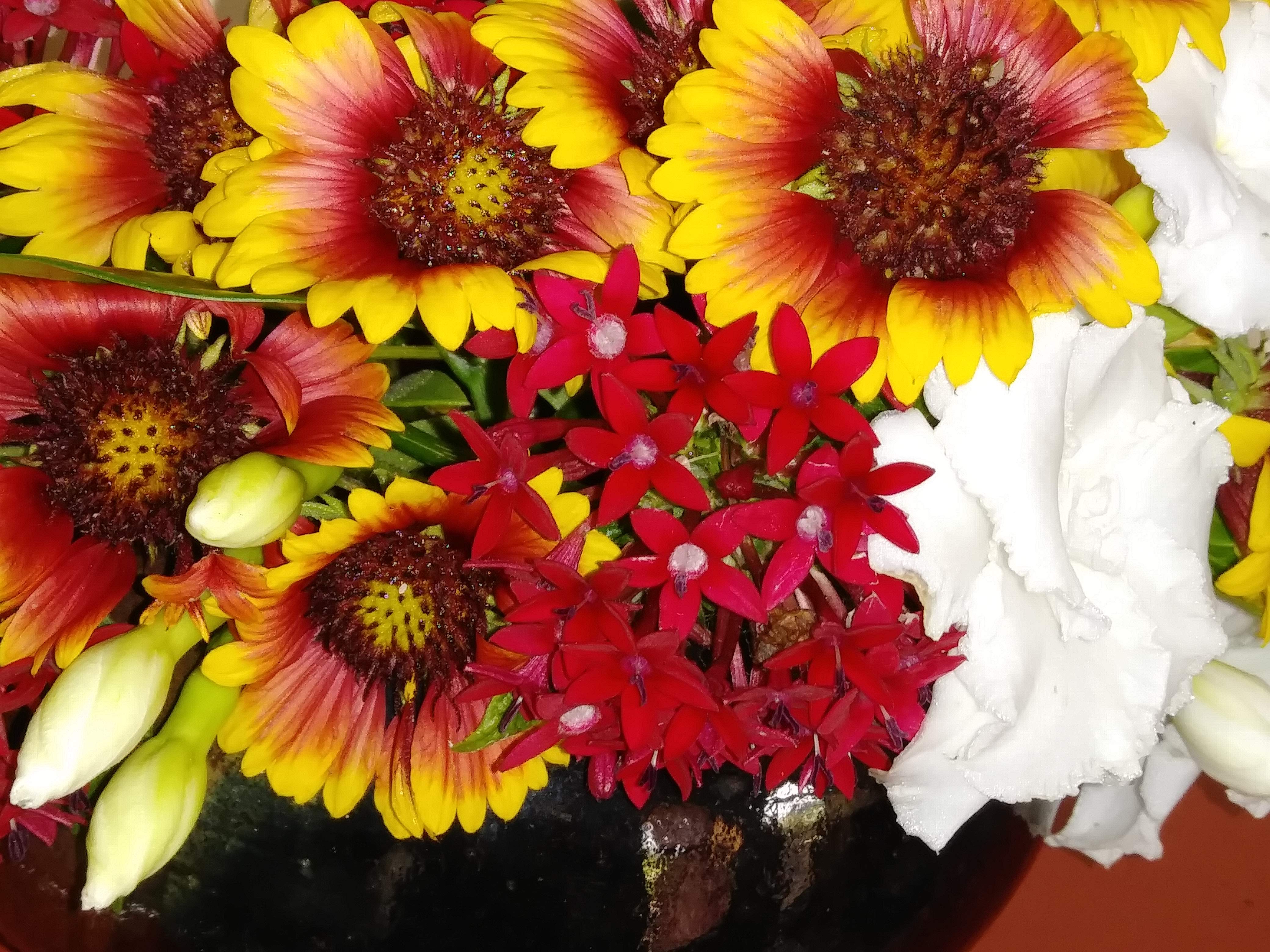
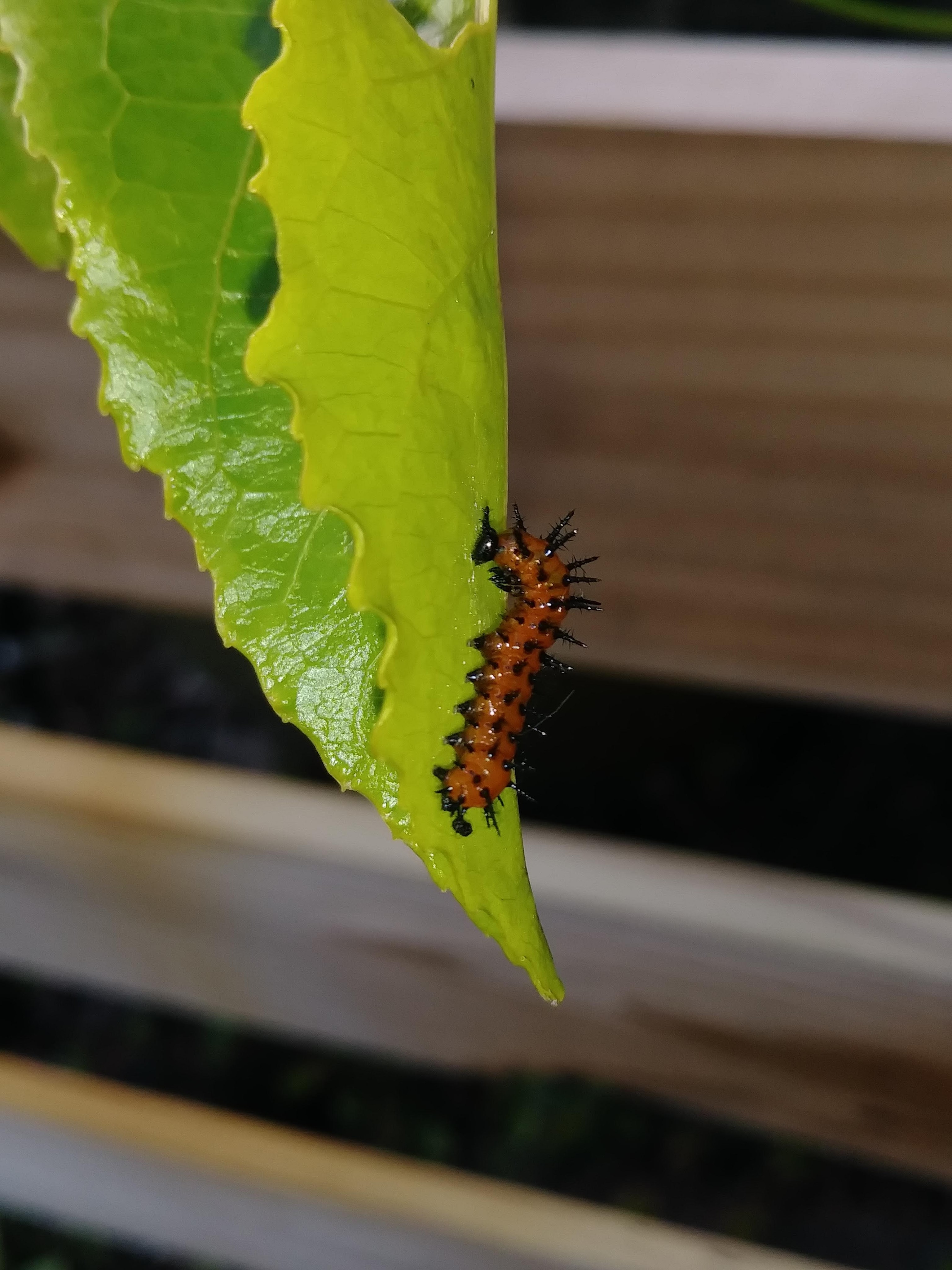


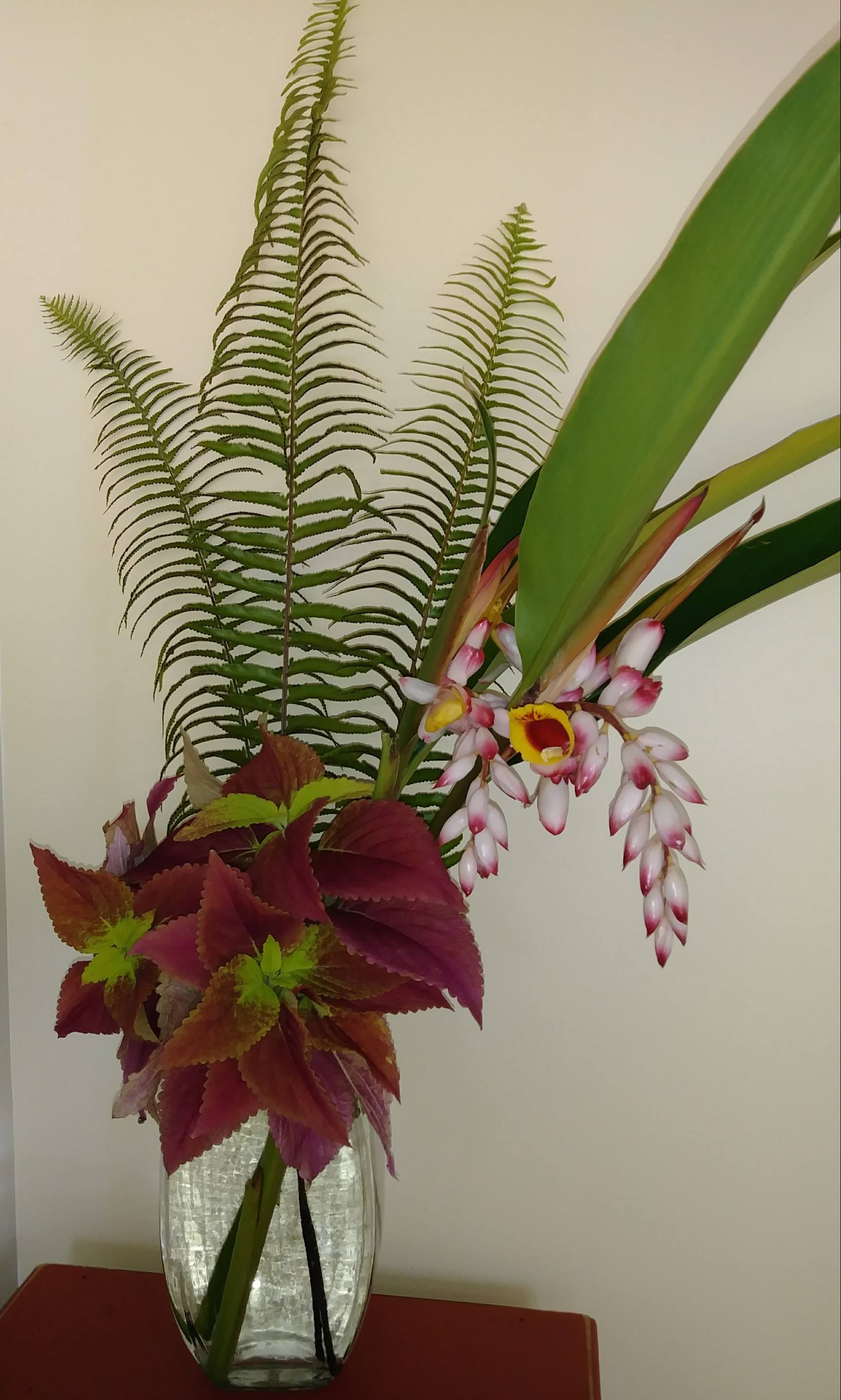

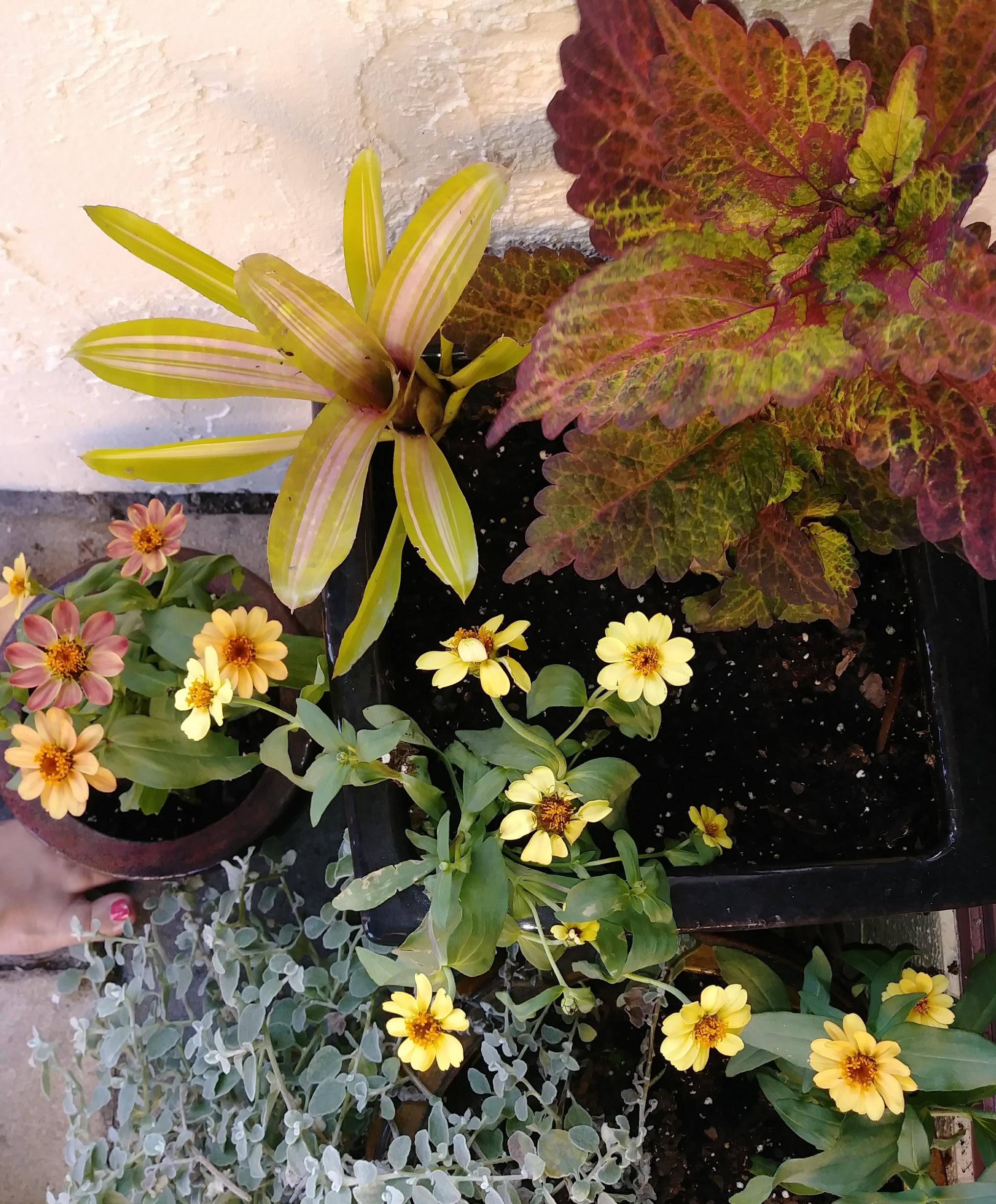


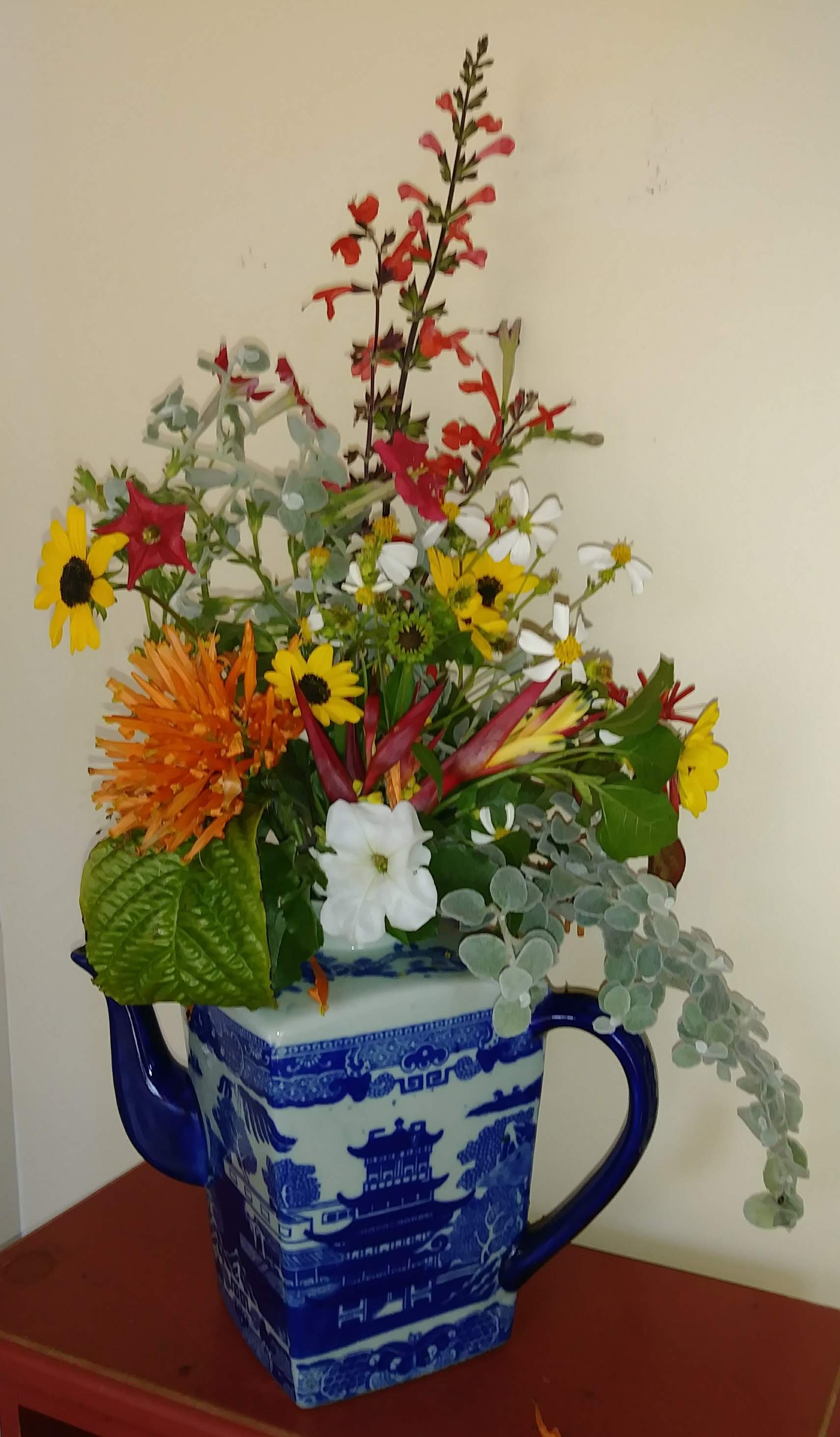

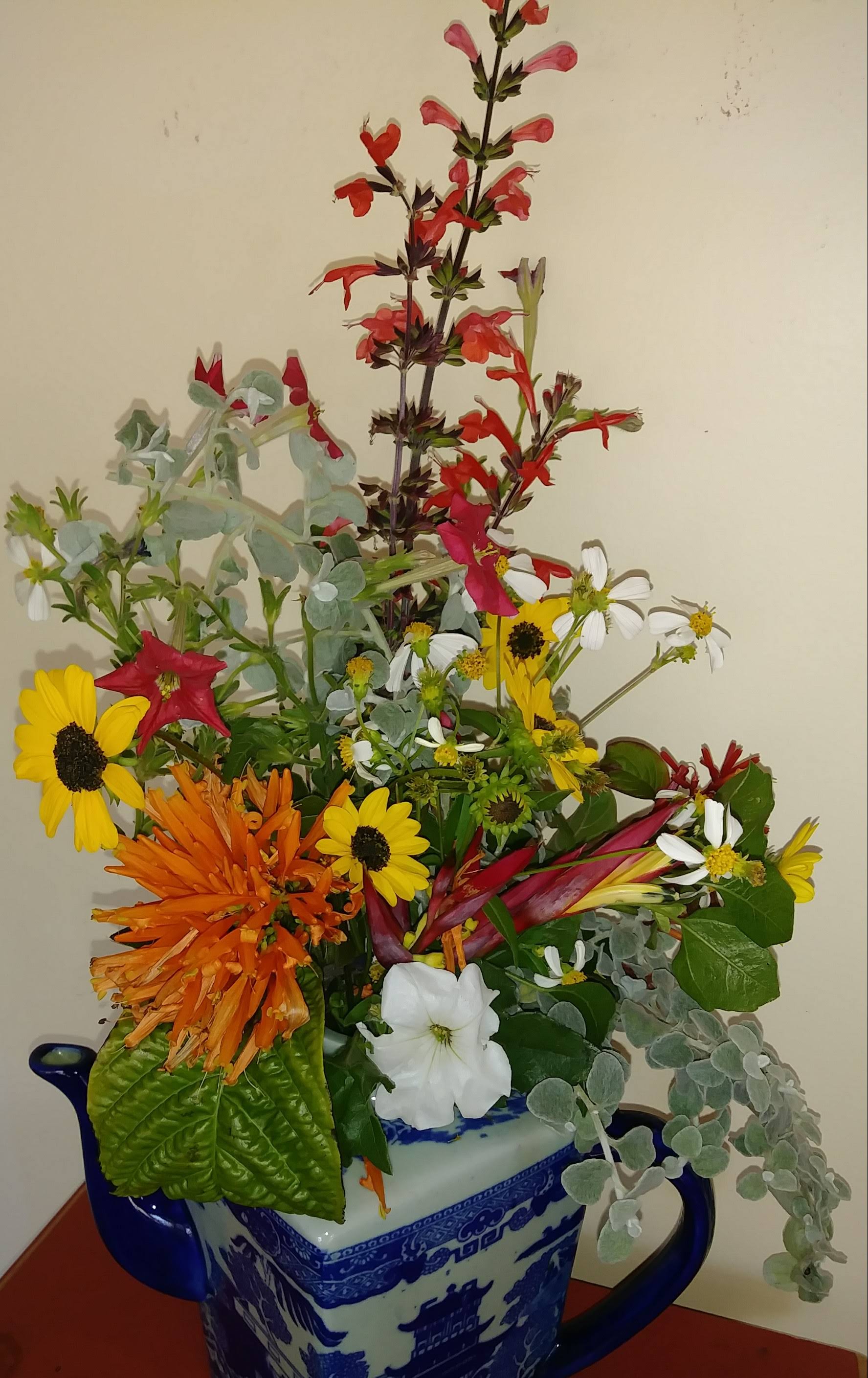
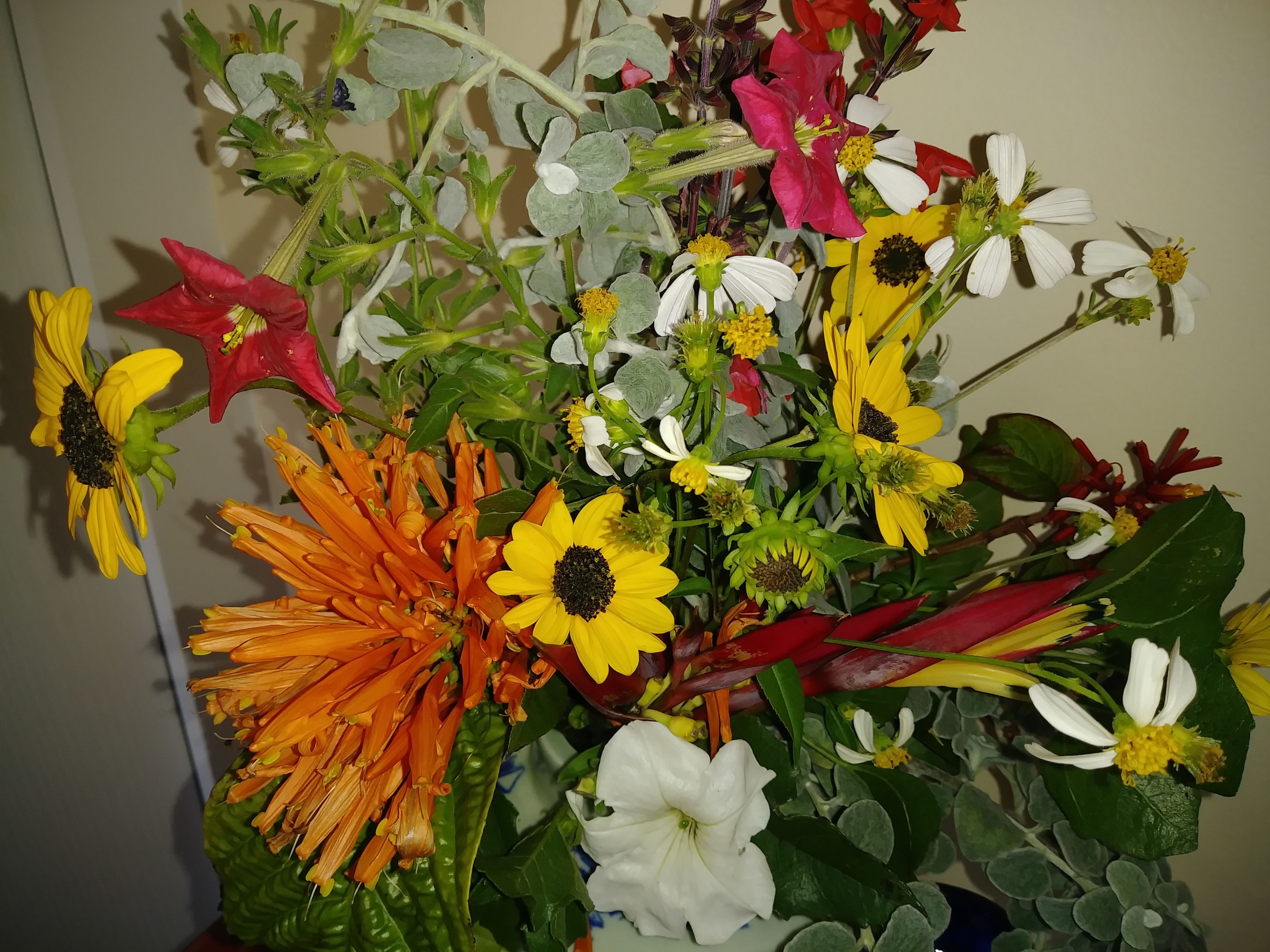

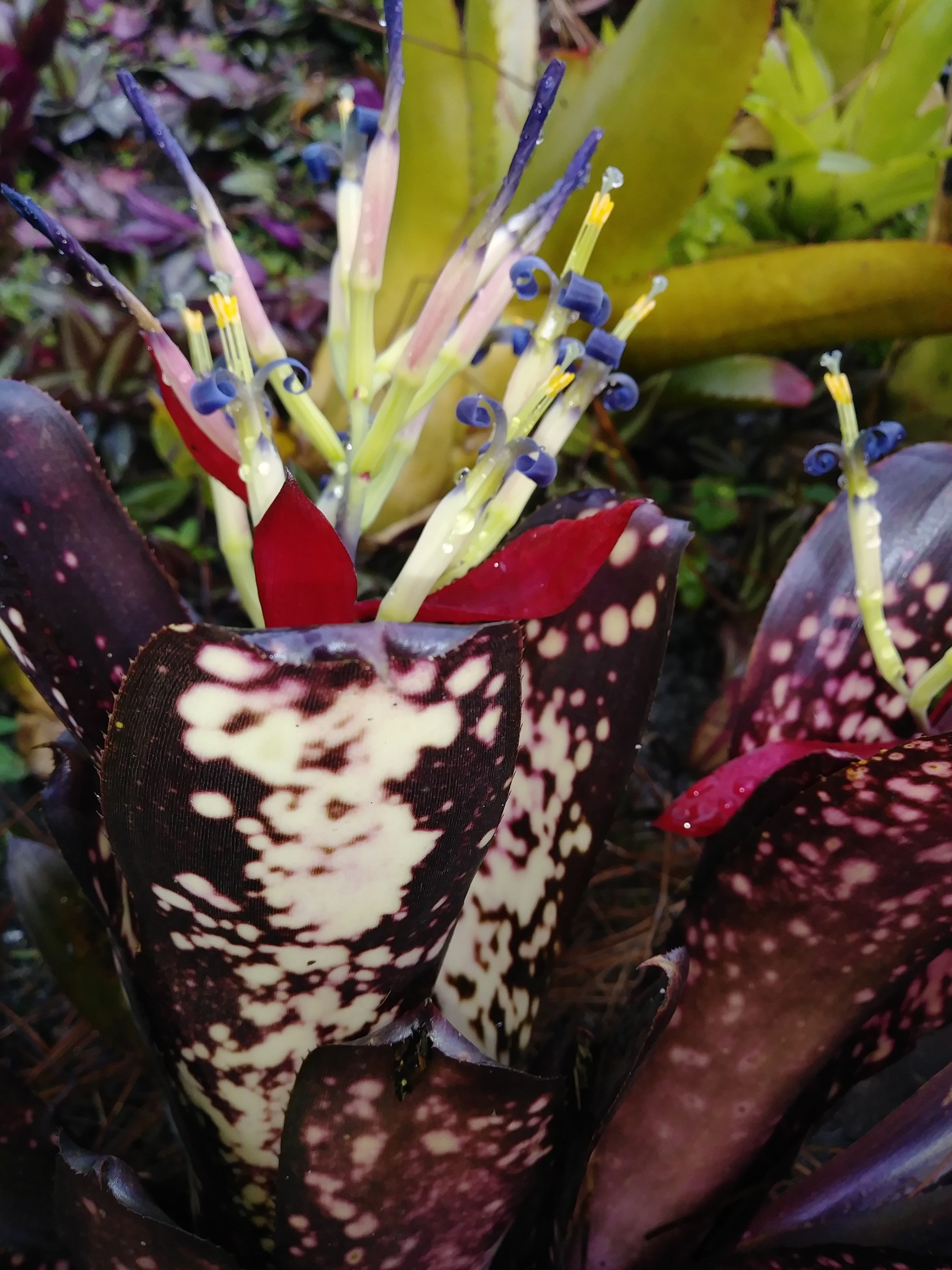


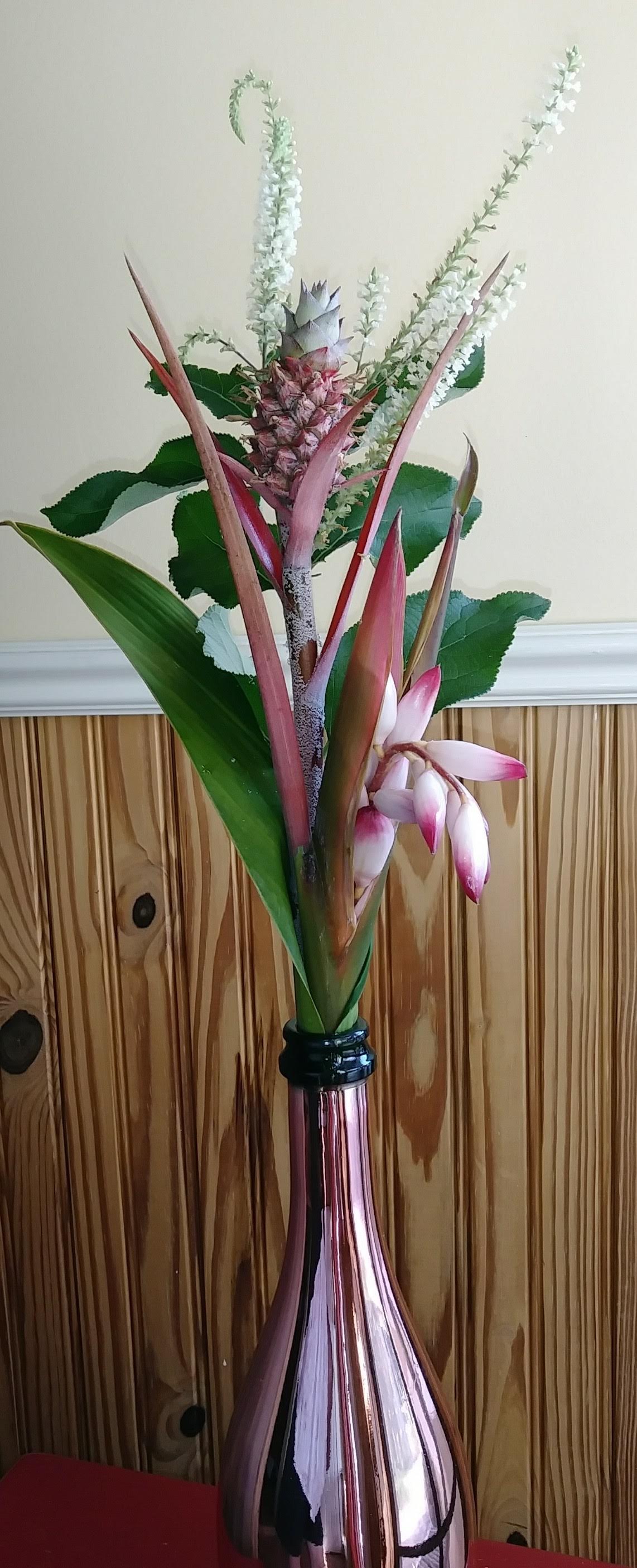
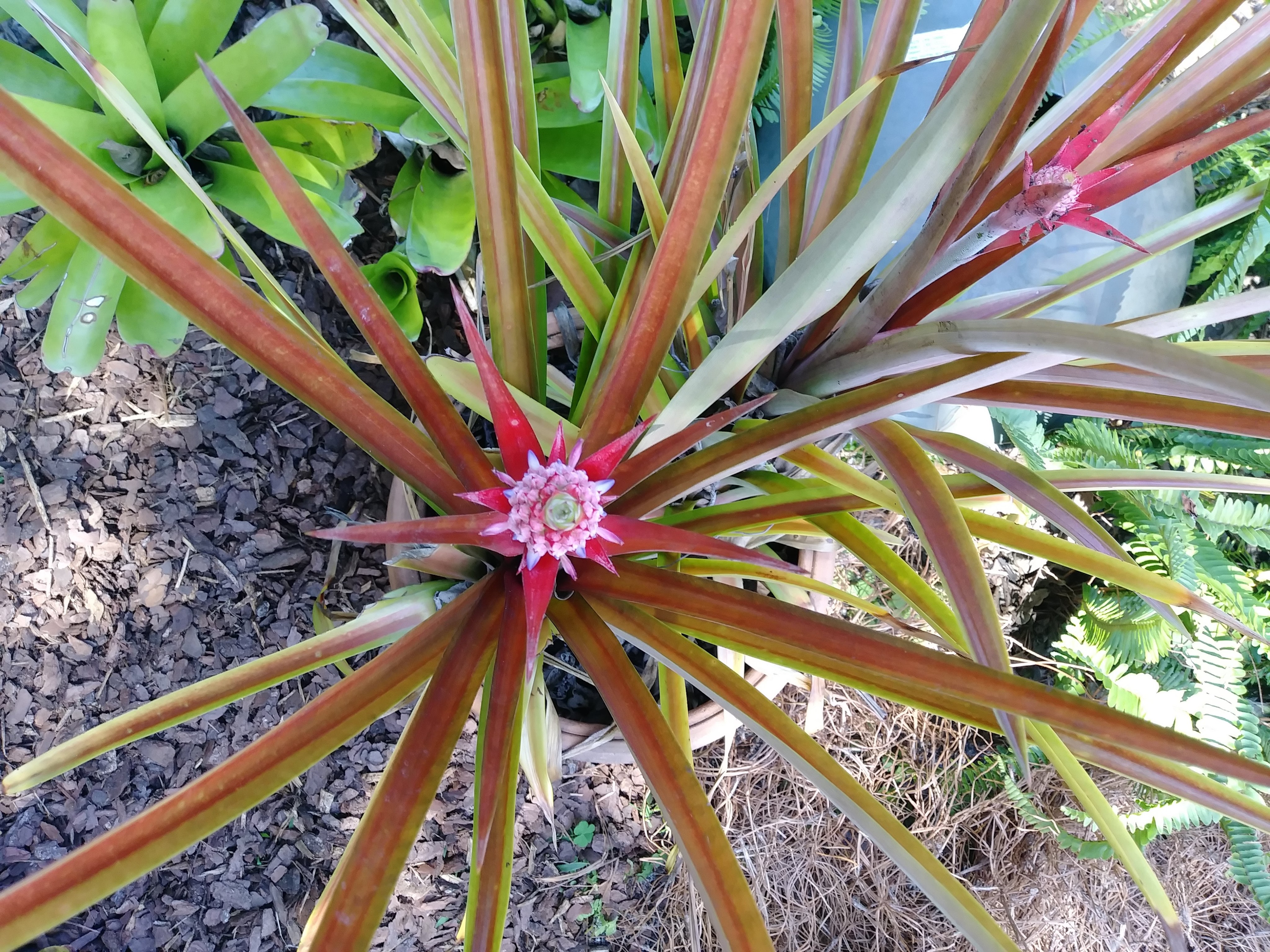

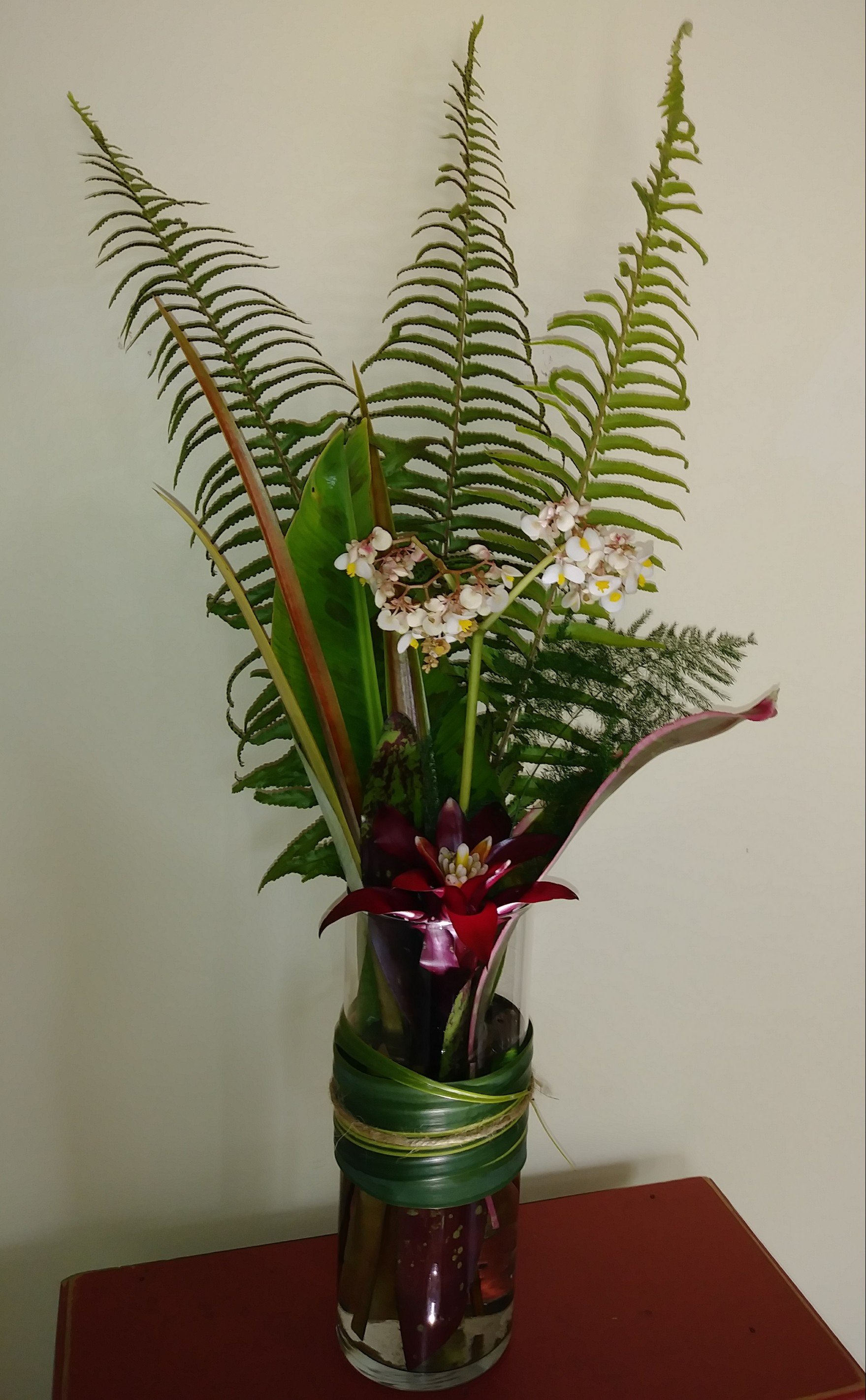
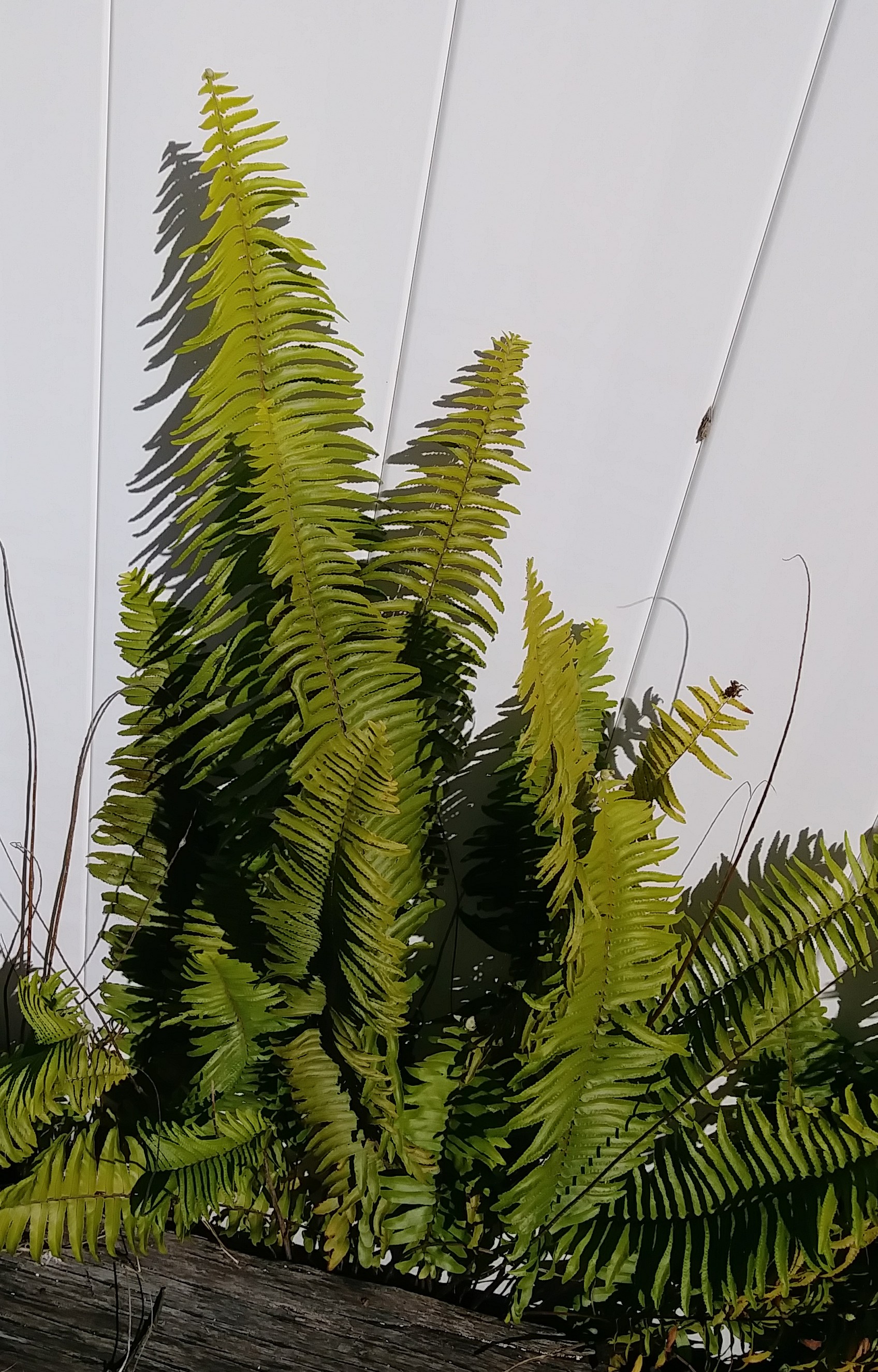
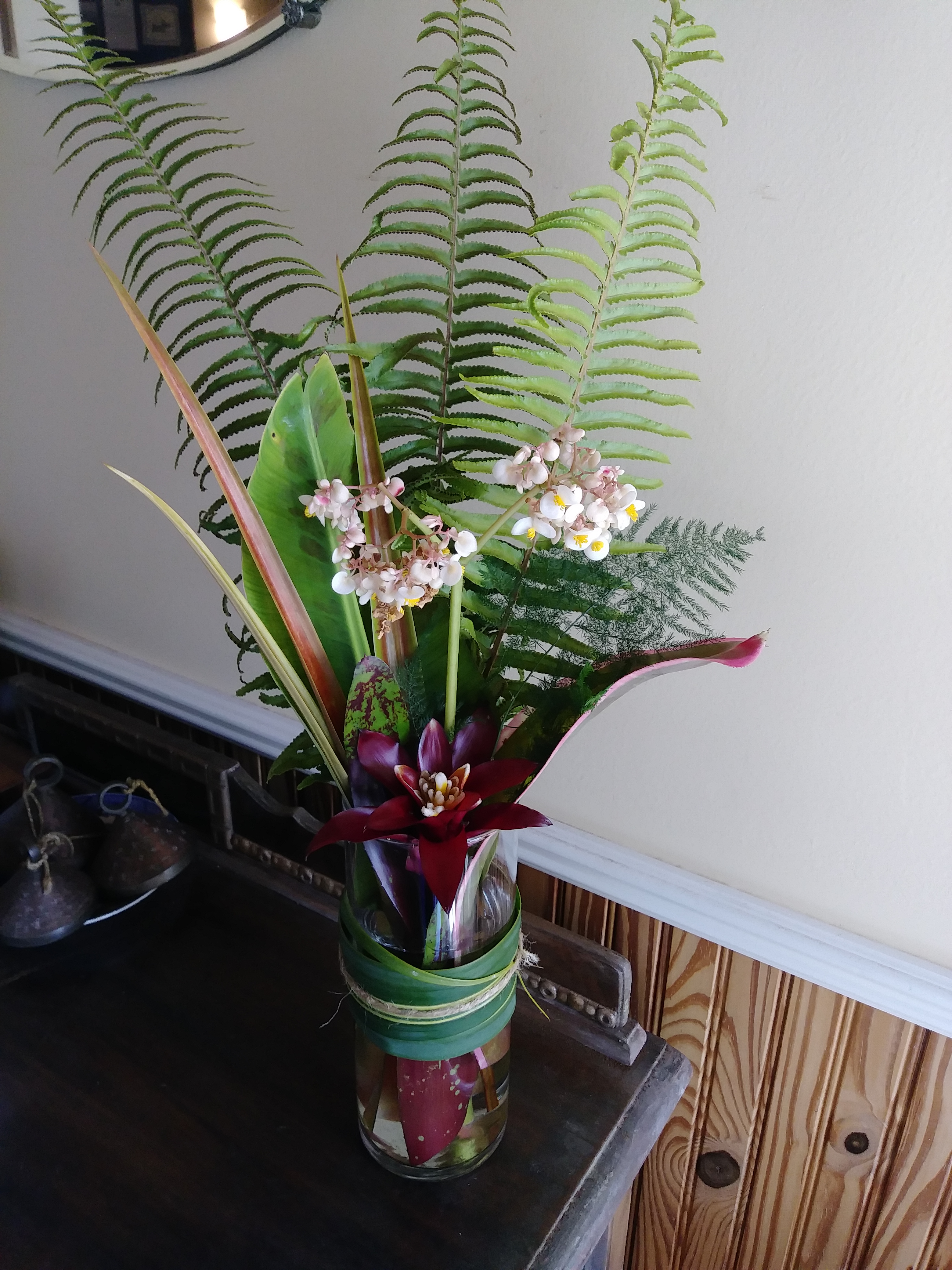 From time to time I make an arrangement that generates comments like ‘it belongs in the lobby of a spa’. I think there is a relaxation vibe from some of the more tropical plants in my garden. I have been gardening madly to get my pollinator/fruit garden finished before the rainy season starts, so I could use a Spa Day myself.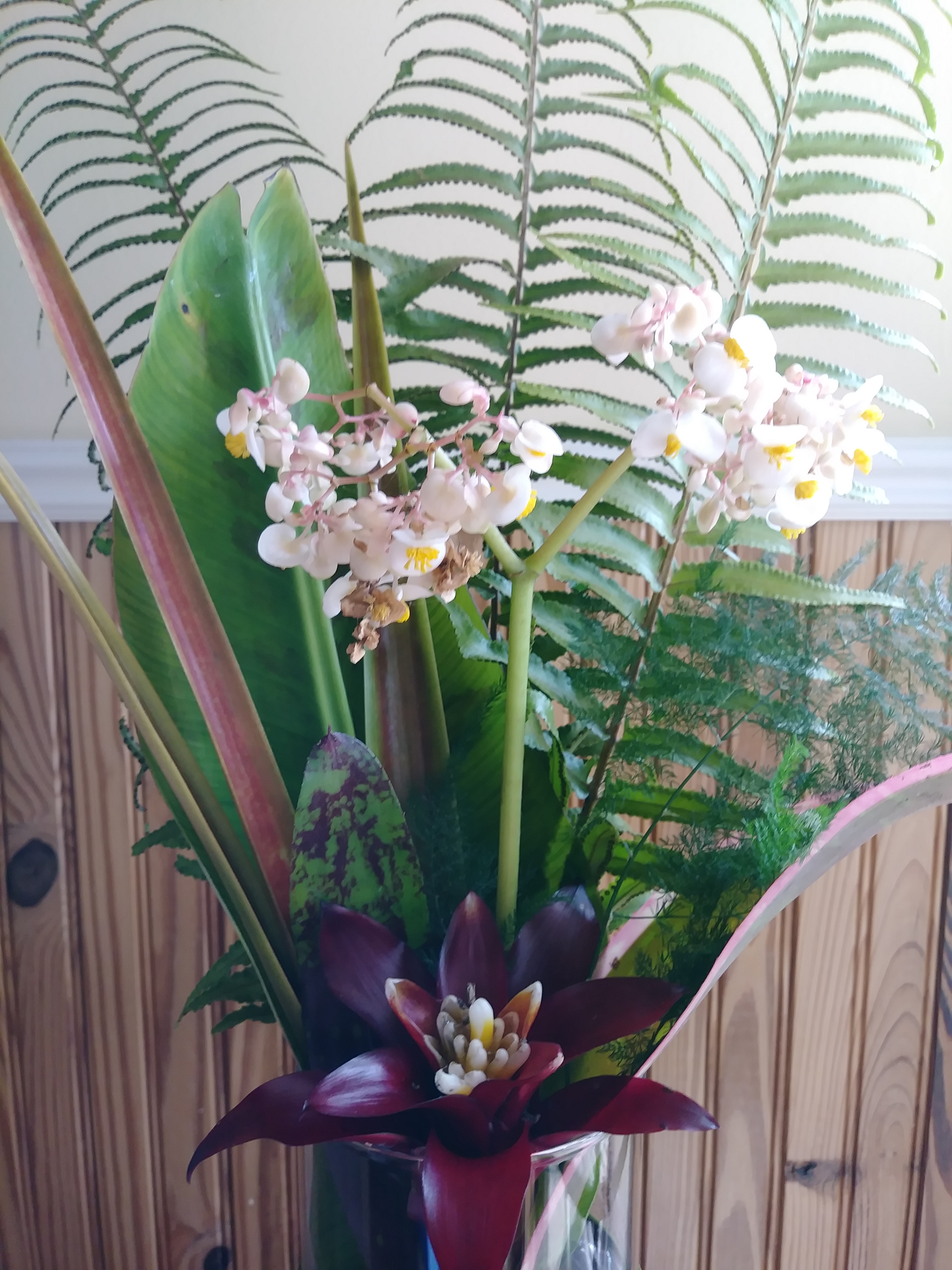

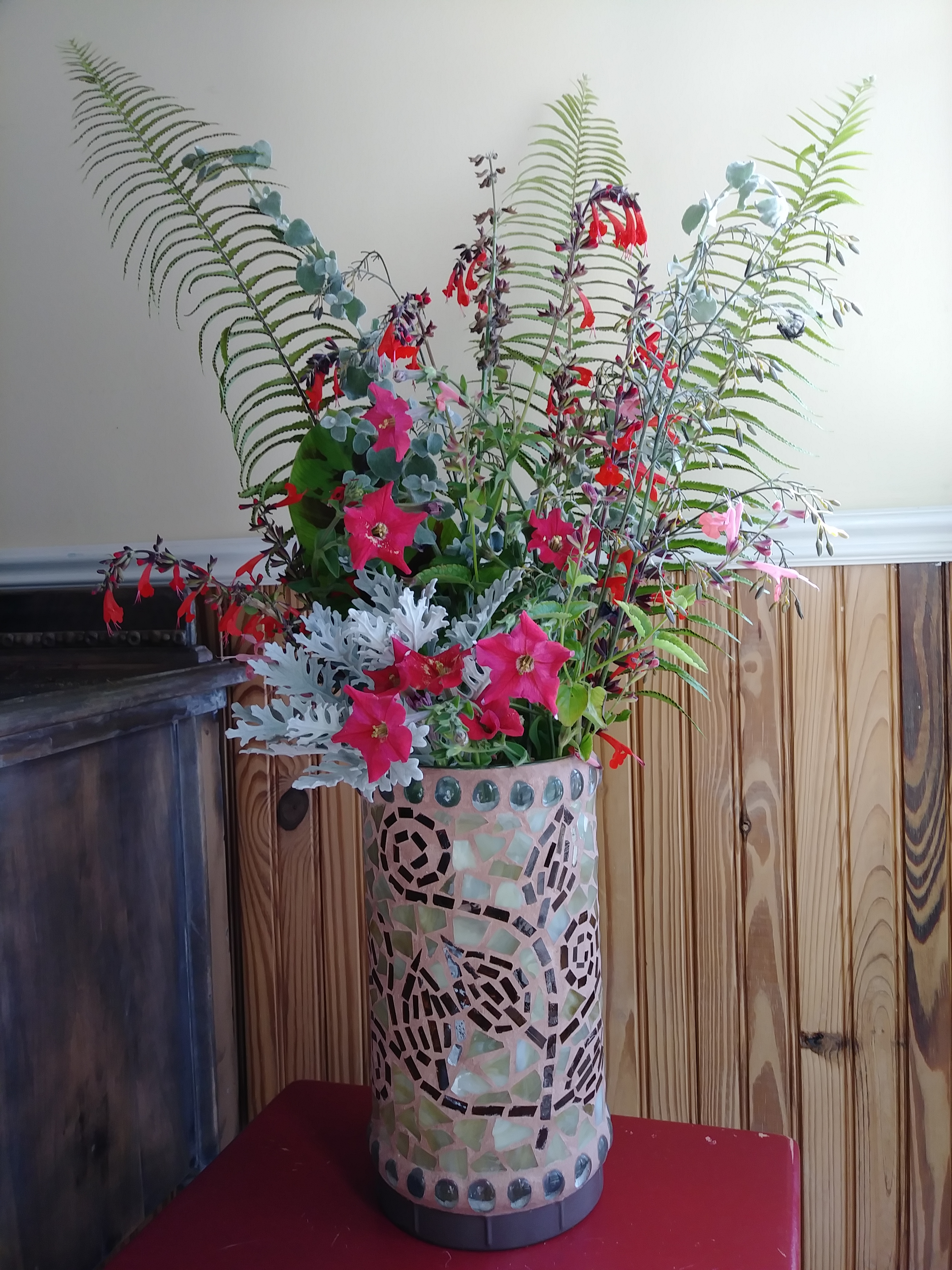
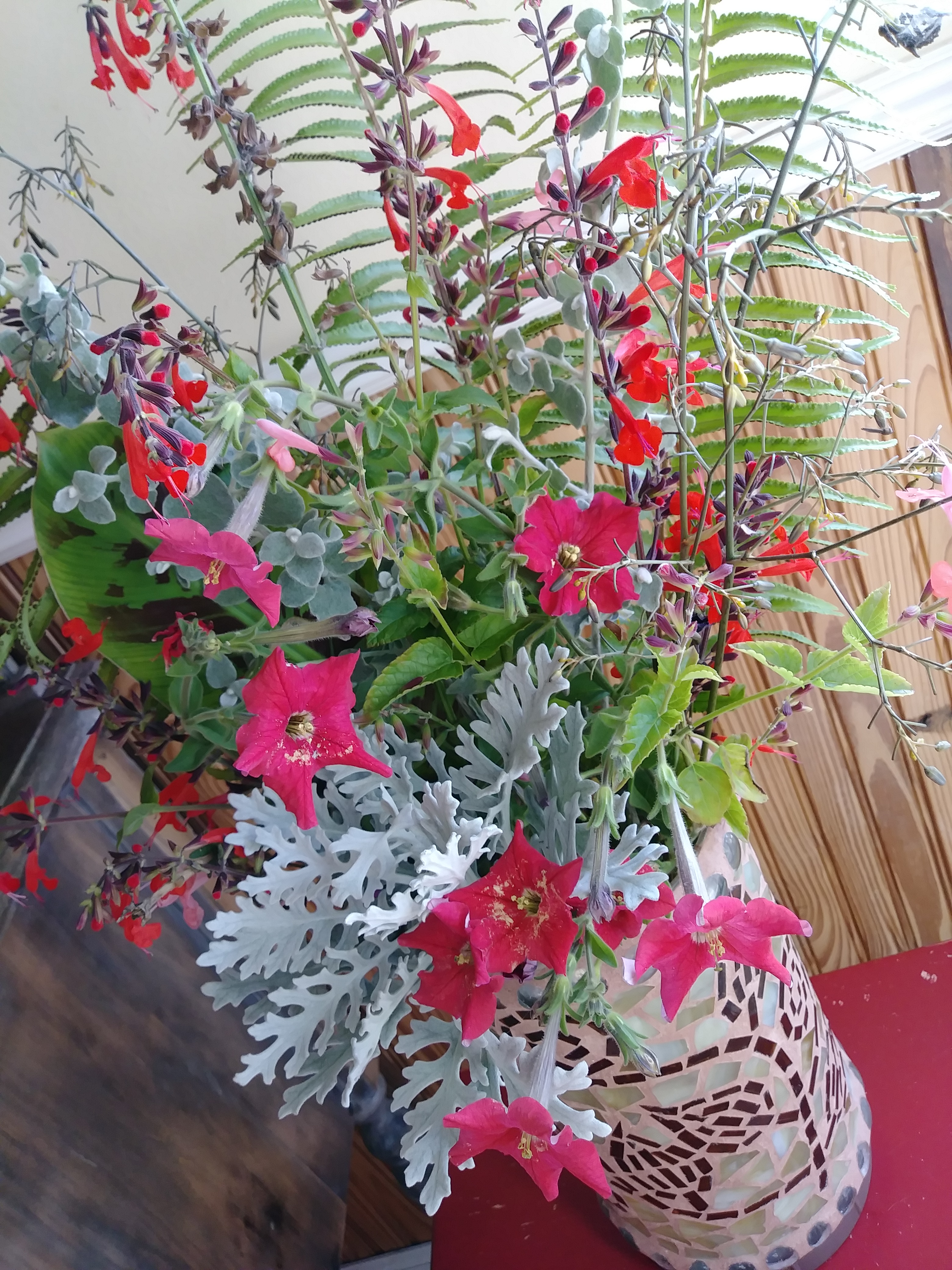
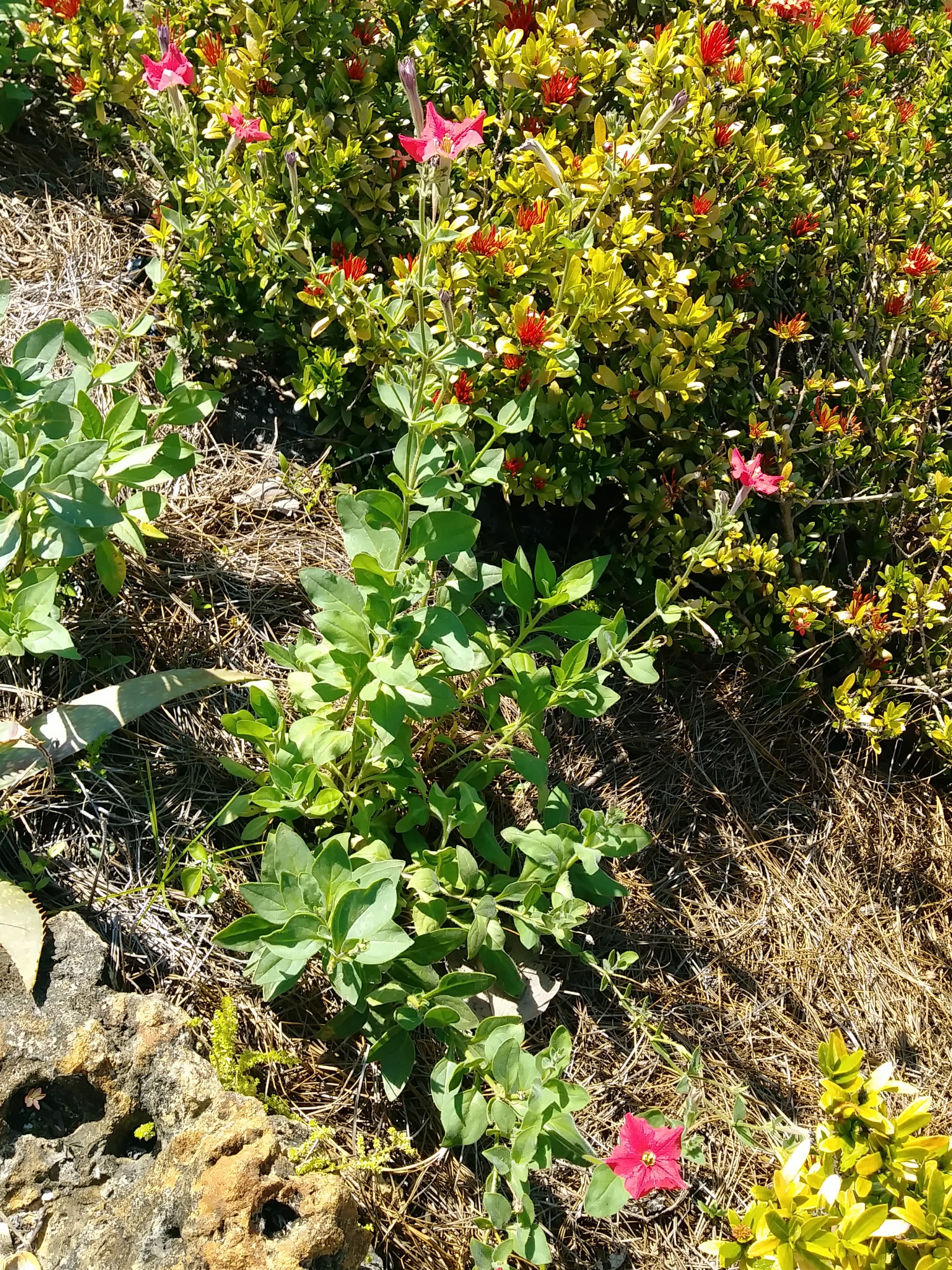

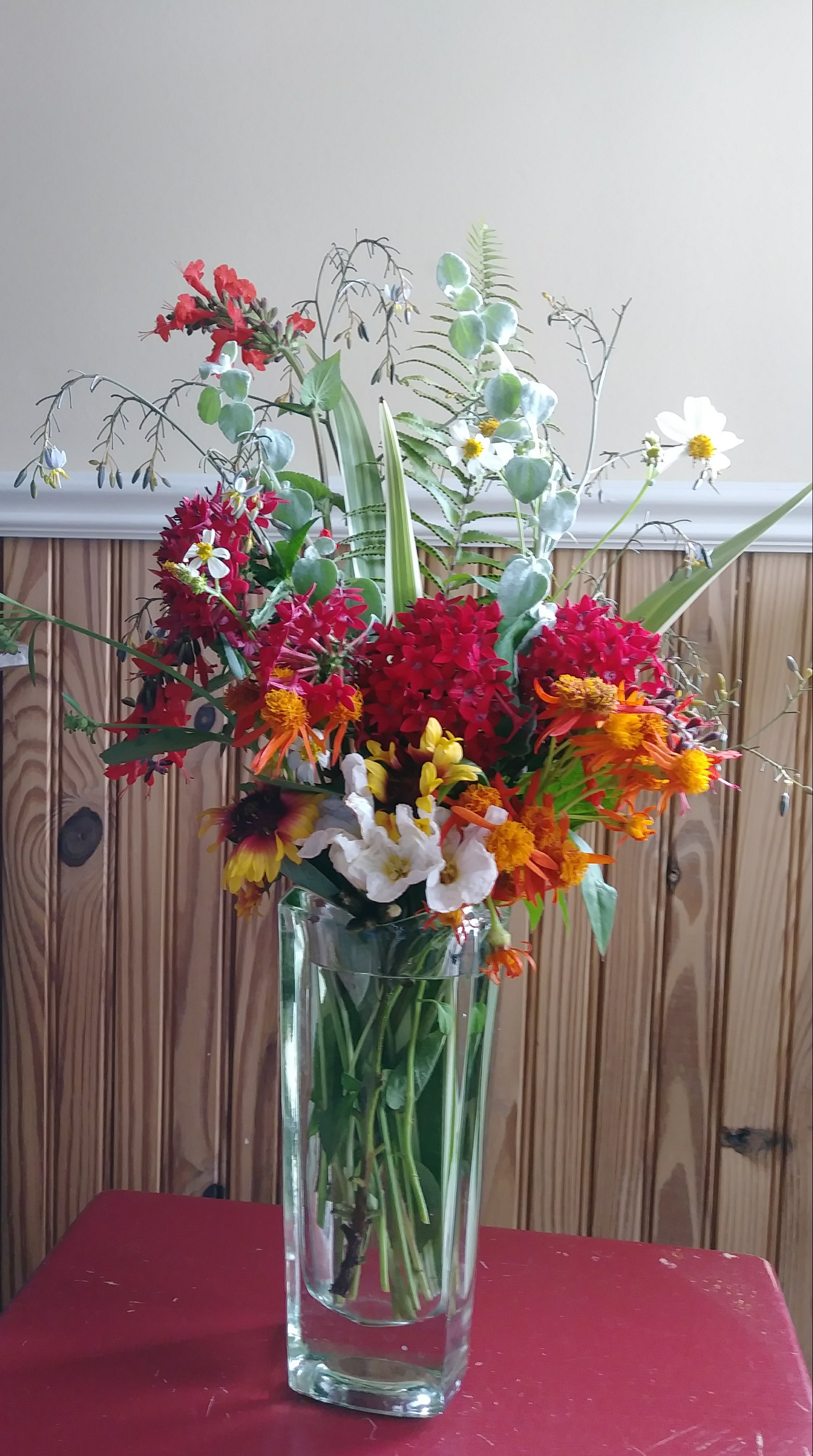
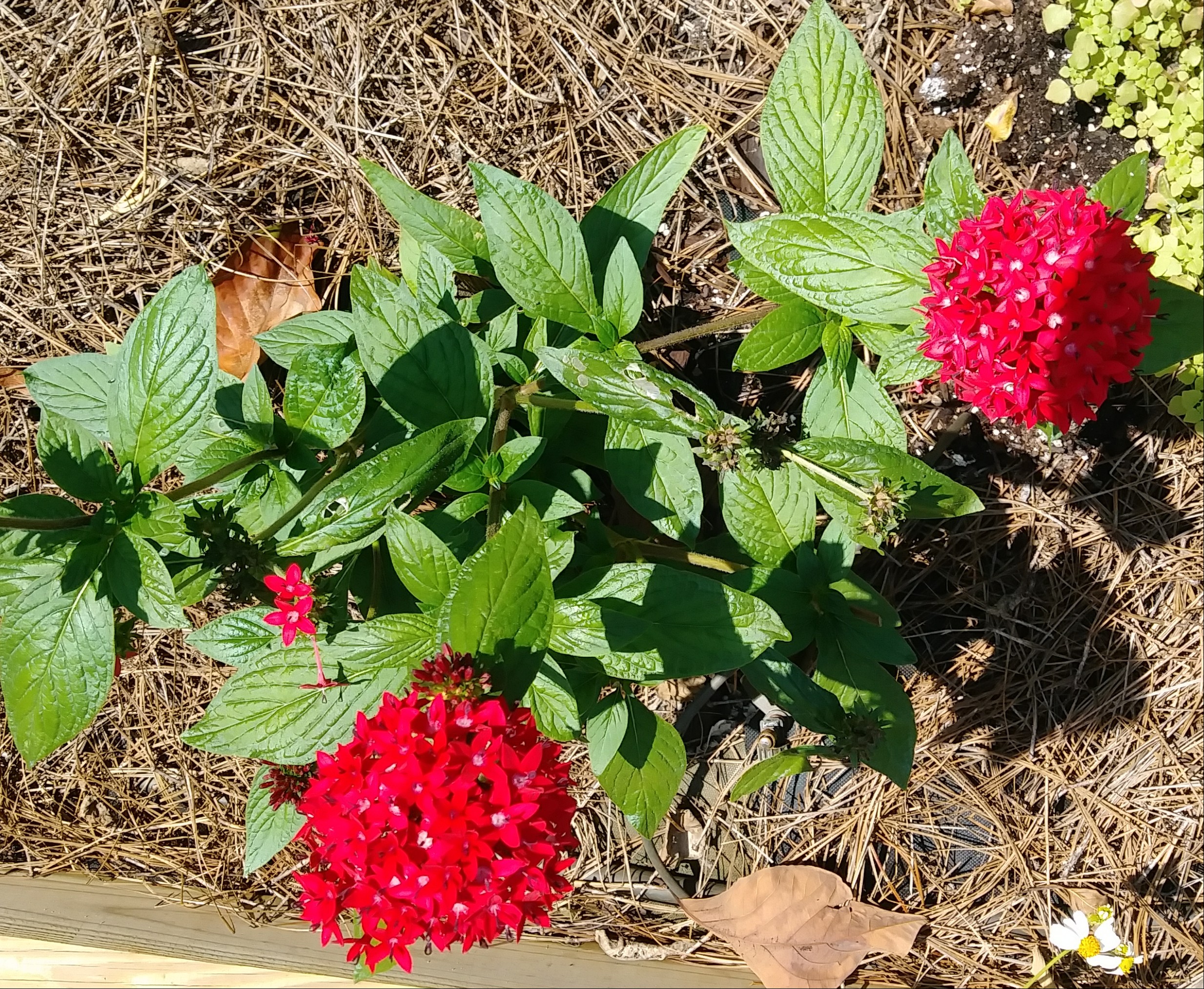
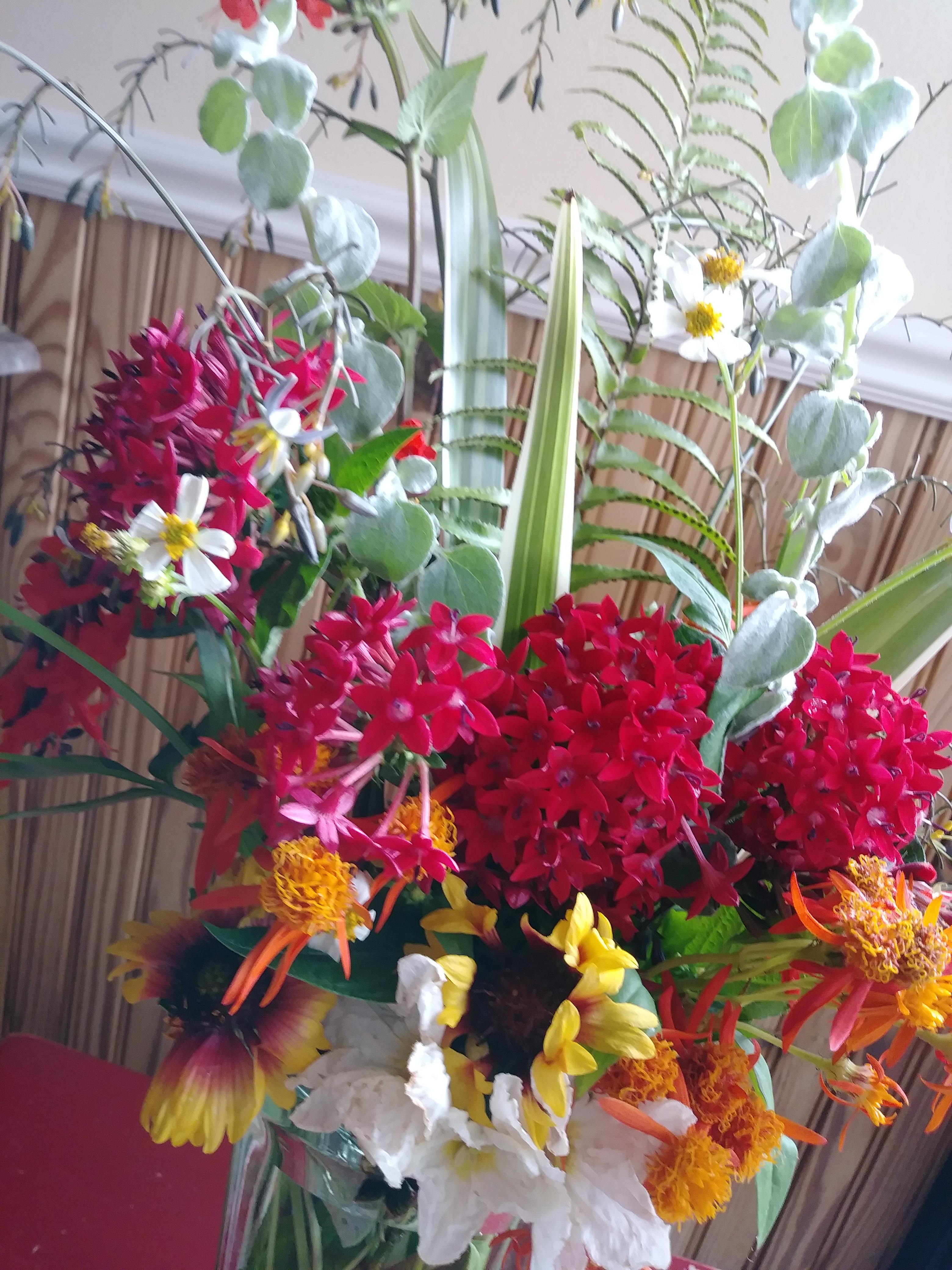 The white flowers at the bottom of the arrangement are from the White Geiger Tree (Cordia boissieri); yellow and red are native Gallardia (Gallardia pulchella); orange flowers are from the Mexican Flame Vine (Psuedogynoxys chenopodiodes); white daisies are Spanish Needles (Bidens alba); grey, fuzzy leaves are from the Licorice plant (Helichryseum petiiolaris); backdrop foliage is Boston Fern (Nephrolepis exaltata); striped leaves and blue flowers are from Blue Flax Lilies (Dianella caerulea) and a few Tropical Red Salvia (Salvia coccinea).


 The Shrub Queen