I have been rooting coleus cuttings in a teapot and put them on my porch intending to pot them up for winter porch containers. As these things go they sat there for a couple of days and I remembered and set out to do the right thing (instead of forgetting entirely and find them rotting in a few more days)
As I poured the water out, I noticed black things wiggling inside the teapot. Too big for mosquitoes. What in the world? So, I stopped and took some pictures to enlarge and see what the heck was in there.
Not even wiggling worms – a nymph of some sort. I find these guys on the porch from time to time. They are big bugs, probably the size of my hand, beating their wings when touched – usually recalcitrant about going back outside and do not like to be moved. Somebody found a little water and laid some eggs in my teapot and now we have the most likely suspect as the creator of my nymphfest in the teapot:
There are 150 different Dragonflies in Florida, I am not sure what dragon or damselfly this is. As I was reading about them it seems they can be in the nymph stage for years. I am thinking about rehoming the ones in the teapot..
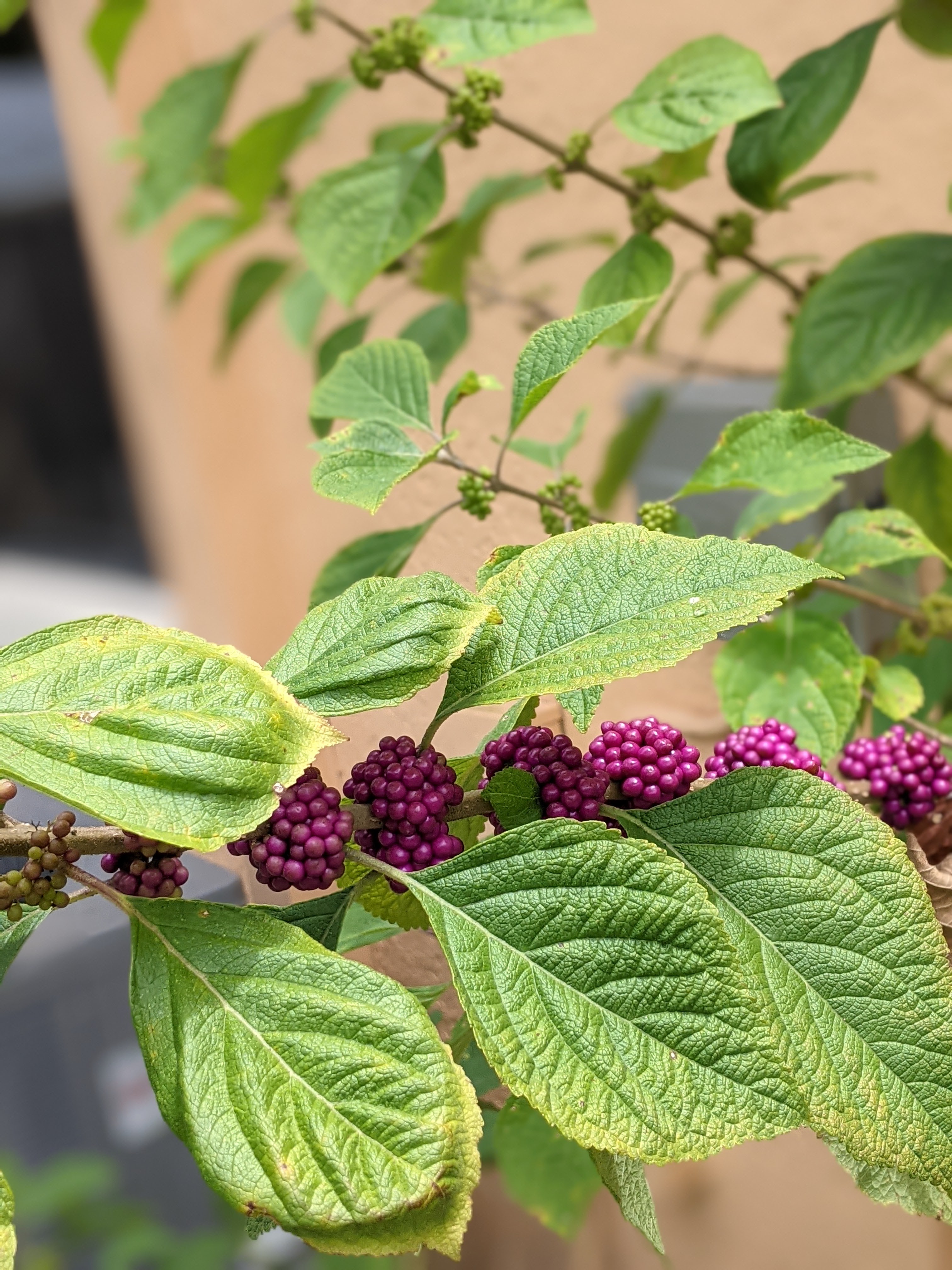
My husband jokes me about my lack of linear thinking. I am completely lateral. This week I decided to seek some linearity to complement the line of purple berries from the Beautyberry. I am convinced Florida Beautyberries are different than Beautyberries in other places. Every August I am amazed at the quantity and beauty (yes!) of the berries produced by this shrub.
The Beautyberry story:
I went to a local native plants nursery ‘going out of business’ sale shortly after moving to Florida. The Beautyberries were 3 for 10 dollars. Of course, I bought three. Thinking about putting them in a couple of different locations, not really knowing where to site them in the atrocious sand in my garden. Also not realizing the dramatic seasonal shift of the sun in my new home; I planted one on the due north side of my garage near the exit from our screen porch. Reasoning (lateral as usual) for this location: I thought it would stay shady enough for what was an understory shrub to me and this shrub is supposed to deter mosquitoes.
Much to my surprise, the sun got higher and higher in the sky as the year progressed. Full shade in January is full sun by May! Frying full sun. Not fun to dig things up in frying full sun, so it was left behind the garage. And then, the berries showed up. Impressive berries. I planted the other two in a much shadier, understory location – one passed on and the other bears about a tenth of the fruit of the one I seemingly planted in the wrong place. Another gardening riddle.
Oddly, mosquitoes were much worse in my garden in Atlanta – though we do have astonishing dragonfly (they eat mosquitoes) swarms periodically here and I do stuff Beautyberry leaves in my shoes if there are mosquitoes about (it works). I rarely see mosquitoes on the screen porch. Floridians make jam from the berries. I have not tried this as everyone who has ever mentioned it says it is pretty but tasteless.
The Shrub:
Perhaps the purple berries are a bit clashy with my peachy garage wall..still not digging it up.
A closer view:
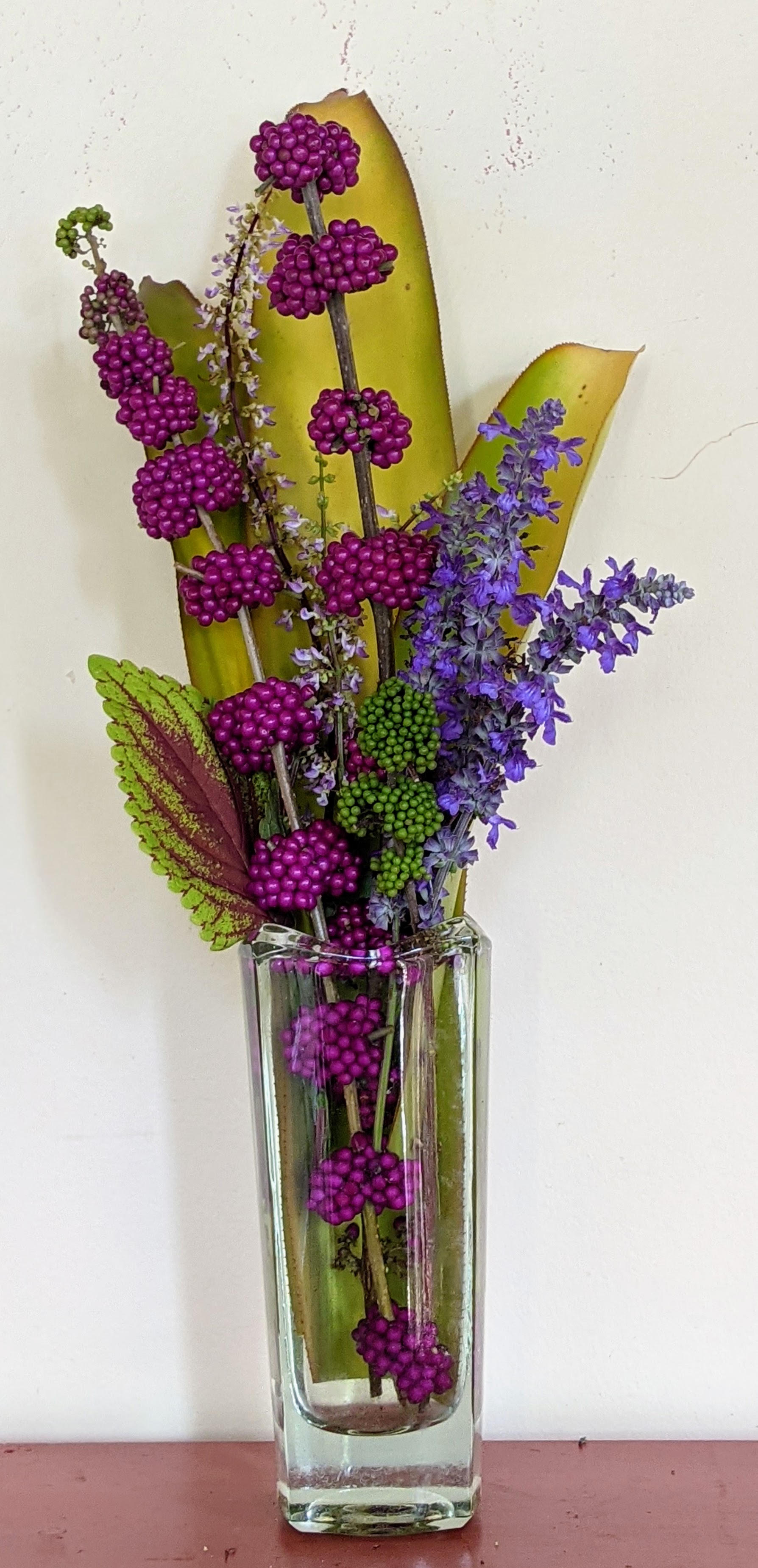
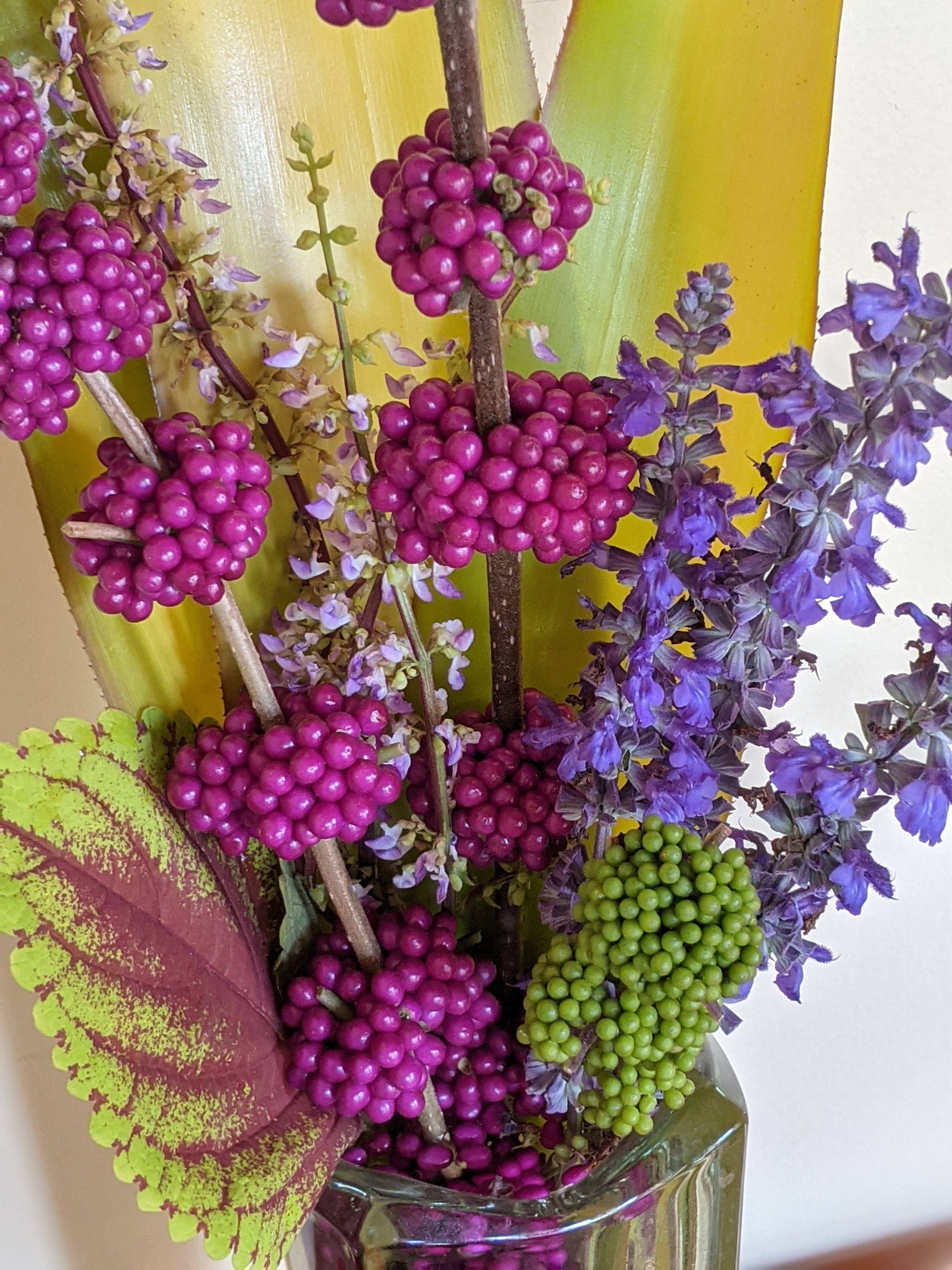
The purple and green berries are Beautyberries (Calliocarpa americana); blue spike flowers are Mystic Spires Salvia; purple spike flowers and varigated leaf are from a Coleus ‘Homedepotensis’; the long chartreuse leaves are from Lemon Aechmea blanchetiana Bromeliad. The vase was a gift from my late older brother; it always makes me smile when I use it – and its linear.
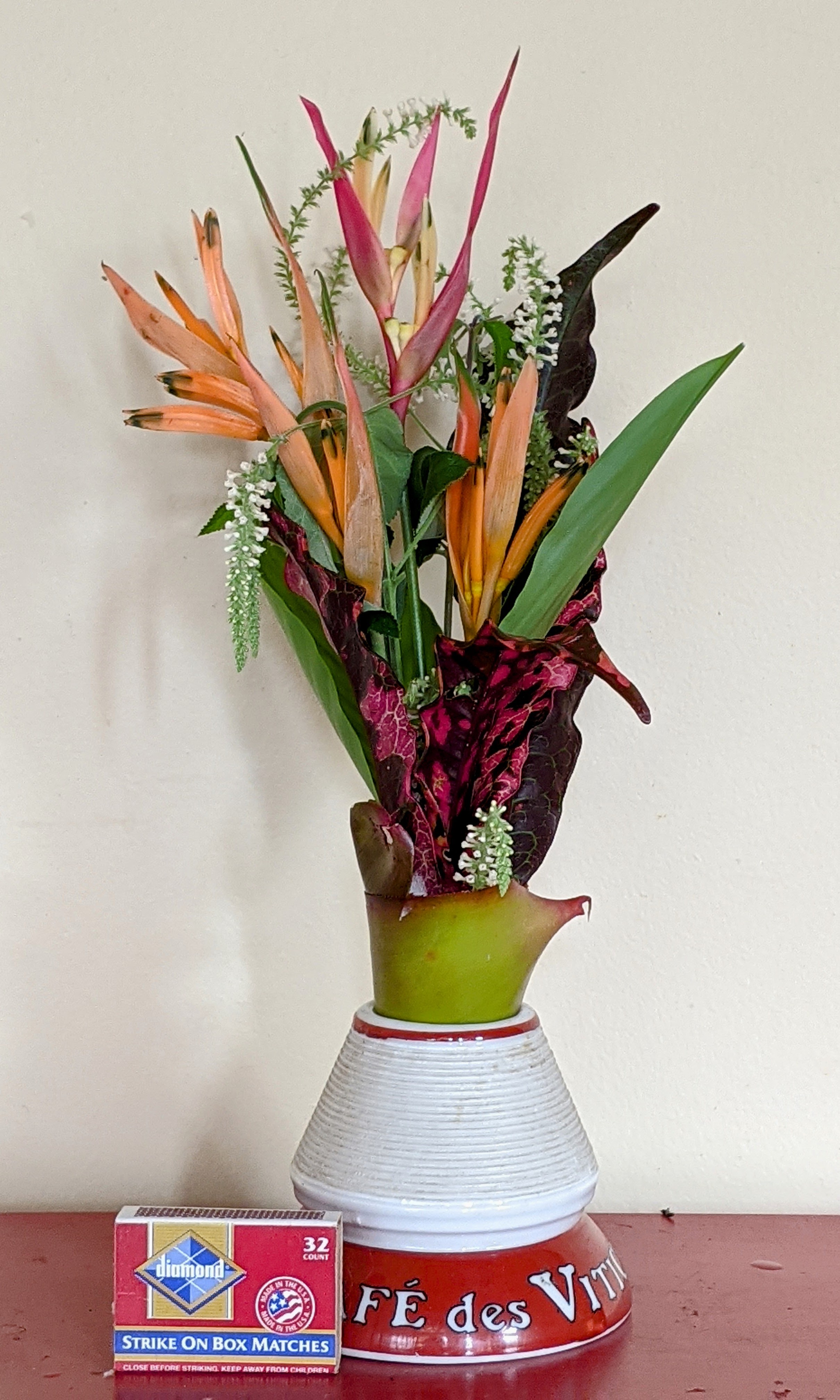
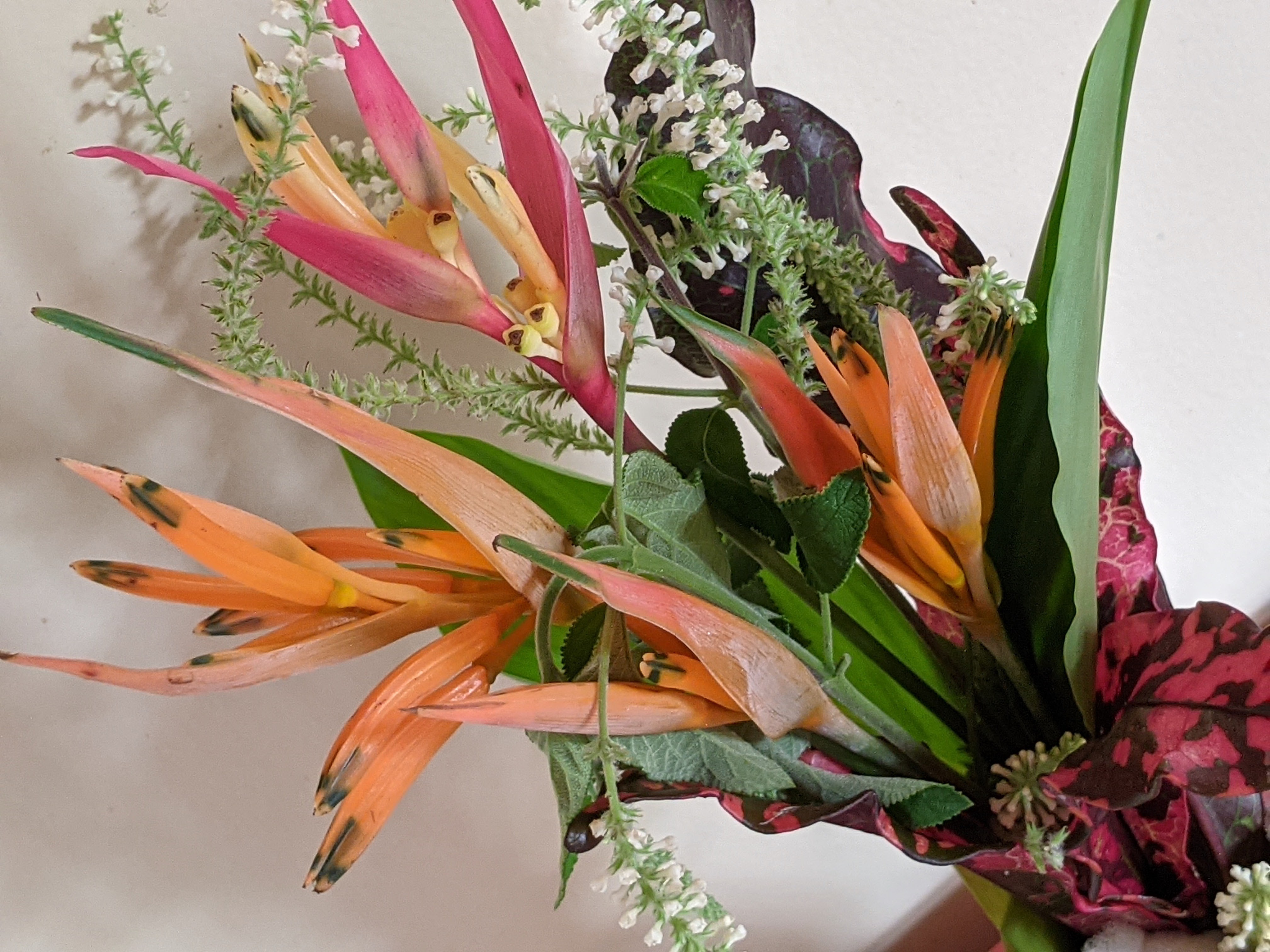
Heliconias are very striking plants. The fiery colors of the flowers inspired me to create this vase. The container is a antique French match holder. I envision lovely, fashionable people sitting in a cafe by the Seine in Paris using the ribbed surface to strike matches and light hand rolled cigarettes.
Do people still roll their own cigarettes? I have no clue. One whiff of smoke and I am history. Gone to find clean air.
The vase is designed to hold long wood matches. I added a bit of floral foam in the base. The foam would not hold the heavy Heliconias up so I wound some Bromeliad foliage around the inside of the neck to hold the flowers in place. Perhaps the first Bromeliad foliage shim ever…?
A closer view:
The orange “flames” are Parrotflowers (Heliconia psittacorum ‘Choconiana’); red “flames”, another Parrotflower (H. psittacorum ‘Lady Di’); red hot foliage is Piecrust Croton (Codieum varigatum ‘Piecrust’); white “smoke” (also supplying fragrance) Sweet Almond (Aloysia virgata).
Hoping this is the last hot blast of summer. Happy Gardening!!
Tropical Storm Fred is passing by the penisula of Florida this Saturday. Feeling the onslaught of tropical humidity in the air, I spent some time Friday planting a few things in the garden, checking on the edibles and pruning a bit to keep the inevitable gusty wind and rain at bay.
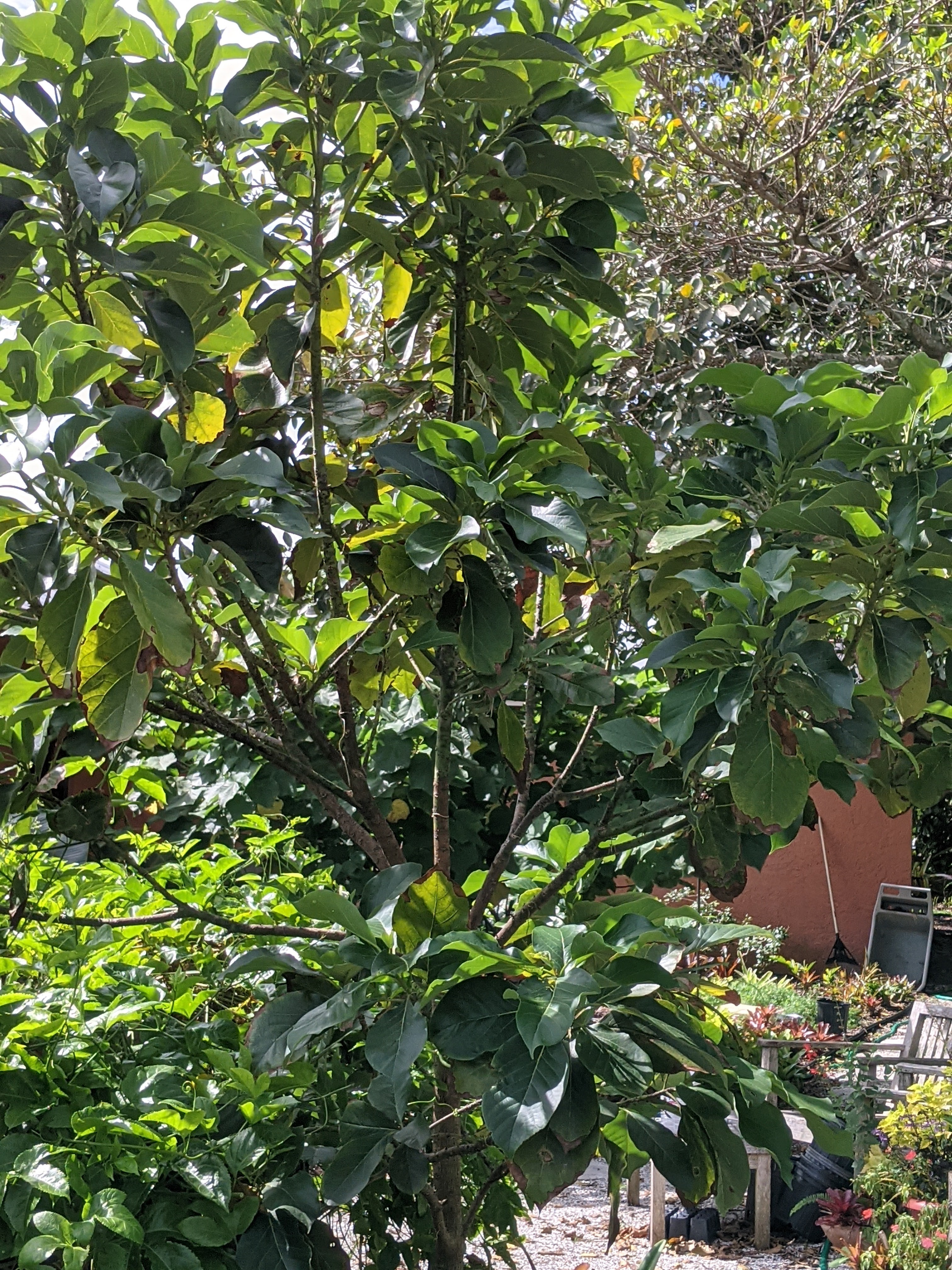
This is a Cuban or Catalina Avocado tree. The avocados are the size of footballs. A friend grew this from seed and brought the seedling to me in 2016. The tree is 12 – 14 feet tall and will hopefully bear fruit next year. To my knowledge, this is the only avocado that is true to seed (most are grafted). I pruned the Passionfruit vine out, it aggressively tries to climb the Avocado any chance it gets – the vine is on the left side of the tree.
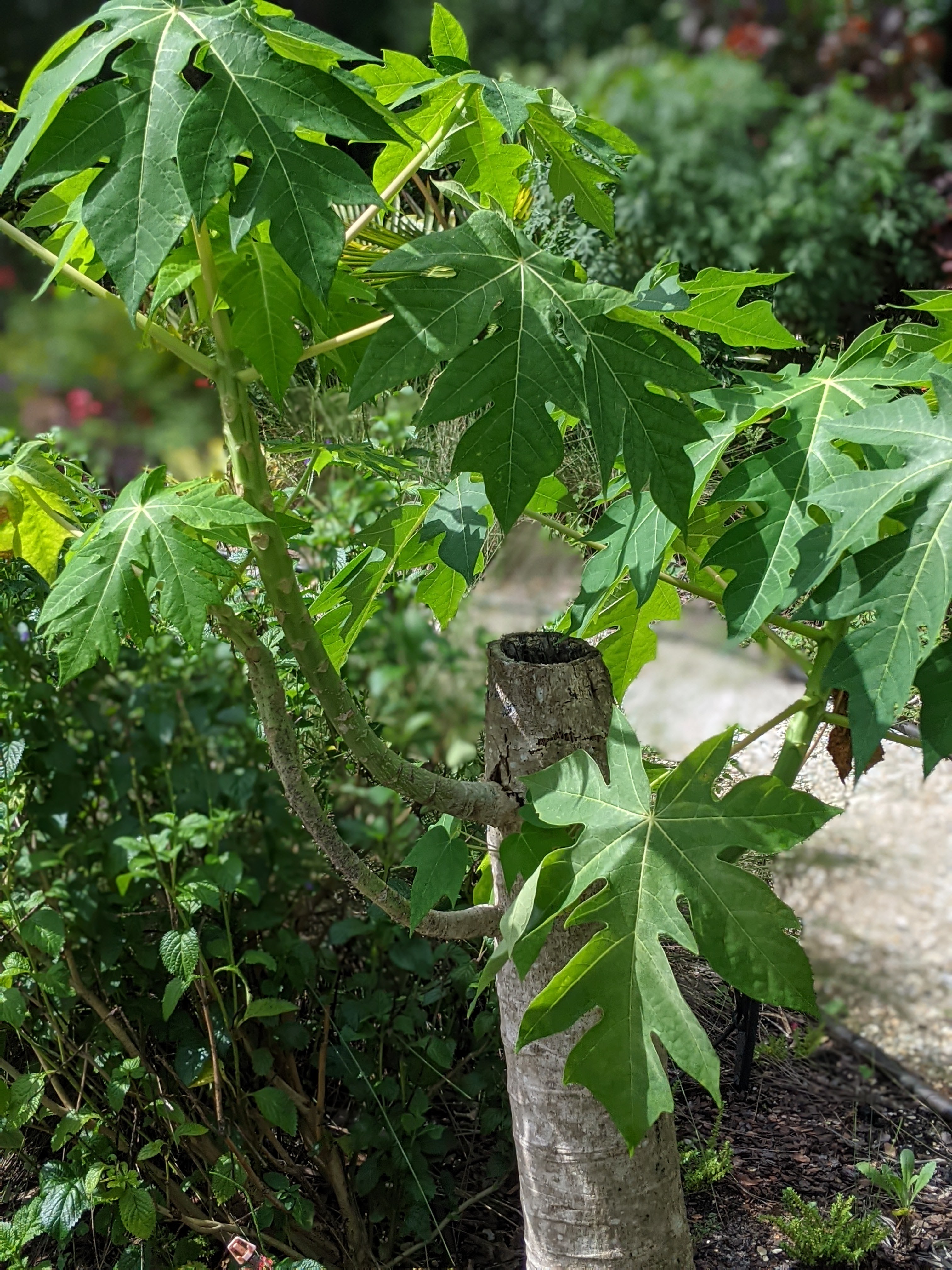
The progress on the Papaya beheaded this spring. I am still not sure what will happen here. The trunk sealed itself and put out three new shoots – they don’t seem big enough to support the four pound Papayas.
Chaya (Cnidoscolus aconitifolius) or Tree Spinach. This is a tropical vegetable common in Central America, the leaves are cooked like spinach. A friend gave me cuttings two years ago, it is about six feet tall. The flowers are highly attractive to butterflies. I haven’t eaten any of this – it is toxic unless cooked properly.
Another tropical edible, the Roselle (Hibiscus sabdariffa). This is an edible Hibiscus, usually grown for the flower calyx that tastes like cranberries. The foliage can be eaten as well, new growth is like Arugula and the older leaves maybe be cooked as greens. These won’t flower for another month or so, but I should try the greens. I have eaten the new growth in salad (it’s good) but haven’t cooked any.
New to the garden, a Parrotflower (Heliconia psittacorum ‘ Choconiana’). These are short lived in my garden; they tend to spread wildly and then expire. I enjoy these cut, they are a long lasting tropical flower. And I will buy another one or two after a few years.
The Heliconias were planted beneath two Firebush (Hamelia patens) with a Martin Neoregelia Bromeliad and Alligator Lilies (Hymenocallis latifolia).
This week’s title seems to suggest I found some intelligent soap. This is not the case. All of the soap in my house is as clueless as ever, just some suds. And I am not the sage one.
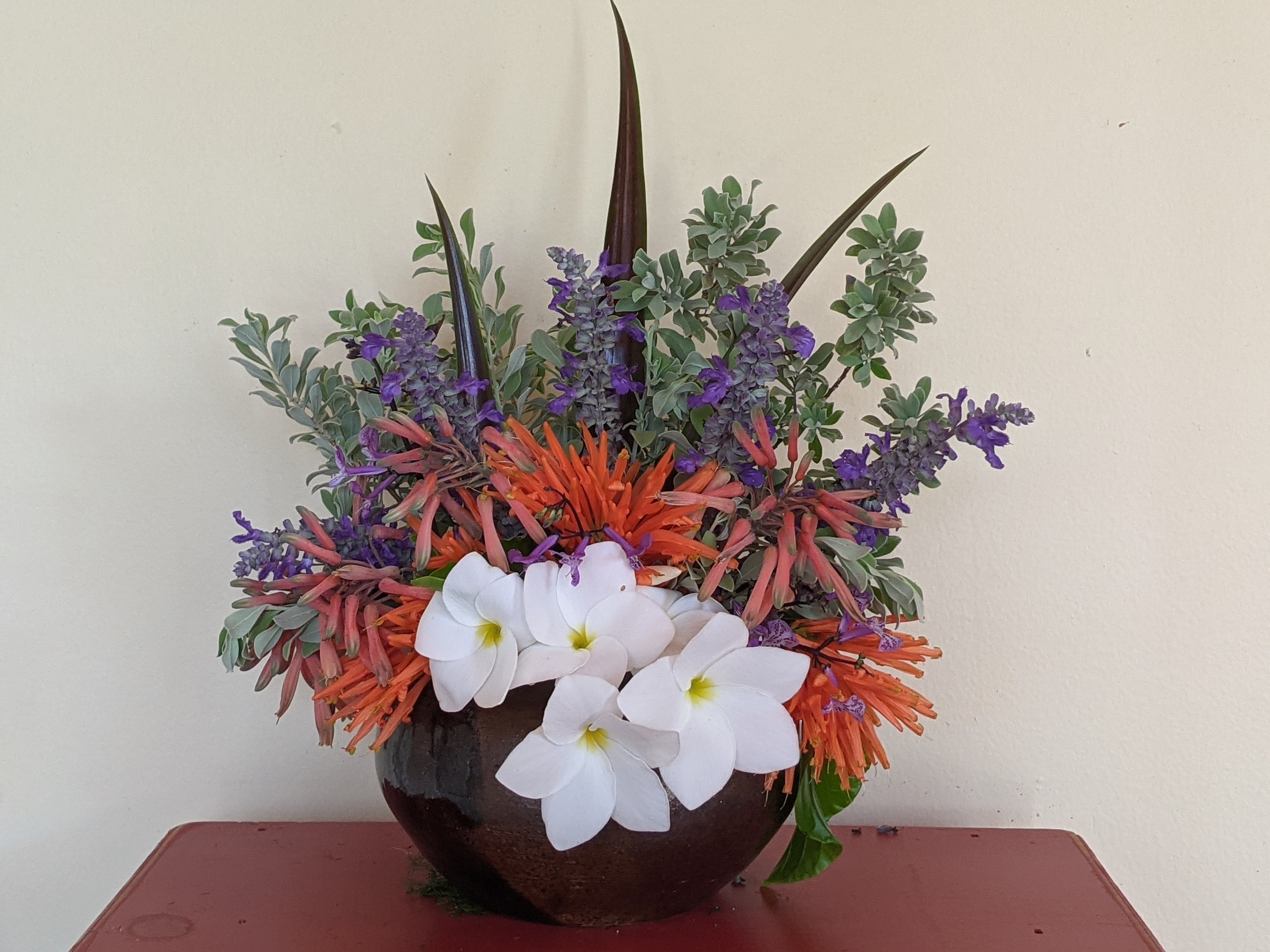
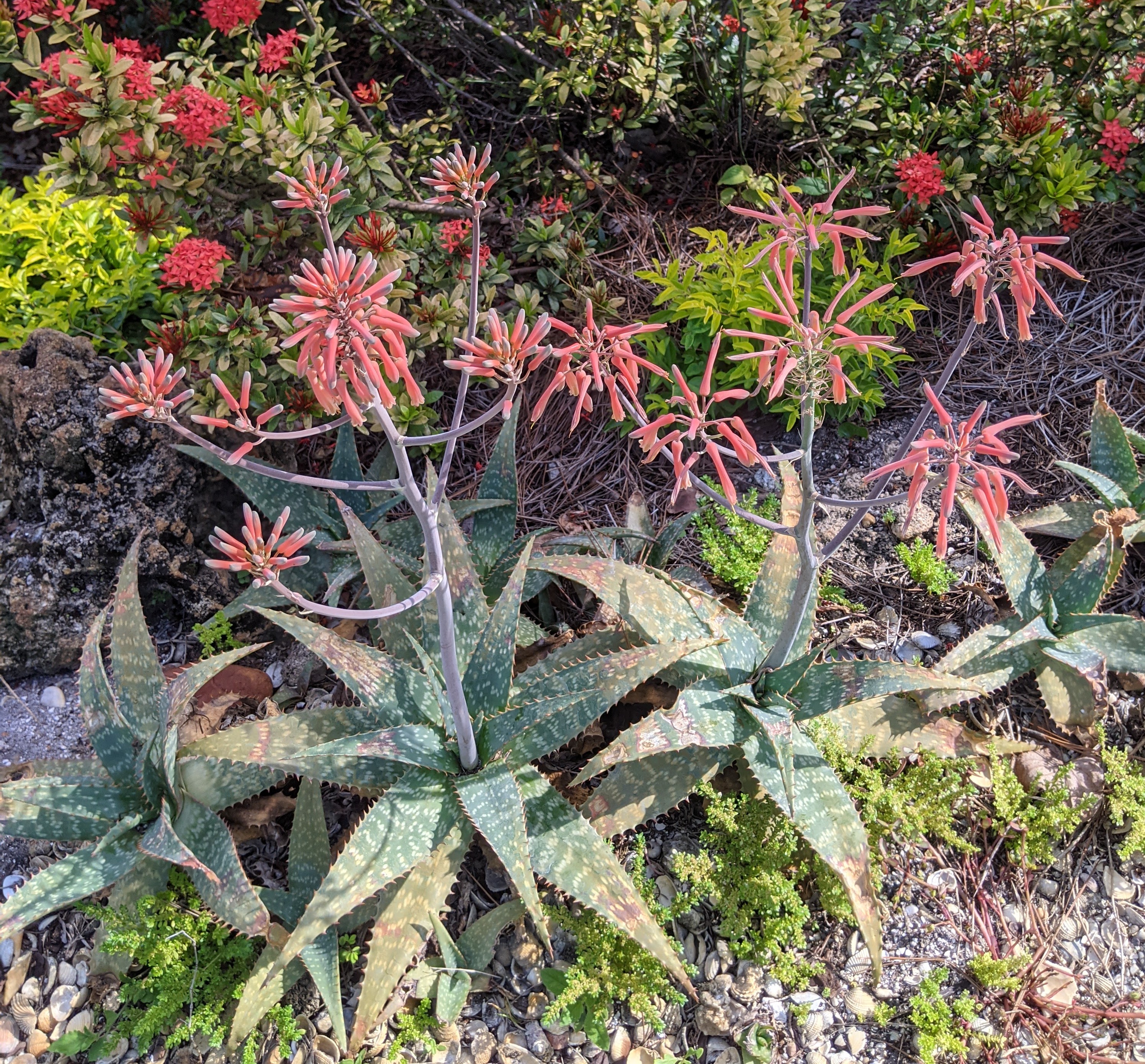
The soap comes from the Soap Aloe (Aloe saponaria) the orange flowers with a bit of green at the ends. Here is the plant. A South African native that flowers 4 times a year in my garden. If I break a leaf in half sudsy aloe pours out – apparently it is used to make shampoo. The dilemma, the large percentage of the population is allergic to it. I have not washed my hair with it, though I enjoy the flowers.
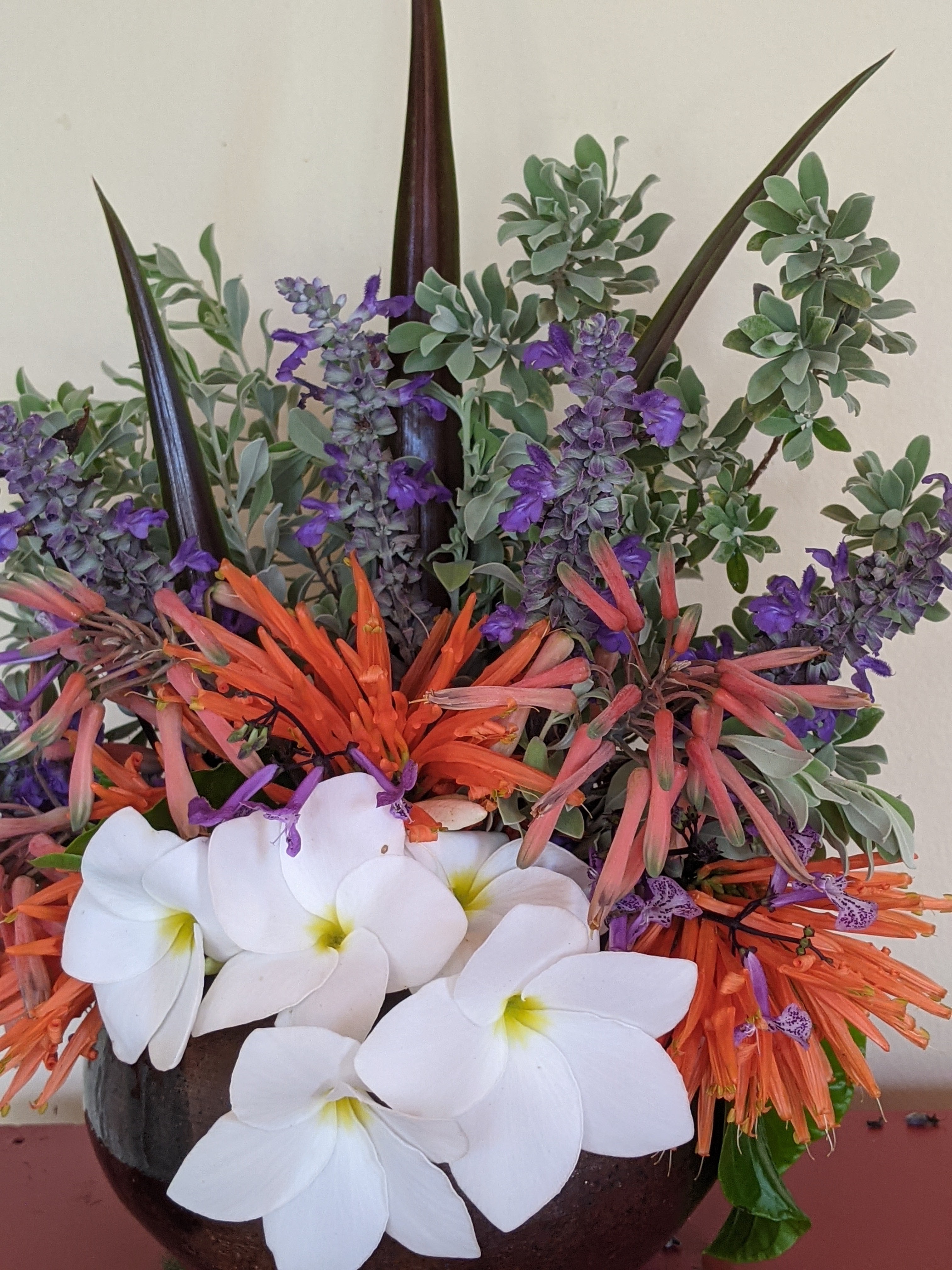
The sage in the arrangement is the Mystic Spires Salvia, the blue spikes. I have been enjoying the flowers for months and hopefully they will last into the winter. A closer view:
The blue spikes are Mystic Spires Salvia. The purple flowers are Mona Lavendar Plectranthus. The solid orange flowers are Mexican Bush Honeysuckle (Justicia spicigera); green tipped orange flowers are Soap Aloe (Aloe saponaria); white flowers are Bridal Bouquet Frangipani (Plumeria pudica); grey foliage is more sage, Texas Sage (Luecophyllum frutescens); burgundy spikes are from a Dwarf Pineapple, a gift from a friend. The vase grounding the arrangement, a thrift store find and favorite.
Anyone else remember this song? “I’m a Little Teapot,” released 1939. It was a favorite of my mother’s. This is her teapot, a wedding gift from 1950. I remember this making its daily appearance on the kitchen counter brewing tea for that iconic Southern beverage (appropriate for all occassions) syrupy sweet Iced Tea.
I’m a little teapot, Short and stout, Here is my handle Here is my spout When I get all steamed up, Hear me shout, Tip me over and pour me out!
I’m a very special teapot, Yes, it’s true, Here’s an example of what I can do, I can turn my handle into a spout, Tip me over and pour me out!
I aged out of the ability to drink Sweet Iced Tea at age 16. With the amount of sugar usually added, it is just too sweet for me. My grandmother added saccharine tablets to hers which put me off of Iced Tea for years. I would pray for Coca Cola at her house. Since then, straight up with a lemon is the only way I drink Iced Tea. I know, I am a bad Southerner.
I love this teapot because the interior has signifigant tea stain, evidence of what a mainstay this was in my mother’s kitchen.
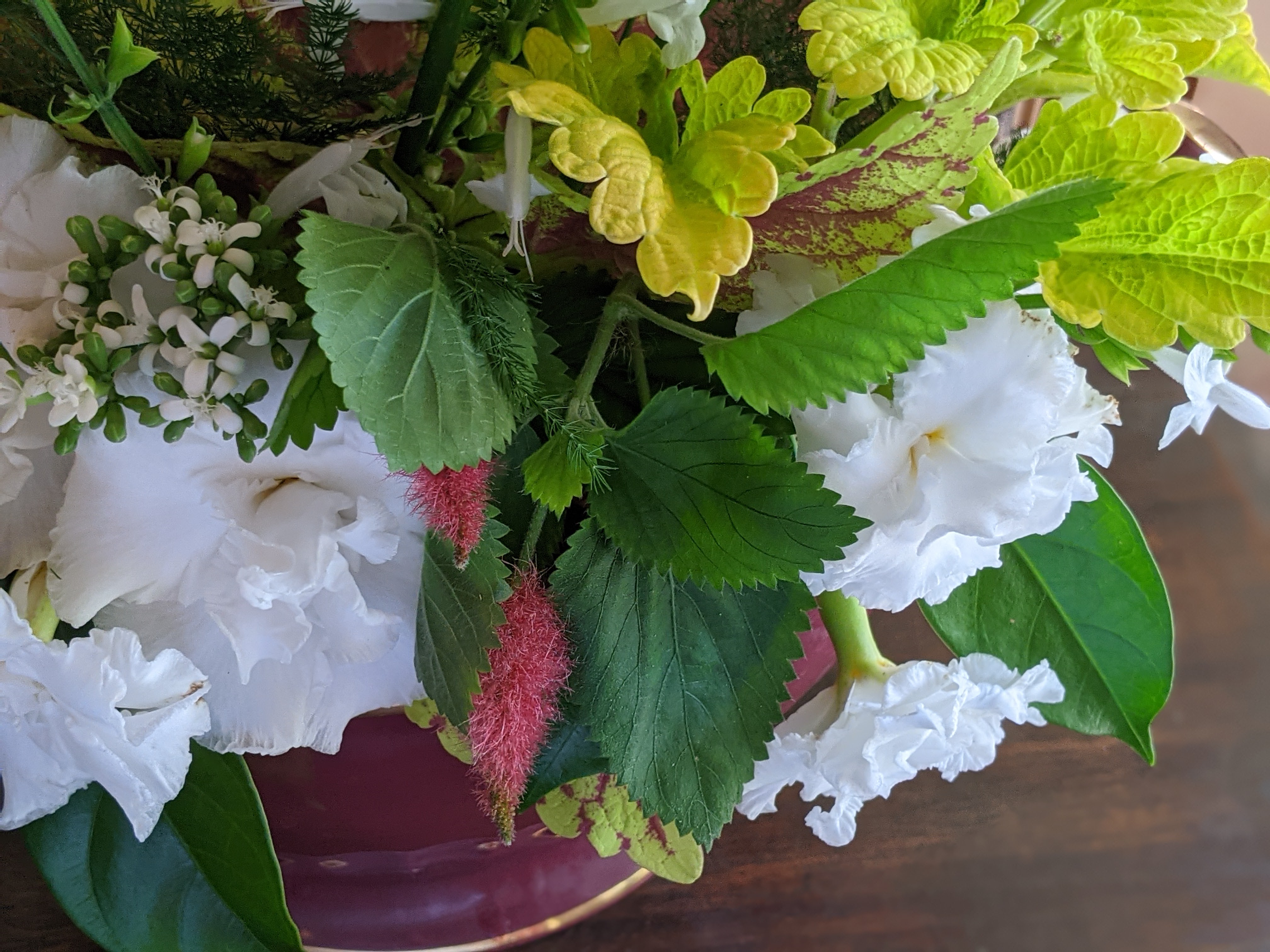
I have a lot of plants in this little teapot. Tropical Gardenias (Tabernaemontana diviricata) started the idea – white and fragrant, they come from a ten foot tall tree form shrub that is over my head and wonderful to stand under and inhale the scent while trimming a few flowers. I have two types of Coleus foliage (Plectranthus whateveritisnow) – chartreuse and burgundy and chartreuse. White spikes are a few pieces of white Tropical Red Salvia (Salvia coccinea) – who are these people naming plants again?
Another view:
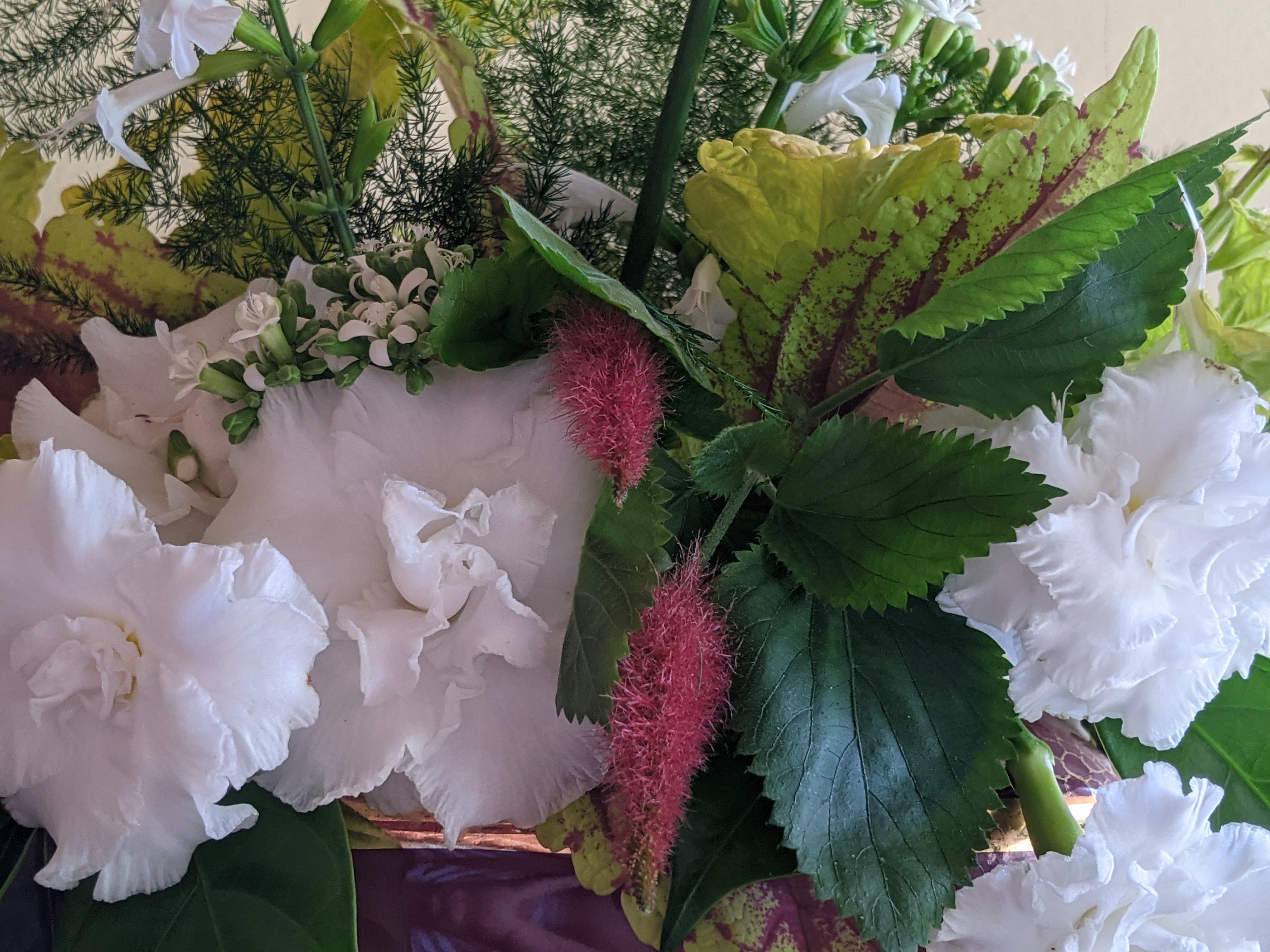
Tiny white flowers are from Tree Spinach (Chaya) – a superfood for people that I planted for butterflies. I haven’t eaten any as it is toxic unless you know how to cook it. Pink fuzzies are the Dwarf Chenille Plant (Acalphya pendula).
Another view:
As always, thank you to Cathy at http://www.ramblinginthegarden.wordpress.com for hosting this addictive garden meme. Sundays would not be the same at my house without it. Follow the link to see more vases.
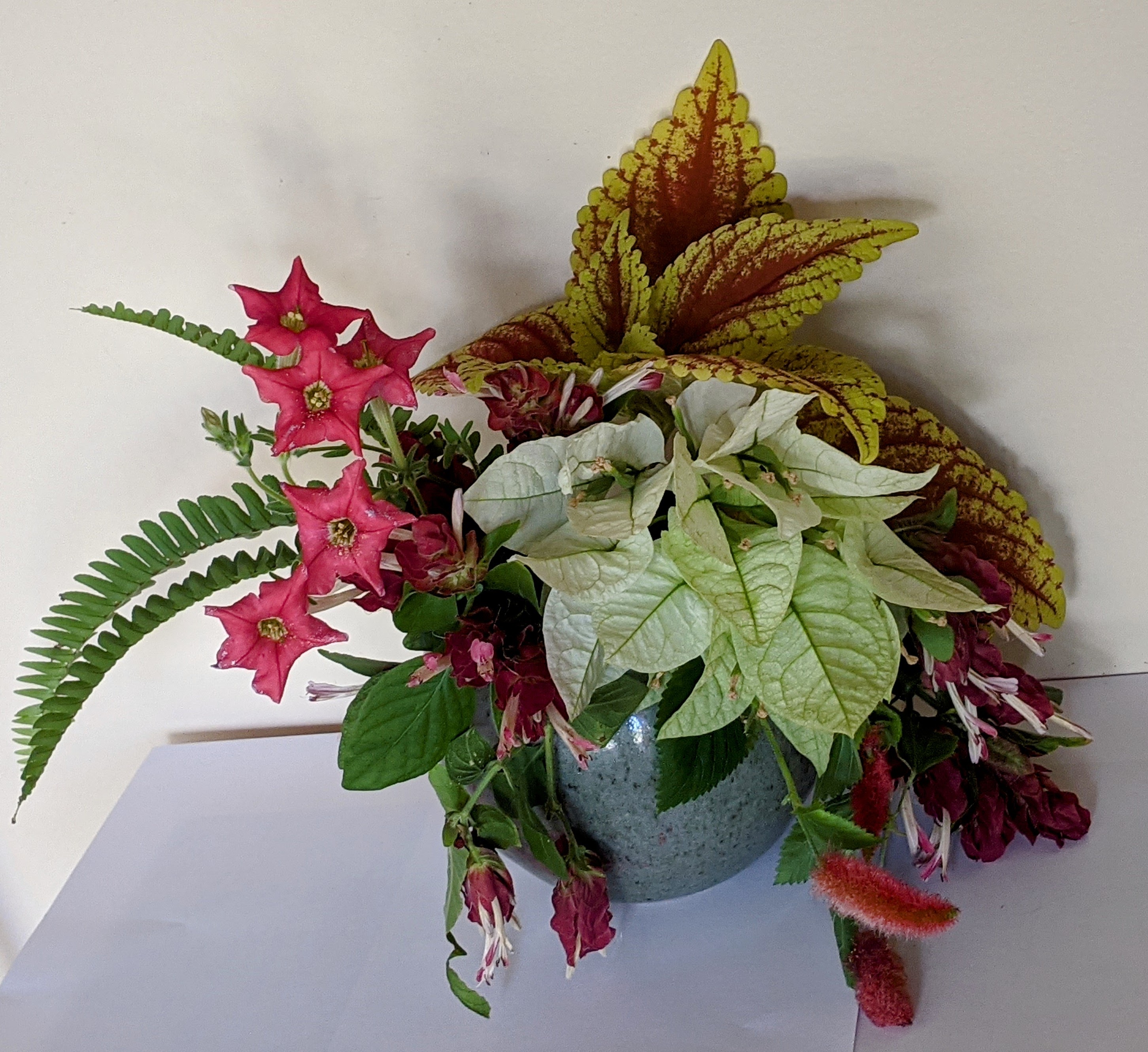
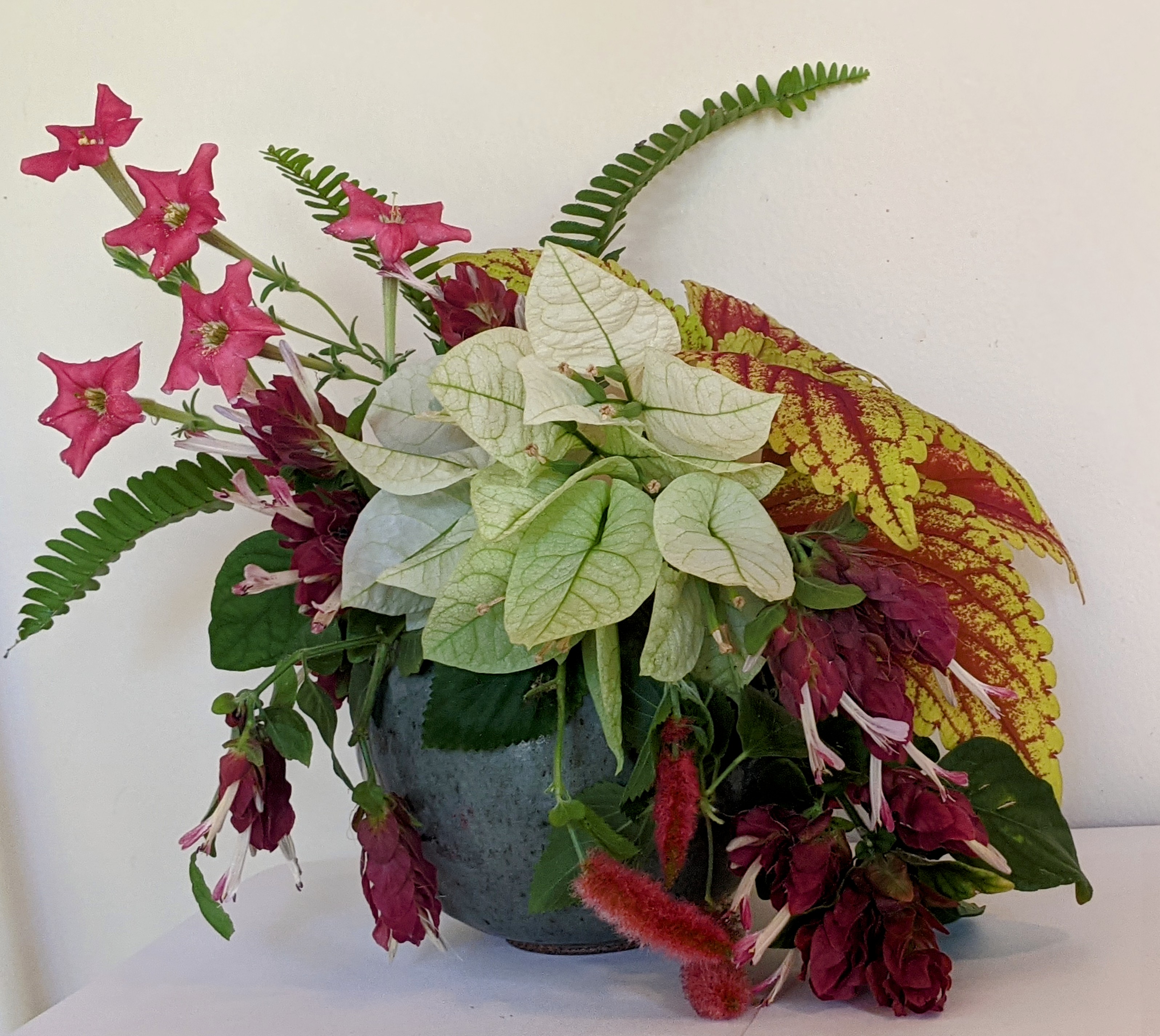
Perhaps this is my funkiest vase ever, I concentrated on unusual color and texture this week. One of my favorite aspects of planting design is combining different textures of plant material. Working with colors and textures enhancing one another. Tropical flowers are fun to play with as the textures of the flowers can be quite different. This is an array of unusual colors and textures from my summer garden.
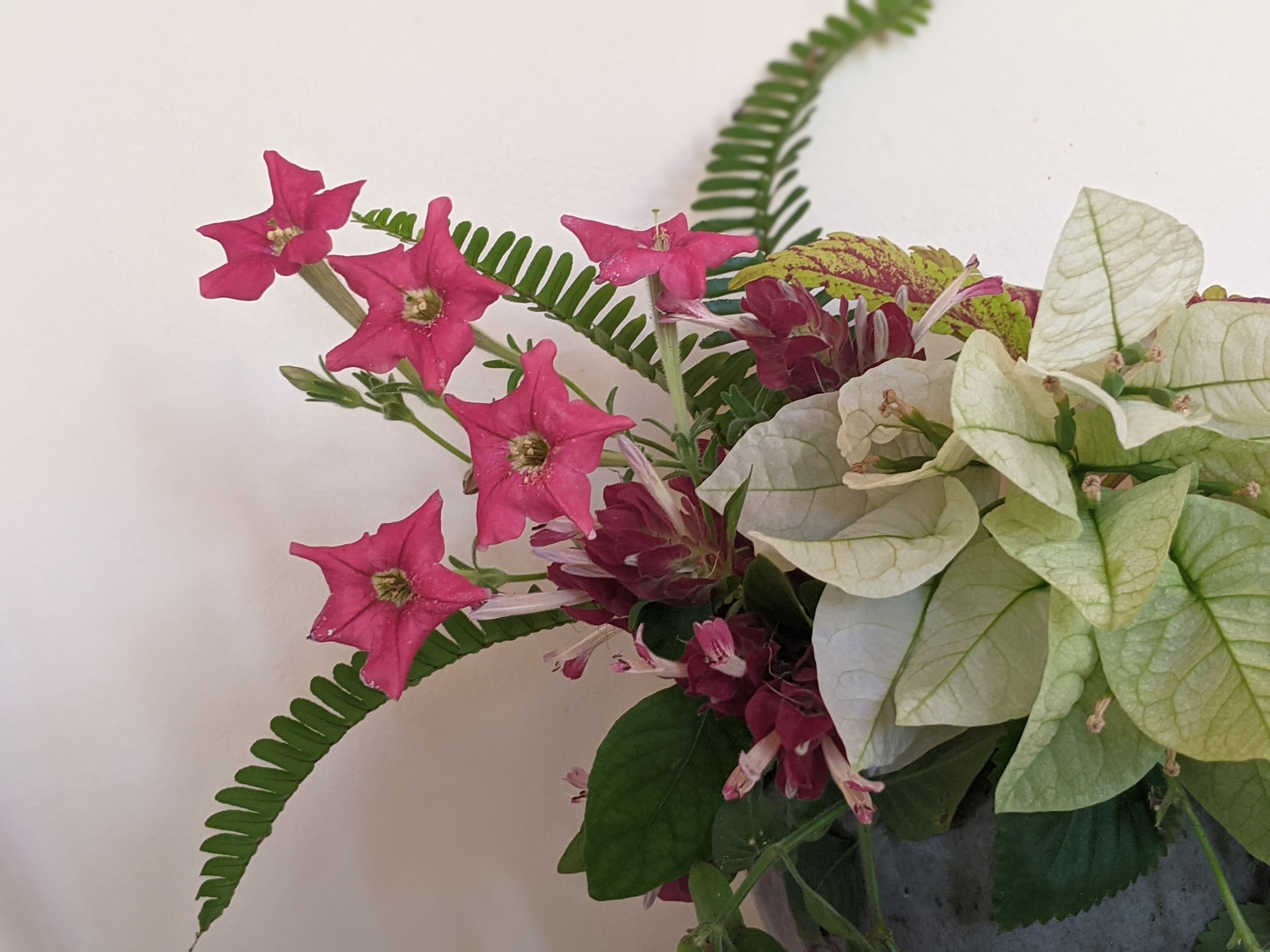
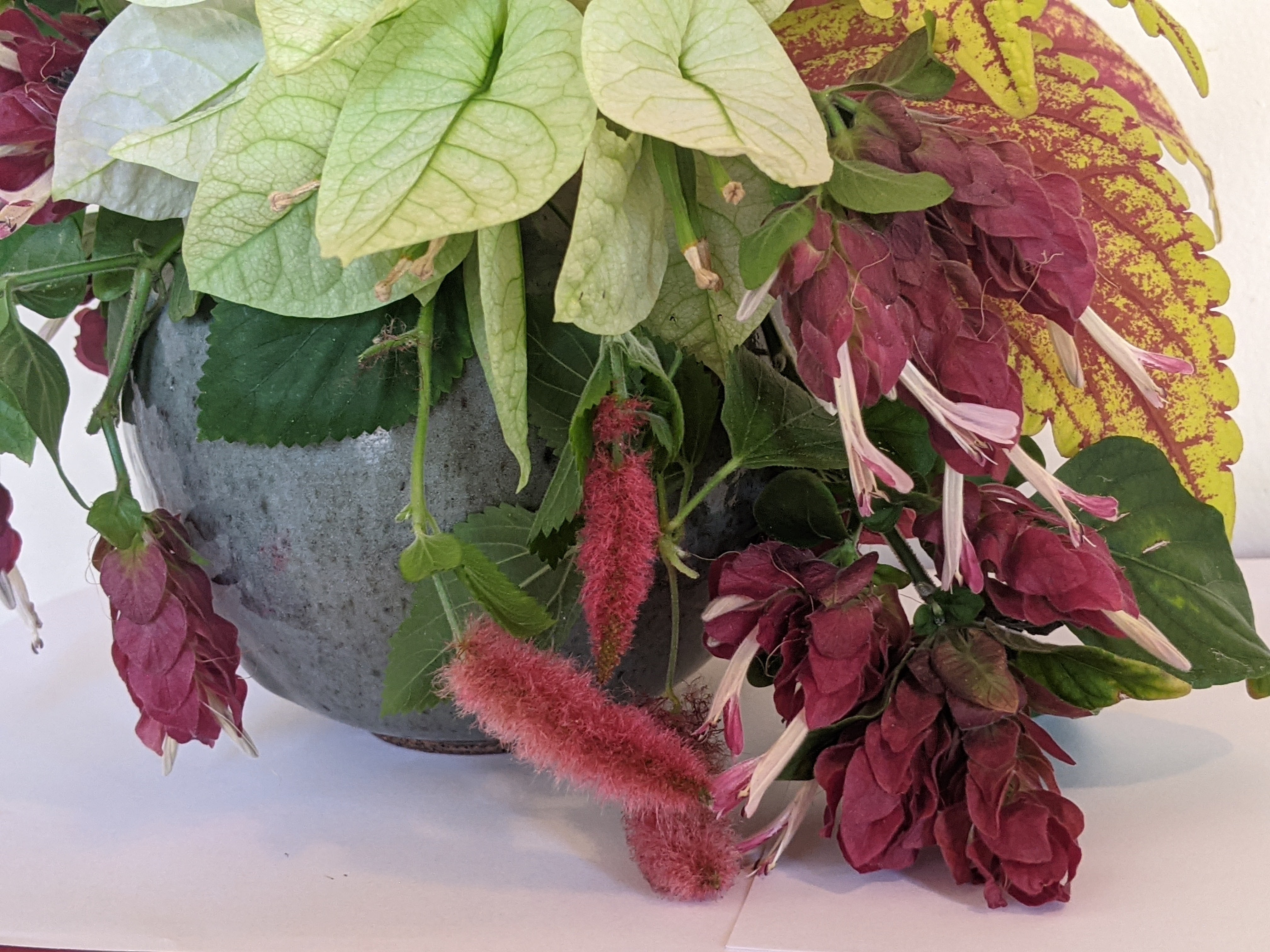
The papery texture of the white Miss Alice Bougainvillea enhances the white parts of the Red Shrimp (Justicia brandegeana). The reddish Petunia exserta adds some color and reflects the color in the chartreuse and burgundy coleus. A few springs of Asian Sword Fern are always necessary.
My neighbor gave me the Red Shrimp Plant years ago. I gave her some Petunia exserta after reading about it from UK garden bloggers (Chloris?) and she grew some this year and returned one to me. The circle of gardening life.
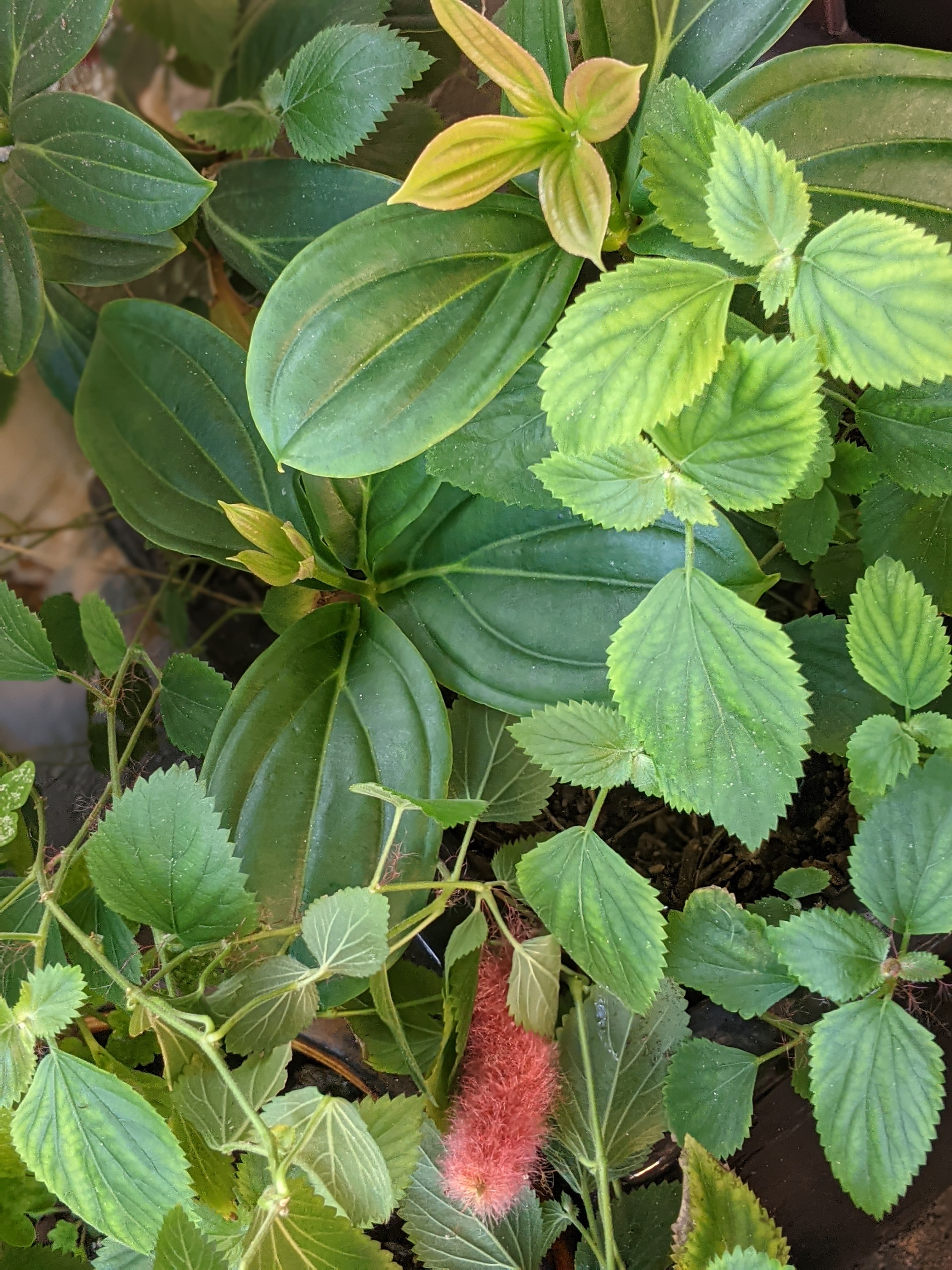
More funky texture, pink fuzzies are a tropical groundcover, Dwarf Chenille Plant (Acalypha pendula). I grow this in containers as it tends to disappear in winter. This summer it is sharing a container with Medinilla cummingii, I am breathlessly awaiting flowers from both of them.
I think I have finally made a posey. This particular posey is in a large shot glass; formerly used to hold tequila at my niece’s wedding. Were you thinking I was referring to the photograph as a shot. Nope! The glass. The alternate title was “Fresh as a Gallardia” – doesn’t quite have the same ring.
I was surprised to see the different meanings of posey. This one is simply flowers in a vase on Monday..
My garden is filled with Beach Daisies and Gallardia in July. Both flowers are very cheerful and seem to smile as I walk through the garden. They are also remarkably drought tolerant and reseed prolifically – the Beach Sunflowers have to be asked to leave the garden now and again. Though they are never truly gone.
Here are the fresh Gallardias:
A closer view of my tequila shooter:
The red and yellow daisies are Gallardia pulchella, the subject of one of those tiresome native plant dramas. The powers that be decided they are not native to Florida. Woe is me. The yellow daisies are still approved as native; and in latin, Helianthus debilis. If my husband gardened he would use a propane torch on these – they go wild with rain and humidity. I prune and pull. They are annoying. Our mailman, a native Floridian, once stopped to express his amazement I hadn’t gotten rid of the Beach Daisies as his mother thought they were weeds.
White spikes are Sweet Almond Bush (Aloysia virgata); sweetly fragrant and a great butterfly plant. Native to Argentina. Blue stems with flowers are Porterweed, another evil not quite native (Stachytarpheta jamaicensis). I guess it is native to Jamaica, but it thrives in my garden and is available in several colors. I wish for some coral…The other blue flower is a bit of Mona Lavendar Plectranthus, a cross from South Africa, if memory serves, and recommended by me. Background greenery is weed Asparagus Fern I keep at bay by cutting for arrangements.
I am joining the SOS group again to share six garden related images. This Saturday I was thinking of all the simple plants I enjoy everyday, most are in containers by a doorway leading outside.
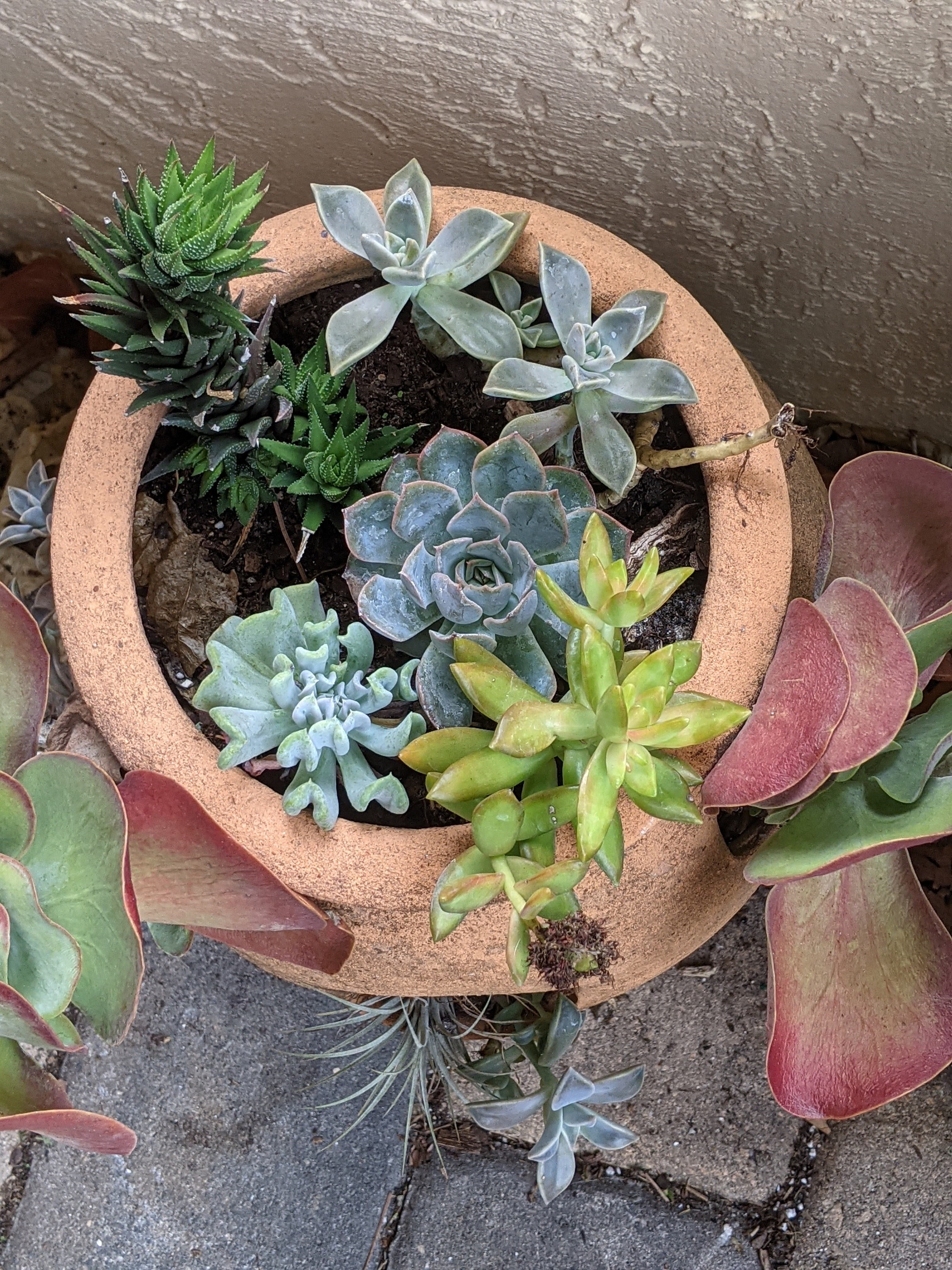
I keep succulents in containers on my south facing front porch. Many of these would drown if left outside during the rainy season. I found the strawberry pot by the side of the road, thinking when I picked it up “these things are useless”. Then, I filled it with sand and a little potting soil I had around and put some cuttings in.Voila, one of my favorite containers. To my knowledge, these are Haworthia, Graptosedum, and Echeveria in the top. Flapjack Kalanchoes are hanging out of either side and a Tillandsia and Graptosedum are hanging out in grey at the bottom. The pot is a bit of trick to water – dribble is the best way to water.
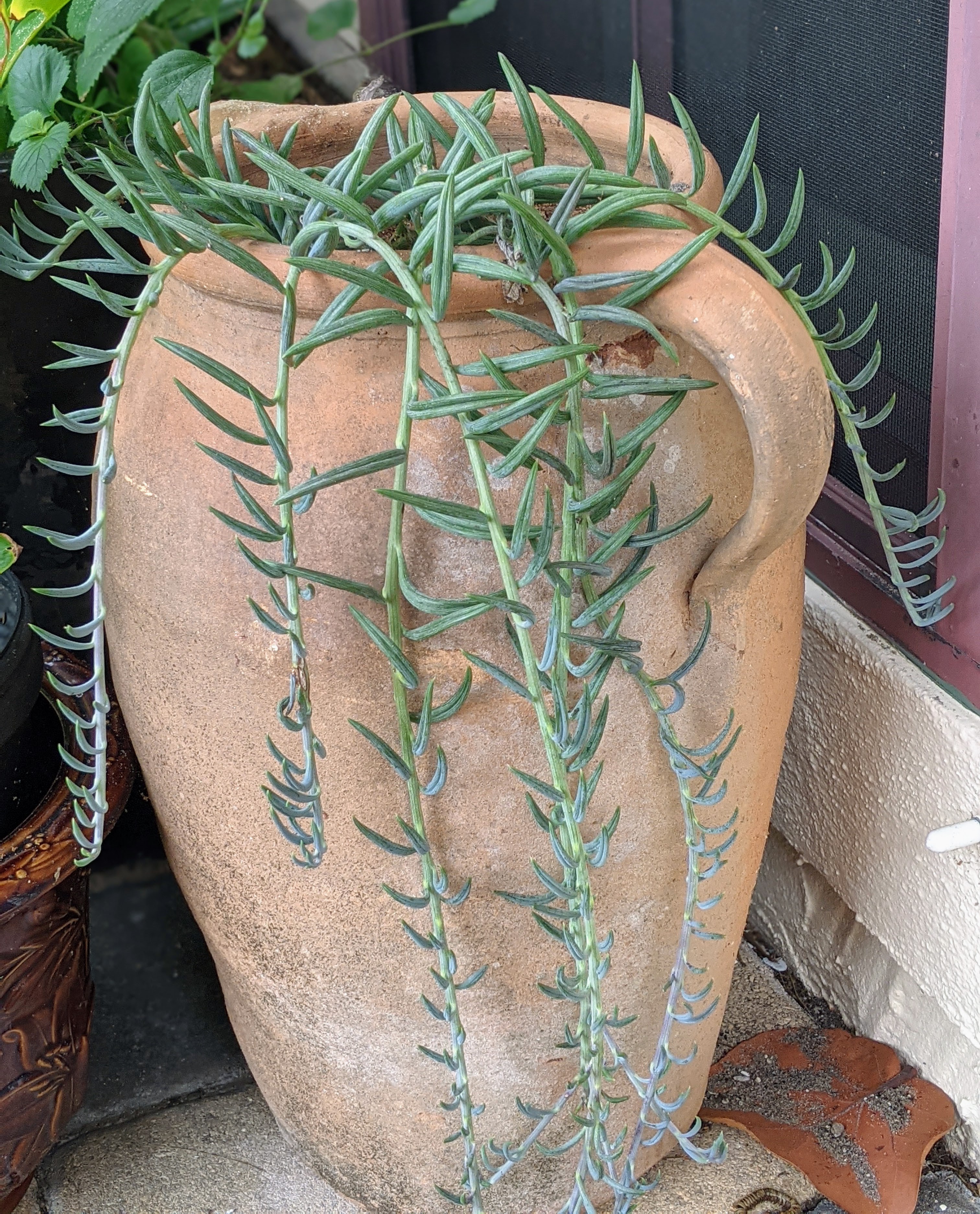
Fishhook Senecio hangs over the side of a former table lamp base that belonged to my parents.
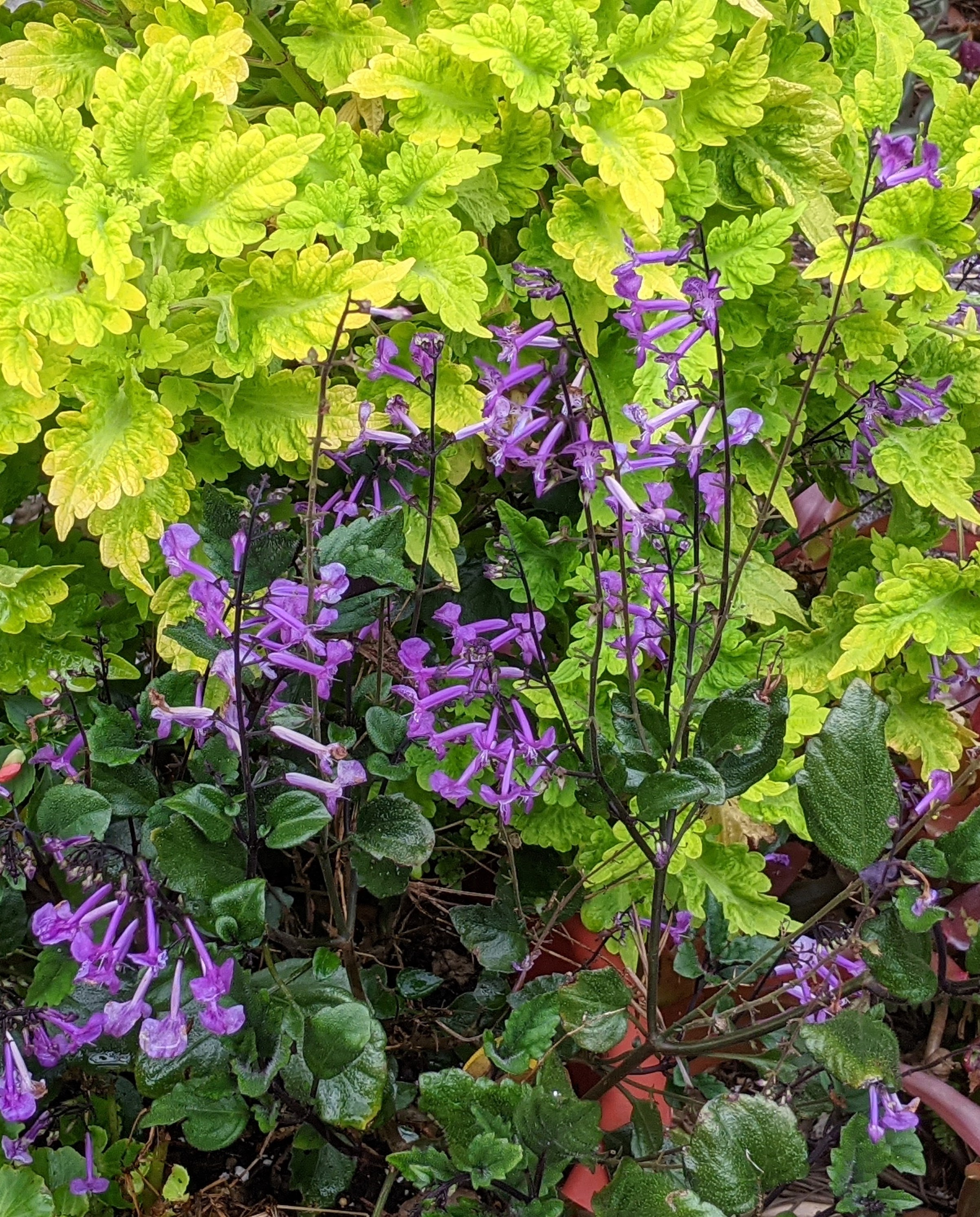
This is another container in my back garden with Mona Lavendar Plectranthus and chartreuse Coleus (maybe that is Plectranthus, too?)
A very happy Tropical Red Salvia growing in a pot of Bay Leaf on the back porch. These two peacefully coexist and I think the Bay may like the shade from the Salvia.
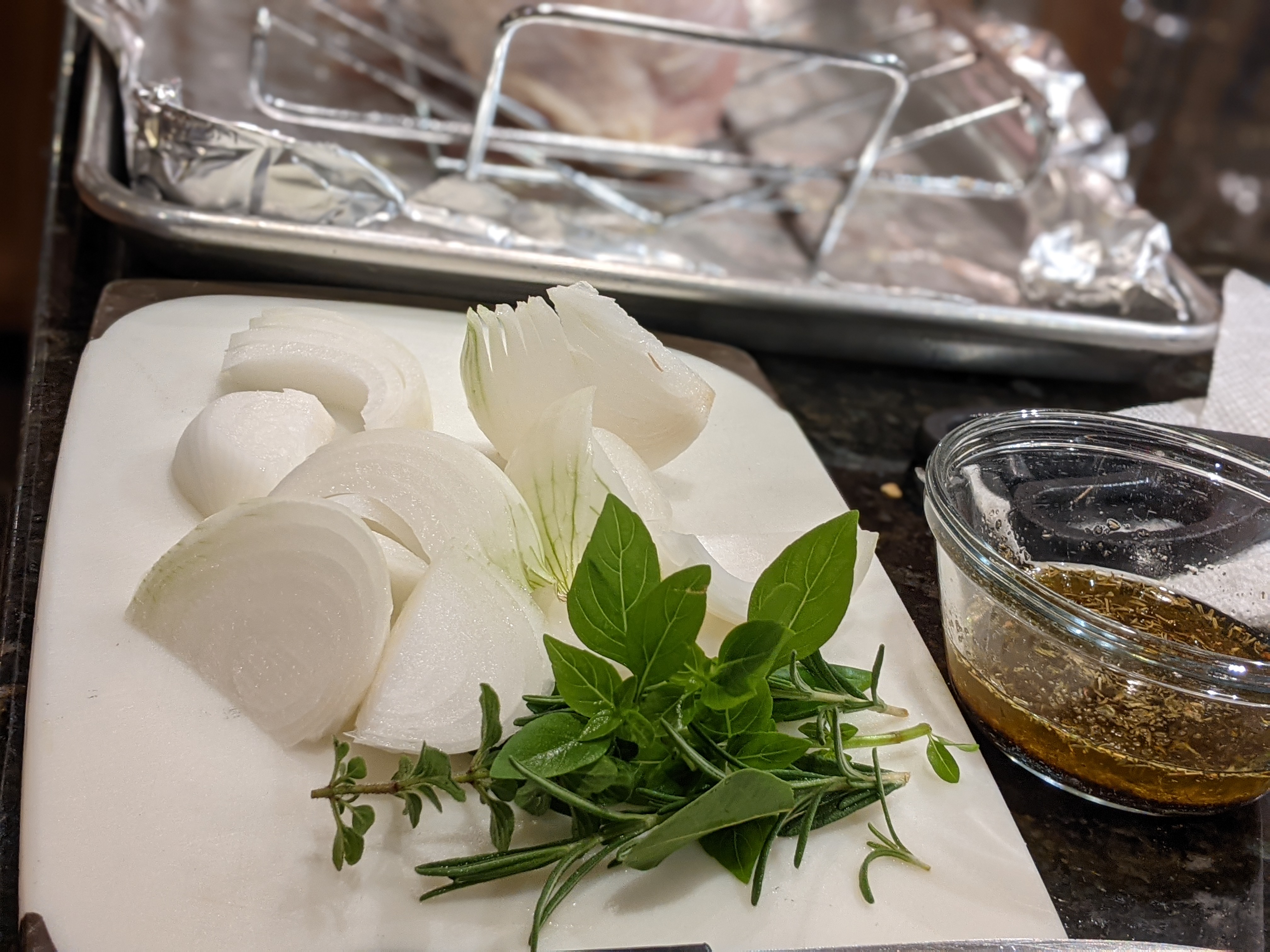
Fresh Rosemary, Oregano, Basil and Bay Leaf from my pots. There was a buy one get on free sale on turkey breasts at our grocery store. So, I am making a Balsamic Herb Roasted Turkey Breast for dinner. My husband smoked his and it is finished and on the counter. Not really sure what’s for dinner.
Not sure if smoked turkey counts as six. Here is another plant.
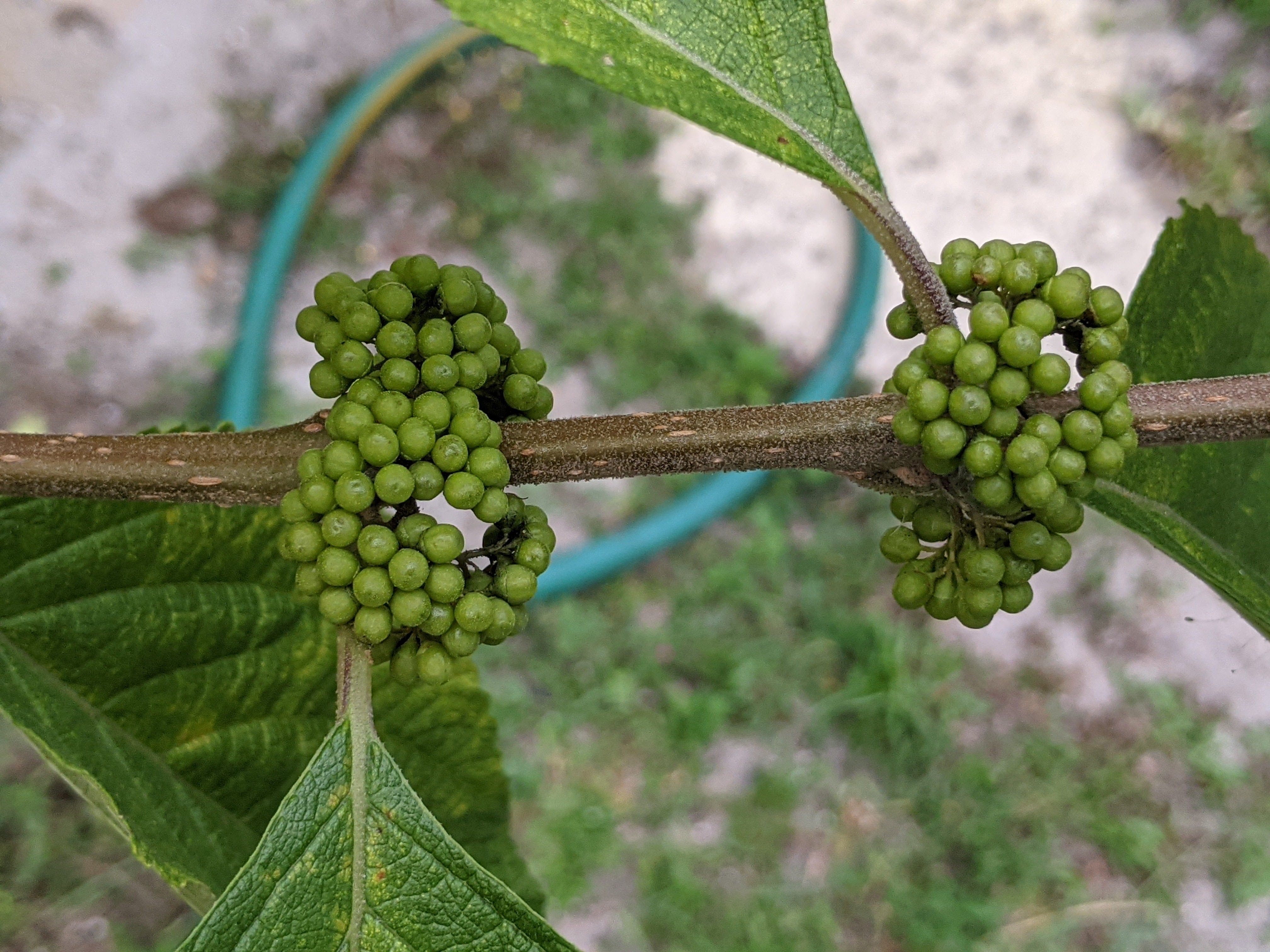
I planted a Beautyberry (Calliocarpa americana) by my screen porch door in hopes it would repel mosquitoes. I am not sure it does, though I do stuff leaves in my shoes sometimes if the bugs get bad (that does work, but you must wear socks) Anyway, the berries are forming rapidly and should show some color soon. It is also still flowering so I should have a long berry season.
Once again, I am joining the SOS crowd posting six interesting things from my garden. This Saturday, just past the Solstice and with the first hurricane forming in the Atlantic I am saluting my favorite Summer combos.
Mystic Spires Salvia and Dwarf Red Ixora, I love the contrast of colors. This bed also has white Pentas, yellow Callibrachoa, Blue Daze and chartruese Duranta.
Soap Aloe is flowering nearby.
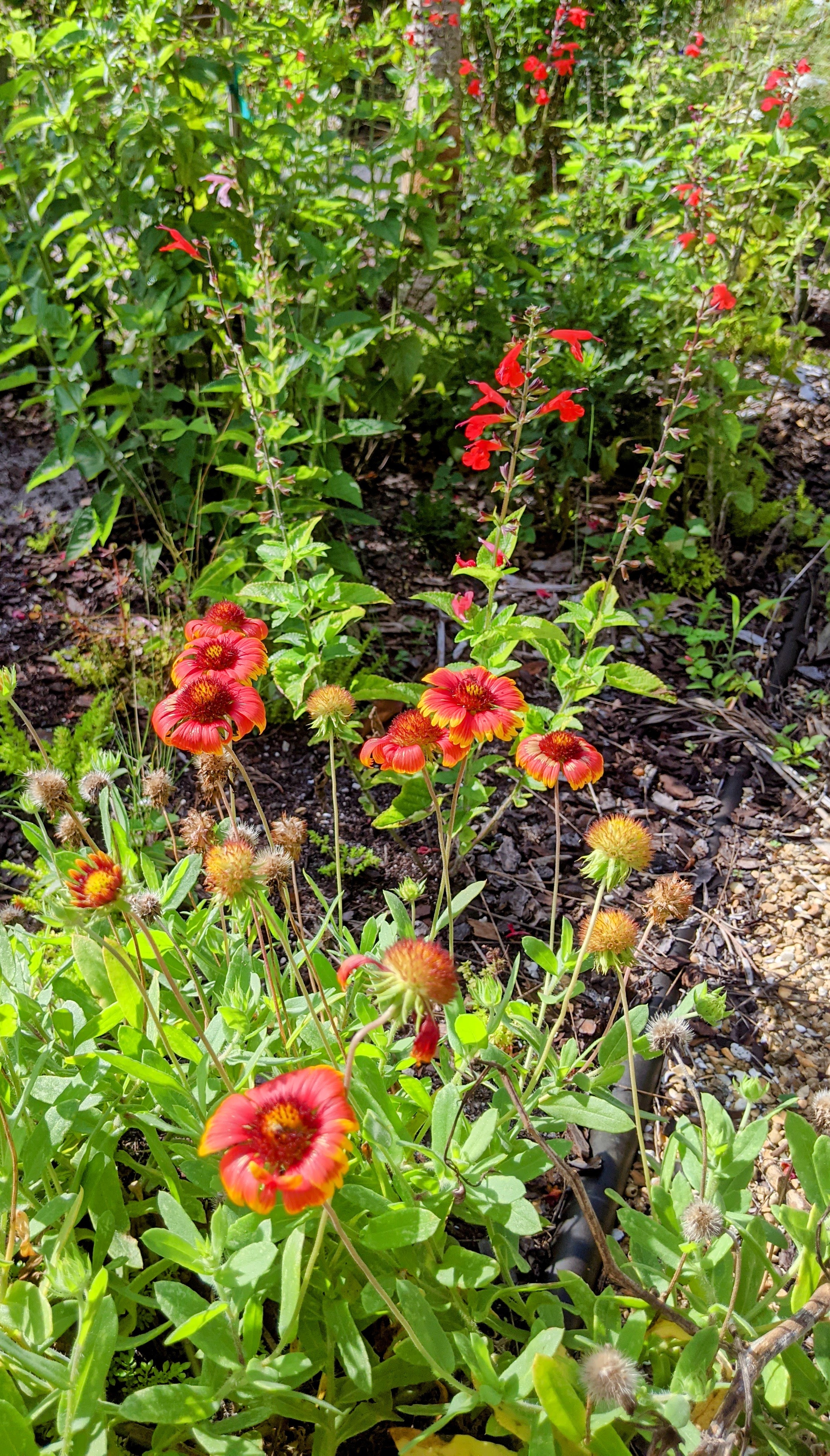
In the butterfly garden, Gallardia and Tropical Red Salvia are flowering.
White Heirloom Pentas and Tropical Red Salvia in the butterfly garden.
In the rainforest garden, shades of red, burgundy and green shimmer in sunny spots.
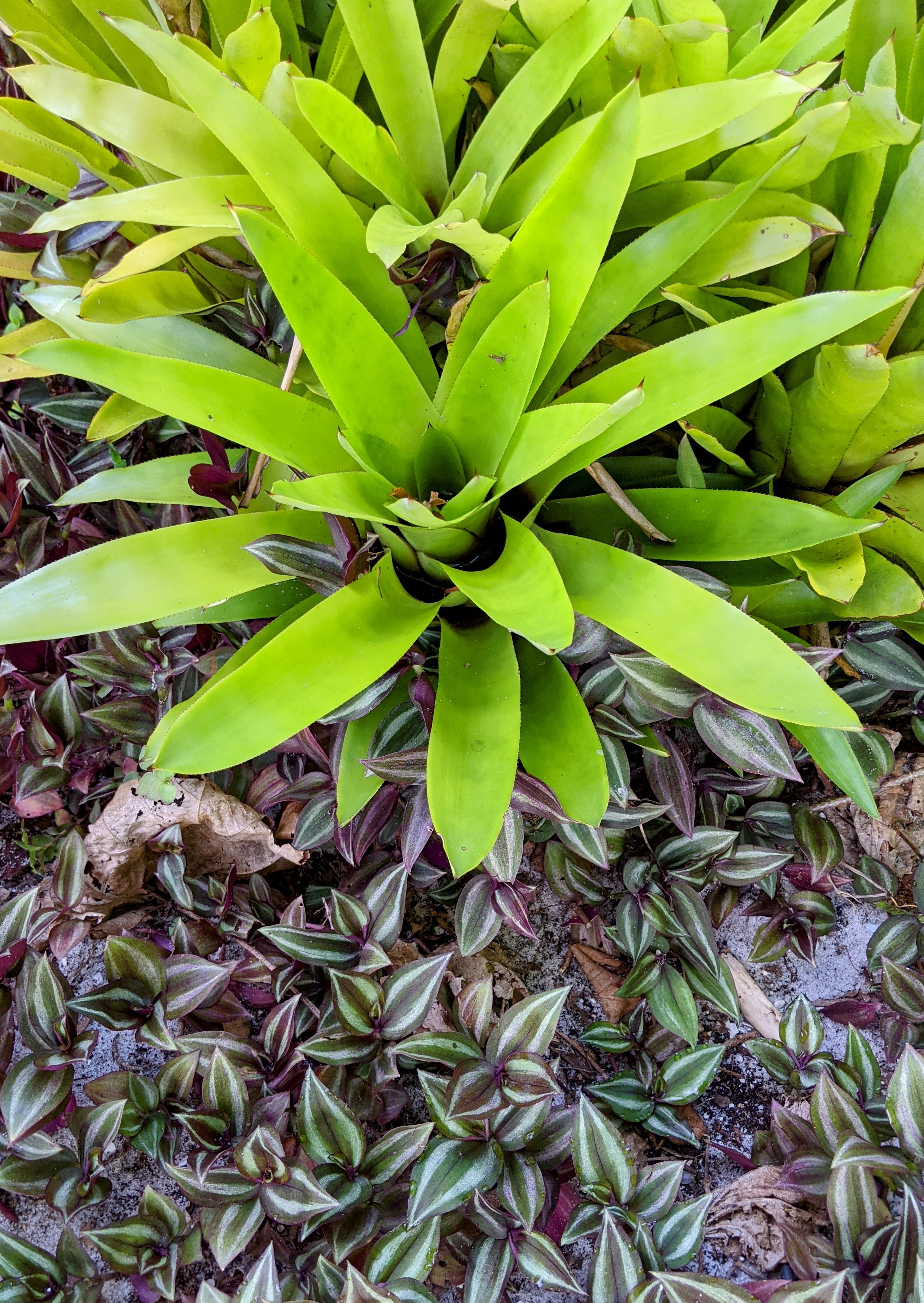
Foliage contrasts in the rainforest garden, chartruese Quesnelia Bromeliad and Zebrina Wandering Jew groundcover, still pretty without flowers. The Quesnelias have pink flowers in winter.
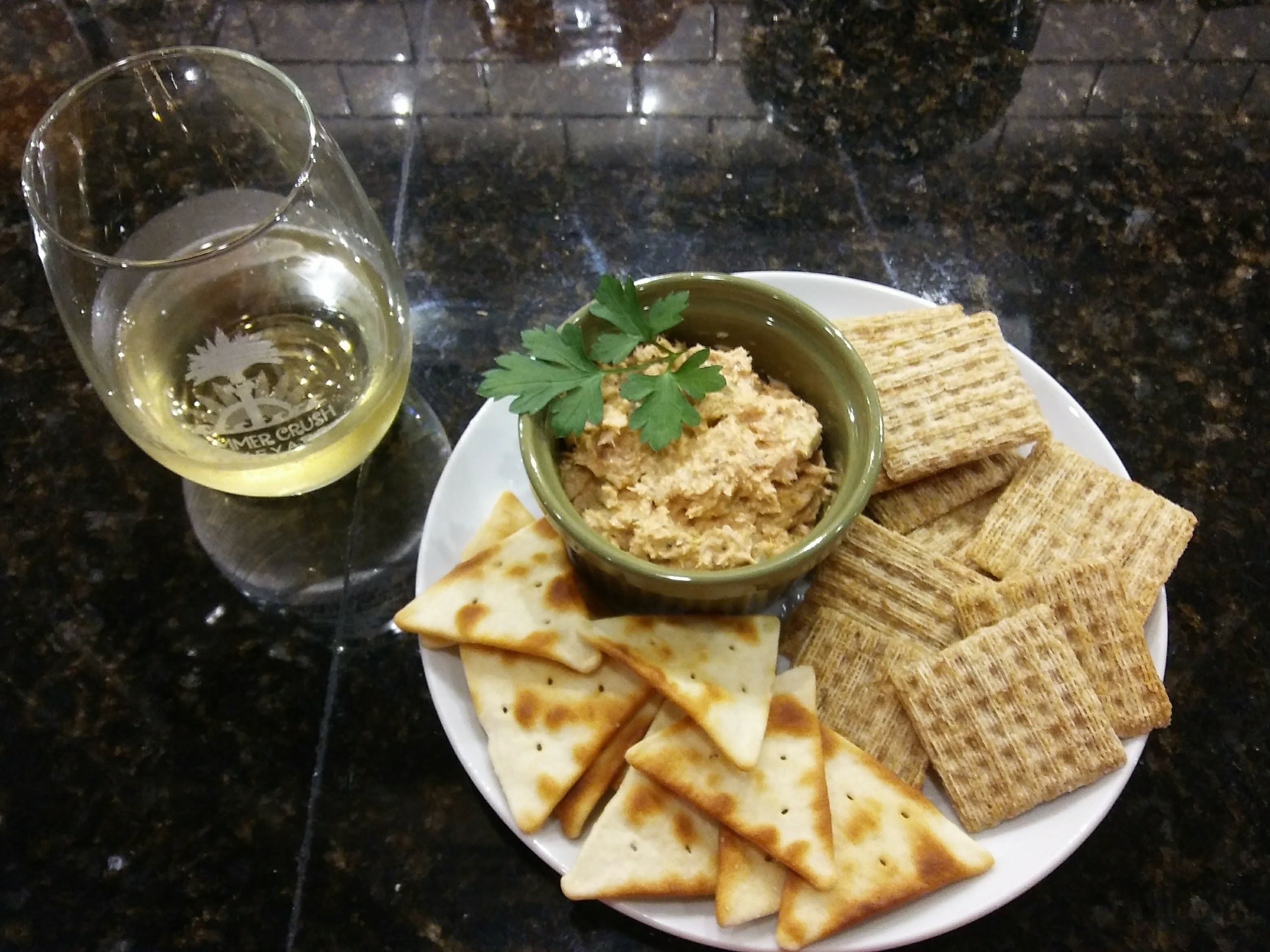
Last, but not least, my favorite snack. Smoked Fish Dip – I am in the midst of making a batch as I blog..wine and fish dip later.


















 The Shrub Queen