In a Vase on Monday – Cheers for Fall

00100lPORTRAIT_00100_BURST20190922112207521_COVER

We are finally getting hints of fall in South Florida. Temperatures have fallen to highs in the mid-80s (F) and humidity is down as well. I washed all my porch furniture slipcovers and had my first glass of wine outdoors in months. My husband smoked some Mahi Mahi and I made some Smoked Fish Dip in celebration of porch day.

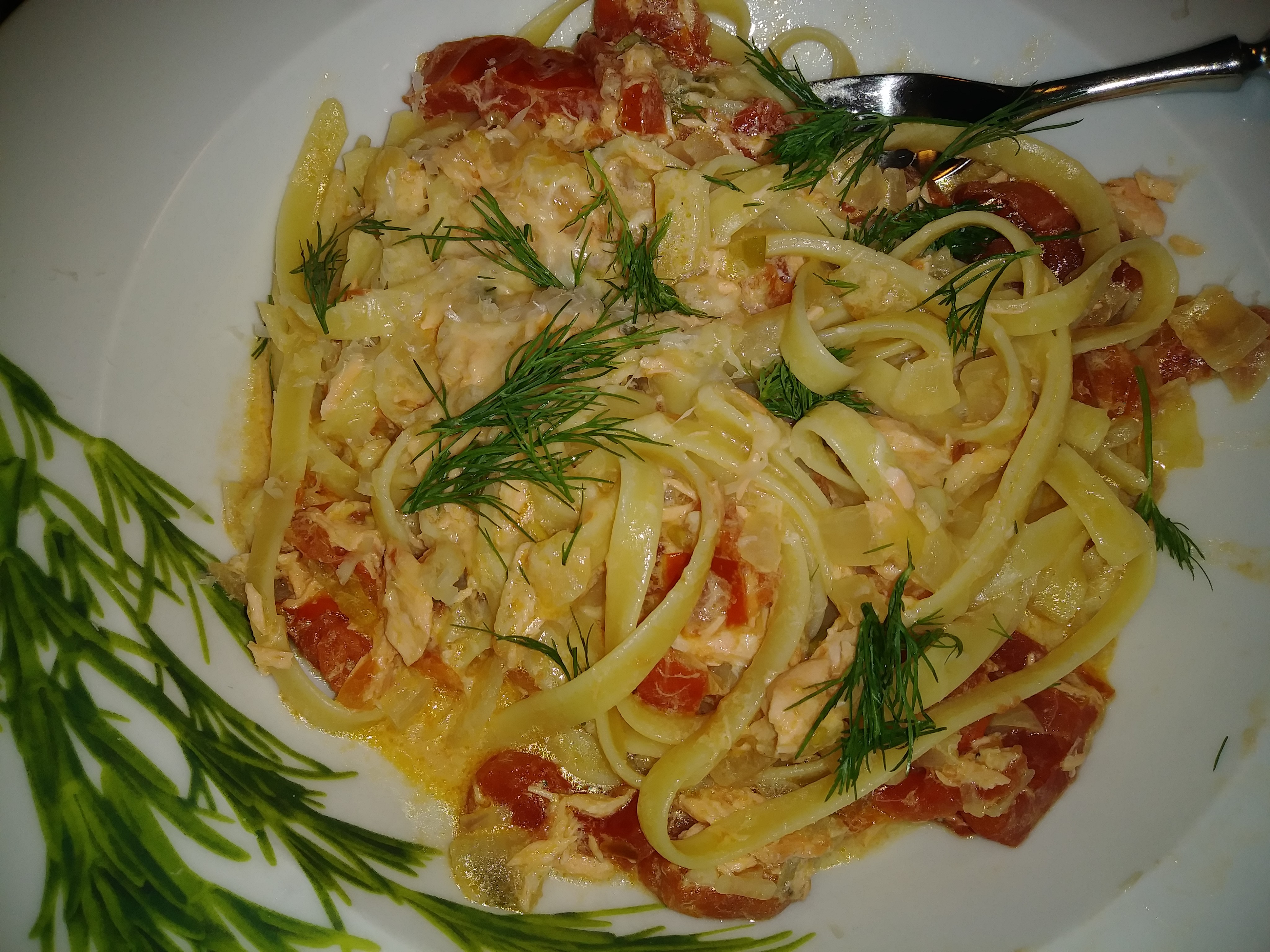
The ‘vase’ is a brandy snifter, though no one around here sniffs any brandy. The Honey Pepper Vodka is used to make Smoked Fish Pasta with Creamy Vodka Sauce. Nemiroff sounds like a villain in a James Bond movie, I wouldn’t drink any. The variety of vodka flavors available boggles my mind, this one adds some sweet spice to the sauce on the pasta.
20181116_184316

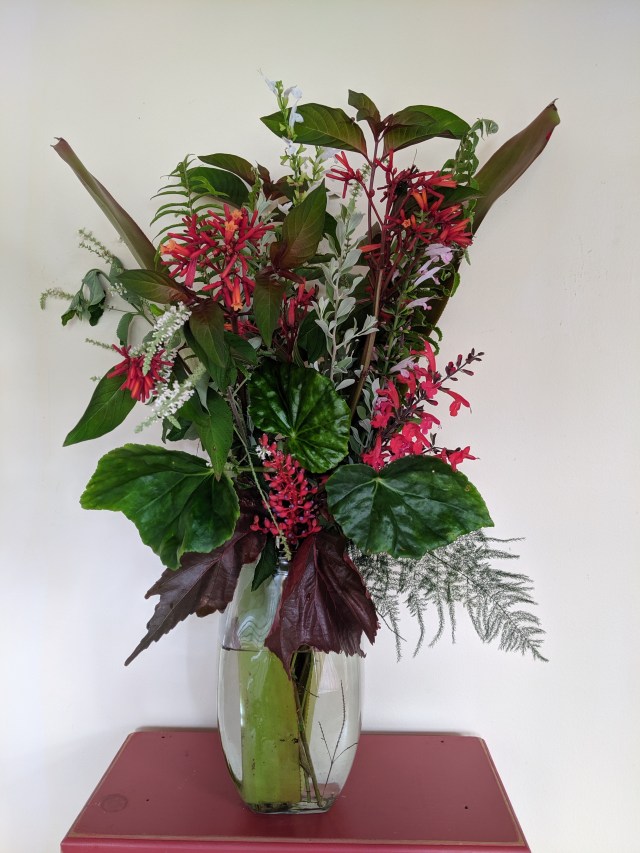
Another vase view.

IMG_20190922_112906

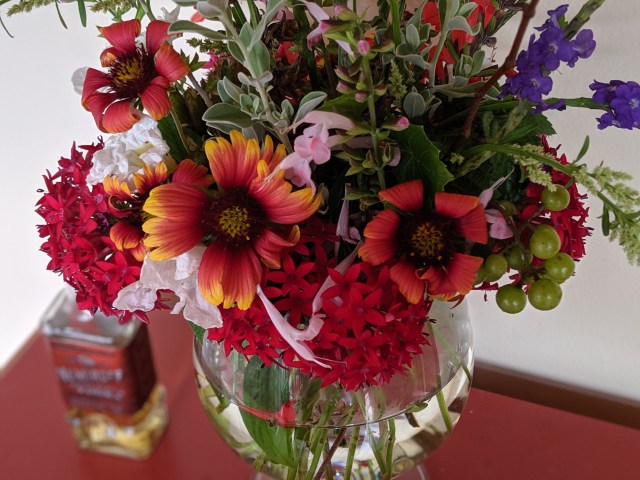
Sometimes it surprises me the number of stems I can get into a vase. This is one of those vases. The flowers are: starting at the base: red star-shaped flowers, Old Fashioned Pentas (Penta lanceolata); the white flowers are from White Geiger tree (Cordia bossieri); orange and red daisies are Gallardia (G. pulchella); grapes are from Muscadine vines (Vitis rotundafolia); pink and red spikes are Tropical Red Salvia (Salvia coccinea); blue flowers are Porterweed (Stachytarpeta jamaicensis); grey foliage is Barometer Bush (Leucophyllum); off white spikes are Juba Bush (Iresine diffusa).

Here’s a close up:
00100lPORTRAIT_00100_BURST20190922112241036_COVER

As always, Thanks to Cathy at Rambling in the Garden for hosting this weekly garden meme. To see other vases follow this link Cathy’s blog.

Cheers to Fall!

In a Vase on Monday – Feeling Cooler, Not.

00100lPORTRAIT_00100_BURST20190915130047722_COVER

September in Florida. It’s still blazing hot summer, though the calendar is telling me otherwise. Fall doesn’t arrive until October and it could be really late in October. My mental calendar still lives further north sometimes and expects cooler weather after Labor Day. In hopes of some mental cooling, I went in search of autumnal hues for my vase.

The vase is a thrift store find that I have used frequently and love for its chunky pottery vibe and the grey color provides great contrast to high colors.

IMG_20190915_130113

This is one of those vases I would have never conceptualized (realize I am a very highly seasoned design person, grey-haired and spicy). Conceptualized is design BS for ‘wouldn’t have thought of this’. Ugh, I hate that stuff sometimes. But there it is. Just popping out.

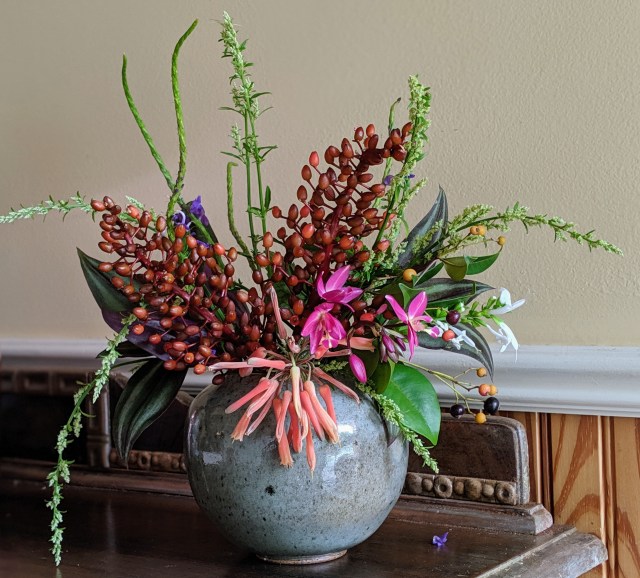
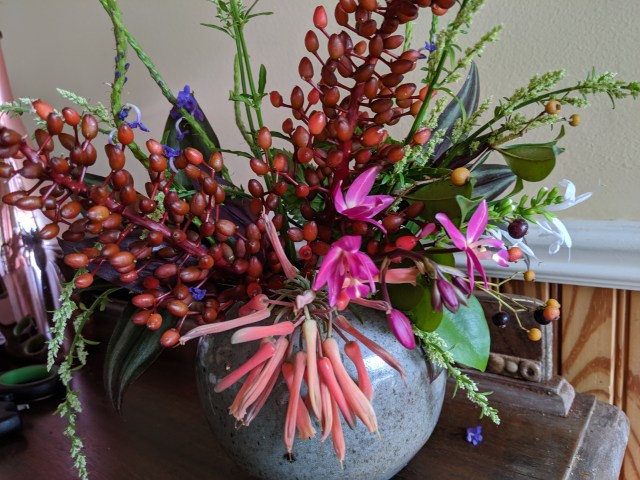
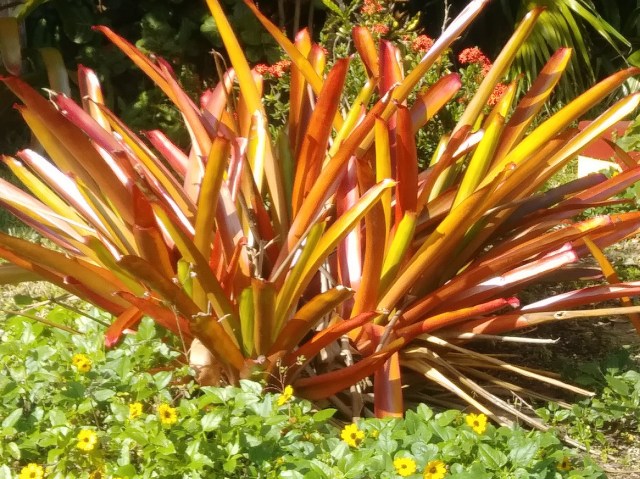
Wandering through the garden, I cut some white and purple – the white flowers are from Tropical Red Salvia (Salvia coccinea) – sometimes it is white. The purple flowers are ‘Cabernet’ Spathoglottis, a Ground Orchid. Then I saw the apricot/orange panicles, these are flowers from the Miniata Bromeliad, fading away. I was surprised to like the color. The usual color is below. The deep purple and gold berries are from a Spicewood (Calyptranthes pallens) – this is one of the supposedly ‘easy to grow natives’ that is not so easy to grow. It has been moved several times and finally seems content, in a place no book recommends. And it doesn’t smell like spices as of yet. The orange tubular flowers are from a Soap Aloe (Aloe saponaria), supposedly people made shampoo with these in the past – and then, the disclaimer. Many people are allergic to this, so caution is advised. There is not enough Benadryl in my house to make shampoo with this Aloe. The graceful creamy white spikes are from the Juba Bush (Iresine diffusa) – this is named for a Caribbean dance – Juba, because it sways in the wind like the dancers, and it really does. I guess I need a Limbo plant. Striped foliage in the back is from Wandering Jew (Transcandentia zebrina) that grows wild in my garden.

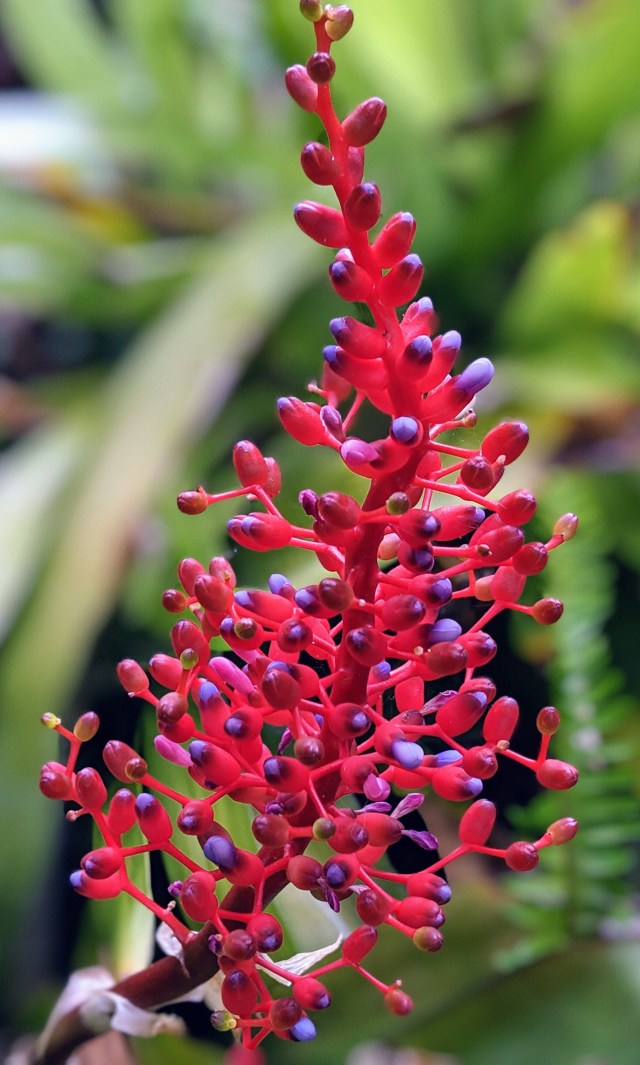
Here is the Miniata Bromeliad in flower.

00100lportrait_00100_burst20190705081030627_cover

An interesting difference in the Miniata, though I like both colors and this week the color is decidedly cooler.

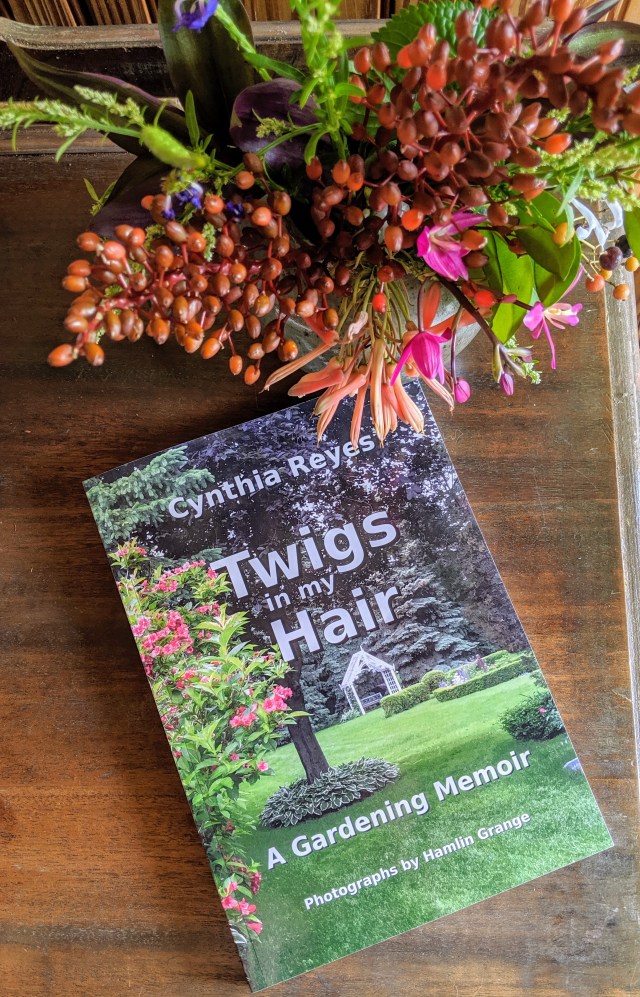
I just finished a good book and would like to share it with you. This book resonated deeply with me, having many similar thoughts and experiences in my garden. (I talk to my mother – who is dead – often in the garden, usually about my lack of gloves) I was happy to read other people do this.

A very enjoyable read by Cynthia Reyes, ‘Twigs in my Hair’

IMG_20190915_142838

In a Vase on Monday – Some Like it Hot

img_20190825_104452


Living in South Florida requires ‘liking it hot’. The weather certainly is and in my case the colors in my garden. I like it hot. I will say a little moderation in the temperature would be meaningful. I have seen our current weather described as ‘Hell’s Front Porch’.


image

This morning my husband sent me this, I don’t think it was actually quite that hot. However,  I decided to retreat to the air conditioning and leave the garden, letting the weeds take over a little more. We are up to 11.5 inches of rain for August and are expecting a few more inches from a nearby tropical system. The weeds are deliriously happy and reveling in the plentiful precipitation.

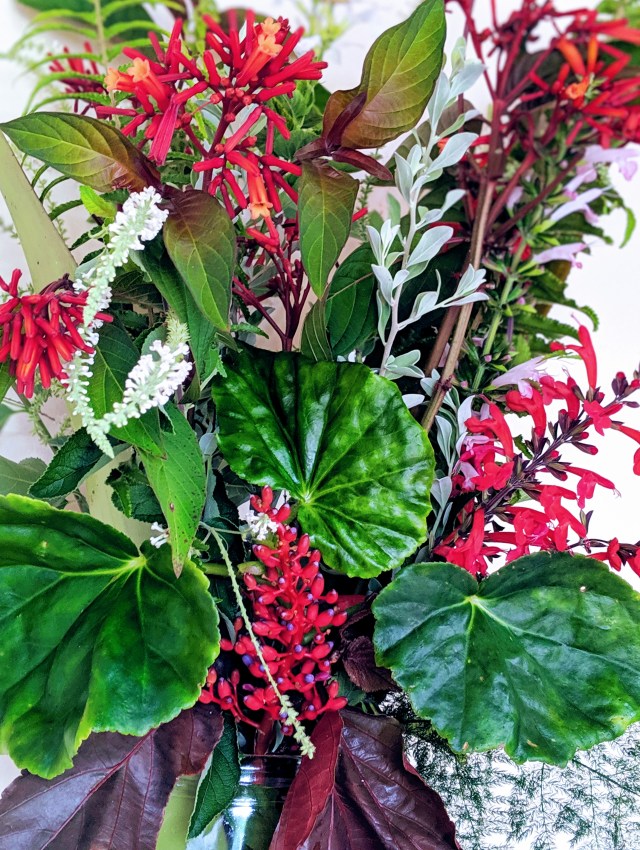
A closer view of the vase. The orange tubular flowers are appropriately named for the season, Firebush (Hamelia patens var patens) There is a botany war about the proper name of this plant. I decided that is its proper name.

00100lportrait_00100_burst20190825104540299_cover


The red spikes are from Tropical Red Salvia (Salvia coccinea), enjoying a banner year with all the rain, red flower at the base of the arrangement is Miniata Bromeliad (Aechmea miniata); white spikes are from Sweet Almond (Aloysia virgata) another great butterfly plant. There is a lot of foliage in this vase. The grey foliage is from the Barometer Bush (Luecophyllum); big green leaves at the base are from Sweet Begonia (Begonia odorata ‘Alba’); burgundy foliage is from a Copperleaf (Acalphya wilkesiana); two kinds of fern – Boston Fern (Nephrolepsis exaltata) and Asparagus Fern – both are volunteers. In the back some foliage from a Blanchetiana Bromeliad (Aechmea blanchetiana ‘Lemon’)


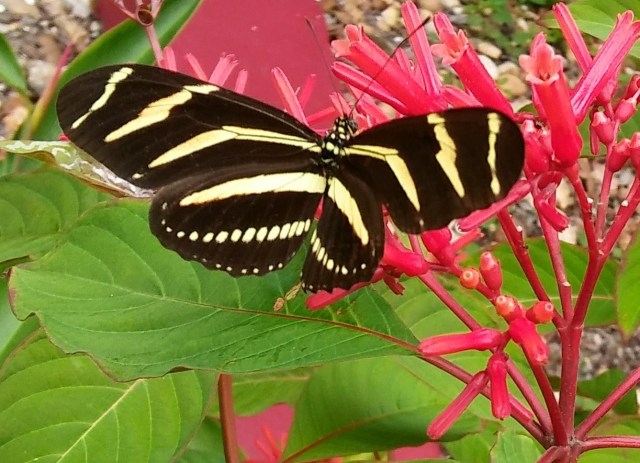
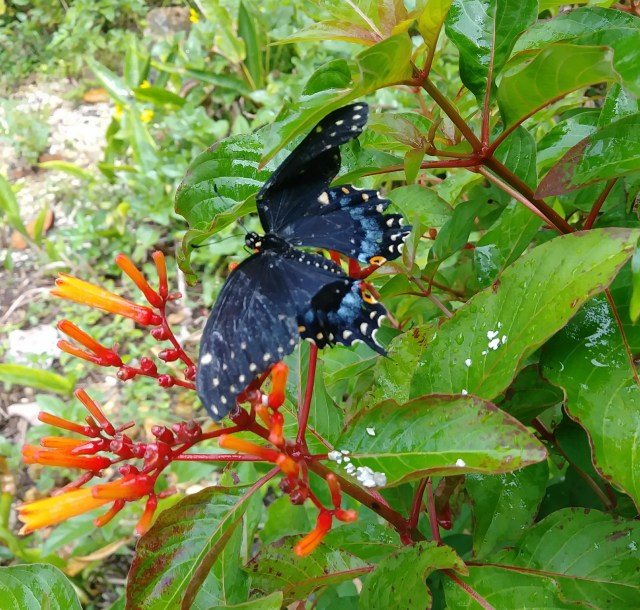
The Firebush with a friend. The Zebra Longwing butterflies have been enjoying its nectar this summer, I have seen five butterflies hovering around the flowers more than once. These are planted beside my front door, so I see them several times a day and enjoy the flowers and the Zebras.


20170608_152406-1

Every Monday Cathy at ramblinginthegarden.wordpress.com hosts In a Vase on Monday, to see more gardens and vases visit her blog.

Happy Gardening.

In A Vase on Monday – Jar of Weeds

IMG_20190818_120559

This is my final Jar of the August garden, featuring the weeds- an inevitable feature this time of year. It has rained just shy of 11 inches in my garden since the first of August. The weeds are thriving and having a joyous outbreak of reproduction. ACK.

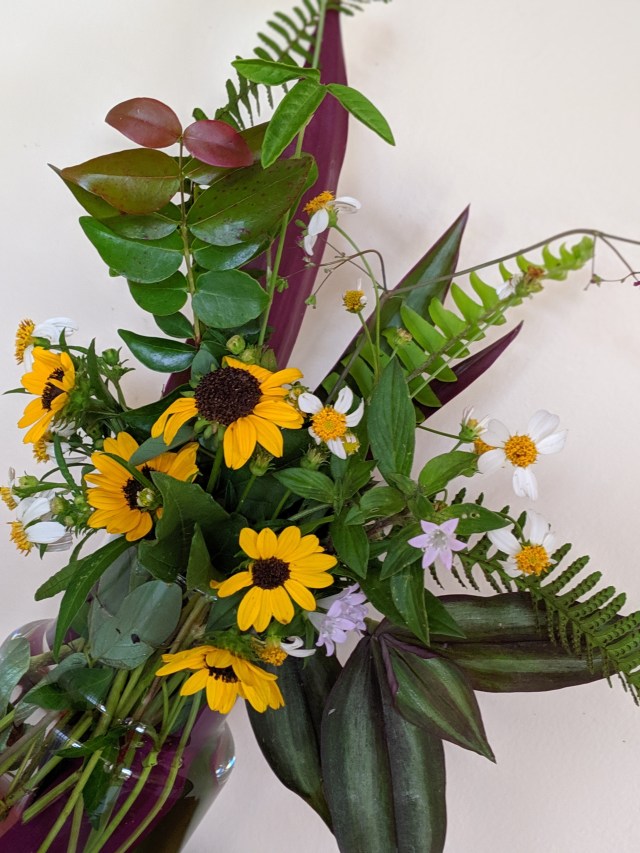
Recently, the mailman (a native of the Florida Keys) informed me that his mother would have pulled out all of the Beach Sunflowers in my front yard, pronouncing them weeds.  He thinks I am a gardening radical. These are the yellow daisies in the vase. I cultivate them in masses in my garden, they grow with or without irrigation in plain sugar sand and form a mat that reduces the less desirable weed population. I trim them with electric hedge clippers to maintain a low mass. 20190107_102831-1I suppose beauty is in the eye of the weed holder. Beach Sunflowers surround a Blanchetiana Bromeliad.
00100lPORTRAIT_00100_BURST20190818120609082_COVER

A closer view of my weeds: the white daisies are Bidens alba, a native Bidens prolific (producing an average of 1200 seeds per plant) to the point of making it difficult to like the flowers as well as the bees do. The pinkish-white, small, lily shaped flowers are from Florida Snow (Richardia grandiflora) – a Brazilian native that reportedly blew in with the hurricanes from the early 2000s. A low growing perennial weed that infests lawn creeping through the blades of grass then flowering until it looks like snow on the lawn. I have pulled a zillion of these, they also reseed and will grow from cuttings (lawn mower cuttings)

Tropical plants also get loose in Florida gardens, purple foliage is from Oyster Plants or Moses in a Cradle (Transcandentia spathacea). I happen to like this plant, but it reseeds with vigor and is considered invasive. Purple striped foliage is another Transcandentia I like, T. zebrina also appears unbidden in shady areas. Ferns are Asian Sword Ferns, spread by birds and tending to take over our native Boston Fern. The red tipped leafy foliage is from Surinam Cherries (Eugenia uniflora) also called Pitanga. Pitanga is a small red cherry-like fruit with an (in my opinion) not so tasty tang of turpentine spread everywhere by grateful wildlife. The wispy flowers at the top are from a plant I am not recalling the name of, have a carrot like taproot and produce hitchhiker seeds that stick to my pant legs and greyhound noses. These have different colored flowers and can be pretty – but, are always asked to leave the garden if the soil is moist enough to pull the taproot out.

Here are the three jars of August – appearing in the same repurposed pasta jar – The first, flowers:

00100lPORTRAIT_00100_BURST20190804094909230_COVER

The second, tropical flowers:

IMG_20190811_103347

And this week, the weeds.

IMG_20190818_120559

You may notice the weeds appear in more than one jar.

Maybe I am a gardening radical.

In a Vase on Monday – Jar of August Tropical Version

IMG_20190811_103347

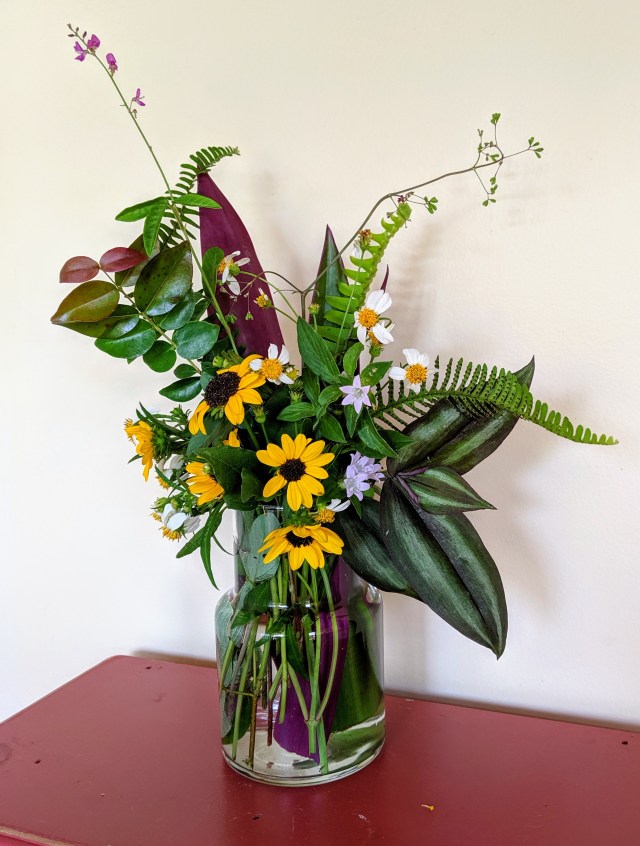
My repurposed pasta jar makes its second appearance filled with the tropical side of August in the garden. This month has been steamily perfect for growing tropical plants; more than 6 inches of rain has fallen thus far and it is currently pouring down. The greyhounds are a little grumpy. The lightning show offshore at night has been keeping everyone awake.

00100lPORTRAIT_00100_BURST20190811103024941_COVER

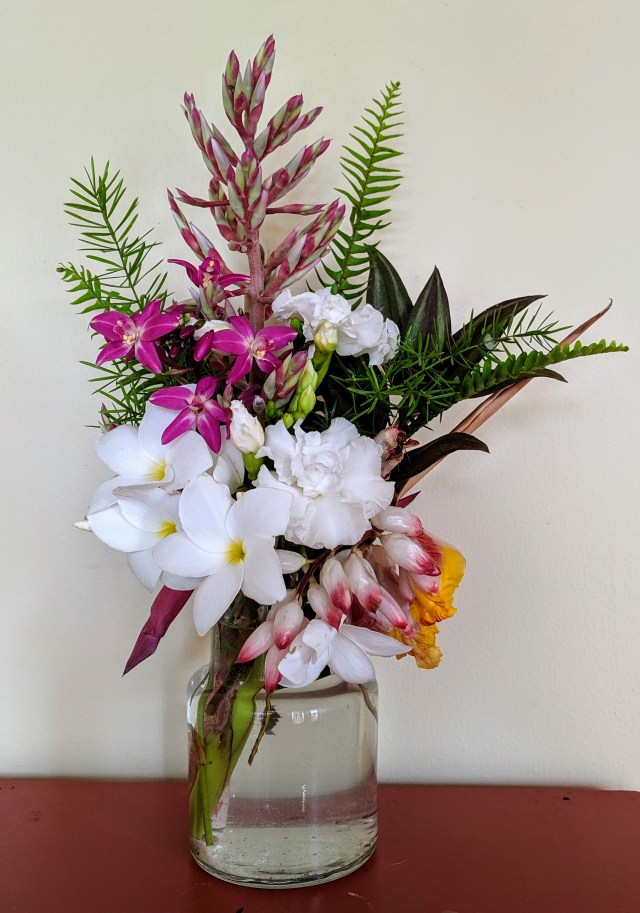
A closer view, the colors were a happy gardening accident. I do not consider myself a pink person, but there it is. Foliage in the background is two ferns that freely go wild in Florida. Asparagus Fern (Asparagus aethiopicus) and Asian Sword Fern (I think) – both are considered invasive – it would take a bulldozer to rid my garden of these. I have pulled out cubic yards of them.  The purple and silver leafy foliage is Wandering Jew (Transcandentia zebrina) – if there is a more politically correct common name, I am not aware of it, though I do wonder about all the wandering and why Jews? The yellow and pink spikey flower in the back is from one of my garage sale Bromeliads. I have no idea what it is; the foliage is very thorny and is grey with a pink cast. The purple flowers are Ground Orchids (Spathoglottis ‘Cabernet’) dreadful name but a lovely little perennial that flowers off and on year round. The last pink flower is Shell Ginger (Alpinia zerumbet). In white with yellow centers Bridal Bouquet Frangipani. The Frangipani keeps flowering and I keep cutting them, I love the fragrance and added some Tropical Gardenias (Tabernaemontana diviricata) to the jar for some additional punch. Recently I ran across a Ylang Ylang tree (a major part of Chanel No. 5 perfume’s allure) Finding they will grow in my garden I am plotting the perfect location. Not a particularly lovely tree, but the fragrance from the flowers is heavenly.

Both Jars of August for comparison:

00100lPORTRAIT_00100_BURST20190804094909230_COVER

Last week

00100lPORTRAIT_00100_BURST20190811103004139_COVER~2

This week – Tropical version.

Thinking I should do a jar of weeds next week. Some are attractive and a major component of the garden in August.


In a Vase on Monday – August in a Pasta Jar

00100lPORTRAIT_00100_BURST20190804094909230_COVER

The Dog Days of Summer are upon us. August dawned with steamy tropical heat punctuated by thunderstorms followed by a deluge of rain that emboldened and enthralled weeds overtaking the garden. I try to keep all the seed heads picked off the most noxious weeds in hopes of containing their numbers. It seems things make seed earlier here taking advantage of the rainy season to establish a new generation.

My Beautyberry (Calliocarpa americana)  is packed with fruit and was blocking access to our irrigation controller so I trimmed a branch for this vase. Floridians make jam with this – I may have enough berries this year, although the universal reaction to the jam (from non-Floridians) has been ‘it doesn’t taste like much’. Probably best left for the birds. And I won’t have to engage my botulism phobia. This is one stem of a 6-foot shrub.

00100lPORTRAIT_00100_BUbeautyberry

The vase is an old pasta container that long ago lost its lid. While cutting flowers, it occurred to me I was getting a real taste of late summer in Florida without any of the imported tropicals. I left Frangipani, Heliconias, Orchids, and Bromeliads flowering in the garden.

00100lPORTRAIT_00100_BURST20190804095022126_COVER

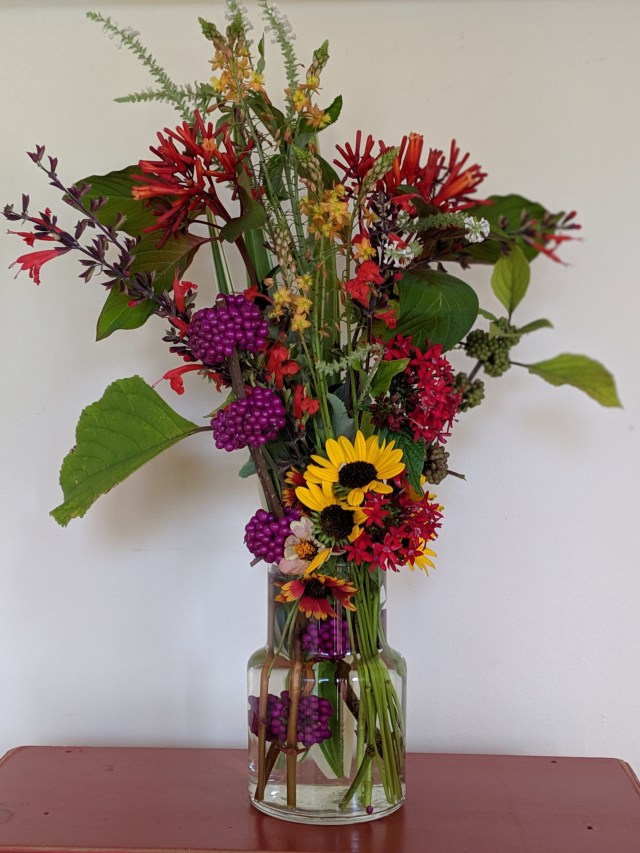
The contents of August in a jar: purple and green berries; American Beautyberry (Calliocarpa americana); white flowers, Sweet Almond (Aloysia virgata); orange and yellow spikes, Bulbine frutescens; red spikes, Tropical Red Salvia (Salvia coccinea); red star shaped flowers, Heirloom Pentas (Penta lanceolata); tubular red/orange flowers, native Firebush (Hamelia patens var patens); Daisies at the base; in yellow, Beach Daisies (Helianthus debilis); in apricot, some mysterious Zinnias and some native Gallardia (Gallardia pulchella). The Gallardia was thoughtlessly cropped out by me – it can be seen in the picture at the top of the post.

Maybe next week I will have a Tropical Jar of August!

In a Vase on Monday/ Not Hotel California

00100lportrait_00100_burst20190728103235284_cover

Mirrors reflect the foyer ceiling

Pink Champagne bottle in Grandmas ice bucket

And she said, ‘we are all prisoners here of my Bromeliad vice’

Here is the real lyric verse from the song ‘Hotel California’ by 70s American Rock Band, The Eagles. I hope someone else remembers it.

Mirrors on the ceiling,
The pink champagne on ice
And she said, ‘we are all just prisoners here, of our own device’
And in the master’s chambers,
They gathered for the feast
They stab it with their steely knives,
But they just can’t kill the beast

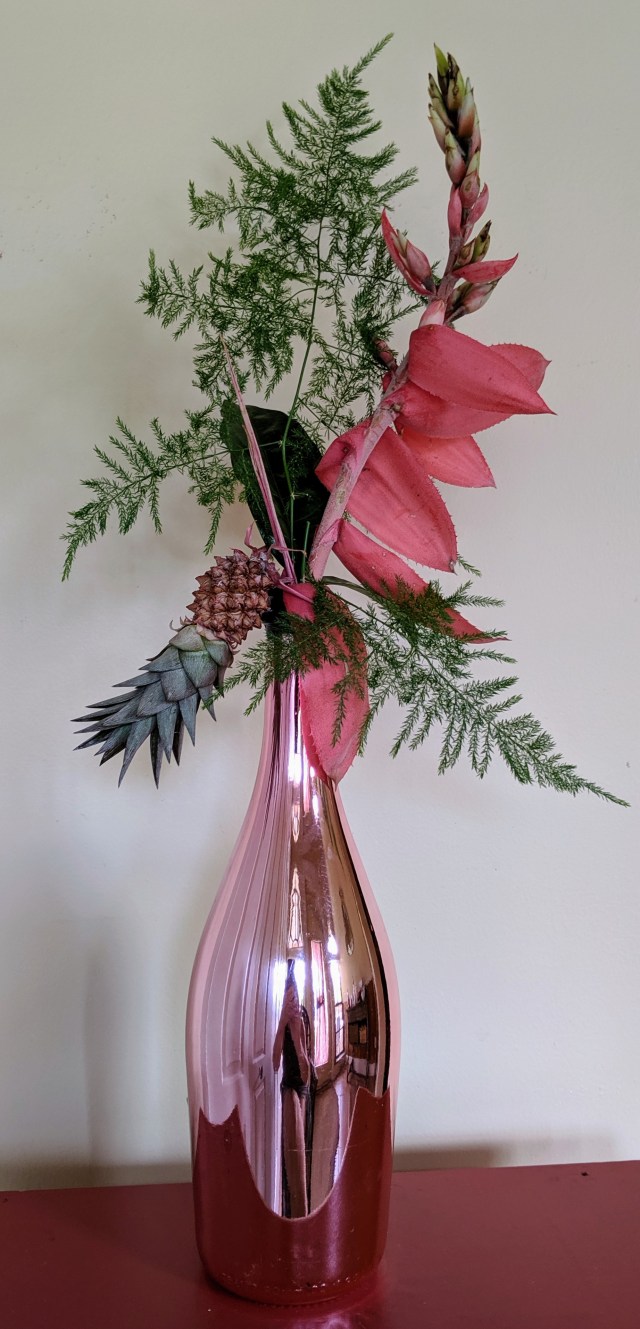
I always thought Hotel California was a weird song, very evocative, but weird. This is another of my spa/hotel lobby arrangements.

img_20190728_104349

The pink flower is ‘Little Harv’ Bromeliad (Aechmea ‘Little Harv’) Little Harv was developed in South Florida in the 1970s and is a popular and easy to grow perennial. Ironically, Little Harv is relatively tall reaching about 3 feet. The Dwarf Pineapple (Ananas spp) is another Bromeliad I used in a vase a few months ago, it dried in this downward curve. The background is a Tropical Gardenia leaf (Tabernaemontana divaricata) and some Wild Asparagus fern. The pink bottle is from Champagne a friend brought to share at a dinner party and the crystal ice bucket is Fostoria from my grandmother.

00100lportrait_00100_burst20190728104518820_cover

Here is Little Harv in bud and full bloom. I cut this one today as it is in a bit too much shade and our lawn mowing crew is very likely to run it over.


In a Vase on Monday – Palmy Weather

img_20190721_103648

Palmy weather? It is indeed. Some, not all of the palms in my garden are flowering. The pale green flower in the center of this vase is from the Adonidia or Christmas Palm. I am not sure why so many Floridians feel compelled to cut the flowers off their palms. This one will bear red fruit at Christmas that looks like ornaments for the tree, hence the name. And the flowers are so unusual and eventually provide food for wildlife. More unsolvable mysteries for the Florida gardener.

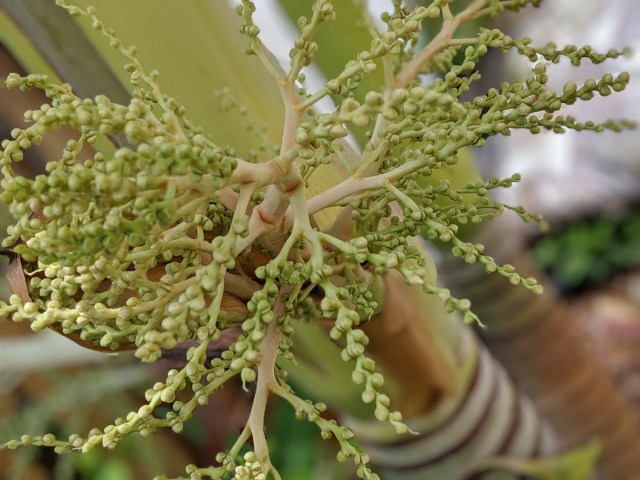
Here is the flower as it first appeared, I cut it because it was broken somehow and hanging onto the trunk by a thread. My friend Eddie grew the palm from seed. It is now 10 feet tall and flowering, I am so pleased and can’t wait for the Christmas ornaments.

00100lPORTRAIT_00100_BURST20190622130923887_COVER

A closer look at the flowers. In pale green, the Adonidia Palm (Adonidia merrillii); the orange flowers with berries are from Firebush (Hamelia patens); long burgundy foliage is from Blanchetiana Bromeliad (Aechmea blanchetiana) and the burgundy leaves are from Copperleaf (Acalypha wilkesiana)

00100lportrait_00100_burst20190721103723707_cover

In addition to being Palmy, it is also pretty balmy here in South Florida. So far, I am enjoying the summer and the butterflies, mostly in the late afternoon looking out the window whilst having a glass of wine on the sofa.

20180701_112529-1


img_20190721_103648

In a Vase on Monday The Wrath of Grapes

00100lportrait_00100_burst20190714102329533_cover.jpg

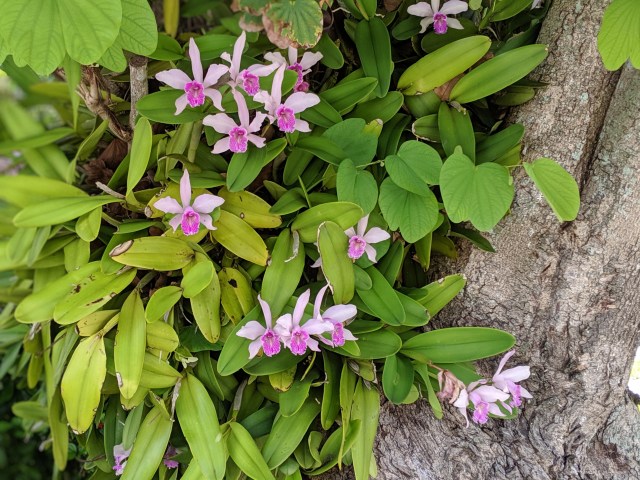
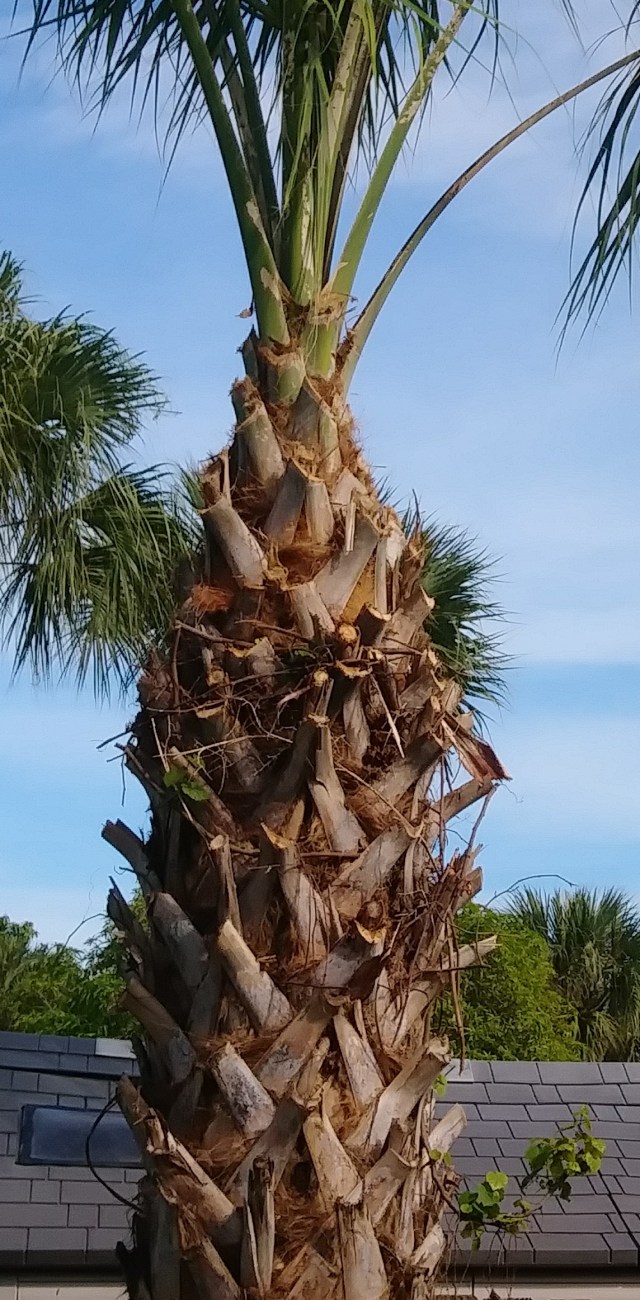
I have been dreaming of a stumpery garden for years. I was inspired last week by the Orchids I posted on Wordless Wednesday and realized the booted Sabal Palm in my garden offered the perfect opportunity to add some orchids and ferns to its trunk during the summer for establishment during the rainy season.

The  orchids:

00100lportrait_00100_burst20190710131119708_cover

The booted Sabal Palm (as I remember it)

20181009_152741-1

The current state of the palm:

00000img_00000_burst20190714194810583_cover

These are our native Muscadine Grapes (Vitis rotundafolia) grown up the palm from my neighbor’s fence in a period of six months or so. This happened while I wasn’t looking. Welcome to Florida. My only excuse is I am not as tall as the vines and didn’t look up. Sigh.

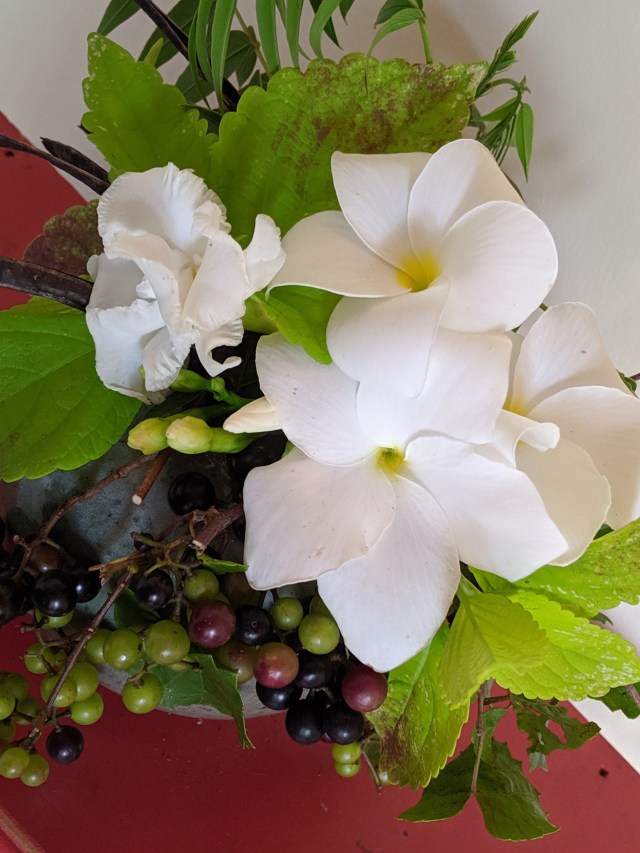
The wrath of grapes. The grapes are pretty, but inedible (big seeds with bitter flesh). I decide to cut some for an arrangement.

00100lportrait_00100_burst20190714102329533_cover

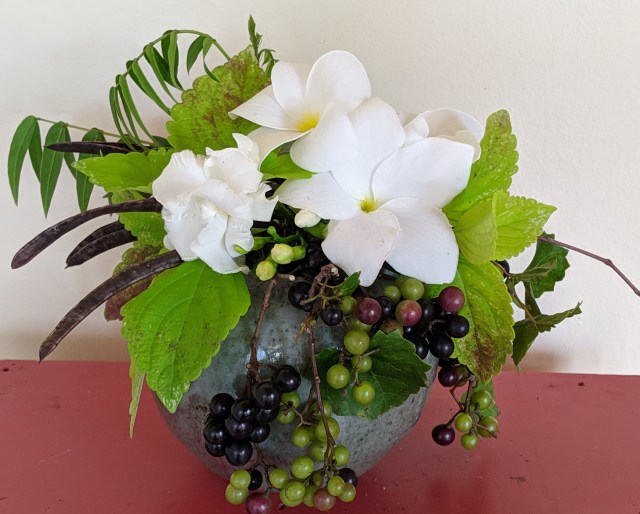
The brown pods and green ferny leaves are from Senna ligustrina, a native butterfly plant; the chartreuse foliage is from ‘Alabama Sunset’ Coleus; white flowers are Tropical Gardenia (Tabernaemontana diviricata) and with the yellow eye, Bridal Bouquet Frangipani (Plumeria pudica). I can’t resist the fragrance, especially with the sour grapes.

00000img_00000_burst20190714102302057_cover

In A Vase on Monday – A Southern Classic

00000PORTRAIT_00000_BURST20190707101121090

In college, I took a class about perennials and designing perennial gardens. The teacher was Bob Hill, he has a Siberian Iris named for him – a deep purple. He was a true Southern plantsman and longtime professor, teaching Planting Design and Plant Identification. My guess is, by the time I took his class, Mr. Hill, in his 50s, had one too many smarty pants student say something annoying. He did not suffer fools gladly and you did not want to be the fool. A good teacher, if you listened. I was lucky to have the perennials course, it was rarely taught and I sincerely doubt the powers that be would even consider such a course nowadays. God knows you don’t want to teach Landscape Architects how to landscape anything. I’ll stop there and save my opinion about Landscape Architecture schools for another time.

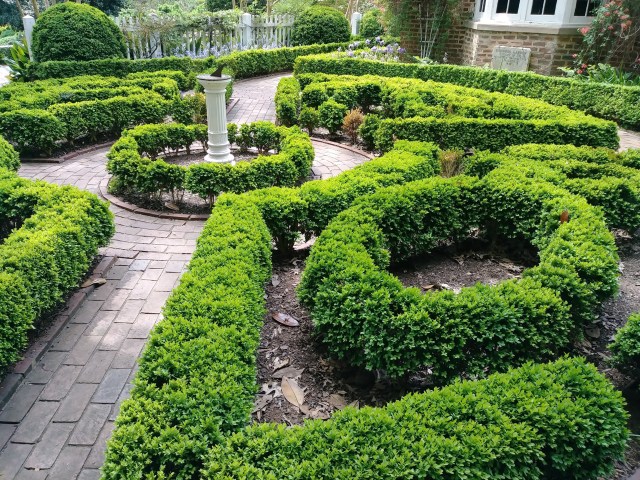
Here is the point! We were taught the correct color scheme for a summer perennial garden is cool blue, pale and lemon yellows and pure white. This was supposed to be cooling and soothing in the summer heat. White gardens were brought up as a possible alternative and one wasn’t supposed to use hot colors until the fall and then pastels in spring. I suspect Bob Hill is spinning in his grave if he has visited my garden from the great beyond. A garden he worked on:

20190413_132255

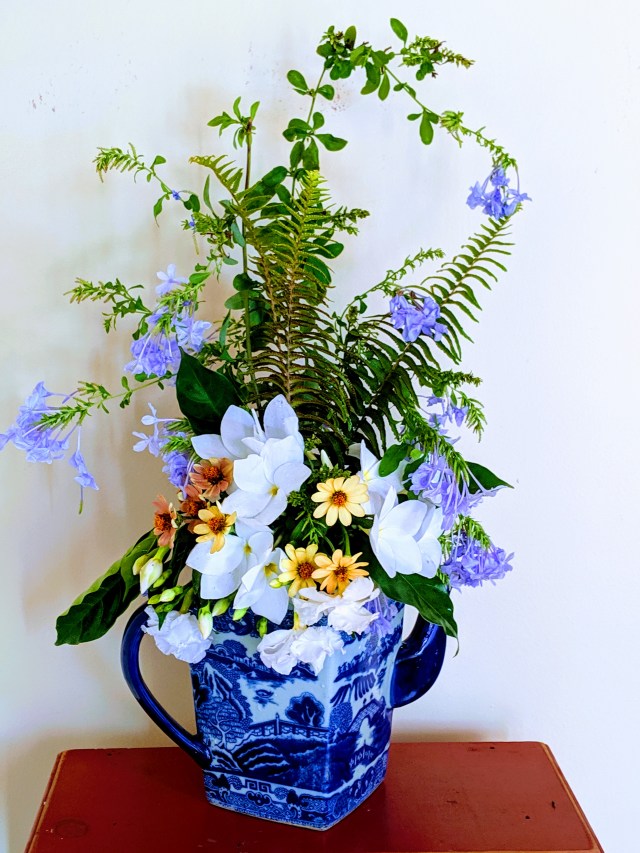
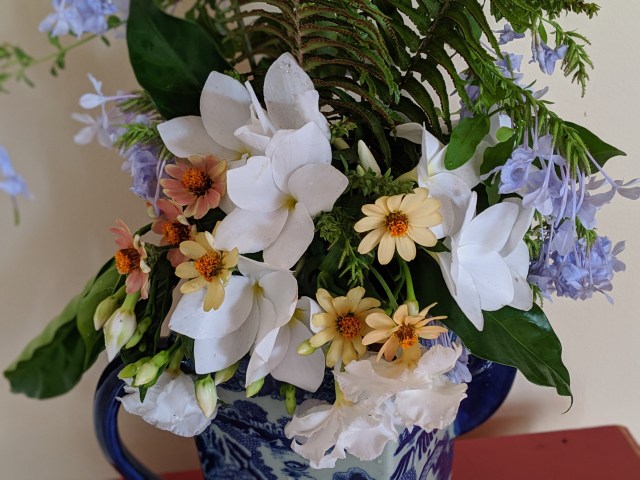
The vase is blue and white china, very popular in the South (probably approved by Bob) and I collect it. This teapot is English and one of my favorite pieces. The colors are Southern Classic per my college class. Here is a close up of the flowers:

00100lportrait_00100_burst20190707101146009_cover

The blue is Blue Plumbago (Plumbago auriculata), a stalwart shrub of South Florida gardens and nearly indestructible. The bud and white flowers are from Tropical Gardenias (Tabernaemontana divaricata), the white flowers with the yellow eye are from Bridal Bouquet Frangipani (Plumeria pudica), pale yellow verging on apricot flowers on from Zinnias “HomeDepotensis”, the ferns are native Boston Fern (Nephrolepis exalata).

This teapotful of Classic Southern Summer color smells heavenly – and I do feel a bit cooler.

Hopefully, Mr. Hill understands and approves.