In A Vase on Monday – Zinnias & Veg

20180204_141717.jpg

It is a happy Sunday in my garden. The winter vegetables are ripening and the Zinnias are flowering. This is the first week of February and, as a lifelong resident of the Northern Hemisphere, seems a bit odd to me- having Zinnias and vegetables from the garden. We have been eating lettuce, cabbage, herbs, green beans and radishes from my garden; peppers, potatoes and snow peas are coming soon.


A major consideration when moving to Florida is the total avoidance of winter and we moved to South Florida for its lack thereof. So far, so good. The Zinnias started to flower a week or two ago, not very impressive so I let them go. Now, I wish I had planted more seed and will go to search for more Cactus Zinnia seed. I admit, to being a (former) Zinnia snob. I grew Mexican Zinnias (Z.linearis or now,angustifolia) in containers for years -always considering the other types, pedestrian.

I announce my love for the pedestrian Zinnia! Who wouldn’t fall in love with these cheerful pink and orange flowers? I have, years too late.

20180204_141741.jpg

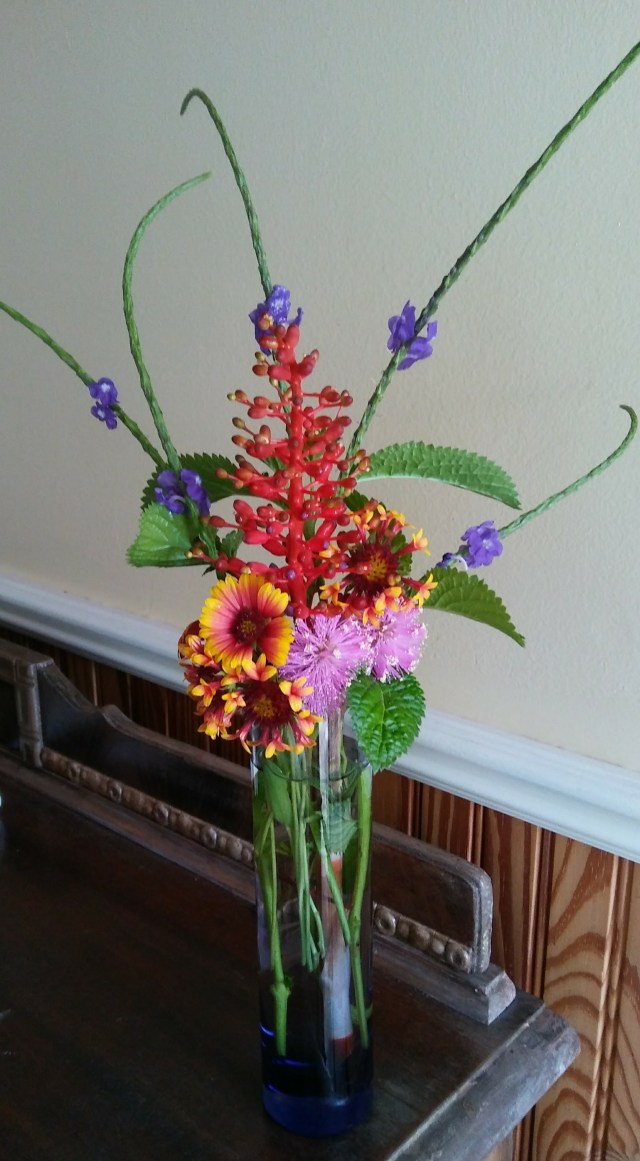
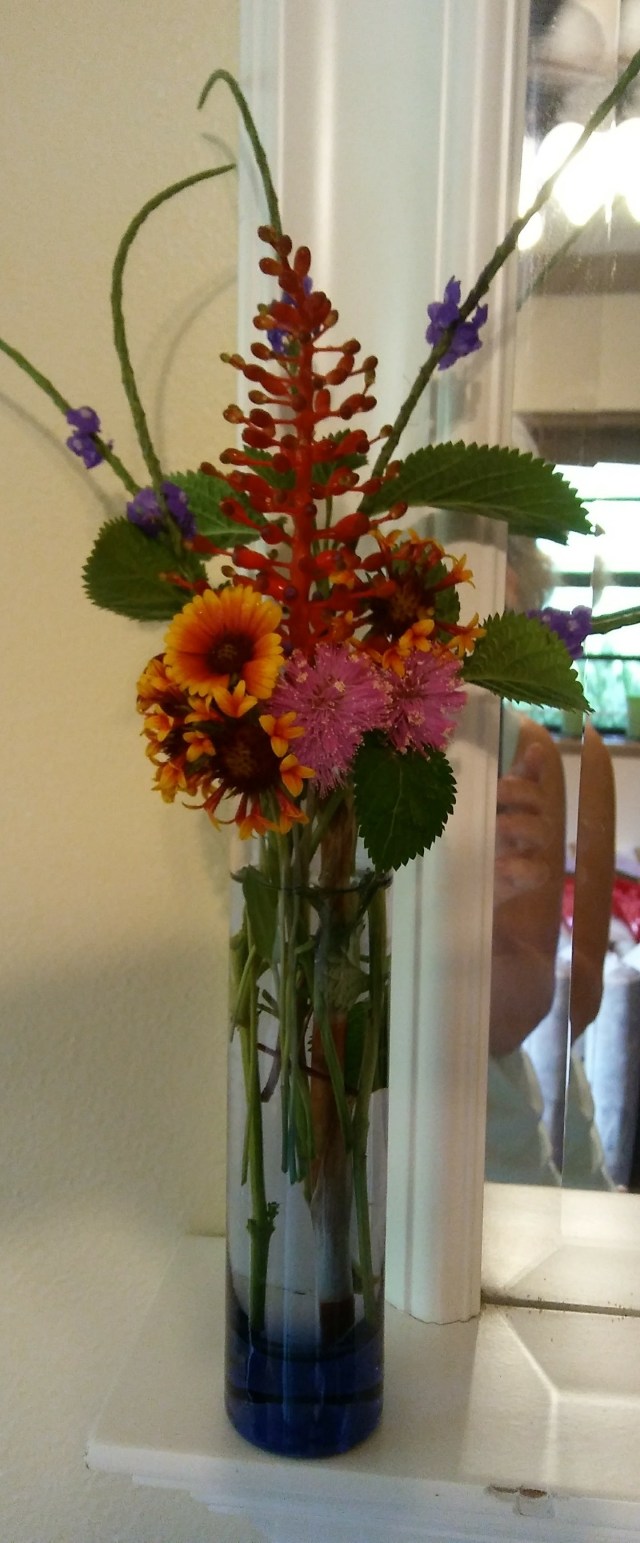
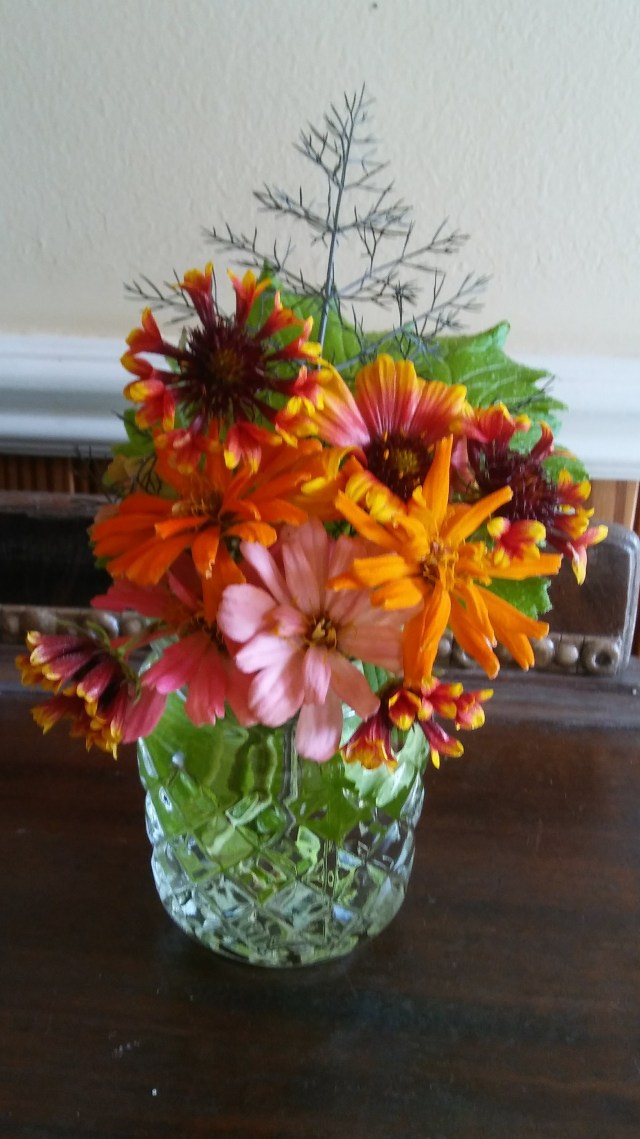
The pink and orange flowers are Cactus Zinnias. Funky orange and red flowers,  our native Gallardias that have just started back up. Foliage is from the vegetable garden, green leaves from Chinese Cabbage, darker ferny foliage from Copper Fennel. Glass container, an heirloom from my mother- I am certain she would join me in being thrilled with the Zinnias and Winter Veg.

Happy Monday.

Garden Bloggers Foliage Day – Tropical Fruit

20171122_074941-1

Having spent most of my life much further north of South Florida, I enjoyed eating tropical fruit, but never knew what they looked like while growing. I have included tropical fruit trees and plants for shade and foliage in my new garden, the fruit is a bonus. Some of the fruit producing plants I have in my garden now I had never heard of – because, well, in my opinion, like many things you have to grow up eating them to appreciate the fruit.

Above is the foliage of the Sea Grape (Coccoloba uvifera).  This is a native tree that produces clusters of grapes in the summer that are mostly seed and taste similar to figs. Natives of Florida and birds like the fruit.

20171122_074344

This is Mango (Mangifera ‘Nam Doc Mai’) a Thai Dessert Mango. Delicious and easy to grow. The leaves were burned by Hurricane Irma.

20171122_074509

Silvery backed leaves from a Pineapple I grew from the top of a fruit bought at the grocery store. I have no idea what kind it will be. Pineapples are very easy to grow here and my new hometown, Jensen Beach was once considered the Pineapple Capital of the World. Here is a link to an article I wrote about how to grow pineapples  Link.

20171122_074435-1

This is a Rangpur Lime, grown from seed by my neighbor. Rangpur Limes have orange skin and are incredibly juicy. I believe these are not well known because they do not keep very well.

20171122_074251-1

This is a Papaya, I believe Hawaiian, although I won’t be sure until it bears fruit. I grew this from seed last year. Curiously, I sometimes see Papayas growing wild on construction sites. Papayas are native to South and Central America and a bit of an acquired taste. I like them in pork stir fry, bread and sliced.

20171122_074131-1

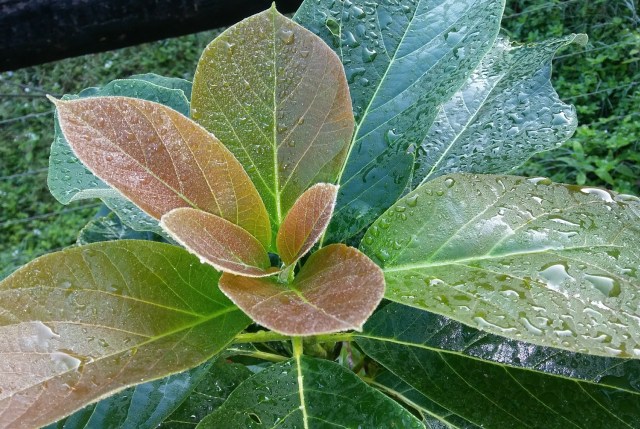
The new foliage on a Cuban Avocado tree. Cuban Avocados are the size of footballs and I had never seen one until landing in South Florida. The fruit is a bit sweeter and creamier than Hass Avocado and the rare avocado that is true to seed. A friend grew this for me with a seed from her tree, which she got from a Cuban guy!

The trees are integrated into my back garden along with vegetables and a native pollinator area. Everything but the Mango was grown from seed so I have a few years yet before I will taste the fruit.

Gardening in many cases is all about patience. Someday soon I will have some fantastic salsa and guacamole.

In A Vase on Monday – Ahhhhtumn is Here


20171029_121706

Sometime during the month of October there is a collective sigh of relief from the inhabitants of South Florida. It finally happened last Friday, temperatures and humidity dropped. I spent the day in my garden, then later in the afternoon enjoyed a glass of wine amongst my burgeoning collection of Bromeliads.

20171027_152838-1

After my glass of wine, I quickly put all the cushions back in the house as Tropical Storm Phillipe was forecast to pass through on Saturday. Philippe dumped a few inches of rain on the garden and then headed to New England to wreak havoc further north.

Sunday turned into a beautiful, somewhat windy day and I spent time searching for vase components with the Dragonflies (swarming to eat post storm mosquitoes) and Longwing Butterflies searching for a sip of nectar. In the background, I heard Sand Hill Cranes, home for the winter calling out to friends and lovers.

20171029_121720

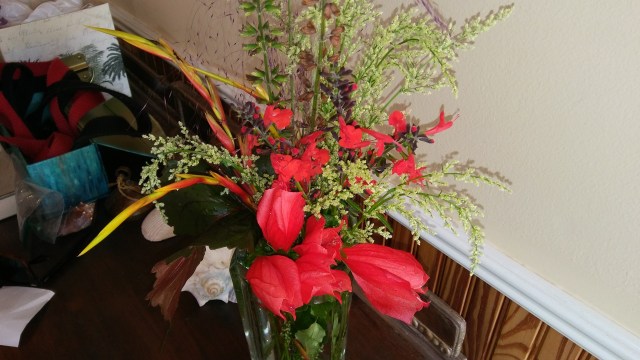
The contents of my vase include in red, front and center, Turks Cap Hibiscus (Hibiscus malvaviscus), the red spikes and seedy spikes are Tropical Red Salvia (Salvia coccinea). The yellow and orange spikes are from the Blanchetiana Bromeliad (Aechmea blanchetiana). The creamy white spikes are a mystery plant that appeared in the garden several years ago, I have not been able to identify it, but it is a great fall vase component and seems well mannered enough to live in the garden. The fluffy pink background grass is Muhly Grass (Muhlbergia capillaris) I am loving my Muhly Grass this fall.

Ahh, Autumn is finally here. It is seventy degrees, cool not experienced since last spring.

Happy Halloween!

In A Vase on Monday- Soothing Relief

20170924_132227

This morning our temperatures were in the low 70’s with a nice breeze from Hurricane Maria passing by (a long way off). The humidity was down a bit as well, so I worked in the garden getting my vegetable garden going. South Florida’s gardening season is opposite most of the Northern Hemisphere. Summer vegetables are planted in September and October, so I will have tomatoes in the winter. Hopefully. Corn is not even grown in the summer here as it is too hot for the plant to pollinate.20170924_132320

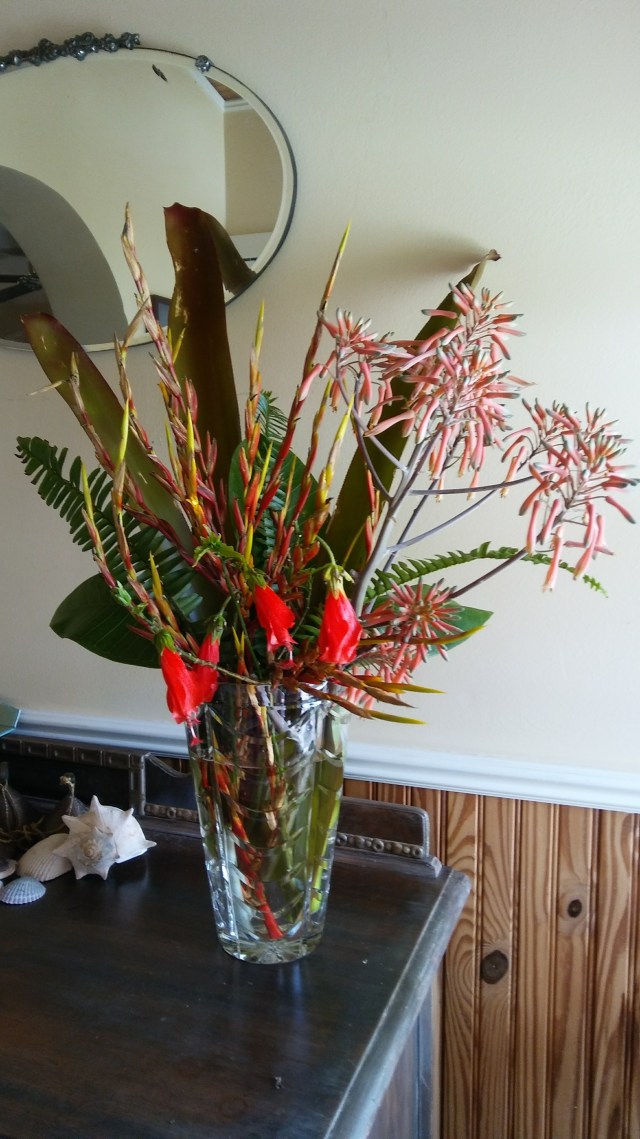
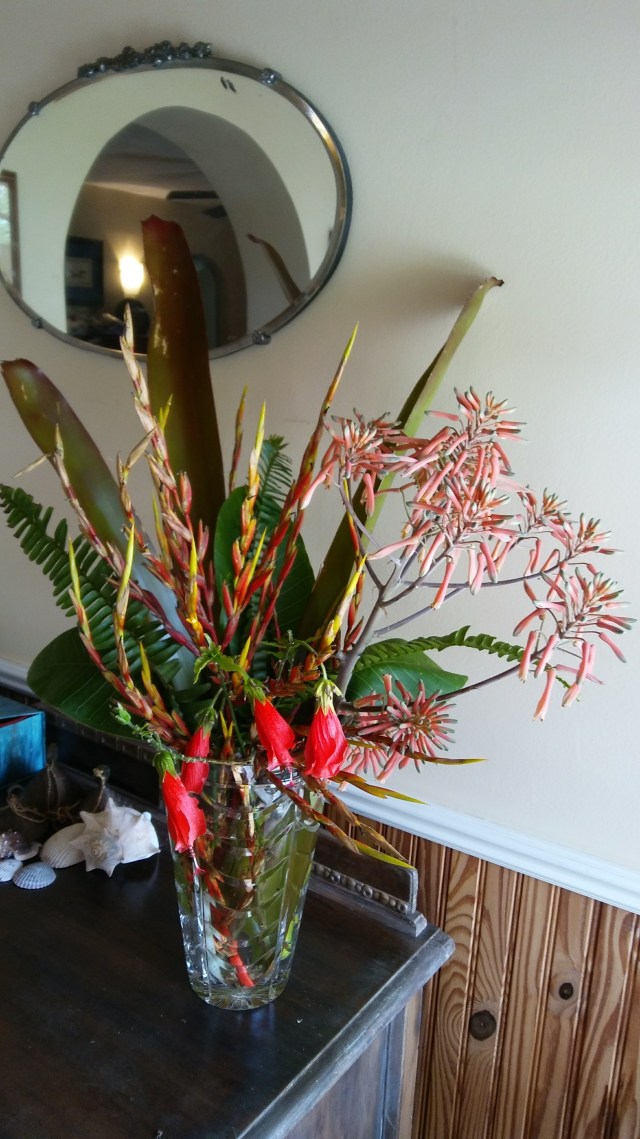
The anchor flower in this vase is a Soap Aloe (Aloe saponaria) which is supposed to be a soothing shampoo ingredient until you read up on it, seems more people are irritated by it than soothed. Stick to the Aloe Vera for relief. The Soap Aloe is the apricot and green candelabra shaped flower. The red flowers are our native Hibiscus, Turk’s Cap Mallow (Hibiscus malvaviscus). The mad funky flowers that look like Lobster Claws are Blanchetiana Bromeliad flowers – Hurricane Irma was not kind to these and I have trimmed the prettier parts for use in this vase. I have been channeling my Southern mother lately and am thinking of drying the rest and spray painting them gold for a holiday wreath. Although, that might be too funky.

20170924_132341

The vase is a big crystal affair that was a wedding gift – oh, many years ago from a dear friend who called the day before Hurricane Irma hit “just to hear my voice”, a truly lovely man. The components of the vase are of such a large scale (2 to 3 feet tall) I thought it called for the addition of some big tropical foliage. The smaller leaves in the arrangement are from Frangipani (Plumeria), the long reddish leaves from the Blanchetiana Bromeliad and the ferns are the ever present Asian Sword Ferns.

20170924_091445

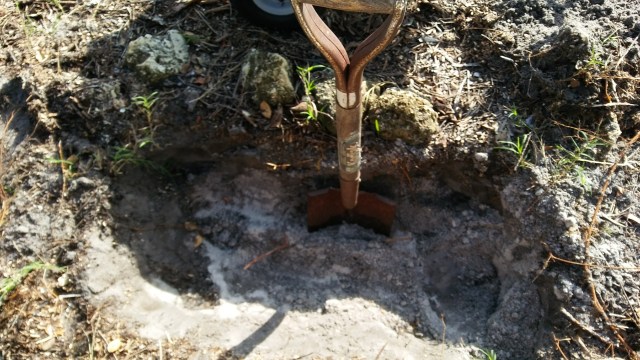
The vegetable garden under construction. Hard to believe anything will grow in this ‘soil’.

In A Vase on Monday – Floridian Fall

20170827_103206

It’s another stormy Sunday in South Florida. Hurricane Harvey hit the Gulf Coast of Texas on Friday and is still pummeling the Greater Houston area. Our blog friend, the Automatic Gardner, is there.  According to her latest post, so far, so good. Best wishes and luck to her.

The Atlantic Hurricane Season is in full swing, peaking on September 10. So far, our area has avoided any truly stormy weather. The flowers in my vase today are all native to the area and at their best during the height of Hurricane season.

20170827_103233

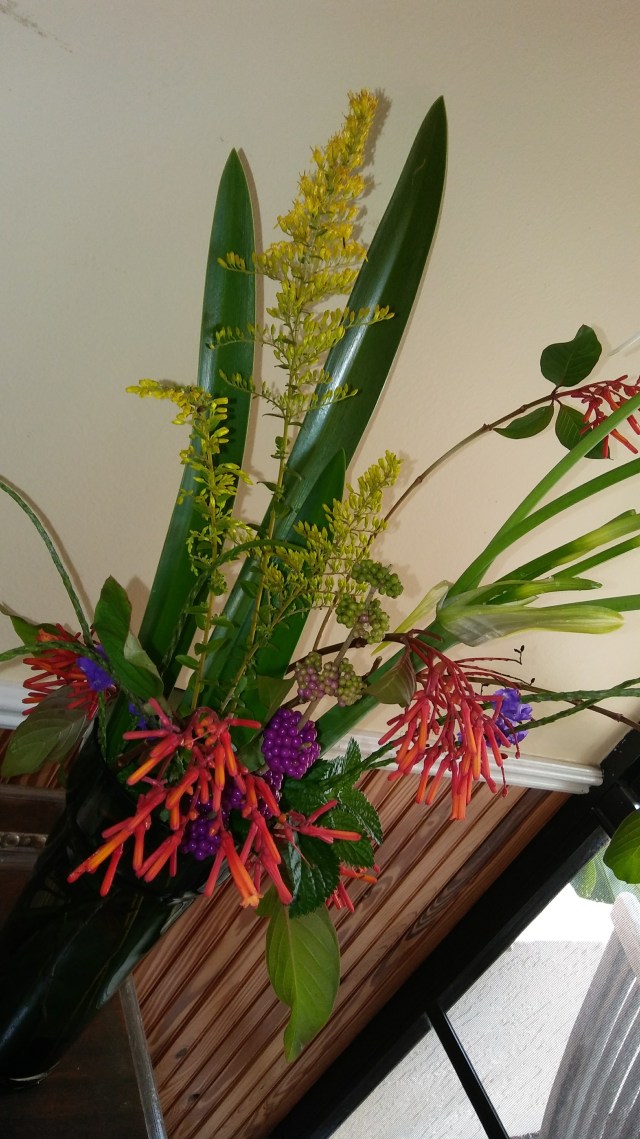
All of the materials in this vase just appeared in my garden with the exception of one. Beautyberry . The purple berries come from the Beautyberry (Calliocarpa americana) I bought a few of these shrubs from a local nursery going out of business. The rest of the flowers just came up and me being me, I left these unknown plants to see what interest they brought to the garden. The orange tubular flowers are Firebush (Hamelia patens var patens), the yellow flowers are Chapman’s Goldenrod (Solidago odora), the blue flowers are Porterweed (still not sure exactly which one).

20170827_103240

The white flowers and foliage in back of the arrangement are from our native Hymenocallis latifolia (or a friend) These are sometimes called Alligator Lilies and have a lovely scent at night. I found a huge clump of these in the front garden years ago, mistook them for Amaryllis, divided them and have an enormous border of Alligator Lilies in my back garden. Soon to be spectacular, October last year we had Hurricane Matthew here and then the Alligator Lilies flowered. I was surprised, humbled and happy I had divided all of them.

I think of the components of this arrangement as a gift from Mother Nature to remind us of the good things she provides.

Hurricane season notwithstanding.

Happy Gardening.

In A Vase on Monday – Where The Wild Things Are

20170813_122708

As these things go sometimes I started out with one idea and ended up with another. My first thought was to create a vase that looked as if it had been put together in an English garden. The English garden vase was going reasonably well until I realized the Sunflowers were full (extraordinarily full) of insects resembling Lightning Bugs. I hope they are Lightning Bugs and not a dreadful all consuming beetle. I carried several of these beetles outside and then realized the vase needed something like Artemisia or Lambs Ears, requiring a several hundred mile drive to the north.

So, I went to the back garden, where the wild things are, to search for some contrasting foliage. Looking up, I spied ripe, purple wild grapes that ramble through the Surinam Cherry hedge. The wild things are usually in the hedge eating something. Surinam Cherries, Passionfruit, rootstock Oranges and Seagrapes grow nearby. Sometimes at night it sounds like the creatures from Jurassic Park are in the garden.

The grapes are native Muscadines (Vitis rotundafolia) and the local wildlife usually gets the  fruit before I see it ripen. These look like Champagne Grapes, but taste nothing like them! Less than an 1/2 inch diameter with 3 large seeds inside, tasty but barely edible. I cut some, not very English at all and started a bigger vase for the grapes.

Into the big crystal vase they went and some tropical friends joined in:

20170813_122654

The white flowers are Bridal Bouquet Plumeria (Plumeria pudica) flourishing in the heat of August. The orange flowers, Mexican Bush Honeysuckle (Justicia spicigera). The ferns, gigantic fronds of Asian Sword Fern, I think. The big leaves are from Sweet Begonias (Begonia odorata) and the spikey foliage Dwarf Varigated Pineapple.

Here is the “English Garden” vase:

20170813_151226

I think it could pass for Black Eyed Susans, Red Salvia, Blue Veronica and Gazanias? That’s not exactly what is in there.

Where The Wild Things Are  by Maurice Sendak was my absolute favorite book as a child. The book is now 54 years old. Maybe those creatures are living in my back garden.

In A Vase on Monday – Gardening with Armadillos

20170806_100303-1

Sunday got off to a bit of a rough start, about 3 a.m. one of my greyhounds started to run around and whine. I got up, thinking he needed to go out and opened the door – only to hear a strange sound crashing around in the garden. Decided to turn on the security lights and low and behold, I spied an Armadillo. The shelled rodent (IMO) digging beside the metal screen enclosure on our porch, bashing his shell against the metal. Driving my poor dog mad and depriving both of us our beauty sleep.

As the dog ran out the door the foolish Armadillo ran into the fenced part of our yard – who knew an Armadillo could out run a greyhound?https://en.wikipedia.org/wiki/Armadillo

Cartoon time 3 a.m. My backyard. Starring Alan the Greyhound. Shown below in his usual state. Alan is the brown dog, the other one has no interest in getting up at 3 a.m.

CAM00710

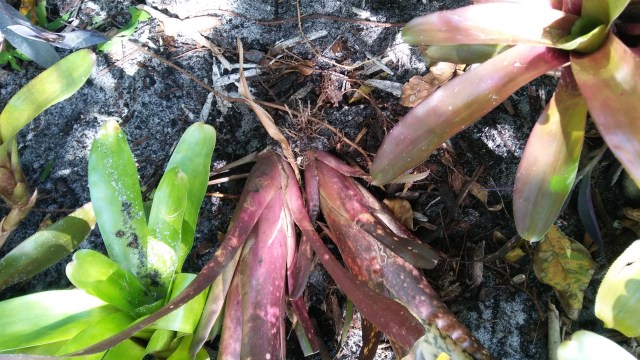
A few hours and cups of coffee later, I went to look for vase components in the garden the Armadillo had been digging in. Sure enough, he or she had been overturning Bromeliads, a favorite pastime for some reason made better by overturning burgundy or spotted Bromeliads. By trial and error, I eventually found out cardboard and mulch will keep the armadillos away, needs another application. Sigh.

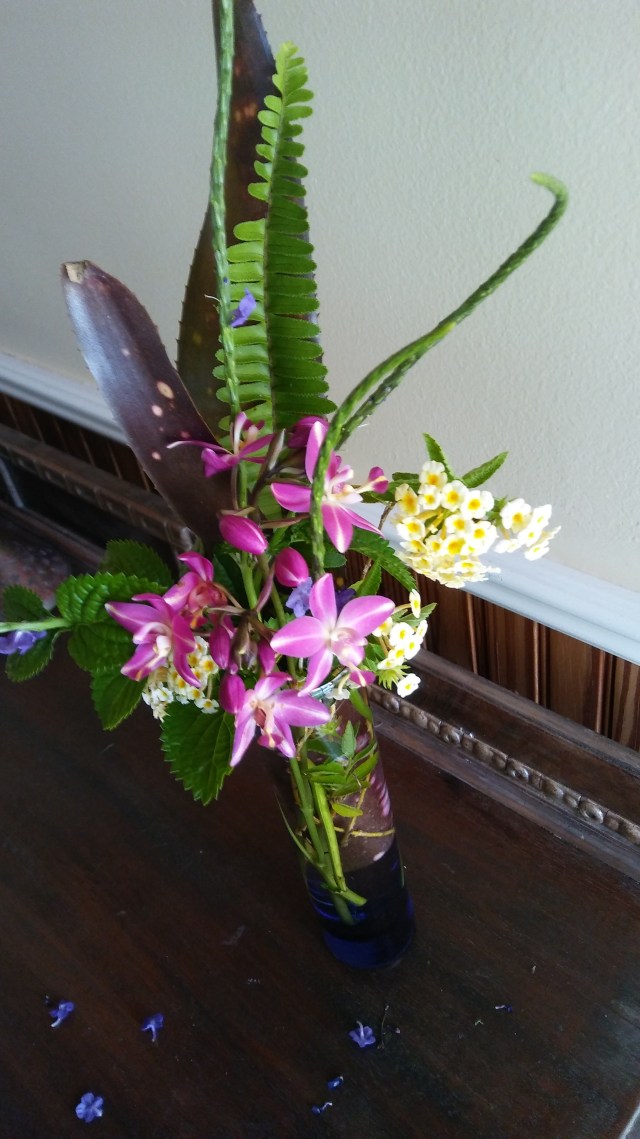
20170806_100322 Seeking the components of a vase, I noted the Spathoglottis is flowering again. I know this really sounds like a disease, but is actually a lovely little Ground Orchid called Caberet. This is the second round of flowering since I planted it in January. It is the purple flower in the vase. The blue flowers are Porterweed, the jury is still out on which one and today it is really shedding for some reason. The yellow flowers are Lantana, Silvermound would be my guess for variety. The purple spotted foliage is from a Bromeliad the Armadillo overturned ‘Hallelujah’ Billbergia. A sprig of fern finishes the vase.

The Armadillo’s work last night:

20170806_101307

In A Vase on Monday – Dinner Party Vase

20170723_095434-1

I am not actually having a dinner party, although a Garlic Rosemary Pork Roast is going in the oven shortly. This blue bud vase contains a few flowers I have not cut before and I have a feeling it will not last through dinner. I call these dinner party arrangements, great for a party but not much longer. This is a better shot of the blue vase:

20170723_094812-1

I picked up the vase at a church thrift store near my house this week. There were several and after arriving home, I wished I had bought three for you know, dinner parties! Imagine three flower filled blue vases with candles in between down the center of the table. I may need a return trip to the thrift store. Here is a closer view of the flowers:

20170723_094852

The pink flowers are a new native addition to the perennial border, Sunshine Mimosa (Mimosa  strigillosa). Yes, a groundcover Mimosa and Floridians consider this a replacement for lawn. I consider it a front of the border perennial that looks a lot like a weed. Possibly it’s first appearance IAVOM. I am waiting until after dinner to see if the petals fall off. The yellow and orange flowers are the faithful Gallardias that last in a vase and the garden. The blue flowers are from (I think) the native Porterweed, there is another potentially evil Porterweed lurking about, but I can’t tell the difference and it came with a plant I bought. The pretty blue flowers make a striking vertical accent. I have used this before and I think the pretty blue part falls off and you are left with the vertical accent.

Dessert with vertical accent only.

The Bromeliad in the middle is great vase material that sometimes dries in the vase only to be spray painted gold for the holidays, Aechmea miniata, the Miniata Bromeliad.

Speaking of Bromeliads, here is the mad tropical plant of the week:

This is a Blanchetiana Bromeliad in bud, I am 5’7″ and the buds are a bit taller than me.

20170723_102030-1

I would like to share some thoughts with you all.

First, thanks to Cathy for hosting IAVOM.

I just want to say I am amazed and humbled by the knowledge and creativity I see every week.

And I love sharing these mad tropical plants with like minded people.

Happy Monday.

In A Vase on Monday -Frangipani, Foccacia and Friends


20170702_115959

Sunday morning found me baking bread to make Pulled Pork sandwiches for a friend who came down with shingles. While the bread was rising, I toured the garden to find the components of a vase. The Bridal Bouquet Frangipani (Plumeria pudica) has just started flowering in earnest and the scent wafting through the air in the early morning stopped me and my clippers.

I clipped a stem of the Bridal Bouquet Frangipani and looked around to see a Pink Desert Rose (Adenium) flowering and cut one of those to add to the vase. What vase? A small red glass one from the GoodWill (thrift or charity shop) seemed in order. Then a bit more red in the form of foliage. A few leaves of Pie Crust Croton (Codiaem varigatum “Pie Crust”) The Pie Crust Croton foliage has the unlikely color combination of red, black, green and a bit of yellow. The shrub will give you a bit of a pause when seen in the garden. The Copper Fennel (Foeniculum vulgare ‘Purpurea’) has come back with the rains and I added a bit of that for deep grey foliage, then found some errant Asparagus Fern to complete my vase. Here is a close up.

20170702_120238_Burst01

I punched the Foccacia dough down and set it into the oven to rise again and finished the arranging the vase.  Here is the finished Foccacia:

20170702_120551-1

This is a Parmesan Crusted Low Sodium Foccasia, my specialty. Here is the bad news.

I woke up the other morning feeling I needed to check on the Night Blooming Cereus:

20170629_091720

The bud was no longer on the plant. During the night something knocked off the bud! Maybe next year.

In A Vase on Monday -Summer Bouquet

20170604_090041

I was missing last week due to attending a family wedding in Atlanta. As unusual as it seems, I found no vases along the way, although late spring was in full swing and all the gardens and especially the wedding arrangements were glorious. And pure white.

20170604_102511

I arrived home to find Memorial Day truly marking the onset of summer. As if on cue,  precipitation started and the weeds burst forth with a joyous and bountiful overtaking of the garden. I am still feeling surly about this and have bought a vast quantity of landscape fabric and cardboard to choke them out. Fifty square feet at a time. Fingers crossed for a victorious outcome. I have, thus far, never defeated the weeds in summer.

I was pleased to see my native plants and the tropicals flowering prodigiously with the onset of wet weather. For whatever deeply buried design reason I am shy about combining these plants – this week I have thrown caution to the wind and come up with the madly mixed Summer Bouquet.

20170604_102612

An old friend of mine, from design school and embarrassed to be ‘a posy poker’ (in reality a very talented designer of floral arrangements and gardens) would have called this a plop arrangement.

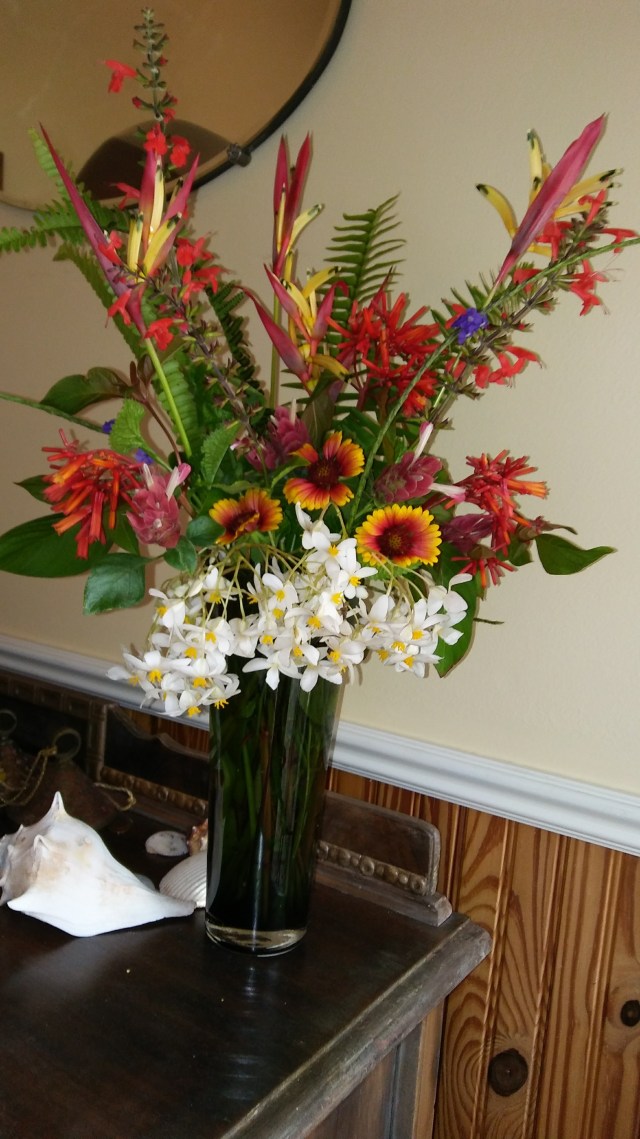
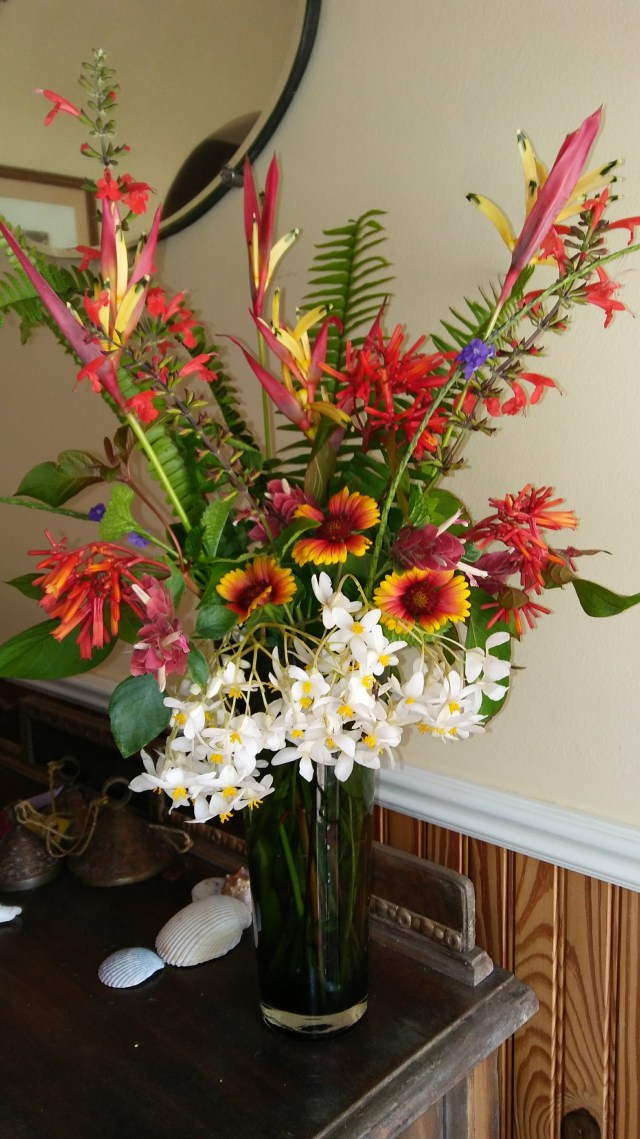
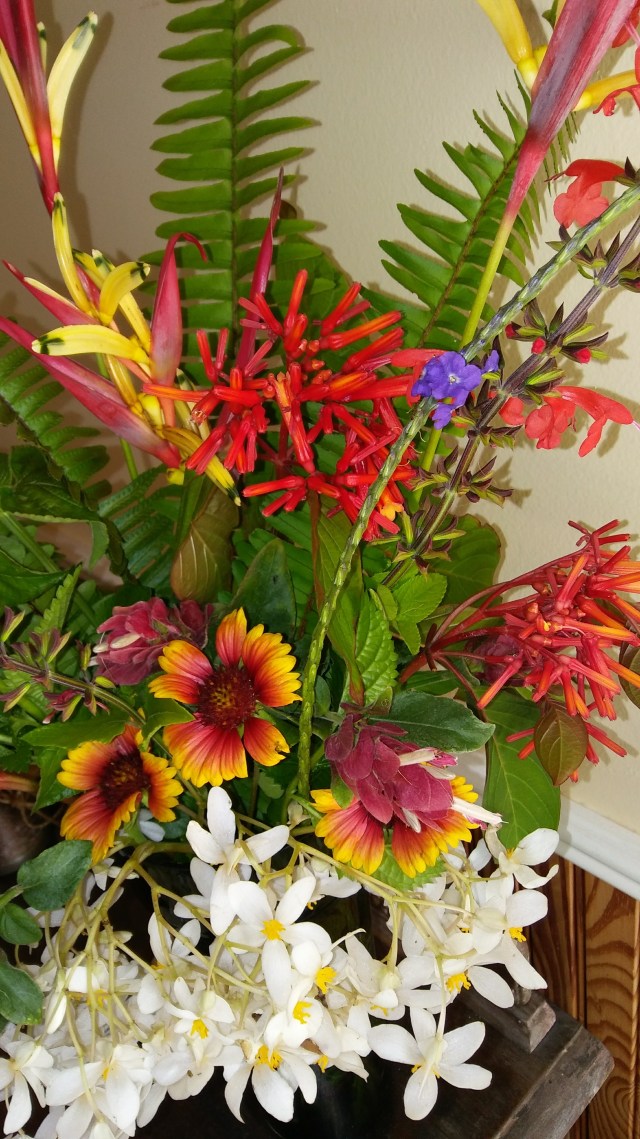
Go into the garden, cut whatever strikes your fancy to a similar length and plop into a vase. Simple. My plop this week is in a smoky grey glass vase from the discount store. The members of the cast include in white, Sweet Begonias (Begonia odorata), the daisy shapes are Gallardias (Gallardia pulchella), native to Florida; deeper red and white flowers are Red Shrimp Plants (Justicia brandegeana), The orange trumpets are from my native Firebush (Hamelia patens var patens), red and yellow flowers are tropical Parrotflowers (Heliconia psittacorum); the blue flowers are Porterweed, another native. In green, Asian Sword Ferns, true native plant enthusiasts think this fern is evil. The good side reappears with the red spikes from the native Tropical Red Salvia (Salvia coccinea)

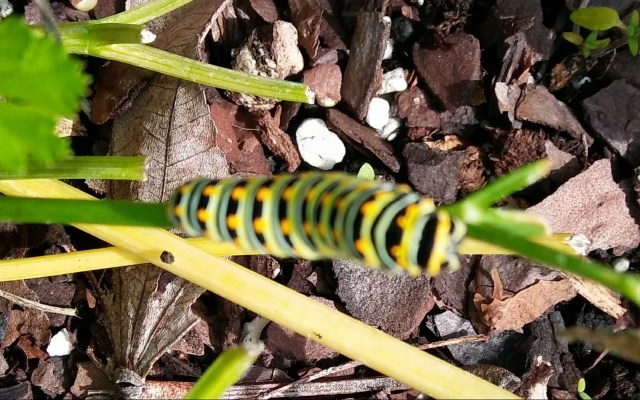
I may eventually recover from my mixing natives with tropicals neurosis as I kind of like this plop. Here is my latest unusual creature discovery. It is a Black Swallowtail Butterfly caterpillar eating the end of my Parsley. I hope to see the Butterfly.

20170604_102656-1