In a Vase on Monday – Taming Miss Alice

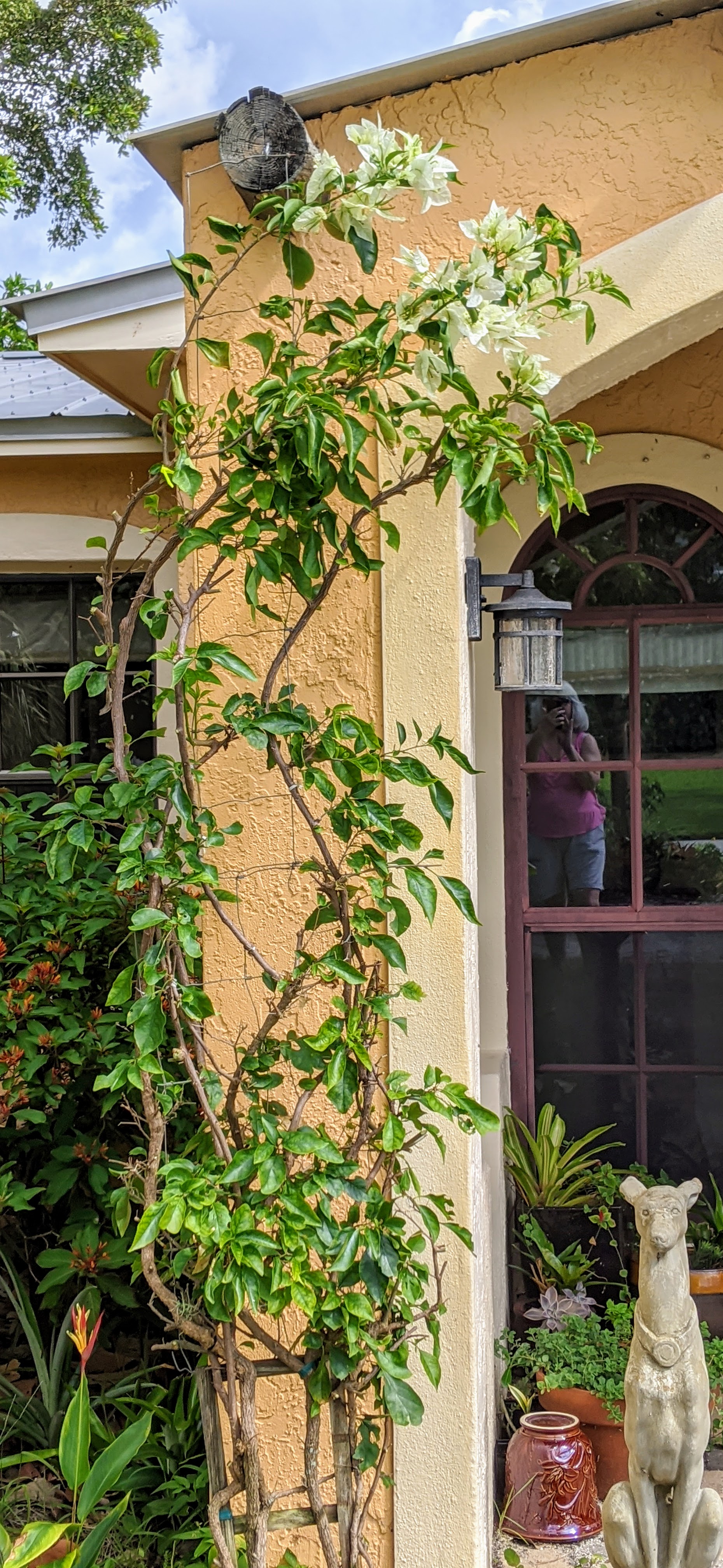
Miss Alice lives beside my front porch. An seemingly obscure variety of Bougainvillea I am training to a column on the porch, she is known for being nearly thornless. Other Bougainvilleas have 2 inch long thorns, I was pruning Miss Alice barefooted and stepped on a cast off branch – ouch! not thornless but I wasn’t punctured. The white flowers are from Miss Alice, a result of a fairly hard pruning as the Bougs transition from vegetative to flowering states. Day length drives the flowering cycle – native to areas near the equator Bougainvilleas flower most when daylight and night hours are equal. I did not realize I could use them as cut flowers, they seem to be lasting. So far, so good.

Here is a closer view:

The white ‘leaves’ are bracts and the actual flowers are the white and green tubes in the center of the flower. Lurid purple berries are from Beautyberry (Calliocarpa americana) which has been producing masses of berries this summer. They are so heavy with fruit the branches fell to the ground. Ferns are from my weedy Asian Sword Ferns and a seedling Sabal Palm (Palmetto sabal) frond completes the backdrop. The vase is a roadside find.

Miss Alice before and after she was tamed.

Happy Gardening and thanks to Cathy at http://www.ramblinginthegarden for hosting this weekly meme.

Six on Saturday The Good, the Bad, and the Bugly

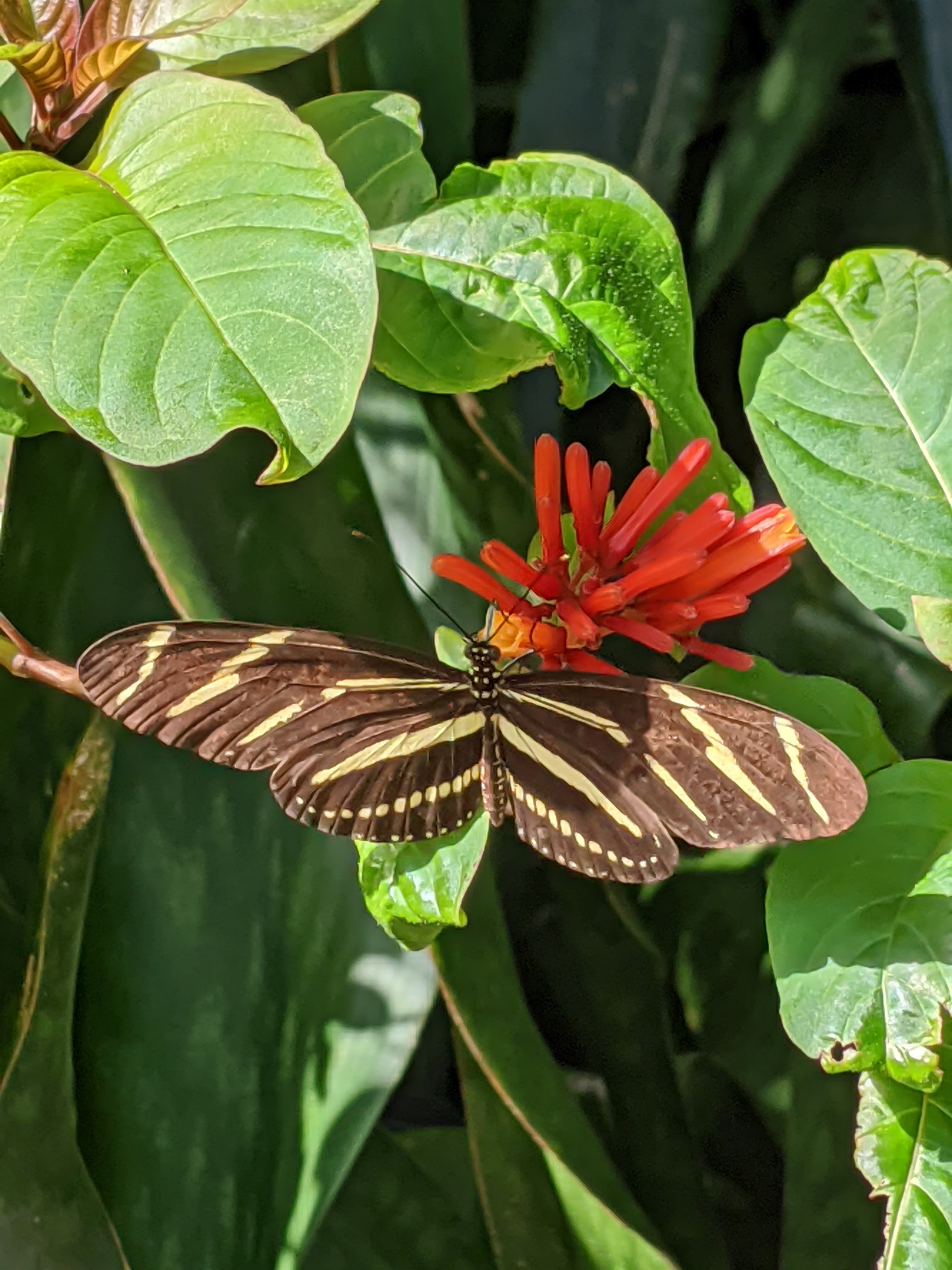
A Zebra Longwing, the state butterfly of Florida, sipping nectar from a Firebush (Hamelia patens var patens). A good thing.

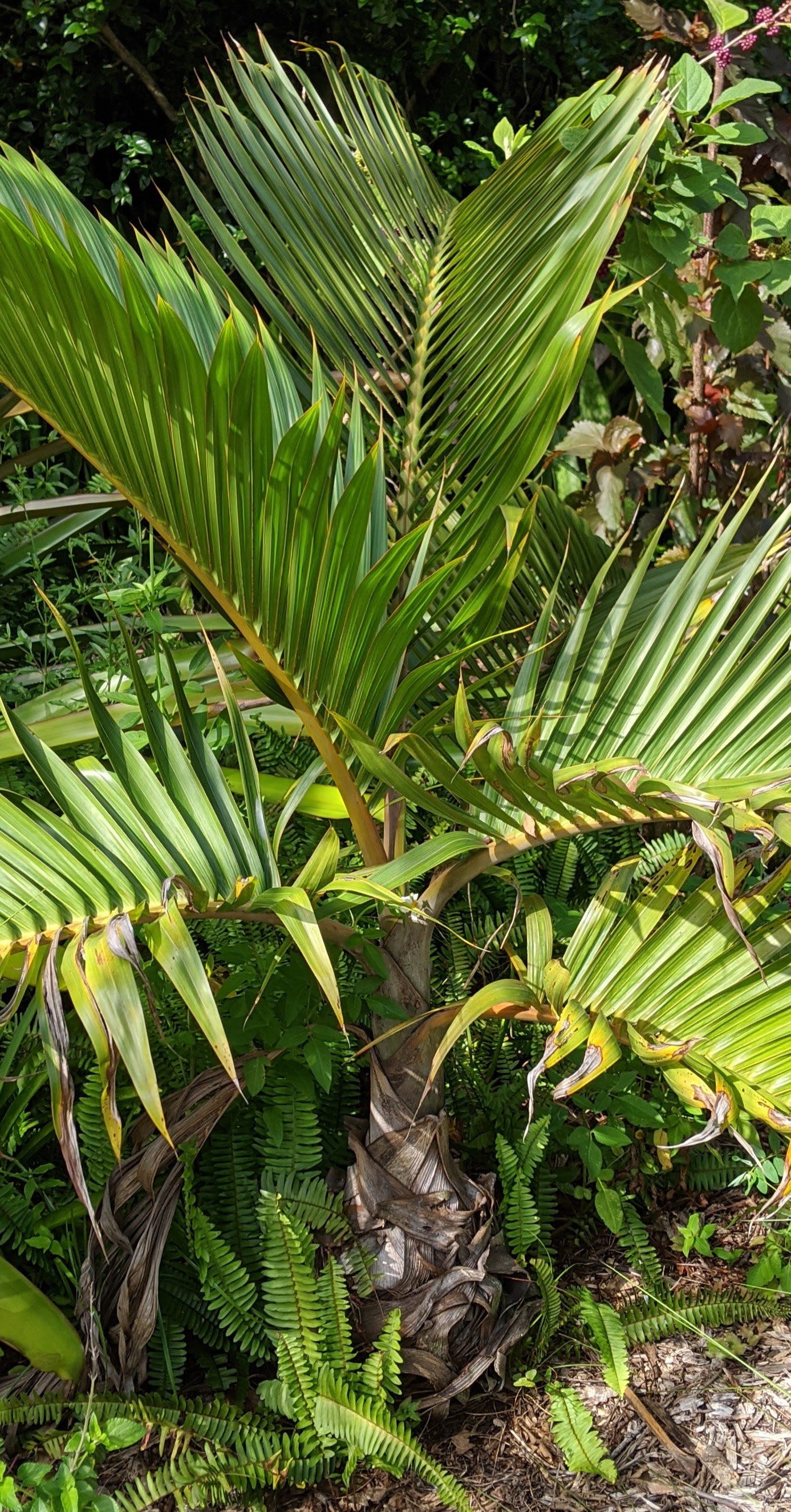
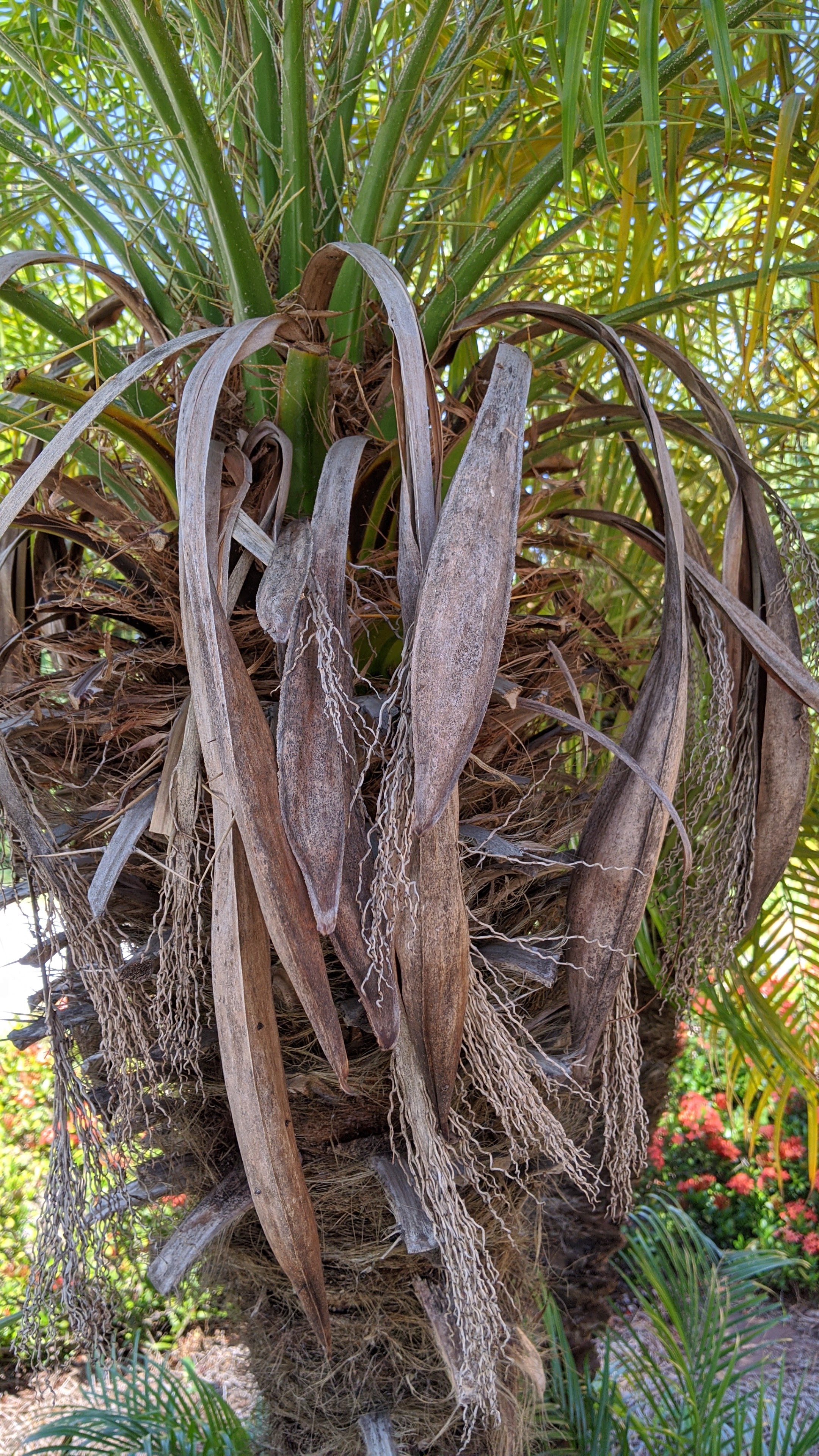
Another good thing, my Bottle Palm (Hyophorbe lagenicaulis) is finally making its bottle trunk. Eventually the old fronds fall off and the palm looks like it is sitting on a green wine bottle. This has taken about five years.

The bad thing about these next plants, they are so slow growing it is almost not worthwhile planting them. Both are Florida natives and come with the native hype…

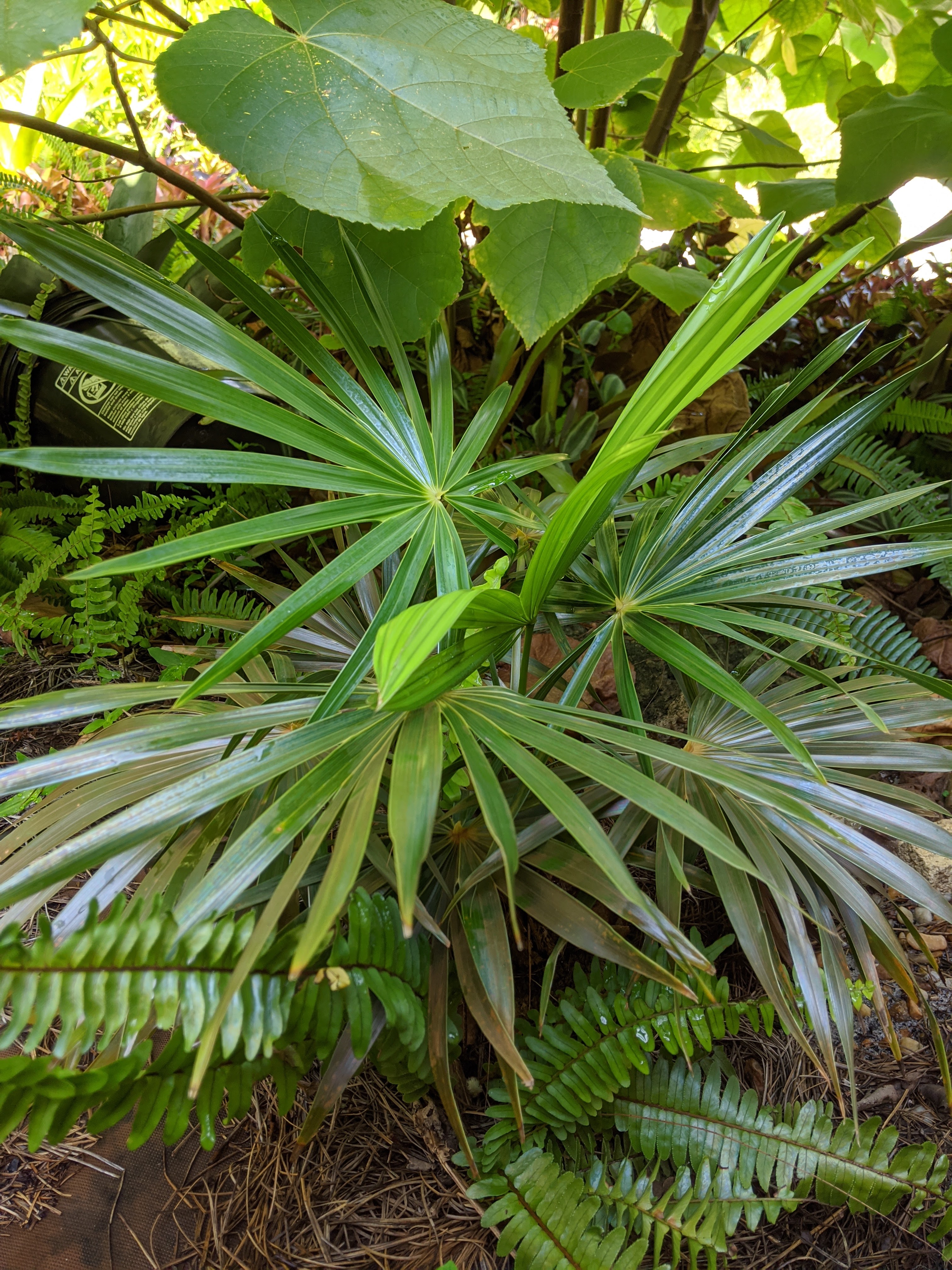
This is a Thatch Palm (Thrinax radiata) It has been in the garden for about five years and might be 18″ tall. I am not sure I will live long enough to see an actual palm tree form.

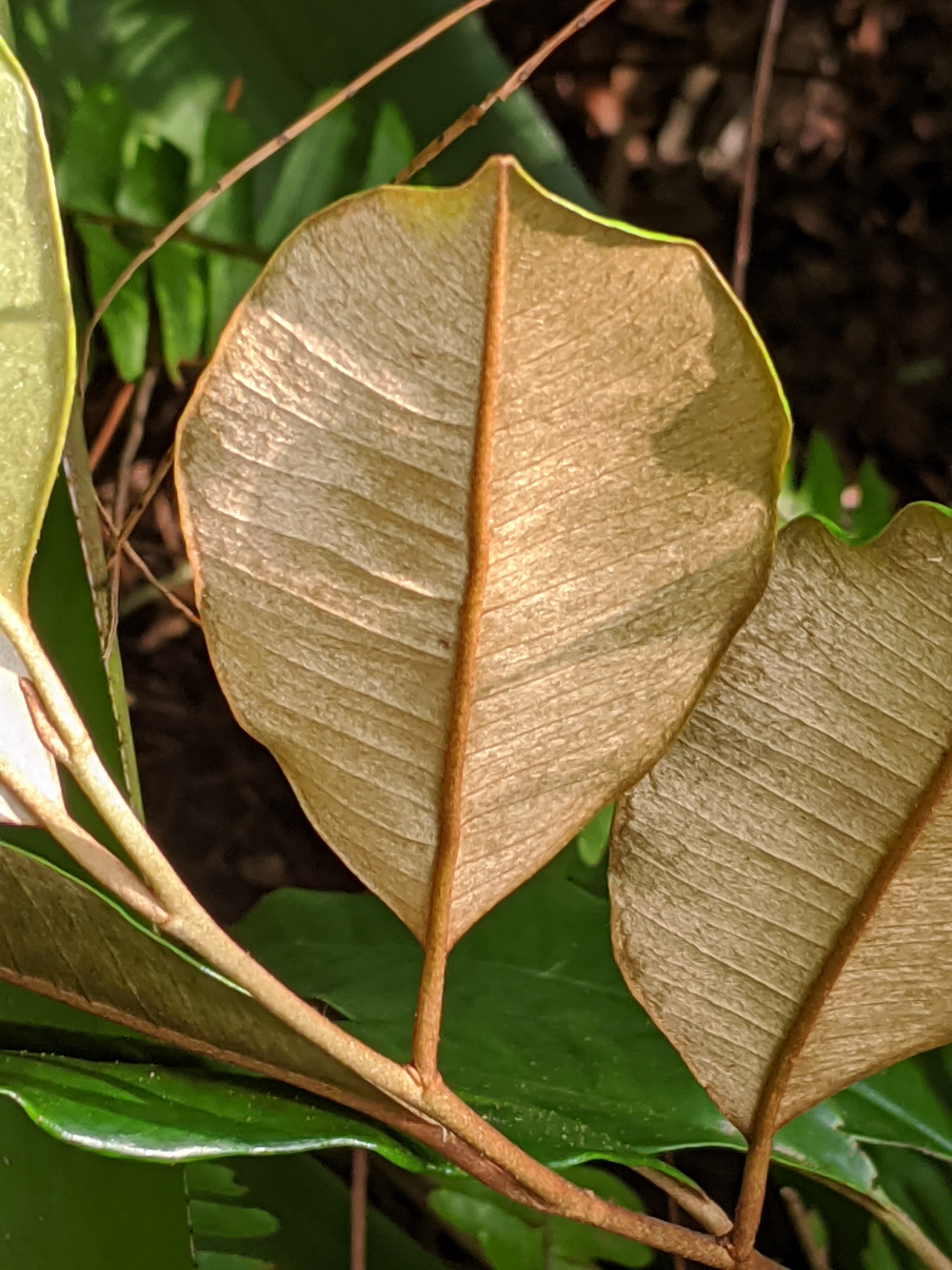
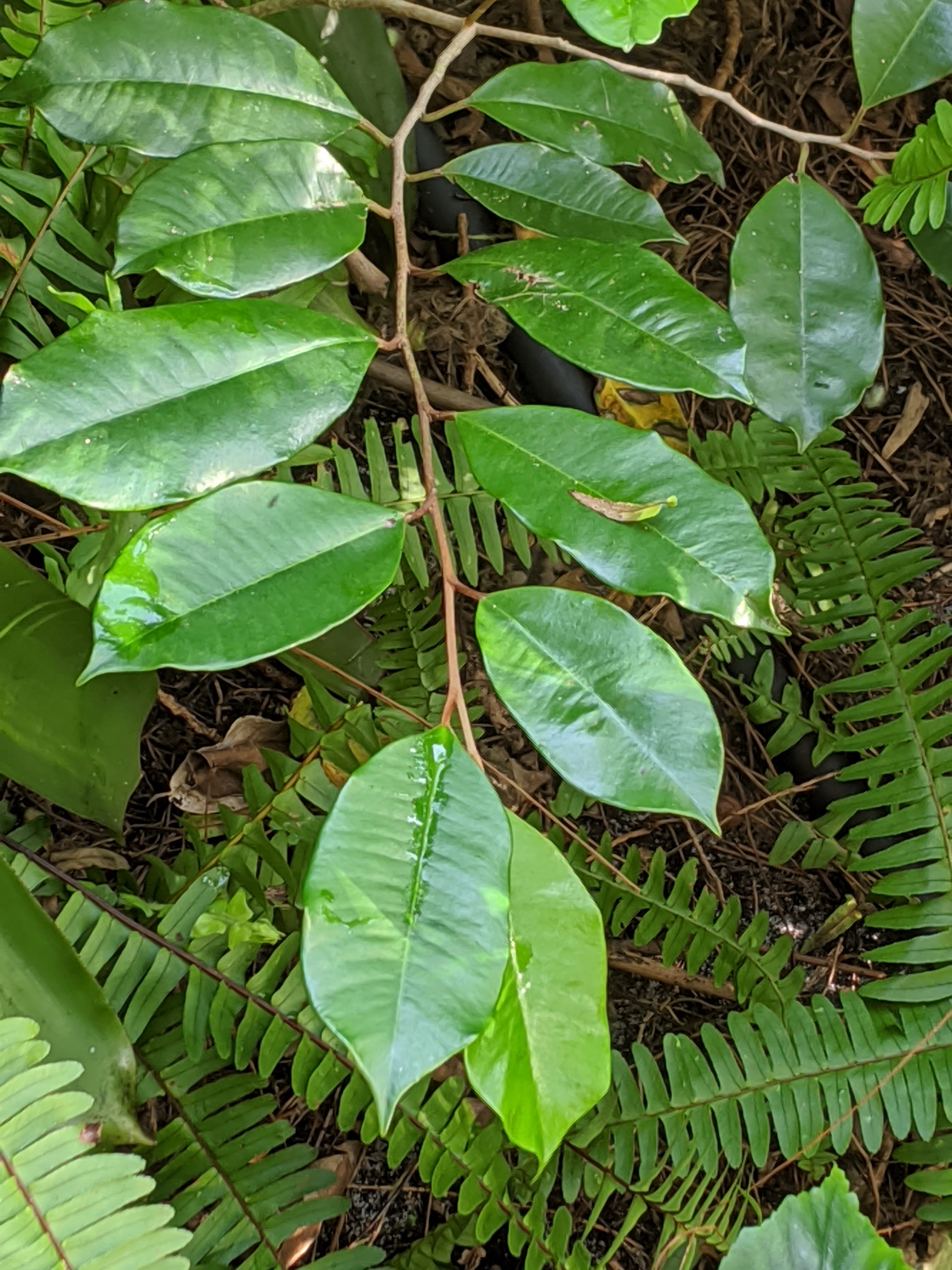
A Satinleaf (Chysophyllum oliviforme), the back sides of the leaves. This is reportedly a tree, and sounds romantically wonderful when described by growers who have seen it blowing in the wind. At six years old and possibly a foot tall (the ferns dwarf it) I have to lie down beside it to experience the romance.

The front side of the leaves.

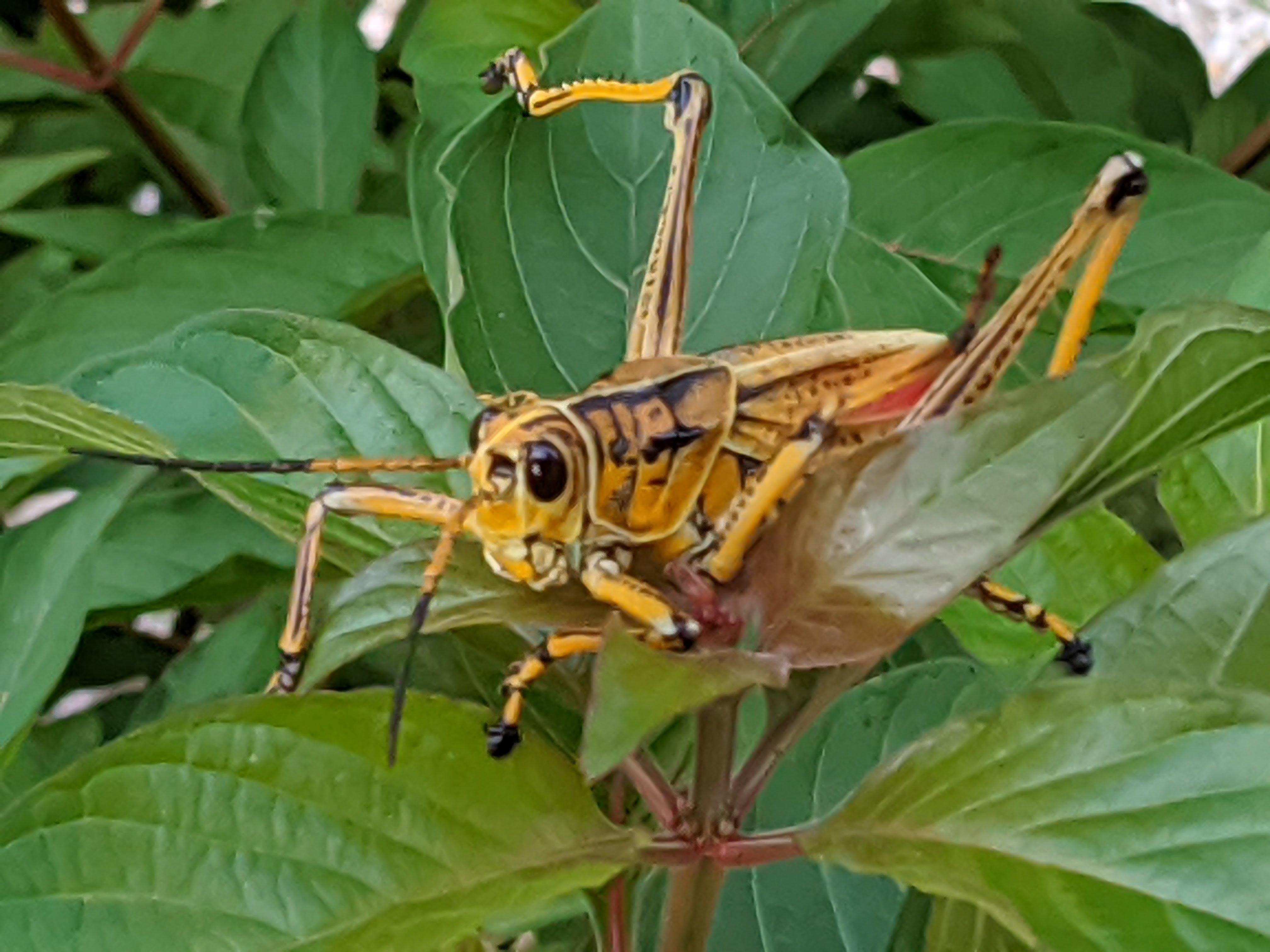
And now, the bugly. This is the dreaded Lubber Grasshopper, another hyped Florida native. These can be 3 or 4 inches long and love to eat plants. Filled with poison, they only have one natural enemy, a bird called a Loggerhead Shrike, the bird impales the grasshopper and leaves them around to dry out and then eats them. I find them dead in the shrubbery from time to time. I am also an enemy and have frightened my dogs gleefully stomping them.

That is my six for this Saturday. Stop by http://www.thepropagatorblog.wordpress.com to see more posts from around the world.

Happy Gardening..

In a Vase on Monday – Foraging for Flowers

Once in a while I give plant talks at a local nursery, one of the girls I work with there contacted me to say she enjoyed my Monday vases and had the idea for a talk about Foraging for Flowers in Your Garden. I love the idea and it truly reflects this weeks vase.

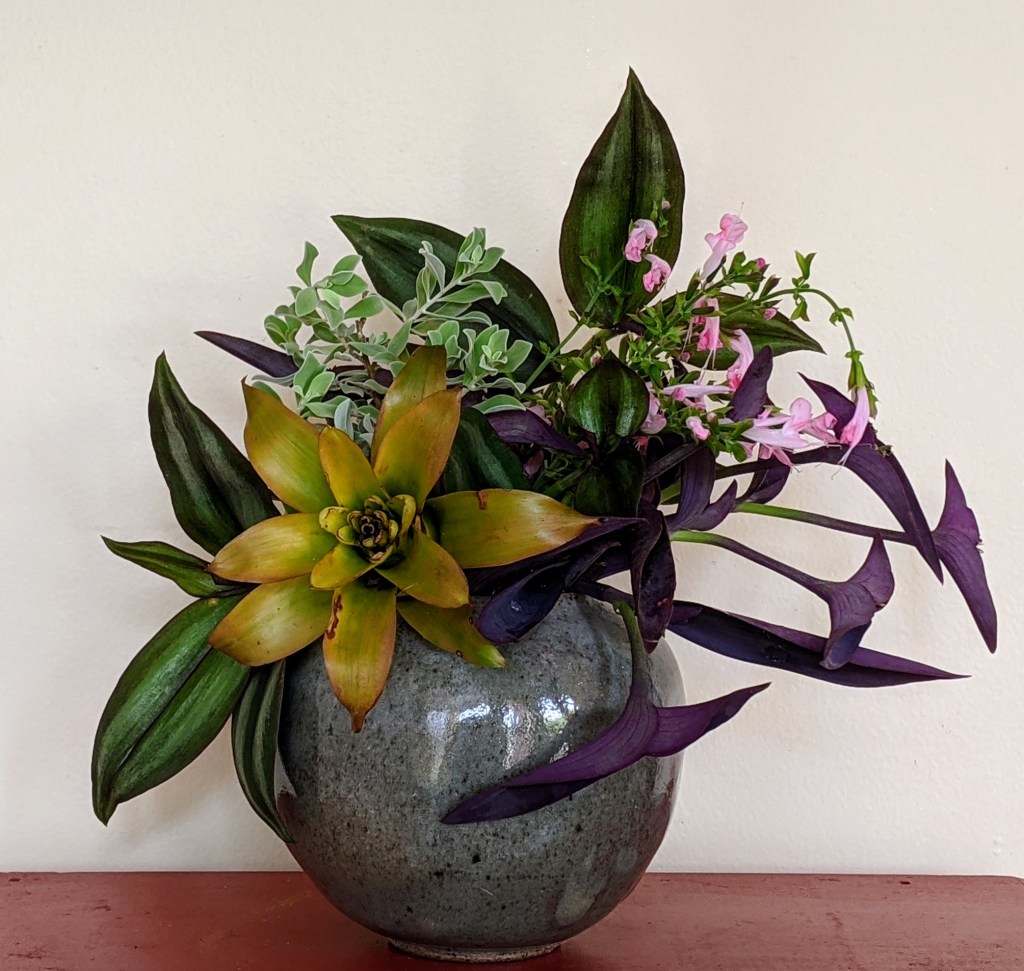
August can be unkind to to gardens in South Florida. We can have 3.5 inches of rain in a few hours, hurricanes or weeks long dry spells with temperatures in the high 90s (F) -37 Celsius. The garden can be baked, drowned and/or dessicated. The gardener as well. Last week I noted the much smaller size of the flowers from well, August. Foraging for my vase, I found some true stalwarts to cut.

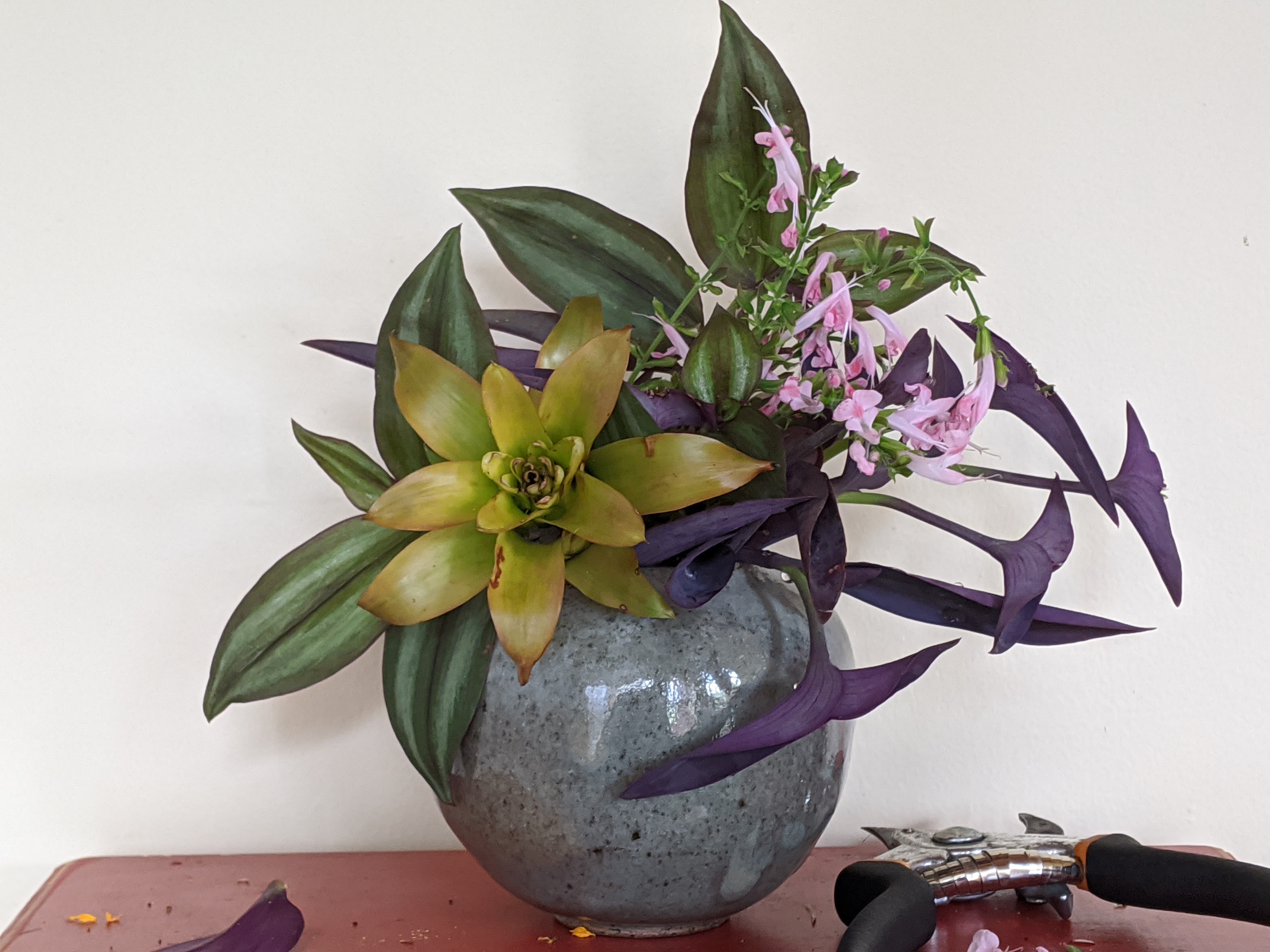
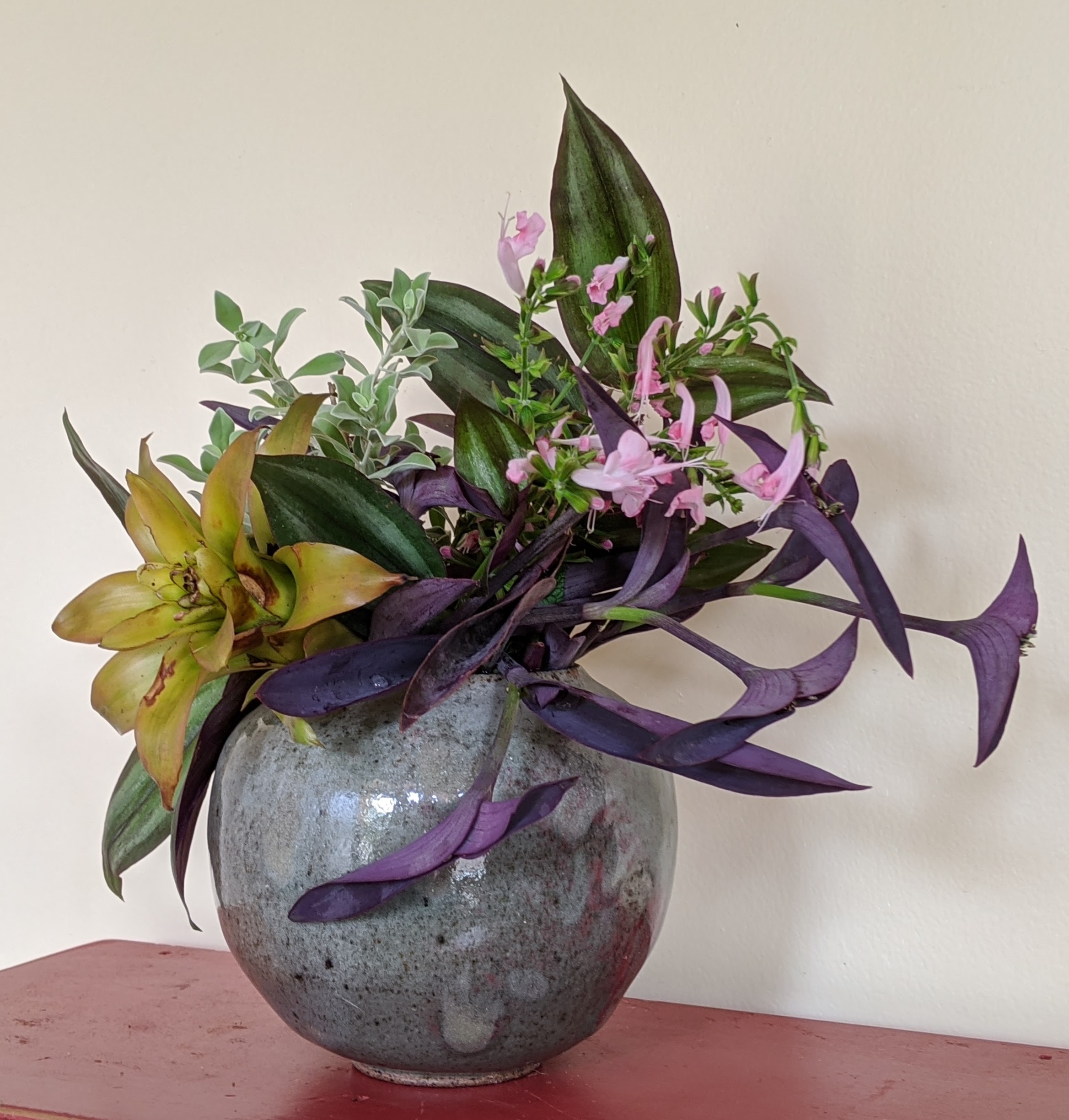
The view from the side. The vase is a favorite and a thrift store find. Transcandentias are prominent in this vase. Solid purple foliage is Transcandentia pallida called Setcresea, from last weeks vase. Setcresea certainly sounds like a botanical name, but it is not. Go figure. My husband calls these secretions. The striped leaves are Transcandentia zebrina; Inch Plant, Wandering Jew, etc. Really hard to kill if it gets a little shade and water, hard not to love this one in August. The pink flowers are Tropical Red Salvia (Salvia coccinea); chartreuse flower is a fading Guzmania Bromeliad that begin life red. Grey foliage is from Barometer Bush (Leucophyllum frutescens). Inevitably I fiddle with these as I take pictures. I think I like it better without the Barometer Bush???

Happy Gardening and thanks to Cathy at http://www.ramblinginthegarden.wordpress.com for hosting this weekly meme. Follow the link to see more vases.
Six on Saturday – Tropical Weather

Tropical weather is on the menu this week in Florida. Two forecasted hurricanes are lurking in the Gulf of Mexico, an unheard of meteorological event. Both are taking aim at the Gulf Coast of the US. Batten down over there. This weather brings downpours that can dump 3 inches of rain per hour in my garden – even hundreds of miles away from the storms. I am joining the Six on Saturday crew at http://www.thepropagatorblog.wordpress.com. Follow the link to see more posts of six items of interest from gardens around the world.

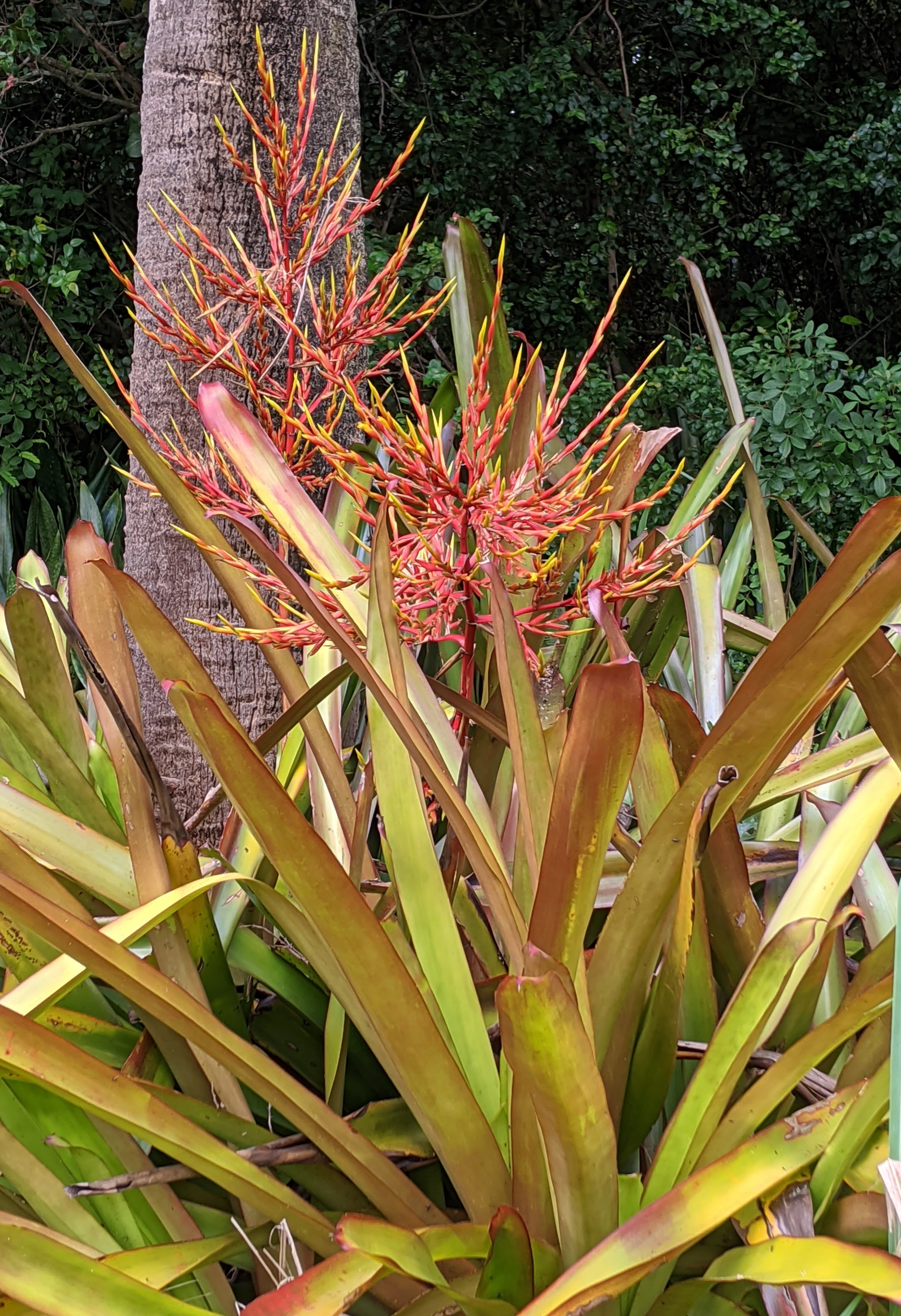
I am featuring my more tropical plants today. This is a Blanchetiana Bromeliad ramping up to full flower. The flower in back is about seven feet tall.

The flowers on a Java White Copperleaf (Acalphya wilkesiana). These shrubs should reach at least six feet.

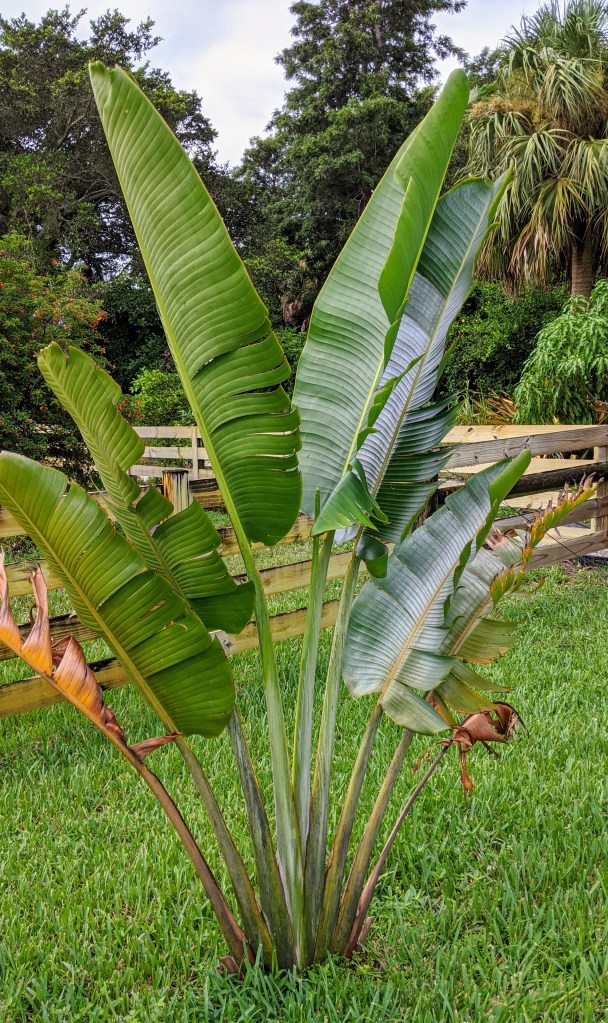
A Travelers Palm (Ravenala madagascariensis) I planted these last fall to screen a telephone pole behind my house. They will grow to 30 feet. They have just reached eight feet. These are planted as a sign of hospitality in the South Pacific. The stems hold a great deal of water and a thirsty traveler can cut one for a drink of fresh water.

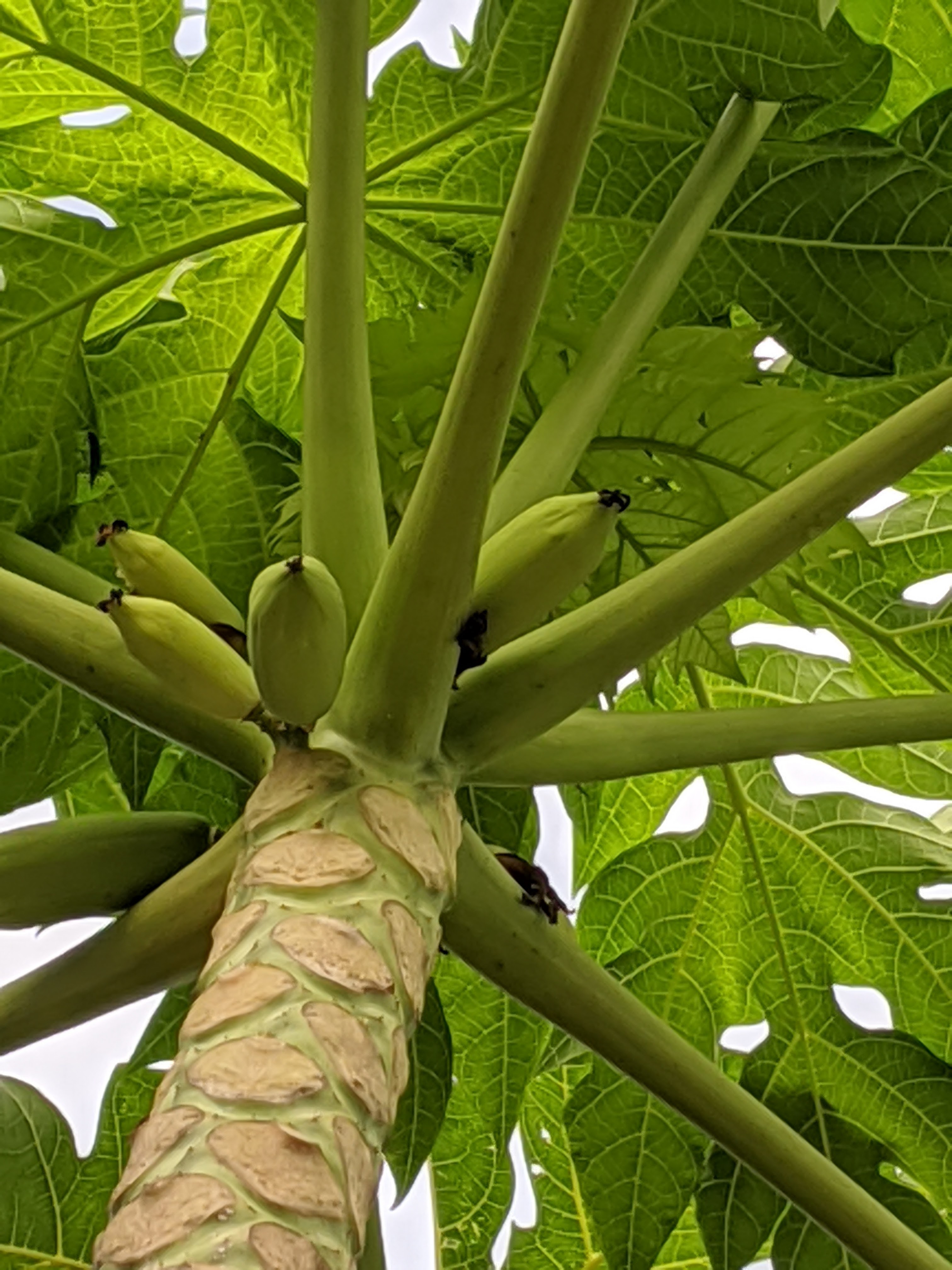
Fruit forming on the Papaya tree. I am hoping the moths are done with my tree for the year and I get some fruit this winter. The tree is at least fifteen feet tall, so I will have to wait for the fruit to fall off.

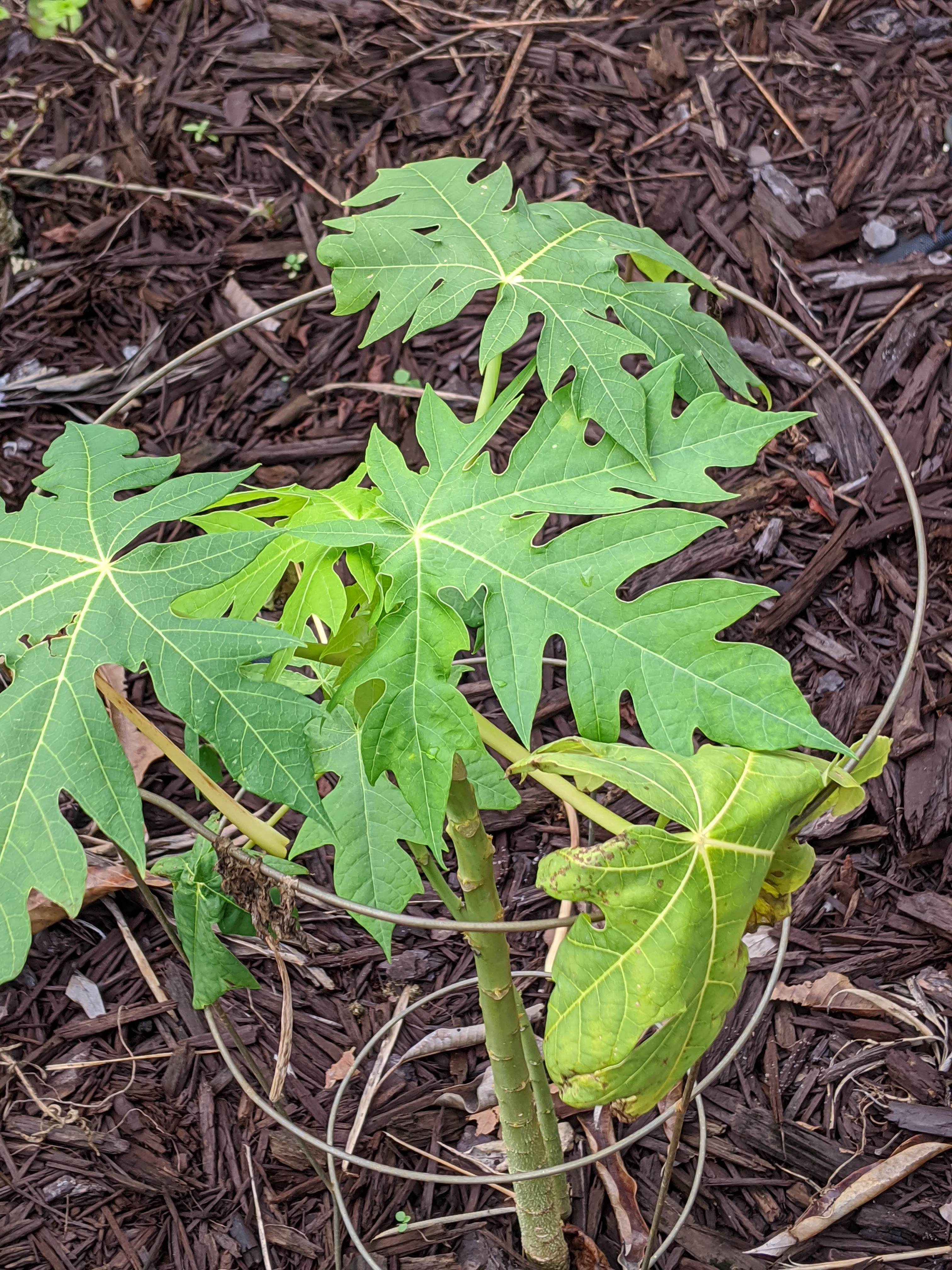
The new Papaya planted last year from seeds of the tree above. Papayas are very short lived, so I started this new one. The tomato cage is for protection from my lawn guys

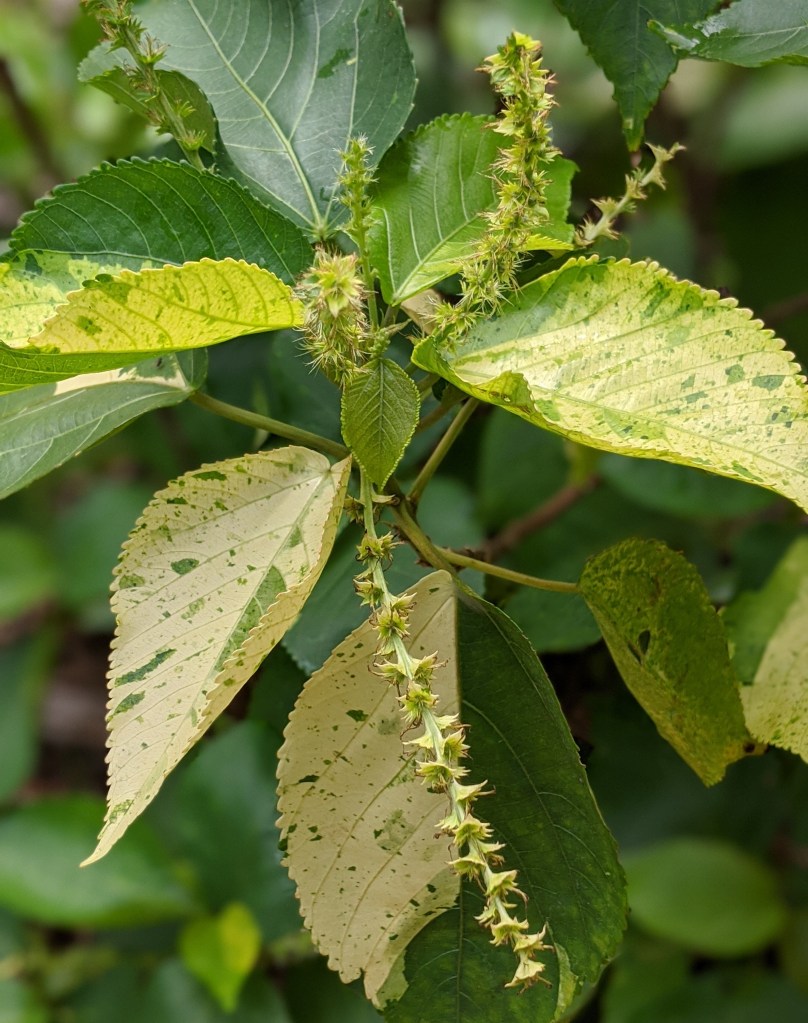
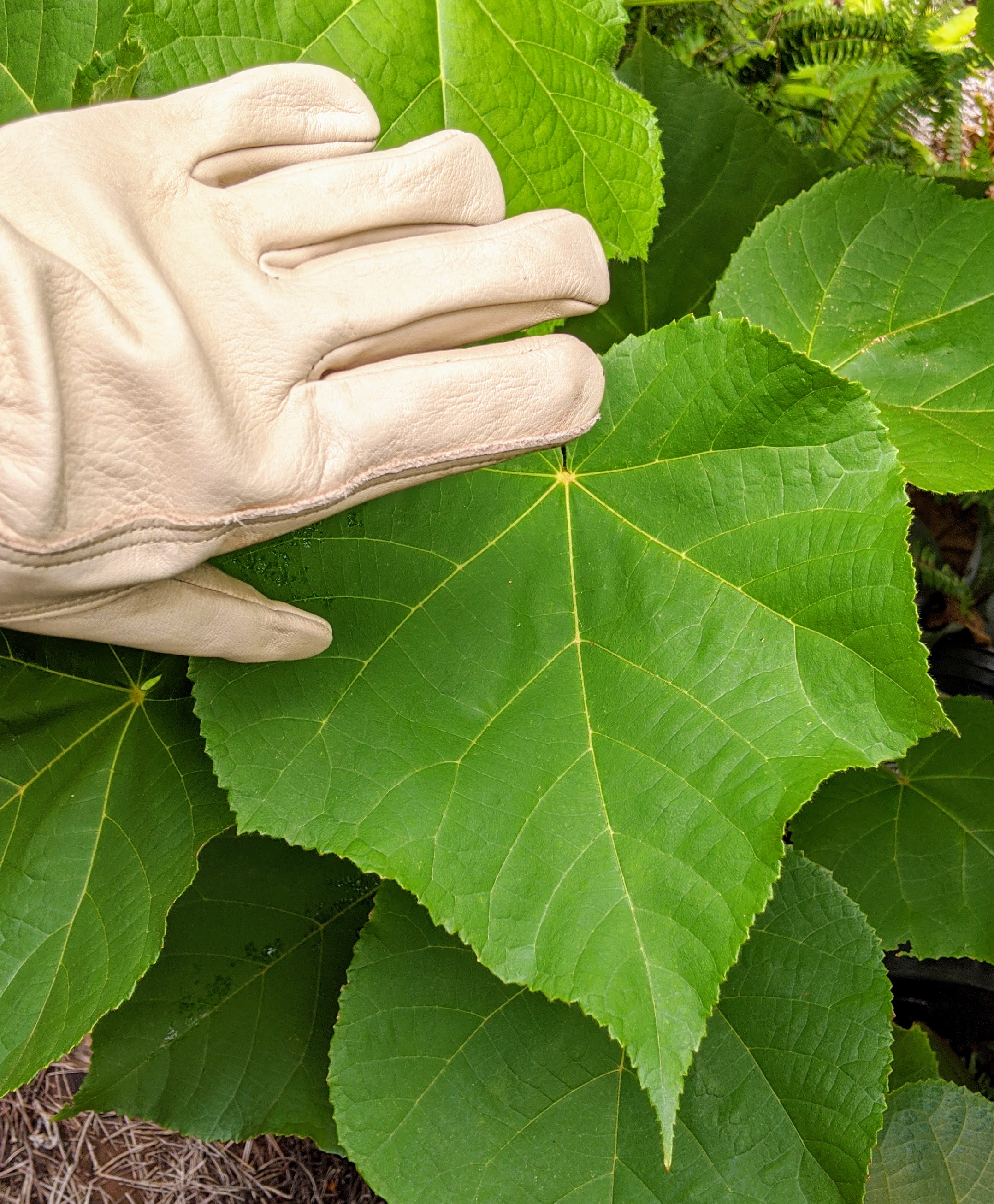
Leaves of the Pink Ball Tree (Dombeya wallachii) This is sometimes called Tropical Hydrangea and flowers during the winter. The shrub grew 9 feet in less than two years.

Happy Gardening!!

In a Vase on Monday – It’s a Wrap

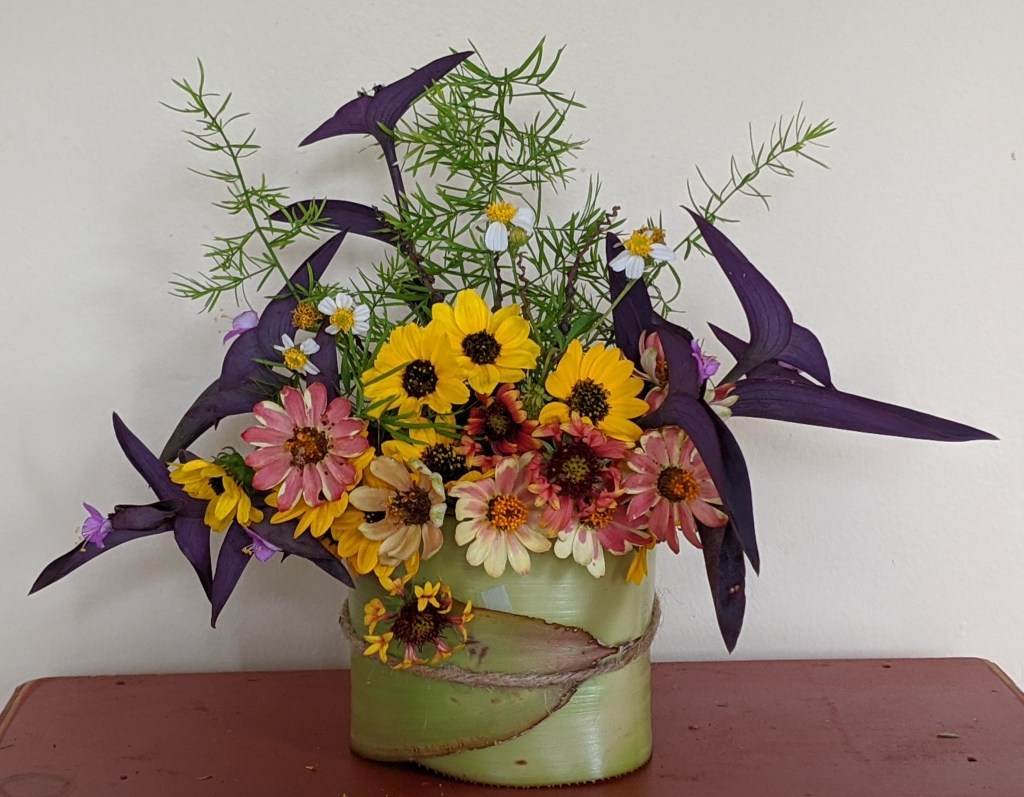
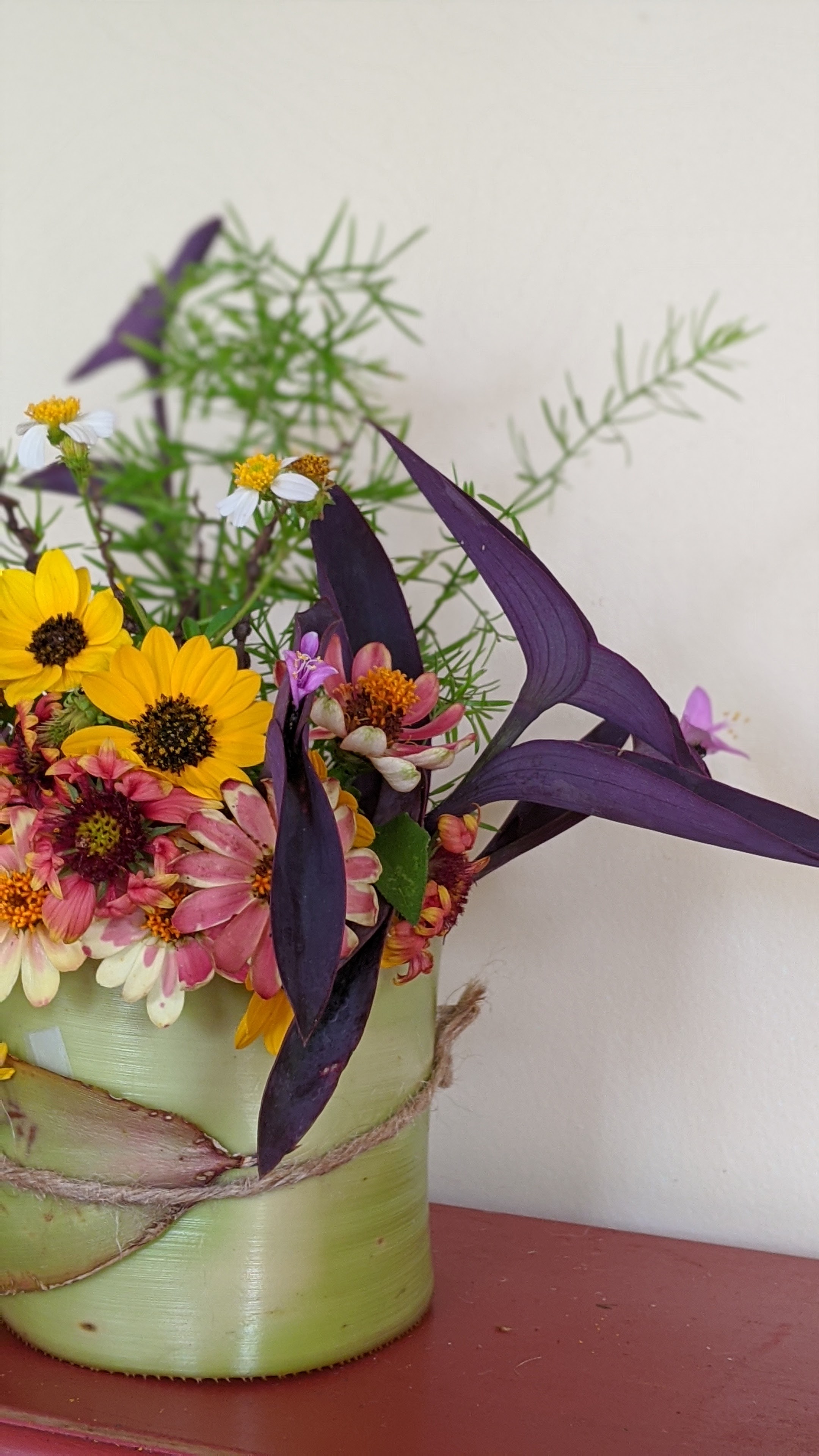
The Bromeliad leaf from last week’s vase was perfectly curled for another go; so I wrapped this Monday’s offering. My original idea was to find enough ‘daisies’ to fill the vase. Of course, I got distracted along the way and came up with this. I love peachy colors with chartreuse and purple. There is something sort of Fred Flintstone rustic about this vase.

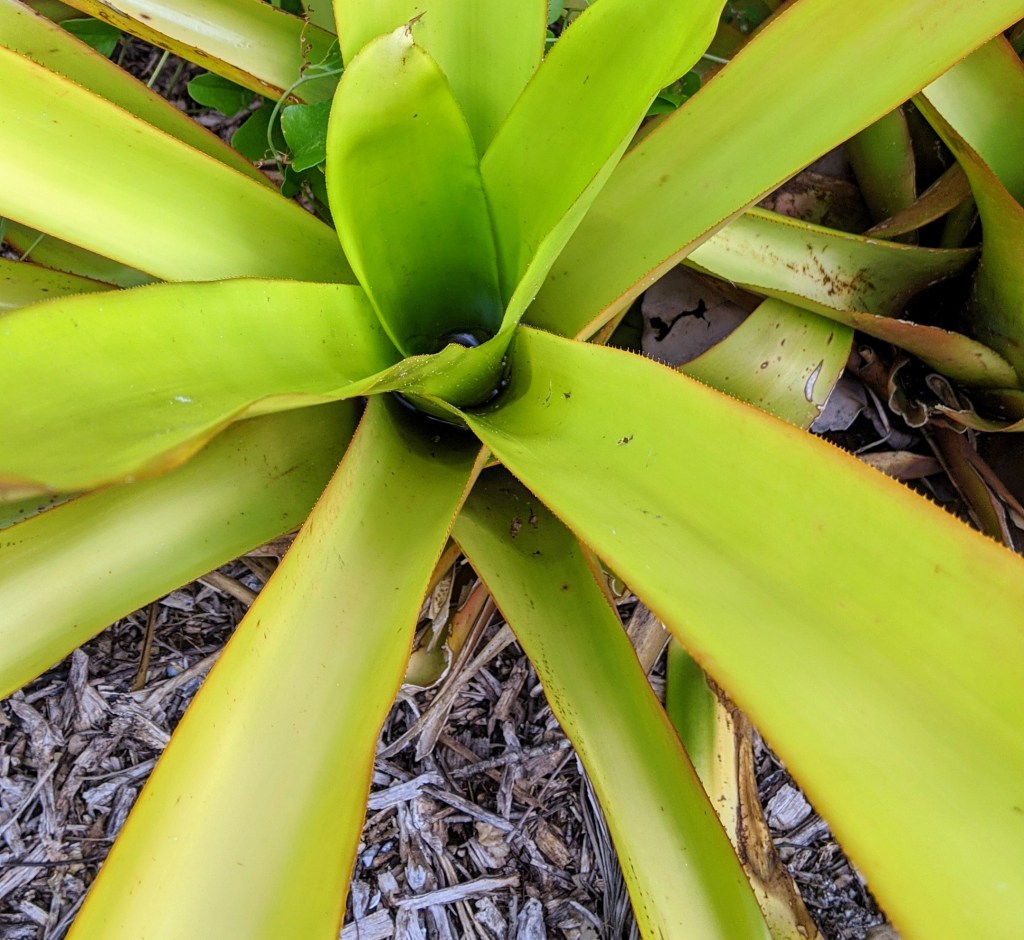
Here is the Bromeliad the leaf came from – a Lemon Blanchetiana Aechmea. I moved it during the winter as it was taking over a corner of my front garden. It is now part of my ‘under construction’ garbage can garden. I am relocating extra plants to soften the necessities area. Ha, way too much design talk..

Here is a closer view of the vase.

The purple cuttings are from Setcreasea (Setcresea pallida) or Purple Queen. These just pop up in my garden for some reason, so I move them around. A good and tough bit of color. The Asparagus fern is another volunteer I cut for flower arrangements.

The ‘ daisies’ are a couple of different things. The solid yellow flowers are daisies – Beach Daisies (Helianthus debilis); in red and yellow, Gallardias (Gallardia pulchella); white flowers are Spanish Needles (Bidens alba); and last but not least, the mixed colors are Zinnias, some variety of Profusion, my favorite summer annual.

That’s a wrap for this Monday’s vase. Happy Gardening and Thank You to Cathy at http://www.ramblinginthegarden.wordpress.com for hosting this weekly blogging event. Visit her blog to view more vases.

Six on Saturday – Simple Pleasures

I am joining the Six on Saturday gang at http://www.thepropagatorblog.wordpress.com with six photos of interest from my garden this Saturday. I am celebrating the simple pleasures this week.

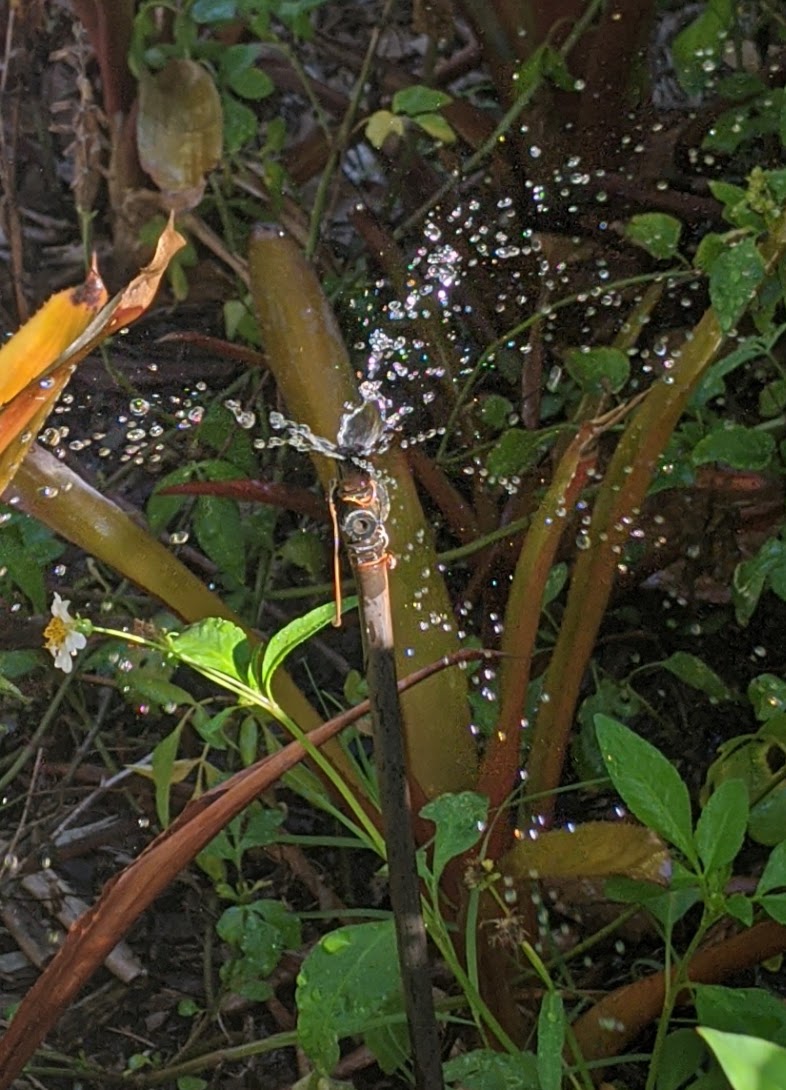
The irrigation system has been repaired after a week’s hiatus with a clogged valve. My husband fixed it. Yay!. Droplets of water on Muhly Grass. It has been dry this week, the birds and butterflies were enjoying a drink along with the plants.

Irrigation in action. A half acre is too much to water by hand..

A mad cool black and white spotted moth chrysalis. I think this was two moths and they left together.

Tomato seedlings are coming up. Yellow Pear and San Marzanos are up, the Riesenstrube are shy so far.

My first homegrown carrot. ‘Very carroty’ is what my husband said. I planted the seeds in January!

Sweetshrub (Calycanthus floridus) emerging from seed. This is a native shrub to the Southeastern US that bears fragrant red flowers in the summer. I think I am a bit too far south for these. I collected some seed in a client’s garden a couple of years ago and decided to give it a go, not realizing they are famously difficult to grow from seed. Two out of eighteen sprouted. A shoot is appearing out of the middle of the curled leaves. The plant on the lower right is a weed, Artillery Fern, I was hesitant to disturb the seedling..

My six for this Saturday. Happy gardening…

In a Vase on Monday – Rain Delay

Early this morning I was greeted with brilliant blue skies and informed by my phone of very little chance of rain. So, I hand watered some of the garden as our irrigation system had a valve get stuck open and couldn’t be turned off (we had to turn off the water supply to get one zone of sprinklers to stop) Strange going ons in the garden.

Then, an enormous thunderstorm blew in and it rained off and on until late afternoon. Relief for my parched garden; I was in and out between rain showers cutting flowers for this vase.

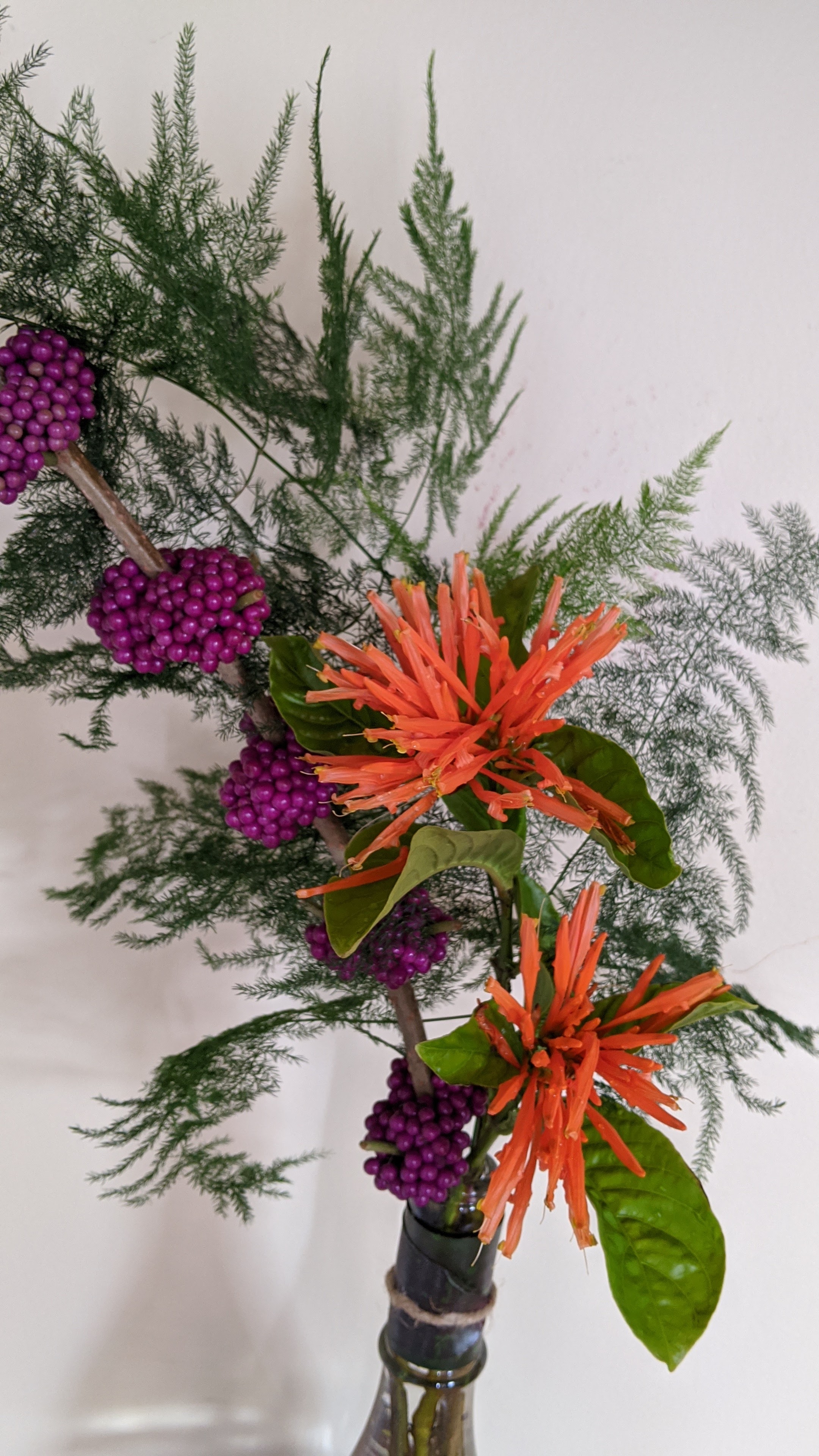
The vase is a Rose` bottle, I like the bottle better than the wine. I have wrapped the bottle with Bromeliad foliage to add some color. The burgundy leaf at the top is Luca Neoregelia, the yellow leaf is Lemon Blanchetiana Aechmea.

Below is a closer view, I was searching for contrasts in color and texture of the plant material. The lurid purple berries are from Beautyberry (Calliocarpa americana); orange flowers are Mexican Bush Honeysuckle (Justicia spicigera) and the ferns winding their way through are Wild Asparagus Fern that pops up in the garden.

To see more vases from gardeners around the world visit Cathy at www. ramblinginthegarden.wordpress.com.

Happy Gardening, hopefully I will get the valve unstuck on my irrigation this week. Hand watering is not fun in the South Florida summer.

Six on Saturday – Seeds of Change

I am joining the Six on Saturday crew today featuring seeds. I started planting tomato seeds this week for my fall garden and noticed many plants producing seed in the garden. As usual, the tropical plants behave differently and the seeds start early, perhaps to catch the end of the rainy season and get a better chance at life?

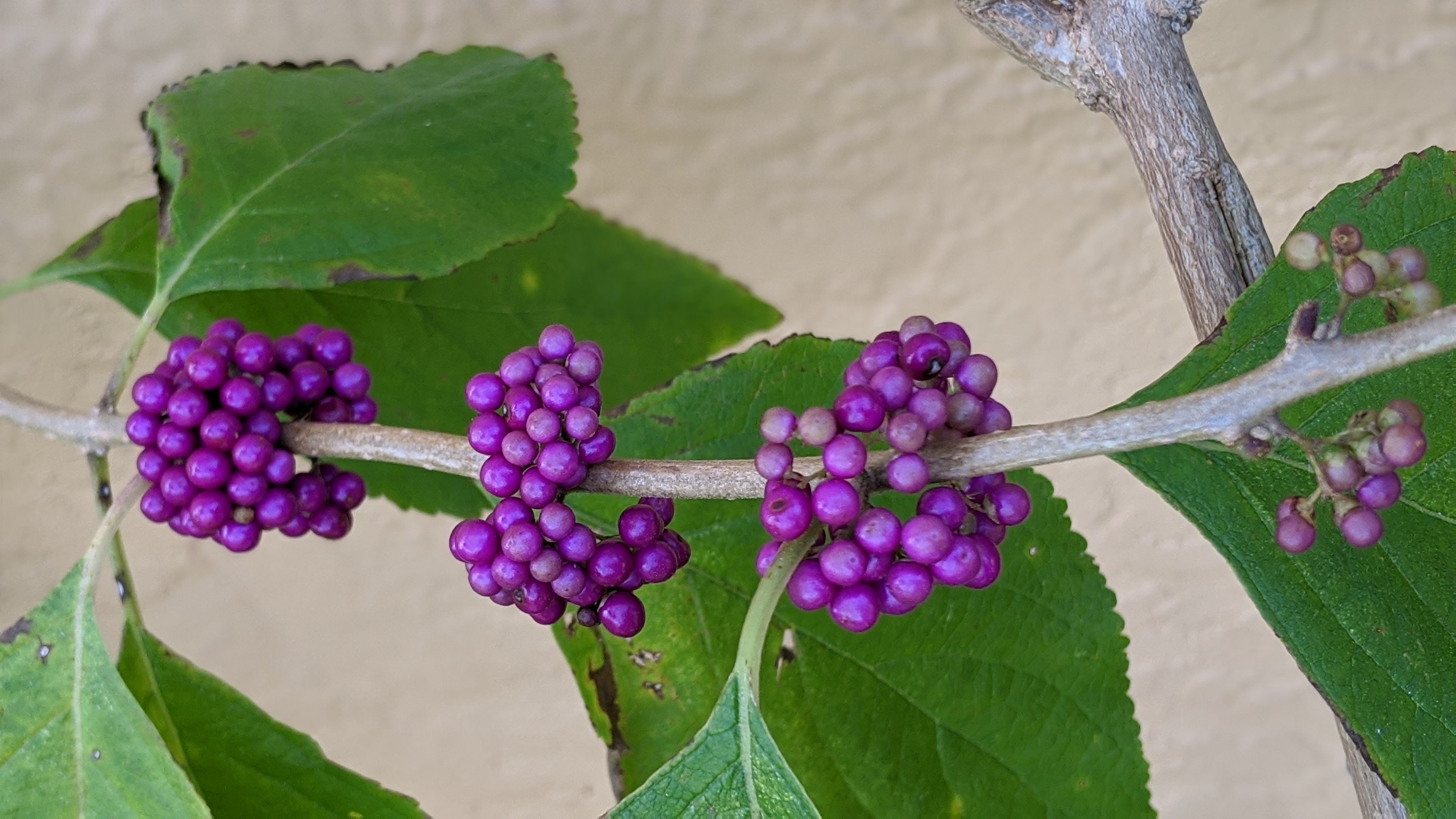
This is Beautyberry (Calliocarpa americana) – a shrub native to the Southeastern US. The berries are more spectacular in Florida, I think and locals make (I am told) tasteless jam from the fruit.

Flowers on a Pygmy Date Palm (Phoenix roebellini). These palms will produce dates. but are dioecious. I am not sure if this is the male or female flower.

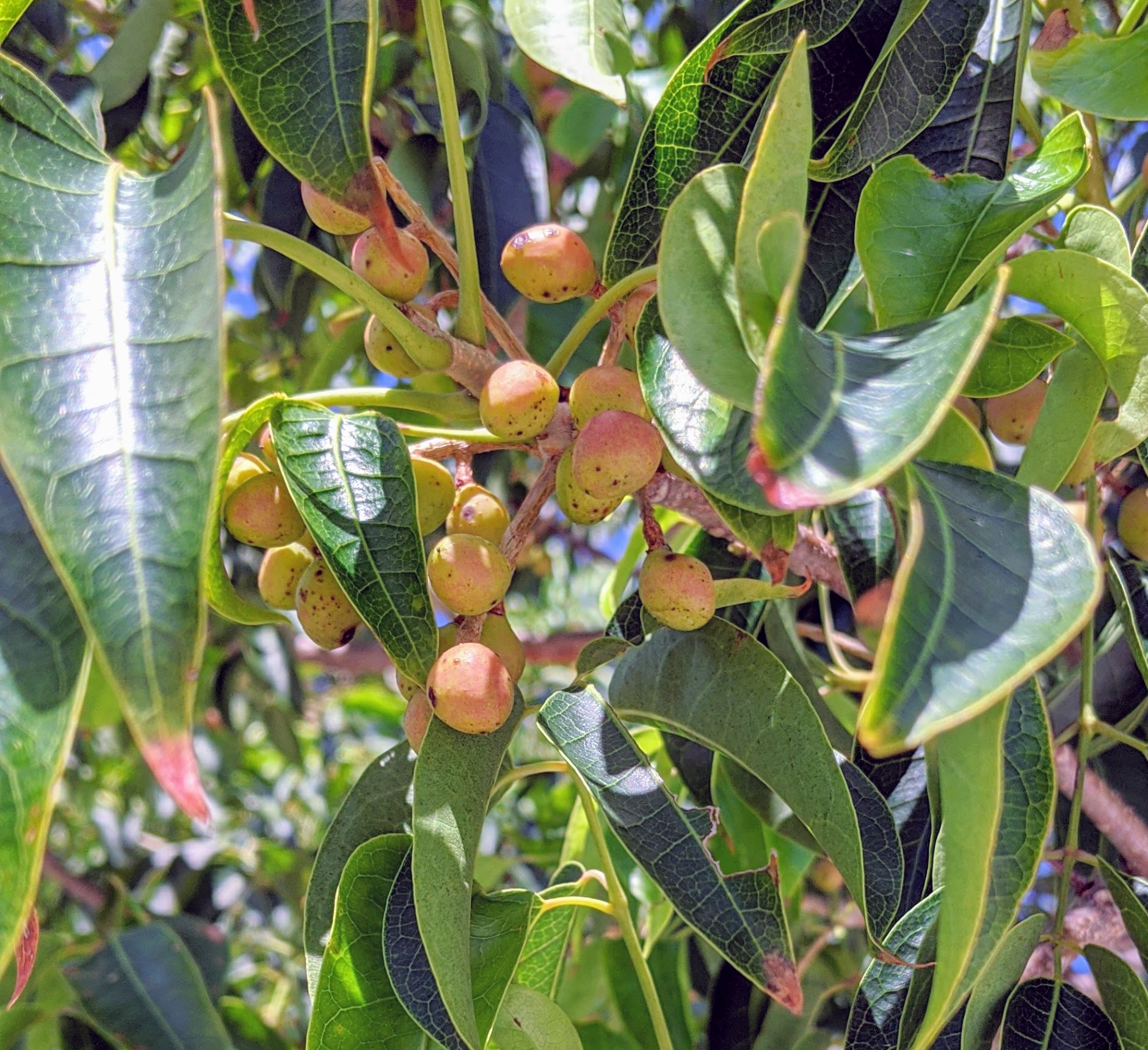
Gumbo Limbo (Bursera simarouba) berries, I suppose. These remind me of Crabapples, the birds love them. The Gumbo Limbo is sometimes called the Tourist Tree because of its flaky, red “sunburned” bark.

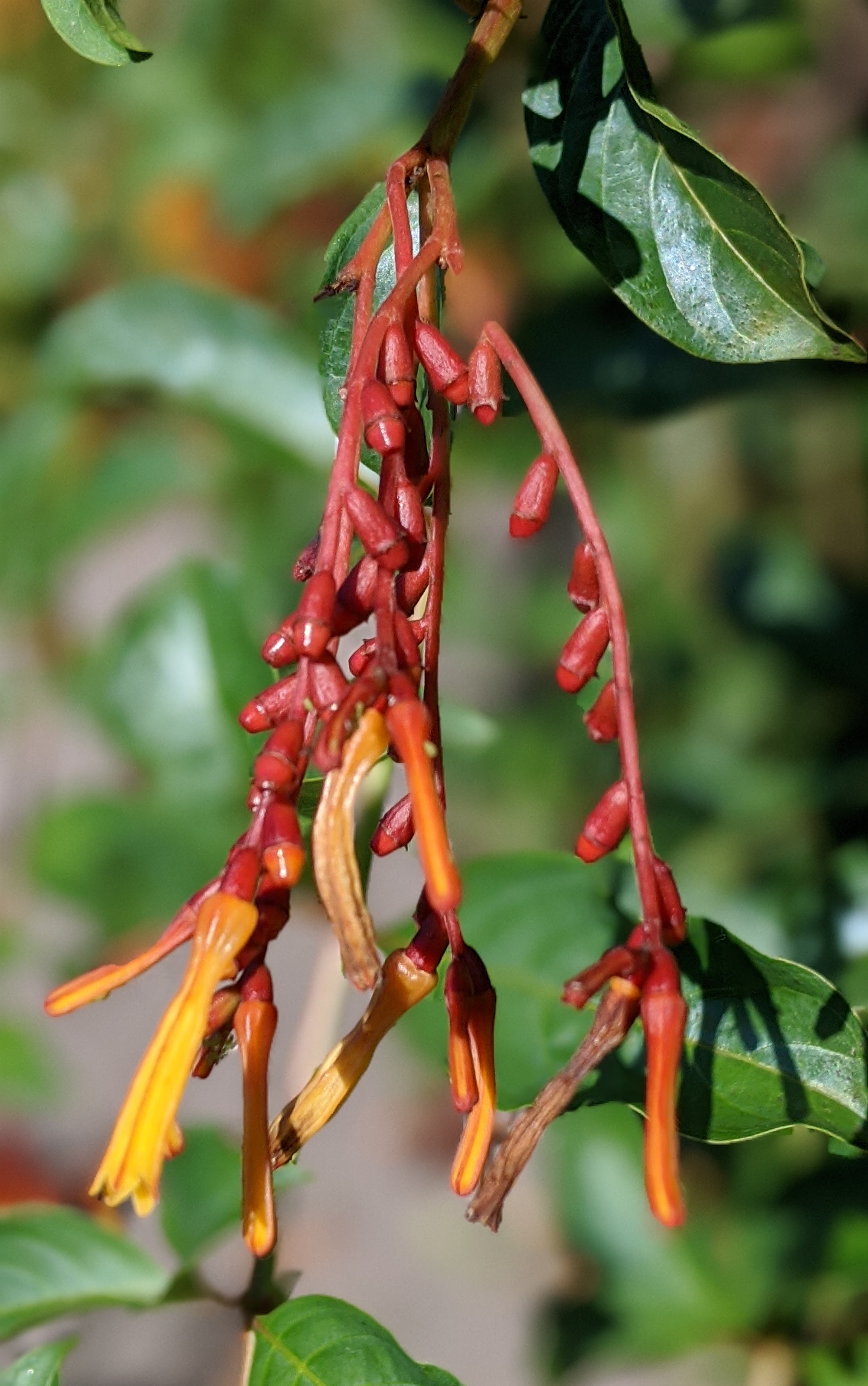
Firebush (Hamelia patens), this one flowers and fruits simultaneously; birds enjoy the fruit, bees and butterflies the flowers. I can hear the shrub buzzing first thing in the morning.

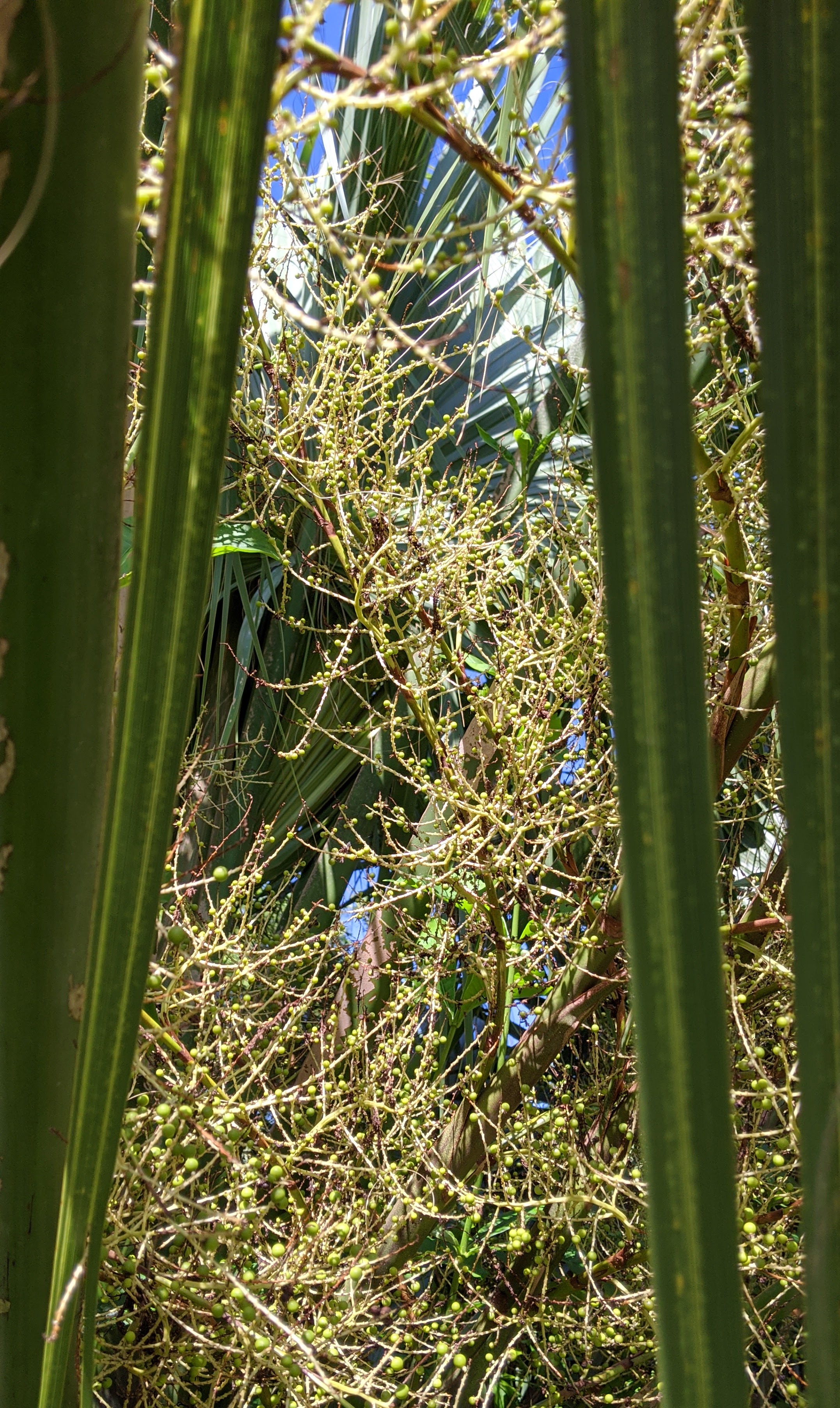
Seeds forming on Sabal Palm (Palmetto sabal). These seeds eventually turn black and fall to the ground. Native Americans ground the husks into flour.

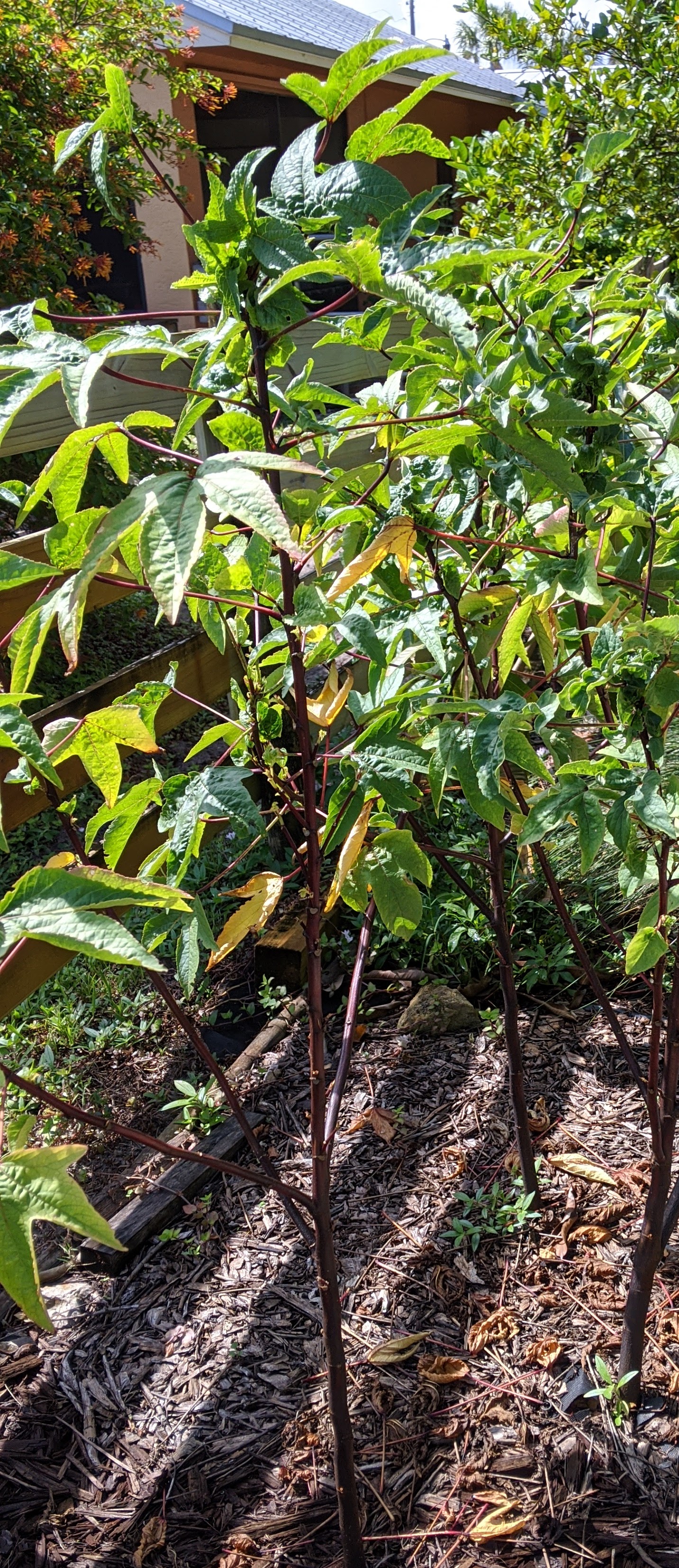
My neighbor grew these Roselles from seed. This is a tropical vegetable, a relative of Hibiscus and Okra. The foliage is edible; new leaves are reminscent of Arugula and the older leaves can be cooked as greens. The calyx of the flower is what these are usually grown for – they are burgundy colored and are used as a substitute for cranberries in the tropics. These were planted as seedlings in May and are now 4′ tall. Waiting for flowers and ‘cranberries’ – hoping for Roselle relish for Thanksgiving.

That is my six for this Saturday. To see more posts visit http://www.thepropagatorblog.wordpress.com

In a Vase on Monday – Braving Isaias

The impending path of Hurricane Isaias has been big news this week in Florida. A friend is calling this storm Hurricane Unpronounceable. Research tells me Isaias replaces the name Ike, retired after a particularly disastrous storm in 2008. They downgraded Isaias to a Tropical Storm before it reached my neck of the woods.

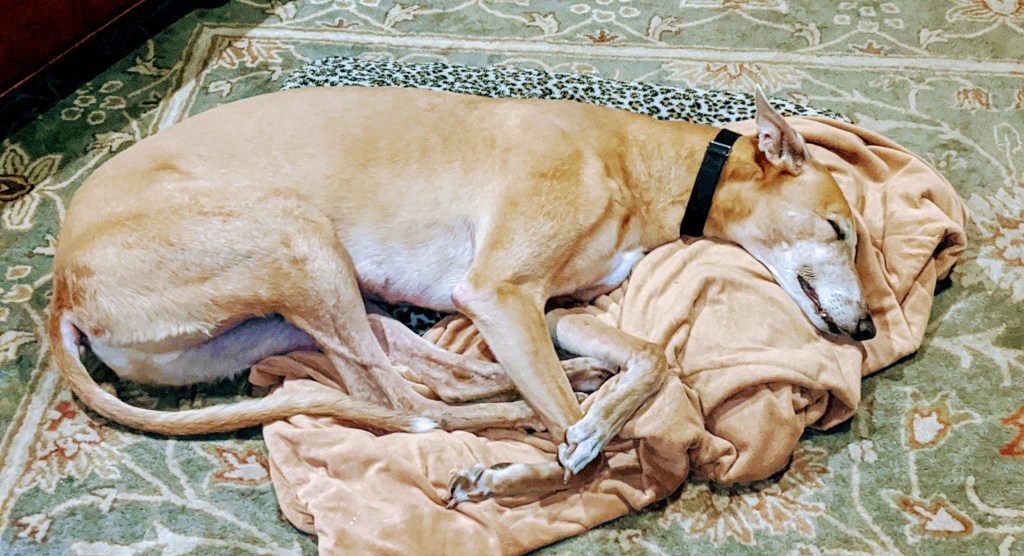
Ordinarily I would not cut flowers during a tropical weather event. This one was mild enough that I walked my greyhounds this morning. Alan, the weather phobic hound, did not take notice of the weather. During the walk I avoided the house with Coconut Palms – the coconuts are still hanging on the tree. We had winds up to 30 mph, off and on, and very little rain. The pots on my porch had to be watered. It is interesting to note the change in direction in the winds, especially when not scared witless. The circular wind direction can be felt and noted by watching which way the palms are swaying. Just stay away from Coconut Palms.

What Hurricane?

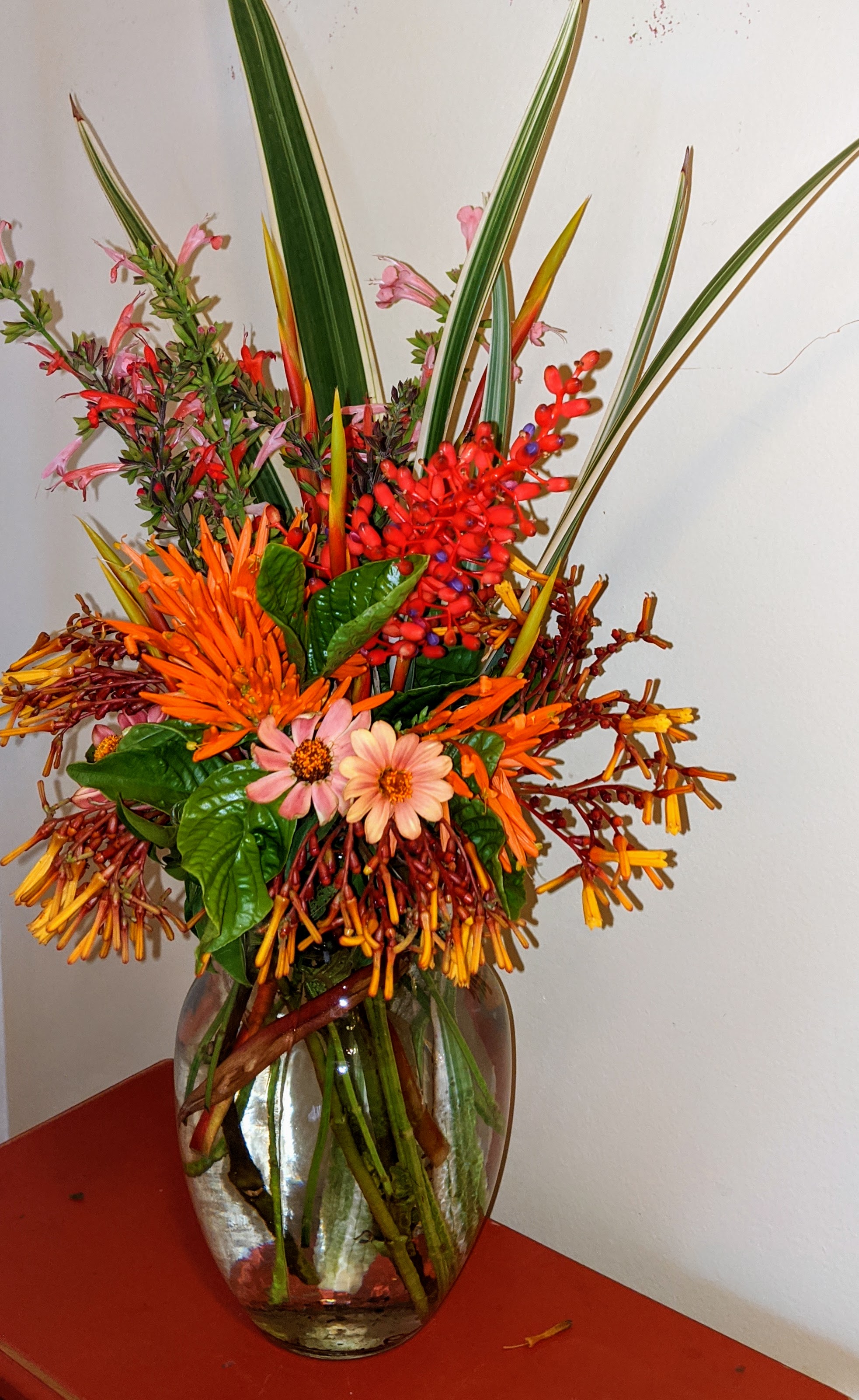
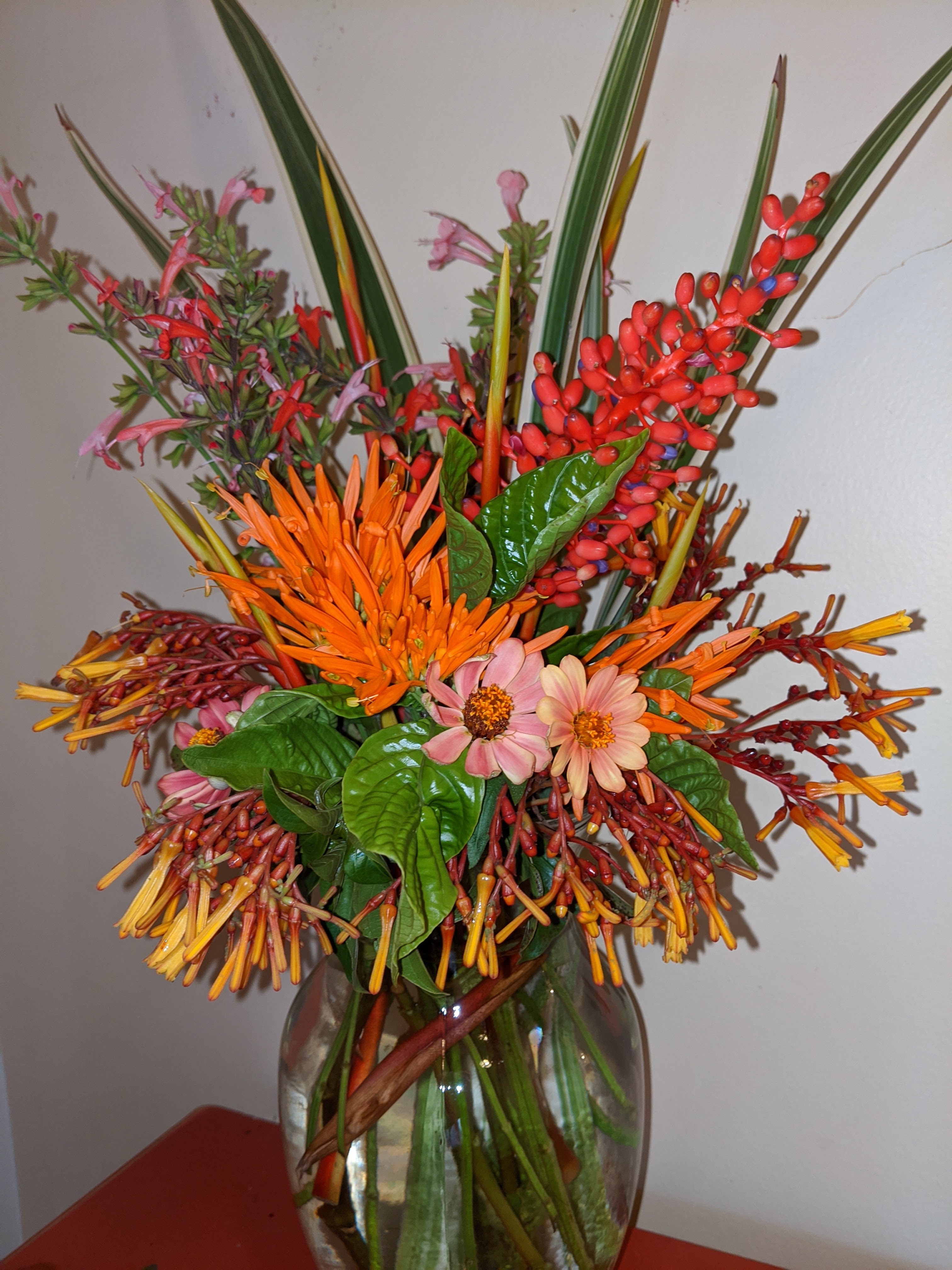
The vase! Oddly, my husband received flowers recently for helping someone and this is the vase from his flowers. I used it to collect a hot color palette of what is flowering in my garden.

The foliage in the back of the arrangement is Varigated Flax Lily (Dianella tasmanica ‘varigata’); yellow and orange spikes are Blanchetiana Bromeliad (Aechmea ‘Blanchetiana’) flowers; peach and red spikes are from Tropical Red Salvia (Salvia coccinea); red and blue tipped panicle flower is Miniata Bromeliad (Aechmea miniata); orange flowers in the middle of the vase are Mexican Honeysuckle (Justicia spicigera); orange flowers hanging over the side are Firebush (Hamelia patens); and a few unnamed Zinnias. The Zinnias are grown in Miami and are my favorite (because they survive) summer container flower. I would love to know the name if anyone can share that information.

It is late Sunday afternoon and while the wind is still blowing it has died down considerably. Fingers crossed for the rest of those in the path of this storm.

To see more vases from less tropical climes visit Cathy at http://www.ramblinginthegarden.wordpress.com.

Happy Gardening and hopefully sunny skies…

Six on Saturday – Preparation H

My husband and I spent last night and this morning securing our house and garden in preparation of the arrival of Hurricane Isaias. It is quite literally a pain in the ….here he is installing storm shutters:

Every window on the house is covered with corrugated aluminum shutters secured with pins cast into concrete window frames and wing nuts. Anything loose in the garden has to be turned over to catch the least possible wind. The teak coffee table has assumed dead cockroach position near the house. I have turned all the garden furniture over, then picked up all the loose bits and nursery pots I have left lying about.

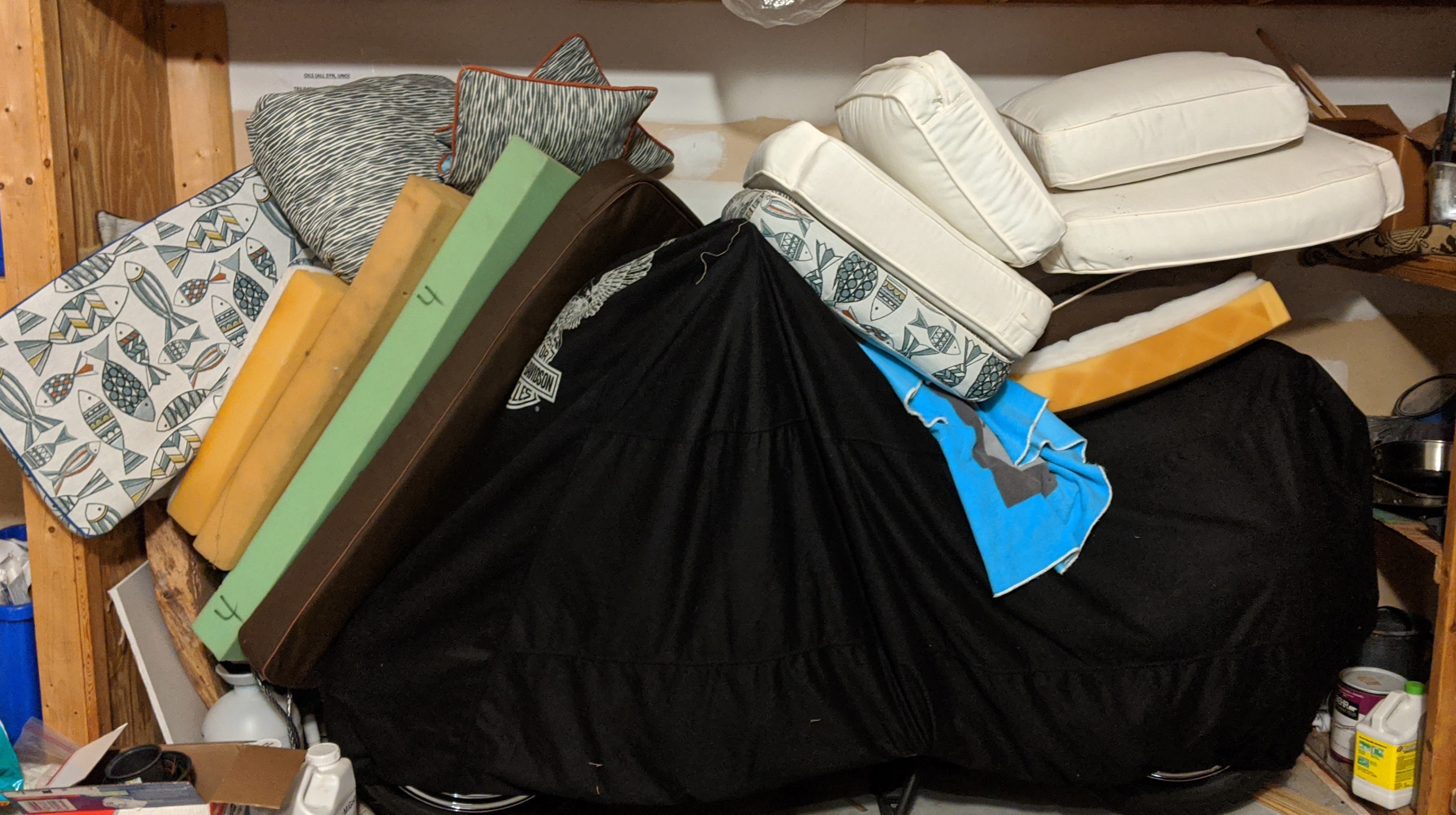
Why, oh, why do I have so many cushions?

For the porch furniture and seating for greyhounds, of course. Piled up to avoid wind gusts.

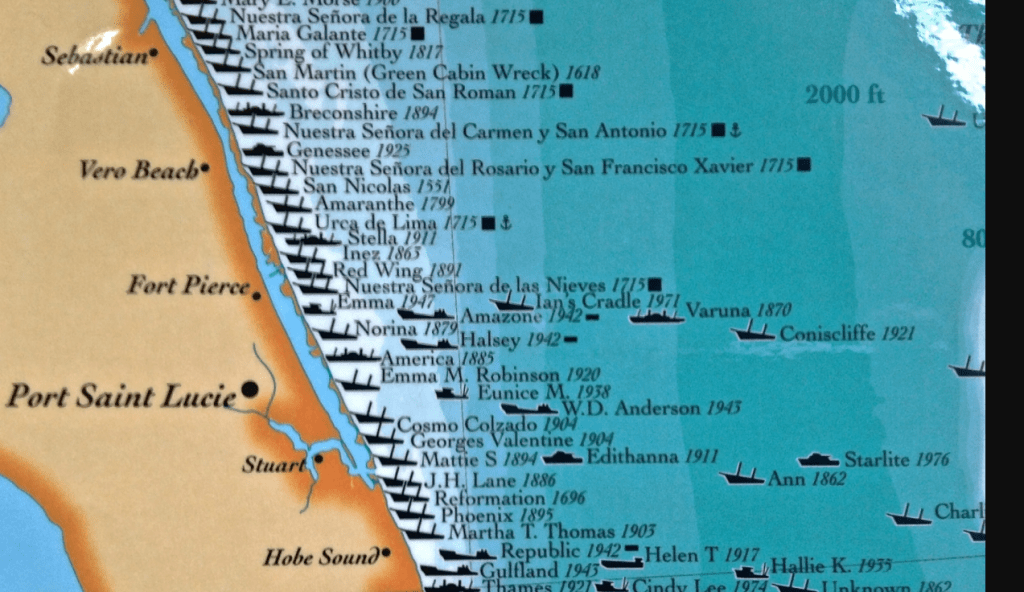
I ran across this map recently, we live on the Treasure Coast of Florida, so named because of all the shipwrecks just offshore. Caused by – you guessed it, hurricanes. And lack of Preparation. People find gold coins at the beach from time to time.
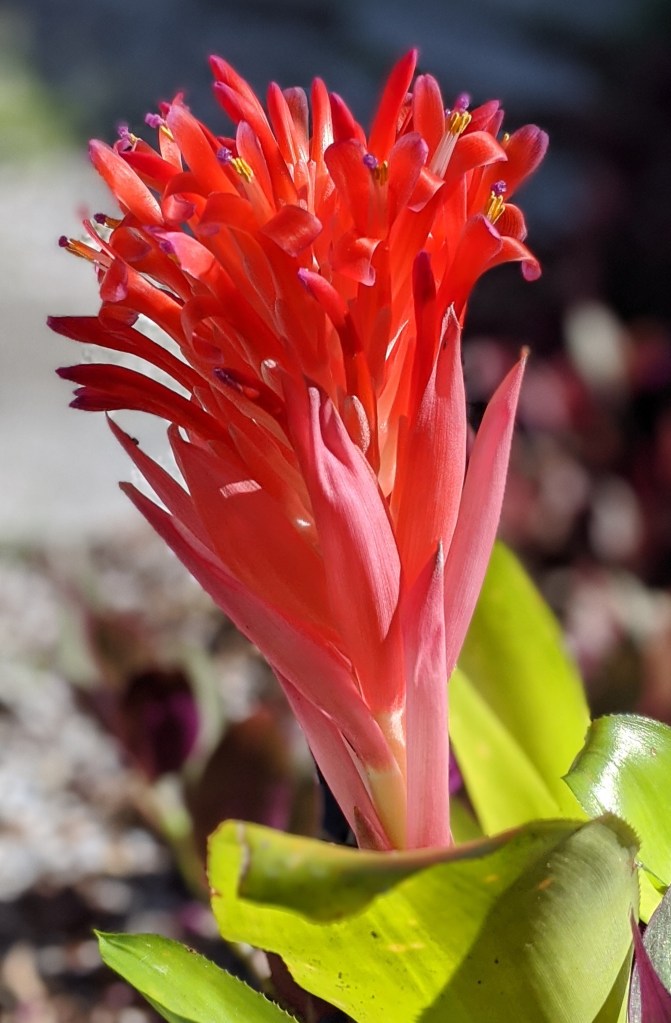
I have one pretty flower for this Saturday, this is called either a Flaming Torch or Hurricane Bromeliad. It’s a Billbergia pyramidalis. Appropriately prepared for the hurricane.
Isaias is predicted to pass by here tomorrow, time will tell how the garden fares.
I am joining Jon the Propagator and gang for Six on Saturday; sharing six pictures of what is going on in my garden this Saturday. To see more Saturday posts, visit Jon at http://www.thepropagatorblog.wordpress.com

Happy Gardening from the Treasure Coast!!