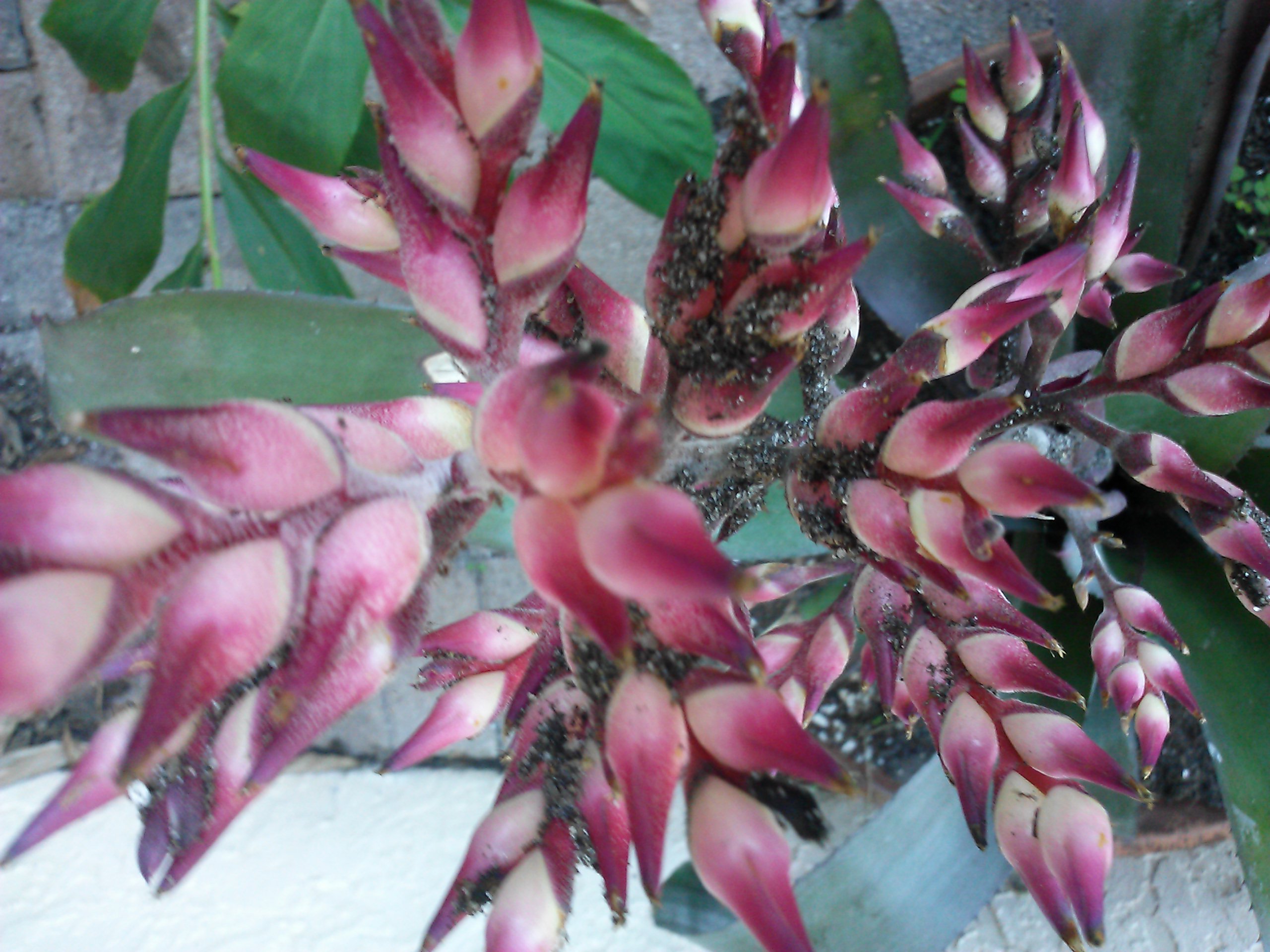
Winter Starburst Clerodendrum – garden fruition

Winter Starburst Clerodendrum

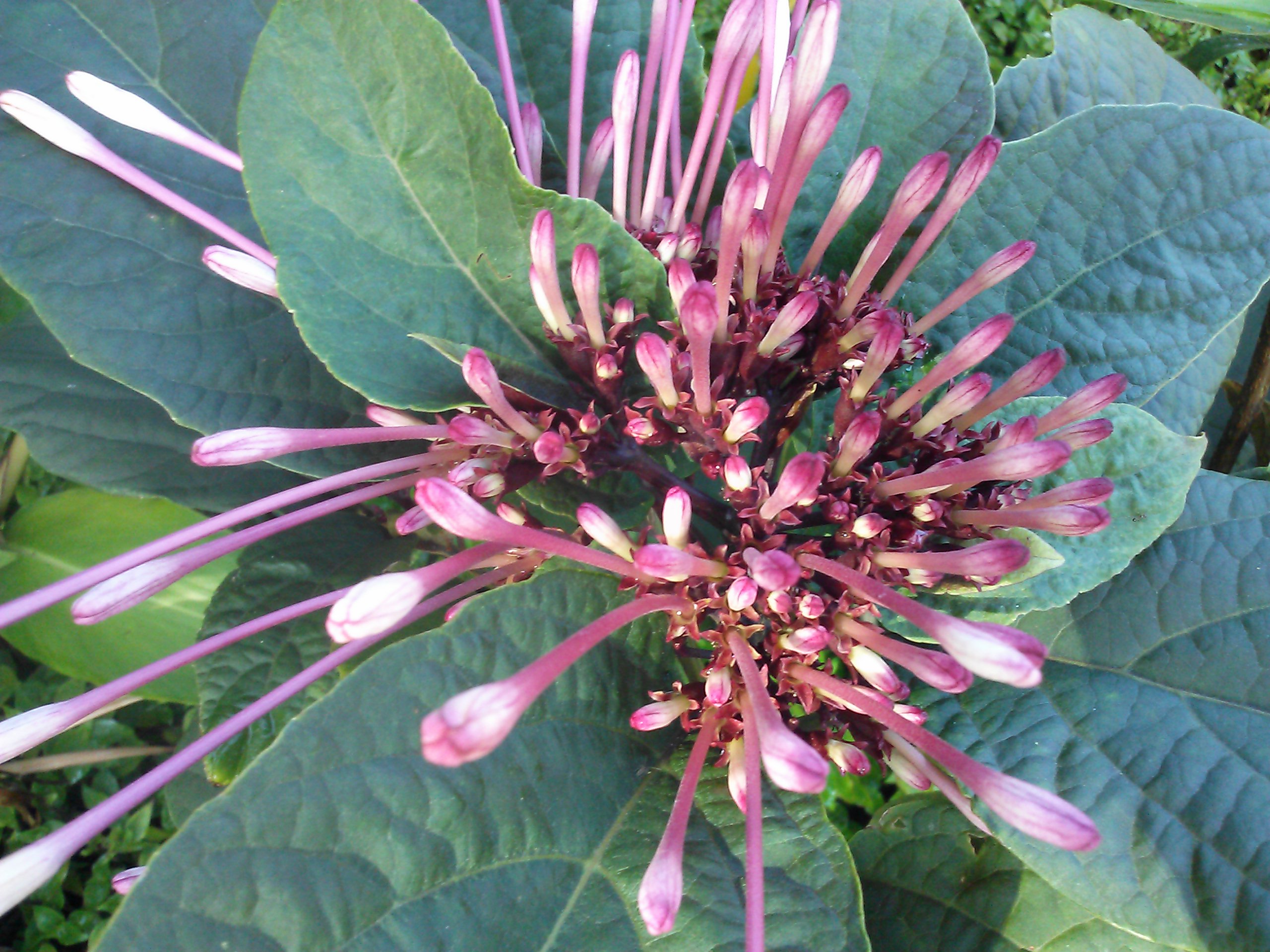
Winter Starburst Clerodendrum in bud

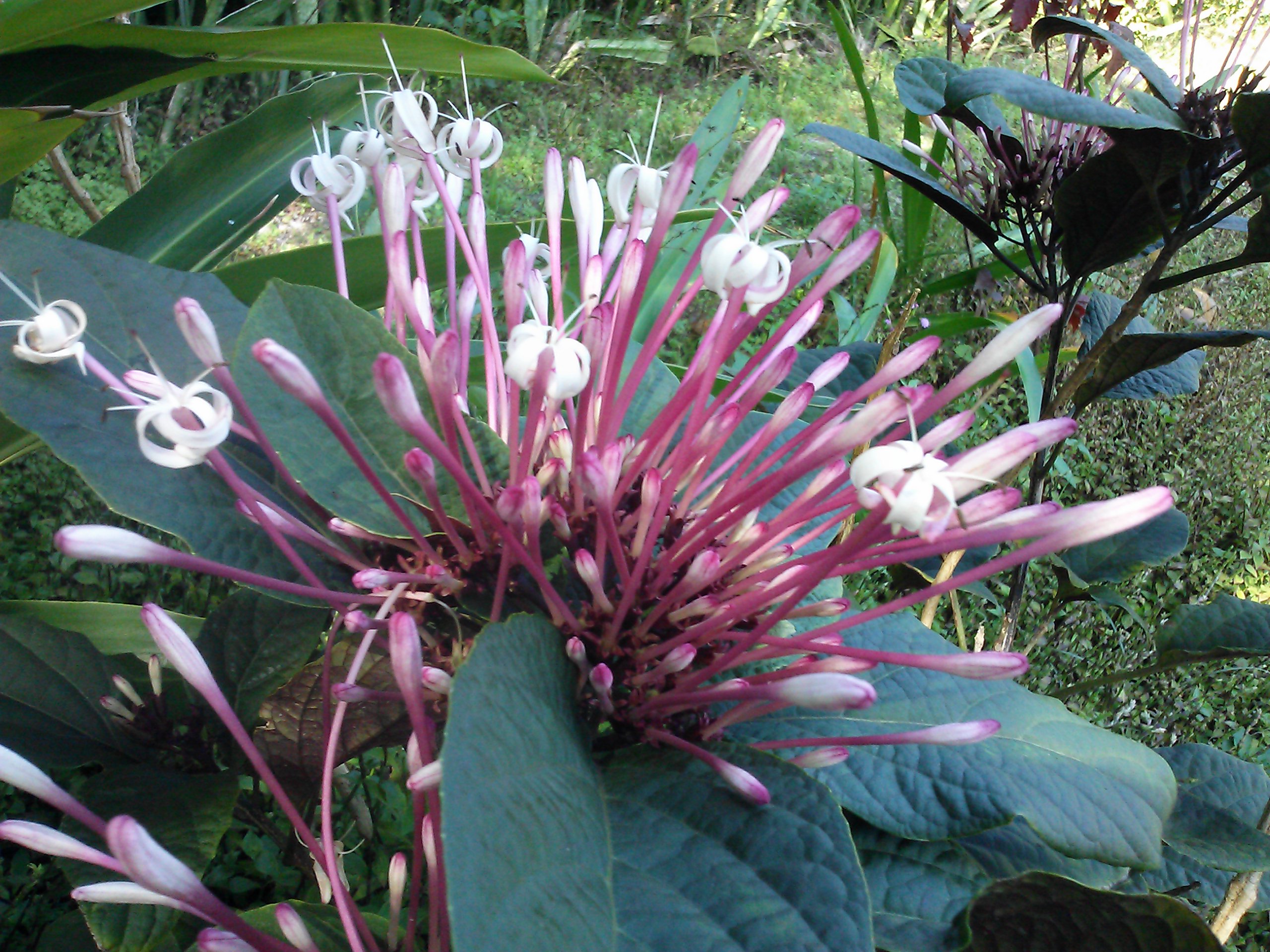
This is my favorite burst of winter color and it has finally bloomed, the cold snap slowed it down, then the rain slowed it down. I have been waiting (somewhat patiently) for the full flower.  Here is the next phase:

Half Bloom

Half Bloom

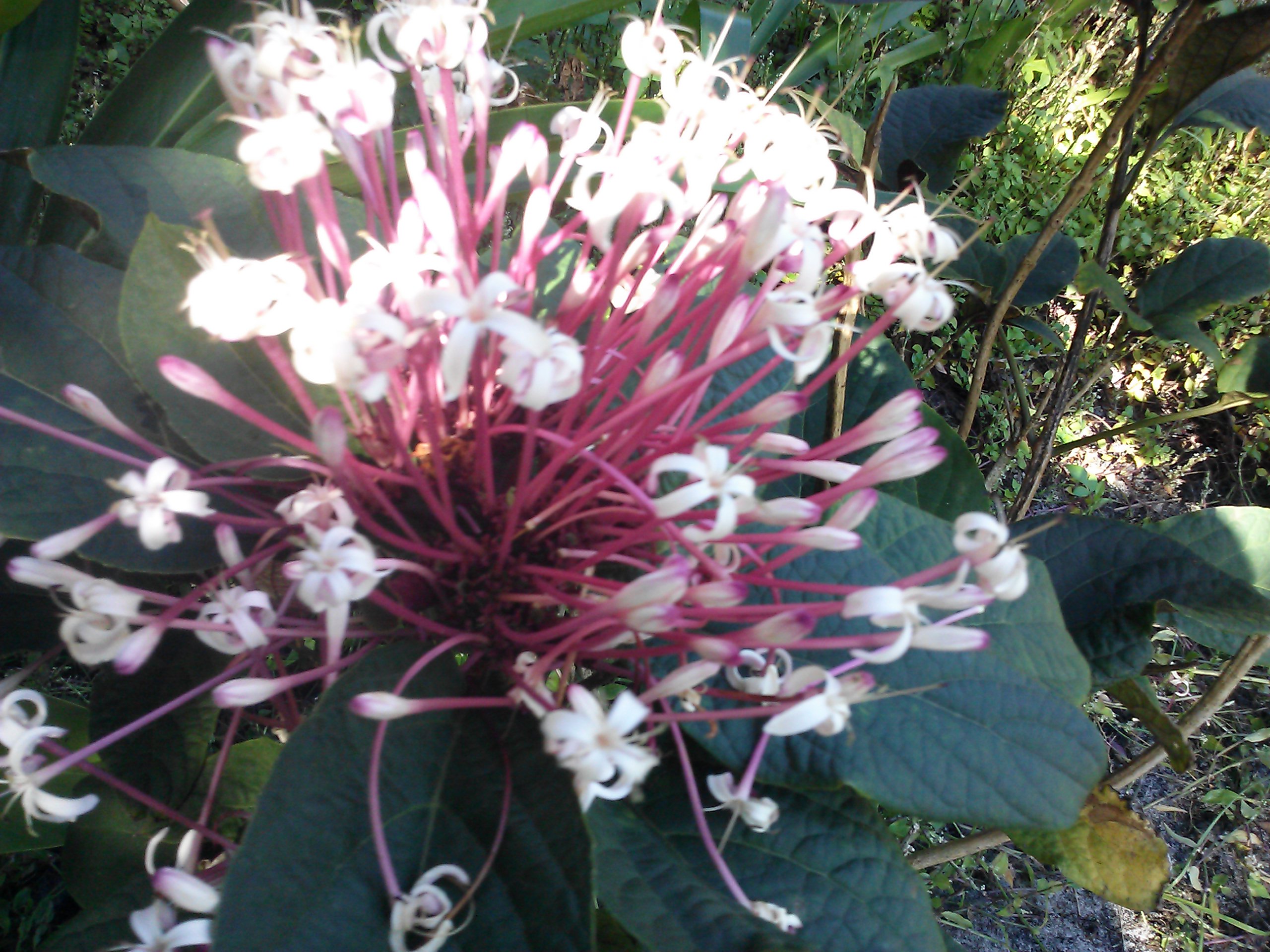
And finally the full Starburst effect:

Starburst

Starburst

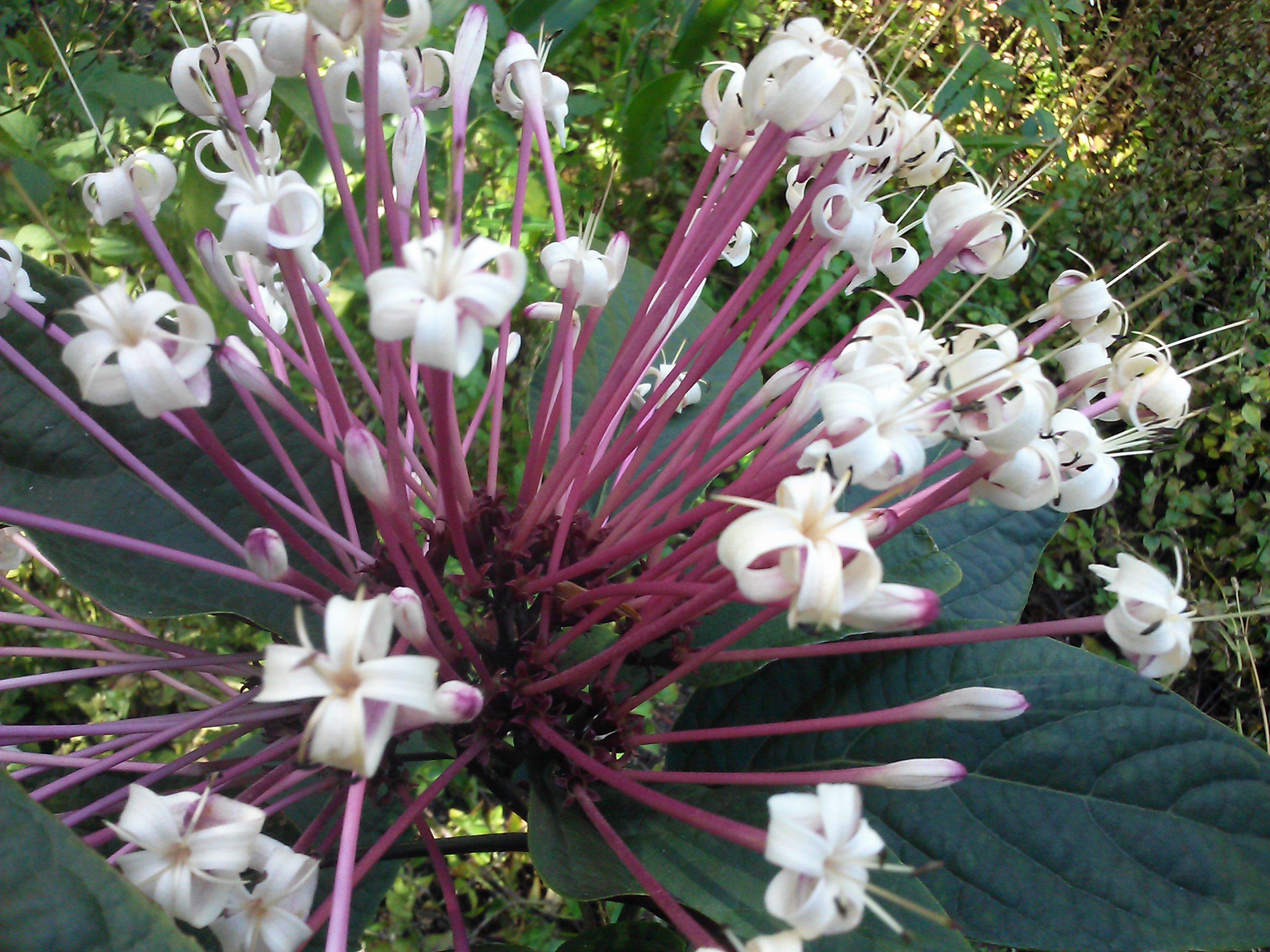
Bursted

Bursted

The Latin name for this plant is Clerodendrum quadriloculare. This is an interesting group of plants, ranging in size from vines to perennials then shrubs up to small trees. Mostly native to tropical South Asia and with a tendency towards creepy habits you must be careful who among them is invited into your garden. I have seen some gardens overrun by a perennial orange version of Clerodendrum which is beautiful but really creepy.

I am glad to have this shrub in my garden, I think of it as a Tropical Rhododendron, and it is so much easier to grow than the cursed Rhododendrons (my former garden had heavy clay that was impossible to grow Rhodos in) The coarse textured leaves have an added bonus of deep plum colored backsides which make the foliage attractive year round.

So far the Winter Starburst has not exhibited any bad behavior, I have sited it in the prescribed partial shade, but the soil like substance in my garden isn’t given to over production of anything except Heliconias as of yet.

Fallout from Botanica

South Florida is rife with Garden fairs during the winter. This past weekend I went to Botanica in Port St. Lucie. Port St. Lucie is not what I would consider a garden spot, but for some reason they have a great botanical garden run by a very enthusiastic group of volunteers.

Botanica was held at the McKee Botanical Garden. At other times of the year they have a propagation area that sells rooted cuttings from their gardens. It is fun to meet fellow plant nerds and pick up a few Bromeliad cuttings.  Not this time, I pulled into the parking lot and realized this was a bigger event than a few cuttings. At least 4o vendors and a food court. I was in trouble. I had been to the bank.

I walked through most of one side and was not really tempted then through the propagation area. The prices had doubled since last summer, so I was again not tempted. Then I got to the other side of the lake..

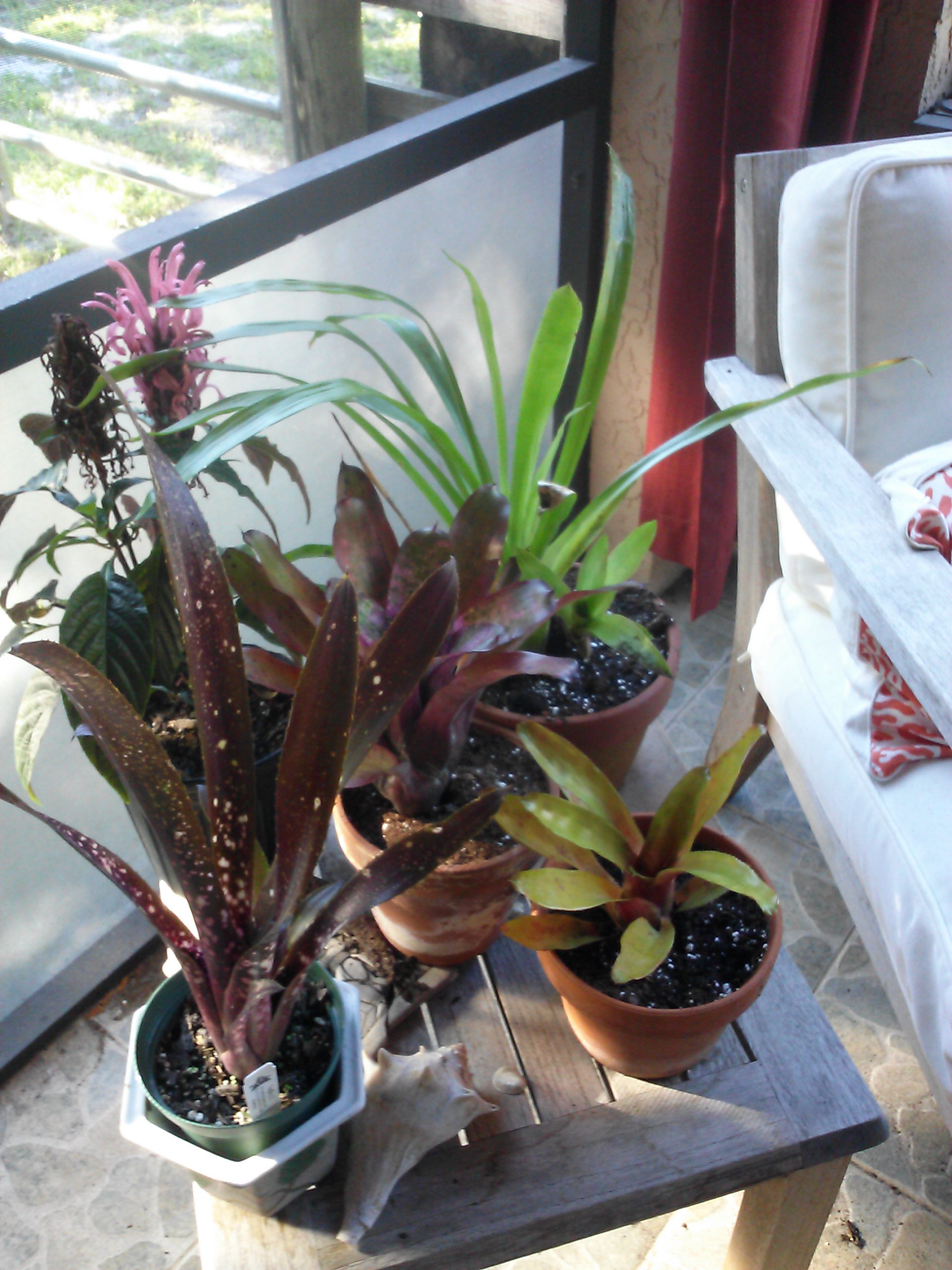
The three for 10 dollar Bromeliads! One of the issues with buying Bromeliads in this manner is the sellers tend to have no idea what kind of Bromeliad they have. The seller advised me the larger one had blue flowers and was adaptable to light. Which really means do not plant in full sun or you will charco-broil the plant and be out three bucks. The others I am pretty sure are some sort of Fireball Neoregelia, I have some similar ones in the garden. Now potted, they have joined their friends from my last foray in plant shopping at Gardenfest.

My Growing Collection

My Growing Collection

The Palm Man, I believe he was called, grows Palms in his backyard nearby. The Palms were beautiful and so were the prices. I succumbed, and bought two Palms.

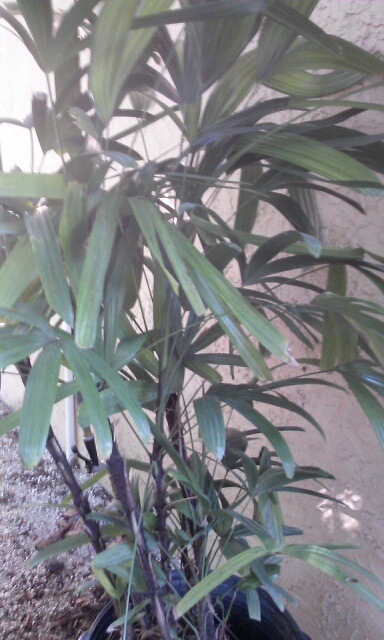
One of my favorite interior Palms, a Lady Palm – I can now grow these outside, so I bought one.

Lady Palm

Lady Palm

This is a Rhaphis excelsa, native to Southeast Asia Rainforests and highly shade tolerant. I have just the spot.

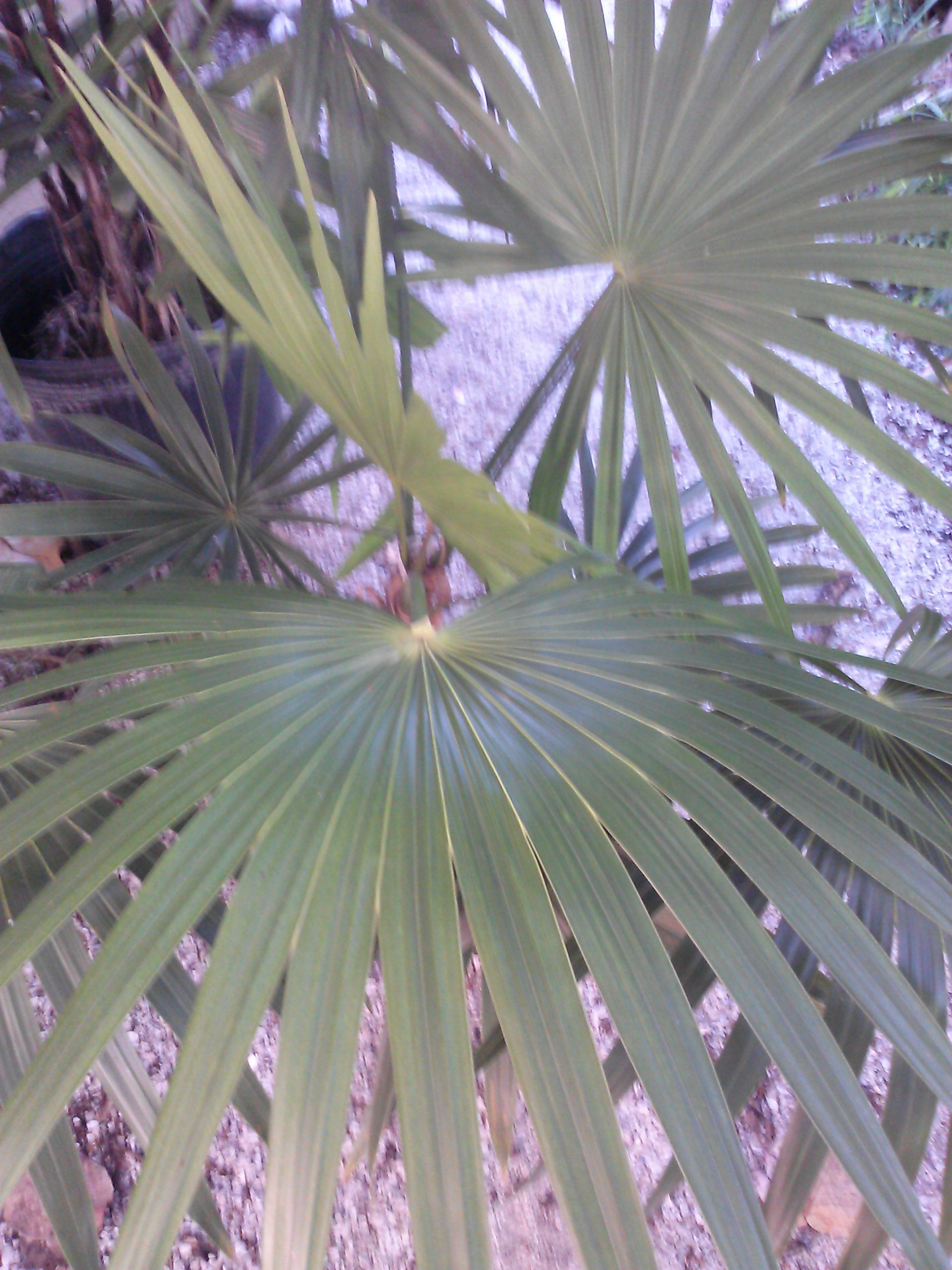
My next purchase was a Florida Thatch Palm, a new plant to me. One of the three palms native to Florida, this is a Thrinax radiata. Tolerant of sand, sea and alkaline soils. All things I have in abundance. Again, I have just the spot.

Florida Thatch Palm

Florida Thatch Palm

I did not quite violate my ‘never get a cart’ rule. Two nice young men from Junior ROTC showed up with a cart and met me at my car.

I have some planting to do this weekend, lest these palms turn into potted plants and spare parts for future use.

Vive La Difference

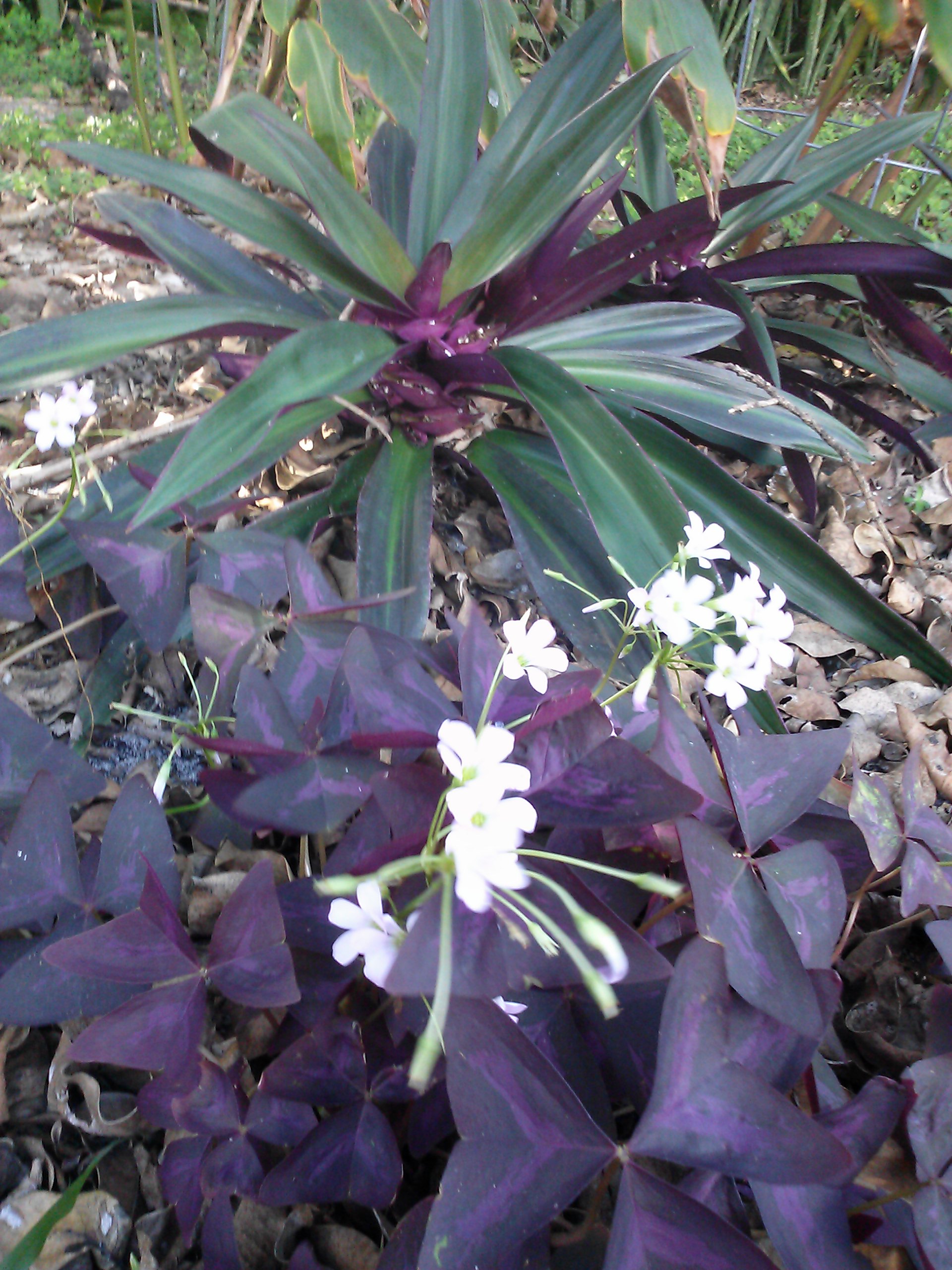
Purple Oxalis in Floridian mode with Oyster Plants

Purple Oxalis in Floridian mode with Oyster Plants

I am from Tucker, Georgia USA. While I have titled the post in French, I do not and will not speak French and have a Southern accent that creeps up on me sometimes, mostly in colloquialisms that cause folks around here to scratch their heads. I said to the podiatrist I couldn’t “sit on my haunches” he was completely puzzled. That means squat down in Southern. Genetically bad ankles, I think. Or too much gardening.

“That dog don’t hunt” is another confusing Southernism. It just means it doesn’t work. More head scratching. I don’t really sound like Scarlett O’Hara from Gone with the Wind but Vivien Leigh was English anyway.

This past year I have been enjoying numerous gardening blogs; I have read about everything from Lupines in Australia to Roses in England to Daisies and Aloes in the US and Fall color just about everywhere but where I live. South Florida is a bit lacking in that regard.

What I have taken from all my reading is there is a lot of difference in the things people grow, but there are also a lot of similarities in favorites. Here is my take on some universal favorites:

Maples for Fall Color, Japanese Maples especially. Cherries and Deciduous Magnolias for Spring color. Everybody loves Cosmos and Hydrangeas and some type of Asters, Daisies, Mums, Lilies of all shapes and sizes, Roses. The UK writers like Sweetgums, which still boggles my mind. Southerners go searching for the chainsaw when a suspect Sweetgum seedling arises. Azaleas and Rhododendrons are very popular and the everpresent Viburnums.

Another interesting aside, gardening magazines will have you thinking succulents and tropical plants are all the rage in temperate gardens. I don’t read about as much of those types of plants as good, well suited garden plants. Of course, there is always something you must have that is a few plant hardiness zones away from reality. I had palms in my temperate garden, I am guessing after last winter they have expired.

While I couldn’t hope to grow many of the favorites in my garden, what was interesting to me to find out is there are some things that will grow just about anywhere. For example,  Oxalis and Viburnums will grow just about everywhere, even at my house. I have some fantastic Purple Oxalis my neighbor gave me. Who knows where it came from – maybe England.

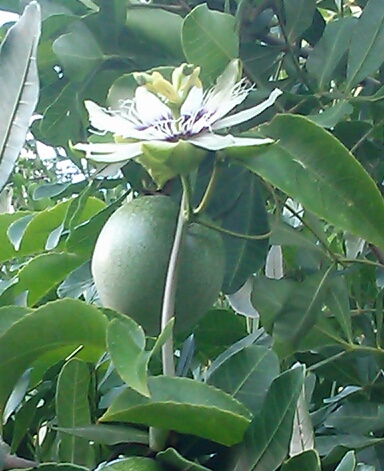
Strange Fruits

Passionflower

Passionflower

Here it is almost December and I walked out into my backyard to find a Passionflower in full bloom and fruiting. Very nice and so typical of the landscape in South Florida. Just when you are wrapping your brain around the fact that the holidays are here and the temperature outside is around 80 degrees – there is a Passionflower.

I was wondering if this was a culinary Passionfruit and apparently it is not. This is called a May Pop in northern climes. My father in law was from Northern Ohio and one of his favorite childhood memories was stomping May Pops on the way home from school. Probably in May and not December.

Passionfruit comes from Passiflora edulis, which is native to South America. The North American version is Passiflora incarnata, the May Pop. There are an additional eight varieties native to North America, the culinary variety is tropical and may be grown in South Florida.

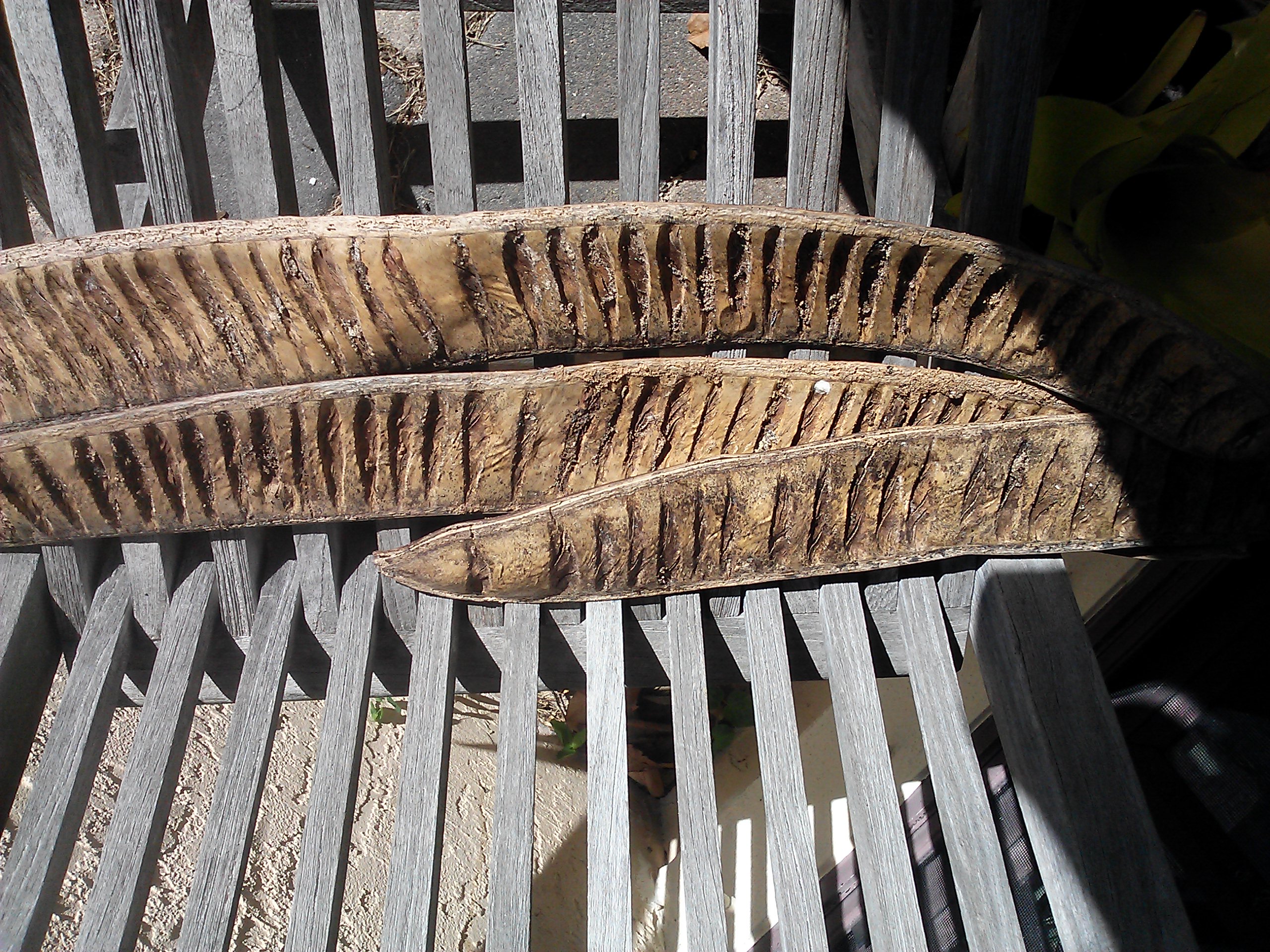
Ponciana Pods

Poinciana Pods

Here is some more interesting fruit. These are the dried pods of the Royal Poinciana tree, a member of the bean family. The pods are about two feet long and I enjoy spray painting them a metallic color and using them in Holiday decorations. I am truly getting in touch with my inner Martha Stewart.

The last bit of strange fruit I spotted at my local library. I have watched these trees bloom for the past couple of years, but had not noticed the fruit (it is strange that I did not notice this fruit)

Golden Shower Fruit

Golden Shower Fruit

My husband was snickering when I showed him this photo. It is pretty strange fruit, the whole thing is around 3 feet long and looks like someone has been making green sausages and hanging them on the tree. The tree is a Golden Shower (Cassia fistula) – in the spring and summer it has chains of yellow flowers that resemble Hawaiian leis hanging down from the branches. Beautiful and kind of peculiar. Like many things in South Florida.

Fall Color in South Florida – Bolivian Sunflowers

The Sunflower Hedge

The Sunflower Hedge

I have been noticing these plants for the past few years and it always seems weird to me to associate Sunflowers with November. Gigantic Sunflower Shrubs, at that. I also assumed incorrectly they were some sort of Helianthus. Not the case, this is a Tithonia, Tithonia diversifolia – the Bolivian Sunflower. In another perversity of plant naming, the Bolivian Sunflower is native to Mexico and Central America. I am fairly certain Bolivia is in South America.The name Mexican Sunflower is already taken for a smaller perennial.

One of my neighbors has a hedge of Bolivian Sunflowers screening the yard. This Sunflower hedge is at least 12 tall and in full bloom right now. This plant grows Spring and Summer and blooms all Fall and Winter. It has just really started blooming in earnest and should continue for a couple of months. Another one of those kooky benefits of living in South Florida, Sunflowers all winter.

Since the possible 16′ tall shrub bears 6″ flowers profusely, I am imagining it can put out quite a few seeds and become a problem. I am not sure I would try a hedge, but maybe one or two to screen a view where the lawnmower will run over any nearby seedlings. One has to practice selective lawn mower placement of plants here if there is any question of overabundance. No frost means nothing ever dies. Or anything you want gone refuses to die.

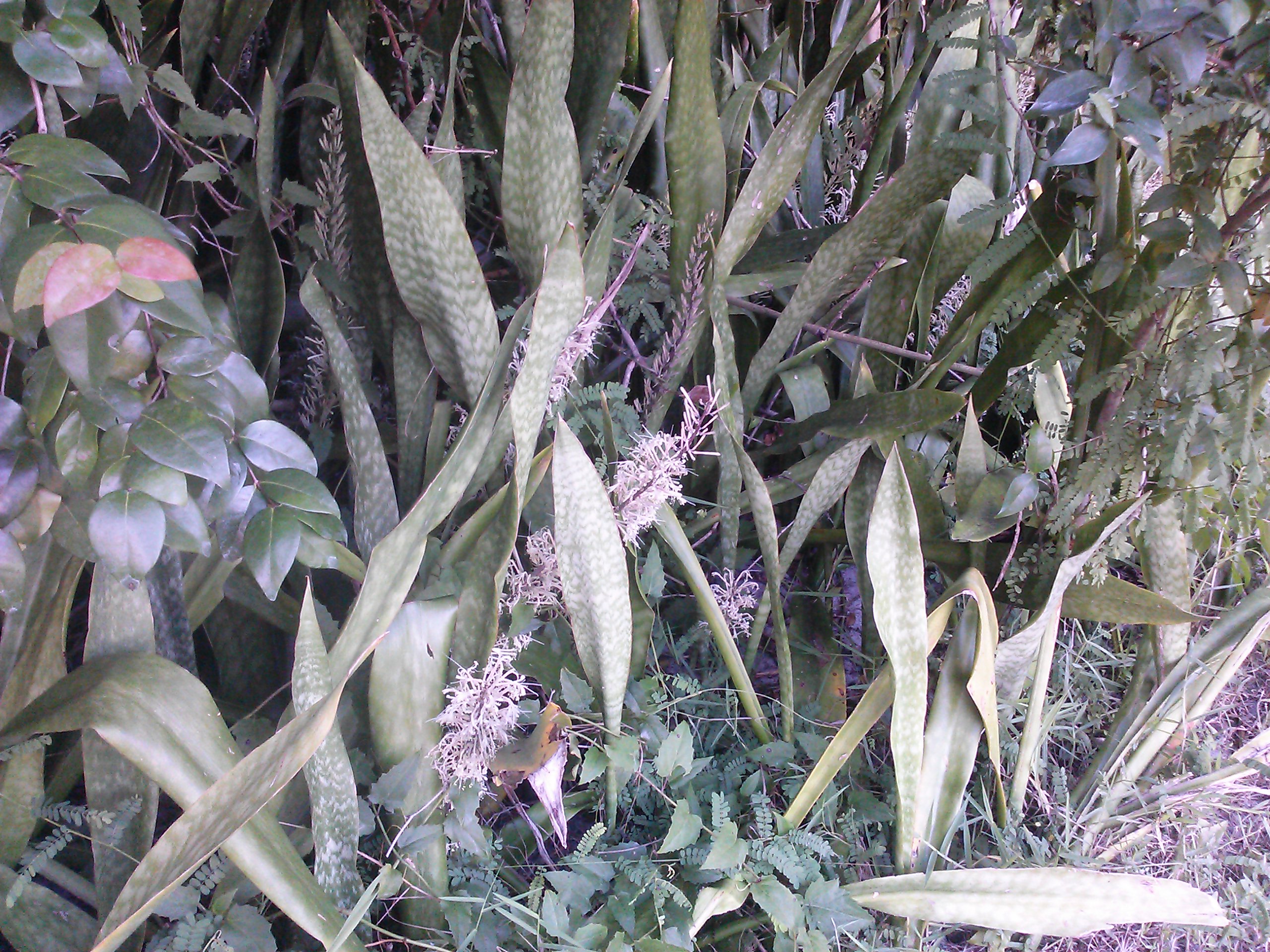
Mother in Laws Tongue – Sansevieria

Mother In Laws Tongue Flower

Mother In Laws Tongue Flower

My mother in law didn’t have a a particularly sharp tongue. Well, maybe a little sharp. My Florida yard is blessed with an abundance of these plants. It still seems unreal to me to be nearly overrun by- well, houseplants.

The only way to describe the Mother In Law’s Tongue in my yard is a plethora. Or a Boatload. I am suspicious someone brought a houseplant from Michigan in 1964 and unleashed this unholy plant on my garden. The Florida gardening books consider this plant escaped and invasive.

I am certain I cannot rid my yard of this without total annihilation of everything so I have decided to live with it. I was surprised over the weekend to see that these plants flower. And are kind of pretty. On the flip side, this flower probably produces a quarter of a million seeds per stalk. I have ended up with at least 100 linear feet of edging of MILT about 5 feet deep. The only thing that keeps it in bounds is frequent mowing with the lawn mower.

The Mass of Mother In Law Tongues

The Mass of Mother In Law Tongues

If I step back and squint the plants have an interesting texture and a nice green color. An added bonus-extreme drought resistance. I just have to keep reminding myself of these good features.

More fun from the tropics…

Bromeliads in the Hood

Dr. Seuss

Dr. Seuss

I did my weekend garden touring at the McKee Botanical Garden in Port St Lucie, Florida. This is a surprising gem of a garden located on 20 acres in a suburban neighborhood setting. One of the interesting things about this garden, it is maintained almost exclusively by volunteers and  is beautiful. And they have lots of Bromeliads. I have no clue what that is above but Dr. Seuss almost certainly would have loved it.

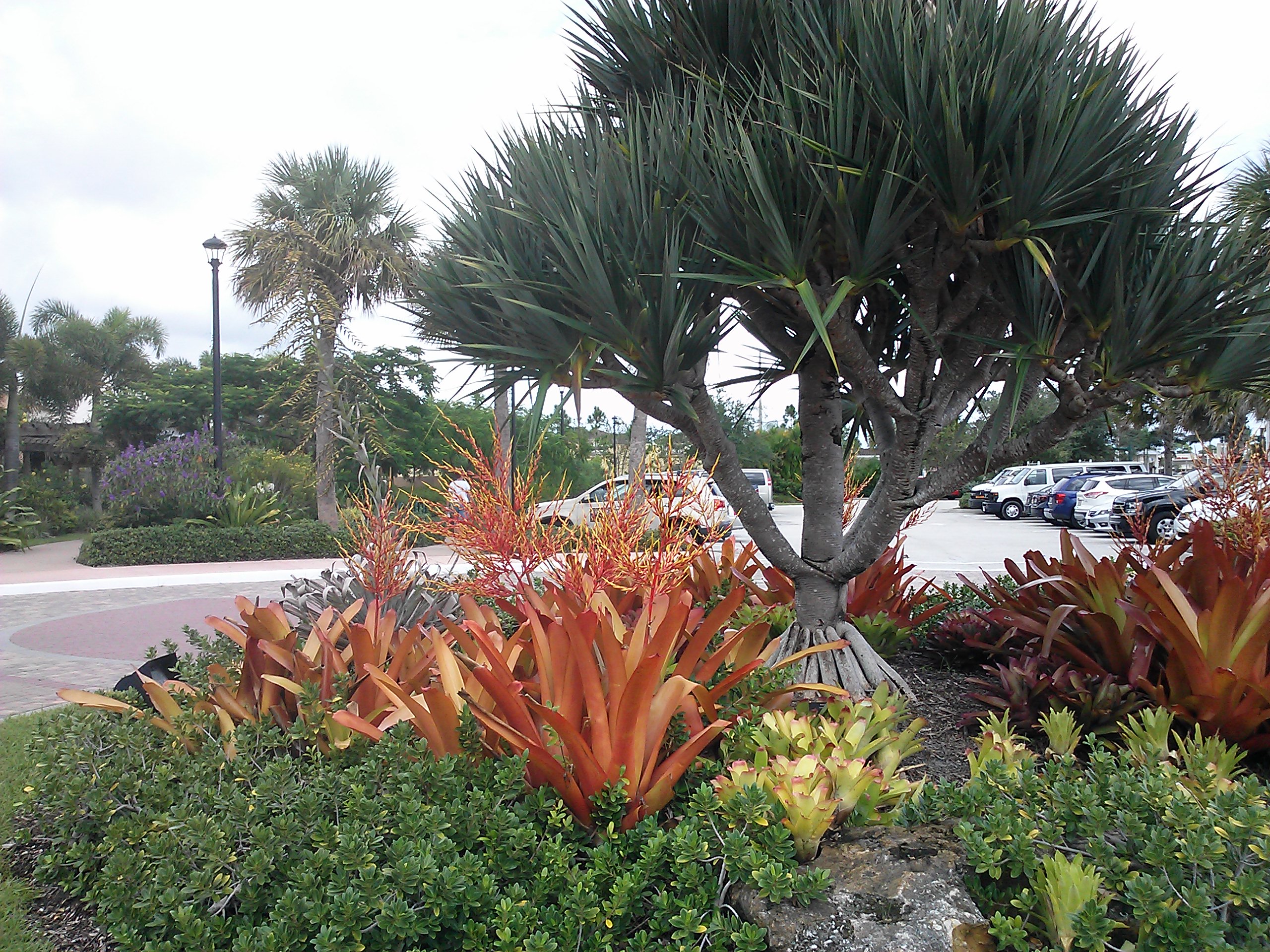
McKee Botanical Garden

McKee Botanical Garden

This is an island in the driveway at the  McKee Botanical Garden, the tree is a ScrewPine underplanted with Blanchiata Bromeliads and Green Island Ficus. Pretty cool.

More Bromeliad pictures from my travels:

Burgundy Bromeliad

Burgundy Bromeliad

I have seen numerous Burgundy Bromeliads around here. Guess what, the foliage is Burgundy and people will tell you they need some sun. Some being the operative word. These are, as far as I am concerned, in nearly full shade and flowering. I have some slowly frying in my front yard, am going to move them.


This is a bromeliad currently blooming in my neighbor’s yard. I think it is a Quesnelia-please comment if you know? I keep calling these Quesadillas and it is making me crave Mexican food…

Quesnilla?

Quesnelia?

Tropical Ranch

I went on a mini garden tour yesterday to the Tropical Ranch Botanical Garden in nearby Stuart, Florida. This is a two acre garden owned by a local couple who are Master Gardeners; they live in the garden and open it every month or so.

The garden is beautifully maintained and available for events. Here are a few plants from my meander through the garden:

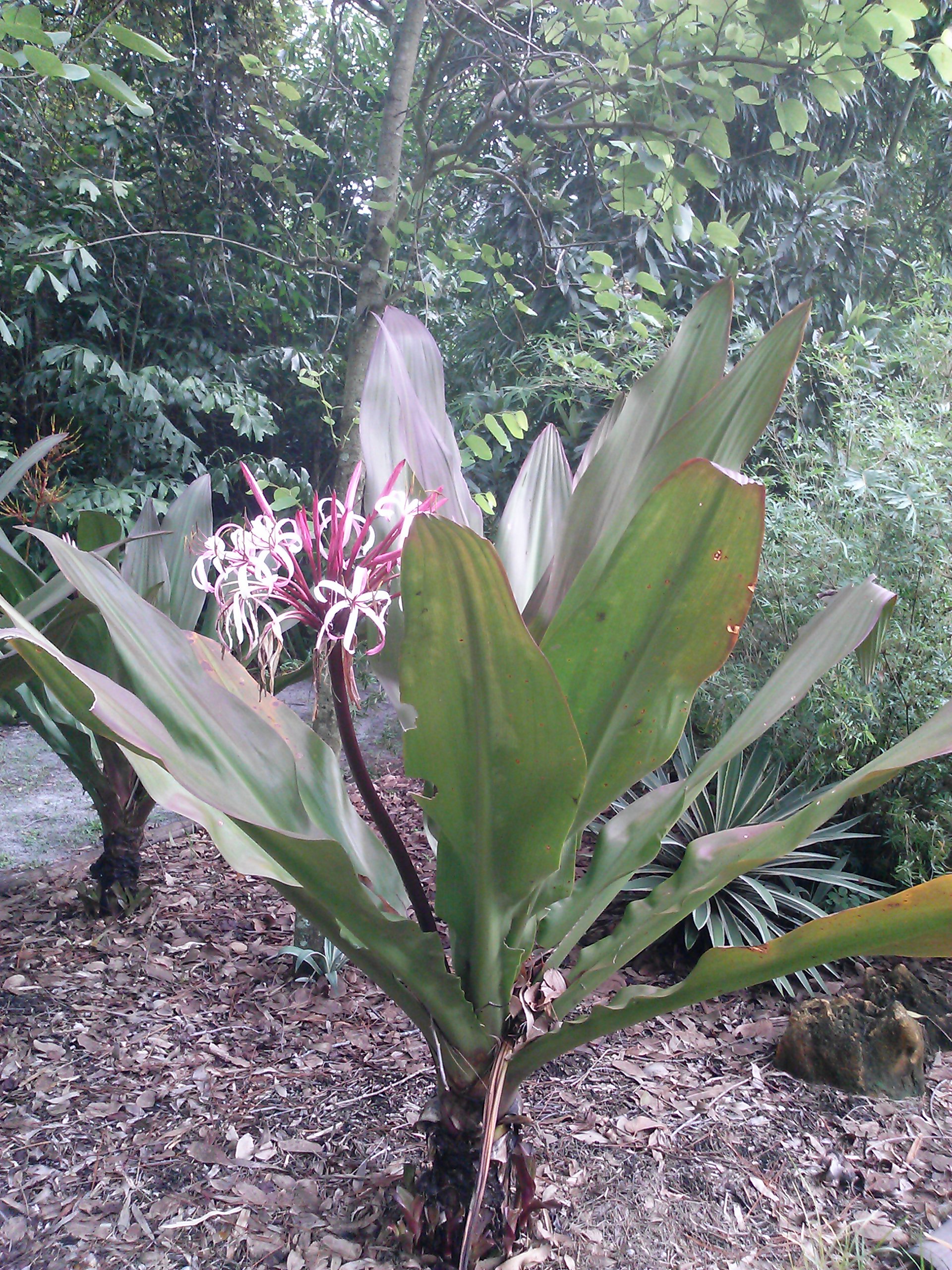
'Queen Emma' Crinum

This is a ‘Queen Emma’ Crinum – this plant is 5 or 6 feet tall.

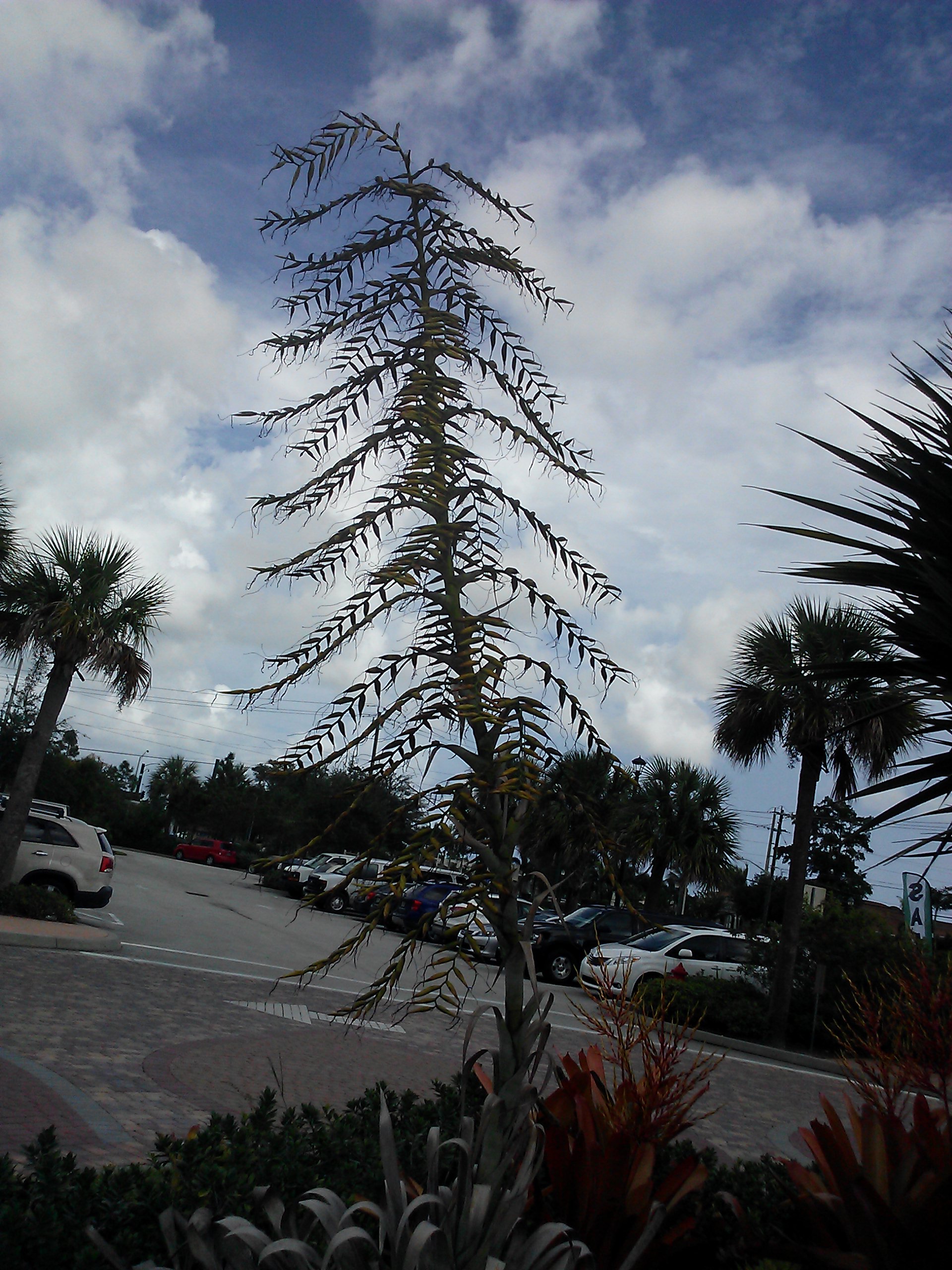
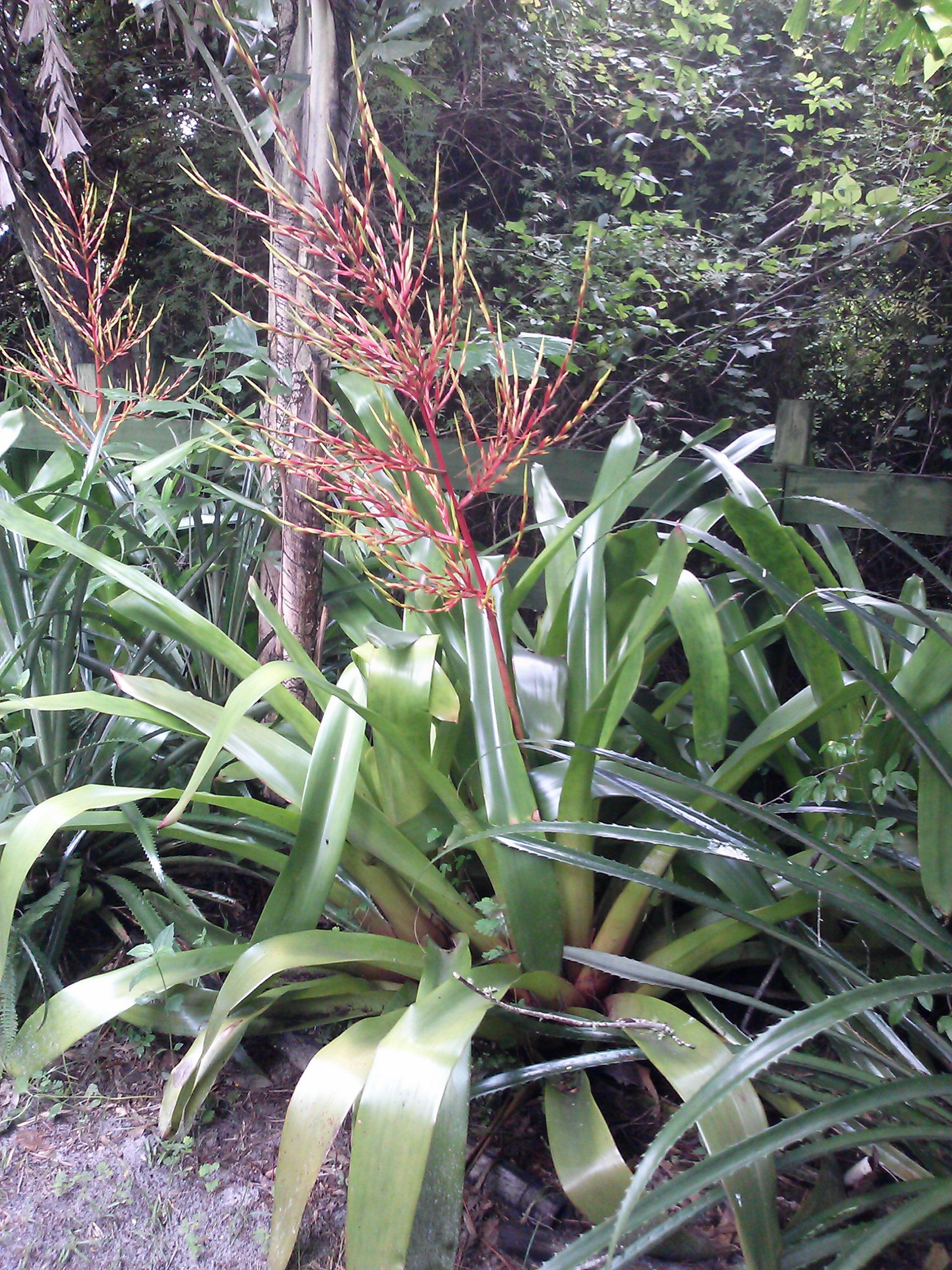
Blanchietta Aechmea Bromeliad

Blanchetiana Aechmea Bromeliad

Another enormous tropical in bloom,  these are very popular around town and are available in Lemon, Orange and Raspberry. I am not sure which one this is but, I am guessing Lemon as the leaves have a yellow cast. The flower is almost 5 feet tall and out of this world. I have had these for a couple of years and mine refuse to bloom. One of the owners told me they used to have cows – maybe that is the secret.


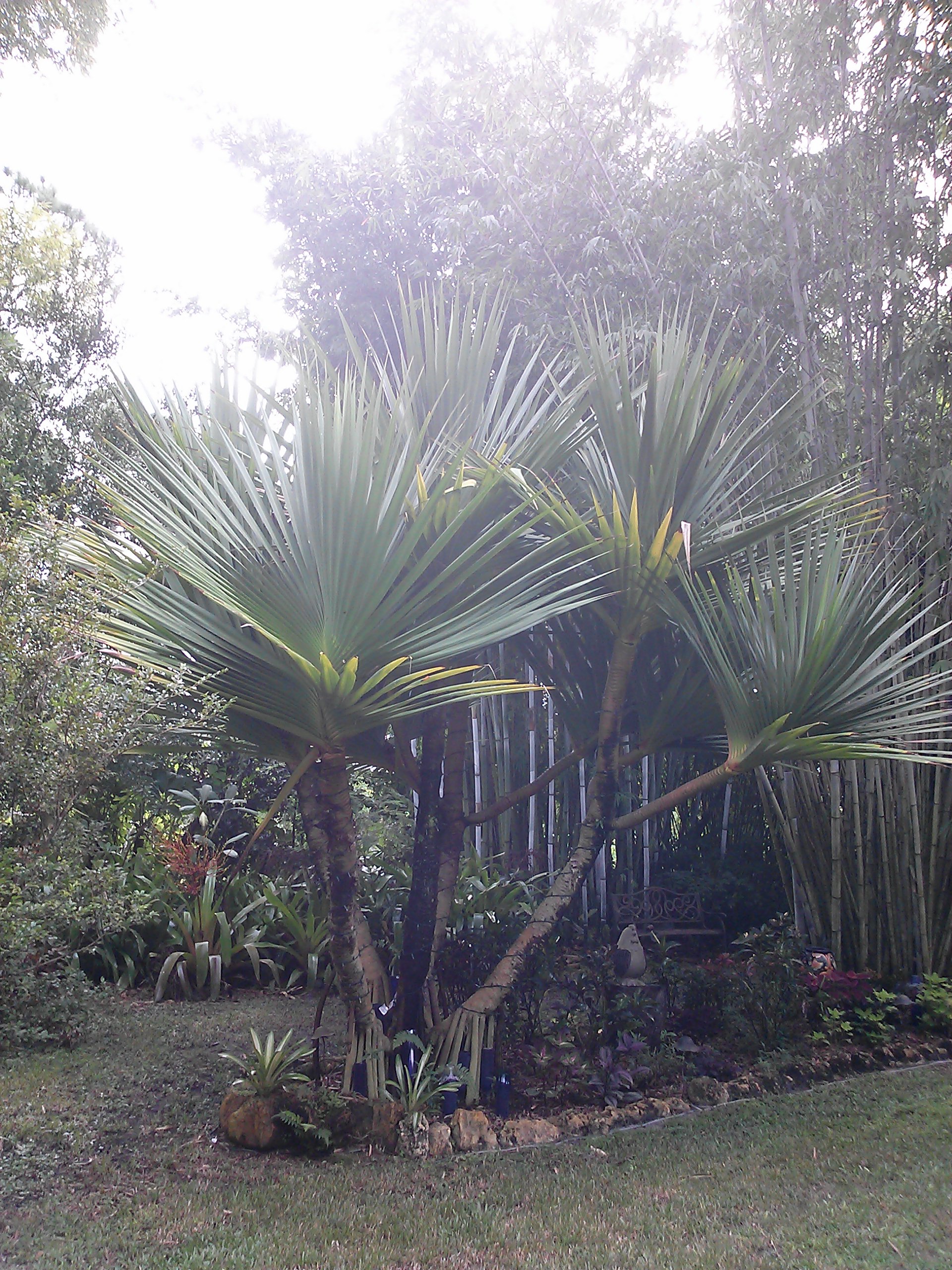
Hala

Hala 

Hawaiians call this Hala, it is used for everything from hats to huts, not native to Florida it will grow here. Floridians tend to call this Screw Pine, not sure why, it seems odd – when I first heard the term I thought it was some weird tropical version of a Japanese Black Pine, not so. I have one in my garden, it is about 12″ tall, unlike this beauty.

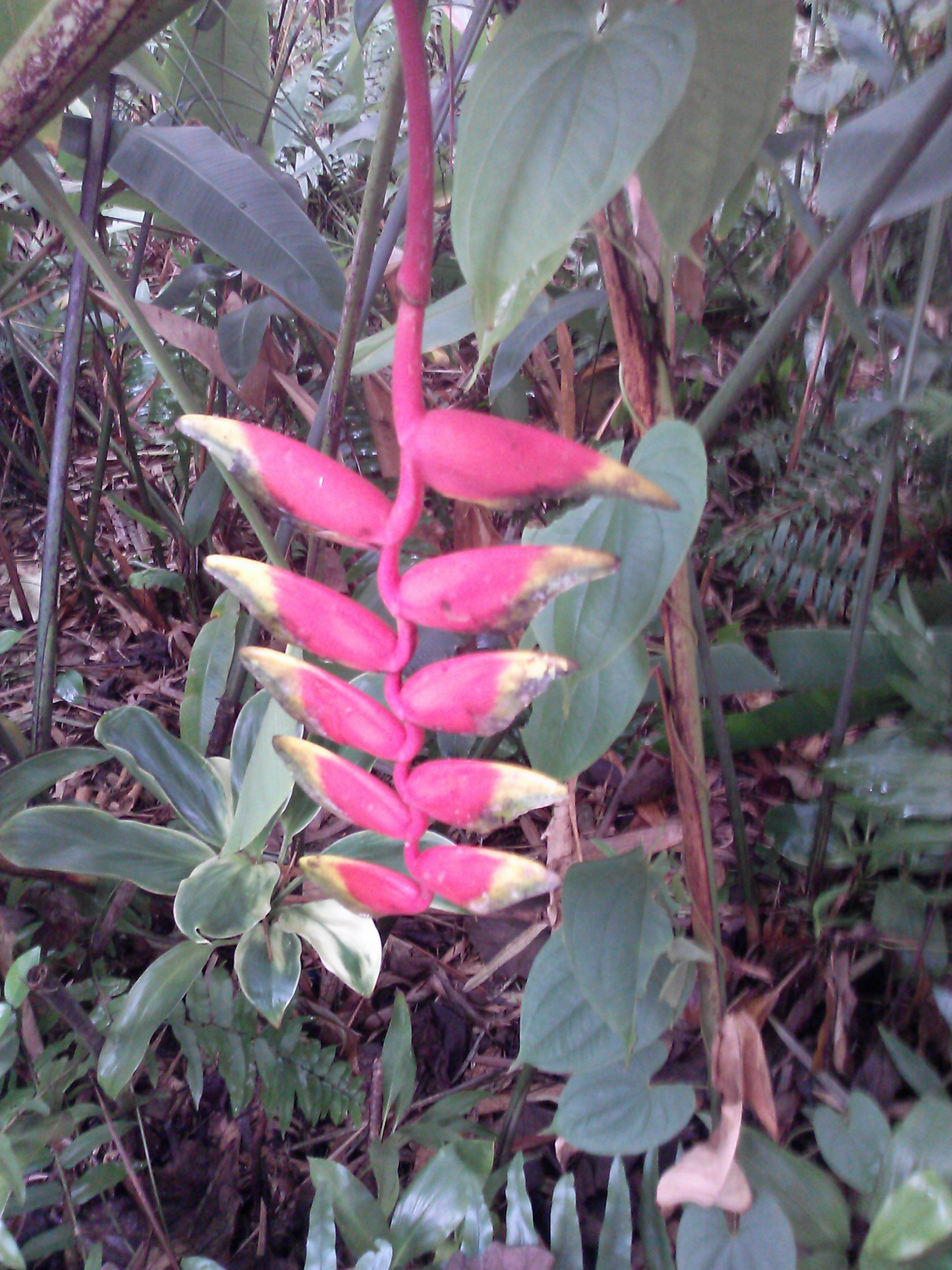
And last but not least, another favorite, the Heliconia. I think it is some variety of Lobsterclaw. Another thing I am waiting for a flower from; I read the other day these shouldn’t be pruned or you cut the flowers off. That could be my problem – excessive pruning. But, the plant is seven feet tall. Gardening teaches patience, right?

Heliconia

Heliconia

Bromeliad update – Matchstick and Aechmea idon’tknowwhatitis

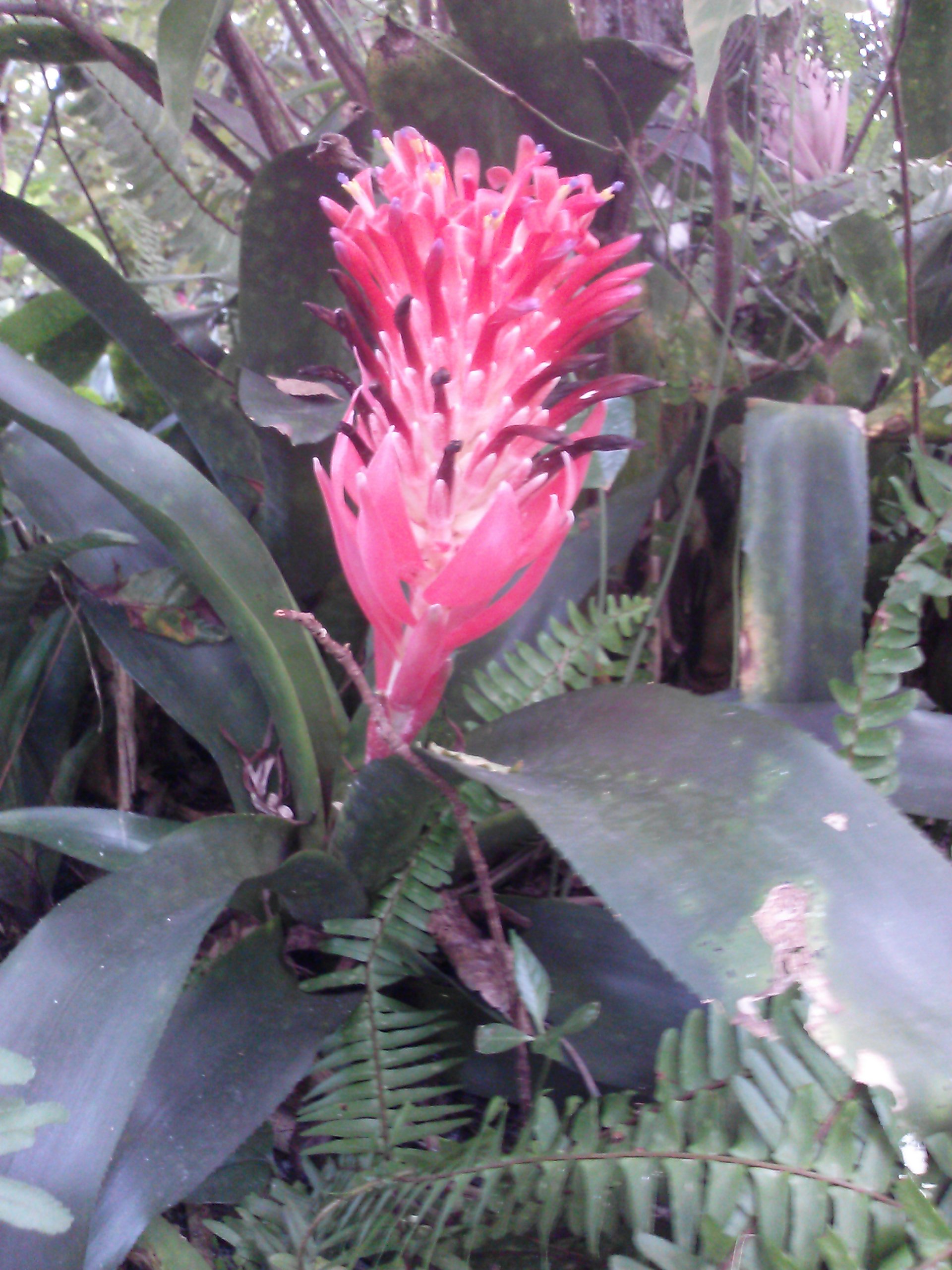
Pink Bromeliad

Pink Bromeliad

This is a close up of an Aechmea Bromeliad I bought two years ago. Totally pink and as weird looking as these things are sometimes. I used this in a an article that never got published. Being a cooperative plant it put out a pup and the mother plant died after hanging around for a while. I waited for the thing to bloom again and set in the ground in a relatively shady, sandy bed with some Bromeliad friends.

A month or so ago,  it started sending up a stalk -yes, it looked like a girl power corn cob.

Second Generation Pink Bromeliad

Second Generation Pink Bromeliad

I am calling this Aechmea idon’tknowwhatitis because the guy I bought it from did not know either. And there are a zillion of these things and from this I guess that they are not clones from the mother plant.

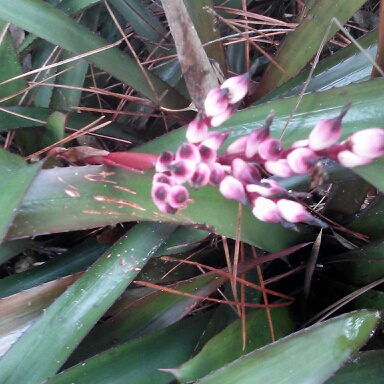
Here is a close up of the flower from Second Generation

Pink and Yellow Bromeliad

Pink and Yellow Bromeliad

Curiouser and curiouser, this flower just stays pink and yellow and has been around for a couple of weeks now.

An additional Bromeliad note, the Matchstick Bromeliads I planted in nearly full sun have all burned up with the exception of one that looks great. So, take the ‘this one likes the sun’ advice with a grain of salt and try a little shade.

The Sustainable Garden: Perennial Thoughts

I perennially have thoughts about flowers. In terms of sustainability I am not sure the native ones are always best. Many of the natives are simply weeds with attractive flowers or characteristics we like. I have a deep respect for Black Eyed Susan from a previous experience – as in being nearly overrun by them. I used to live in their native habitat and had bought some “improved” Goldstrum Variety and they bolted back to their native selves and then ran amok on a well drained sunny hill. A recipe for landscape disaster. As beautiful as they were in full bloom, it took a long time to get rid of the Black Eyed Susans. I could not cope with their joyful abundance anymore. So easy on the natives and seek those that do well in your climate without too much water and too much abundance. Easier to take care of and maintain.

In South Florida irrigation is a big deal. We have a rainy season and a dry season. While there are many native plants this is a tropical climate and some of them can go wild. I have found some escaped houseplants in my yard going wild. Mother in Laws tongues is an invasive species. Many plants commonly grown here will not survive without irrigation. I chose not to irrigate my entire yard to save water and to save my sanity. The areas in lawn and vegetables are irrigated; areas with lower water perennials are drip irrigated and I have some unirrigated low maintenance areas that I still want to plant with beautiful perennials. I am just looking at things a bit differently. So, I am paying close attention to who I am inviting to live in my garden.

Beach Sunflower

The Beach Sunflower from Wikipedia

I am about to plant some Beach Sunflower in an unirrigated portion of my garden, I live on a sand hill and these are native to our area – I believe if I planted them in an irrigated area I would be overrun in short order. So, it is time for some more garden experimentation. The Beach Sunflower is going to look great with the existing Blue Agave, Red Martin Bromeliad and Painted Fingernail Bromeliad. Eventually providing shade is a native Gumbo Limbo tree; if that doesn’t get you in the mood for a Margarita nothing will. All these plants are extremely drought tolerant and will survive without regular irrigation. The Gumbo Limbo and Beach Sunflower are native, the Blue Agave is from Mexico, and the Martin and Painted Fingernail Bromeliads are Neoregelia type Bromeliads that originated in South America.

Painted Fingernail Bromeliad

Painted Fingernail Bromeliad


Martin Bromeliad

Martin Bromeliad

Blue Agave

Blue Agave

It seems strange to me that Bromeliads, in my mind a rainforest plant, would thrive in the sun with little supplemental water, but they do. The Painted Fingernail Bromeliad is a passalong plant around here and I have seen large masses of it planted around mailboxes on the side of the road. A great example of a not native plant working in a sustainable way. The result of my selection of plant material is an evergreen perennial bed that blooms or provides year round color while being very drought tolerant and using very little fertilizer or maintenance.

Sustainability is about more than native plants – it is about selecting the right plants.