I first encountered Bromeliads as houseplants in the 1980s. Winter Gardens, Atrium and Interiorscaping were popular indoors in Shopping Malls and Office Buildings. At the time, I worked for a large Architectural firm as a Landscape Architect and designed these gardens using flowering Bromeliads as color beds in large planted areas. The Bromeliads I used primarily in these indoor plantings were Aechmea fasciata (left) and Guzmanias on the right.

Guzmania
Many years later, my husband and I relocated to the Treasure Coast of Florida. I was excited to learn about all the Bromeliads I could use in my garden. Houseplants rule the outdoors in South Florida. Now I have Guzmanias and Aechmea fasciatas in my garden.
Bromeliads have a broad range of appearance. They range from highly colored foliage with flowers prized in our gardens to Spanish Moss hanging from Oak trees common in the Deep South. Bromeliads may also be found at the supermarket in the form of a Pineapple. Some are epiphytes living on trees (Spanish Moss) others are considered terrestrial and root into the ground. Bromeliads use specialized cells to collect water from the air, they also use cups to collect rainwater and derive nutrients from debris collected in the cup.
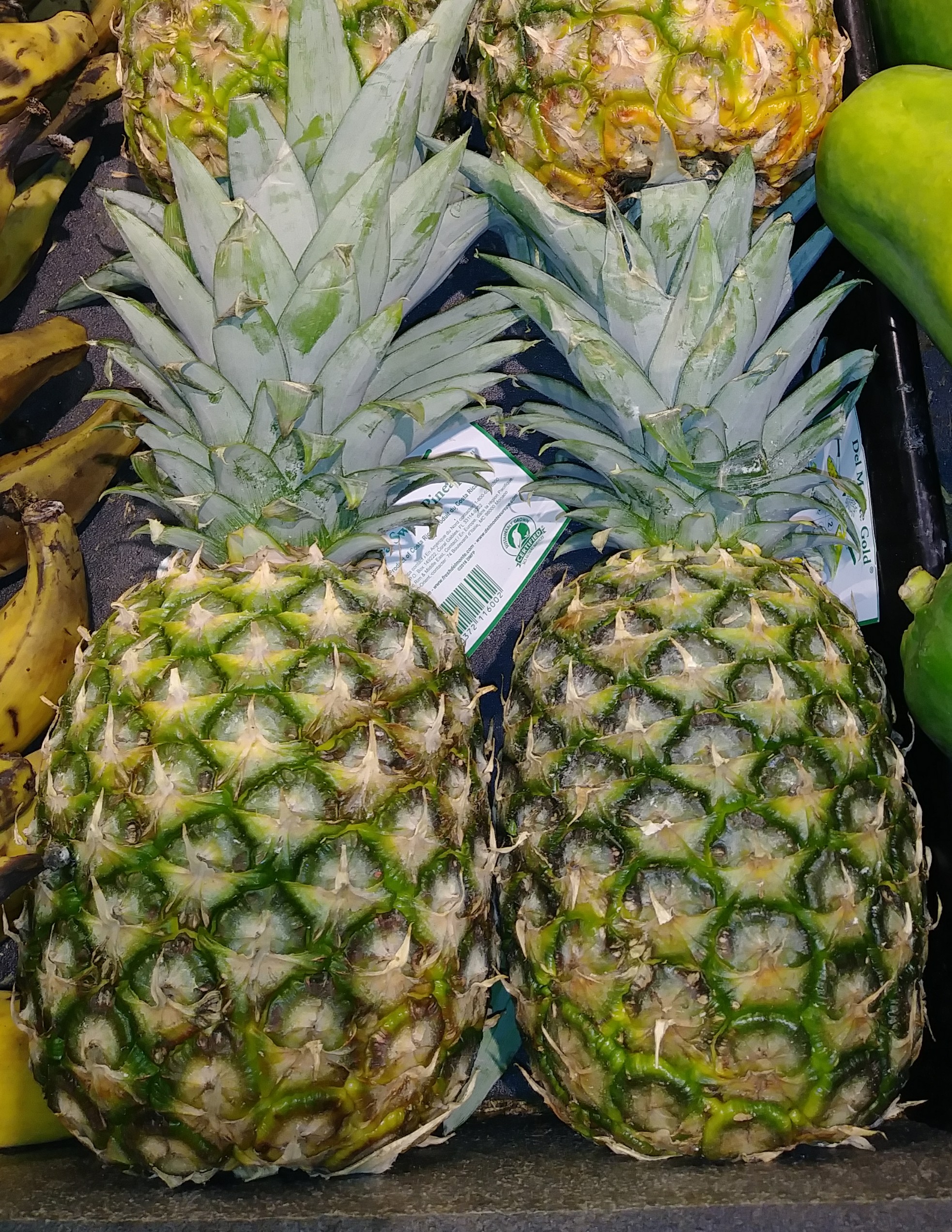
While we have several native Bromeliads in Florida (Tillandsias for the most part), most of the showy ones we use in our gardens are from further south in the tropical Americas, many of my favorites hail from Brazil. These are easy to grow, tough plants that lend a tropical touch to our gardens. I use them as the icing in the garden, like using flowering perennials further north.
Being of different origins than most perennials, Bromeliads require a bit of understanding-the plant originally purchased eventually will flower and die. This is called the mother plant generally. The mother plant flowers then begin to decline; offshoots called pups then appear around the plant. Pups can be left in place around the mother or clipped off when they reach a third the size of the mother plant. Pups removed may be replanted and usually require staking or a rock to hold them in place until they are established. Aechmea ‘Chiantinii Surprise’ with pups.
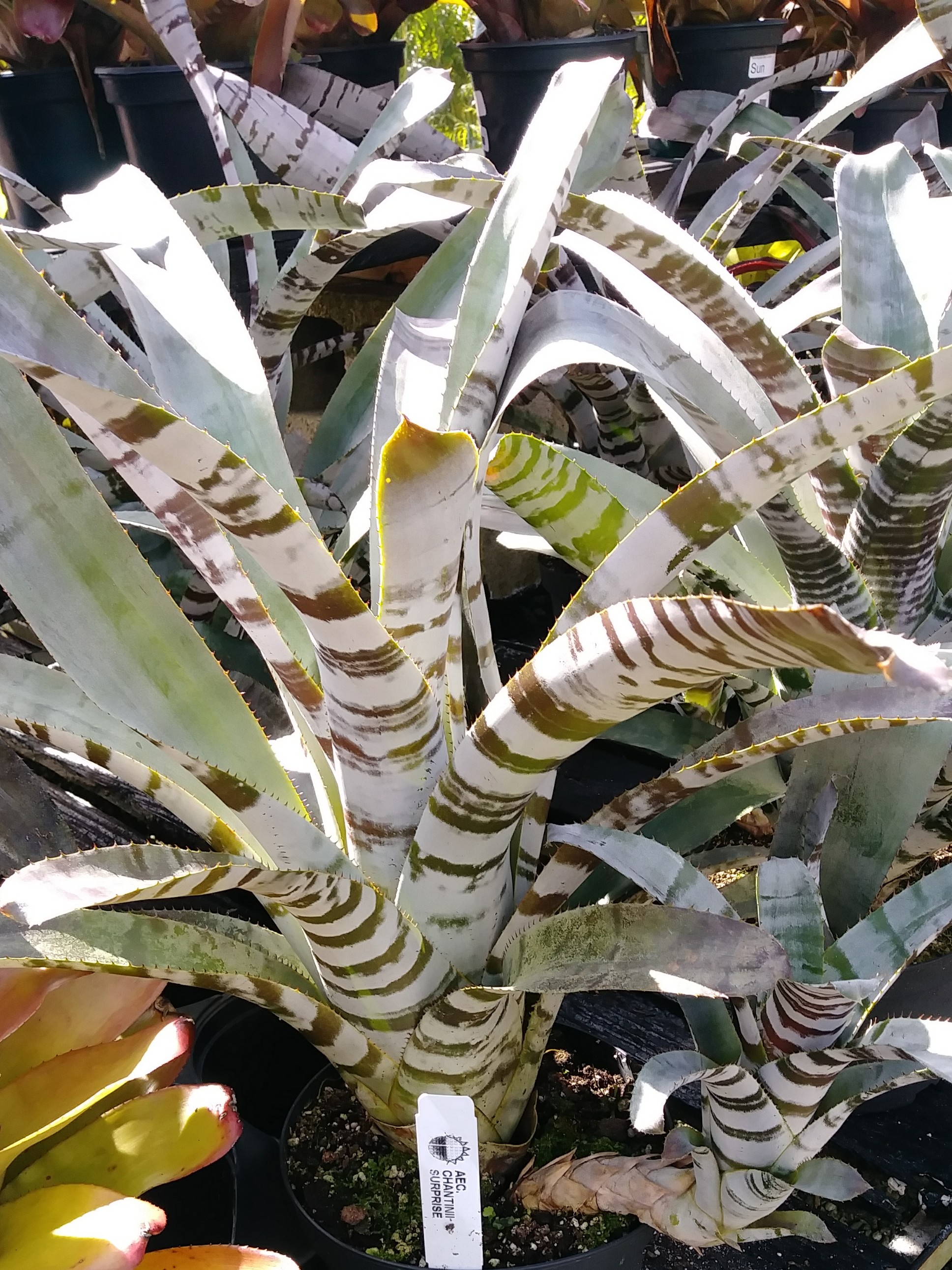
Chantinii Surprise
My transition from a houseplant tender to the garden Bromeliad enthusiast had a bit of a learning curve. Soon after moving to the Treasure Coast, the very common (here) Blanchetiana Bromeliad began blooming around town. Being a burgeoning fan of the garden Bromeliad, I nearly wrecked my car trying to get a look at the thing. Orange foliage, nearly as tall as I am with a red and yellow spike flower of a similar size. No longer in houseplant territory- this was some serious vegetation!
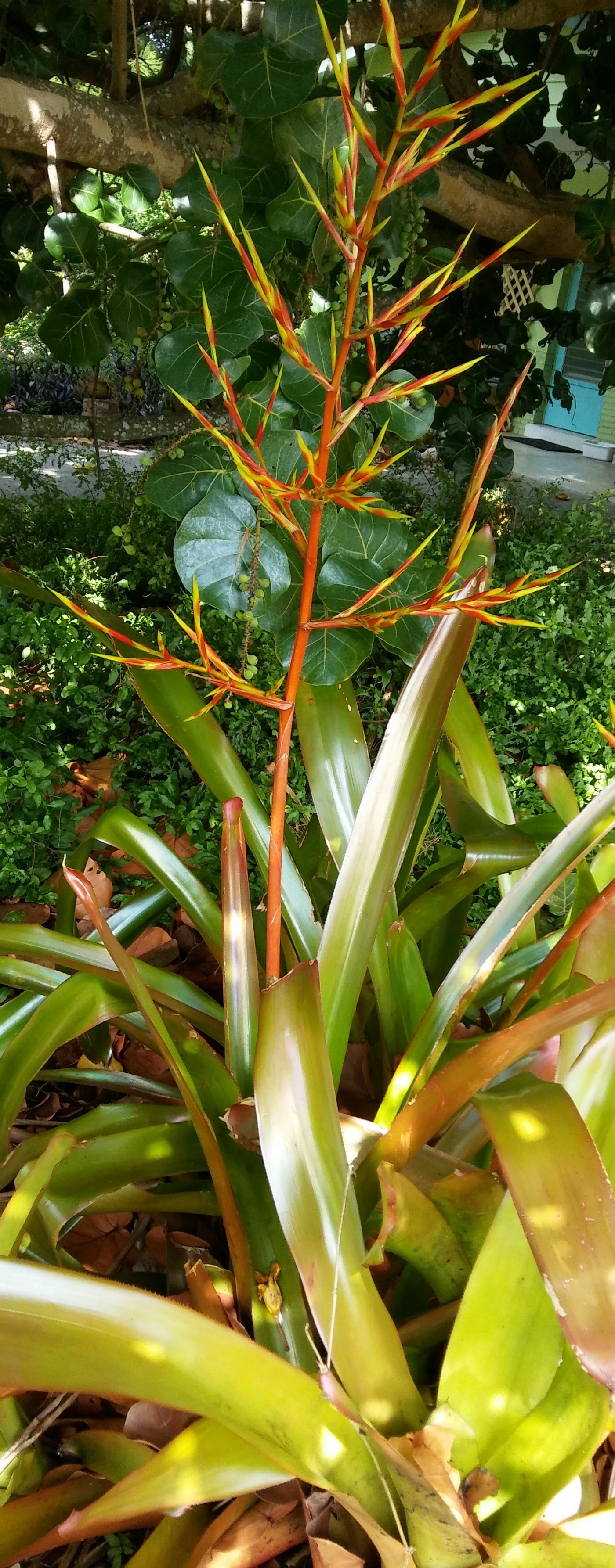
Now I make wreaths during the holidays from the flowers:

Seeking advice on the needs of these plants proved to be elusive and I began to just plant them. If someone said it needs “some sun” – this means it really needs partial shade. I charco-broiled more than one plant seeking the “some sun”. There are some reliable full sun plants; finding the right plant for the right spot is key.
Some favorite sun Bromeliads:
This slideshow requires JavaScript.
Some favorite shade Bromeliads:
This slideshow requires JavaScript.
Another key to success with Bromeliads is planting them during the proper time of year. Dividing and installing new plants in your garden should be done between November and March, the reason, to allow the plants to slowly acclimate to the sun – the sun angles in South Florida are dramatically different between summer and winter. Some of the more sun tolerant ones may be planted year round. Landscape beds near a north facing wall can be the full sun in summer and full shade in winter.
Design tips:
Consider the big Bromeliads exclamation points in the garden, use sparingly. Everybody can’t be the star. Even stars need a chorus. This is Aechmea Blanchetiana in a pool of Beach Sunflowers (Helianthus debilis)!

Restrain the color palette to three colors. My favorite color schemes are:
In shade to partial shade: Colors and varieties
Red/Green/Burgundy – Neoregelia ‘Maria’, Neoregelia ‘Angel Face’

Maria

Angel Face
Good companion plants: Coontie Palms, Ferns
Gold/ Green/ Salmony Red: Vriesea ospinae ‘Gruberii’, Neoregelia ‘Super Fireball’

Vriesea ospinae

Combination of orange, red and green for sun; named from left to right
Neoregelia ‘Fireball’, Neoregelia ‘Bossa Nova’, Bird of Paradise (not a Bromeliad), Aechmea ‘Alvarez’, Aechmea ‘Red Candles’
The Bird of Paradise is shown as a companion plant example.
Bromeliads also make great container plants. Here are a few examples we put together at Pinders Nursery in Palm City, Florida for a talk I gave (about Bromeliads!) last Saturday. These container plantings last a long time, until the plant flowers or you need a change of view.

Plants are: in back ‘Imperial Red’ Alcanterea (for sun – these bloom every 10 years), in the blue container for shade, Aechmea ‘Del Mar’, the brown bowl has Aechmea ‘Bracteata Red’ and Neoregelia ‘Donger’ would take Sun.


 The Shrub Queen