In a Vase on Monday – Jurassic Parts

img_20200223_123111

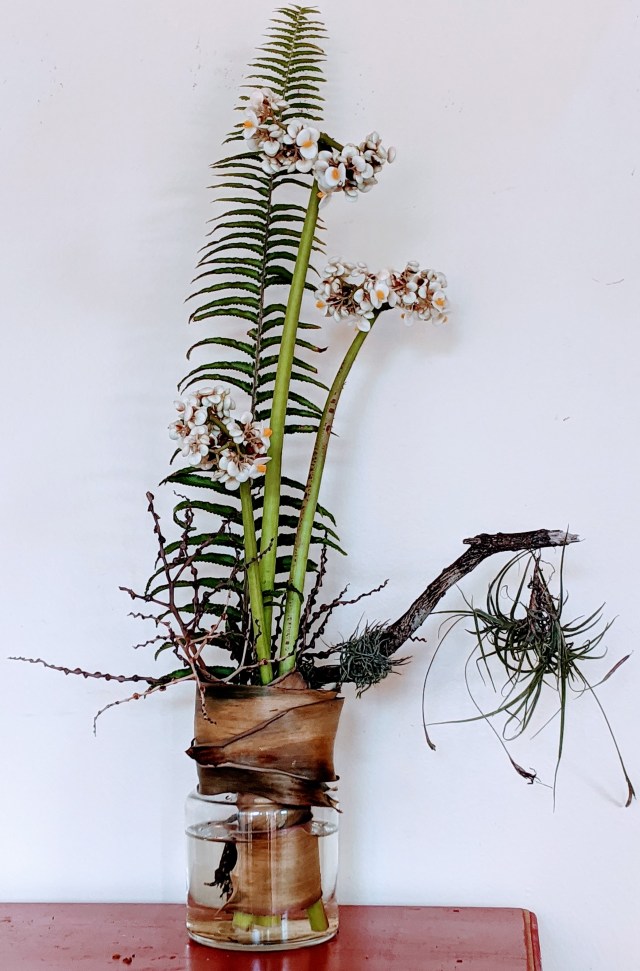
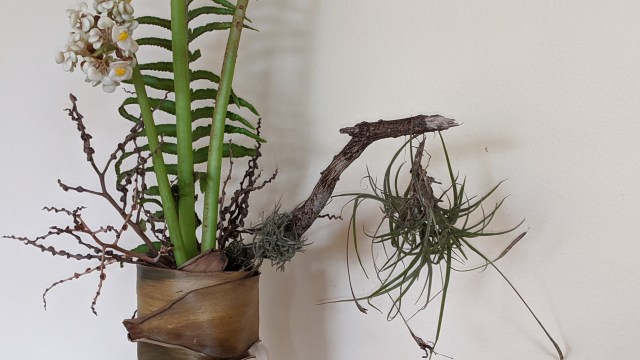
While perusing my garden for vase materials this morning I was seeing a lot of the same old thing and decided I needed to do something different. I wanted to use the dried Bromeliad leaves one more time and the Tillandsia covered branch seemed to go with the idea. The result seems a bit prehistoric to me and in some ways it is containing ferns, palms and bromeliads, all monocots and found in fossils. Here is a closer view:
00000img_00000_burst20200223123209631_cover

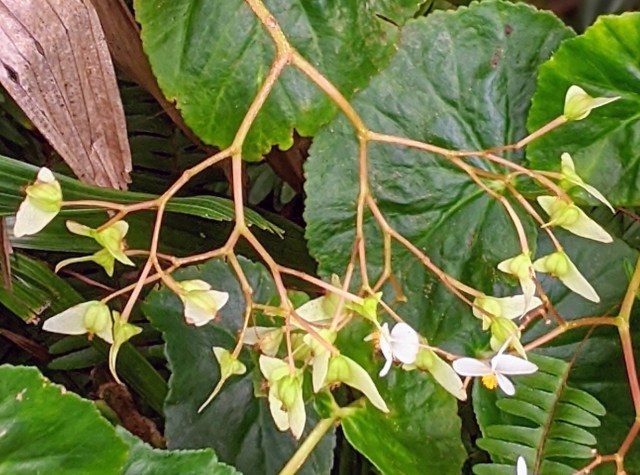
The dried brown stems are from the seedhead of an Adonidia Palm (Adonidia merrillii); the white flowers are from Lotusleaf Begonia (Begonia nelumbifolia); fern is a Boston Fern (Nephrolepis exaltata); the dried Bromeliad (Aechmea blanchitiana) leaves wrapped around the vase and holding the Begonia stems together were originally on my Christmas wreath, reused a couple of weeks ago  to wrap a whole vase and this is the final appearance. The hanging Bromeliad and branch were found while walking my dogs a couple of weeks ago, these are Tillandsia recurvata, Ball Moss.

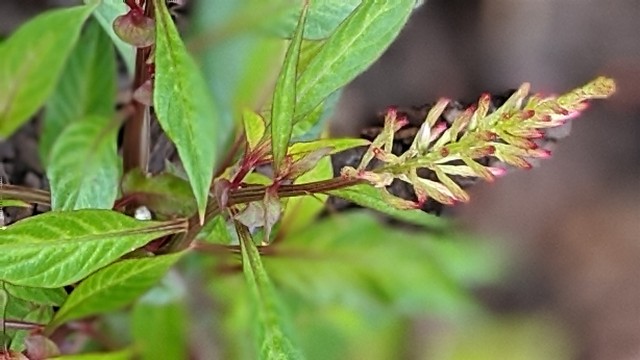
The vase is a pasta container I use as a vase since the top was lost some years ago. My husband refers to the gardeners inevitable stockpile of unplanted pots of plants as my ‘Spare Parts’. I am rarely without spare parts, currently holding at six ‘Java White’ Copperleaf.

If only I had a tiny dinosaur to go with this one.

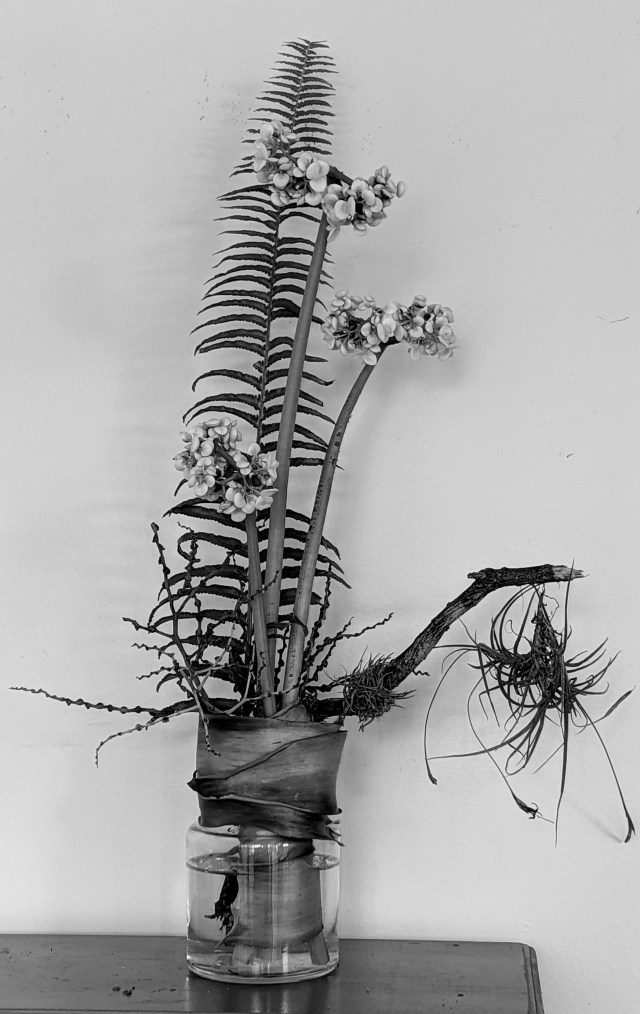
Here it is in black and white, maybe even a bit more Jurassic.
img_20200223_122904

For more vases from around the world follow this link to Cathy’s blog MORE VASES


Six on Saturday – Hallelujah

Time for six pictures of what going on in my garden. I am joining in with gardeners from around the world on The Propagators blog, follow this link to see more posts THELINK

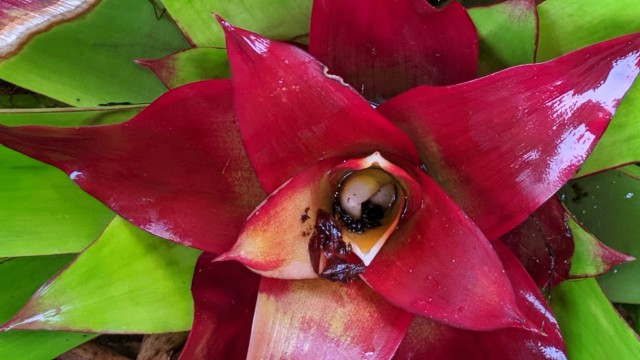
The Hallelujah Billbergia Bromeliad has finally bloomed. Flowers and foliage don’t get much crazier than this one:

00100lrportrait_00100_burst20200222091755722_cover

Here is another Bromeliad flower, I think of these as the tropical version of tulips. Meet Quesnelia testudo, this one has very sharp foliage and one of  the hardiest of  the Bromeliads, surviving 25 degrees (F).

00100lrportrait_00100_burst20200222091705089_cover

Another Bromeliad, an unnamed Guzmania in full flower.

00100lrportrait_00100_burst20200222092102698_cover

The seedling of a Strangler Fig (Ficus aurea) growing in my Tiki. I need  to take  this out soon.

img_20200222_092329

A bud of yet another Bromeliad, ‘Little Harv’ Aechmea. These are yellow and pink when in full flower.

00100lrportrait_00100_burst20200222092437575_cover

My Leonitis flower, I am very pleased about this one I started it from seed last year and it has straight stocky stems. The plants from last year were curved and languished on the ground when flowering.

00100lrportrait_00100_burst20200222093101186_cover

That’s my six this very windy day. The wind has been howling since yesterday morning. It is a north wind so gusty it blew the Papayas off the tree and the cushions off the chairs on the screen porch. No gardening today for me.

In a Vase on Monday – Winter Cheer

img_20200216_112153

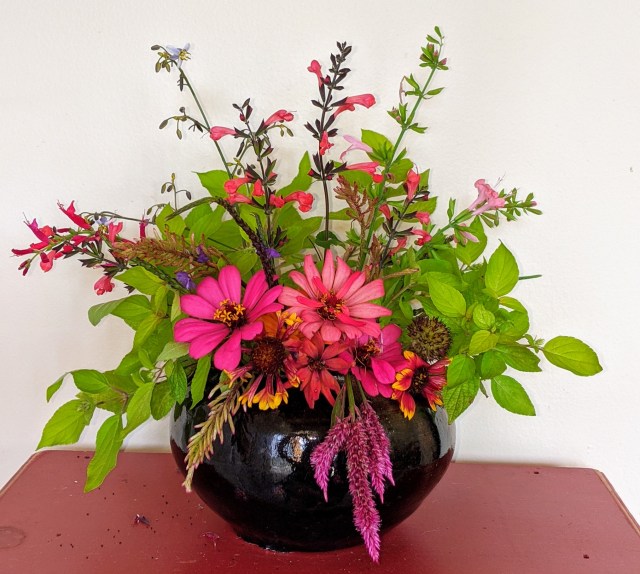
Our air conditioner has been running today, this always seems odd to me given the month is February. This explains why I have Summer flowers to provide Winter cheer. It’s warm in South Florida!

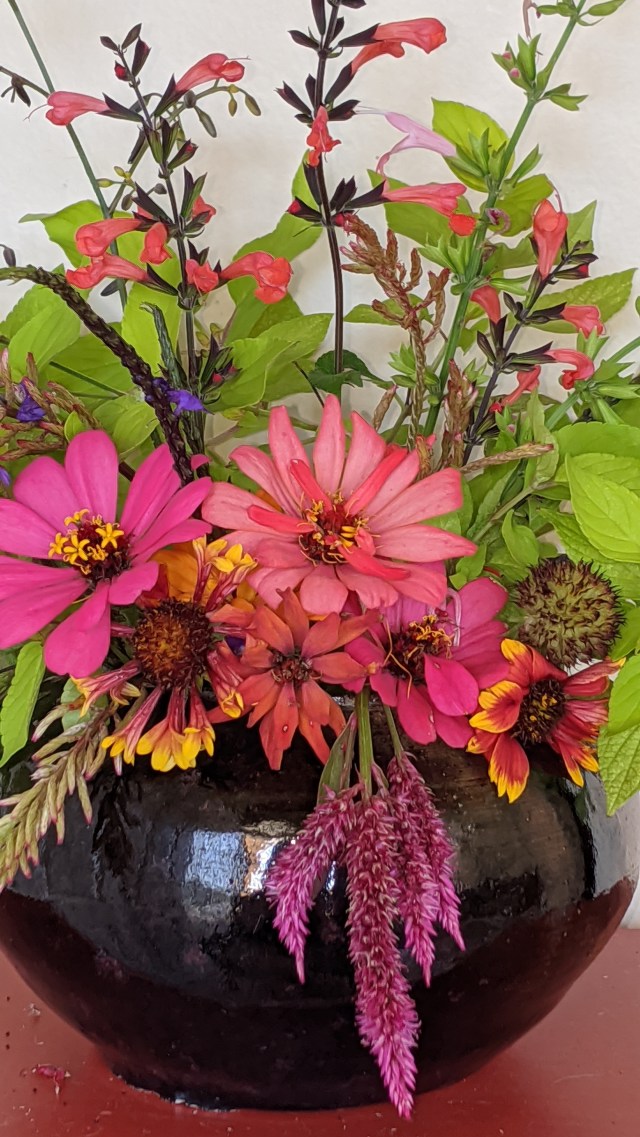
Despite the black vase, the colors of the flowers are so bright and happy and the foliage is Pineapple Sage – It’s like a bowl of summer radiating an herbal fruity scent of the tropics in my foyer. During the completion of the arrangement I had to relocate two whitish green garden spiders  (with the long front legs) outside and suffer a proper foliage selection dither (chartreuse or deep green?) Pineapple Sage won based on color and scent.  I was cheered by this vase once I finished it.

img_20200216_112346

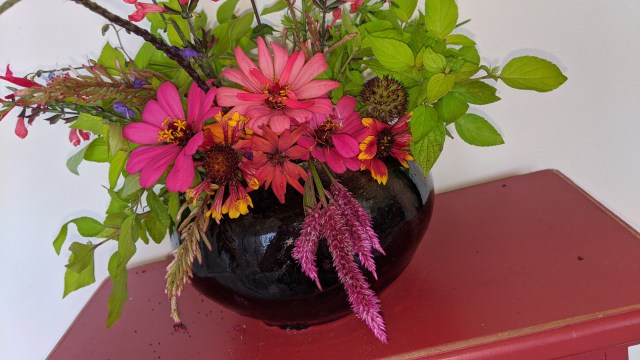
The vase is a thrift store find I have enjoyed tremendously, I hope whoever made it feels the happiness it generates for me. I placed a glass flower frog inside the vase to support my Zinnias; they are oddly short stemmed (day length not long enough?) A majority of the flowers were grown from seed by me. This is a first for me as I usually buy plants and not seeds. The seeds were a bit of work – the results have been fun to witness.

img_20200216_112201

There are two colors from the Texas Vintage Rose Celosia mix hanging over the edge, the  jury is still out on this series of seed. The plants are just not that attractive, and in my heart, I think Celosia is weird. Trying to keep an open mind as is does thrive in my sugar sand. So far, anyway, I will be interested to see what summer brings.

The Zinnias are a mystery – I  planted several kinds of seeds and these don’t really look like any of the pictures on the seed packets. Yellow and red Gallardia (Gallardia pulchella) and a seedhead are stalwarts in my garden and provide nectar  for many butterflies – the Tropical Red Salvia  (Salvia coccinea) in the background (in peachy mode) does as well. The thick stems with blue flowers are Blue Porterweed (Stachytarpheta jamaicaensis) another amazing nectar plant for butterflies. The backdrop of fragrant chartreuse foliage is from Pineapple Sage (Salvia elegans) there is a red Pineapple Sage flower in there as well.

I have been having trouble commenting on blogspot blogs  – if anyone knows how to fix this please let me know! Thanks.

Happy Gardening!

In a Vase on Monday – More Love

img_20200209_144047

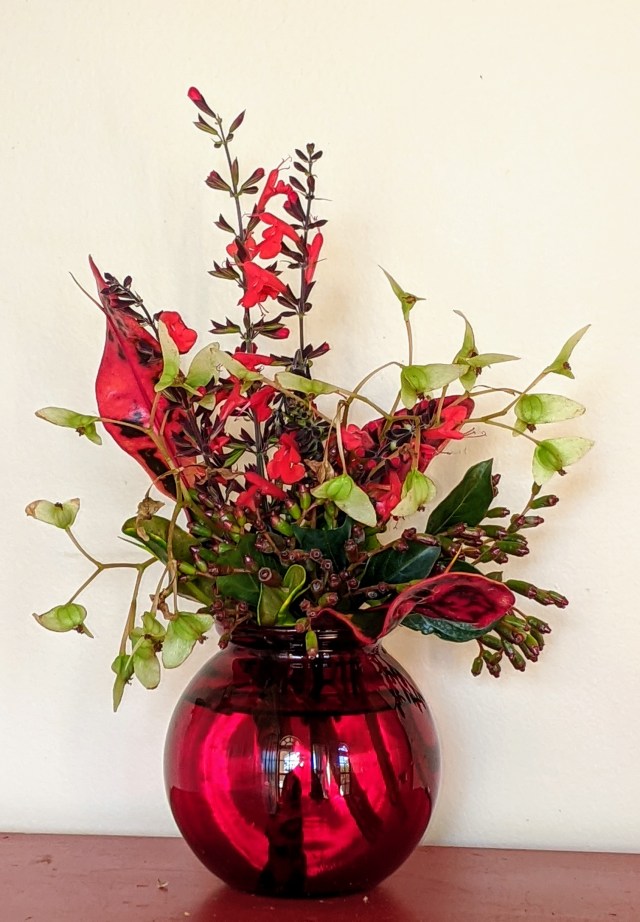
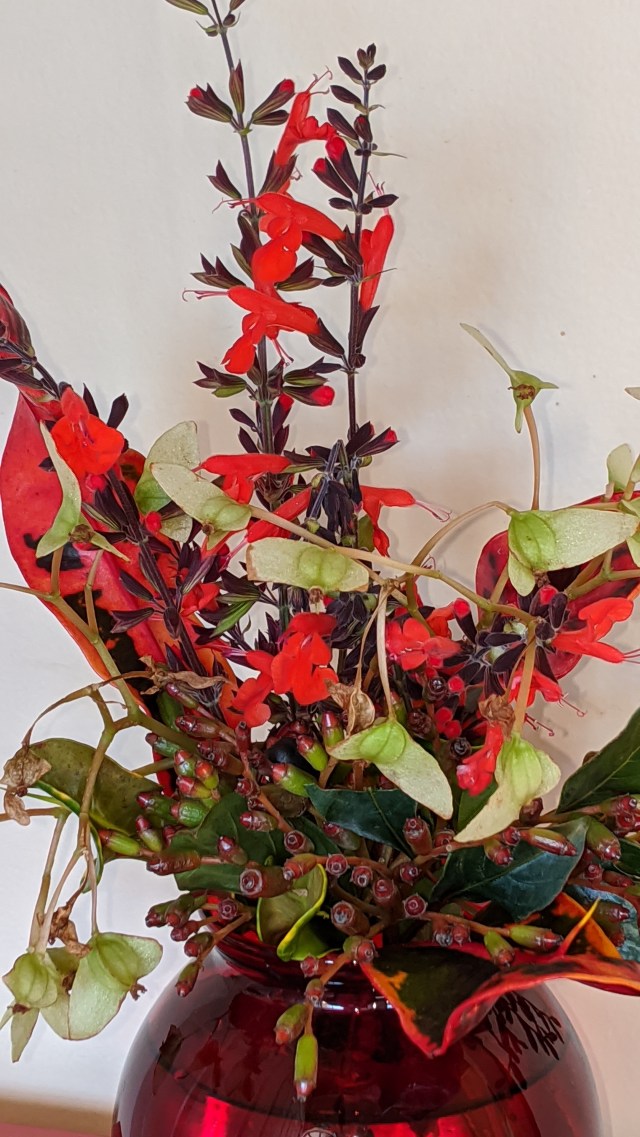
It’s Valentine’s week so…another red vase for the month of love. I  am realizing another oddity of tropical gardening. It is February and I have several types of red foliage to choose from for this vase. Croton foliage is in the vase, but I have several red Bromeliads and Copperleaf foliage as well. Color rules the tropics.

There is also fruit in this vase, it is winter and the fruit has been forming since fall. Which is kind of normal? Or should I say typical? Here is a close up:

img_20200209_144118

The red vase is a thrift store find. The red flowers are from Tropical Red Salvia (Salvia coccinea); red foliage is from Mammey Croton (Codieum variegatum); chartreuse winged fruit is from Sweet Begonia (Begonia odorata ‘Alba’)  and the berries are from Firebush (Hamelia patens)

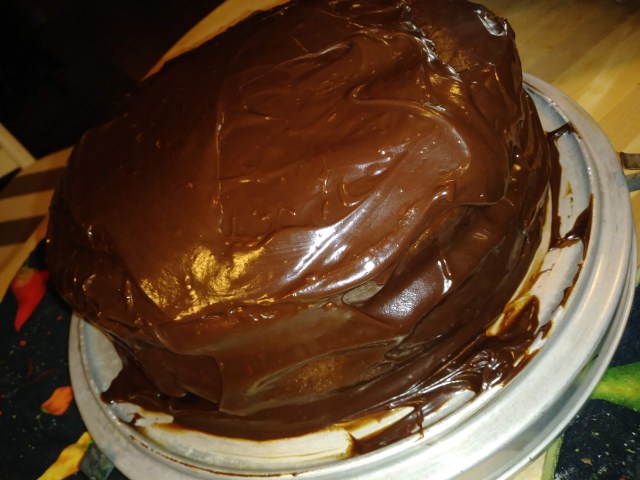
I have been collecting ingredients for a different Valentine’s treat, a tradition in our house.

20190214_183314

The recipe is called ‘A Very Good Chocolate Cake’ by Edna Lewis, my favorite Southern cookbook author. I have tweaked it a bit over the years, but usually make for my husband’s birthday and  Valentine’s Day. Suffice it to say I will get my cholesterol  bloodwork done before February 14th!

Happy Valentine’s Week!

For more vases on Monday – follow link to Cathy’s blog VASES

In a Vase on Monday – February Love

img_20200202_153009

This vase marks the first for February, the month of love. I challenged myself to create a  shades of red vase in honor of February.

The combination of plant material is unusual, to say the least, ordinarily (not sure why) I don’t like to combine tropical plants with non tropicals, but this is meant to be love struck pinks.

The construction of the vase is a bit unusual as well, the red container is from Christmas, too lightweight for the thick stemmed Shell Ginger. To conquer this issue, I placed a glass pickle jar inside the red container – it was too tall and I covered the jar with Bromeliad foliage. Here is a closer view:

00100lrportrait_00100_burst20200202152805395_cover

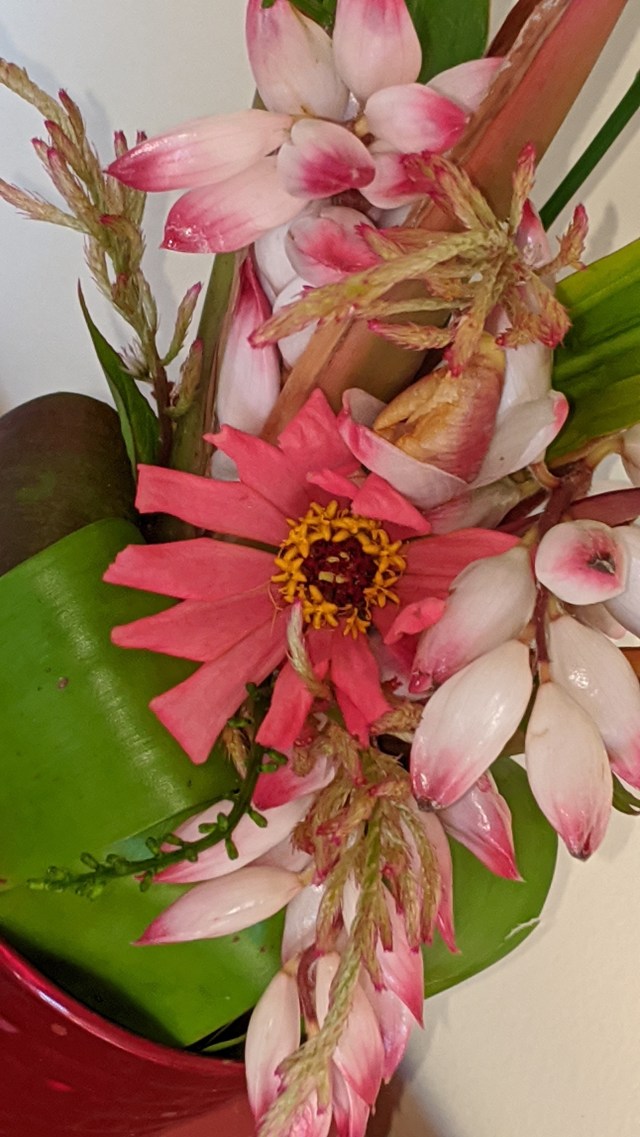
The  pink and white flowers are Shell Ginger (Alpinia zerumbet); these are just about to burst into full bloom, really buds. The center plant is a Zinnia of unknown heritage that looks a lot more pink in the garden. The beige and pink flowers are Texas Vintage Rose Mix Celosia grown from seed supplied by Floret. The green tracery in the background is the flower of Dracaena reflexa. The foliage around the base is from a Blushing Bromeliad (Neoregelia carolinae).

Another close up:

00000img_00000_burst20200202153105068_cover

Happy Month of  Love!

For more Vases on Monday filled with flowers from all over the world follow this link to Cathy’s blog In A Vase on Monday

Six on Saturday – Winter Color

00100lrportrait_00100_burst20200131154349825_cover

This is a Blushing Bromeliad (Neoregelia carolinae); they only blush in winter the rest of the year the foliage is solid green.

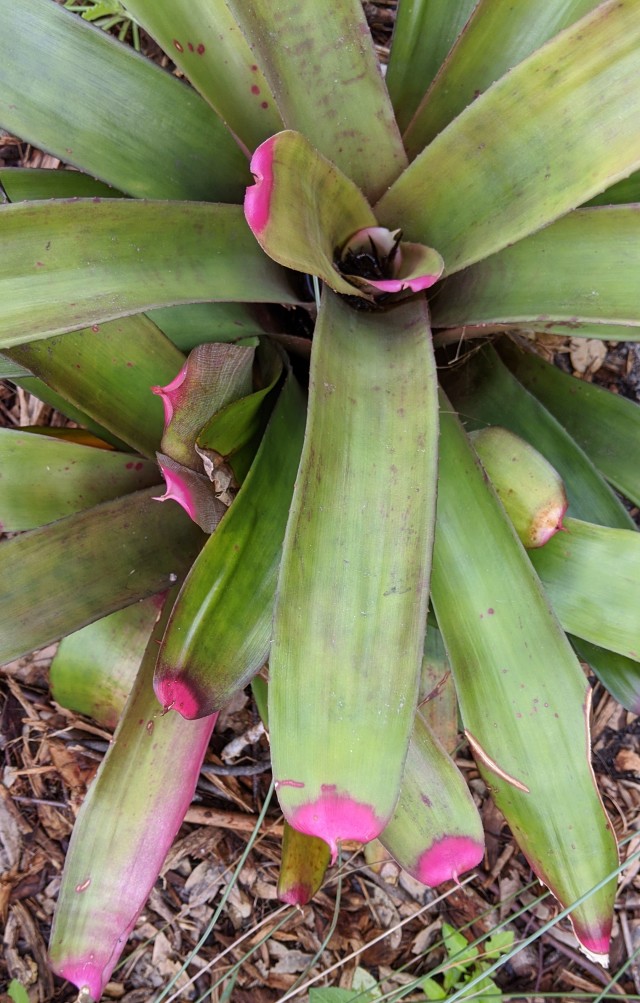
Here is another Bromeliad – the Hallelujah Billbergia, it’s flowers  are red, white and blue later in the year and are quite a sight with the purple spotted foliage. The green coloration comes out in winter.

00100lrportrait_00100_burst20200131154304310_cover

The fruit of Candy Portea Bromeliad, it flowers in the fall, the fruit is purple at first and later turns white. The foliage is also purple, so this is a striking plant.

00100lrportrait_00100_burst20200131154235943_cover

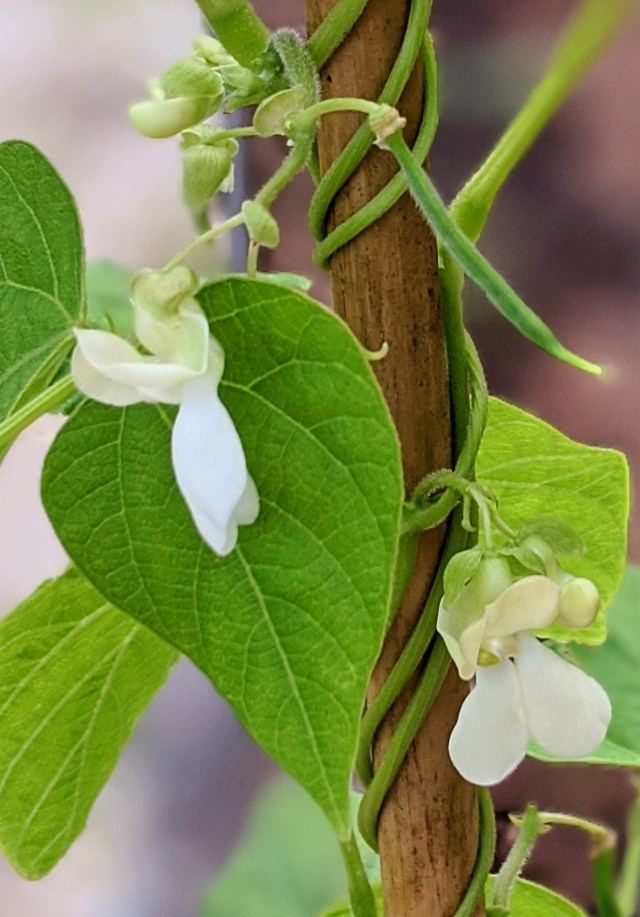
Real fruit in the form of a pole bean. I love fresh green beans and am looking forward to this.

00100lrportrait_00100_burst20200131153528481_cover

Seedheads on a Sweet Begonia (Begonia odorata ‘Alba’). I like the seeds as well as the flowers and use them in arrangements.

00100lrportrait_00100_burst20200131153951475_cover

It has been a surprisingly rainy dry season and here is the proof – a Rain Lily.

00100lrportrait_00100_burst20200131153816132_cover

That is my Six for this Saturday, for more photos of six things from gardens around the world, go to host blog, here is the link.The Propagator

Six on Saturday – New Things

00100lrportrait_00100_burst20200124160828649_cover

I have some new things in my garden, flowers, foliage, fruit and non-toxic weedkiller. My Six for this Saturday.

Above, a  Texas Plume Vintage Rose Mix Celosia flower. I started these from seed last fall, the colors in the mix are Burgundy, Chartreuse and this – I suppose it is pink? I have not had Celosia in this garden, though it seems it is becoming popular. I will be interested to see how long it lasts.

The flower of a Guzmania Bromeliad just opening. I would love to know the variety of this one, it flowers every winter.

00000img_00000_burst20200124101306321_cover

Winter brings  color to Bromeliad foliage. These are aptly named Painted Fingernail Aechmea.

img_20200124_160539

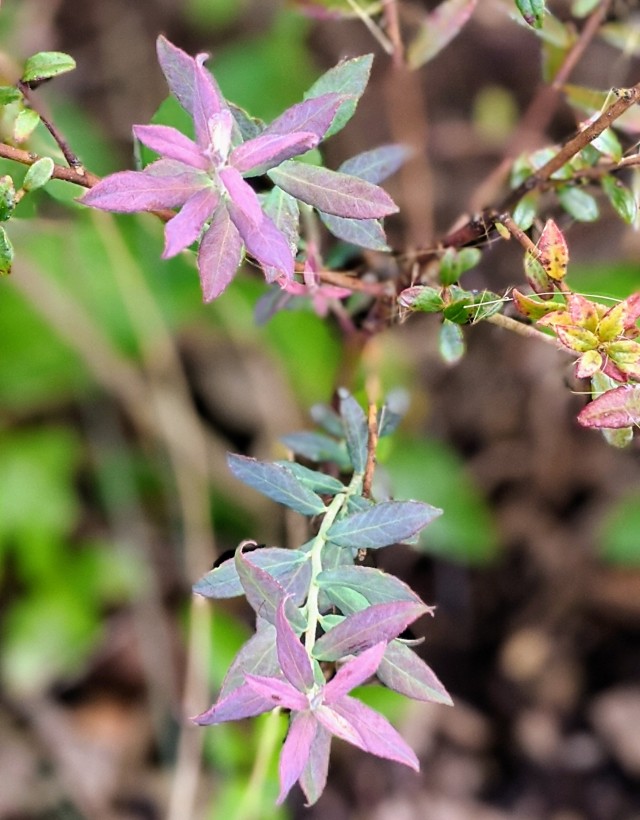
Color on new growth of Southern Highbush Blueberry (Vaccinium darrowii). This is a native Florida blueberry, I doubt it will bear fruit as it struggles in my sandy soil.

00100lrportrait_00100_burst20200124160633451_cover

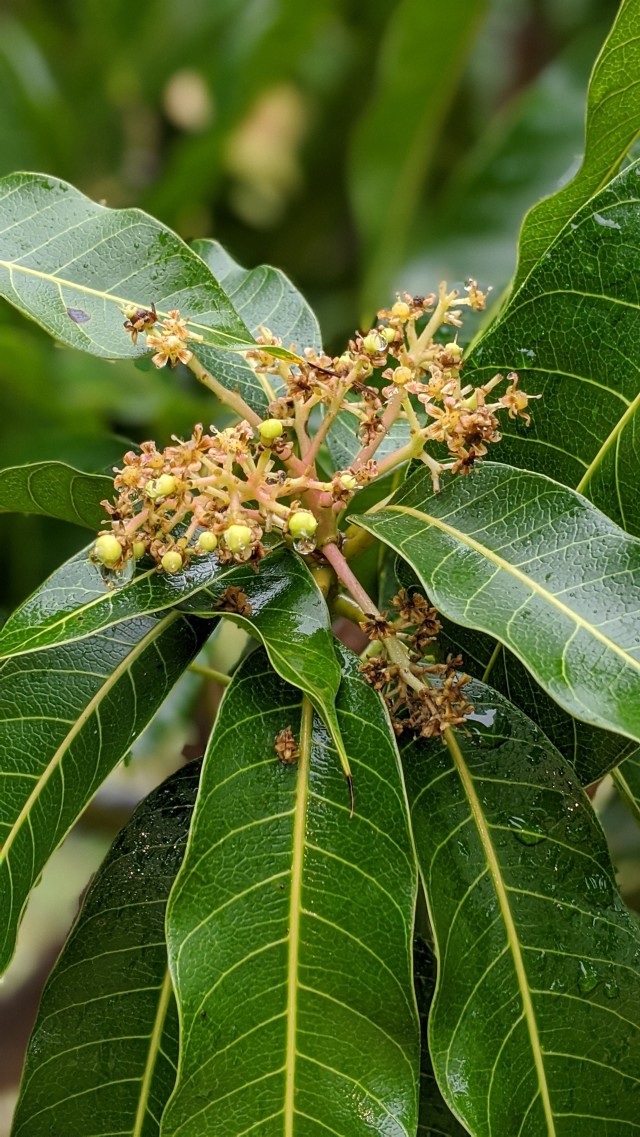
The fruit is setting on the Nam Doc Mai Mango. This is a Thai Dessert Mango and very tasty. Last year I did not have any as it was too windy for the flowers to pollinate.

00100lrportrait_00100_burst20200124101046354_cover

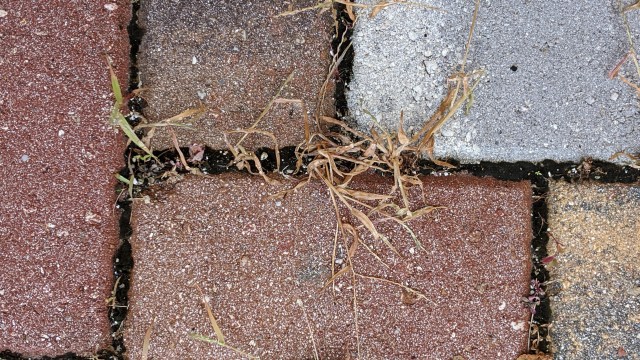
I discovered a non-toxic weedkiller that works like Glyphosate, which I refuse to use in my garden. My pathways will look a lot better now. This new weedkiller is EcoMIGHT http://ecomight.com/ and is peppermint oil based. Here is a lovely dead weed.

00000img_00000_burst20200122153638760_cover

That’s my Six for this Saturday. To see other gardeners take on Six on Saturday, follow  this link to  Visit the Propagator!!

Happy Gardening.

In a Vase on Monday – Not Summer Blues

img_20200112_114018-1

January in South Florida is not summer, it just seems like it today. The air conditioning is running; despite the fact this is the dry season, rain showers are making above 80 degrees (F) weather steamy and not conducive to gardening. My reward is flowers and vegetables in the garden. I have ripe tomatoes and Papayas; my second planting of green beans and first lettuces and spinach have come up. Some interesting flowers are also gracing the garden.

The Blue Willow teapot is a favorite of mine, bought with my mother on a long ago antiquing adventure (she referred to this as ‘Going to the junk store’).

img_20200112_114504-1

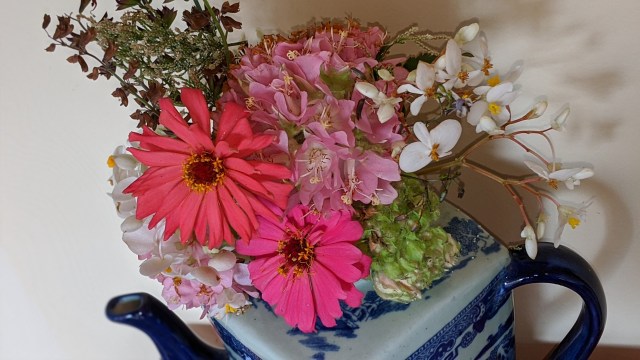
Zinnias grown from seed continue to boggle my mind – not sure what they are at all. These are much bigger than those in the smaller vase and have longer stems. I’ve added pink and green Dombeya (Dombeya wallachii) flowers. The green are the buds, the Dombeya itself is huge and I don’t mind cutting some buds, though I feel the bees would disagree. The flowers have an amazing honey fragrance and I have never seen as many bees on a plant. A closer view:

00100lrportrait_00100_burst20200112114620183_cover-1

The white flowers are Sweet Begonias (Begonia odorata ‘Alba’), another subtly fragrant flower and the spikes are seedheads from Tropical Red Salvia (Salvia coccinea)

This vase, another ‘junk store’ find has Dombeyas and Zinnias, just the shorter-stemmed version. The green seed heads are from the Sweet Begonia. I like the seeds as well as the flowers.

img_20200112_114316-1

I have both vases in my foyer; the Dombeyas tend to be ephemeral in vases, not lasting more than a day. The fragrance from the combination of Dombeyas and Sweet Begonias is ethereal, I can imagine angels in flight leaving this scent. Worth every moment and curing the Not Summer Blues. Back outside tomorrow.

In a Vase on Monday – From Florida with Love

img_20200105_110936

As I was putting this vase together it occurred to me there probably isn’t another garden with this mix of plants in January unless it is in Florida. It is a season spanning  concoction. Spring and Summer flowers, some fall berries and pineapple foliage. My husband and I refer to this time of year as Not Summer. The rest of the year is Summer.

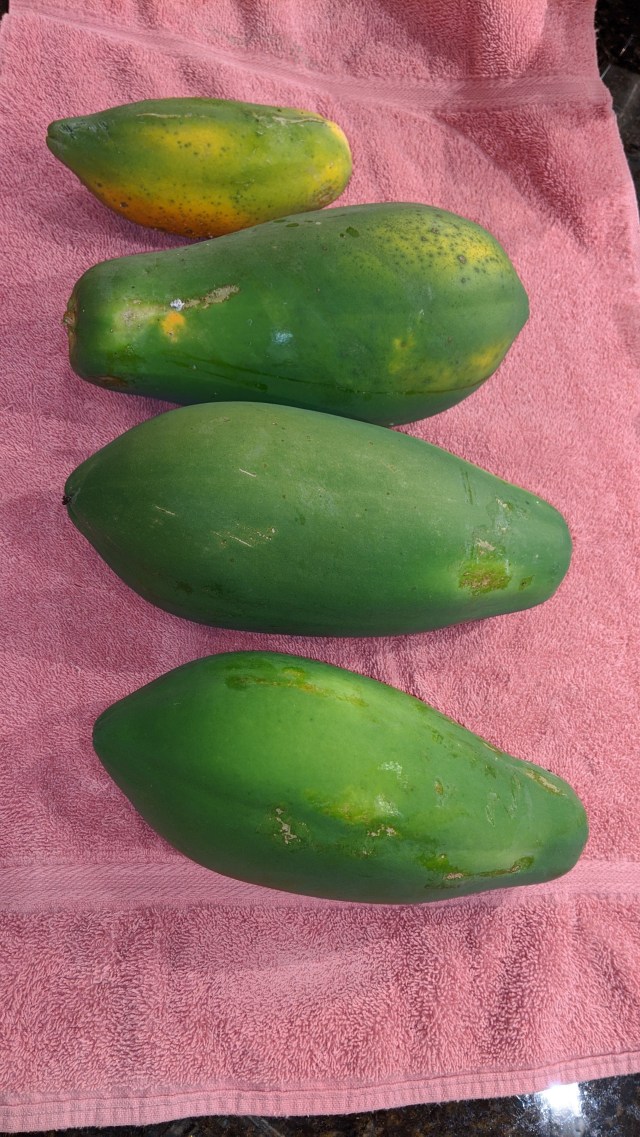
The weather during Not Summer is delightful for gardening, highs in the 70s with low humidity and ocean breezes. The climate is not without drawbacks, I cannot let my cat outside as there are several things that might eat her, I believe I have nematodes in my vegetable garden (disastrous), persnickety rabbits ate most of my radishes but only one kind of Basil and I am slightly overrun with Papayas. Not to mention the possibility of hurricanes. I will persevere. Actively looking for Papaya fans. Few takers.

img_20200105_164920

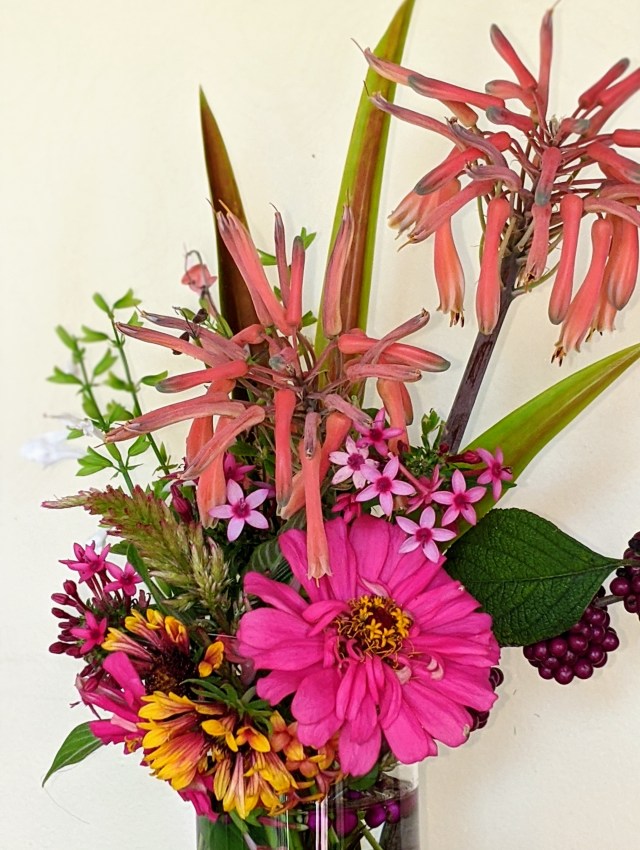
A closer view of the vase:

00100lrportrait_00100_burst20200105111020363_cover

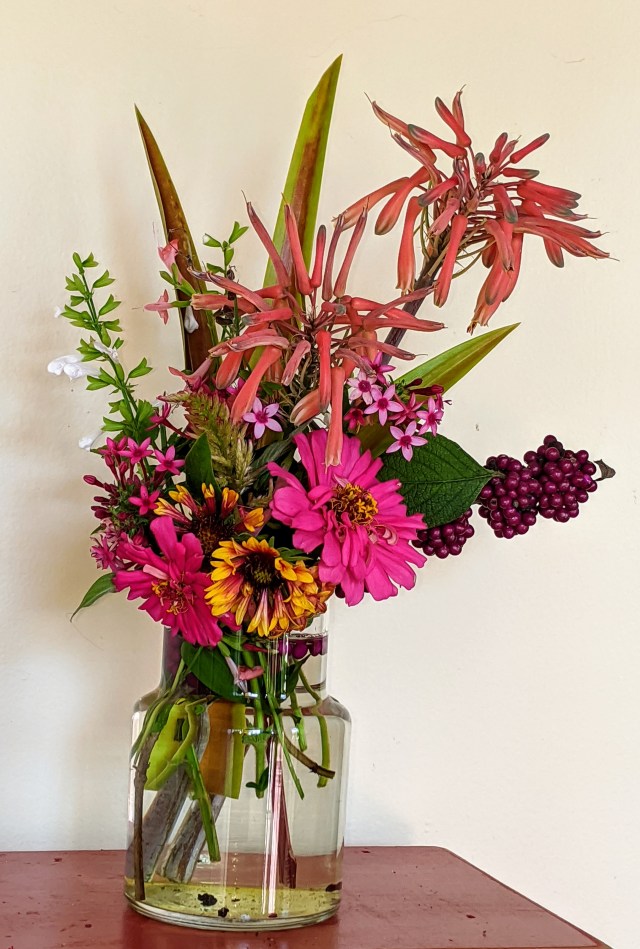
The big pink flowers are Zinnias, despite my best efforts I have no idea what kind. Popsicle sticks labeled everything blah, blah, blah. Planted some free mixed seeds,  but I labeled them something else.  Ironically, my favorite Zinnia thus far.

The  yellow and orange flowers are Gallardia (Gallardia pulchella), Florida natives that reseed freely and invent new colors every year. The chartreusy spike above the Gallardia is a new Celosia (Texas Vintage Rose Mix) from Floret. Described as heart breakingly beautiful like faded velvet or something like that; my heart is not broken yet though  I will  monitor these. Pink stars are Heirloom Pentas (Penta lanceolata). There are a few white  and  peach Tropical Red Salvia (Salvia coccinea). The big orange flowers are from Soap Aloe (Aloe saponaria), red and green foliage from a Miniature Pineapple, purple berries are still hanging around on the Beautyberry (Calliocarpa americana). Birds  have eaten the berries on the other shrubs further out in the garden. These are closer to the house and my dogs may be keeping the birds away.

From last weeks vase, the Dombeya everyone  was interested in. The  wind  died down a bit and here is the whole shrub.

img_20191231_154047

From Florida with Love.

Happy Gardening.

In a Vase on Monday – Dombeyas End the Decade

img_20191229_100435

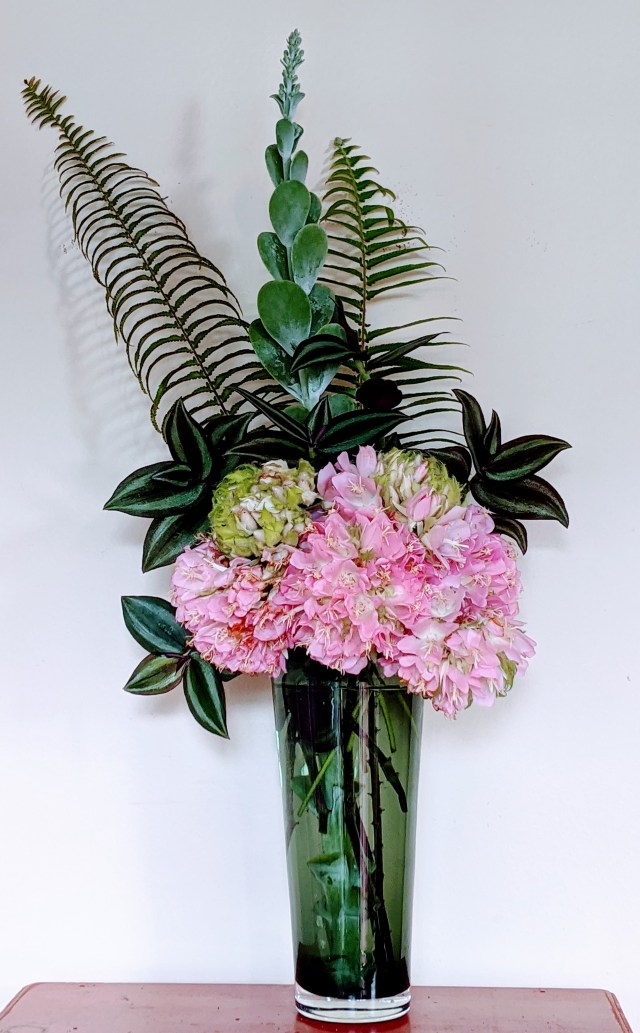
Dombeyas fill the last vase of the decade. Ten years ago, I did not blog; I did not live in Florida and I did not know what a Dombeya was. What a difference a decade makes.

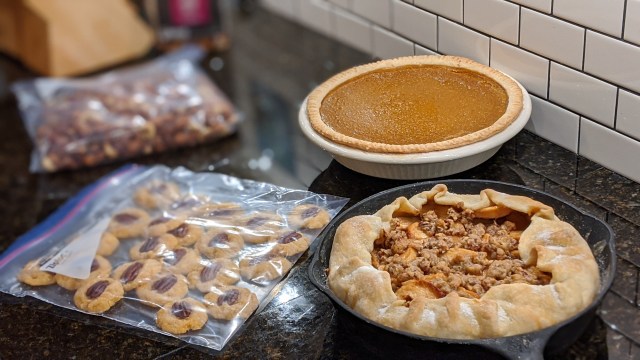
We have spent the past few weeks cooking and going to holiday parties. My husband and I enjoy cooking but we are taking a break and fortunately have leftovers. He is a great pie baker – this year making an apple, a pumpkin and a Rangpur Lime pie with fruit from my neighbor’s tree. I need to get back to the garden to work all the calories off.

00100lrportrait_00100_burst20191224174455859_cover

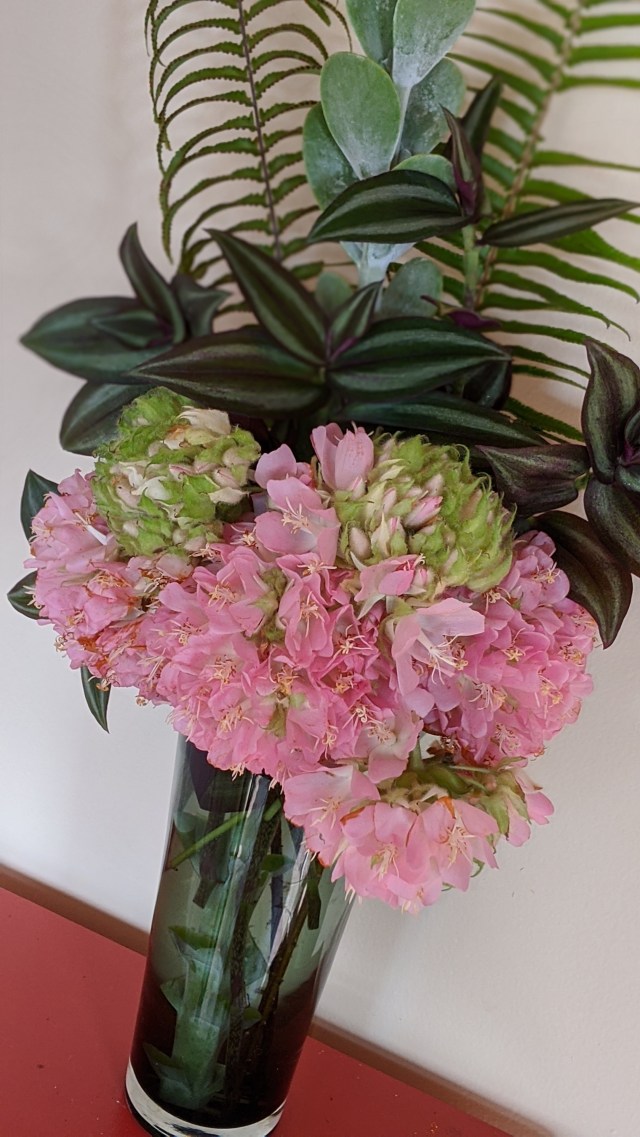
Here is a closer view:

The  pink flowers are the Dombeyas (Dombeya wallichii); the burgundy and silver striped leaves are Transcandentia zebrina, sometimes called Wandering  Jew; the silvery succulent is  the flower of a Flapjack Kalanchoe and the ferns are Boston Ferns (Nephrolepis exaltata).

00100lrportrait_00100_burst20191229100332806_cover

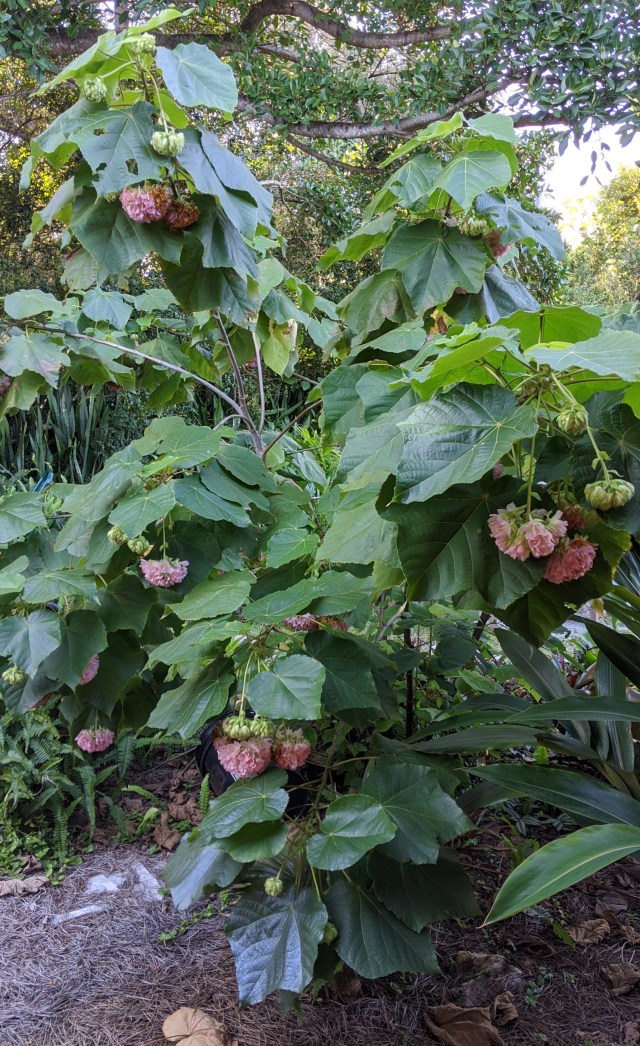
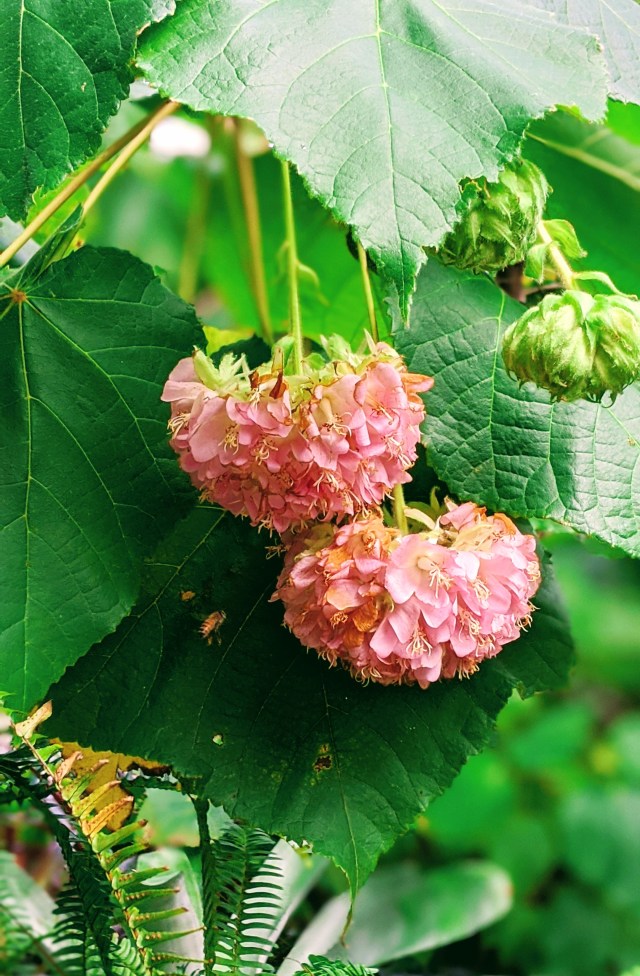
Dombeyas are sometimes called Tropical Hydrangeas though they are not related to Hydrangeas but belong to the Mallow family. Hydrangeas have their own family (Hydrangeaceae). Here is the Dombeya flower in situ. The shrub is about 9 feet tall and wide and the leaves are at least a foot wide and fuzzy. The bees love the flowers and I brought one in with the flowers. I think of them as reverse Hydrangeas since the flowers hang under the foliage.

00100lrportrait_00100_burst20191229102516193_cover

Happy New Year and Happy New Decade, hopefully the twenties will roar again. But, nicely and with many flowers.

A heartfelt Thank You to Cathy for hosting this wonderful weekly meme. More vases may be seen in the comments of her blog http://www.ramblinginthegarden.wordpress.com.