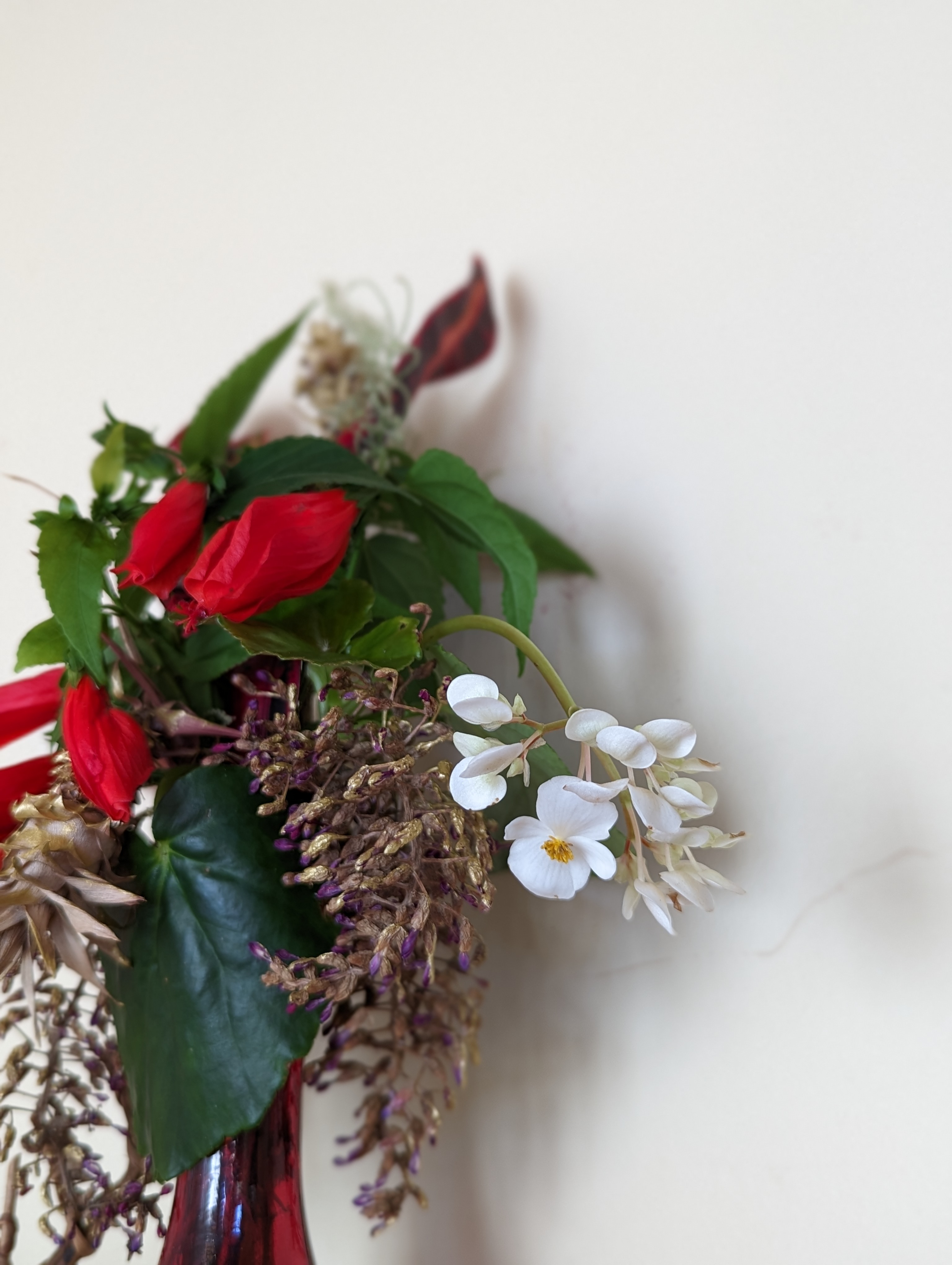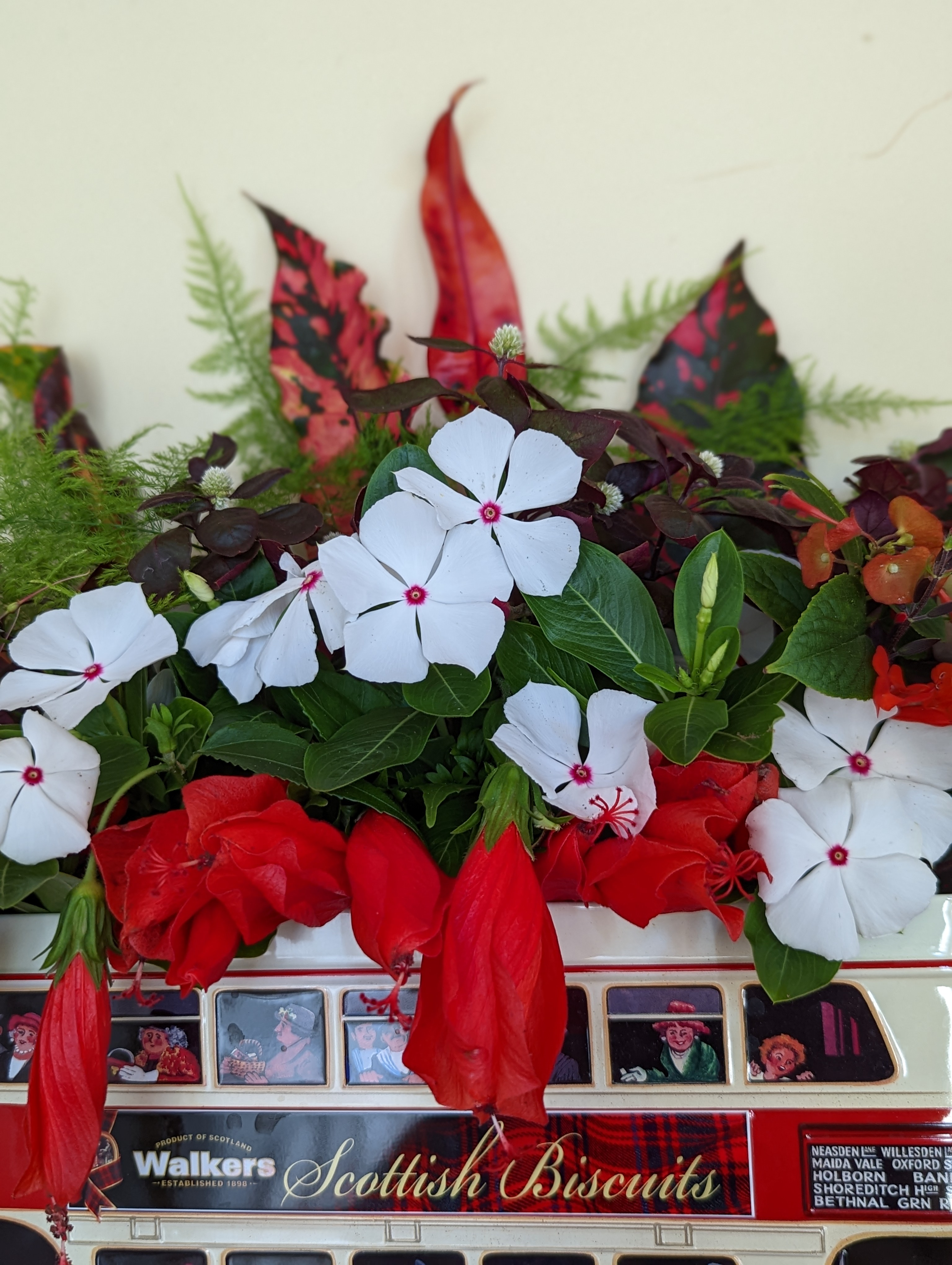
I am joining Cathy at Words and Herbs for this year’s Week of Flowers sharing images from our gardens. Today I decided to feature seven images in celebration of the final flowery day. These images are purposefully warm to chase away the winter chill. Hot colors from hot South Florida.
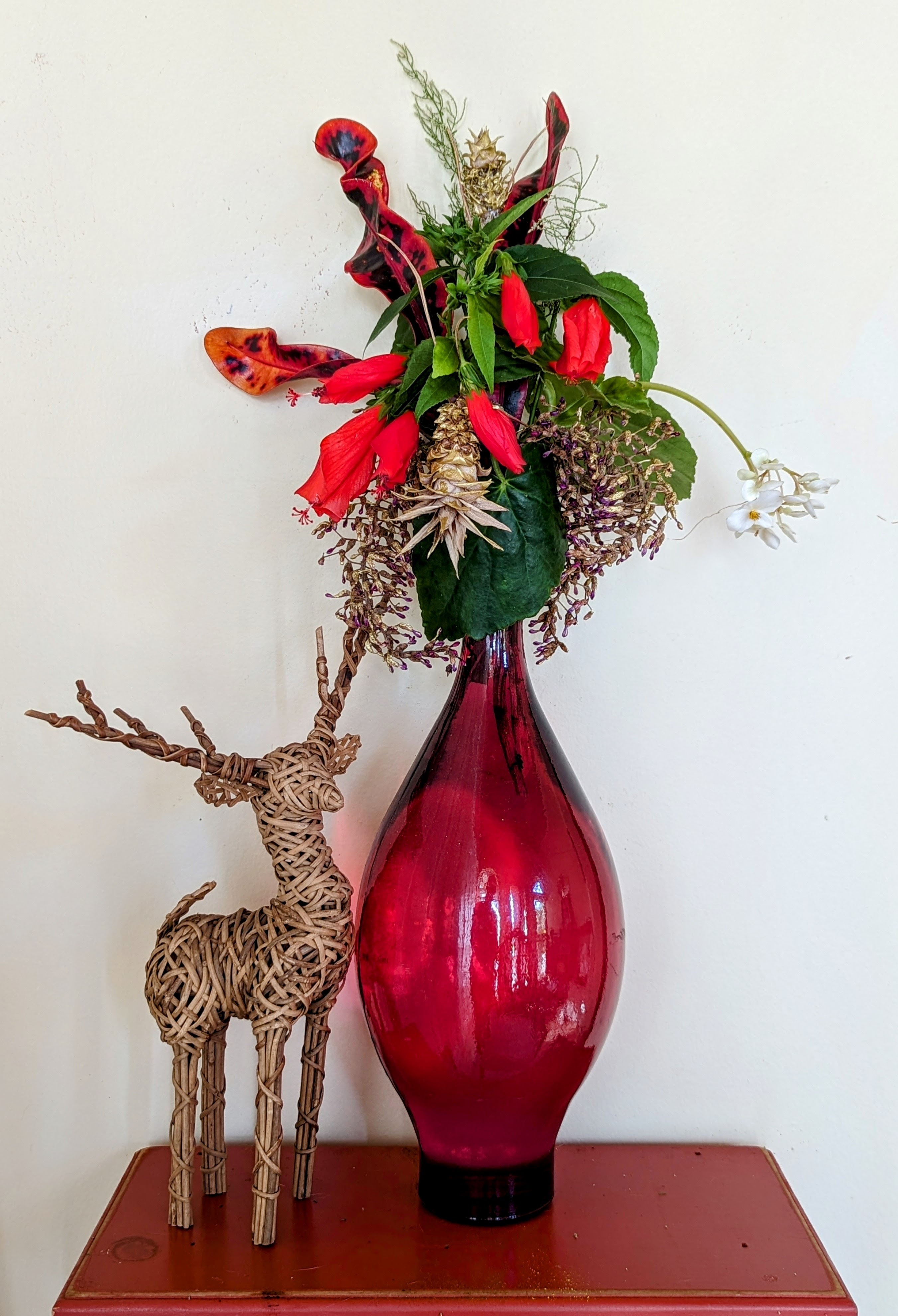
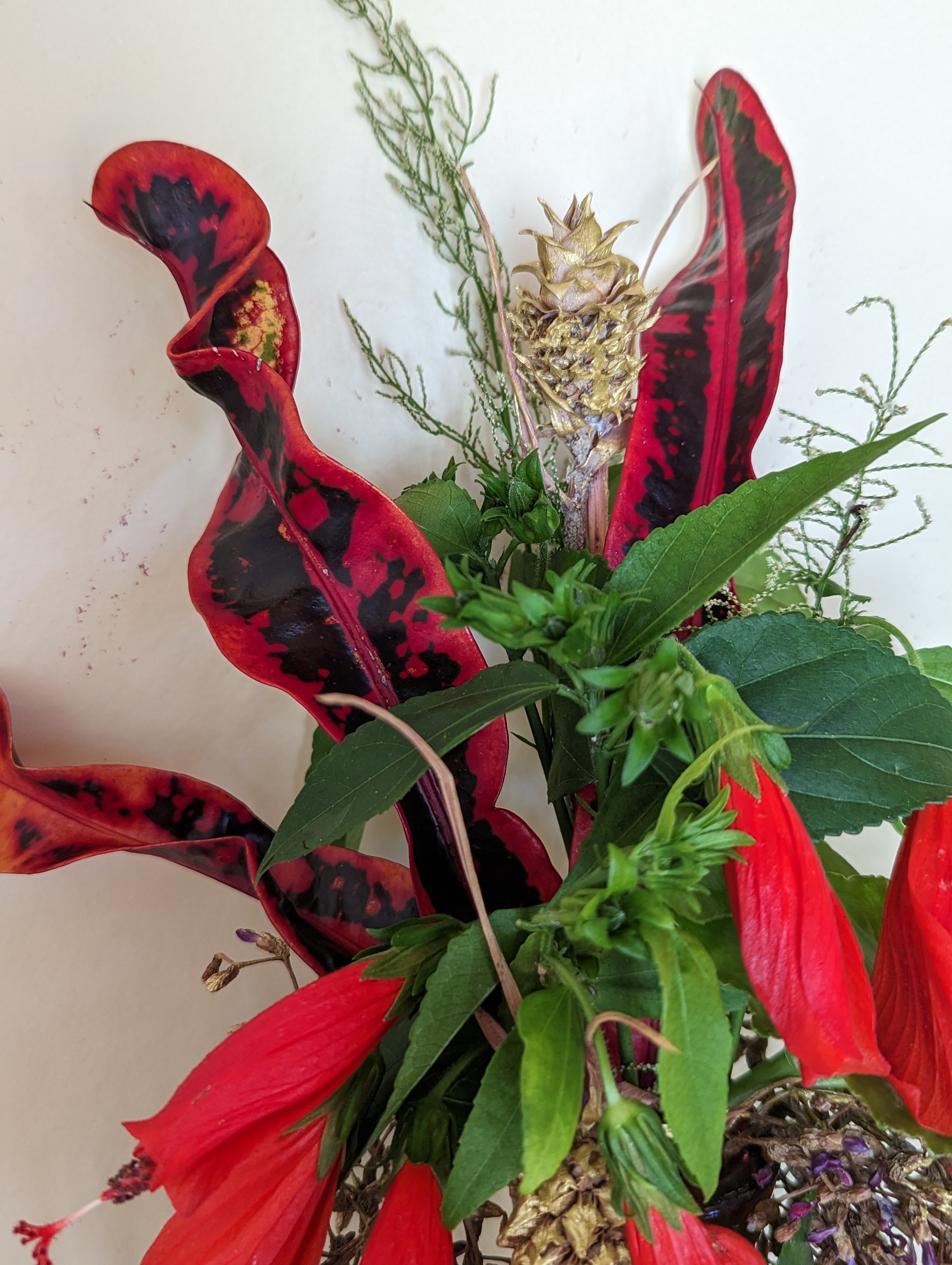
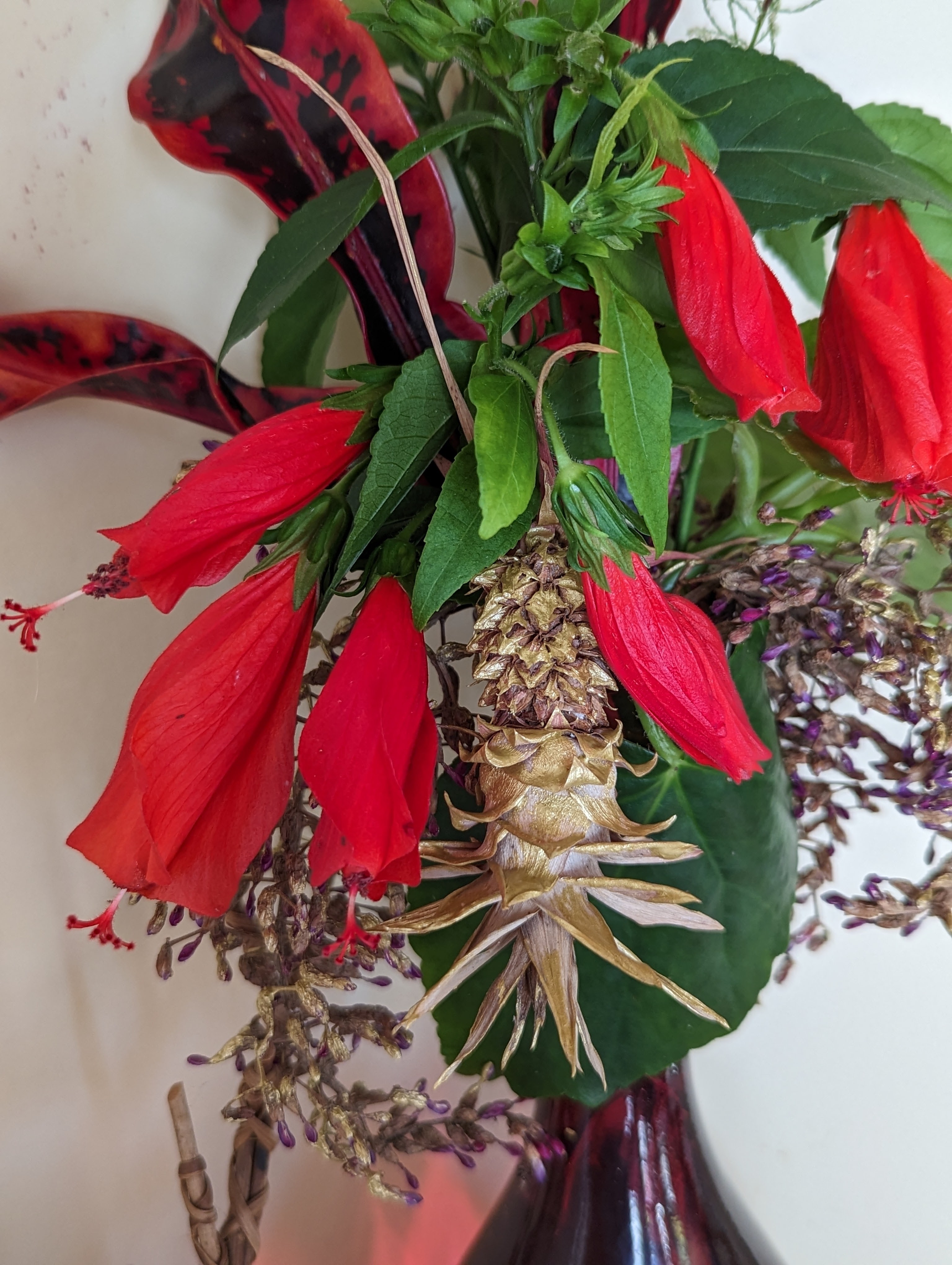
From left to right starting at the top. Aechmea rubens Bromeliad, Tropical Red Salvia, Aechmea miniata Bromeliad buds, Firebush flowers, Balsam Impatiens, The Admiral Red Hibiscus and Lobsterclaw Heliconia in a vase, and finally Aechmea blanchetiana flowers.
Hopefully these images warm up gardeners living in more northern climes. To see more flowery images from around the world visit Cathy at wordsandherbs.wordpress.com.
I am joining Cathy at Words and Herbs for this year’s Week of Flowers sharing images from our gardens. Today I have a first for my South Florida garden in 2022, Dahlias. It has been interesting reading about the experience of other gardeners with this perennial, but fussy favorite. I am finding the single Dahlias like the red one below don’t rev me up. I like the fluffy, exuberant dramatic ones…
Below, the fluffy, exuberant one.
A drama queen with stems too short to have much fun in a vase..still worthwhile.
Hopefully these images warm up gardeners living in more northern climes. To see more flowery images from around the world visit Cathy at wordsandherbs.wordpress.com.
I set out to collect the last of the wildflowers generated by our late season rains to create a vase marking the end of the not so rainy season. It seems strange having Beach Sunflowers in December when there were none this summer. Weather patterns make for strange seasonal bedfellows. I inherited the vase from my mother; it was made by Native Americans in the desert Southwestern US. I like the earth tones with the wildflowers.
The palette:
The spike flowers in white and salmon are Tropical Red Salvia (Salvia coccinea); yellow daisies are Beach Sunflowers (Helianthus debilis); the fluffy pink grasses in the back are Muhly Grass (Muhlbergia capillaris)
Another view:
The reddish flowers are from a shrub called China Hat around here. Holmskioldia sanguinea is the botanical name. The form of the shrub reminds me of Forsythia, arching and semi deciduous. Hummingbirds and butterflies love the flowers. This is native to the lowlands of the Himalayas and reportedly hardy to Zone 8. I have never seen one until landing in South Florida. This one is doing wonderfully well growing in sugar sand with very little supplemental water.
I am joining Cathy at Words and Herbs for this year’s Week of Flowers sharing images from our gardens. I am adding more blue flowers from my South Florida garden and a post script from yesterday. Below is a Dayflower, a common wildflower I let run free in my garden. I enjoy their ephemeral appearances and interesting common names – one is Widow’s Tears and another (in Spanish) herb of the cooked chicken. I have not eaten any.
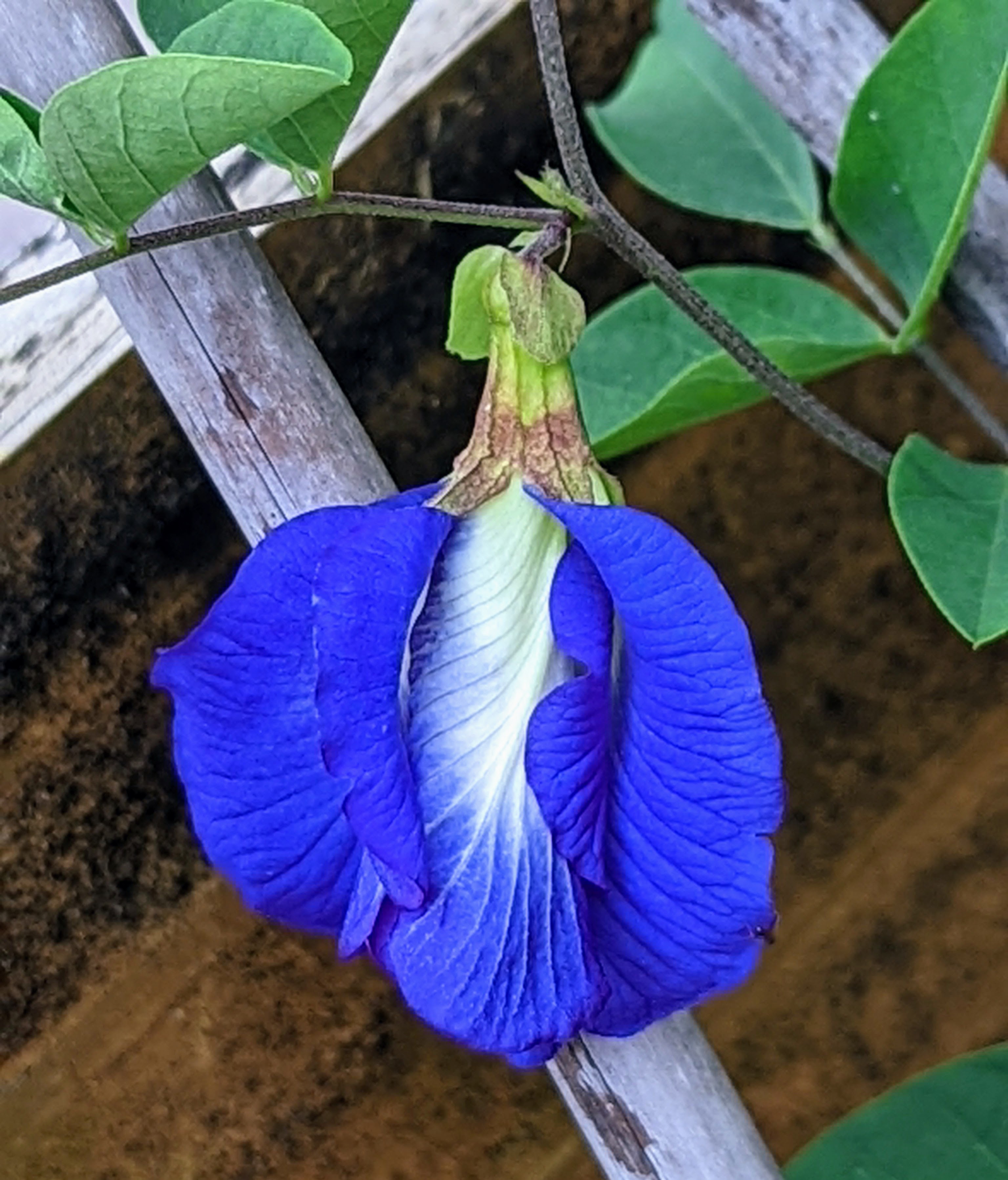
Below, making another appearance, the Blue Pea Vine. This one caused some intrigue yesterday, so I looked in the garden to see if I could find a few flowers to make tea. I found flowers and a seed pod, then I made tea.
Blue tea, indeed! Still not very tasty.
Hopefully these images warm up gardeners living in more northern climes. To see more flowery images from around the world visit Cathy at wordsandherbs.wordpress.com.
I am joining Cathy at Words and Herbs for this year’s Week of Flowers sharing images from our gardens. I am adding some favorite blue flowers from my South Florida garden today. Below is Butterfly Pea vine, this finally took hold in my garden after an extended trial with rabbit abatement. For some unknown reason the rabbits, who couldn’t get enough of this vine at first, now avoid it. I am wondering if like some people it gets bitter with age? My neighbor enjoys making cobalt blue tea with the flowers and then adding lemon to turn it pink. I have found I do not enjoy bean flavored tea.
Below, another blue flower, the Chinese Forget Me Not. I was astonished to find out last year I could grow this as a winter annual. I have just planted seeds and hope to see some flowers in a couple of months.
Hopefully these images warm up gardeners living in more northern climes. To see more flowery images from around the world visit Cathy at wordsandherbs.wordpress.com.
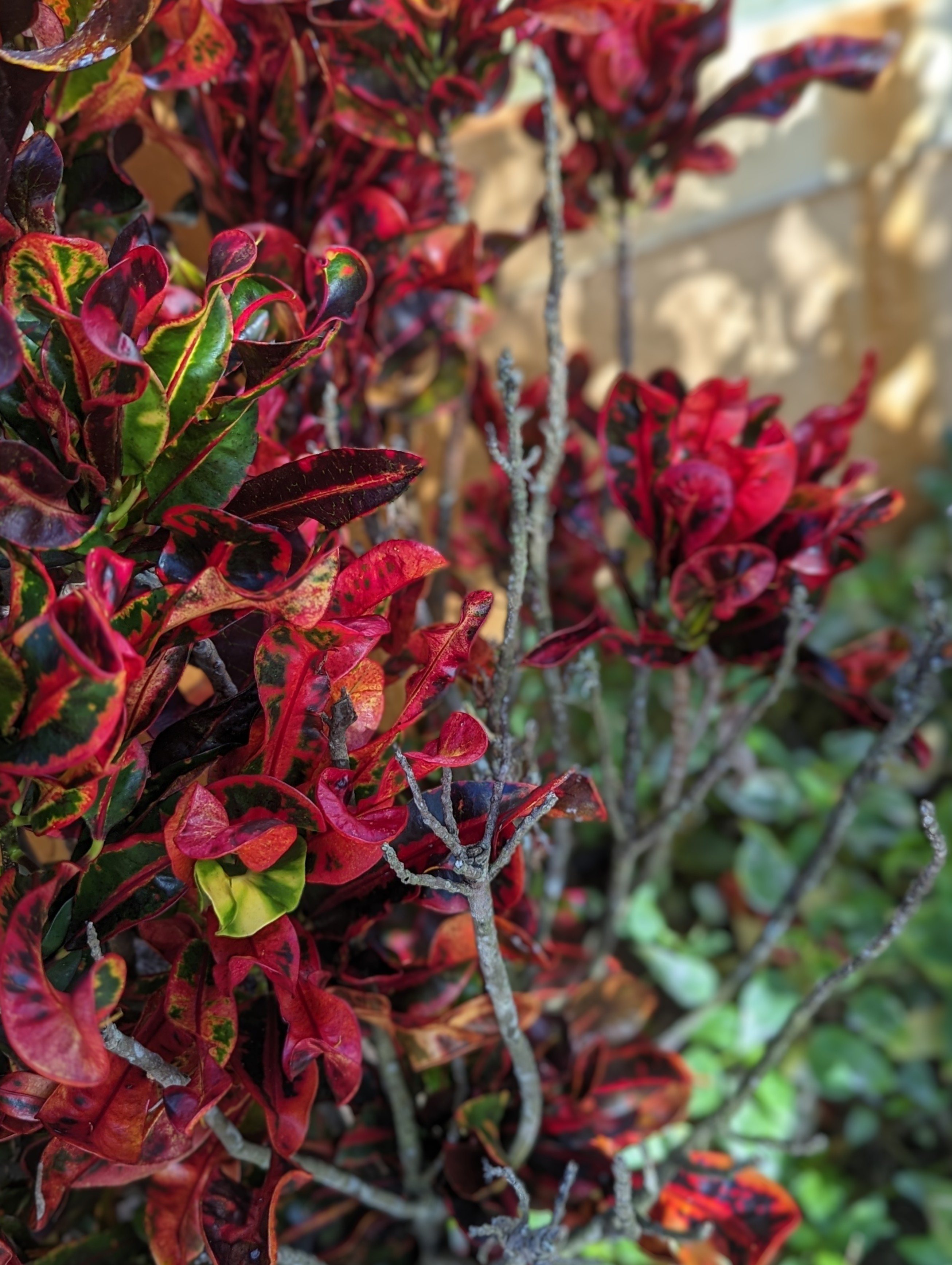
I am joining Cathy at Words and Herbs for this year’s Week of Flowers sharing images from our gardens. I am adding some tropical lovelies from my South Florida garden today. Below are the pink flowers from Tropical Rain Lilies, back dropped by variegated foliage from ‘Java White’ Copperleaf; a large, leafy shrub from the South Pacific,
Below, another ultimate tropical flower, the Frangipani (Plumeria). This color is very common around town and I have no idea what its name is. Like most Frangipani, it is quite fragrant and the flowers could be used to make leis if we were in the mood for a luau.
Hopefully these images warm up gardeners living in more northern climes. To see more flowery images from around the world visit Cathy at wordsandherbs.wordpress.com.
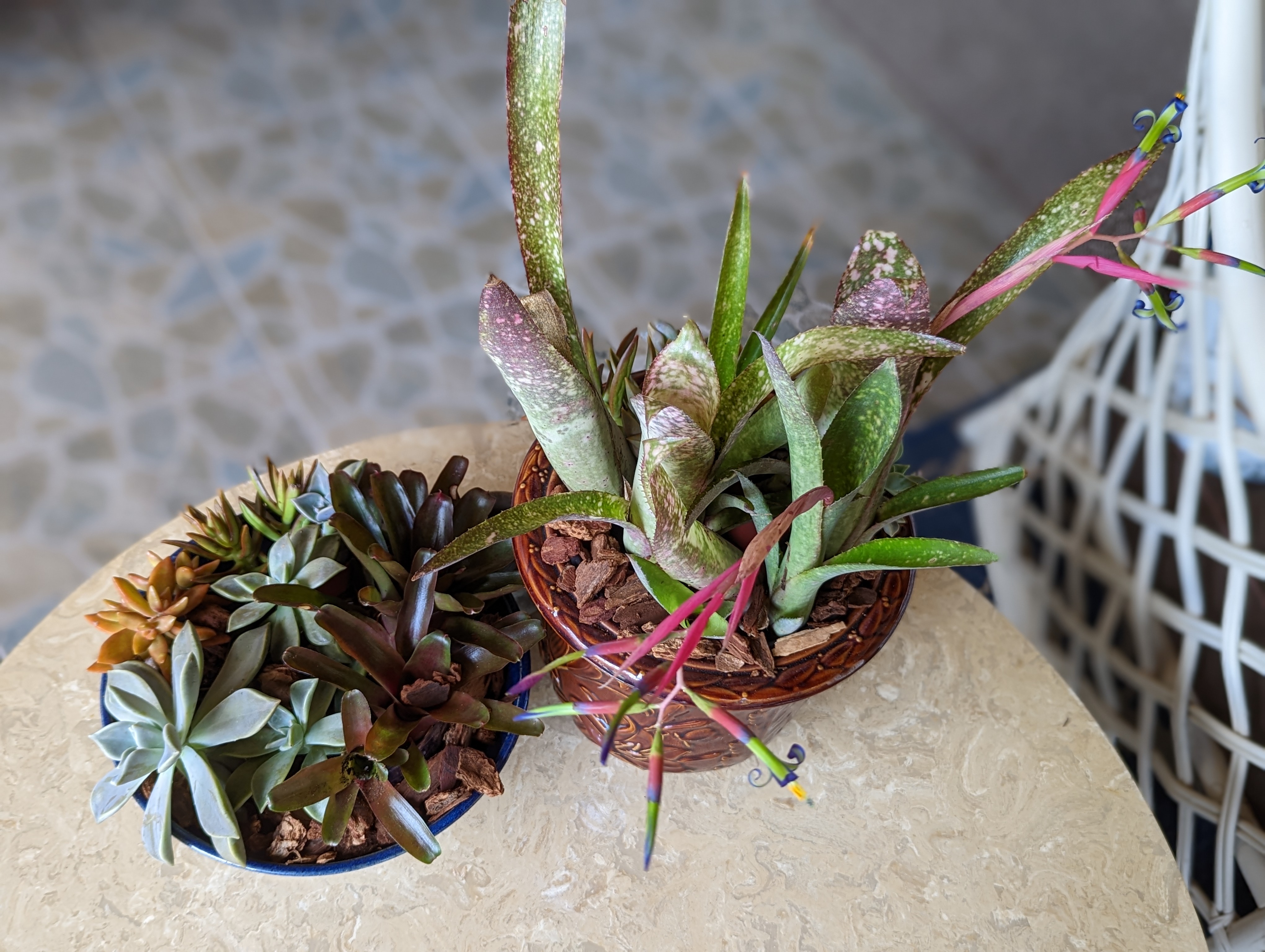
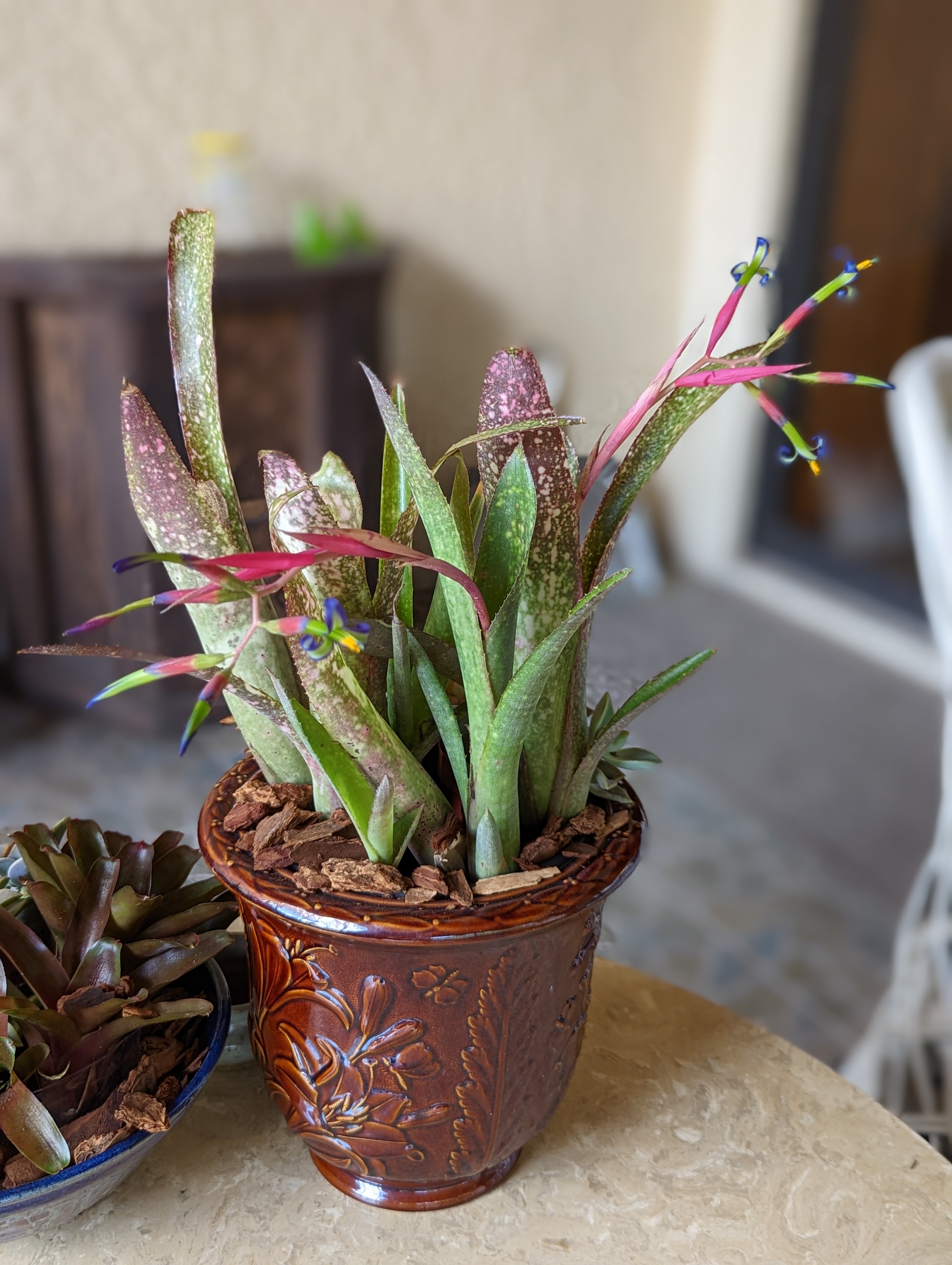
I am joining Cathy at Words and Herbs for this year’s Week of Flowers sharing images from our gardens. I am adding some Bromeliad madness from my South Florida garden today. Below are the red flowers from Aechmea miniata Bromeliads, one of my midsummer favorites, along with ‘Mystic Spires’ Salvia and foliage of the tropical Silk Oak, which is not really an oak at all, but Grevillea robusta, the largest member of the Protea family.
Below, another ultimate tropical flower, the Silver Urn Bromeliad (Aechmea fasciata). These were very common during the eighties Interiorscape rage as a long lasting flower for interior use. The flowers last about four months in my garden and flower every other year.
Hopefully these images warm up gardeners living in more northern climes. To see more flowery images from around the world visit Cathy at wordsandherbs.wordpress.com.
I am joining Cathy at Words and Herbs for this year’s Week of Flowers sharing images from our gardens. I am adding some tropical warmth from my South Florida garden. Below are Cattleya orchids that live outside year round. These are deliciously fragrant and faithfully flower every September; they are mounted on a piece of wood and perch on a terracotta container.
Below, in my opinion, are the ultimate tropical flower, the Lobsterclaw Heliconia. These have lush, large, coarse textured tropical foliage and require a great deal of water. They live under the edge of my gutterless roof. There are many varieties of this plant, some with chains of flowers two feet long.
Hopefully these images warm up gardeners living in more northern climes. To see more flowery images from around the world visit Cathy at wordsandherbs.wordpress.com.
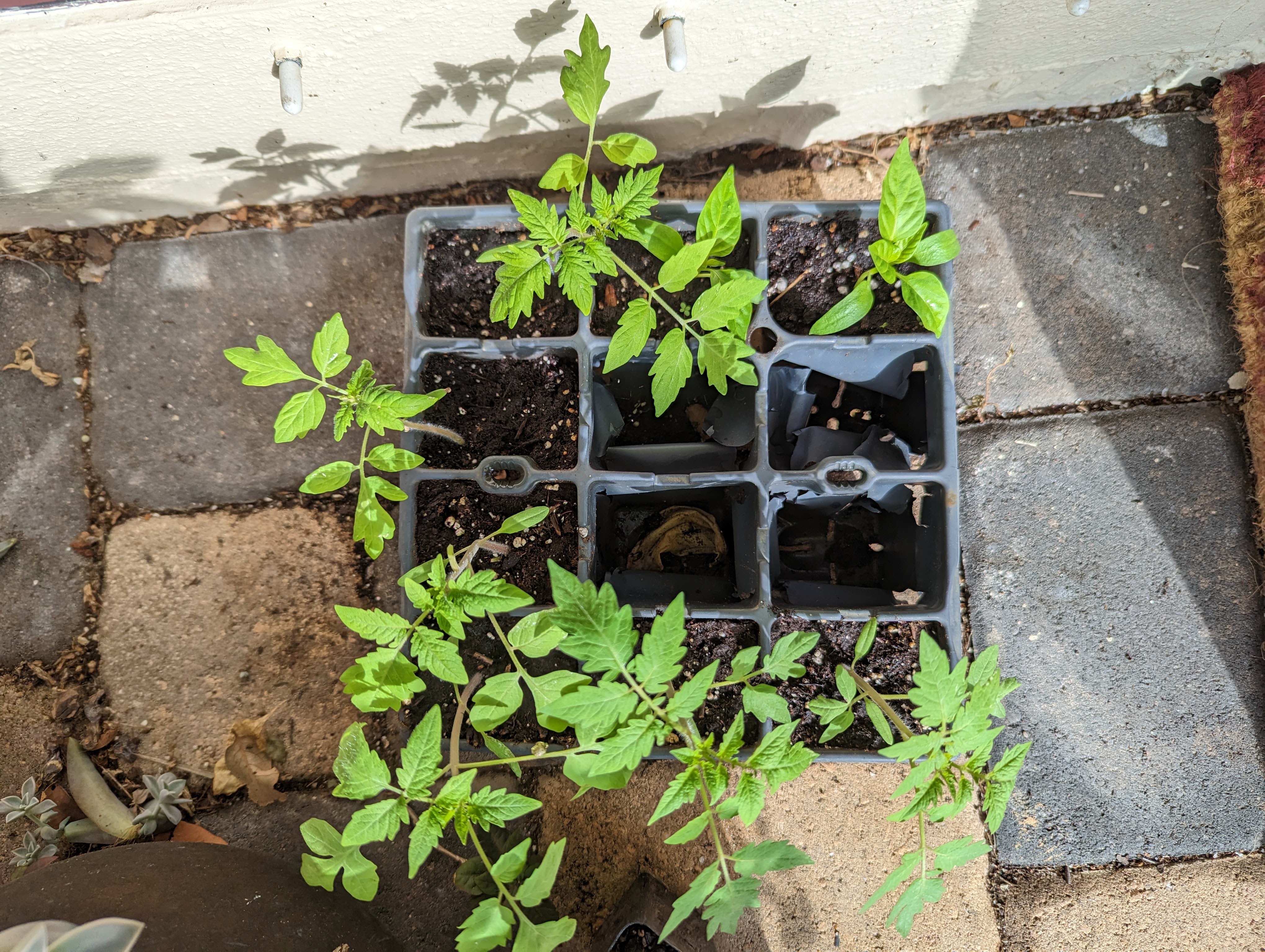
I love planting in groups of three and decided try the same in this Monday’s vase. I think the result is a balanced arrangement. Maybe I am getting in touch with my inner accountant (there is not one); or maybe it is the late November heat baking my delicate brain. High temperatures have been in the mid 80’s (F) complete with humidity and the stray thunderstorm. Florida is known for the Endless Summer, this year they are not kidding. The 10 day forecast keeps insinuating cooler weather that never materializes. I shall persevere and plant some vegetables, summer, of course – it is time to plant tomatoes and green beans here and the first sweet corn of the season has just appeared at our local farmer’s market. The citrus harvest is in full swing so I am looking forward to local Orri tangerines.
The vase contents:
The flowers, three of each, of course. In red and yellow, ‘Lady Di’ Heliconia (Heliconia psittacorum); in orange, ‘Chocociana’ Heliconia (H. psittacorum ‘Chocociana’); white spikes lending fragrance to the vase, Sweet Almond Bush (Aloysia virgata); grey flower stalks are Flapjack Kalanchoe (Kalanchoe luciae); Boston Ferns (Nephrolepis exaltata) are in the background again; green leafy foliage is from the Heliconias.
The Flapjack Kalanchoe flowers are the most unusual of the lot this week. Here they are in the garden. Actually they are in a container, growing under a Desert Rose.
Thanks to Cathy at http://www.ramblinginthegarden.wordpress.com for hosting this weekly meme. Follow the link to see more vases. I found the Classic Editor on WordPress again, thanks to Cathy and Cathy from Words and Herbs, thank you both. Classic Editor is much less annoying than the Block Editor. We’ll see how everything works out!
I am joining the SOS crowd today with our new host, Jim at https://gardenruminations.co.uk/. Follow the link to see more SOS posts! Thank you to Jim for taking on this task.
I have been ruminating about the odd nature of some of the plants in my garden. There are aspects of my garden that remind me of The Far Side cartoons. Below is a Pencil Cactus (Euphorbia tirucalli) standing sentinel by my side door. I kept thinking this thing would snap in a high wind, but it hasn’t.
Another novelty plant in the garden, Coral Plant (Jatropha multifida). These look oddly like a multi stem marijuana plant, but in reality are deadly poisonous and the flowers are a great butterfly attractor. These are planted in a narrow spot between the house and driveway.
The Coral Plant flower. It looks like a coral from the ocean..
The caudex of a Desert Rose (Adenium obesum). I have several around the garden. This one has the most interesting trunk. These are native to the Arabian Peninsula and grow quite large.
Buds on the Nodding Hibiscus (Malvaviscue arboreum). I was poised above this with the pruning shears when I realized how many buds were there!
The super tropical Palm accent is a gift from a passing bird. It’s the seedling of a Chinese Fan Palm (Livinstonia chinensis) This is about 8 or 10 feet tall and has been in the garden for the past 10 years. The trees get much bigger. It has been surprising to me how slowly palm trees grow.
That’s my Six for this Saturday. Maybe I should take up garden cartooning??