Garden Bloggers Foliage Day – Tropical Fruit

20171122_074941-1

Having spent most of my life much further north of South Florida, I enjoyed eating tropical fruit, but never knew what they looked like while growing. I have included tropical fruit trees and plants for shade and foliage in my new garden, the fruit is a bonus. Some of the fruit producing plants I have in my garden now I had never heard of – because, well, in my opinion, like many things you have to grow up eating them to appreciate the fruit.

Above is the foliage of the Sea Grape (Coccoloba uvifera).  This is a native tree that produces clusters of grapes in the summer that are mostly seed and taste similar to figs. Natives of Florida and birds like the fruit.

20171122_074344

This is Mango (Mangifera ‘Nam Doc Mai’) a Thai Dessert Mango. Delicious and easy to grow. The leaves were burned by Hurricane Irma.

20171122_074509

Silvery backed leaves from a Pineapple I grew from the top of a fruit bought at the grocery store. I have no idea what kind it will be. Pineapples are very easy to grow here and my new hometown, Jensen Beach was once considered the Pineapple Capital of the World. Here is a link to an article I wrote about how to grow pineapples  Link.
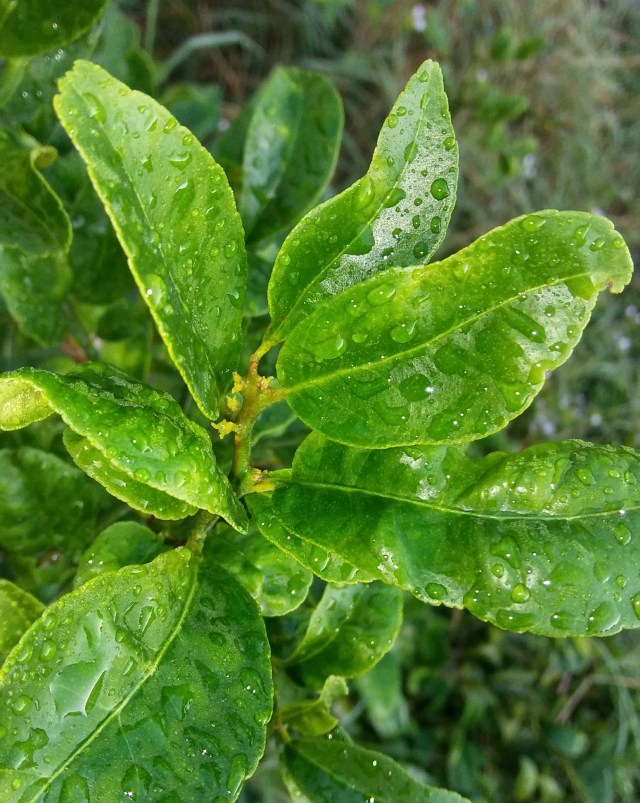
20171122_074435-1

This is a Rangpur Lime, grown from seed by my neighbor. Rangpur Limes have orange skin and are incredibly juicy. I believe these are not well known because they do not keep very well.

20171122_074251-1

This is a Papaya, I believe Hawaiian, although I won’t be sure until it bears fruit. I grew this from seed last year. Curiously, I sometimes see Papayas growing wild on construction sites. Papayas are native to South and Central America and a bit of an acquired taste. I like them in pork stir fry, bread and sliced.
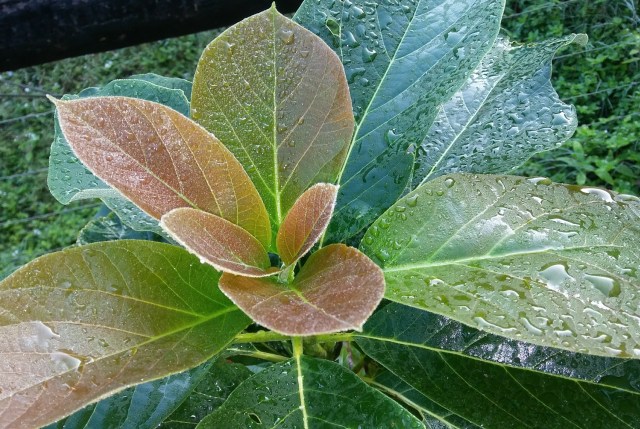
20171122_074131-1

The new foliage on a Cuban Avocado tree. Cuban Avocados are the size of footballs and I had never seen one until landing in South Florida. The fruit is a bit sweeter and creamier than Hass Avocado and the rare avocado that is true to seed. A friend grew this for me with a seed from her tree, which she got from a Cuban guy!

The trees are integrated into my back garden along with vegetables and a native pollinator area. Everything but the Mango was grown from seed so I have a few years yet before I will taste the fruit.

Gardening in many cases is all about patience. Someday soon I will have some fantastic salsa and guacamole.

In A Vase on Monday – Pre Thanksgiving

20171119_152109

Thanksgiving is celebrated in the US on Thursday this week. I found a perfect centerpiece container at the thrift store recently and decided to do a pre Thanksgiving arrangement before going full autumnal.

The Thanksgiving centerpiece sans flowers:

20171119_160658-1

Company arrives tomorrow afternoon, so the pre vase will go on the dining room table with lavender candles. Wednesday I will go full autumn centerpiece in the thrift store container. I have inadvertently ended up with numerous red and orange plants in the garden. High colors of the tropics I suppose and a good selection of fall-ish colored plants for an autumn arrangement without the crisp temperatures or actual fall.

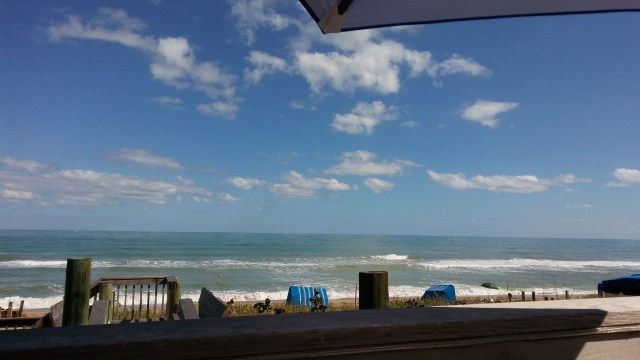
Here is what late fall in South Florida looks like, about 78 degrees Fahrenheit with a light breeze.

20171118_122850

There is good reason to be here.

20171119_152116_Burst01

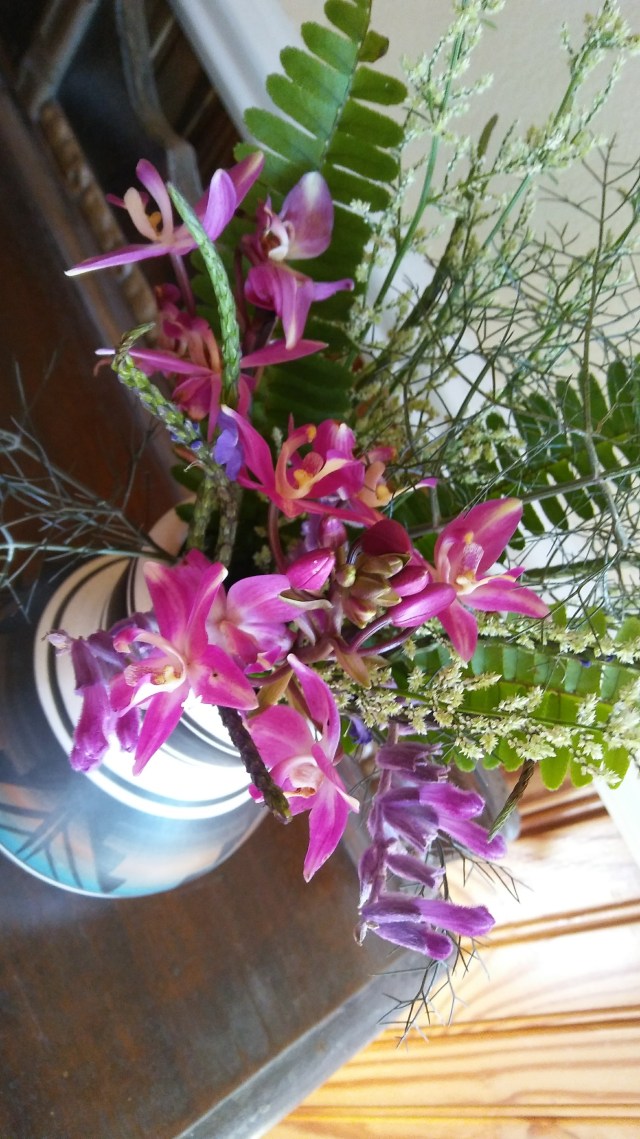
The details. The vase belonged to my mother, acquired out west somewhere after my parents retired and went on meandering trips driving around the western US. It is marked Ute and probably made by the Ute Tribe of Native Americans in Colorado, late 1980’s. I enjoy having vases from my mother during the holidays as she is no longer with us.

The flowers: Deeper purple spikes are from Mexican Sage (Salvia sp), lighter purple, Spathoglottis Orchids “Cabernet’, the bits of deep blue are from our native Porterweed. The white mystery plant spikes appeared in my garden and I just keep cutting them. Foliage is Copper Fennel in dark gray and Asian Sword Ferns.

Happy Thanksgiving!

In A Vase on Monday – Ducking the Challenge

20171112_112030.jpg

In A Vase on Monday is a meme on WordPress that originated in the UK four years ago this Monday. Cathy from the blog Rambling in the Garden is the host (or hostess) of the meme. This year, in honor of the fourth anniversary of In A Vase on Monday- Cathy issued a challenge to not use a vase on Monday but a different container.

20171112_112024.jpg

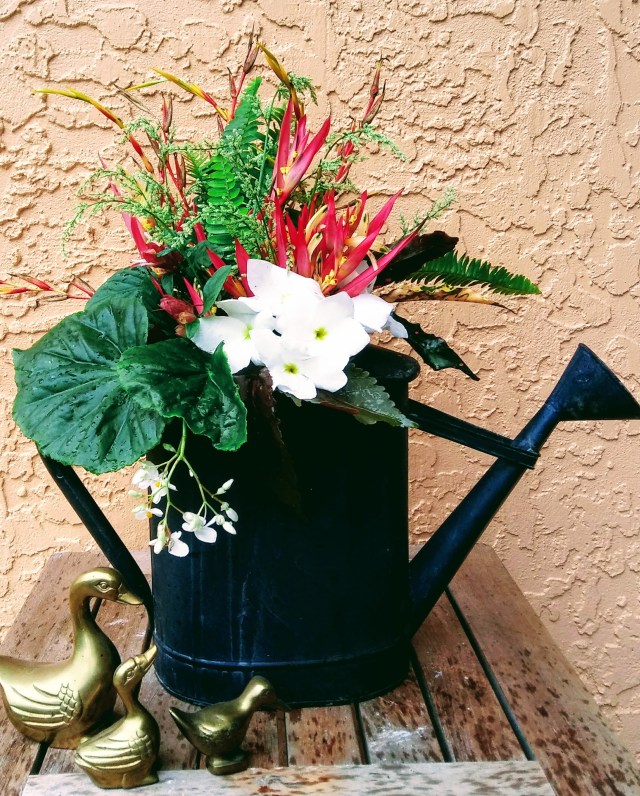
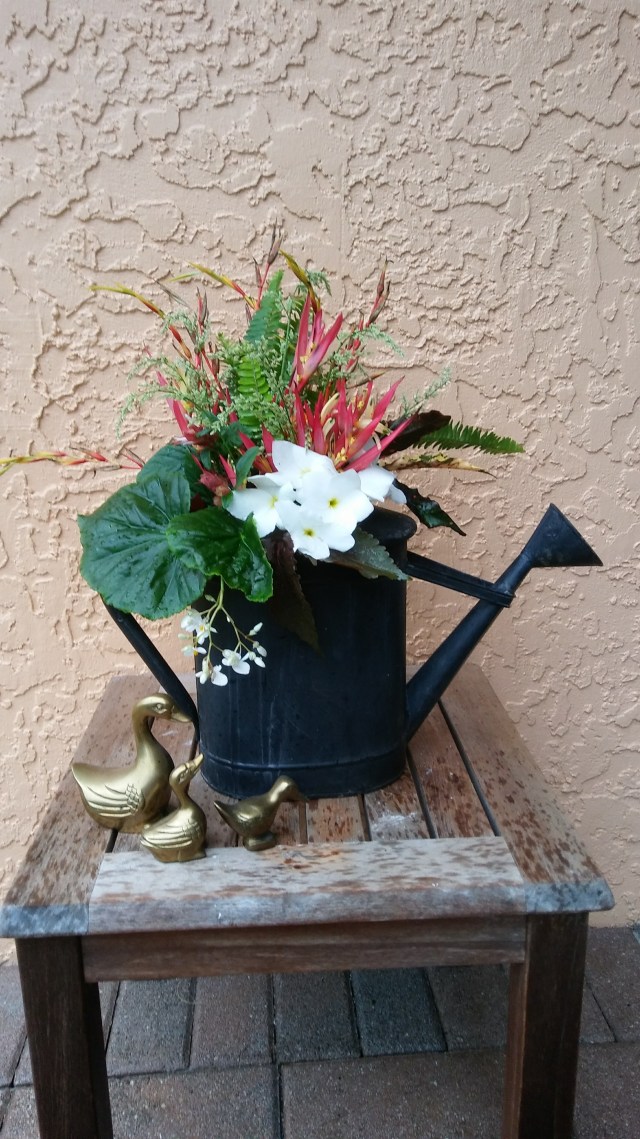
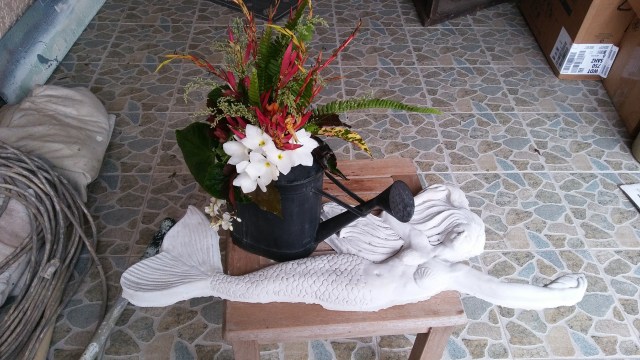
My container is a vintage watering can I inherited from my mother. So vintage, in fact, it no longer has a handle or holds water. I keep it around because I like the patina and it reminds me of my mother, a great gardener and lover of vases. The extreme vintageness of the container required some floral engineering:

20171112_094126

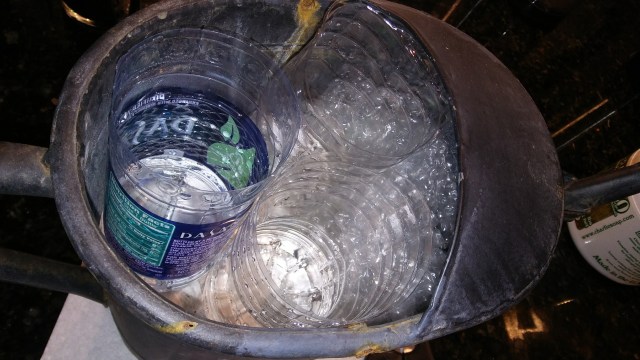
I half filled the can with Styrofoam packing peanuts and bubble wrap, then cut down some drinking water bottles to hold the flowers and water.

The ducks arrived on the scene as it was a pouring down rain, windy day in South Florida. A great day for ducks, humans,  not so much. It really started pouring after I had collected about a third of the arrangement. I stopped, waited the downpour out and went back out to the garden, collected more flowers as this is a good sized container. Finished. Decided it needed some more ferns and something taller, more rain. Stopped, then completed the arrangement again, only to find it too dark in the house to take a picture. Put everything outside and of course, it started raining again.

So, I added the ducks – then my phone ran out out battery so I had to charge it to take the picture! Stopped for a moment to visit our mermaid under construction. Everyone in South Florida needs a concrete mermaid. Mine is going to be painted and used as porch art. Yet another project.

20171112_110405

Finally, the contents:

20171112_110558.jpg20171112_103651

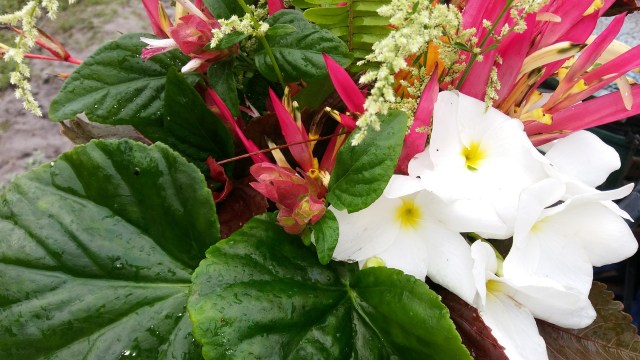
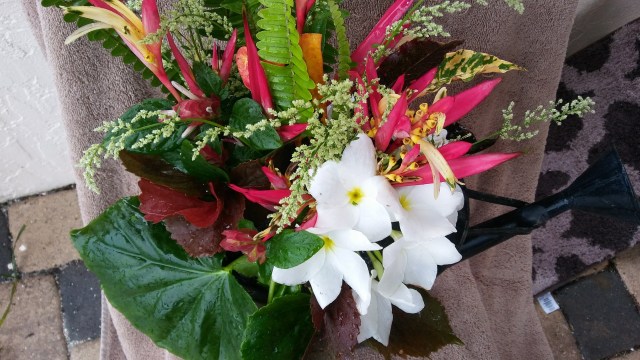
The white flowers are Bridal Bouquet Frangipani (Plumeria pudica); the red and yellow flowers are Parrotflowers (Heliconia psittacorum), the red and white flowers are Red Shrimp Plants (Justicia brandegeana); the large foliage and white flowers hanging over the edge are Sweet Begonias (Begonia odorata); the off white spikes are a mystery plant. Foliage in red, Copperleaf (Acalypha ‘ Raggedy Ann’); yellow varigated foliage is from the Pie Crust Croton (Codieum ‘Pie Crust’); ferns are Asian Sword Ferns. There are some bits of Blanchetiana Bromeliad flowers in the back of the arrangement for height.

Visit Cathy’s blog to see Anniversary vases from the world over.

Happy Gardening and thanks to our hostess, Cathy.

In A Vase on Monday – Purple Haze

20171105_101041-1

Purple Haze, all in my brain.

Is it the Muhly Grass, or just the change in time?

I am not at all sure if Daylight Saving Time is peculiar to the US, but I have a strong sense it happens elsewhere. We turned our clocks back one hour on Saturday night. This seemingly tiny adjustment always throws me off a bit.

I have been enjoying my hazy pinky purple Muhly Grass and bought a Mexican Sage last week to add to the purpleness of my perennial border. Naturally, I thought of Jimi Hendrix.

Hence the guitar.

20171105_100648_Burst01-1

Here are the correct lyrics:

Purple Haze

By Jimi Hendrix

Purple haze, all in my brain
Lately things they don’t seem the same
Actin’ funny, but I don’t know why
Excuse me while I kiss the sky
Purple haze, all around
Don’t know if I’m comin’ up or down
Am I happy or in misery?
What ever it is, that girl put a spell on me
Help me
Help me
Oh, no, no
Ooo, ahhh
Ooo, ahhh
Ooo, ahhh
Ooo, ahhh,
20171105_100918
The components of the vase include:
In purple spikes, Mexican Sage (a Salvia of some sort)
Grey foliage, Texas Sage (Luecophyllum)
Purple Ornamental Peppers
In Chartreuse, Alabama Coleus
The Purple Haze, Muhly Grass (Muhlebergia capillaris)
Grey Ferny Foliage, Copper Fennel
White spikes, not a clue.
Excuse me while I kiss the sky.

In A Vase on Monday – Ahhhhtumn is Here


20171029_121706

Sometime during the month of October there is a collective sigh of relief from the inhabitants of South Florida. It finally happened last Friday, temperatures and humidity dropped. I spent the day in my garden, then later in the afternoon enjoyed a glass of wine amongst my burgeoning collection of Bromeliads.

20171027_152838-1

After my glass of wine, I quickly put all the cushions back in the house as Tropical Storm Phillipe was forecast to pass through on Saturday. Philippe dumped a few inches of rain on the garden and then headed to New England to wreak havoc further north.

Sunday turned into a beautiful, somewhat windy day and I spent time searching for vase components with the Dragonflies (swarming to eat post storm mosquitoes) and Longwing Butterflies searching for a sip of nectar. In the background, I heard Sand Hill Cranes, home for the winter calling out to friends and lovers.

20171029_121720

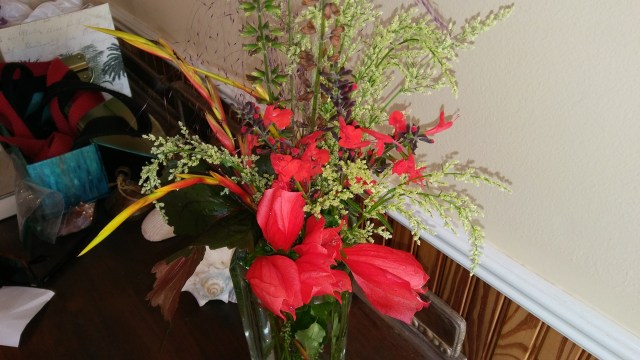
The contents of my vase include in red, front and center, Turks Cap Hibiscus (Hibiscus malvaviscus), the red spikes and seedy spikes are Tropical Red Salvia (Salvia coccinea). The yellow and orange spikes are from the Blanchetiana Bromeliad (Aechmea blanchetiana). The creamy white spikes are a mystery plant that appeared in the garden several years ago, I have not been able to identify it, but it is a great fall vase component and seems well mannered enough to live in the garden. The fluffy pink background grass is Muhly Grass (Muhlbergia capillaris) I am loving my Muhly Grass this fall.

Ahh, Autumn is finally here. It is seventy degrees, cool not experienced since last spring.

Happy Halloween!

Container Gardening for the Treasure Coast

20171027_155209-1

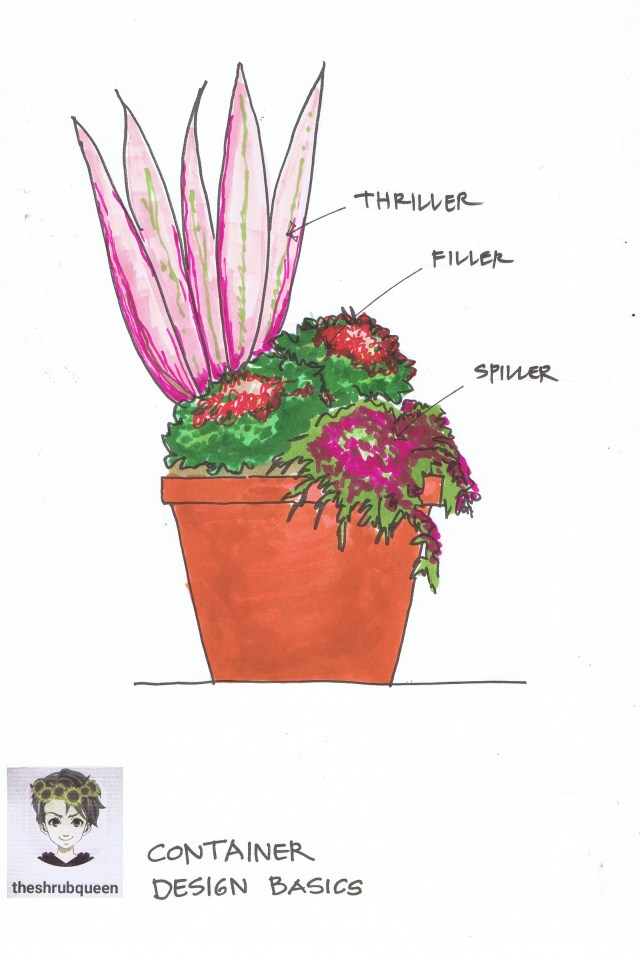
Sometimes I give presentations about container gardening. I am sharing the information from one of my talks in my blog this week. Flowers, vegetables and herbs can be grown year round in containers on the Treasure Coast of Florida. We operate basically opposite of the rest of the US in terms of gardening. Our gardening season is moving into full swing now. I have just planted tomatoes and vegetables and will be renovating my seasonal color containers as we move outside for the winter. Below is the omnipresent theory for Container Design.

Scan

I find this concept to be sound advice. Planted in an 18″ container, a 6″ nursery pot with a thriller and two 4 or 5″ nursery pots with a filler and a spiller make a wonderful addition to your front door step, porch or outside seating area. Plant selection is another story. More about specific plants later. As far as planting the container goes, see below for the idea:

Scan 1

Tips and tricks for planting containers include:

  • Always use potting soil.
  • If the container is going outside, be sure there is a drainage hole and cover the hole with coffee filters and pebbles to keep the potting soil in the pot.
  • When planting an oversize container, the bottom can be filled with Styrofoam noodles separated with coffee filters or weed check fabric to keep the soil around the plants in the upper part of the pot. Always maintain a 12″ depth of soil in pots to keep watering chores to a minimum. The exception to this rule, Bromeliads, Orchids and succulents can be grown in less soil.
  • Allow an inch of soil from the rim and keep soil level an inch below the rim of the container.
  • Add time release fertilizer after planting, 13-13-13 is best for our area and lasts longer in the heat.
  • Check container daily and water accordingly, many containers need daily watering.

RECOMMENDED PLANTS FOR CONTAINER GARDENING:

Tropical Plants: Many tropical plants thrive in containers on the Treasure Coast. There are many kinds of Bromeliads and Aglaonema, all of the plants pictured require a shaded area.

This slideshow requires JavaScript.

Many annual flowers are good for use in containers, they generally don’t last the summer here so be prepared to renovate your containers every 4 to 6 months. Here are a few plants to consider:

This slideshow requires JavaScript.

Vegetables and herbs are great plants for containers. Many vegetable gardeners use containers exclusively to avoid weeding and backbreaking labor in soil preparation. Notes on seed packets and vegetable plants will sometimes include recommendations for container sizes.

Herbs for Treasure Coast Gardens:

This slideshow requires JavaScript.

There are many other herbs that can be grown here. Fresh herb plants appear in the big box stores and garden centers this time of year. I grow what I like to eat. My favorites are:

Basil: I always have a pot of Basil around, my preference is basic Sweet Basil with the large green leaf. It can be called Genovese or Napletano. I also like Greek Columnar Basil but it can be difficult to find. Basil lasts about 3-4 months in a container so I replace mine quarterly.

Bay Leaf: My first attempt with Bay Leaf failed, I planted it in the ground and it did not flourish. I bought two more and they have happily provided Bay Leaf from their perch in a terracotta pot. Bay Leaf plants can be difficult to find in our area, so buy them online. Be careful to buy the culinary Bay Leaf (Laurus nobilis) – there are other types used for decorative purposes and not to eat.

Dill: Dill is a favorite for use in soups or with sauteed vegetables or fish. A tall, ferny plant this is a cool season plant and will go to seed in the late spring. The seeds are a bonus and can be used in breads or saved to grow more Dill next fall.

Parsley: I prefer Italian Parsley (flat leaf) for flavor, Curly Parsley can be easily grown here as well. This is a cool season plant and will grow here from October until late spring. They may last through the summer if kept out of full sun and watered

Rosemary: Rosemary lasts year round in a pot. Eventually, it needs replacement – I consider this maintenance as we eat a lot of Rosemary. I like the flavor of the upright plants rather than the creepers.

Thyme: Thyme is another cool season herb. I may have managed to get it to live through a whole year once, but this requires a lot of attention in the summer. My attention tends to wane as the humidity rises. I prefer the Lemon Thyme to German for the flavor.

In A Vase on Monday – Maximum Minimalism

20171022_140314

Maximum minimalism seems a contradiction in terms. I was planning to call this Deconstructed Corsage, due to the Gardenia and Orchids. Shortly before I started writing the post, my husband came in and said ‘minimalism’. I countered ‘”it can’t be, too many different things in the vase”. Upon further reflection, there is something minimal about this arrangement, despite the use of six different plants. I think it is the long lines of the vase and Muhly Grass blending all the elements making it appear to be one plant. One spectacularly unusual plant.

20171022_140314-1

Fall has been slow to arrive here, there are some 50 degree low temperatures forecast this week. The temperature this afternoon was less than Autumnal, 86 degrees (feels like 95), 97% humidity. I will believe Fall is here when I see or feel it! The flowers on the Muhly Grass are a better indicator of the season than the weather.

20171022_140837

Plants in the arrangement from the top, Muhly Grass (Muhlbergia capillaris), ‘Cabernet’ Spathoglottis Orchids, ‘Hallelujah’ Bromeliad foliage behind the orchid, striped purple leaves are from Transcandentia zebrina, white flowers are Tropical Gardenia (Tabernaemontana divericata) and Sweet Begonias (Begonia odorata). The vase is a thrift shop find.

I still think this would make a good corsage.

In A Vase on Monday- Dark Glasses

20171015_101710-1

Dark Glasses, my theme this week involves two types of dark glass. First, the vases made of smoky grey (like Ray Bans) and dark blue glass. Next, the contents of the vases, bright enough to require sunglasses.

20171015_101924-1The bigger vase, in Ray Ban grey, is filled with Parrotflowers (Heliconia psittacorum) and Asian Sword Fern, the devil in fern clothing (invasive fern) – the Parrotflowers have rebounded magnificently from Hurricane Irma, causing me to realize cutting them for vases really improves their existence and mine. Probably my favorite cut flower.

20171015_101829

The smaller cobalt blue vase is filled with a larger variety of flowers. My husband’s comment ‘it looks like a meadow’ – a sort of tropical meadow, I think.

The foliage is from Pie Crust Croton, a mad tropical plant by all counts. This shrub sports black foliage with orange, green, yellow and red spots, new growth green and the leaf edges crimped like pie crust. Planted in honor of my husband, the pie maker.


The crusts are reminiscent of the Croton, no? Blueberry and Apple pies.

The ferny foliage is from Asparagus Fern, this finely textured foliage tends to just pop up in the garden and I usually cut it for arrangements.

20171015_101855-1

The flowers are mostly natives, the yellow, Beach Sunflower (Helianthus debilis), orangey rust Gallardia, orange tubular, Firebush (Hamelia patens), the red spikes Tropical Red Salvia (Salvia coccinea) the bright red flower in the middle is from the Coral Plant – an oddity that is a variety of Jatropha, not native.

Happy Monday and I hope Ophelia misses everyone!

In A Vase on Monday -Funky Fall Flowers

20171008_120617

I get some interesting comments from readers about my plant selections. Exotic is the most common description, though weird, unusual and alien have been bandied about. I tend towards the unusual, possibly due to spending over 30 years designing landscapes for corporations. Corporations like a clean, green hedge around their buildings, parsley around the pig is how I refer to the clean green, preferably not interesting in any way. Think Viburnum of any kind clipped into submission. Gardeners tend to be a lot more fun to work with and also avoid workhorse Viburnums.

My garden sports no workhorse shrubs, all selections are off the wall and flowering and fruiting to their hearts content. Corporations would hate it. Not a clipped Viburnum in sight.

20171008_125222

Even I think this vase is funky, put together for texture and color. It speaks of South Florida in the Fall.

20171008_120604

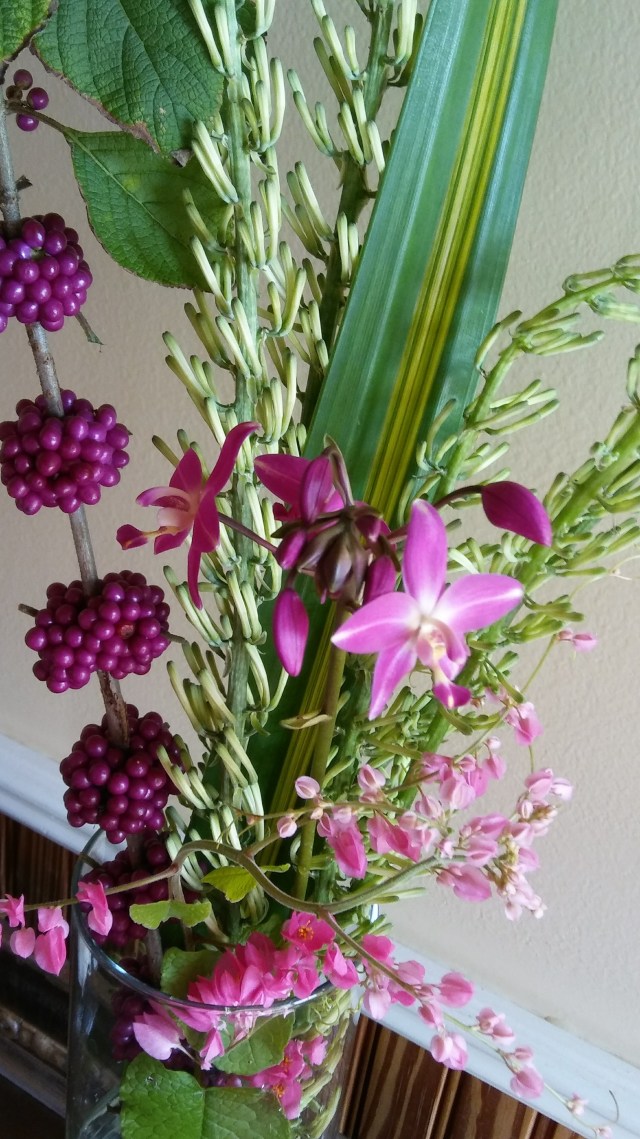
The purple flower is an Orchid, Spathoglottis ‘Cabernet’. The pink vine is a Coral Vine (Antigonon leptopus), some call this Queen’s Wreath. The white spikes are from Snake Plant or Mother In Law’s Tongue (Sanseveira) – they flower here and are considered invasive – it would take a bulldozer to rid my garden of these. Purple berries are from the Beautyberry (Calliocarpa americana) I think the berry production in Florida is triple what my northern plants produced. The striped leaf is from a Screw Pine (Pandanus sp.) I love these and bought a small plant that is surprising me with variegated foliage. Screw Pines are common in the South Pacific and remind me of Hawaii.

20160902_105510

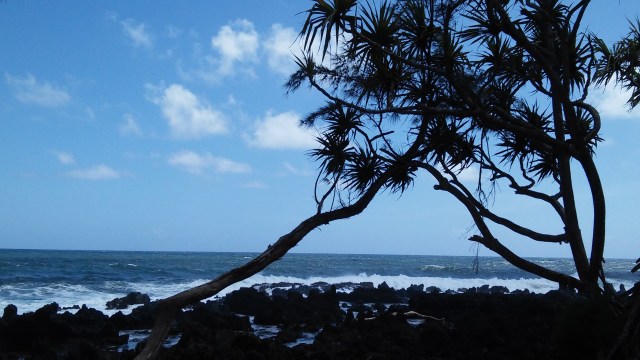
A Screw Pine (Pandanus) on the Pacific Ocean near Hana, Maui. Kinda funky, had to have one in my garden.

Cheers to Resurgens

20171001_114743-1

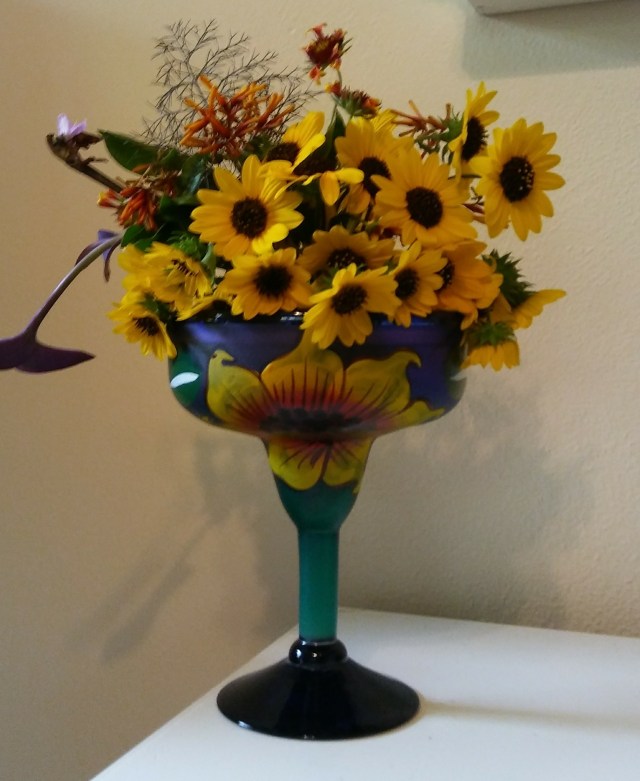
Resurgens is Latin for Resurgence, and the motto of my hometown – Atlanta, Georgia. Atlanta’s resurgence was from the ashes of the Civil War, my garden is rebounding from the encounter with Hurricane Irma. Every good resurgence deserves a toast and this one is filled with Beach Sunflowers in an oversized Margarita glass given to me by a friend.

20171001_114720

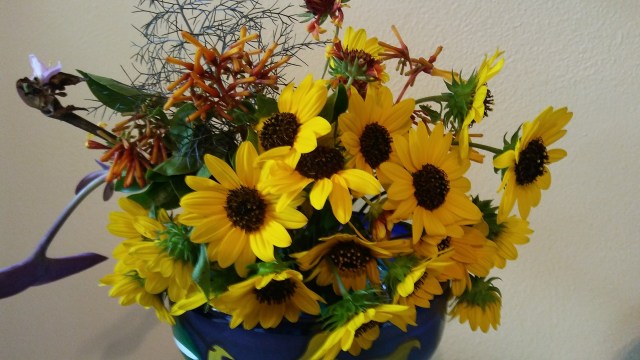
Joining the Beach Sunflowers (Helianthus debilis)  in orange, Firebush (Hamelia patens) and the foliage is a sprig of Setcresea (Setcresea pallida)  some call this Purple Hearts, I think that sounds better. The dark ferny foliage is from Copper Fennel, making a surprise reappearance in the herb garden.

The Beach Sunflowers are a profusion of yellow flowers and the Firebush is just starting to show color again. Other signs of resurgence, the Torch Bromeliads (Billbergia pyramidalis) are making their Autumnal appearance.

20171001_112028

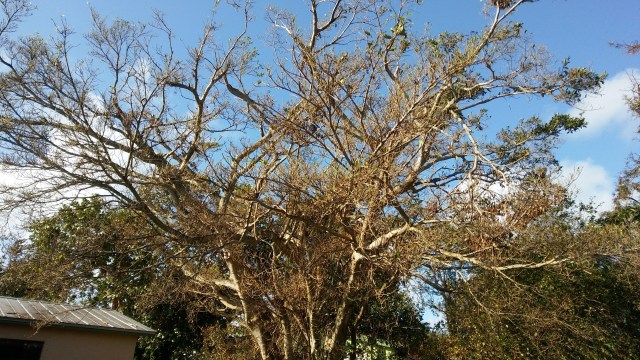
The foliage is a bit worse for wear,  but the flowers are beautiful. The most dramatic transition in the garden is from the Strangler Fig (Ficus aurea). Here is a picture of the Fig two weeks ago:

20170916_091137

Today:

20171001_104154

I will raise my glass for the Fig, now I need to find some limes and tequila.

Cheers!