The Garden Club of Stuart Tour

Last Saturday as I was riding in the car with my husband, I noticed a sign for A Garden Tour. This peaked my interest. So I went home to see what it was all about. After a few moments on the computer I found that The Garden Club of Stuart holds a biannual event that includes touring 7 Private Gardens in Stuart and Palm City. The Gardens are open over the weekend and you tour at your leisure.

As I have been around here a while I am not sure how I have missed this event; but I will likely do it again and the next time visit all the gardens. I made it to a little more than half, but they were quite enjoyable. I toured three estates on the St. Lucie River and a Tropical Bromeliad Garden in Palm City.

My favorite was the Tropical Bromeliad Garden, an amazing array of bromeliads and tropical plants arranged in sinuous beds set into lawn. Most were labeled which made it more enjoyable for me as I am turning into a bromeliad collector. Snapshots follow:ImageImage

There were probably 100 different varieties in this garden. Beautifully maintained by the homeowner, who must spend hours out in the garden clipping off excess foliage and mulching.

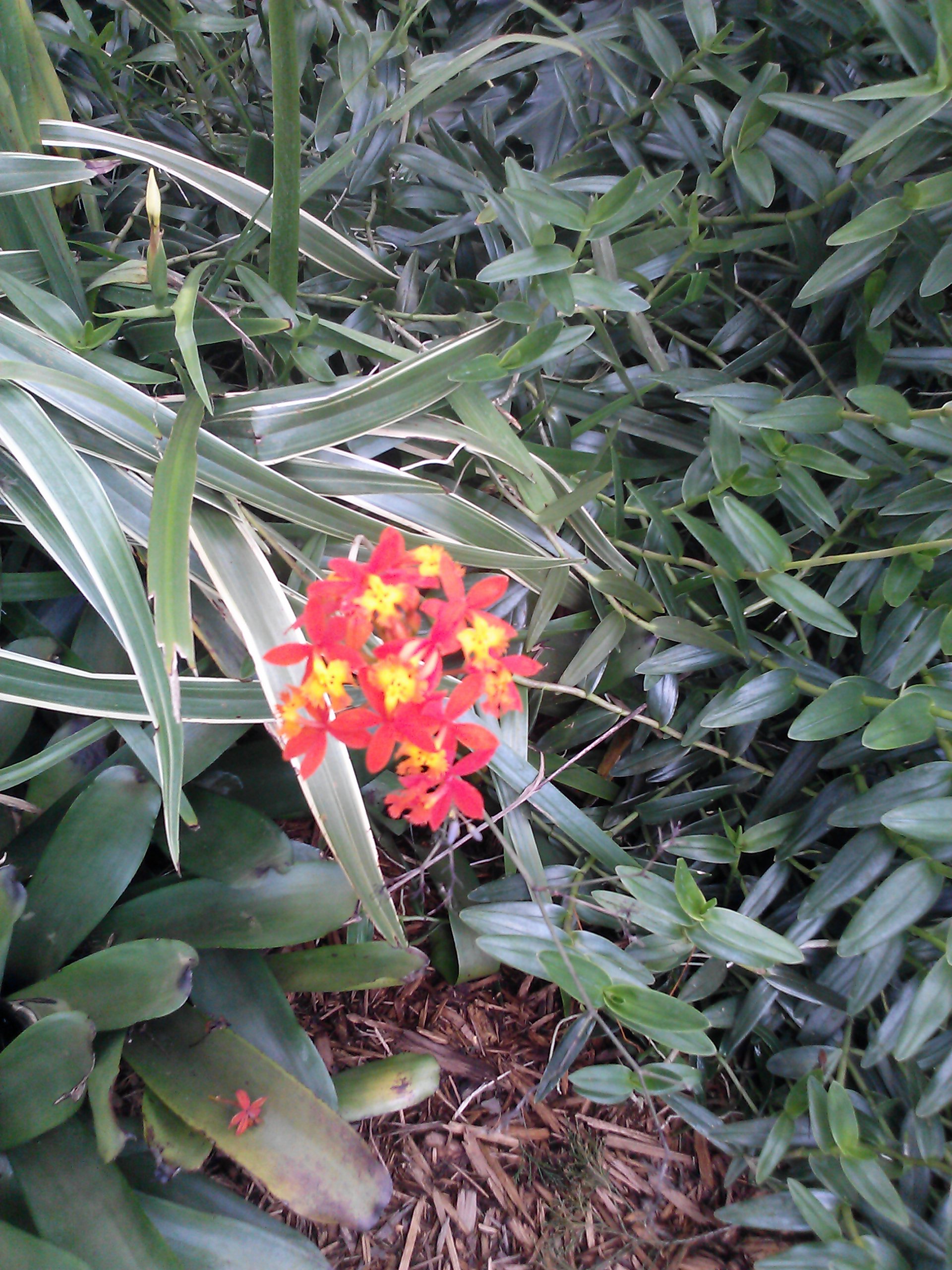
I also found a new plant I must have; a Fire Orchid..
Image

I definitely need to find out more about these. They were beautiful.

The Garden Club has something called the Ramble at the beginning or the end of the tour. At the Ramble they had Bar B Que and a plant and gardening accessories sale. Guess what I bought..some Bromeliads.

In Praise of Cabbage Palms

Looking up

Looking up to the Heart of the Palm

One of the pleasures of living in Florida is waking up almost any morning, walking out into my backyard to watch the soft yellow sunlight illuminate the canopy of the Cabbage Palm rendering its shadows almost russet. The much maligned but indestructible Cabbage Palm.  I have no idea how old this palm is but I am certain no one planted it. A native of the peninsula, the state tree of Florida and perhaps the most common Palm in the state it will always have a place in my heart.

I have always referred to these as Sabal Palms; because of their botanical name – Palmetto sabal. They are called Cabbage Palms in reference to Swamp Cabbage, which in culinary terms is Hearts of Palm. I love Hearts of Palm but rarely eat it as a Palm tree gave its life for my salad. Palms are monocots, more closely related to grass than trees and only have one growing point, the apical meristem, botanically speaking. If this is removed the entire tree dies. The growing point is in the middle of the fronds, hence the name Hearts of Palm. Have a heart, save a Palm tree’s life and go for the artichokes instead.

These Palms usually attain a height of 30 feet, but can grow up to 60 feet tall. Cabbage Palms are not self cleaning and need trimming to maintain a neat appearance. Or just leave it untrimmed and say it is a bat habitat to control the mosquito population. That would be true. Just stay in the house during high winds.

Native Americans used these Palms for many things, roof thatch from the fronds, brooms and brushes from the sisally parts of the boot, the trunks were used for pilings in the water and bread was made from the seeds.  However , they did not eat the hearts..until Europeans arrived with metal tools. If you had been eating palm seed bread, I am betting the Hearts of Palm seemed really tasty.

Rose Apple – Syzygium jambos

Rose Apple Flowers

Rose Apple Flowers

This is a picture of my neighbors Rose Apple tree in bloom. The tree is about 25 by 25 feet and to the best of my knowledge was planted in the 1960 or 70’s. It has beautiful evergreen foliage reminiscent of Ficus Alii, long thin leaves. The flowers are followed by golf ball sized fruit that no one is very excited about eating. My husband is a famous pie baker and there are some recipes around so maybe we will try a pie later this year. Apparently there is a great deal of differentiation in the quality of fruit from seeds of these trees, meaning some fruit is better than another.

Native to the West Indies, I see these here and there in South Florida, but they are more common in South America and naturalized in parts of India. It is a common dooryard fruit in parts of Peru.

Beautiful when swaying in the wind; in my opinion, this tree could be planted for aesthetic value alone.

Update: We ate some fruit, I can only say it must be an acquired taste or something you have to grow up eating. Kind of perfumy tasting, the fruit is a fibrous shell around a pit. Larry refused to bake a pie after tasting the fruit.

Wild Poinsettias- Euphorbia cyathophora

The Mystery Weed

The Mystery Weed

I was working in my front yard last week and came upon this little plant with bright red flowers. Knowing I had not planted it and it sprang up unbidden from the depths of the sugar sand, I thought it might be a good thing. This plant resembles Snow on the Mountain and looks like a Euphorbia. (Poinsettias are Euphorbias)

My neighbor happened by and I asked her about it. She identified it as a Wild Poinsettia.

The research began, first I found out it is a Wild Poinsettia, sometimes called Fire on the Mountain versus Snow on the Mountain. And a relative of both Snow on the Mountain and Christmas Poinsettias. The next thing that came up was, Invasive! and it had been featured as weed of the month for the state of Florida.

Another foreign invader in our midst. It was too good to be true.

The Vegetable Garden

One of the many weird things about South Florida is Vegetable Gardens. Whereas,  anywhere north of, say Lake City, Florida, tomatoes are planted in late spring and enjoyed all summer. Here it is Halloween. It is just not really normal. The other odd thing is you stop gardening around the summer solstice; sometime around the end of June it becomes too hot to leave the Air Con. The humidity also starts growing the most fantastic mildews and bugs and biblical type events. I have been told it is possible to grow tomatoes year round but you have to put umbrellas over them in the summer. This seems a bit much. Why do that when the grocery store has air conditioning?

Last year I planted tomatoes the week of Christmas, just so I could remember when I had planted them. This year I planted them in January because there had been some cold snaps and I was waiting for the weather to clear. The vegetables are proceeding normally, I have green beans, broccoli and herbs as well. Looking forward to picking some vegetables soon.

I have no fear of a tomatoless life. Worst comes to worst there is always Publix or our local produce purveyor. Our local farm stand has an incredibly reliable source of good Roma Tomatoes, actually ripe and tasty, I eat them year round. There is another vegetable phenomenon that is peculiar to South Florida..there is no summer corn on the cob, but it is here every other season. Winter corn was a discovery I have been enjoying.

I have recently learned how to make fresh pasta. As a result of this we have been eating fresh corn, red onion, spinach, garlic and herbs all sautéed in bacon fat over pasta. OK, it is low sodium Bacon with a little Olive Oil so it won’t stick to the inside of my veins.

This week I bought a Lime tree, Everbearing is what the label said. This brings my fruit tree count to three, a Dwarf Thai Mango and a Meyer’s Lemon are already planted. We have had some lemons and they were great. Eventually I will have to learn how to make Mango Margaritas and use all homegrown fruit. The jury is still out on buying a banana or a Papaya tree. Not sure I would ever be able to eat all those bananas.

Spare Parts

I think all gardeners have this. A group of potted plants they bought for one reason or another and then set aside, for later. The later thing is the rub. My husband refers to this group of potted plants as my spare parts.

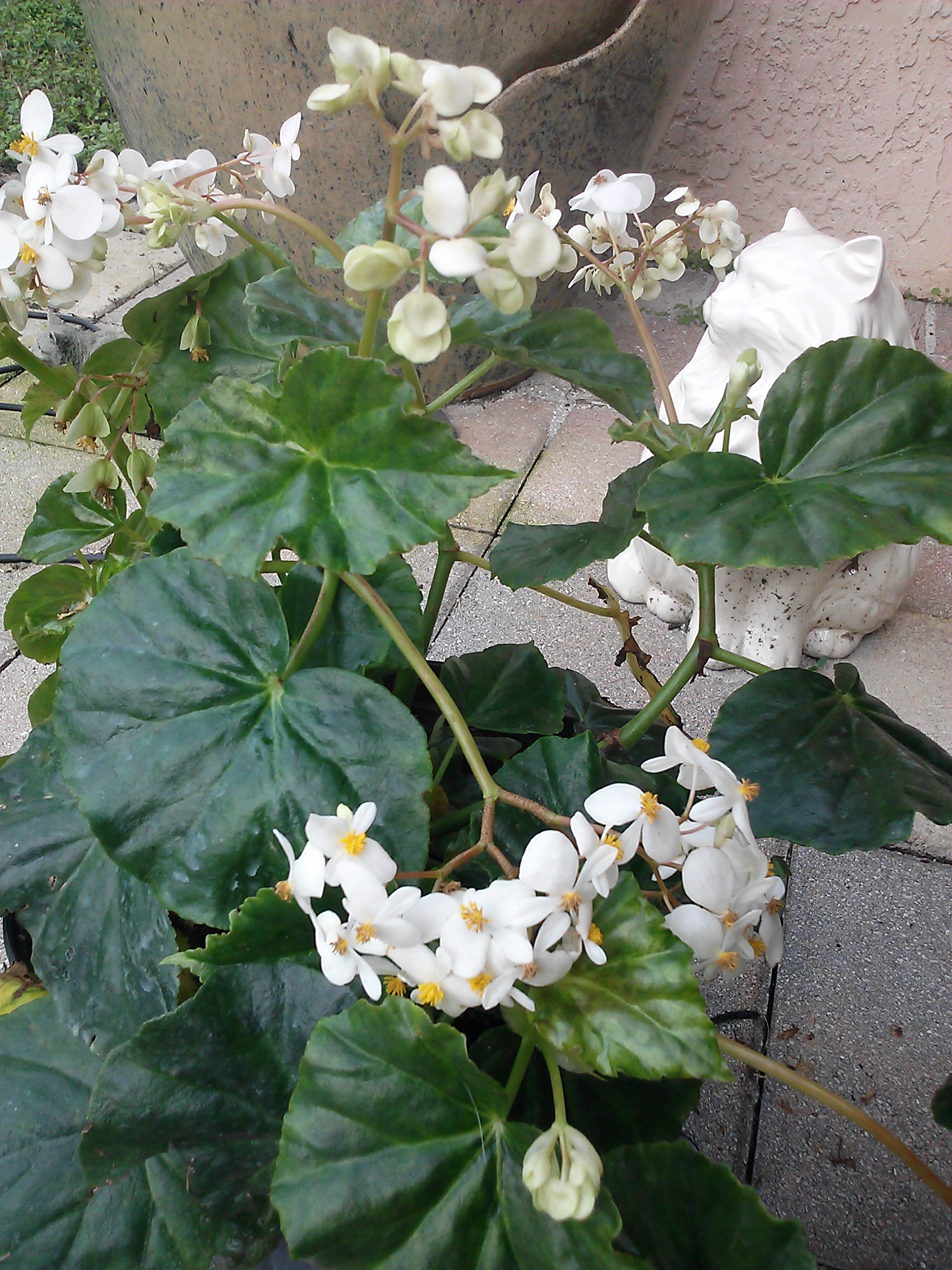
Spare Begonias

Spare Begonias

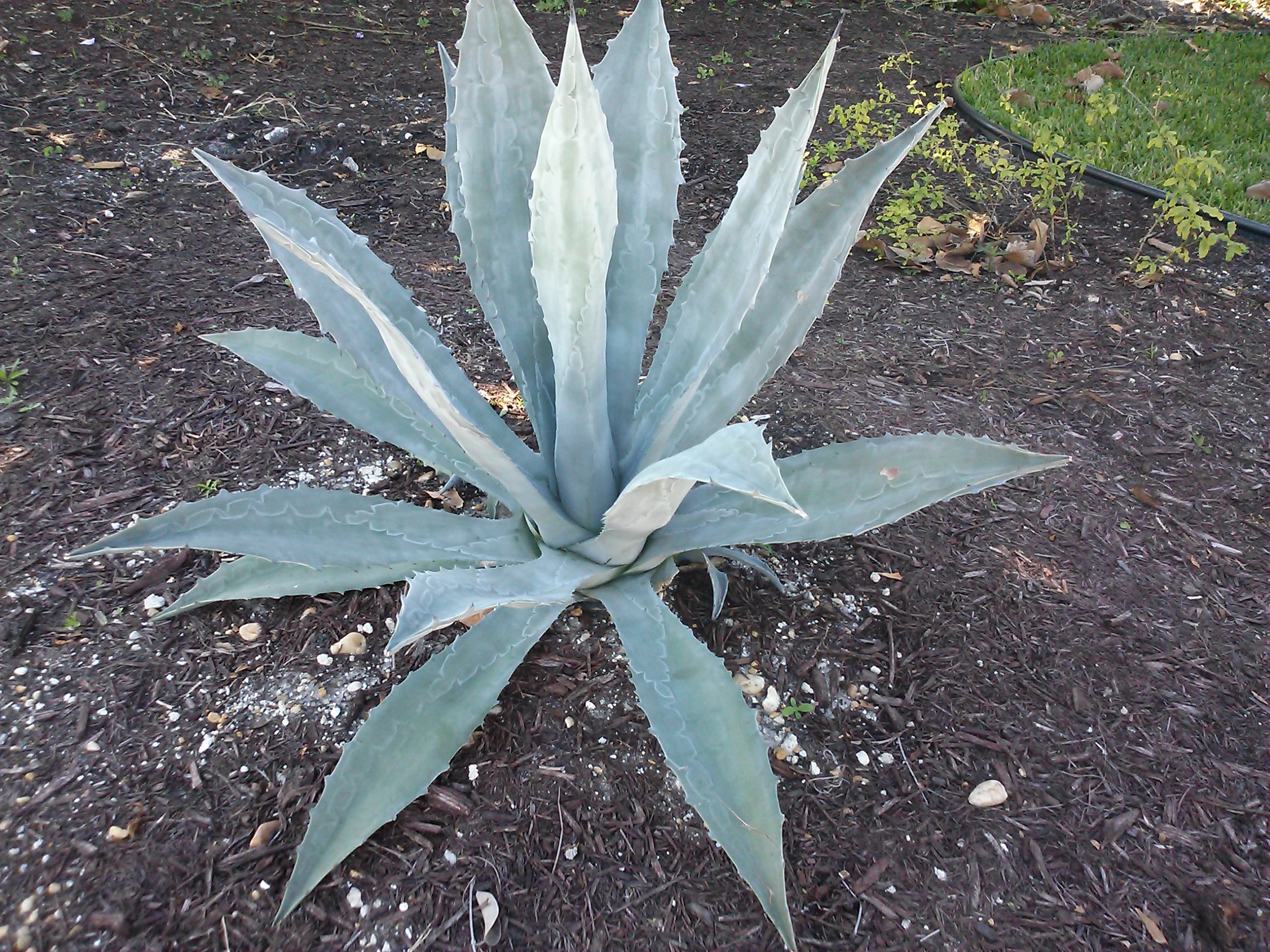
Currently I am hoarding Begonias. I found some Begonia odorata for a great price so I bought a couple. I have a few leftover Bronzeleaf Begonias so they are still around in a tray. I should also confess that there are three starts of Blue Agave in the side yard that have been sitting over there since this summer. Although, I have a good reason for thinking about those for a long time..they are very sharp and once in place they need to stay there. Also, in the realm of aesthetics Blue Agave is a bold statement. Not to be taken lightly.

Blue Agave

Blue Agave

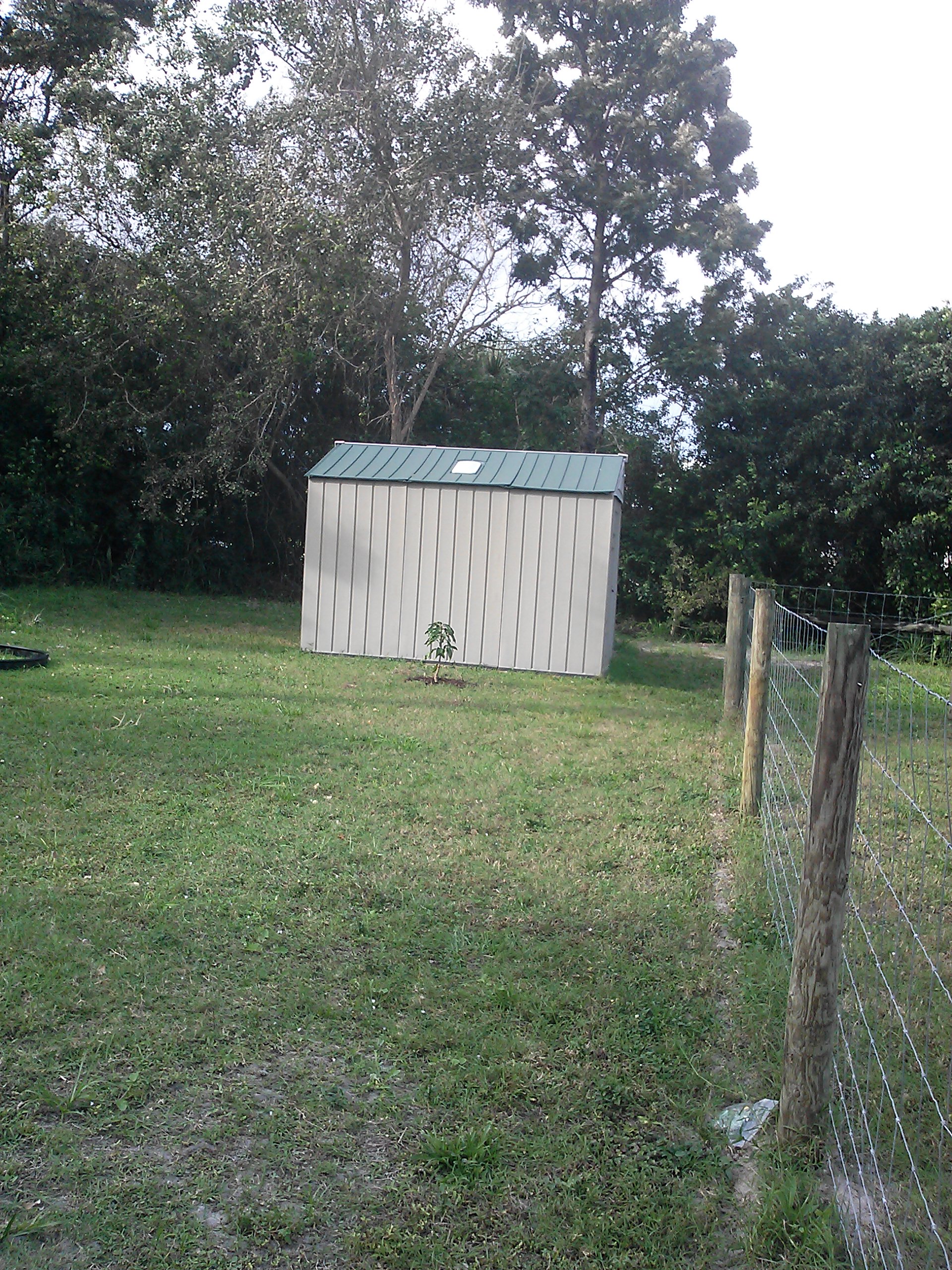
I bought some more expensive plants at Gardenfest in Vero but I have endeavored to actually install those. One being a Mango tree, OK, I want some Mangoes as soon as reasonably possible. That I planted, fertilized and have been watering. Not to mention it is an Evergreen tree that will screen my husbands ugly Tupperware Lawnmower shed. More fertilizer, please..

More Fertilizer, please

More Fertilizer, please

The second plant from Gardenfest was a leafless Bird of Paradise, really cool and I can’t wait to see it bloom. It is also in the ground – next to a Tibouchina. I am breathlessly waiting for all to grow up and bloom. That Bird of Paradise had roots that looked like Parsnips and there is one down the street – it took about two years for me to figure out what is was..for a while there I thought the lady who lived there was sticking silk Bird of Paradise into a Juncus, this plant is really cool.

The Begonias I am having a hard time getting around to planting. Begonia odorata is new to me, I am not sure why these are not more common as a Summer Annual up north. The ones that have been sitting on my back porch for a month (at least) are beautiful.

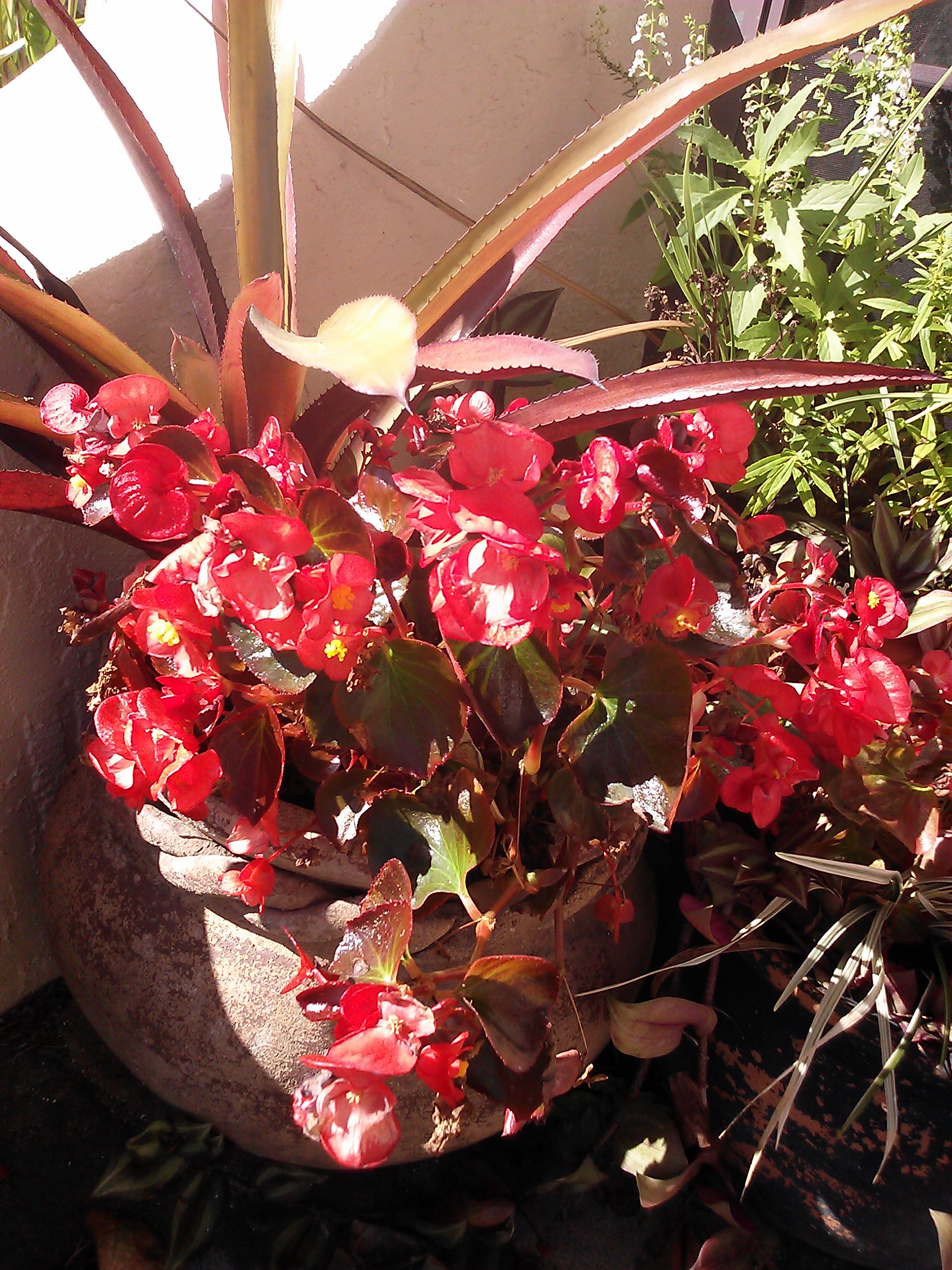
I am finding there is not enough variety in Annuals in South Florida, people are really hung up on Impatiens and Pentas, pretty boring stuff. I find the New Guinea Impatiens particularly distasteful and Impatiens is a fiesta of fungus. I love to have some containers with color around my doorways, I am slowly going over to Bromeliads and the Zebrina Wandering Jew. (both things I found growing in the yard and repurposed into pots with a few Bronzeleaf Begonias.)

Begonias and Bromeliads

Begonias and Bromeliads

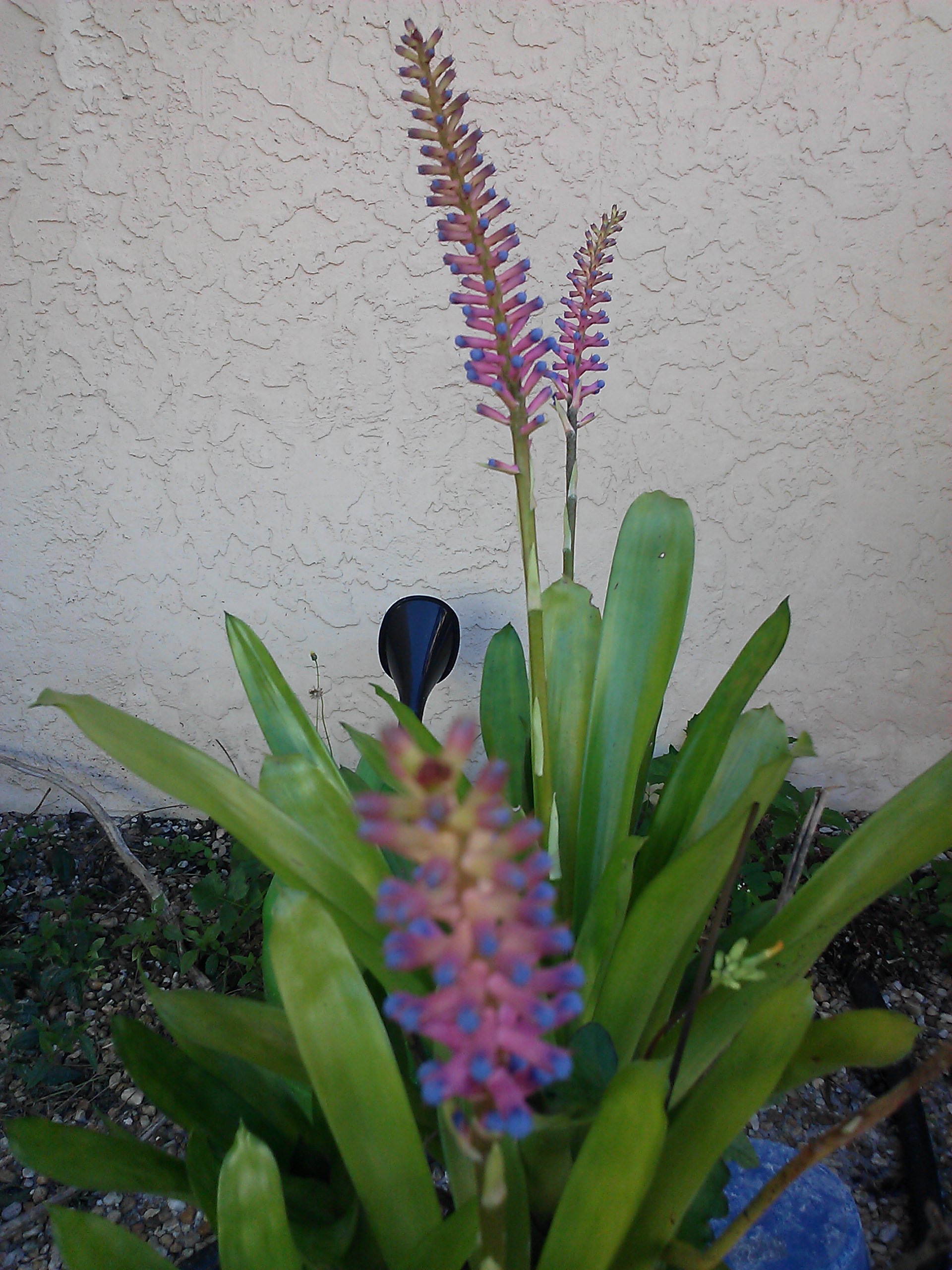
Matchstick Bromeliad- Aechmea gamosepala

Image

Here is the Matchstick Bromeliad, so named because the components of the flower resemble matches.

These low maintenance Bromeliads light up the garden in the winter.The Matchsticks in my garden bloom in December-January and possibly February. As is with many things, it depends on the weather as to what and when these do their thing. The foliage is on the yellow-green side and shiny, providing a good year round addition to the garden. Slowly, (for Florida take that with a grain of salt) these form masses of color for the winter. I have mine planted alongside Blue Daze Evolvulus and have enjoyed the combination. The Blue Daze generally bloom all winter but will slow down in a cold snap.
These bromeliads are native to Brazil, like many others. They enjoy some sun and humidity. Sort of like me.


The Next Project

Unfortunately, there is always a next project.  I am not so sure this is unfortunate, It is another one of those double edged swords. Would you rather have something interesting to do – or nothing. OK, if you are thinking nothing, then you are really out of it. So, another project is good.

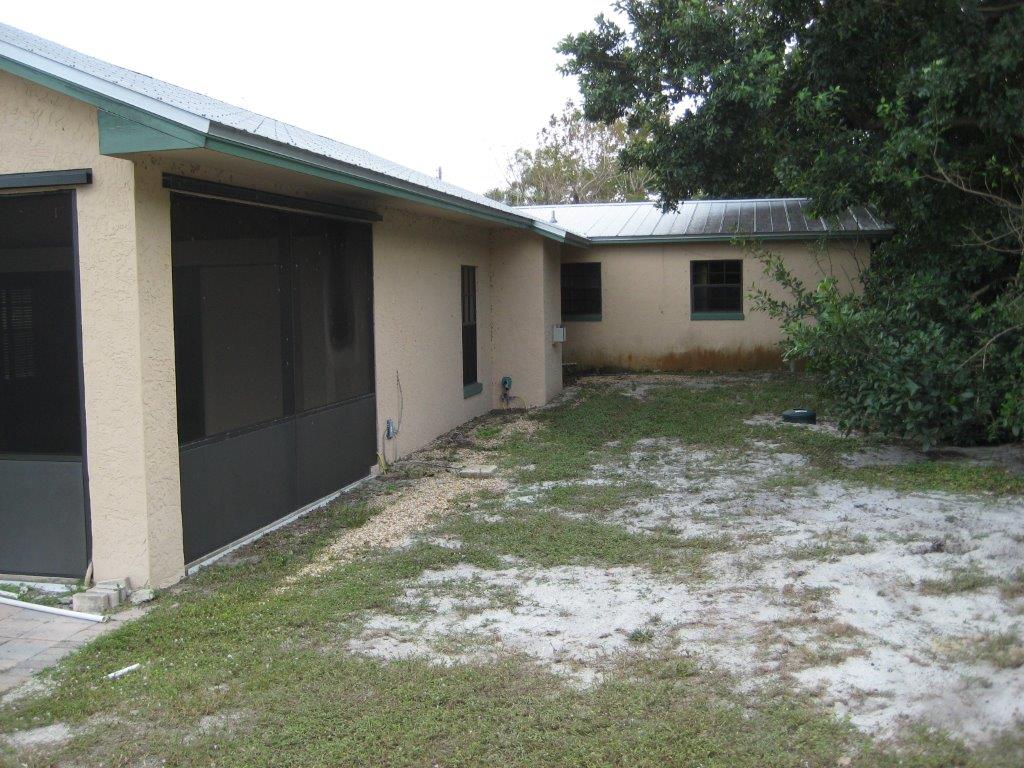
Mine is, the side yard of our house. Which, unfortunately, has some peculiar restraints. OK, we have a gigantic propane tank. This came with the house and really I am not ready to say I like this thing. It is, after all, a tank of explosive gas really close to the house to provide fuel for a fireplace?? I live in South Florida, the reason to move here is you never want to need a fireplace and yet, here they are. The cliche Christmas story here is “we were gathered around the fire on Christmas Eve and had to go outside because it was too hot in the house” Thus far, I have not started a fire in the house during the holidays – or at all. 

What is existing that is good is a large Banyan Tree. Which provides nice shade but does not allow any turf. No turf is fine by me but my husband really likes the stuff. There are some wildly overgrown Arboricola Scheffeleras and Turks Cap Hibiscus (the weedy version of Hibiscus Shrub). The rest appears to be Brazilian Pepper seedlings and a weed that appears to be a scary version of Transcandentia. Perfectly nice little native wildflowers morph into invasive drama in this climate. Another existing feature is a huge swath of Snake Plants (yes, Mother In Laws Tongues) These Snake Plants still freak me out a little bit. There is probably an area of the 4-6′ wide and 200 feet deep. House Plants gone wild, and no way to ever get rid of them. The Snake Plants must be incorporated into the design. My neighbor advised “Make friends with the Snake Plants.” Time for demolition and decisions.Image.

Me being me, I am working on a plan for this. Part of my desire is to create a farmlet where I can grow vegetables and have a couple of citrus trees and maybe a Mango tree. I am on the fence about bananas. My husband despises them but will eat Banana Bread. Somebody (me) would have to eat a lot of bananas. Go figure.


Winter Starburst Clerodendrum – Clerodendrum quadriloculare

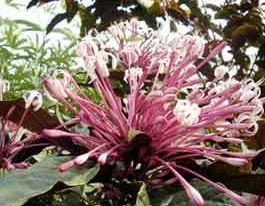
Lo and behold I discovered yet another source of color for the winter garden.  The Winter Starburst Clerodendrum is a large shrub to small tree (8-12’ ht.) sporting beautiful pink flowers in winter with the added bonus of foliage that is attractive throughout the year. Belonging to a group of plants sometimes called Glory Bower, this certainly lives up to that name. It is glorious when in full bloom.

The first one of these I saw stopped me in my car.. what is that and blooming in the middle of Winter? Fabulous.  After a bit of detective work I found out what it is. I have seen a few scary examples of Clerodendrums around my neighborhood. Gone wild and not in a good way. I think one needs to be prepared to do some maintenance pruning or pay the price. On the other hand, you could say you were going for the cottage garden look. Problem solved with little or no work.

There are many different types of Clerodendrum – most native to tropical south Asia;  the plant types range from vines to perennials, shrubs up to small trees.  These plants have some invasive tendencies so be careful who you invite into the garden. This one grows in partial shade and prefers moist soil. Clerodendrum is a good addition to the butterfly garden.  Another similar variety that is not quite so big is ‘Pink Diamond’ Clerodendrum, this is also called Cashmere Bouquet for its fragrance (my grandmother used a soap by that name – the smell of the soap would not motivate me to use this plant!) ‘Pink Diamond’ grows 48” high and some have variegated foliage. An additional  identifying feature is the back of the leaves are purple year round, this is another good quality of this plant.

A Seashell Driveway

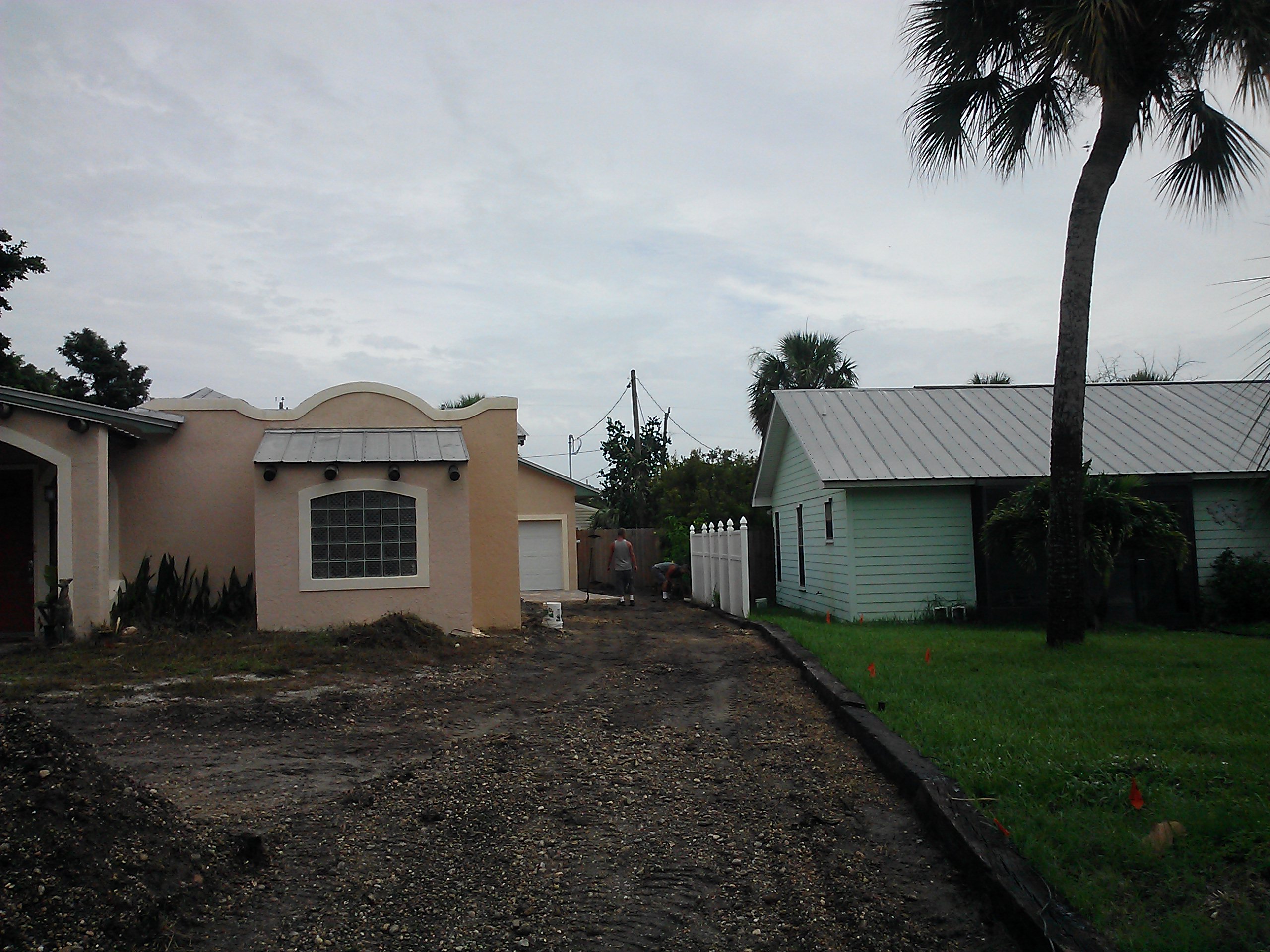
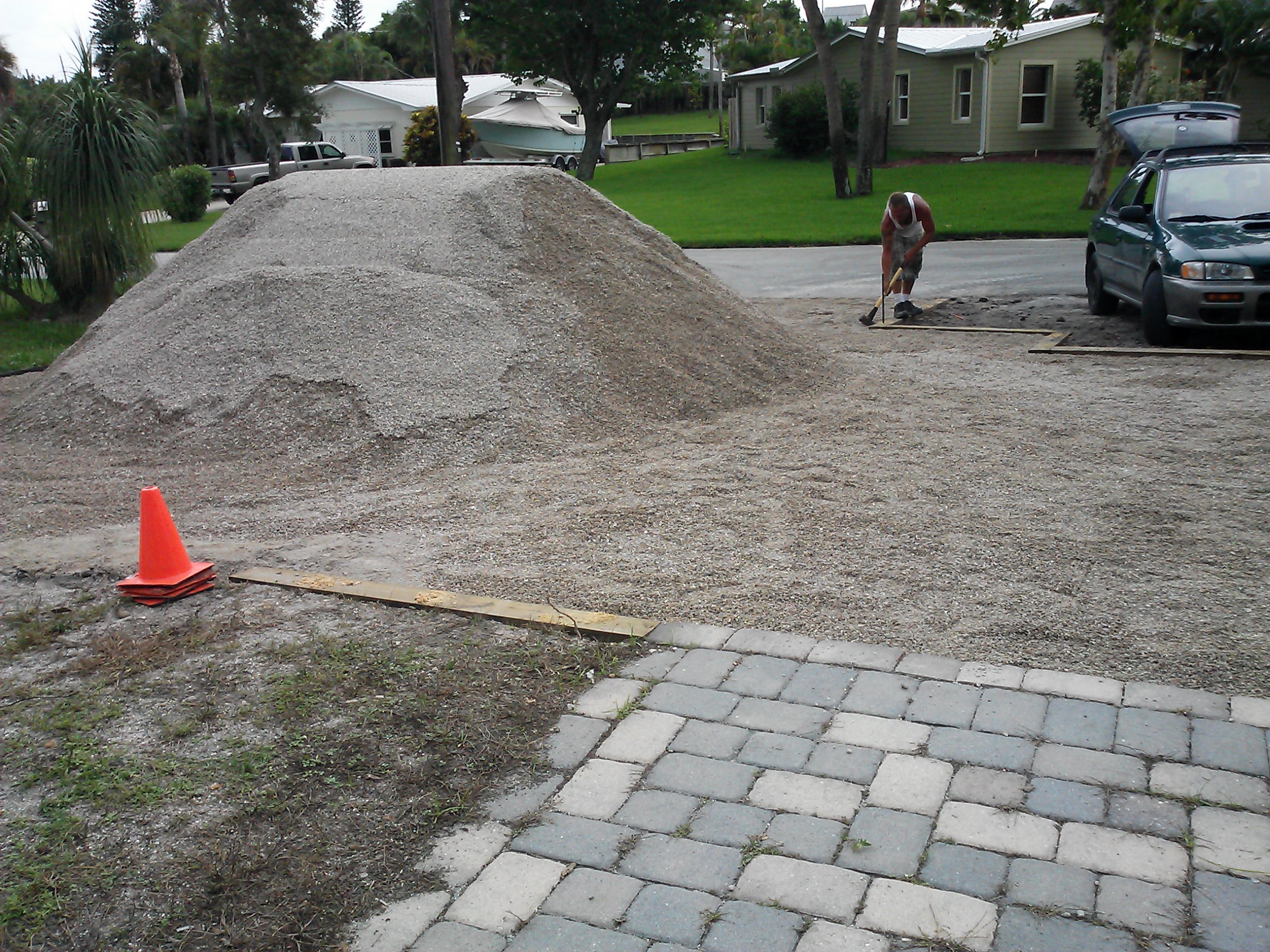
The driveway is in and it is a beauty. I am so excited after all those months of living with the weed pit as my front yard. The existing driveway was pea gravel overrun with weeds. The entire thing had to be scraped away and hauled to the dump.Image After the scraping and removal of the foul pea gravel a gigantic pile of shell and base material appeared. The driveway is constructed by scraping off enough material to have 4-6″ depth to backfill. The base area is graded for water to drain off properly then a base material is placed. The base is crushed shell about 2″ thick followed by 2-3″ layer of the shell for the driving surface. The crushed shell base looks like coarse sand and the shell topping looks like thousands of tiny shells. Because that is what it is. Theoretically,the crushed shell base course tamps down over time and forms a permeable stable layer for the driving surface.

Pile of Shell

Pile of Shell

Shell used for driveways is quarried for the most part on the West Coast of Florida. I believe the shell in my front yard comes from the South side of Lake Okeechobee. This is to a certain extent a word of mouth bit of info. The shell is from a broker who bought it from somebody who bought it from somebody else. Interestingly enough the shell is cheaper than pea gravel because it doesn’t have to be shipped as far from its source. Shell is not supposed to sink into the ground as gravel does, I am going to be interested to see how it holds up… TA DA, the driveway:

The Shell Driveway

The Shell Driveway

Now, onto the green part, Landscaping. Note the repulsive grass/weed groundcover..Ugly. Soon to be gone.