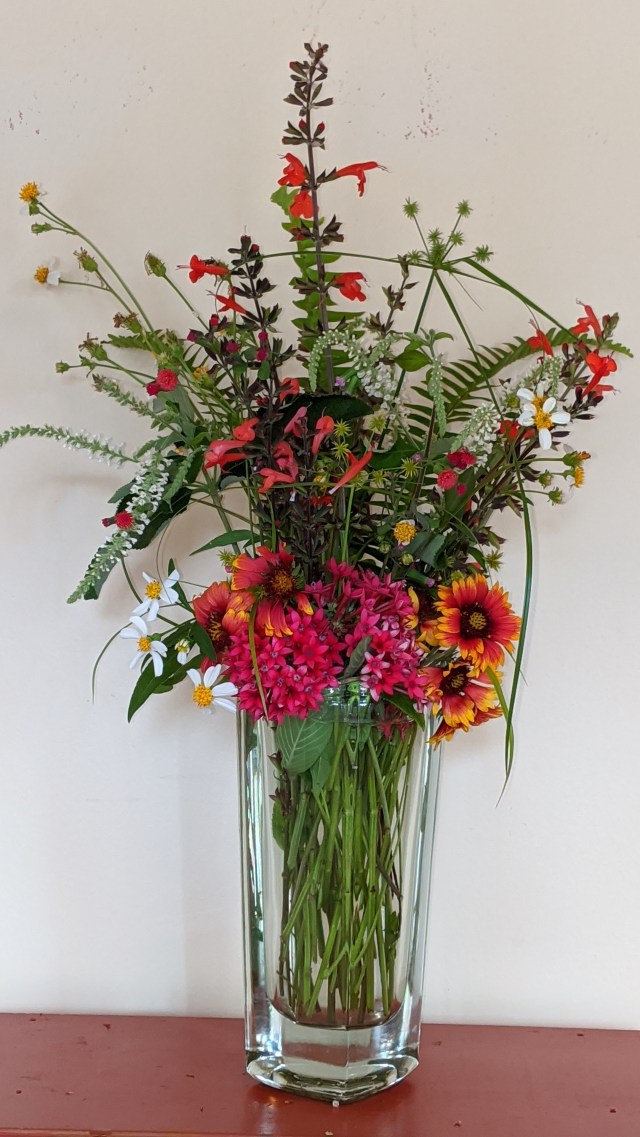
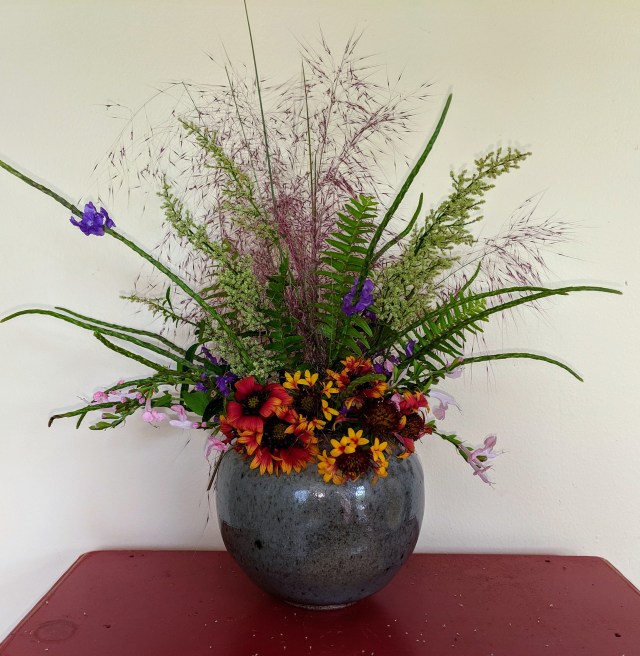
The saying goes “One man’s trash is another man’s treasure. My treasures today include several plants that are considered weeds. Nut sedge, the chartreuse flowers at the top right, is a particularly reviled weed. Some call this sand spurs. I have pulled a great deal of it out of my garden and dog paws. I was pulling some yesterday and thought ‘this looks like a Papyrus’ well, for good reason. It is a Cyperus, while Papyrus (Cyperus papyrus) is a wetland sedge. This is a dryland sedge. But a treasure for today only.
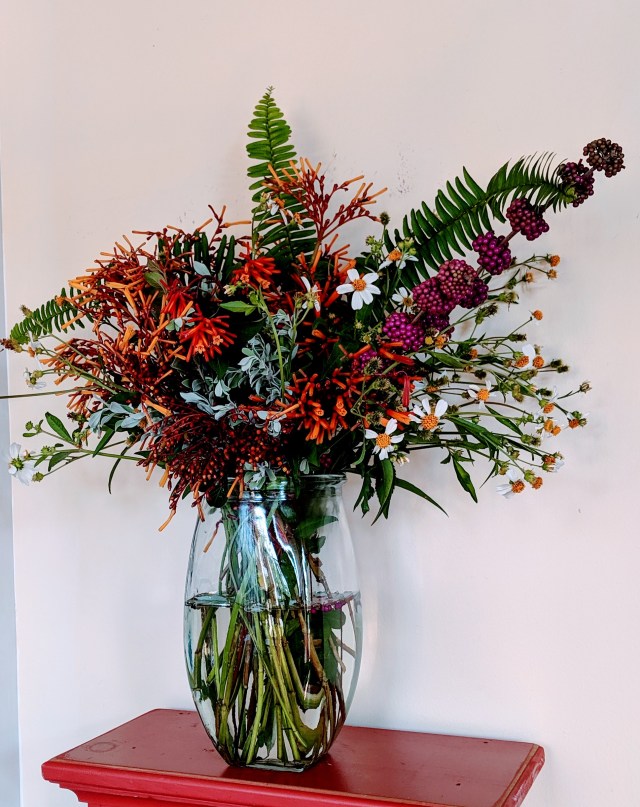
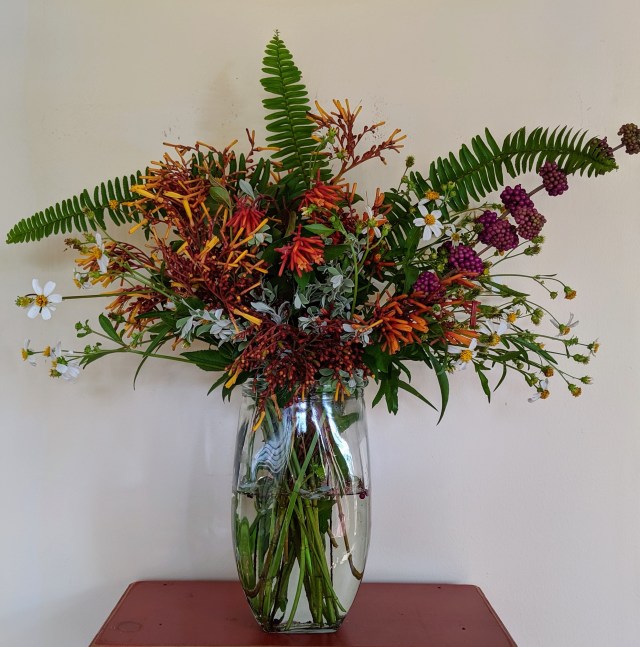
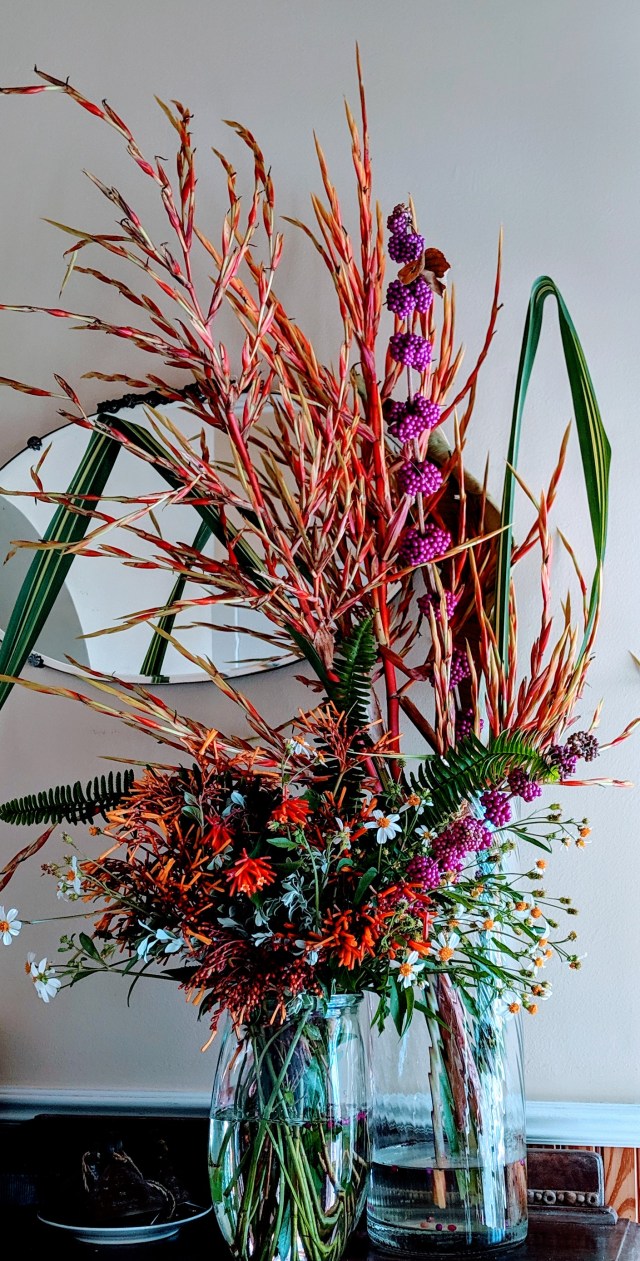
The ferns are Asian Sword Ferns, a very pretty weed, great vase filler, and invasive nuisance in Florida. I have been pulling these out after rains all winter. They hang on for dear life when it’s dry and are very difficult to pull out.
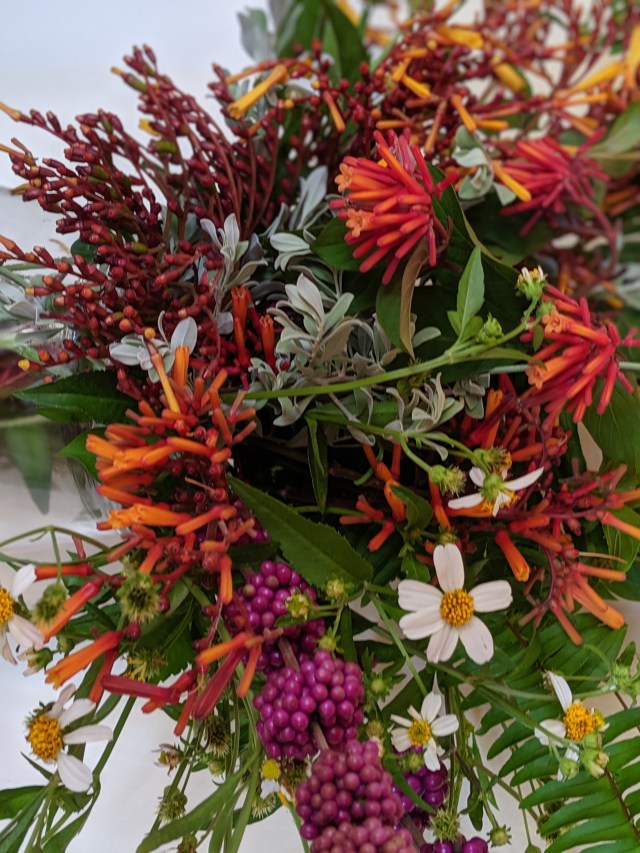
The white daisy flower is a Bidens alba, these are a nuisance to me although a great nectaring plant for bees and butterflies. These reseed so prolifically I cut them to stop it. I am pretty certain I will never run out of Bidens. Its common name is Spanish Needles, the seeds are sharp and it is said the early settlers of Florida used them as needles.
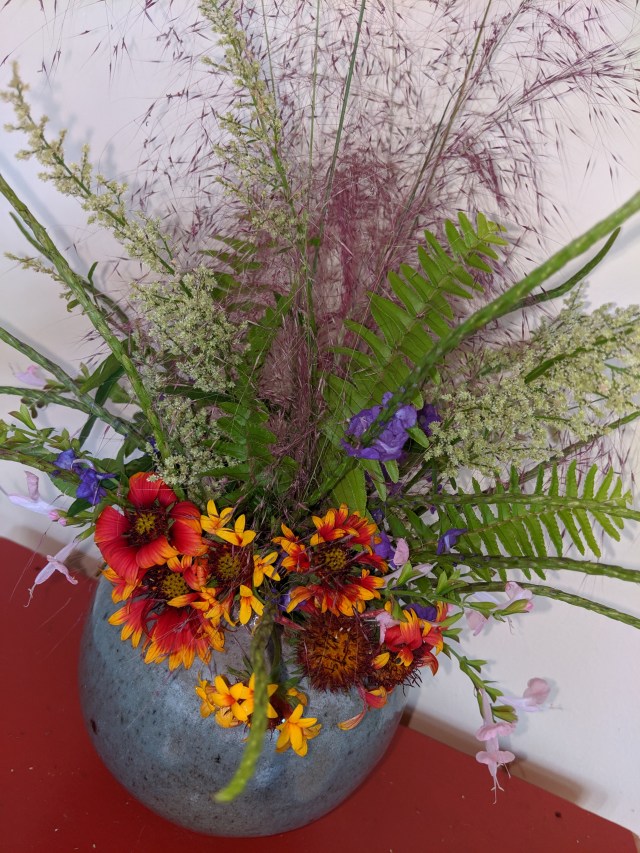
A closer view:

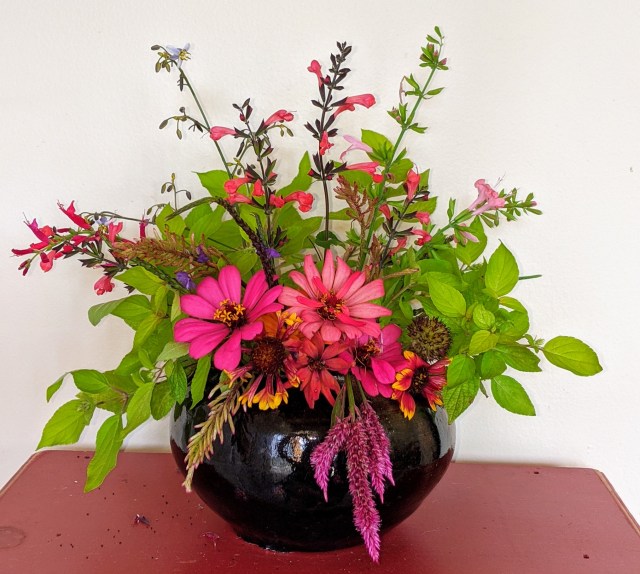
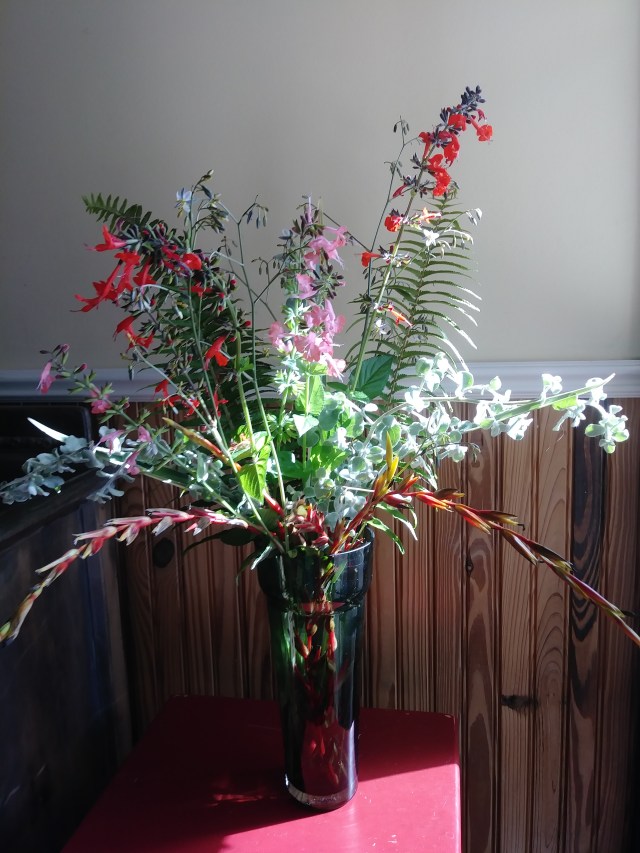
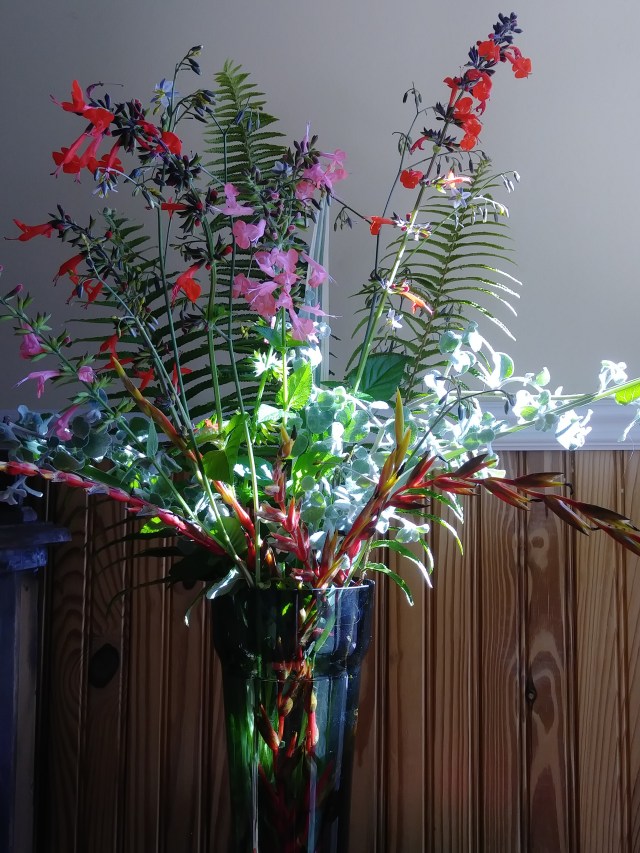
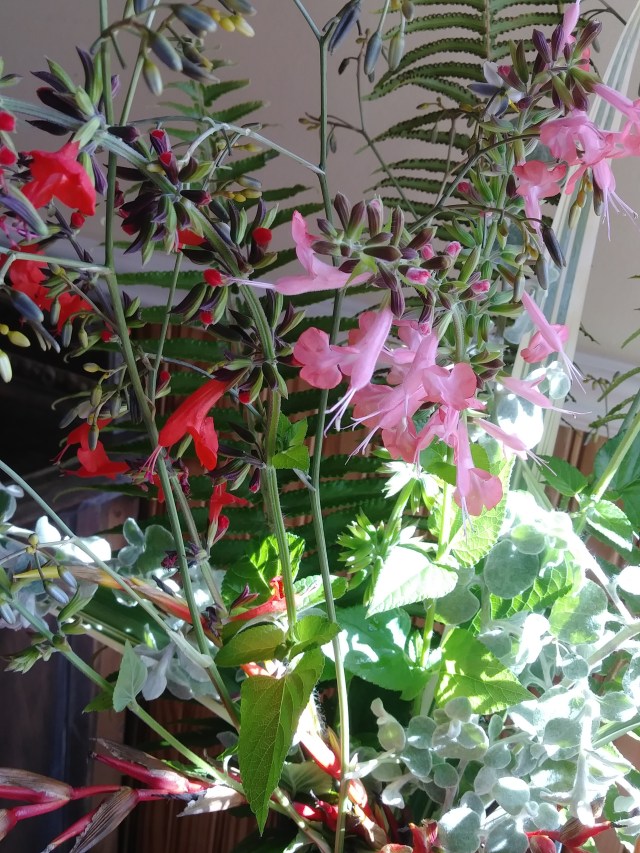
Most of these treasures are excellent nectar producers for pollinators. The hot pink flowers are Heirloom Pentas (Penta lanceolata); yellow and red daisies, Gallardia pulchella; red spikes are Tropical Red Salvia (Salvia coccinea); the white spikes are Sweet Almond (Aloysia virgata). The Sweet Almond has perfumed my hallway with the scent of Marzipan.
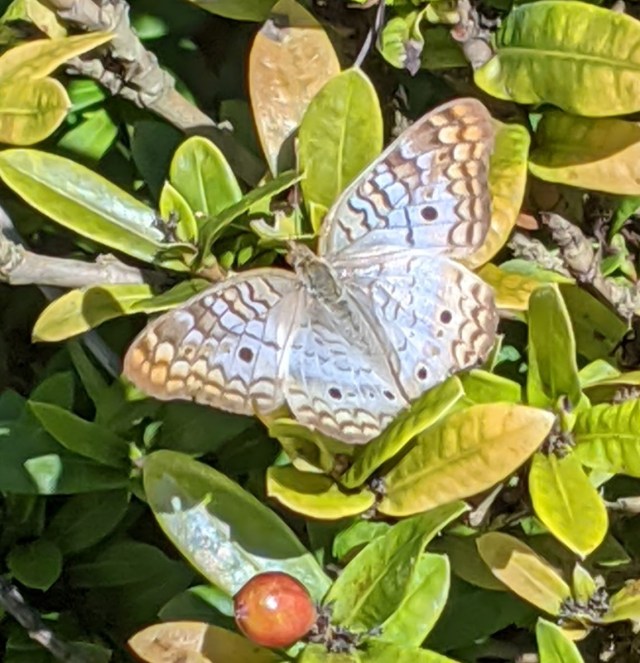
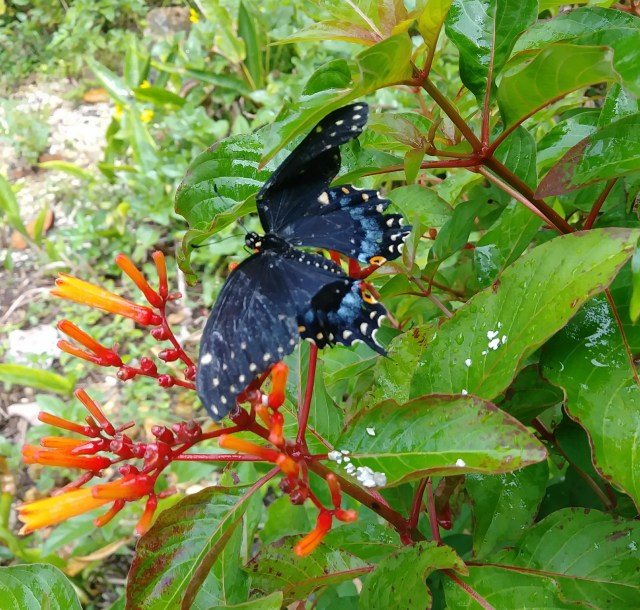
Here is a Gulf Frittilary enjoying the nectar of the Heirloom Penta.

Happy Gardening…to see more vases go visit http://www.ramblinginthegarden.wordpress.com.


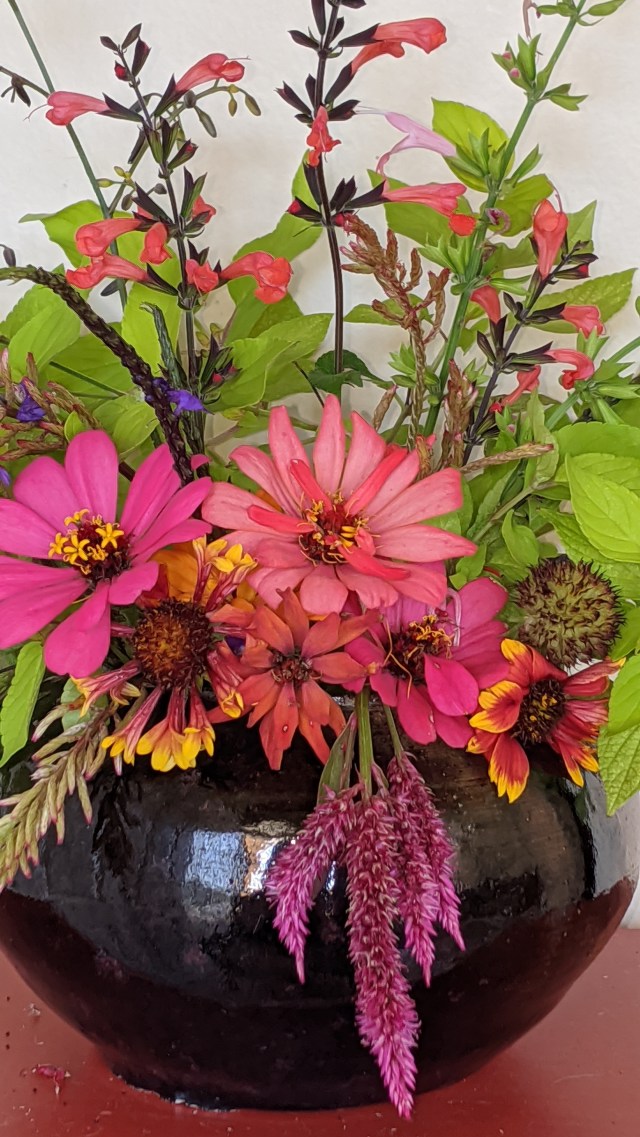
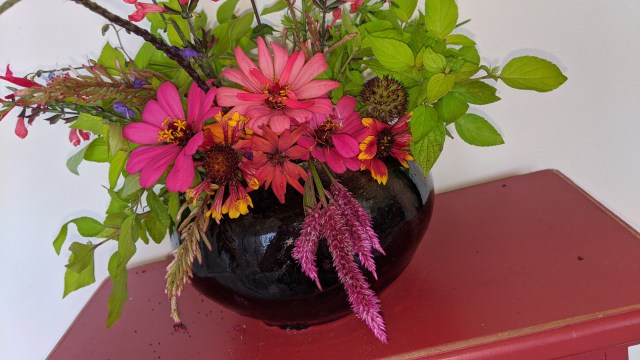

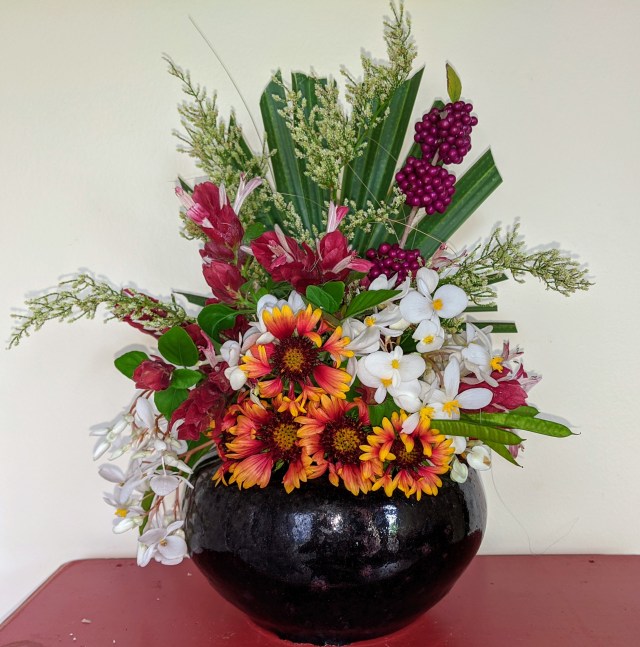
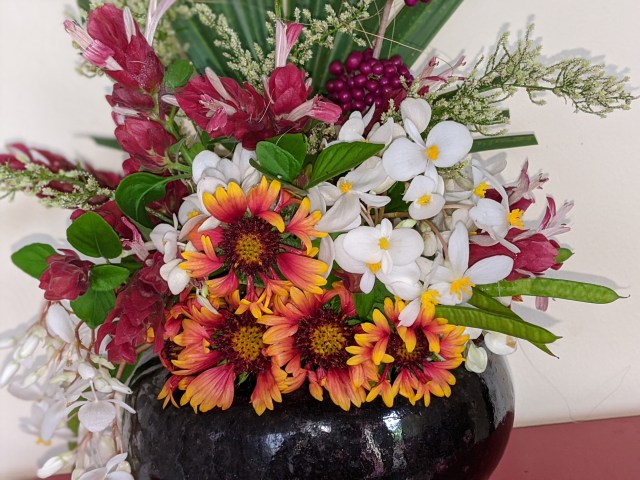 The red and white shrimp-like flowers are Red Shrimp Plants (Justicia brandegeana), a nearly indestructible perennial. White flowers with yellow centers are Sweet Begonia (Begonia odorata), another great indestructible. Yellow and red daisies are native Gallardias (Gallardia pulchella) they change their colors with the pollinator – or maybe via the pollinator.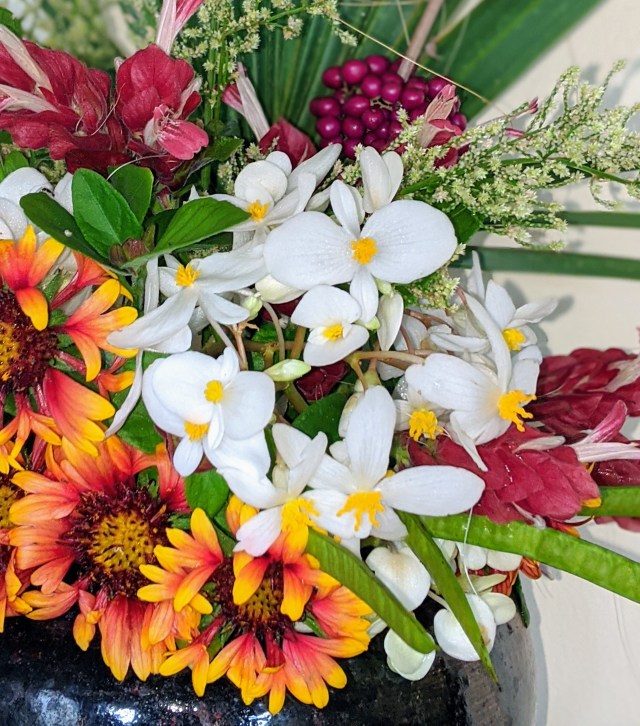








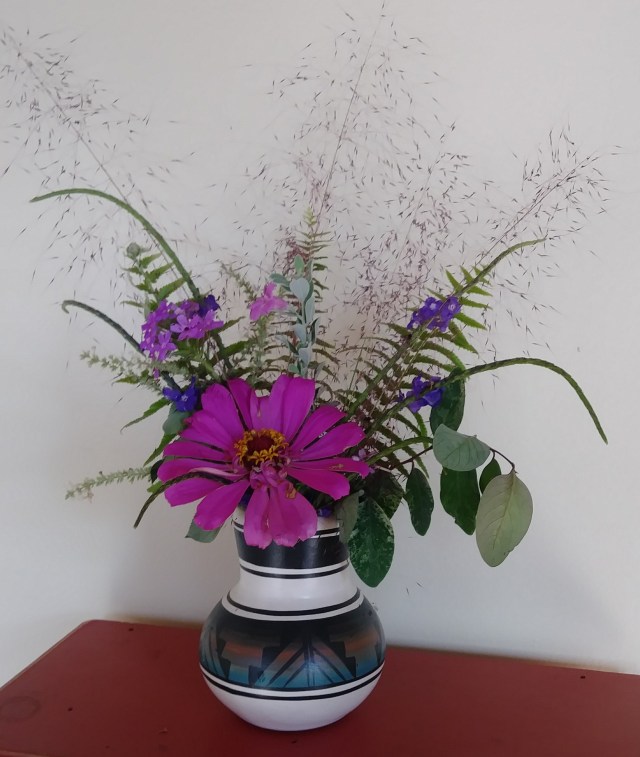
 This is a Zinna Super Cactus Lilac Emperor, an heirloom variety. It doesn’t quite resemble the picture on the packet – not nearly as stringy or cactusy (new word?) However, it may be the biggest Zinnia I have run across (4 inches wide).
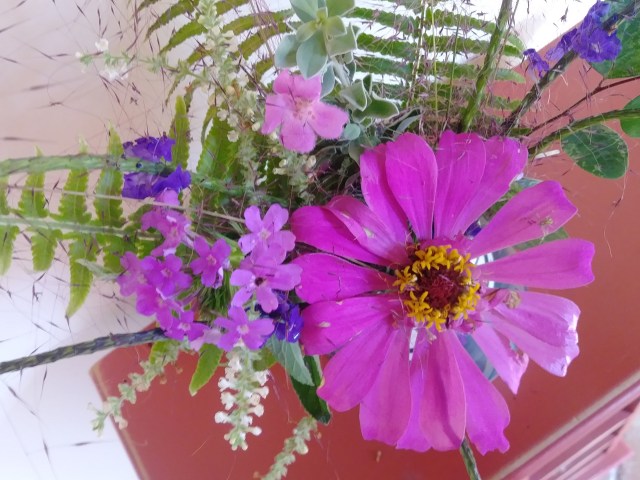 The vase I inherited from my mother, who bought it from the Ute Indian tribe in the Southwestern US. Accenting the Zinnia in the arrangement are in white and fragrant spikes, Sweet Almond Bush (Aloysia virgata); Purple Verbena is next, a native (Glandularia tampaensis); the deep blue flowers are from Porterweed (Stachytarpeta jamaicaensis); purple flowers with grey foliage are Barometer Bush (Luecophyllum frutescens); the background plants are Muhly Grass (Muhlbergia capillaris), Boston Fern (Nephrolepis exaltata) and a sprig of Hawaiian Snowbush (Breynia nivosa).

 The Shrub Queen