In a Vase on Monday – Parrots and Poinsettias

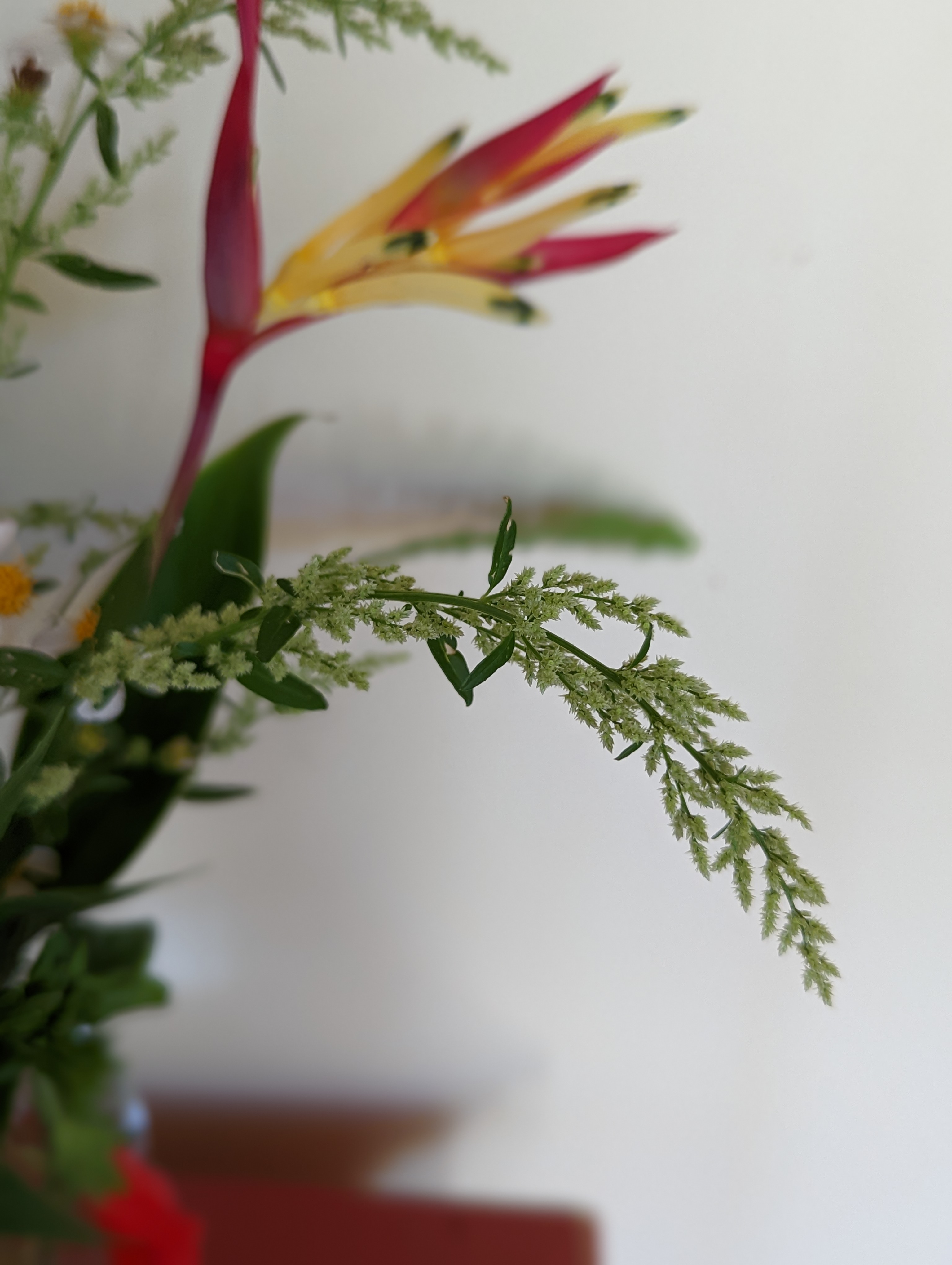
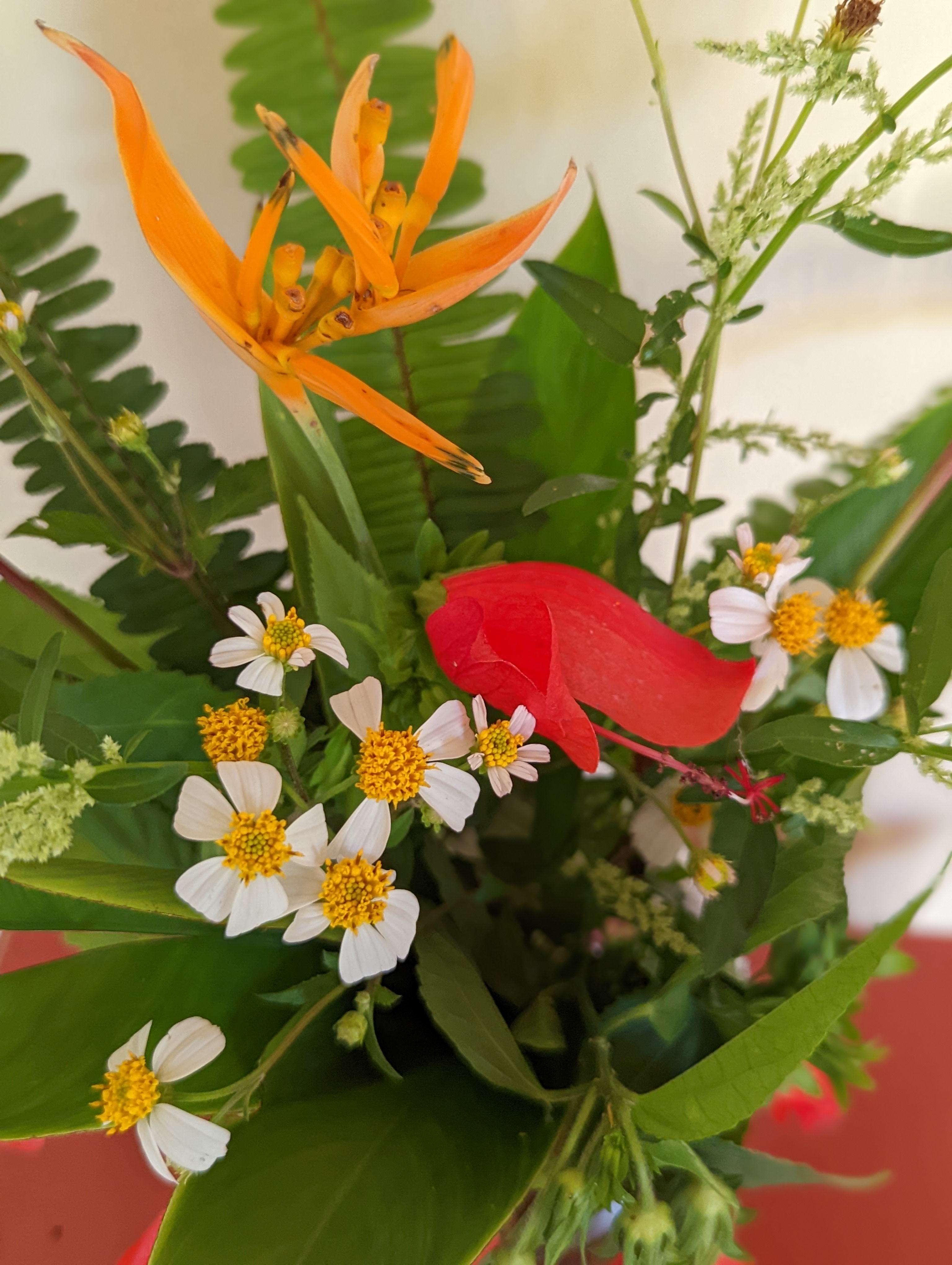
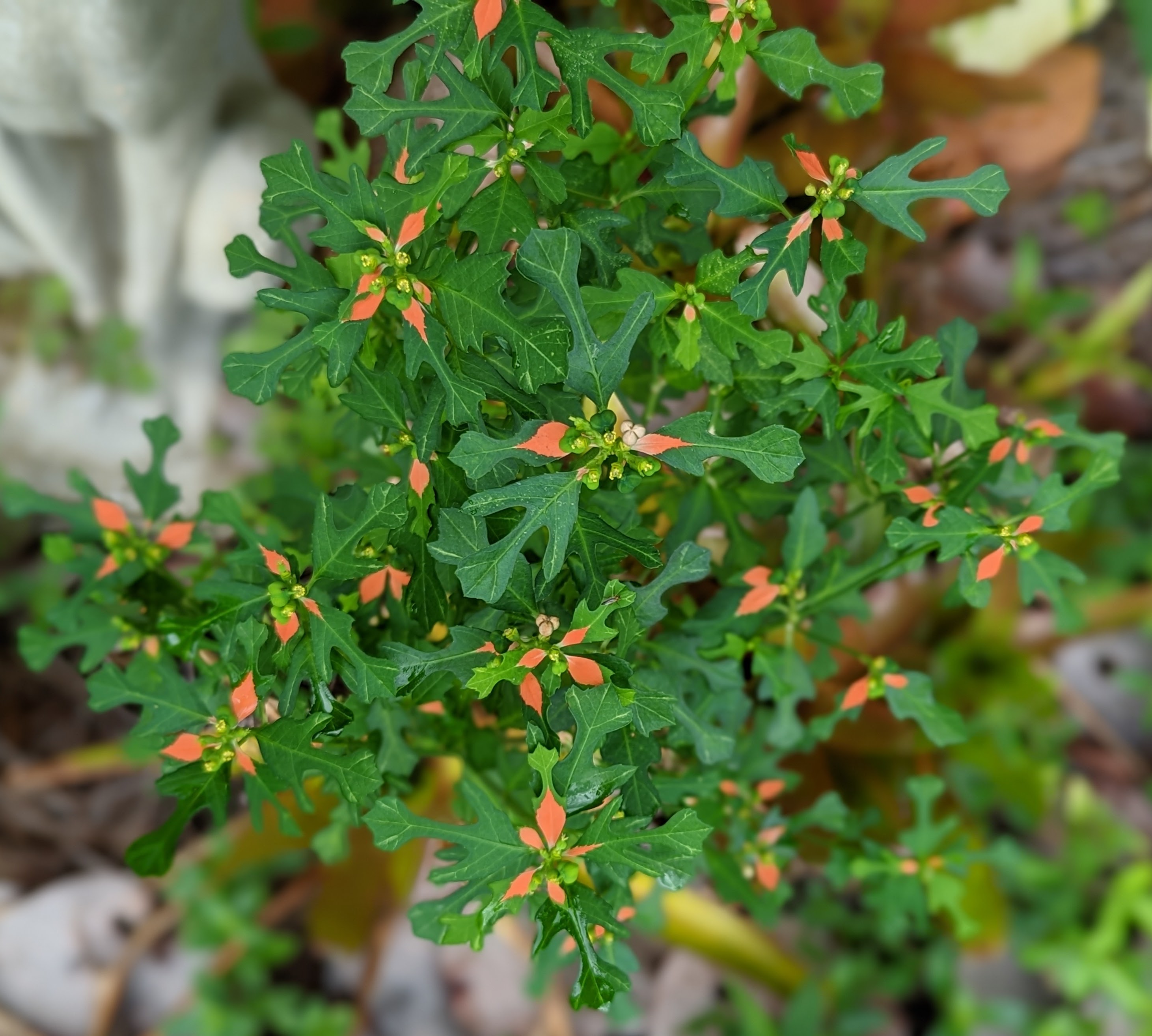
Here’s another set of strange bedfellows from my garden. I would consider this an unlikely combination anywhere but South Florida. The parrots are Parrotflowers (Heliconia psittacorum) and the poinsettias are a native Floridian Euphorbia called Florida Poinsettia (Euphorbia cyathophora). I like the little bits of red on the foliage accenting the colors of the flowers.

I have tried growing the usual Christmas poinsettia in the garden and failed. The Florida version is a wildflower that appears from time to time. Having read up on it a bit I should probably pull them out. It seems they are one of those perverse plants that is hard to grow from seed if you want it – but a prolific reseeder if you don’t. If I don’t act soon the next thing could be a mowed poinsettia lawn for the holidays. Not a festive look.

A closer view:

The Parrotflowers are orange and red and yellow. The orange ones are Heliconia psittacorum “Choconiana”; the reds H. psittacorum “Lady Di”. These are very tropical and did not appreciate the 30 degree temperatures in January and are just recovering. The flowers are smaller than usual for some reason. Yellow spikes are from the Thyrallis (Galphimia gracilis) shrub.

The Florida Poinsettia foliage. Another common name for this is Fire on the Mountain. Where they found the mountains in Florida we will never know.

That is all from sweltering South Florida.

Many thanks to Cathy at http://ramblinginthegarden.wordpress.com for hosting this weekly meme. Follow the link to see more vases from gardens around the world.

Happy Gardening!!

In a Vase on Monday – Graptosalvia

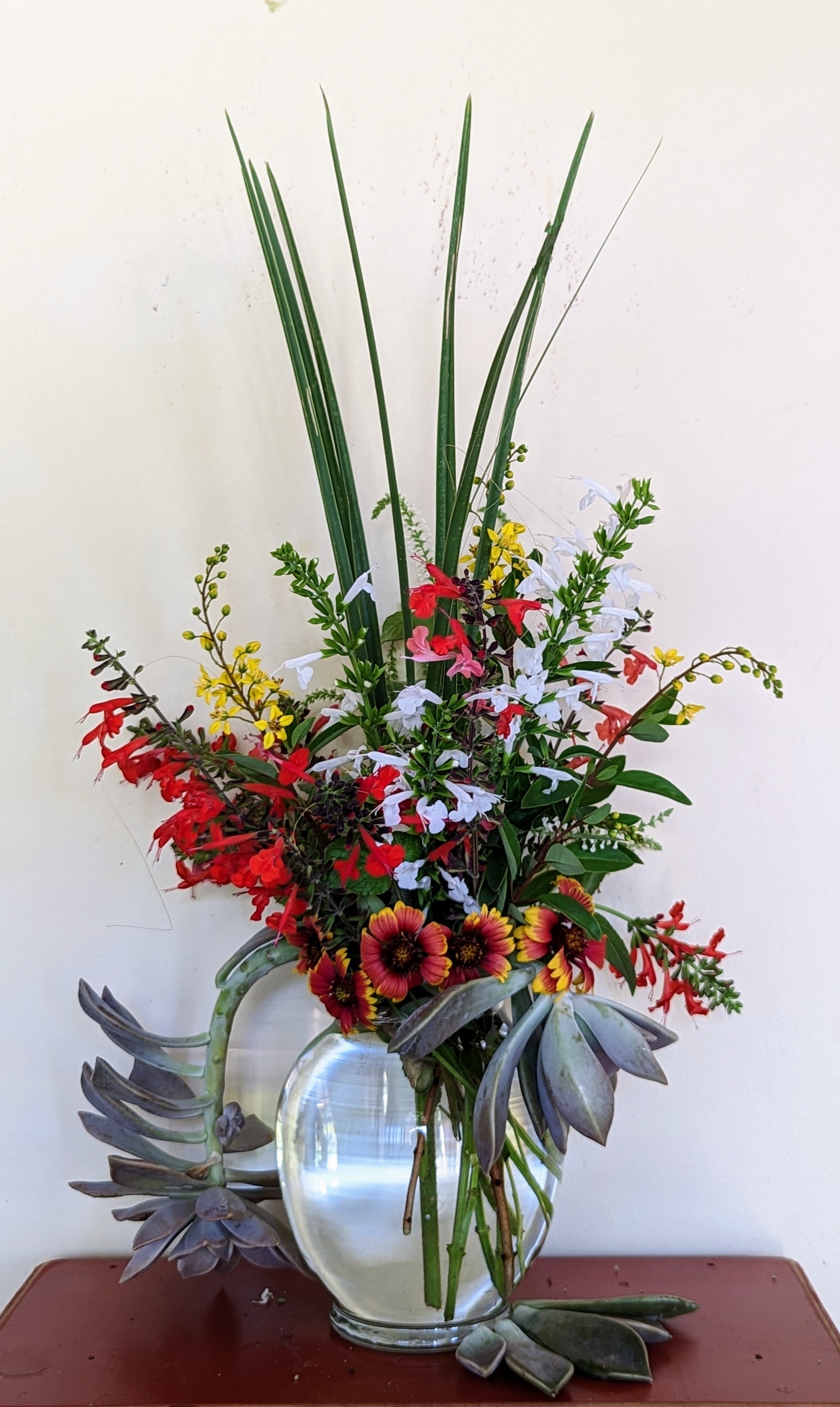
Rest assured that the spell check did not like that word I made up, Graptosalvia. It still doesn’t, and would not even hazard a guess at what I was trying to type. Grapto for the grey graptosedum and salvia for the flowers.

The wildflowers in my garden have responded wonderfully to my haphazard fertilizing a couple of months ago followed by lavish rain showers over the past couple of weeks. I have never seen them so big or so green. Another home run for time release fertilizer. Osmocote may be the secret for gardening on sugar sand. The succulents, graptosedum and friends, are also enjoying the heat and food. I never do anything special to the succulents and they just keep multiplying..the instructions I read on the internet for succulents boggle my mind.

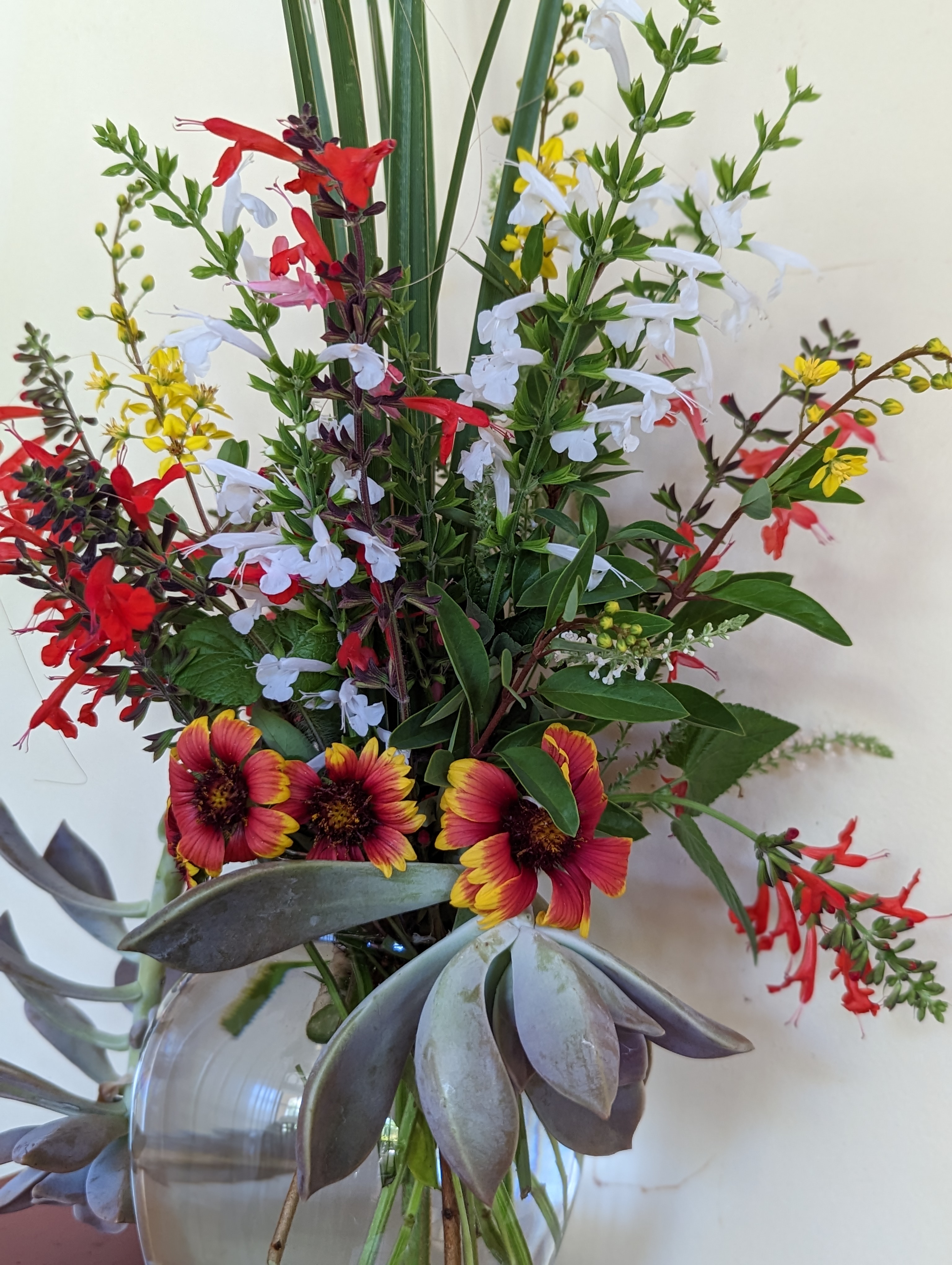
The contents:

The funky foliage in the vase – two cuttings of grey graptosedum, these things tend to shed leaves as they are moved, so I arranged the lost leaves into a fan at the base of the vase. The spiky green foliage is a frond from a palm seedling stuffed between the flower stems to make them stand up straight. It looks deceptively like a spike dracaena.

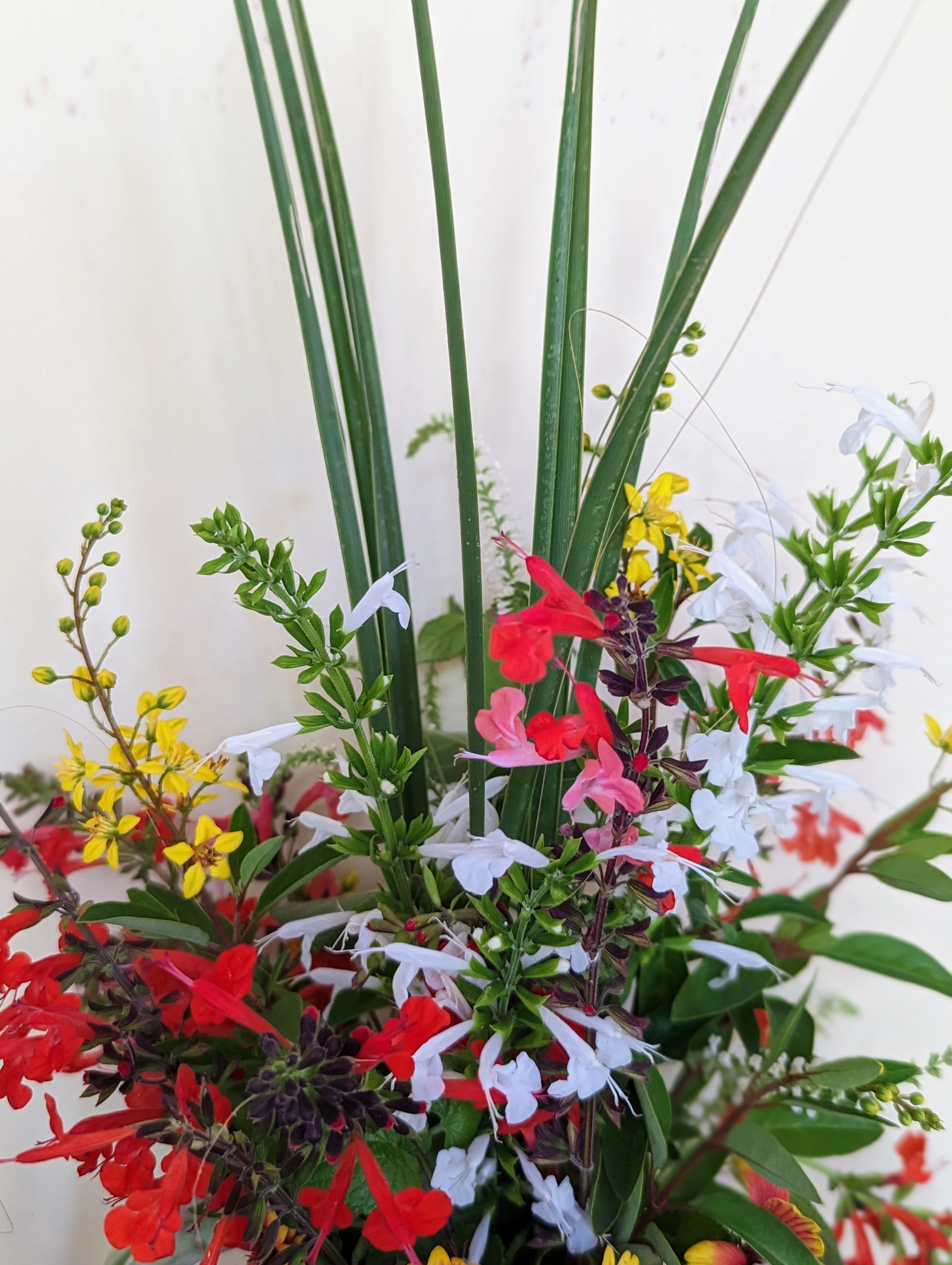
The flowers:

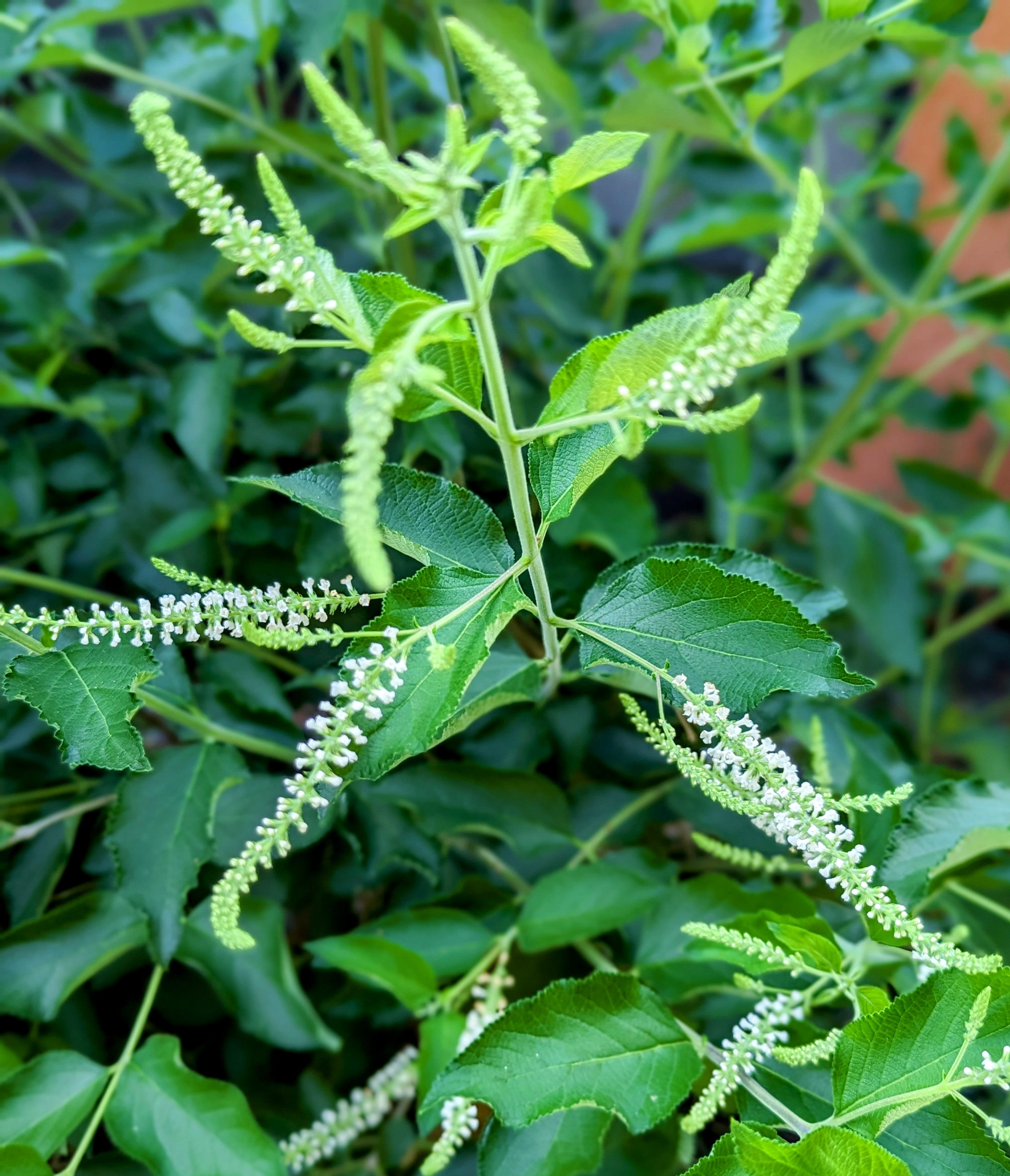
In red, white and pink spikes, Tropical Red Salvia (Salvia coccinea); yellow flowers are Thyrallis (Galphimia gracilis), this is one of my favorite summer flowering shrubs. It would probably be taller if I did not like to cut the flowers. There are a few white spikes of Sweet Almond Bush (Aloysia virgata) and I managed to cut the Gallardias (Gallardia pulchella) off the bottom of the picture. The vase is a leftover florist vase from ..who knows where, but the perfect size.

Happy Summer Monday to all and thanks to Cathy at http://ramblinginthegarden.wordpress.com for hosting IAVOM. Follow the link to see more vases..

In a Vase on Monday – Sage Indians

I have two Indian elements in my vase today. First, the vase itself was made by the Ute tribe of Utah in the US. They still call themselves Indians so I think it is okay if I do. They also refer to themselves as the Ute People, which I like better. The second, the red and yellow daisies are called Indian Blanket (Gallardia pulchella). The flowers are native to the Great Plains in the US, though they have naturalized throughout the country right down to my garden. These reseed and required no maintenance and are relatively well behaved. What’s not to like? I was searching for a rust colored flower to accent the vase and was happy to find several groups in bloom.

The sage in the vase is not wisdom, but Salvia. Two kinds, Black and Bloom and Roman Red. The red exudes the fragrance of culinary sage.

A closer view:

Brown Eyed Girl sunflowers (in yellow) have reappeared after taking an extended break from flowering. I am reserving judgement on these. They were great for about six weeks, then stopped flowering for about the same amount of time and are loaded with flowers again. Time will tell. For those who were intrigued by the Golf Beauty Craspedia, it has passed on, leaving me to believe it is a cool season annual in South Florida. I will be interested to see the progress of others with Craspedia this summer. The deep blue flowers are Black and Bloom Salvia; the lighter blue flowers are Plumbago (Plumbago auriculata). Shiny foliage is from Wild Coffee (Psychotria nervosa), a native shrub I have for butterfly habitat. Evidenced by the botanical name, you can drink it, but shouldn’t.

The rest of the crew. Standing in back in red, Roman Red Salvia; white spikes are from Sweet Almond Bush (Aloysia virgata)

Wishing all a very happy Monday and a big thank you to Cathy for hosting. To see more vases, visit Cathy at http://ramblinginthegarden.wordpress.com

Six on Saturday – Spring Scents and Surprises

It’s Saturday morning and time to look around the garden for new things. I have been noticing pleasant fragrances upon stepping out on my porch in the morning and did a little detective work. Warmer weather and longer days bring the fragrant flowers into bloom. Nothing says tropical summer like the scent of Frangipani in the air.

This is a locally common Frangipani (Plumeria spp.) I have no idea what variety it is, but these are everywhere and likely shared as cuttings for decades. A friend gave me a cutting several years ago, it is now about four feet tall. They make a nice small tree, if you know how to prune them. I don’t, though it is big enough to give it a try this winter when dormancy reappears.

The first Tropical Gardenia (Tabernaemontana divaricata) of the season. These are not as fragrant as the Gardenia jasminoides, but leave a light scent at night. The Frangipani are also more noticeable at night.

I pruned the Sweet Almond Bush (Aloysia virgata) rather severely about a month ago. It is rewarding me with fresh, deep green leaves and a flush of fragrant flowers. This fragrance is more noticeable during daylight hours, so I have round the clock scents right now.

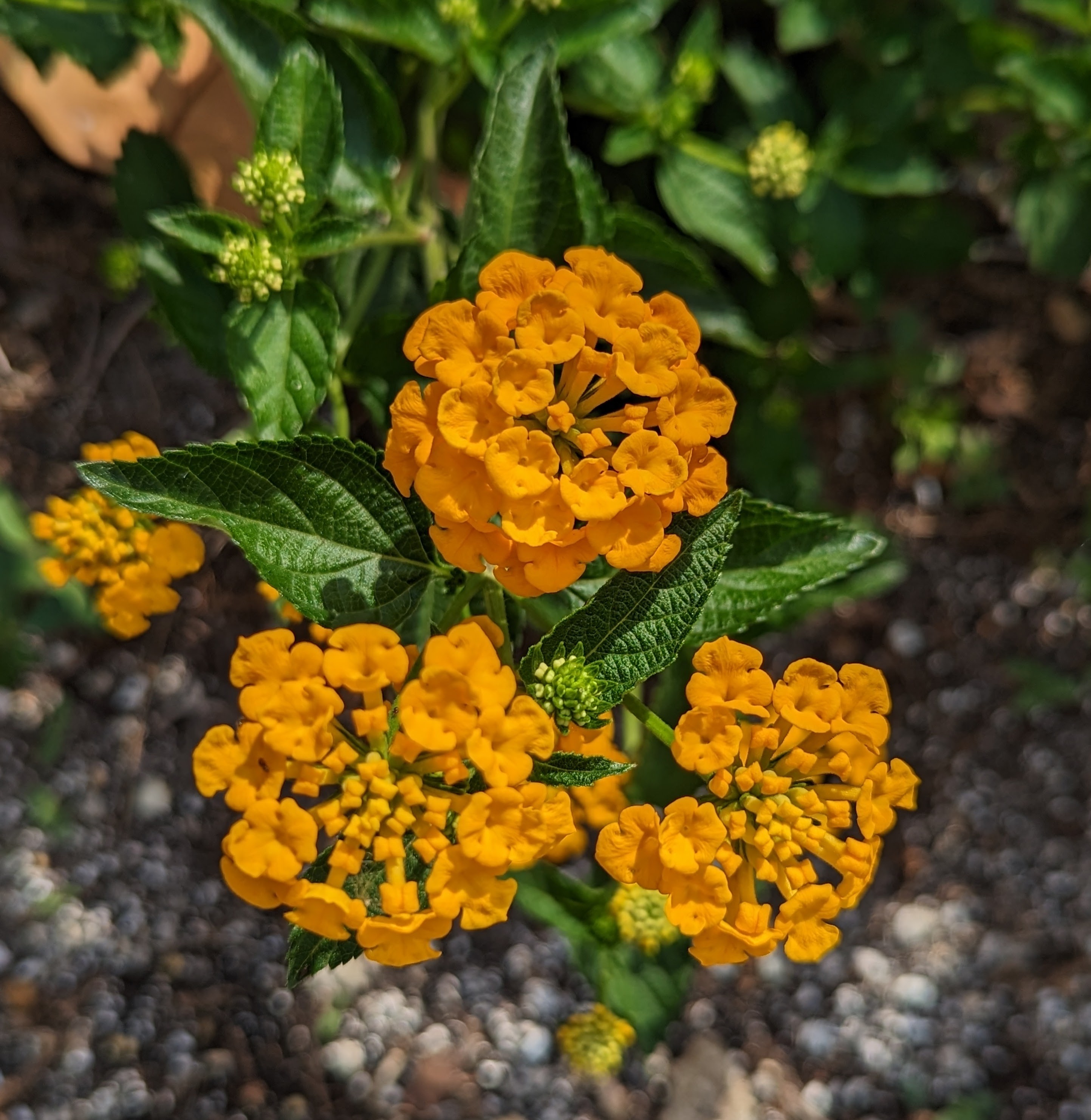
Now I am wobbling into things that smell weird. This is a New Gold Lantana. I have issues with this plant from working on the 1996 Olympics in Atlanta, where it was a theme plant. There were so many plants around town, I never wanted to see another one. I guess it took me 27 years to get over it. I bought two in pots last year as they are sterile and a great butterfly plant. They remained in their pots until a couple of weeks ago and look at them now.

Gallardias or Indian Blankets (Gallardia pulchella). Another wildflower that does well in hot Florida sand. Despite being considered native for years they have been ruled non native. These have jumped into the crushed shell walkways for some reason. Left in place and stepped on sometimes, they are thriving with no water and growing in the shell. Amazing. Do I care if they are native? Not one bit.

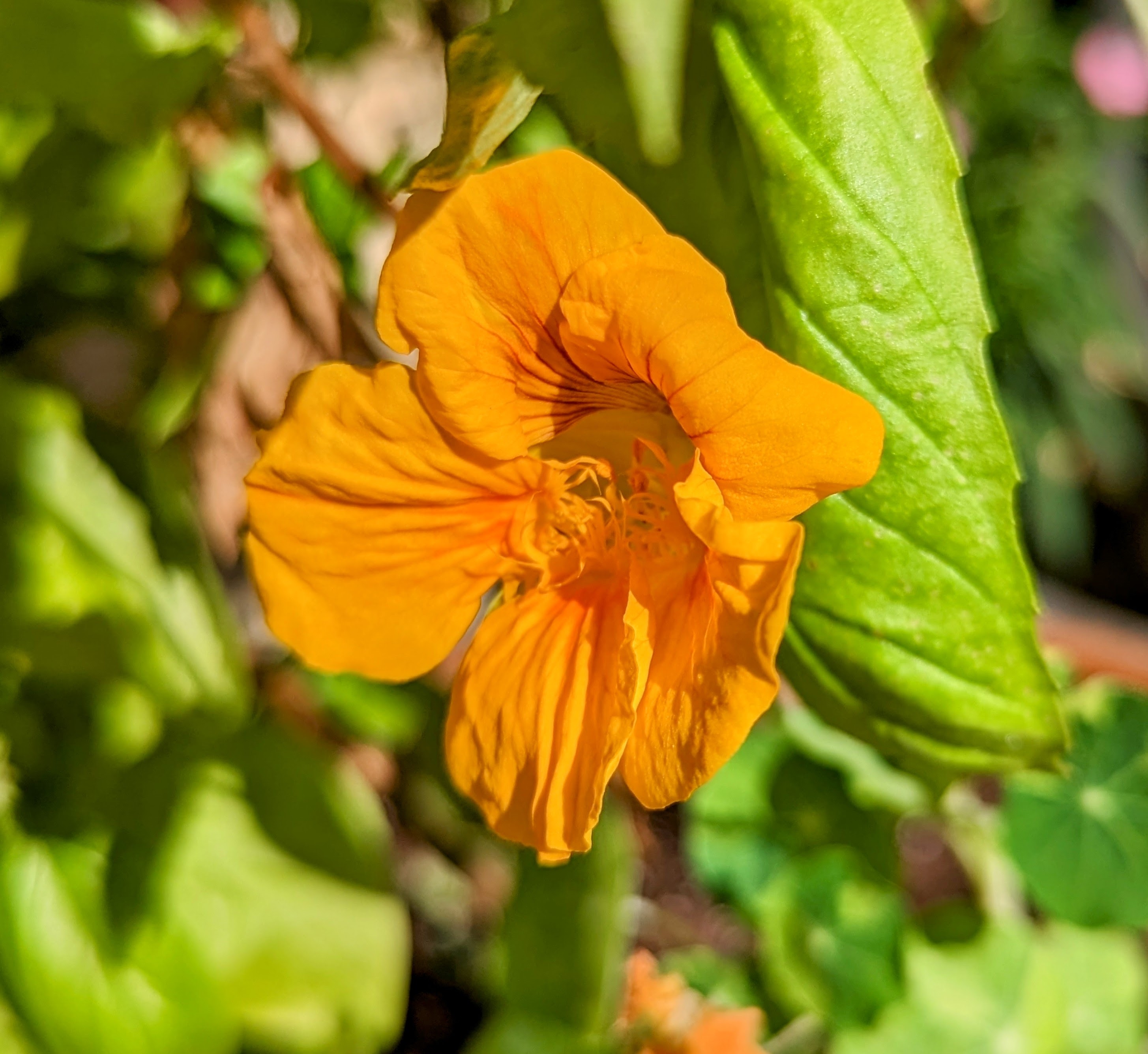
Presenting the ‘Alaska’ Nasturtium. I planted a package of these seeds a little late (February, I think. December 1 is the time here) The seeds in the beds came up, gasped and died. A few in pots grew up and flowered. My opinion on these is the varigated foliage looks a bit sickly instead of crisply attractive. Back to Jewel Mix Nasturtiums, here’s hoping I will remember in December.

Voila, my Six for this Saturday. To see more SOS posts follow this like to Jim’s blog –http://gardenruminations.co.uk

Happy Gardening!!

In a Vase on Monday – Fresh as a …

A Beach Daisy.

South Florida is experiencing another cold spell. I have been covering summer (ha!) vegetables and flowers at night due to temperatures hovering in the high 30s (F). One more night of cold seems to be on tap, followed by a warm up. The more tropical plants are sulking and browning, leafy plants like Heliconias look particularly unhappy.

Some of the native plants are looking, well, fresh as a daisy. I don’t recall the Beach Daisies (in yellow) ever looking so good in January. They usually flower madly during the summer, get moldy, and are asked to leave the garden (by the wheelbarrow load) due to their scraggly appearance. The new year seems to be presenting new gardening challenges. I will cover my plants one more night and hope for some zinnias in the coming weeks. There are buds!

The cast of characters:

Daisies first! In yellow, Beach Daisies (Helianthus debilis); in white, Bidens alba, sometimes called Spanish Needles; blue spikes, Mystic Spires Salvia; white and coral spikes, another happy native, Tropical Red Salvia (Salvia coccinea); finer textured white spikes, Sweet Almond Bush (Aloysia virgata).

Fluffy flowers and needle like foliage are from Muhly Grass (Muhlenbergia capillaris). The vase was left to me by my mother, made by the Ute Indians in the Southwestern US.

The happy Beach Daisies and Tropical Red Salvia in the garden:

I am hoping for warmer days here, but am grateful for the happy flowers in the garden. Thanks to Cathy for hosting this week and every week! To see more vases, visit http://www.ramblinginthgarden.wordpress.com.

In a Vase on Monday – Juba – lation

My favorite cool season flowers are starting to show their colors. One is the Juba Bush (Iresine diffusa). I am jubilant that the Juba Bush has reappeared. I thought it was gone. This is a native wildflower that I mistook for Amaranthus and left it in the garden only to discover its wonderful chartreuse to creamy white flowers. Juba is the name of an African dance that was imported into the Caribbean where these wildflowers are also native. The dance involves a lot of hip movement and swaying – the plant’s movement in the wind reportedly mimics this?! I wish this grew under my Gumbo Limbo tree, that would be perfect.

The Juba Bush. It is the creamy white flower; ‘Lady Di’ Heliconia is in the background.

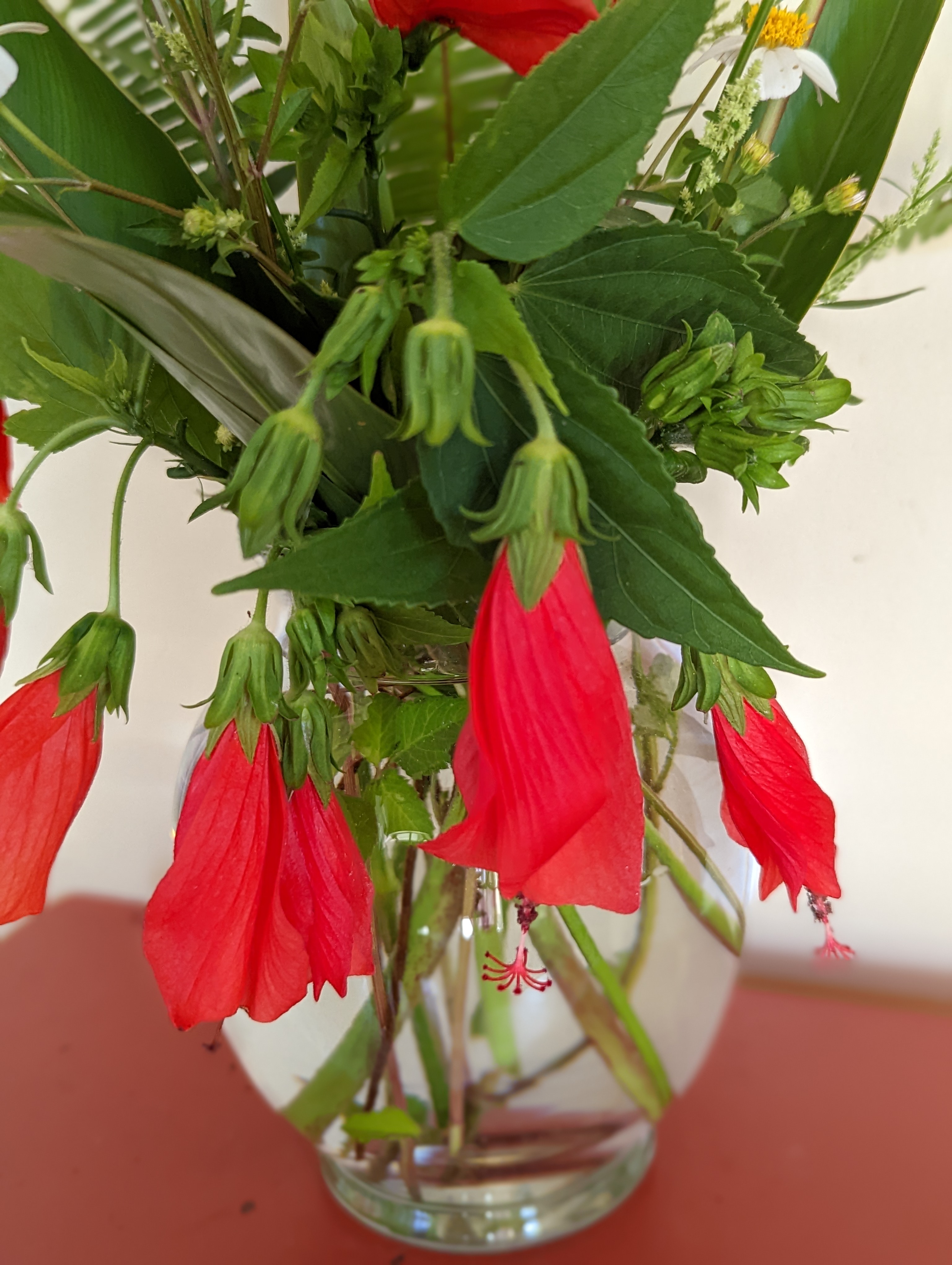
The other fall indicator is the red Nodding Hibiscus (Malvaviscus penduliflorus) at the base of the vase. This is another volunteer that I have embraced as I love the flowers. Like many Hibiscus (it is a relative and Mallow family member) the shrub is rangy and not particularly attractive. For me, the flowers make it worthwhile and I enjoy them all winter. It also needs no supplemental water and the leaf cutting bees love it.

The Nodding Hibiscus:

The rest of the vase:

The orange flower is a ‘Choconiana’ Heliconia (Heliconia psittacorum); white daisies are the native Spanish Needles (Bidens alba); ferns are the evil invasive, Asian Sword Ferns. I keep the Sword Ferns at bay by using them in vases.

Thanks to Cathy at http://www.ramblinginthegarden.com for hosting IAVOM. Follow the link to see more vases.

Happy Gardening…

Six on Saturday – Natives and Friends

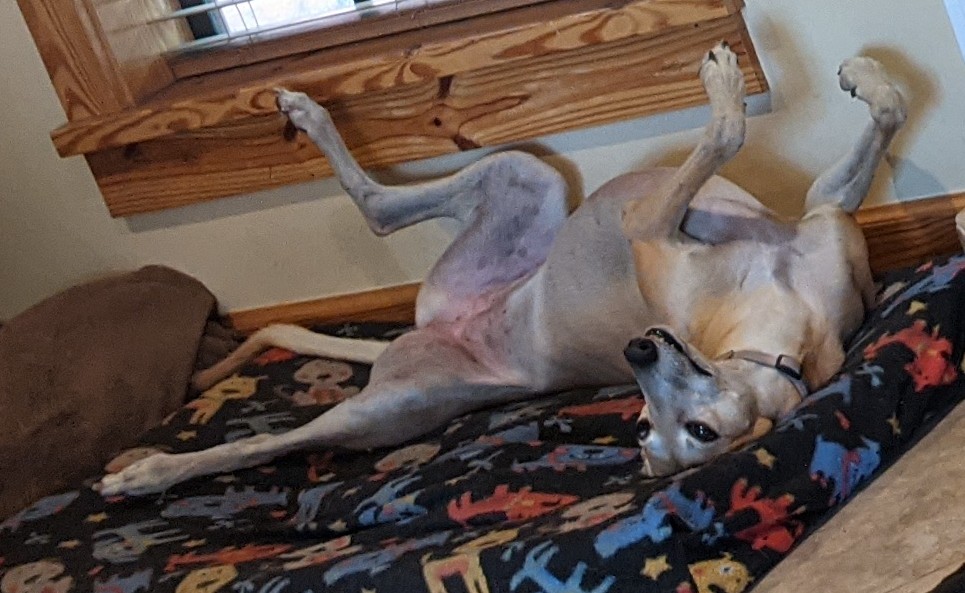
It is finally raining here, and in typical gardener fashion, I am going to complain – just a little too much. The weeds are going crazy and it is supposed to rain for the next several days. Fiona, the hurricane, not the greyhound. is supposed to meander by next week, undoubtedly bringing more rain. Fiona the greyhound is not terribly worried.

Back to plants and SOS. I am joining the SOS meme, hosted by Jon at http://www.thepropagatorblog.wordpress.com. To see more posts, follow the link.

This is a native Poinsettia (Euphorbia cynathophora). These pop up here and there and do not reseed much, so I enjoy the little pop of red in the garden.

Native Dayflower (Commelina erecta). Another one that just pops up in the garden and behaves nicely.

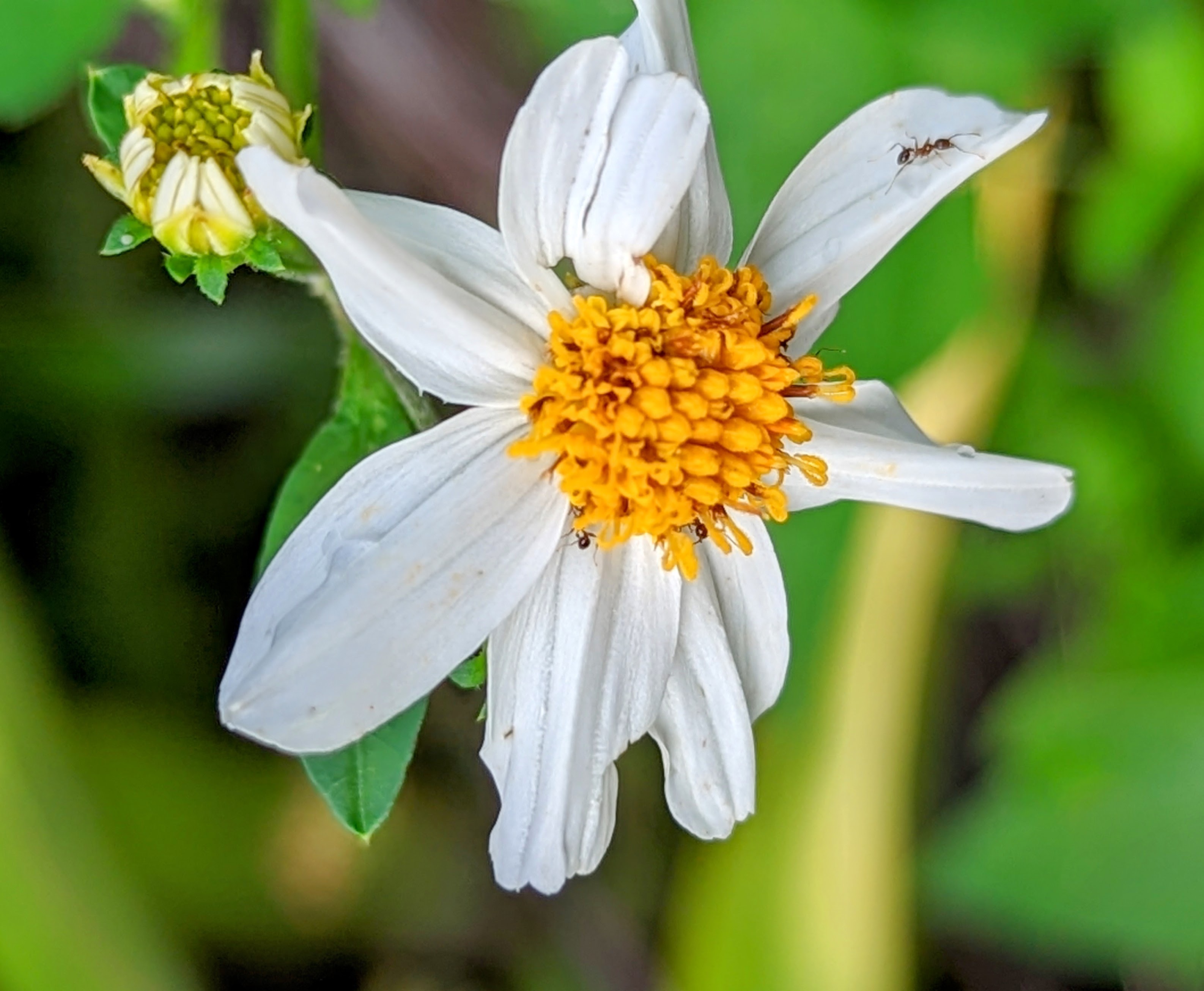
Native Bidens alba. One of the many common names is Spanish Needles, which leaves me wondering if the Spanish explorers of the Florida peninsula used the seeds for sewing. Not sure how, they are sharp, but maybe a half inch long. The one I love to hate. Reseeds madly, but so cute and the pollinators love it.

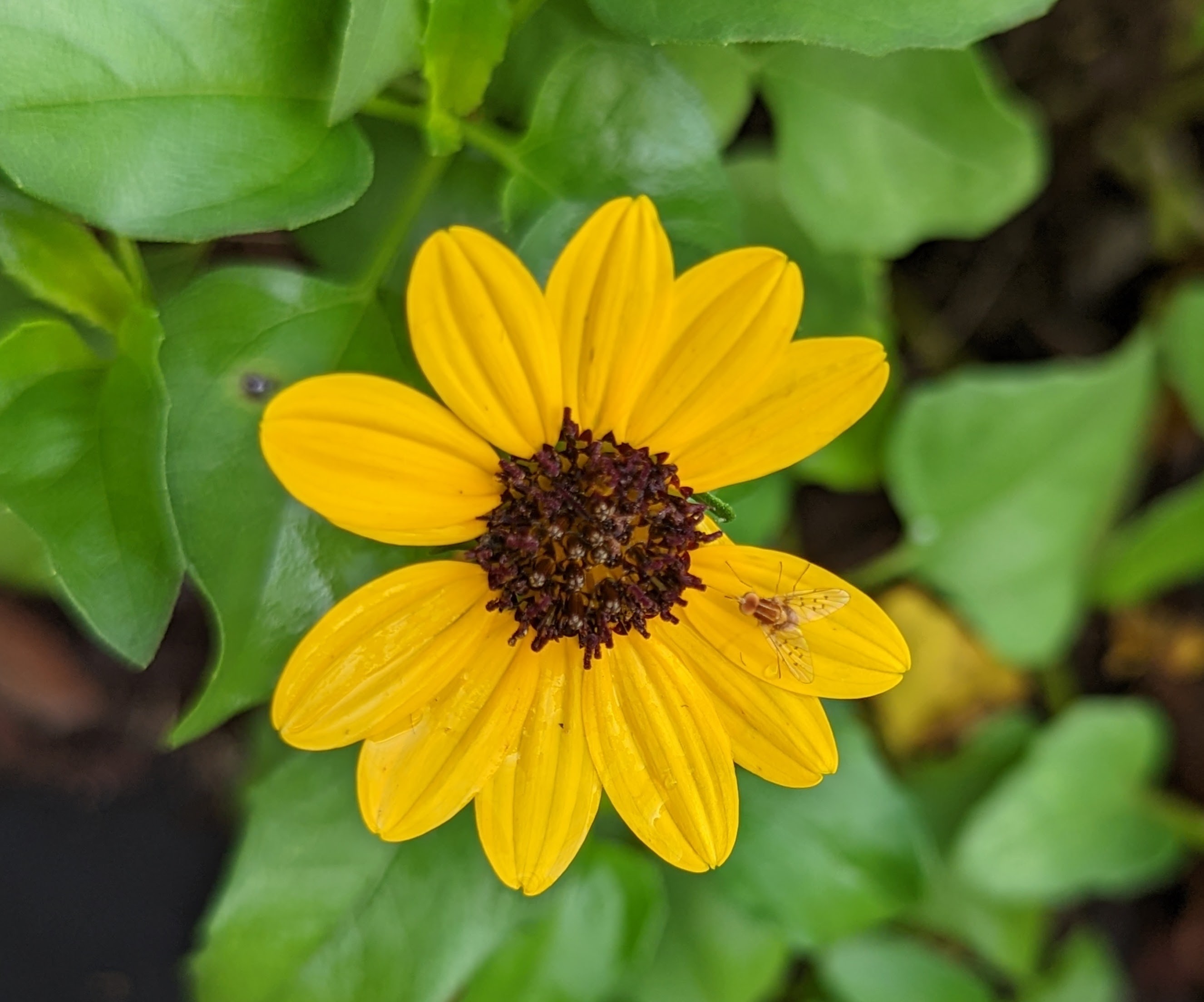
Another great native for pollinators, the Beach Daisy (Helianthus debilis). I am not sure what that bug is. These go mad during a rainy summer and once you have them in the garden (I planted them) they never go away.

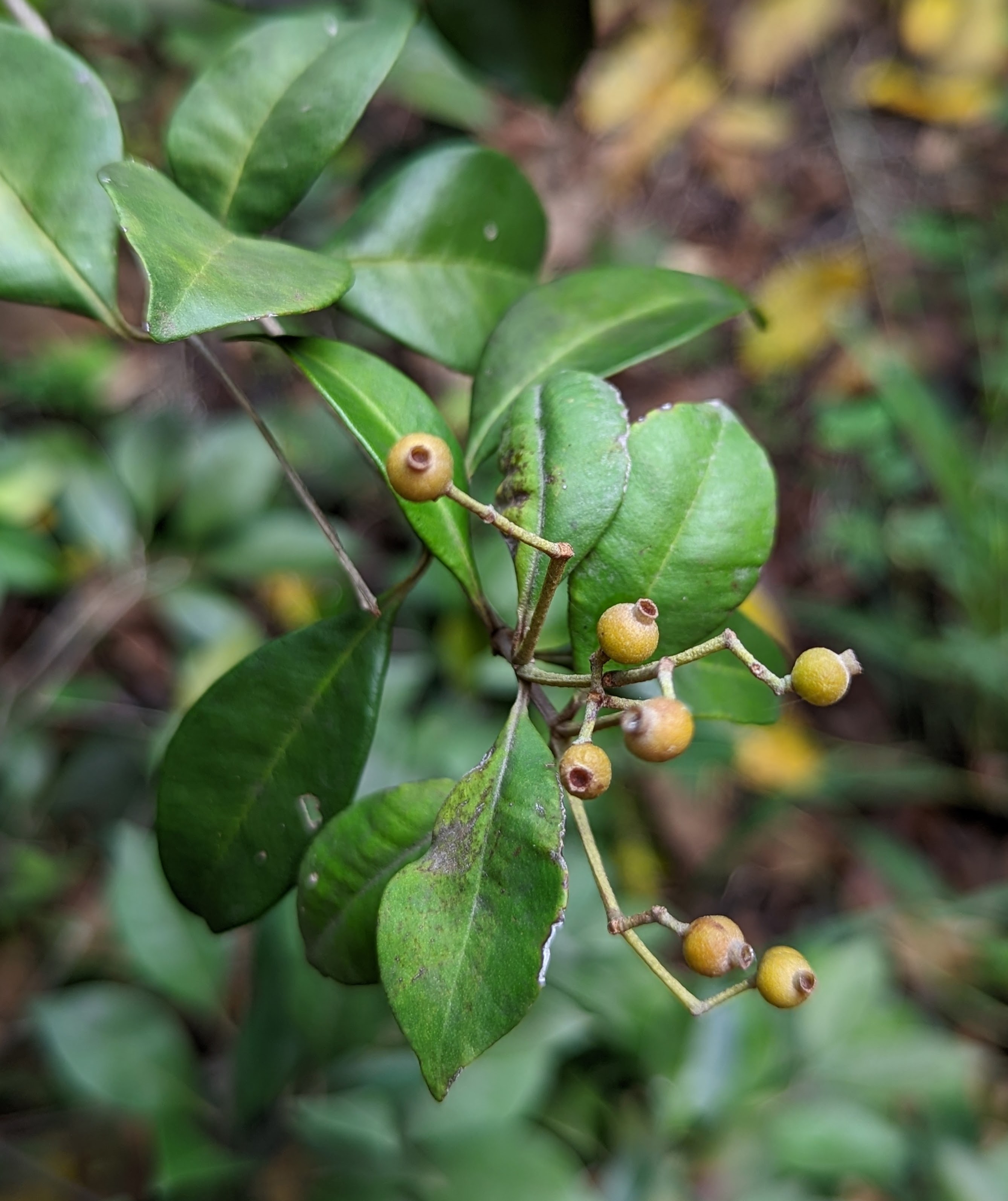
The fruits of a native Spicewood (Calyptranthes pallens) Something about this is supposed to have a spice fragrance. I have yet to find it and have had this in the garden for seven years or so. Birds like the berries.

A nice, and not native to Florida, Saturday morning surprise. This is an unnamed Cattleya orchid that regularly flowers in early September. I thought it wouldn’t flower because of the dry summer – but here it is after getting some rain and a little fertilizer.

That’s my Six for this Saturday….Happy Gardening!!!!!
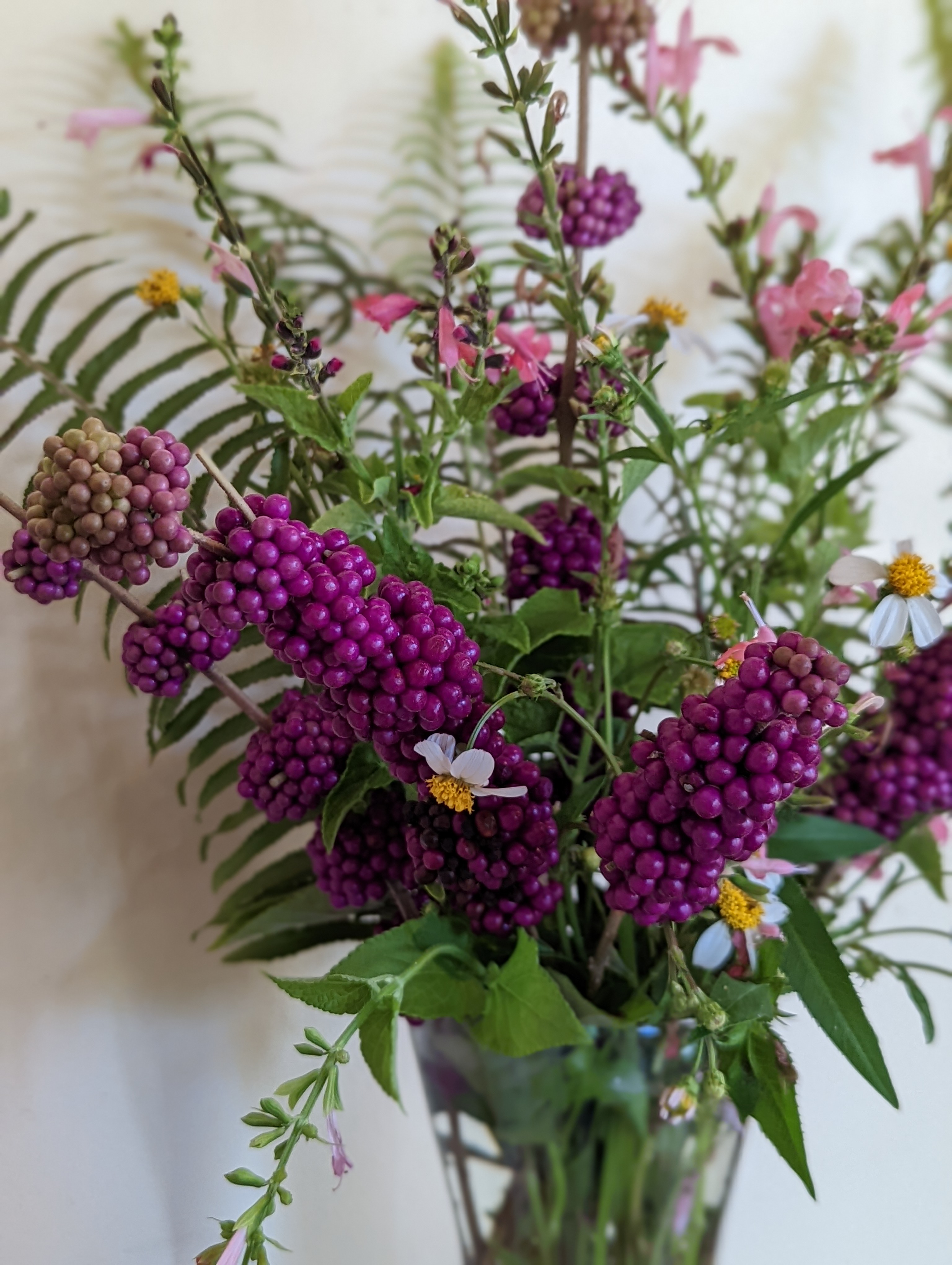
In a Vase on Monday – Berry Good

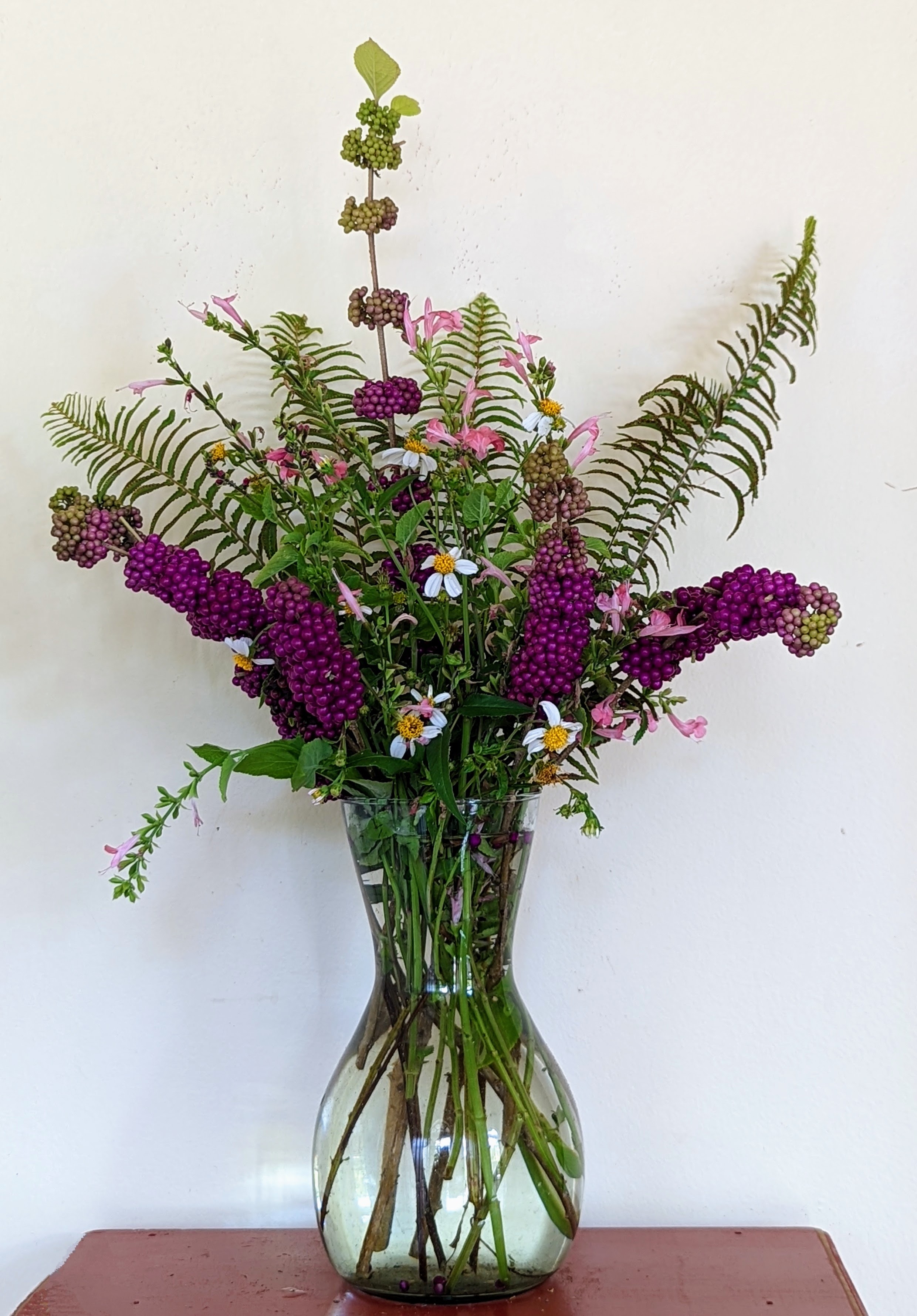
Signs of the approaching seasonal shift are unmistakable in South Florida. I heard the first Sand Hill Crane returning for winter this week (these are large birds with a very distinctive call, they look like pterodactyls flying by and summer in Nebraska) Purple Beautyberries are another sign. It seems odd to me that the berries ripen in August here. In my former much further north garden I had to wait until November for about a quarter of the amount of berries produced in Florida. Another odd thing about the Florida berries, the birds don’t really eat that many and I am not sure why – fear of stalking greyhounds? Anyway, my conscience is clear about stealing bird food.

All of the plants in this vase are native to Florida. Two I planted and two appeared, spread by wildlife no doubt.

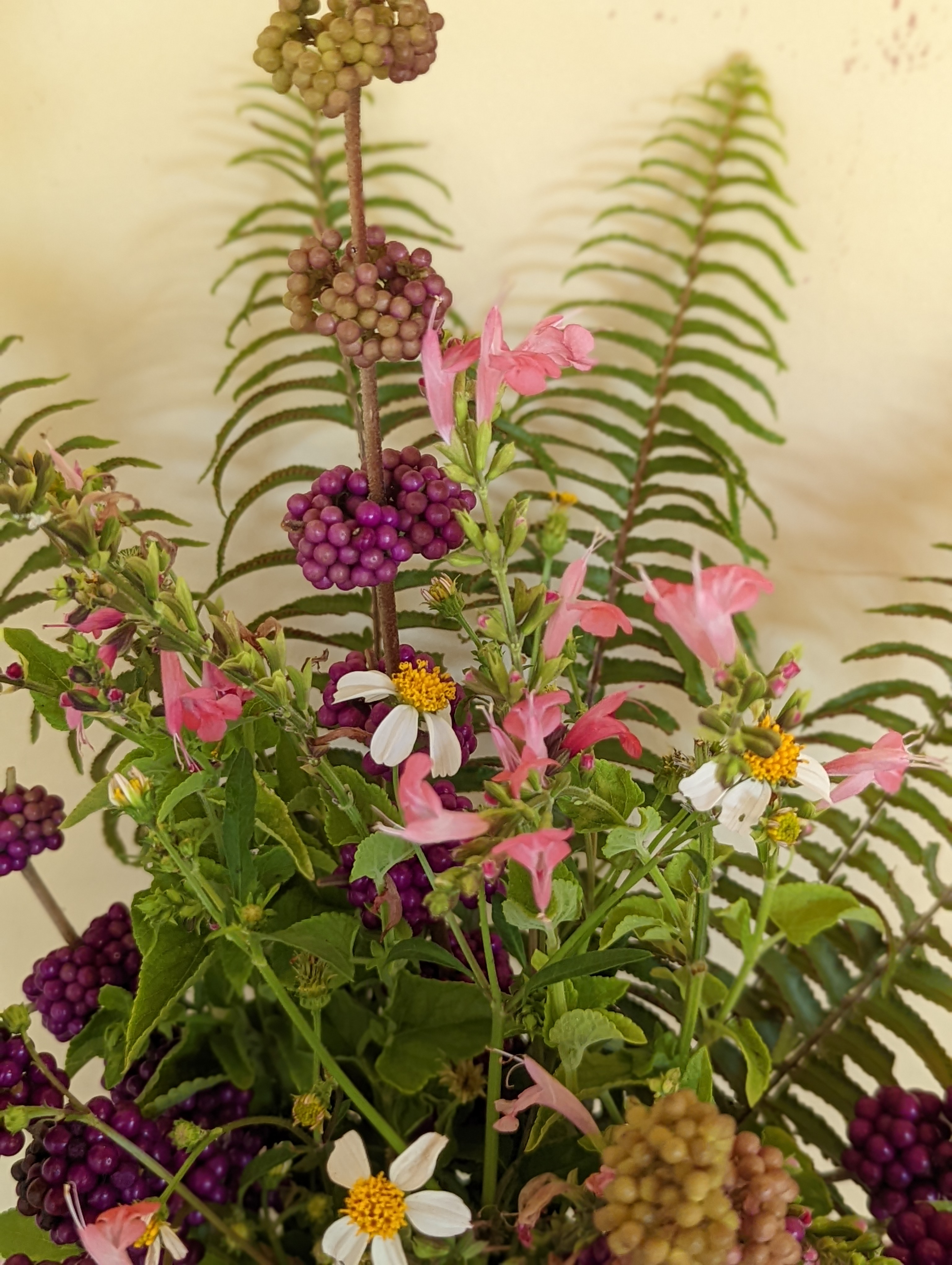
The peach spike flowers are Tropical Red Salvia (Salvia coccinea), the flowers made peach by bees. I planted the red variety years ago and now have several colors. The white daisies are Bidens alba, not planted by me, and asked for the most part to leave the garden. These cute little flowers can produce 1200 seeds per plant and get out of hand quickly. The ferns, Boston Fern (Nephrolepis exaltata) are native to Florida, not Boston and appeared in the edging of our shell driveway. I leave them alone and cut them sometimes for vases. The vase came from the florist filled with professionally grown flowers!

I planted the Beautyberry (Calliocarpa americana) several years ago. I bought three and planted them in places with differing amounts of shade. To my surprise, the one with the most sun produces these huge sprays of berries. This time of year Floridians post their Beautyberry recipes on social media. They make jam, jelly and bread with the berries. Invariably, someone says these are so pretty but they don’t really have a flavor.

Here is a bread recipe and review. Evidently, Peggy wrote the recipe, though I am not sure who that is. I clipped it thinking I might give it a try, then read the review. Still considering it, but I think this is one of those things I would find in the freezer a few years from now and have to throw away.

Thanks to Cathy at http://www.ramblinginthegarden.wordpress.com for hosting iAVOM. To see more vases, follow the link.

Happy Gardening and I am berry much looking forward to fall!

Six on Saturday – Fab Feb Fleurs

Saturday morning has rolled around again and I took to the garden to find February flowers to join the SOS crowd. To see more February fun, visit Jon at http://www.thepropagatorblog.wordpress.com

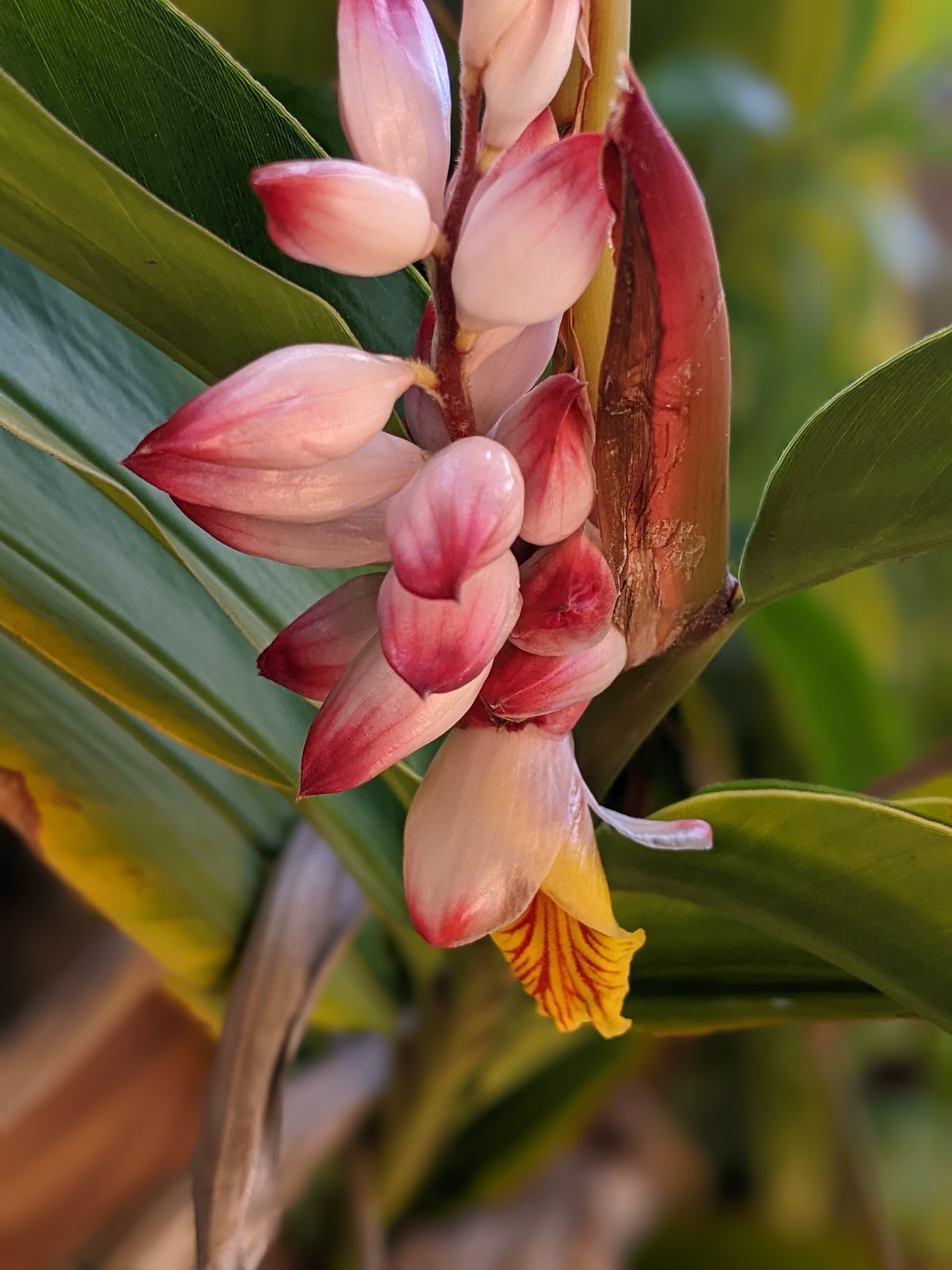
Above is an underside view of a Shell Ginger (Alpinia zerumbet) opening. Eventually the flower hangs down from the branch. These flower every February and a few other times during the year at their discretion.

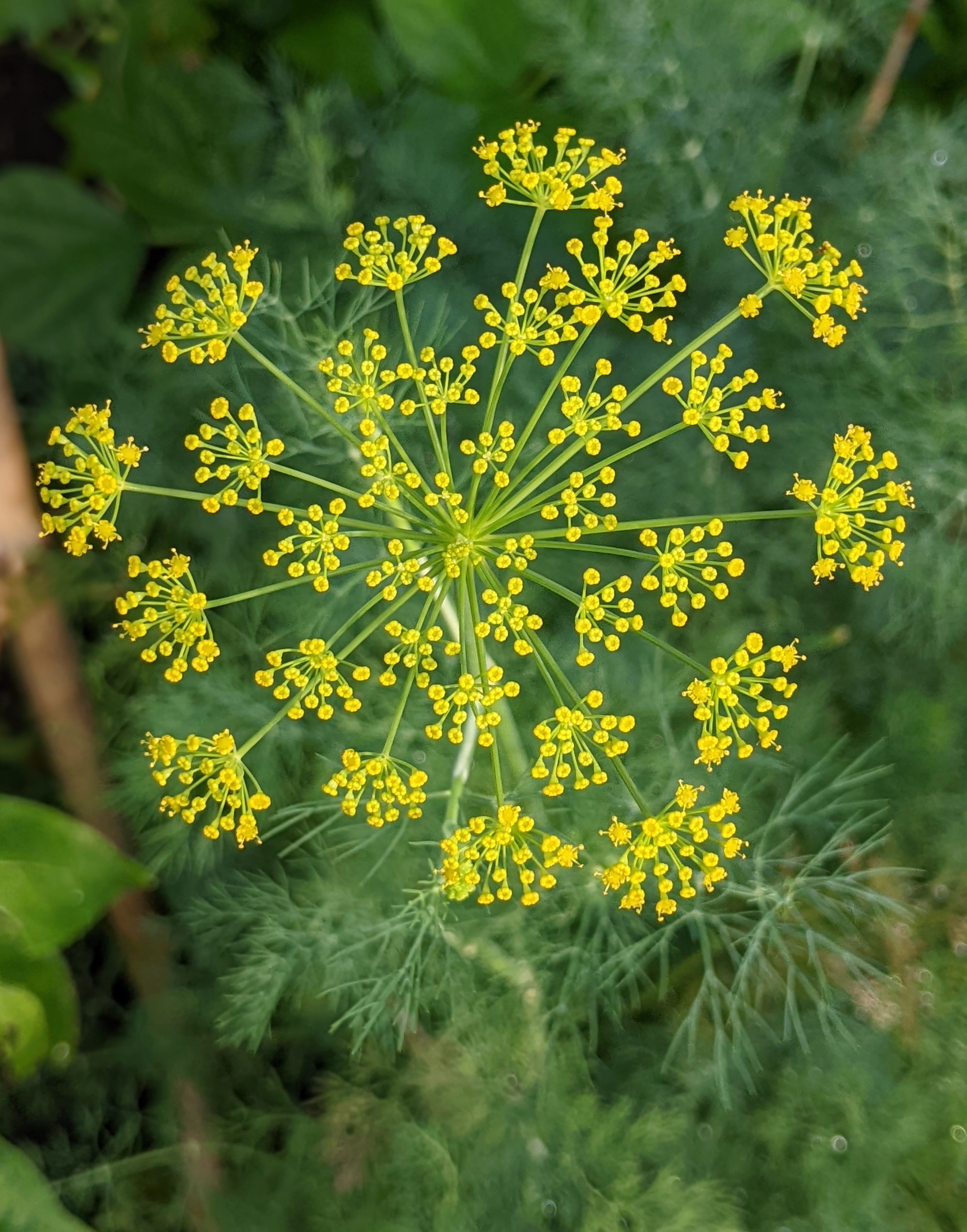
Long Island Mammoth Dill flower. I am not sure if I should cut this off or let it go to seed. The dill has been wonderful and is recommended for winter in Florida.

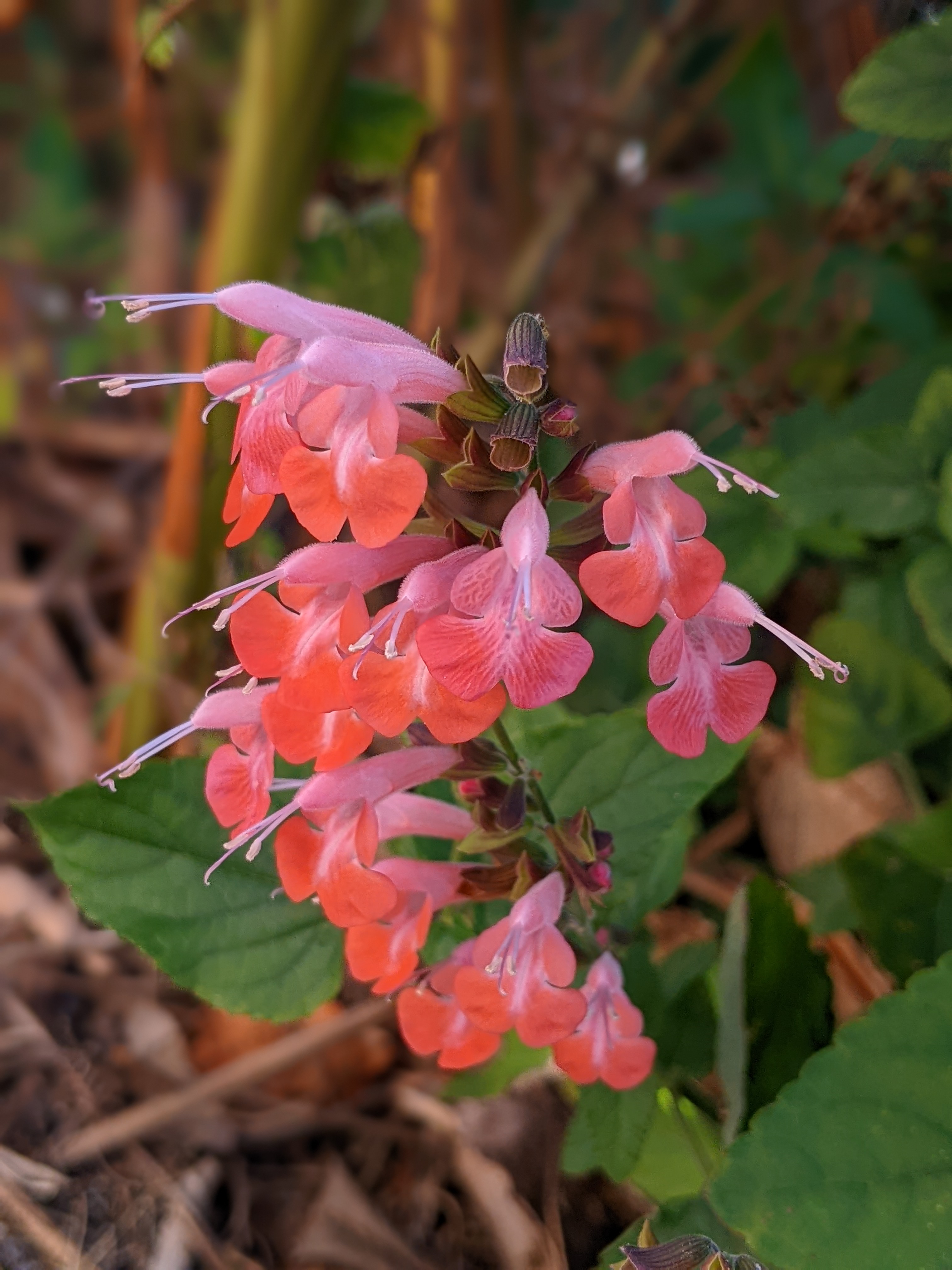
A perversely peachy Tropical Red Salvia (Salvia coccinea). One of my favorite reseeding flowers. Probably hasn’t had water in weeks.

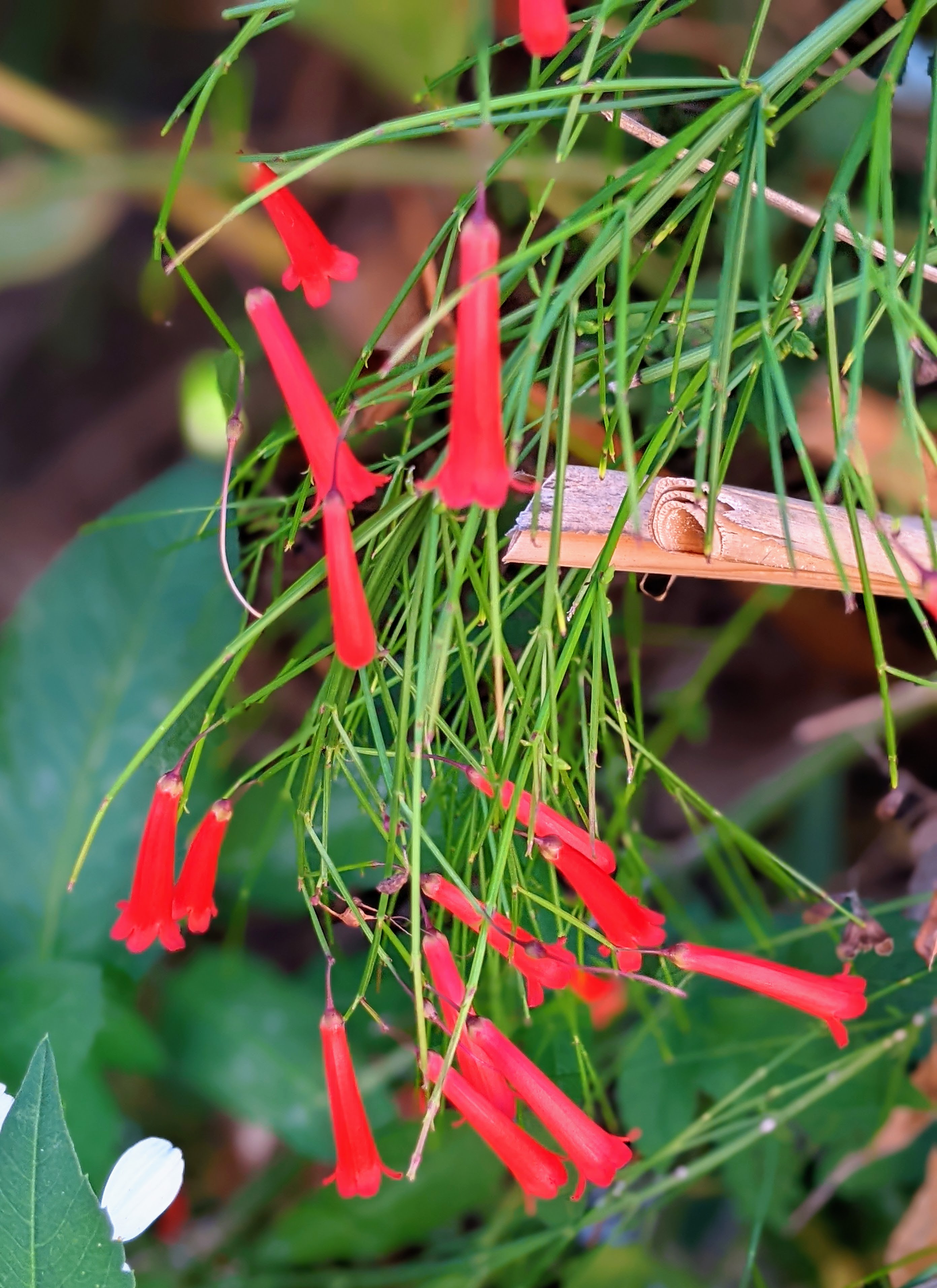
Here is the red flower…Firecracker Plant (Russelia equisetiformis) I like the texture of this plant, though it is kind of gangly, and dangly.

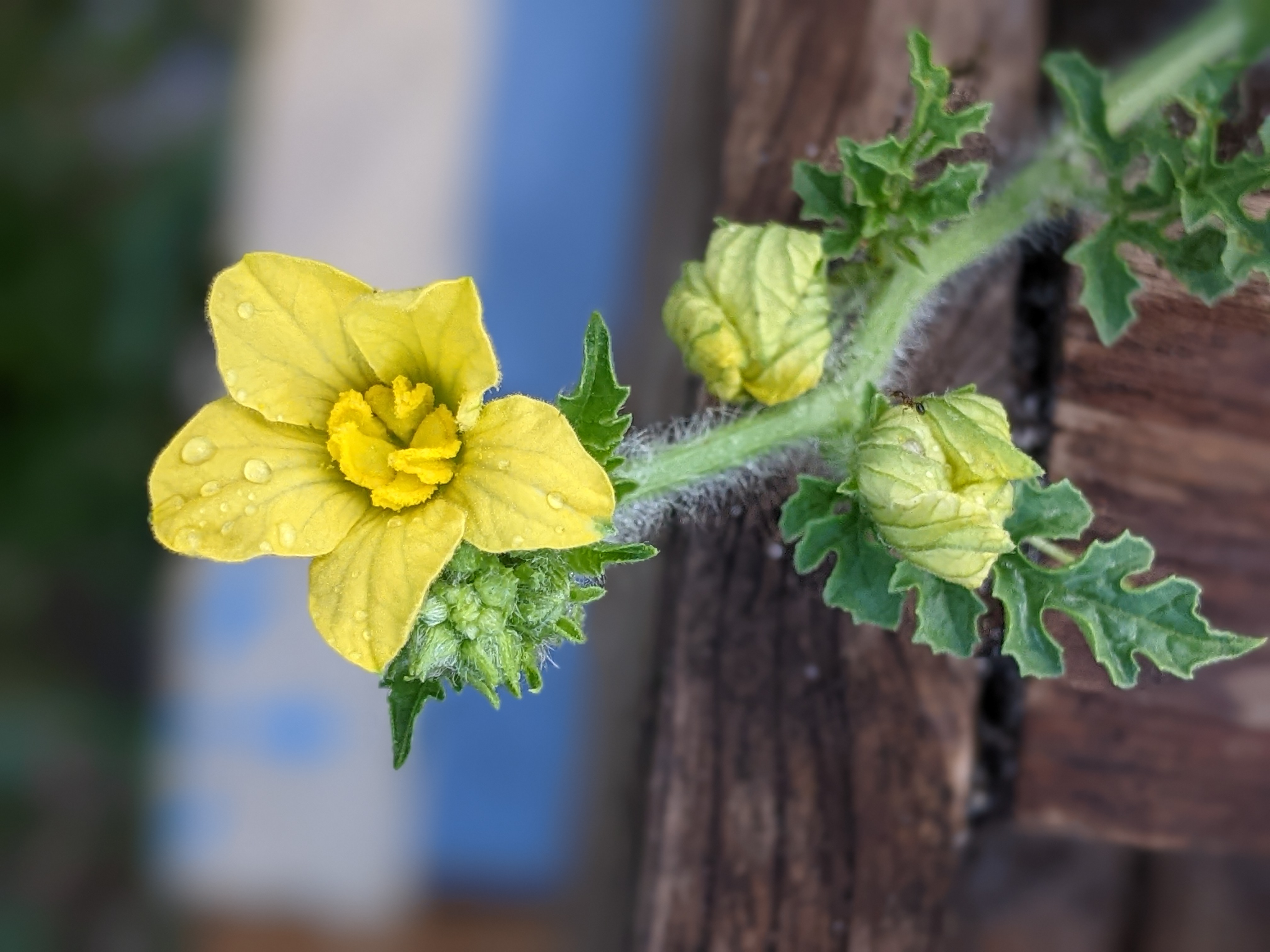
Sugar Baby Watermelon flower. Hoping for some fruit! I am trying to grow these on a teak stool to keep them off the ground. Time will tell.

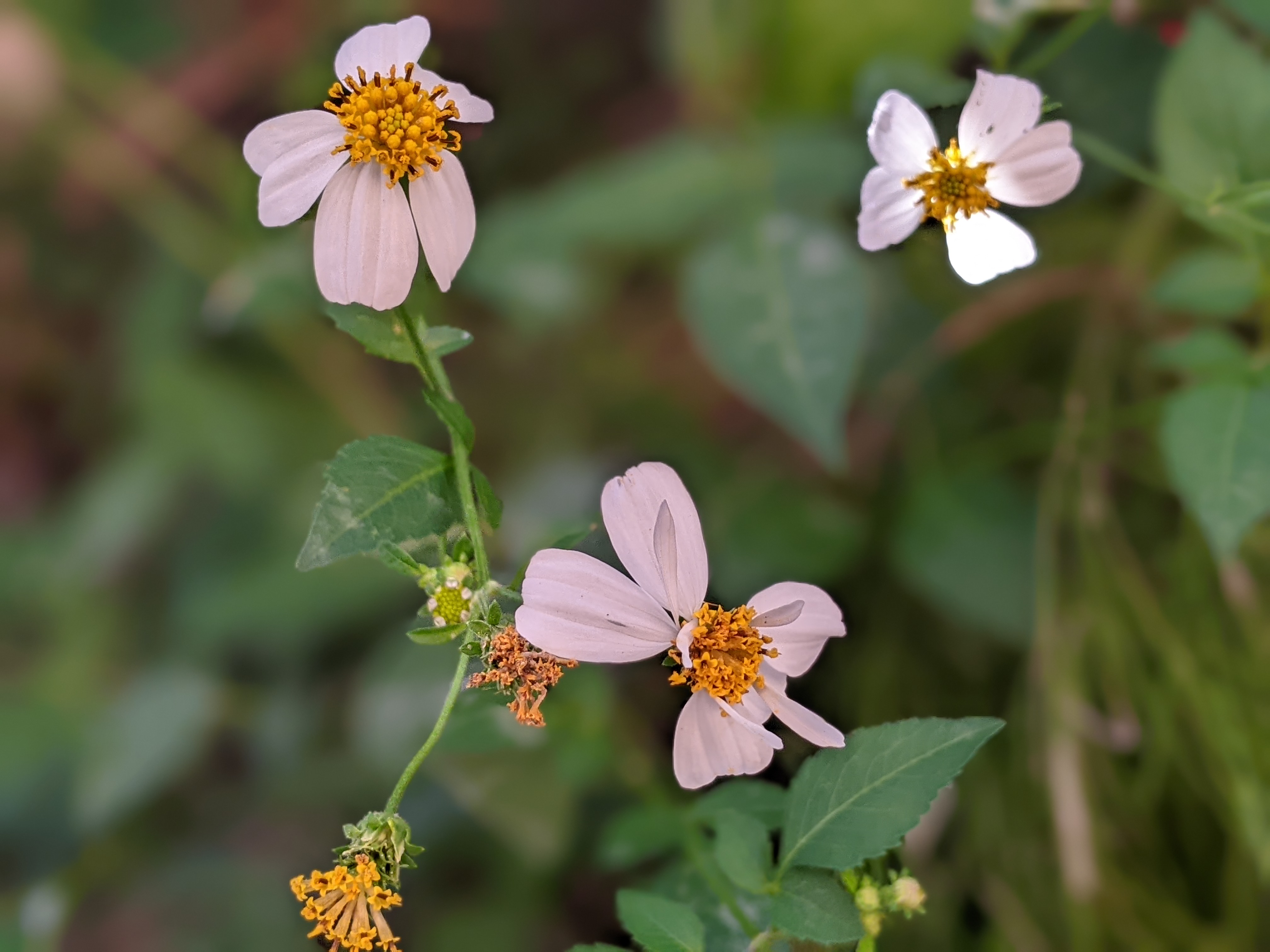
A blessing and a curse, white wildflower, Bidens alba. The blessing, an indestructible, happy prolific flowering plant. The curse, the same, and it can produce 1200 seeds per plant providing Bidens sod.

That’s it this week.

Happy Gardening from South Florida.

Six on Saturday – Kissimmee Prairie Wildflowers

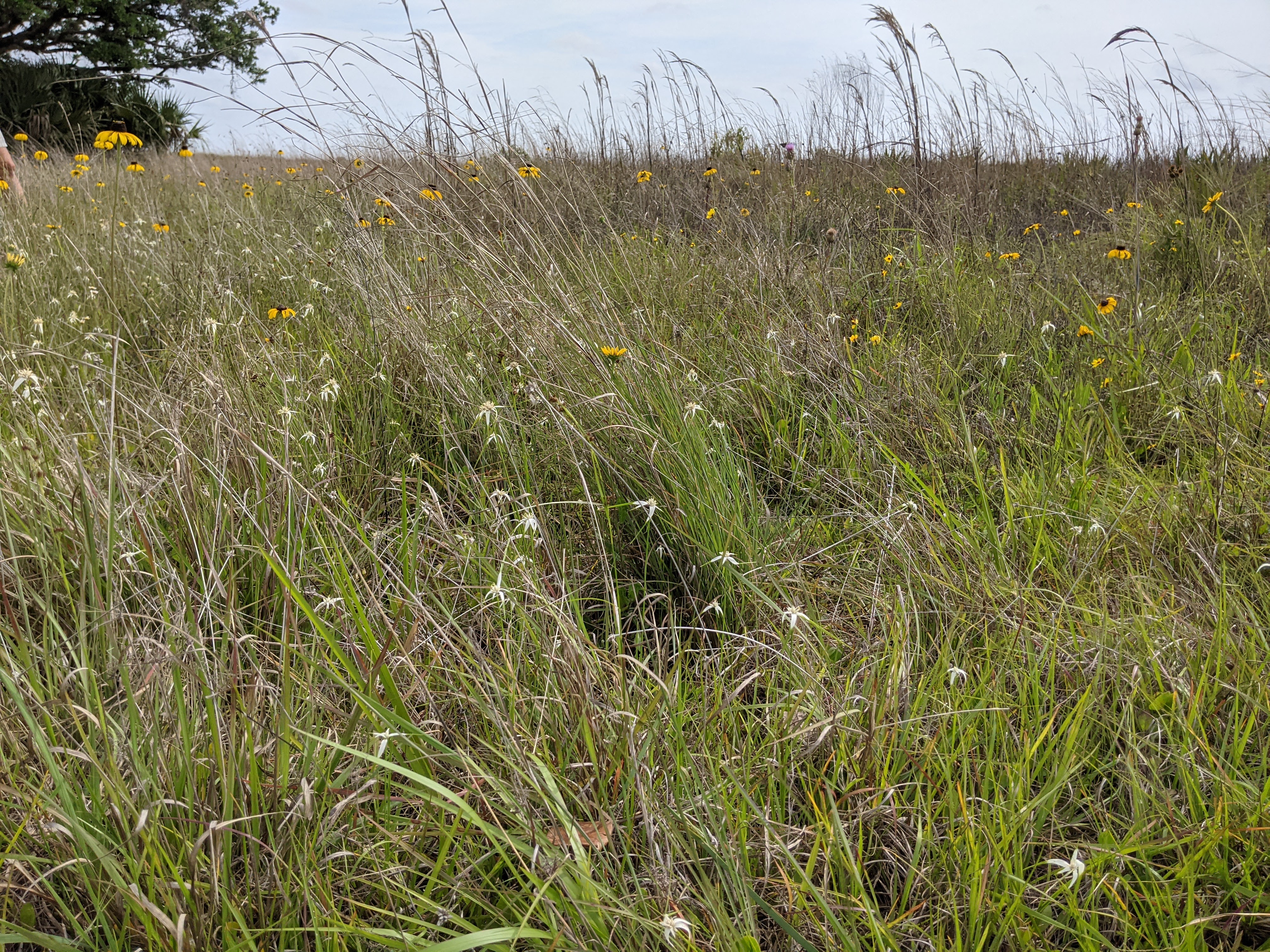
Last Saturday I took a day off from my garden and joined a wildflower walk in the Kissimmee Prairie Preserve in Central Florida. The Prairie is the last dry prairie in Florida, encompassing 54,000 acres and is grassland as far as the eye can see. There are three seasons of wildflowers in the prairie and the butterflies are reported to be spectacular. Last Saturday was too windy and overcast to see the butterflies, though I did see amazing wildflowers. The flowers in the photo are Whitetop Sedge and Black Eyed Susans.

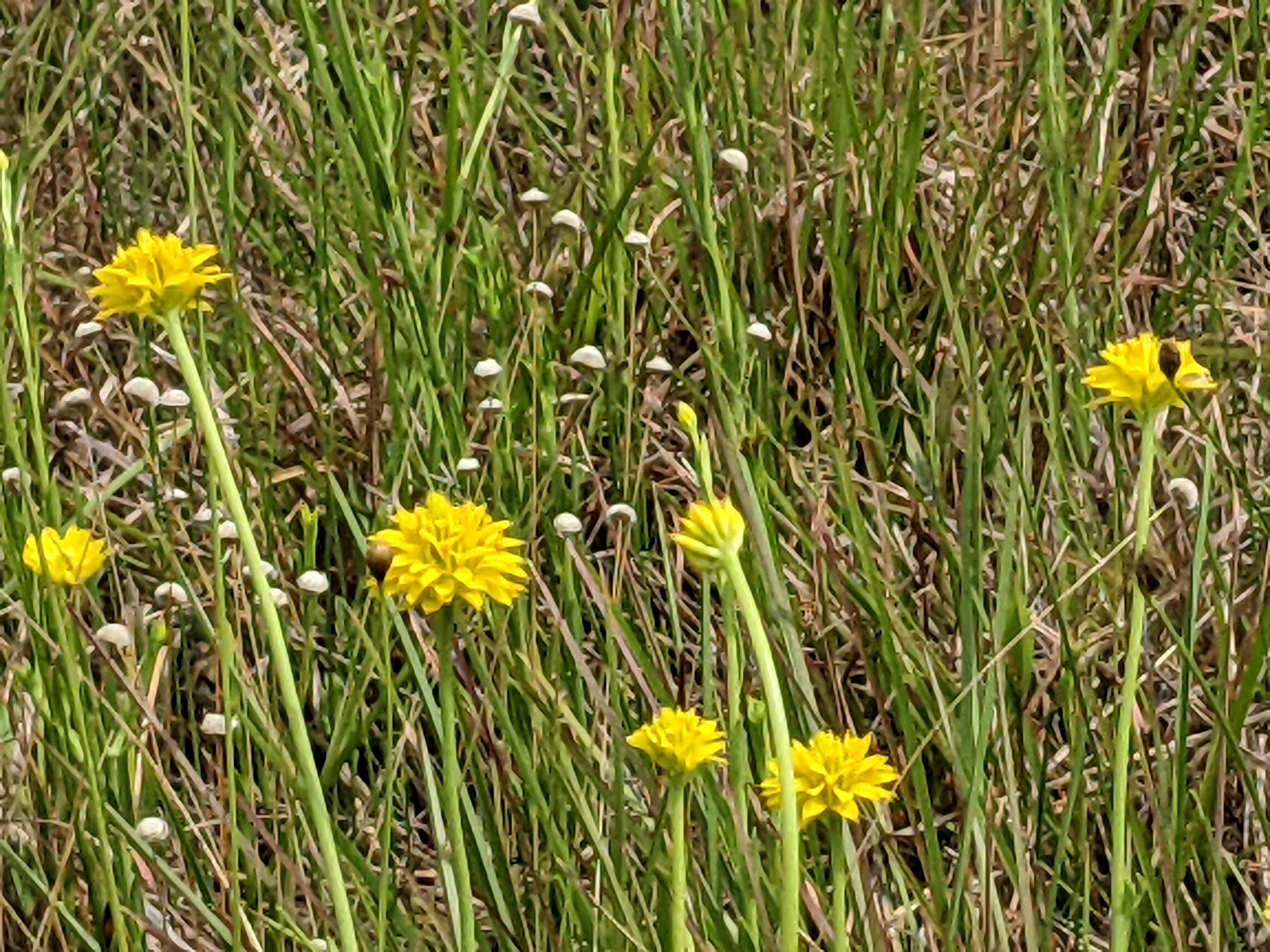
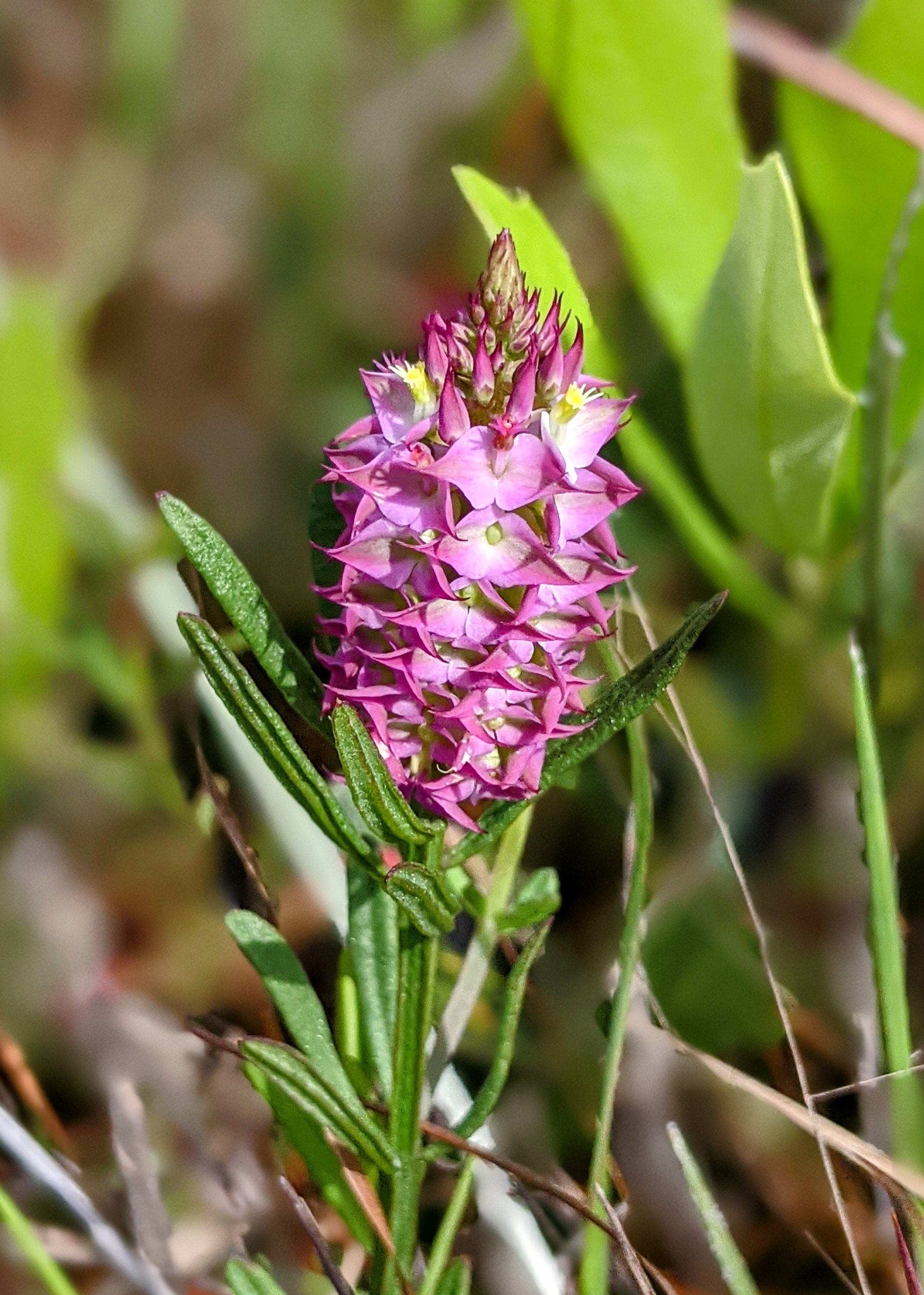
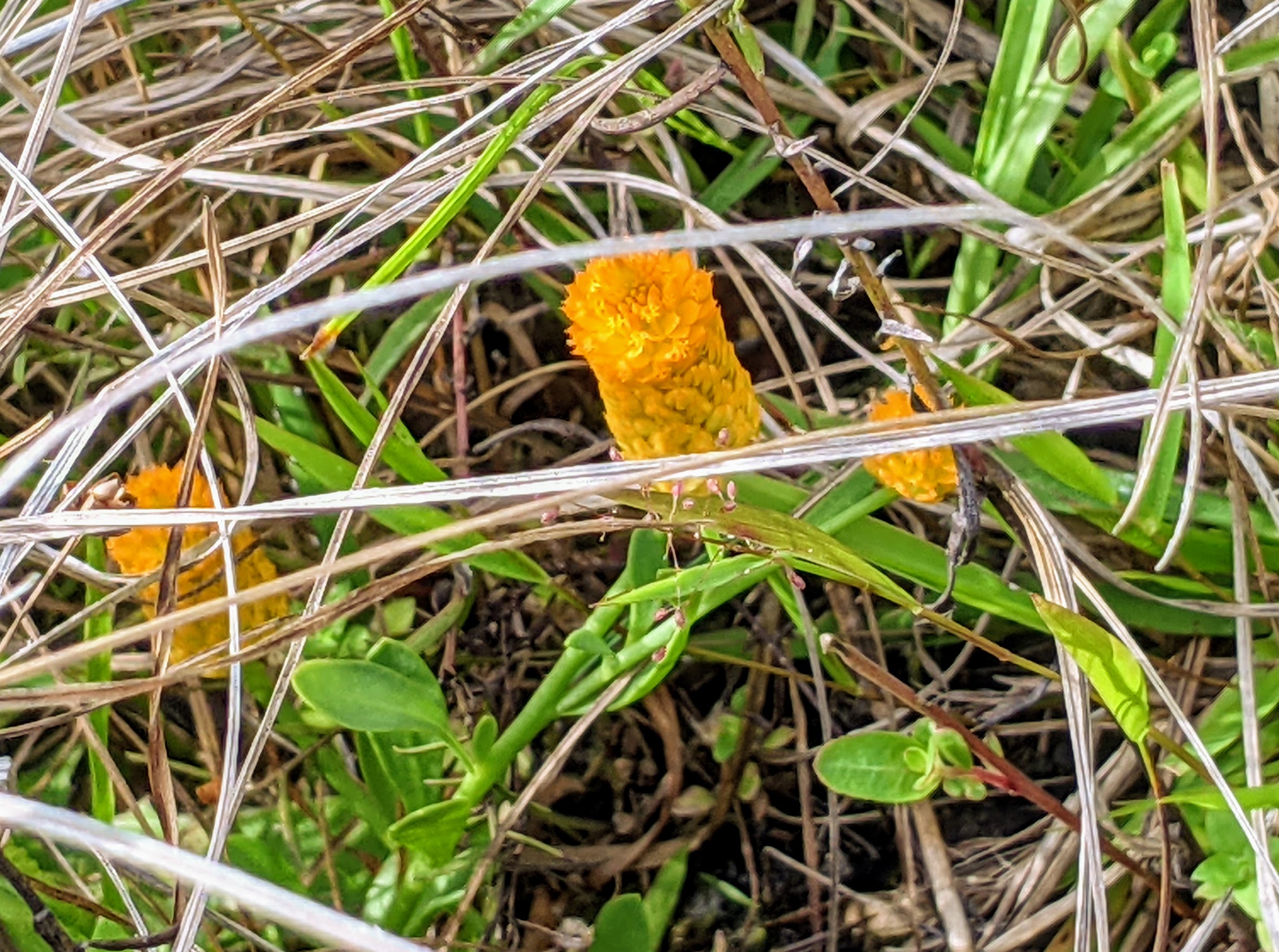
We saw several types of Milkworts, this is Yellow Milkwort (Polygala rugelli). Native Americans used this as a snakebite remedy.

This is Purple Milkwort (Polygala cruciata, I think) there are a lot of Milkworts. These are also called Drumheads.

Yet another Milkwort, these are commonly called Swamp Cheetos.

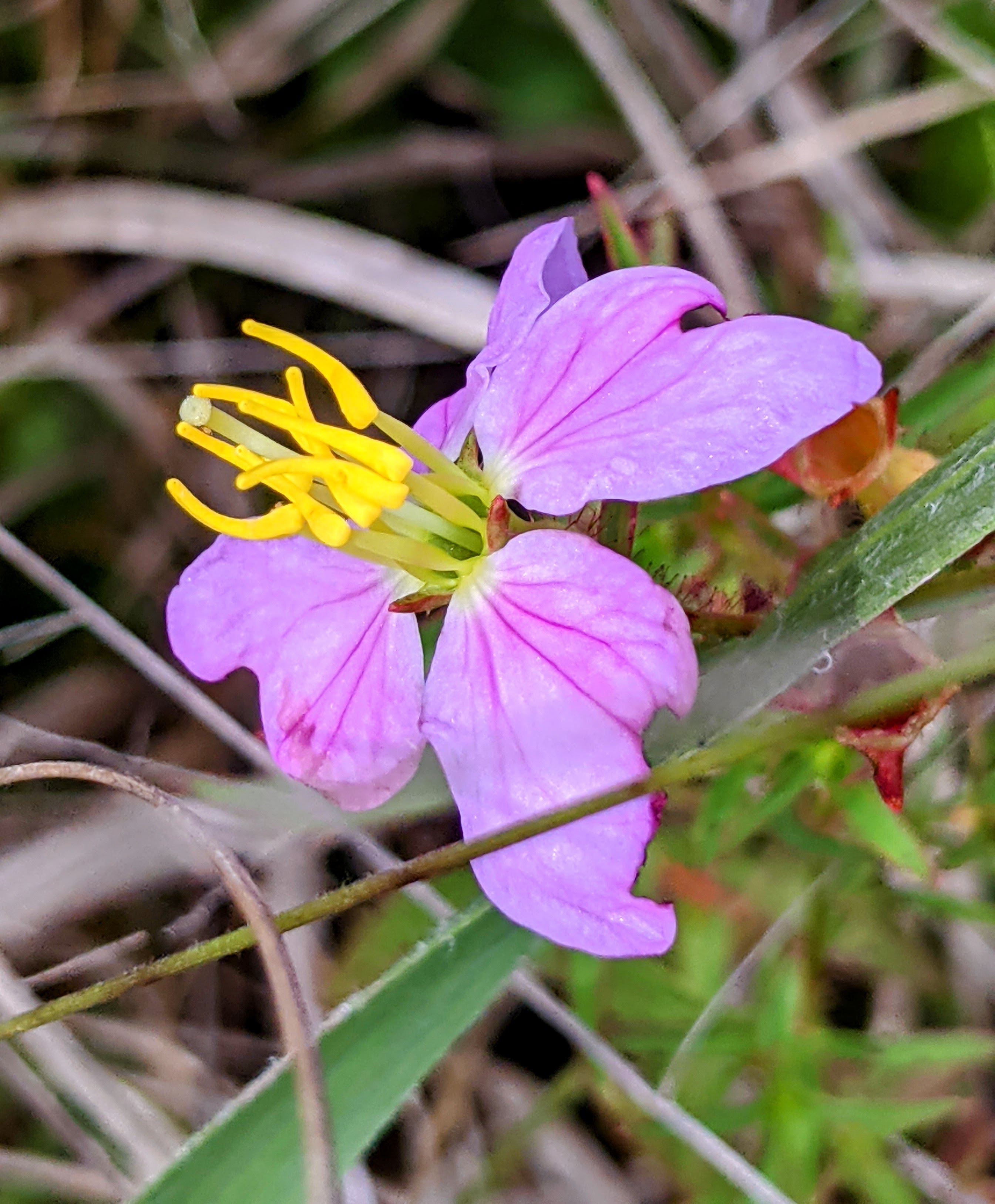
This is a Rhexia virginica, a Meadow Beauty. I think the common name is right.

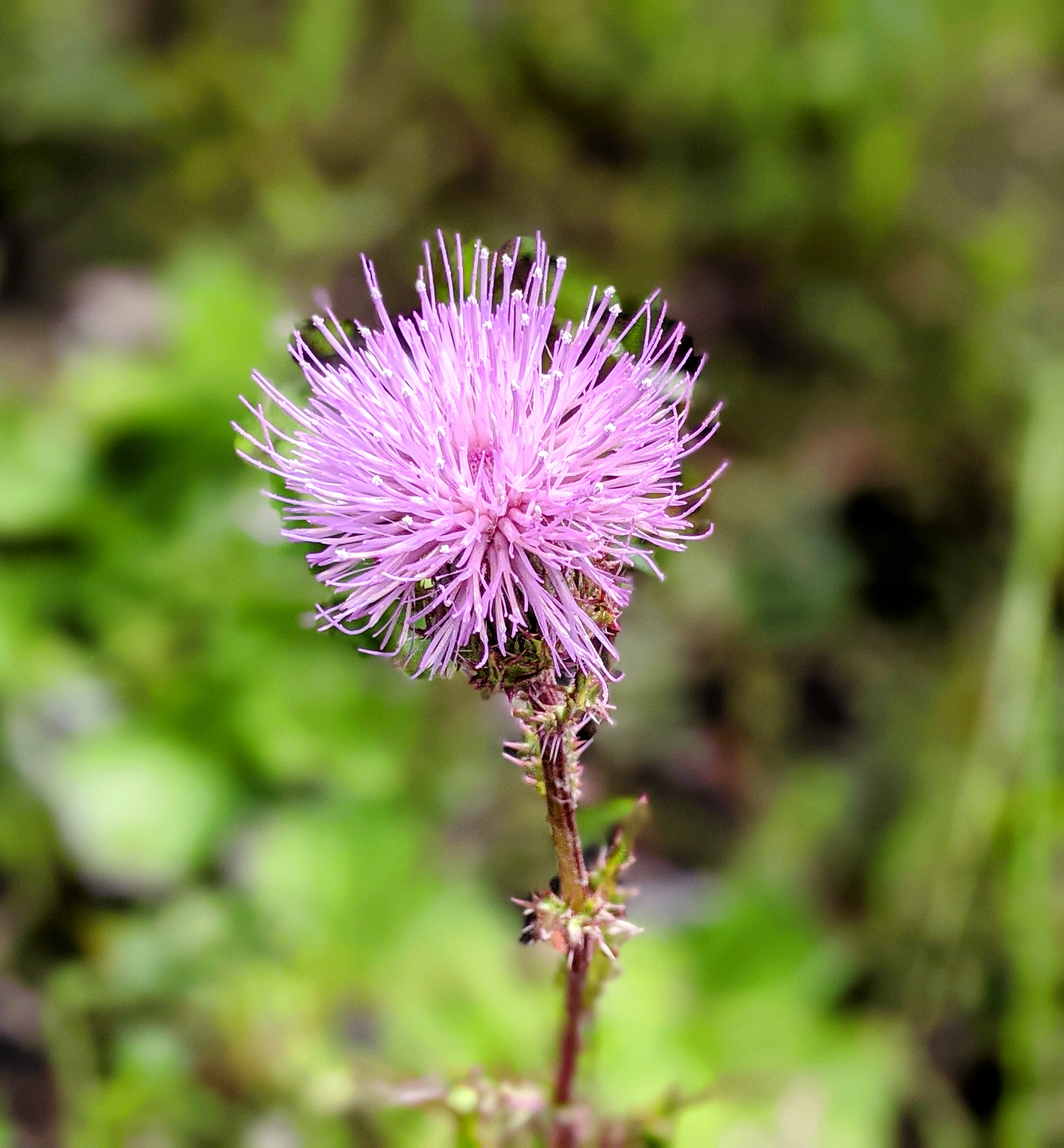
A Purple Thistle (Cirsium horridulum) This this is a bit sharp, but a wonderful butterfly host and nectar plant. For some reason I have the much less attractive Yellow Thistle in my yard. It is usually asked to leave the garden.

That concludes my wildflower adventure from last Saturday. To see more Six on Saturday posts visit Jon at http://www.thepropagatorblog.wordpress.com.

Happy Gardening!