Saturday morning found me taking pictures in the garden yet again. I am joining in the SOS crowd flocking to Jim’s blog to share six items of interest from their gardens. Today I am featuring summer flowering bromeliads from my tropical oasis in South Florida.
This is a Aechmea Rubens flower with a White Peacock butterfly sipping the nectar. It has been a good year for this butterfly. I have swarms of White Peacocks for some reason. I want to share what I just read on Google. Groups of butterflies can be called swarms, kaleidoscopes, or rabbles.
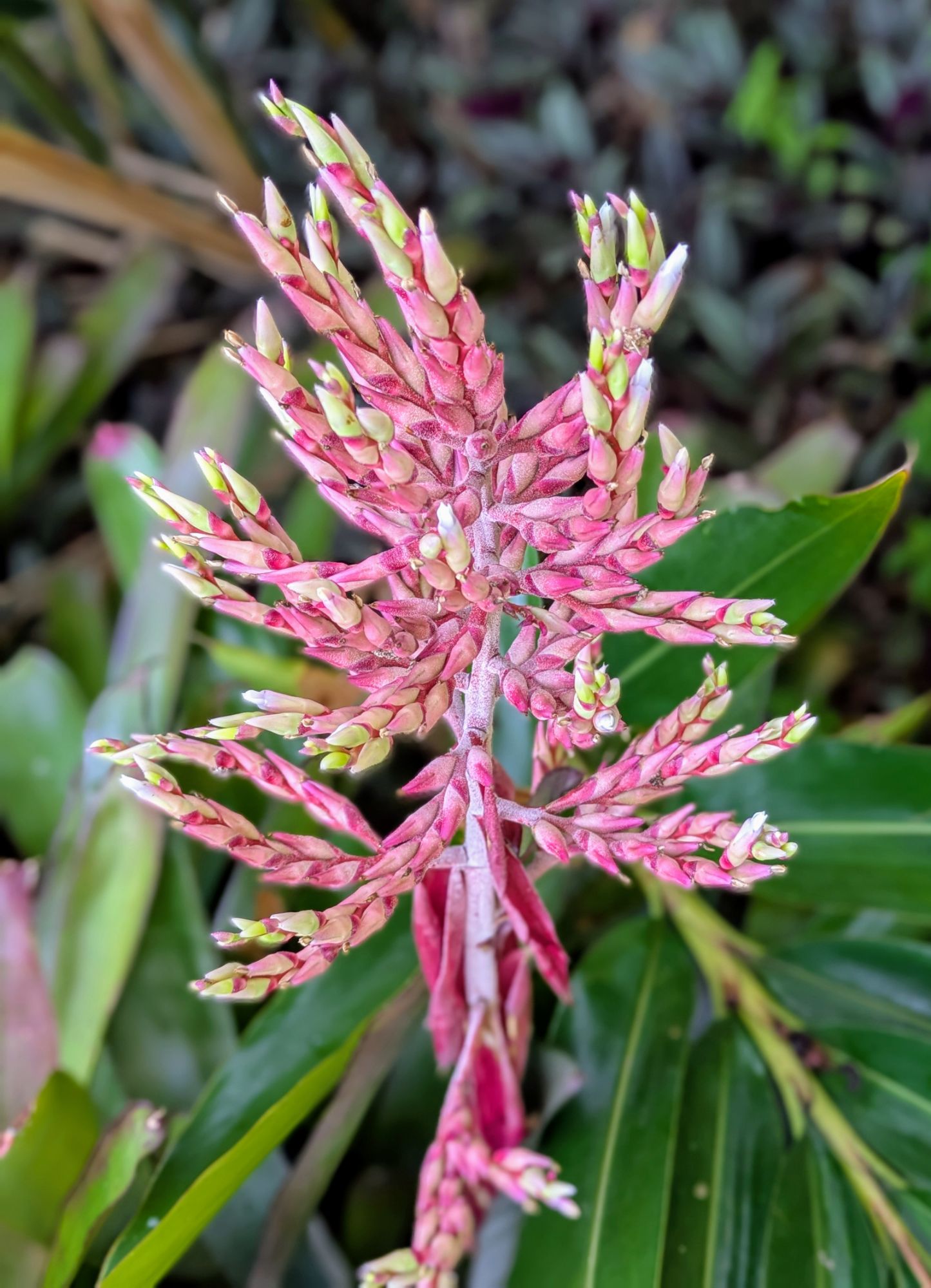
Buds on a Aechmea ‘Little Harv’ bromeliad.
Another view of ‘Little Harv’. These get much taller and open, the stem is hot pink.
This is Aechmea bracteata in full bloom. These last a long time and eventually dry to a straw color.
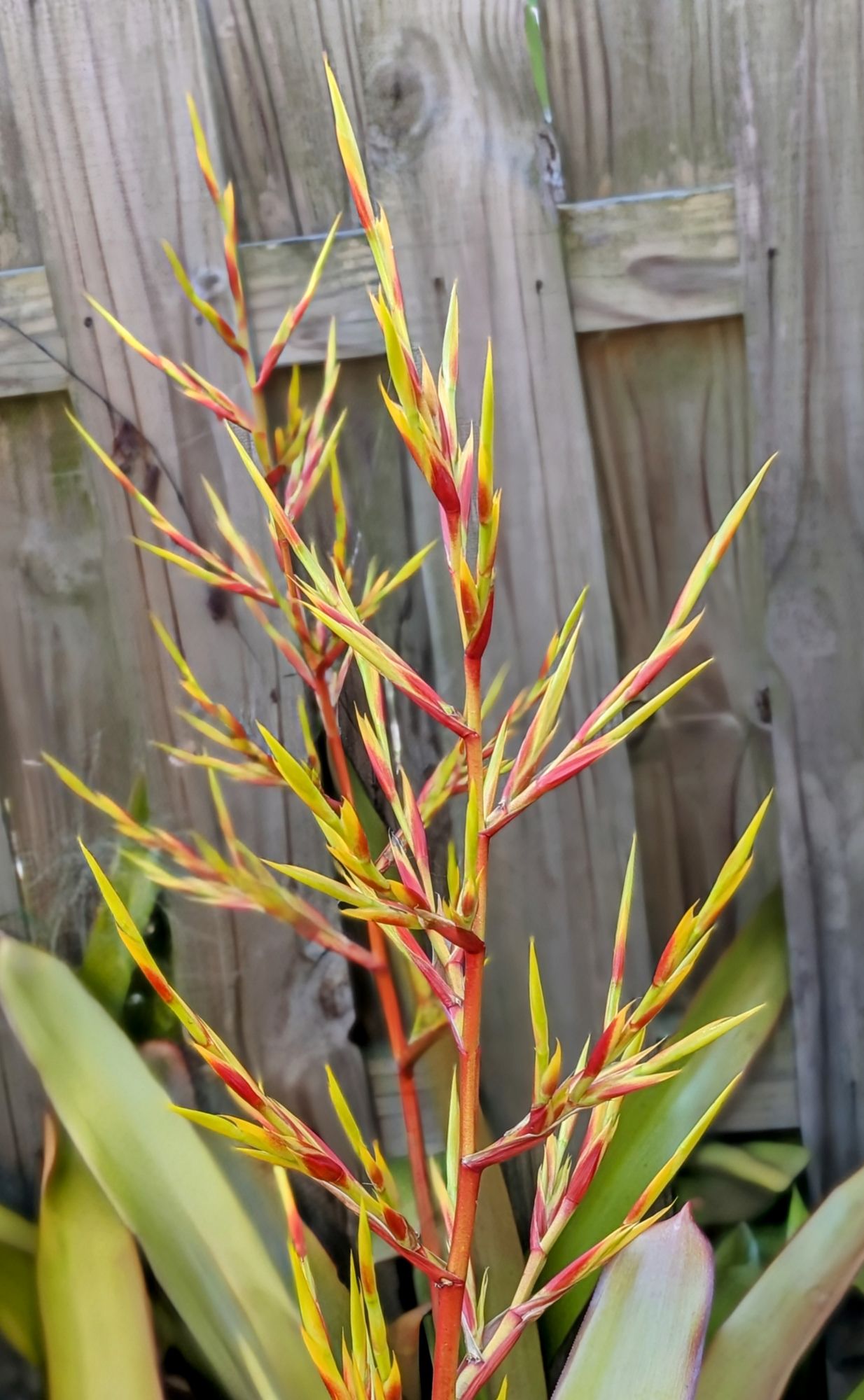
Aechmea blanchetiana ‘Lemon’ shooting up flower spikes. These are three or four feet tall and will open up a bit. They remind me of crustaceans.
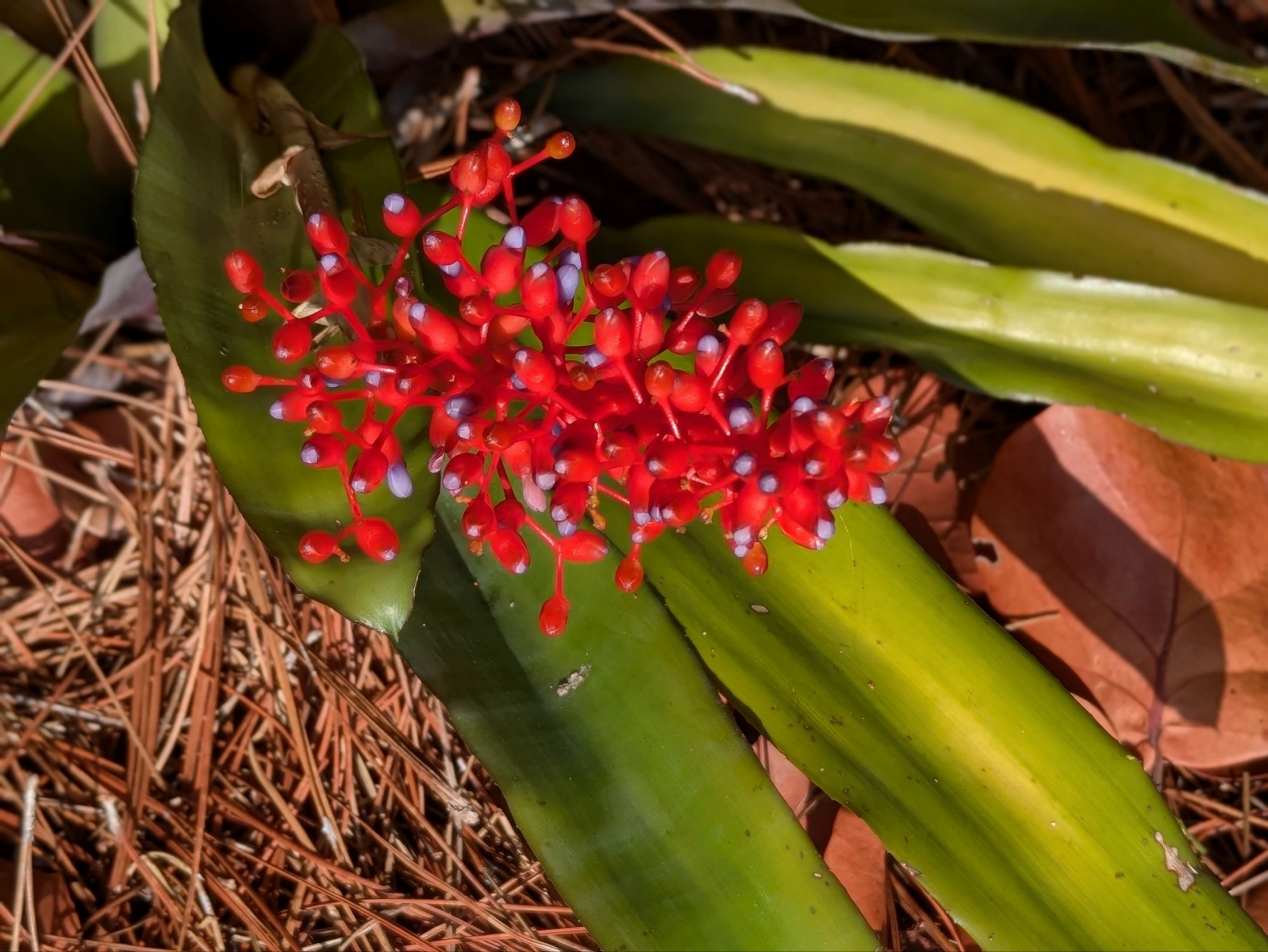
Aechmea miniata bromeliad flowers. These are my favorites. Easy to grow and nice, low foliage that is not sharp.
That’s all from sweltering South Florida. We are just out of the heat dome in the Eastern US thankfully. It is much warmer further north.
My garden tour this Saturday was quick. The humidity descended this morning after sunrise, the kind that fogs your glasses upon exiting the air conditioning. A few quick snaps with the phone followed a twirl around the block with Rob the Greyhound and I’m posting six items of garden interest once again.
To see more Six on Saturday posts or to join in, visit Jim at Garden Ruminations.
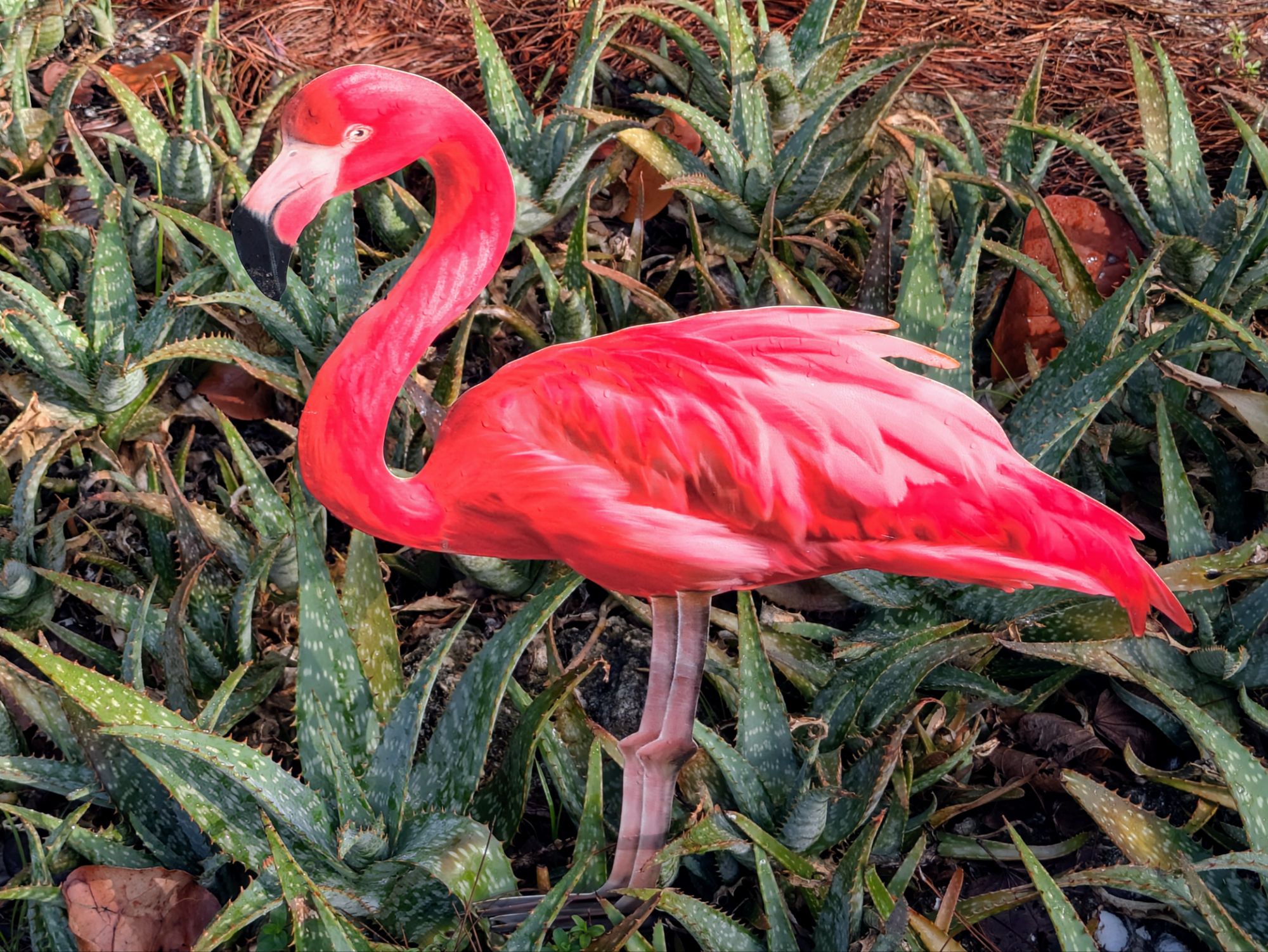
The pink flamingo was our college mascot, so I have to have one in the garden. This one lives in a mass of Soap Aloe.
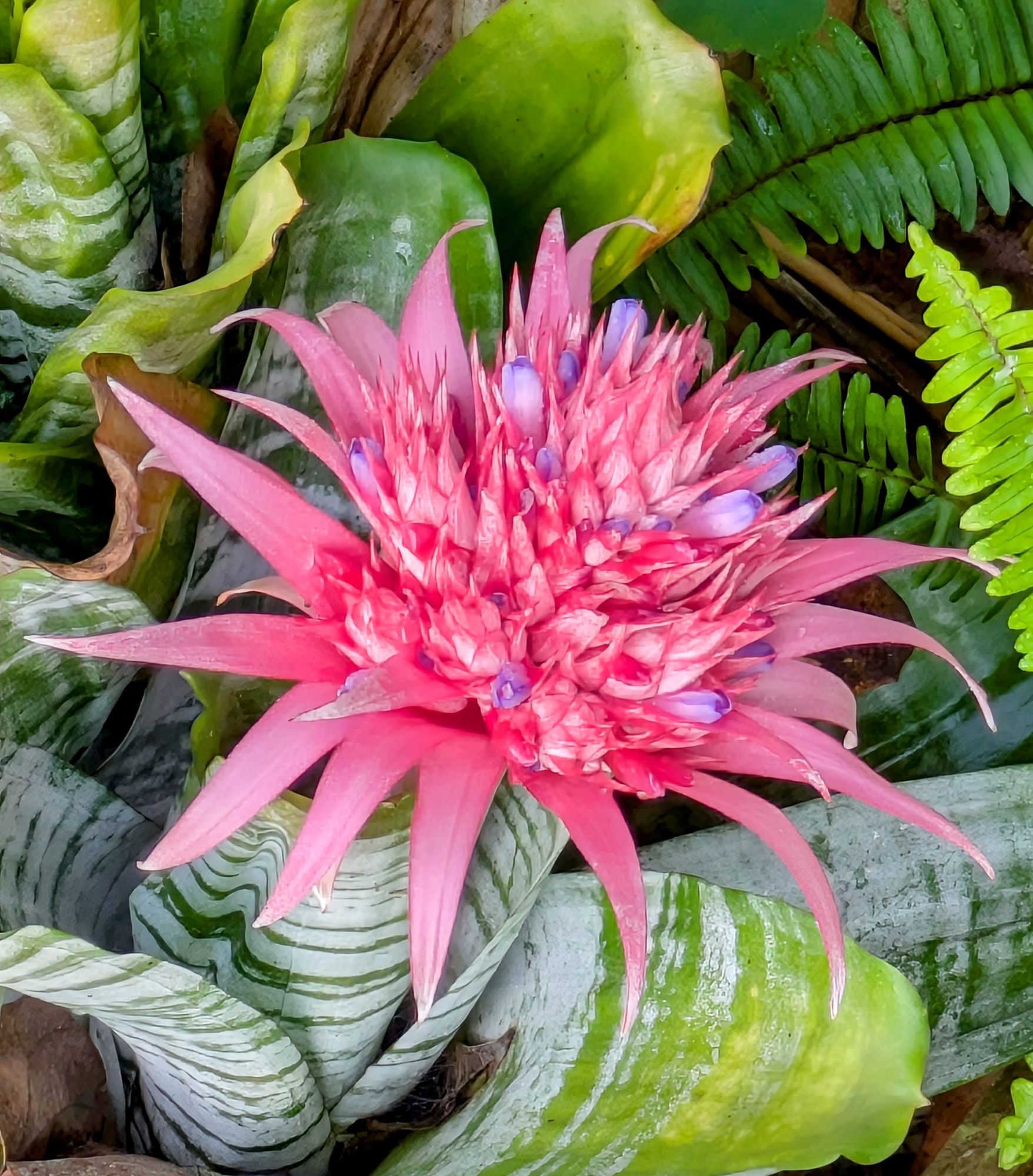
Continuing the pink theme with the flower of Silver Urn Bromeliad (Aechmea fasciata)
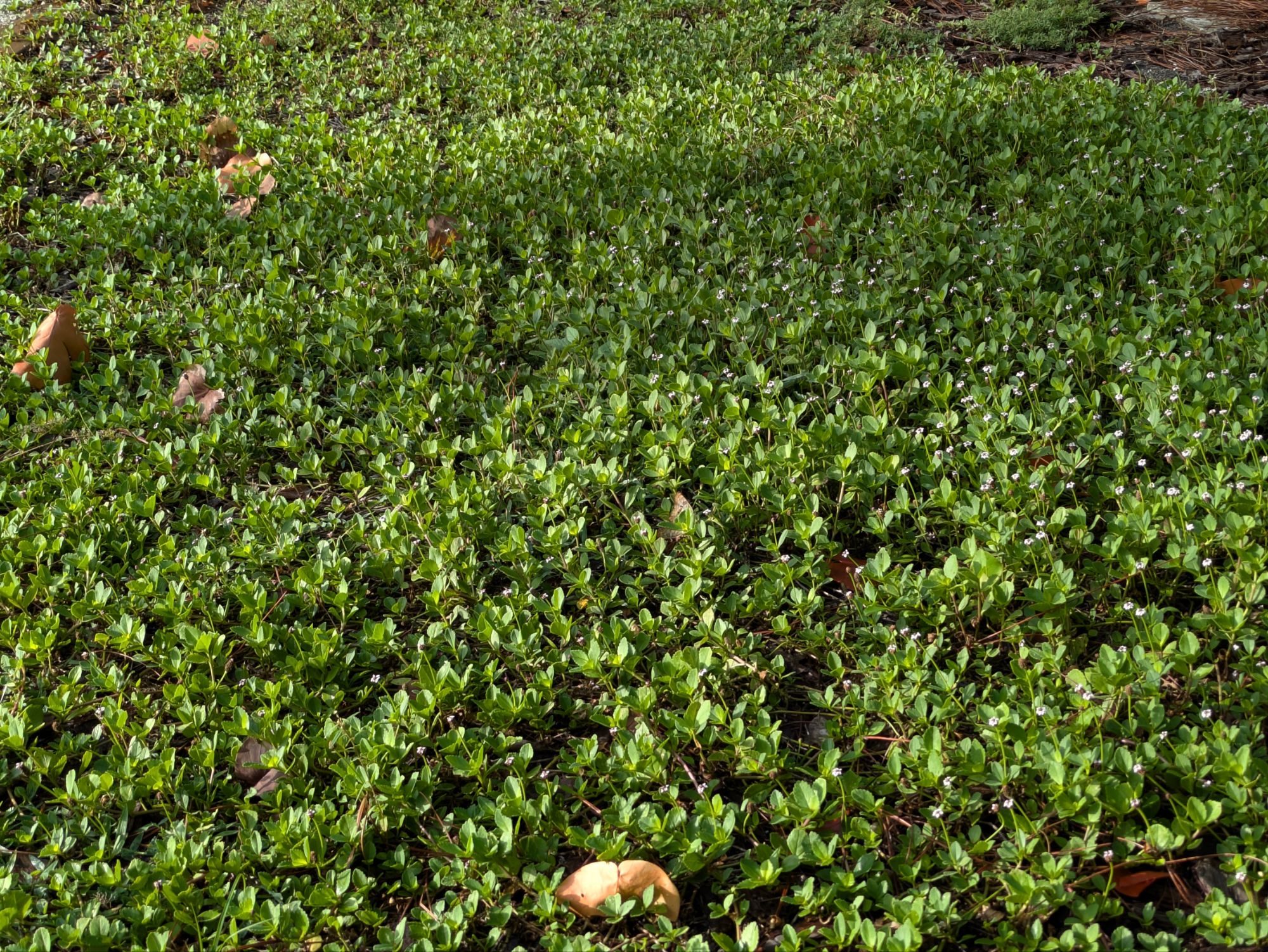
My lawn replacement project from last year is finally looking lawnish. This is Turkeytangle Frogfruit (Phyla nodiflora) This plant is an evergreen wildflower that provides food and habitat for several butterflies. The butterflies do love it – but, they are shy about photography.
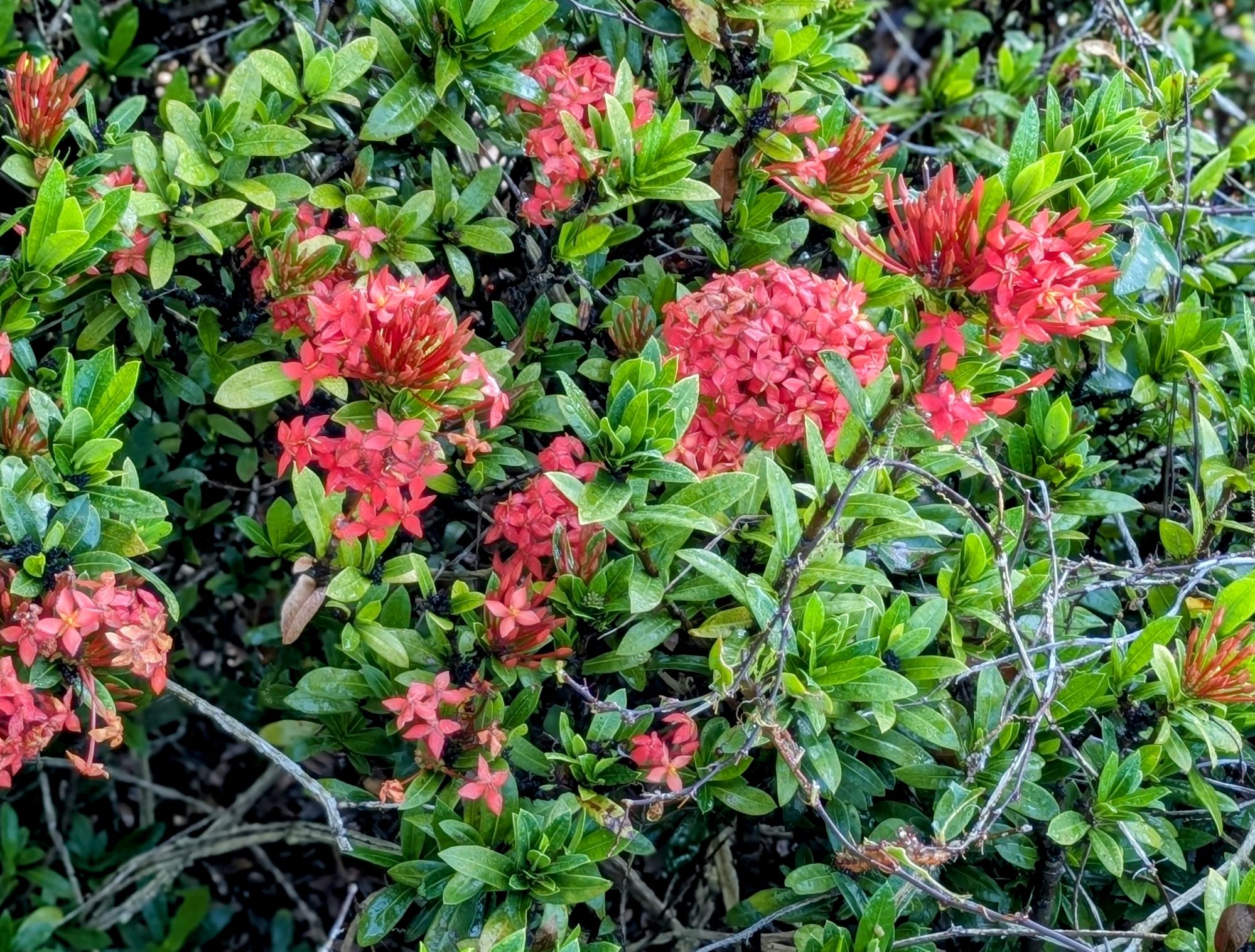
More butterfly habitat. These are Maui Red Ixora. The vines rambling through the shrubs are Corkystem Passionflower (Passiflora suberosa). The flowers of the Ixora provide nectar for the butterflies while the Passionflower vines provide food for the caterpillars. Given that the vines have been completely denuded I think we are having a good butterfly year. The vines host Zebra Longwing and Gulf Fritillary butterflies. The Gulf Fritillary butterflies are known for their aggressive mating behavior (foursomes!) It’s a wonderful aerial acrobatics show in the garden every sunny day.
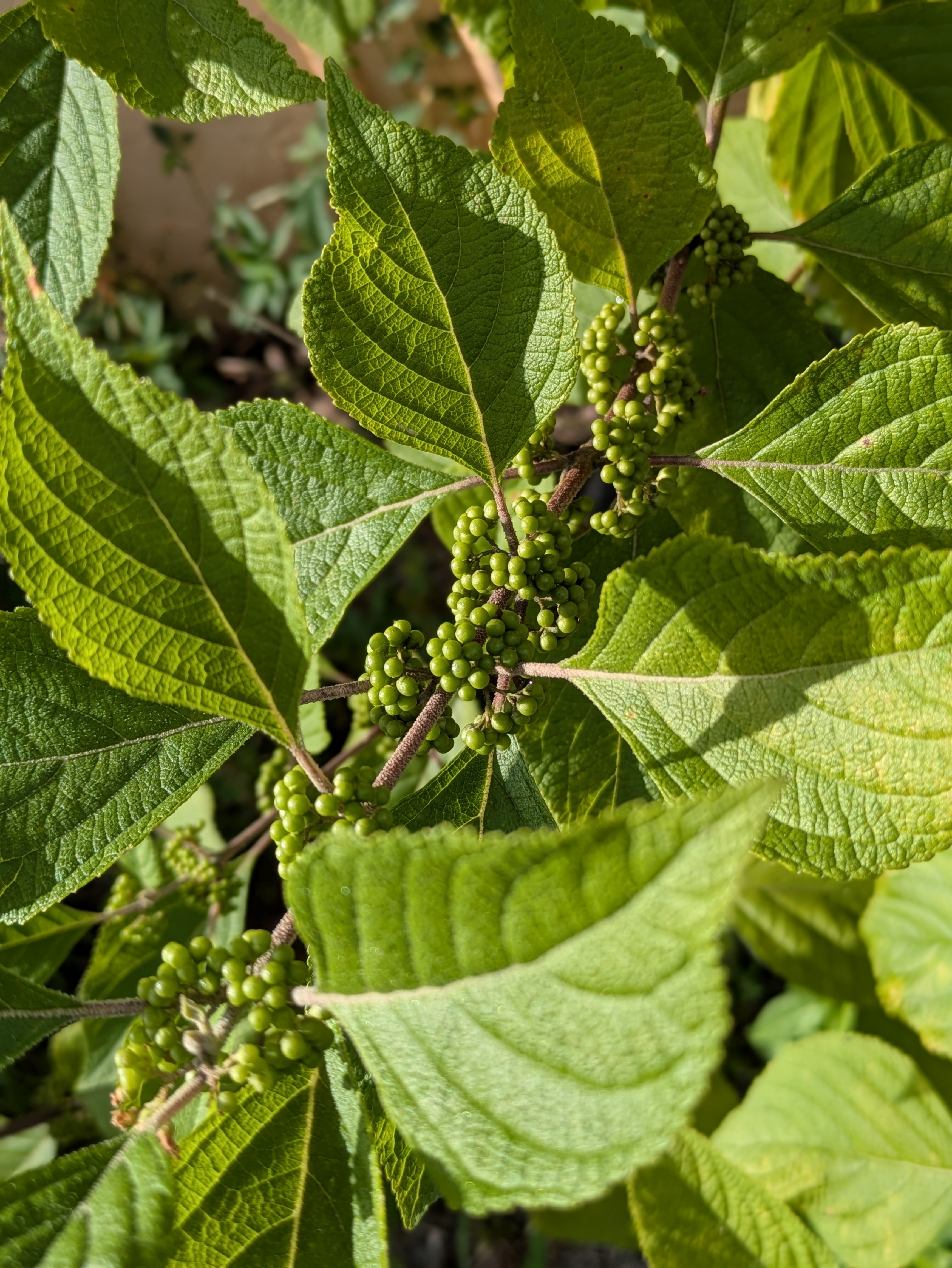
Another pollinator plant is doing well. Green berries are formed on the Beautyberry (Calliocarpa americana) The butterflies love the flowers and later these berries will turn a deep purple color and birds.
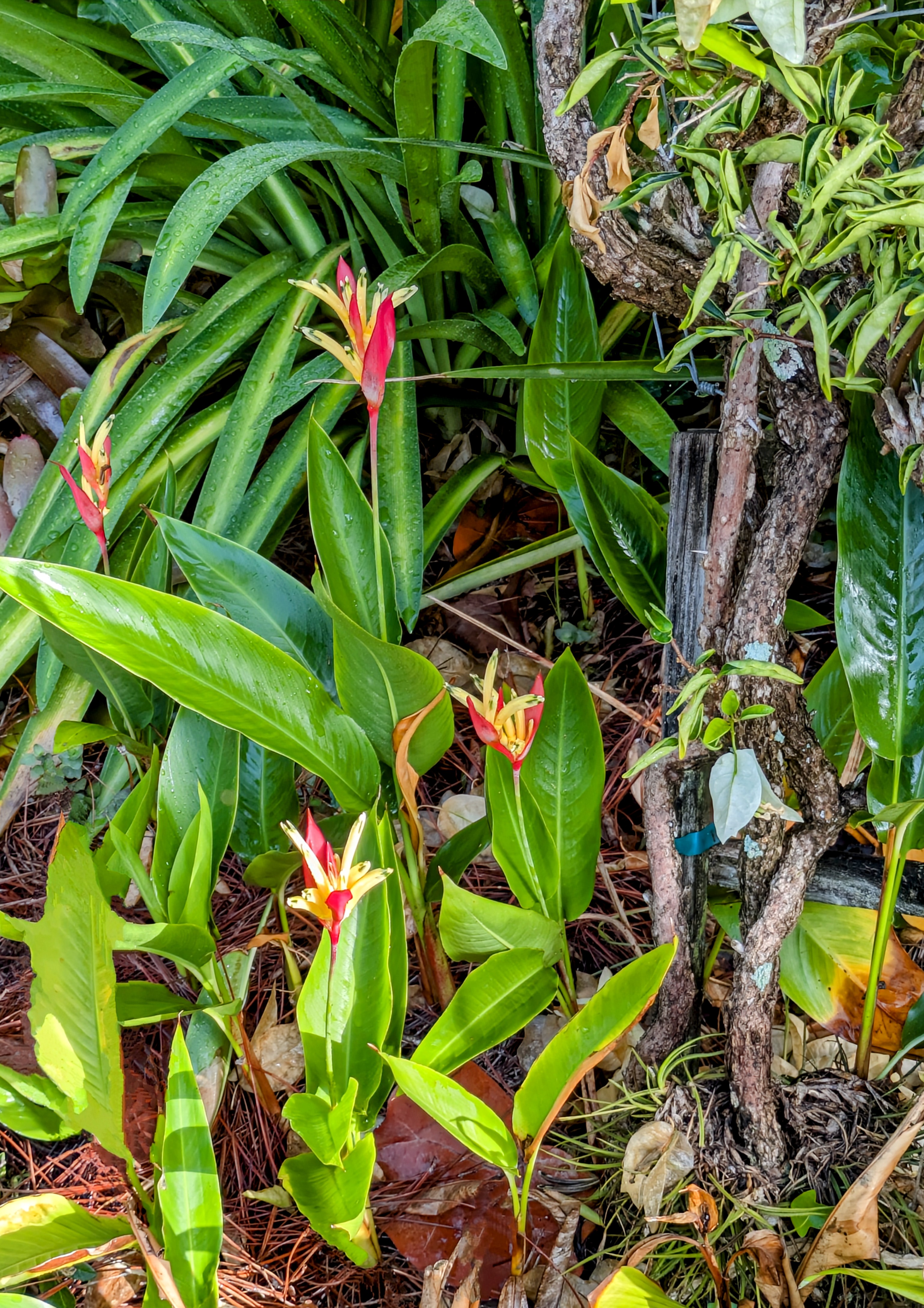
‘Lady Di’ Heliconia (Heliconia psittacorum) in place in the garden. These skirt another lady ‘Miss Alice’ Bougainvillea.
That is all from my garden. I will be pursuing cooler pursuits this Saturday.
Truth be told, I think the days are a little too long. I am happy the sun is heading back down in the sky. Living as far south as we do there can be a dramatic shift in light, especially on the due north side of the house. Full sun in summer followed by full shade in winter. A plant selection dilemma. I’m still finding a lot of joy in the garden . Here are my six tidbits of joy from this morning.
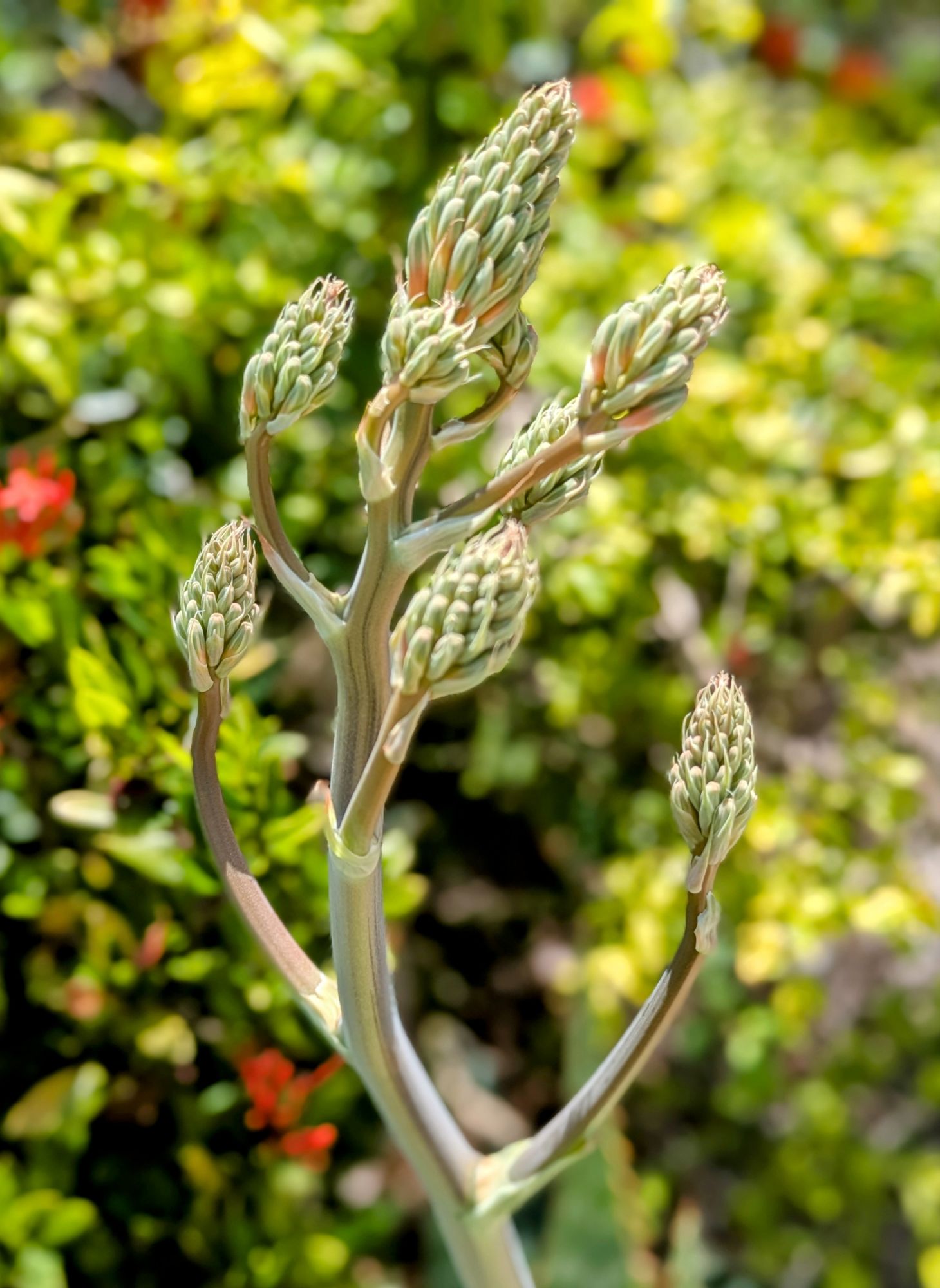
Buds are shooting up on the Soap Aloe (Aloe saponaria). I love these buds, so architectural. They are taking over the garden and have thorny foliage, so I leave them be for the most part.
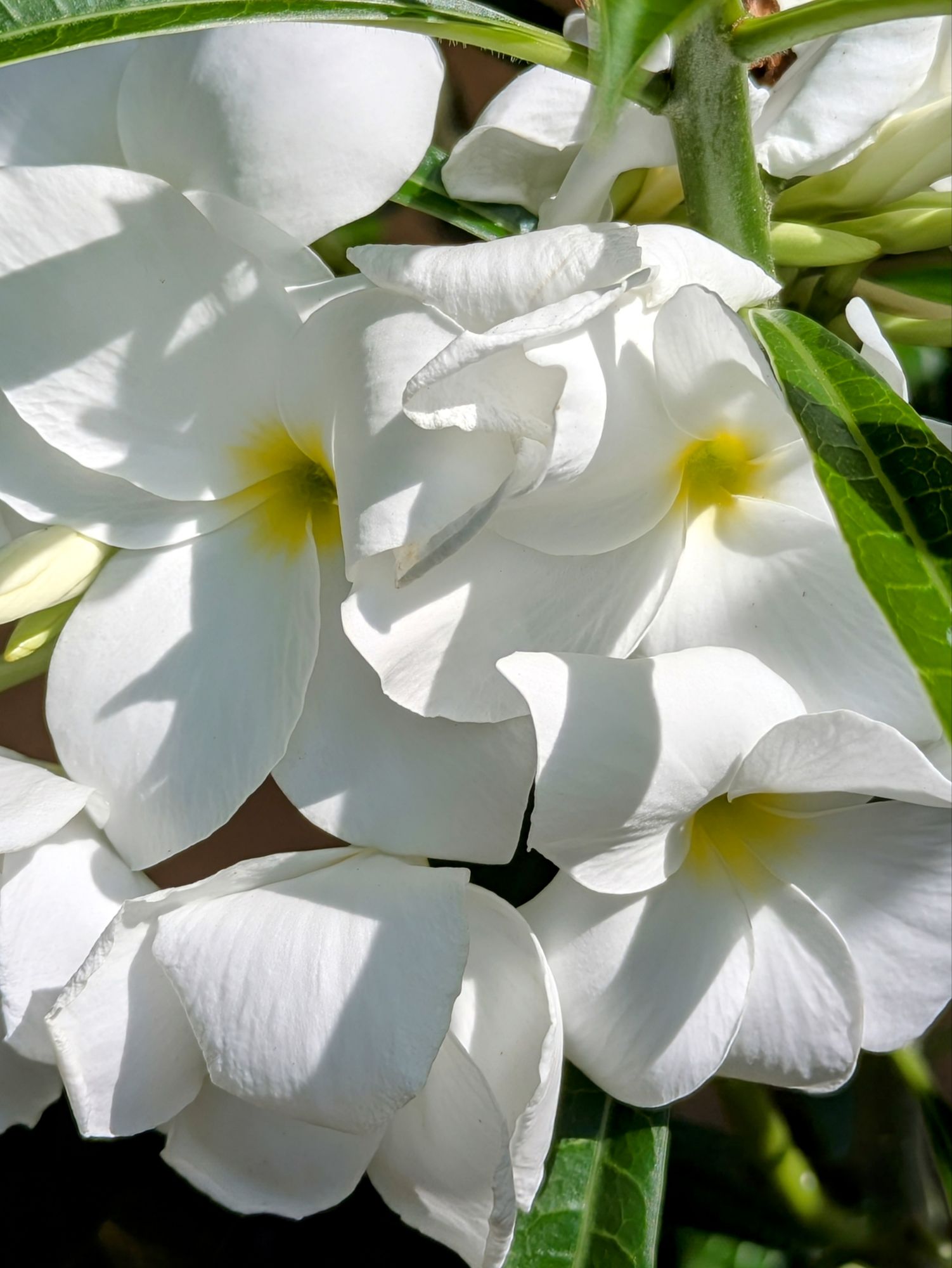
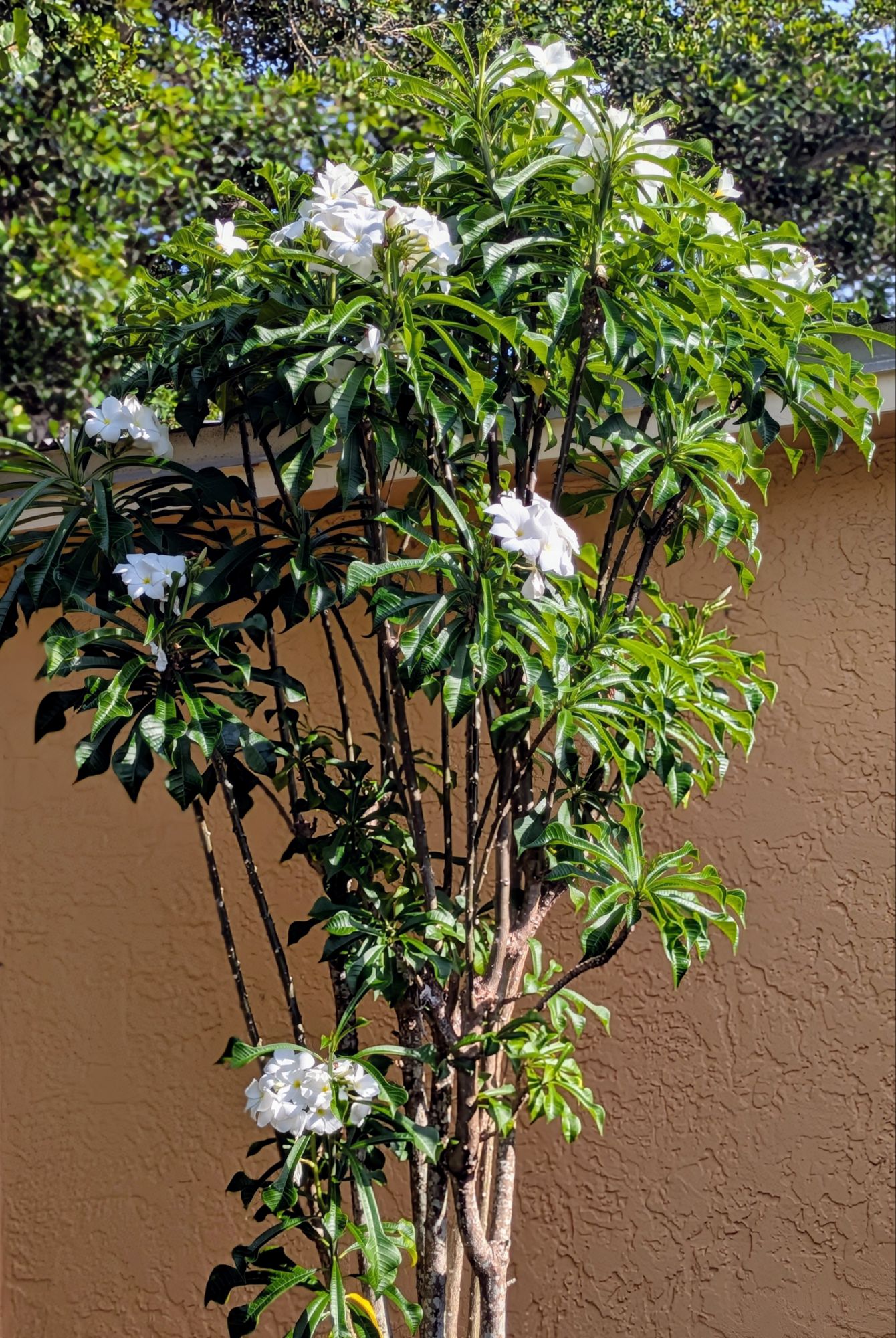
The Bridal Bouquet Frangipani (Plumeria pudica) is ready for June brides. I may cut a bouquet for myself as I think this one is a bit too tall.
I am not sure a bridal bouquet from this plant would be a great idea. The drip toxic sap after cutting. But it would smell great.
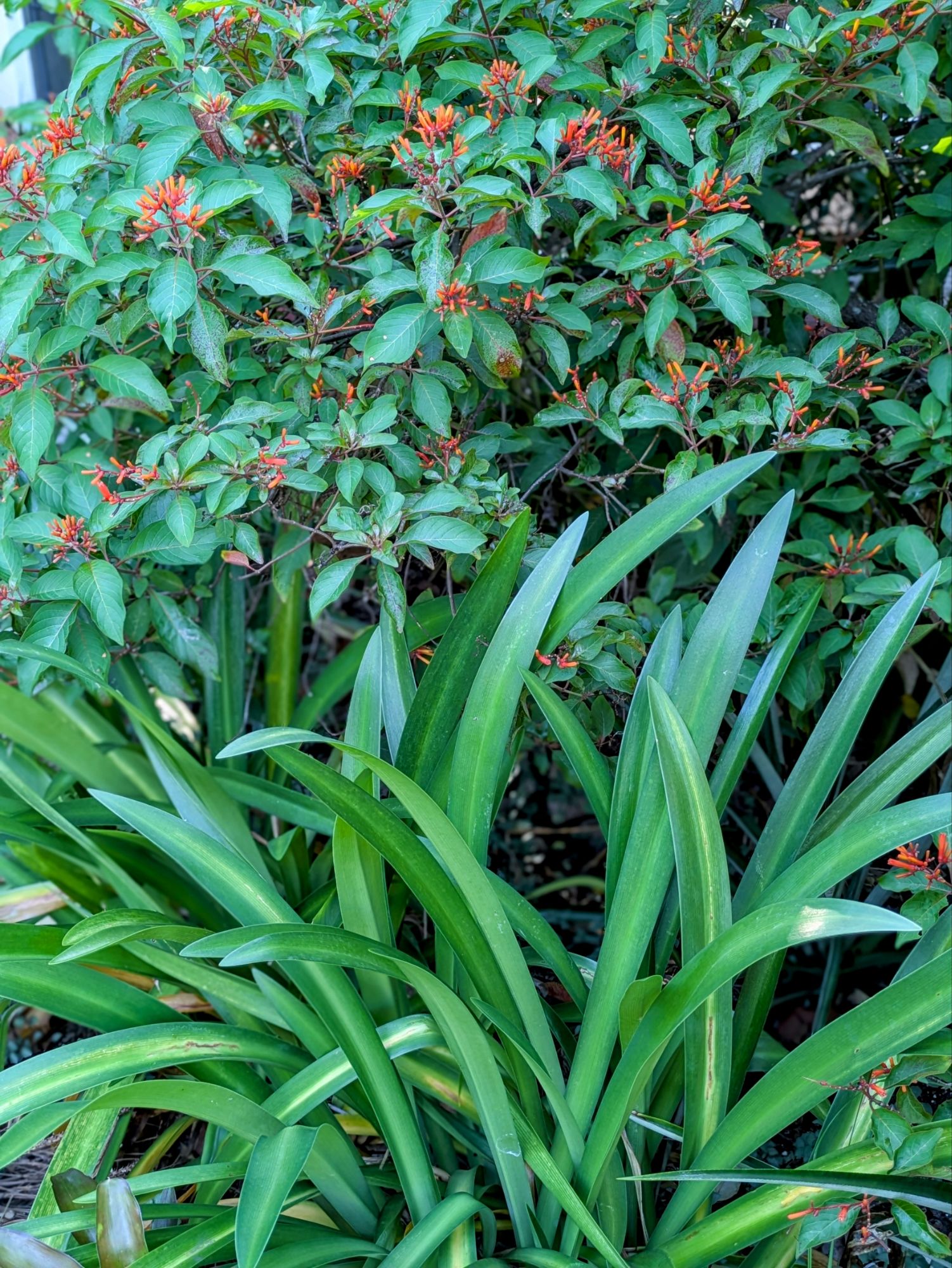
The Firebush (Hamelia patens) is underplanted with lush Alligator Lilies (Hymenocallis latifolia). The Firebush is a major pollinator nectar source, so I have masses of butterflies. This is the best Alligator Lily foliage I have had – these are shy about flowering and seem to enjoy being crowded. Fingers crossed for fragrant, white lilies that open at dusk later this summer.
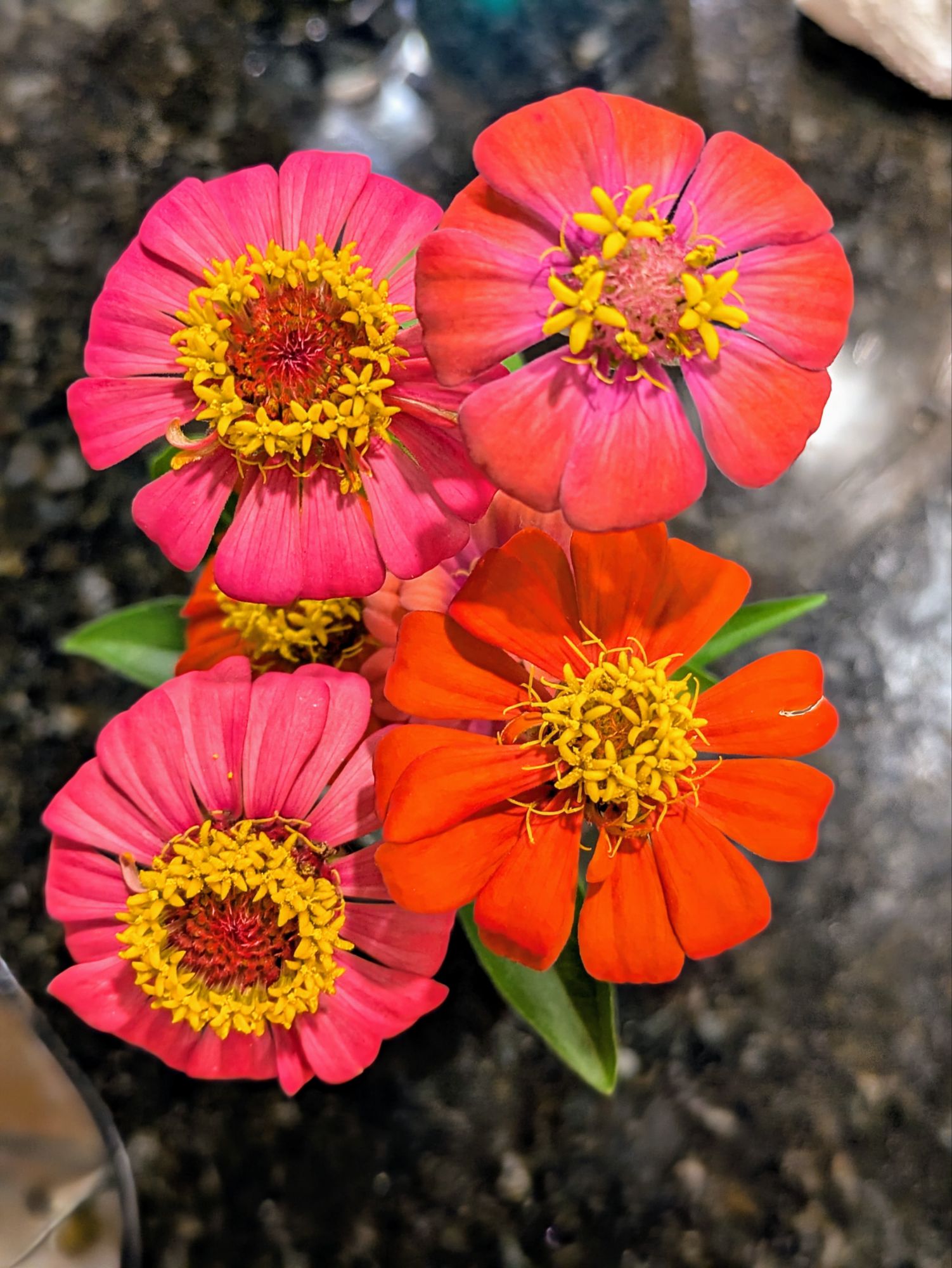
A true summer joy and a symbol of endurance. A nice array of hot colors from zinnias
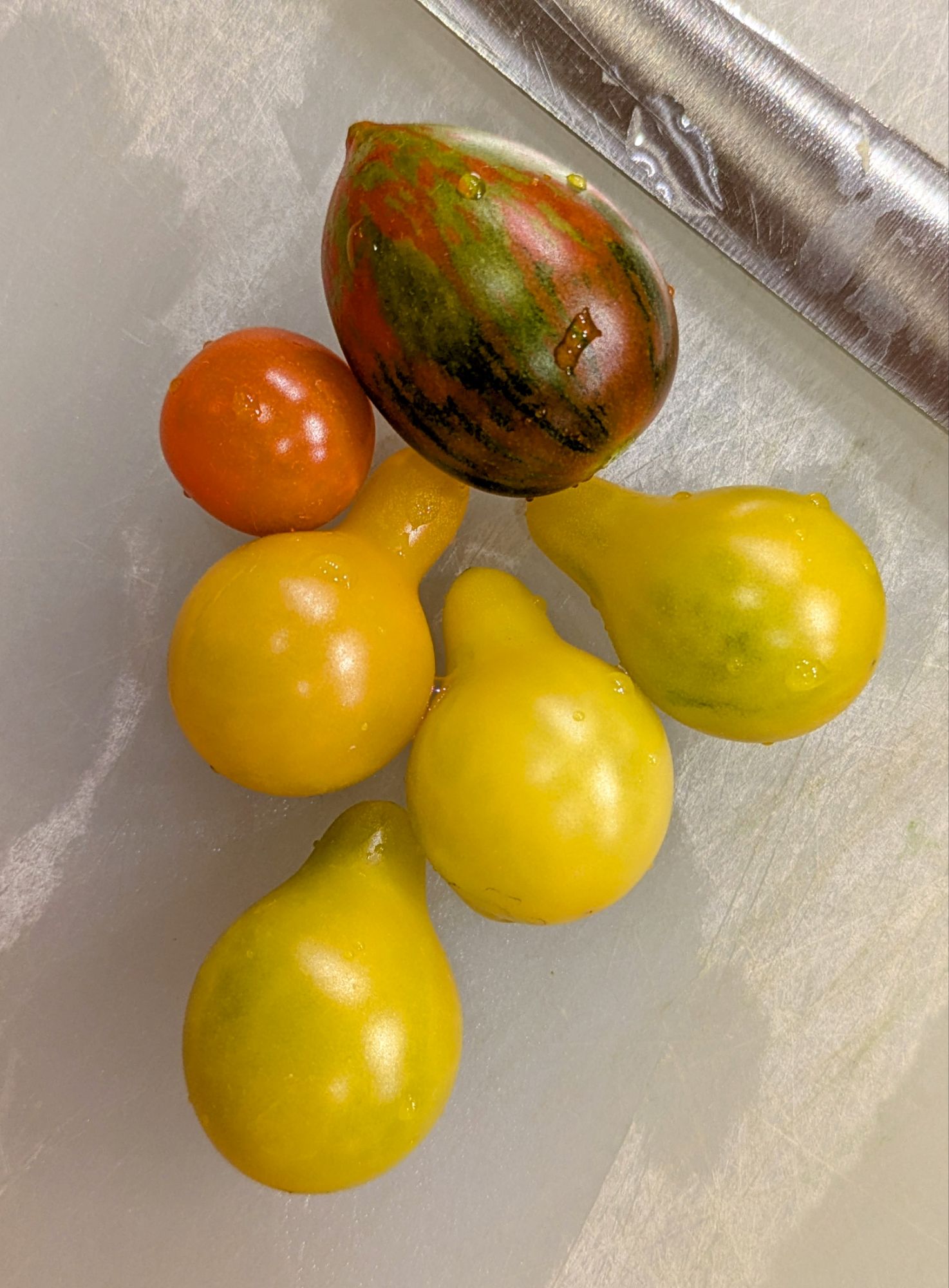
More garden joy. This is as late in the year as I have ever had tomatoes. Many South Florida gardeners grow tomatoes October through May. I planted a second crop and will plant another crop in August. Hoping for year round cherry tomatoes. These are yellow pear, sweet 100, and Brad’s Atomic. Brad’s is off the list for the next crop, just a bit weird tasting and not very prolific.
I’m still harvesting Nam Doc Mai mangoes and have pounds of mango in the freezer. Also doing rain dances. Things are looking more promising for next week.
Thanks to Jim at Garden Ruminations for hosting. Follow the link for more garden tours.
It’s a sunny blue sky Saturday morning in South Florida. Two days ago, it was a totally different story. Late Wednesday afternoon, Hurricane Milton made his presence known by dropping several tornadoes a little too close to my house. If you have seen the Spanish Lakes damage images in the media, that is about 15 miles from my house. The tornadoes were spawned by an outer band of the storm as it was making its way towards landfall. Milton eventually passed about 100 miles north leaving only minor damage in the garden, frayed nerves, sore backs (We had put up our hurricane shutters in a rush) and 24 hours without power.
This garden update is for Gill, from Off the Edge Gardening blog, who always checks in after a storm in Florida. It warms my heart to get these checks. Thank you, Gill.
To visit more gardens on Saturday morning, that are entirely hurricane free, visit Jim at Garden Ruminations.
My first ever video – the outer band going through the garden THE VIDEO
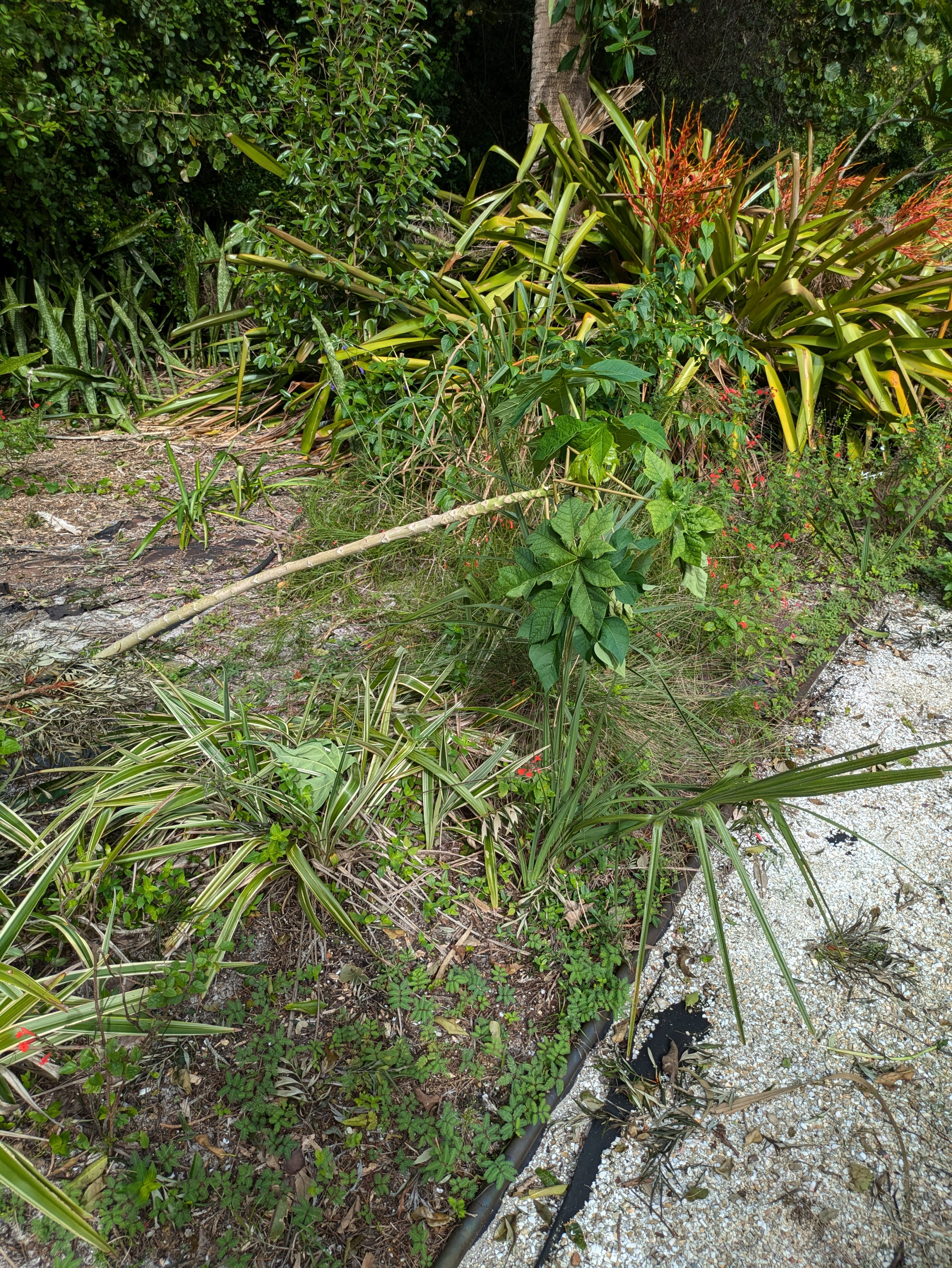
My Papaya tree was smashed by a falling branch. I am going to cut it off and see what happens.
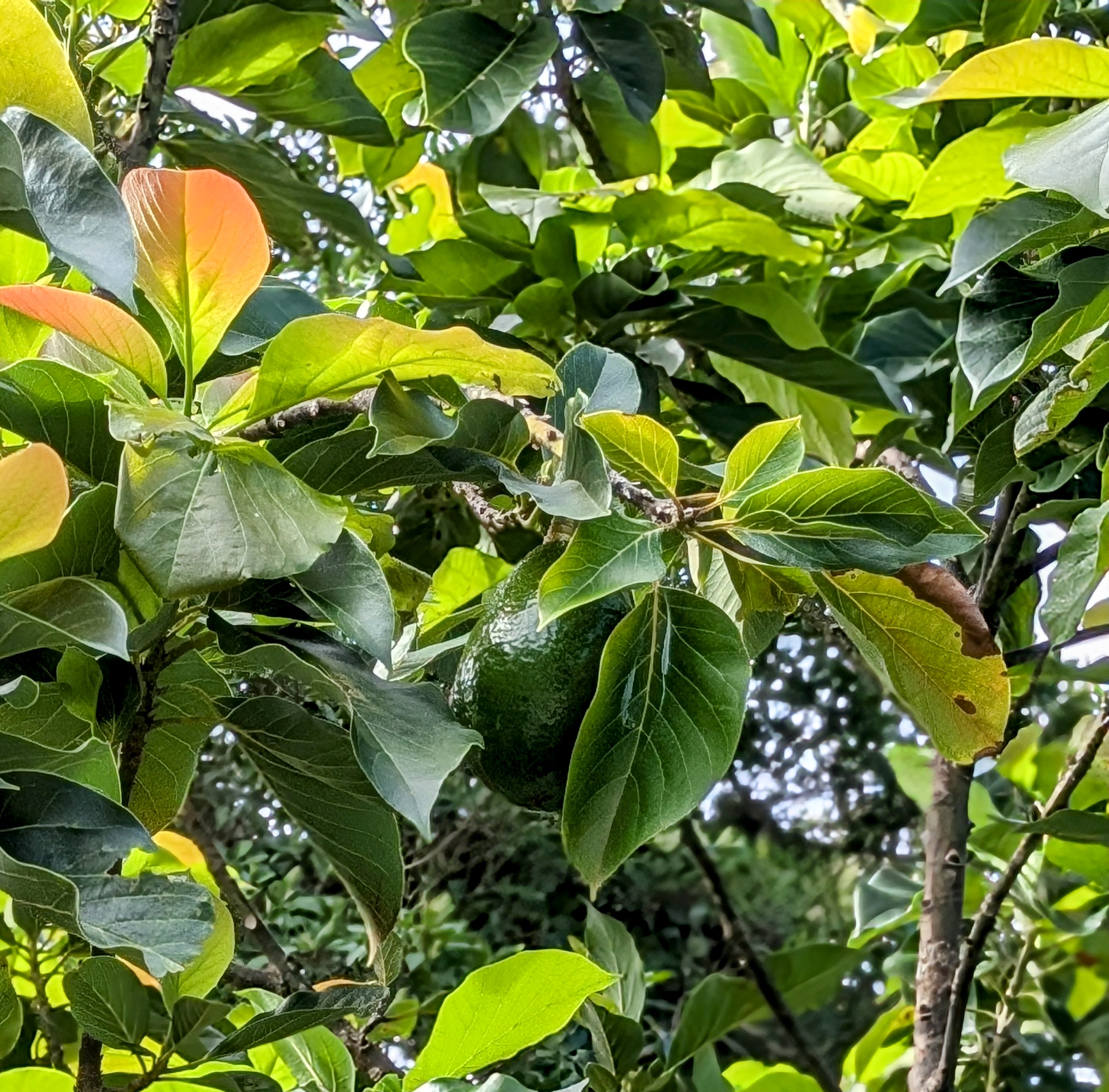
The solitary Avocado hung on through the storm. The foliage on this tree looks good so far.
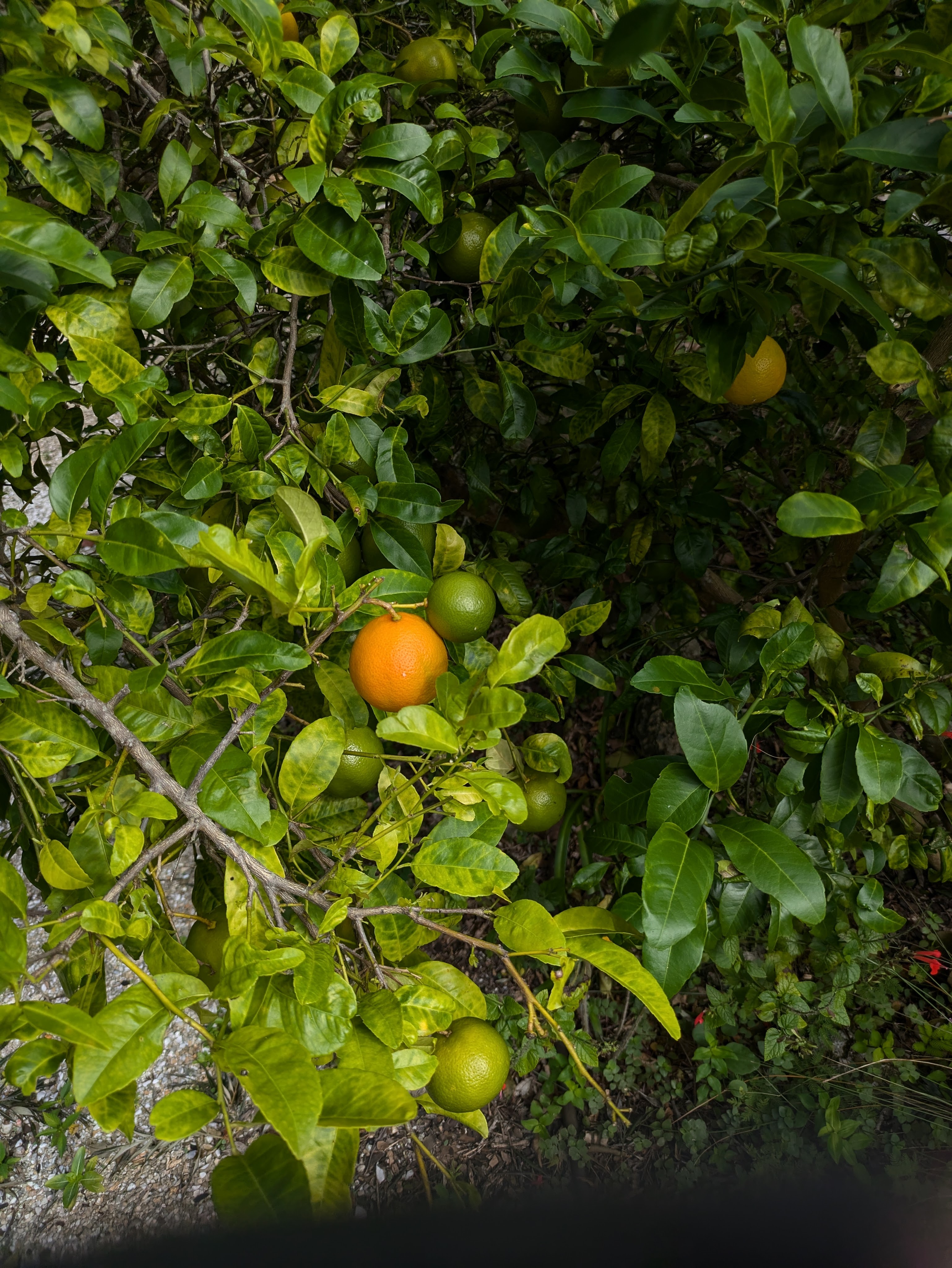
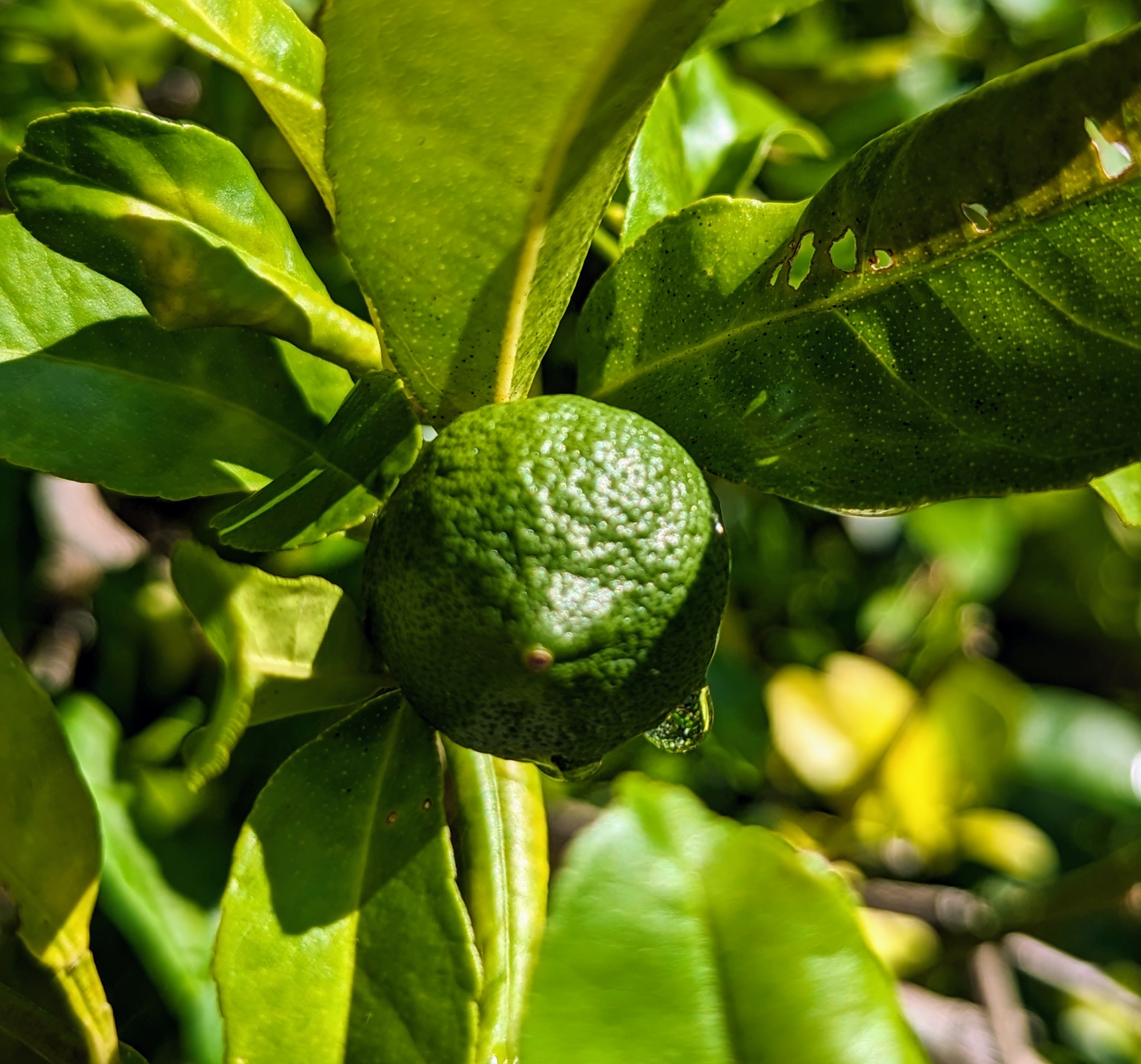
Rangpur limes are still intact and ripening. A few were lost to the wind.
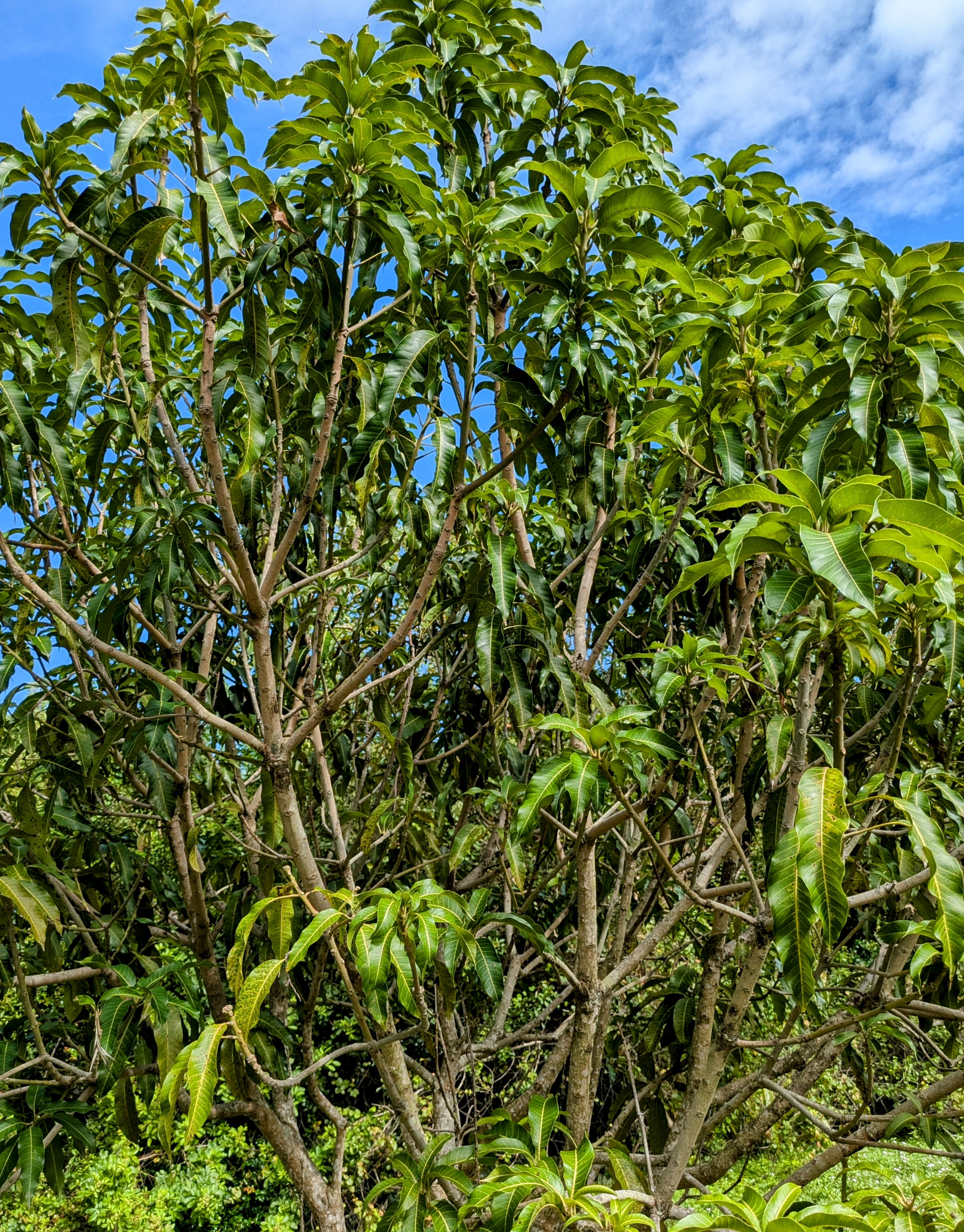
The Nam Doc Mai Mango had most of its interior leaves blown off.
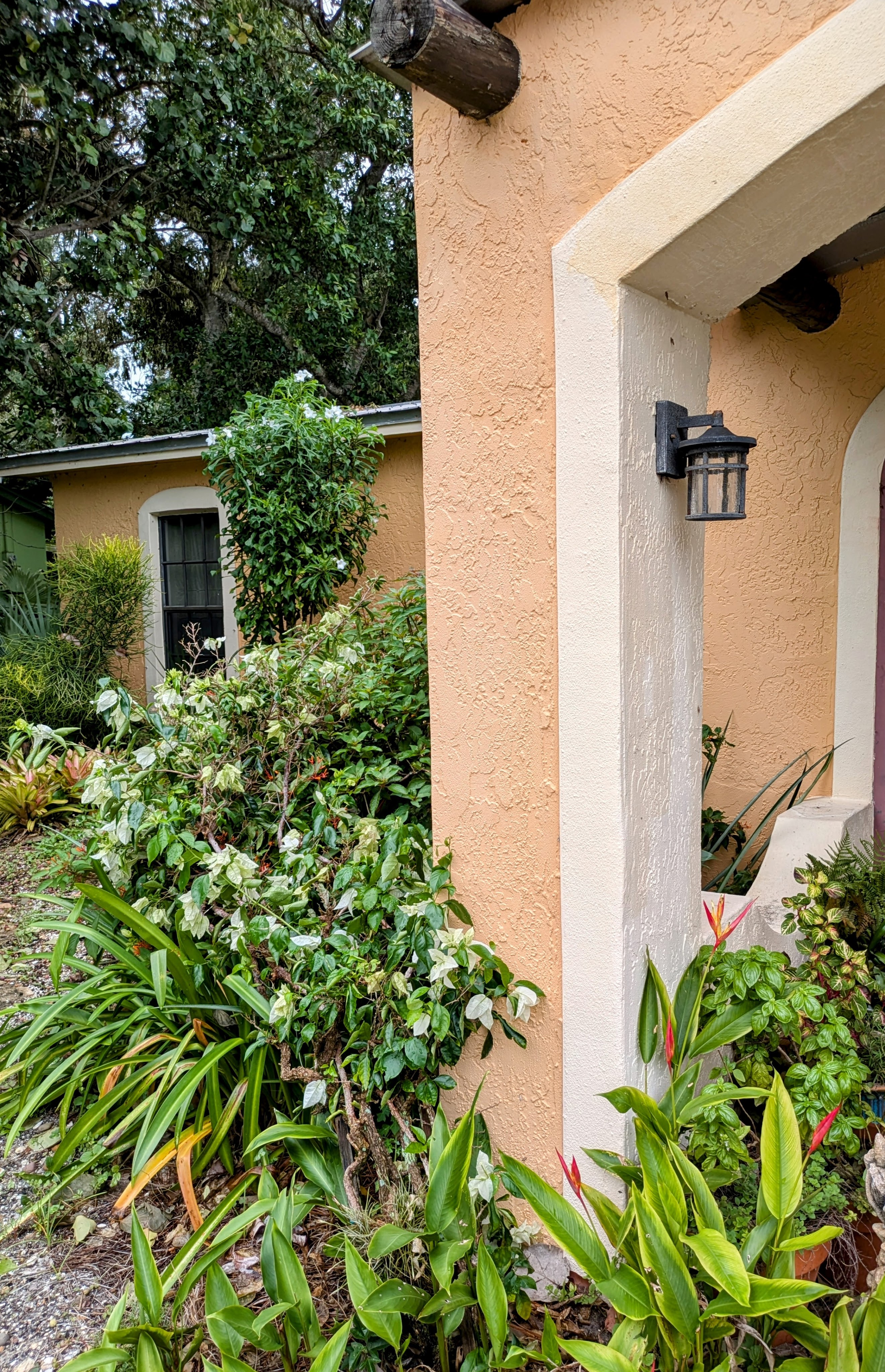
Miss Alice Bougainvillea was blown off her support. She is reclining in the shrubbery and shall be righted soon. The support blew over with her – it’s hogwire that hooks over the brown post at the top of the wall.
Amazingly, within hours of the storm passing, the butterflies were back out. A little worse for wear, like us.
It has been a hot and humid week. I strolled the garden in search of plants surviving and thriving in the heat. There is always a surprise or two. I pulled a few weeds, but mostly noted that there are weeds – waiting patiently for their demise during cooler days.
To join the world wide SOS garden tours visit Jim at GardenRuminations
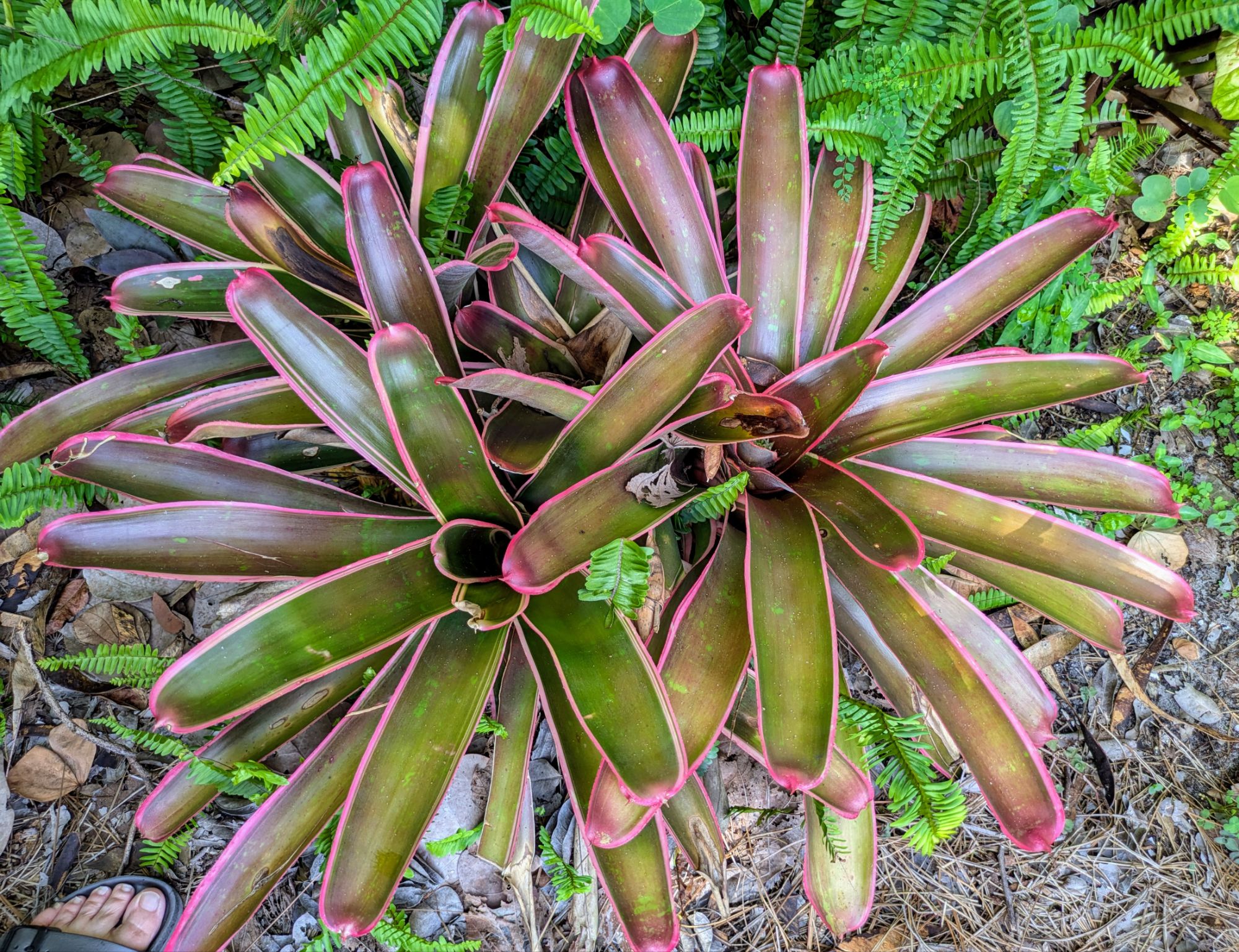
Neoregelia bromeliads are very reliable survivors here. There are so many varieties, I don’t know the names of these two. This one is just starting to flower, signaling the end of its life.
Another Neoregelia of unknown origin. I bought many of these at garage sales (nobody knows names at garage sales) as broms are absurdly expensive when nursery grown.
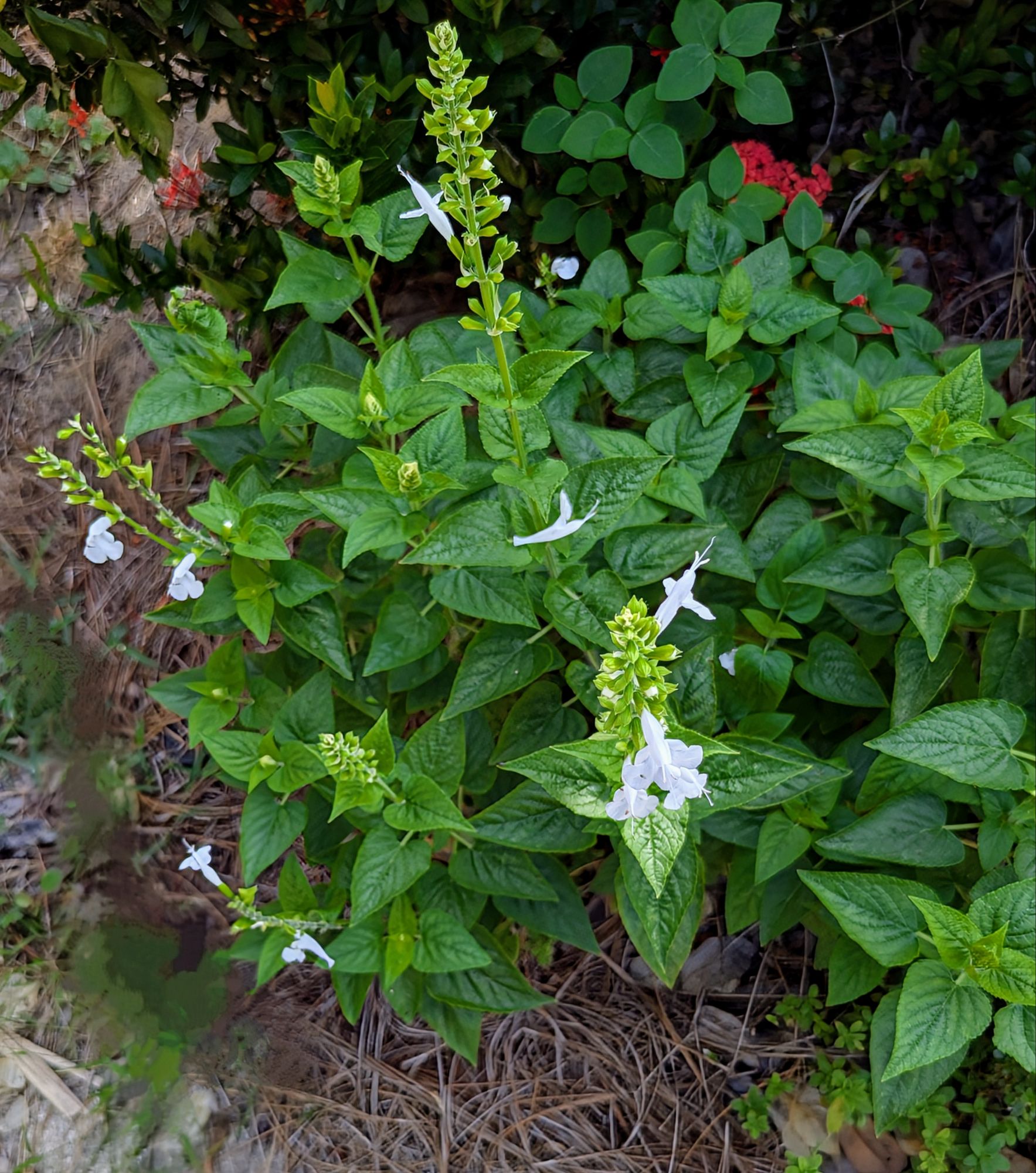
Tropical Red Salvia (Salvia coccinea) in white. These love summer rain and heat.
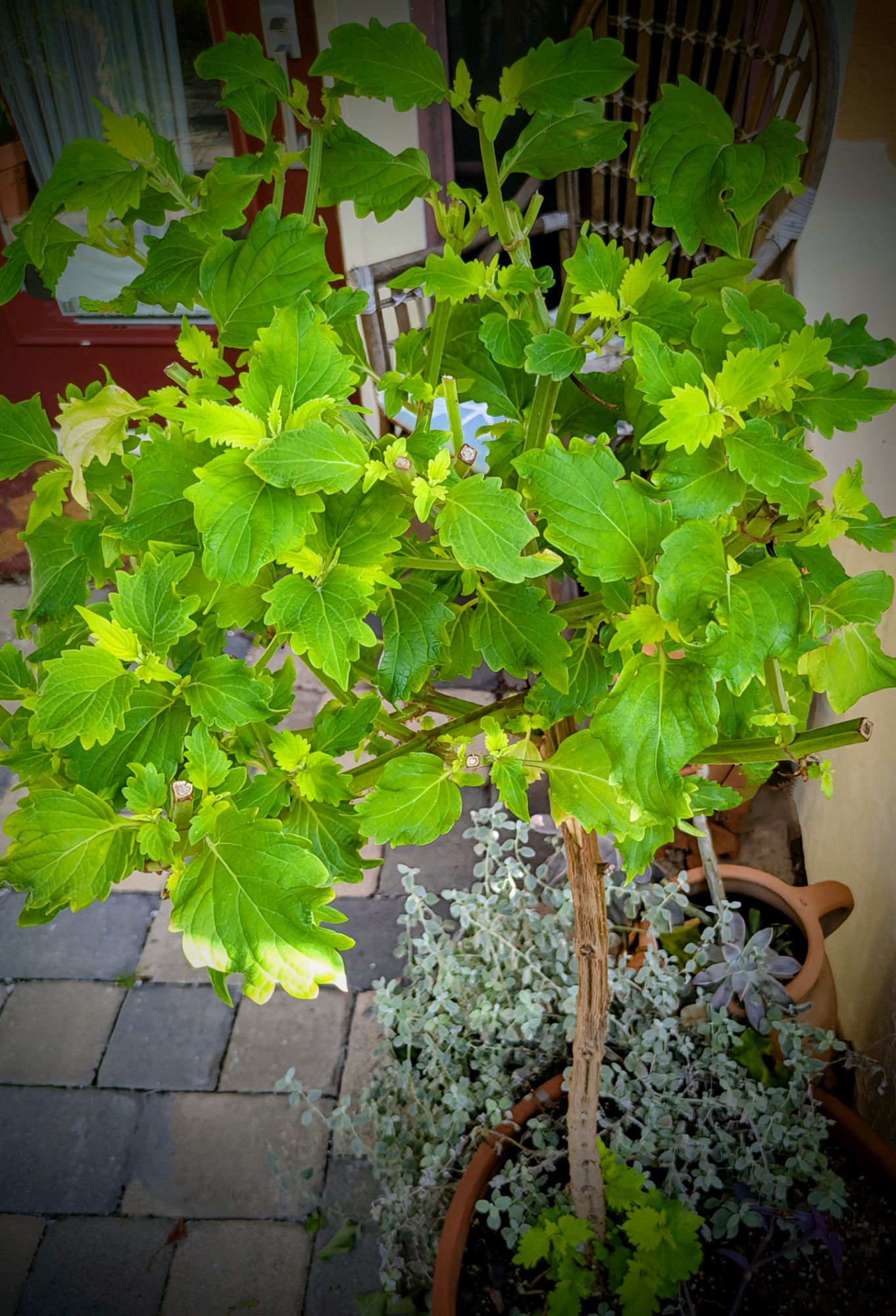
The coleus tree. I have pruned it again. The winds from Tropical Storm Debby knocked a woody branch off the side. It is surprising how woody the trunk is.
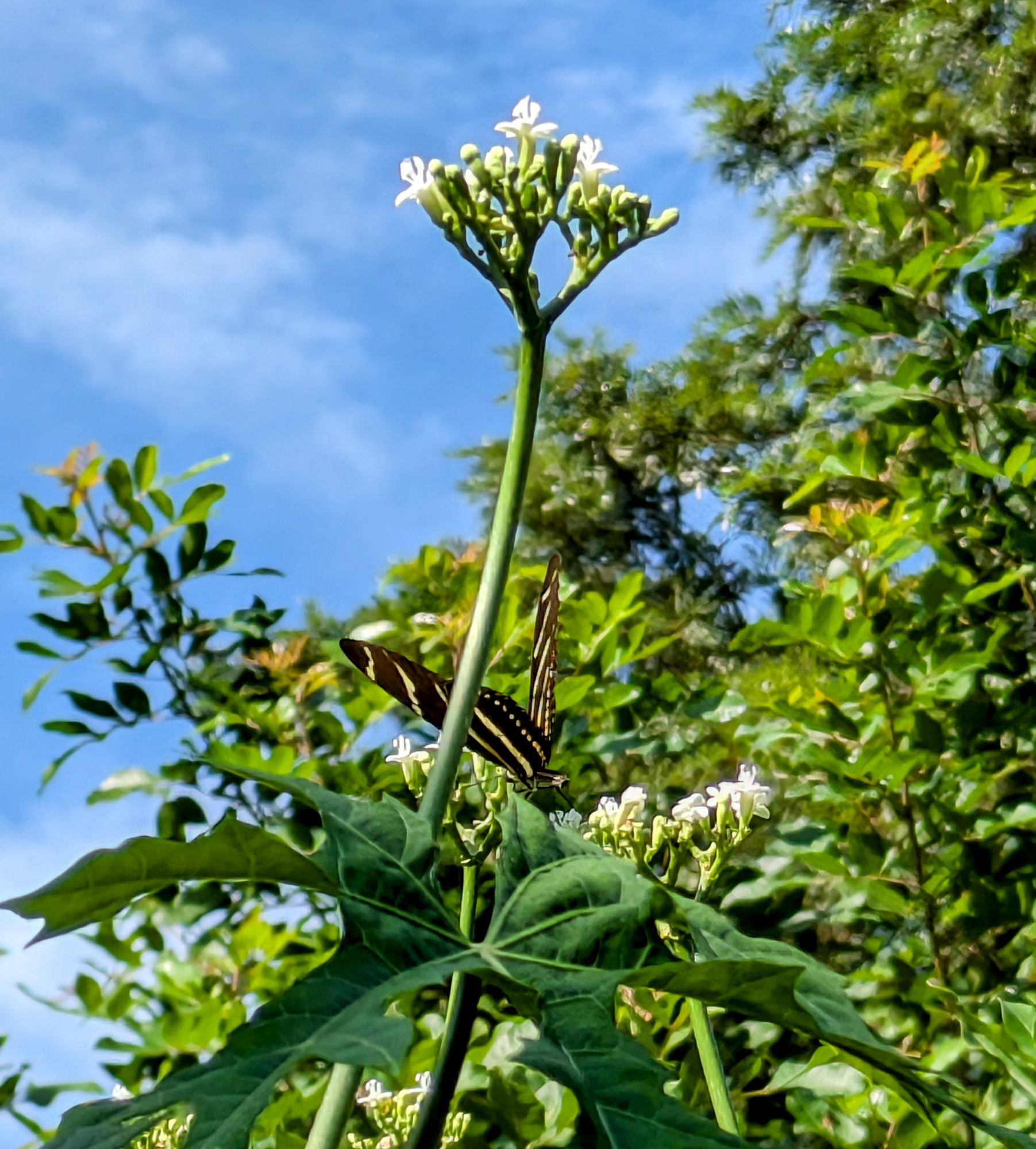
It has been a great year for butterflies. I have been lacking the patience to stand in the shrubbery and wait for them to pose. This is the state butterfly of Florida, Zebra Longwing. It is sipping nectar from a Chaya tree. Chaya is a tropical spinach that grows into a multi stemmed shrub. I thought it would grow 4 or 5 feet – this one is almost ten feet tall!
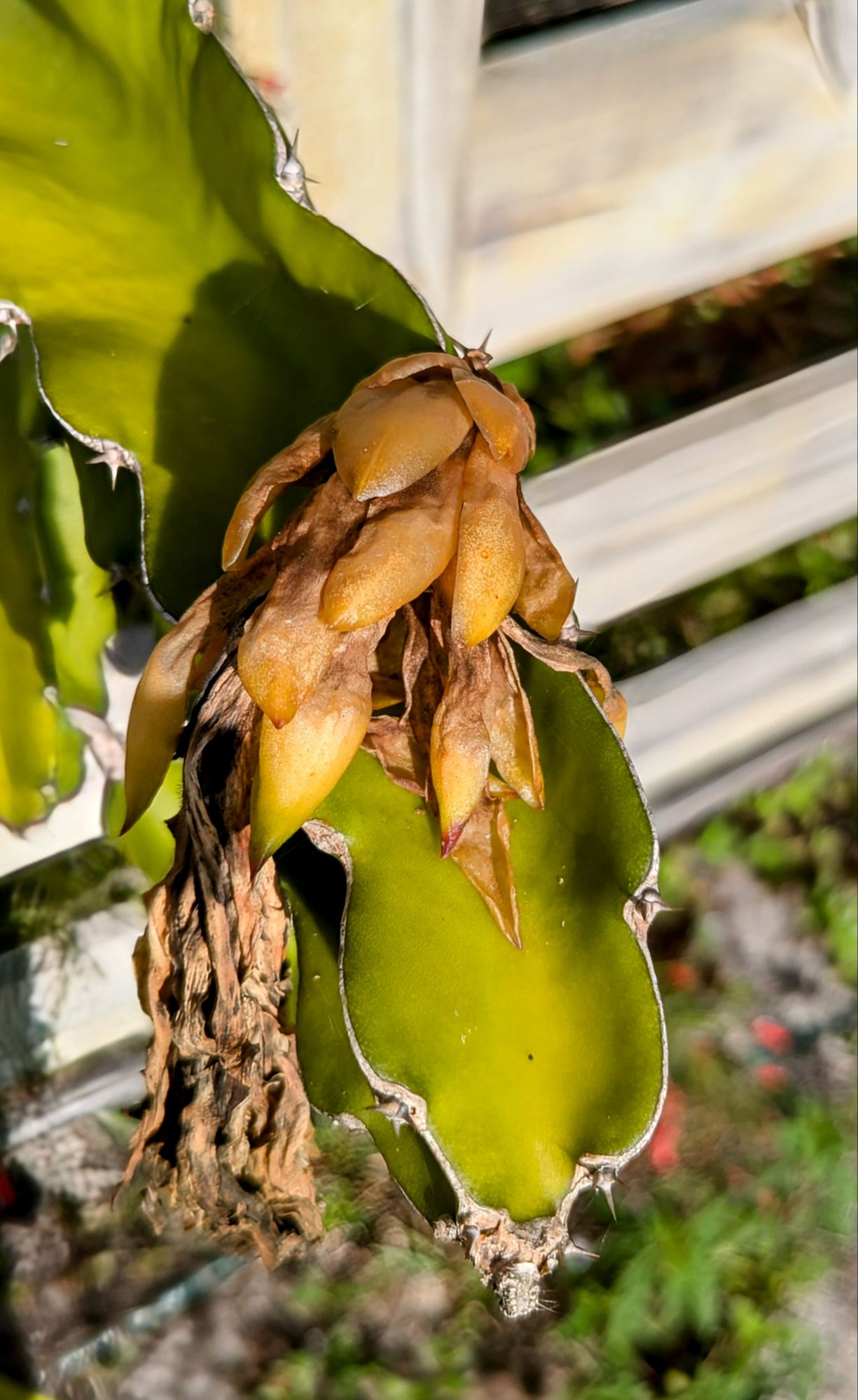
Here is the not survivor. My hopes were dashed for Dragon fruit yet again. Sigh.
That’s all from South Florida. Dreaming of cooler days and a dragonfruit from the garden.
Some Six on Saturday garden tours make me feel like there should be a garden wizard around the corner or behind the shrubbery. It has started raining again and the tropical creeping has started. I was contemplating my Strangler Fig and the cactus that produces Dragonfruit (there must be a wizard here somewhere!) winding its way around my fence. To see more magical SOS garden tours, visit Jim’s blog by following this link – garden ruminations.
The Dragon fruit (Hylocereus megalanthus). This is a night blooming cactus, a yellow flowered variety that is supposed to produce a fruit that is lemon sorbet flavored. It flowered last year, but produced no fruit. I am finding the fruit producing plants here will often flower for the first time and not produce and then the next year flower and produce fruit. Fingers crossed! It has been so long since I bought this I had forgotten about the lemon sorbet flavor. Thai dessert mango tree in background.
We had our rather magnificent Strangler Fig (Ficus aurea) pruned. Talk about a Harry Potter tree! These are quite interesting and don’t really strangle anything. It is amazing how quickly they can grow – 15-20 foot long branches (4-6 inch diameter) were trimmed back to the trunk from our roof line. I think it has been a year and a half since it was last pruned.
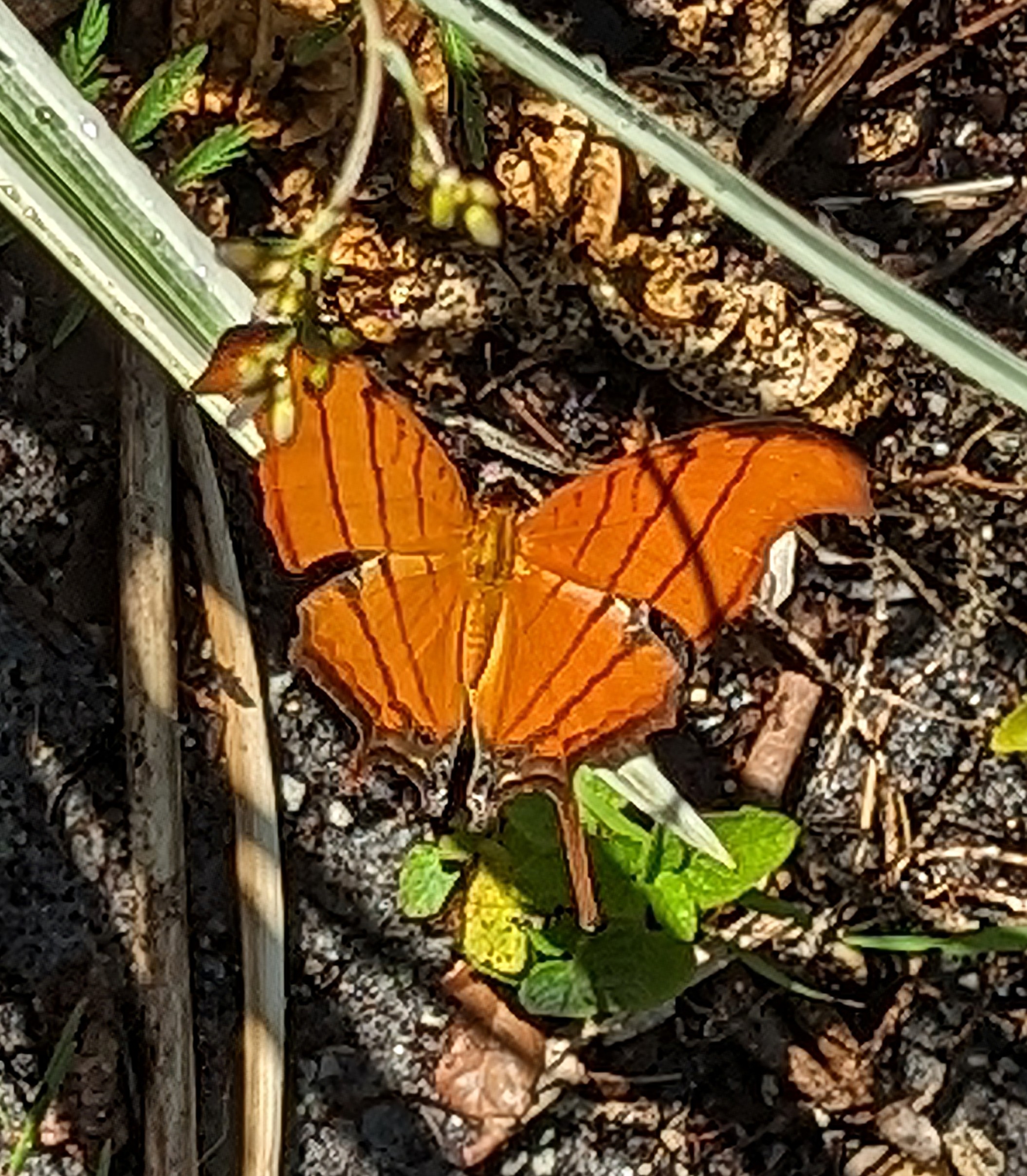
Fruit from the Strangler Fig. These are edible, but only wildlife enjoy them. And I think about a million of them fall to the ground. This is followed by fruit flies who are followed by birds. Wildlife enjoys this tree. It is also larval host to the Ruddy Daggerwing butterfly.
The birds take the figs up into other trees, commonly Sabal Palms and deposit them in the crown of the tree. The figs germinate, take root followed by a small branch growing out of the side of the palm. These branches eventually get long enough to reach the ground and a new Strangler Fig puts roots down and grows up right beside the palm. It is common to see a palm engulfed in a Strangler Fig. Maybe it should be called an Engulfing Fig.
The leafy branch is from the Strangler Fig seedling growing out of the palm trunk.
These trees also make buttress trunks. They are growing in a bed of Snake plants, an impossible to get rid of weed here that I have embraced rather than argue with.
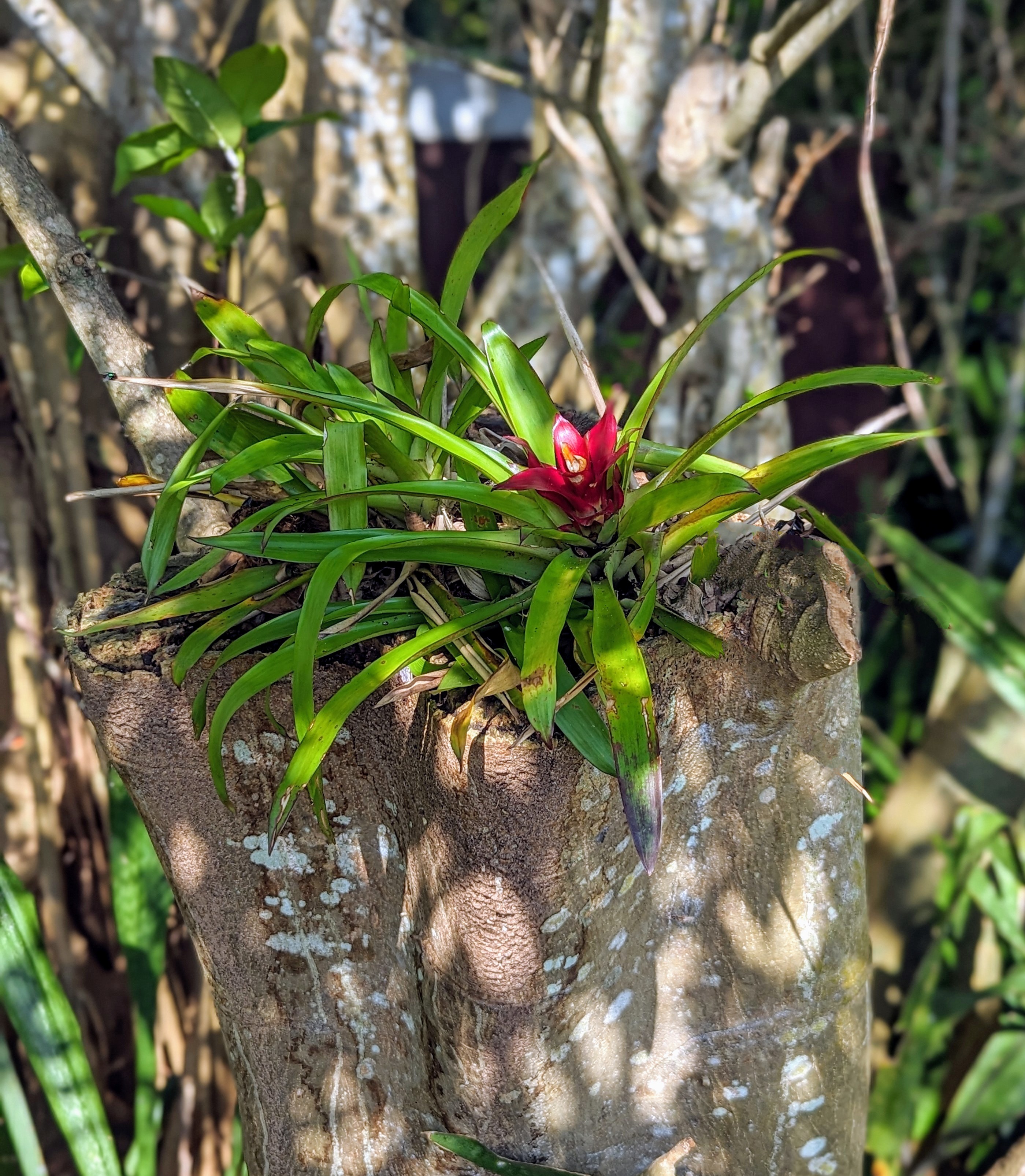
I have just added some Guzmania bromeliads to some pruning made planters. These trees are known for hosting epiphytic plants, so I will add more.
That’s all from my magical tropical garden this Saturday. Wishing everyone Happy Gardening.
My garden tour this morning revealed some progress in the fruit area and a few late season flowers. It has been a dry and sunny week that left me puzzling over how much to water the mangoes. If they are watered too much it affects the quality of the fruit and vice versa. A dilemma that rain solves. They have shed a few fruits, but this is normal. I went from about 50 fruit down to possibly 20, which is okay. It is a bit difficult to deal with 50!
Glenn Mango coming along. These flowered magnificently and then powdery mildew set in causing much of the fruit to drop. I expect to eat these in about a month, they flowered at the end of January.
Finally! A good crop of Rangpur limes coming along. These won’t be edible until December.
New to the garden – Australian Finger Limes. These won’t be ready for years! I need to read up on these to determine what to do with them. They look a bit like jalapenos when ripe and are relatively rare. The foliage is much smaller than conventional limes.
A surprise Snapdragon in my pot of basil. I did not have any snaps this year, so this is a reseed from last year. I love garden surprises like this.
The Lotusleaf Begonia (B. nelumbifolia) is flowering luxuriantly, despite getting very little water. These form large tubers and I suppose that is what sustains them.
The annual sighting of a Ruddy Daggerwing butterfly. These host on Strangler Figs, I have a huge tree beside my house and it seems odd I only see one every year.
That’s all from South Florida. I will be contemplating butterfly and mango dilemmas later. Until then, follow this link to Jim’s blog for Saturday morning garden tours around the world.
I associate the first week of September with cooler weather and the start of fall. This is usually not the case in South Florida. This morning was different. I enjoyed a small flash of fall while walking Fiona the greyhound. A cold front had penetrated the heat dome somehow. The humidity dropped to 50%, a breeze came up off the ocean and it was a clear sunny morning. In celebration of this minor miracle I went in search of an autumnal plant palette.
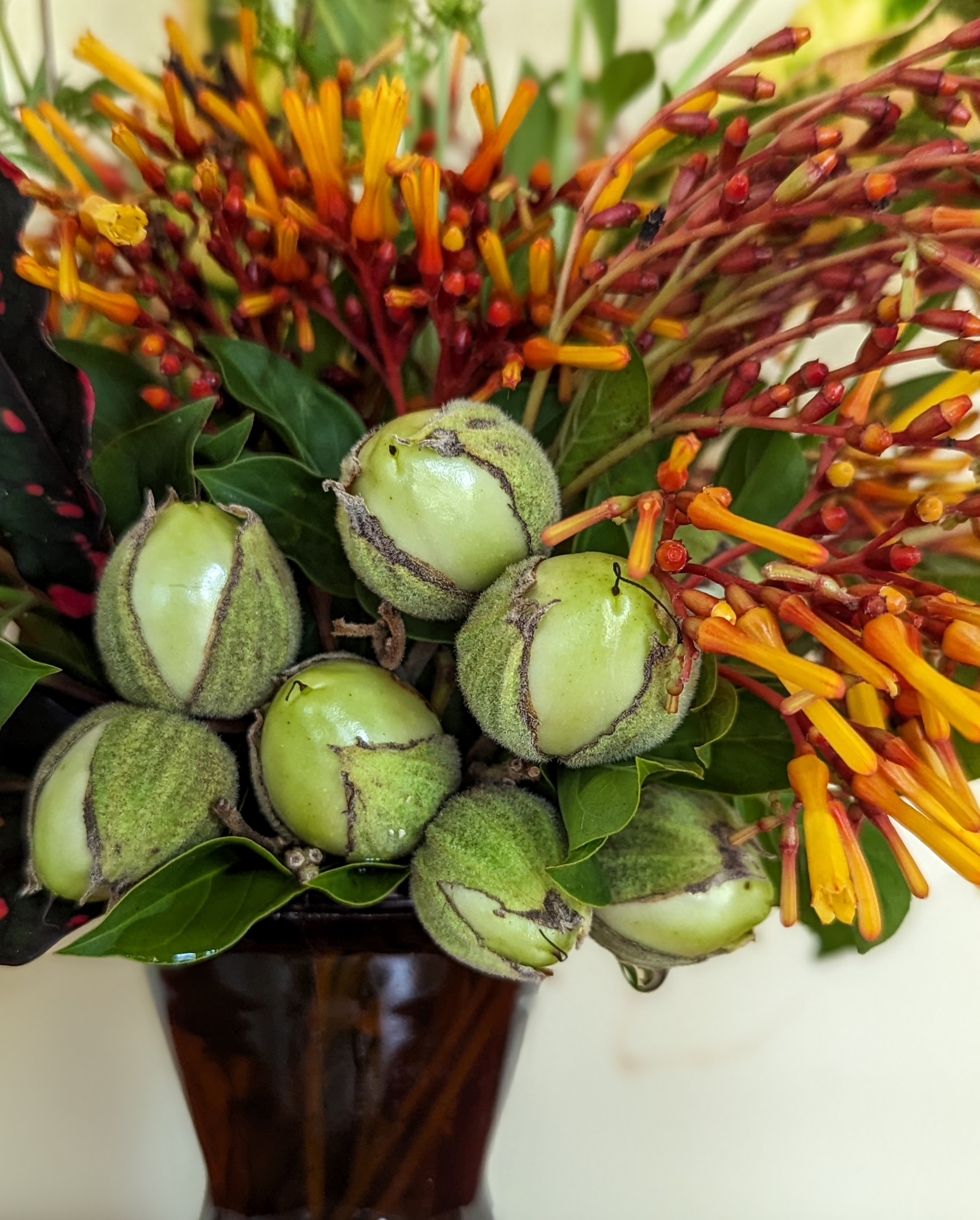
The fruit is from Cordia boissierei, the White Geiger tree. These seem to flower whenever the mood strikes and have nice clusters of white flowers and fruits. The sulphur butterflies adore the flowers which is an added bonus. The orange Firebush (Hamelia patens) is a garden stalwart and another favorite of the butterflies.
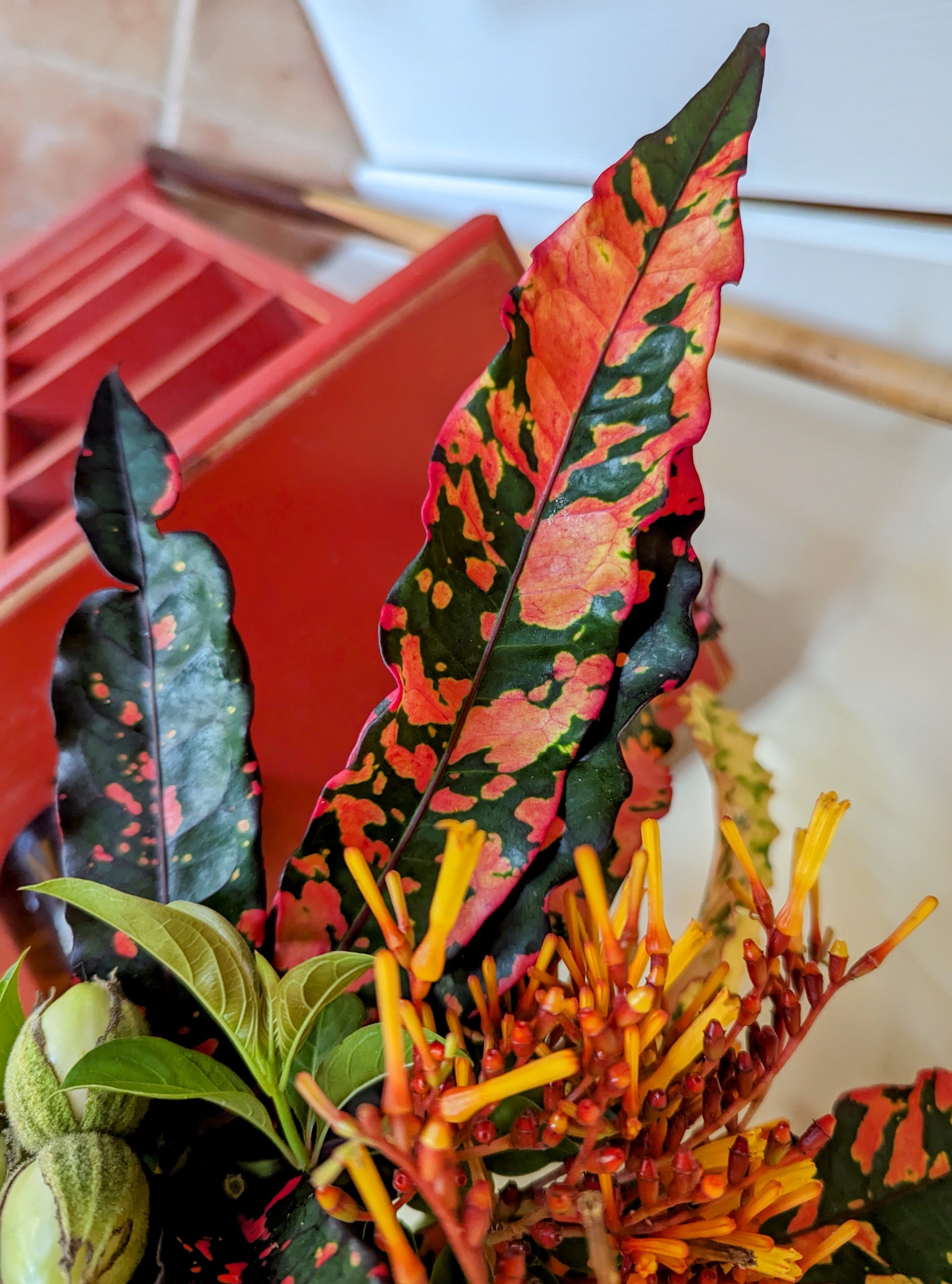
The faux fall foliage is actually from a very colorful tropical shrub. The Piecrust Croton (Codiaeum variegatum). This one does remind me of pie crust and this is the older growth, usually darker in color.
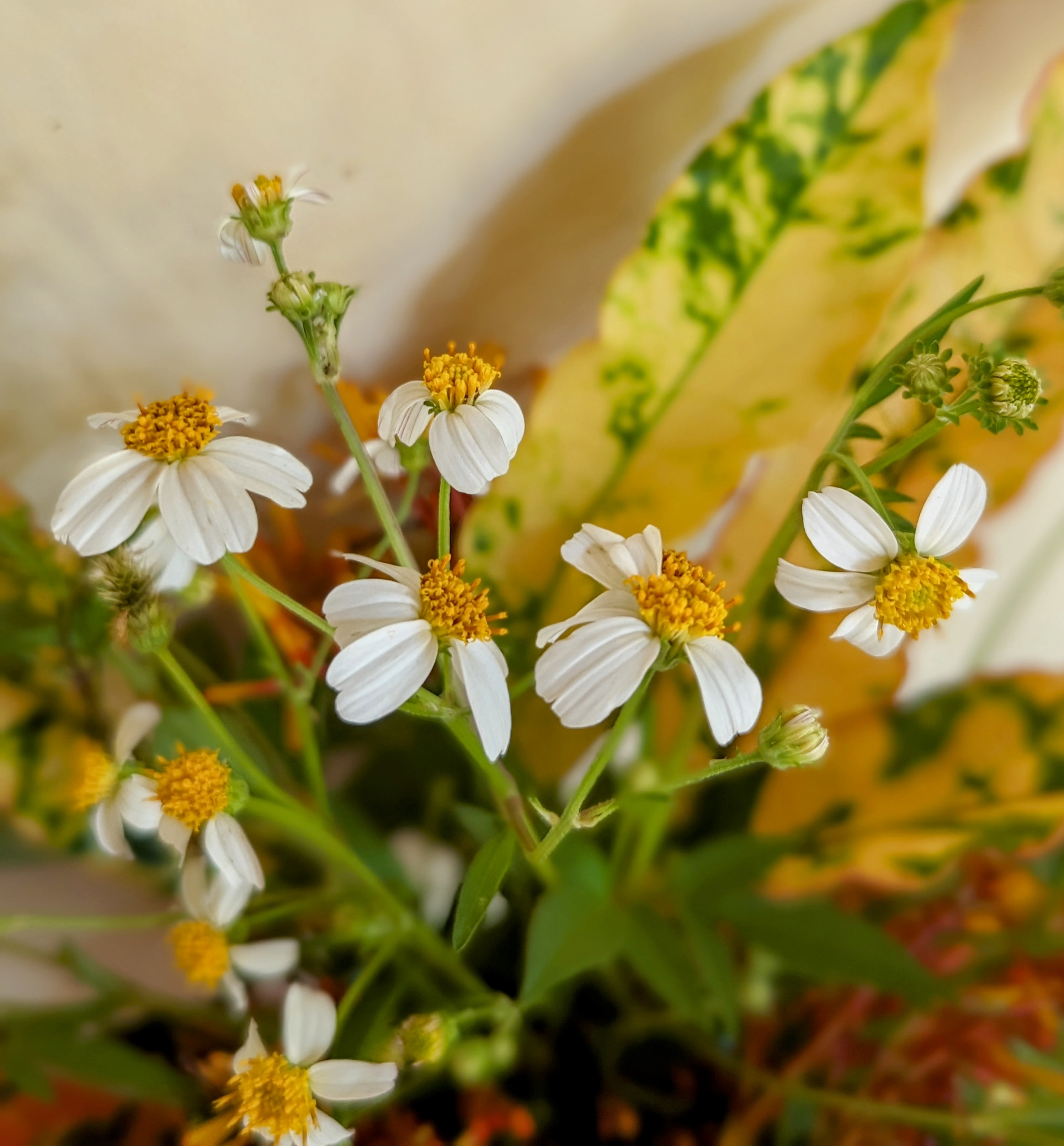
The white daisies, Bidens alba are still out in force plotting to take over the garden, so I cut another bunch. The yellow foliage is also from the Piecrust Croton, this is the new growth. The vase is a historical artifact from the Crate and Barrel, a vintage 70s candle holder that lost its mate somewhere along the way.
That is all from South Florida. I will enjoy the humidity reprieve as long as possible.
Saturday has rolled around once again. Time to take a stroll around the garden to see what is new and compare notes with other SOS gardeners. To take a virtual stroll through gardens around the world visit Jim at http://gardenruminations.co.uk
After a dry week (I had to get out the hose!) it started raining again yesterday. This morning I took some photos and then a thunderstorm blew up offshore and it is now pouring down rain. When researching recommendations for when to plant in South Florida you often see at the start of the rainy season – June 1 as a good date. This works if it is indeed rainy, otherwise, the plants fry. I try to get everything in the ground in March. I am seeing some mad growth in the garden and other plants rescued by the rain.
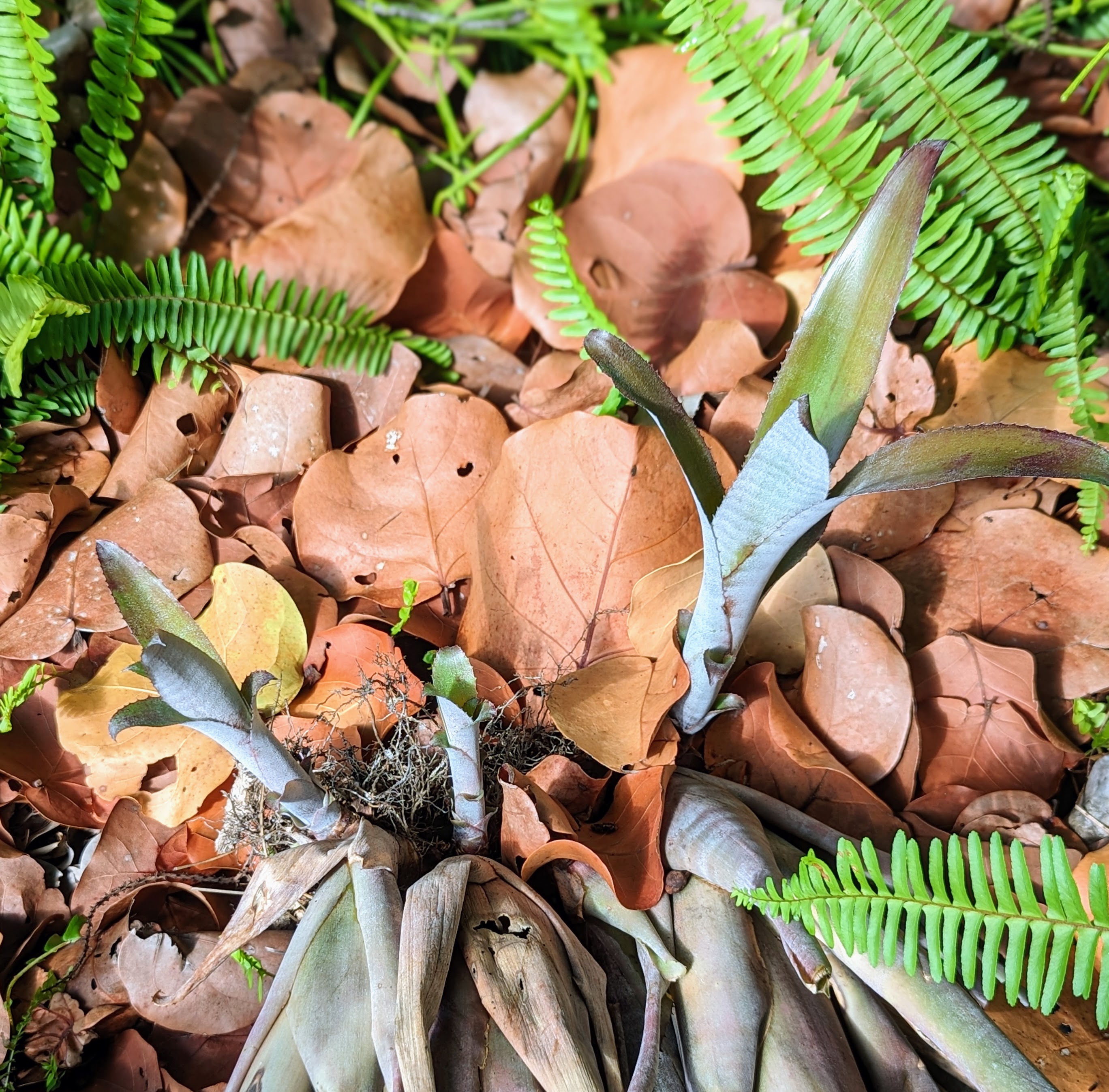
Purple Haze Billbergia bromeliad pups emerging from a mother plant on its way out.
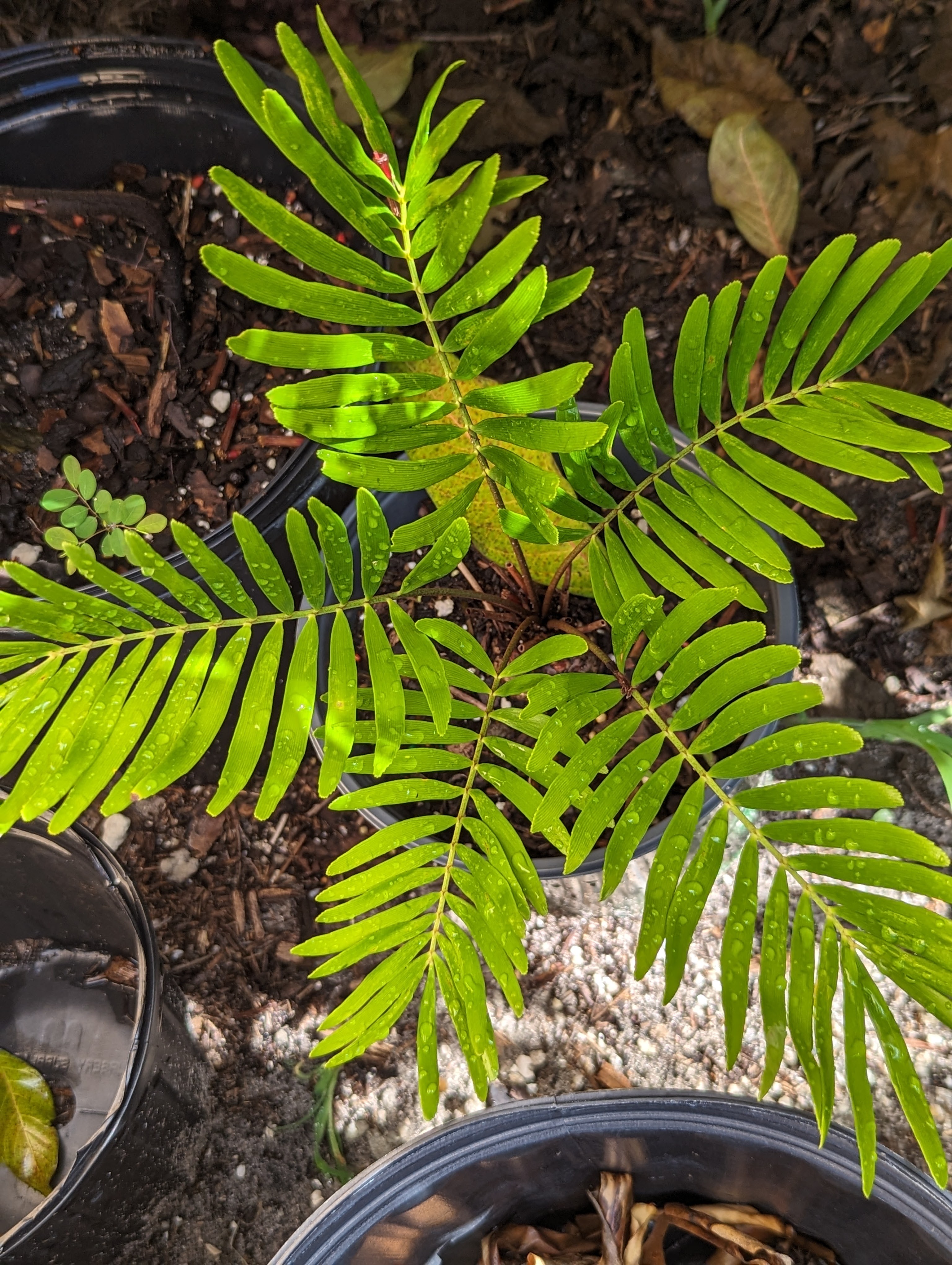
Coontie cycad (Zamia integrefolia) rescued from annihilation. I am not sure what happened here, these are usually very hardy. This one lost all its foliage last summer when it was droughty and was not recovering. I potted the caudex, put it in the shade and watered it – much to my surprise, it came back. The cycads are notorious for not liking disturbance.
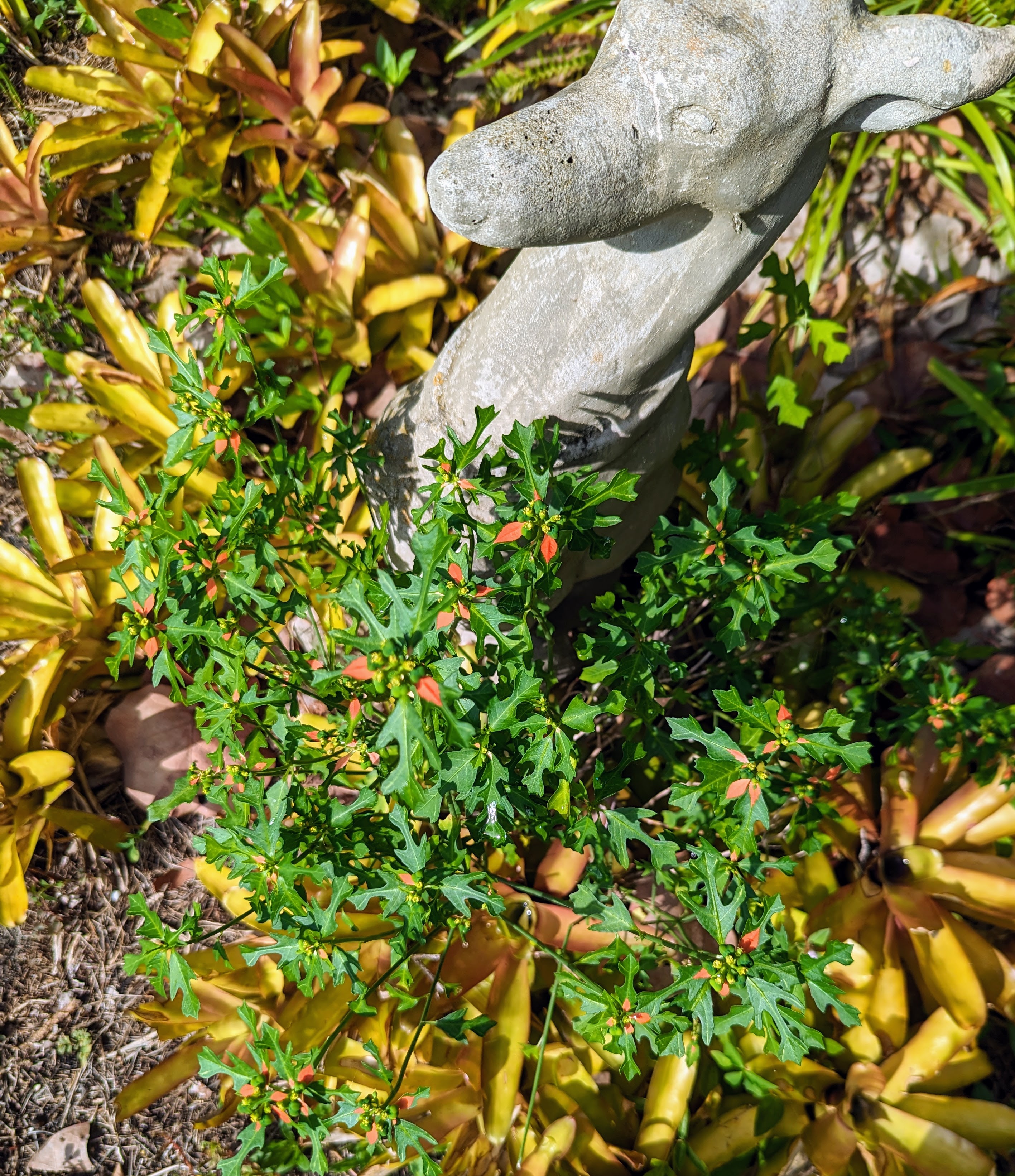
Native Florida Poinsettia (Euphorbia cyathophora) hugging my garden greyhound. These appear when rain is plentiful and add a little color.
My first Rangpur lime, ever! My neighbor grew this tree from seed and it has been in my garden for six years or so. I am excited! These are hard to see right now, hopefully there are more on the tree. This type of lime is orange when ripe and considered a sour orange in Florida. We make ‘key lime’ pies with the fruit or use it like lemons. It is also used in Cuban cuisine for mojo marinade.
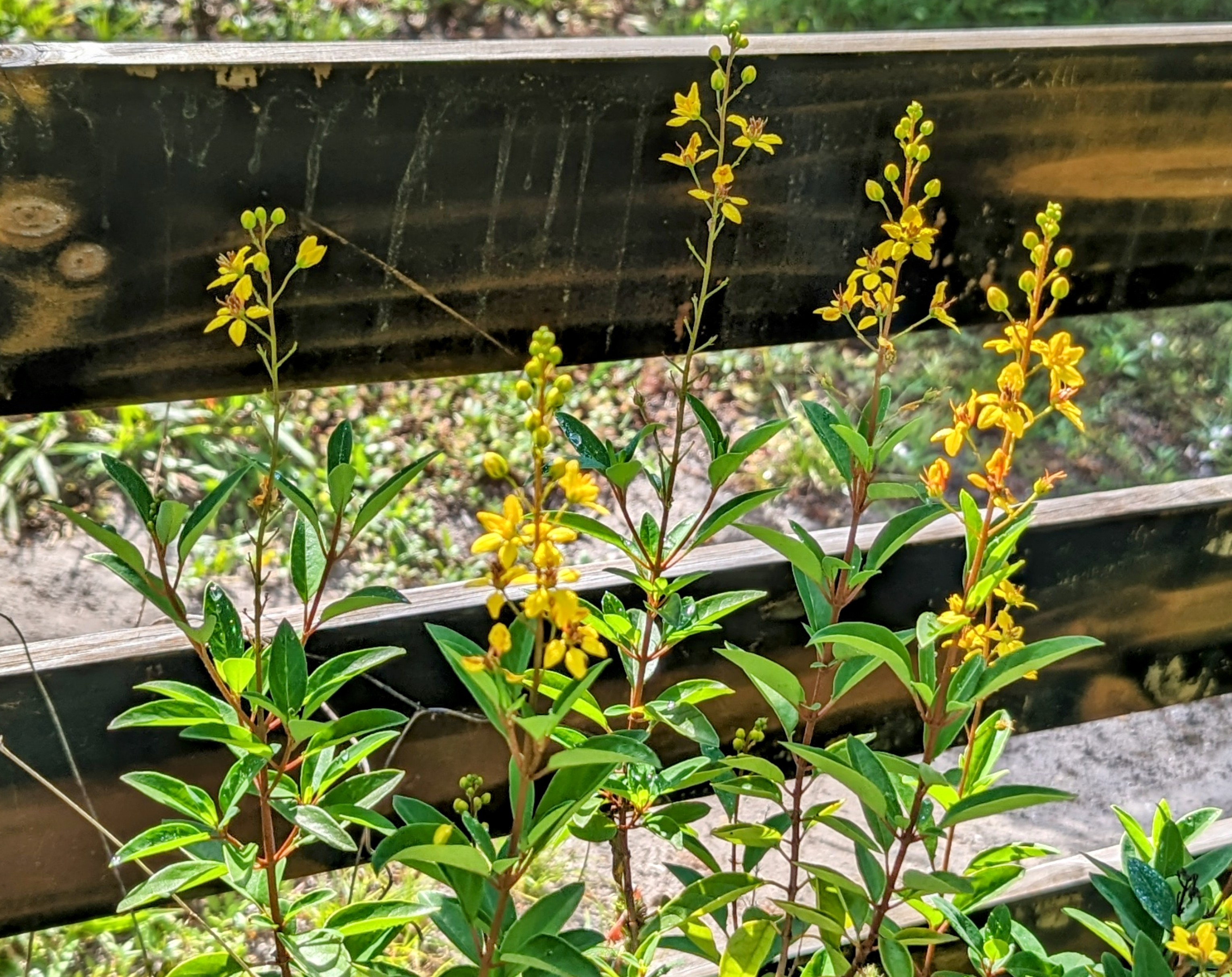
One of my summer favorites, Thyrallis (Galphimia gracilis) is finally flowering.
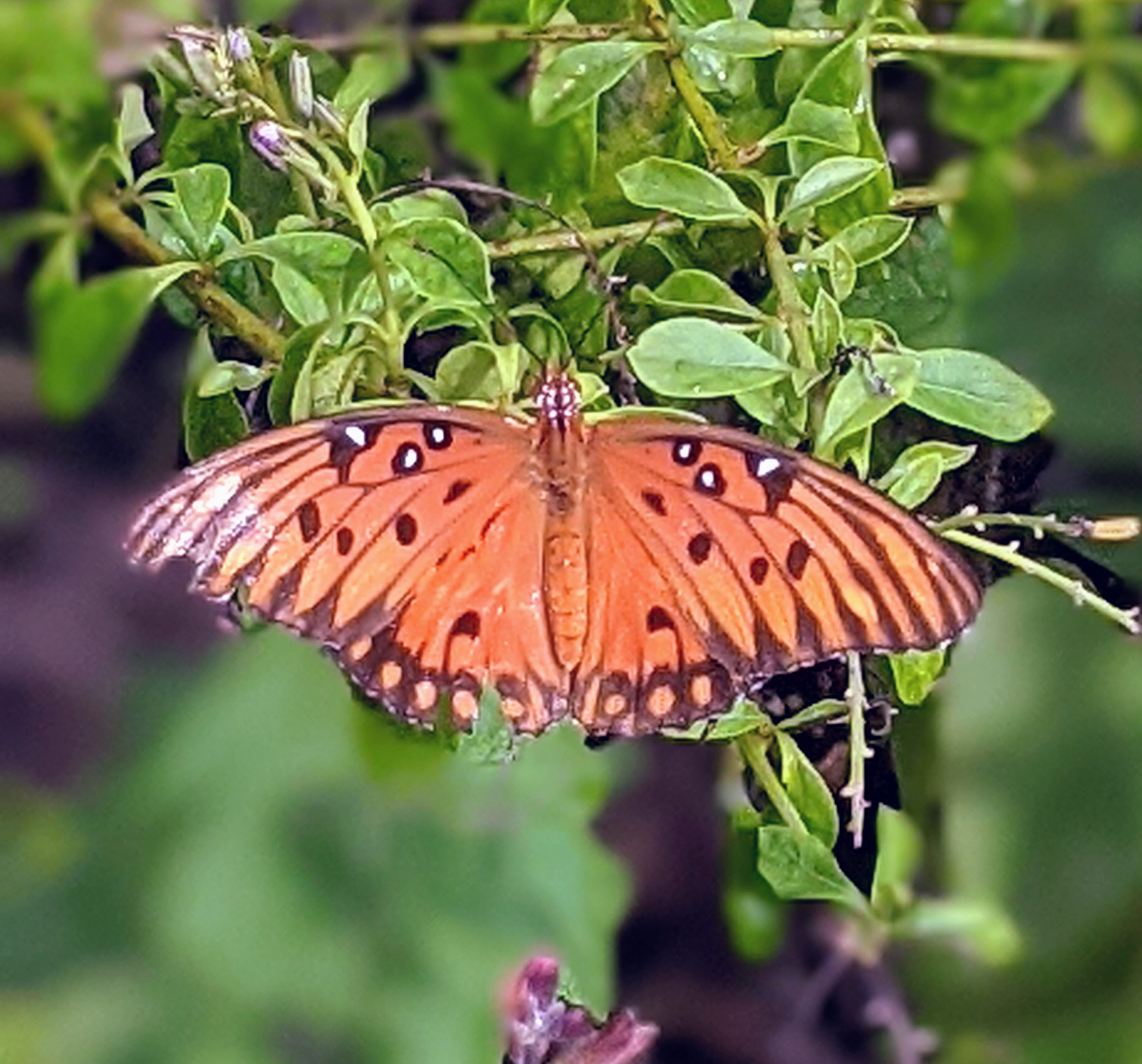
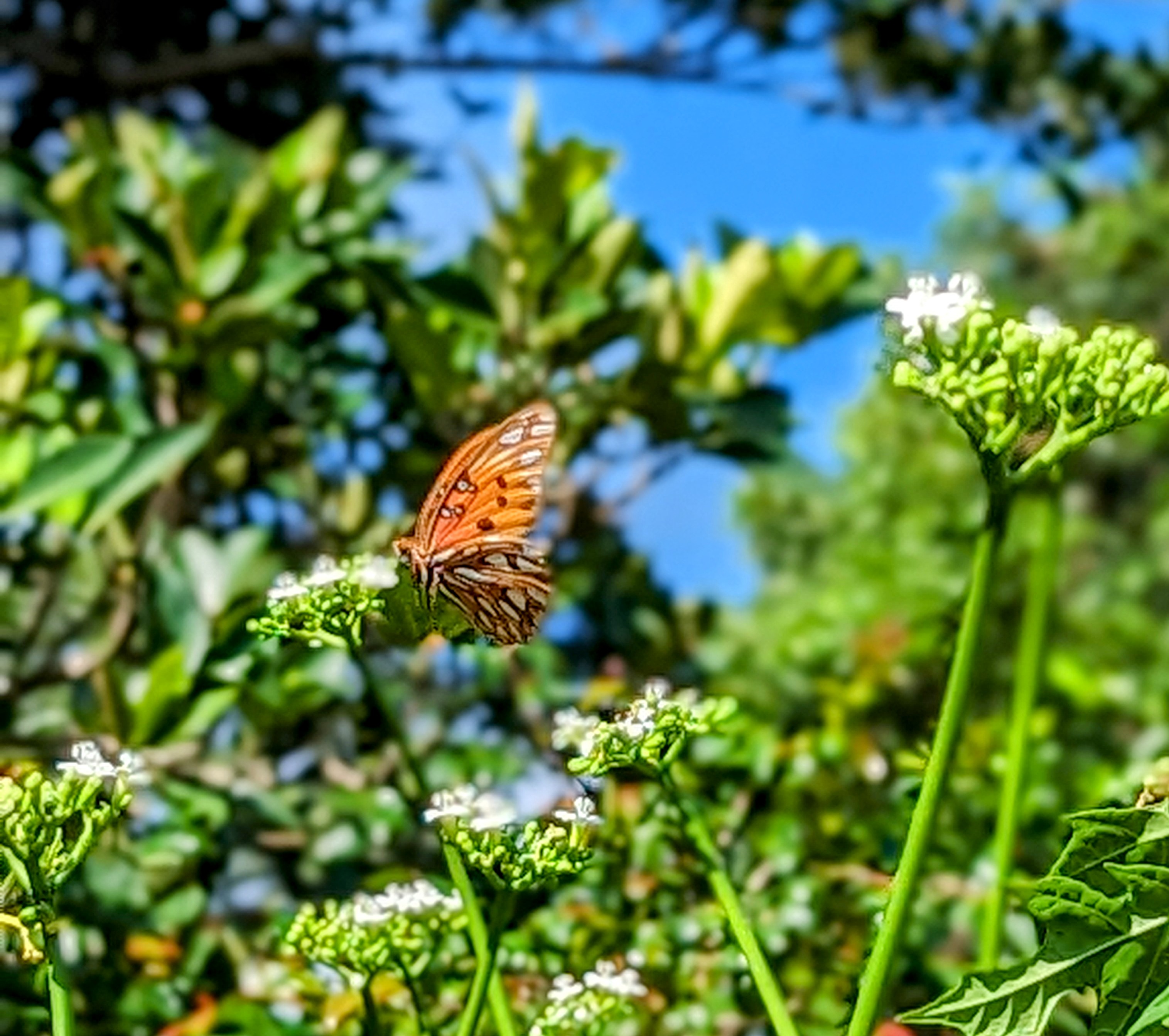
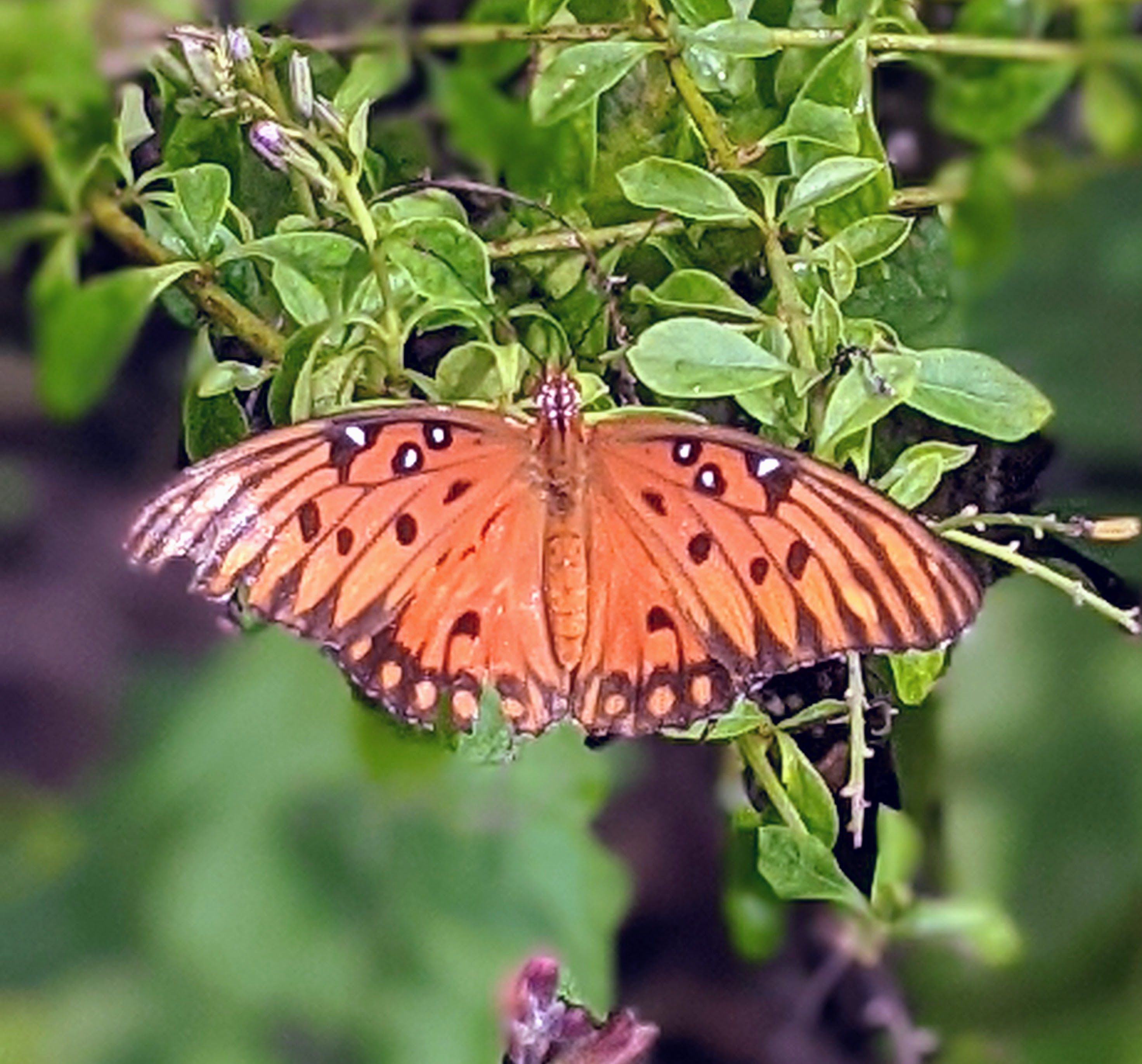
Tree Spinach (Cnidoscolus aconitifolius) is one of the best nectar plants for butterflies in the garden. There were three different butterflies feeding on the flowers when I took the picture. This is a Gulf Fritillary. I have never seen as many flowers on this plant, the butterflies are having a smorgasbord.
It’s time for the weekly world garden tour. My South Florida garden has a wealth of butterflies and tropical flowers loving the heat and humidity more than I do. I let some native passionflower vine (larval host plant for butterflies) ramble through a mixture of flowering nectar plants and I have some astounding butterfly action going on in the front garden. Pairs of Gulf fritillary butterflies circle each other and then land on the passionvine where the ladies lay eggs. Caterpillars from both species of butterflies (Gulf fritillary and Zebra Longwing) that host on the vine are currently in residence. The caterpillars moved off the vines and now there are chrysalis hanging on the front porch. I am watching day by day hoping to see new butterflies emerge.
The Gulf fritillary looking for nectar.
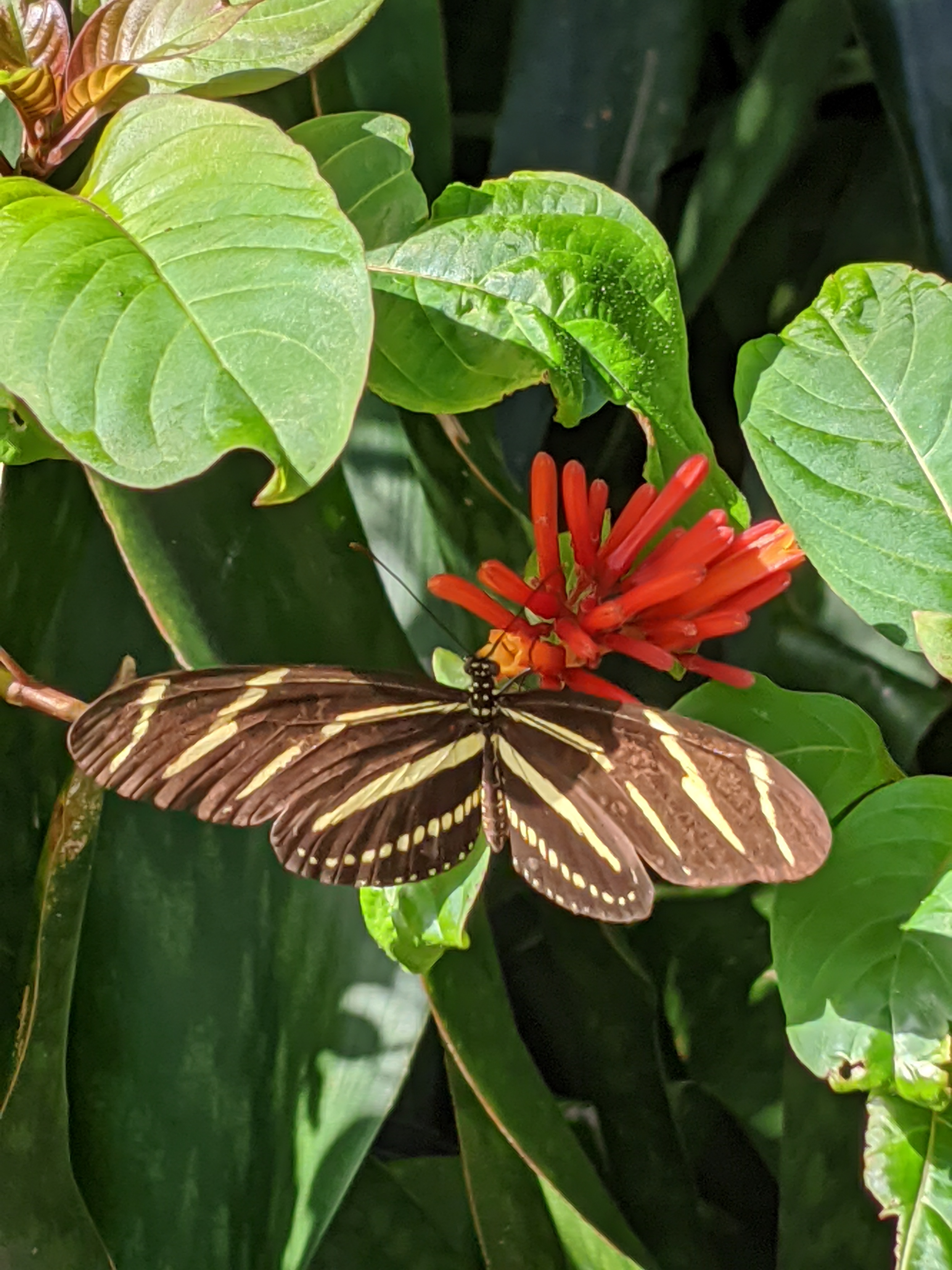
Zebra Longwing doing the same thing.
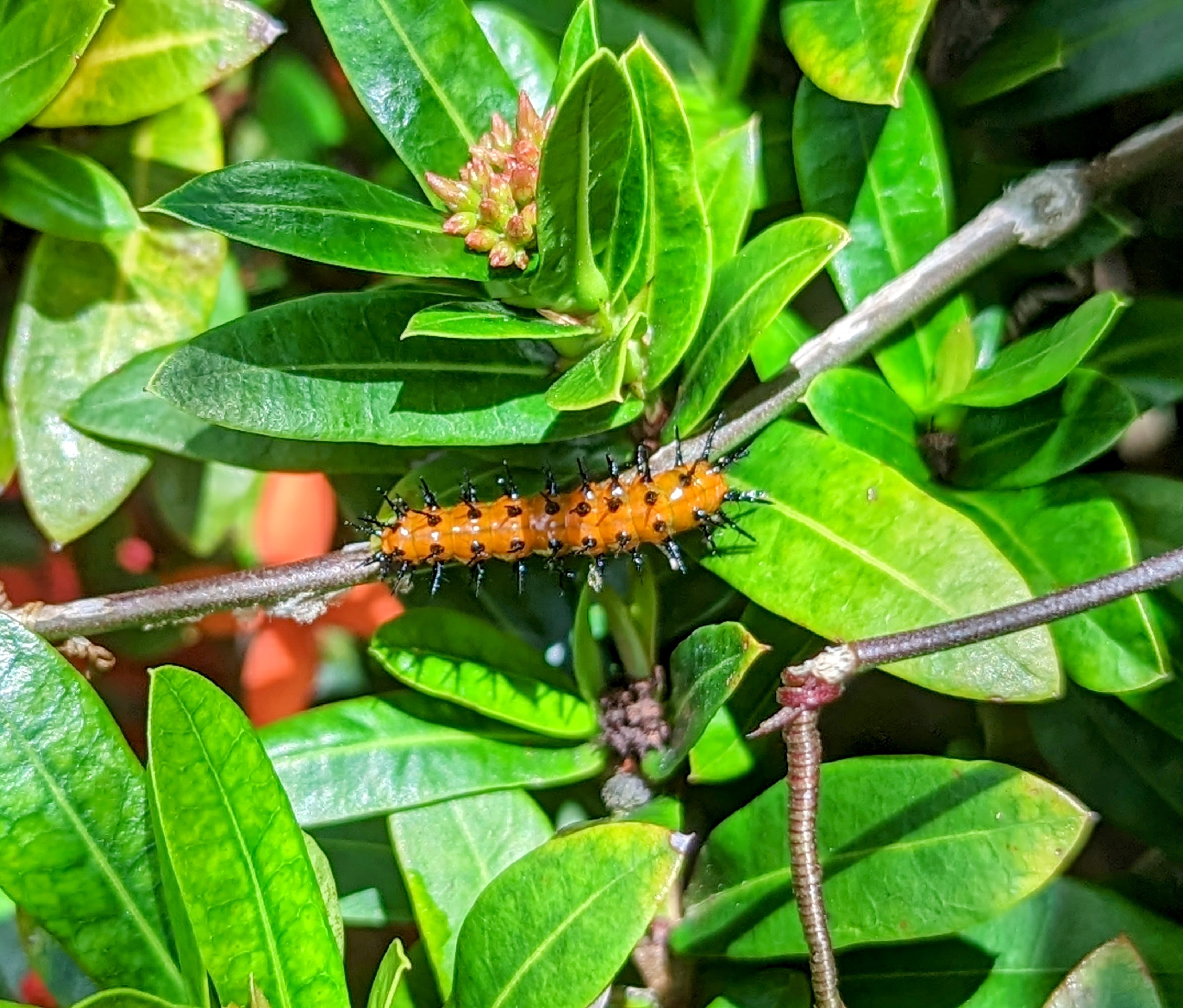
Gulf fritillary caterpillars on the passionvine. The passionvine is Florida native Passiflora suberosa. It is not a particularly attractive vine and bears small flowers and blueberry sized fruit. I did not plant this, it came up from the garden gods and I let it go to ramble through the Dwarf Red Ixora shrubs creating a caterpillar condo with a full service restaurant.
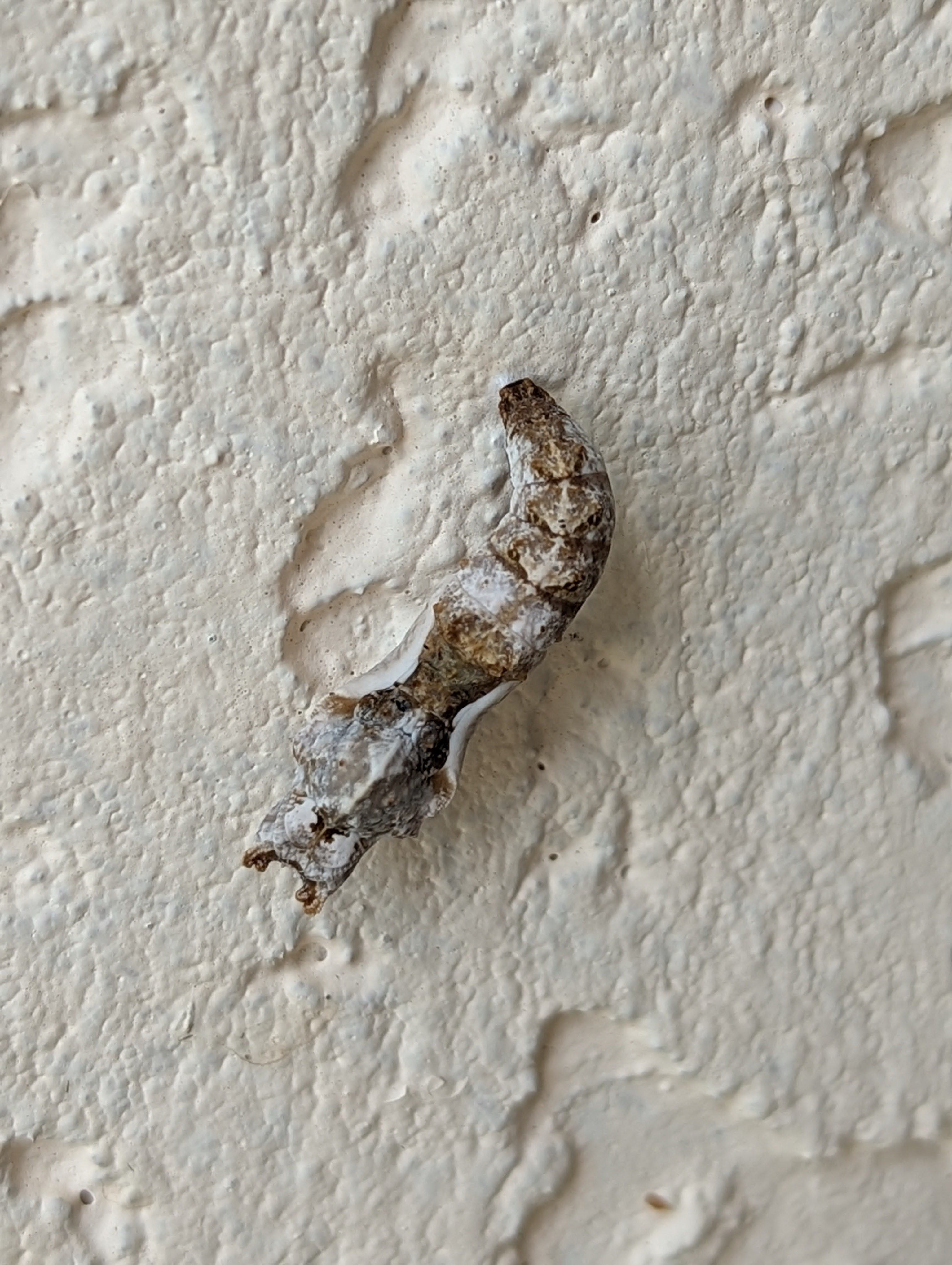
The much less colorful chrysalis of the Gulf fritillary.
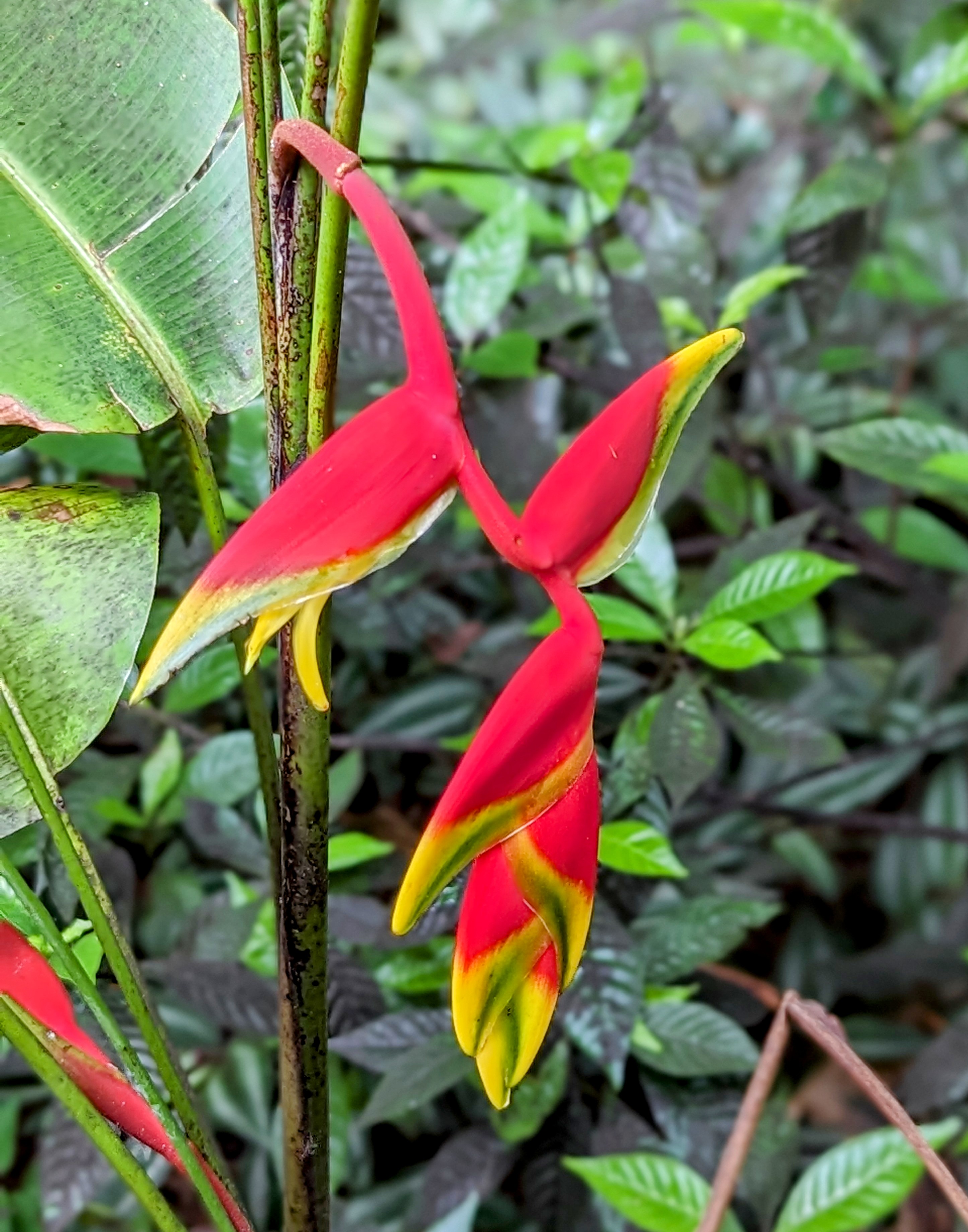
And we have to have some tropical flowers and fruit. The flowers today are Lobsterclaw Heliconia (Heliconia rostrata)
Fruit of the week – Papaya. This is the Papaya tree started from seed last fall. I planted the seedlings in the garden in May. They are almost three feet tall now and looking a little spindly. I have read it is possible to have fruit in nine months. At this point, the trees won’t be able to support it.
That is all from sultry South Florida this Saturday. To enjoy the world garden tour visit Jim at http://gardenruminations.co.uk

















 The Shrub Queen