In a Vase on Monday/ Not Hotel California

00100lportrait_00100_burst20190728103235284_cover

Mirrors reflect the foyer ceiling

Pink Champagne bottle in Grandmas ice bucket

And she said, ‘we are all prisoners here of my Bromeliad vice’

Here is the real lyric verse from the song ‘Hotel California’ by 70s American Rock Band, The Eagles. I hope someone else remembers it.

Mirrors on the ceiling,
The pink champagne on ice
And she said, ‘we are all just prisoners here, of our own device’
And in the master’s chambers,
They gathered for the feast
They stab it with their steely knives,
But they just can’t kill the beast

I always thought Hotel California was a weird song, very evocative, but weird. This is another of my spa/hotel lobby arrangements.
img_20190728_104349

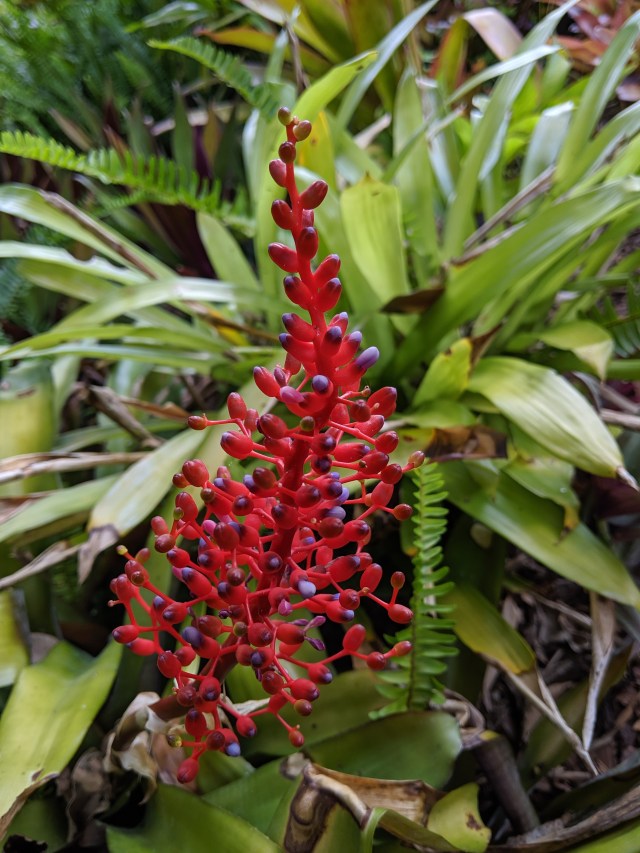
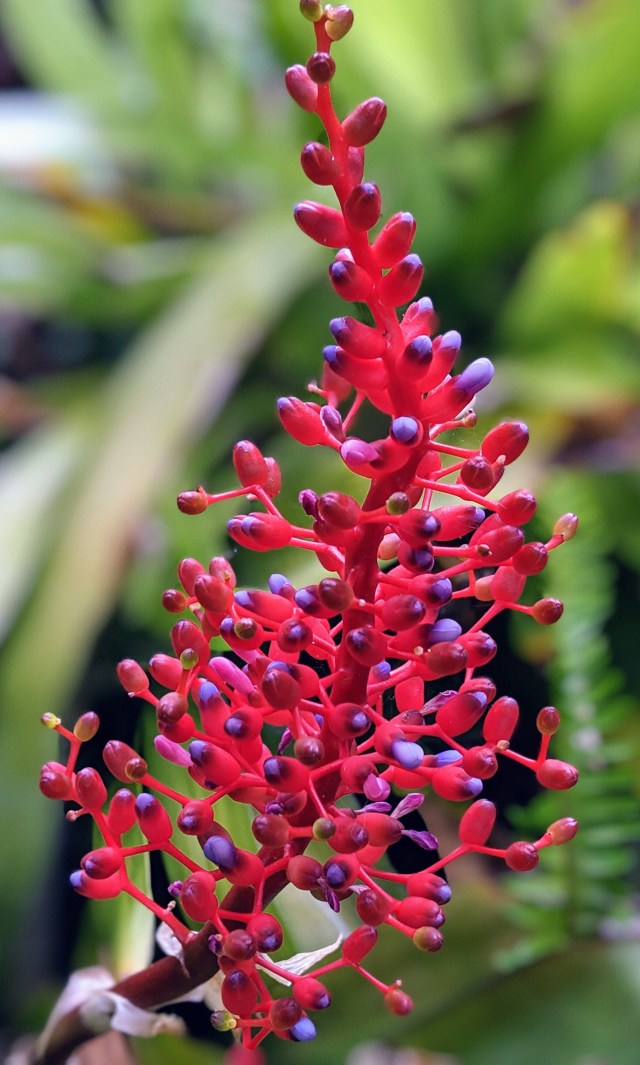
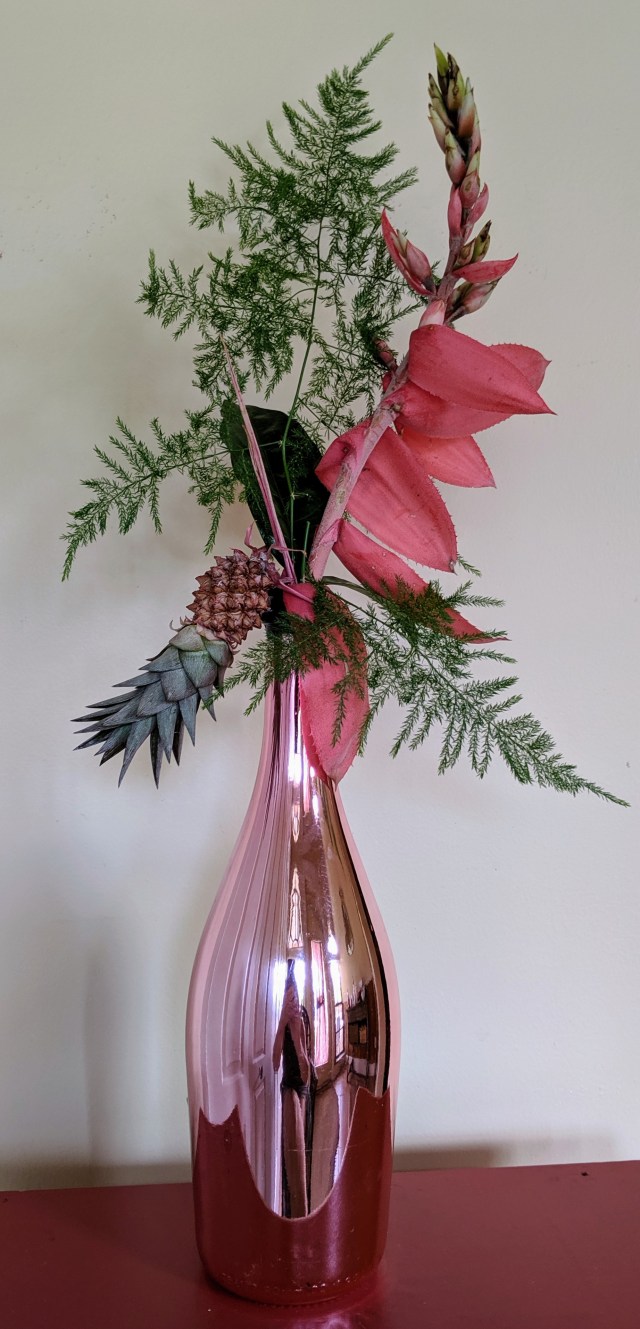
The pink flower is ‘Little Harv’ Bromeliad (Aechmea ‘Little Harv’) Little Harv was developed in South Florida in the 1970s and is a popular and easy to grow perennial. Ironically, Little Harv is relatively tall reaching about 3 feet. The Dwarf Pineapple (Ananas spp) is another Bromeliad I used in a vase a few months ago, it dried in this downward curve. The background is a Tropical Gardenia leaf (Tabernaemontana divaricata) and some Wild Asparagus fern. The pink bottle is from Champagne a friend brought to share at a dinner party and the crystal ice bucket is Fostoria from my grandmother.

00100lportrait_00100_burst20190728104518820_cover

Here is Little Harv in bud and full bloom. I cut this one today as it is in a bit too much shade and our lawn mowing crew is very likely to run it over.


In a Vase on Monday – Palmy Weather

img_20190721_103648

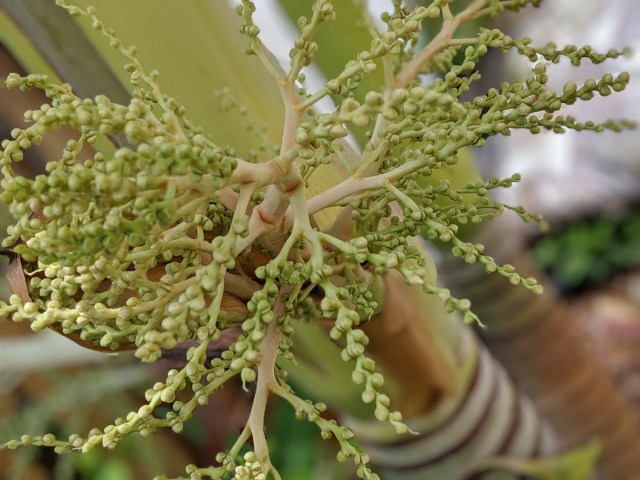
Palmy weather? It is indeed. Some, not all of the palms in my garden are flowering. The pale green flower in the center of this vase is from the Adonidia or Christmas Palm. I am not sure why so many Floridians feel compelled to cut the flowers off their palms. This one will bear red fruit at Christmas that looks like ornaments for the tree, hence the name. And the flowers are so unusual and eventually provide food for wildlife. More unsolvable mysteries for the Florida gardener.

Here is the flower as it first appeared, I cut it because it was broken somehow and hanging onto the trunk by a thread. My friend Eddie grew the palm from seed. It is now 10 feet tall and flowering, I am so pleased and can’t wait for the Christmas ornaments.

00100lPORTRAIT_00100_BURST20190622130923887_COVER

A closer look at the flowers. In pale green, the Adonidia Palm (Adonidia merrillii); the orange flowers with berries are from Firebush (Hamelia patens); long burgundy foliage is from Blanchetiana Bromeliad (Aechmea blanchetiana) and the burgundy leaves are from Copperleaf (Acalypha wilkesiana)

00100lportrait_00100_burst20190721103723707_cover

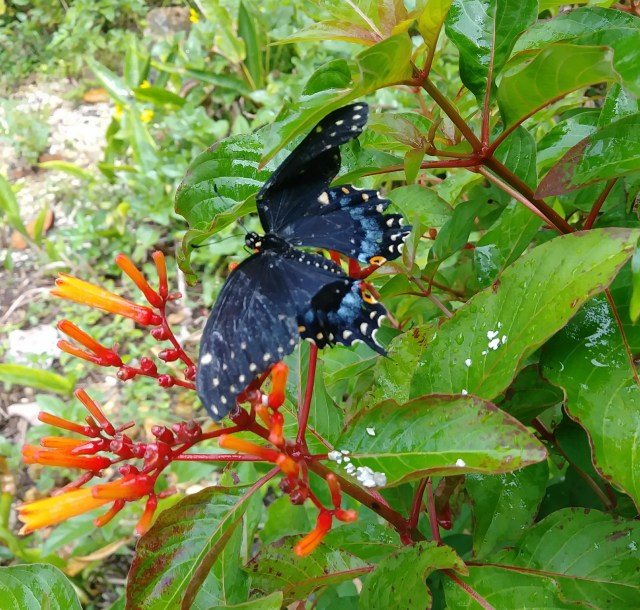
In addition to being Palmy, it is also pretty balmy here in South Florida. So far, I am enjoying the summer and the butterflies, mostly in the late afternoon looking out the window whilst having a glass of wine on the sofa.

20180701_112529-1


img_20190721_103648

Funky Florida Flora-Miniata Bromeliad

img_20190705_081018

Roundabout the Fourth of July the Miniata Bromeliad started to flower. I thought how wonderful and patriotic – sort of red, white and blue. This is a rare find, a smaller reliable flowering Bromeliad that thrives in nearly full shade.

A member of the Aechmea genus, native to Brazil. The foliage is olive with burgundy backsides and not too sharp. The leaves will burn in the sun, especially in the hot midday sun. I cut the Strangler Fig that shades this plant back a little too much and the leaves are complaining by producing burnt spots and edges.

00100lportrait_00100_burst20190705081030627_cover

The flower lasts for weeks and does well cut in vases.

20180819_132627-1

A. miniata flowers

In a Vase on Monday The Wrath of Grapes

00100lportrait_00100_burst20190714102329533_cover.jpg

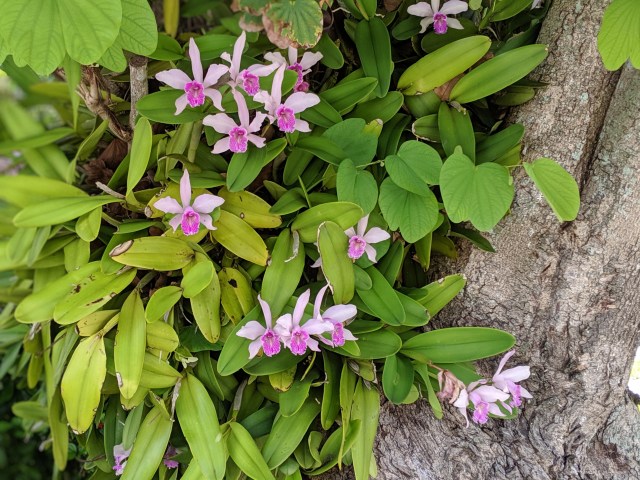
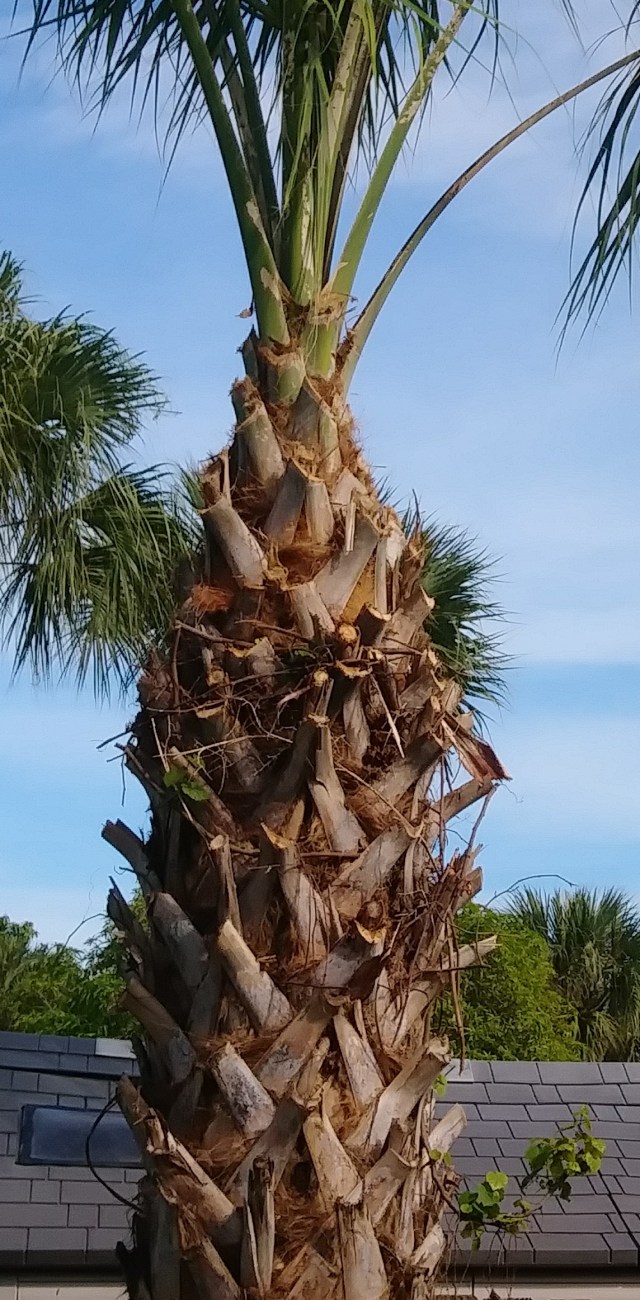
I have been dreaming of a stumpery garden for years. I was inspired last week by the Orchids I posted on Wordless Wednesday and realized the booted Sabal Palm in my garden offered the perfect opportunity to add some orchids and ferns to its trunk during the summer for establishment during the rainy season.

The  orchids:

00100lportrait_00100_burst20190710131119708_cover

The booted Sabal Palm (as I remember it)

20181009_152741-1

The current state of the palm:

00000img_00000_burst20190714194810583_cover

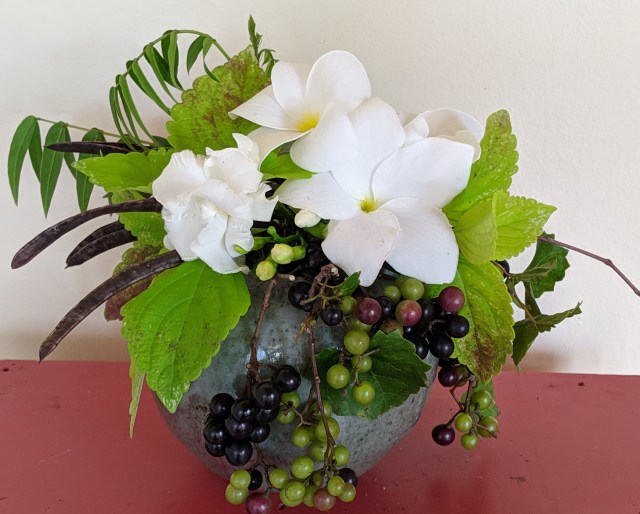
These are our native Muscadine Grapes (Vitis rotundafolia) grown up the palm from my neighbor’s fence in a period of six months or so. This happened while I wasn’t looking. Welcome to Florida. My only excuse is I am not as tall as the vines and didn’t look up. Sigh.

The wrath of grapes. The grapes are pretty, but inedible (big seeds with bitter flesh). I decide to cut some for an arrangement.

00100lportrait_00100_burst20190714102329533_cover

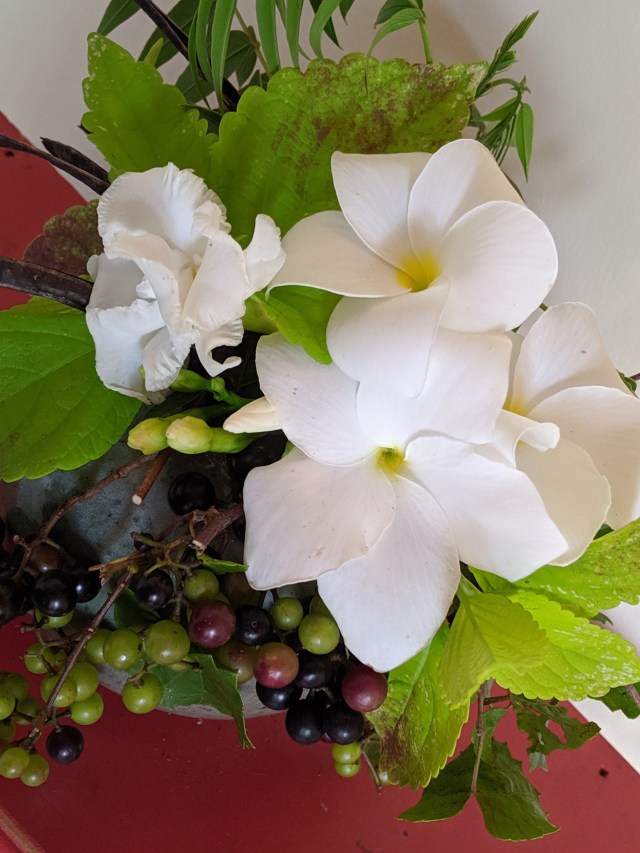
The brown pods and green ferny leaves are from Senna ligustrina, a native butterfly plant; the chartreuse foliage is from ‘Alabama Sunset’ Coleus; white flowers are Tropical Gardenia (Tabernaemontana diviricata) and with the yellow eye, Bridal Bouquet Frangipani (Plumeria pudica). I can’t resist the fragrance, especially with the sour grapes.

00000img_00000_burst20190714102302057_cover

In A Vase on Monday – A Southern Classic

00000PORTRAIT_00000_BURST20190707101121090

In college, I took a class about perennials and designing perennial gardens. The teacher was Bob Hill, he has a Siberian Iris named for him – a deep purple. He was a true Southern plantsman and longtime professor, teaching Planting Design and Plant Identification. My guess is, by the time I took his class, Mr. Hill, in his 50s, had one too many smarty pants student say something annoying. He did not suffer fools gladly and you did not want to be the fool. A good teacher, if you listened. I was lucky to have the perennials course, it was rarely taught and I sincerely doubt the powers that be would even consider such a course nowadays. God knows you don’t want to teach Landscape Architects how to landscape anything. I’ll stop there and save my opinion about Landscape Architecture schools for another time.

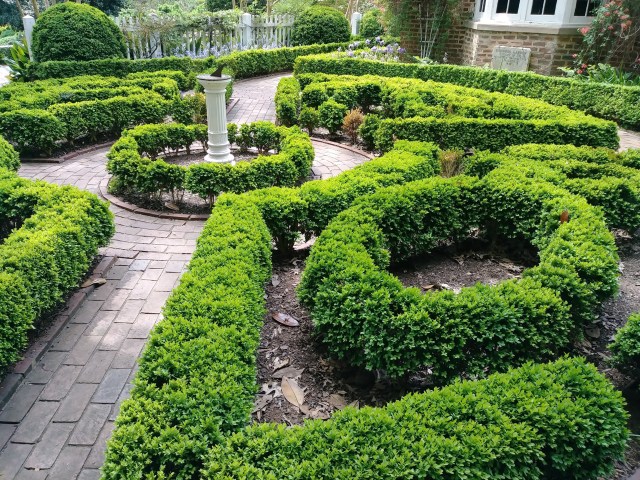
Here is the point! We were taught the correct color scheme for a summer perennial garden is cool blue, pale and lemon yellows and pure white. This was supposed to be cooling and soothing in the summer heat. White gardens were brought up as a possible alternative and one wasn’t supposed to use hot colors until the fall and then pastels in spring. I suspect Bob Hill is spinning in his grave if he has visited my garden from the great beyond. A garden he worked on:

20190413_132255

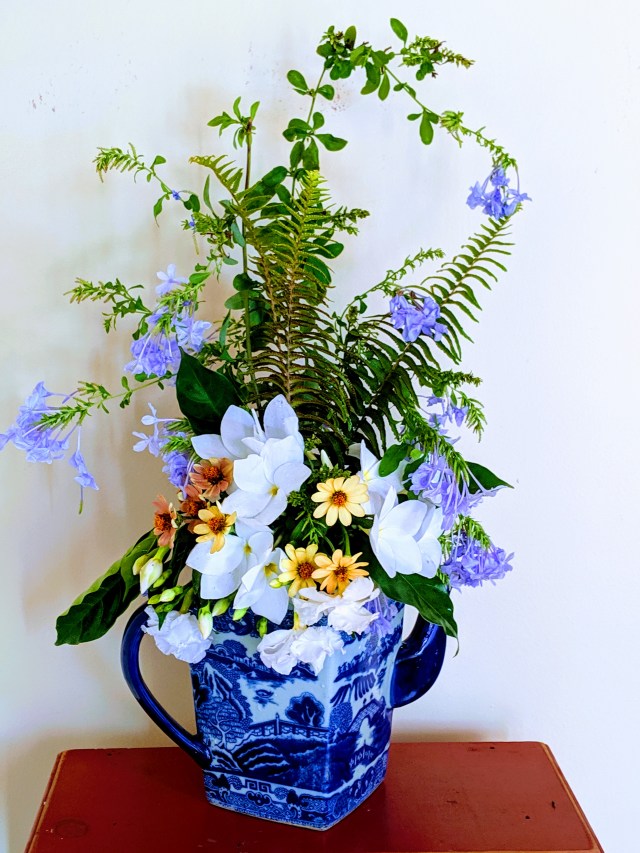
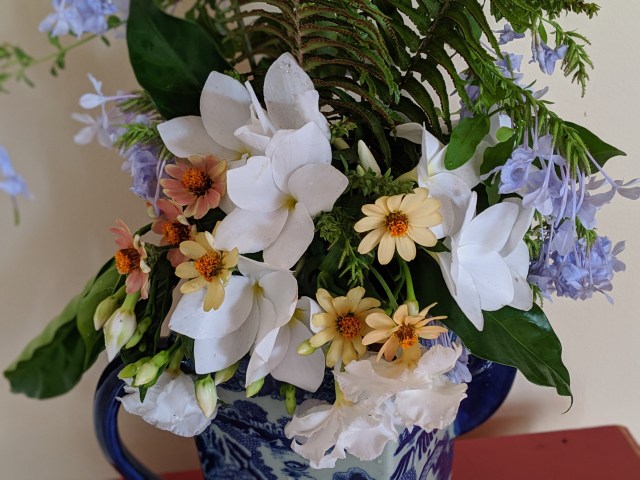
The vase is blue and white china, very popular in the South (probably approved by Bob) and I collect it. This teapot is English and one of my favorite pieces. The colors are Southern Classic per my college class. Here is a close up of the flowers:

00100lportrait_00100_burst20190707101146009_cover

The blue is Blue Plumbago (Plumbago auriculata), a stalwart shrub of South Florida gardens and nearly indestructible. The bud and white flowers are from Tropical Gardenias (Tabernaemontana divaricata), the white flowers with the yellow eye are from Bridal Bouquet Frangipani (Plumeria pudica), pale yellow verging on apricot flowers on from Zinnias “HomeDepotensis”, the ferns are native Boston Fern (Nephrolepis exalata).

This teapotful of Classic Southern Summer color smells heavenly – and I do feel a bit cooler.

Hopefully, Mr. Hill understands and approves.

In a Vase on Monday – Under the Toasting Sun

00100lportrait_00100_burst20190630100108686_cover

It’s the Fourth of July holiday week in the US, usually celebrated with red, white and blue everything. I have these colors in my garden, while poised under the Gardenia with my clippers I decided to forego the patriotic theme and create a vase that reflected the current state of affairs in my garden – Under the Toasting Sun. A brief walk to check the mail will envelop you with humidity that metastasizes into a form-fitting body glove consisting of a fine layer of sweat, soon beading up from head to toe, making the mail a forgotten task as one tends to turn and stride back to air-conditioned space tout de suite.

Last week in the garden was a bit hot, temperatures in the 90’s (30s Centigrade to feels like 40s) ‘but it feels like 108’ kept popping up on my computer. Add the astonishing humidity and an air quality alert due to Saharan sand – it was time to look out the window at the garden.

This indoor respite gave rise to weeds and fungus took a few innocent lives during the week. I am happy to have weed check fabric in many of my beds doing a fine job preventing the worst offenders. It was cool and cloudy Saturday and I plucked weeds not smothered by the weed fabric. The Zinnias I thought could last the summer in partial shade withered and browned overnight. They were plucked as well, I have Flapjack Kalanchoes propagated last year to stand in for the supposedly heat loving Zinnias. I will reserve Zinnias for fall and winter.

img_20190630_093950

Look closely and you see two Papayas, saved by netting from the Papaya Fruit Fly – a vile creature that lays eggs inside ripening fruit – unleashing a herd of maggots on unsuspecting gardeners looking for a ripe Papaya. The only cure- netting or pesticide, we will soon see how this works. I realized something was wrong and got rid of all the infested Papayas before the little devils reproduced.

Back to the vase, filled with hot colors and Firebush:

00100lportrait_00100_burst20190630100051852_cover

The grey foliage represents smoke from the heat, Barometer Bush (Luecophyllum frutescens) from last week, not flowering despite all the rain it is supposed to predict. In the front of the vase in yellow, Beach Sunflower (Helianthis debilis) proposing a trip to the beach. Behind are Indian Blanket, the native Gallardia pulchella – suggesting what to sit on at the beach; the red spikes, Tropical Red Saliva (Salvia coccinea) hmm, tropical drinks could be a great idea. The Firebush is the orange tubular flowers and berries, well, it is hot as fire here! A few ‘Hallmark’ Bulbine implying a postcard might be a good idea.

00000img_00000_burst20190630100136360_cover.jpg

The word from my garden is..take an Indian Blanket to the beach with a tropical red cocktail and don’t forget to send a Hallmark greeting card to anyone left at home.

Seems like the advice I might take this week..

Happy Fourth of July. Red, white and blue flowers can wait.


Funky Florida Flora – Sea Grapes

IMG_20190619_090654Sea Grapes seemingly grow everywhere in South Florida. Native to South Florida and the Caribbean, this tree will grow in sun to semi-shade, is very drought once established, grows on the Oceanfront, shrugging off salty winds and hurricane,  and provides food for wildlife. They can be pruned into privacy screens or trained into multi-stem trees. The maintenance is a Sisyphean task if you dream of a rectangular privacy screen. Sea Grape is evergreen and it’s big, shiny green leaves with pinky red veins provide year-round tropical ambiance.

20171122_074941-1

Sea Grape’s botanical name is Coccoloba uvifera. The fruit, borne like grapes will eventually turn brown and drop to the ground. Grateful creatures devour the fruit, including my greyhounds – just one of the greyhounds, it took me a long time to figure out what he was crunching on while rooting around in the grass. A true Floridian hound, I suppose.

Florida natives (the human kind) eat the grapes when ripe, and make jelly and wine from them. My opinion, like many things, you have to grow up eating them to enjoy them. Kind of like being a Southerner and eating grits. They taste a bit like a fig, with a huge pit and are too labor intensive to make me want to eat them – and the birds usually beat me to them anyway.


In A Vase on Monday – Rainbows

00100lPORTRAIT_00100_BURST20190616133732061_COVER

June is Gay Pride month in the US.  A friend who owns a local business is flying a Rainbow flag in support of Gay Pride and tolerance. She is experiencing push back from employees and customers. Meanwhile, nearby flags supporting our current President have been burned.

She said,  “We need more flowers”.

This made me wonder if I could find all the colors of the Rainbow in my garden. I found all the colors, easily and in the rain. Champagne flutes were used to celebrate what tolerance we have and the blue bottle represents sadness for many who don’t.

00100lportrait_00100_burst20190616132139400_cover-e1560709271471.jpg

The Violet vase is Purple Queen (Setcresea “Purple Queen”), the Indigo vase is Blue Porterweed (Stachytarpeta jamaicensis), the Blue vase is Plumbago (Plumbago auriculata).

00100lPORTRAIT_00100_BURST20190616132121134_COVER

The myriad shades of green never fail to amaze me. The Green vase has (I think) a leaf from ‘Solar Sunrise’ Coleus (grown in shade), Boston Fern (Nephrolepis exaltata), and Pencil Cactus (Euphorbia tirucalli “Firesticks”).

00100lPORTRAIT_00100_BURST20190616132046518_COVER

The Yellow vase is Black Eyed Susan (Rudbeckia hirta), the Orange vase is Mexican Honeysuckle (Justicia spicigera), and the Red vase is The President Hibiscus (Hibiscus rosa-sinensis).

While putting the vases together, I was looking at all the flowers. So different, yet so alike.

Lesson learned.

Funky Florida Flora – Turk’s Cap Hibiscus

20181028_133148-1 (1)

This is another volunteer in my garden, drafted into service to provide summer color in the unirrigated wilds of the garden. These tough shrubs just pop up here and there and once established are very difficult to get rid of. My neighbor’s Hibiscus keeps growing through the fence and after about 5 removal attempts, I gave up and began espaliering it to the fence instead of trying to get rid of it. Time will tell how that works out.

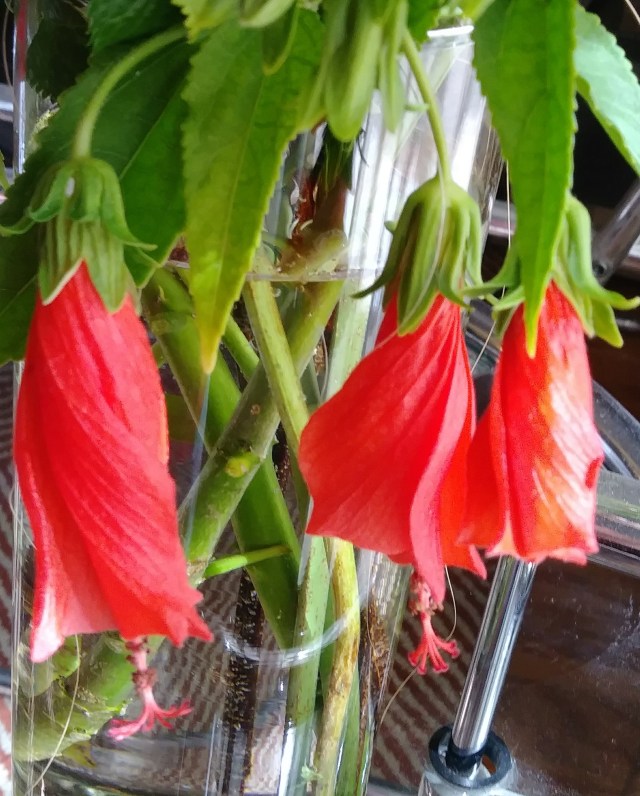
Most people call this Turk’s Cap Hibiscus (Malvaviscus penduliflorus), however, my favorite common name for this plant is Nodding Hibiscus. The shrub itself is a bit rangy looking, shapeless and branchy with light green foliage. The flowers make up for the green part, being prolific and attractive to pollinators and hummingbirds. Originally from Mexico, it has naturalized on the peninsula and is tolerant of South Florida’s extreme variation in precipitation. My Hibiscus thrive in partial shade with benign neglect, no fertilizer and roots in sugar sand (dare I call it soil, I think not)

I like to cut these for arrangements, they add a bit of draping over the side drama and last well in a vase, but you have to be careful not to knock the flowers off, the stems are somewhat delicate.

20181007_115312