Six on Saturday – Back to the Garden

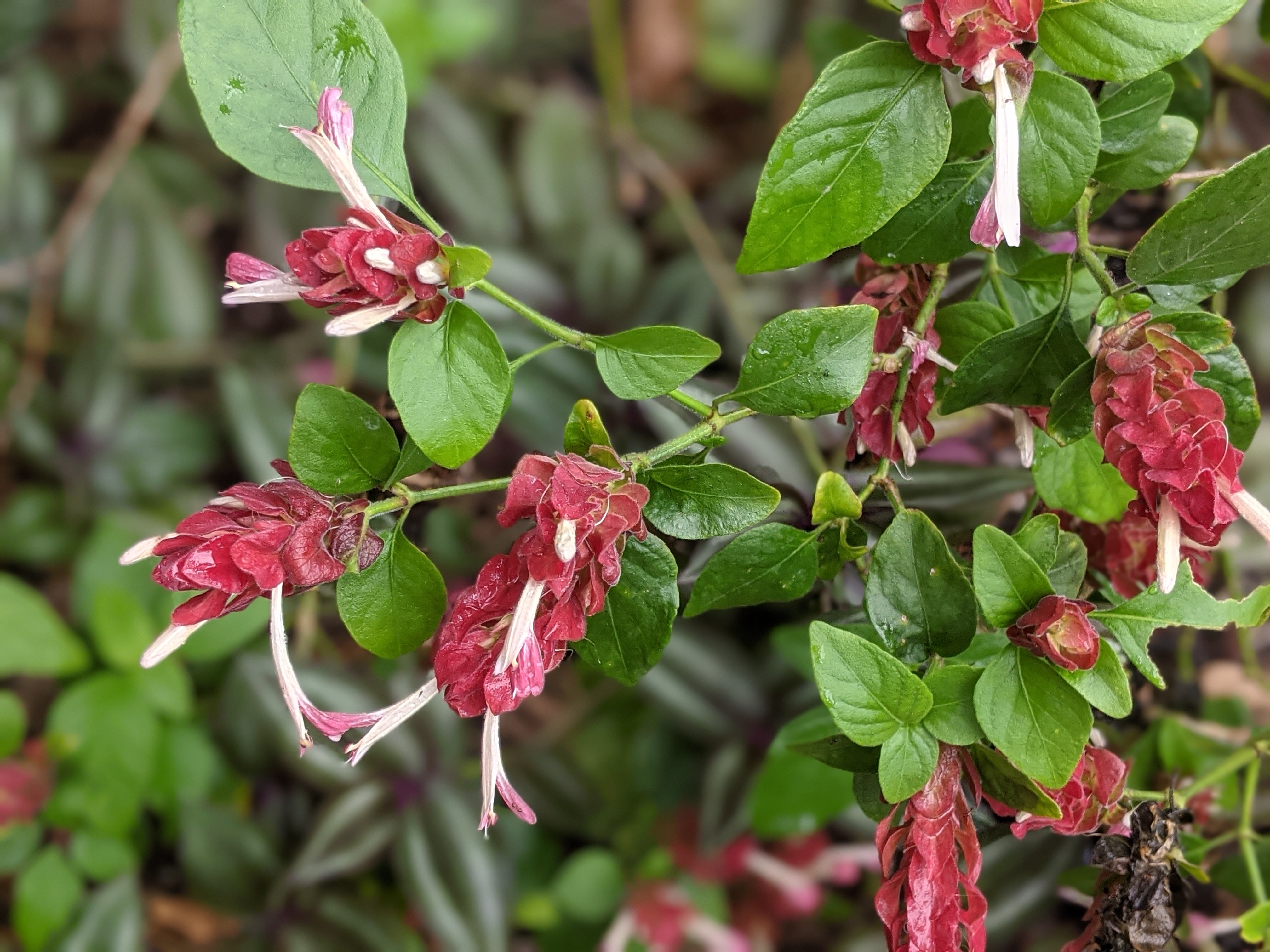
I am rejoining the Six on Saturday crowd this week after tending my husband last week. He is on the mend and I am happy to be back in the garden. I planted a few new things and found some summer flowers in the garden. Above is a Thyrallis (Galphimia glauca). These have been in the garden for two years. They are advertised to flower year round, not quite so far – though they make long lasting cut flowers.

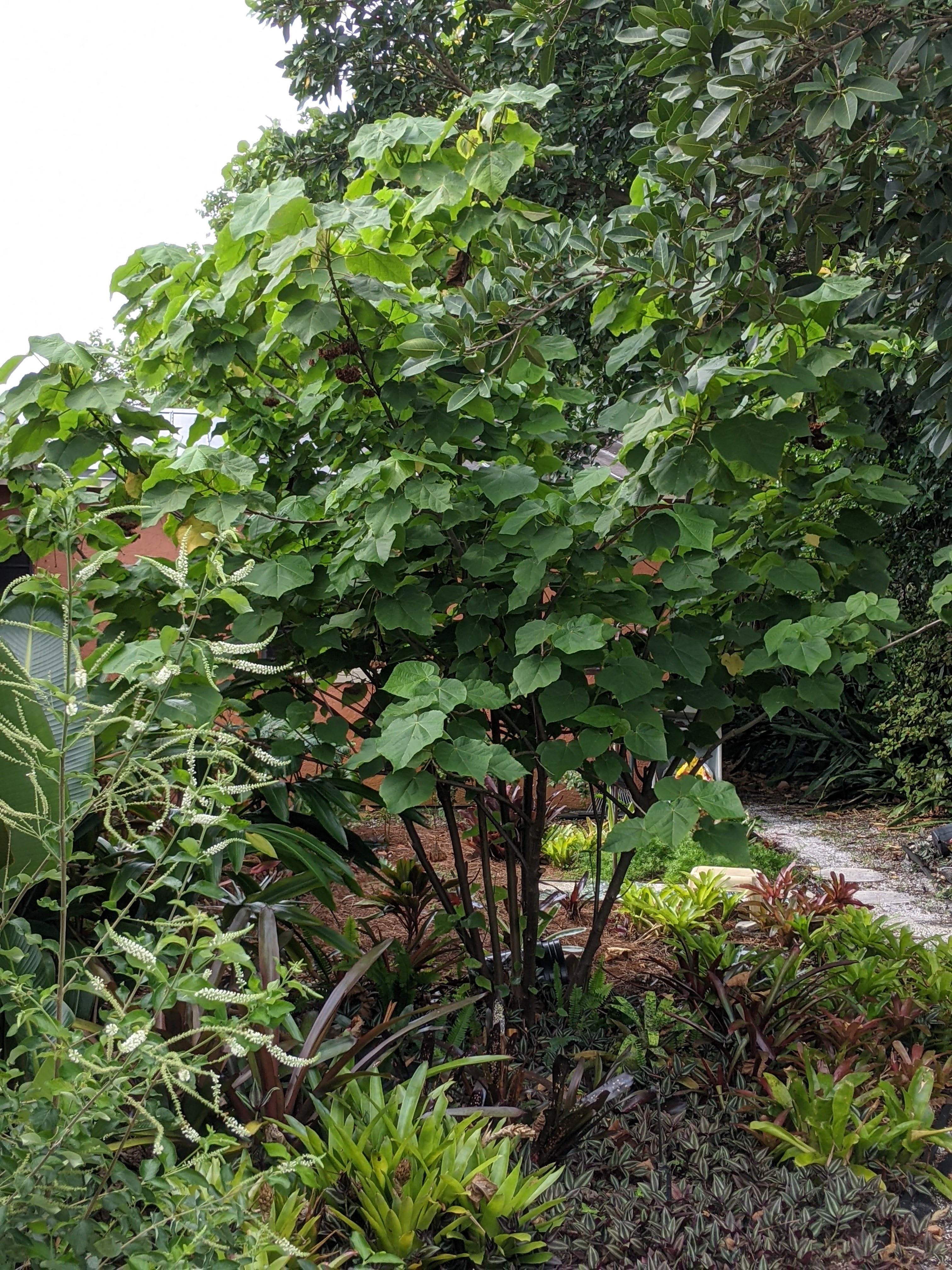
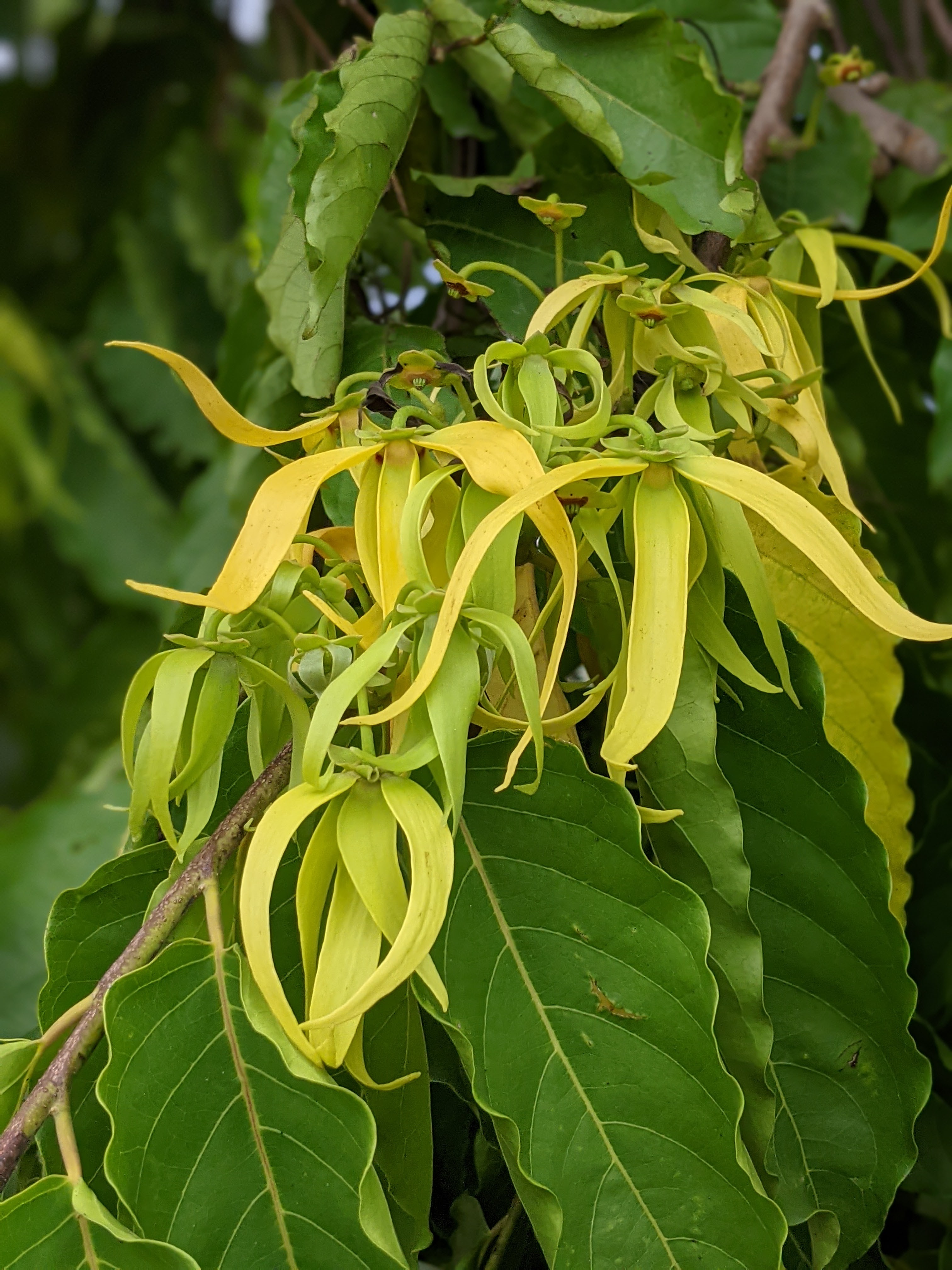
A new plant in the garden – a Joy Perfume tree (Magnolia champaca). This is a tropical Magnolia, the flowers are used to make Joy perfume. I love the almost polka dotted foliage. I added a Ylang Ylang tree this winter (Chanel No. 5 is made from this tree’s flowers). I hope they are far enough apart. I have a Tropical Lavendar on the other side of the garden. I have a feeling there is enough scent in the garden. Both trees have a reputation for strongly scented flowers. Time will tell.

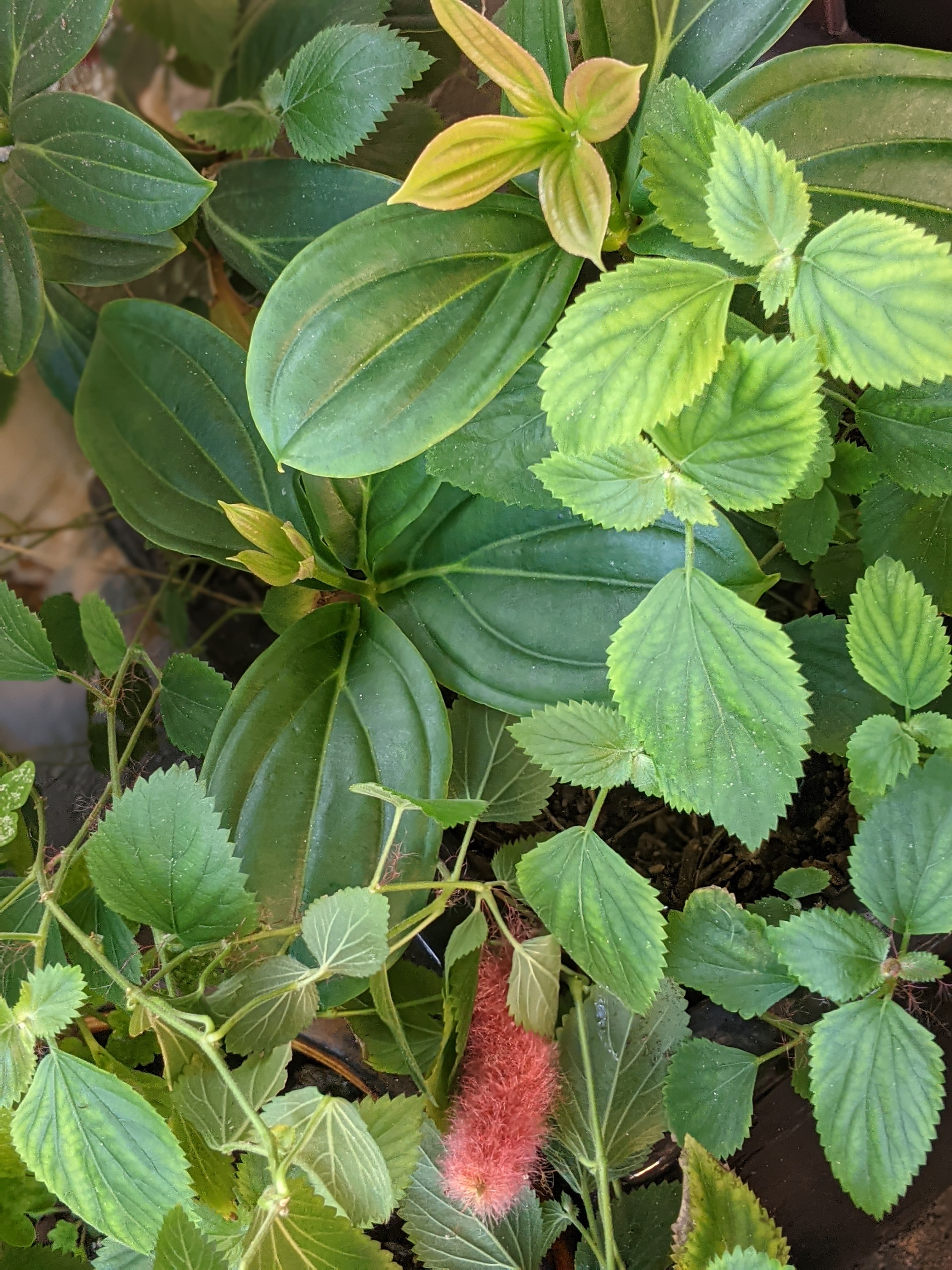
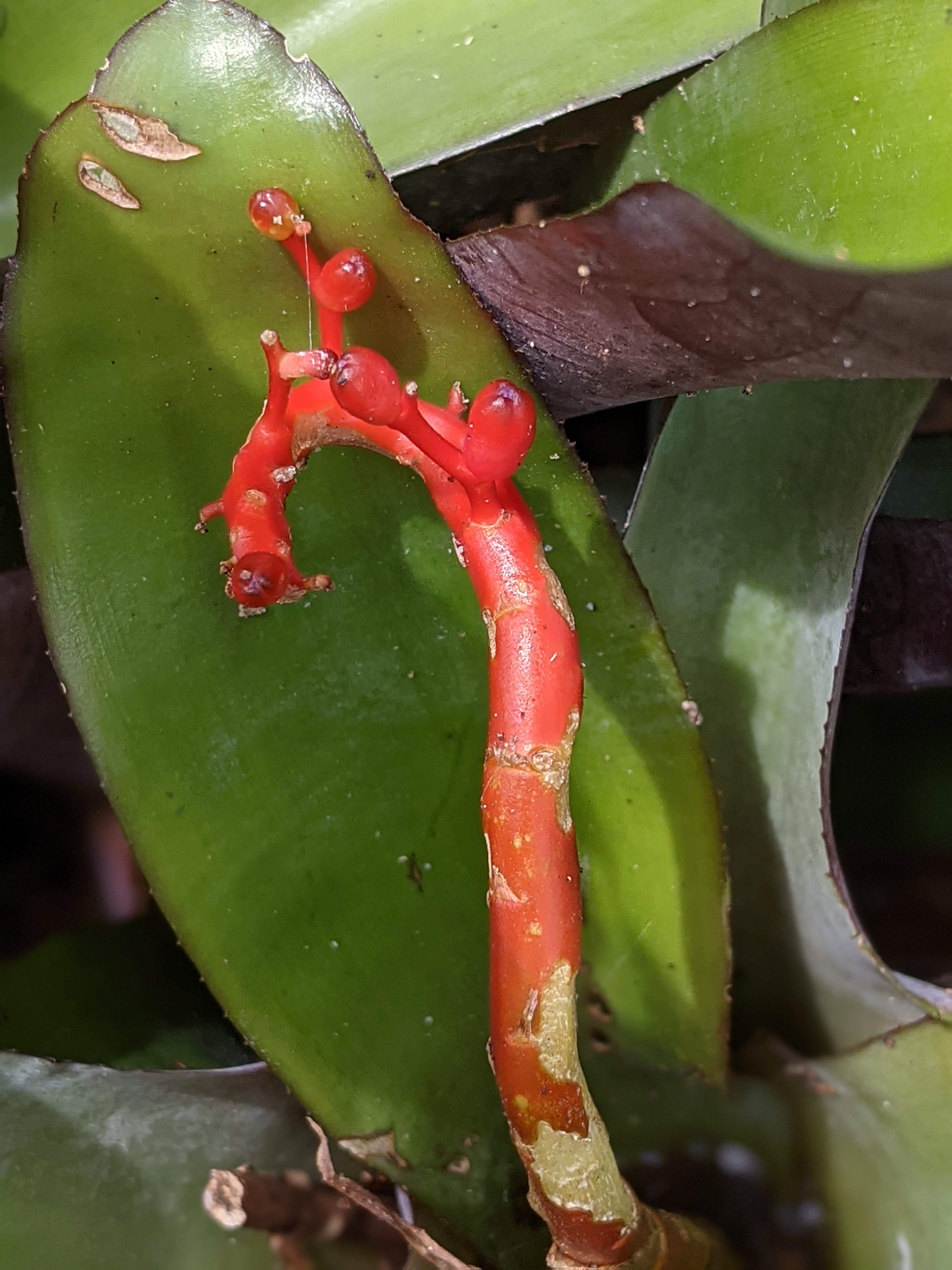
Another interesting tropical, Chandelier Plant (Medinilla cumingii). A friend shared a rooted cutting with me this spring, it is taking off in a container on my front porch. Similar to orchids, a tropical rainforest plant that lives in trees. This one should have flowers like pink grapes this summer. I am excited to see the flowers. The usual Medinilla I see around here is M. magnifica.

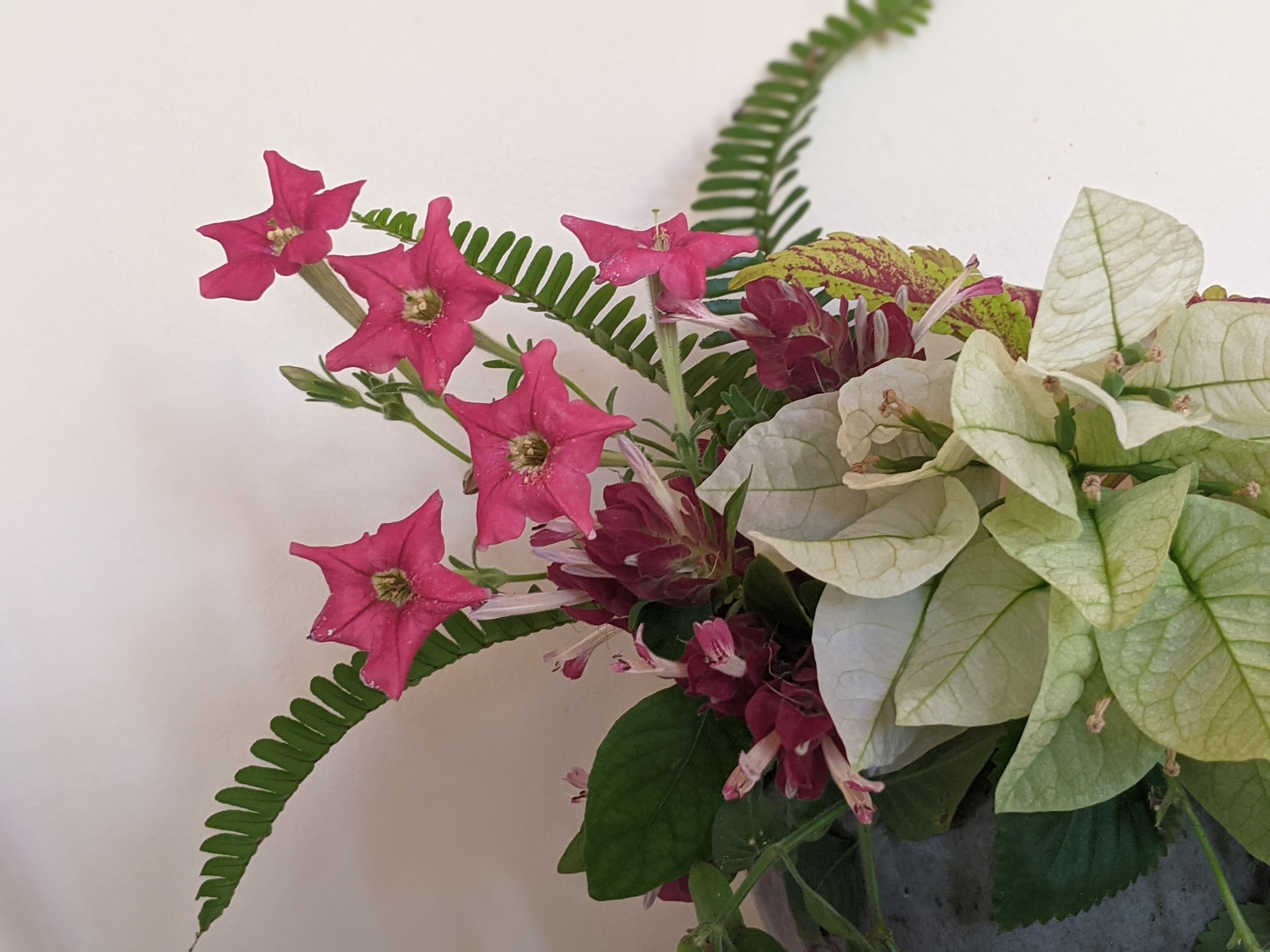
Petunia exserta, grown from seed by my neighbor, are in full flower on the front porch. My porch is a bit overrun with plants right now. I have found it is the best place to grow things from seeds and cuttings.

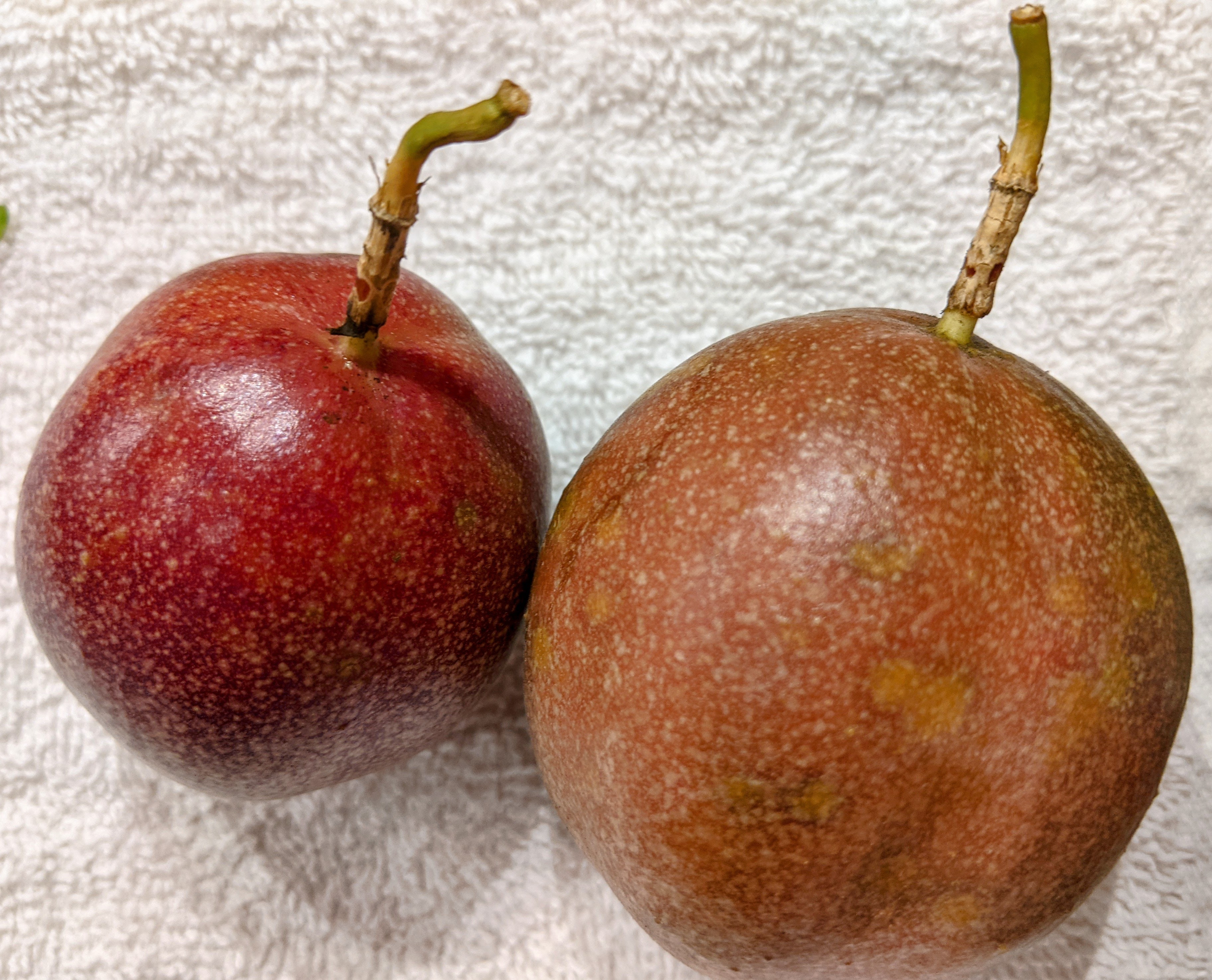
The first Passionfruit of the year. These have to stay on the vine to ripen – the gardener has to keep a close eye on these to beat the varmints to the fruit.

The last tomatoes of the season. I have had so many good tomatoes this year I decided it was worth the trouble to do it again – but only in containers. The plants in the ground did not do well even with irrigation..

That’s Six from South Florida this Saturday. To see more posts from gardens around the world visit The Propagator at http://www.thepropagatorblog.wordpress.com.

In a Vase on Monday – Tropical to a Ti

The formation of the first subtropical storm of the season, Ana, heralds the run up to summer and the inevitable heat and humidity that follow. Summer brings some of the more tropical plants in my garden into their full glory. The plants, of course, know all this and start to flower. The white Frangipani, surprised me by flowering in earnest for the first time last week, despite virtually no rain for weeks.

The pink tinged foliage in the arrangement is a Ti Plant (Cordyline fruticosa). I avoided these for years as they tend to get burned by dry winds in the late spring and look awful for a long time with crispy, brown edged foliage. Having grown a big Tropical Hydrangea (Dombeya wallachii) that will block the wind, I added a couple of these popular plants to my tropical garden. There are many varieties of Cordyline, my favorite name ‘Twisted Sister’ – this one is plum with fuchsia markings and a bit much for me. I bought a few unnamed varieties, that look like tri-colors to me; green, cream and pink. Here it is:

A closer view of the vase:

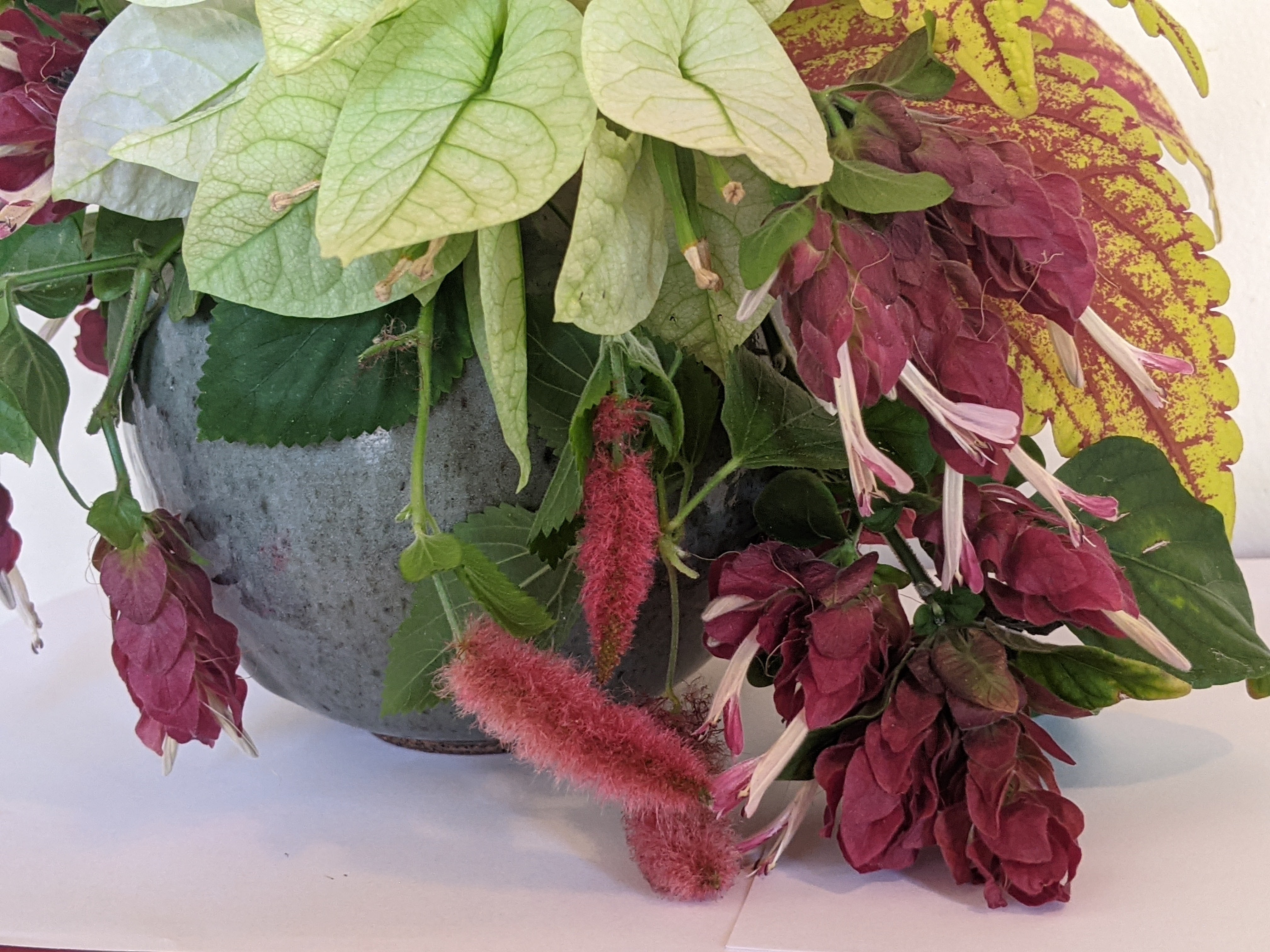
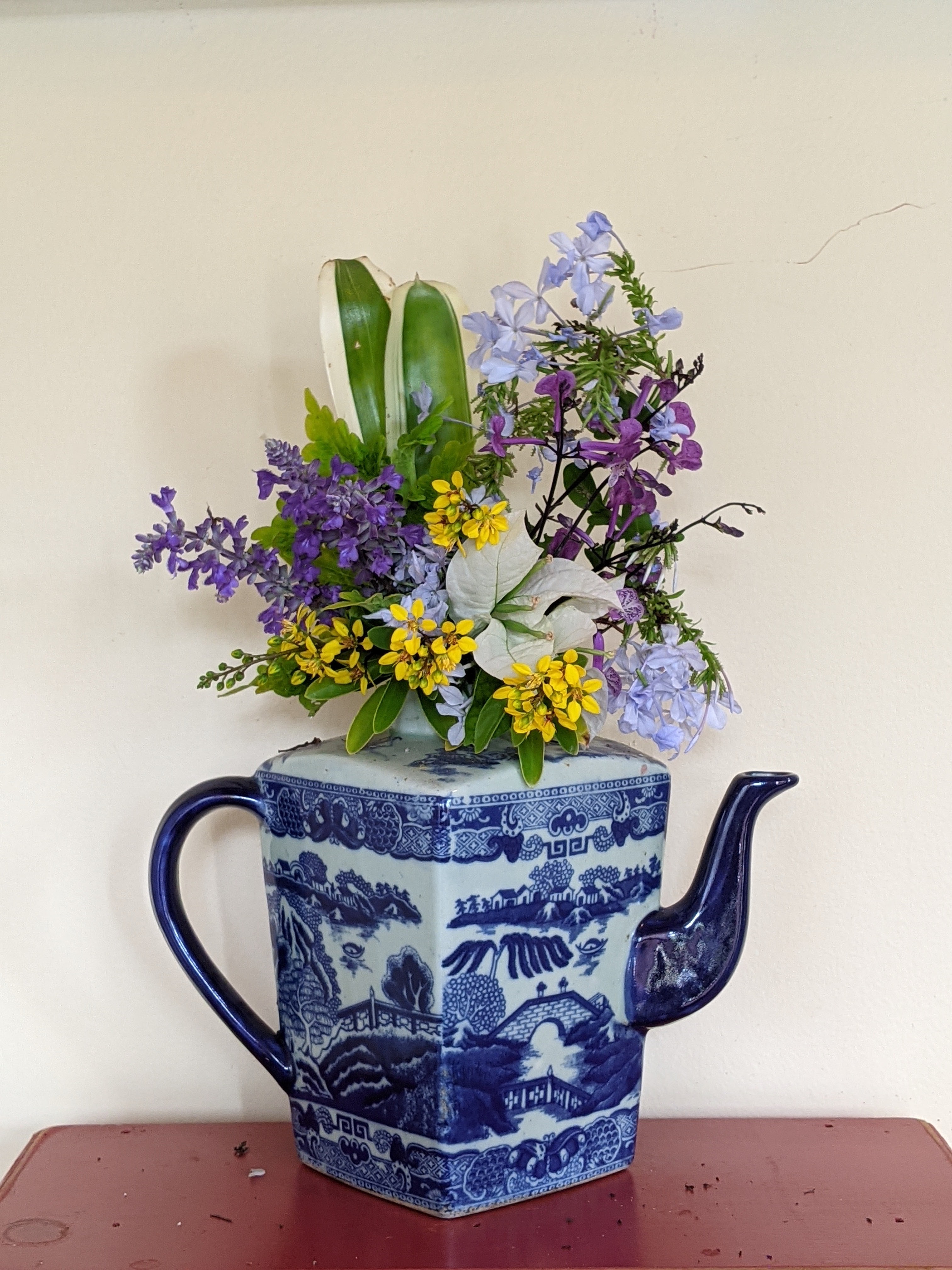
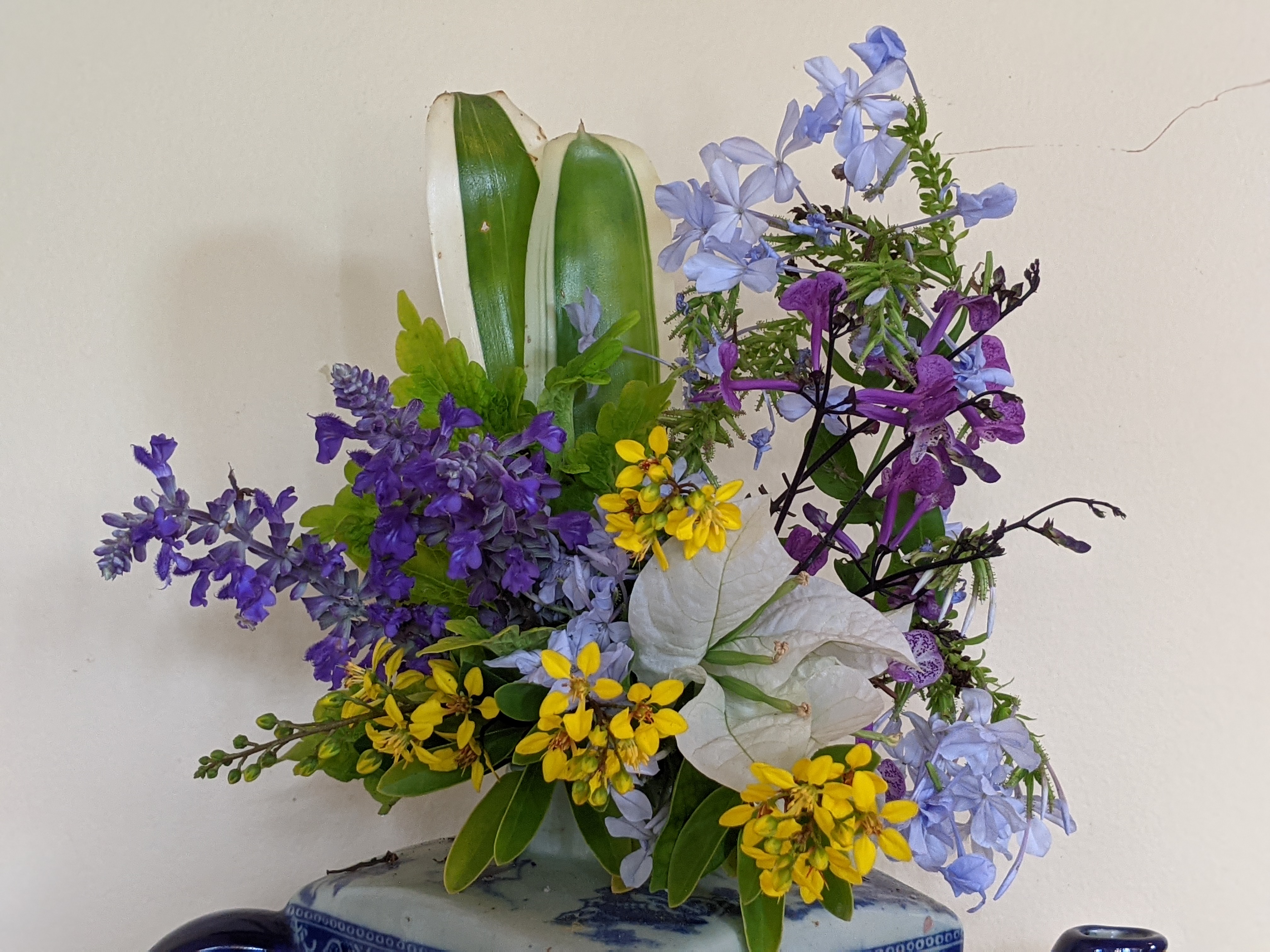
The vase is a leftover from an arrangement someone sent us for long forgotten reasons. The flowers: in white, Frangipani (Plumeria spp.) these are from a rooted cutting I picked up at a Master Gardeners sale some years ago, finally reaching about six feet. Slow growing for a tropical tree, but the fragrance is worth the wait. Pink flowers are Shell Ginger (Alpinia zerumbet) making one of their sporadic appearances in the garden. The yellow flowers are Thryallis (Galphimia glauca); a shrub I have in the butterfly garden. The jury is out on the Thryallis, it seems hyped to me. Supposed to flower year round…not quite or, not yet.

Happy Monday and Happy Gardening. Thanks to Cathy at http://www.ramblinginthegarden.wordpress.com for hosting gardeners from around the world sharing vases. Follow the link to see more.

In a Vase on Monday – Bread and Posies

Sunday found me in the kitchen and the garden, baking a garden focaccia and creating a posy.

Here is the posy part. It has been so dry here only the strong are thriving and flowering. The plants from Mexico and Florida are best for this time of year. Theoretically, it should start raining in about two weeks. I know how these things go, wait and see and keep the hose handy. Or turn off the irrigation system. Things could go either way.

A closer view:

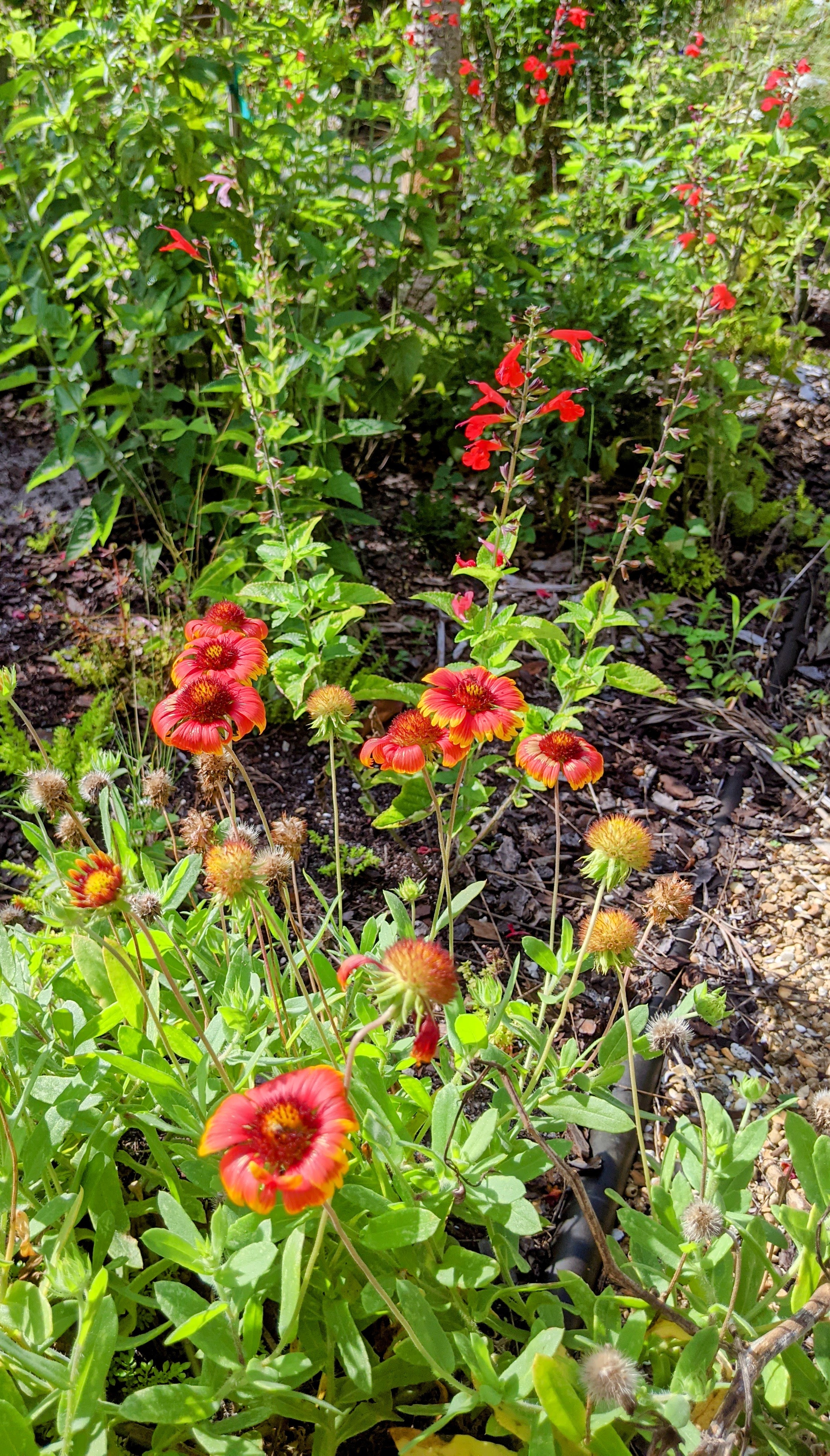
The red, yellow (and pink!) Gallardias (Gallardia pulchella) are the prettiest flowers in the garden this week. These are US natives and live in sandy prairies, perfect for my garden. The white flowers are from the White Geiger tree. This tree has been blooming for months, it is oddly shaped – 6 feet tall and twice as wide, though it was blown over by a near miss hurricane a couple of years ago. Native to the Rio Grande area in Mexico, another survivalist (Cordia boissieri). The orange tube shaped flowers are from another sand lover from the Bahamas, Firebush (Hamelia patens) The grey green background leaf is a trimmed palm frond from Florida’s state tree, the Cabbage Palm (Palmetto sabal). These palms pop up in my garden and I leave them to use in flower arrangements. The vase, one of my favorites, is a thrift store find.

Here is the bread part. My nephew’s wife sent me a photo of a garden focaccia and said “you should try this”. I am known for making focaccia as I bake some nearly every week and it is our regular sandwich bread. I also am overrun with Yellow Pear tomatoes and needed to use them. This was fun to make and is tasty with the exception of the areas with a lot of tomatoes – the bread is a bit mushy under the tomatoes. Here it is before it went in the oven.

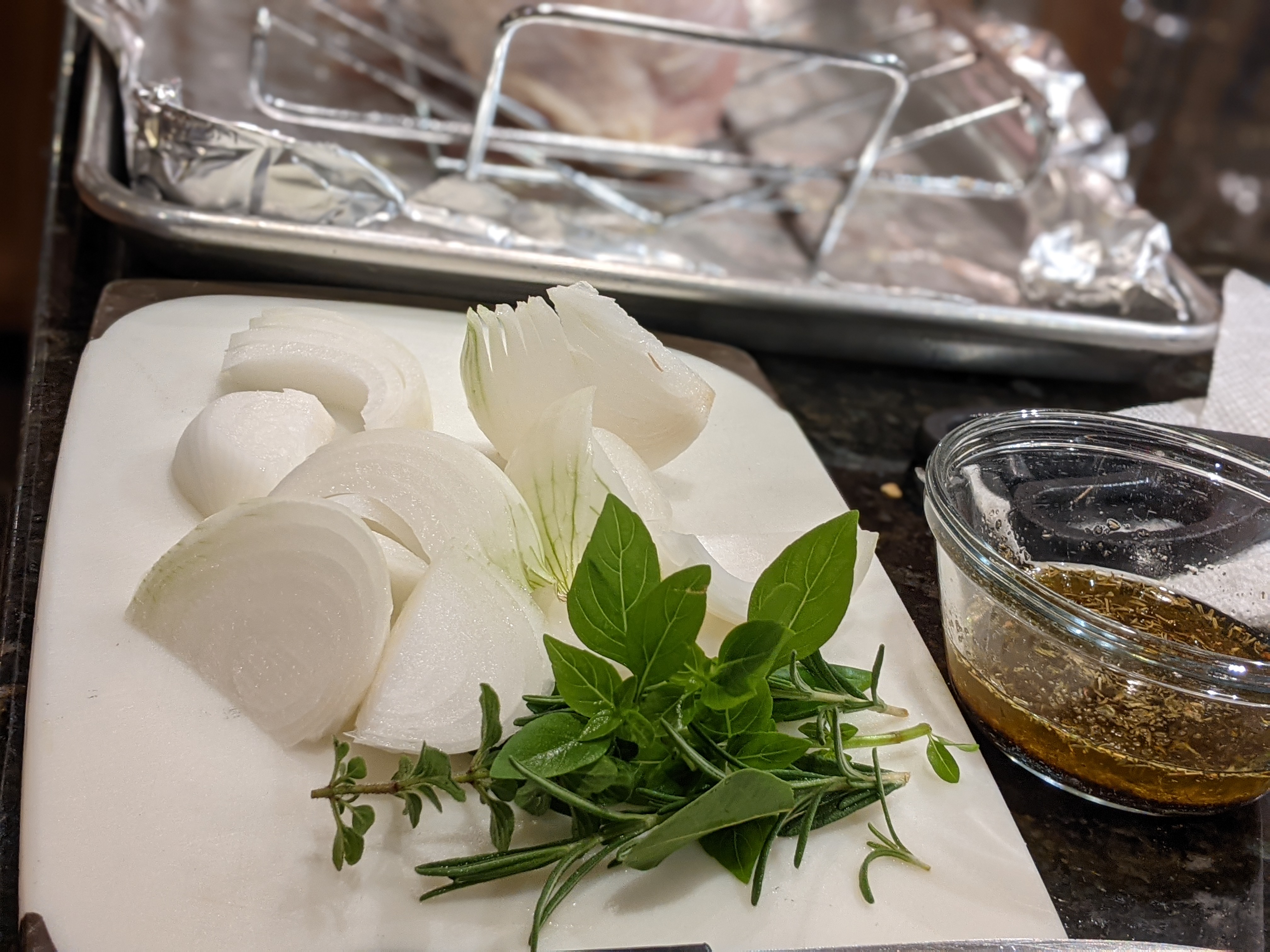
My focaccia is always made with a crust of mixed parmesan and low fat cheddar cheese. The stems are small fronds from a fennel bulb; the flowers are red onions, yellow pear and Riesenstrube tomatoes. Leaves are rosemary, thyme and parsley from the garden. I brushed the vegetables and herbs with a mixture of olive oil, garlic and balsamic vinegar before baking.

Happy Monday and Happy Gardening and I hope the rain gods smile on all of us. Just the right amount, of course. As always, thanks to Cathy at http://www.ramblinginthegarden.wordpress.com for hosting In a Vase on Monday. Follow the link to see more vases.

Six on Saturday – Mangoes and Monarchs

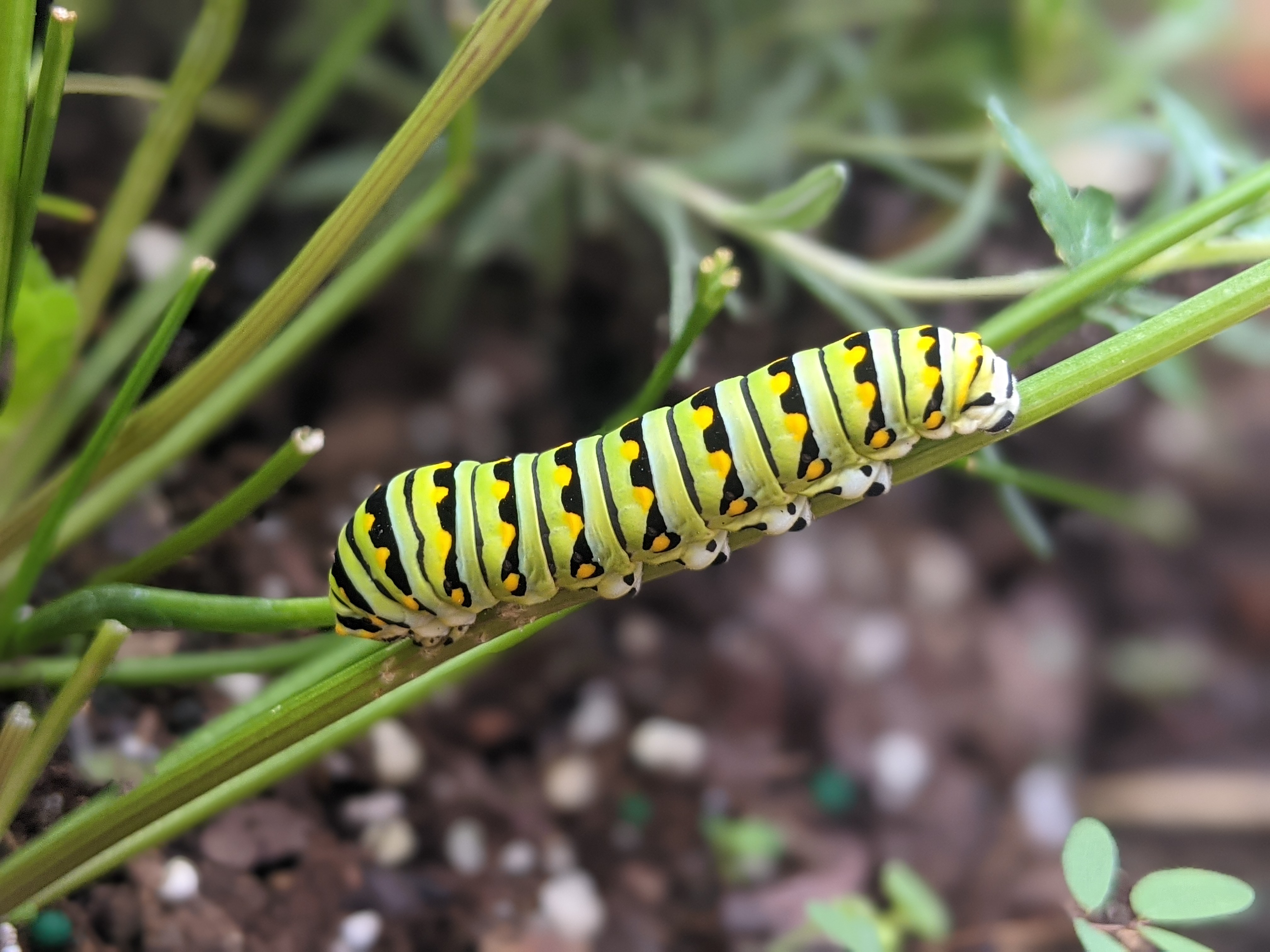
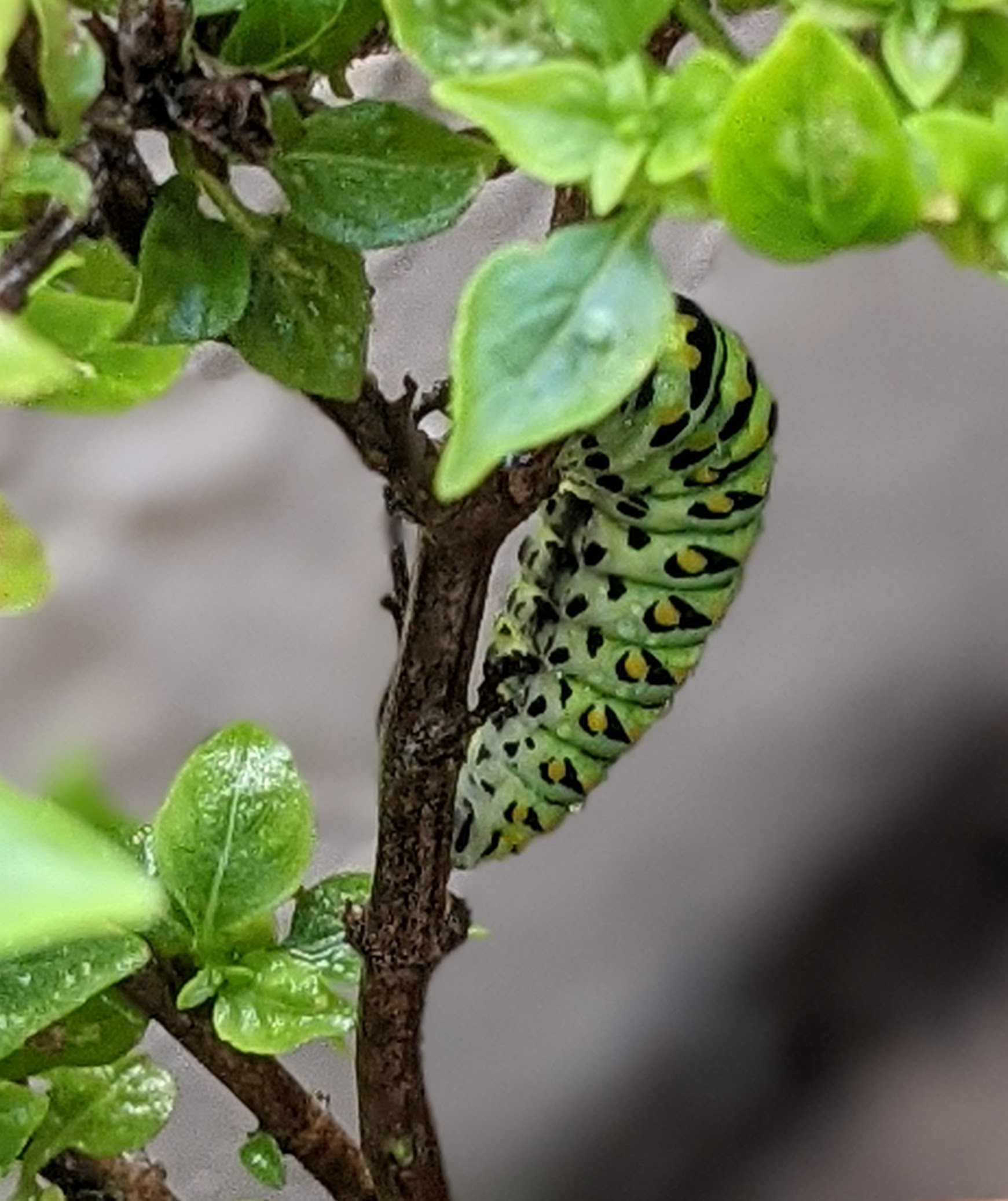
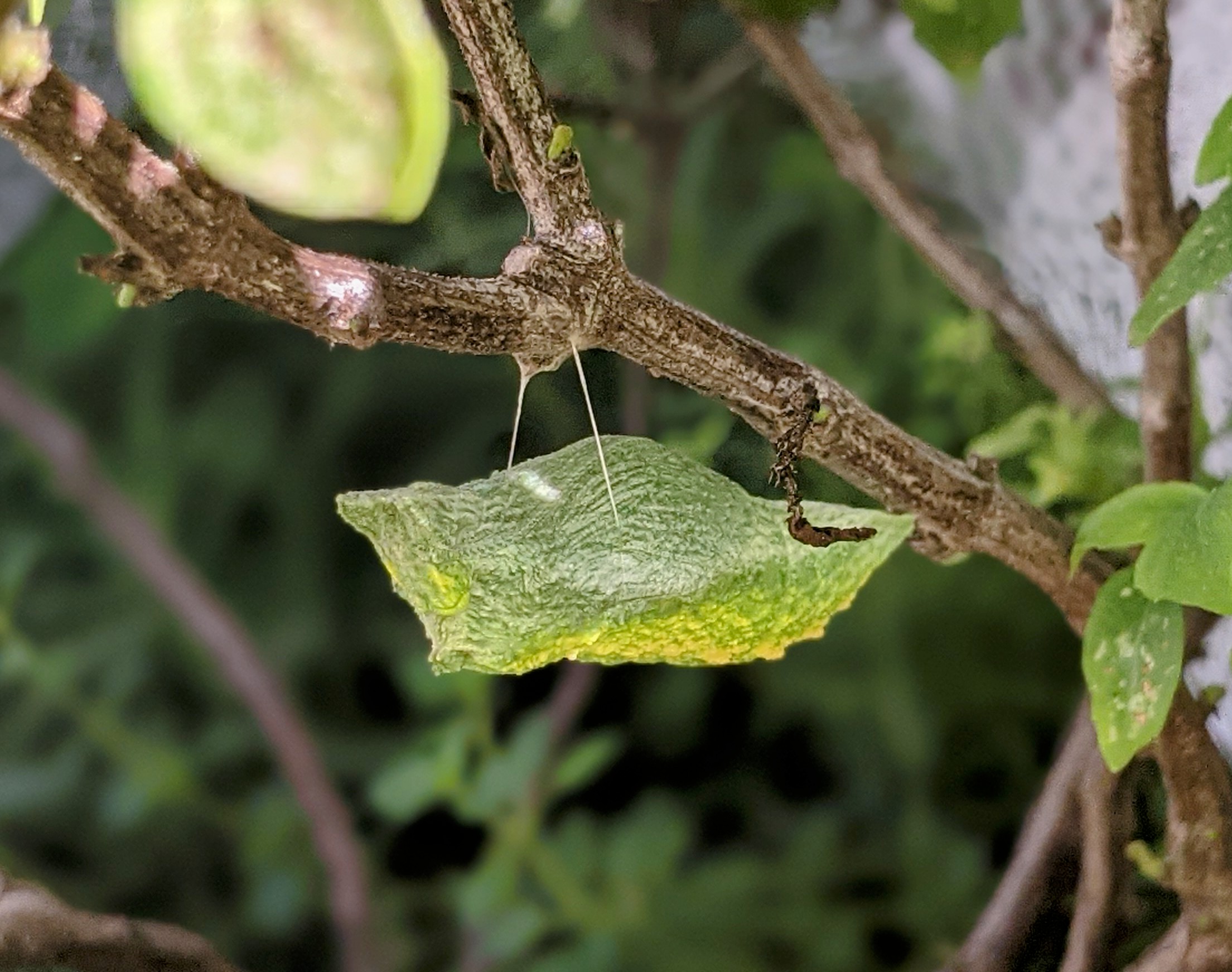
This is the first Monarch butterfly caterpillar in my garden. I have been attempting to grow its host plant, Tropical Milkweed, from seed since last summer. It seems planting the seed in late summer is the wrong season and late spring is the time. The Milkweed isn’t very big and this caterpillar is in its final instar before pupating (I measured and the length is right). During the final instar they eat like crazy, so I put some canned pumpkin out and the catepillar ate that until it dried out and then went back to the Milkweed. I pulled up another Milkweed and he or she ate that one, too. The final instar is supposed to last 3 to 5 days and I have been watching 4 days, so I hope the transition is soon.

I am joining the Six on Saturday crew today – six items of interest from your garden. To see more posts, visit http://www.thepropagatorblog.wordpress.com.
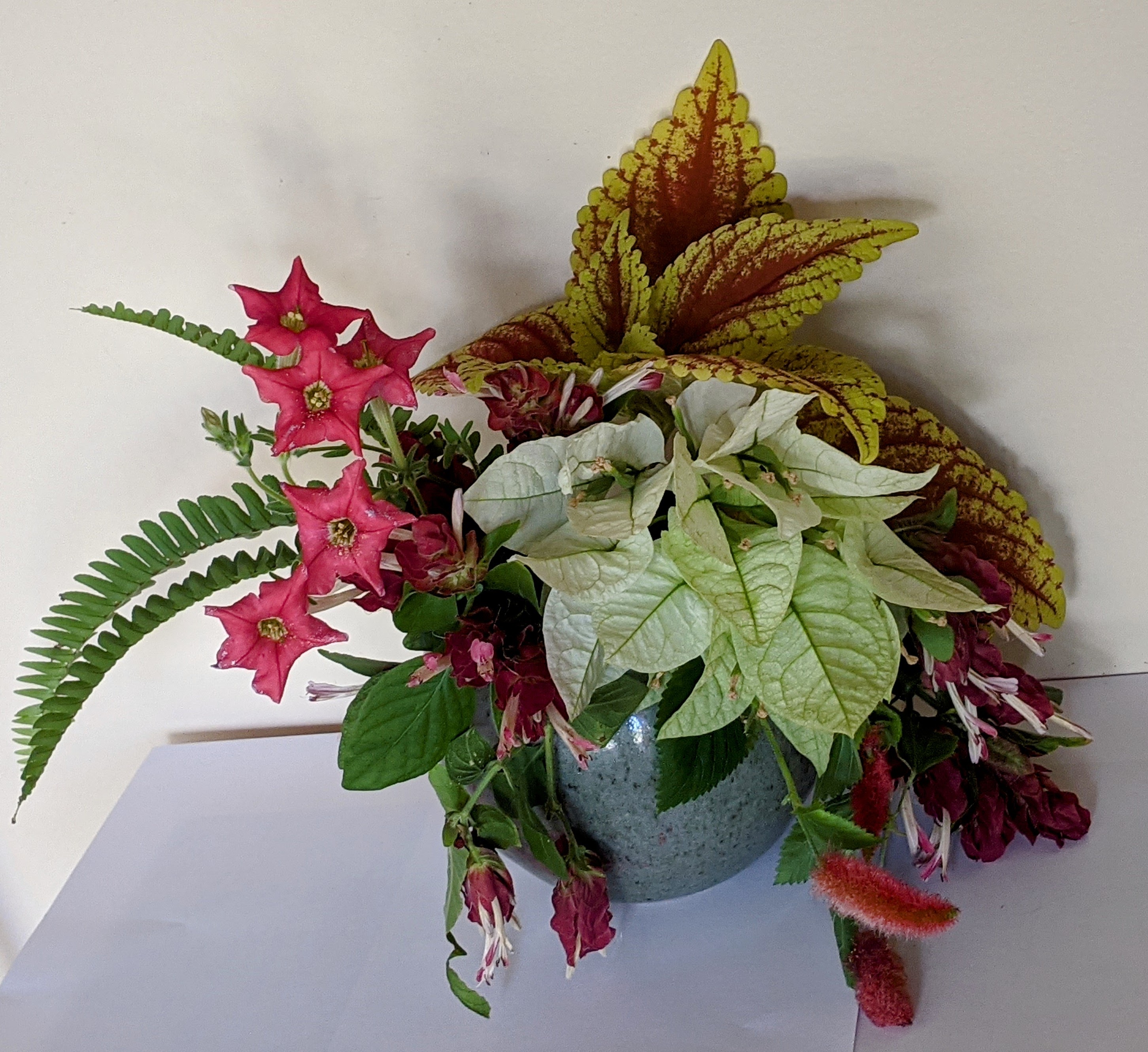
Before I wrote my post this morning I went to the beach for a dose of Vitamin Sea. Here is a shot of the Sea Oats..

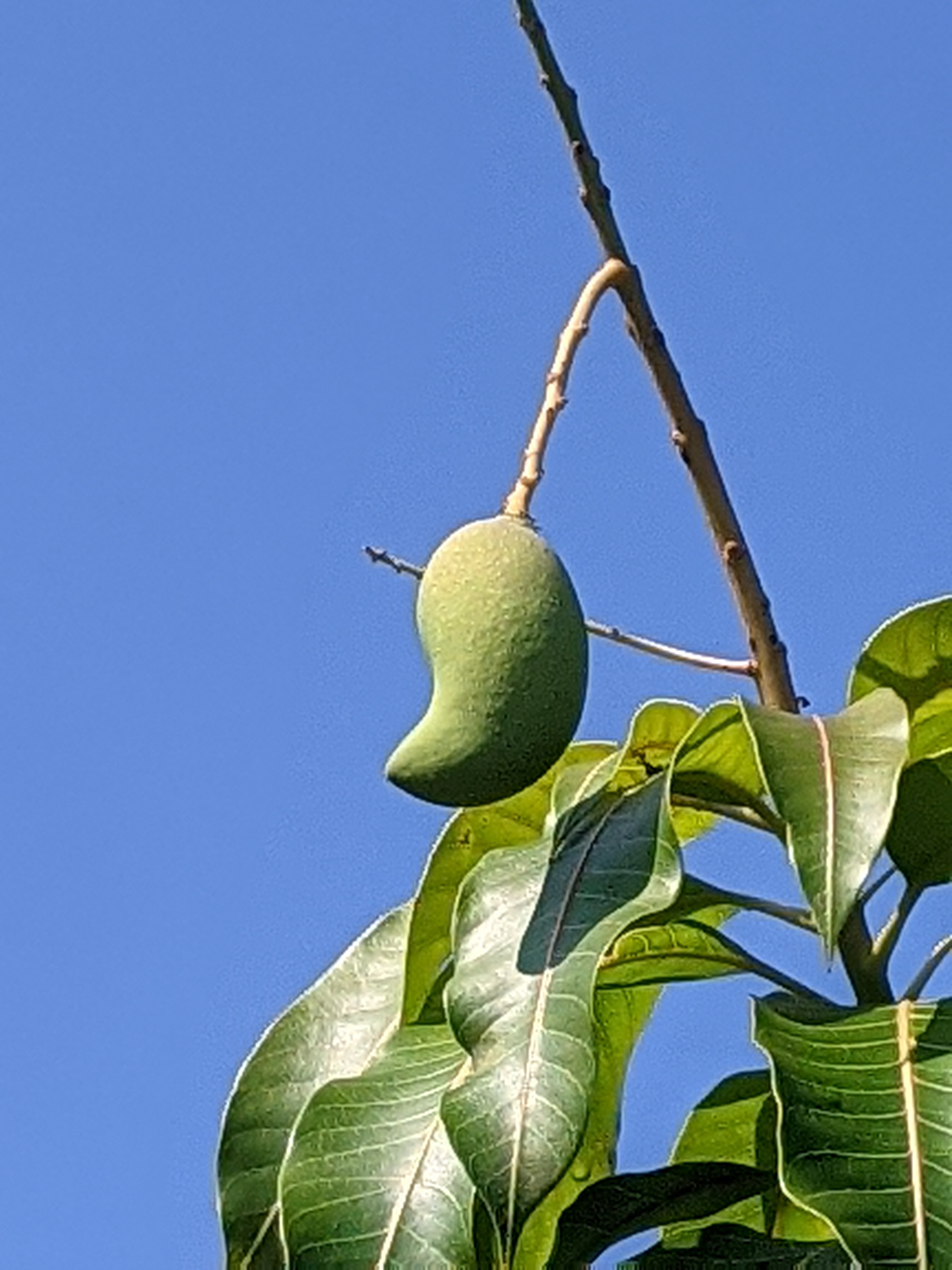
The Mangoes in my garden are teasing me and not quite ripe yet…here is their current condition. They look like weird Christmas ornaments. I put net bags over the fruit to keep squirrels and greyhounds away. One of my dogs loves fruit and is tall enough to reach them.

The other Mango, Nam Doc Mai, put on a huge flowering and growth spurt and has dropped most of its fruit. This one in known for flowering more than once a year. So, hopefully another flush will happen.

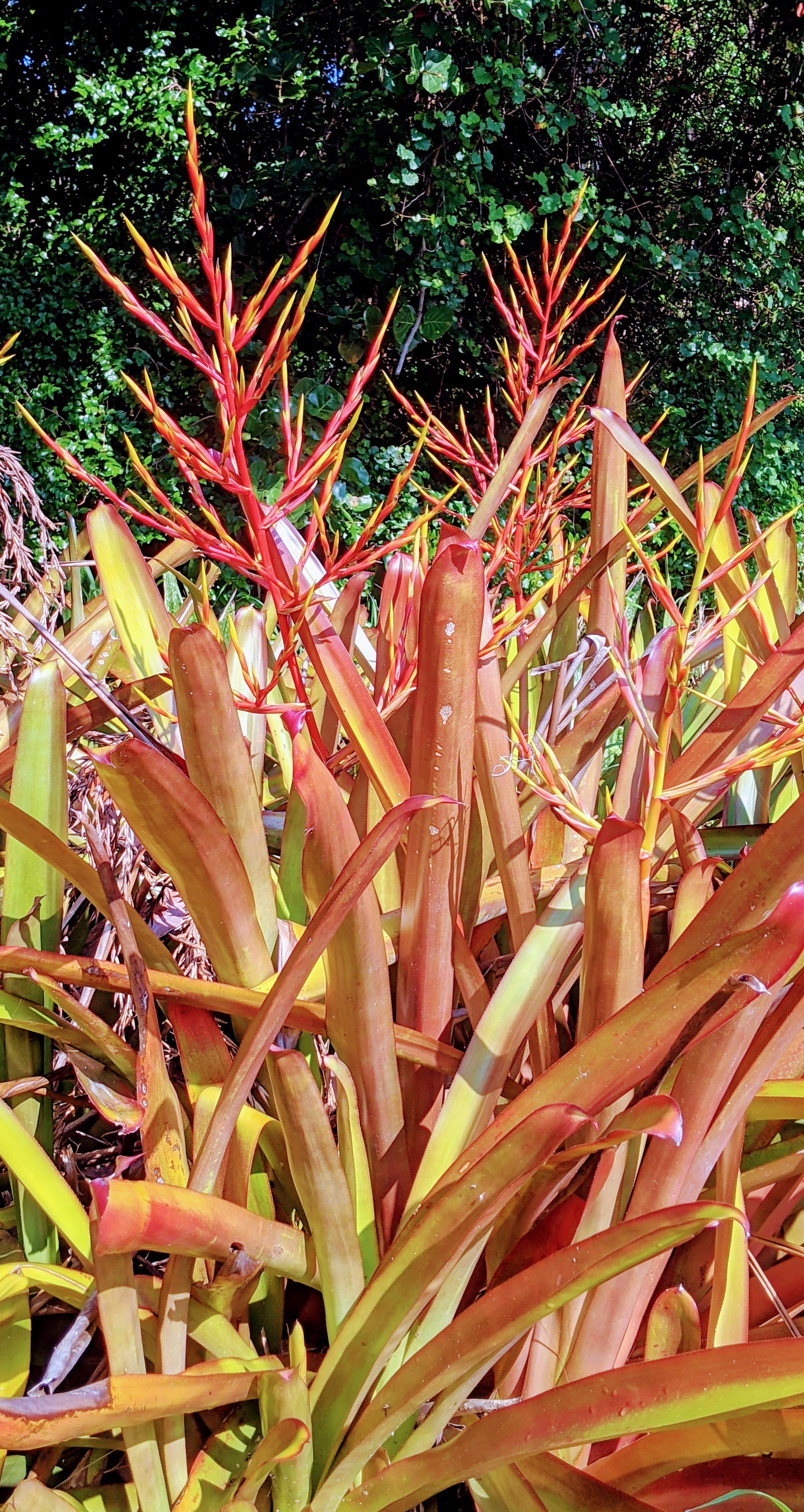
Finally, a dreaded insect in the garden. The Lubber Grasshopper. These things have been eating holes in the Bromeliads. They can be drowned in soapy water or squashed. Vile things.

That sums up this Saturday in my garden. I bought a few butterfly plants last weekend and planted some new seed for some obscure plants I could not buy – Mountain Marigold (Tagetes lemmoni) and Perennial Leonitis (Leonitis leonurus)

If anyone grows these two I would love to hear about it!

Happy Gardening.

In a Vase on Monday – Short Lived Passion

I am certain gardening is a lifelong passion for me. Undoubtedly passed on from my Mother, who referred to this passion as ‘getting the farmer gene’ – her father was a peach farmer in South Georgia. The vases were put together on Mother’s Day, so she has been on my mind – gone for 12 years later this month.

I have always been fascinated by Passionflowers, a graphic design by Mother Nature. A few years ago, I bought one online as a host plant for several butterflies native to South Florida. Despite its reputation as a weed, I had a difficult time establishing the vine in my sand. Two years later, I was disappointed when it flowered, instead of a red passionflower, it was white. Later in the year the fruit produced indicated it was a Purple Possum Passionflower. Passionfruit may be an acquired taste and I think the name is appropriate as most of the fruit was eaten by varmints of some sort. I suspect Raccoons, not Possums.

Since I rarely get any fruit, I cut a few flowers for a vase. These are in a tiny brandy snifter my husband tells me is used to flame brandy…I am well past drinking anything flaming, and the flowers seemed to be fading, so I decided to make another vase with a bit more variety.

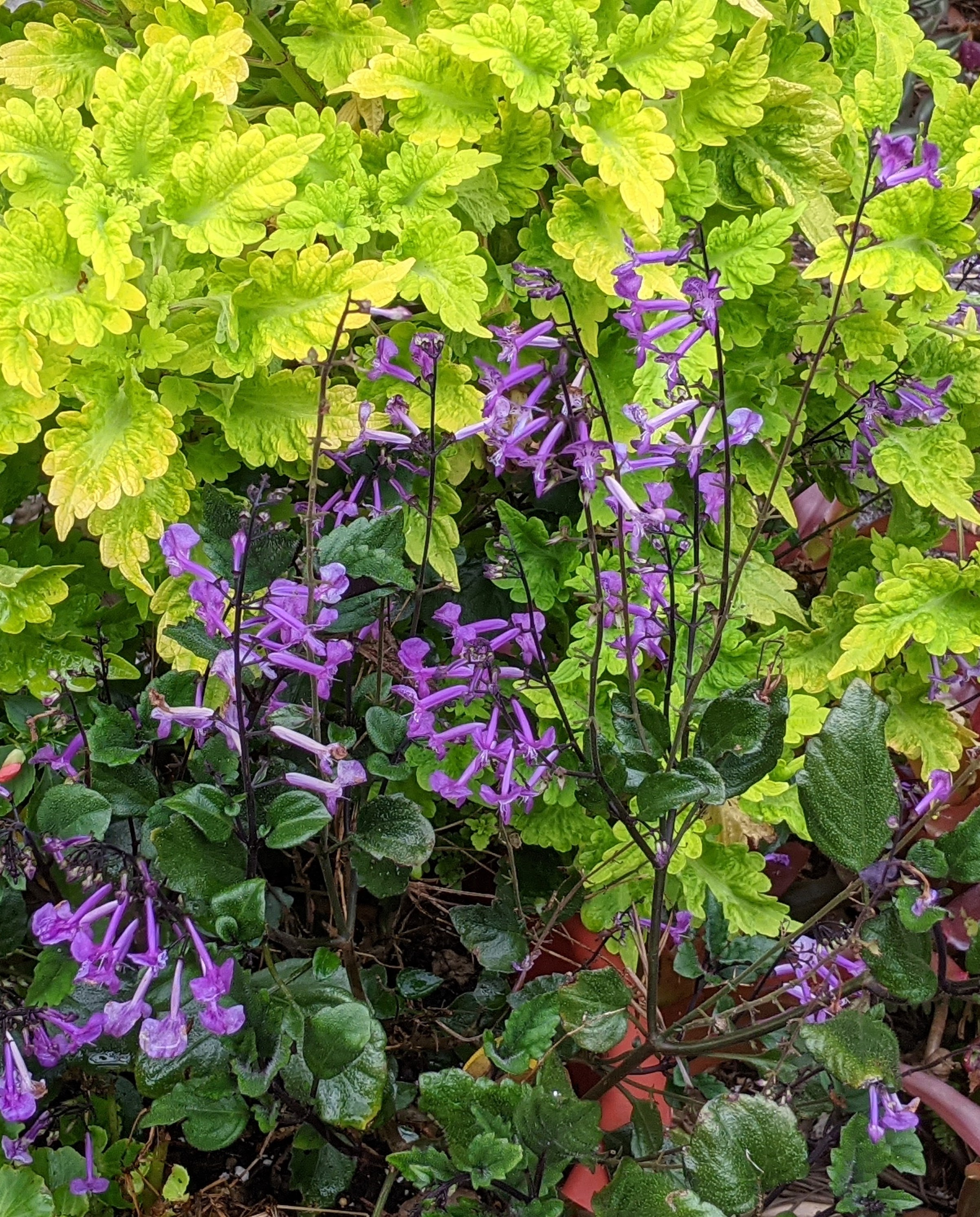
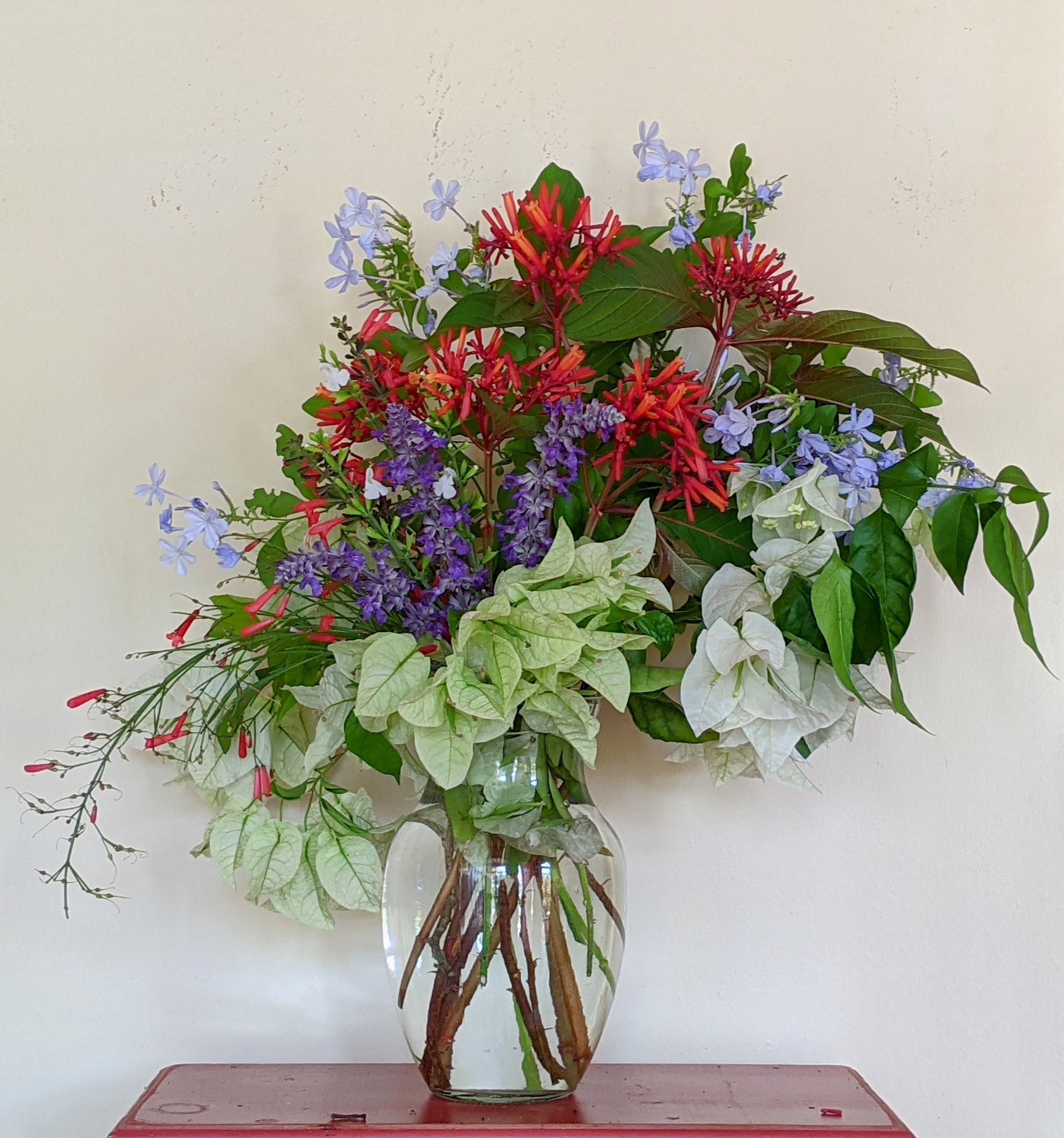
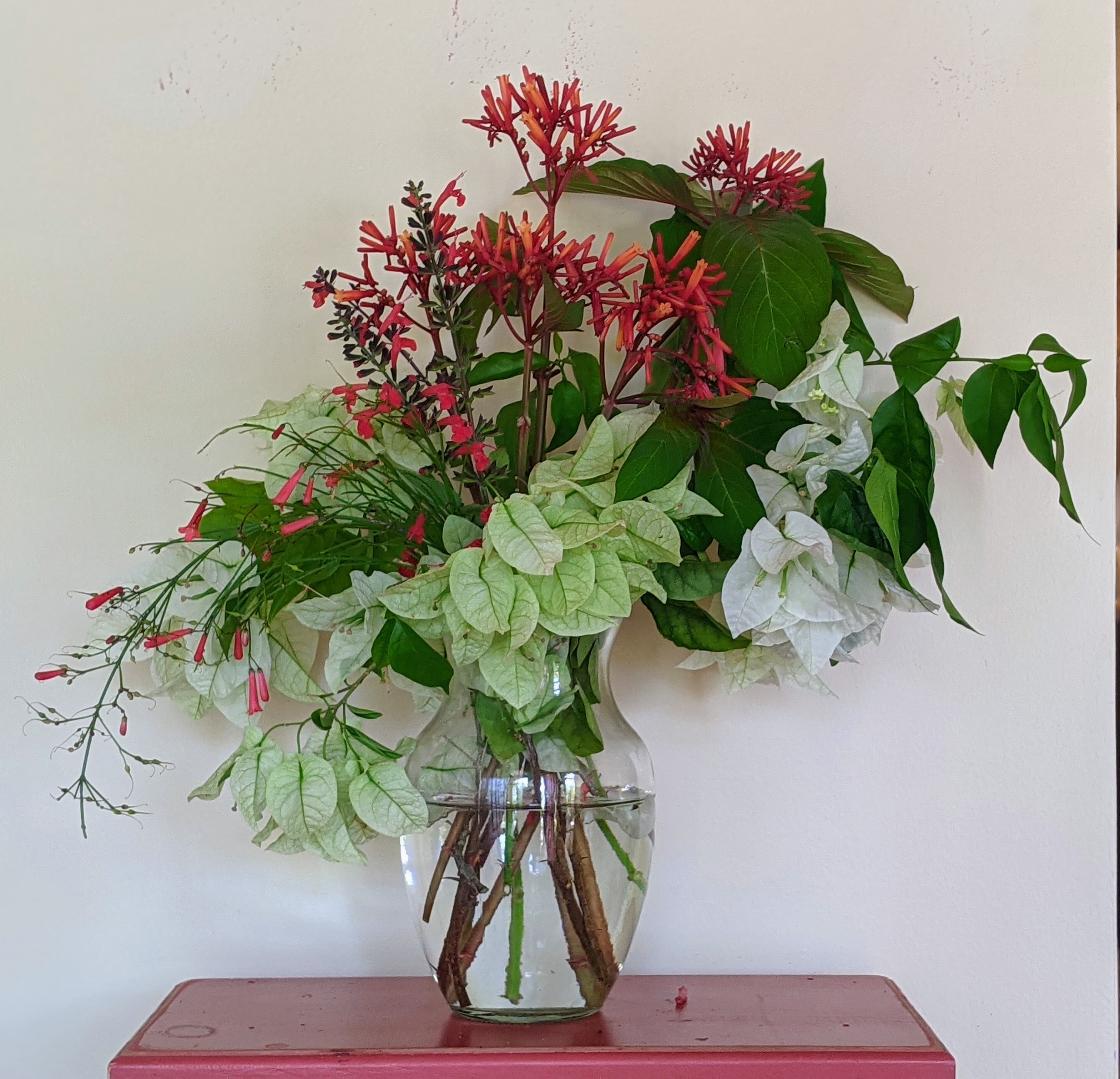
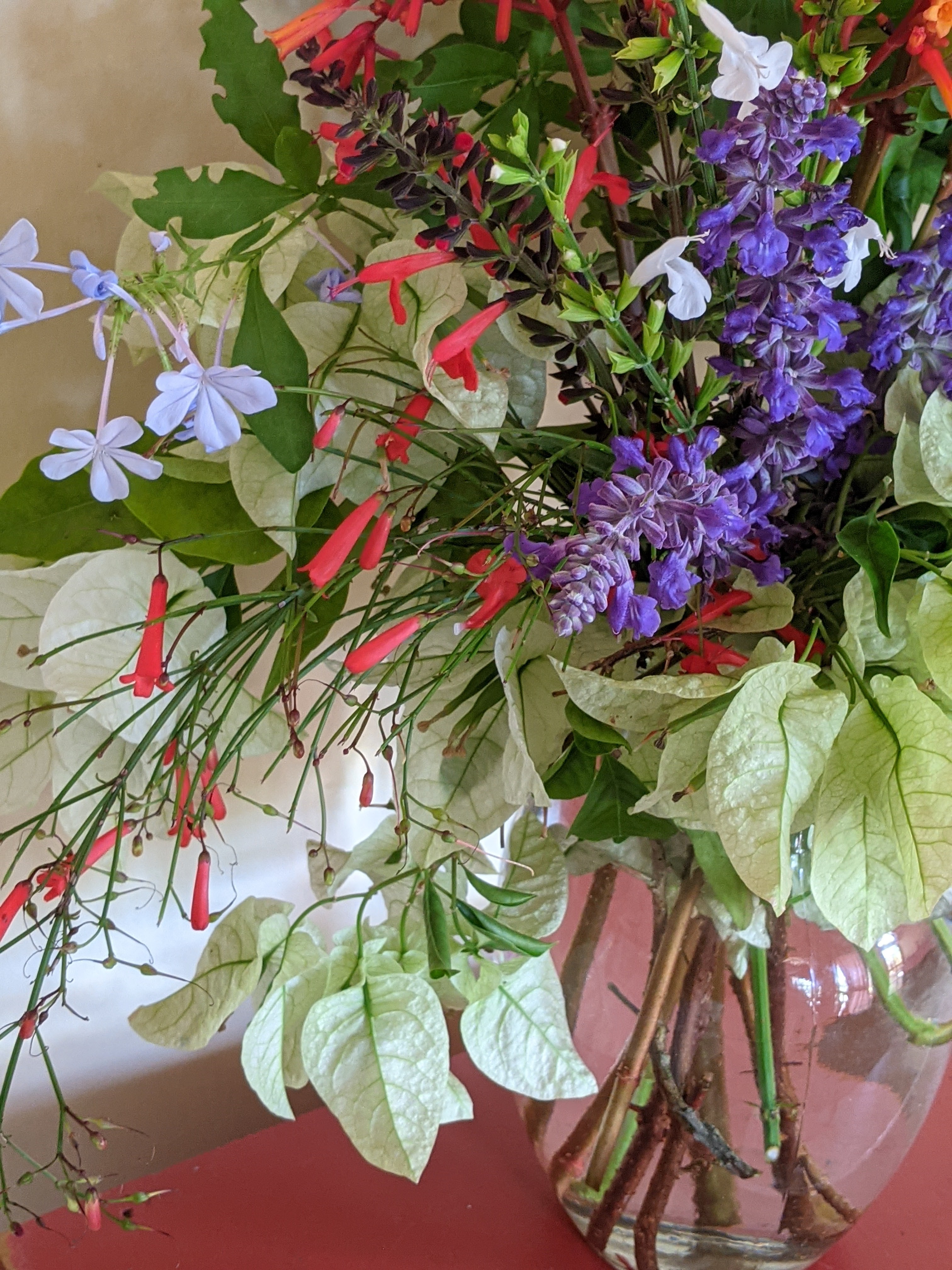
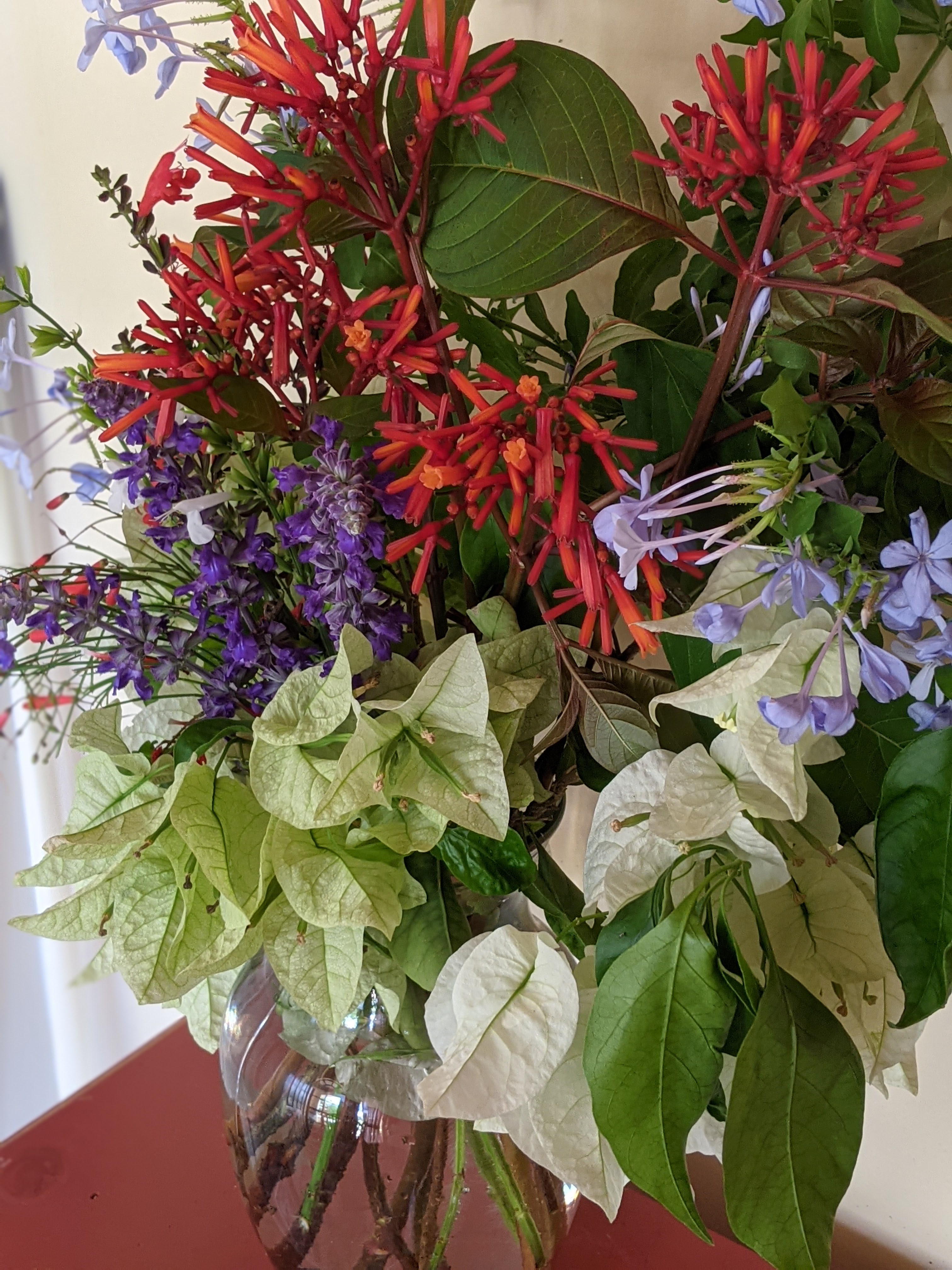
Vase two, more colors and another Passionflower. I enjoy all the high colors produced in my garden. The yellow daisies are a recent addition to the butterfly garden; African Bush Daisies (Gamolepis chrysanthemoides) reportedly drought tolerant when established, and a butterfly attractant. I am not noticing either so far, but it is early and has been very dry. The mixed color daisies are Gallardias (Gallardia pulchella) – these have been considered native for years, but whatever genius decides these things declared them not so recently, though it is a rare, tolerant plant that thrives in my yucky sand and should be celebrated. I fear that will make them less popular. The red flowers are Russelia equisetifolium, Firecracker Plant. The orange flowers are from the Firebush (Hamelia patens). The blue flowers around the edges are Mona Lavendar Plectranthus, that turns out to be a long lasting cut flower. The blue flowers in the middle are Mystic Spires Salvia, which I am enjoying in my garden. Chartreuse foliage is from a mysterious Coleus that is thriving in several containers.

When the sun went down the Passionflowers followed suit, short-lived but worth the trouble.

Happy Gardening and thanks to Cathy at http://www.ramblinginthegarden.wordpress.com for hosting. Follow the link to see more vases.

In a Vase on Monday – Symptoms of Summer

A friend of mine who has lived in Florida for a long time claims Mother’s Day is the bitter end of snowbird season. Another friend says the rise in humidity make the tourists skedaddle. I think both are right, the humidity went up this week and Mother’s Day is next Sunday. Another symptom of Summer is the flowers and scent of Frangipani and Gardenias in the air.

I was standing on my back porch Sunday morning, keeping an eye on Zepp the Greyhound, who is tall enought to eat Mangoes off the tree and just might do so. He is a fruit eating dog and has been sniffing and licking the unripe Mangoes. This is our first fruit from this particular tree and I want to eat it! Anyway, while dog watching I noted the wonderful fragrance of a nearby Frangipani. The Gardenia is more fragrant at night.

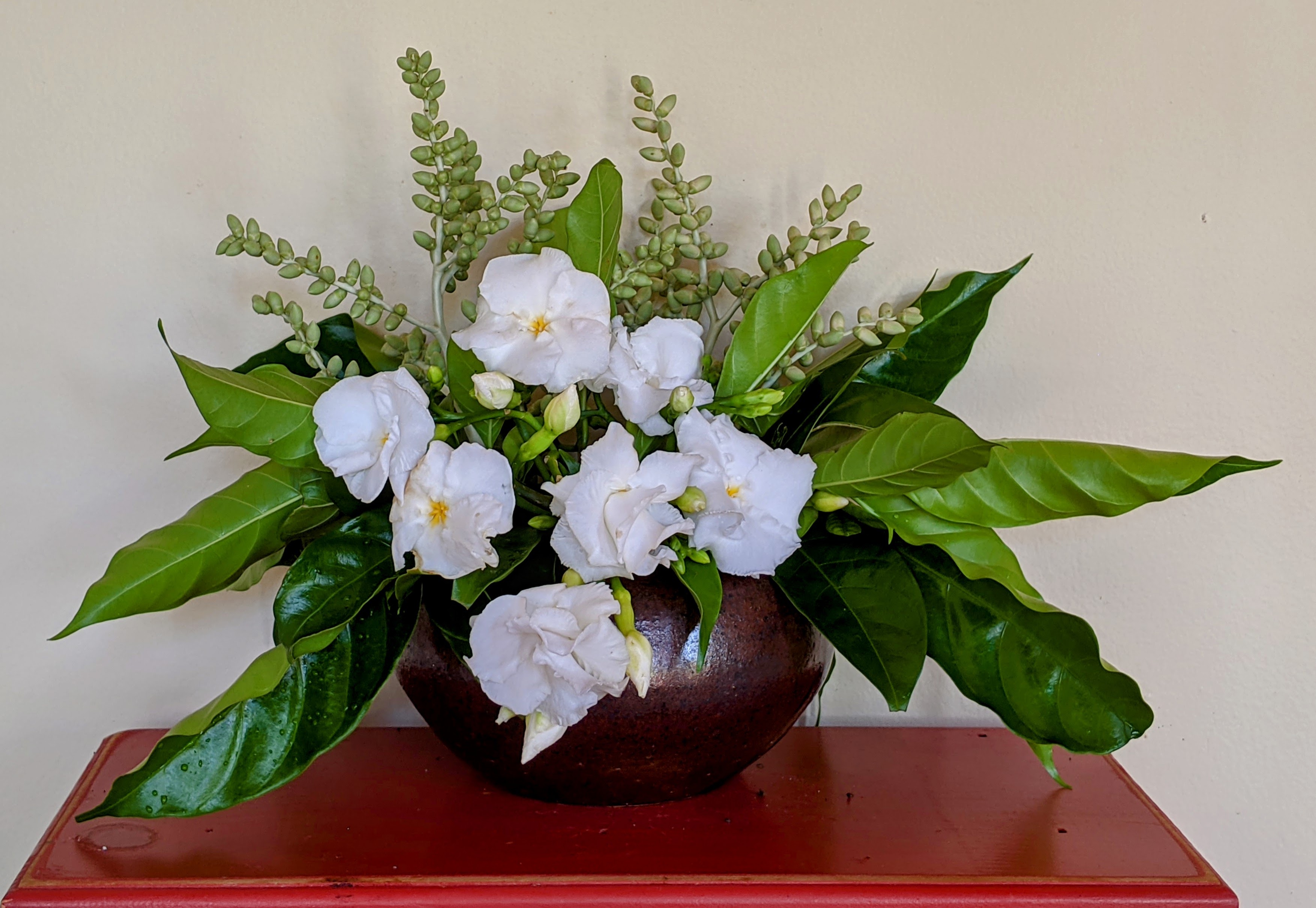
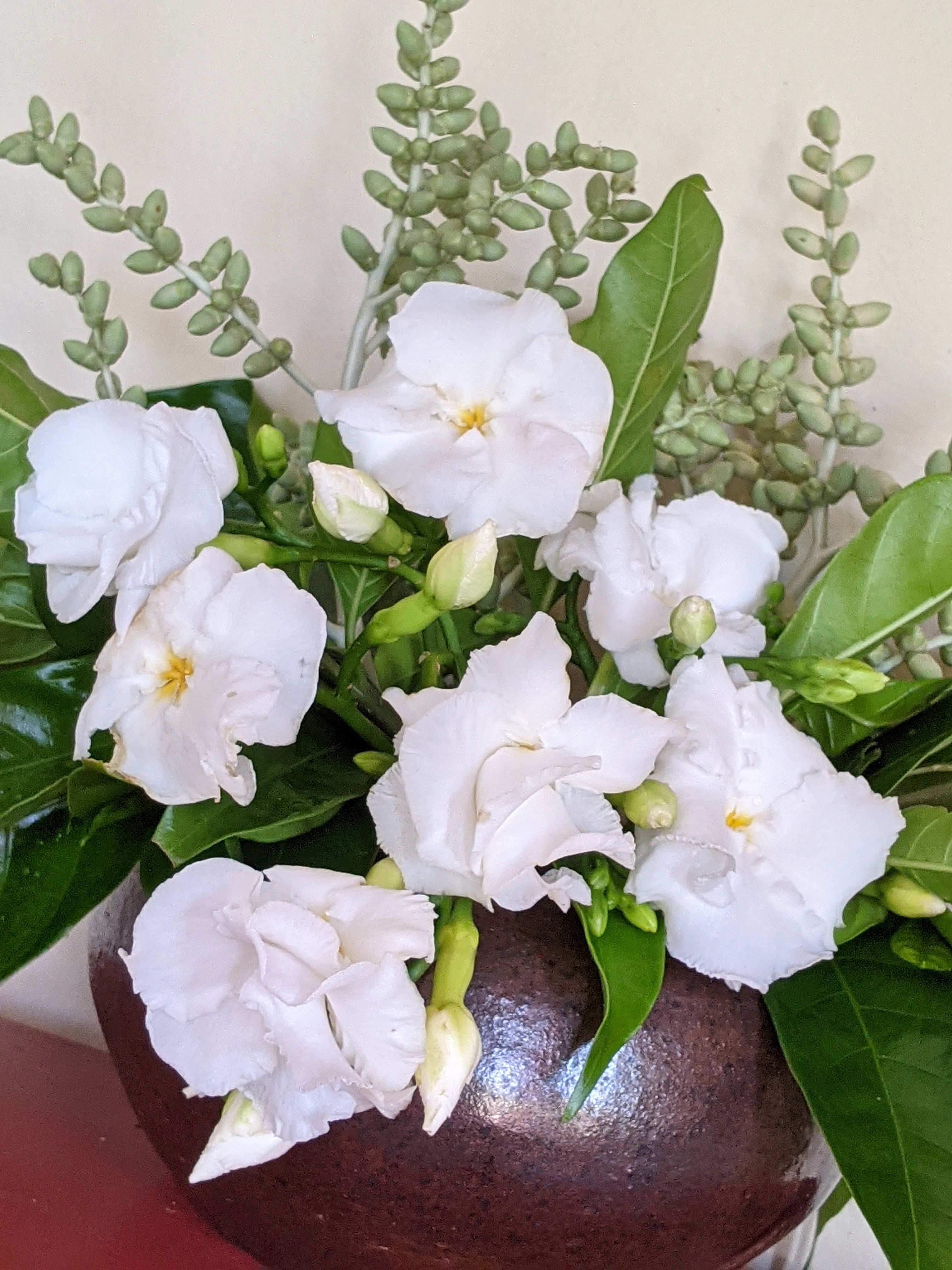
A closer view: In white, Tropical Gardenia (Tabernaemontana diviricata); in yellow, Frangipani (Plumeria spp.) I have no idea the name of this Frangipani, a friend gave me a cutting and this one is fairly common around town – a small tree with pink buds opening to yellow. The purple flowers are from Mona Lavendar Plectranthus, seemingly a relative of Coleus and Creeping Charlie houseplants. I have been enjoying the flowers for months and am interested to see how they fare as cut flowers and through the summer. The purple striped foliage is from Transcandentia zebrina, one of the groundcovers called Wandering Jew. This plant is so prolific I have been making compost with it. The vase is a thrift store find.

The Mona Lavendar in situ.

Well, I love the color and have enjoyed it even if it fries in the heat shortly. It is sharing a container with Begonias, I had this odd idea Bronzeleaf Begonias made it through anything…except South Florida Summer.

Happy Gardening to all and Thank You to Cathy at http://www.ramblinginthegarden.wordpress.com for hosting. To see more vases follow the link to Cathy’s blog..

Six on Saturday – Kissimmee Prairie Wildflowers

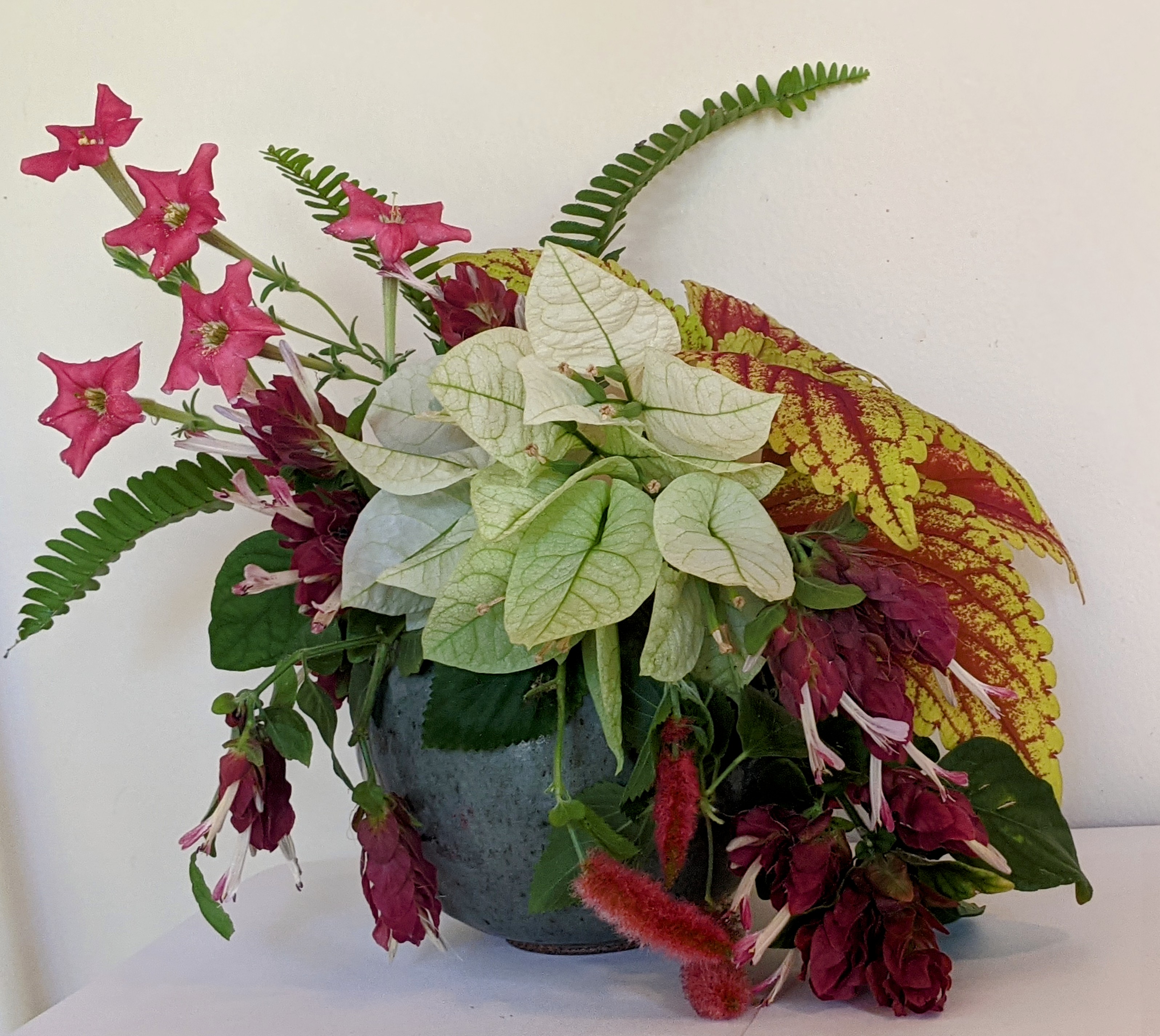
Last Saturday I took a day off from my garden and joined a wildflower walk in the Kissimmee Prairie Preserve in Central Florida. The Prairie is the last dry prairie in Florida, encompassing 54,000 acres and is grassland as far as the eye can see. There are three seasons of wildflowers in the prairie and the butterflies are reported to be spectacular. Last Saturday was too windy and overcast to see the butterflies, though I did see amazing wildflowers. The flowers in the photo are Whitetop Sedge and Black Eyed Susans.

We saw several types of Milkworts, this is Yellow Milkwort (Polygala rugelli). Native Americans used this as a snakebite remedy.

This is Purple Milkwort (Polygala cruciata, I think) there are a lot of Milkworts. These are also called Drumheads.

Yet another Milkwort, these are commonly called Swamp Cheetos.

This is a Rhexia virginica, a Meadow Beauty. I think the common name is right.

A Purple Thistle (Cirsium horridulum) This this is a bit sharp, but a wonderful butterfly host and nectar plant. For some reason I have the much less attractive Yellow Thistle in my yard. It is usually asked to leave the garden.

That concludes my wildflower adventure from last Saturday. To see more Six on Saturday posts visit Jon at http://www.thepropagatorblog.wordpress.com.
Happy Gardening!

In a Vase on Monday – Going to Seed

Some days it seems I am the one going to seed. Maybe people are like plants, some look better than others while going to seed.. The tropical Lotusleaf Begonias (Begonia nelumbifolia) are one of my favorites when going to seed. They make lovely triangular, chartreusy seed heads that tower above the foliage. I have never had a Begonia grow from a seed dropped in my garden, but it is entirely possible I have not left them on the plant long enough.

A closer view:

I started out with the idea of using a hand tied bouquet to make the Begonias stand upright – then the slant grew on me and I added foliage to emphasize the non-political right slant.

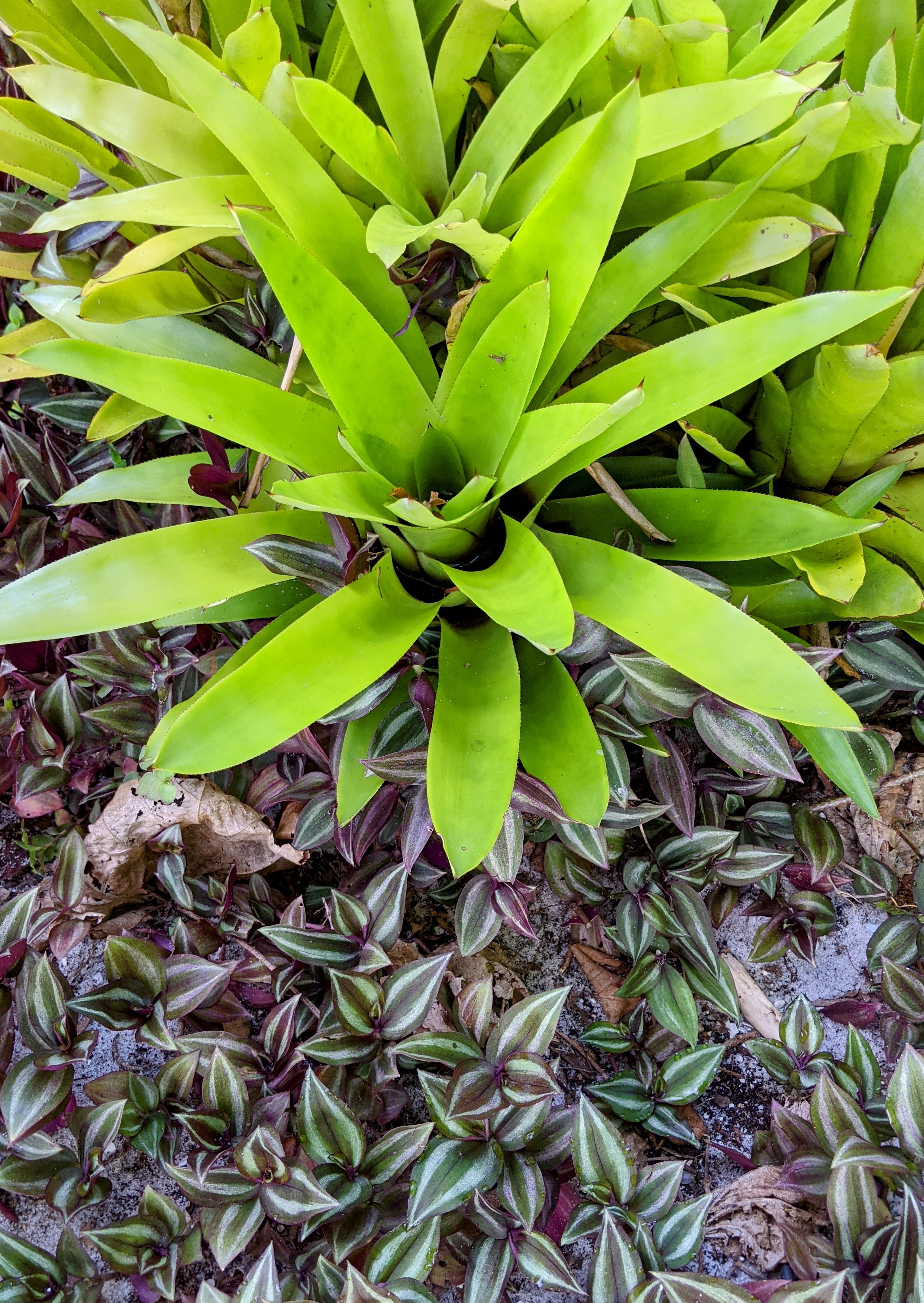
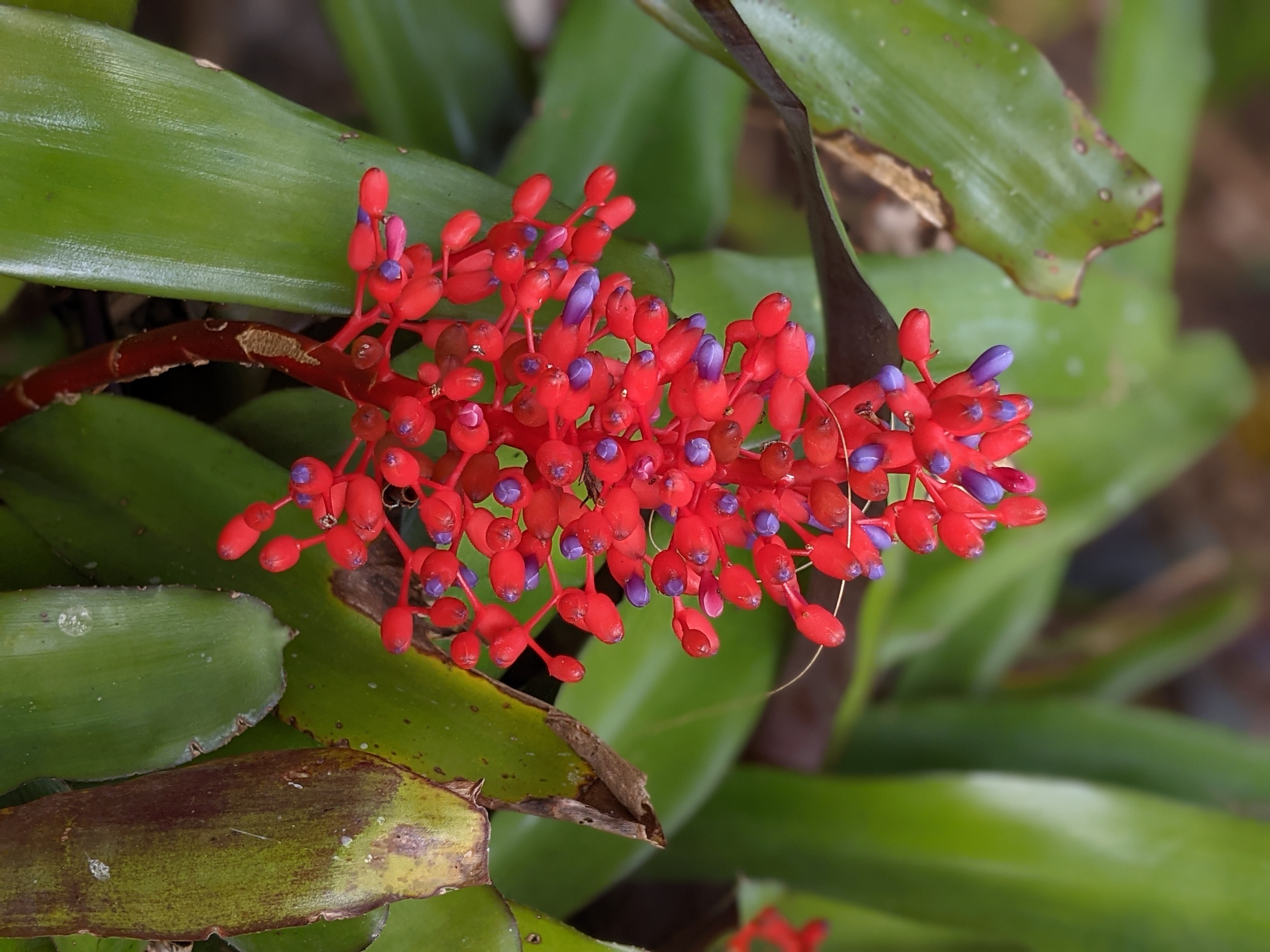
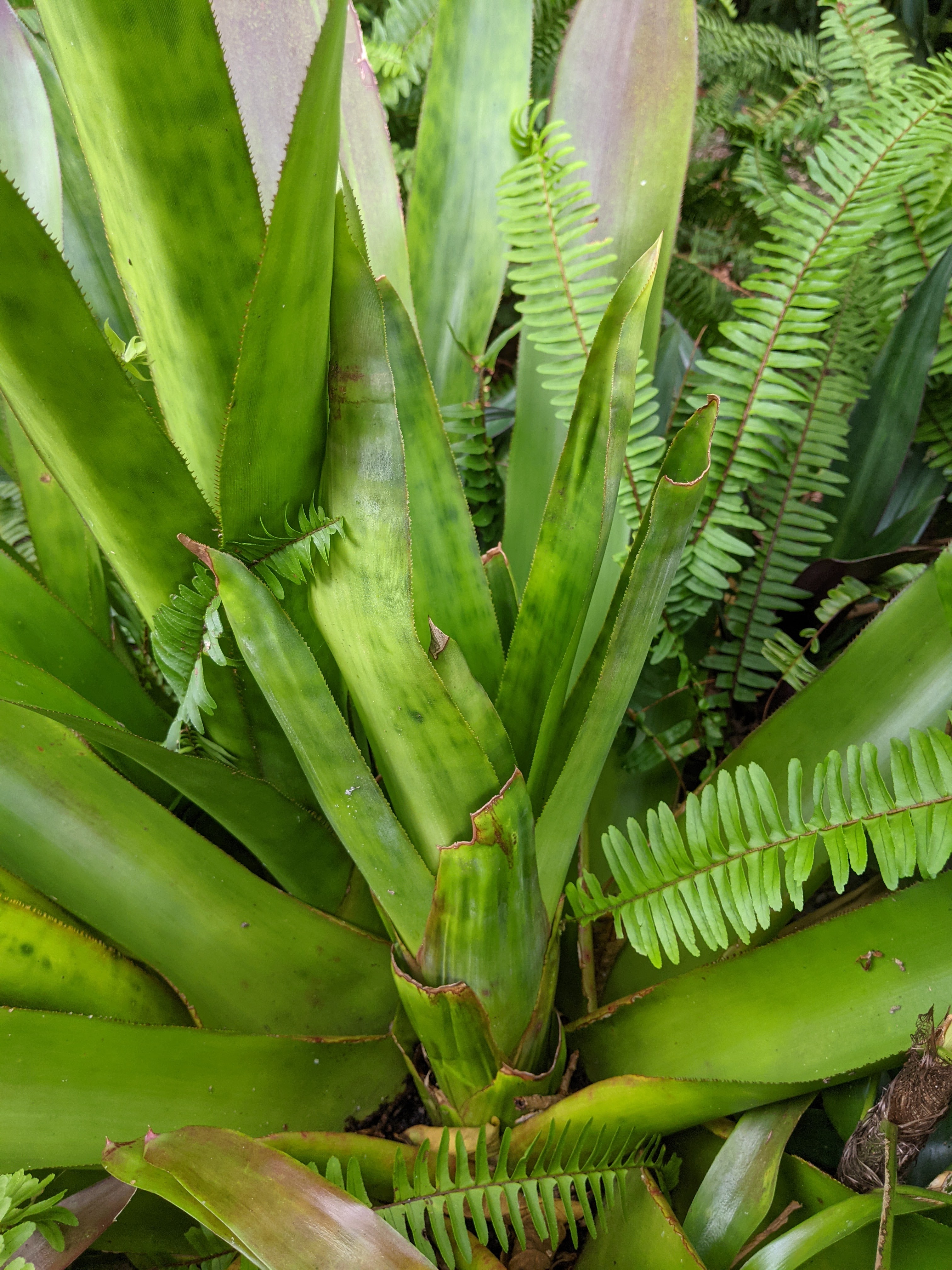
The crystal vase, a wedding gift from a dear friend who I worked on perennial gardens with in Atlanta. The left leaning plants in the arrangement are: in black with coral spotted leaves, Piecrust Croton (Codieum varigatum). This shrub is used as a foliage accent in the garden. The new growth is yellow and green and eventually darkens. An amazing variety of colors exist in this well loved tropical shrub. Maybe the left lean is appropriate. The ferns, added for a green, graphic backdrop are from Florida’s native Boston Fern (Nephrolepis exaltata). The day after the US Presidential election, my right leaning neighbor came out with his weedeater and cut the ferns in my garden down. The reason for this remains a mystery to me. The trimming rejuvenated the Boston Fern. The two strap like leaves are from a Neoregelia Bromeliad that is also on its way out. I cannot tell in some cases when to cut the mother plant off and get rid of it. Bromeliads are peculiar in the way they reproduce. I buy a plant, it may or may not flower, sooner or later a side shoot appears, called a pup, and then the original (Mother) plant dies. The pup on this one is nearly as big as the mother plant. The Neoregelia Bromeliad:

The Neoregelia Bromeliad in the front of the image is the mother plant, you guessed it, going to seed! I should add; very few Bromeliad have produced seed in my garden, though it happens. I am told growing Bromeliads from seed is a long, excruciating process – it’s better to use the pups for new plants.

Many thanks to Cathy at http://www.ramblinginthegarden.wordpress.com for hosting and maintaining this wonderful meme. I enjoy the weekly posts from around the world. Follow the link to see more (probably upright) vases.

Happy Gardening!

In a Vase on Monday – Sticks japonica

This week I decided to try creating a spare design with a Japanese feel. I also wanted to use some grapevine. I thought the brown pottery vase would give the arrangement some weight and tie the brown grapevine together with the limited plant palette. Limited may be an understatement. This arrangement has two plants!

The flowers and foliage are from the Mexican Bush Honeysuckle (Justicia spicigera). This shrub does well and lives next to my neighbor’s fence. It benefits from light pruning so cutting the flowers is good for me and the plant. The grapevine is from our native Muscadine – Vitis rotundafolia. There are numerous types of grapes produced by this prolific vine. The fruit on this one is small, bitter and has huge seeds. My neighbors, native Floridians, eat it. It is one of those things you have to grow up on, I guess. I leave it for the animals and am trying to get rid of a lot of it as it climbs everything.

Happy Gardening and Sayonara!

To see Monday vases, with more flowers, visit Cathy at http://www.ramblinginthegarden.com.

Six on Saturday – Signs of Spring

I am joining the SOS gang this Saturday with six items of interest from my garden. Mine are always a bit different as I am borderline tropical in my South Florida garden. It seems odd but South Florida is still considered subtropical, though the area I am in is often referred to as Tropic Florida. My opinion, I am on the northern edge of tropical.

That said, it occurred to me the signs of spring in the garden are relatively universal. Mine include dirty feet, fertilizer in the foyer, plants waiting to be planted, garden beds renovation…and more.

To see more signs of spring – it is double SOS, Six on Saturday and Signs of Spring! Visit The Propagator at http://www.thepropagatorblog.wordpress.com

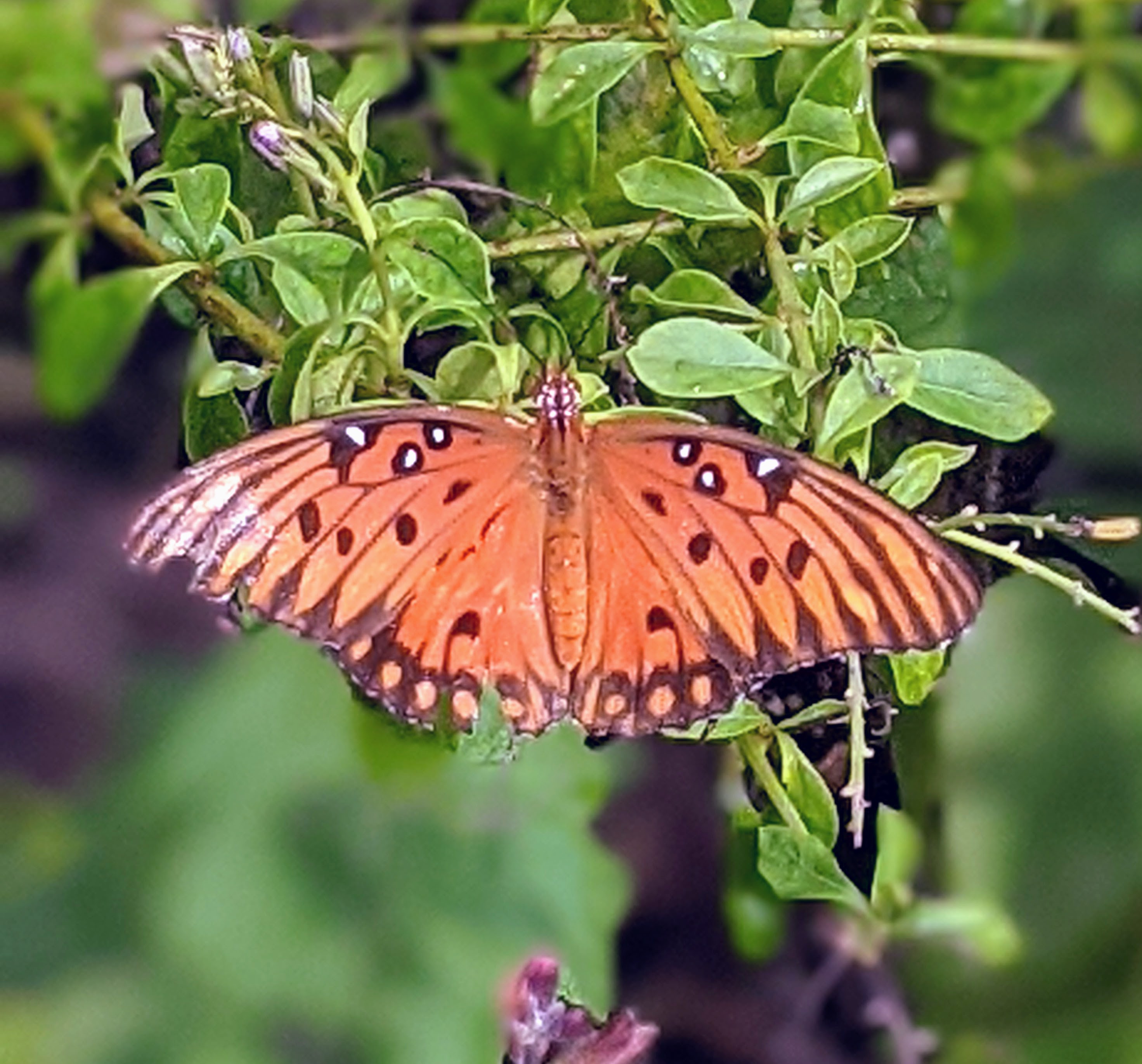
I am changing a vegetable bed to a butterfly garden. The is the anchor plant in the bed, a Sapphire Showers Duranta. The butterflies found it about 10 minutes after I planted it.

The bed, under construction. The Sapphire Showers is to be underplanted with Bush Daisy (Euryops pectinatus). Bush Daisy is a South African native that is supposed to attract butterflies and thrive in well drained soil and summer heat. I have plenty of both. This is my first experiment with Bush Daisy.

My feet are perpetually dirty. This container has been changed from spinach and cilantro to Petunia exserta and Red Alstromeria for summer. The Red Alstroemeria originated in a college friends mother’s garden went to my mother’s garden, then to another friend’s garden – who eventually brought some to me. They have suffered in either the heat or the soil; so I decided to try them in a container in part shade where I might remember to water them.
Summer veg seedlings on the porch so I remember to water them twice a day. My summer veg is a little different – the seedlings are Roselles, a Hibiscus with edible flowers. Not visible yet, Greek Columnar Basil and Blue Pea Vine for the butterfly garden.

Pots of lavendar Pentas await planting in summer containers.

Newly planted Sunshine Mimosa (Mimosa strigillosa). This is in the butterfly garden, it is a native perennial groundcover with pink powderpuff flowers and attracts butterflies.

A sign of spring in South Florida, buds on the Frangipani. The humidity has kicked up a notch, not quite to its full summer power yet, but this is a definite sign that summer is on the way. The sweet fragrance from the flowers will be perfuming my nightly forays in the backyard with the greyhounds.

My six signs of spring this Saturday, Happy Gardening!