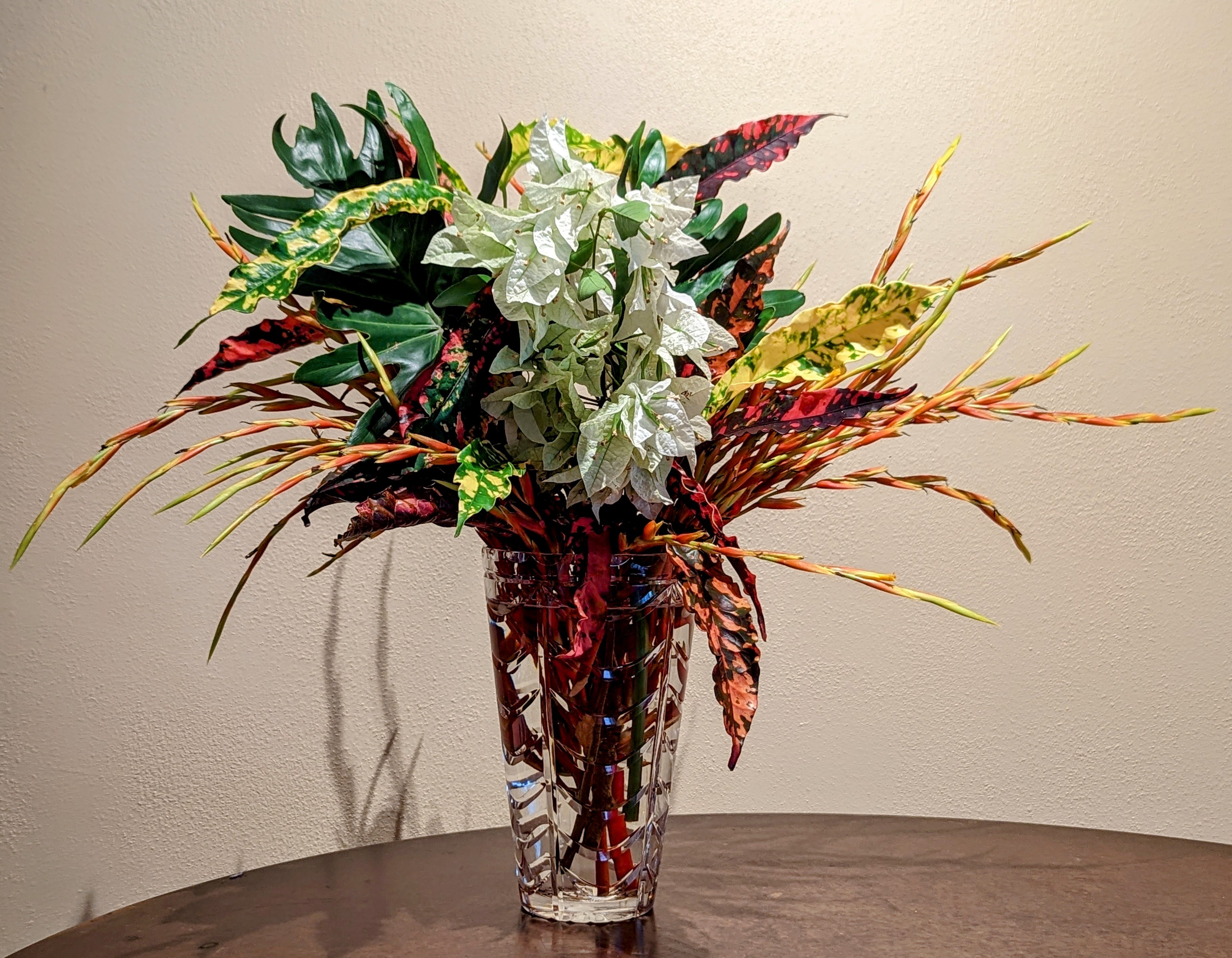
The end of August in South Florida is hot! Mix in a droughty summer, a few mosquitoes, some charbroiled plants, and yes, I am asking for fall. Please. I used to dread the end of summer, but now I embrace it as the best gardening weather is something to look forward to. I cut the summer stalwarts for this vase and selected the most autumnal tones in the garden. Feeling refreshed already. There are rain showers on the weather radar. Fingers crossed.
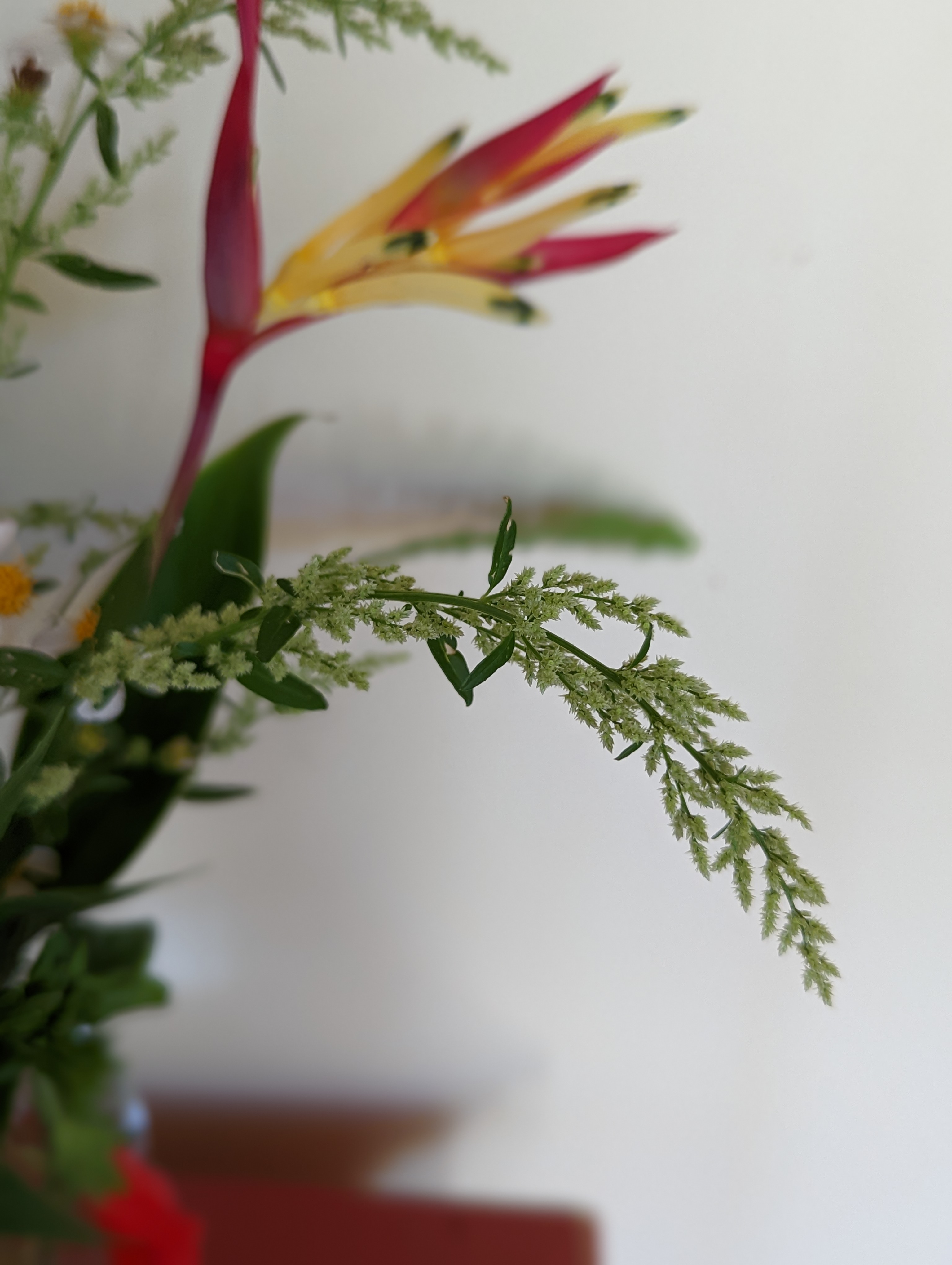
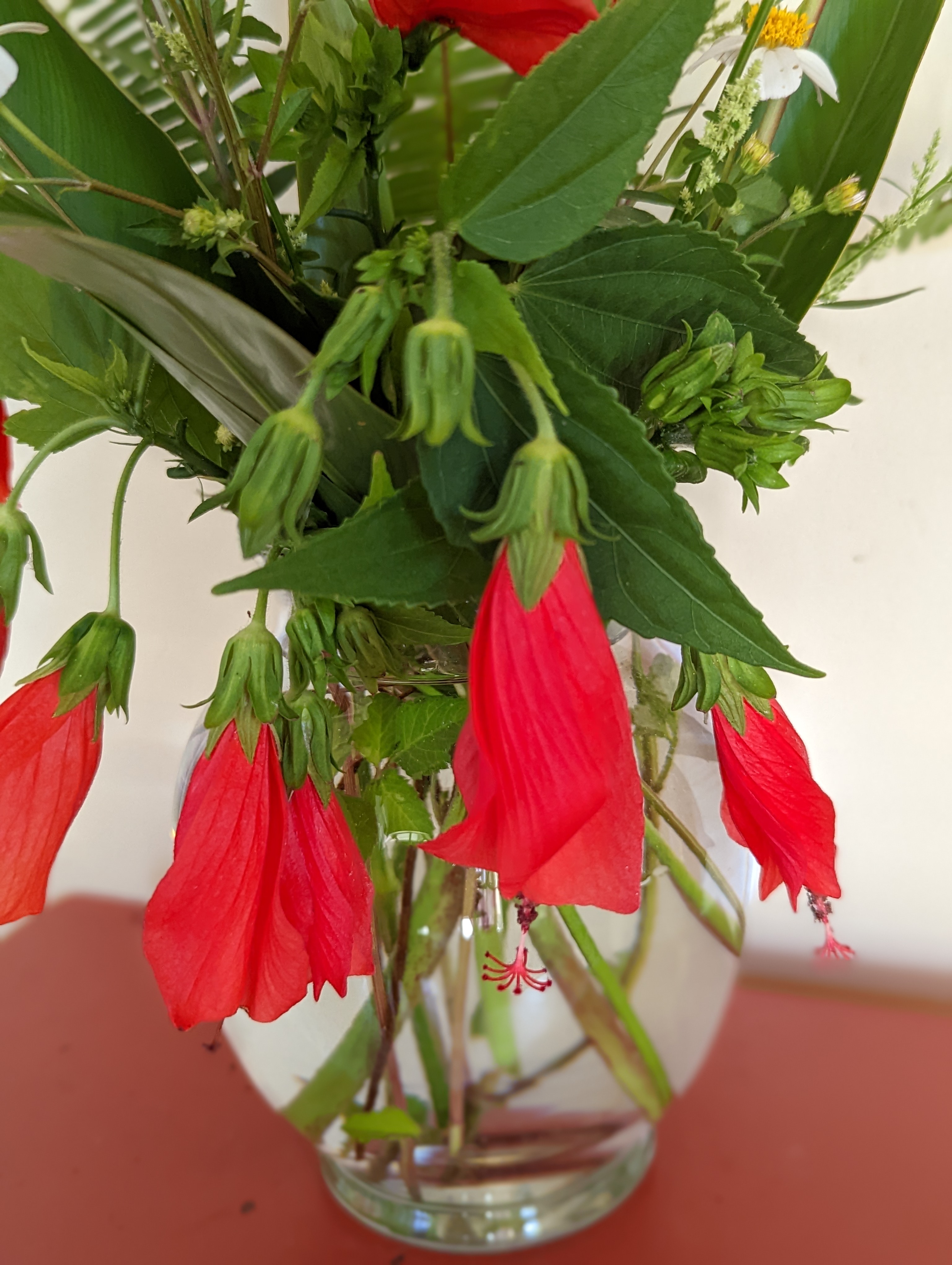
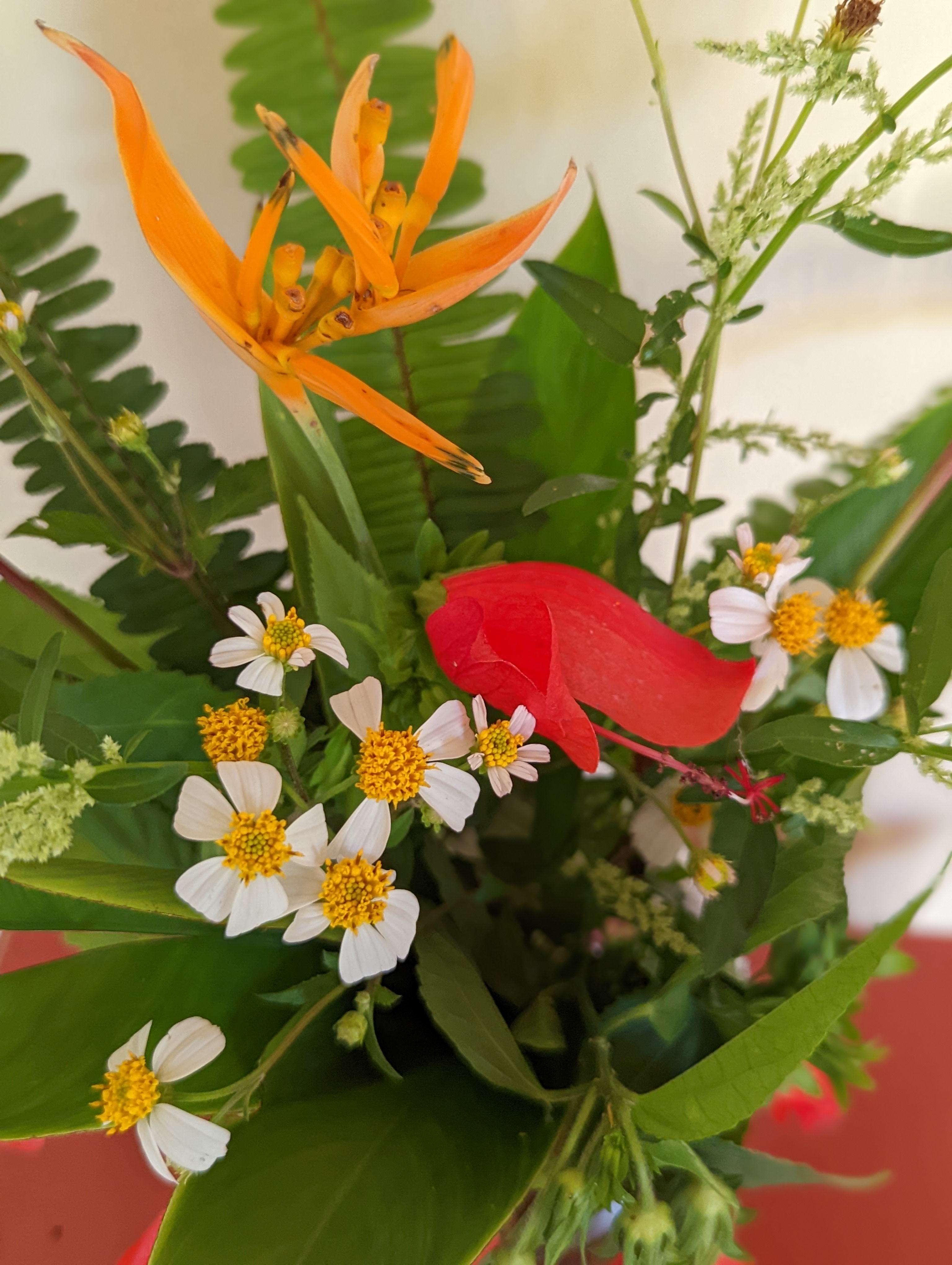
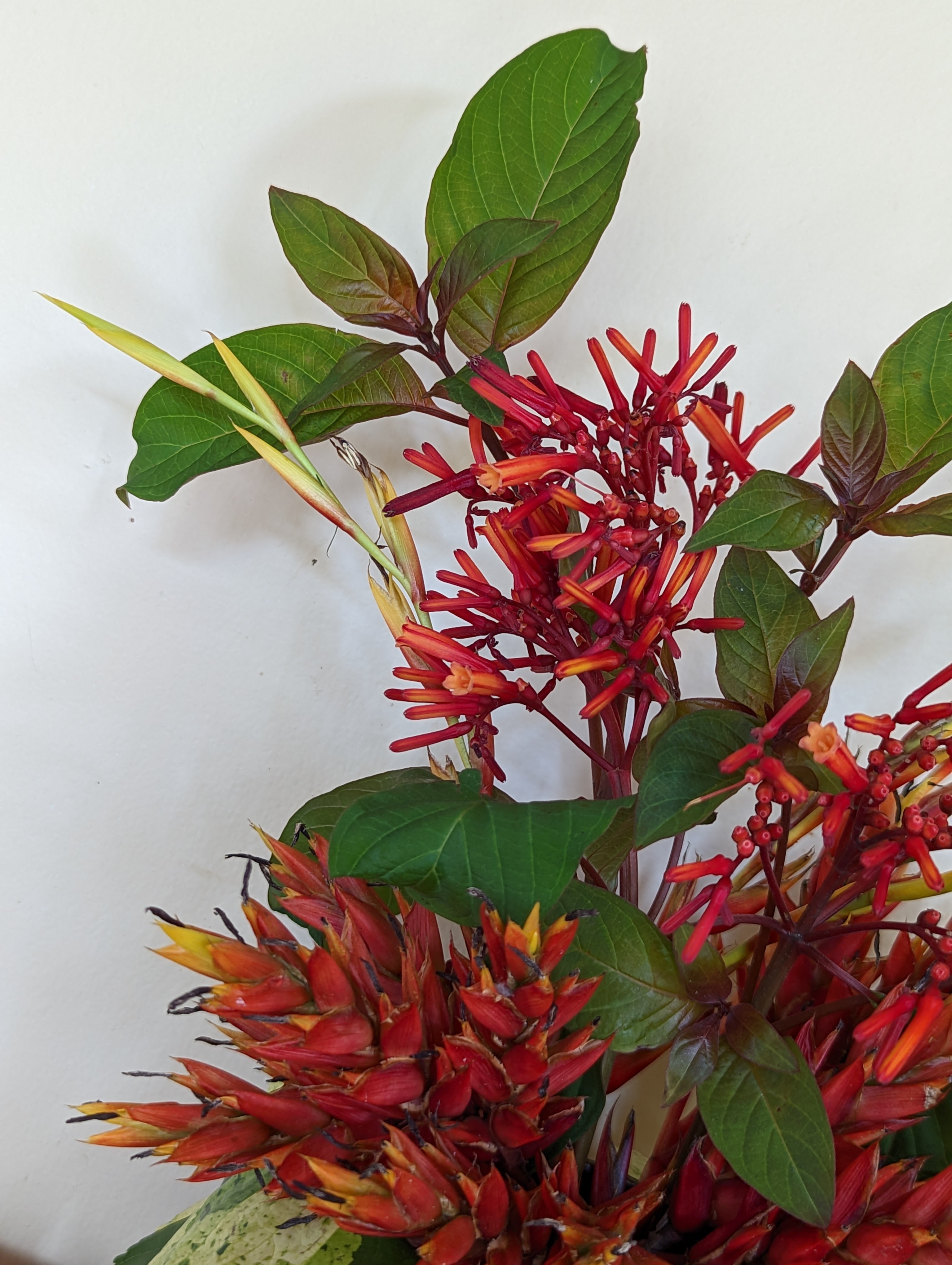
Posies in profile. The orange and red banana shaped flowers are Parrotflowers, in orange, Heliconia psittacorum “Chocociana”, in red H. psittacorum “Lady Di”; yellow flowers are Esperanza (Tecoma stans); orange flowers are Firebush (Hamelia patens). Greenery is Asparagus ferns.
Signs of the approaching seasonal shift are unmistakable in South Florida. I heard the first Sand Hill Crane returning for winter this week (these are large birds with a very distinctive call, they look like pterodactyls flying by and summer in Nebraska) Purple Beautyberries are another sign. It seems odd to me that the berries ripen in August here. In my former much further north garden I had to wait until November for about a quarter of the amount of berries produced in Florida. Another odd thing about the Florida berries, the birds don’t really eat that many and I am not sure why – fear of stalking greyhounds? Anyway, my conscience is clear about stealing bird food.
All of the plants in this vase are native to Florida. Two I planted and two appeared, spread by wildlife no doubt.
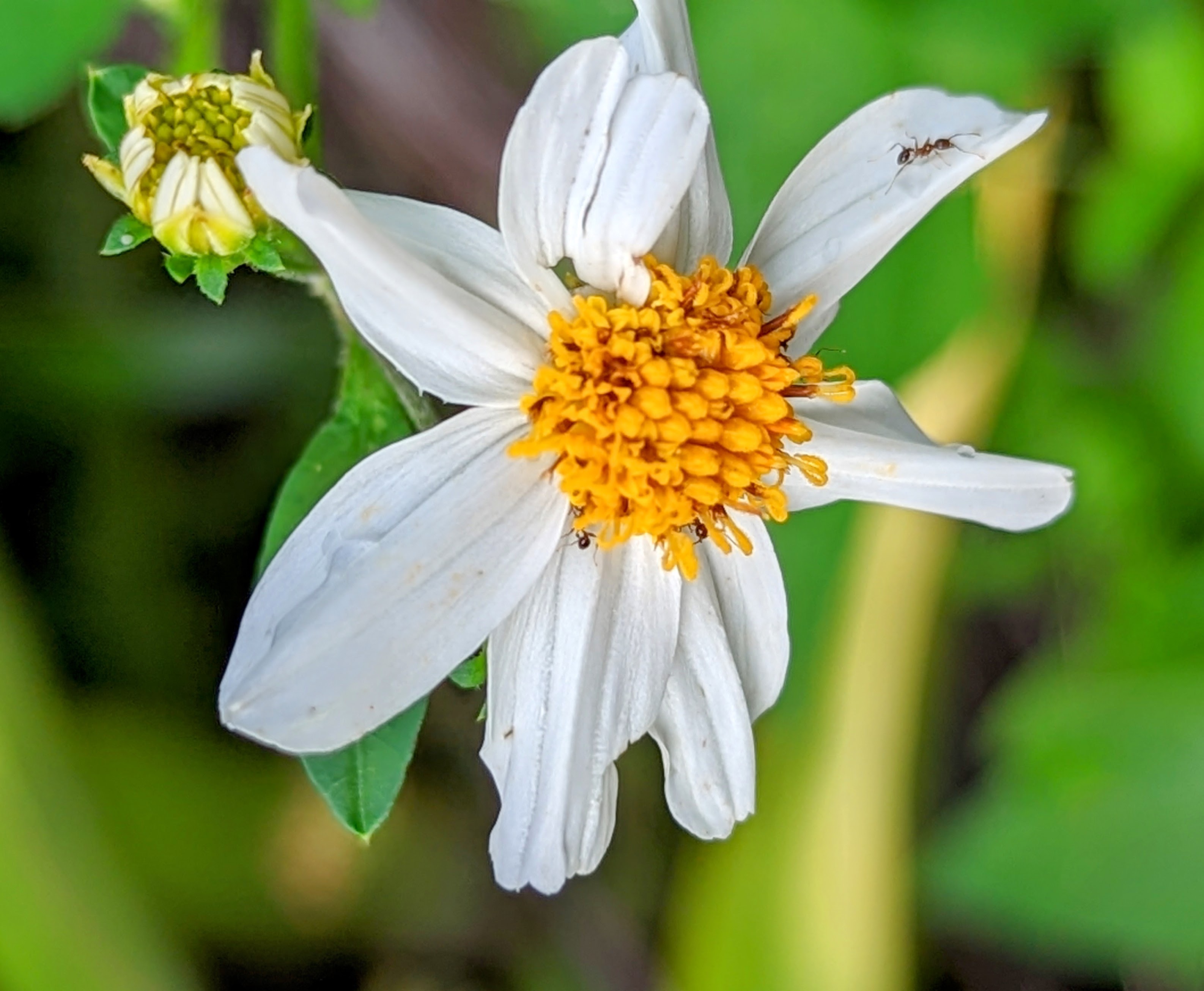
The peach spike flowers are Tropical Red Salvia (Salvia coccinea), the flowers made peach by bees. I planted the red variety years ago and now have several colors. The white daisies are Bidens alba, not planted by me, and asked for the most part to leave the garden. These cute little flowers can produce 1200 seeds per plant and get out of hand quickly. The ferns, Boston Fern (Nephrolepis exaltata) are native to Florida, not Boston and appeared in the edging of our shell driveway. I leave them alone and cut them sometimes for vases. The vase came from the florist filled with professionally grown flowers!
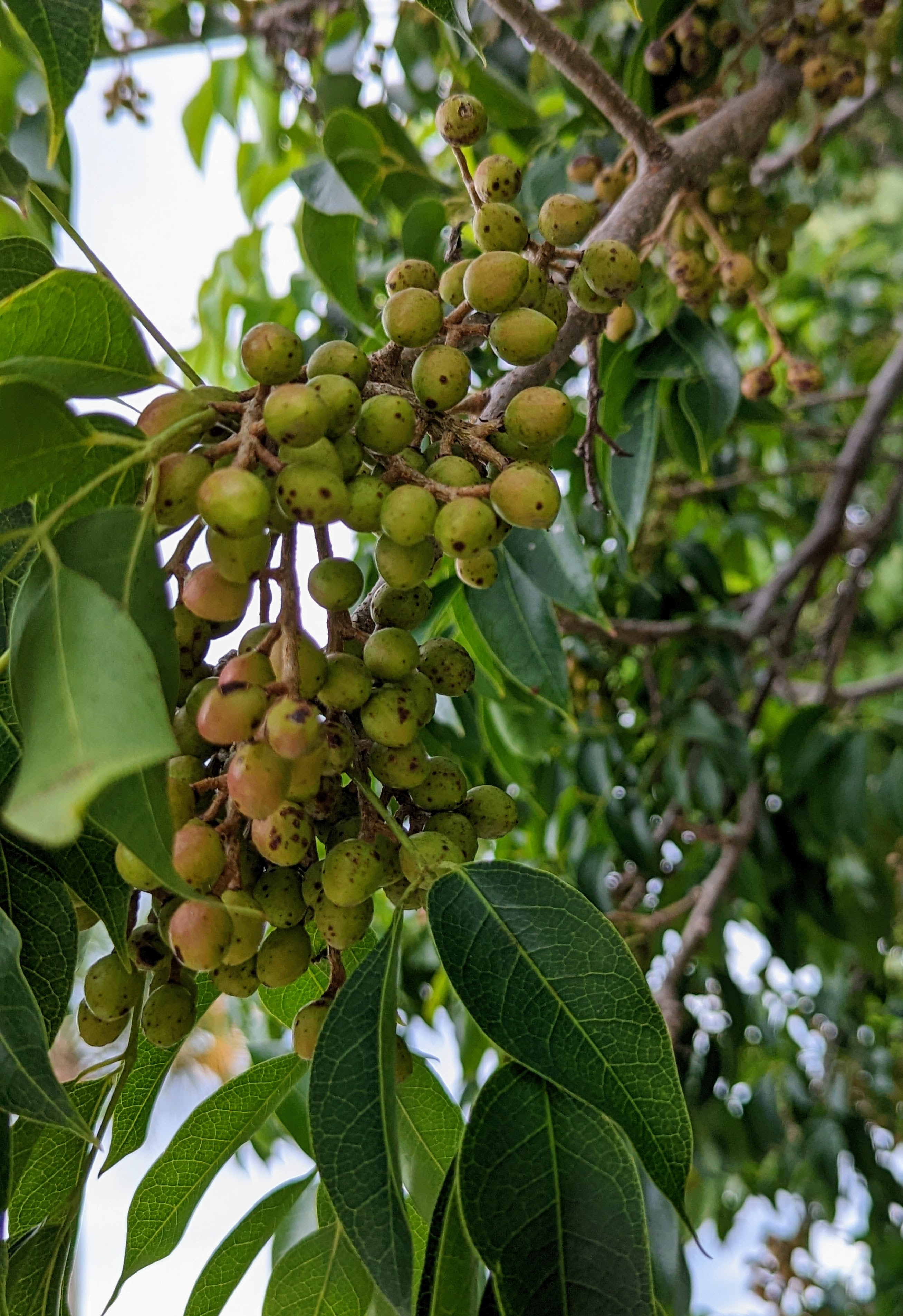
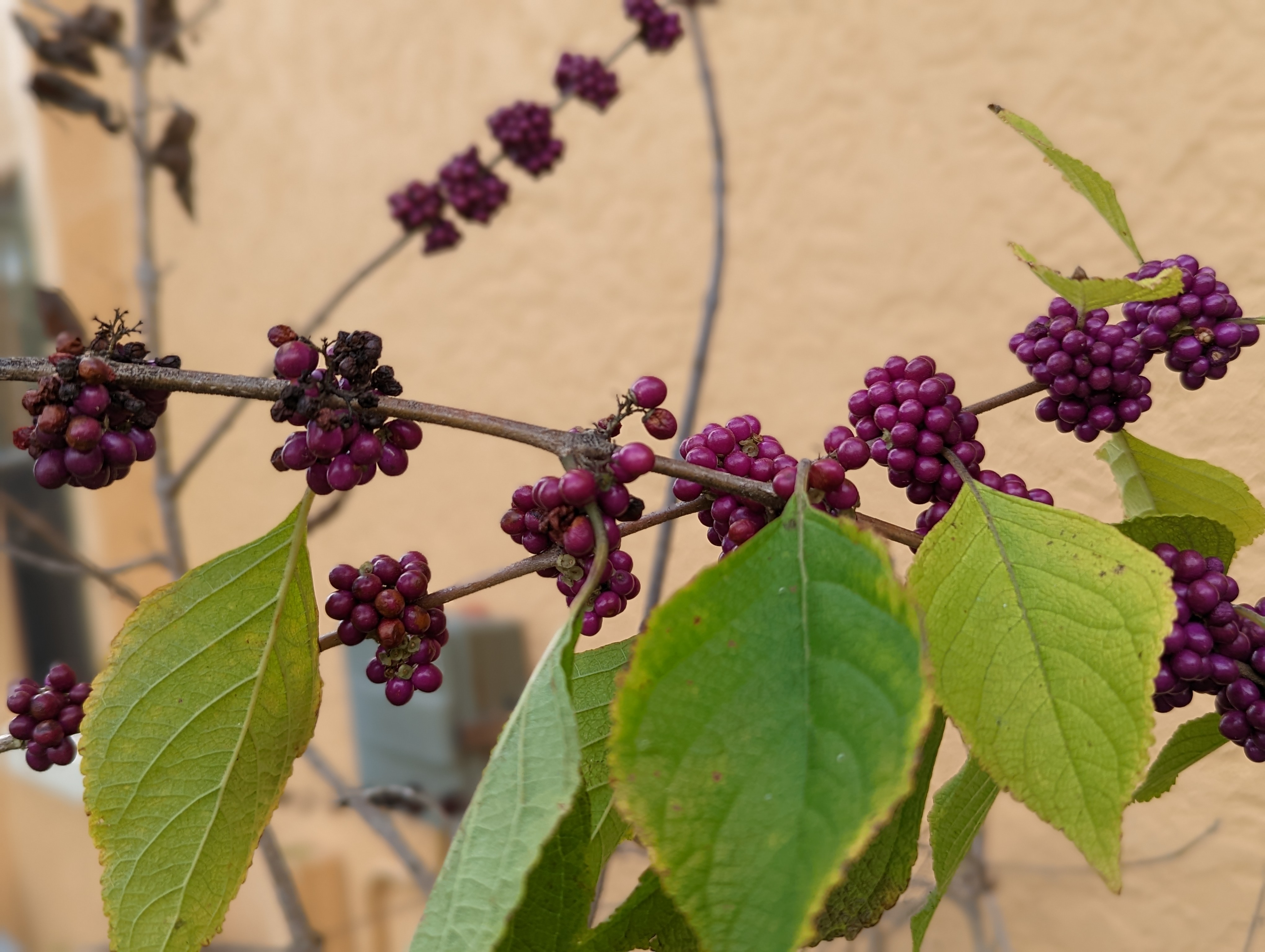
I planted the Beautyberry (Calliocarpa americana) several years ago. I bought three and planted them in places with differing amounts of shade. To my surprise, the one with the most sun produces these huge sprays of berries. This time of year Floridians post their Beautyberry recipes on social media. They make jam, jelly and bread with the berries. Invariably, someone says these are so pretty but they don’t really have a flavor.
Here is a bread recipe and review. Evidently, Peggy wrote the recipe, though I am not sure who that is. I clipped it thinking I might give it a try, then read the review. Still considering it, but I think this is one of those things I would find in the freezer a few years from now and have to throw away.
I am joining the SOS crew today sharing my summer survivors. This summer has been brutal, temperatures over 90 degrees F most days and very little rain. Add to that the demise of our irrigation system, I water what I can and am admiring what is surviving the onslaught. The tropical plants are outshining the native plants in the garden this summer.
Chocociana Parrotflower (Heliconia psittacorum). These small Heliconias are hunkered down under a Firebush and are doing quite well. Of course, I do have to squat down to see them.
Lady Di Parrotflower (Heliconia psittacorum) and native Tillandsia growing near the trunks of Miss Alice Bougainvillea.
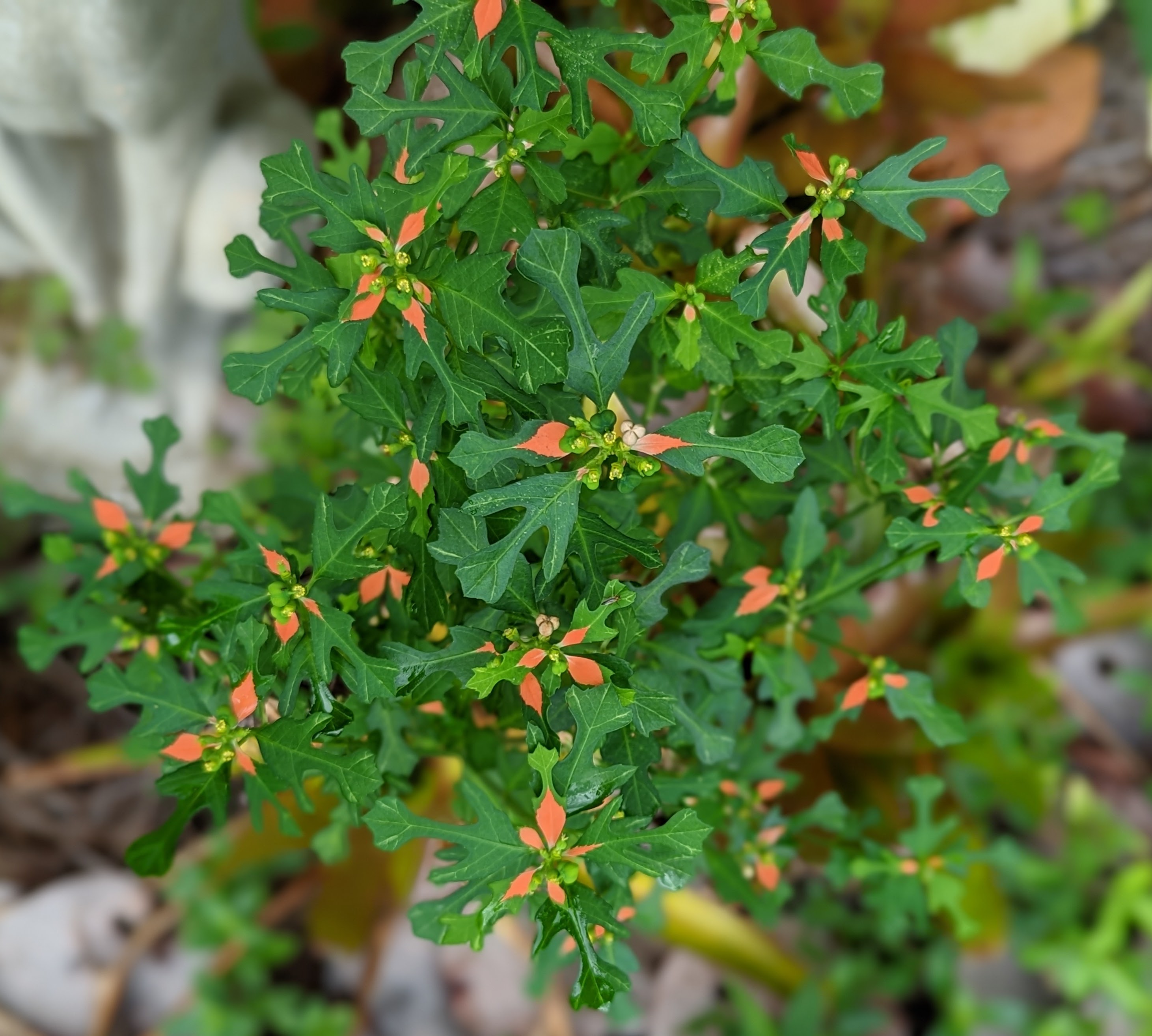
Spinach tree (Cnidoscolus aconitifolius), a tropical subsistence vegetable I planted for the butterflies is doing remarkably well with no help from me. The flowers provide nectar for butterflies. The leaves may be cooked like spinach – if you know how to prepare it, otherwise it is poisonous. I leave it for the pollinators.
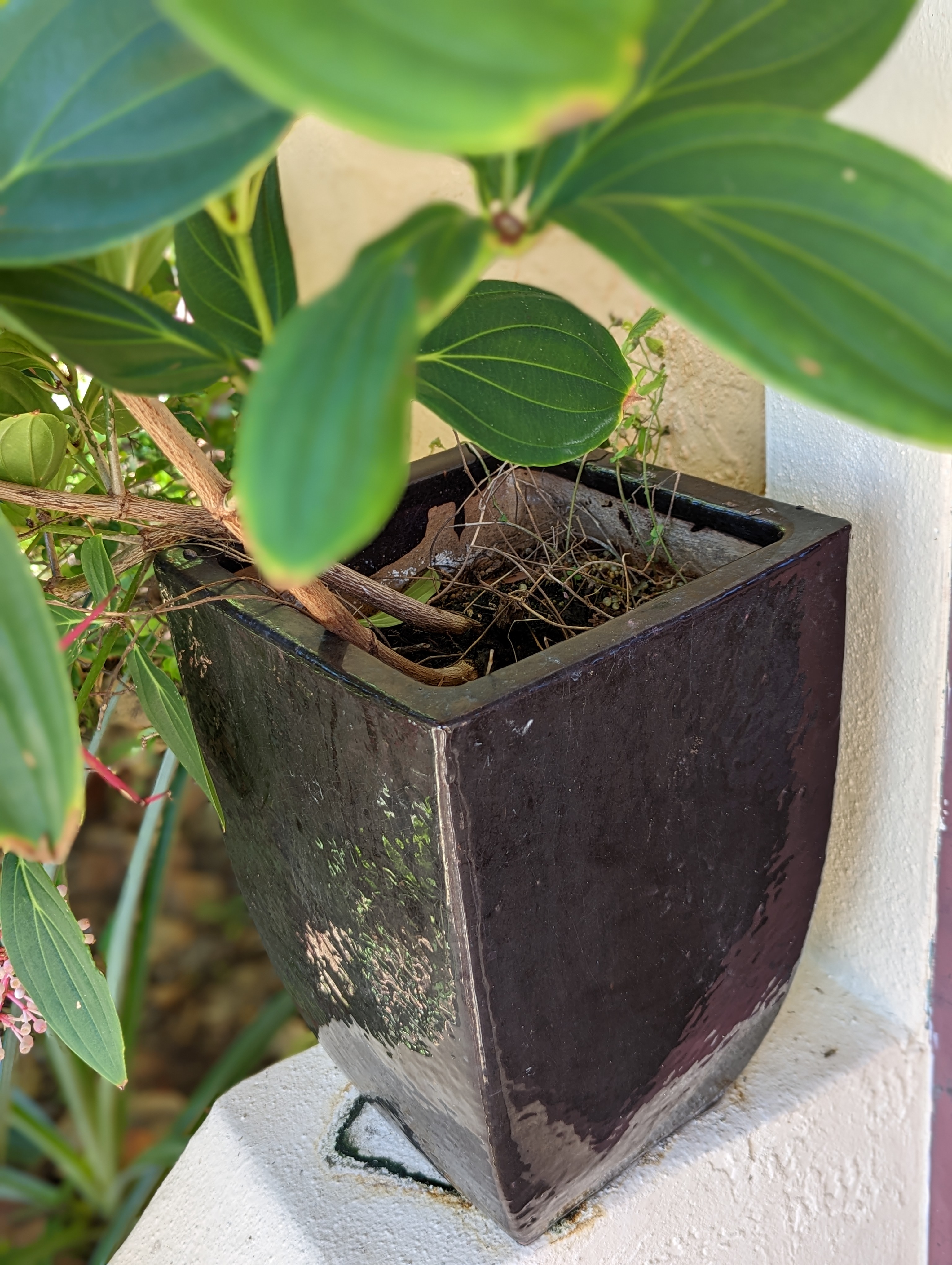
Chandelier Plant (Medenillia cummingii) is flowering again. Third or fourth time this year.
Schlomburgkia Orchid slipped out of its pantyhose noose. I reinstalled it with string. This orchid has put on four new canes this summer, but can’t quite get its roots in the trunk. I hope this works.
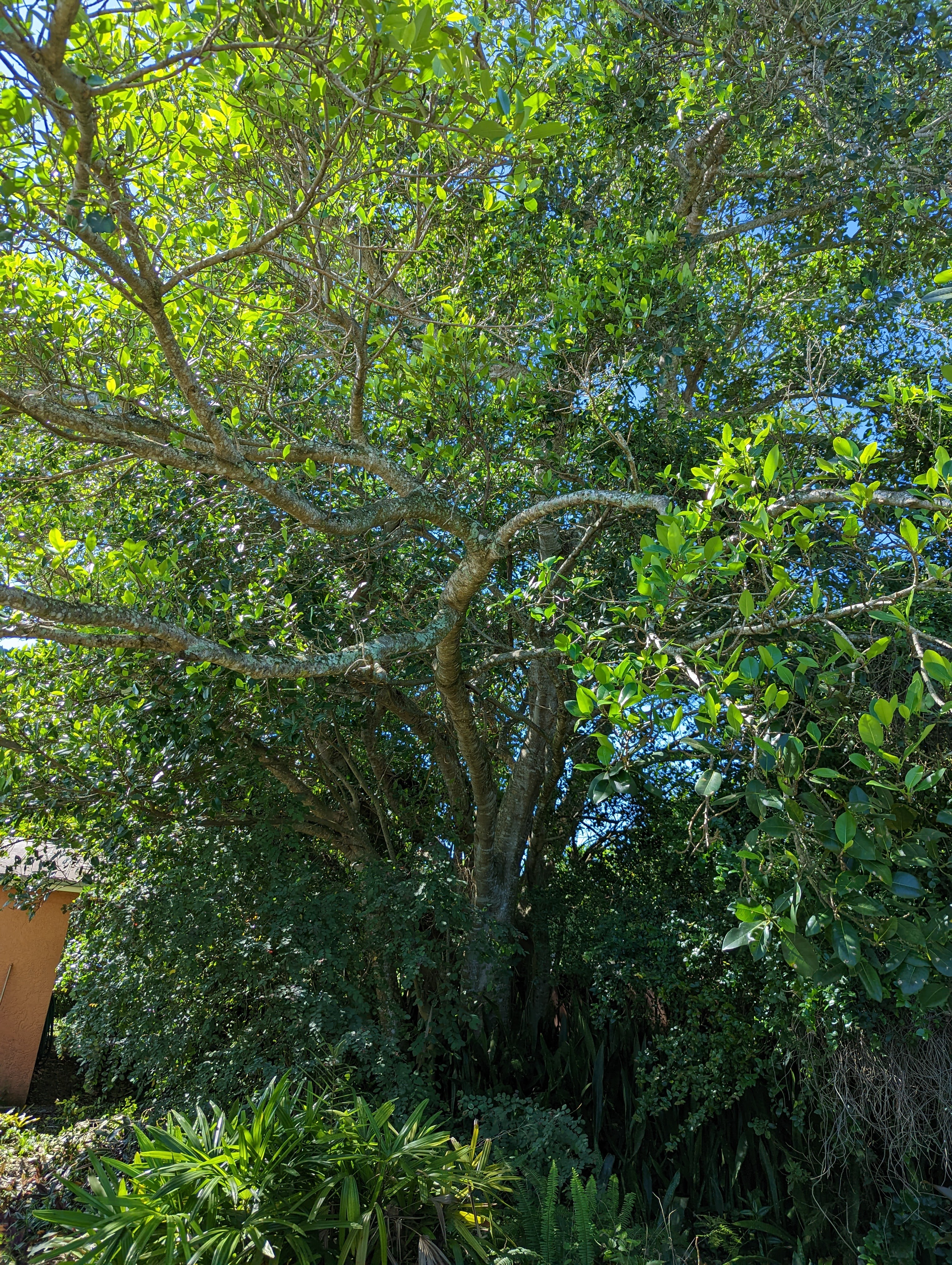
Several people have asked what the Beautyberry (Calliocarpa americana) shrub looks like. This is it. It has dropped a lot of leaves in favor of the berries.
This vase accurately reflects what thrives in my South Florida garden with very little water or attention. August is the hottest month of the year, it is frequently 94 degrees in the shade (F or almost 35 C). Gardening is best abandoned for cooler days. There has also been a long dry spell here, we are 8 inches below normal on rainfall and some plants have burned up. My stalwart zinnias succumbed the first week of August, despite my best effort to hand water them, they are curled and crispy brownish tan. I left them to shade the lime green sedum in hopes of nursing it through August. The lush tropical border is a memory. The Dahlias dramatically folded their foliage up the stem and turned brown standing straight like soldiers praying to the rain gods. Bah.
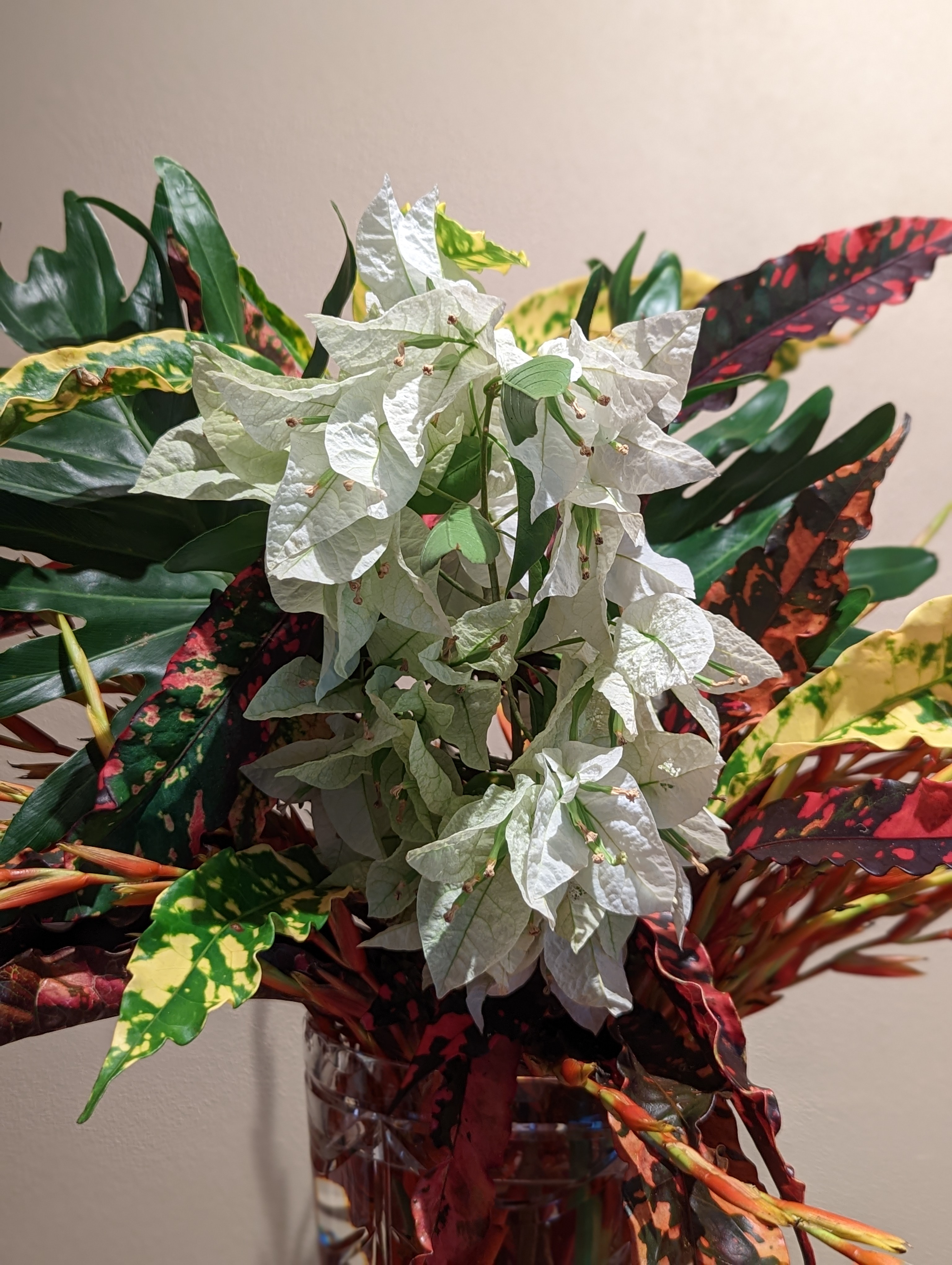
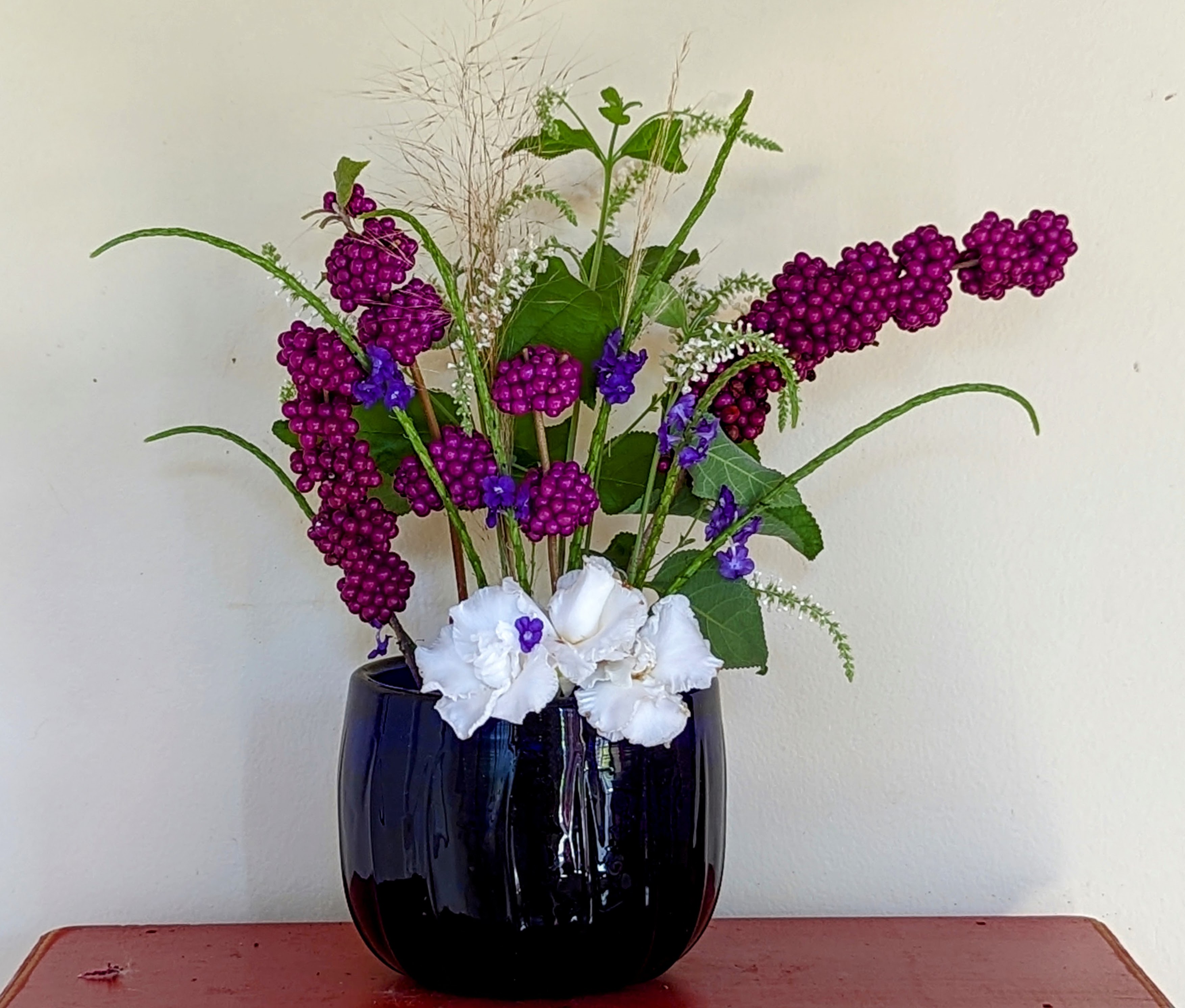
Saturday night we had a refreshing rain shower and the white flowers in the vase, Bridal Bouquet Frangipani, smelled so lovely I had to cut some to bring inside. It seems the more tropical plants tolerate the dry heat a bit better than the Florida natives, which seems odd. Another gardening mystery to ponder.
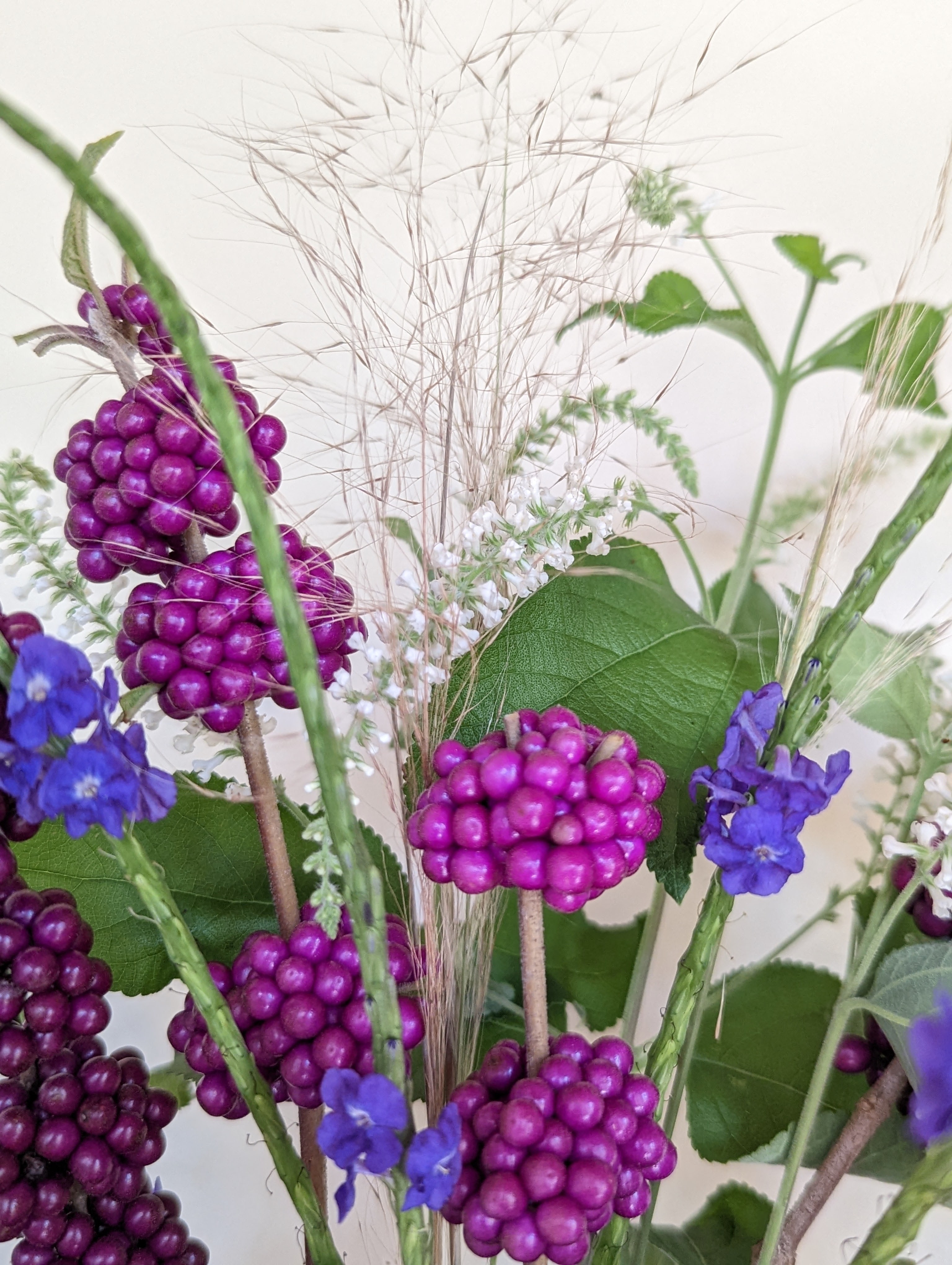
Beauties in detail:
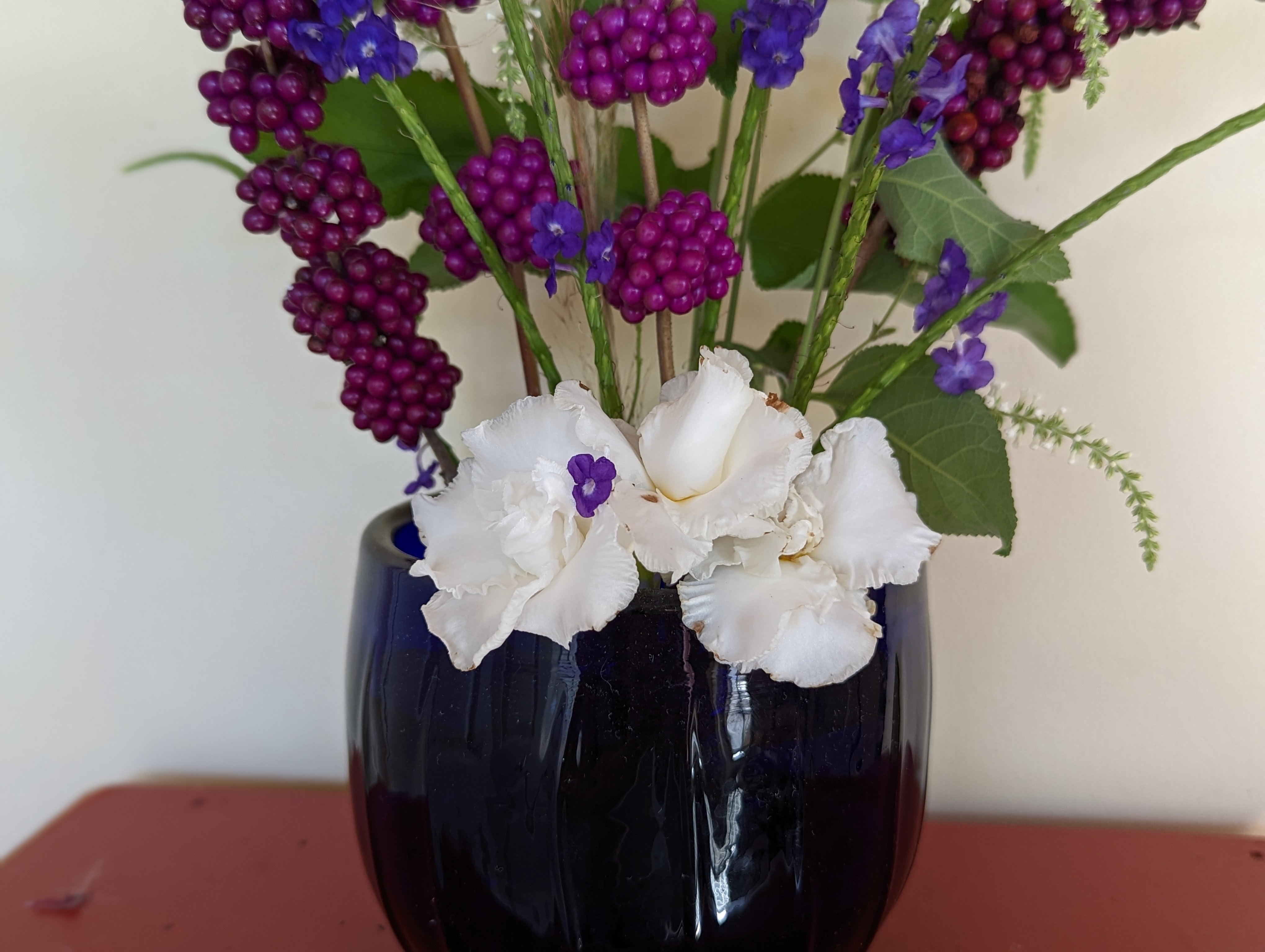
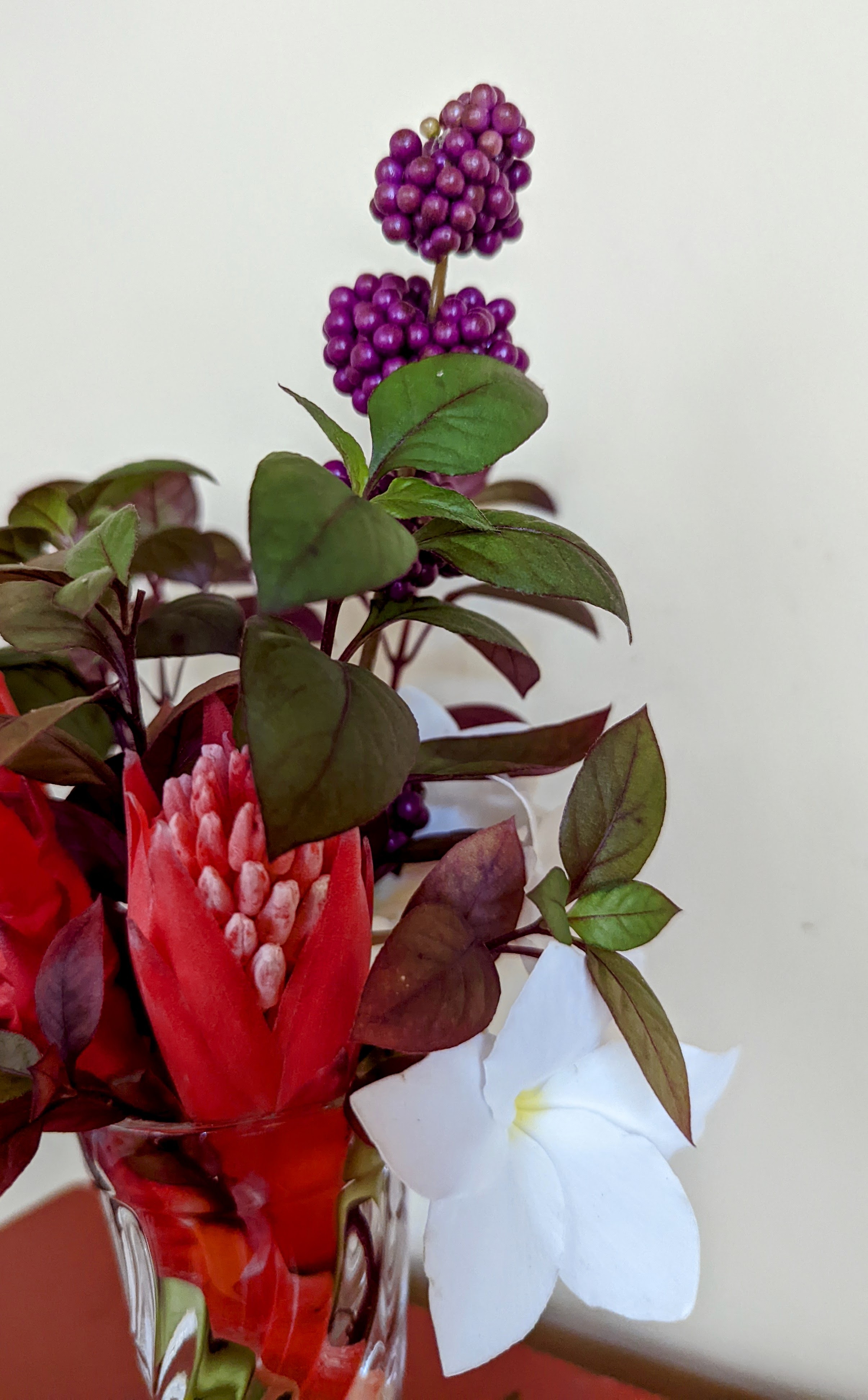
The lurid purple berries are from the Beautyberry (Calliocarpa americana); fragrant, white flowers are Bridal Bouquet Frangipani; orange tubular flowers are Firebush (Hamelia patens); yellow flowers are Esperanza (Tecoma stans).
The balance:
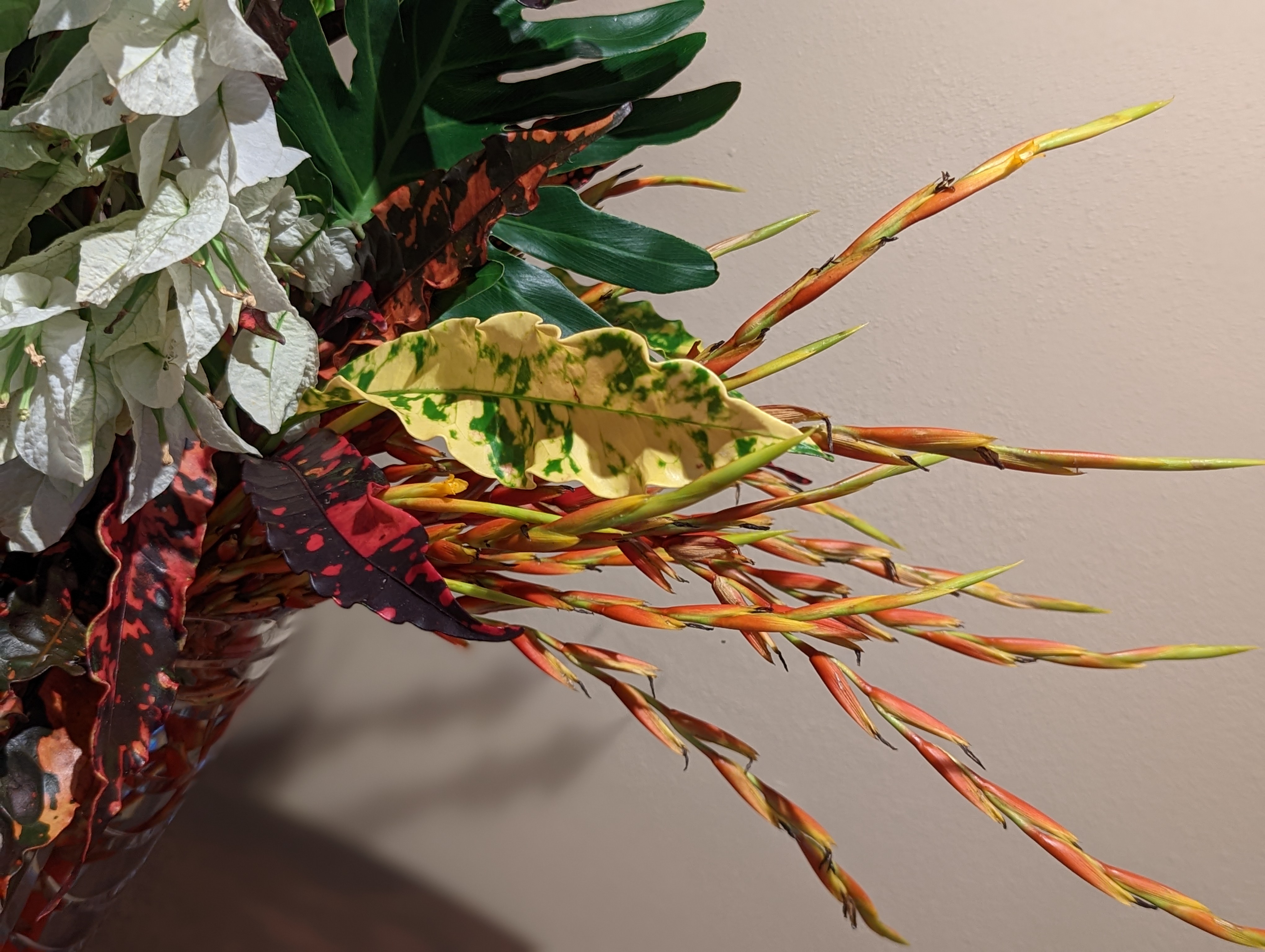
The peach flower is a Choconiana Heliconia (H. psittacorum ‘Choconiana’) I have tried to find out what the heck is a Choconiana to no avail. Purple foliage is from ‘Purple Prince’ Alternantera – I should admit to watering this one and keeping it in a pot in the shade. There is one in the garden, surprisingly still alive, but much smaller.
I wish everyone gentle rain, but not too much, and cooler weather. Thanks to Cathy at http://www.ramblinginthegarden.wordpress.com for hosting. Follow the link to see more vases.
The blue bottle serving as a vase today reminds me of another time. The bottle belonged to my mother. My mother and grandmother had a peculiar habit of keeping bottles in the kitchen window. If the bottles were clear they were filled with water and food coloring. Colored bottles were left as is and used as vases for whatever somebody found in the yard; it was usually me finding things. My grandmother, a teetotaling Southern Baptist, especially enjoyed her slightly risque practice of displaying old liquor bottles filled with colored water.
A closer view:
This is a bouquet of summer in South Florida. Many of the annuals are starting to burn out and the true stalwarts of the garden are shining. In white, Tropical Gardenias (Tabernaemontana divaricata); peach spikes are Tropical Red Salvia (Salvia coccinea), in blue, an improved cultivar of Plumbago, I think this is ‘Imperial Blue’ and it has deeper color and flowers longer than the standard; the fern is the ‘weed’ Asparagus Fern that tends to appear for no reason.
An even closer view of the Tropical Gardenias, I do love these.
Saturday morning finds heat and humidity in Florida – the Saharan sand drifting over the Atlantic is keeping the rain away and not much gardening is going on, except decapitating seed heads on weeds and watering. I have realized it is a bad idea to try and establish plants after May. Another backwards seasonality here, rest in summer and garden in winter. I am joining SOS today with summer flowers and foliage. To see more SOS posts, visit http://www.thepropagatorblog.wordpress.com.
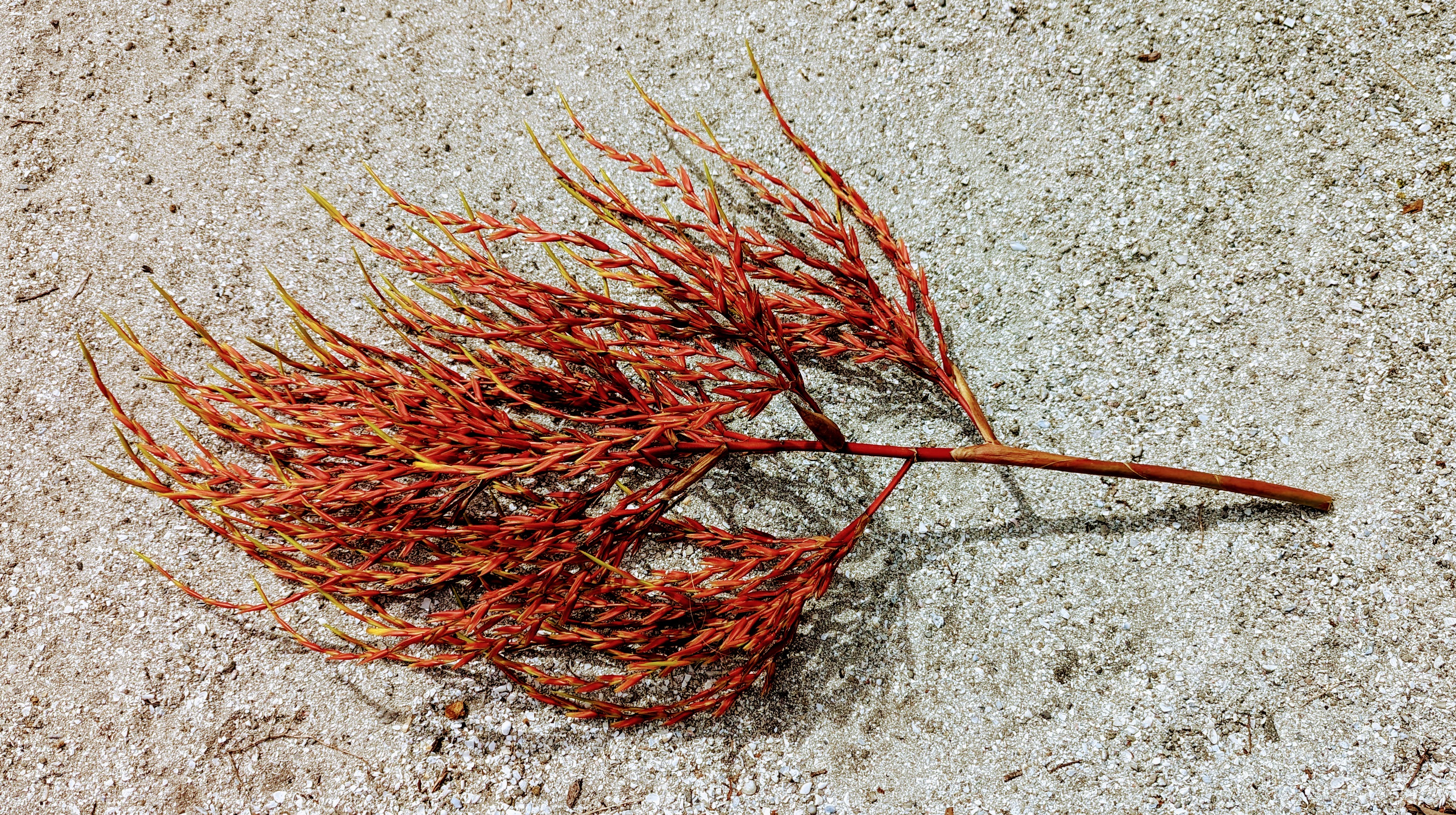
The Blanchetiana Bromeliads are shooting up flower stalks. Below is the yellow/chartreuse version – sometimes called Lemon. Aechmea blanchetiana “Lemon”.
I bought this Red Velvet Aerva (Aerva sanguinolenta) last year. It was touted as a tough plant from Africa that is drought tolerant and native to desert, sandy soils. Not quite believing this, I planted some in the sand and took a few cuttings in case this was not true. The plant in the sand is long gone, but the cuttings love being coddled in potting soil.
Another oops from research. Last year I wrote an article for The American Gardener about Bougainvillea. Research in many forms claim Bougs bloom in cycles and stop when day length exceeds 12 hours. This one has been blooming all summer during the longest days of the year. Another myth busted.
The culinary ginger is finally growing. These are heat lovers and make ginger root during the summer, the fresh ginger root is wonderful. I am looking forward to it in a couple of months.
The Purple Gem Dahlias are getting smaller and moldier day by day. I decided to leave the tubers in the pots and not water them after they go dormant to see what happens. I also bought some uber cheap tubers to refrigerate and try later. Research is planned to find what day length inspires Dahlias to flower.
A Queen butterfly on the Firebush. These are cousins of the now endangered Monarch. They are supposed to be year round here, but are relatively rare in my garden.
There was a lovely breeze coming off the ocean this morning; reminding me of the old Seals and Crofts song “Summer Breeze” as I was cutting flowers. The version rattling around my brain was “summer broms make me feel fine” instead of the summer breeze lyric. The Arabian Jasmine next door is in full bloom, the sweet scent swirling through the garden adding another line from the chorus of that song to my garden musings.
Here is a snippet of the song. Beware if you remember this song, it is kind of an earworm and is haunting me.
The summer broms that make me feel fine are Aechmea miniata in red; blue flowers are ‘Mystic Spires’ Salvia; the foliage is a weird thing that popped up in my Rainforest garden under the Strangler Fig. Google lens identified it as Hen and Chick Fern (Asplenium bulbiforum) – a native of moist forests in New Zealand. My garden is not close to a moist forest, so I am not sure that is correct, but it is an interesting ferny thing I left in place to watch. I found the red vase by the curb while walking my dog.
It is Saturday again. Time to peruse the garden for six items of interest. Today it occurred to me the Shrimp Plants look their best in summer heat and the plants set fruit earlier here than in my former garden. The beautyberries are already turning purple; further north this happens in late September or October.
It is hot here, 92F or 33C, but nothing like what Europe is experiencing and fortunately we have had a lovely breeze off the ocean and rain showers all week so the garden is hydrated. The weeds are taking control – I noted them as I walked through the garden taking pictures but failed to take any action. I should pull weeds…blogging about them instead.
The Shrimp:
This is a Red Shrimp plant (Justicia brandegeana), they grow in the sugar sand without irrigation or much of anything else. It crossed my mind I should propagate more of these, they are easily rooted in water.
The fruit:
The incredibly prolific Beautyberry (Calliocarpa americana). This one never fails to amaze me. It grows on a wall facing due north. Full shade in winter and full sun in summer. And thrives.
The very pretty but inedible Muscadine grapes (Vitis rotundafolia). These must be the hardy rootstock other tastier varieties are crossed with or grafted to. These have two large seeds and are very bitter tasting. The raccoons and local wildlife love them and spread them far and wide.
Bromeliads love the mid summer heat and are showing off.
One of my garage sale finds – no clue what variety this is. The flower looks like it might be purple.
Aechmea rubens in full bloom. I have enjoyed these this summer and wonder how much longer they will last.
Aechmea blanchetiana in bud. These will flower and last for months. A little photo bomb by Johnson’s grass, my least favorite weed. It is still out there, waiting to produce a hundred thousand seeds while I recline in air conditioned comfort. I will decapitate it before the seed disperses. Hopefully.
I am getting the odor of a bad vibe from the Dahlia. Overnight we have yellowing leaves and sunken black spots on the foliage. Hope springs eternal for the two final buds to produce flowers.
On another note, the story of my garden was published in GardenRant, a garden blog dispensing ideas, problems and sometimes trashing out Martha Stewart.
The colors in my vase this Monday reminded me of my mother’s favorite ice cream, Tutti Frutti. I suspect she just liked saying the word while ordering. The ice cream was an unidentifiable, overly sweet fruit flavor in shades of pink, green and orange..lime, strawberry and orange, maybe? I am a confirmed chocoholic so it was not my thing.
The vase is also from my mother, a relic from her travels in the Southwestern US. The pineapple I found in my garden while cutting the Gardenias. It is small enough to fit in my pocket, though I found out the hard way that it was not a terribly good idea. Stabbed, yes. The pineapple is not quite ripe. I don’t think I am going to eat it as something took a bite out of the bottom. It is really cute, about 3 inches long, grown from a pineapple top from the grocery store. Vigilance is required to beat the animals to the fruit in the garden. Sigh.
A closer view:
The pineapple, on its good side. The flowers are: in peach, pink and green, Apricot Profusion, Cactus and Envy Zinnias; the pink flower is the same Dahlia from last week, identified as Purple Gem; white flowers are from Tropical Gardenia (Tabernaemontana diviricata). A few stems of Tropical Red Salvia (Salvia coccinea) are in the back.
This vase has a delicious fragrance. A combination of pineapple, gardenia with a bit of sage and dahlia thrown in. I did not realize dahlias were fragrant. Another reason to grow them.