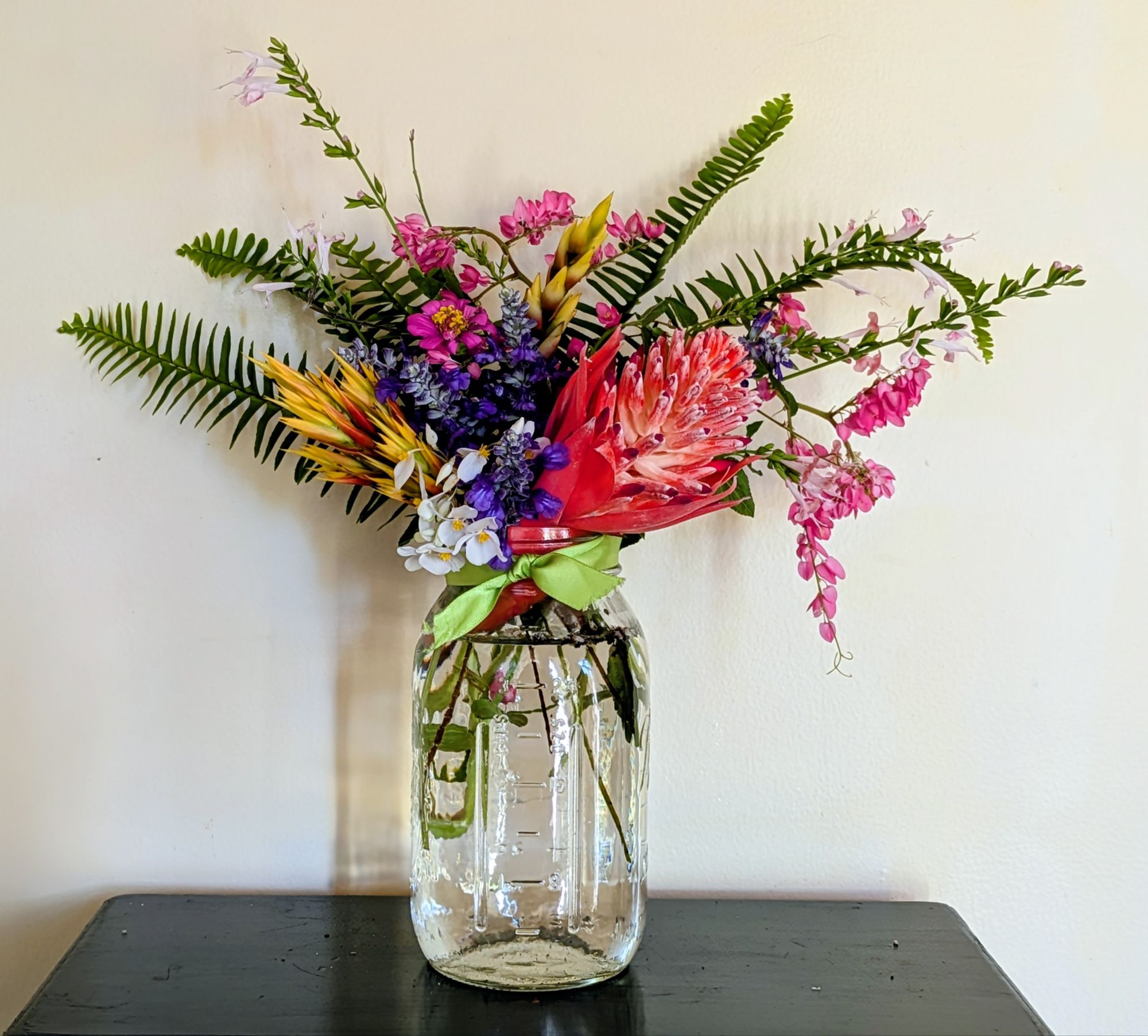
September brings all types of flowers to my garden. I cut several varieties and slipped (plonked) them into a mason jar. A crazy quilt is the most apt description I could come up with for this array of very different flowers. This jar reflects late summer in my South Florida garden. The selection runs from very tropical bromeliad flowers to the more familiar cottage garden stalwarts, the Salvias.
Bromeliads flower year round in the tropics, but I think summer is the peak; some lasting for months. I have at least five in flower, mostly Aechmeas from Brazil. The odd man out is in the vase, Billbergia pyramidalis, common name Flaming Torch or Hurricane Flower. Last week was the peak of hurricane season (which has been blessedly quiet) So I think either name is appropriate.
The close up:
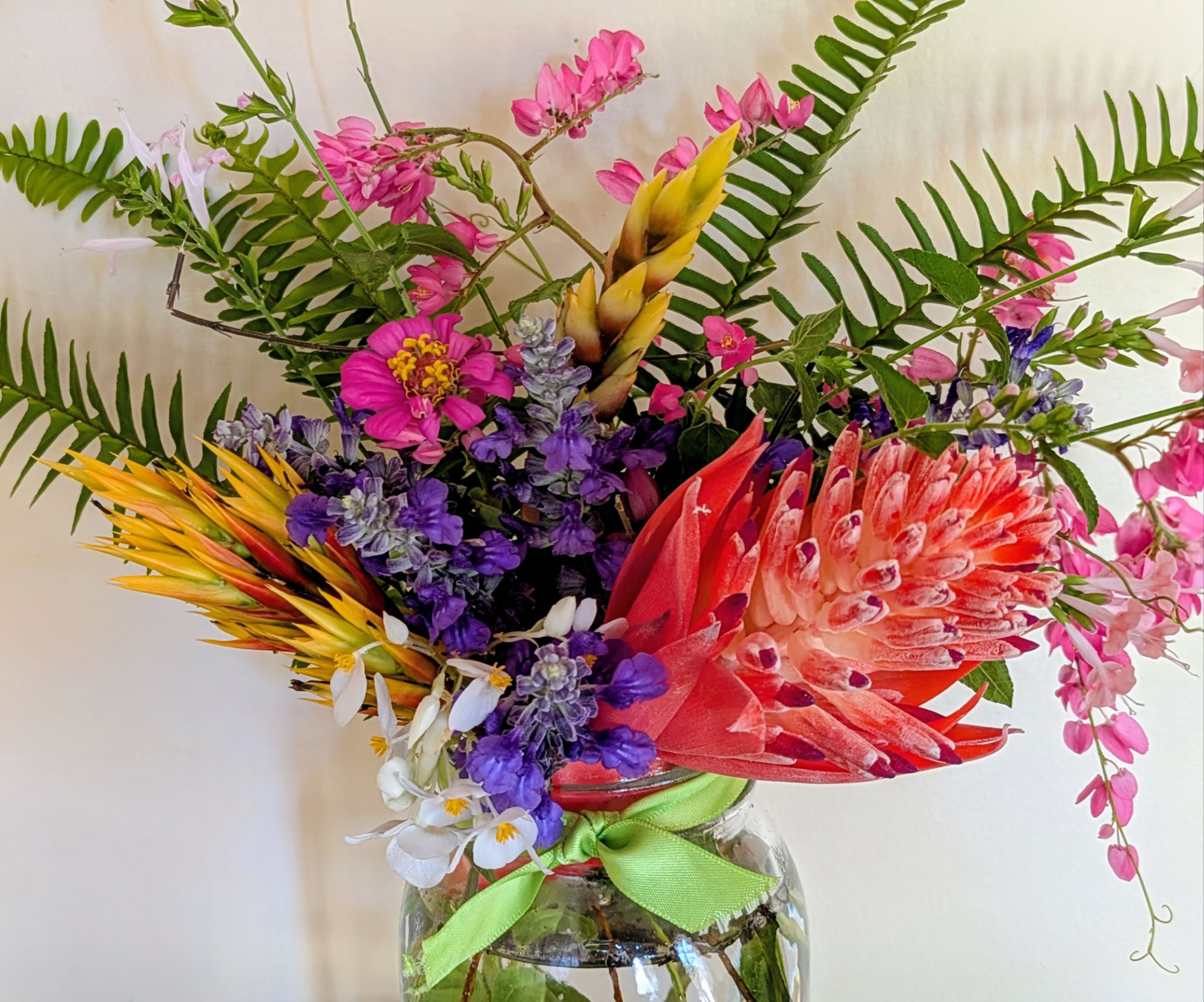
The patchwork of colors include: Hurricane Flower (Billbergia pyramidalis) in pink. ‘Mystic Blue’ Salvia, the blue spike. The final pink zinnia of the summer. Yellow spikey flower is a side shoot of a much larger flower from ‘Pinot Noir’ Aechmea Bromeliad. White Sweet Begonias (B. odorata) hang over the edge of the jar. The yellow flower in the center is a side shoot from ‘Little Harv’ Aechmea Bromeliad. A few white Salvia (S. coccinea) are in the back with Asian Sword Ferns and Coral Vine (Antigonon leptopus) in pink.
That’s all from my garden this Monday. Thank you to Cathy for hosting IAVOM. Visit her blog http://ramblinginthegarden.wordpress.com to see more vases.

 The Shrub Queen
It’s funny how each area has a hurricane flower. I am close enough to the Atlantic that if a hurricane came, I would get some of it. Irene closed Philly down, and I was trapped on the mountain, 4 hours inland from the coast. I guess I need to look for a hurricane plant for here.
LikeLike
Oh that’s definitely reminiscent of a crazy quilt – it’s such a good analogy and I could have lent you one as a prop! I hope its brightness and cheeriness is helping you in your recovery
LikeLike
I wish I had such a patchwork of flowers to work with! Your bromeliad flowers never fail to please, Amelia.
LikeLike
Billbergia is more variable than I was aware. I know of only the two common species Billbergia nuttans and the one that looks like a larger version of it. I realize that there are other species, but some of them look nothing like the two that I know.
LikeLike