Six on Saturday – Summer Beginnings

Saturday has rolled around once again. Time to take a stroll around the garden to see what is new and compare notes with other SOS gardeners. To take a virtual stroll through gardens around the world visit Jim at http://gardenruminations.co.uk

After a dry week (I had to get out the hose!) it started raining again yesterday. This morning I took some photos and then a thunderstorm blew up offshore and it is now pouring down rain. When researching recommendations for when to plant in South Florida you often see at the start of the rainy season – June 1 as a good date. This works if it is indeed rainy, otherwise, the plants fry. I try to get everything in the ground in March. I am seeing some mad growth in the garden and other plants rescued by the rain.

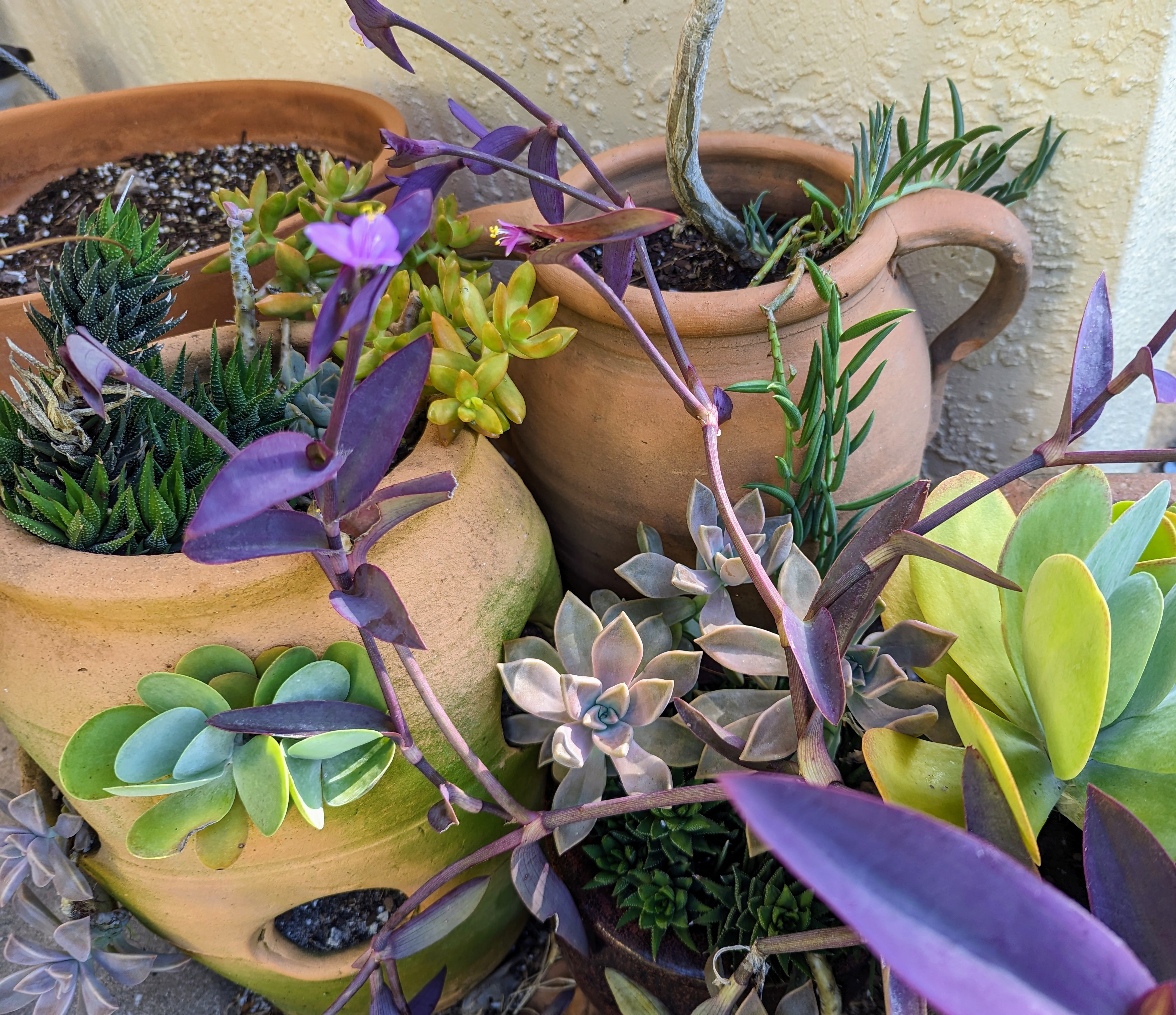
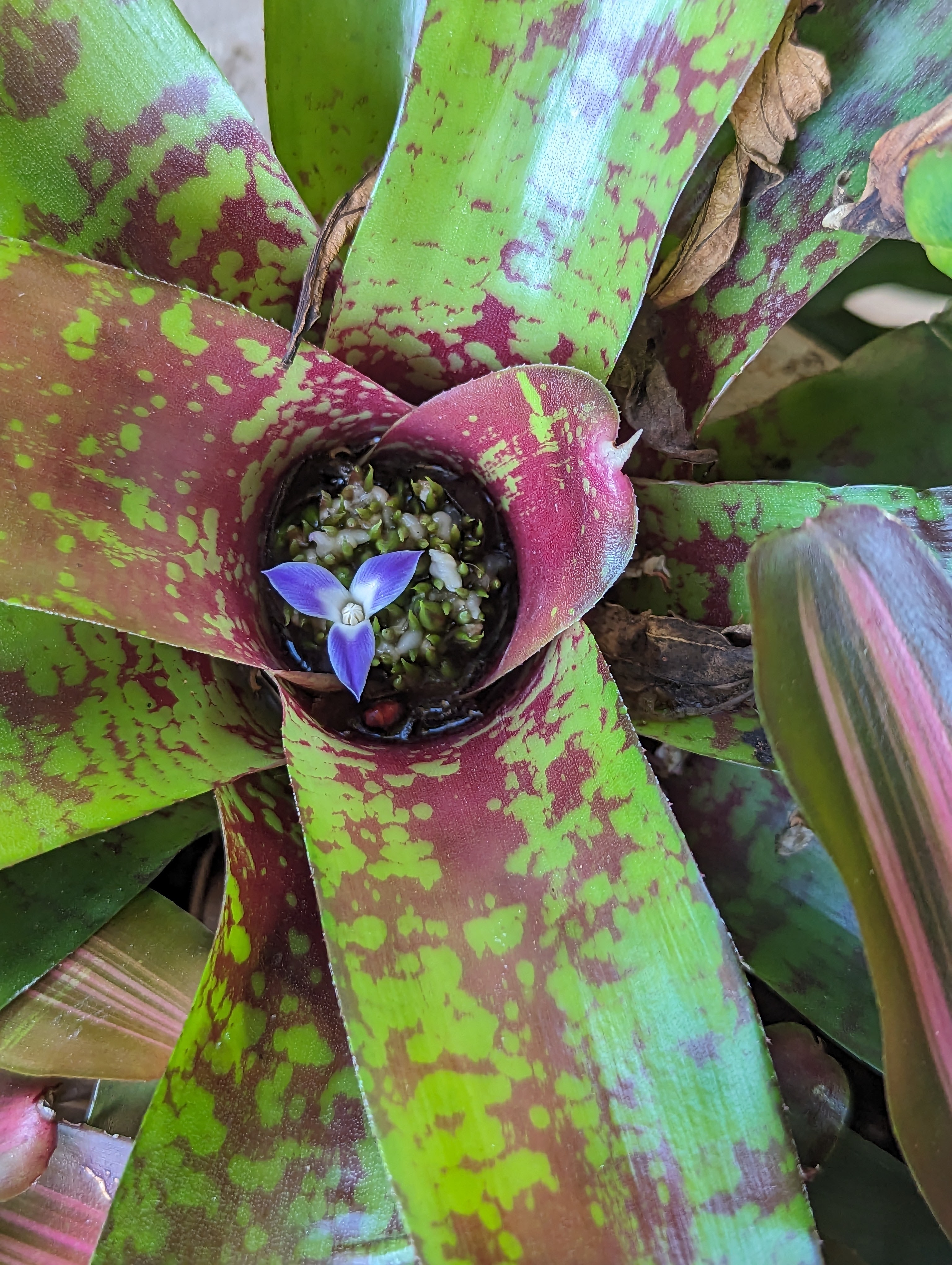
Purple Haze Billbergia bromeliad pups emerging from a mother plant on its way out.

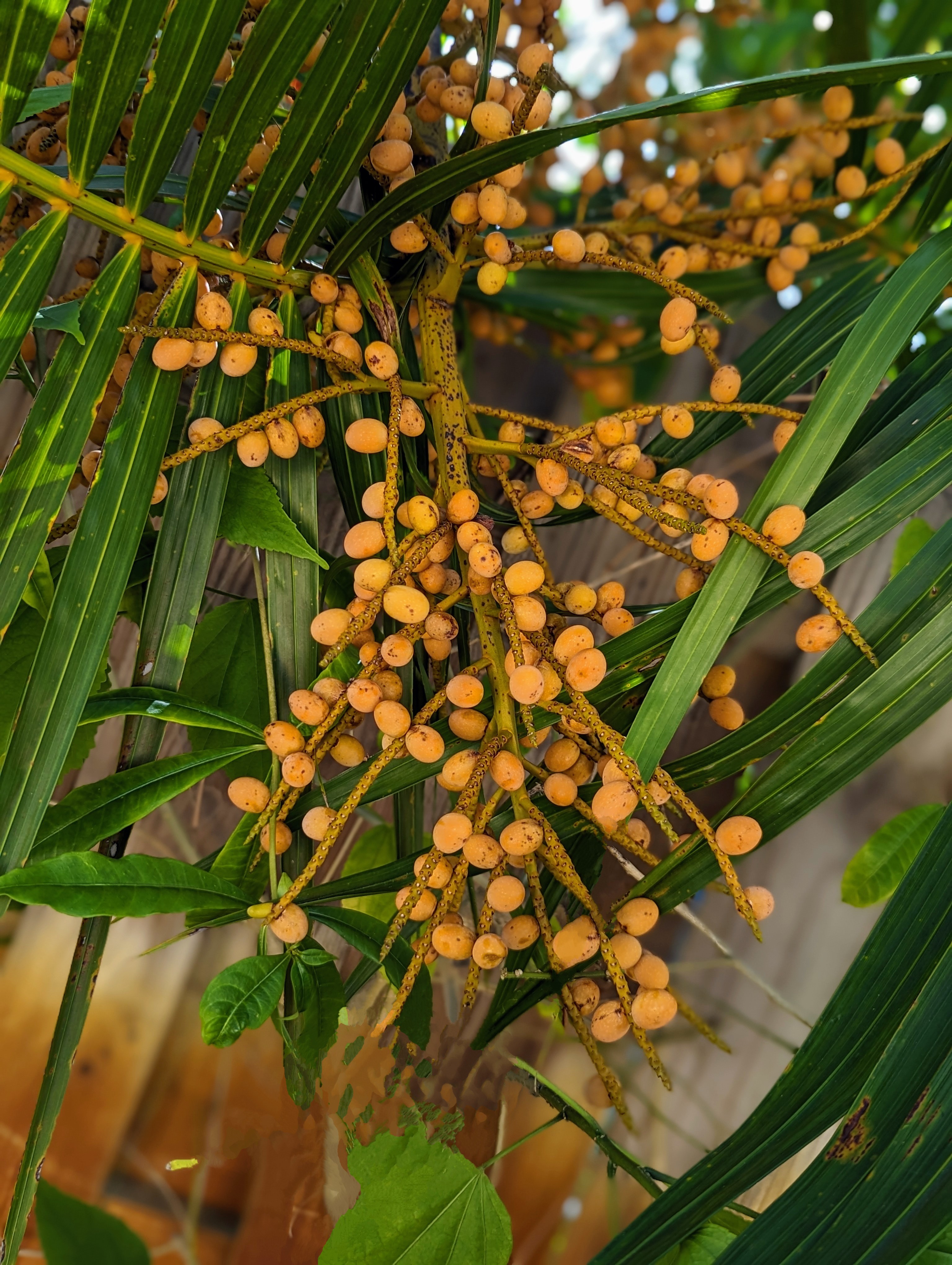
Coontie cycad (Zamia integrefolia) rescued from annihilation. I am not sure what happened here, these are usually very hardy. This one lost all its foliage last summer when it was droughty and was not recovering. I potted the caudex, put it in the shade and watered it – much to my surprise, it came back. The cycads are notorious for not liking disturbance.

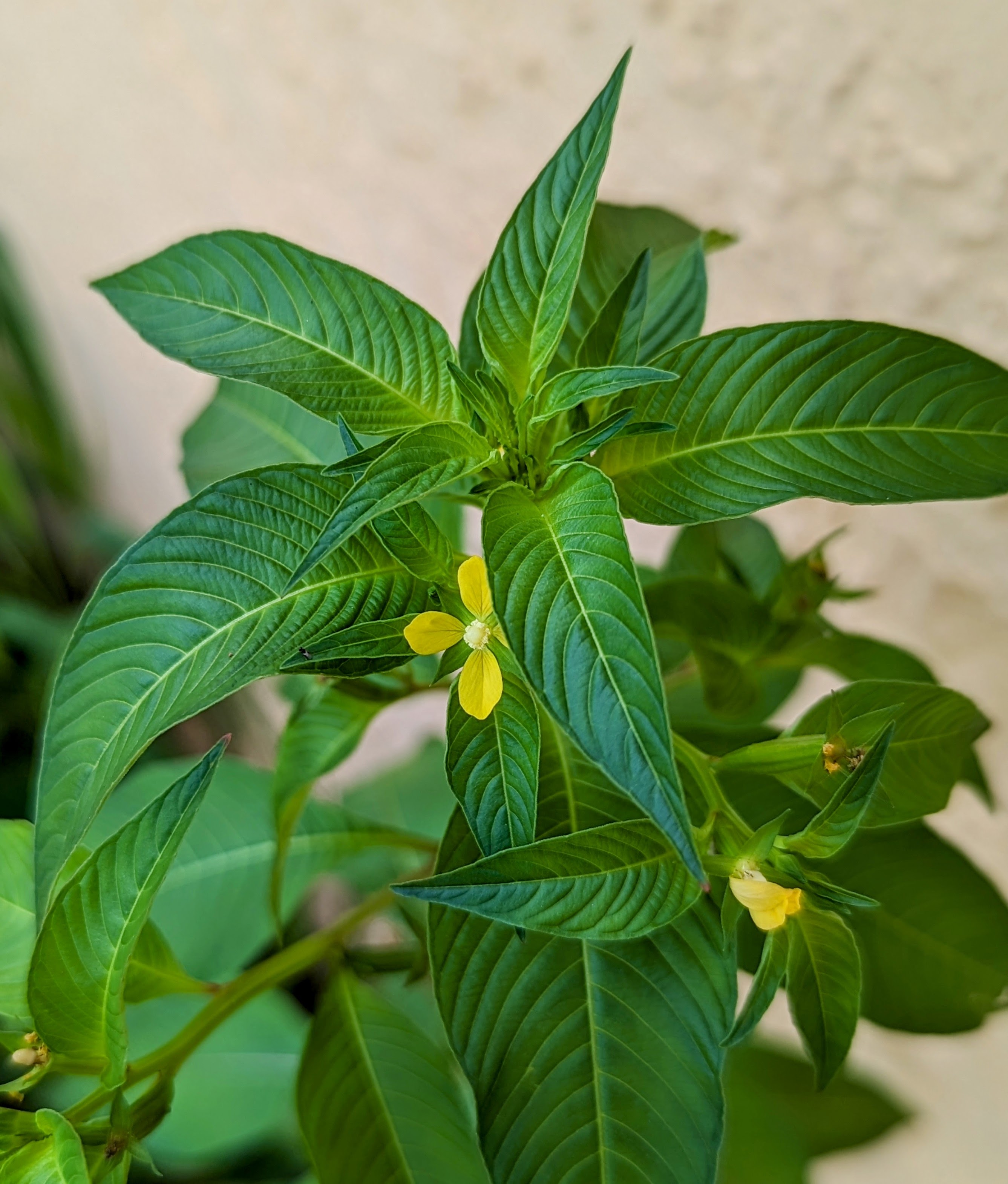
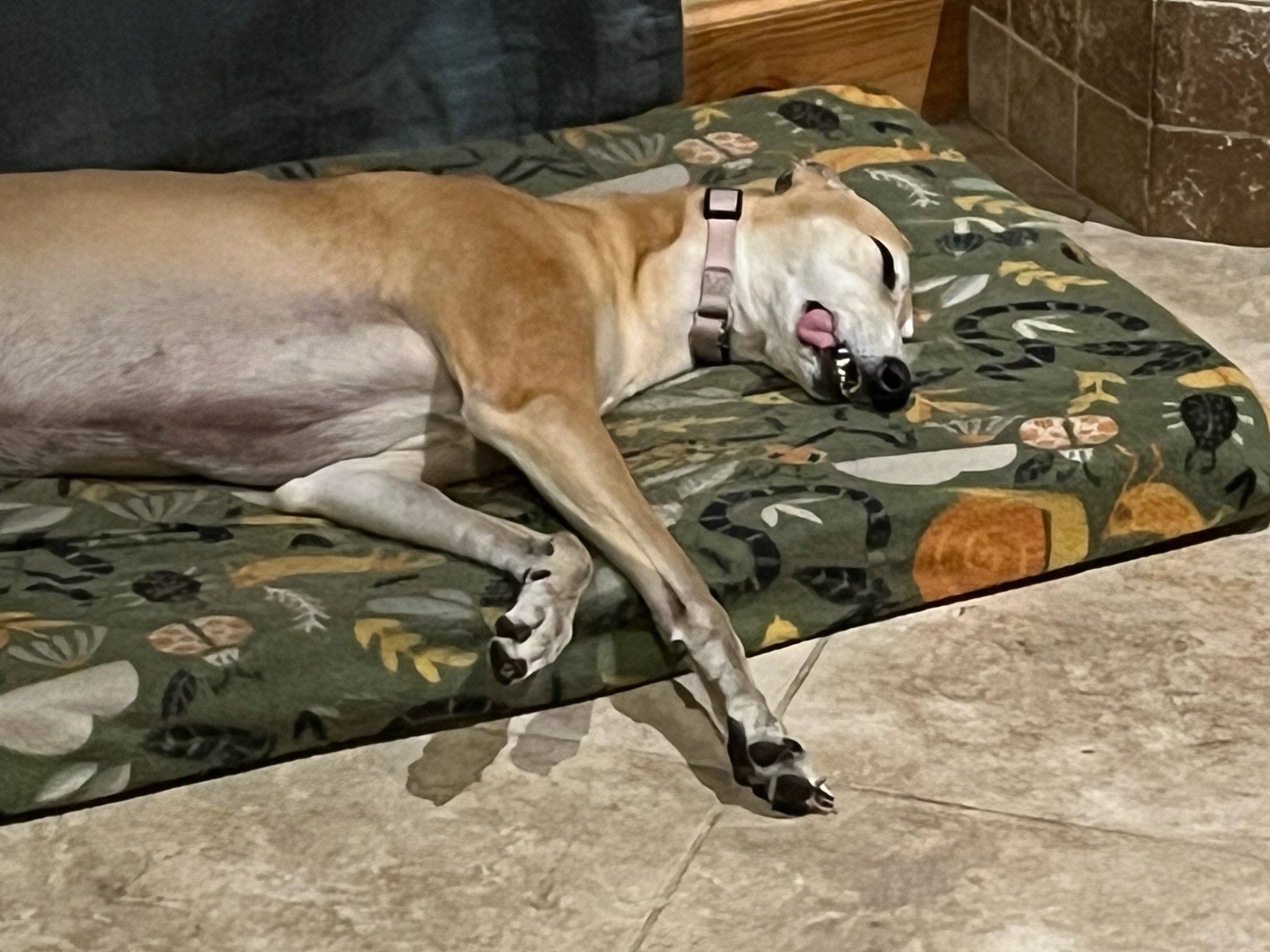
Native Florida Poinsettia (Euphorbia cyathophora) hugging my garden greyhound. These appear when rain is plentiful and add a little color.

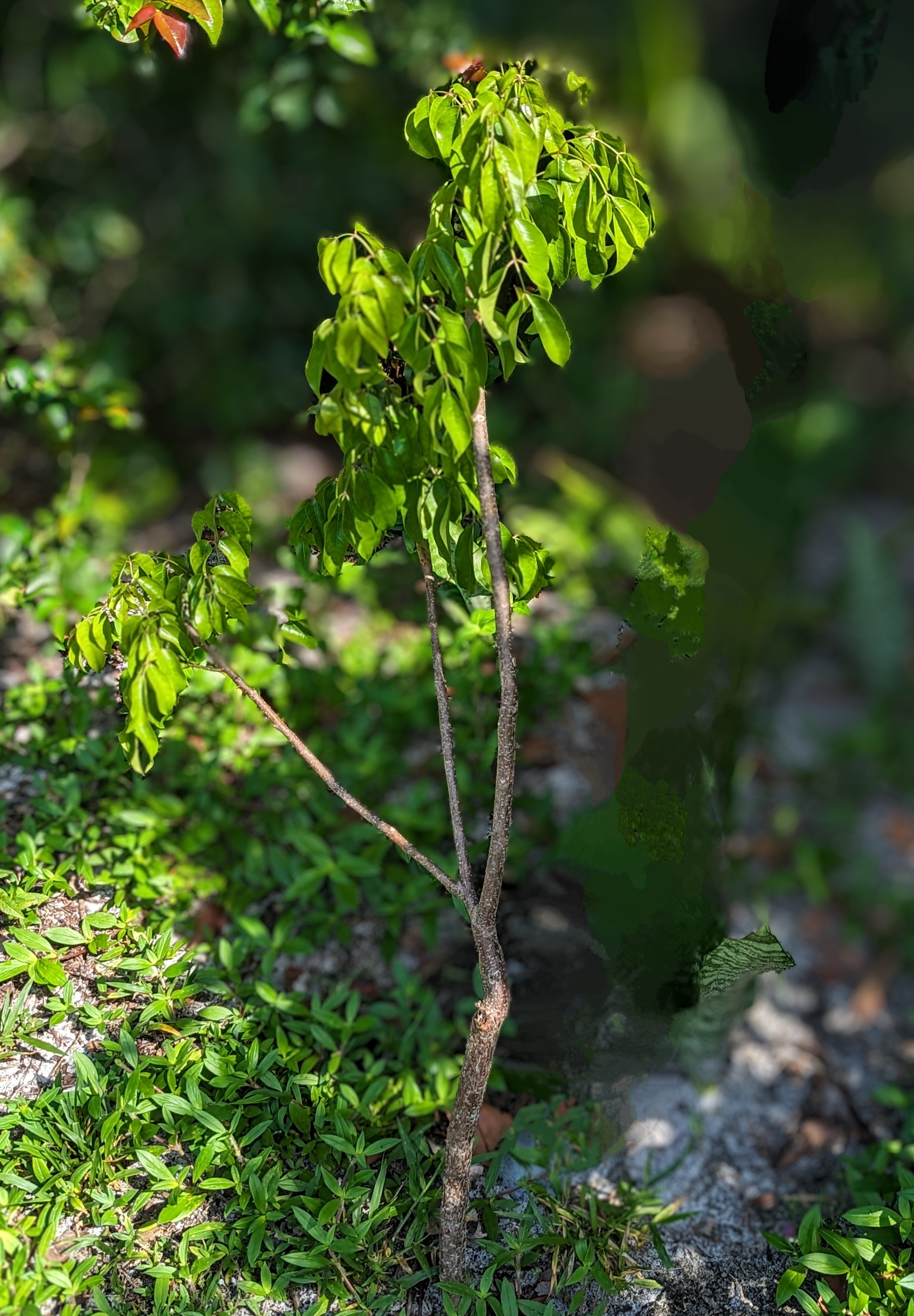
My first Rangpur lime, ever! My neighbor grew this tree from seed and it has been in my garden for six years or so. I am excited! These are hard to see right now, hopefully there are more on the tree. This type of lime is orange when ripe and considered a sour orange in Florida. We make ‘key lime’ pies with the fruit or use it like lemons. It is also used in Cuban cuisine for mojo marinade.

One of my summer favorites, Thyrallis (Galphimia gracilis) is finally flowering.

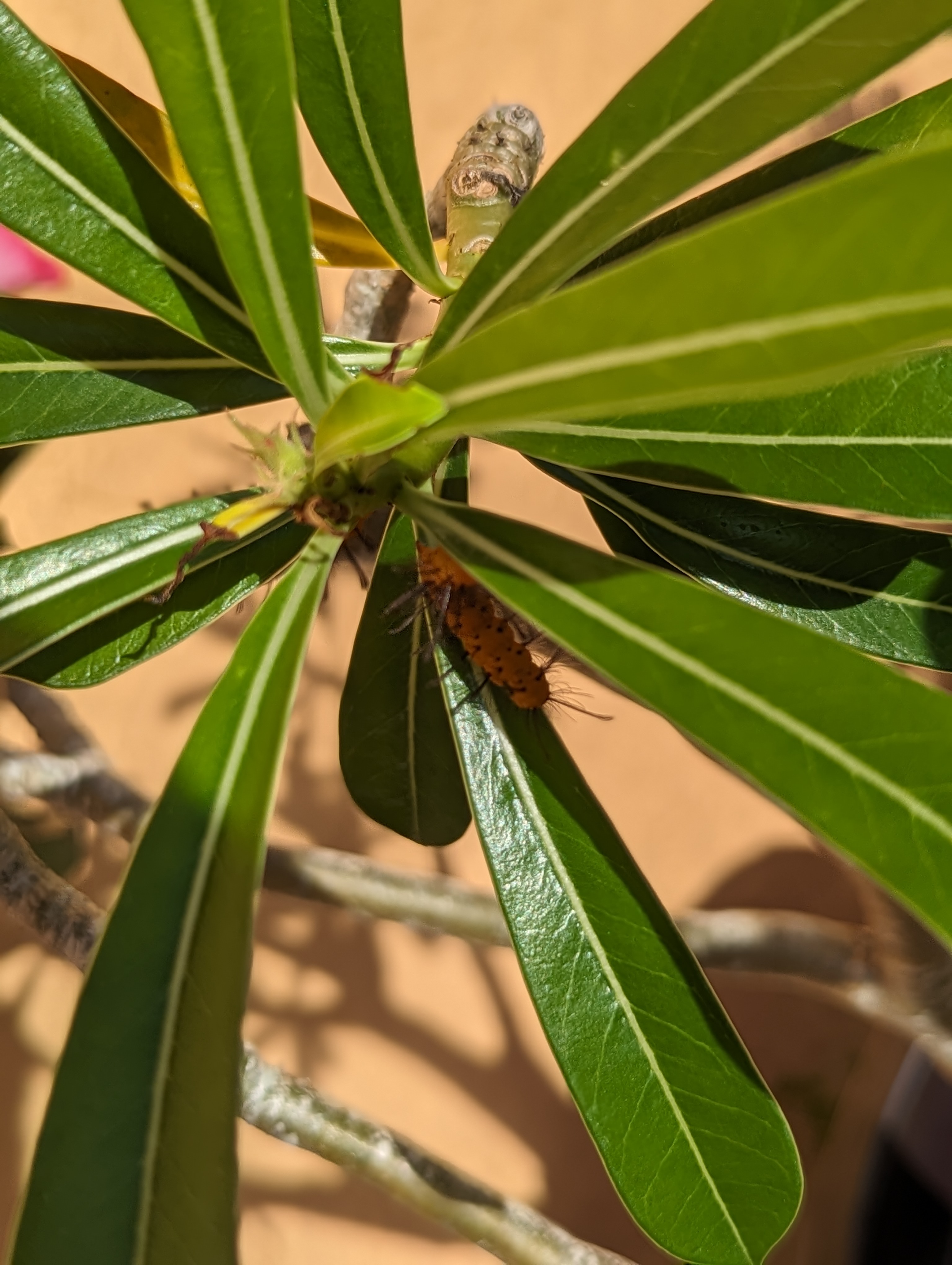
Tree Spinach (Cnidoscolus aconitifolius) is one of the best nectar plants for butterflies in the garden. There were three different butterflies feeding on the flowers when I took the picture. This is a Gulf Fritillary. I have never seen as many flowers on this plant, the butterflies are having a smorgasbord.

That is all from my now very damp garden.

Happy Gardening!!

In a Vase on Monday – Mystic Muscadines

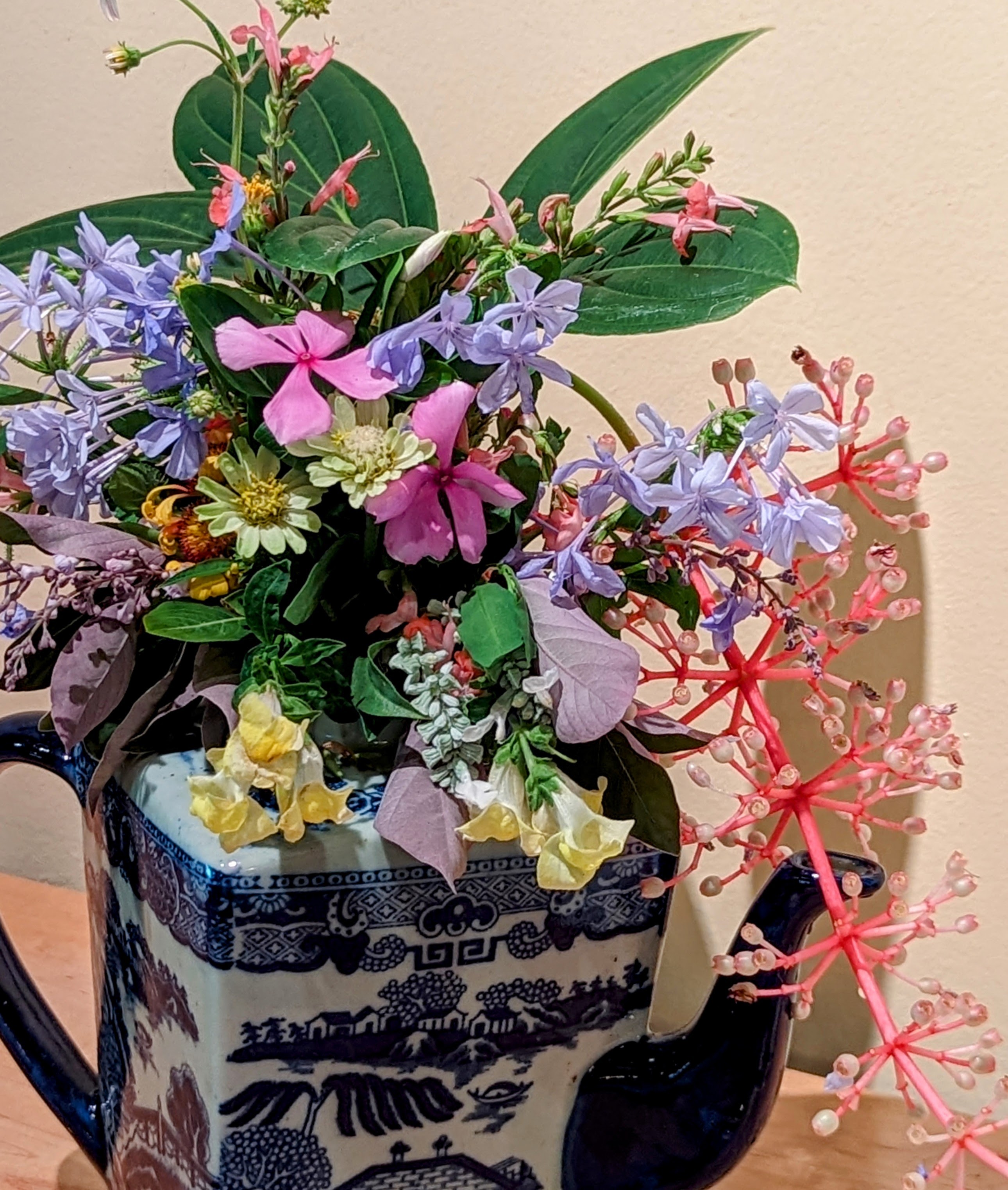
It is somewhat of a mystery where all the @#! muscadines came from behind my house. The grapes are bitter, have huge seeds and the vines can grow 10 or 15 feet during the summer and once you start pulling it is impossible to find the end of them. I had these at my house in Atlanta and it took a few years to find them all but – I won. This time I am not so sure. So, every summer I have grapes in a vase or two. I love the chartreuse color of the unripe grapes. The vases have not reduced the vines, though it would be wonderful if they did! I need a large grapevine basket or wreath making business.

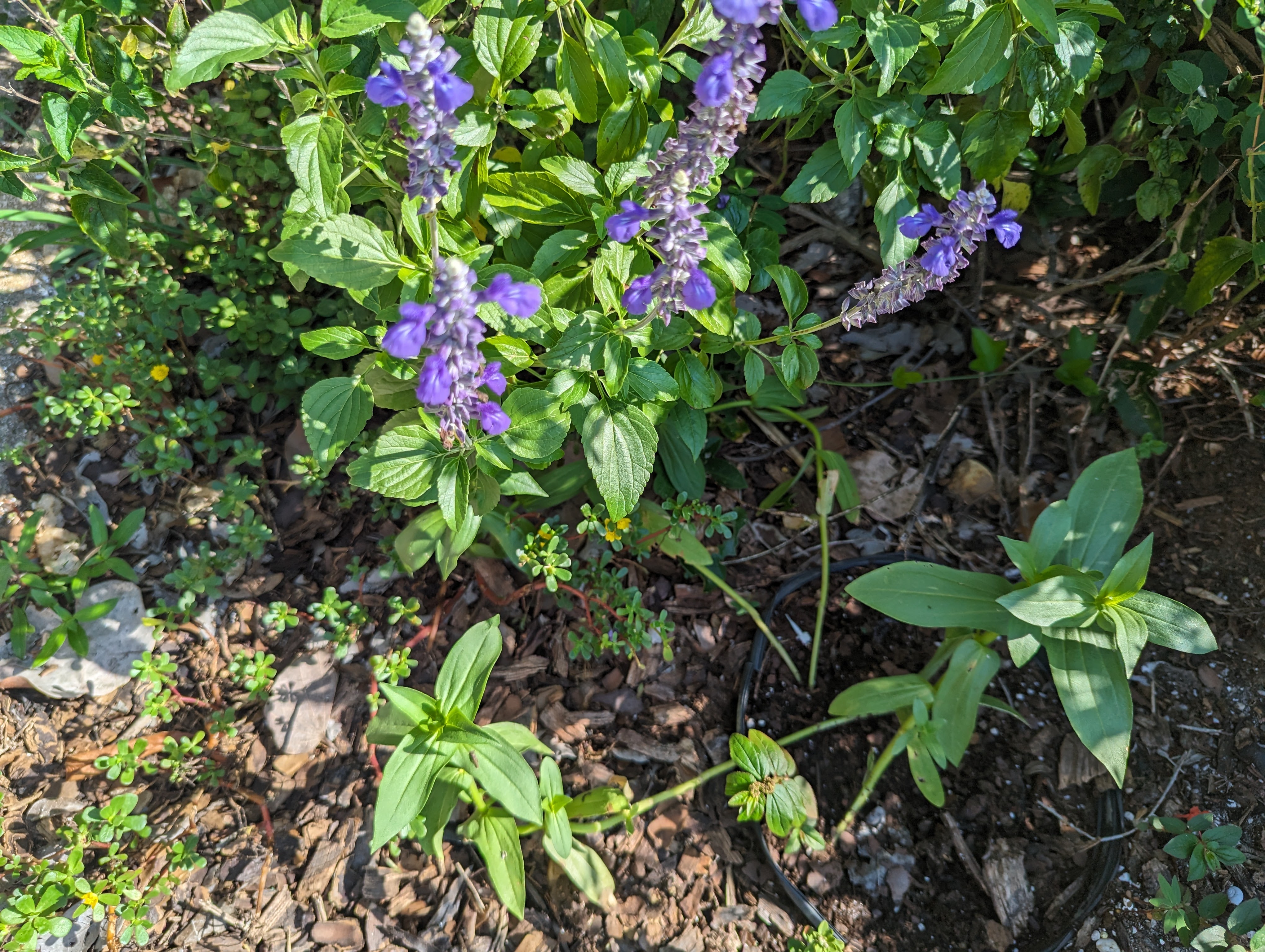
The Mystic here is the blue spike in the back of the arrangement. I love these. Mystic Spires Salvia. Amazingly long lived for South Florida, one has been flowering since March 2021. I realized I needed one more and then pulled myself back from planting anything in July.

Closer views:

The unripe grapes of the Muscadine (Vitis rotundifolia). This is a native grape to a large portion of the southern and eastern US, there are some varieties that are good to eat or used in making wine. The white bracts are Miss Alice Bougainvillea flowers. Orange and sage green flowers are from Soap Aloe (Aloe saponaria).

The spires of the Mystic Spires Salvia accented with foliage from Varigated Flax Lilies (Dianella tasmanica)

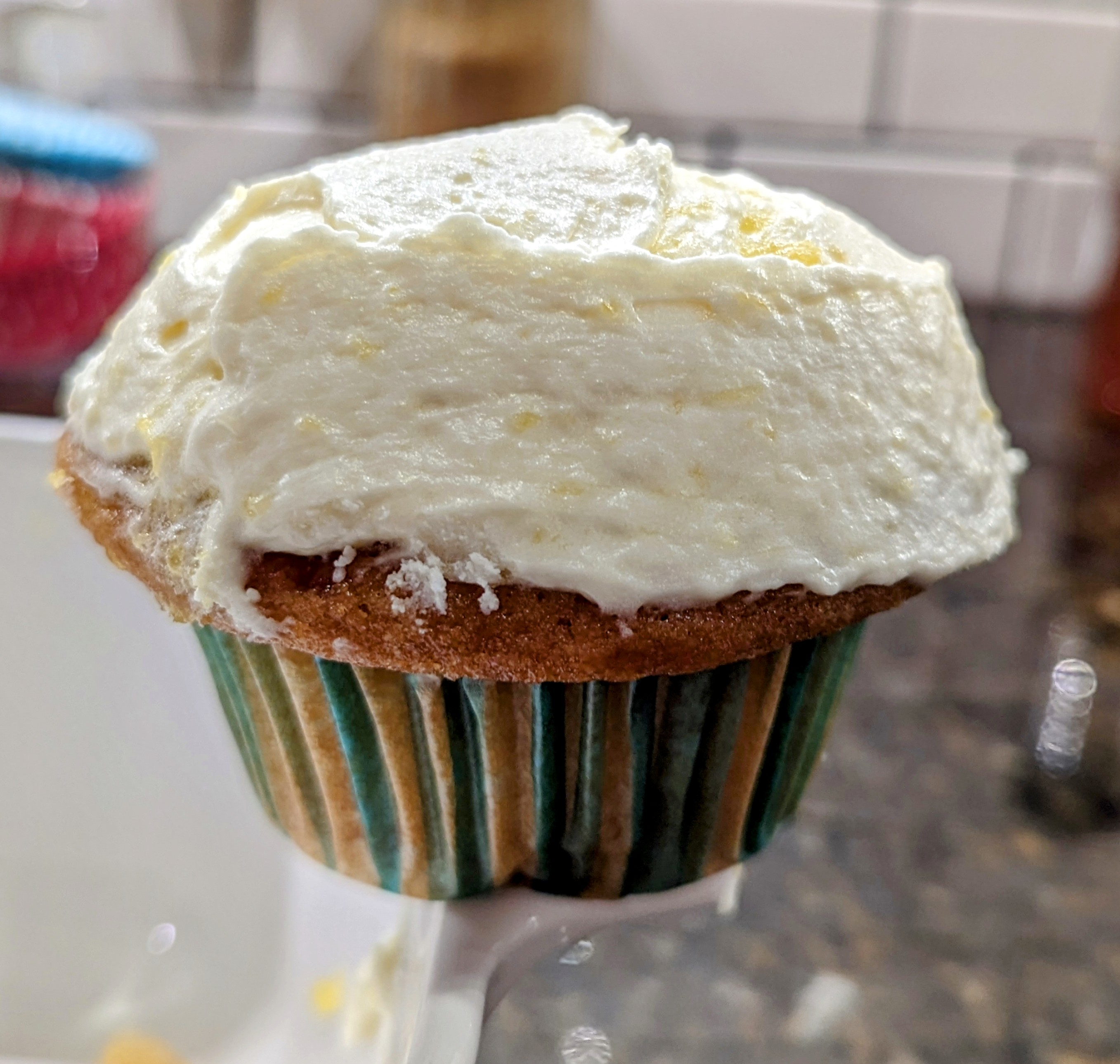
I have been baking with Thai dessert mangoes harvested from my tree this afternoon. I ended up with four ripe mangoes and decided to make vanilla cupcakes with mango filling topped with mango buttercream. Not to worry, these are actually vegan, not terribly unhealthy in the scheme of life and very good.

That is all from South Florida this week. No, I am not considering cake decorating classes.

Thanks to Cathy at http://ramblinginthegarden.wordpress.com for hosting. Follow the link to see more vases…

In a Vase on Monday – Lobster, Asparagus & Rose`

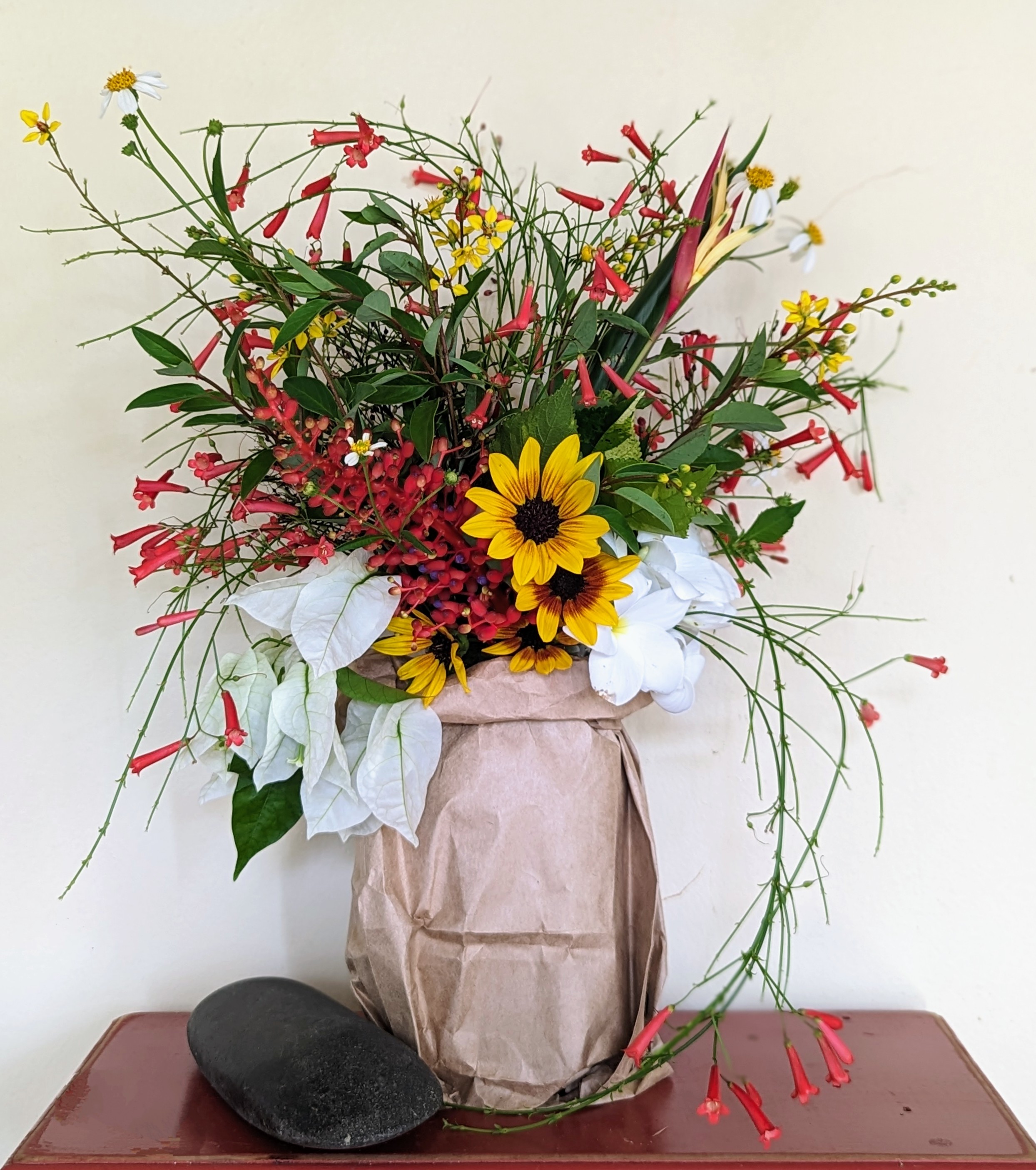
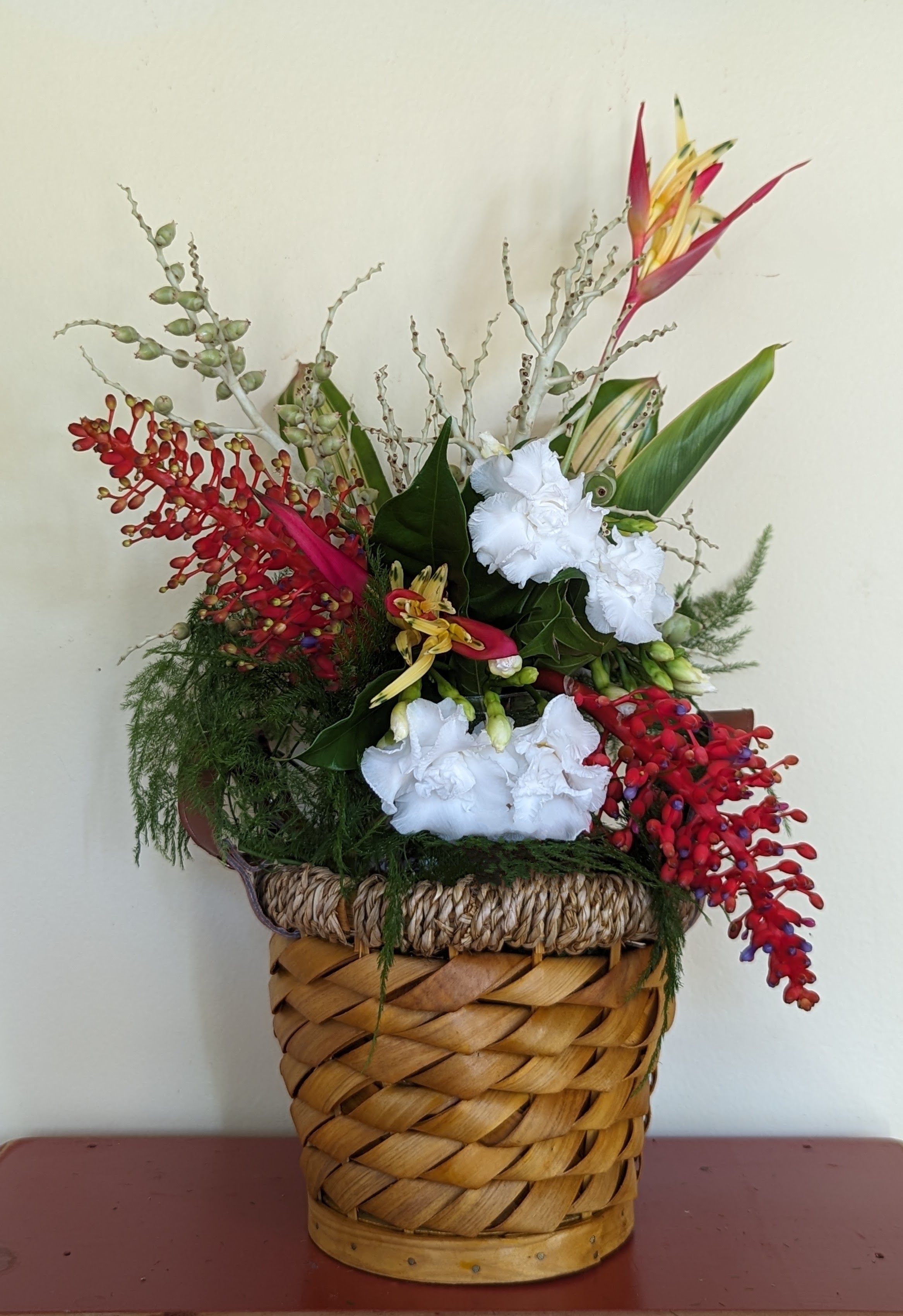
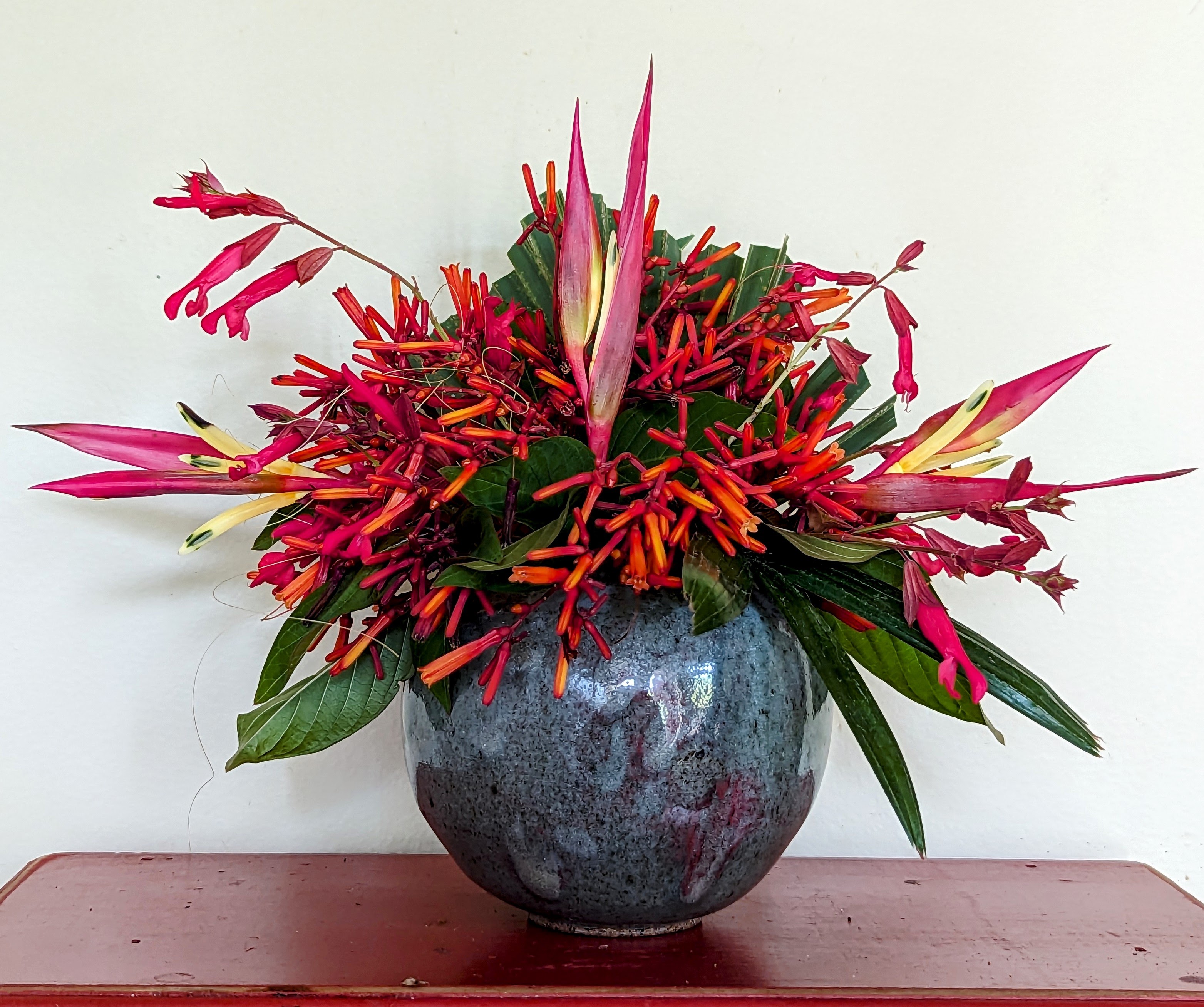
Lobster with a side of asparagus and a glass of rose` sounds like a rocking dinner. A large quantity of melted butter would be necessary for this gastronomic delight and another side dish, roasted potatoes, I think. Hmmm. Well, this vase is not for dinner, though the conceptual components are there and the rock was necessary to hold the plants in place.
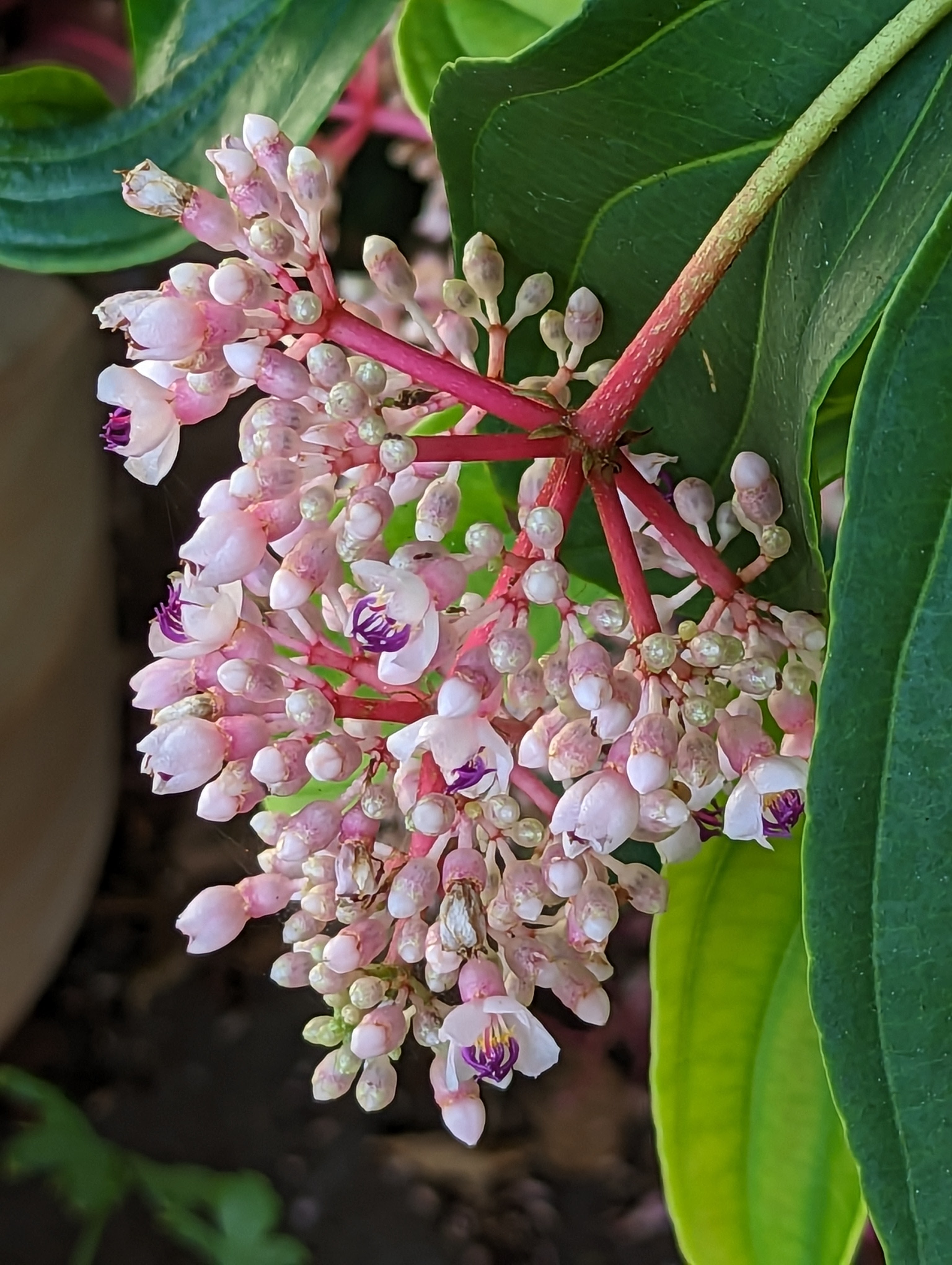
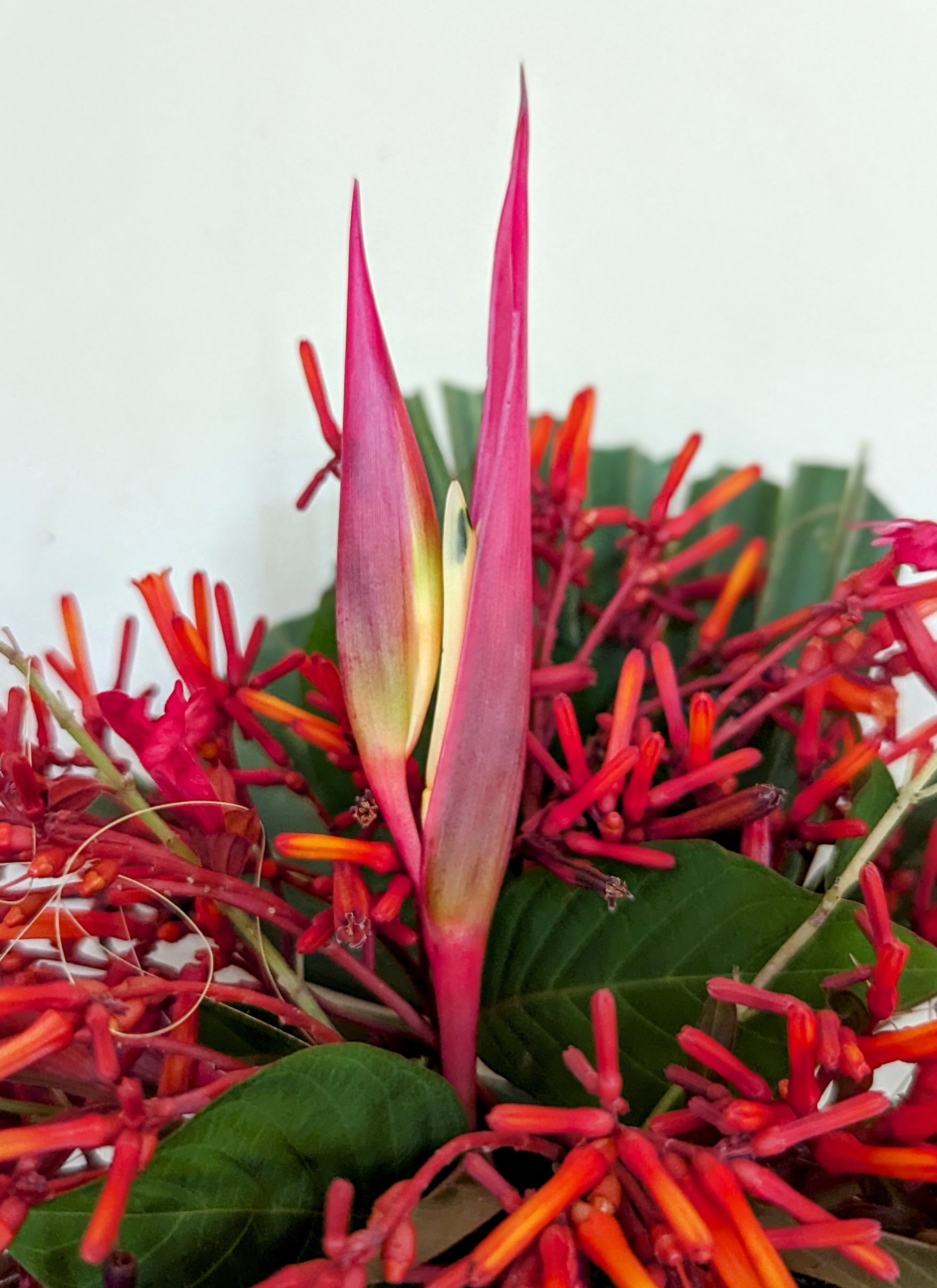
I know summer is in full force when the Heliconias start to flower and the solstice was their day. There are flowers still opening and this is really the best Heliconia year to date. I am guessing the vast rain fall helped. These flowers are so dramatic they need little embellishment, kind of like lobster.
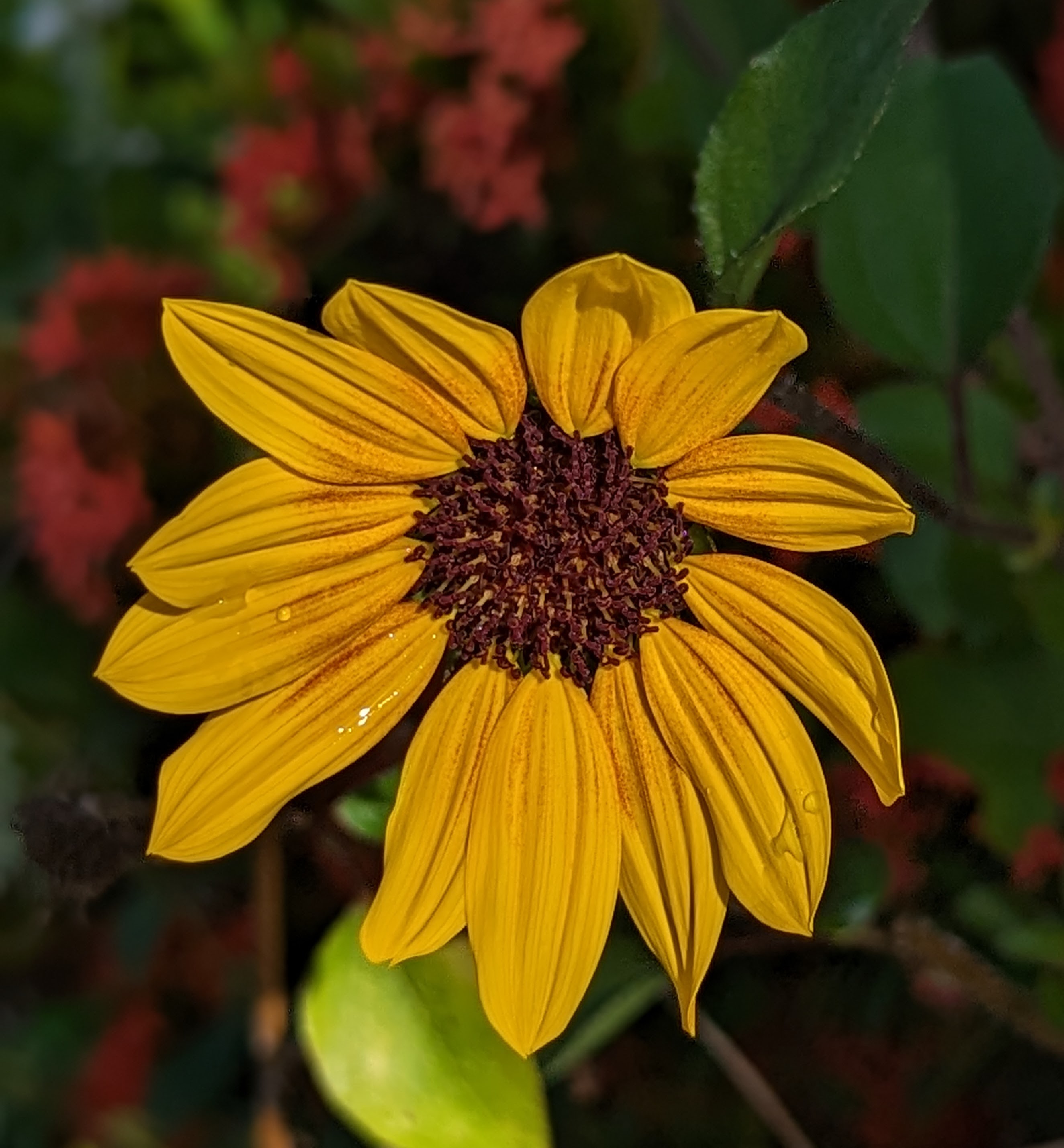
The flowers:

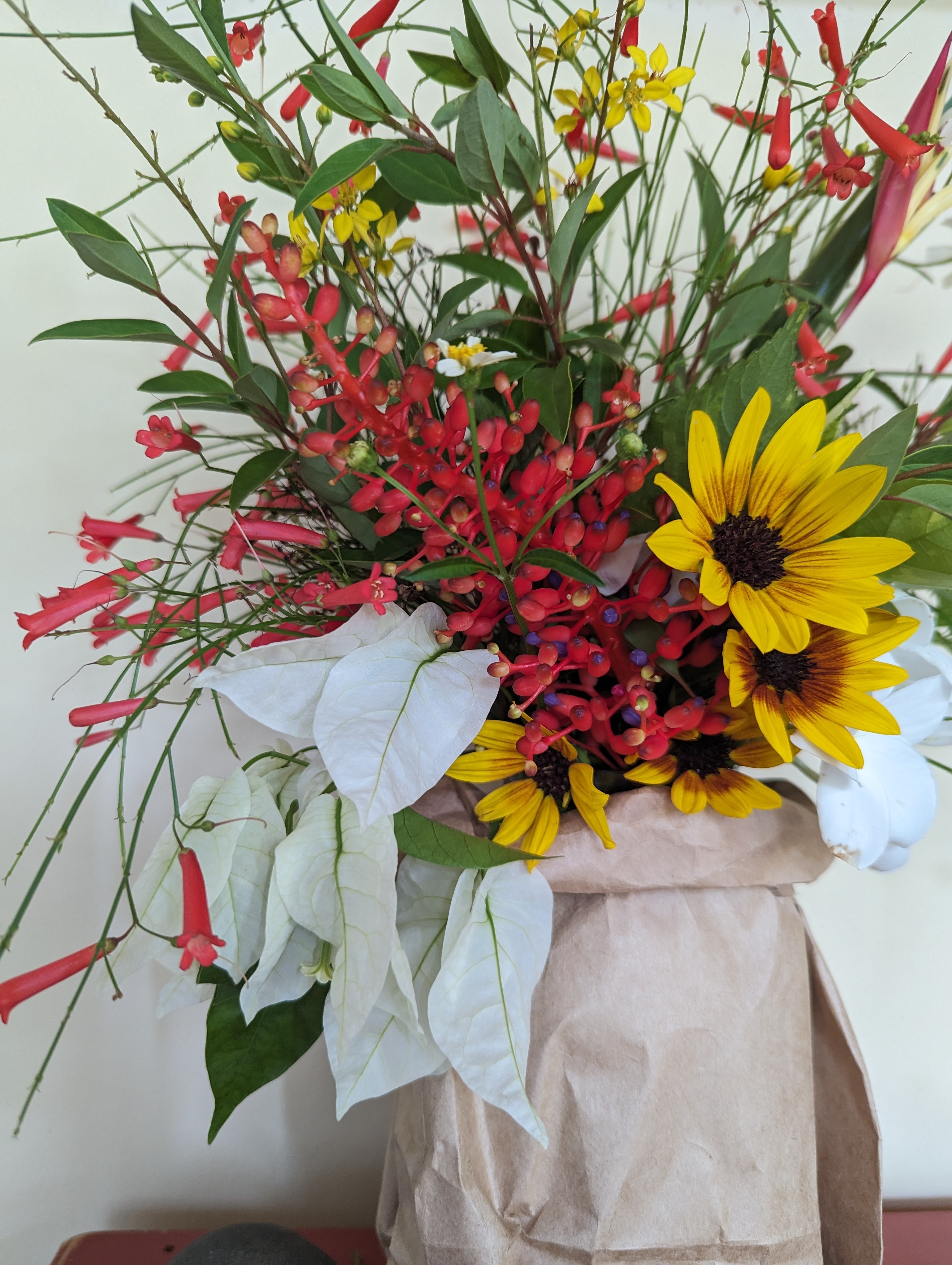
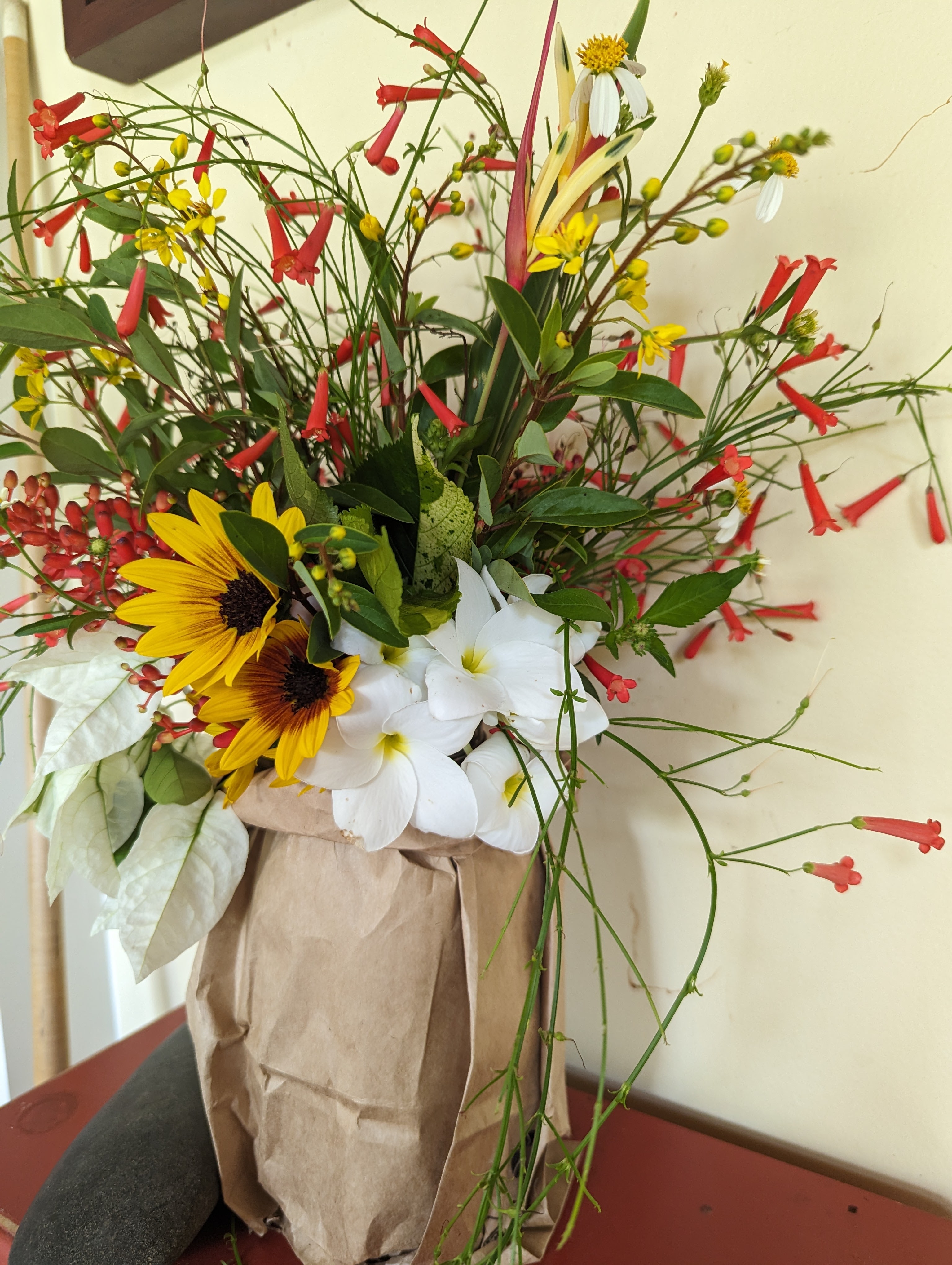
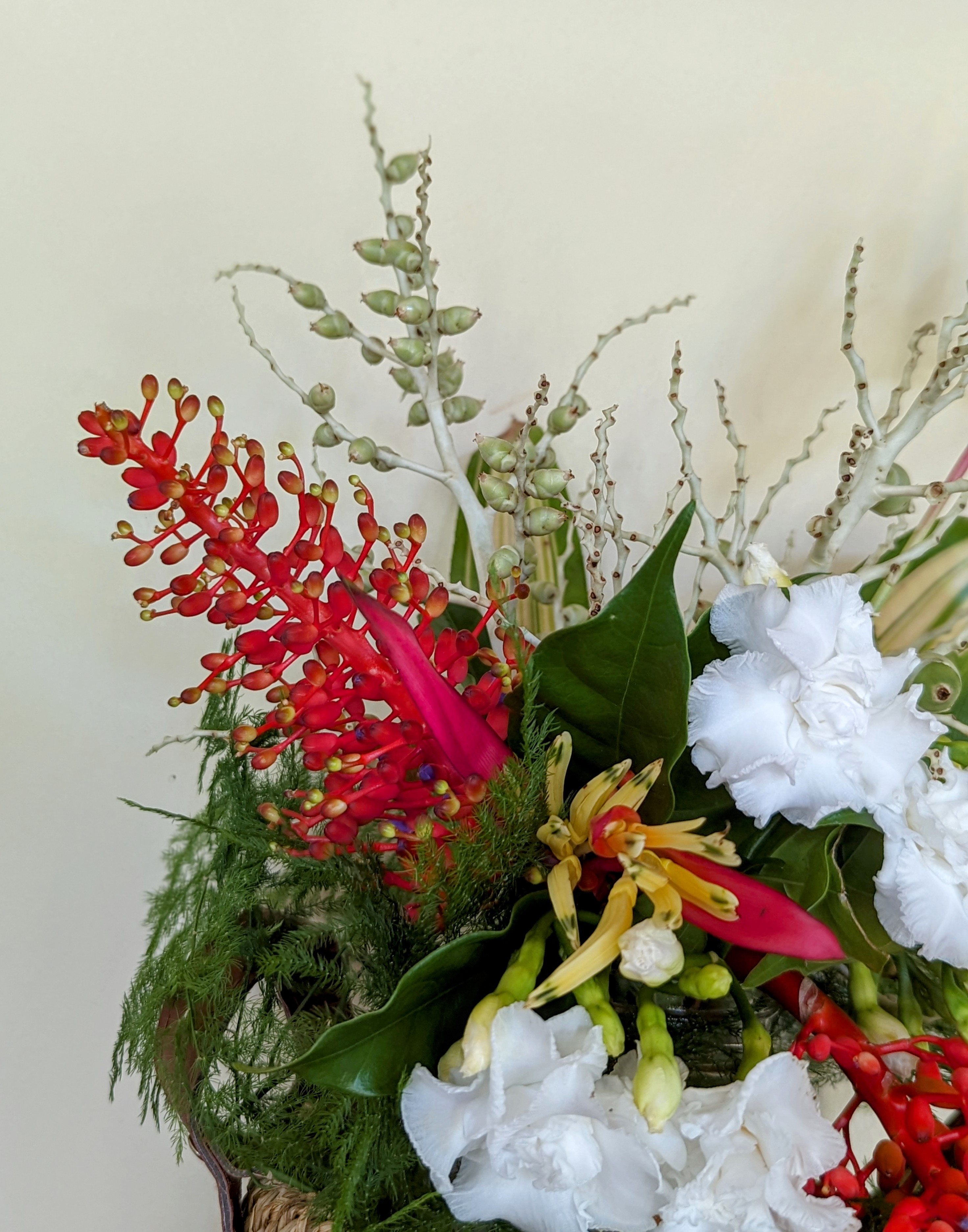
The Lobsterclaw Heliconia (Heliconia rostrata). These are planted outside my Living Room windows to give a rainforest vibe to the view. This is sort of a large, leafy plant but very linear and easy to see through so I have enjoyed the view.
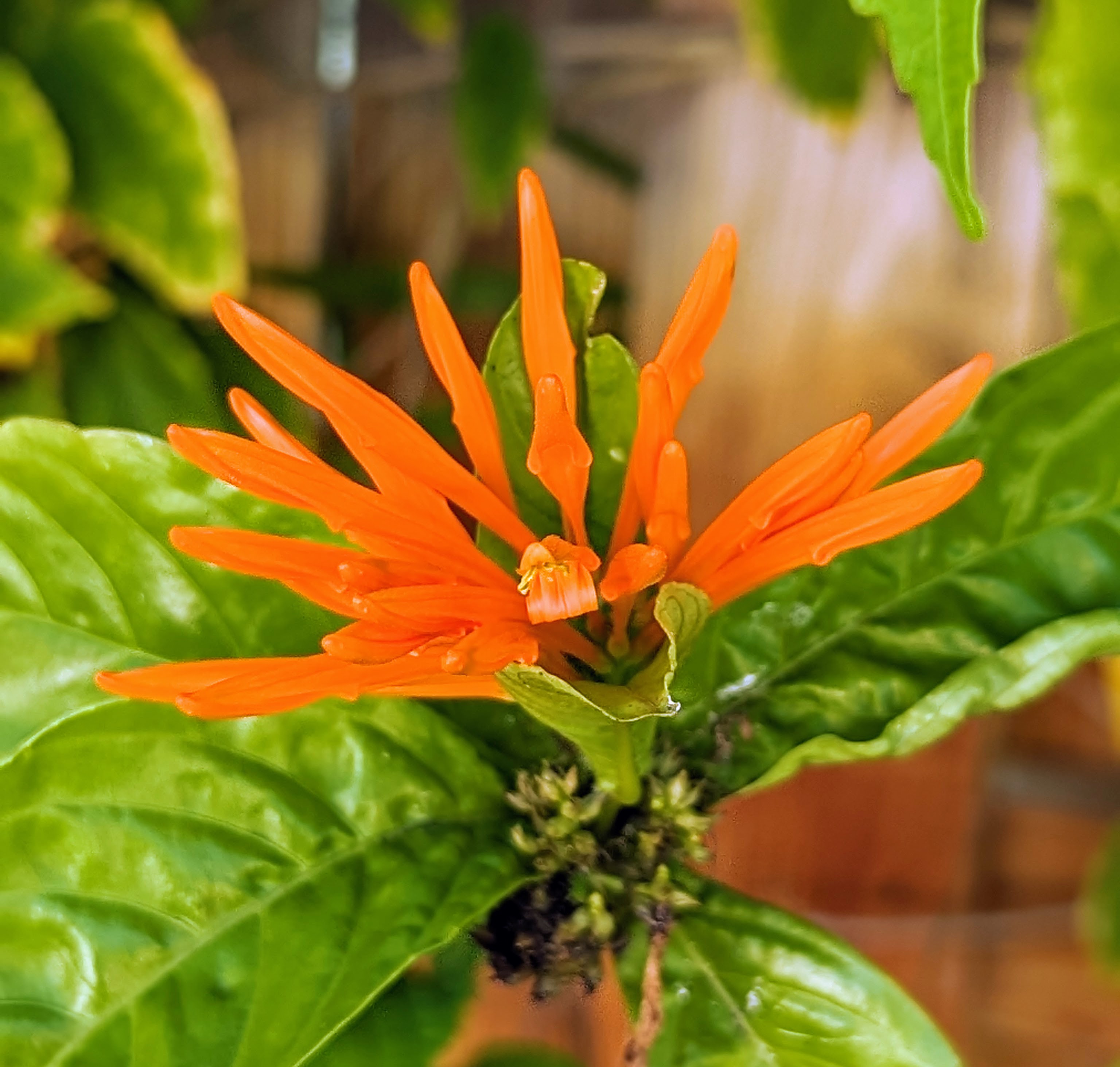
The Asparagus Fern accents the Heliconia and is held in place by the rock. The vase is a rose` bottle from a dreadful bottle of rose` I bought from Aldi based on an internet rave review. The last rave review I ever bought wine from, though I have enjoyed the bottle as a vase.

The rock:

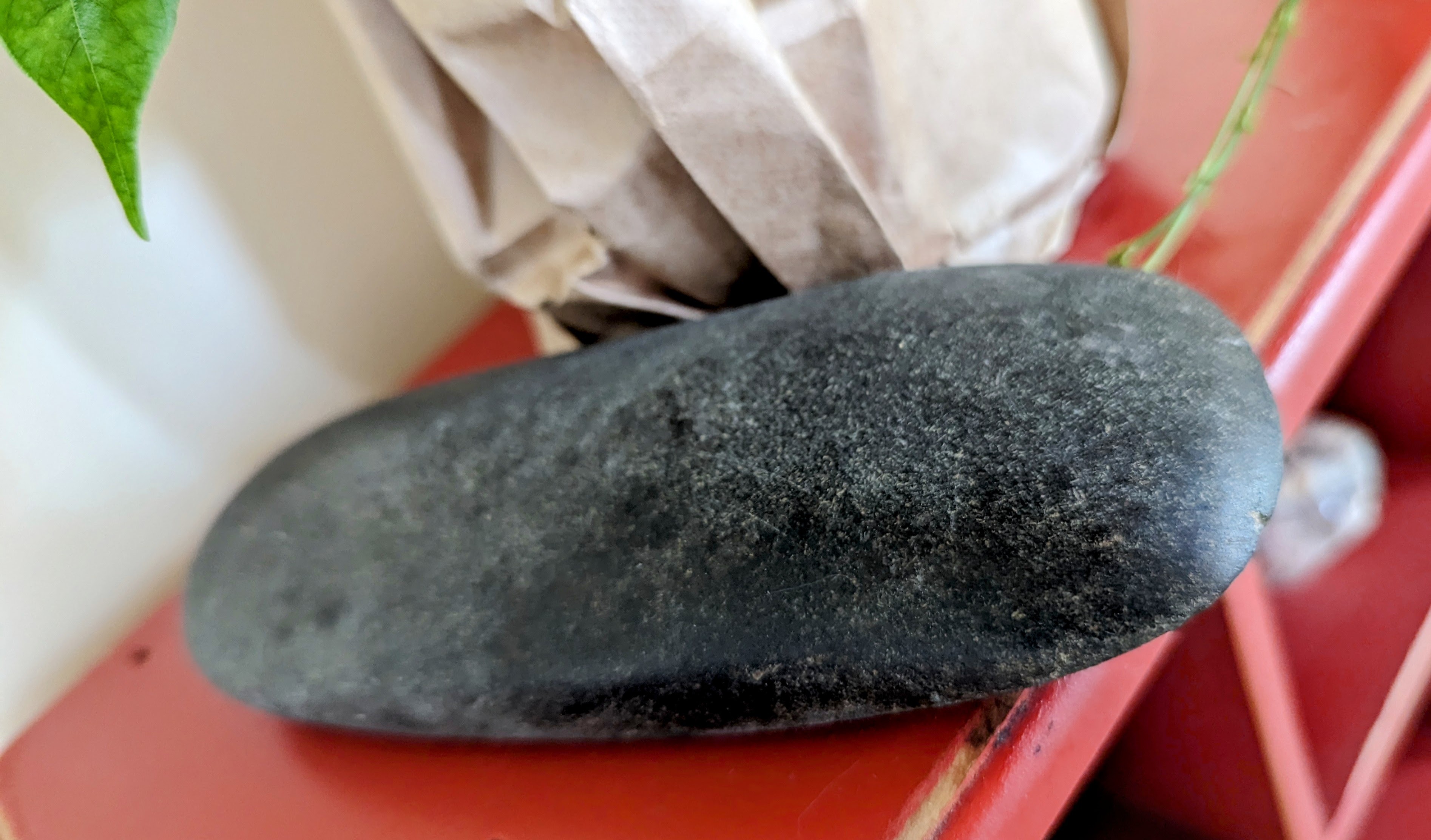
The rock. My father was a geology professor who loved crystals and especially tourmaline and quartz. This is black tourmaline and a quartz crystal likely found somewhere in North Georgia where I am from.

It is closing in on dinnertime in South Florida and I am wishing for the above ingredients! No such luck this week

Thanks to Cathy for hosting IAVOM, to see more vases follow this link http://ramblinginthegarden.wordpress.com

Happy Gardening!!

Six on Saturday – Caterpillar Condo

It’s time for the weekly world garden tour. My South Florida garden has a wealth of butterflies and tropical flowers loving the heat and humidity more than I do. I let some native passionflower vine (larval host plant for butterflies) ramble through a mixture of flowering nectar plants and I have some astounding butterfly action going on in the front garden. Pairs of Gulf fritillary butterflies circle each other and then land on the passionvine where the ladies lay eggs. Caterpillars from both species of butterflies (Gulf fritillary and Zebra Longwing) that host on the vine are currently in residence. The caterpillars moved off the vines and now there are chrysalis hanging on the front porch. I am watching day by day hoping to see new butterflies emerge.

The Gulf fritillary looking for nectar.

Zebra Longwing doing the same thing.

Gulf fritillary caterpillars on the passionvine. The passionvine is Florida native Passiflora suberosa. It is not a particularly attractive vine and bears small flowers and blueberry sized fruit. I did not plant this, it came up from the garden gods and I let it go to ramble through the Dwarf Red Ixora shrubs creating a caterpillar condo with a full service restaurant.

The much less colorful chrysalis of the Gulf fritillary.

And we have to have some tropical flowers and fruit. The flowers today are Lobsterclaw Heliconia (Heliconia rostrata)

Fruit of the week – Papaya. This is the Papaya tree started from seed last fall. I planted the seedlings in the garden in May. They are almost three feet tall now and looking a little spindly. I have read it is possible to have fruit in nine months. At this point, the trees won’t be able to support it.

That is all from sultry South Florida this Saturday. To enjoy the world garden tour visit Jim at http://gardenruminations.co.uk

Happy Gardening!!

In a Vase on Monday – Tropical Depression or not

Among my vases this one is not particularly exotic, though it has some tropical elements. I have been meaning to use this green cream pitcher as a vase for a while. It belonged to my mother, who got it from her mother. My mother was always miffed with me that I could not tell the difference between depression glass and pressed glass. I have an inkling this is pressed glass, though I could be remembering my mother pressing her lips together in frustration as I misidentified another piece of glass!

There is a 90 percent chance of a tropical depression forming in the Atlantic this week. Of course, it is headed my way. I am going to hope for rain and continue to enjoy the flowers, with or without depression glass.

The flowers:

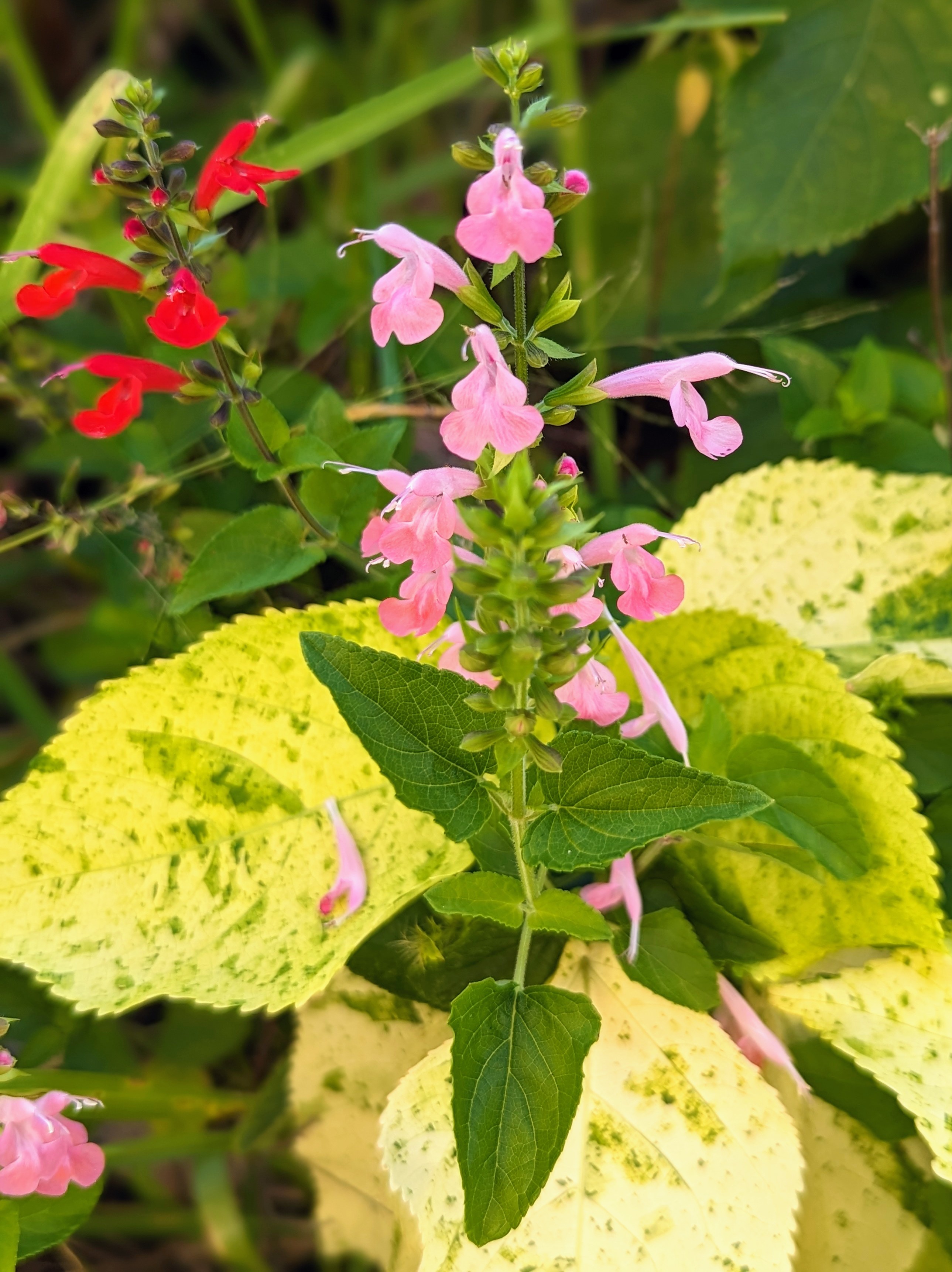
Tropical Red Salvia (Salvia coccinea) in pinks; ‘White Flame’ Salvia in white, and ‘Mystic Spires’ Salvia in blue. The purple spikes are Arabian Lilac (Vitex trifolia). I like the Arabian Lilac though it is growing into an odd flat shrub. More pruning fun for me.

Brown Eyed Girl Sunflowers are still going, though they are seeking some shade by growing over the edge of the container.This seems strange, sunflowers avoiding the sun? The small yellow spikes are flowers of Java White Copperleaf (Acalypha wilkesiana ‘Java White’). More garden mysteries to contemplate.

That is all from my garden this Monday. Thank you to Cathy for hosting IAVOM. To see more vases visit Cathy at http://ramblinginthegarden.wordpress.com.

Happy Gardening!!

Six on Saturday – Steamy

Ample moisture from seemingly everywhere has made June the wettest month in recent memory. The windows on my house are fogging up with the humidity in the air outside. The plants in the garden are enjoying long soaks and the tropical flowers are bursting with joy.

I am sharing my steamy, tropical joy with the SOS crowd today. To see Saturday tours from less steamy places, visit our host, Jim at http://gardenruminations.co.uk

Cattleya orchids growing on tree trunks opened their first flowers this week.

Aechmea rubens bromeliads opened this week as well. These flowers last several months and are very sharp.

One of my summer favorites, the Lobsterclaw Heliconia (Heliconia rostrata) is slowly opening.

Another bromeliad, the name of this one escapes me. If I ever knew it.

Yet another bromeliad, the pineapple. This one is coming along – it was grown from the top of a grocery store pineapple, so I have no idea what it will be. These homegrown pineapples are usually very good.

We have been eating Pickering and Glenn mangoes for a couple of weeks. This is the Thai dessert mango, Nam Doc Mai, finally showing some signs of ripening.

There, six from steamy South Florida.

In a Vase on Monday – Graptosalvia

Rest assured that the spell check did not like that word I made up, Graptosalvia. It still doesn’t, and would not even hazard a guess at what I was trying to type. Grapto for the grey graptosedum and salvia for the flowers.

The wildflowers in my garden have responded wonderfully to my haphazard fertilizing a couple of months ago followed by lavish rain showers over the past couple of weeks. I have never seen them so big or so green. Another home run for time release fertilizer. Osmocote may be the secret for gardening on sugar sand. The succulents, graptosedum and friends, are also enjoying the heat and food. I never do anything special to the succulents and they just keep multiplying..the instructions I read on the internet for succulents boggle my mind.

The contents:

The funky foliage in the vase – two cuttings of grey graptosedum, these things tend to shed leaves as they are moved, so I arranged the lost leaves into a fan at the base of the vase. The spiky green foliage is a frond from a palm seedling stuffed between the flower stems to make them stand up straight. It looks deceptively like a spike dracaena.

The flowers:

In red, white and pink spikes, Tropical Red Salvia (Salvia coccinea); yellow flowers are Thyrallis (Galphimia gracilis), this is one of my favorite summer flowering shrubs. It would probably be taller if I did not like to cut the flowers. There are a few white spikes of Sweet Almond Bush (Aloysia virgata) and I managed to cut the Gallardias (Gallardia pulchella) off the bottom of the picture. The vase is a leftover florist vase from ..who knows where, but the perfect size.

Happy Summer Monday to all and thanks to Cathy at http://ramblinginthegarden.wordpress.com for hosting IAVOM. Follow the link to see more vases..

Six on Saturday – Balmy and Palmy

Summer is settling in on the Treasure Coast of Florida. Afternoon thundershowers are keeping the garden watered and everything is flourishing, even the weeds. Especially the weeds! Though it is very green. Palms and cycads are hard to resist planting in a tropical garden, so I have several to explore today. To see other Saturday garden explorations visit Jim at http://gardenruminations.co.uk

This is an Adonidia Palm (Veitchii merrilli). Grown from seed by my college friend Eddie, it has been in the ground for about 10 years. The off white things on the trunk are flowers, if left in place they make red fruits that look like Christmas ornaments – it is sometimes called Christmas Palm for this reason.

The Lady Palm (Rhapis excelsa). This one is starting to run in my Rainforest Garden. Super Fireball Bromeliads in the foreground.

A Bottle Palm (Hyophorbe lagenicaulis) just starting to make the bottle. The old fronds eventually fall off revealing a green bottle shaped trunk. The process takes about five years. This palm has been in the garden for at least that long, so I am hoping the fronds will come off soon. They are impossible to pull off now. One thing I have learned about palms – they are slow growing. This was a surprise.

The Dwarf Pygmy Date Palm (Phoenix roebellini). This is one of those plants that needs a friend to make dates. I have read that they will produce dates here, but have never seen any. One thing I did not realize when this was installed was the size of the thorns on the fronds, ouch!

This is a Coontie (Zamia integrifolia) an interesting cycad native to the state of Florida. These were harvested nearly to extinction in the quest to make arrowroot flour from the roots. The roots are deadly toxic and must be washed extensively before milling into flour.

Another near victim of extinction from the arrowroot flour quest is the Atala butterfly whose larvae host exclusively on the foliage of the Coontie. The butterflies were thought to be extinct until a small group was found on an uninhabited key in South Florida in the 60s. Gardeners embraced the plight of the Atala and planted Coonties for them. The Atala population has rebounded, while still considered rare, I see them in my garden from time to time.

The Atala butterfly laying eggs…

Atalas are around in January or June here; so I look for them every day. So far, I have seen some cicadas in the Coontie. Hope springs eternal.

That is all from palm infested South Florida this Saturday. I hope everyone is enjoying summer and experiencing garden happiness.

In a Vase on Monday – June Bride

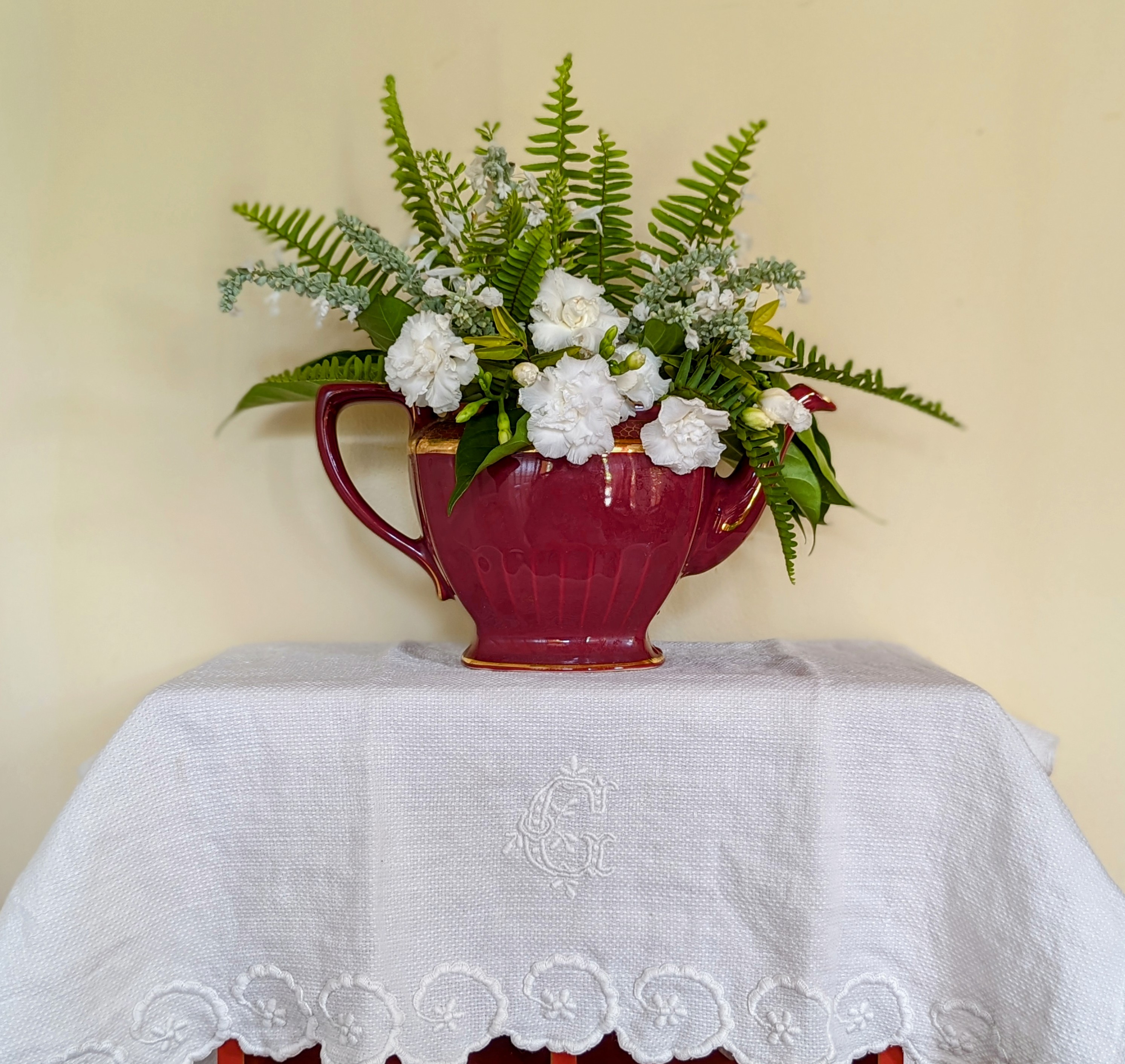
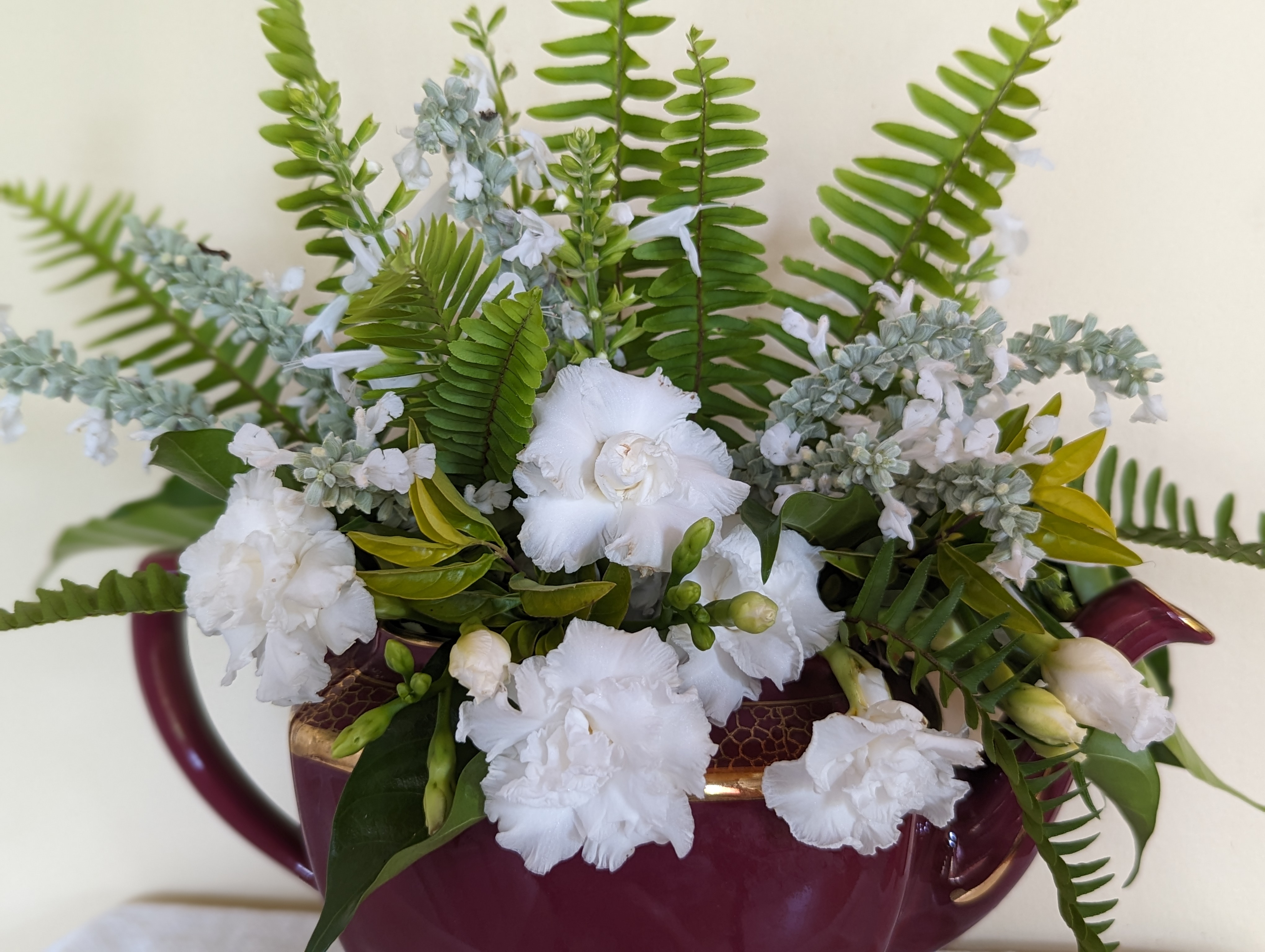
I was inspired to cut some Tropical Gardenias after they started flowering in earnest. Several afternoon thunderstorms provided the inspiration for the flowering, I think. As I was gathering gardenias it occurred to me it felt like I was carrying a bridal bouquet and it certainly looks like one. This is not a proper hand tied bouquet – it is rubber band secured. The gardenias exude a sticky sap, I am not sure how good this would be to carry down the aisle. They also brown quickly like the more common gardenias. With the addition of the Sweet Almond flowers, the fragrance is amazing.

A closer view:

A closer view:

The vase is a thrift store find I have enjoyed for years. I love the sprays of buds on the Tropical Gardenia (Tabernaemontana divaricata), they last longer than the flowers and rarely open. The white spikes are the very fragrant Sweet Almond Bush (Aloysia virgata). I cut these back about two months ago and they have grown four feet and need another trim. Abundant rain in South Florida is a plant stimulator, I am not sure I even fertilized these. Greenery is from the gardenia and Asian Sword Ferns.

I needed some color and also needed to deadhead the Brown Eyed Girl Sunflowers, so I made another little vase. Continuing the wedding theme, these are for the tables at the reception..

The vase is a Pier One oil jar from who knows when. I trimmed the sunflowers as they needed some air to hopefully help with their tendency for powdery mildew. It has been raining too much to do anything else about the mildew. A few snips of Salvia are included: in blue, Mystic Spires; in white and pink, Tropical Red Salvia. Greenery is a bit of Asian Sword Fern and a few stems of Blue Lagoon Rosemary.

A closer view:

My wedding plans are complete! More than 30 years ago, anyway. Thanks to Cathy at http://ramblinginthegarden.wordpress.com for hosting this weekly meme. Visit Cathy and find more vases to explore.

Happy Gardening!!

Six on Saturday – Fun Things

The weekly garden tour commences now. So many tropicals coming to life with the onset of the rainy season in South Florida. It has been stormy all week and the first named tropical storm of the year appeared in The Gulf of Mexico this week – Arlene. The storm is a long way from here and set to wind down into a tropical depression before making landfall in Cuba with a lot of rain. The first thing I spied when powering up the computer this morning was a Coastal Flood Watch; rainy season is definitely here.

To see more SOS garden tours, visit Jim at http://gardenruminations.co.uk

The Frangipani hedges are flowering. This is Bridal Bouquet Plumeria (Plumeria pudica). I have these in front of wood fences that aren’t so pretty. They are columnar plants about 8 feet tall and 2-3 feet wide. These are unusual as they are semi evergreen.

The Frangipani hedge with a Java White Copperleaf shrub accent.

A psychedelic Aucuba? No, this is a Pie Crust Croton. Named as the edges of the leaves are crimped like – pie crust. New growth is yellow and will mature into a mostly red and black shrub later in the season.

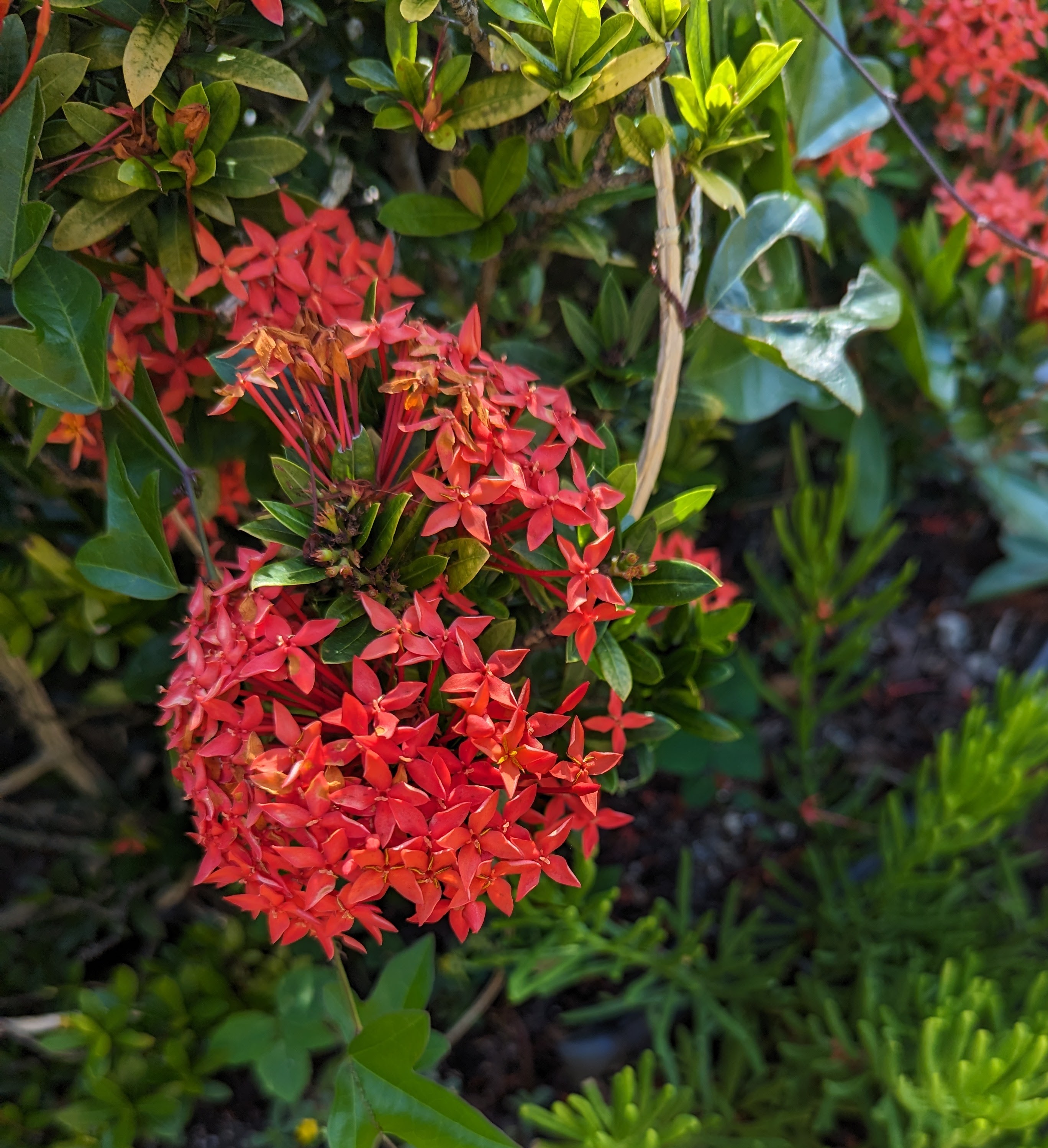
In the above image you can see a bit of an orange flowering shrub – this is a Dwarf Red Ixora, a butterfly nectar source. I let the larval host plant, Corkystem Passionflower, a vine, ramble through the shrubs for the Zebra Longwing butterflies to lay eggs on. This is the first caterpillar I have spotted this season, though the butterflies have been out in force.

I am finally picking a few mangoes. They are delicious. The lower mango is a condo mango, Pickering. The others, Glenn Mango, a big tree. Condo mangoes are usually less than 6 feet tall.

And just for fun, a gift from my friend Lu. Gardening socks!

That is all from the moist South Florida. Thanks to Jim for hosting and…

Happy Gardening!!