I am joining Cathy’s week of flowers virtual garden party a bit late this year – hoping to add some tropical fun from my South Florida garden.
Here goes:
I think everyone loved the Royal Poinciana or Flamboyant trees (Delonix regia) yesterday, here is a close up of the flowers and foliage.
More hot color from Amaryllis. These flower in the spring in my garden.
Trees are considered the best place to grow orchids in South Florida. This is another spring flower, Schomburgkia. They grow in my Gumbo Limbo (Bursea simarouba) tree in the front garden.
Happy Flowery Thursday to all. Thanks to Cathy for hosting this week. To see more Week of Flowers posts visit Cathy at http://wordsandherbs.wordpress.com
I was joking about the pie and then it occurred to me that there probably is such a thing as palm fruit pie. It would involve dates and I have mixed feelings about dates – although, apple and date pie sounds promising.
Further explanation seems necessary. The red fruit in this vase is from the Adonidia Palm. The foliage is from a Pie Crust Croton. While these palm fruits are edible, to the best of my knowledge, the only creature that would enjoy a pie from this fruit is below:
Meet the Iguana, an invasive reptile that lurks in gardens throughout South Florida. Some think they are cute, I am not so sure. I am sure that they eat palm fruit, I have seen them enjoying it while basking in the palm tree. This is not the one that appears in my garden, he or she is chartreuse green with purple markings.
Back to the vase contents:
The yellow flowers are Esperanza, Yellow Elder or Yellow Bells, botanically Tecoma stans. These are subject to a native plant dilemma. They were once considered native to Florida and now are not as it seems a sea captain brought them to Key West a few hundred years ago from the Caribbean. These are amazingly hardy in my garden and reportedly invasive, although I see no evidence of that.
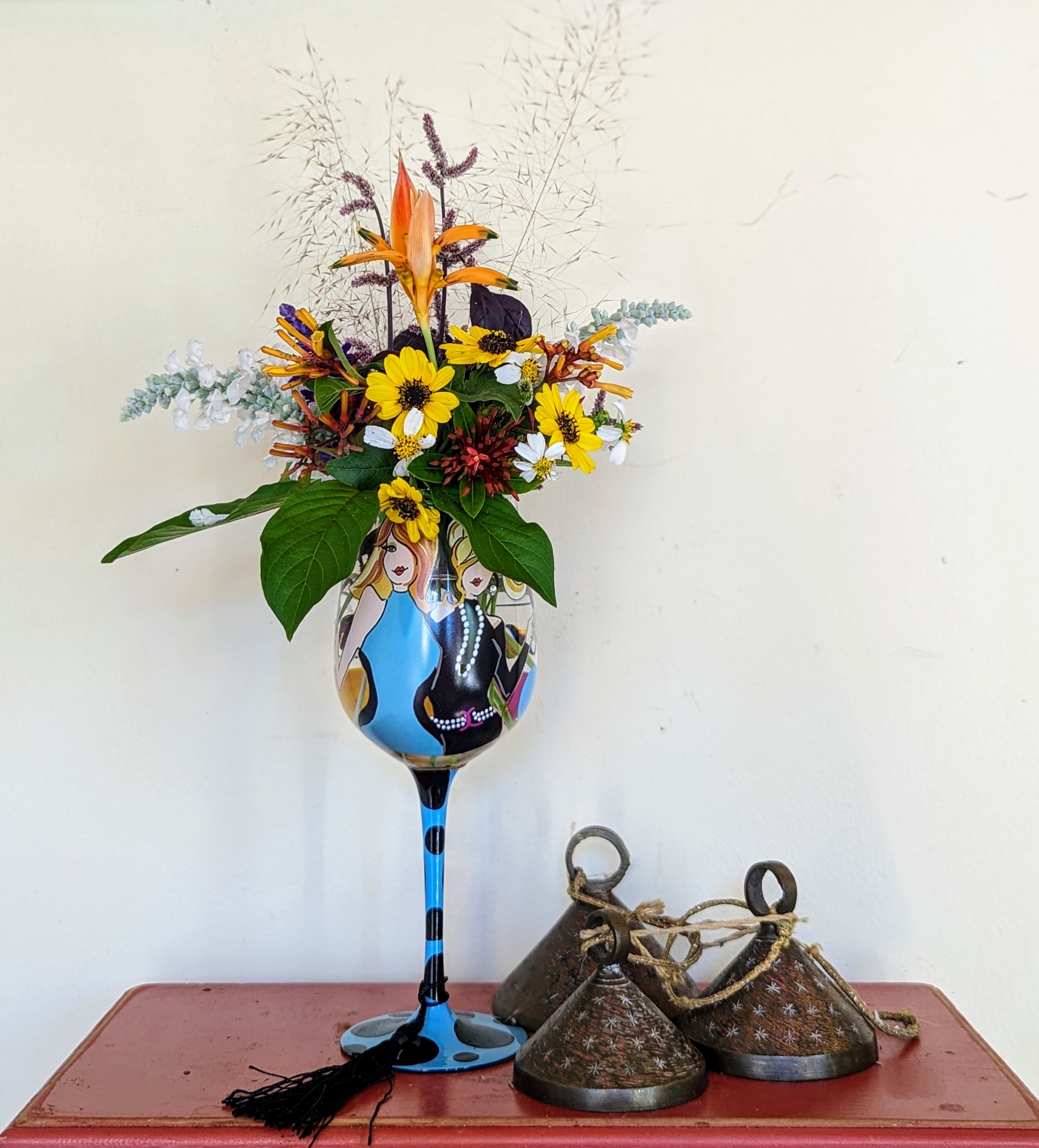
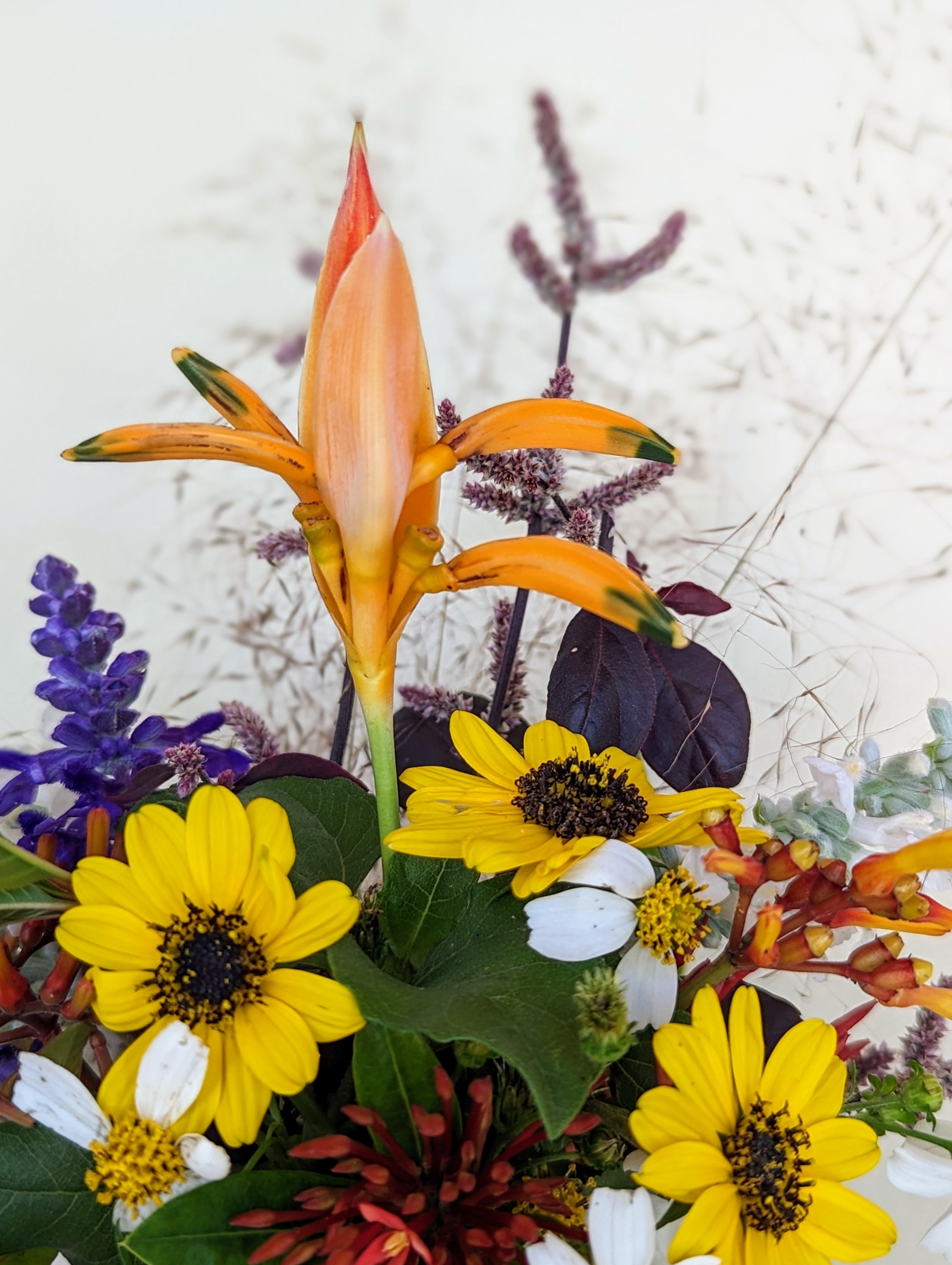
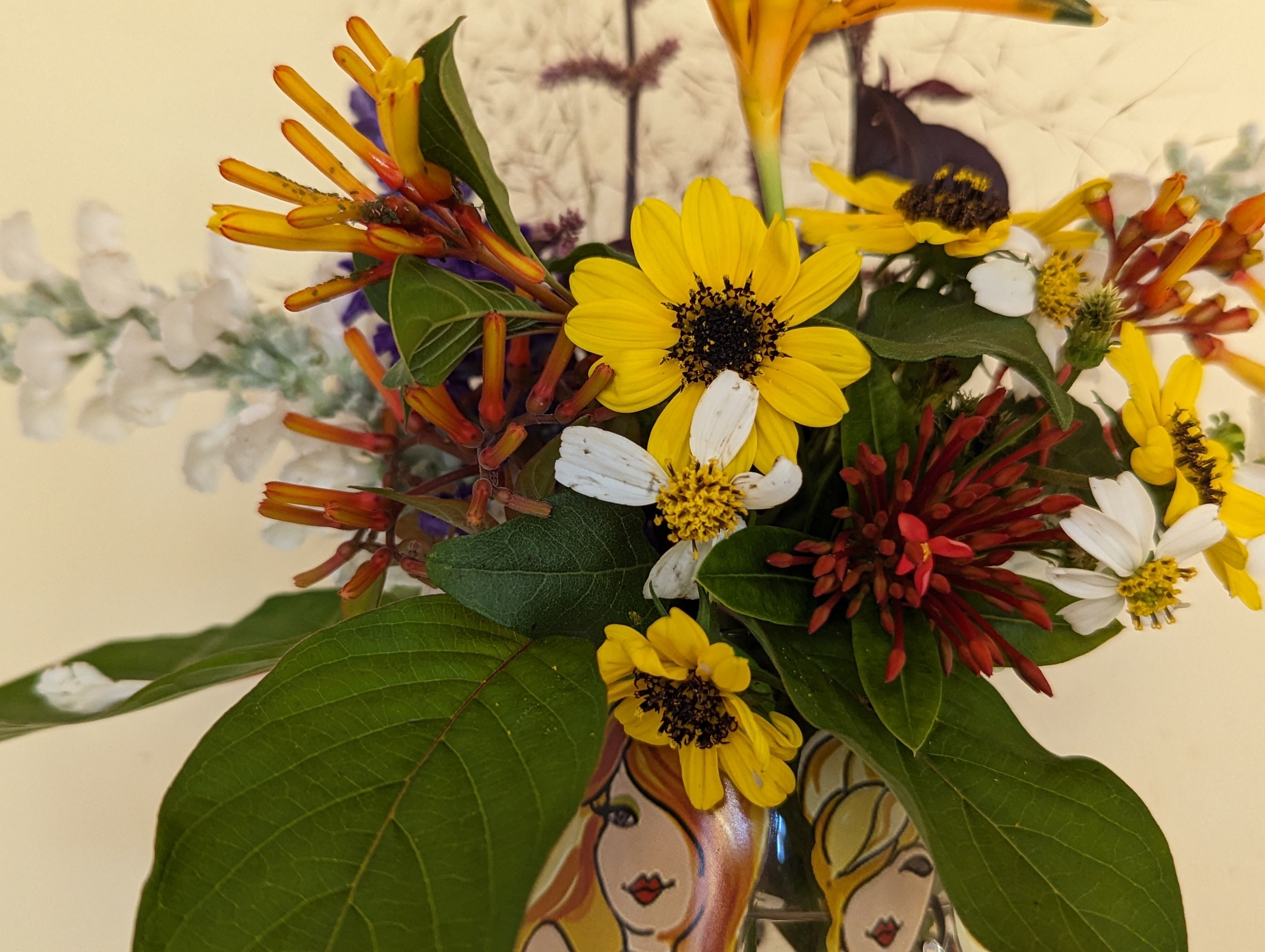
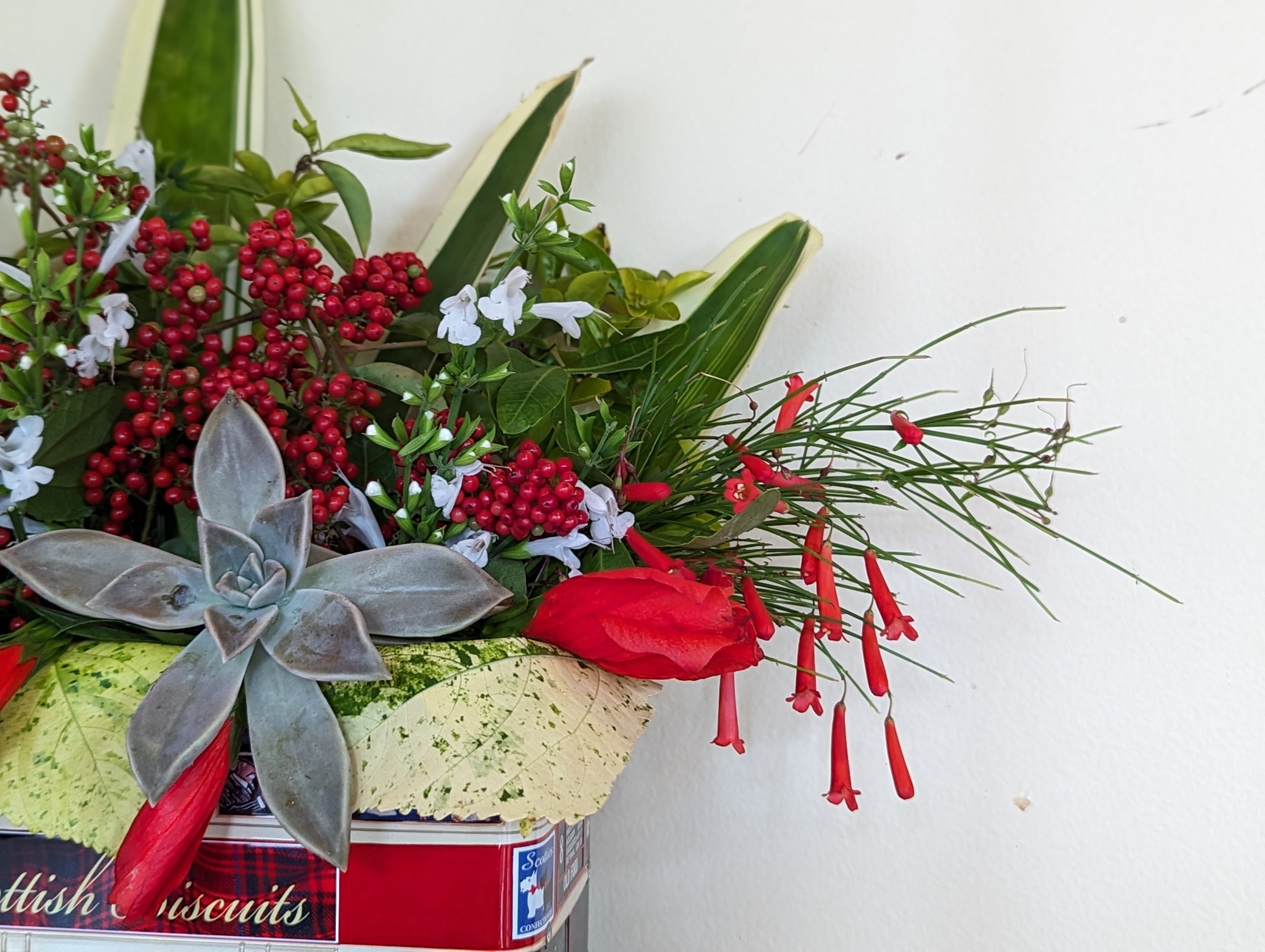
The rest of the plant palette: red fruit, Adonidia Palm (Veitchia merrillii); tubular red flowers, Firecracker Plant (Russelia equisetifolium); varigated foliage, Piecrust Croton (Codiaeum variegatum); a few sprigs of native Boston Fern (Nephrolepis exaltata) grace the back. The vase is an old florist container.
That’s all from my garden this Monday. Thanks to Cathy at http://ramblinginthegarden.wordpress.com for hosting. Follow the link to see more vases. I’ll be thinking about pie!
My husband and I took a few days off and motored to the Keys for a little R&R this week. I decided to share some of the local flora and fauna we encountered this week on our trip. The Keys are very nice this time of year and the seafood is worth the trip – as is the Key Lime Pie! We both gained a couple of pounds, from the pie, I think. Follow this link to visit Jim at http://gardenruminations.co.uk for more flora tours of gardens around the world.
A classic inspiration for many tropical motifs and one of my favorites, the Breadfruit (Artocarpus altilis) tree. Almost oak-like in appearance, these produce fruit that only someone who grew up on them could love. I live a bit too far north for these.
Hanging over a 6 foot fence is a Pink Mussaenda (Mussaenda phillippica). These look a bit like pink squashed Poinsettias to me. I see many white and yellow ones where I live. The pink ones may be more tropical, they are from the South Pacific.
Pink Tabebuia (Tabebuia rosea) these are used as shade trees and can drop a lot of pods. They are a pretty, upright evergreen tree, not known for good wind resistance and a relative of the tree that tropical hardwood, Ipe comes from.
Ferns are not something I usually think of as a hedge. I think these are Macho Ferns (Nephrolepis biserrata). I like this, so tropical.
Key West has a wonderful butterfly conservatory we enjoyed very much. This is a high ceiling greenhouse structure with a meandering pathway and stream that is filled with butterflies sipping nectar then landing on your shoulder. My husband is not the gardening type and he said this was the highlight of the trip. The butterfly is a Menelaus blue morpho, a big butterfly – 12 cm or almost 5 inches across, they look like brown spotted moths on the backside and travel in groups, spectacular.
The quintessential South Florida flamingo. This is either Scarlett or Rhett, one of the pair of flamingos that live in the Key West Butterfly and Nature Conservatory. https://keywestbutterfly.com/
That’s my Six for this Saturday. I am heading to the garden for some chickweed removal!
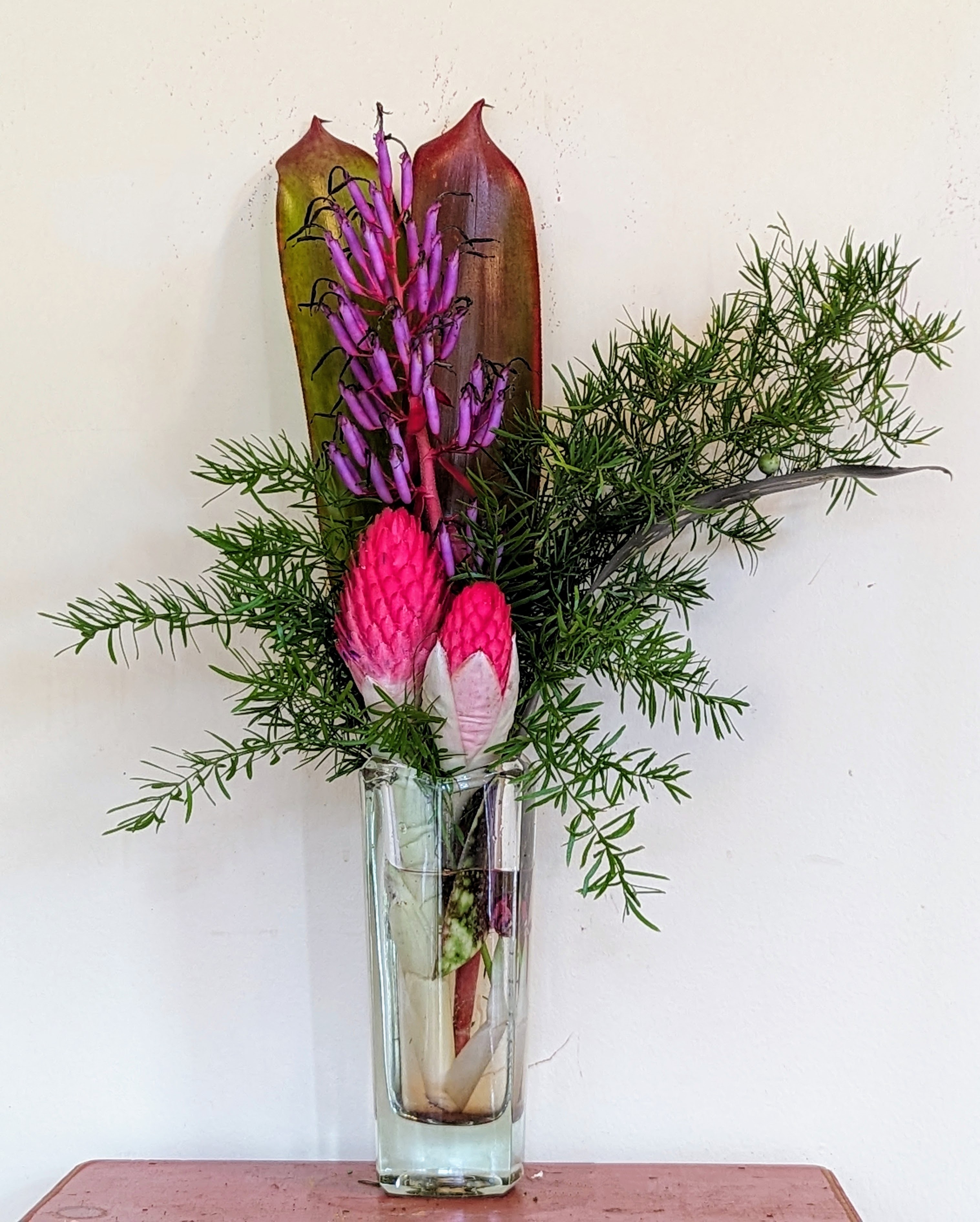
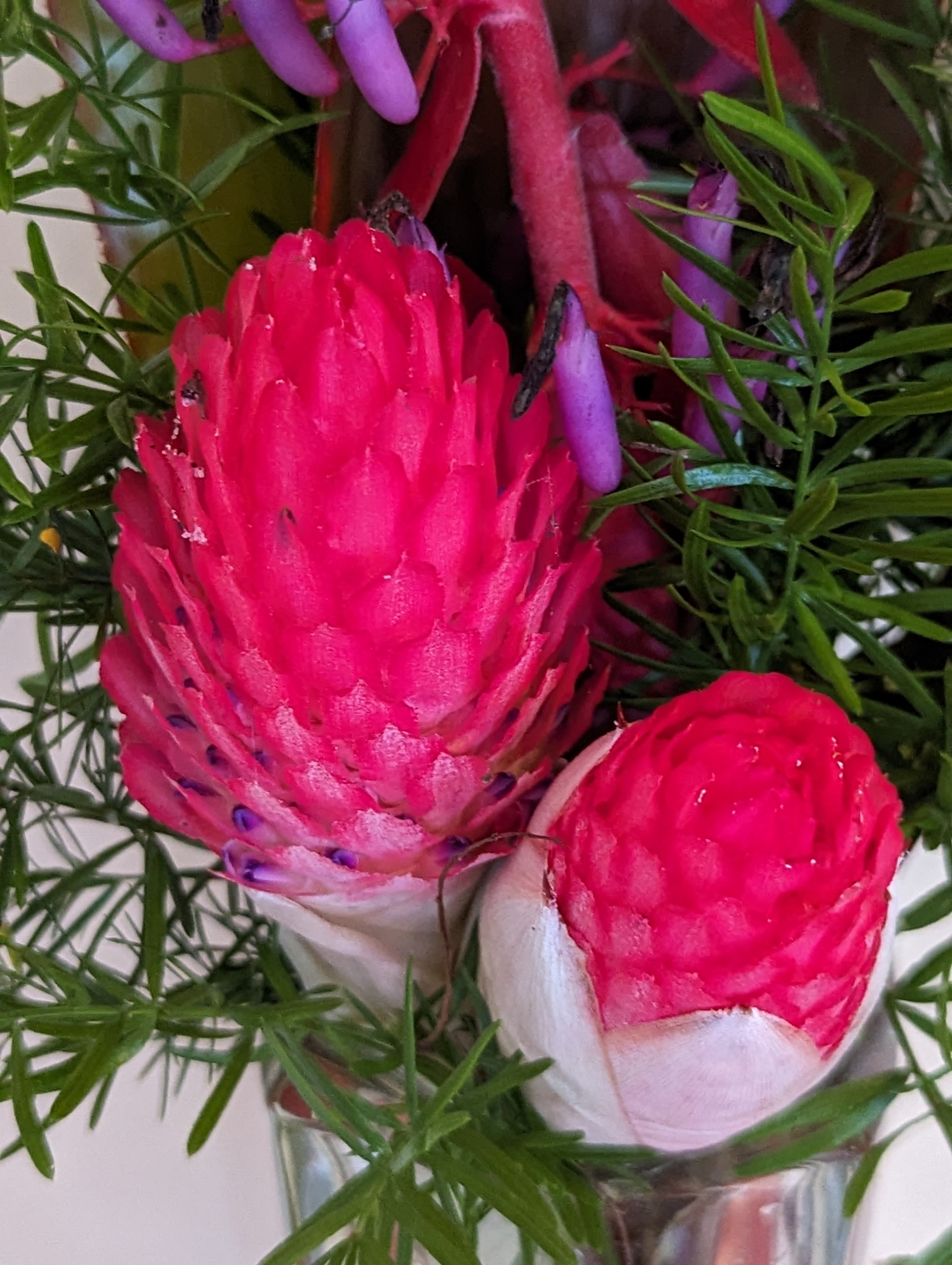
November in South Florida brings some sweet and unusual treats to the garden. When living further north I doubt I could have dreamed of finding something like this in flower this time of year. Actually, I am not sure I could have dreamed up the flower at all!
The purple flowers in the vase are ‘Candy’ Portea Bromeliads. I’m thinking they resemble Good & Plenty licorice candies, just not quite the right color. This is a good one to cut as for unknown reasons it flowers on the backside of the plant and can barely be seen. A pair of loppers accessorized with a suit of armor is a good ensemble for cutting these as the foliage is very sharp. The older I get, the less appreciation for thorns I have.
After some puzzling and tromping through the slightly storm ravaged garden (we had 50 mph wind gusts and I had not realized the volume of branches down, a task for another day) Here are the components of the vase:
Fan shaped foliage in the back is a trimmed frond of Cabbage Palm (Palmetto sabal); pink flowers are courtesy of the storm, Rain Lilies (Zephyranthes spp.); purple flowers are ‘Candy’ Portea Bromeliads; foliage is from Asparagus Fern (Asparagus sprengeri).
Dark purple foliage is Purple Queen (Setcreasea pallida) – I have a feeling some botanists changed this name, but am getting over it. The grey roses are Graptosedum succulents.
That’s all from my garden this week. I will be planting tomatoes and herbs I started from seed this week and starting seed for a few new varieties of cut flowers. And picking up branches.
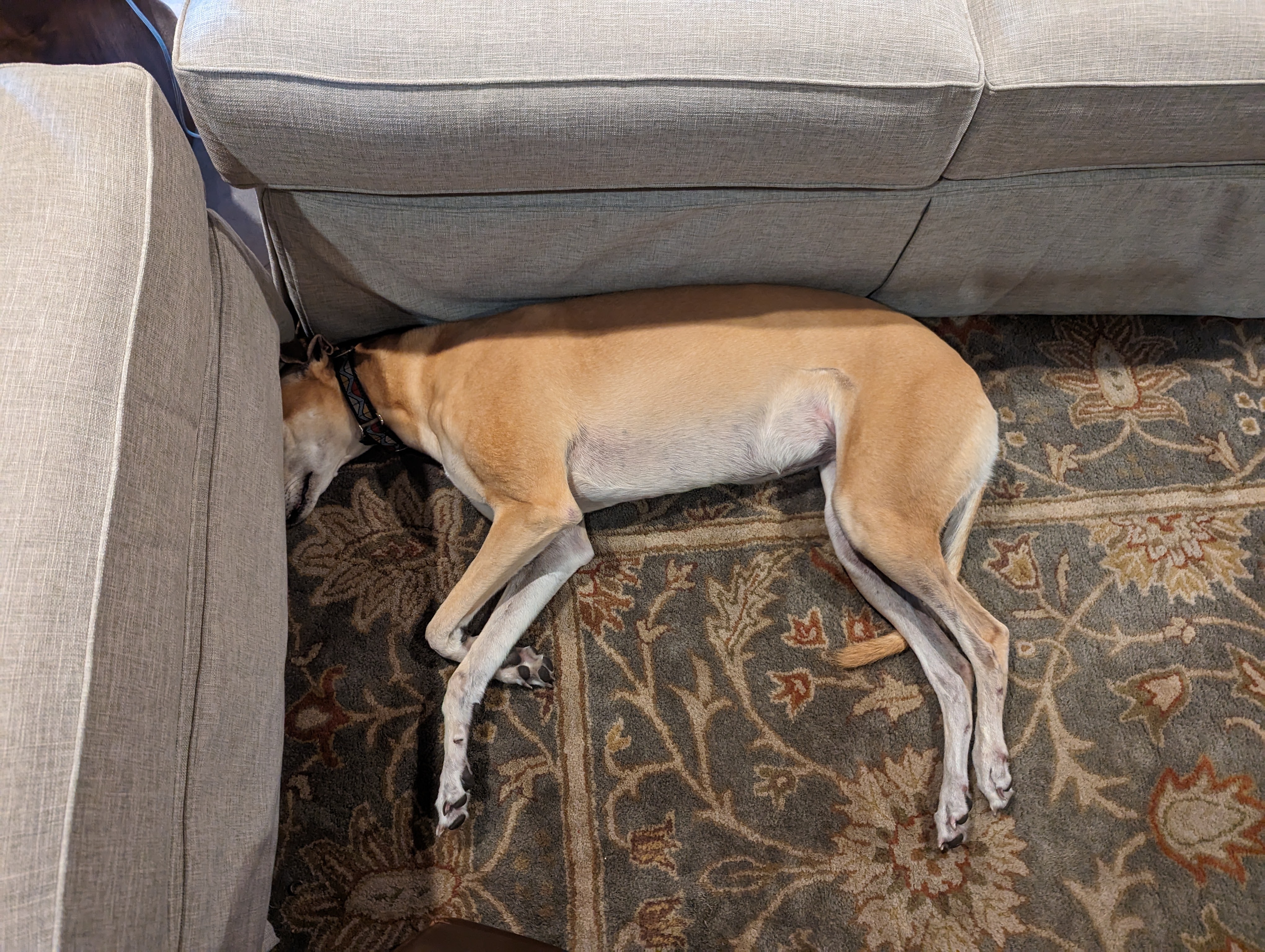
In celebration of the tenth anniversary of IAVOM, a challenge was issued by Cathy – to use a wacky container as a vase. Of course, I looked in my closet and came up with a pair of cowboy boots. I tried a pointe ballet slipper first, but was unable to overcome the shape of the shoe. It is a bit of a balancing act to persuade flowers (I use the term loosely here) to stay in a cowboy boot. The structural arrangements involve a rock, packing tissue and a plastic cup of water – and a bit of a lean towards the wall as these are probably 30 year old boots and I have a tendency towards overpronating and the boots are slanted from wear. The grey “flowers” are kind of crunchy and shatter on impact, so careful placement and balancing is essential. One hit the floor by Fiona the greyhound, who was quite startled and is consciously avoiding the boot now.
Given the container, I decided on a western themed plant palette, succulents and hot colors.
The grey “flowers” are the succulent Graptosedum and I added a few sprigs of another type of sedum, I am not sure which one. Burgundy foliage is a ‘Fireball’ Neoregelia Bromeliad pup; orange and red flowers are the dried flowers of Aechmea rubens Bromeliad. There are a few sprigs of Muscadine grapevine in the back of the arrangement.
Another view:
My thanks go to Cathy for all these years of hosting In a Vase on Monday. I enjoy starting my week with vases of flowers from all over the world and sharing ideas with other gardeners. It is fascinating to me what others grow in their gardens and why.
I am joining the SOS crowd celebrating Indian Summer in South Florida. I did not realize it was possible to have Indian Summer in my garden, yet here we are. It is dry (not raining), humid and a high of 86 F (30 C) is predicted today. This weather brings on a mix of summer and fall colors. To visit gardeners around the world with less humidity – follow this link to Jim’s blog http://gardenruminations.co.uk
I finally saw and captured an image of the rare Atala butterfly that has been hosting on my Coontie cycads. This butterfly is listed as endangered due to loss of habitat. It is native to the Caribbean, the Bahamas and South Florida. I am at the northern end of its range.
I was excited to see some actual fall color. This is Virginia Creeper (Parthenocissus quinquefolia). I think this vine grows everywhere and some people actually buy it!
Fall berries do happen in my garden. These are on the native Firebush (Hamelia – now I am not sure of the last name!, the botanists have been at it again) These eventually turn into a juicy black fruit that the birds covet.
Fruit on the White Geiger tree (Cordia boissieri) I like these and use them in flower arrangements sometimes.
A native Portulaca pilosa, common name Kiss Me Quick. No idea why. I like these, but they are stubborn and will only grow where they want to grow.
Another November flowering plant, the Esperanza (Tecoma stans). These were once considered native and now they have been vilified as invasive?! It seems someone discovered a sea captain brought these from the Caribbean to Key West a few hundred years ago. I like them and have had no seeds germinating from the plant.
That’s all for this Saturday. I’m hoping for some precipitation and cooler days.
Tropinative is a word I invented (I think) to describe what plants inhabit my garden. I like tropicals and native plants, a lot of color and texture and plants that appeal to pollinators. I dislike anything that requires a lot of water, lawn, pesticides, herbicides and I really like plants that live without too much drama. This is how my front garden ended up with a native Turkeytangle Frogfruit (lawn) and a Bromeliad border on one side with an English cottage style perennial border on the other side. Kind of mind boggling.
This vase accurately reflects what easily grows here. I haven’t made much effort to water any of it – I think it has been two weeks since it rained. I water herbs and other touchy flowers. The amount of water necessary for a decent lawn in South Florida is appalling.
The vase is a thrift store find I have enjoyed. Here’s what is in the vase – the tropicals.
Purple flower with pink stems is a Portea ‘Candy’ Bromeliad; the white flowers are Tropical Gardenias (Tabernaemontana diviricata); rough textured stems and foliage with little blue flowers are Blue Porterweed (Stachytarpeta jamaicaensis)
Mostly natives are in the top of the vase:
The natives in the vase are: in pink clouds, Muhly Grass (Muhlenbergia capillaris); off white spikes are Juba Bush (Iresine diffusa); ferns are Boston Fern (Nephrolepis exaltata). Non native, varigated foliage is Tasmanian Flax Lily (Dianella tasmanica).
The Gardenia and Juba Bush have scented the foyer with a lovely floral fragrance. It makes traversing through the front door more enjoyable.
That is all from South Florida this Monday. I was on GardenRant last year, this is my rant for this year! Use less water.
I am joining the SOS gang once again this Saturday. My morning discoveries on my garden tour are mostly green. No vegetables, although the tomatoes I grew from seed are ready to be transplanted. Follow this link gardenruminations.co.uk to visit Jim and connect with more gardeners worldwide in the comments zone.
South Florida’s gardening season is the flip side of most of the Northern Hemisphere. We grow summer vegetables in winter and many summer perennials thrive here during the cooler weather that would wilt in the heat during their “normal” flowering season. I am thrilled to find my first Dahlia tuber emerging from the ground. Nine tubers were planted in the garden, three in pots, I know one was eaten, so the rest???? I bought the tubers at an end of season sale, then wrapped and refrigerated them until October, planting time here. All Dahlias were red, for what reason I have no clue.
It is strange to me that Rudbeckias are difficult to grow here. The summer humidity molds them, quite literally. These are Goldstrum Rudbeckias taking hold in the garden.
Another garden stalwart further north, Moonbeam Coreopsis, is bravely making a stand.
The ultimate experiment, a mass of Ice Plants (Delospermum cooperii). I am fairly certain these will melt next summer, though I have run across gardeners who have success with them in South Florida.
Another experiment, seemingly successful. I decided to try the Chelsea chop on Tropical Red Salvia (Salvia coccinea) – a reseeding annual. It seems to have worked.
I have not tried any of these plants in winter previously. In the great words of Tom Petty “the waiting is the hardest part”
Will they flower??? Time will tell.
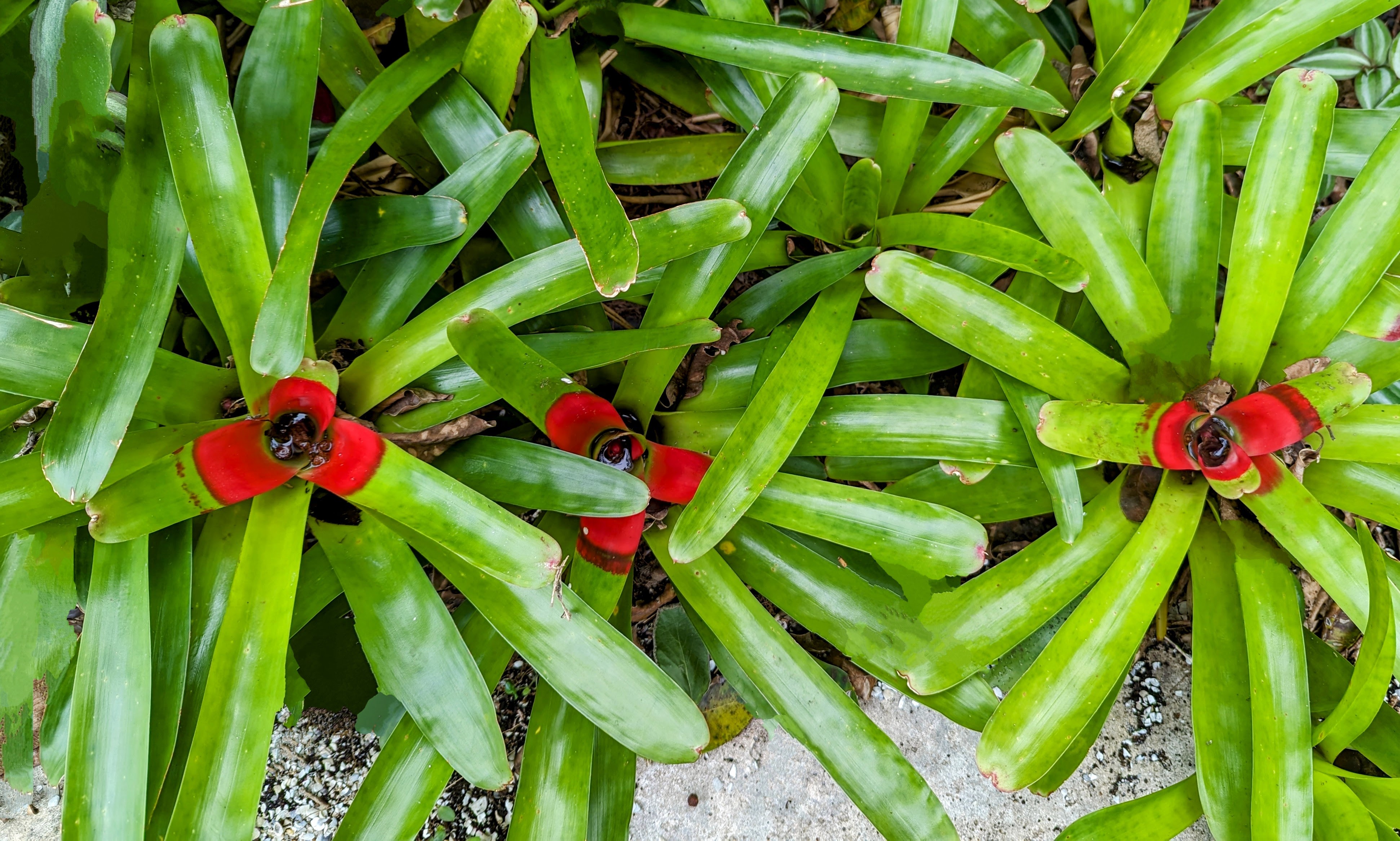
A more typical green from me. The greys are Aechmea fasciata Bromeliads, the dark one is ‘Luca’ Neoregelia. Smaller red broms are ‘Fireball’ Neoregelia. Bromeliad moving and propagating season runs November through March. There is usually movement in the garden this time of year.