In a Vase on Monday – Heat Wave

We’re not having a heat wave in Florida..yet. I am sure there will be one soon. I was somewhat amused by the heat wave in the UK, the forecasted temperatures there are a nice winter day in South Florida. We are in a bit of a drought with normal spring windy weather, even the bromeliads are a bit crispy.. I have had to drag the hose around, my least favorite garden task. I let the irrigation go when all the turfgrass was asked to leave the garden. Rain is predicted a week from Sunday! UGH.

A closer view: The hot colors have all been plonked into my mother’s old jam jar. She never made jam, but liked to use the jar for flowers. I do the same thing, no jam, just flowers.

The names of the flowers sound hot. Beach Sunflower (Helianthus debilis); Firebush (Hamelia patens) in orange; Indian Blanket (Gallardia pulchella) is snuggly in red and yellow. The white daisies don’t sound so hot..Spanish Needles (Bidens alba). These produce zillions of sharp seeds – supposedly used for needles by Floridian pioneers. They are maybe 3/4 inch long, so I have never figured out quite how that works.

That’s all from South Florida. I’ll be dragging the hose around… To see more Monday vases visit Cathy at RamblingintheGarden.

Six on Saturday – Life Cycles

Spring in South Florida brings changes to the garden. It took me a while to figure out what was going on and I am still observing the action.This Saturday morning I noted my fruit trees growing and changing and the ever fascinating (to me) Bromeliads. To see more spring (and maybe fall!) garden pictures, visit Jim at GardenRuminations

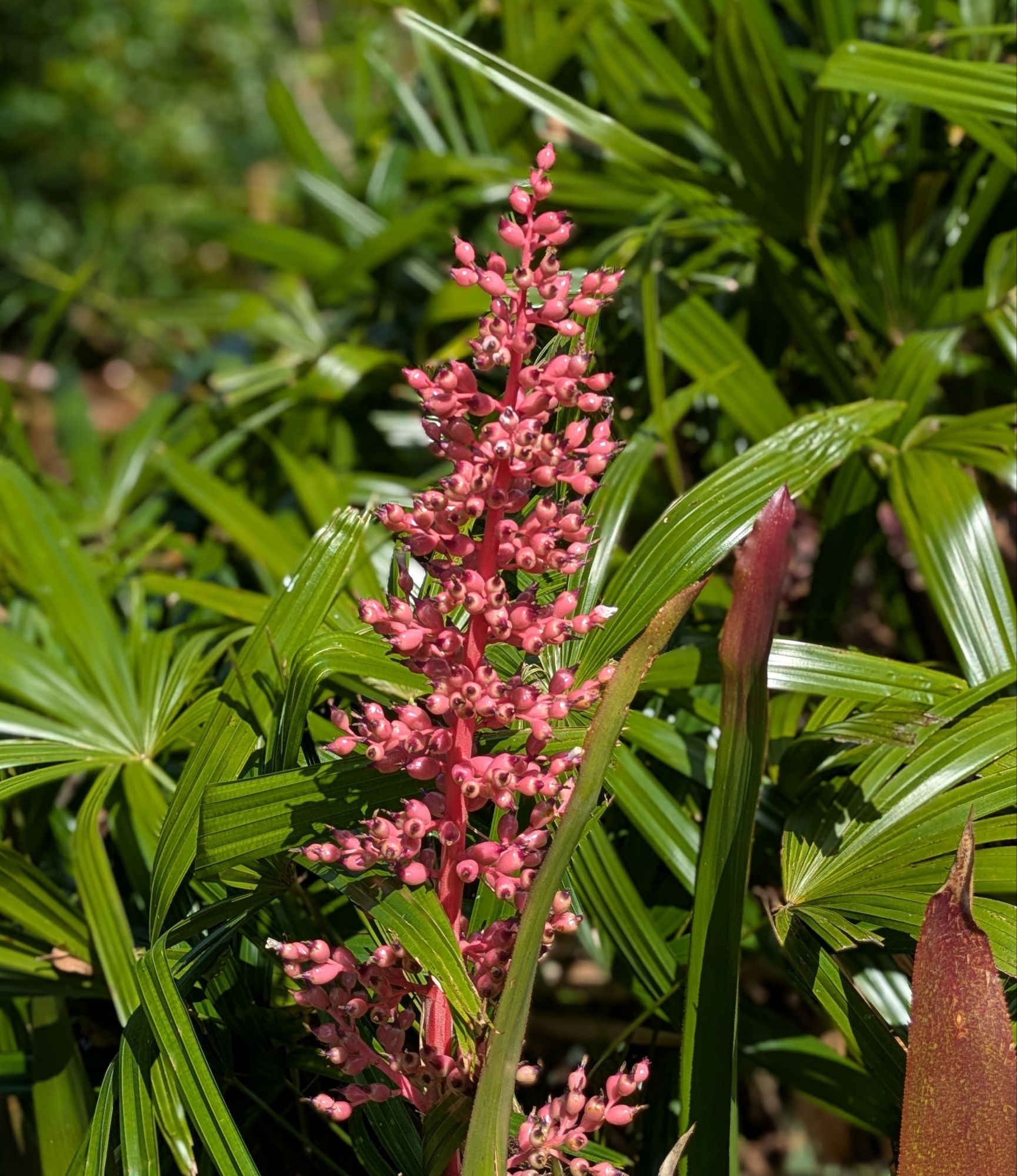
O’ Rourke bromeliad flower. These start out very pale pink and are now gaining a deeper color. The flower stalks came up at the end of January. I am not sure how long they last.

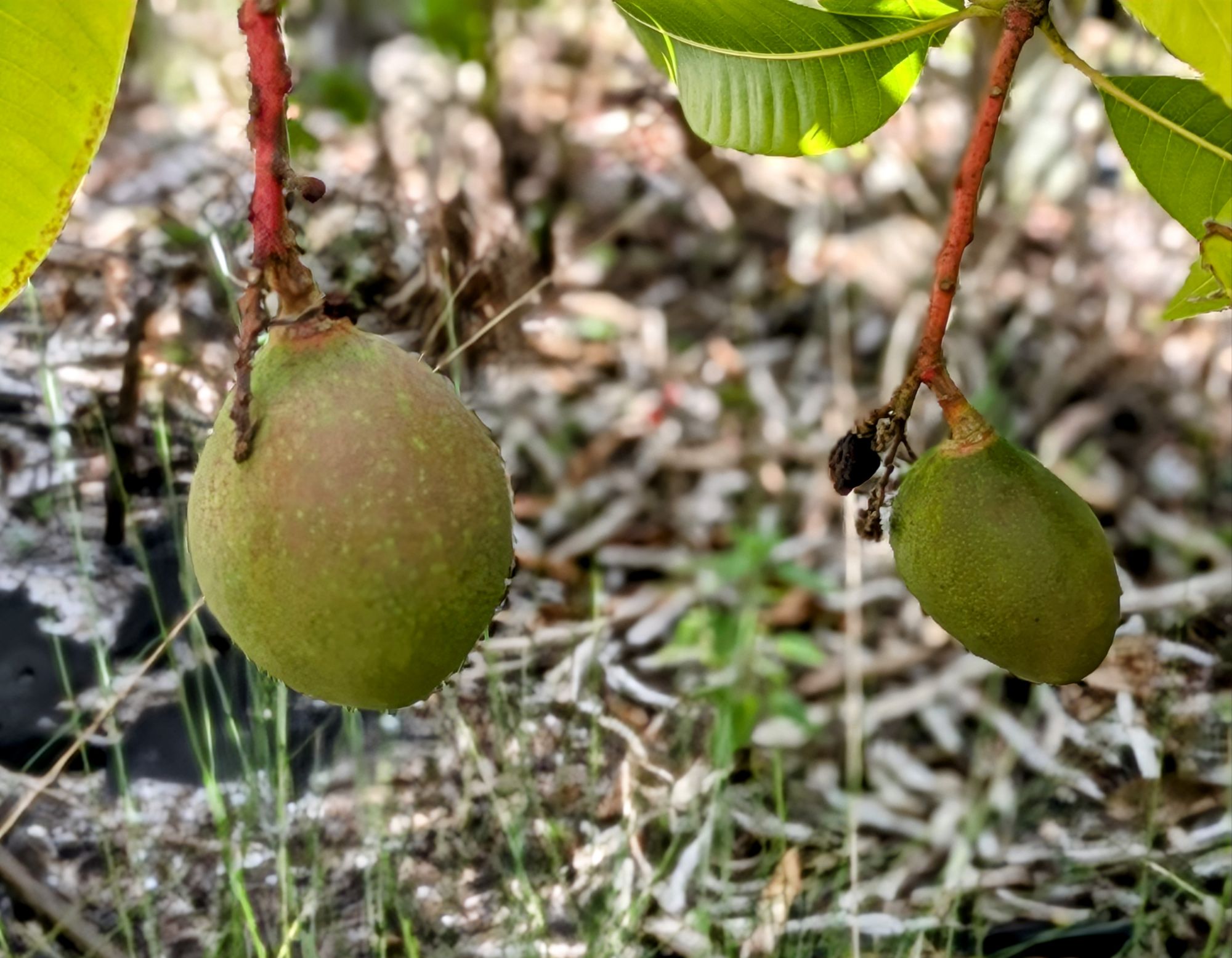
Pickering Mangoes starting to color up. These flowered prolifically and set a lot of fruit. I am left wondering what happened to it. There are maybe 10 or 12 left on the tree. Did the evil Agama Lizards eat it?? A garden mystery.

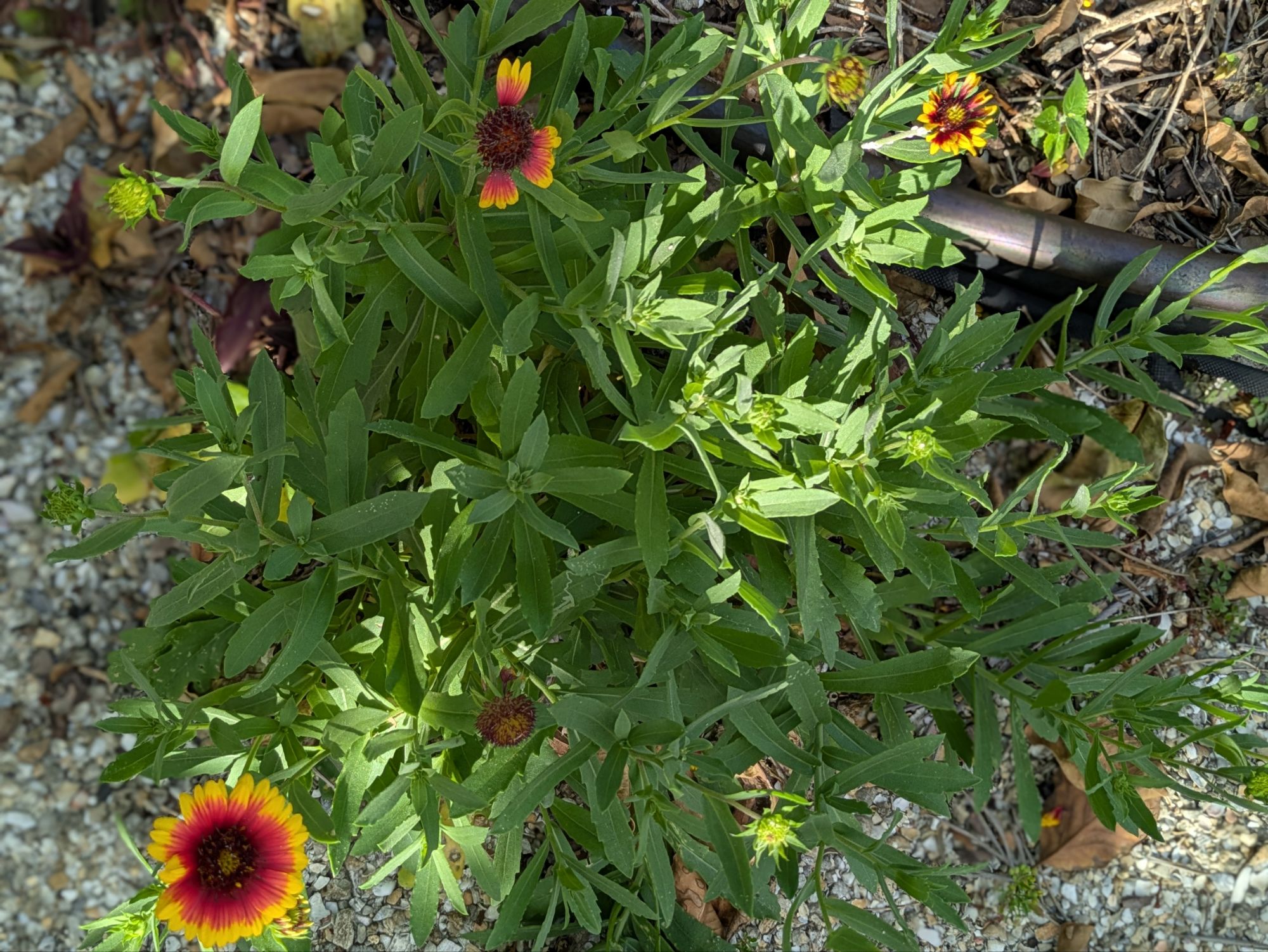
Gallardia pulchella, once considered native but its status was rescinded. For some reason, these only grow in the shell walkway.

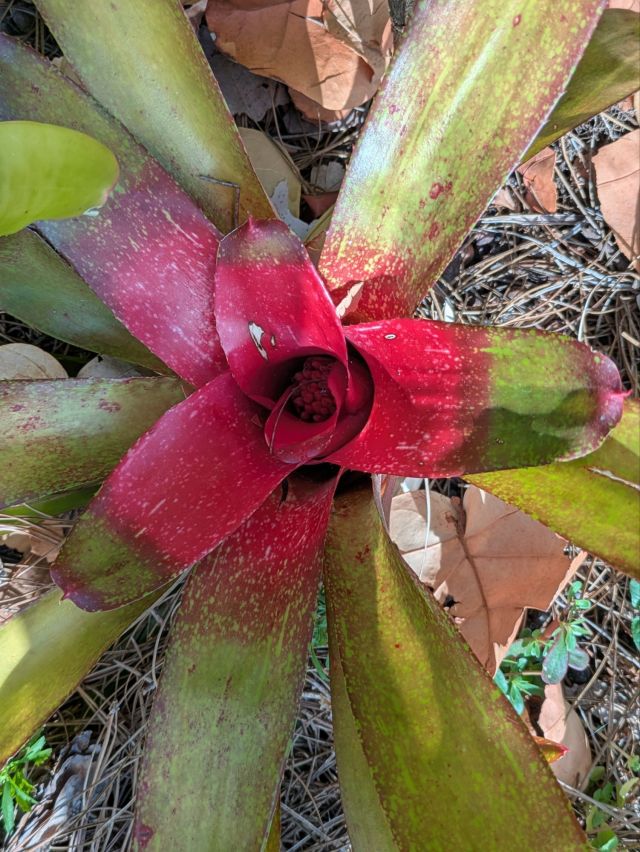
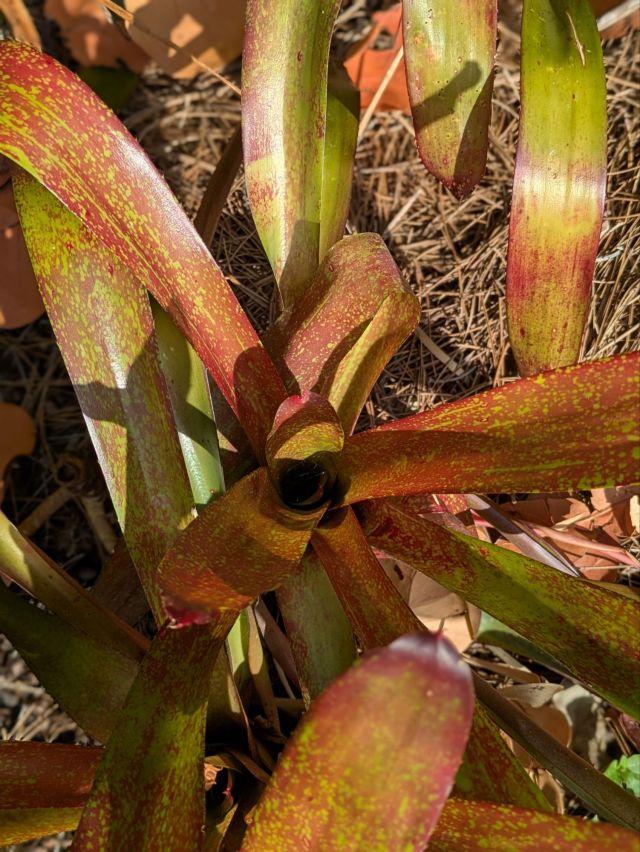
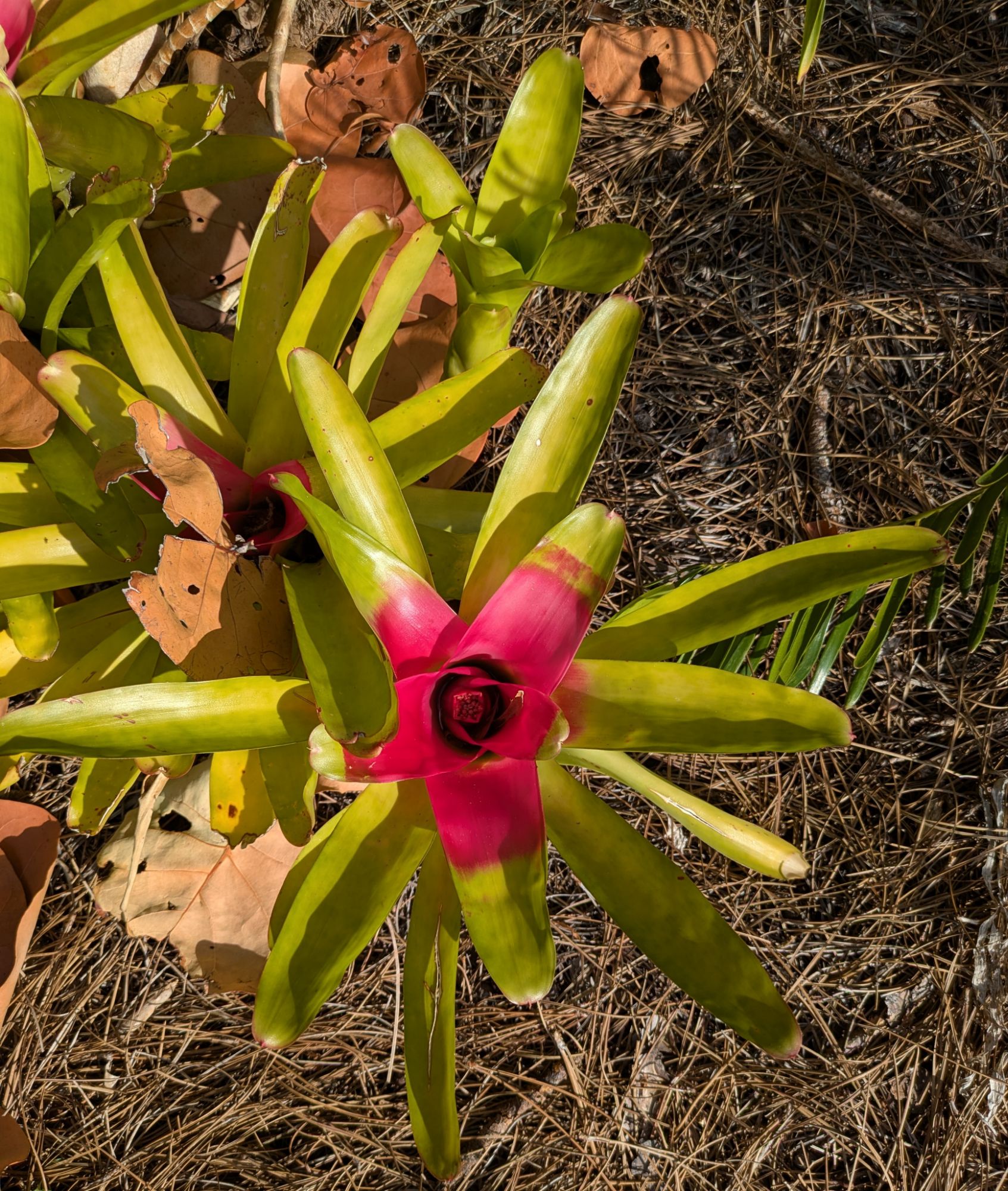
The life cycle of the Jill Neoregelia bromeliad. These are stoloniferous. The top picture is the mother plant at the end of the cycle, turning deep red and flowering. This plant will soon die and I will twist its dried up remains off the stolons. The bottom photo is what Jill looks like most of its life.

Blushing Bromeliads (Neoregelia carolinae) doing the same dance. New pups are visible on the right side of the picture replacing the mother plant and spreading. These are considered ground cover bromeliads.

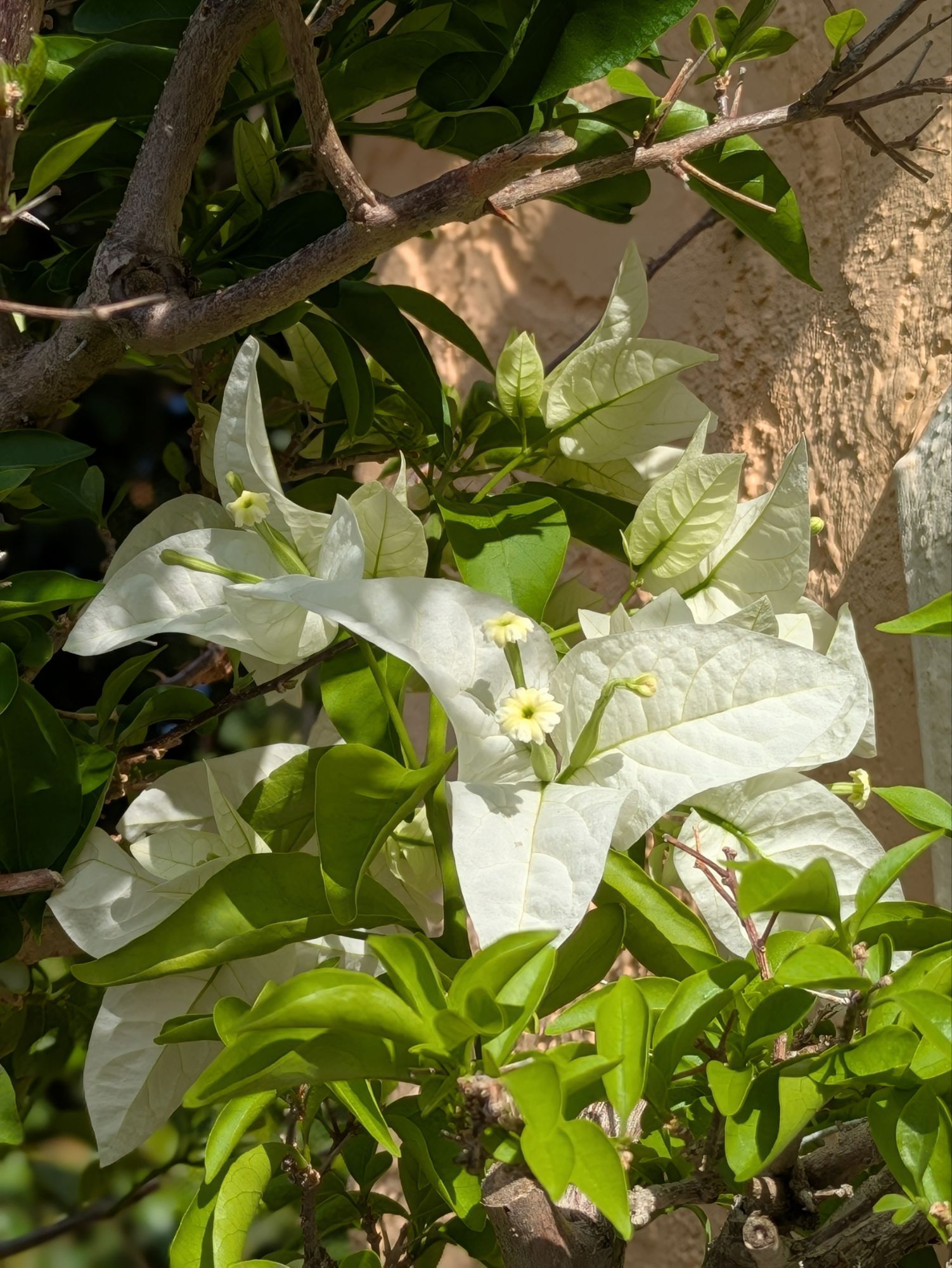
The first ‘Miss Alice’ Bougainvillea flower of the year. Miss Alice was knocked off her trellis by one of the hurricanes last year and remained naked until just now. I was beginning to wonder if she would come back, but here she is! It is hard to keep a Bougainvillea down.

That is all from my garden this beautiful Saturday morning.. Happy Spring!

In a Vase on Monday – Spring Gusto

Spring arrived with a blast of heat on Sunday. 84F/28C. I am not ready for this. The perennials in the garden, however, are quite happy and flowering with gusto in approval.

Pinks, whites and purples rule the garden. The hotter colors seem to be reserving their action for higher temperatures. That doesn’t really explain the fuchsia zinnias, does it? Oh, well. I am enjoying them all and just planted a batch of what I suspect are fuchsia zinnias with orange accents. South Florida rolled into a zinnia!

Most of these plants attract butterflies. The butterflies (mostly Gulf frittilary) are starting to hatch out and buzzing the garden for nectar. I left plenty of flowers as I do not want any disgruntled insects in the garden.

The close up:

The cast: Two types of white Salvia in spikes. The greyish one is ‘White Flame’ Salvia, a long serving perennial. The other is the white version of Tropical Red Salvia (Salvia coccinea) it is a reliable, reseeding annual. Pink stars are the Perennial Penta (Penta lanceolata), they are much bigger than the annuals and hang around for a few years. The butterflies love them. Pink zinnias are from seeds I grew last year that reappeared in a pot, not exactly sure what they are. In purple, the big flowers are an annual Petunia and the viney stuff is Purple Heart (Transcandentia pallida). Fern is Autumn Fern (Dryopteris erythrosora), something that probably shouldn’t live here, but is perversely happy on the front porch in a pot. I am, too.

Thanks to Cathy at http://ramblinginthegarden.wordpress.com

for hosting In a Vase on Monday. Follow the link to see more vases.

In a Vase on Monday – Fennel Soap

It has been cool and very dry in South Florida. Another ‘reason why people come here for the winter’ week. The succulents celebrated by flowering. I like the architectural aspect of succulents and enjoy cutting them to view the subtle color shading up close. The foliage from the Aloes is left in the garden, it is too sharp to handle.

Silvery grey Graptosedum and its flowers. I did not realize these would set seed until they started dropping on the floor. The ferny plant behind is Bronze Fennel (Foeniculum vulgare). I have been enjoying using this in vases and it would not have occurred to me to buy it for that purpose. It lasts a long time and adds a nice fragrance.

Soap Aloe (Aloe saponaria) flowers. This Aloe blooms about four times a year in my garden. Native to South Africa, it can be used as shampoo. Unfortunately, it seems most people are allergic to it, so I have not tried it!

Happy Monday and Happy Gardening or Garden Dreaming..

Thanks to Cathy for inviting us into her garden every Monday to share our vases. Please follow the link to visit and view the vases. RamblingintheGarden

In a Vase on Monday – Sticks and Hats

I was out in the garden with my greyhound. I was cutting flowers and we were both watching vultures. He was fascinated and even at greyhound speed couldn’t keep up with them. This is the time of year when the big birds are around. Eagles and hawks migrate south for the winter. It is such a pleasure to watch them fly lazy circles in the crystal blue sky. I have a feeling the vultures were manifesting what is landing in our nation’s capital tomorrow.

Well, that has nothing to do with sticks, hats or my vase. A random garden observation with a side of political disgust.

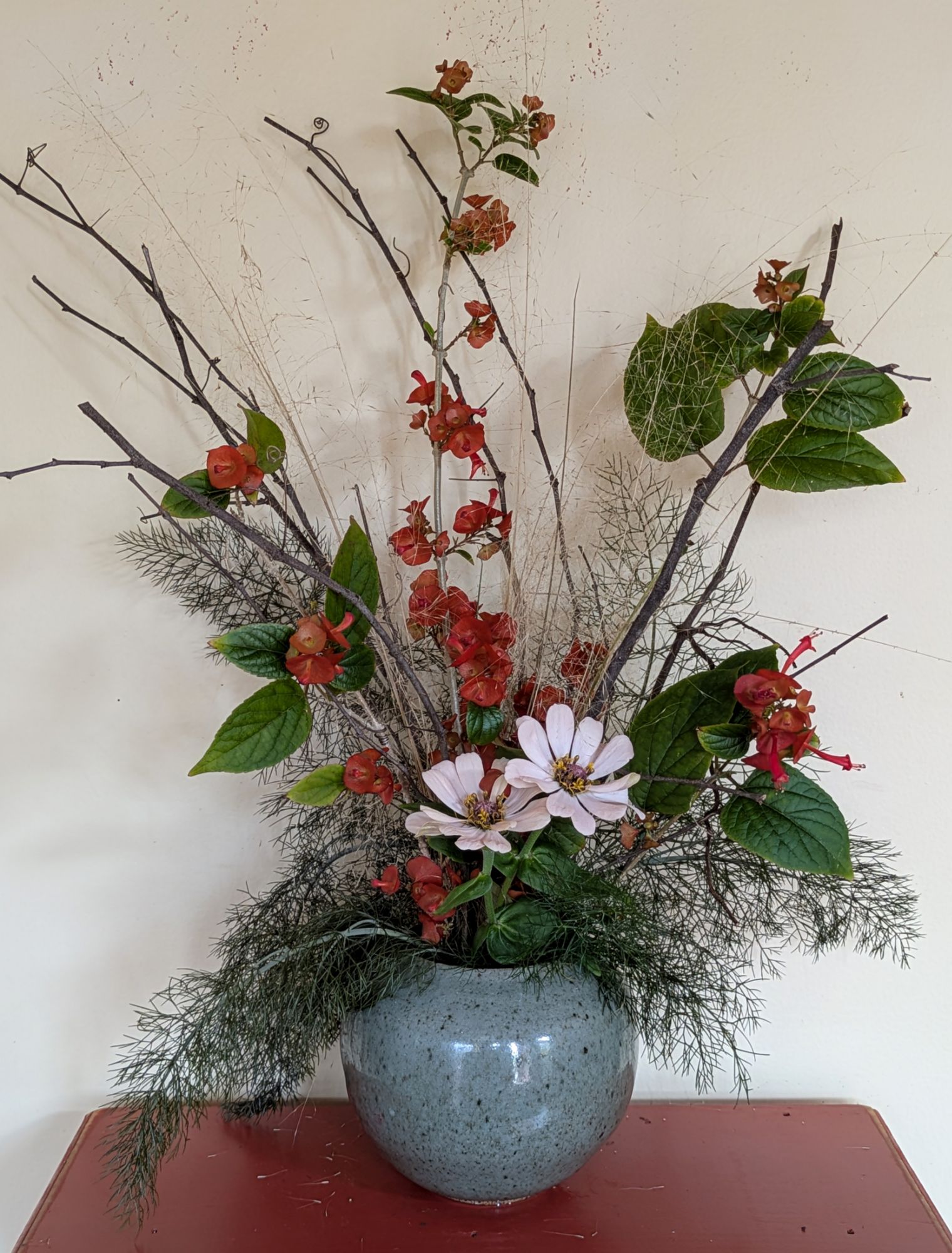
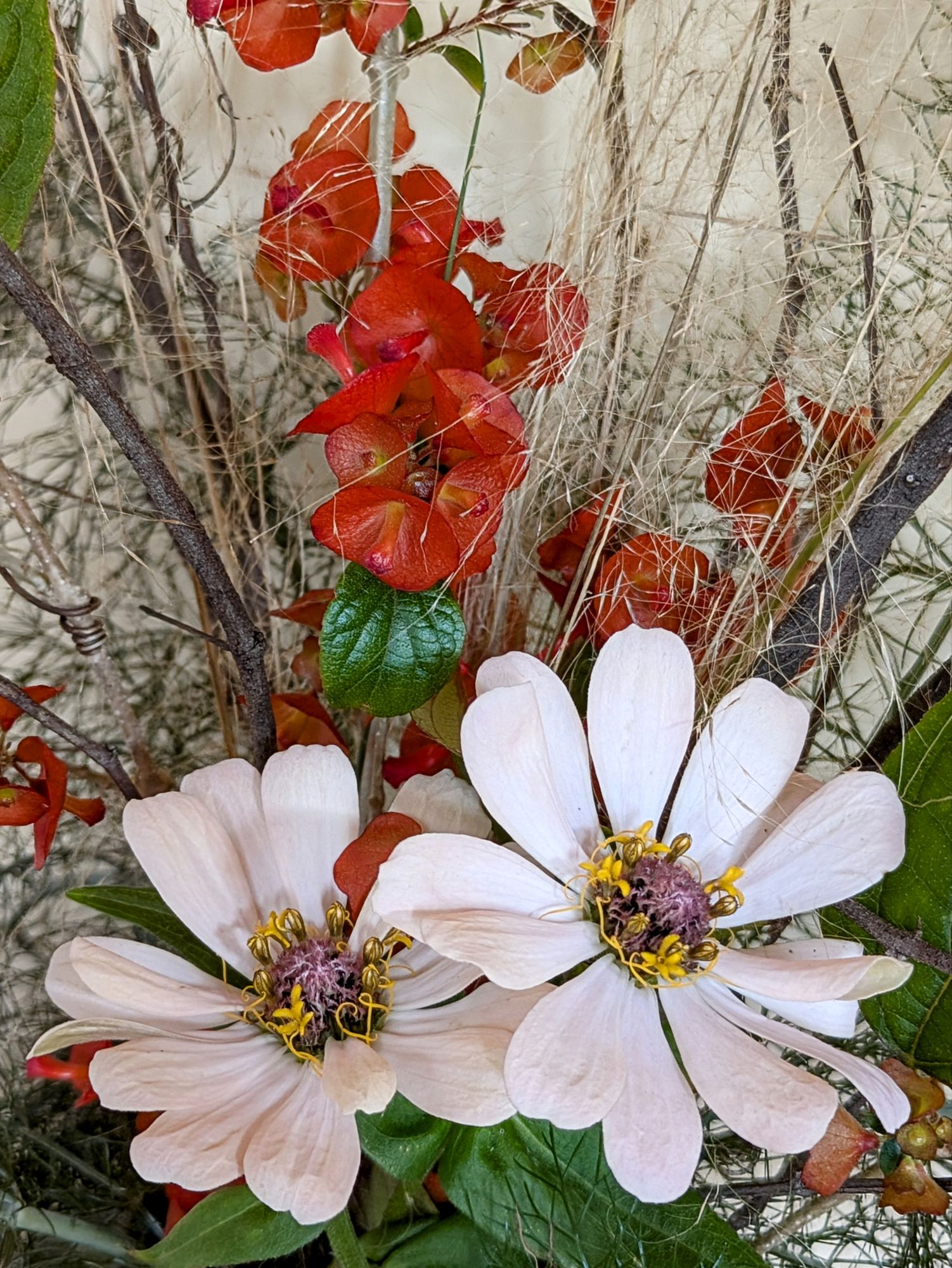
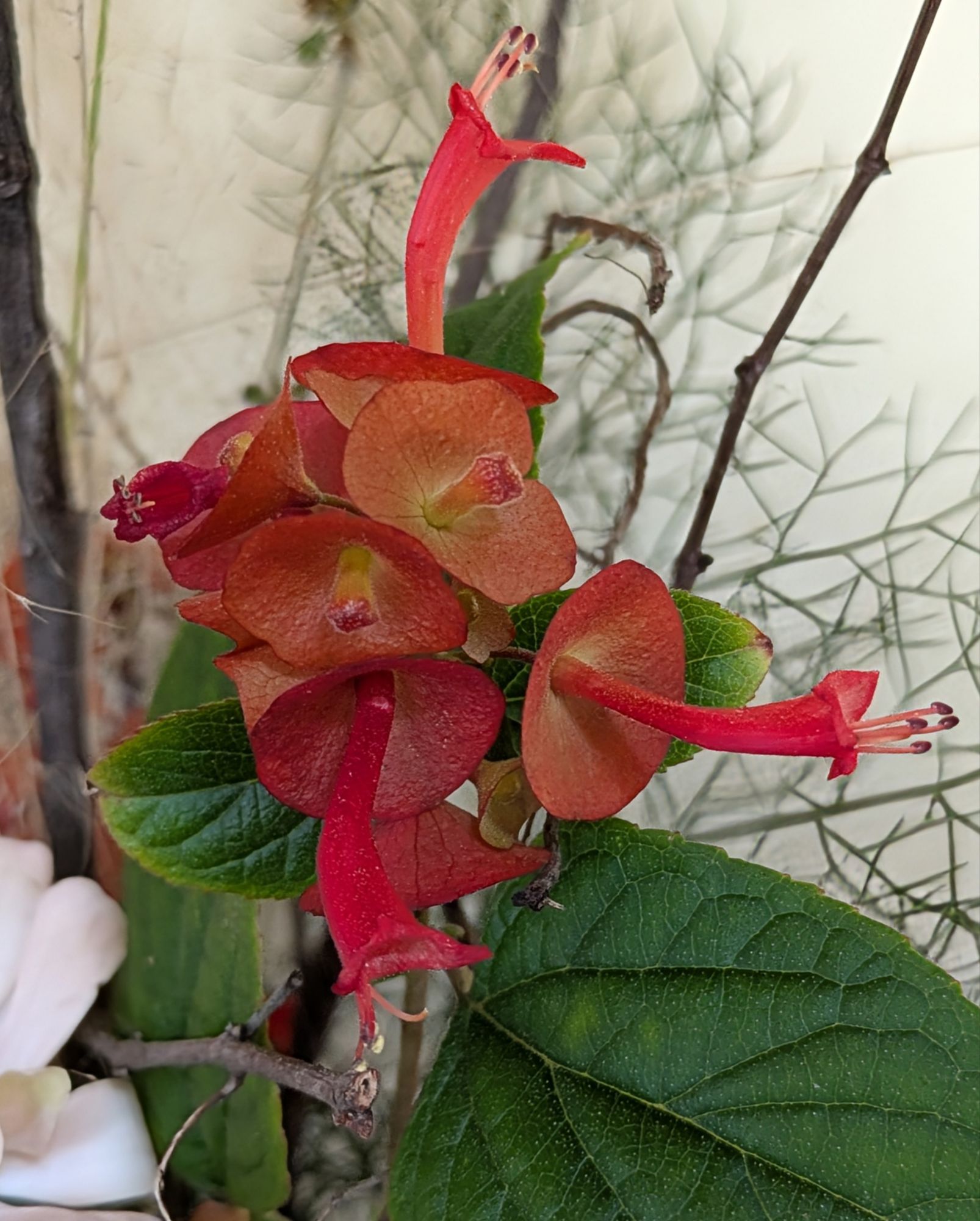
The hat, is China Hat (Holmskiodia sanguinea). This is a winter flowering shrub I enjoy. They remind me of Quince. One of the more indestructible plants in the garden, rarely watered and forgotten until it flowers.

The sticks are dried prunings from wild Muscadine grapes (Vitis rotundifolia); pale mauve flowers are Zinnias, supposedly Cactus type. I am not so sure about that, another open pollinated oops – my neighbor calls it getting Grandpa seeds.My quest for Dahlia like flowers continues…

The foliage in the background is Bronze Fennel (Foeniculum vulgare) and some fluffy seedheads of Muhly Grass (Muhlenbergia capillaris). The vase is a thrift store find.

That’s the story from my garden this Monday. Follow this link RamblingintheGarden to visit Cathy and take a garden tour of vases by following the comments links.

I’ll be watching the birds..

In a Vase on Monday – A Little Tropical

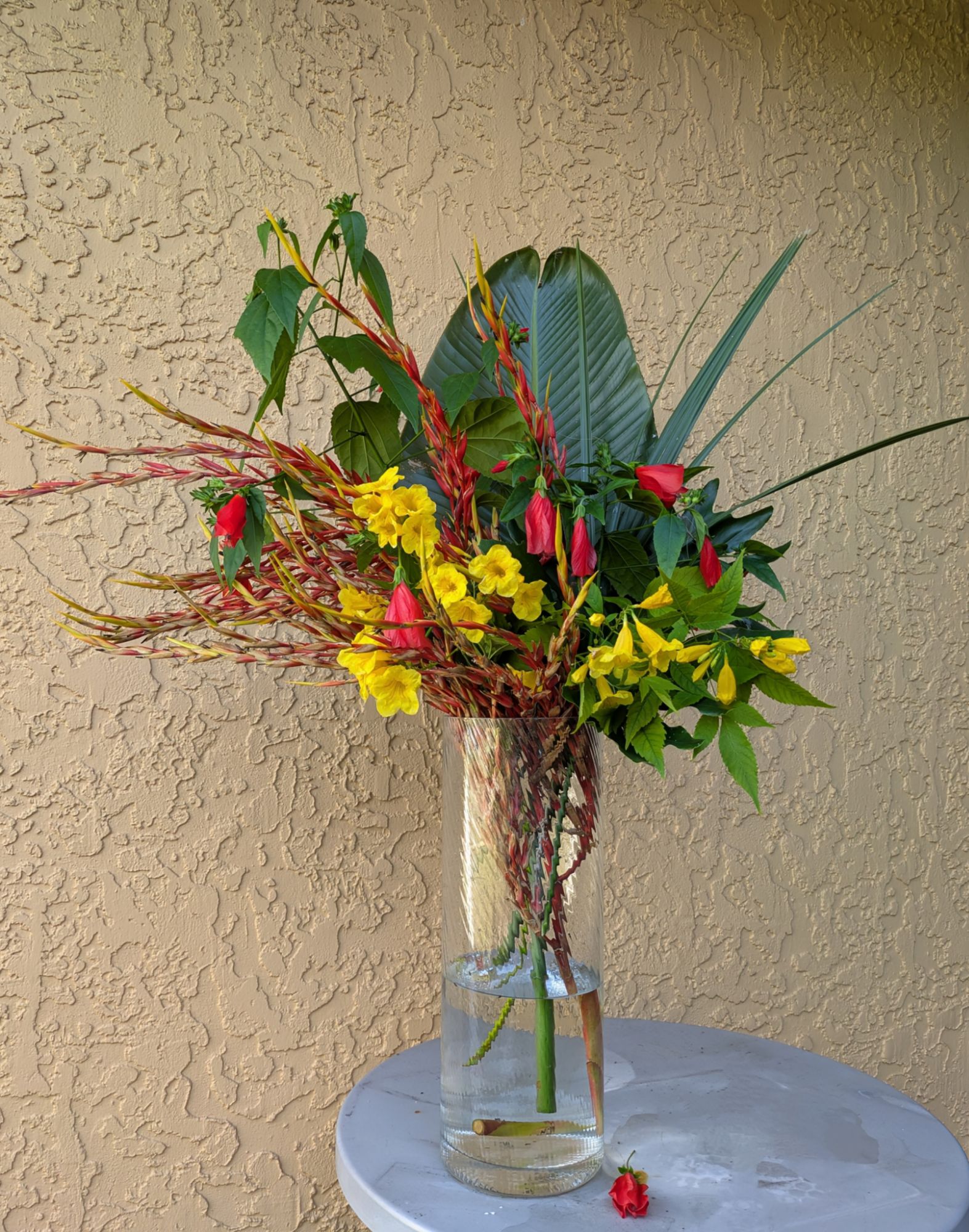
Maybe I should call this Big Tropical! It is too big for the house, so I left it on the porch.

At least once a year I attempt to arrange the Blanchetiana Bromeliad flowers. These are the red and yellow things that look like crab claws in the vase. The flowers are 4 or 5 feet tall this year and last forever. I think they started blooming in June. I sometimes make Christmas wreaths with the flowers.

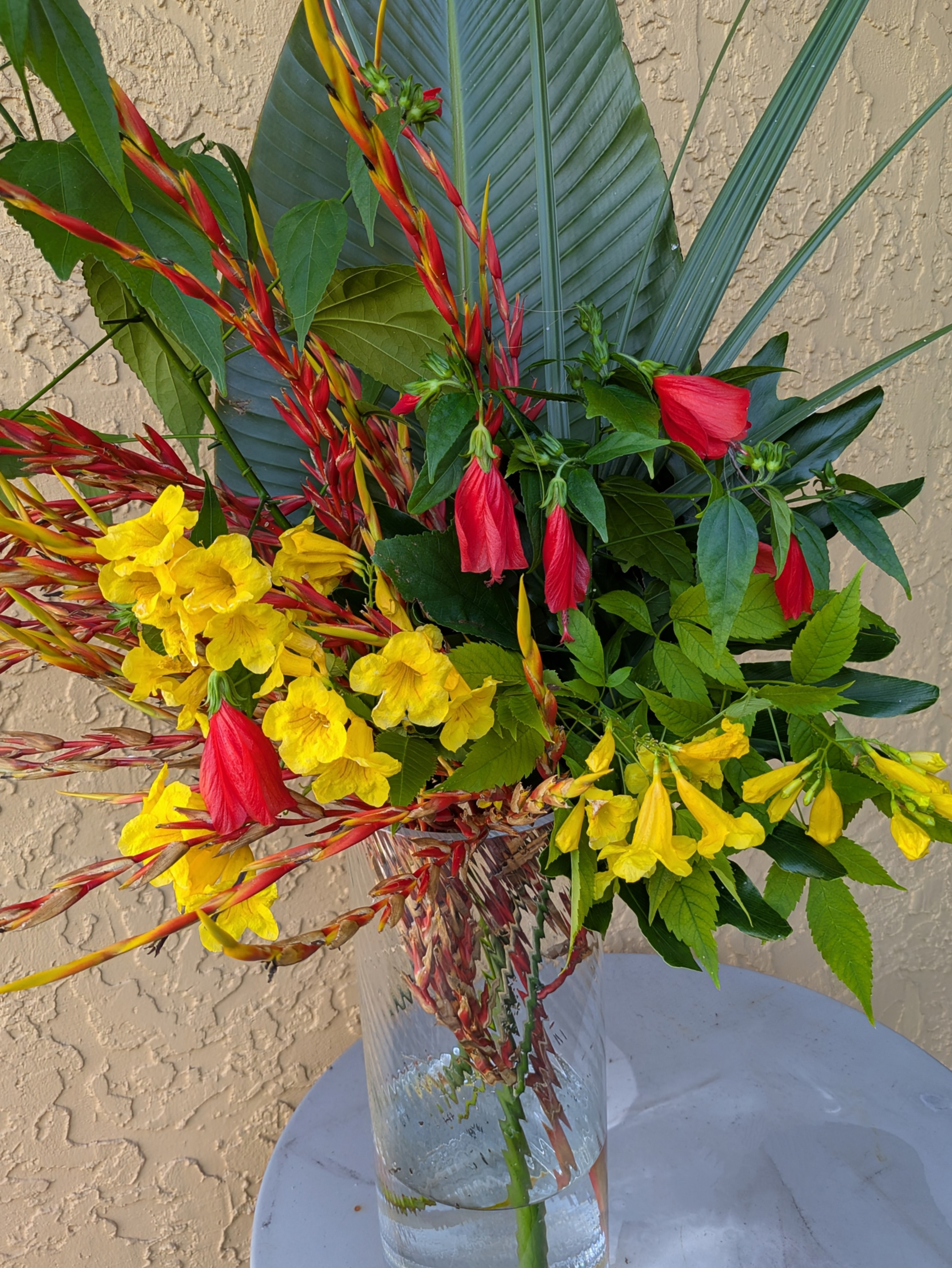
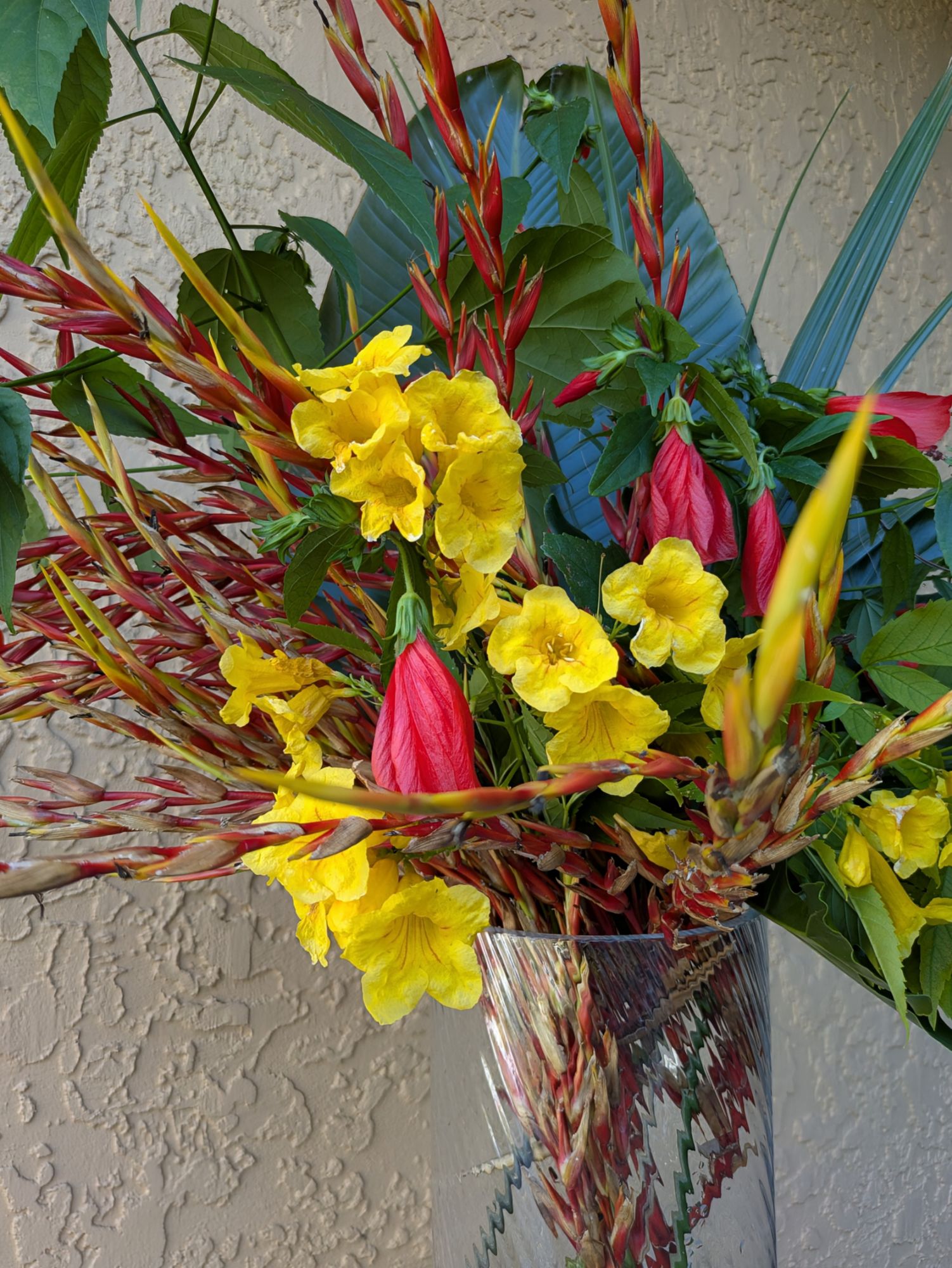
We are enjoying a spell of ‘why people come to South Florida in winter’ weather. It makes for great gardening, but the winter flowers aren’t quite going yet to cut a bouquet. So cutting crab claws in the yard seemed like a good idea. Here are the close ups:

The crab claws, in red and yellow, are Aechmea blanchetiana Bromeliad flowers; in yellow, Yellow Bells (Tecoma stans); in red, Nodding Hibiscus (Malvaviscus arboreum). Foliage is a White Bird of Paradise leaf (Strelitzia nicolai), a Cabbage Palm (Palmetto sabal) frond and a leaf from a Split Leaf Philodendron (Philodendron selloum)

Here is the flower of a Lemonade Blanchetiana Bromeliad. The one in the vase is from the red version, Red Raspberry. The foliage on that one is red.

That’s all from my garden this Monday. Thanks to Cathy at RamblingintheGarden for hosting. Follow the link to see more vases.

Six on Saturday – Winter Color

I am joining SOS sharing my new winter flowers and vegetables. The cool season in Florida is the best time of year for gardening. Late in the year I plant vegetables and update annual flowers in my containers. I am trying some new flowers this winter. Gardening is a constant experiment for me.

To tour other winter gardens visit Jim at GardenRuminations.

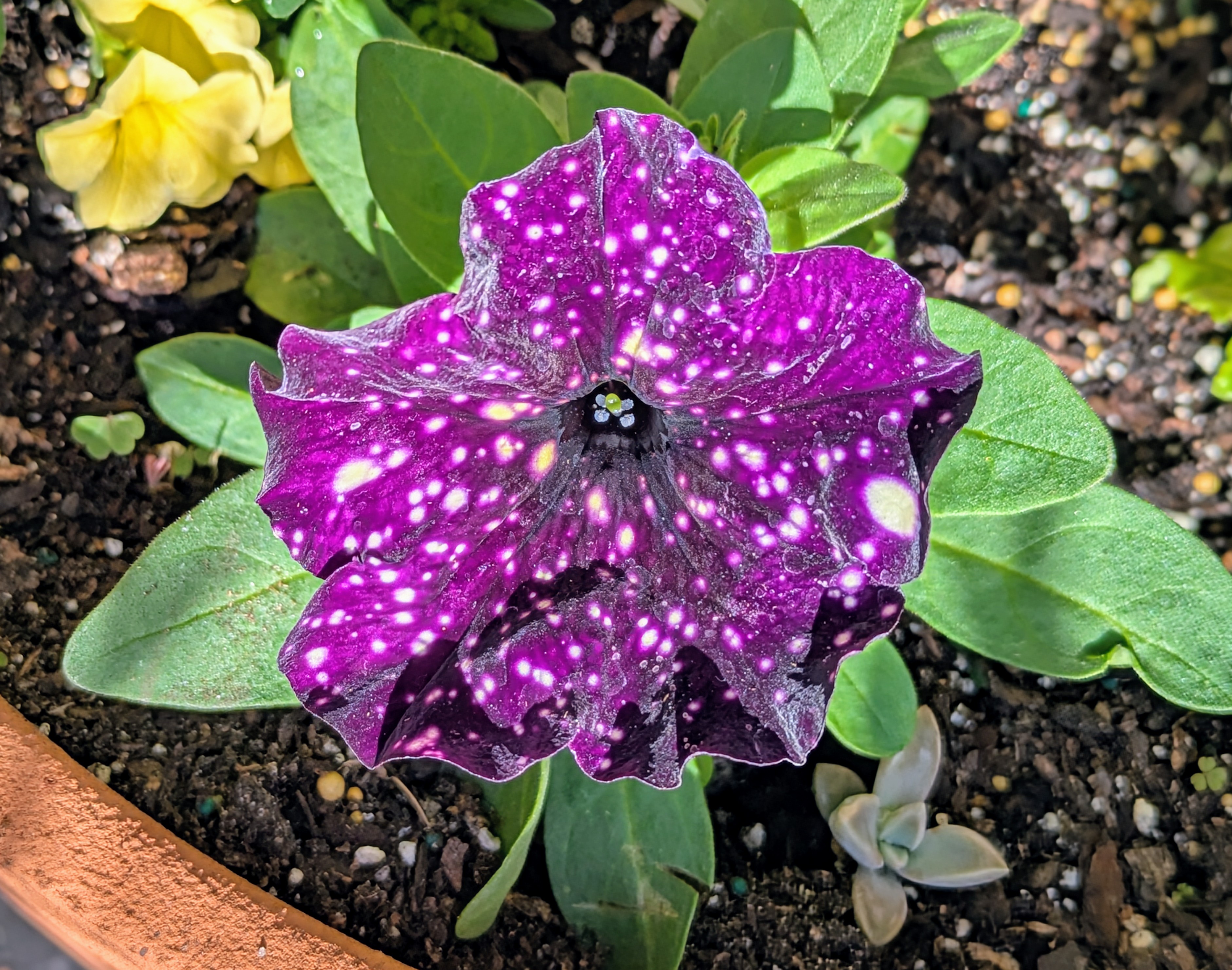
I think these are Splash Dance Violet Vogue petunias. I did not realize how many different types of the dark spotted petunias there are and recycled the tag. I also did not realize petunias are not toxic to dogs but Callibrachoa is. Sure enough, I left the Callibrachoa out of the dog reach and later observed him trying to take a bite out of the petunias! Details.

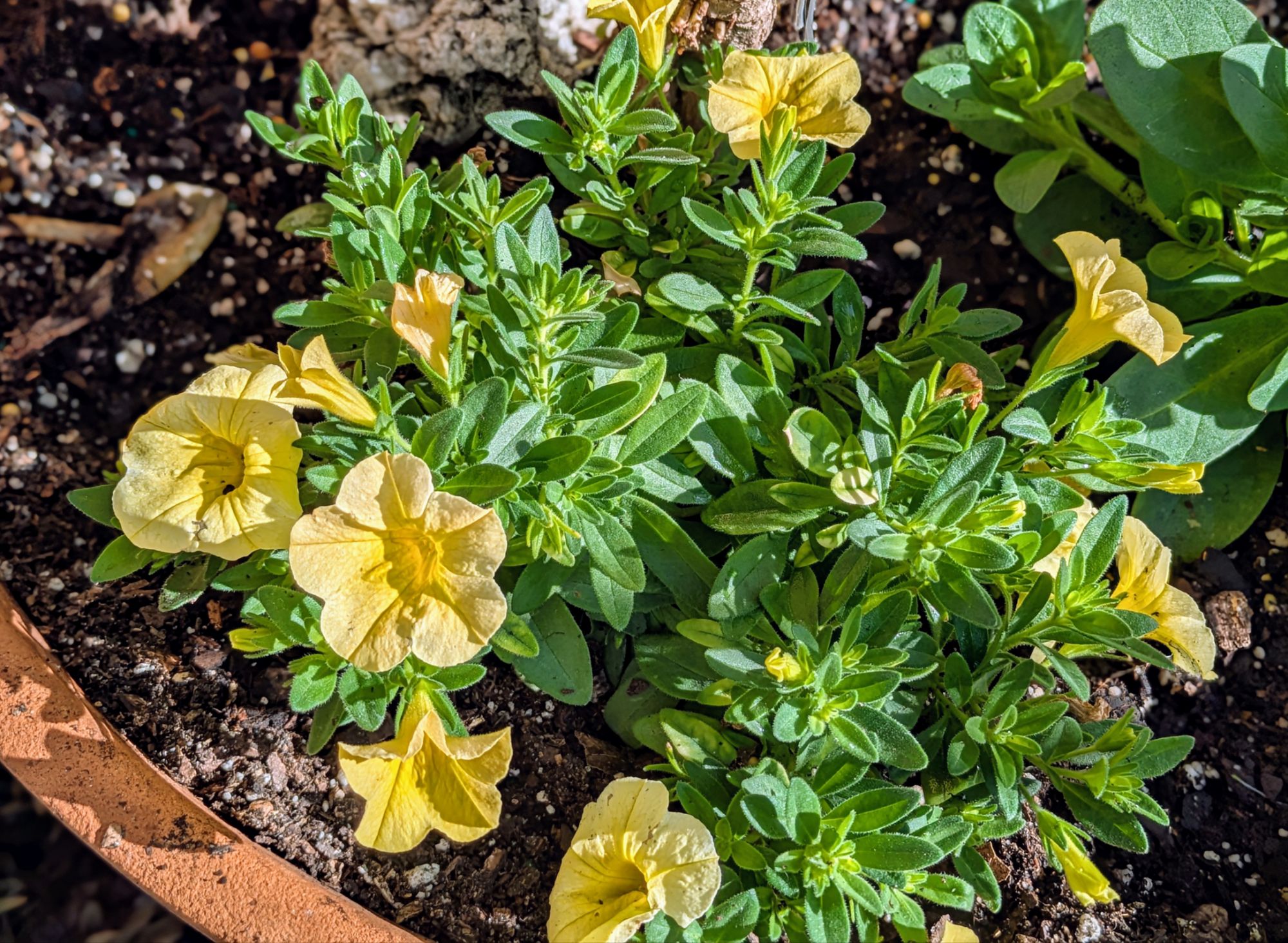
The new Callibrachoa the dog did not get to try. I have varying luck with these. They seem to look great for a short period of time and then poof! no more.

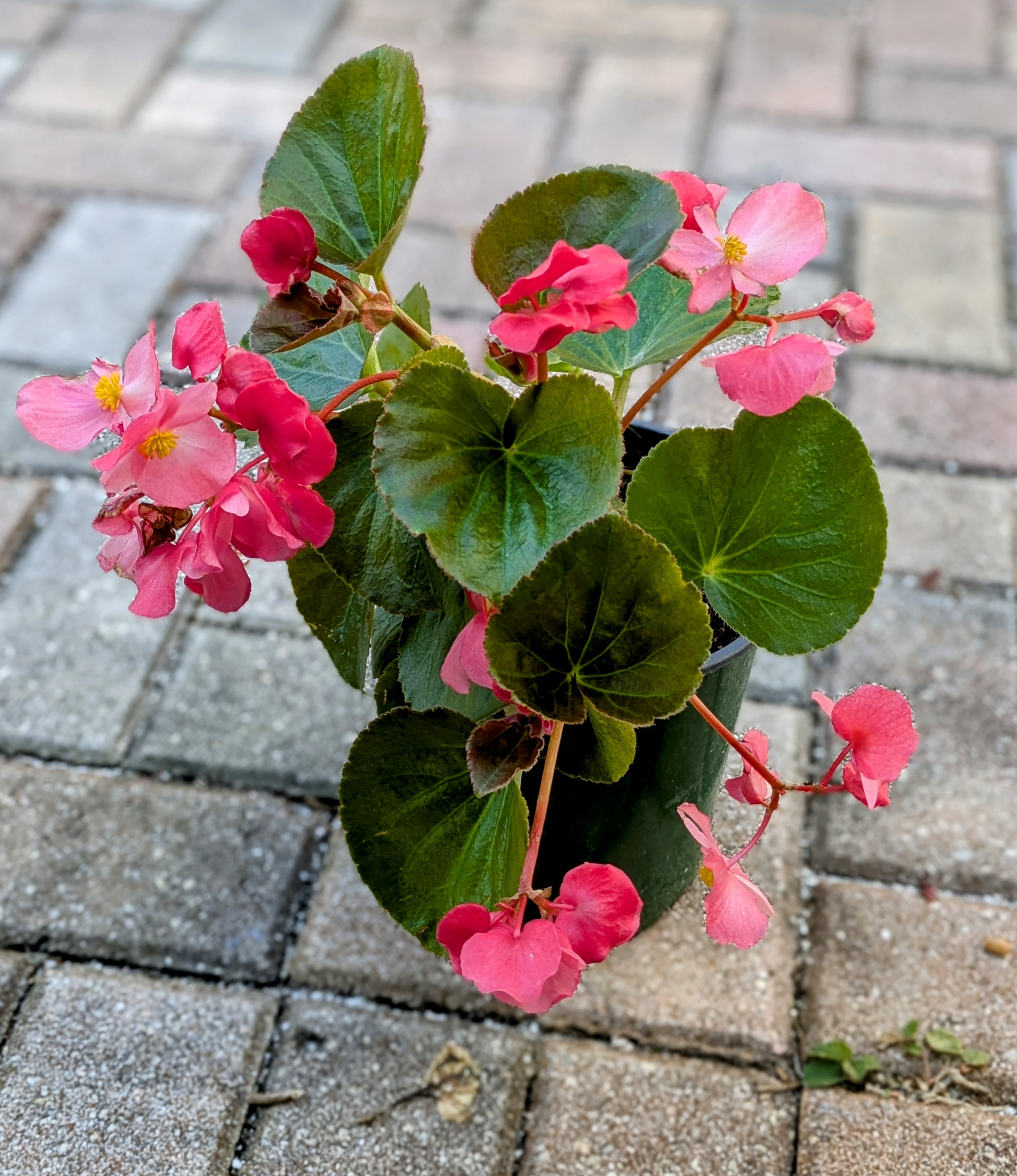
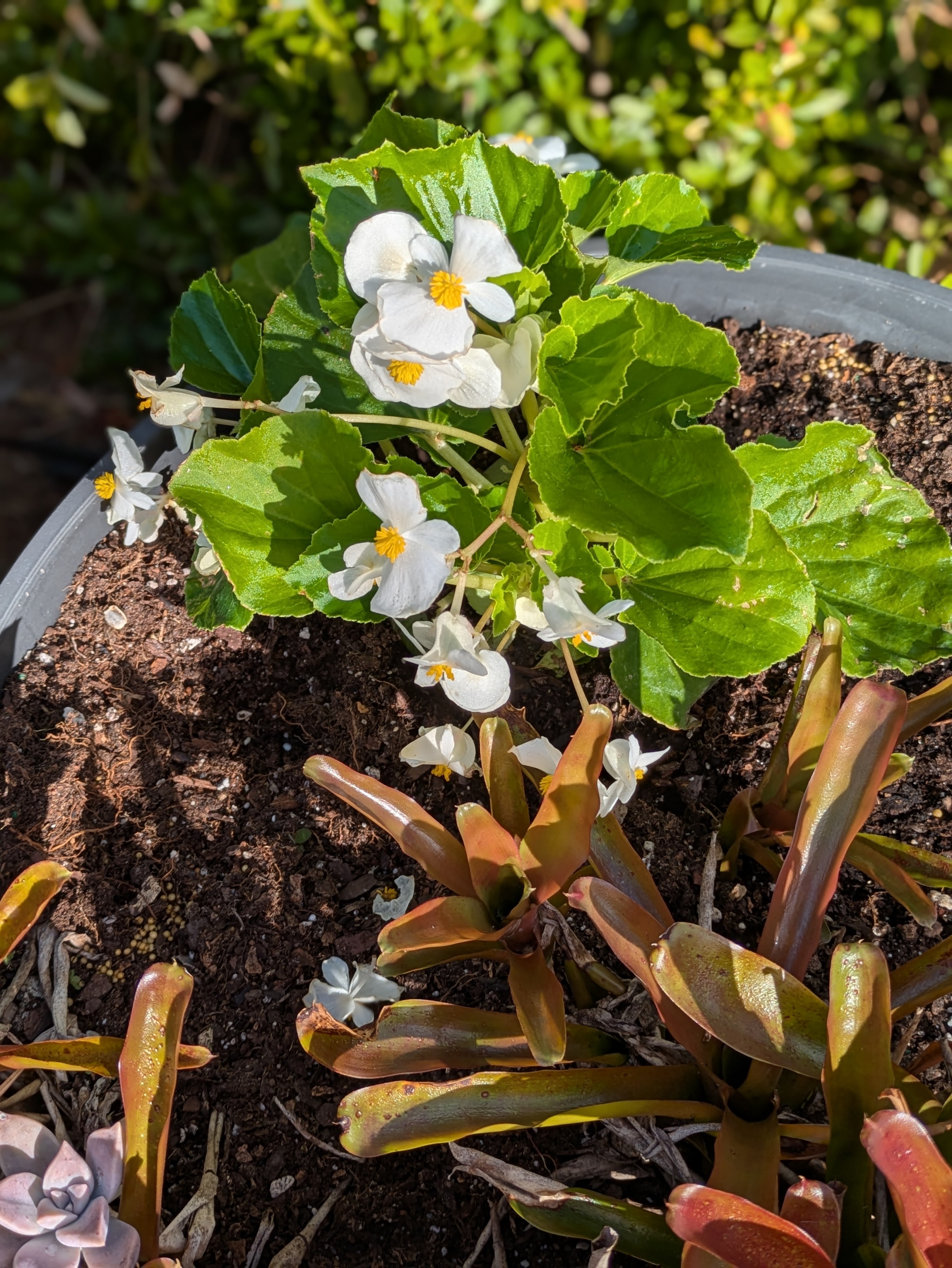
This is a new variety of Begonia called Big Pink (Begonia x benariensis). They are said to thrive in shade or sun and can grow up to 28″ tall, which seems unlikely. Has anyone tried them? Below is Big White with Fireball Neoregelia Bromeliads in a container.

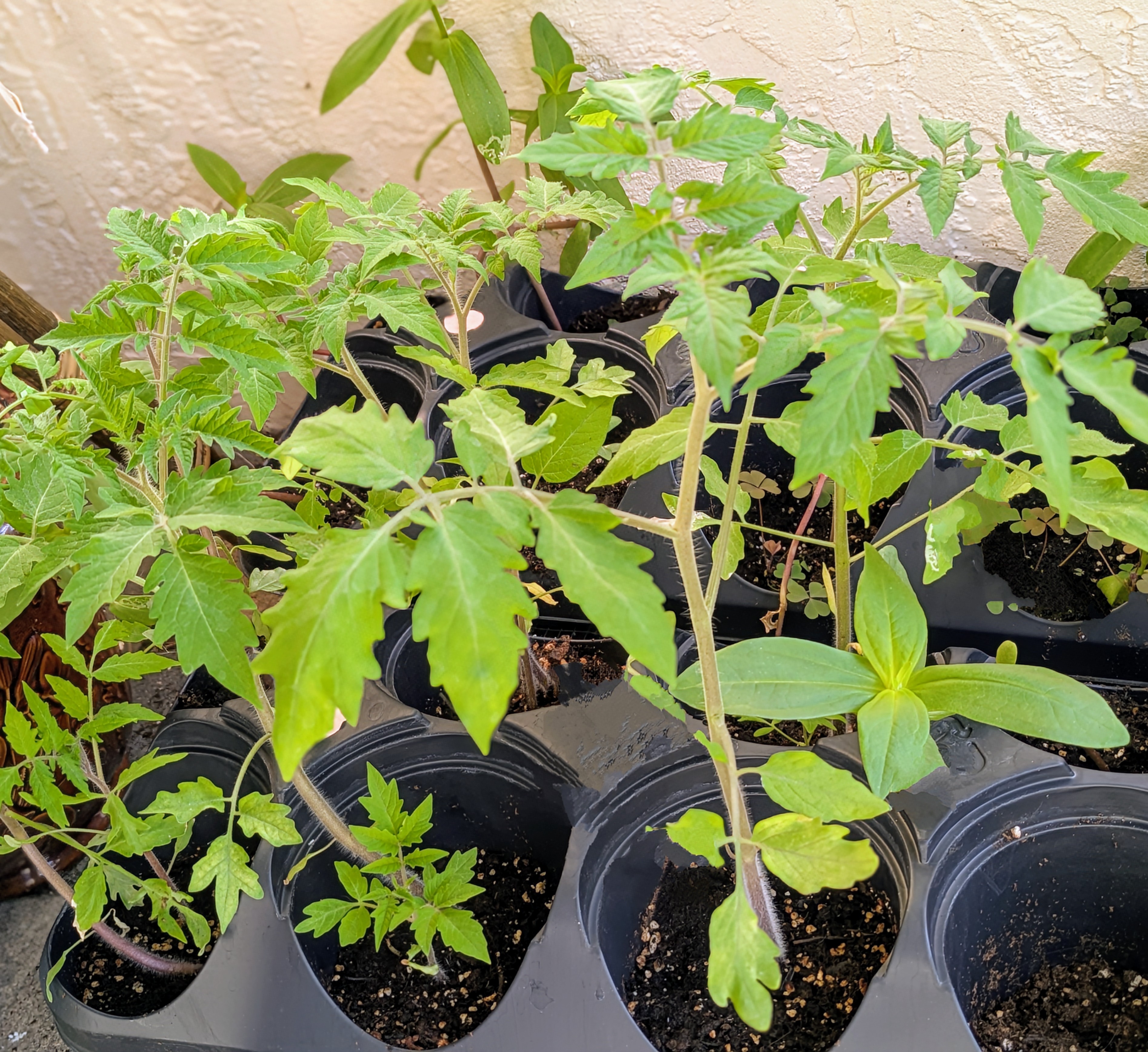
The Cherry Tomato and Zinnia seedlings (in bud!) are more than ready to be planted. I am waiting until tomorrow as warmer weather returns next week.

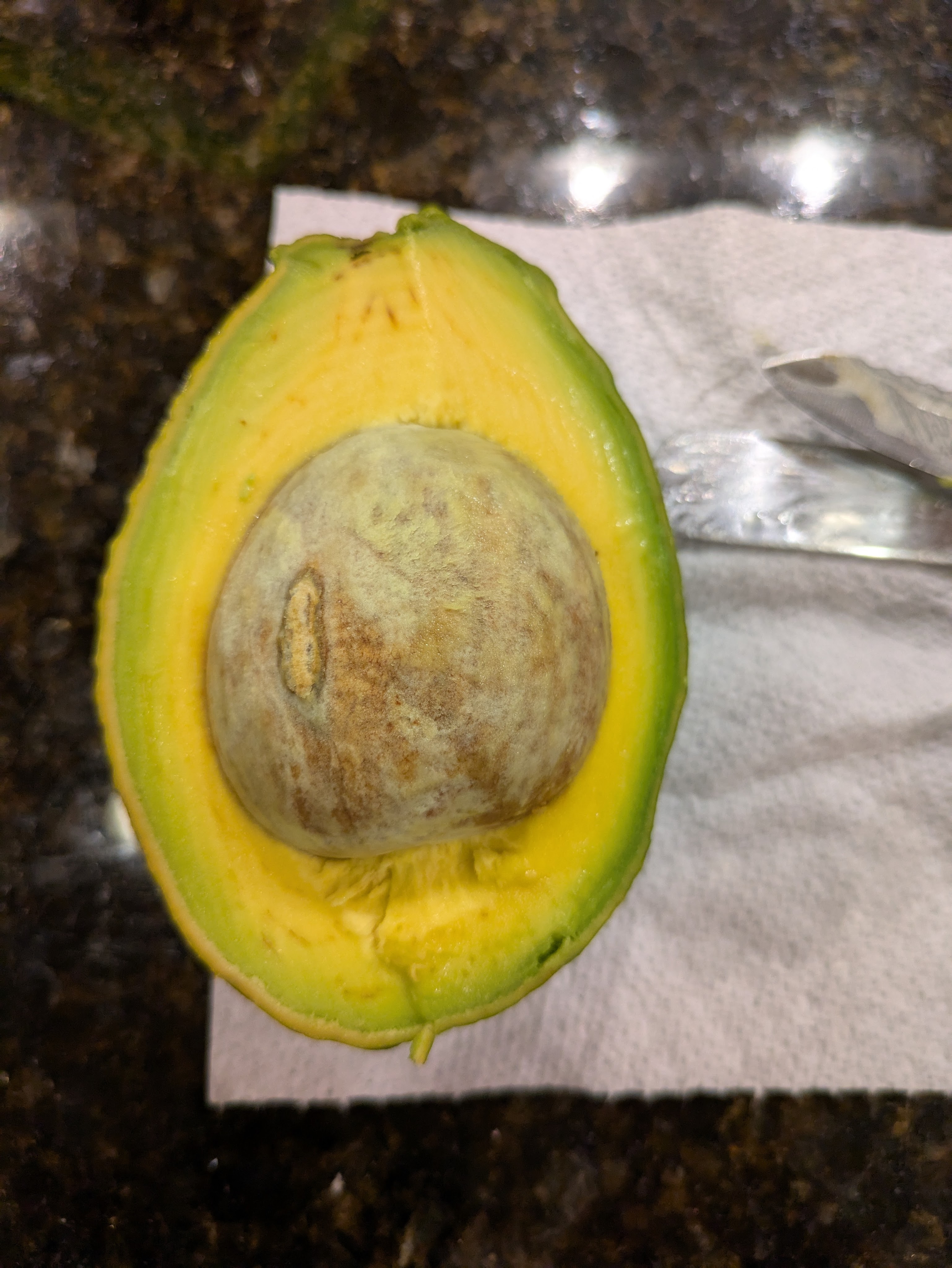
My first Cuban or Catalina Avocado was a bust. It fell off the tree before it was big enough, there is usually twice as much fruit around the seed. I gifted the seed to a friend – in ten years or so, she might have an avocado. I am hoping for some Christmas 2025.

I am getting back in the garden this sunny Saturday morning. It is 67 degrees F/19 C, good gardening weather.

Happy December to all!

Six on Saturday – Changes

Fall brings changes to my garden. Cooler weather is the best! It seems odd to me that the more tropical plants (like Bromeliads) start to reproduce like mad and it is time to thin and move them around. I am not sure why I think they should like the rainy, steamy weather better. Maybe that is why I enjoy them so much.

To see more changes in SOS gardens follow this link GardenRuminations to Jim’s blog.

October inspires the ‘Candy’ Portea Bromeliads to flower. This is just the beginning. These get longer and have fat pink stems.

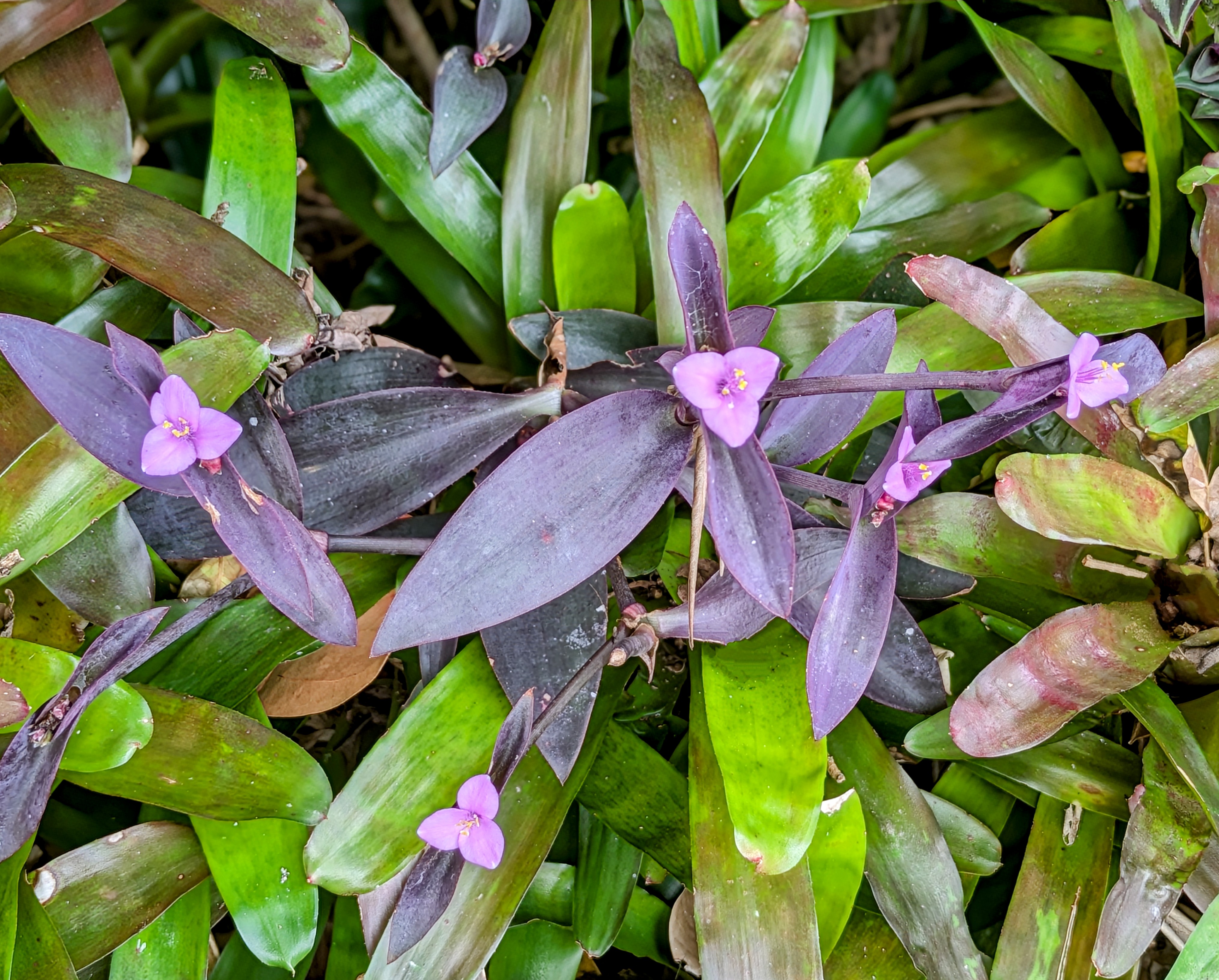
I am trying to decide if I love this or not. These Purple Queen (Transcandentia pallida) pop up in the Bromeliads and add a little color – or does it look unkempt? A dilemma.

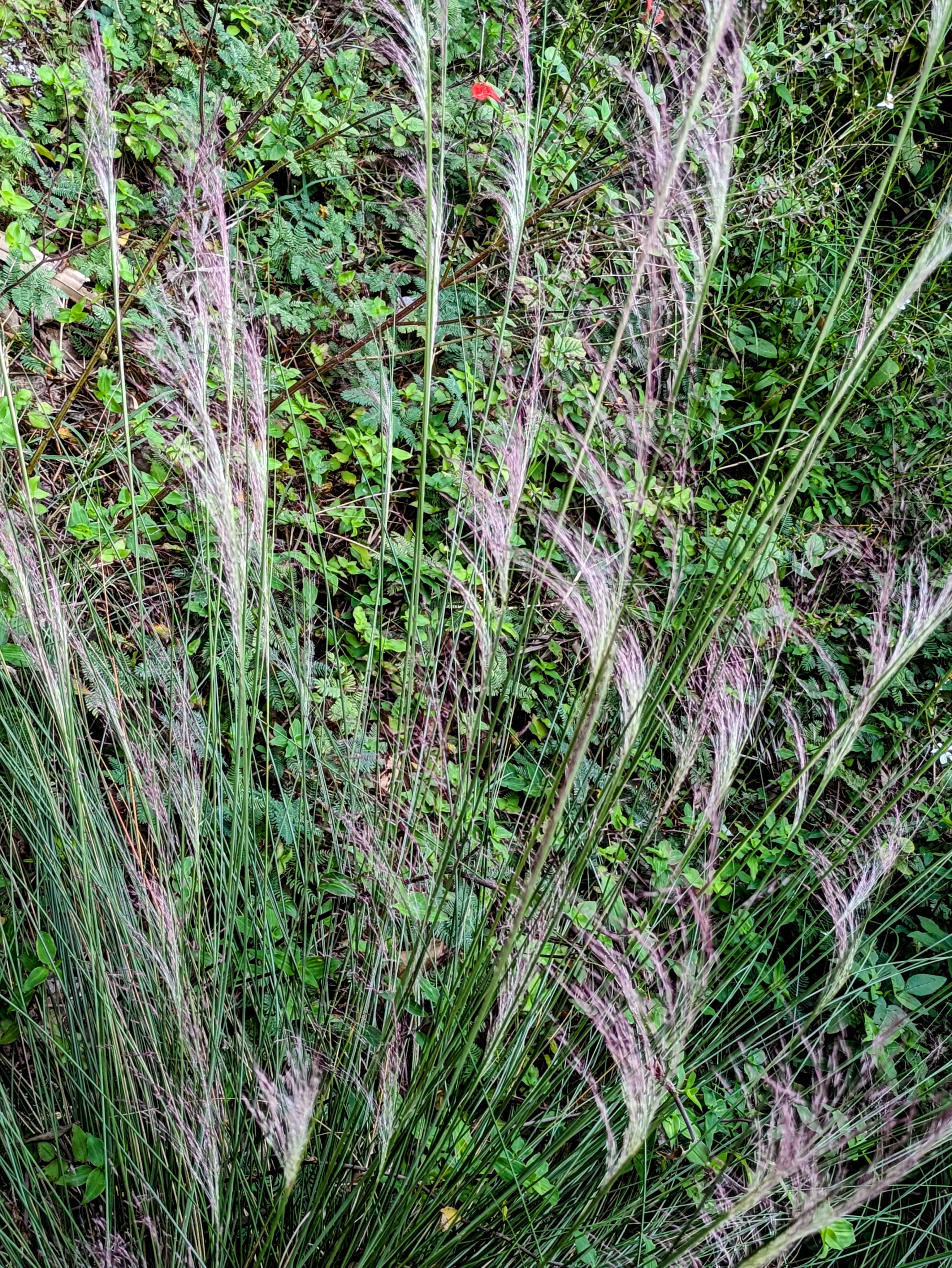
A bit more typical fall scene, the Muhly Grass (Muhlenbergia capillaris) is starting to show off.

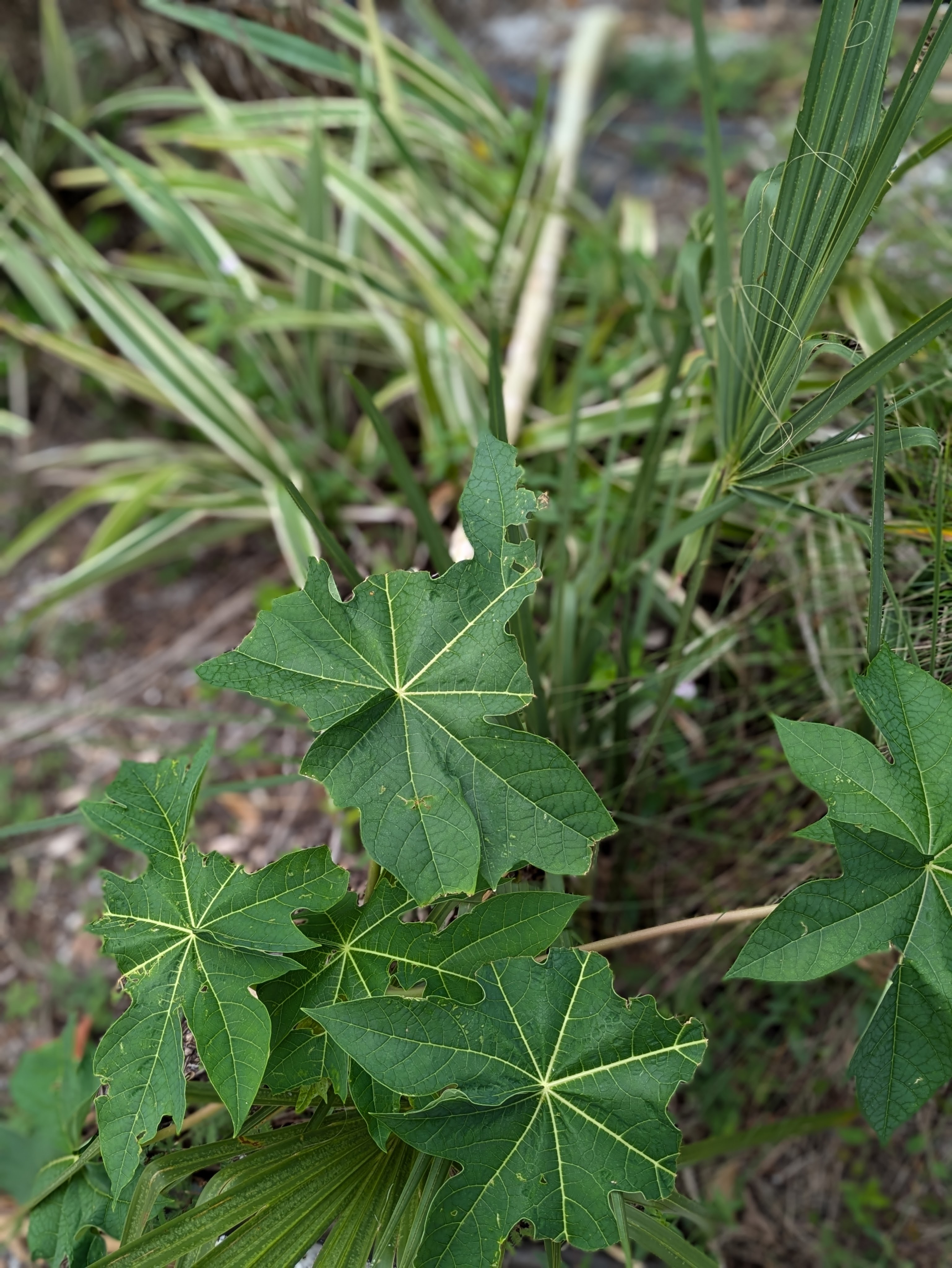
An unusual post hurricane occurrence. The Papaya tree knocked down by the wind is still alive. I think rabbits are eating the leaves. I am wondering if I can prop this up to make an easy to pick Papaya tree. The fruit is usually at least 8 or 10 feet off the ground.

The Juba Bush (Iresine diffusa). A native wildflower makes its seasonal appearance.

Another change in my garden I am sad to share. Fiona the Greyhound was lost to bone cancer this week. She was only seven and diagnosed in late August. I thought we would have more time with her. Here she is looking for bees to munch on in better days.

In a Vase on Monday – Swan Song

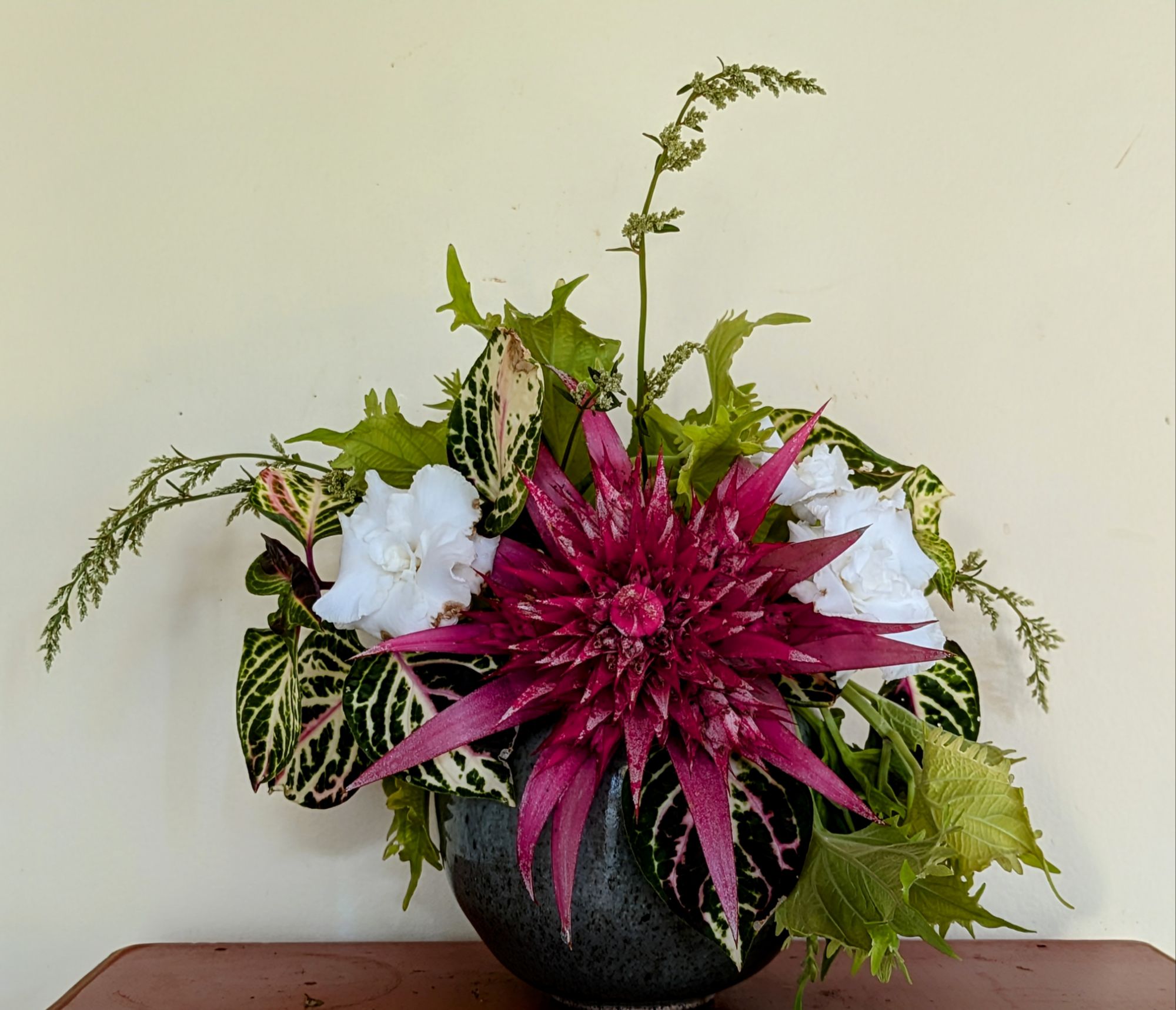
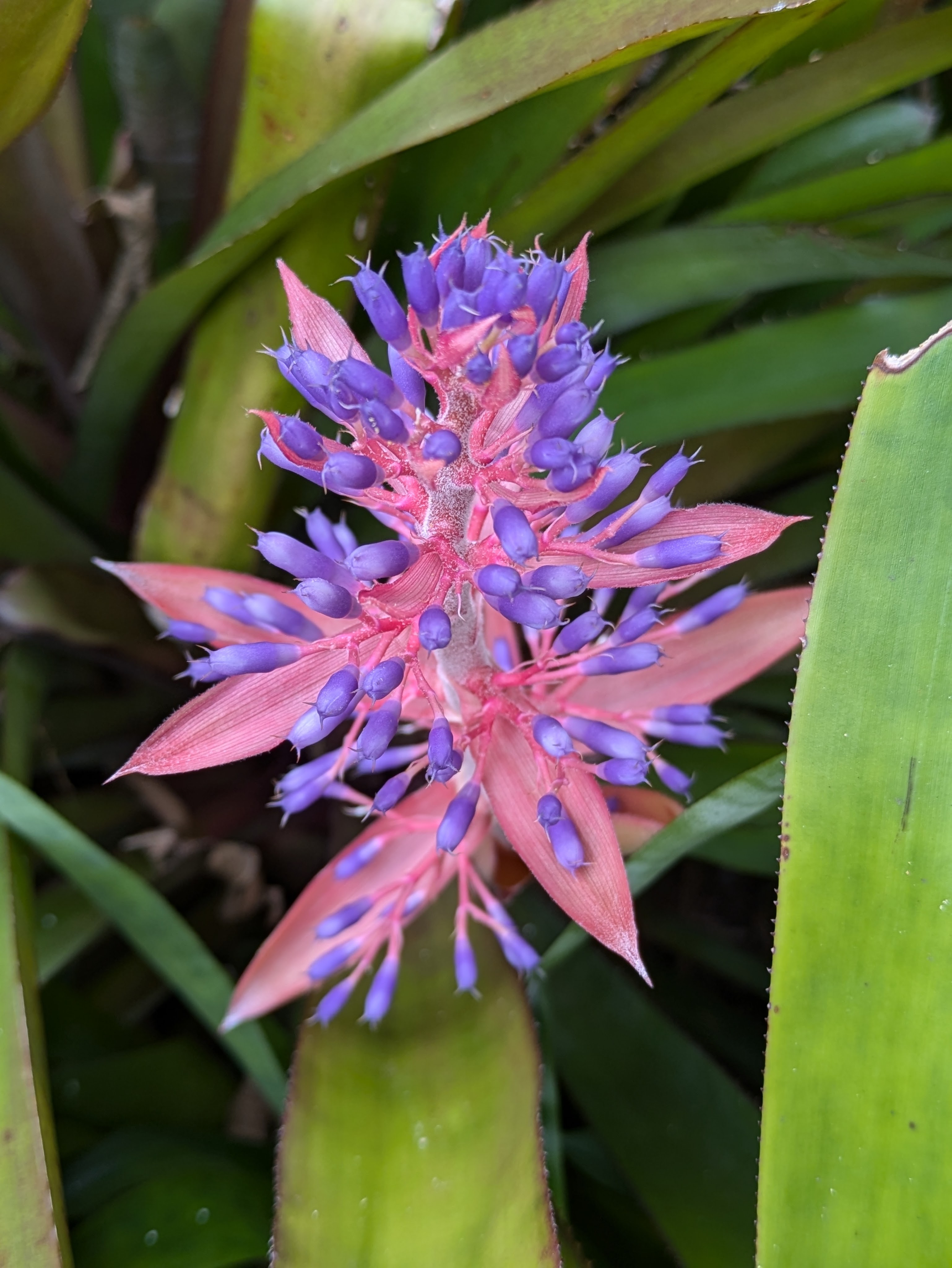
The pink flower in this vase is a Silver Urn Bromeliad (Aechmea fasciata). The tips go silver and the pale pink deepens to rose as the flowers fade. I like the coloration and have appreciated this flower for quite some time – it opened May 12th! I think I got my money’s worth. They never last very long in a vase, so this is its swan song.

Supporting players in this swan song.

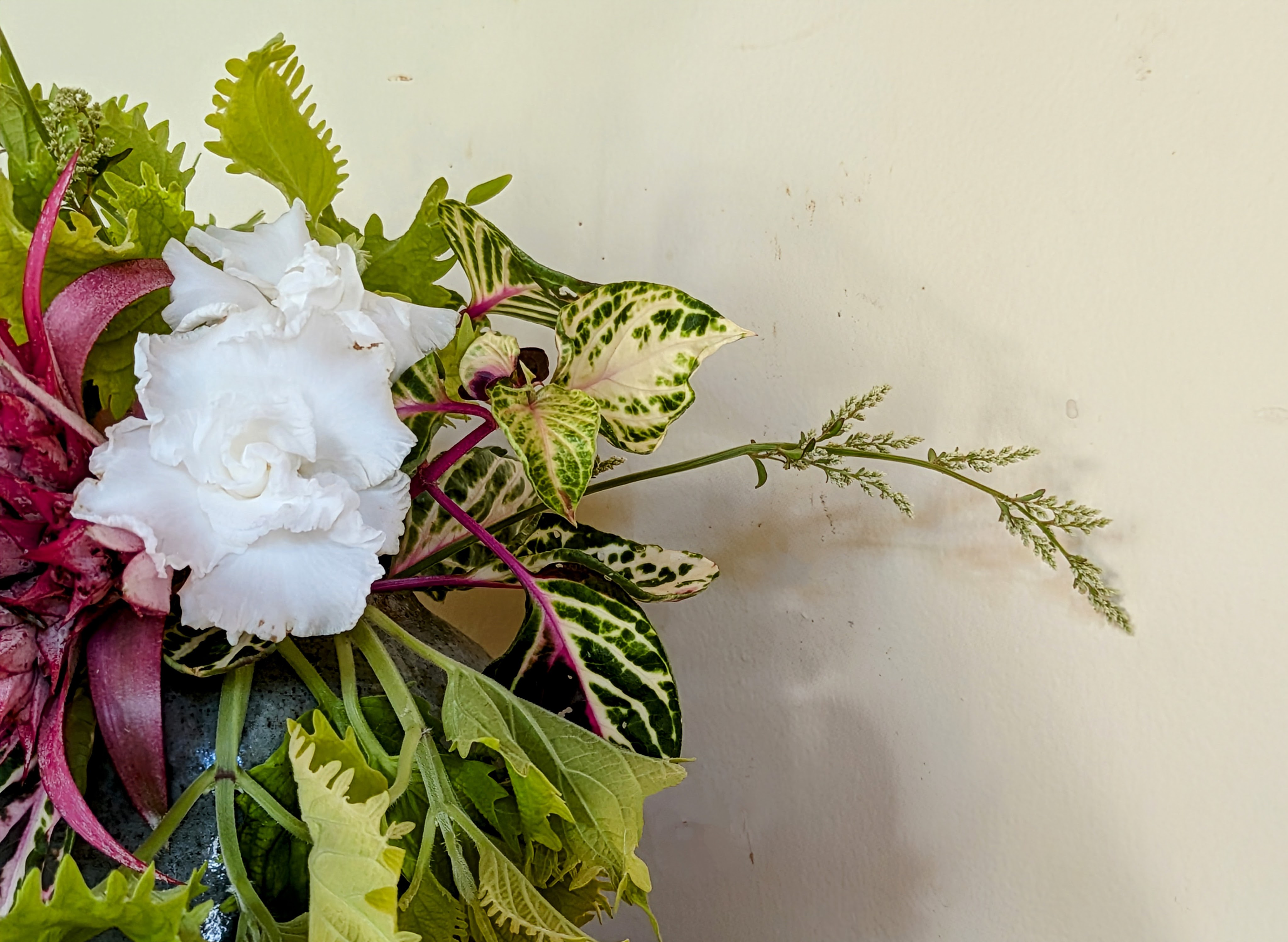
In white, a few Tropical Gardenias (Tabernaemontana diviricata) are still in the garden; varigated foliage is Chicken Gizzard plant (Iresine herbstii). I am told the name originates from the tropical island these plants are from – they were eaten with chicken gizzards. Chartreuse foliage is from an incredibly prolific coleus.

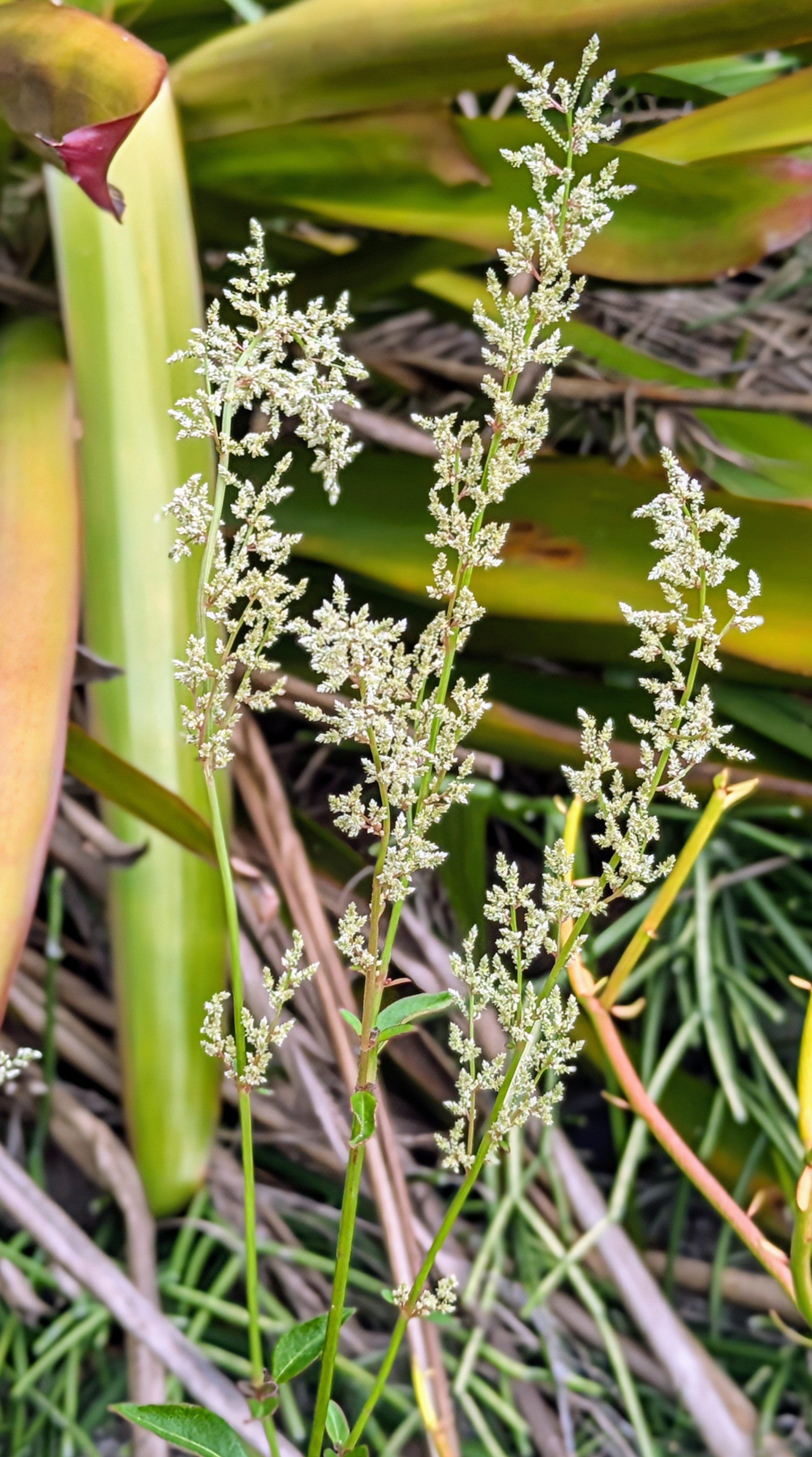
The wispy accents are from another Caribbean tropical, Juba Bush (Iresine diffusa).

We are still dreaming of a fall cool down and thankfully were missed completely by Hurricane Helene.

To join in the IAVOM fun visit Cathy at this link RamblingintheGarden.
In a Vase on Monday – Propavasing

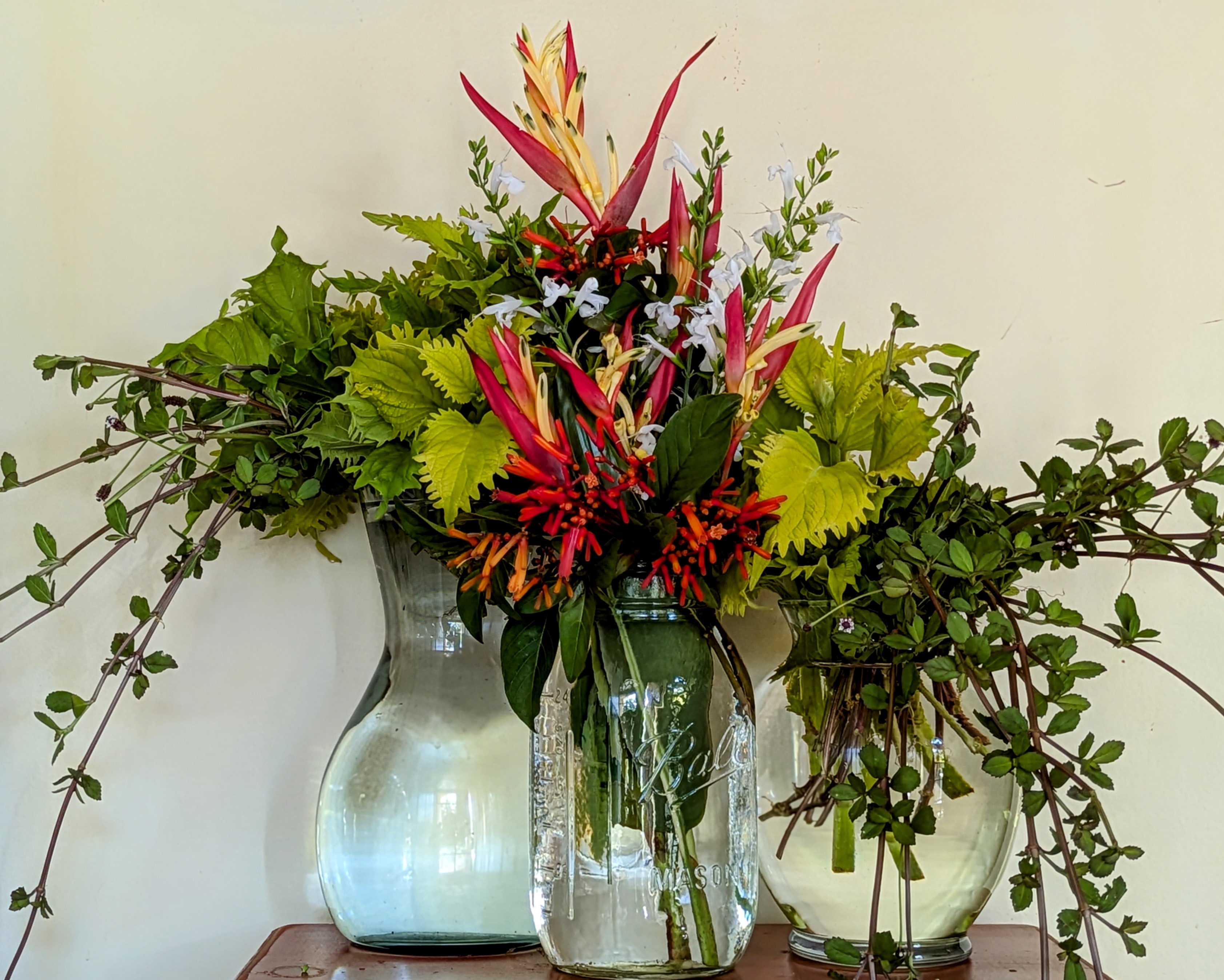
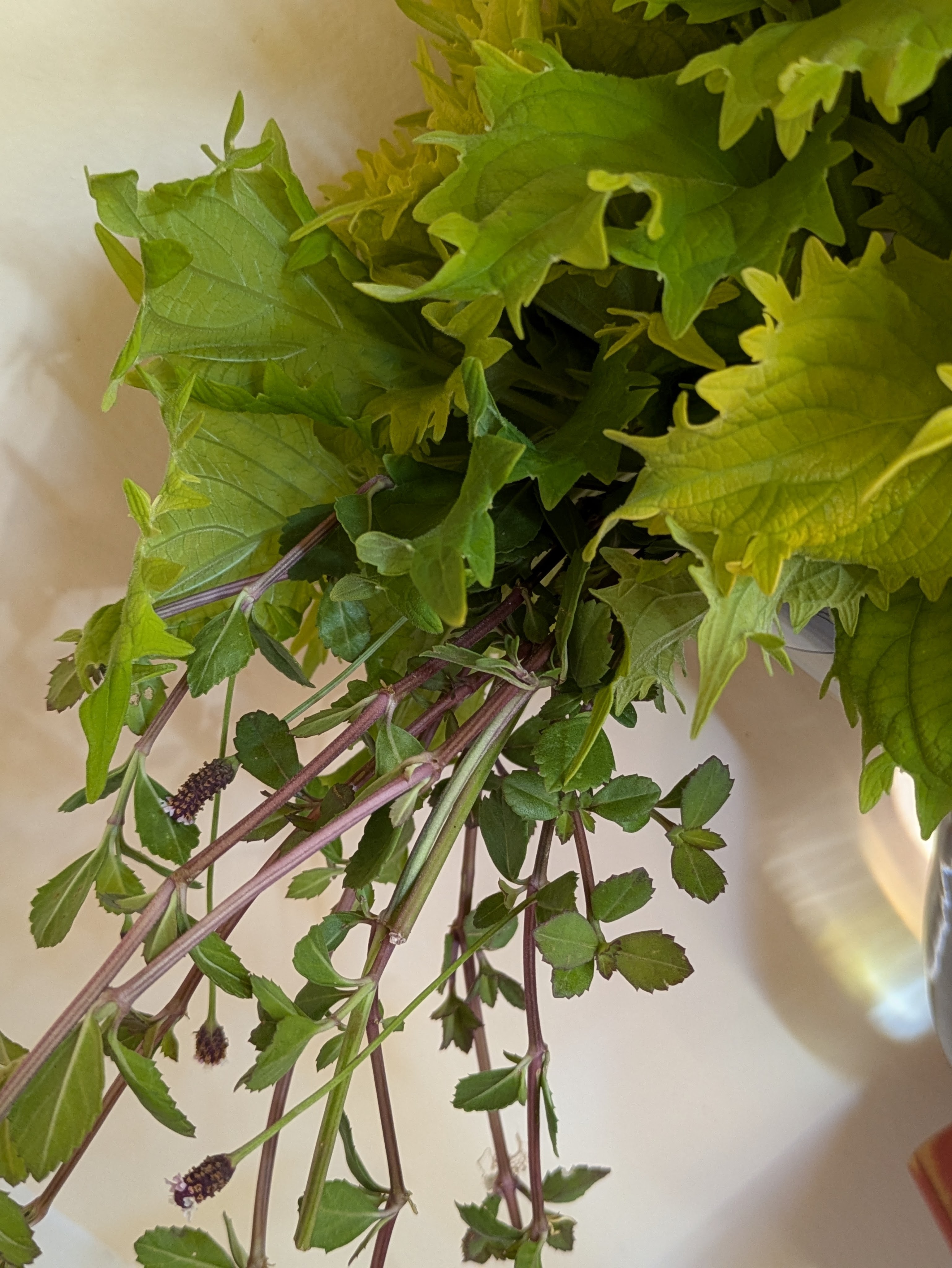
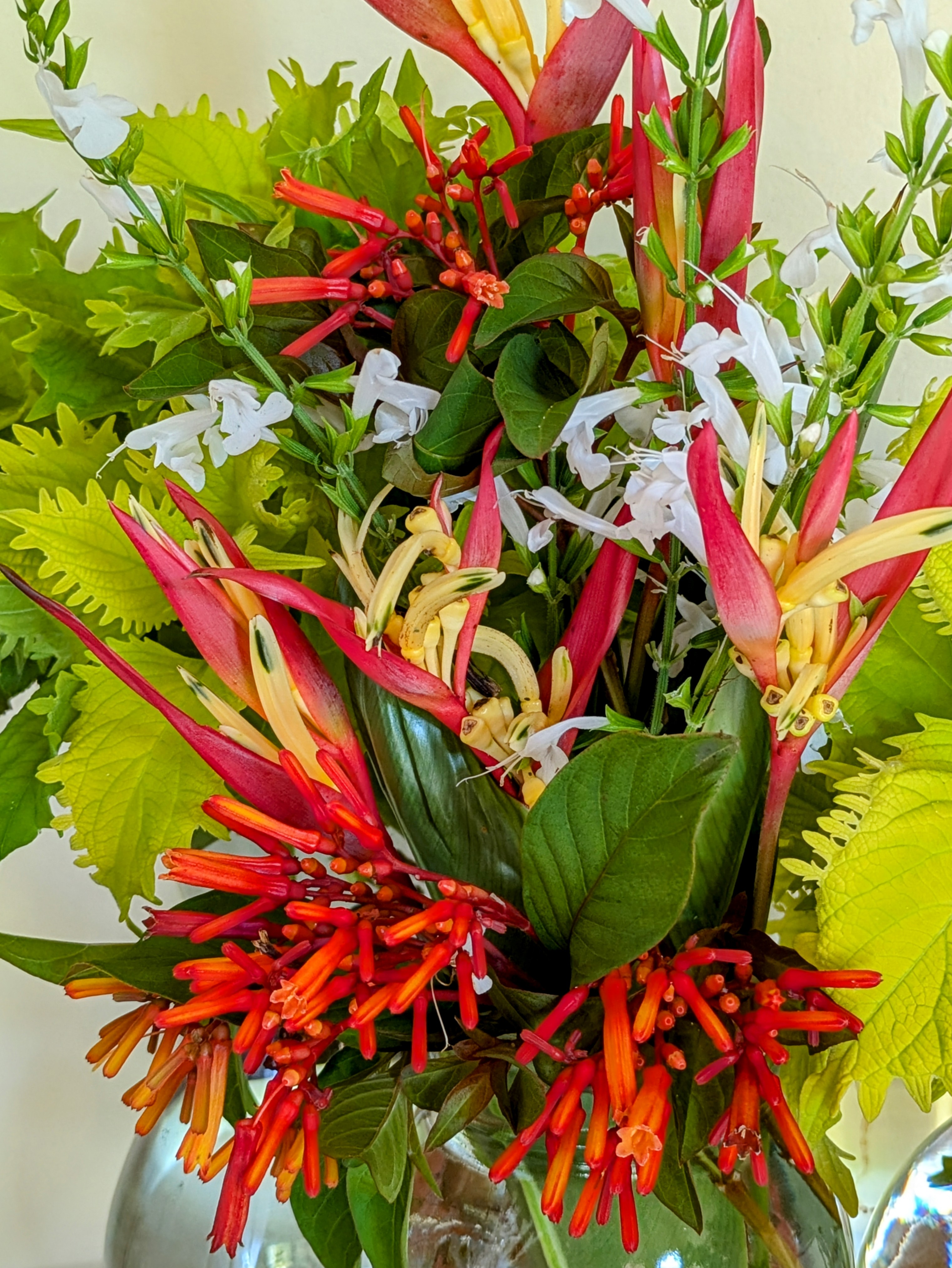
Here’s a new word for you. Propavasing. This occurs when taking cuttings to root in water, followed by finding a few clean vases around the kitchen sink, plonking and fluffing the cuttings – voila!

The cuttings:

I left some chartreuse coleus in a few pots to dress up later for winter container plantings. Not a good idea – especially when combined with leftover moldy zinnias I let go to seed, hoping for some more hot pink/orange flowers next year. The seeds aren’t quite made yet, but the chartreuse coleus is definitely done. Hence the cuttings.

The vining plants are Turkeytangle Frogfruit (Phyla nodiflora). I have been propagating these and creating a lawn of curated weeds in the front garden. I am very happy with my ‘lawn’ and the butterflies are loving it. TTFF hosts three different types of local butterflies.
The flowers:

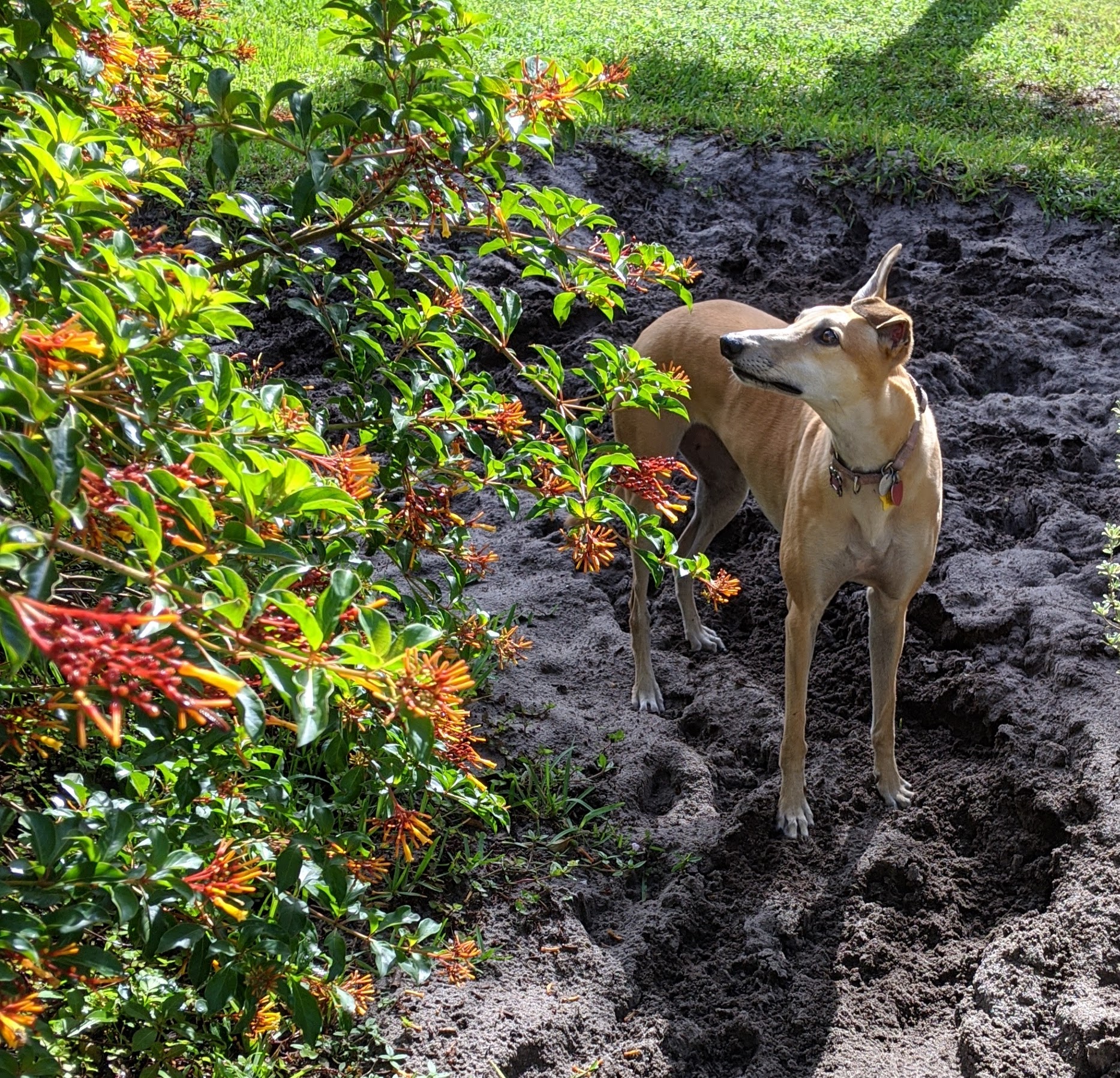
Orange tubular flowers are Firebush (Hamelia patens); red and yellow flowers are ‘Lady Di’ Heliconias (Heliconia psittacorum); white flowers are Tropical Red Salvia (Salvia coccinea).

It’s still summer here. The fall colors are not making me feel cooler.

Visit Cathy at RamblingintheGarden for a whirlwind garden tour via vases.