Tibouchina – Tibouchina urvilleana

The Glory of the Princess Flower

The Glory of the Princess Flower

I have had Tibouchinas around for years. Until we moved to Florida they had to stay in pots or be prayed over to live through the winter. I found out the hard way they really don’t live through the winter on the north side of Atlanta. Supposedly 37 degrees Farenheit are their limit. But my mother could keep them twenty miles further south; I would be hard pressed to say hers flourished, but we did admire the flowers once in a while.

One of the first things I bought after my driveway was complete was the Tibouchina. Another good import from South America, to the best of my knowledge, Brazil, the common name for this plant is the Glory Bush. Other sources call it the Princess Flower. I think that there are several varieties of these available the size range varies from 3 feet tall up to a small tree. This one supposes to be 6-8′ height and spread.  I will wait and see. Some of the plants we used as annuals further north had fuzzy leaves and grape like flower heads (panicles) but were still Tibouchinas.  If you believe what you read they bloom once a year. Mine must be really happy or something.. This one bloomed off and on since I planted it – probably 9 months ago. I will confess to watering it by hand, it is in a Rain Garden with a strong Eastern exposure. The leaves seem to turn red as they are regenerating which actually adds to the ornamental value of this plant.

Tibouchinas are another tropical import being investigated for medicinal use. The plant may possess antibacterial properties. I hope so, until they figure that part out the rest of us can enjoy the flowers.

Golden Trumpet Tree – Handroanthus chrysotrichus

Image

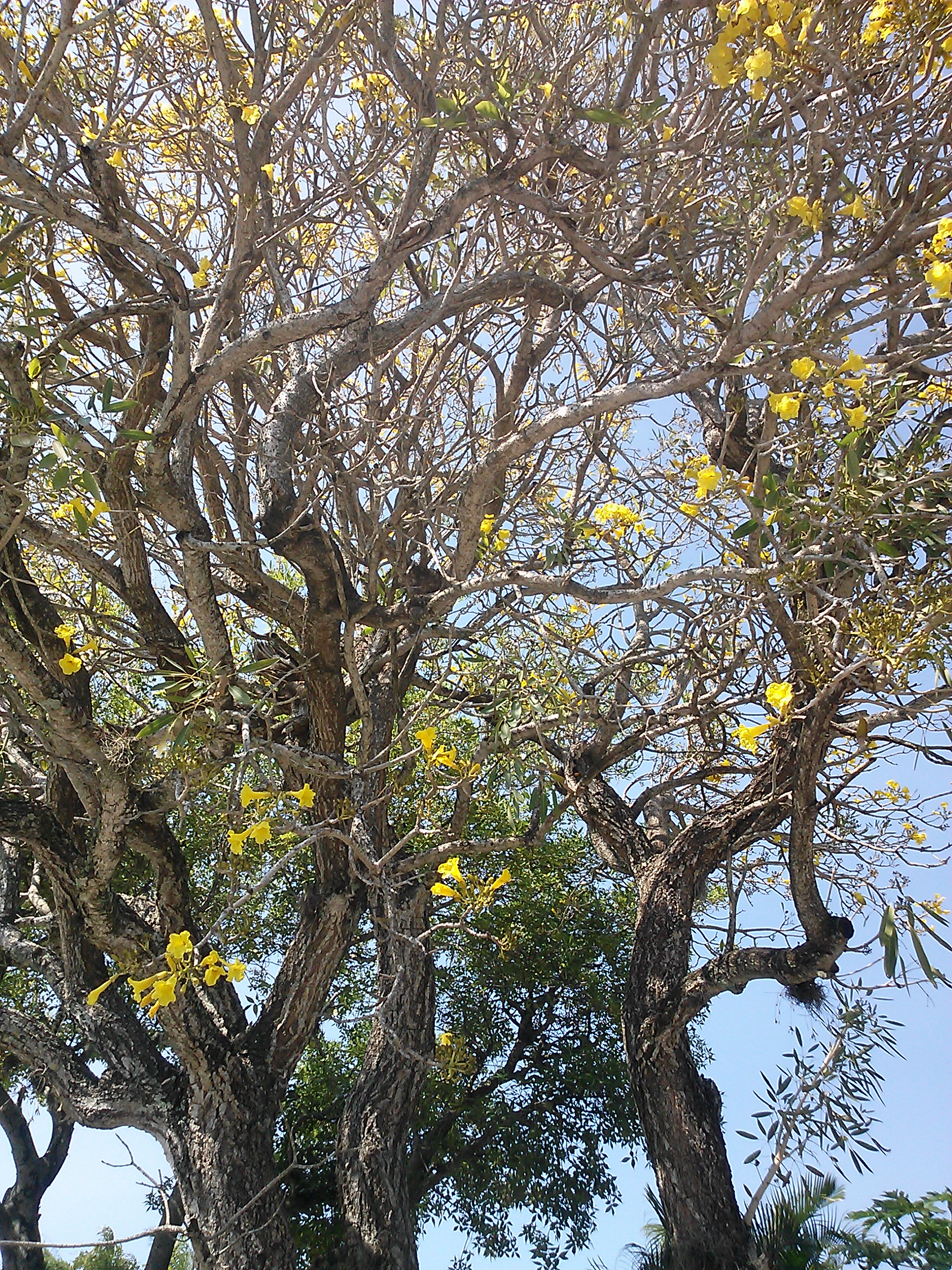
The harbinger of spring in South Florida is, in my opinion, the Golden Trumpet tree. Many people call this Tabebuia, formerly its botanical name. The powers that be in botany decided to rename them Handroanthus chrysotrichus, the new name sounding much like a dinosaur.

While there are several types of Trumpet trees, this is the one most associated with spring. It is reminiscent of Forsythia shrubs up north, which also blooms with a burst of yellow flowers in late March. Prior to blooming, the tree drops most of its foliage and then produces buds, letting you know the show is about to begin and will last about a month.  Bright yellow tubular flowers unfurl on gnarly, corky branches when contrasted with the cerulean blue sky overhead it is an exhilarating sight. Ah, spring.

Golden Trumpet trees reach 25 -30 feet height and width and are a good small ornamental tree for homeowners. They are sometimes available in multi trunks, which is my favorite form. Drought tolerant once established and mostly evergreen this is a great addition to your sunny landscape. Their only drawback is they are not particularly wind resistant and produce fairly big pods as fruit.

Handroanthus have an interesting family history. The yellow version popular in South Florida is native to South America where it lives in the rainforest. A near relative, the Ipe or Brazilian Walnut (Handroanthus impetiginosa) is the source of Ipe lumber and the national tree of Paraguay. The lumber is a tropical hardwood that is extremely resistant to the elements and lasts a long, long time outside. The weather resistance of this wood has made it very popular and its harvest is one of the elements causing deforestation in the Amazon. The Ipe is also the source of Pau D’Arco, an herbal medicine used for many ailments by rainforest indigenous people and was once researched as a possible cure for cancer. The Ipe has pink flowers similar to the yellow version that will also grow in South Florida, but is somewhat less cold hardy and taller than the Golden Trumpet.

Matchstick Bromeliad- Aechmea gamosepala

Image

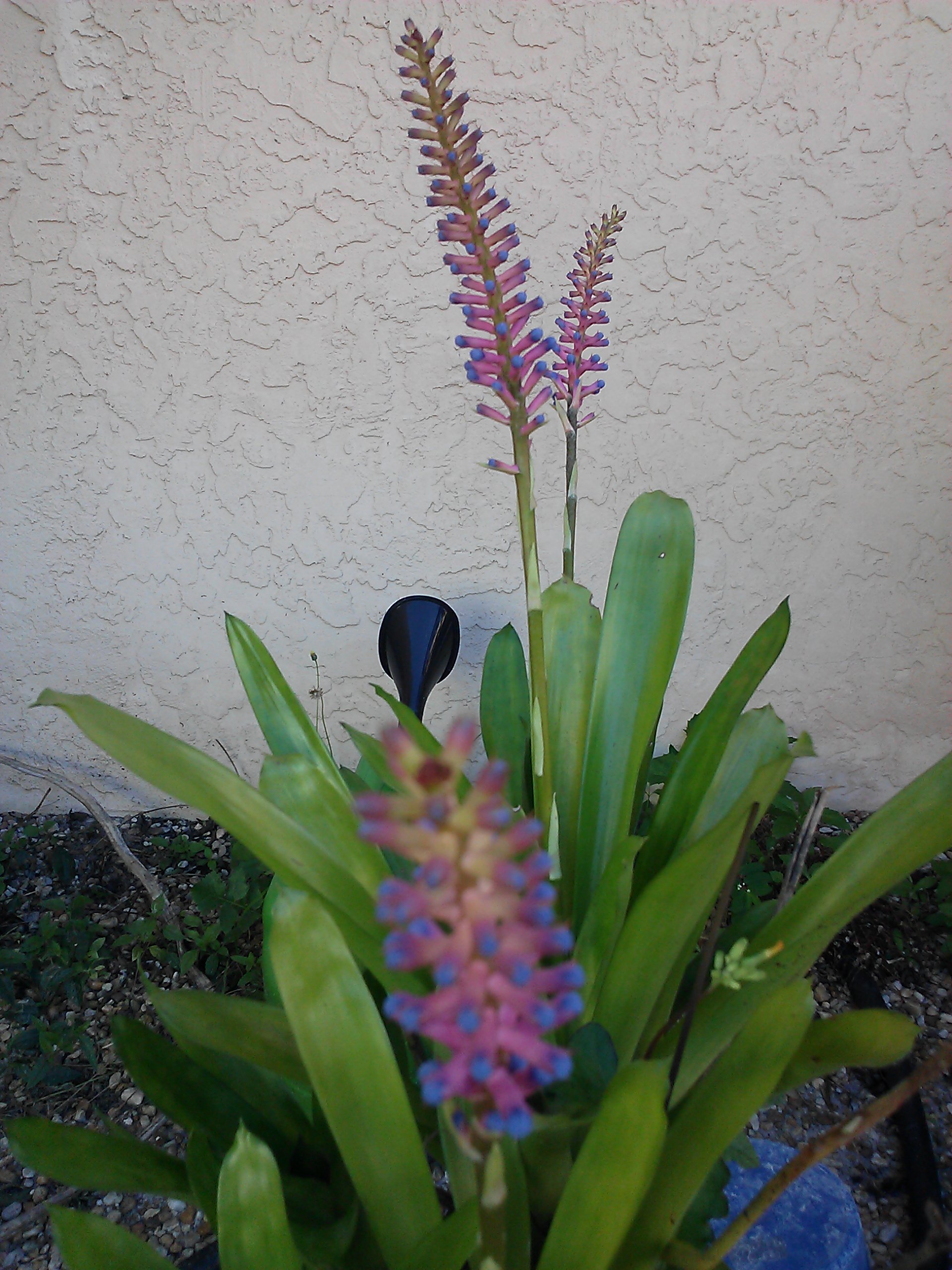
Here is the Matchstick Bromeliad, so named because the components of the flower resemble matches.

These low maintenance Bromeliads light up the garden in the winter.The Matchsticks in my garden bloom in December-January and possibly February. As is with many things, it depends on the weather as to what and when these do their thing. The foliage is on the yellow-green side and shiny, providing a good year round addition to the garden. Slowly, (for Florida take that with a grain of salt) these form masses of color for the winter. I have mine planted alongside Blue Daze Evolvulus and have enjoyed the combination. The Blue Daze generally bloom all winter but will slow down in a cold snap.
These bromeliads are native to Brazil, like many others. They enjoy some sun and humidity. Sort of like me.


Winter Starburst Clerodendrum – Clerodendrum quadriloculare

Lo and behold I discovered yet another source of color for the winter garden.  The Winter Starburst Clerodendrum is a large shrub to small tree (8-12’ ht.) sporting beautiful pink flowers in winter with the added bonus of foliage that is attractive throughout the year. Belonging to a group of plants sometimes called Glory Bower, this certainly lives up to that name. It is glorious when in full bloom.

The first one of these I saw stopped me in my car.. what is that and blooming in the middle of Winter? Fabulous.  After a bit of detective work I found out what it is. I have seen a few scary examples of Clerodendrums around my neighborhood. Gone wild and not in a good way. I think one needs to be prepared to do some maintenance pruning or pay the price. On the other hand, you could say you were going for the cottage garden look. Problem solved with little or no work.

There are many different types of Clerodendrum – most native to tropical south Asia;  the plant types range from vines to perennials, shrubs up to small trees.  These plants have some invasive tendencies so be careful who you invite into the garden. This one grows in partial shade and prefers moist soil. Clerodendrum is a good addition to the butterfly garden.  Another similar variety that is not quite so big is ‘Pink Diamond’ Clerodendrum, this is also called Cashmere Bouquet for its fragrance (my grandmother used a soap by that name – the smell of the soap would not motivate me to use this plant!) ‘Pink Diamond’ grows 48” high and some have variegated foliage. An additional  identifying feature is the back of the leaves are purple year round, this is another good quality of this plant.

Christmas Palm – Veitchia merrillii

The Christmas Palm on Christmas Day.  This particular Palm I learned as the Adonidia. I think Christmas is a much better name; especially with the red mass of berries resembling ornaments during the holiday season.  These are also called Manila Palms as they are from the Philippines. Not an exceptionally cold tolerant plant they will grow in South Florida in coastal areas south of the magical State Highway 60 line. Many of these palms were lost during the unusually cold winter of 2010.

Christmas Palms can be used as single or multi trunk trees and grow to about 20 feet tall, this makes them excellent for residential use near buildings in the one to two story range. These are not a self cleaning Palm so fronds past their prime must be trimmed. They also add a tropical flair to pools and near spas, I have planted a multi trunk near my lanai to provide shade in the summer. And I am just waiting for some Christmas berries.href=”https://theshrubqueen.com/wp-content/uploads/2013/12/cam00183.jpg”>Image

Wild Coffee- Pschotria nervosa

Wild Coffee- Pschotria nervosa

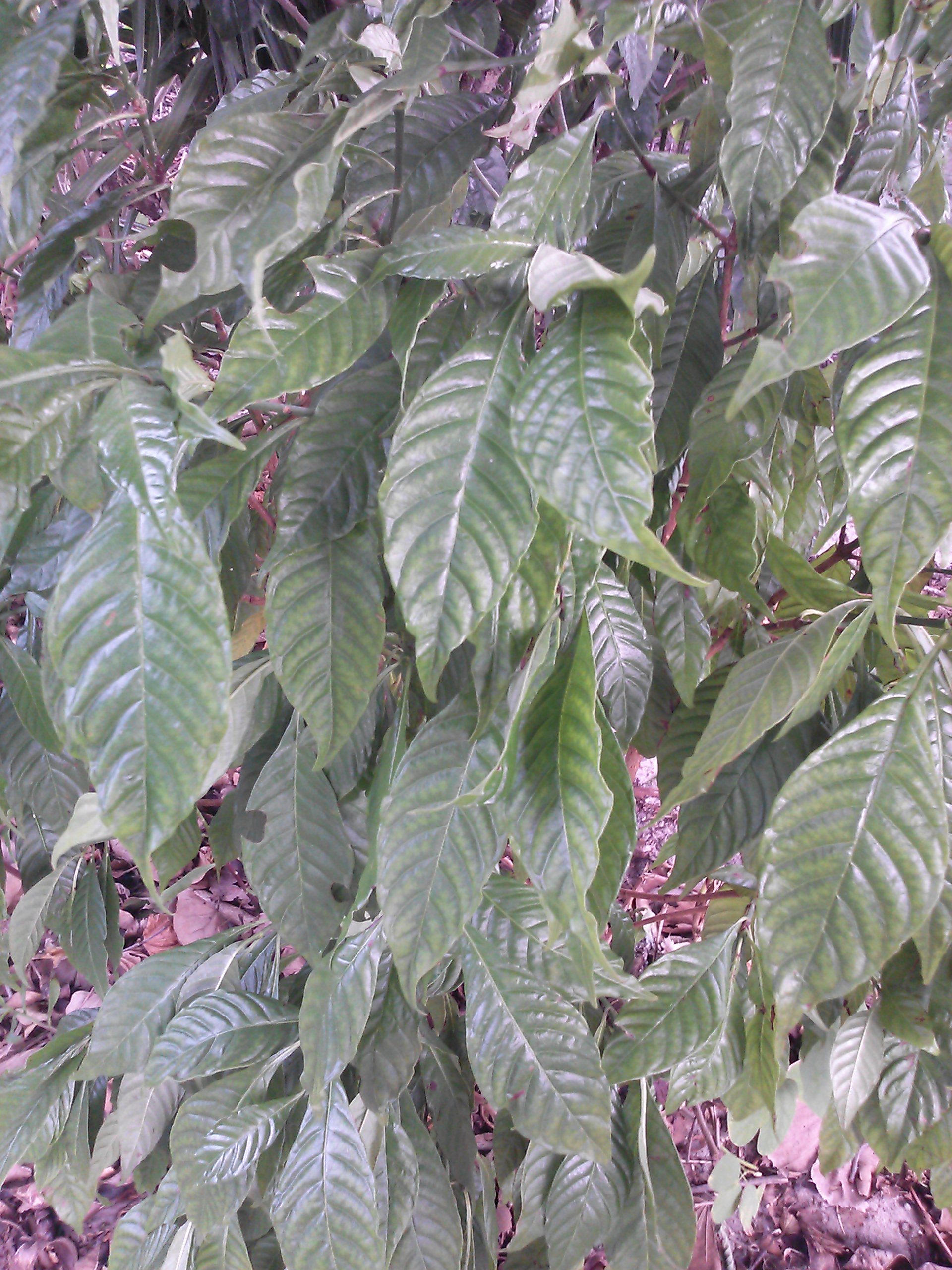
This Wild Coffee is in my neighbor’s yard. A native shrub well suited to high shade with attractive dark green foliage reminiscent of Gardenia without the flowers or insect problems.
A good butterfly plant with flowers and small (coffee-like!) berries.