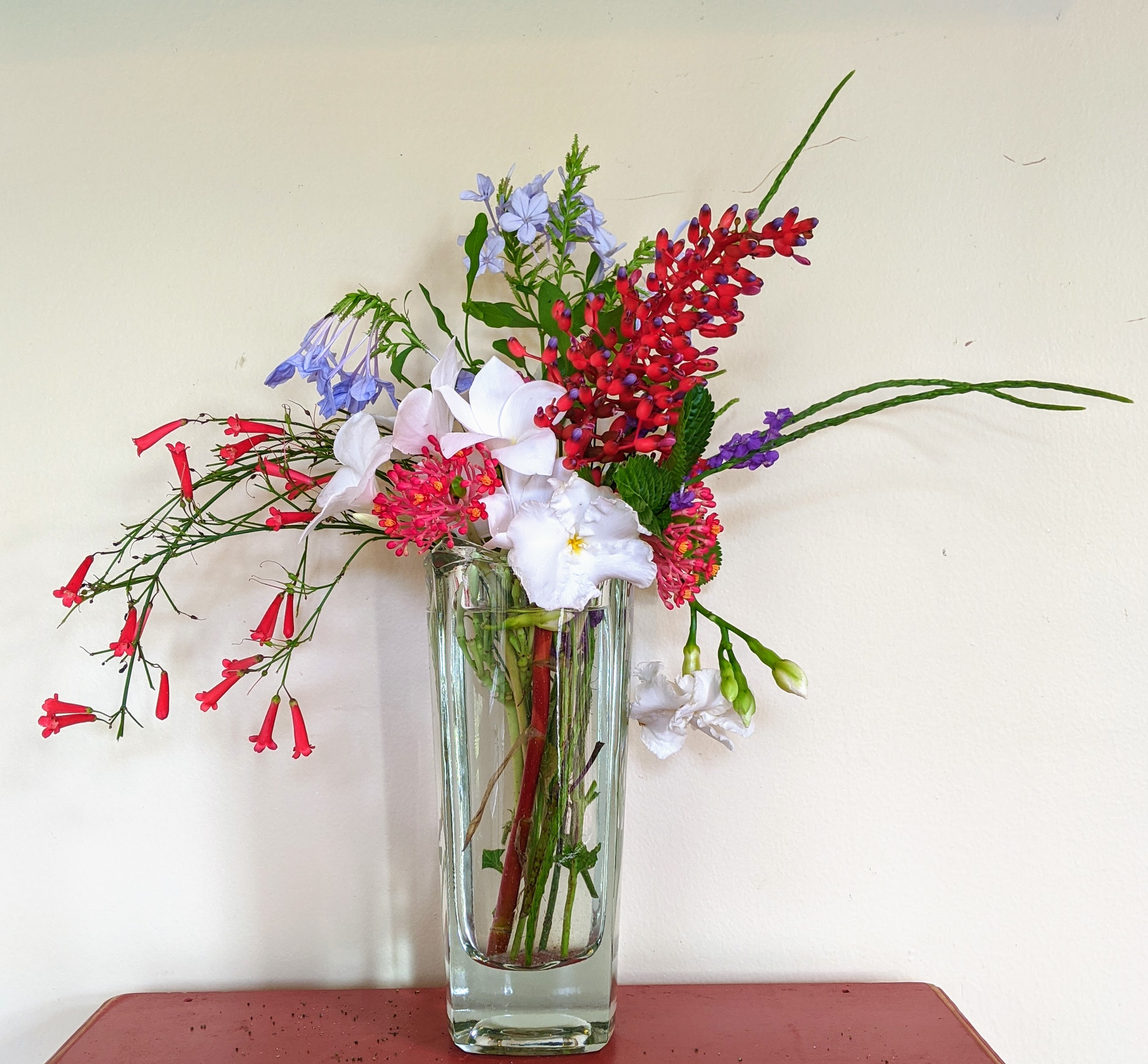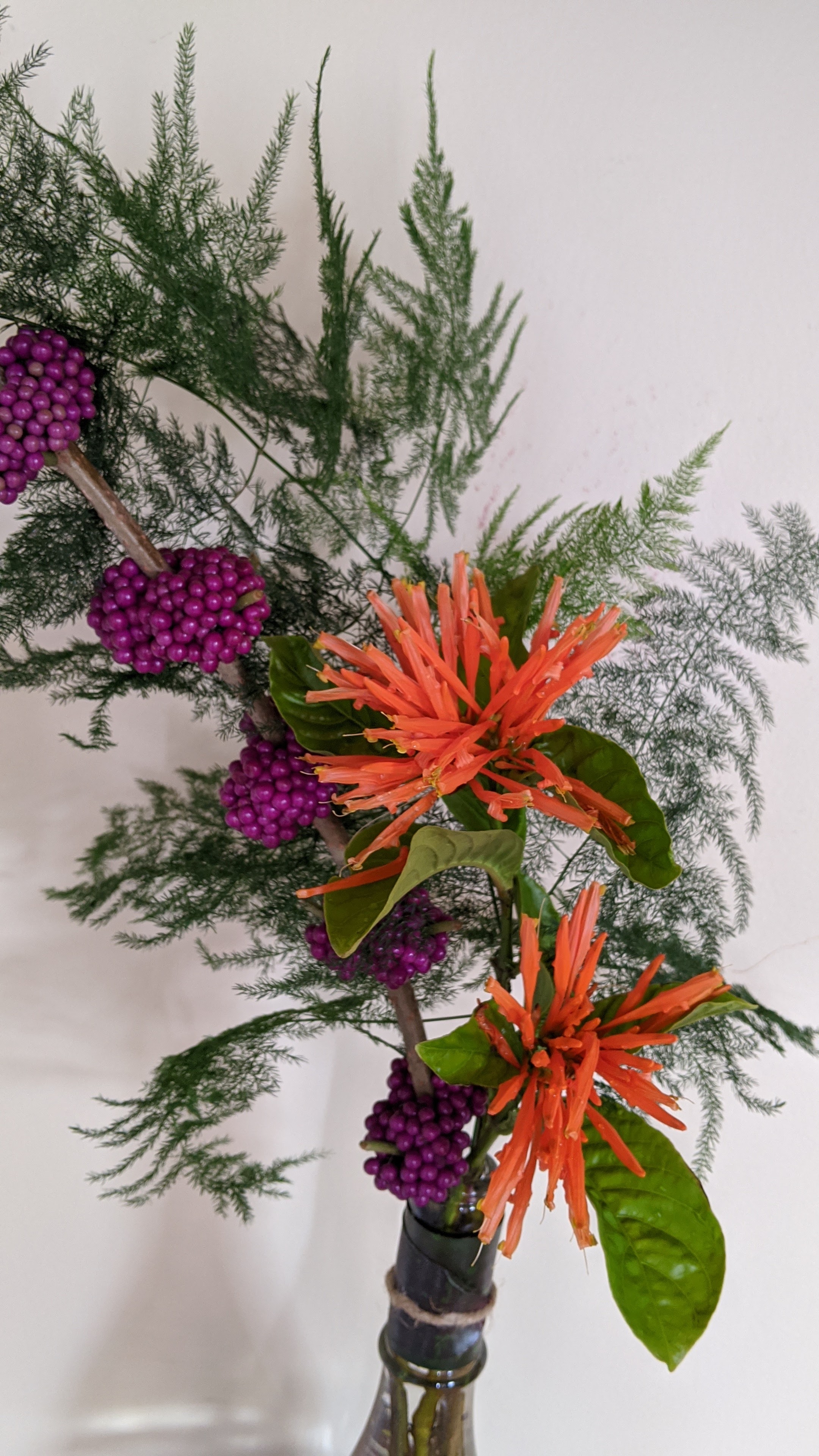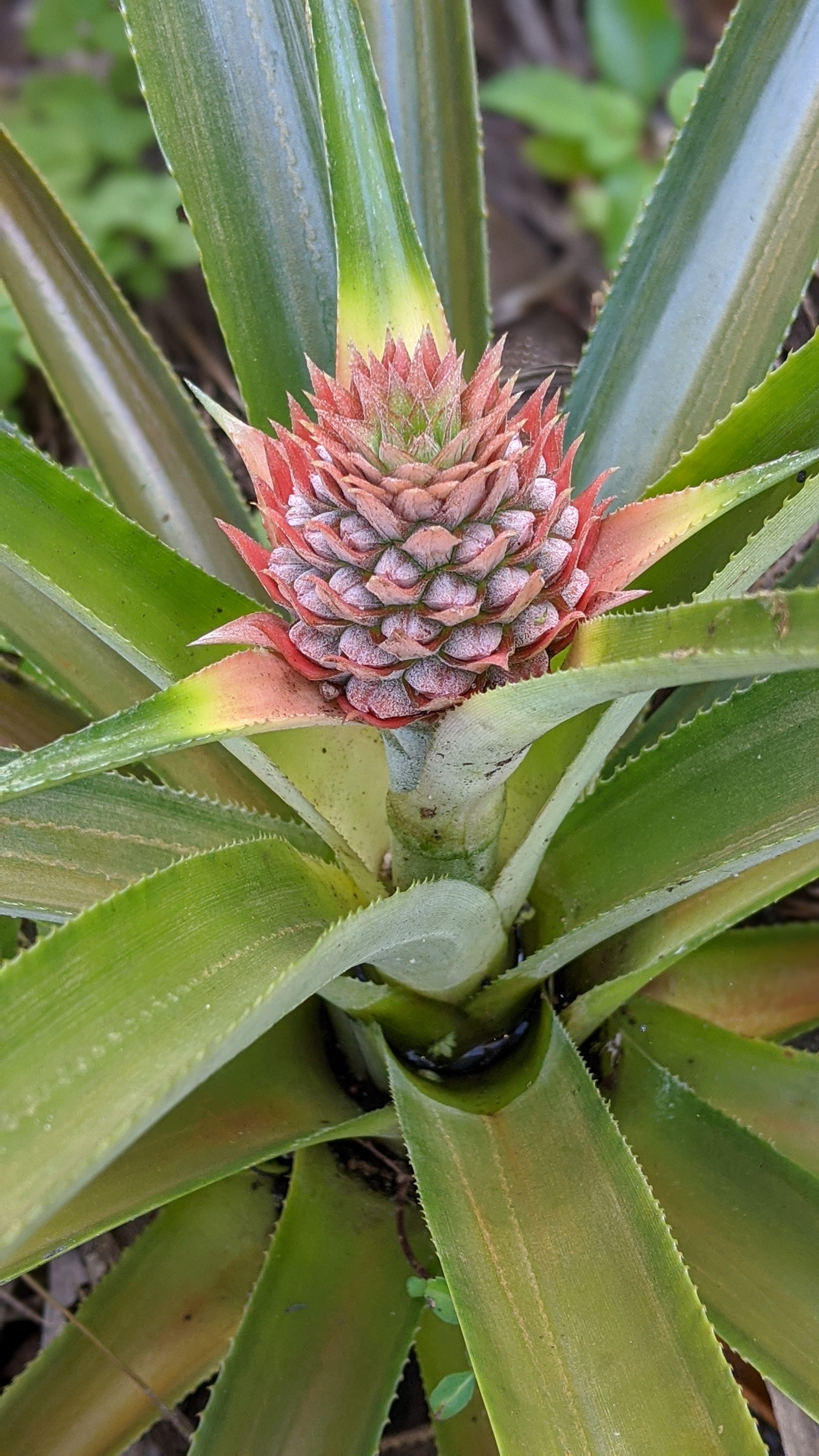
Hurricanes and Tequila

It just dawned on me that Hurricanes are a cocktail, but they don’t contain Tequila. The Hurricane cocktail contains enough rum that if you drink one you won’t care about the Hurricane and the next morning you will feel like you were hit by one.

The first Atlantic Hurricane of the season may or may not be forming in the Tropical Atlantic. There must be a special language school for the weather forecasters that work on these storms. It’s making statements without really stating any facts. Danny is the name of the storm brewing – he has already been designated a Tropical Storm and might possibly turn into a Hurricane. However, the key however is there is a lot of dry Saharan sand and air floating around out there and we are in an El Nino weather pattern. I could ask my Greyhounds for their storm predictions, but they are clearly too busy. So, we wait. To spare myself drama, I only read the Weather Underground.

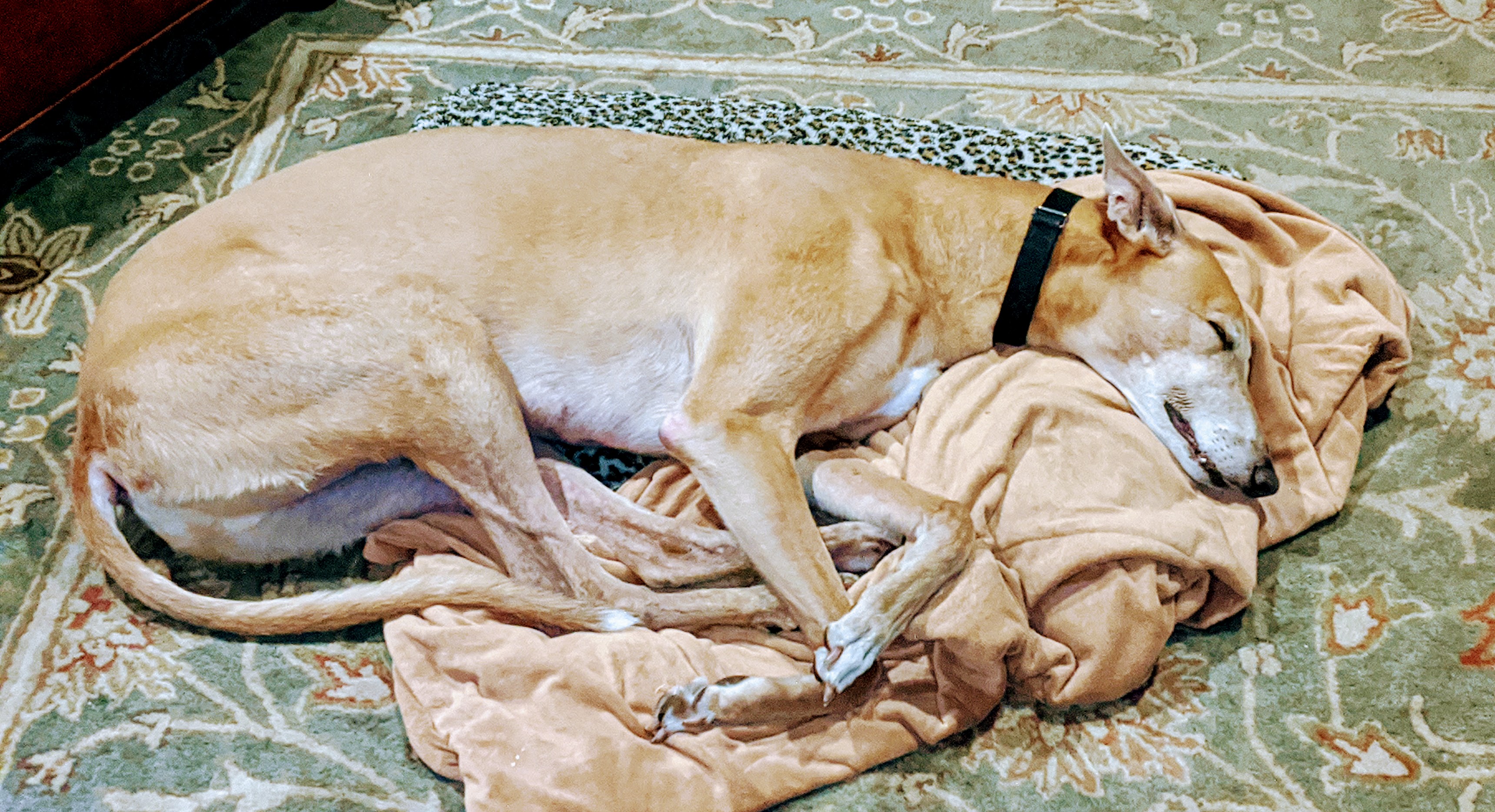
Canines occupied

Canines occupied, they’ve put their car magazines on the Ottoman so they can nap

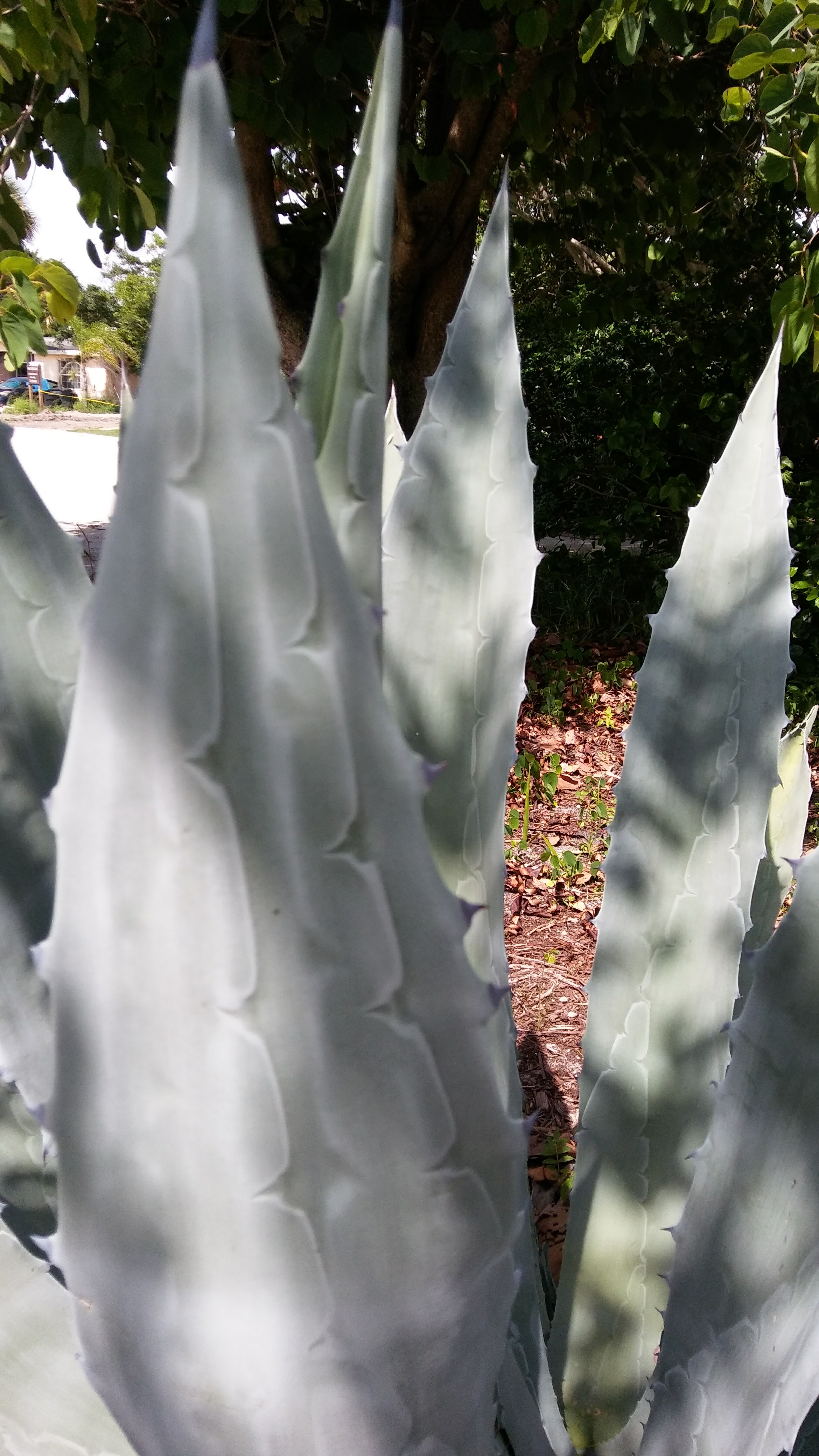
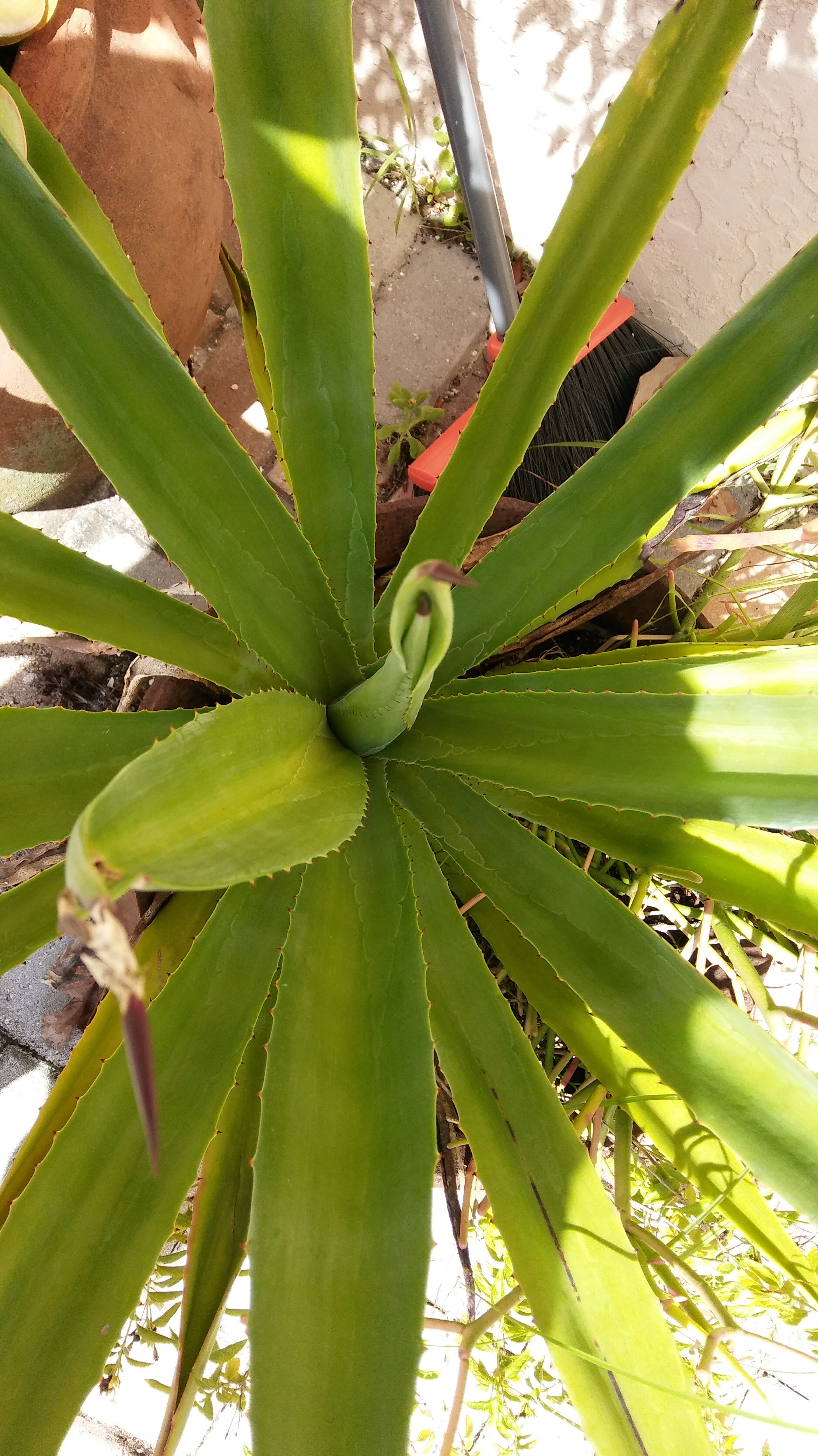
Agave americana

Agave americana

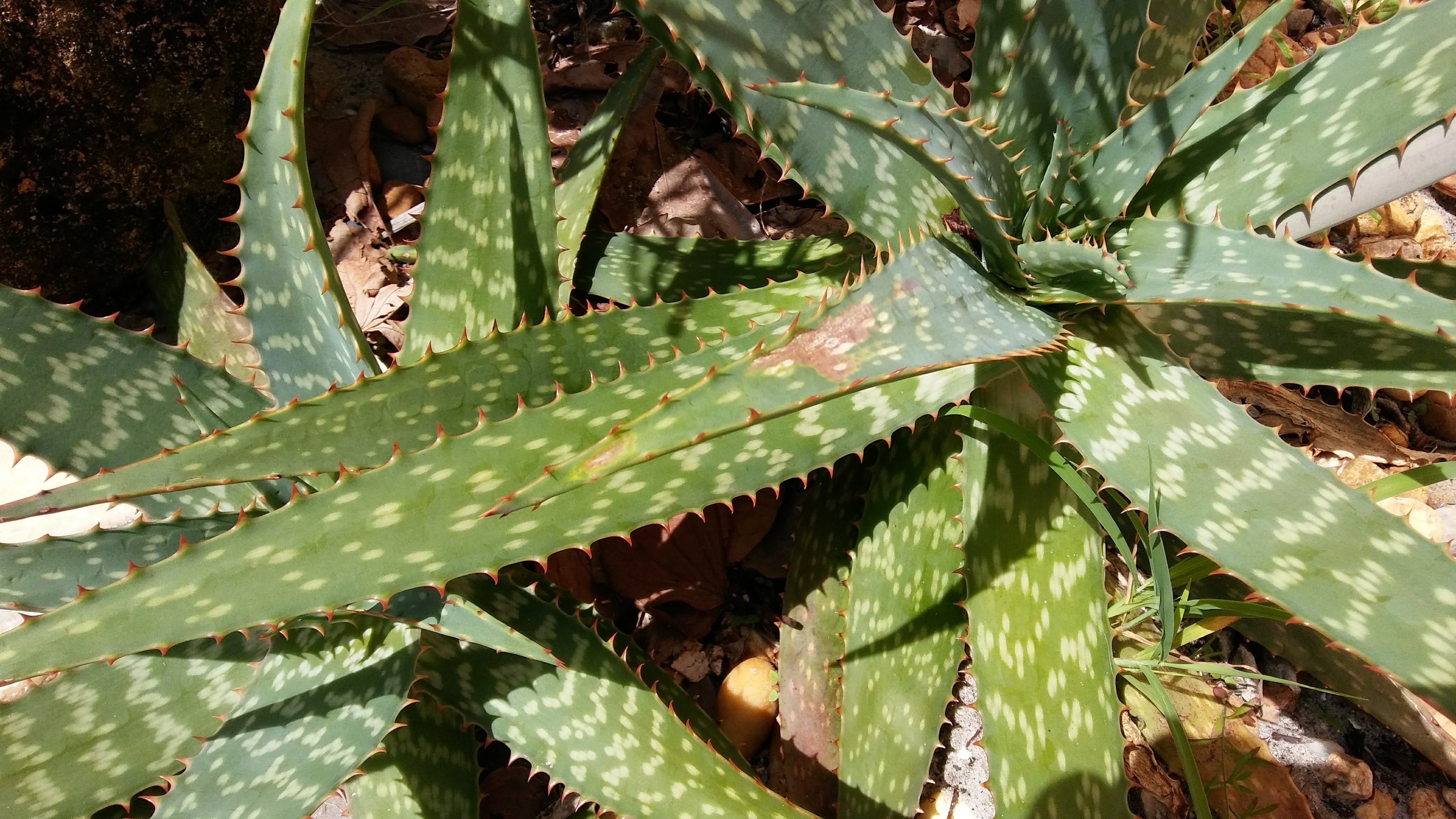
On to the tequila, I have discovered I have an Agave americana shooting up a bloom spike. I thought this was interesting as some of these are called Century Plants because they bloom every hundred years and this one has been around my garden for three years or so. Research has informed me that the bloom spike could be 15 feet tall (!) and indeed tequila is made from this plant. I love the color and texture of the Agave, a glaucous blue green with chocolate brown spines. A friend of mine grew this Agave and gave it to me with a warning ‘some people are allergic to the spines so be sure and cut them off the tips of the leaves’. Well, I decided to move the thing having put it in the wrong place and thought I had cut off all the spines. Later I found myself in the doctor’s office drawing a picture of the plant for her (she couldn’t figure out what could cause such a horrible bruise and reaction) and getting a prescription for Steroids. Yes, I am one of the allergic.

Given my lack of fondness for steroids and the fact that after the Agave americana flowers it dies – I believe it will be asked to leave the garden and I will replace it with a similar sized Bromeliad or Crinum or something lacking chocolate brown spines.

Interesting native plants currently doing their thing in my garden:

Sea Grapes - Coccoloba uvifera

Sea Grapes – Coccoloba uvifera

These are Sea Grapes, native to the beach and a bit beyond. The natives like to eat them, the bottom two are nearly ripe but, I haven’t really developed a taste for them and the seed is big. Mine go to the raccoons and birds.

Hymenocallis latifolia

Hymenocallis latifolia

Natives of Florida call these Spider Lilies, I have seen other Hymenocallis called Peruvian Daffodils, clearly I am not in Peru. This is another Florida beachside native- these are easy to grow, but difficult to photograph. The anthers are very like Oriental Lilies, but hard to see. White flowers bloom in clusters, timing is staggered. These are interesting flowers and nearly indestructible.

My plan is to relax with the Greyhounds and await storm news, not eat any Sea Grapes or get stabbed by an Agave. A glass of Chardonnay, no Hurricanes or Tequila in my future, hopefully.

Installing Orchids in the Strangler Fig

This is a story I started last year, when I was gifted some Orchids.

One of the joys of living in South Florida is growing things outside that are houseplants almost anywhere else in North America. My neighbor showed up with a box of Cattleya Orchids yesterday. She grows these in her trees mounted on the branches; it is a beautiful sight when the clouds of purple orchids are blooming in the summer. Some are fragrant and cast sweet scents through the garden.

Orchids Ready for Banyan Tree

Orchids Ready for  Tree

These Orchids were declared unkillable. If this is true these will be the first Orchids I have ever not killed. I think of Orchids more as a floral arrangement; not something that actually is perennialSo, I followed directions:

Cleared a slightly sunny spot in the base of a big Strangler Fig tree in my side yard. There are unfortunately some very poorly trained arborists (?!) around here who left this bad pruning job on my tree. A few orchids will spice things up here and cover the bald spot..

Banyan Tree Trunk

Fig Tree Trunk

I added some dampened Sphagnum Moss; trying to place the moss so it would drain and not cause any rot on the bark of the tree.
Spaghnum Moss

Spaghnum Moss

Then I hoisted the Orchids into the trunk and tied them to the tree with sisal twine. This takes a bit of jiggling and looping to make things secure, but I think they will stay in place.

The Finished Product

The Finished Product

Here are the Orchids in place. The idea is you water them (not too much) until establishment in the tree. Then maybe water every week during the dry season. Voila! Hopefully, I will get some of these next year; if these are truly unkillable!

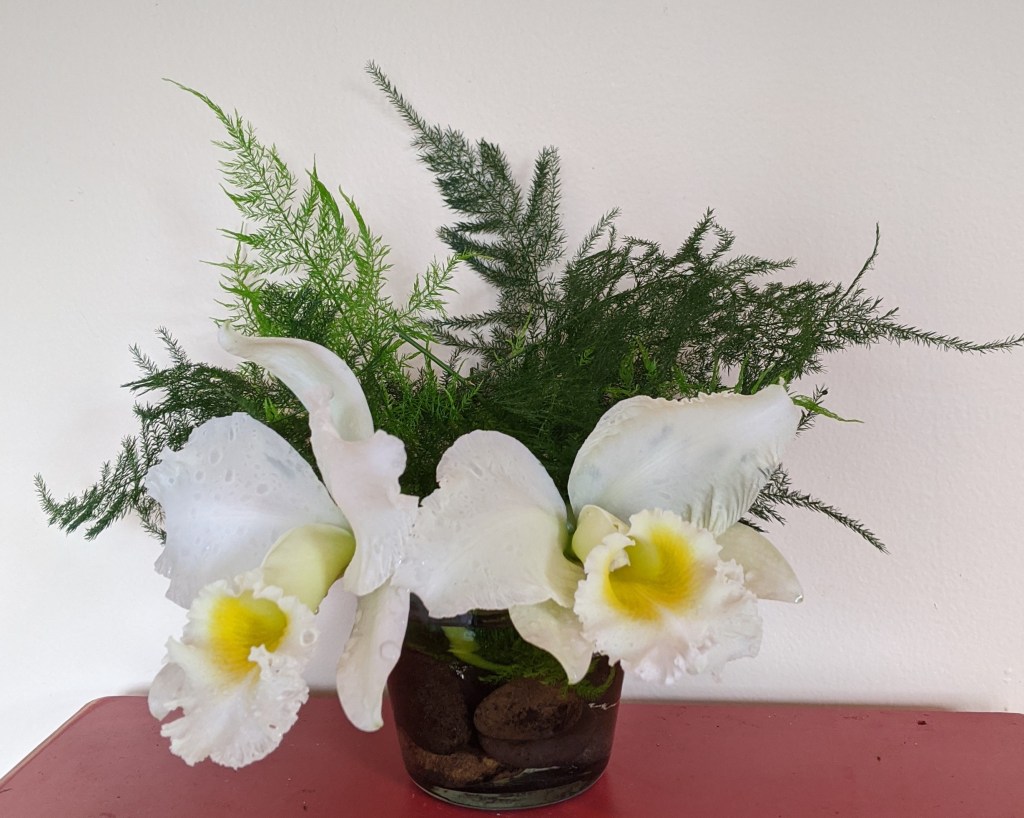
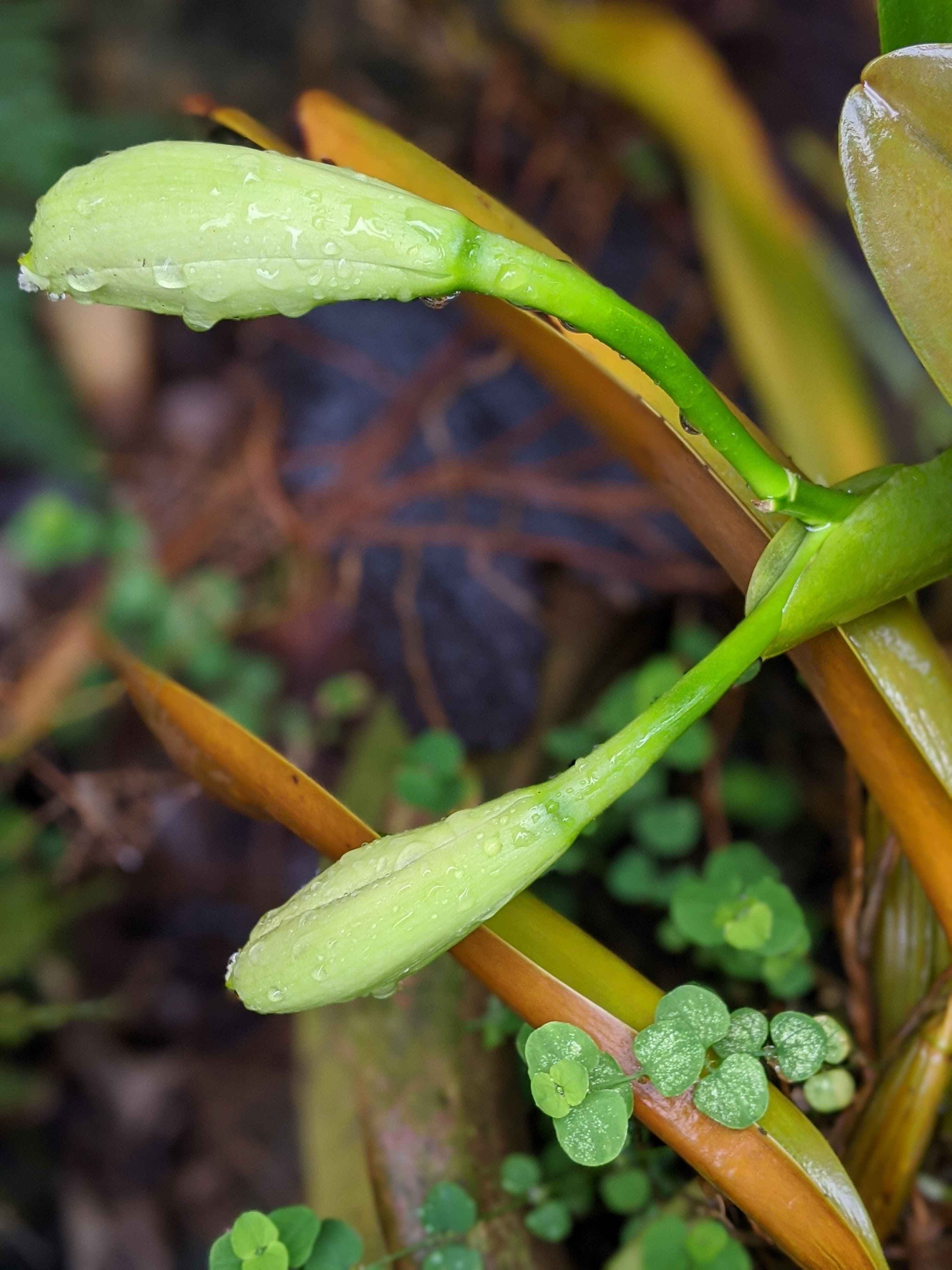
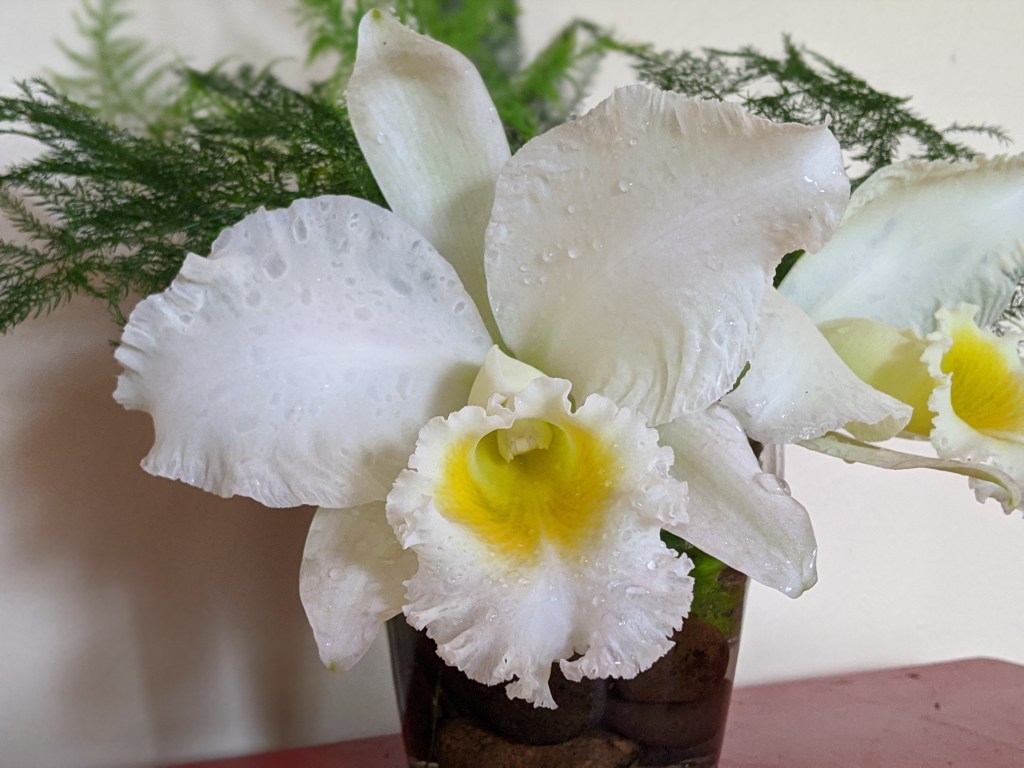
The update here is the Orchids are alive and well and are teasing me with new shoots – hopefully I get some flowers like the ones below. The good news is they do appear to be unkillable!

Cattleyas

Cattleyas

Winter Starburst Clerodendrum – garden fruition

Winter Starburst Clerodendrum

Winter Starburst Clerodendrum in bud

This is my favorite burst of winter color and it has finally bloomed, the cold snap slowed it down, then the rain slowed it down. I have been waiting (somewhat patiently) for the full flower.  Here is the next phase:

Half Bloom

Half Bloom

And finally the full Starburst effect:

Starburst

Starburst

Bursted

Bursted

The Latin name for this plant is Clerodendrum quadriloculare. This is an interesting group of plants, ranging in size from vines to perennials then shrubs up to small trees. Mostly native to tropical South Asia and with a tendency towards creepy habits you must be careful who among them is invited into your garden. I have seen some gardens overrun by a perennial orange version of Clerodendrum which is beautiful but really creepy.

I am glad to have this shrub in my garden, I think of it as a Tropical Rhododendron, and it is so much easier to grow than the cursed Rhododendrons (my former garden had heavy clay that was impossible to grow Rhodos in) The coarse textured leaves have an added bonus of deep plum colored backsides which make the foliage attractive year round.

So far the Winter Starburst has not exhibited any bad behavior, I have sited it in the prescribed partial shade, but the soil like substance in my garden isn’t given to over production of anything except Heliconias as of yet.

Memoirs of garden gloves

CAM00568-1

After nearly two years of service I am retiring my leather gloves. I began life in my Florida garden with fabric gloves that were almost immediately destroyed by my enthusiastic removal of undesirable plants. The chain saw and I became well acquainted with the load of Brazilian Pepper in the backyard, 15-20 feet deep in some spots.

The next pair was cotton knit with plastic coated fingers and palms. Apparently whoever buys and stocks the gloves in this area has never actually tried to use these. These gloves, while waterproof, turn into a sweaty mess in about fifteen minutes. Gardening with garbage bags over your hands is a more pleasant experience. These were sent to the street with the garbage.

I have always liked split cowhide gloves and have been unable to find them in ladies sizes here. I finally found some small men’s leather gloves and they have stood strong for two years. It is evident that I am right handed by the darker shade of filth on that glove. The tip of the index finger finally gave way and was funneling sand into the glove instead of keeping it out. The color of these gloves is interesting as there is no actual dirt in my yard. It is all sand.

These gloves have seen and been responsible for a lot of change in my new garden. Primarily demolition and weeding. The Brazilian Pepper is mostly gone. I don’t think South Florida will ever be rid of this scourge, but I feel I have done my part. I have also gotten rid of some uglies, Schefflera arboricolas, yes the house plant. The previous owners had dotted these around the yard for no apparent reason. I kept cutting it back thinking that would help. It didn’t. Sometimes removal is the only answer.

These gloves have planted some good things. My Mango tree now has some tiny Mangoes and the Lime tree is bearing fruit. Herbs and vegetables are flourishing in raised beds.

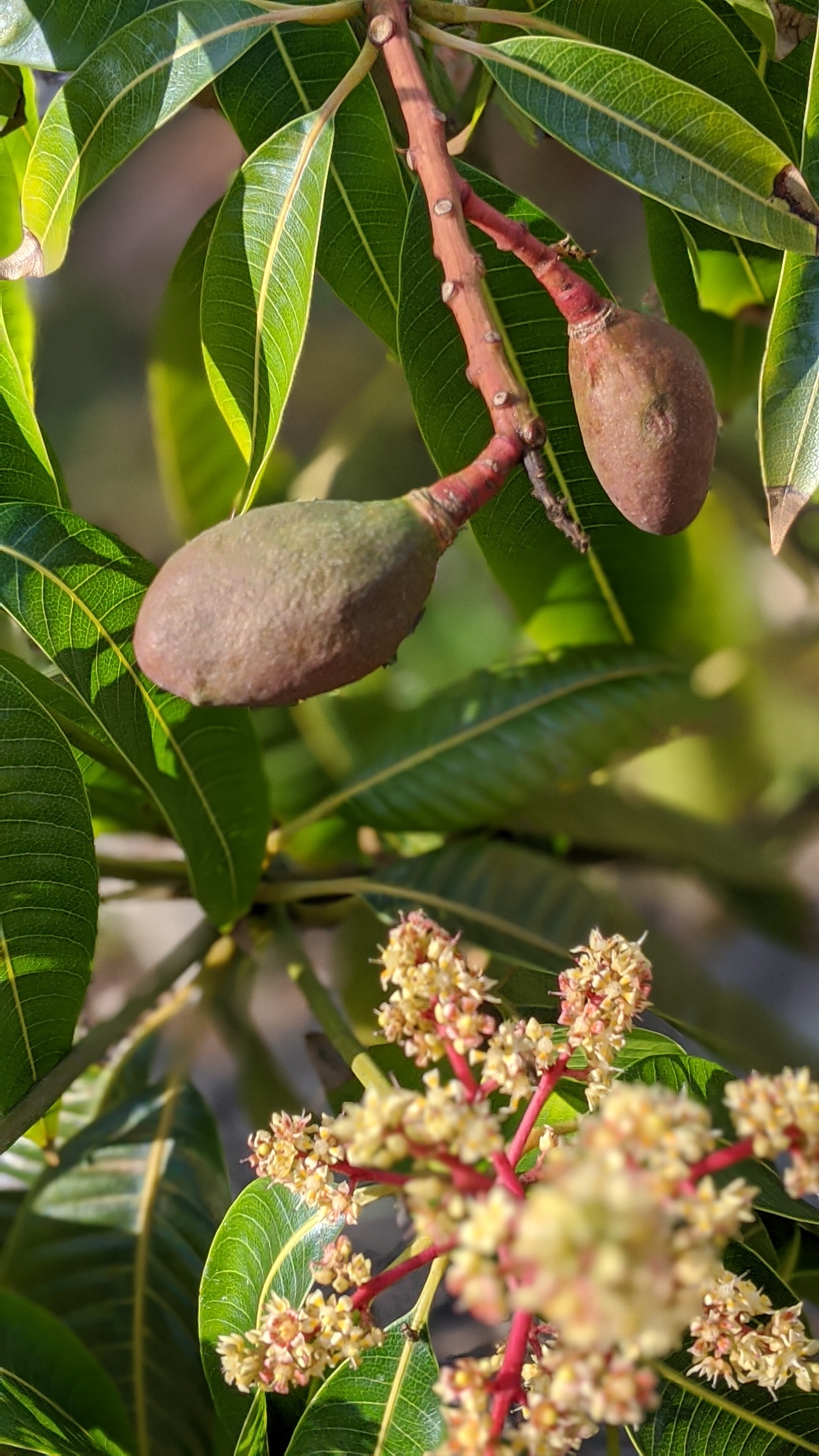
Baby Mangoes

Baby Mangoes

Romaine Lettuce

Romaine Lettuce


With the help of my gloves I was able to grow the Romaine. (That is where the dirt came from – it had to be imported to grow the vegetables) And finally,

My First Homegrown Salad.

My First Homegrown Salad.

Freezing in South Florida?

Cabbage Palm

It is a beautiful day here, cerulean blue sky with a few hawks flying in lazy circles. Take a stroll outside and feel the cold air blowing in from the frozen north- it feels like Chicago in the springtime (or maybe summer). Chicago, Illinois is known as the Windy City and is about 1300 miles north of here.

The concept of freezing weather in SoFla seems weird to me. A low of 35 degrees F is  predicted tonight. Nearly freezing. According to the National Climatic Data Center in 29 years there have been no freezing temperatures in Vero Beach, a bit north of me. In 48 years there have been no freezing temperatures in West Palm Beach, a bit south.

I felt a lot better about the weather forecast having looked up the climatic data, but I am concerned about a few plants that are really susceptible to frost. The primary one being the Rainbow Eucalyptus, notoriously intolerant of freezing temperatures, it has just grown tall enough to be seen over the roof of our garage and it is blooming. I am getting a mental image of a 30 foot tall tree limp, insides frozen to mush and bent in two. Hopefully not.

Rainbow Eucalyptus

Rainbow Eucalyptus

I am in the process of madly moving all the potted plants into the garage. Gotta go put a sheet over my new palms. Then all I can do it wait until tomorrow.


Fallout from Botanica

South Florida is rife with Garden fairs during the winter. This past weekend I went to Botanica in Port St. Lucie. Port St. Lucie is not what I would consider a garden spot, but for some reason they have a great botanical garden run by a very enthusiastic group of volunteers.

Botanica was held at the McKee Botanical Garden. At other times of the year they have a propagation area that sells rooted cuttings from their gardens. It is fun to meet fellow plant nerds and pick up a few Bromeliad cuttings.  Not this time, I pulled into the parking lot and realized this was a bigger event than a few cuttings. At least 4o vendors and a food court. I was in trouble. I had been to the bank.

I walked through most of one side and was not really tempted then through the propagation area. The prices had doubled since last summer, so I was again not tempted. Then I got to the other side of the lake..

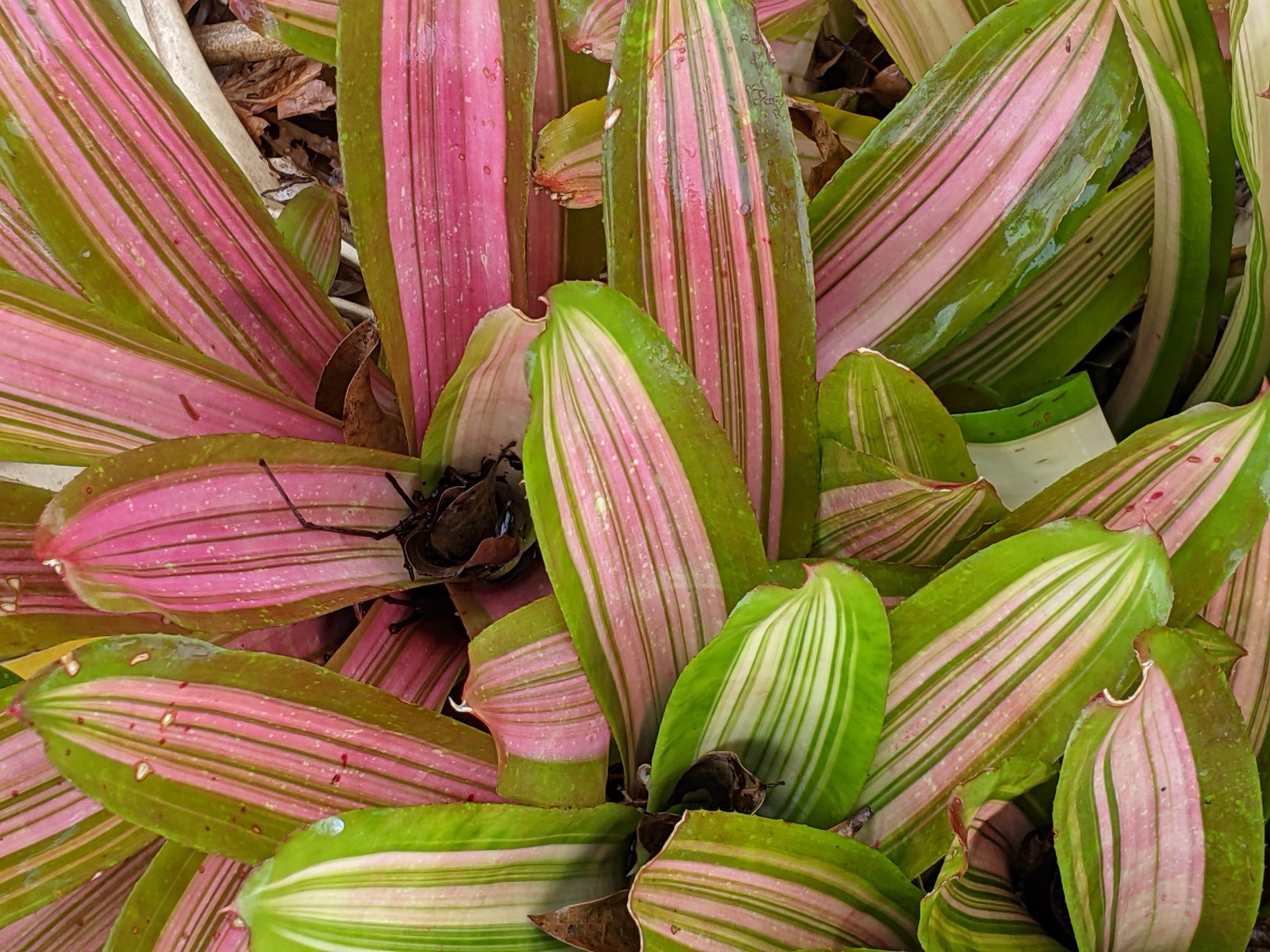
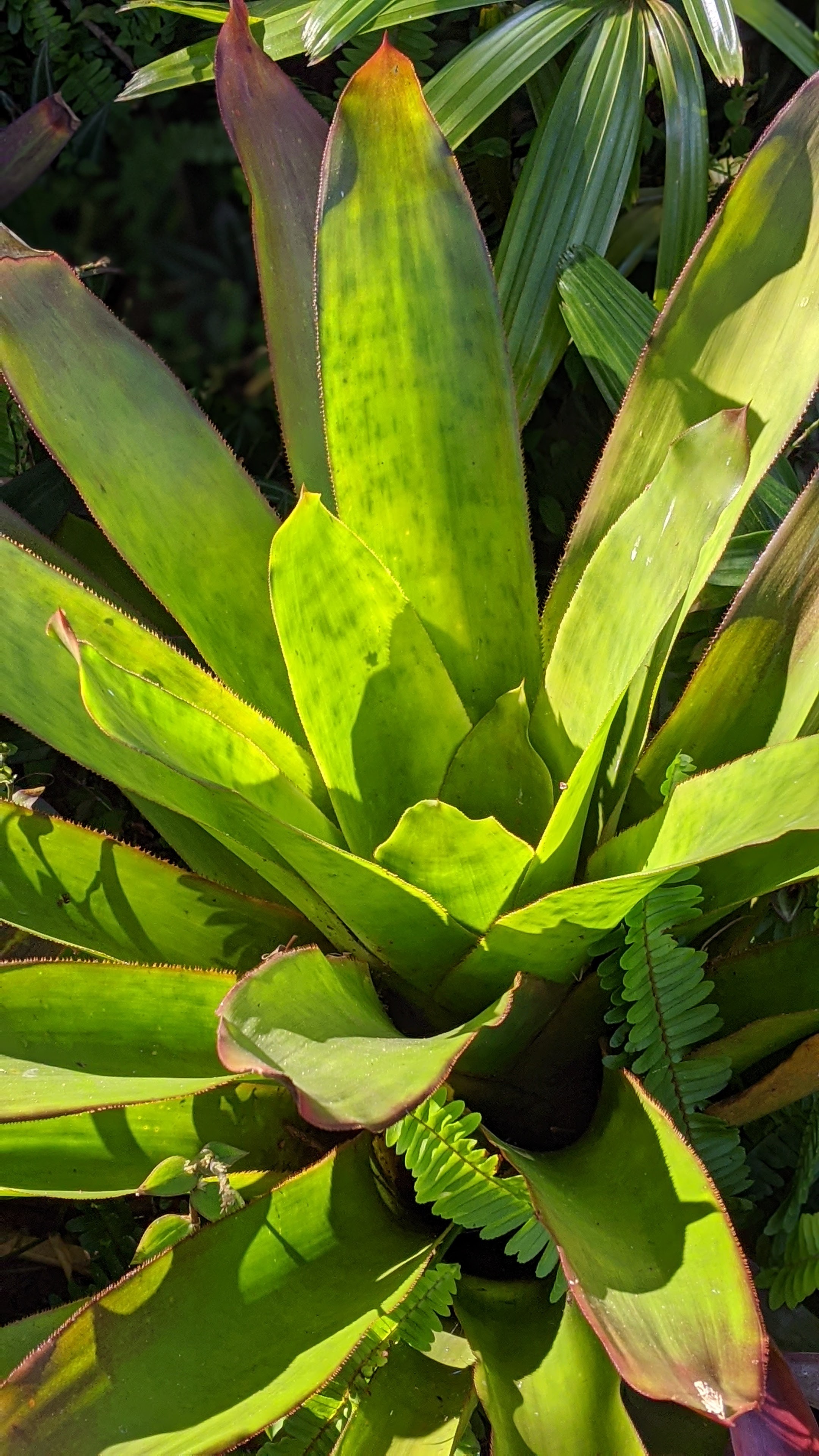
The three for 10 dollar Bromeliads! One of the issues with buying Bromeliads in this manner is the sellers tend to have no idea what kind of Bromeliad they have. The seller advised me the larger one had blue flowers and was adaptable to light. Which really means do not plant in full sun or you will charco-broil the plant and be out three bucks. The others I am pretty sure are some sort of Fireball Neoregelia, I have some similar ones in the garden. Now potted, they have joined their friends from my last foray in plant shopping at Gardenfest.

My Growing Collection

My Growing Collection

The Palm Man, I believe he was called, grows Palms in his backyard nearby. The Palms were beautiful and so were the prices. I succumbed, and bought two Palms.

One of my favorite interior Palms, a Lady Palm – I can now grow these outside, so I bought one.

Lady Palm

Lady Palm

This is a Rhaphis excelsa, native to Southeast Asia Rainforests and highly shade tolerant. I have just the spot.

My next purchase was a Florida Thatch Palm, a new plant to me. One of the three palms native to Florida, this is a Thrinax radiata. Tolerant of sand, sea and alkaline soils. All things I have in abundance. Again, I have just the spot.

Florida Thatch Palm

Florida Thatch Palm

I did not quite violate my ‘never get a cart’ rule. Two nice young men from Junior ROTC showed up with a cart and met me at my car.

I have some planting to do this weekend, lest these palms turn into potted plants and spare parts for future use.

Gardening Outside Your Zone

Burgundy Loropetalum in Atlanta

Burgundy Loropetalum in Atlanta

The song by the Rolling Stones goes, and I am paraphrasing  “You can’t always get what you want, but if you try sometimes you get what you need.” Sage words. That made me remember I want to plant some sage..

There are many transplants here in Florida – people and plants as well. The people are trying to grow the plants they know from home, maybe 4 hardiness zones north. The plants are unhappy. I was surprised by the number of folks trying to grow Lilacs in South Florida. Lilacs grow in the Northern US, not South Florida. South Florida may be the mold and mildew capital of the world and Lilacs are extremely susceptible. Of course, there are some delightfully fragrant plants that people in the North are trying to grow that thrive here and are really well suited for this climate- on it goes. Ylang ylang, anyone? If for no other reason it would be fun to try this because of the name. I actually had a vanilla orchid for a while, but I think one of my dogs stepped on it.

Tabebuia

Tabebuia

I am as guilty as the next gardener, to a certain extent. I like the new and unusual and there is a lot to see when you move to the tropics. My favorite tree ever, the Autumnalis Cherry, cannot be grown here. I readily accept that because of the other trees that can be grown here. My new favorite is Tabebuia which I have just found with orchid colored flowers – the Ipe Tabebuia. I also like the yellow one because of the nice corky bark. It is a dilemma to choose between the two, fortunately the back garden of my house is, well, um, non-existent. So, I can have either.

Burgundy Loropetalum in South Florida

Burgundy Loropetalum in South Florida

I have succumbed to Zone pushing by planting some Burgundy Loropetalum. One of my favorite shrubs from the frozen north. This is not supposed to grow in Zone 10, my research says Zone 9 is it for the Loropetalum. But I found one for 5 bucks and decided to try it. It is cheerfully blooming in my front yard in January. You may notice the Atlanta Loropetalum is robust and more than 6 feet tall. The one here in Florida tops out at 8 inches and looks a bit chlorotic. I guess it is time to wait and see.

Recovering the Herb Garden


Terracotta Herb Container

Terracotta Herb Container

I have had abdominal surgery twice in two years. This has been detrimental to the quality of my herb and vegetable garden. The last surgery was in October and (knock wood) there are no more holes in my gut to repair. Yay, I have been pulling weeds (and am able to pull weeds!-very exciting) in an attempt to reclaim my two herb beds.

These two beds were constructed a couple of years ago and contain the most fertile soil on the otherwise laughably infertile sand dune I live on. The pure fecundity and variety of the weeds I removed was astounding. What is also interesting is the Rosemary, Bay and German Thyme have all managed to survive the onslaught. Thyme isn’t even supposed to grow this far south. Go figure. I like to use all of these herbs and have clipped the tips off while allowing innundation of the rest of the plant so things are a bit leggy or perhaps I will decide these are simply tree form herbs. Garden problem solving at its finest. The tree form.

Reclaimed Rosemary

Reclaimed Rosemary

I think the Rosemary will be OK. My experience with Rosemary is if cut back too hard it tends to die. Oddly enough the  Rosemary is leaning in the direction of the winter wind, it gives a sculptural effect to the plant.  I discovered the Chives had made bulbs about three times bigger than any I had seen before:

Overgrown Chives?

Overgrown Chives?

I looked at these and realized I probably have enough Chives for a restaurant. Chives, in my experience make maybe 1/2″ bulbs and retain circular foliage. These bulbs are 3 times bigger and the foliage is flat and not particularly tasty. My best guess is to divide and conquer, so I chopped them into bits and replanted them into a shadier area. Time will tell about the success of the chive chopping.

I have been using a terracotta container on my front porch for most herbs while the bigger beds languished in benign neglect. Currently the pot has Parsley, Creeping Rosemary, German and Lemon Thyme and Basil. It is close to the kitchen and a real plus is that the cats can’t get to it.

The refurbishing of the garden begins tomorrow. I have collected Lemon Thyme, Dill, Cilantro, Snow Peas and Radishes to grow with the existing Tree Formed Rosemary and Bay.

Hopefully it doesn’t rain.

Vive La Difference

Purple Oxalis in Floridian mode with Oyster Plants

Purple Oxalis in Floridian mode with Oyster Plants

I am from Tucker, Georgia USA. While I have titled the post in French, I do not and will not speak French and have a Southern accent that creeps up on me sometimes, mostly in colloquialisms that cause folks around here to scratch their heads. I said to the podiatrist I couldn’t “sit on my haunches” he was completely puzzled. That means squat down in Southern. Genetically bad ankles, I think. Or too much gardening.

“That dog don’t hunt” is another confusing Southernism. It just means it doesn’t work. More head scratching. I don’t really sound like Scarlett O’Hara from Gone with the Wind but Vivien Leigh was English anyway.

This past year I have been enjoying numerous gardening blogs; I have read about everything from Lupines in Australia to Roses in England to Daisies and Aloes in the US and Fall color just about everywhere but where I live. South Florida is a bit lacking in that regard.

What I have taken from all my reading is there is a lot of difference in the things people grow, but there are also a lot of similarities in favorites. Here is my take on some universal favorites:

Maples for Fall Color, Japanese Maples especially. Cherries and Deciduous Magnolias for Spring color. Everybody loves Cosmos and Hydrangeas and some type of Asters, Daisies, Mums, Lilies of all shapes and sizes, Roses. The UK writers like Sweetgums, which still boggles my mind. Southerners go searching for the chainsaw when a suspect Sweetgum seedling arises. Azaleas and Rhododendrons are very popular and the everpresent Viburnums.

Another interesting aside, gardening magazines will have you thinking succulents and tropical plants are all the rage in temperate gardens. I don’t read about as much of those types of plants as good, well suited garden plants. Of course, there is always something you must have that is a few plant hardiness zones away from reality. I had palms in my temperate garden, I am guessing after last winter they have expired.

While I couldn’t hope to grow many of the favorites in my garden, what was interesting to me to find out is there are some things that will grow just about anywhere. For example,  Oxalis and Viburnums will grow just about everywhere, even at my house. I have some fantastic Purple Oxalis my neighbor gave me. Who knows where it came from – maybe England.

Fall Color in South Florida – Bolivian Sunflowers

The Sunflower Hedge

The Sunflower Hedge

I have been noticing these plants for the past few years and it always seems weird to me to associate Sunflowers with November. Gigantic Sunflower Shrubs, at that. I also assumed incorrectly they were some sort of Helianthus. Not the case, this is a Tithonia, Tithonia diversifolia – the Bolivian Sunflower. In another perversity of plant naming, the Bolivian Sunflower is native to Mexico and Central America. I am fairly certain Bolivia is in South America.The name Mexican Sunflower is already taken for a smaller perennial.

One of my neighbors has a hedge of Bolivian Sunflowers screening the yard. This Sunflower hedge is at least 12 tall and in full bloom right now. This plant grows Spring and Summer and blooms all Fall and Winter. It has just really started blooming in earnest and should continue for a couple of months. Another one of those kooky benefits of living in South Florida, Sunflowers all winter.

Since the possible 16′ tall shrub bears 6″ flowers profusely, I am imagining it can put out quite a few seeds and become a problem. I am not sure I would try a hedge, but maybe one or two to screen a view where the lawnmower will run over any nearby seedlings. One has to practice selective lawn mower placement of plants here if there is any question of overabundance. No frost means nothing ever dies. Or anything you want gone refuses to die.