It’s time once again for the Saturday garden tour. Six current events from the garden. It is a stormy day in South Florida. There is a lightning storm about 10 miles away that is about to descend on us – seems odd for January, but that is Florida weather for you.
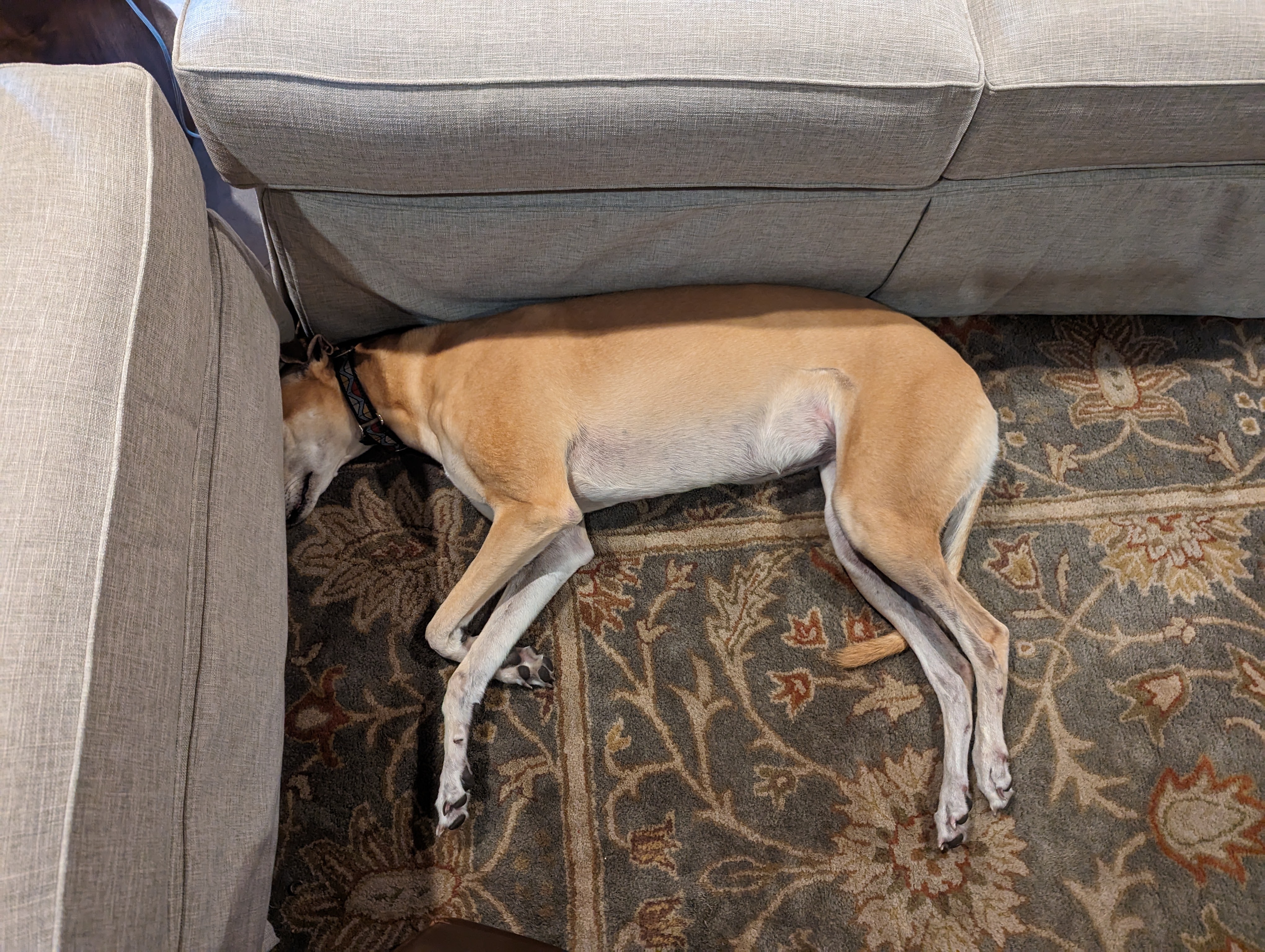
I think Fiona had the right idea about how to deal with the weather. On the other hand – the foolish human went out and snapped a few pictures of new colors and textures in the garden she is enjoying. The underside of the sofa can wait until the storm gets here.
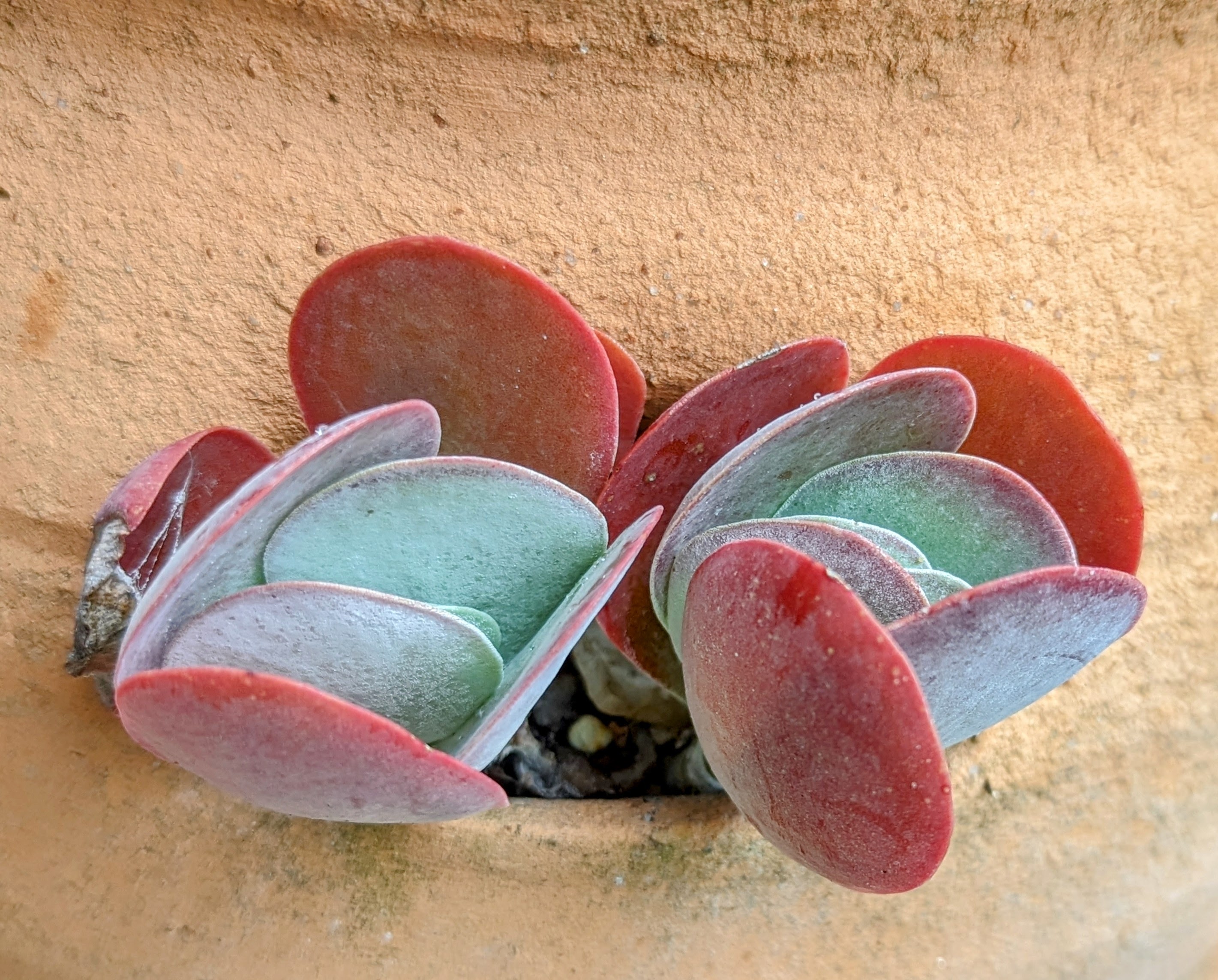
Flapjack Kalanchoes are peeking out of a strawberry pot.
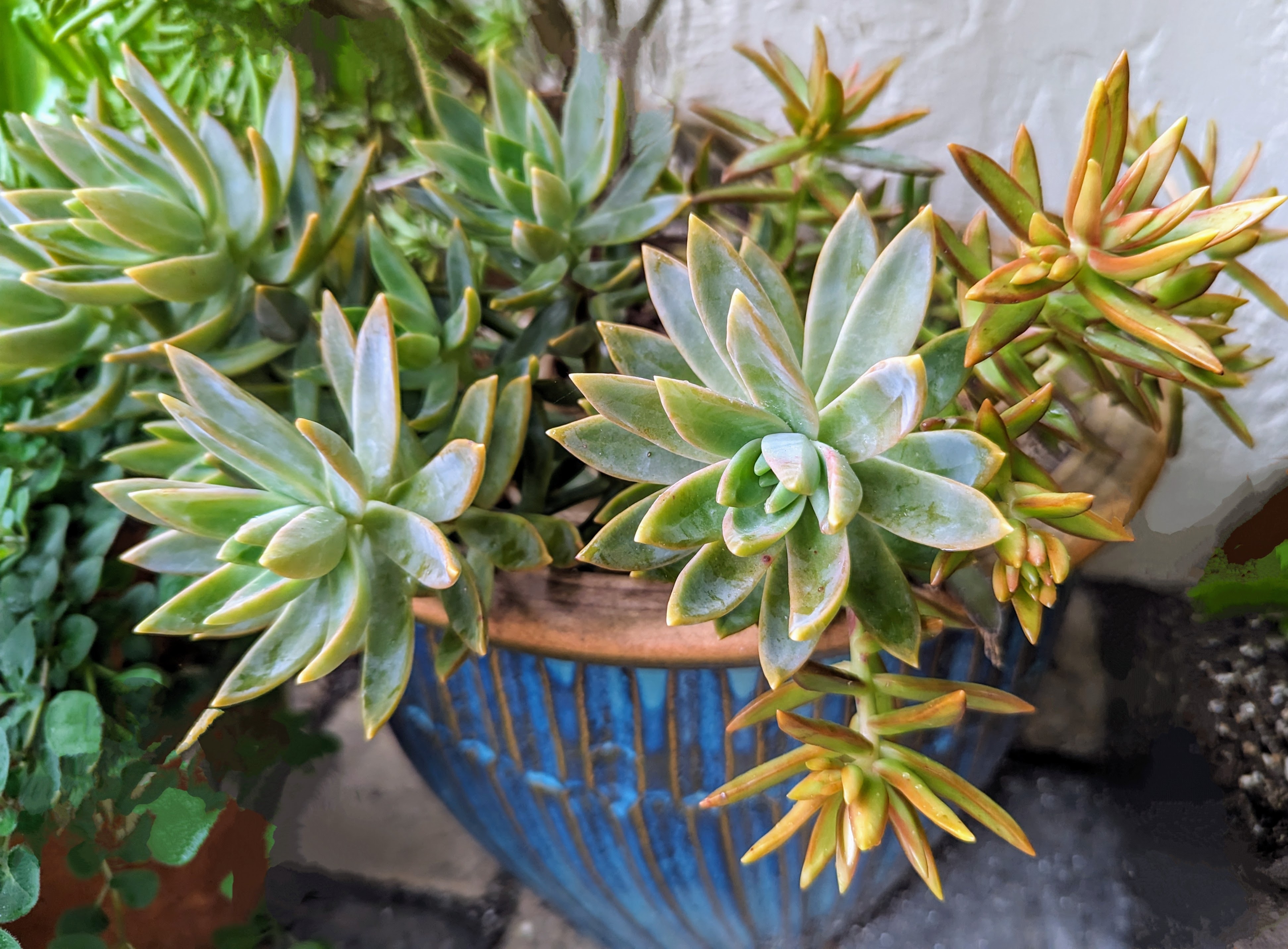
Pot of mixed succulents is coloring up for winter.
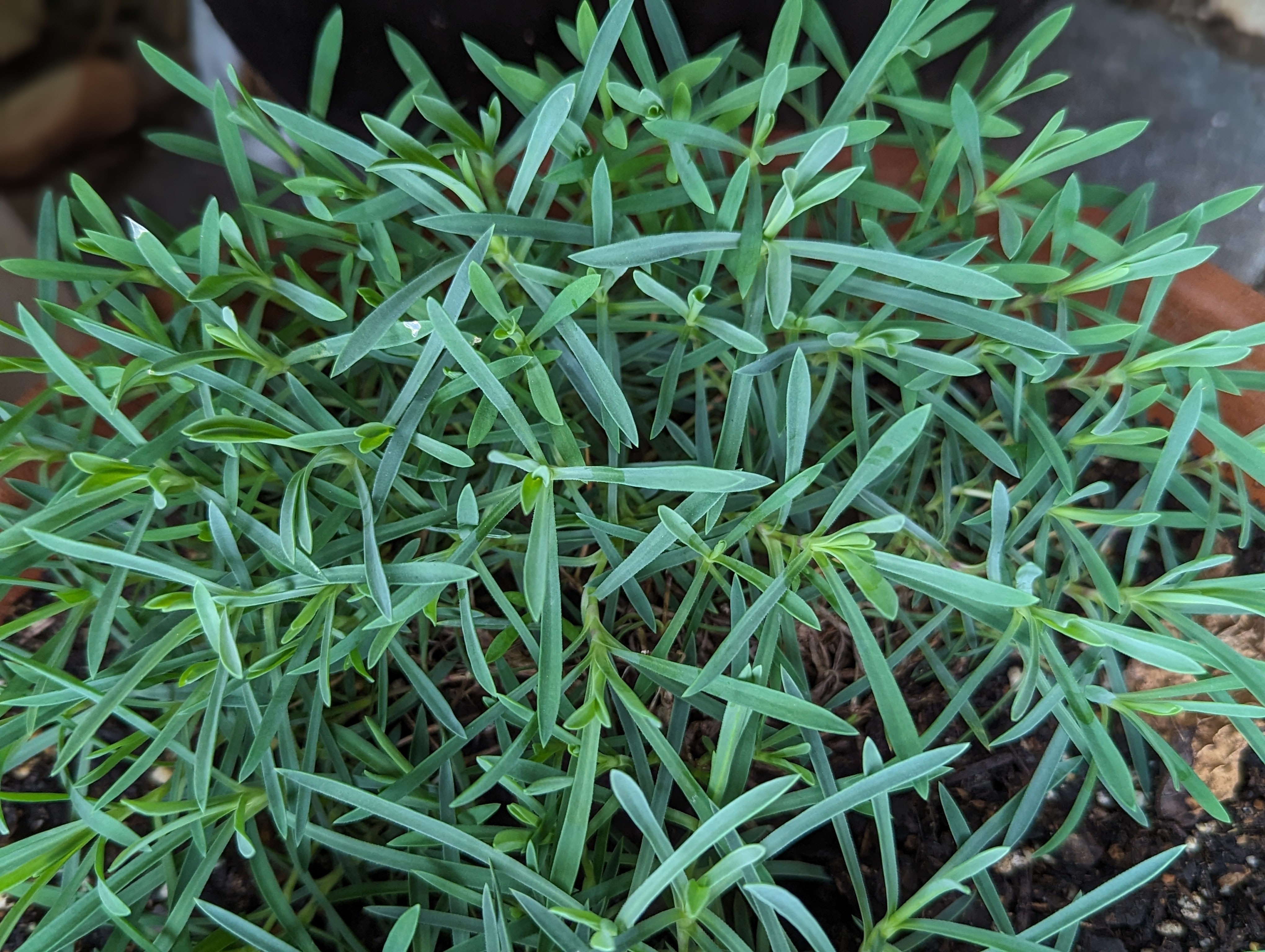
I love grey foliage. This is Bath’s Pink Dianthus (Dianthus gratianopolitanus ‘Bath’s Pink’. Such a wonderful texture.
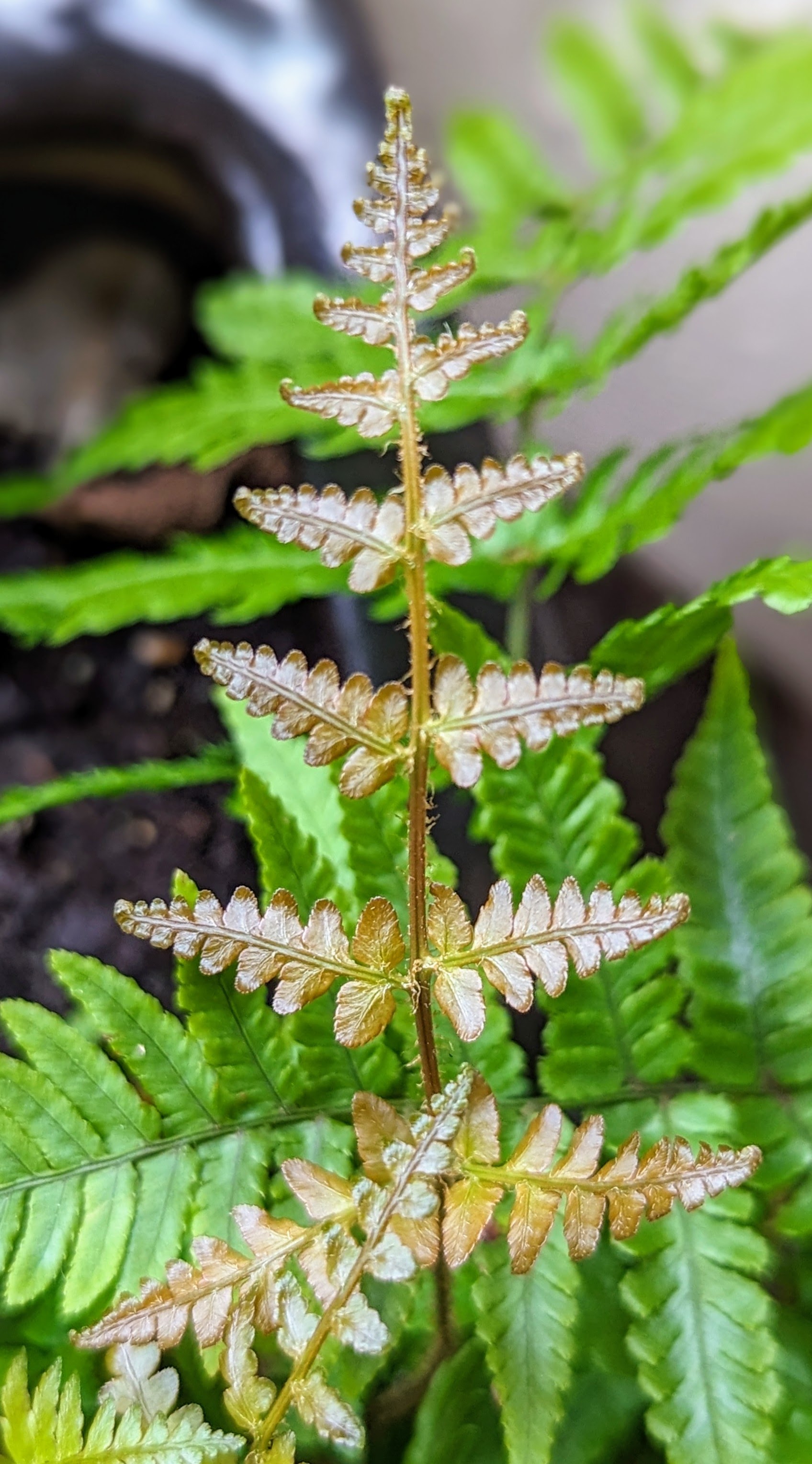
Autumn Fern (Dryopteris erythrosora) finally showing some new fall toned foliage.
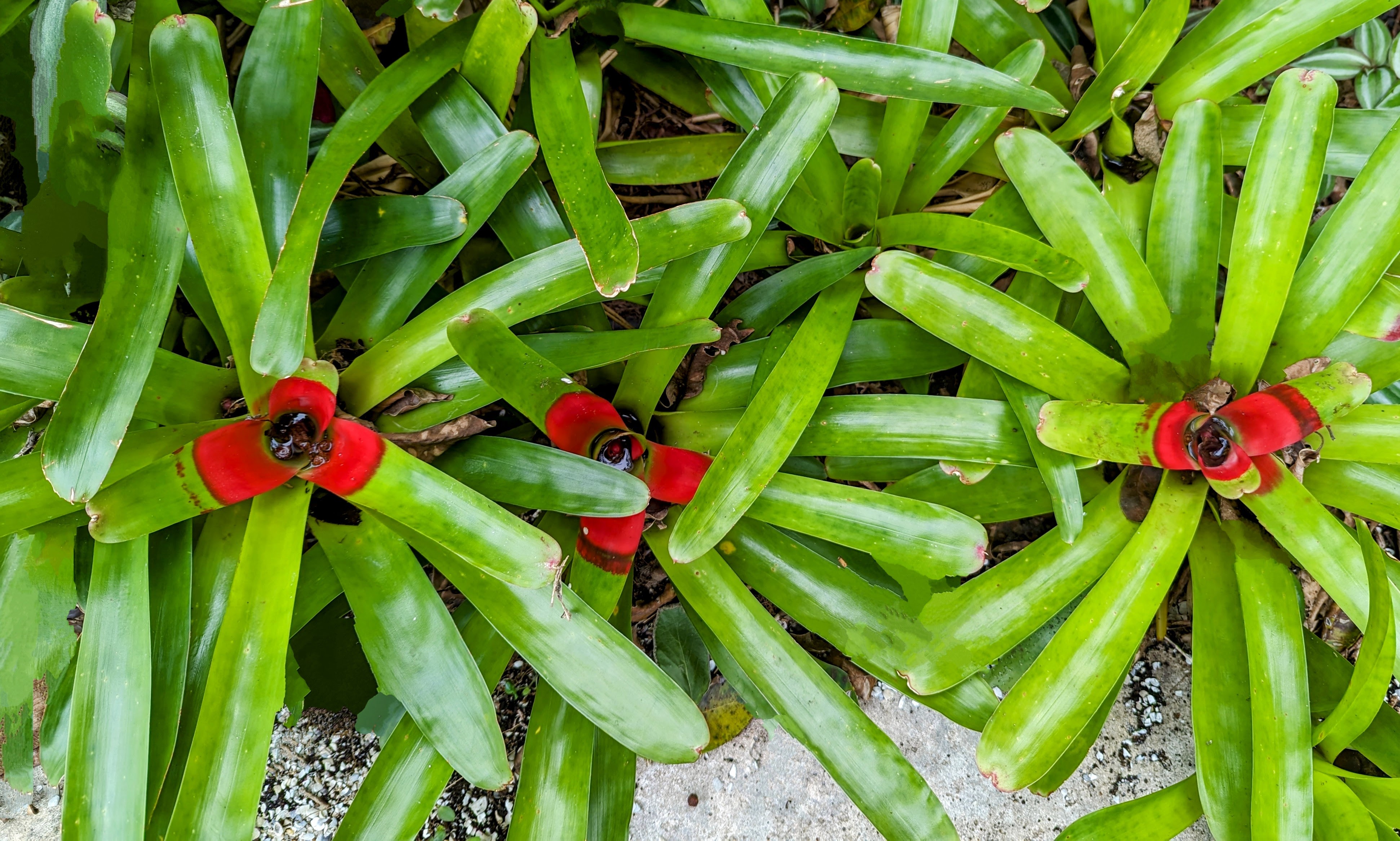
These are Blushing Bromeliads (Neoregelia carolinae). The centers turn red in winter.
That’s my six for this Saturday. For a world of Six on Saturday visit Jim at http://gardenruminations.co.uk and follow the links to other gardens.
It’s time, once again, for SOS – sharing six items of interest from my South Florida garden with gardeners from around the world. Follow the link to visit Jim and see his garden and many others –http://gardenruminations.co.uk
The garden and the weather has had its ups and downs this week. It has been cold (for South Florida – temperatures in the 40s F, 4 C) so the locals are freezing, but the garden is enjoying it for the most part.
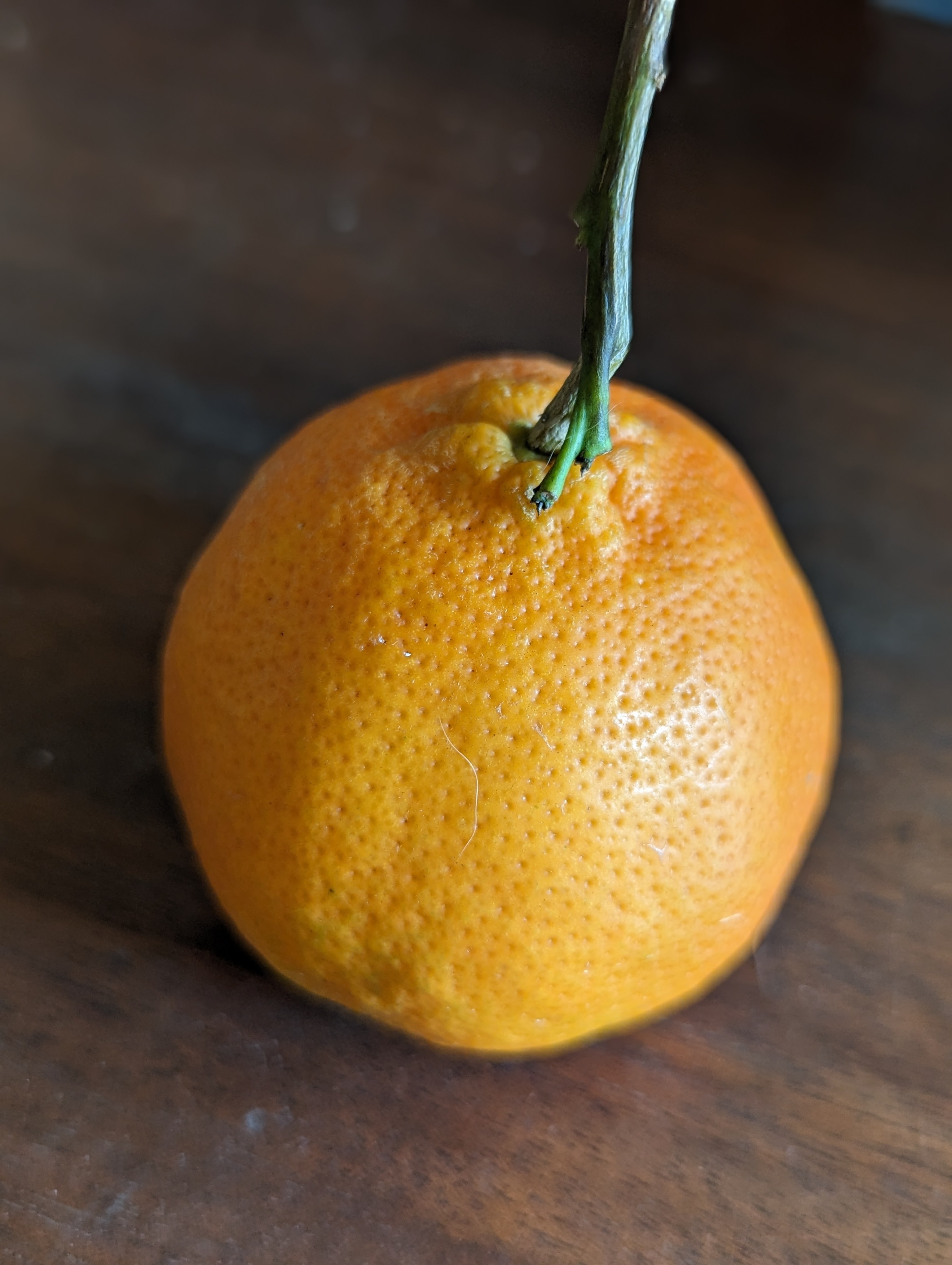
Winter is citrus season and I finally have some fruit on my Rangpur lime tree. My neighbor grew the tree from a seed and gave it to me about 7 years ago. It has 5 ! limes. I was thrilled to cut the first one, beautiful and fully ripe.
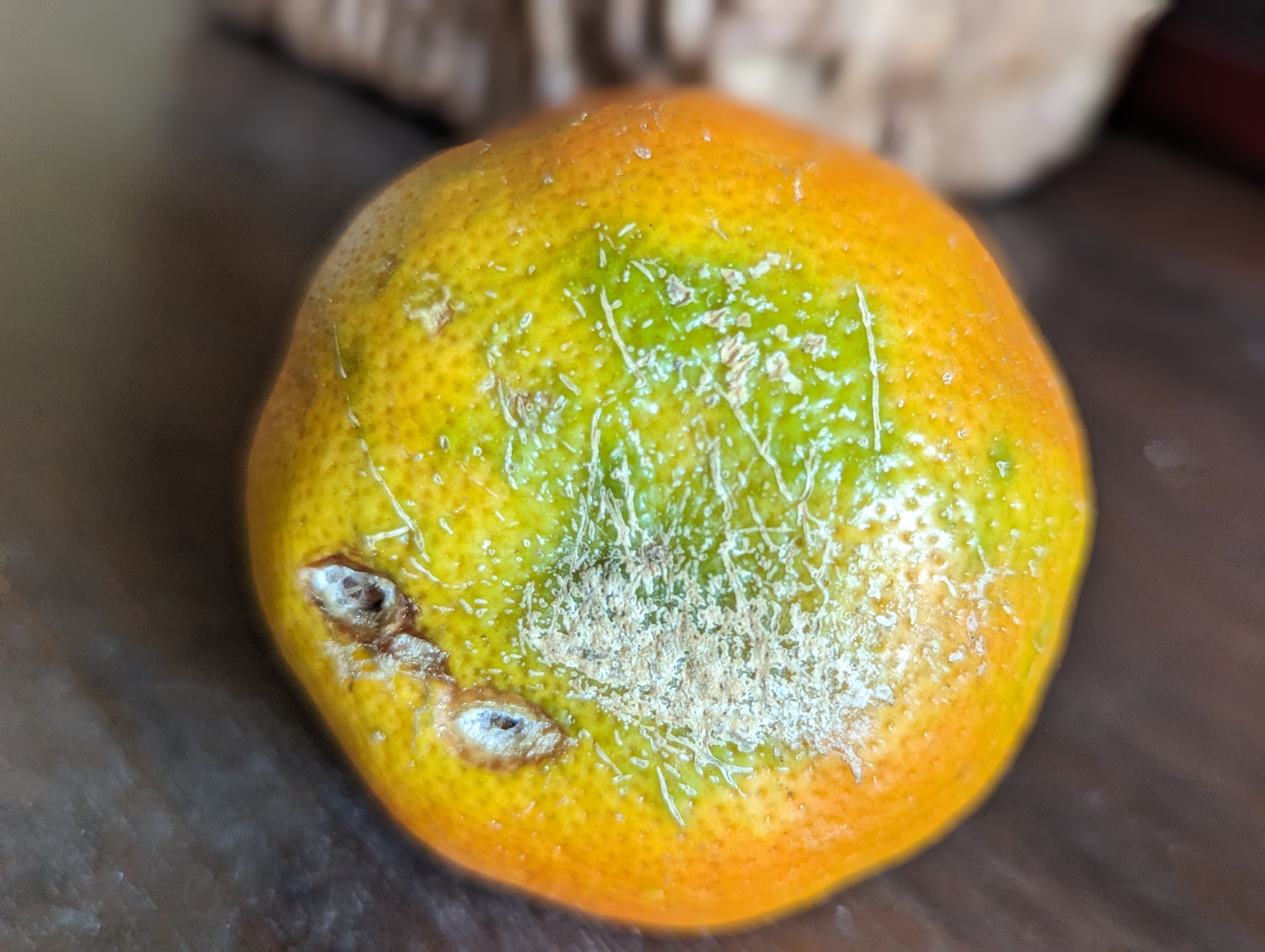
And then, I turned it over.
Something, or someone had beaten me to it and sucked all the juice out. Vampire rats? Arghh.
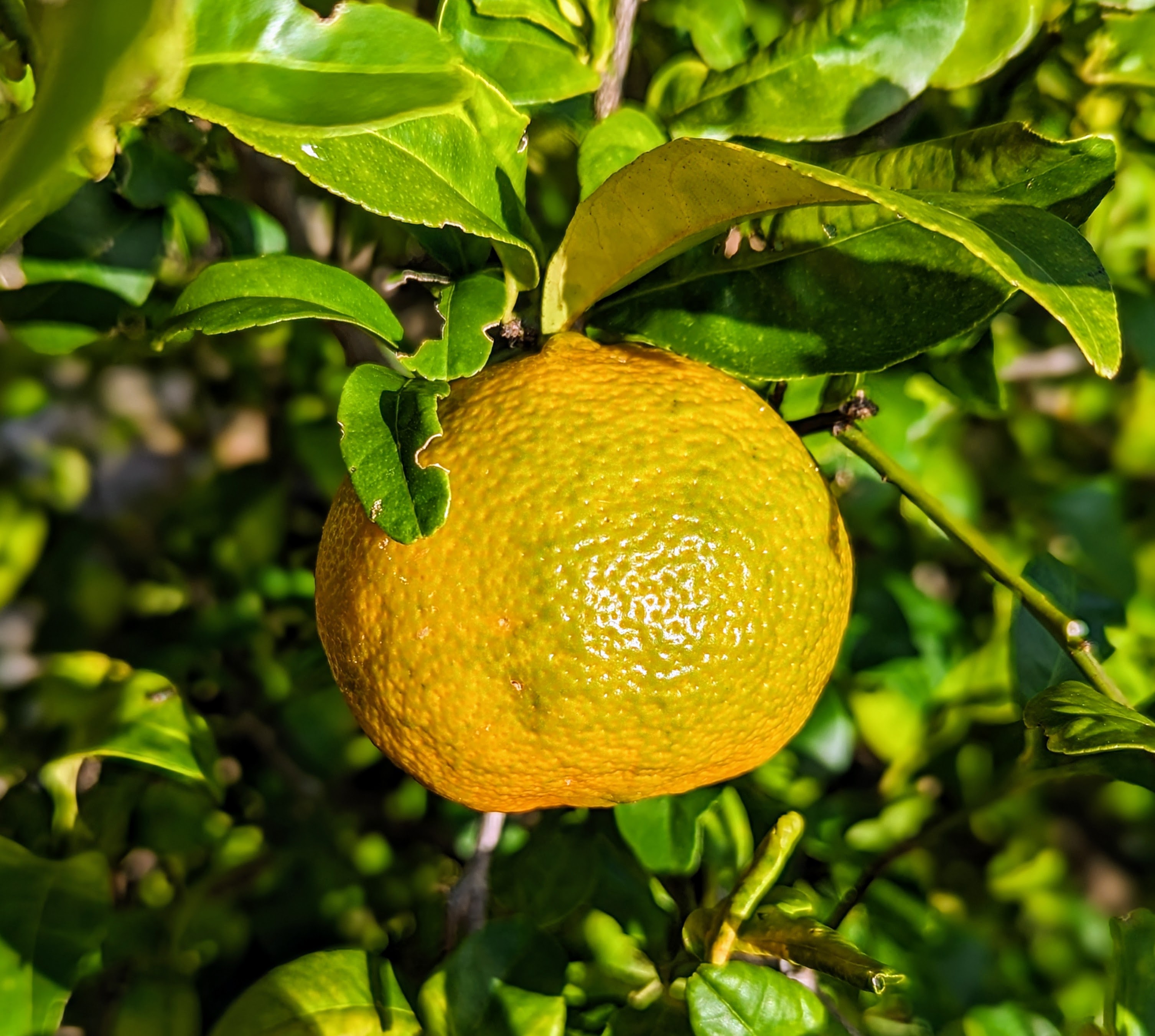
Not to worry, there are a few left. Rangpur limes are not actually limes, but sour oranges, probably a cross between lemons and mandarin oranges. They make great pies and are the basis for mojo marinades in Cuban cuisine. Here’s one still ripening. Fingers crossed.
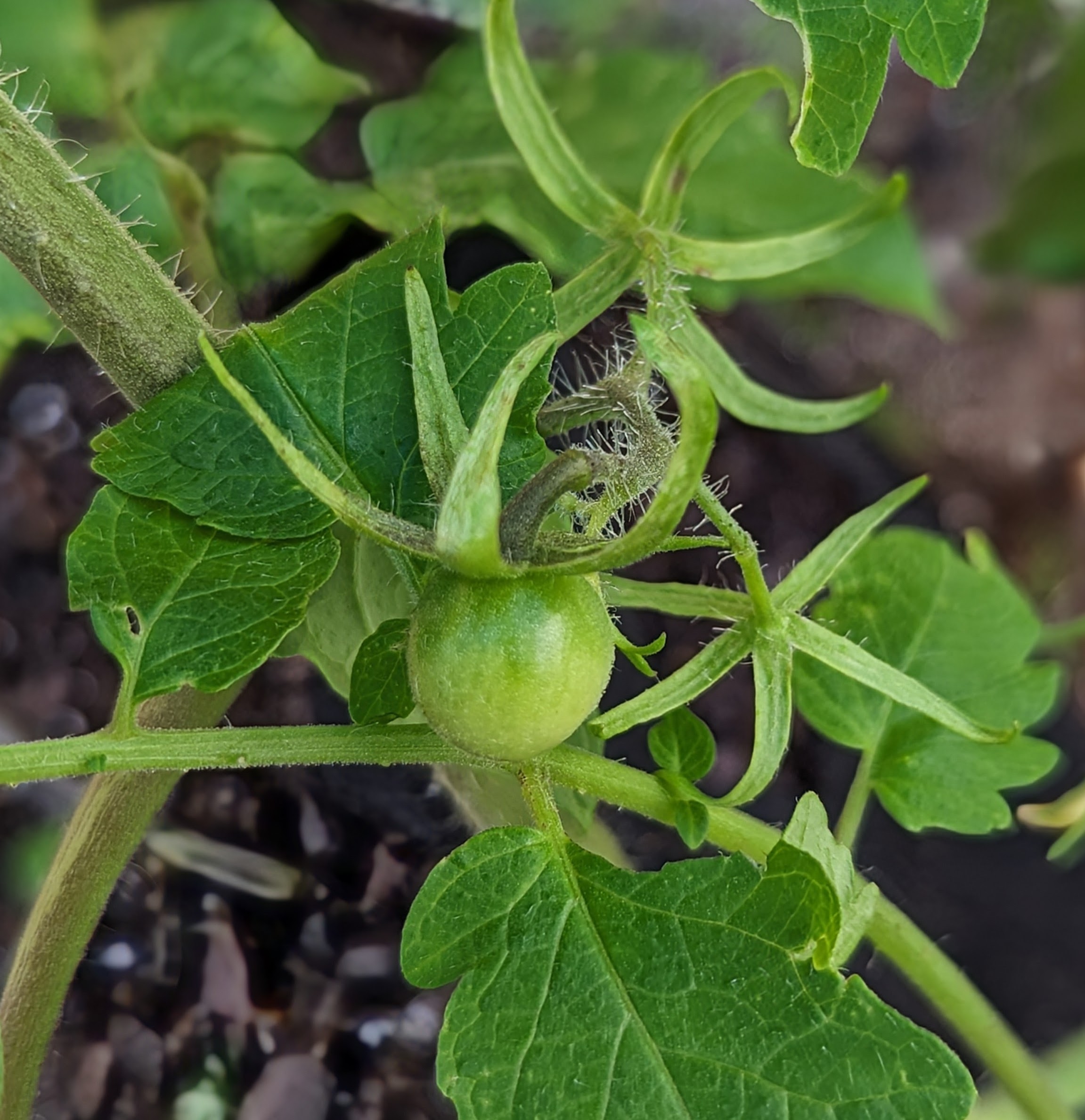
I started tomatoes from seeds in October. As soon as I planted the seedlings the weather was cold and damp. These plants have had everything tomatoes get, I think. I finally have my first fruit. I think it is a Lost Marbles cherry tomato.
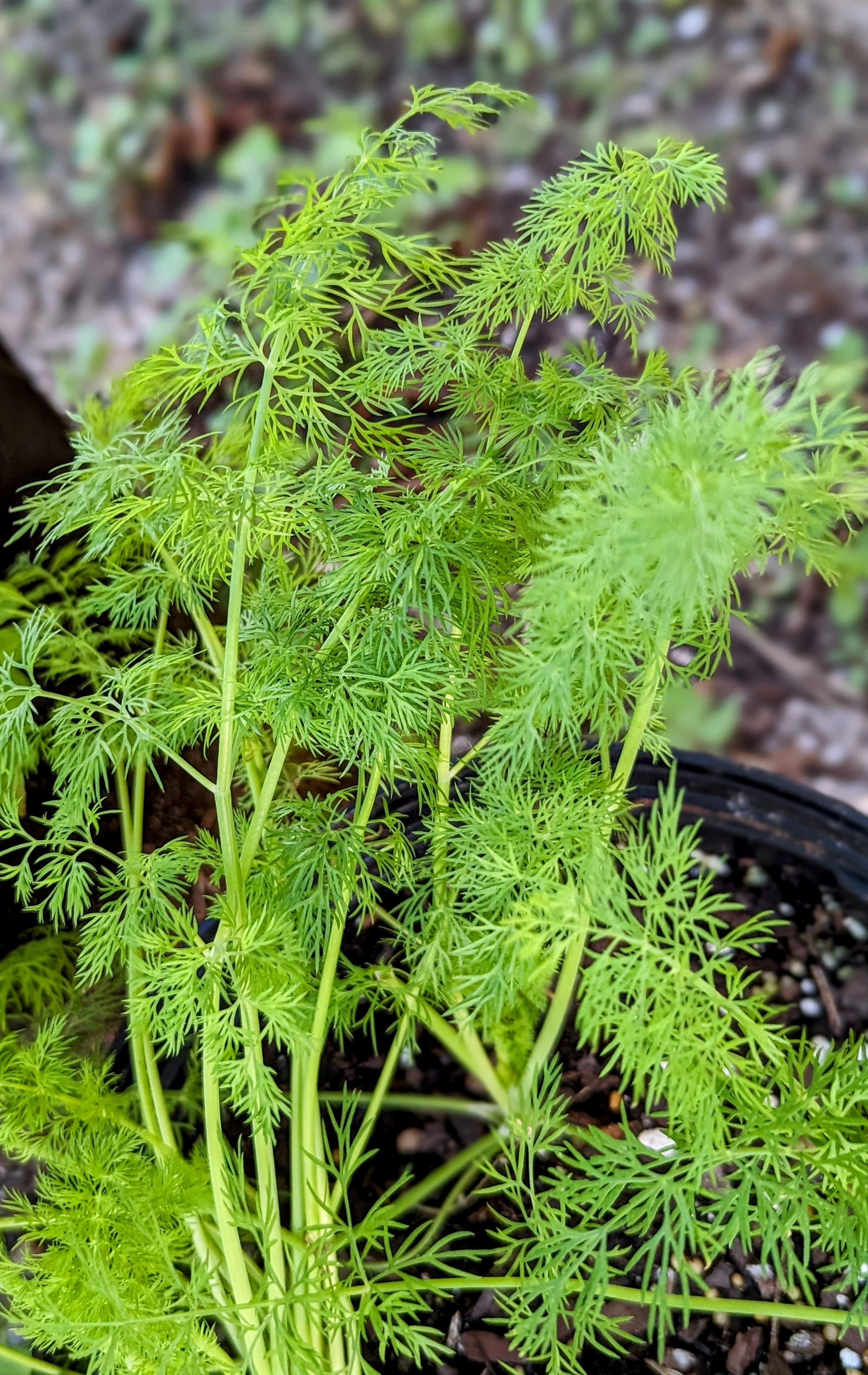
Long Island Mammoth dill is the recommended variety for Florida as it goes to seed more slowly than others. I have had it for a few years and concur. These plants have been enjoying the weather and I have enjoyed the dill.
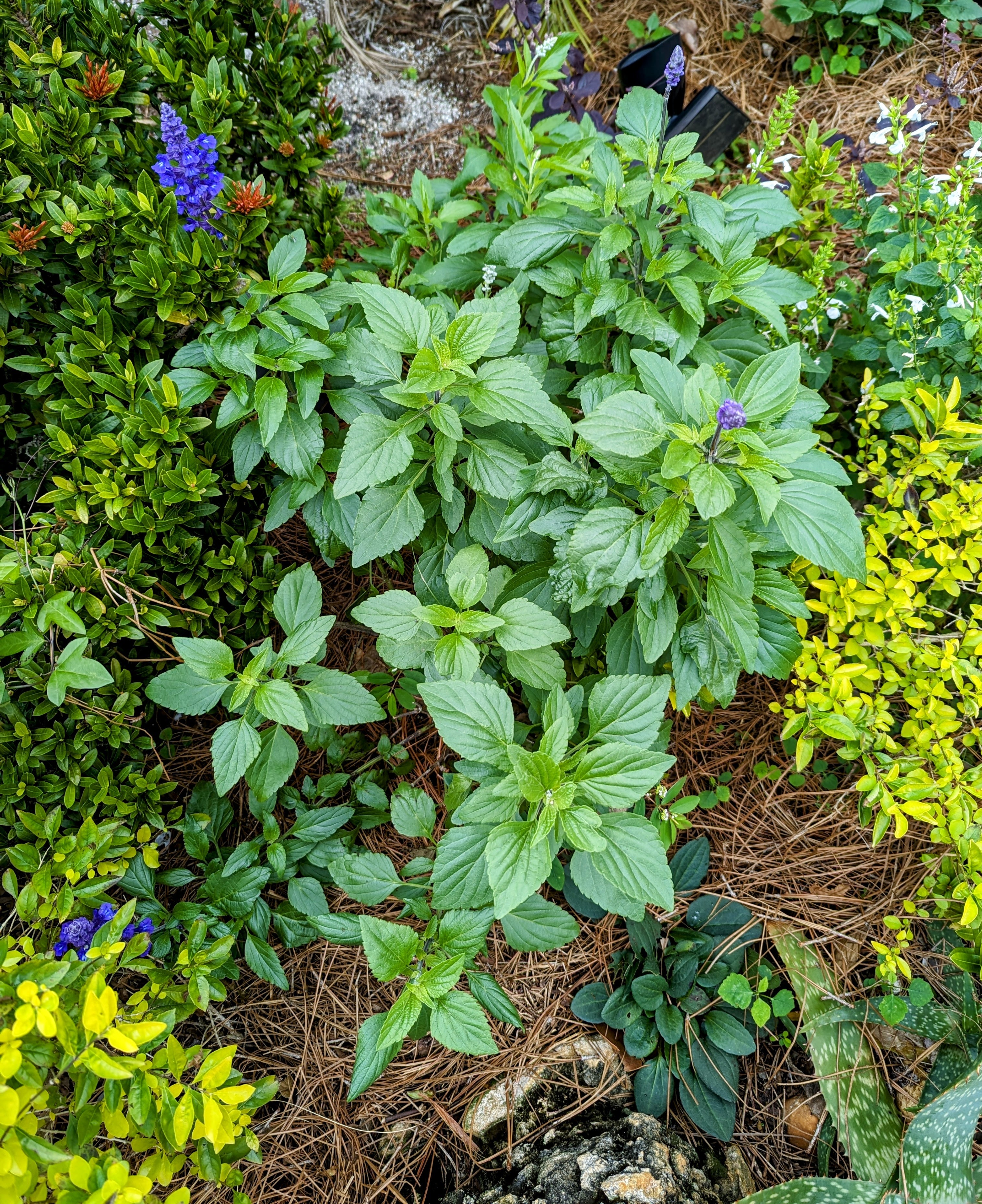
I did my first late fall Chelsea chop this year and the perennials have bounced back beautifully. This Mystic Spires Salvia is just starting to flower again.
That is all from my garden this year!
Happy New Year to all and thank you to Jim for hosting Six on Saturday this year.
I am joining the SOS gang again this week featuring six items of interest from my garden. Most of this week our weather has been dominated by gale warnings. The skies are overcast, the wind has been gusting to 45 mph with downpours of rain sometimes blowing sideways. Floridians crave sunny blue skies and they were few and far between this week. My holiday gardening adventures have been indoors or on the porch this week. To see more SOS posts visit Jim at http://gardeningruminations.co.uk
The front door received a holiday makeover with a bromeliad cutting wreath. I was gratified to read that hoop wreaths are currently in style as I didn’t want to spend too much time in the wind hunting bromeliad cuttings (the hoop part is covered with winding gold and green ribbon) Red bromeliads are Fireball Neoregelia and the bigger green and red one is Super Fireball Neoregelia. Gold accents are fronds from Cabbage Palm trimmed to size.
Front porch pots were replanted. I am trying some more northern favorites mixed with tropicals for the winter. The grey plants are an old favorite ‘Bath’s Pink’ Dianthus. I have never seen one around here, but will be thrilled if it flowers. The bromeliads are mixed Neoregelias, garage sale finds, no one remembers the names but they always thrive, so I am happy to have them. The fern is an Autumn Fern (Dryopteris erythrosora), again way too far south, so I am hoping for some nice coloration with bronze new growth.
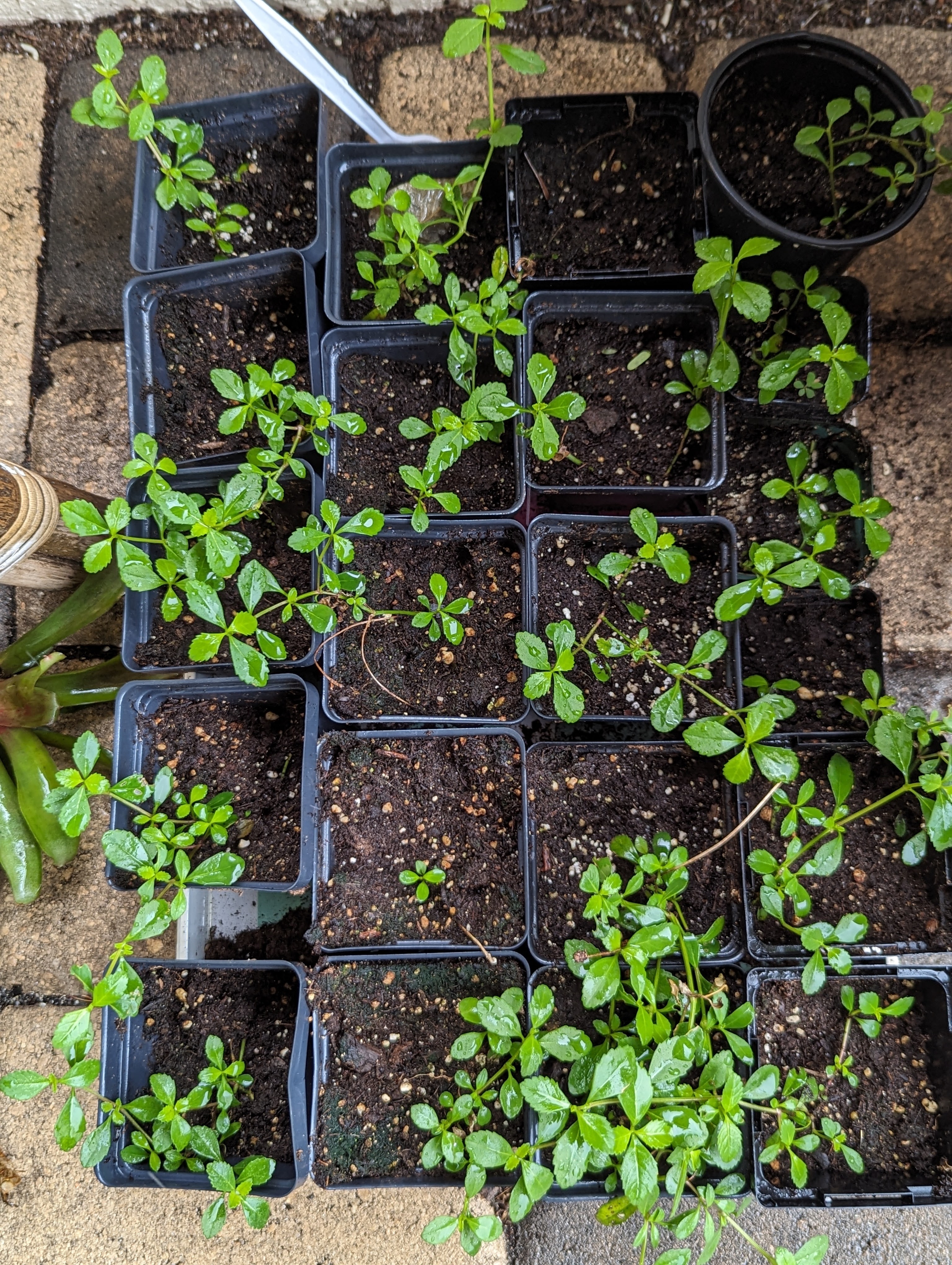
Porch propagation. Another batch of Turkeytangle Frogfruit (Phyla nodiflora) to replace my former St. Augustine lawn.
I found a tiny Noble Fir tree, slightly crooked, so the angel overseeing things is dancing on top. The scent from the tree alone is worth the effort to me.
Decorating Fiona didn’t go so well. She doesn’t want to be a reindog.
Oral sustenance is required to get through the holidays and the dreary, haunting calls of the gale. Rum cake baking became necessary.
I am wishing everyone a happy holiday season. I think the garden will be a better place next week!
I have lived in South Florida for almost 12 years. The things I find growing in the garden this time of year still seem odd to me. I planted dahlias in October and gave the other perennials the Chelsea chop in November and now most of it is thriving. Then, I find myself wondering what to do with the orchids in the trees and cycad seeds. A blog friend calls my garden another planet. Sometimes I think she is right.
To visit other gardens around the world and see six items of interest, follow the link to Jim’s blog http://gardenruminations.co.uk
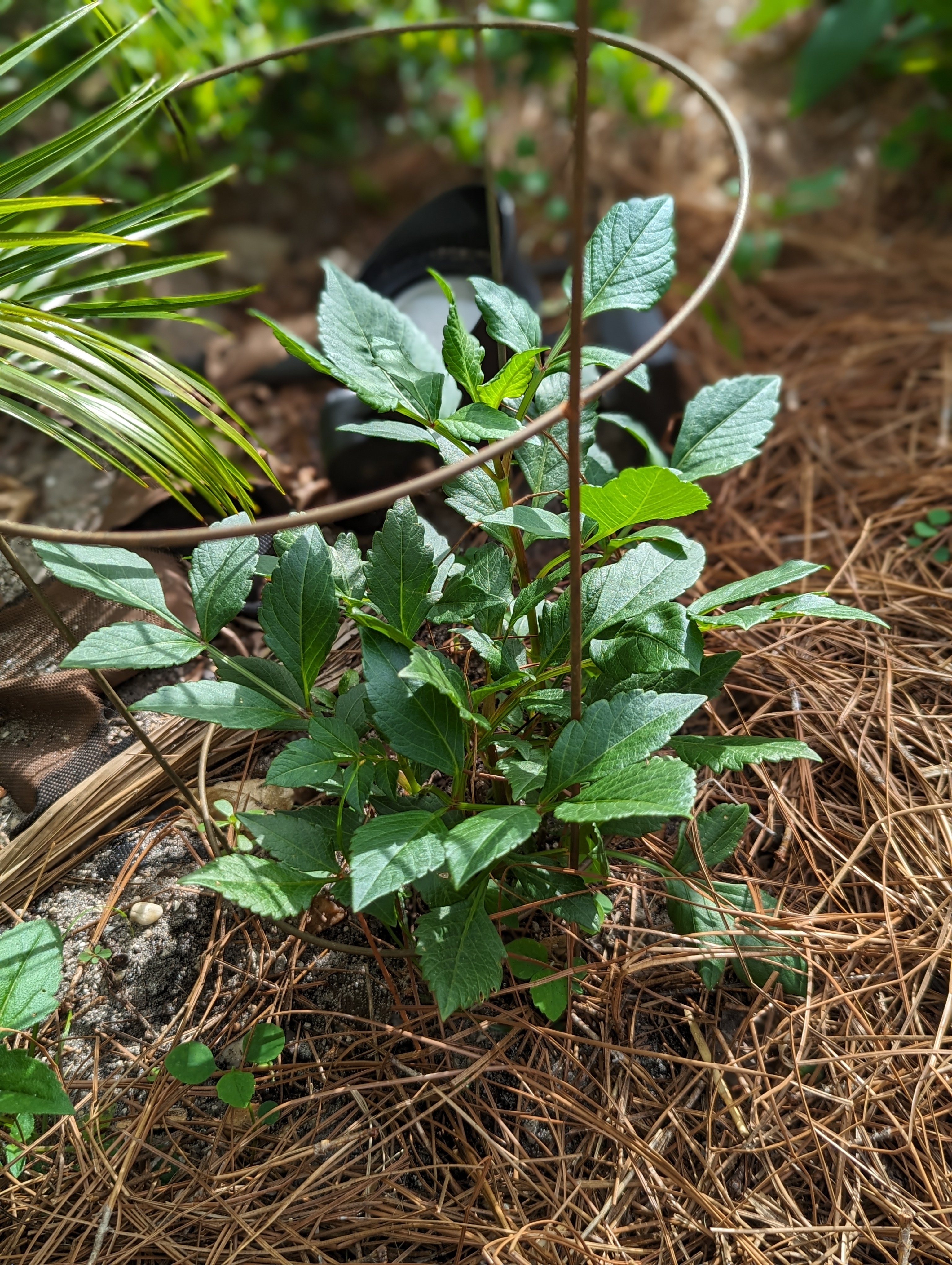
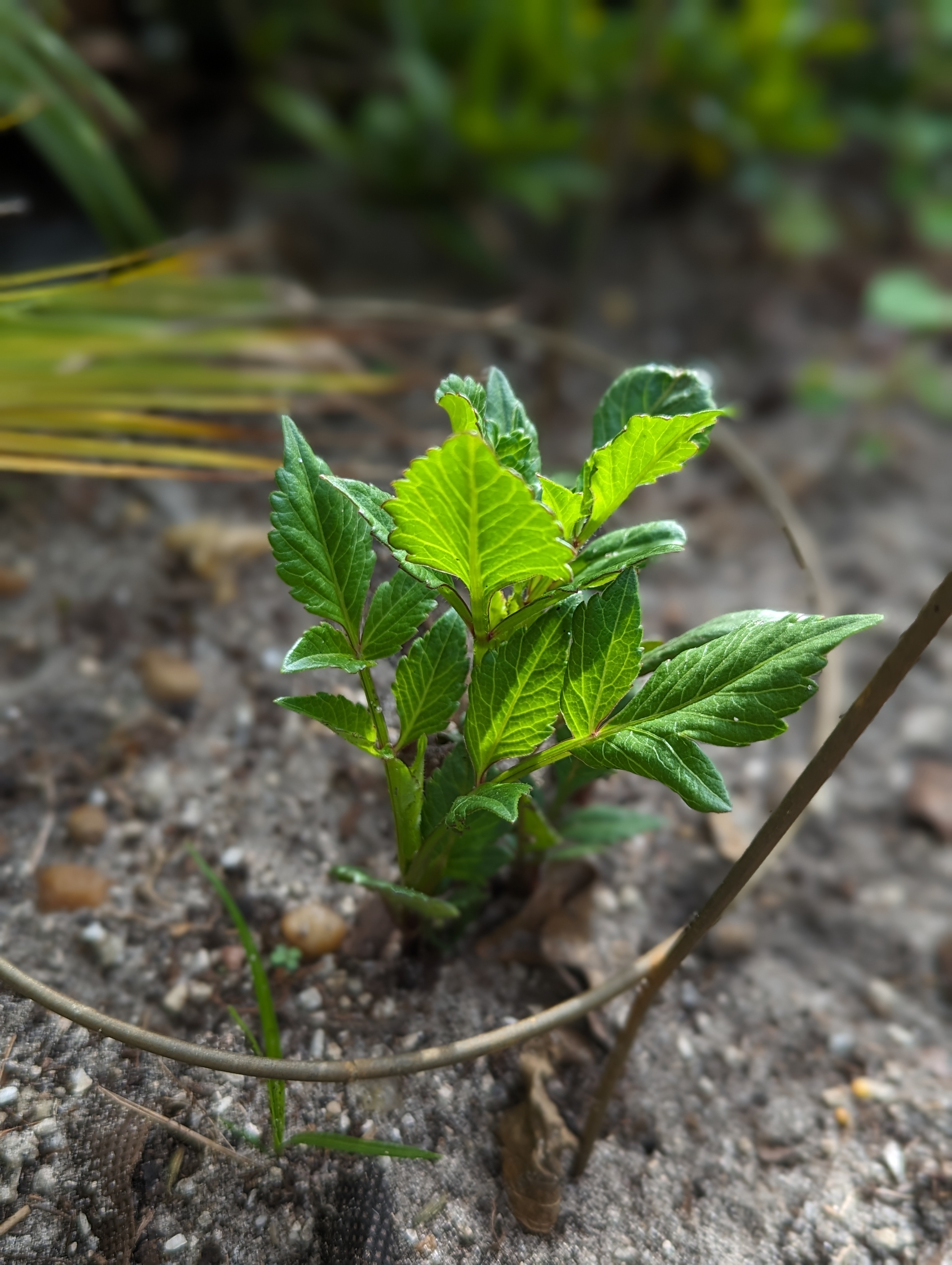
Dahlias in December!? Here they are. I bought 9 tubers at an end of the season sale, stored them in the refrigerator and then planted them. Some varmint dug up several and ate at least one. This one appeared after a few weeks and more are poking through. When I will have flowers is anyone’s guess.
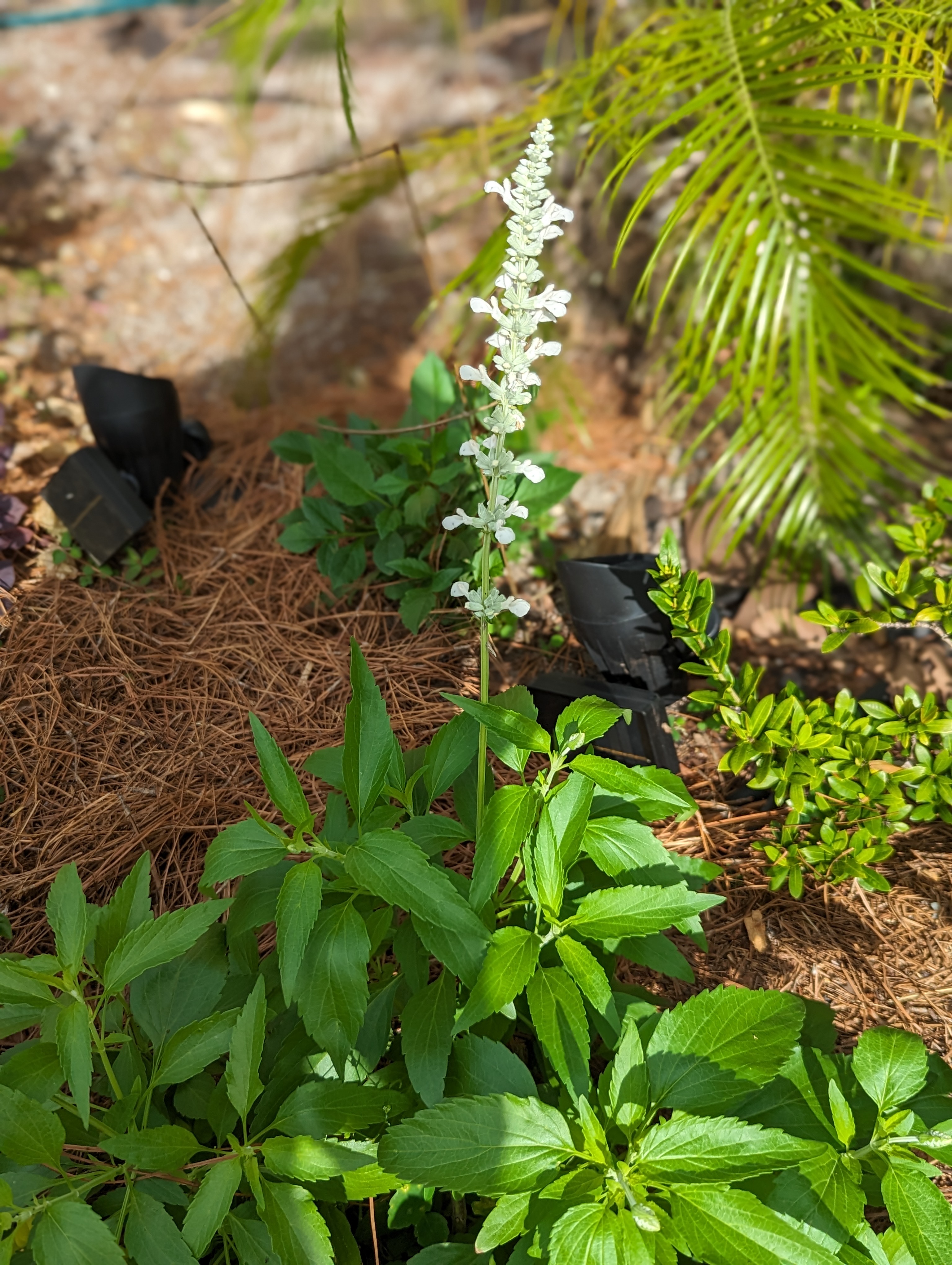
White Flame Salvia after the Chelsea chop. These survived the summer heat by making much smaller leaves and flowers. They are now full and lush again.
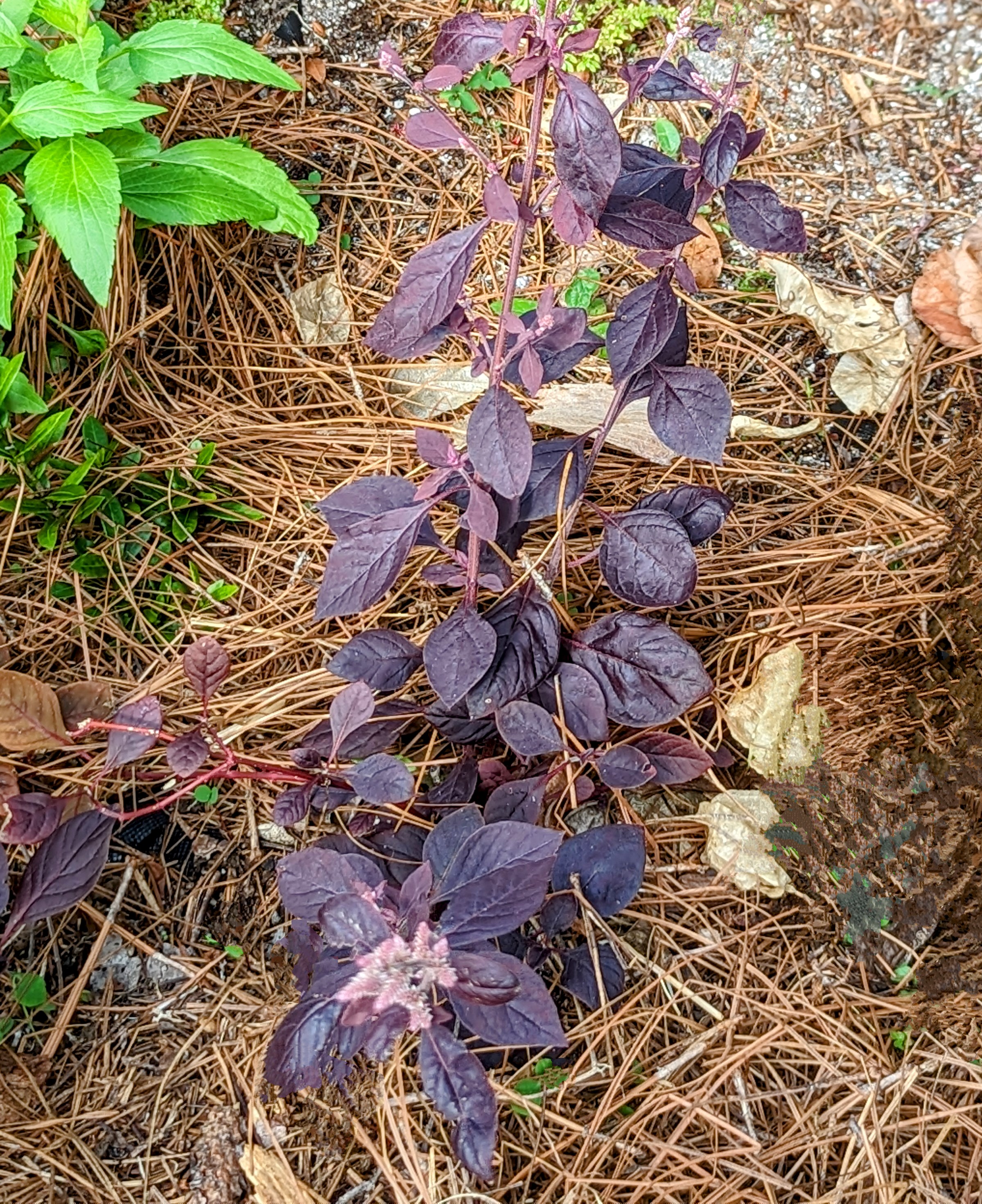
Red Velvet plant or Purple Aerva. Native to Africa, this seems to like winter better than summer.
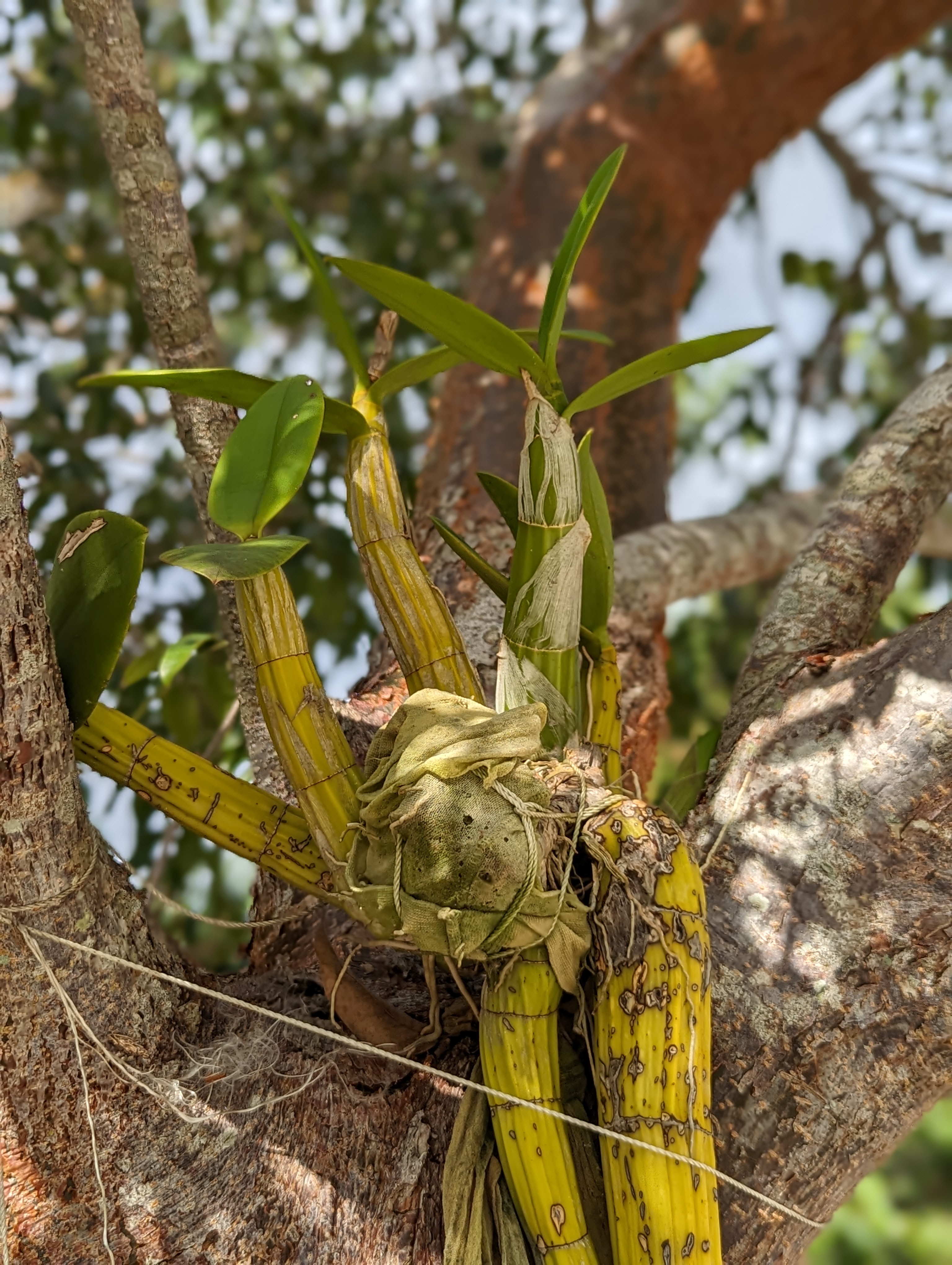
This Schomburgkia orchid has finally rooted into the trunk of the Gumbo Limbo tree. It’s time to take the bindings off.
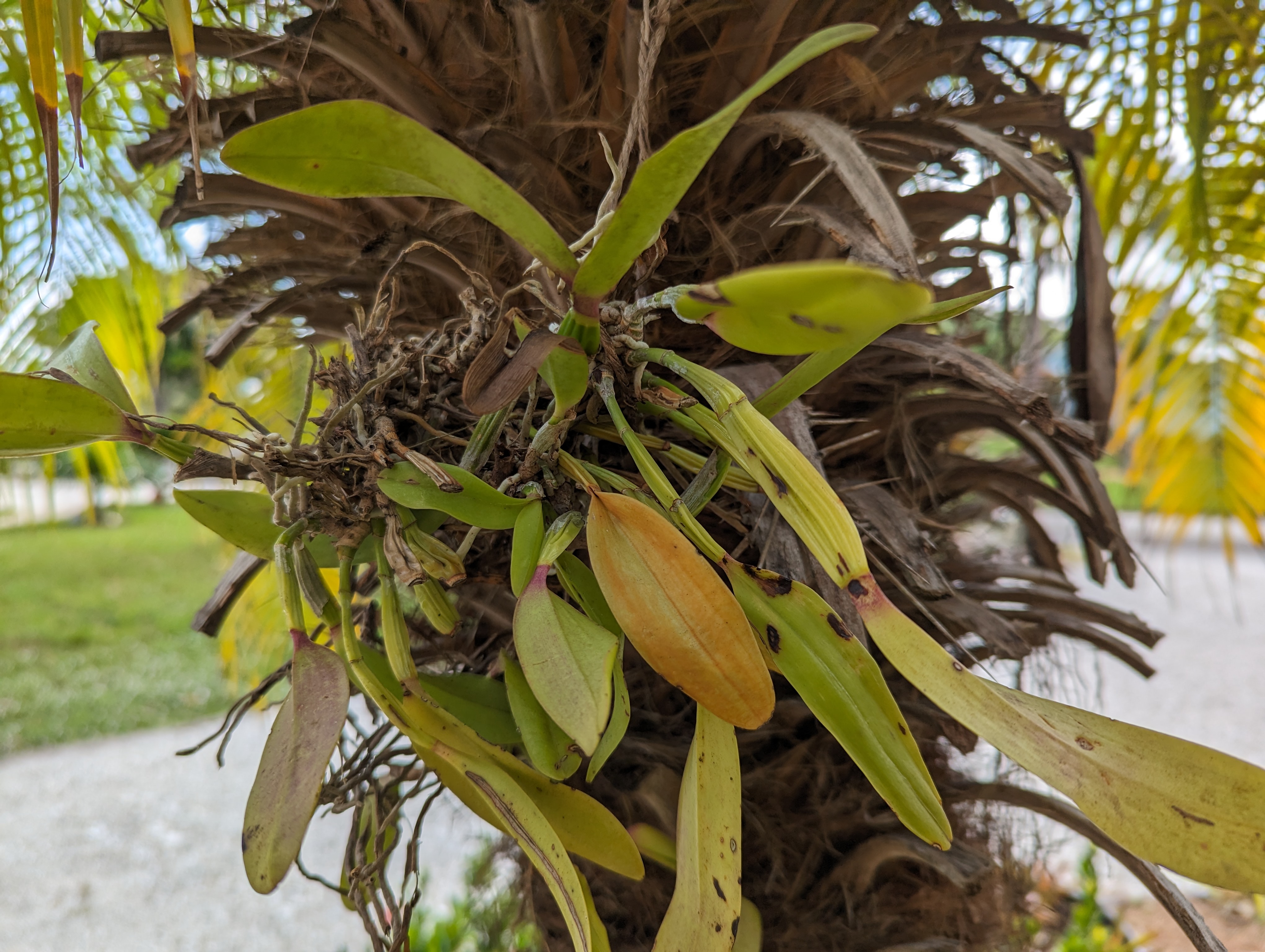
This is a Cattleya orchid, it has purple flowers and is hanging on by a thread (jute twine) in the boots of a Dwarf Pygmy Date Palm (Phoenix roebellini) – I need to tie this in more securely in hopes of the roots anchoring to the palm.
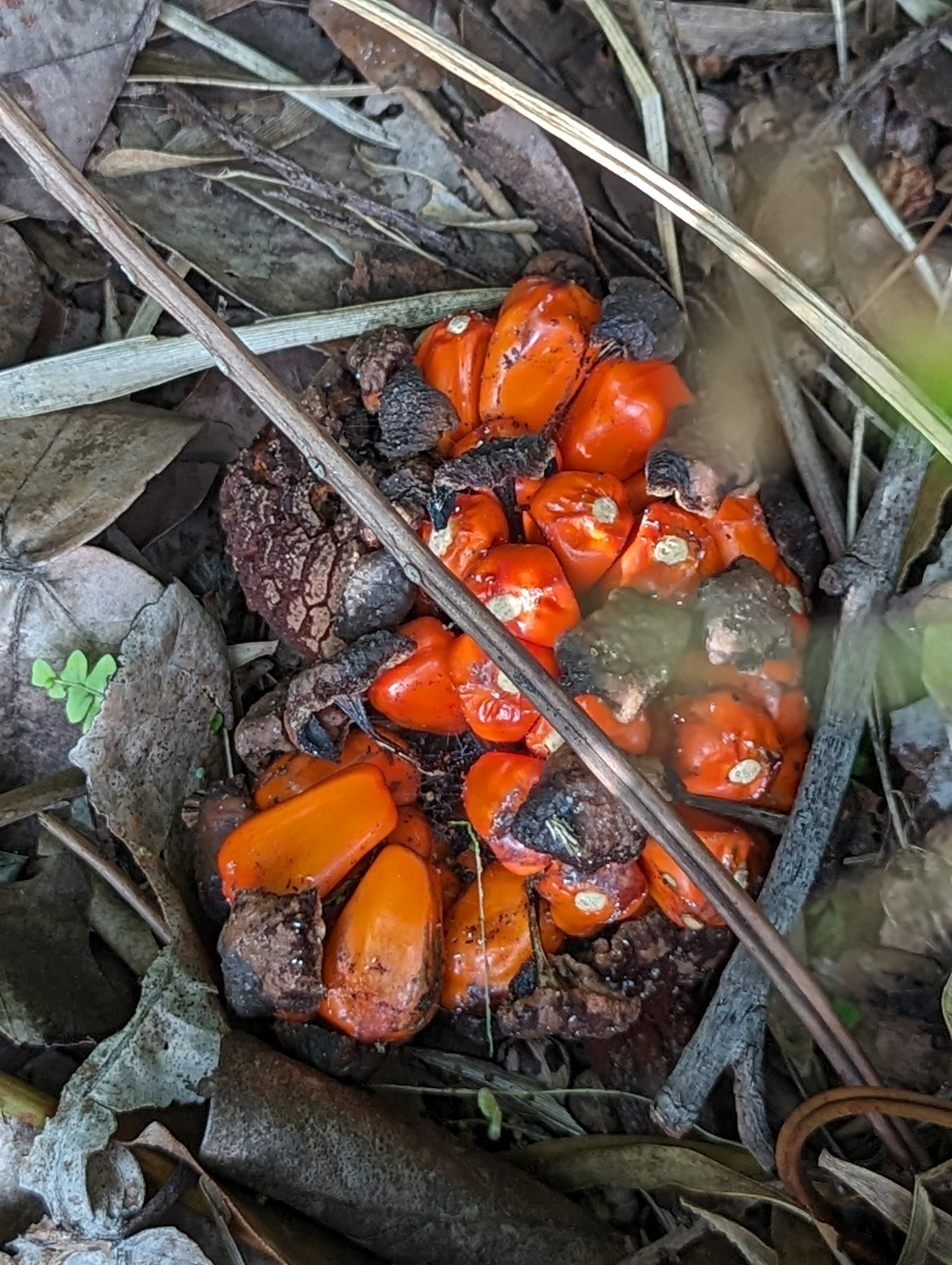
Fruit of a Coontie cycad (Zamia integrefolia). This is the female cone, I must have some male plants as there are several of these cycads in the garden. They are pollinated by beetles. I would like to have a colony of Coonties as they host a rare butterfly.
That is all from my garden this sunny Saturday morning.
My husband and I took a few days off and motored to the Keys for a little R&R this week. I decided to share some of the local flora and fauna we encountered this week on our trip. The Keys are very nice this time of year and the seafood is worth the trip – as is the Key Lime Pie! We both gained a couple of pounds, from the pie, I think. Follow this link to visit Jim at http://gardenruminations.co.uk for more flora tours of gardens around the world.
A classic inspiration for many tropical motifs and one of my favorites, the Breadfruit (Artocarpus altilis) tree. Almost oak-like in appearance, these produce fruit that only someone who grew up on them could love. I live a bit too far north for these.
Hanging over a 6 foot fence is a Pink Mussaenda (Mussaenda phillippica). These look a bit like pink squashed Poinsettias to me. I see many white and yellow ones where I live. The pink ones may be more tropical, they are from the South Pacific.
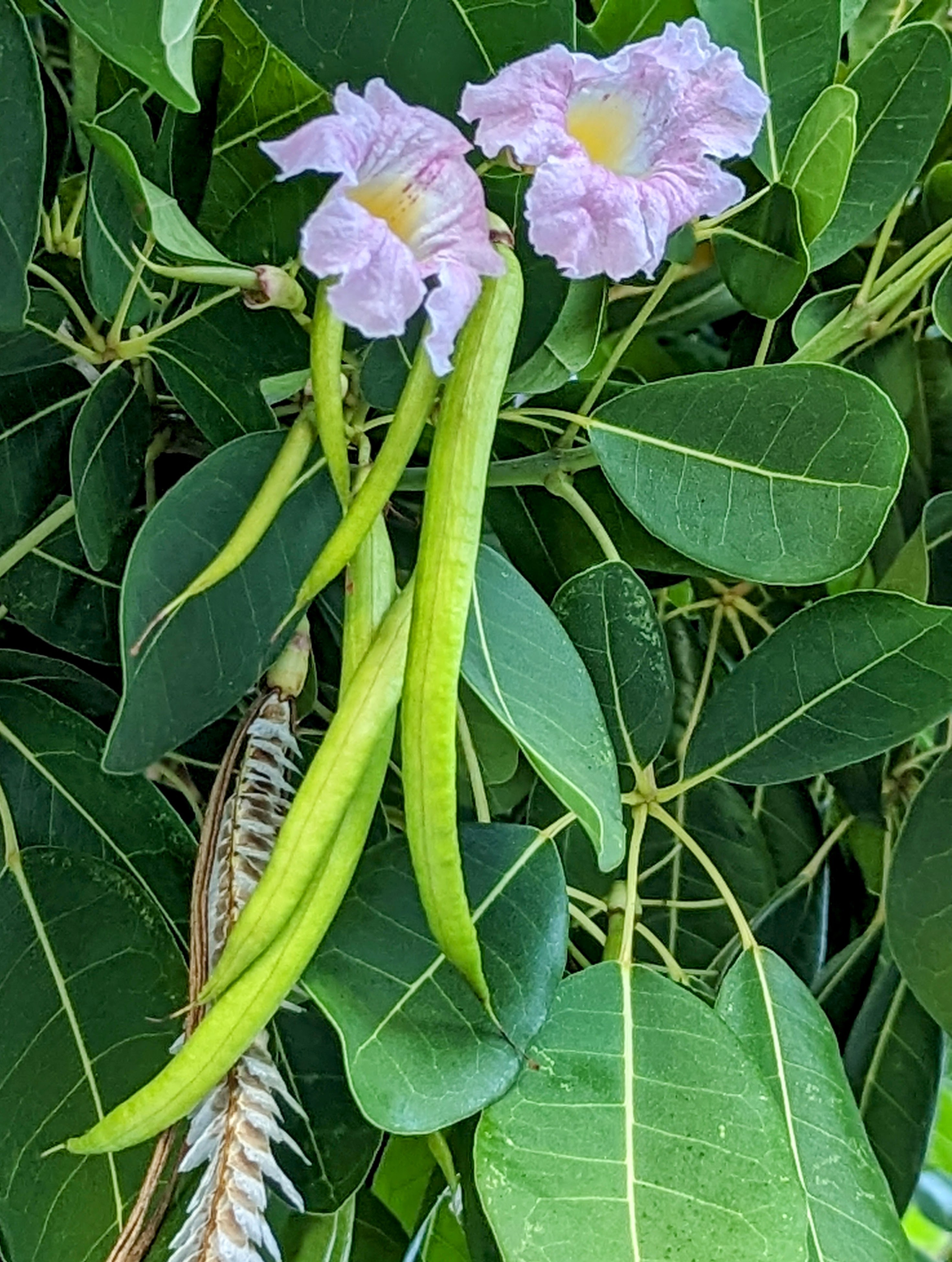
Pink Tabebuia (Tabebuia rosea) these are used as shade trees and can drop a lot of pods. They are a pretty, upright evergreen tree, not known for good wind resistance and a relative of the tree that tropical hardwood, Ipe comes from.
Ferns are not something I usually think of as a hedge. I think these are Macho Ferns (Nephrolepis biserrata). I like this, so tropical.
Key West has a wonderful butterfly conservatory we enjoyed very much. This is a high ceiling greenhouse structure with a meandering pathway and stream that is filled with butterflies sipping nectar then landing on your shoulder. My husband is not the gardening type and he said this was the highlight of the trip. The butterfly is a Menelaus blue morpho, a big butterfly – 12 cm or almost 5 inches across, they look like brown spotted moths on the backside and travel in groups, spectacular.
The quintessential South Florida flamingo. This is either Scarlett or Rhett, one of the pair of flamingos that live in the Key West Butterfly and Nature Conservatory. https://keywestbutterfly.com/
That’s my Six for this Saturday. I am heading to the garden for some chickweed removal!
I am joining the SOS crowd celebrating Indian Summer in South Florida. I did not realize it was possible to have Indian Summer in my garden, yet here we are. It is dry (not raining), humid and a high of 86 F (30 C) is predicted today. This weather brings on a mix of summer and fall colors. To visit gardeners around the world with less humidity – follow this link to Jim’s blog http://gardenruminations.co.uk
I finally saw and captured an image of the rare Atala butterfly that has been hosting on my Coontie cycads. This butterfly is listed as endangered due to loss of habitat. It is native to the Caribbean, the Bahamas and South Florida. I am at the northern end of its range.
I was excited to see some actual fall color. This is Virginia Creeper (Parthenocissus quinquefolia). I think this vine grows everywhere and some people actually buy it!
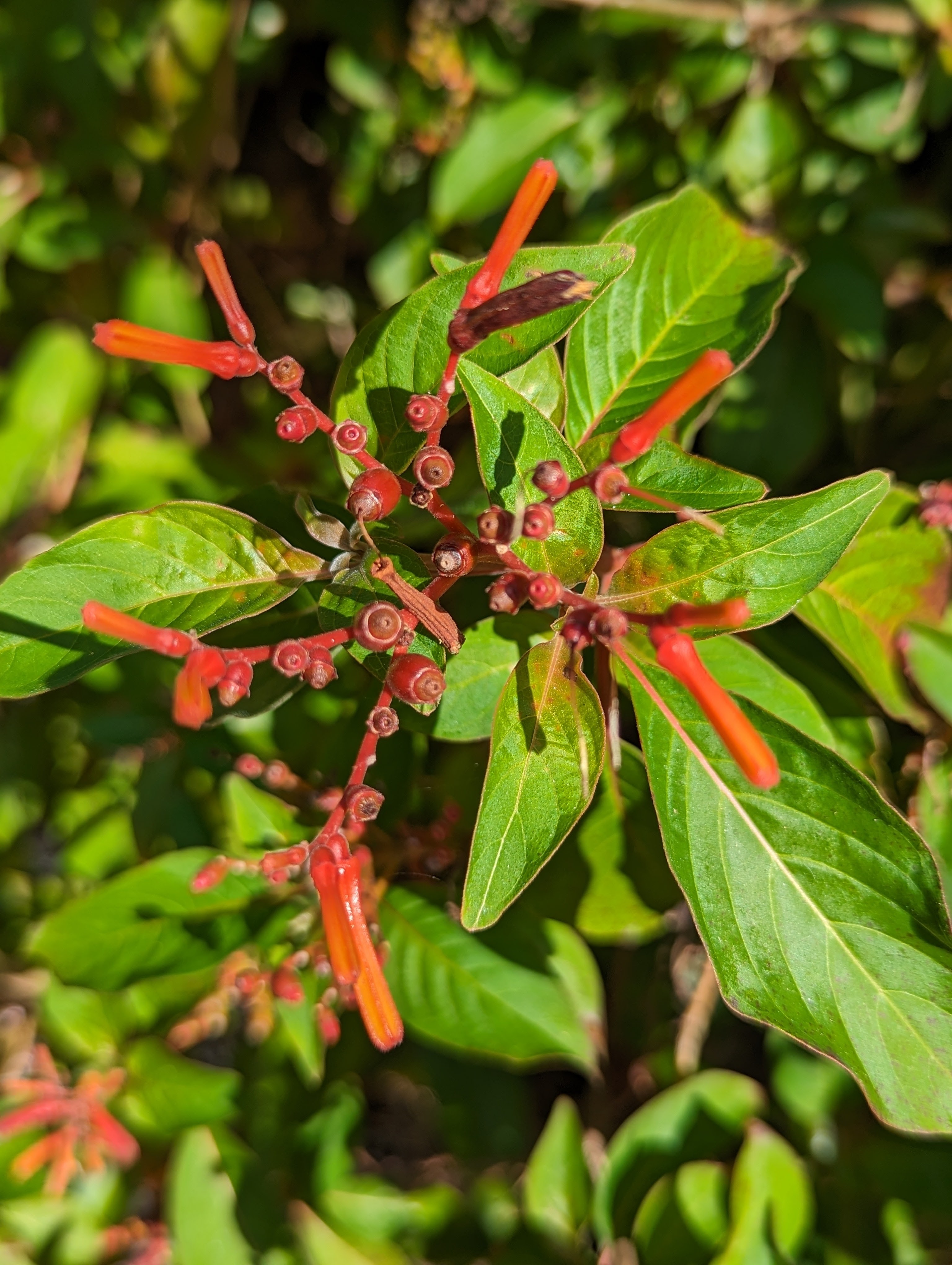
Fall berries do happen in my garden. These are on the native Firebush (Hamelia – now I am not sure of the last name!, the botanists have been at it again) These eventually turn into a juicy black fruit that the birds covet.
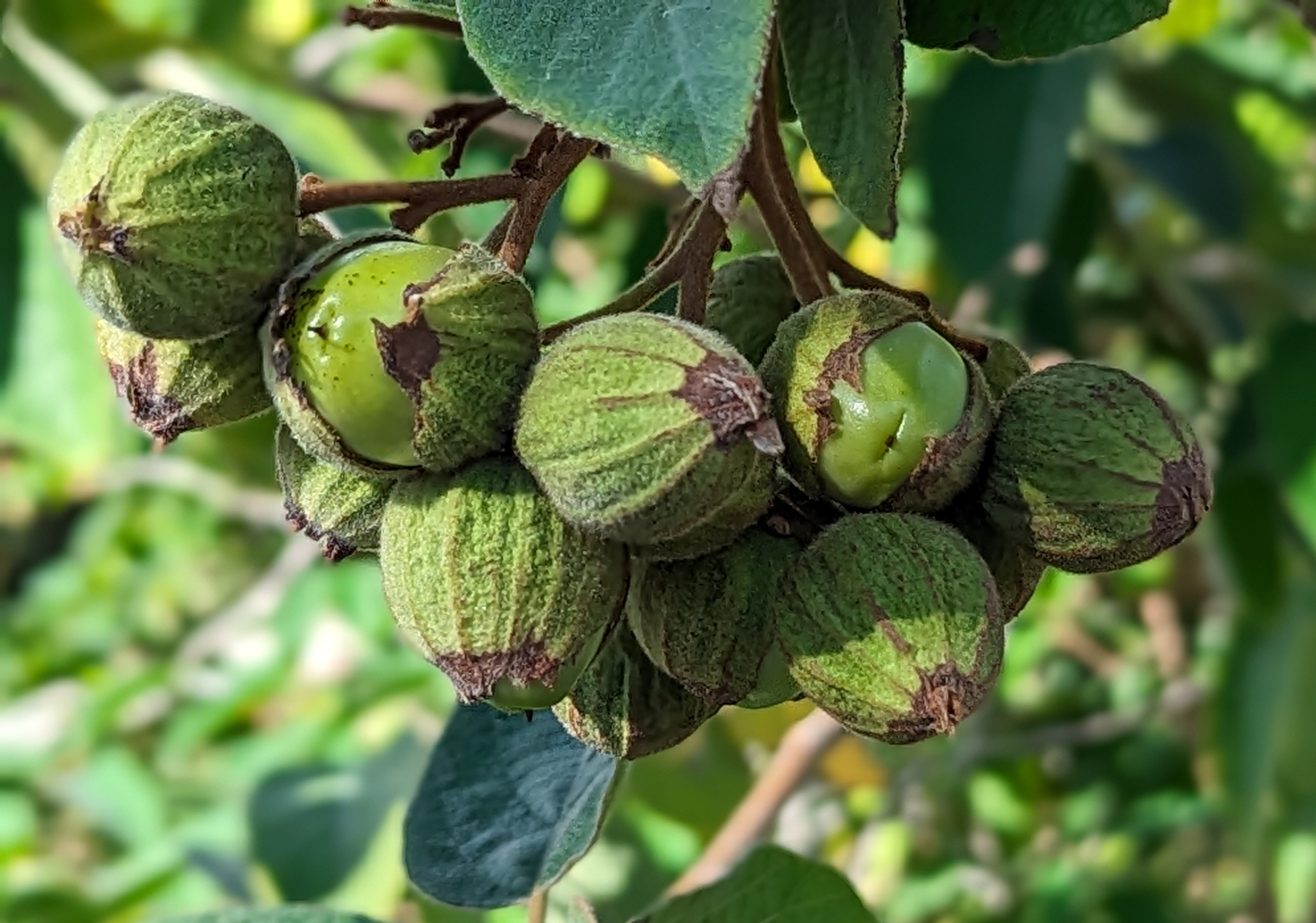
Fruit on the White Geiger tree (Cordia boissieri) I like these and use them in flower arrangements sometimes.
A native Portulaca pilosa, common name Kiss Me Quick. No idea why. I like these, but they are stubborn and will only grow where they want to grow.
Another November flowering plant, the Esperanza (Tecoma stans). These were once considered native and now they have been vilified as invasive?! It seems someone discovered a sea captain brought these from the Caribbean to Key West a few hundred years ago. I like them and have had no seeds germinating from the plant.
That’s all for this Saturday. I’m hoping for some precipitation and cooler days.
I am joining the SOS gang once again this Saturday. My morning discoveries on my garden tour are mostly green. No vegetables, although the tomatoes I grew from seed are ready to be transplanted. Follow this link gardenruminations.co.uk to visit Jim and connect with more gardeners worldwide in the comments zone.
South Florida’s gardening season is the flip side of most of the Northern Hemisphere. We grow summer vegetables in winter and many summer perennials thrive here during the cooler weather that would wilt in the heat during their “normal” flowering season. I am thrilled to find my first Dahlia tuber emerging from the ground. Nine tubers were planted in the garden, three in pots, I know one was eaten, so the rest???? I bought the tubers at an end of season sale, then wrapped and refrigerated them until October, planting time here. All Dahlias were red, for what reason I have no clue.
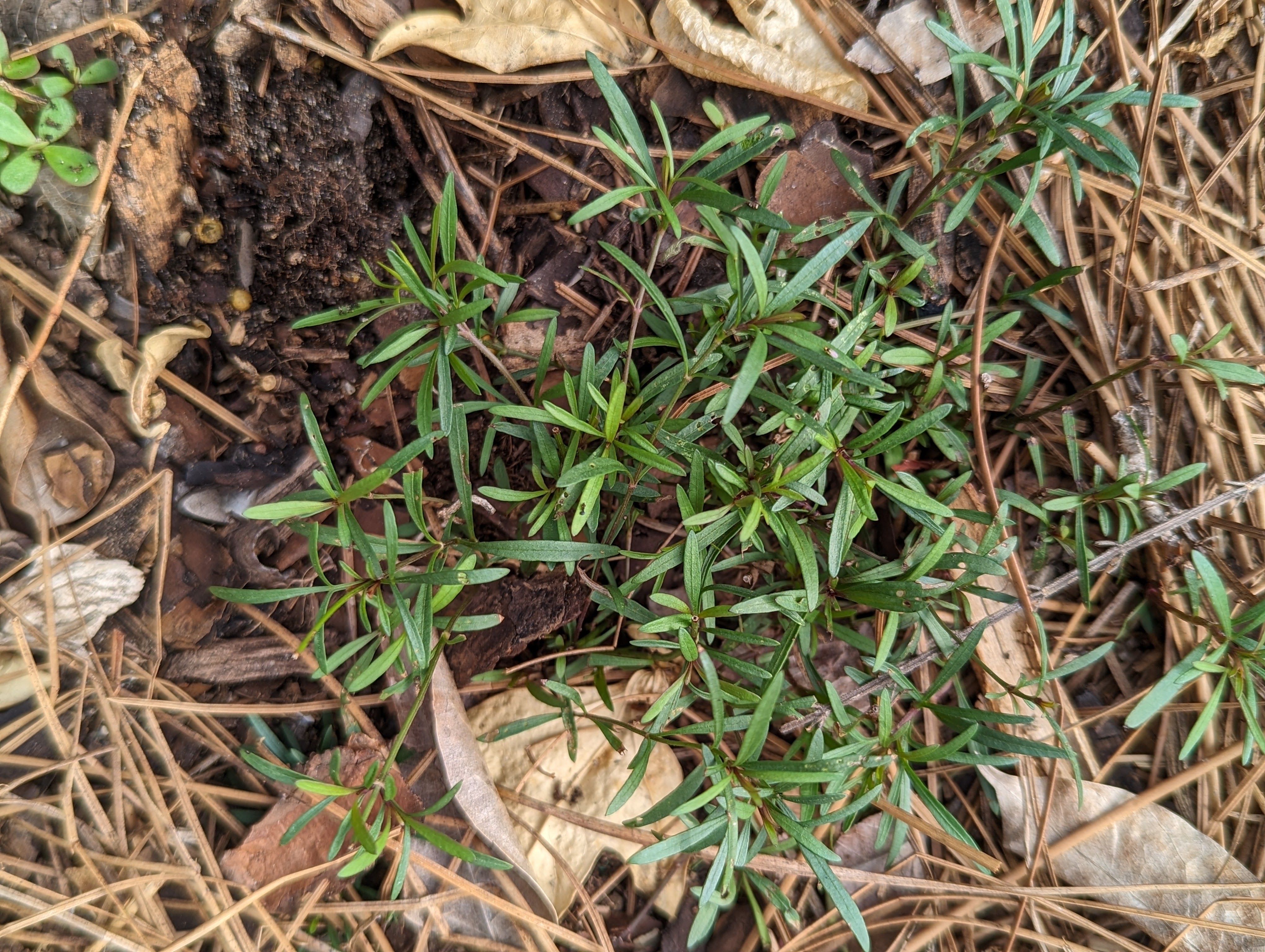
It is strange to me that Rudbeckias are difficult to grow here. The summer humidity molds them, quite literally. These are Goldstrum Rudbeckias taking hold in the garden.
Another garden stalwart further north, Moonbeam Coreopsis, is bravely making a stand.
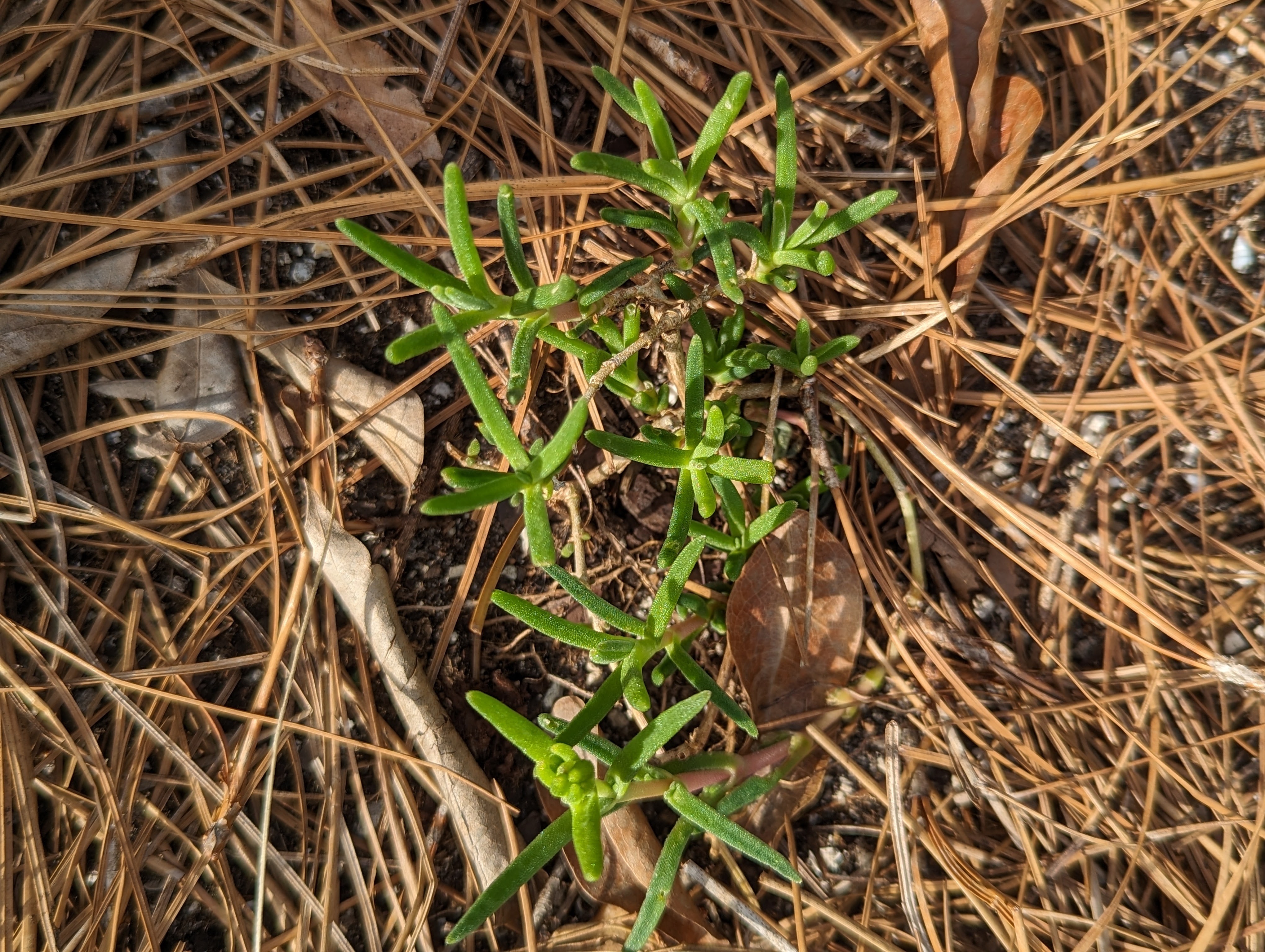
The ultimate experiment, a mass of Ice Plants (Delospermum cooperii). I am fairly certain these will melt next summer, though I have run across gardeners who have success with them in South Florida.
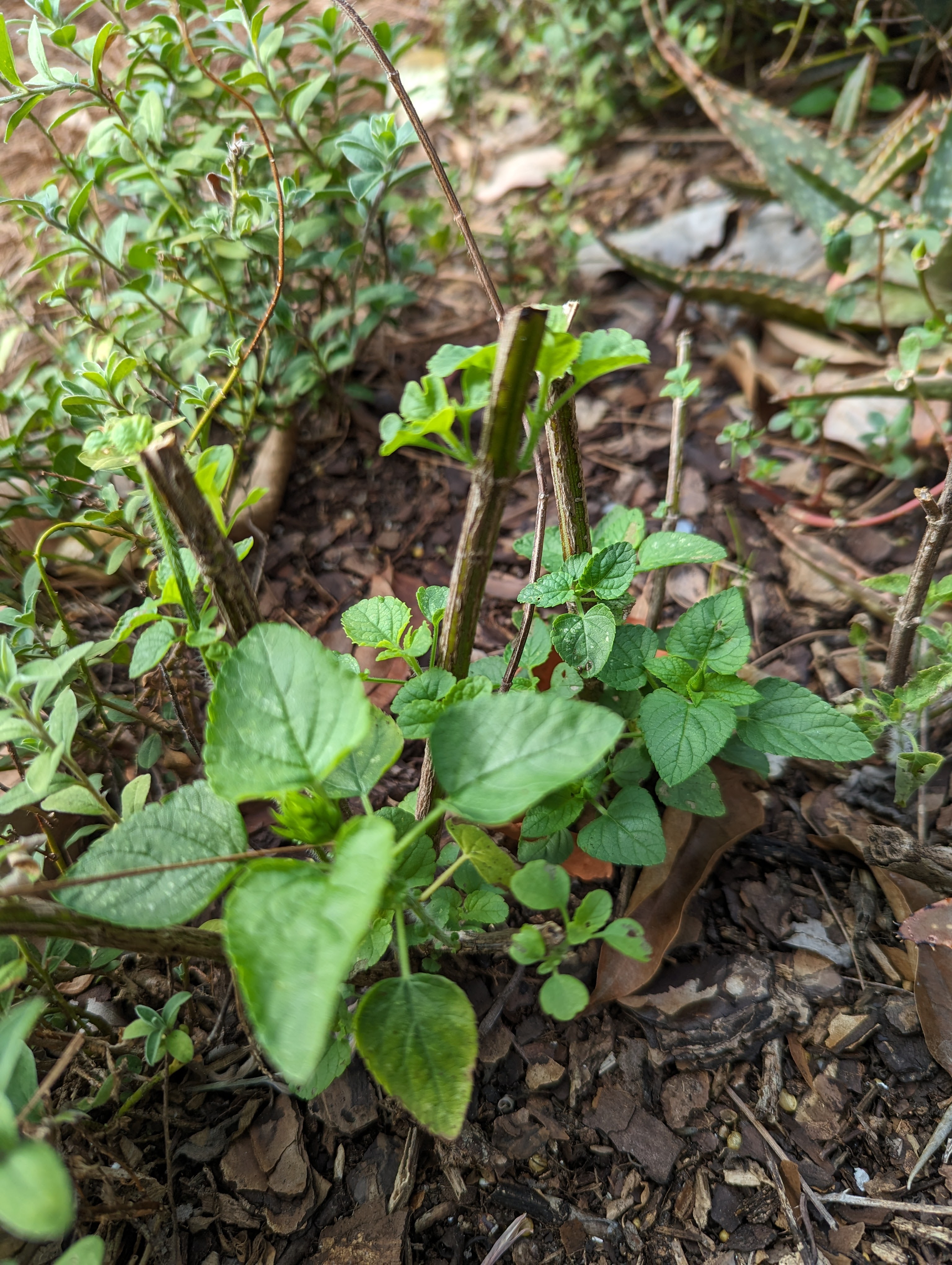
Another experiment, seemingly successful. I decided to try the Chelsea chop on Tropical Red Salvia (Salvia coccinea) – a reseeding annual. It seems to have worked.
I have not tried any of these plants in winter previously. In the great words of Tom Petty “the waiting is the hardest part”
Will they flower??? Time will tell.
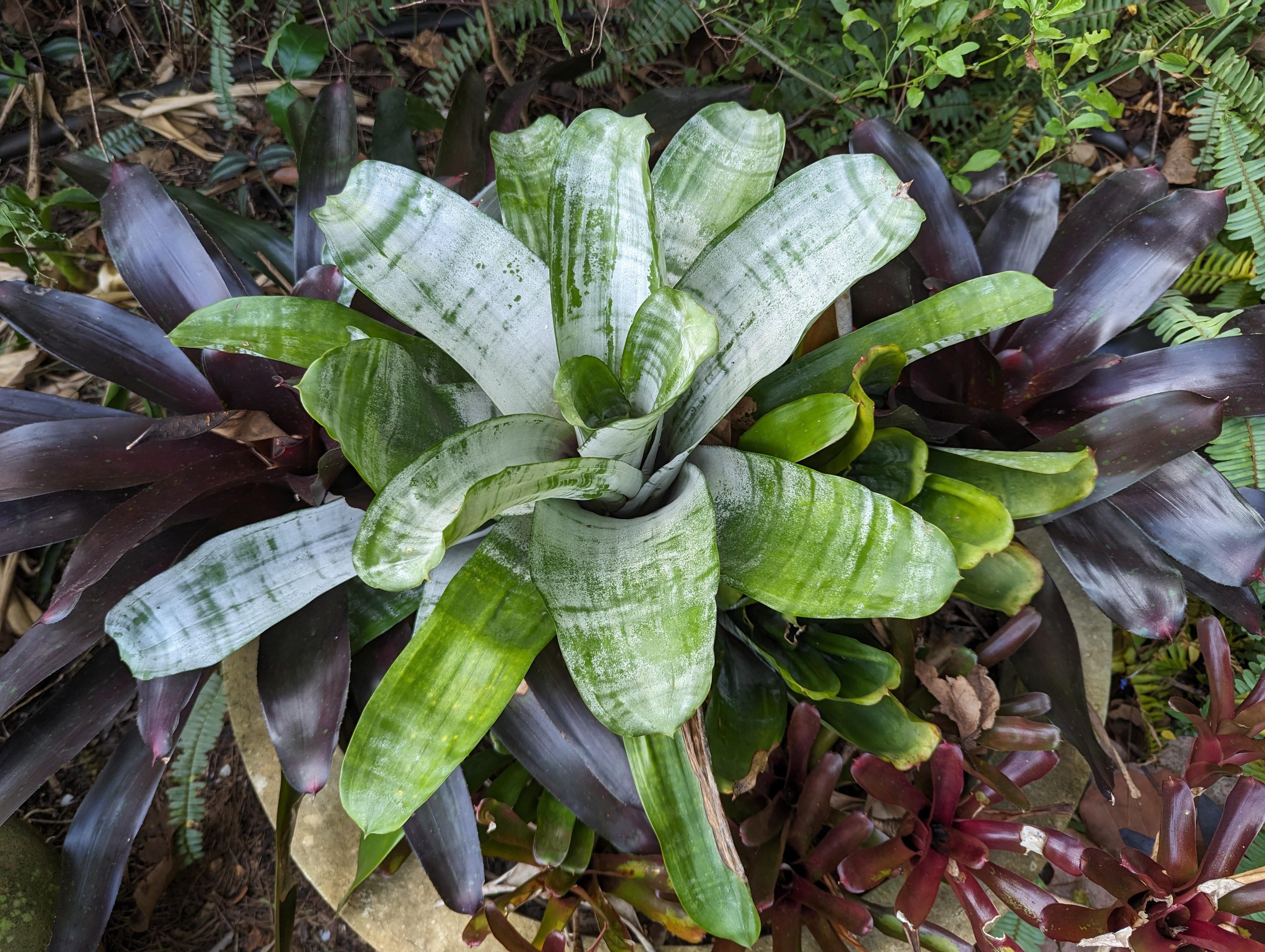
A more typical green from me. The greys are Aechmea fasciata Bromeliads, the dark one is ‘Luca’ Neoregelia. Smaller red broms are ‘Fireball’ Neoregelia. Bromeliad moving and propagating season runs November through March. There is usually movement in the garden this time of year.
My garden tour this Saturday morning was punctuated with an overgrowth of weeds, some plants attaining a size I did not know was possible, fall fruits and wild flowers …and, at long last, clear blue sunny skies with low humidity. Ahh. To join other SOSers on garden tours around the world visit our host, Jim at this link http://gardenruminations.co.uk
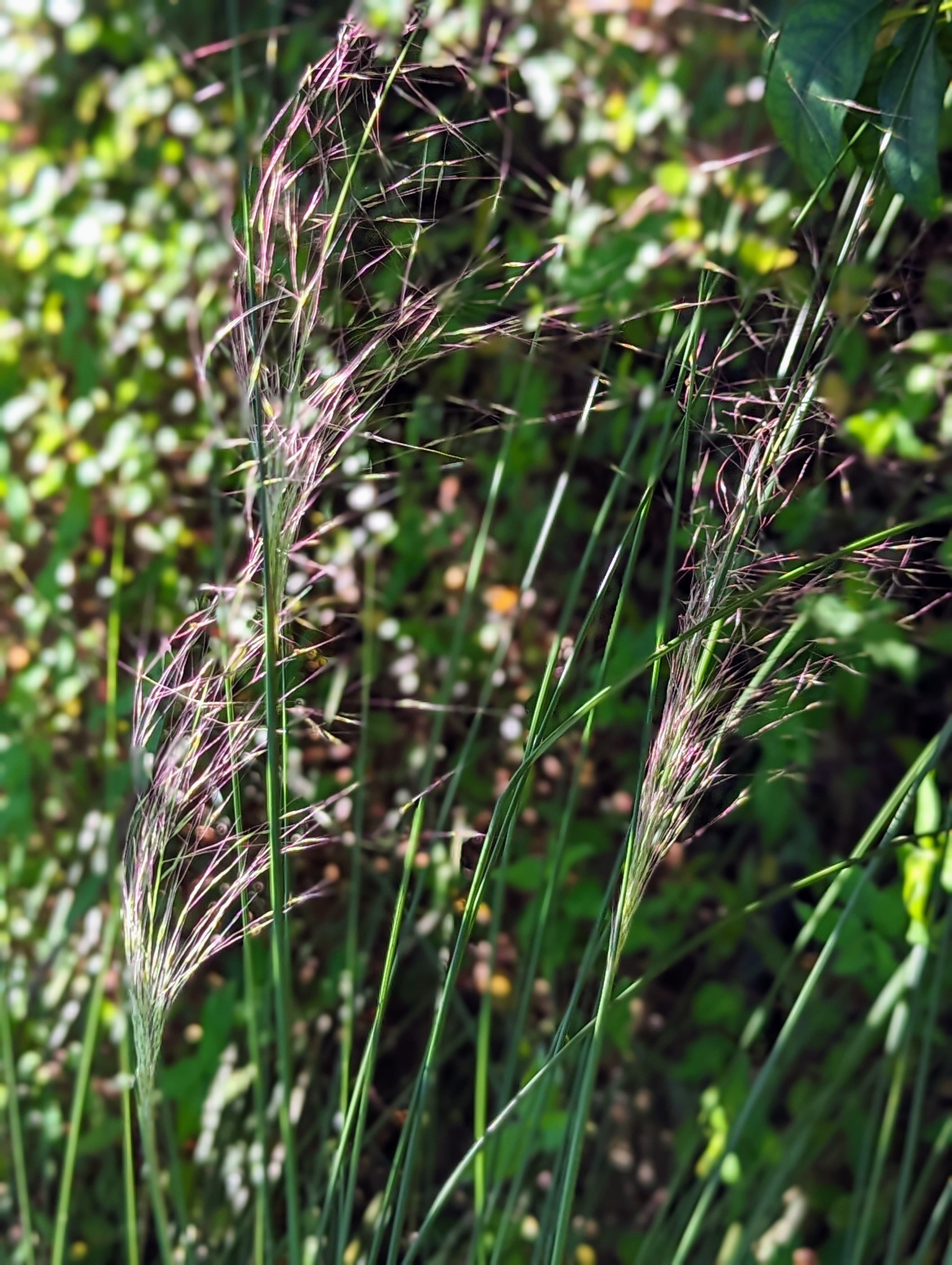
One of my fall favorites, Muhly Grass (Muhlenbergia capillaris) is just starting to flower. These usually bloom around the first week of September, so they are late this year. The flowering schedule for a lot of plants was off this year, some sooner than normal, some later.
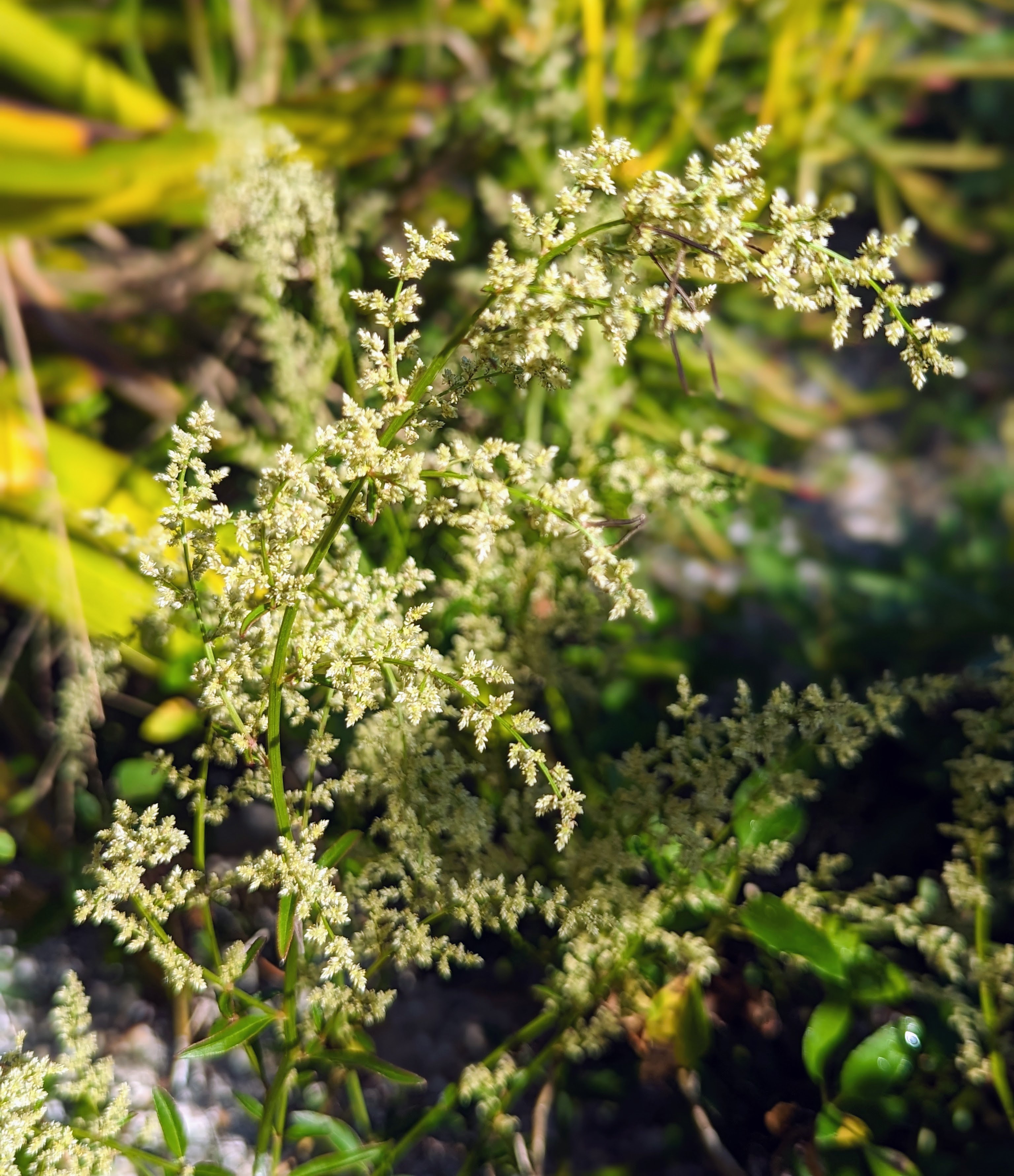
Another fall fav is the Juba Bush (Iresine diffusa). This wildflower is named after a Caribbean dance called the Juba because of the way they sway in the wind.
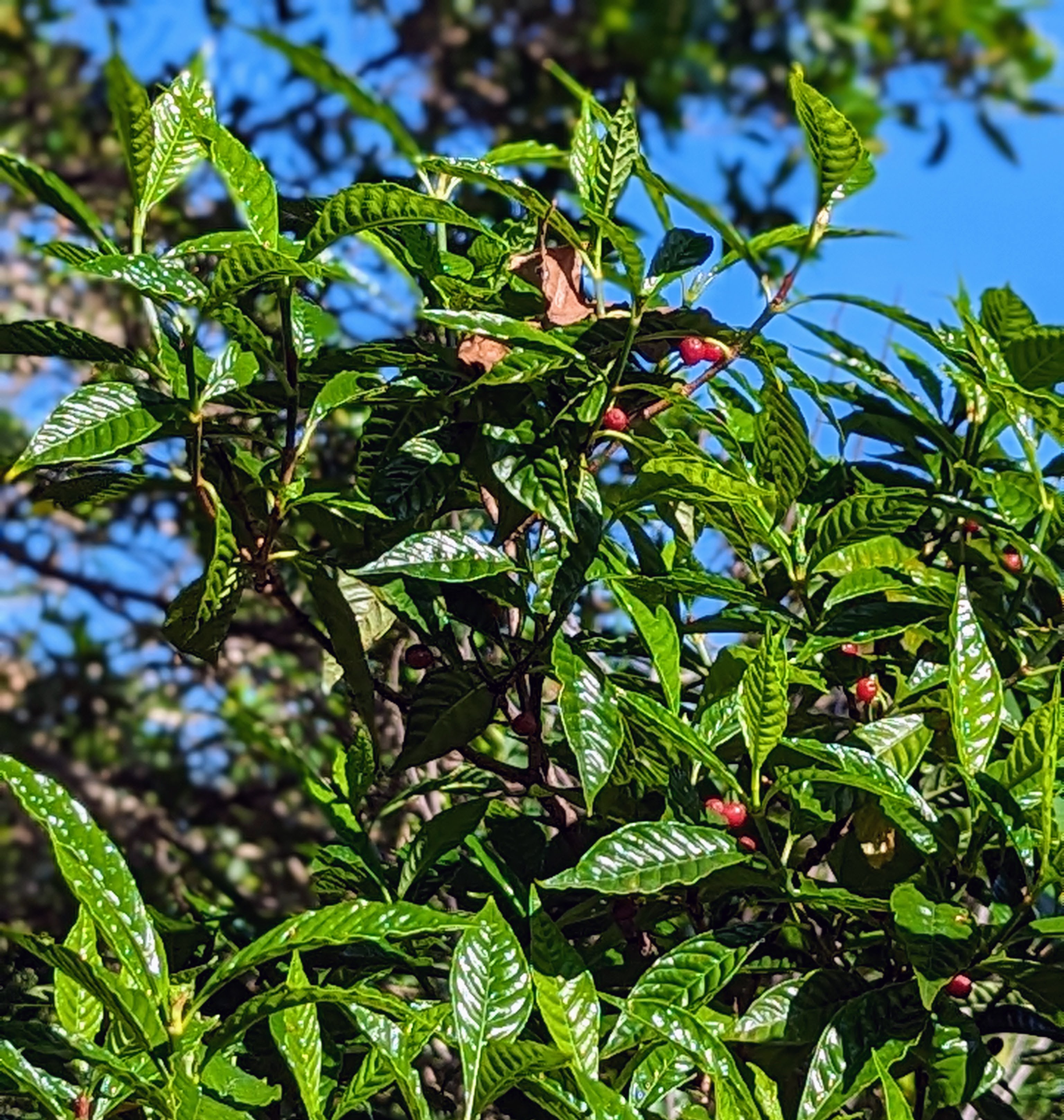
The birds are enjoying the berries in the garden. This is called Wild Coffee (Psychotria nervosa) – it is a Florida native shrub, great for butterflies and pollinators. The berries look like coffee, but do not have caffeine.
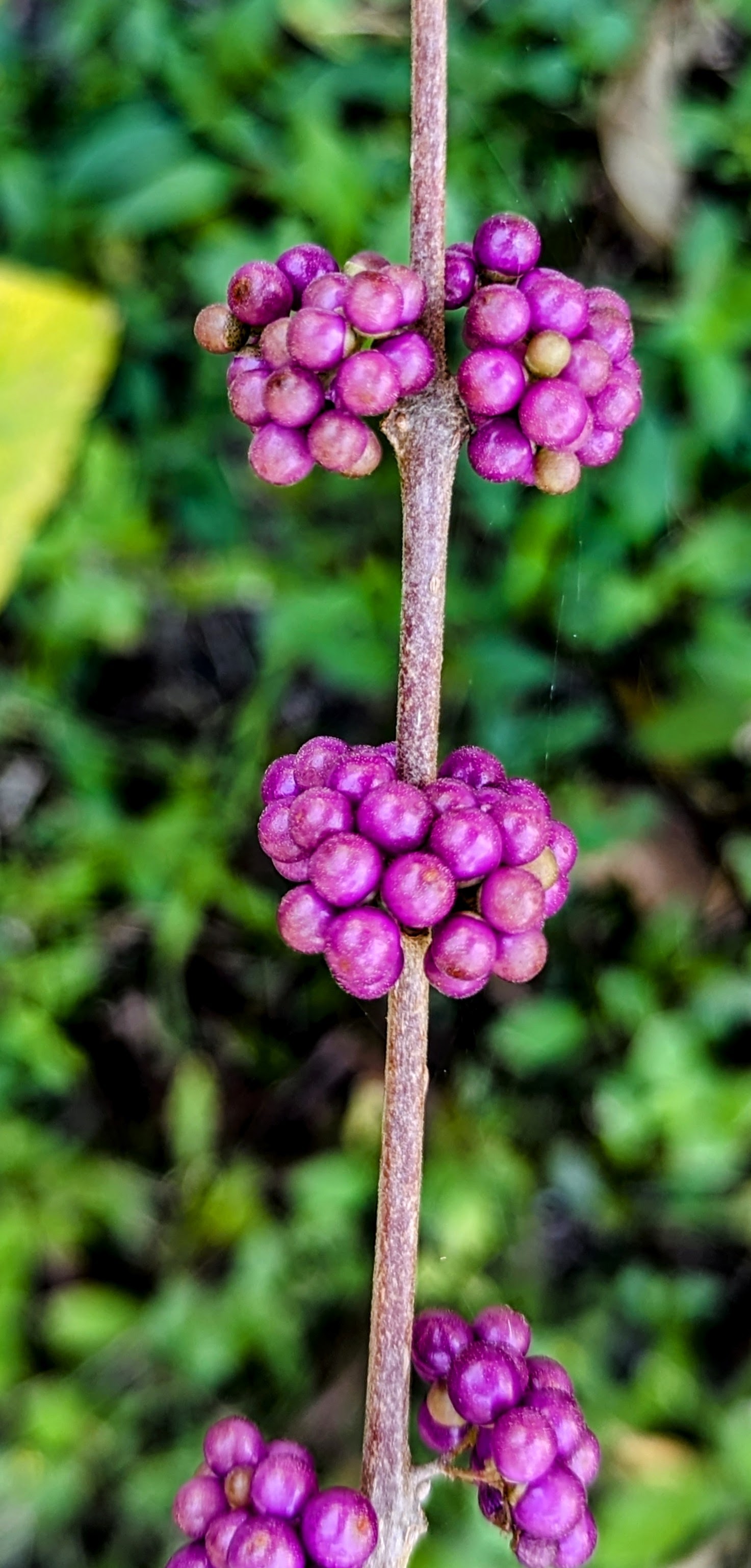
More late color in the garden. I usually have Beautyberry (Calliocarpa americana) by the first week of September and here it is finally showing some purple.
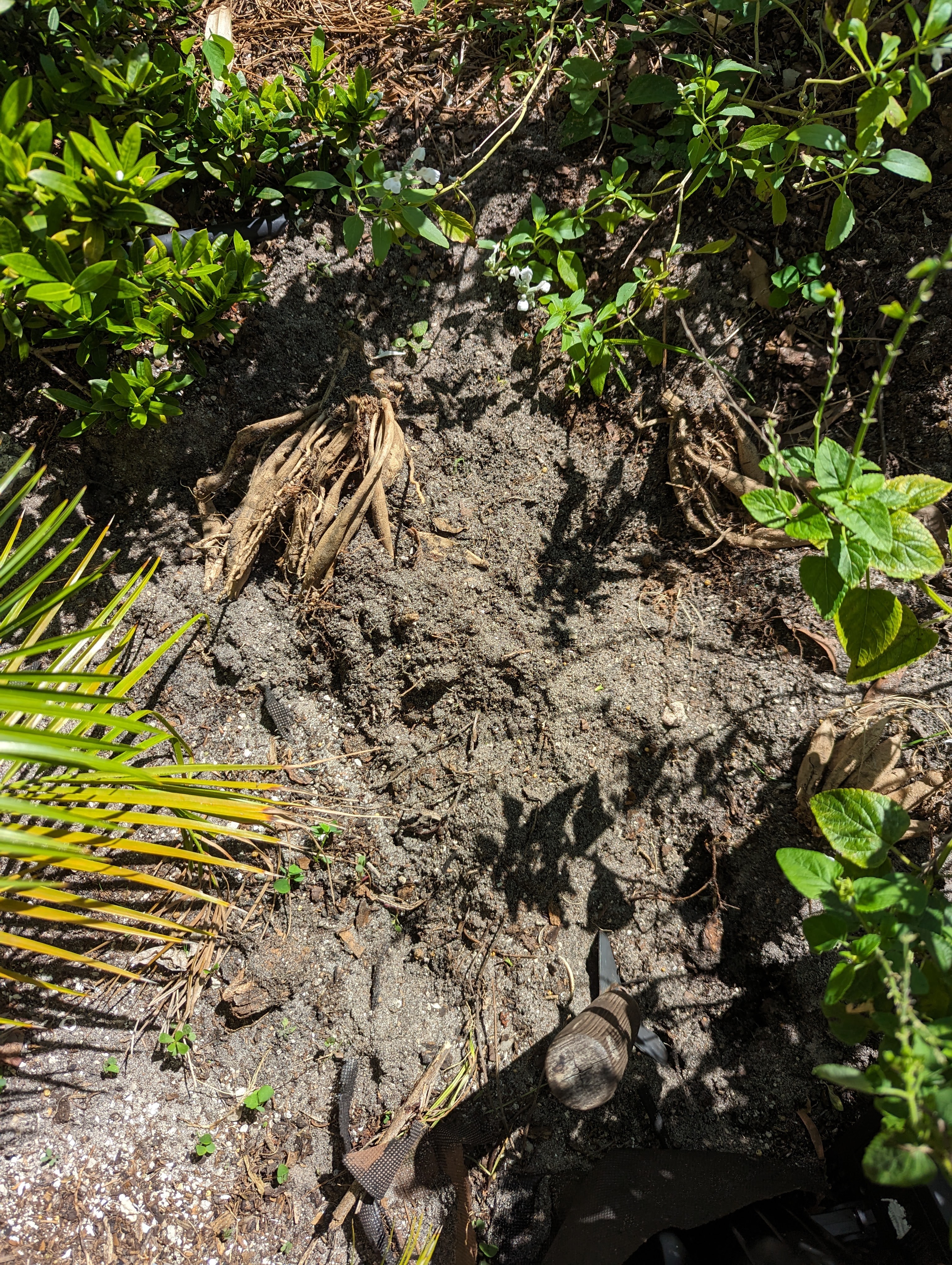
October is optimal Dahlia planting season in South Florida. For fun, I bought some end of season, cheap tubers, having had virtually no luck with Dahlias in the past. The tubers were wrapped in plastic and kept in the refrigerator for a couple of months and released into the garden this week. I planted the tubers and went out the following morning to find a varmint had dug them up, ate one, and left the others beside the holes they were planted in?! A gourmet, Dahlia intolerant varmint?
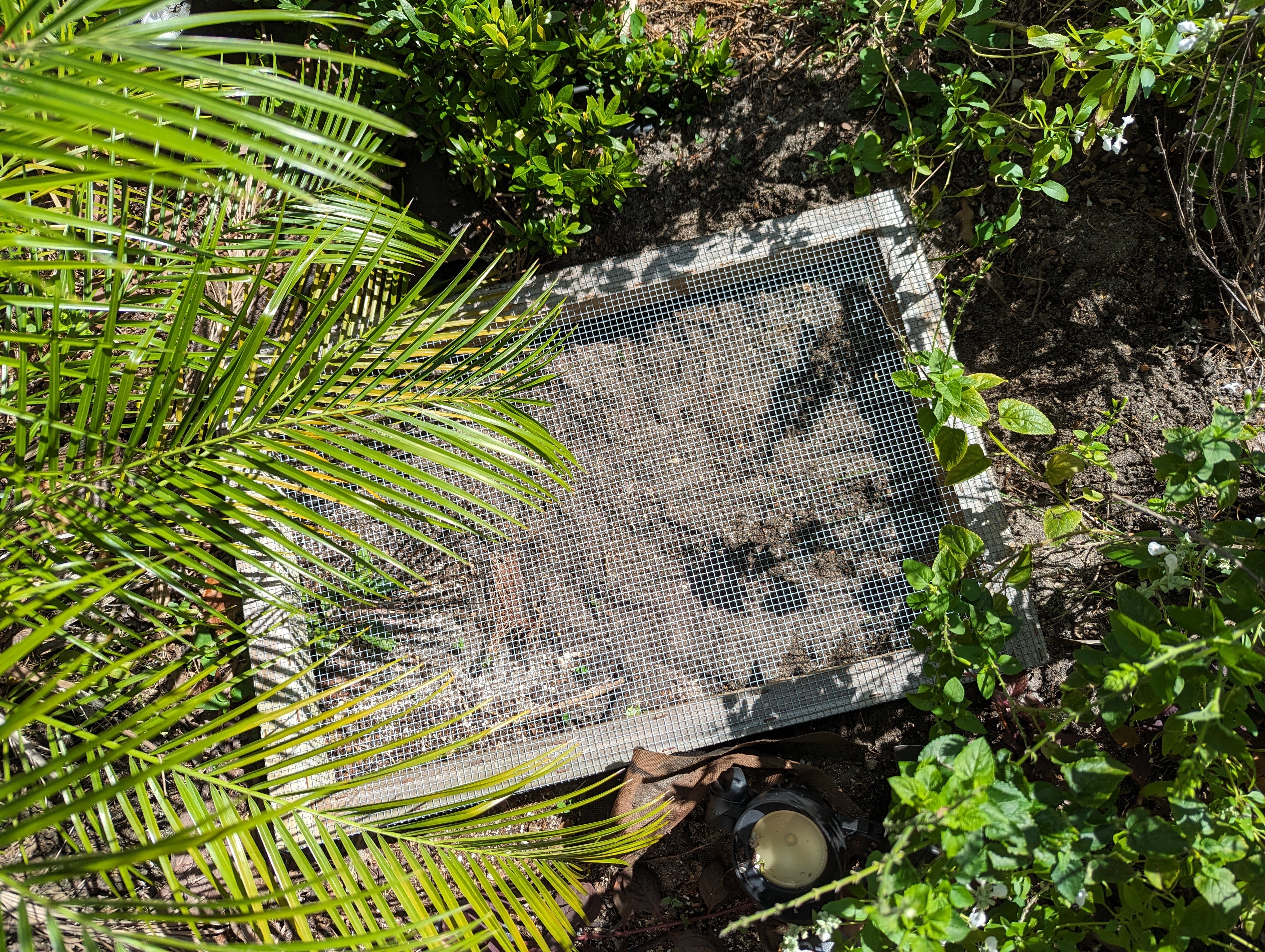
I replanted the tubers and added another found slung in front of bed (I am not sure if I forgot to plant it, or the varmints were at it again). Then, I covered the whole thing with a hardware cloth barrier. Take that, varmints!
The experiment continues. I found a bit of tuber on the front porch this morning. I am sure this time it was not me.
That is all from South Florida this sunny Saturday. The Dahlia adventure will be updated. I am now dithering about watering the tubers, though rot is unlikely in the sand.
The most outstanding feature of my weekly garden tour – extreme humidity. The plants, house and even the doors and windows are dripping rivulets of water. Not a good gardening day. Next week is predicted to bring blessed relief from the soggy environment I keep finding myself in. To see other, less sweaty garden tours visit Jim at http://gardenruminations.co.uk
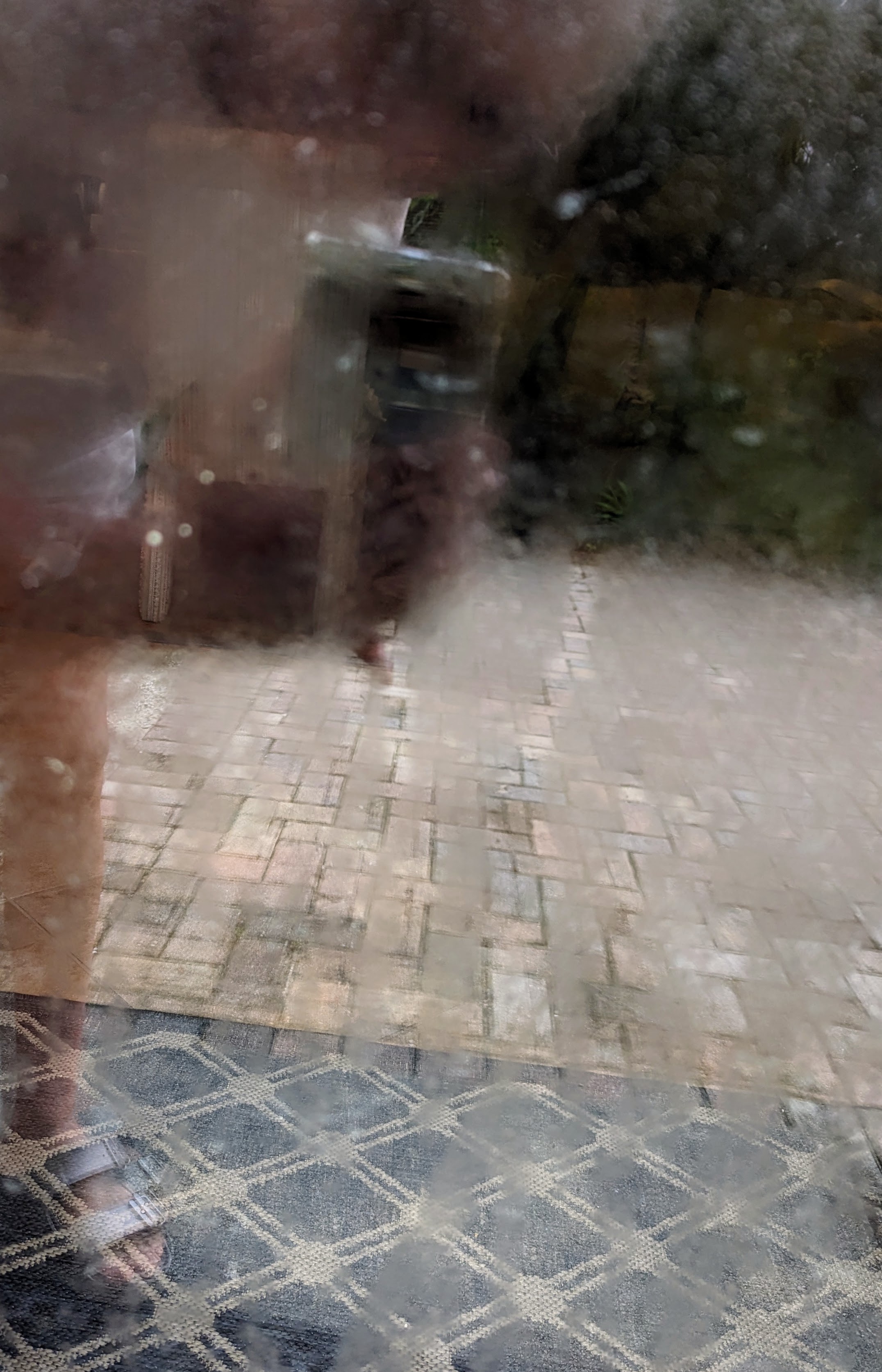
Reflections and the view outside this morning. The humidity was 80%, it is creeping downward through as the day goes on.
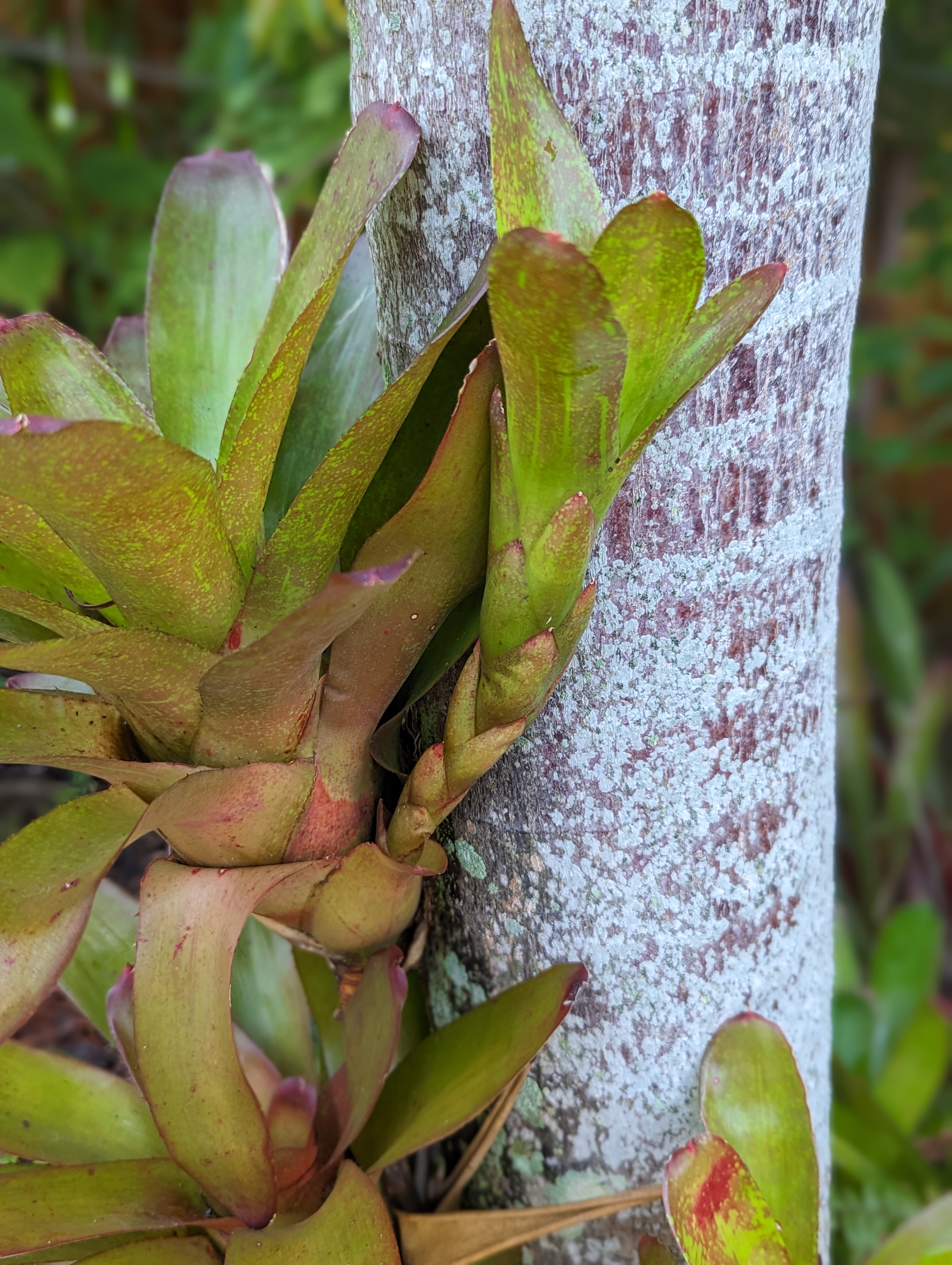
Some plants are enjoying the onslaught. This is a ‘Jill’ Neoregelia Bromeliad pup climbing a palm trunk.
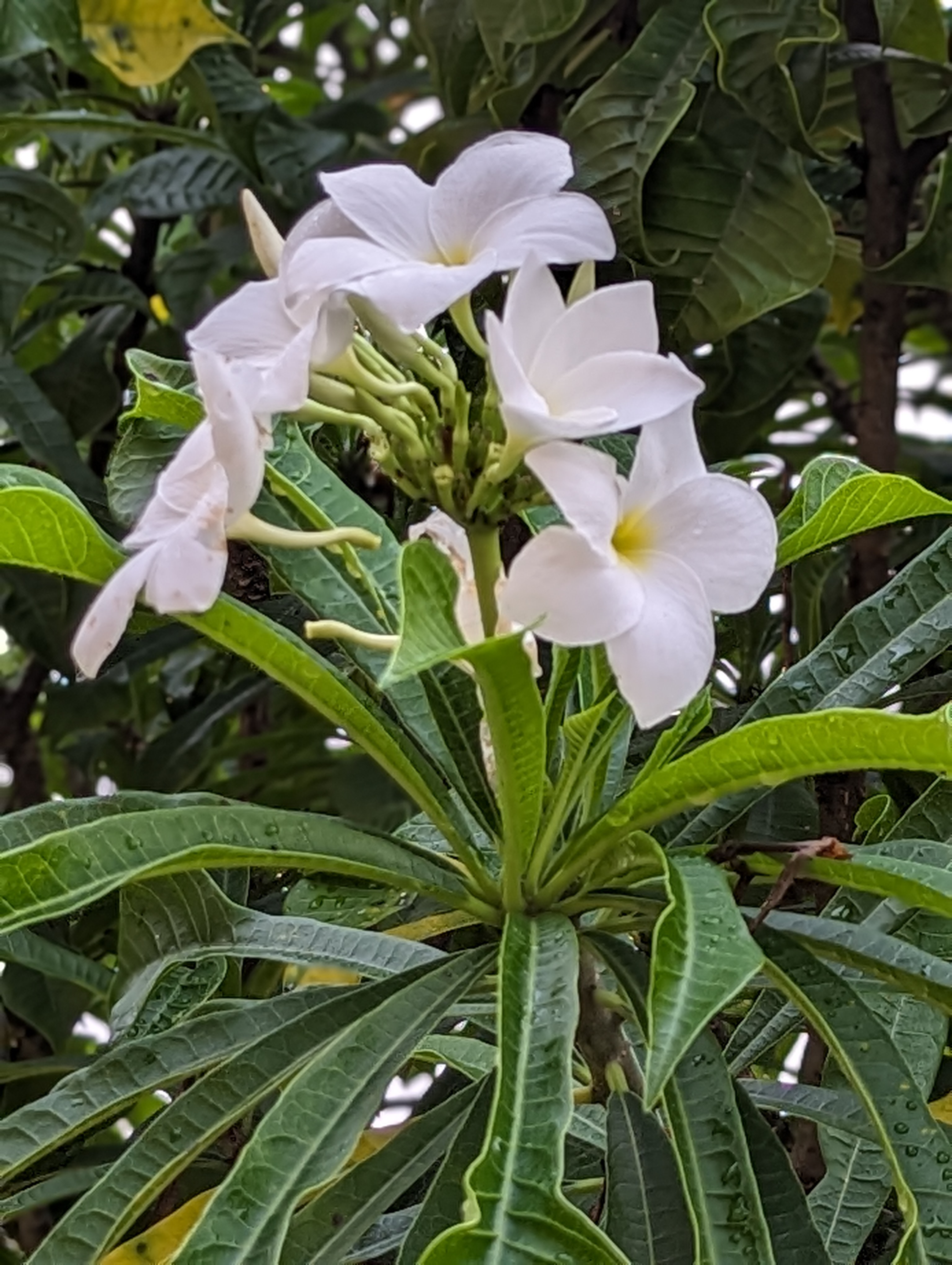
‘Bridal Bouquet’ Frangipani (Plumeria pudica) is soaking up the moisture and still flowering. These are unusual in that they are considered semi evergreen and the shape of the foliage is different from other Frangipani.
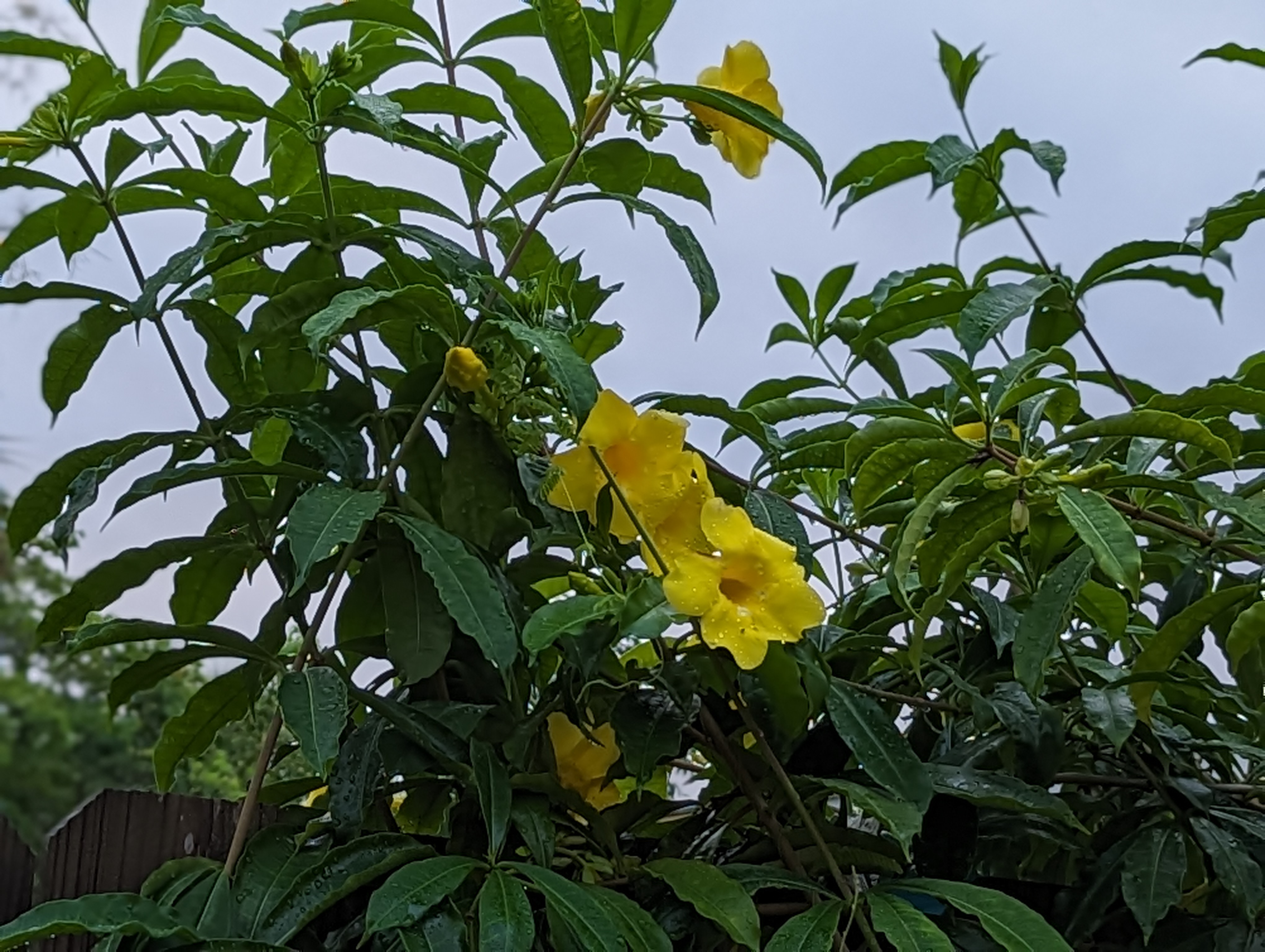
Yellow Allamanda (Allamanda catharitica) is running rampant. Vines can be a little scary in South Florida.
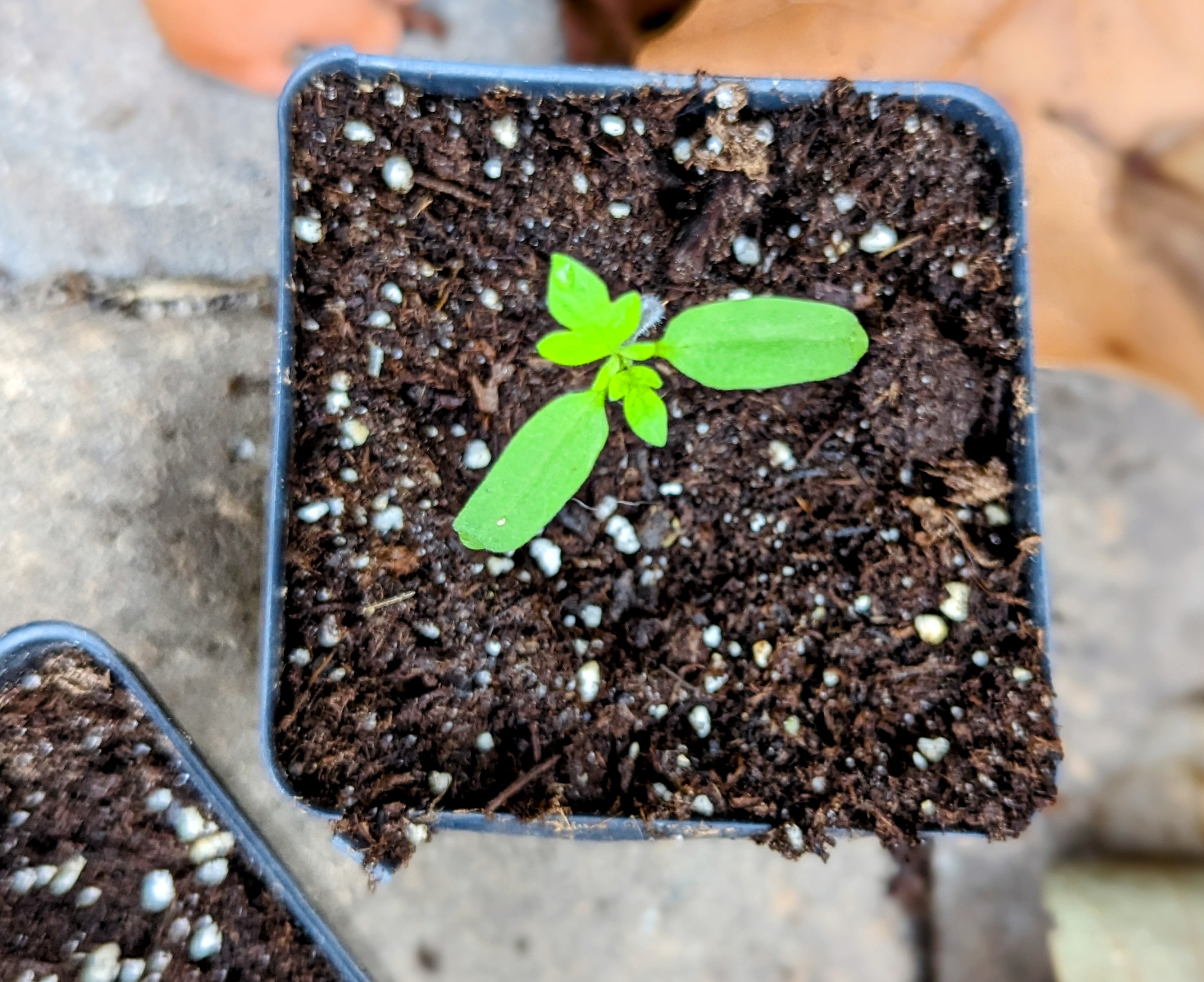
My first tomato seedling. The weather has been good for seed germination, although I did get a bit of dog vomit fungus in some of the pots.
Buds on the Soap Aloe (Aloe saponaria). These succulents seem almost architectural to me. One would think they would rot with all the moisture, but they are reveling in it and flowering like mad. I think this shows how sharp the drainage is in sugar sand.
That’s all from the swamp this Saturday. Wishing everyone some crisp Autumnal days. I am awaiting the end of soggy.
It’s Saturday again and time to join the worldwide garden blogging community to share six items of interest from the garden. Follow this link to Jim’s blog http://gardenruminiations.co.uk to check out what fall fun other gardeners are sharing.
South Florida does not have what I would consider normal signs of fall, just symptoms. The air is cooler in the morning and a few plants produce colorful berries. The most significant sign is it is comfortable to work outside again, but only early or late in the day. It has finally stopped raining constantly ! I have been able to plant some of the perennials I bought and replant those little pots with seeds and cuttings for more plants.
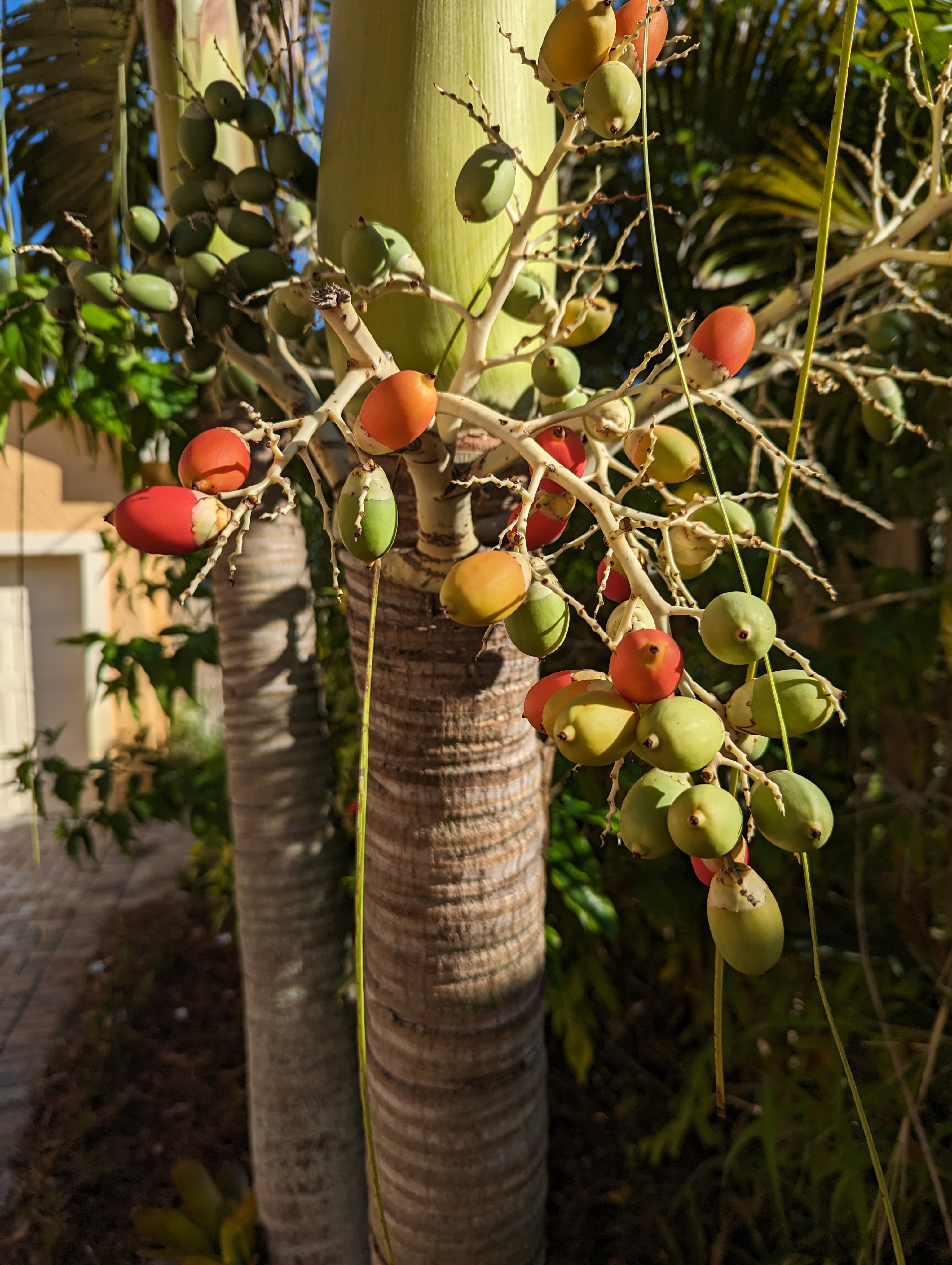
The berries. These are the fruits of the Christmas Palm (Adonidia merrilli) By Christmas they will be completely red and resemble ornaments for the tree.
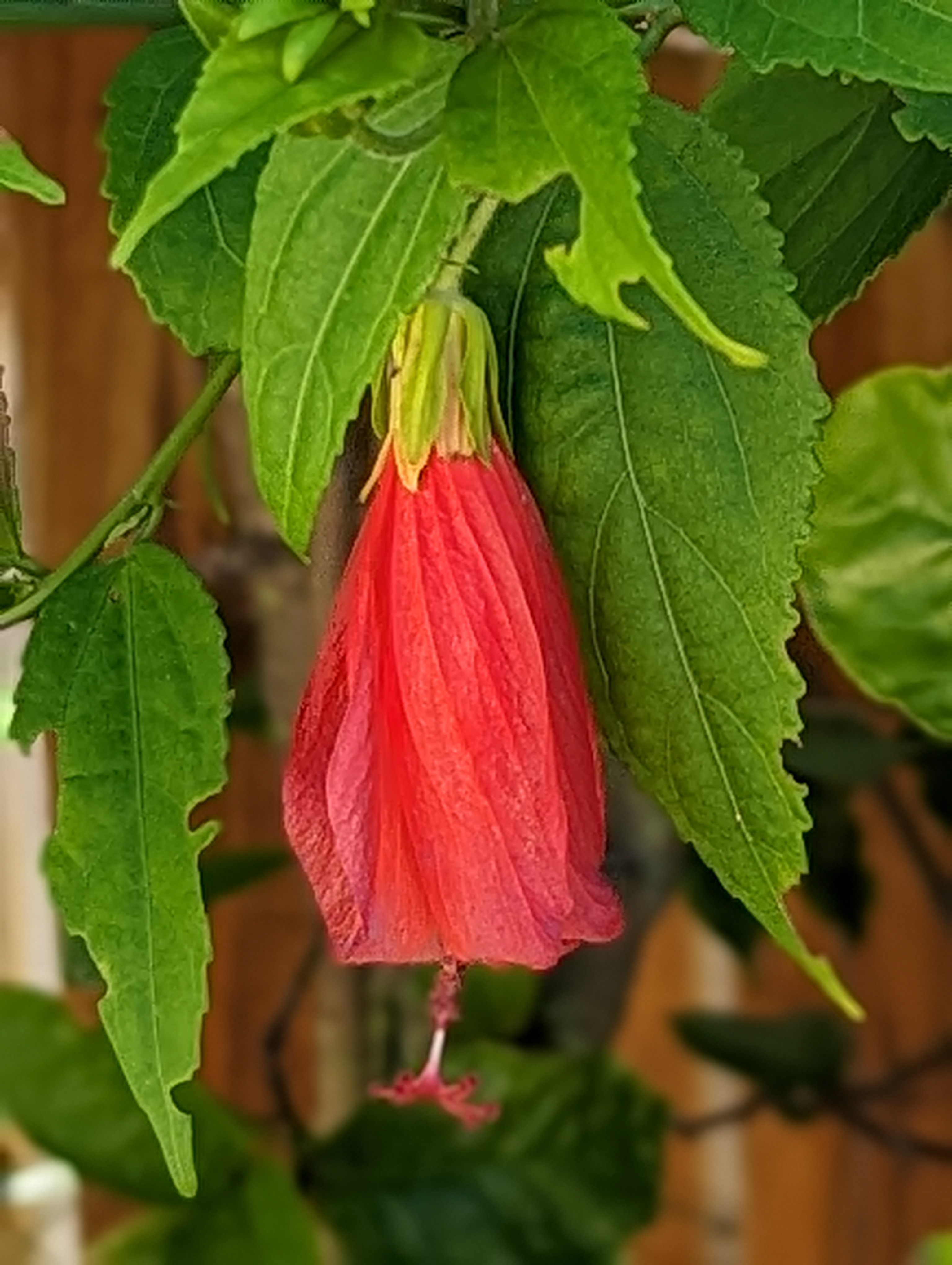
Another sign of cooler weather. Turk’s cap Hibiscus (Malvaviscus penduliflorus). These just seem to appear in the garden. I enjoy the flowers and cut them to hang over the edge of vases. Floridians call these Nodding Hibiscus. I guess there are hats like this in Turkey?
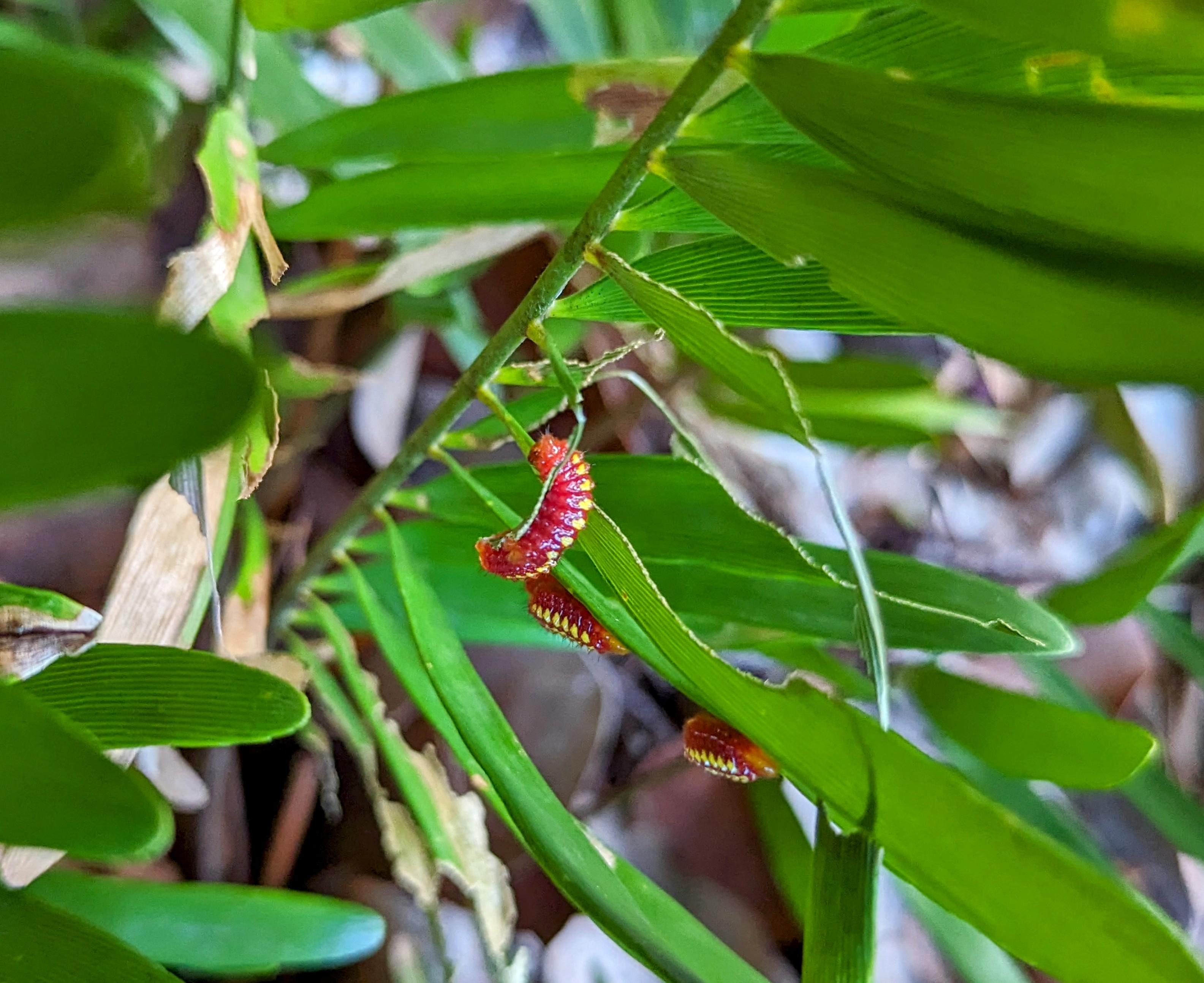
Atala butterflies are back in garden. These are the caterpillars consuming their only host plant, the Coontie cycad (Zamia integrifolia). I hope to get some butterfly pictures, Atalas have a fluorescent orange body with black wings streaked with turquoise.
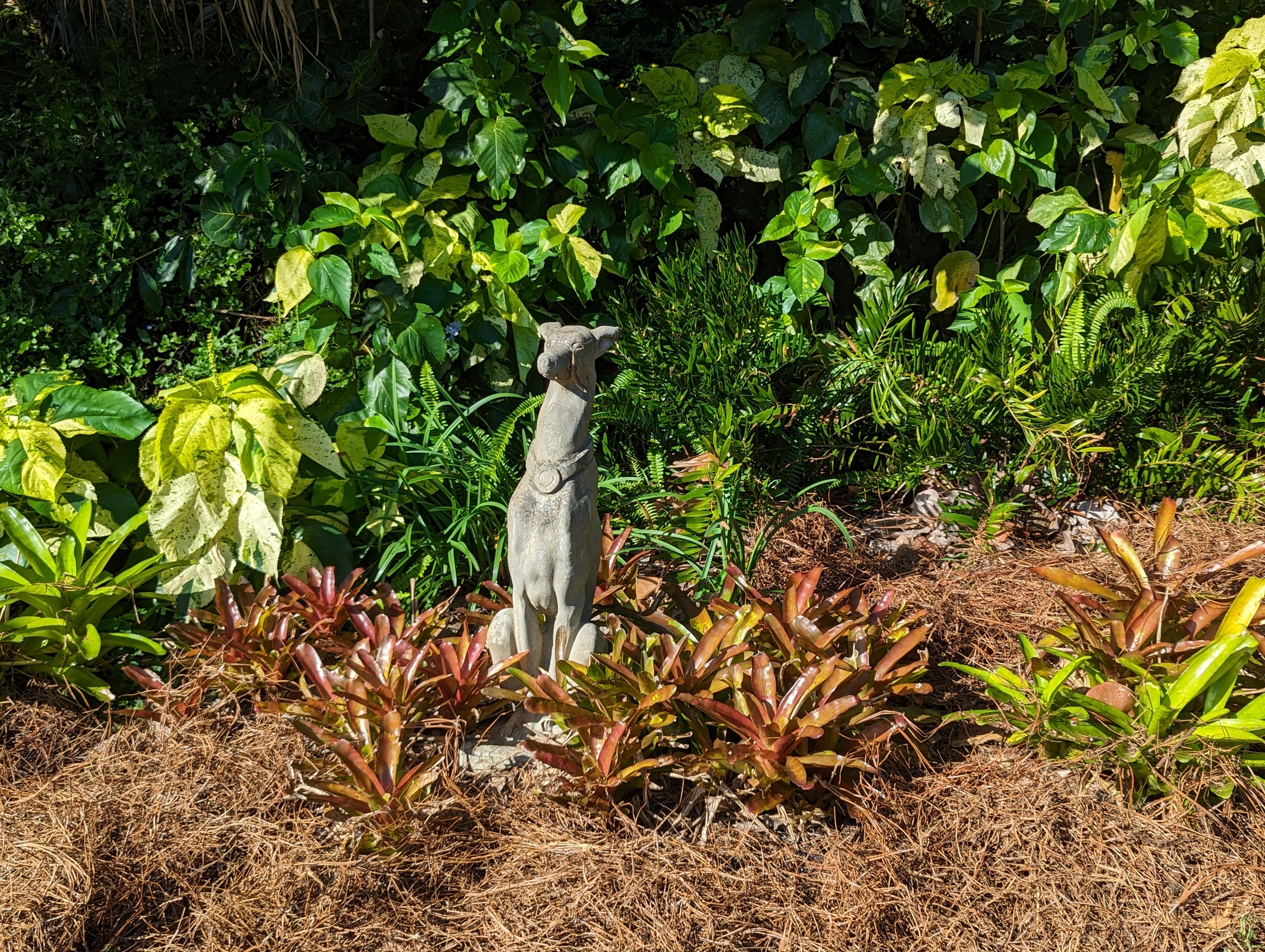
Mulching the bromeliad beds with the leaning greyhound standing guard. Straightening the statuary is next on the list. The bromeliads were moved last spring and have been established over the summer.
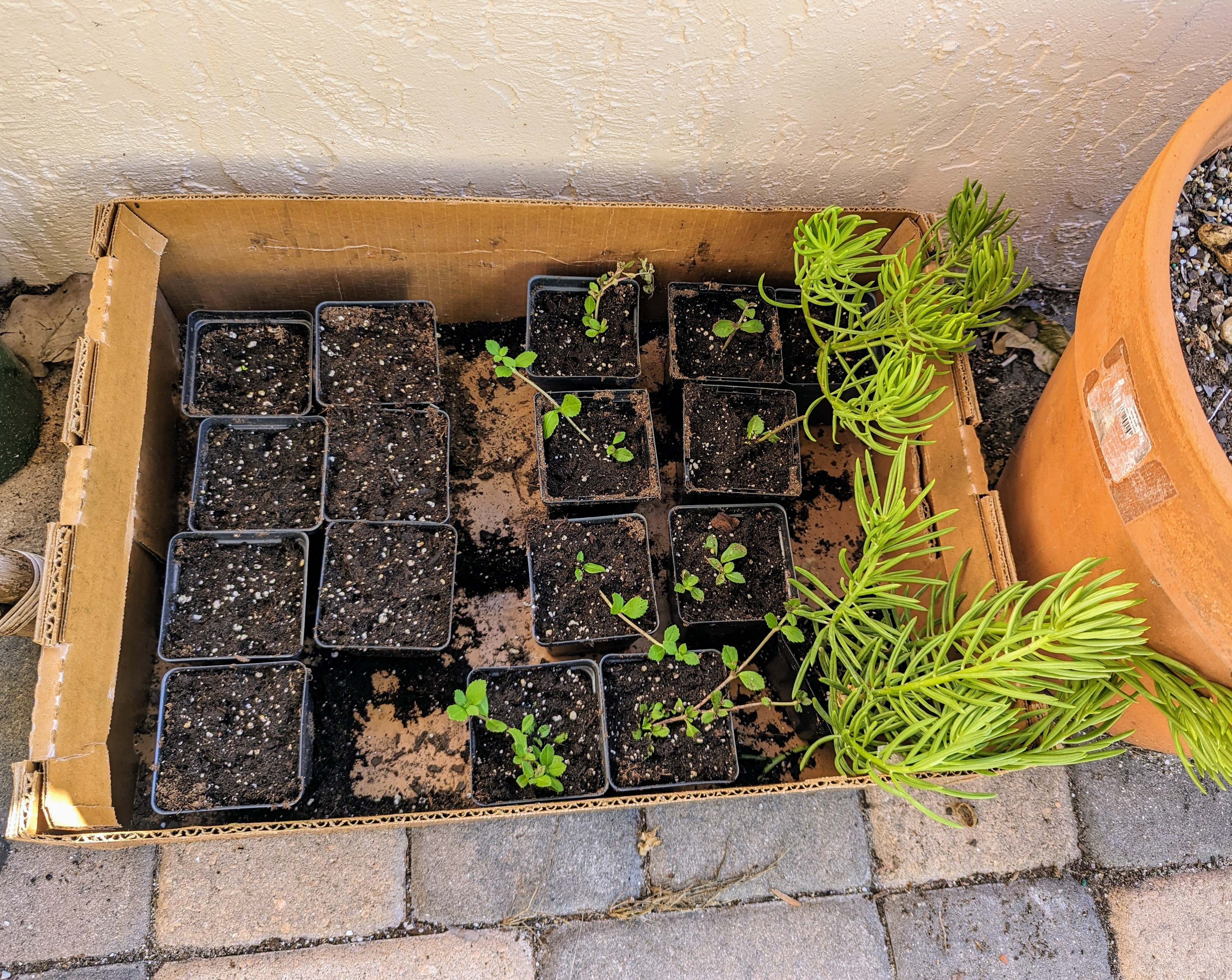
The box of perennials I planted last week has been refilled with fresh soil and planted with Senecio and Turkeytangle Frogfruit cuttings. Senecio is the succulent. The Frogfruit is to fill in my slowly growing lawn replacement. Seeds for dill, basil and tomatoes were planted. I bought some thyme seed, but did not realize how long it takes to germinate (28 days) and decided to buy a plant.
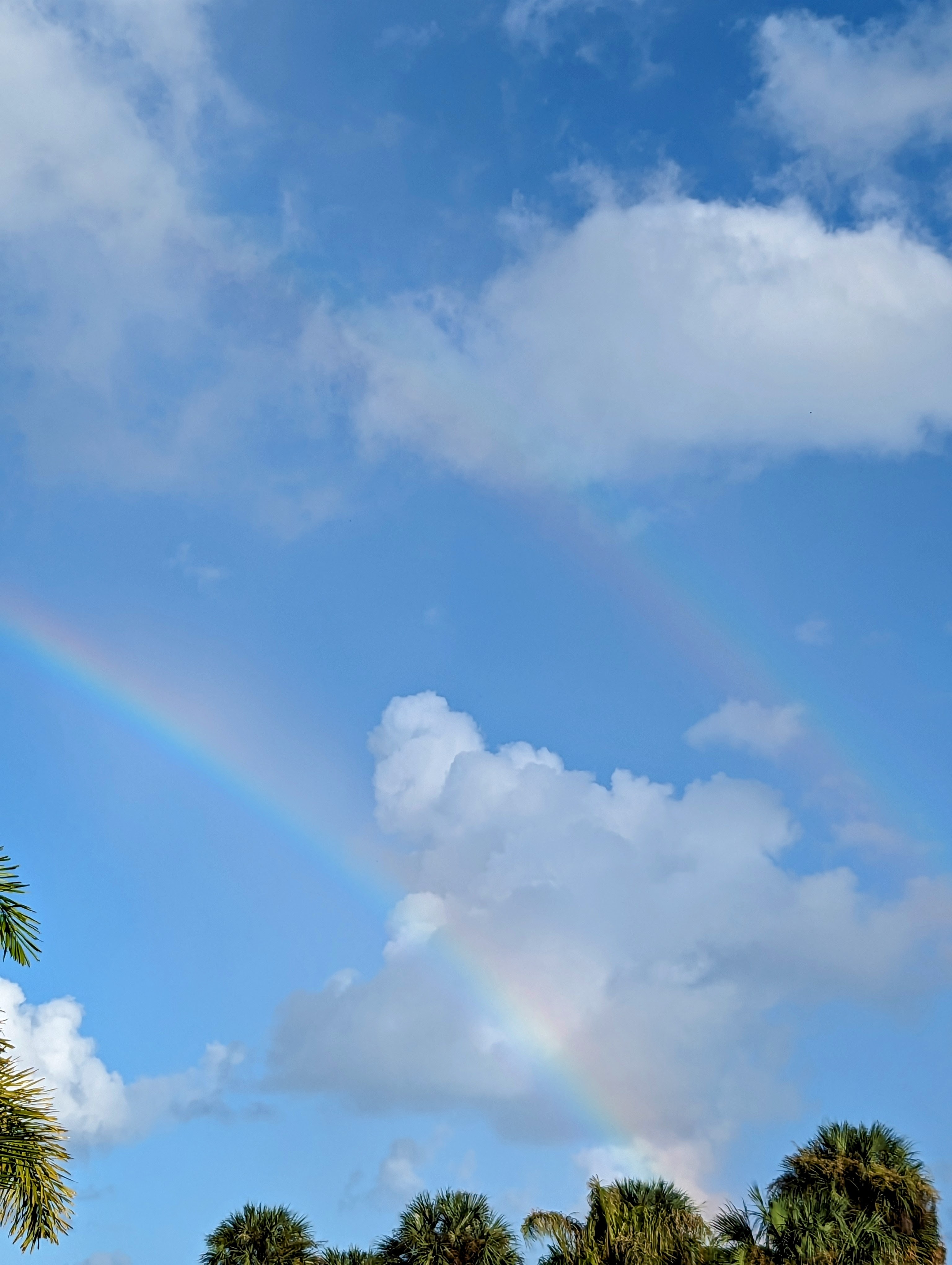
This is not a regular fall event, a fairly rare sight actually. One misty afternoon this week I walked outside and spied a double rainbow.
Still looking for that pot of gold to buy more plants.