Six on Saturday – November Arrivals

I am joining The Propagator for his meme featuring six items of interest from my garden. To see more posts from other gardeners visit his blog at http://www.thepropagatorblog.wordpress.com

November brings some interesting characters into my garden. Birds become more numerous during the winter in South Florida. I was interested to learn that Hawks migrate, they have recently appeared in flocks, soaring over the Indian River in search of food.

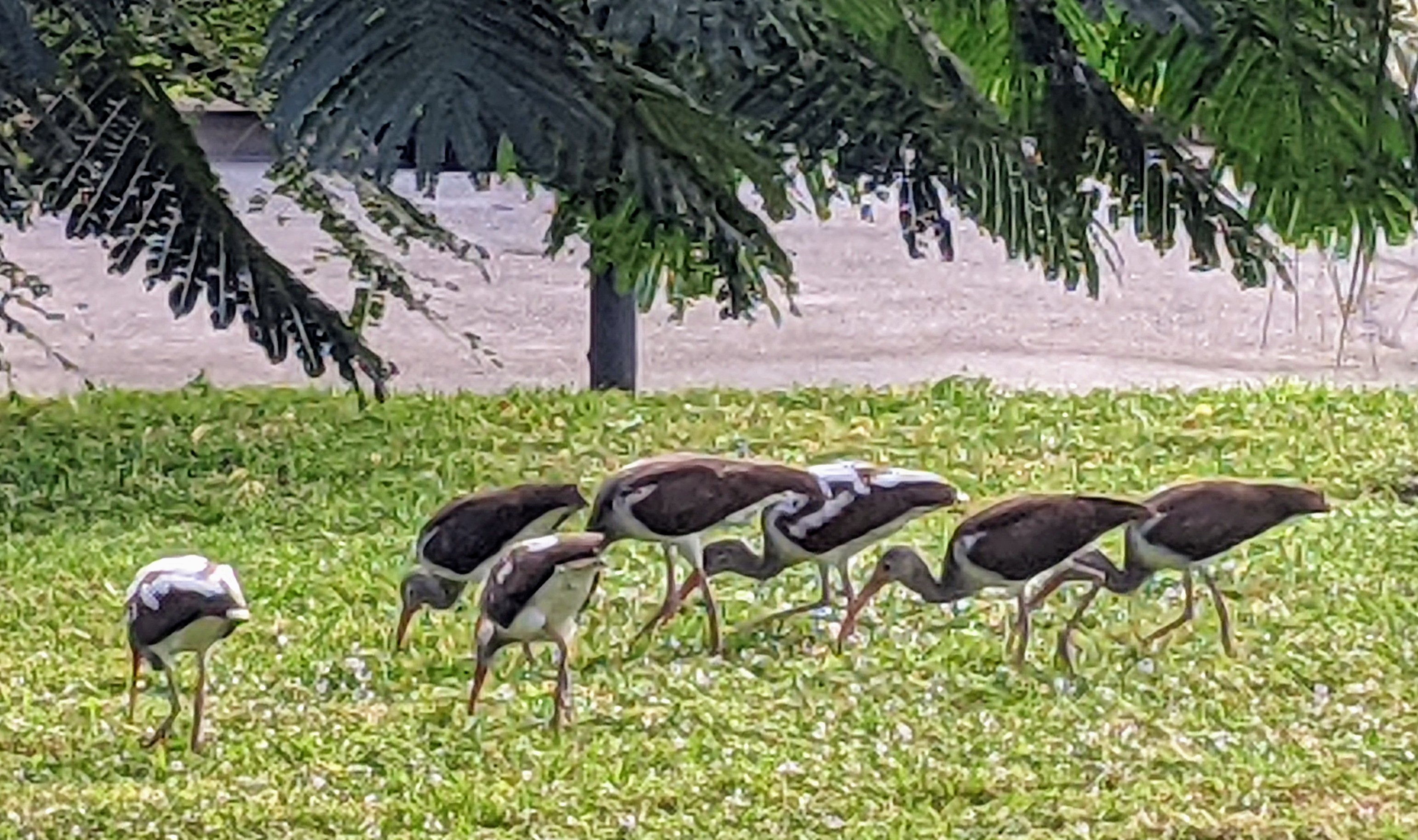
These are White Ibis, they are here year round but more numerous in the winter. The brown ones are juvenile and become pure white as they mature. They are eating grubs in the lawn.
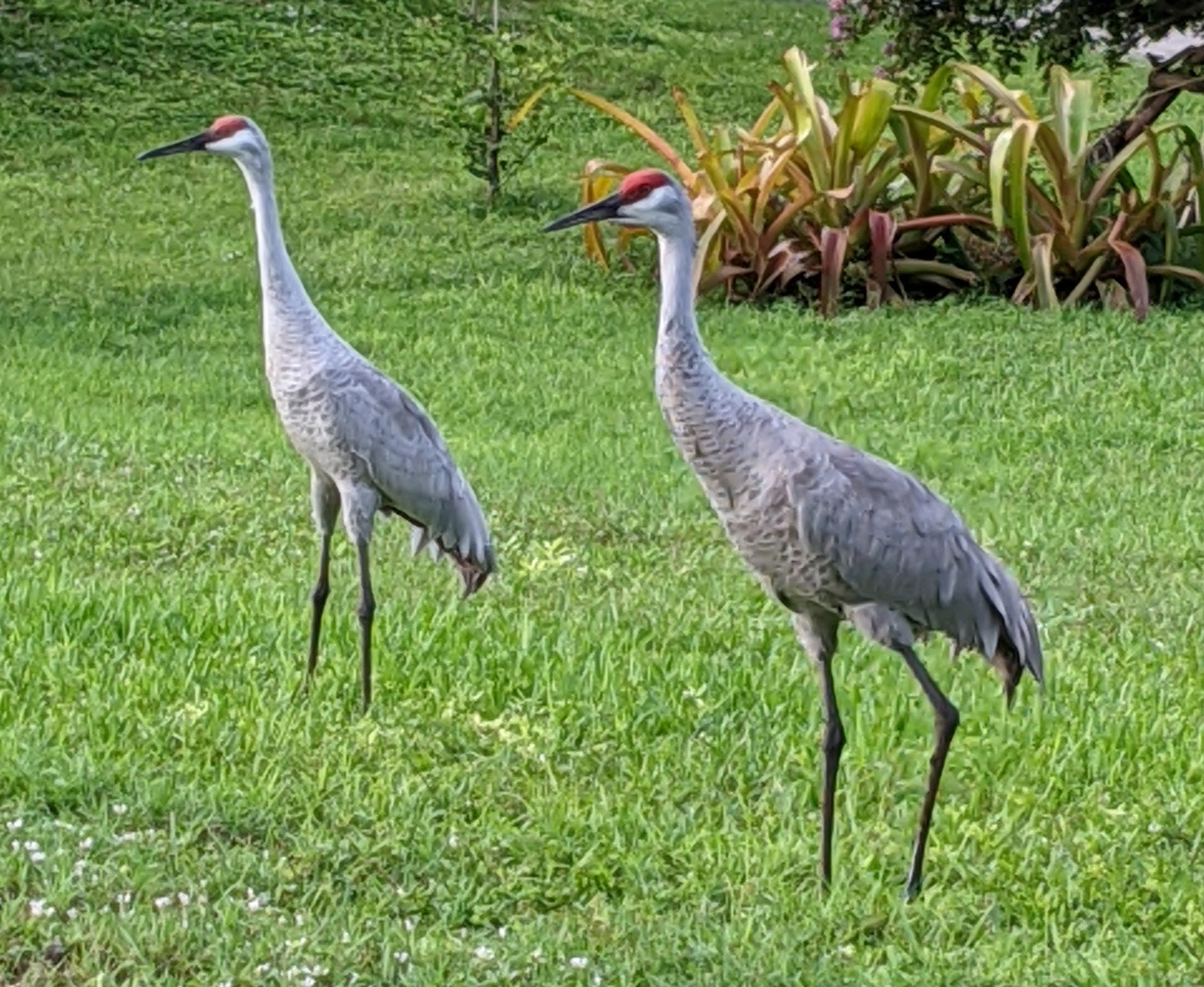
Another bird appeared this week, the Sandhill Crane, these are about 3 feet tall and look like Pterodactyls flying by. They summer in Nebraska.
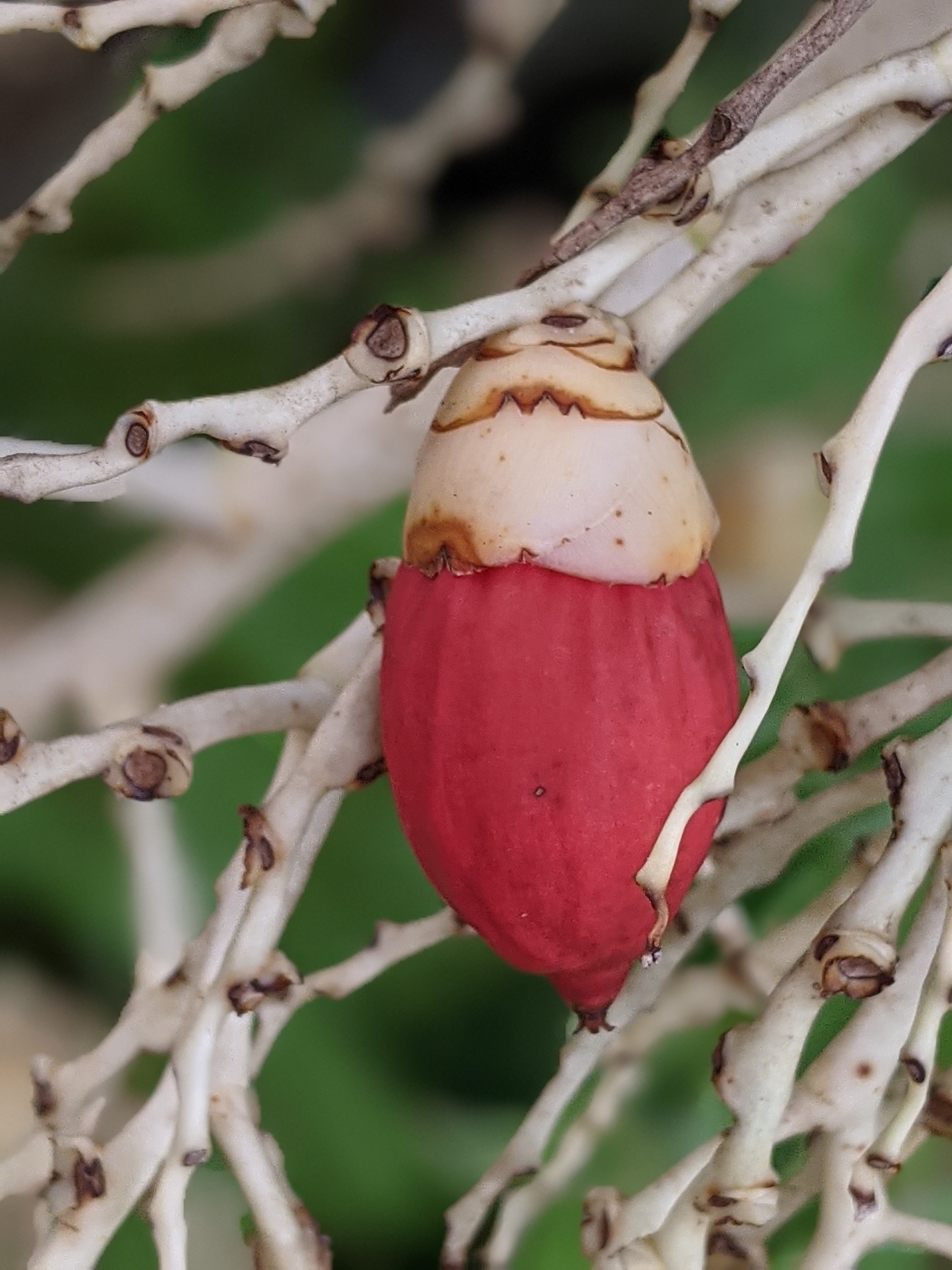
Winter provides interesting colors in plants as well. The aptly named Christmas Palm (Adonidia merrilli) is producing fruit – looking a lot like Christmas ornaments.
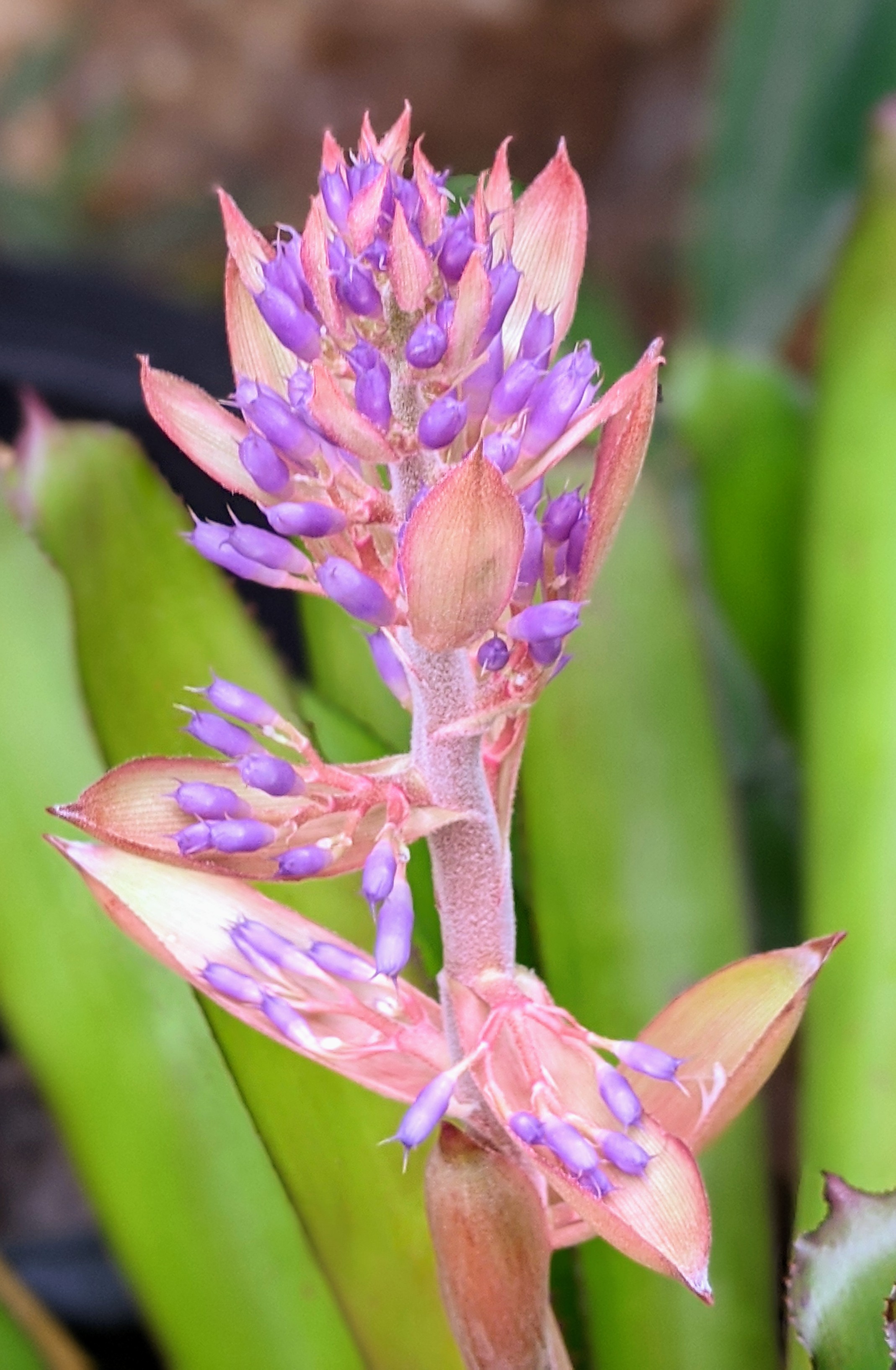
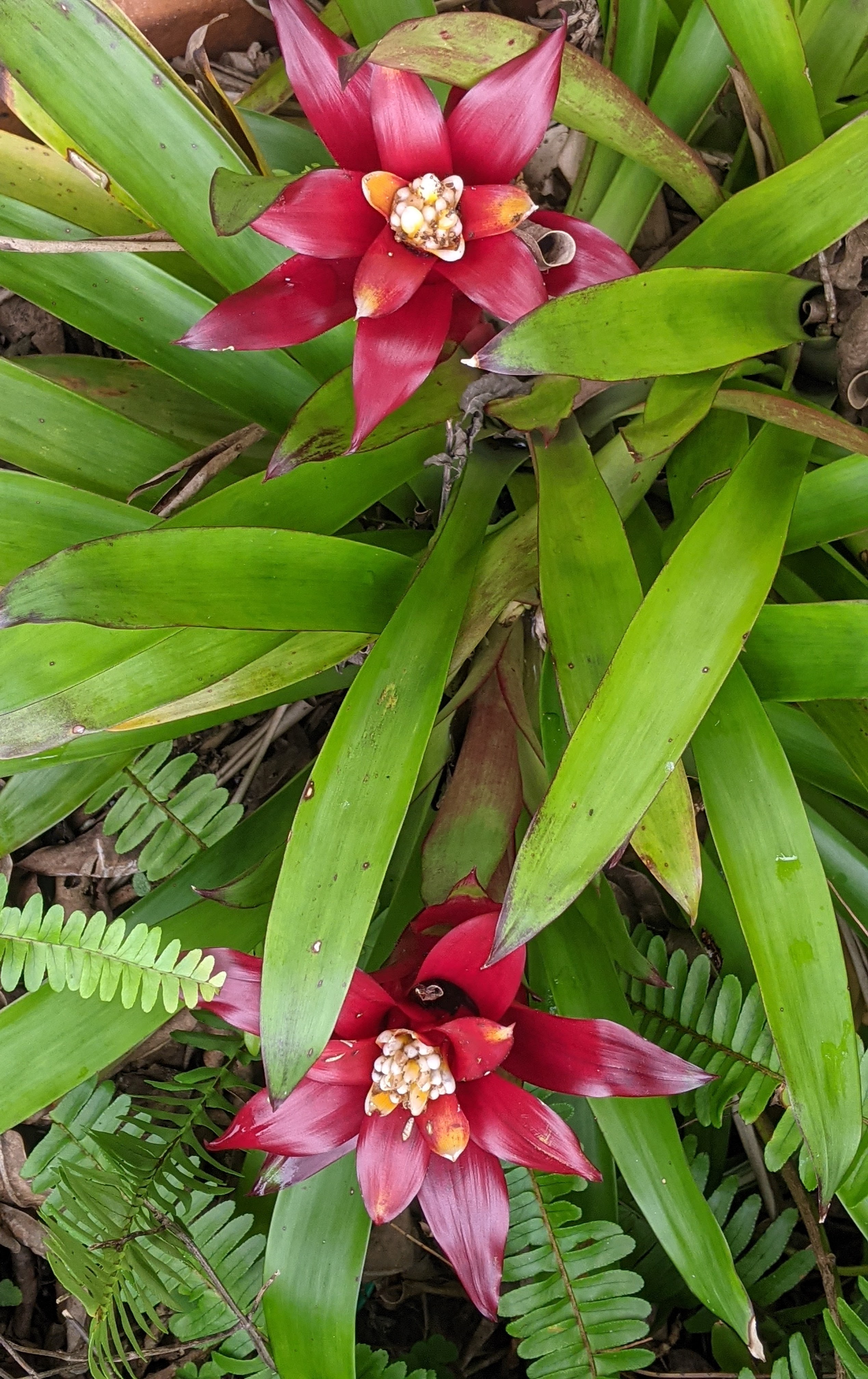
Bromeliads have a tendency to do their own thing. Eventually I will figure out how to have year round flowers. These Guzmanias, left to their own devices, filled this wok planter and bloom every winter for a few months.
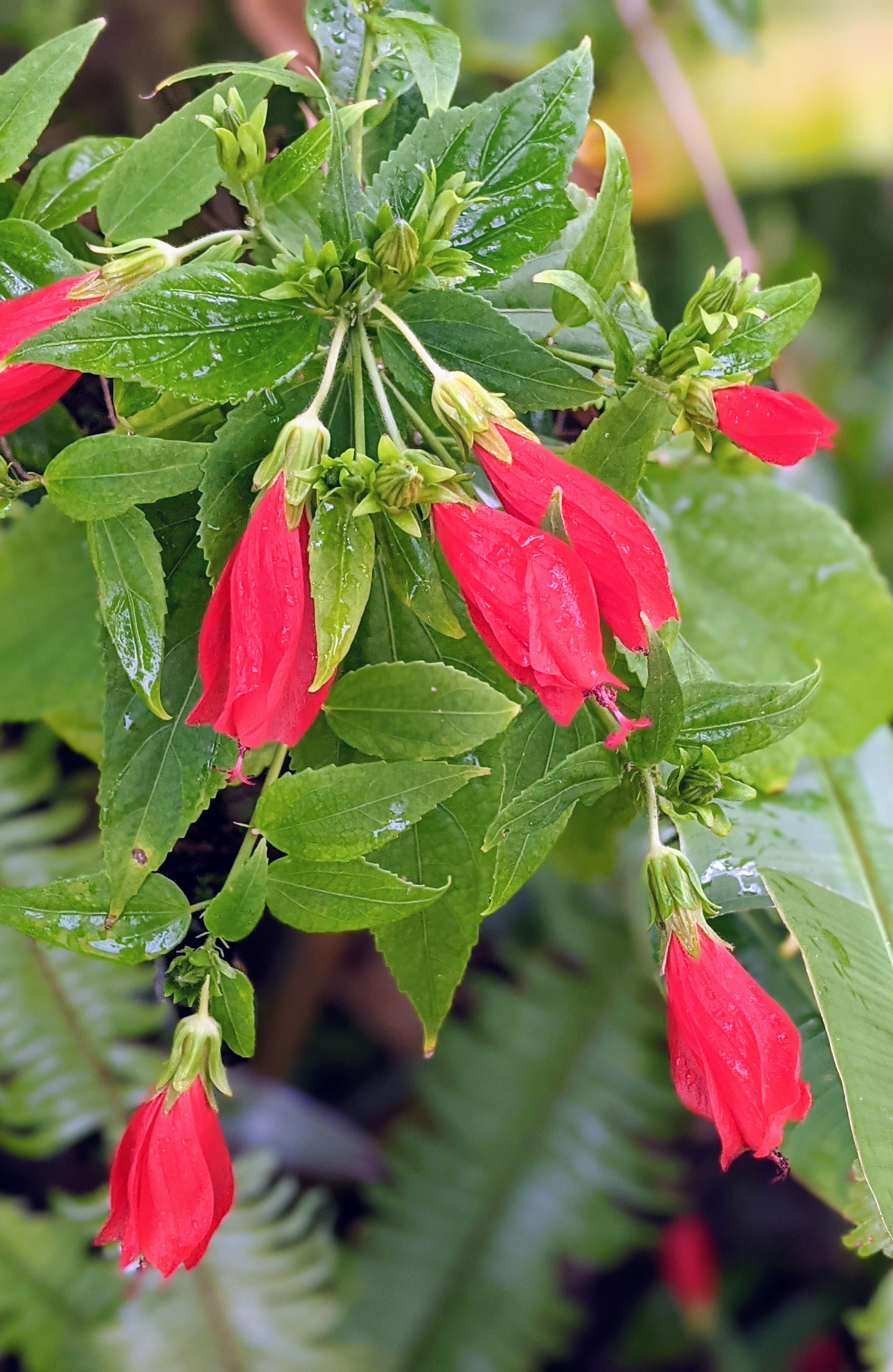
Another reliable winter flower is the Nodding Hibiscus (Malvaviscus pendulifloris). These appear randomly in my garden and are very difficult to get rid of – I have embraced them and trained them to my neighbor’s fence.
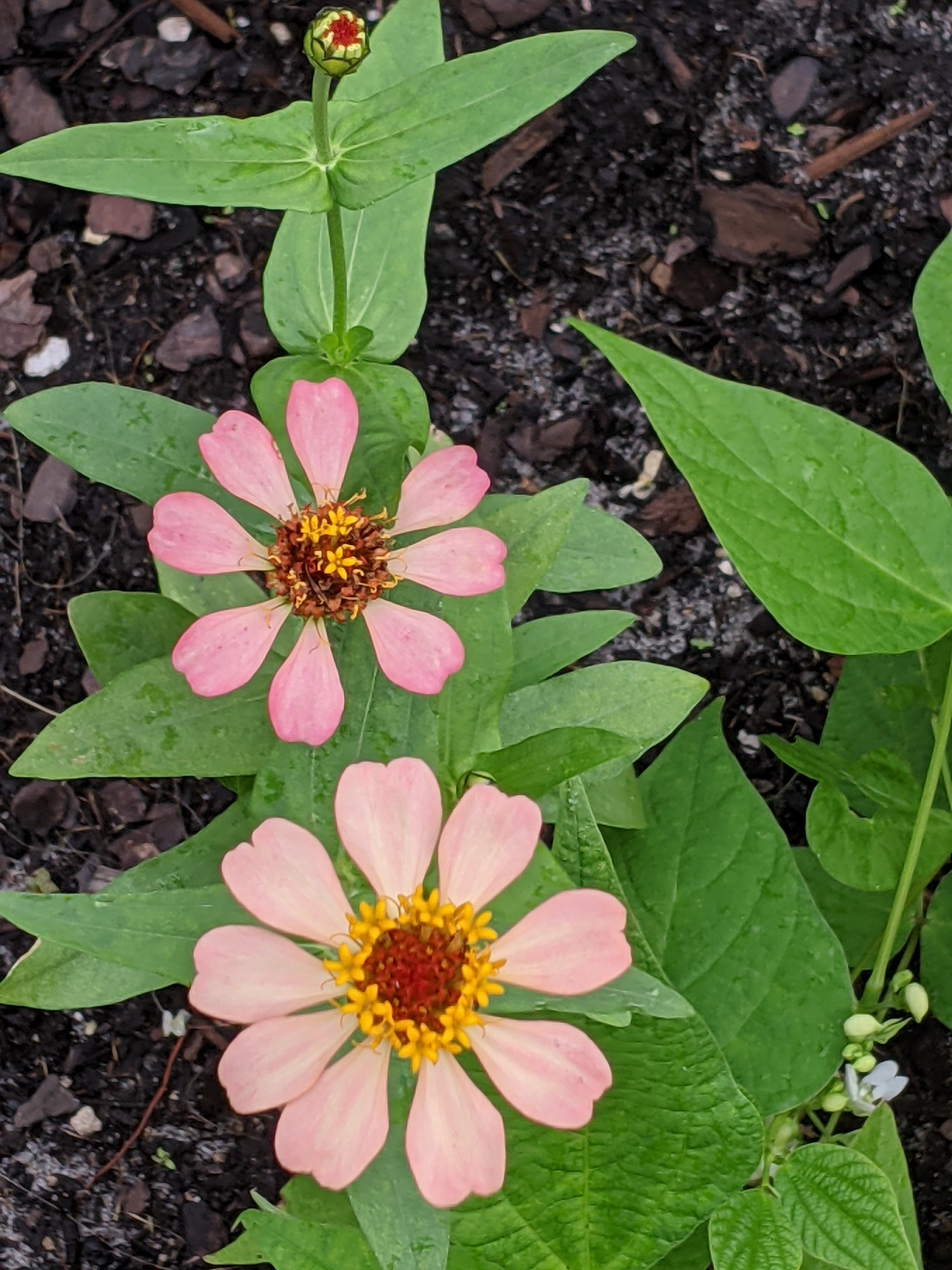
The Zinnias I started from seed in August have started flowering, as usual, they don’t look like the seed packet. These are Zinderella and supposed to be double..and peach colored, the other one is single and gold..
That is my six for this Saturday… hopefully it stops raining soon.

Happy Gardening and thanks to Jon the Propagator for hosting.

Six on Saturday – Fruit, Veg and Flower.

My garden is responding to the change in weather by flowering, growing root vegetables and ripening fruit. I am joining The Propagator’s SOS meme this Saturday. To see more SOS from all over the gardening world, visit Jon at http://www.thepropagatorblog.wordpress.com.

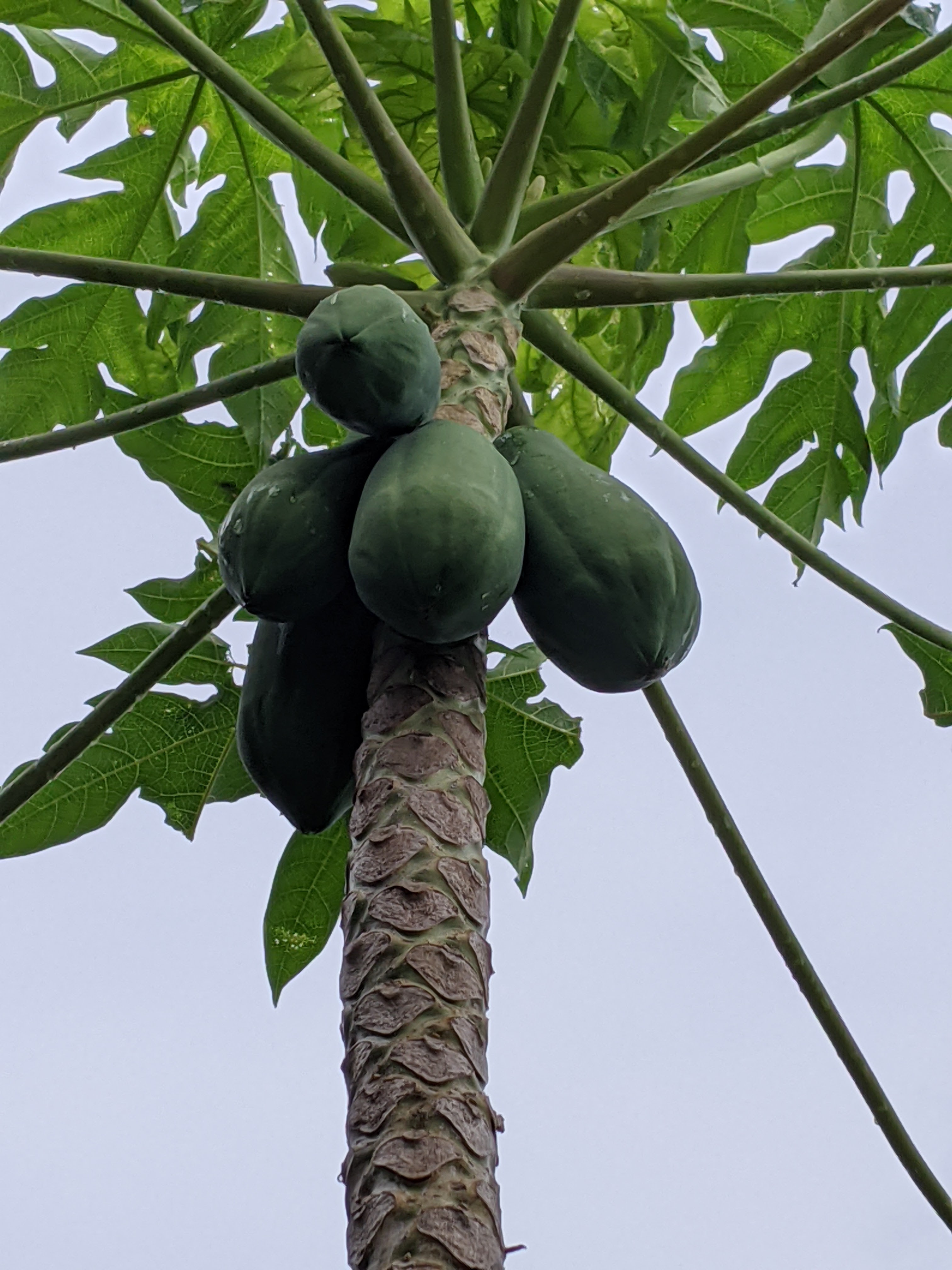
The Papayas are showing the first hints of yellow, which is ripe. I had Papayas December through February last year. Hopefully the same will happen this year. I can only eat so many Papayas at once!

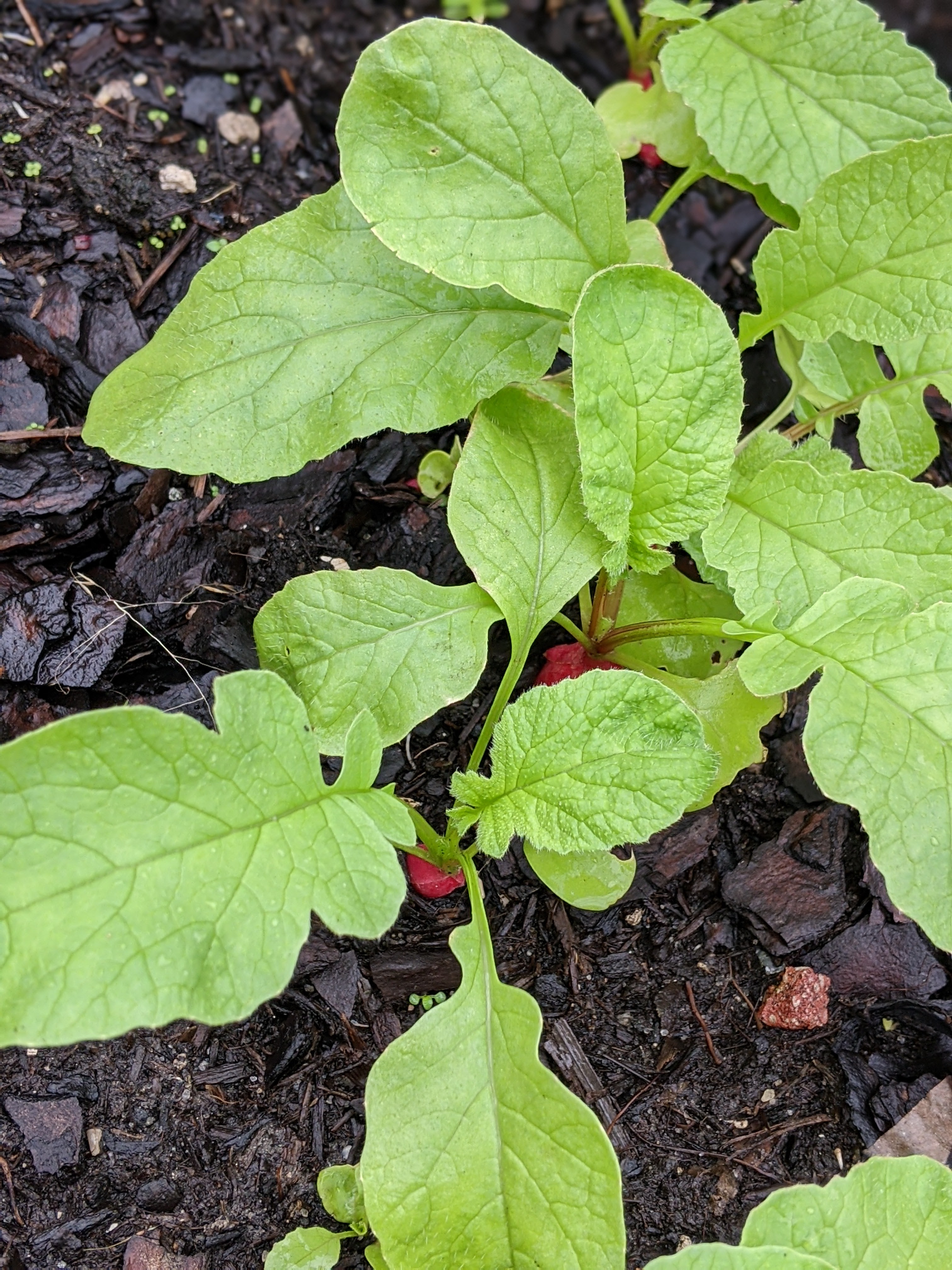
Red radish shoulders peeking out, I am looking forward to eating these guys.

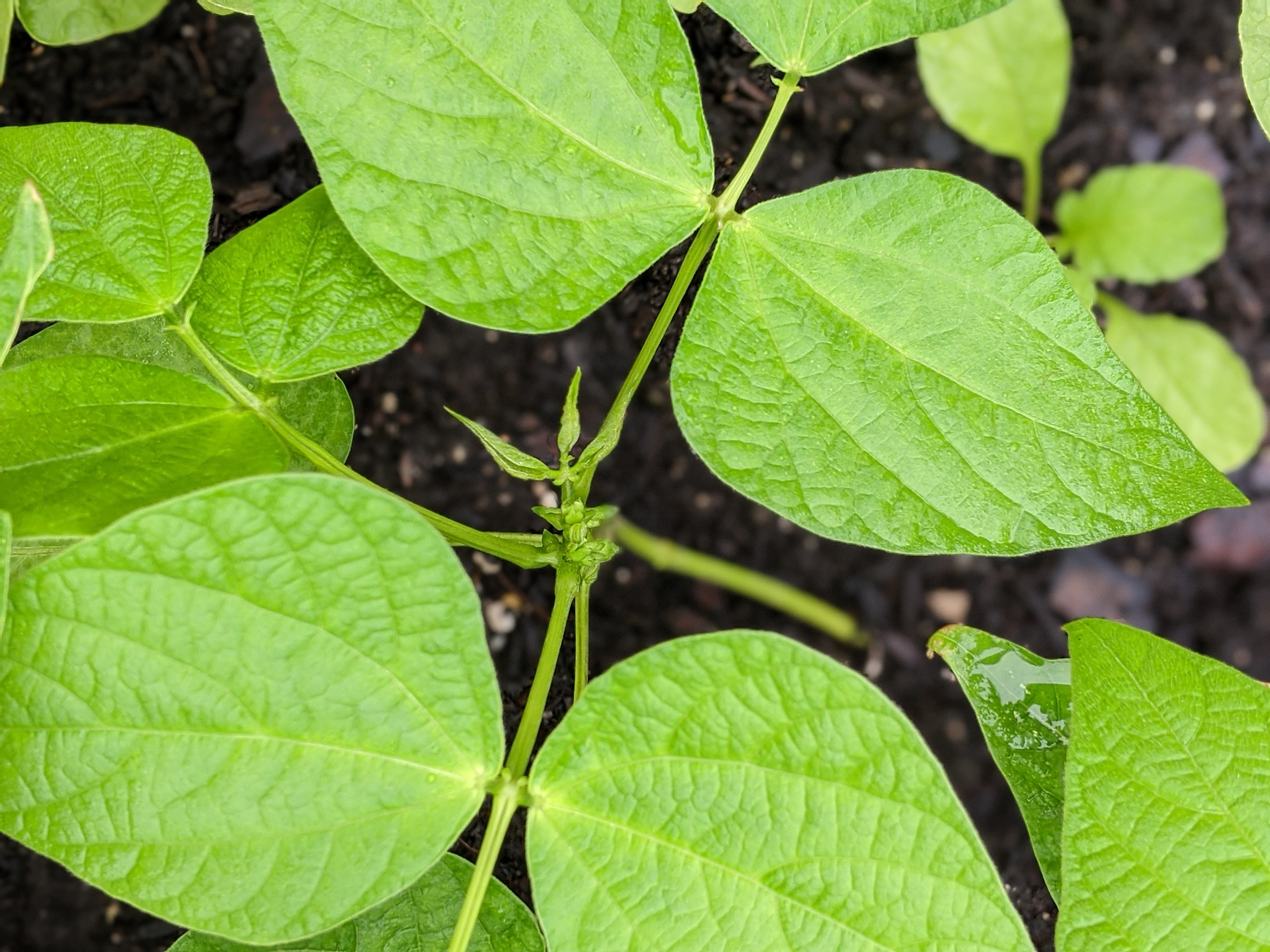
Bush beans budding. I think these are Blue Lake.

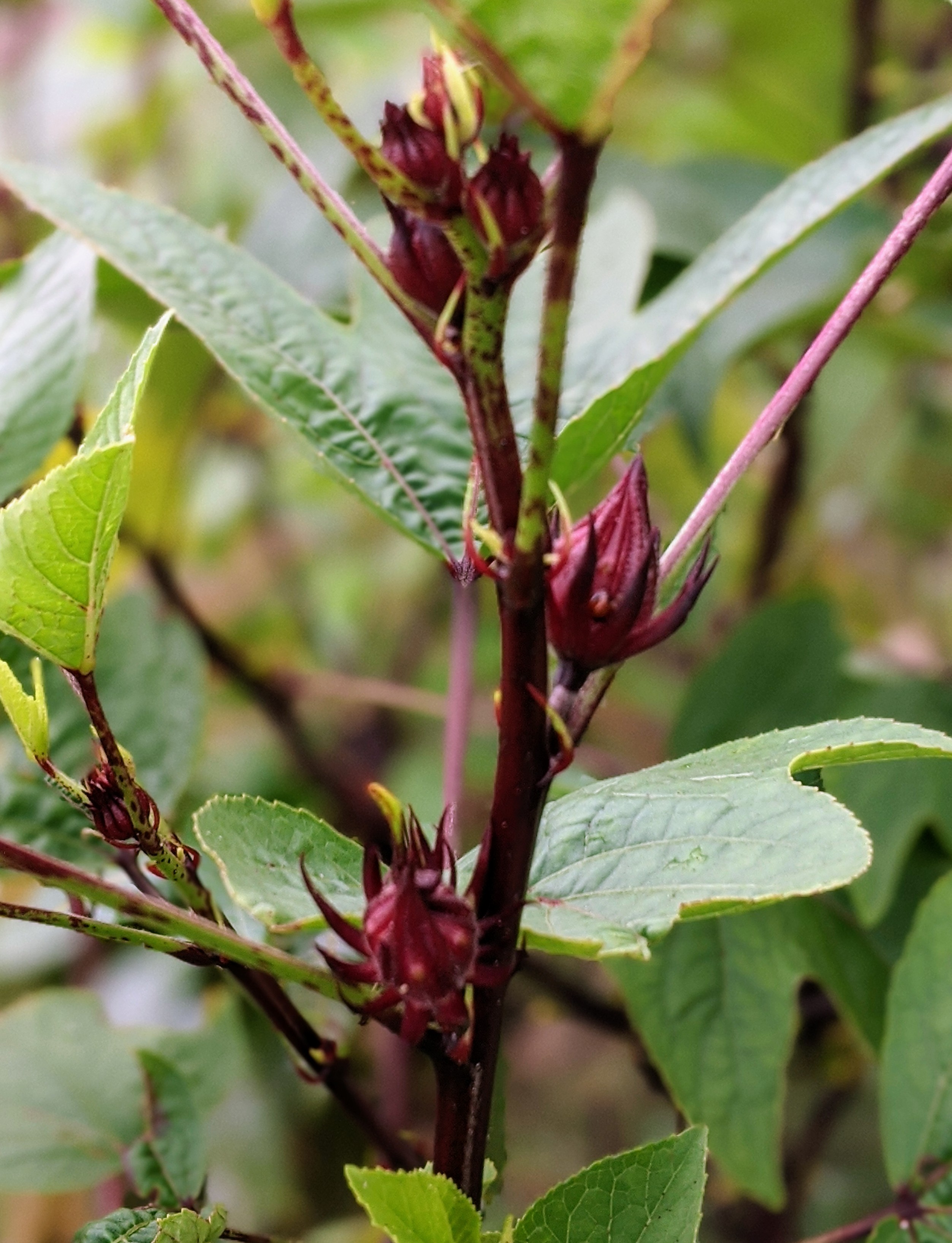
Roselles, nearly ready to pick. These are the flowers of an edible Hibiscus, I have been harvesting and freezing them.

San Marzano tomatoes coming along.
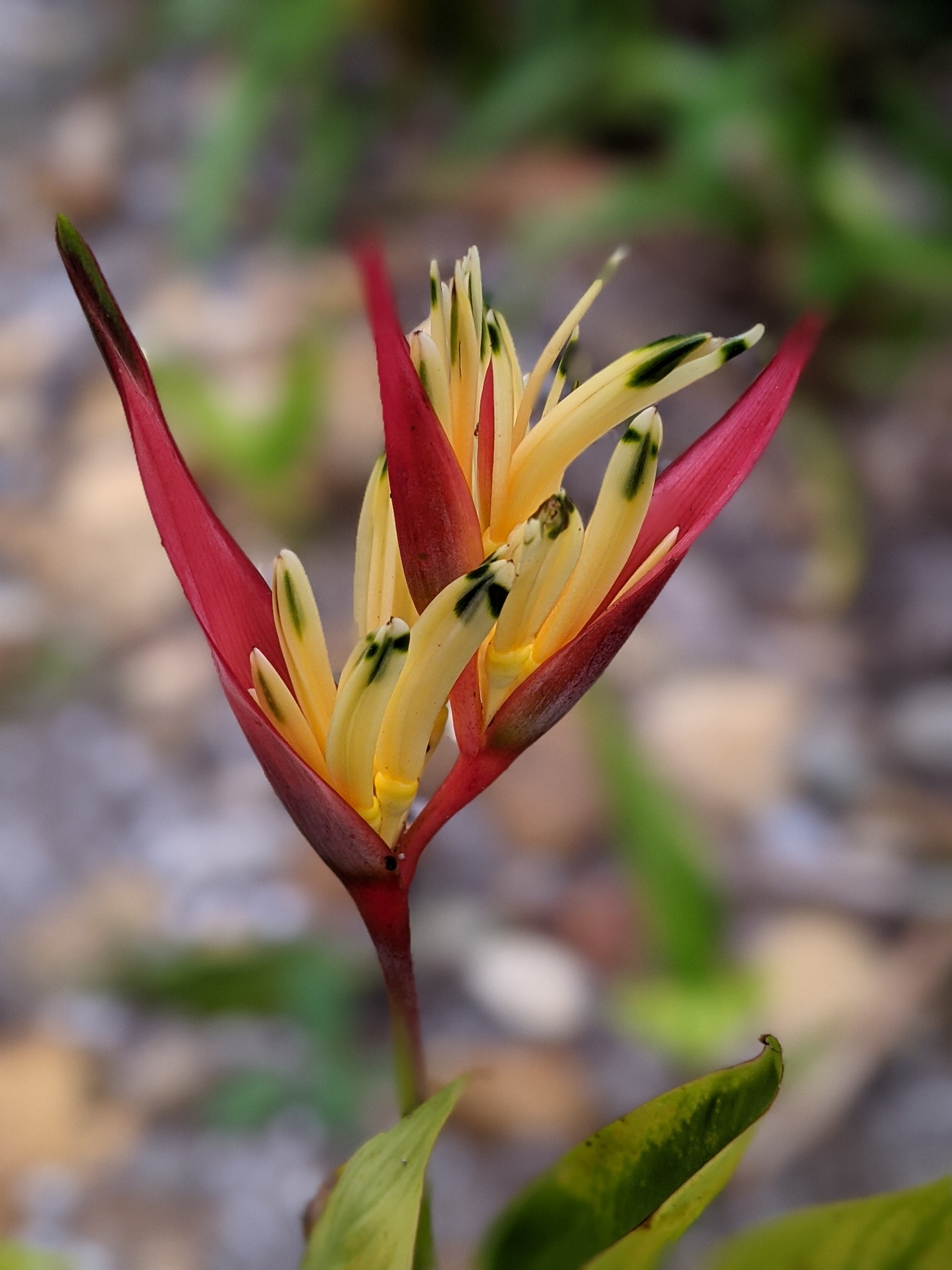
Heliconia psittacorum – Parrotflower, one of my favorite cut flowers, I am wondering if they like shorter day lengths to bloom.

Happy Saturday and Happy Gardening….

Six on Saturday – The Orange Challenge

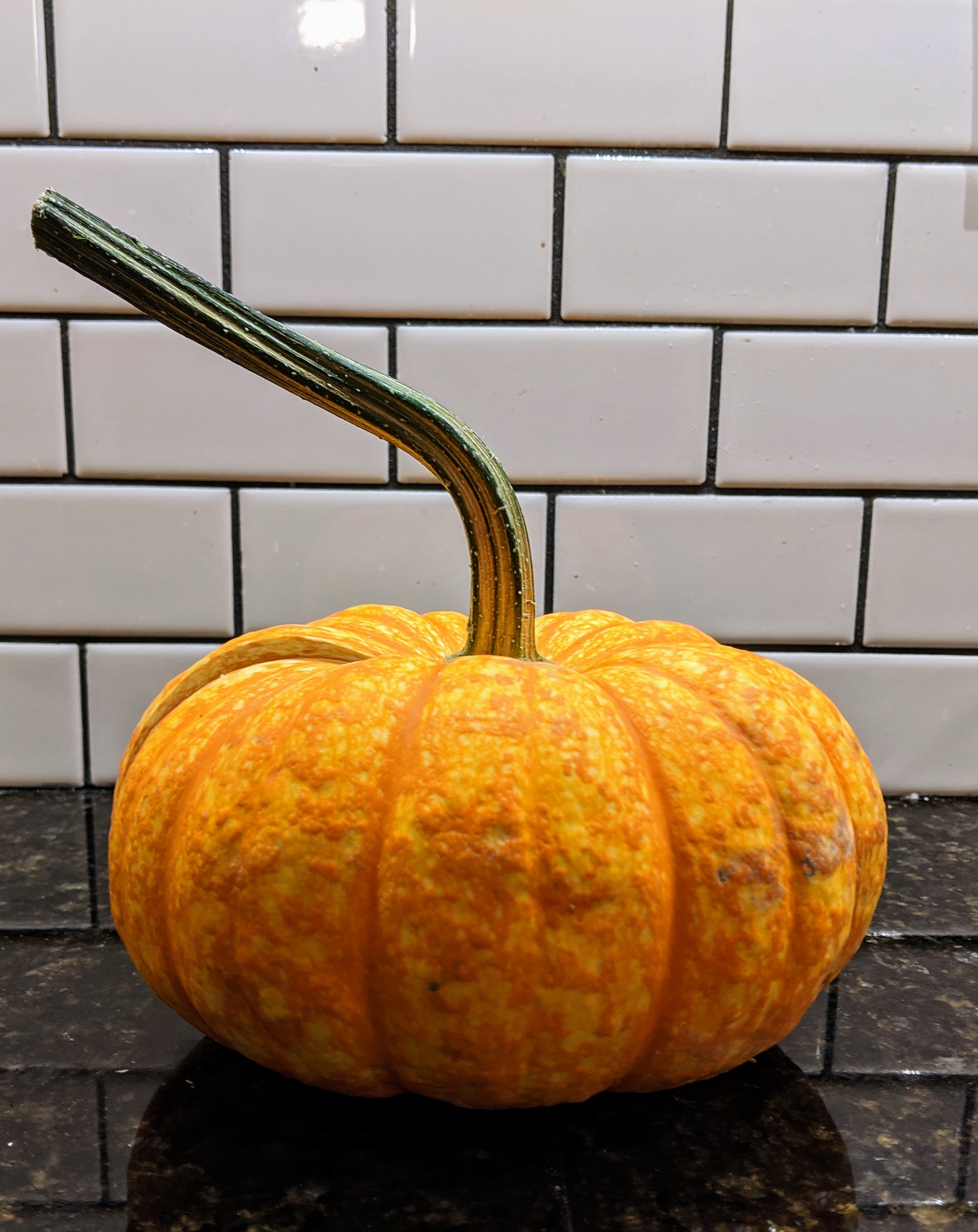
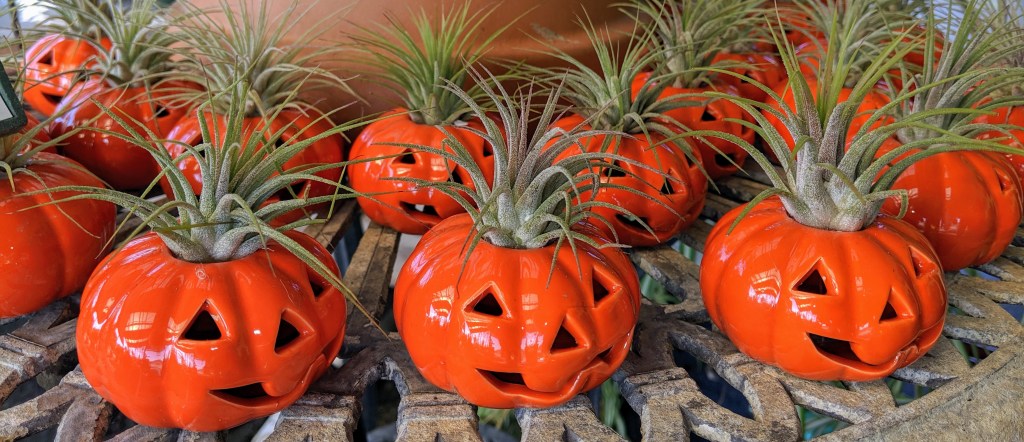
Today is Halloween in the US. There is a full moon and I am staying home today…I bought this pumpkin to celebrate and challenged myself to find five additional orange things in my garden.

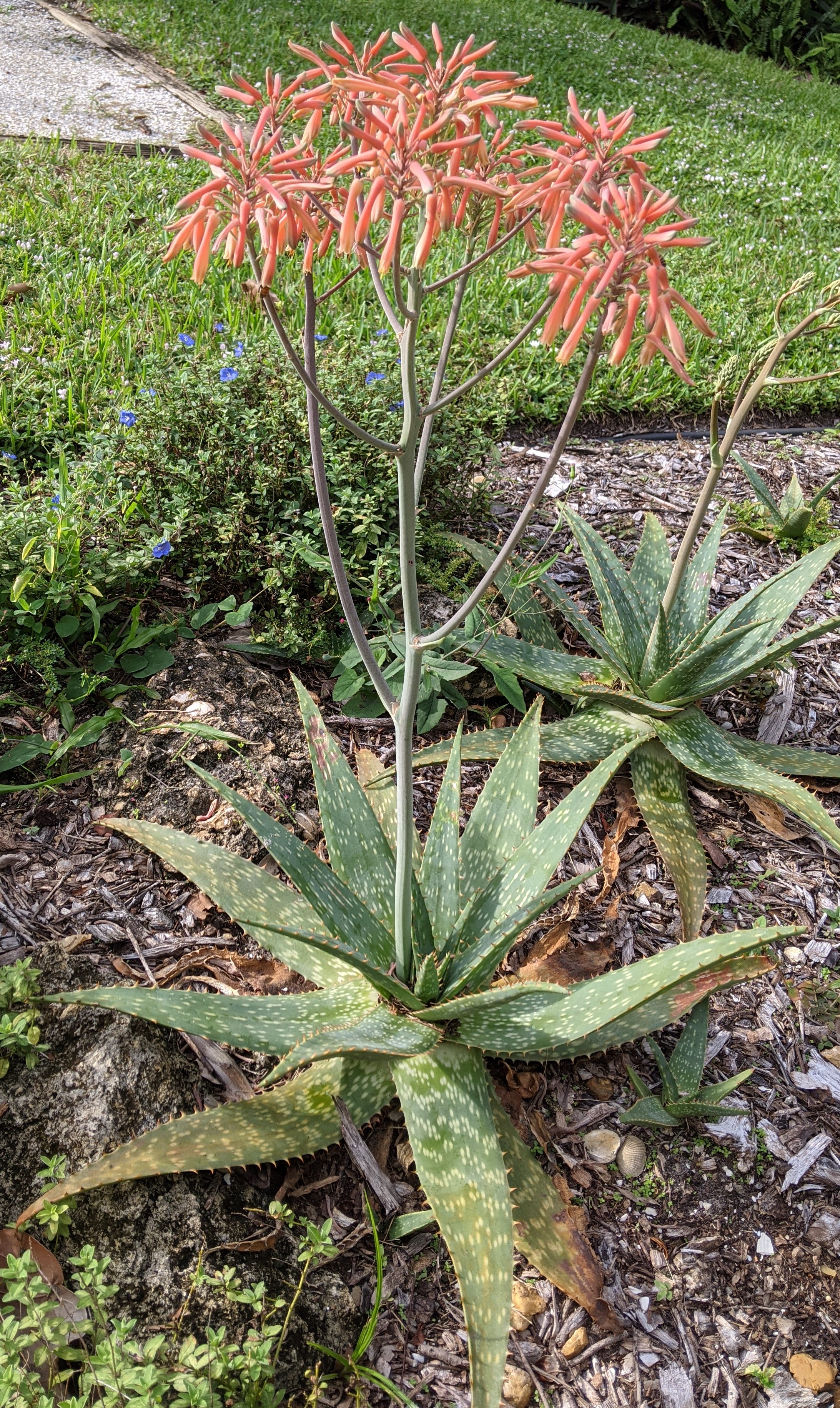
The Soap Aloe (Aloe saponaria) is flowering. A friend gave me one of these several years ago, now I have several and give them to friends. A native of South Africa, they can be used for shampoo – but are well known for causing allergic reactions, so I enjoy them in the garden and cut them for flower arrangements.

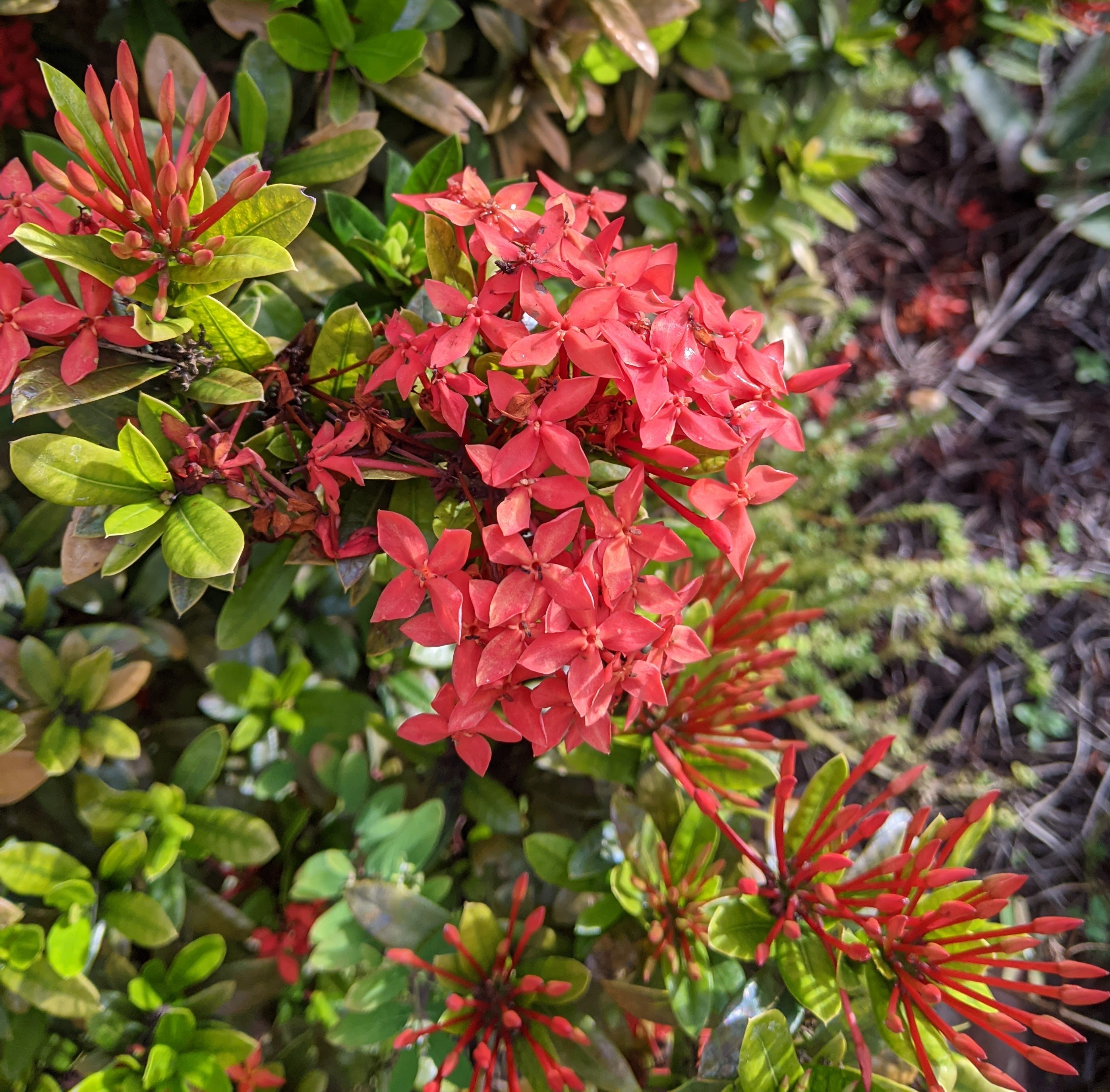
Dwarf Ixora (Ixora chinensis or taiwanensis) these flower nearly continuously through the summer and off and on during the winter. They are called Maui Red, but I think they are orange.

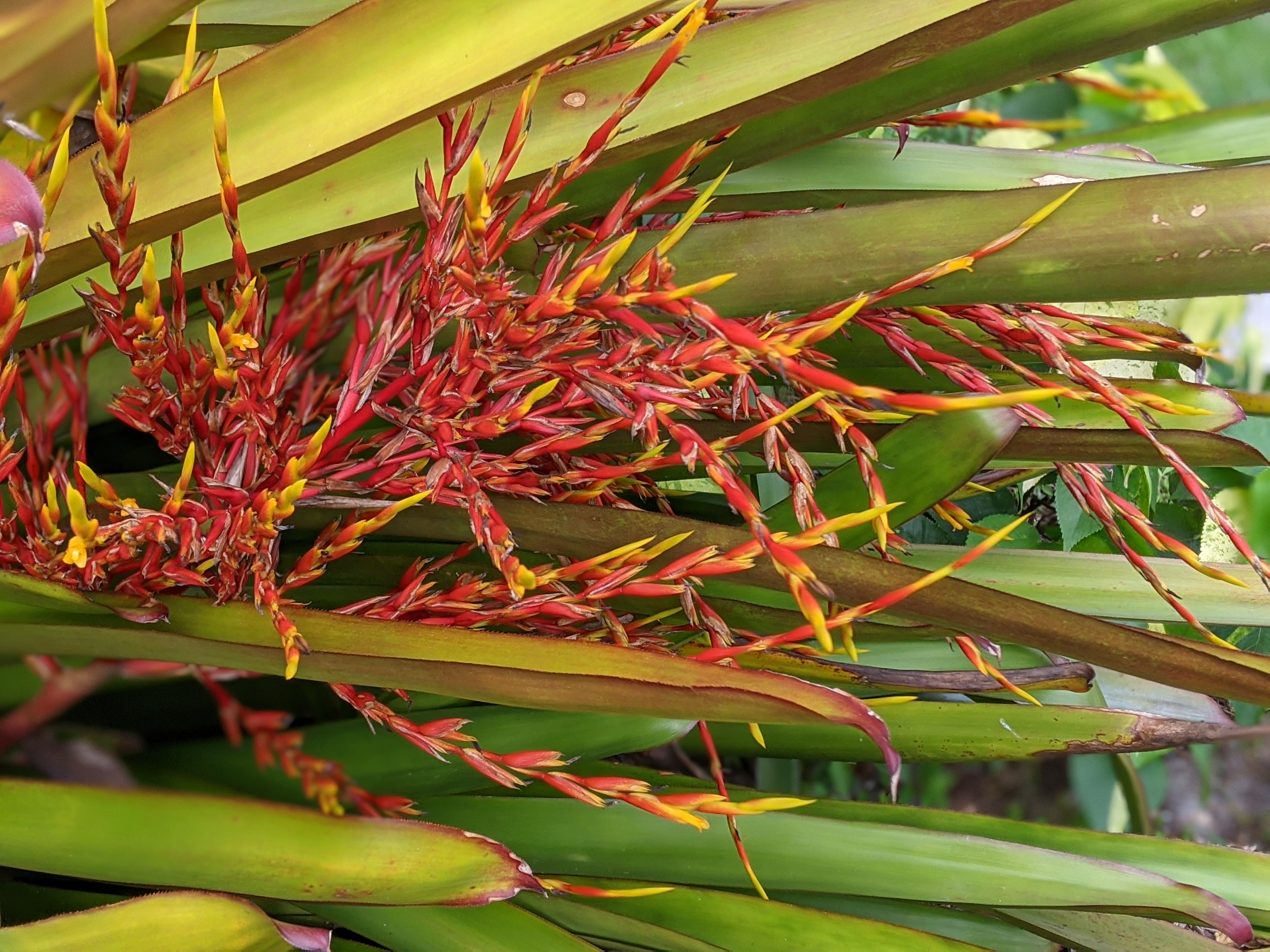
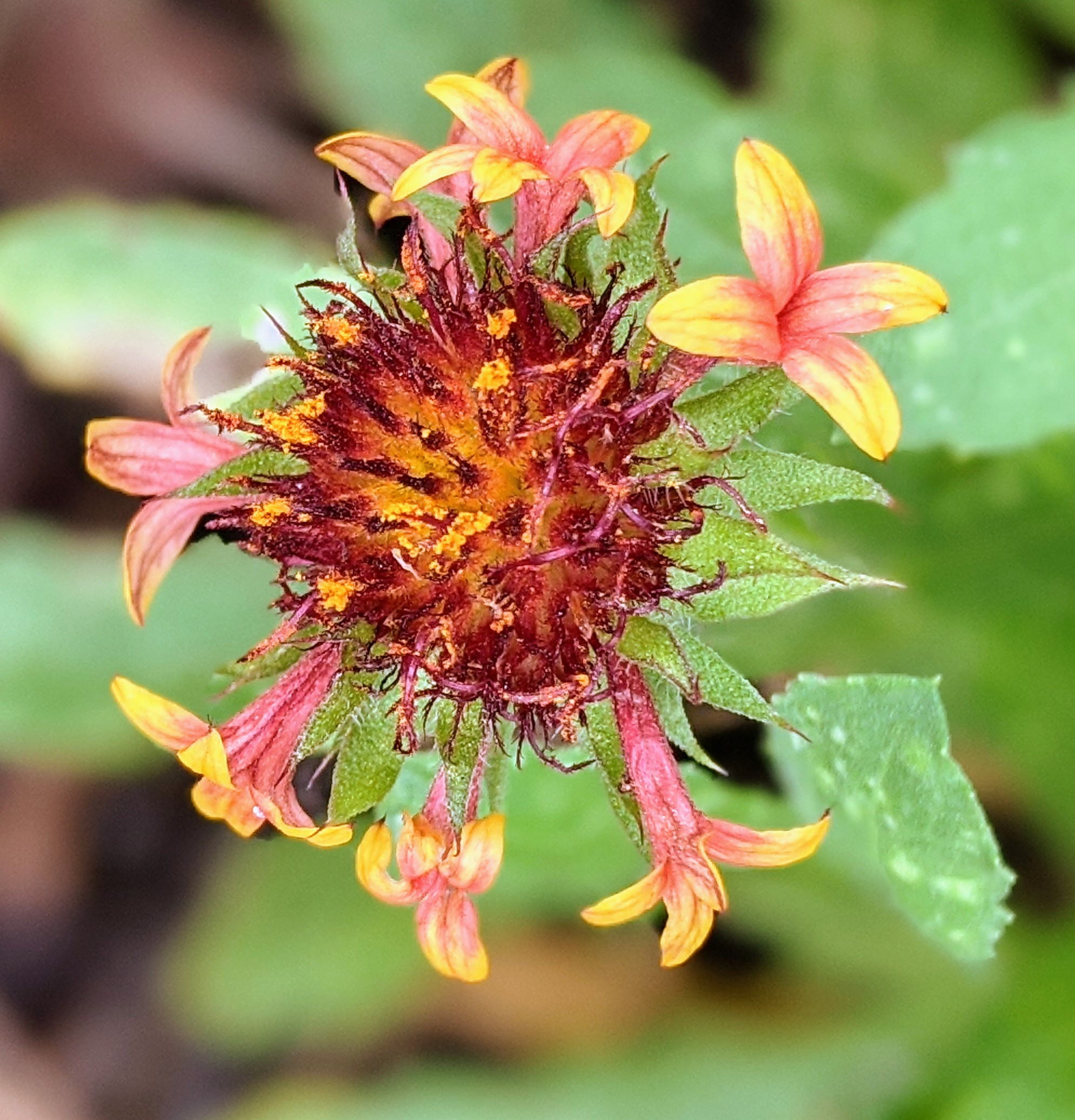
Blanchetiana Bromeliad flowers are getting bigger and bigger…sometimes called Lobster Claw, these are big Aechmeas – some are six feet tall.

Gallardias (Gallardia pulchella) just keep going. I foolishly tried to start some from seed in August, not realizing them come up in droves naturally in October…

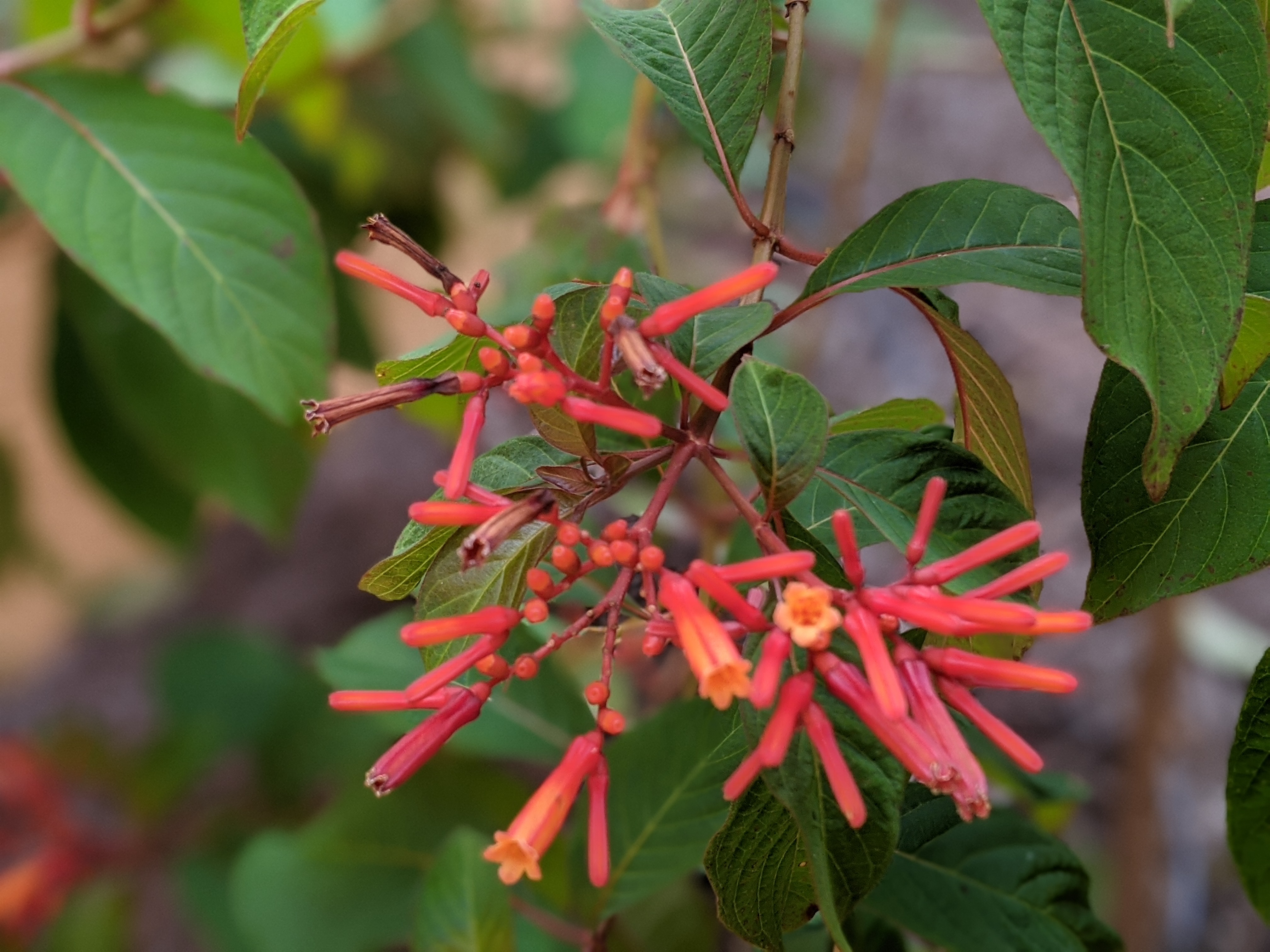
My favorite shrub, the Firebush (Hamelia patens var patens)

I am joining The Propagator for Six on Saturday – to see more posts, visit http://www.thepropagatorblog.wordpress.com.

Orange you glad for gardens!?

Happy Gardening!!

Six on Saturday – Roselles and Nematodes

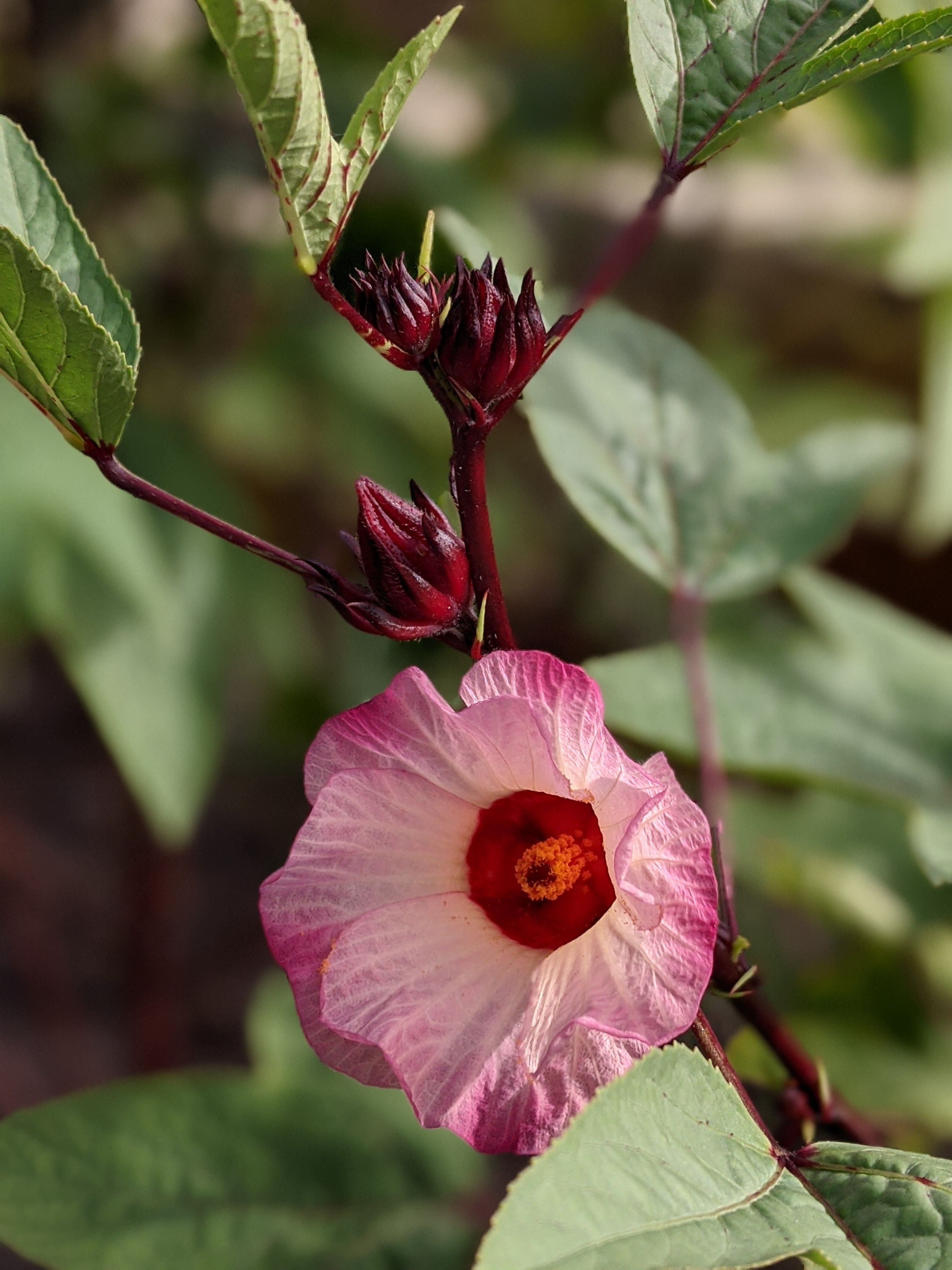
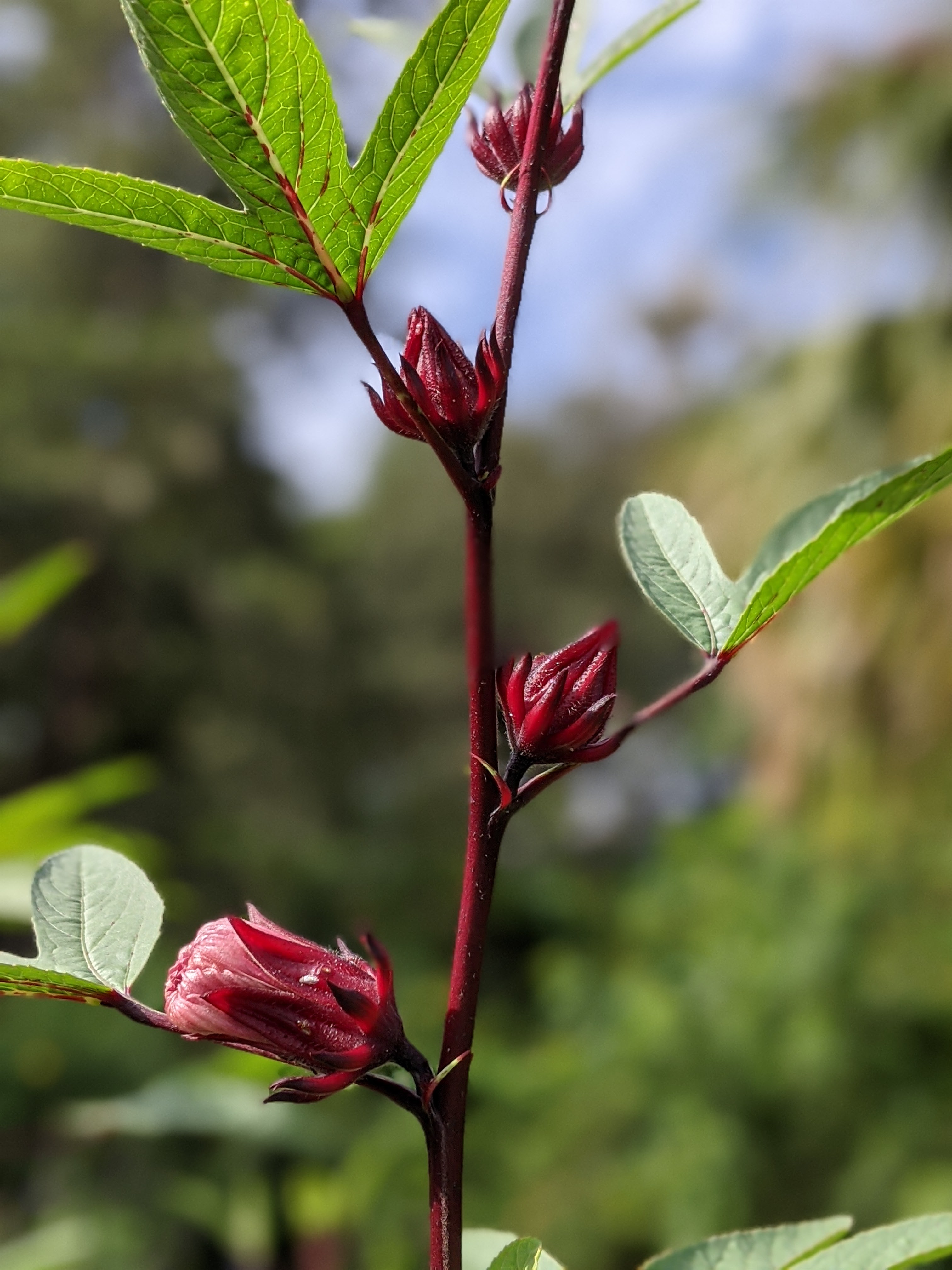
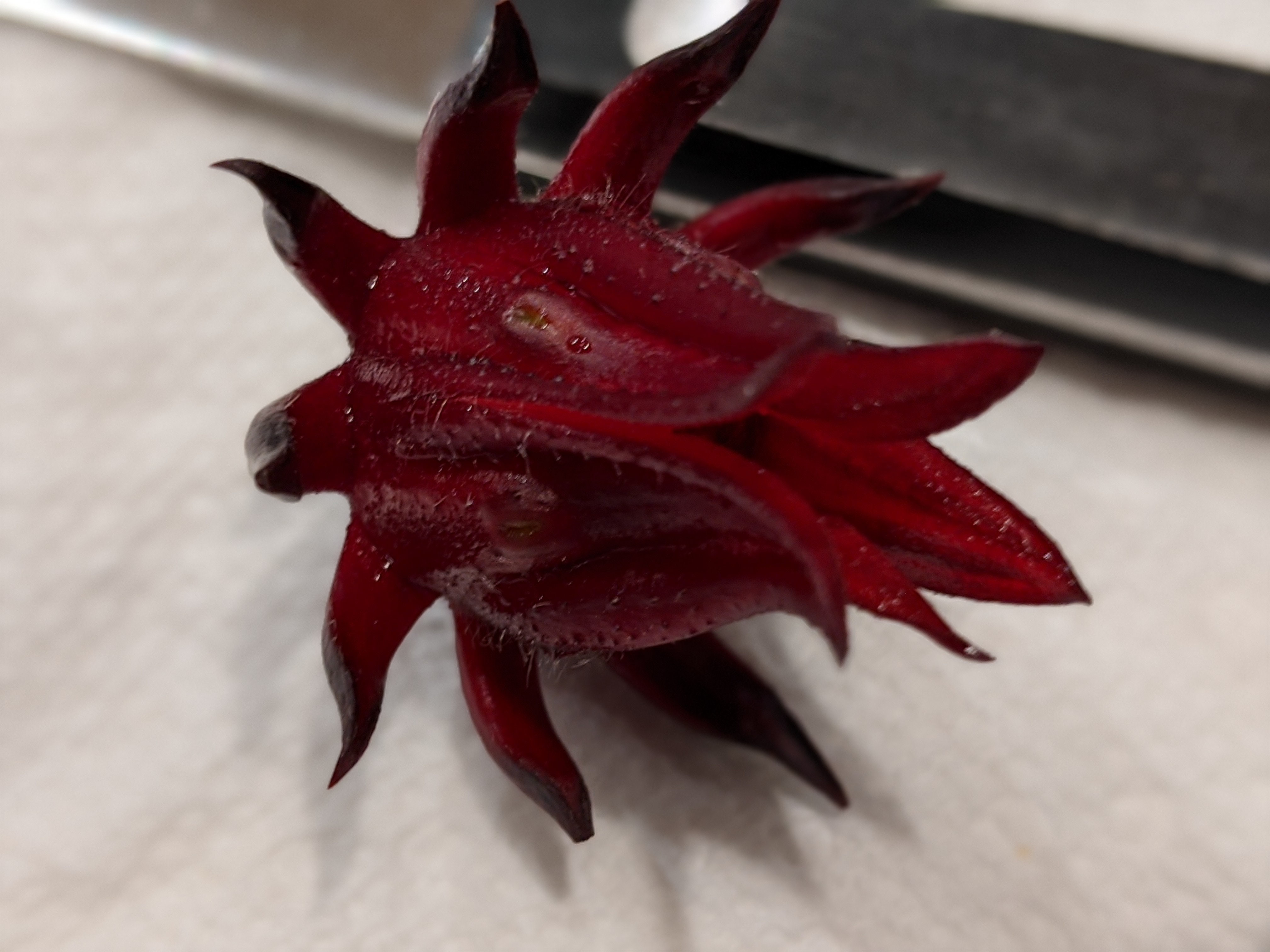
My Roselles started flowering in earnest this week. These are edible Hibiscus (Hibiscus sabdariffa) and grow in tropical areas. I planted the seedlings in April and they flower in late October. These are grown for their cranberry flavored calyx, but the rest of the plant can be eaten.

This one has just finished flowering. The directions I have found dictate waiting two to three weeks after the flower falls off to harvest the calyx. I picked one to try, having no idea when the flower fell off.

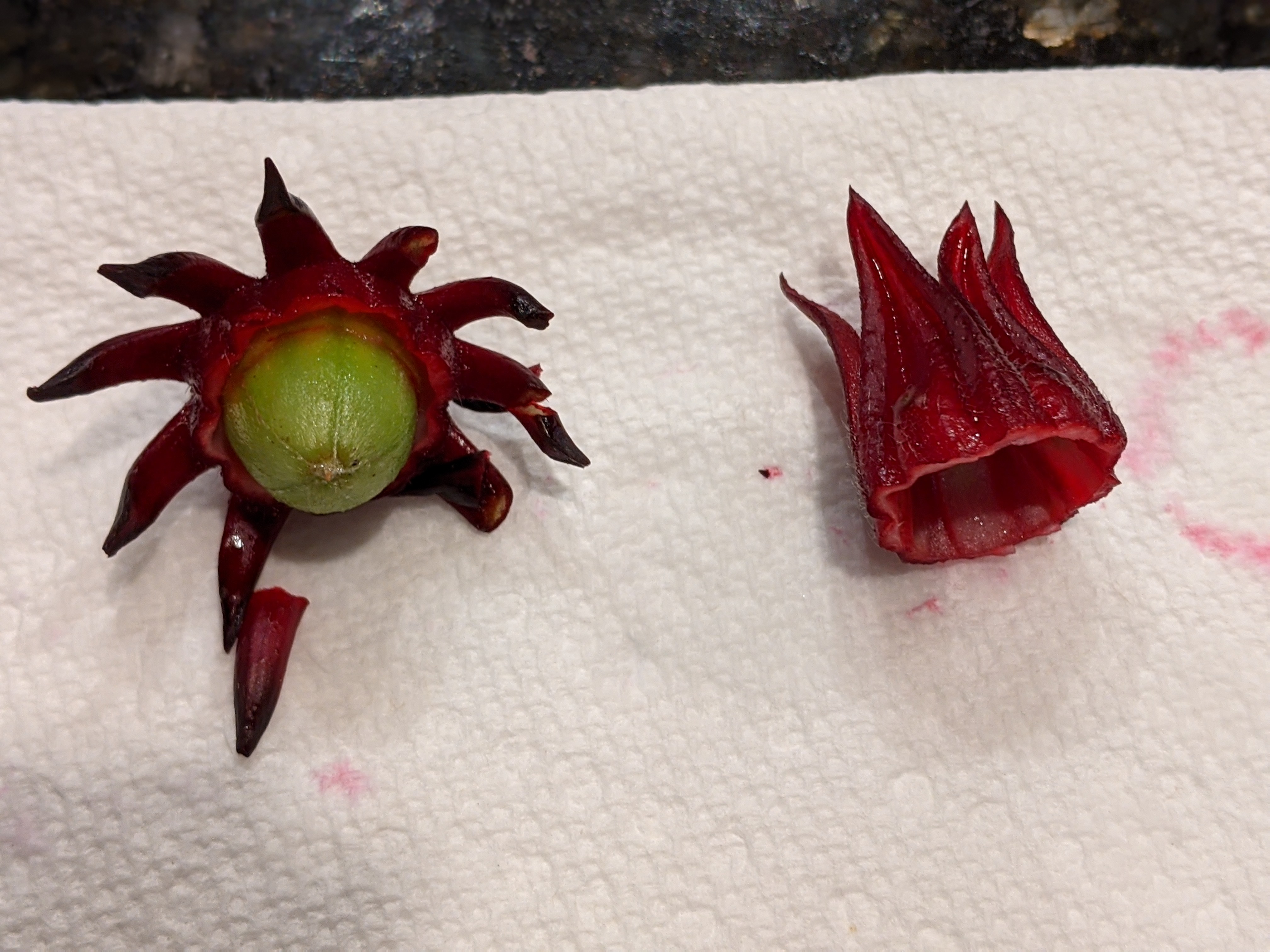
Watched a video about Roselles and found out I was going to eat the sepals – when you are supposed to eat the calyx. I had Botany about 40 years ago, I will forgive myself. Here it is cut if half.

These are usually dried but can be eaten raw. I am not sure if it was ripe as it was very sour with the barest hint of cranberry flavor.

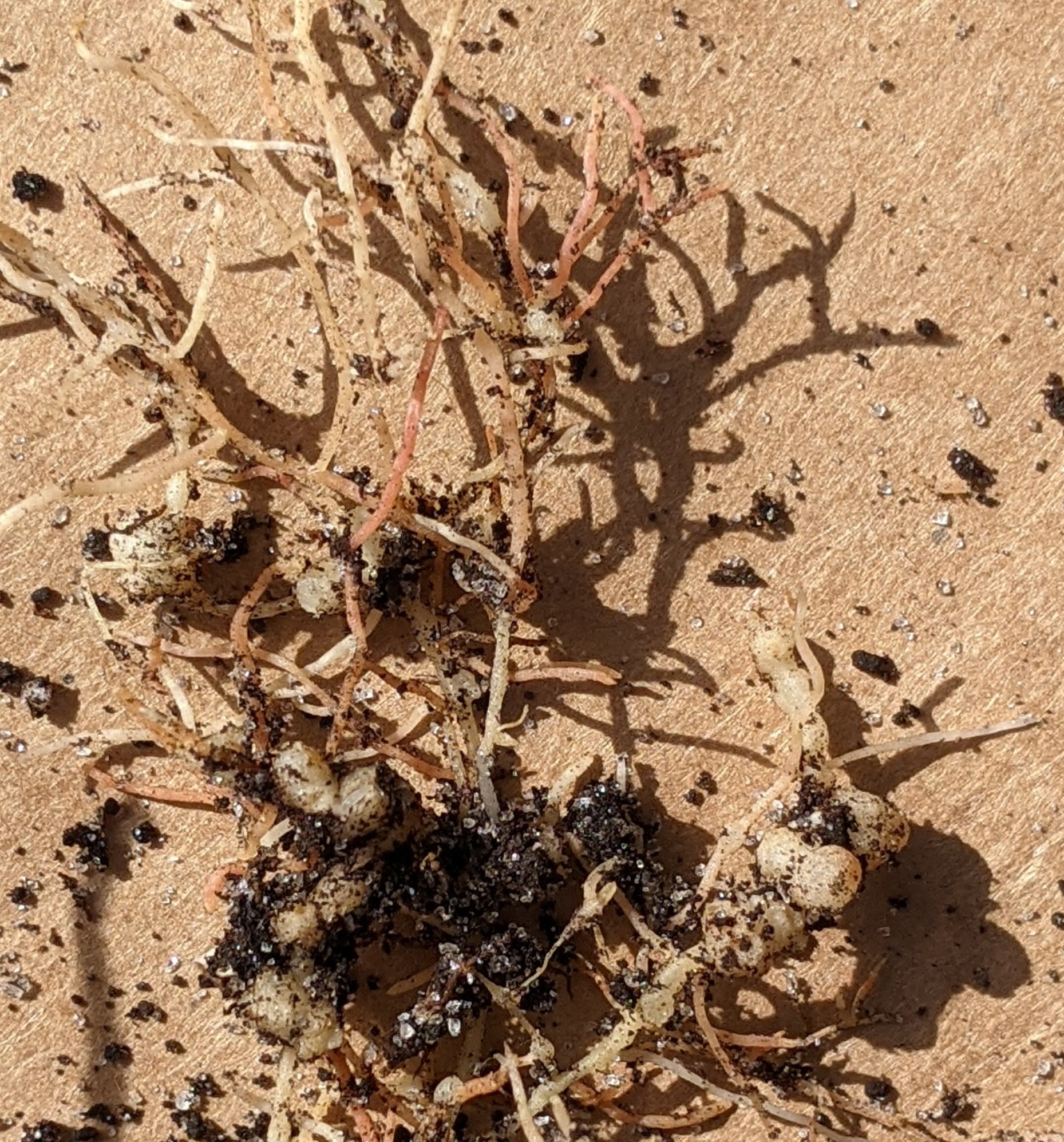
I posted about nematodes and worms to help combat them a couple of weeks ago. One of the Roselle plants was killed by root knot nematodes. Here is the body, I bagged the roots to prevent spreading the bugs. Root knot nematodes destroy the xylem and phloem leaving the plant unable to feed itself. This Roselle was 4 feet tall.

Here are the roots.

Ugh, I watered the area with food grade diatomaceous earth in hopes of getting rid of the nematodes. Though I will probably start another worm bed as they are pretty close to a Mango and Lime tree.

That’s my six for this Saturday. To see more posts visit http://www.thepropagatorblog.wordpress.com.

Happy Gardening…

Six on Saturday – Fall Flowers

It’s Saturday again and time to join The Propagator in his weekly meme about six items of interest in your garden. SOS. To see more of SOS, visit http://www.thepropagatorblog.wordpress.com.

The weather is finally turning lovely, I have almost finished planting my vegetable garden and fall flowers are showing their colors.

First up, the mad tropical Candy Portea Bromeliad is about half open. My neighbor says these look like sea creatures.

Second, the flowers of the Roselle, an edible Hibiscus. The cranberry colored calyx of the flowers is eaten and tastes like cranberries, these are not ripe yet.

Third, the flowers of the native Senna (Senna ligustrina). These are larval host plants for Sulphur Butterflies. If the caterpillar eats the flower, they are yellow, it they eat the foliage they turn green. The butterflies are always yellow.

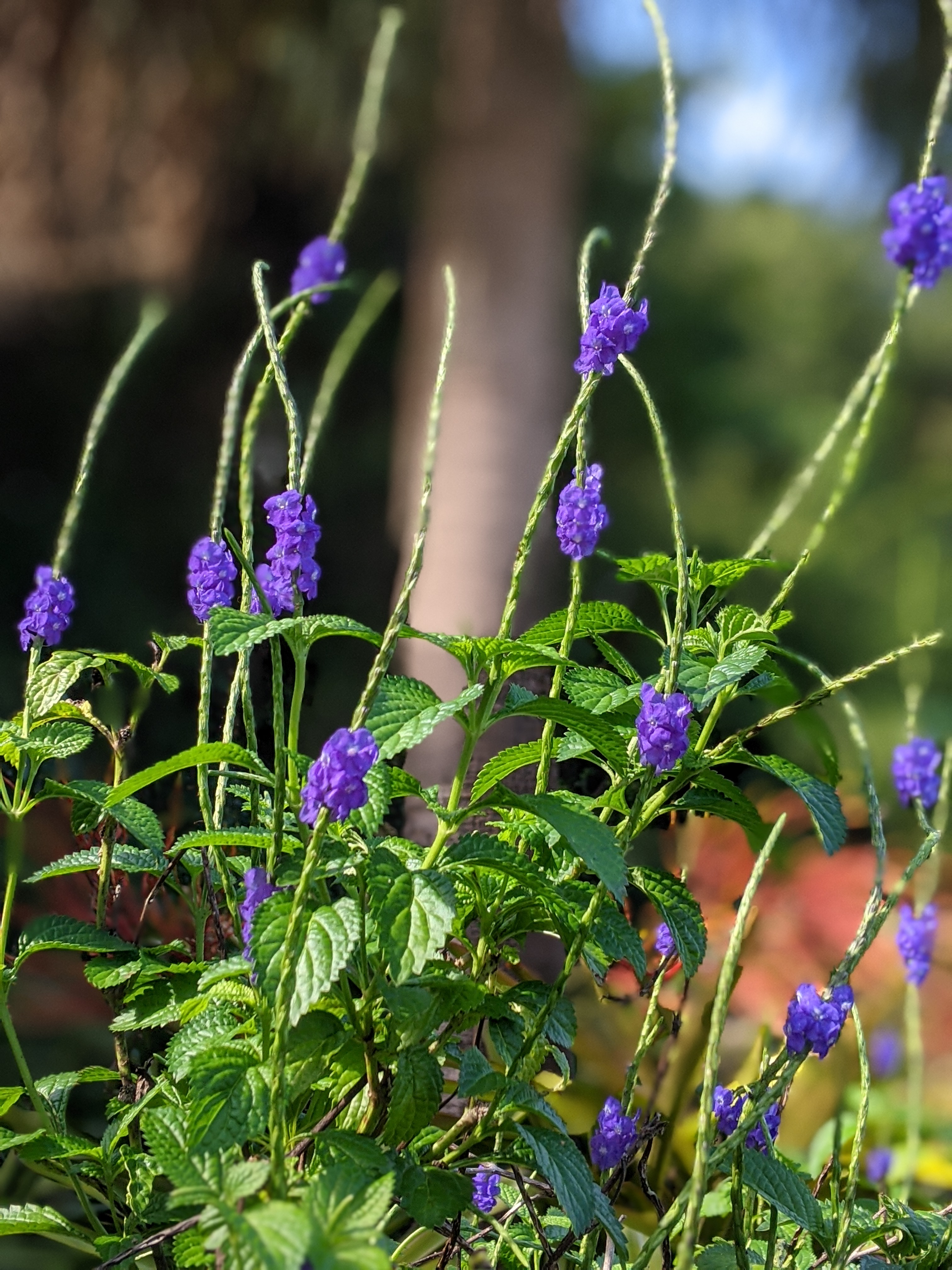
Fourth, Blue Porterweed (Stachytarpeta jamaicaensis). Another good butterfly plant for nectar. I think the abundant rainfall has made them extra beautiful this fall.

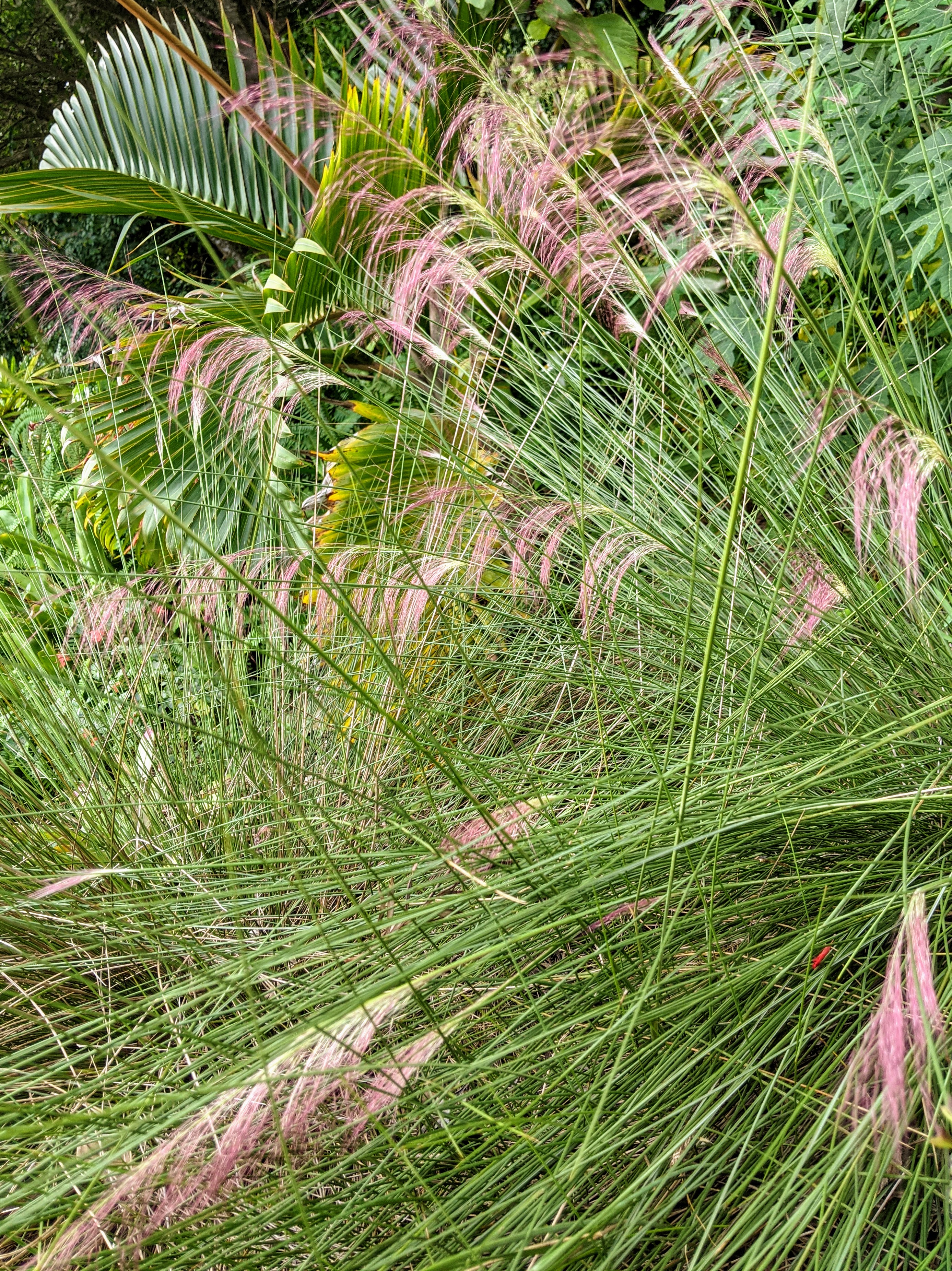
Muhly Grass (Muhlenbergia capillaris) is a true sign of fall, likely my favorite fall flower.

Finally, the mystery plant. This came up in a pot with some other seedlings. I think it is an Agastache or maybe Holy Basil. I did not plant either. The foliage has a light anise scent. Does anyone know?

Happy Gardening!

Six on Saturday – Veg and Vermiculture

The humidity in finally diminishing and I had my first celebratory glass of Chardonnay in the garden yesterday afternoon. Celebrating the solarization, addition of a vermiculture bed and rabbit fence installation in the vegetable garden.

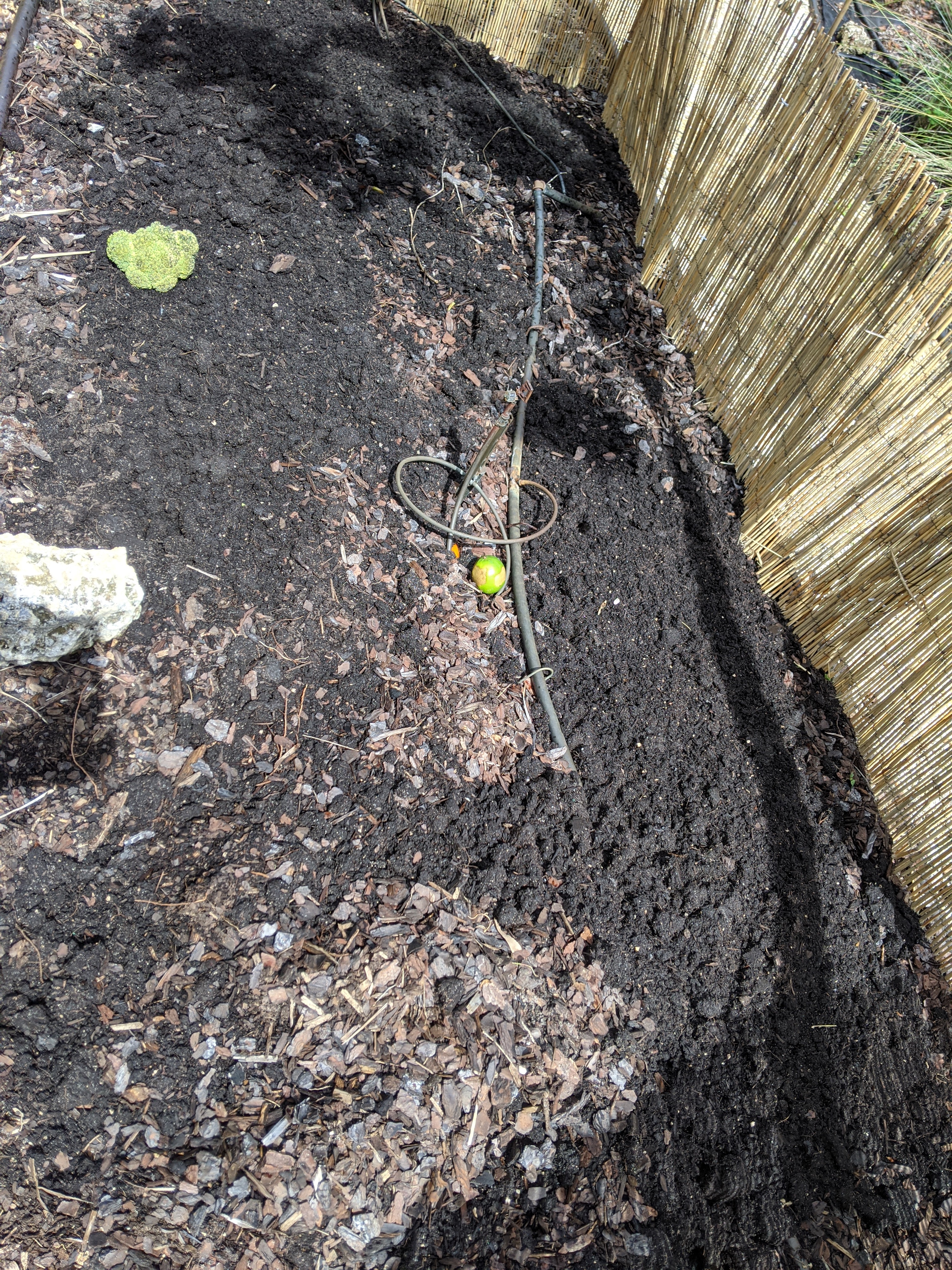
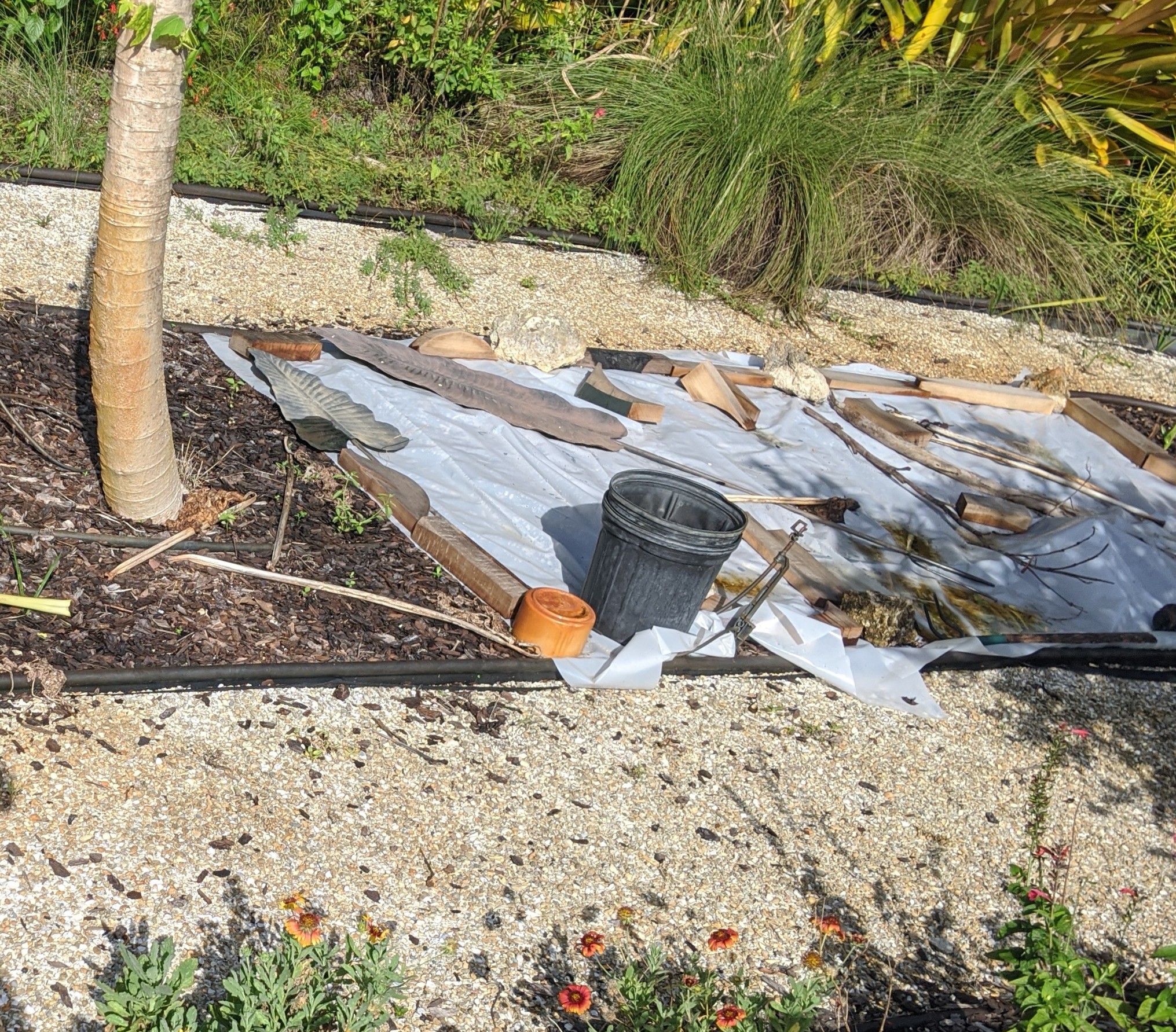
We have bad nematodes in South Florida – I have root knot nematodes in the vegetable garden. These are microscopic worms that feed on the roots of tomatoes and other vegetables eventually killing the plants. They are common in sandy soils and I was interested to learn recently adding compost and worms to the soil deters the nematodes. Solarization also helps. I solarized the bed during August and September, covering the bed with clear plastic held down with all kinds of junk.

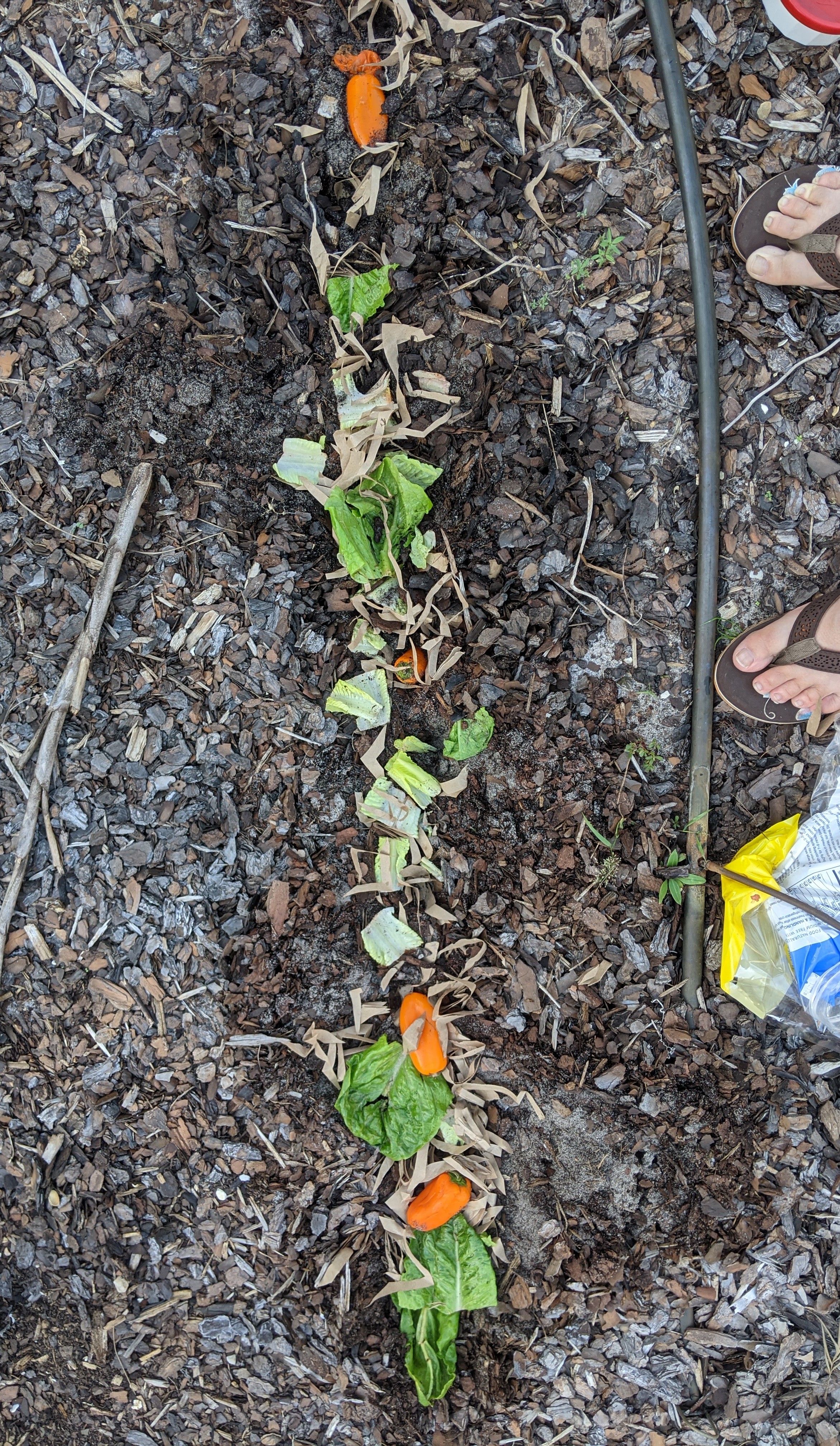
This week I took the plastic off and figured out how to add a worm bed – digging a trench in the middle of the bed, then adding chopped paper, raiding my refrigerator for rotting vegetables (there are always a few) and sending my husband to the bait store for red wigglers.

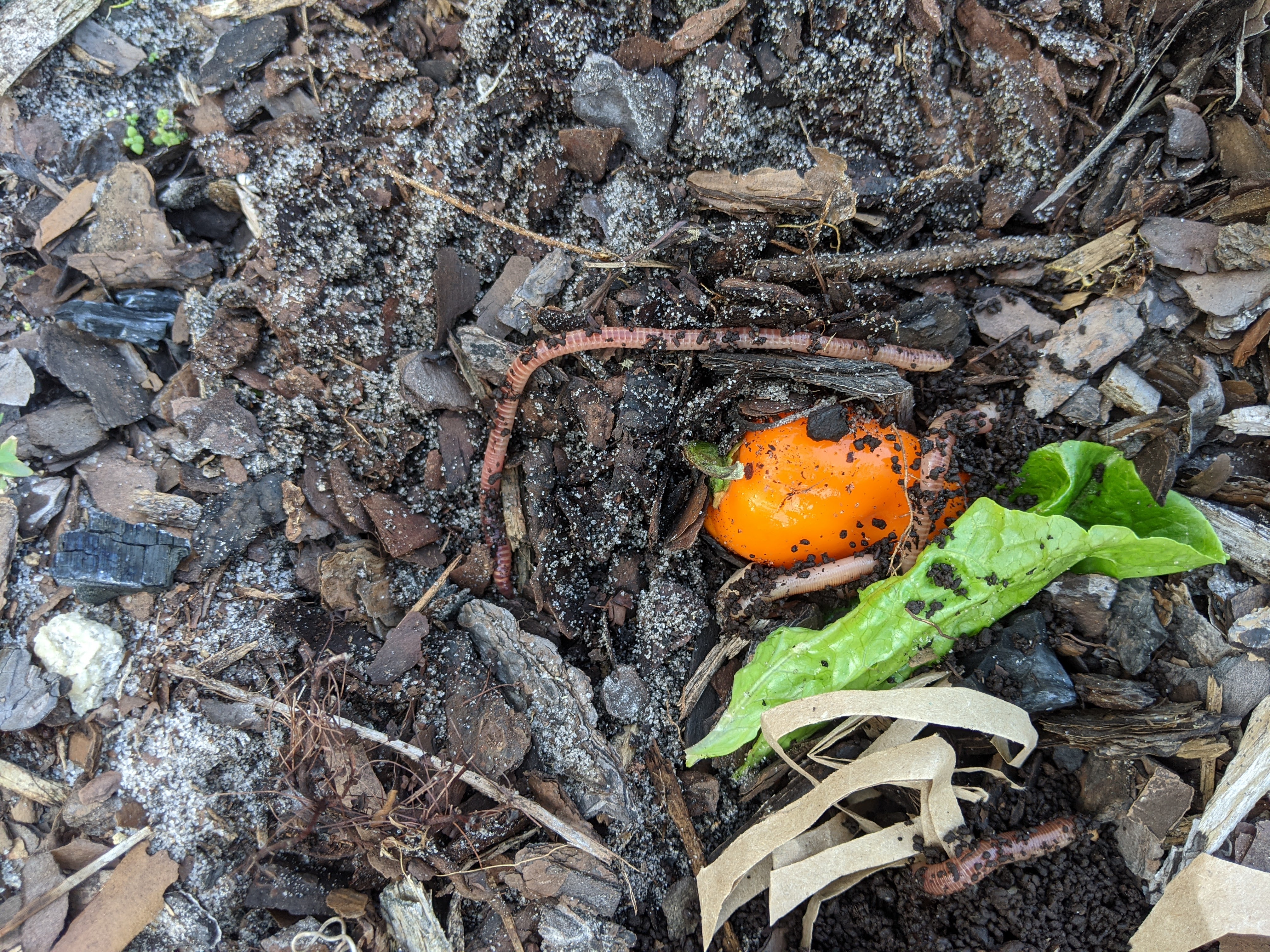
The red wigglers come in containers and are kept refrigerated. I let them warm up and then put them in the garden to devour the yummy rotting vegetables. They dug right in.

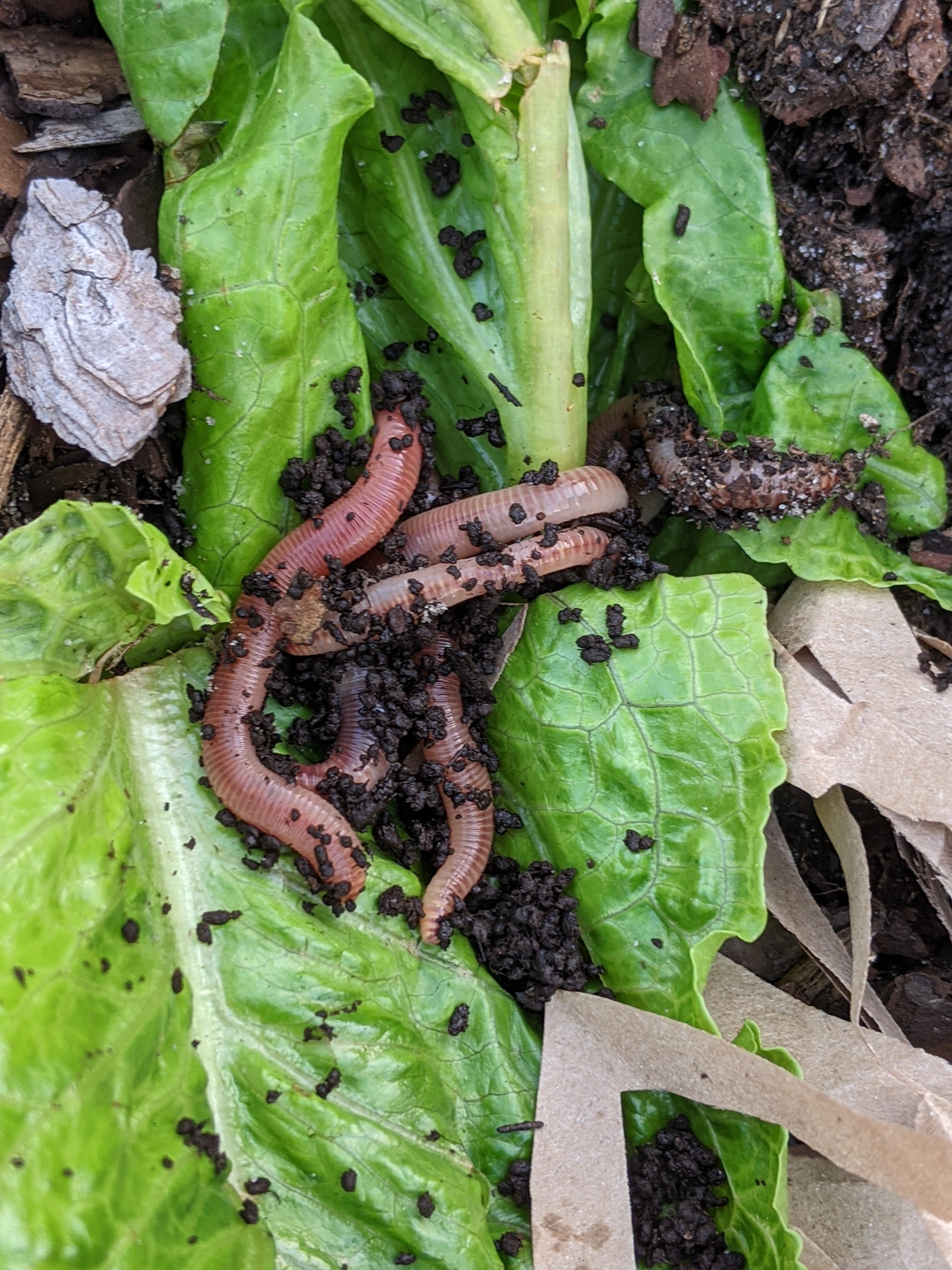
The red wigglers enjoying old Romaine lettuce.

The next thing to do is add seeds and plants and water in with food grade diatomaceous (4 tablespoons to the gallon). The DE also deters nematodes. There is some conflicting info on how it affects the good worms so time will tell. The rabbit fence is made of reeds and is 24″ high. The rabbits ate what the nematodes didn’t get last year.

Cheers to the veg and red wigglers!

Happy Gardening.

To see more Six on Saturday posts, visit Jon at http://www.thepropagatorblog.wordpress.com

Six on Saturday – Orchids in the Gumbo Limbo

I am joining The Propagator today for his meme. Six on Saturday. Posting six items of interest from your garden, any six things. This week I am all about things I am finding in the foliage. To see more posts, go to http://www.thepropagatorblog.wordpress.com

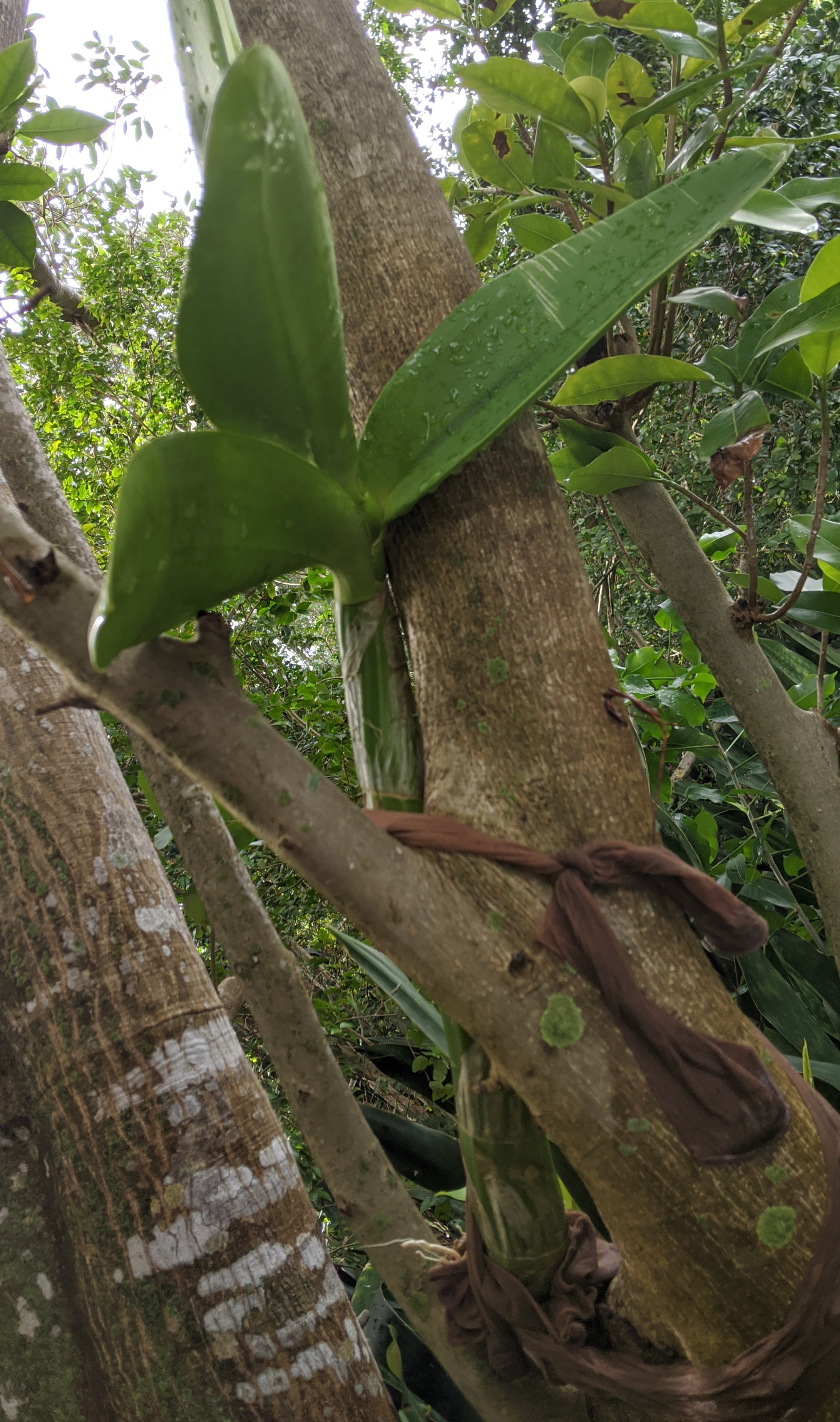
You may wonder what is that and why is it wearing old pantyhose? This is a Hard Cane Dendrobium Orchid, a gift from a neighbor. The stem is about the size of a leek, a big leek at that. These are native to the South Pacific and grow in trees. There are over 2,000 varieties – I have no clue what type this might be. It could be a Dendrobium – Phaleonopsis that produces flower sprays about 10 feet long.

And it requires sun. I found this out after installing it in the wrong tree – the Strangler Fig in full shade. Oops, the Orchid spent one night in the Fig. The next morning I moved it to the Gumbo Limbo in my much sunnier front garden.

On to the Gumbo Limbo. I added some orchid bark mix and peat moss in the control top of the pantyhose and placed the roots in the mix. This will give the roots some nutrition while they grow into the trunk of the tree. Here is the Orchid in its new home.

It is mounted into the crotch of the Gumbo Limbo tree about six feet above the ground. It has a bud and I am hoping to see some flowers, though it seems these are summer bloomers for the most part. Fingers crossed.

Eventually the Orchid should put roots into the tree trunk and the pantyhose will go away. But, they do almost match the color of the trunk. I found a couple of other items of interest in the foliage this week.

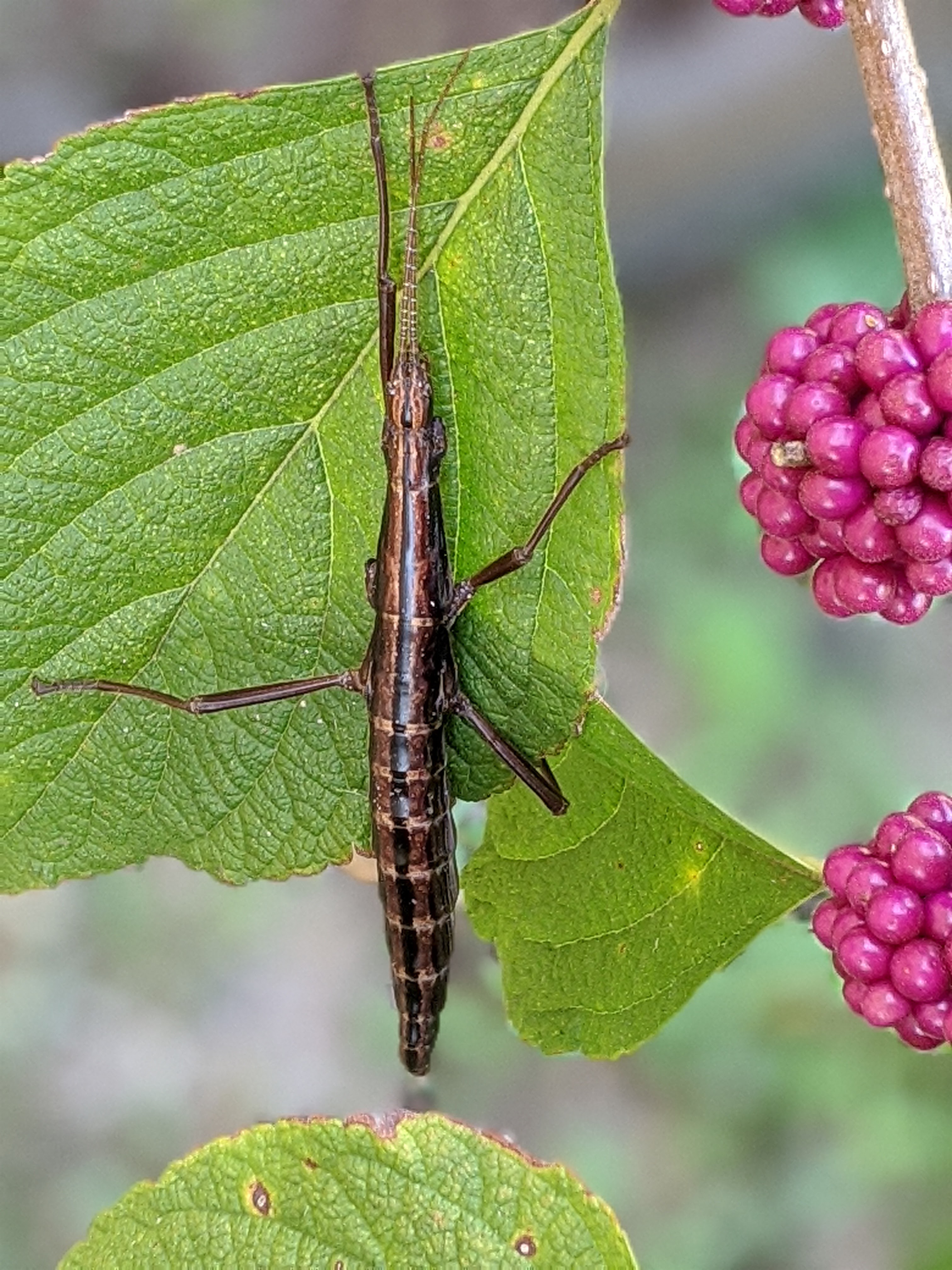
This is a Stick Bug in the Beautyberry. Eating the foliage on the Beautyberry. I left him or her there to continue dining.

This is a Treefrog – this guy did not want to leave the Firebush I was pruning and finally jumped off on my bare foot. Feeling very reptilian to the touch. There are numerous types of Treefrogs that live in South Florida and I can’t tell them apart.

Happy Saturday from South Florida and Happy Gardening.

Six on Saturday – Summer Whites

It’s Saturday again and summer is still in full force in South Florida. Hot and humid. Heat index over 100 Fahrenheit this afternoon. I am joining The Propagator for his weekly meme, follow the link for more fun.

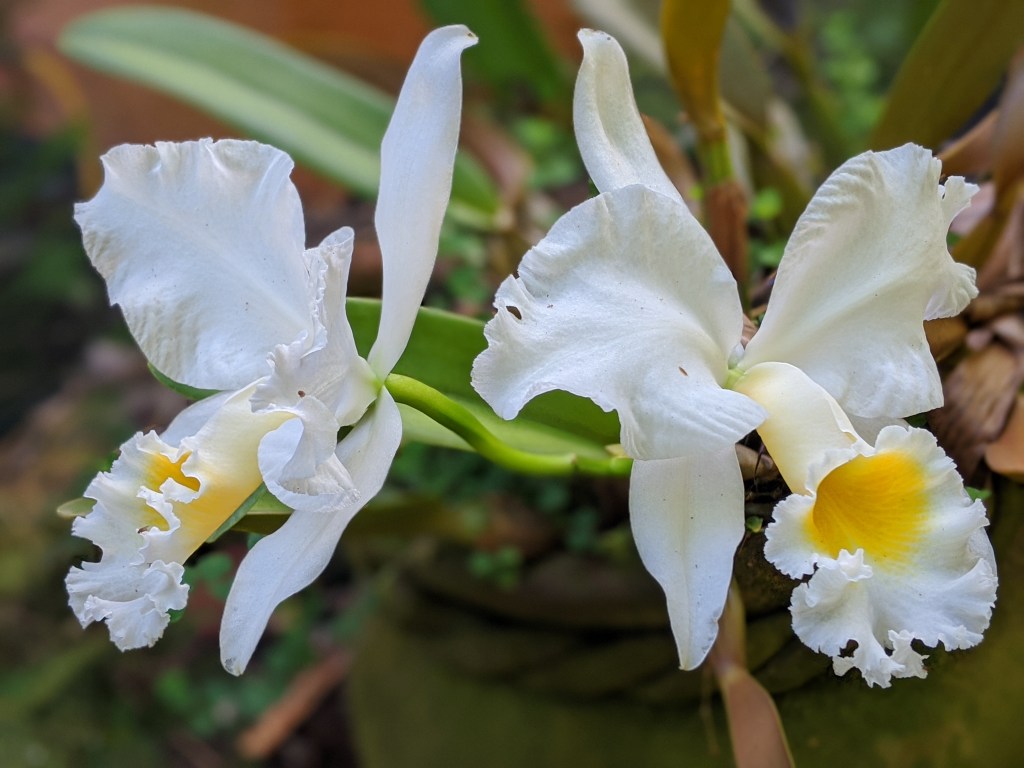
As summer is seemingly haunting me, I decided to feature ghostly summer whites. First up, the flowers on Cattleya Orchids that were buds in last week’s post.

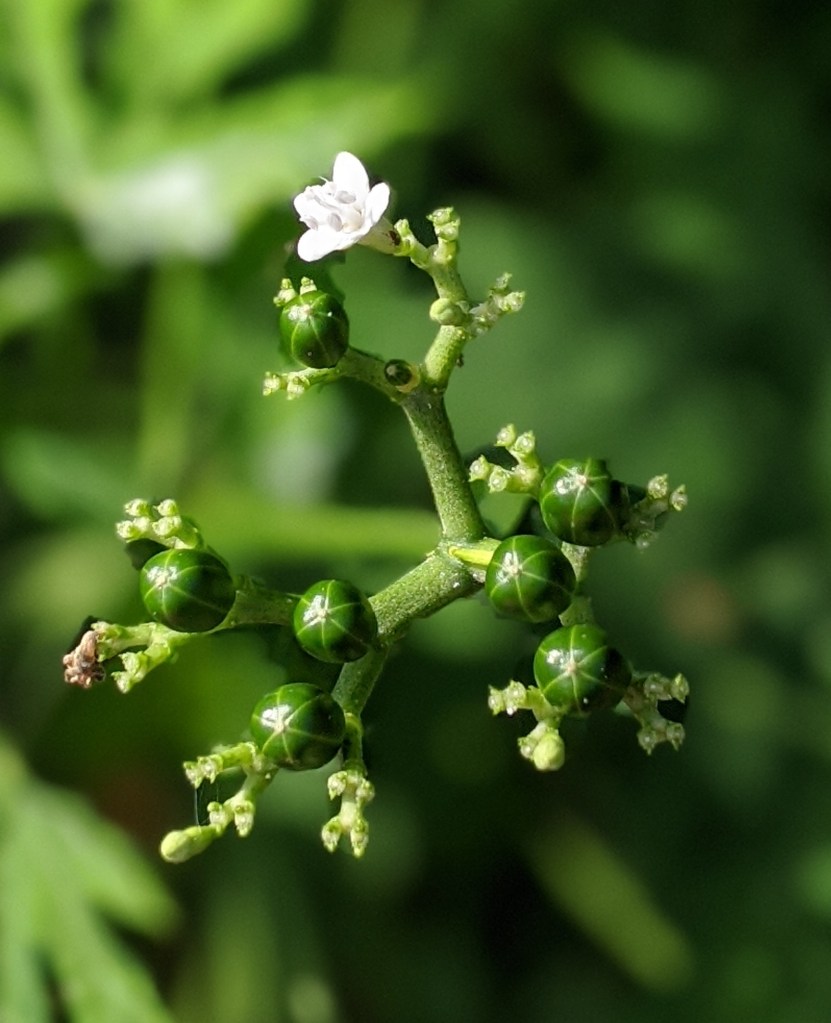
A little fragrance for my short trips into the garden. This is a Sweet Almond Bush (Aloysia virgata) – I have been pruning it slowly, so many bees buzzing around the flowers they get angry and I have to stop.

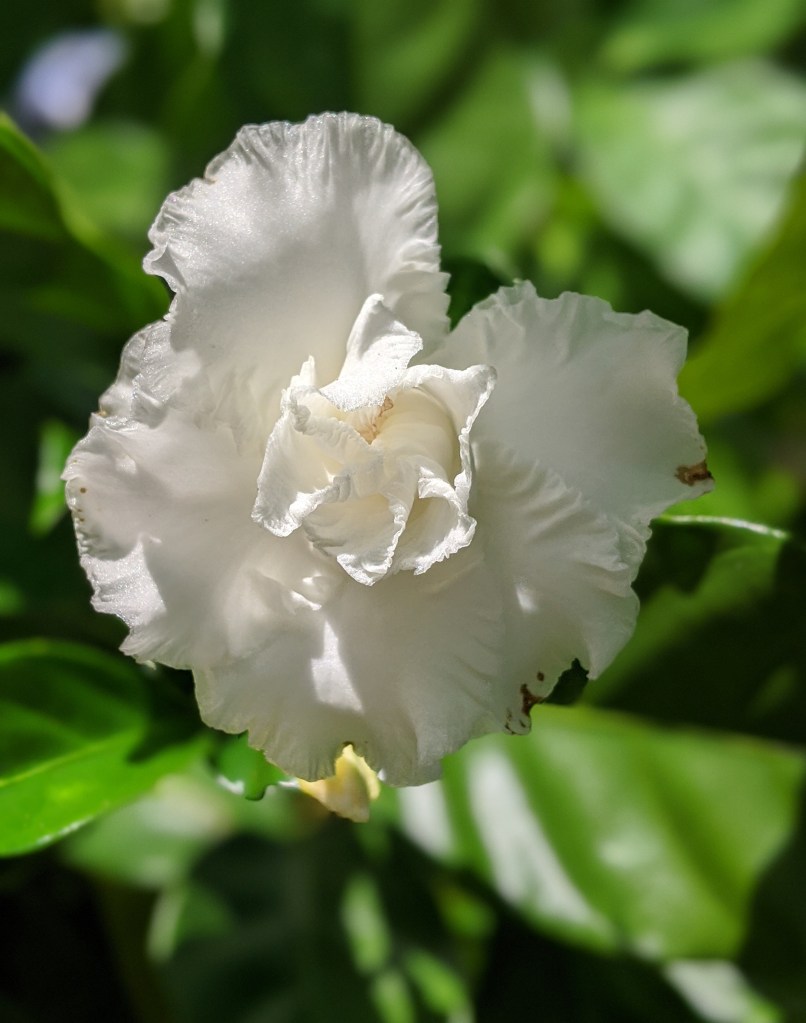
Another fragrant flower, the Tropical Gardenia (Tabernaemontana diviricata). These are not a fragrant as Gardenia jasminoides, releasing a subtle fragrance at night.

This is (to me) a bit of an obscure plant. A Tree Spinach (Cnidoscolus chayamansa) considered a superfood – supposed to cure varicose veins! Also toxic unless cooked 20 minutes and creates intestinal distress if cooked in aluminum pans…I have not eaten any. I planted it because it is a butterfly nectar flower, supposedly supplying protein to butterflies. A friend gave this to me about six months ago as a cutting and it is 3 feet tall now.

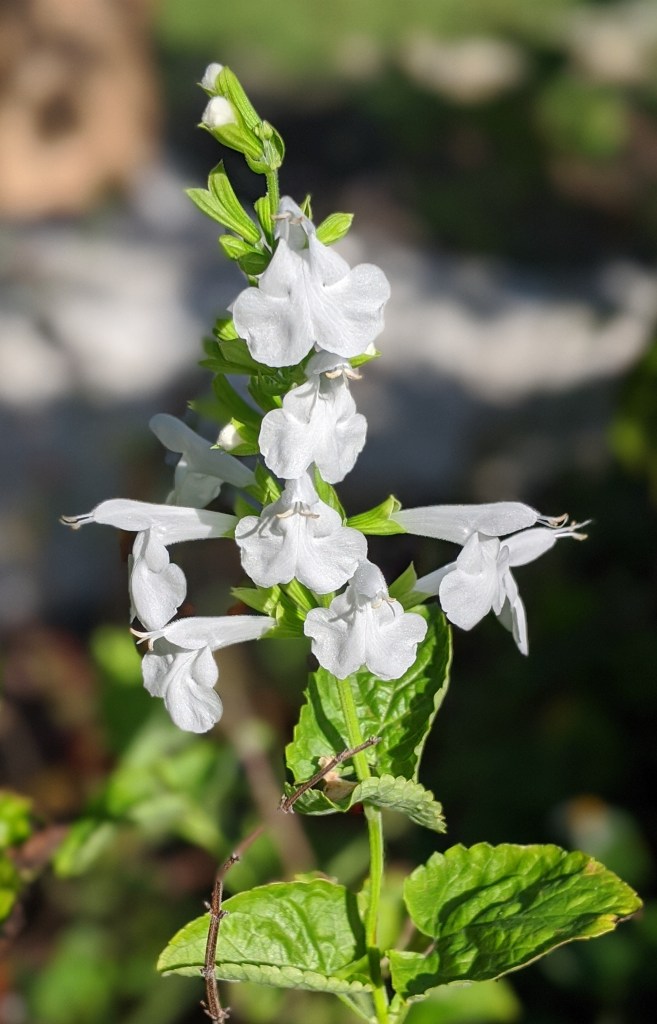
Tropical Red Salvia (Salvia coccinea) is a stalwart in my garden. Oddly, it occurs in several other colors. The white version…

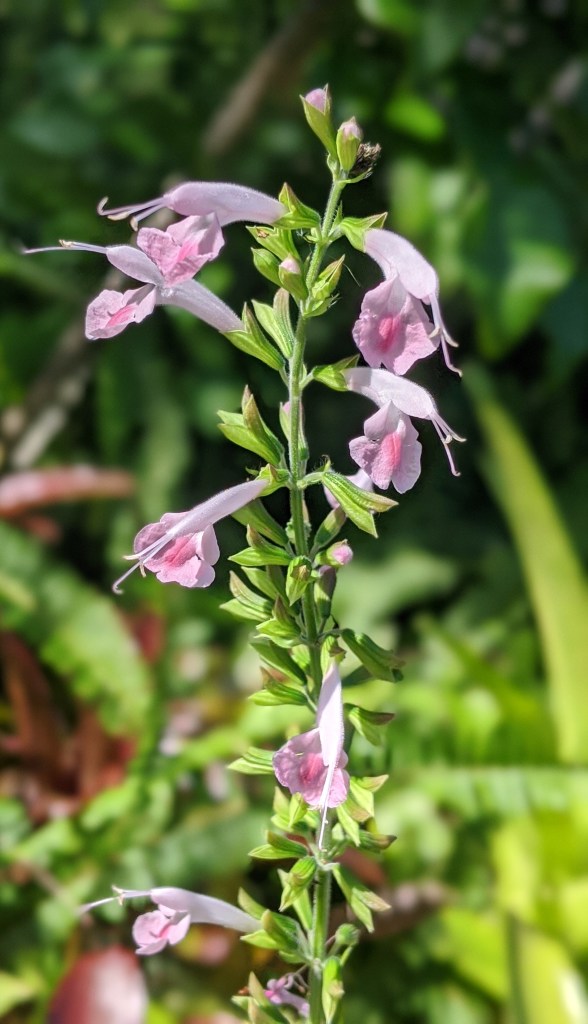
Salvia coccinea again, the pink and white version.

Hoping for some cooler temperatures next week. No more haunting from summer, only fall fun in the garden…

Six on Saturday – Growing Toads.

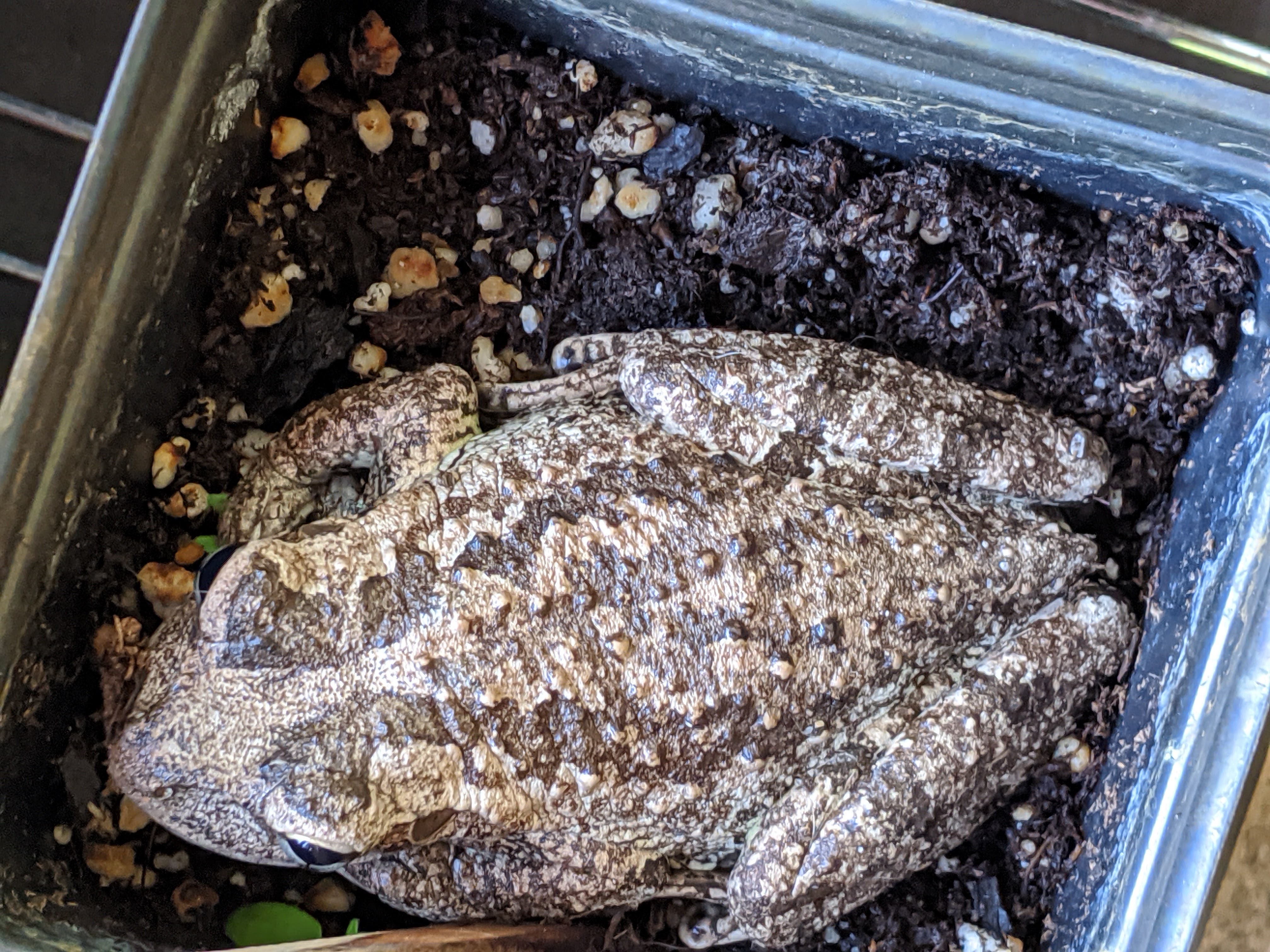
Florida, the southern part, is backwards on summer gardening. We do it in the winter. I am trying several new ventures in vegetable gardening this year. Growing toads was not my idea, but I found one sitting on my tomato seedlings this week. I am hoping this is not a Bufo Toad, very poisonous to dogs and mine are always, ears up saying “What’s that” This toad hopped away before I could get a good look at it.

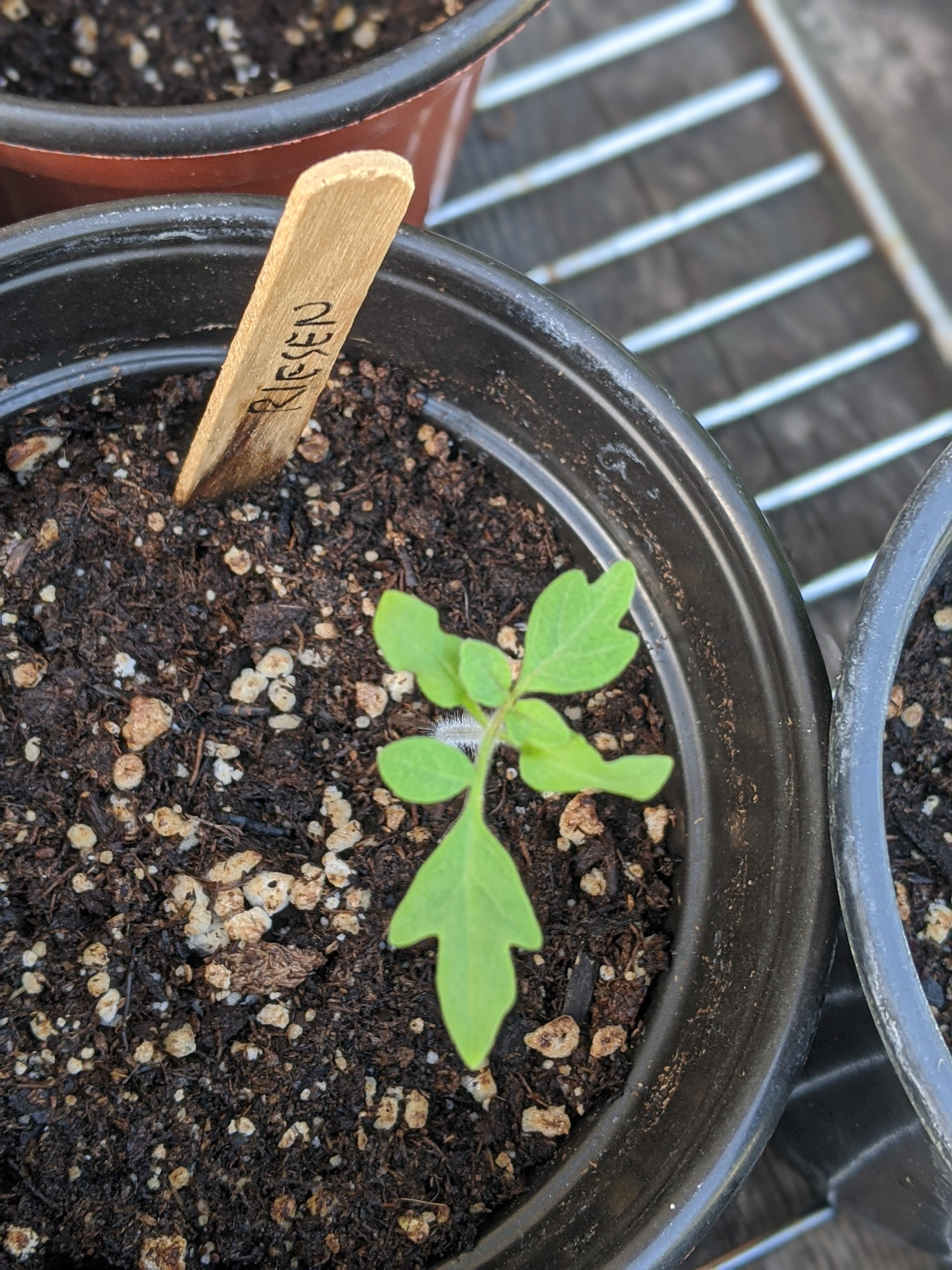
A Riesentraube tomato seedling, I put these in the sun to germinate and the seedlings are much sturdier than the first batch. This is a cherry tomato – from Germany!

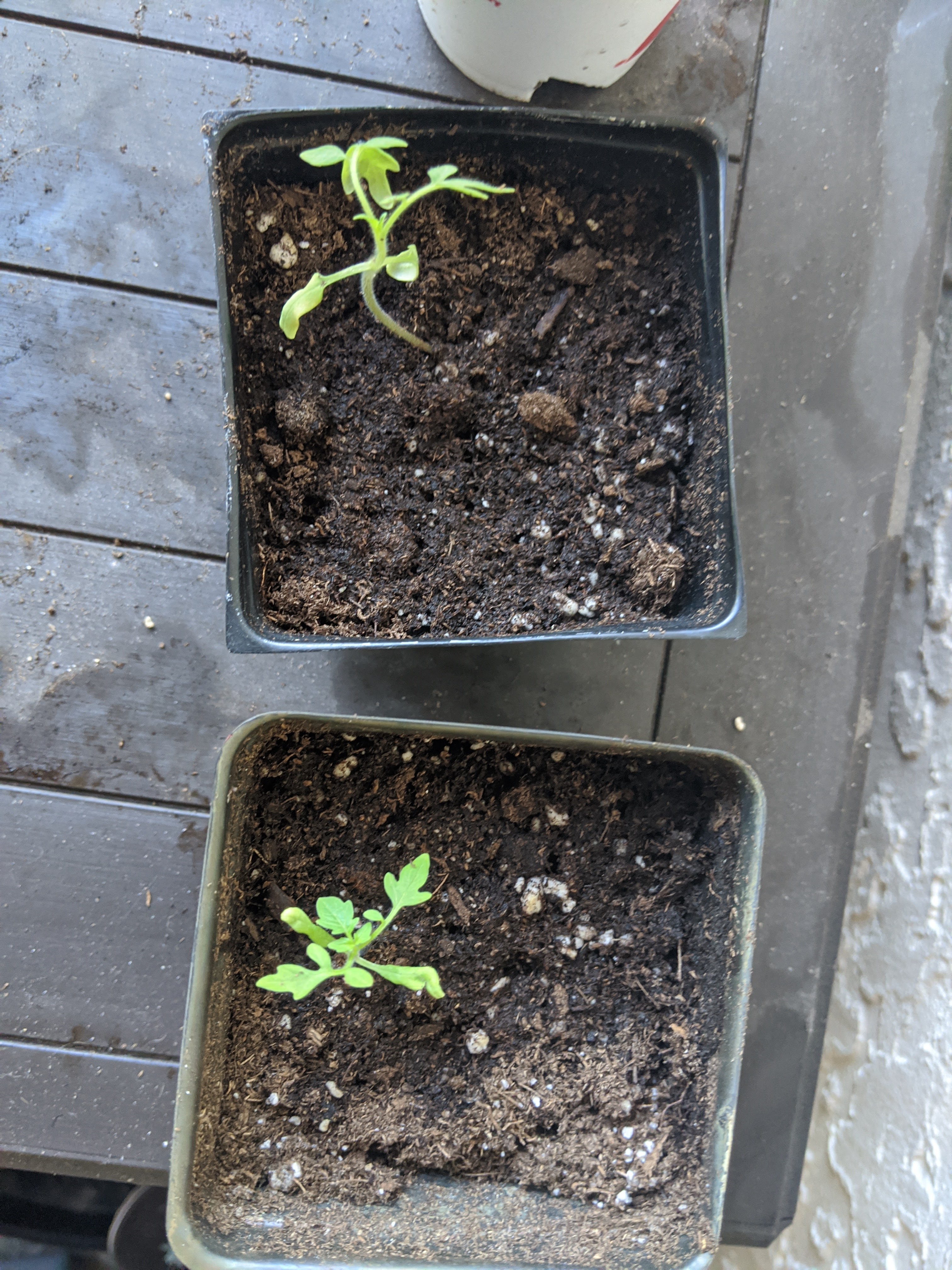
San Marzano tomato seedlings, these were leggy, so I read up and followed suggestions to replant the seedlings deeply in new, fluffy seed mix. Seems to be working.

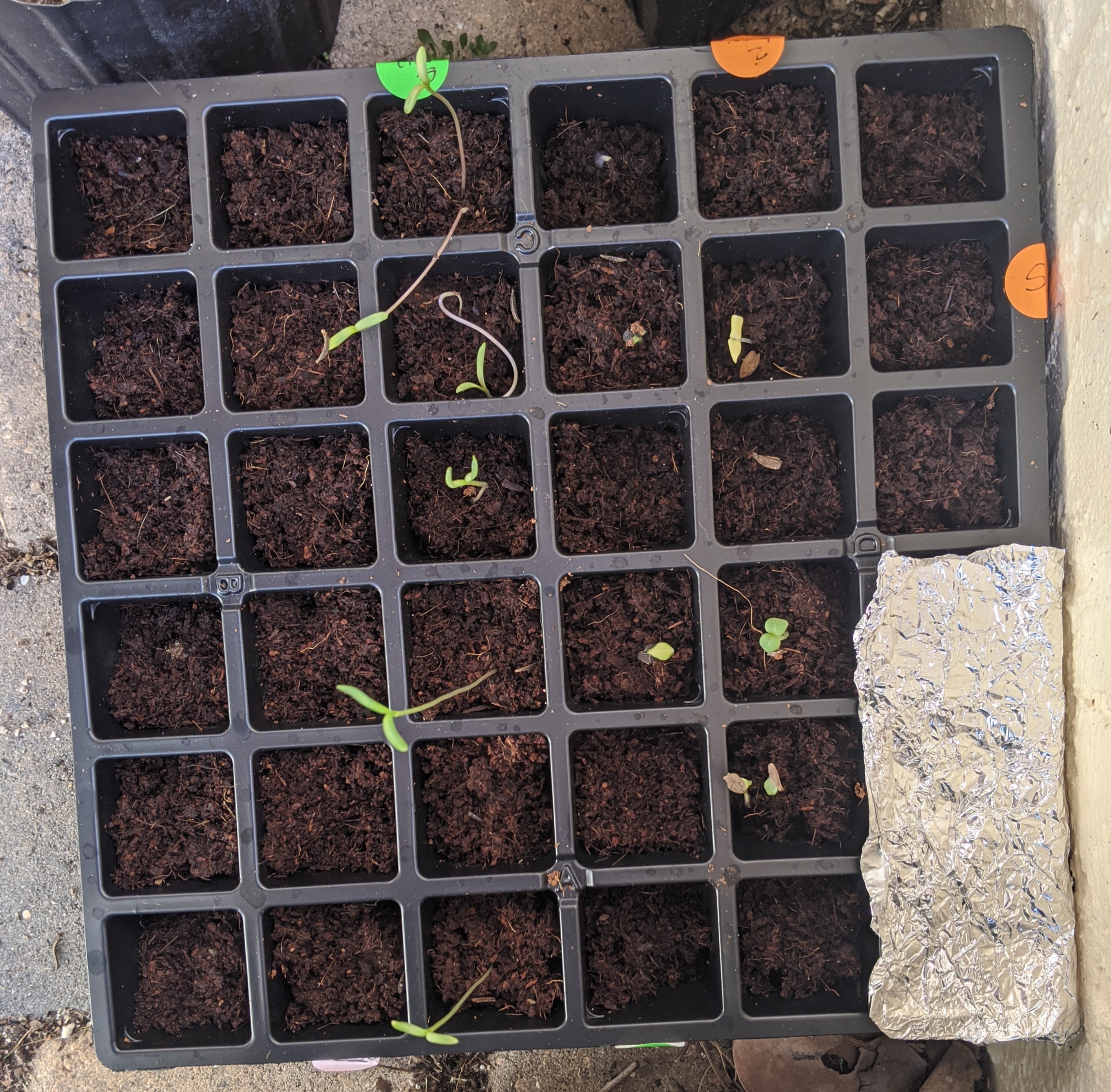
A new seed starting tray, arrived with a dry pellet in each cell that is soaked with water before planting and then self-waters from the bottom. I decided to forgo the plastic roof as the humidity outside should suffice. I put it in on my front porch, a sunny spot with bottom heat from the pavers. The seeds were planted on Monday. Parsley in under the foil, I have Verbena bonariensis, Nasturtiums, Zinnia ‘Zinderella’, Borage, Pink Double Click Cosmos and Apple Blossom Snapdragons. I have had very little luck seeding these directly in the garden. Borage, Zinnias and Cosmos have germinated.

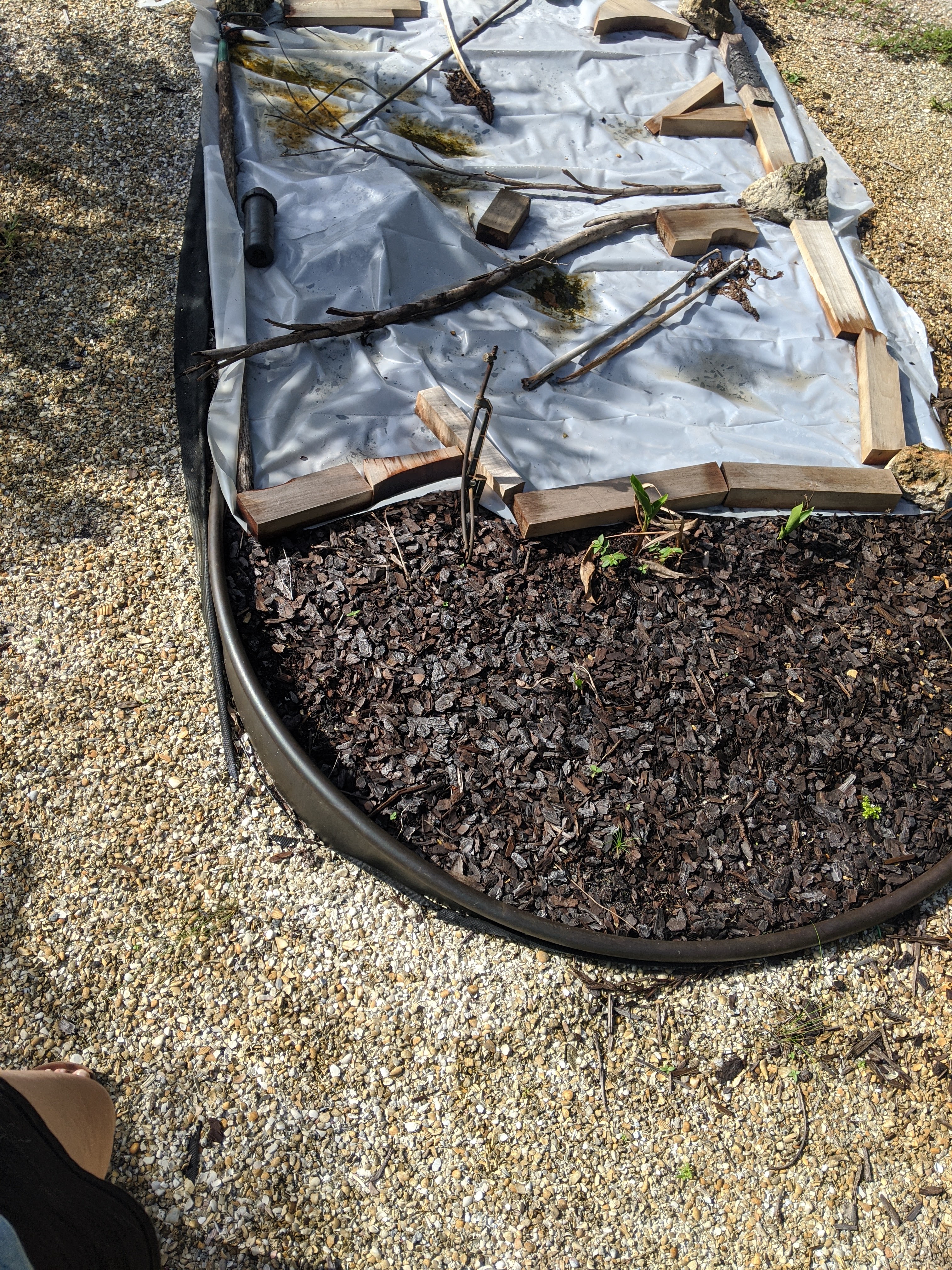
The area for vegetables is currently under solarization to get rid of bad nematodes. Summer vegetables can be planted around September 15 here, the cooler season lettuce, peas, etc a bit later. I will plant bush beans, radishes, snow peas and some lettuce in here. The tomatoes are going into pots this year. The rabbits ate most of my crops last year, so I have a 24″ reed fence to put around the vegetables, I have a bad feeling about putting Borage within rabbit reach.

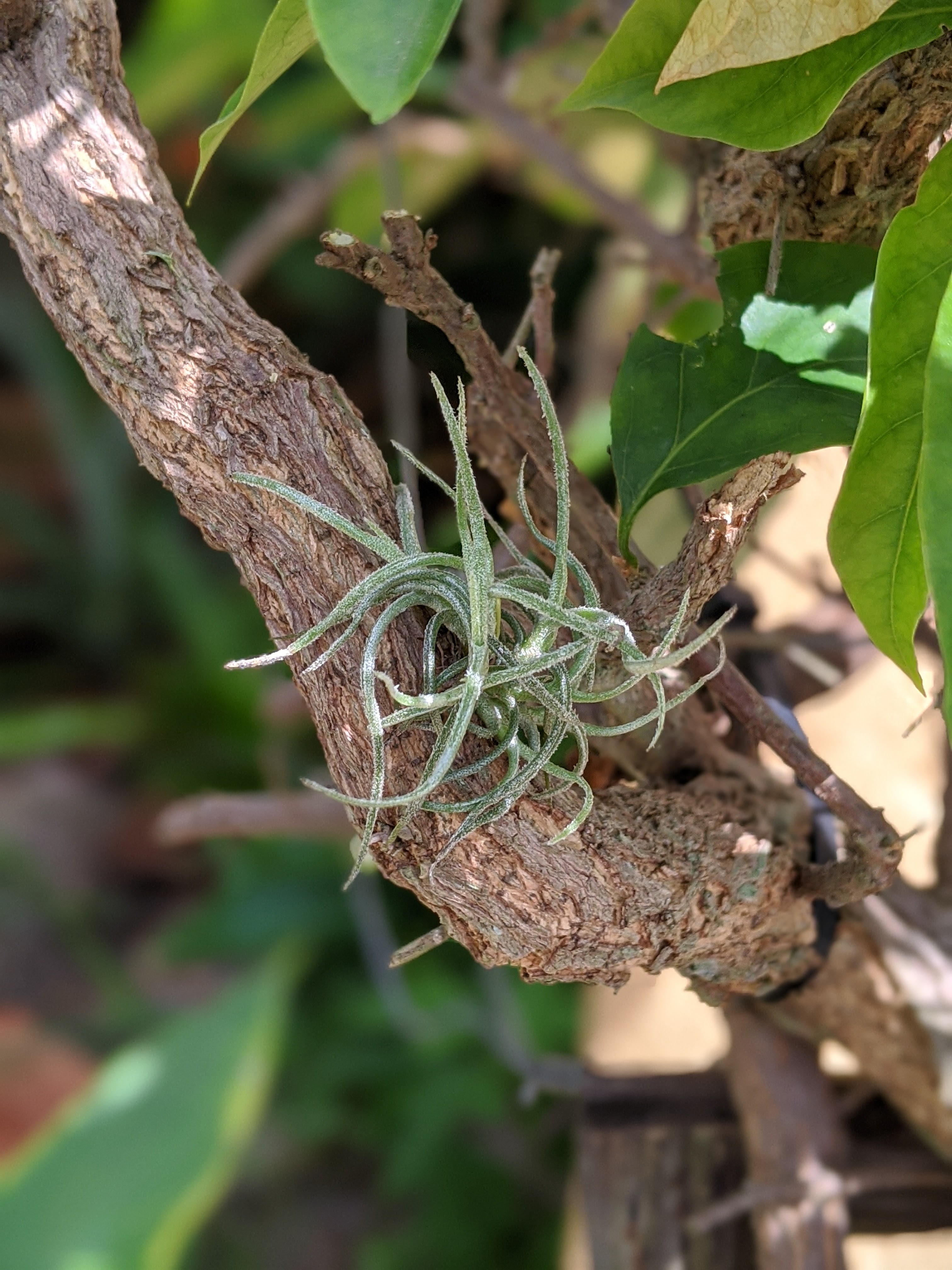
Another fall chore, pruning the Bougainvillea. While pruning, I spied this native Tillandsia growing on the trunk. The Boug, severely pruned a week ago has already started to put out flowers.

That is my six for this Saturday. To visit more gardens with six items of interest on Saturday, go to http://www.thepropagatorblog.wordpress.com.

Happy Gardening.

Six on Saturday The Good, the Bad, and the Bugly

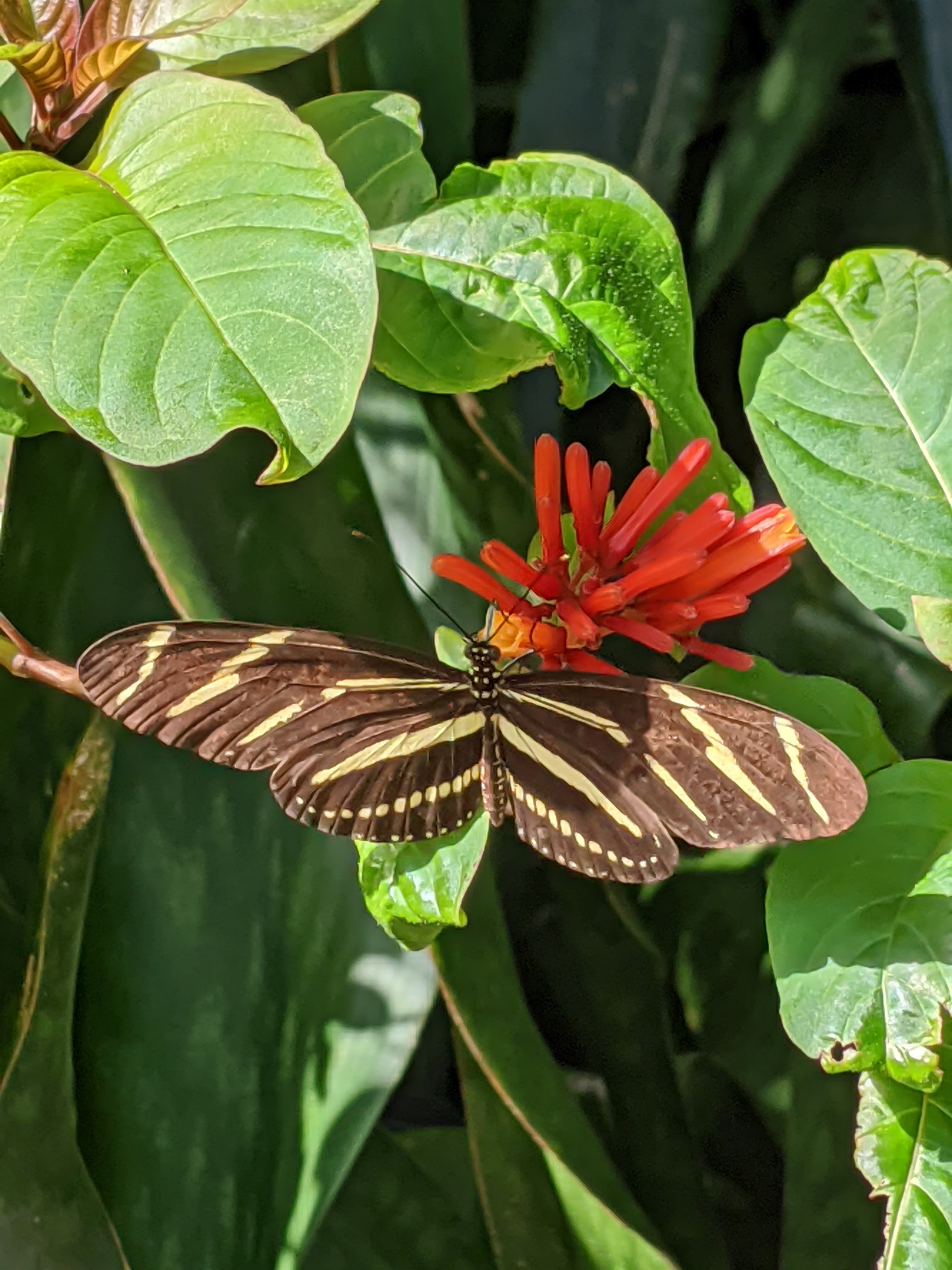
A Zebra Longwing, the state butterfly of Florida, sipping nectar from a Firebush (Hamelia patens var patens). A good thing.

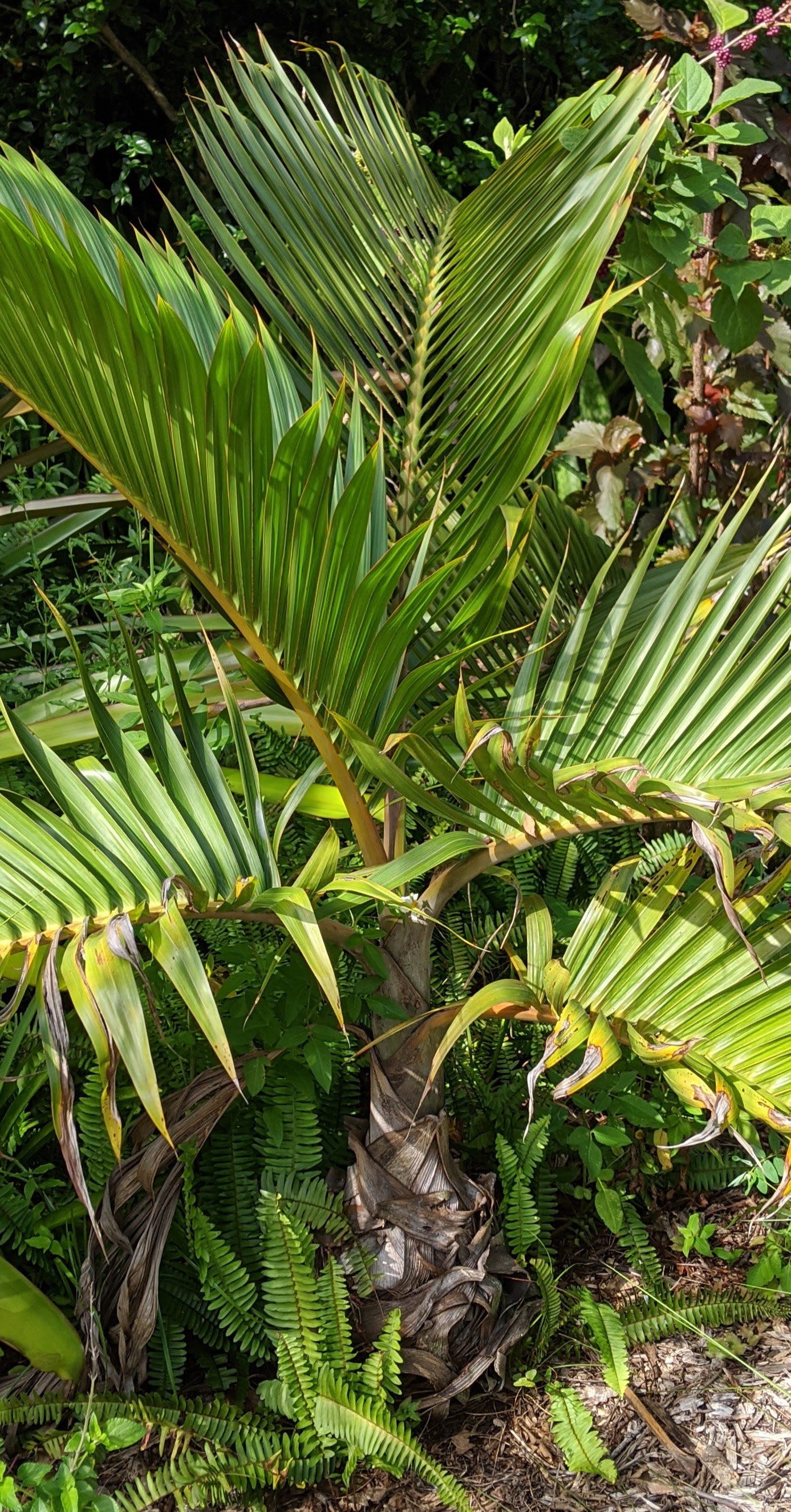
Another good thing, my Bottle Palm (Hyophorbe lagenicaulis) is finally making its bottle trunk. Eventually the old fronds fall off and the palm looks like it is sitting on a green wine bottle. This has taken about five years.

The bad thing about these next plants, they are so slow growing it is almost not worthwhile planting them. Both are Florida natives and come with the native hype…

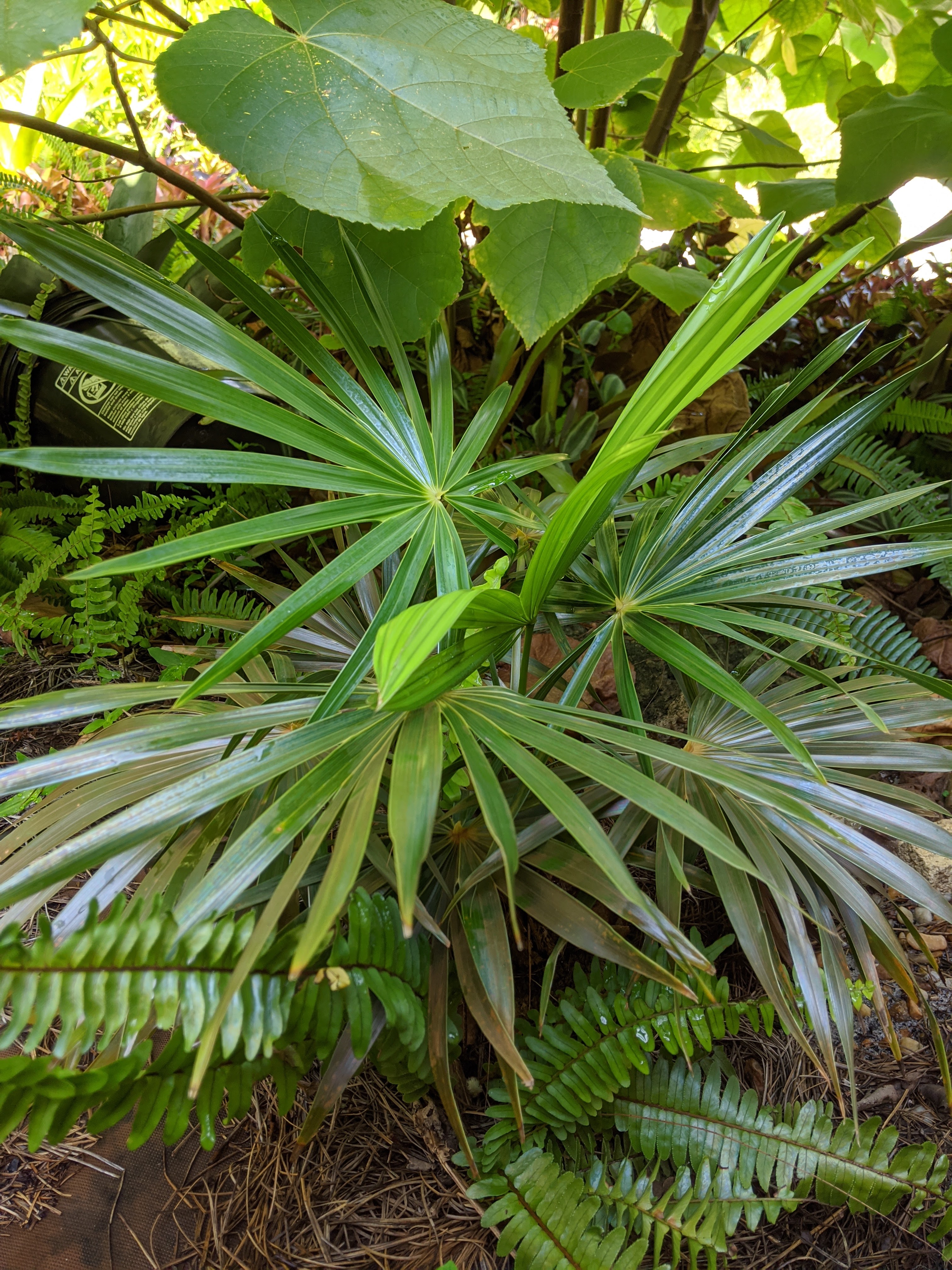
This is a Thatch Palm (Thrinax radiata) It has been in the garden for about five years and might be 18″ tall. I am not sure I will live long enough to see an actual palm tree form.

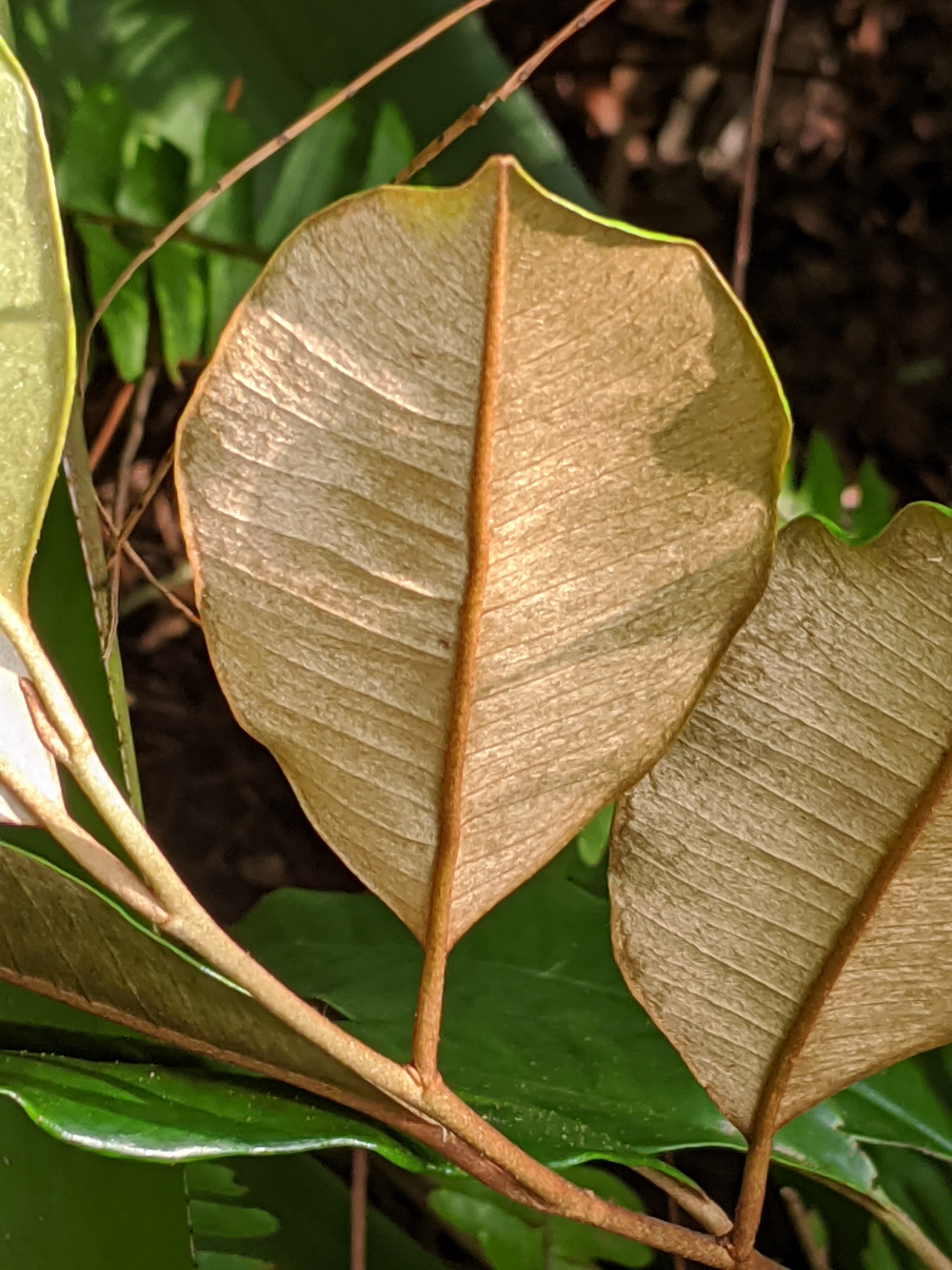
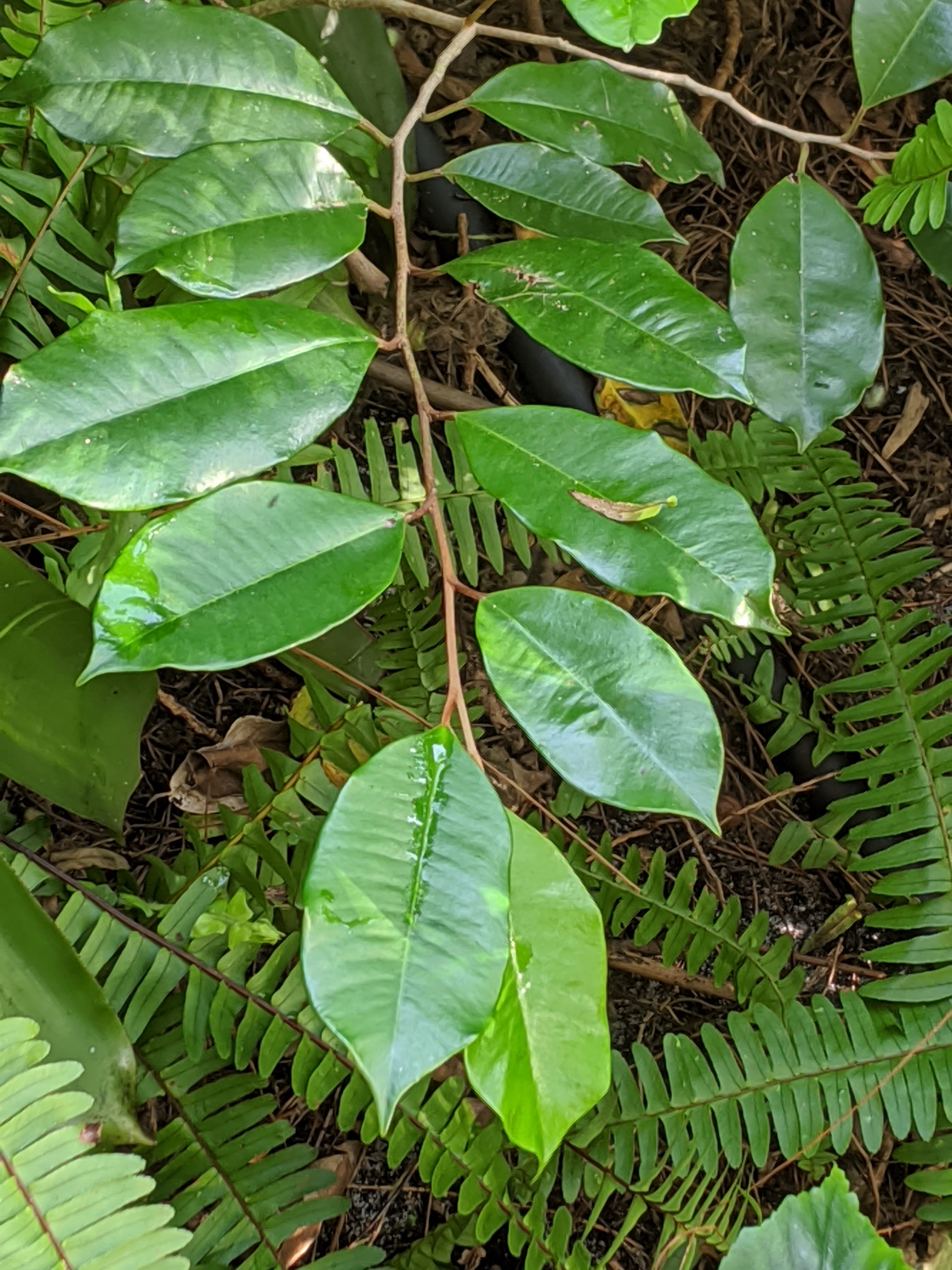
A Satinleaf (Chysophyllum oliviforme), the back sides of the leaves. This is reportedly a tree, and sounds romantically wonderful when described by growers who have seen it blowing in the wind. At six years old and possibly a foot tall (the ferns dwarf it) I have to lie down beside it to experience the romance.

The front side of the leaves.

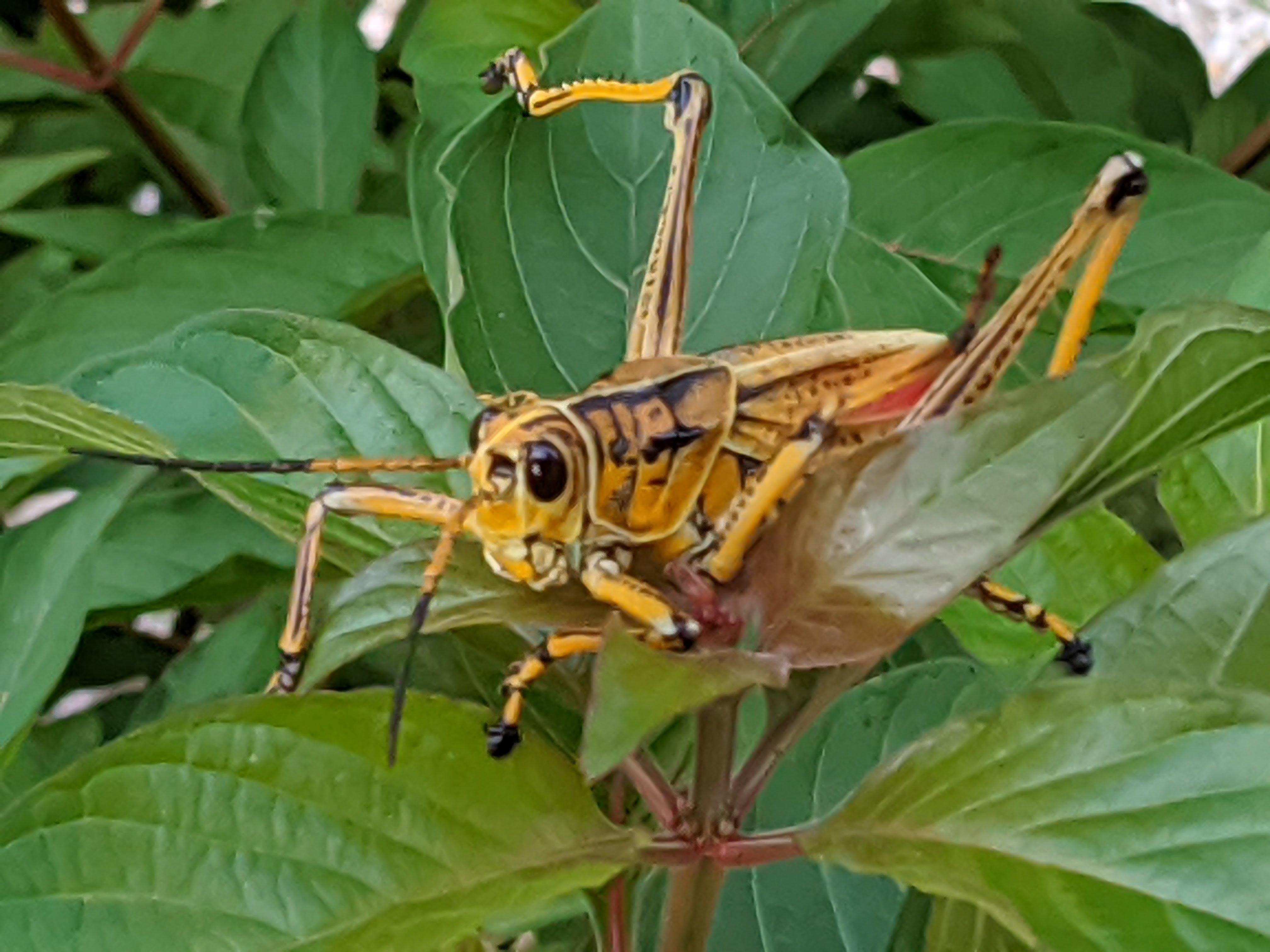
And now, the bugly. This is the dreaded Lubber Grasshopper, another hyped Florida native. These can be 3 or 4 inches long and love to eat plants. Filled with poison, they only have one natural enemy, a bird called a Loggerhead Shrike, the bird impales the grasshopper and leaves them around to dry out and then eats them. I find them dead in the shrubbery from time to time. I am also an enemy and have frightened my dogs gleefully stomping them.

That is my six for this Saturday. Stop by http://www.thepropagatorblog.wordpress.com to see more posts from around the world.

Happy Gardening..