Six on Saturday – Ian Aftermath

I have heard from a lot of people this week inquiring about our status after Hurricane Ian blasted through Florida. Here is what happened.

On Monday this week I posted the latest spaghetti models for the path of the hurricane. Meteorologists use these models to show possible storm paths. I have turned into a bit of a hurricane nerd and follow the weather modeling when storms are active. I marked this map up to show how the forecasting moved during the week.
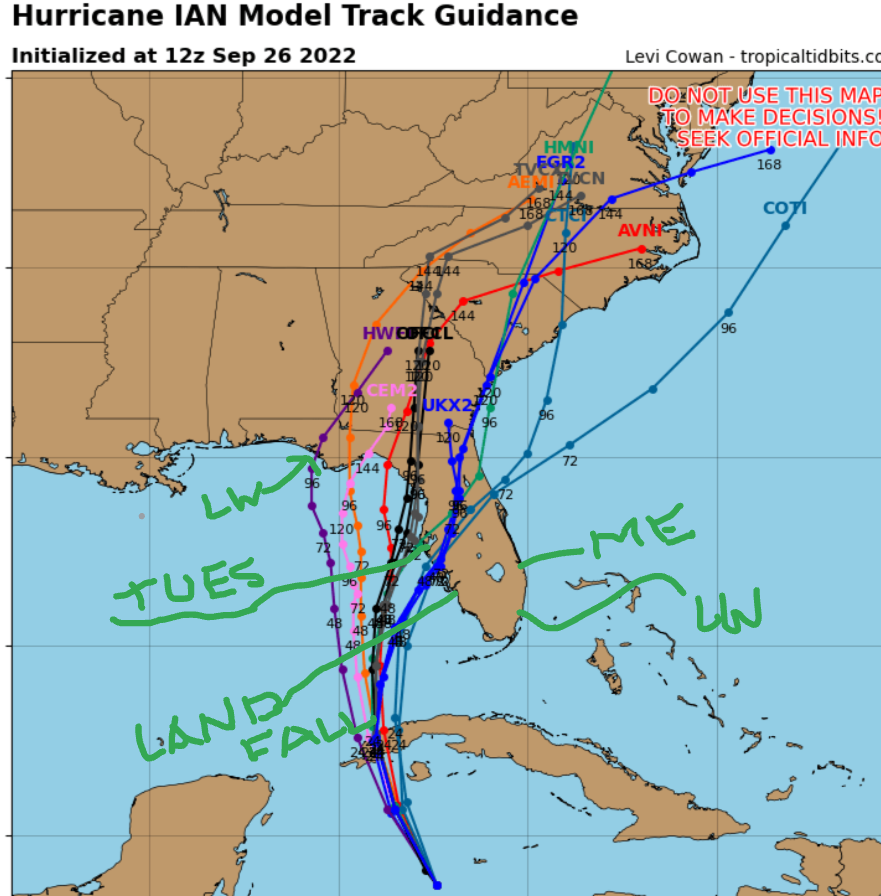
I am located east of the big hole in Florida, Lake Okeechobee. The LW labels are where Ian was forecast to hit last week. Last week the hurricane was hitting South Florida or the Panhandle. The line in black was the Monday forecast. Tuesday it moved south with a prediction of a direct hit on Tampa Bay. Wednesday morning Category 4 Hurricane Ian spinning 155 mph winds made landfall at Cayo Costa, Florida, a barrier island off the west coast near Ft. Myers. It is over 100 miles between Tampa and Ft. Myers. The hurricane never really looked like it was going to hit us. Ironically, when the first rain bands hit my house the hurricane warning area was upgraded to 30 miles north of my house.

Ians’s path through Florida:
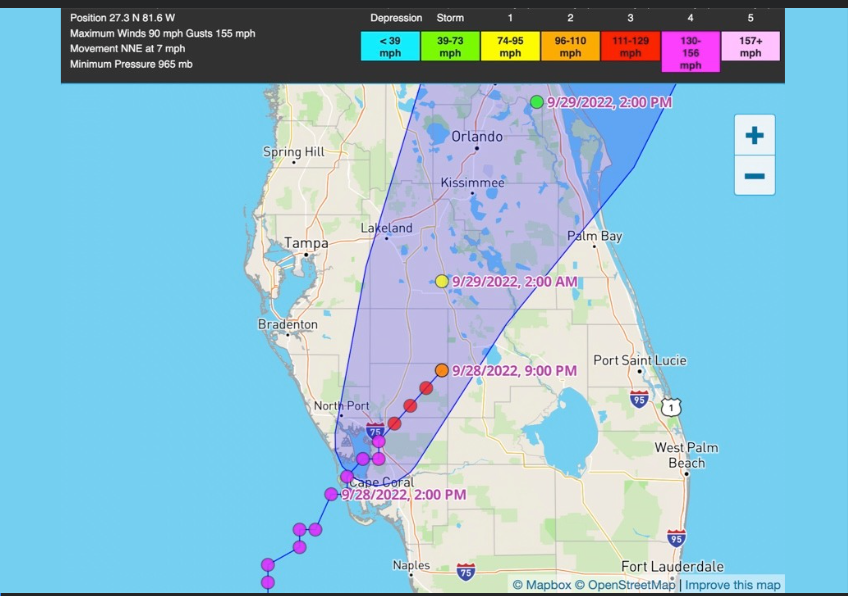
The storm passed about 110 miles west of us overnight on Wednesday. There was a constant 30 mph wind that escalated to 50 or 60 mph gusts off and on. We had very little rain.

The dreadful images of storm damage seen all over the internet and news stories are mostly from the two counties near the landfall, Lee and Collier. There is wind damage and ongoing flooding elsewhere in the path. Hurricane Ian reformed after leaving Florida as a tropical storm and hit South Carolina on Friday.

Our nephew lives in Ft. Myers and stayed in his house. After 5 hours of 100 mph winds, he had a hole in his roof and trees down. He was very lucky. The storm surge stopped 1/2 mile away. Another friend, with land development experience, recently sold his golf course view home in Naples after worrying for years about the 6-8 foot topographical difference between his house and the Gulf of Mexico. I imagine his neighborhood was inundated by the storm surge.

Here is what happened in my garden:
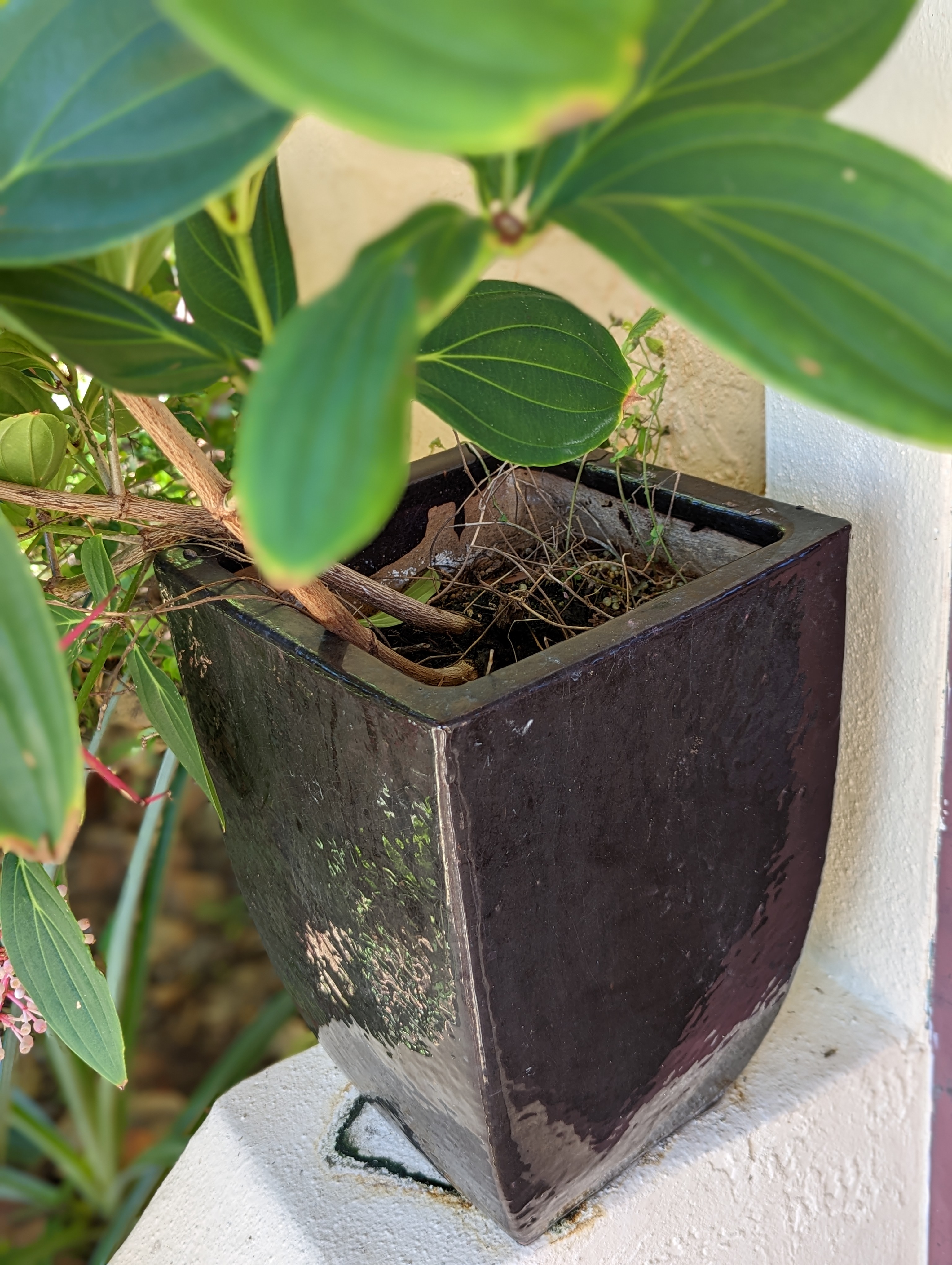
Winds blew this pot counterclockwise. I am glad it did not blow off the wall.
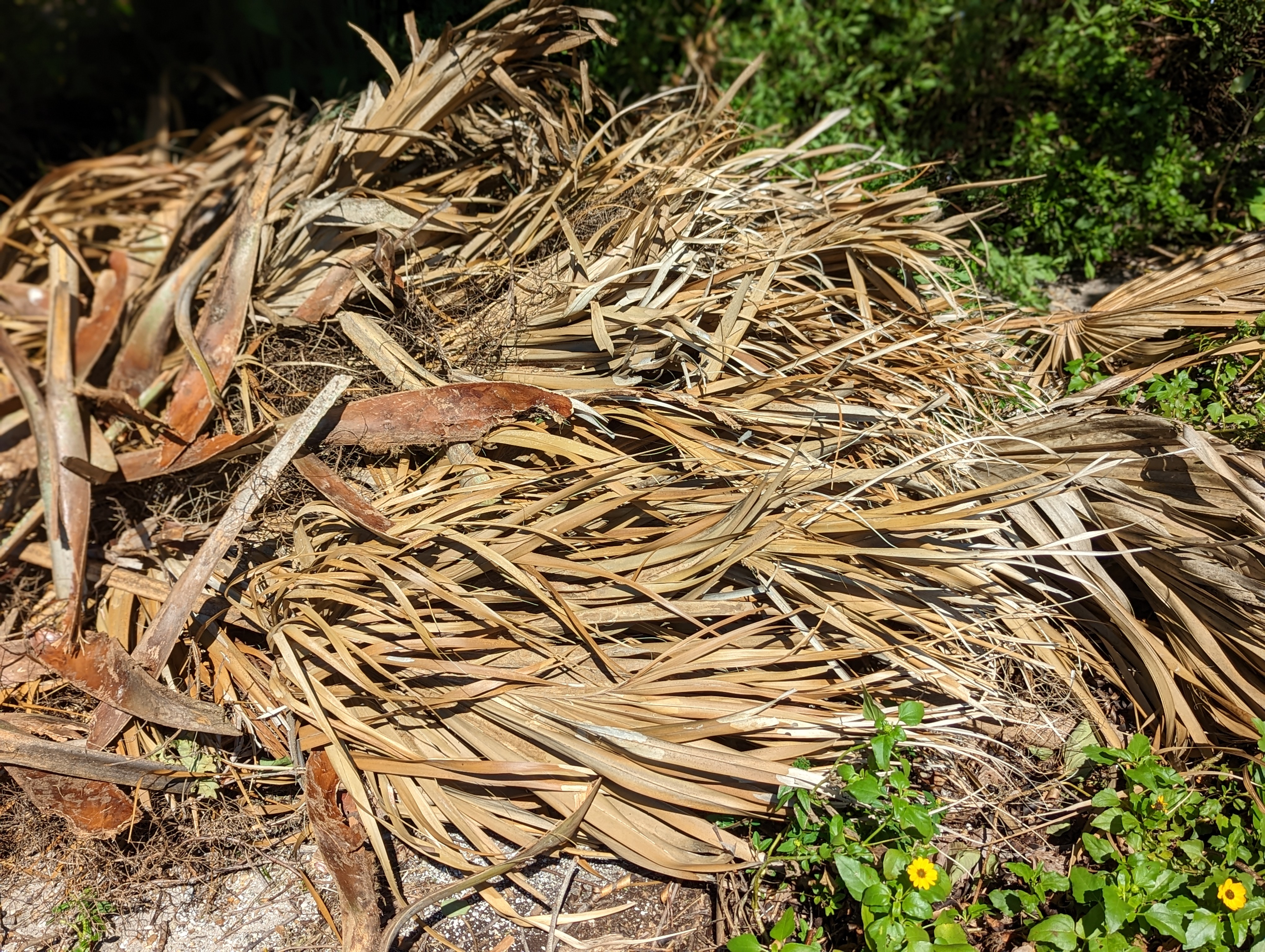
Piles of palm fronds to pick up. I hate hurricane cut palms. It is bad for the health of the tree to cut all the yellow and brown fronds and seed heads off as they provide homes and food for birds and bats – but, you don’t have to pick them up after high winds.
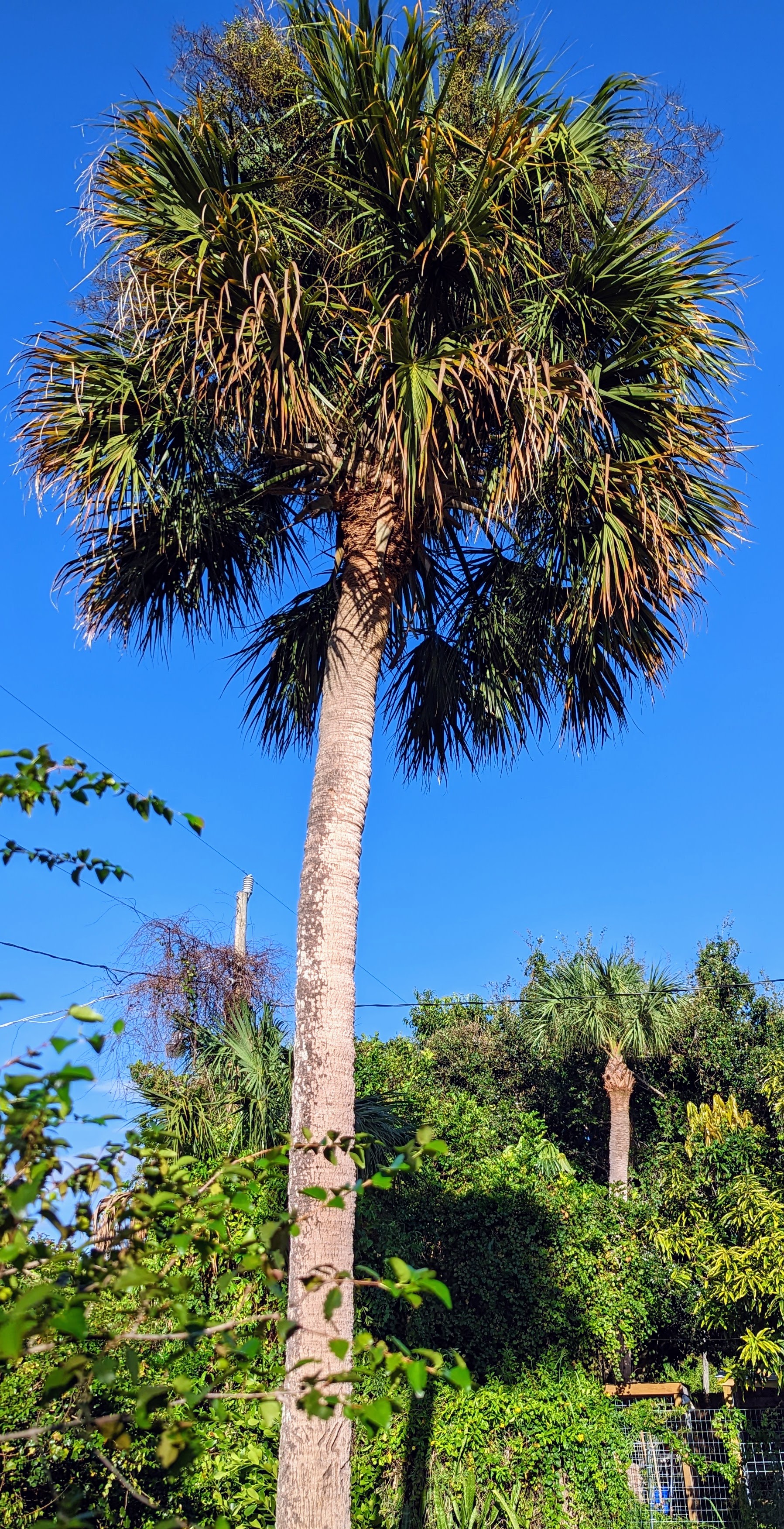
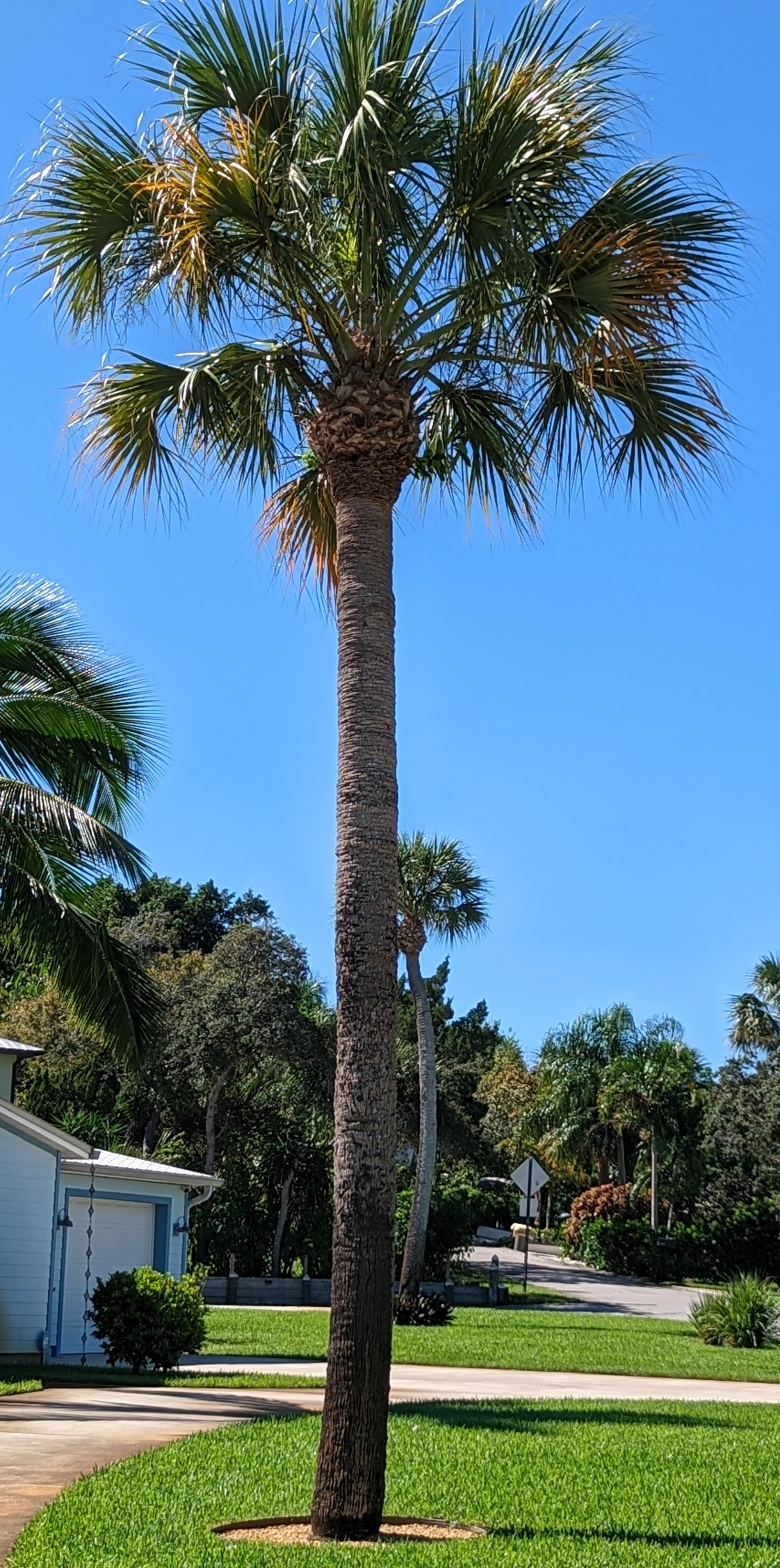
The hurricane cut palm is on the right. They are left with 3 to 5 green fronds many times.

The Strangler Fig was mostly covered in new leaves before the winds blew through. The new leaves and many others are now covering the ground.
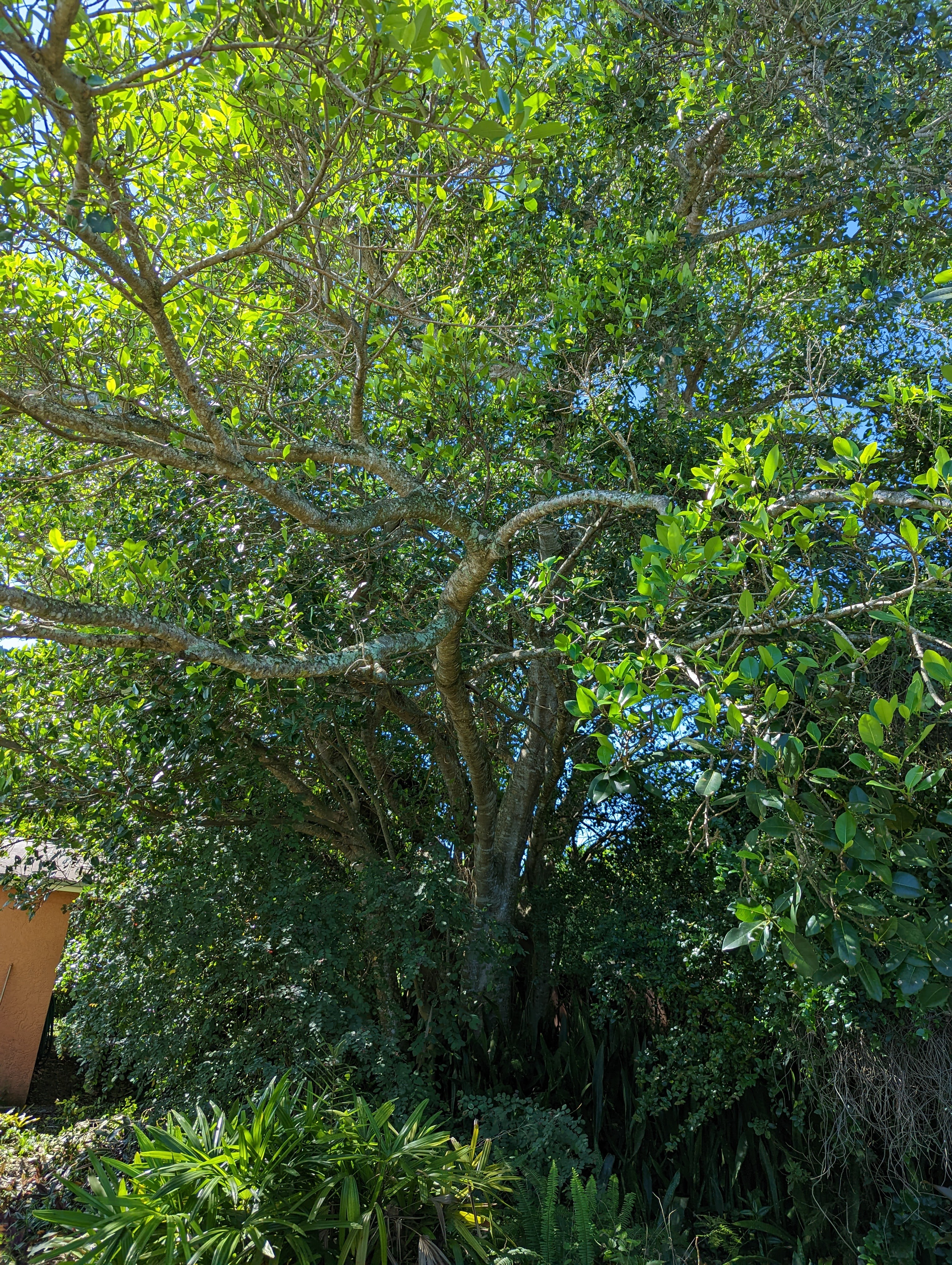
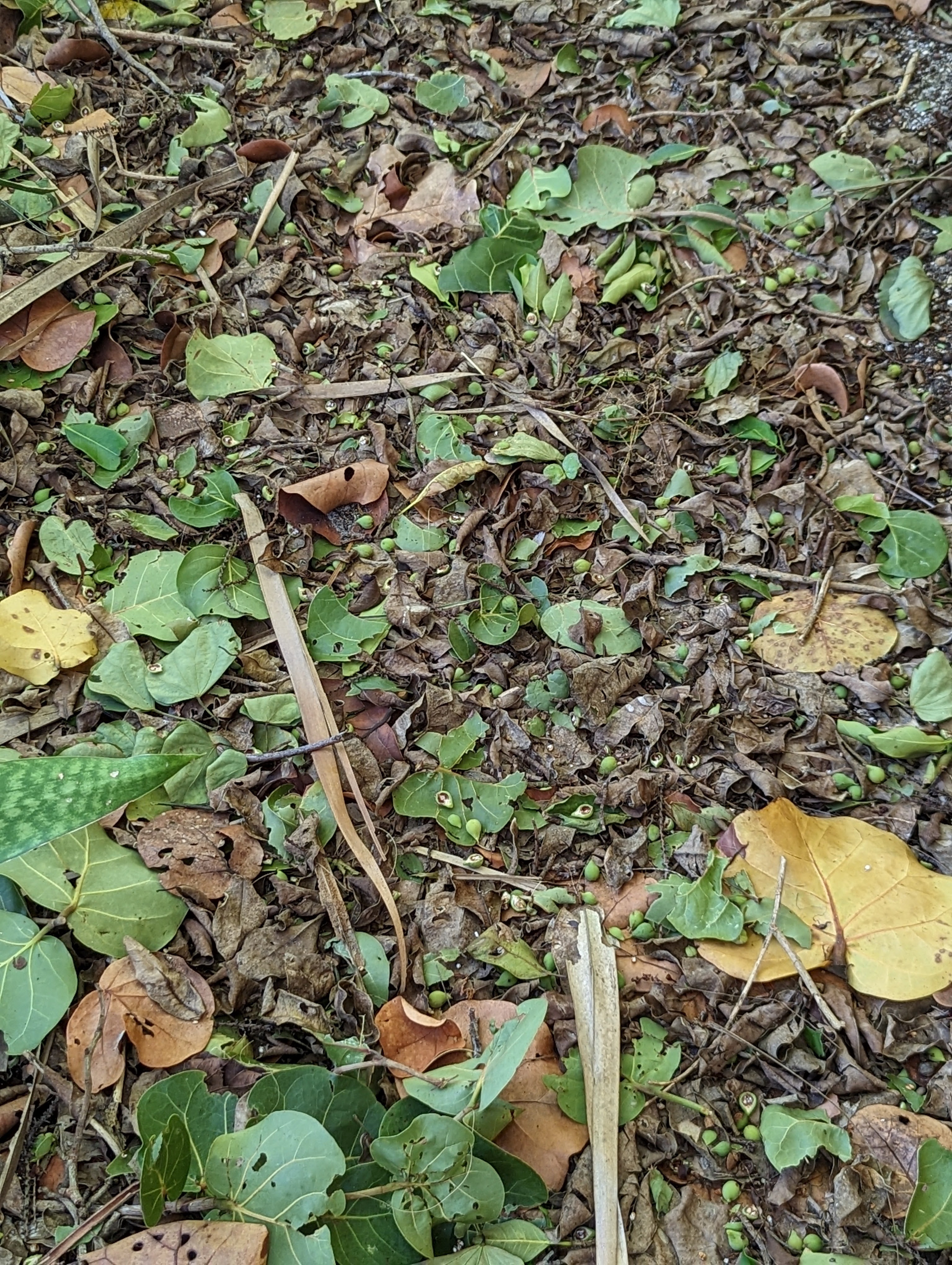
That is it from my garden. Just piles of debris to pick up. Some of the plants are pointed in a decidedly more southern direction as that is where the strongest winds came from.

To see more Six on Saturday posts, visit Jon at http://www.thepropagatorblog.wordpress.com.

Happy Gardening, I will be adding to my compost heap!

Six on Saturday – Natives and Friends

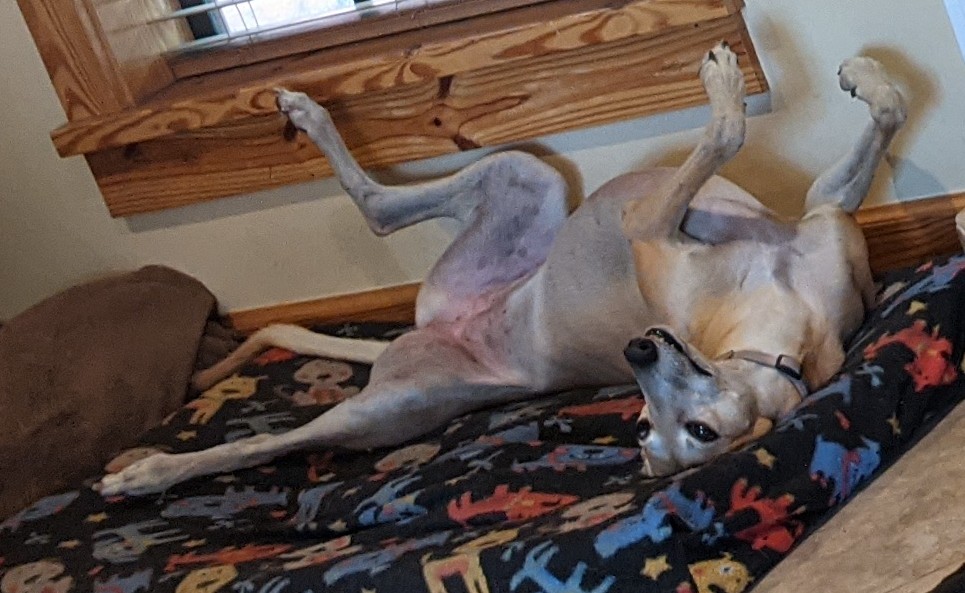
It is finally raining here, and in typical gardener fashion, I am going to complain – just a little too much. The weeds are going crazy and it is supposed to rain for the next several days. Fiona, the hurricane, not the greyhound. is supposed to meander by next week, undoubtedly bringing more rain. Fiona the greyhound is not terribly worried.

Back to plants and SOS. I am joining the SOS meme, hosted by Jon at http://www.thepropagatorblog.wordpress.com. To see more posts, follow the link.

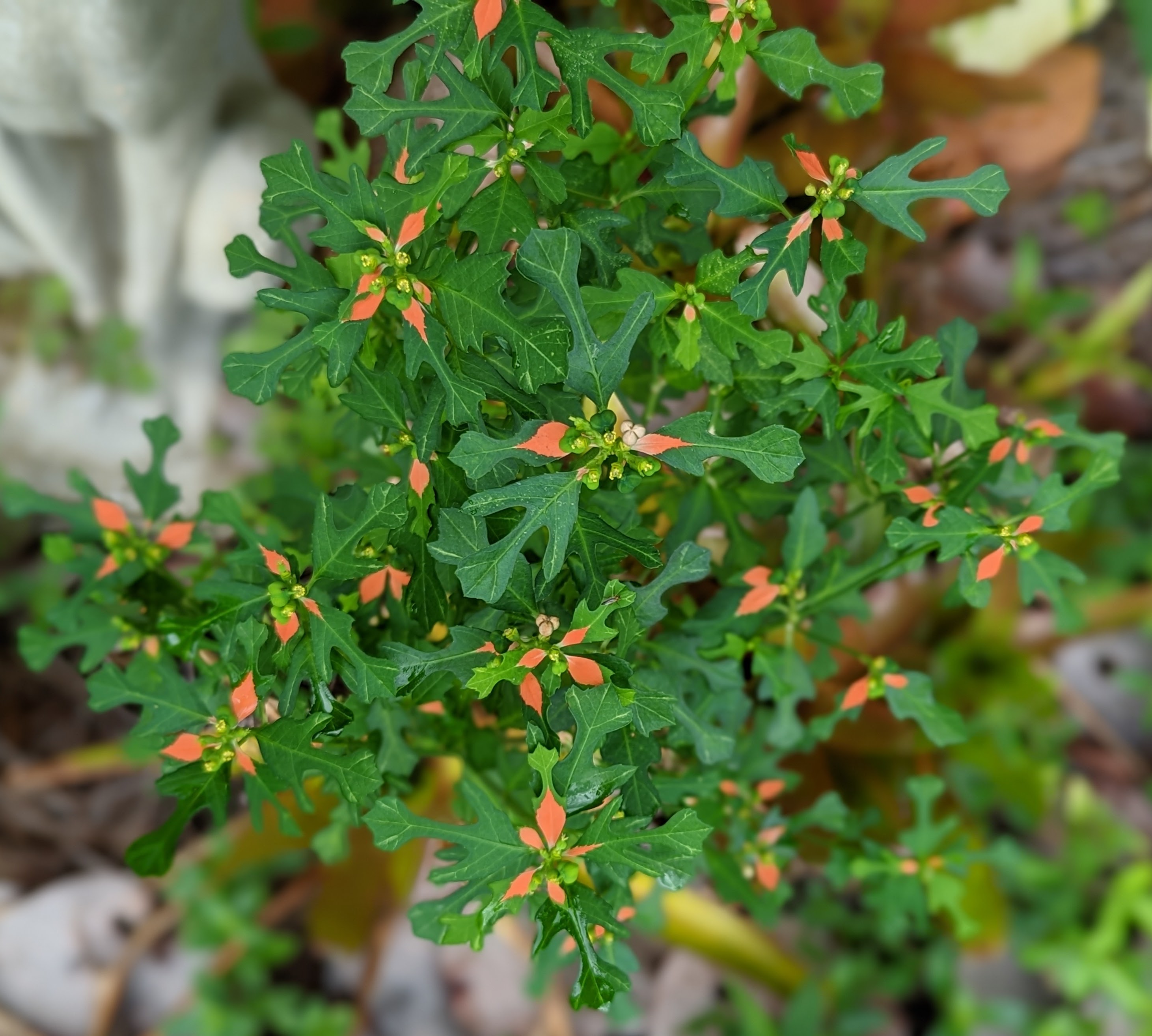
This is a native Poinsettia (Euphorbia cynathophora). These pop up here and there and do not reseed much, so I enjoy the little pop of red in the garden.

Native Dayflower (Commelina erecta). Another one that just pops up in the garden and behaves nicely.

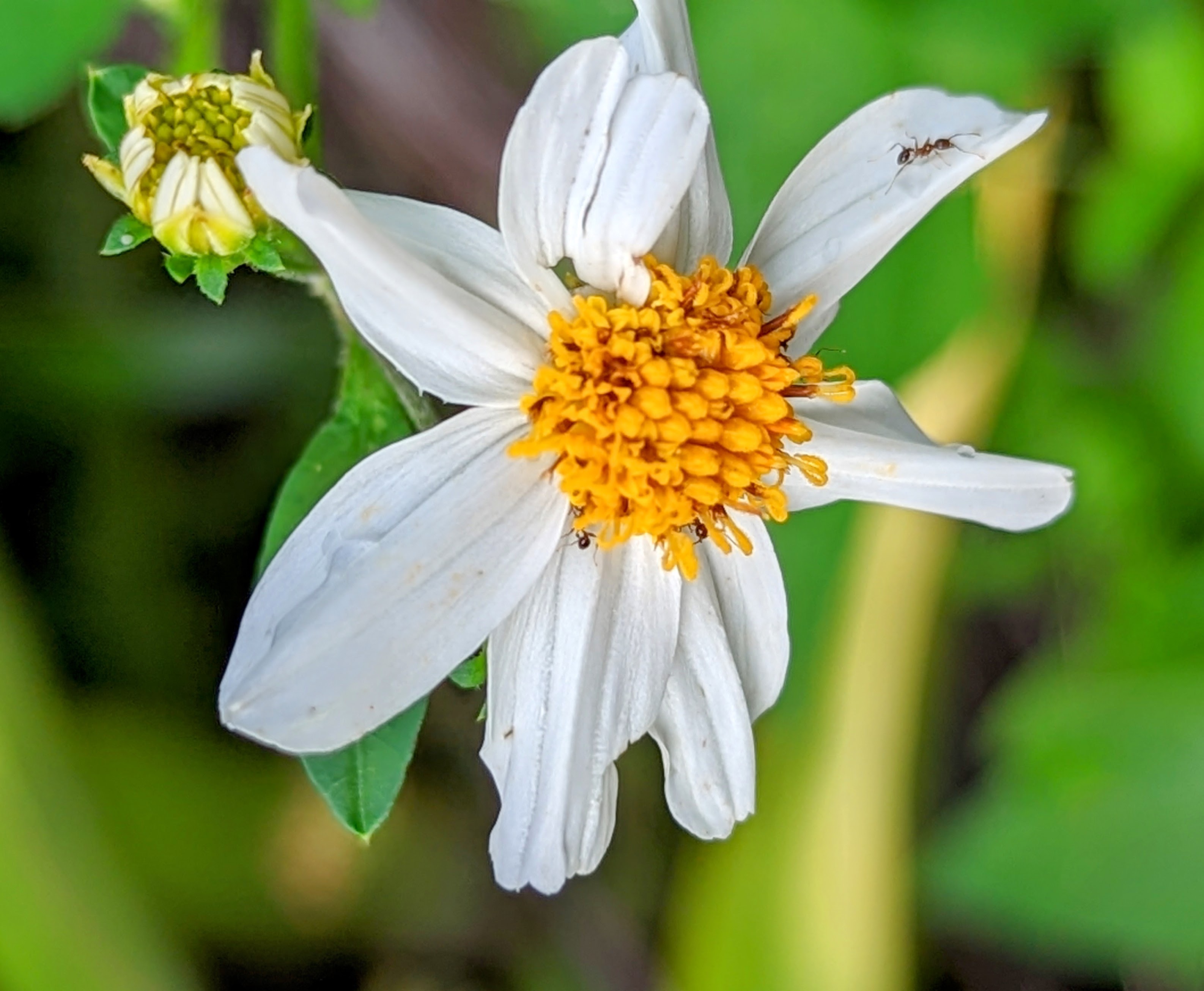
Native Bidens alba. One of the many common names is Spanish Needles, which leaves me wondering if the Spanish explorers of the Florida peninsula used the seeds for sewing. Not sure how, they are sharp, but maybe a half inch long. The one I love to hate. Reseeds madly, but so cute and the pollinators love it.

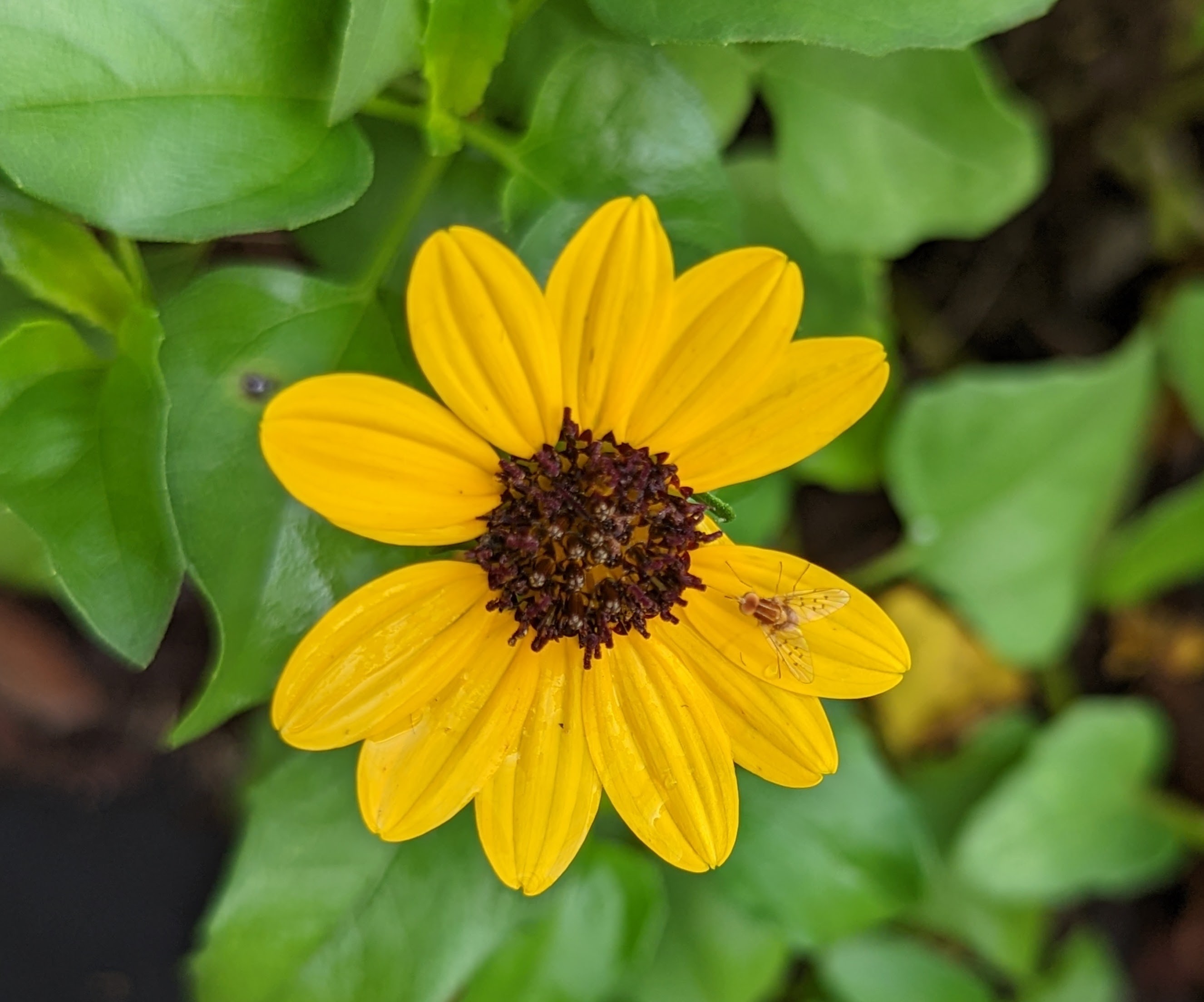
Another great native for pollinators, the Beach Daisy (Helianthus debilis). I am not sure what that bug is. These go mad during a rainy summer and once you have them in the garden (I planted them) they never go away.

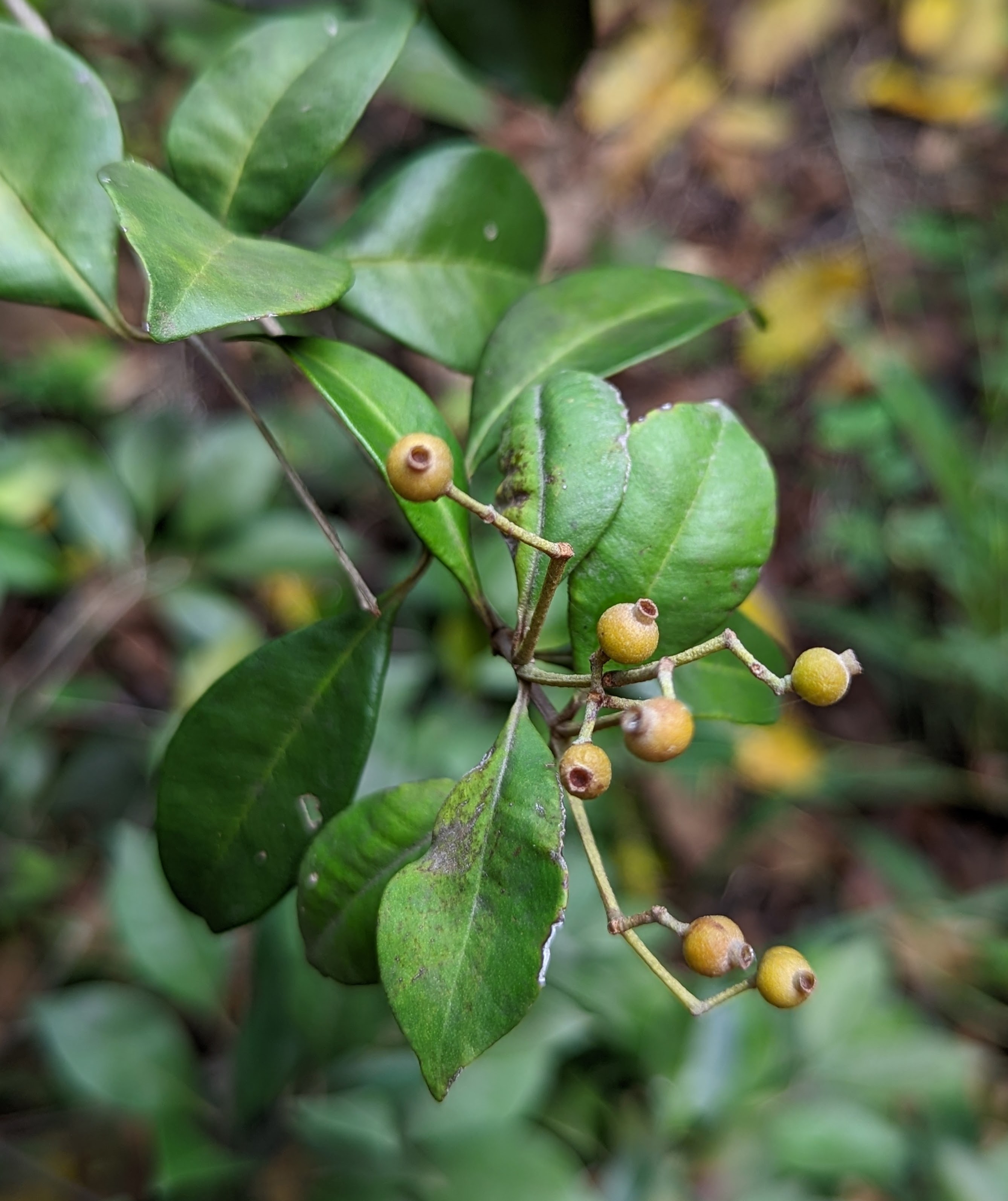
The fruits of a native Spicewood (Calyptranthes pallens) Something about this is supposed to have a spice fragrance. I have yet to find it and have had this in the garden for seven years or so. Birds like the berries.

A nice, and not native to Florida, Saturday morning surprise. This is an unnamed Cattleya orchid that regularly flowers in early September. I thought it wouldn’t flower because of the dry summer – but here it is after getting some rain and a little fertilizer.

That’s my Six for this Saturday….Happy Gardening!!!!!
Six on Saturday – Raindrop Close ups

I am joining the SOS crowd this morning, celebrating a very recent rain shower in my garden. The weather guessers predicted a much wetter September (usually our rainiest month). On this third day of the month, they are right.

I have been attempting to watch the Artemis 1 rocket launch this week; depending on weather the launches are visible from my backyard. If we see them my husband is usually squealing “this is so cool!!!!” This is NASA’s run up to another manned trip to the moon in a couple of years. The first attempt was scrubbed on Tuesday and the second is scheduled for this afternoon. Currently it is overcast, so time will tell. If the weather clears and the launch happens I may see a rocket fly by this afternoon.

On to plants:

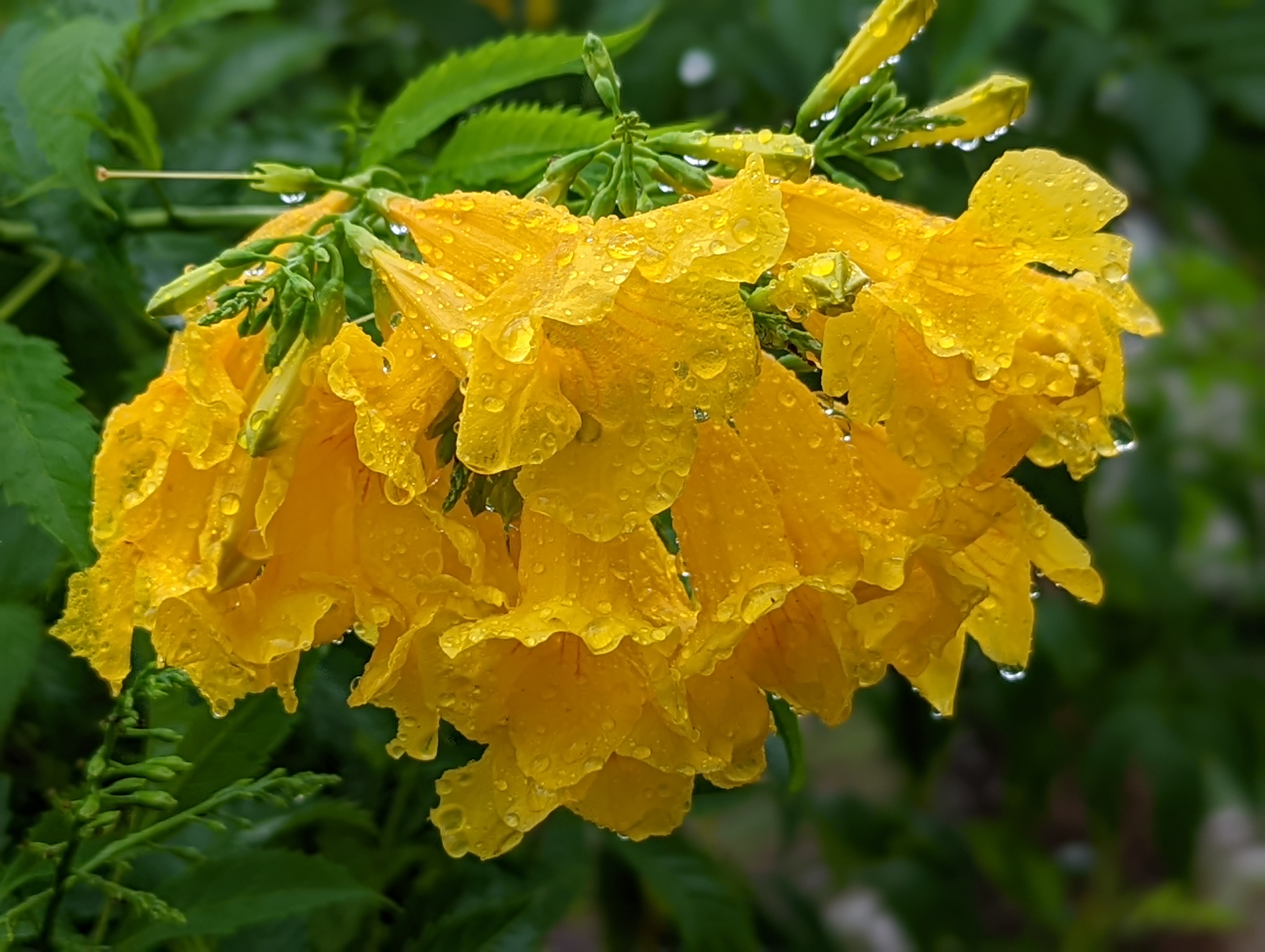
Esperanza (Tecoma stans). Sometimes called Yellow Elder. This plant amazes me. It had virtually no water and a very dry summer and it just keeps going.

The base of Travelers Palm (Ravenala madagascarensis). Another survivor with very little watering. I love the base of these. This is a member of the Strelitzia family related to Bird of Paradise.

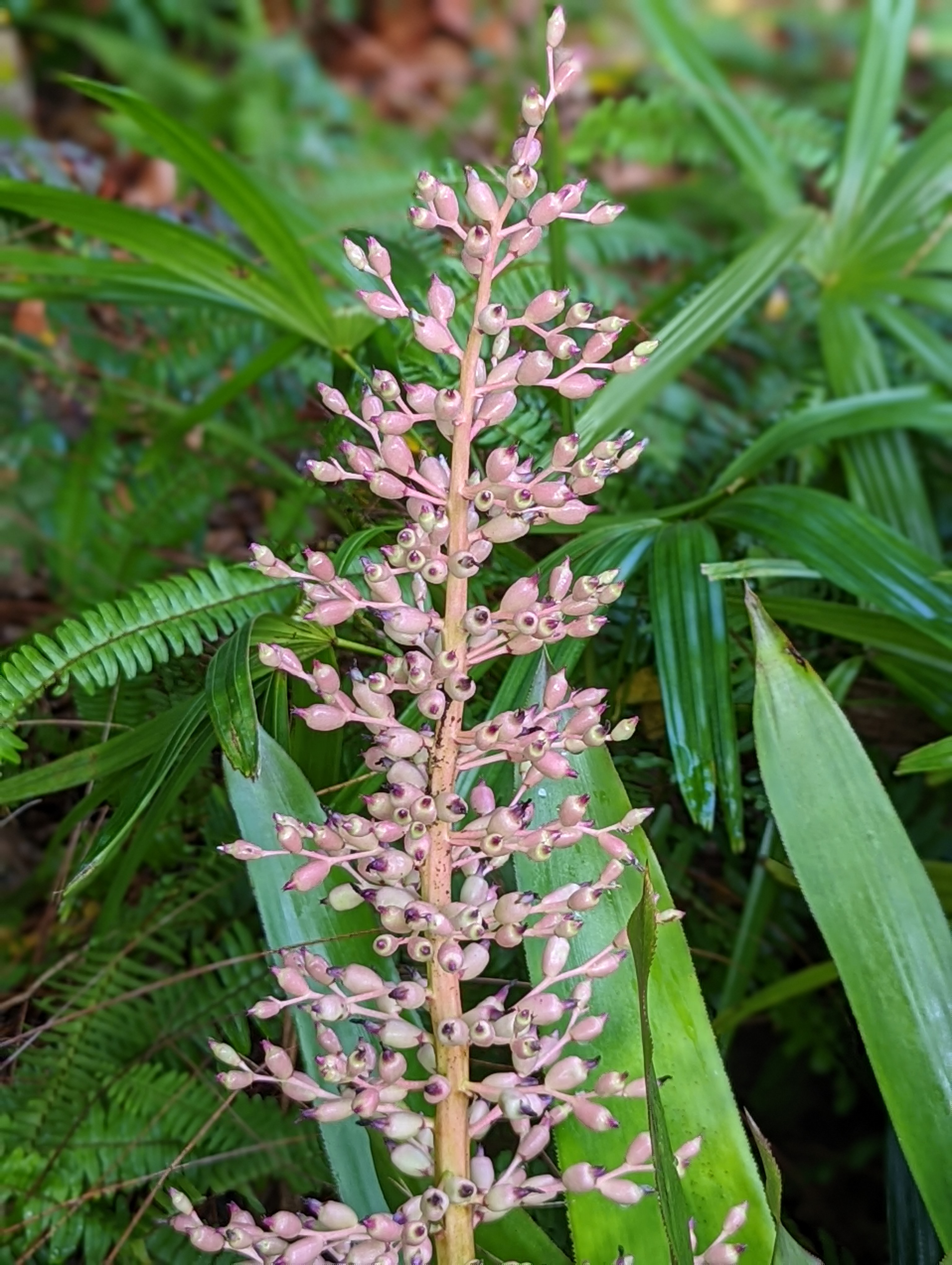
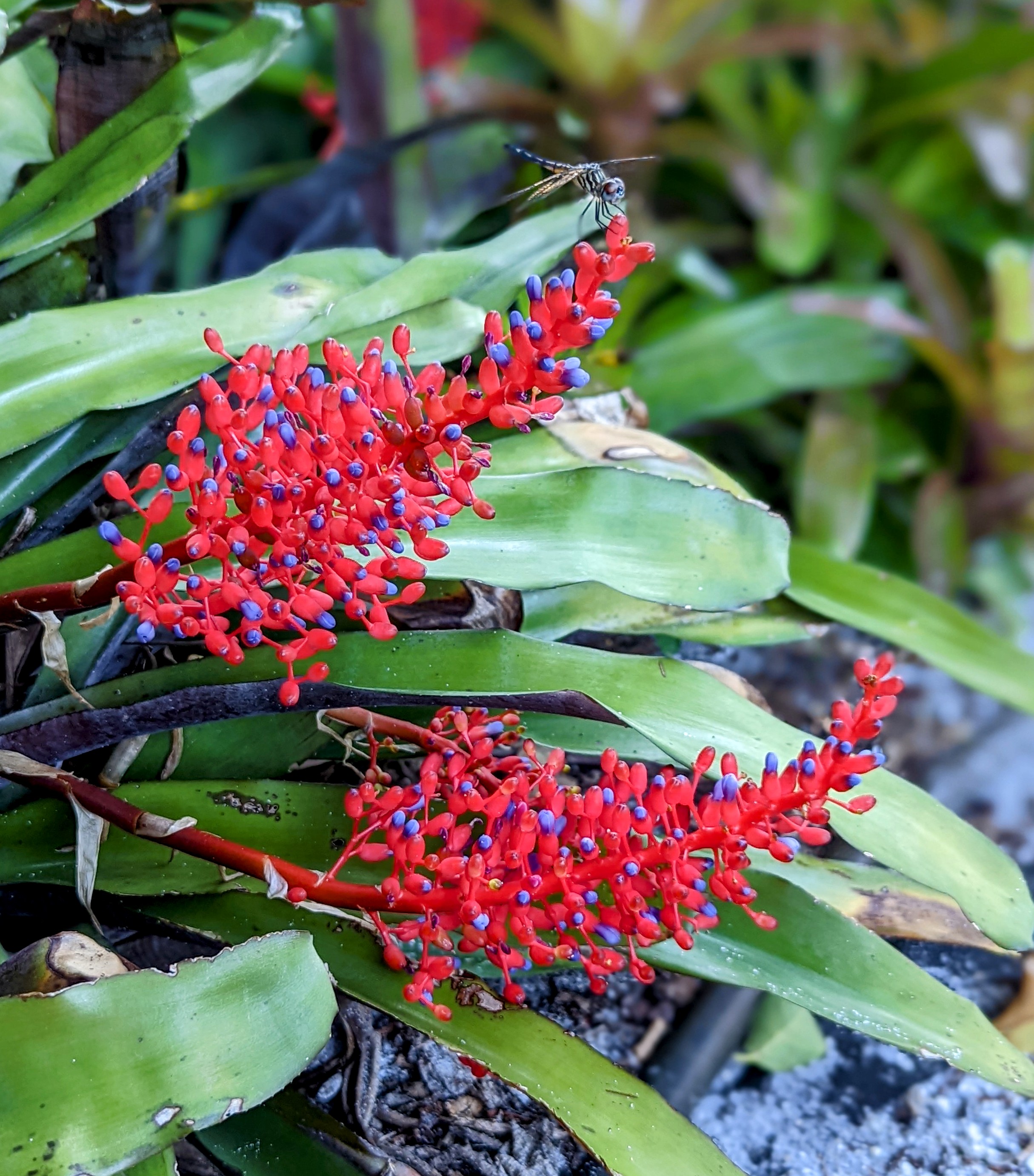
Aechmea rubens in the final stages of flowering. I have never heard a common name for this. This bromeliad started flowering at the end of May, lasting all summer. I am wondering if the black tips are seeds?

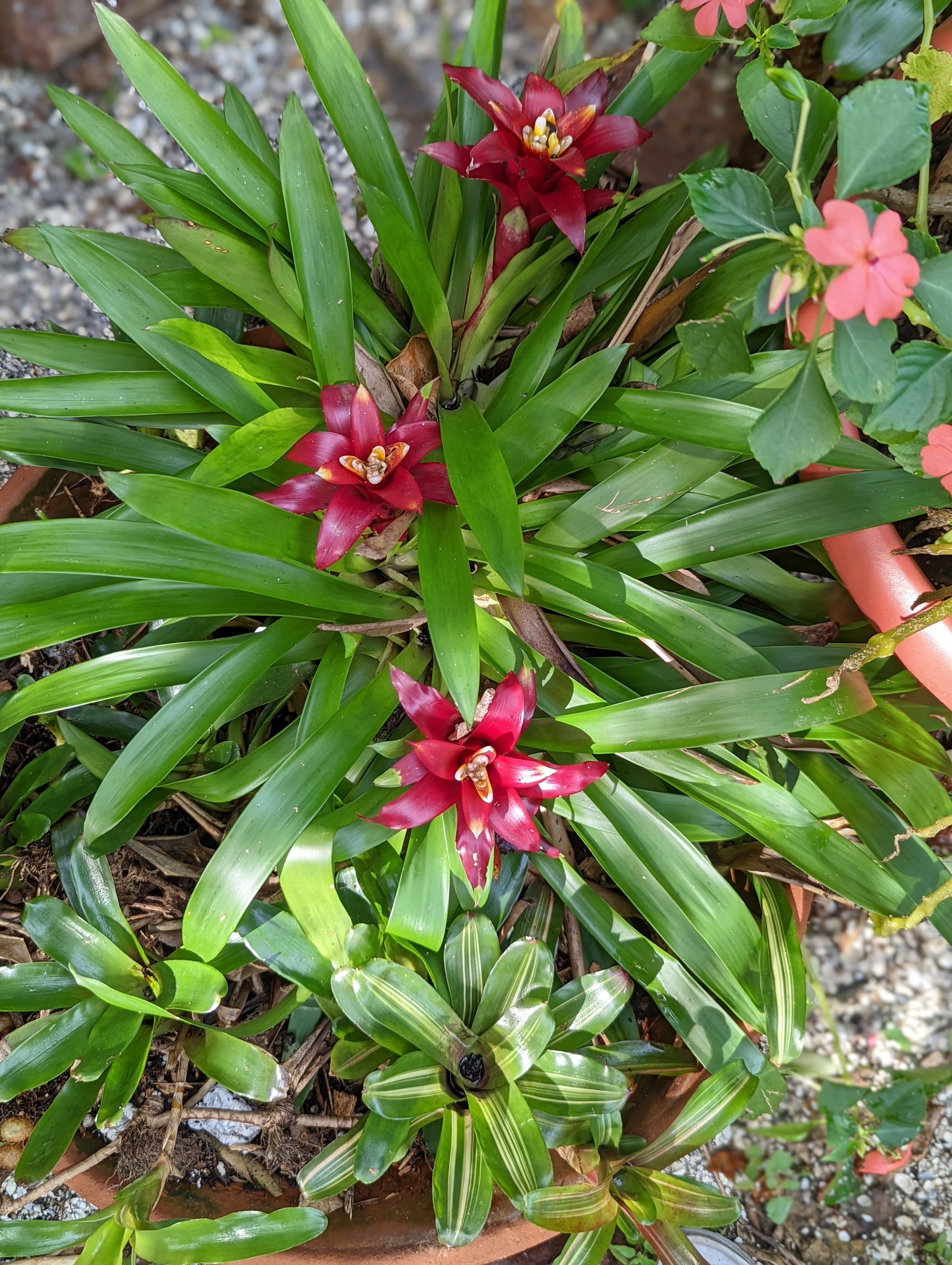
These bromeliads are just starting to flower. They are Billbergia pyramidalis and have many common names – Flaming Torch, Hurricane, Foolproof Plant, Summer Torch. They are foolproof if planted in the right spot. I enjoy these every fall.

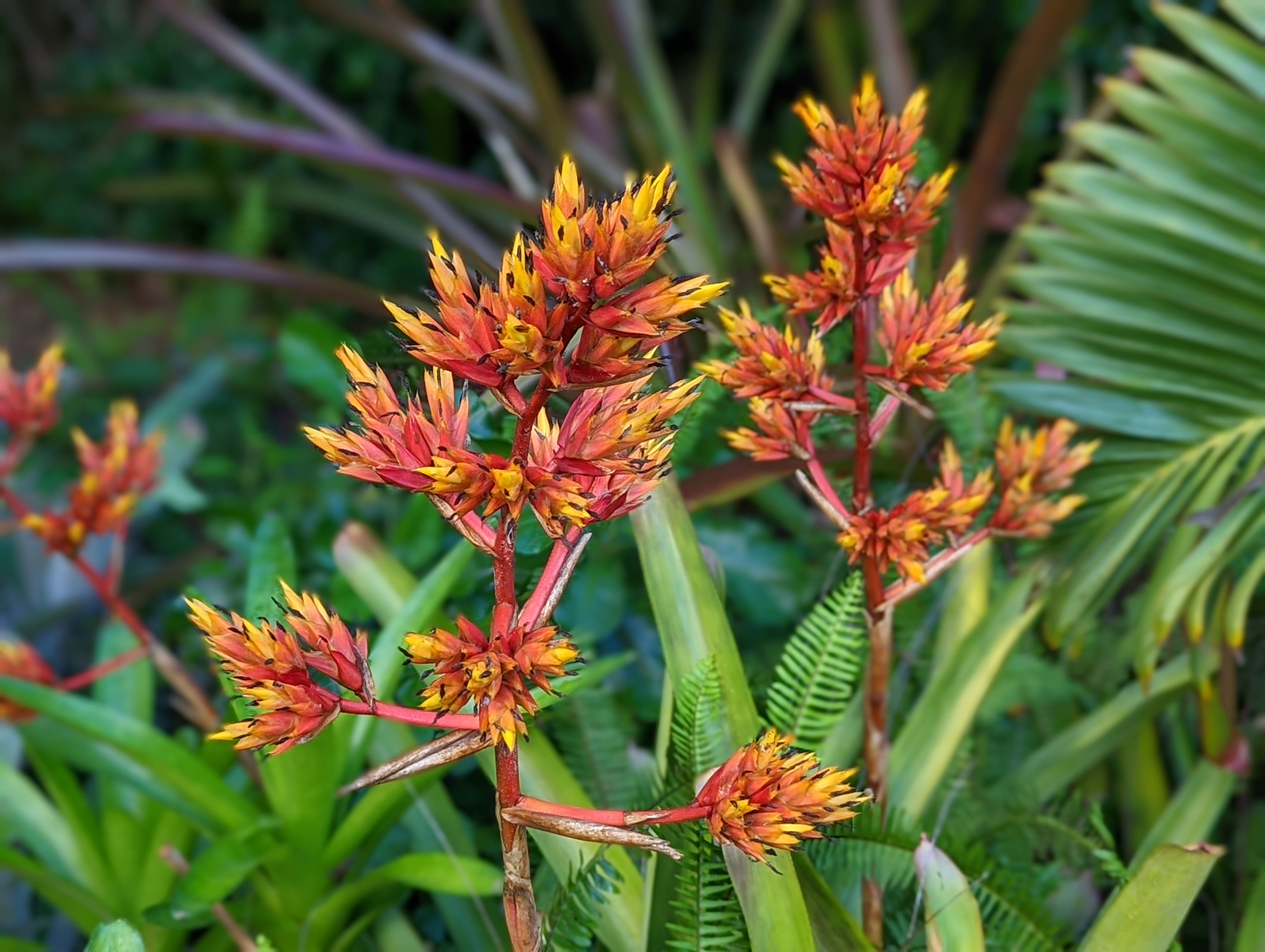
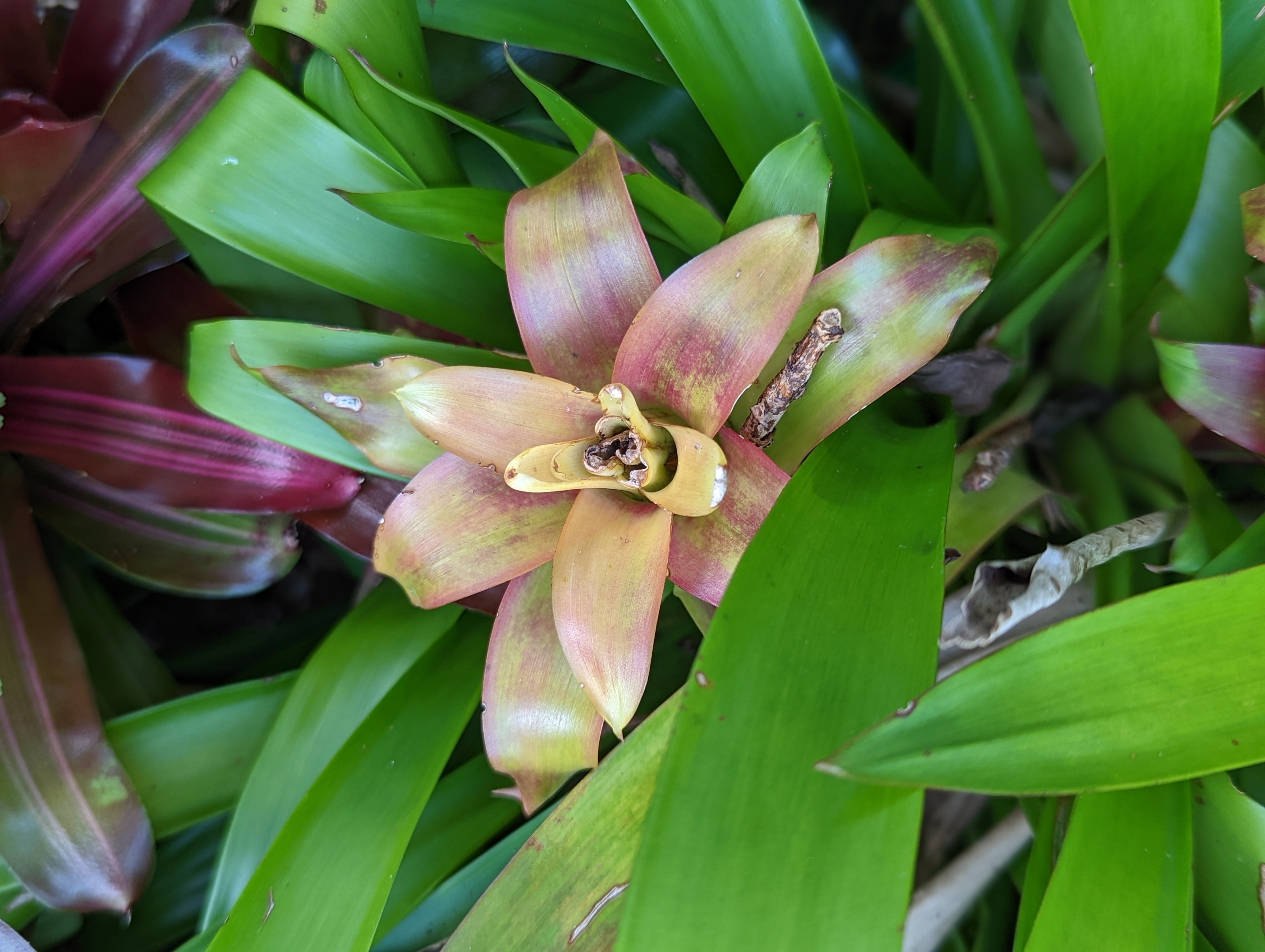
A mystery bromeliad in full bloom. This has lasted most of the summer.

Dancing Ladies Ginger (Globba winitii). My garden is too dry to support these, so I grow them in a pot. The plant is dormant during the dry season, then pops up mid June and flowers late summer. A neighbor gave me this plant. I think I will upsize the pot to see the plant will spread.

That’s it from South Florida. To see more SOS posts, visit Jon at http://www.thepropagatorblog.wordpress.com.

Happy Gardening!!!

Six on Saturday – Survivors

I am joining the SOS crew today sharing my summer survivors. This summer has been brutal, temperatures over 90 degrees F most days and very little rain. Add to that the demise of our irrigation system, I water what I can and am admiring what is surviving the onslaught. The tropical plants are outshining the native plants in the garden this summer.

Chocociana Parrotflower (Heliconia psittacorum). These small Heliconias are hunkered down under a Firebush and are doing quite well. Of course, I do have to squat down to see them.

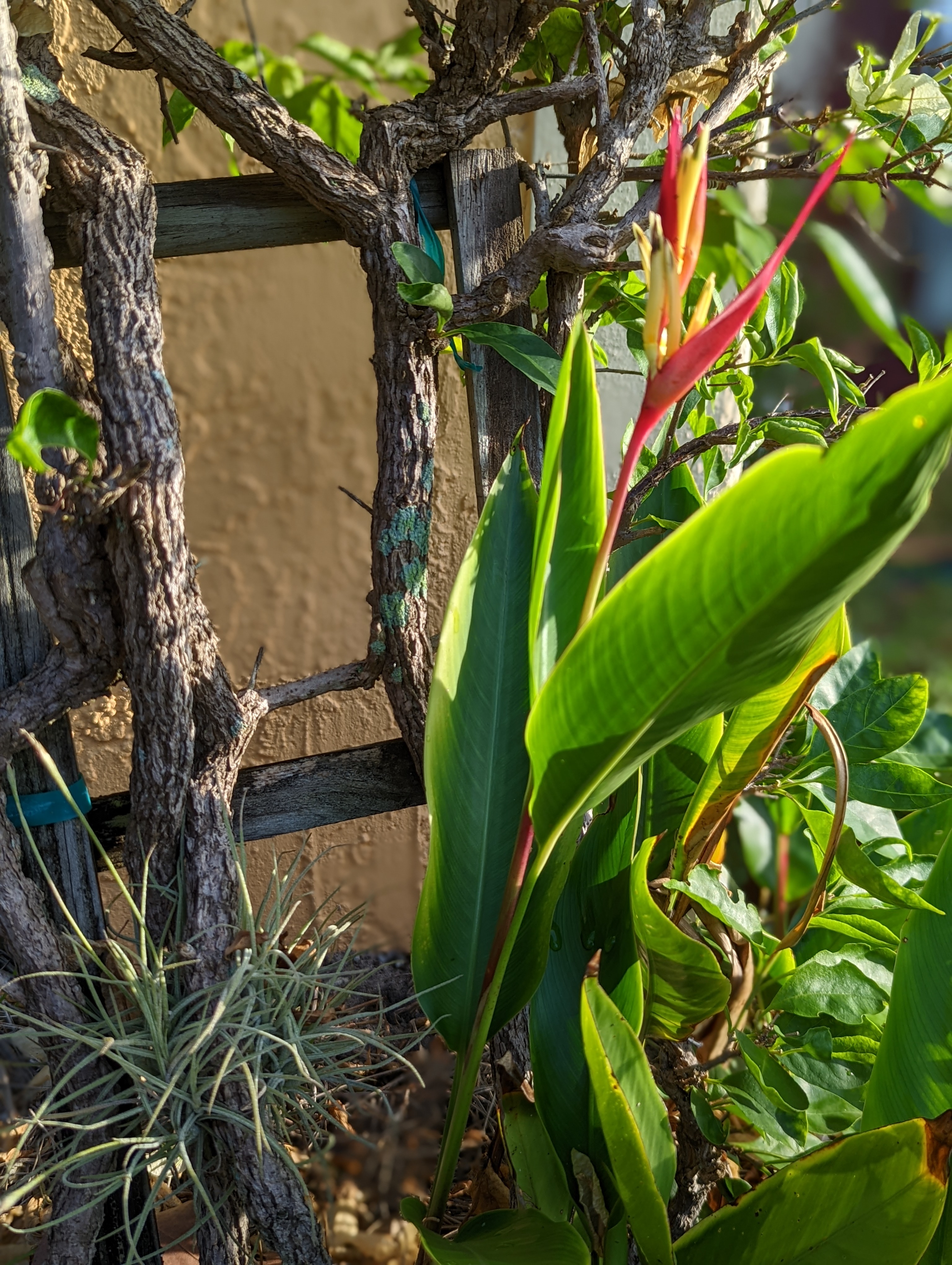
Lady Di Parrotflower (Heliconia psittacorum) and native Tillandsia growing near the trunks of Miss Alice Bougainvillea.

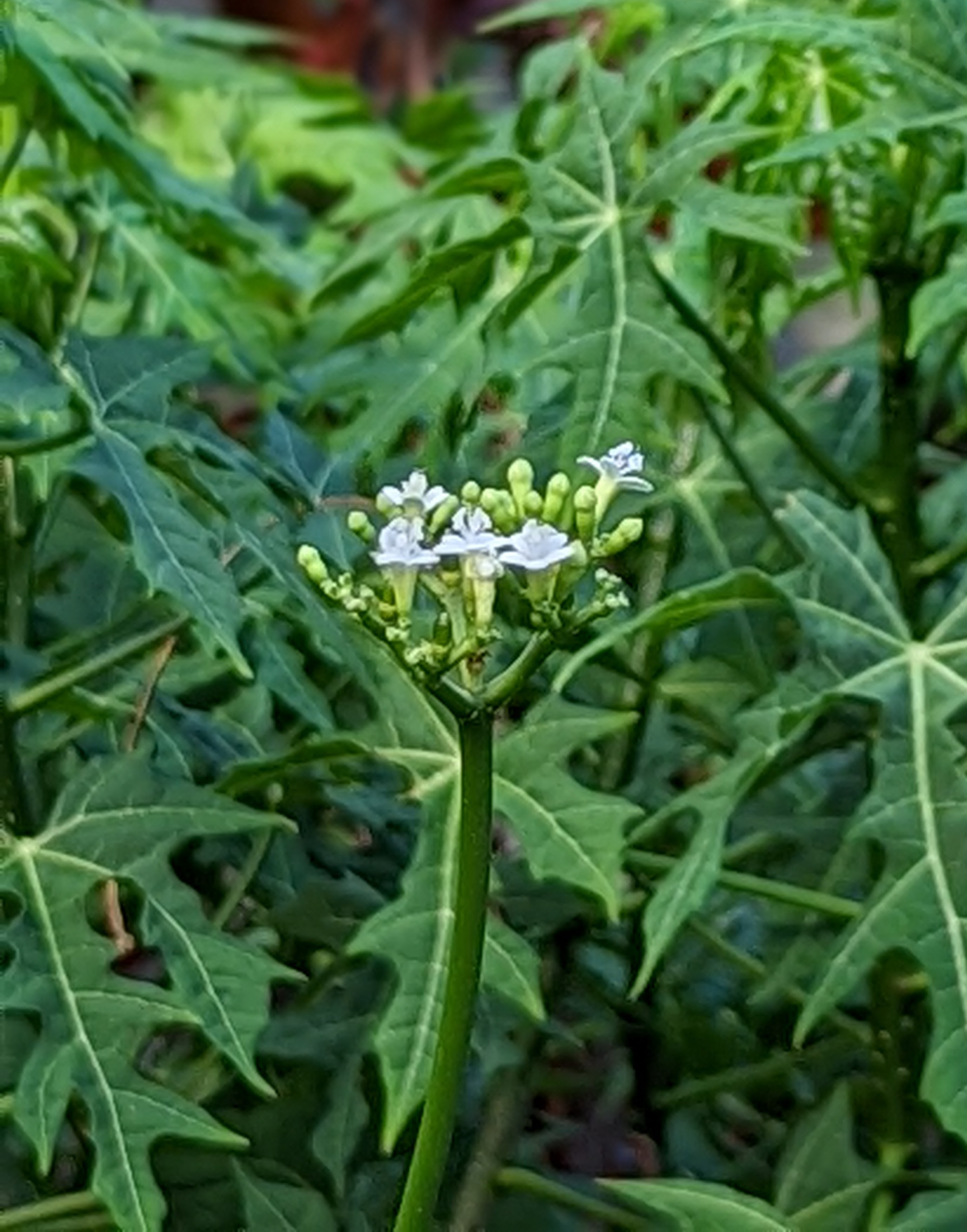
Spinach tree (Cnidoscolus aconitifolius), a tropical subsistence vegetable I planted for the butterflies is doing remarkably well with no help from me. The flowers provide nectar for butterflies. The leaves may be cooked like spinach – if you know how to prepare it, otherwise it is poisonous. I leave it for the pollinators.

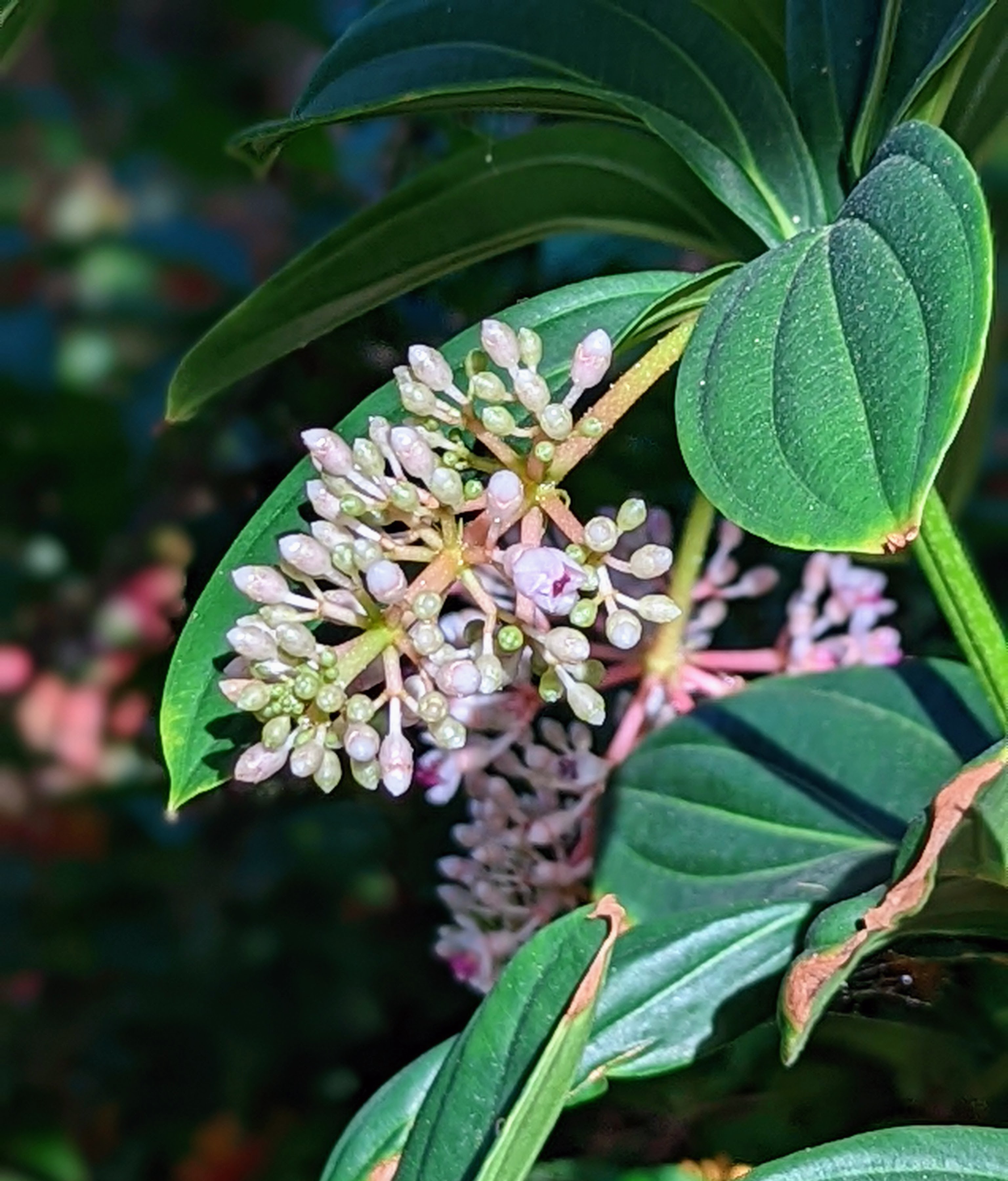
Chandelier Plant (Medenillia cummingii) is flowering again. Third or fourth time this year.

Schlomburgkia Orchid slipped out of its pantyhose noose. I reinstalled it with string. This orchid has put on four new canes this summer, but can’t quite get its roots in the trunk. I hope this works.

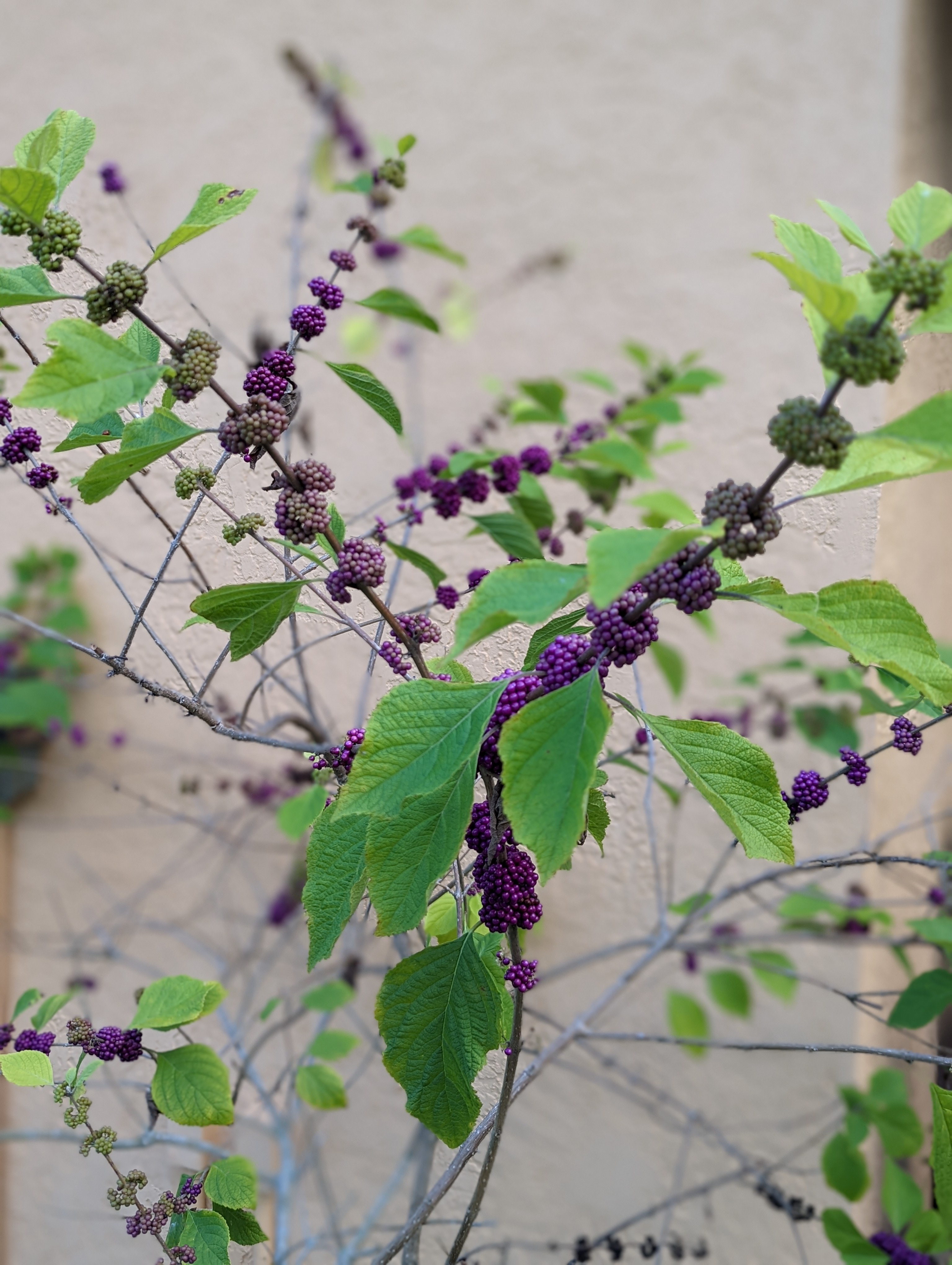
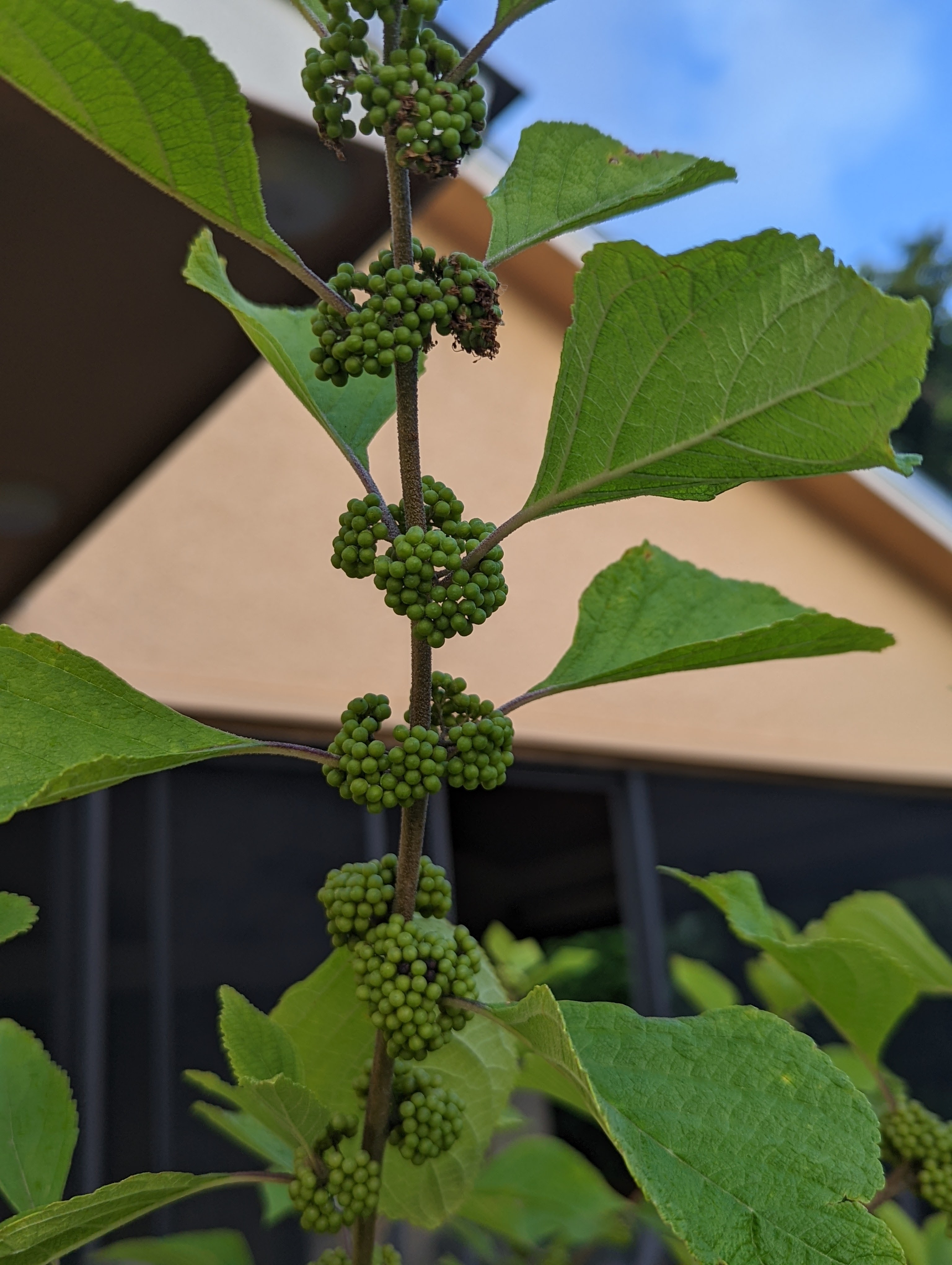
Several people have asked what the Beautyberry (Calliocarpa americana) shrub looks like. This is it. It has dropped a lot of leaves in favor of the berries.

That’s my Six for this Saturday. Hanging on with the orchids in the garden, waiting for fall. To see more posts, visit http://www.thepropagatorblog.wordpress.com.

Happy Gardening!!

Six on Saturday – Summer

Saturday morning finds heat and humidity in Florida – the Saharan sand drifting over the Atlantic is keeping the rain away and not much gardening is going on, except decapitating seed heads on weeds and watering. I have realized it is a bad idea to try and establish plants after May. Another backwards seasonality here, rest in summer and garden in winter. I am joining SOS today with summer flowers and foliage. To see more SOS posts, visit http://www.thepropagatorblog.wordpress.com.

The Blanchetiana Bromeliads are shooting up flower stalks. Below is the yellow/chartreuse version – sometimes called Lemon. Aechmea blanchetiana “Lemon”.

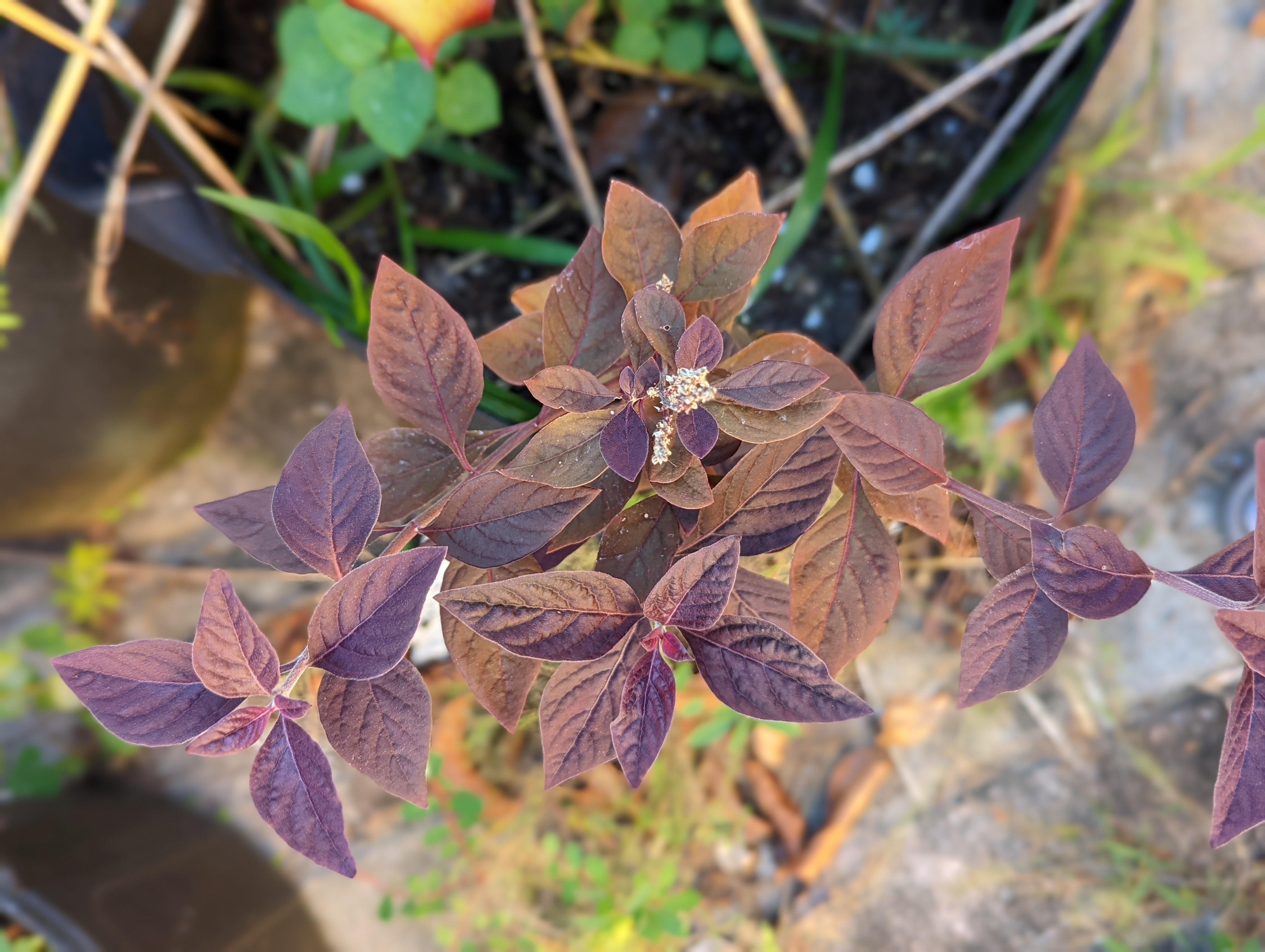
I bought this Red Velvet Aerva (Aerva sanguinolenta) last year. It was touted as a tough plant from Africa that is drought tolerant and native to desert, sandy soils. Not quite believing this, I planted some in the sand and took a few cuttings in case this was not true. The plant in the sand is long gone, but the cuttings love being coddled in potting soil.

Another oops from research. Last year I wrote an article for The American Gardener about Bougainvillea. Research in many forms claim Bougs bloom in cycles and stop when day length exceeds 12 hours. This one has been blooming all summer during the longest days of the year. Another myth busted.

The culinary ginger is finally growing. These are heat lovers and make ginger root during the summer, the fresh ginger root is wonderful. I am looking forward to it in a couple of months.

The Purple Gem Dahlias are getting smaller and moldier day by day. I decided to leave the tubers in the pots and not water them after they go dormant to see what happens. I also bought some uber cheap tubers to refrigerate and try later. Research is planned to find what day length inspires Dahlias to flower.

A Queen butterfly on the Firebush. These are cousins of the now endangered Monarch. They are supposed to be year round here, but are relatively rare in my garden.

There, my Six for this summer Saturday.

Happy Gardening!!

Six on Saturday – Shrimp and Fruit

It is Saturday again. Time to peruse the garden for six items of interest. Today it occurred to me the Shrimp Plants look their best in summer heat and the plants set fruit earlier here than in my former garden. The beautyberries are already turning purple; further north this happens in late September or October.

It is hot here, 92F or 33C, but nothing like what Europe is experiencing and fortunately we have had a lovely breeze off the ocean and rain showers all week so the garden is hydrated. The weeds are taking control – I noted them as I walked through the garden taking pictures but failed to take any action. I should pull weeds…blogging about them instead.

The Shrimp:

This is a Red Shrimp plant (Justicia brandegeana), they grow in the sugar sand without irrigation or much of anything else. It crossed my mind I should propagate more of these, they are easily rooted in water.

The fruit:

The incredibly prolific Beautyberry (Calliocarpa americana). This one never fails to amaze me. It grows on a wall facing due north. Full shade in winter and full sun in summer. And thrives.

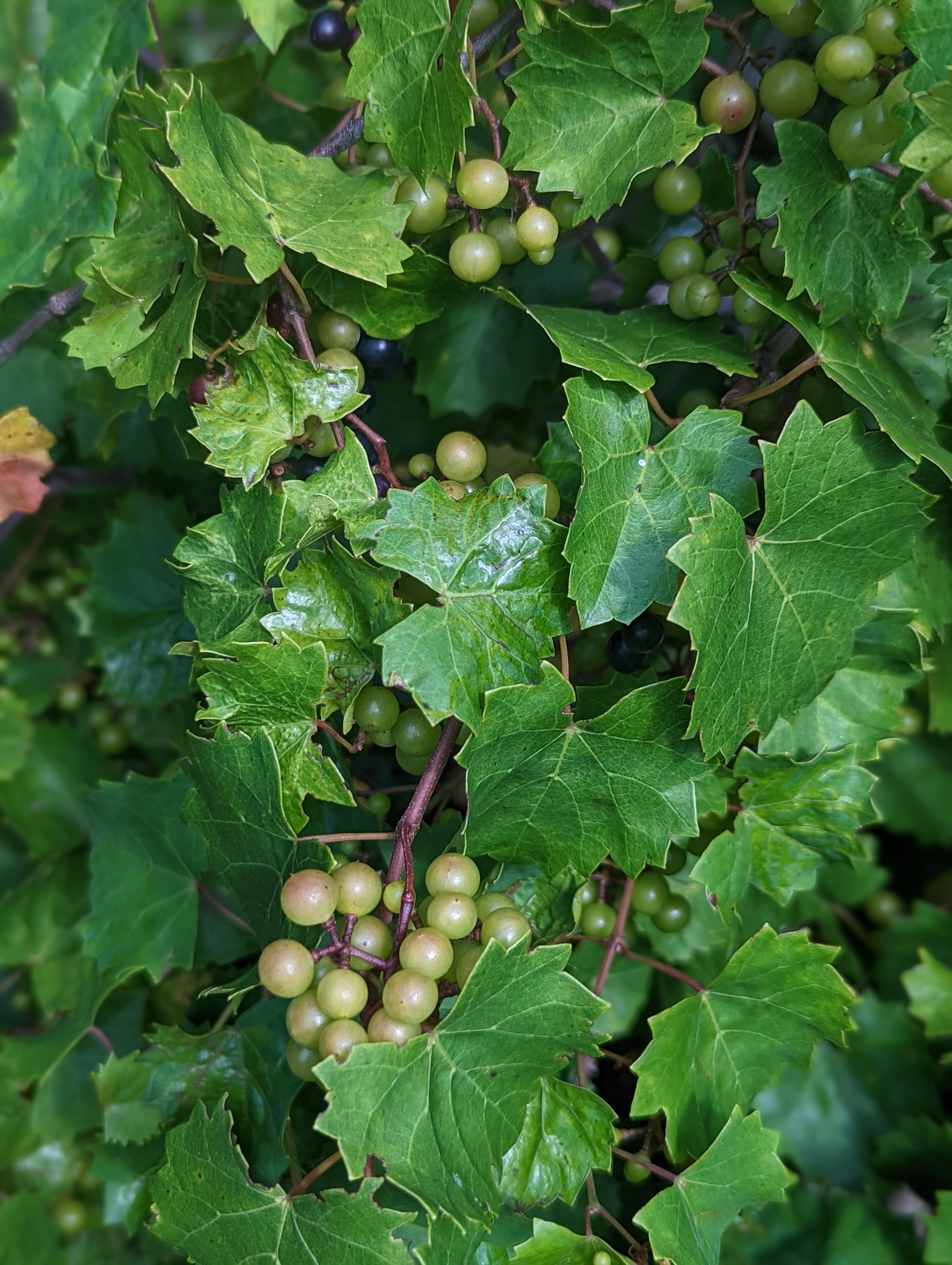
The very pretty but inedible Muscadine grapes (Vitis rotundafolia). These must be the hardy rootstock other tastier varieties are crossed with or grafted to. These have two large seeds and are very bitter tasting. The raccoons and local wildlife love them and spread them far and wide.

Bromeliads love the mid summer heat and are showing off.

One of my garage sale finds – no clue what variety this is. The flower looks like it might be purple.

Aechmea rubens in full bloom. I have enjoyed these this summer and wonder how much longer they will last.

Aechmea blanchetiana in bud. These will flower and last for months. A little photo bomb by Johnson’s grass, my least favorite weed. It is still out there, waiting to produce a hundred thousand seeds while I recline in air conditioned comfort. I will decapitate it before the seed disperses. Hopefully.

My Six for Saturday. To see more, visit http://www.thepropagatorblog.wordpress.com.

Happy Gardening and stay cool..

Six on Saturday – Tropical Senescence

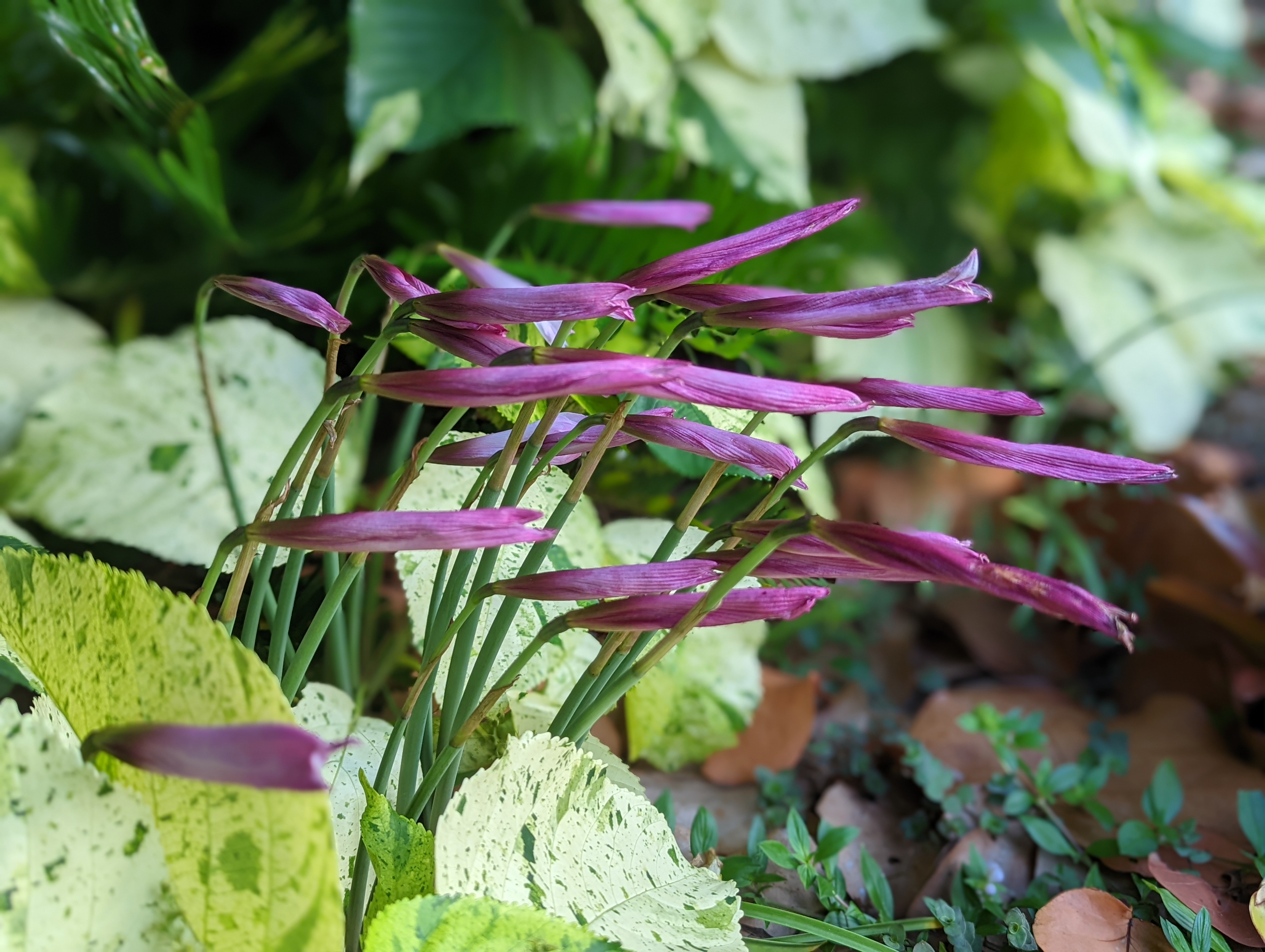
Unlike humans or maybe it is just me, flowers on tropical plants can look great for a long time, aging well. Above, the fading flowers of the relatively ephemeral Tropical Rain Lilies (Zephyranthes robusta). I enjoy these in the garden, the pink flowers celebrating rain. Here they are new:

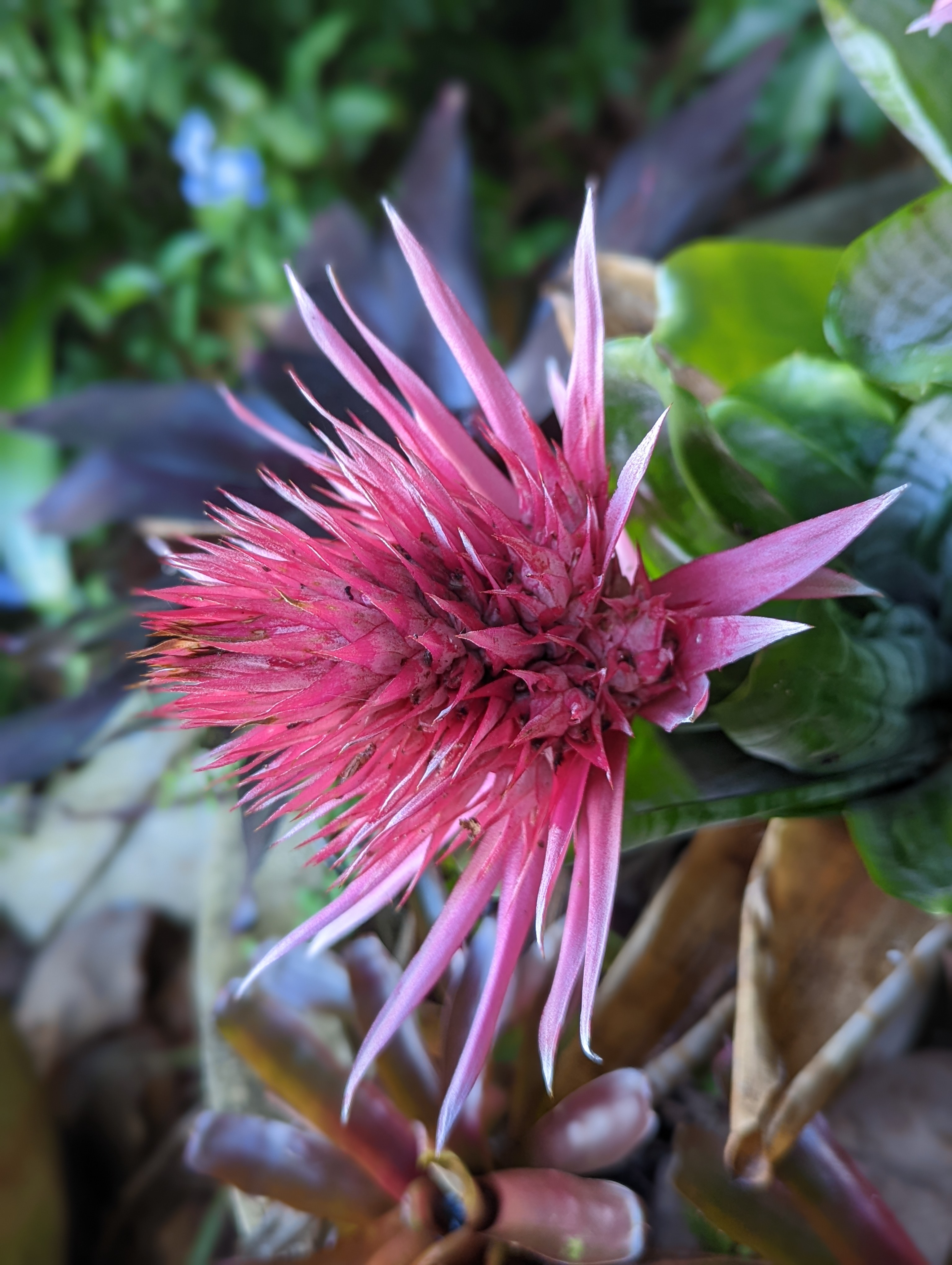
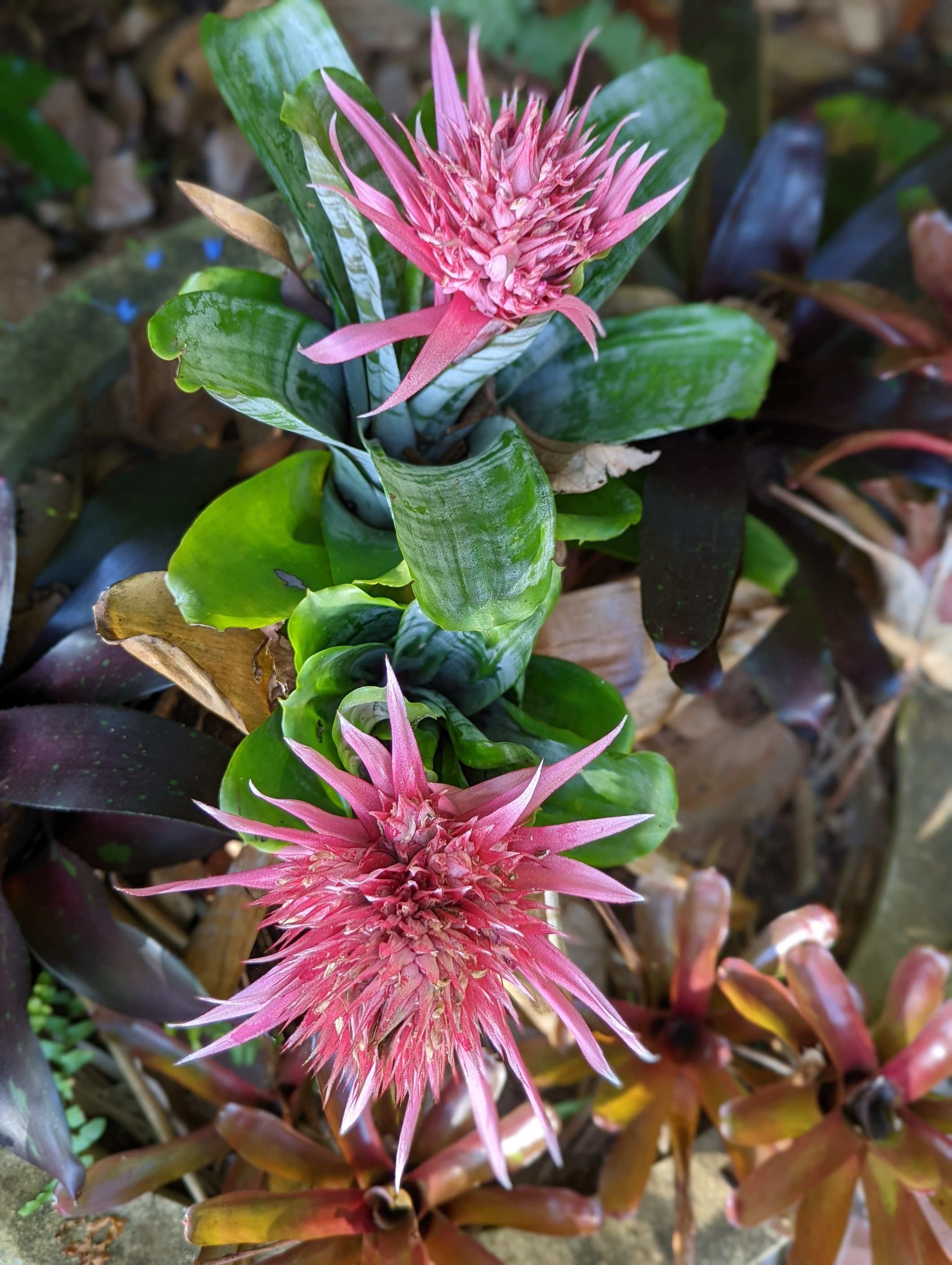
The Silver Urn (Aechmea fasciata) flower opened about a month ago. Here is it today, the pink is a bit faded, but it is still a showstopper.

The opening flower:

Guzmania Bromeliads are another long lasting flower. I like these at all phases. These Bromeliads actually produce brown seed heads, which is unusual as most seem to produce vegetative pups. The flowers start red and slowly fade to chartreuse. This one is mid fade.

A fresh Guzmania flower. In March!

The Aechmea miniata flower, nearly full bloom with a friendly dragonfly. These are covered with blue when in full flower and slowly fade to apricot over the summer.

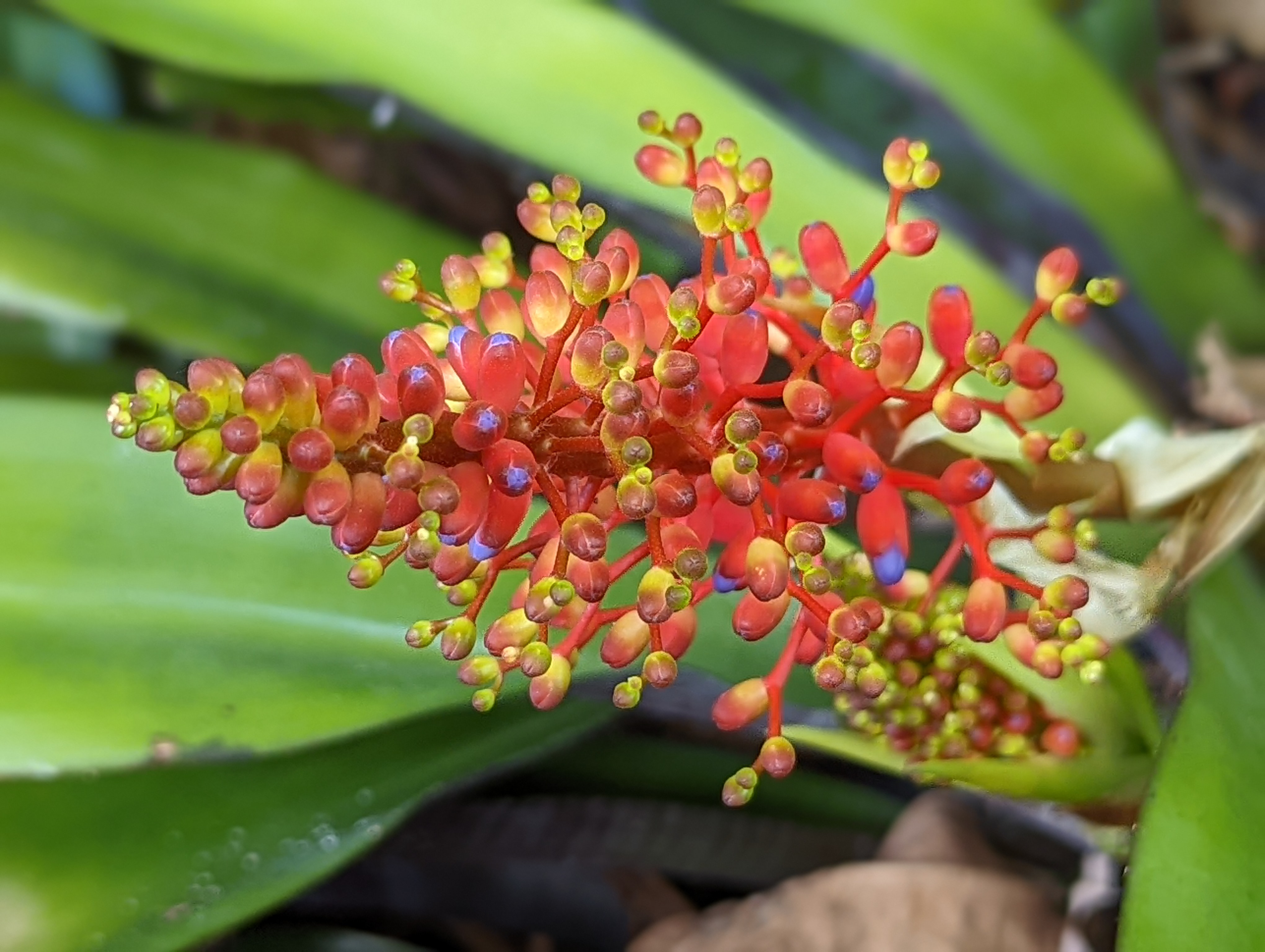
The buds from a couple of weeks ago.

Oops, I think that is Eight on Saturday. Oh, well. I am aging in the garden along with the Bromeliads…

To see more proper Six on Saturday posts visit http://www.thepropagatorblog.wordpress.com.

Happy Gardening!!

Six on Saturday – Wilting and Watering.

The July heat remains unabated. My garden has had no rain for two weeks! I have given up on some lawn (I use that term loosely and am happy I did not put any sod down this spring). Some of the more drought tolerant plants are looking wonderful and others have shut down to wait for rain. Fingers crossed for an actual thundershower every day! Below is my fabulous Labyrinth Dahlia, faithfully watered twice a day.

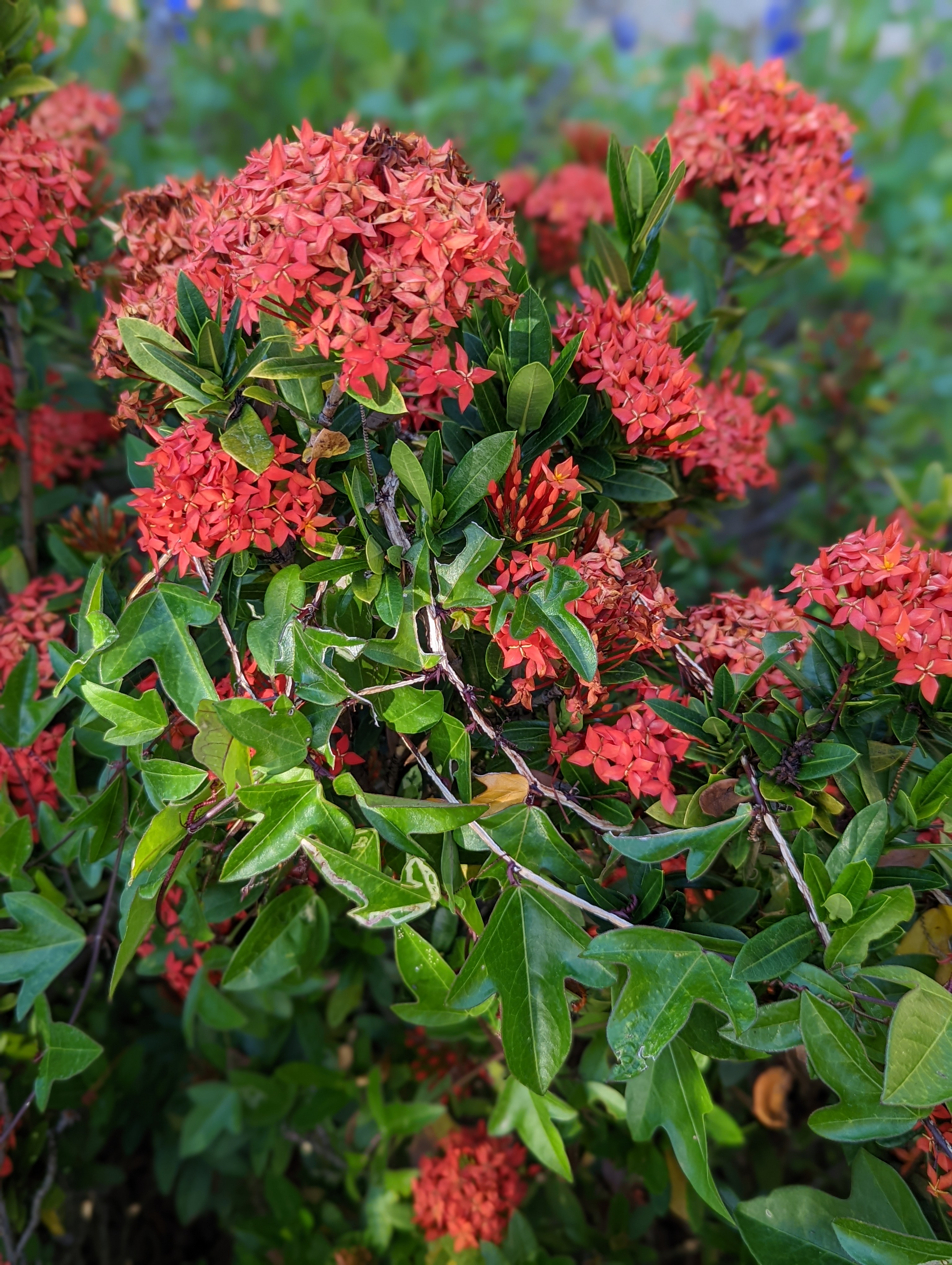
Next up, a native of the South Pacific, Dwarf Red Ixora (Ixora chinensis) – these shrug off the heat and love to flower all summer, but must be watered and fed. I have allowed our native Corkystem Passionvine to ramble through the shrubs; providing a larval food source for butterflies while the flowers from the Ixora provide nectar. The invasive lizards (only in Florida!) had staked out my Passionfruit vine and ate most of the caterpillars, so I got rid of that vine and the evil lizards haven’t figured this out – yet.

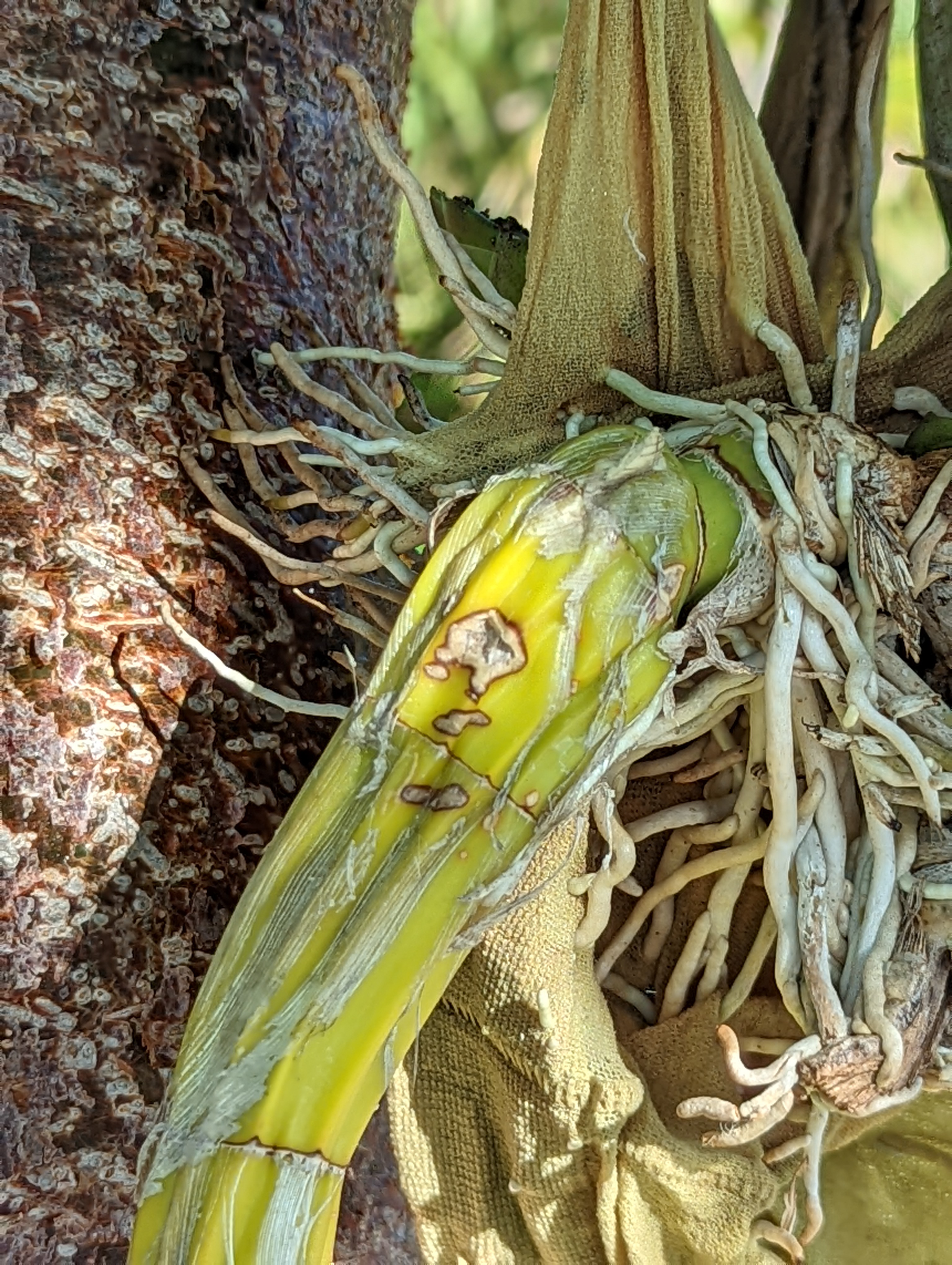
Last week I posted some pictures of the orchids growing in my Gumbo Limbo tree. Here is a close up of the roots growing into the trunk. They are not quite attached, but getting there.

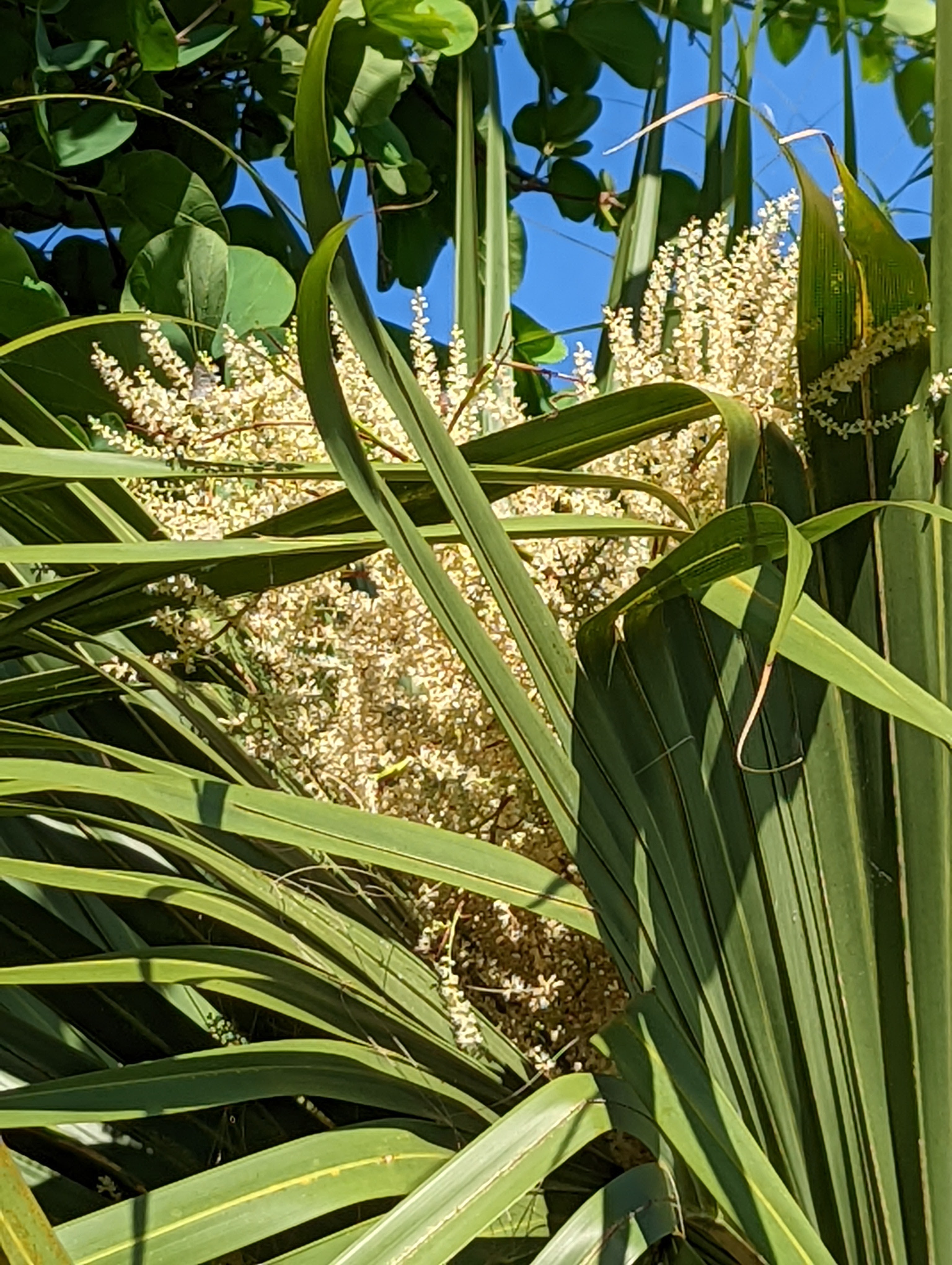
The native Cabbage Palms (Sabal palmetto) are indestructible. These are the flowers, the bees love them. Eventually, black berries are formed on long boughs from the crown of the palms. People used the skin of the berries to make flour – which must have been difficult!

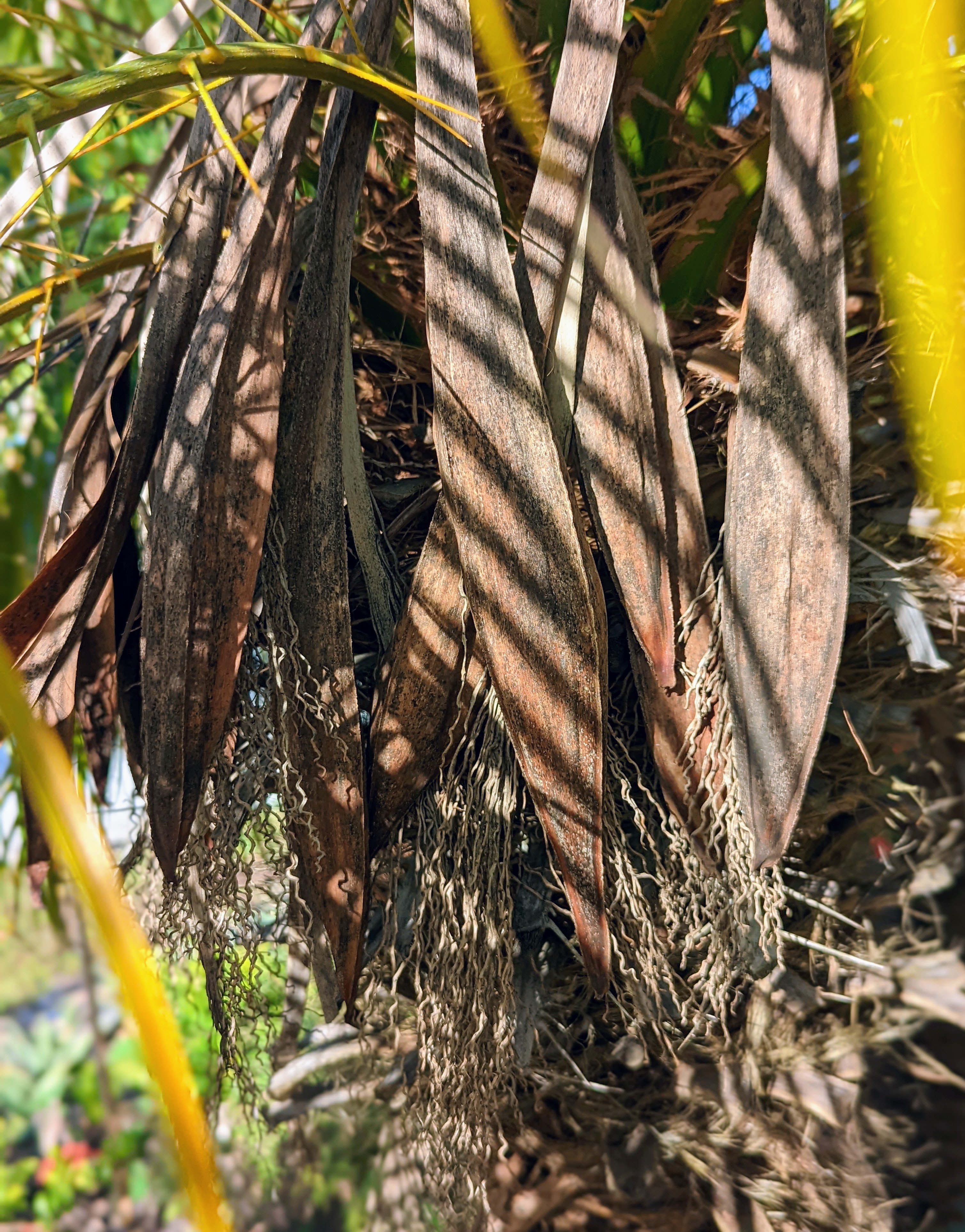
Flowers on a Dwarf Pygmy Date Palm (Phoenix roebellini) This palm has male and female plants and will make dates if both are present. These are very common here and I have yet to see any dates. No idea what sex this is.

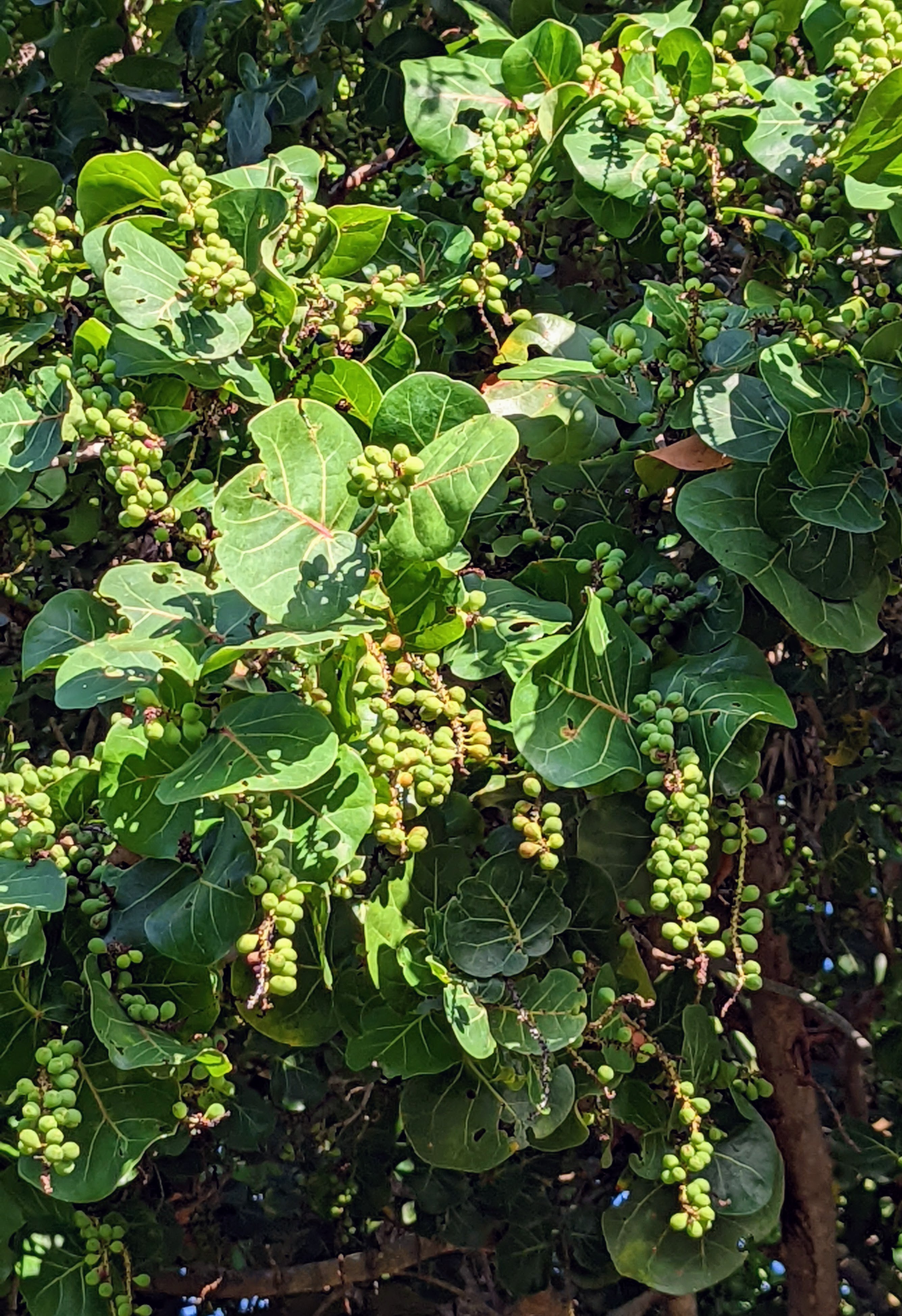
More happy natives. This is a Sea Grape (Coccoloba uvifera). These hardy plants are used for anything from clipped hedges to trees, this one is about 25 feet tall and covered in grapes. The grapes are edible with a huge seed and taste like figs. Another of those things you have to grow up eating to appreciate. I leave them for the critters. One of my greyhounds loved them and would stand under the tree and graze.

There, Six for Saturday. Rain dance starts later.

Thanks to Jon at http://www.thepropagatorblog.wordpress.com for hosting. Follow the link for more SOS posts.

Happy Gardening.

Six on Saturday – Ghosts of Future Plants

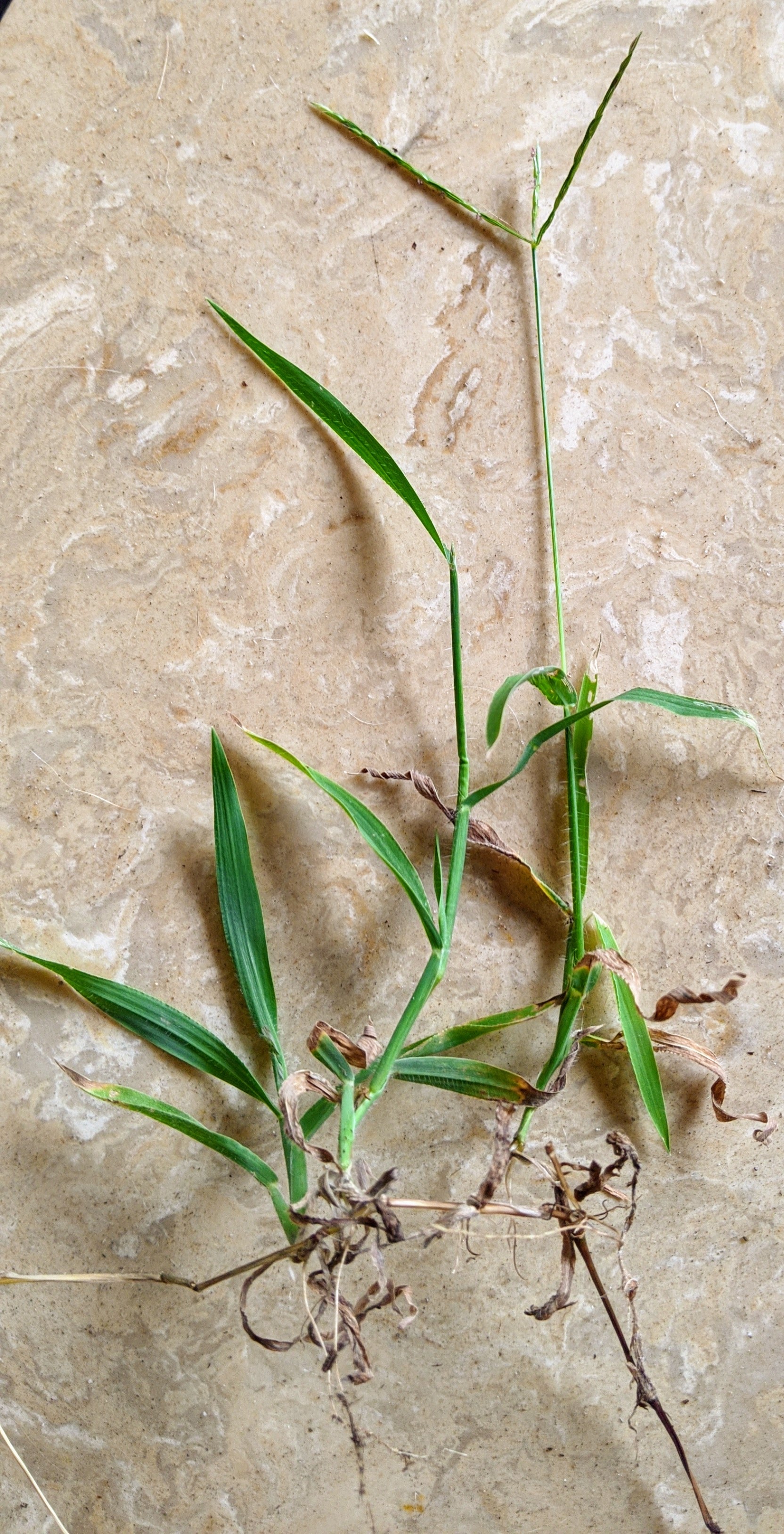
Summer is an interesting time in the tropical (subtropical, really) garden. It makes me appreciate how smart plants are. The really nasty weeds make seed at the start of the rainy season (June 1) and have a long period of time to start new plants with the advantage of rain. I have been gleefully decapitating the five (yes, five and year round) varieties of crabgrass that grow in Florida in hopes of keeping the crabgrass down.

There are some more attractive budding plants in the garden. This is a Labyrinth Dahlia I have high hopes for, although I am not certain if I planted it early enough. The tubers planted earlier have already flowered and burned out in the heat.

Bromeliads poised to climb the trunks of an Adonidia Palm. This is my first trunk climbing adventure with plants, so I am looking forward to seeing what happens. These are Jill Neoregelia Bromeliads, the red centered one is the oldest, and therefore the mother plant, soon to meet its demise. Women hate this aspect of Bromeliads, the mother always dies.

Another tree climber, the Schomburgkia Orchid, is growing and has new stems coming along. I was interested to read that this orchid is native to Mangrove trees growing on the edge of the Yucatan Peninsula in the Gulf of Mexico. These are usually higher elevation orchids, it is unusual to see this type of orchid in Florida.

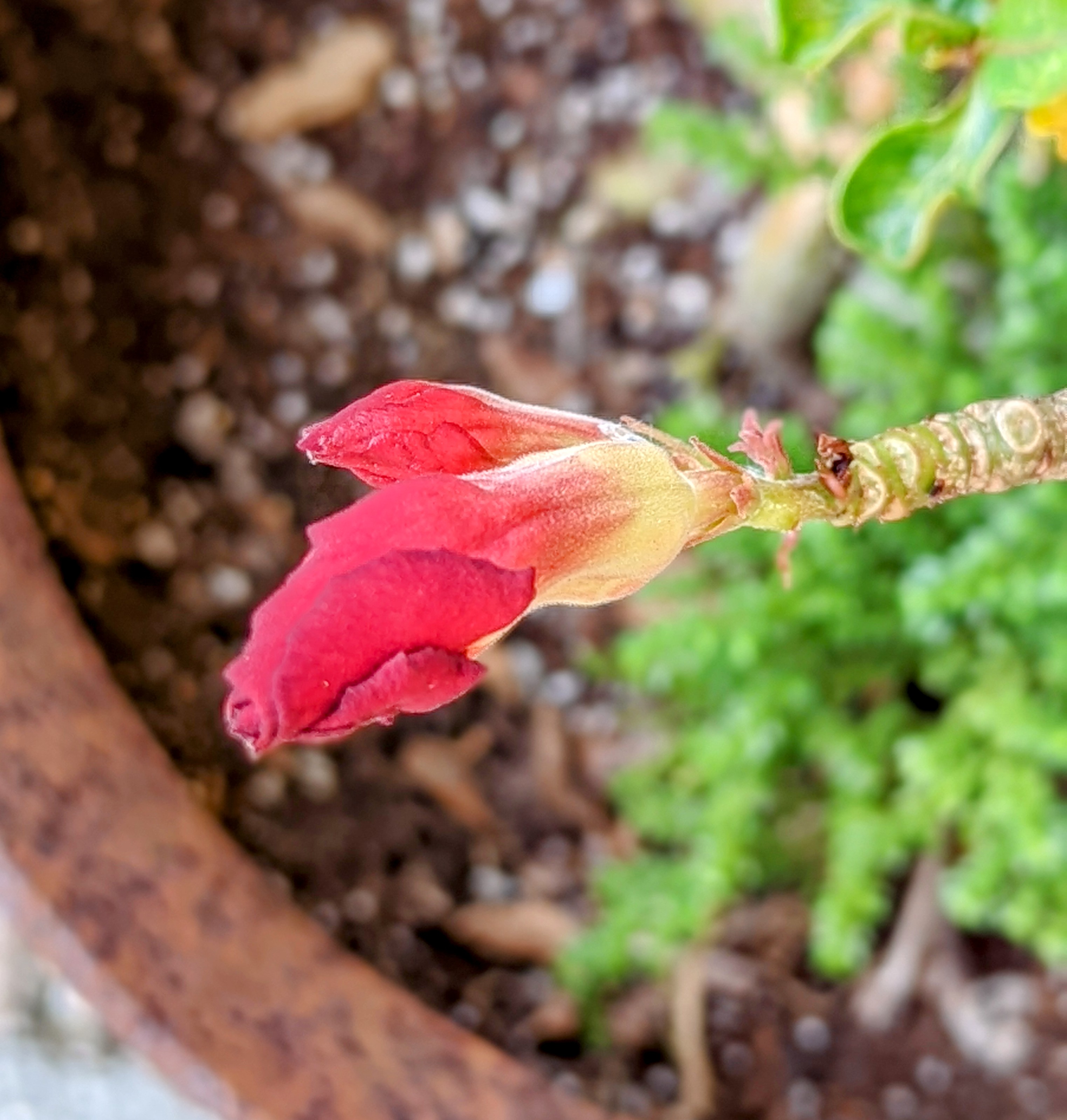
The bud of a Desert Rose (Adenium obesum). A Lubber Grasshopper ate all of the foliage last week.

One of my favorite summer Bromeliads and a reliable July flower, the Aechmea Miniata. In full bloom these always remind me of Red Hots candies.

That is all from here this Saturday, I am luxuriating in air conditioned space today, looking forward to future flowers and hoping for rain. To see more SOS posts, visit http://www.thepropagatorblog.wordpress.com.

Happy Gardening.

Six on Saturday – Things I Never Planted

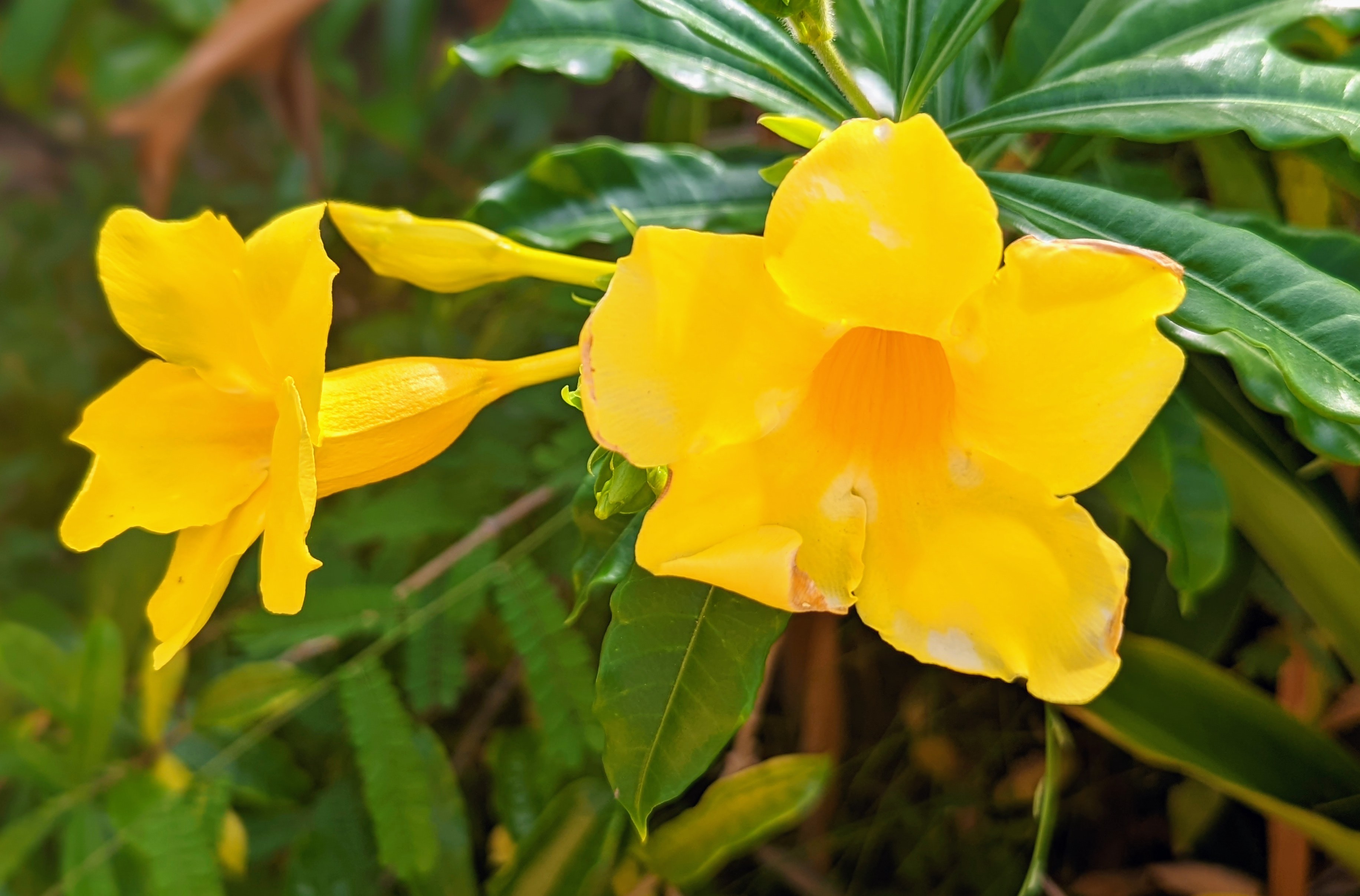
Another one of Florida’s many gardening peculiarities is the tendency to find (mostly) desirable plants popping up in the garden. Above is the Brown Bud Allamanda (Allamanda cathartica). These vines tend to creep around and over my neighbors fence, they end up rambling through my shrubs and I hate to cut the flowers off. Rumor has it Pygmy tribes in the Amazon use this very poisonous plant to make deadly blowdarts.

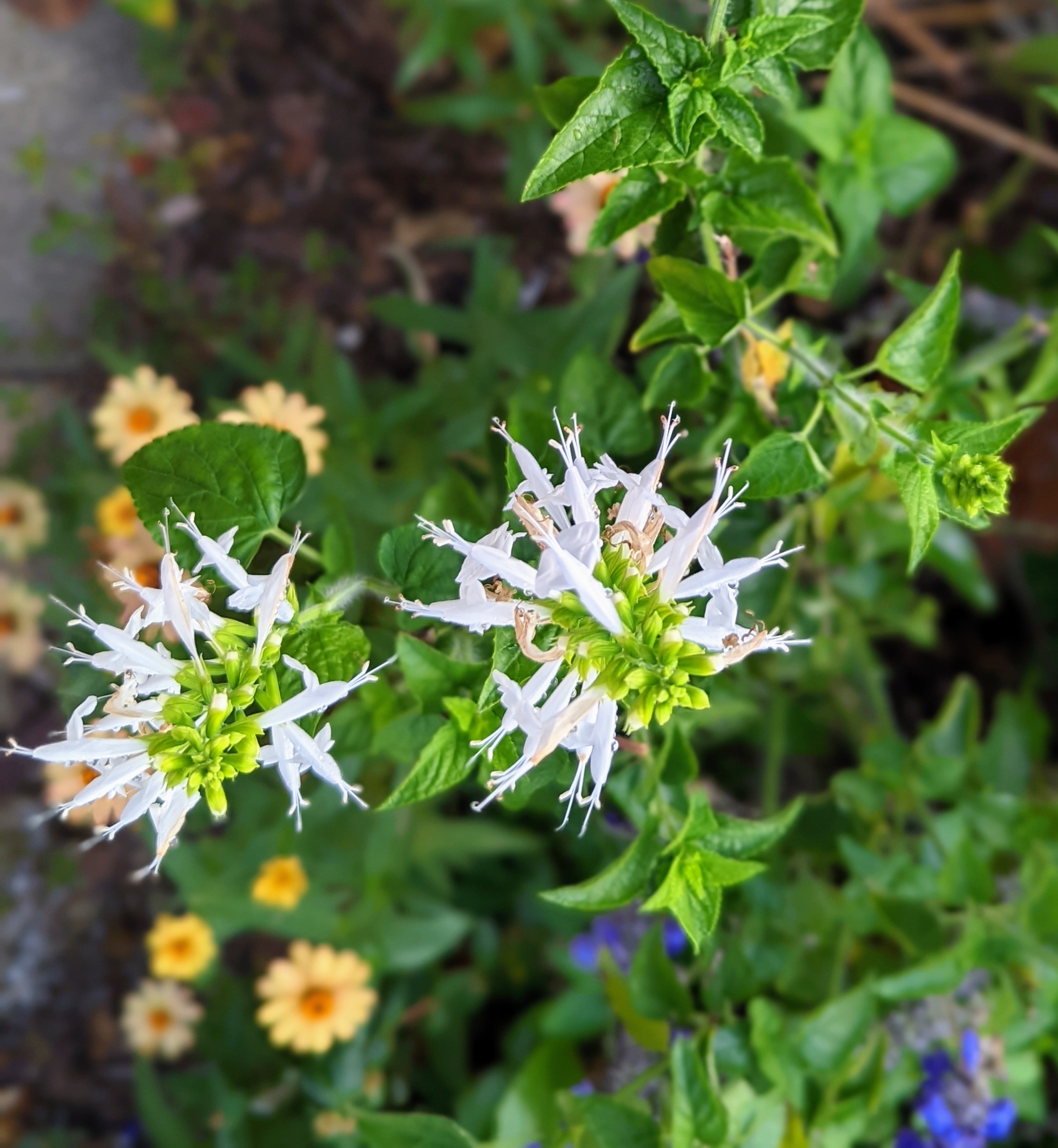
A perfectly placed white Tropical Red Salvia (Salvia coccinea). I planted the red one years ago and a white flowered one popped up in this border, accenting the peach and blue flowers.

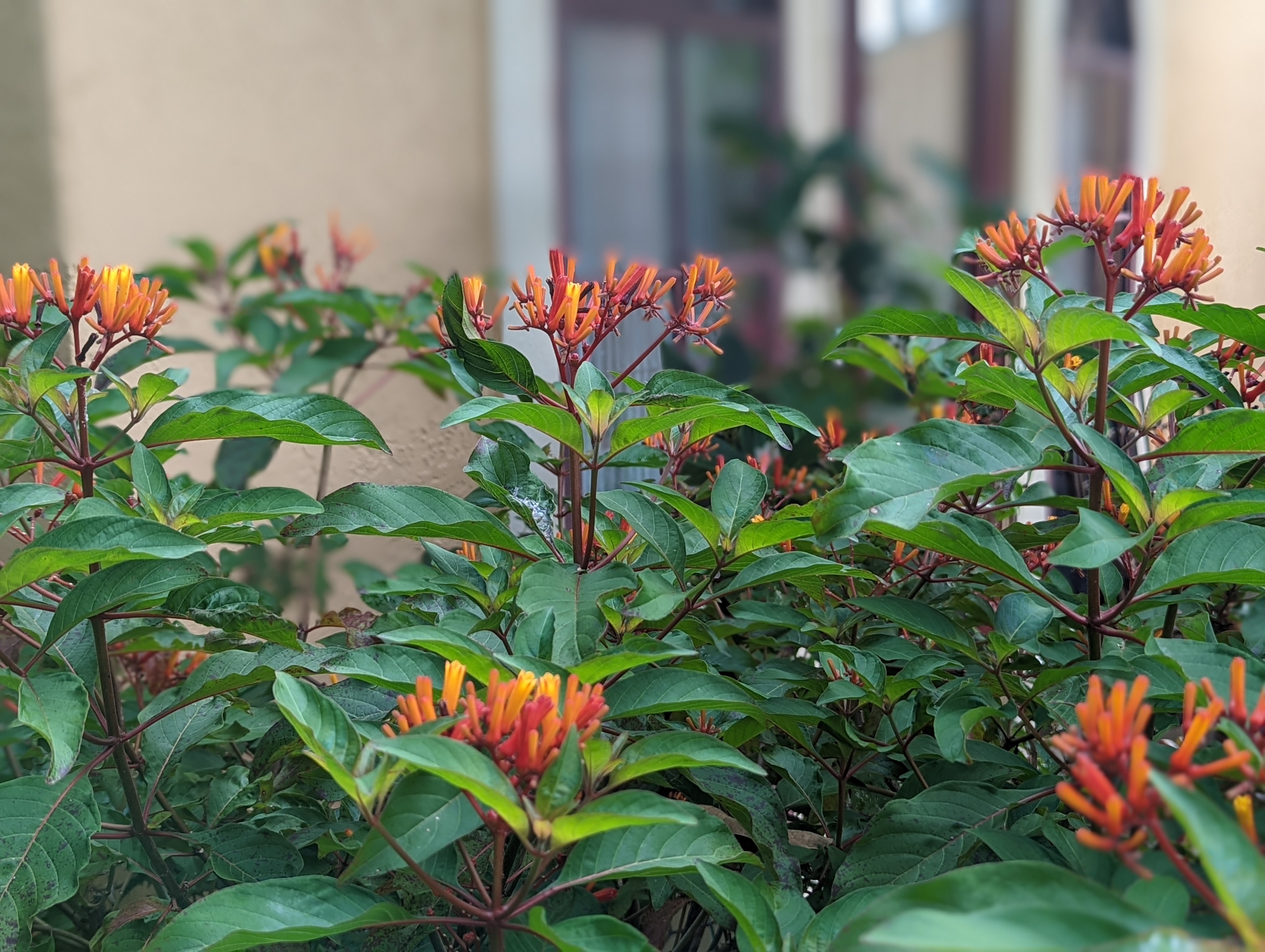
Another dead on plant placement by bird artists. These are native Firebush (Hamelia patens). The seedlings appeared soon after we moved in, spaced perfectly for a foundation planting. These are on one side of the front porch, I found another seedling and put a matching plant on the other side.

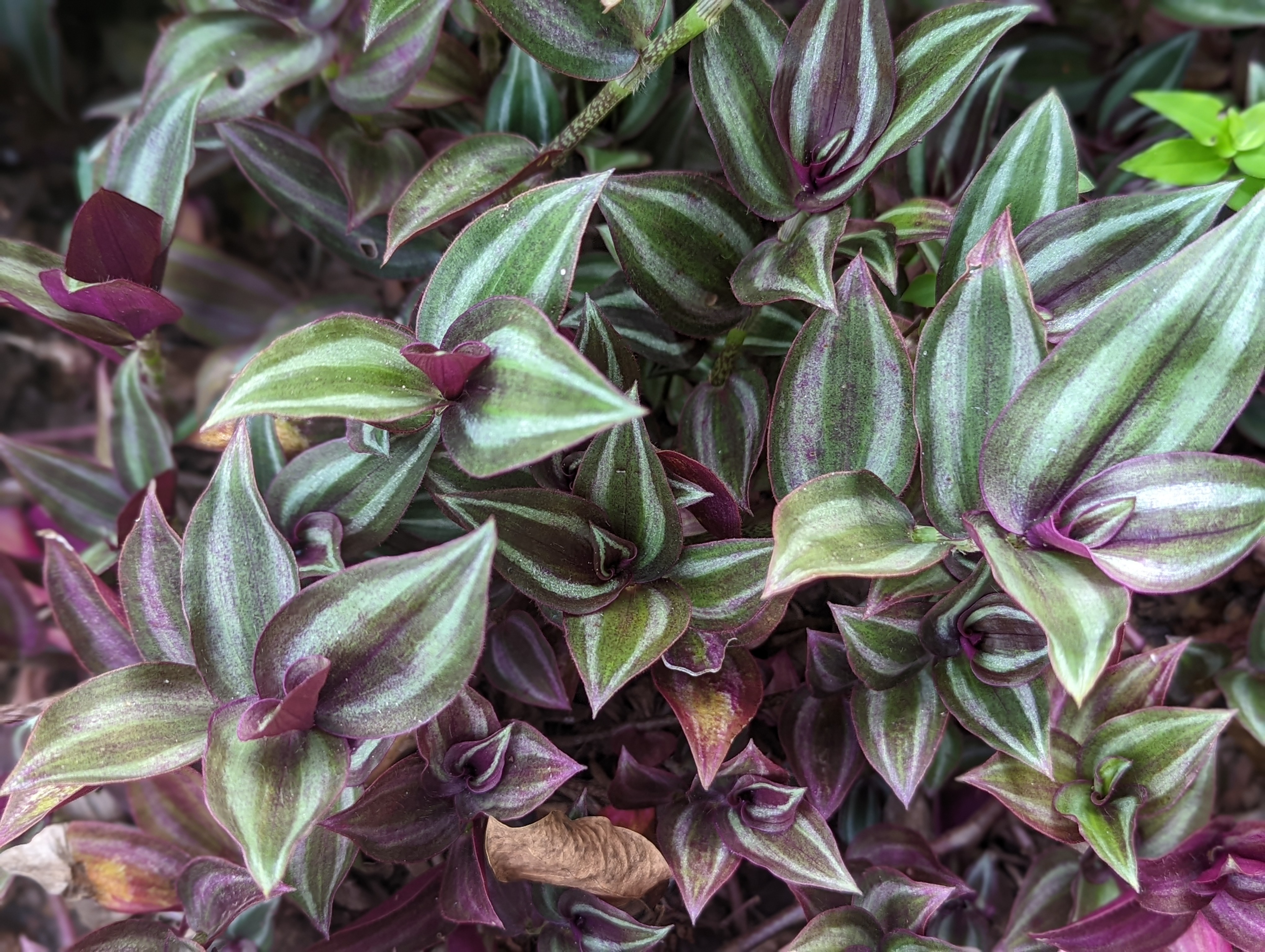
My preferred common name for this is Inch Plant (Transcandentia zebrina). I have no idea where it came from, but it makes a great groundcover.

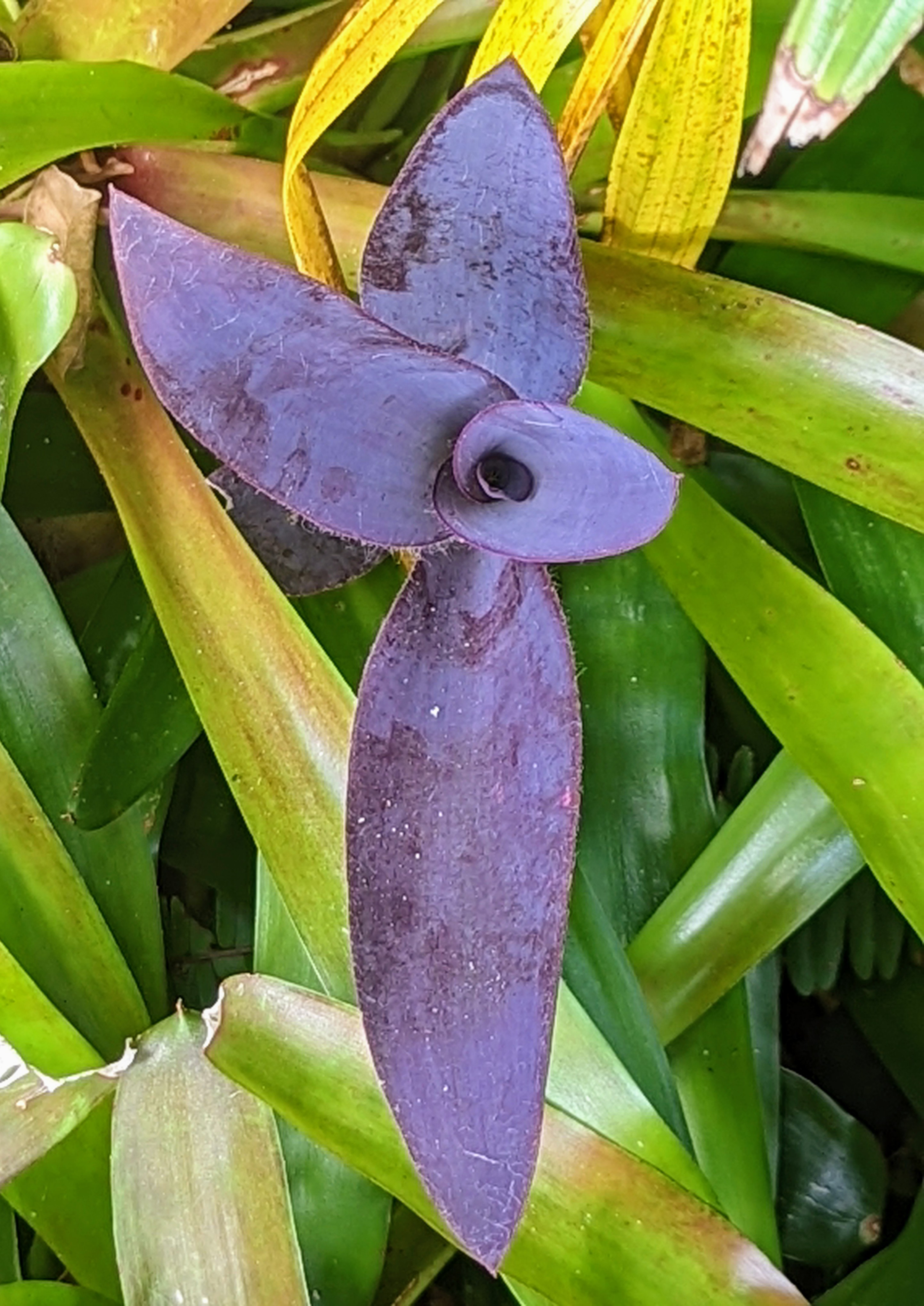
Another Transcandentia – T. pallida. Purple Queen, or I was taught these are called Setcresea, Purple Queen is a bit more palatable. I have these in pots and in the ground, the original ones came up under a Strangler Fig, so I guess another bird seeded plant. These seemingly will grow anywhere from sun to shade. A great low maintenance groundcover and a real pop of purple.

Wild Grapes or Muscadines (Vitis rotundafolia) This is a love/hate plant. The native Floridians will actually eat the grapes. I find them bitter, but the birds love them. The hate part, they spread ….everywhere.

There, my Six for this Saturday, to see more posts visit http://www.thepropagatorblog.wordpress.com.

Happy Gardening..