In a Vase on Monday – Plunder and Plonk

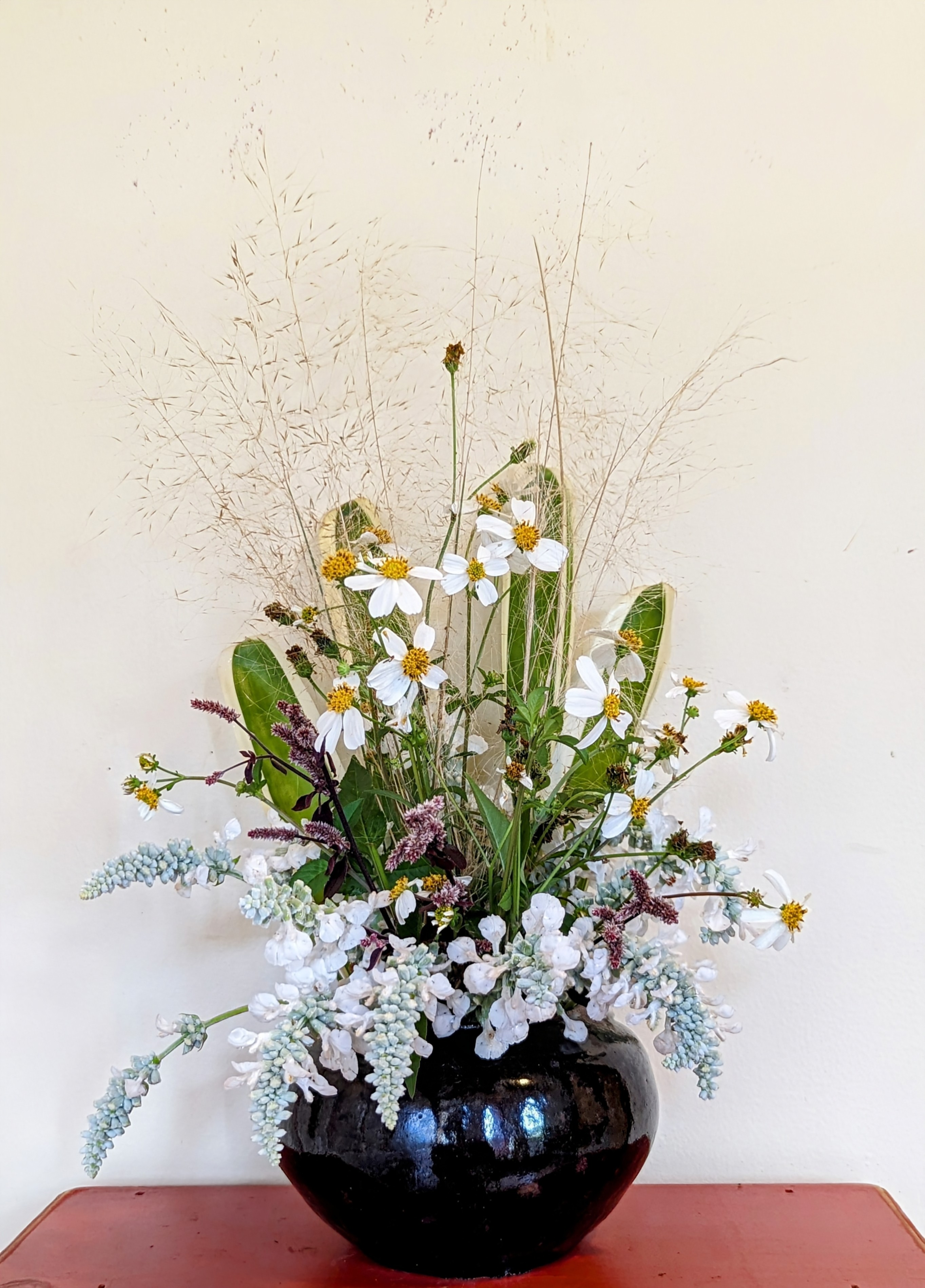
Mid-winter in Florida brings its share of garden surprises. I never know what I might find and decided to clip a little bit of treasure here and there and plonk my plunder into an old florist vase that was hanging around. My husband informed me this is similar to the way I cook, which is true. I look in the fridge and freezer and make a dish from whatever I find. It usually works out. I have never thought of creating food as a plunder and plonk before!

My garden treasures this Monday:

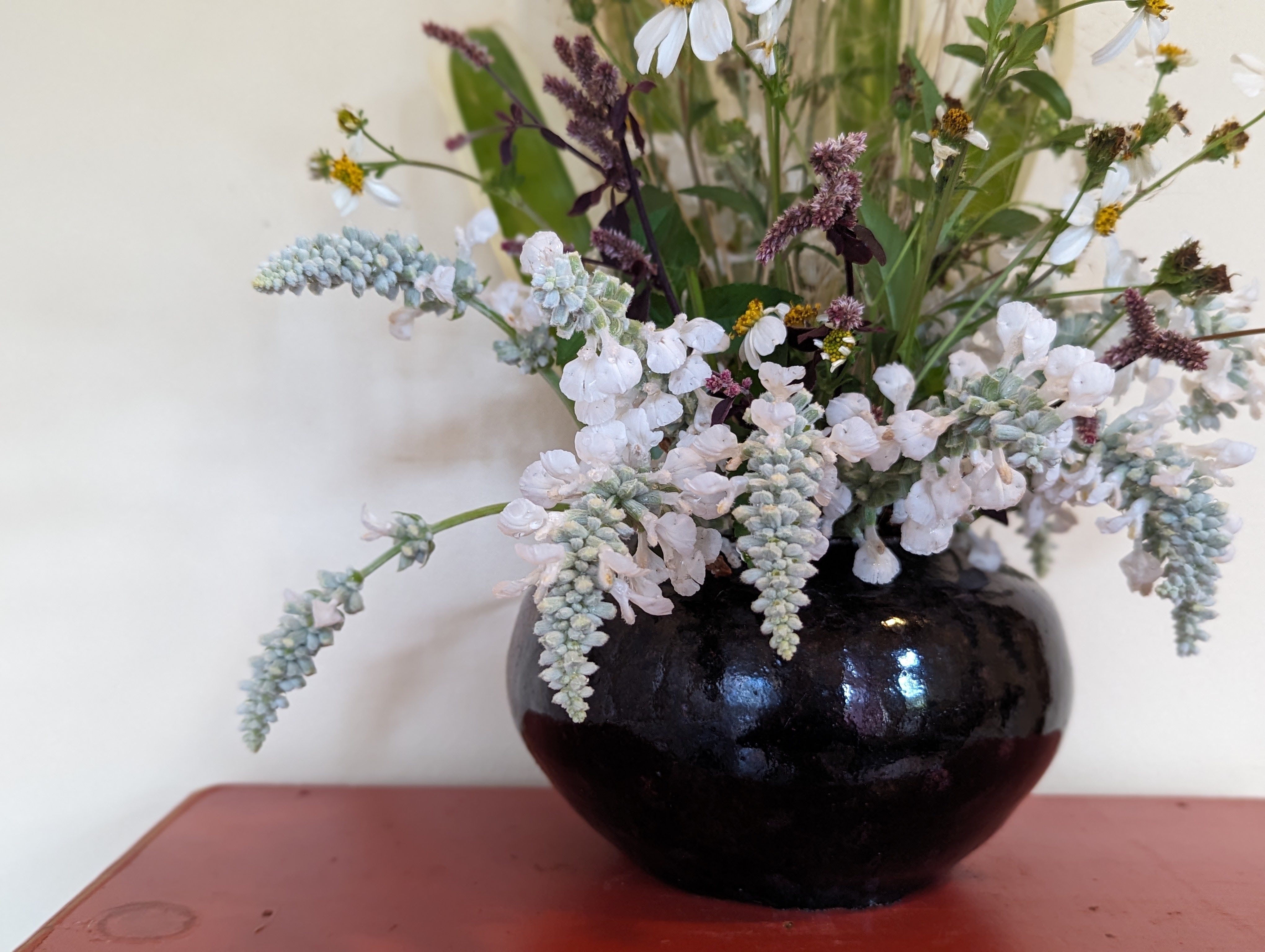
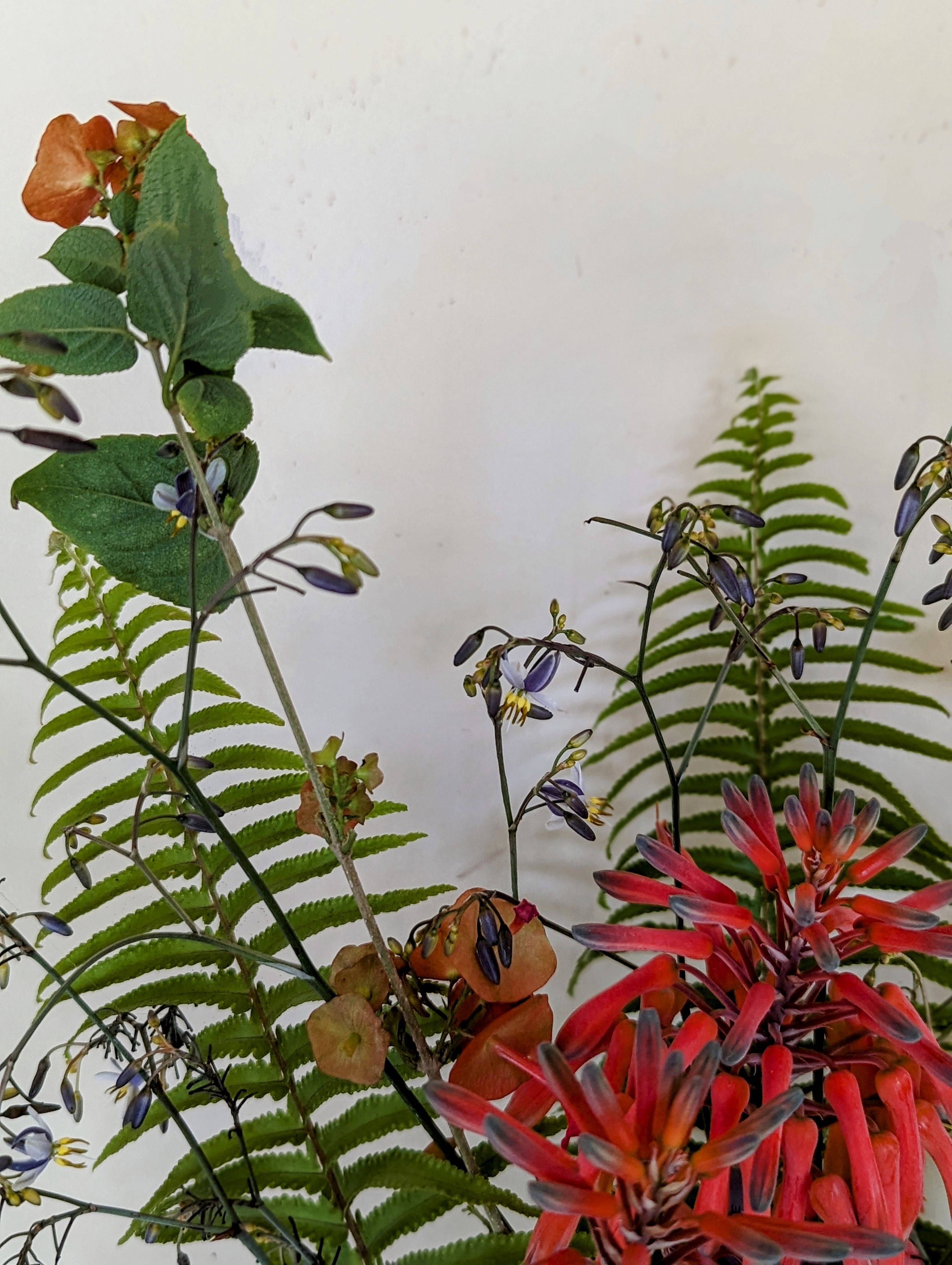
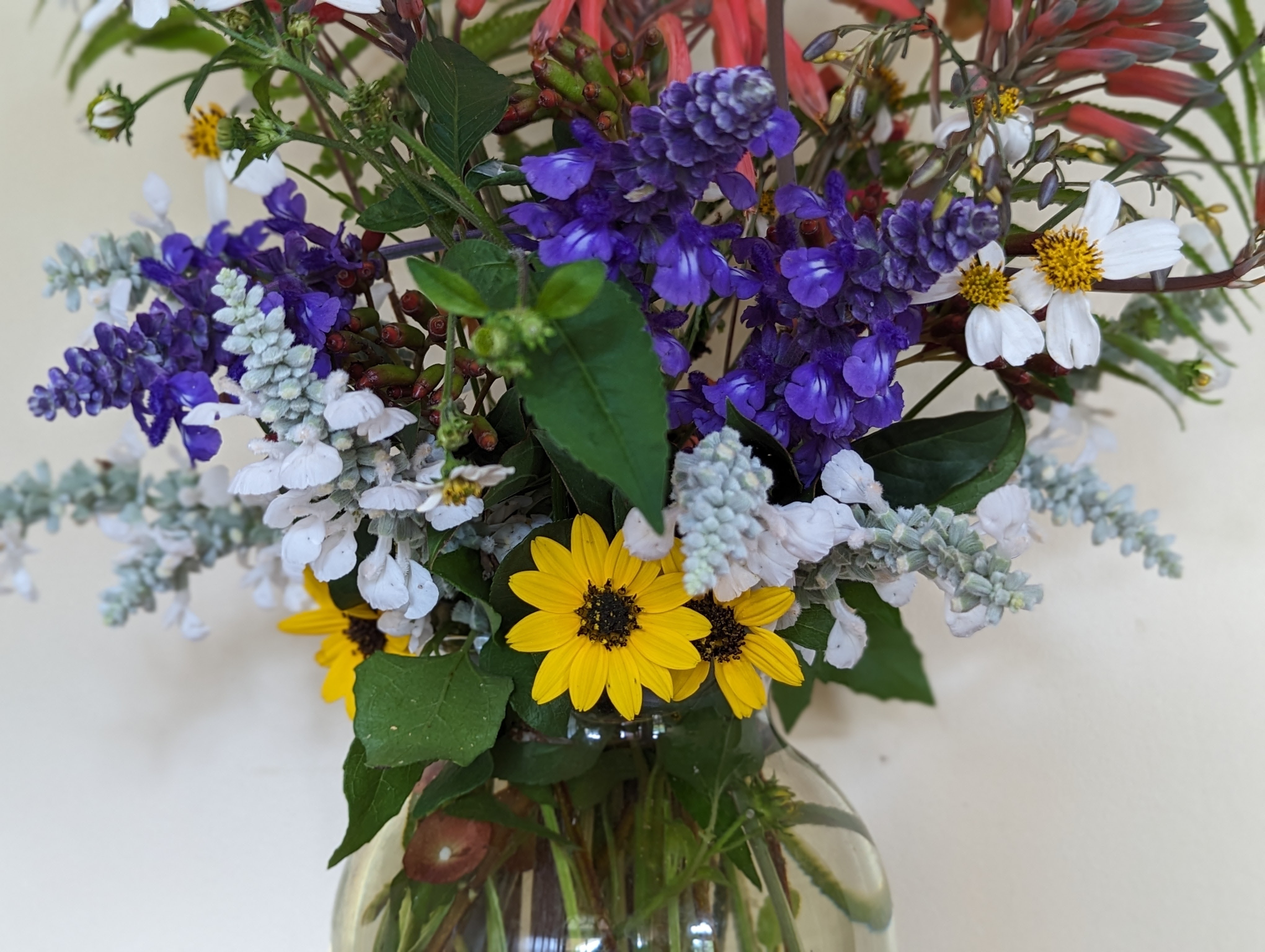
The top of the vase is sporting, in orange with green tips, Soap Aloe (Aloe saponaria). These do too well in my garden and I need to thin them. The reddish flowers next to them are China Hat (Holmskioldia sanguinea). Small blue flowers are Variegated Flax Lilies (Dianella tasmanica), an unbelievably hardy plant – I just unearthed it from overgrown vines and it was so happy it flowered luxuriously. Boston Fern (Nephrolepis exaltata) is in the background.

The salvias continue to thrive, in blue, Mystic Spires and the white is White Flame. Yellow daisies are from Beach Sunflowers (Helianthus debilis), the white ones are Bidens alba, both are natives.

Visit the blog of our weekly meme hostess Cathy to see more garden treasures in vases.

Happy Gardening!!

Six on Saturday – Winter Treats

Since it has been an unusually rainy winter I have been baking a lot of winter treats. Now that the weather has (sort of) cleared up I am finding treats in the garden. I’m joining fellow SOS’s sharing my garden treats this Saturday, to see other treasures, visit Jim’s blog and follow the links.

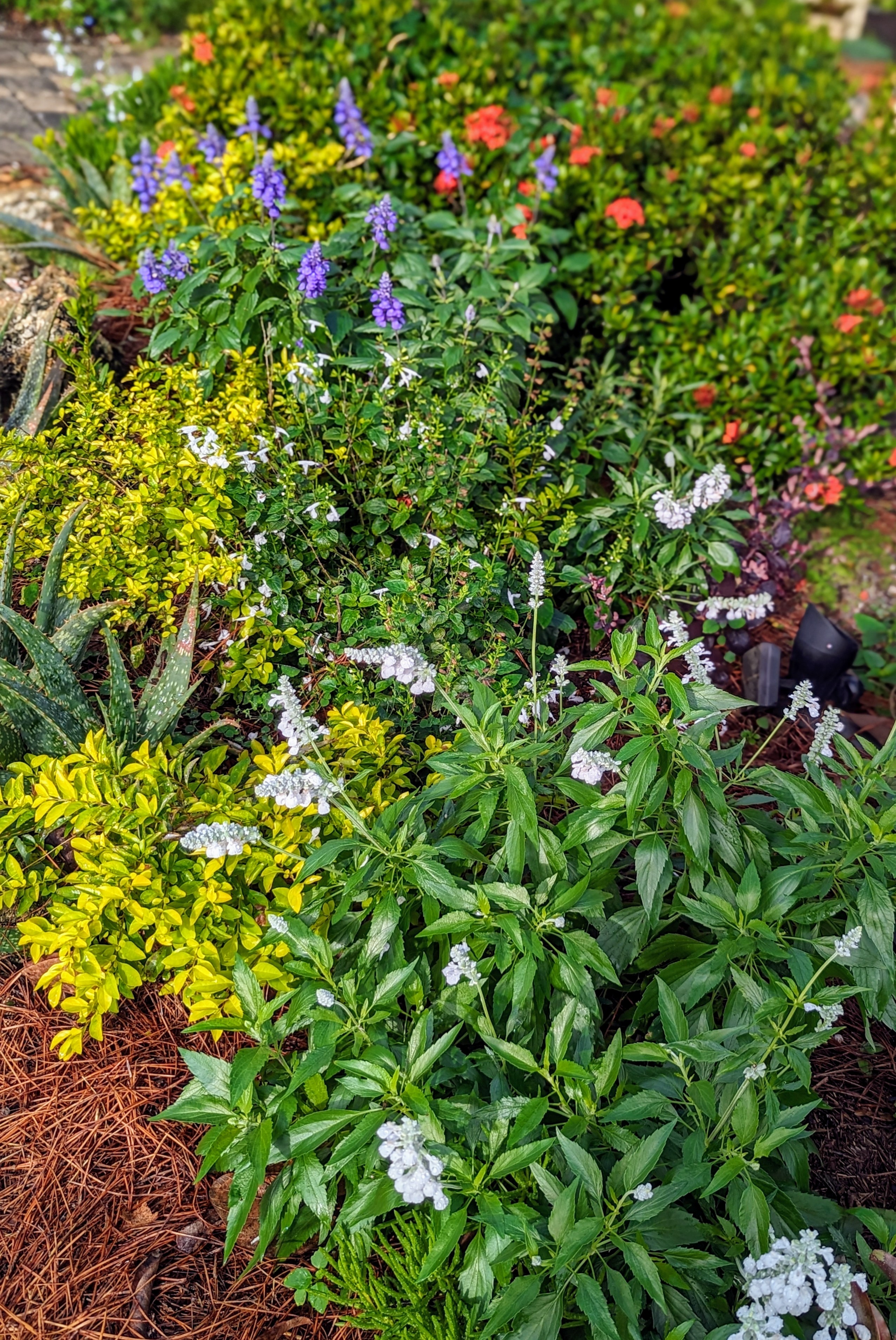
The salvias have been relishing the rain and are showing their appreciation. This bed has ‘White Flame’ Salvia, Golden Dewdrop Duranta (Duranta repens), Soap Aloe (Aloe saponaria), ‘Mystic Spires’ Salvia, and Dwarf Red Ixora (Ixora ‘Maui Red’) in background. These salvias are short lived perennials here.

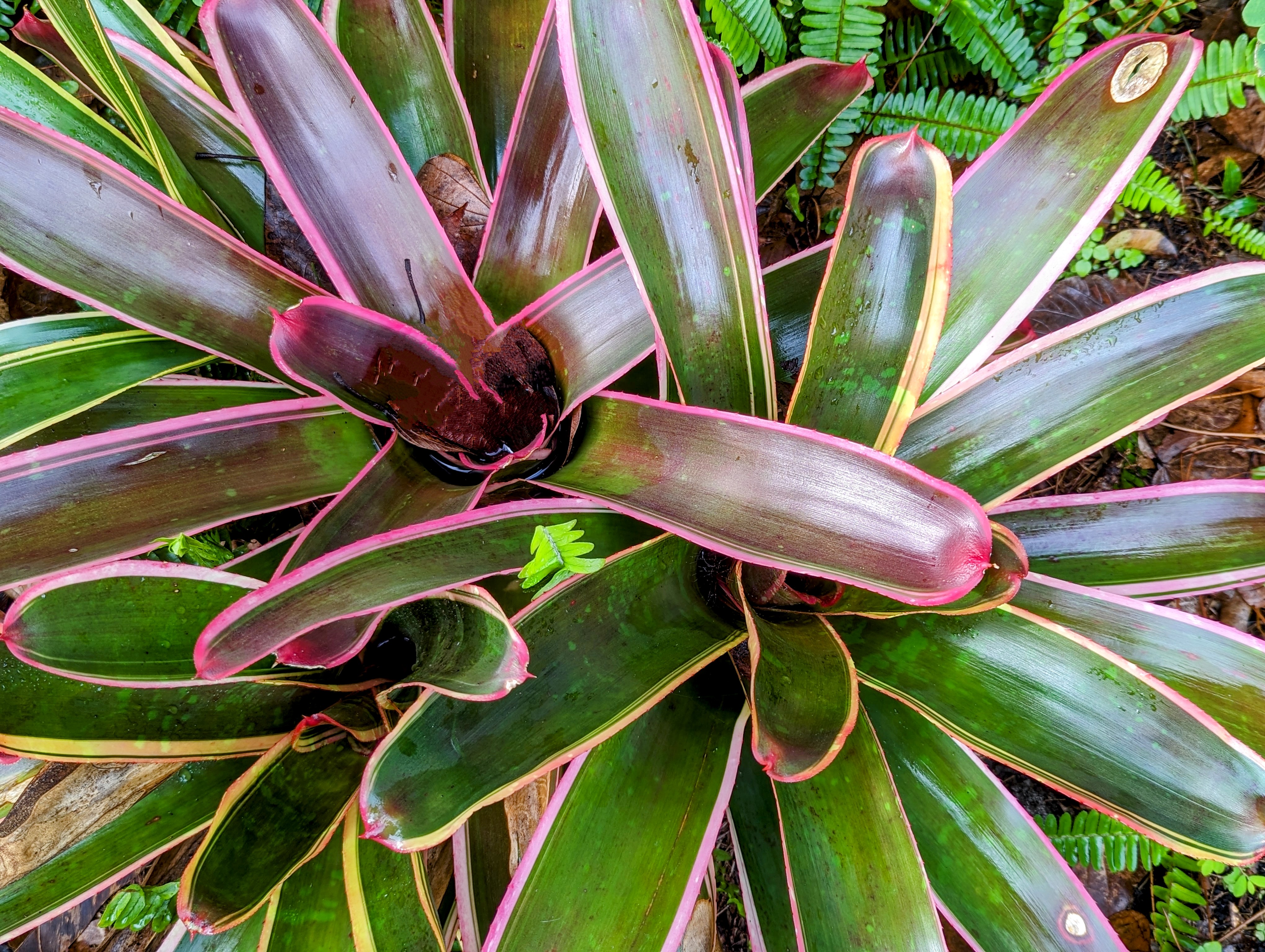
An unnamed Neoregelia Bromeliad variety showing winter color. These are green and white in summer.

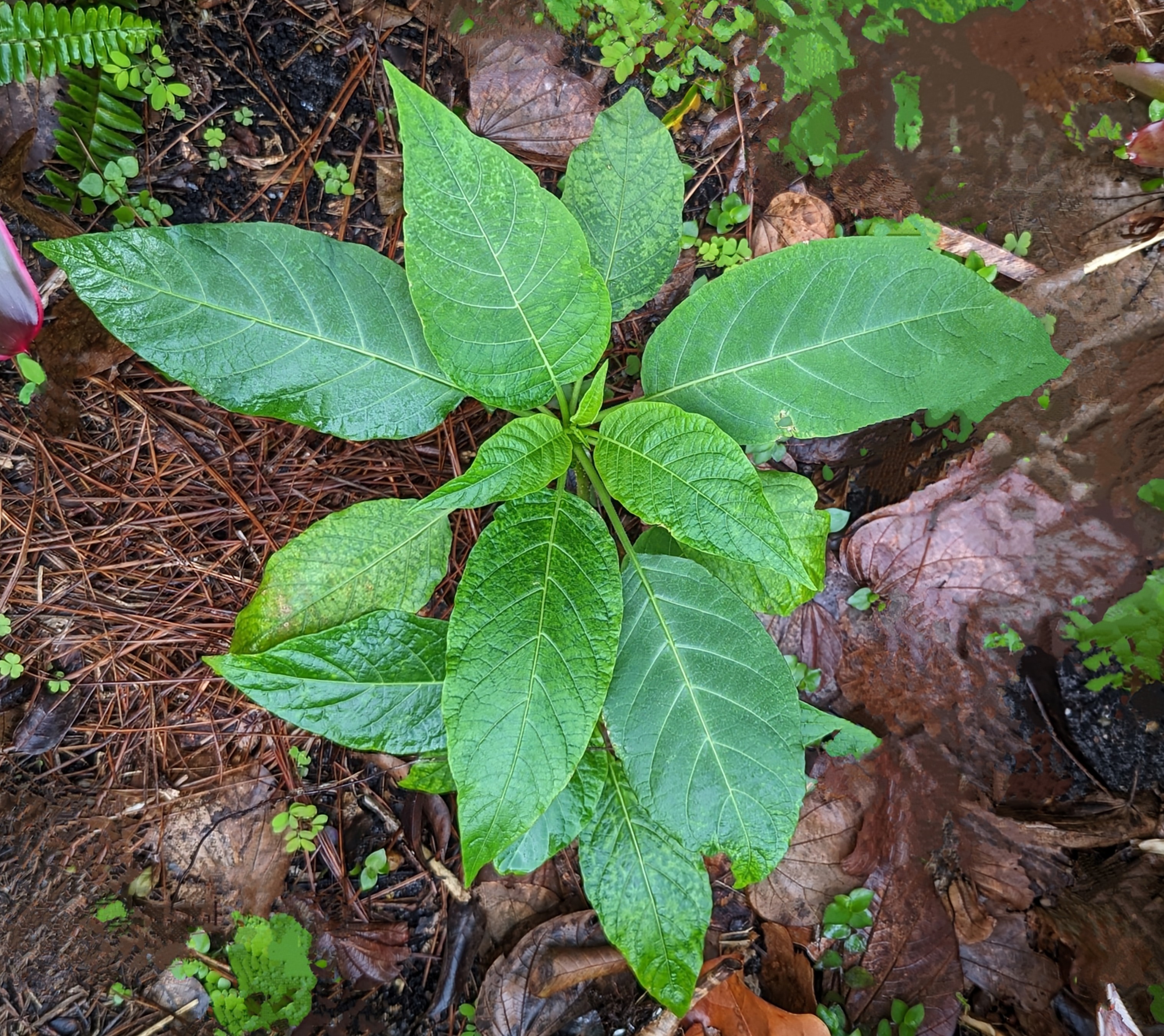
New to me and the garden – ‘Apricot Queen’ Angel Trumpet. This is a rooted cutting I planted in December. It is taking very well and has already produced a side shoot. I have never seen an Angel Trumpet in my neighborhood, so I am wondering about this one and keeping my fingers crossed.

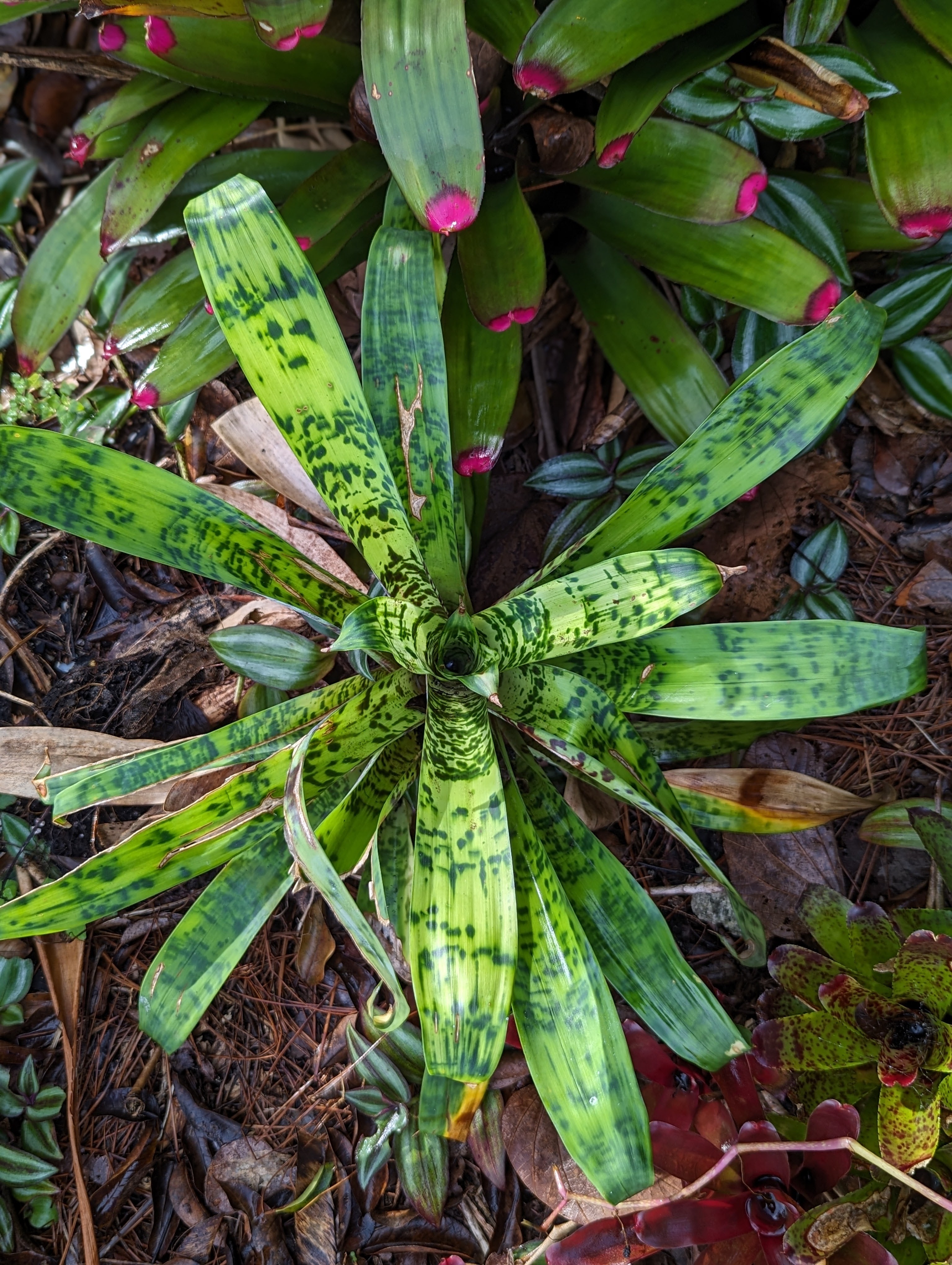
Another treat unearthed when clearing out the garden. A Vriesea ospinae ‘Gruberii’ Bromeliad. Something has been trying to eat the leaves (notice the shredding). It is a rare animal that can eat these.

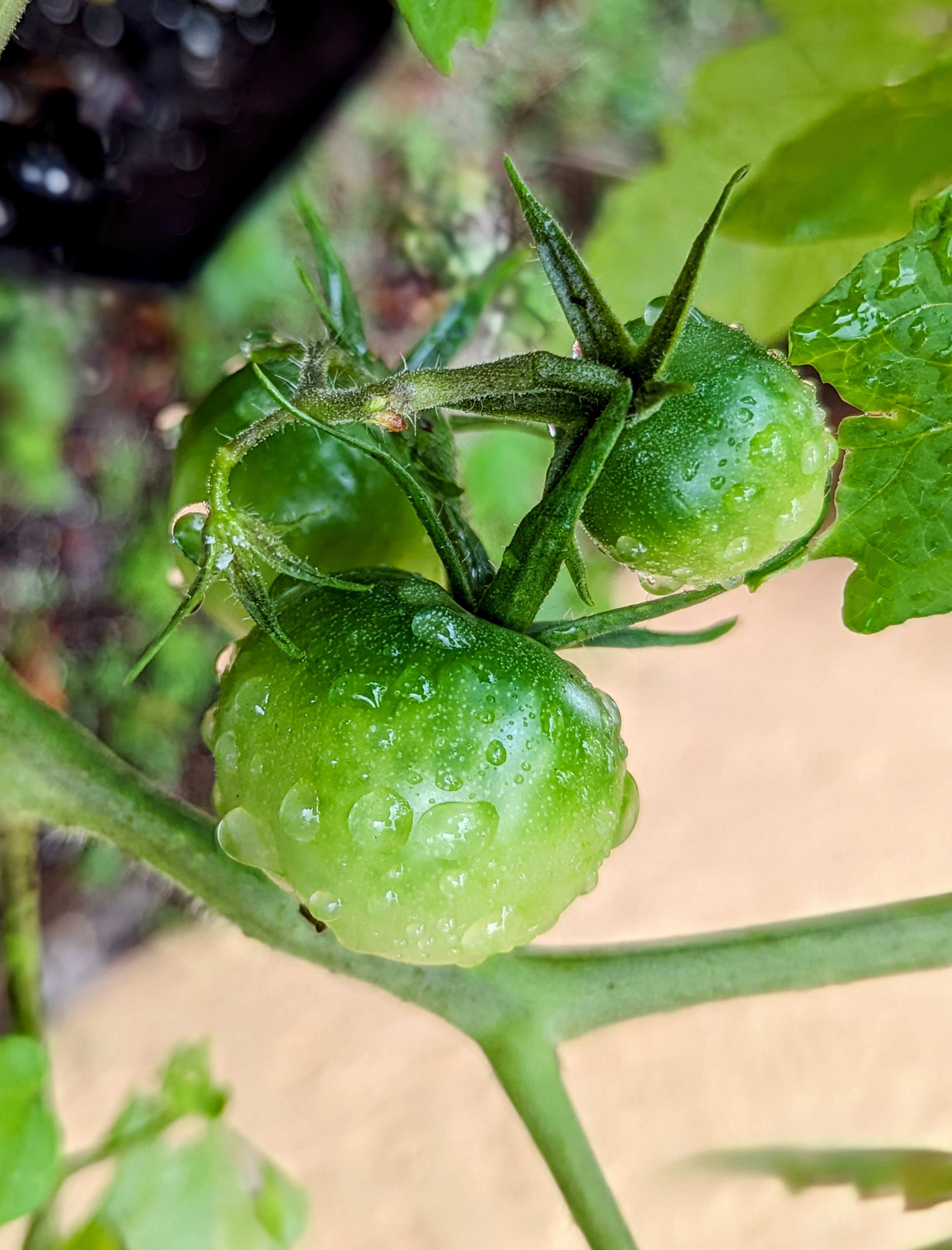
The tomatoes are finally making some progress. I planted all the cherry varieties as I have no luck with big tomatoes. Oddly, these are the biggest cherry tomatoes I have ever seen. Kind of wondering about the seeds!

The first sign of recovery on what I suppose was a tactical error. This is Miss Alice Bougainvillea. Apparently, she resents being cut back hard and left out in the cold. Usually, the Bougs are indestructible. Alice has been naked for at least a month and I was fearing her prognosis. I’m planning on buying some special Bougainvillea fertilizer now that the leaves are reappearing.
That’s all from my garden. Wishing everyone Happy Gardening, armchair or otherwise.

Six on Saturday – Sun!

It’s a great Saturday morning in South Florida. The drearies have been conquered for the moment and the sun is shining. The flowers perked up and I am finding new blooms in the garden to share this Saturday. Visit Jim’s blog to join Six on Saturday tours of gardens around the world.

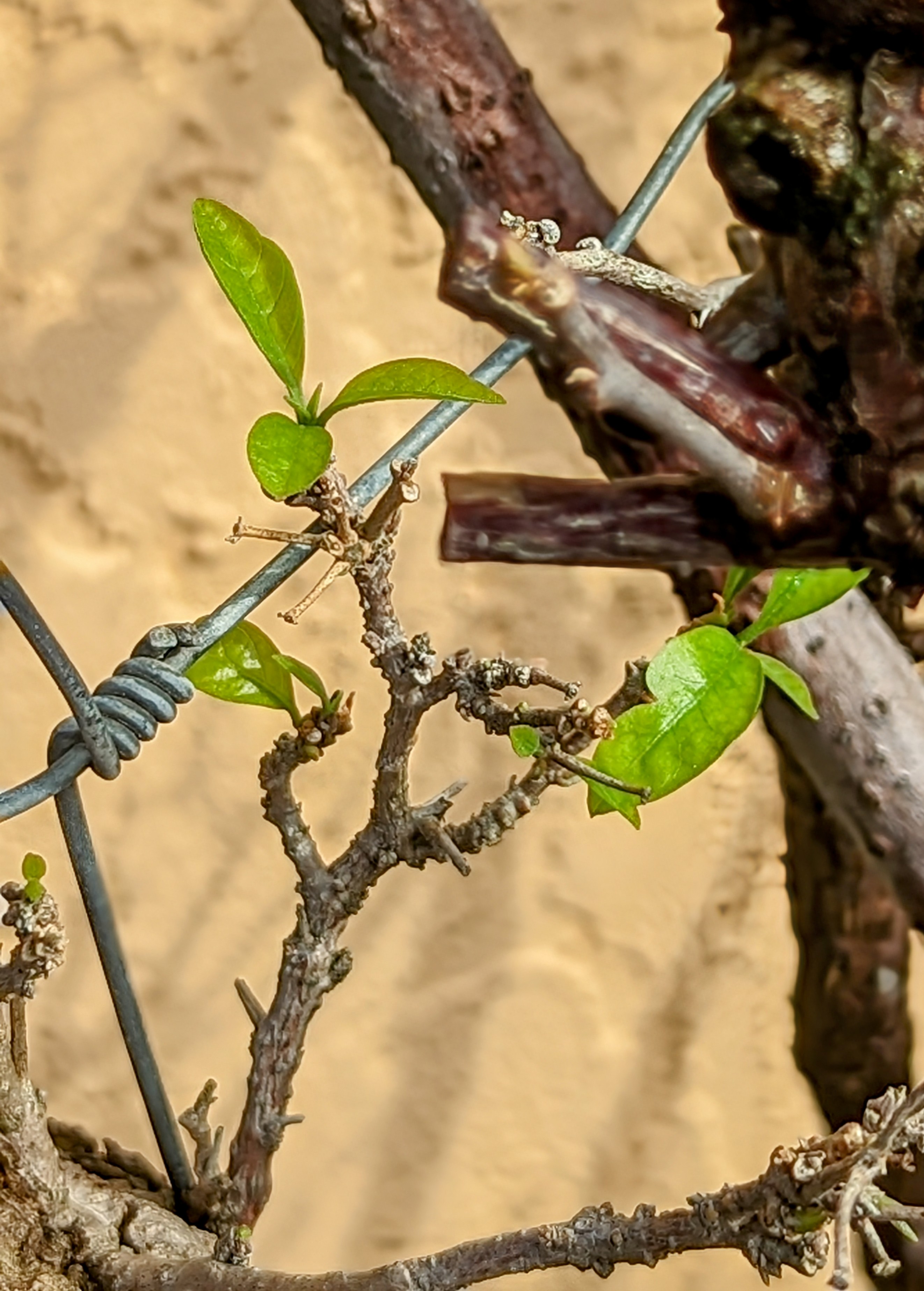
Here’s a mad flower from Bromeliadland. This is a Quesnelia testudo. I am not sure of the common name. These do well in my garden and are reliable winter color.

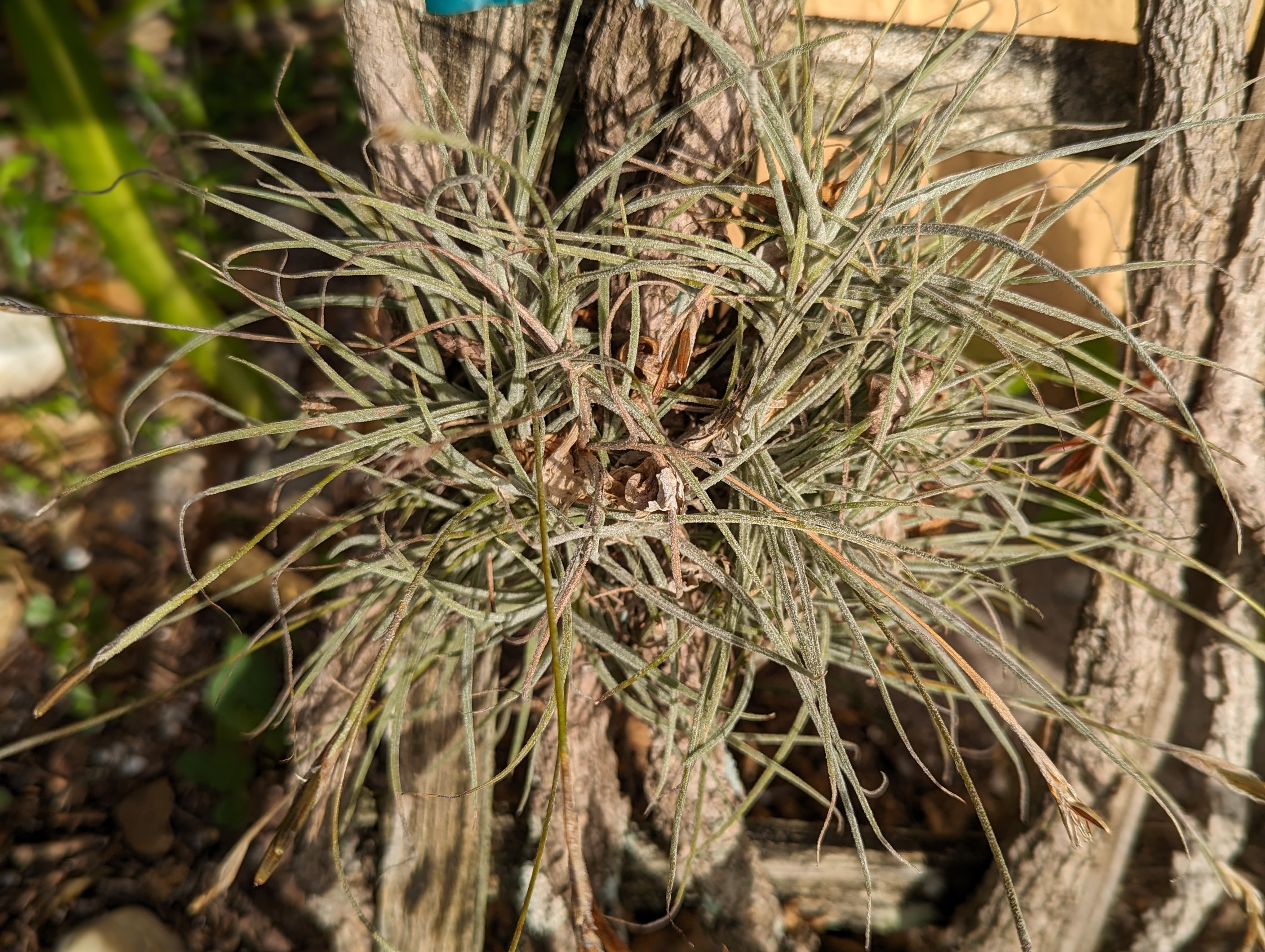
Another mad bromeliad in flower. This is a native Tillandsia, a relative of Spanish Moss, the flowers are brown. This is called Ball Moss (Tillandsia recurvata). It is growing on the trunk of a Bougainvillea.

I finally snagged a Rangpur lime before the vampire rats sucked the juice out. I need a few more for pie.

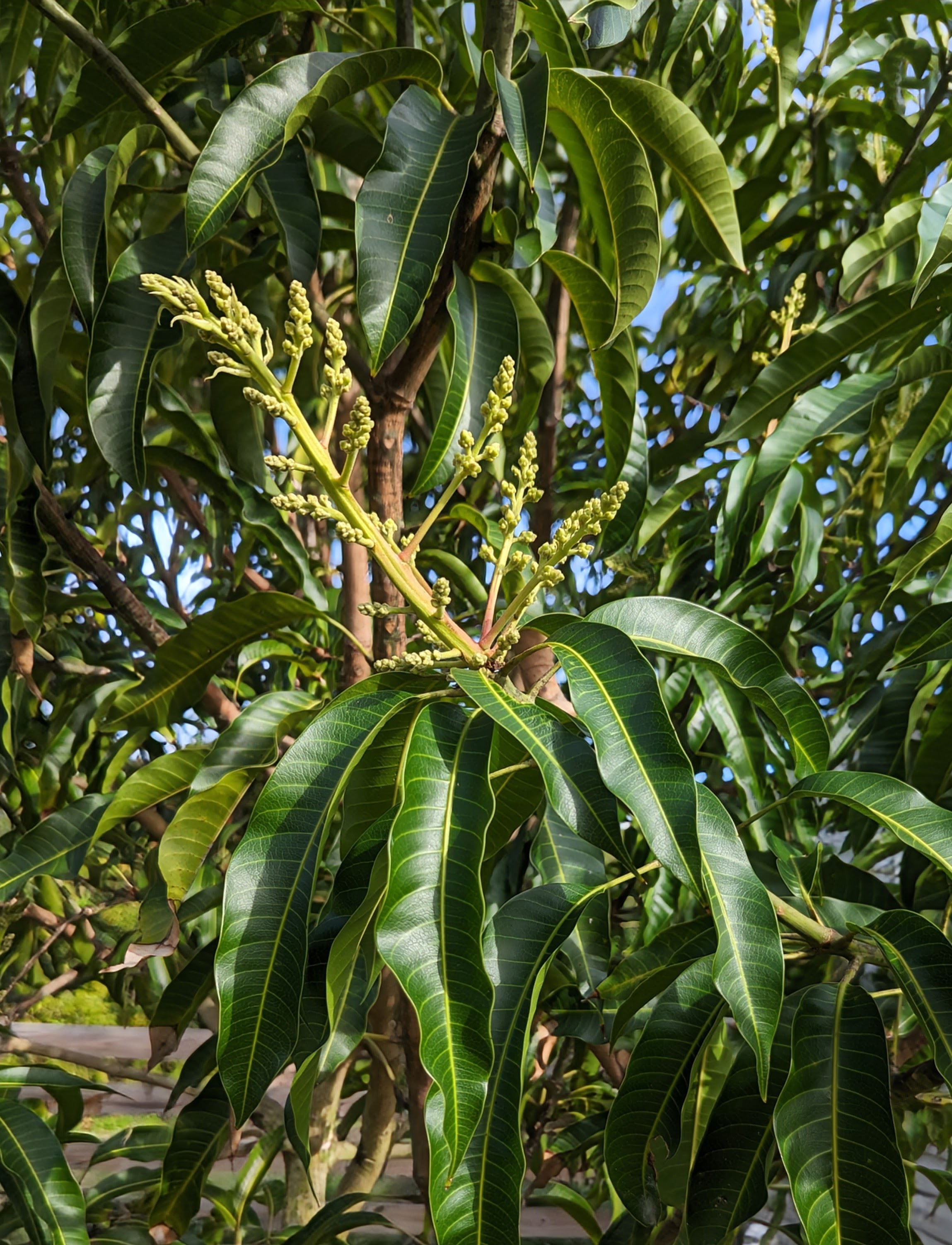
The mango trees are setting buds. This does not bode well, I think. They usually flower in March and we get fruit in June.

Heliconia psittacorum “Lady Di” expressed her appreciation for all the rain.

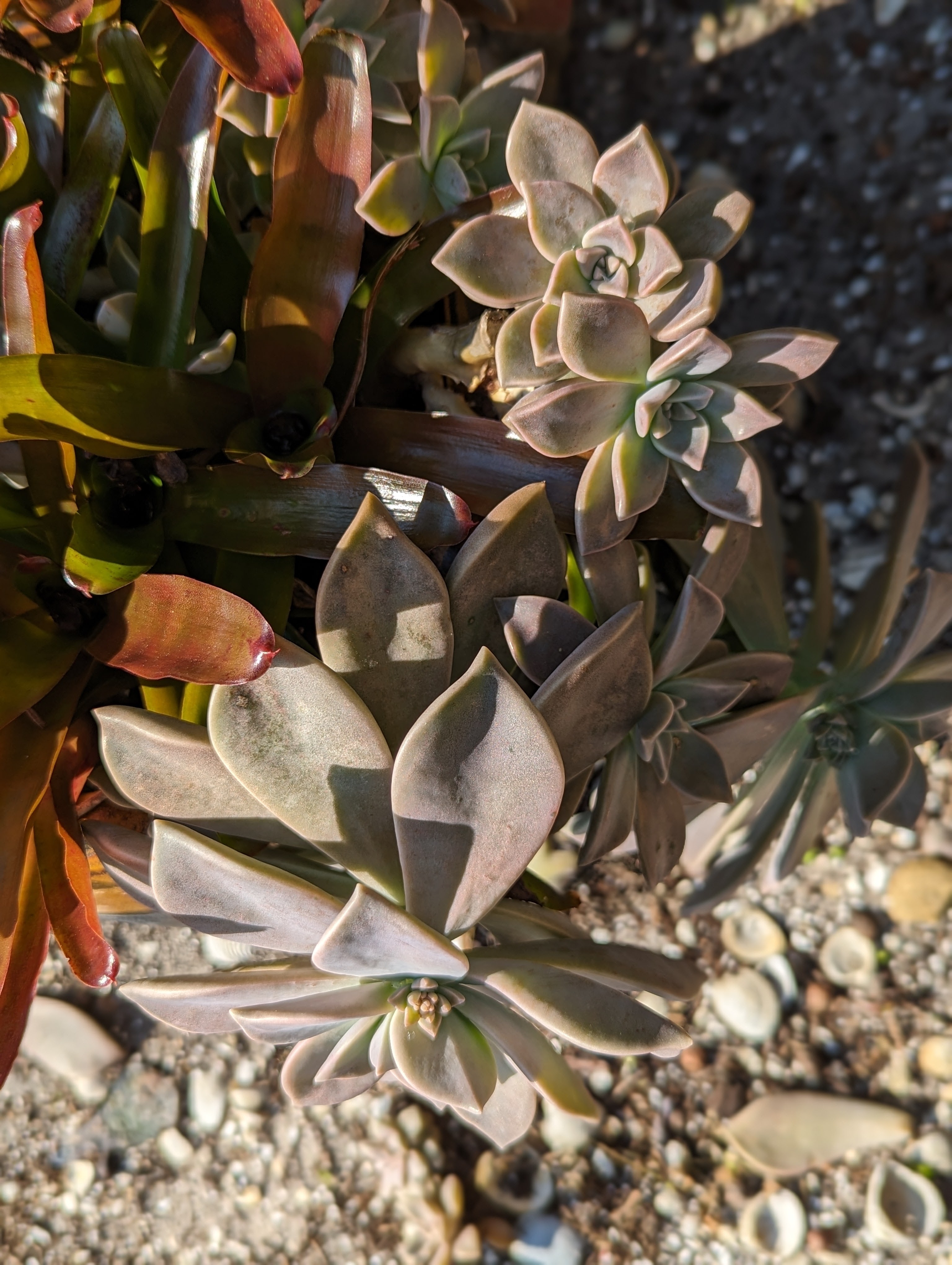
Google identified this as Golden Stonecrop (Sedum adolphi Firestorm). This has been in a pot for a few years and has not flowered before.

A question ?? Does anyone know if this is a Dahlia? I planted some tubers of a Dwarf Dahlia in October in this spot and this is coming up. I have found that Dahlias have a mind of their own when deciding to grow.

Thanks for the input and thanks to Jim for hosting.

That’s all from my garden this Saturday. Happy Gardening!!

Six on Saturday – Winter Interest & Green Bees

Well, it is time for another garden tour. We are having the rainiest El Nino winter I have ever experienced in Florida. I was in the garden for an hour or so this morning and now it is pouring down rain yet again. We are molding slowly. To join the worldwide tour visit Jim at gardenruminations.co.uk and follow the links posted in the comments section to other gardens.

The green bee! This is a green orchid bee, they arrived in Florida about 20 years ago from Central America. I don’t think these are especially bad in terms of non native insects and enjoy seeing them around the garden. This one is enjoying a sip of Mystic Spires Salvia nectar. This was a lucky shot. These bees are difficult to photograph.

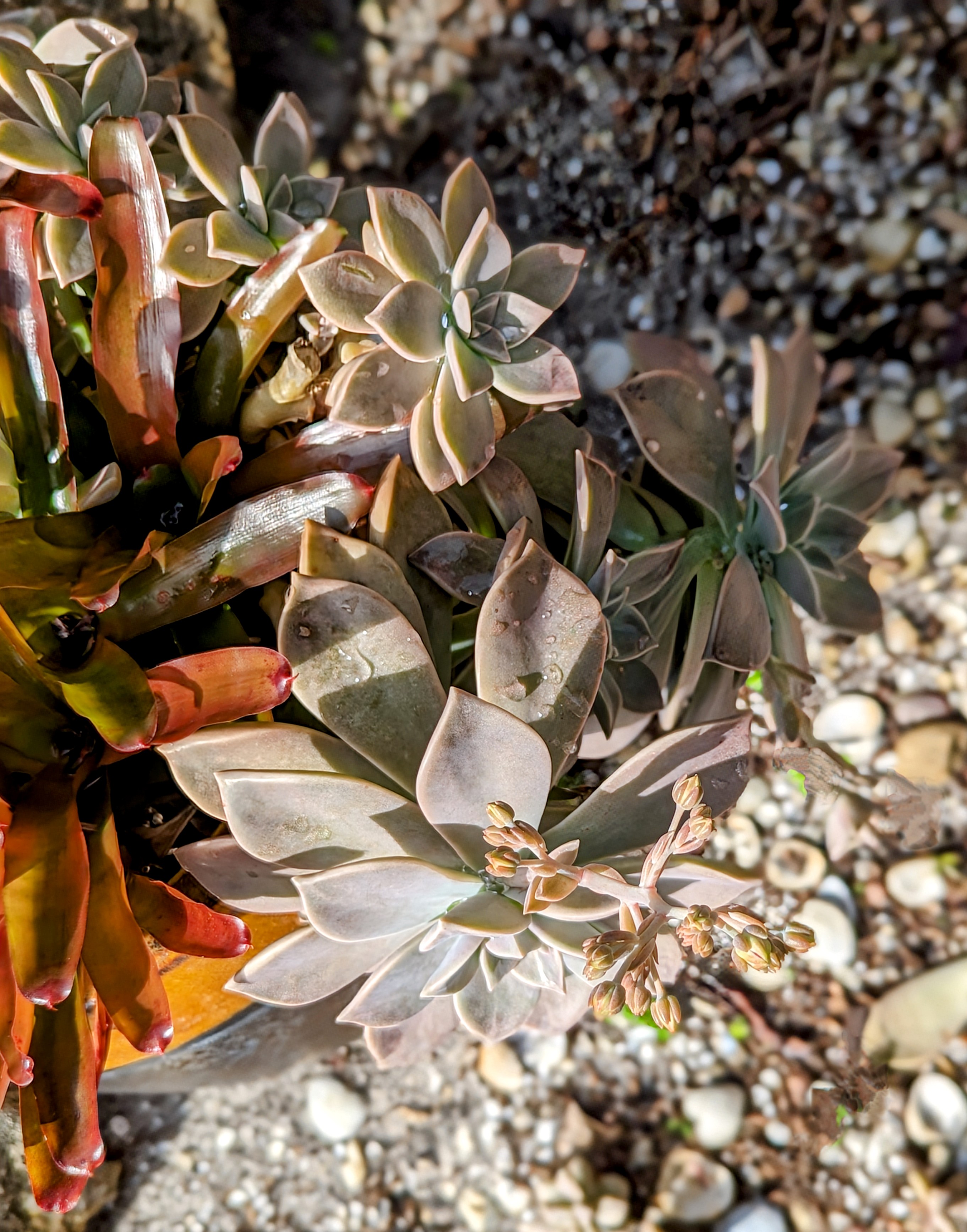
This is a nice surprise. I think it is Senecio vitalis. I did not think this succulent would grow out in the garden due to too much moisture from rain. They have been in a pot on a covered porch for a few years and have gotten too big. I rooted a few cuttings over the summer and planted them in the garden a few months ago. They are thriving and getting a lot of moisture, I suppose the sugar sand is so well drained they like it. Time will tell.

A white oxalis in flower. A friend’s grandmother filched this from a garden in Ireland in the 1950s. It must grow everywhere.

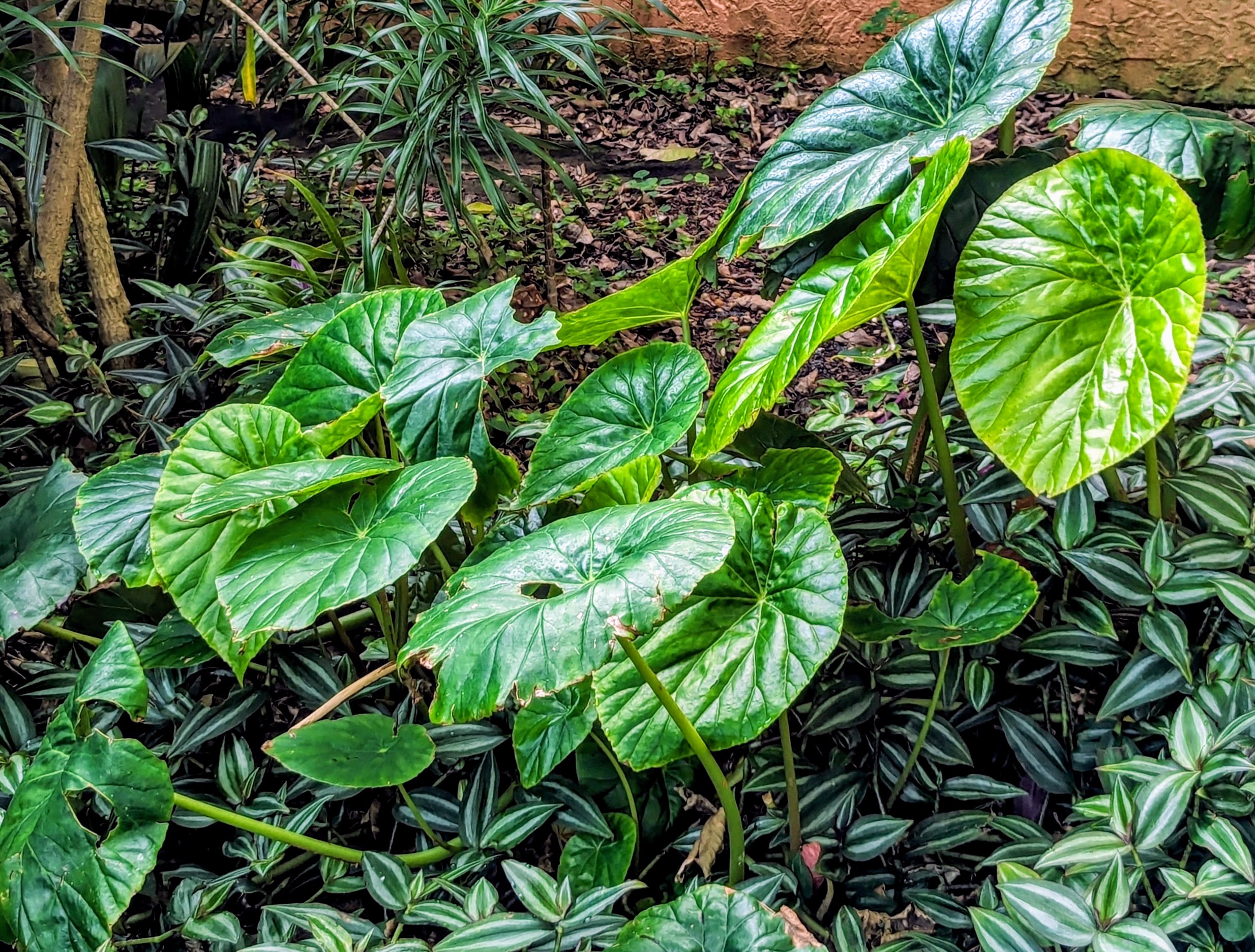
Lotusleaf Begonias (Begonia nelumbiifolia) are enjoying the abundant moisture. I am not sure what is eating the leaves. I have never seen a slug here but we do have snails.

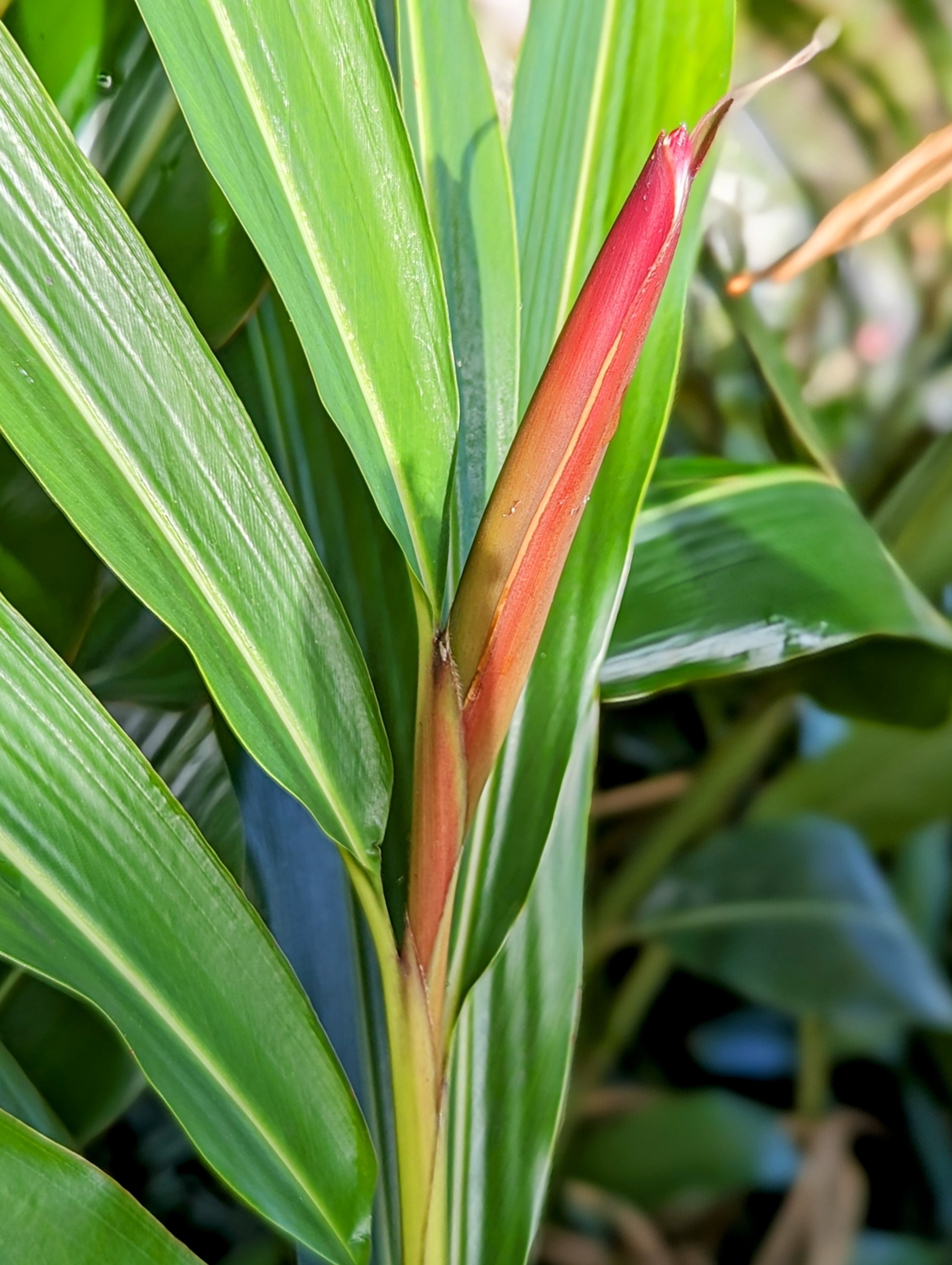
Ti Plant (Cordyline fruticosa) It has taken a few years for this plant to develop the hot pink coloration. It was solid green for a long time. I thought I had a cheesy cultivar. Maybe not. Patience rewards the gardener.

Foliage detail on a Pie Crust Croton (Codieum variegatum) leaf. One of my favorites and a real splash of color in the garden.

That’s all from my garden this Saturday. Wishing everyone Happy Gardening or Happy Seed Catalog Reading. It is a good afternoon for that here.

Six on Saturday – New Colors and Textures

It’s time once again for the Saturday garden tour. Six current events from the garden. It is a stormy day in South Florida. There is a lightning storm about 10 miles away that is about to descend on us – seems odd for January, but that is Florida weather for you.

I think Fiona had the right idea about how to deal with the weather. On the other hand – the foolish human went out and snapped a few pictures of new colors and textures in the garden she is enjoying. The underside of the sofa can wait until the storm gets here.

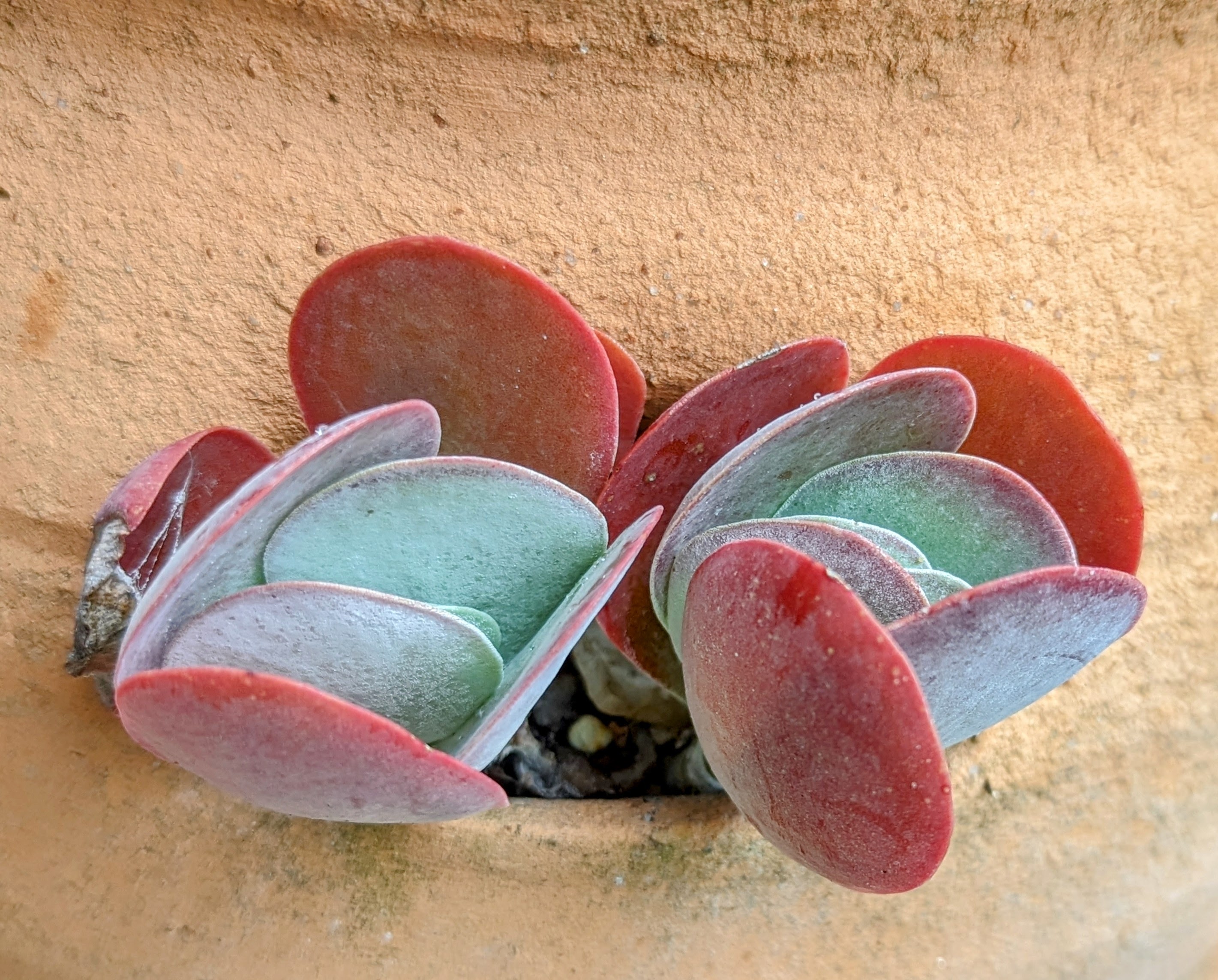
Flapjack Kalanchoes are peeking out of a strawberry pot.

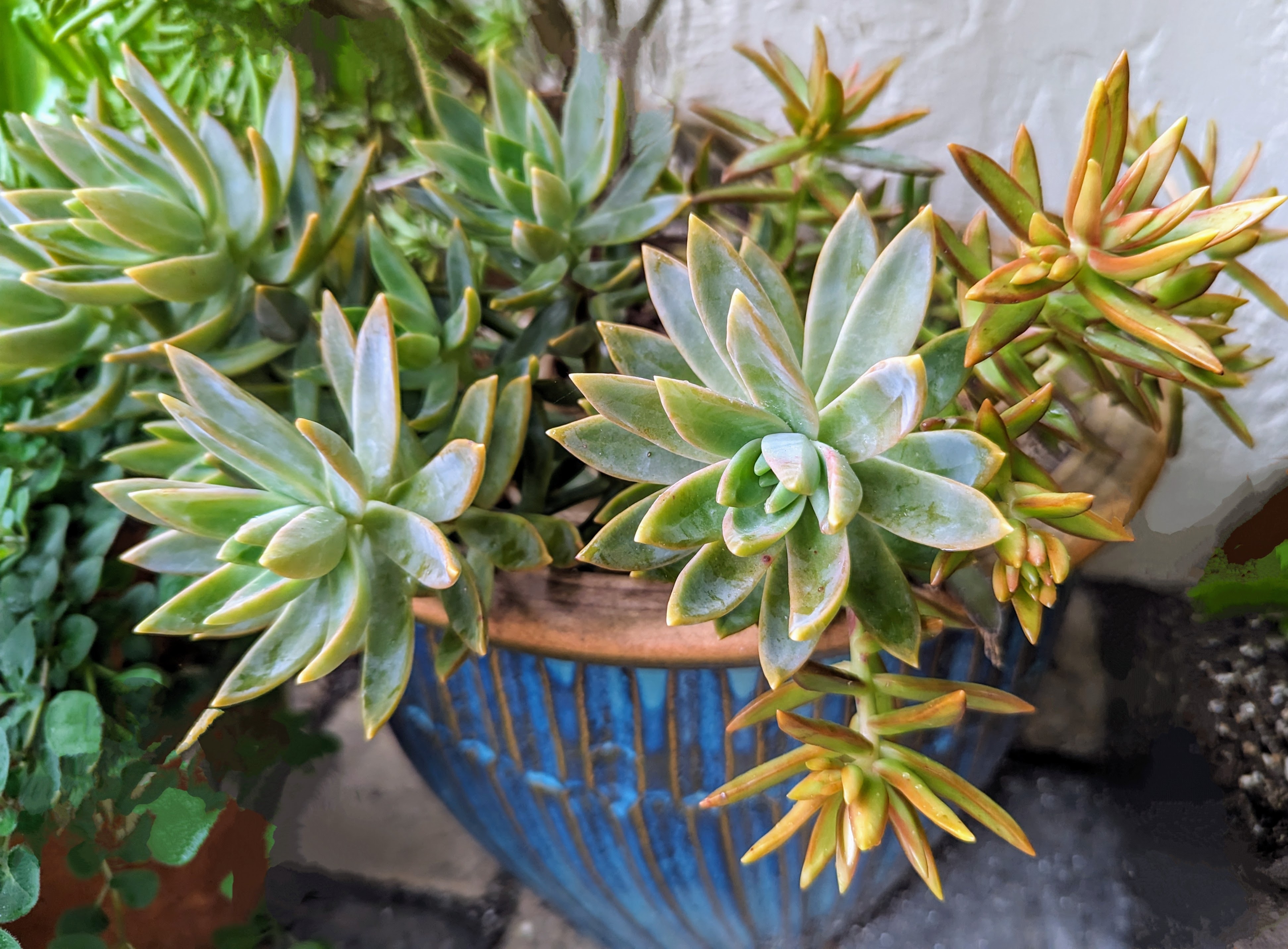
Pot of mixed succulents is coloring up for winter.

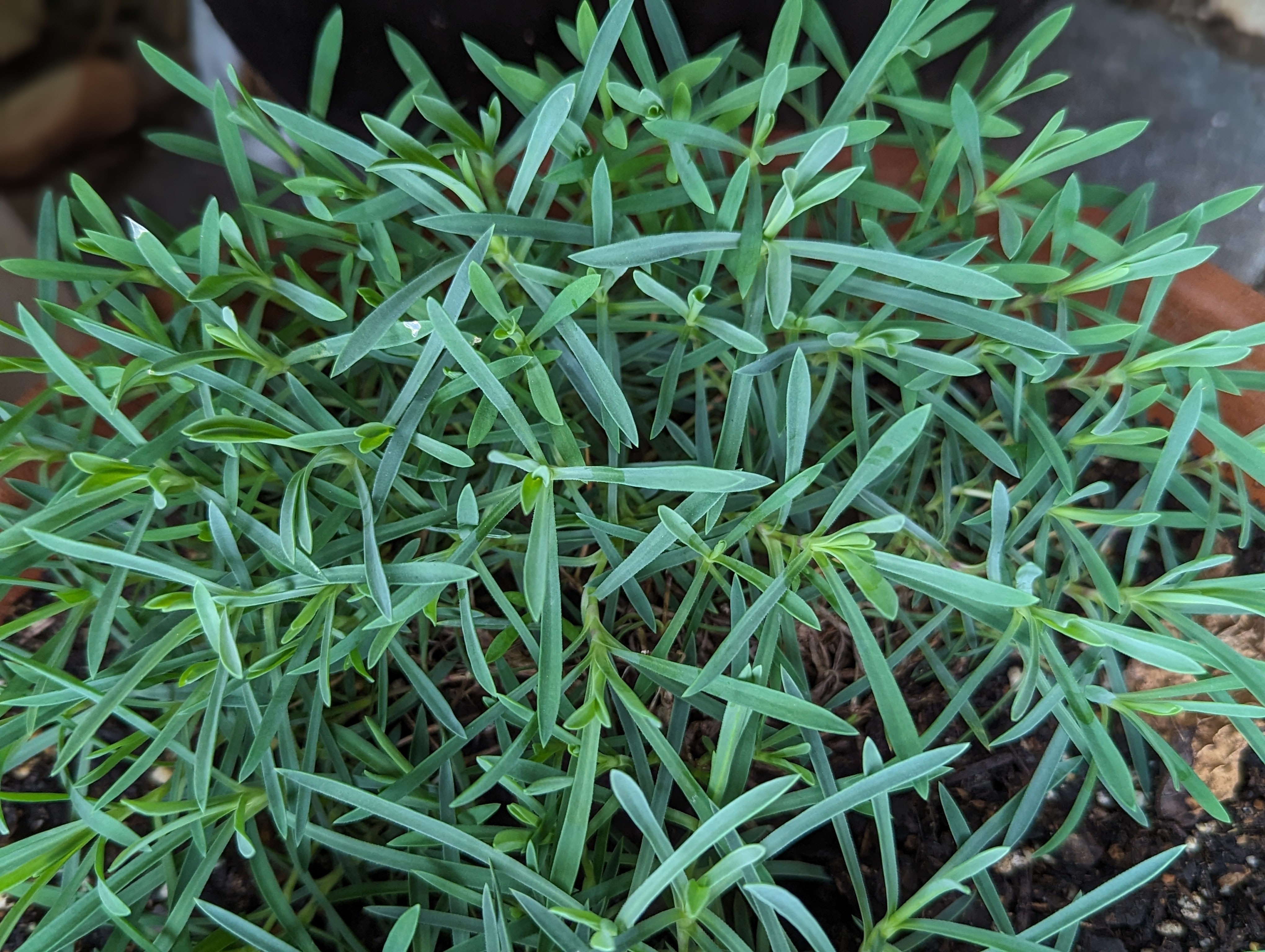
I love grey foliage. This is Bath’s Pink Dianthus (Dianthus gratianopolitanus ‘Bath’s Pink’. Such a wonderful texture.

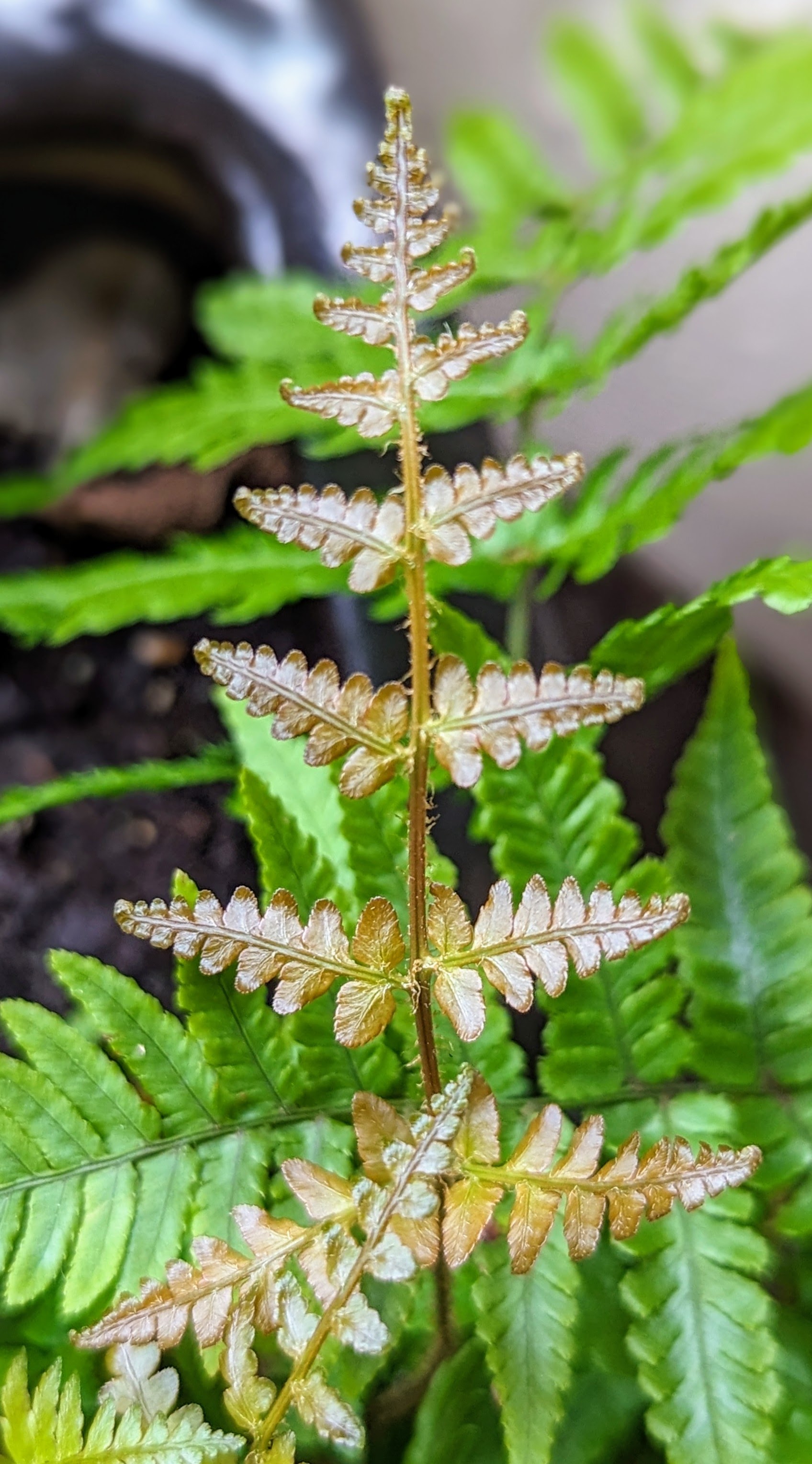
Autumn Fern (Dryopteris erythrosora) finally showing some new fall toned foliage.

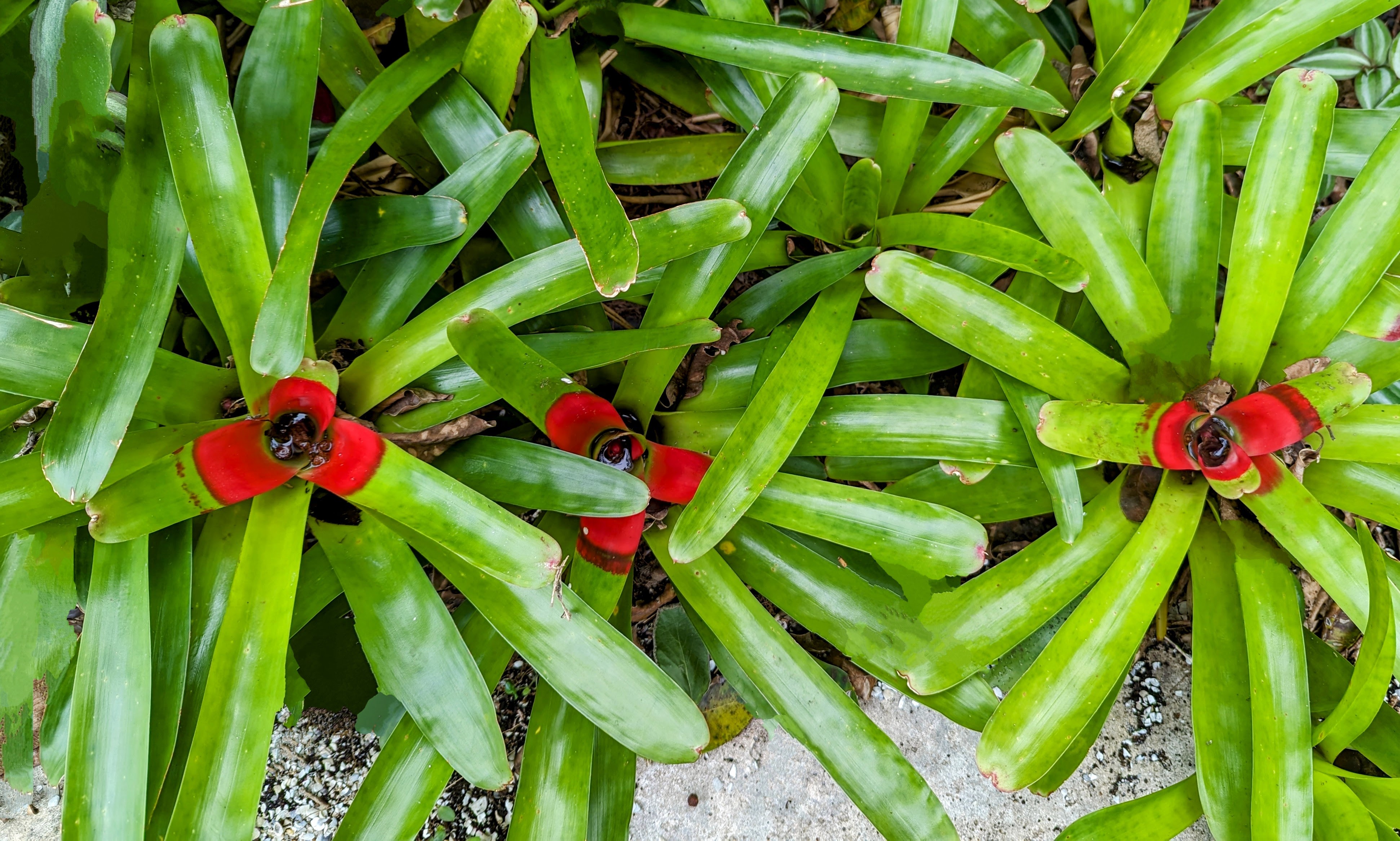
These are Blushing Bromeliads (Neoregelia carolinae). The centers turn red in winter.

That’s my six for this Saturday. For a world of Six on Saturday visit Jim at http://gardenruminations.co.uk and follow the links to other gardens.

Happy Gardening!!

Six on Saturday – Jungly July

I am joining the SOS garden tour again this Saturday. In South Florida, July has settled around us with a wet blanket of humidity, regular temperatures over 90 F (32C) and nearly daily downpours. The garden is turning into a jungle, overrun by happy plants, weeds and everything green. To see less jungly gardens, visit Jim at http://gardenruminations.co.uk and take a virtual tour via posts from gardeners from less sodden climes.

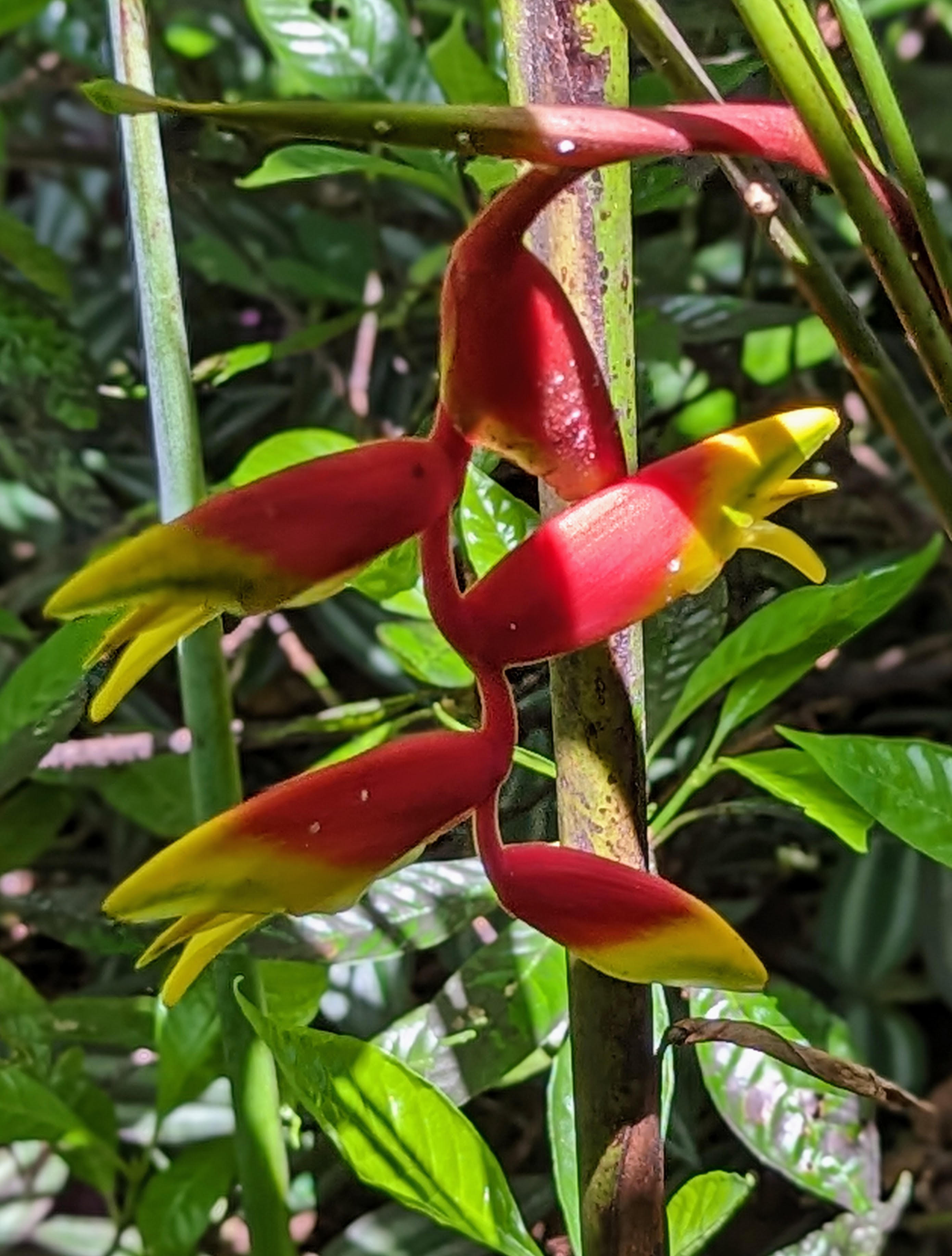
This is about as tropical as it gets. A Lobsterclaw Heliconia (Heliconia rostrata) in full bloom. They turn black if cut and don’t stretch the smaller yellow petals(?) out.

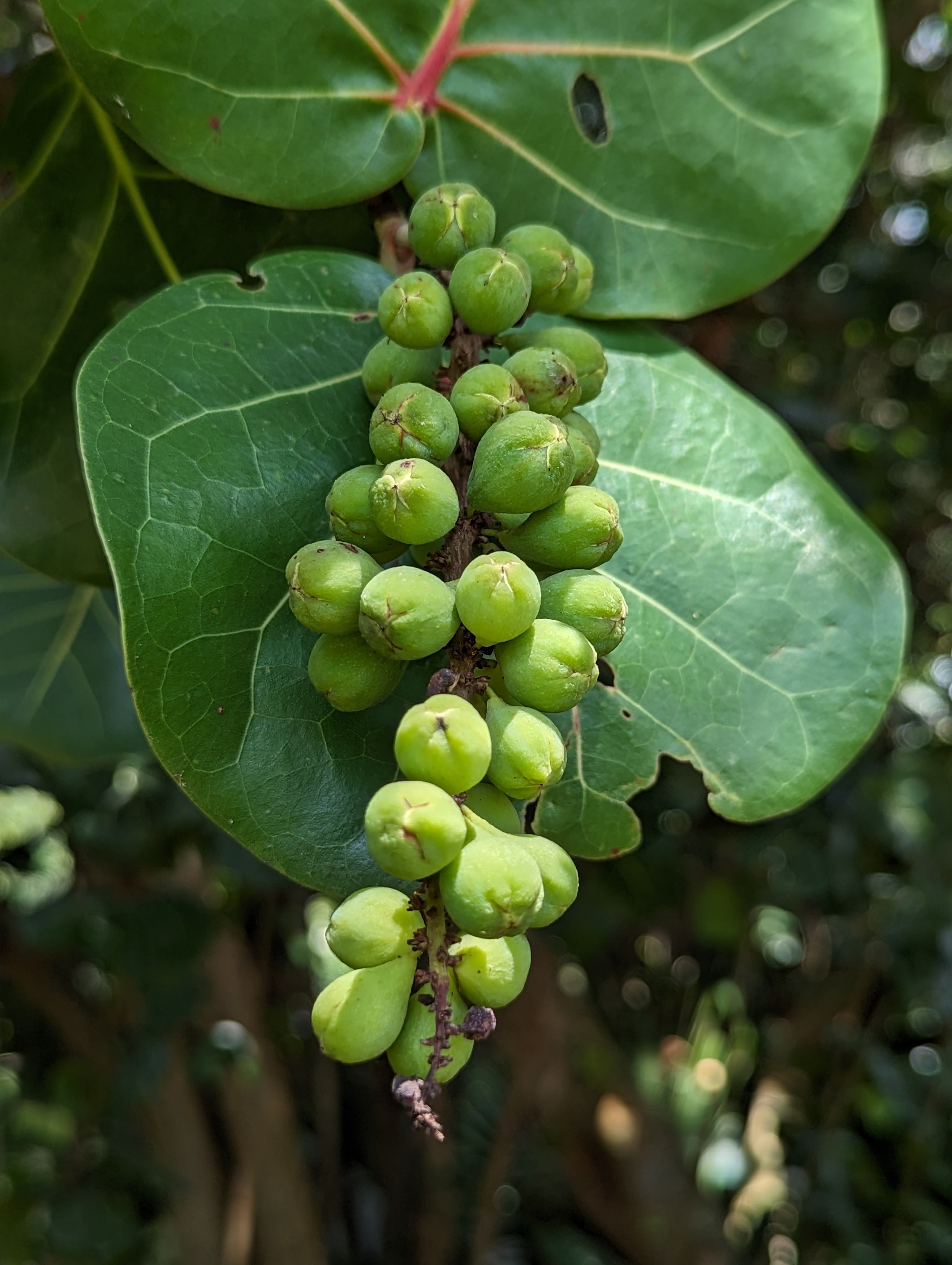
The fruit of Seagrapes (Coccolobo uvifera). These grow on shorelines and are a very hardy native tree. Native Floridians will eat the fruit as have some of my greyhounds. The flavor is somewhere between a fig and a grape but mostly seed that requires gnawing to get a taste. I am told it makes a good jam. I find it makes a big mess.

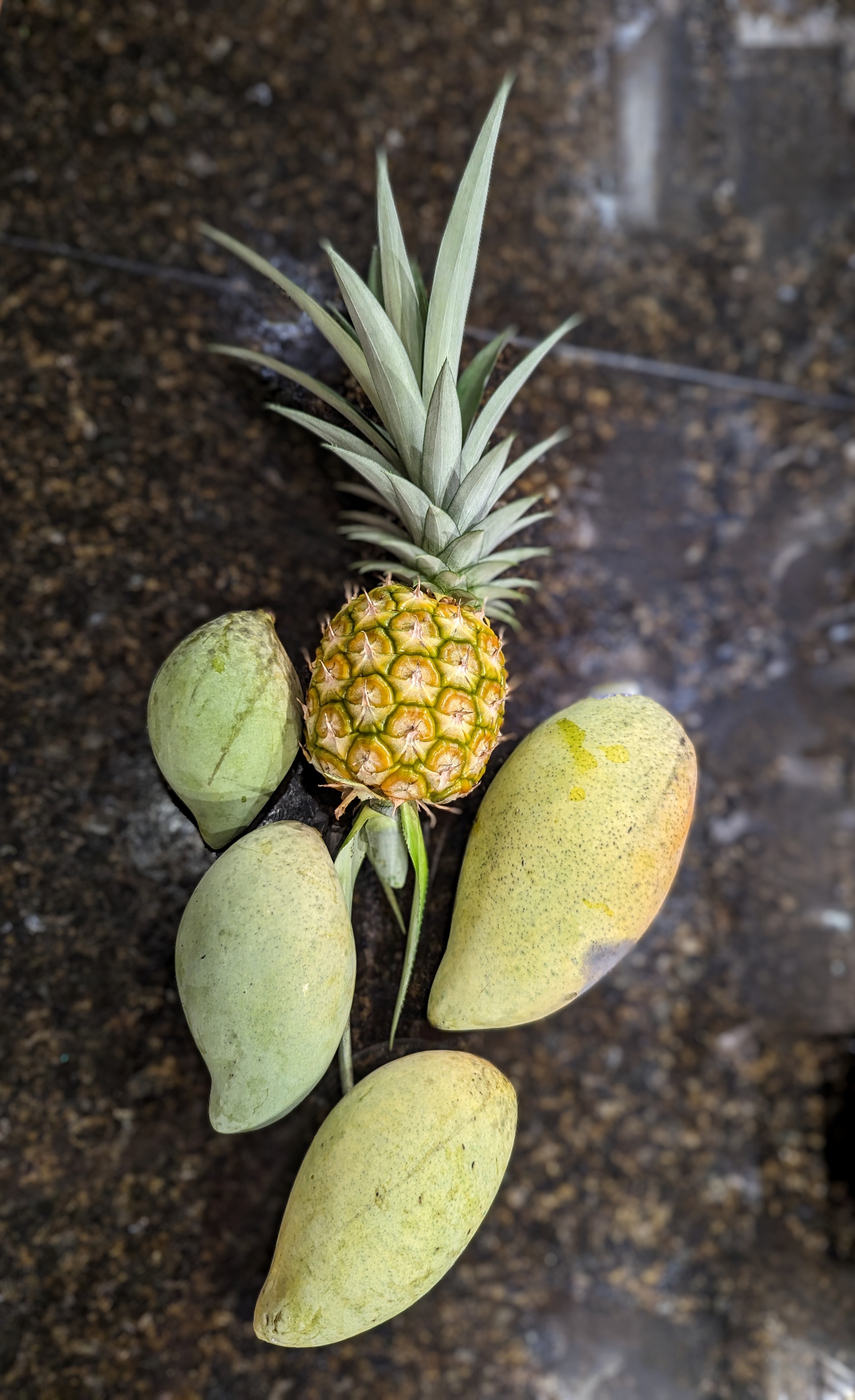
The fruit from my garden I do like. This is the end of the mangoes. These are Nam Doc Mai. There were too many for us to eat so I have been freezing them. They actually freeze quite well. I found fresh local swordfish at the market this morning – we are looking forward to grilled fish with mango salsa for dinner. The little pineapple was grown from the top of a grocery store fruit. I think I got to it just in time, before the critters caught the fragrance.

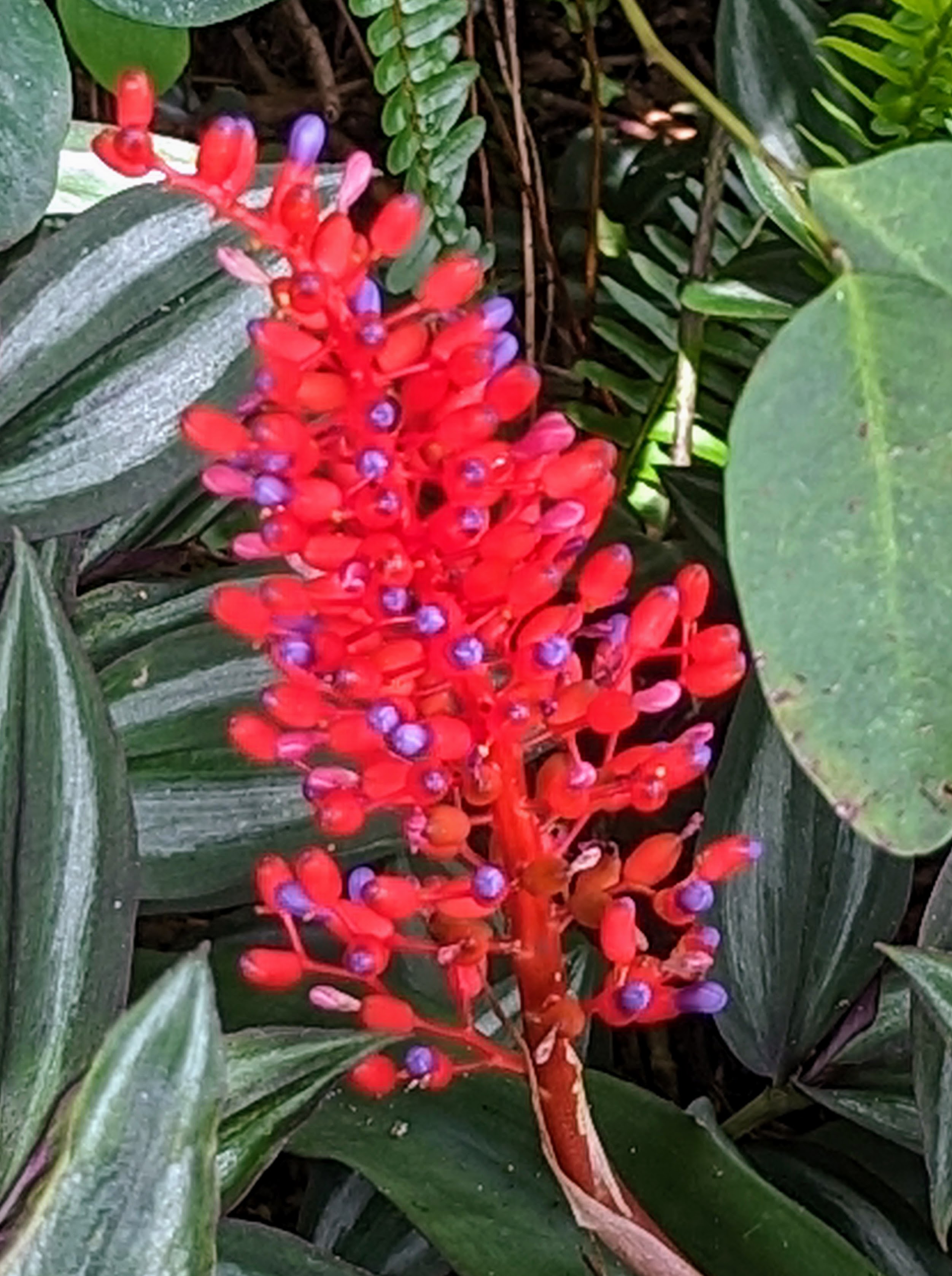
Welcome to the jungle. The Transcandentia zebrina is draping over a lot of things with all the rain. I am not regretting this yet as I planted it so I wouldn’t have to mulch. Now I have to pull out the T. zebrina. The red flower pops up like clockwork in July. It is Aechmea miniata bromeliad, a great garden flower.

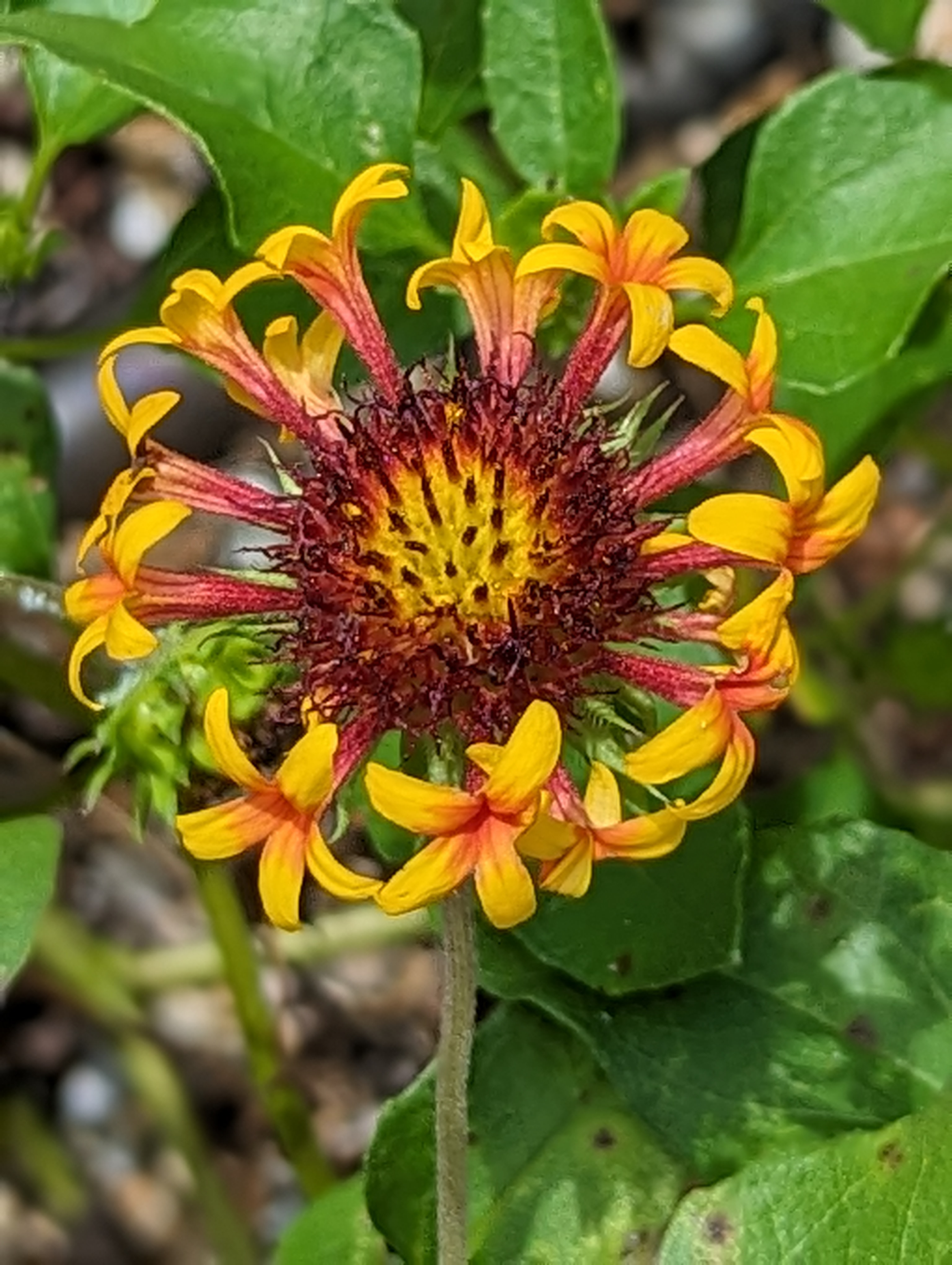
An interesting Gallardia pulchella from plants crossing in the back garden. I like the seedling varieties better than the named cultivars.

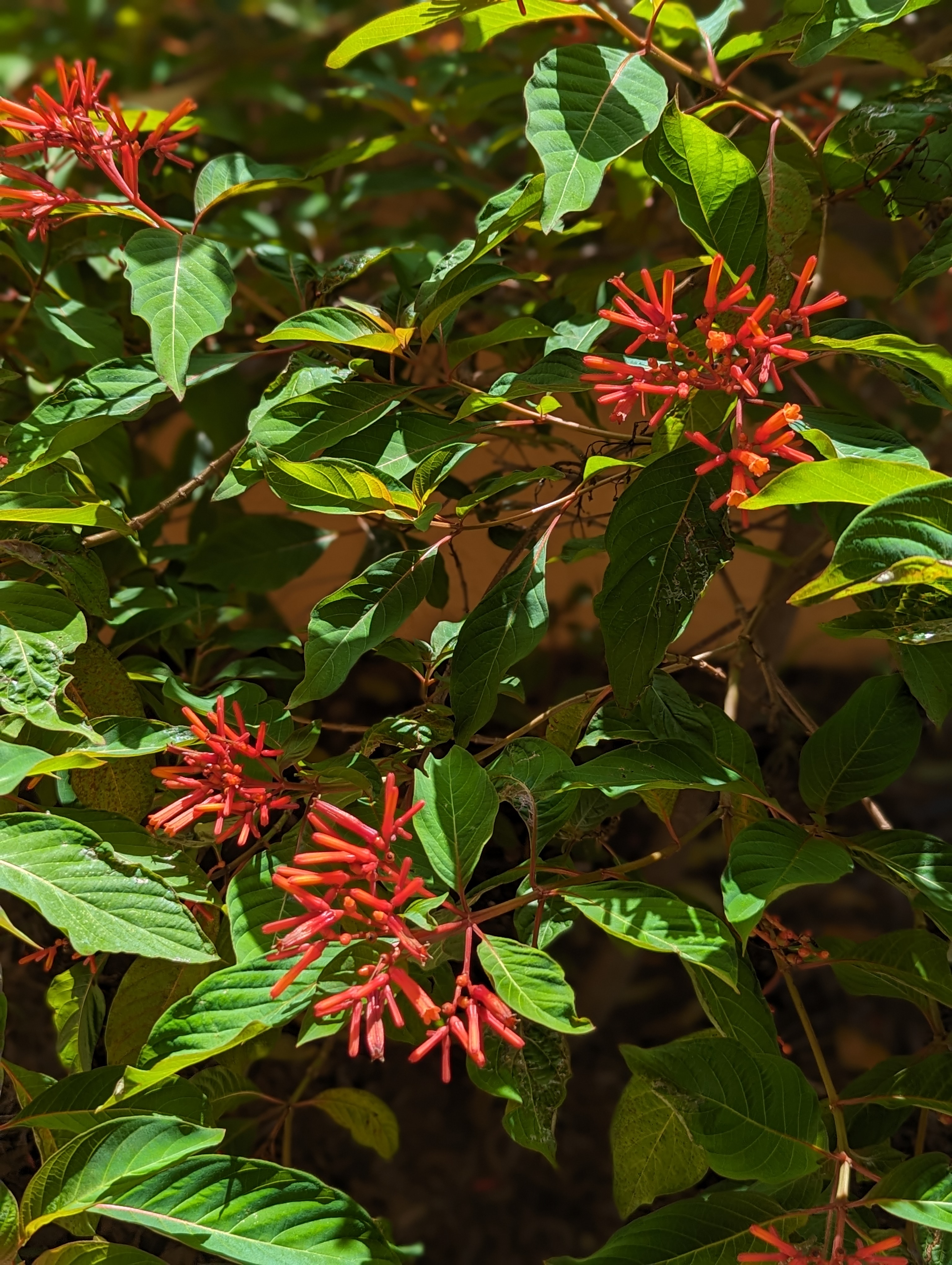
Firebush (Hamelia patens var patens) in full flower. Another favorite, this shrub sneaks up on you by growing a few feet a year if conditions suit. The conditions are evidently perfect and they need a trim.

That is all from the heat zone.

Happy Gardening

In a Vase on Monday – Plumb Wonderful

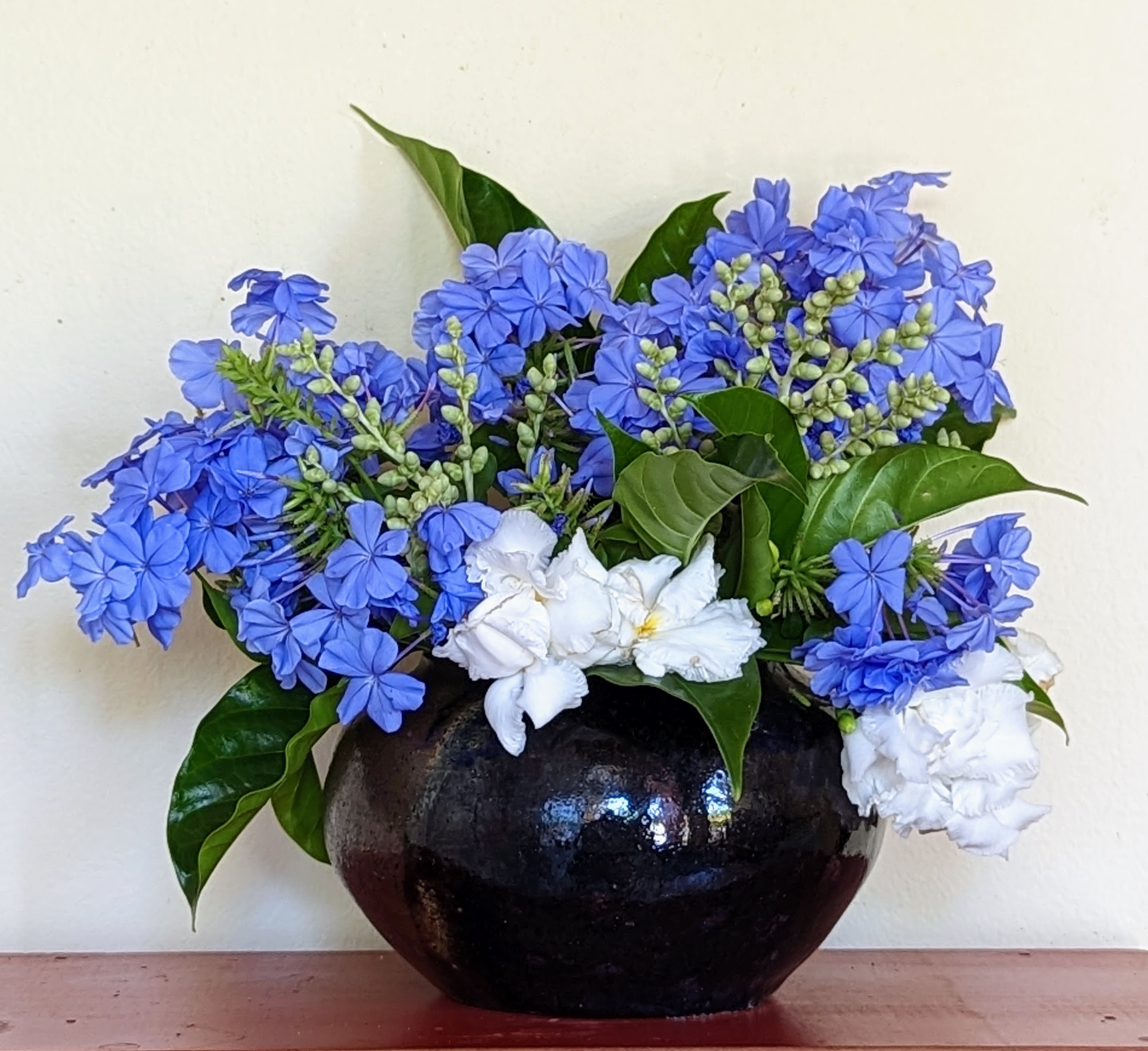
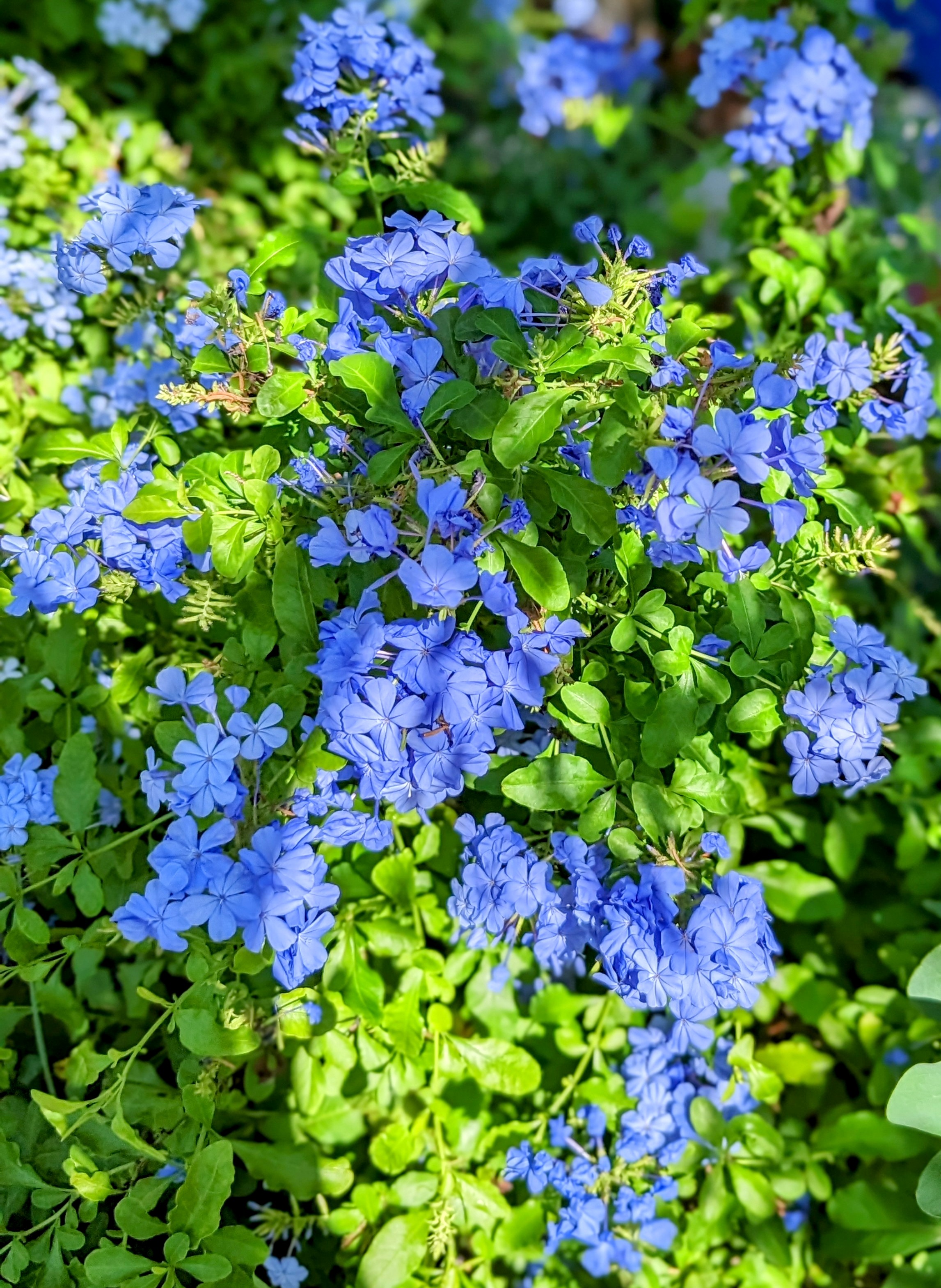
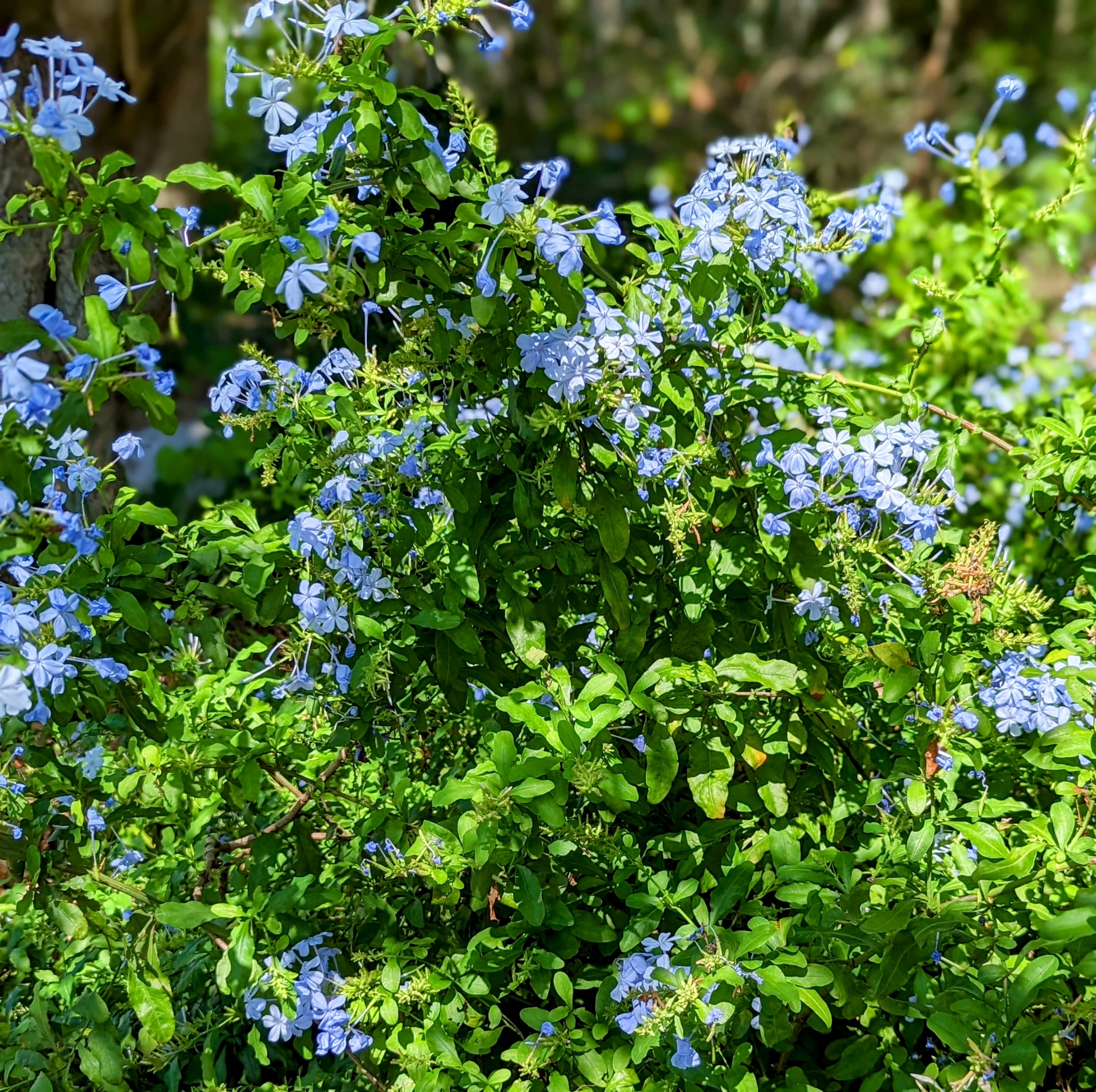
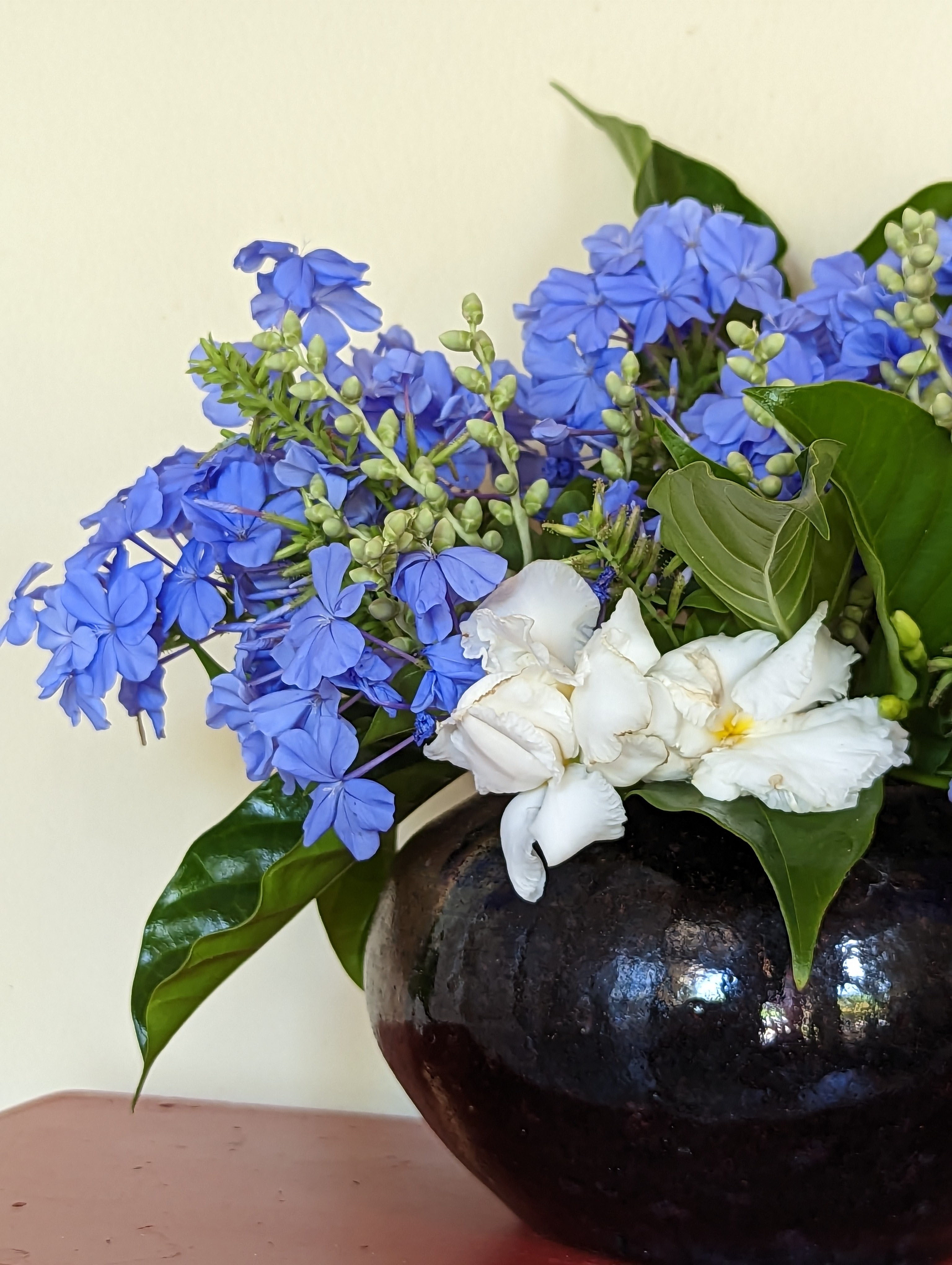
I am very pleased with my Plumbago shrubs this year, they have burst forth with a display of flowers like no other. Why this happened is another mystery of the gardening universe. They inhabit the “hell strip” – a dry area between the street and my driveway. There is no irrigation, I am pretty sure I forgot about the fertilizer and they are growing under some good sized trees. Yet they prosper. My neighbor gave me the original shrub about 10 years ago, offspring of the one her grandmother planted in the 60’s. I added a darker blue variety last year and that is what I have in the vase.

The two Plumbagos, the darker one on the left. The lighter blue one is at least eight feet wide and five feet tall.

A closer view of the vase:

I was taught in my college perennial garden design class (by a very old school design professor) that the classic Southern (the Southeastern US) summer color scheme for a garden is yellow, blue and white. I decided against the yellow in favor of grey green. I am pretty sure my professor wouldn’t consider Florida part of the south, so he is probably not spinning in his grave over the lack of yellow. The only yellow in the garden currently is daisies and the shape of the flower needed to provide some contrast as all the other flowers are daisy shaped.

The gray green flowers are the buds of the Adonidia Palm (Adonidia veitchii). The flowers eventually open, turn nearly white and then produce bright red fruit. The white flowers and glossy green foliage belong to the Tropical Gardenia (Tabernaemontana divaricata). The vase was a thrift store find I have enjoyed immensely. It is my favorite for the Gardenias as they lounge over the side so well.

That’s all from my simmering summer South Florida garden. Thanks to Cathy at http://ramblinginthegarden.wordpress.com for hosting. To see more vases follow the link.

Happy Gardening!

In a Vase on Monday – Ring in the New Year

I am issuing a hearty welcome to 2023 by ringing in the New Year with a vase on Monday. A bit of a poem by Tennyson, written in 1850, celebrating the church bells ringing at midnight.

Ring out the old, ring in the new,
Ring, happy bells, across the snow;
The year is going, let him go;
Ring out the false, ring in the true.

This is a high concept floral creation. The pen holding up the bell is for writing New Year’s resolutions. It has not been used – yet! The silver bell is for ringing in (and out). The flowers are fireworks and the shells are grounding it all. Design school rearing its ugly head again.

A closer view:

The pen is a freebie I picked up at a lecture about controlled burns in the nearby state park. It is from the Florida Forestry Service and looks like a stick. The bell is one of many collected by my husband. It is an annual silver bell engraved with the year. After about 30 years you really don’t need any more bells. The grey plant in the background is an Air Plant; known around here as Ball Moss (Tillandsia recurvata). These can grow almost anywhere and are sometimes seen on power lines. This one is flowering and I think it looks like fireworks.

The red fireworks are actually buds from ‘Maui Red’ Ixora. The Ixora is a shrub that is very intolerant of cold – being a perverse plant it has started flowering after being exposed to the coldest temperatures it has ever experienced last week. Shells are from our local beach and the moss and the vase are from recent floral gifts from friends.

Happy New Year to all and a big Thank YOU to Cathy at http://www.ramblinginthegarden.wordpress.com for her years of hosting In a Vase on Monday. Follow the link to see more vases.

In a Vase on Monday – A Mixed Bag

I am so pleased to have finally successfully grown Cactus Zinnias. Ta da!

My first several attempts resulted in oddly dwarf flowers that were never more than a single flower. These are doubles and the plants are very healthy with big, deep green leaves. This fall, I decided to plant cutting flowers in grow bags to see if it worked better than my futile efforts to amend the existing sugar sand in my garden. After installing bags and bags of compost, worm castings, mulch and irrigation – I still ended up with puny flowers. Here are the happy Zinnias in their bag:

The arrangement is a mixed bag of fall and winter flowers in my garden. Multi colored is probably the best way to describe it. The vase is a pottery candleholder my parents used in summer to hold citronella candles while they sat on their brick patio and drank untold gallons of dreadful Carlo Rossi Chablis. I put a pickle jar inside to hold water and flowers. The vase holds fond memories for me.

A closer view:

The green Zinnia is Green Envy, these are new to me and my garden. I have planted them with Mystic Spires Blue Salvia and am planning to add chartreuse Sedum below. Green tipped salmon flowers are Soap Aloe (Aloe saponaria); purple spikes are “Mona Lavendar” Plectranthus; salmon spikes are Tropical Red Salvia (Salvia coccinea); pale pink clovers are Globe Amaranth.

The other side:

The Cactus Zinnias are in yellow, pink, purple and salmon. Misty pink flowers are from Muhly Grass (Muhlbergia capillaris).

Thank you to Cathy at http://www.ramblinginthegarden.wordpress.com for hosting. To see more vases follow the link.

Happy Gardening..

Six on Saturday – Reds and Purples

Another Saturday morning tour of my garden featuring six items of interest to join the SOS crowd at http://www.thepropagatorblog.wordpress.com. Follow the link to see more posts.

I have a lot of hot colors in my garden and fall is no exception. The red and purple flowers and foliage are out in force.

The Aechmea blanchetiana Bromeliads are in full bloom. These are almost five feet tall and last for months. A neighbor gave me a start of these and said “the flowers last so long you get tired of them.” I enjoy them!

The Red Shrimp Plant (Justicia brandegeana). This is a very happy plant and flowers a lot. One of my favorite old reliables and a gift from a neighbor.

The Roselles (Hibiscus sabdaiffa) have reached five and a half feet in height and are setting flower buds. Eventually I will pick the red calyx of the flower to make tea or holiday cocktails. I planted the seed in April. Most of the plant is edible.

Purple Queen or Setcresea appears randomly in the garden. I prefer to call it Purple Queen, Setcresea sounds like a skin disease.

A new container I put together this week. The Bromeliads are cuttings from existing plants in my garden. In red, Fireball Neoregelia, varigated, Bossa Nova Neoregelia. Draped over the side is a Fish Hook Senecio and the plant in back is a Cardboard Palm (Zamia furfuracea). The Bromeliads should spill over the sides eventually.

The Milkweed devoured by Monarch butterfly caterpillars is making a remarkable comeback. I was amazed at the amount of foliage they ate – all of it and about one third of the stem.

That is my Six for this Saturday.

Happy Gardening!!