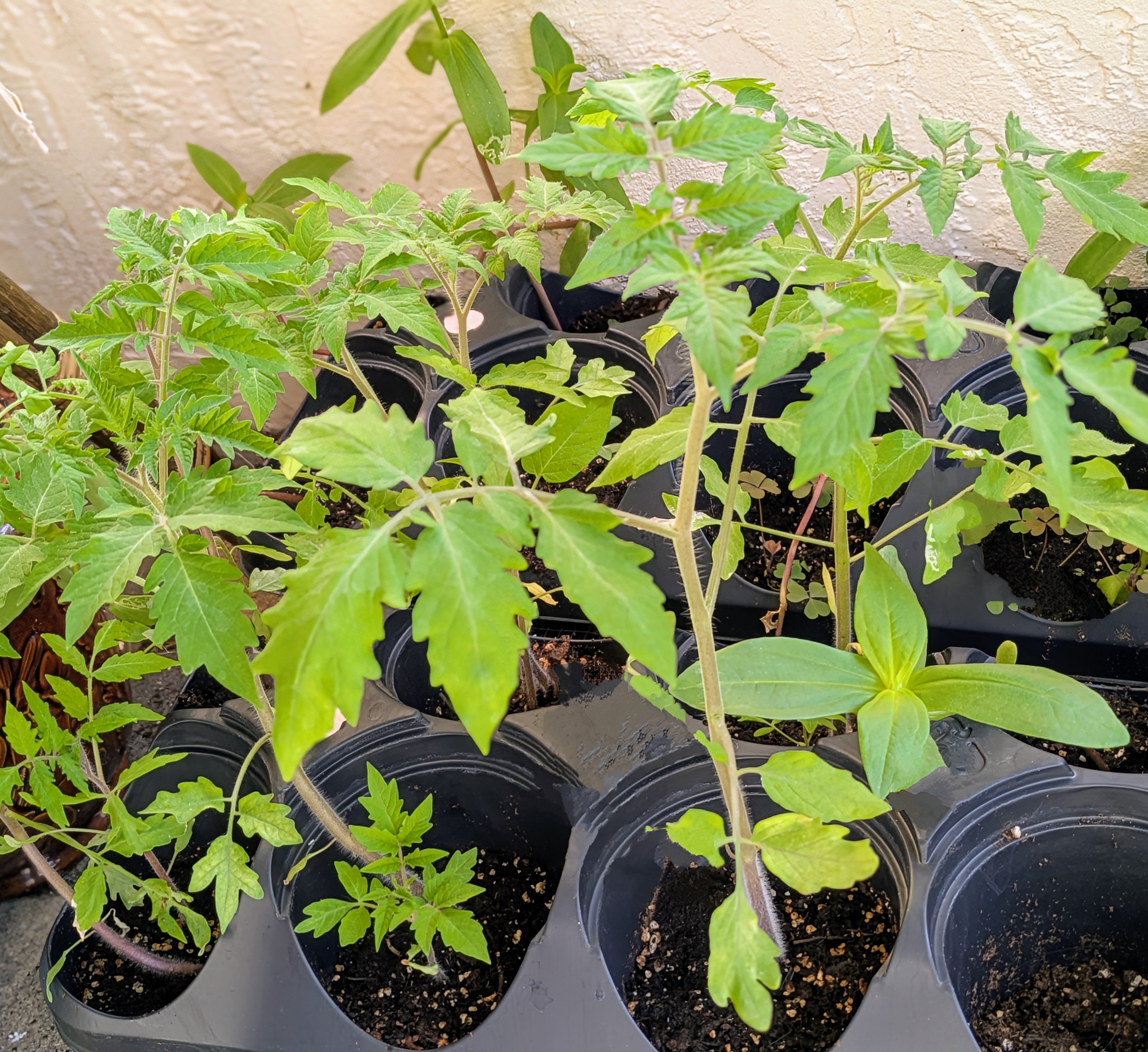
This time of year gives me an odd sort of garden Limbo. If I still lived further north, the garden season would be mostly over. Here in South Florida, I am watching tomato and zinnia seedlings come up – soon to be transplanted into the winter garden. Planting tomatoes in November may never feel normal.
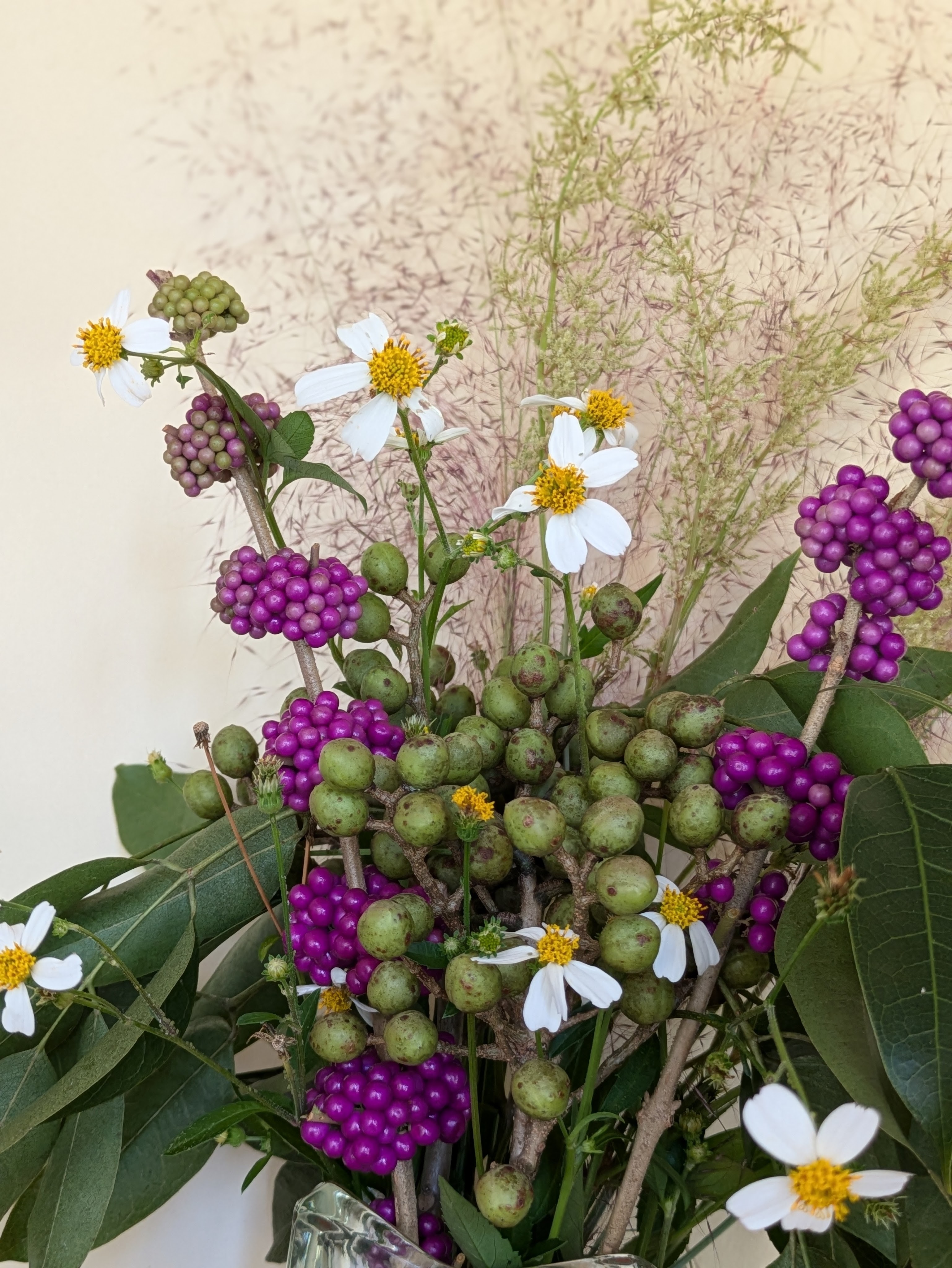
All of the plants in this vase are Florida natives. Two (Bidens and Juba) are in the garden due to Limbo being induced by not knowing what to do with them. I now cut and enjoy them. The balance I planted, the green fruit is from the Gumbo Limbo (Bursera simaruba) tree. Perhaps it is celebrating my garden Limbo?
Closer views:
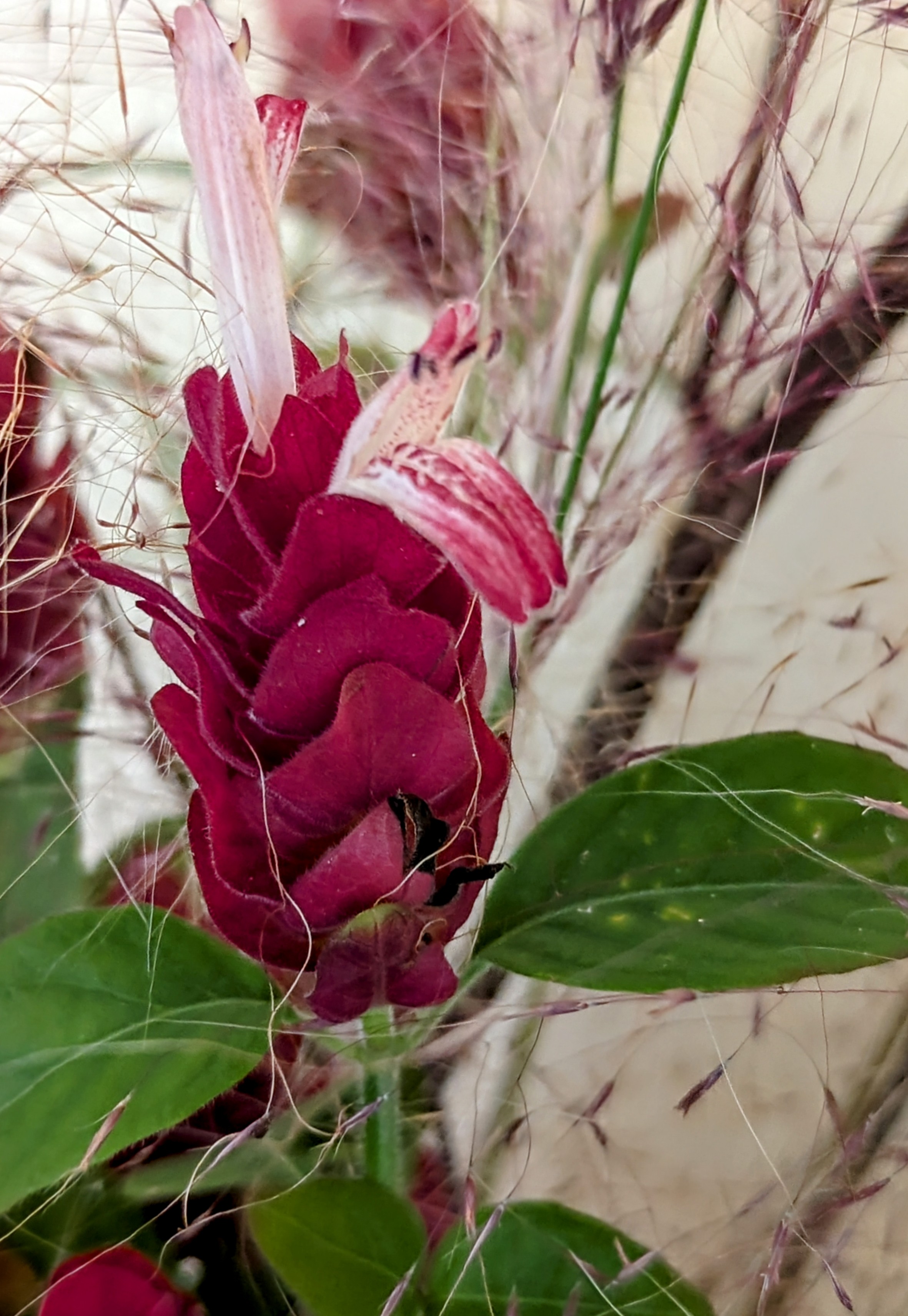
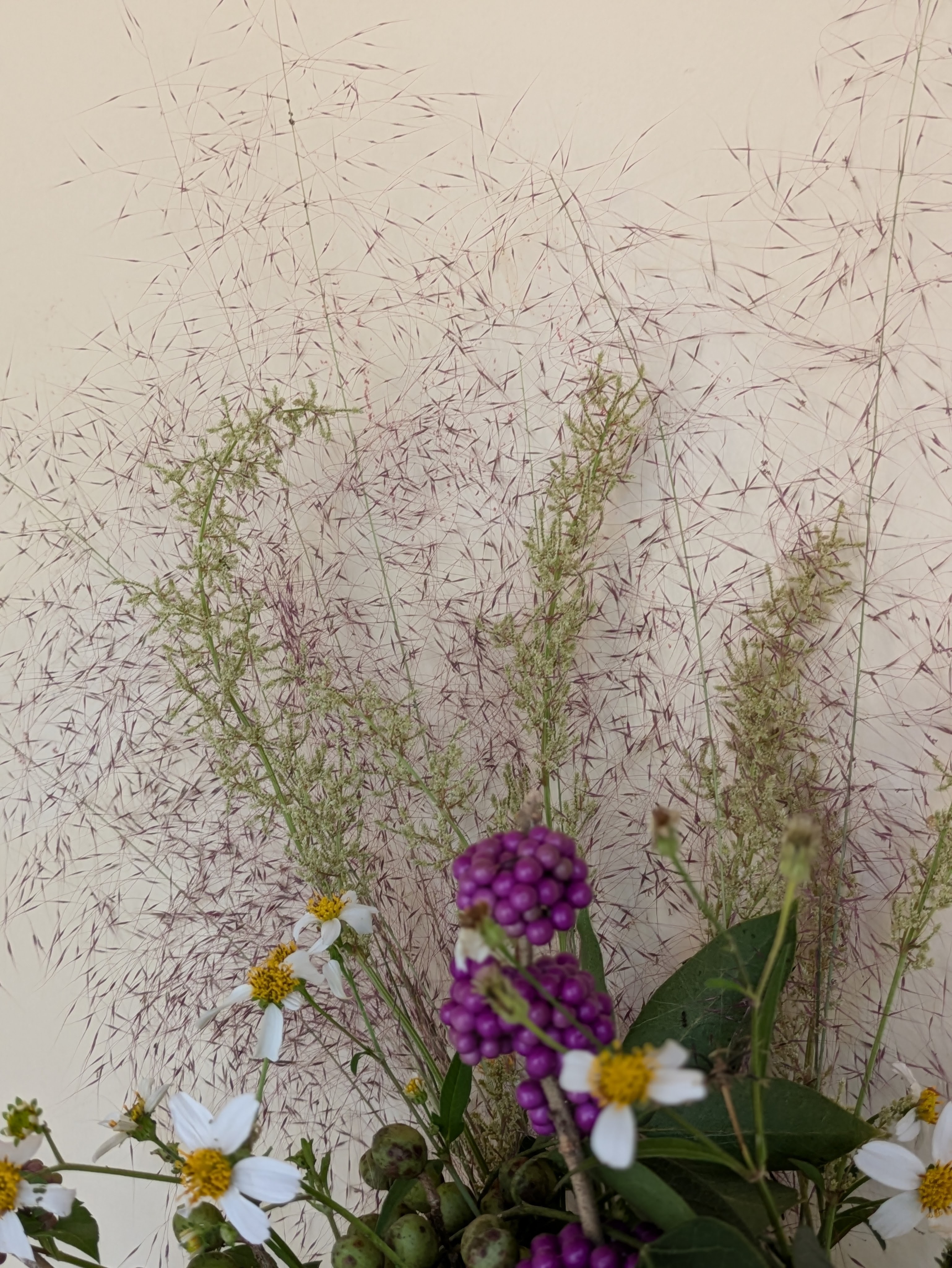
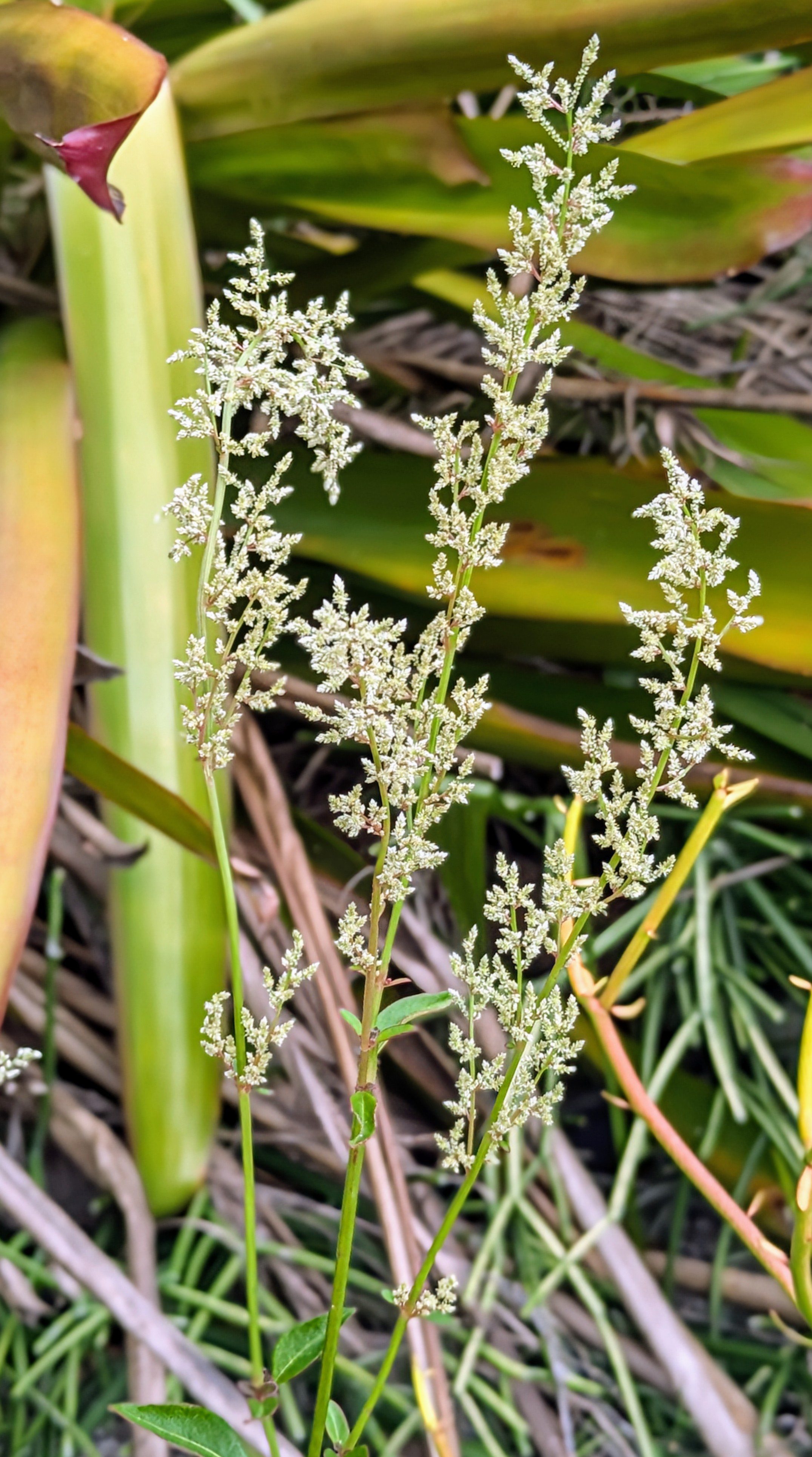
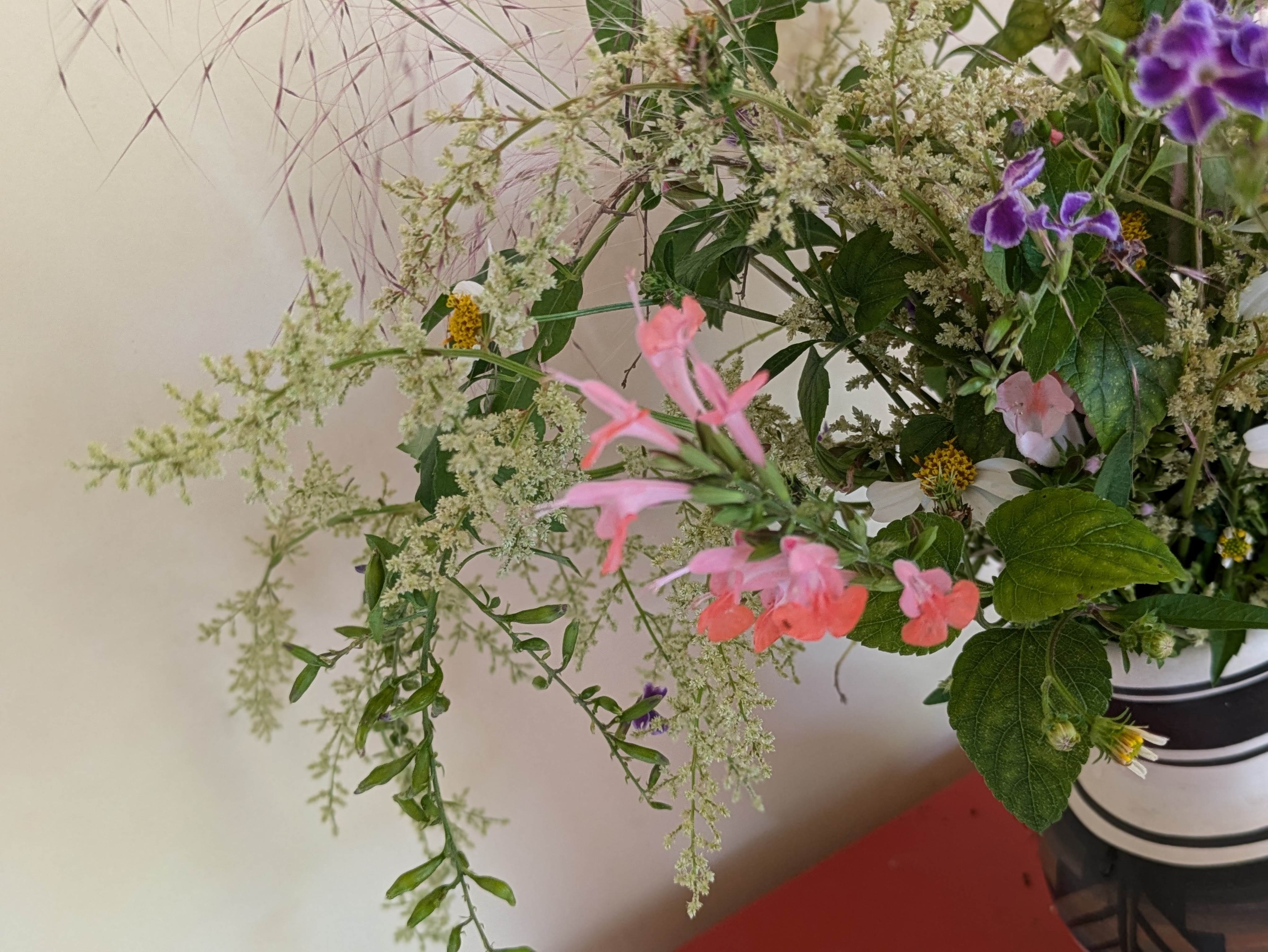
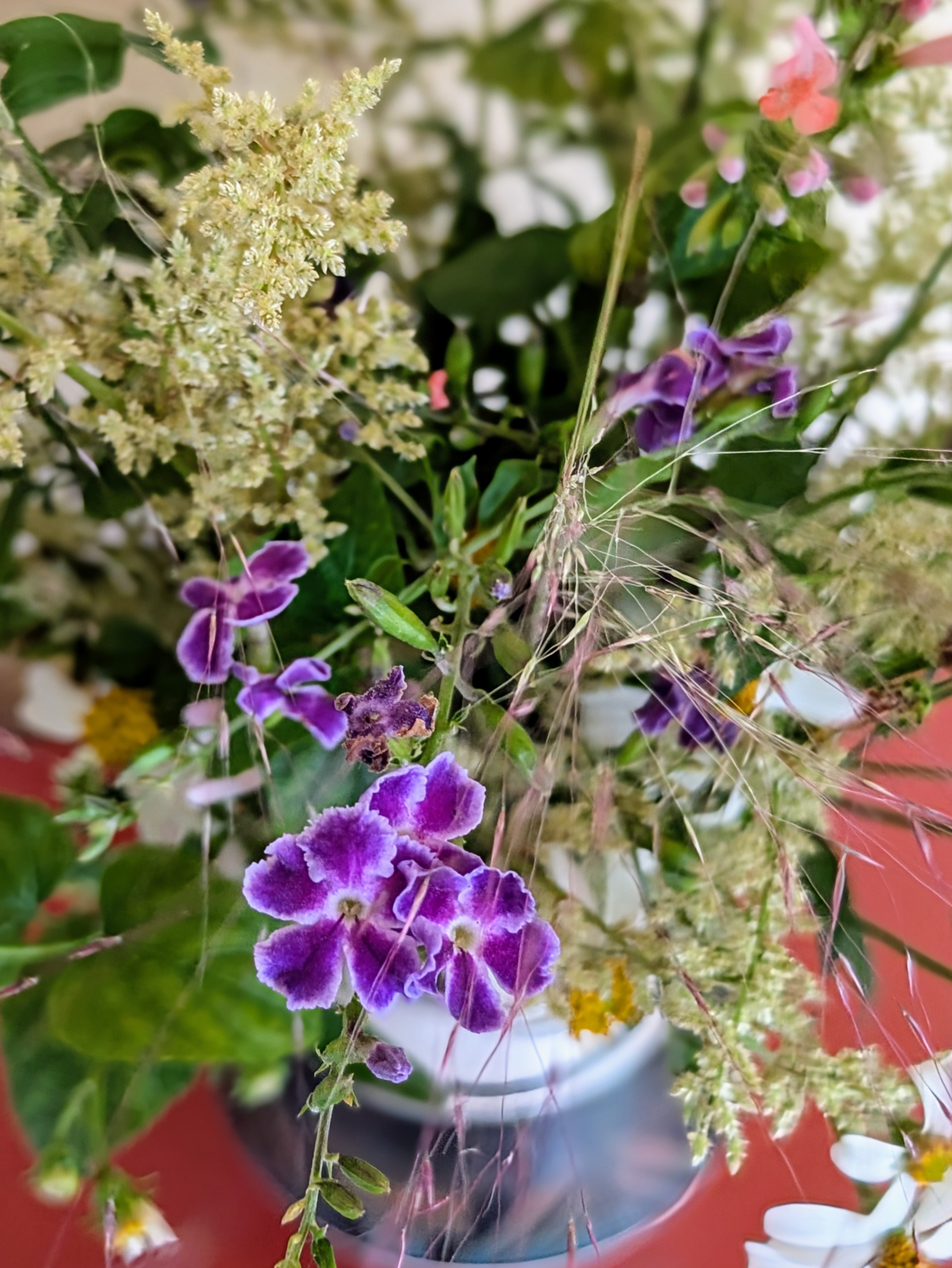
Two of my favorite wispies are in flower right now. The pinks are Muhly Grass (Muhlenbergia capillaris) and the off white is Juba Bush (Iresine diffusa)
Green fruit is from the Gumbo Limbo tree (that word again?!); white flowers are Bidens alba; purple berries are from Beautyberry (Calliocarpa americana). The crystal vase was a gift from my dearly departed brother, it always makes me smile to remember him. Today is his birthday.
Thanks to Cathy at RamblingintheGarden for hosting. Follow the link to see more vases.
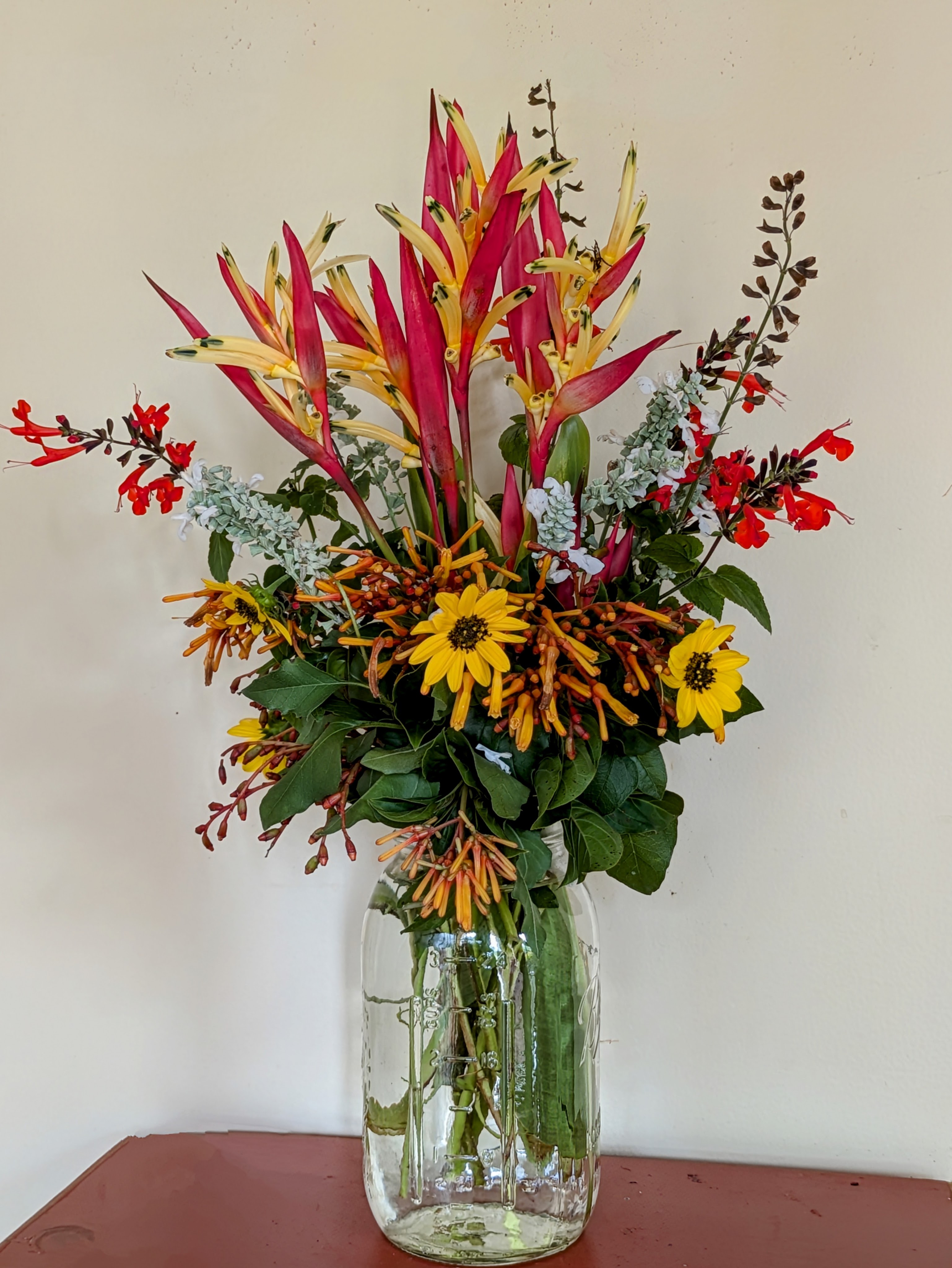
As I was searching the garden for flowers to cut, I started thinking outside the box. Well, I inhabit the area outside the box anyway and it dawned on me that there is fall color in South Florida. It is just not the typical seasonal color changes – it’s the flowers and berries! Such a relief after all these years of feeling deprived of fall color.
With a fresh perspective, I snipped a fall vase and plonked the flowers into a mason jar. Here are some closer views.
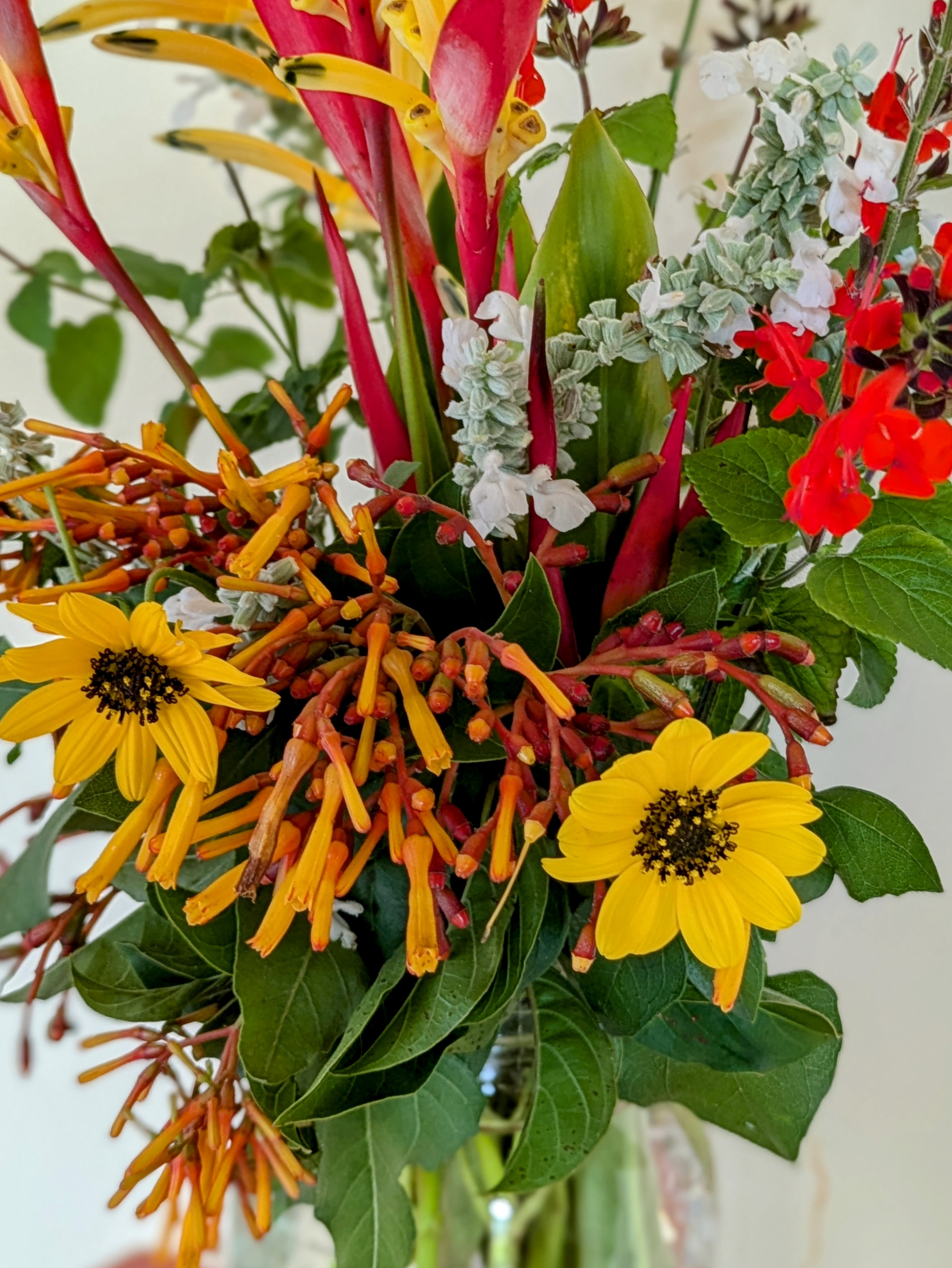
Yellow flowers are Beach Sunflowers (Helianthus debilis); orange tubular flowers and berries are Firebush (Hamelia patens); white flowers are ‘White Flame’ Salvia.
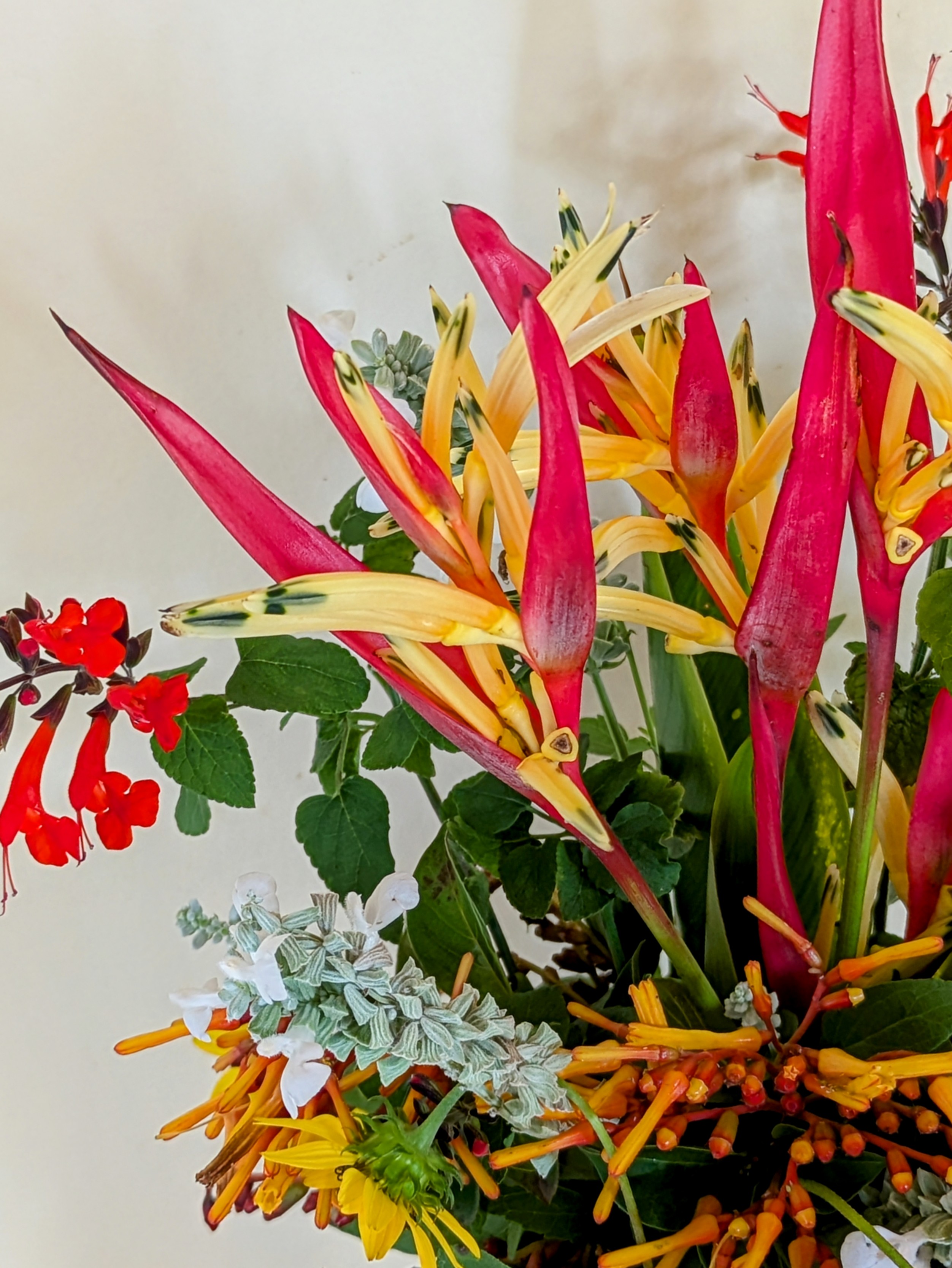
Red spike flowers are Tropical Red Salvia (Salvia coccinea); red and yellow flowers are Parrotflowers (Heliconia psittacorum ‘Lady Di’.
Fall brings changes to my garden. Cooler weather is the best! It seems odd to me that the more tropical plants (like Bromeliads) start to reproduce like mad and it is time to thin and move them around. I am not sure why I think they should like the rainy, steamy weather better. Maybe that is why I enjoy them so much.
To see more changes in SOS gardens follow this link GardenRuminations to Jim’s blog.
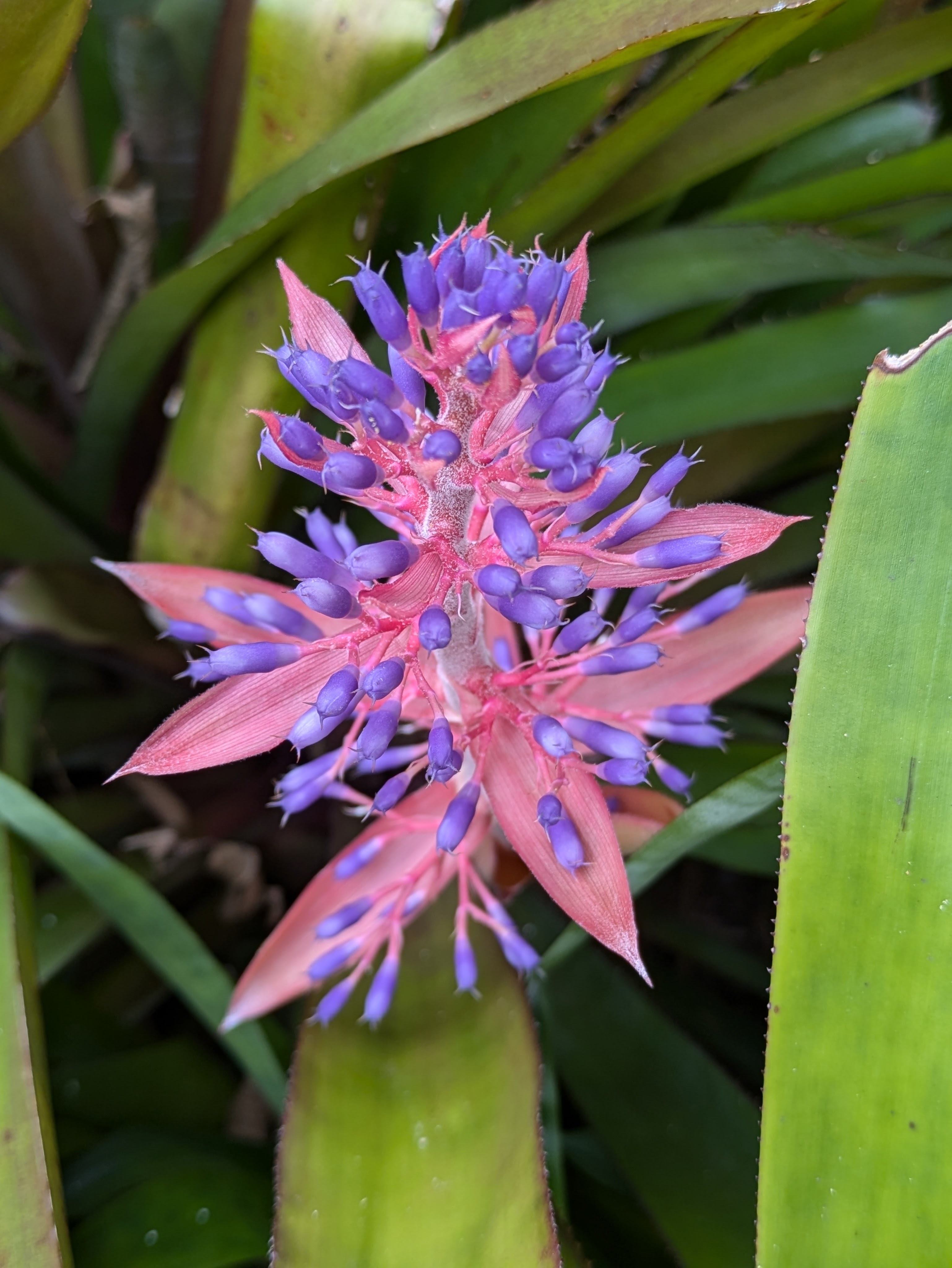
October inspires the ‘Candy’ Portea Bromeliads to flower. This is just the beginning. These get longer and have fat pink stems.
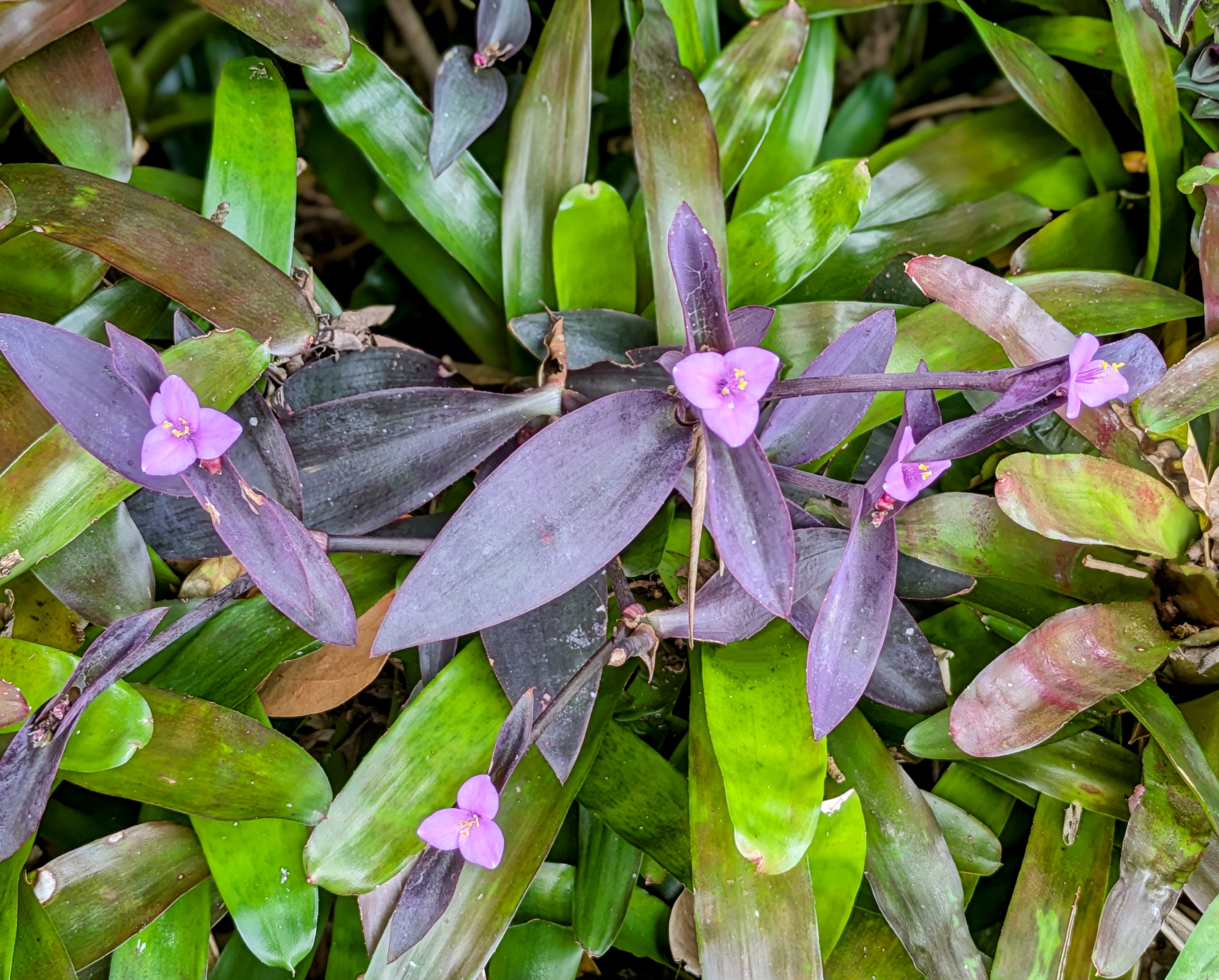
I am trying to decide if I love this or not. These Purple Queen (Transcandentia pallida) pop up in the Bromeliads and add a little color – or does it look unkempt? A dilemma.
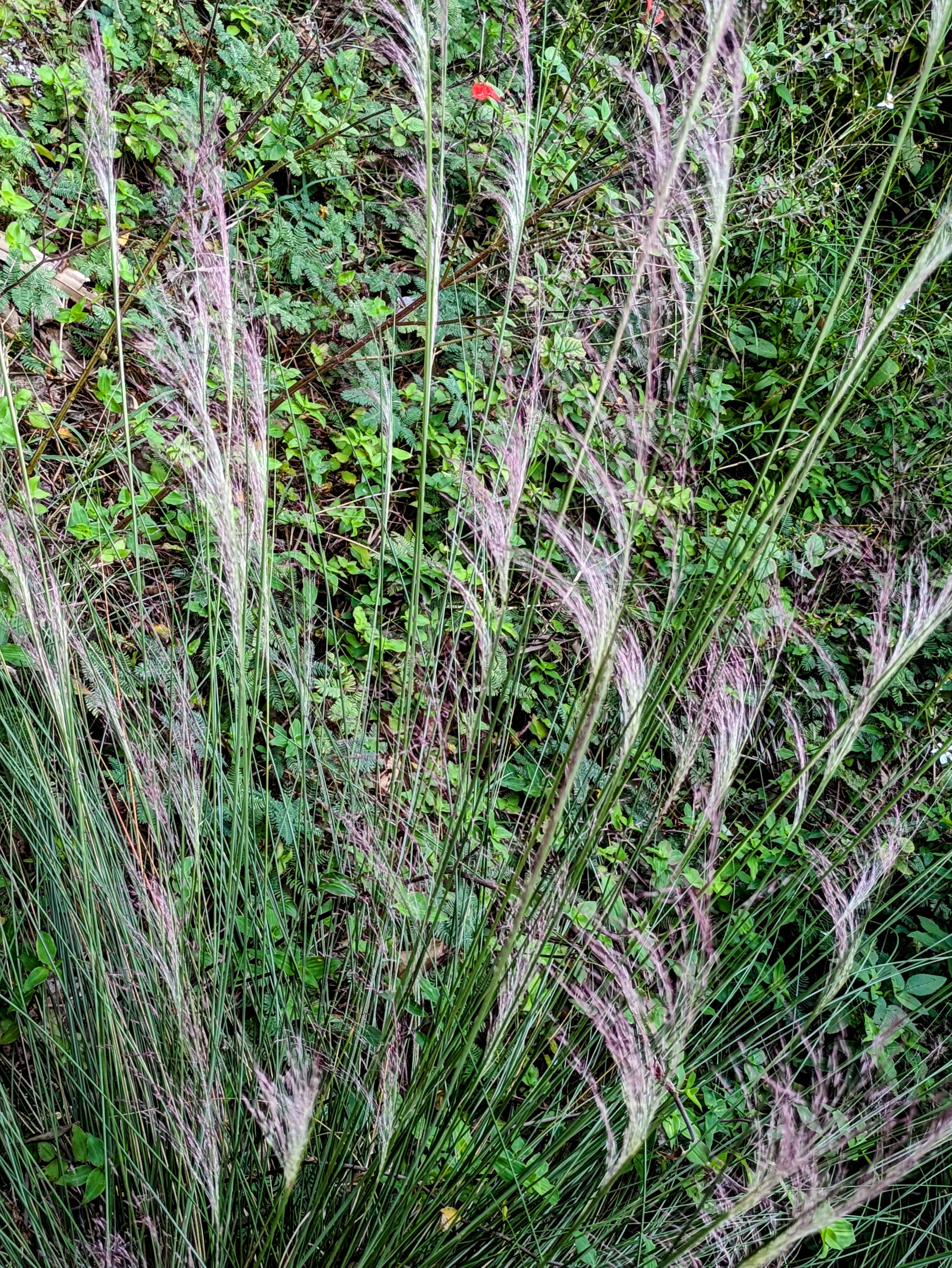
A bit more typical fall scene, the Muhly Grass (Muhlenbergia capillaris) is starting to show off.
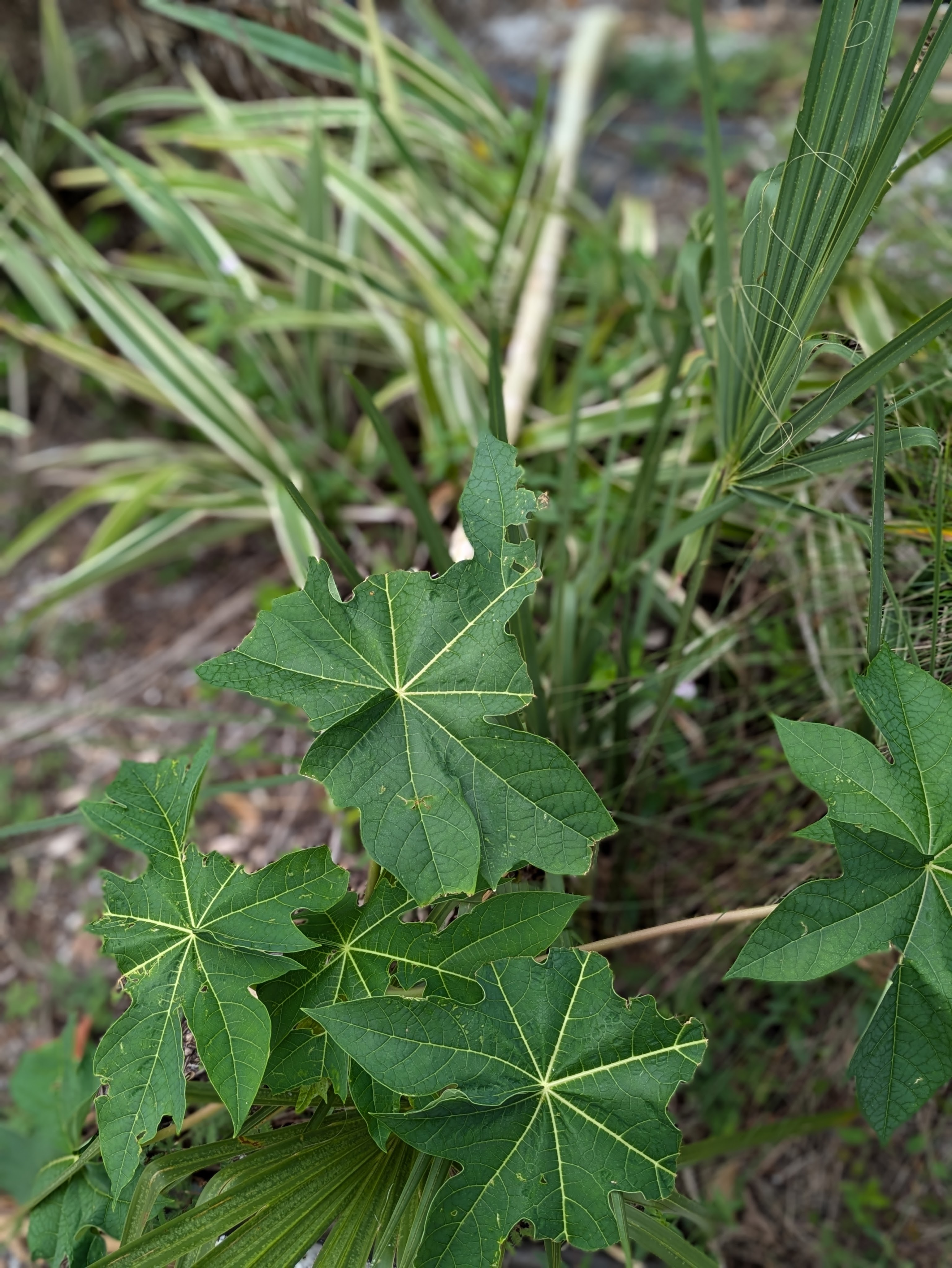
An unusual post hurricane occurrence. The Papaya tree knocked down by the wind is still alive. I think rabbits are eating the leaves. I am wondering if I can prop this up to make an easy to pick Papaya tree. The fruit is usually at least 8 or 10 feet off the ground.
The Juba Bush (Iresine diffusa). A native wildflower makes its seasonal appearance.
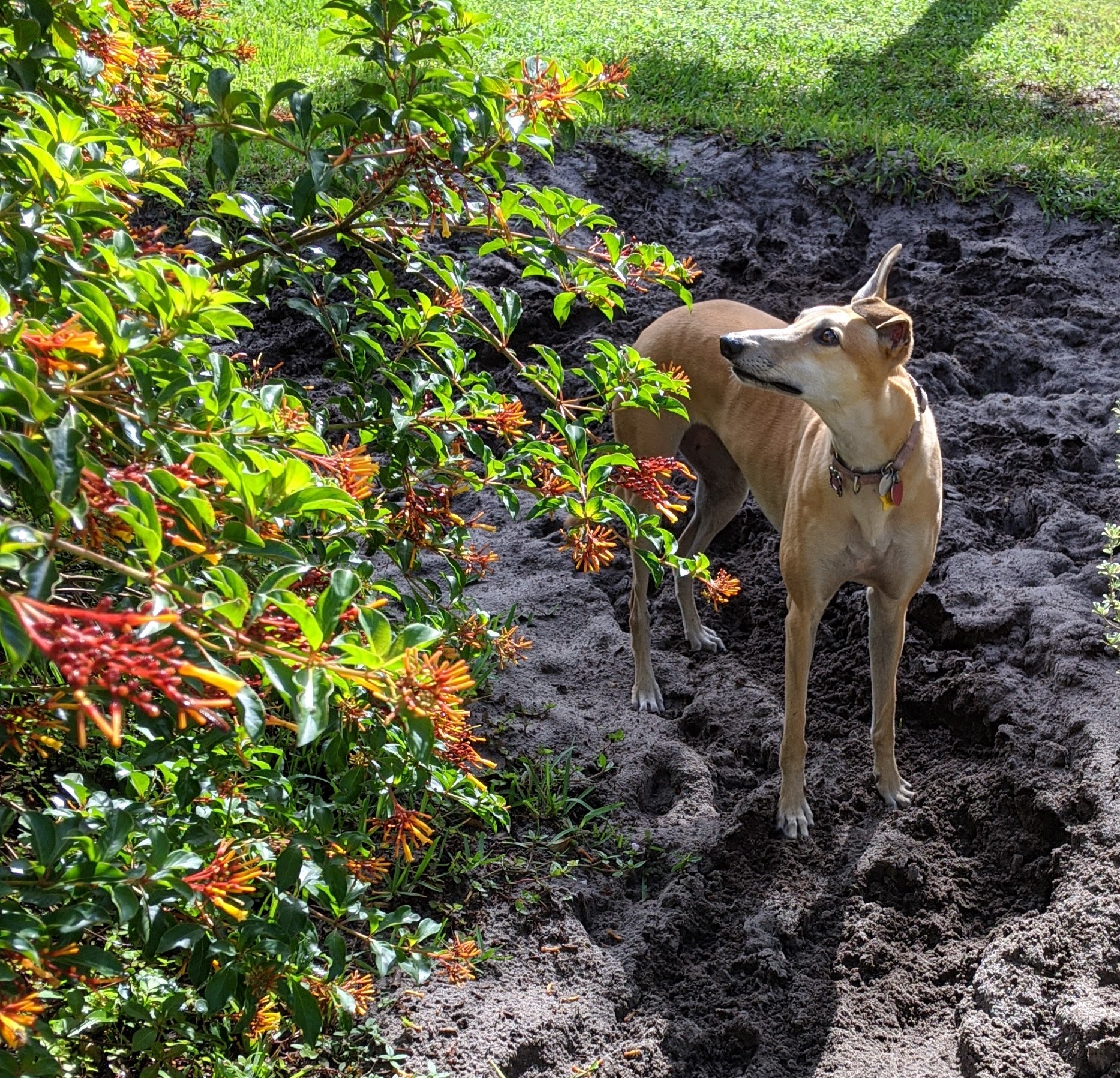
Another change in my garden I am sad to share. Fiona the Greyhound was lost to bone cancer this week. She was only seven and diagnosed in late August. I thought we would have more time with her. Here she is looking for bees to munch on in better days.
One way or another October always makes me happy. Bar hurricanes from that statement. The weather cools and this month marks my return to gardening. I spent Sunday morning in the garden dodging rain showers and toweling Fiona the Greyhound off every time we had to run back into the house.
There are seemingly millions of sticks scattered throughout the garden from the glancing blow of Hurricane Milton. It doesn’t seem like I have enough trees to have produced all of these sticks. They can’t really be raked up, so I have been picking them up one by one. Sisyphus would have loved it.
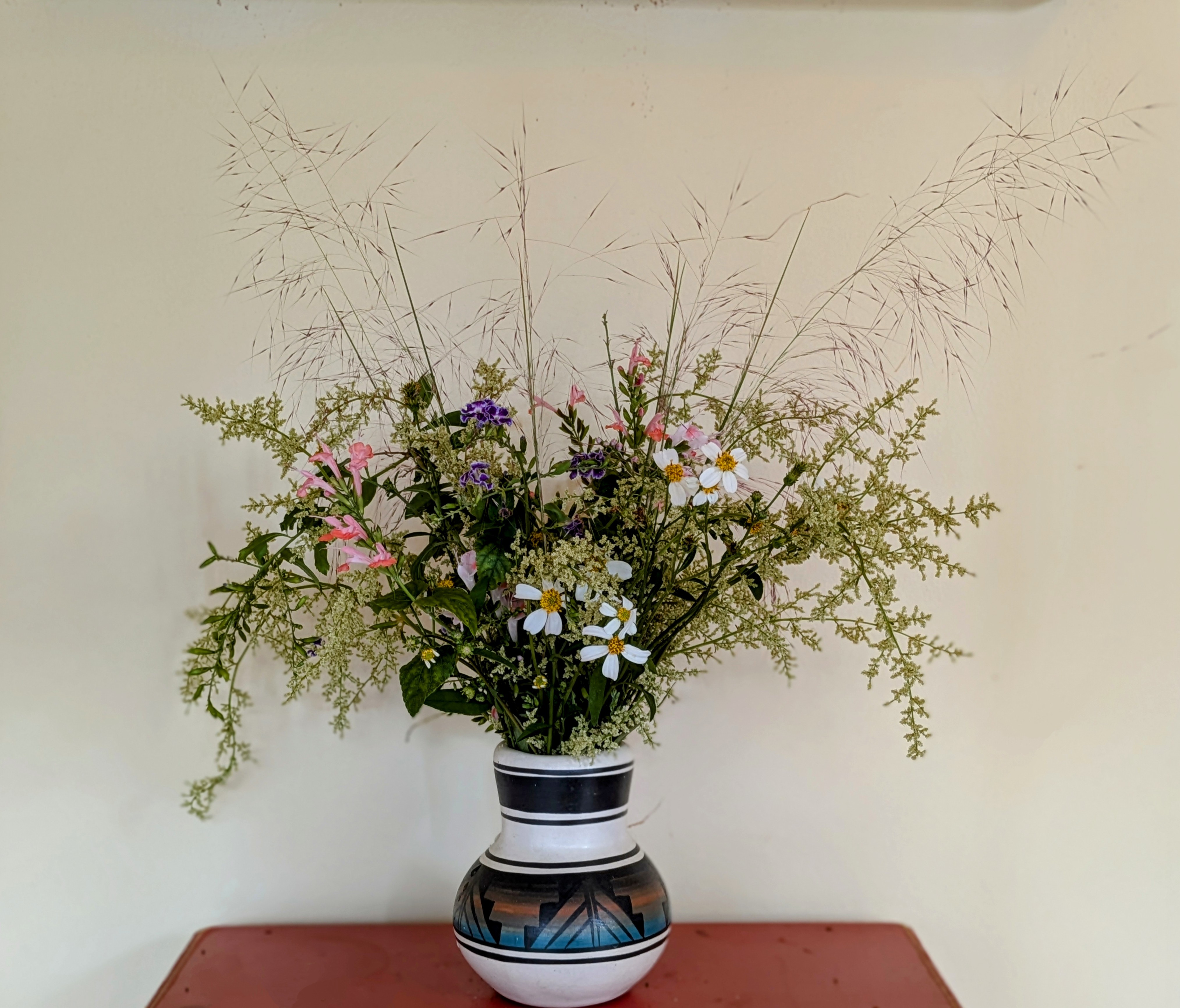
Some of my favorite native plants flower in the fall. The Juba Bush is one that causes jubilation as does Muhly Grass, both lending their fluffy pastel brilliance to this vase. I cut a handful of blooms and plonked them into my Ute tribe vase, swirled them around and viola!
Closer views:
The Juba Bush (Iresine diffusa) is the creamy white flower. It has a wonderful fragrance and is a good cut flower. The plant, being native, has a mind of its own and will only grow where it decides to. I leave it in the middle of pathways, etc. as I enjoy the flower. Here’s the full story from George Rogers at Treasure Coast Natives if you want to read up on Juba Bush. The peach flower is Tropical Red Salvia (Salvia coccinea) wearing fall colors; a bit of Pink Muhly Grass (Muhlenbergia capillaries)
It’s hard to see these blue flowers in the vase – ‘Sapphire Showers’ Duranta (Duranta repens); they rarely flower – so I plucked a few to enjoy in the house. The white daisies are another native, Bidens alba, I pull and cut these at will – they never go away and will happily grow with no attention whatsoever.
That’s all from my garden this Monday. I hope to be back in the garden with Sisyphus, clearing up the sticks. Follow this link to visit Cathy and see more vases in the comments – RamblingintheGarden
Fall is slowly finding its way to South Florida. October is a month of contrasts – one of the most active months for tropical weather, witnessed last week by the havoc wreaked by Hurricane Milton, it also ushers in welcome cooler temperatures. Sometime around October 15 usually brings the first cold front of the season and it was right on time. Temperatures in the 70s (F) have been experienced for the first time in months. Ahh.
Hurricane Milton passed about 100 miles north of my garden. The havoc wreaked here was by a series of tornadoes spawned by the outer bands of the storm the day before landfall. My area was peppered with these storms packing winds in the 150 mph range. A great deal of destruction ensued and lives and many properties were lost. The hurricane was a snooze compared to the tornadoes. We are unscathed and grateful.
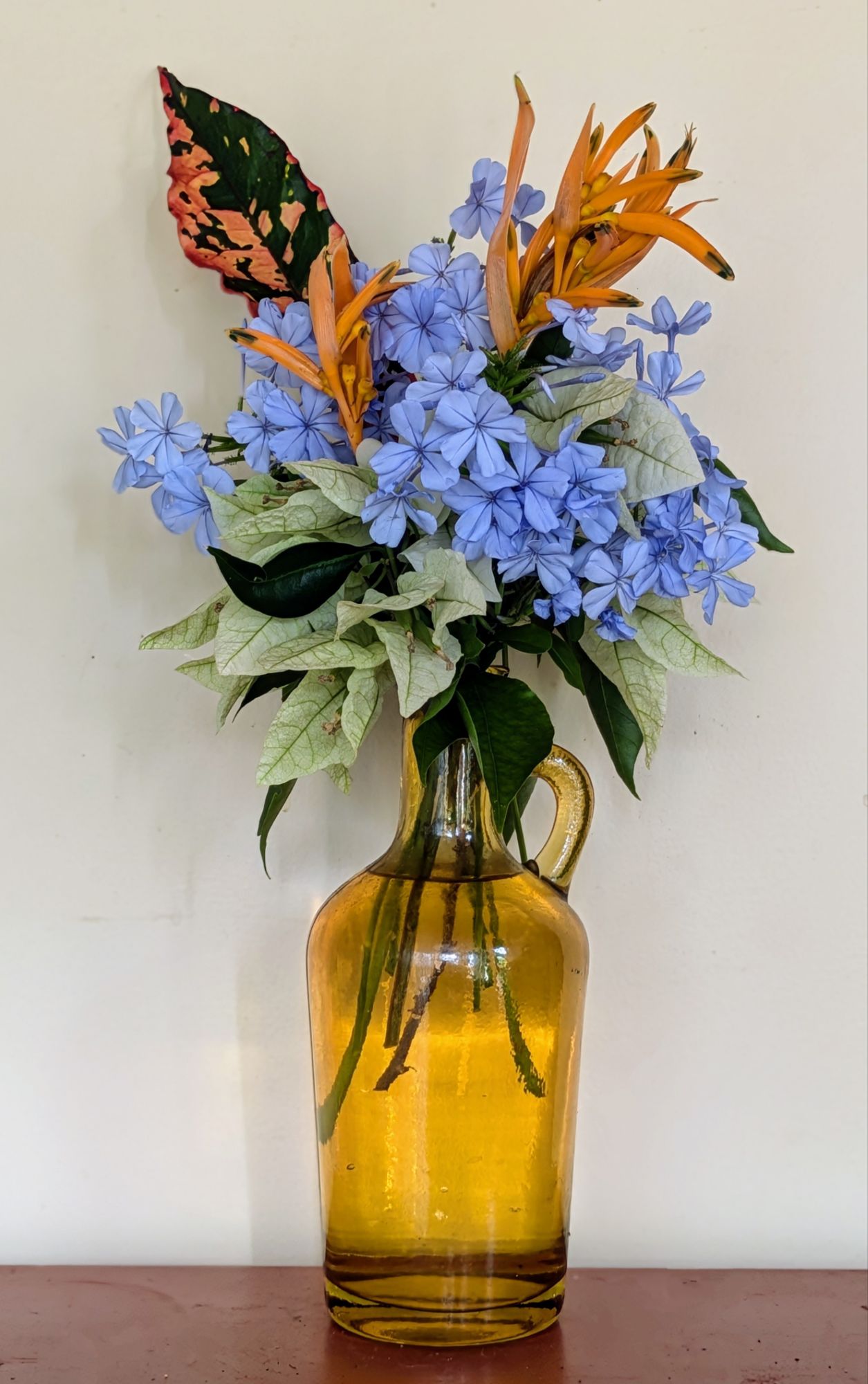
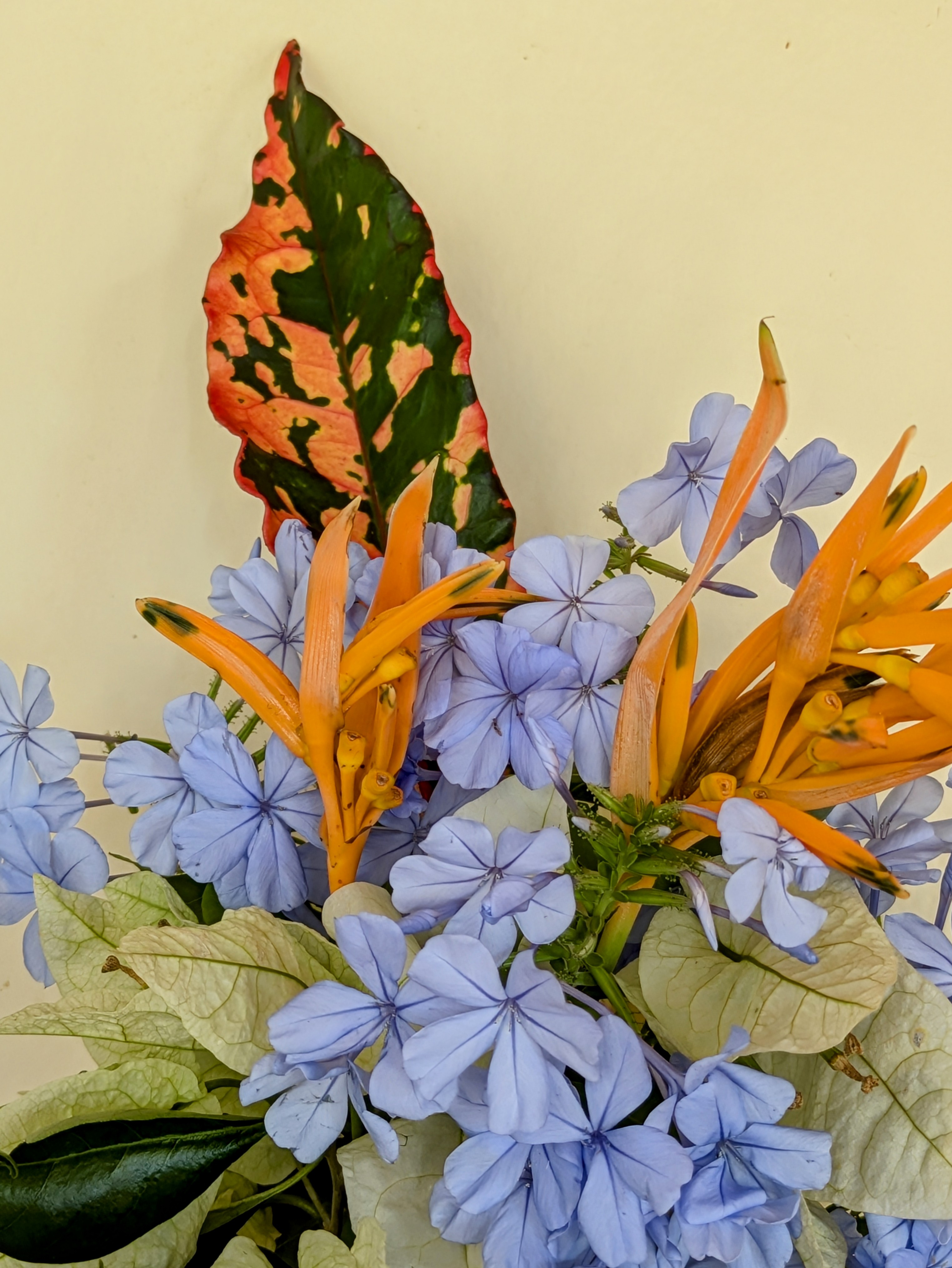
I plucked some cooler colors, fall tones and pseudo fall leaf color for my vase this Monday:
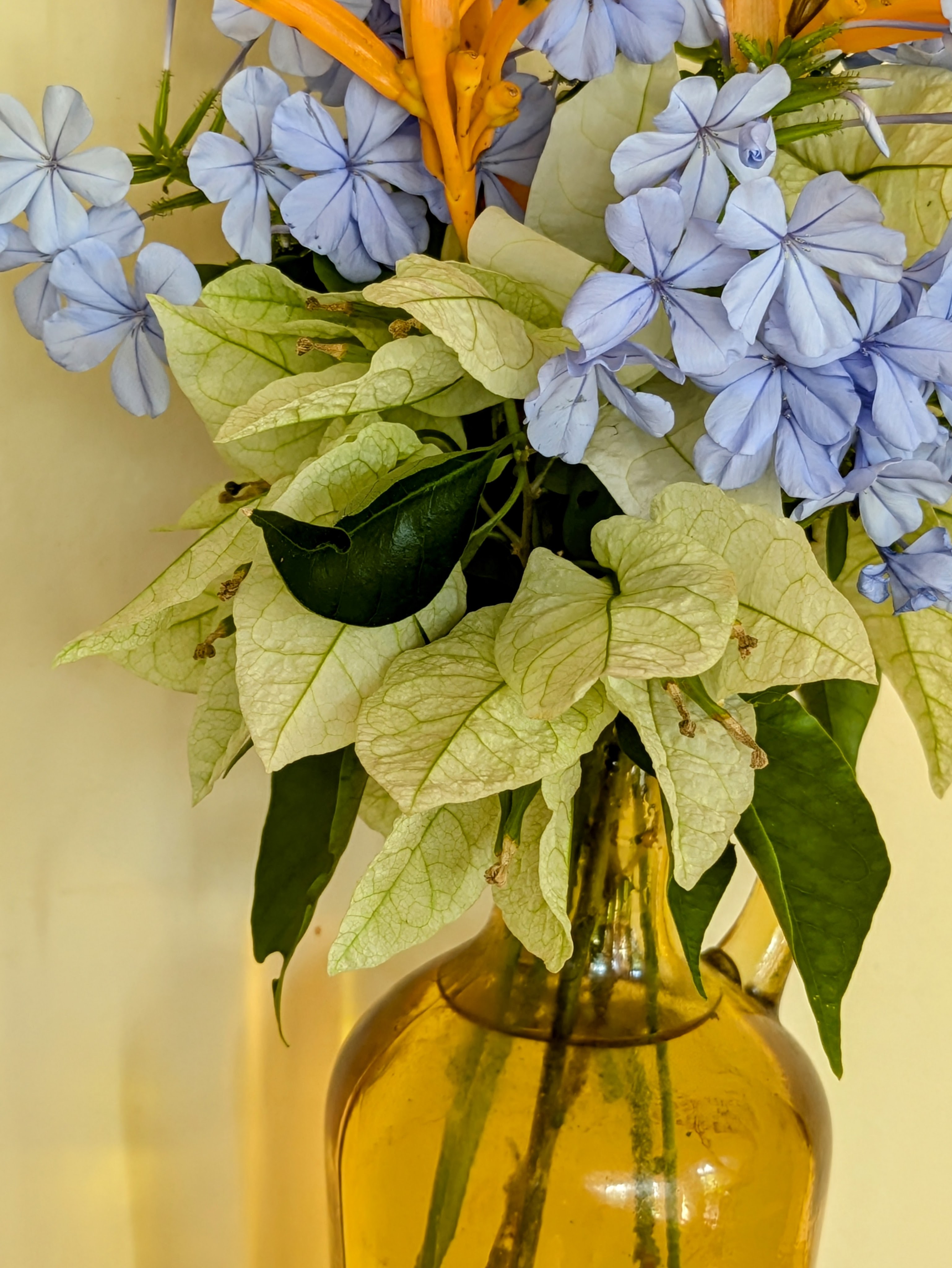
The off white flowers are ‘Miss Alice’ Bougainvillea’, she is leaning a bit towards green having fallen off her trellis in the storm. Blue flowers are Blue Plumbago (Plumbago auriculata) the tropical rains seem to have inspired a new flush of flowers for October. The gold glass container is an olive oil cruet.
Faux fall color is provided by peachy Choconiana Heliconia (H. psittacorum) and the leaf of a Piecrust Croton (Codieum varigatum).
I guess I can pretend I am raking up fall leaves instead of hurricane debris since its October!
Visit our hostess, Cathy, at RamblingintheGarden and follow the links in the comments section to see more vases.
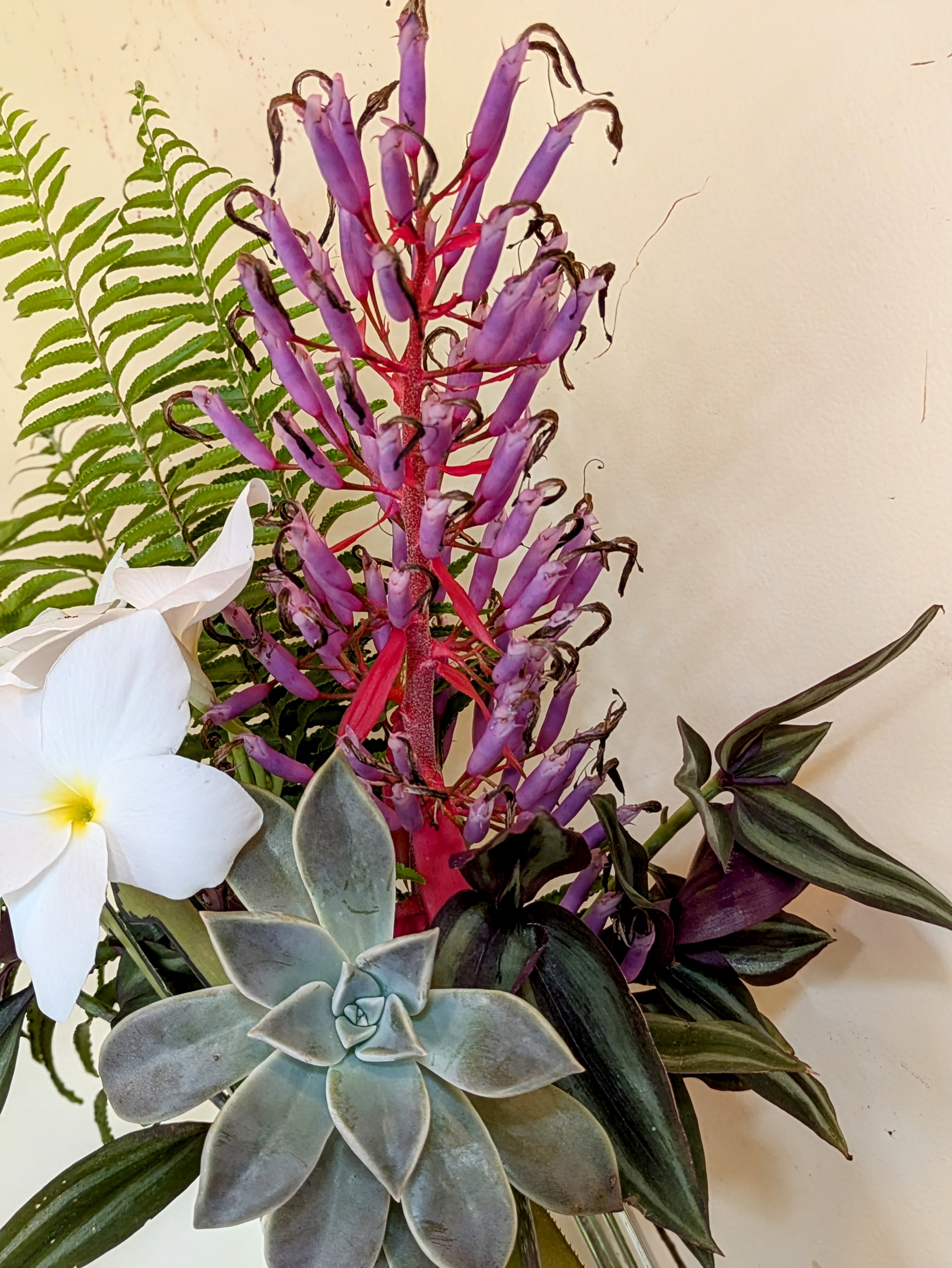
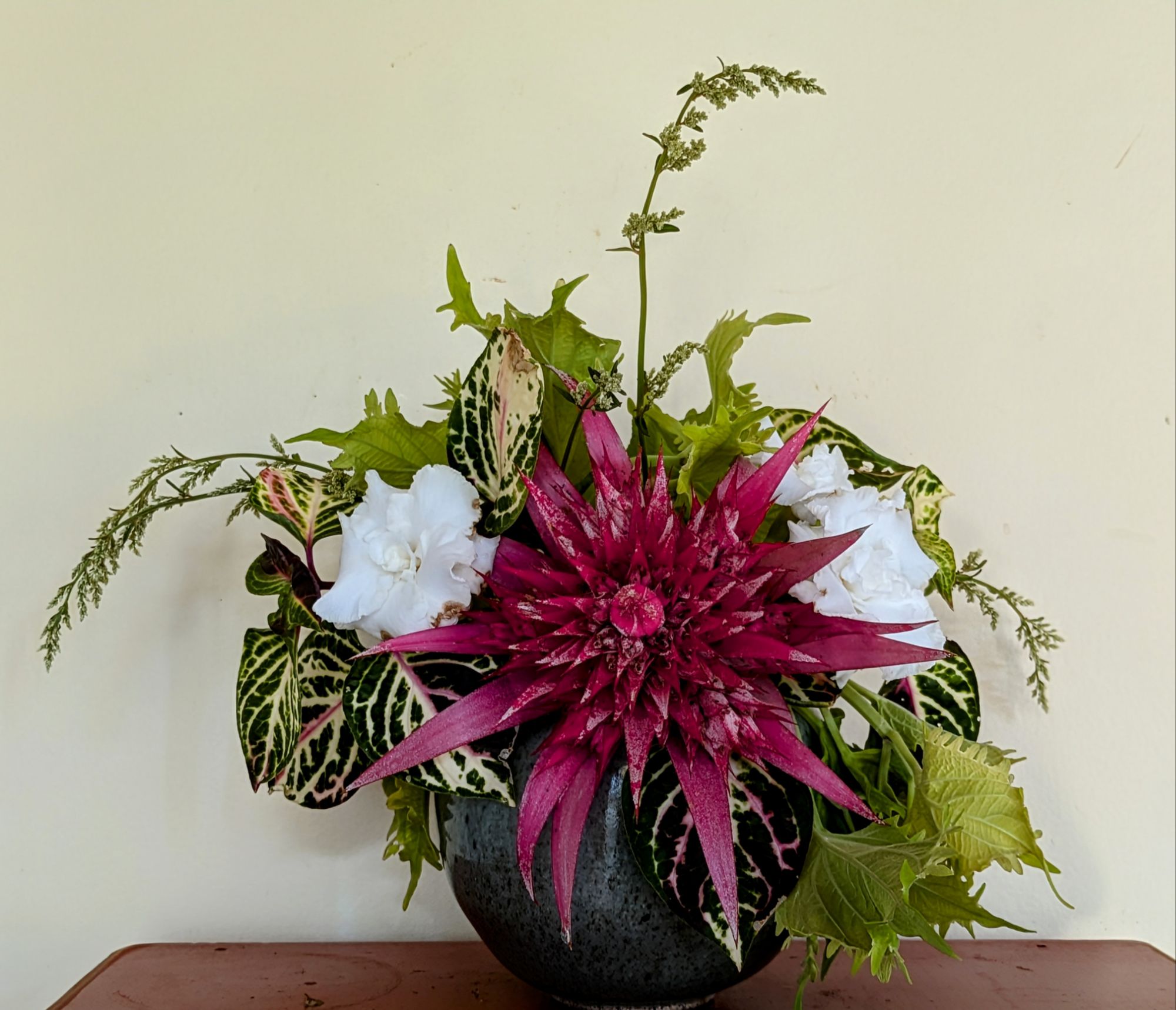
The pink flower in this vase is a Silver Urn Bromeliad (Aechmea fasciata). The tips go silver and the pale pink deepens to rose as the flowers fade. I like the coloration and have appreciated this flower for quite some time – it opened May 12th! I think I got my money’s worth. They never last very long in a vase, so this is its swan song.
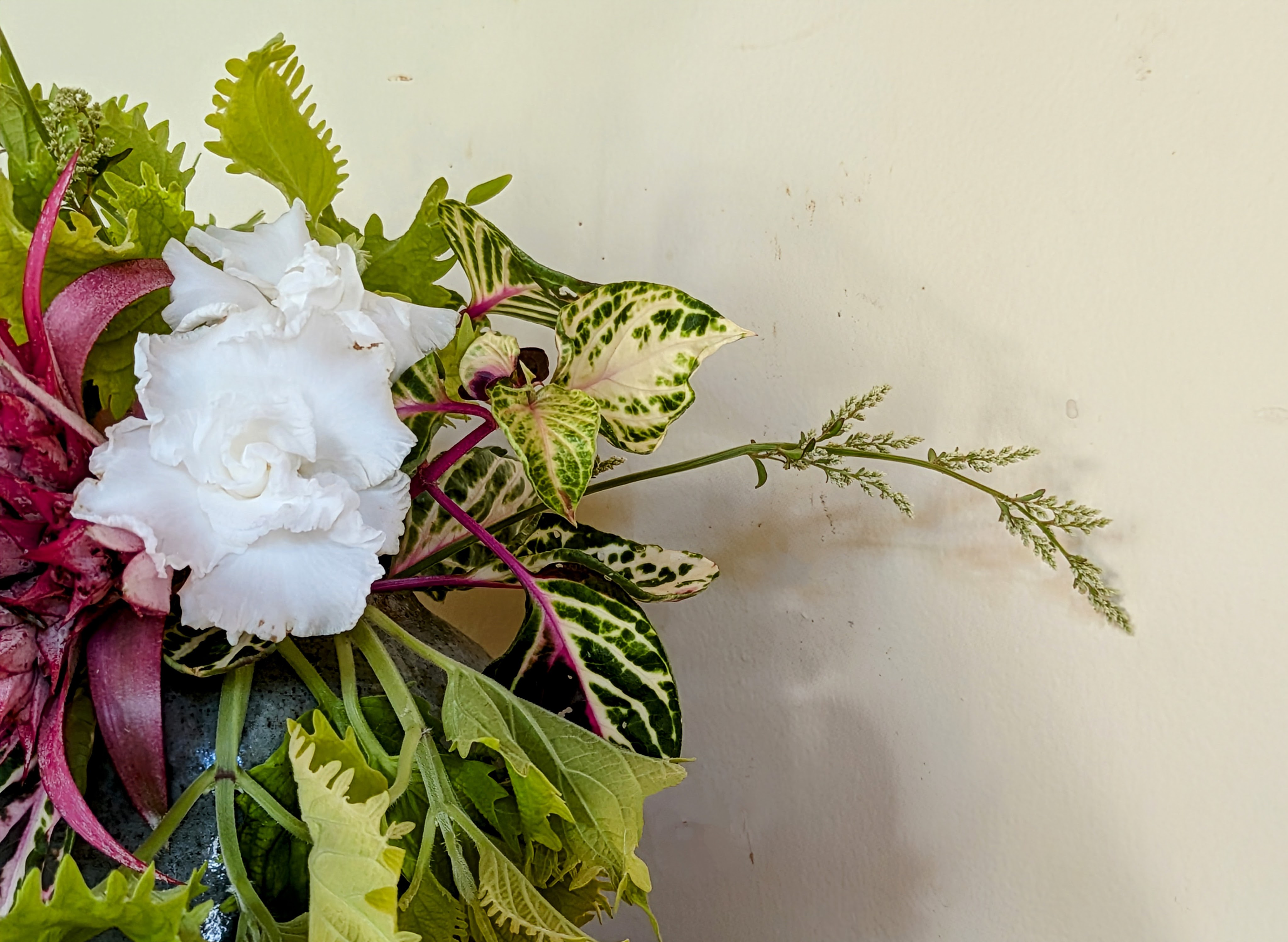
Supporting players in this swan song.
In white, a few Tropical Gardenias (Tabernaemontana diviricata) are still in the garden; varigated foliage is Chicken Gizzard plant (Iresine herbstii). I am told the name originates from the tropical island these plants are from – they were eaten with chicken gizzards. Chartreuse foliage is from an incredibly prolific coleus.
The wispy accents are from another Caribbean tropical, Juba Bush (Iresine diffusa).
We are still dreaming of a fall cool down and thankfully were missed completely by Hurricane Helene.
Maybe I should say Hurricane Post. It is inevitable when a hurricane hits Florida I hear from a lot of people who are wondering if we are okay. Which is great, I am glad people think of me. This particular hurricane, Helene, hit the opposite coast of Florida with devastating results and is still continuing to wreak havoc two days later. In my garden, about 8 dried palm fronds came down. The storm passed about 2 or 300 miles to our west, the wind field was huge and we were barely on the edge of it. There was a fairly consistent 25 mph wind Thursday and Friday with a few downpours from the outer bands of the storm, but that was about it. The garden is intact and well watered.
On to Six, to see more SOS gardens, undoubtedly hurricane free, visit Jim at GardenRuminations
Turkeytangle Frogfruit:
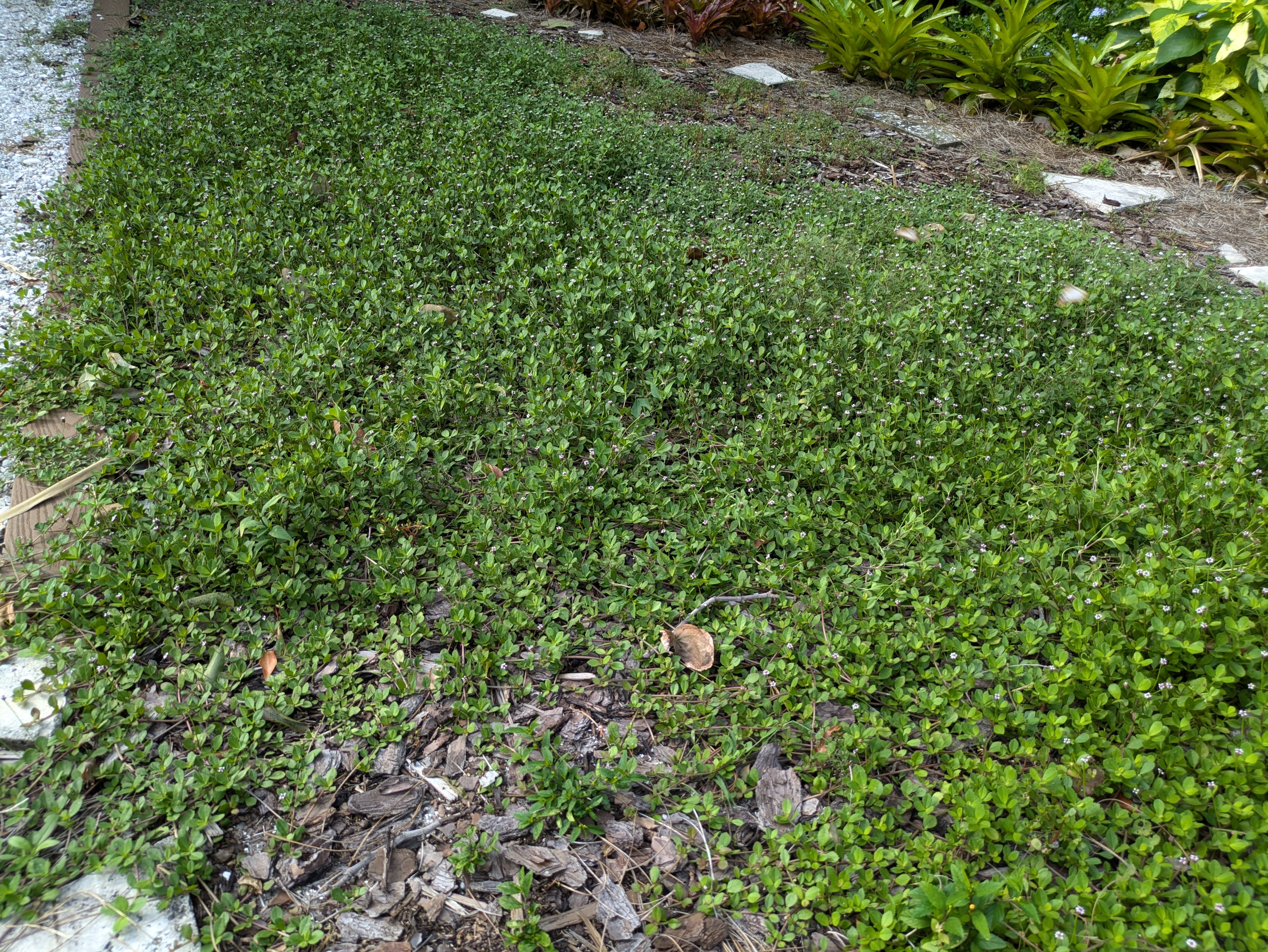
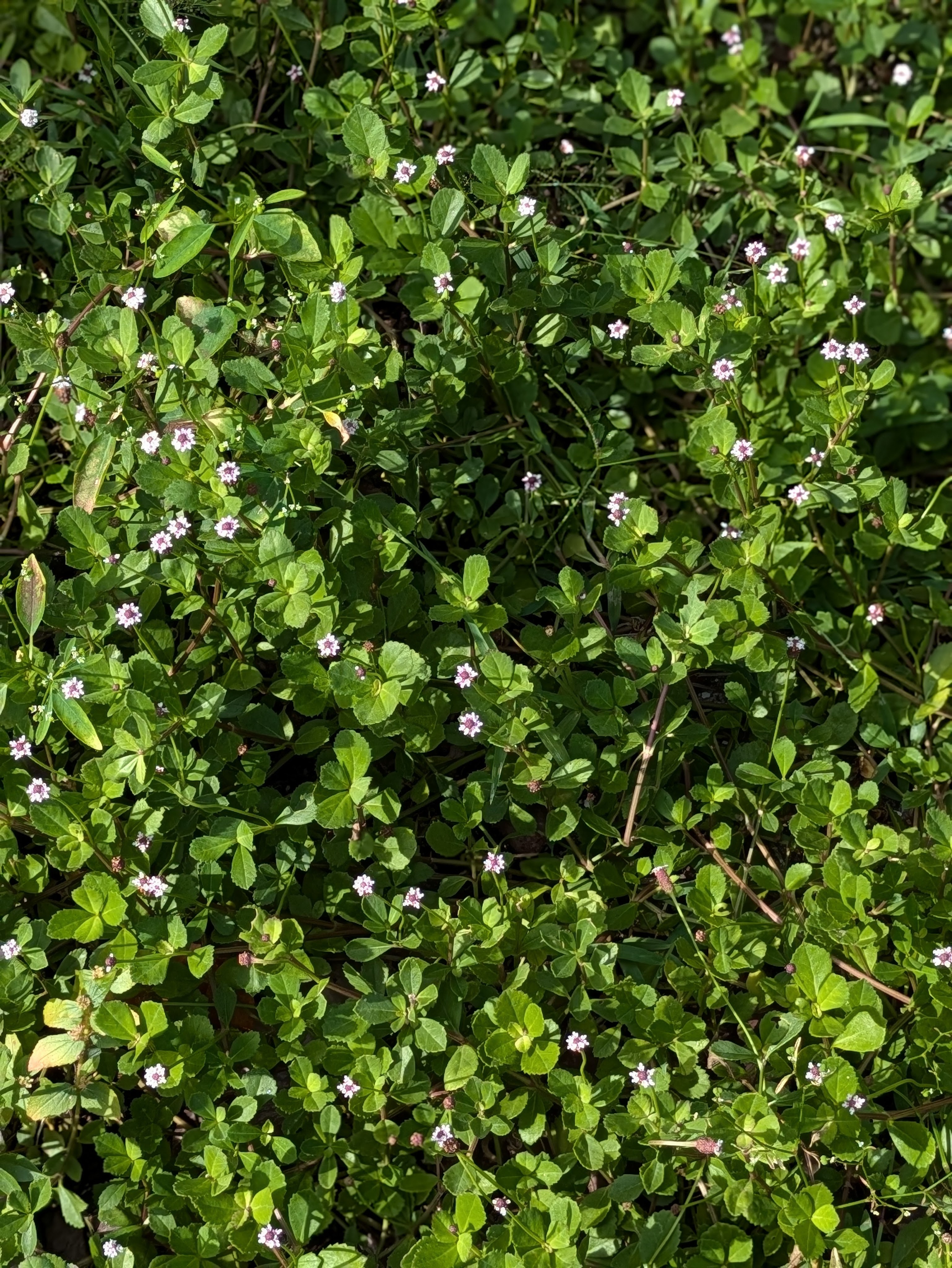
Several people have asked to see this, so here it is. I removed our icky lawn (a term I use loosely) and replaced it with an evergreen wildflower called TTFF (Phyla nodiflora). These are a bit difficult to source, so I bought a blob online and propagated the cuttings. This is the “lawn” last year.
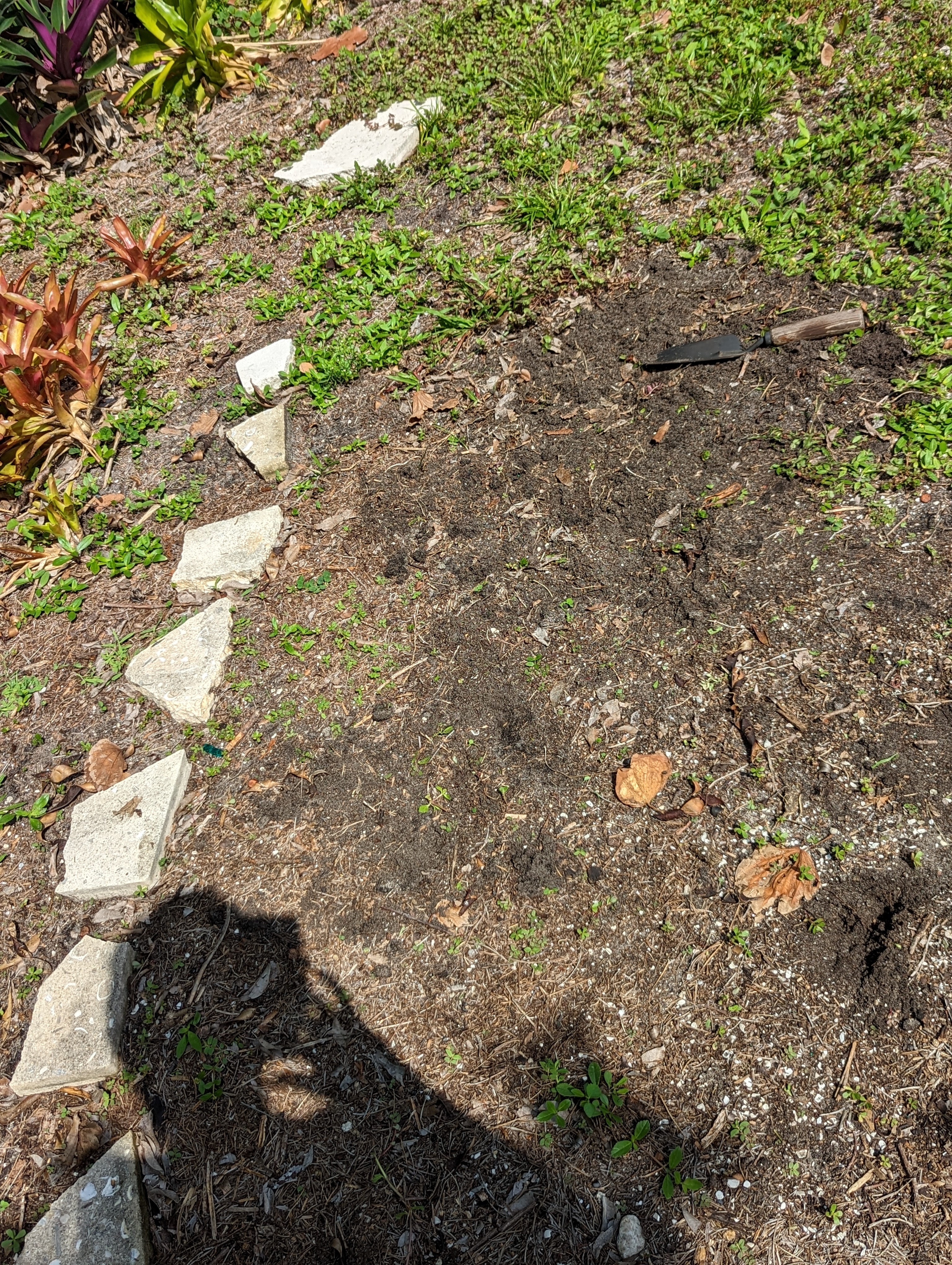
I cleared the area by hand and then installed rooted cuttings. Much trial and error, hand weeding and head scratching ensued. I read somewhere to install the cuttings in toilet paper tubes and tried it. This seemed like a reasonable plan – the raccoons thought it was so fun they pulled out all the tubes, and ate the cuttings. Replanted without tubes and that worked. My now curated evergreen weed, uh, wild flower lawn. I think this is more groundcover than lawn.
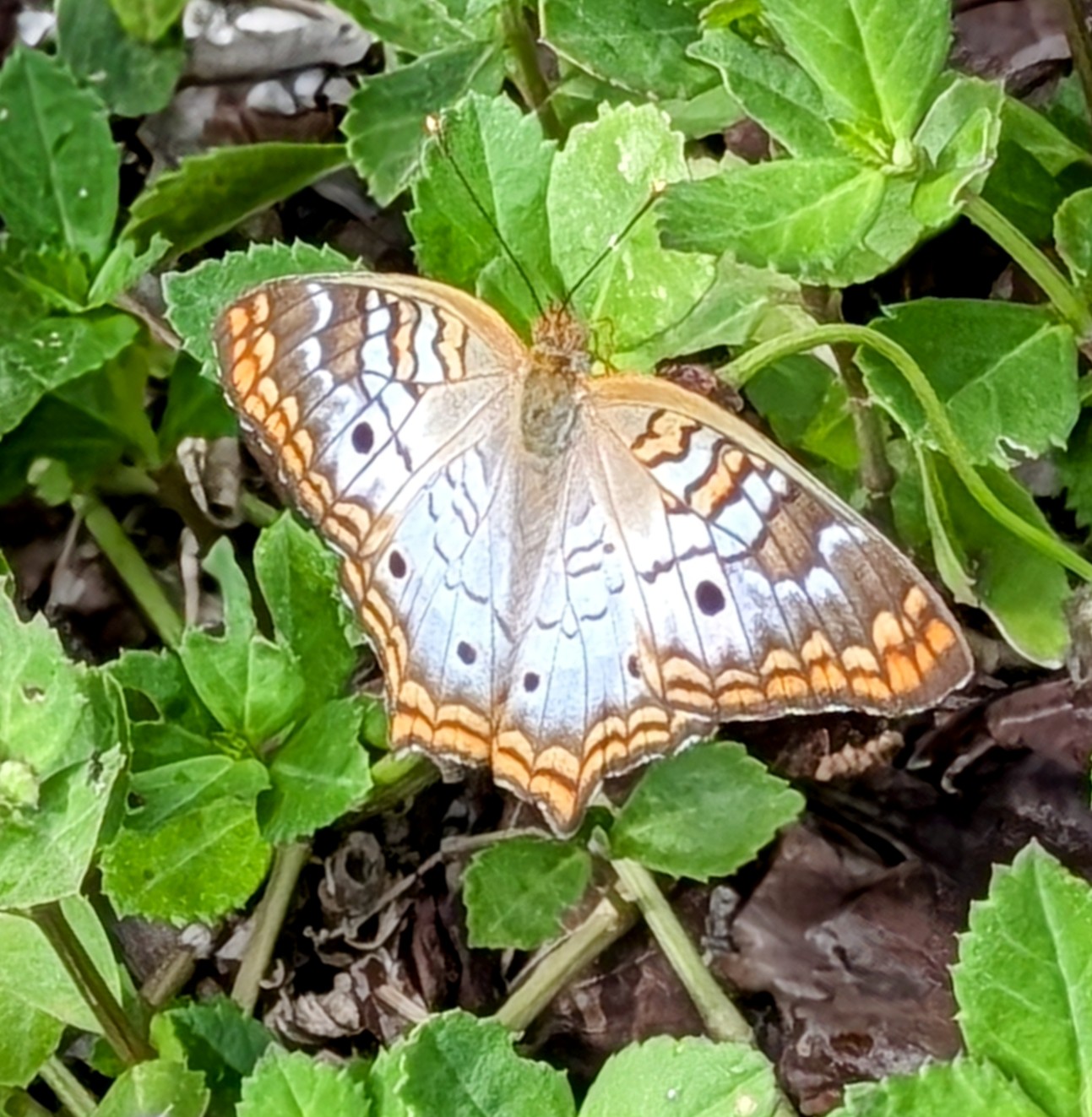
The curated weeds are still growing in and host three types of butterflies. I have only seen one type, White Peacocks, but there are usually 4 or 5 flying around the TTFF. A closer view.
The White Peacock.
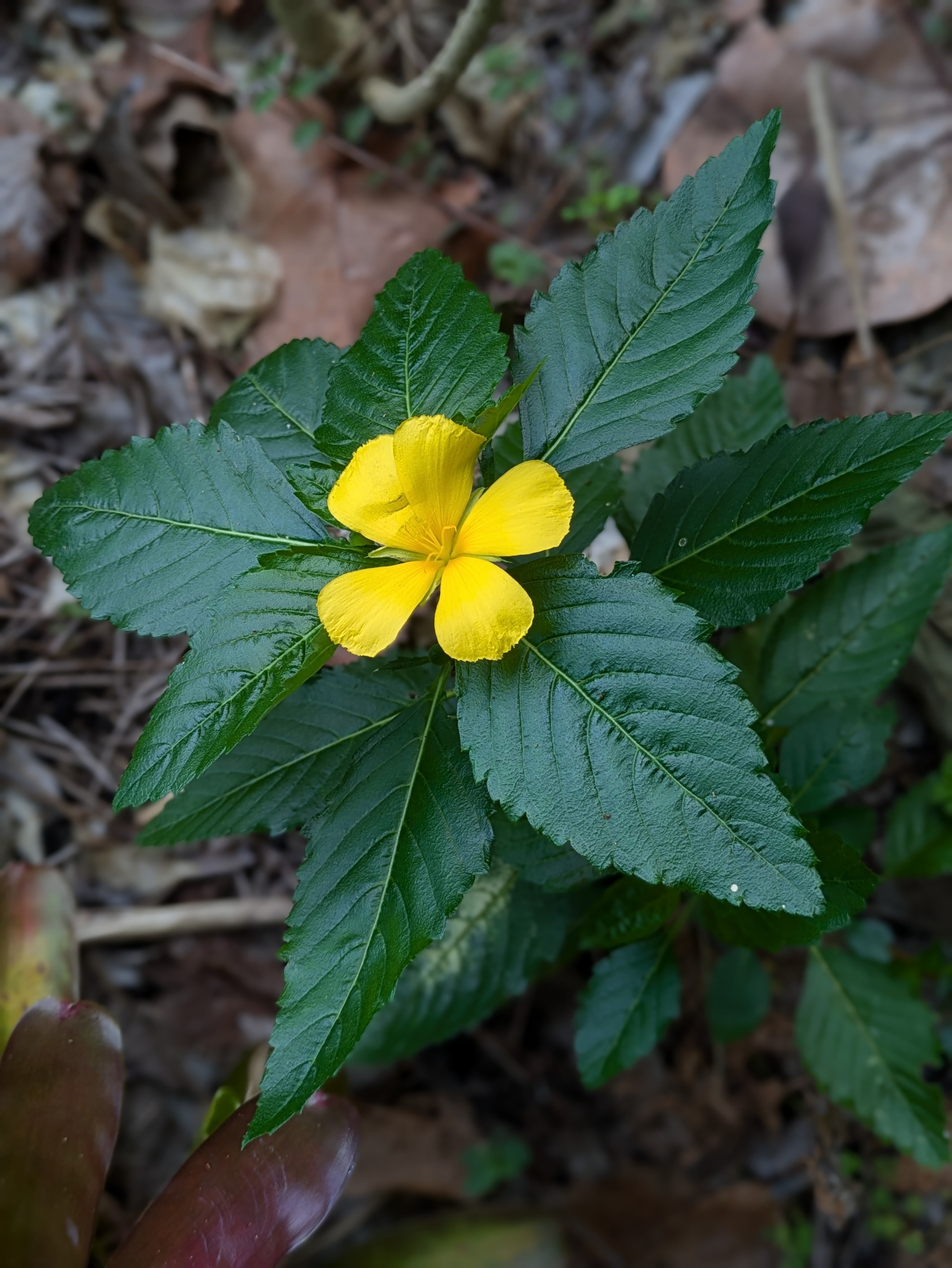
Gardening season is not quite here in South Florida, but I do have a couple of interesting volunteers.
This is a Primrose (Ludwigia) of some sort. They just appear and I like them here and there.
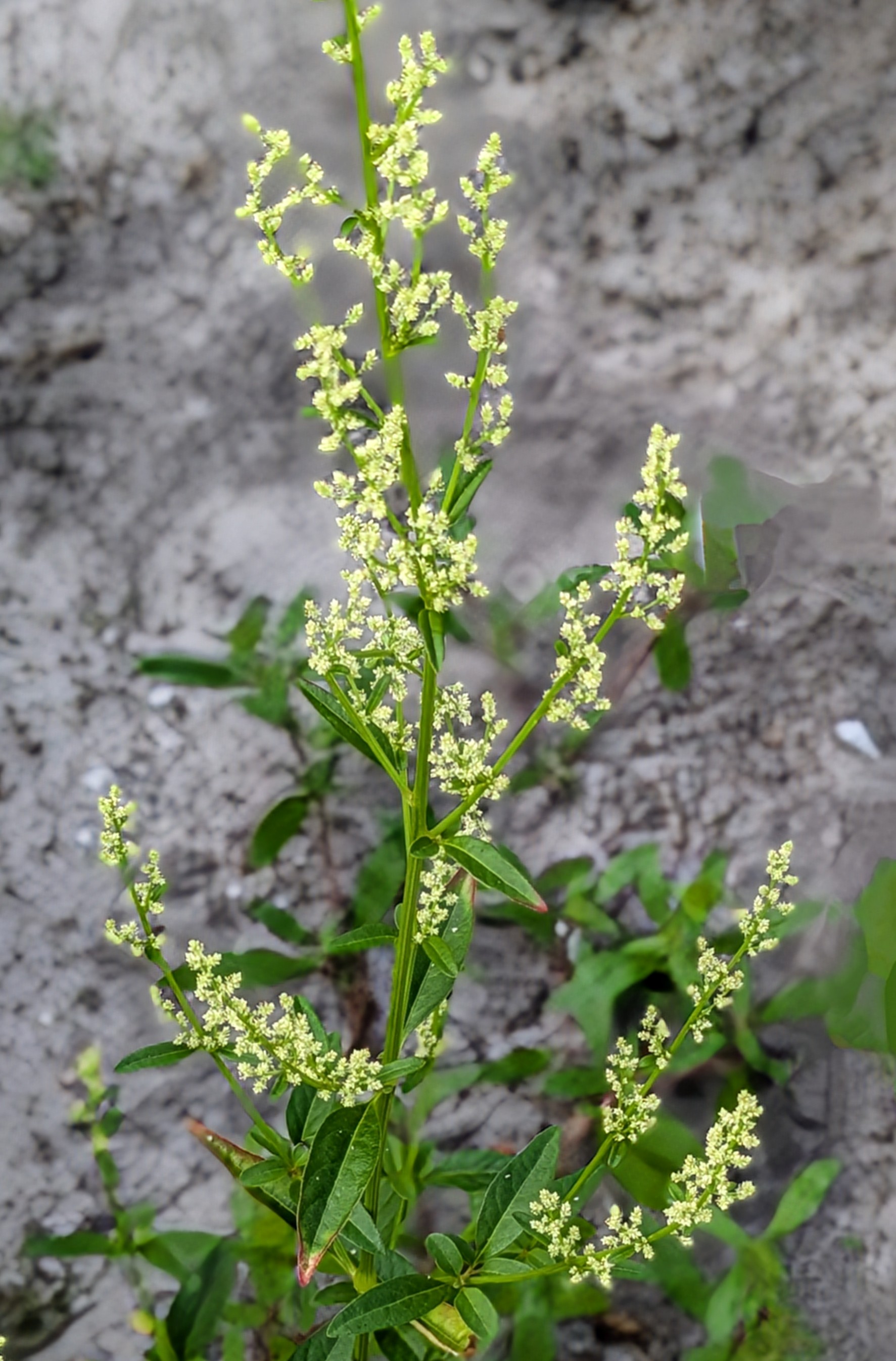
One of my favorite fall flowers, the Juba Bush (Iresine diffusa). Another plant that appears and cannot be grown where it doesn’t want to be. These are fragrant and dance in the wind. It amazes me that anything grows in the grey sand.
That is all from my garden this Saturday. Here is hoping Juracan (Caribbean God of Hurricanes) is done with us for the season.
Here’s a new word for you. Propavasing. This occurs when taking cuttings to root in water, followed by finding a few clean vases around the kitchen sink, plonking and fluffing the cuttings – voila!
The cuttings:
I left some chartreuse coleus in a few pots to dress up later for winter container plantings. Not a good idea – especially when combined with leftover moldy zinnias I let go to seed, hoping for some more hot pink/orange flowers next year. The seeds aren’t quite made yet, but the chartreuse coleus is definitely done. Hence the cuttings.
The vining plants are Turkeytangle Frogfruit (Phyla nodiflora). I have been propagating these and creating a lawn of curated weeds in the front garden. I am very happy with my ‘lawn’ and the butterflies are loving it. TTFF hosts three different types of local butterflies.
The flowers:
Orange tubular flowers are Firebush (Hamelia patens); red and yellow flowers are ‘Lady Di’ Heliconias (Heliconia psittacorum); white flowers are Tropical Red Salvia (Salvia coccinea).
It’s still summer here. The fall colors are not making me feel cooler.
If wisdom is being sought from my vase, it is time to look elsewhere. The sage here is Salvia, I noticed its wonderful sage herbal scent as I was cutting this bunch to fill a crystal pitcher. The crystal pitcher is a wedding gift. I would hazard a guess Tiffany’s would recommend its use to serve orange juice for Mimosas at a fancy brunch — not serving as a receptacle for a native bunch. The native wildflowers in my garden are flourishing from abundant rain in the past weeks. I picked all native wildflowers today.
Closer views:
Red and pink spikes are Tropical Red Salvia (Salvia coccinea) these reseed prolifically and are everywhere. Cutting the flowers saves me some seedling removal chores. The same goes for the white daisies, Bidens alba, incredibly prolific – the pollinators love them so much I almost hate to cut them.
The airy plant in the foreground is native Witchgrass (Dichantthelium spp). These are small grasses that pop up in the garden. They are reminiscent of Panicum. They are not too aggressive so I leave them be.
I’m dreaming of a cold front, realistically, we are a month out from that first delightfully cool day. One can dream. Pop over to Cathy’s blog to view some more vaseage…
After a short lived, but meaningful, cool front respite the humidity and heat has bounced back in the form of heat advisories. The heat has produced a tremendous amount of rain. The garden has vacuumed up the copious water and is producing some nice flowers for a celebration of precipitation. To see some likely cooler gardens celebrating a different seasonal vibe follow the link to Jim’s blog –GardenRuminations
After a dry spell rest, the Sweet Almond Bush (Aloysia virgata) grew about five feet and is flowering prolifically. I will need to cut it back after it slows down. This is planted by my screen porch so I enjoy the fragrance and the bees stay outside.
The Sunshine Mimosa (Mimosa strigillosa) has escaped it’s boundaries and is growing in the shell walkway.
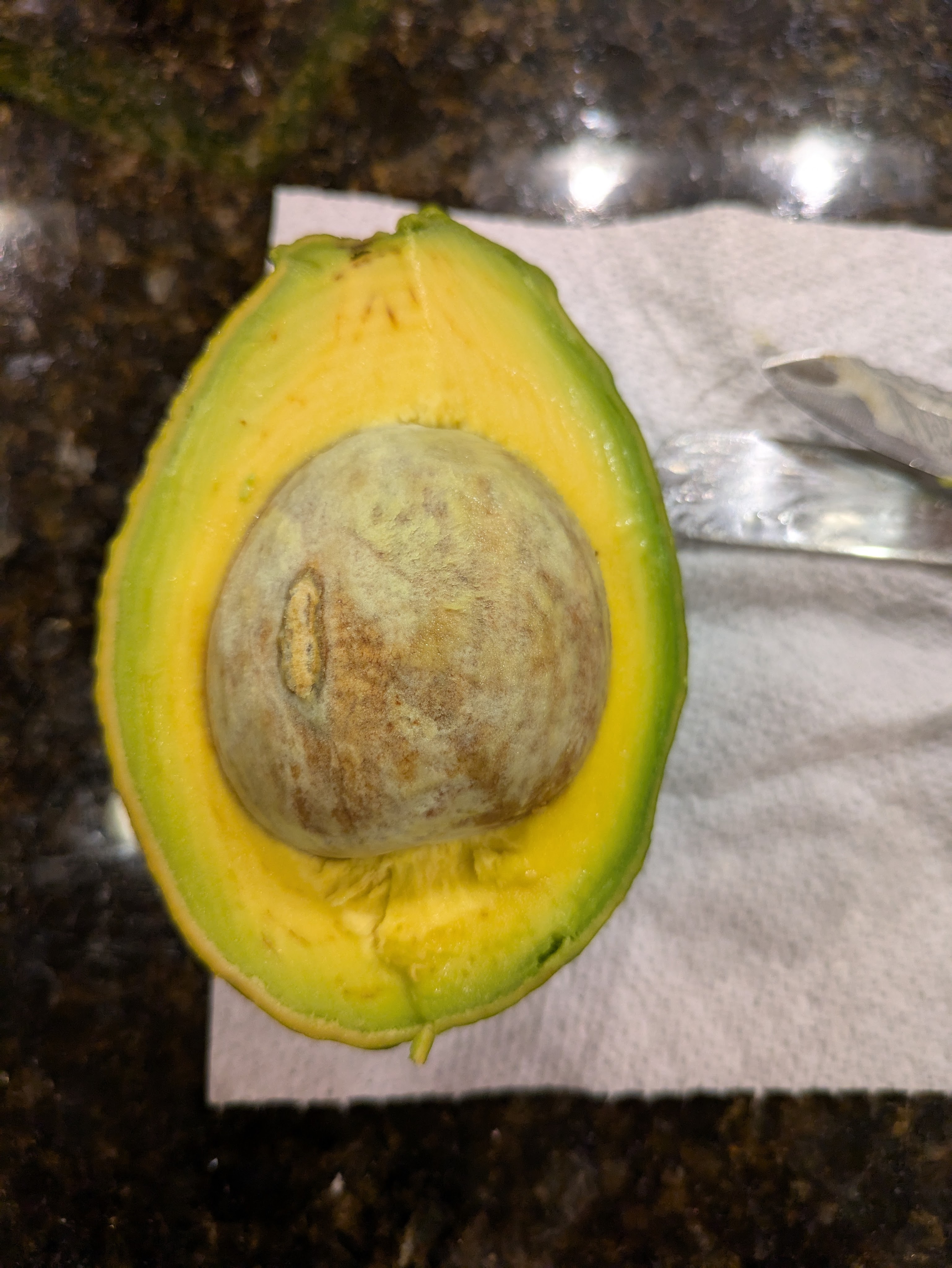
Dendrobium orchids are establishing in the crotch of the Cuban Avocado tree. Note the fat roots.
I have been trying to get this Coral Vine (Antigonon leptopus) to grow up the wood fence for years! I mean Years! Finally it has. These have a reputation of being hard to get rid of – not in my garden.
Blue Porterweed (Stachytarpheta jamaicensis) it may wane, but always bounces back with rain.
I have been planting a little winter color. Seeds of Gallardia, Rudbeckia and Forget Me Nots went directly into the garden to take advantage of the rain. Fingers crossed, I have never had any luck with Rudbeckia. The new plant is a Gill-inspired purchase from last week. A Blue Eye Fuchsia. I tried Fuchsia last year and it flowered once and promptly fried. It is still too hot to put it outside, though I think I need to pot it up.
That is all from my garden this week. Here’s to Happy Gardening and cooler days.