Six on Saturday – Late Winter Colors

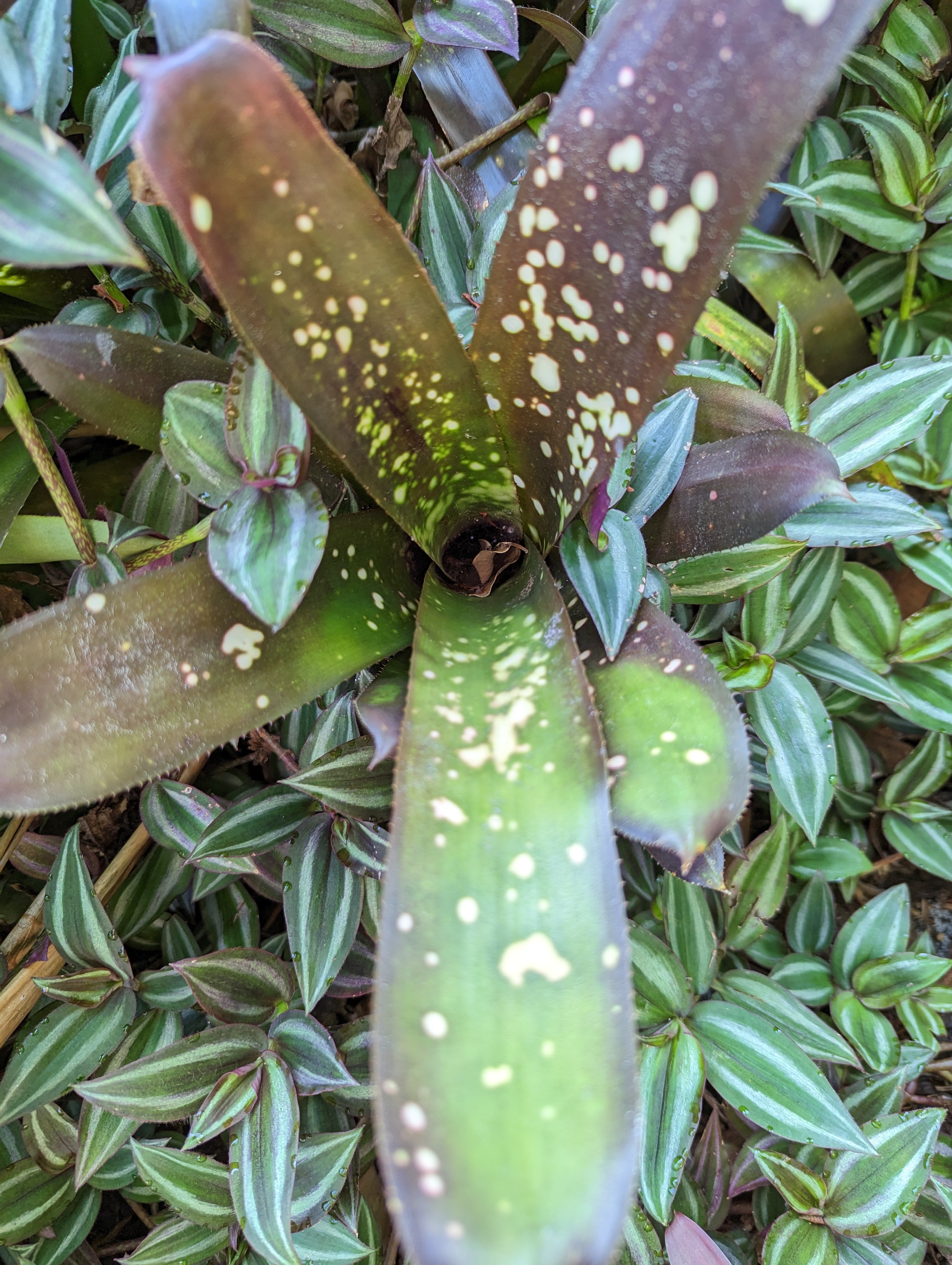
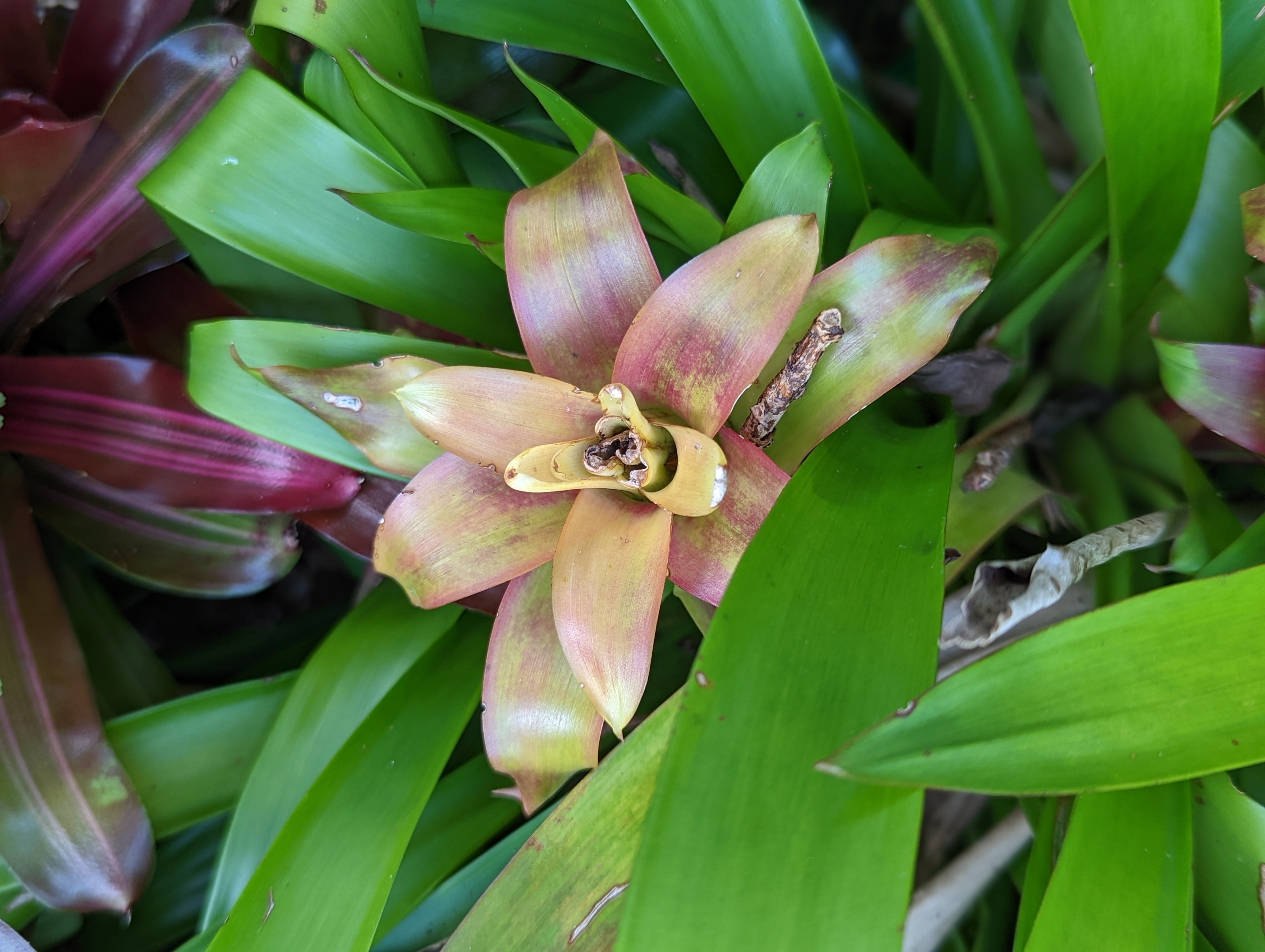
On my weekly garden tour this morning I realized my thinking that cold weather caused color changes in the garden might not be what actually happens. The weather has warmed considerably and now I am seeing the Blushing Bromeliads really looking embarrassed. The garden continues to educate me.

I am joining the group of SOS’ers sharing their garden tours with six items of interest. To join the crowd or visit the other gardens, follow this link to Jim’s blog.

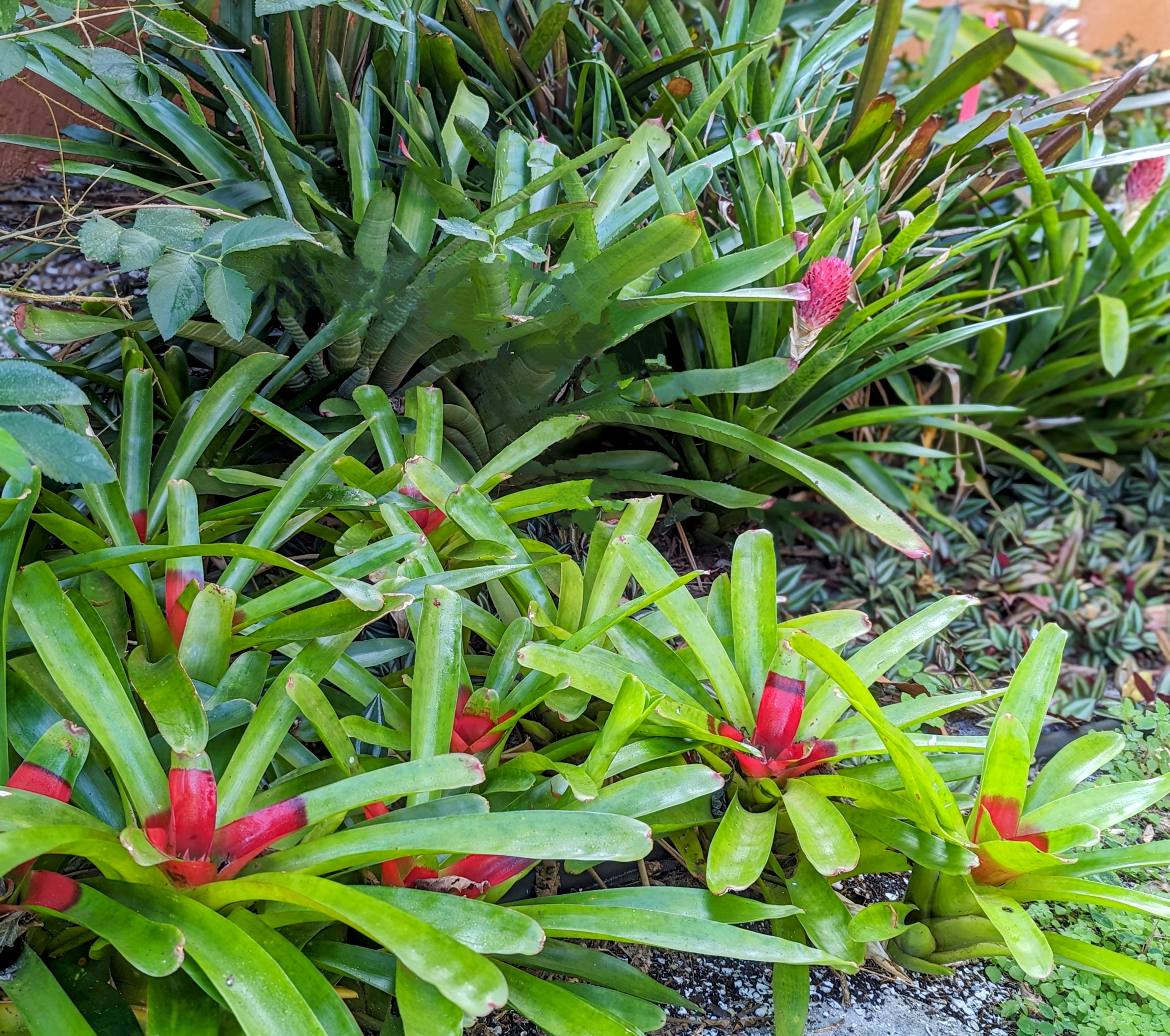
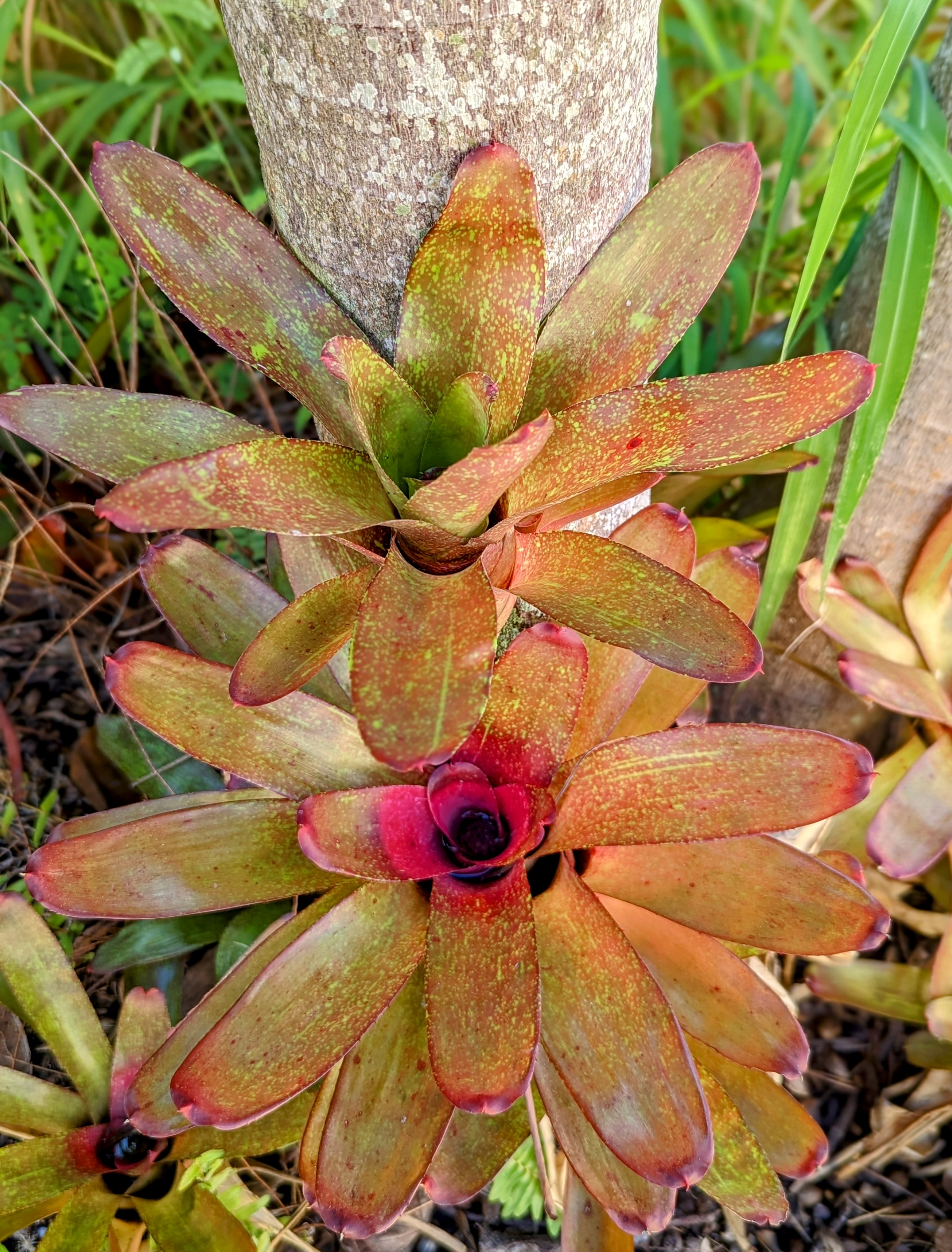
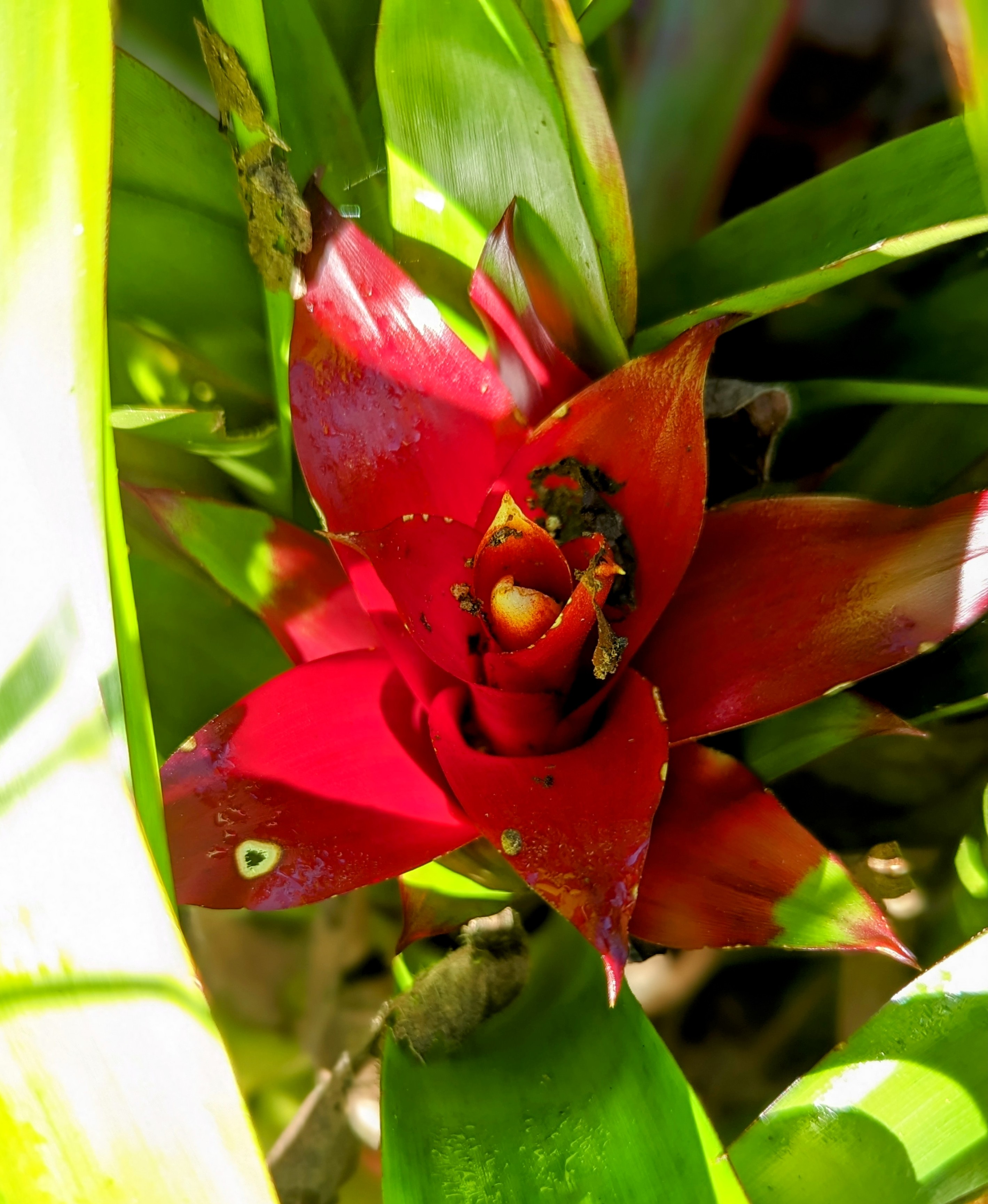
Blushing Bromeliad (Neoregelia carolinae) in full blush, backed up with Quesnelia testudo bromeliads in pink.

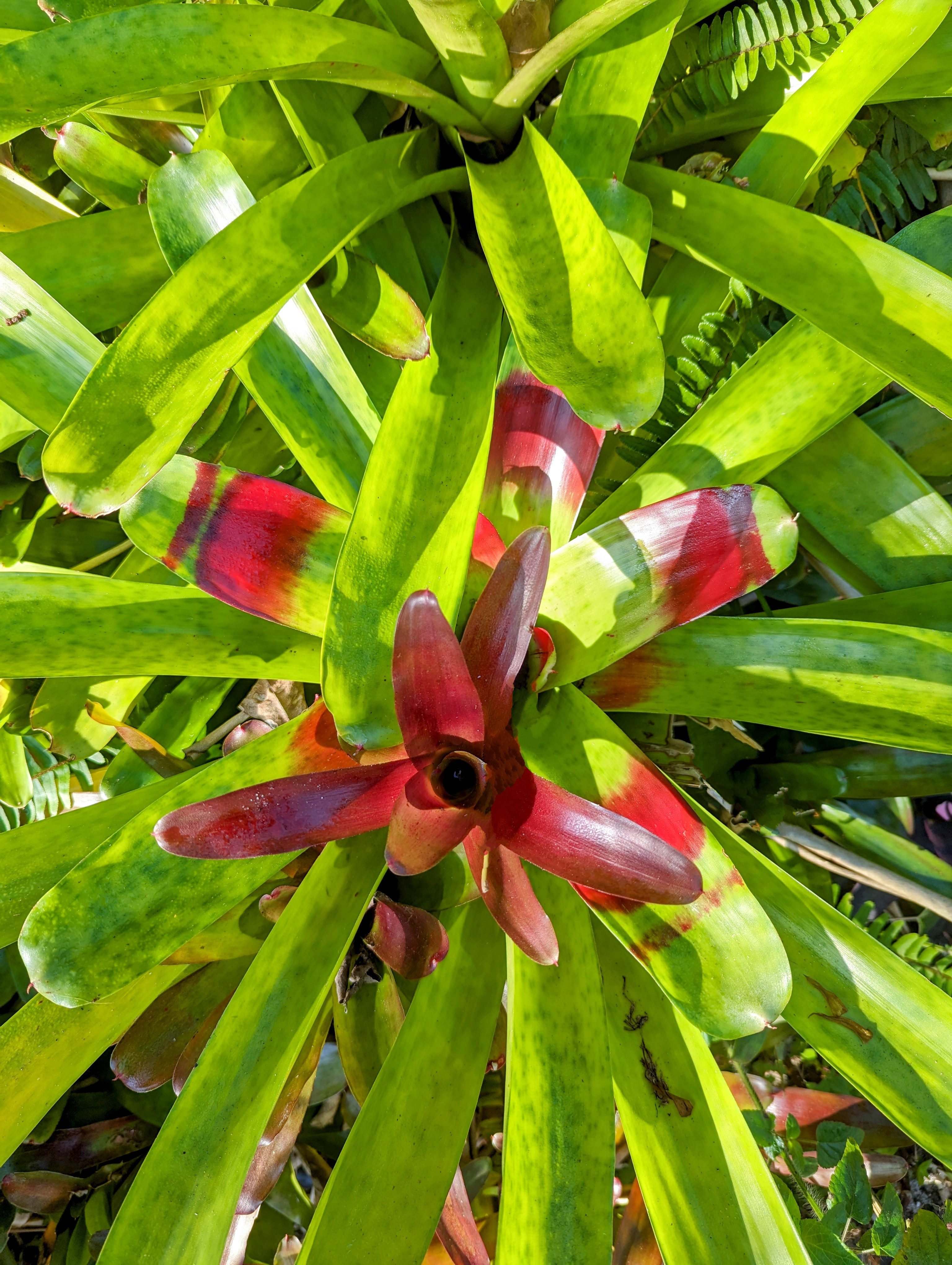
Another blusher, Neoregelia ‘MacWilliamsii’, quickly becoming another garden favorite. These are not sharp and like a little or a lot of sun. They are completely green in summer.

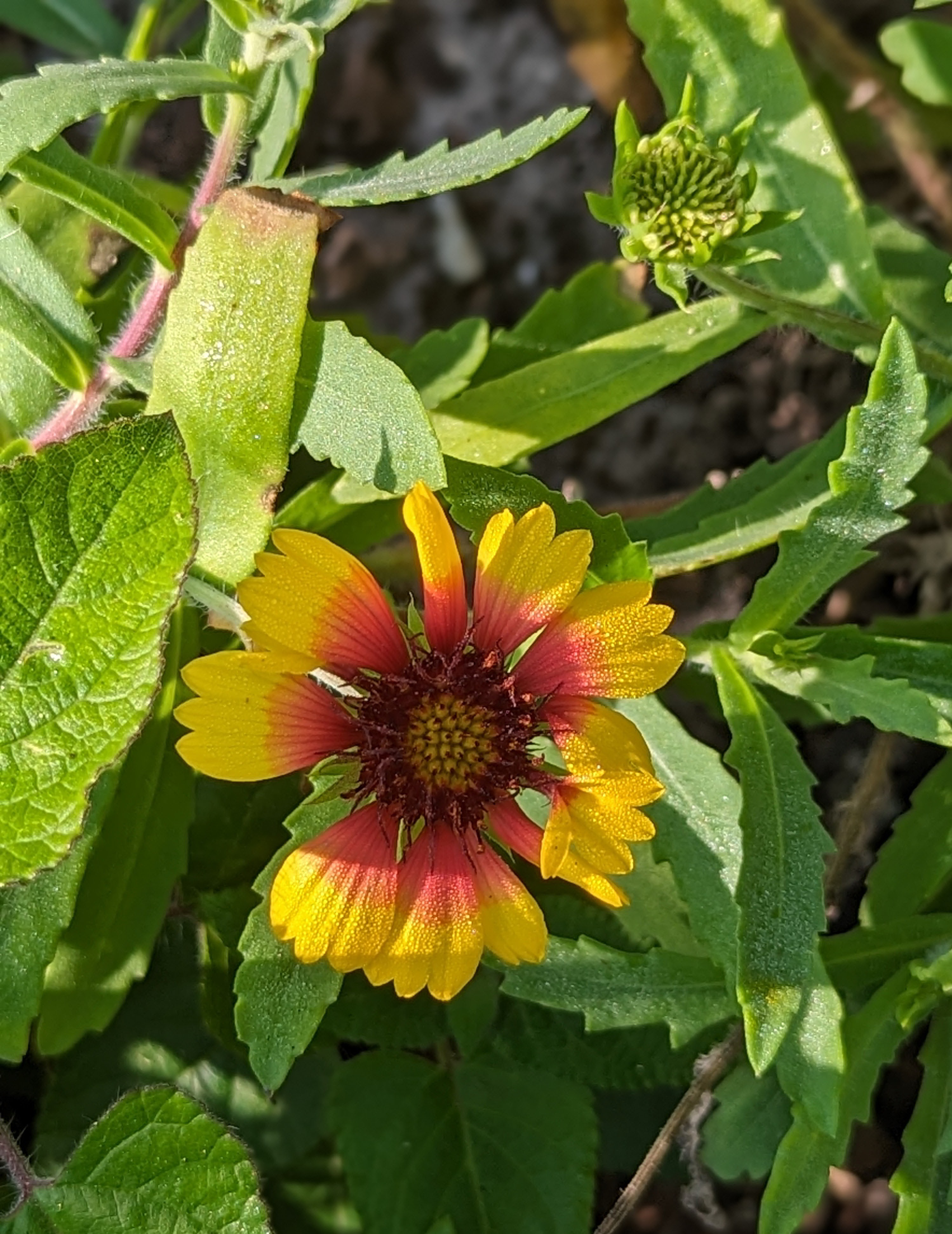
I love finding Gallardia flowers in February.

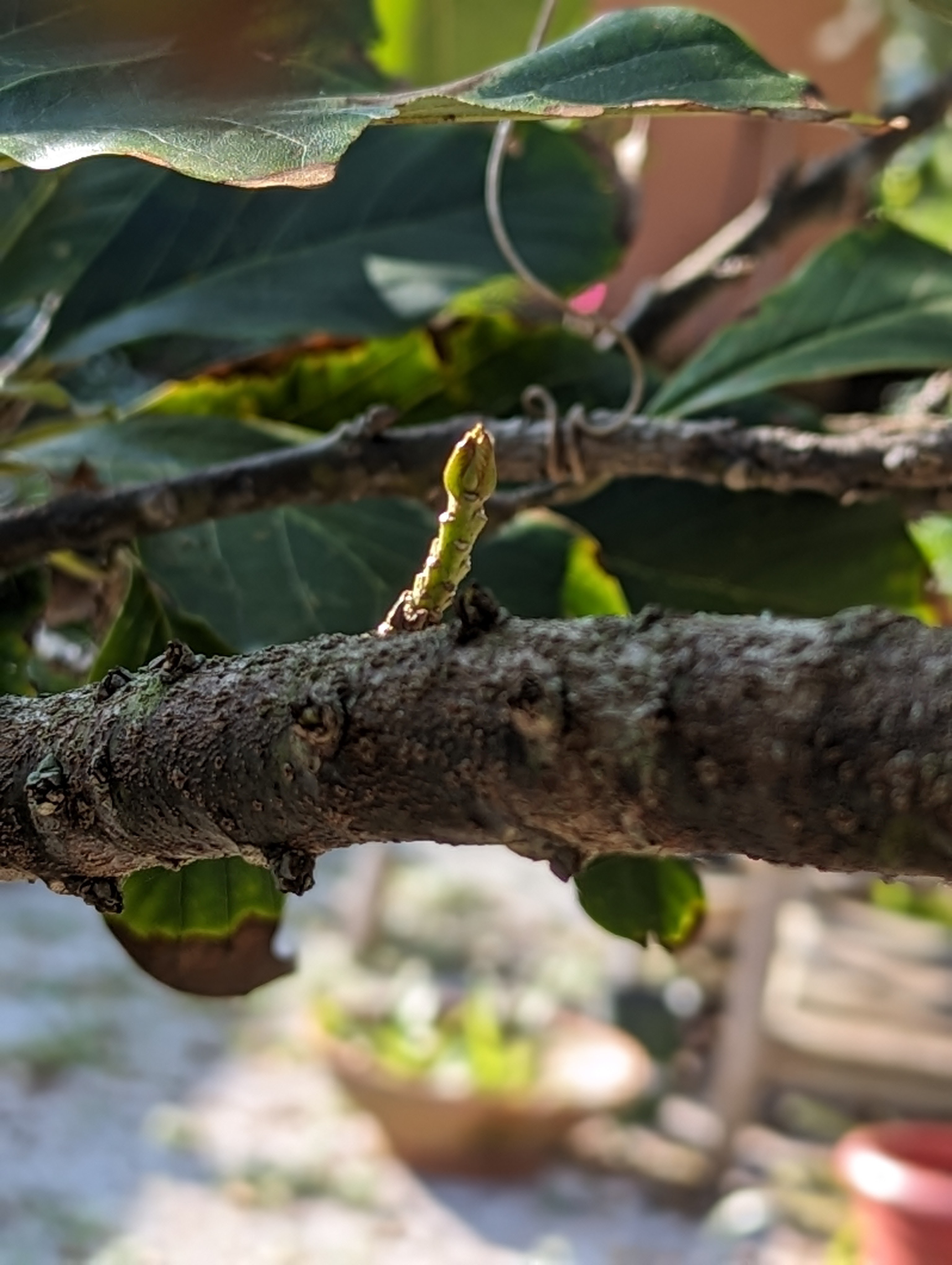
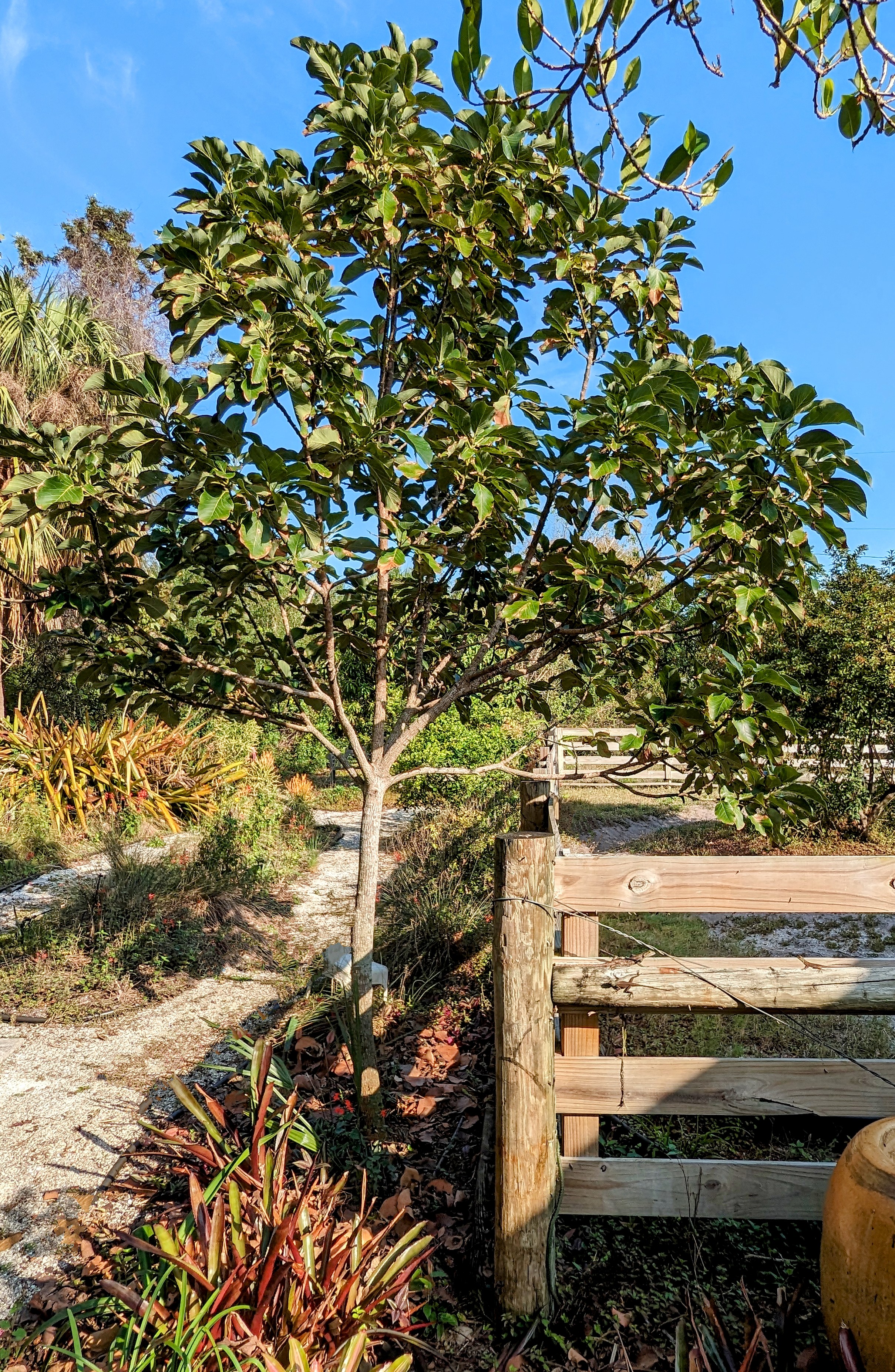
I am hoping this is a future avocado. This is a Cuban Avocado, an unusual variety I had not seen prior to moving to South Florida. A rare one that is true to seed. A friend grew this from seed and brought a small tree to me about seven years ago. The avocados are the size of footballs. Fingers crossed.

The Cuban Avocado tree, about 15 feet tall.

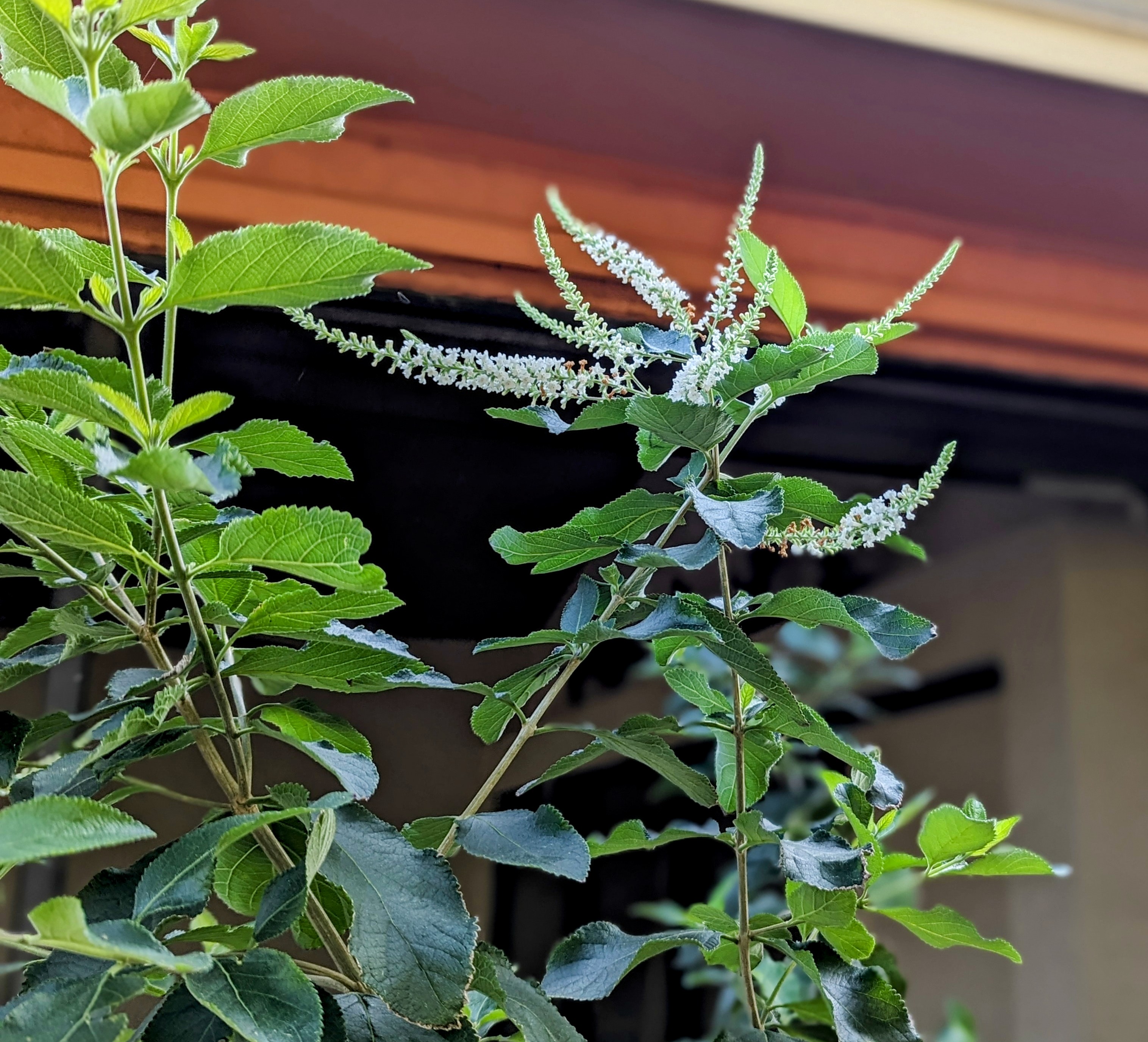
The Sweet Almond (Aloysia virgata) has started flowering again – adding fragrance to the garden.

That completes my weekly tour. Happy Gardening wherever you are.

Six on Saturday – Broms and Bunnies

It’s time for the weekly visit with other SOS gardeners. My South Florida garden received plentiful rain this week, the plants enjoyed it and are starting to show their summer colors. Bromeliads in the garden change colors with the seasons. Some in the winter and others in summer. The color change I notice most is from green to red (and back). Markings on the foliage that change vary from spots to streaks to bands of color.

For the SOS garden tour follow this link to visit Jim: http://gardenruminations.co.uk

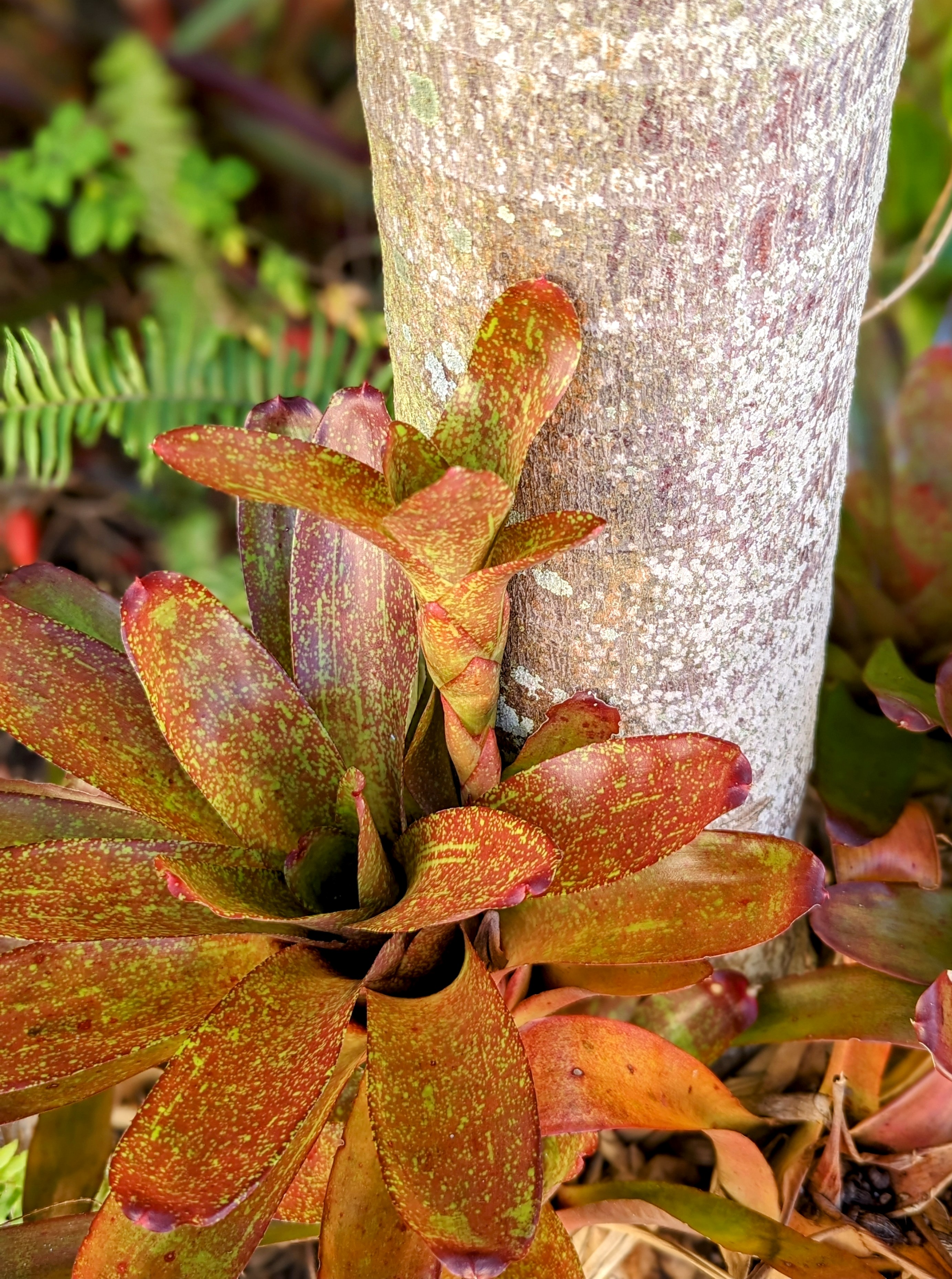
‘Jill’ Neoregelia climbing a palm trunk. The foliage tips and cups on this one deepen in color in the summer.

‘Hallelujah’ Billbergia. These tend to go a bit green in the summer. The purple color deepens in winter.

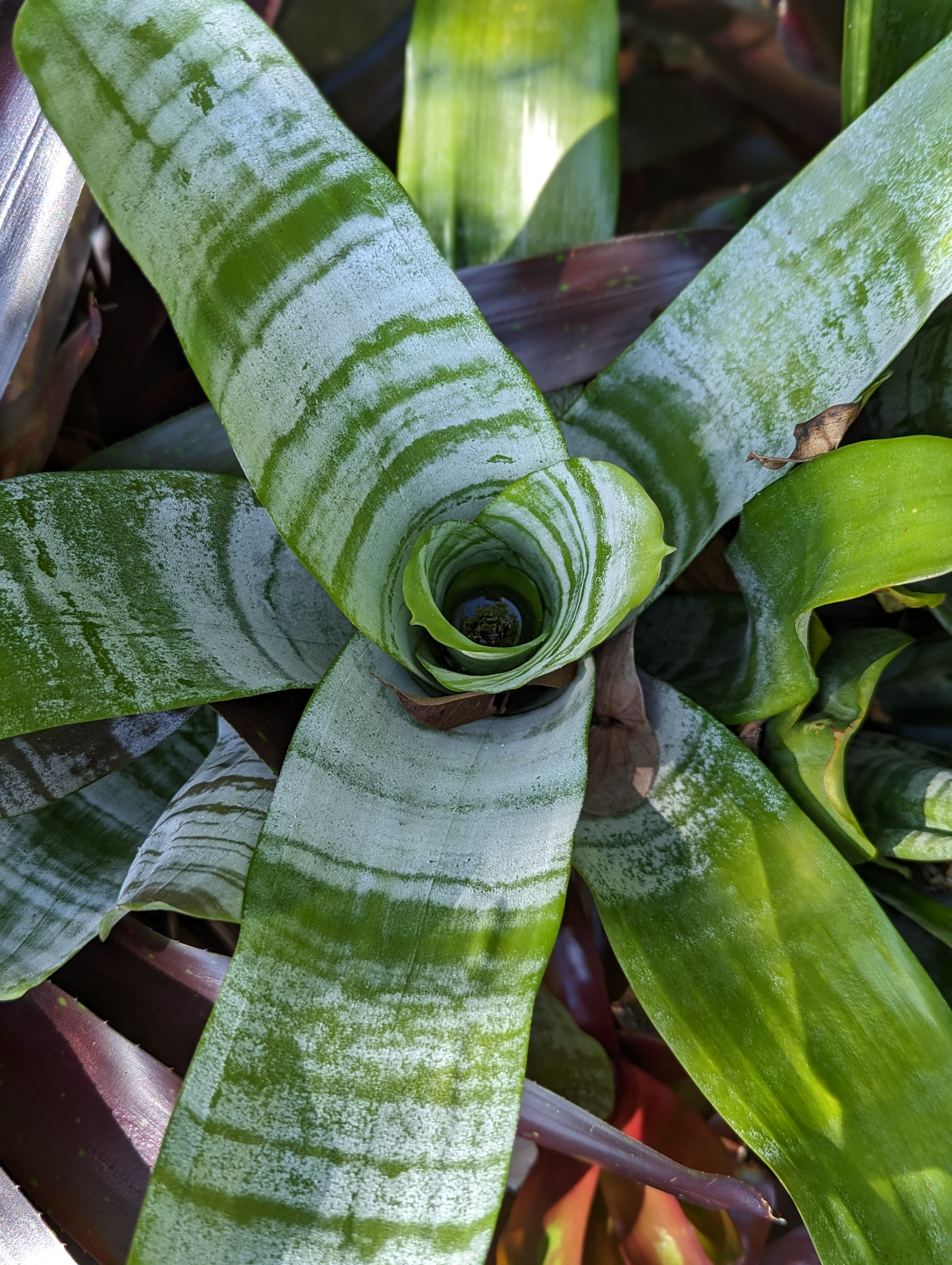
Aechmea ‘fasciata’. The bands of grey coloration sharpen with warm weather, these produce big pink flowers every other summer. Also known as the Silver Urn Bromeliad.

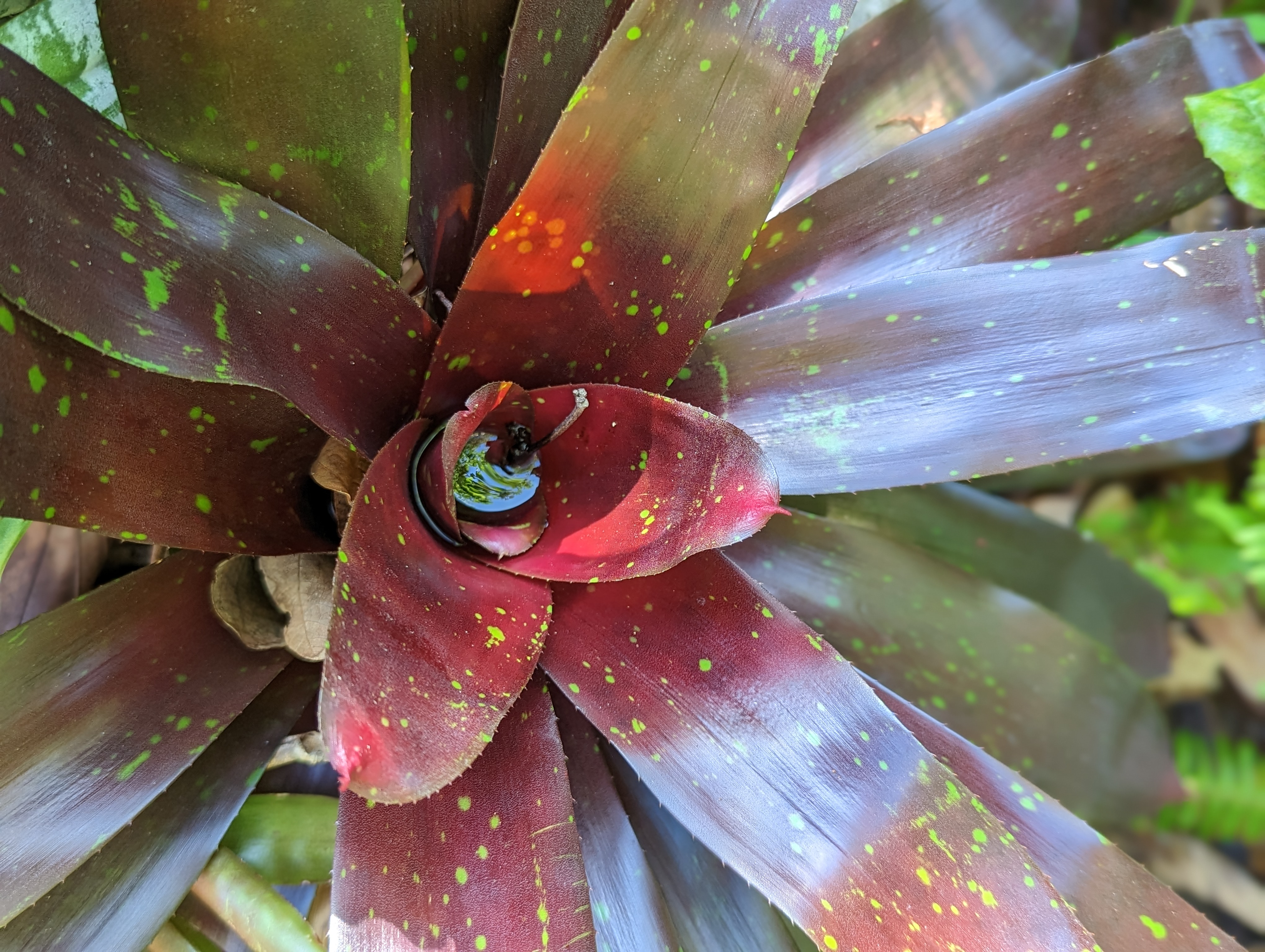
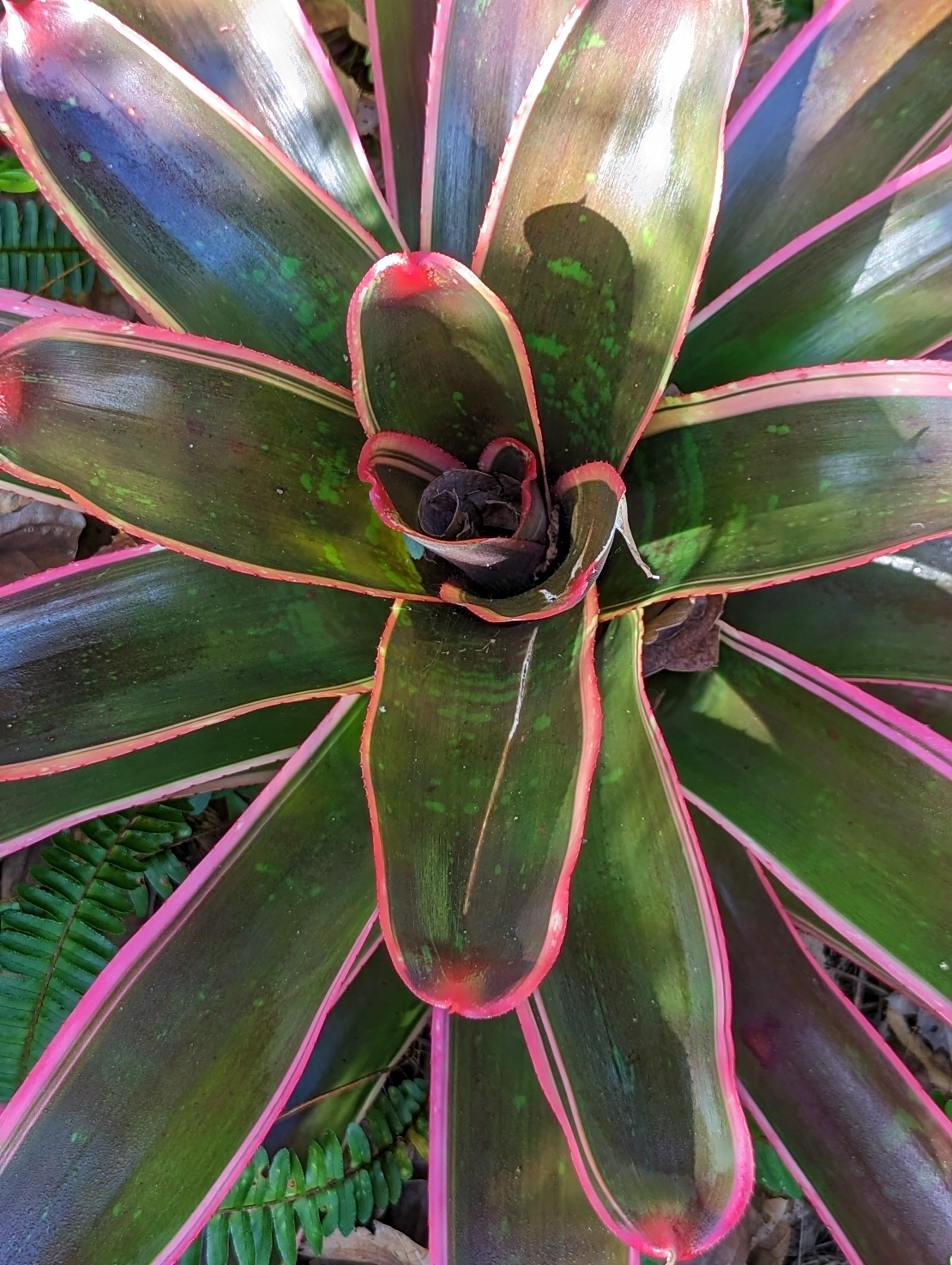
‘Luca’ Neoregelia, one of my favorites, is almost too dark but the chartreuse spots lighten things up.

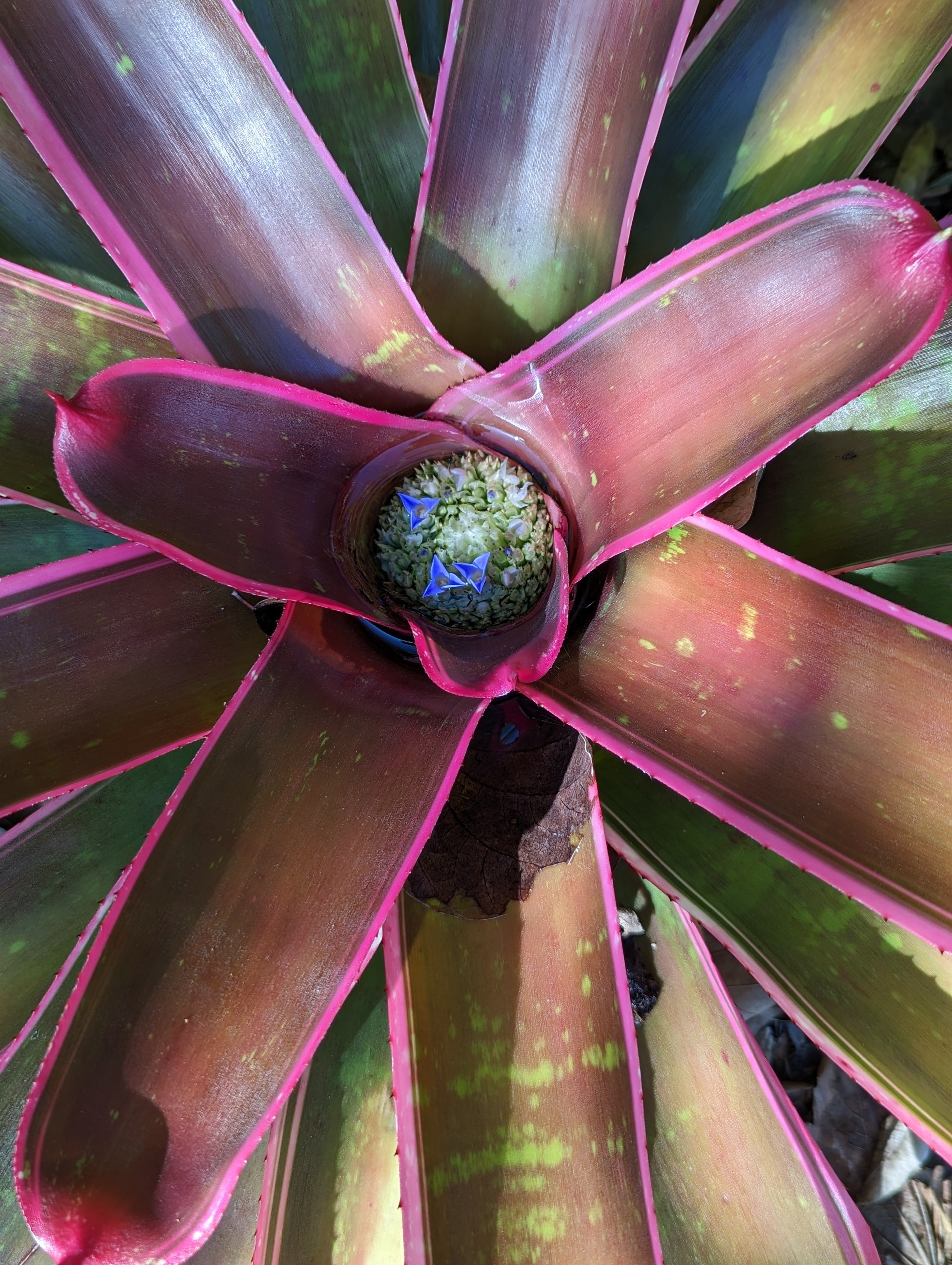
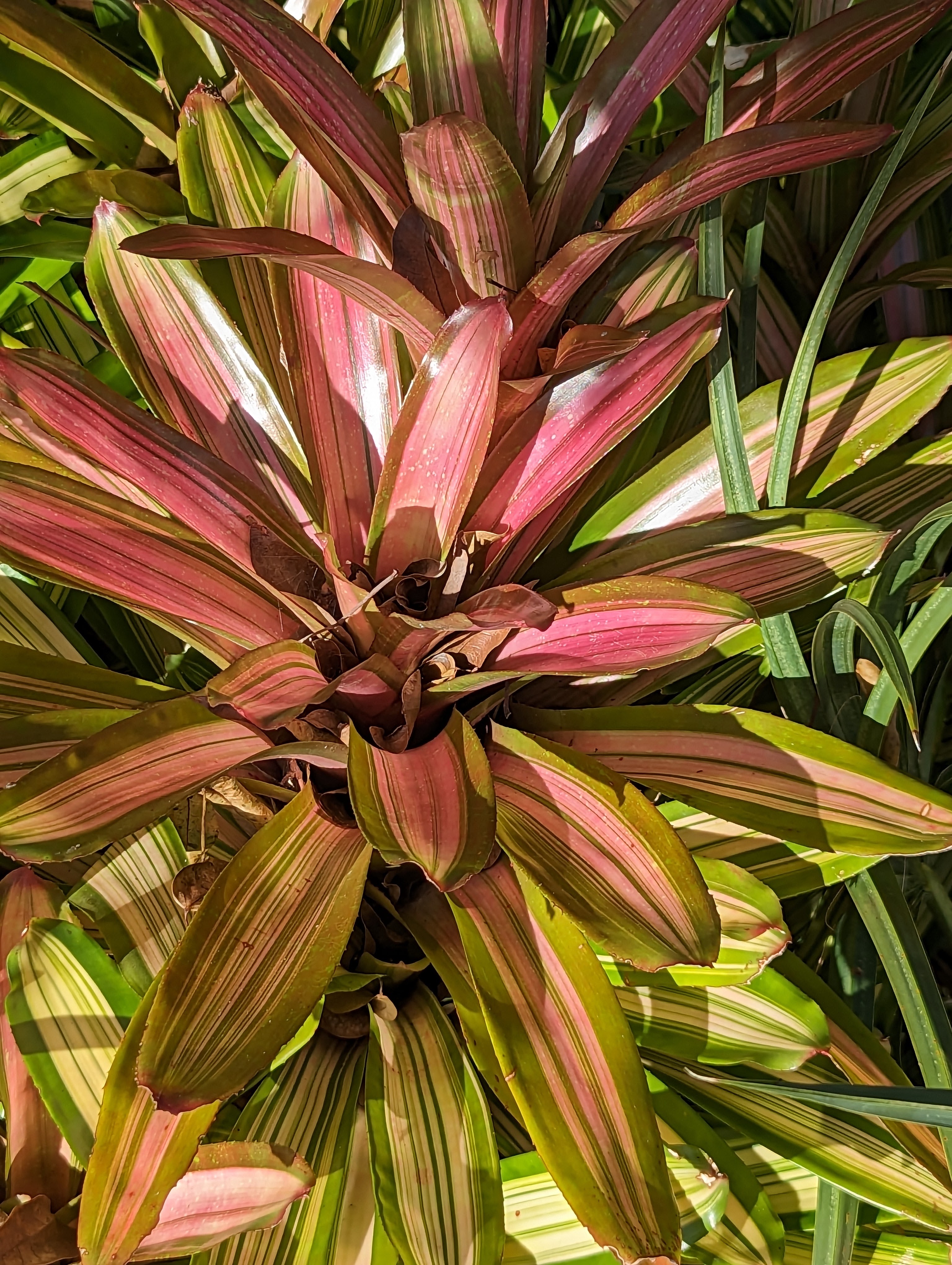
An unknown Neoregelia in flower. This one has pink stripes in sunny areas and white in shady areas.

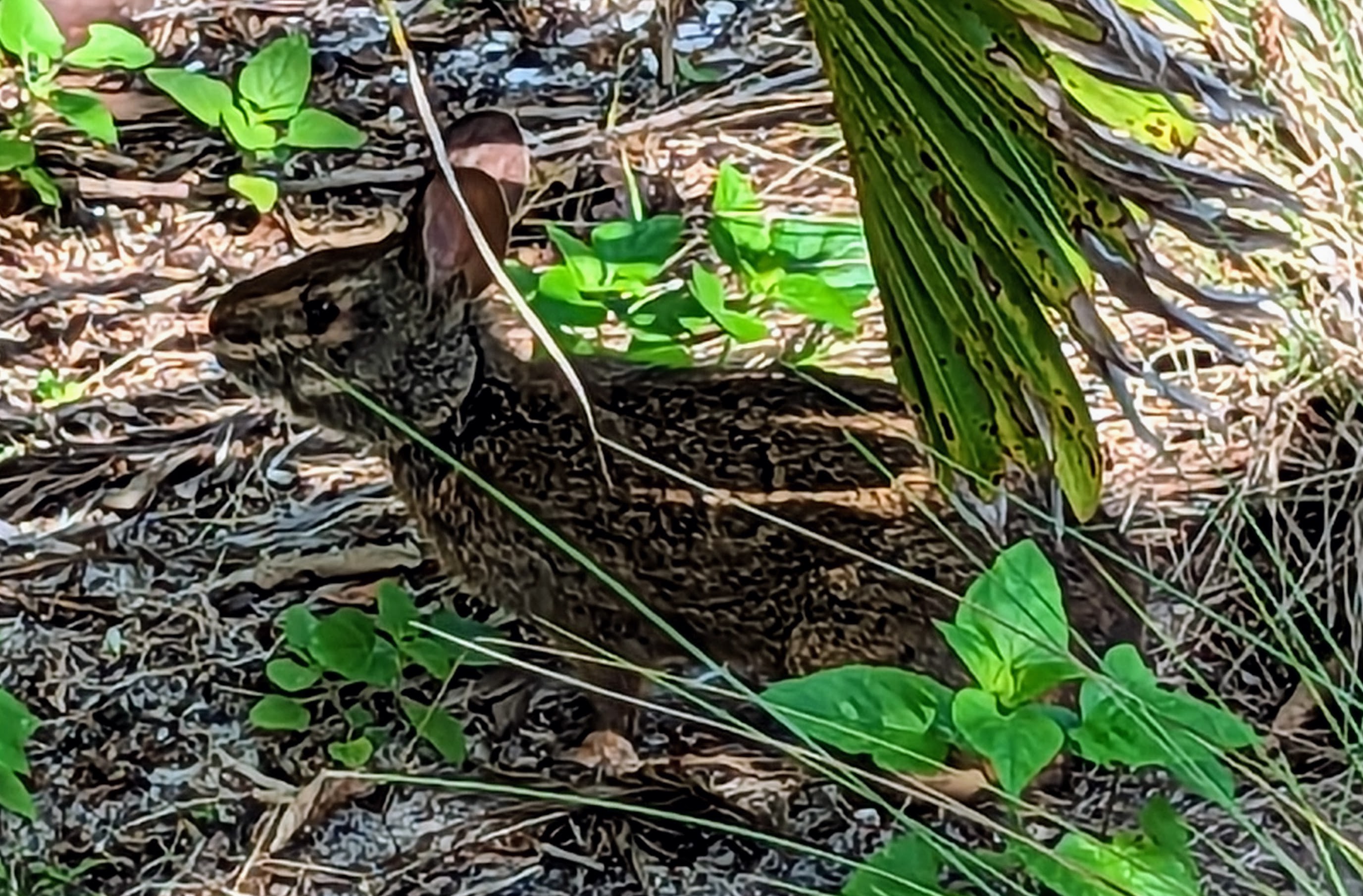
The bunny, we have had a banner year for bunnies. Fortunately, they like weeds and are eating something in the so called lawn while tormenting Fiona the Greyhound. This is a Marsh Rabbit. I am impressed with the camouflage, I could not see the rabbit as I was taking a picture of it.

That is my Six for this Memorial Day weekend Saturday. Thanks to Jim for hosting.

Happy Gardening!!

Six on Saturday – Bromance

I am joining Jim and the SOS gang this sunny Saturday morning from my South Florida garden. Anyone who reads my blog eventually notices my love for Bromeliads. This Saturday I am focusing on the winter color in my garden from these super tough tropical plants. Visit Jim at https://gardenruminations.co.uk/

Bromeliads are native to the tropics and many of them hail from the Americas. Most that I grow are from Brazil. There are native Bromeliads in Florida, though many were collected to near extinction and are now protected. Tillandsias (Spanish moss and friends are the most common native to Florida) I see these native Bromeliads from time to time in state parks and relish sighting one. Native orchids met a similar fate.

I am not quite to the northern limit of growing Bromeliads in the garden, though most I grow here will not take any frost. When I first started gardening here the idea of having what I considered house plants in the garden seemed very odd. Now, not so much. My average low temperature is 40 F (4 C)

Jill Neoregelia climbing a palm trunk. Some Bromeliads will climb trees and some won’t. This one was planted at the base of a Christmas Palm and started up the trunk with no encouragement from me.

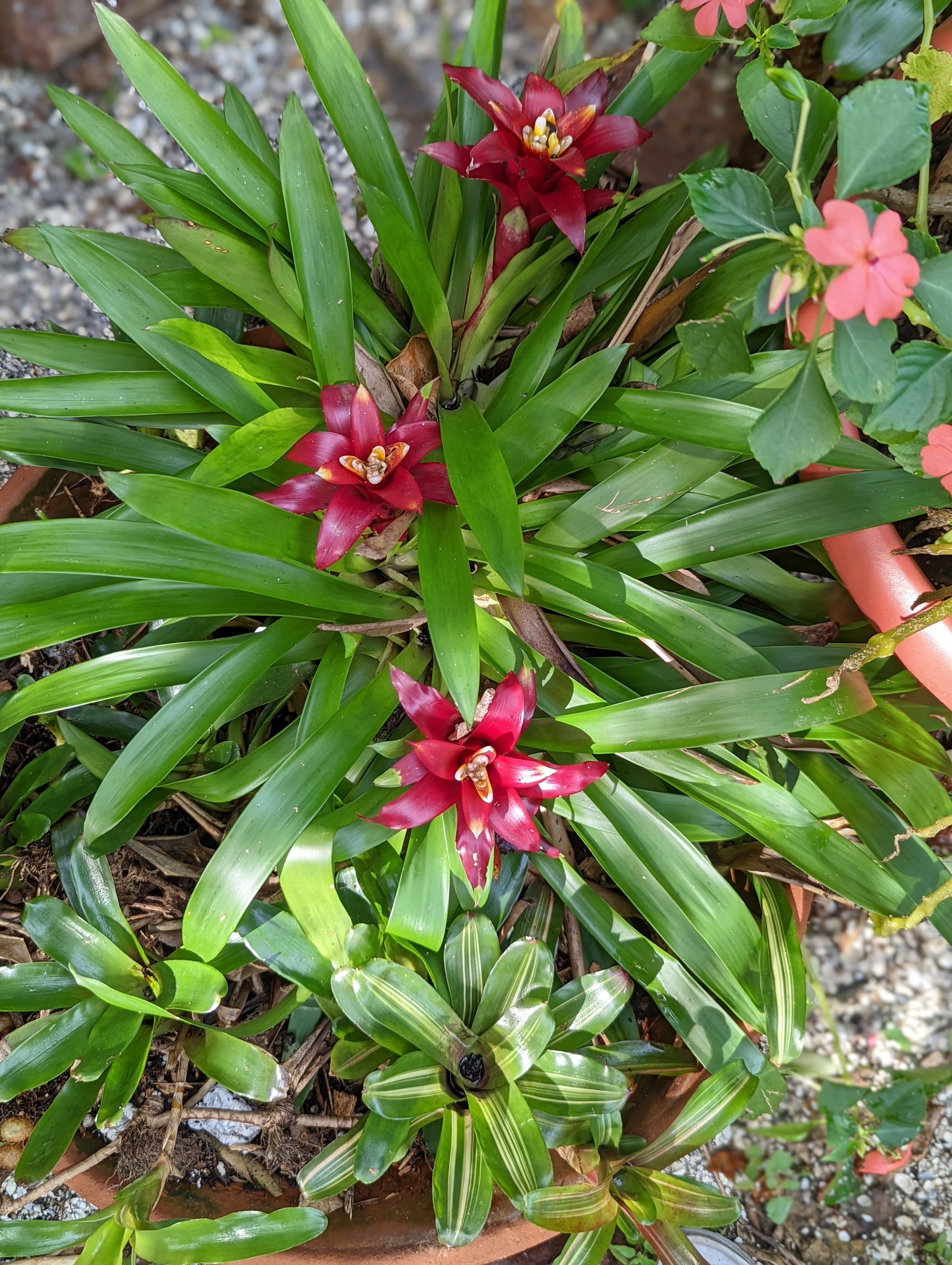
Martin Neoregelia started the change from winter to summer color. These are yellow and green striped in winter deepening to red in summer. The pink coloration lasts for a couple of months.

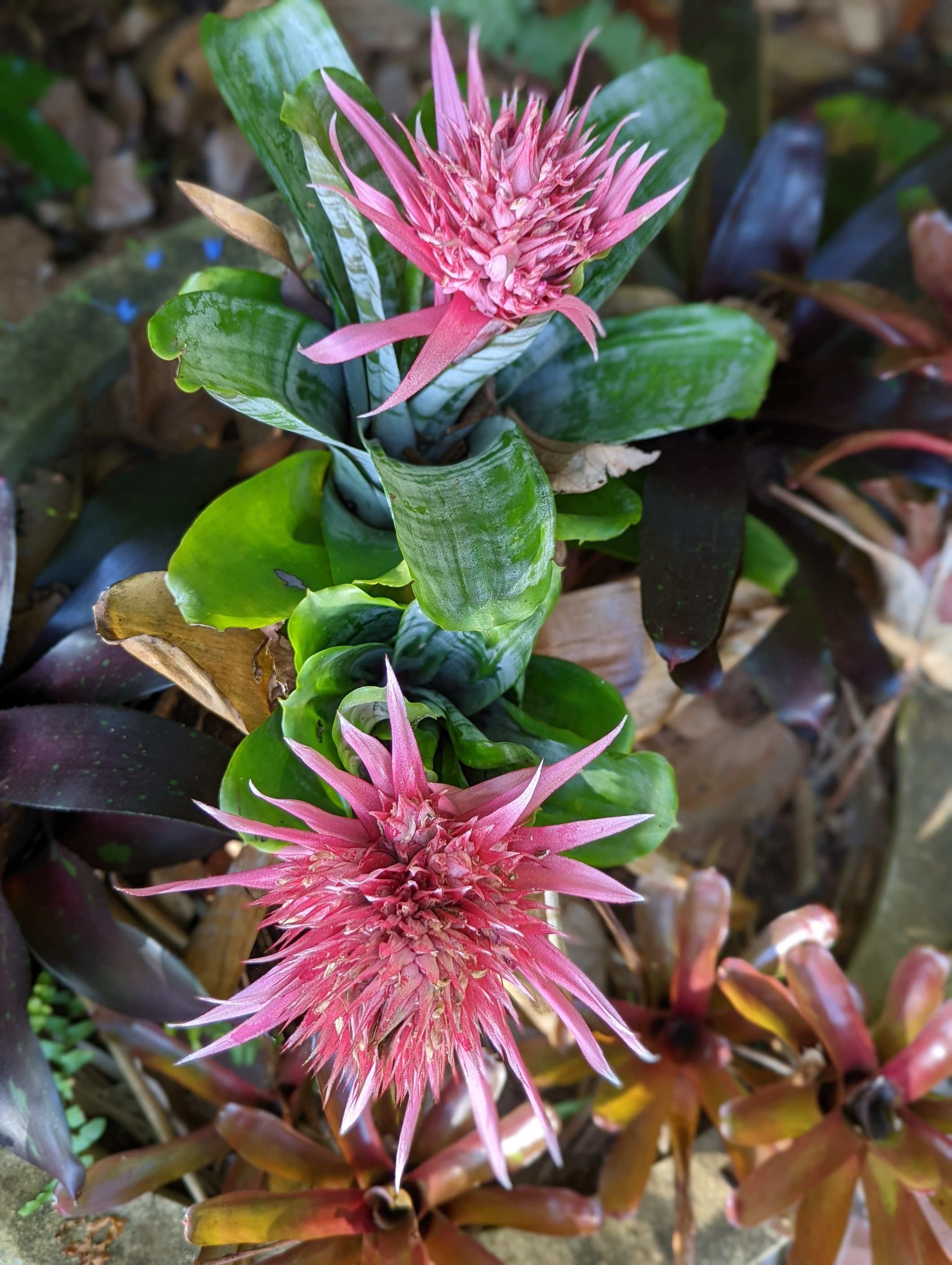
Silvery foliage of the Silver Urn Bromeliad. Aechmea fasciata. These are well known for their pink flowers. They bloom every other year in my garden.

I am very likely to buy unnamed Bromeliads at garage sales or garden shows as they are usually expensive elsewher and it is rare to find good directions on where to site the plants. This is a unnamed Neoregelia I have enjoyed, it is probably three feet wide.

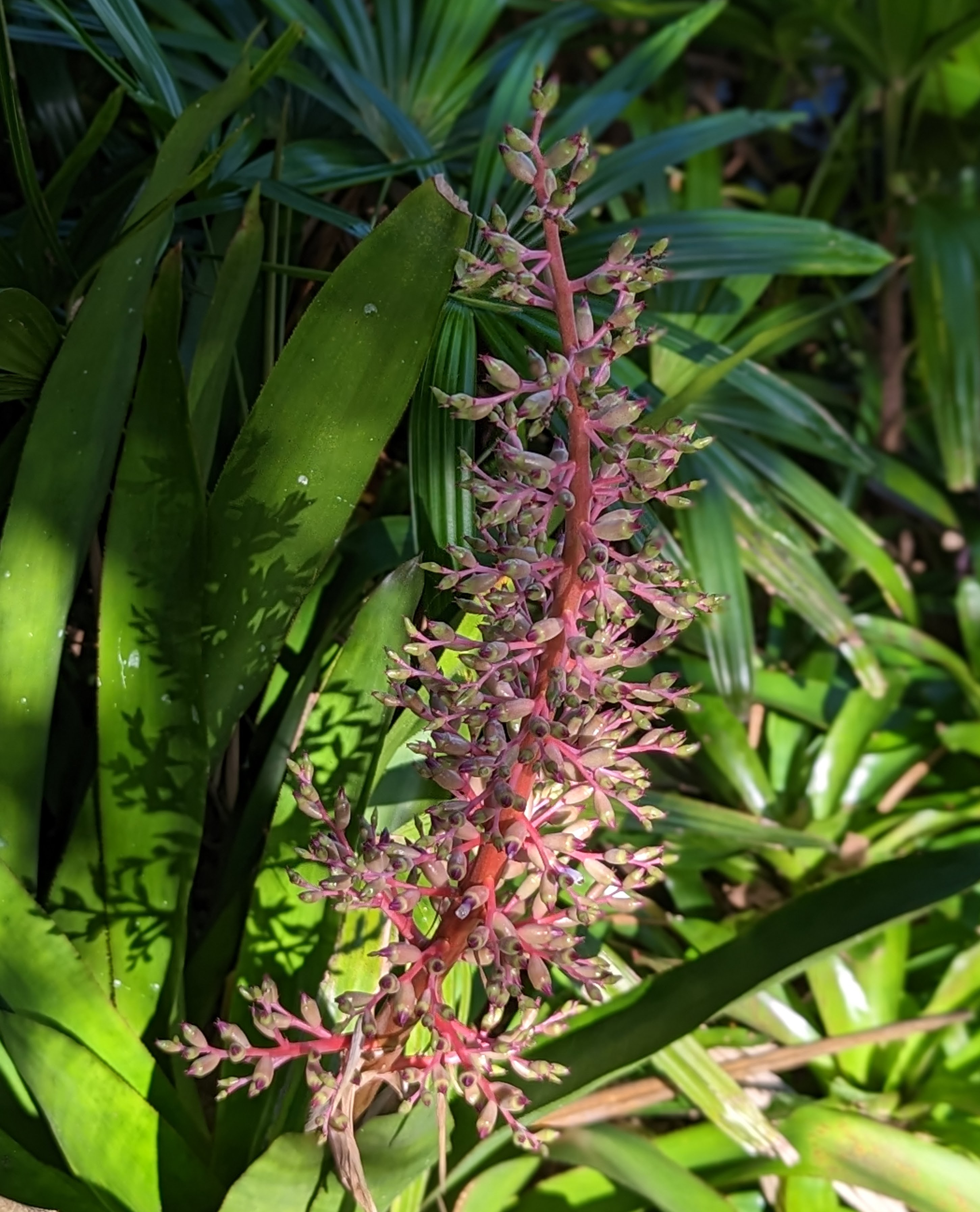
Another garage sale find. I have no idea what this is – it flowers every winter. The flower is about four feet tall.

The very reliable February (Valentine’s!) bloomer. The flower of the Guzmania Bromeliad is starting to peek through.

The time to move Bromeliads in the garden ends in March. I am plotting relocations now to add some more of these tough beauties in new places…

Thanks to Jim for hosting and Happy Gardening!!

A Week of Flowers – Day Two

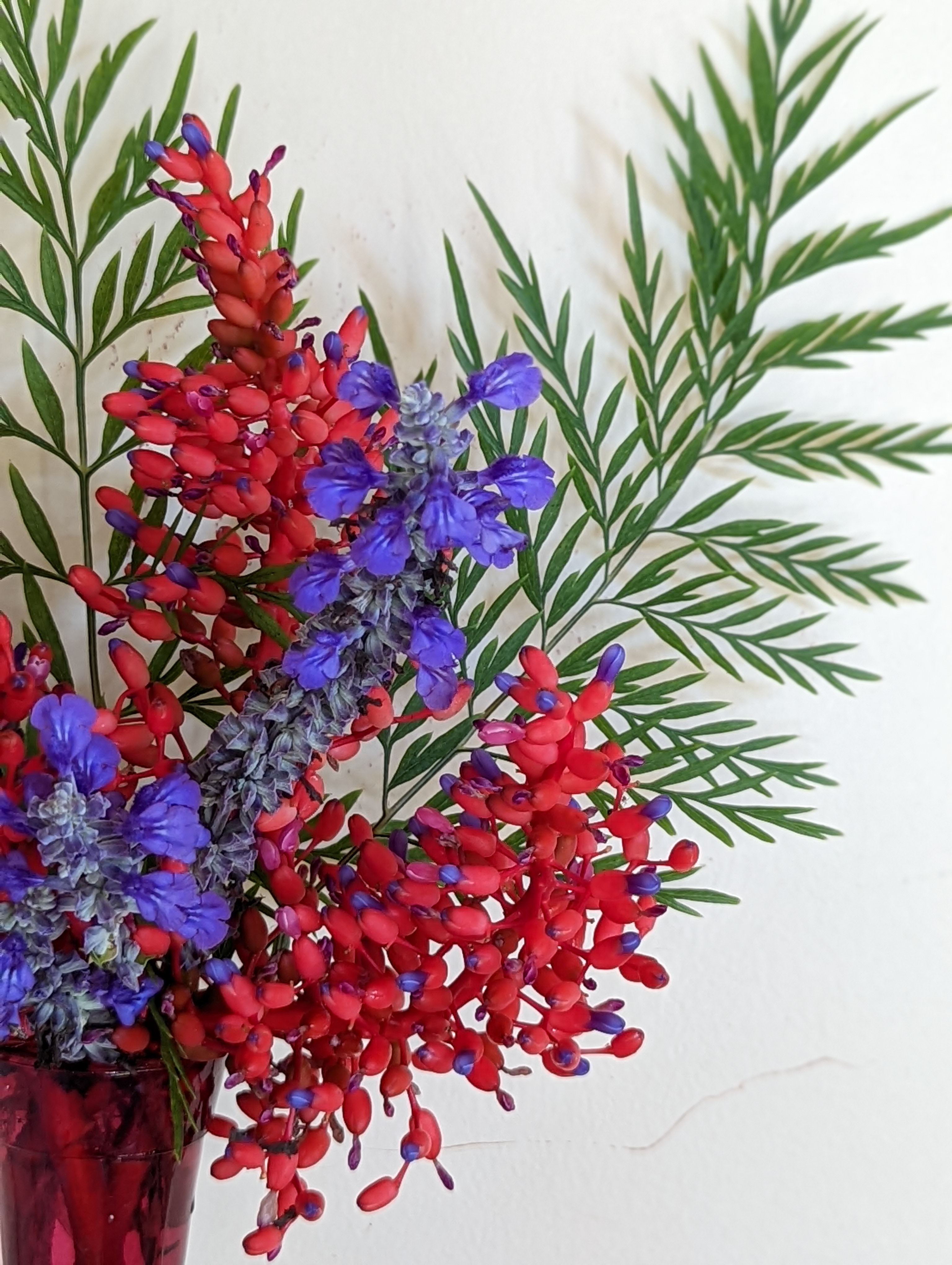
I am joining Cathy at Words and Herbs for this year’s Week of Flowers sharing images from our gardens. I am adding some Bromeliad madness from my South Florida garden today. Below are the red flowers from Aechmea miniata Bromeliads, one of my midsummer favorites, along with ‘Mystic Spires’ Salvia and foliage of the tropical Silk Oak, which is not really an oak at all, but Grevillea robusta, the largest member of the Protea family.

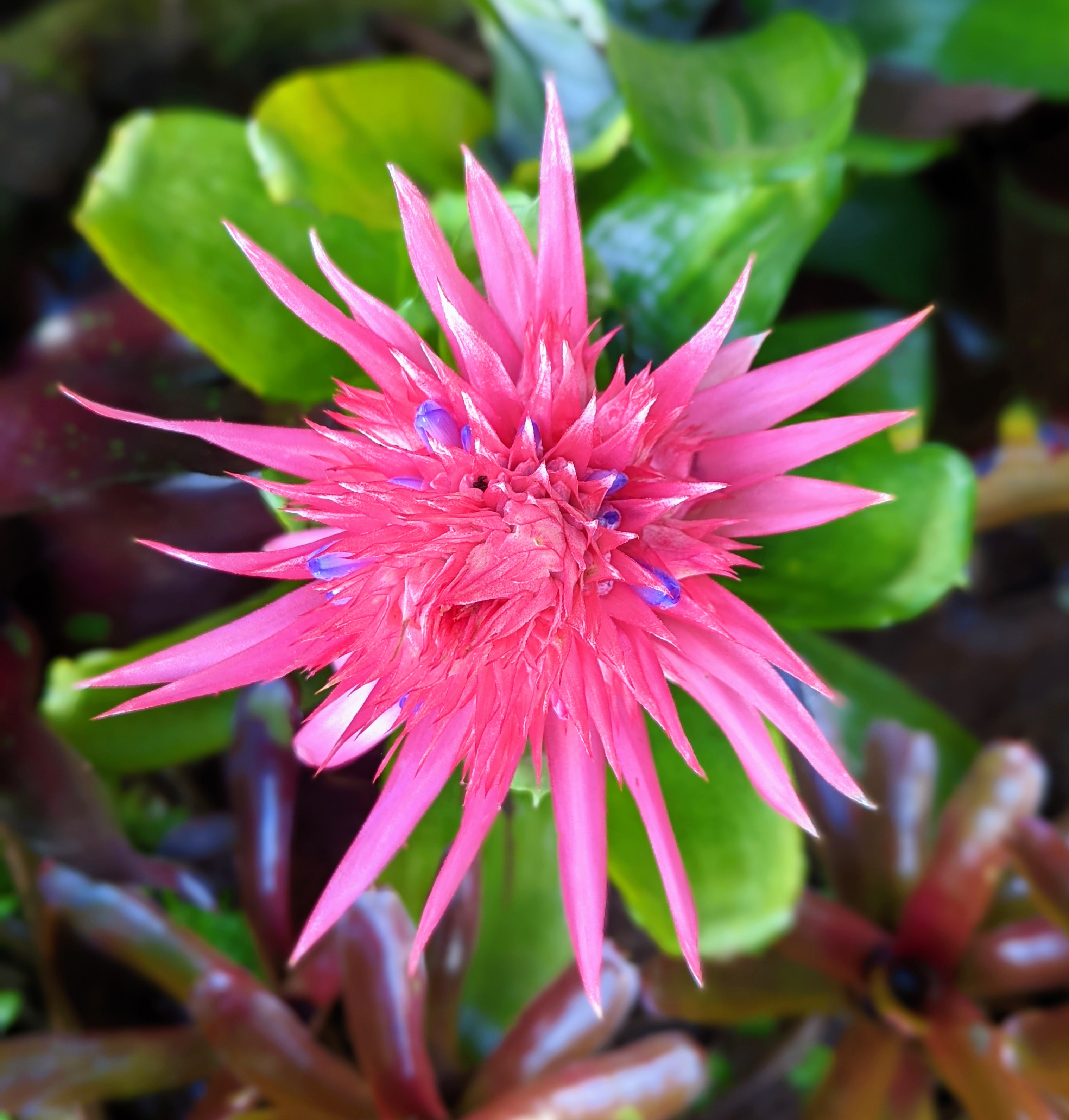
Below, another ultimate tropical flower, the Silver Urn Bromeliad (Aechmea fasciata). These were very common during the eighties Interiorscape rage as a long lasting flower for interior use. The flowers last about four months in my garden and flower every other year.

Hopefully these images warm up gardeners living in more northern climes. To see more flowery images from around the world visit Cathy at wordsandherbs.wordpress.com.

Happy Gardening!!

Six on Saturday – Shrimp and Fruit

It is Saturday again. Time to peruse the garden for six items of interest. Today it occurred to me the Shrimp Plants look their best in summer heat and the plants set fruit earlier here than in my former garden. The beautyberries are already turning purple; further north this happens in late September or October.

It is hot here, 92F or 33C, but nothing like what Europe is experiencing and fortunately we have had a lovely breeze off the ocean and rain showers all week so the garden is hydrated. The weeds are taking control – I noted them as I walked through the garden taking pictures but failed to take any action. I should pull weeds…blogging about them instead.

The Shrimp:

This is a Red Shrimp plant (Justicia brandegeana), they grow in the sugar sand without irrigation or much of anything else. It crossed my mind I should propagate more of these, they are easily rooted in water.

The fruit:

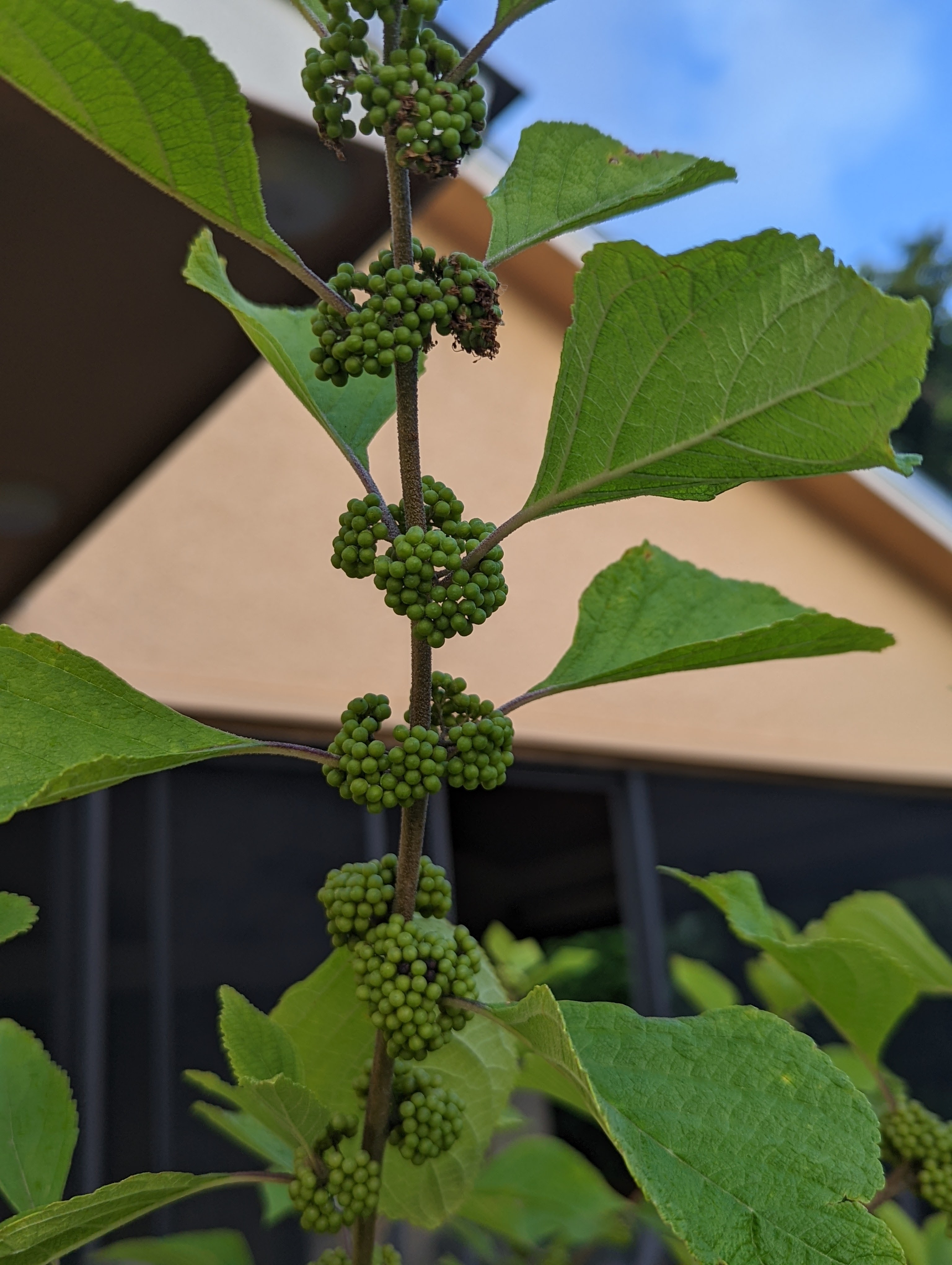
The incredibly prolific Beautyberry (Calliocarpa americana). This one never fails to amaze me. It grows on a wall facing due north. Full shade in winter and full sun in summer. And thrives.

The very pretty but inedible Muscadine grapes (Vitis rotundafolia). These must be the hardy rootstock other tastier varieties are crossed with or grafted to. These have two large seeds and are very bitter tasting. The raccoons and local wildlife love them and spread them far and wide.

Bromeliads love the mid summer heat and are showing off.

One of my garage sale finds – no clue what variety this is. The flower looks like it might be purple.

Aechmea rubens in full bloom. I have enjoyed these this summer and wonder how much longer they will last.

Aechmea blanchetiana in bud. These will flower and last for months. A little photo bomb by Johnson’s grass, my least favorite weed. It is still out there, waiting to produce a hundred thousand seeds while I recline in air conditioned comfort. I will decapitate it before the seed disperses. Hopefully.

My Six for Saturday. To see more, visit http://www.thepropagatorblog.wordpress.com.

Happy Gardening and stay cool..

Six on Saturday – Tropical Senescence

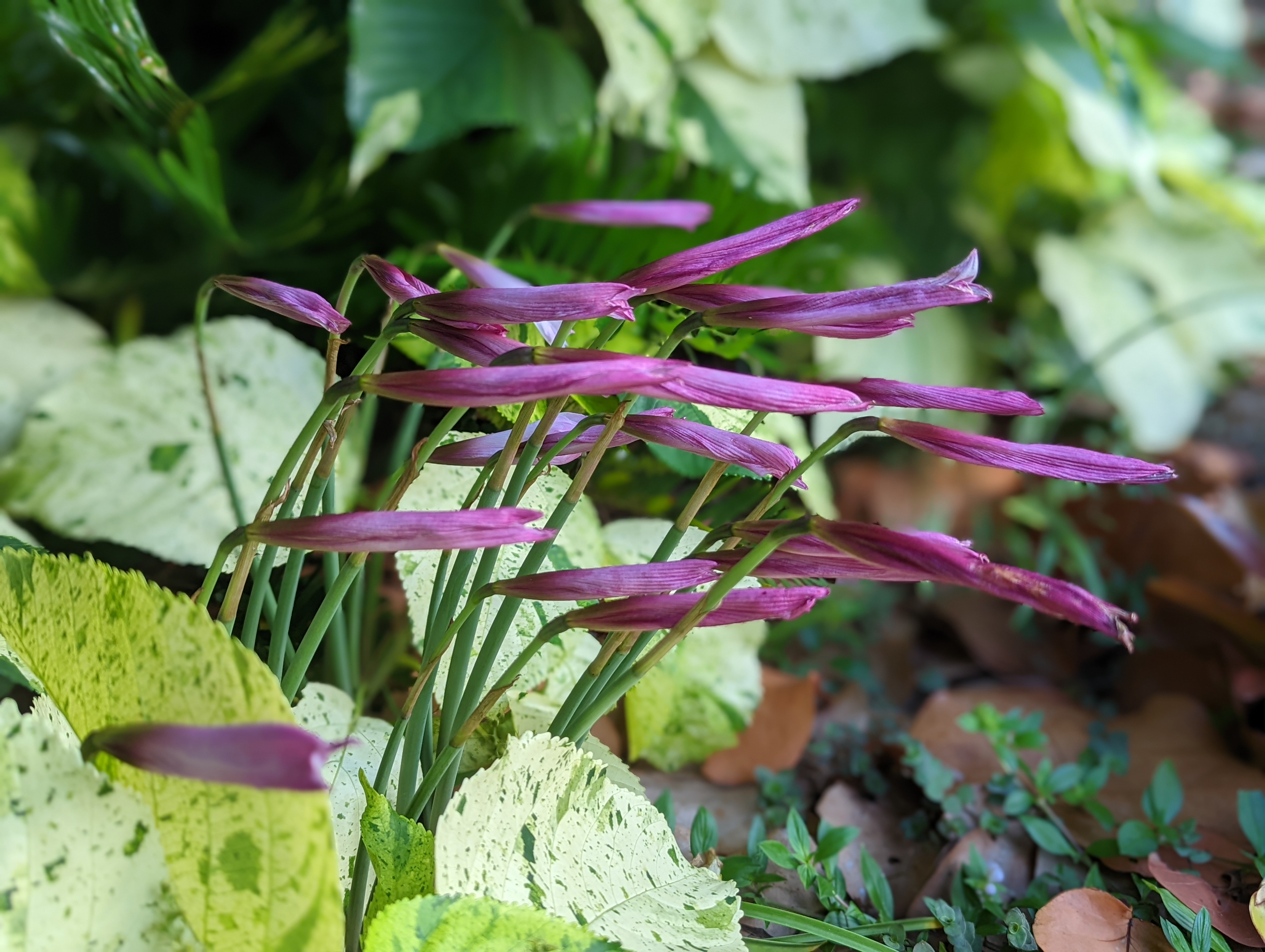
Unlike humans or maybe it is just me, flowers on tropical plants can look great for a long time, aging well. Above, the fading flowers of the relatively ephemeral Tropical Rain Lilies (Zephyranthes robusta). I enjoy these in the garden, the pink flowers celebrating rain. Here they are new:

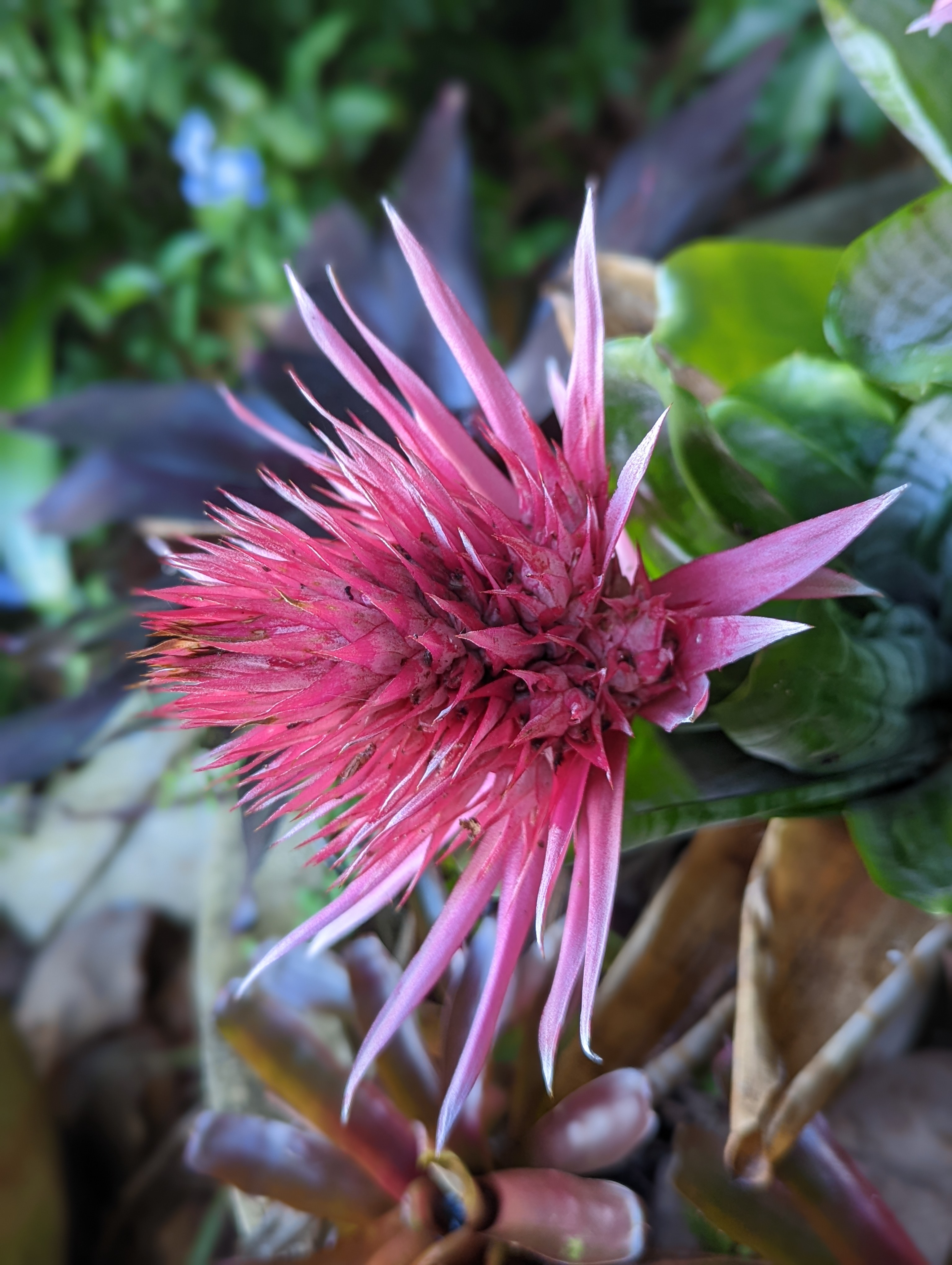
The Silver Urn (Aechmea fasciata) flower opened about a month ago. Here is it today, the pink is a bit faded, but it is still a showstopper.

The opening flower:

Guzmania Bromeliads are another long lasting flower. I like these at all phases. These Bromeliads actually produce brown seed heads, which is unusual as most seem to produce vegetative pups. The flowers start red and slowly fade to chartreuse. This one is mid fade.

A fresh Guzmania flower. In March!

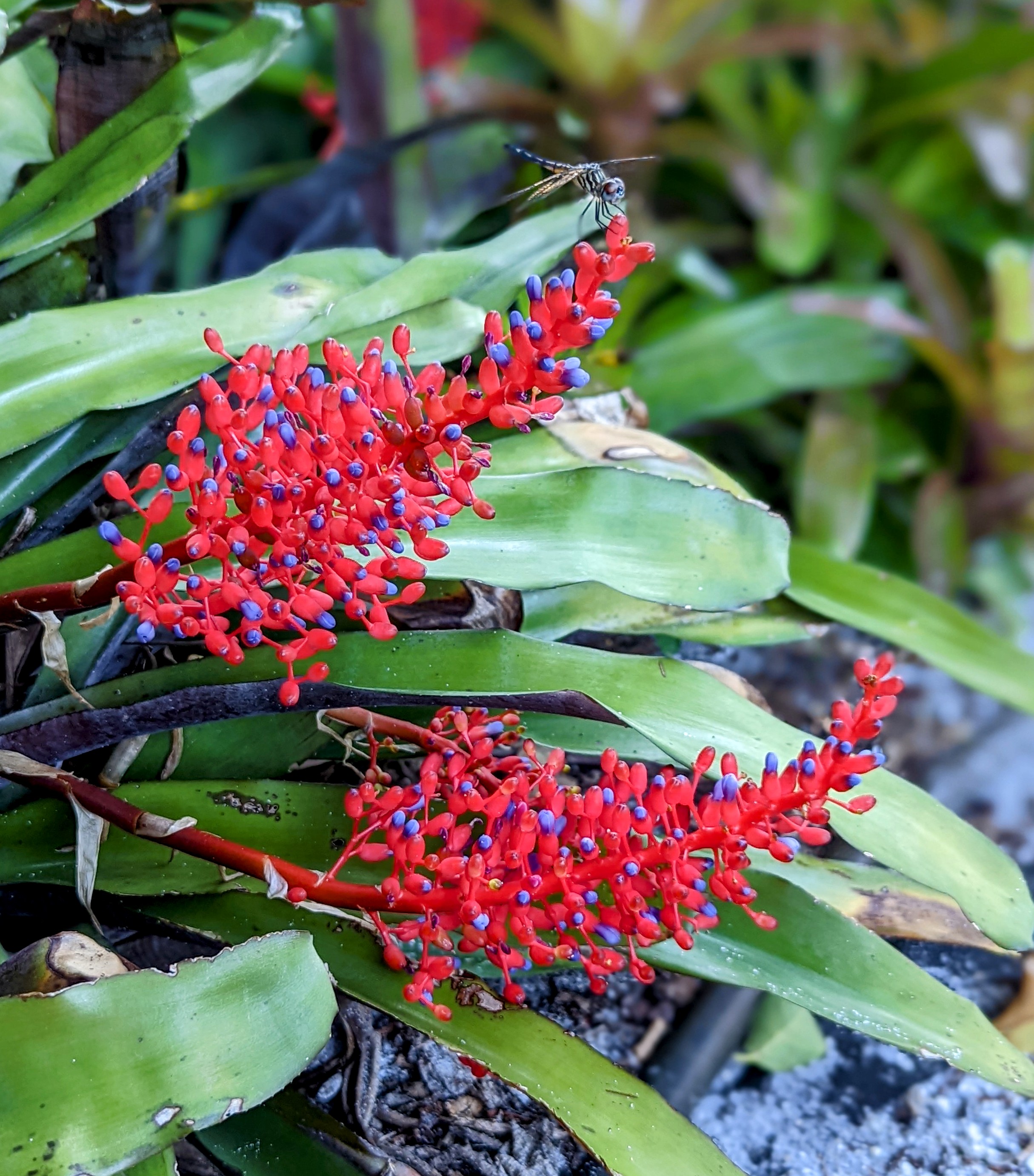
The Aechmea miniata flower, nearly full bloom with a friendly dragonfly. These are covered with blue when in full flower and slowly fade to apricot over the summer.

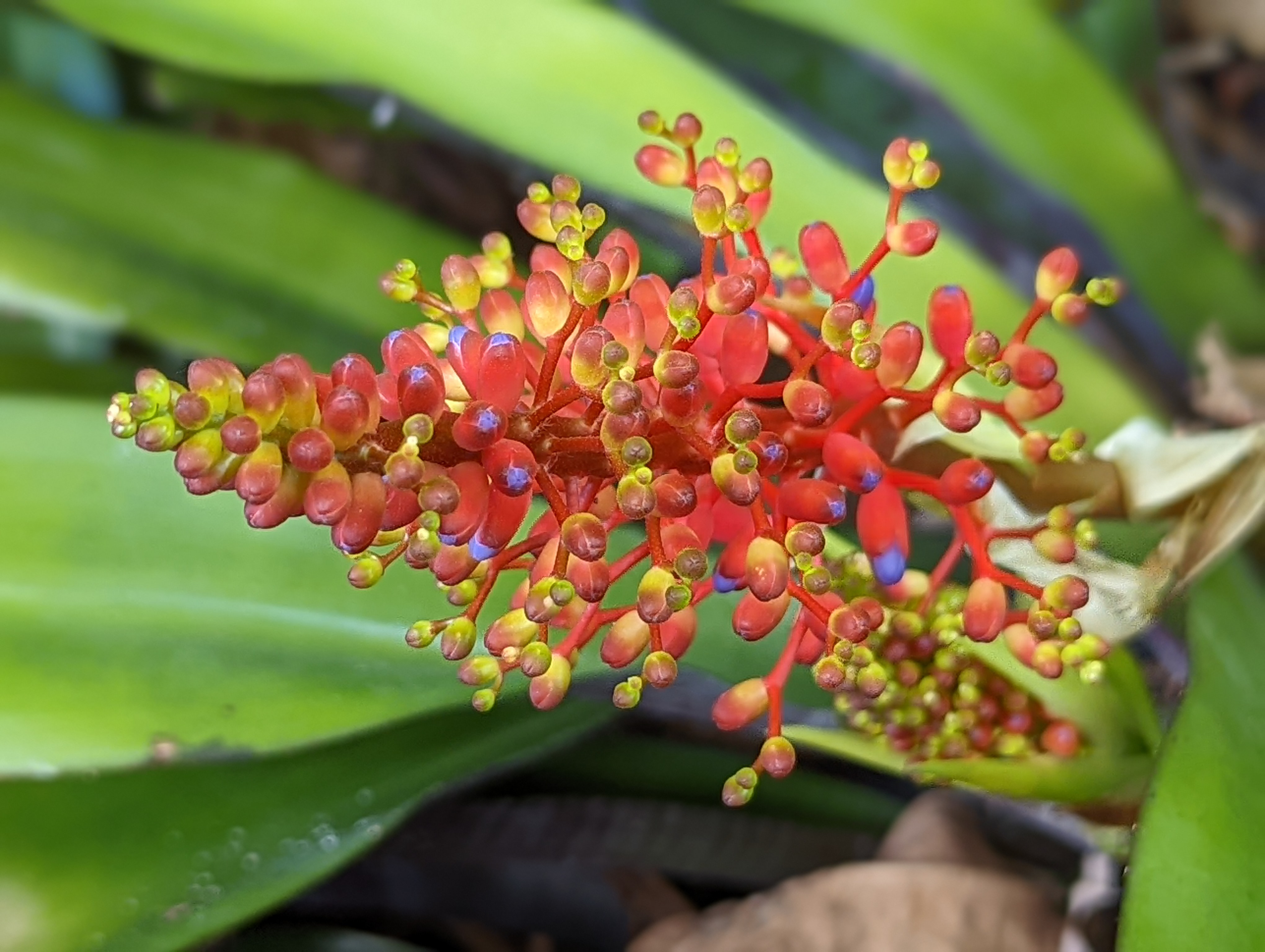
The buds from a couple of weeks ago.

Oops, I think that is Eight on Saturday. Oh, well. I am aging in the garden along with the Bromeliads…

To see more proper Six on Saturday posts visit http://www.thepropagatorblog.wordpress.com.

Happy Gardening!!

Six on Saturday – Quandaries

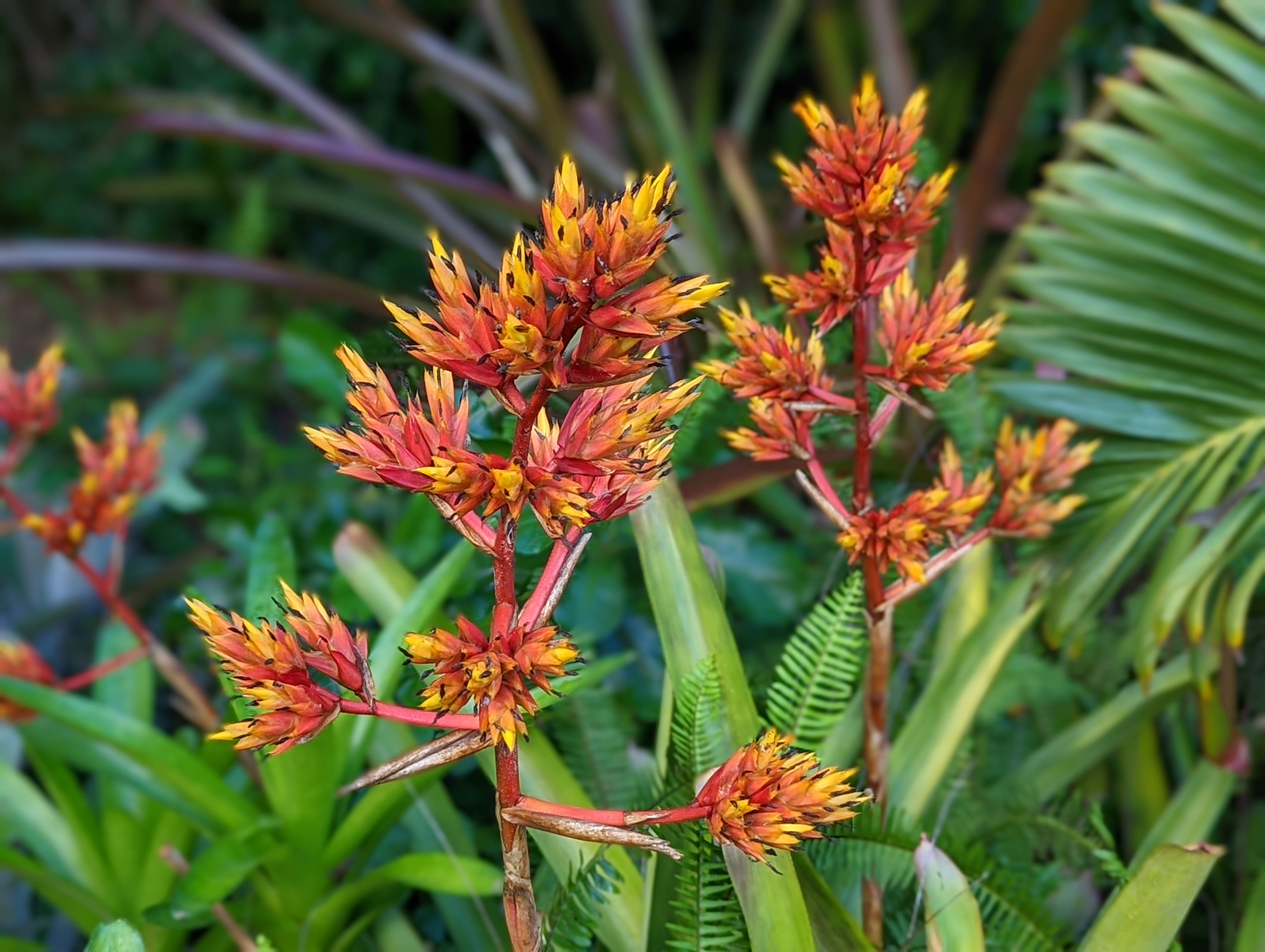
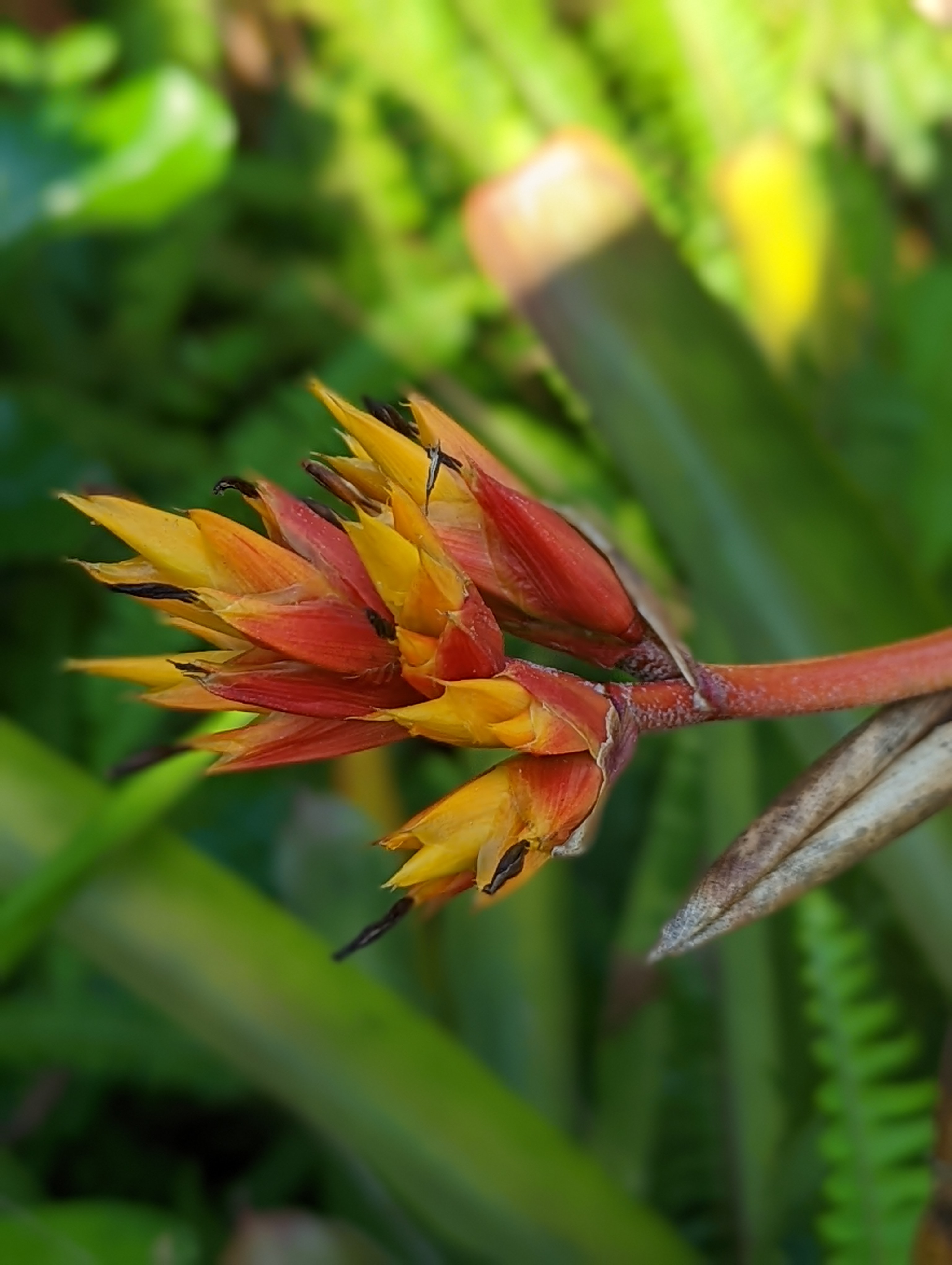
I face many quandaries when gardening. Many involve recalling the name of the plant. I finally remembered the one above is an Aechmea aquilega bromeliad, then I looked it up online and found several photos and only one looked like this? And what are the black things on the tips of the flowers- seeds? Rarely I will get a new bromeliad from seeds, but it takes forever.

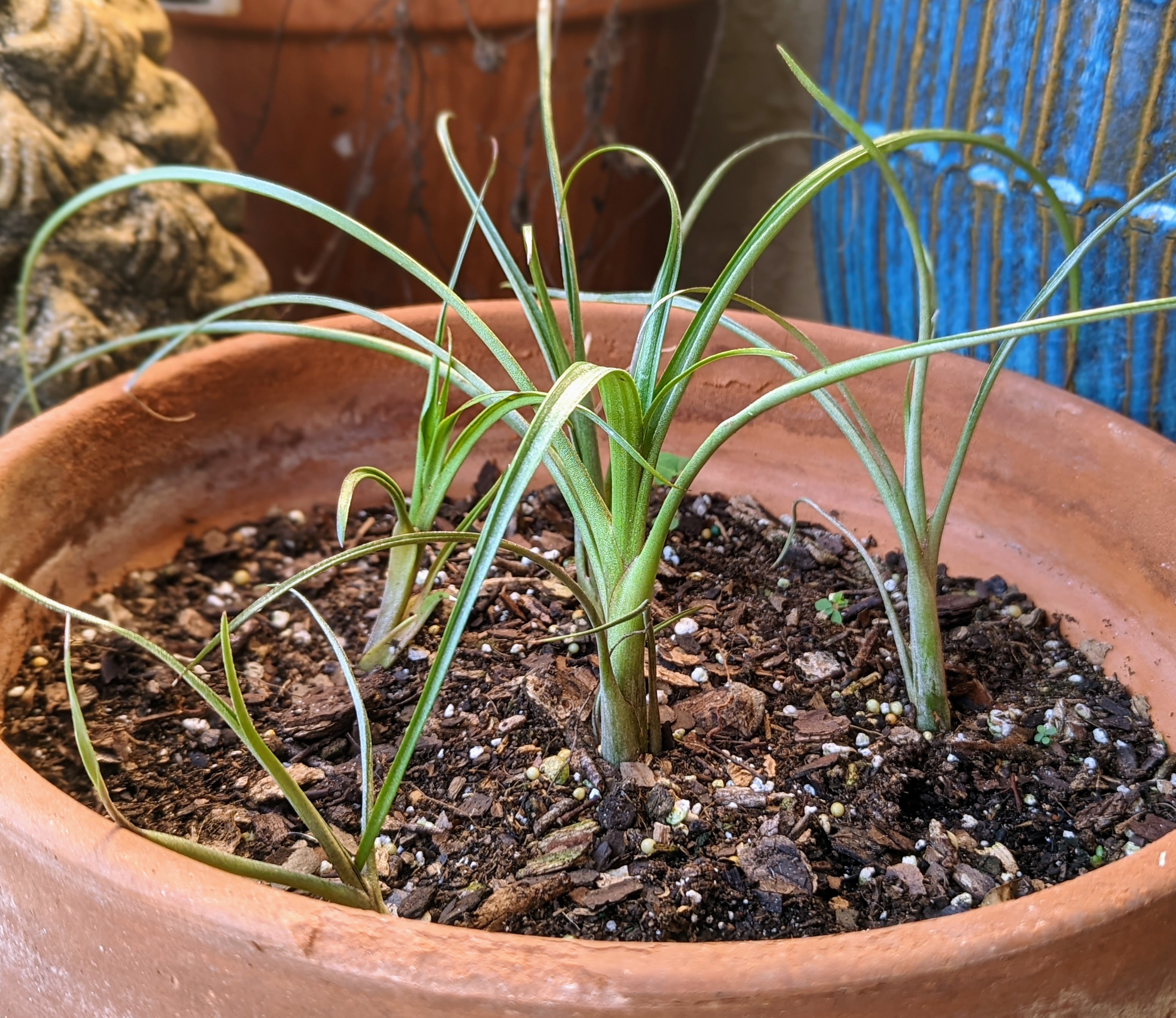
These are called grass pups, they are from an Alcantarea bromeliad, as far as I know the only genus that makes grass pups. After putting them in a pot together I read they hate this and should be separated – I am thinking not since they are just starting to do well. I am not sure which Alcantarea these are, either.

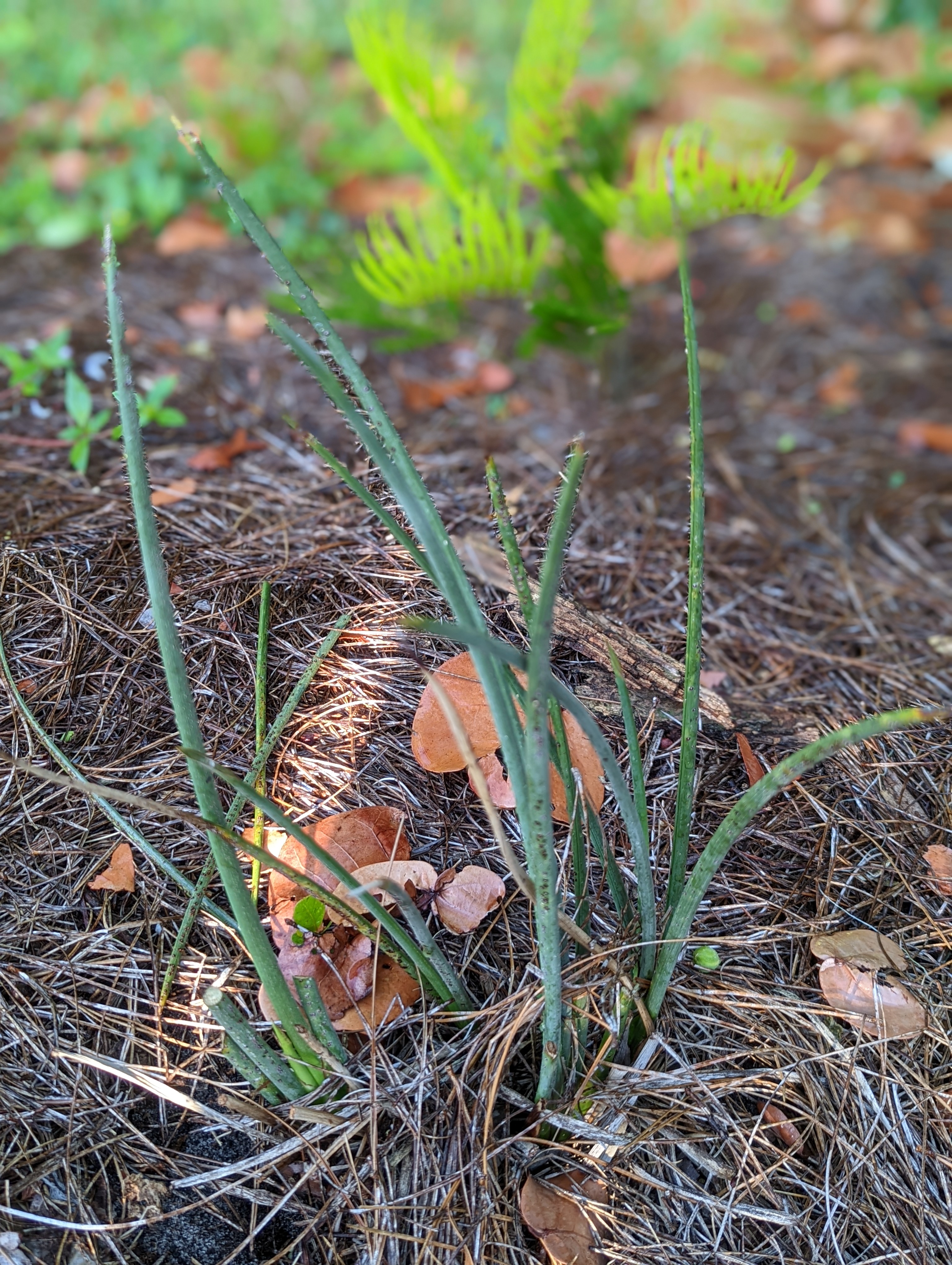
Another tropical dilemma. This is a Leafless Bird of Paradise, a very interesting plant. This one is perpetually plagued with scale. I am thinking of cutting all the foliage off and letting it start over. I did this with a nearby Coontie, similarly plagued and it is much improved.

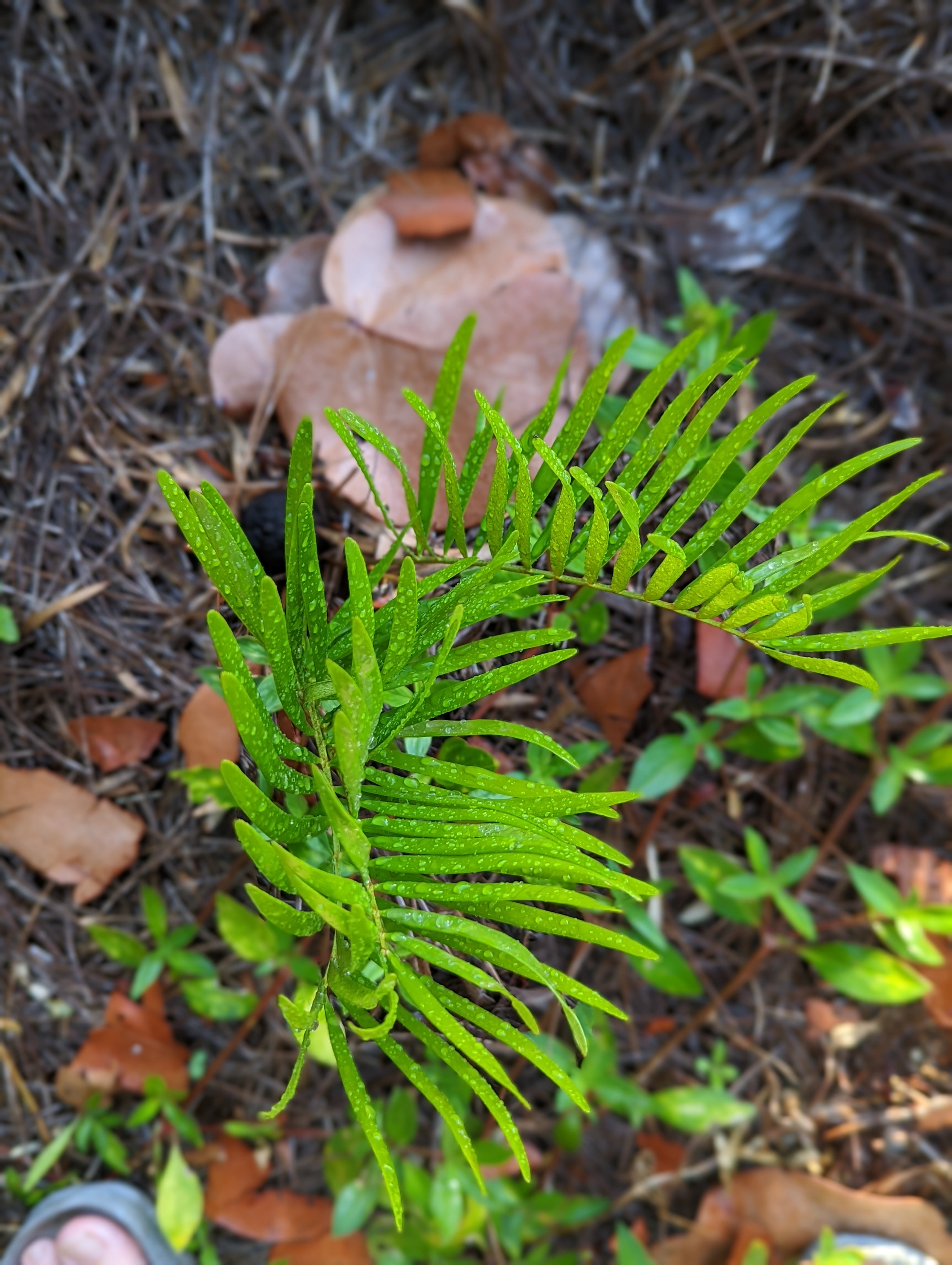
The Coontie and my big toe. Coontie (Zamia integrifolia) is a cycad native to Florida. The very poisonous roots are a source of arrowroot flour and were nearly harvested to extinction. The scale is gone.

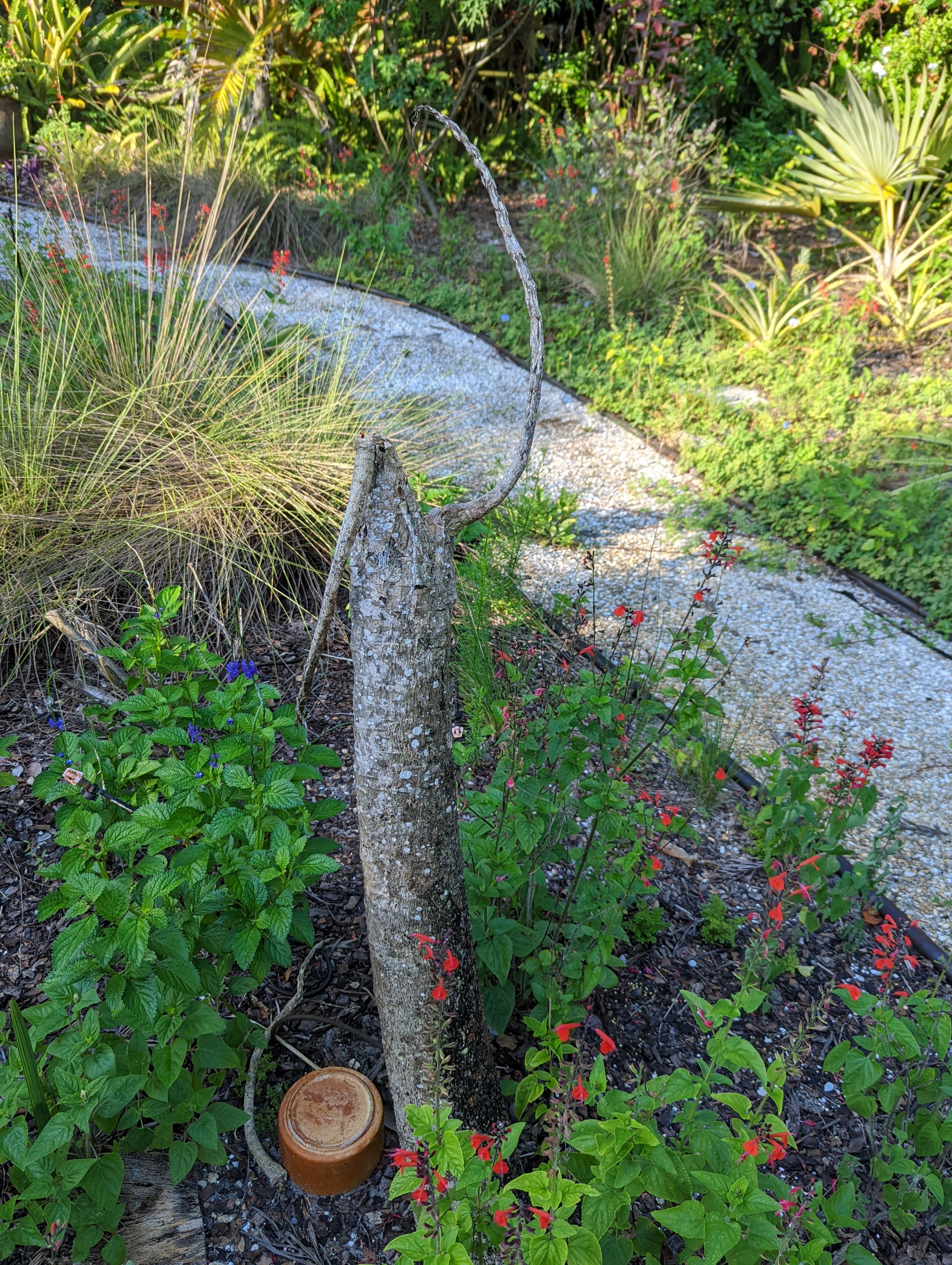
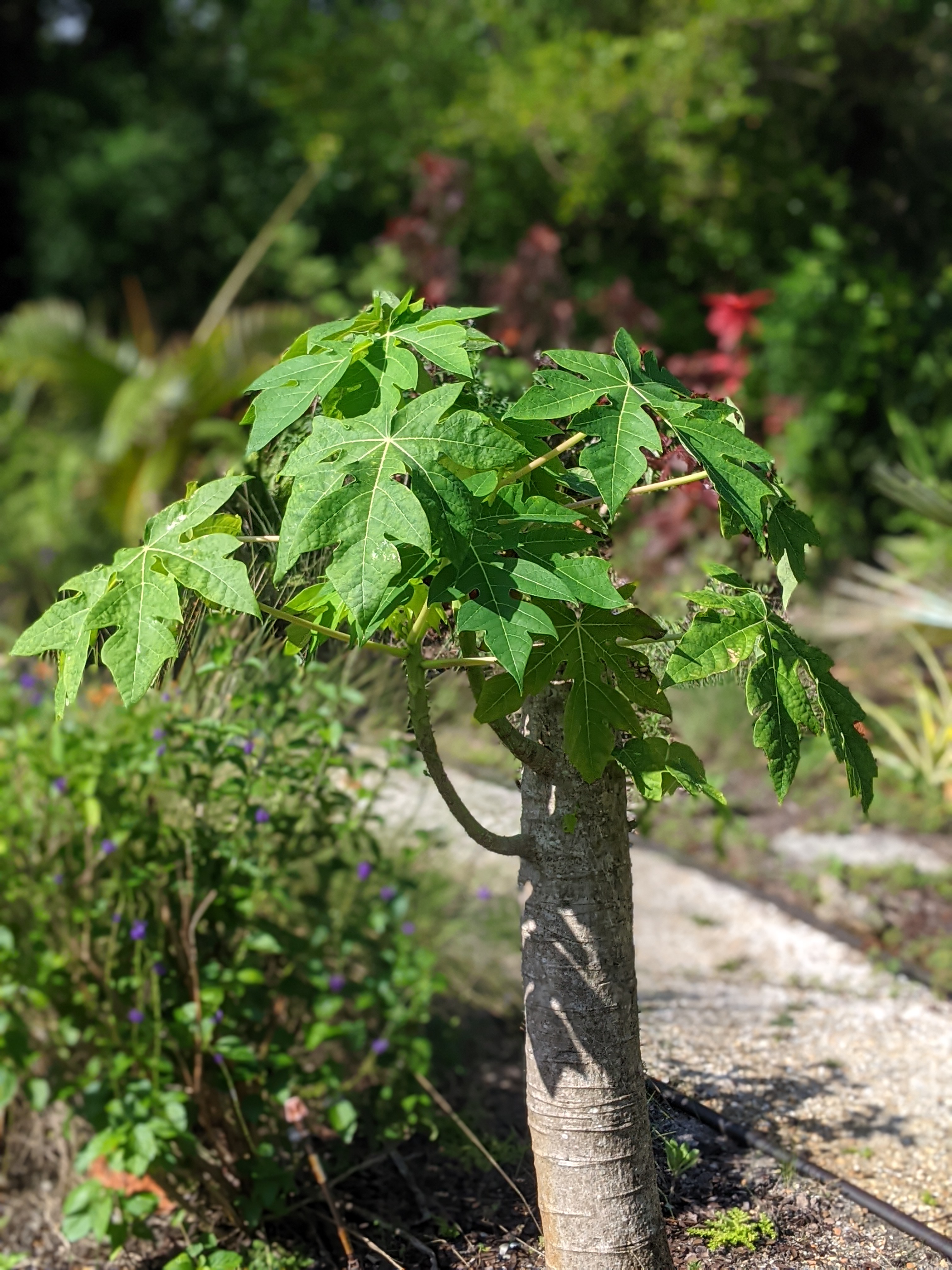
Several blog friends asked for an update on the decapitated Papaya tree. It produced a few weak flowers and then passed on. The trunk is nearly loose enough for me to pull out.

Here is the Papaya last June, probably a month after decapitation. This is a practice endorsed by Floridians, supposedly reinvigorating the plant to produce more fruit. It seemed like a bad idea at the time.

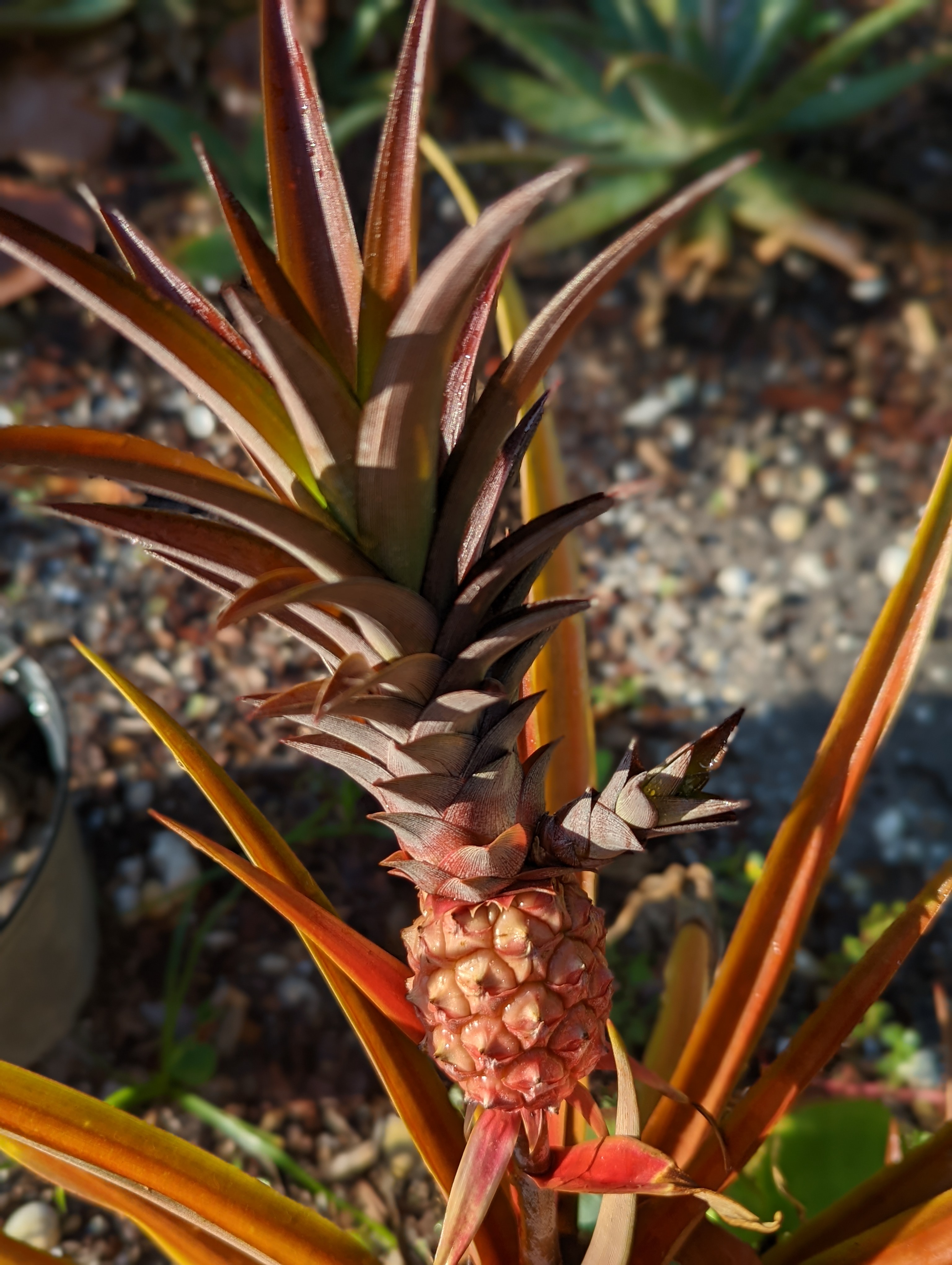
Another thing to wonder about. What is happening here? A two headed pineapple?

There! My Six Quandaries for this Saturday. To see more posts, visit http://www.thepropagatorblog.wordpress.com.

Happy Gardening. I’ll just be in the garden, wandering and wondering.

In a Vase on Monday – Going to Seed

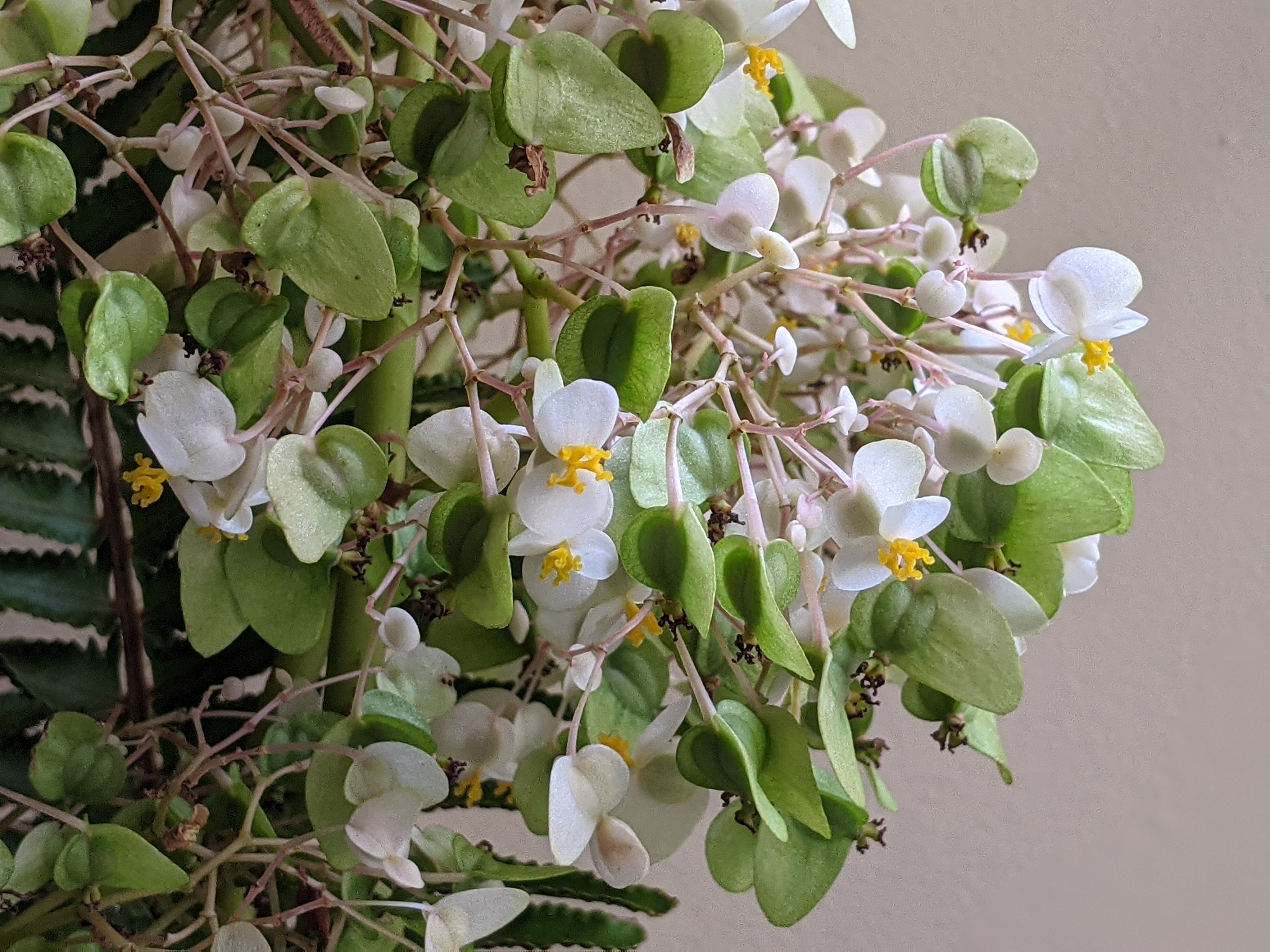
Some days it seems I am the one going to seed. Maybe people are like plants, some look better than others while going to seed.. The tropical Lotusleaf Begonias (Begonia nelumbifolia) are one of my favorites when going to seed. They make lovely triangular, chartreusy seed heads that tower above the foliage. I have never had a Begonia grow from a seed dropped in my garden, but it is entirely possible I have not left them on the plant long enough.

A closer view:

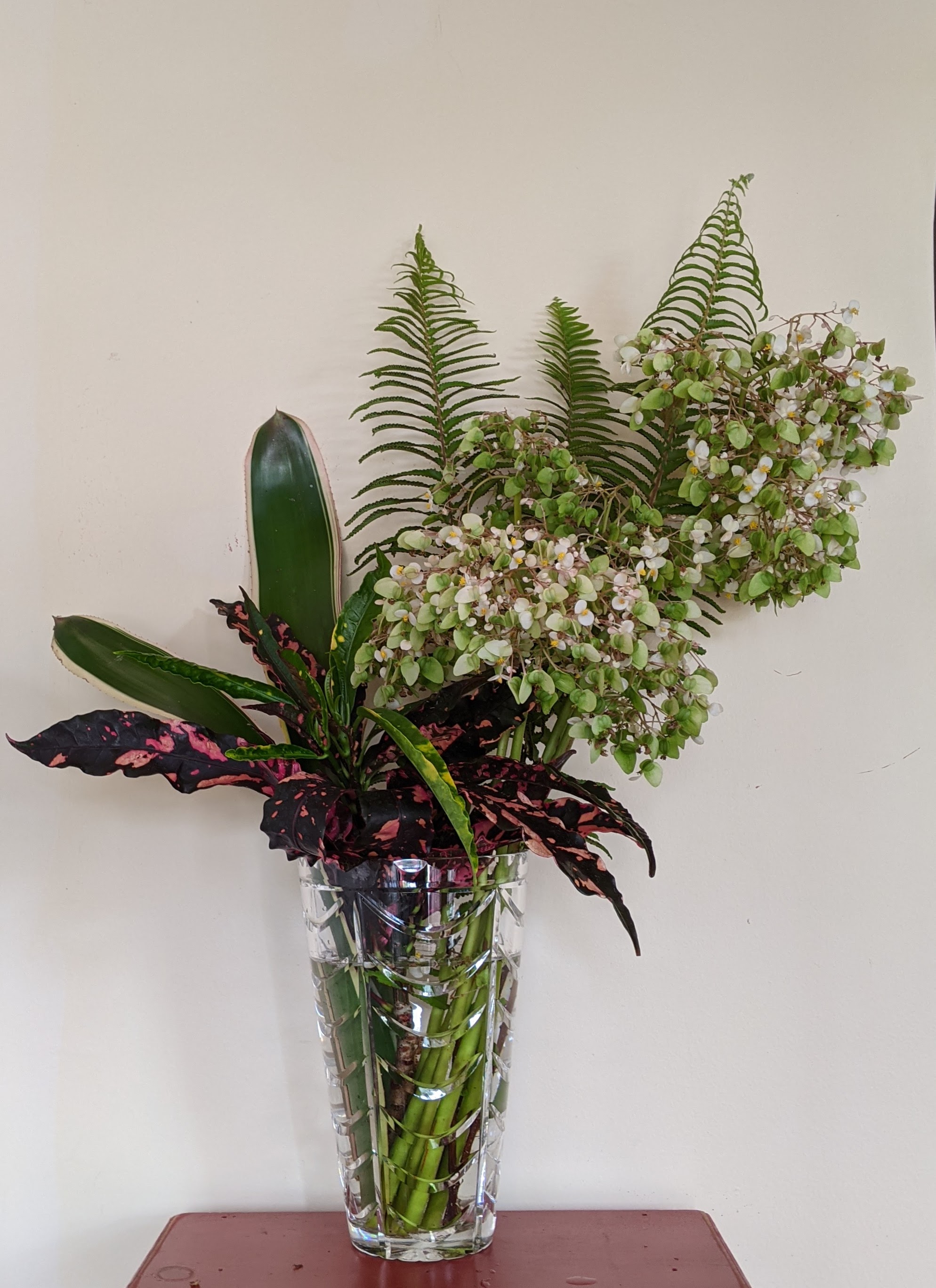
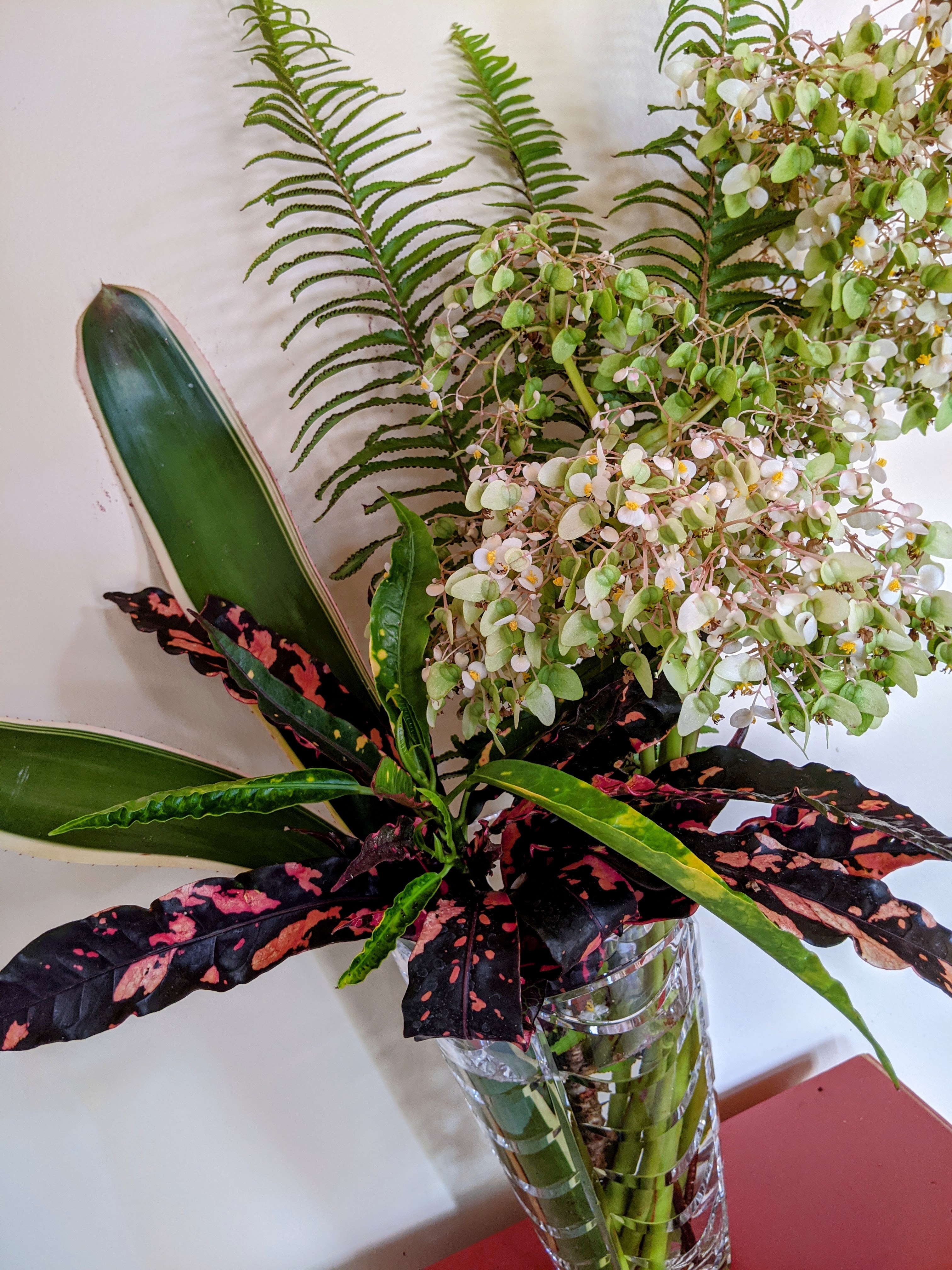
I started out with the idea of using a hand tied bouquet to make the Begonias stand upright – then the slant grew on me and I added foliage to emphasize the non-political right slant.

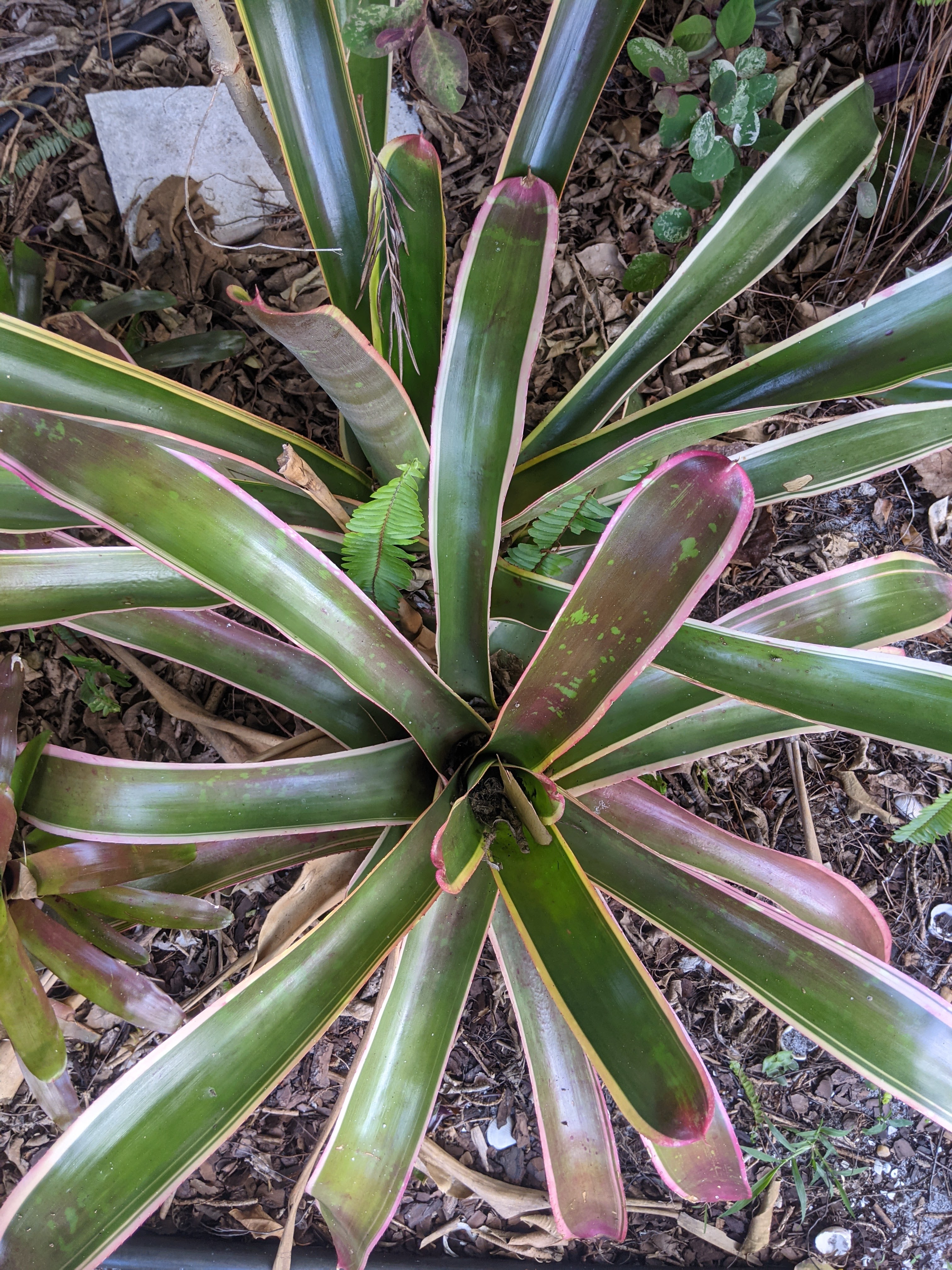
The crystal vase, a wedding gift from a dear friend who I worked on perennial gardens with in Atlanta. The left leaning plants in the arrangement are: in black with coral spotted leaves, Piecrust Croton (Codieum varigatum). This shrub is used as a foliage accent in the garden. The new growth is yellow and green and eventually darkens. An amazing variety of colors exist in this well loved tropical shrub. Maybe the left lean is appropriate. The ferns, added for a green, graphic backdrop are from Florida’s native Boston Fern (Nephrolepis exaltata). The day after the US Presidential election, my right leaning neighbor came out with his weedeater and cut the ferns in my garden down. The reason for this remains a mystery to me. The trimming rejuvenated the Boston Fern. The two strap like leaves are from a Neoregelia Bromeliad that is also on its way out. I cannot tell in some cases when to cut the mother plant off and get rid of it. Bromeliads are peculiar in the way they reproduce. I buy a plant, it may or may not flower, sooner or later a side shoot appears, called a pup, and then the original (Mother) plant dies. The pup on this one is nearly as big as the mother plant. The Neoregelia Bromeliad:

The Neoregelia Bromeliad in the front of the image is the mother plant, you guessed it, going to seed! I should add; very few Bromeliad have produced seed in my garden, though it happens. I am told growing Bromeliads from seed is a long, excruciating process – it’s better to use the pups for new plants.

Many thanks to Cathy at http://www.ramblinginthegarden.wordpress.com for hosting and maintaining this wonderful meme. I enjoy the weekly posts from around the world. Follow the link to see more (probably upright) vases.

Happy Gardening!

Bromeliads for South Florida Gardens

I first encountered Bromeliads as houseplants in the 1980s. Winter Gardens, Atrium and Interiorscaping were popular indoors in Shopping Malls and Office Buildings. At the time, I worked for a large Architectural firm as a Landscape Architect and designed these gardens using flowering Bromeliads as color beds in large planted areas. The Bromeliads I used primarily in these indoor plantings were Aechmea fasciata (left) and Guzmanias on the right.


Many years later, my husband and I relocated to the Treasure Coast of Florida. I was excited to learn about all the Bromeliads I could use in my garden. Houseplants rule the outdoors in South Florida. Now I have Guzmanias and Aechmea fasciatas in my garden.

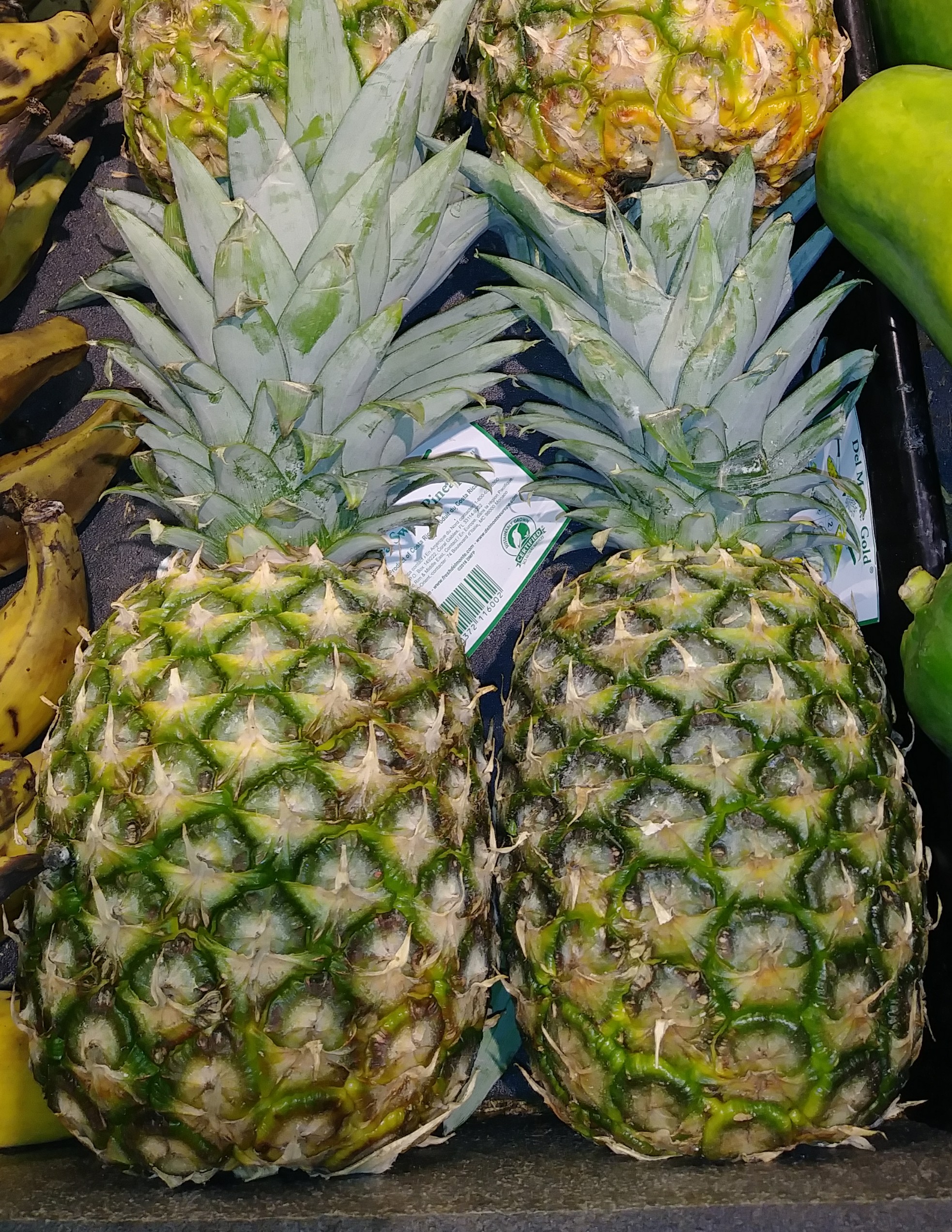
Bromeliads have a broad range of appearance. They range from highly colored foliage with flowers prized in our gardens to Spanish Moss hanging from Oak trees common in the Deep South. Bromeliads may also be found at the supermarket in the form of a Pineapple. Some are epiphytes living on trees (Spanish Moss) others are considered terrestrial and root into the ground. Bromeliads use specialized cells to collect water from the air, they also use cups to collect rainwater and derive nutrients from debris collected in the cup.
20190123_091413-1

While we have several native Bromeliads in Florida (Tillandsias for the most part), most of the showy ones we use in our gardens are from further south in the tropical Americas, many of my favorites hail from Brazil. These are easy to grow, tough plants that lend a tropical touch to our gardens. I use them as the icing in the garden, like using flowering perennials further north.

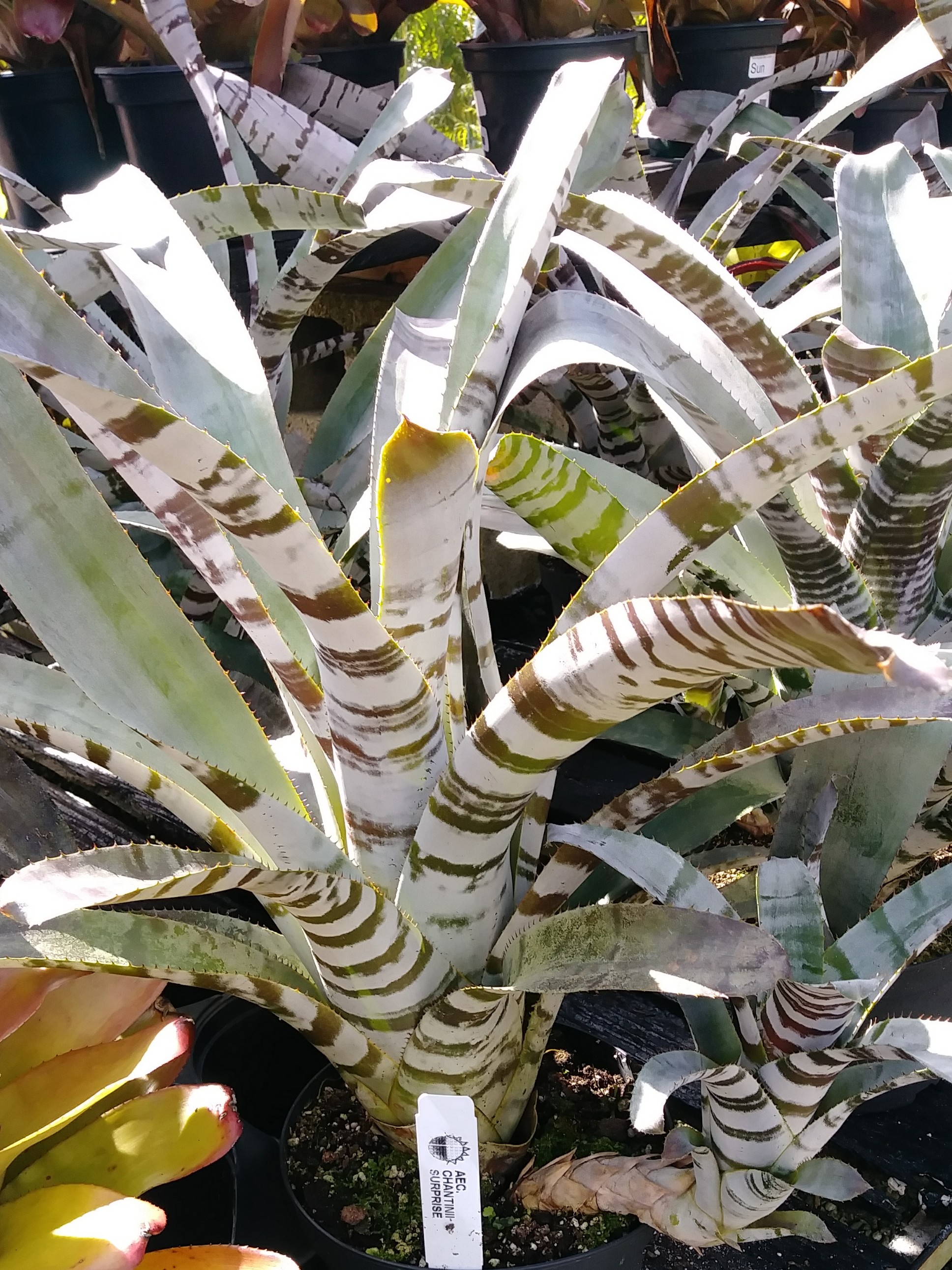
Being of different origins than most perennials, Bromeliads require a bit of understanding-the plant originally purchased eventually will flower and die. This is called the mother plant generally. The mother plant flowers then begin to decline; offshoots called pups then appear around the plant. Pups can be left in place around the mother or clipped off when they reach a third the size of the mother plant. Pups removed may be replanted and usually require staking or a rock to hold them in place until they are established. Aechmea ‘Chiantinii Surprise’ with pups.
20190119_121733-1

Chantinii Surprise

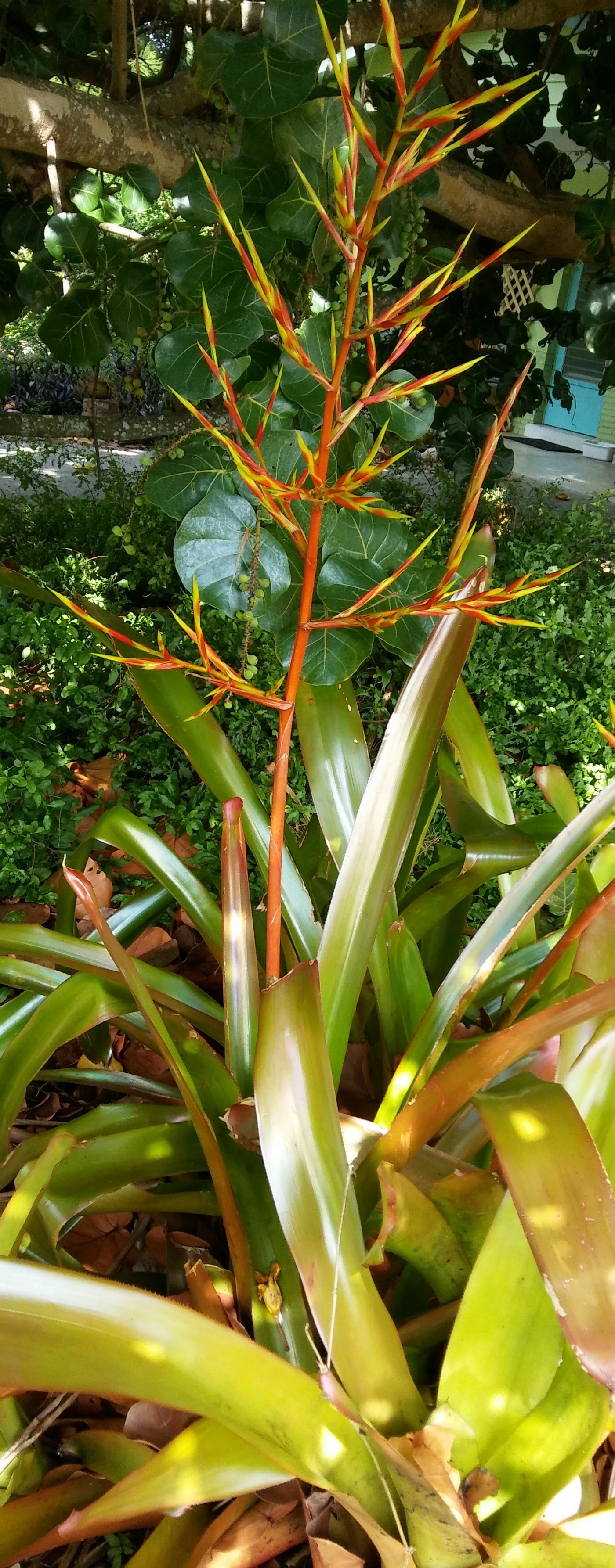
My transition from a houseplant tender to the garden Bromeliad enthusiast had a bit of a learning curve. Soon after moving to the Treasure Coast, the very common (here) Blanchetiana Bromeliad began blooming around town. Being a burgeoning fan of the garden Bromeliad, I nearly wrecked my car trying to get a look at the thing. Orange foliage, nearly as tall as I am with a red and yellow spike flower of a similar size. No longer in houseplant territory- this was some serious vegetation!
20170723_102038-1

Now I make wreaths during the holidays from the flowers:

20181220_164754-1

Seeking advice on the needs of these plants proved to be elusive and I began to just plant them. If someone said it needs “some sun” – this means it really needs partial shade. I charco-broiled more than one plant seeking the “some sun”. There are some reliable full sun plants; finding the right plant for the right spot is key.

Some favorite sun Bromeliads:


This slideshow requires JavaScript.

Some favorite shade Bromeliads:


This slideshow requires JavaScript.

Another key to success with Bromeliads is planting them during the proper time of year. Dividing and installing new plants in your garden should be done between November and March, the reason, to allow the plants to slowly acclimate to the sun – the sun angles in South Florida are dramatically different between summer and winter. Some of the more sun tolerant ones may be planted year round. Landscape beds near a north facing wall can be the full sun in summer and full shade in winter.

Design tips:

Consider the big Bromeliads exclamation points in the garden, use sparingly. Everybody can’t be the star. Even stars need a chorus. This is Aechmea Blanchetiana in a pool of Beach Sunflowers (Helianthus debilis)!

20190107_102831-1

Restrain the color palette to three colors. My favorite color schemes are:

In shade to partial shade: Colors and varieties

Red/Green/Burgundy – Neoregelia ‘Maria’, Neoregelia ‘Angel Face’


Good companion plants: Coontie Palms, Ferns

Gold/ Green/ Salmony Red: Vriesea ospinae ‘Gruberii’, Neoregelia ‘Super Fireball’


20190125_134333-1

Combination of orange, red and green for sun; named from left to right

Neoregelia ‘Fireball’, Neoregelia ‘Bossa Nova’, Bird of Paradise (not a Bromeliad), Aechmea ‘Alvarez’, Aechmea ‘Red Candles’

The Bird of Paradise is shown as a companion plant example.

Bromeliads also make great container plants. Here are a few examples we put together at Pinders Nursery in Palm City, Florida for a talk I gave (about Bromeliads!) last Saturday. These container plantings last a long time, until the plant flowers or you need a change of view.


20190125_134251-1

Plants are: in back ‘Imperial Red’ Alcanterea (for sun – these bloom every 10 years), in the blue container for shade, Aechmea ‘Del Mar’, the brown bowl has Aechmea ‘Bracteata Red’ and Neoregelia ‘Donger’ would take Sun.