Six on Saturday – Indian Summer

I am joining the SOS crowd celebrating Indian Summer in South Florida. I did not realize it was possible to have Indian Summer in my garden, yet here we are. It is dry (not raining), humid and a high of 86 F (30 C) is predicted today. This weather brings on a mix of summer and fall colors. To visit gardeners around the world with less humidity – follow this link to Jim’s blog http://gardenruminations.co.uk

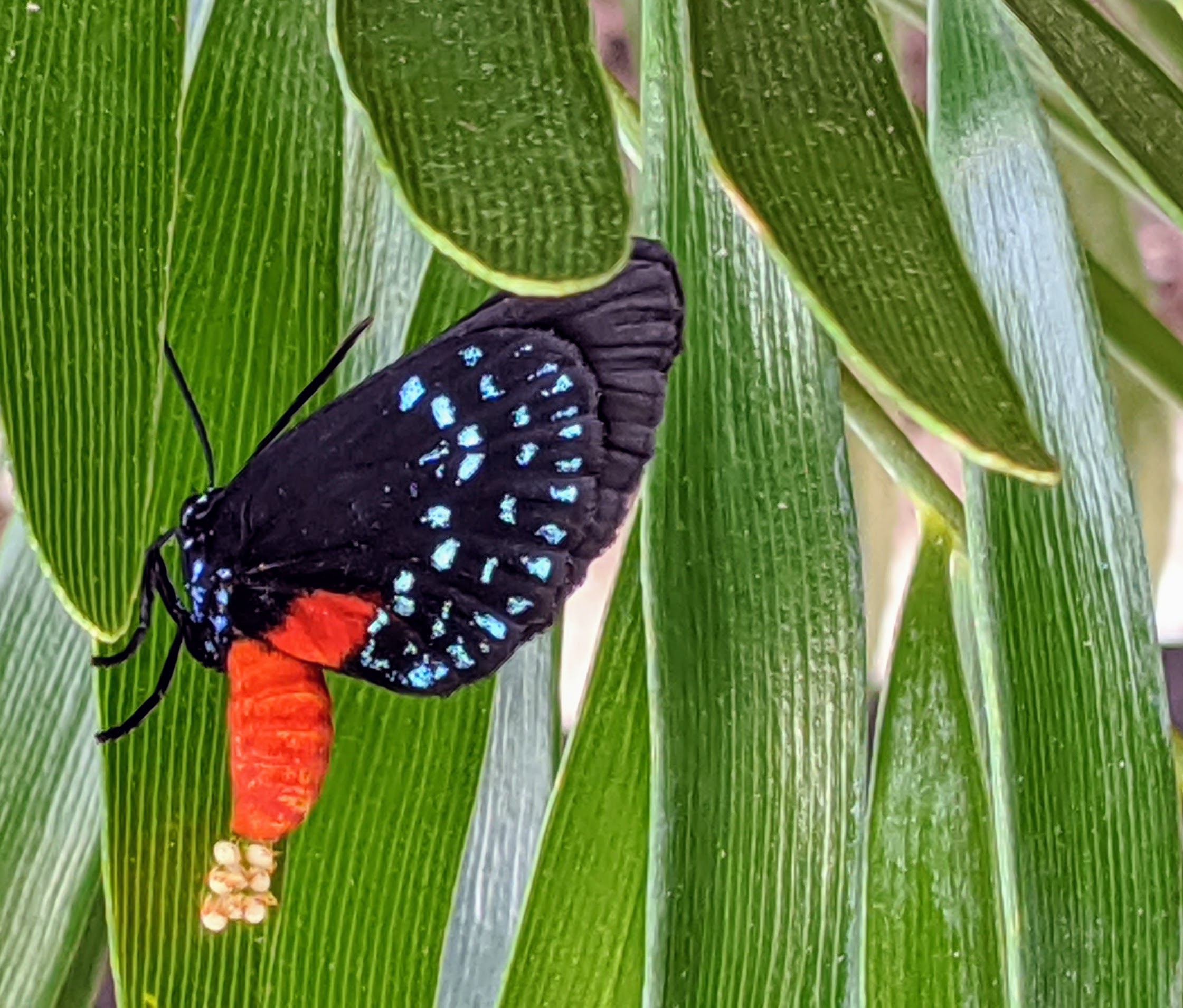
I finally saw and captured an image of the rare Atala butterfly that has been hosting on my Coontie cycads. This butterfly is listed as endangered due to loss of habitat. It is native to the Caribbean, the Bahamas and South Florida. I am at the northern end of its range.

I was excited to see some actual fall color. This is Virginia Creeper (Parthenocissus quinquefolia). I think this vine grows everywhere and some people actually buy it!

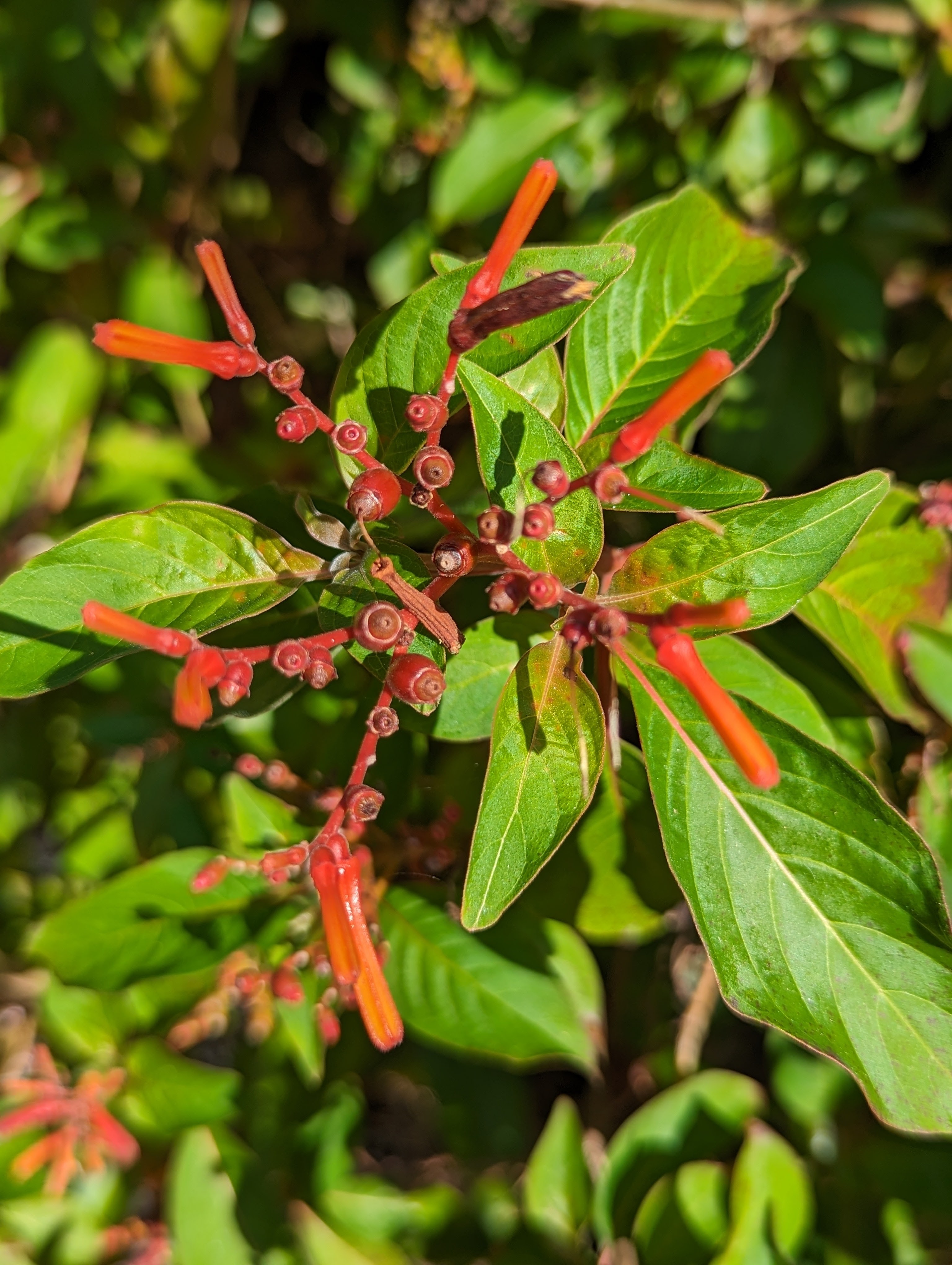
Fall berries do happen in my garden. These are on the native Firebush (Hamelia – now I am not sure of the last name!, the botanists have been at it again) These eventually turn into a juicy black fruit that the birds covet.
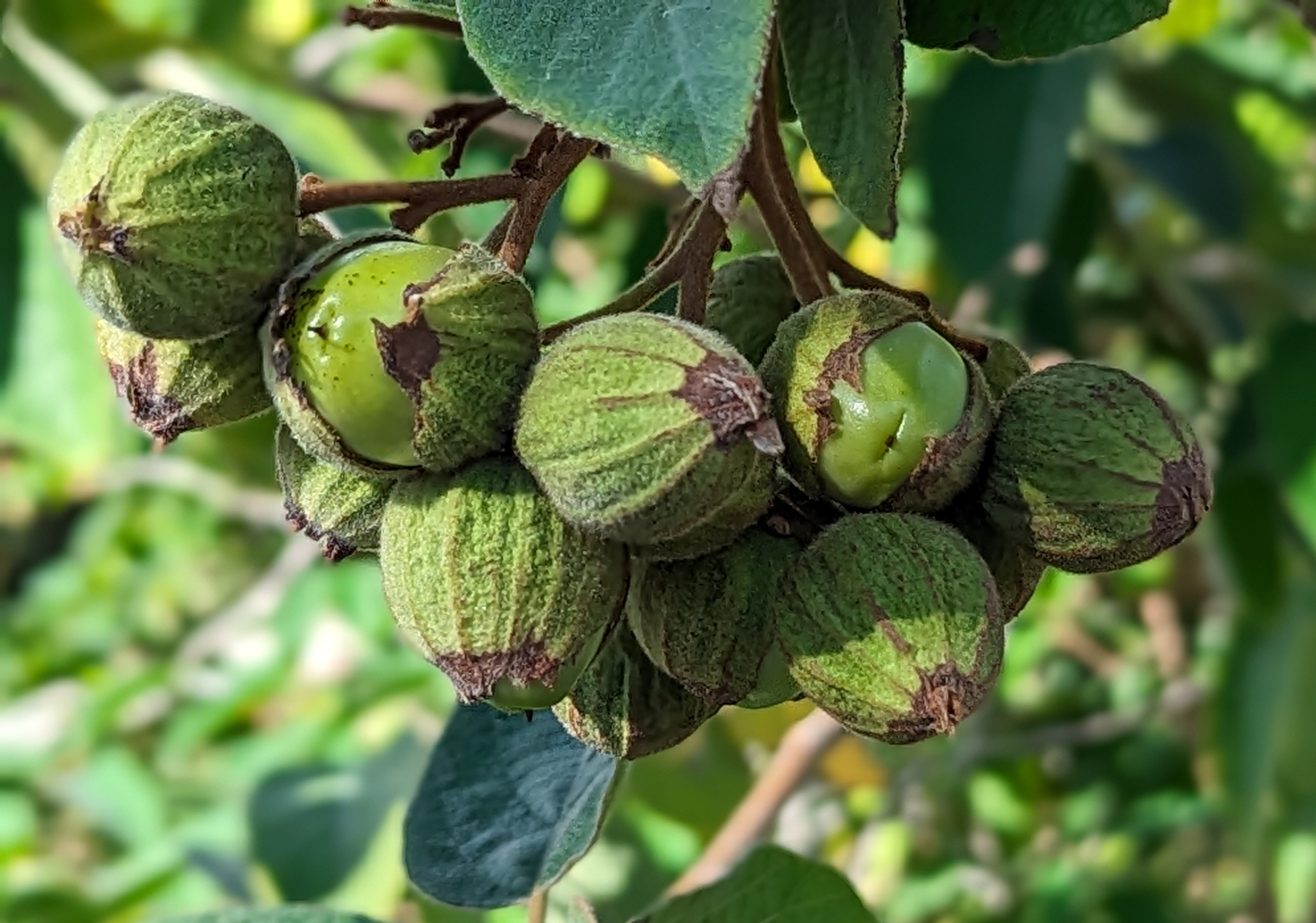
Fruit on the White Geiger tree (Cordia boissieri) I like these and use them in flower arrangements sometimes.
A native Portulaca pilosa, common name Kiss Me Quick. No idea why. I like these, but they are stubborn and will only grow where they want to grow.

Another November flowering plant, the Esperanza (Tecoma stans). These were once considered native and now they have been vilified as invasive?! It seems someone discovered a sea captain brought these from the Caribbean to Key West a few hundred years ago. I like them and have had no seeds germinating from the plant.

That’s all for this Saturday. I’m hoping for some precipitation and cooler days.

Happy Gardening!!

Six on Saturday – Balmy and Palmy

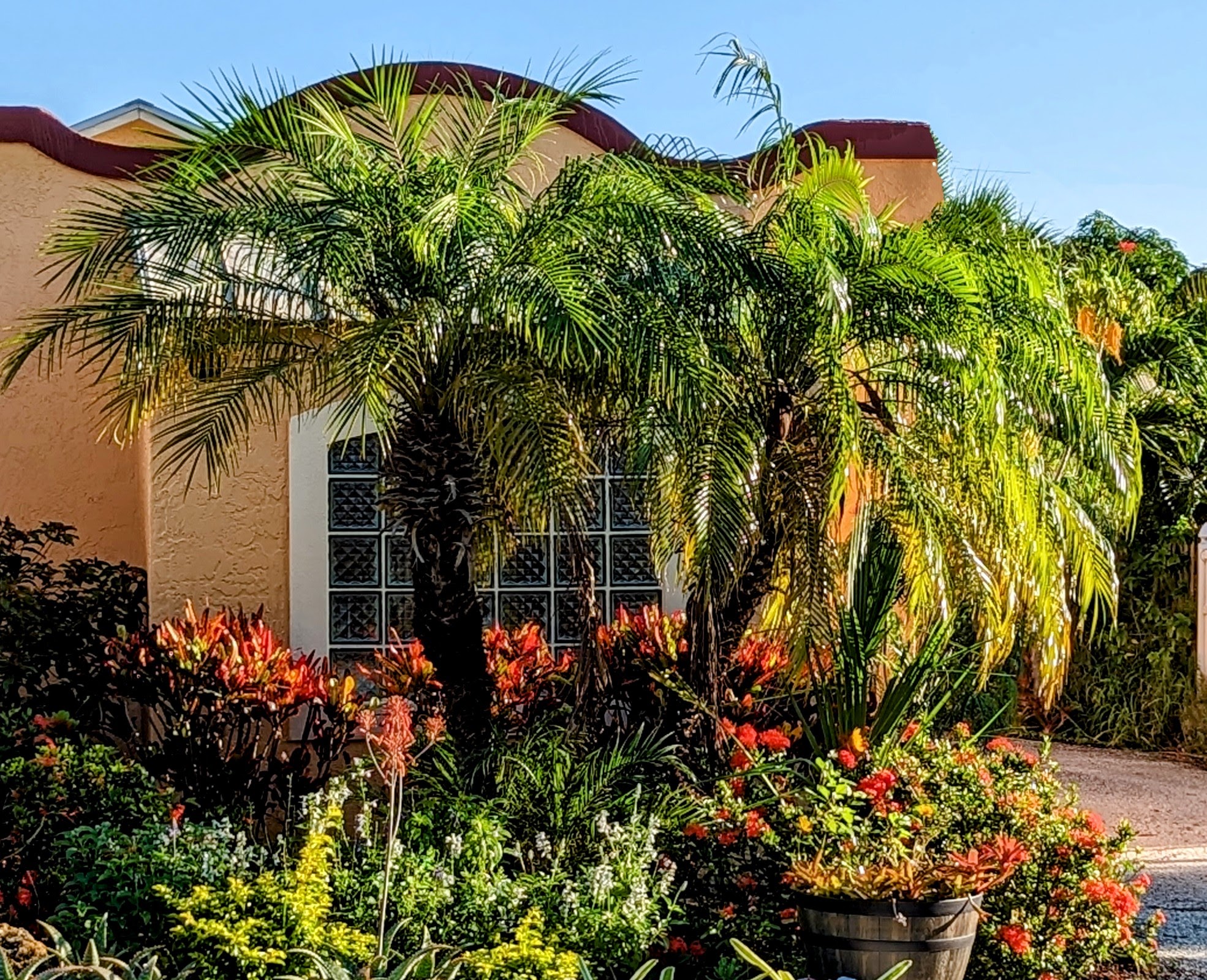
Summer is settling in on the Treasure Coast of Florida. Afternoon thundershowers are keeping the garden watered and everything is flourishing, even the weeds. Especially the weeds! Though it is very green. Palms and cycads are hard to resist planting in a tropical garden, so I have several to explore today. To see other Saturday garden explorations visit Jim at http://gardenruminations.co.uk

This is an Adonidia Palm (Veitchii merrilli). Grown from seed by my college friend Eddie, it has been in the ground for about 10 years. The off white things on the trunk are flowers, if left in place they make red fruits that look like Christmas ornaments – it is sometimes called Christmas Palm for this reason.

The Lady Palm (Rhapis excelsa). This one is starting to run in my Rainforest Garden. Super Fireball Bromeliads in the foreground.

A Bottle Palm (Hyophorbe lagenicaulis) just starting to make the bottle. The old fronds eventually fall off revealing a green bottle shaped trunk. The process takes about five years. This palm has been in the garden for at least that long, so I am hoping the fronds will come off soon. They are impossible to pull off now. One thing I have learned about palms – they are slow growing. This was a surprise.

The Dwarf Pygmy Date Palm (Phoenix roebellini). This is one of those plants that needs a friend to make dates. I have read that they will produce dates here, but have never seen any. One thing I did not realize when this was installed was the size of the thorns on the fronds, ouch!

This is a Coontie (Zamia integrifolia) an interesting cycad native to the state of Florida. These were harvested nearly to extinction in the quest to make arrowroot flour from the roots. The roots are deadly toxic and must be washed extensively before milling into flour.

Another near victim of extinction from the arrowroot flour quest is the Atala butterfly whose larvae host exclusively on the foliage of the Coontie. The butterflies were thought to be extinct until a small group was found on an uninhabited key in South Florida in the 60s. Gardeners embraced the plight of the Atala and planted Coonties for them. The Atala population has rebounded, while still considered rare, I see them in my garden from time to time.

The Atala butterfly laying eggs…

Atalas are around in January or June here; so I look for them every day. So far, I have seen some cicadas in the Coontie. Hope springs eternal.

That is all from palm infested South Florida this Saturday. I hope everyone is enjoying summer and experiencing garden happiness.

In A Vase on Monday – Mostly Wildflowers

20181014_122435-1_2

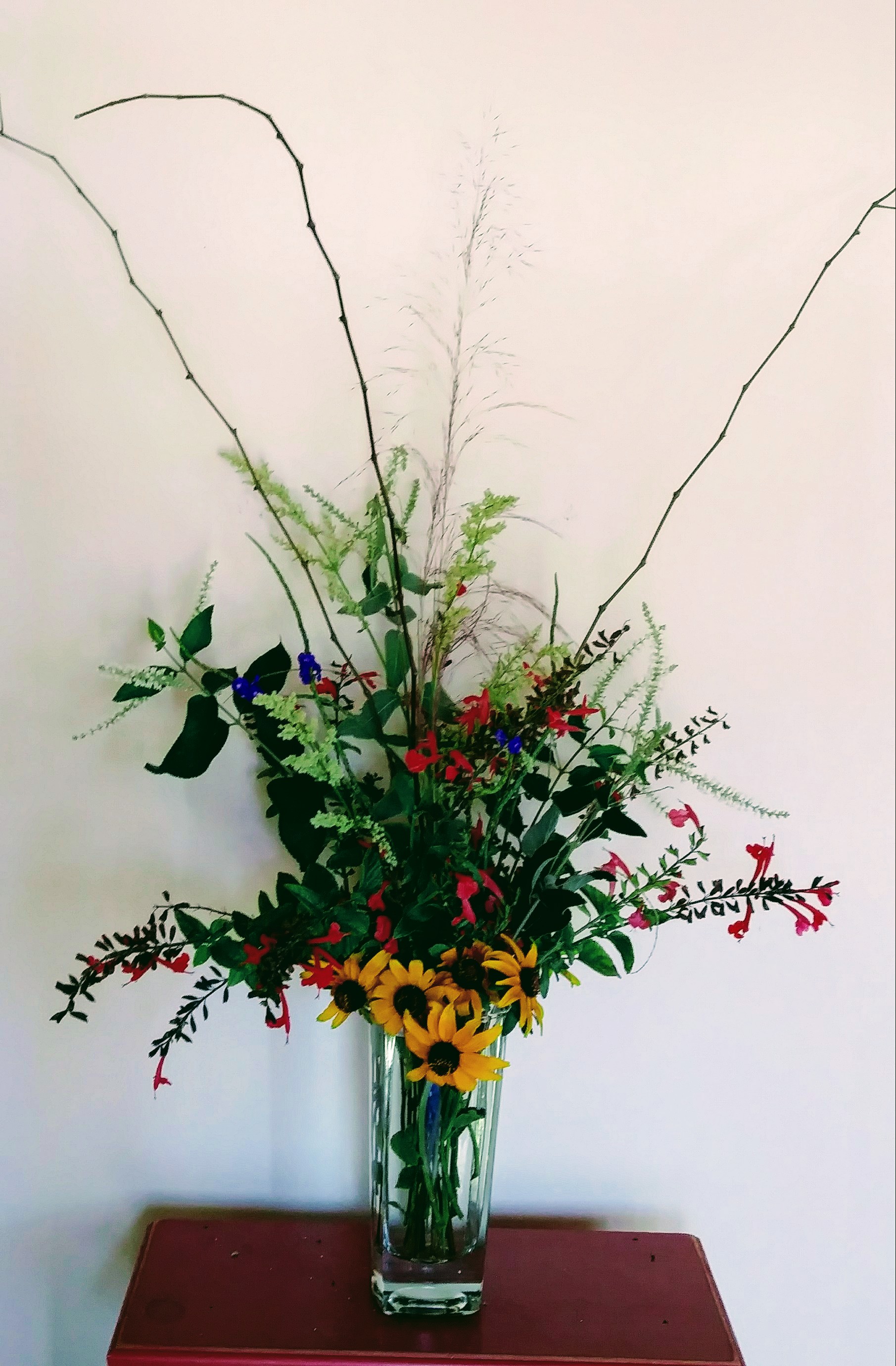
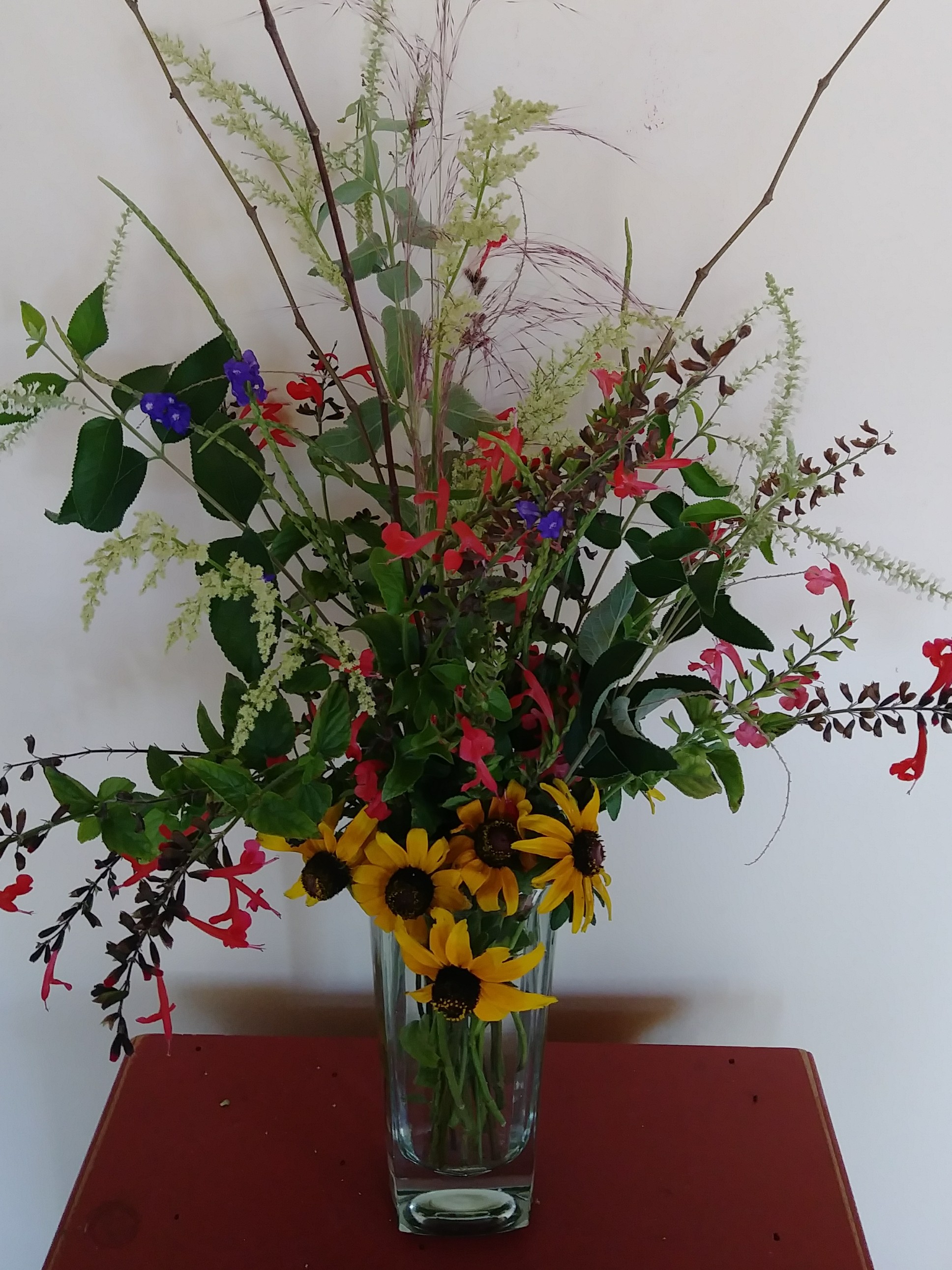
This vase is a result of my plant shopping trip last week. I posted some pictures last week on my blog from the tropicals nursery I visited with a friend (made through gardening on social media, not blogging, though). The idea for the vase was started by another nursery we visited, Indian Trails Natives Nursery located in Lake Worth, Florida. Here is a link to their website Indian Trails


The nursery has an extensive stock of native plants, a demonstration garden and they will give a price list. Meaningful. I bought several plants and decided to deadhead my new Black Eyed Susans in hopes of more flowers -the genesis of this vase.

20181014_115041

I have been working on my native pollinators garden for a little over a year. The results are amazing, so I keep adding butterfly and bee plants concentrating on natives. My big however is … I don’t feel that it’s mandatory that every plant is native. I would go as far as to say non natives enhance the appeal of the garden to pollinators. No elitism in my garden!

20181014_114937-1

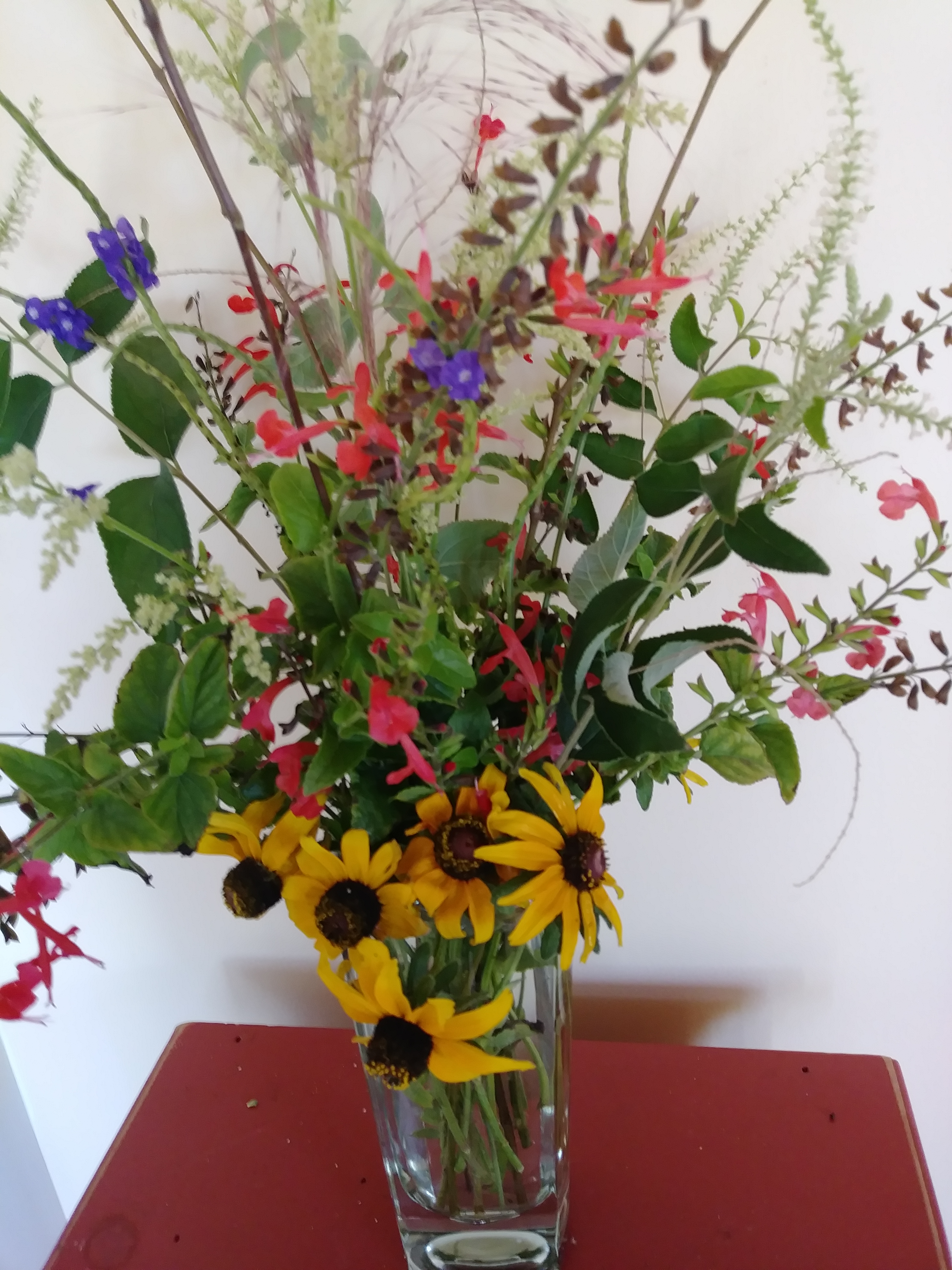
Plants in this vase include: the Black Eyed Susan (Rudbeckia hirta) – these are Florida’s native Black Eyed Susan, I grew Rudbeckia fulgida ‘Goldstrum’ further north and tried to grow these Rudbeckia from seed to no avail. Hopefully, the plants fare better and I end up with too many. Red flowers are Tropical Red Sage (Salvia coccinea); blue flowers are from Porterweed (Stachytarpeta); off white spikes are Wireweed (Don’t know whatis); white flowers are from the one non native, Sweet Almond (Aloysia virgata) hailing from Argentina, our native (endangered) Atala Butterflies love this one. Pink plumes are from Muhly Grass (Muhlebergia) just starting their fall show; the sticks are from the native grape Muscandines (Vitis rotundifolia) – I stripped the leaves, the raccoons ate all the grapes.

20180714_074527-1

Here’s our native Atala butterfly emerging from their chrysalis on native Coontie Palms. Their mom enjoyed nectar from Beautyberry and Sweet Almond before settling down to lay eggs.

In A Vase on Monday – Summer Surprises

20180715_143509-1

Every gardener gets a few surprises. Some are better than others. I have been doing a lot of design work lately, hence the funky picture.

My summer surprises have been the good kind and primarily pink this week.

20180715_143211-1

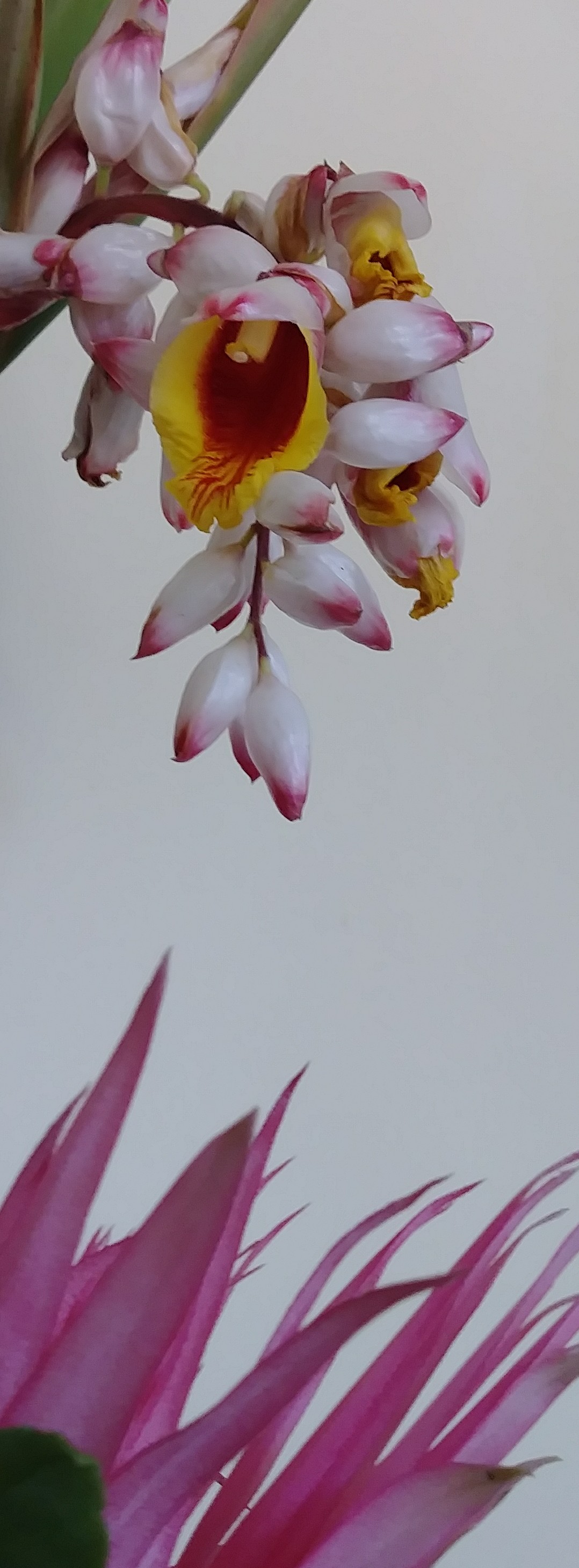
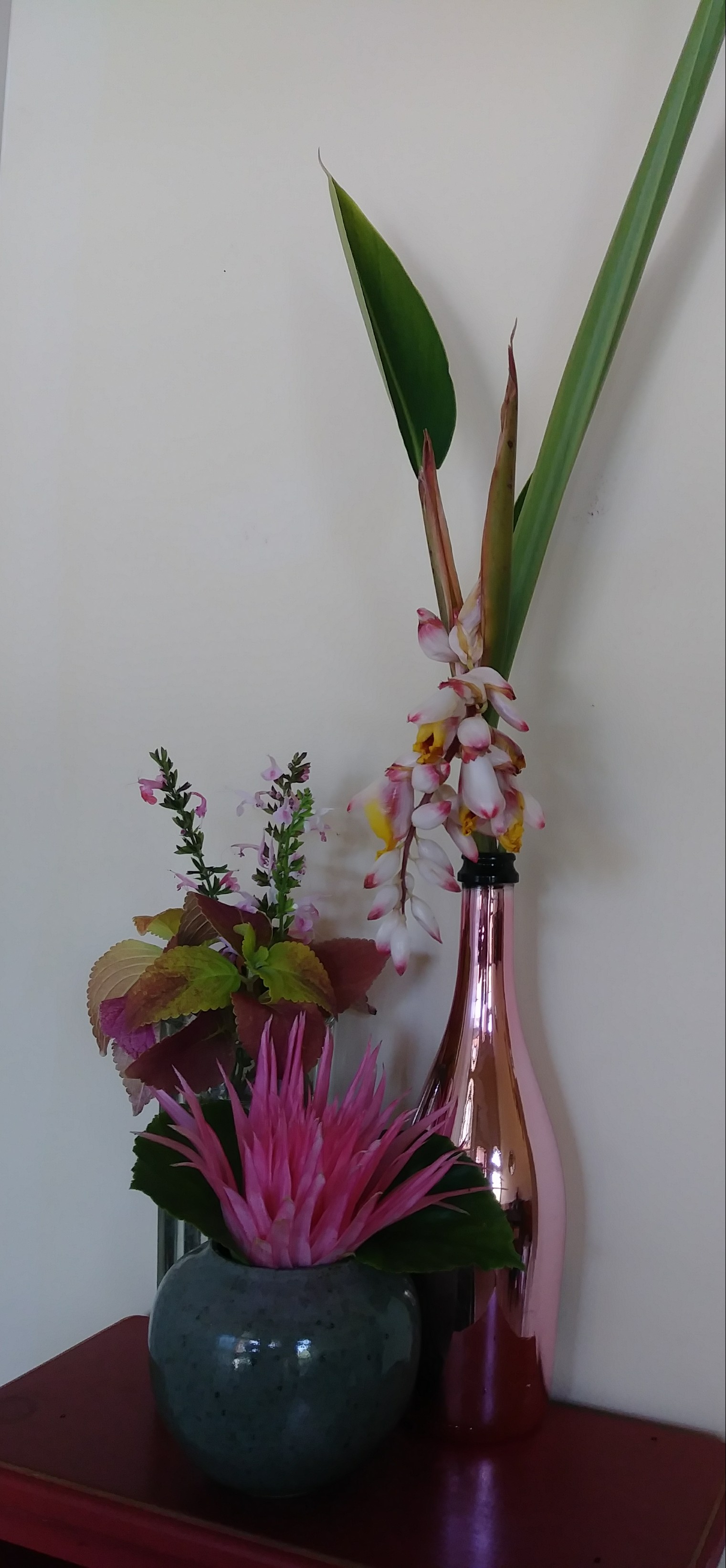
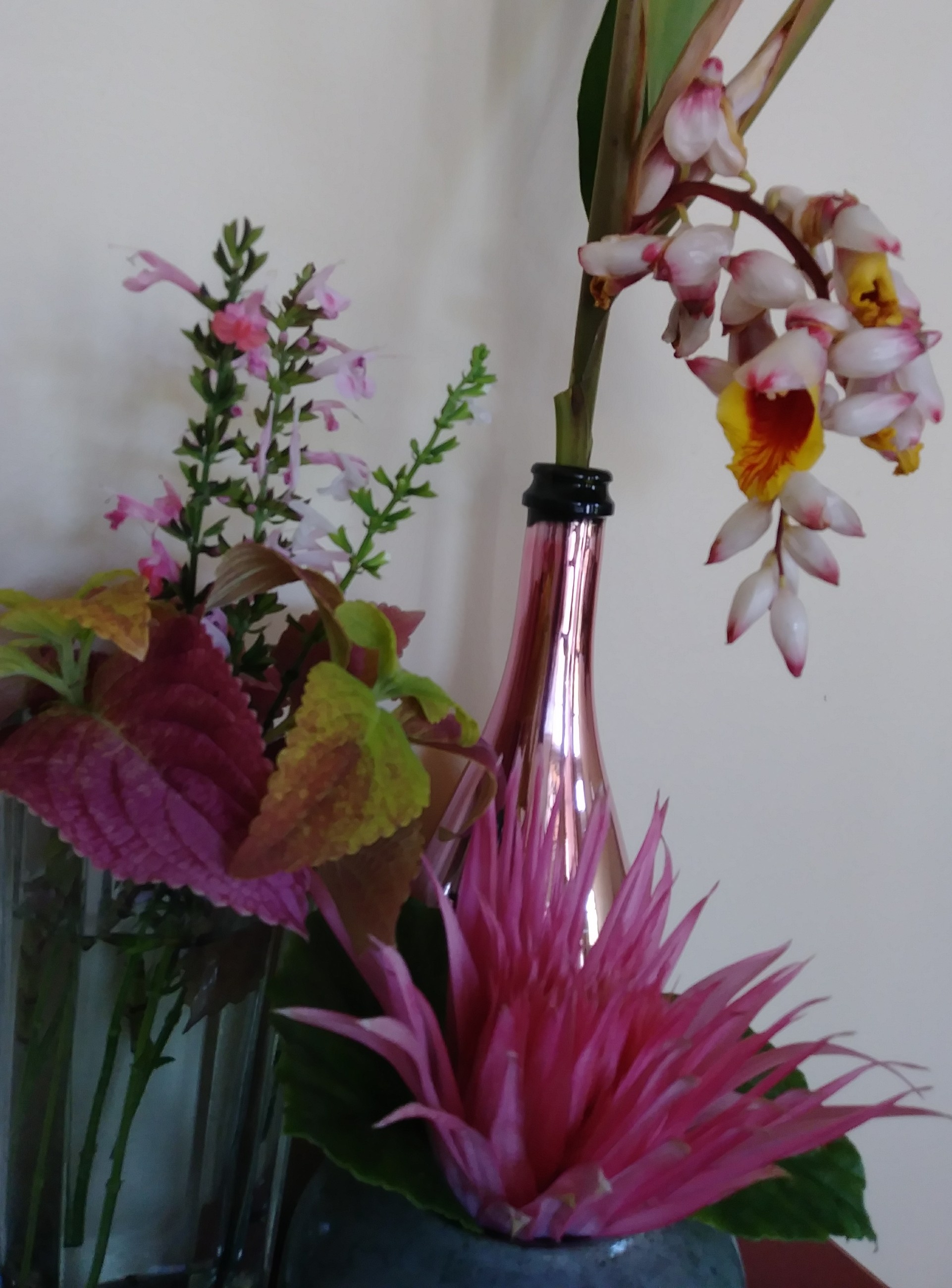
The Shell Ginger (Alpinia zerumbet) is in the pink champagne bottle a friend left after a holiday celebration, these are reported to flower three times a year – this is the first year for a second flowering, surprising me.

20180715_140413-1

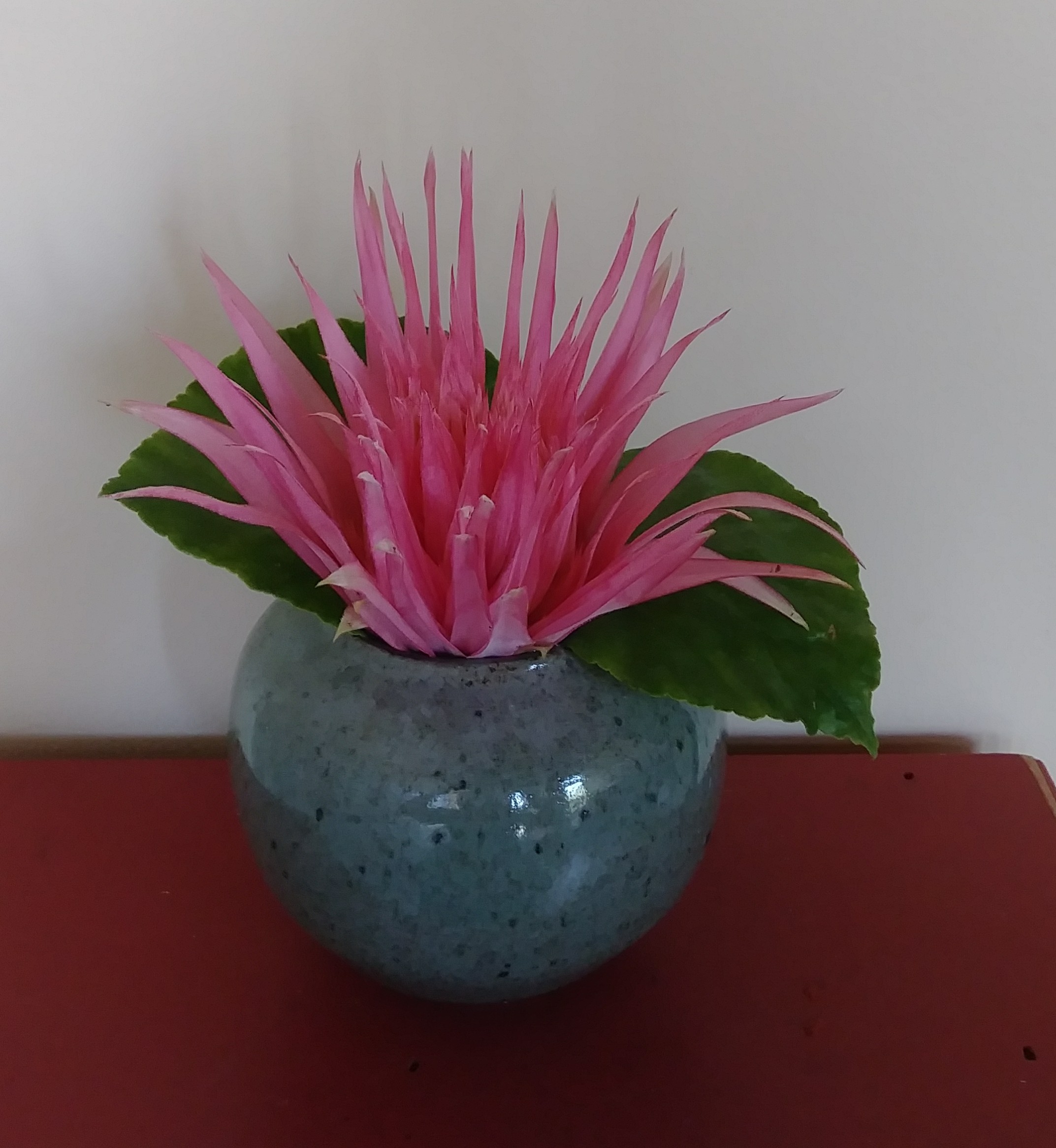
In the grey round vase, it seems the Garden Gods have rewarded me with a Pink Cactus Dahlia, not.  My Dahlia quest continues.

This is one of my ubiquitous $5 garage sale finds. No one knows what the Bromeliad is or where to plant it, but one can be had for $5. For five bucks I got a wonderful surprise and there are pups. I think it is a Aechmea ‘fasciata’  variety- please let me know if you recognize it.

The leaves are from a nearby Sweet Begonia ( Begonia odorata)

20180715_140749-1

The third vase has the survivalist pink and chartruese Alabama Sunset Coleus I had lost hope for and pink and white (yes) Tropical Red Salvia (Salvia coccinea). Another surprise.

My biggest surprise this week was the hatching of the rare Atala Butterfly in my Coontie (small shrubby palms)

20180714_074527-1