In a Vase on Monday – Interlude

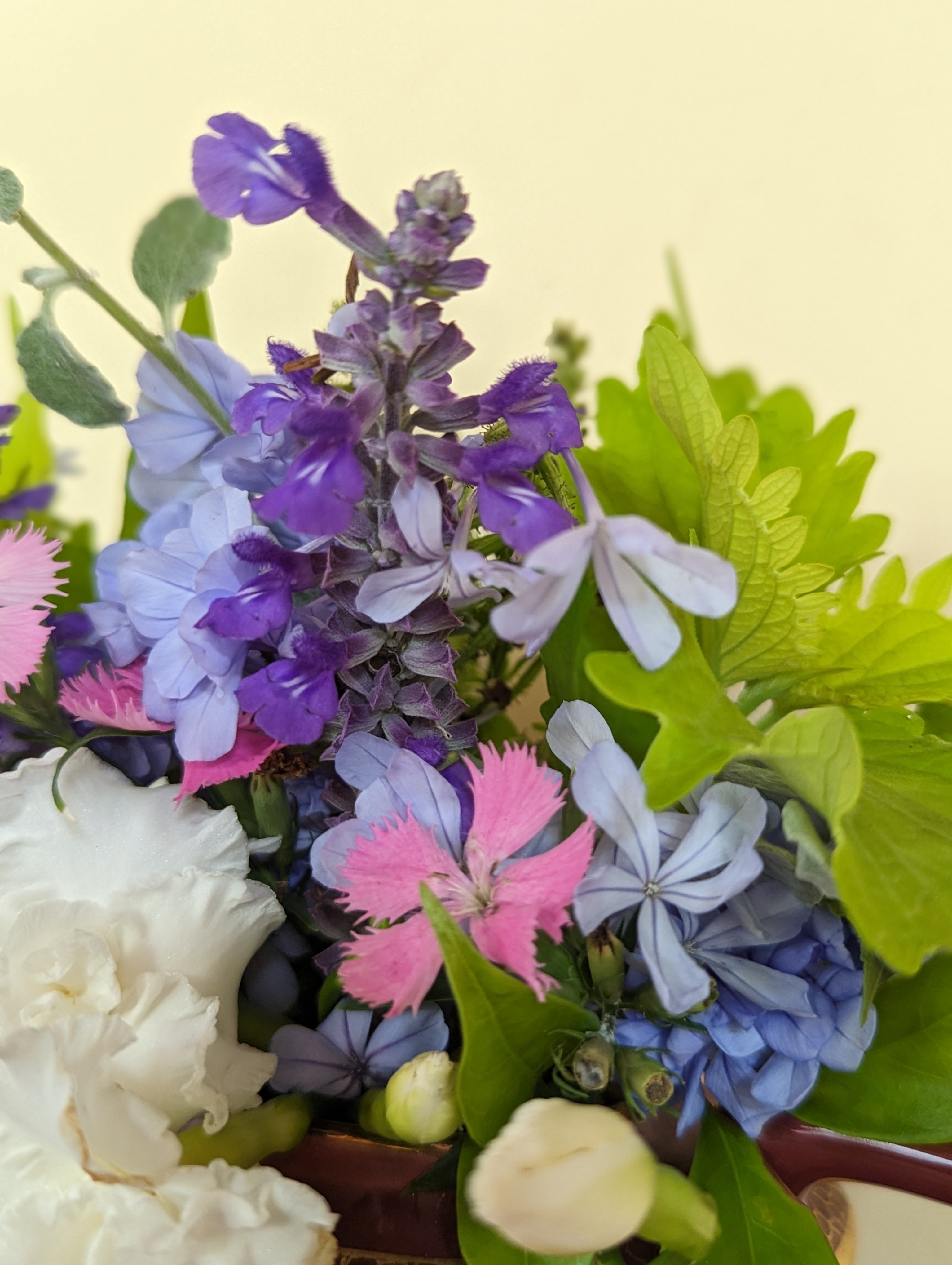
It was a stormy Sunday morning, I dodged rain showers while collecting flowers in the garden. April is frequently the driest month of the year in my garden, desertlike this year. I was happy to see the rain and noted the change in flowers, the spring flowers are slowing down and the summer blues are appearing. This seasonal interlude is reflected in the vase.

This is another nicely fragrant vase. I have learned to appreciate basil flowers in arrangements this winter. Cutting the flowers adds a nice touch to vases and invigorates the plants to produce more foliage. I read recently that it is a good idea to cook with the flowers, but have not tried it. Dill flowers add another herbal note blending with spicy Dianthus and Agastache fragrance.

A closer view. The purple flowers are Agastache, which surprises me by growing here and seemingly in everyone else’s garden. This is my first year with them and they are in a container happily flowering. The smaller pink flowers are Heirloom Pentas (Penta lanceolata), which are common here and are a short lived perennial, usually available in pink, white and red and an excellent butterfly plant. The bigger pink flowers are Giant Dianthus, a cool season annual, beginning to bow out. Blue flowers are Plumbago (Plumbago auriculata) a very common trailing shrub that just keeps creeping along and will grow up into trees. White spikes are basil flowers and chartreuse flowers are dill flowers. The silver goblet vase (with ample patina) is another odd heirloom from my mother. It leaks like a sieve and has to have a repurposed yogurt container inside to hold water.

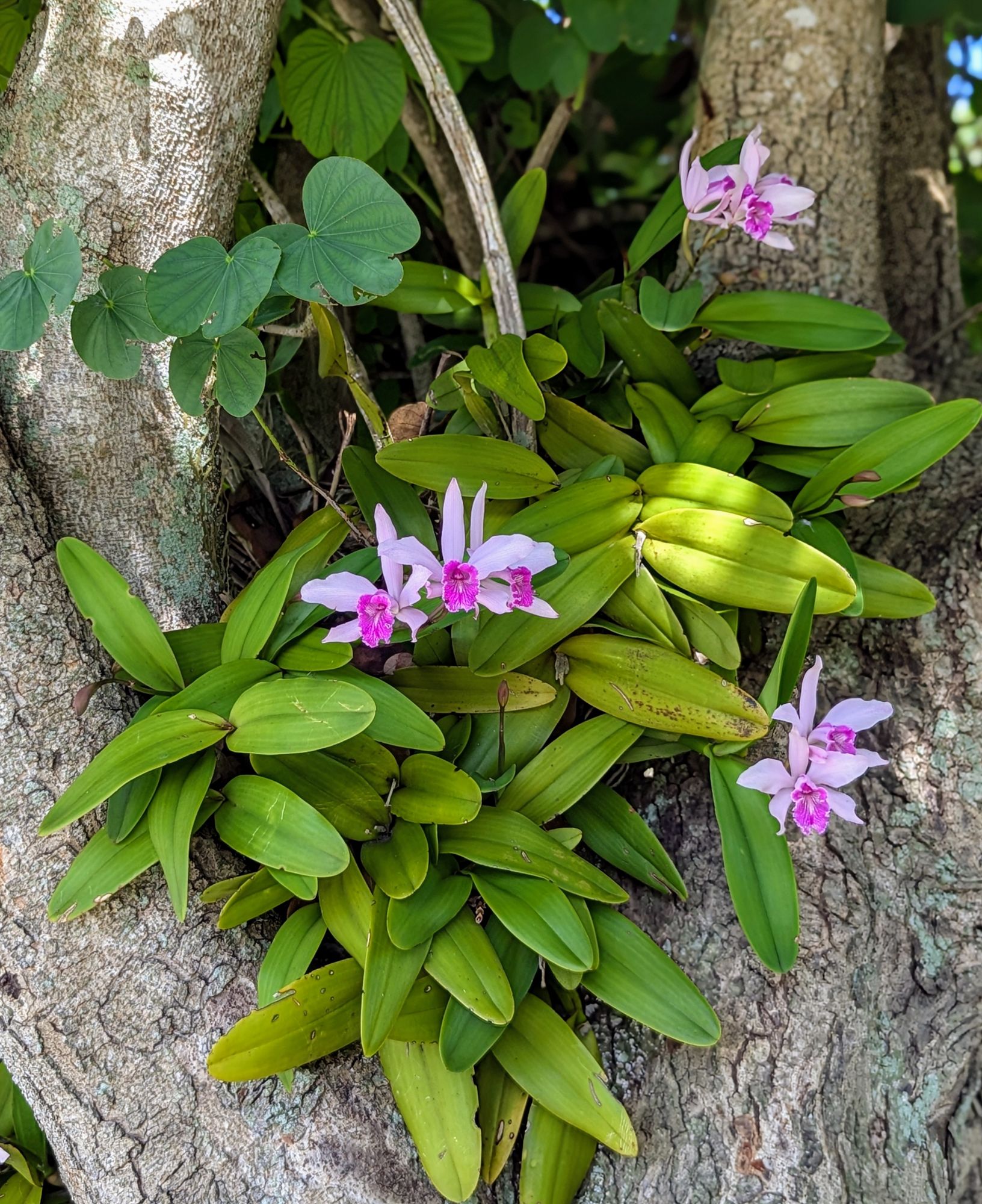
I’m hoping for more rain this week and the outlook is promising. Unfortunately, rain brings humidity. On the bright side, the orchids will love it even if I don’t.

Visit our intrepid hostess, Cathy at ramblinginthegarden to see more vases.

In a Vase on Monday – Dillicious

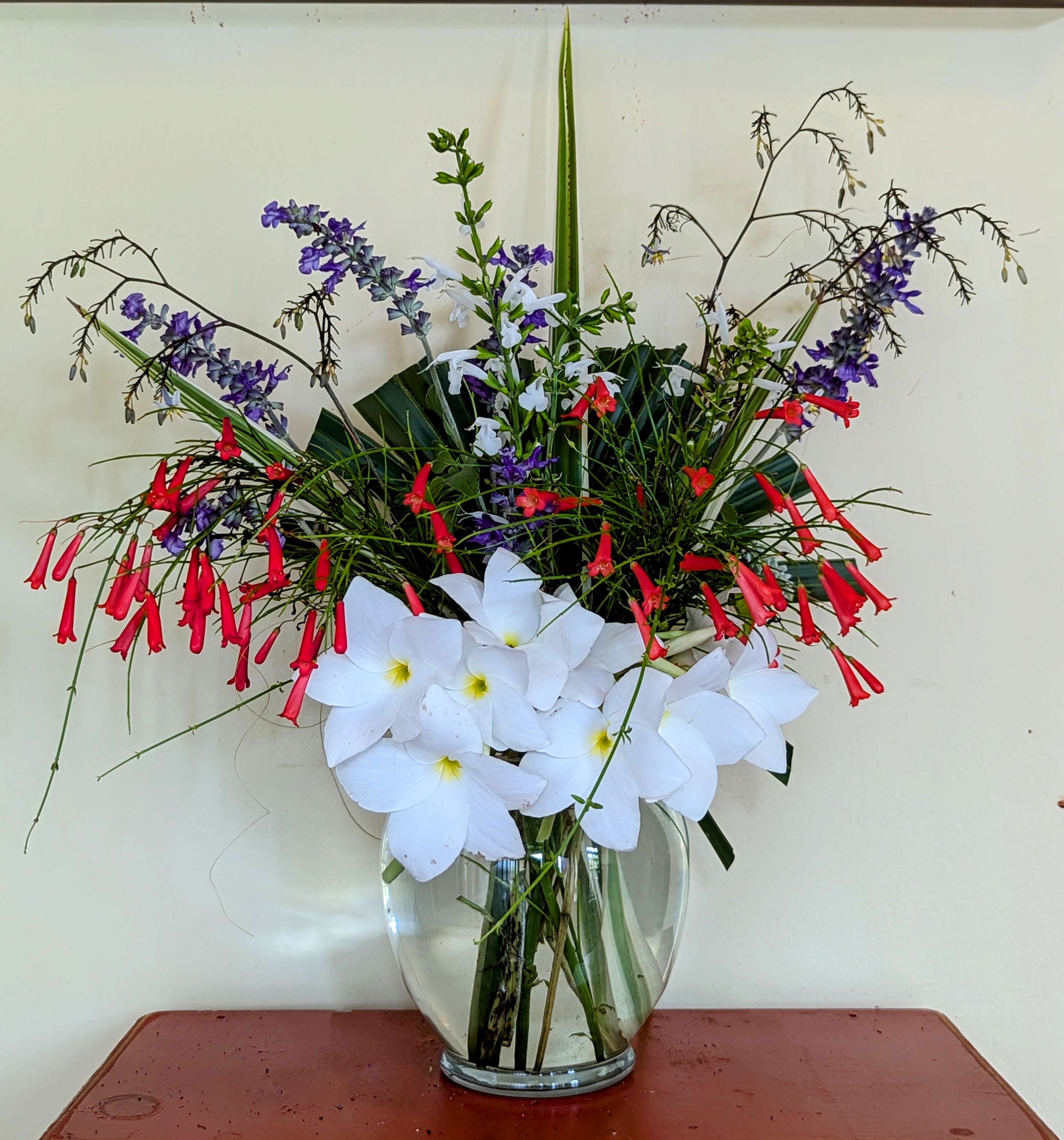
Dill is a cool season herb in South Florida. I usually have several plants in pots, this year I have really enjoyed the dill and there is no foliage left to eat! Long Island Mammoth Dill is my favorite variety, the current plant is producing seed heads and I have been enjoying them in flower arrangements and will save some seed for next year. I usually don’t like the seed for eating but have recently learned to make sandwich bread, so I am going to give a dill seed loaf a try. Everything else I made from this plant has been Dillicious. Including this herbal sweet scented concoction in my mother’s crystal rose bowl.

My dillicious vase this week includes:

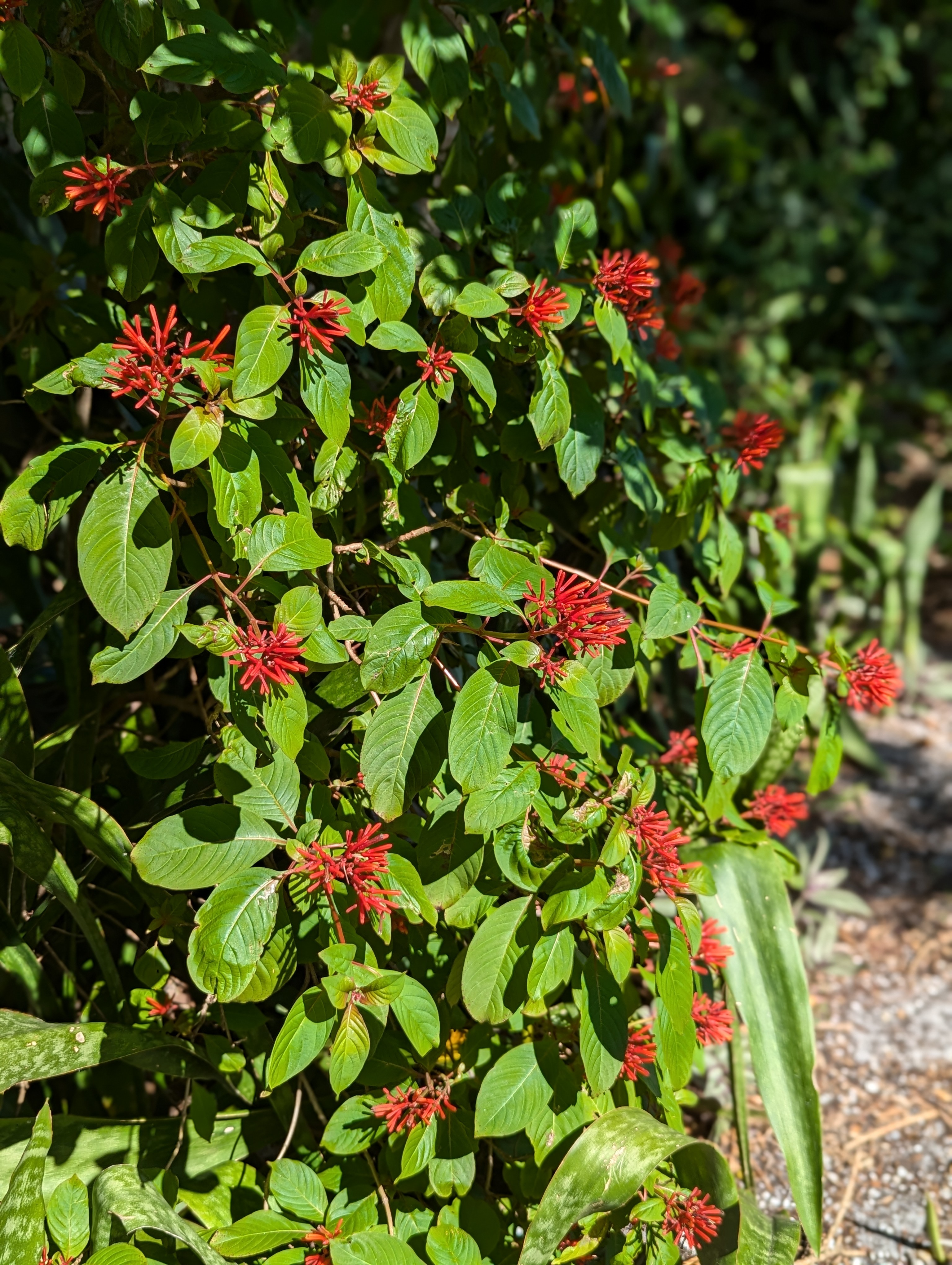
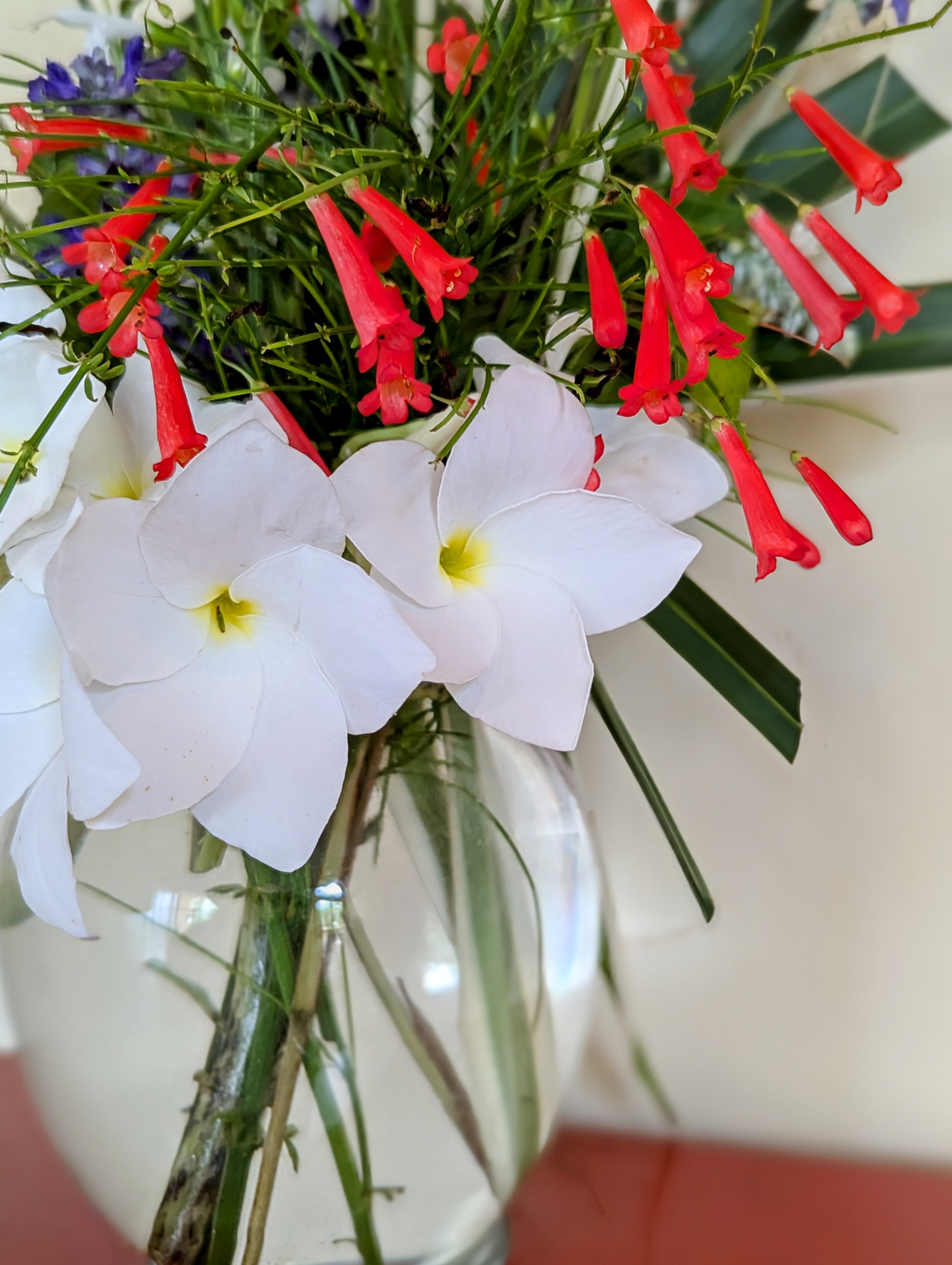
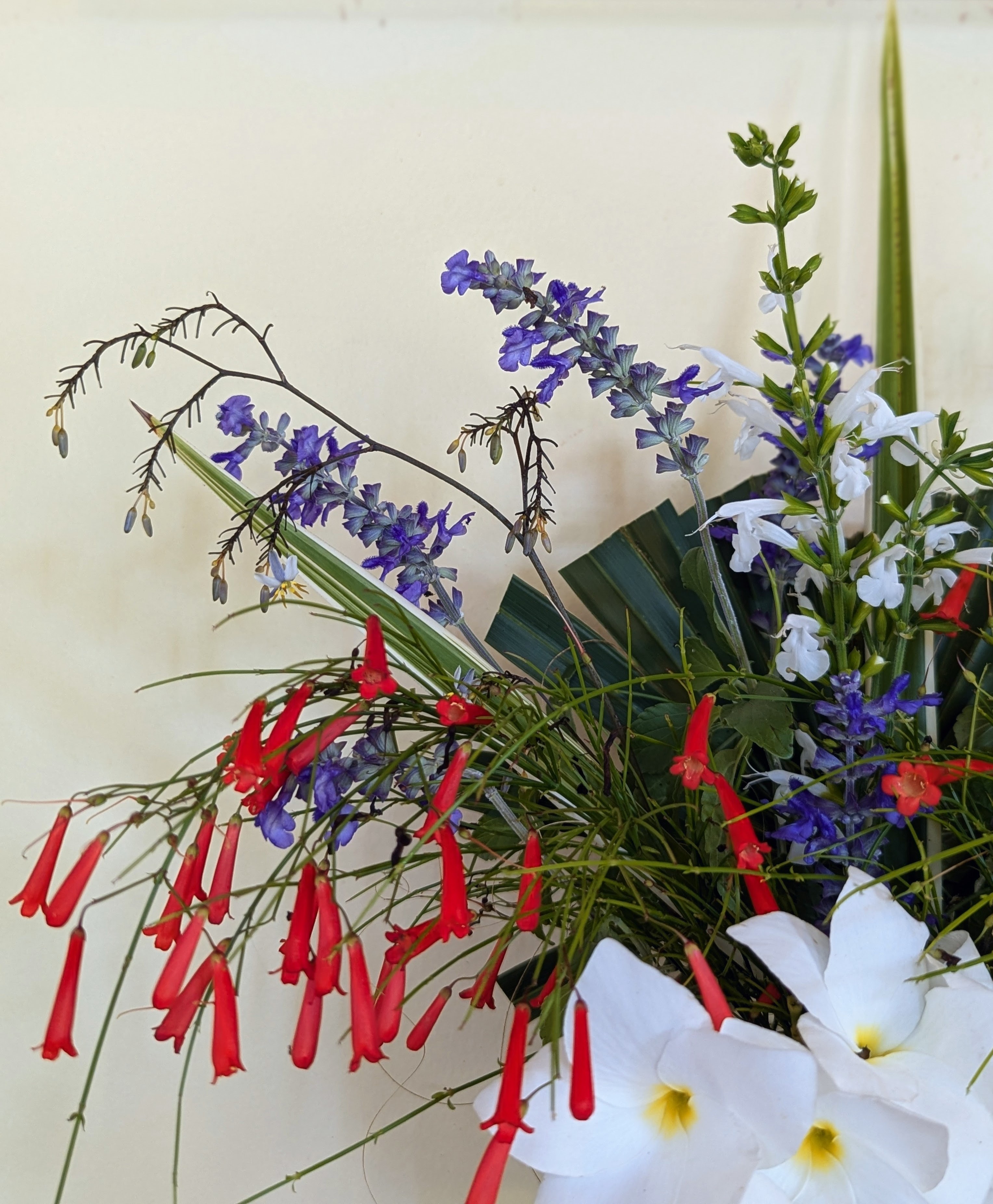
Fireworks in this vase are from dill seed heads and flowers in chartreuse and orange tubular flowers from the Firebush (Hamelia patens)

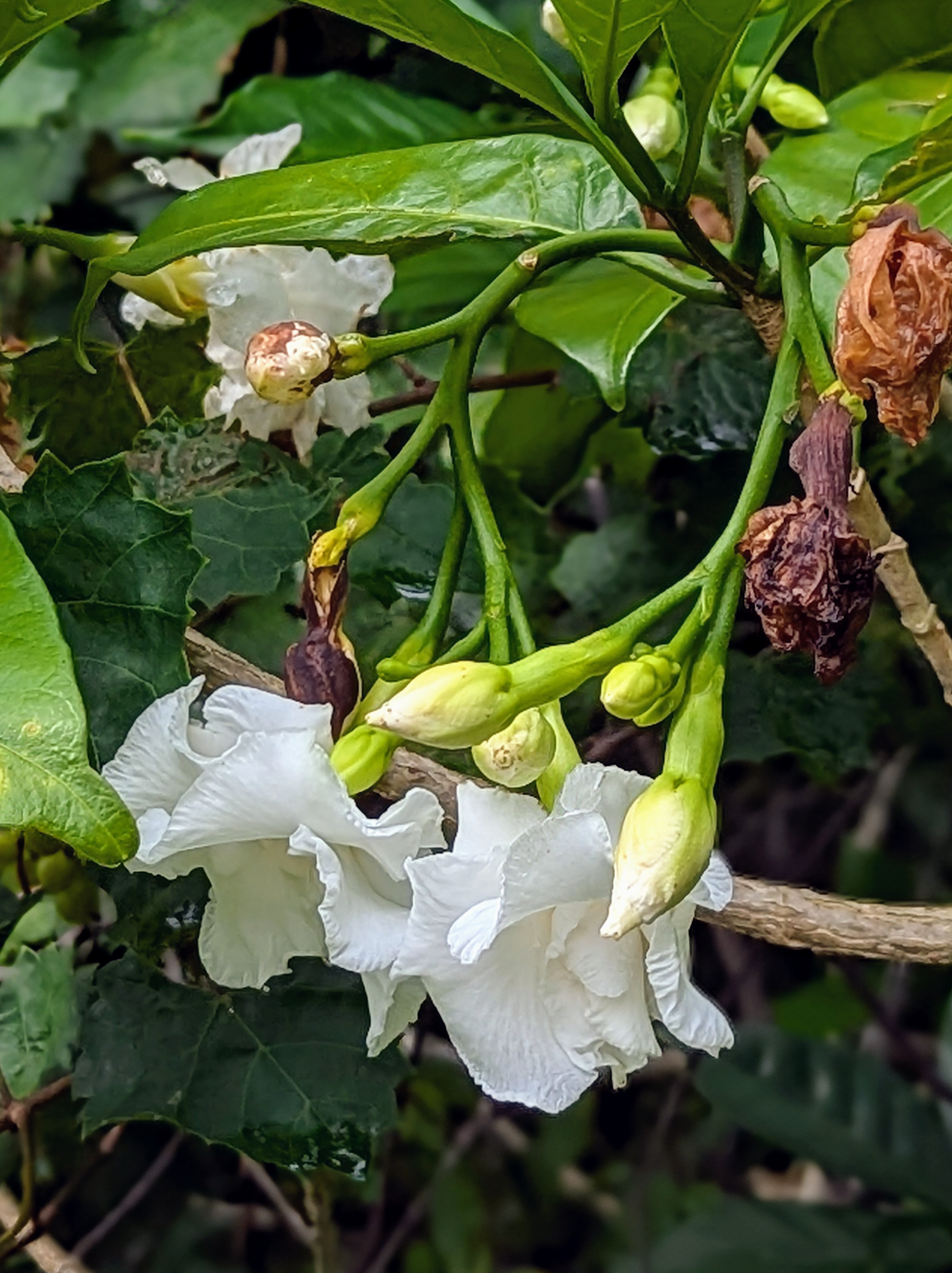
Another delicious flower appealing to a different sense is the white Tropical Gardenia (Tabernaemontana divaricata). These flowers lend a heavenly scent to the garden at night. They are sometimes called the Pinwheel Gardenia, there is a flatter flowering variety that looks more like a pinwheel.

That’s all from SoFla this week. To traverse distant gardens and visit via vase follow this link to Cathy’s blog.

Happy Gardening.

Six on Saturday – Tropics Rising

I’m joining the SOS crew this Saturday following my morning garden tour. April and May are our driest months and it’s windy as well. The garden is crying out for water and it is difficult to apply enough. I let some things go dormant (grass!) and try to keep the fruit trees and flowers flush for my own selfish reasons. This morning I noted the usual summer suspects are starting to show their colors. Visit Jim’s blog Garden Ruminations to find more tours.

The first Frangipani (Plumeria spp) of the season. These are just starting to flower and put out foliage. They reach their full, scented glory with the onset of the rainy season. This is an unnamed variety I bought several years ago, 8-10 feet tall now. Currently one flower, eight leaves and the rest is sticks.

This is a Florida or Tropical Gardenia (Tabernaemontana diviricata). These are, oddly to me, a deciduous Gardenia. They flower all summer. The scent is much more subtle than G. jasminoides, more detectable at night.

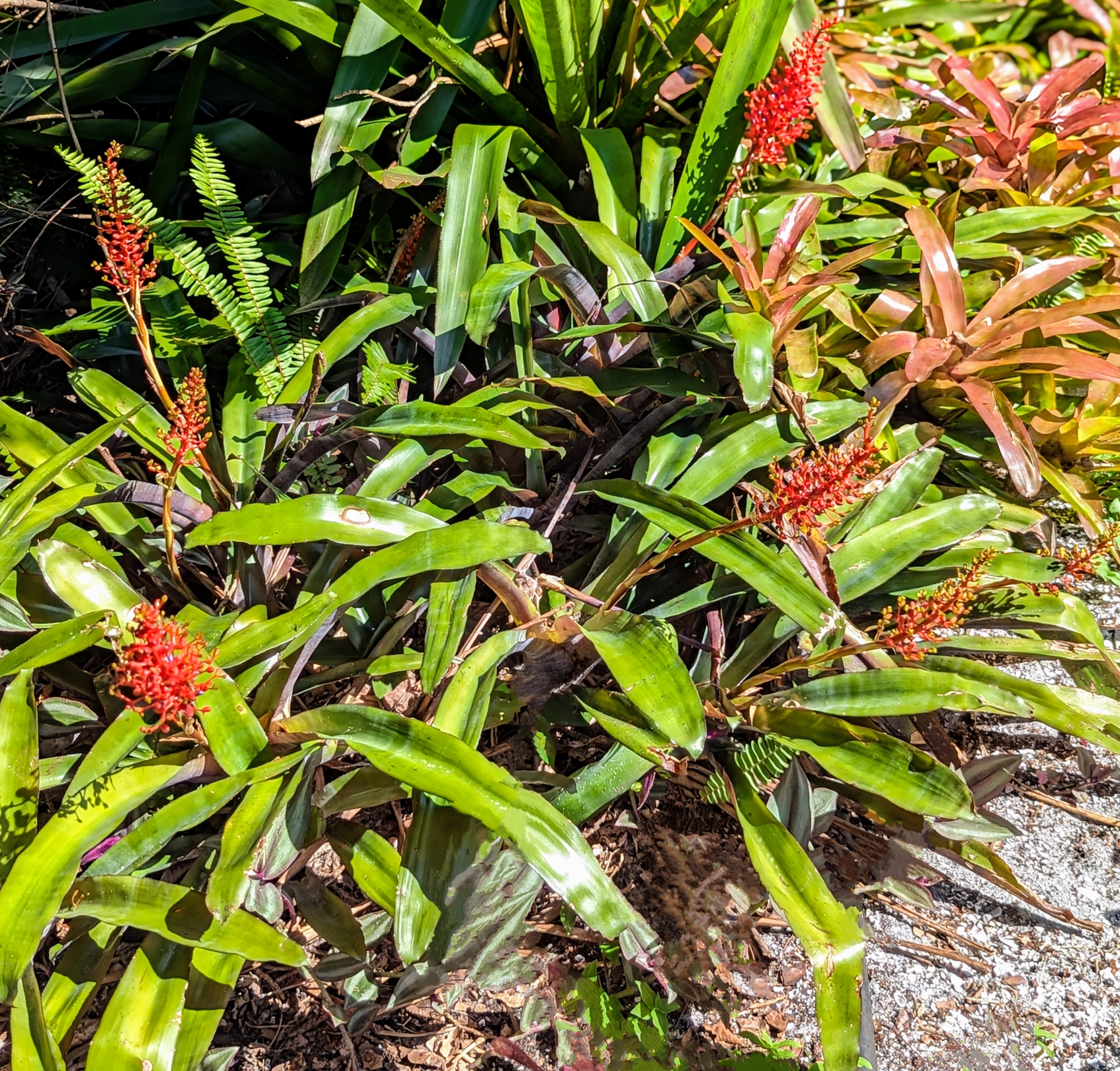
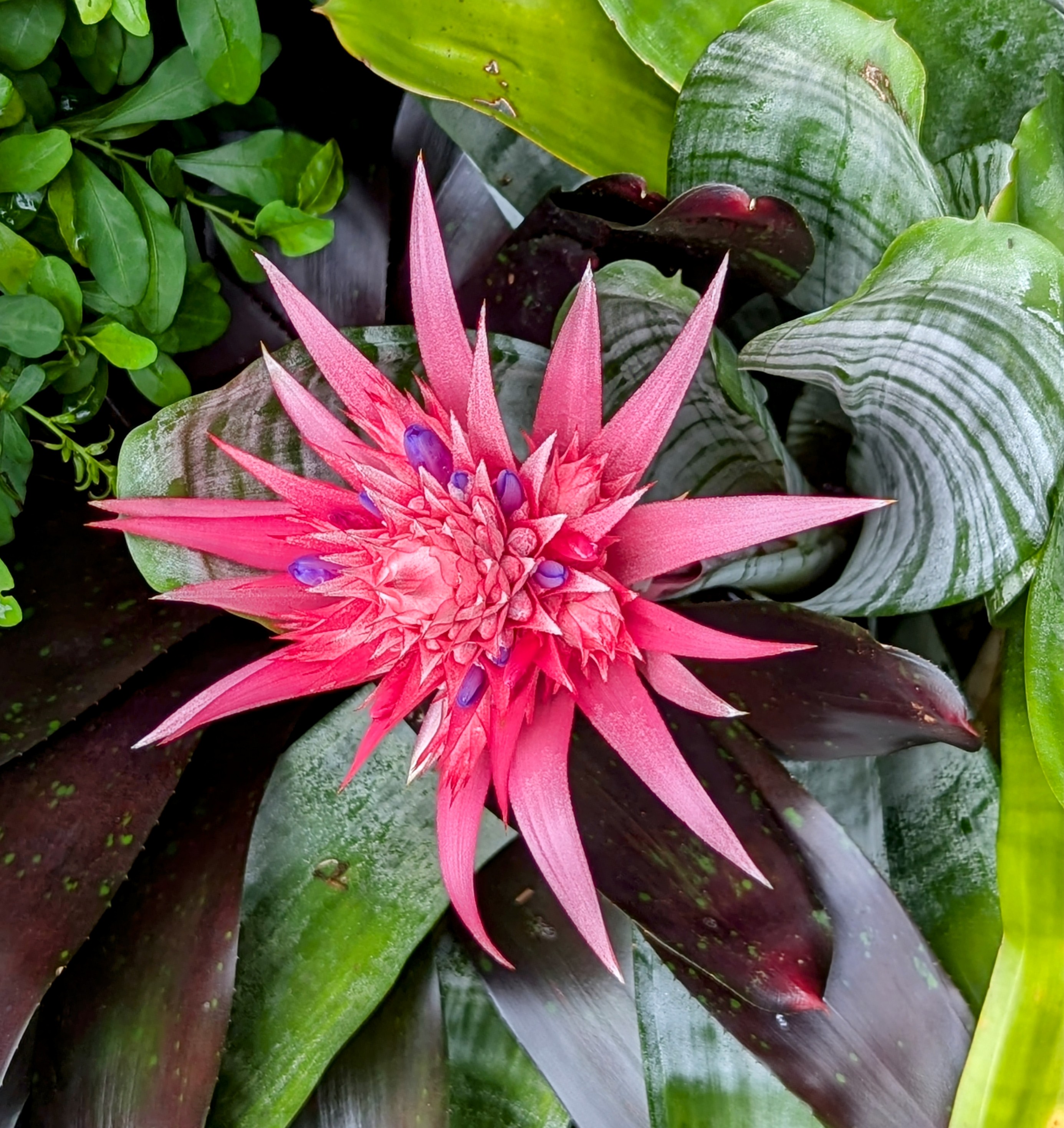
‘Little Harv’ Aechmea Bromeliad flowers. Little Harv is not that little, he is at least three feet tall and probably hangs around for a month.

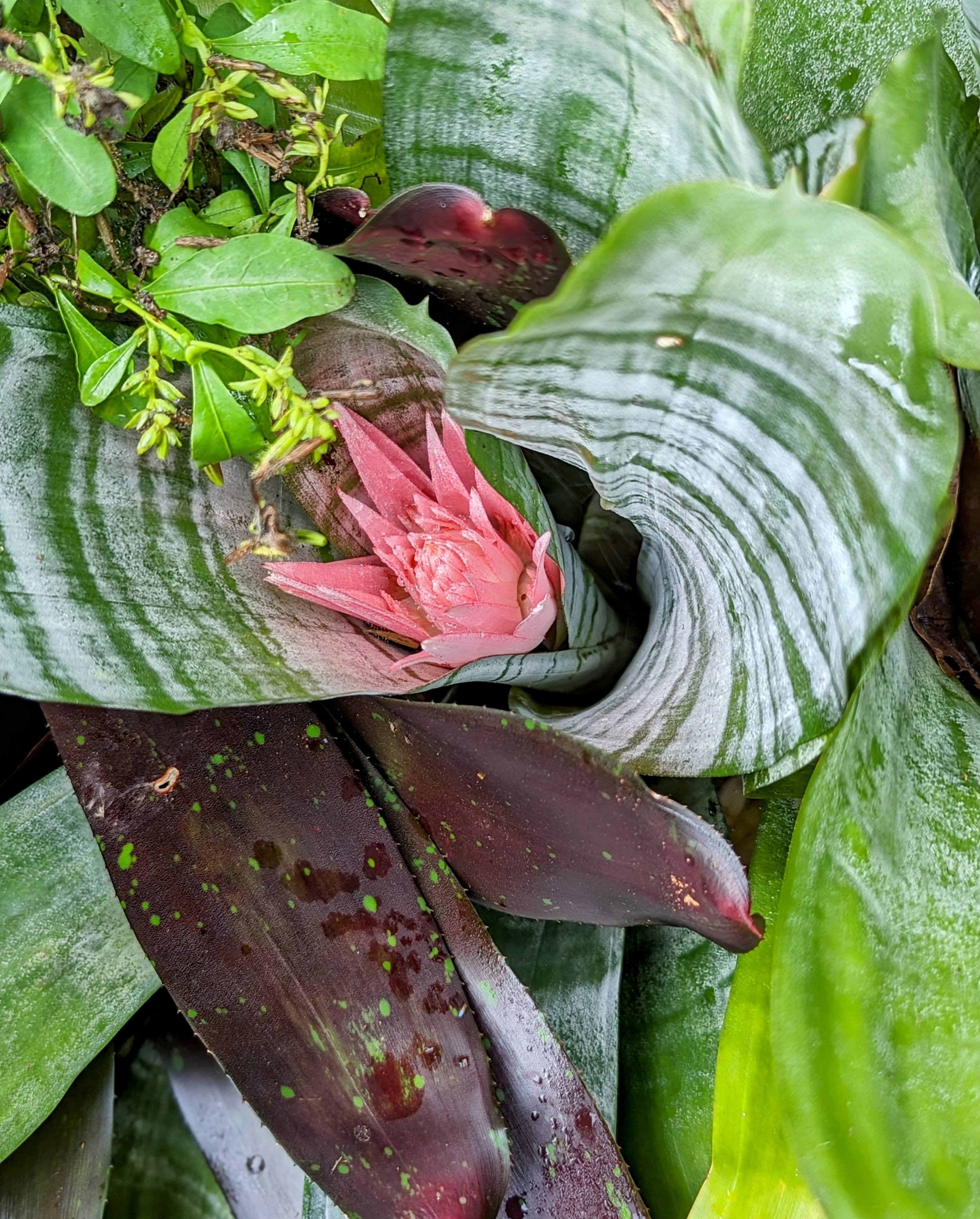
‘Hallelujah’ Billbergia Bromeliad showing summer color. The whites and greens become more pronounced and then an odd red, white and blue flower that resembles curling ribbon appears. I wonder where these things come from sometimes.

A White Geiger (Cordia boissieri) tree I have been working on. I think about 75% of the top was removed. These grow very oddly with crossing branches galore and produce shoots about every four inches. I have a feeling I am not finished with the pruning.

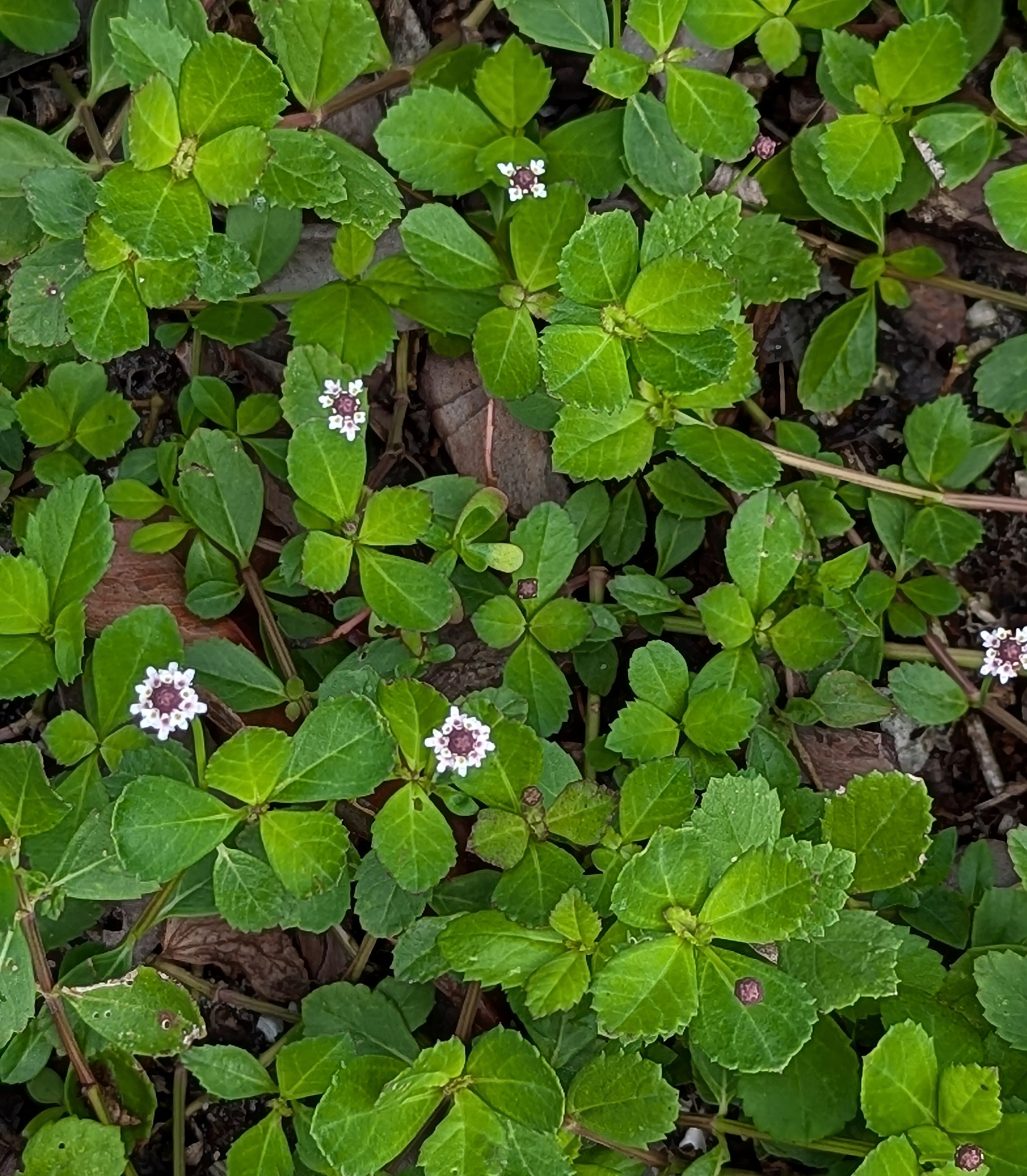
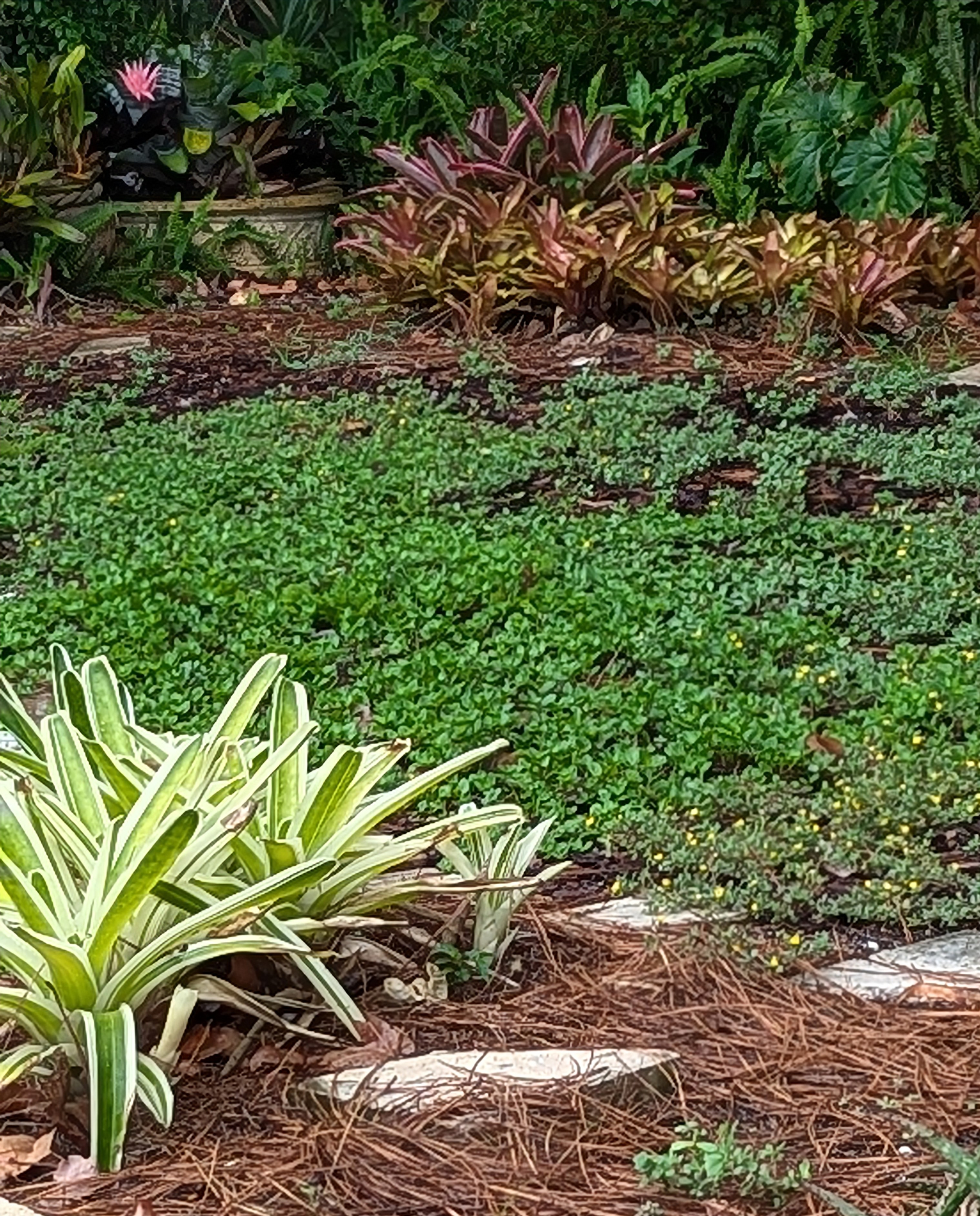
Florida native Sunshine Mimosa (Mimosa strigillosa). This is a drought tolerant groundcover with interesting flowers.

That’s all from South Florida. The rain dance starts soon.

In a Vase on Monday – Foreign Affairs

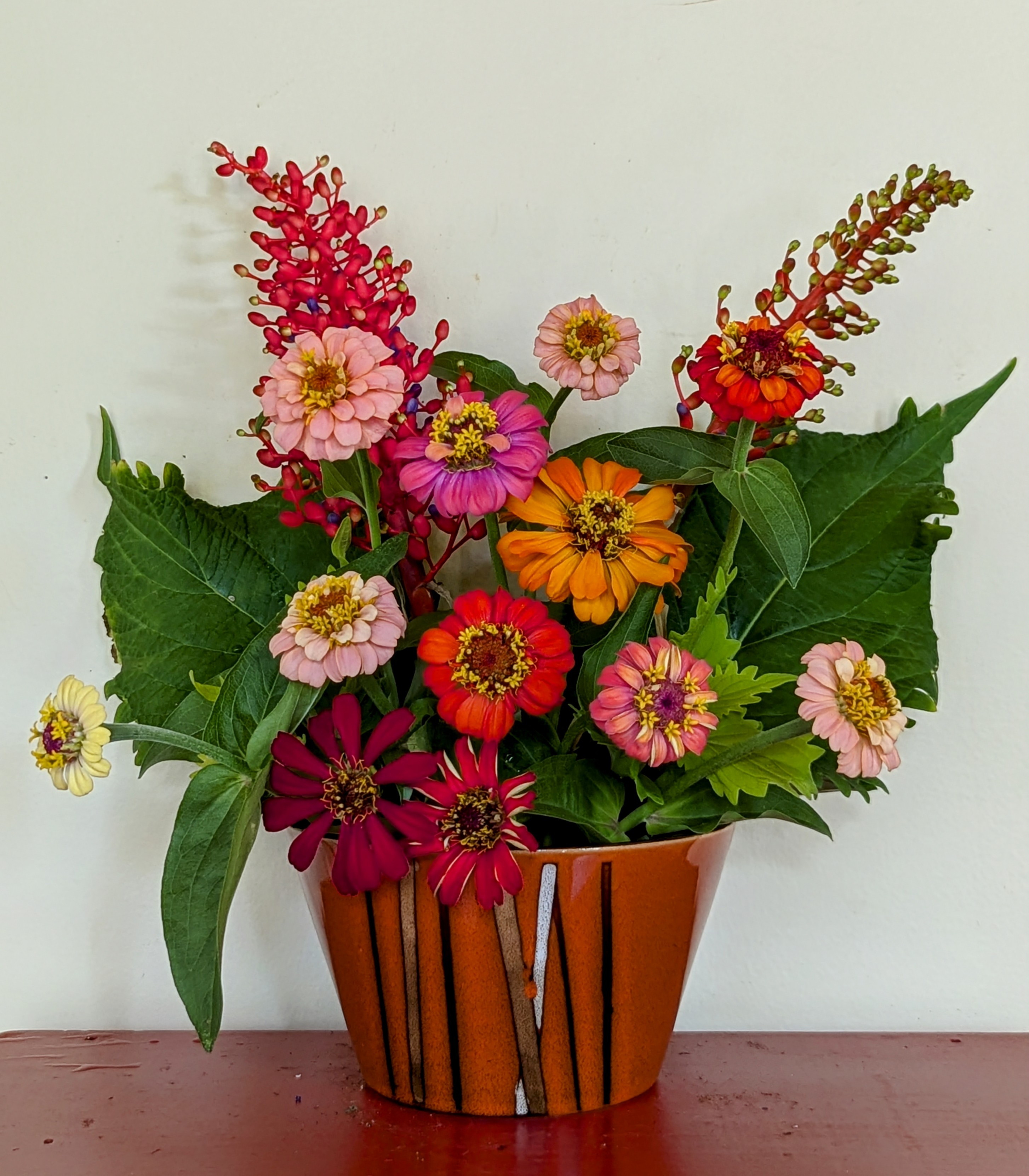
All of the plants in the vase this week are, to me, foreign versions of common plants grown further north. The pink and white flowers are Desert Roses, from the deserts of Africa and the Arabian peninsula and a succulent to boot. White and green flowers are from a tropical Begonia that shoots up flowers about three feet tall and then we have the giant Dianthus. Tropical foreigners from my garden.

Desert Roses (Adenium obesum) are a mad thing. This is a red one frying on the pavement and finding its happy place. It doesn’t look much like a typical rose bush.

The Begonia in the arrangement is Lotusleaf. Definitely the biggest Begonia I have ever seen. It is a common roadside plant in Central America and pretty indestructible once established in my garden.

A closer view.

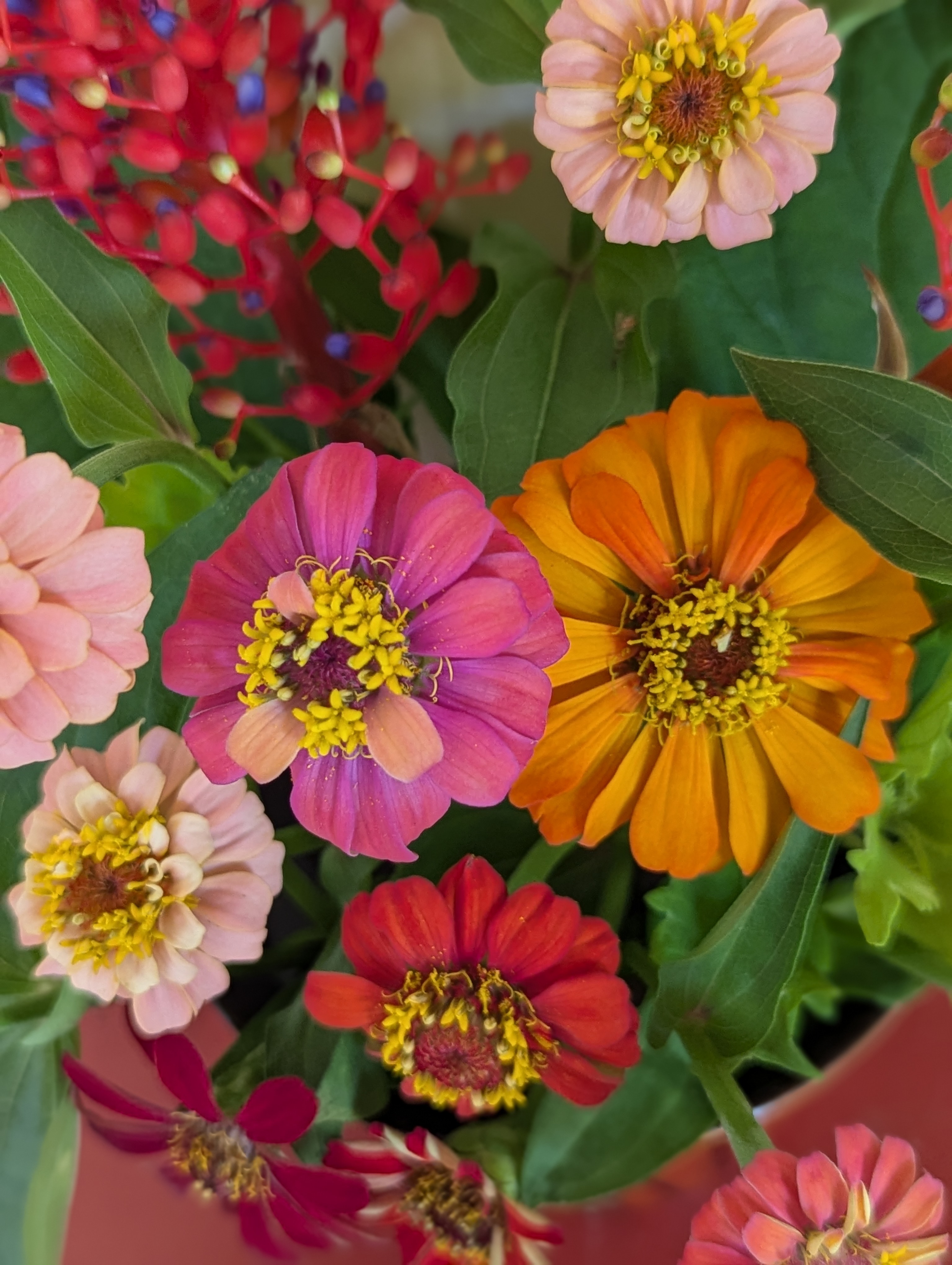
Draping over the edge of the vase, Desert Rose (Adenium obesum); green seed heads and white, frothy flowers are from Lotusleaf Begonia (Begonia nelumbifolia); pink flowers are Giant Dianthus; chartreuse leaves are a coleus of some sort, and the deep green foliage in back is from a Lady Palm (Rhapis excelsa). The vase is a thrift store find.

We are transitioning into warmer weather here with the weather guessers trumpeting dire warnings about a violent hurricane season. After a while I realized they really have no idea.I am still planting a few new things, tempting fate!

Here’s to enjoying spring and seeing a few new vases this Monday. Follow this link to visit Cathy and see the vases in the comments section.

Six on Saturday – Fruits and Flowers

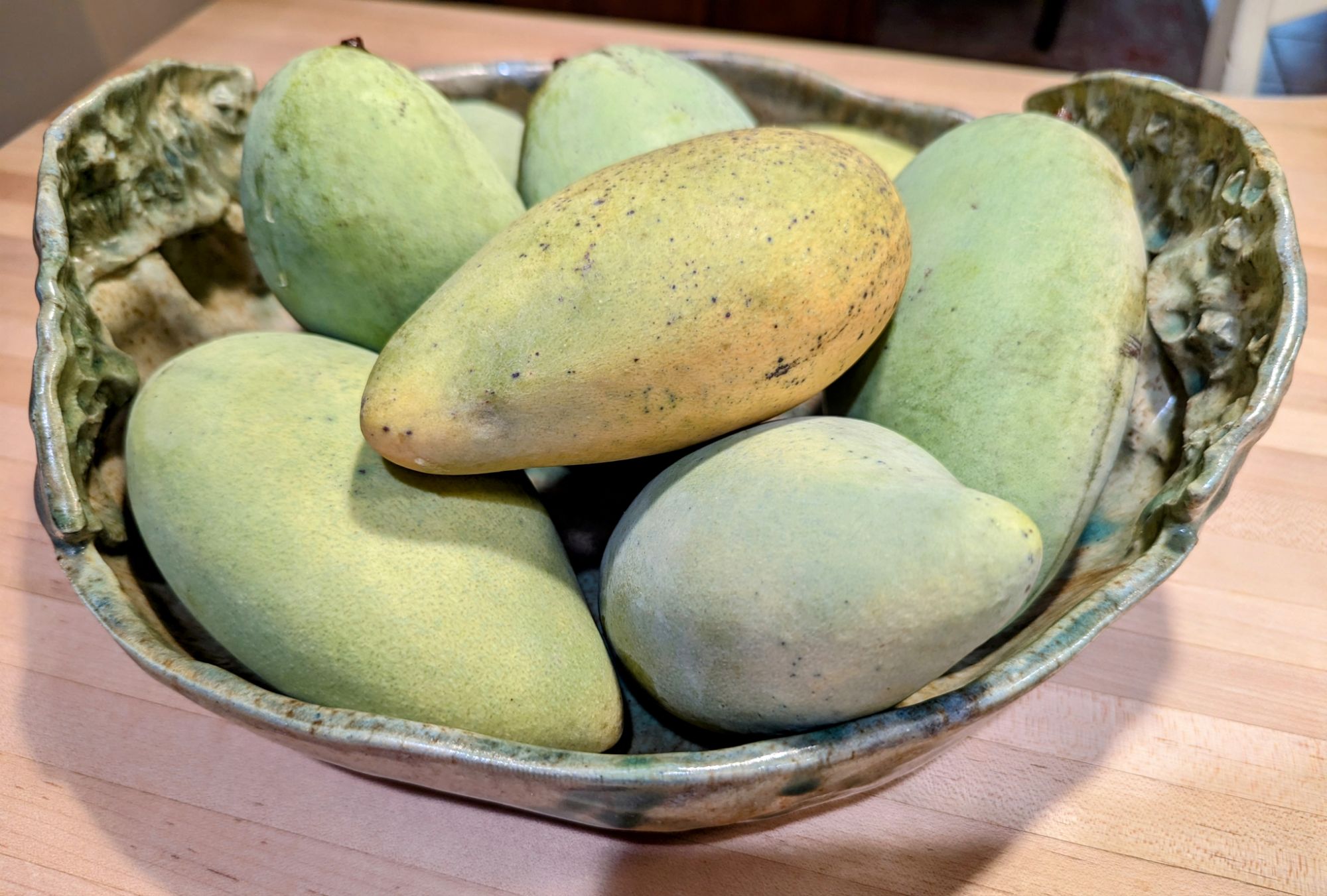
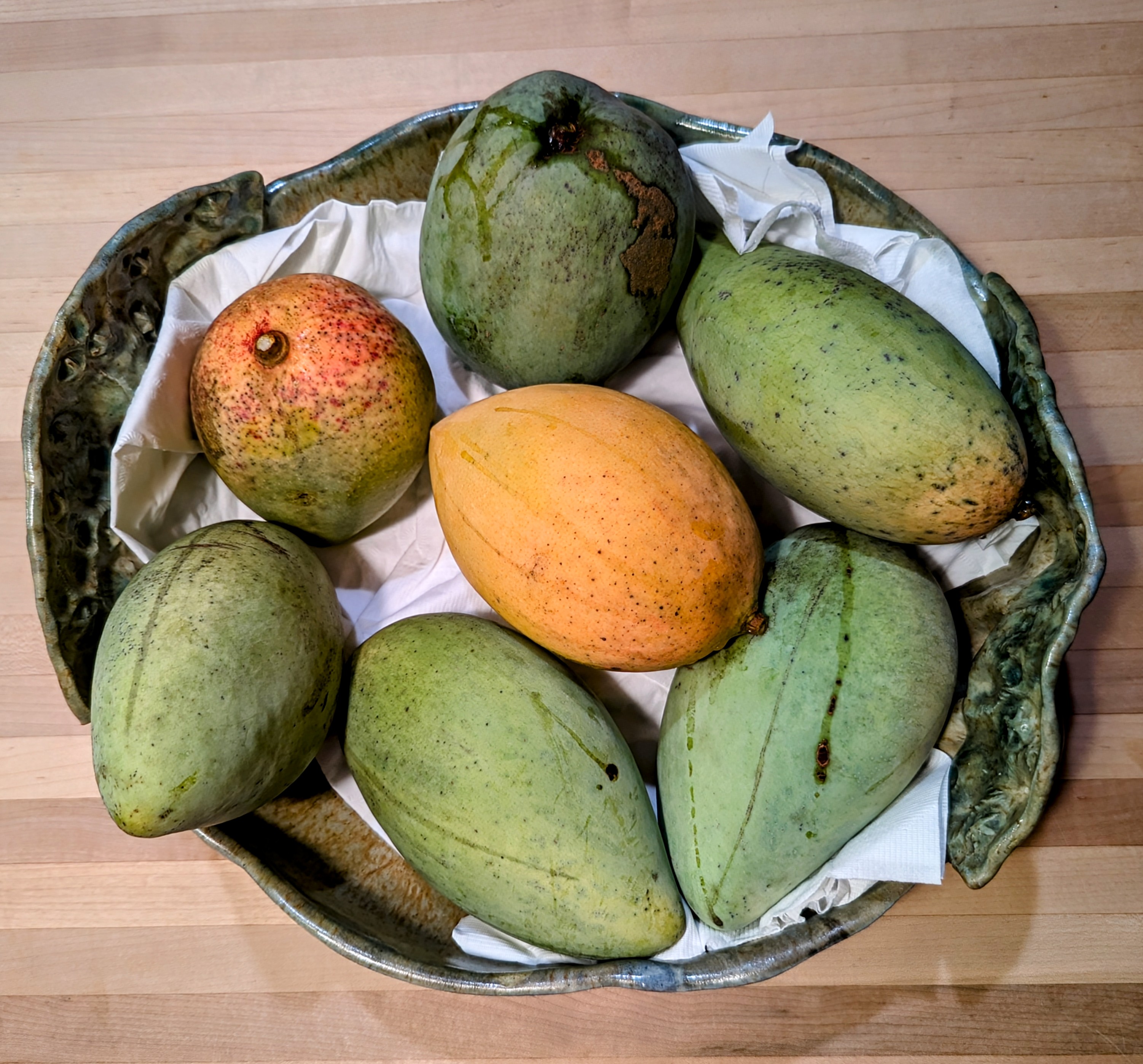
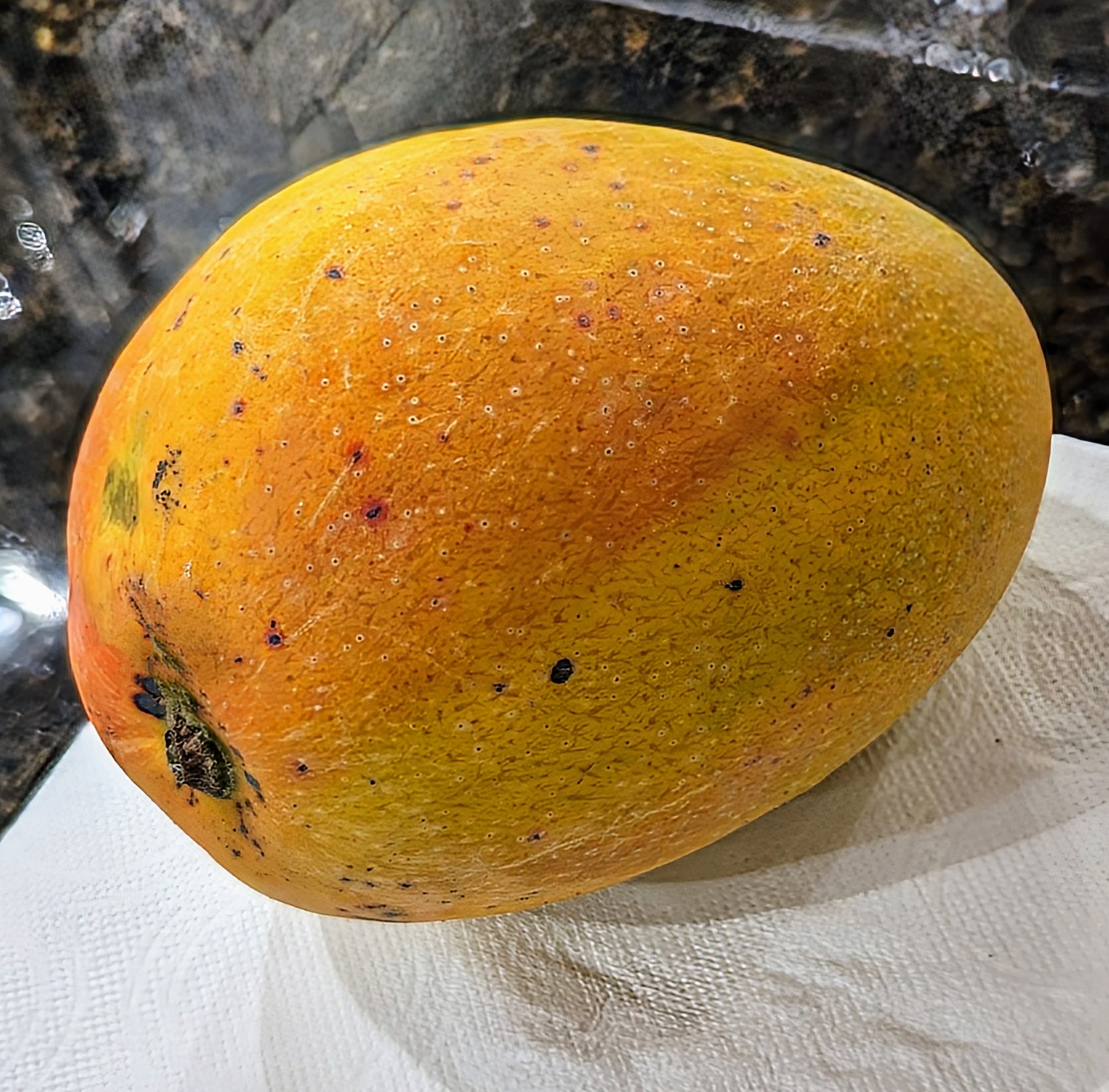
My garden tour this morning revealed some progress in the fruit area and a few late season flowers. It has been a dry and sunny week that left me puzzling over how much to water the mangoes. If they are watered too much it affects the quality of the fruit and vice versa. A dilemma that rain solves. They have shed a few fruits, but this is normal. I went from about 50 fruit down to possibly 20, which is okay. It is a bit difficult to deal with 50!

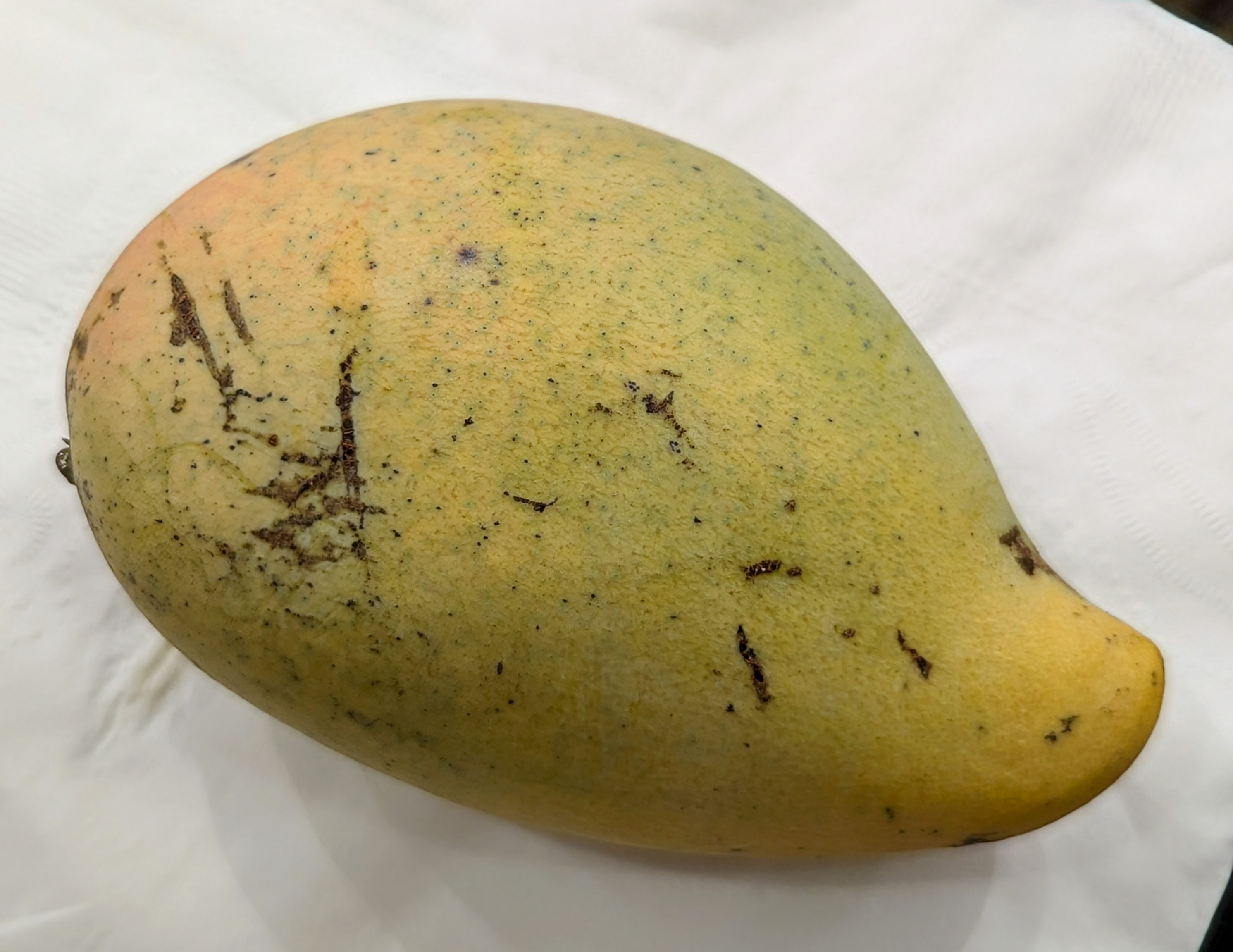
Glenn Mango coming along. These flowered magnificently and then powdery mildew set in causing much of the fruit to drop. I expect to eat these in about a month, they flowered at the end of January.

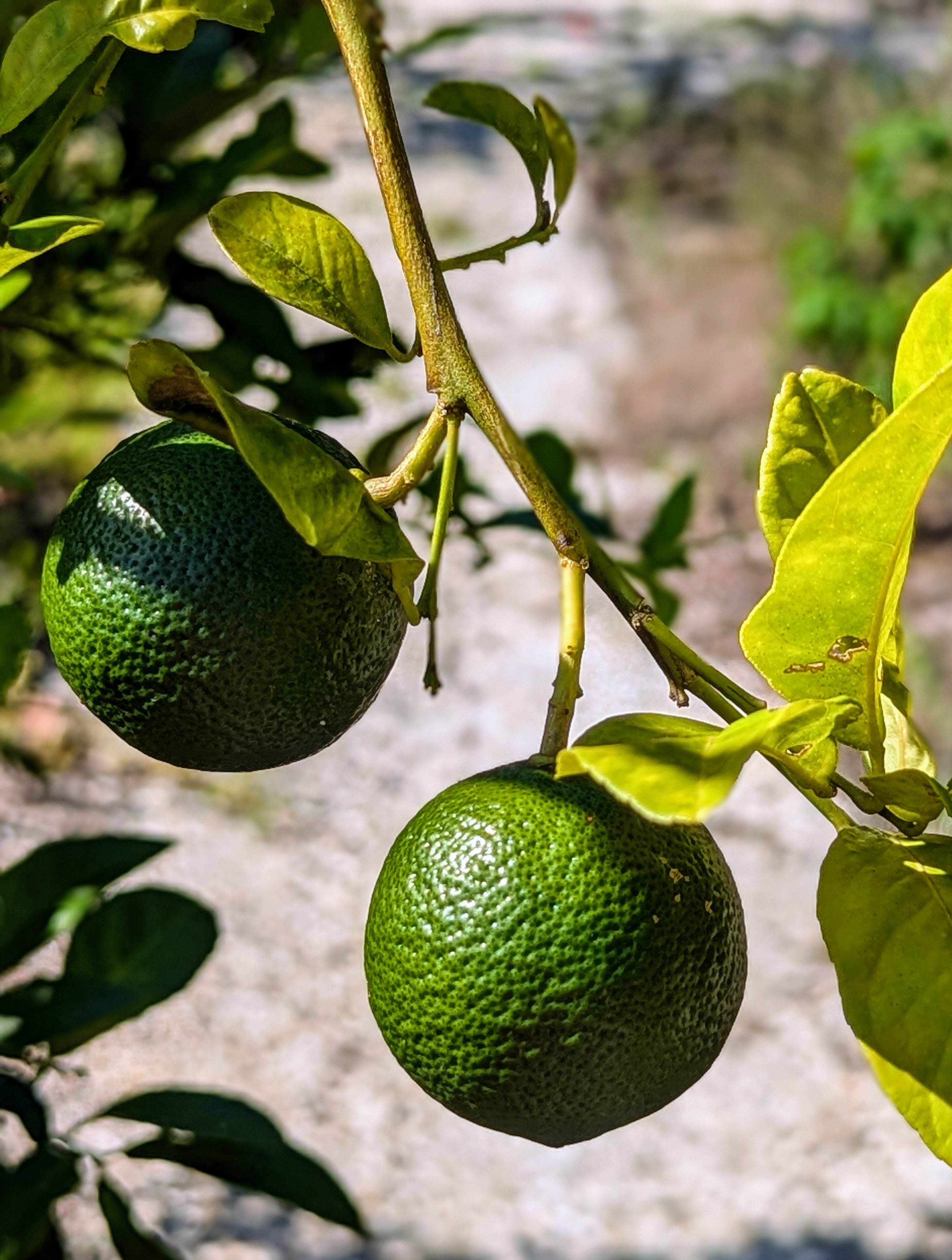
Finally! A good crop of Rangpur limes coming along. These won’t be edible until December.

New to the garden – Australian Finger Limes. These won’t be ready for years! I need to read up on these to determine what to do with them. They look a bit like jalapenos when ripe and are relatively rare. The foliage is much smaller than conventional limes.

A surprise Snapdragon in my pot of basil. I did not have any snaps this year, so this is a reseed from last year. I love garden surprises like this.

The Lotusleaf Begonia (B. nelumbifolia) is flowering luxuriantly, despite getting very little water. These form large tubers and I suppose that is what sustains them.

The annual sighting of a Ruddy Daggerwing butterfly. These host on Strangler Figs, I have a huge tree beside my house and it seems odd I only see one every year.

That’s all from South Florida. I will be contemplating butterfly and mango dilemmas later. Until then, follow this link to Jim’s blog for Saturday morning garden tours around the world.

In a Vase on Monday – Chanel No. 4?

I decided to put together a small vase of spring flowers this week. The big surprise was the wonderful fragrance generated by a combination of four flowers I selected from the garden. Mmmm, I thought, I would wear this as perfume. This led me to a very ancient bottle of Chanel No. 5 my father gave me decades ago that lives on. My mother, in all her Greatest Generation glory, considered this her signature scent. It is a bit, sweet? for me. I can’t quite put my finger on it, though I did try to grow a Ylang Ylang tree in my garden, the main fragrance component of Chanel No. 5. The YY tree expired, but I don’t think this bottle of perfume has!

The purple flowers are Agastache, I have no idea what variety. These have a lemony scent and are doing quite well in a container. These are new to the garden. A few Genovese basil flowers and White Flame Salvia are adding their white flowers and herbal scents.

The Giant Dianthus in pinks adds a clove fragrance to the mix. It seems lemony, herbal, clove may be my signature scent! I love it. A few snips of purple and silver foliage from Inch Plant (Transcandentia zebrina) were added for color.

The blue glass container is an heirloom from a collection my in-laws had. I am not sure what it is. A giant shot glass?

Happy Spring Monday to all and thank you to Cathy for hosting IAVOM every week! Follow the link ramblinginthegarden to visit Cathy and see more vases.

In a Vase on Monday – Hip, Heirloom Hippeastrum

I found my heirloom ‘Red Lion’ Hippeastrum in flower this week. Given their inevitable association with Christmas, I tried to make a modern, hip arrangement that did not reflect the holidays. These bulbs came from my father in law, Glenn, who had an incredibly intense in and out of the closet scheduling scheme for getting the bulbs to rebloom – after a few years of holiday flowers he would plant them in the garden. These have always lived outside here and are a rare bulb that hangs around in my garden. Glenn has been gone for almost twenty years, so I wonder how old these bulbs are?!

The Hipsters:

I love a little chartreuse and grey in the garden. This is an unnamed coleus in chartreuse and what I think is a Graptosedum succulent. I am hoping the coleus will root. If you look closely the cotton ball I stuffed into the bottom of the Hippeastrum stem is visible. I did this with the flower upside down and it burped when placed in the vase. I have read that filling the stem with water and putting a cotton ball in the end will make the flower last longer. The experiment is on!

Glenn’s Red Lion Amaryllis (Hippeastrum) – I am certain he would not know what a Hippeastrum is. The chartreuse umbels are flowers from culinary dill. I like to eat the foliage, but the seeds don’t really tempt me. The green foliage is a palm seedling of some sort. There is a nice herbal scent surrounding the vase. The container is a heavy crystal vase that was a gift.

I hope everyone is enjoying spring by now and I am looking forward to watching weird shadows with the solar eclipse on Monday afternoon. Thanks to Cathy for hosting IAVOM, to see more vases follow the link ramblinginthegarden and read the comments section.

Heliconias for South Florida

Looking to add some tropical vibe to your garden? Look no further than one of my favorite tropical plants, Heliconias. Heliconias come in many different varieties, two of the most common and easiest types to grow in South Florida’s Zone 10 are Parrot flowers and Lobster claw Heliconias.

Meet the Lobster claw Heliconia (Heliconia rostrata). Featuring large, shiny banana-like foliage and thick stems that support large hanging bracts of red and yellow flowers it is difficult to picture a more tropical plant. They originated in rainforests of South and Central America as understory plants. It is written that the flowers evolved to this shape to attract tropical hummingbirds to pollinate them. In my garden, the hummingbirds aren’t around at the same time as the flowers, so I am guessing this is a phenomena that happens much further south.

While some Lobster claw Heliconia can grow to 15 feet tall, these are usually more tropical types in an actual rainforest. The plants grown in Zone 10 are usually smaller and can be damaged with an extraordinarily cold snap.

Lobsterclaw Heliconia are easily grown in a partial shade setting with ample moisture. They like rich, well drained soil and benefit from compost in the planting hole and mulch. I grow them in my garden on the north side of the house under the edge of the roof. They are very happy and provide cut flowers in the summer.

This is a smaller Lobsterclaw Heliconia in my garden. I enjoy cutting these for smaller vases.

Here is a parrot for the garden. Heliconia psittacorum AKA the Parrot flower. I would characterize this as a tropical flowering perennial. They are leafy, grow about two feet tall, enjoy a moist, part shade environment and can spread like mad if happy. I have had these produce flowers almost every month of the year. I believe they slow down with extremes in weather (drought, heat, cold). Below is the “Lady Di” Parrot flower.

This is another long lasting cut flower. I have a few in a vase by my front door.

In a Vase on Monday – Sculptural Elements

This week my garden is sporting many different types of flowers, from classic cottage style to over the top tropical weirdness. I decided to simplify and cut a few Heliconias accented with the buds of a succulent. It is a bit calm in the face of the exuberance of spring.

March is proving to be its usual windy, showery self, so a quick garden tour and a few snips was a good thing this Sunday morning. I used one of my mother’s heirloom vases to set off the simple flower selection.

Heliconias are one of my favorite tropical flowers, last a week in a vase and are very easy to grow. These are Heliconia psittacorum “Lady Di” in red, and “Choconiana” in orange. They have a mind of their own and tend to grow and flower under shrubs, which is annoying if you want to see them or cut them.

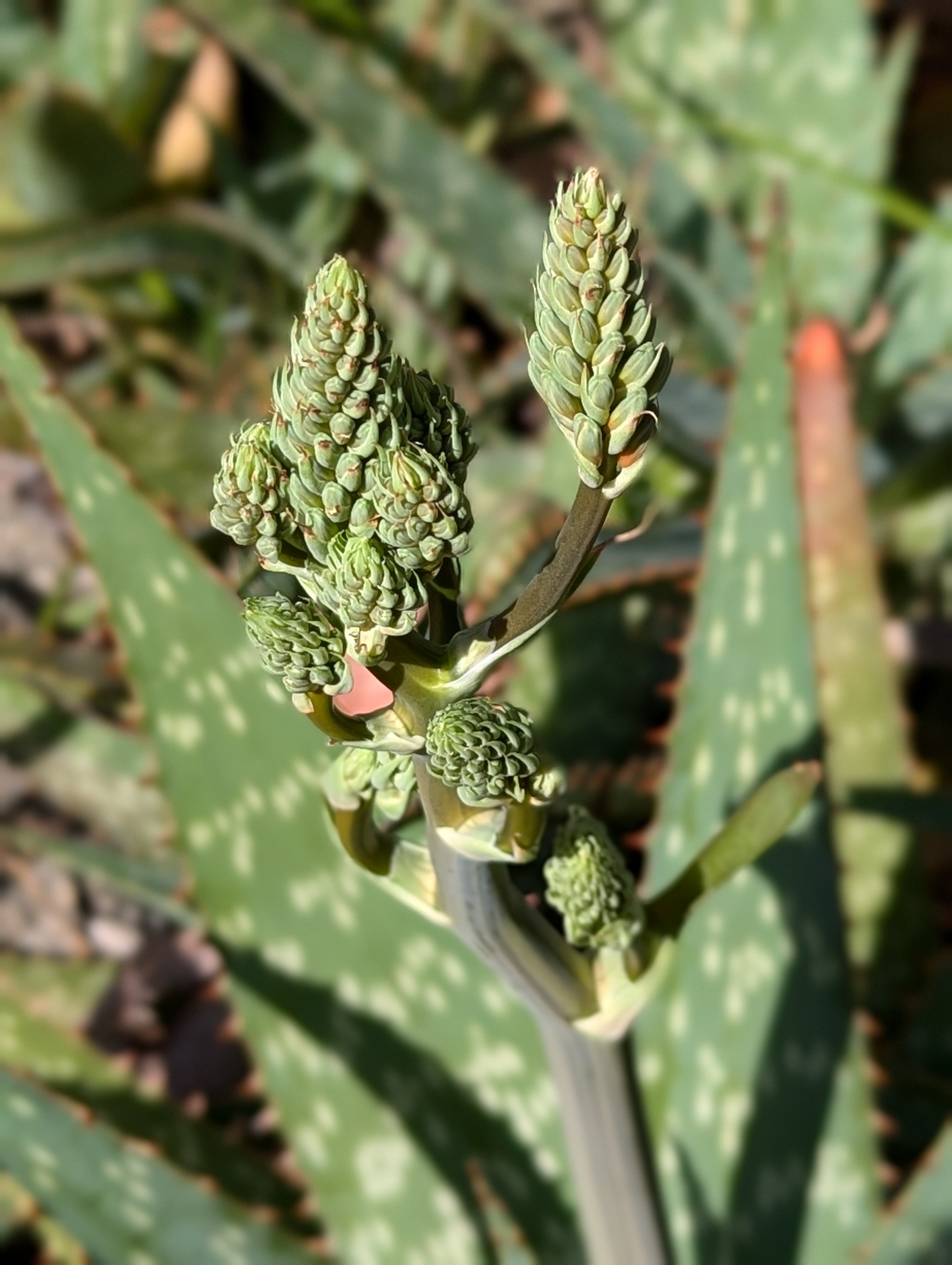
This is a bit of Senecio barbertonicus, in bud. The flowers look like the promise of an aster that never quite makes it into a yellow daisy, followed by a pseudo dandelion. Pretty weird, but I do love the foliage and the fact these can be left laying around the garden for weeks and are unfazed as long as they are replanted.

That’s all from my garden this Monday, to see more vases visit Cathy’s blog and follow the links in the comments.

Happy Gardening!!
In a Vase on Monday – Sprung

Spring has definitely sprung in South Florida. I bought my self required Pink Dianthus last week and here it is springing out of this vase. This is a big green Dianthus I had never seen until last year. I was happy to find another one as they are short lived annuals at best and it will be gone by summer. These make great cut flowers and are currently residing in a pot with rosemary and thyme. I also have a pot of Bath’s Pink Dianthus that I bought mail order last year because I love the grey foliage. It has not flowered and I am wondering if that is why no one around here has ever heard of them. I do love a little Dianthus in spring.

A closer view:

The Dianthus! I am not sure what kind of Dianthus this is – the label on the pot says Dianthus. That is it. Looking around the internet it looks like Rockin Pink Magic Dianthus (Dianthus barbatus interspecific). I concur with the name, it is Rockin Pink Magic.

White Flame and Mystic Blue Salvias are still going strong and needed deadheading. I actually had to throw some flowers away. The never ending supply of invasive Asian Sword Ferns supplied some greenery to emphasize the sproing. The vase is a thrift store find I have enjoyed for years.

That’s all from South Florida. I will be on the lookout for more Dianthus flowers. Visit our intrepid hostess, Cathy’s blog by following this link to see more weekly flowers in a vase from around the world.