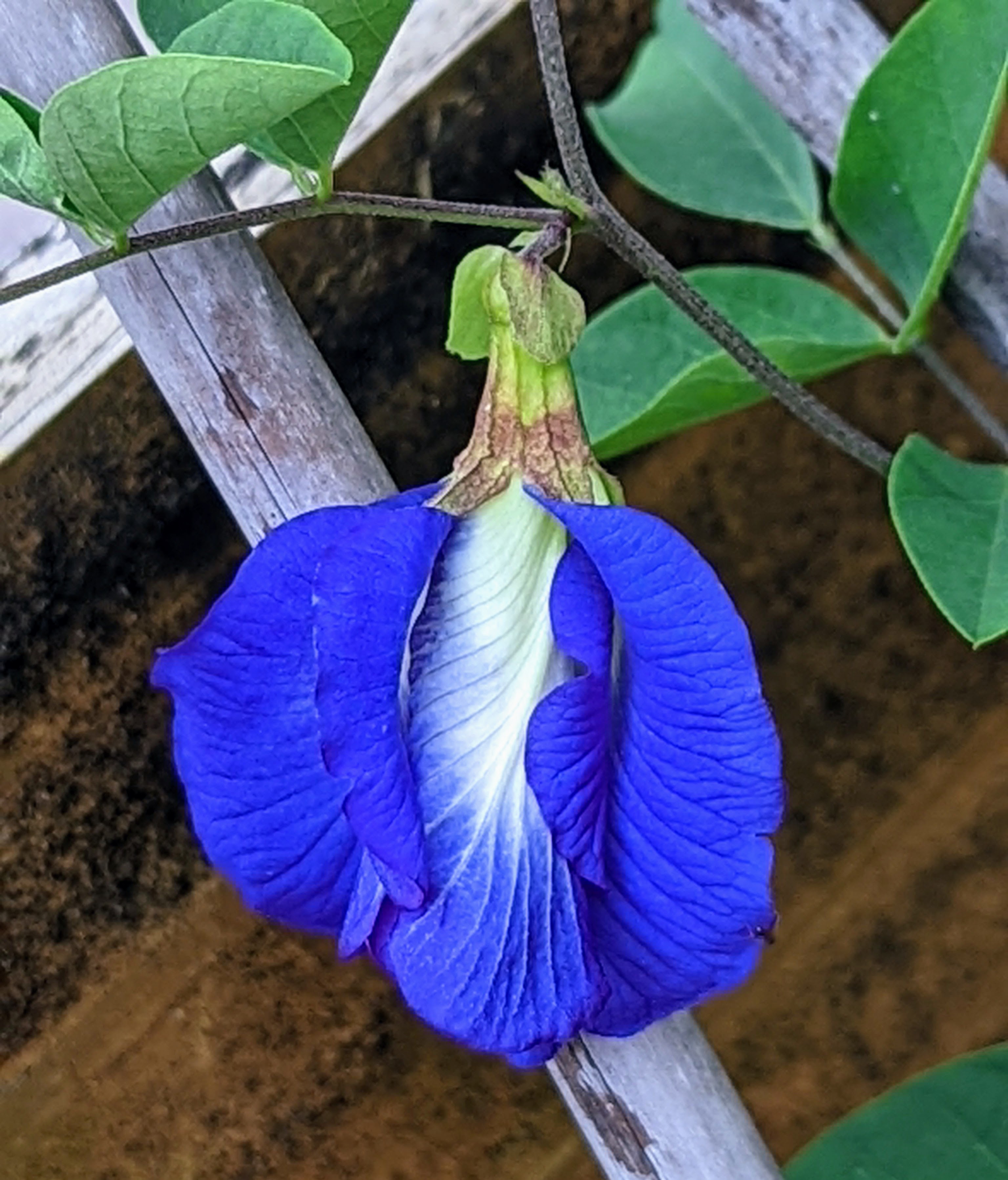
I am joining Cathy at Words and Herbs for this year’s Week of Flowers sharing images from our gardens. I am adding some favorite blue flowers from my South Florida garden today. Below is Butterfly Pea vine, this finally took hold in my garden after an extended trial with rabbit abatement. For some unknown reason the rabbits, who couldn’t get enough of this vine at first, now avoid it. I am wondering if like some people it gets bitter with age? My neighbor enjoys making cobalt blue tea with the flowers and then adding lemon to turn it pink. I have found I do not enjoy bean flavored tea.
Below, another blue flower, the Chinese Forget Me Not. I was astonished to find out last year I could grow this as a winter annual. I have just planted seeds and hope to see some flowers in a couple of months.
Hopefully these images warm up gardeners living in more northern climes. To see more flowery images from around the world visit Cathy at wordsandherbs.wordpress.com.
I am joining Cathy at Words and Herbs for this year’s Week of Flowers sharing images from our gardens. I am adding some tropical lovelies from my South Florida garden today. Below are the pink flowers from Tropical Rain Lilies, back dropped by variegated foliage from ‘Java White’ Copperleaf; a large, leafy shrub from the South Pacific,
Below, another ultimate tropical flower, the Frangipani (Plumeria). This color is very common around town and I have no idea what its name is. Like most Frangipani, it is quite fragrant and the flowers could be used to make leis if we were in the mood for a luau.
Hopefully these images warm up gardeners living in more northern climes. To see more flowery images from around the world visit Cathy at wordsandherbs.wordpress.com.
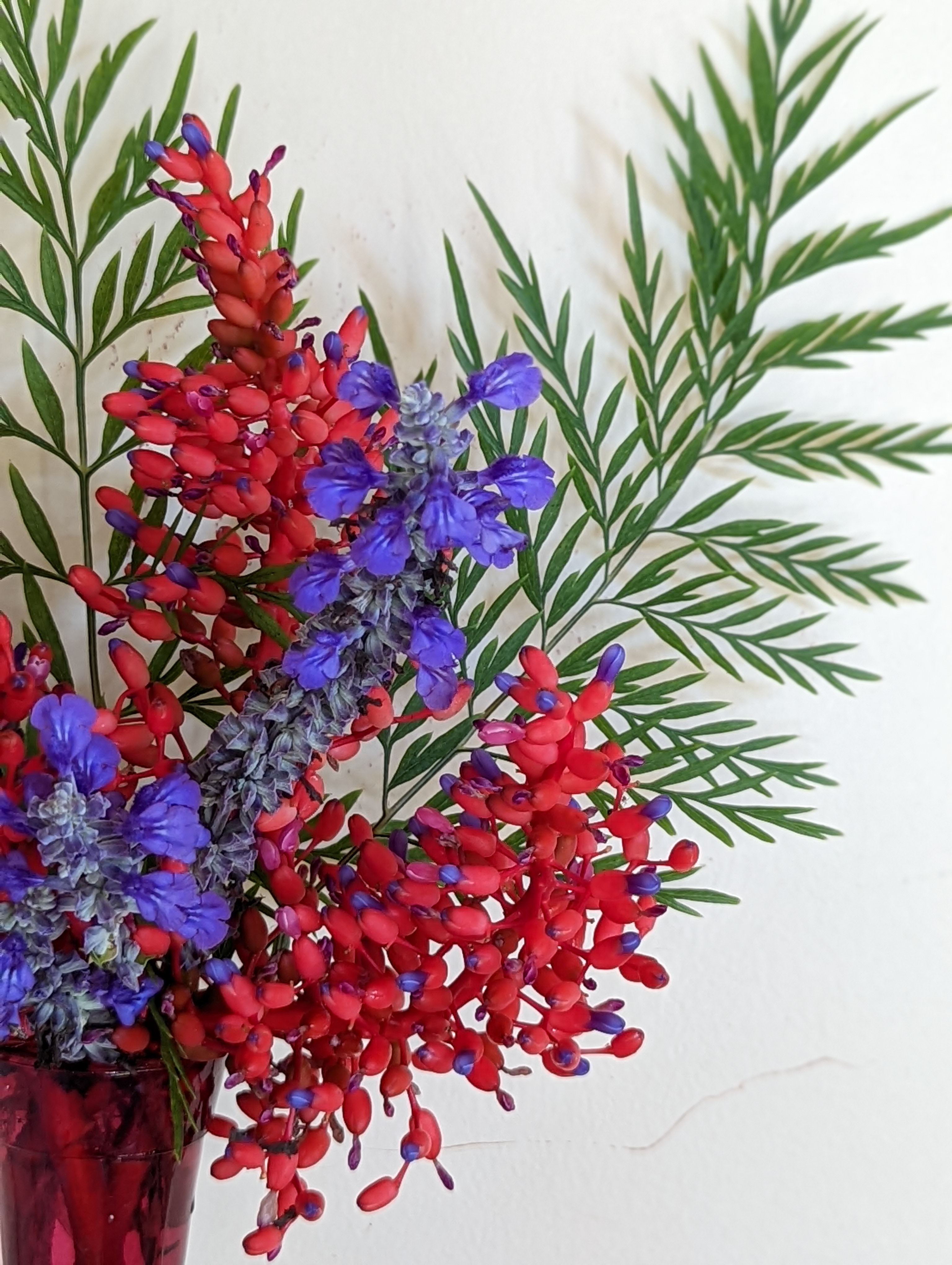
I am joining Cathy at Words and Herbs for this year’s Week of Flowers sharing images from our gardens. I am adding some Bromeliad madness from my South Florida garden today. Below are the red flowers from Aechmea miniata Bromeliads, one of my midsummer favorites, along with ‘Mystic Spires’ Salvia and foliage of the tropical Silk Oak, which is not really an oak at all, but Grevillea robusta, the largest member of the Protea family.
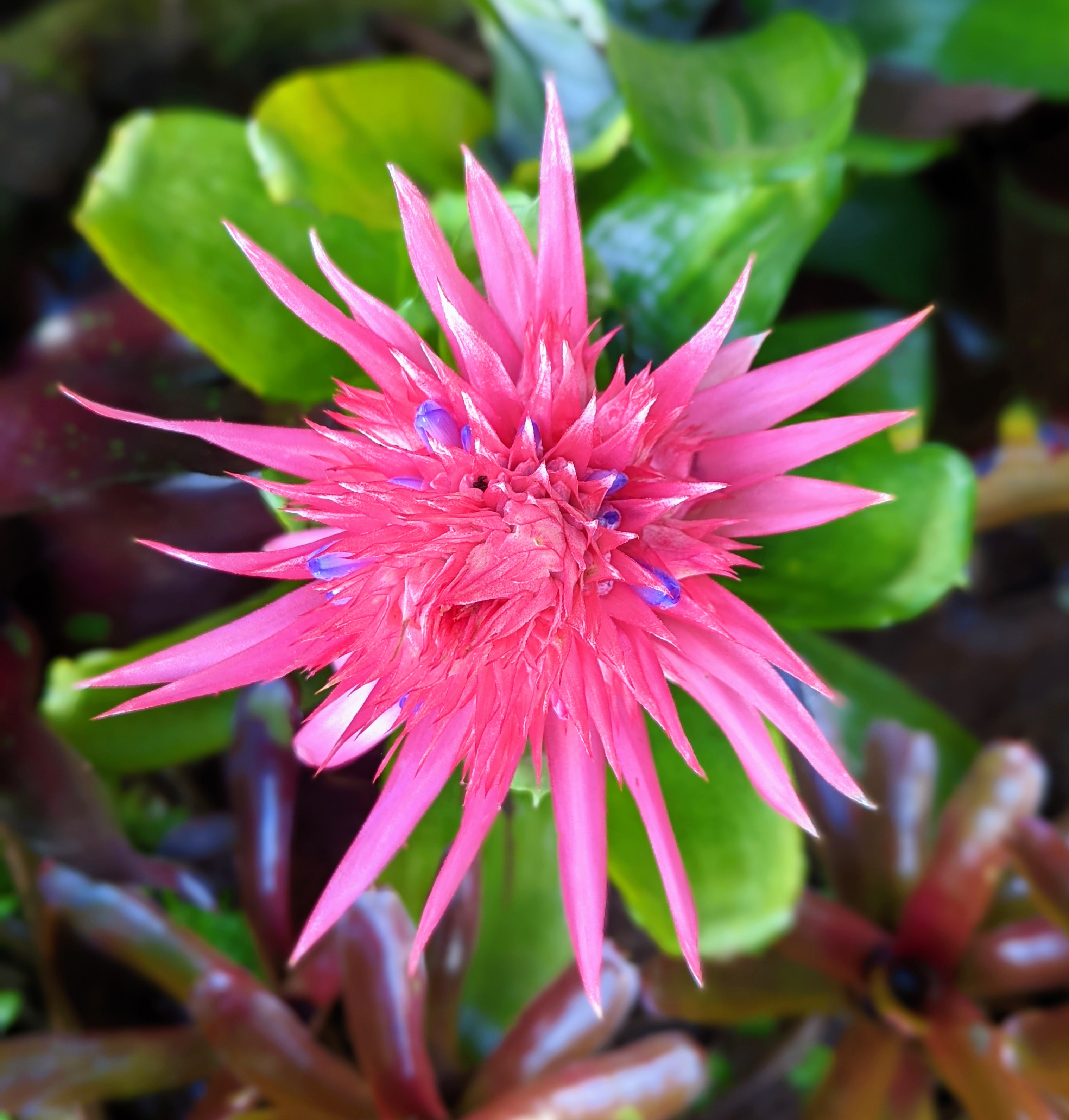
Below, another ultimate tropical flower, the Silver Urn Bromeliad (Aechmea fasciata). These were very common during the eighties Interiorscape rage as a long lasting flower for interior use. The flowers last about four months in my garden and flower every other year.
Hopefully these images warm up gardeners living in more northern climes. To see more flowery images from around the world visit Cathy at wordsandherbs.wordpress.com.
I am joining Cathy at Words and Herbs for this year’s Week of Flowers sharing images from our gardens. I am adding some tropical warmth from my South Florida garden. Below are Cattleya orchids that live outside year round. These are deliciously fragrant and faithfully flower every September; they are mounted on a piece of wood and perch on a terracotta container.
Below, in my opinion, are the ultimate tropical flower, the Lobsterclaw Heliconia. These have lush, large, coarse textured tropical foliage and require a great deal of water. They live under the edge of my gutterless roof. There are many varieties of this plant, some with chains of flowers two feet long.
Hopefully these images warm up gardeners living in more northern climes. To see more flowery images from around the world visit Cathy at wordsandherbs.wordpress.com.
Today is the ninth anniversary of the IAVOM meme. I don’t recall when I started creating and posting vases every Monday, but it has been several years and has become a weekly habit and a joy to share the fruits (or flowers) of my labor with fellow gardeners.
Yesterday I had the pleasure of participating in a Zoom meeting with several members of the IAVOM community. I have been exchanging comments with these blog friends for years and finally met them, virtually.
Cathy, at http://www.ramblinginthgarden.wordpress.com is the creator and hostess of IAVOM. Follow the link to see more vases. Thanks to Cathy for arranging and hosting the Zoom meeting.
The Vase – Contents:
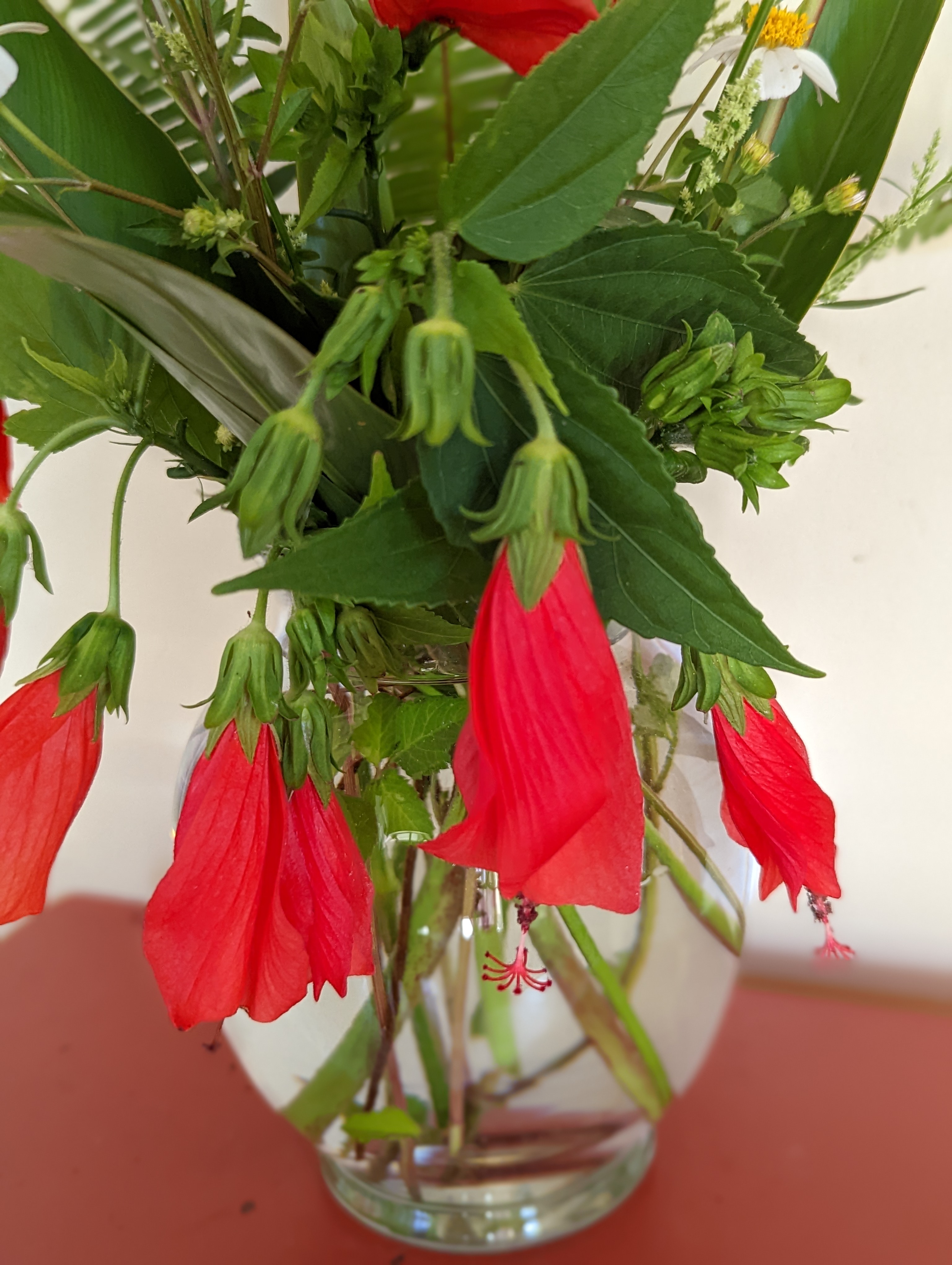
The red flowers are Nodding Hibiscus (Malvaviscus pendululiflorus) – a sort of ratty looking shrub I keep in the garden for its winter flowers. The grey ‘flowers’ are cuttings of Echeveria, a succulent given to me by a friend. These cuttings are destined for a winter tabletop container on my screen porch. The vase is the last vestige of a historic floral arrangement.
The upper level – this image looks suitable for a snack of vegetarian dinosaurs and may well have been one. Both plants are native to Florida and have been here for millenia. The ferns are Boston Ferns (Nephrolepis exaltata) and the flowers are Juba Bush (Iresine diffusa)
Happy Monday, Happy Gardening and Happy Anniversary, IAVOM.
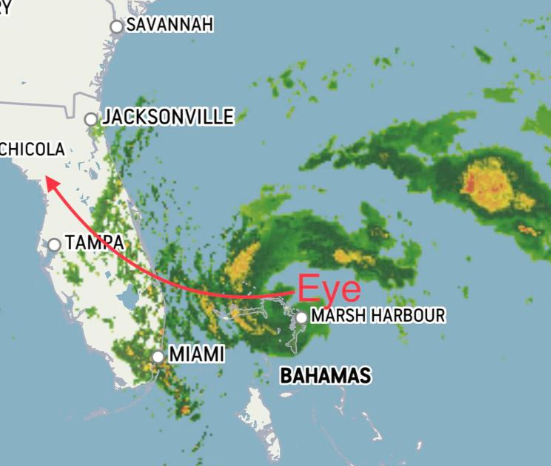
I am joining the SOS crowd after a rare event, a November hurricane – the third one to occur since the mid 1800s. If you look at the map above – where the red line hits the east coast of Florida, that’s my house. The hurricane, named Nicole, made landfall as a Category 1 (min 70 mph winds) at 3 am Thursday morning about 30 miles north. We all slept through it, the dog included. The hurricane was immediately downgraded to a tropical storm after landfall. I would guess we might have had 50 mph wind gusts, the damage minimal.
Floridians generally scoff at Category One hurricanes. The problem is you never really know where the thing is going to end up and the wind field on this one was so huge it was difficult to drive away from it. The wind kicked up Monday afternoon and continued until Thursday. We put up our storm shutters just in case, my husband is currently outside, grumbling and taking down the shutters.
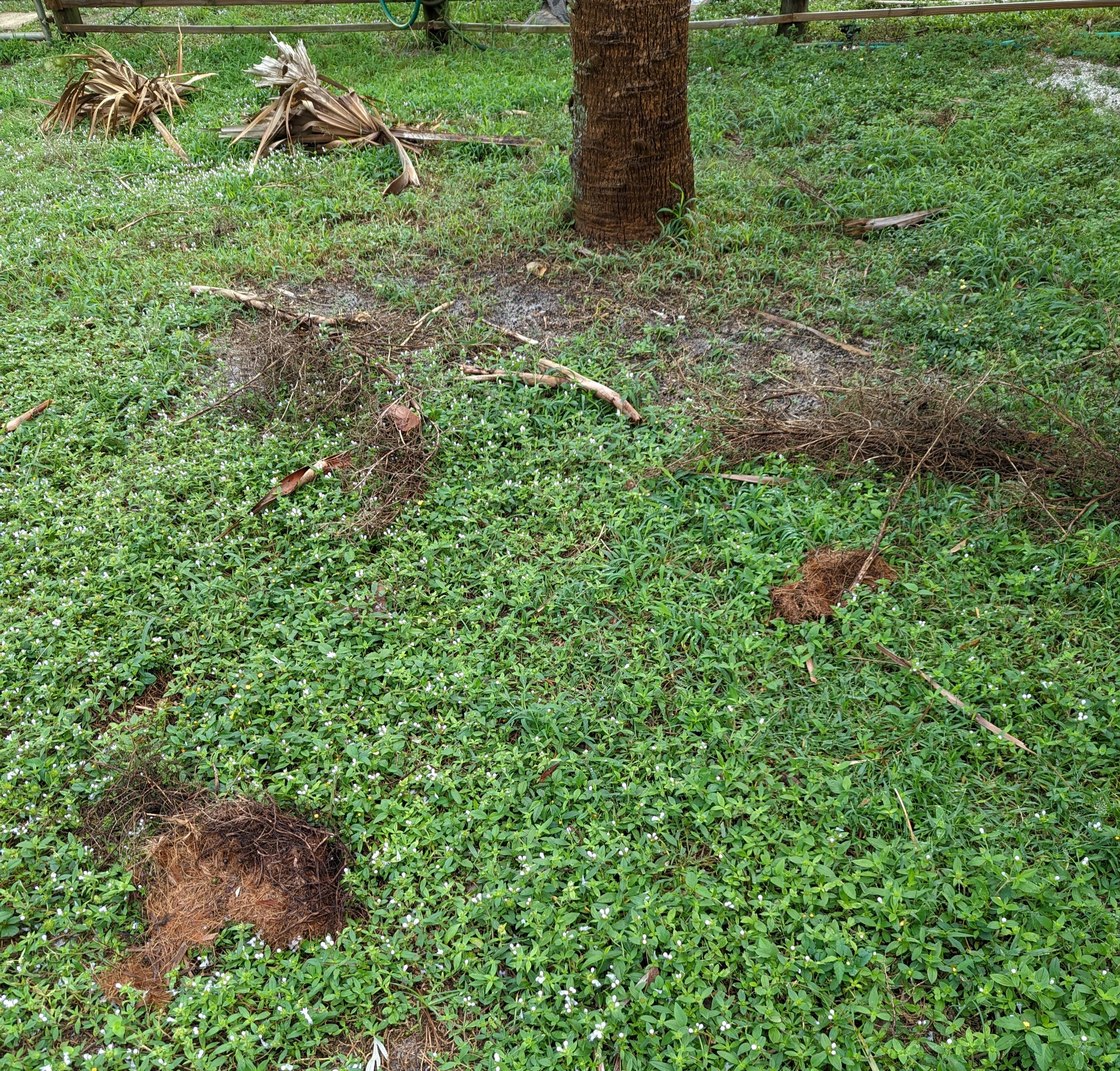
A scattering of debris from Sabal Palms.
My Rangpur Lime tree is bent over. I guess I should tie it up to the fence to straighten it up? Lime trees are quite thorny and this is almost leaning into the pathway.
Miss Alice Bougainvillea was knocked off her column.
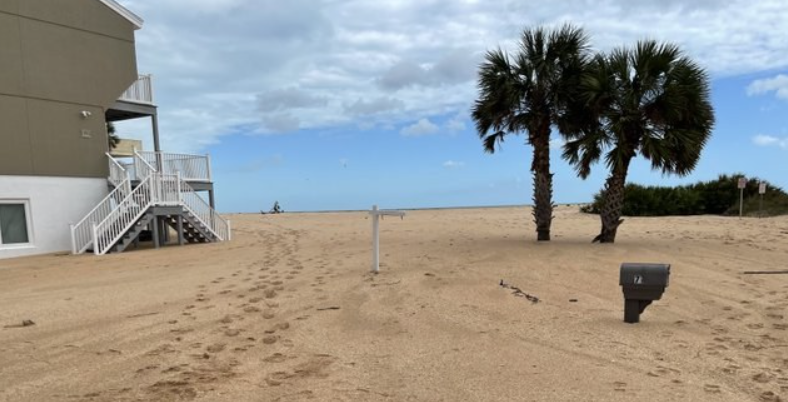
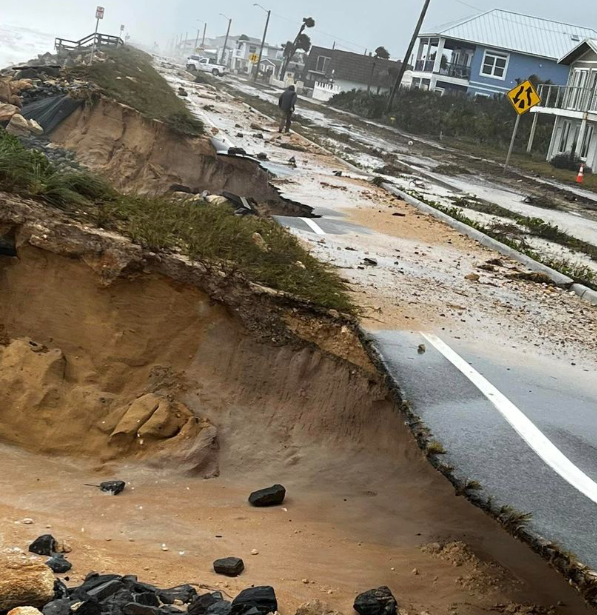
Further north, close to the ocean and rivers, people weren’t so lucky. This hurricane hit during a full moon and at fall king tide time, so the water was already high and the storm surge was 3 to 5 feet. The Daytona Beach area was also hit hard by Hurricane Ian, 43 days before. Some of the houses damaged by Ian fell into the ocean with this additional insult. These images are what you are seeing on the news.
The barrier island protecting us had quite a bit of flooding and an native American burial ground on the beach was unearthed; it will be interesting to learn how old the skulls are found on the beach.
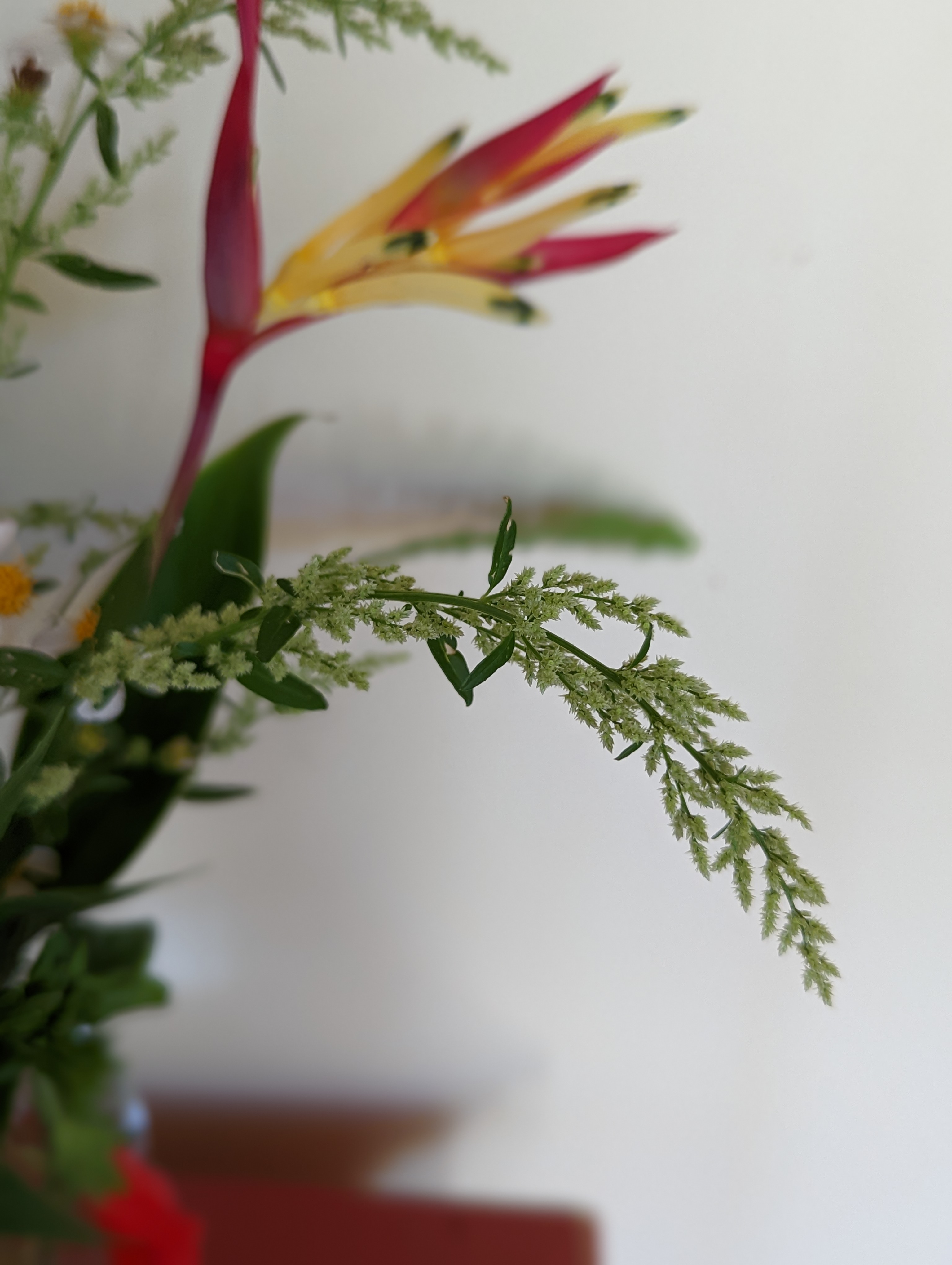
My favorite cool season flowers are starting to show their colors. One is the Juba Bush (Iresine diffusa). I am jubilant that the Juba Bush has reappeared. I thought it was gone. This is a native wildflower that I mistook for Amaranthus and left it in the garden only to discover its wonderful chartreuse to creamy white flowers. Juba is the name of an African dance that was imported into the Caribbean where these wildflowers are also native. The dance involves a lot of hip movement and swaying – the plant’s movement in the wind reportedly mimics this?! I wish this grew under my Gumbo Limbo tree, that would be perfect.
The Juba Bush. It is the creamy white flower; ‘Lady Di’ Heliconia is in the background.
The other fall indicator is the red Nodding Hibiscus (Malvaviscus penduliflorus) at the base of the vase. This is another volunteer that I have embraced as I love the flowers. Like many Hibiscus (it is a relative and Mallow family member) the shrub is rangy and not particularly attractive. For me, the flowers make it worthwhile and I enjoy them all winter. It also needs no supplemental water and the leaf cutting bees love it.
The Nodding Hibiscus:
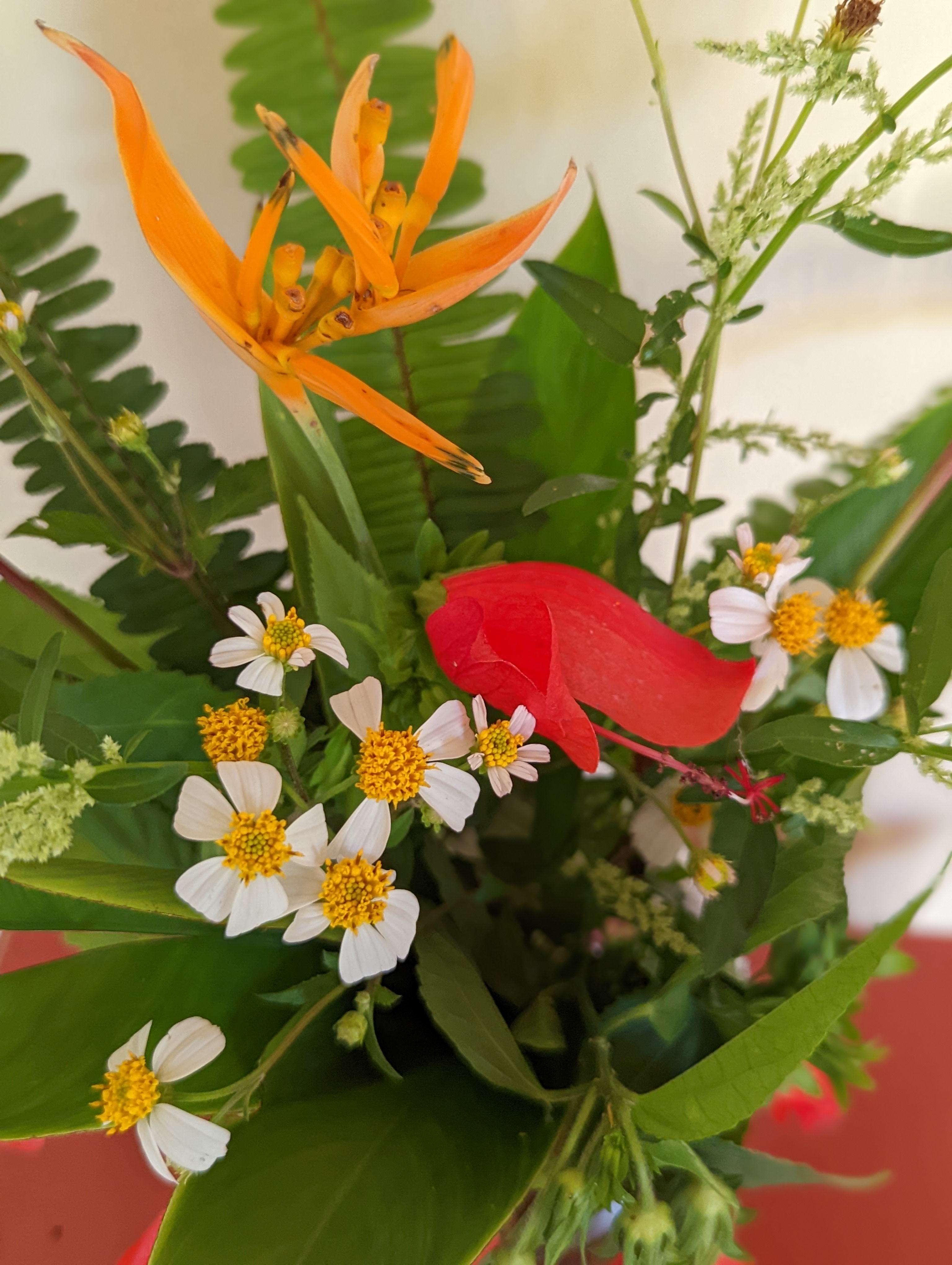
The rest of the vase:
The orange flower is a ‘Choconiana’ Heliconia (Heliconia psittacorum); white daisies are the native Spanish Needles (Bidens alba); ferns are the evil invasive, Asian Sword Ferns. I keep the Sword Ferns at bay by using them in vases.
Fall rode into South Florida on the coattails of Hurricane Ian last week. While Ian left an unprecedented swath of destruction through the peninsula, my garden was unaffected by the storm for the most part. Leaves, branches and palm fronds were strewn around by the winds and a few plants are taking a more southerly direction bent by the higher wind gusts. Otherwise, all is well. The temperature change is a welcome relief from summer as is the lower humidity. Clear blue skies and daytime highs in the low 80s are the reason hordes flock to South Florida in winter.
I went in search of fall colors in the garden. Real fall color is difficult to find here, fruit bearing shrubs and trees are about it. Beautyberry and Goldenrain tree are my fall color change plants. The flowers in my vase are a different perspective on fall color than most gardens north of here.
The flowers:
The orange flowers are from Aechmea rubens, a long lasting bromeliad; variegated foliage is from ‘Java White’ Copperleaf (Acalypha wilkesiana). The vase is a thrift store find.
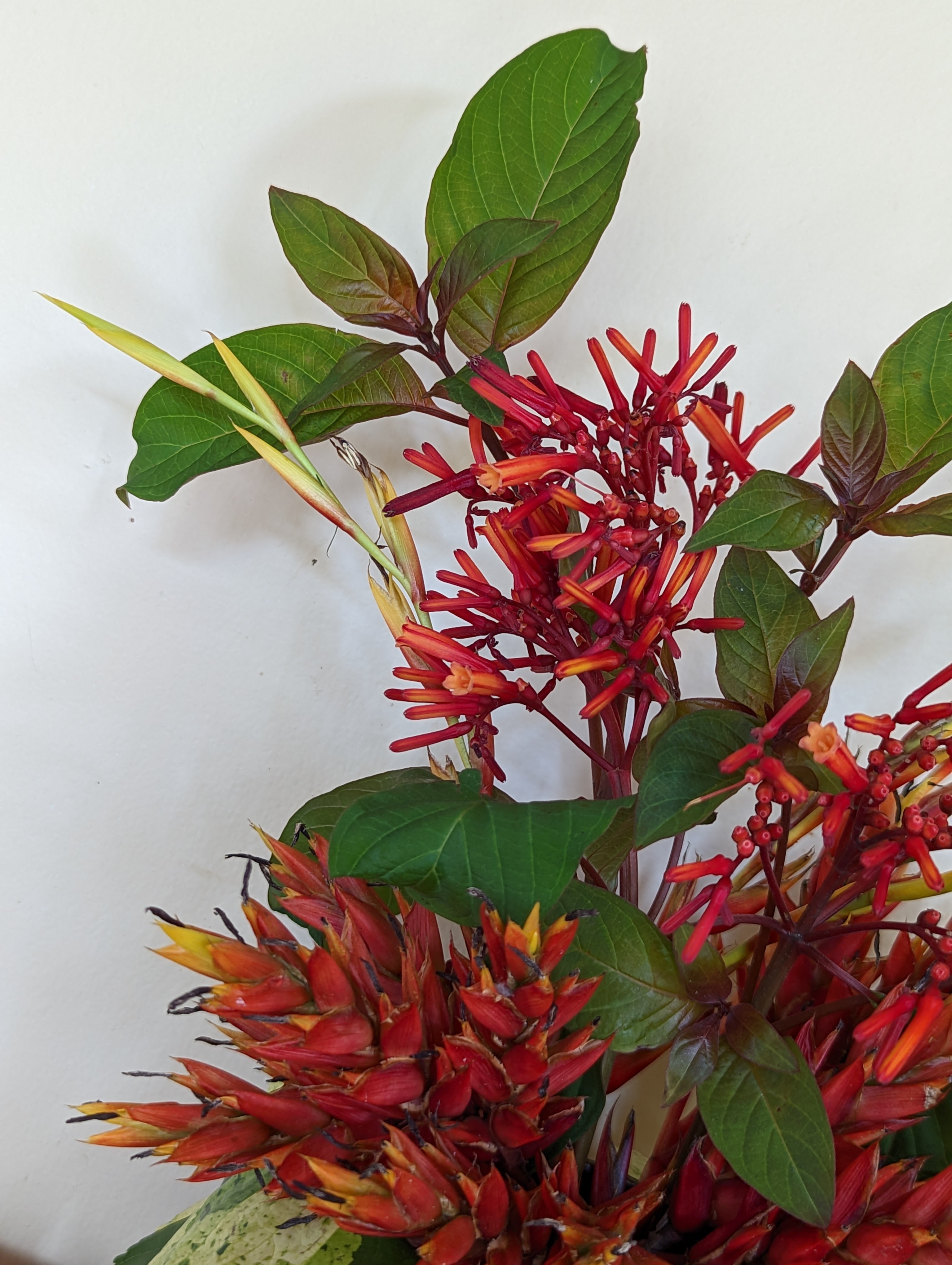
The orange tubular flowers are Firebush (Hamelia patens var patens); yellow lobster claws are pieces of Blanchetiana Bromeliad (Aechmea blanchetiana) flowers – the actual flowers are 3 or 4 feet long.
I have heard from a lot of people this week inquiring about our status after Hurricane Ian blasted through Florida. Here is what happened.
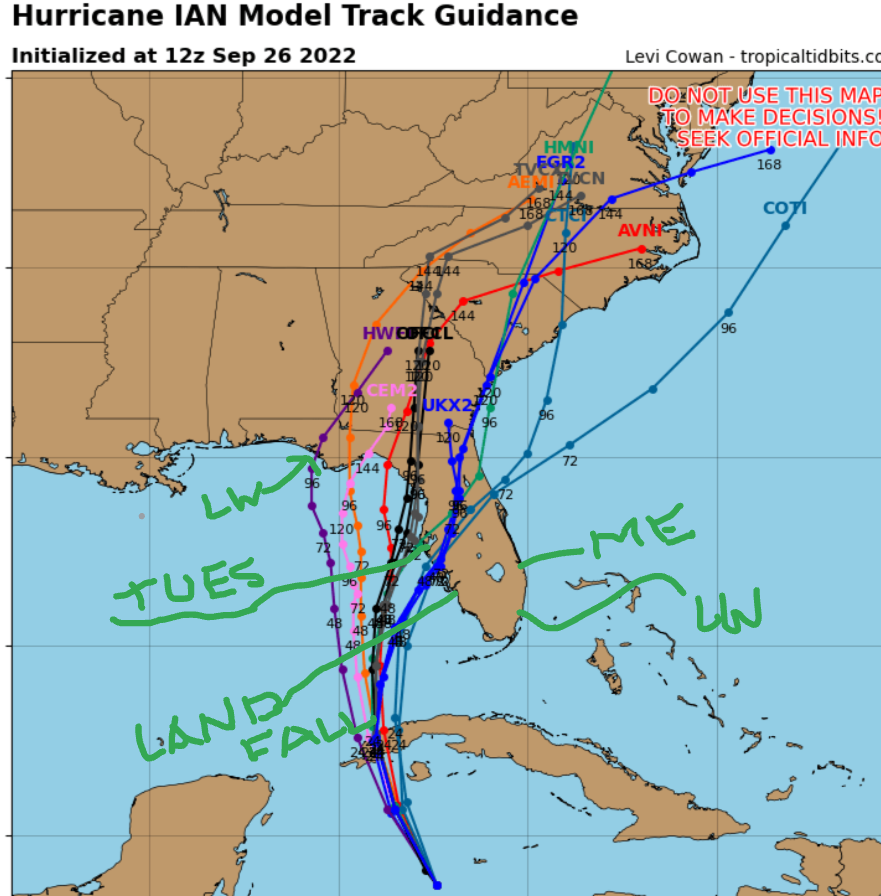
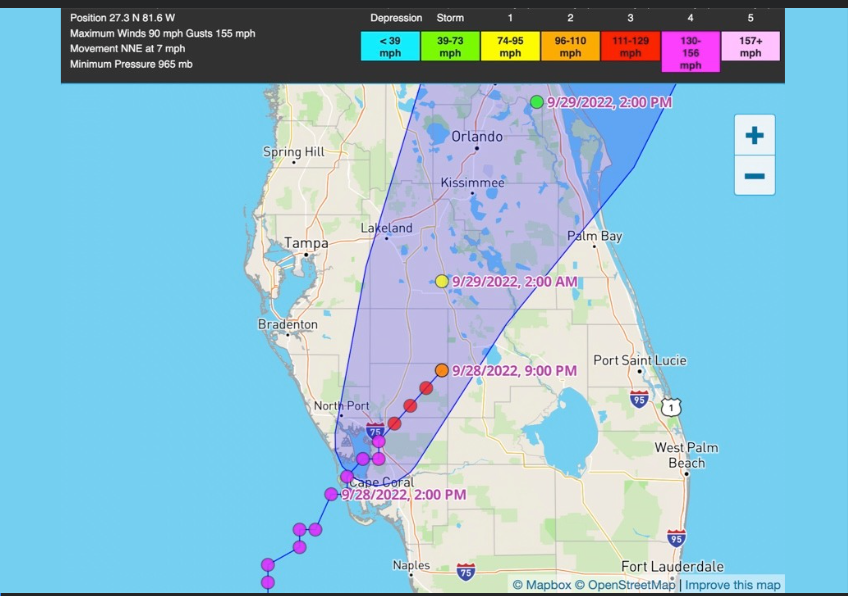
On Monday this week I posted the latest spaghetti models for the path of the hurricane. Meteorologists use these models to show possible storm paths. I have turned into a bit of a hurricane nerd and follow the weather modeling when storms are active. I marked this map up to show how the forecasting moved during the week.
I am located east of the big hole in Florida, Lake Okeechobee. The LW labels are where Ian was forecast to hit last week. Last week the hurricane was hitting South Florida or the Panhandle. The line in black was the Monday forecast. Tuesday it moved south with a prediction of a direct hit on Tampa Bay. Wednesday morning Category 4 Hurricane Ian spinning 155 mph winds made landfall at Cayo Costa, Florida, a barrier island off the west coast near Ft. Myers. It is over 100 miles between Tampa and Ft. Myers. The hurricane never really looked like it was going to hit us. Ironically, when the first rain bands hit my house the hurricane warning area was upgraded to 30 miles north of my house.
Ians’s path through Florida:
The storm passed about 110 miles west of us overnight on Wednesday. There was a constant 30 mph wind that escalated to 50 or 60 mph gusts off and on. We had very little rain.
The dreadful images of storm damage seen all over the internet and news stories are mostly from the two counties near the landfall, Lee and Collier. There is wind damage and ongoing flooding elsewhere in the path. Hurricane Ian reformed after leaving Florida as a tropical storm and hit South Carolina on Friday.
Our nephew lives in Ft. Myers and stayed in his house. After 5 hours of 100 mph winds, he had a hole in his roof and trees down. He was very lucky. The storm surge stopped 1/2 mile away. Another friend, with land development experience, recently sold his golf course view home in Naples after worrying for years about the 6-8 foot topographical difference between his house and the Gulf of Mexico. I imagine his neighborhood was inundated by the storm surge.
Here is what happened in my garden:
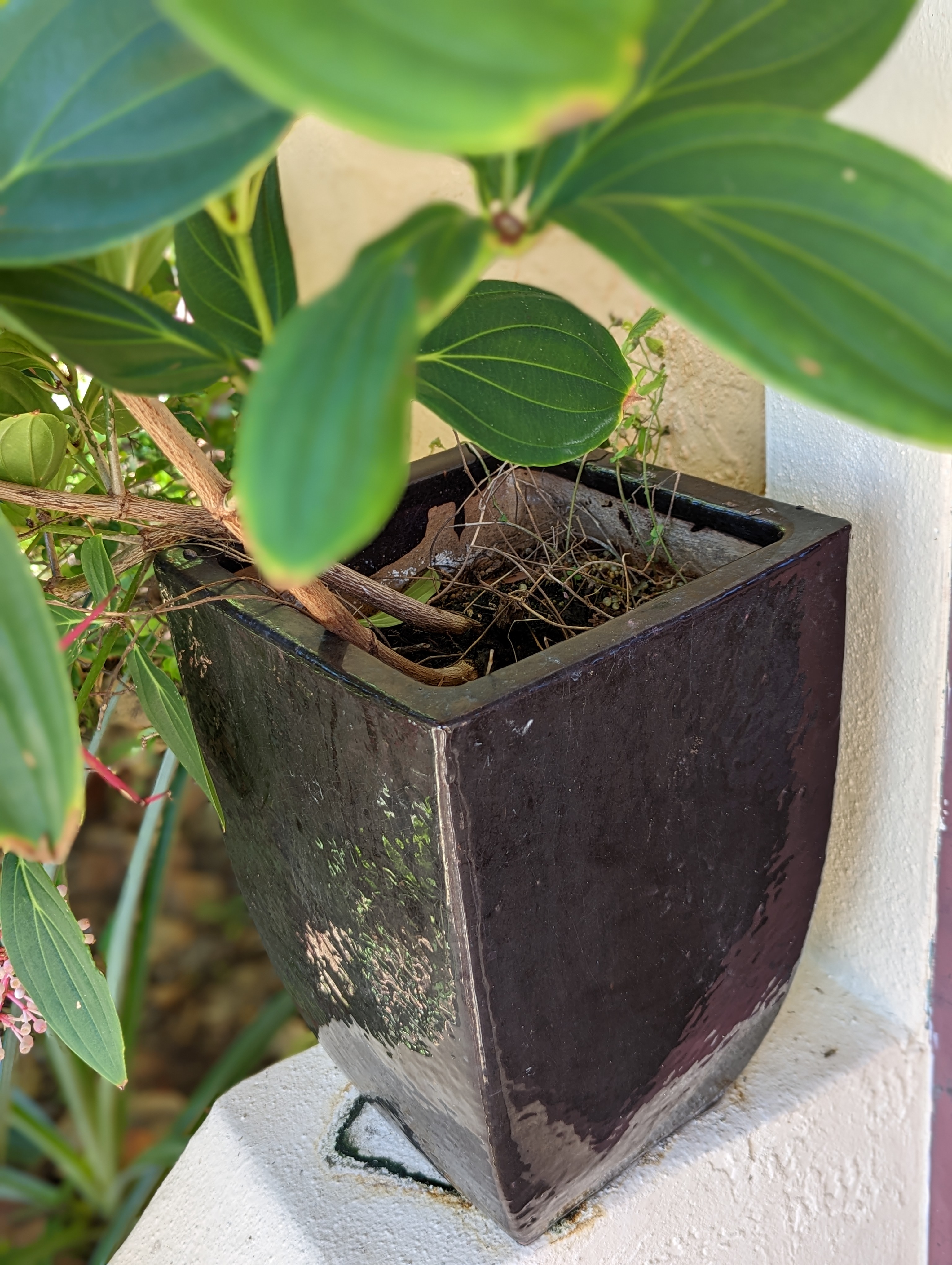
Winds blew this pot counterclockwise. I am glad it did not blow off the wall.
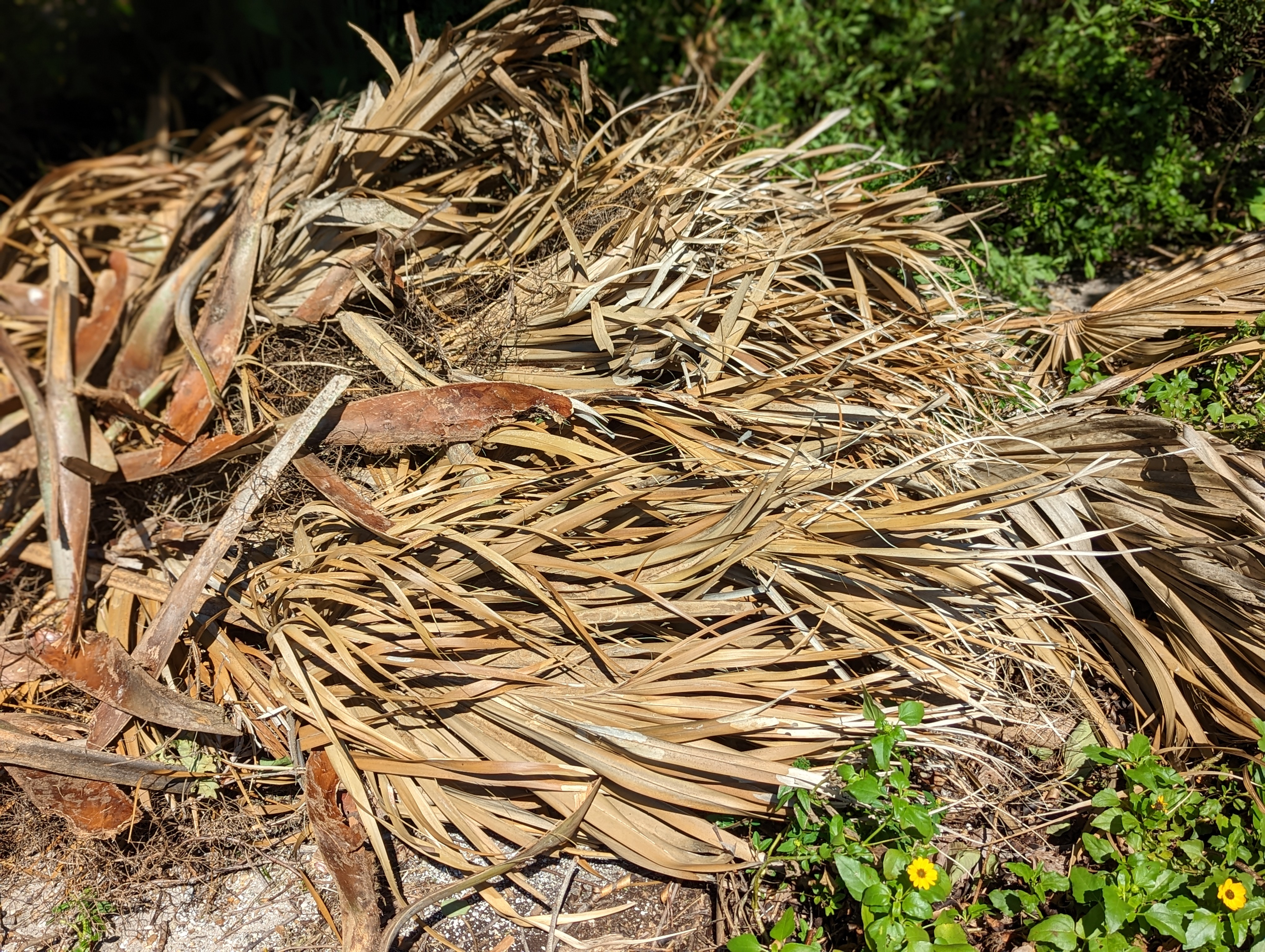
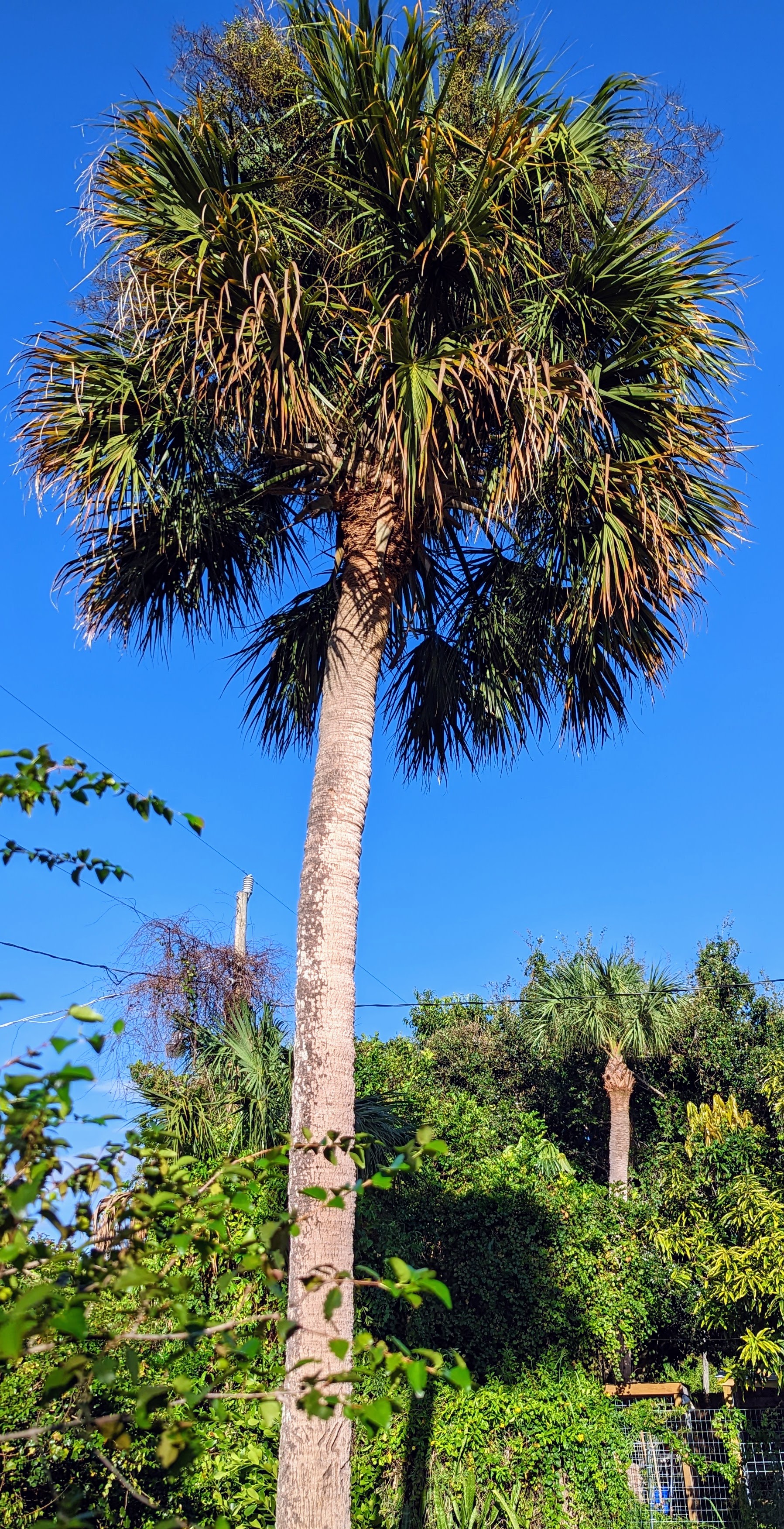
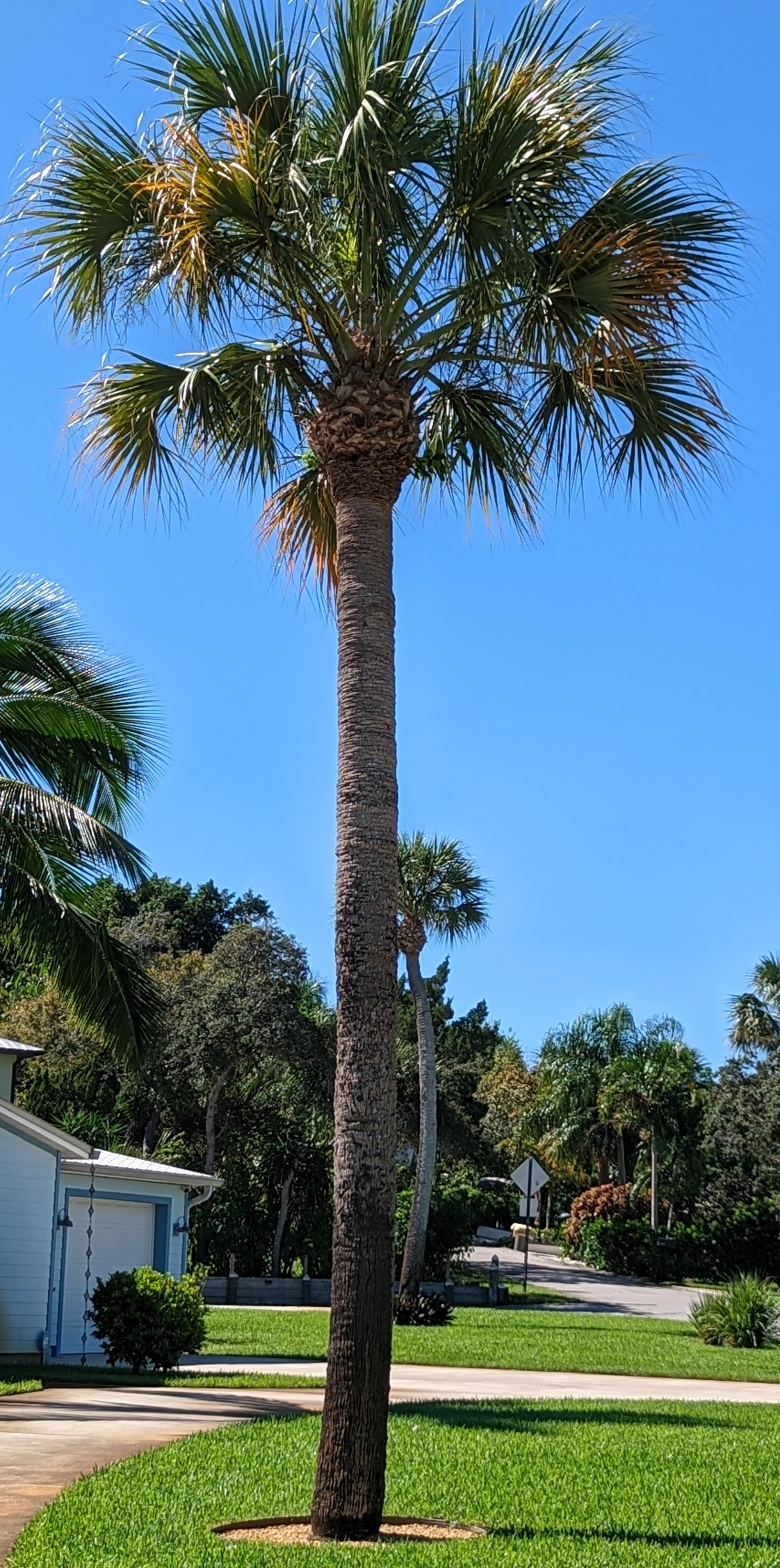
Piles of palm fronds to pick up. I hate hurricane cut palms. It is bad for the health of the tree to cut all the yellow and brown fronds and seed heads off as they provide homes and food for birds and bats – but, you don’t have to pick them up after high winds.
The hurricane cut palm is on the right. They are left with 3 to 5 green fronds many times.
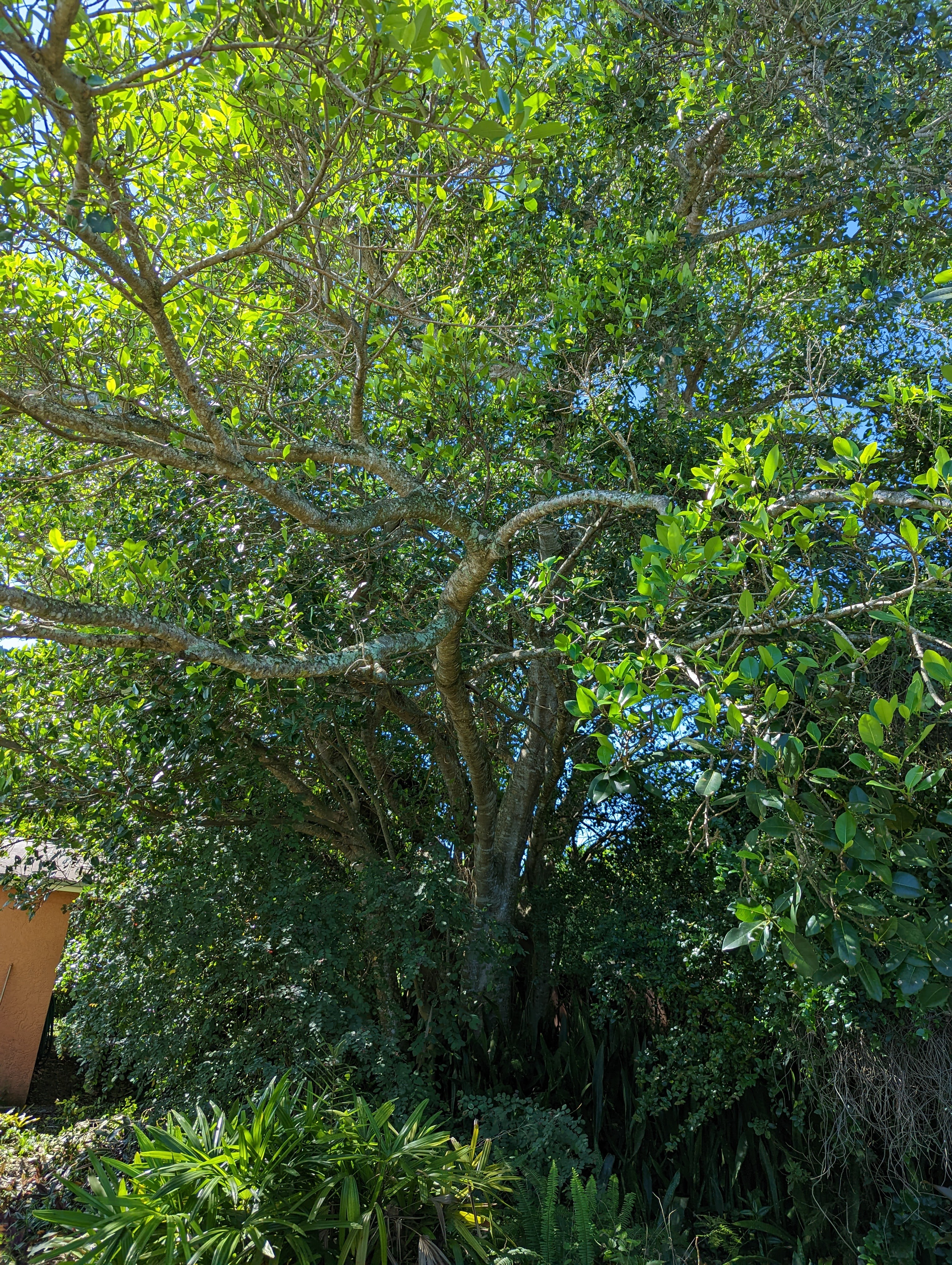
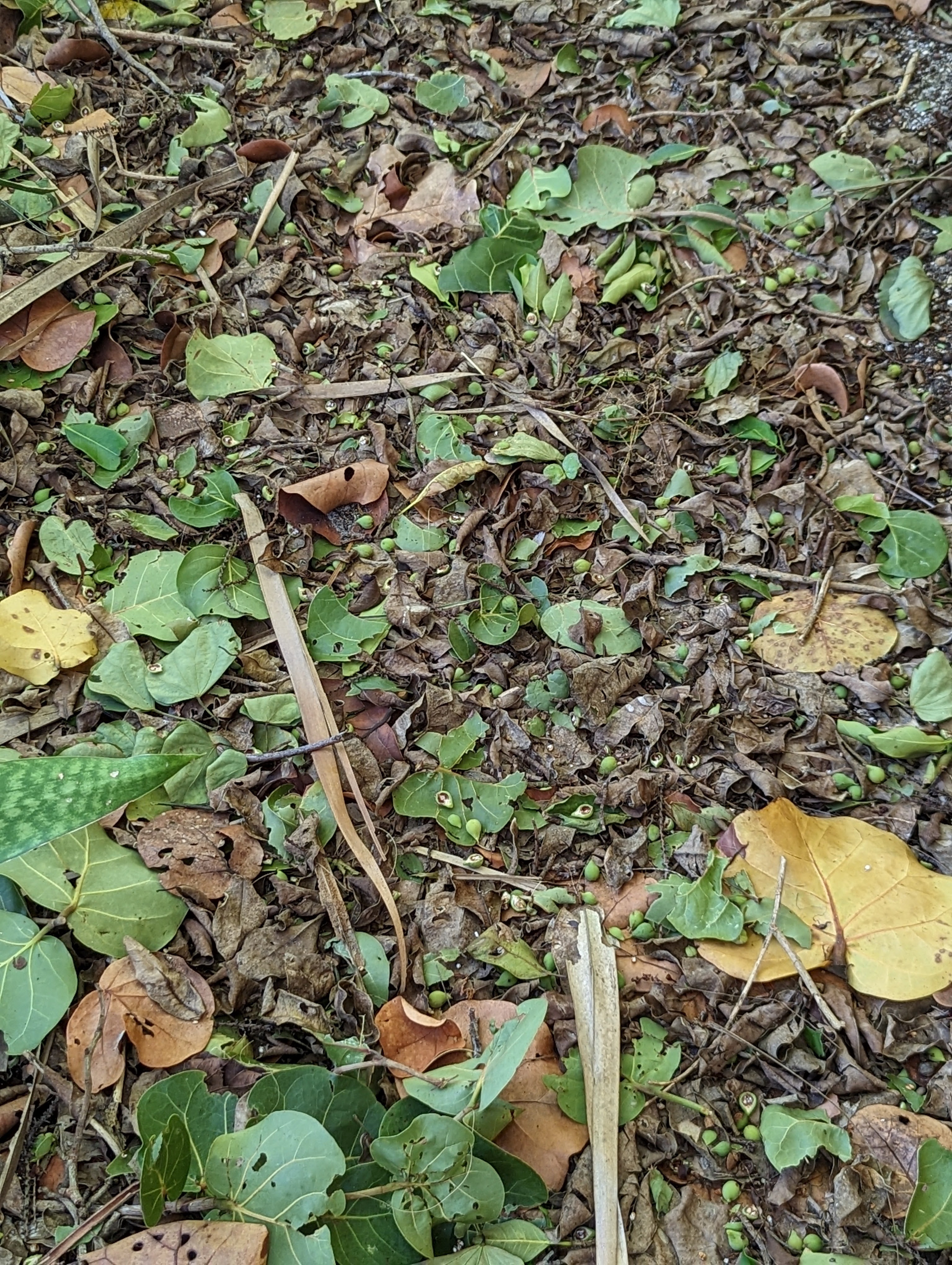
The Strangler Fig was mostly covered in new leaves before the winds blew through. The new leaves and many others are now covering the ground.
That is it from my garden. Just piles of debris to pick up. Some of the plants are pointed in a decidedly more southern direction as that is where the strongest winds came from.
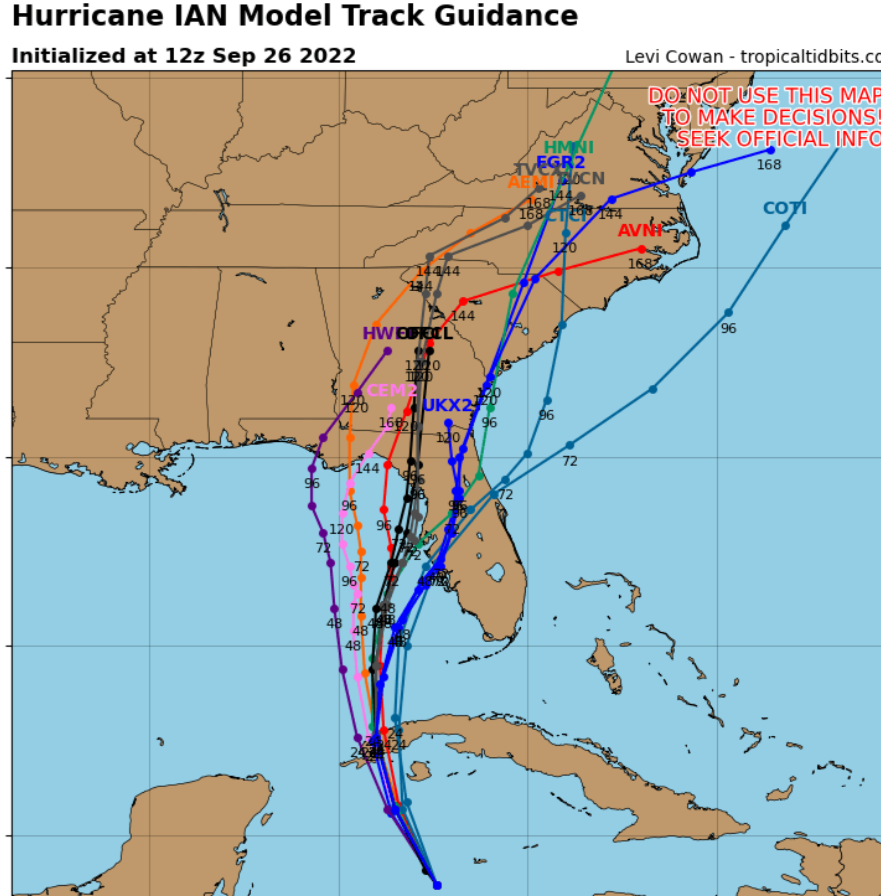
It’s September in Florida. Eventually a hurricane is going to take aim at my garden. We spent the weekend watching weather models, called spaghetti models because the paths on the models look like cooked pasta. I am on the east coast of Florida and currently out of the area predicted to be affected by Hurricane Ian. Thus far, 35 mph winds are forecast here as the hurricane passes on the other side of the peninsula. The feeling is relief mixed with concern for my fellow Floridians and a certain trepidation that no one really knows what Ian will do.
Here is the current spaghetti:
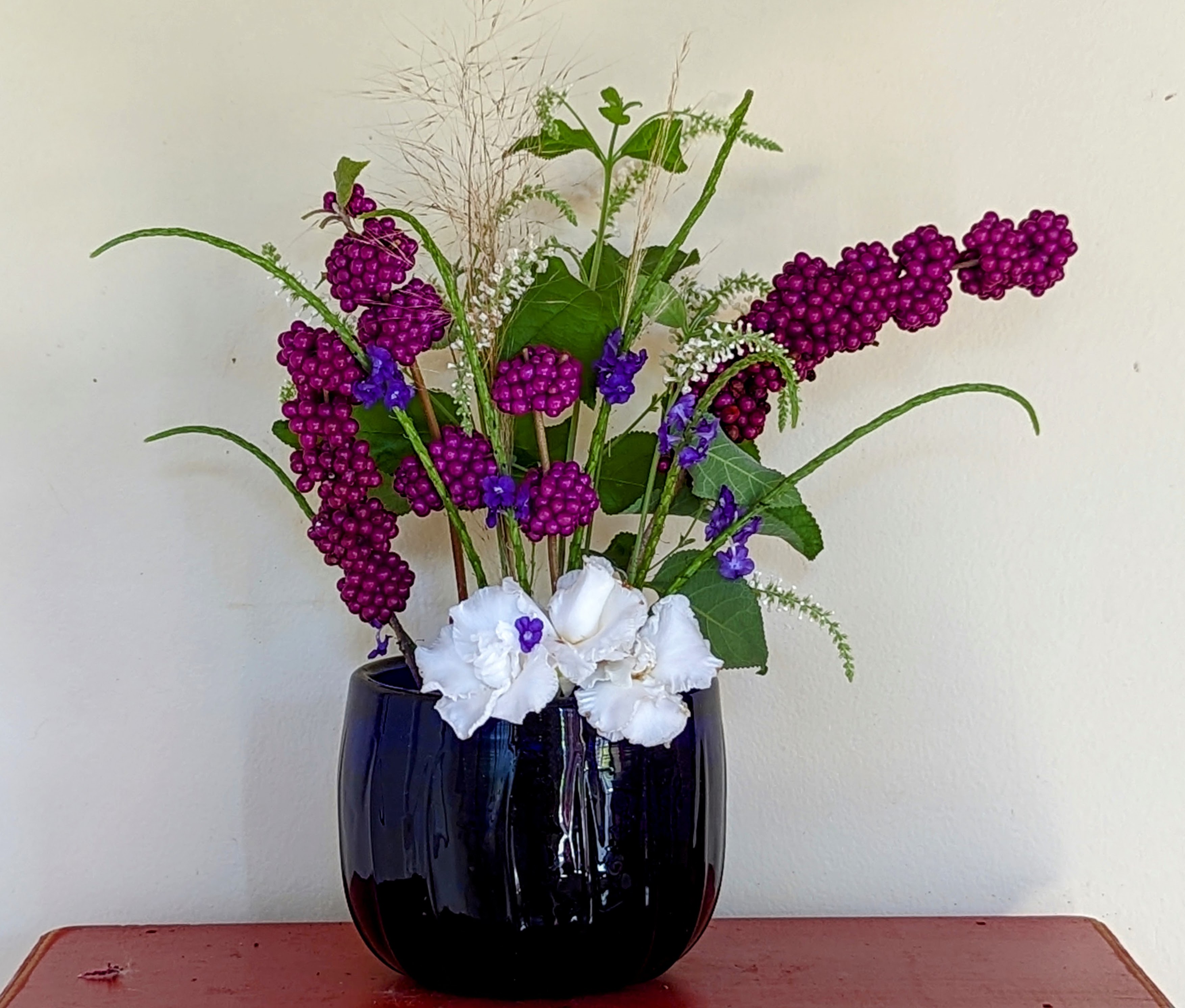
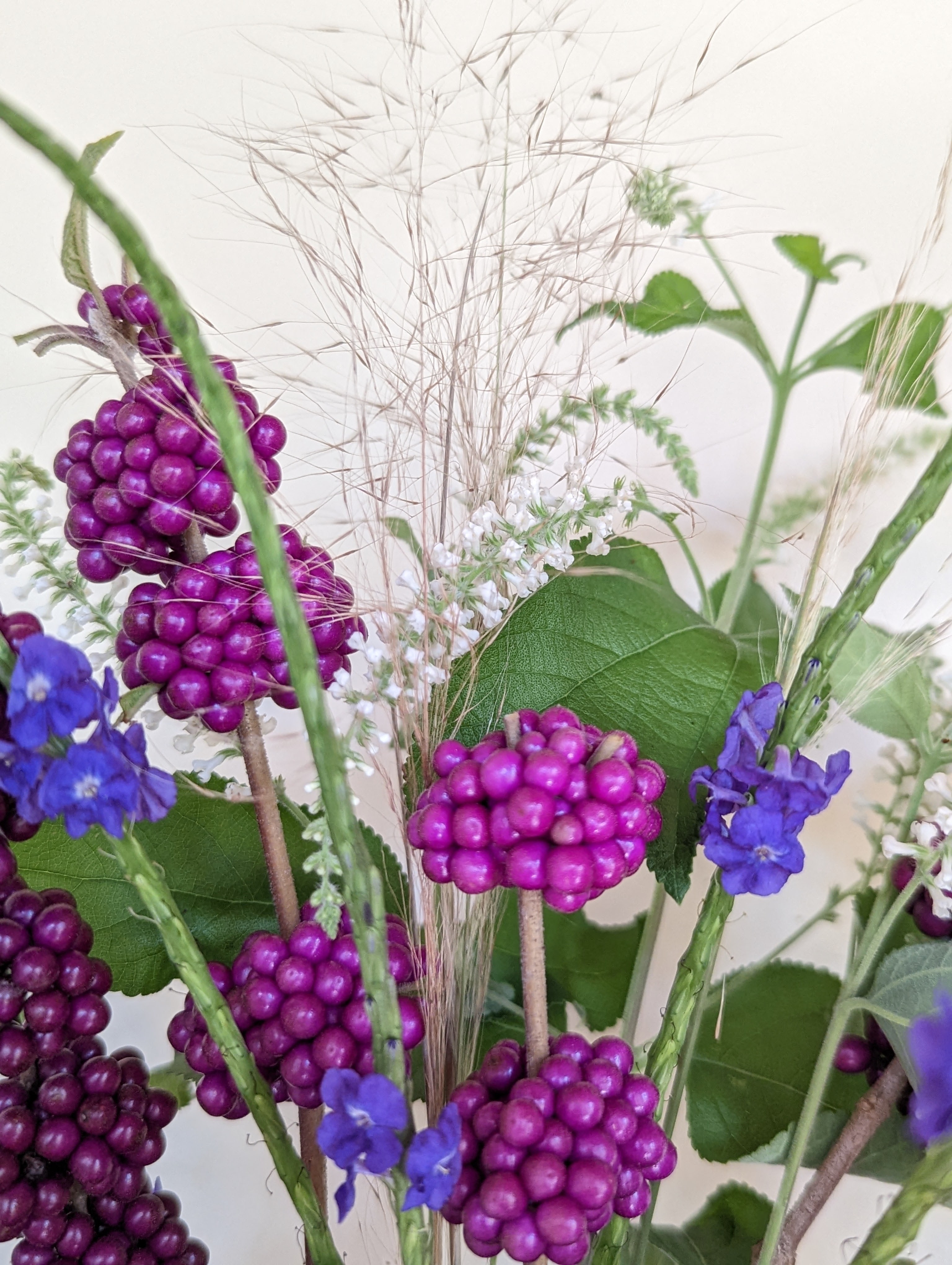
Back to the flowers, this does look a bit like a spaghetti model with the linear stems of the flowers.
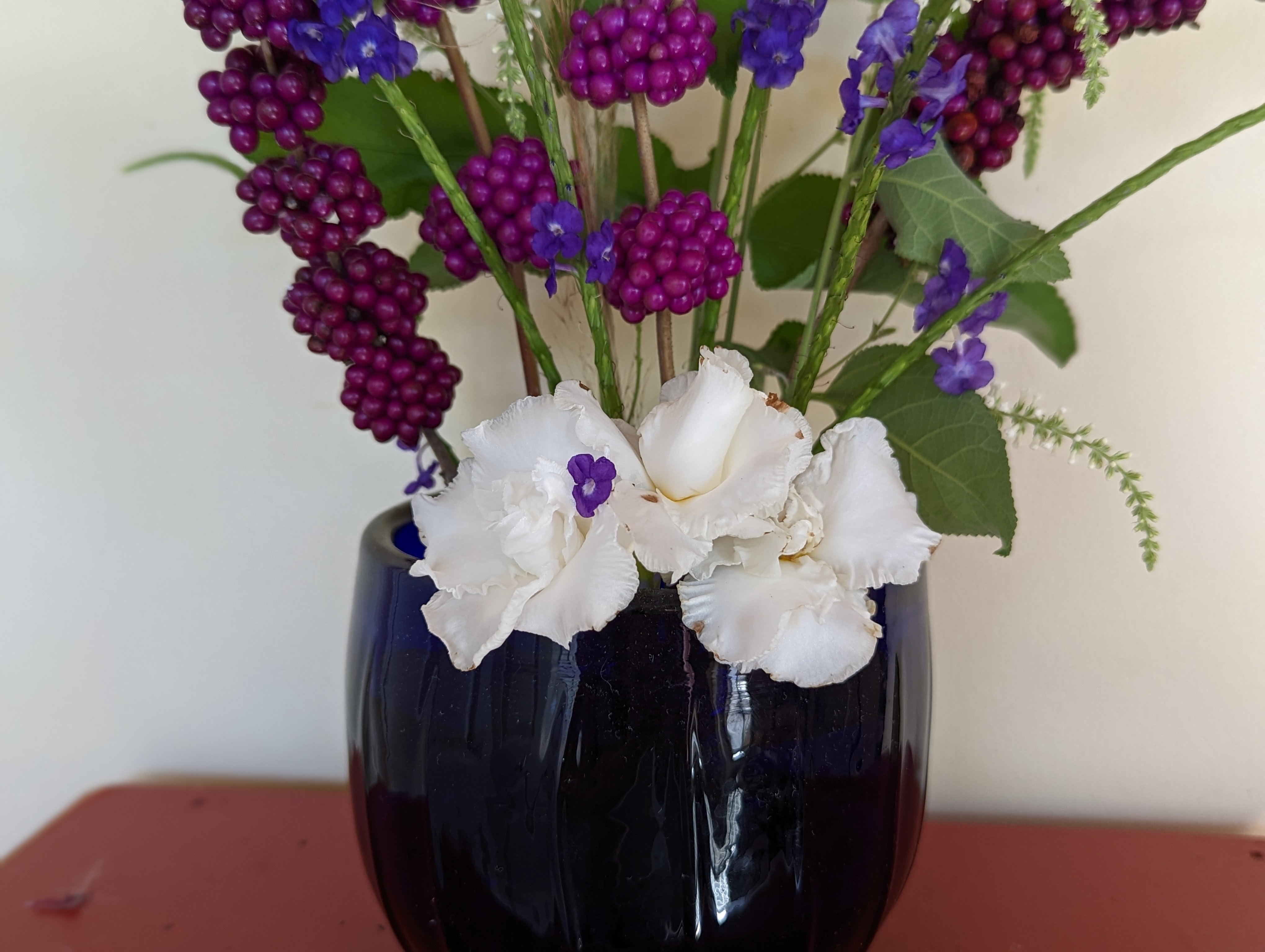
The purple berries are from Beautyberry (Calliocarpa americana); blue flowers are Blue Porterweed (Stachytarpheta jamaicaensis); white flowers are Sweet Almond Bush (Aloysia virgata); and a few sprigs of Muhly Grass (Muhlbergia capillaris) in pale pink.
Late season Tropical Gardenias (Tabernaemontana diviricata) grace the edge of the vase. The cobalt blue vase was a gift from my brother.The Gardenias and Sweet Almond flowers add a nice fragrance to my foyer.
Time will tell which piece of pasta was the path Ian takes. Until then, no garden cleanup will be attempted.














 The Shrub Queen