In a Vase on Monday – Shrimp and Greens

img_20200621_115429

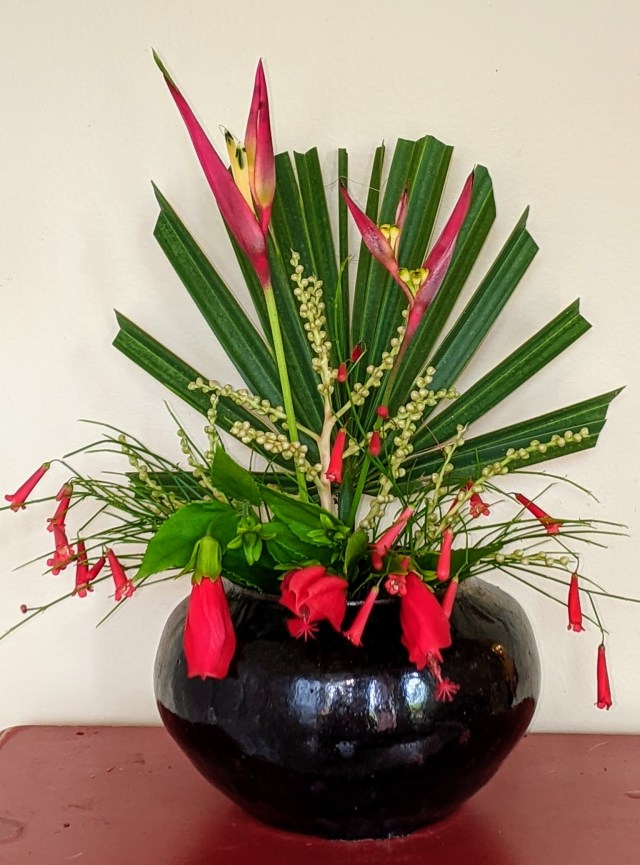
I have learned to love Red Shrimp Plant (Justicia brandegeana) since taking up gardening in South Florida. My neighbor gave me a start of this several years ago and they just keep going – drought, rain, winter, summer – no problem and lots of flowers. The red flowers have been catching my eye since the onslaught of rain in June rejuvenated them.

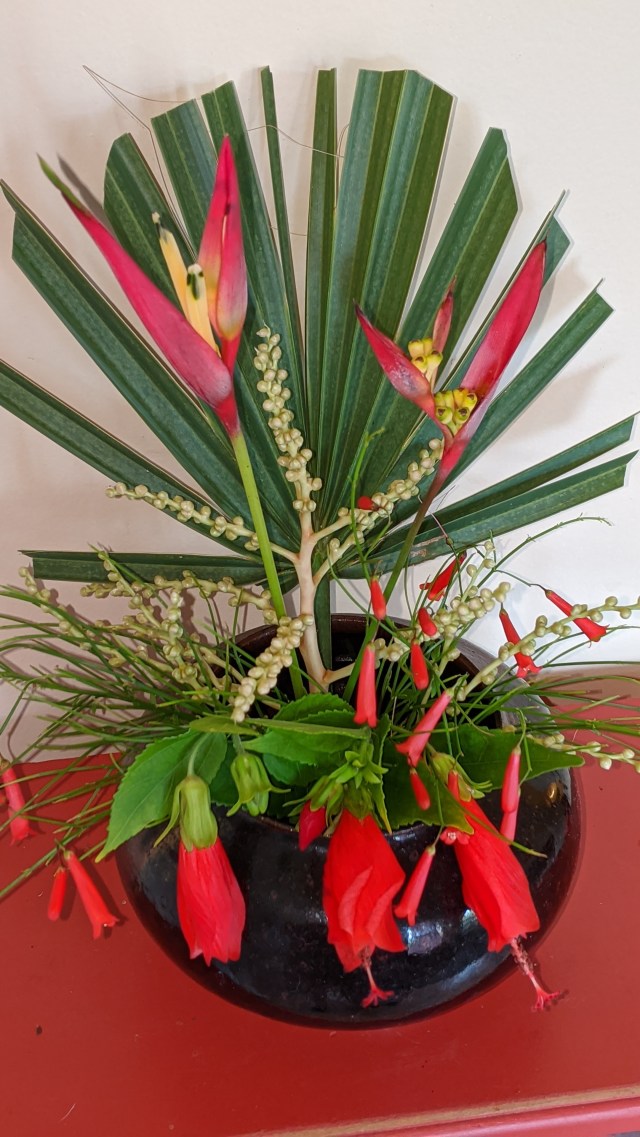
I started with the Red Shrimp plants and just kept adding more and more foliage, then some Bromeliads and Frangipani and then some more foliage..lots of greens in this vase. The Shrimps ended up in a supporting role instead of starring in the vase. Here is a shrimpy close up.

00100lportrait_00100_burst20191013163634634_cover

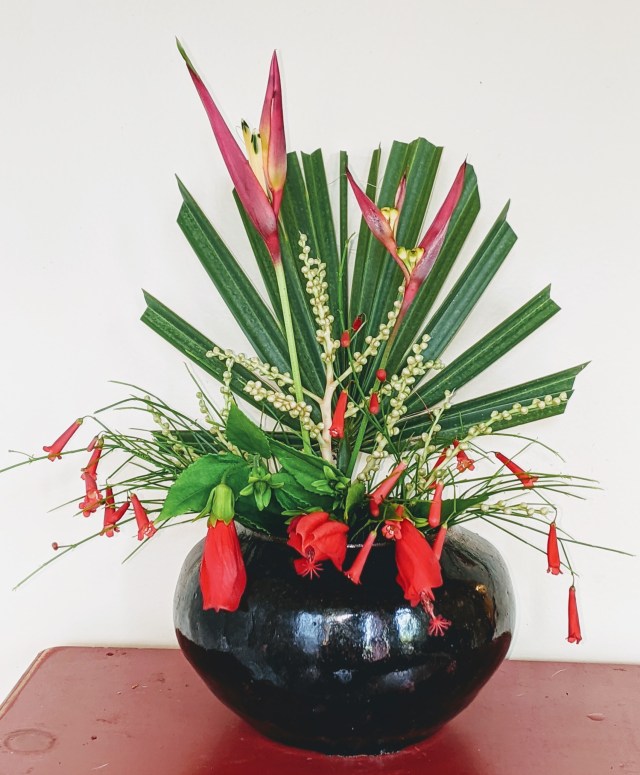
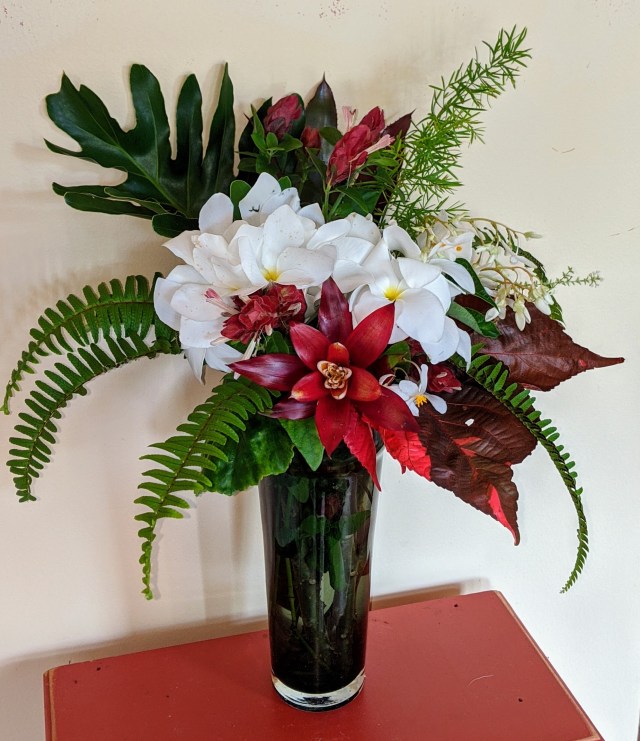
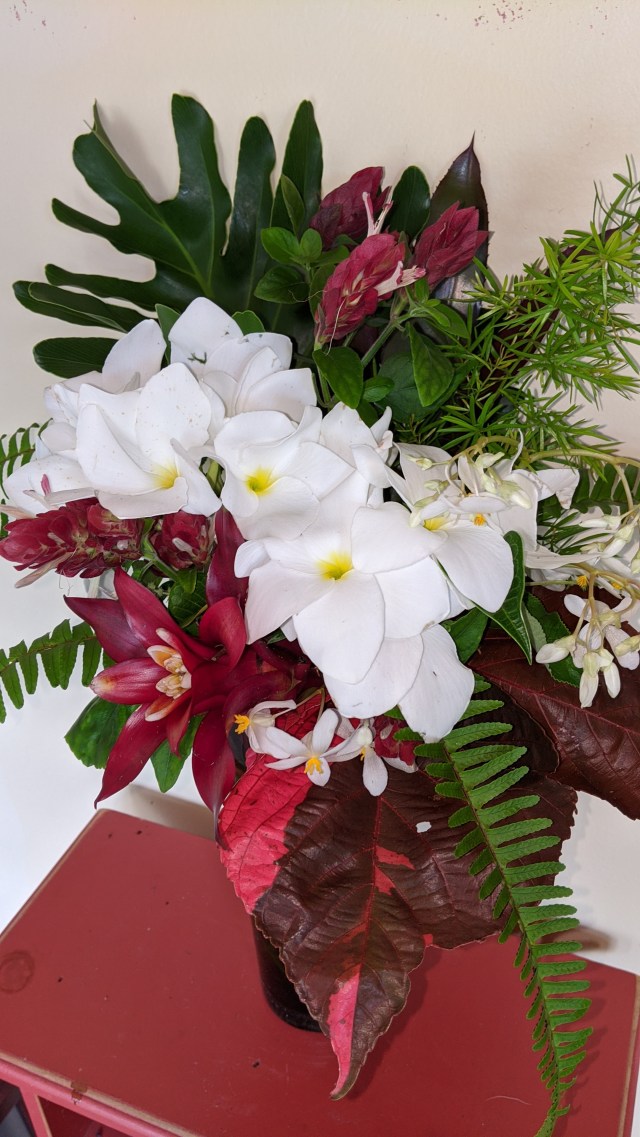
Here is a close up of the arrangement:
img_20200621_115446

The big leaf in the back is from Split Leaf Philodendron (P. selloum); there are a few bits of Burgundy Aechmea Bromeliad leaves in the back and some Red Shrimp Plants. And Asparagus Fern and Asian Sword Fern that appeared gratis in the garden. I am trying to hustle the ferns out of the garden before they take over. The big white flowers are Bridal Bouquet Frangipani (Plumeria pudica); smaller white flowers Sweet Begonias (Begonia odorata); red varigated foliage is from Louisiana Red Copperleaf (Acalphya wilkesiana). More Red Shrimp below the Frangipani and a Red Guzmania Bromeliad flower.

I  have also learned to love Key West Pink Shrimp since moving to South Florida. They are readily available here and I can make myself a very nice meal with about four dollars worth of shrimp. My husband has odd shellfish issues, so I am the sole consumer. Here is my edible version of Shrimp and Greens.

00100lrportrait_00100_burst20200611182549239_cover

Happy Gardening, I hope everyone finds something lovely to go with the greens in the garden. Shrimps or not.

To see more vases from gardens around the world visit Cathy at http://www.ramblinginthegarden.wordpress.com.

Six on Saturday – Good, Bad and Ugly

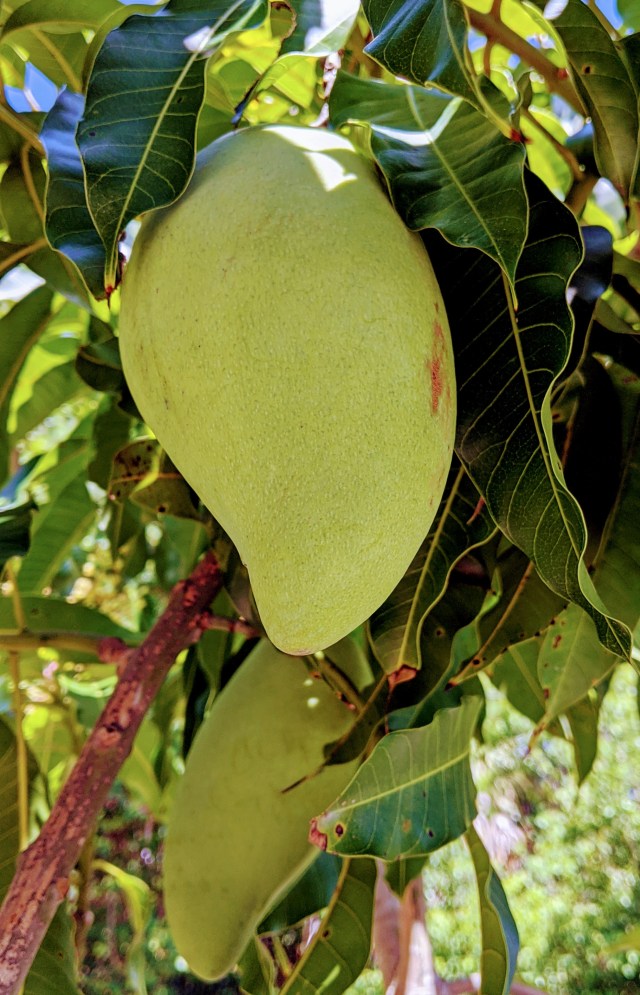
There is more good in the garden than bad or ugly. But there is always some bitter with the sweet, it seems. I will start with the good. With at least 20 inches of rain in June – and more on the way, I am seeing a lot of new growth and weeds! Here is the new growth on my husband’s Glenn Mango. Planted last year in honor of his father, Glenn. New growth on Mangoes is usually bronze, this is different and a pretty red.

00100lrportrait_00100_burst20200619130250553_cover

More new growth and a summer favorite, this is the bud of a Lobsterclaw Heliconia (Heliconia rostrata).

00100lrportrait_00100_burst20200620084122956_cover

A freshly picked Pickering Mango.

img_20200618_162244

Passionfruit ripening on the vine. This plant was misidentified when I bought it..should be an interesting taste test when ripe.

00100lrportrait_00100_burst20200530093458180_cover

Now, the bad. Papayas dropping off the tree due to Papaya Fruitflies, sometimes called Papaya Wasps as they are as big as wasps – they lay their eggs inside the fruit and the larvae hatch inside and eat the Papaya. It is important to get rid of these when they fall as the larvae mature in the ground and eat more Papayas. I seem to get one round of these in the summer. I think the lizard knows what is in there.

00100lrportrait_00100_burst20200620084218274_cover

The ugly, Papaya Fruitfly larvae escaping, I got this one just in time. Yuck.

img_20200617_075857

Happy Gardening, to see more Six on Saturday posts visit The Propagator at http://www.thepropagatorblog.wordpress.com.

In a Vase on Monday – Wedding Bells

img_20200614_110503

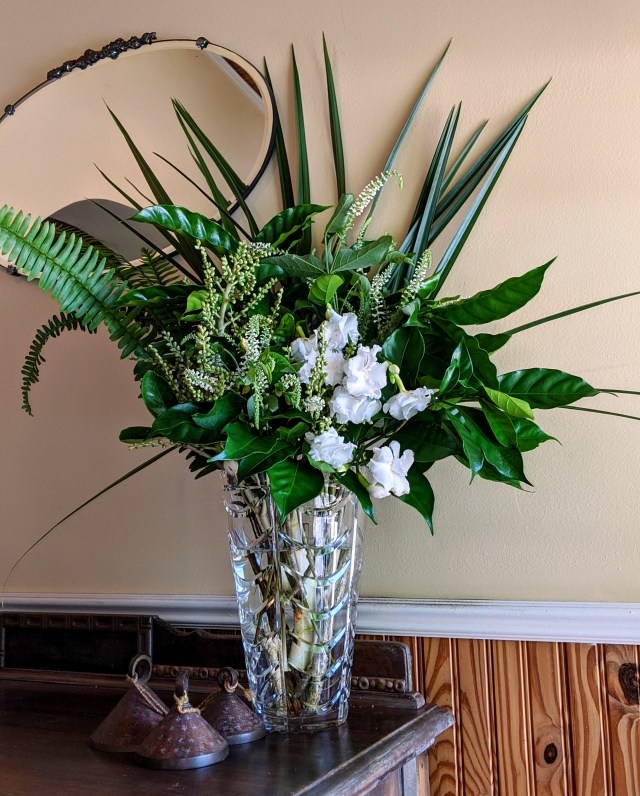
It’s June, the most popular month for weddings in the US. I put together a big vase of fragrant white flowers and greenery, was ready to call it ‘Go Big or Go Home’ – then realized there were bells on the table and the crystal vase was wedding gift from a dear friend that worked with both my husband and me at the architectural firm where we met. The bells, year round residents on the table, are temple bells my father brought back from India after being stationed there during World War II.

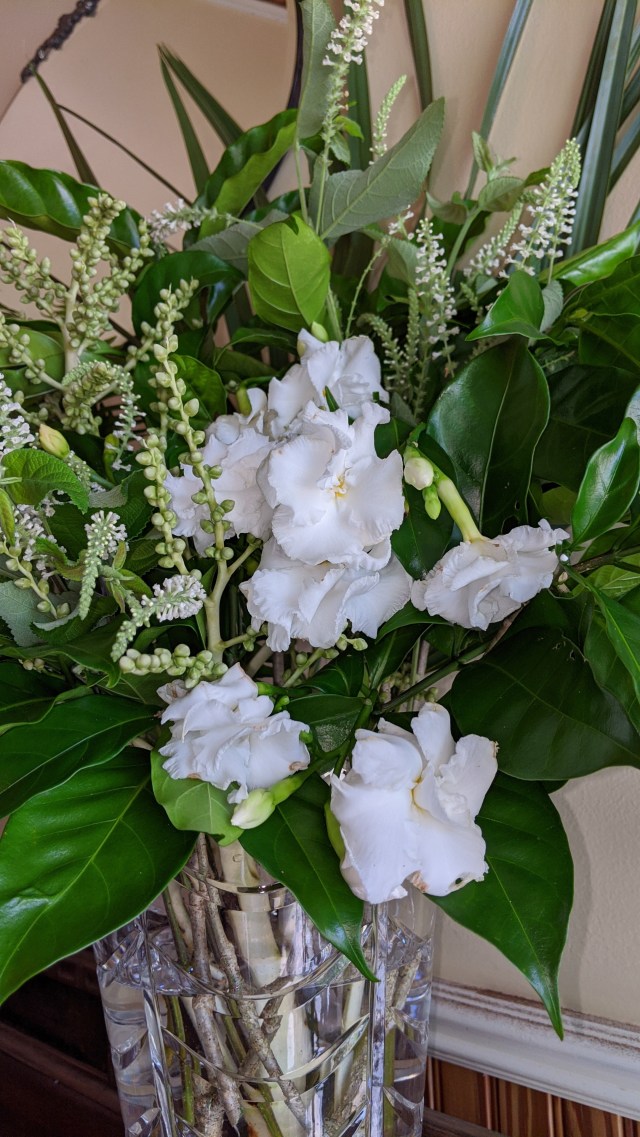
I started to use Bridal Bouquet Frangipani but the stems are too short for this vase. What could be better for a June bride than a big bouquet of Gardenias? A closer view:

img_20200614_110514

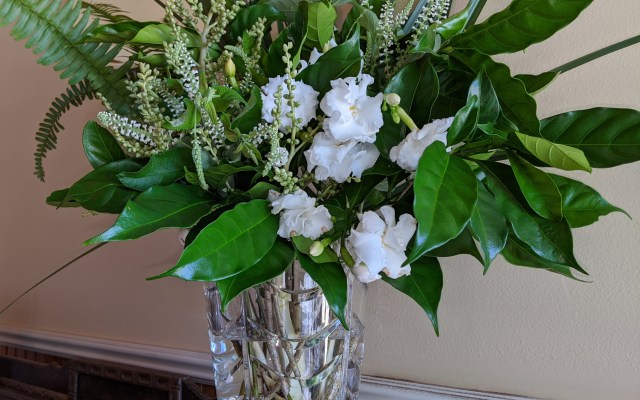
The Gardenias are Tropical Gardenias, sometimes called Florida Gardenias – like the temple bells on my table, these hail from India. Their botanical name is Tabernaemontana divaricata. Adding to the fragrance from the Gardenias, the white spikes are Sweet Almond (Aloysia virgata). A spray of chartreuse flowers from the Adonidia Palm is hiding in the foliage. The rest of the foliage is Asian Sword Ferns and a few errant palm fronds from seedling Sabal Palms (Palmetto sabal).

img_20200614_110029

My foyer smells good enough to hold a very intimate wedding ceremony there. The need for witnesses might present a problem due to spatial constraints.

To see more vases from gardens around the world visit Cathy at http://www.ramblinginthegarden.wordpress.com

Happy Gardening!

Six on Saturday – Fruit Harvest

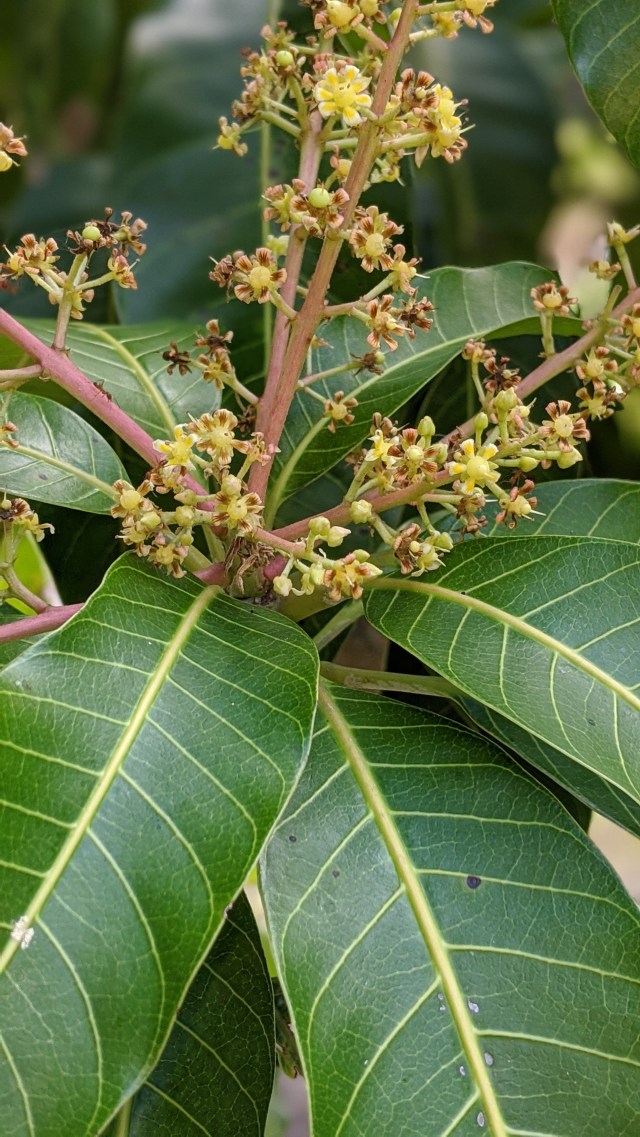
We enjoyed out first Mangoes this week. We had one Pickering and one Nam Doc Mai Mango. Both were divine and worth the wait. The Pickering had a coconut taste and the Nam Doc Mai was sweet as well, without the piney taste I sometimes associate with Mangoes. This is the flower of the Nam Doc Mai.00100lrportrait_00100_burst20200509094313878_cover

Here is the fruit ripening.

img_20200506_111557

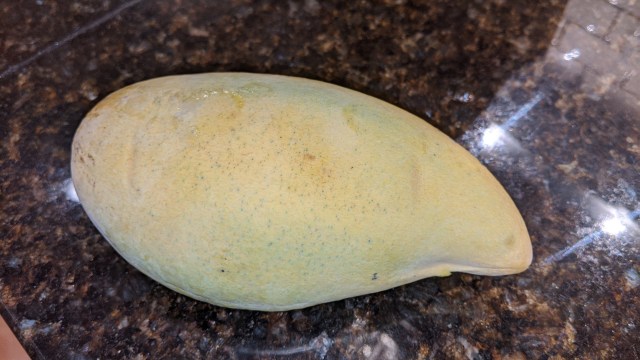
Finally, I had to pick one because the fruit was starting to split from the 20 inch rain deluge. Here it is ripe on the counter.

img_20200612_171529

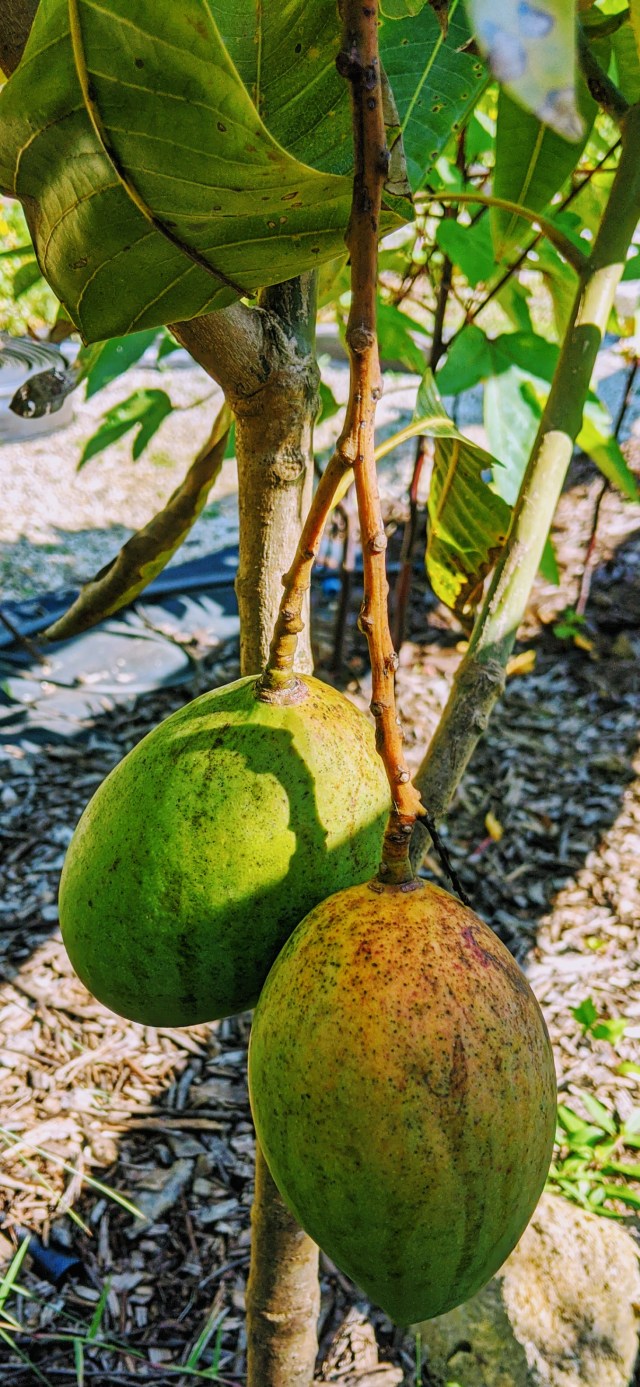
There are still a few Pickering Mangoes ripening on the tree. I picked one and it shriveled a bit on the counter but was still very tasty.

img_20200613_091601

Also waiting on my first pineapple.

00100lrportrait_00100_burst20200610195946490_cover

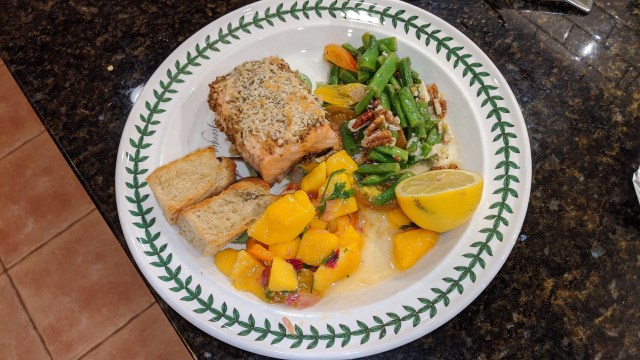
Here is where the Nam Doc Mai ended up. As a side of Mango Salsa with Parmesan Crusted Salmon and Green Bean Salad. The Pickering Mango met a similar fate. I admit to having a considerable sampling of the two Mangoes while my husband wasn’t looking.

img_20200612_185542

Happy Saturday and Happy Gardening. To see more Six on Saturday posts, go and visit The Propagator http://www.thepropagatorblog.wordpress.com.

In a Vase on Monday – Of Cabbages and Parrots

img_20200607_134751

Well, I am not literary enough to chat about the origins Of Cabbages and Kings; though I remember the line. The cabbages in my vase this Monday are in the back of the vase, a dramatically pruned frond from a Cabbage Palm seedling (Palmetto sabal). The seedlings of this palm appear sort of randomly in my garden and grow so slowly they are no cause for alarm, and I occasionally cut one for a vase. I like the graphic backdrop the palm frond provides.

The parrot in the vase is the Parrotflower (Heliconia psittacorum). The tallest flower in yellow and red. The Parrotflower is a small Heliconia, relatively easy to grow here, but it needs a lot of water. I have just transplanted some bits into my (ha) vegetable garden to see if I can grow some for cut flowers as something else usually seems to eat my vegetables. And it is not my husband or the greyhounds. The  culprits, that I am aware of, are rabbits, bobcats, armadillos and more recently iguanas. What’s a girl to do? Plant flowers these things won’t eat, of course.

Here is another view:

img_20200607_134759

And a closer view:

img_20200607_134808

I think the Palm frond and Parrotflowers have been covered. The other flowers are in white, flowers from an Adonidia Palm (Veitchii merrilli); the red ferny flowers are Firecracker Plant (Russelia equisetiformis) – a perennial in South Florida I used as a summer container plant further north. The red flowers at the edge of the vase are from Nodding Hibiscus (Malvaviscus penduliflorus) – so called as it seems not to have the energy  to fully  open.

Feeling a bit that way myself.

Hope everyone is safe and well and please stay in a bit longer…to see more Monday vases please visit our hostess, Cathy, at http://www.ramblinginthegarden.com

Six on Saturday – Shrubbery Lurking

00100lrportrait_00100_burst20200604121654529_cover

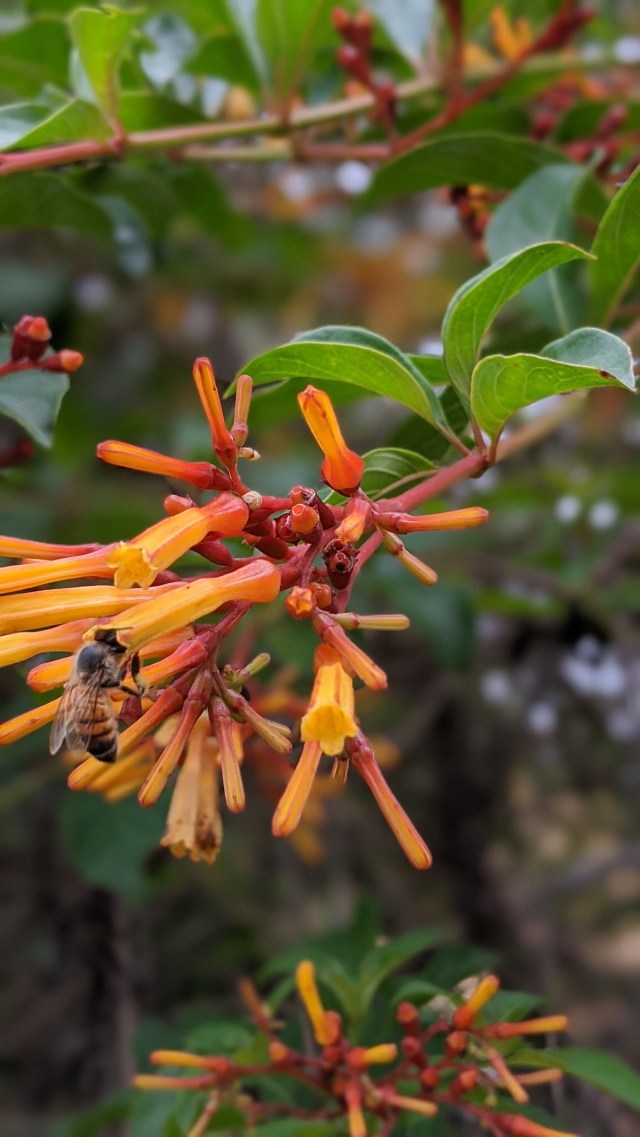
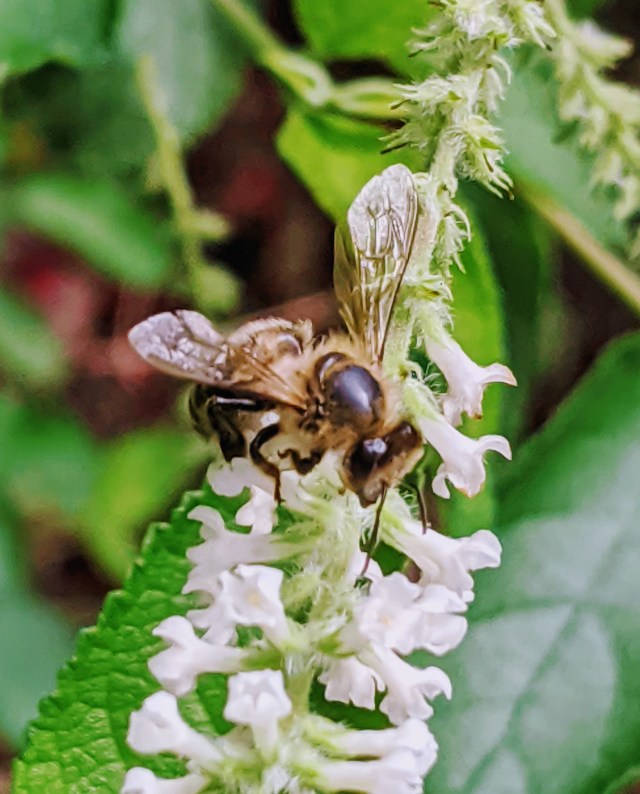
I am taking a native pollinators class online. I completed the bee section and was instructed to take photos of three different bees in my backyard. Little did I know how much time I was going to spend lurking in the shrubbery taking blurry pictures of  bugs. I did find it interesting to see how much was going on in the shrubbery. Above is a honey bee, the only identification I am certain of. The bee is collecting pollen from a Firebush (Hamelia patens)

00100lrportrait_00100_burst20200605103349134_cover

Another  bee, I think it is a Carpenter Bee. Bees, unfortunately are identified by the amount of hair and differences in stripes on their bodies – and most are striped and hairy. This bee is collecting pollen from a Dune Sunflower (Helianthus debilis)

img_20200605_134800

This bee is perhaps a Longhorned bee, because of its long antennae. But, I am not sure. It is however, striped and hairy. Mr. (or Miss) Longhorn here is collecting pollen from a Sweet Almond flower (Aloysia virgata)

00100lrportrait_00100_burst20200605091025315_cover


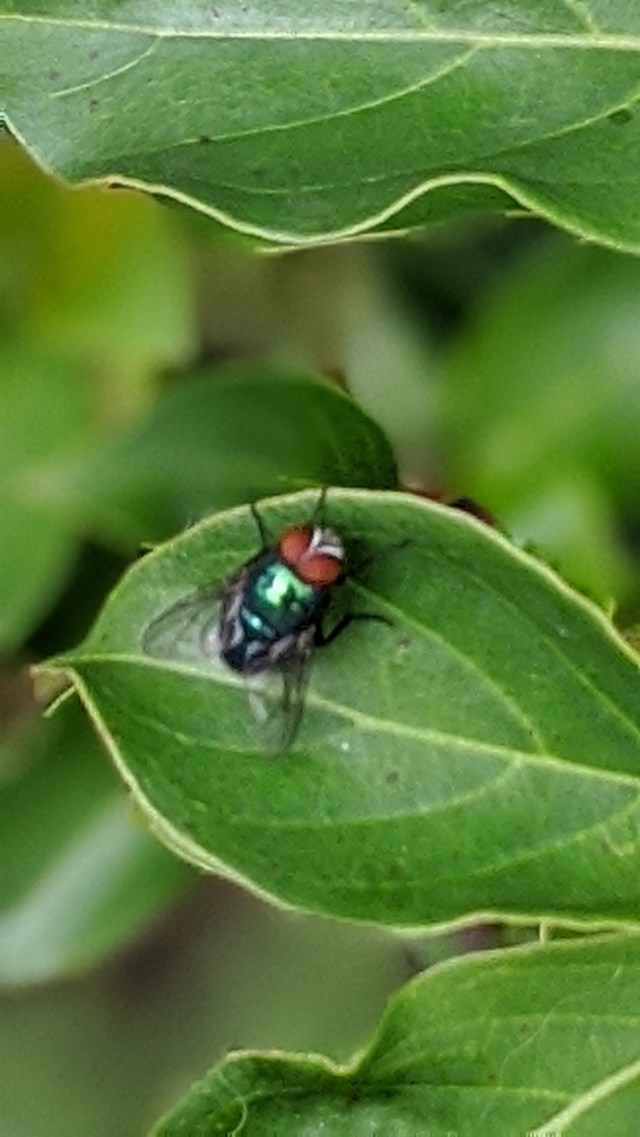
A fly I mistook for a green metallic bee. There are green metallics bees in Florida and they are nearly impossible to photograph.

00100lrportrait_00100_burst20200605104026330_cover

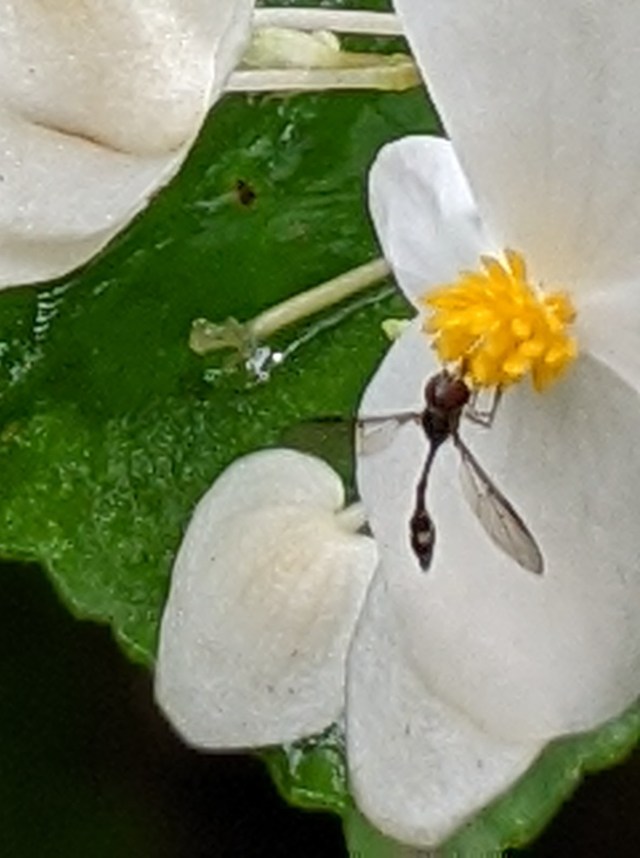
A tiny wasp on a Sweet Begonia flower.

00100lrportrait_00100_burst20200605113320837_cover

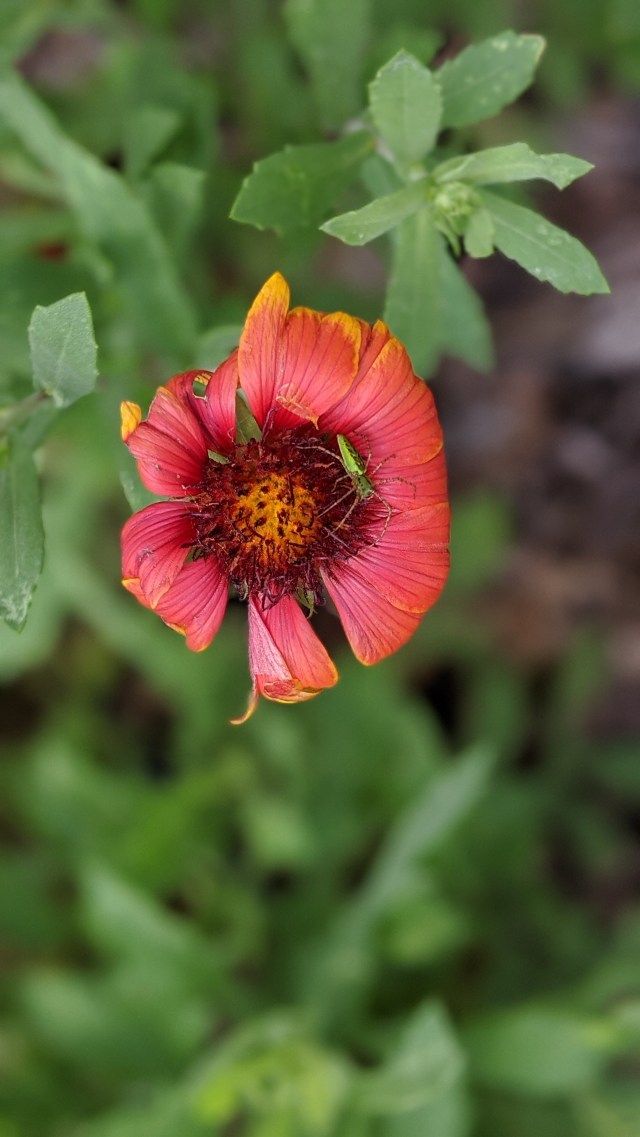
A garden spider waiting on a Gallardia flower for an unsuspecting pollinator.

As for the rest of the garden, we have had 9 inches of rain this week and it is soggy and  green.

To see more Six on Saturday posts, visit http://www.thepropagatorblog.wordpress.com


In a Vase on Monday – Blue Bottles


img_20200531_120351

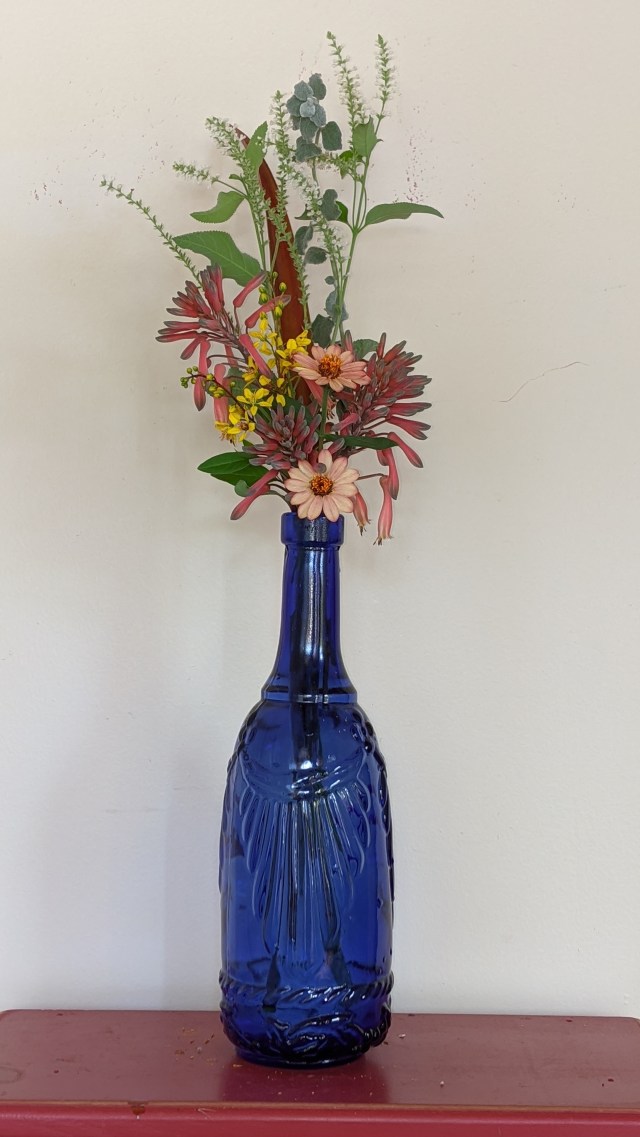
My mother and grandmother both collected blue bottles, a really interesting bottle that wasn’t blue was filled with water and food coloring. The smaller ones went in the  window or on the sill. I have ended up with a few of the bottles. This one belonged to my mother, she would have called it a junk store find. It resided in her kitchen window for a number of years. When used as a vase, it doesn’t hold many flowers. I had to stop cutting because I couldn’t stuff another stem into the bottle. Here is the whole bottle.

img_20200531_120024

The flowers in my blue bottle are: white spikes, Sweet Almond (Aloysia virgata) I am enjoying the marzipan fragrance from these again. Peachy Zinnias, these are grown in Florida and I buy them at Home Depot almost every year, no clue the variety, they survive most of the summer and the butterflies love them. The yellow flowers are Thyrallis (Galphimia gracilis) – this is one of those botanical names not so sure plants. A Florida native now sold as an annual, I think it would be great in containers further north. We have a miniature pineapple leaf in red and some grey foliage from the Licorice Plant that hasn’t succumbed to the heat yet. The coral flowers with the grey tips are from Soap Aloe (Aloe saponaria) my friend Eddie from Landscape school gave me a  cutting several years ago and now I have two masses that swirl across my front walkway, probably a weird use of the plant. Here is one side. These flower on a candelabras three or  four times a year and have sharp, attractive grey foliage year round.


Research tells me shampoo can be made with this plant –  the  big however is, most people are allergic to it. So, I haven’t tried.

Happy gardening, everyone. I am feeling a bad vibe from WordPress with the new editor thing, anyone else? Launching my IAVOM early as tags and categories have disappeared here.

Six on Saturday – Rain Total – 12 inches

00100lrportrait_00100_burst20200530094321800_cover

We had one very stormy day and some tremendous thunderstorms this week. I decided to check our local rainfall totals for the past week – 12.04 inches. Wow. The glut of precipation has refreshed the garden and inspired new growth and flowers.

Above is the Barometer Bush (Luecophyllum frutescens) – supposedly the flowers indicate rain is on the way. Oh, boy.

img_20200530_093159

The White Frangipani (Plumeria) tree has opened its first set of flowers. I am not tall enough to get a good picture.

00100lrportrait_00100_burst20200530092749435_cover

Hawaiian Snow Bush (Breynia nivosa) is putting out new foliage – frosted with ‘snow’. I bought this to replace one of my favorite shrubs I live too far south to grow, Burgundy Loropetalum. It is doing and admirable job so far.

00100lrportrait_00100_burst20200530093342782_cover

A Thyrallis (Galphimia glauca) with its first flower. I very nearly killed this by leaving it in my plant orphanage too long. This is a native shrub, a great pollinator plant and is usually covered in yellow flowers (if you remember to plant it). I was surprised to see this sold as a summer annual in Atlanta.

00100lrportrait_00100_burst20200530093425839_cover

The Sweet Almond Bush (Aloysia virgata) has greened up magnificentally and is filled with fragrant white flowers.

00100lrportrait_00100_burst20200530092408290_cover

Last, but not least, a bounty of Rain Lily (Zephyranthes) flowers followed the rain.

That is my six on this, so far, sunny Saturday. For more posts, go and visit http://www.thepropagatorblog.wordpress.com.

Happy Gardening.

In a Vase on Monday – One Man’s Trash..

img_20200524_111421

The saying goes “One man’s trash is another man’s treasure. My treasures today include several plants that are considered weeds. Nut sedge, the chartreuse flowers at the top right, is a particularly reviled weed. Some call this sand spurs. I have pulled a great deal of it out of my garden and dog paws. I was pulling some yesterday and thought ‘this looks like a Papyrus’ well, for good reason. It is a Cyperus, while Papyrus (Cyperus papyrus) is a wetland sedge. This is a dryland sedge. But a treasure for today only.

The ferns are Asian Sword Ferns, a very pretty weed, great vase filler, and invasive nuisance in Florida. I have been pulling these out after rains all winter. They hang on for dear life when it’s dry and are very difficult to pull out.

The white daisy flower is a Bidens alba, these are a nuisance to me although a great nectaring plant for bees and butterflies. These reseed so prolifically I cut them to stop it. I am pretty certain I will never run out of Bidens. Its common name is Spanish Needles, the seeds are sharp and it is said the early settlers of Florida used them as needles.

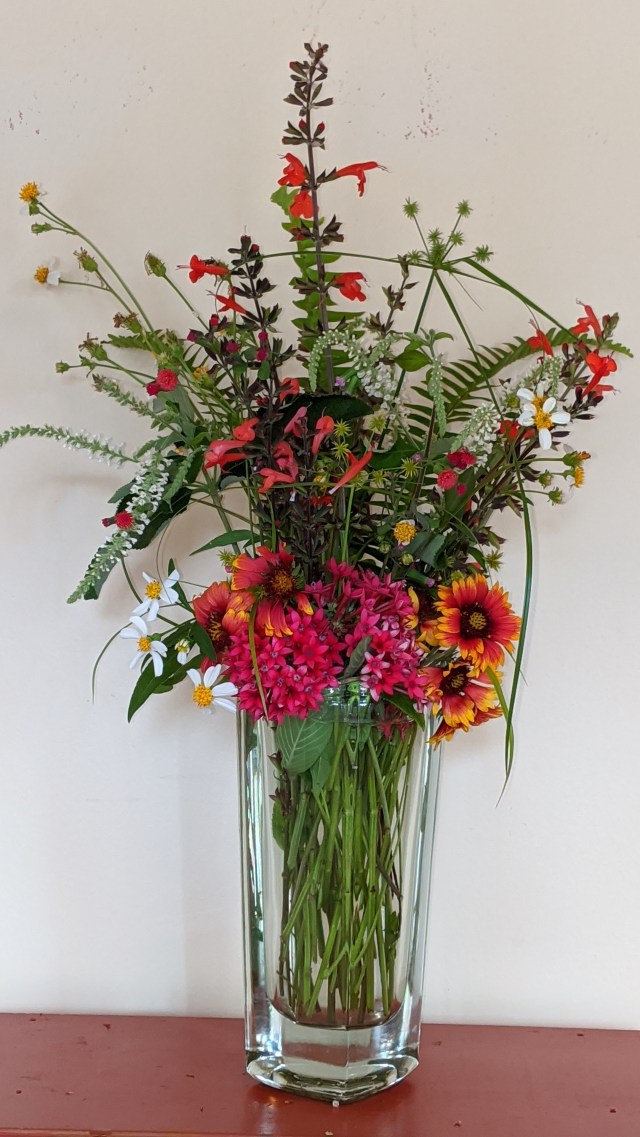
A closer view:

img_20200524_111407

Most of these treasures are excellent nectar producers for pollinators. The hot pink flowers are Heirloom Pentas (Penta lanceolata); yellow and red daisies, Gallardia pulchella; red spikes are Tropical Red Salvia (Salvia coccinea); the white spikes are Sweet Almond (Aloysia virgata). The Sweet Almond has perfumed my hallway with the scent of Marzipan.

Here is a Gulf Frittilary enjoying the nectar of the Heirloom Penta.

img_20200516_093256

Happy Gardening…to see more vases go visit http://www.ramblinginthegarden.wordpress.com.

Six on Saturday – Florida Foliage Fun

00100lrportrait_00100_burst20200523094253016_cover

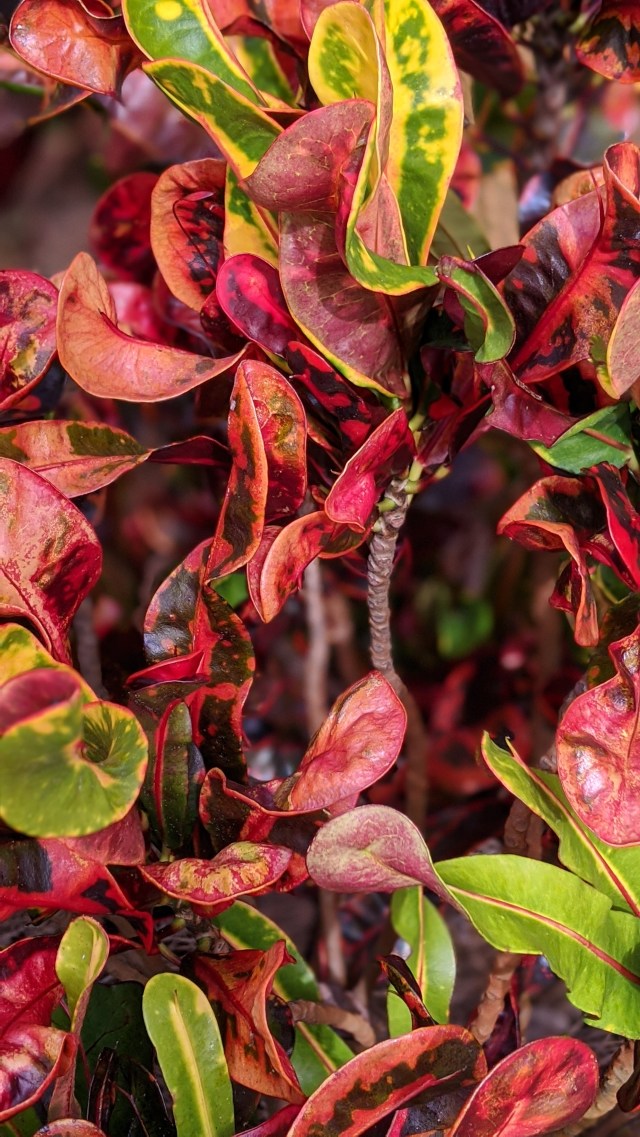
There is some marvelously funky foliage that can be grown in Florida. I have succumbed to more that one plant for its foliage alone. The flowers, for the most part, are less than inspiring. Above is a Mammey Croton (Codieaum varigegatum ‘Mammey’). These are dwarf and grow to about 3 feet. They are a foundation planting next to my peach painted house. It’s  tropical fun.

00100lrportrait_00100_burst20200523093420422_cover

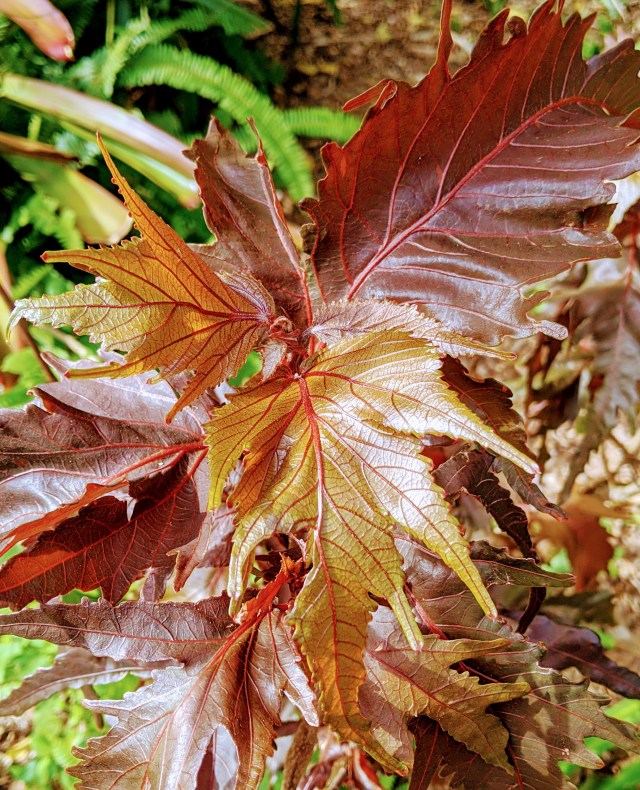
The leaves of a Louisiana Red Copperleaf (Acalphya wilkesiana ‘Louisiana Red’) These are new to my garden, six feet is the mature height, I hope. They are at the back of the butterfly garden.

img_20200523_093506

This is a ‘Raggedy Ann’ Copperleaf, it wasn’t big enough as a mass of color and not being able to find another I put the Louisiana Red beside it. I think this will work out.

img_20200523_094113

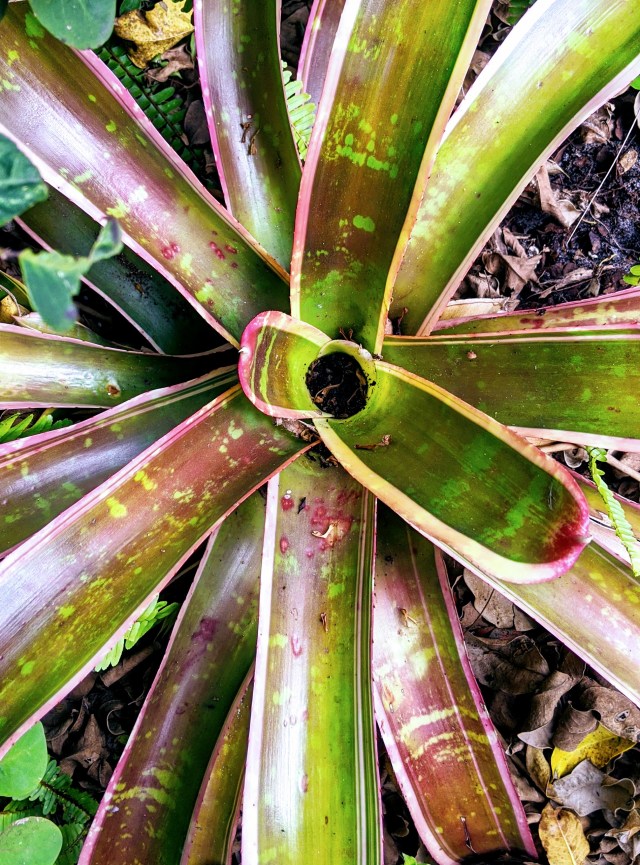
Six on Saturday would not be complete without including a Bromeliad. This is a unnamed Neoregelia I enjoy for its  color and size, it is about 2 feet wide.

00100lrportrait_00100_burst20200523094200216_cover

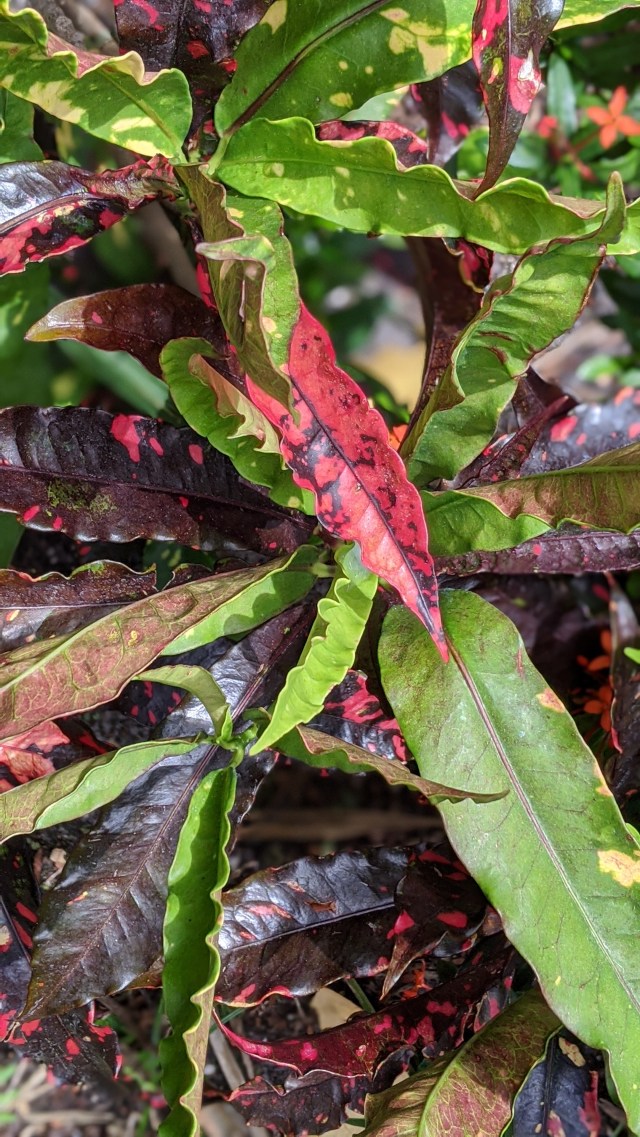
Another Croton, the Piecrust Croton. Planted in honor of my husband, the piemaker. The leaf edges are crimped like a piecrust.

00100lrportrait_00100_burst20200523093332245_cover

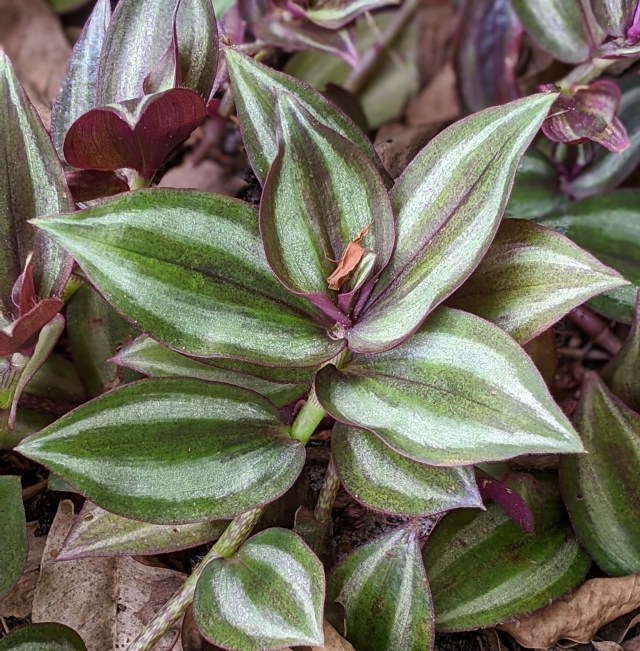
The groundcover in my Rainforest garden is Zebrina Wandering Jew (Transcandentia zebrina) a common interior hanging basket plant. This is nearly indestructible and thrives in sugar sand.

That’s my six for this Saturday. To see more SOS posts from the world over, visit http://www.thepropagatorblog.wordpress.com.
Happy Gardening!!