Yellow Butterfly Ginger – Hedychium flavum

Yellow Butterfly Ginger


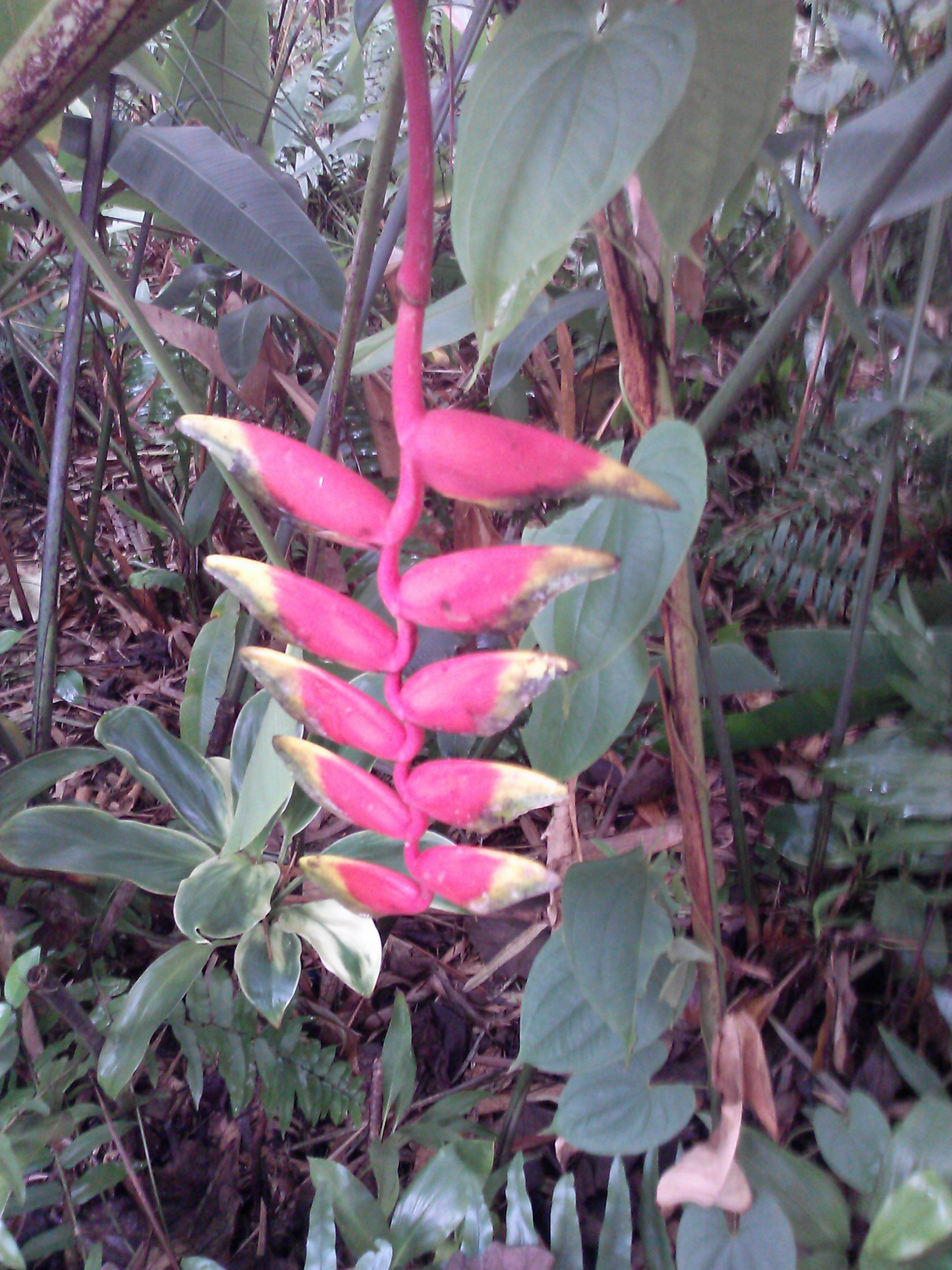
This is the Yellow Butterfly Ginger as opposed to Ginger Lilies or White Butterfly Ginger. I can’t recall exactly where this came from. I had some Ginger Lilies a very old lady gave me in Atlanta, but I was afraid of importing those to South Florida for fear of being overrun. So, I left the Ginger Lilies in my garden in Atlanta, I think the new owner built a pizza oven over top of them. This particular lady who gifted me the Ginger Lilies identified the plant by the fact that the root looked like an old shoe.

Back to Florida, this very fragrant plant started to bloom last week and to me it smells like a really intense Honeysuckle. Very pleasant. I had to search a bit to figure out what Ginger this is exactly. I finally decided it was Hedychium flavum based on the identifying feature of hairy leaves and yellow flowers. The flowers start out white with yellow centers, then the whole flower turns creamy yellow by the end of the day. I hadn’t realized the leaves were hairy until now.

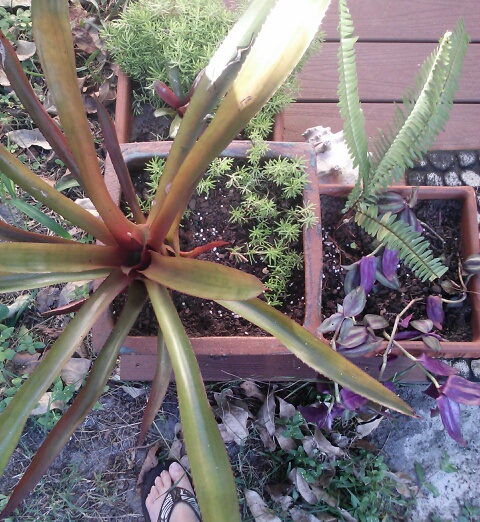
The plant is about 4-5 feet tall and lives in the shade of a good sized Banyan Tree. Almost everything I have read about these says they require a moist site. I live on a gigantic sand dune so there is no really moist area here, this is the closest thing we have to moist and it is working fine so far. The Ginger has been in the garden for about a year and has probably doubled in size and was evergreen through the winter. The foliage is kind of grassy and makes a nice backdrop for Bromeliads or Ferns. The roots look like reddish culinary ginger, but I have not had the occasion to eat any – they do not remind me of old shoes at all.

Culinary Ginger is a Zingiber as opposed to a Hedychium. This can be grown from roots bought from the grocery store.  I have tried this and ended up with a plant about 18″ tall and enough ginger for my husband to use in a Pumpkin Pie. While I am a devoted herb grower, I find buying ginger at the grocery store is best.

Florida Gardenia – Tabernae montana divaricata

Florida Gardenia

Florida Gardenia

This is the first pleasant fragrance I noted after buying our house in South Florida. The existing landscape (I use that term very loosely) would (and had) sent most people running screaming from our neighborhood. The house had been vacant for 6 or 8 months and I doubt anyone had been in the backyard for several years.

The side and rear property lines were overrun with Brazilian Pepper. For you non-Floridians, this is the weed tree, the bane of South Florida. Cheerfully imported by someone who did not realize they had opened Pandora’s Box. This plant can grow 10 feet in a year and overruns nearly anything in its path.

One very late night I was in the back yard with my ancient greyhound and noticed a delightful smell. I knew it wasn’t the dog so I decided to investigate the next day. I found a plant that looked like a Gardenia with the foliage Xerox enlarged and the white flowers reduced in size a bit and in groups. Very nice dark foliage with a coarse texture and a very nice fragrance, especially at night. 

We have managed to get rid of most of the Pepper trees and I cut the Florida Gardenia back pretty hard after I unearthed it from the Pepper. It is (I think) going to be a 8 or so foot tall tree form shrub. 

It turns out this is not really a Gardenia at all but a member of the Dogbane family from India and a relative of Frangipani. True Gardenias are members of the Coffee family and relatives of the native Wild Coffee in Florida. More fun facts to know and tell.

Having suffered alongside Gardenias and Dwarf Gardenias in my garden in Atlanta, Death and puniness by cold, fungus, mold, flies and sheer perversity. I am doubtful I would have planted any on the Treasure Coast. Given the area this shrub is growing in (no irrigation and overrun with Pepper) and all I have done is cut this back; I am thinking this is a pretty tough shrub; I have decided to work on the pruning a bit, maybe feed it and see what happens

Miniata Bromeliad-Aechmea miniata

Miniata Bromeliad flowers

Flowers

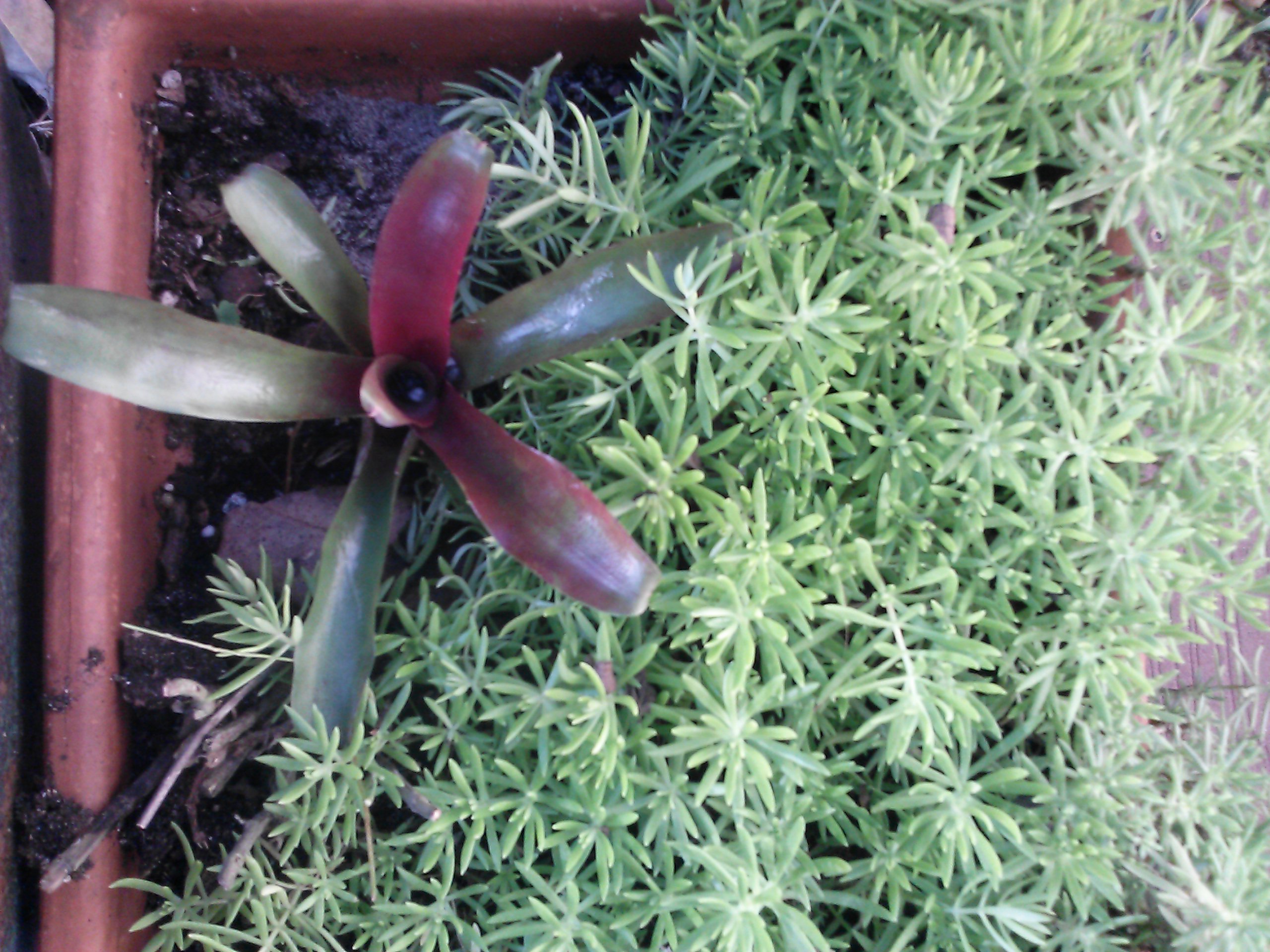
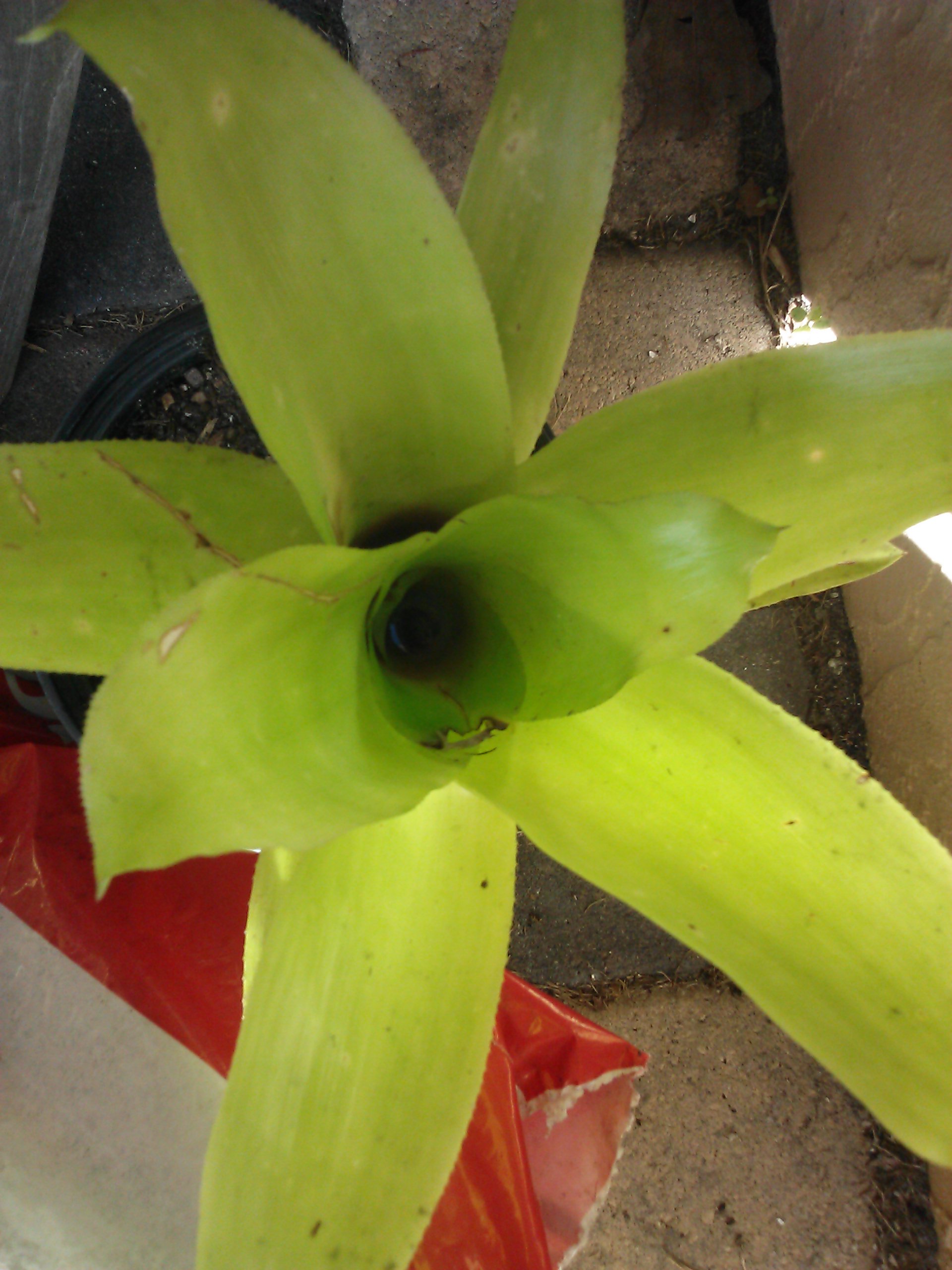
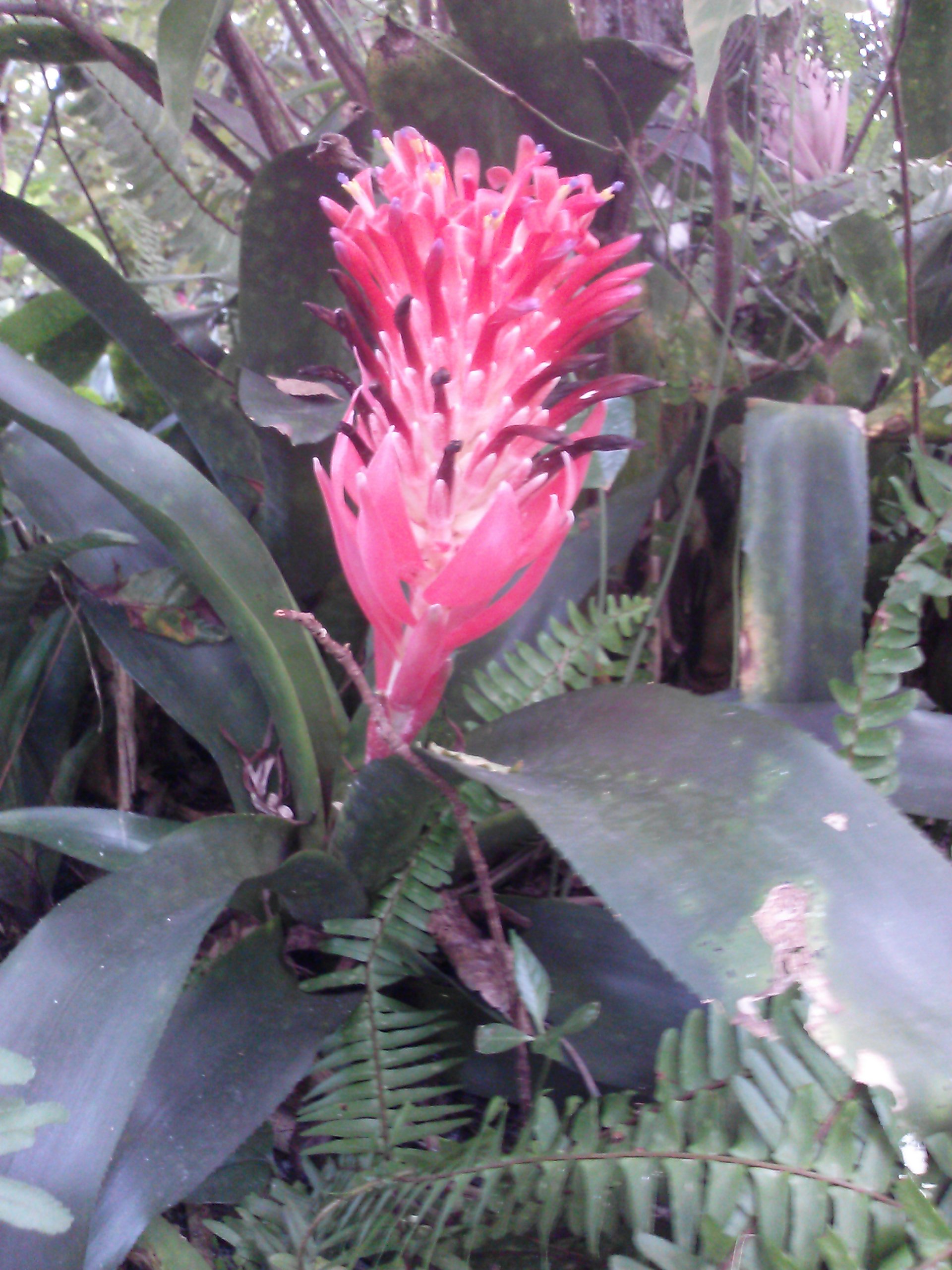
These are currently blooming in my garden and have been for a week or so. The flowers look a bit like a panicle of red hots with a few touches of periwinkle blue. In the realm of Bromeliads, these are terrestrial, which means they root in the soil, and they have tanks, botanically speaking, the leaves form a rosette creating a reservoir in the center of the plant that holds water and traps various insects and debris feeding the bromeliad. The image below is looking down into the tank. The foliage has a nice grey green variation and is attractive year round.

 Foliage and Tank

The tanks are a bit of a maintenance chore sometimes because they trap more junk than you would think. I have some tongs to fish debris out and then I usually put some BT granules in to discourage any mosquitoes from hatching out.

The plant itself ends up about 18 x 18″ , so it is a nice size for addition to a shady perennial bed. These have reliably reproduced one or two pups per year, so not really invasive, but they are living among friends now.

Happy Fourth of July


Happy Fourth from my garden in South Florida!

These plants are currently blooming in my garden:

Miniata Bromeliad

Miniata Bromeliad

The red is a Miniata Bromeliad-Aechmea miniata, this bromeliad is reported to bloom at any time of the year, in my garden it blooms in summer. A reliable perennial south of Orlando, the backs of the leaves are grey mottled and shiny green on top. Foliage is not too sharp for a bromeliad and they seem to double in quantity every year.

Bridal Bouquet Plumeria

Bridal Bouquet Plumeria

The white is Bridal Bouquet Plumeria-Plumeria pudica. An evergreen Plumeria that is not fragrant but flowers on and off through the rainy season. The name is apt, it would make a nice bridal bouquet.

Blue Plumbago

Blue Plumbago

The blue is Plumbago – Plumbago auriculata. I think of this as the Mophead Hydrangea of the tropics. Reliable blue flowers primarily in the rainy season this is sort of a creeping shrub. And sort of indestructible, a good thing.

I hadn’t considered a patriotic planting for the Fourth, but I got one.

The Dreaded Lubber Grasshopper


Lubber on a Cross Tie

Lubber on a Cross Tie


Here is another joy of living on the peninsula known as Florida. The Lubber Grasshoppers. The first one of these I saw was another one of those “What the hell is that?” moments. Grasshoppers, in my experience were about maybe 3″ long. These things are biblical plague sized and seemingly armored with orange and yellow warpaint as well. Scary looking and they can eat an astonishing number of holes in your favorite plants to boot.

Eventually, even if you hate to, you will squish these things. I was walking my spotted hound, Charles, the other night and one of my neighbors was throwing things in the shrubbery whilst loudly apologizing to God. I knew what she was doing immediately. Squashing Lubbers, the crunch gives it away. Another neighbor’s theory is that karma gets you instantly when you squish one of the grasshoppers because of the smell they exude when crushed.

My curiosity aroused, I checked into this. It seems Lubbers have a gland that exudes a toxin that is poisonous to most things that might eat them. One bird, a Loggerhead Shrike, bites their heads off, (the poison is in the middle) impales them on something thorny or a fence, lets the poison dry out and then eats the grasshopper. This explained the decapitated grasshopper I found in my Pygmy Date Palm. Unfortunately, the bird never came back to finish his or her lunch.

To the misfortune of my Heliconias the Lubbers have found them apparently Heliconia leaves are a gourmet treat. When I first read about these bugs it was recommended to drown them in a bucket of soapy water. I tried that, but it seemed unnecessarily cruel and I ended up with a bucket of dead, soapy grasshoppers that I had to figure out what to do with. Ugh. A better solution is an old pair of tongs, crunch and throw them in the bushes. Maybe a Shrike will find them.


My Girl


CAM00256

This is My Girl
This is my girl Greyhound, her name (her actual racing name) is My Girl. She is thirteen years old. Really old for a big dog and Greyhounds in general, she has been with us for years. I am very attached to her. We tried to rename her Faye when we first got her, but she wasn’t having any of that. So, My Girl she has remained.

When I refer to her as my girl greyhound, people get pissy and say “what’s her name, doesn’t she have a name?”

I think this is because our other dog is Charles and is male. My Girl is simply that and she always has been.

She is sitting with her food bowl in the picture because she has taken to eating, lying down, which, really at 80 or 85 dog years who could blame her for wanting to lie down while eating.

Another side effect of a dog of advanced years is needing to go out in the middle of the night. I give her credit for waking me to let her out, but I am not at my conscious best at 3 or 4 a.m.

Hence, the following picture of my foot:

Totaled Toenail

Totaled Toenail

I found out the hard way running into a concrete block wall at 3 a.m. will destroy your toenail.
Eventually my toenail turned black, rolled over at a 90 degree angle, then got infected and had to be removed. Surgically.

Oh, well. My Girl is keeping me company as I sit to prop my foot up. The doctor said it wouldn’t hurt..he left out the part about wearing shoes or putting weight on it. As long as you don’t wear shoes or stand up it feels fine.

American Rustic

Extreme Low Maintenance Container  Soap Aloe and Sedum

Extreme Low Maintenance Container
Soap Aloe and Sedum

Is there a new style of gardening emerging in America?

I think so.

Based on what we have learned over the past forty years, our style and outlook on gardening are changing.

During the 1970’s, Oehme van Sweden, Landscape Architects in Washington, D.C. pioneered ‘The New American Garden’. Their gardens featured perennial grasses in large sweeps and largely ignored lawns. These guys were the original purveyors of the Miscanthus craze that continues to this day. I had Miscanthus strictus in my yard for about three years, as a striking accent plant it worked until it got big and flopped over; this grass once flopped was 10 feet around and not very striking. Unlike my southern mother, I am not a plant staker. Plants have to stand on their own in my garden or they asked to leave. Unceremoniously.

The term Xeriscaping was coined in the early 1980’s by a guy in Colorado. Since then the idea has caught on and is utilized in the United States and around the world. Permaculture is an Australian idea that expands and encourages permanent culture of the earth in the most sustainable ways. Basically the idea of Xeriscape is grouping plants by their watering and maintenance needs and only watering when necessary instead of just dousing everything. In permaculture the further away from the house you get, the less intensive the maintenance of the landscape. Intensively planted vegetable gardens near the house that fade away into the forest zone by zone. Of course, this is an oversimplification of both concepts.

While I appreciate the validity of both schools of thought, the difficulty begins with the fact that all this has to be figured out, zoned, designed and then implemented. I have yet to meet anyone who paid me to do a Master Landscape Plan for their house that did not change their mind about something.  Usually a significant something. Rare is the person who can make a plan, zone everything for water and maintenance and stick with the program. I certainly can’t. The older I get , the more I enjoy hardscape.

People seem to enjoy taking small bites of sustainability. A Rain Garden in a low spot in the yard. Using pervious gravel or mulch for pathways. Planting native plant material. Cutting out toxic pesticides and herbicides.

I have read of eco lawns becoming popular in the Western United States. This intrigued me until I saw what it was. More of the Wildflower Meadow romanticism that has been floating around for 30 years. I think Old fields look great weeds and all. However, I don’t want one in front of my house. I suspect the majority of gardeners like to have some lawn. I have a lawn, purposely sited over the septic tank. It does so well, we are afraid to fertilize it. It might overrun the house late at night.

Now there is talk of what is the Modern Garden. I am not sure Modern is the right word. Modern coming after New. It is all the same. Soon it will be the updated Modern Garden. All I (we?) really want is something we can plant and enjoy that is not too much work or a waste of resources! It seems like such a simple idea ? Here are some ideas to reach this goal:

Plant reliable, drought tolerant, non invasive perennials. In small doses.

Focus on natives with a soft lens. Some are great. Some are weeds. Do some research; plant the good ones.

Quit using Glyphosphate and anything with Atrazine in it. It is already in our groundwater and nobody knows how long it takes for the earth to metabolize it. Stop adding it. Non toxic weed killers and pesticides work. If you have a few bugs or weeds – get over it.

Support your local gardening community by planting seasonal containers, they are different everywhere. A pop of color near your favorite walkway is a pick me up every time you pass by. I like succulents for the summer.  My size limit is a 15″ wide container, if it is smaller, it takes too much maintenance, (watering). Buy a big pot, go to the local nursery, buy some flowers and hope for good advice. Embrace local..add some tropicals in the summer. Floridian growers need support too.

Use the most drought tolerant turfgrass possible. If it turns brown in winter, so be it. If there are a few weeds in it, so be it. The Golden Bear does not live at my house, I think he is retired..

I think people get overexcited about irrigation. I have never had separate zones because I am really frugal with water. The lawn has to need it badly before the water comes on, if I have a new  tree it gets a gator bag (this is a bag that can be filled with water, the water slowly leaks out onto the tree providing a few days worth of water). Irrigation does not abdicate anyone of the responsibility of paying attention. It will not establish anything but turf unless everything is wastefully watered.

I think the New Modern American Gardening Style is Rustic. The Rustic Style includes: Being mindful of water and its use, ceasing the use of toxic chemicals, a little brown and a few weeds are OK. Always have a nice container planting where it will be enjoyed. Add hardscape where you would like to hang out and relax, it is really less maintenance.

I think it was the Landscape Architect Dan Franklin, who said: “You should be able to take care of your garden in the time it takes to drink a cup of coffee in the morning or a glass of wine in the evening” I am striving for that.


Rain Lilies – Zephyranthes rosea

Rain Lilies

Rain Lilies


It rained here on Sunday. An inch or so. This morning I walked out in my front yard to find these blooming for the second time in a month. Rain Lilies, I had these in my garden in Atlanta and they bloomed maybe every five years. It was a real event. And actually a different kind of Rain Lily.

After a bit of research I find there are many kinds of Zephyranthes, 71 according to Wikipedia. I believe these are the rosea variety. Well, they are pink..I bought them at a garage sale nearby, so they could really be from anywhere. The native species in Florida is the Atamasco Lily; this lily has white flowers and occurs in low, swampy areas. As I live on a gigantic sand dune I don’t think I will be seeing any of those around here.

The latin for these plants is Zephyranthes, named after the Greek God of the West Wind. Interesting considering the rain is what makes them bloom.

These are about 12 inches tall and have grass like (really strap like) foliage my husband mistakenly weed whacked. After that it rained and they started blooming. This is my kind of a plant. Takes a licking and pops up with flowers. They will reseed in the garden but so far it has not been a problem but a nice surprise.

Male Dog Syndrome

The first person who coined the term, male dog syndrome, was, in fact a landscape architect, a guy! I worked with who  had a similar sense of humor; he had worked for big and famous firms in the 80’s and had, unfortunately, been laid off multiple times. During the course of all these so called design projects  as a junior staffer he experienced the marking behavior. Oddly enough, this guy has been really successful in his own right and is probably peeing on bushes in the Western United States as we speak.

As a dedicated Greyhound fan, I usually have a couple of dogs around. Dogs do some weird things that would not have occurred to me prior to having dogs. Many of these peculiarities are urinary based.

My first Greyhound, Butler, was a male dog and having worked with men primarily for years in design and construction I was aware of “male dog syndrome” In life and business the last male to pee on the bush is King. And all the princes must pee on it as well. After twenty or thirty years, this gets tiresome in all respects; perhaps not to the men. I feel that, for men this is probably a lifetime dilemma. Even  Gen X and Millenial men must do this. I will have to say this slays me as it is totally counterproductive.  And then there is the ‘measuring’..

At least dogs don’t do that. On the other hand, it could be related.

One cold winter night around 2 am, Butler came into the bedroom, whining a bit and woke me up. I thought “Oh, he will be OK for a while he just went out” He came back in a bit later and proceeded to pee all over the foot of the bed and carpet. Oops, of course, I should have gotten up and let him out, but it was Thanksgiving, my parent’s fiftieth wedding anniversary and we were having 15 or 20 people over for dinner shortly.  I had been trying to live up to my southern cooking heritage all day and was exhausted. Thank God for the enzymatic carpet cleaner.

In the garden Butler had issues with anything Juniper scented. I suppose it it fortunate I detest Gin. My favorite Landscape Contractor had been singing the praises of Hinoki Cypress shrubs for years, so I decided to buck up and buy a big one as they are sort of slow growing. I am usually frugal in the purchase of plant material because, well, sometimes I forget about water and stuff. And I must always cope with my cheap Scotch heritage. This time I paid $150.00 for a really nice shrub not considering Butler’s Juniper issues. It was, in fact, a Cypress.

I suppose I should mention Butler was inevitably so intent on marking everything he often ran out of pee. Which was very frustrating for him, but really comical to watch. He would stand there back leg raised looking down to see nothing coming out and then try again. My husband always found this particularly amusing. Sort of a man thing, I guess.

So, I put the Hinoki Cypress in a place of honor. By the gate into the back garden. Probably a locational error on my part. However, it looked great shimmering dark green in the sun and already 3 feet tall with ferny chartreuse new growth. First time the dog went by, pssst. Second time and most anytime he wasn’t emptied by having been on a long walk. Sigh. Eventually the Cypress began to turn rust instead of green.

The Hinoki was only rust colored on one side, I had hopes for its survival. Then the voles came. I am not really sure I ever saw one. But, boy Butler could smell them and they were under the $150.00 Cypress. Crap. Maybe on some level voles are offensive to dogs; perhaps the male voles are marking?? At this point digging under the Cypress became necessary and the top of the plant began to turn rust

Bridal Bouquet Plumeria – Plumeria pudica


Bridal Bouquet ready for a lei

Bridal Bouquet ready for a lei

A near requirement for living in South Florida, especially as a year round resident, is a Plumeria or a Frangipani in the yard. This is not a good ‘Snowbird’ plant as most Plumeria is naked in the winter and reasonably unattractive.  Summer is a different story, the Plumeria have just burst forth with flowers here on the Treasure Coast and the fragrance and color make it worth having a deciduous tree in the garden.

This is the tree that provides flowers for leis in Hawaii. I was always under the impression the Plumerias were native to the South Pacific. Research tells me the variety Plumeria alba, which is the more common, fragrant, and deciduous Plumeria come from Central and South America.  Sources seem to agree that Plumeria pudica is from Central America. To add to the confusion there is a type of Plumeria called ‘Singapore’ that is native to Columbia. I will leave it to someone else to explain the Hawaiian lei concept.

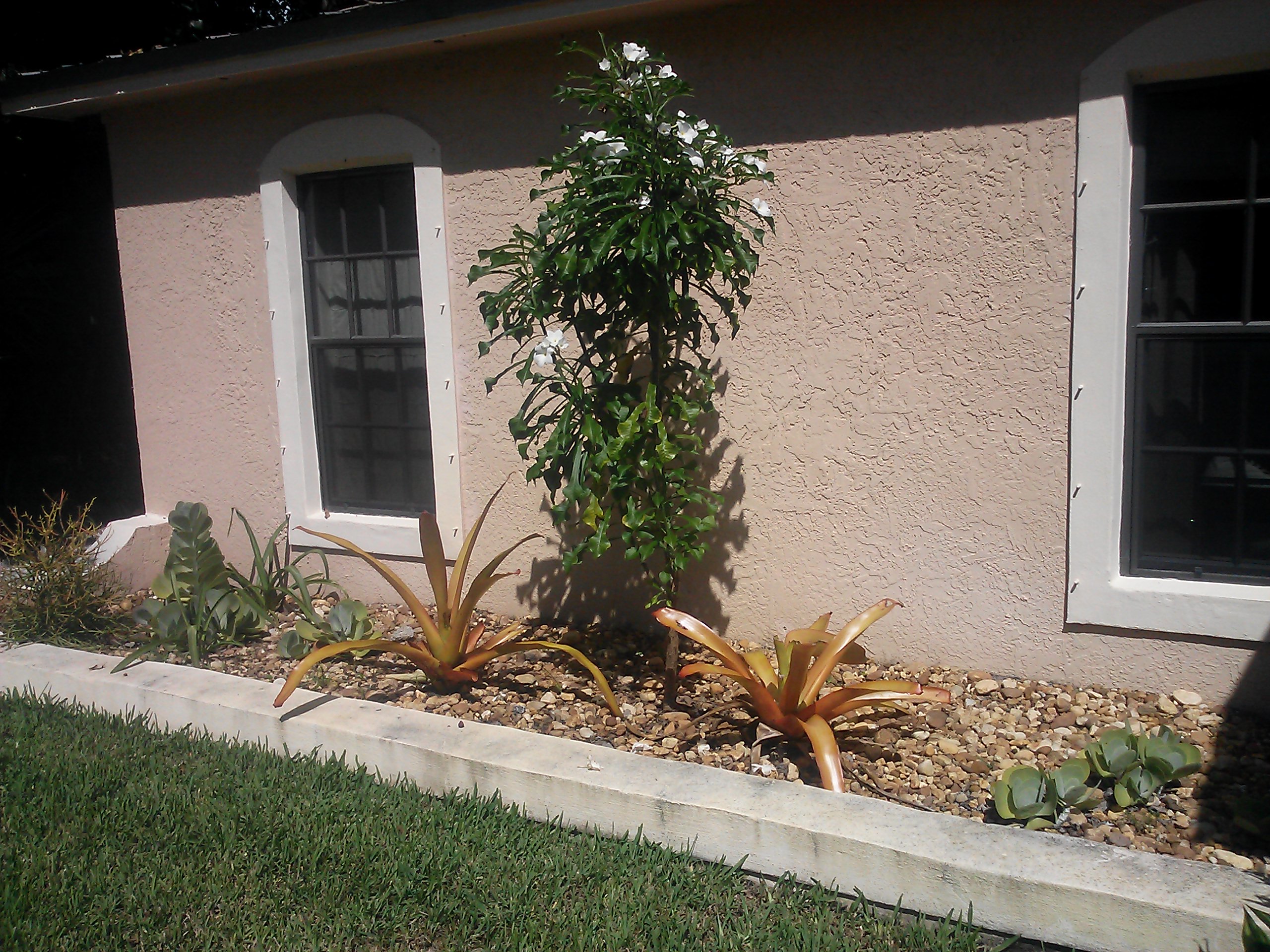
Enter the Bridal Bouquet Plumeria, I discovered this plant in Stuart, Florida never having seen one before and was told it was evergreen. This particular variety of Plumeria has a columnar habit and I was looking for a plant to place between two windows in an unirrigated planter in front of my house. It is a perfect selection thus far it is about six feet tall and maybe 2 feet wide. There is some disagreement amongst the experts as to the evergreeness of this plant; apparently if it gets cold enough it will drop its foliage.  I can believe it even if Wikipedia doesn’t.

So far the Bridal Bouquet has performed admirably remaining evergreen and blooming profusely. The extension service states it blooms six months out of the year, mine is not quite there. The only complaint I have is the plant is a bit crunchy and high winds tend to blow parts off. It must be noted that the trade off for evergreen foliage is no fragrance. My husband is not a plant guy and he was in the front planter sniffing the plant to no avail. I decided the solution to the crunchies is to root the bits and plant them in front of my neighbors ugly decaying wood fence. Perfect recycle.

There are many, many varieties of Plumeria, and even a society devoted to the plant, inauspiciously called the PSA. I am hopeful this acronym was coined prior to the medical test.